Md. Obydulla Al Mamun
Id:131-29-500
Department of pharmacy
Daffodil international university
Pharmaceutical analysis, tech & implementation
Analytical techniques
1. Titrimetric techniques
2. Chromatographic
2.1. Thin layer
chromatography
2.2. High performance thin
layer chromatography.
2.3. High-performance liquid
chromatography (HPLC)
2.4. Gas chromatography
3. Spectroscopic techniques
3.1. Spectrophotometry
3.2. Near infrared spectroscopy
(NIRS).
3.3. Nuclear magnetic resonance
spectroscopy (NMRS)
3.4. Fluorimetry and
phosphorimetry .
4. Electrochemical methods
5. Kinetic method of analysis
6. Electrophoretic methods
7. Flow injection and sequential
injection analysis
8. Hyphenated techniques
Titrimetric Analysis
• Measurement of the volume of a unknown solution (the analyte) with a known
concentration of a reagent(the titrant) .
• Titrimetric methods are widely used for routine analysis because they are rapid,
convenient, accurate, and readily automated.
Spectroscopic techniques
• The use of spectroscopy in determining the
chemical or physical constitution of substances.
• Classification:-
1.Spectrophotometry
2.Near infrared spectroscopy (NIRS).
3.Nuclear magnetic resonance (NMR)
4.Fluorimetry and phosphorimetry .
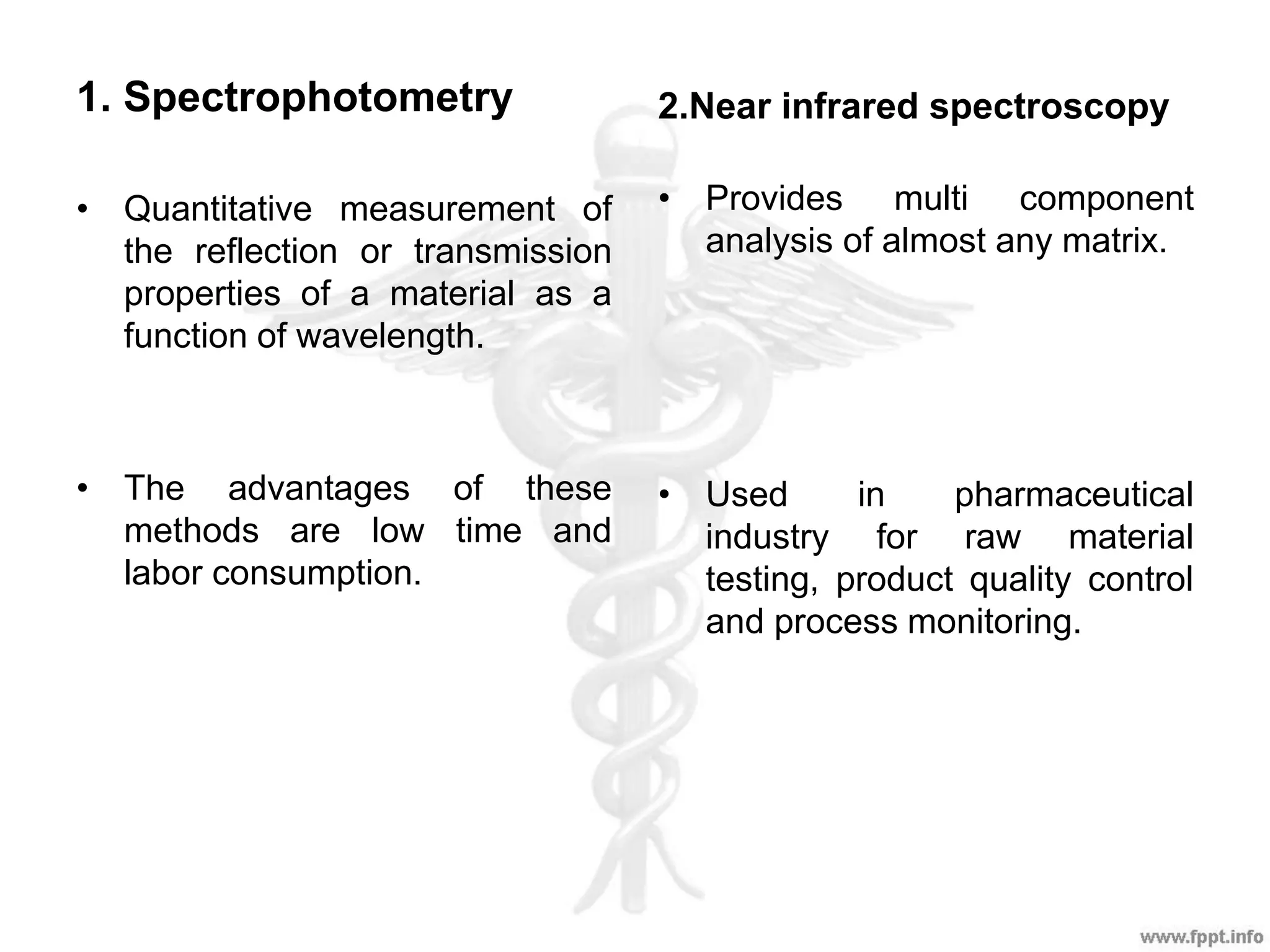
1. Spectrophotometry 2.Near infrared spectroscopy
• Quantitative measurement of
the reflection or transmission
properties of a material as a
function of wavelength.
• The advantages of these
methods are low time and
labor consumption.
• Provides multi component
analysis of almost any matrix.
• Used in pharmaceutical
industry for raw material
testing, product quality control
and process monitoring.
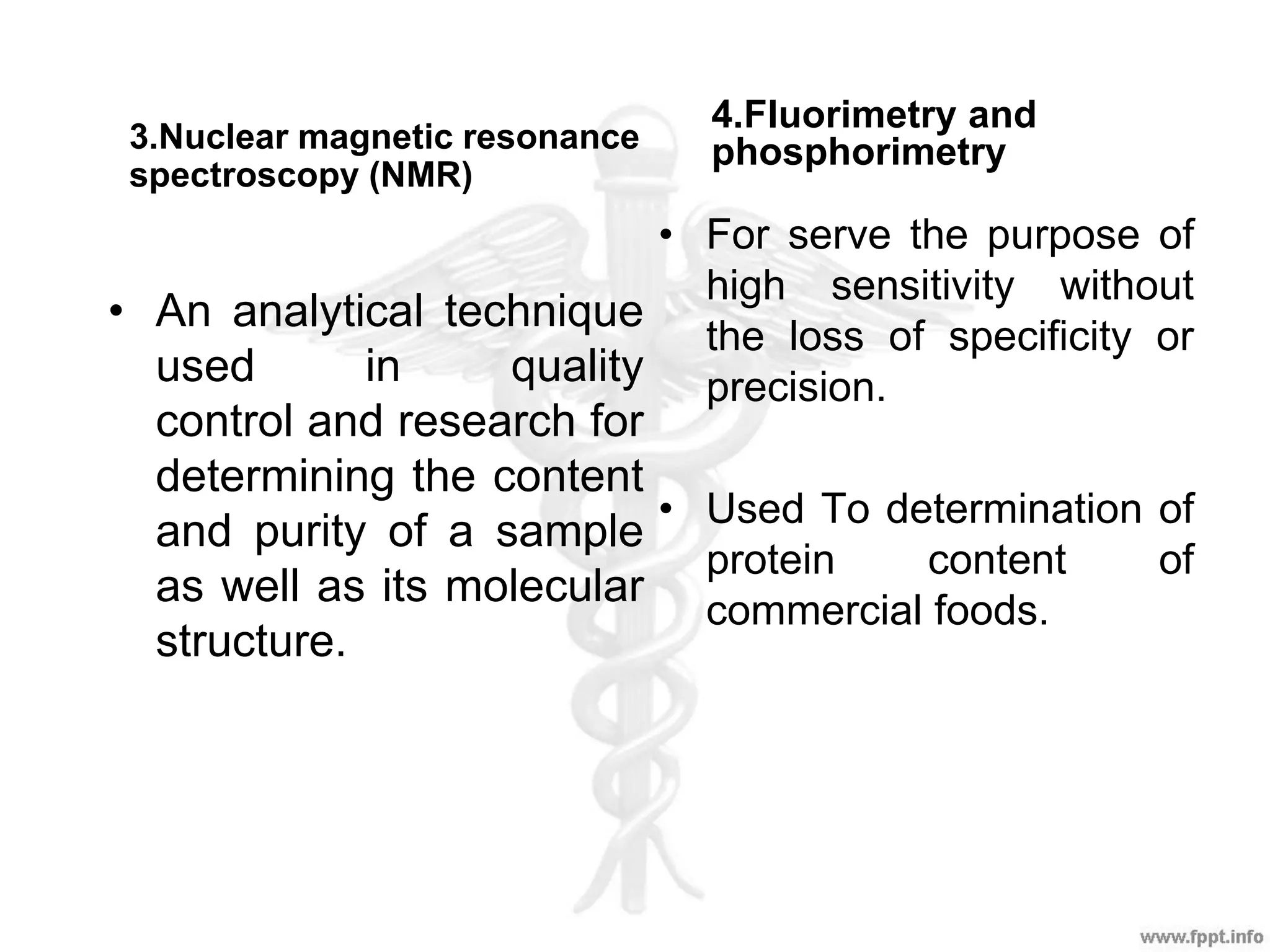
4.Fluorimetry and
phosphorimetry3.Nuclear magnetic resonance
spectroscopy (NMR)
• For serve the purpose of
high sensitivity without
the loss of specificity or
precision.
• Used To determination of
protein content of
commercial foods.
• An analytical technique
used in quality
control and research for
determining the content
and purity of a sample
as well as its molecular
structure.
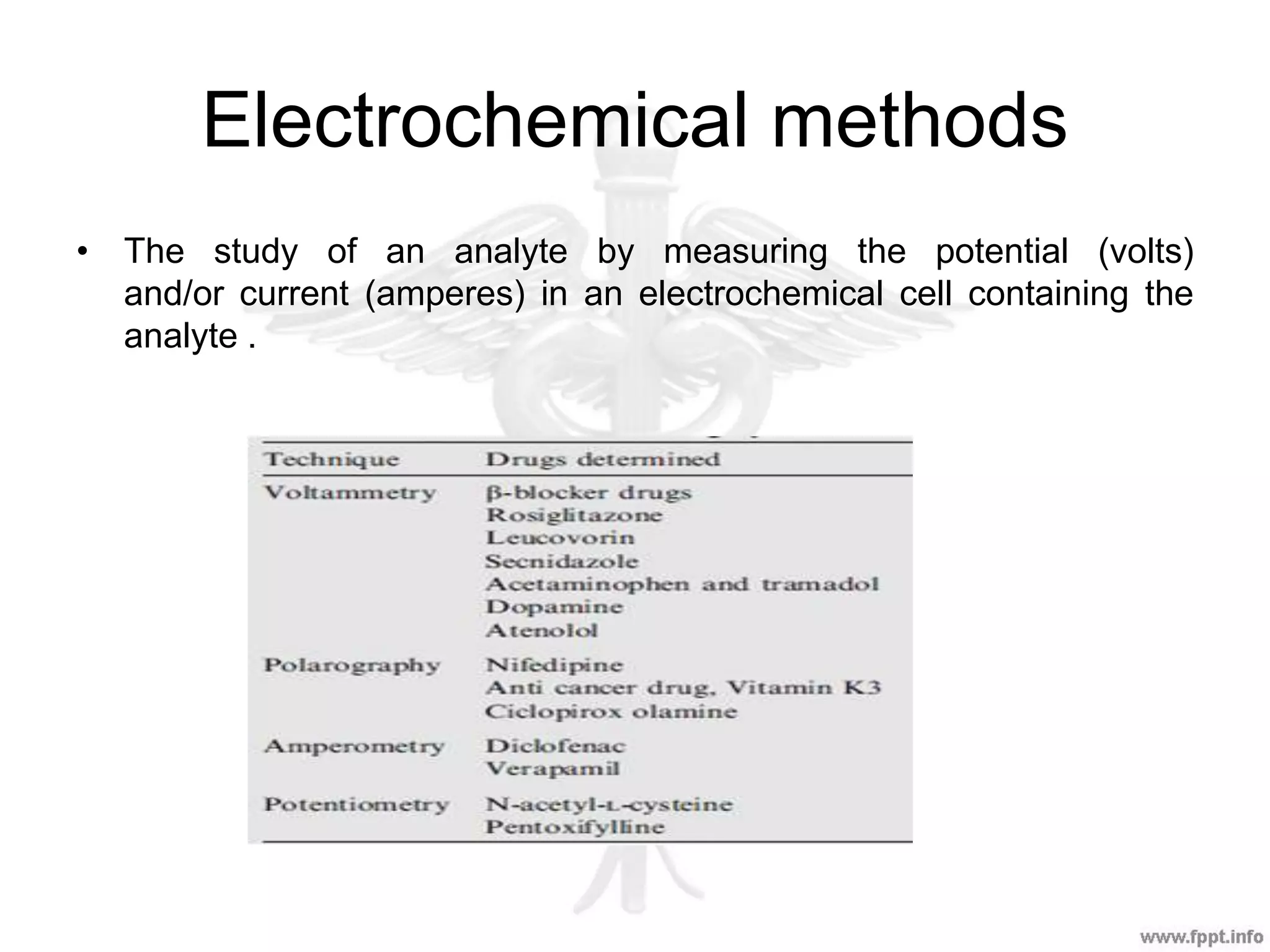
Electrochemical methods
• The study of an analyte by measuring the potential (volts)
and/or current (amperes) in an electrochemical cell containing the
analyte .
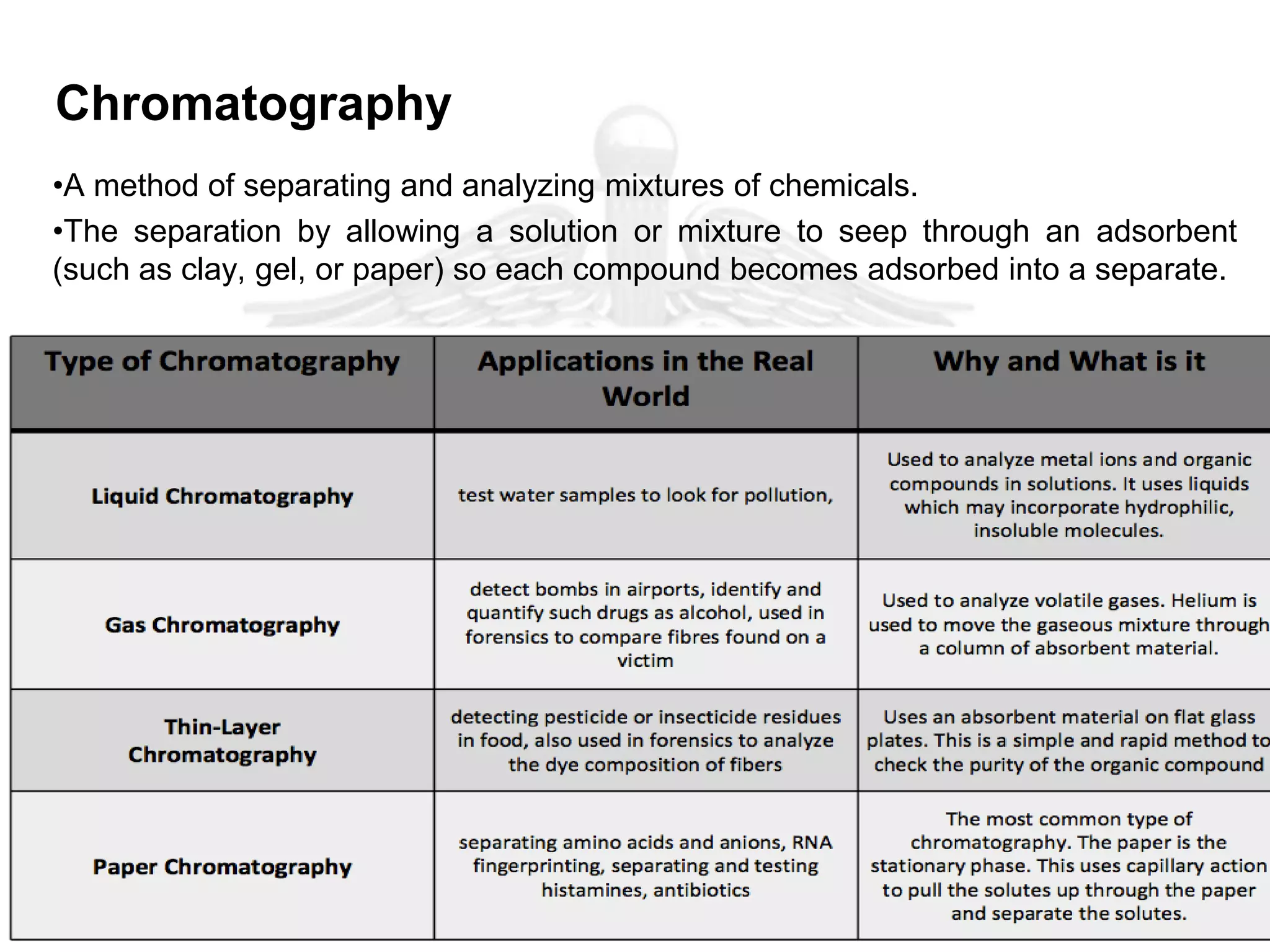
Chromatography
•A method of separating and analyzing mixtures of chemicals.
•The separation by allowing a solution or mixture to seep through an adsorbent
(such as clay, gel, or paper) so each compound becomes adsorbed into a separate.
Use of Chromatography
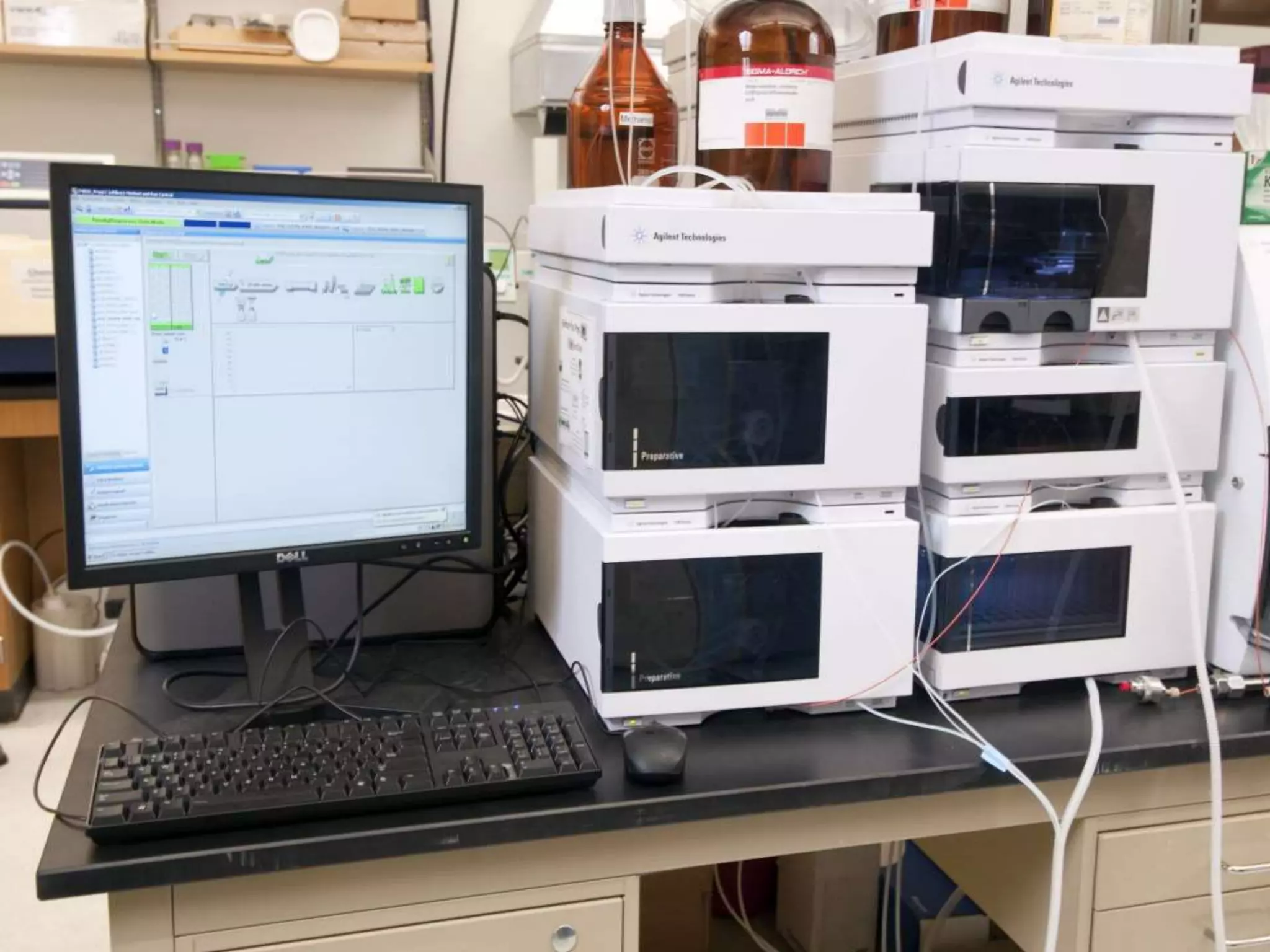
HPLC
• HPLC-high performance liquid chromatography
• Also called high pressure liquid chromatography
• HPLC has been around for about 35 years and is the
largest separations technique used
• HPLC is really the automation of traditional liquid
chromatography under conditions which provide for
enhanced separations during shorter periods of time,
utilizing very small particles, small column diameters,
and very high fluid pressures.
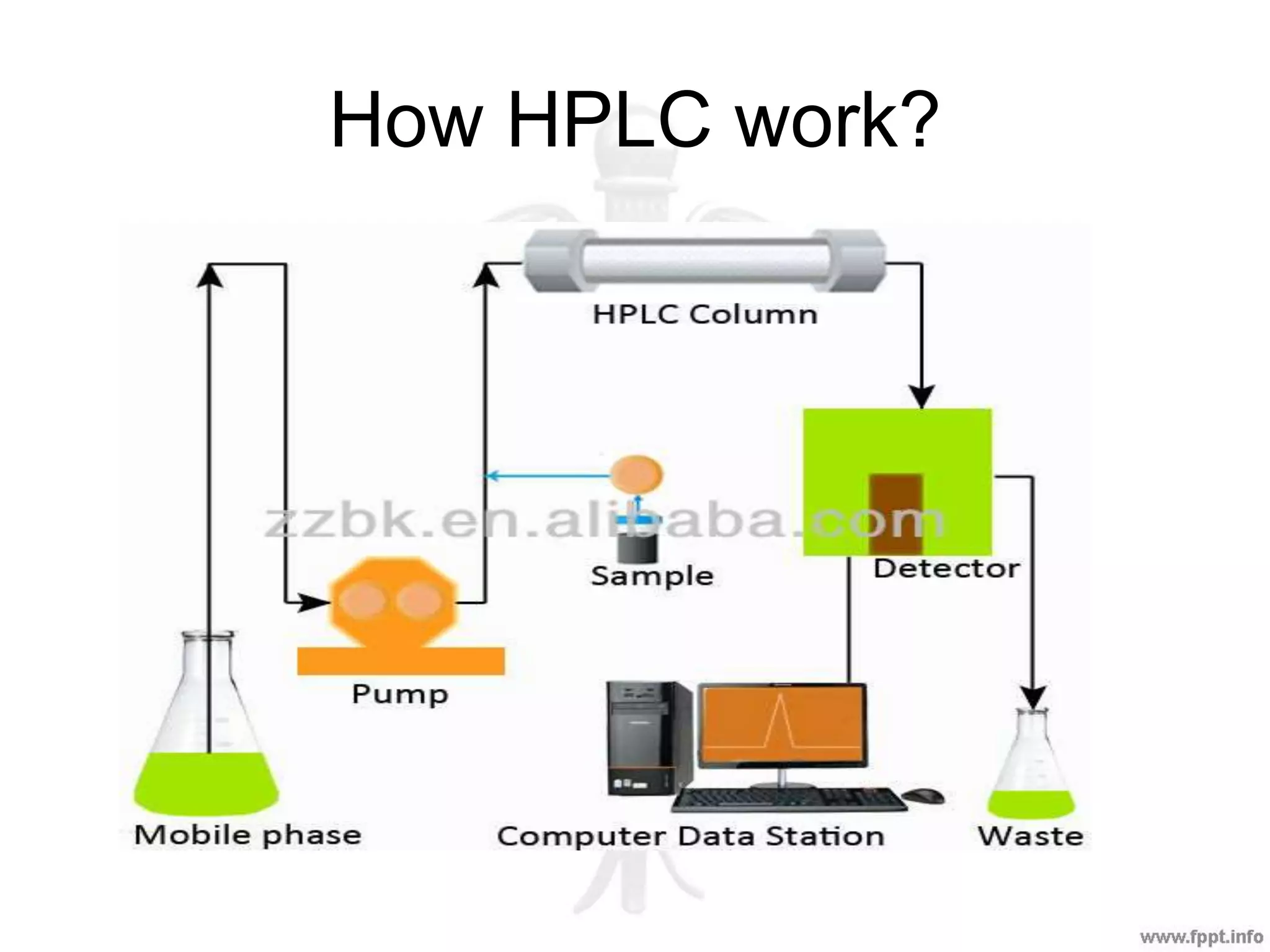
How HPLC work?
Advantages
• It can be applied to the separation and analysis of
complex mixtures.
• Accurate quantitative measurements.
• Needs a small sample with a high accuracy
•Need a skill to run the instruments
•Solvents consuming
Disadvantages
Application of HPLC
1. Pharmaceuticals industry
• To control the drug stability
• Quantity of drug determination from pharmaceutical
dosage forms, ex. Paracetamol determination in panadol
tablet
2. Analysis of natural contamination
- Phenol & Mercury from sea water
4. Food manufacture
- sweetener analysis in the fruit juice
- preservative analysis in sausage etc.
Pharmaceutical analysis, tech & implementation

Pharmaceutical analysis, tech & implementation

  • 1.
    Md. Obydulla AlMamun Id:131-29-500 Department of pharmacy Daffodil international university Pharmaceutical analysis, tech & implementation
  • 2.
    Analytical techniques 1. Titrimetrictechniques 2. Chromatographic 2.1. Thin layer chromatography 2.2. High performance thin layer chromatography. 2.3. High-performance liquid chromatography (HPLC) 2.4. Gas chromatography 3. Spectroscopic techniques 3.1. Spectrophotometry 3.2. Near infrared spectroscopy (NIRS). 3.3. Nuclear magnetic resonance spectroscopy (NMRS) 3.4. Fluorimetry and phosphorimetry . 4. Electrochemical methods 5. Kinetic method of analysis 6. Electrophoretic methods 7. Flow injection and sequential injection analysis 8. Hyphenated techniques
  • 3.
    Titrimetric Analysis • Measurementof the volume of a unknown solution (the analyte) with a known concentration of a reagent(the titrant) . • Titrimetric methods are widely used for routine analysis because they are rapid, convenient, accurate, and readily automated.
  • 4.
    Spectroscopic techniques • Theuse of spectroscopy in determining the chemical or physical constitution of substances. • Classification:- 1.Spectrophotometry 2.Near infrared spectroscopy (NIRS). 3.Nuclear magnetic resonance (NMR) 4.Fluorimetry and phosphorimetry .
  • 5.
    1. Spectrophotometry 2.Nearinfrared spectroscopy • Quantitative measurement of the reflection or transmission properties of a material as a function of wavelength. • The advantages of these methods are low time and labor consumption. • Provides multi component analysis of almost any matrix. • Used in pharmaceutical industry for raw material testing, product quality control and process monitoring.
  • 6.
    4.Fluorimetry and phosphorimetry3.Nuclear magneticresonance spectroscopy (NMR) • For serve the purpose of high sensitivity without the loss of specificity or precision. • Used To determination of protein content of commercial foods. • An analytical technique used in quality control and research for determining the content and purity of a sample as well as its molecular structure.
  • 7.
    Electrochemical methods • Thestudy of an analyte by measuring the potential (volts) and/or current (amperes) in an electrochemical cell containing the analyte .
  • 8.
    Chromatography •A method ofseparating and analyzing mixtures of chemicals. •The separation by allowing a solution or mixture to seep through an adsorbent (such as clay, gel, or paper) so each compound becomes adsorbed into a separate. Use of Chromatography
  • 10.
    HPLC • HPLC-high performanceliquid chromatography • Also called high pressure liquid chromatography • HPLC has been around for about 35 years and is the largest separations technique used • HPLC is really the automation of traditional liquid chromatography under conditions which provide for enhanced separations during shorter periods of time, utilizing very small particles, small column diameters, and very high fluid pressures.
  • 11.
  • 12.
    Advantages • It canbe applied to the separation and analysis of complex mixtures. • Accurate quantitative measurements. • Needs a small sample with a high accuracy •Need a skill to run the instruments •Solvents consuming Disadvantages
  • 13.
    Application of HPLC 1.Pharmaceuticals industry • To control the drug stability • Quantity of drug determination from pharmaceutical dosage forms, ex. Paracetamol determination in panadol tablet 2. Analysis of natural contamination - Phenol & Mercury from sea water 4. Food manufacture - sweetener analysis in the fruit juice - preservative analysis in sausage etc.

Editor's Notes

  • #4 Acid–base titrations, in which an acidic or basic titrant reacts with an analyte that is a base or an acid; Complexometric titrations involving a metal–ligand complexation reaction; Redox titrations, where the titrant is an oxidizing or reducing agent; Precipitation titrations, in which the analyte and titrant react to form a precipitate. Based on the measurement of the amount of reagent that combined with an analyte. Volumetric. Volume of reagent solution required for a complete reaction. Gravimetric. Weight of reagent required for a complete reaction. Coulometric. Time/current required for complete oxidation or reducing of an analyte. Use
  • #8 -potentiometry(the difference in electrode potentials is measured), Amperometry in chemistry and biochemistry is detection of ions in a solution based on electric current or changes in electric current.coulometry the cell's current is measured over time), and voltammetry (the cell's current is measured while actively altering the cell's potential). What are some examples of beta blockers? acebutolol (Sectral) atenolol (Tenormin)
  • #9 Gas-Used to separating analyzing of vaporized comp without decomposition Thin l-used to determine non volatile mixture Paper-dissolve chemical
  • #15 Proteomics is the large-scale study of proteins, particularly their structures and functions. Genomics is a forum for describing the development of genome-scale technologies and their application to all areas of biological investigation