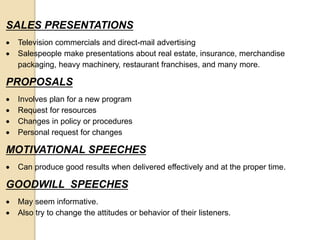
The document discusses ethical persuasion and persuasive presentations. It defines persuasion as motivating voluntary belief, attitude, or behavior change through communication. Unlike coercion, persuasion allows the audience to choose whether to accept the message. The document also outlines four categories of persuasive presentations: sales presentations, proposals, motivational speeches, and goodwill speeches. It provides strategies for effective persuasion, including appealing to audience needs and presenting ample evidence to support claims. The document discusses organizing persuasive messages and maximizing speaker credibility.