Definition
Exchange of a thing of
value with an other thing of
value with mutual consent.
Sale of a commodity in
exchange of cash
SELLING
The chain of a
commerce where a
buyer exchanges cash
for a seller’s goods or
services,
Or the activity of
trying to bring this
about
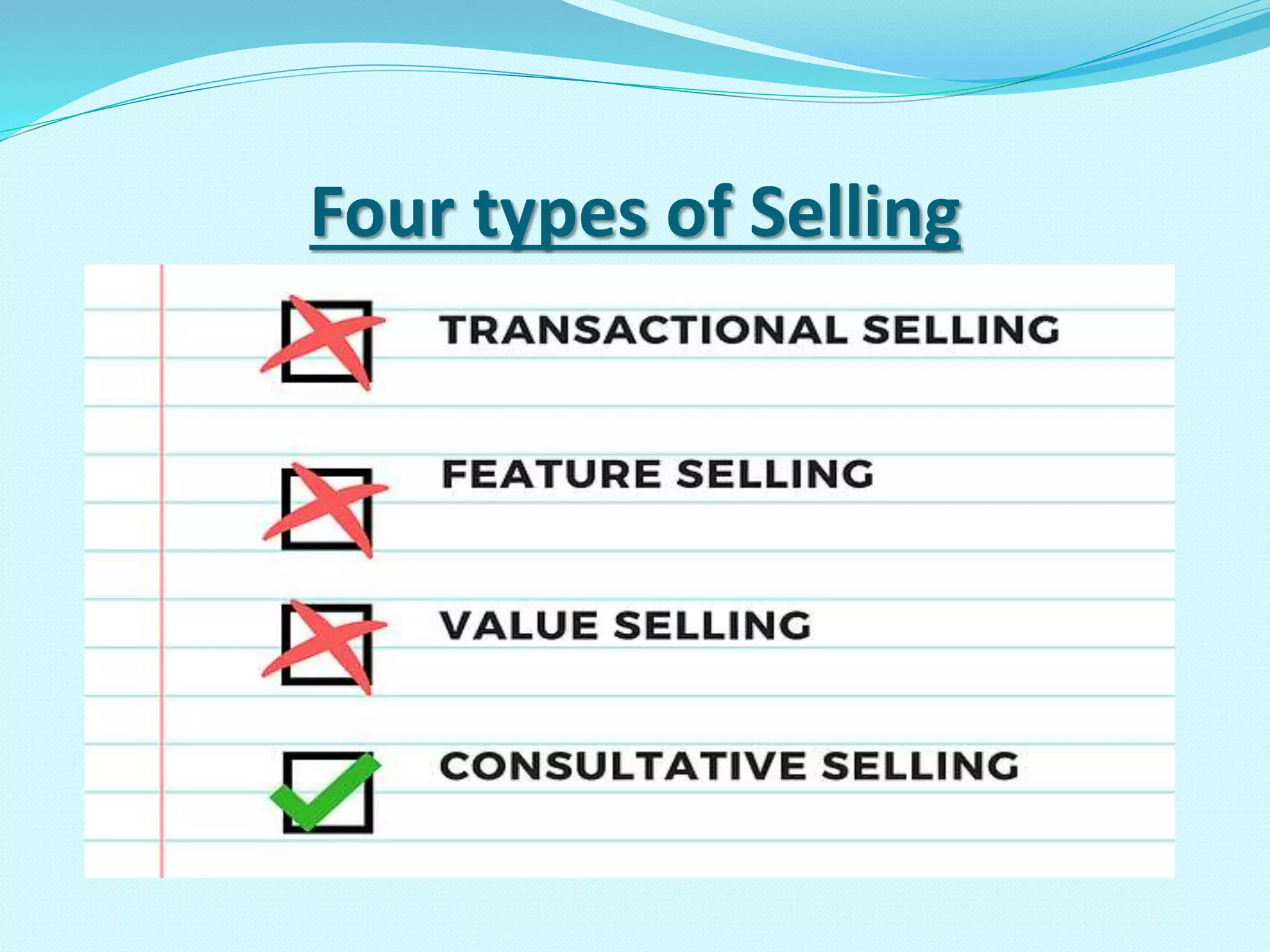
Four types of Selling
Transactional Selling
 A term used to describe a sales strategy that involves focusing on
achieving quick sales without a significant attempt to form a
long term customer relationship. A transactional selling strategy
tends to be more common for a business that offers a fairly
generic product or service with the objective of profiting by
making a high volume of sales.
The lowest rung of selling is transaction selling (trust us when
we say it is barely selling). Transactional selling is exactly what
the name outlines. Customer asks question A, sales individual
replies to question A. Customer asks for a discount, sales
individual gives 10%. You get the picture. There is minimal pro-
activeness and hope is the main strategy of this system.
Feature Selling
 Sadly, many of the sales individuals we have spoken to over a period of time are
stuck in the feature selling space. Feature selling is all about answering
customer questions with a feature.
 For example:
 Customer: I want to buy a phone.
 Sales individual: Great! what do you want in a phone?
 Customer: Something with a good camera.
 Sales individual: I have just the phone for you, here is the XYZ phone. It has a
16 MP camera, a very loud speaker phone and above all….
 We are sure you have been subjected to this kind of sales pitch in the past. This
method only works if you are lucky or if everything you say is exactly or largely
what the customer is looking for. Not to mention, such comparisons usually
end in pricing comparisons.
 Feature selling is also the best way to bore a prospect before he becomes a
customer. Talking to a customer non-stop about product features that are not
relevant to him will bore him, no matter how patient your prospect is or how
good your pitch is.
Value Selling
 Value-Based Selling is the process of understanding
and reinforcing the reasons why your offer is valuable
to the purchaser.
 Though Value-Based Selling, you increase the
likelihood of a transaction as well as the price the
purchaser is willing to pay.
 Always sell based on the value your offer provides, not
the cost
Consultative selling
 As it stands today, consultative selling is the highest level of selling. It is
selling Zen. Consultative selling involves everything in value selling but
adds elements like industry insights, consulting (instead of selling) to
the equation. To put it in words, a consultative sales pitch will involve
much more than just pitching the value. For example:
 Sales Individual: As you might be aware that 5% of all users are
currently using their mobile phones to make these videos. I understand
you have already invested in the desktop side of the business, but our
research shows that mobile is the future. I am sending across a
whitepaper for your perusal.
 The above pitch is coming from a sales individual that sells primarily
desktop products. The point we are trying to make is, that consultative
sellers are not trying to introduce just their products but also trying to
act as a true consultant to their prospects. While the above is a small
example in the world of consultative selling, it should point out to the
maturity needed to pull it off.
Sales Call Steps
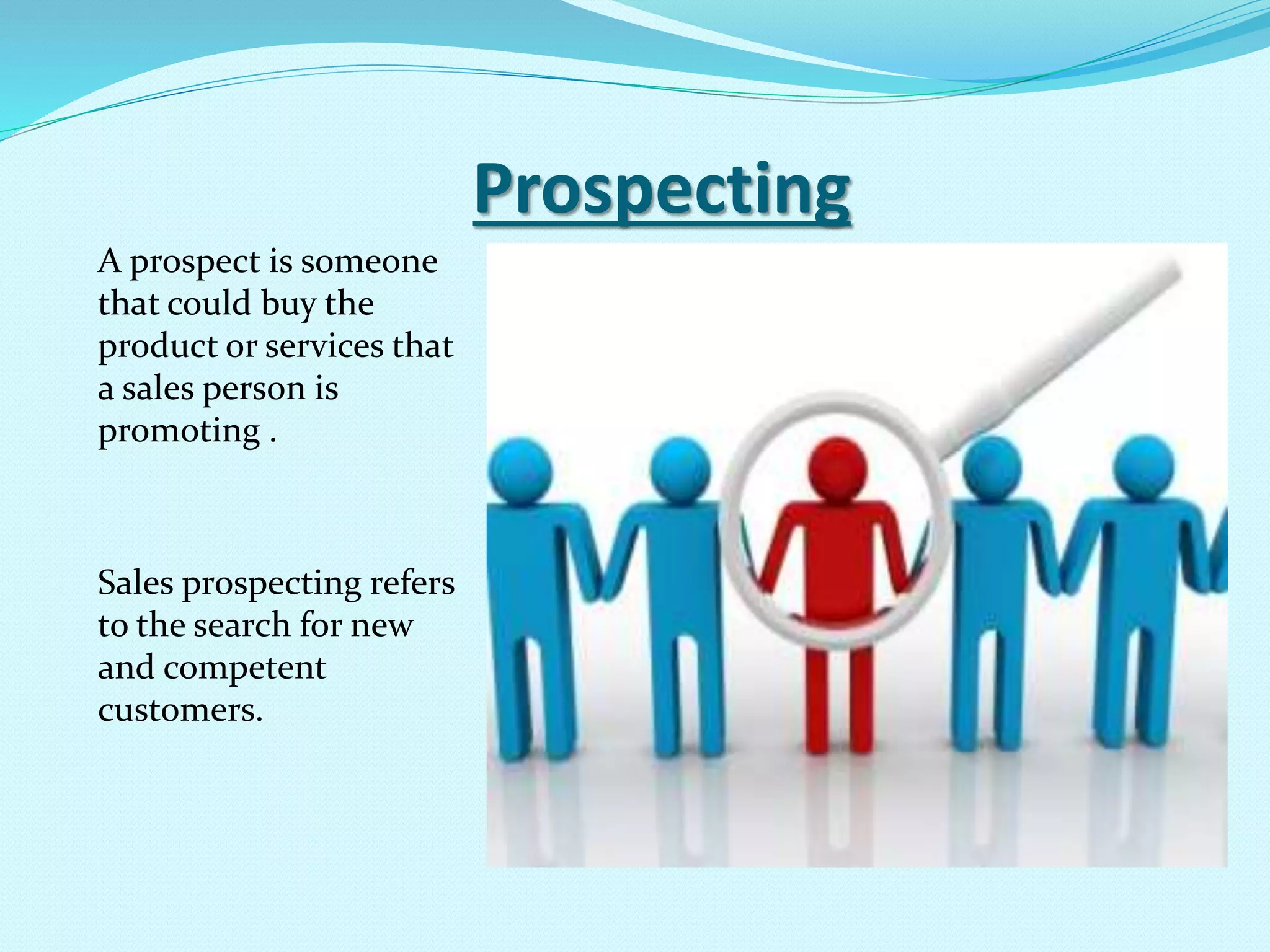
Prospecting
A prospect is someone
that could buy the
product or services that
a sales person is
promoting .
Sales prospecting refers
to the search for new
and competent
customers.
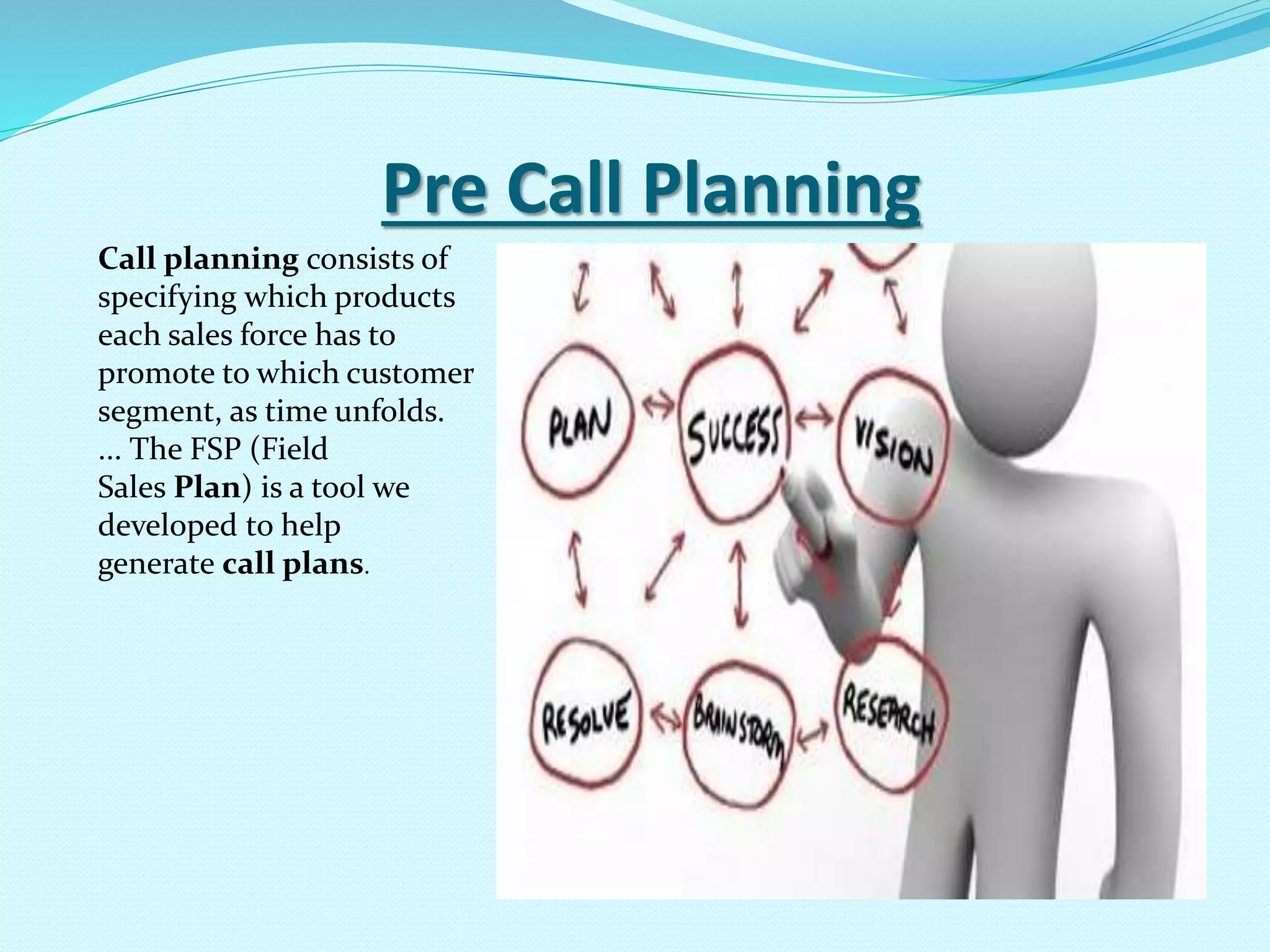
Pre Call Planning
Call planning consists of
specifying which products
each sales force has to
promote to which customer
segment, as time unfolds.
... The FSP (Field
Sales Plan) is a tool we
developed to help
generate call plans.
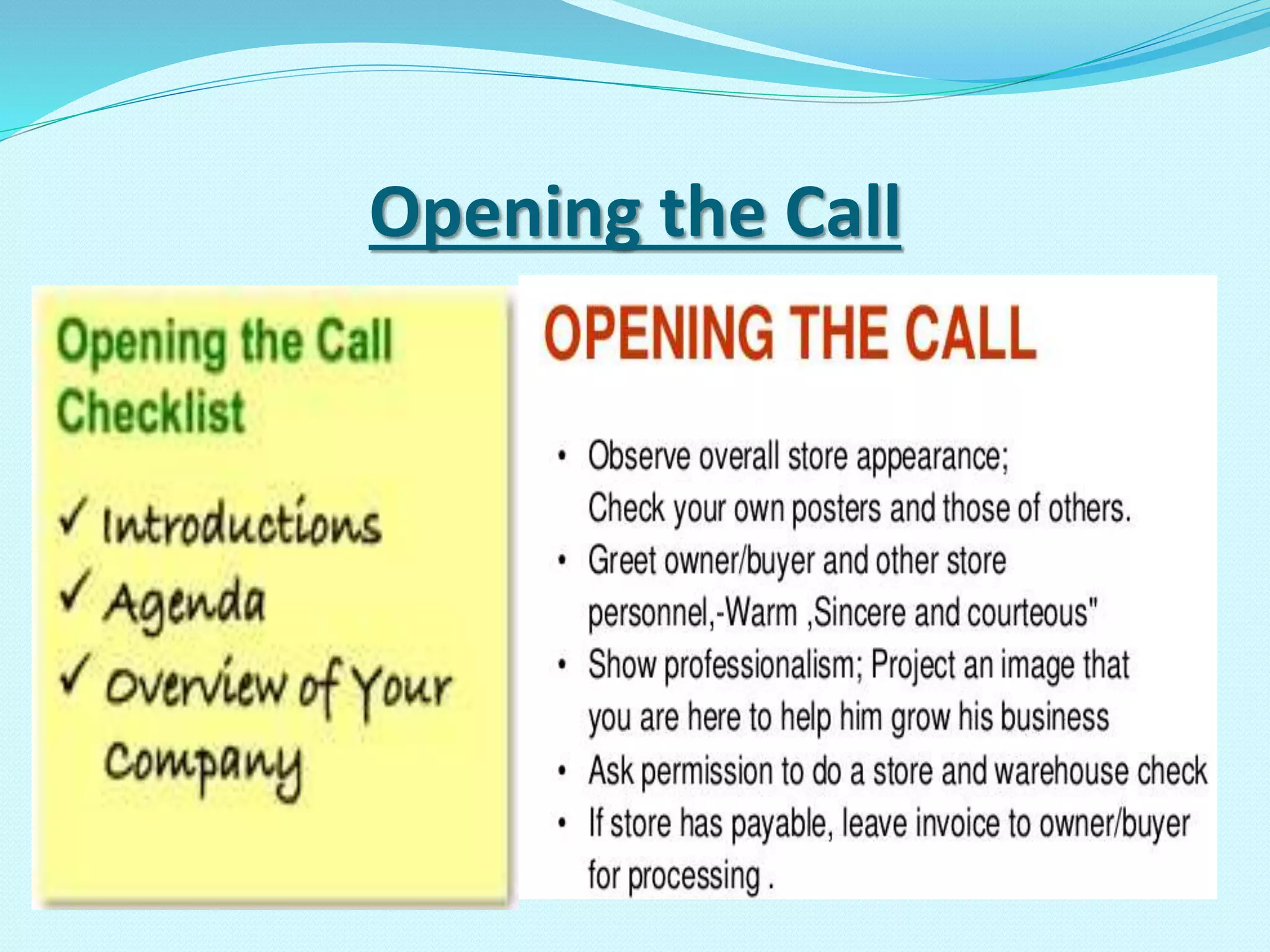
Opening the Call
Presenting
1. Formally introducing or
offering products and
services to the customer.
2. New schemes
announcement
3. New product
introduction.
Objection Handling
 Listen the objection
 Validate the
Problem
 Say it back to the
customer
 Answer the
Objection
Closing
Finalizing the sales
process and getting
Commitment.
Thanking the
customer.
Follow -Up
Basics of sales
Basics of sales

Basics of sales

  • 2.
    Definition Exchange of athing of value with an other thing of value with mutual consent. Sale of a commodity in exchange of cash
  • 3.
    SELLING The chain ofa commerce where a buyer exchanges cash for a seller’s goods or services, Or the activity of trying to bring this about
  • 4.
  • 5.
    Transactional Selling  Aterm used to describe a sales strategy that involves focusing on achieving quick sales without a significant attempt to form a long term customer relationship. A transactional selling strategy tends to be more common for a business that offers a fairly generic product or service with the objective of profiting by making a high volume of sales. The lowest rung of selling is transaction selling (trust us when we say it is barely selling). Transactional selling is exactly what the name outlines. Customer asks question A, sales individual replies to question A. Customer asks for a discount, sales individual gives 10%. You get the picture. There is minimal pro- activeness and hope is the main strategy of this system.
  • 6.
    Feature Selling  Sadly,many of the sales individuals we have spoken to over a period of time are stuck in the feature selling space. Feature selling is all about answering customer questions with a feature.  For example:  Customer: I want to buy a phone.  Sales individual: Great! what do you want in a phone?  Customer: Something with a good camera.  Sales individual: I have just the phone for you, here is the XYZ phone. It has a 16 MP camera, a very loud speaker phone and above all….  We are sure you have been subjected to this kind of sales pitch in the past. This method only works if you are lucky or if everything you say is exactly or largely what the customer is looking for. Not to mention, such comparisons usually end in pricing comparisons.  Feature selling is also the best way to bore a prospect before he becomes a customer. Talking to a customer non-stop about product features that are not relevant to him will bore him, no matter how patient your prospect is or how good your pitch is.
  • 7.
    Value Selling  Value-BasedSelling is the process of understanding and reinforcing the reasons why your offer is valuable to the purchaser.  Though Value-Based Selling, you increase the likelihood of a transaction as well as the price the purchaser is willing to pay.  Always sell based on the value your offer provides, not the cost
  • 8.
    Consultative selling  Asit stands today, consultative selling is the highest level of selling. It is selling Zen. Consultative selling involves everything in value selling but adds elements like industry insights, consulting (instead of selling) to the equation. To put it in words, a consultative sales pitch will involve much more than just pitching the value. For example:  Sales Individual: As you might be aware that 5% of all users are currently using their mobile phones to make these videos. I understand you have already invested in the desktop side of the business, but our research shows that mobile is the future. I am sending across a whitepaper for your perusal.  The above pitch is coming from a sales individual that sells primarily desktop products. The point we are trying to make is, that consultative sellers are not trying to introduce just their products but also trying to act as a true consultant to their prospects. While the above is a small example in the world of consultative selling, it should point out to the maturity needed to pull it off.
  • 9.
  • 10.
    Prospecting A prospect issomeone that could buy the product or services that a sales person is promoting . Sales prospecting refers to the search for new and competent customers.
  • 11.
    Pre Call Planning Callplanning consists of specifying which products each sales force has to promote to which customer segment, as time unfolds. ... The FSP (Field Sales Plan) is a tool we developed to help generate call plans.
  • 12.
  • 13.
    Presenting 1. Formally introducingor offering products and services to the customer. 2. New schemes announcement 3. New product introduction.
  • 14.
    Objection Handling  Listenthe objection  Validate the Problem  Say it back to the customer  Answer the Objection
  • 15.
    Closing Finalizing the sales processand getting Commitment. Thanking the customer.
  • 16.