STRATEGIES FOR
PERSUADING YOUR
AUDIENCE
                  Presented by:
                          Bhaskar Goel
                          Hema Priya
                          Mayank Kumar
                          Ritesh Kumar
                          Shubham Ranjan
                          Uday Doyal
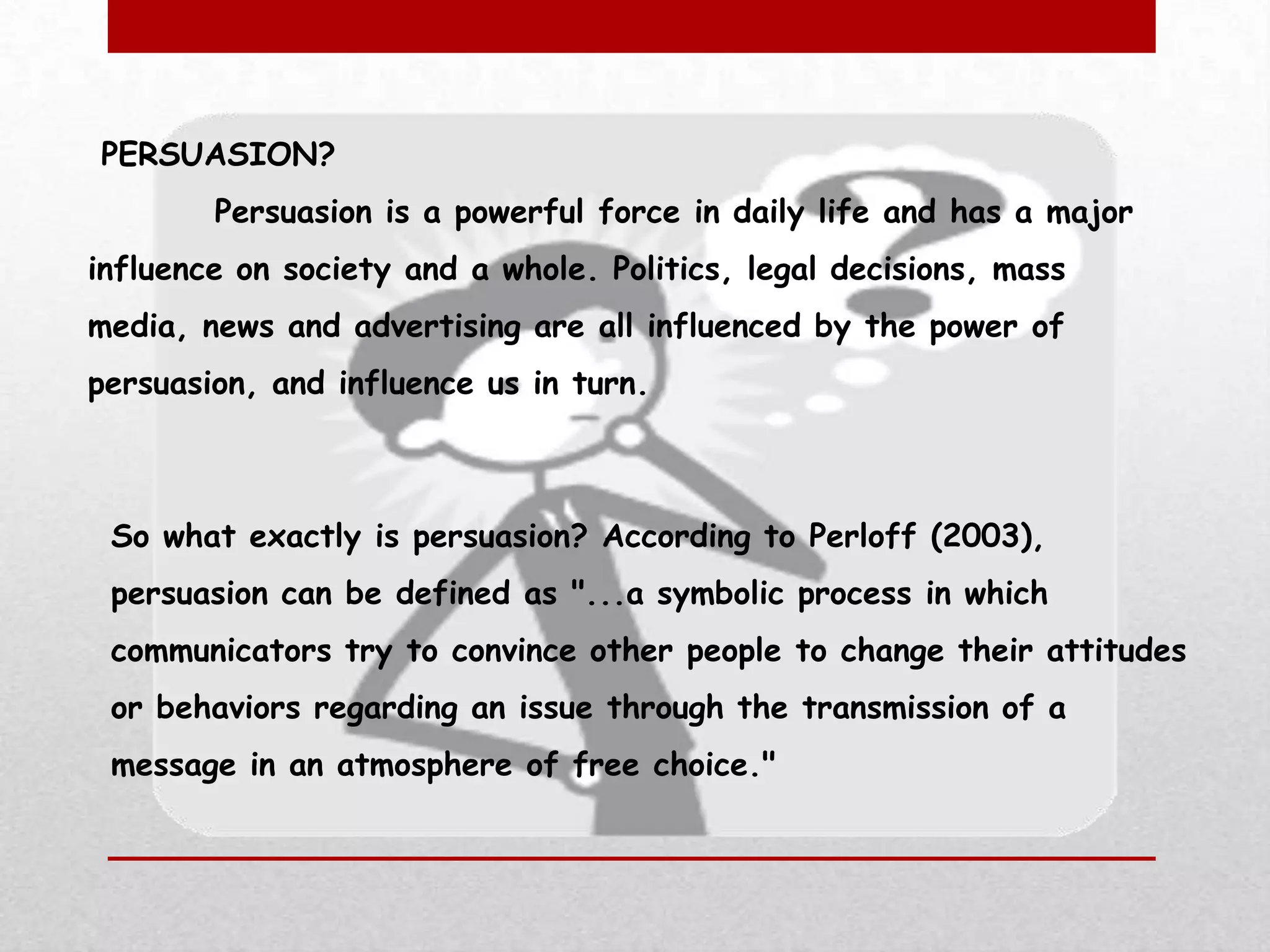
PERSUASION?
        Persuasion is a powerful force in daily life and has a major
influence on society and a whole. Politics, legal decisions, mass
media, news and advertising are all influenced by the power of
persuasion, and influence us in turn.


 So what exactly is persuasion? According to Perloff (2003),
 persuasion can be defined as "...a symbolic process in which
 communicators try to convince other people to change their attitudes
 or behaviors regarding an issue through the transmission of a
 message in an atmosphere of free choice."
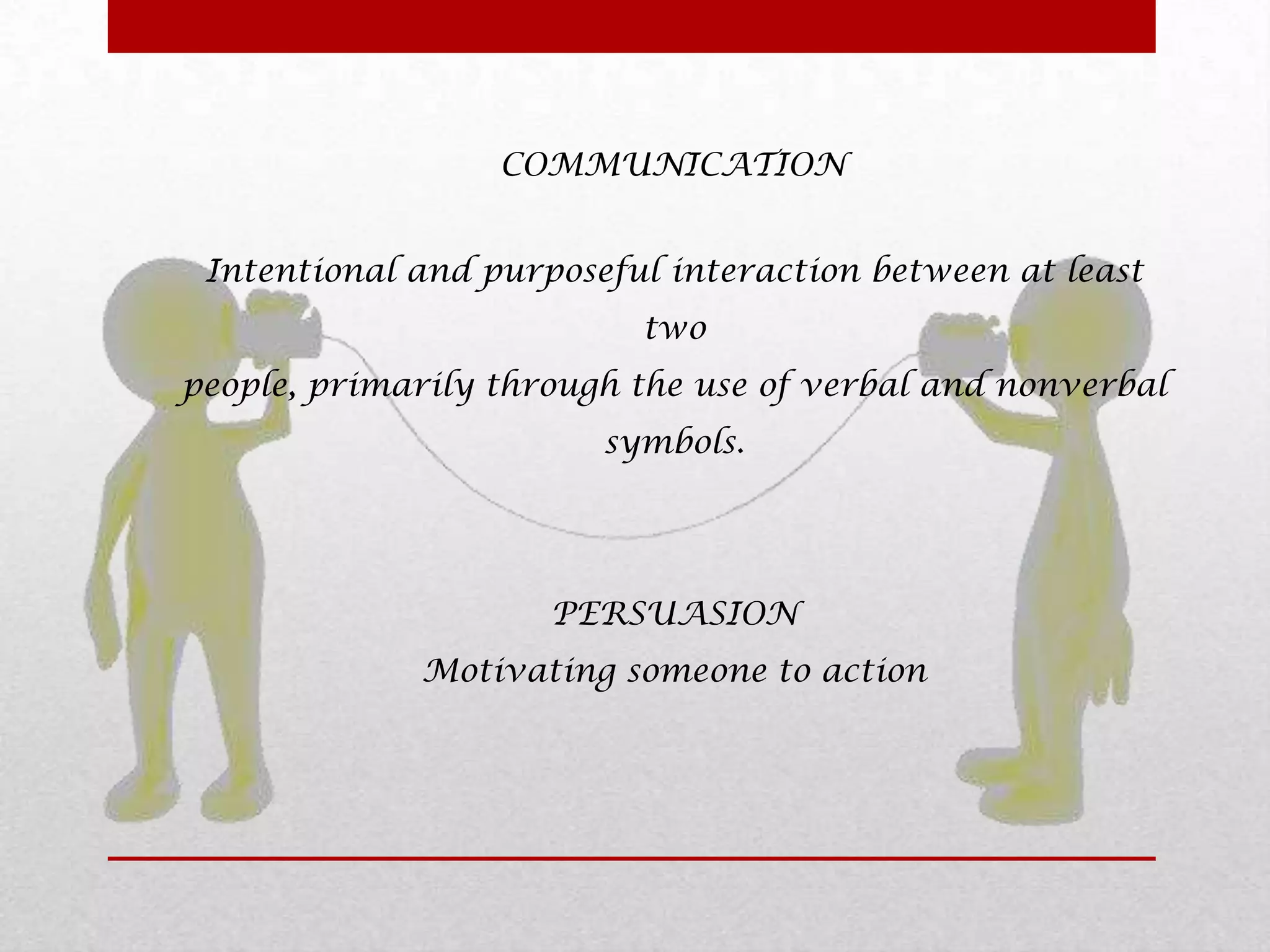
COMMUNICATION


 Intentional and purposeful interaction between at least
                          two
people, primarily through the use of verbal and nonverbal
                        symbols.


                     PERSUASION
             Motivating someone to action
OKAY!! NOW HOW
CAN YOU PERSUADE
YOUR AUDIENCE
Identify your objective


           The goal of your presentation is to persuade your audience to buy the product
 or service or the information you are providing, so first you must identify your
 objective. And you must try to deliver the objective of the presentation to the audience.
       You may want to persuade the audience to DO something,
       Or you may set out prove that something is - or is not - TRUE,
       Or you may want to sway the audience to your point of VIEW.


   In making a speech one must study three points: first, the means
   of producing persuasion; second, the language; third the proper
              arrangement of the various parts of the speech.
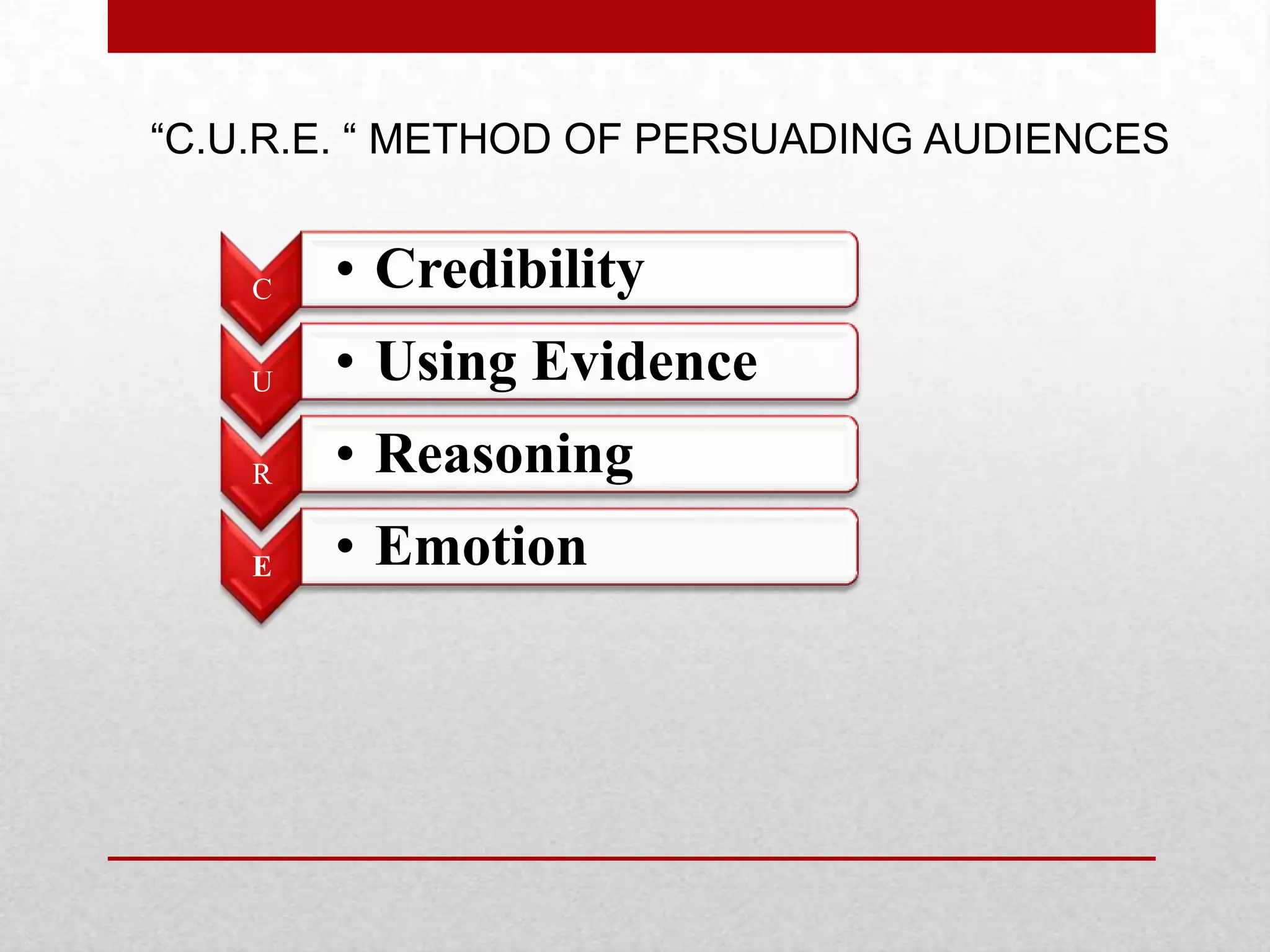
“C.U.R.E. “ METHOD OF PERSUADING AUDIENCES


    C   • Credibility
    U   • Using Evidence
    R   • Reasoning
    E   • Emotion
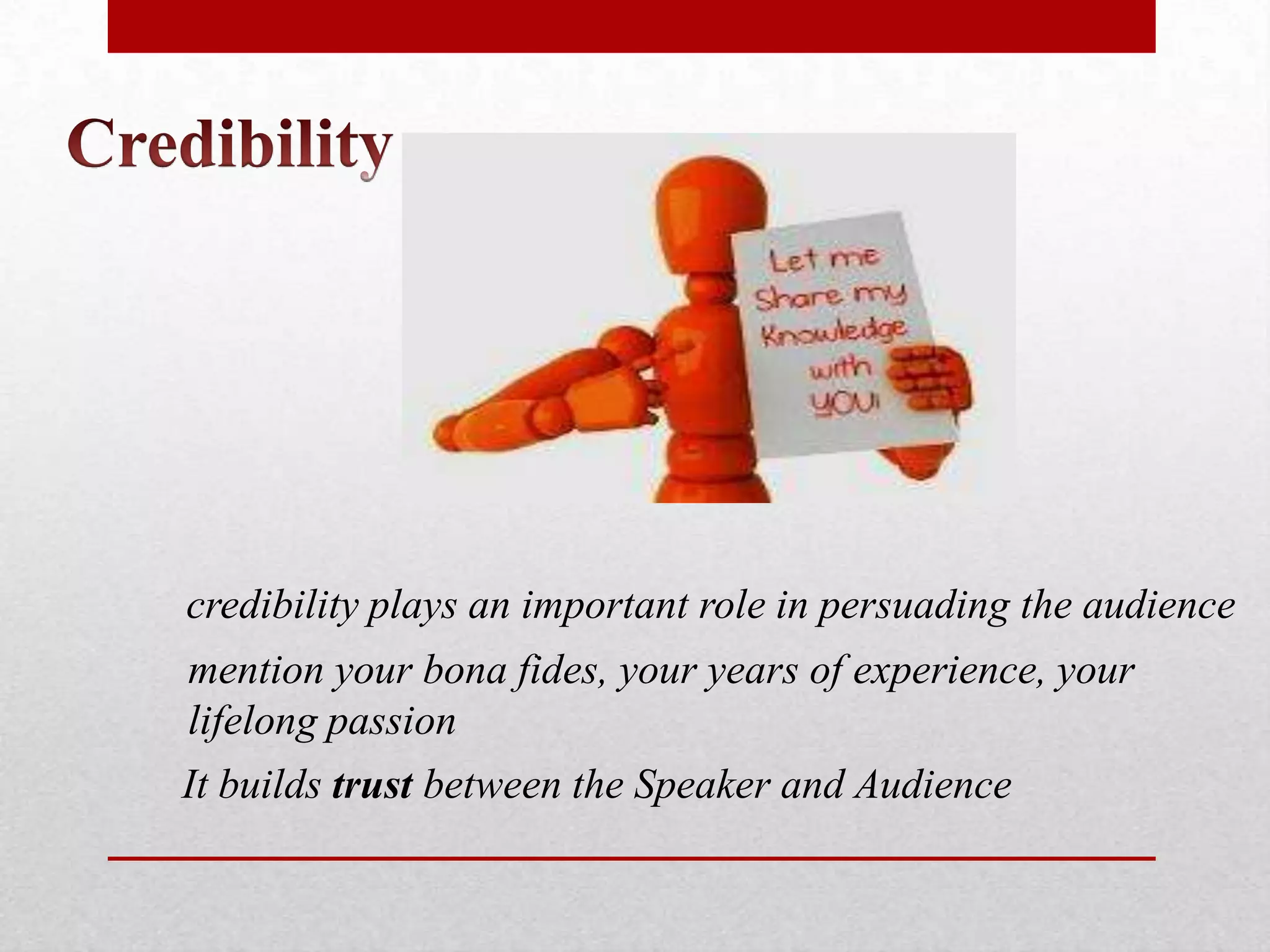
credibility plays an important role in persuading the audience
mention your bona fides, your years of experience, your
lifelong passion
It builds trust between the Speaker and Audience
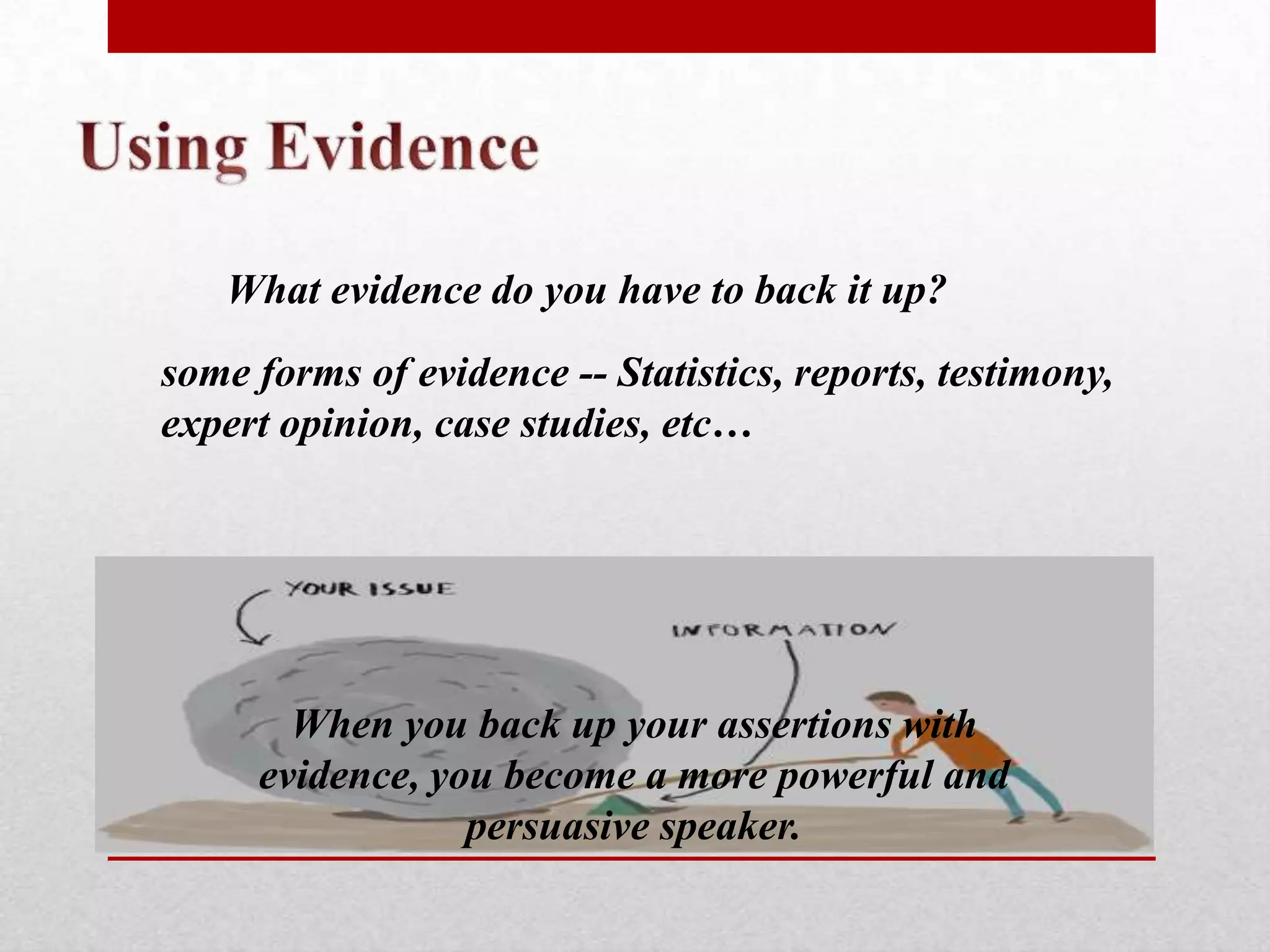
What evidence do you have to back it up?
some forms of evidence -- Statistics, reports, testimony,
expert opinion, case studies, etc…


       When you back up your assertions with
     evidence, you become a more powerful and
                 persuasive speaker.
Audiences accept arguments that are logical
                                   and well reasoned.

Build an argument that will persuade your audience

                 You've identified your objective and completed your audience
   analysis. Now you're ready to begin structuring your talk. What argument will
                           generate the outcome you want?


   You must structure your argument carefully it must be clear and be understood
   from the moment its uttered. A persuasive presentation calls for careful crafting.
   tart with a strong opener to grab your listeners. You may have found something in
   your audience analysis that will resonate quickly and get your listeners' attention.
Why should you tap into this rich and essential
            component of persuasive public speaking?

an essential element of persuasion
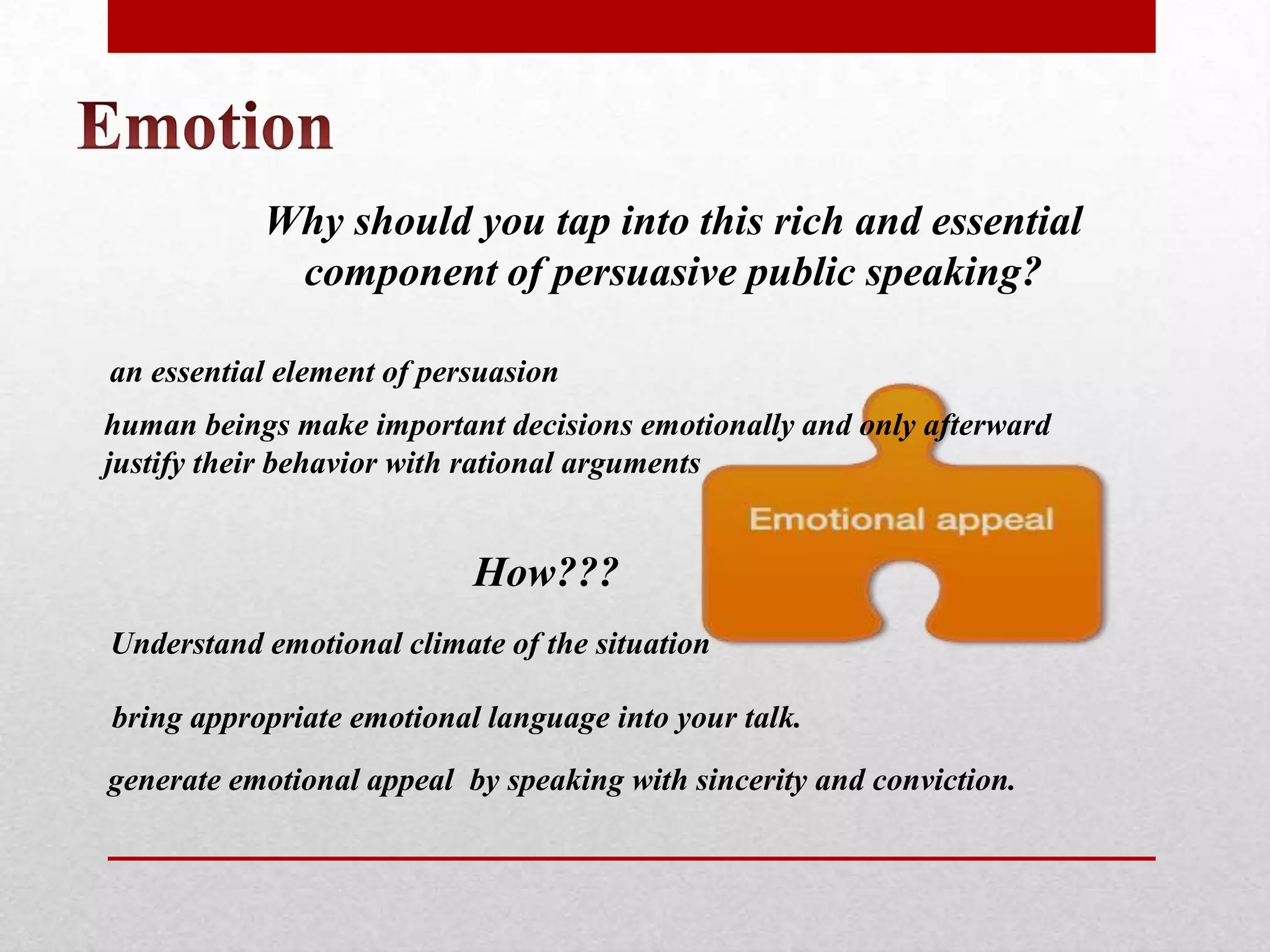
human beings make important decisions emotionally and only afterward
justify their behavior with rational arguments


                           How???
Understand emotional climate of the situation

bring appropriate emotional language into your talk.
generate emotional appeal by speaking with sincerity and conviction.
VISUALIZE THE CHANGE


                         THIS IS A GREAT IDEA!!!


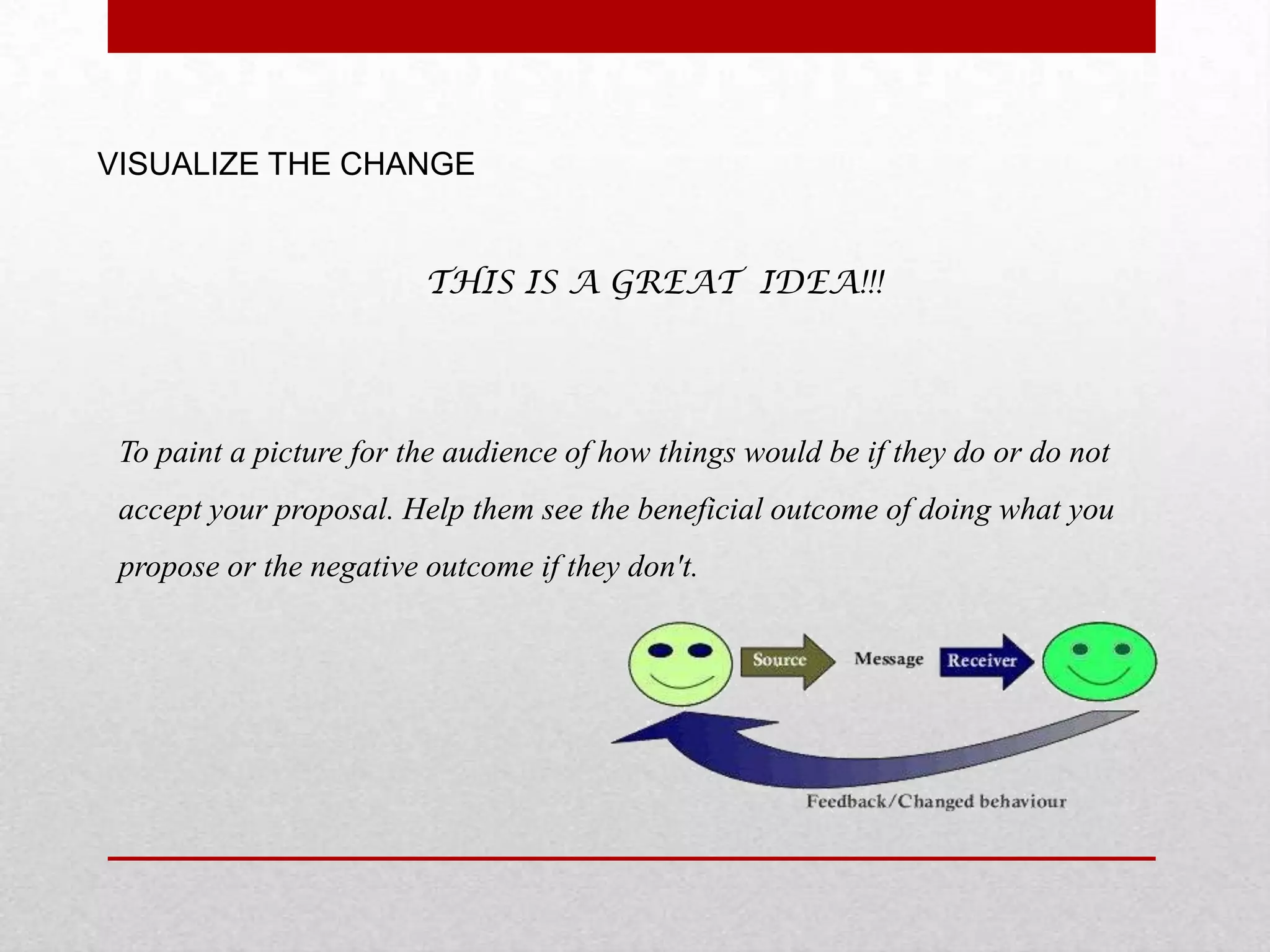
 To paint a picture for the audience of how things would be if they do or do not
 accept your proposal. Help them see the beneficial outcome of doing what you
 propose or the negative outcome if they don't.
“Just as the comedian should leave them
laughing, the speaker should leave them
          thinking.” -Peter Jeff
STRATEGIES FOR PERSUADING AUDIENCE

STRATEGIES FOR PERSUADING AUDIENCE

  • 1.
    STRATEGIES FOR PERSUADING YOUR AUDIENCE Presented by: Bhaskar Goel Hema Priya Mayank Kumar Ritesh Kumar Shubham Ranjan Uday Doyal
  • 2.
    PERSUASION? Persuasion is a powerful force in daily life and has a major influence on society and a whole. Politics, legal decisions, mass media, news and advertising are all influenced by the power of persuasion, and influence us in turn. So what exactly is persuasion? According to Perloff (2003), persuasion can be defined as "...a symbolic process in which communicators try to convince other people to change their attitudes or behaviors regarding an issue through the transmission of a message in an atmosphere of free choice."
  • 3.
    COMMUNICATION Intentional andpurposeful interaction between at least two people, primarily through the use of verbal and nonverbal symbols. PERSUASION Motivating someone to action
  • 4.
    OKAY!! NOW HOW CANYOU PERSUADE YOUR AUDIENCE
  • 5.
    Identify your objective The goal of your presentation is to persuade your audience to buy the product or service or the information you are providing, so first you must identify your objective. And you must try to deliver the objective of the presentation to the audience. You may want to persuade the audience to DO something, Or you may set out prove that something is - or is not - TRUE, Or you may want to sway the audience to your point of VIEW. In making a speech one must study three points: first, the means of producing persuasion; second, the language; third the proper arrangement of the various parts of the speech.
  • 6.
    “C.U.R.E. “ METHODOF PERSUADING AUDIENCES C • Credibility U • Using Evidence R • Reasoning E • Emotion
  • 7.
    credibility plays animportant role in persuading the audience mention your bona fides, your years of experience, your lifelong passion It builds trust between the Speaker and Audience
  • 8.
    What evidence doyou have to back it up? some forms of evidence -- Statistics, reports, testimony, expert opinion, case studies, etc… When you back up your assertions with evidence, you become a more powerful and persuasive speaker.
  • 9.
    Audiences accept argumentsthat are logical and well reasoned. Build an argument that will persuade your audience You've identified your objective and completed your audience analysis. Now you're ready to begin structuring your talk. What argument will generate the outcome you want? You must structure your argument carefully it must be clear and be understood from the moment its uttered. A persuasive presentation calls for careful crafting. tart with a strong opener to grab your listeners. You may have found something in your audience analysis that will resonate quickly and get your listeners' attention.
  • 10.
    Why should youtap into this rich and essential component of persuasive public speaking? an essential element of persuasion human beings make important decisions emotionally and only afterward justify their behavior with rational arguments How??? Understand emotional climate of the situation bring appropriate emotional language into your talk. generate emotional appeal by speaking with sincerity and conviction.
  • 11.
    VISUALIZE THE CHANGE THIS IS A GREAT IDEA!!! To paint a picture for the audience of how things would be if they do or do not accept your proposal. Help them see the beneficial outcome of doing what you propose or the negative outcome if they don't.
  • 12.
    “Just as thecomedian should leave them laughing, the speaker should leave them thinking.” -Peter Jeff