To be useful, such assessments must be
constructed using the established criteria
of standardization, reliability, and validity.
The information can be used in several
areas, including clinical work, vocational
counseling, education, and research.
An interview is a conversation between two or
more people where questions are asked by
the interviewer to elicit facts or statements
from the interviewee.
Involves asking person about his or her life.
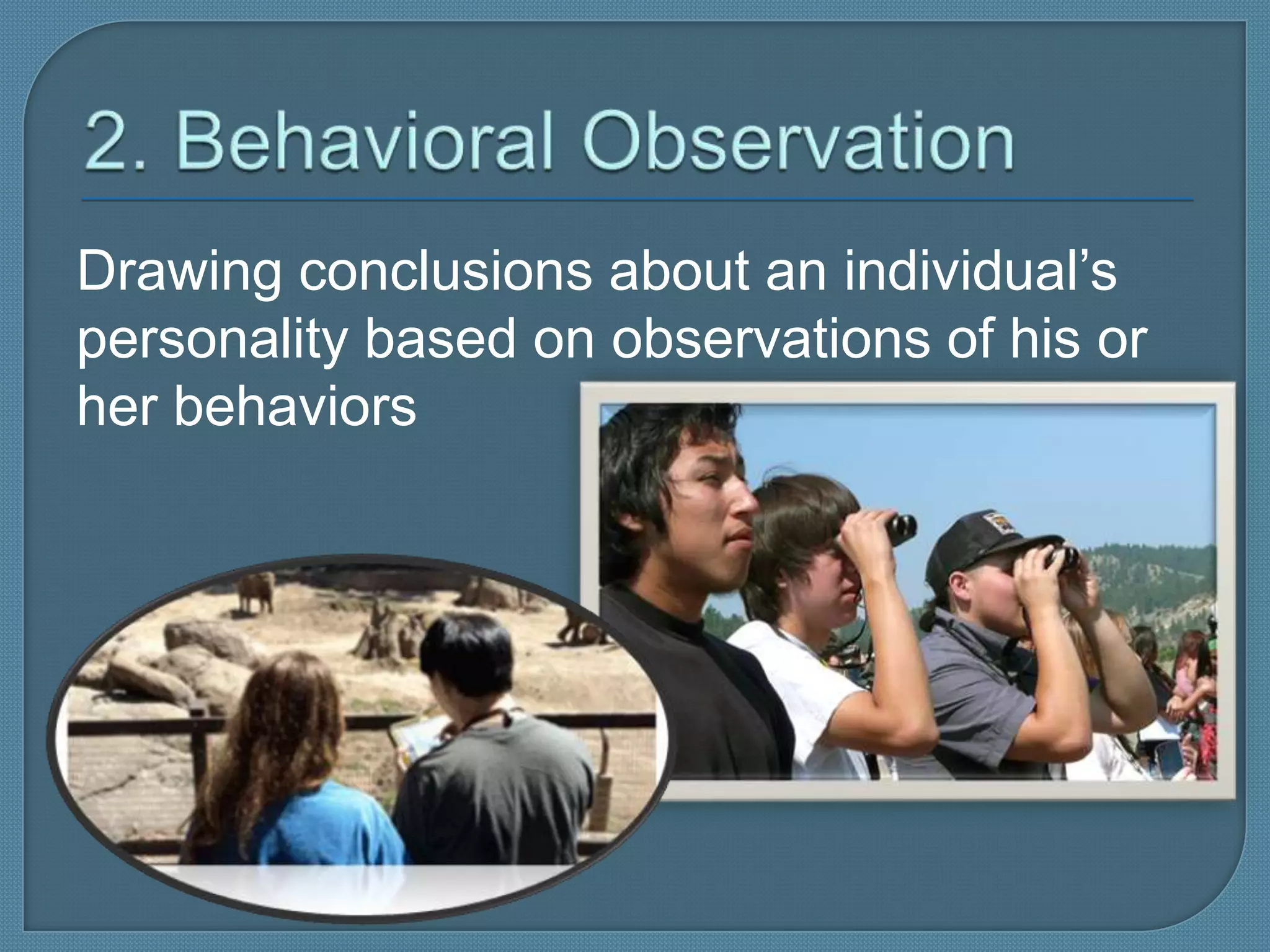
Drawing conclusions about an individual’s
personality based on observations of his or
her behaviors
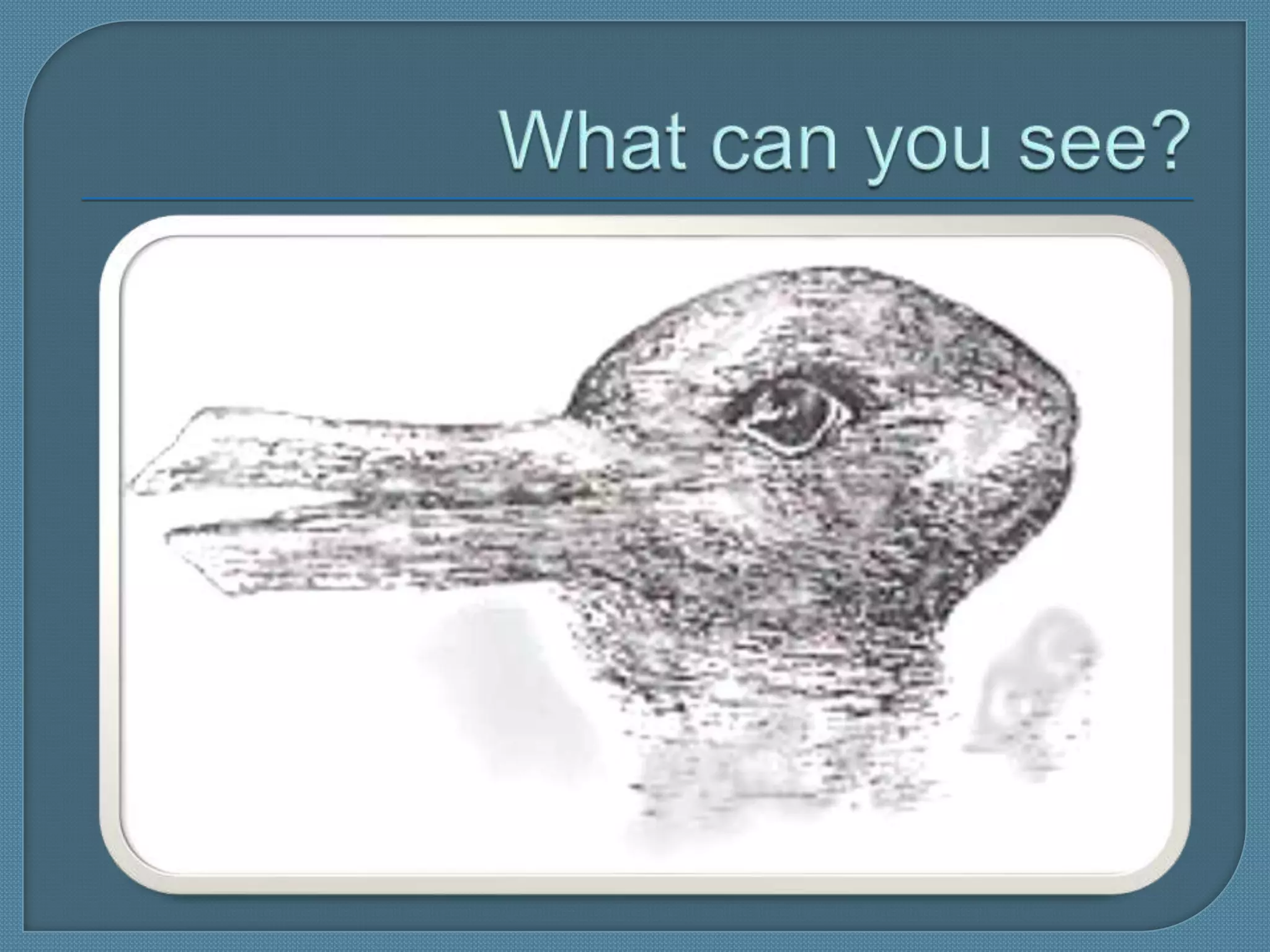
Tests that provide ambiguous stimuli
designed to trigger projection of one’s inner
dynamics
Frequently used Examples:
a. Thematic Apperception Test (TAT)
b. Roschach Inkblot Test
People express their inner feelings and
interests through stories they make up about
ambiguous scenes/pictures. It was
developed by Henry Murray.
Some facts :
i. introduced by Morgan and Murray in 1935
ii. purpose is to reveal patients’ basic personality
characteristics through the interpretation of their imaginative
productions in response to a series of pictures.
iii. 31 TAT cards (one is blank), most show people in a variety
of situations, but a few contain just objects
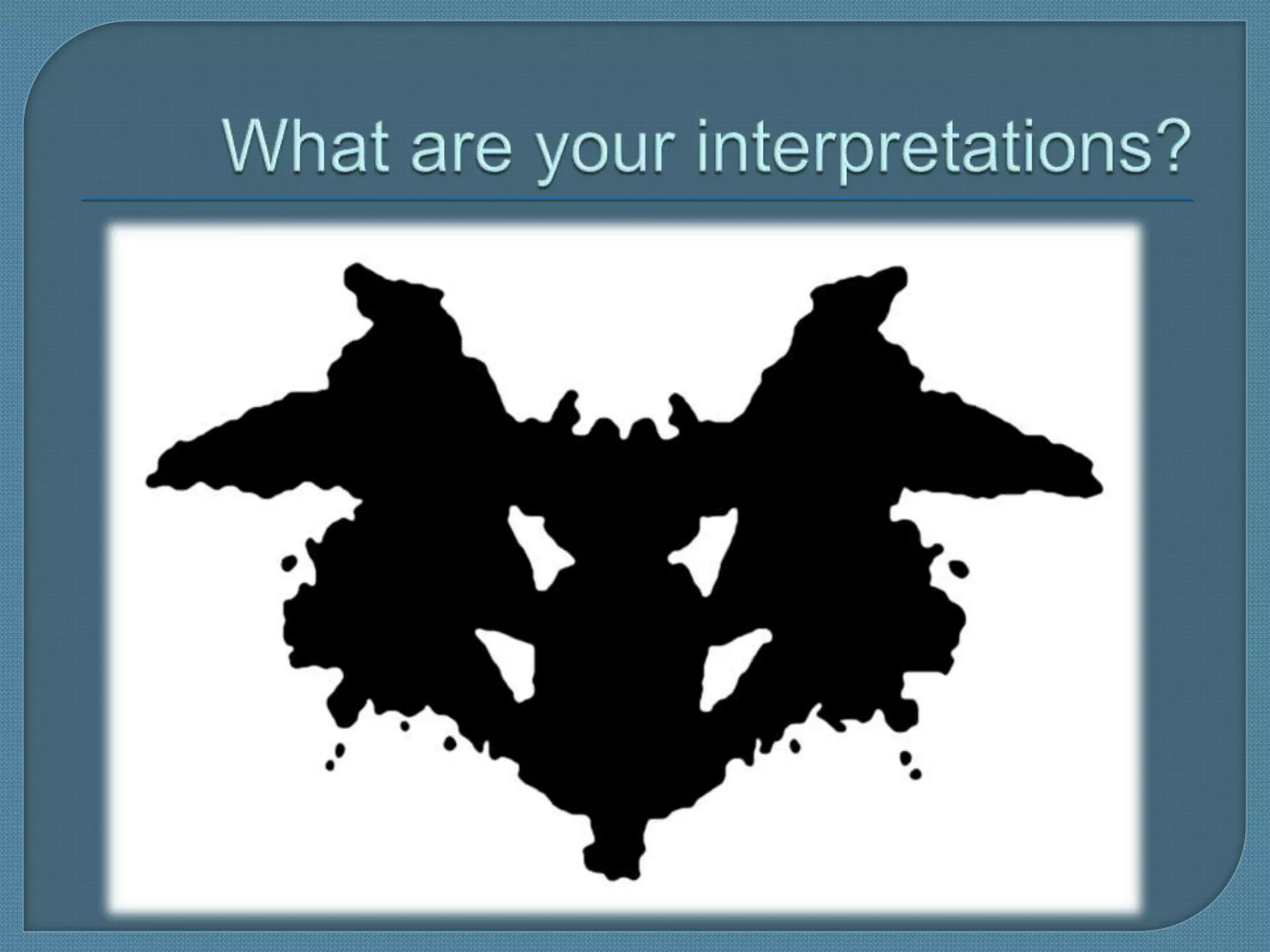
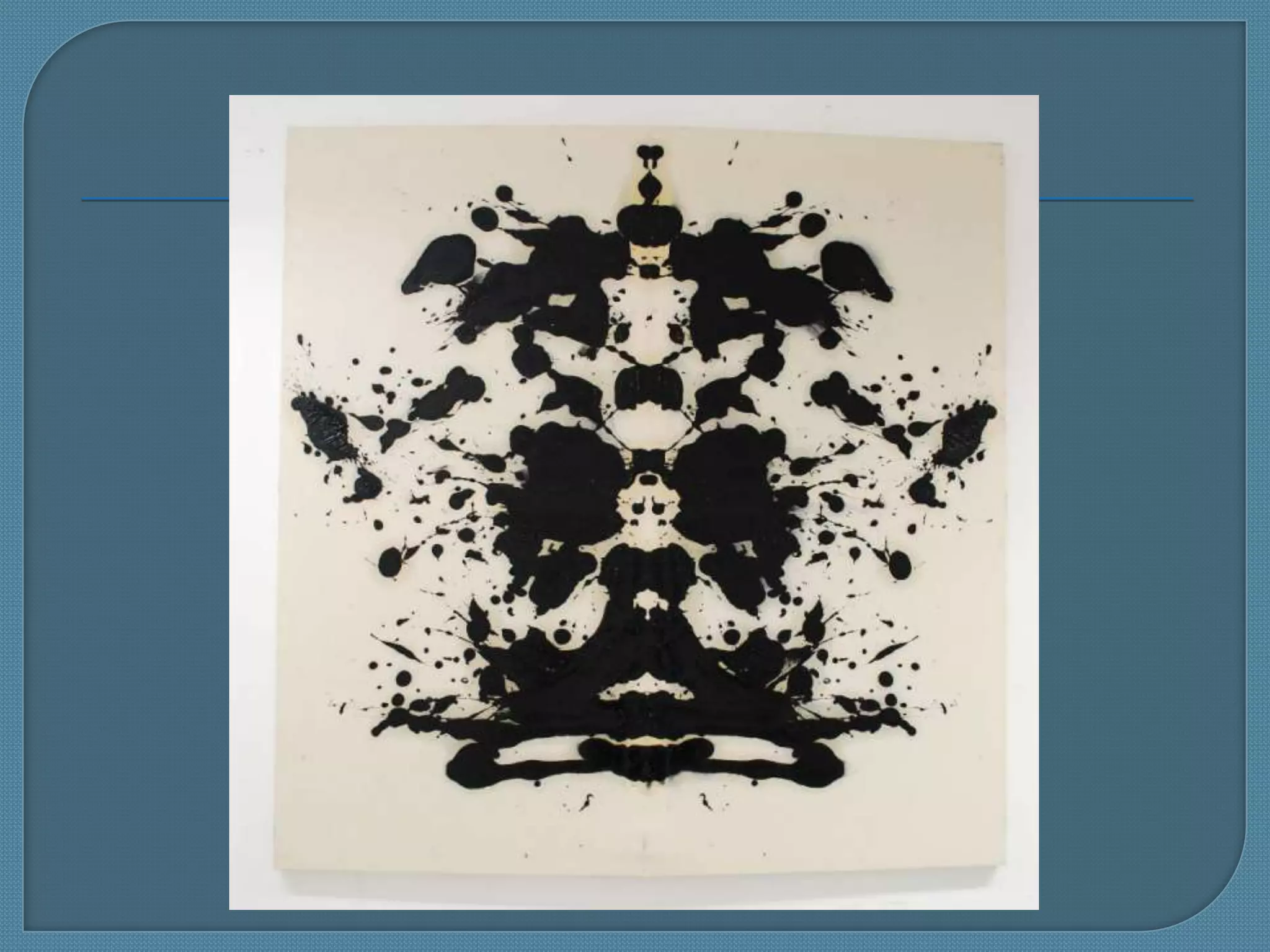
A set of 10 inkblots designed by Herman
Rorschach, now the most widely used
projective test; seeks to identify people’s
inner feelings by analyzing their
interpretations of the blots
Present statements rather than ambiguous
stimuli characteristic of projective tests.
It rely on the test items to predict a particular
criterion.
The test is used by trained professionals to
assist in identifying personality structure
and psychopathology
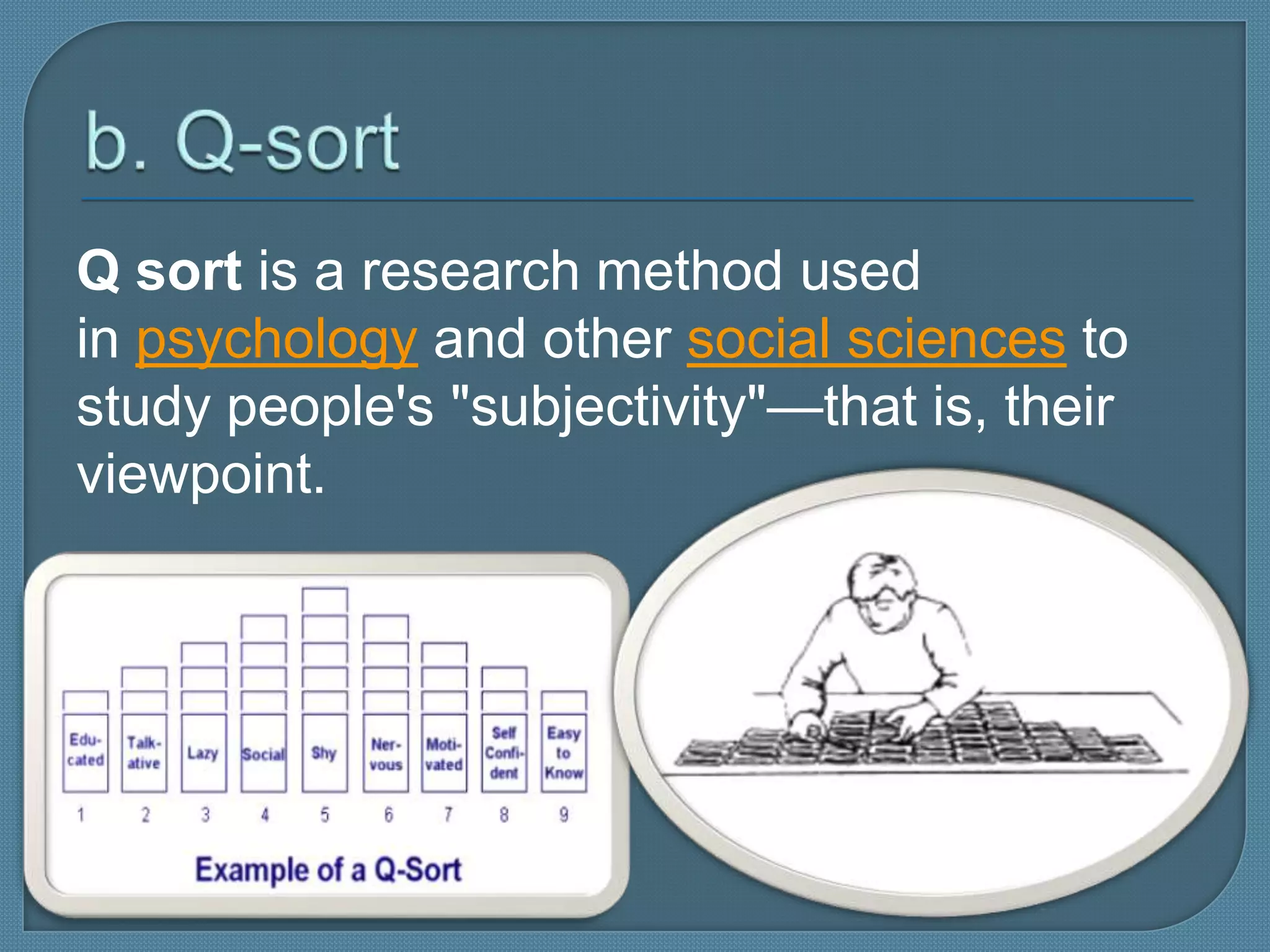
Q sort is a research method used
in psychology and other social sciences to
study people's "subjectivity"—that is, their
viewpoint.
The Myers-Briggs Type
Indicator (MBTI)
assessment is
a psychometric question
naire designed to
measure psychological p
references in how
people perceive the
world and make
decisions.
Measures the attitudes
and values of normal to
high-functioning adults
in terms of the concept
of "self-actualizing.
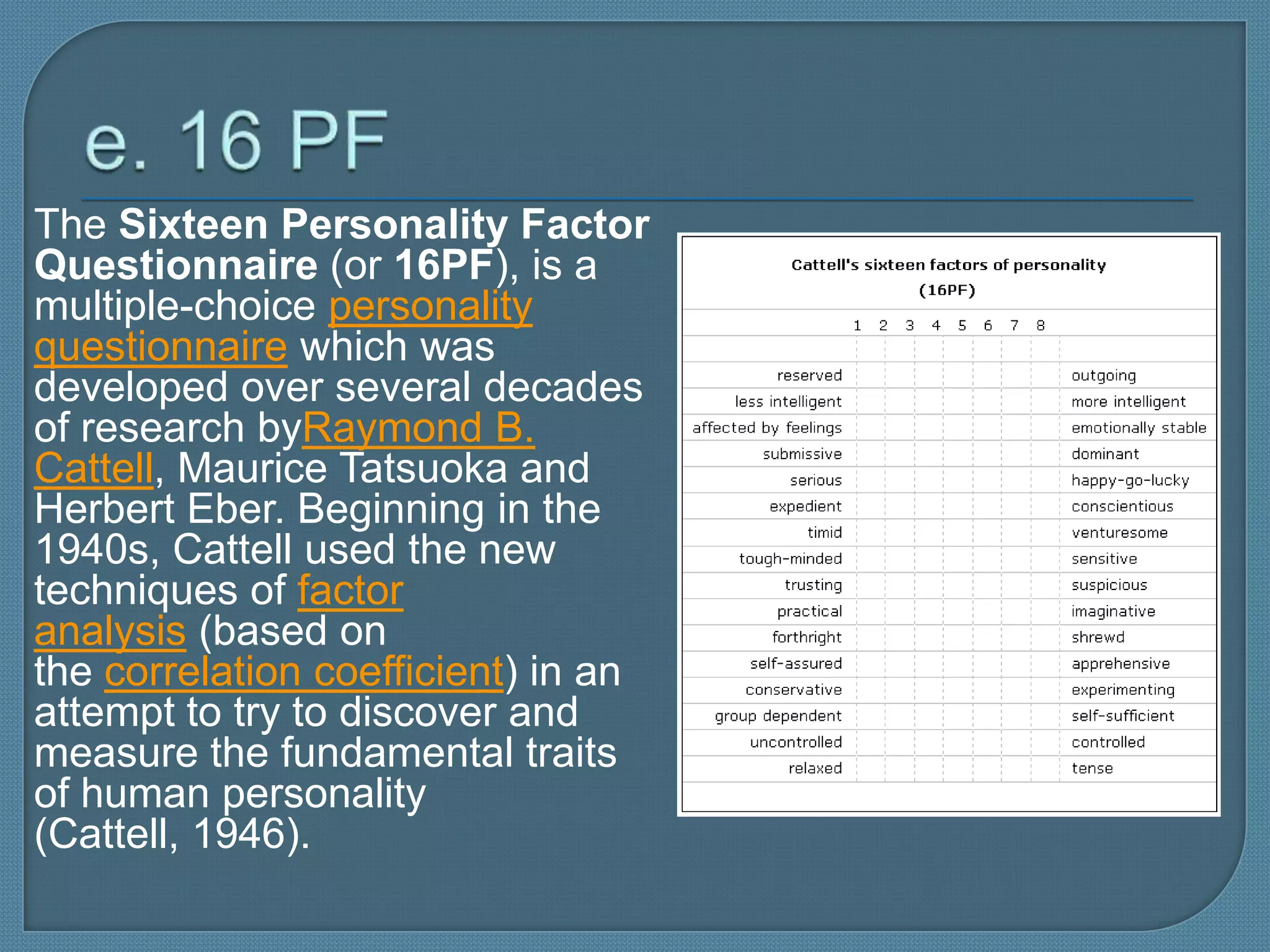
The Sixteen Personality Factor
Questionnaire (or 16PF), is a
multiple-choice personality
questionnaire which was
developed over several decades
of research byRaymond B.
Cattell, Maurice Tatsuoka and
Herbert Eber. Beginning in the
1940s, Cattell used the new
techniques of factor
analysis (based on
the correlation coefficient) in an
attempt to try to discover and
measure the fundamental traits
of human personality
(Cattell, 1946).

Personality assessment(2nd Sem)

  • 4.
    To be useful,such assessments must be constructed using the established criteria of standardization, reliability, and validity. The information can be used in several areas, including clinical work, vocational counseling, education, and research.
  • 10.
    An interview isa conversation between two or more people where questions are asked by the interviewer to elicit facts or statements from the interviewee. Involves asking person about his or her life.
  • 11.
    Drawing conclusions aboutan individual’s personality based on observations of his or her behaviors
  • 12.
    Tests that provideambiguous stimuli designed to trigger projection of one’s inner dynamics Frequently used Examples: a. Thematic Apperception Test (TAT) b. Roschach Inkblot Test
  • 13.
    People express theirinner feelings and interests through stories they make up about ambiguous scenes/pictures. It was developed by Henry Murray. Some facts : i. introduced by Morgan and Murray in 1935 ii. purpose is to reveal patients’ basic personality characteristics through the interpretation of their imaginative productions in response to a series of pictures. iii. 31 TAT cards (one is blank), most show people in a variety of situations, but a few contain just objects
  • 17.
    A set of10 inkblots designed by Herman Rorschach, now the most widely used projective test; seeks to identify people’s inner feelings by analyzing their interpretations of the blots
  • 20.
    Present statements ratherthan ambiguous stimuli characteristic of projective tests. It rely on the test items to predict a particular criterion.
  • 22.
    The test isused by trained professionals to assist in identifying personality structure and psychopathology
  • 23.
    Q sort isa research method used in psychology and other social sciences to study people's "subjectivity"—that is, their viewpoint.
  • 24.
    The Myers-Briggs Type Indicator(MBTI) assessment is a psychometric question naire designed to measure psychological p references in how people perceive the world and make decisions.
  • 25.
    Measures the attitudes andvalues of normal to high-functioning adults in terms of the concept of "self-actualizing.
  • 26.
    The Sixteen PersonalityFactor Questionnaire (or 16PF), is a multiple-choice personality questionnaire which was developed over several decades of research byRaymond B. Cattell, Maurice Tatsuoka and Herbert Eber. Beginning in the 1940s, Cattell used the new techniques of factor analysis (based on the correlation coefficient) in an attempt to try to discover and measure the fundamental traits of human personality (Cattell, 1946).