Personal
     Knowledge
    Management

                                                                               Steve Dale
                                                                              @stephendale
                                                                              @collabor8now
     Unless otherwise noted, this work is licensed under a Creative Commons
          Attribution-NonCommercial-ShareAlike 3.0 Unported License.

1
“We always know more than we can say, and we
      always say more than we can write”
                                      Dave Snowden


                                  2
Exercise
• Personal Knowledge Management
  Questionnaire

• What is your PKM Profile?

             PKM Questionnaire


                                 3
What is “PKM”?

It’s about taking responsibility for
      personal & professional
  development in order to remain
 ‘relevant’ in a sometimes chaotic
 and fast-changing environment.


                              4
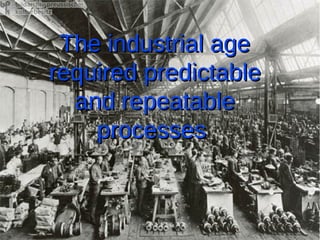
The industrial age
required predictable
  and repeatable
    processes
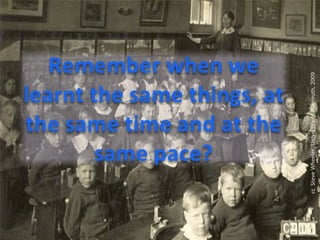
cc Steve Wheeler, University of Plymouth, 2009
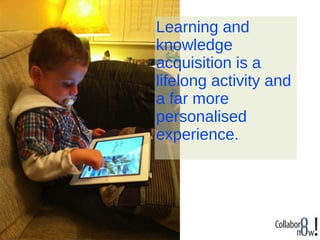
Learning and
knowledge
acquisition is a
lifelong activity and
a far more
personalised
experience.
Source: Harold Jarche
13
How?
Break-out session


                    14
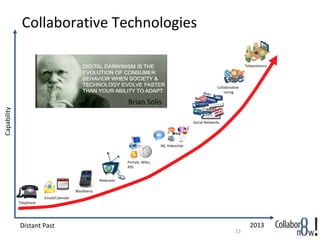
Collaborative Technologies

                                                                                                                                 Telepresence


                                                                                                                 Collaborative
                                                                                                                 Authoring

                                                                  Brian Solis
Capability


                                                                                                    Social Networks


                                                                                    IM, Videochat


                                                                  Portals, Wikis,
                                                                  RSS


                                                       Webcasts

                                          Blackberry
                         Email/Calendar
             Telephone


             Distant Past                                                                                                          2013
                                                                                                                           15
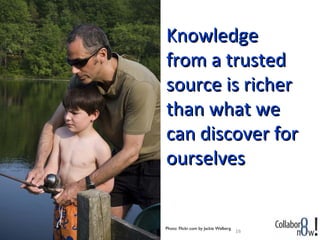
Knowledge
from a trusted
source is richer
than what we
can discover for
ourselves


Photo: Flickr.com by Jackie Welberg
                                      16
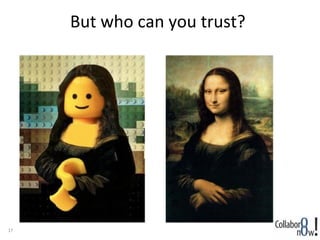
But who can you trust?


17
Personal
      Knowledge
     Management


              Unless otherwise noted, this work is licensed under a Creative Commons
                   Attribution-NonCommercial-ShareAlike 3.0 Unported License.

18
     cc licensed flickr photo by Will Lion: http://flickr.com/photos/will-lion/2595497078/
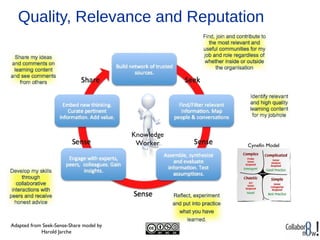
Quality, Relevance and Reputation


                                         Knowledge
                                          Worker     Cynefin Model


Adapted from Seek-Sense-Share model by
            Harold Jarche
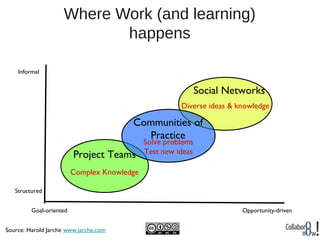
Where Work (and learning)
                           happens

    Informal


                                                              Social Networks
                                                       Diverse ideas & knowledge

                                        Communities of
                                          Practice
                                             Solve problems
                         Project Teams       Test new ideas

                         Complex Knowledge

   Structured


         Goal-oriented                                                  Opportunity-driven


Source: Harold Jarche www.jarche.com
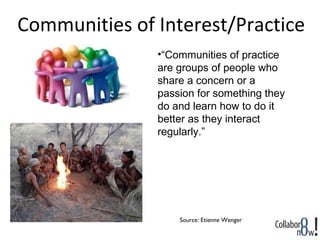
Communities of Interest/Practice
               •“Communities of practice
               are groups of people who
               share a concern or a
               passion for something they
               do and learn how to do it
               better as they interact
               regularly.”


                   Source: Etienne Wenger
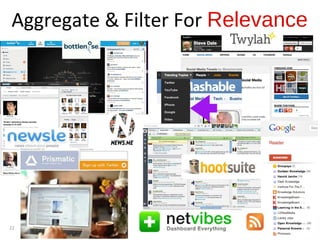
Aggregate & Filter For Relevance


22
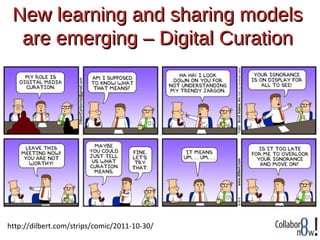
New learning and sharing models
  are emerging – Digital Curation


http://dilbert.com/strips/comic/2011-10-30/
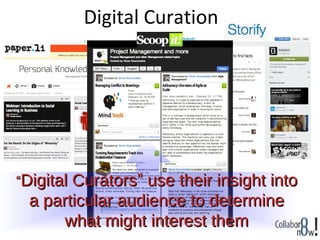
Digital Curation


“Digital Curators” use their insight into
 a particular audience to determine
      what might interest them
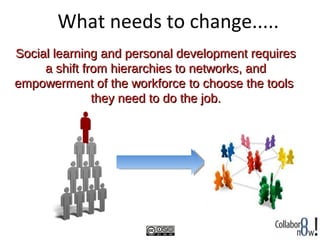
What needs to change.....
Social learning and personal development requires
     a shift from hierarchies to networks, and
empowerment of the workforce to choose the tools
               they need to do the job.
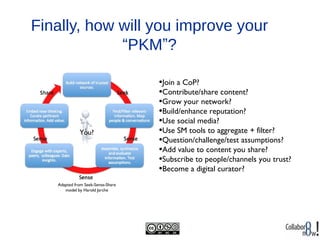
Finally, how will you improve your
             “PKM”?

                                   •Join a CoP?
                                   •Contribute/share content?
                                   •Grow your network?
                                   •Build/enhance reputation?
                                   •Use social media?
             You?                  •Use SM tools to aggregate + filter?
                                   •Question/challenge/test assumptions?
                                   •Add value to content you share?
                                   •Subscribe to people/channels you trust?
                                   •Become a digital curator?
   Adapted from Seek-Sense-Share
      model by Harold Jarche
“It’s not the strongest of the
                                                            species that survives, nor
                                                           the most intelligent, but the
                                                               one most adaptable to
                                                                  change.” Darwin
Email: steve.dale@collabor8now.com
Twitter: @stephendale, @collabor8now
Profile: http://about.me/stephendale


             Unless otherwise noted, this work is licensed under a Creative Commons
                  Attribution-NonCommercial-ShareAlike 3.0 Unported License.

Personal knowledge management

  • 1.
    Personal Knowledge Management Steve Dale @stephendale @collabor8now Unless otherwise noted, this work is licensed under a Creative Commons Attribution-NonCommercial-ShareAlike 3.0 Unported License. 1
  • 2.
    “We always knowmore than we can say, and we always say more than we can write” Dave Snowden 2
  • 3.
    Exercise • Personal KnowledgeManagement Questionnaire • What is your PKM Profile? PKM Questionnaire 3
  • 4.
    What is “PKM”? It’sabout taking responsibility for personal & professional development in order to remain ‘relevant’ in a sometimes chaotic and fast-changing environment. 4
  • 5.
    The industrial age requiredpredictable and repeatable processes
  • 7.
    cc Steve Wheeler,University of Plymouth, 2009
  • 9.
    Learning and knowledge acquisition isa lifelong activity and a far more personalised experience.
  • 10.
  • 13.
  • 14.
  • 15.
    Collaborative Technologies Telepresence Collaborative Authoring Brian Solis Capability Social Networks IM, Videochat Portals, Wikis, RSS Webcasts Blackberry Email/Calendar Telephone Distant Past 2013 15
  • 16.
    Knowledge from a trusted sourceis richer than what we can discover for ourselves Photo: Flickr.com by Jackie Welberg 16
  • 17.
    But who canyou trust? 17
  • 18.
    Personal Knowledge Management Unless otherwise noted, this work is licensed under a Creative Commons Attribution-NonCommercial-ShareAlike 3.0 Unported License. 18 cc licensed flickr photo by Will Lion: http://flickr.com/photos/will-lion/2595497078/
  • 19.
    Quality, Relevance andReputation Knowledge Worker Cynefin Model Adapted from Seek-Sense-Share model by Harold Jarche
  • 20.
    Where Work (andlearning) happens Informal Social Networks Diverse ideas & knowledge Communities of Practice Solve problems Project Teams Test new ideas Complex Knowledge Structured Goal-oriented Opportunity-driven Source: Harold Jarche www.jarche.com
  • 21.
    Communities of Interest/Practice •“Communities of practice are groups of people who share a concern or a passion for something they do and learn how to do it better as they interact regularly.” Source: Etienne Wenger
  • 22.
    Aggregate & FilterFor Relevance 22
  • 23.
    New learning andsharing models are emerging – Digital Curation http://dilbert.com/strips/comic/2011-10-30/
  • 24.
    Digital Curation “Digital Curators”use their insight into a particular audience to determine what might interest them
  • 25.
    What needs tochange..... Social learning and personal development requires a shift from hierarchies to networks, and empowerment of the workforce to choose the tools they need to do the job.
  • 26.
    Finally, how willyou improve your “PKM”? •Join a CoP? •Contribute/share content? •Grow your network? •Build/enhance reputation? •Use social media? You? •Use SM tools to aggregate + filter? •Question/challenge/test assumptions? •Add value to content you share? •Subscribe to people/channels you trust? •Become a digital curator? Adapted from Seek-Sense-Share model by Harold Jarche
  • 27.
    “It’s not thestrongest of the species that survives, nor the most intelligent, but the one most adaptable to change.” Darwin Email: steve.dale@collabor8now.com Twitter: @stephendale, @collabor8now Profile: http://about.me/stephendale Unless otherwise noted, this work is licensed under a Creative Commons Attribution-NonCommercial-ShareAlike 3.0 Unported License.

Editor's Notes

  • #5 Tacit knowledge, informal chat, knowing where things are or who is doing what are now the key drivers for the ‘ knowledge economy ” . Businesses are generally ok at getting formal explicit knowledge out to people using intranets, eLearning and bulletins, although this is often rather dry and unappealing.
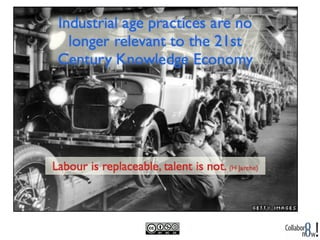
  • #7 Routine tasks are increasingly being outsourced. Simple repetitive tasks are done my machines and robots, freeing humans to create value, improve processes and innovate. Labour is replaceable. Talent is not (ref Harold Jarche).
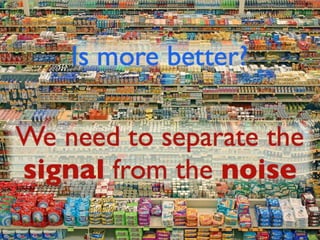
  • #14 More doesn ’ t mean better
  • #16 Technology is the vehicle for making collaboration happen. It should be easy and transparent for employees to use and integrated into their work processes.
  • #19 It ’ s overwhelming. With so much information, tools & people out there, how do we start?
  • #20 Seeking is finding things out and keeping up to date. Building a network of colleagues is helpful in this regard. It not only allows us to “ pull ” information, but also have it “ pushed ” to us by trusted sources. Sensing is how we personalise information and use it. Sensing includes reflection and putting into practice what we have learned. Often it requires experimentation, as we learn best by doing. Sharing includes exchanging resources, ideas, and experiences with our networks as well as collaborating with our colleagues (Source: Harold Jarche)
  • #21 Tacit knowledge, informal chat, knowing where things are or who is doing what. Businesses are ok at getting formal explicit knowledge out to people using intranets, eLearning and bulletins. although this is often rather dry and unappealing.
  • #22 We should perhaps differentiate “ Communities of Practice ” from “ Social Networks ” . The former operate from a sense of shared values and objectives. The latter is a far more personalised agenda.
  • #23 A small selection of the many information aggregation services, including: Bottlenose Twylah News.me Newsle Mashable Netvibes Hootesuite Google Reader/RSS
  • #25 Digital curation is important because people want to know what ’ s important and they want to discover interesting and relevant content. A great curator: Optimises titles so it is relevant for that audience Edits the content to add further relevance of the message Formats the material so it is easy for the audience to read and apply to their situation Adds good images and other visual material that complements and reinforces the content Excerpts selected text so the reader can quickly and easily grasp the most important elements Adds his or her own voice in an intro to the piece, adding context and relevance for the reader Tags all content with relevant words and phrases so it is easily found by that audience Supplies links to expand the scope of the piece and give access to added resources about the subject Personalizes each piece for the relevant audience when posting to social sites, when appropriate Ensures all curated content is correct and from a reliable source Always gives attribution and links to sources Filters content vigorously and does not publish anything and everything Has a network of experts and curators in their sphere that they can tap into for personal insights Suggests stories and items to other curators Searches for additional material that can add depth and value or context to an item Constantly scouts for interesting new sources Sets up searches, filters and feeds to get a constant flow of relevant information Makes the focus of the curated content perfectly clear and easy to see right upfront Recommends other newsmasters and curators with great content Crowd sources tips and suggestions from readers and always acknowledges their contributions
  • #26 Hierarchies mean that knowledge has to flow uphill and cascade to lower levels. Networks mean direct knowledge transfer regardless of status or rank.