

You cannot measure information,
you can measure conversations


                         EIM 2011 conference
                         Amsterdam
                         @thethinkingape

                         jeroen.derynck@thinkingape.be


                                                         1
The conversation economy


                           2
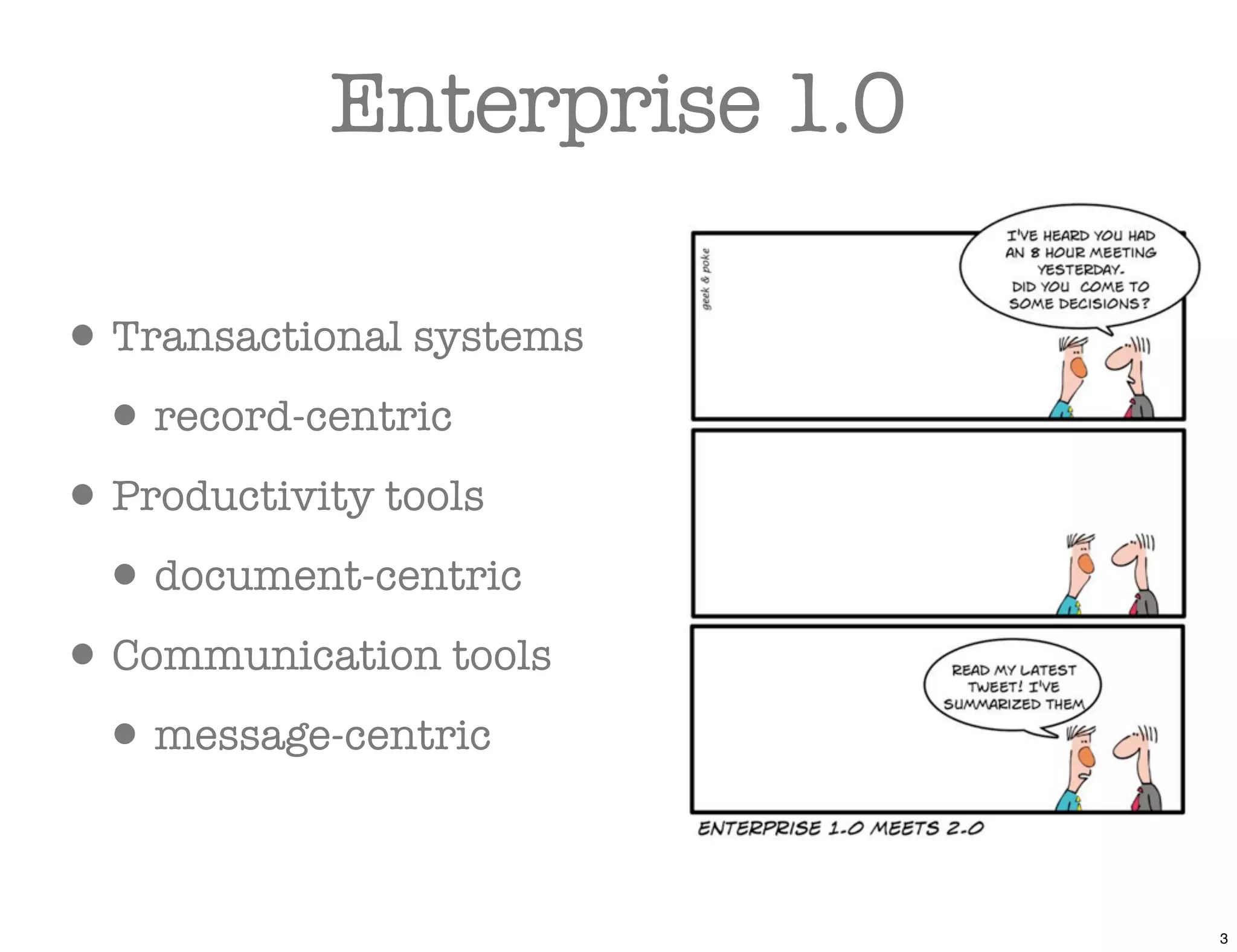
Enterprise 1.0

• Transactional systems
 • record-centric
• Productivity tools
 • document-centric
• Communication tools
 • message-centric

                            3
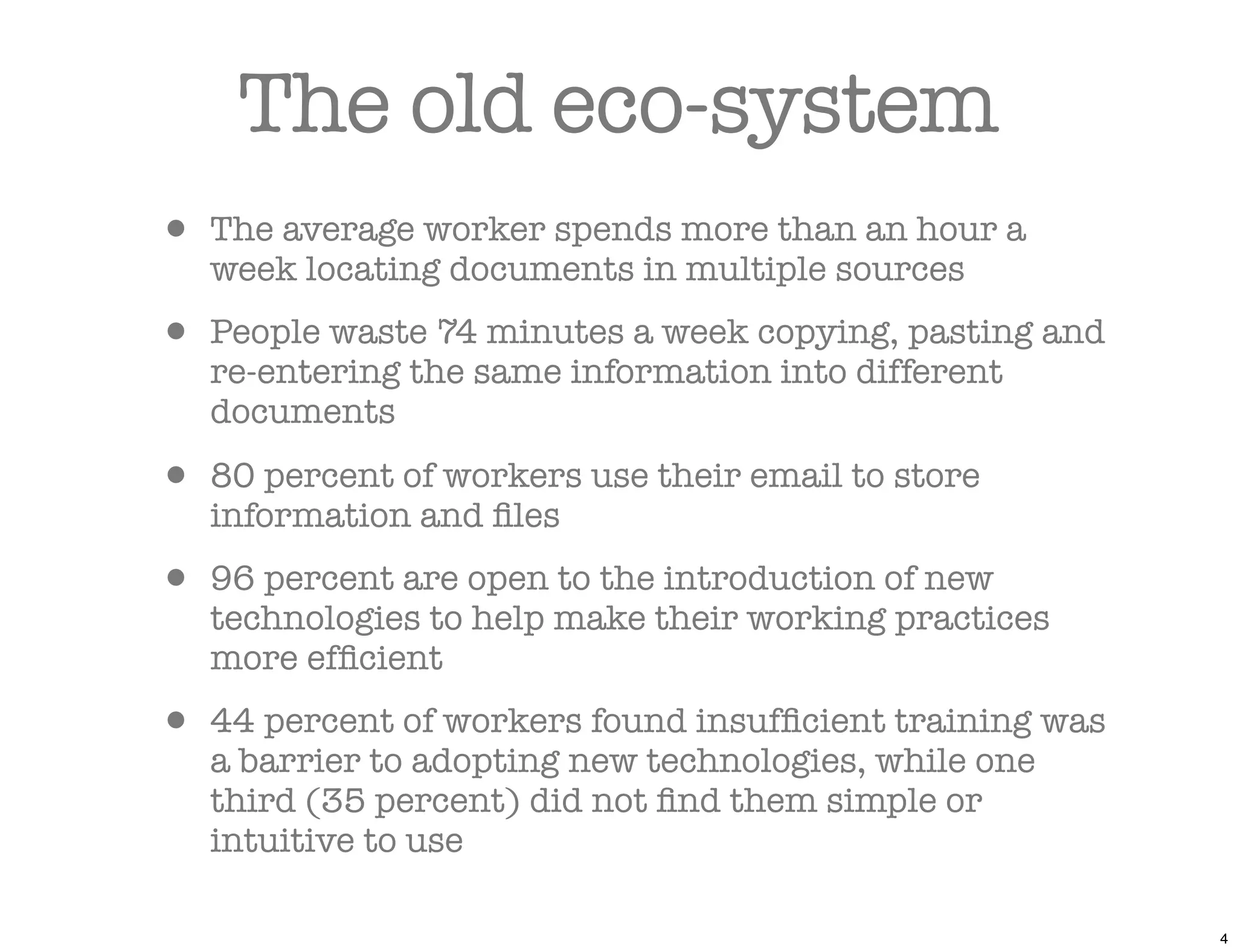
The old eco-system
• The average worker spends more than an hour a
   week locating documents in multiple sources

• People waste 74 minutes a week copying, pasting and
   re-entering the same information into different
   documents

• 80 percent of workers use their email to store
   information and files

• 96 percent are open to the introduction of new
   technologies to help make their working practices
   more efficient

• 44 percent of workers found insufficient training was
   a barrier to adopting new technologies, while one
   third (35 percent) did not find them simple or
   intuitive to use

                                                         4
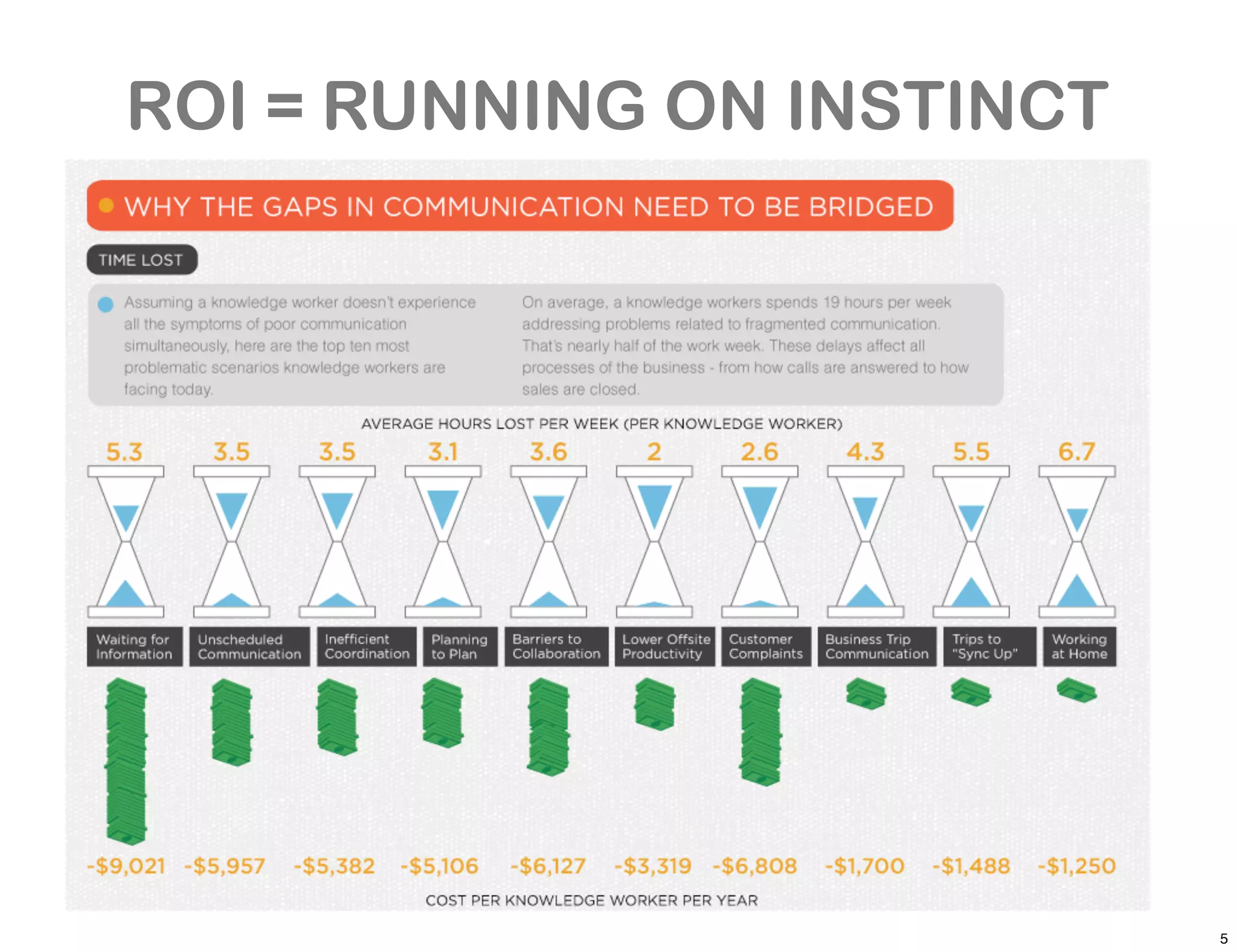
ROI = RUNNING ON INSTINCT


                            5
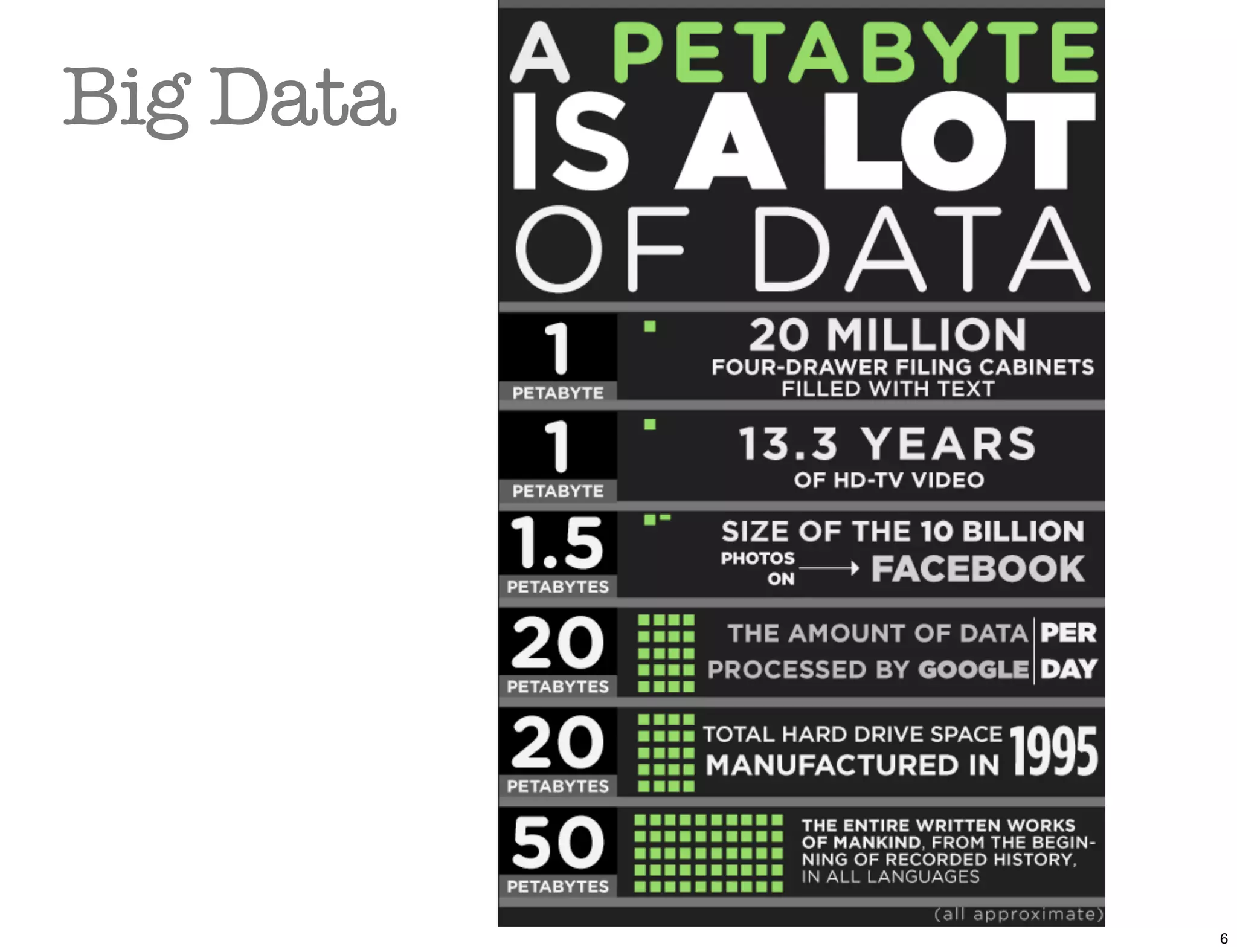
Big Data


           6
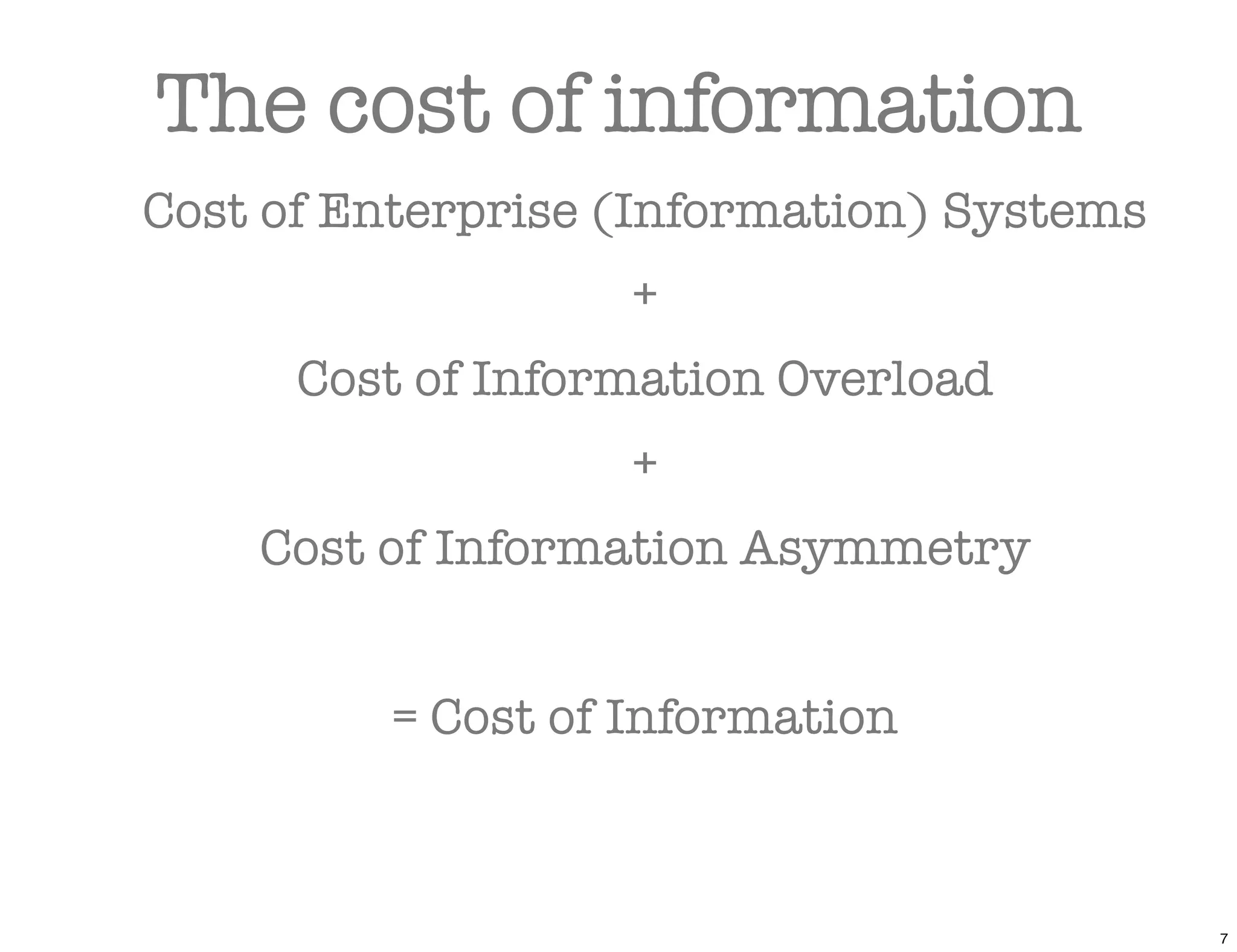
The cost of information
Cost of Enterprise (Information) Systems
                   +
      Cost of Information Overload
                   +
    Cost of Information Asymmetry


         = Cost of Information


                                           7
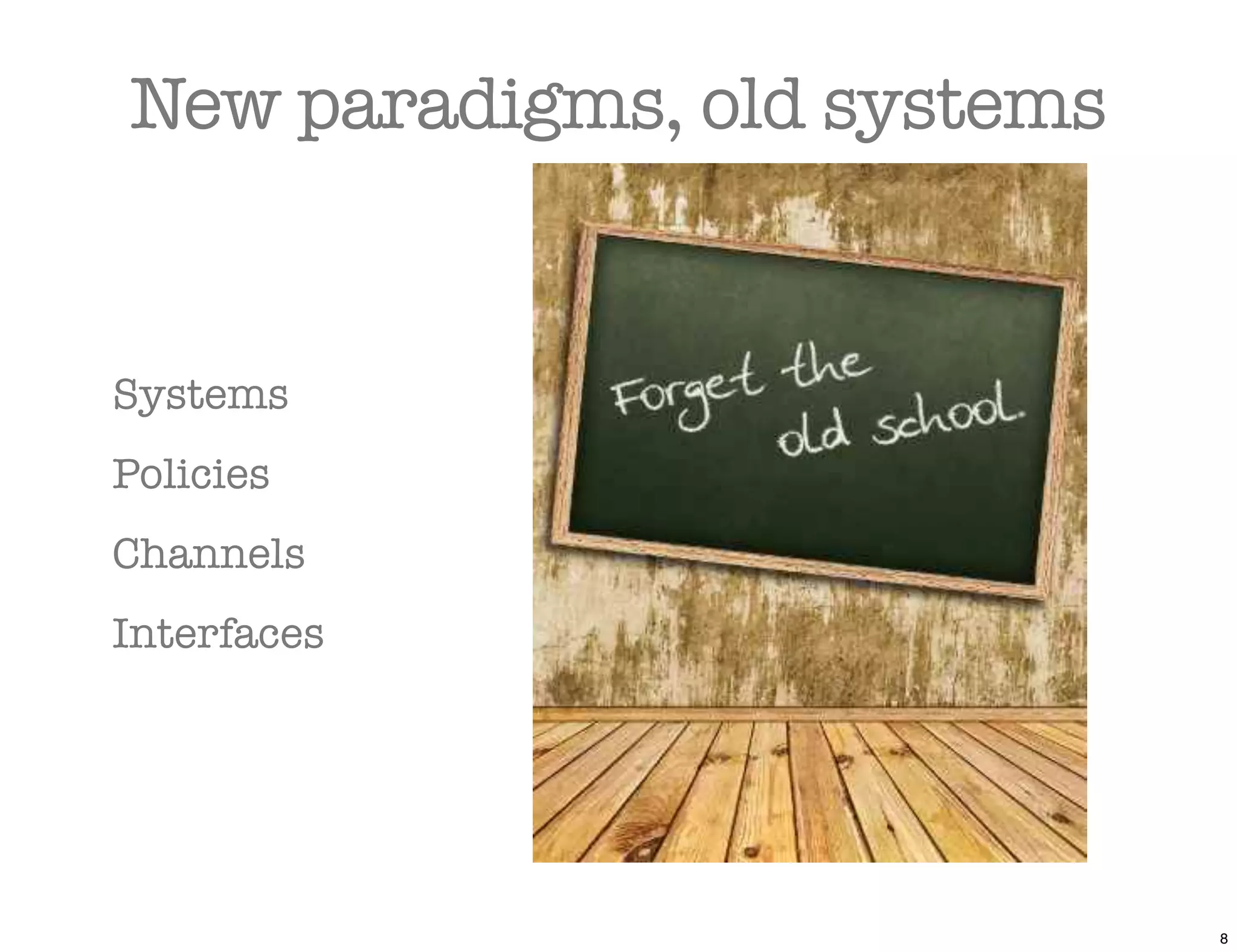
New paradigms, old systems


Systems
Policies
Channels
Interfaces


                             8
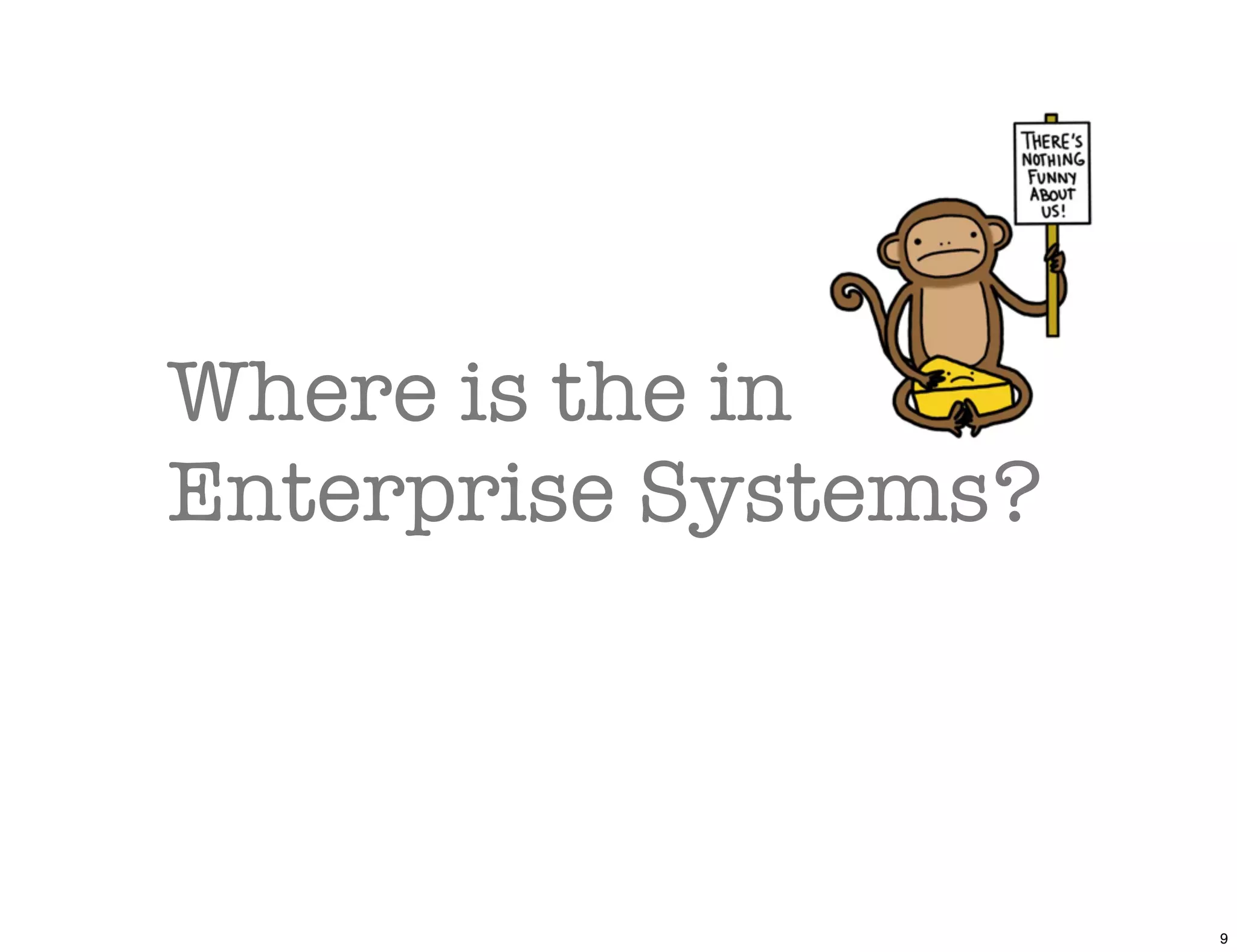
Where is the in
Enterprise Systems?


                      9
...knowledge itself is becoming overwhelmingly
plentiful and we know that most of it is
unstructured. While the majority of the effort
has been in trying to apply structure to this
knowledge to make it easier to assetize and
capitalize, are we ignoring a big picture:
with a world of abundance of knowledge—and
not scarcity—it makes more sense to deliver
market leadership by capitalizing on the added
value of expertise, relationships, introspection,
eminence and experience
http://blogs.forbes.com/rawnshah/2011/03/01/shifting-the-imperative-from-knowledge-management-to-expertise-management/

                                                                                                                         10
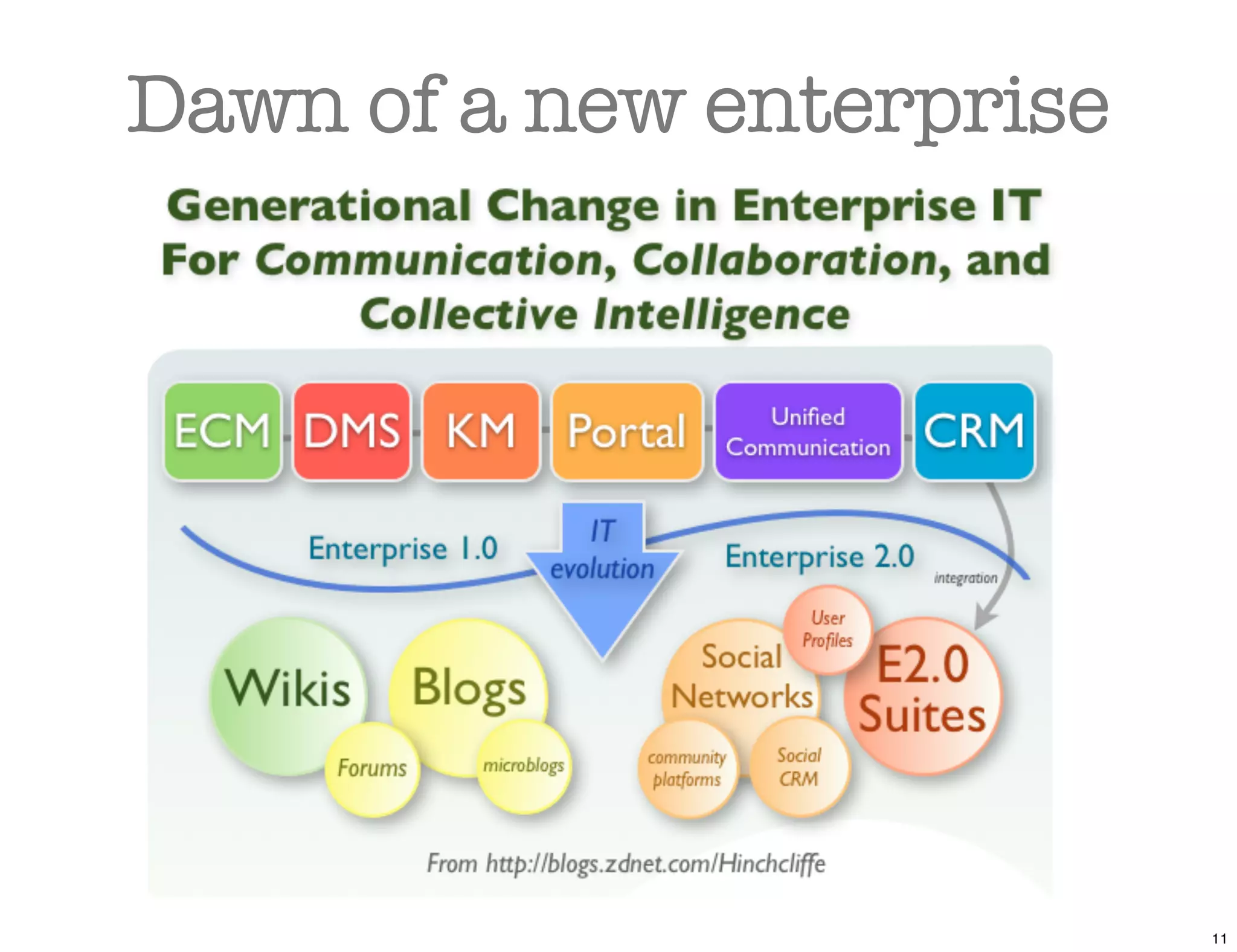
Dawn of a new enterprise


                           11
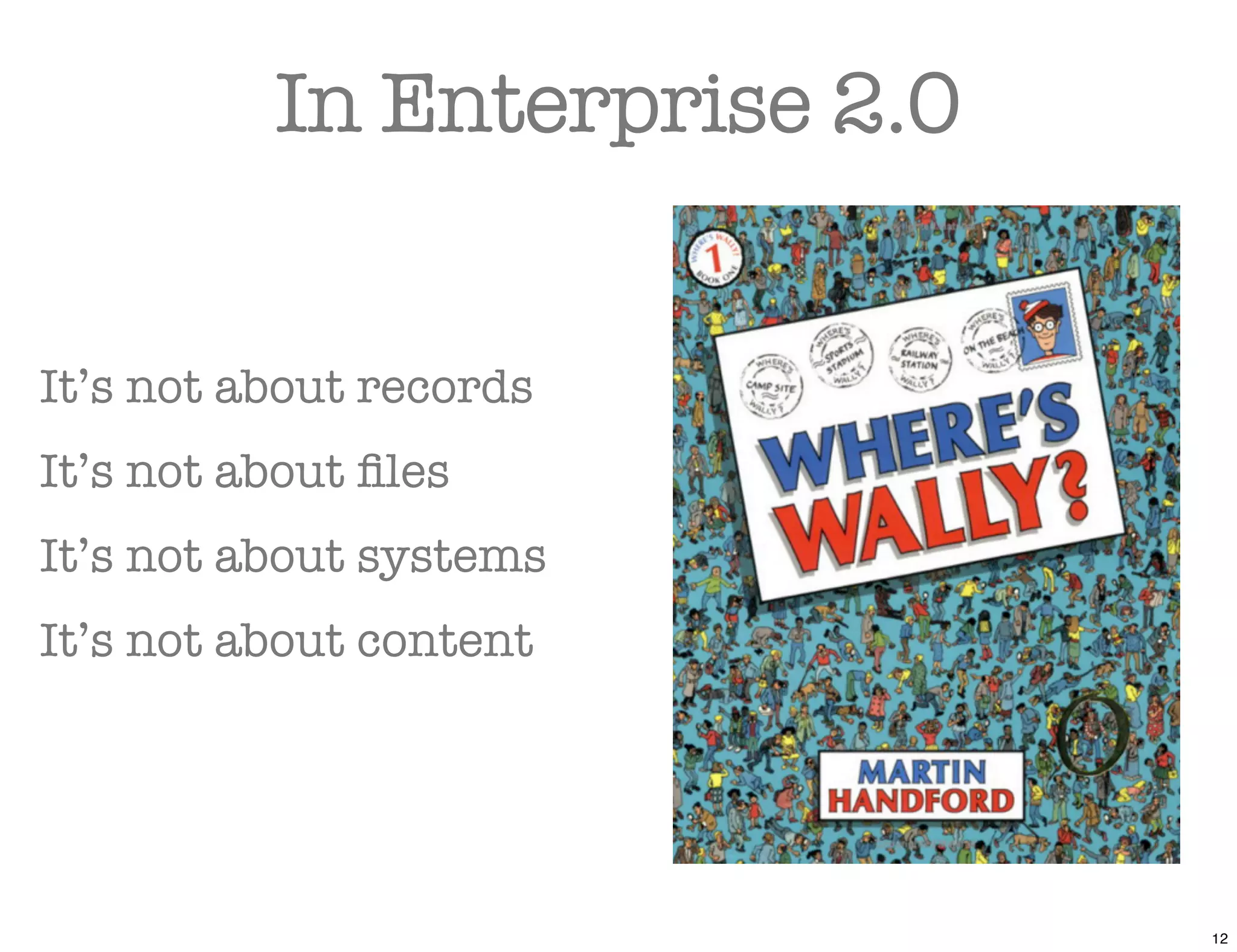
In Enterprise 2.0


It’s not about records
It’s not about files
It’s not about systems
It’s not about content


                              12
The social enterprise

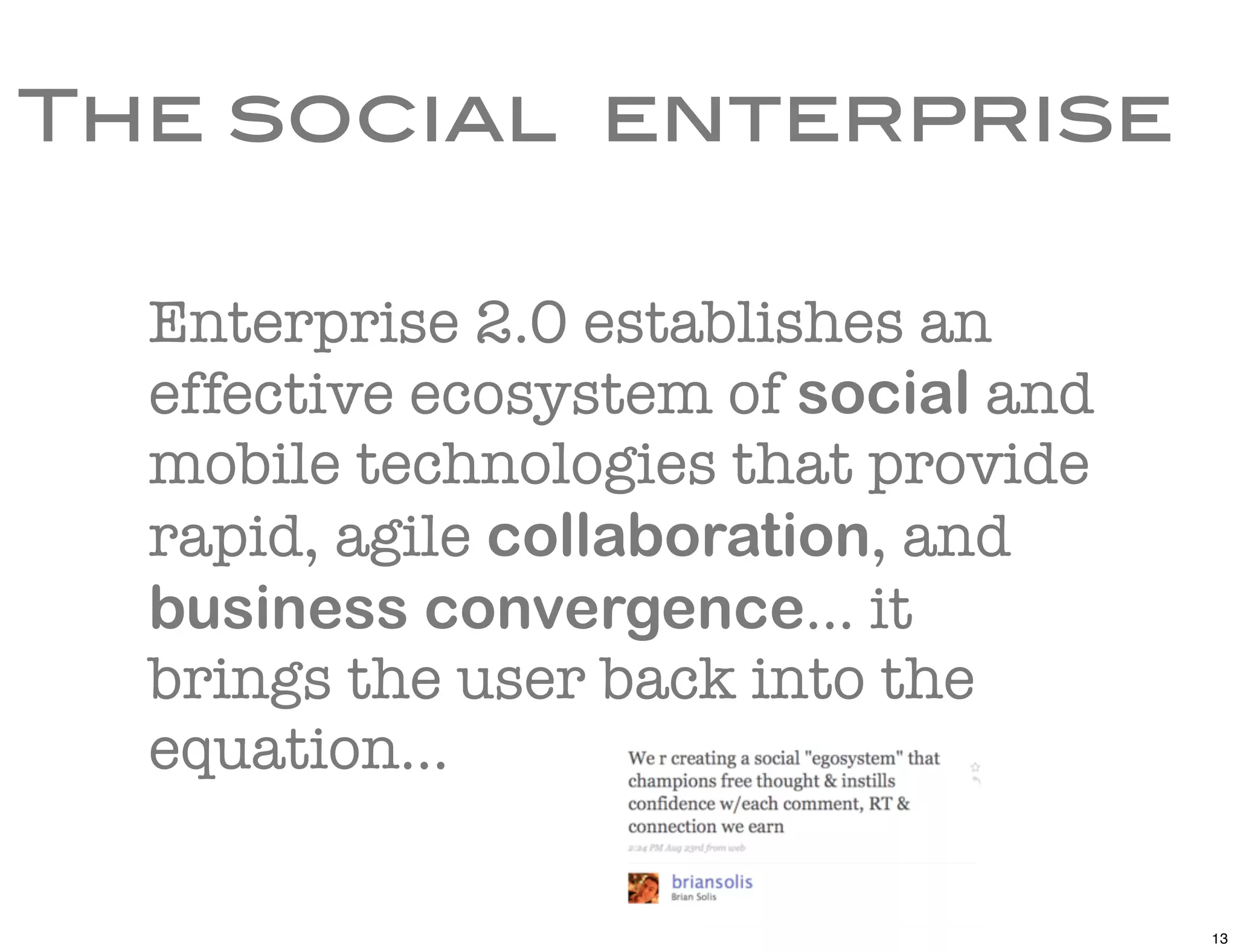
  Enterprise 2.0 establishes an
  effective ecosystem of social and
  mobile technologies that provide
  rapid, agile collaboration, and
  business convergence... it
  brings the user back into the
  equation...

                                      13
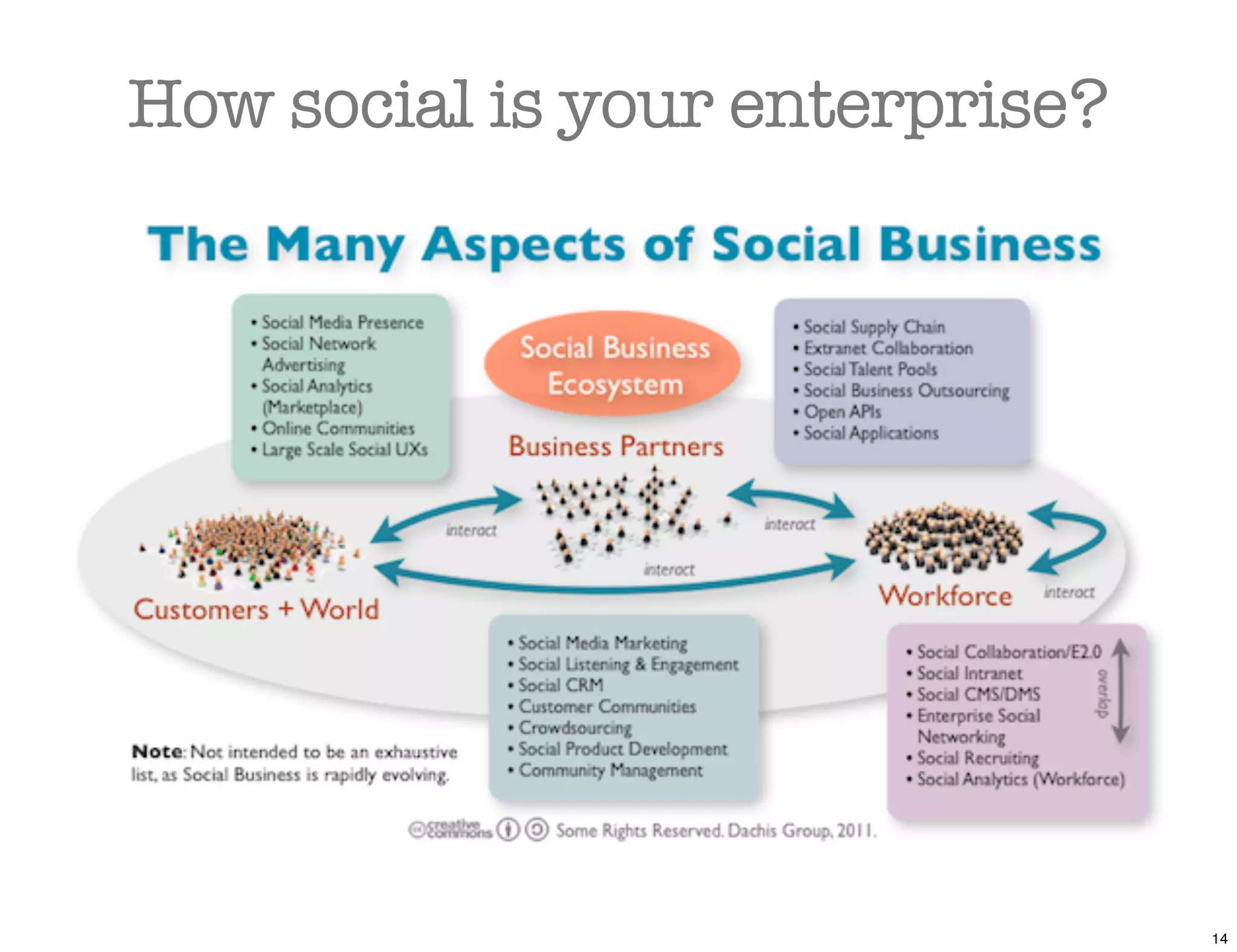
How social is your enterprise?


                                 14
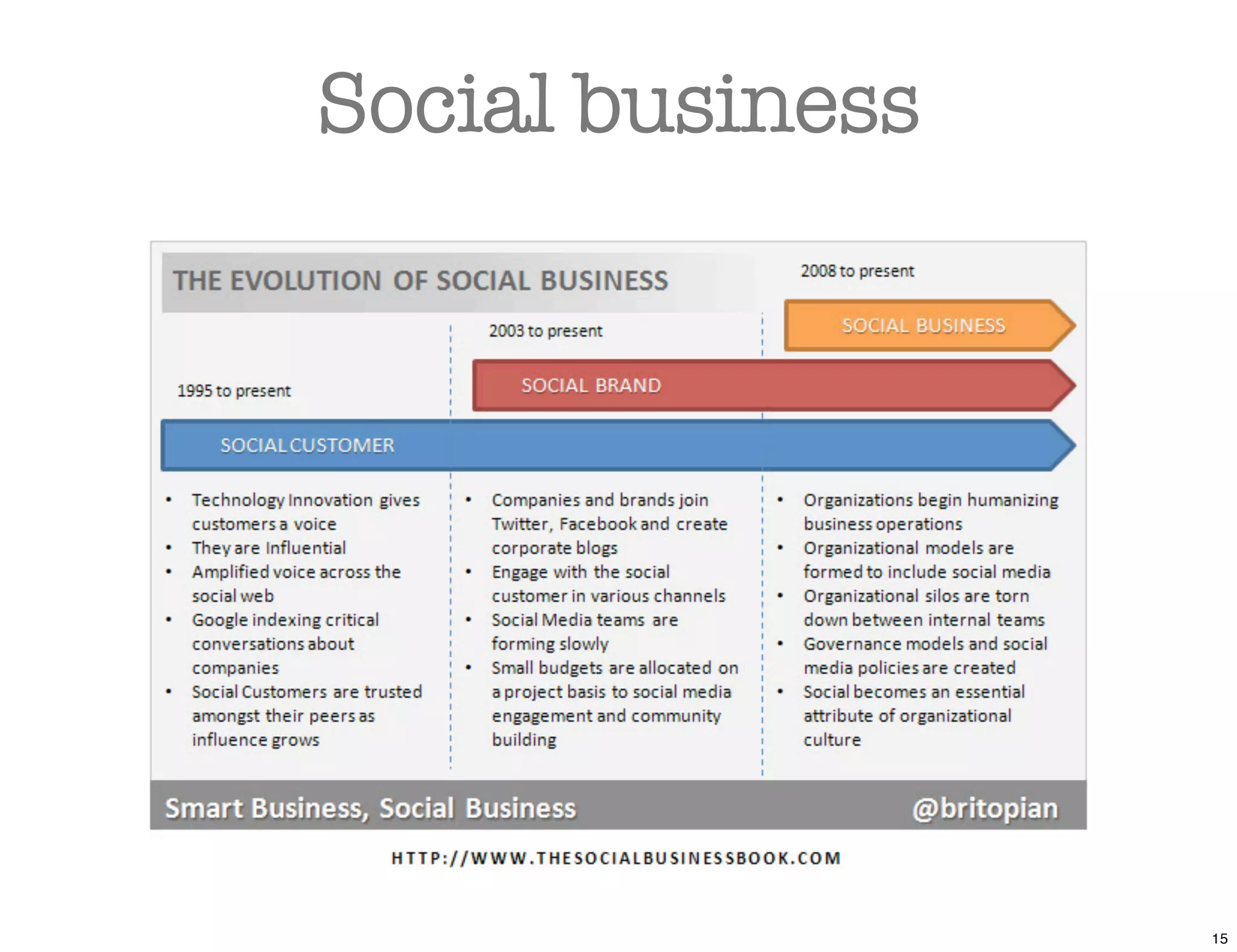
Social business


                  15
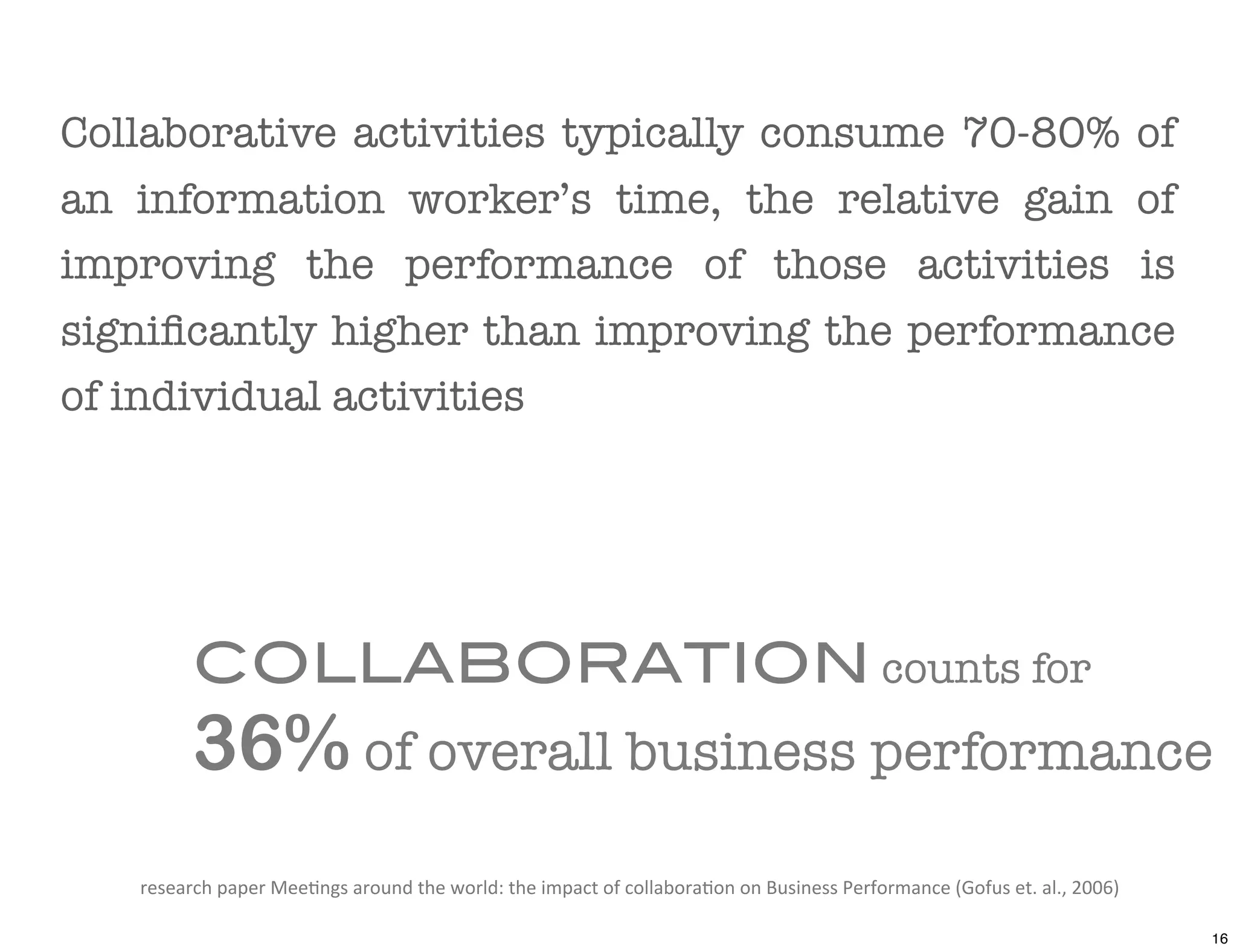
Collaborative activities typically consume 70-80% of
an information worker’s time, the relative gain of
improving the performance of those activities is
significantly higher than improving the performance
of individual activities


           COLLABORATION counts for
           36% of overall business performance
   research	
  paper	
  Mee*ngs	
  around	
  the	
  world:	
  the	
  impact	
  of	
  collabora*on	
  on	
  Business	
  Performance	
  (Gofus	
  et.	
  al.,	
  2006)	
  

                                                                                                                                                                           16
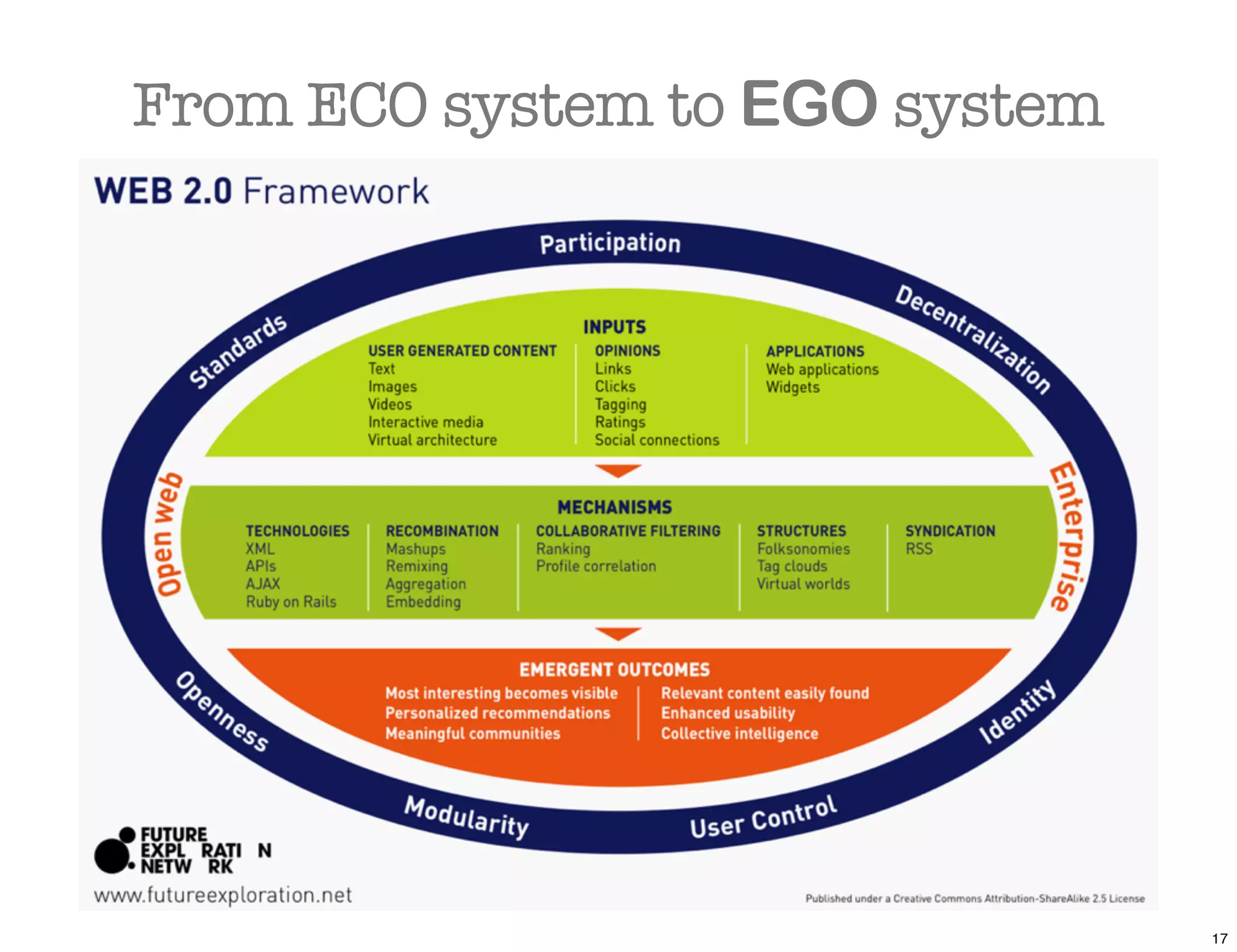
From ECO system to EGO system


                                17
Seamless integration
          Social features
everything is an information asset

- From push to pull (RSS)
- Authoring
- From email to IM
- Co-creation
- Media Sharing
- Tagging/Social bookmarking
- Social Networking

                                     18
More social
from systems of records to   features
systems of engagement

- Micro-blogging
- Mashup
- Aggregation
- Ratings & recommendations


                                        19
Social ego-systems

                            presence


              sharing                  relationships


                            identity


            conversations               reputation


                             groups


                                                       20
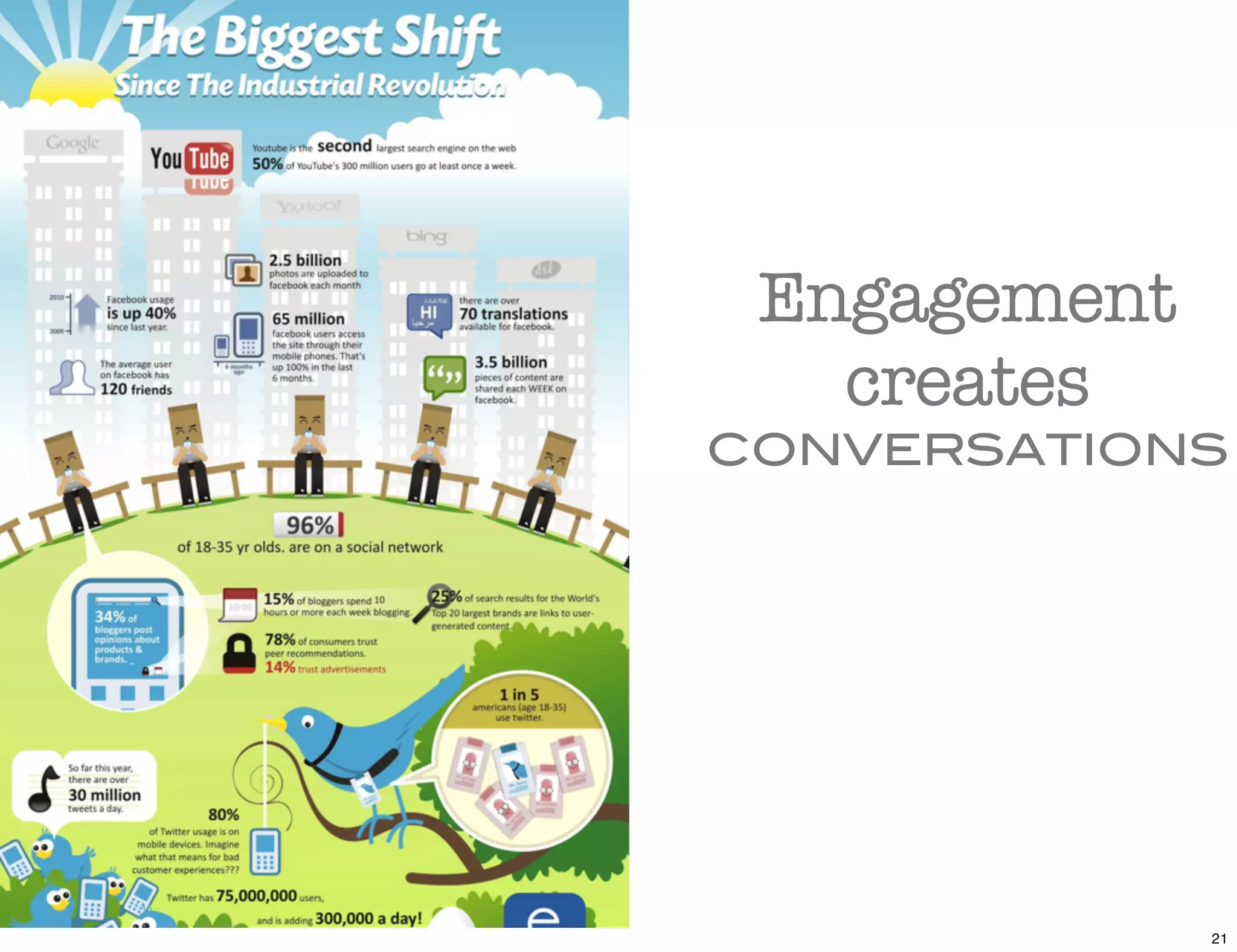
Engagement
   creates
CONVERSATIONS


              21
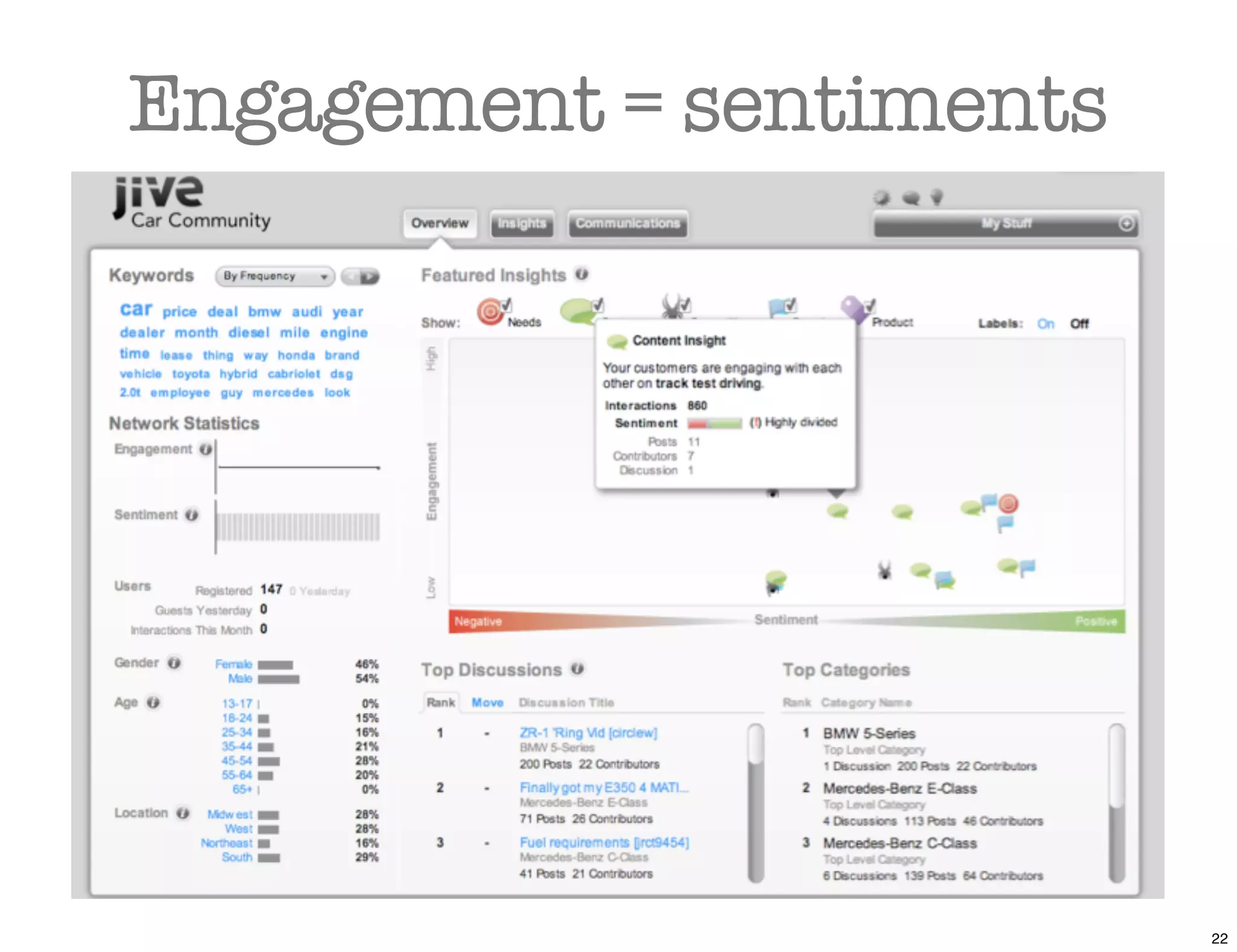
Engagement = sentiments


                          22
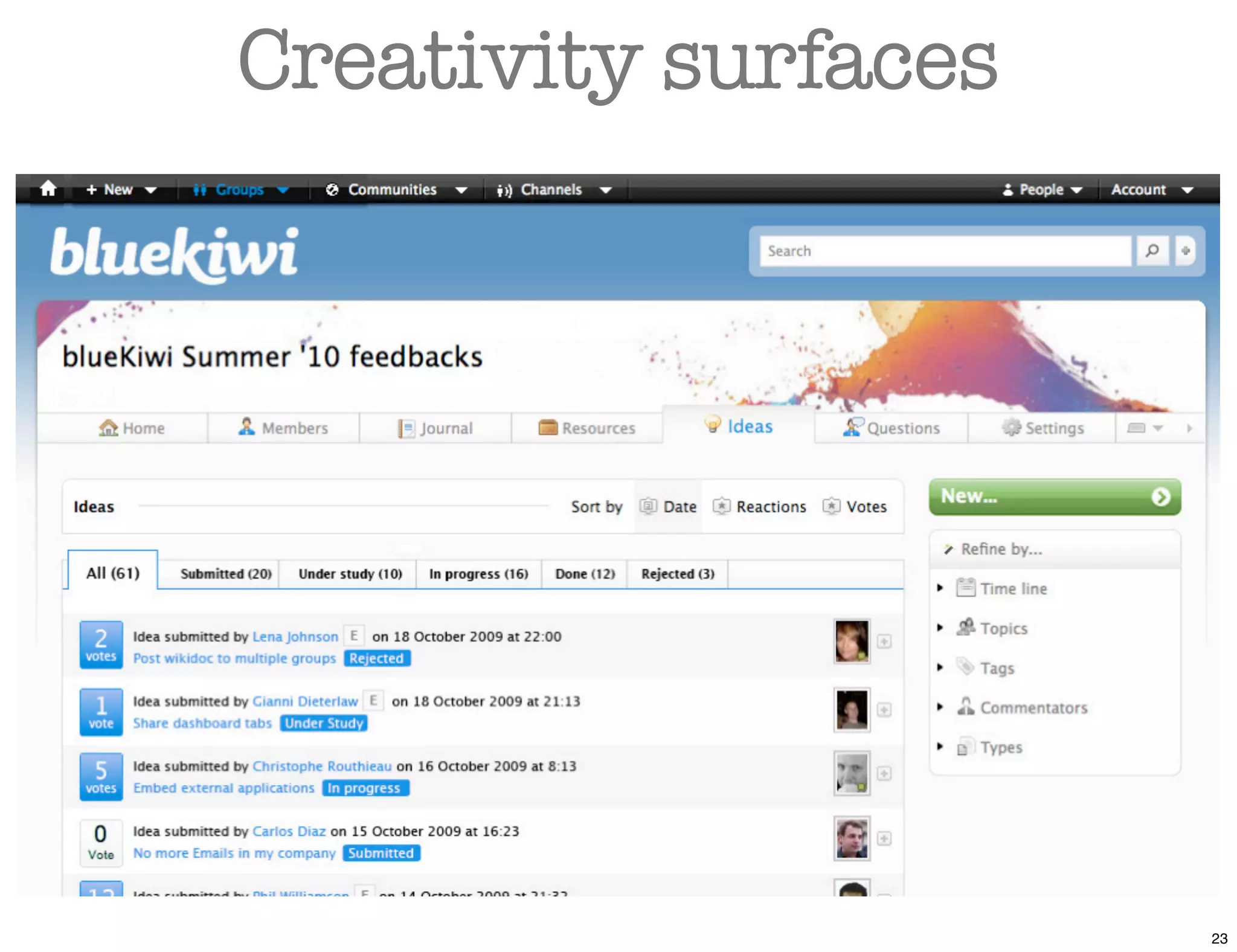
Creativity surfaces


                      23
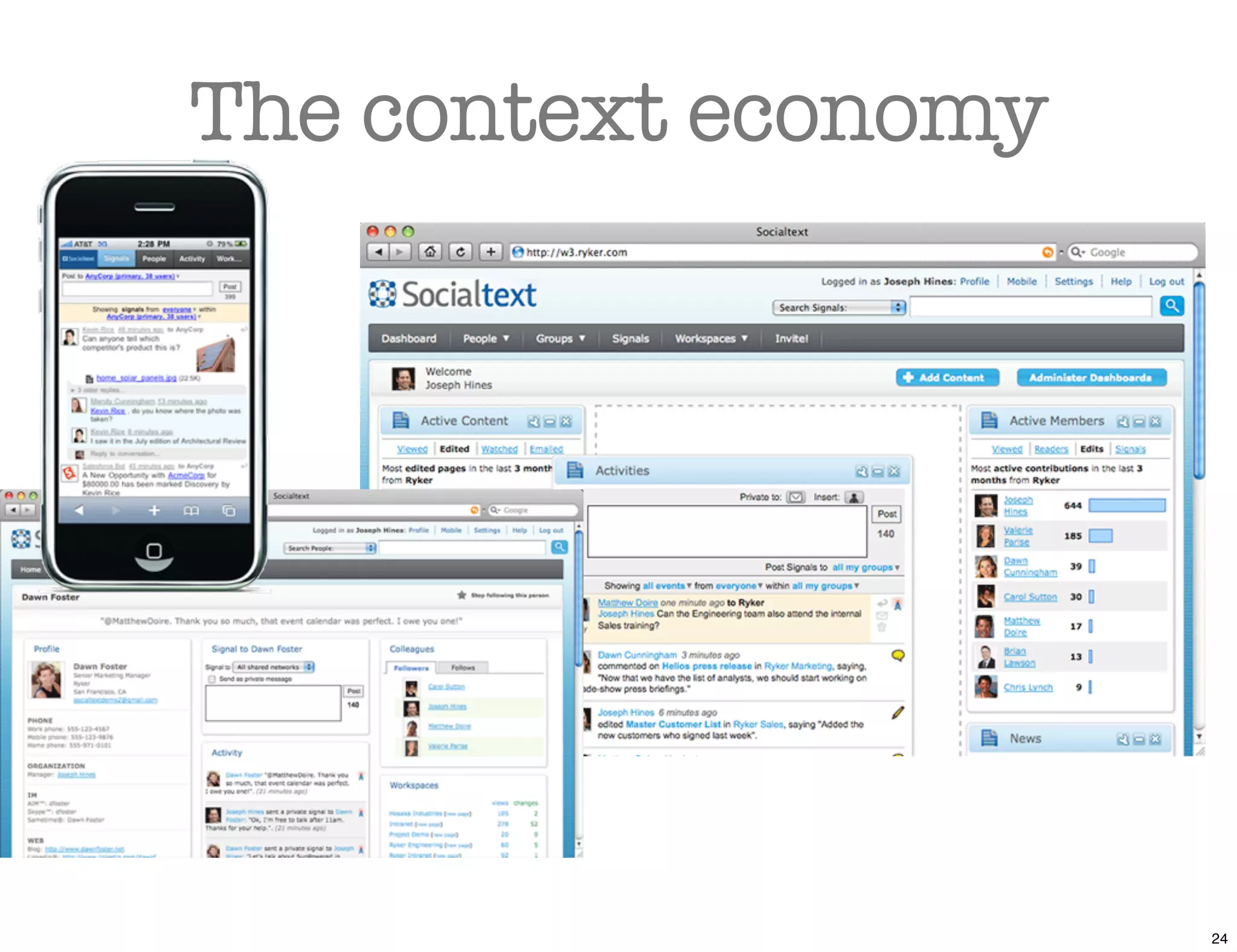
The context economy


                      24
25
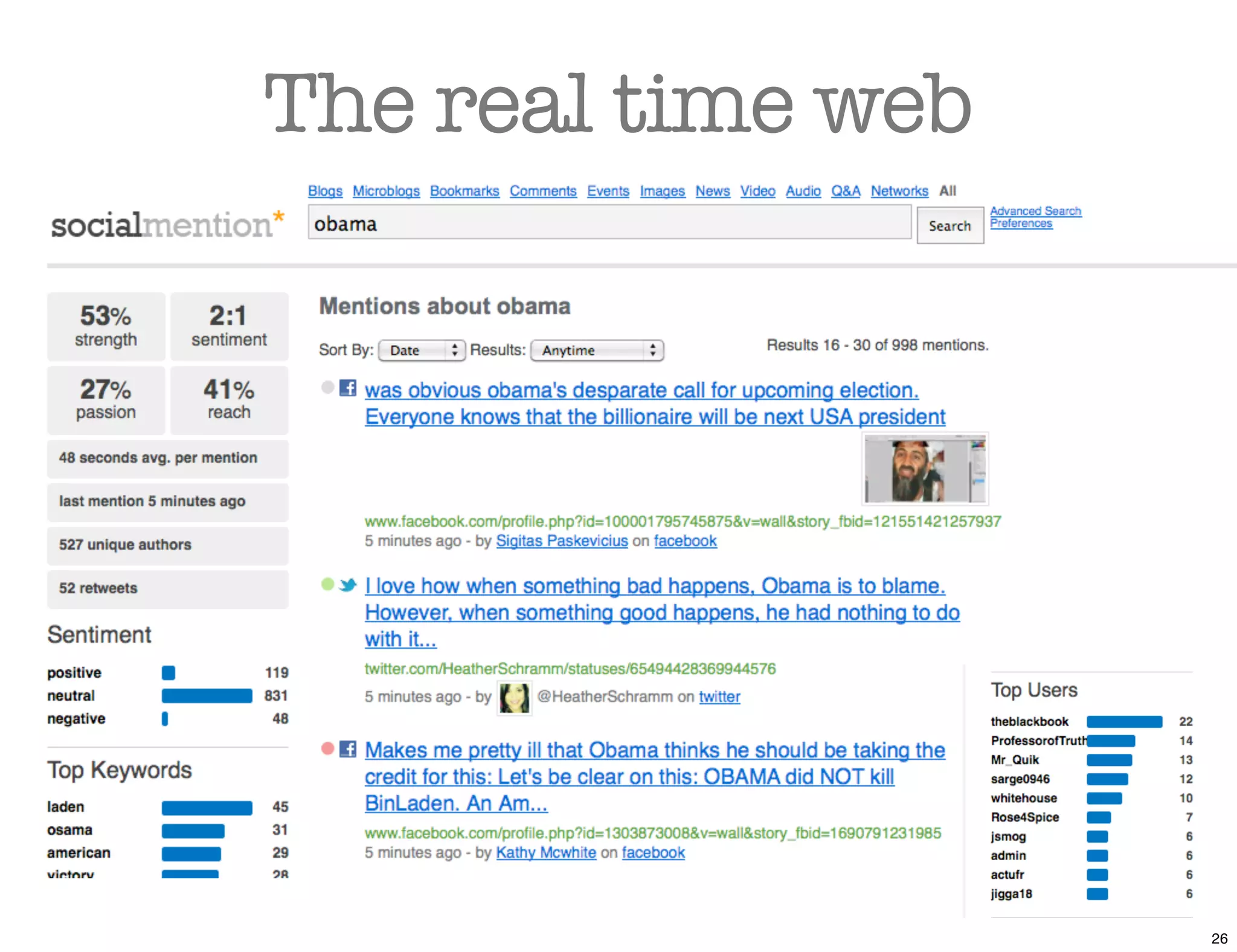
The real time web


                    26
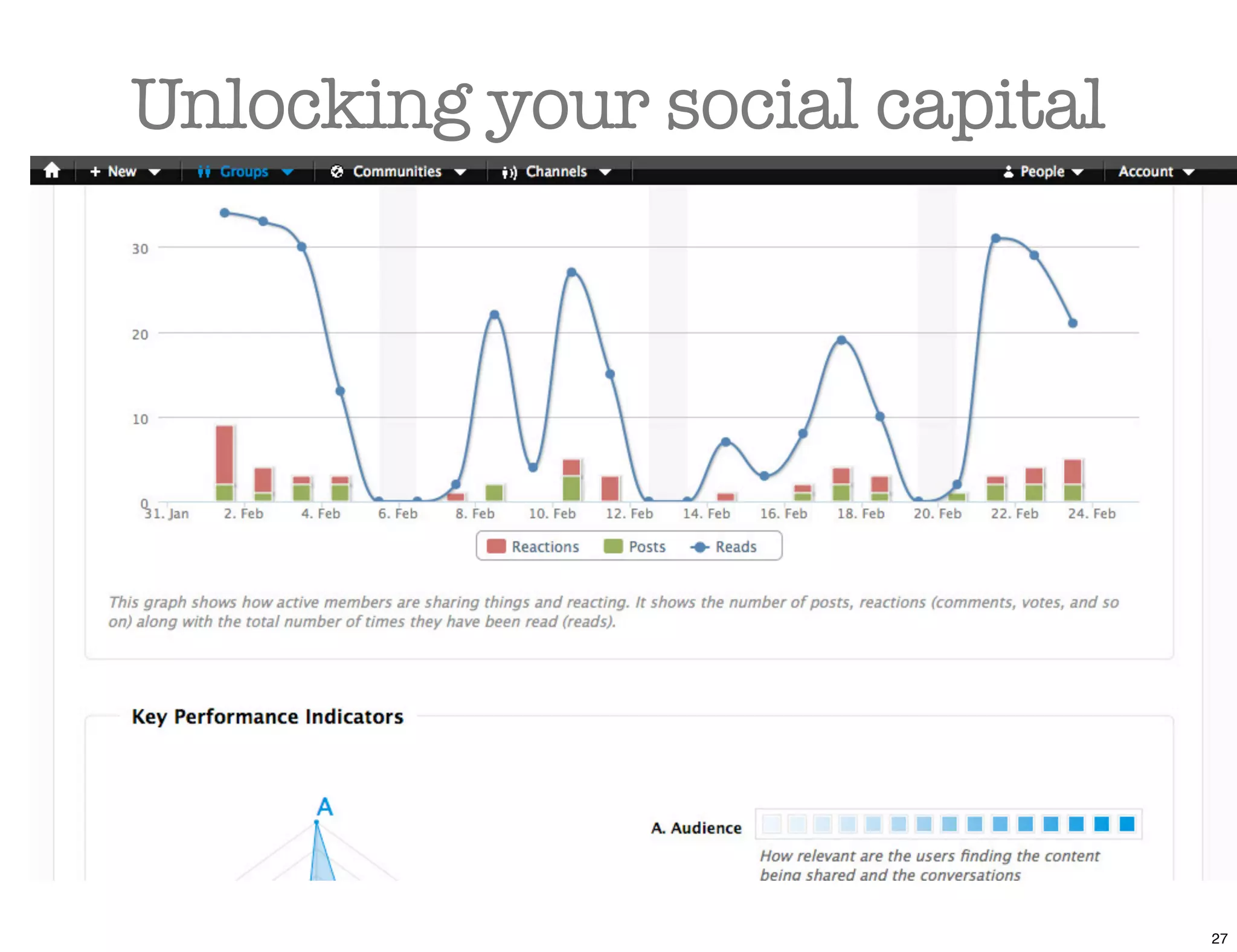
Unlocking your social capital


                                27
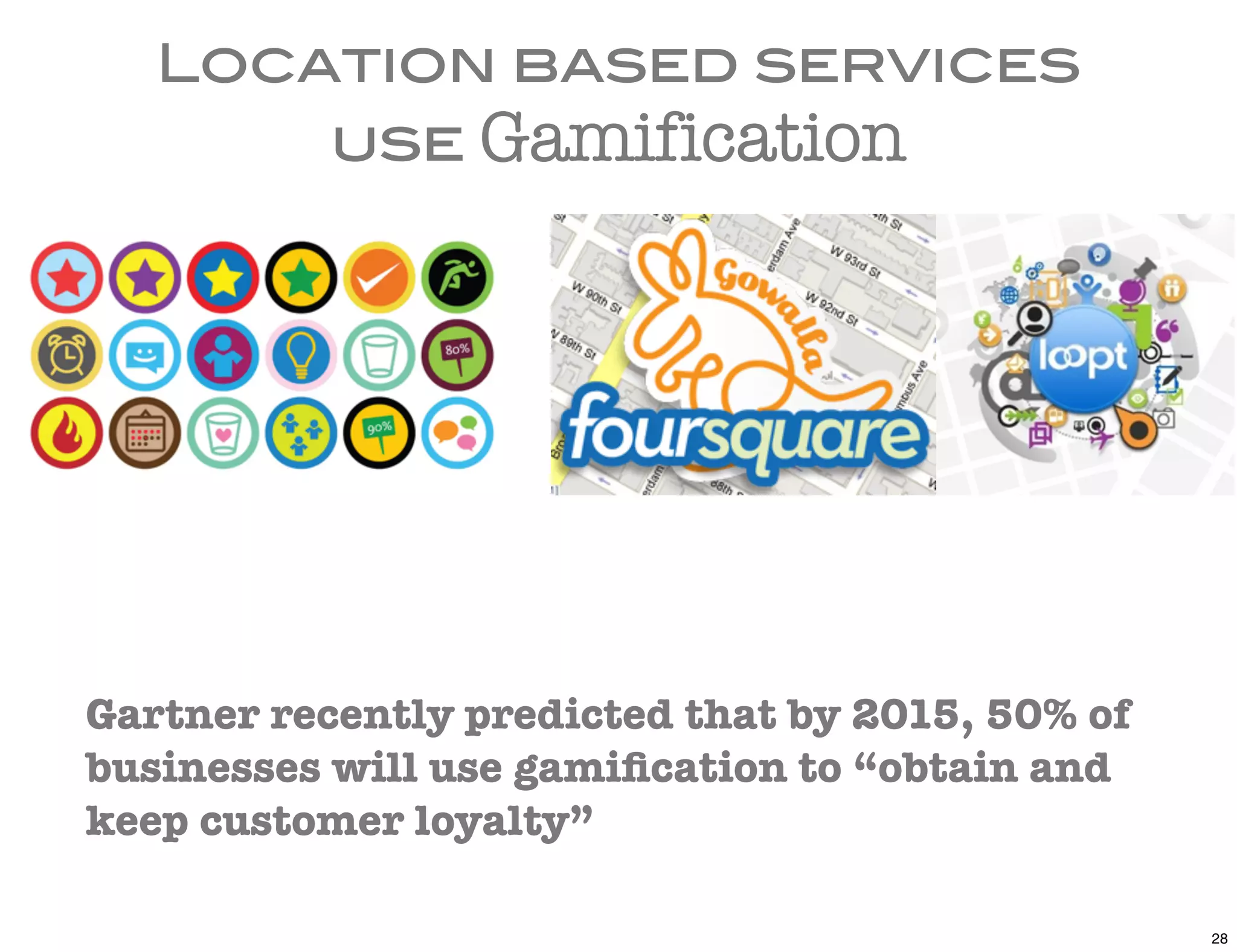
Location based services
       use Gamification


Gartner recently predicted that by 2015, 50% of
businesses will use gamification to “obtain and
keep customer loyalty”

                                                  28
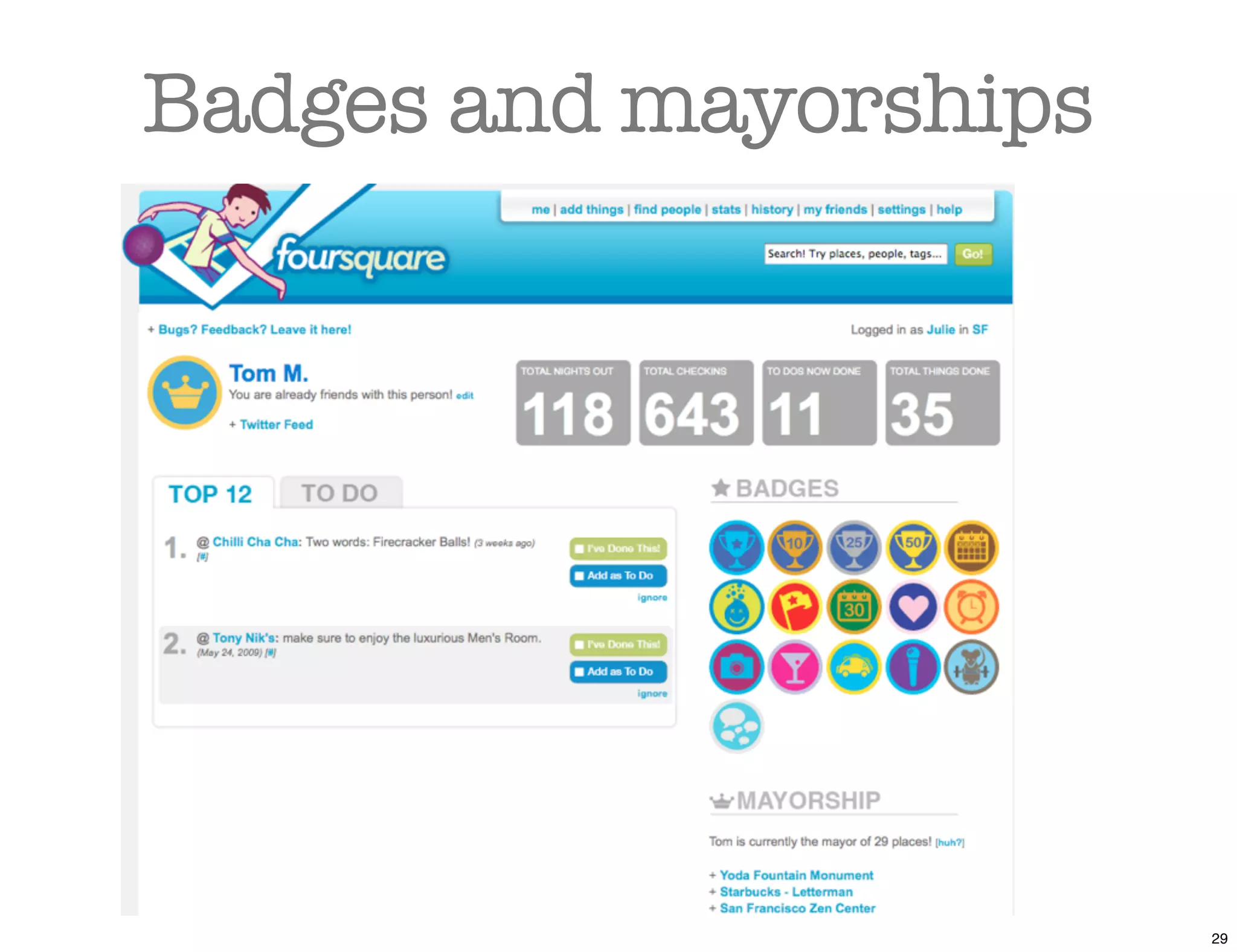
Badges and mayorships


                        29
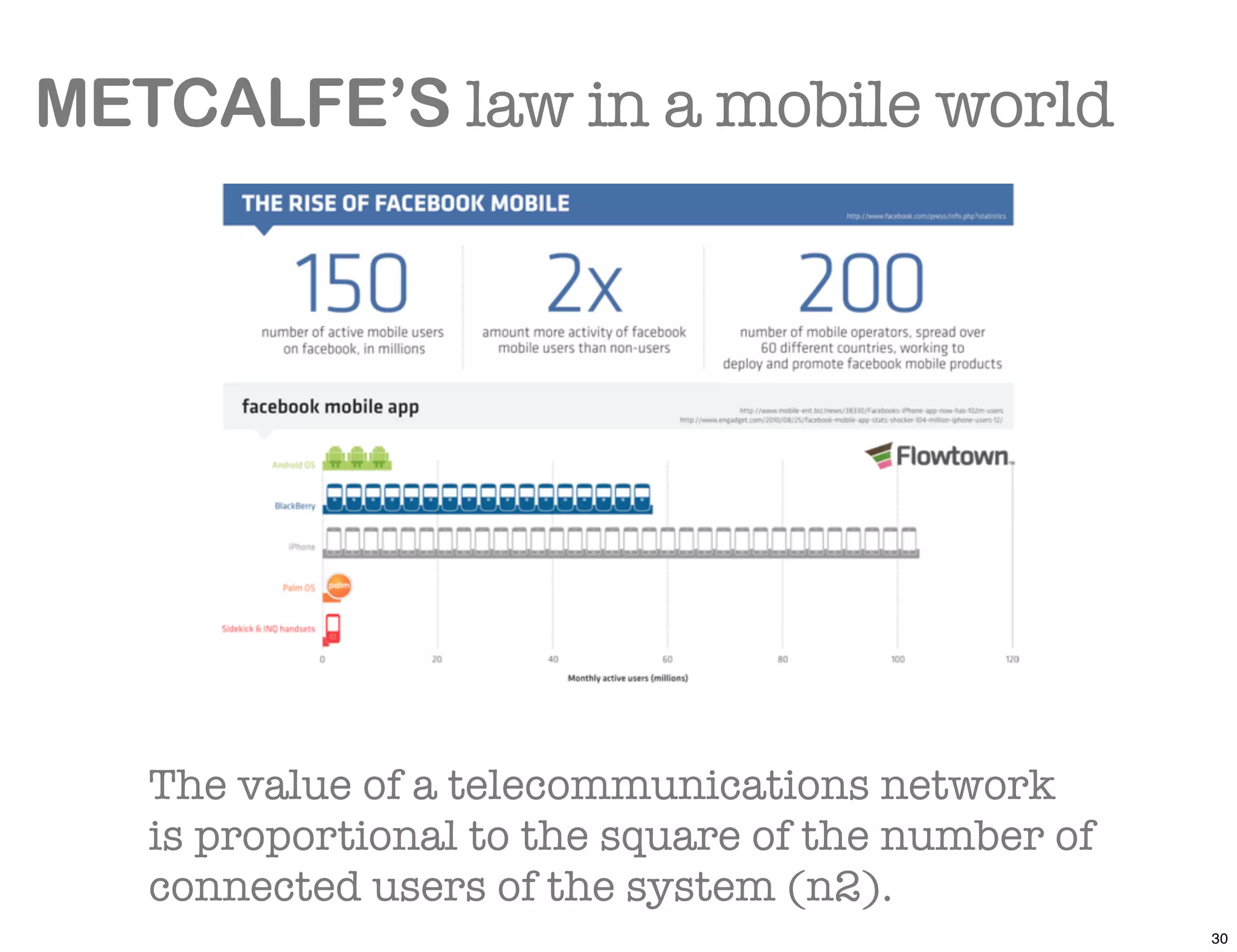
METCALFE’S law in a mobile world


   The value of a telecommunications network
   is proportional to the square of the number of
   connected users of the system (n2).
                                                    30
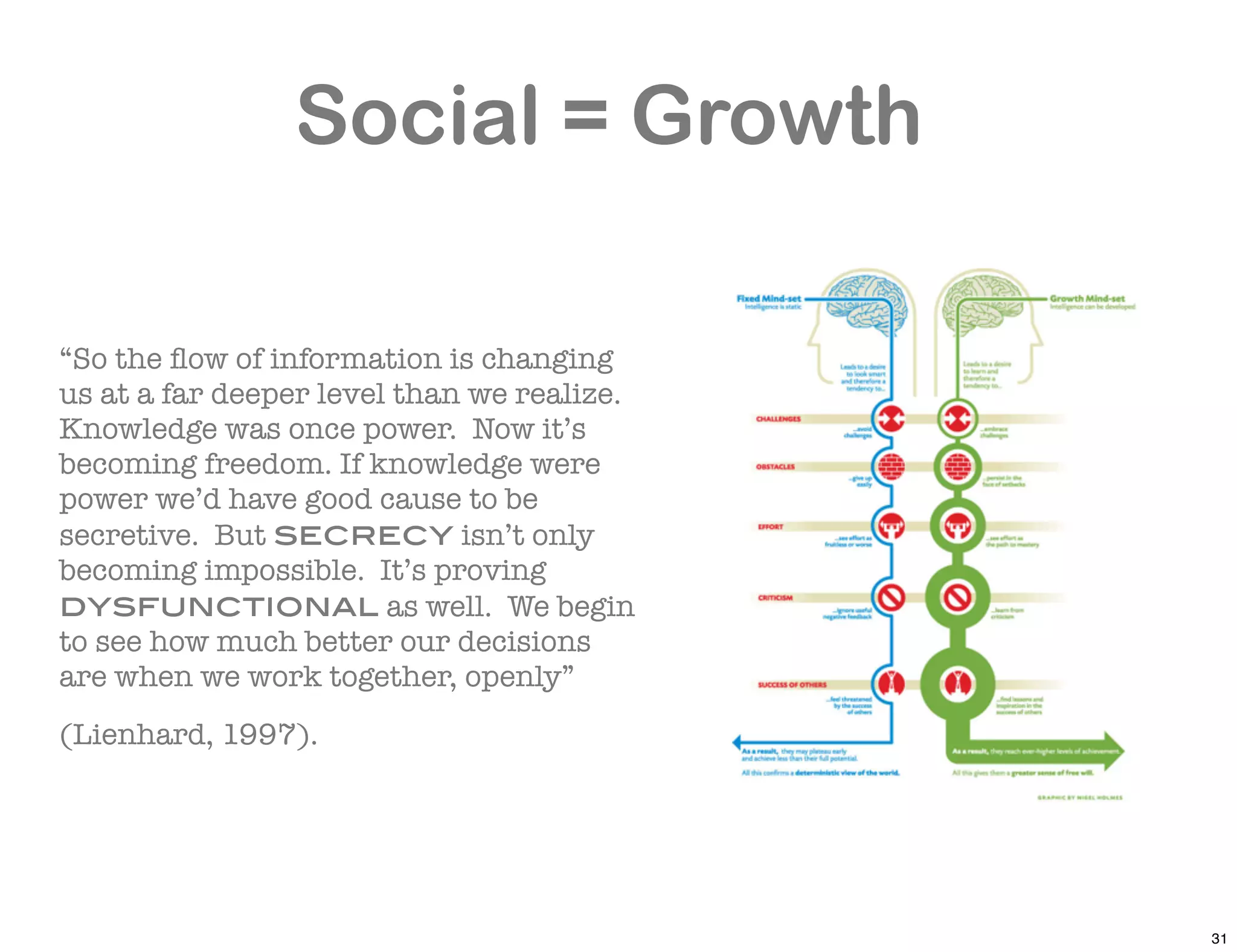
Social = Growth

“So the flow of information is changing
us at a far deeper level than we realize.
Knowledge was once power. Now it’s
becoming freedom. If knowledge were
power we’d have good cause to be
secretive. But secrecy isn’t only
becoming impossible. It’s proving
dysfunctional as well. We begin
to see how much better our decisions
are when we work together, openly”
(Lienhard, 1997).


                                            31
Attraction economy

  Engagement
  Connectors
  Many-to-one
  Interactive
  Return On Involvement
  Eminence


                          32
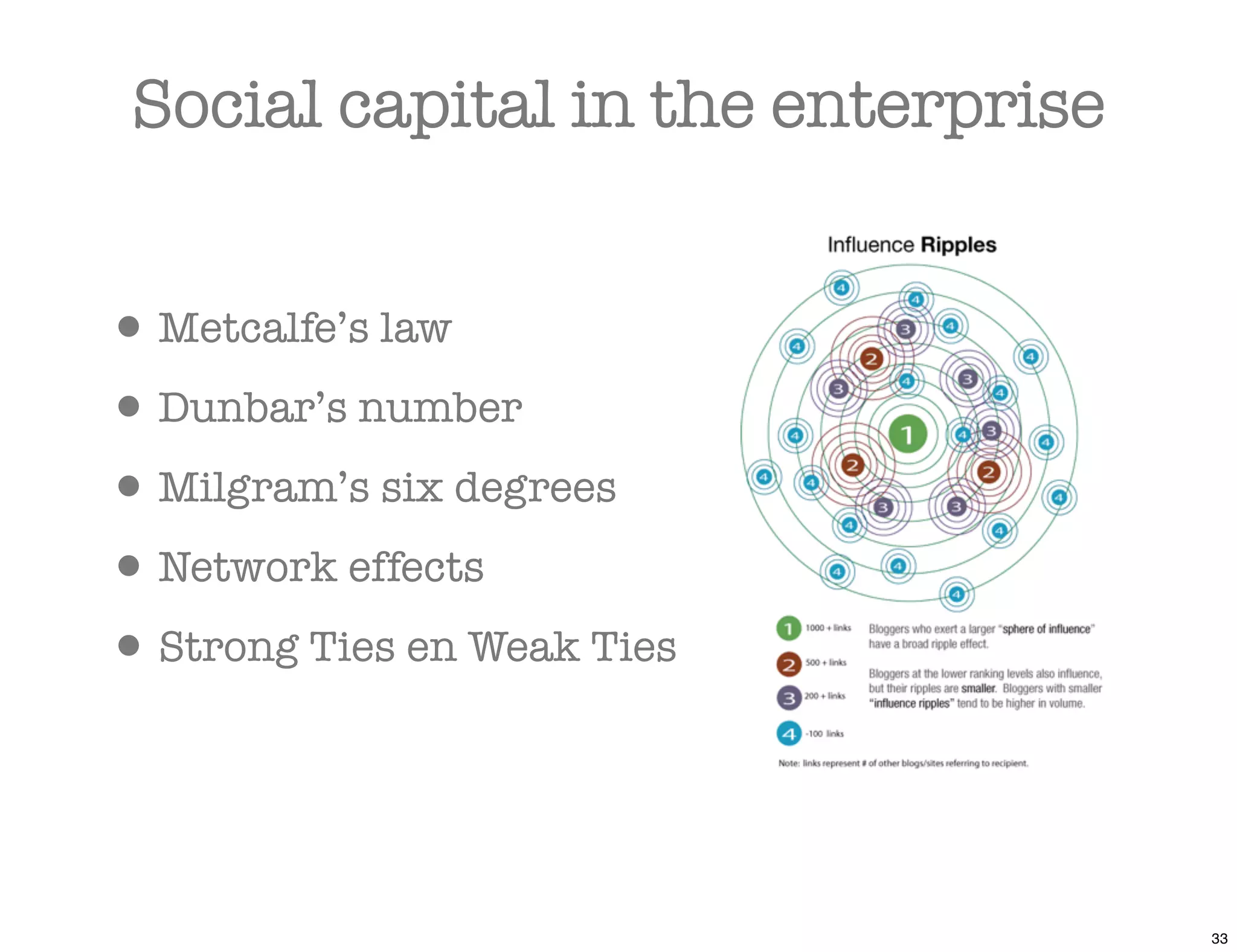
Social capital in the enterprise


• Metcalfe’s law
• Dunbar’s number
• Milgram’s six degrees
• Network effects
• Strong Ties en Weak Ties


                                    33
Ready for some curve jumping?


• Human capital = Social capital
• Identify generators of knowledge
• Everything is an information asset
• Seamless interoperability
• Create an ego system
• Reward sharism

                                       34
Thank you


            35

Enterprise 2.0 and Enterprise Information Management

  • 1.
    You cannot measureinformation, you can measure conversations EIM 2011 conference Amsterdam @thethinkingape jeroen.derynck@thinkingape.be 1
  • 2.
  • 3.
    Enterprise 1.0 • Transactionalsystems • record-centric • Productivity tools • document-centric • Communication tools • message-centric 3
  • 4.
    The old eco-system •The average worker spends more than an hour a week locating documents in multiple sources • People waste 74 minutes a week copying, pasting and re-entering the same information into different documents • 80 percent of workers use their email to store information and files • 96 percent are open to the introduction of new technologies to help make their working practices more efficient • 44 percent of workers found insufficient training was a barrier to adopting new technologies, while one third (35 percent) did not find them simple or intuitive to use 4
  • 5.
    ROI = RUNNINGON INSTINCT 5
  • 6.
  • 7.
    The cost ofinformation Cost of Enterprise (Information) Systems + Cost of Information Overload + Cost of Information Asymmetry = Cost of Information 7
  • 8.
    New paradigms, oldsystems Systems Policies Channels Interfaces 8
  • 9.
    Where is thein Enterprise Systems? 9
  • 10.
    ...knowledge itself isbecoming overwhelmingly plentiful and we know that most of it is unstructured. While the majority of the effort has been in trying to apply structure to this knowledge to make it easier to assetize and capitalize, are we ignoring a big picture: with a world of abundance of knowledge—and not scarcity—it makes more sense to deliver market leadership by capitalizing on the added value of expertise, relationships, introspection, eminence and experience http://blogs.forbes.com/rawnshah/2011/03/01/shifting-the-imperative-from-knowledge-management-to-expertise-management/ 10
  • 11.
    Dawn of anew enterprise 11
  • 12.
    In Enterprise 2.0 It’snot about records It’s not about files It’s not about systems It’s not about content 12
  • 13.
    The social enterprise Enterprise 2.0 establishes an effective ecosystem of social and mobile technologies that provide rapid, agile collaboration, and business convergence... it brings the user back into the equation... 13
  • 14.
    How social isyour enterprise? 14
  • 15.
  • 16.
    Collaborative activities typicallyconsume 70-80% of an information worker’s time, the relative gain of improving the performance of those activities is significantly higher than improving the performance of individual activities COLLABORATION counts for 36% of overall business performance research  paper  Mee*ngs  around  the  world:  the  impact  of  collabora*on  on  Business  Performance  (Gofus  et.  al.,  2006)   16
  • 17.
    From ECO systemto EGO system 17
  • 18.
    Seamless integration Social features everything is an information asset - From push to pull (RSS) - Authoring - From email to IM - Co-creation - Media Sharing - Tagging/Social bookmarking - Social Networking 18
  • 19.
    More social from systemsof records to features systems of engagement - Micro-blogging - Mashup - Aggregation - Ratings & recommendations 19
  • 20.
    Social ego-systems presence sharing relationships identity conversations reputation groups 20
  • 21.
    Engagement creates CONVERSATIONS 21
  • 22.
  • 23.
  • 24.
  • 25.
  • 26.
  • 27.
  • 28.
    Location based services use Gamification Gartner recently predicted that by 2015, 50% of businesses will use gamification to “obtain and keep customer loyalty” 28
  • 29.
  • 30.
    METCALFE’S law ina mobile world The value of a telecommunications network is proportional to the square of the number of connected users of the system (n2). 30
  • 31.
    Social = Growth “Sothe flow of information is changing us at a far deeper level than we realize. Knowledge was once power. Now it’s becoming freedom. If knowledge were power we’d have good cause to be secretive. But secrecy isn’t only becoming impossible. It’s proving dysfunctional as well. We begin to see how much better our decisions are when we work together, openly” (Lienhard, 1997). 31
  • 32.
    Attraction economy Engagement Connectors Many-to-one Interactive Return On Involvement Eminence 32
  • 33.
    Social capital inthe enterprise • Metcalfe’s law • Dunbar’s number • Milgram’s six degrees • Network effects • Strong Ties en Weak Ties 33
  • 34.
    Ready for somecurve jumping? • Human capital = Social capital • Identify generators of knowledge • Everything is an information asset • Seamless interoperability • Create an ego system • Reward sharism 34
  • 35.