Social Media at Work
            Tim Wright
           @twintangibles
               Think Digital 2012
                 #thinkdigital


                20th March 2012


Contact us +44(0)7717714595 www.twintangibles.co.uk
              info@twintangibles.co.uk
The Contention
• Social technologies are here to stay
• This changes has profound implications
  to the way we do business
• Change is happening now
• This presents opportunities
• Those opportunities run much wider
  than marketing
• You should be thinking about it!
The Change
• The annual British Internet Habits survey showed
  that in 2011, 57% of over-16s in the UK are using
  the internet for social networking, as opposed to
  43% in 2010.
• Using Social Networks
     • 91% 16-24 year olds
     • 76% 25-34 year olds
     • 58% 35-44 year olds
     • 42% 45-54 year olds
     • 30% 55-64 year olds
     • 18% 65+

  Office of National Statistics – British Internet Habits
Corporate Access
    • 76% of firms surveyed had a corporate social
      media presence while 95% of employees
      use social media channels for personal
      and/or work related activities1
    • Fewer than 30 percent of large organizations
      will block employee access to social media
      sites by 2014.
    • The number of organizations blocking access
      to all social media is dropping by around 10
      percent a year.2
Source 1: DLA Piper Knowing your tweet from your trend: keeping pace with social media in the workplace 2011

*250+ employees and revenues of greater than £30m, all carried out during June 2011.

Source 2: Gartner
http://www.missioncriticalmagazine.com/articles/84775-gartner-says-fewer-than-30-percent-of-large-organizations-will-block-social-media-by-2014
Being Social

“It is a mindset of sharing, openness,
  collaboration and communication
    that is facilitated by technical tools
   that provide for many to many non
           mediated exchange”
Re-imagine Yourself
        ?

£
Social Media Reach
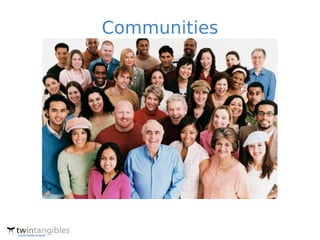
Communities
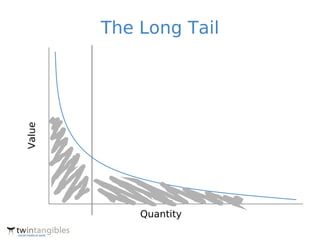
Popularity
Value        The Long Tail


                 Quantity
                 Products
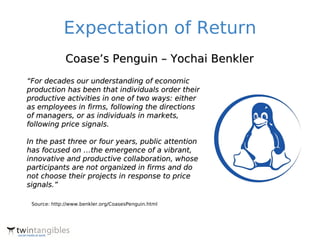
Expectation of Return
              Coase’s Penguin – Yochai Benkler
“For decades our understanding of economic
production has been that individuals order their
productive activities in one of two ways: either
as employees in firms, following the directions
of managers, or as individuals in markets,
following price signals.

In the past three or four years, public attention
has focused on …the emergence of a vibrant,
innovative and productive collaboration, whose
participants are not organized in firms and do
not choose their projects in response to price
signals.”

 Source: http://www.benkler.org/CoasesPenguin.html
So What?


   Your Staff, Clients, Customers,
 Partners and Suppliers will all expect
you to be social, use the tools and honour
              the principles.
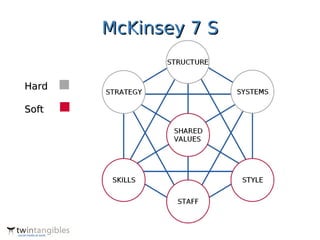
McKinsey 7 S


Hard

Soft
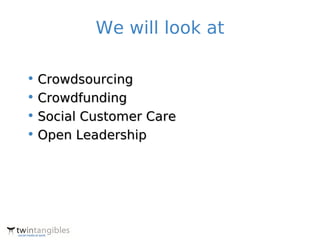
We will look at

• Crowdsourcing
• Crowdfunding
• Social Customer Care
• Open Leadership
Social Customer Care

                                                •Payback
                                                •Marketing
                                                •Support
                                                •App development

Founded 2009
Giffgaff enables members to earn points that can be exchanged for money, which is
redeemed in one of three ways:
•airtime credit,
•as cash which is sent directly to a PayPal account, or as a donation sent to a
community-nominated charity, the value of which is matched by Giffgaff.

Each point is worth one penny; these are redeemed every six months, on 15 June
and 15 December.
The first payback was made on 15 June 2010 and on the most recent payback in
December 2011 Giffgaff paid out over £700,000 to its customers.
Crowdfunding
 “Crowdfunding is a method of raising capital, or
 resources, by collecting together lots of small amounts
 from a large number of people generally using the
 Internet and social media.”


•Market testing                 Kickstarter 2011
•Distributed cognition          Launched projects    27,086
•Not just cash                  •Successful projects 11,836
•Small sums quickly available   •$ pledged           99,344,382
•Brand advocates
•Expectation of return
Crowdfunding

                      •Raised £75,000 using Crowdcube

                      •15 per cent equity in the business.

                      •Eighty-two investors each
                      contributed between £10 and £7,500


Founded Sue Acton
Initial Funding: Self, Friend and angel funded
Crowdsourcing
 “Crowdsourcing is a distributed problem-solving and
 production process that involves outsourcing tasks to
 a network of people, also known as the crowd.
 The difference between crowdsourcing and ordinary
 outsourcing is that a task or problem is outsourced to
 an undefined public rather than a specific other body.”


•Quicker to market               “It is a shift away from subject
•Cheaper                         matter experts and toward subject
•More acceptable to market       matter networks.”
•Draw on distributed cognition   Harold Jarche
•Emergent and customer driven
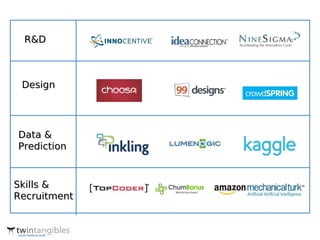
R&D


 Design


Data &
Prediction


Skills &
Recruitment
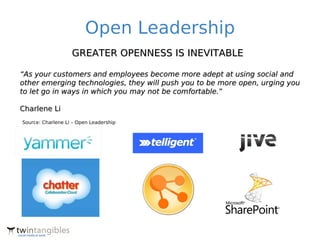
Open Leadership
                   GREATER OPENNESS IS INEVITABLE

“As your customers and employees become more adept at using social and
other emerging technologies, they will push you to be more open, urging you
to let go in ways in which you may not be comfortable.”

Charlene Li
Source: Charlene Li – Open Leadership
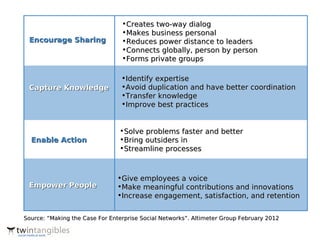
•Creates two-way dialog
                                 •Makes business personal
 Encourage Sharing               •Reduces power distance to leaders
                                 •Connects globally, person by person
                                 •Forms private groups

                                 •Identify expertise
 Capture Knowledge               •Avoid duplication and have better coordination
                                 •Transfer knowledge
                                 •Improve best practices


                                •Solve problems faster and better
  Enable Action                 •Bring outsiders in
                                •Streamline processes


                               •Give employees a voice
 Empower People                •Make meaningful contributions and innovations
                               •Increase engagement, satisfaction, and retention


Source: “Making the Case For Enterprise Social Networks”. Altimeter Group February 2012
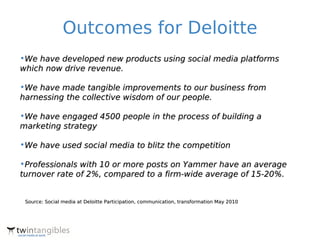
Outcomes for Deloitte
•We have developed new products using social media platforms
which now drive revenue.

•We have made tangible improvements to our business from
harnessing the collective wisdom of our people.

•We have engaged 4500 people in the process of building a
marketing strategy

•We have used social media to blitz the competition

•Professionals with 10 or more posts on Yammer have an average
turnover rate of 2%, compared to a firm-wide average of 15-20%.


 Source: Social media at Deloitte Participation, communication, transformation May 2010
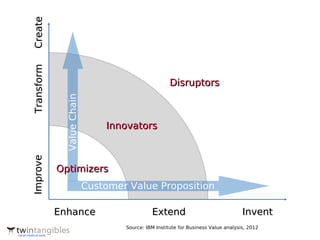
Create
Transform


                                                      Disruptors
              Value Chain


                                Innovators
Improve


            Optimizers
                            Customer Value Proposition

            Enhance                           Extend                                Invent
                                    Source: IBM Institute for Business Value analysis, 2012
Tim Wright
www.twintangibles.co.uk

tim@twintangibles.co.uk

@twintangibles

+44 (0)7717 714 595

ThinkDigital - Social Media at Work

  • 1.
    Social Media atWork Tim Wright @twintangibles Think Digital 2012 #thinkdigital 20th March 2012 Contact us +44(0)7717714595 www.twintangibles.co.uk info@twintangibles.co.uk
  • 2.
    The Contention • Socialtechnologies are here to stay • This changes has profound implications to the way we do business • Change is happening now • This presents opportunities • Those opportunities run much wider than marketing • You should be thinking about it!
  • 3.
    The Change • Theannual British Internet Habits survey showed that in 2011, 57% of over-16s in the UK are using the internet for social networking, as opposed to 43% in 2010. • Using Social Networks • 91% 16-24 year olds • 76% 25-34 year olds • 58% 35-44 year olds • 42% 45-54 year olds • 30% 55-64 year olds • 18% 65+ Office of National Statistics – British Internet Habits
  • 4.
    Corporate Access • 76% of firms surveyed had a corporate social media presence while 95% of employees use social media channels for personal and/or work related activities1 • Fewer than 30 percent of large organizations will block employee access to social media sites by 2014. • The number of organizations blocking access to all social media is dropping by around 10 percent a year.2 Source 1: DLA Piper Knowing your tweet from your trend: keeping pace with social media in the workplace 2011 *250+ employees and revenues of greater than £30m, all carried out during June 2011. Source 2: Gartner http://www.missioncriticalmagazine.com/articles/84775-gartner-says-fewer-than-30-percent-of-large-organizations-will-block-social-media-by-2014
  • 5.
    Being Social “It isa mindset of sharing, openness, collaboration and communication that is facilitated by technical tools that provide for many to many non mediated exchange”
  • 6.
  • 7.
  • 8.
  • 9.
    Popularity Value The Long Tail Quantity Products
  • 10.
    Expectation of Return Coase’s Penguin – Yochai Benkler “For decades our understanding of economic production has been that individuals order their productive activities in one of two ways: either as employees in firms, following the directions of managers, or as individuals in markets, following price signals. In the past three or four years, public attention has focused on …the emergence of a vibrant, innovative and productive collaboration, whose participants are not organized in firms and do not choose their projects in response to price signals.” Source: http://www.benkler.org/CoasesPenguin.html
  • 11.
    So What? Your Staff, Clients, Customers, Partners and Suppliers will all expect you to be social, use the tools and honour the principles.
  • 14.
  • 15.
    We will lookat • Crowdsourcing • Crowdfunding • Social Customer Care • Open Leadership
  • 16.
    Social Customer Care •Payback •Marketing •Support •App development Founded 2009 Giffgaff enables members to earn points that can be exchanged for money, which is redeemed in one of three ways: •airtime credit, •as cash which is sent directly to a PayPal account, or as a donation sent to a community-nominated charity, the value of which is matched by Giffgaff. Each point is worth one penny; these are redeemed every six months, on 15 June and 15 December. The first payback was made on 15 June 2010 and on the most recent payback in December 2011 Giffgaff paid out over £700,000 to its customers.
  • 17.
    Crowdfunding “Crowdfunding isa method of raising capital, or resources, by collecting together lots of small amounts from a large number of people generally using the Internet and social media.” •Market testing Kickstarter 2011 •Distributed cognition Launched projects 27,086 •Not just cash •Successful projects 11,836 •Small sums quickly available •$ pledged 99,344,382 •Brand advocates •Expectation of return
  • 18.
    Crowdfunding •Raised £75,000 using Crowdcube •15 per cent equity in the business. •Eighty-two investors each contributed between £10 and £7,500 Founded Sue Acton Initial Funding: Self, Friend and angel funded
  • 19.
    Crowdsourcing “Crowdsourcing isa distributed problem-solving and production process that involves outsourcing tasks to a network of people, also known as the crowd. The difference between crowdsourcing and ordinary outsourcing is that a task or problem is outsourced to an undefined public rather than a specific other body.” •Quicker to market “It is a shift away from subject •Cheaper matter experts and toward subject •More acceptable to market matter networks.” •Draw on distributed cognition Harold Jarche •Emergent and customer driven
  • 20.
  • 22.
    Open Leadership GREATER OPENNESS IS INEVITABLE “As your customers and employees become more adept at using social and other emerging technologies, they will push you to be more open, urging you to let go in ways in which you may not be comfortable.” Charlene Li Source: Charlene Li – Open Leadership
  • 24.
    •Creates two-way dialog •Makes business personal Encourage Sharing •Reduces power distance to leaders •Connects globally, person by person •Forms private groups •Identify expertise Capture Knowledge •Avoid duplication and have better coordination •Transfer knowledge •Improve best practices •Solve problems faster and better Enable Action •Bring outsiders in •Streamline processes •Give employees a voice Empower People •Make meaningful contributions and innovations •Increase engagement, satisfaction, and retention Source: “Making the Case For Enterprise Social Networks”. Altimeter Group February 2012
  • 25.
    Outcomes for Deloitte •Wehave developed new products using social media platforms which now drive revenue. •We have made tangible improvements to our business from harnessing the collective wisdom of our people. •We have engaged 4500 people in the process of building a marketing strategy •We have used social media to blitz the competition •Professionals with 10 or more posts on Yammer have an average turnover rate of 2%, compared to a firm-wide average of 15-20%. Source: Social media at Deloitte Participation, communication, transformation May 2010
  • 26.
    Create Transform Disruptors Value Chain Innovators Improve Optimizers Customer Value Proposition Enhance Extend Invent Source: IBM Institute for Business Value analysis, 2012
  • 27.