Periderm
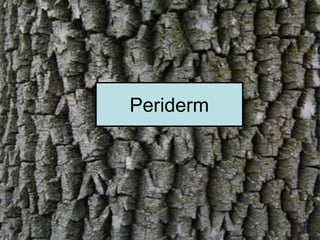
Periderm
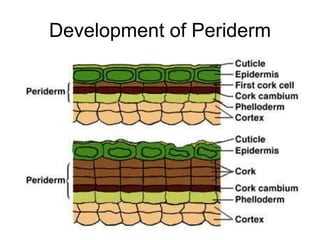
• Phellogen – cork cambium
• Phellem – cork
• Phelloderm – parenchyma like tissue
Periderm, Cork, and Bark
• Bark = all the tissues outside of the
vascular cambium
– Inner Bark includes all the tissues from the
secondary phloem outward to the phelloderm
(or phellogen)
– Outer Bark includes the periderm and all the
tissue outside of it
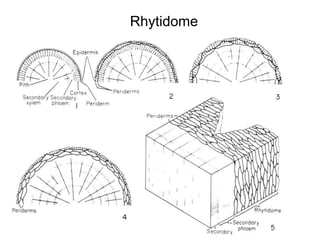
• Rhytidome
– all the successive periderms that develop
– bark external to the last formed periderm
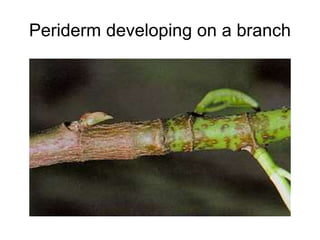
Periderm developing on a branch
Development of Periderm
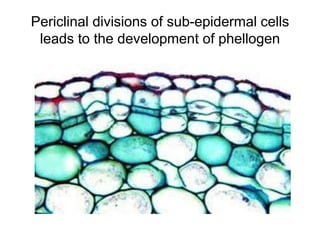
Periclinal divisions of sub-epidermal cells
leads to the development of phellogen
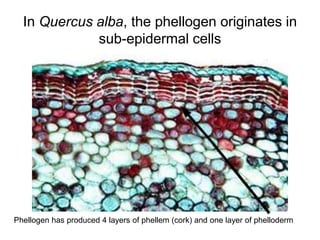
In Quercus alba, the phellogen originates in
sub-epidermal cells
Phellogen has produced 4 layers of phellem (cork) and one layer of phelloderm
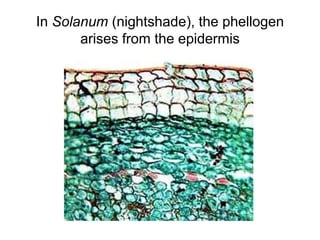
In Solanum (nightshade), the phellogen
arises from the epidermis
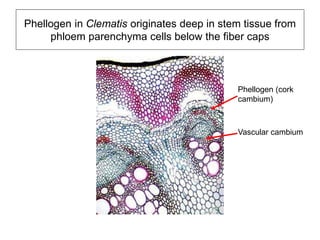
Phellogen in Clematis originates deep in stem tissue from
phloem parenchyma cells below the fiber caps
Phellogen (cork
cambium)
Vascular cambium
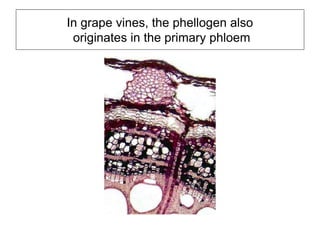
In grape vines, the phellogen also
originates in the primary phloem
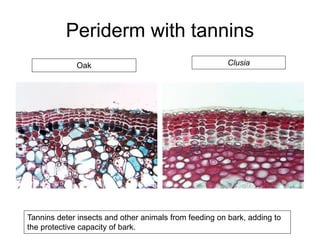
Periderm with tannins
Tannins deter insects and other animals from feeding on bark, adding to
the protective capacity of bark.
Oak Clusia
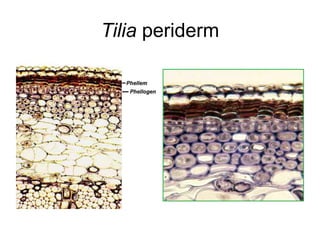
Tilia periderm
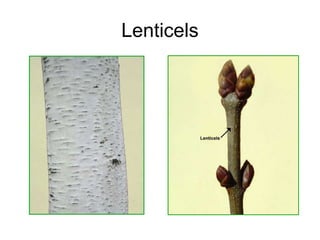
Lenticels
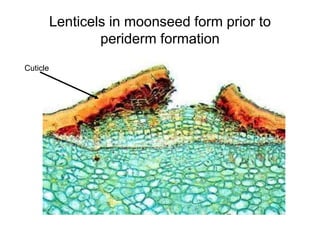
Lenticels in moonseed form prior to
periderm formation
Cuticle
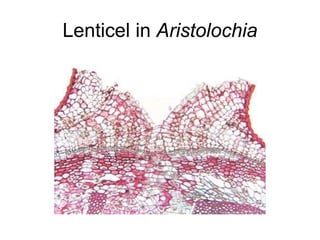
Lenticel in Aristolochia
Sambucus lenticel
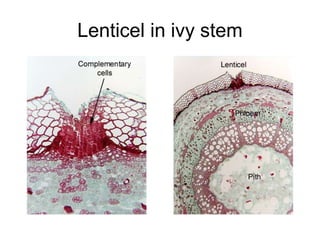
Lenticel in ivy stem
Rhytidome
Robinia rhytidome
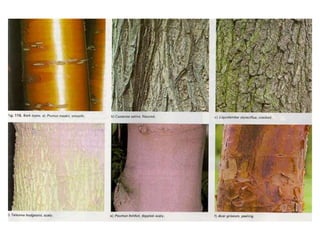
Pine Walnut Paper birch Crepe myrtle
White ash Sweetgum Tilia White Oak
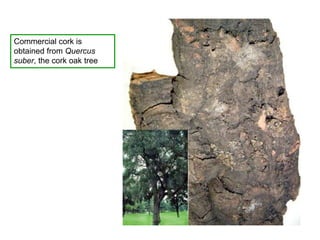
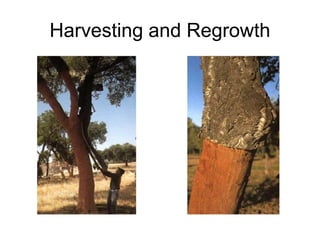
Commercial cork is
obtained from Quercus
suber, the cork oak tree
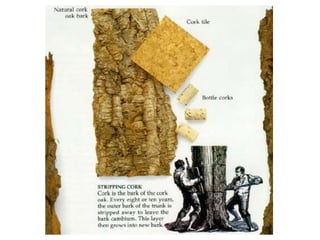
Harvesting and Regrowth

Periderm.ppt