PERCEPTION
INTRODUCTION
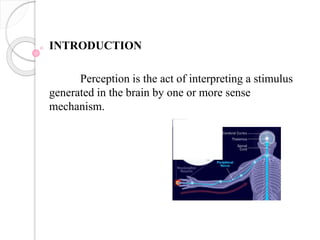
Perception is the act of interpreting a stimulus
generated in the brain by one or more sense
mechanism.
DEFINITION
Perception is indentifying process through which we
interpret and organise sensory information to produce
meaningful objects and its relationship.
Perception is the experience of objects, events, or
relationships obtained by extracting information from
sensation.
ORGANISATION OF PERCEPTION
The organization of perception is totally depends
upon fallowing principles
 Principle of figure- ground relationship
 Principle of closure
 Principle of similarity
 Principle of proximity
 Principle of continuity
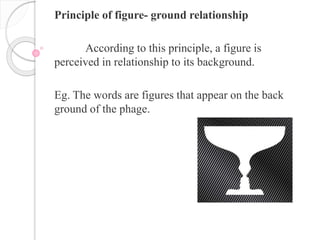
Principle of figure- ground relationship
According to this principle, a figure is
perceived in relationship to its background.
Eg. The words are figures that appear on the back
ground of the phage.
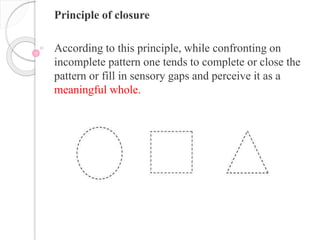
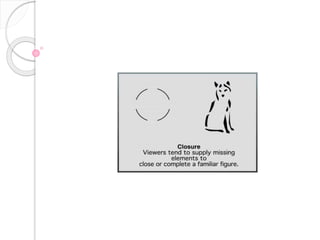
Principle of closure
According to this principle, while confronting on
incomplete pattern one tends to complete or close the
pattern or fill in sensory gaps and perceive it as a
meaningful whole.
Principle of grouping
According to this principle the tendency to
perceive stimuli in some organized meaningful
patterns by grouping them on some solid basis like
Similarity
Proximity
Continuity
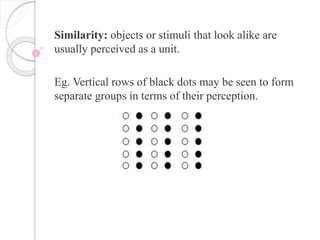
Similarity: objects or stimuli that look alike are
usually perceived as a unit.
Eg. Vertical rows of black dots may be seen to form
separate groups in terms of their perception.
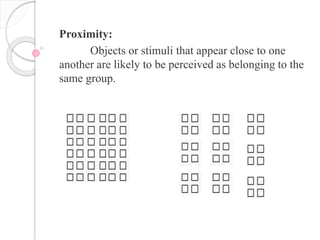
Proximity:
Objects or stimuli that appear close to one
another are likely to be perceived as belonging to the
same group.
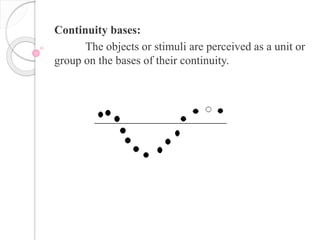
Continuity bases:
The objects or stimuli are perceived as a unit or
group on the bases of their continuity.
Factors Influencing Perception
 Functions of the sense organs
Functioning of the Brain
Previous Experience
Psychological State
Frequency of Exposure
Interest
Motives
Errors in the Perception
 It Means false Perception
Illusion
Hallucination
Illusion
 False Perception in presence of Stimuli.
These false perception occurs Bcoz of any one
among following
Alteration in Functions of the sense organs
Alteration in Functioning of the Brain
Psychological State
Hallucination
False perception in Absence of Stimuli.
 Auditory Hallucination
 Visual Hallucination
 Olfactory Hallucination
 Gustatory Hallucination
 Tactile Hallucination
Perception for Psychology.pptx

Perception for Psychology.pptx

  • 1.
  • 2.
    INTRODUCTION Perception is theact of interpreting a stimulus generated in the brain by one or more sense mechanism.
  • 3.
    DEFINITION Perception is indentifyingprocess through which we interpret and organise sensory information to produce meaningful objects and its relationship. Perception is the experience of objects, events, or relationships obtained by extracting information from sensation.
  • 4.
    ORGANISATION OF PERCEPTION Theorganization of perception is totally depends upon fallowing principles  Principle of figure- ground relationship  Principle of closure  Principle of similarity  Principle of proximity  Principle of continuity
  • 5.
    Principle of figure-ground relationship According to this principle, a figure is perceived in relationship to its background. Eg. The words are figures that appear on the back ground of the phage.
  • 6.
    Principle of closure Accordingto this principle, while confronting on incomplete pattern one tends to complete or close the pattern or fill in sensory gaps and perceive it as a meaningful whole.
  • 8.
    Principle of grouping Accordingto this principle the tendency to perceive stimuli in some organized meaningful patterns by grouping them on some solid basis like Similarity Proximity Continuity
  • 9.
    Similarity: objects orstimuli that look alike are usually perceived as a unit. Eg. Vertical rows of black dots may be seen to form separate groups in terms of their perception.
  • 10.
    Proximity: Objects or stimulithat appear close to one another are likely to be perceived as belonging to the same group.
  • 11.
    Continuity bases: The objectsor stimuli are perceived as a unit or group on the bases of their continuity.
  • 12.
    Factors Influencing Perception Functions of the sense organs Functioning of the Brain Previous Experience Psychological State Frequency of Exposure Interest Motives
  • 13.
    Errors in thePerception  It Means false Perception Illusion Hallucination
  • 14.
    Illusion  False Perceptionin presence of Stimuli. These false perception occurs Bcoz of any one among following Alteration in Functions of the sense organs Alteration in Functioning of the Brain Psychological State
  • 17.
    Hallucination False perception inAbsence of Stimuli.  Auditory Hallucination  Visual Hallucination  Olfactory Hallucination  Gustatory Hallucination  Tactile Hallucination