



MRS. U SREEVIDYA MSC NURSING
OBJECTIVES
 Meaning
 Definition
 Characteristics.
 Importance
 Types
 Uses
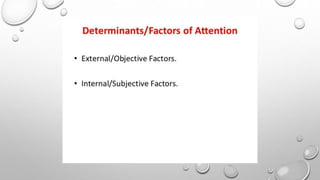
 Determinants/Factors influencing attention
 Degree of attention
 Alteration in attention
 Nursing implications.
Review
WHAT DID
I LEARN IN
THIS
CLASS?
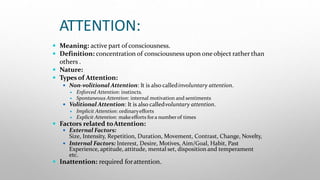
ATTENTION:
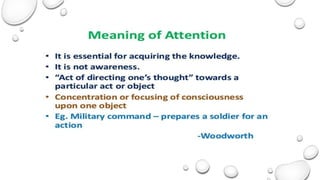
 Meaning: active part of consciousness.
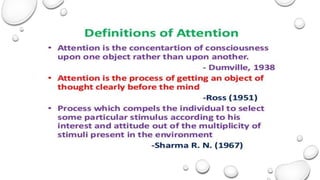
 Definition: concentration of consciousness upon oneobject ratherthan
others .
 Nature:
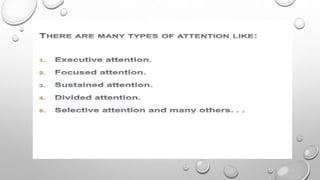
 Types of Attention:
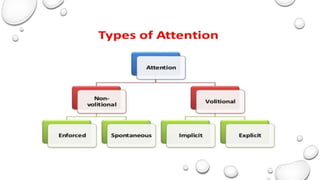
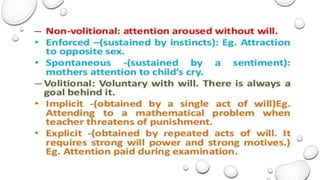
 Non-volitional Attention: It is also calledinvoluntary attention.
 Enforced Attention: instincts.
 Spontaneous Attention: internal motivation and sentiments
 Volitional Attention: It is also calledvoluntary attention.
 Implicit Attention: ordinaryefforts
 Explicit Attention: makeefforts fora numberof times
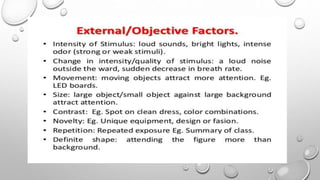
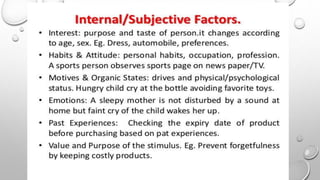
 Factors related toAttention:
 External Factors:
Size, Intensity, Repetition, Duration, Movement, Contrast, Change, Novelty,
 Internal Factors: Interest, Desire, Motives, Aim/Goal, Habit, Past
Experience, aptitude, attitude, mental set, disposition and temperament
etc.
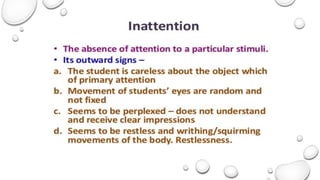
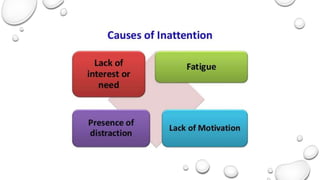
 Inattention: required forattention.
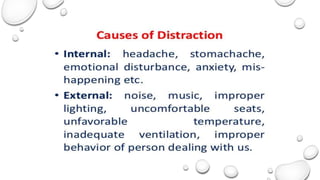
DISTRACTION:
 Meaning: interference inattention.
 Definition: any factor which normally tends to break up
attention
 Sources of Distraction
 External Factors: Noise, music, improper lighting,
uncomfortable seats, inadequate ventilation, defective
method of teaching, improper use of teaching aids,
defectivevoice of the teacher, etc.
 Internal Factors: Emotional disturbances, ill-
health, anger, fear, feeling of insecurity, boredom,
lack of motivation, feeling of fatigue, lack of
interest, unrelatedsubject matter, etc.
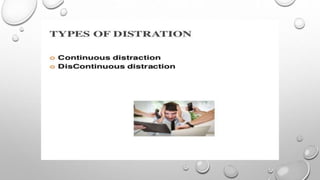
 Forms of Distraction
 Continuous Distraction
 Discontinuous Distraction
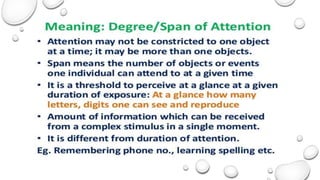
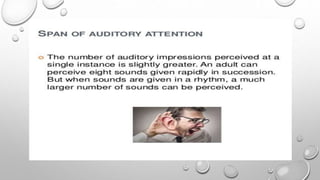
 Span of Attention: limit of the ability of a person to
attend toa concentrate onsomething.
Evaluation
45
QUESTIONS:
1. ATTENTION IS AN ACTIVE PARTOF ……………………………………
2. ENFORCED ATTENTION IS SUSTAINED BY……………………………
3. VOLITIONAL ATTENTION IS ALSO CALLED……..……………….
4. THE OBJECT WHICH CAUSES THE
DISTRACTION IS CALLED ……………………….
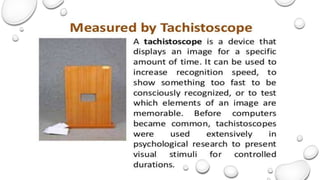
5. …………………… IS THE APPARATUS USING FOR
DETERMINE THE SPAN OFATTENTION.
ANSWERS:
1. Consciousness
2. Instinct
3. Voluntaryattention
4. Distructor
5. Touchidoscope
Attention

Attention

  • 1.
    MRS. U SREEVIDYAMSC NURSING
  • 2.
    OBJECTIVES  Meaning  Definition Characteristics.  Importance  Types  Uses  Determinants/Factors influencing attention  Degree of attention  Alteration in attention  Nursing implications.
  • 42.
  • 43.
    ATTENTION:  Meaning: activepart of consciousness.  Definition: concentration of consciousness upon oneobject ratherthan others .  Nature:  Types of Attention:  Non-volitional Attention: It is also calledinvoluntary attention.  Enforced Attention: instincts.  Spontaneous Attention: internal motivation and sentiments  Volitional Attention: It is also calledvoluntary attention.  Implicit Attention: ordinaryefforts  Explicit Attention: makeefforts fora numberof times  Factors related toAttention:  External Factors: Size, Intensity, Repetition, Duration, Movement, Contrast, Change, Novelty,  Internal Factors: Interest, Desire, Motives, Aim/Goal, Habit, Past Experience, aptitude, attitude, mental set, disposition and temperament etc.  Inattention: required forattention.
  • 44.
    DISTRACTION:  Meaning: interferenceinattention.  Definition: any factor which normally tends to break up attention  Sources of Distraction  External Factors: Noise, music, improper lighting, uncomfortable seats, inadequate ventilation, defective method of teaching, improper use of teaching aids, defectivevoice of the teacher, etc.  Internal Factors: Emotional disturbances, ill- health, anger, fear, feeling of insecurity, boredom, lack of motivation, feeling of fatigue, lack of interest, unrelatedsubject matter, etc.  Forms of Distraction  Continuous Distraction  Discontinuous Distraction  Span of Attention: limit of the ability of a person to attend toa concentrate onsomething.
  • 45.
  • 46.
    QUESTIONS: 1. ATTENTION ISAN ACTIVE PARTOF …………………………………… 2. ENFORCED ATTENTION IS SUSTAINED BY…………………………… 3. VOLITIONAL ATTENTION IS ALSO CALLED……..………………. 4. THE OBJECT WHICH CAUSES THE DISTRACTION IS CALLED ………………………. 5. …………………… IS THE APPARATUS USING FOR DETERMINE THE SPAN OFATTENTION.
  • 47.
    ANSWERS: 1. Consciousness 2. Instinct 3.Voluntaryattention 4. Distructor 5. Touchidoscope