Pentose Phosphate Pathway
Generation of NADPH
and Pentoses
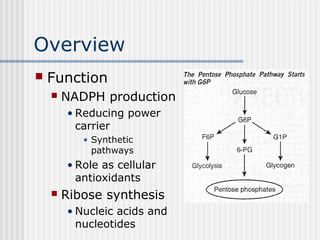
Overview
 Function
 NADPH production
• Reducing power
carrier
• Synthetic
pathways
• Role as cellular
antioxidants
 Ribose synthesis
• Nucleic acids and
nucleotides
Characteristics:
Tissue Distribution
 Demand for NADPH
 Biosynthetic pathways
• FA synthesis (liver, adipose, mammary)
• Cholesterol synthesis (liver)
• Steroid hormone synthesis (adrenal, ovaries, testes)
 Detoxification (Cytochrome P-450 System) –
liver
 Reduced glutathione as an antioxidant (RBC)
 Generation of superoxide (neutrophils)
Characteristics:
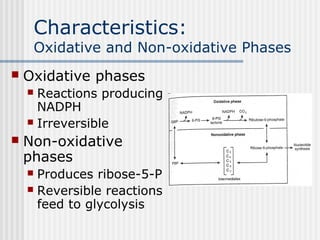
Oxidative and Non-oxidative Phases
 Oxidative phases
 Reactions producing
NADPH
 Irreversible
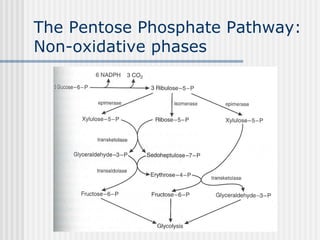
 Non-oxidative
phases
 Produces ribose-5-P
 Reversible reactions
feed to glycolysis
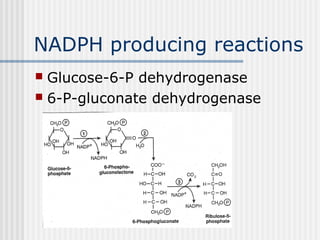
NADPH producing reactions
 Glucose-6-P dehydrogenase
 6-P-gluconate dehydrogenase
The Pentose Phosphate Pathway:
Non-oxidative phases
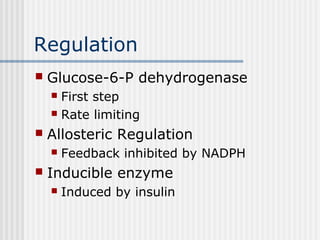
Regulation
 Glucose-6-P dehydrogenase
 First step
 Rate limiting
 Allosteric Regulation
 Feedback inhibited by NADPH
 Inducible enzyme
 Induced by insulin
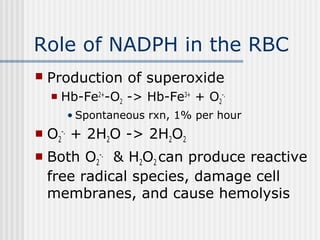
Role of NADPH in the RBC
 Production of superoxide
 Hb-Fe2+
-O2 -> Hb-Fe3+
+ O2
-.
• Spontaneous rxn, 1% per hour
 O2
-.
+ 2H2O -> 2H2O2
 Both O2
-.
& H2O2 can produce reactive
free radical species, damage cell
membranes, and cause hemolysis
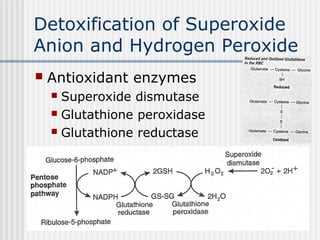
Detoxification of Superoxide
Anion and Hydrogen Peroxide
 Antioxidant enzymes
 Superoxide dismutase
 Glutathione peroxidase
 Glutathione reductase
Case Study
 21 yo male medical student with malaria
 Treated with primaquine
 Four days later:
 Black colored urine
 Low RBC count
 Elevated reticulocyte count
 RBC with Heinz bodies
 Low hemoglobin
 Elevated serum bilirubin
 Pt recovered in a few days
G6PDH Deficiency and
Hemolytic Anemia
 Most common genetic enzymopathy
 400 hundred variants of G6PDH
deficiency
 Mediterranean, Asian, African descent
• 400 million people affected worldwide
• 50% of Kurdish men
• 10-14% of African-American men with
G6PD deficiency
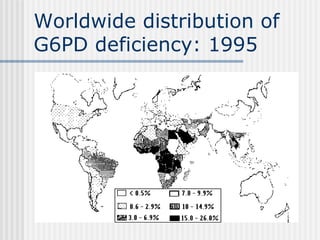
Worldwide distribution of
G6PD deficiency: 1995
G6PD Deficiency
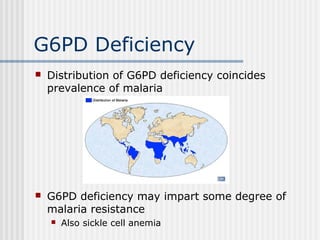
 Distribution of G6PD deficiency coincides
prevalence of malaria
 G6PD deficiency may impart some degree of
malaria resistance
 Also sickle cell anemia
Genetics
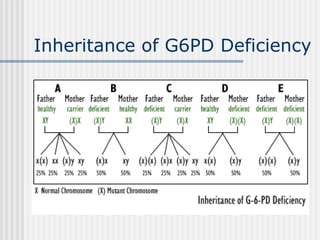
 Recessive sex-linked mutation
 X-chromosome
 Rare in females (two X-chromosomes)
 Homozygous mutation:
 high hemolysis and anemia
 Heterozygous mutation:
 Normally asymptomatic
• unless exposed to drugs (primaquine, anti-malarial
drug) or compounds (fava bean) that produce
superoxide or hydrogen peroxide
Inheritance of G6PD Deficiency
G6PD Deficiency
 Exposure to anti-malarial drugs
(Primaquine) results in increased cellular
production of superoxide and hydrogen
peroxide (Primaquine sensitivity)
 Other chemicals known to increase
oxidant stress
 Sulfonamides (antibiotic)
 Asprin and NSAIDs
 Quinadine and quinine
 Napthlane (mothballs)
 Fava beans (vicine & isouramil)
Fava Beans
 Grown worldwide
 Important in Middle
East
 High in protein
 Frost resistant
perennial
 Genetically modified
fava bean being
developed
 Low in vicine and
isouramil
 Favism
Case Study
 21 yo male medical student with malaria
 Treated with primaquine
 Four days later:
 Black colored urine
 Low RBC count
 Elevated reticulocyte count
 RBC with Heinz bodies
 Low hemoglobin
 Elevated serum bilirubin
 Pt recovered in a few days
Symptoms
 Black colored urine
 Hemolysis may result in urinary
excretion of hemoglobin
 Low RBC count & low hemoglobin
 Result of high rate of hemolysis
 Elevated bilirubin
 Catabolism of heme
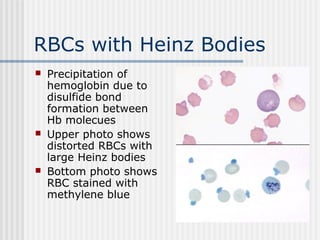
RBCs with Heinz Bodies
 Precipitation of
hemoglobin due to
disulfide bond
formation between
Hb molecues
 Upper photo shows
distorted RBCs with
large Heinz bodies
 Bottom photo shows
RBC stained with
methylene blue
Elevated Reticulocytes
 A RBC containing granules or filaments
representing an immature stage in cell
development
 Normally constitutes 1% of circulating
RBCs
 Reticulocytosis
 Elevation of reticulocytes
 Indicative of active erthropoiesis in red bone
marrow
Defective G6PDH
 Results in enzyme with unstable
structure
 Patient with 10% of normal activity
 Enough to generate NADPH under
normal condition
 Newly made RBCs have normal
6PDH activity
 Patients recover quickly (8 days)

Pentose phosphate pathway

  • 1.
  • 2.
    Overview  Function  NADPHproduction • Reducing power carrier • Synthetic pathways • Role as cellular antioxidants  Ribose synthesis • Nucleic acids and nucleotides
  • 3.
    Characteristics: Tissue Distribution  Demandfor NADPH  Biosynthetic pathways • FA synthesis (liver, adipose, mammary) • Cholesterol synthesis (liver) • Steroid hormone synthesis (adrenal, ovaries, testes)  Detoxification (Cytochrome P-450 System) – liver  Reduced glutathione as an antioxidant (RBC)  Generation of superoxide (neutrophils)
  • 4.
    Characteristics: Oxidative and Non-oxidativePhases  Oxidative phases  Reactions producing NADPH  Irreversible  Non-oxidative phases  Produces ribose-5-P  Reversible reactions feed to glycolysis
  • 5.
    NADPH producing reactions Glucose-6-P dehydrogenase  6-P-gluconate dehydrogenase
  • 6.
    The Pentose PhosphatePathway: Non-oxidative phases
  • 7.
    Regulation  Glucose-6-P dehydrogenase First step  Rate limiting  Allosteric Regulation  Feedback inhibited by NADPH  Inducible enzyme  Induced by insulin
  • 8.
    Role of NADPHin the RBC  Production of superoxide  Hb-Fe2+ -O2 -> Hb-Fe3+ + O2 -. • Spontaneous rxn, 1% per hour  O2 -. + 2H2O -> 2H2O2  Both O2 -. & H2O2 can produce reactive free radical species, damage cell membranes, and cause hemolysis
  • 9.
    Detoxification of Superoxide Anionand Hydrogen Peroxide  Antioxidant enzymes  Superoxide dismutase  Glutathione peroxidase  Glutathione reductase
  • 10.
    Case Study  21yo male medical student with malaria  Treated with primaquine  Four days later:  Black colored urine  Low RBC count  Elevated reticulocyte count  RBC with Heinz bodies  Low hemoglobin  Elevated serum bilirubin  Pt recovered in a few days
  • 11.
    G6PDH Deficiency and HemolyticAnemia  Most common genetic enzymopathy  400 hundred variants of G6PDH deficiency  Mediterranean, Asian, African descent • 400 million people affected worldwide • 50% of Kurdish men • 10-14% of African-American men with G6PD deficiency
  • 12.
  • 13.
    G6PD Deficiency  Distributionof G6PD deficiency coincides prevalence of malaria  G6PD deficiency may impart some degree of malaria resistance  Also sickle cell anemia
  • 14.
    Genetics  Recessive sex-linkedmutation  X-chromosome  Rare in females (two X-chromosomes)  Homozygous mutation:  high hemolysis and anemia  Heterozygous mutation:  Normally asymptomatic • unless exposed to drugs (primaquine, anti-malarial drug) or compounds (fava bean) that produce superoxide or hydrogen peroxide
  • 15.
  • 16.
    G6PD Deficiency  Exposureto anti-malarial drugs (Primaquine) results in increased cellular production of superoxide and hydrogen peroxide (Primaquine sensitivity)  Other chemicals known to increase oxidant stress  Sulfonamides (antibiotic)  Asprin and NSAIDs  Quinadine and quinine  Napthlane (mothballs)  Fava beans (vicine & isouramil)
  • 17.
    Fava Beans  Grownworldwide  Important in Middle East  High in protein  Frost resistant perennial  Genetically modified fava bean being developed  Low in vicine and isouramil  Favism
  • 18.
    Case Study  21yo male medical student with malaria  Treated with primaquine  Four days later:  Black colored urine  Low RBC count  Elevated reticulocyte count  RBC with Heinz bodies  Low hemoglobin  Elevated serum bilirubin  Pt recovered in a few days
  • 19.
    Symptoms  Black coloredurine  Hemolysis may result in urinary excretion of hemoglobin  Low RBC count & low hemoglobin  Result of high rate of hemolysis  Elevated bilirubin  Catabolism of heme
  • 20.
    RBCs with HeinzBodies  Precipitation of hemoglobin due to disulfide bond formation between Hb molecues  Upper photo shows distorted RBCs with large Heinz bodies  Bottom photo shows RBC stained with methylene blue
  • 21.
    Elevated Reticulocytes  ARBC containing granules or filaments representing an immature stage in cell development  Normally constitutes 1% of circulating RBCs  Reticulocytosis  Elevation of reticulocytes  Indicative of active erthropoiesis in red bone marrow
  • 22.
    Defective G6PDH  Resultsin enzyme with unstable structure  Patient with 10% of normal activity  Enough to generate NADPH under normal condition  Newly made RBCs have normal 6PDH activity  Patients recover quickly (8 days)