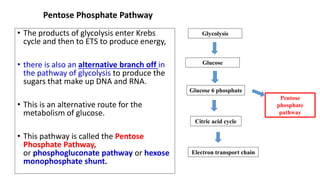
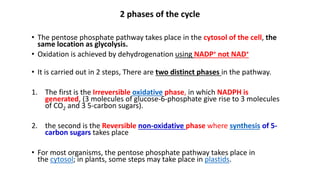
The pentose phosphate pathway (PPP) has two phases:
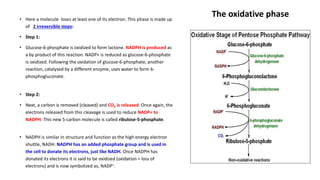
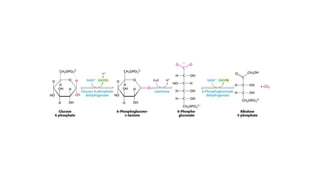
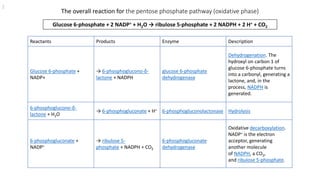
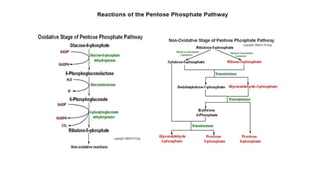
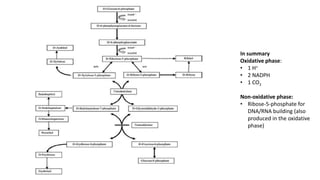
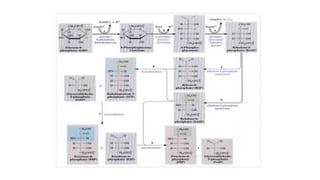
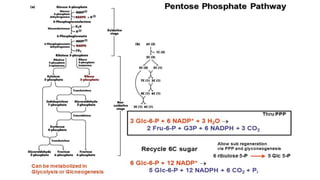
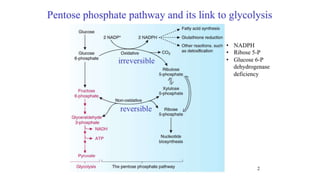
1) The oxidative phase generates NADPH and pentoses like ribose-5-phosphate. Glucose-6-phosphate is oxidized to produce NADPH and other intermediates.
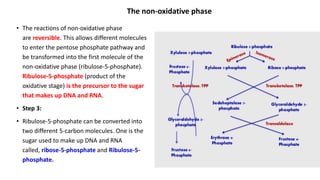
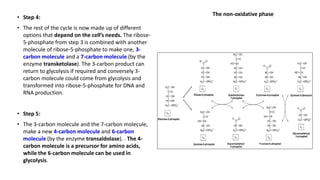
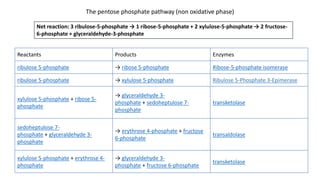
2) The non-oxidative phase interconverts pentose phosphates to produce ribose-5-phosphate for nucleotide synthesis. It can also regenerate glycolytic intermediates.
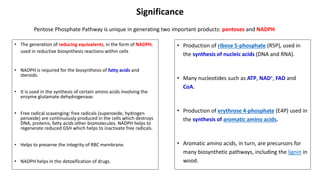
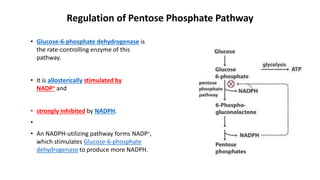
The PPP is important because it generates NADPH for biosynthesis of fatty acids, nucleic acids, and protects cells from oxidative damage. It also produces ribose-5-phosphate for nucleotide synthesis. The rate is regulated by NADPH inhibiting glucose-