PentosePhosphate Pathway
Dr.SVK Chandrikimath
Introduction
• Alternative route for the metabolism of glucose
• Also known asHexose Monophosphate (HMP)
shunt
• More complex pathway thanglycolysis
• It helpsin
– formation of NADPH for synthesisof fatty acids,
steroids,
– maintaining reduced glutathione forantioxidant
activity
– synthesis of ribose fornucleotide and nucleic acid
formation
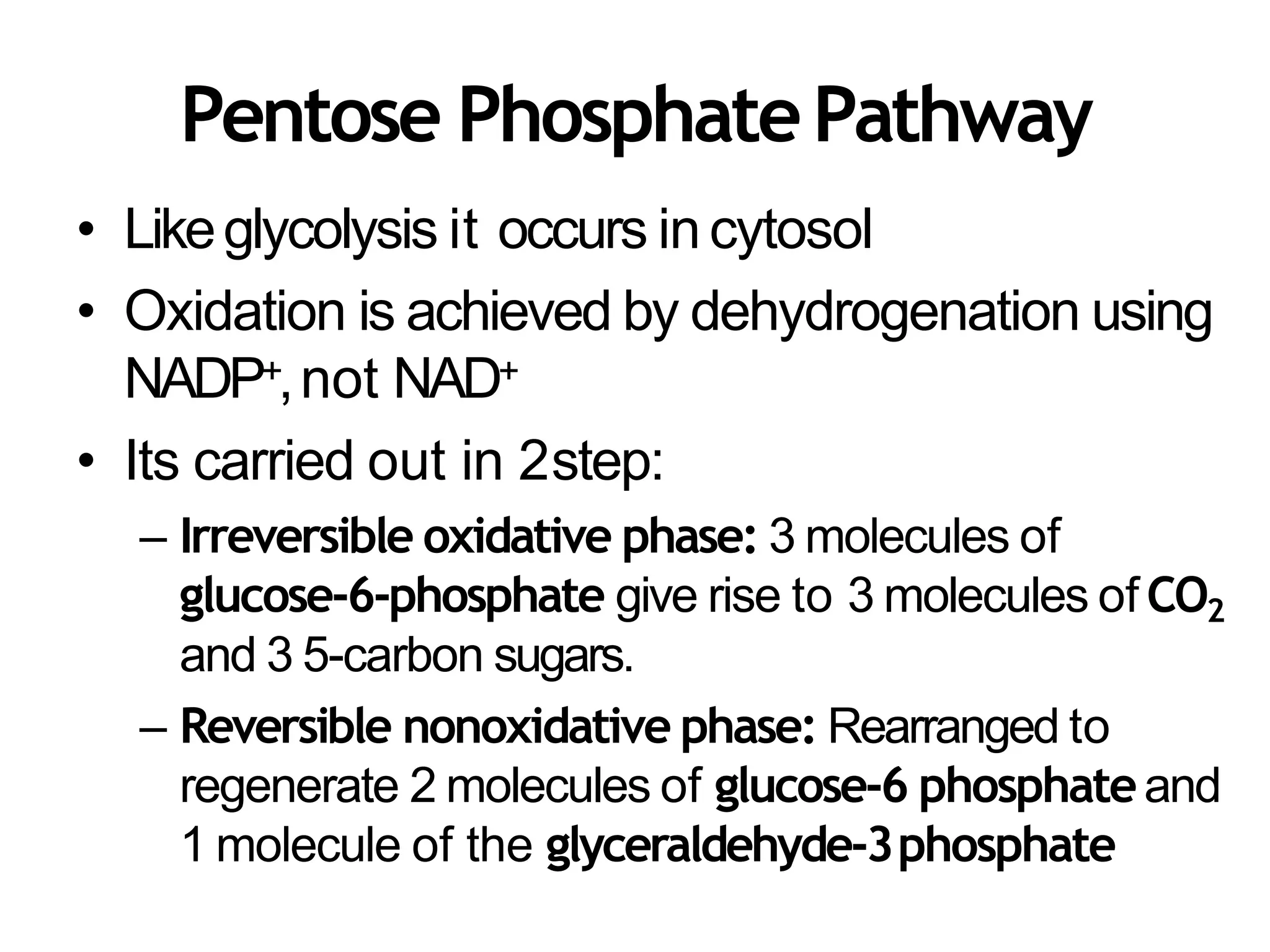
Pentose PhosphatePathway
• Likeglycolysis it occurs incytosol
• Oxidation is achieved by dehydrogenation using
NADP+,not NAD+
• Its carried out in 2step:
– Irreversible oxidative phase: 3 molecules of
glucose-6-phosphate give rise to 3 molecules of CO2
and 3 5-carbon sugars.
– Reversible nonoxidative phase: Rearranged to
regenerate 2 molecules of glucose-6 phosphateand
1 molecule of the glyceraldehyde-3phosphate
Oxidativephase
• Dehydrogenation of glucose-6-
phosphate to 6-
phosphogluconate catalyzedby
glucose 6-phosphate
dehydrogenase
• Followed by hydrolysisof
6- phosphogluconolactone to
Ribulose-5-phosphate catalyzed
by 6-phosphogluconate
dehydrogenase
• Decarboxylation follows with
the formation of the
ketopentose ribulose-5-
phosphate
• Both this step requires NADP+as
hydrogenacceptor
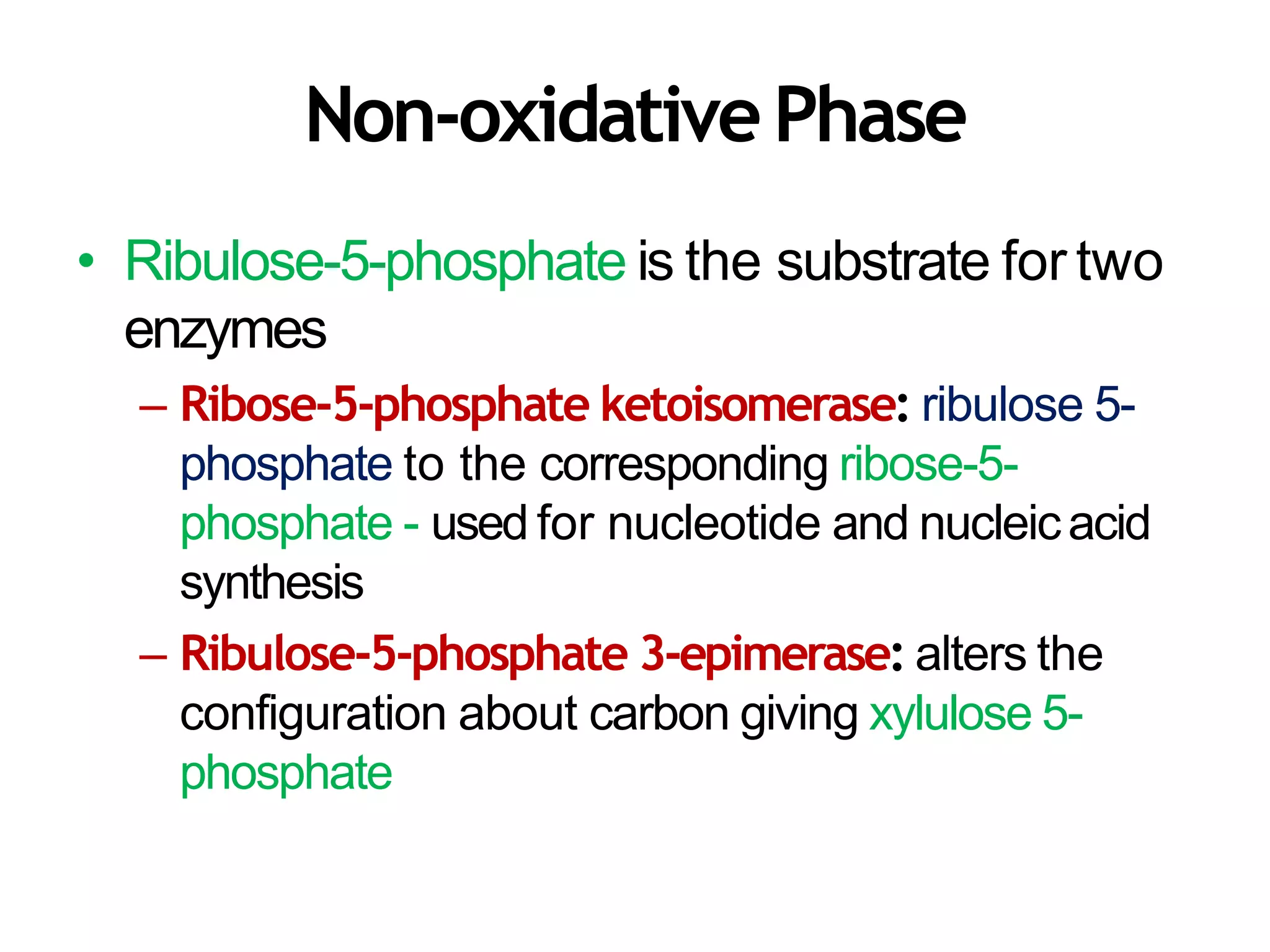
Non-oxidativePhase
• Ribulose-5-phosphate is the substrate for two
enzymes
– Ribose-5-phosphate ketoisomerase: ribulose 5-
phosphate to the corresponding ribose-5-
phosphate - used for nucleotide and nucleicacid
synthesis
– Ribulose-5-phosphate 3-epimerase: alters the
configuration about carbon giving xylulose 5-
phosphate
Non-oxidativePhase
• Xylulose-5-phosphate (5c) and Ribose-5-
phosphate (5c) reacts to giveGlyceraldehyde-
3-phosphate (3c) and Sedoheptulose-7-
phosphate (7c) by the enzymeTransketolase
• Glyceraldehyde-3-phosphate (3c) and
Sedoheptulose-7-phosphate (7c) is acted by
Transaldolase to give Fructose-6-phosphate
and Erythrose-4-phosphate
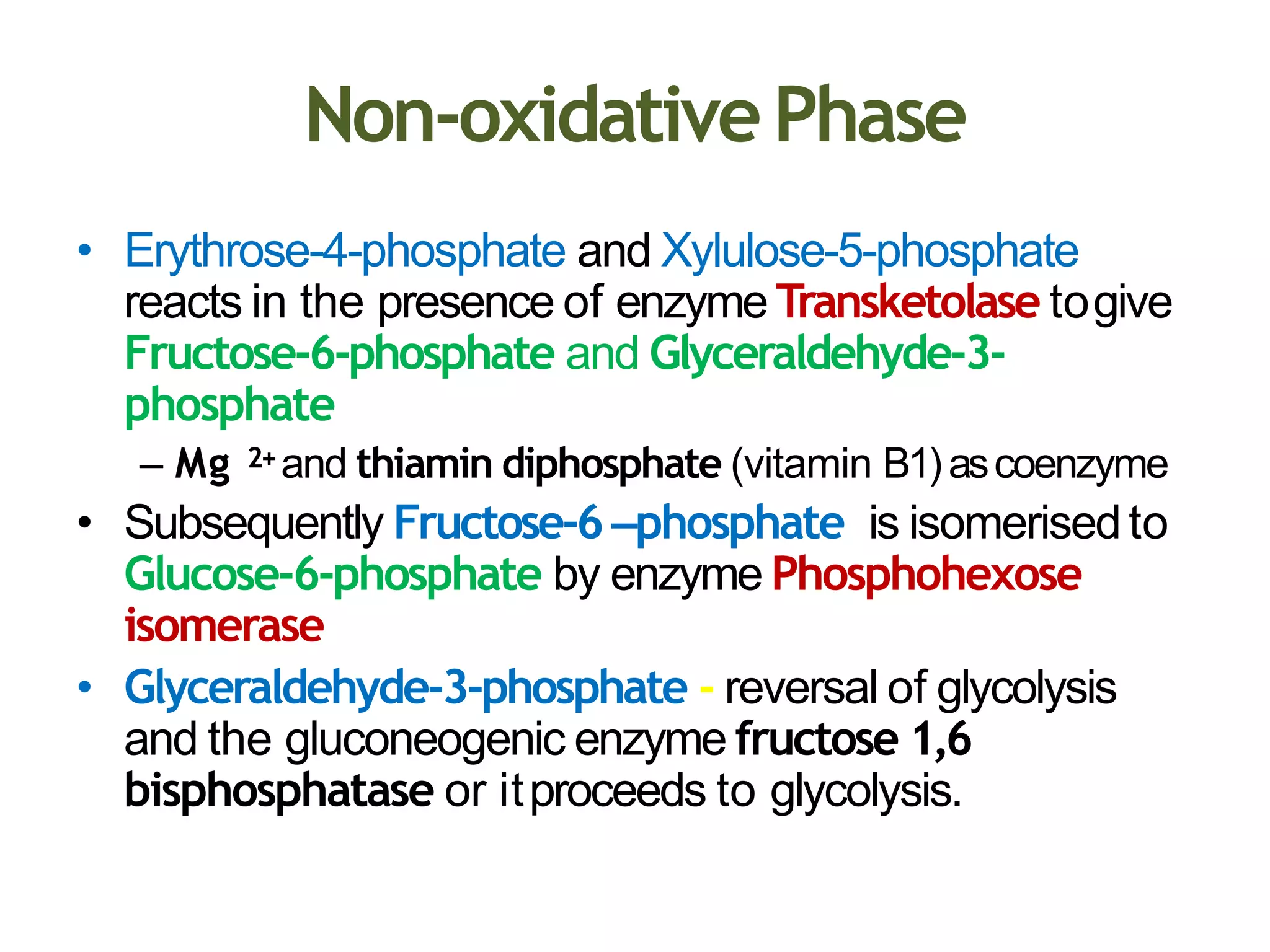
Non-oxidativePhase
• Erythrose-4-phosphate and Xylulose-5-phosphate
reacts in the presence of enzyme Transketolase togive
Fructose-6-phosphate and Glyceraldehyde-3-
phosphate
– Mg 2+and thiamin diphosphate (vitamin B1)ascoenzyme
• Subsequently Fructose-6 –phosphate is isomerisedto
Glucose-6-phosphate by enzyme Phosphohexose
isomerase
• Glyceraldehyde-3-phosphate - reversal of glycolysis
and the gluconeogenic enzyme fructose 1,6
bisphosphatase or itproceeds to glycolysis.
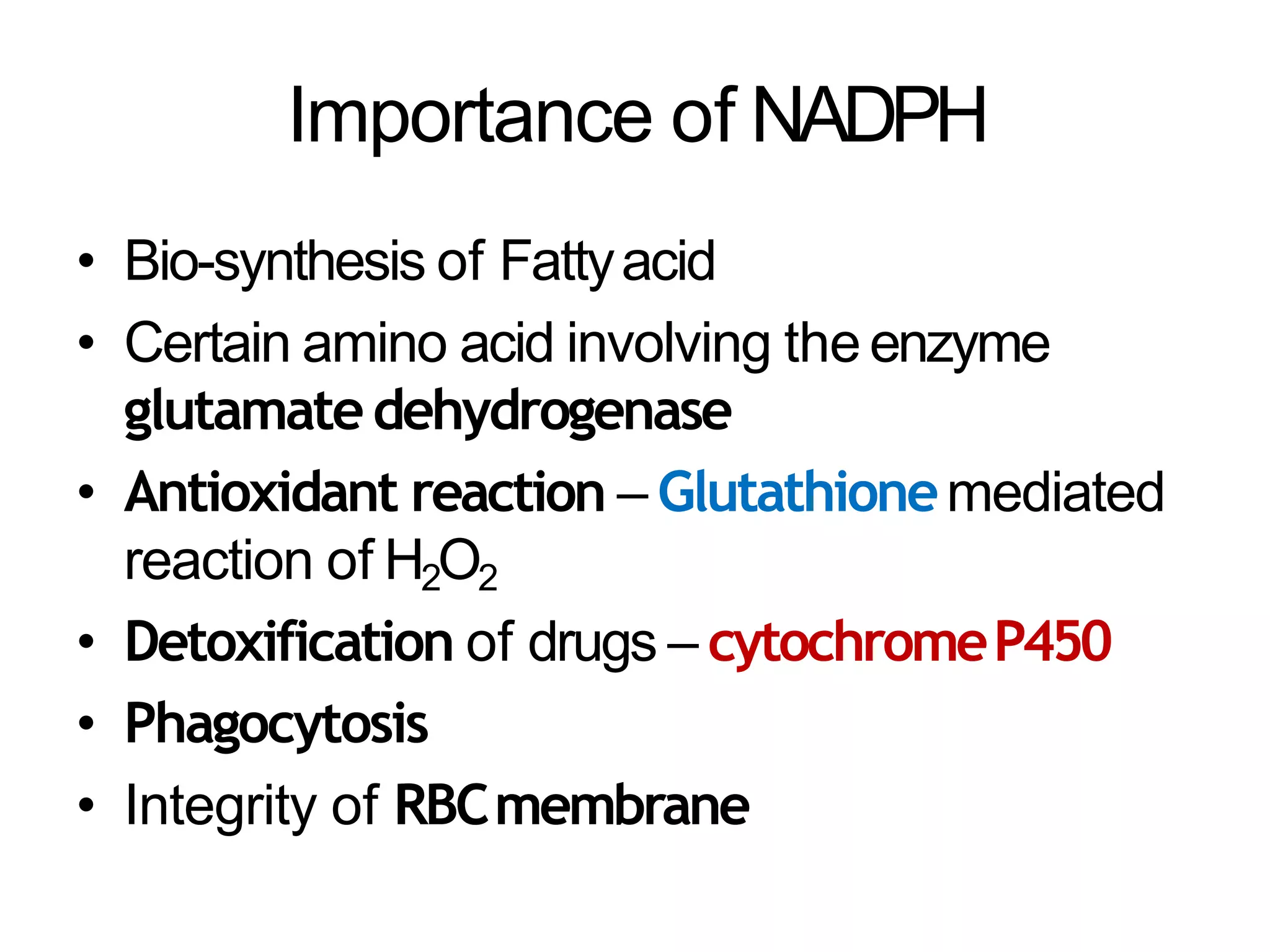
Importance of NADPH
• Bio-synthesis of Fattyacid
• Certain amino acid involving the enzyme
glutamatedehydrogenase
• Antioxidant reaction – Glutathionemediated
reaction of H2O2
• Detoxification of drugs – cytochromeP450
• Phagocytosis
• Integrity of RBCmembrane
Importance of PentoseSugar
• Ribose-5 phosphate – useful for the synthesis
of nucleic acid (RNAand DNA)and nucleotide
• Skeletal muscles capable of synthesizing
pentoses
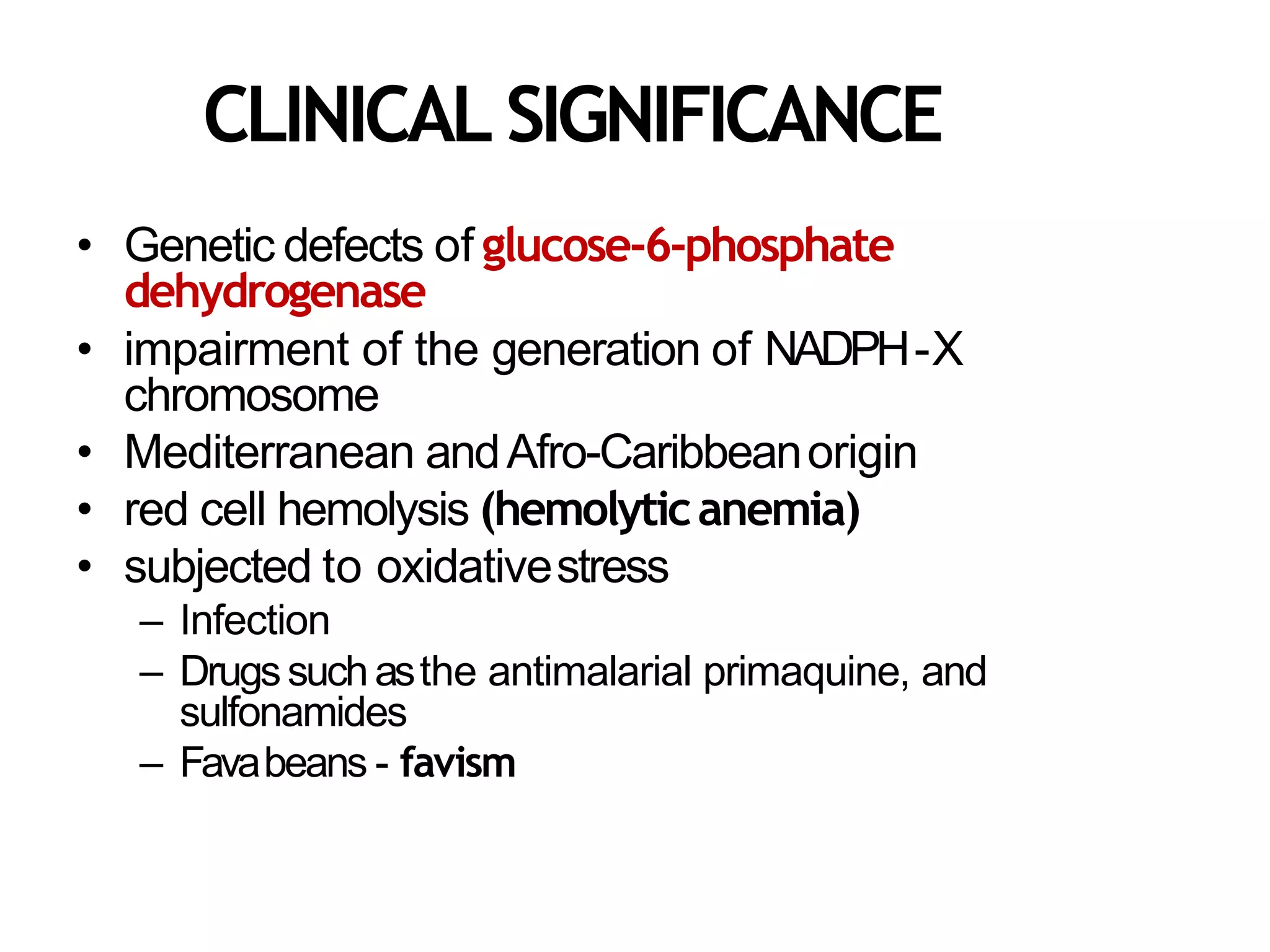
CLINICAL SIGNIFICANCE
• Genetic defects of glucose-6-phosphate
dehydrogenase
• impairment of the generation of NADPH-X
chromosome
• Mediterranean andAfro-Caribbeanorigin
• red cell hemolysis (hemolyticanemia)
• subjected to oxidativestress
– Infection
– Drugssuchasthe antimalarial primaquine, and
sulfonamides
– Favabeans - favism

Pentose Phosphate Pathway

  • 1.
  • 2.
    Introduction • Alternative routefor the metabolism of glucose • Also known asHexose Monophosphate (HMP) shunt • More complex pathway thanglycolysis • It helpsin – formation of NADPH for synthesisof fatty acids, steroids, – maintaining reduced glutathione forantioxidant activity – synthesis of ribose fornucleotide and nucleic acid formation
  • 3.
    Pentose PhosphatePathway • Likeglycolysisit occurs incytosol • Oxidation is achieved by dehydrogenation using NADP+,not NAD+ • Its carried out in 2step: – Irreversible oxidative phase: 3 molecules of glucose-6-phosphate give rise to 3 molecules of CO2 and 3 5-carbon sugars. – Reversible nonoxidative phase: Rearranged to regenerate 2 molecules of glucose-6 phosphateand 1 molecule of the glyceraldehyde-3phosphate
  • 4.
    Oxidativephase • Dehydrogenation ofglucose-6- phosphate to 6- phosphogluconate catalyzedby glucose 6-phosphate dehydrogenase • Followed by hydrolysisof 6- phosphogluconolactone to Ribulose-5-phosphate catalyzed by 6-phosphogluconate dehydrogenase • Decarboxylation follows with the formation of the ketopentose ribulose-5- phosphate • Both this step requires NADP+as hydrogenacceptor
  • 5.
    Non-oxidativePhase • Ribulose-5-phosphate isthe substrate for two enzymes – Ribose-5-phosphate ketoisomerase: ribulose 5- phosphate to the corresponding ribose-5- phosphate - used for nucleotide and nucleicacid synthesis – Ribulose-5-phosphate 3-epimerase: alters the configuration about carbon giving xylulose 5- phosphate
  • 6.
    Non-oxidativePhase • Xylulose-5-phosphate (5c)and Ribose-5- phosphate (5c) reacts to giveGlyceraldehyde- 3-phosphate (3c) and Sedoheptulose-7- phosphate (7c) by the enzymeTransketolase • Glyceraldehyde-3-phosphate (3c) and Sedoheptulose-7-phosphate (7c) is acted by Transaldolase to give Fructose-6-phosphate and Erythrose-4-phosphate
  • 7.
    Non-oxidativePhase • Erythrose-4-phosphate andXylulose-5-phosphate reacts in the presence of enzyme Transketolase togive Fructose-6-phosphate and Glyceraldehyde-3- phosphate – Mg 2+and thiamin diphosphate (vitamin B1)ascoenzyme • Subsequently Fructose-6 –phosphate is isomerisedto Glucose-6-phosphate by enzyme Phosphohexose isomerase • Glyceraldehyde-3-phosphate - reversal of glycolysis and the gluconeogenic enzyme fructose 1,6 bisphosphatase or itproceeds to glycolysis.
  • 9.
    Importance of NADPH •Bio-synthesis of Fattyacid • Certain amino acid involving the enzyme glutamatedehydrogenase • Antioxidant reaction – Glutathionemediated reaction of H2O2 • Detoxification of drugs – cytochromeP450 • Phagocytosis • Integrity of RBCmembrane
  • 10.
    Importance of PentoseSugar •Ribose-5 phosphate – useful for the synthesis of nucleic acid (RNAand DNA)and nucleotide • Skeletal muscles capable of synthesizing pentoses
  • 11.
    CLINICAL SIGNIFICANCE • Geneticdefects of glucose-6-phosphate dehydrogenase • impairment of the generation of NADPH-X chromosome • Mediterranean andAfro-Caribbeanorigin • red cell hemolysis (hemolyticanemia) • subjected to oxidativestress – Infection – Drugssuchasthe antimalarial primaquine, and sulfonamides – Favabeans - favism