
The word of the day 
A good beginning makes a good 
ending
Practice makes perfect.
Education is a progressive 
discovery of our ignorance.
Every rose has its thorn.
Rome wasn’t built in a day
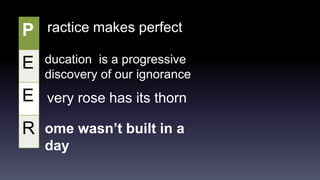
P 
E 
E 
R 
ractice makes perfect 
ducation is a progressive 
discovery of our ignorance 
very rose has its thorn 
ome wasn’t built in a 
day
Peer Observation in Teaching 
Practices
Could you get into groups and talk 
about experiences you have had of 
being observed and observing 
others. In the discussion, You 
could consider the following, from 
the position of either the observer 
or the observed:
• For what purpose you were being observed / 
observing. 
• What your relationship was with the observer / 
observed; e.g., a peer, a supervisor, a mentor, a 
student teacher, a parent, etc. 
• What observation procedures were used. 
• What was done with the information from the 
observation. 
• What you learned from the experience. 
• In what ways it was a positive or negative 
experience.
As you discuss these questions, 
you should take notes. You can 
compare these notes with your 
observations from viewing a 
formative peer review process in 
the upcoming video segments.
Before viewing 
1. The observer (T1) in this segment is asking for 
information about the class she will be observing. 
List the points of information she asks for and 
receives from the teacher she is going to observe 
(T2). 
2. Write down the two aspects of her class about which 
T2 wants information. 
3. Notice the way the two teachers interact with each 
other: verbal behavior, non-verbal behavior, and 
affect (emotion).
VIDEO 
file://localhost/Users/ais/Desktop/Session 7 Peer 
observation/Shaping the Way We Teach English: Module 
13, Peer Observation in Teaching Practices.mp4
ANSWER KEY 
1. The observer asked: 
• Which class she would be observing. 
• For information about the class proficiency 
level because she had never taught that class 
before. 
• What the teaching point of the lesson was 
going to be.
2. The teacher being observed asked the observer 
to look at: 
• The language she was using in the class. Was it 
appropriate for the low listening proficiency and 
limited vocabulary of some members of the class? 
• The sequencing and rhythm of the whole lesson. 
Was she going too fast or too slow? Were the 
transitions from one activity to the next natural?
3. The two teachers in this segment are both 
highly experienced teachers with many years of 
teaching experience between them. Their 
teaching unit requires even the most experienced 
teachers to do some peer observation every year 
and submit a report on it as part of their yearly 
evaluation. They are colleagues and feel it is 
important to be supportive of each other’s efforts. 
Notice that:
• The observer verbally puts herself in the 
position of learning from the person being 
observed by saying she had “never taught 
that class before.” 
• The observer indirectly compliments the 
person being observed by saying, “Sounds 
pretty challenging” and “sounds 
interesting.”
• The observer pays attention to what the observed 
teacher is saying. She takes notes. She looks at her 
attentively. And she uses back-channeling, or verbal 
expressions to show she is paying attention. For example, 
“OK,” “uh huh,” “sure,” “good, good,” “sounds great,” 
and, “I’m looking forward to it.” 
• The teacher being observed answered every question as 
cooperatively and completely as she could. She tried to 
give the observer the information she needed in order to 
make an informed ob-servation.
Classroom observation can take 
different forms and be done for 
different purposes. The two most 
commonly used forms of 
observation are summative 
observation and formative 
observation.
Summative observation. This 
observation is an evaluation, which 
rates the teacher who is being 
observed. It can be done for 
administrative or supervisory 
reports for the purpose of job 
retention, promotion, salary 
increases, etc.
Formative observation. The 
purpose of a formative review is to 
help teachers become better 
teachers and more professionals. 
With peer observation, teachers 
observe each other’s classes, give 
each other feedback, and share 
ideas.
The focus in this module is on 
formative or peer observation. 
Formative observation can benefit 
both the observed teacher and the 
teacher doing the observation. In 
order to do so, it must be carefully 
organized. We will follow a teachers 
through the three phases of a
• First, preparing for the 
observation. 
• Then, observing in the classroom. 
• And, finally, the post-observation 
debriefing
Peer observation can… 
• Allow teachers to see other’s 
teaching styles and reflect on their 
own practices. 
•Bring about positive changes in 
classroom learning for students. 
When done with care, it can

Peer observation in teaching practice

  • 1.
    The word ofthe day A good beginning makes a good ending
  • 2.
  • 3.
    Education is aprogressive discovery of our ignorance.
  • 4.
    Every rose hasits thorn.
  • 5.
  • 6.
    P E E R ractice makes perfect ducation is a progressive discovery of our ignorance very rose has its thorn ome wasn’t built in a day
  • 7.
    Peer Observation inTeaching Practices
  • 8.
    Could you getinto groups and talk about experiences you have had of being observed and observing others. In the discussion, You could consider the following, from the position of either the observer or the observed:
  • 9.
    • For whatpurpose you were being observed / observing. • What your relationship was with the observer / observed; e.g., a peer, a supervisor, a mentor, a student teacher, a parent, etc. • What observation procedures were used. • What was done with the information from the observation. • What you learned from the experience. • In what ways it was a positive or negative experience.
  • 10.
    As you discussthese questions, you should take notes. You can compare these notes with your observations from viewing a formative peer review process in the upcoming video segments.
  • 11.
    Before viewing 1.The observer (T1) in this segment is asking for information about the class she will be observing. List the points of information she asks for and receives from the teacher she is going to observe (T2). 2. Write down the two aspects of her class about which T2 wants information. 3. Notice the way the two teachers interact with each other: verbal behavior, non-verbal behavior, and affect (emotion).
  • 12.
    VIDEO file://localhost/Users/ais/Desktop/Session 7Peer observation/Shaping the Way We Teach English: Module 13, Peer Observation in Teaching Practices.mp4
  • 13.
    ANSWER KEY 1.The observer asked: • Which class she would be observing. • For information about the class proficiency level because she had never taught that class before. • What the teaching point of the lesson was going to be.
  • 14.
    2. The teacherbeing observed asked the observer to look at: • The language she was using in the class. Was it appropriate for the low listening proficiency and limited vocabulary of some members of the class? • The sequencing and rhythm of the whole lesson. Was she going too fast or too slow? Were the transitions from one activity to the next natural?
  • 15.
    3. The twoteachers in this segment are both highly experienced teachers with many years of teaching experience between them. Their teaching unit requires even the most experienced teachers to do some peer observation every year and submit a report on it as part of their yearly evaluation. They are colleagues and feel it is important to be supportive of each other’s efforts. Notice that:
  • 16.
    • The obserververbally puts herself in the position of learning from the person being observed by saying she had “never taught that class before.” • The observer indirectly compliments the person being observed by saying, “Sounds pretty challenging” and “sounds interesting.”
  • 17.
    • The observerpays attention to what the observed teacher is saying. She takes notes. She looks at her attentively. And she uses back-channeling, or verbal expressions to show she is paying attention. For example, “OK,” “uh huh,” “sure,” “good, good,” “sounds great,” and, “I’m looking forward to it.” • The teacher being observed answered every question as cooperatively and completely as she could. She tried to give the observer the information she needed in order to make an informed ob-servation.
  • 18.
    Classroom observation cantake different forms and be done for different purposes. The two most commonly used forms of observation are summative observation and formative observation.
  • 19.
    Summative observation. This observation is an evaluation, which rates the teacher who is being observed. It can be done for administrative or supervisory reports for the purpose of job retention, promotion, salary increases, etc.
  • 20.
    Formative observation. The purpose of a formative review is to help teachers become better teachers and more professionals. With peer observation, teachers observe each other’s classes, give each other feedback, and share ideas.
  • 21.
    The focus inthis module is on formative or peer observation. Formative observation can benefit both the observed teacher and the teacher doing the observation. In order to do so, it must be carefully organized. We will follow a teachers through the three phases of a
  • 22.
    • First, preparingfor the observation. • Then, observing in the classroom. • And, finally, the post-observation debriefing
  • 23.
    Peer observation can… • Allow teachers to see other’s teaching styles and reflect on their own practices. •Bring about positive changes in classroom learning for students. When done with care, it can