Congenital Anomalies of
Anterior Abdominal Wall
Dr. Hatem ElGohary
Lecturer of General Surgery – Helwan University
What is Hernia?
A hernia is a protrusion of a viscus or part of a
viscus through an abnormal opening in the walls of
its containing cavity.
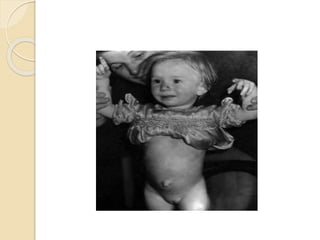
Umblical hernia
Cause: Incomplete closure of the early natural
umbilical defect and the absence of umbilical fascia.
Its Covered by skin.
boundaries of the umbilical ring are as follows:
Superior and inferior—the umbilical ring is related to
the linea and the rectus sheath on each lateral side
(right and left).
Treatment:
Before 2Years COSERVE
After 2Years Surgical Repair
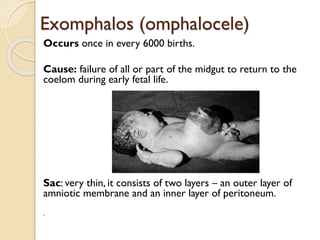
(omphalocele)Exomphalos
Occurs once in every 6000 births.
Cause: failure of all or part of the midgut to return to the
coelom during early fetal life.
Sac: very thin, it consists of two layers – an outer layer of
amniotic membrane and an inner layer of peritoneum.
.
Treatment
Non Operative
The intact sac is painted daily with
antiseptic solution and, if successful, granulisation tissue grows
in from the periphery and the subsequent ventral hernia can
be repaired later.
Skin flap closure
The sac is gently trimmed away enabling inspection of the
abdominal contents.The skin is freed from the fascial edges
and undermined laterally.
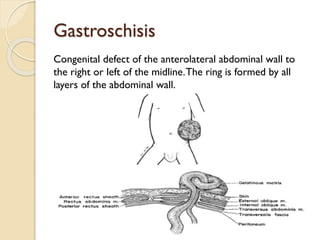
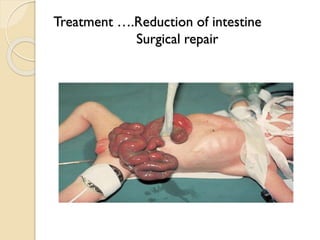
Gastroschisis
Congenital defect of the anterolateral abdominal wall to
the right or left of the midline.The ring is formed by all
layers of the abdominal wall.
Treatment ….Reduction of intestine
Surgical repair
Quick Revision
Umbilical Hernia: Incomplete closure of early
natural umbilical defect; absence of umbilical fascia
Superior and inferior—linea alba Lateral—rectus
abdominis muscle.
Omphalocele Herniation of intraperitoneal viscera
into open umbilical ring Umbilical cord; hernial sac
covered by double layer of membranes (amniotic
outside, peritoneum inside).
Gastroschisis Defect of anterior abdominal wall to
right or left of the midline.
Any Questions?
Congenital Inguino-scrotal
Disorders
Embryology
The testis develops from the urogenital ridge on the
posterior abdominal wall.
Gonadal induction to form a testis is regulated by genes
on theY chromosome. During gestation, the testis
migrates down towards the internal ring, guided by
mesenchymal tissue (gubernaculum). Inguinoscrotal
descent of the testis is mediated by testosterone from the
fetal testis.
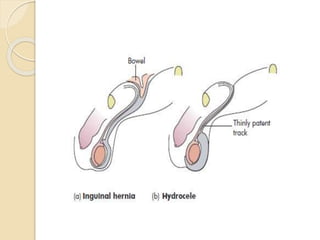
A tongue of peritoneum precedes the migrating testis
through the inguinal canal (the processus
vaginalis).
This peritoneal pouch normally becomes obliterated
after birth but failure of this process can lead to the
development of an inguinal hernia or hydrocele.
Congenital Anomalies of Anterior Abdominal wall By Dr Hatem Elgohary

Congenital Anomalies of Anterior Abdominal wall By Dr Hatem Elgohary

  • 1.
    Congenital Anomalies of AnteriorAbdominal Wall Dr. Hatem ElGohary Lecturer of General Surgery – Helwan University
  • 2.
    What is Hernia? Ahernia is a protrusion of a viscus or part of a viscus through an abnormal opening in the walls of its containing cavity.
  • 3.
    Umblical hernia Cause: Incompleteclosure of the early natural umbilical defect and the absence of umbilical fascia. Its Covered by skin. boundaries of the umbilical ring are as follows: Superior and inferior—the umbilical ring is related to the linea and the rectus sheath on each lateral side (right and left).
  • 5.
  • 6.
    (omphalocele)Exomphalos Occurs once inevery 6000 births. Cause: failure of all or part of the midgut to return to the coelom during early fetal life. Sac: very thin, it consists of two layers – an outer layer of amniotic membrane and an inner layer of peritoneum. .
  • 7.
    Treatment Non Operative The intactsac is painted daily with antiseptic solution and, if successful, granulisation tissue grows in from the periphery and the subsequent ventral hernia can be repaired later. Skin flap closure The sac is gently trimmed away enabling inspection of the abdominal contents.The skin is freed from the fascial edges and undermined laterally.
  • 8.
    Gastroschisis Congenital defect ofthe anterolateral abdominal wall to the right or left of the midline.The ring is formed by all layers of the abdominal wall.
  • 9.
    Treatment ….Reduction ofintestine Surgical repair
  • 10.
    Quick Revision Umbilical Hernia:Incomplete closure of early natural umbilical defect; absence of umbilical fascia Superior and inferior—linea alba Lateral—rectus abdominis muscle. Omphalocele Herniation of intraperitoneal viscera into open umbilical ring Umbilical cord; hernial sac covered by double layer of membranes (amniotic outside, peritoneum inside). Gastroschisis Defect of anterior abdominal wall to right or left of the midline.
  • 11.
  • 12.
    Congenital Inguino-scrotal Disorders Embryology The testisdevelops from the urogenital ridge on the posterior abdominal wall. Gonadal induction to form a testis is regulated by genes on theY chromosome. During gestation, the testis migrates down towards the internal ring, guided by mesenchymal tissue (gubernaculum). Inguinoscrotal descent of the testis is mediated by testosterone from the fetal testis.
  • 13.
    A tongue ofperitoneum precedes the migrating testis through the inguinal canal (the processus vaginalis). This peritoneal pouch normally becomes obliterated after birth but failure of this process can lead to the development of an inguinal hernia or hydrocele.