Surgical Meshes and Methods of Fixation George S. Ferzli MD, FACS Professor of Surgery,  State University of New York
We will cove biologic and synthetic meshes as well as closure of the defect  during the course of the presentation.
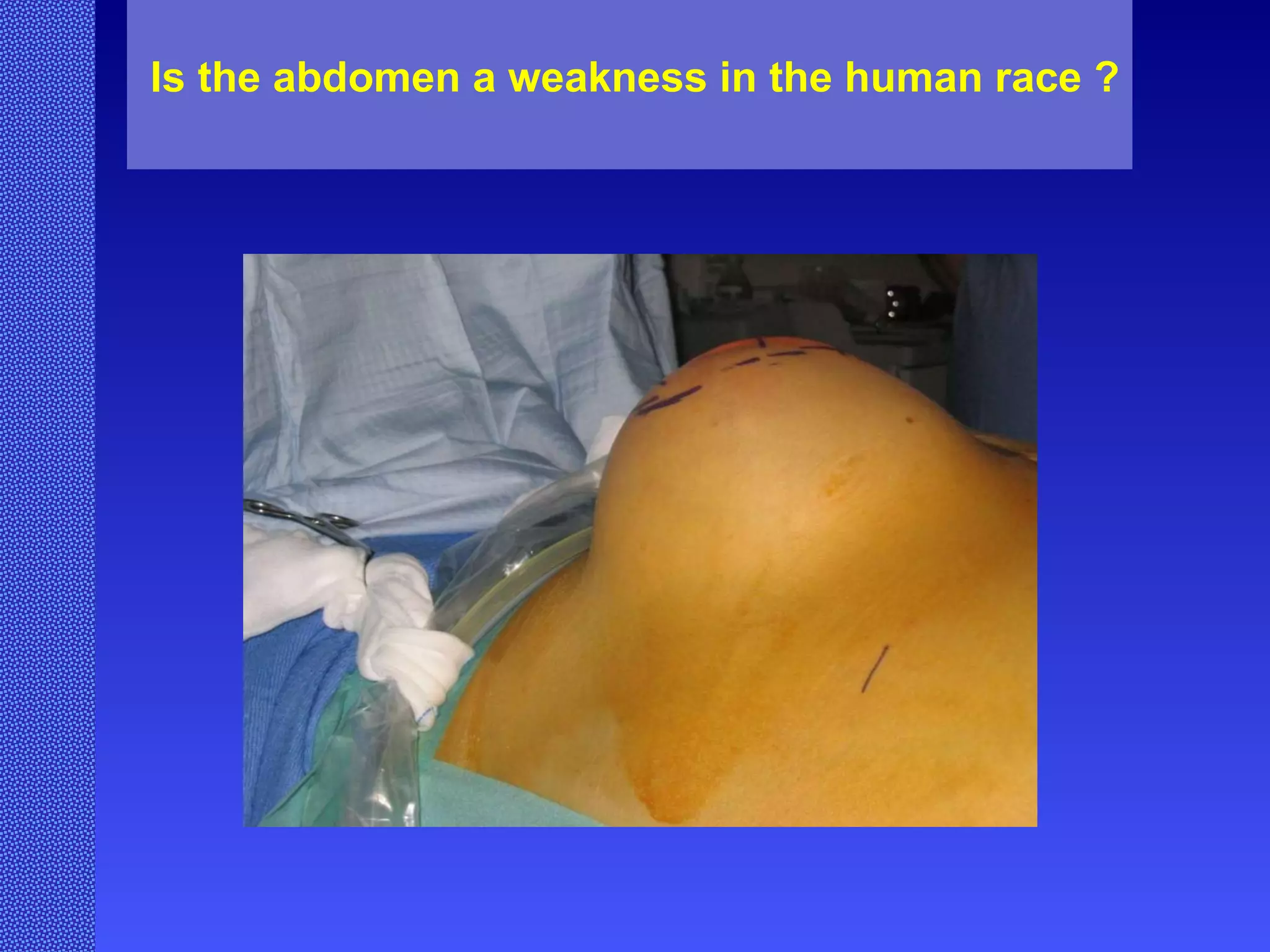
Is the abdomen a weakness in the human race ?
Incidence of Ventral Hernias Around 10 % of all laparotomies will generate incisional hernias.  The bigger the incision, the higher the risk. ~77% are median hernias ~17% are lateral hernias ~6%  are iliac hernias Direct closure have a high recurrences incidence (50%). The rate increases (58%) with repair of recurrent hernias. Significant reduction in recurrences is achieved when meshes are used. Luijendijk   RW, et al.  A Comparison of Suture Repair with Mesh Repair for Incisional Hernia .NEJM  2000; 343:392-398
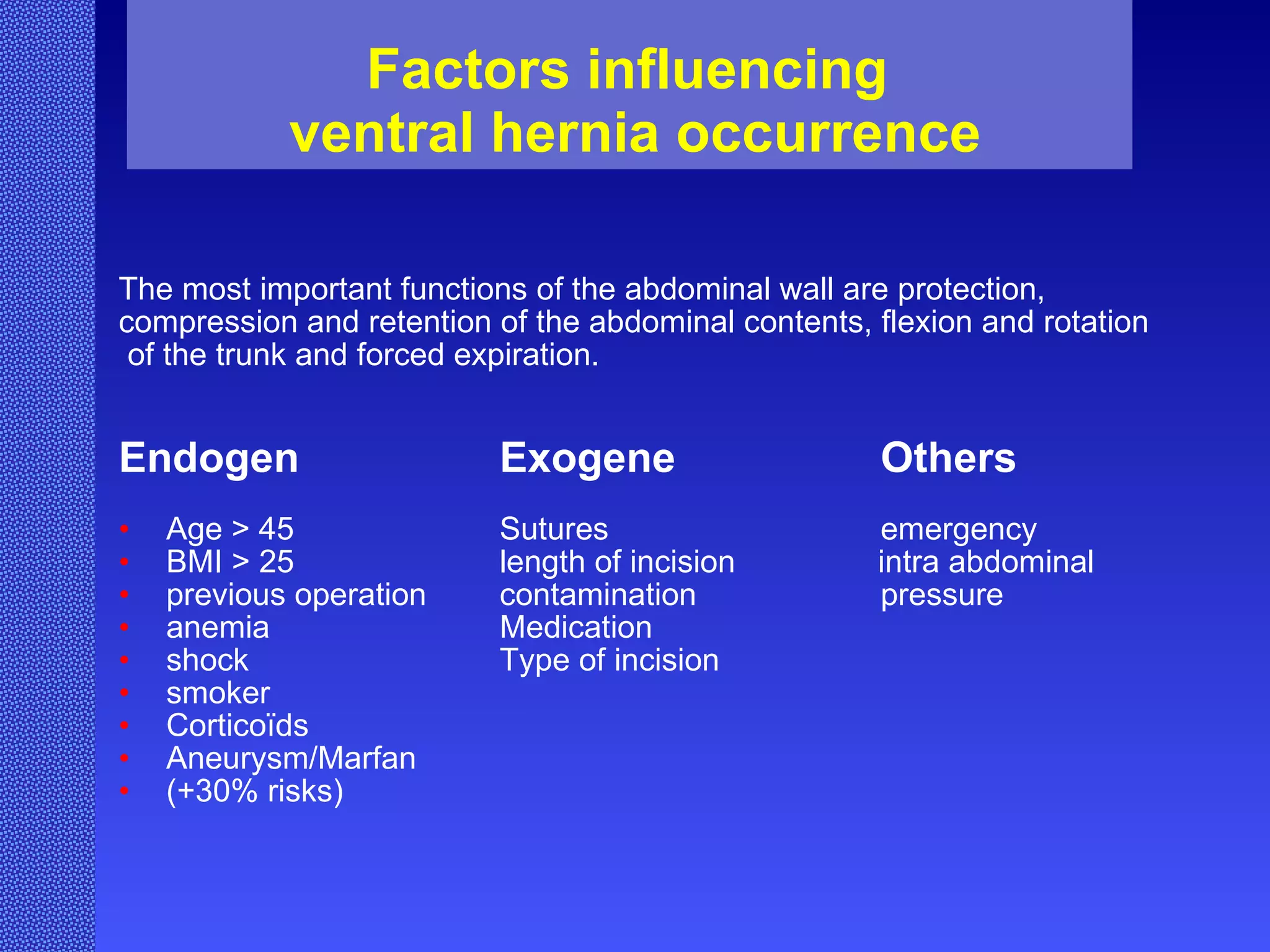
Factors influencing  ventral hernia occurrence The most important functions of the abdominal wall are protection,  compression and retention of the abdominal contents, flexion and rotation of the trunk and forced expiration. Endogen Exogene Others Age > 45 Sutures emergency BMI > 25 length of incision   intra abdominal  previous operation contamination pressure anemia Medication shock Type of incision smoker Corticoïds Aneurysm/Marfan (+30% risks)
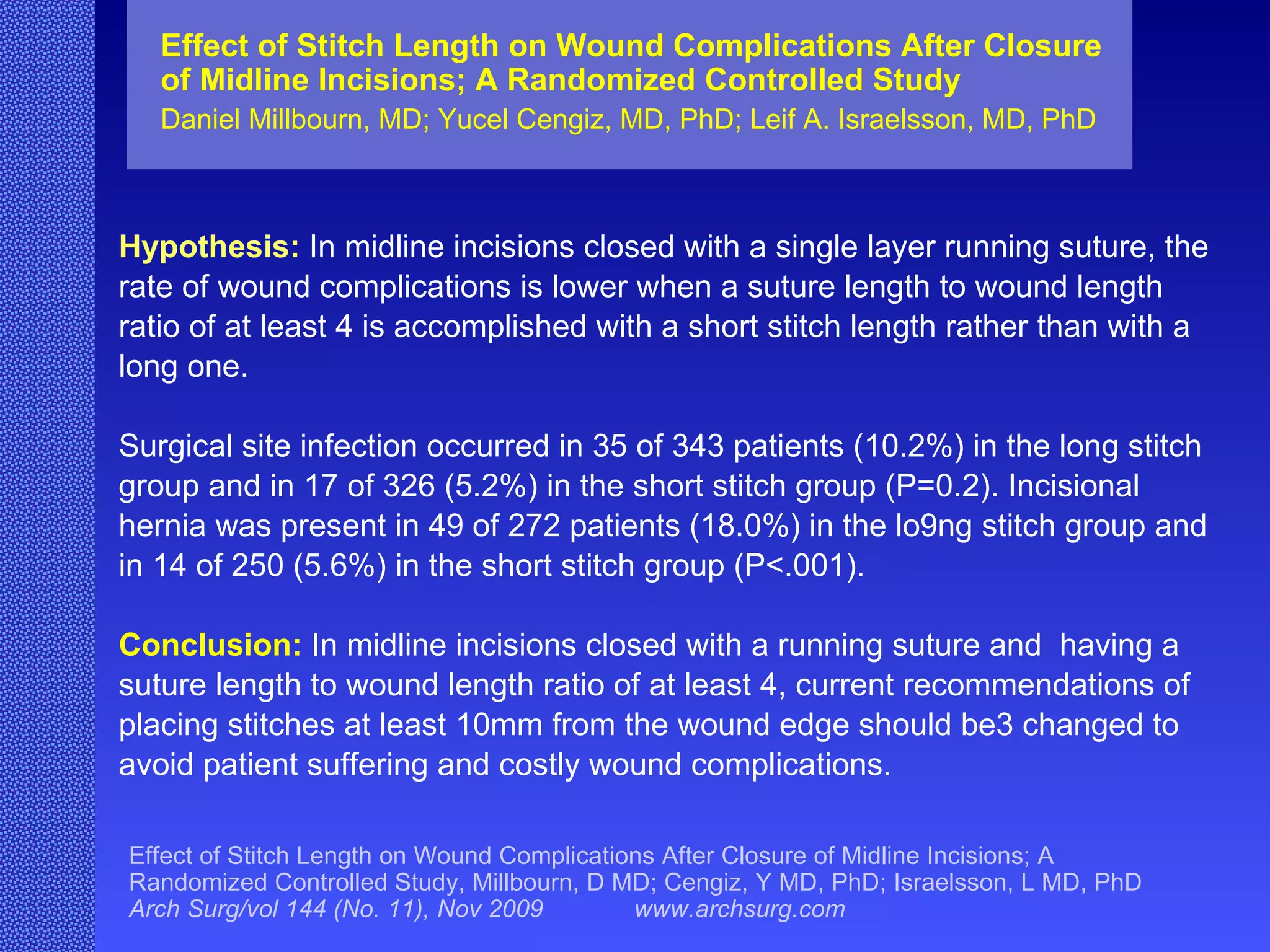
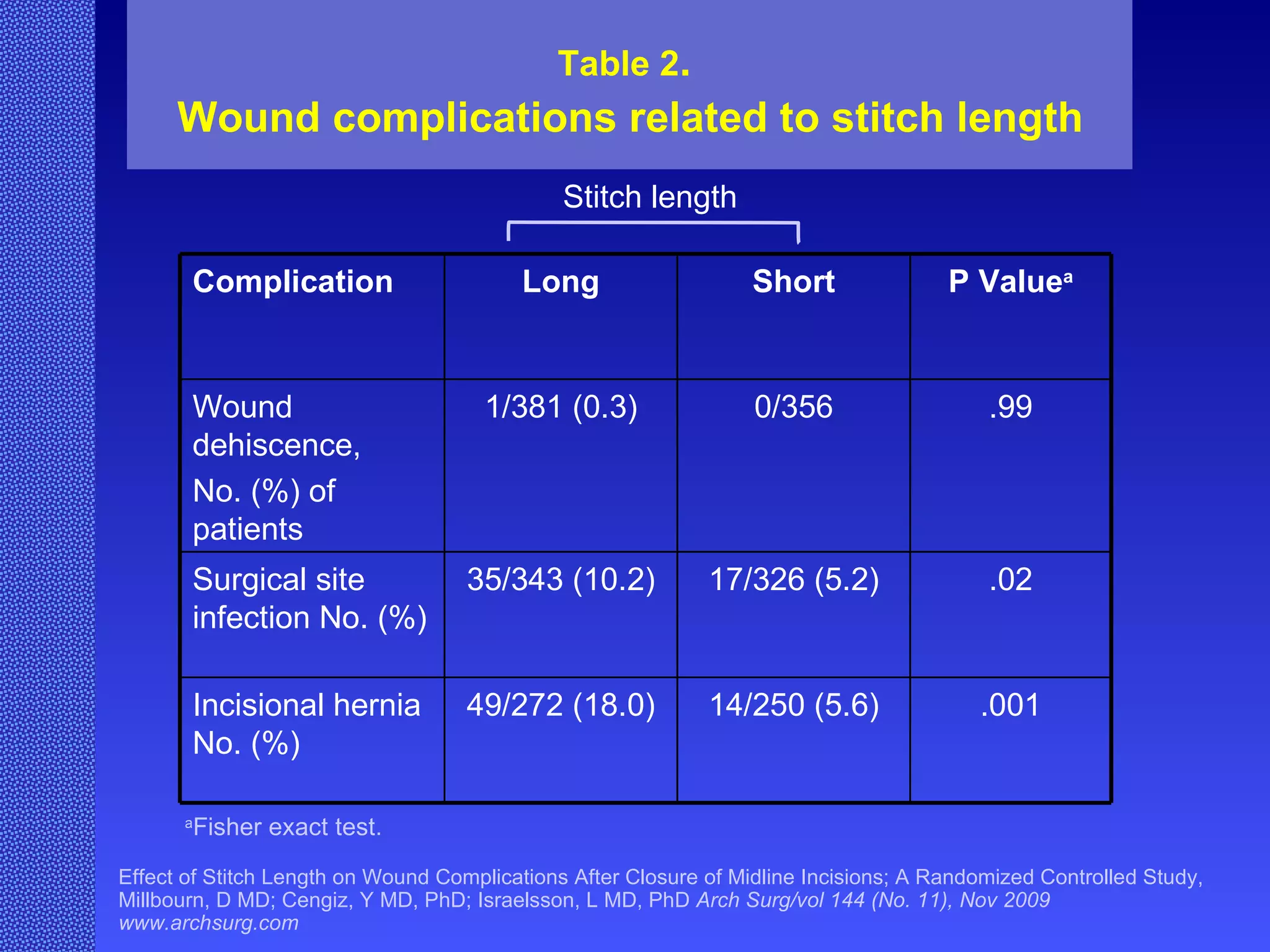
Hypothesis:   In midline incisions closed with a single layer running suture, the rate of wound complications is lower when a suture length to wound length ratio of at least 4 is accomplished with a short stitch length rather than with a long one. Surgical site infection occurred in 35 of 343 patients (10.2%) in the long stitch group and in 17 of 326 (5.2%) in the short stitch group (P=0.2). Incisional hernia was present in 49 of 272 patients (18.0%) in the lo9ng stitch group and in 14 of 250 (5.6%) in the short stitch group (P<.001). Conclusion:   In midline incisions closed with a running suture and  having a suture length to wound length ratio of at least 4, current recommendations of placing stitches at least 10mm from the wound edge should be3 changed to avoid patient suffering and costly wound complications. Effect of Stitch Length on Wound Complications After Closure of Midline Incisions; A Randomized Controlled Study Daniel Millbourn, MD; Yucel Cengiz, MD, PhD; Leif A. Israelsson, MD, PhD Effect of Stitch Length on Wound Complications After Closure of Midline Incisions; A Randomized Controlled Study, Millbourn, D MD; Cengiz, Y MD, PhD; Israelsson, L MD, PhD  Arch Surg/vol 144 (No. 11), Nov 2009  www.archsurg.com
Table 2 . Wound complications related to stitch length Effect of Stitch Length on Wound Complications After Closure of Midline Incisions; A Randomized Controlled Study, Millbourn, D MD; Cengiz, Y MD, PhD; Israelsson, L MD, PhD  Arch Surg/vol 144 (No. 11), Nov 2009  www.archsurg.com Stitch length a Fisher exact test. Complication Long Short P Value a Wound dehiscence, No. (%) of patients 1/381 (0.3) 0/356 .99 Surgical site infection No. (%) 35/343 (10.2) 17/326 (5.2) .02 Incisional hernia No. (%) 49/272 (18.0) 14/250 (5.6) .001
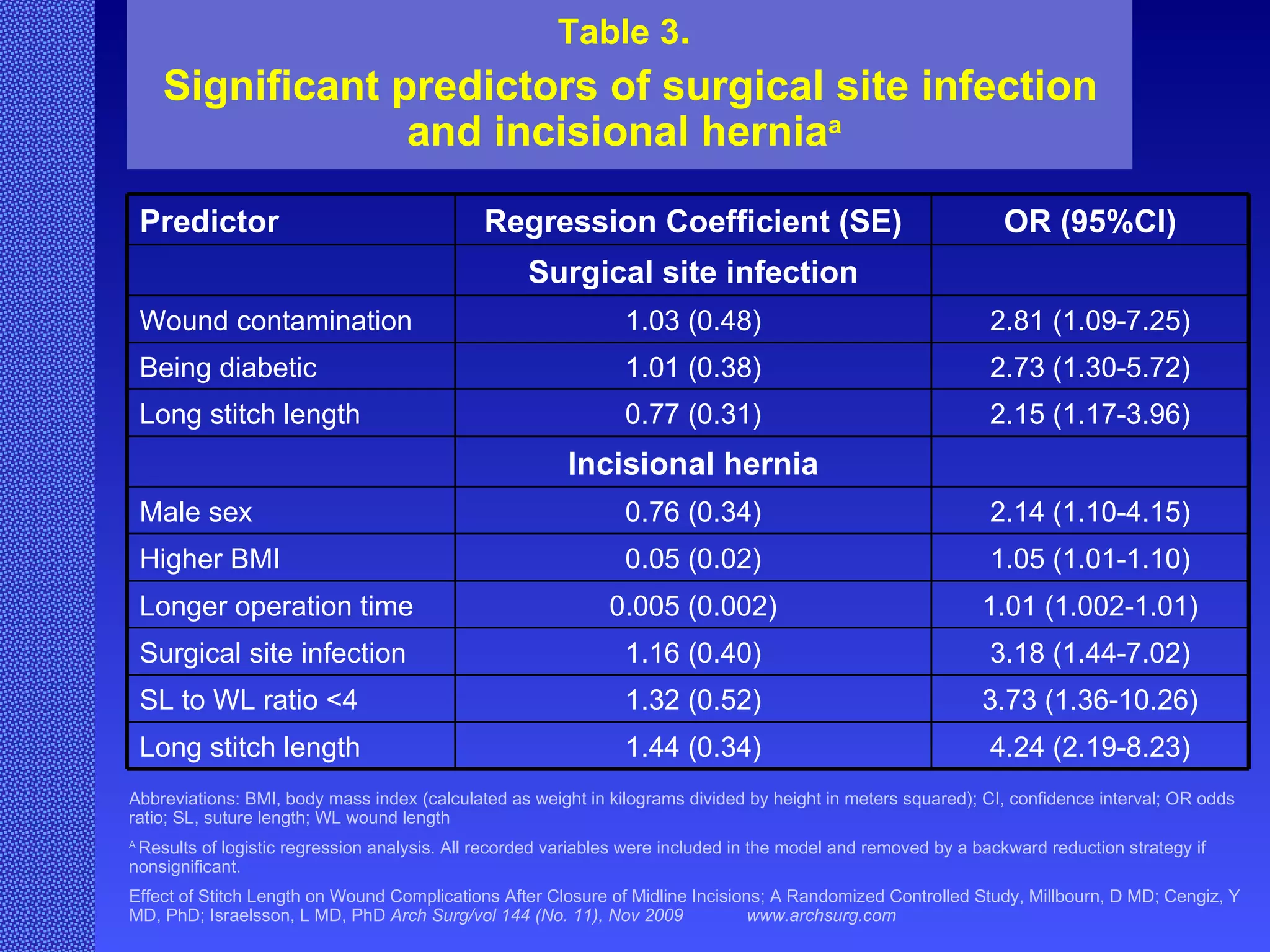
Table 3 . Significant predictors of surgical site infection and incisional hernia a Effect of Stitch Length on Wound Complications After Closure of Midline Incisions; A Randomized Controlled Study, Millbourn, D MD; Cengiz, Y MD, PhD; Israelsson, L MD, PhD  Arch Surg/vol 144 (No. 11), Nov 2009  www.archsurg.com Abbreviations: BMI, body mass index (calculated as weight in kilograms divided by height in meters squared); CI, confidence interval; OR odds ratio; SL, suture length; WL wound length A  Results of logistic regression analysis. All recorded variables were included in the model and removed by a backward reduction strategy if nonsignificant. Predictor Regression Coefficient (SE) OR (95%CI) Surgical site infection Wound contamination 1.03 (0.48) 2.81 (1.09-7.25) Being diabetic 1.01 (0.38) 2.73 (1.30-5.72) Long stitch length 0.77 (0.31) 2.15 (1.17-3.96) Incisional hernia Male sex 0.76 (0.34) 2.14 (1.10-4.15) Higher BMI 0.05 (0.02) 1.05 (1.01-1.10) Longer operation time 0.005 (0.002) 1.01 (1.002-1.01) Surgical site infection 1.16 (0.40) 3.18 (1.44-7.02) SL to WL ratio <4 1.32 (0.52) 3.73 (1.36-10.26) Long stitch length 1.44 (0.34) 4.24 (2.19-8.23)
Conclusions Effect of Stitch Length on Wound Complications After Closure of Midline Incisions; A Randomized Controlled Study, Millbourn, D MD; Cengiz, Y MD, PhD; Israelsson, L MD, PhD  Arch Surg/vol 144 (No. 11), Nov 2009  www.archsurg.com When a long stitch length is used, the suture cuts through or compresses soft tissue included in the stitch.  This increases the amount of devitalized tissue in the wound and may explain the correlation with infection. This also causes slackening of the suture, which allows the wound edges to separate and increases the risk of incisional hernia. •  Surgeons should place stitches 5-8 mm from the wound edge, with minimal tension applied to the suture. •  Midline incisions should be closed with a single layer, running monofilament suture and the SL to WL ratio should be at least 4. This ratio should be achieved with several small stitches that incorporate aponeurosis only.
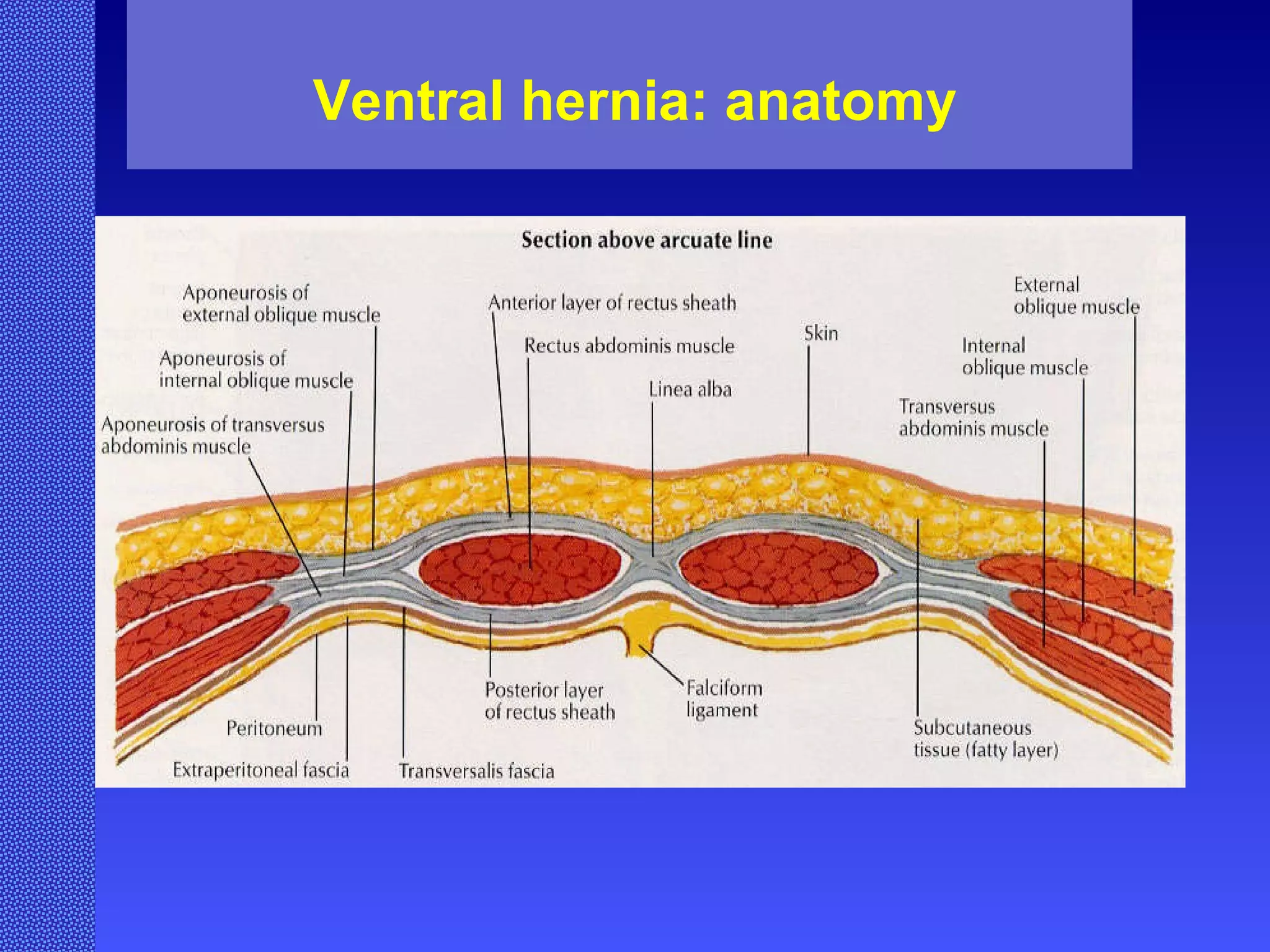
Ventral hernia: anatomy
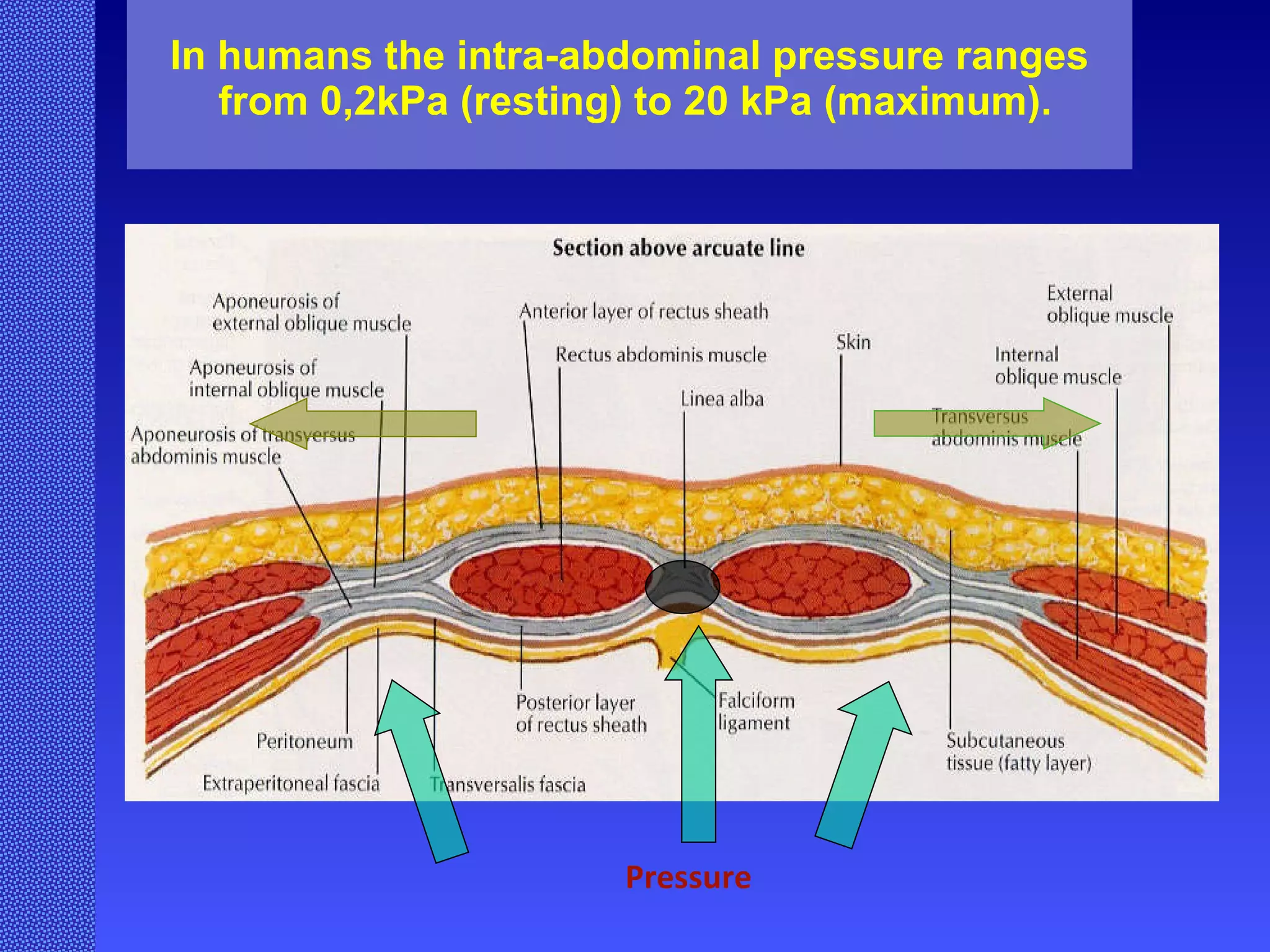
In humans the intra-abdominal pressure ranges  from 0,2kPa (resting) to 20 kPa (maximum). Pressure
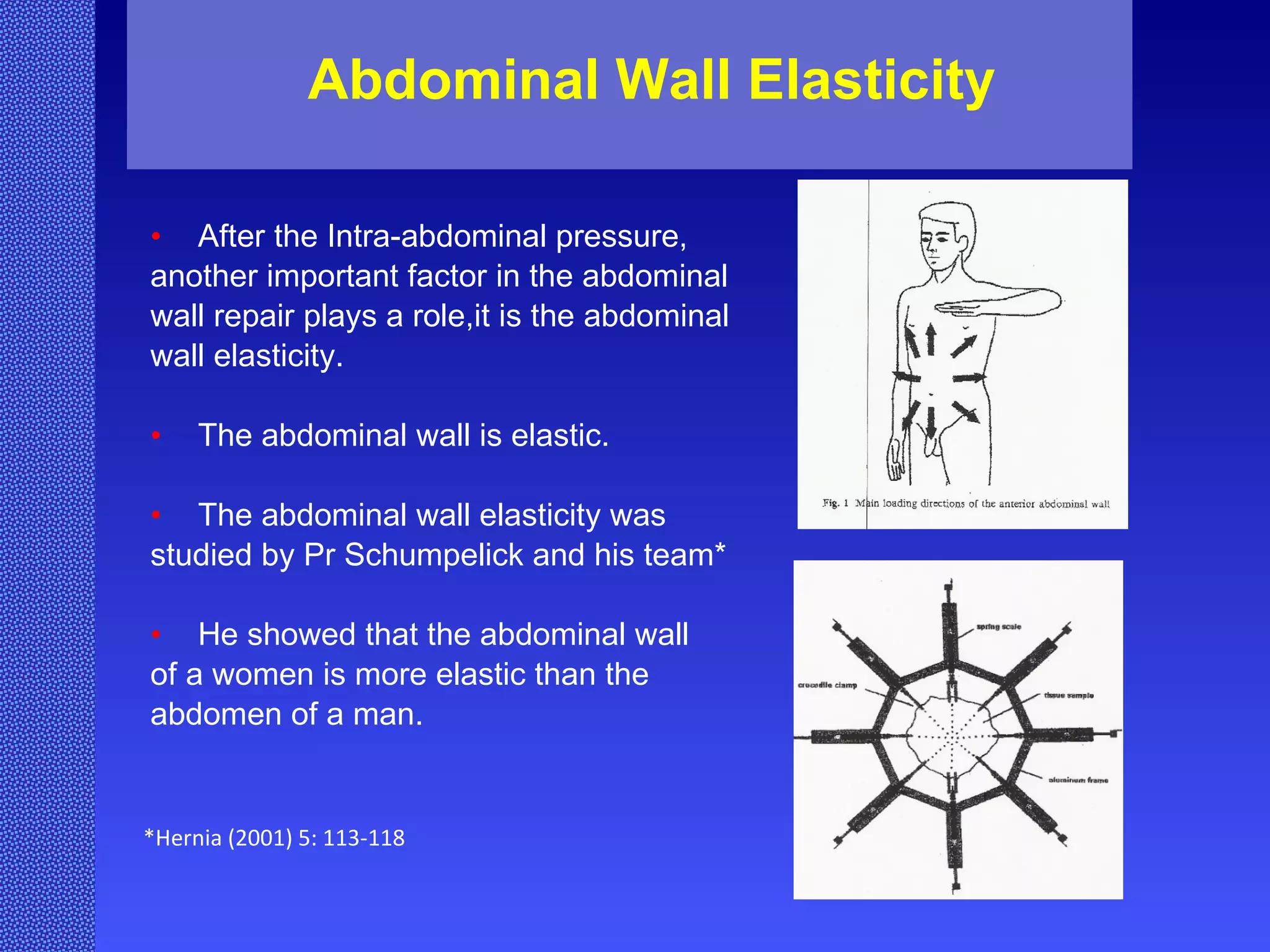
Abdominal Wall Elasticity After the Intra-abdominal pressure, another important factor in the abdominal  wall repair plays a role,it is the abdominal  wall elasticity. The abdominal wall is elastic. The abdominal wall elasticity was  studied by Pr Schumpelick and his team* He showed that the abdominal wall  of a women is more elastic than the  abdomen of a man. *Hernia (2001) 5: 113-118
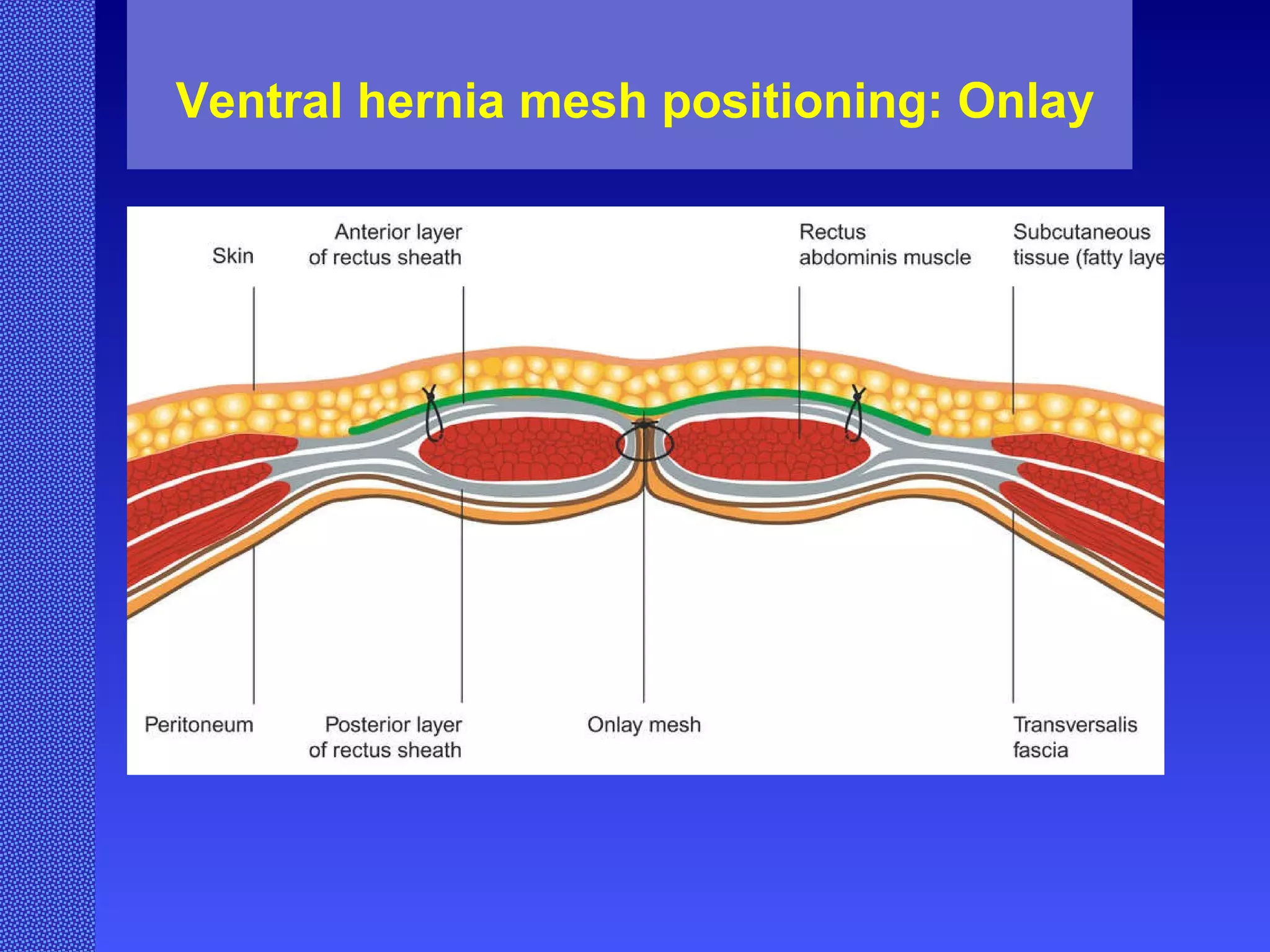
Ventral hernia mesh positioning: Onlay
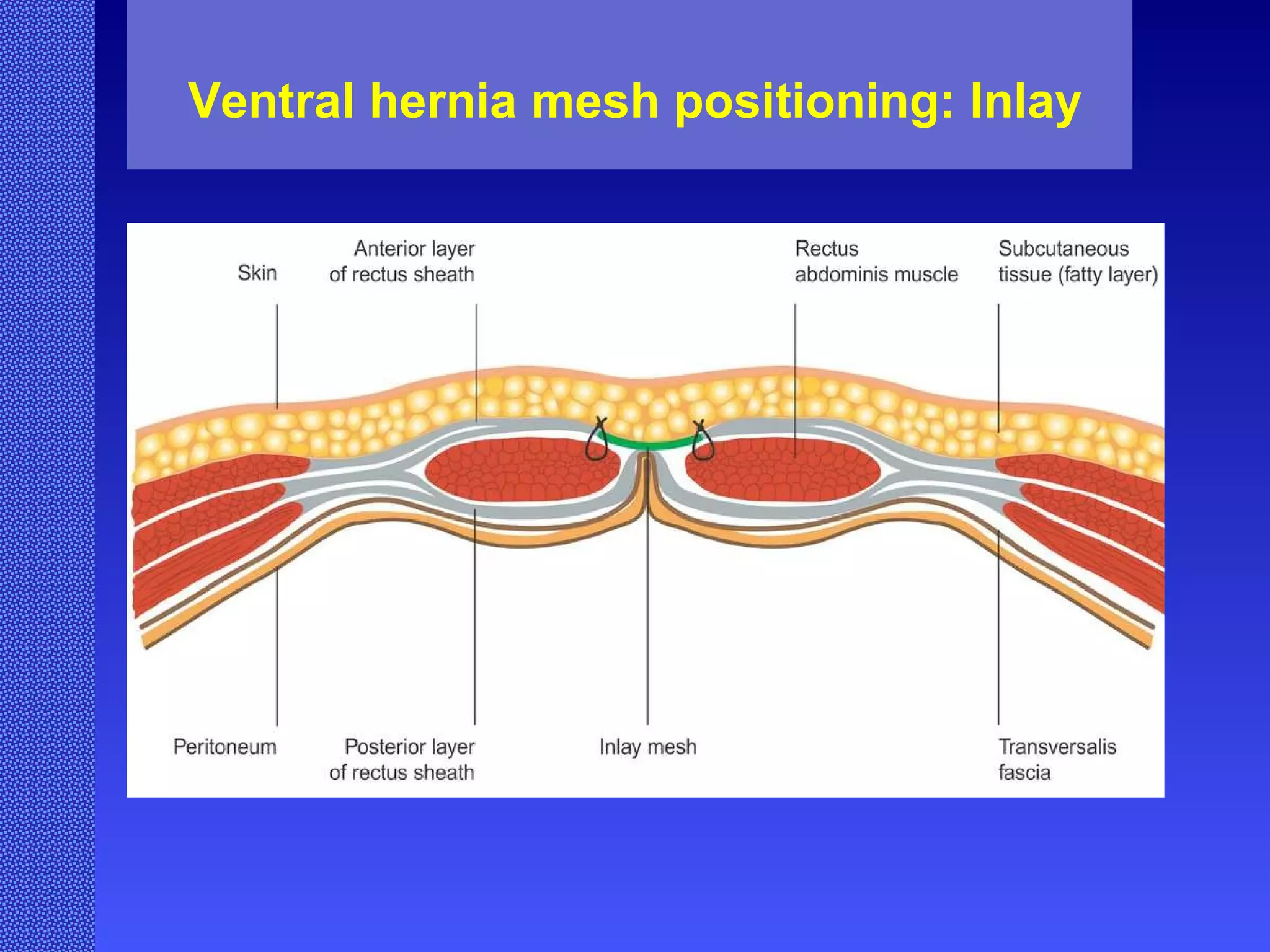
Ventral hernia mesh positioning: Inlay
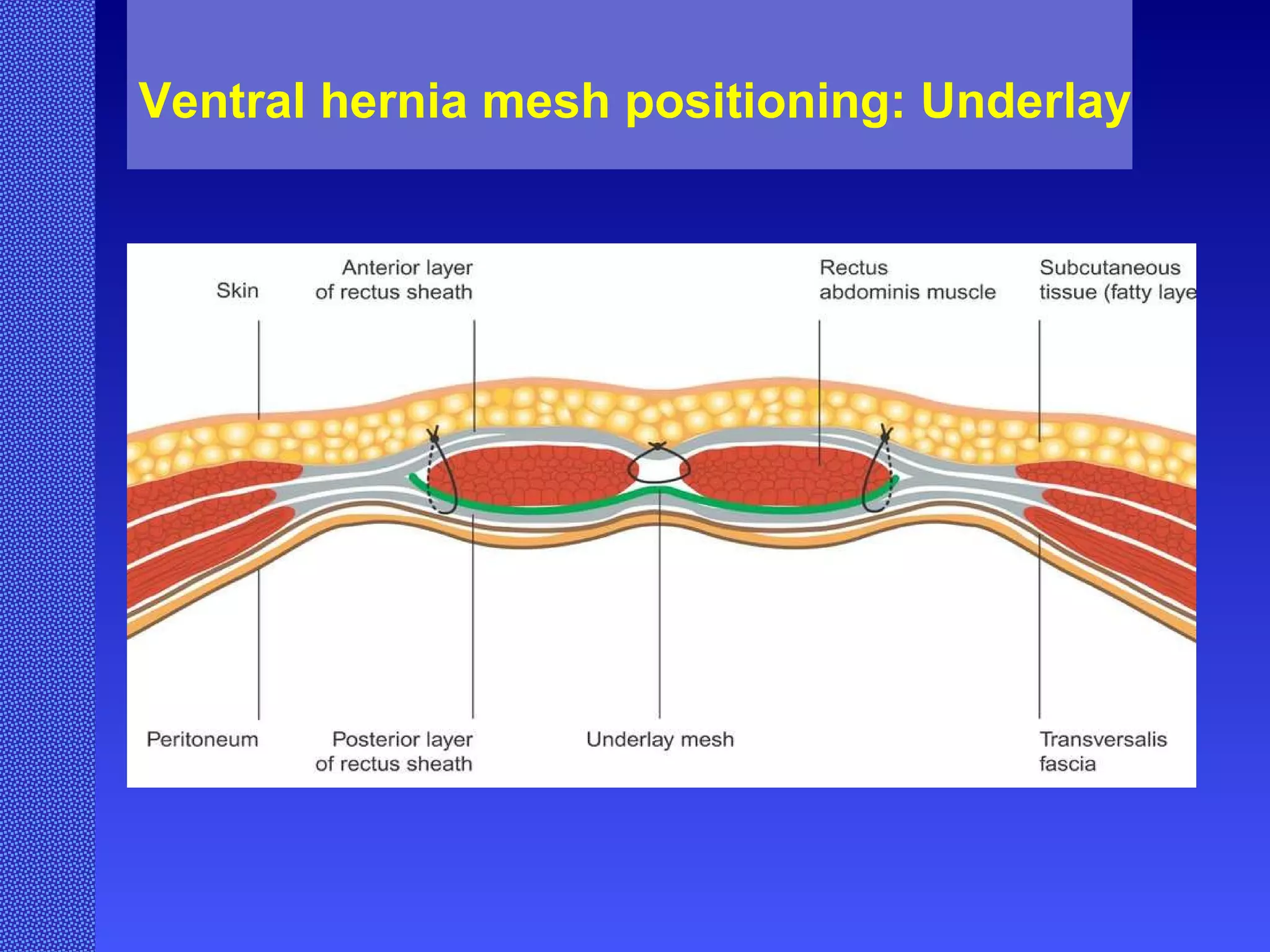
Ventral hernia mesh positioning: Underlay
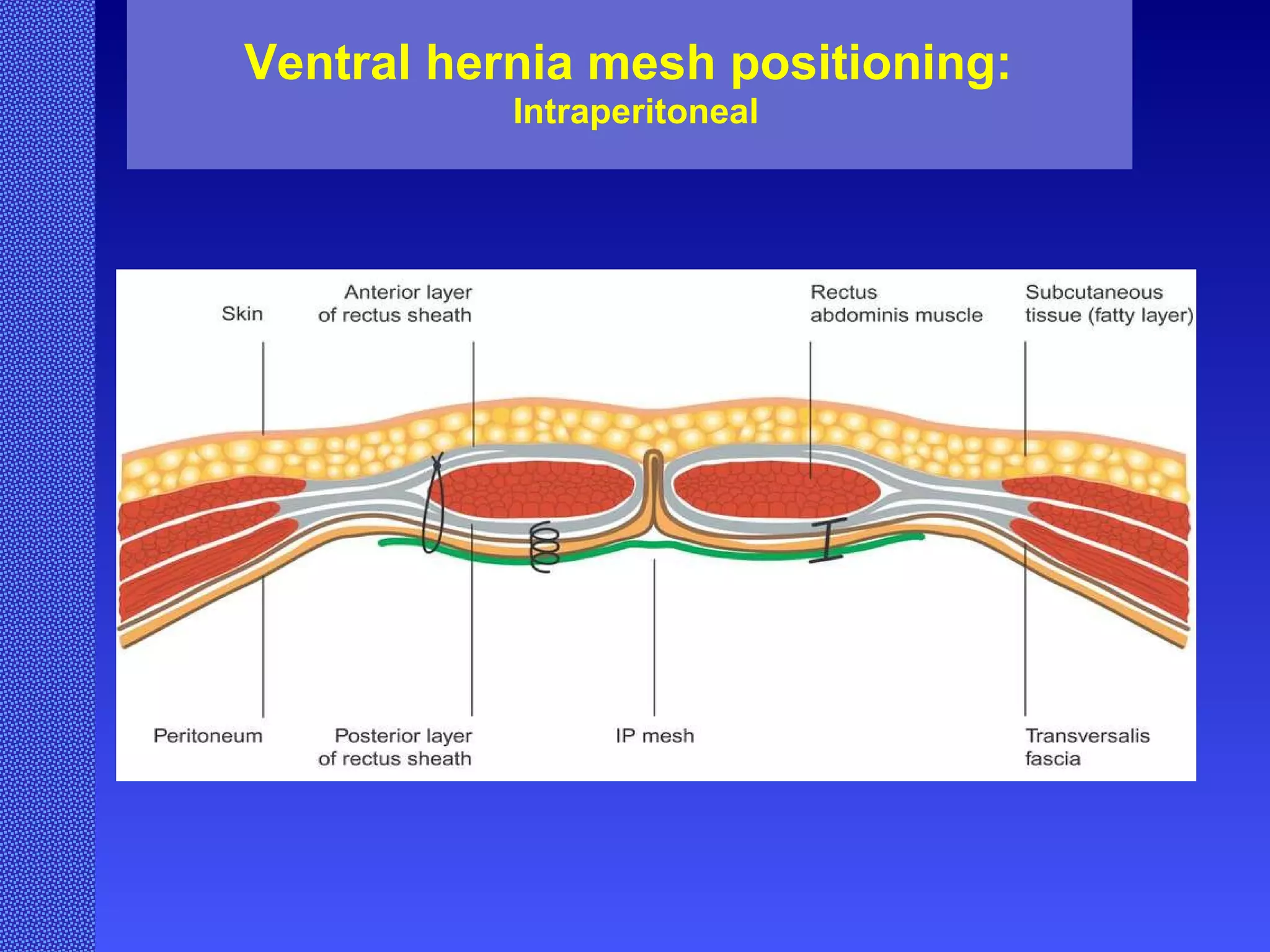
Ventral hernia mesh positioning:   Intraperitoneal
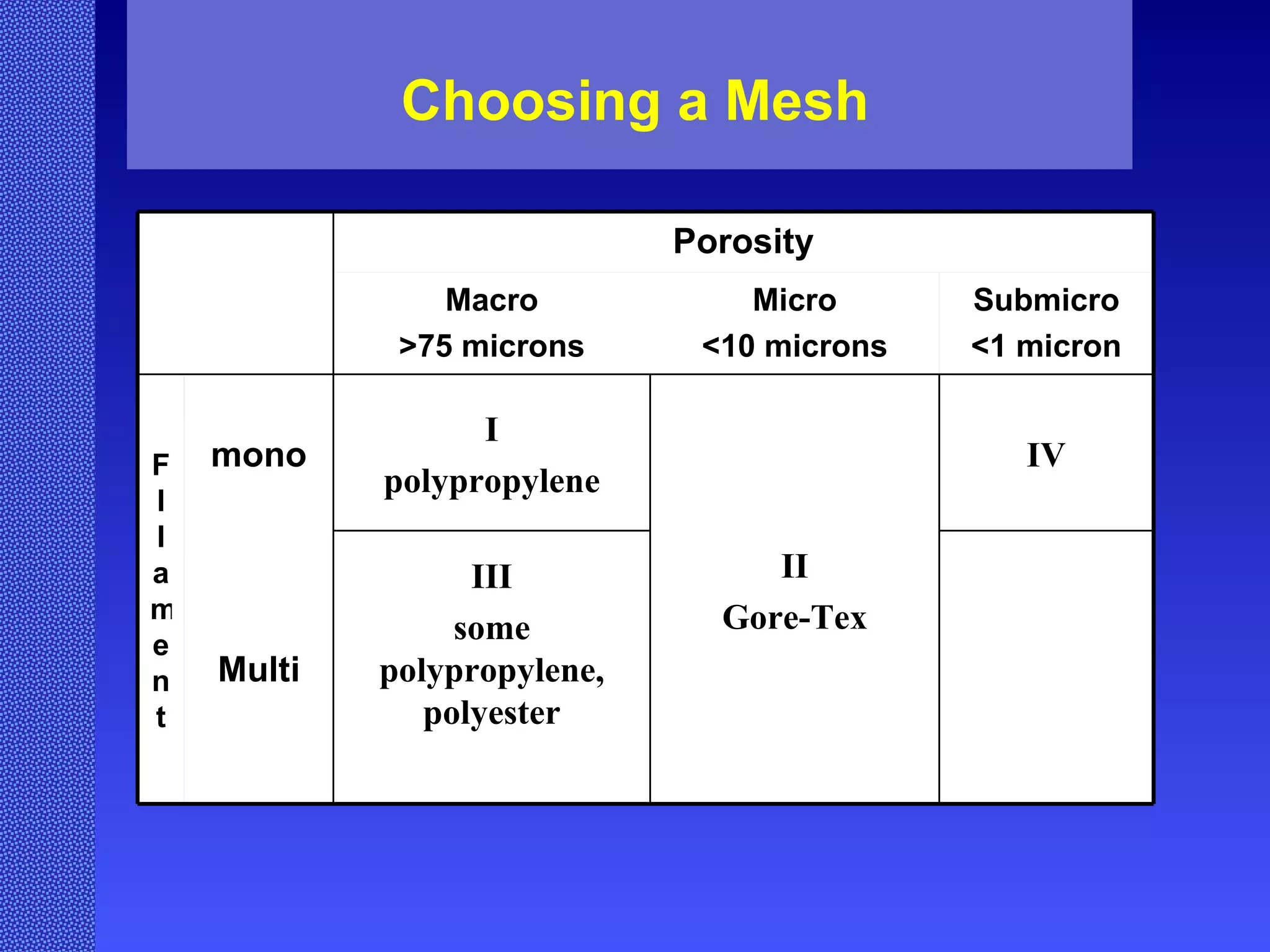
Types of prosthetics  for hernia repair: Type 1: totally macroporous prosthesis, pores > 75 microns; example prolene, marlex Type 2: totally microporous prosthesis; pores < 10 microns; example gortex or dual mesh Type 3: macroporous prosthesis with microporous components; example Teflon, mersilene Type 4: biomaterials with submicronic pore size; example cilastic, cell gard
Polyglactene Mesh (vicryl mesh)   Alternative to nonabsorbable meshes   Advantage host  invasion and subsequent absorption of implant   There is less infection complication, increase recurrence rate (satisfactory short term solution in infected hernias but not generally indicated when prolonged 10-side strength is required)
Polypropylene Biomaterials Angimesh , Angiologics, S. Martino Sicc., Italy Biomesh P1 ,  Cousin Biotech, Wervicq-Sud, France Biomesh P3 ,  Cousin Biotech, Wervicq-Sud, France Biomesh 3D ,  Cousin Biotech, Wervicq-Sud, France C-QUR  (polypropylene / omega 3 fatty acid coating), Atrium, NH, USA DynaMesh  (polypropelene incorporated with polyvinylidene difluoride) FEG, Aachen, Germany Hetra 1, 2,   HerniaMesh, S.R.L., Torino, Italy Hermesh 3,4,5,   HerniaMesh, S.R.L., Torino, Italy Intramesh NKI, NK2, NK8,  Cousin Biotech, Wervicq-Sud, France Marlex,  C.R.Bard, Inc., Cranston NJ, USA
Polypropylene Biomaterials Parietene,  Sofradim International, Villfranche-sur-Saone, France Proceed  (polypropelene /  polydiaxanone / oxidized regenerated cellulose),  Ethicon, Somerville, NJ, USA Prolene , Ethicon, Somerville, NJ, USA Prolene Soft Mesh , Ethicon, Somerville, NJ, USA Prolite , Atrium Medical Corporation, Hudson, NH, USA Prolite Ultra , Atrium Medical Corporation, Hudson, NH, USA Surgipro (Monofilament),  United States Surgical Corp,/Tyco, Norwalk, CT, USA Sepramesh  ( polypropylene mesh coated with Seprafilm - modified sodium hyaluronate and carboxymethylcellulose)  Genzyme, MA, USA Surgipro (Multifilament),  United States Surgical Corp./Tyco, Norwalk, CT, USA TiMesh (titanium-coated polypropylene)  Medizintechnik GmbH, Nuremberg, Germany Trelex,  Meadox Medical Corporation, Oakland, NJ, USA   Ultrapro (Poliglecaprone-25 / Polypropylene) ,  Ethicon, Somerville, NJ, USA
Polypropylene Mesh Schmitt and Griman in 1967 first described successful use of polypropylene mesh in contaminated wounds Subsequent reports showed good initial healing but were fraught with long term complications   Those complications are chronic infection, fistula formation, erosion into bowels or through skin grafts Jones and Jurkoyiun in 1989 reviewed 14 studies, 128 patients, and found 55 overall complication rate - enteric fistulization being the most common.
In Favor of Polypropylene Mesh: Extensive fibroblast in growth , incorporation by the host and  can be used in contaminated fields Franklin ME et al. Lap ventral and incisional hernial repair.  Surg Lap End  8(4):294-299 1998 285 lap ventral hernia and 520 lap inguinal hernia using IPOM with polypropylene mesh. 1 fistula formation (0.14%), 4 mesh infections (0.50%), and 6 reoperations for bowel obstruction secondary to mesh adhesions (0.75%). Relaparoscopy 27 patients (19 incisional, 8 inguinal): 1/3 no adhesions, 1/3 mild adhesions, 1/3 severe. Chowbey PK et al. Lap ventral hernia repair  J La Adv Surg   Tech  2000; 10:79-84 Bingener J et al. Adhesion formation after laparoscopic ventral  incisional hernia repair with polypropylene mesh: a study using abdominal ultrasound,  JSLS  (2004)8:127-131
Against polypropylene mesh: It is extremely difficult to lyse adhesions to polypropylene without causing enterotomies*   Major complications with polypropylene not evident until years later   9 cases of mesh erosion fistula  stainless steel (1)  tantalum (1)  mersilene (1)  dexon (1)  ppm (5). The time to the development of these fistulas ranged from 3 months to 14 years   *Losanoff JE et al. Entero-colocutaneous fistula: a late consequence of polypropylene mesh abdominal wall repair: case report and review of the literature,  Hernia  2002; 6: 144-147
ePTFE Biomaterials DualMesh,  W.L. Gore and Associates, Flagstaff, AZ, USA DualMesh Emerge,  W.L. Gore and Associates, Flagstaff, AZ, USA DualMesh Plus , W.L. Gore and Associates, Flagstaff, AZ, USA DaulMesh Plus Emerge , W.L. Gore and Associates, Flagstaff, AZ, USA DualMesh with Holes , W.L. Gore and Associates, Flagstaff, AZ, USA DualMesh Plus with Holes , W.L. Gore and Associates, Flagstaff, AZ, USA   Dulex , C.R. Bard, Inc., Cranston NJ, USA Mycromesh , W.L. Gore and Associates, Flagstaff, AZ, USA Mycromesh Plus , W.L. Gore and Associates, Flagstaff, AZ, USA Reconix , C.R. Bard, Inc., Cranston NJ, USA Soft Tissue Patch , W.L. Gore and Associates, Flagstaff, AZ, USA
In Favor of ePTFE Microporous, smooth texture minimizes tissue in-growth and limits adhesion formation and bowel injury Combined with a large pore second layer it can adhere well to the abdominal wall
Against ePTFE Microporous construction limits ability of macrophages to destroy bacteria Mesh infection is not well treated by antibiotics and requires mesh removal Does not integrate well into host tissue when not combined with a large pore mesh
Polyester mesh Parietex  (polyester and atelocollagen type 1, polyethylene glycol, glycerol) Covidien, Hamilton, Bermuda Polyester mesh incorporates well into the abdominal wall Collagen covering on the visceral surface protects bowel and dissolves as the polyester is incorporated
Polyester and atelocollagen type 1, polyethylene glycol, glycerol (Parietex) Retrospective study of the use of Parietex in laparoscopic ventral hernia repair n = 20 patients  Mean follow up - 10 months  No morbidity or mortality No infections, rejections, fistulas, recurrences, or alterations in bowel function Parietex  is safe for intra-abdominal use Moreno-Egea A, Liron R Girela E, Aguayo JL. Laparoscopic repair of ventral and incisional hernias using a new composite mesh (Parietex): initial experience. 2001  Surg Laparoc Endosc Percutan Tech  Apr;11(2):103-6
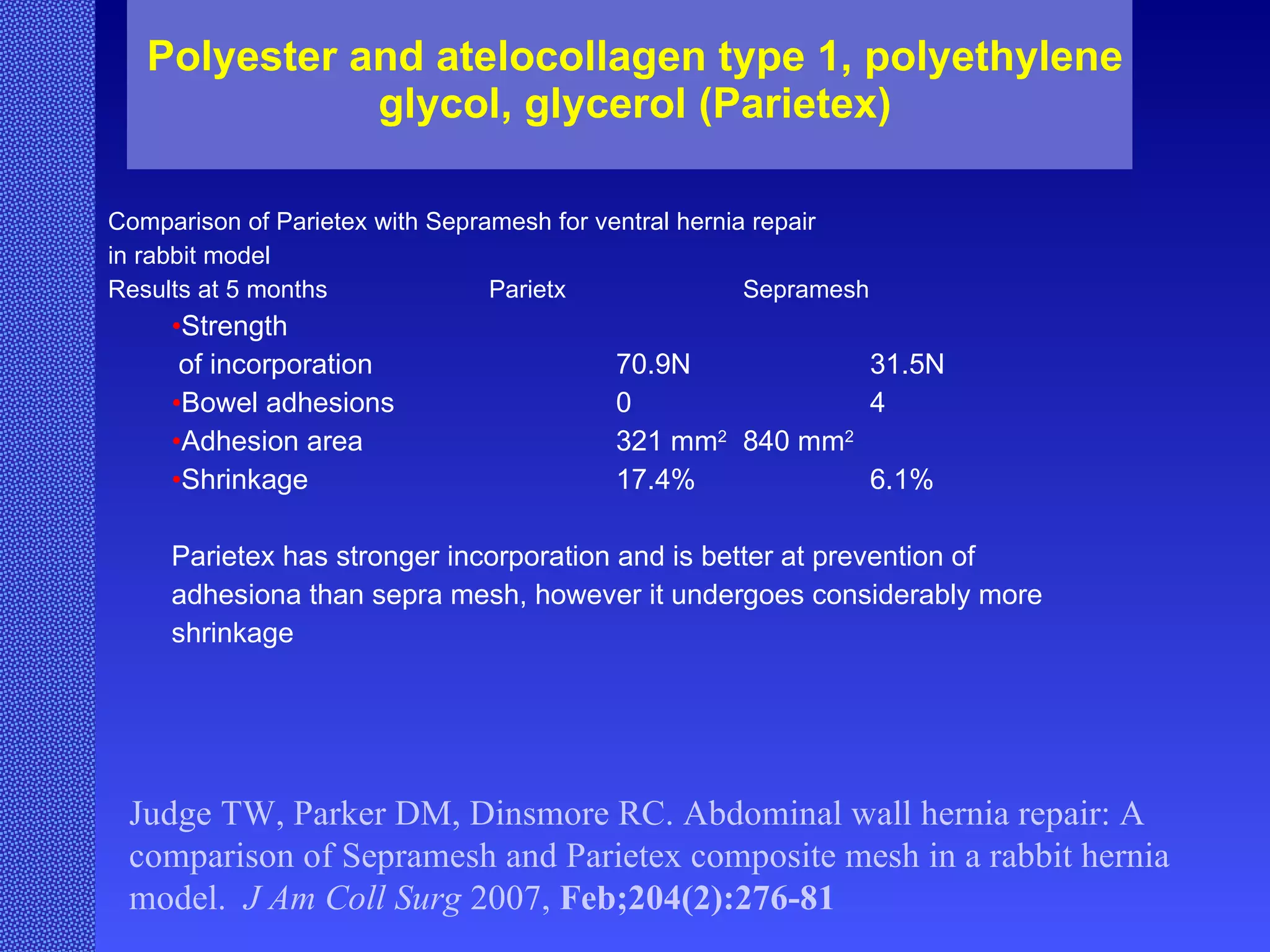
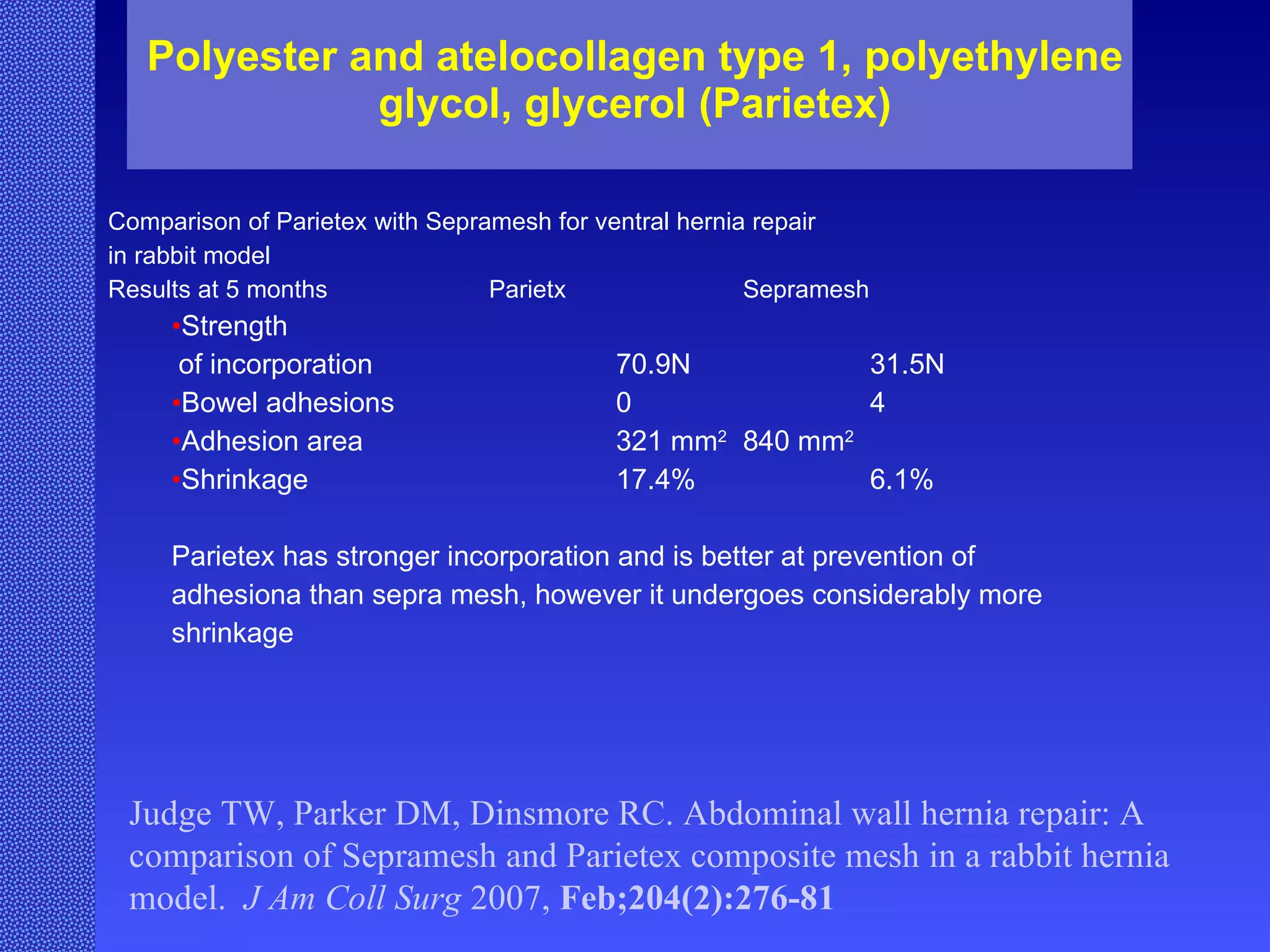
Polyester and atelocollagen type 1, polyethylene glycol, glycerol (Parietex) Comparison of Parietex with Sepramesh for ventral hernia repair  in rabbit model Results at 5 months Parietx  Sepramesh Strength  of incorporation  70.9N 31.5N Bowel adhesions  0 4 Adhesion area 321 mm 2  840 mm 2 Shrinkage 17.4%  6.1%  Parietex has stronger incorporation and is better at prevention of adhesiona than sepra mesh, however it undergoes considerably more shrinkage Judge TW, Parker DM, Dinsmore RC. Abdominal wall hernia repair: A comparison of Sepramesh and Parietex composite mesh in a rabbit hernia model.  J Am Coll Surg  2007,  Feb;204(2):276-81
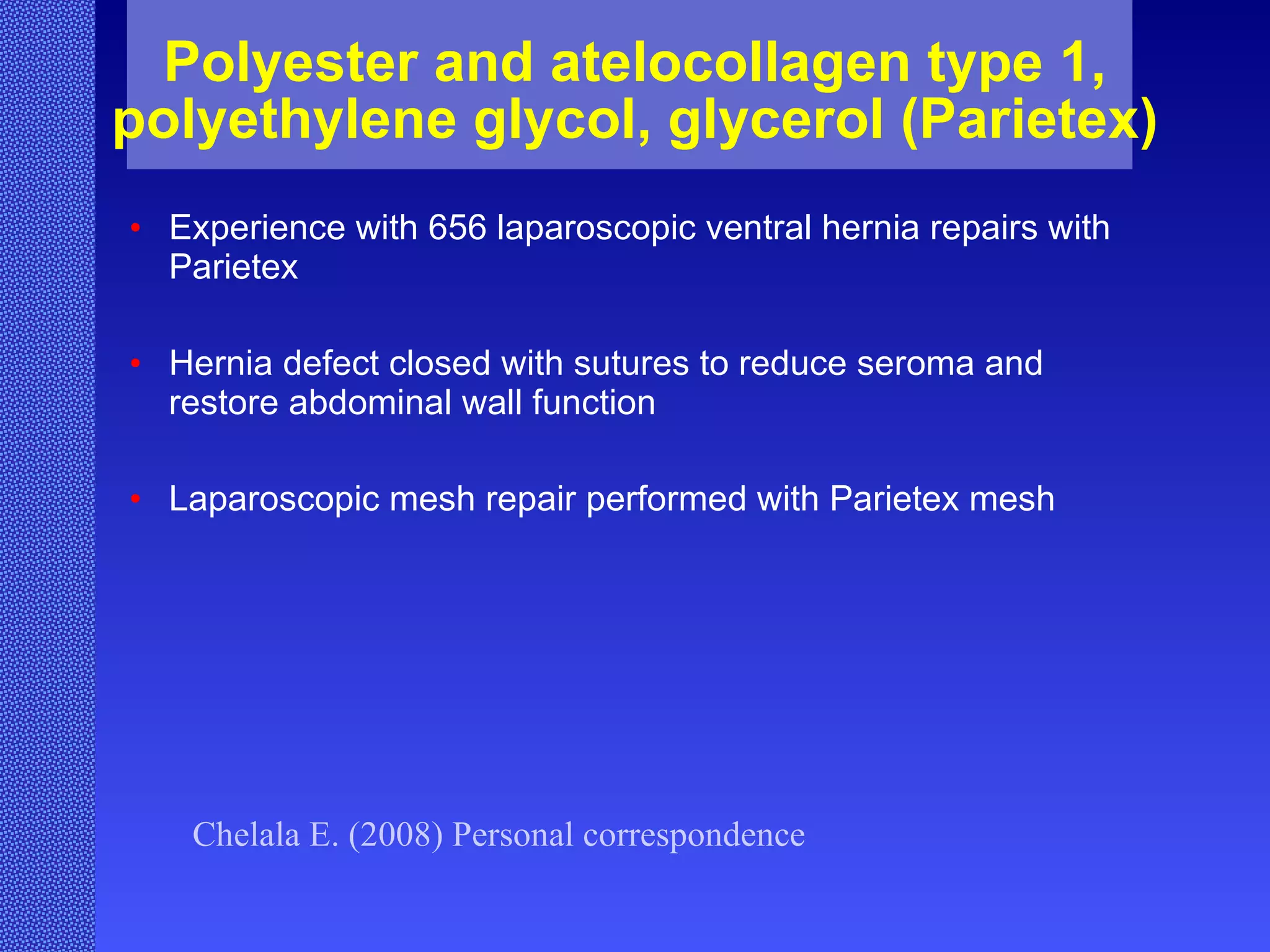
Polyester and atelocollagen type 1, polyethylene glycol, glycerol (Parietex) Experience with 656 laparoscopic ventral hernia repairs with Parietex Hernia defect closed with sutures to reduce seroma and restore abdominal wall function Laparoscopic mesh repair performed with Parietex mesh Chelala E. (2008) Personal correspondence
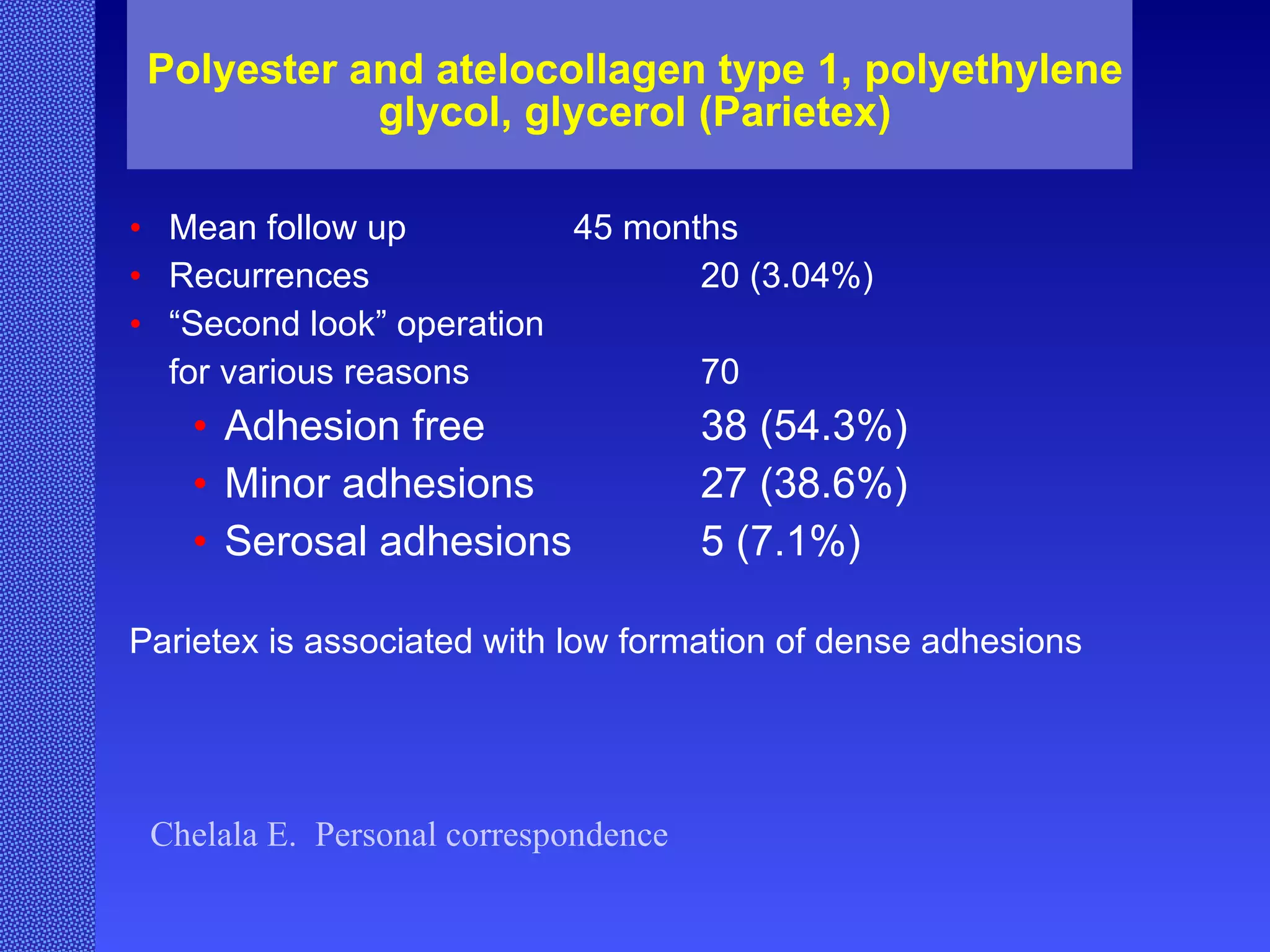
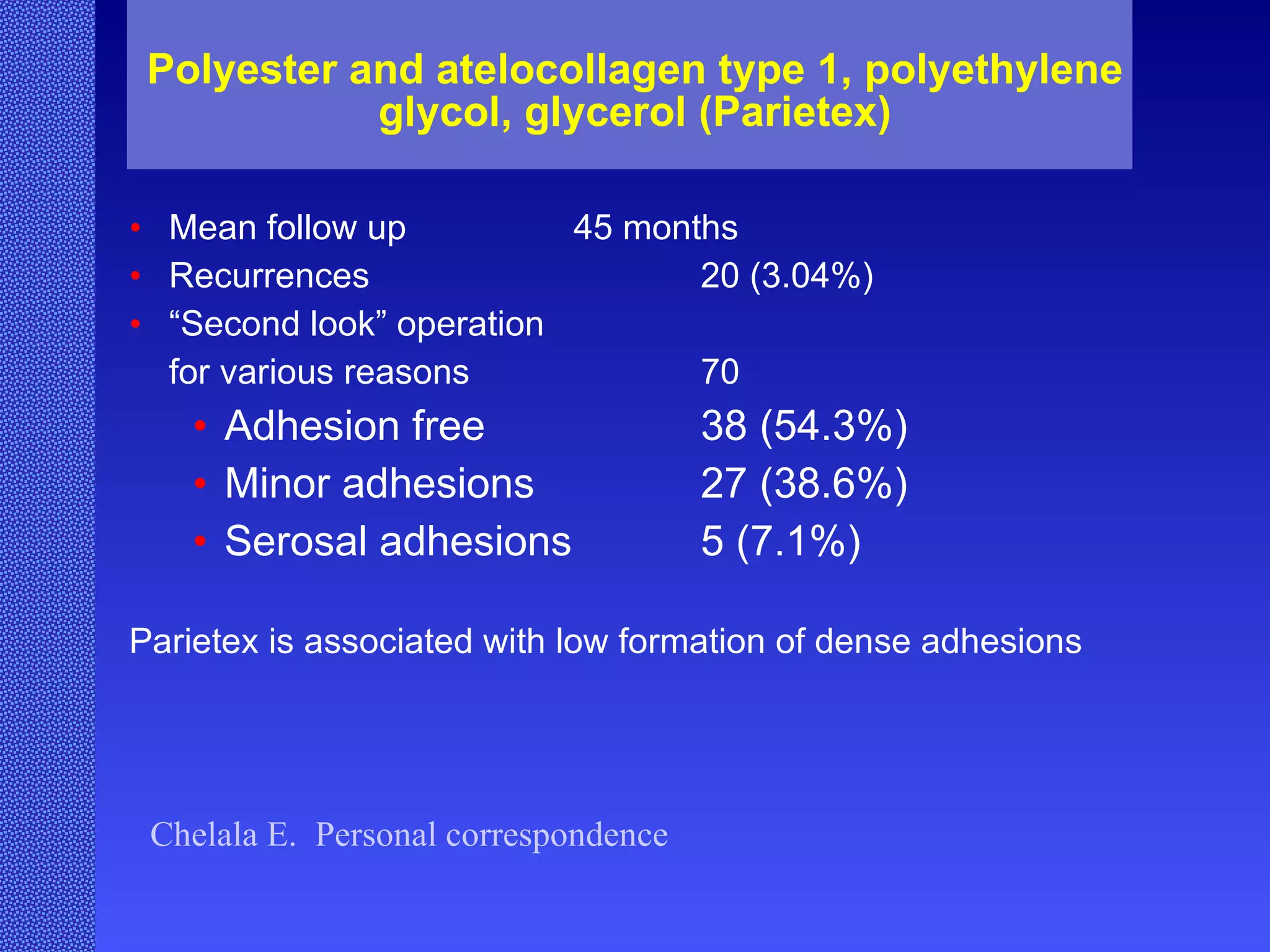
Polyester and atelocollagen type 1, polyethylene glycol, glycerol (Parietex) Mean follow up 45 months Recurrences  20 (3.04%) “ Second look” operation  for various reasons 70  Adhesion free 38 (54.3%) Minor adhesions 27 (38.6%) Serosal adhesions 5 (7.1%) Parietex is associated with low formation of dense adhesions Chelala E.  Personal correspondence
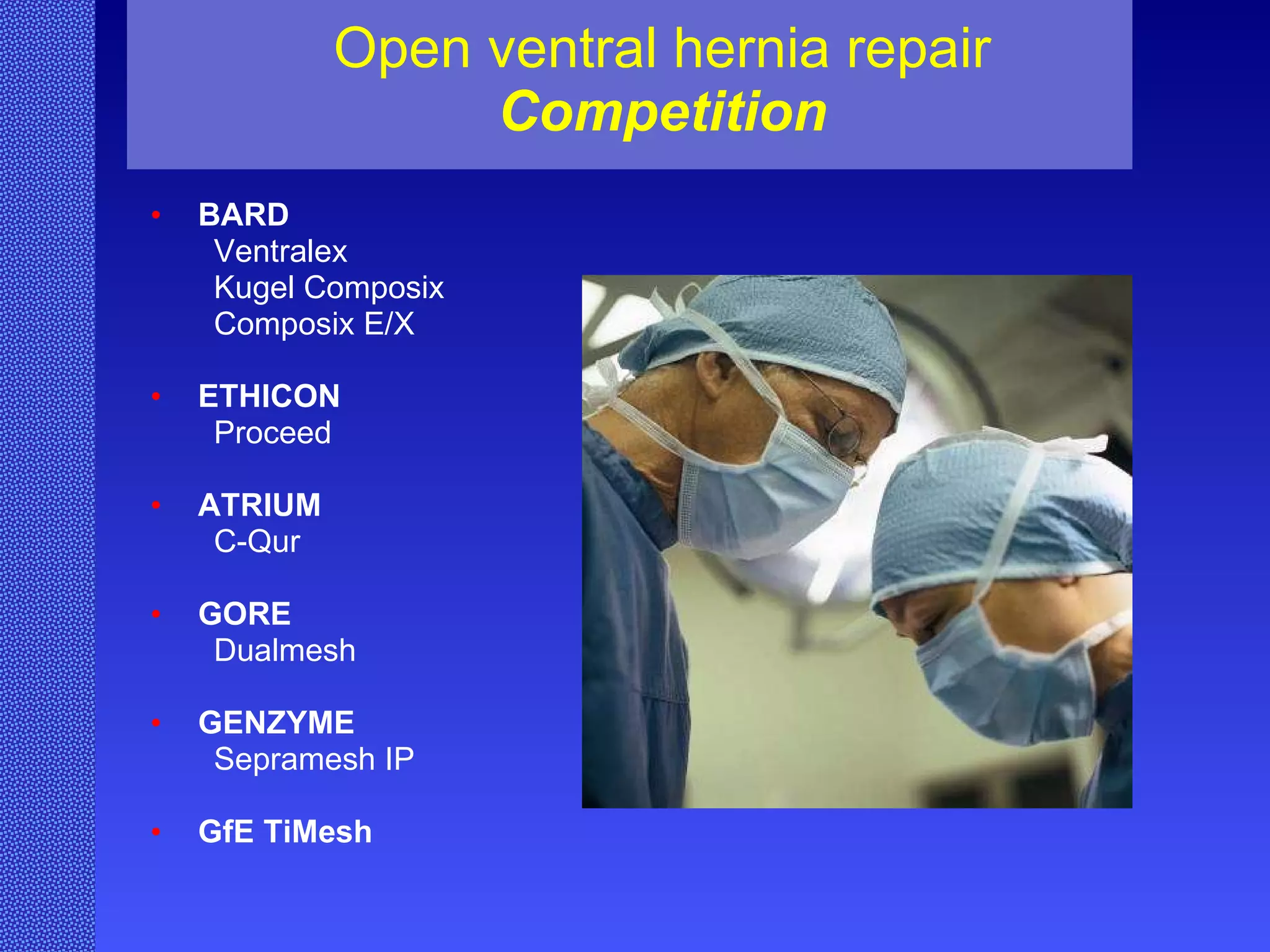
Open ventral hernia repair Competition BARD Ventralex Kugel Composix Composix E/X ETHICON Proceed ATRIUM C-Qur GORE Dualmesh GENZYME Sepramesh IP GfE TiMesh
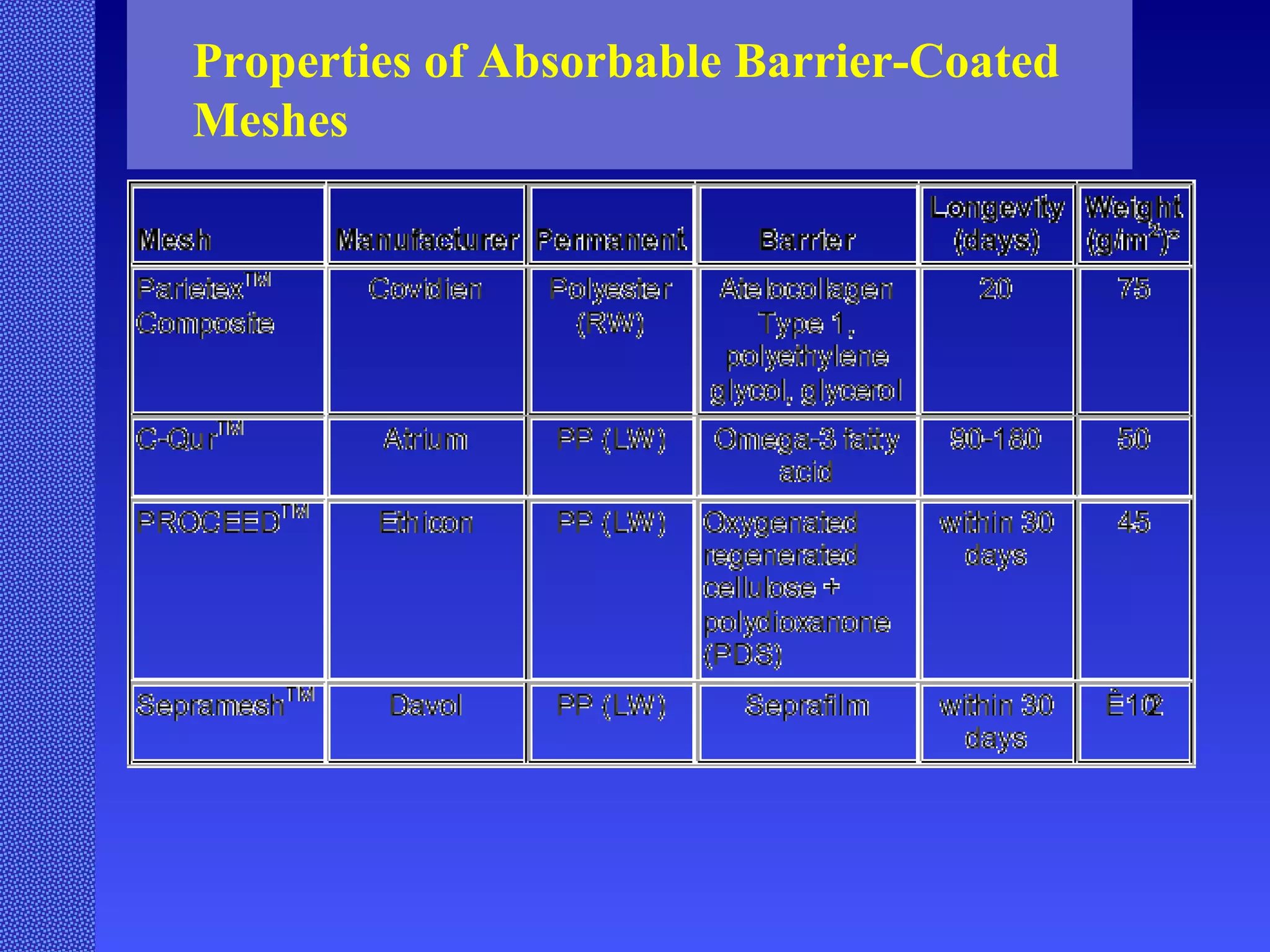
Properties of Absorbable Barrier-Coated Meshes
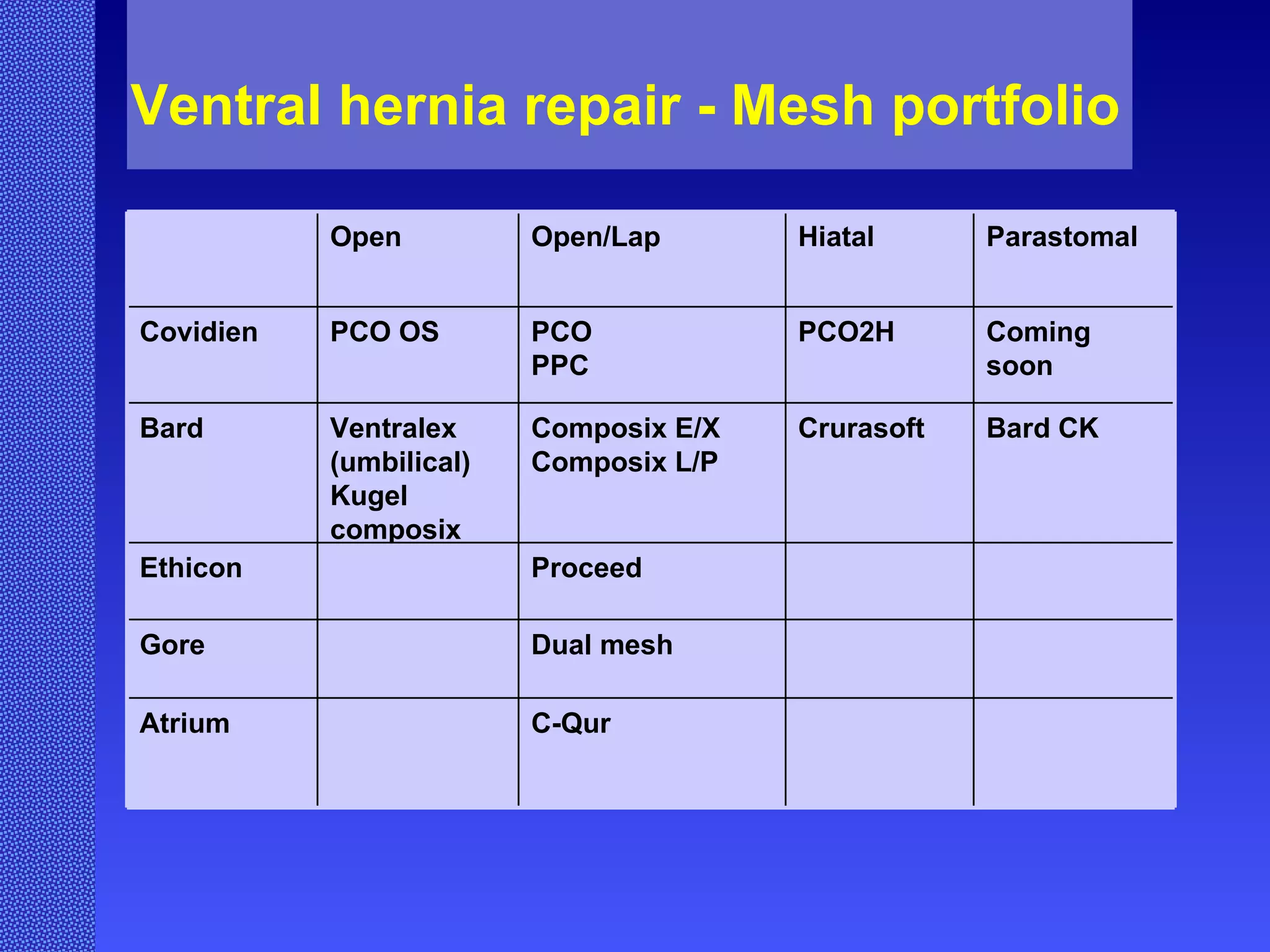
Ventral hernia repair - Mesh portfolio Open Open/Lap Hiatal Parastomal Covidien PCO OS PCO PPC PCO2H Coming soon Bard Ventralex (umbilical) Kugel composix Composix E/X Composix L/P Crurasoft Bard CK Ethicon Proceed Gore Dual mesh Atrium C-Qur
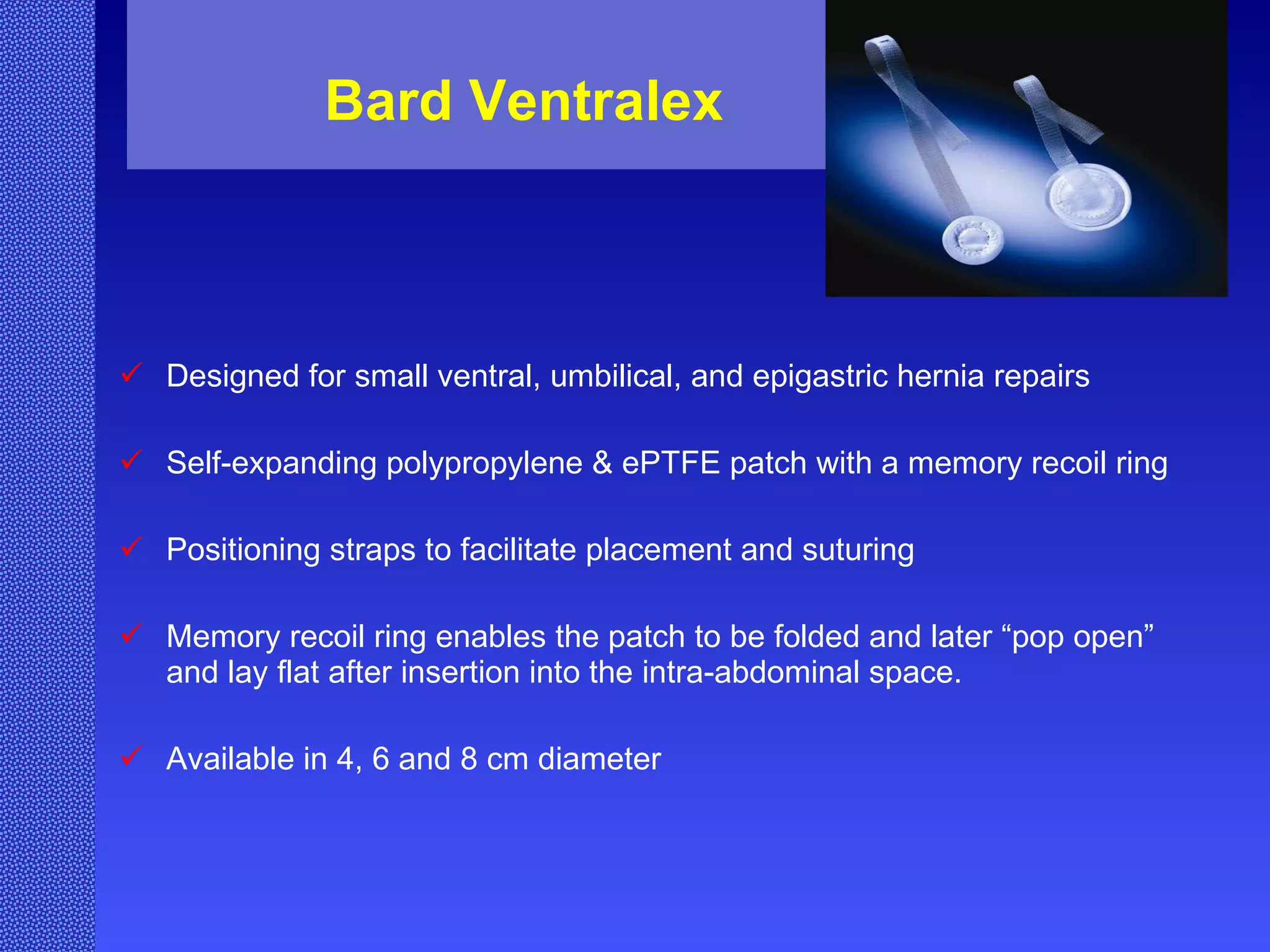
Bard Ventralex Designed for small ventral, umbilical, and epigastric hernia repairs  Self-expanding polypropylene & ePTFE patch with a memory recoil ring  Positioning straps to facilitate placement and suturing  Memory recoil ring enables the patch to be folded and later “pop open” and lay flat after insertion into the intra-abdominal space.  Available in 4, 6 and 8 cm diameter
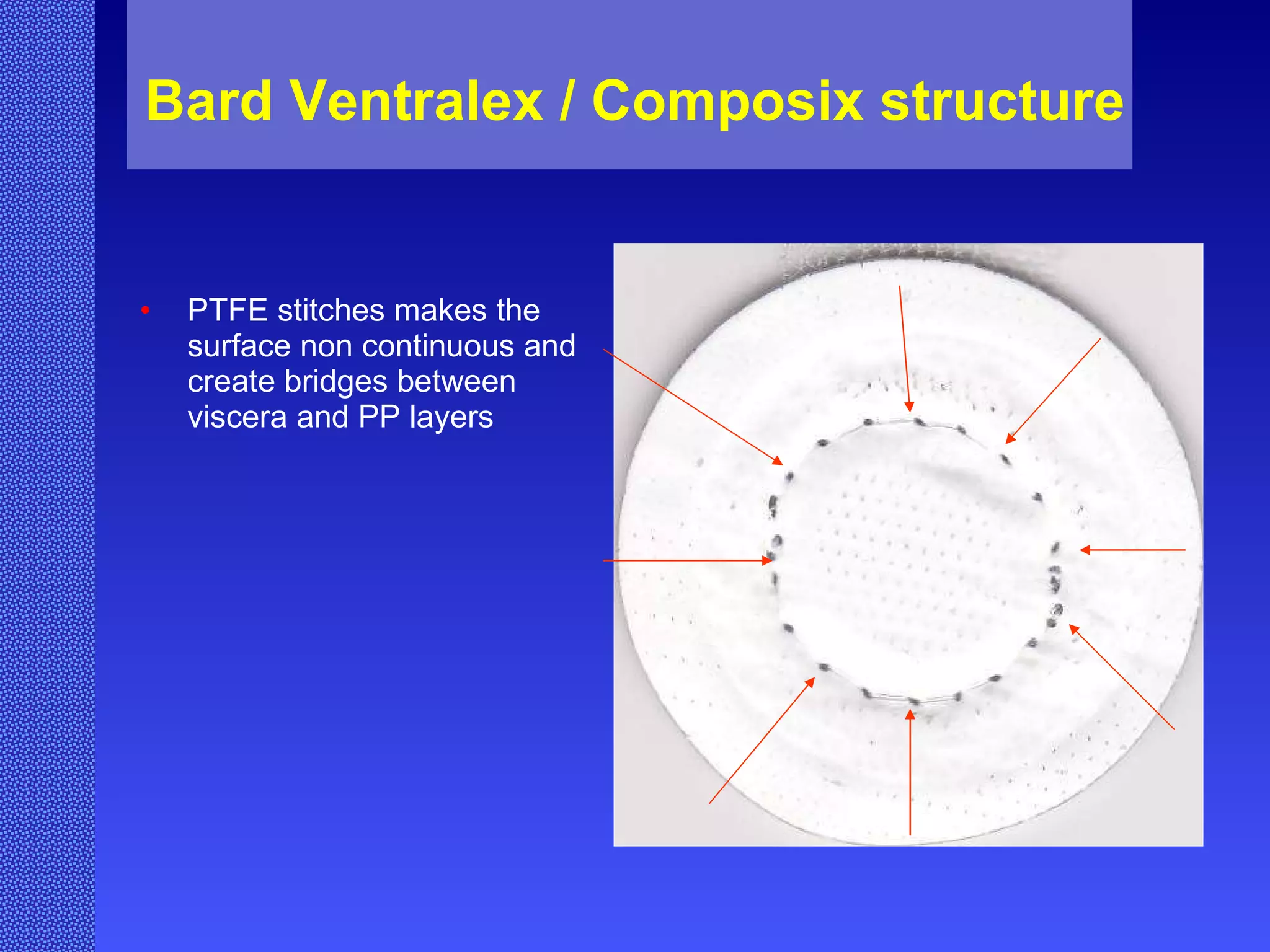
Bard Ventralex / Composix structure PTFE stitches makes the surface non continuous and create bridges between viscera and PP layers
Bard Ventralex rebuttal Strengths Easy to implant Weaknesses Low antiadhesion efficacy PTFE stitches creates holes in the ePTFE layer allowing for adhesions
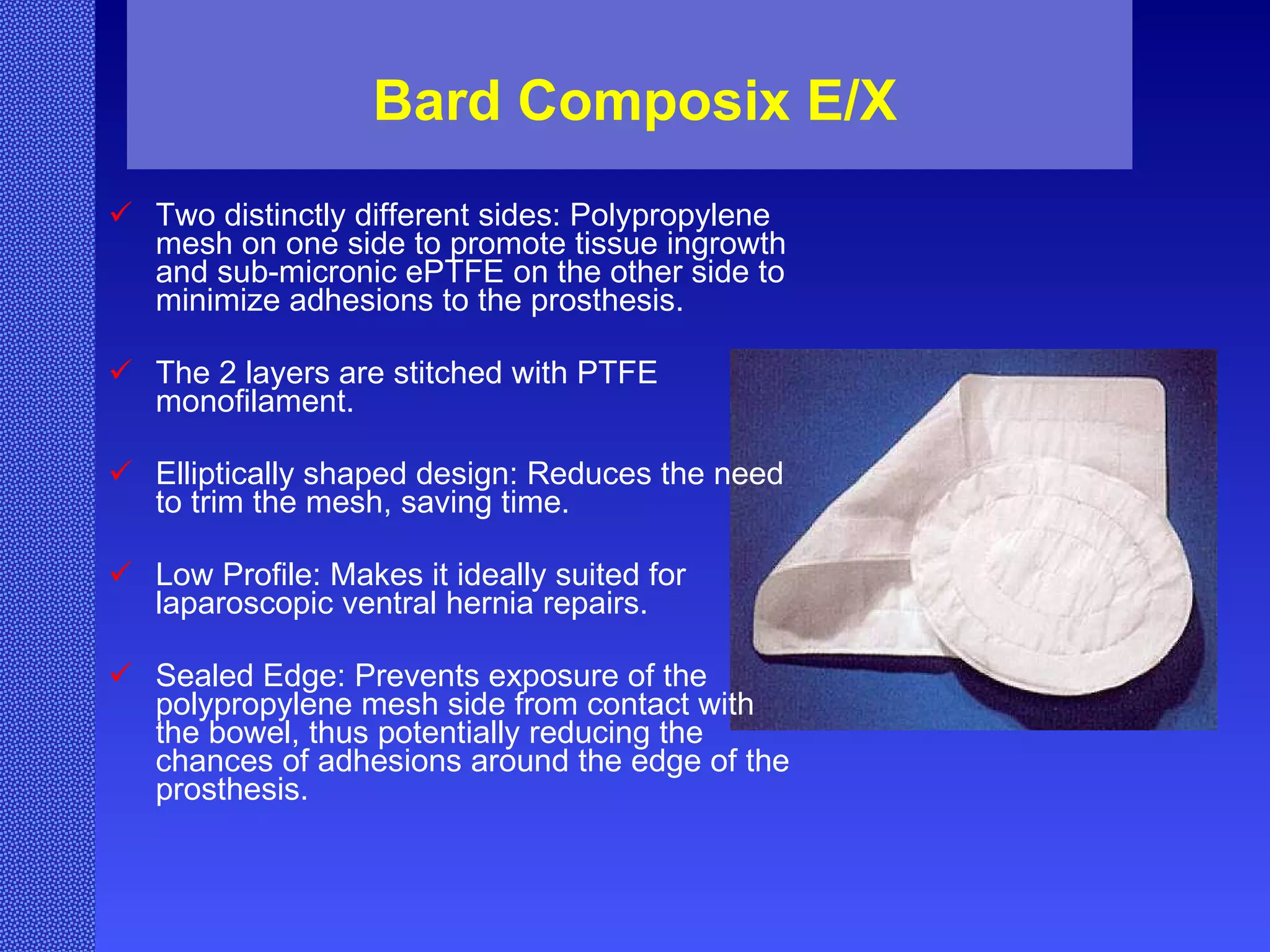
Bard Composix E/X Two distinctly different sides: Polypropylene mesh on one side to promote tissue ingrowth and sub-micronic ePTFE on the other side to minimize adhesions to the prosthesis.  The 2 layers are stitched with PTFE monofilament. Elliptically shaped design: Reduces the need to trim the mesh, saving time.  Low Profile: Makes it ideally suited for laparoscopic ventral hernia repairs.  Sealed Edge: Prevents exposure of the polypropylene mesh side from contact with the bowel, thus potentially reducing the chances of adhesions around the edge of the prosthesis.
Bard Composix E/X rebuttal  Strengths Protected edge Elliptic shape Weaknesses Heavy weight PP induces high fibrosis. Holes in the ePTFE side made by the PTFE stitches may create adhesions Cannot be cut as the PP layer will be widely exposed Low clinical efficacy (high rate of adhesions) The two layers from the Bard Composix E/X were no longer attached, and tissue or adhesions were found frequently between the two layers. The mesh edges were lifted and not smoothly encapsulated as with the previous mesh materials. Adhesions from the caecum to the mesh were found in five of the 12 animals (42%) Source: Gonzales study, Hernia 2004
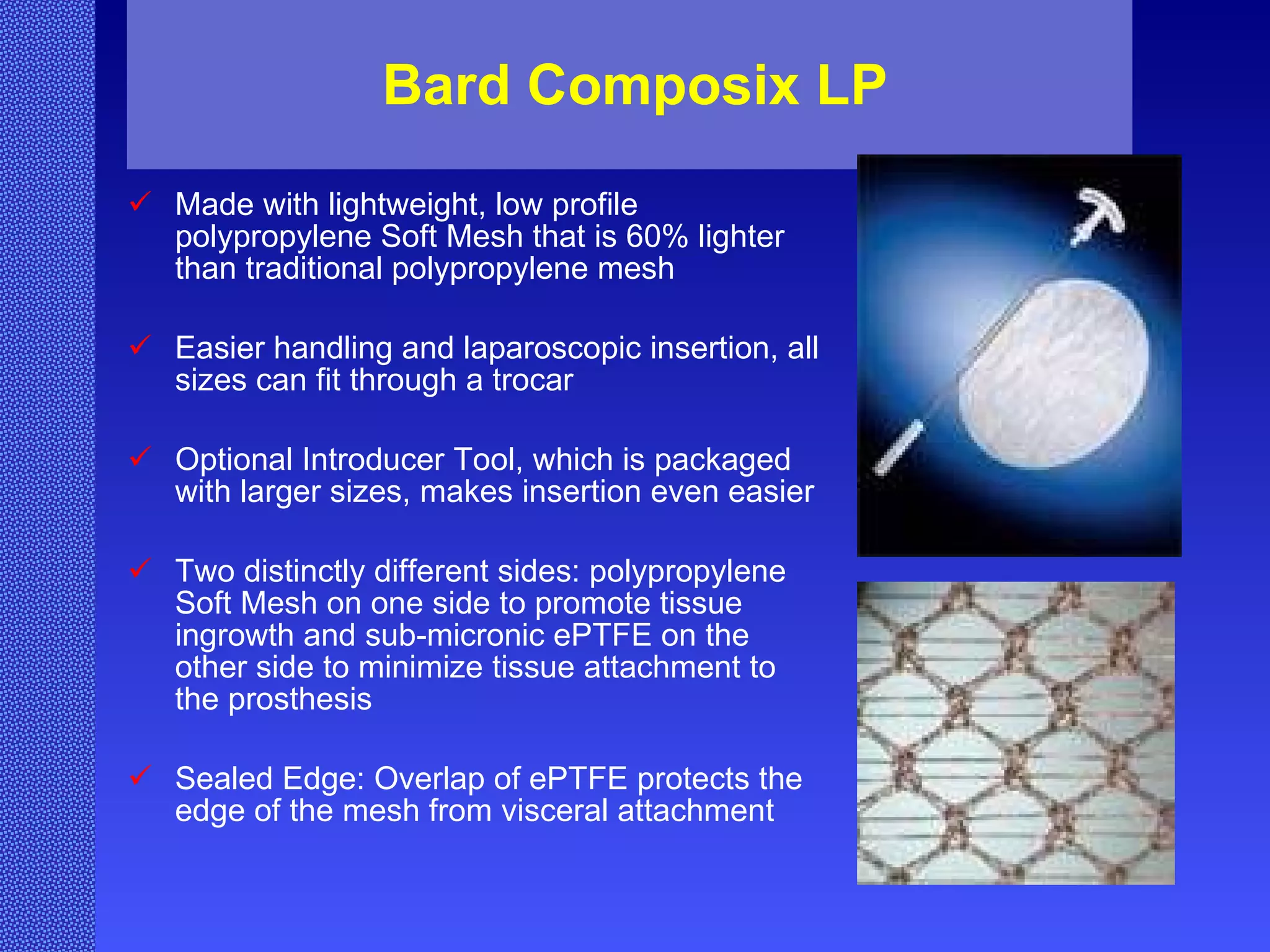
Bard Composix LP Made with lightweight, low profile polypropylene Soft Mesh that is 60% lighter than traditional polypropylene mesh  Easier handling and laparoscopic insertion, all sizes can fit through a trocar  Optional Introducer Tool, which is packaged with larger sizes, makes insertion even easier  Two distinctly different sides: polypropylene Soft Mesh on one side to promote tissue ingrowth and sub-micronic ePTFE on the other side to minimize tissue attachment to the prosthesis  Sealed Edge: Overlap of ePTFE protects the edge of the mesh from visceral attachment
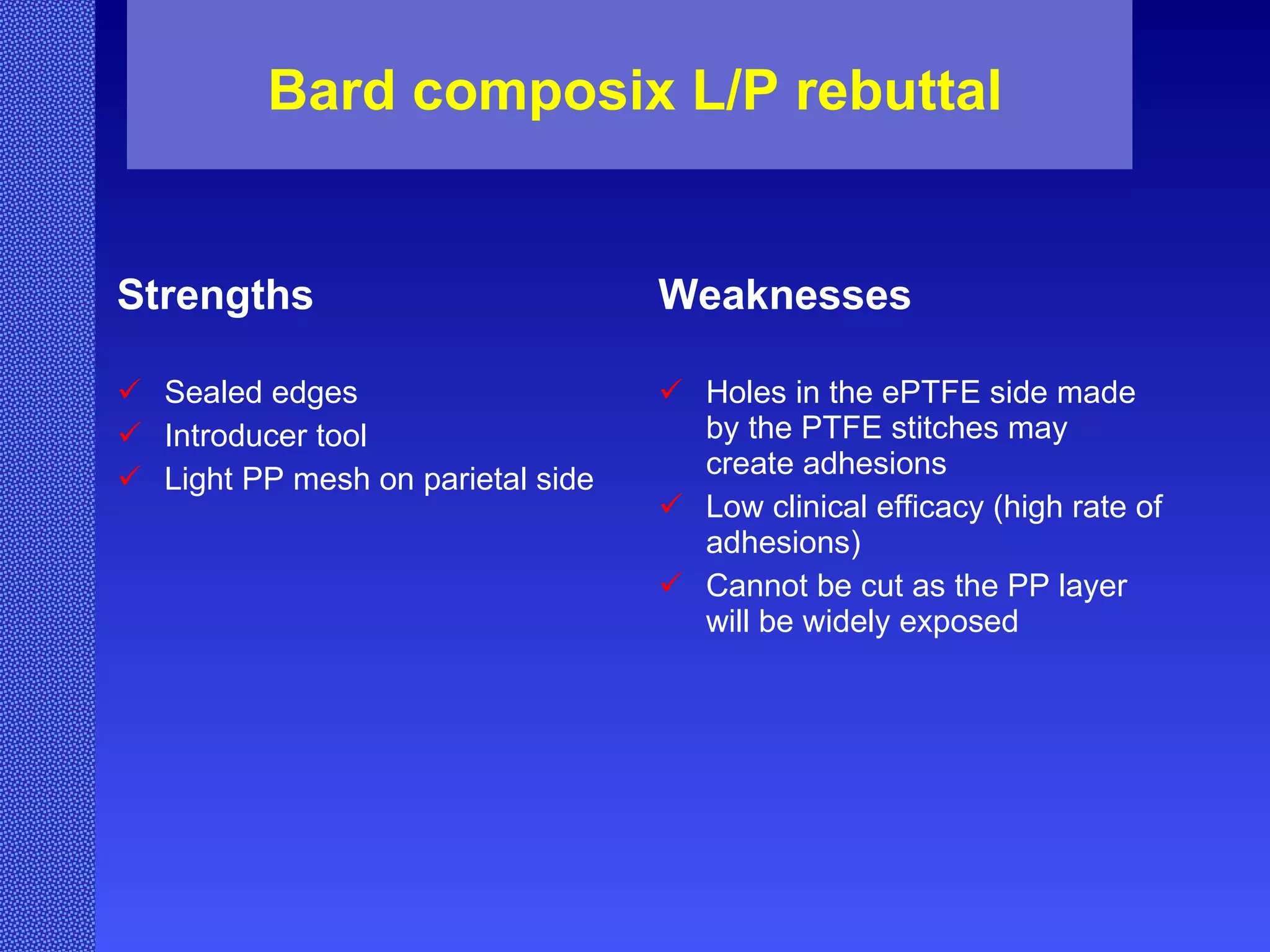
Bard composix L/P rebuttal Strengths Sealed edges Introducer tool Light PP mesh on parietal side Weaknesses Holes in the ePTFE side made by the PTFE stitches may create adhesions Low clinical efficacy (high rate of adhesions) Cannot be cut as the PP layer will be widely exposed
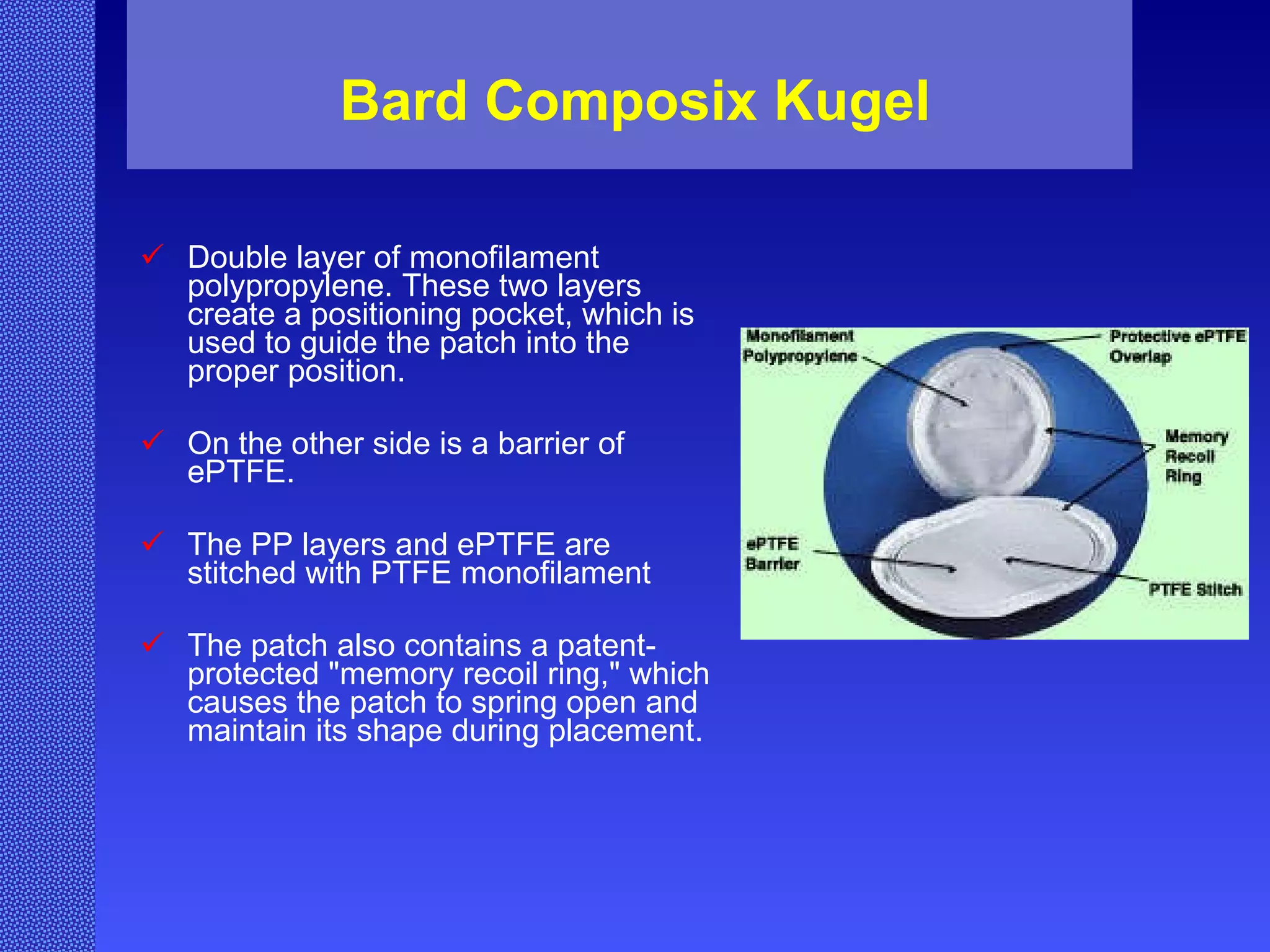
Bard Composix Kugel Double layer of monofilament polypropylene. These two layers create a positioning pocket, which is used to guide the patch into the proper position.  On the other side is a barrier of ePTFE.  The PP layers and ePTFE are stitched with PTFE monofilament The patch also contains a patent-protected &quot;memory recoil ring,&quot; which causes the patch to spring open and maintain its shape during placement.
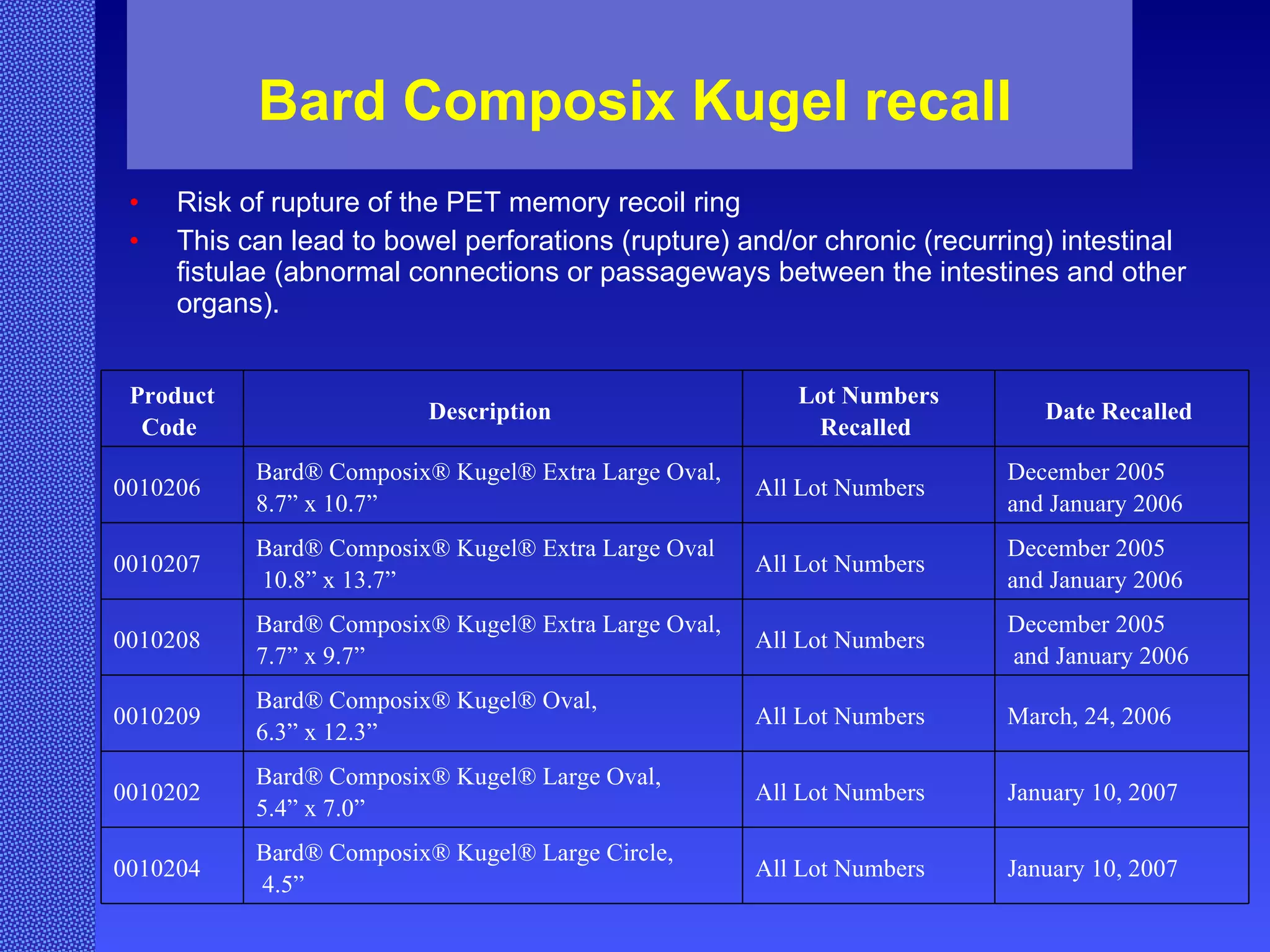
Bard Composix Kugel recall Risk of rupture of the PET memory recoil ring This can lead to bowel perforations (rupture) and/or chronic (recurring) intestinal fistulae (abnormal connections or passageways between the intestines and other organs). Product Code  Description  Lot Numbers Recalled  Date Recalled  0010206  Bard® Composix® Kugel® Extra Large Oval, 8.7” x 10.7”  All Lot Numbers  December 2005  and January 2006  0010207  Bard® Composix® Kugel® Extra Large Oval 10.8” x 13.7”  All Lot Numbers  December 2005  and January 2006  0010208  Bard® Composix® Kugel® Extra Large Oval,  7.7” x 9.7”  All Lot Numbers  December 2005 and January 2006  0010209  Bard® Composix® Kugel® Oval,  6.3” x 12.3”  All Lot Numbers  March, 24, 2006  0010202  Bard® Composix® Kugel® Large Oval, 5.4” x 7.0”  All Lot Numbers  January 10, 2007  0010204  Bard® Composix® Kugel® Large Circle, 4.5”  All Lot Numbers  January 10, 2007
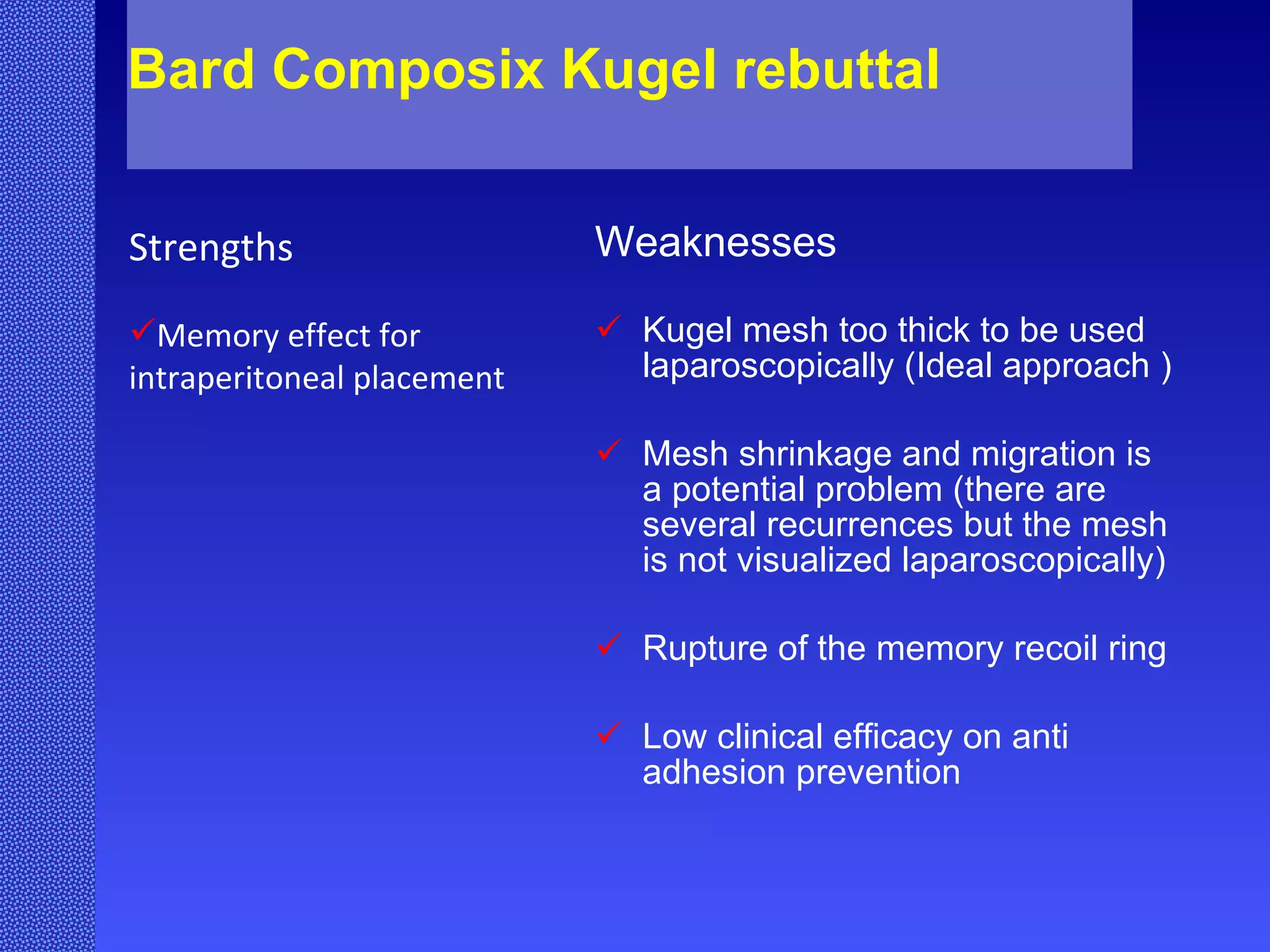
Bard Composix Kugel rebuttal  Weaknesses Kugel mesh too thick to be used laparoscopically (Ideal approach ) Mesh shrinkage and migration is a potential problem (there are several recurrences but the mesh is not visualized laparoscopically) Rupture of the memory recoil ring Low clinical efficacy on anti adhesion prevention  Strengths Memory effect for intraperitoneal placement
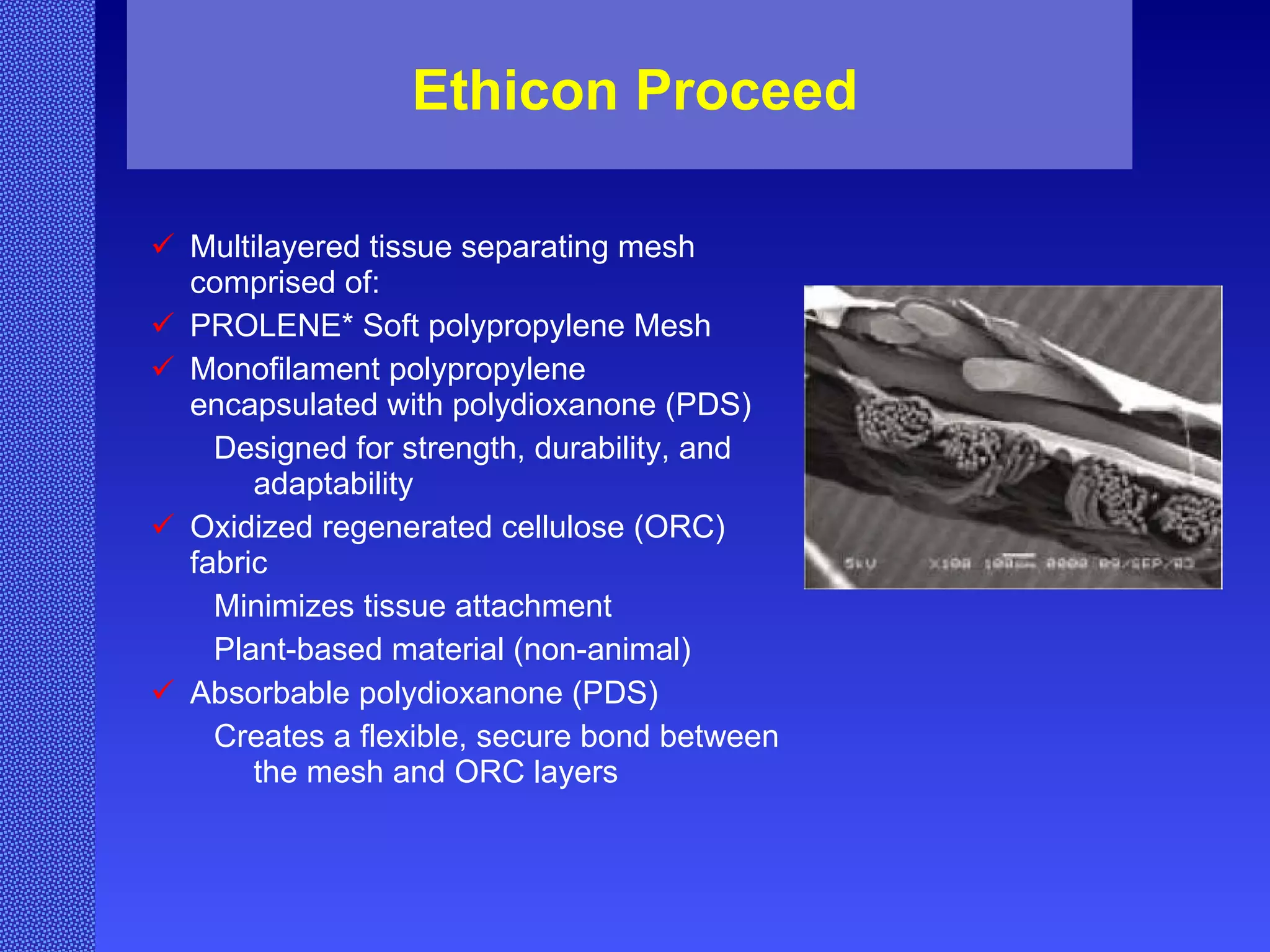
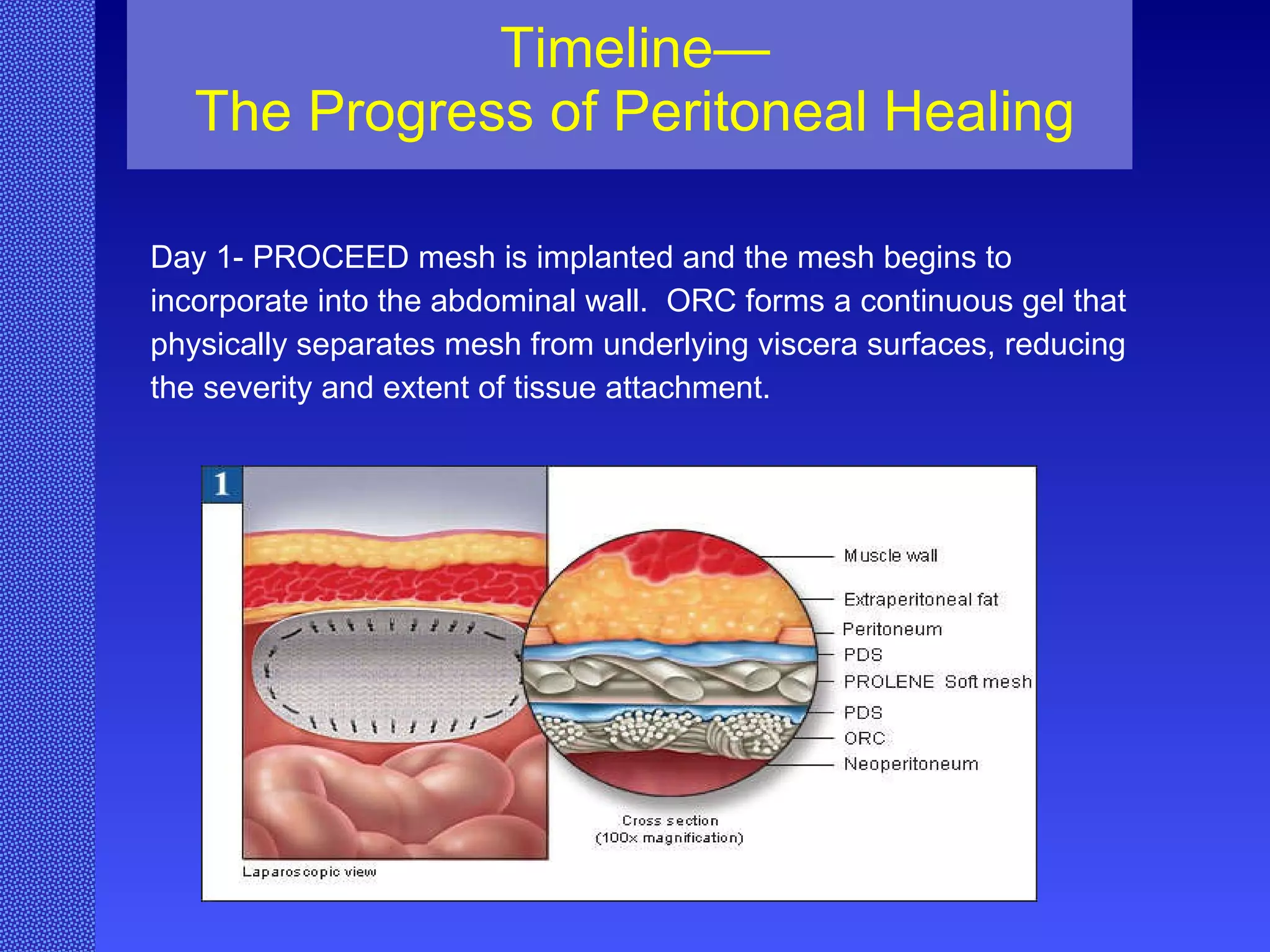
Ethicon Proceed Multilayered tissue separating mesh comprised of:  PROLENE* Soft polypropylene Mesh  Monofilament polypropylene encapsulated with polydioxanone (PDS) Designed for strength, durability, and adaptability  Oxidized regenerated cellulose (ORC) fabric Minimizes tissue attachment Plant-based material (non-animal)  Absorbable polydioxanone (PDS) Creates a flexible, secure bond between the mesh and ORC layers
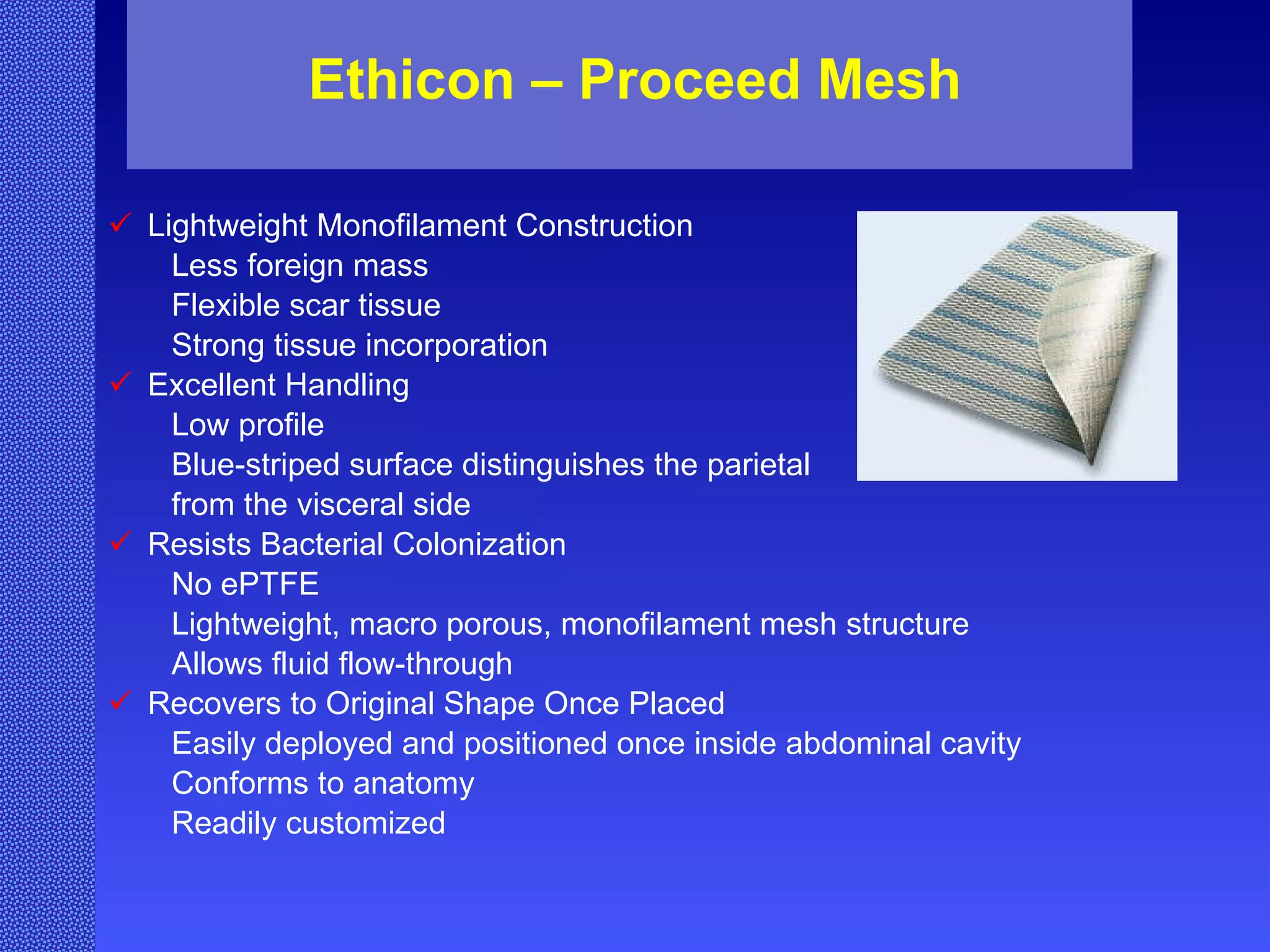
Ethicon – Proceed Mesh Lightweight Monofilament Construction  Less foreign mass  Flexible scar tissue  Strong tissue incorporation  Excellent Handling  Low profile  Blue-striped surface distinguishes the parietal  from the visceral side  Resists Bacterial Colonization  No ePTFE  Lightweight, macro porous, monofilament mesh structure  Allows fluid flow-through  Recovers to Original Shape Once Placed  Easily deployed and positioned once inside abdominal cavity  Conforms to anatomy  Readily customized
Timeline— The Progress of Peritoneal Healing Day 1- PROCEED mesh is implanted and the mesh begins to  incorporate into the abdominal wall.  ORC forms a continuous gel that  physically separates mesh from underlying viscera surfaces, reducing  the severity and extent of tissue attachment.
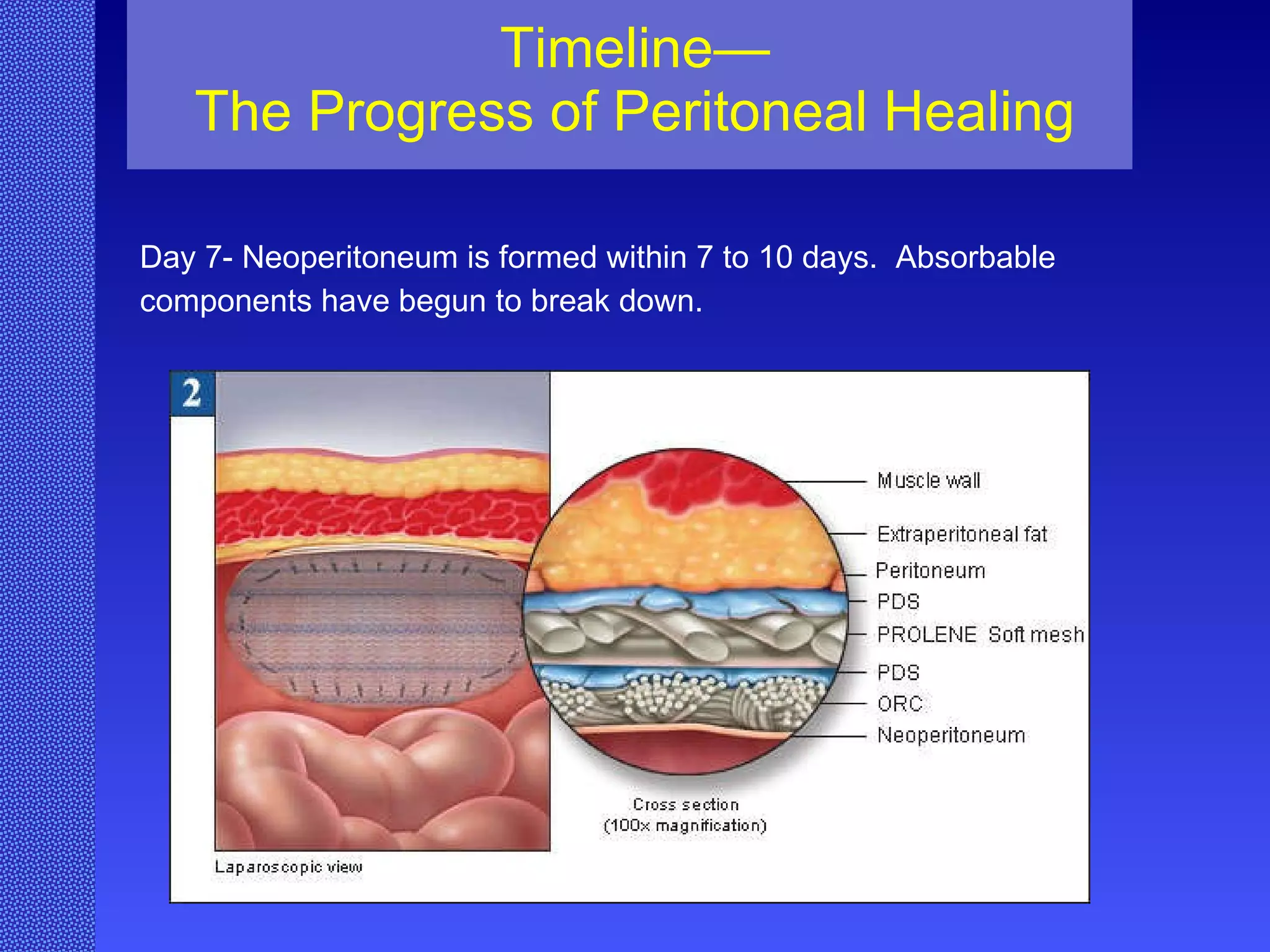
Timeline— The Progress of Peritoneal Healing Day 7- Neoperitoneum is formed within 7 to 10 days.  Absorbable  components have begun to break down.
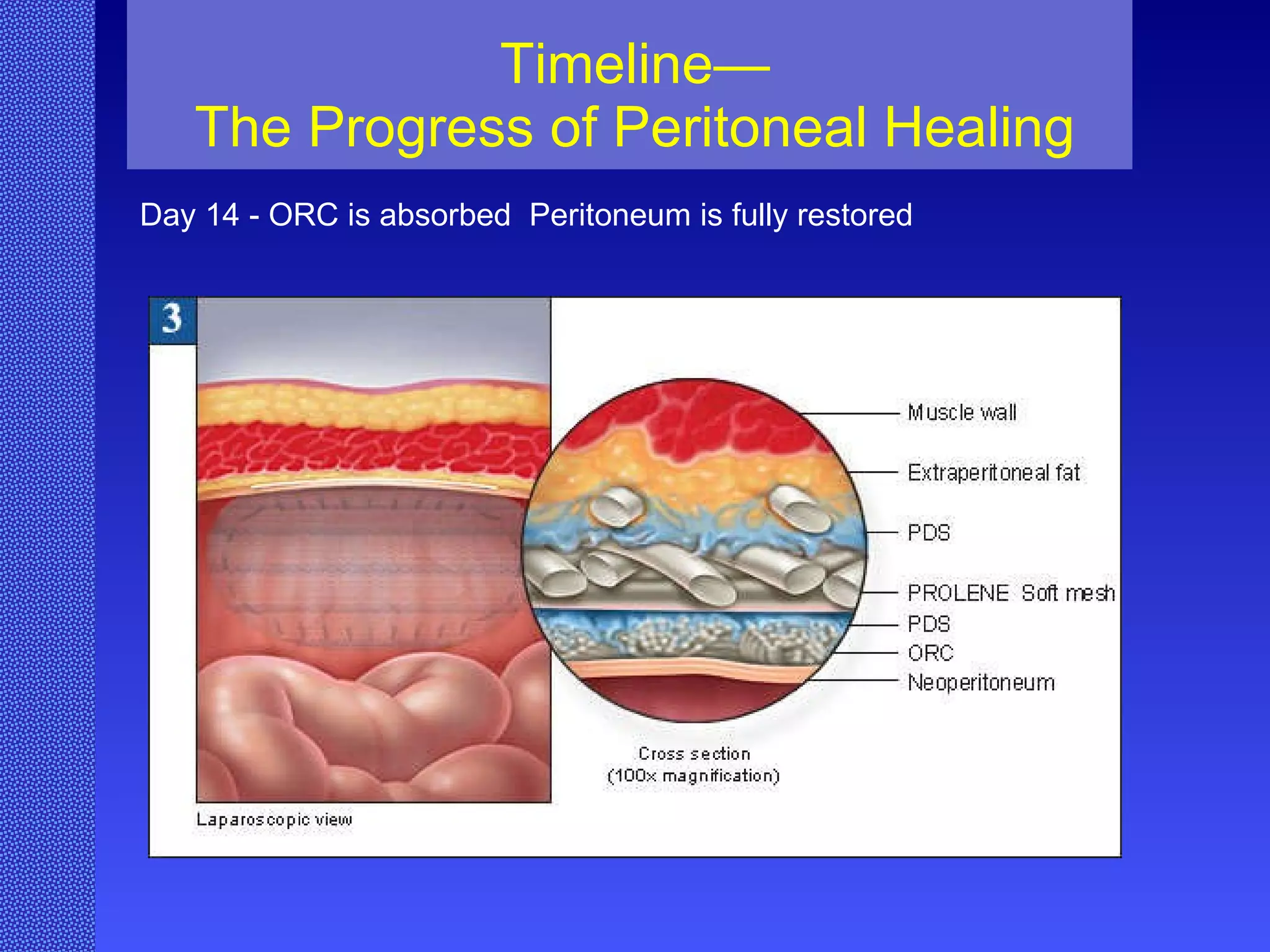
Timeline— The Progress of Peritoneal Healing Day 14 - ORC is absorbed  Peritoneum is fully restored
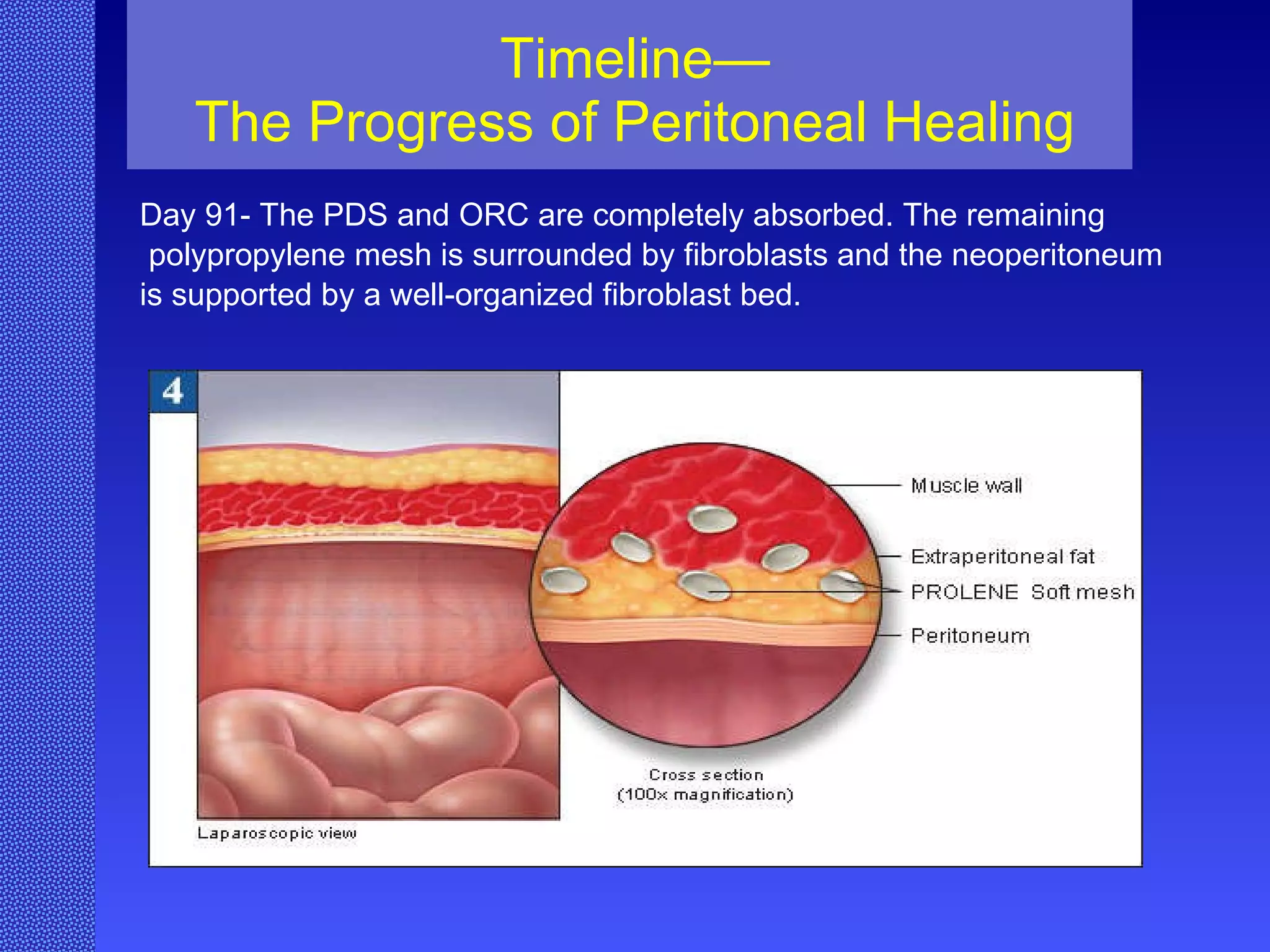
Timeline— The Progress of Peritoneal Healing Day 91- The PDS and ORC are completely absorbed. The remaining polypropylene mesh is surrounded by fibroblasts and the neoperitoneum  is supported by a well-organized fibroblast bed.
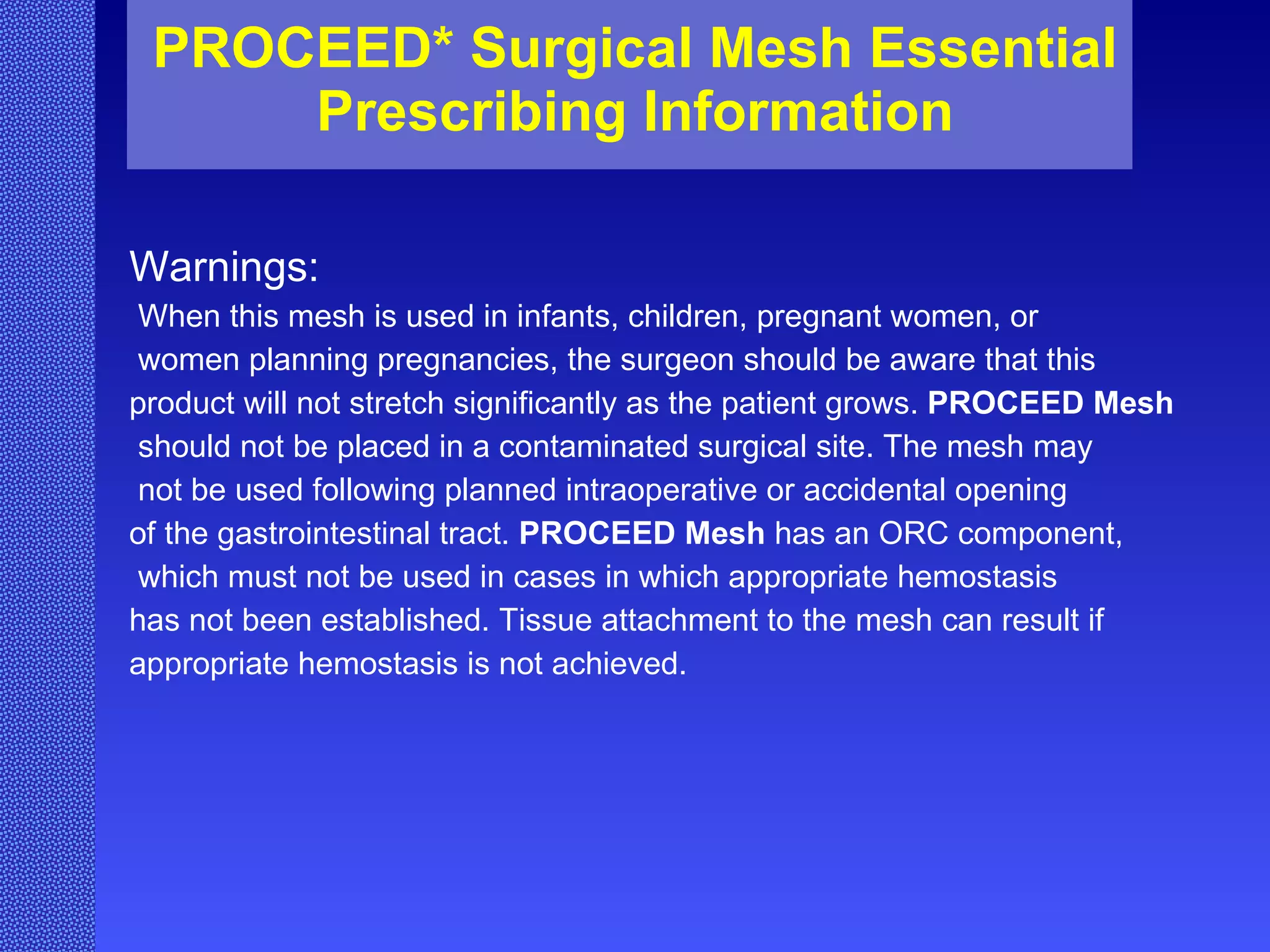
PROCEED* Surgical Mesh Essential Prescribing Information Warnings: When this mesh is used in infants, children, pregnant women, or women planning pregnancies, the surgeon should be aware that this  product will not stretch significantly as the patient grows.  PROCEED Mesh should not be placed in a contaminated surgical site. The mesh may not be used following planned intraoperative or accidental opening  of the gastrointestinal tract.  PROCEED Mesh  has an ORC component, which must not be used in cases in which appropriate hemostasis  has not been established. Tissue attachment to the mesh can result if appropriate hemostasis is not achieved.
Ethicon Proceed rebuttal Strengths Weaknesses Low clinical efficacy Contraction of the Prolene Soft by 34% No memory shape, difficult to manipulate, tends to adhere to tissue when wet, Meticulous haemostasis must be achieved* Low intra-op light, No overlap over the edges, De-lamination cases due to resorbable PDS may induce seroma, higher sepsis risk Low resistance to suture *IFU WARNINGS   PROCEED Mesh has an ORC component, which must not be used in cases in which appropriate hemostasis has not been established. Tissue attachment to the mesh can result if appropriate hemostasis is not achieved
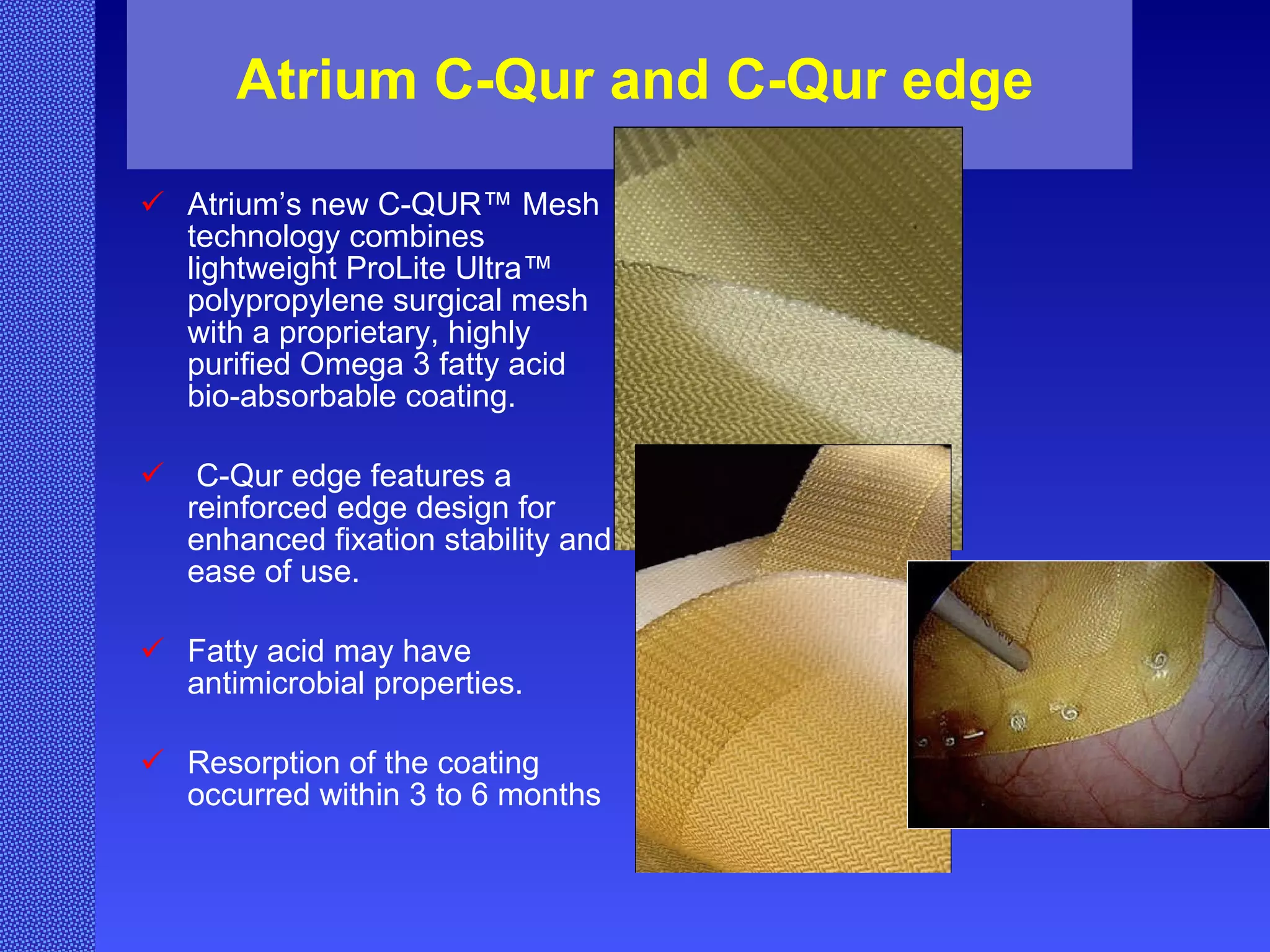
Atrium C-Qur and C-Qur edge Atrium’s new C-QUR™ Mesh technology combines lightweight ProLite Ultra™ polypropylene surgical mesh with a proprietary, highly purified Omega 3 fatty acid bio-absorbable coating. C-Qur edge features a reinforced edge design for enhanced fixation stability and ease of use. Fatty acid may have antimicrobial properties. Resorption of the coating occurred within 3 to 6 months
Atrium C-Qur and C-Qur edge rebuttal Strengths Animal testing show minimal adhesion and good tissue integration Fatty acid may have antimicrobial effect (not validated in clinicals) Transparent, good visibility of landmarks Weaknesses Lack of human studies
Dualmesh ® Gore, Inc. GORE DUALMESH® Biomaterial is a soft, conformable, ePTFE  sheet material that offers a unique, two-surface design intended  for such applications. The biomaterial features two functionally  distinct surfaces: a closed structure surface for reduced tissue  attachment and a macro porous structure surface for faster tissue  attachment.
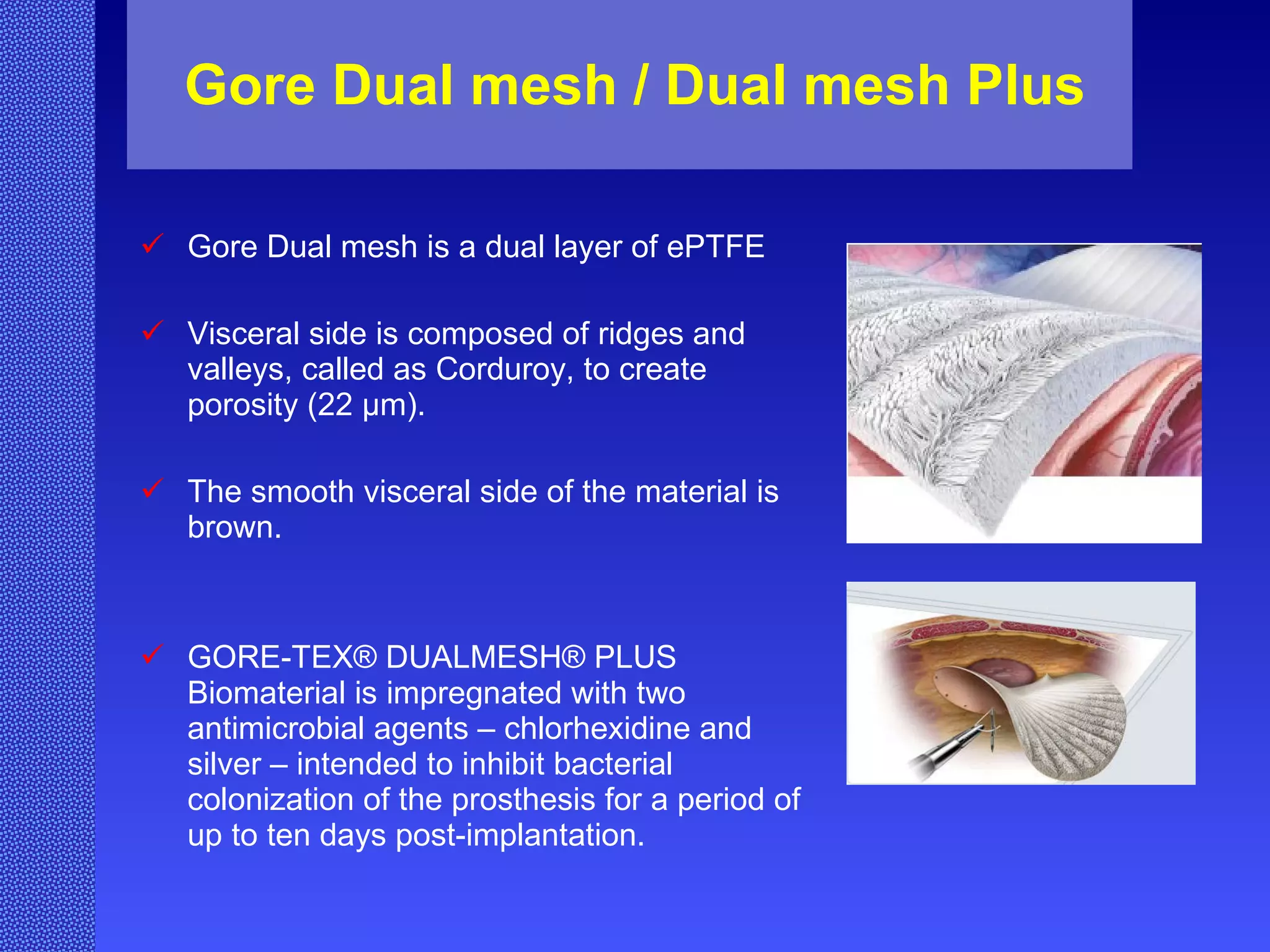
Gore Dual mesh / Dual mesh Plus Gore Dual mesh is a dual layer of ePTFE Visceral side is composed of ridges and valleys, called as Corduroy, to create porosity (22 µm). The smooth visceral side of the material is brown. GORE-TEX® DUALMESH® PLUS Biomaterial is impregnated with two antimicrobial agents – chlorhexidine and silver – intended to inhibit bacterial colonization of the prosthesis for a period of up to ten days post-implantation.
Gore Dual mesh rebuttal Strengths Used for many years Weaknesses No tissue integration High rate of seroma Need strong fixation: tacks and sutures Highest Shrinkage among material High density Opaque: cannot see the anatomical landmarks, vessel and nerves Shiny surface under lap “ The use of antimicrobial-impregnated ePTFE mesh with  silver/chlorhexidine in laparoscopic ventral hernia repair is associated with noninfectious postoperative fever. In our  patients, the evaluation and management of these fevers  resulted in a significantly longer hospital stay.” Cobbs,  Am Surg. 2006 Dec;72(12):1205-8;
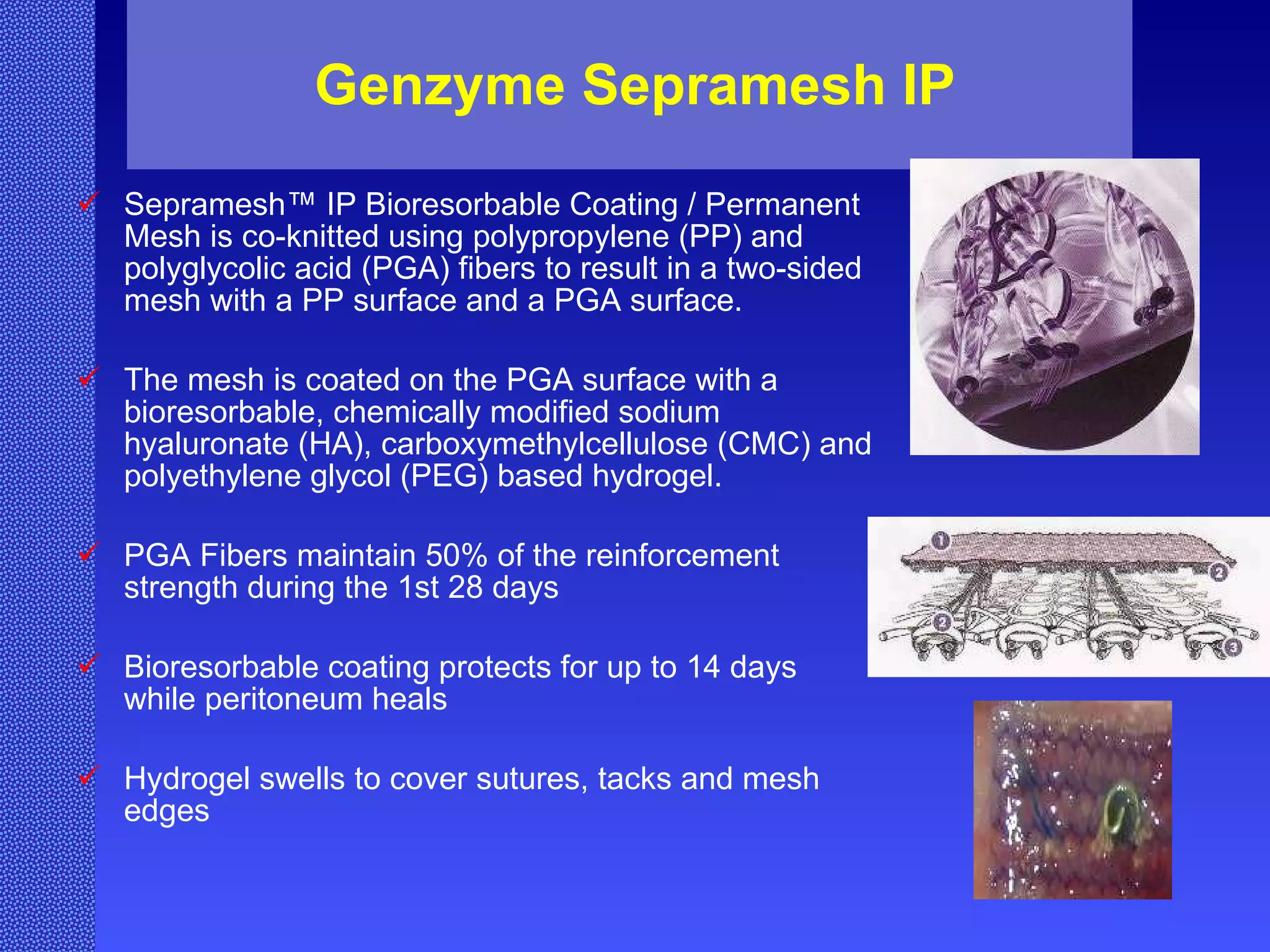
Genzyme Sepramesh IP Sepramesh™ IP Bioresorbable Coating / Permanent Mesh is co-knitted using polypropylene (PP) and polyglycolic acid (PGA) fibers to result in a two-sided mesh with a PP surface and a PGA surface.  The mesh is coated on the PGA surface with a bioresorbable, chemically modified sodium hyaluronate (HA), carboxymethylcellulose (CMC) and polyethylene glycol (PEG) based hydrogel. PGA Fibers maintain 50% of the reinforcement strength during the 1st 28 days Bioresorbable coating protects for up to 14 days while peritoneum heals Hydrogel swells to cover sutures, tacks and mesh edges
Genzyme Sepramesh IP rebuttal Strengths Animal studies show low rate of adhesions Good mechanical properties (burst strength and suture retention) Translucent Good memory shape Weaknesses Lack of human studies Requires 12mm or 15mm trocar for lap insertion (8x15, 10x20, 15x20, 20x30)
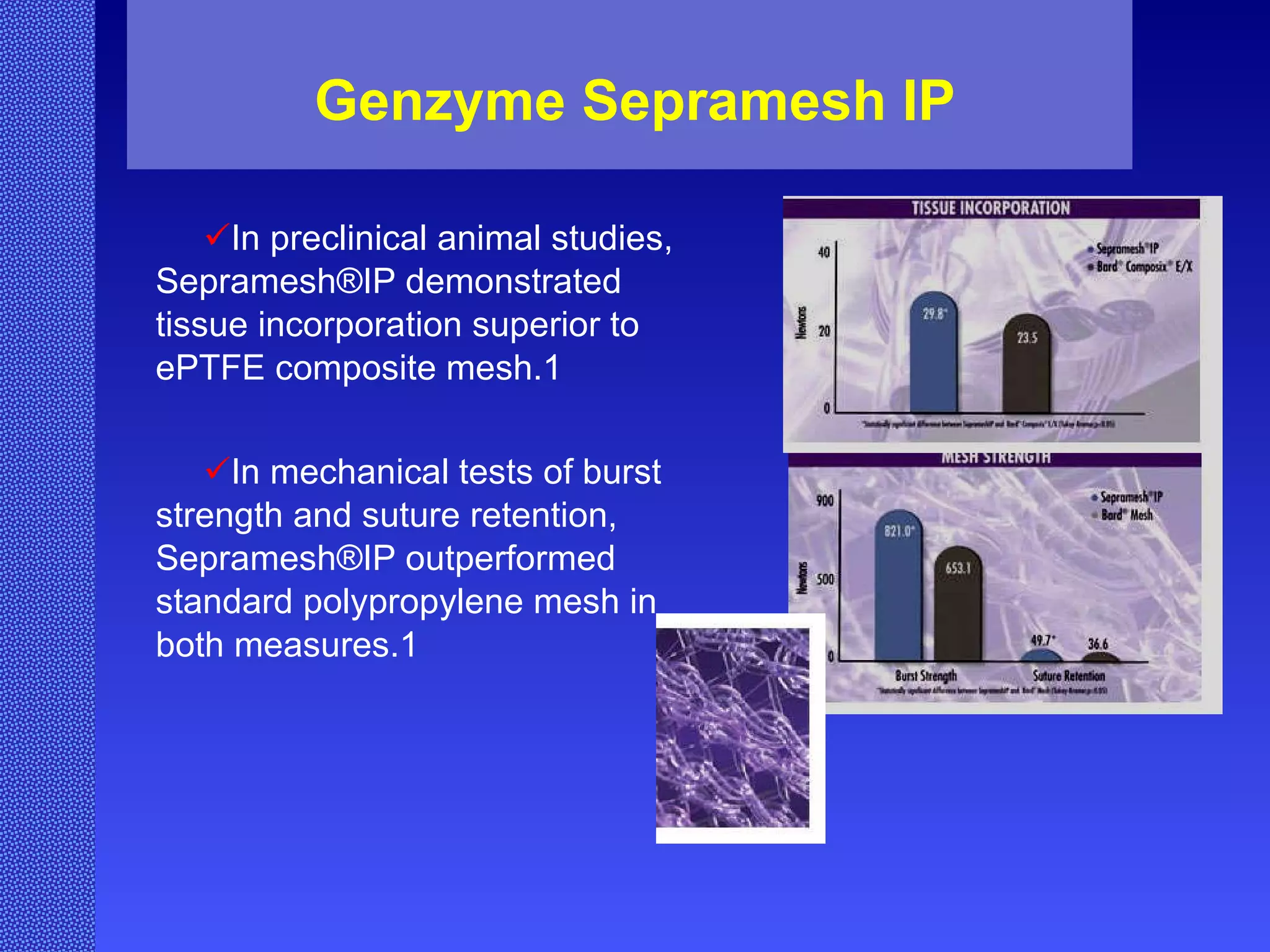
Genzyme Sepramesh IP In preclinical animal studies, Sepramesh®IP demonstrated tissue incorporation superior to ePTFE composite mesh.1  In mechanical tests of burst strength and suture retention, Sepramesh®IP outperformed standard polypropylene mesh in both measures.1
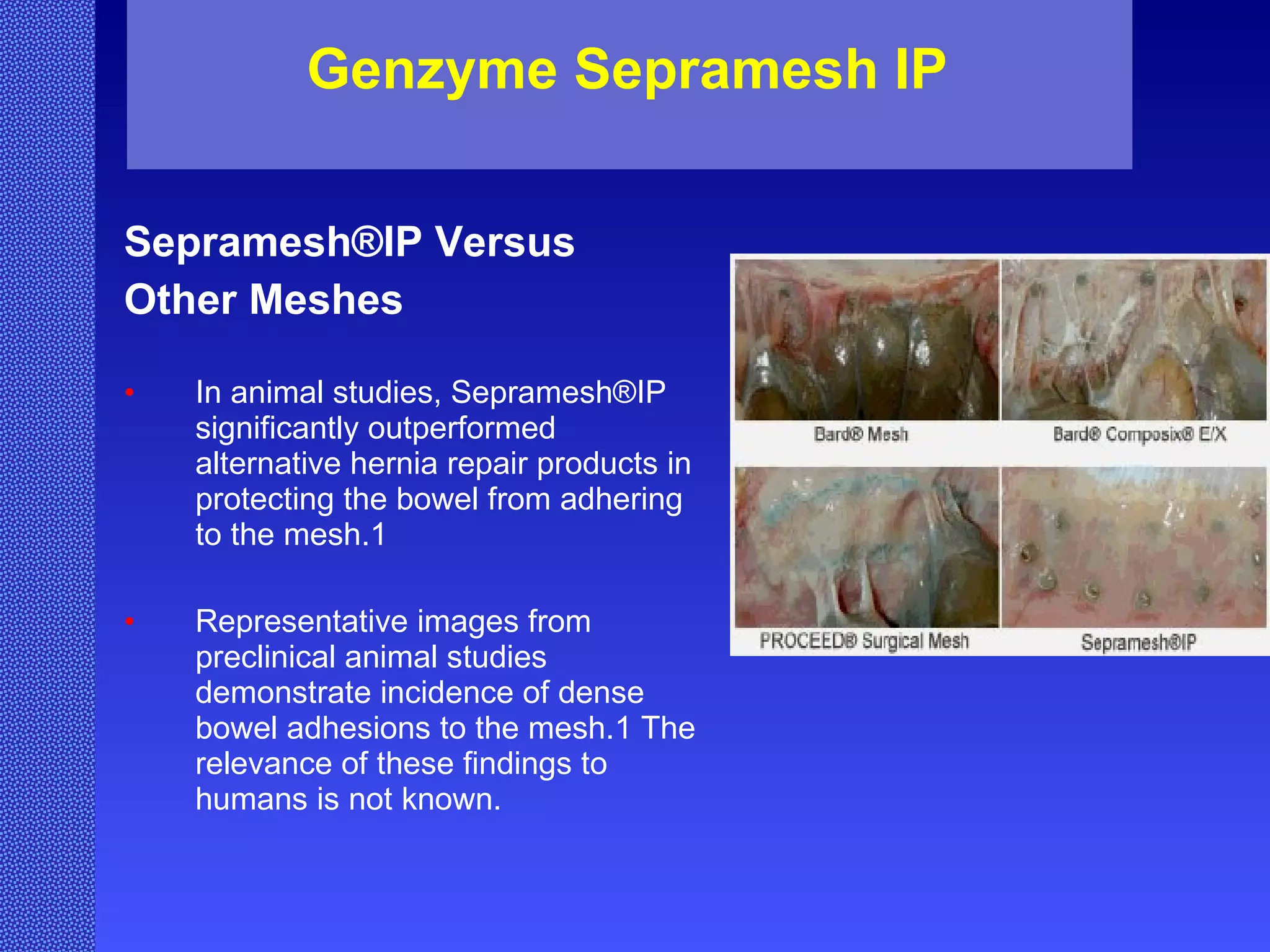
Genzyme Sepramesh IP  Sepramesh®IP Versus  Other Meshes In animal studies, Sepramesh®IP significantly outperformed alternative hernia repair products in protecting the bowel from adhering to the mesh.1  Representative images from preclinical animal studies demonstrate incidence of dense bowel adhesions to the mesh.1 The relevance of these findings to humans is not known.
GfE TiMesh GfE is a German company TiMesh launched mid-2003 Key Points Monofilament polypropylene mesh completely coated in Titanium Sold in two forms – Light and Extra light Titanium is NOT an anti-adhesive Product sold in Europe for years Disadvantages Very expensive (~$195 - $225/flat sheet)
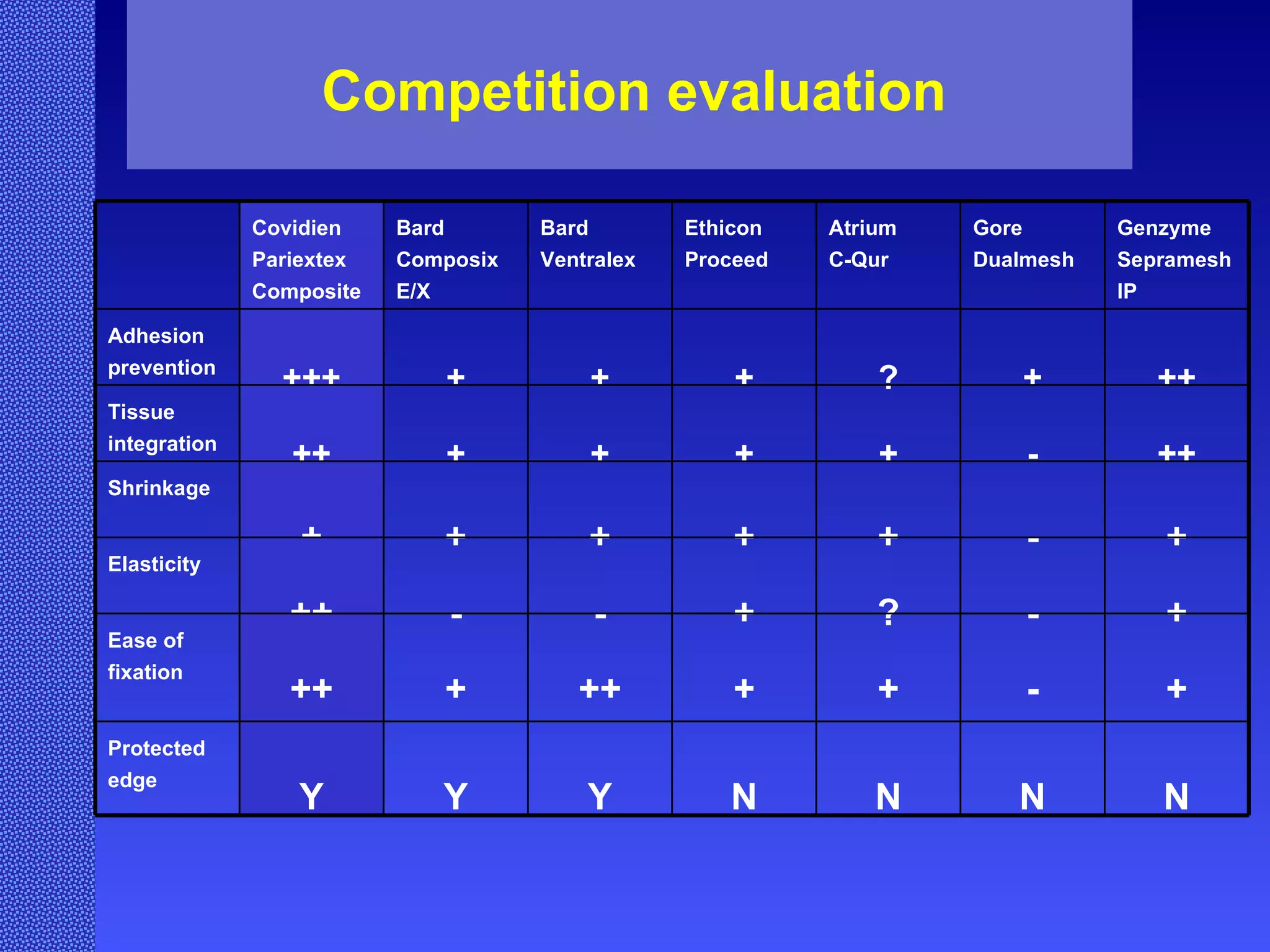
Competition evaluation Covidien Pariextex Composite Bard Composix E/X Bard Ventralex Ethicon Proceed Atrium  C-Qur Gore Dualmesh Genzyme Sepramesh IP Adhesion prevention +++ + + + ? + ++ Tissue integration ++ + + + + - ++ Shrinkage + + + + + - + Elasticity ++ - - + ? - + Ease of fixation ++ + ++ + + - + Protected edge Y Y Y N N N N
Questions????
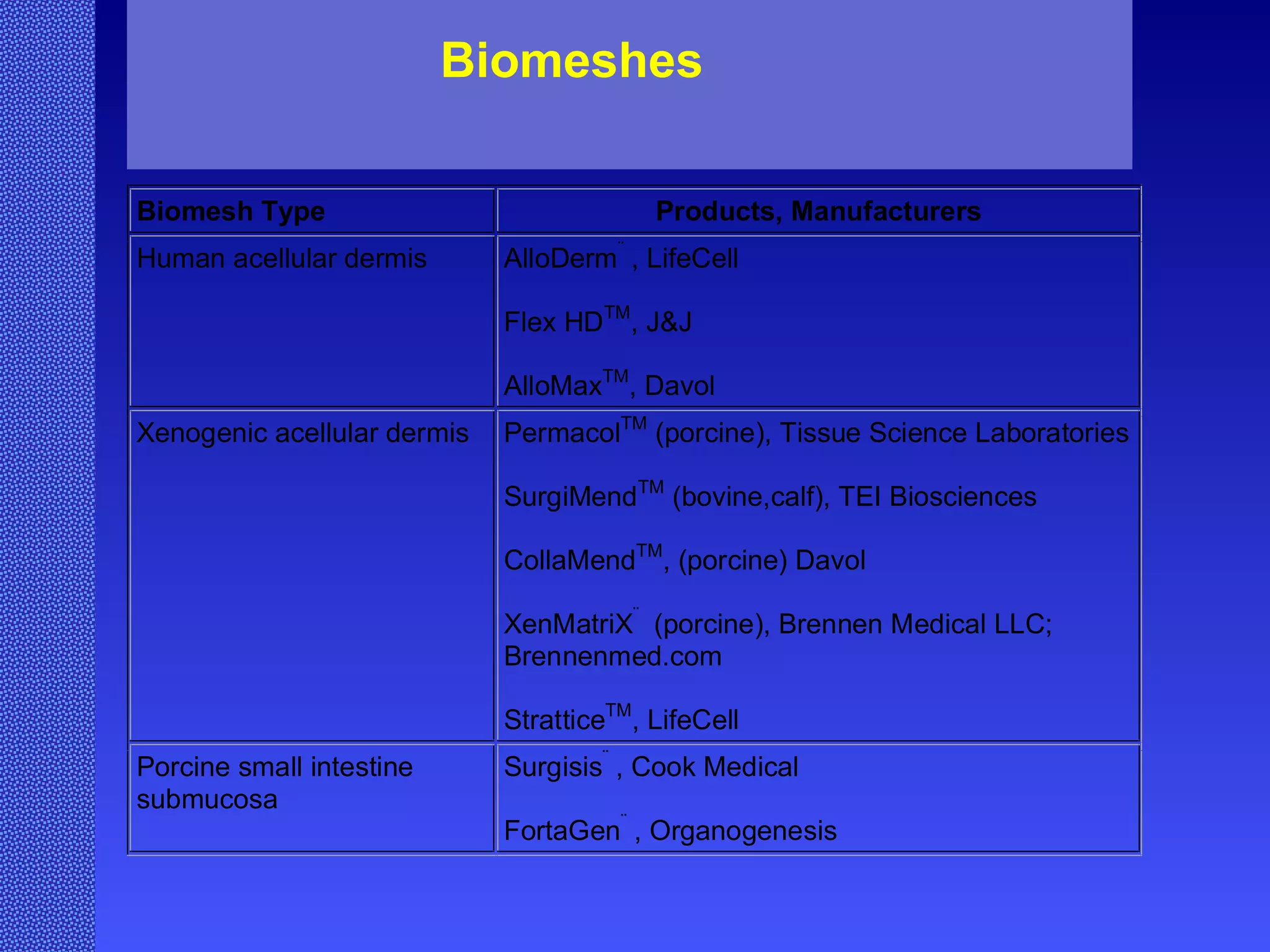
Biomeshes
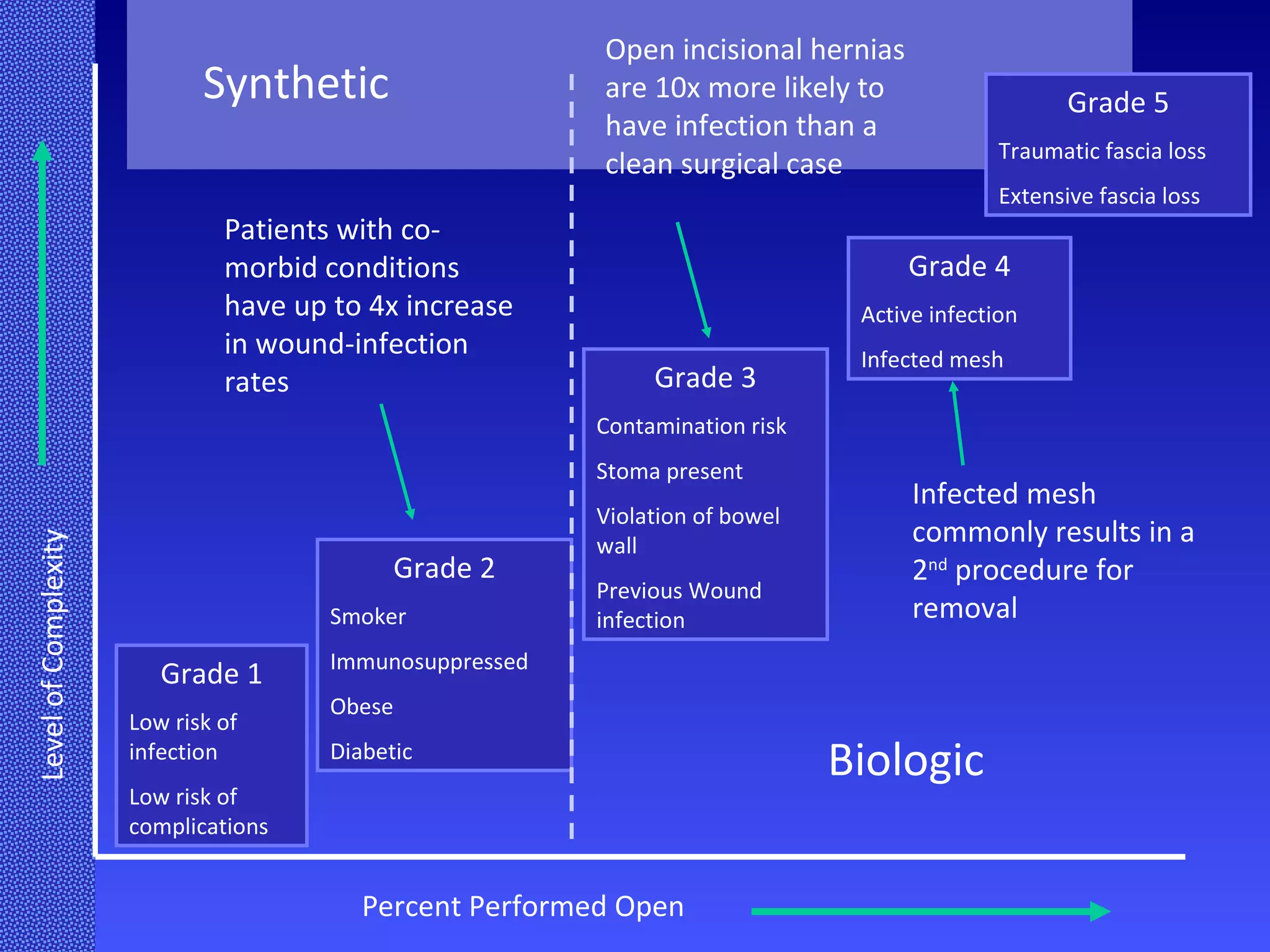
Level of Complexity Grade 1 Low risk of infection Low risk of complications Grade 2 Smoker Immunosuppressed Obese Diabetic Grade 4 Active infection Infected mesh Grade 3 Contamination risk Stoma present Violation of bowel wall Previous Wound infection Grade 5 Traumatic fascia loss Extensive fascia loss Percent Performed Open Patients with co-morbid conditions have up to 4x increase in wound-infection rates Open incisional hernias are 10x more likely to have infection than a clean surgical case Infected mesh commonly results in a 2 nd  procedure for removal Synthetic Biologic
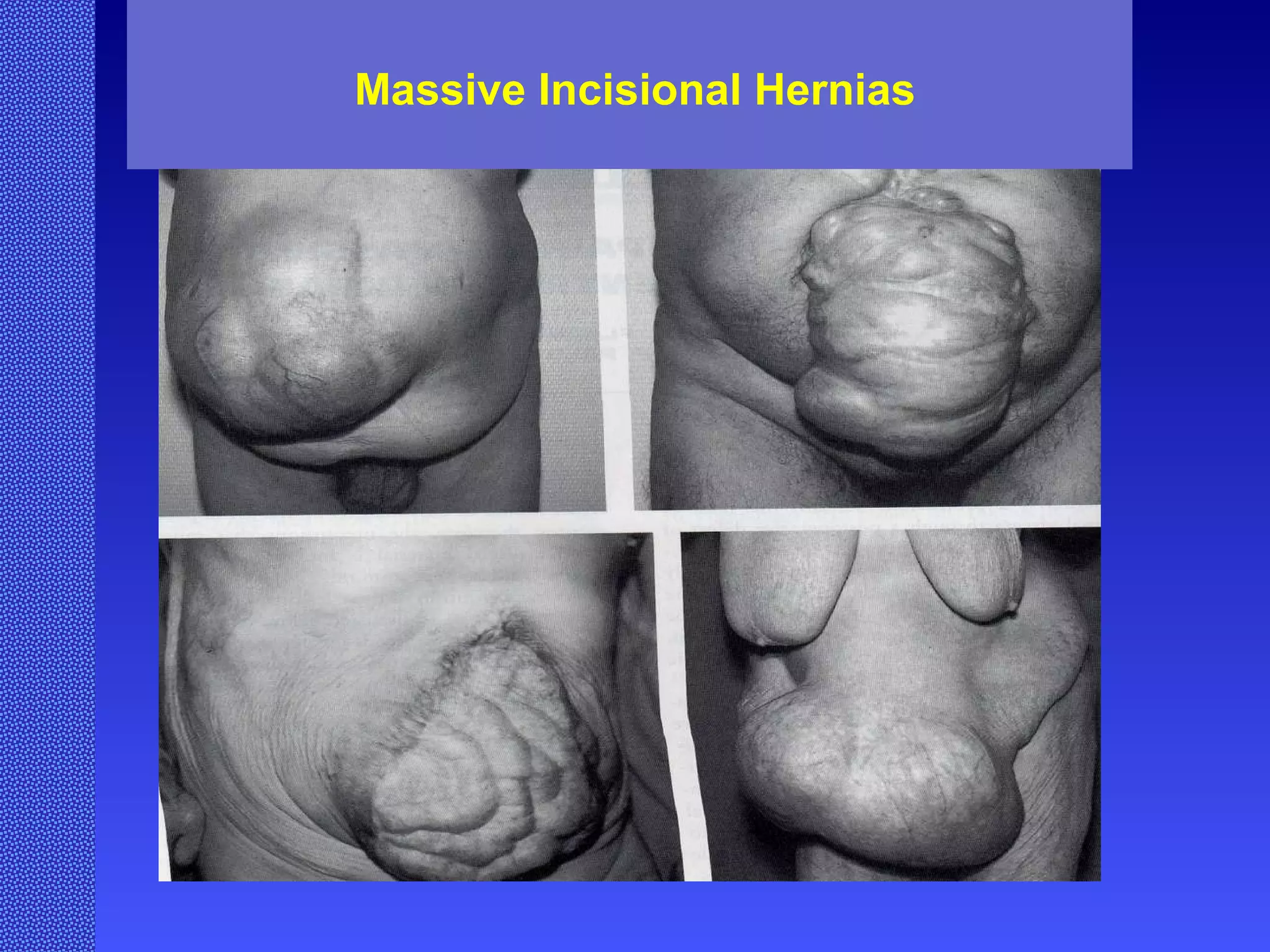
Massive Incisional Hernias
Repair Techniques Autologous Myocutaneous Flaps Morbidity and availability issues Tissue Bank Cadaveric Grafts Sterility and tissue quality issues Impact of Alloderm Components Separation Prosthetic Repair  Healing by Secondary or Tertiary Intention
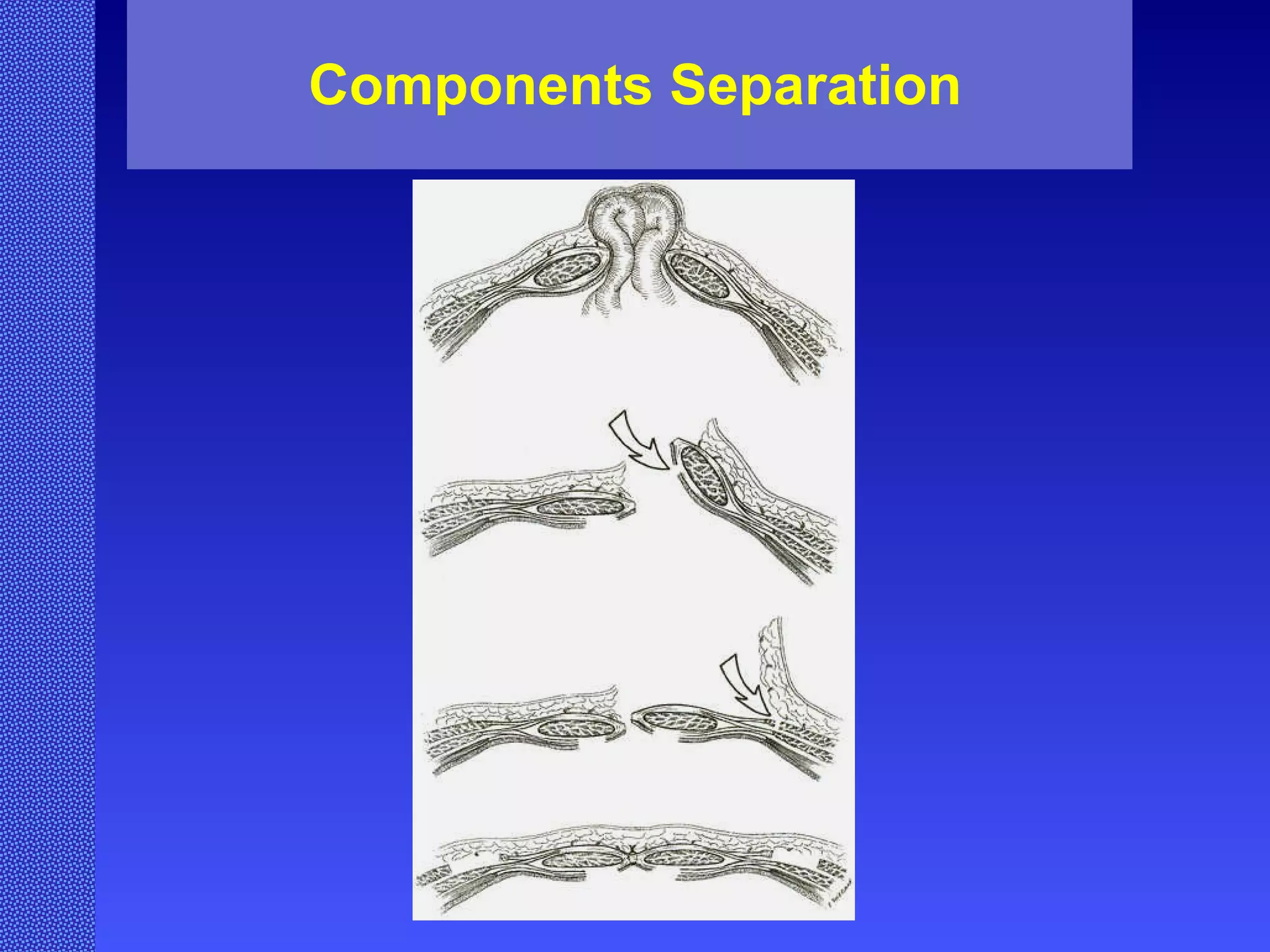
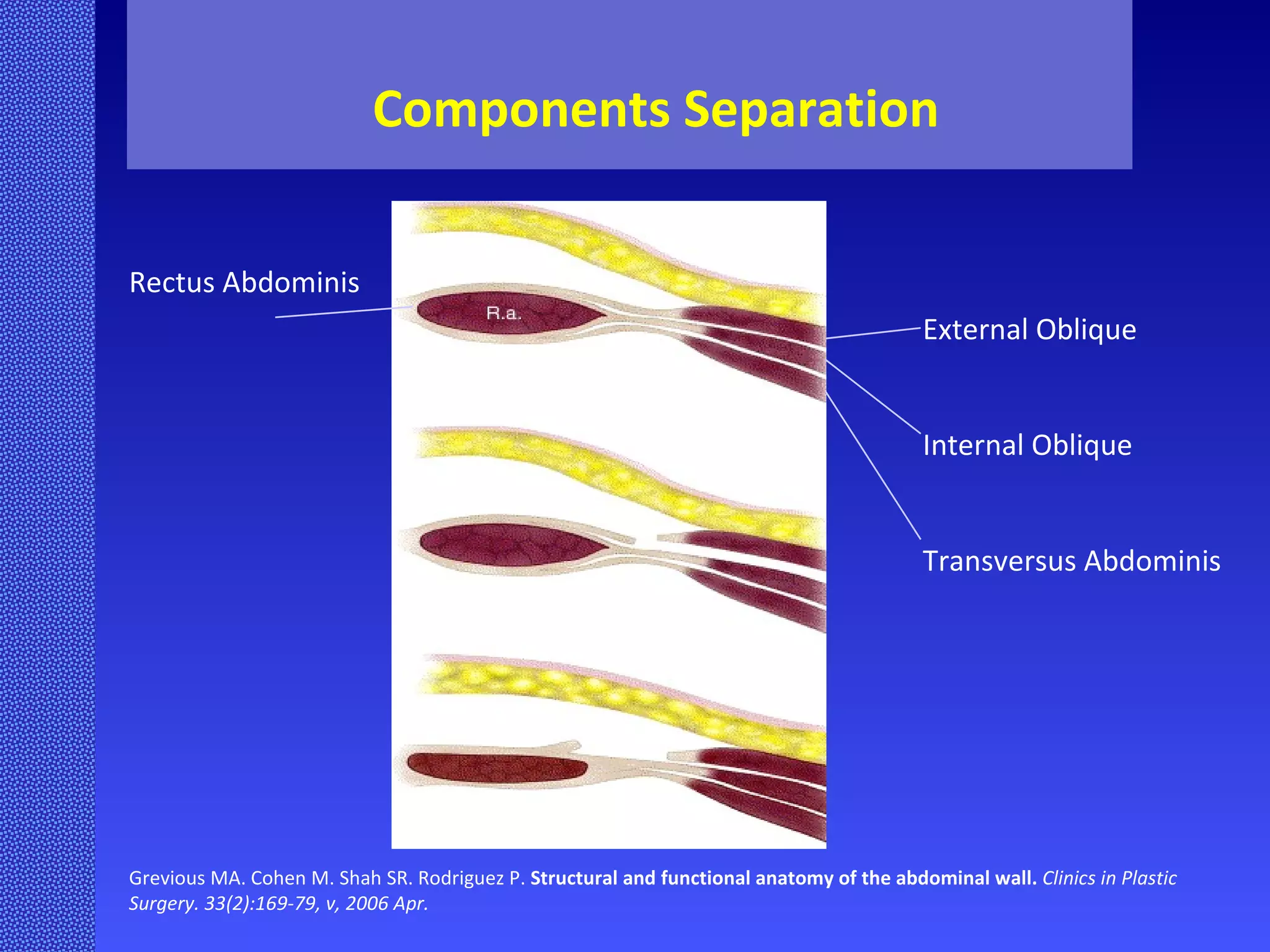
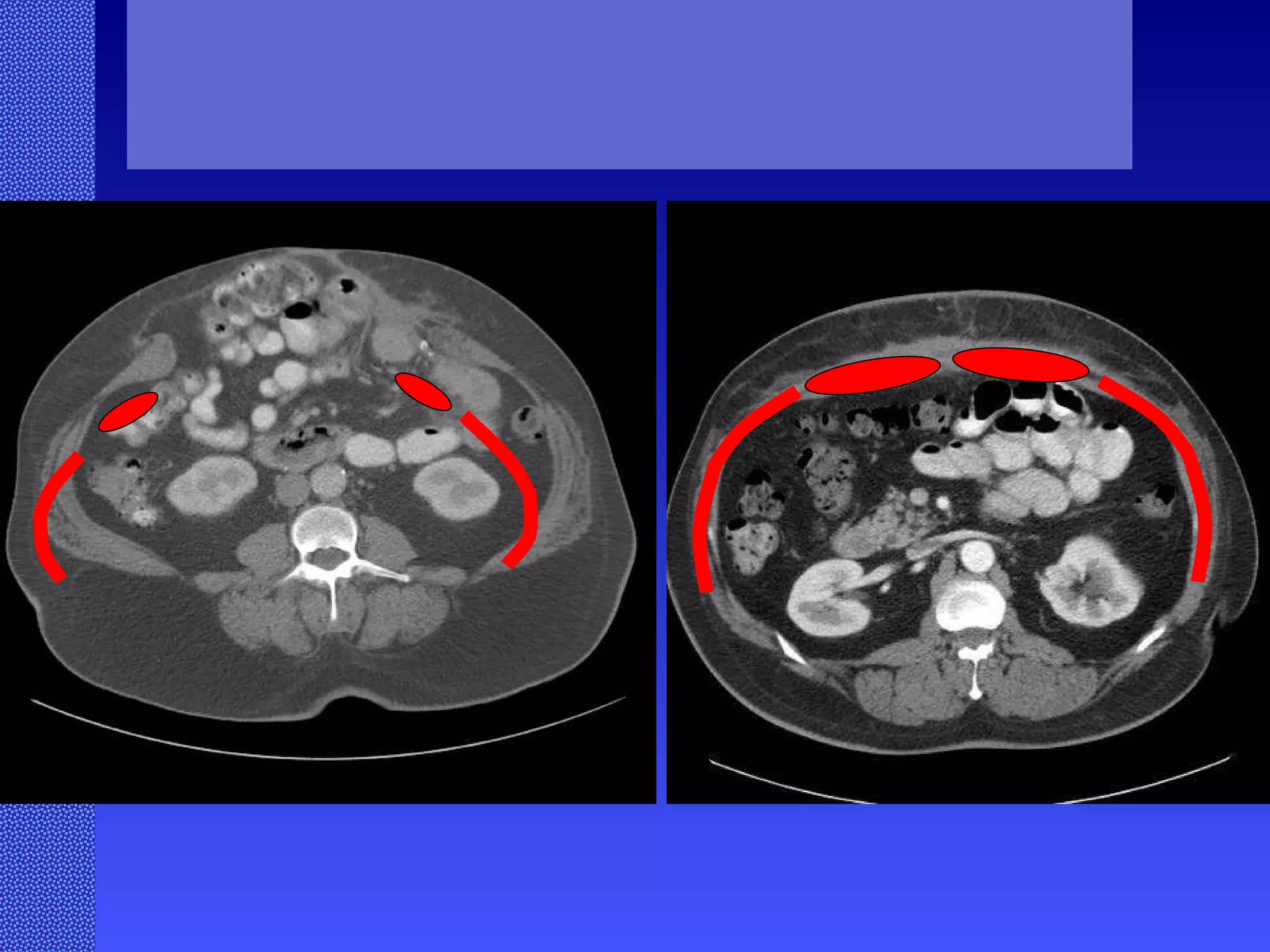
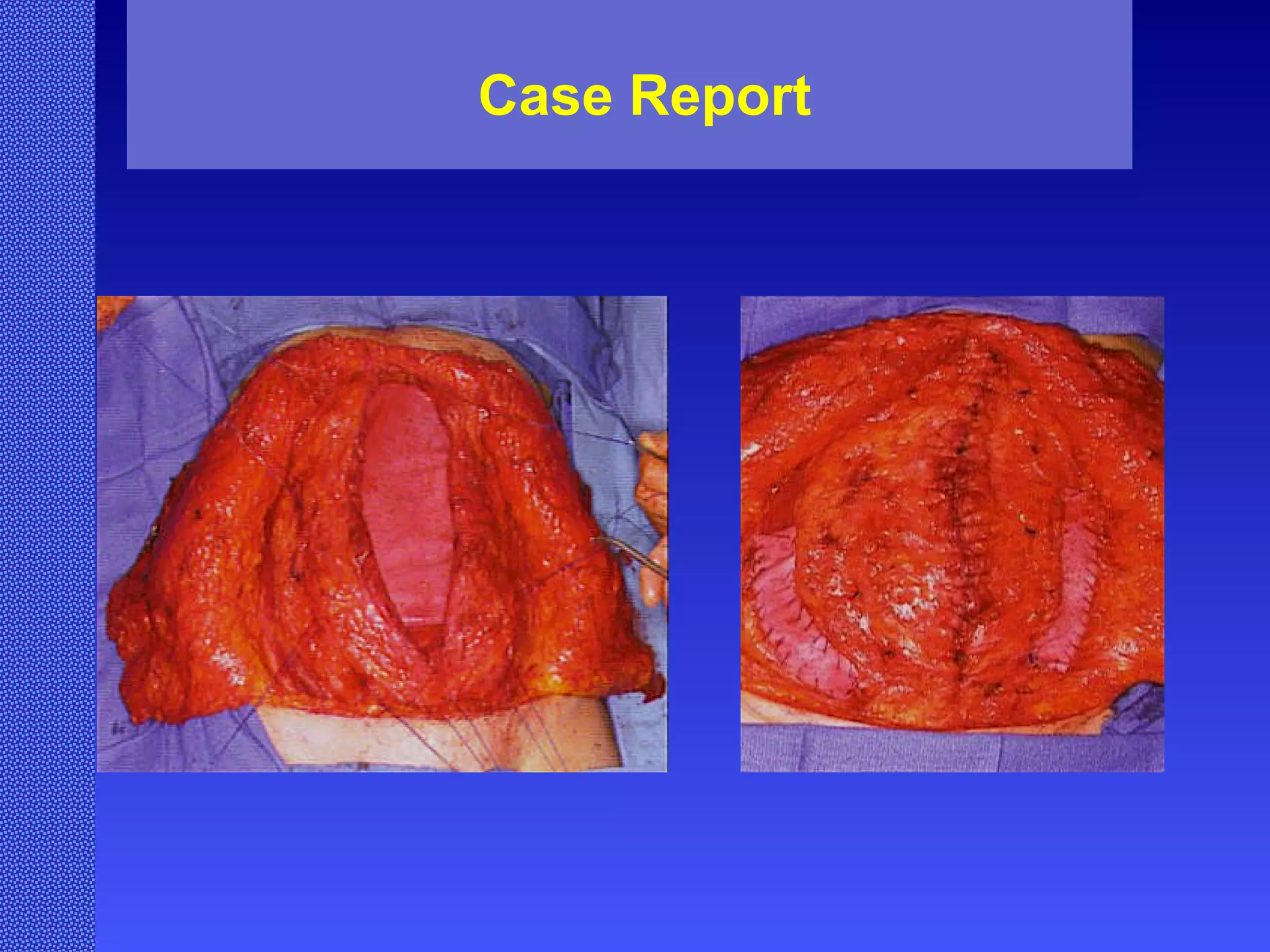
Components Separation Developed by Dr. Ramirez in the late 80’s Employs the use of autologous myofascial tissue to effect abdominal wall closure Bilateral relaxation incisions 2cm lateral to the external oblique from costal margin to level of symphasis pubis Blunt separation of external oblique layer from underlying internal oblique layer taking care not to interrupt vascular/nerve supply May employ undermining of one or both posterior rectus sheaths to achieve further medial advancement **Provides dynamic support of the abdominal girdle**
Components Separation
Grevious MA. Cohen M. Shah SR. Rodriguez P.  Structural and functional anatomy of the abdominal wall.   Clinics in Plastic Surgery. 33(2):169-79, v, 2006 Apr. External Oblique Internal Oblique Transversus Abdominis Rectus Abdominis Components Separation
 
Case Report
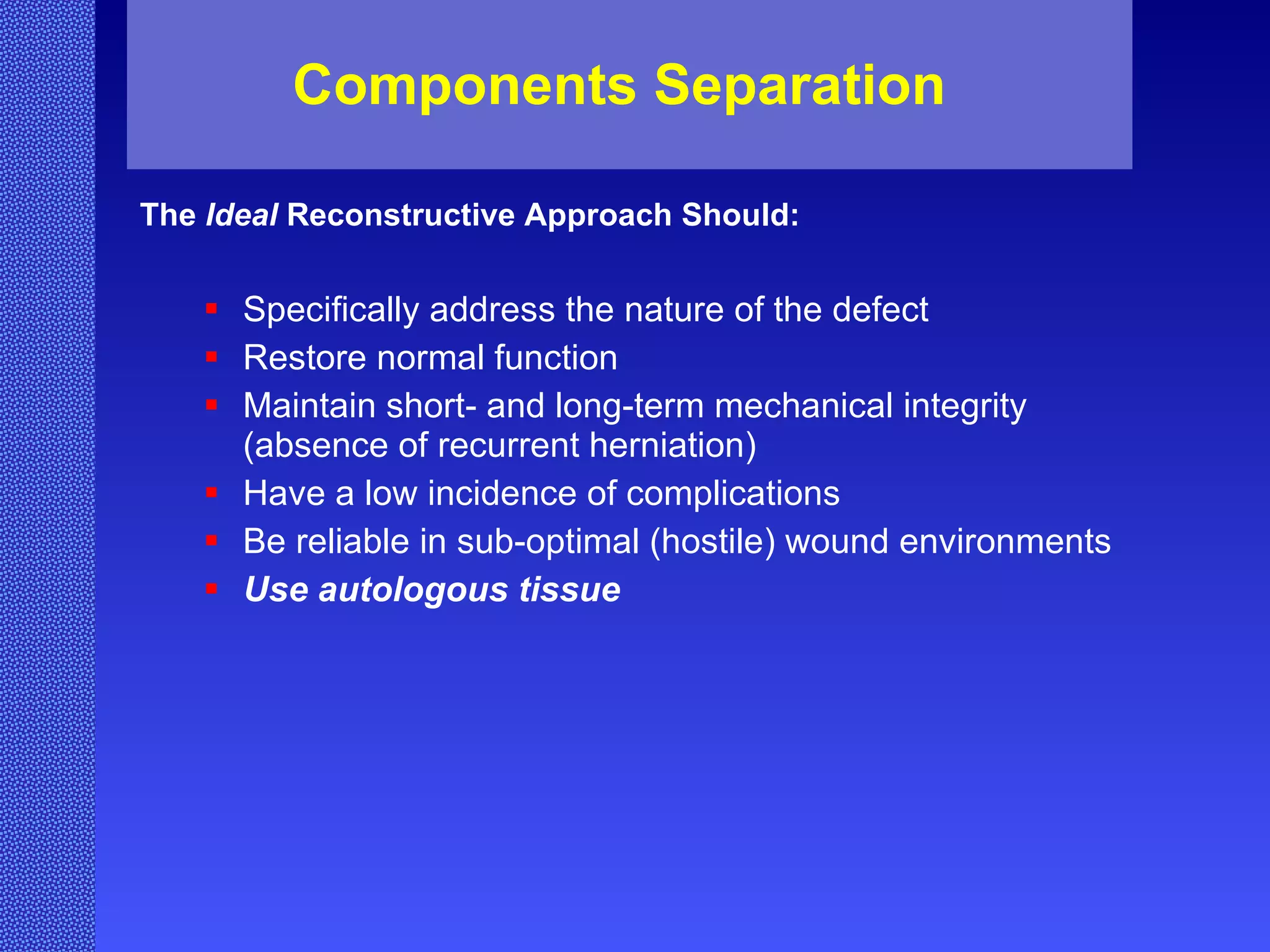
Components Separation The  Ideal  Reconstructive Approach Should: Specifically address the nature of the defect Restore normal function Maintain short- and long-term mechanical integrity (absence of recurrent herniation) Have a low incidence of complications Be reliable in sub-optimal (hostile) wound environments Use autologous tissue
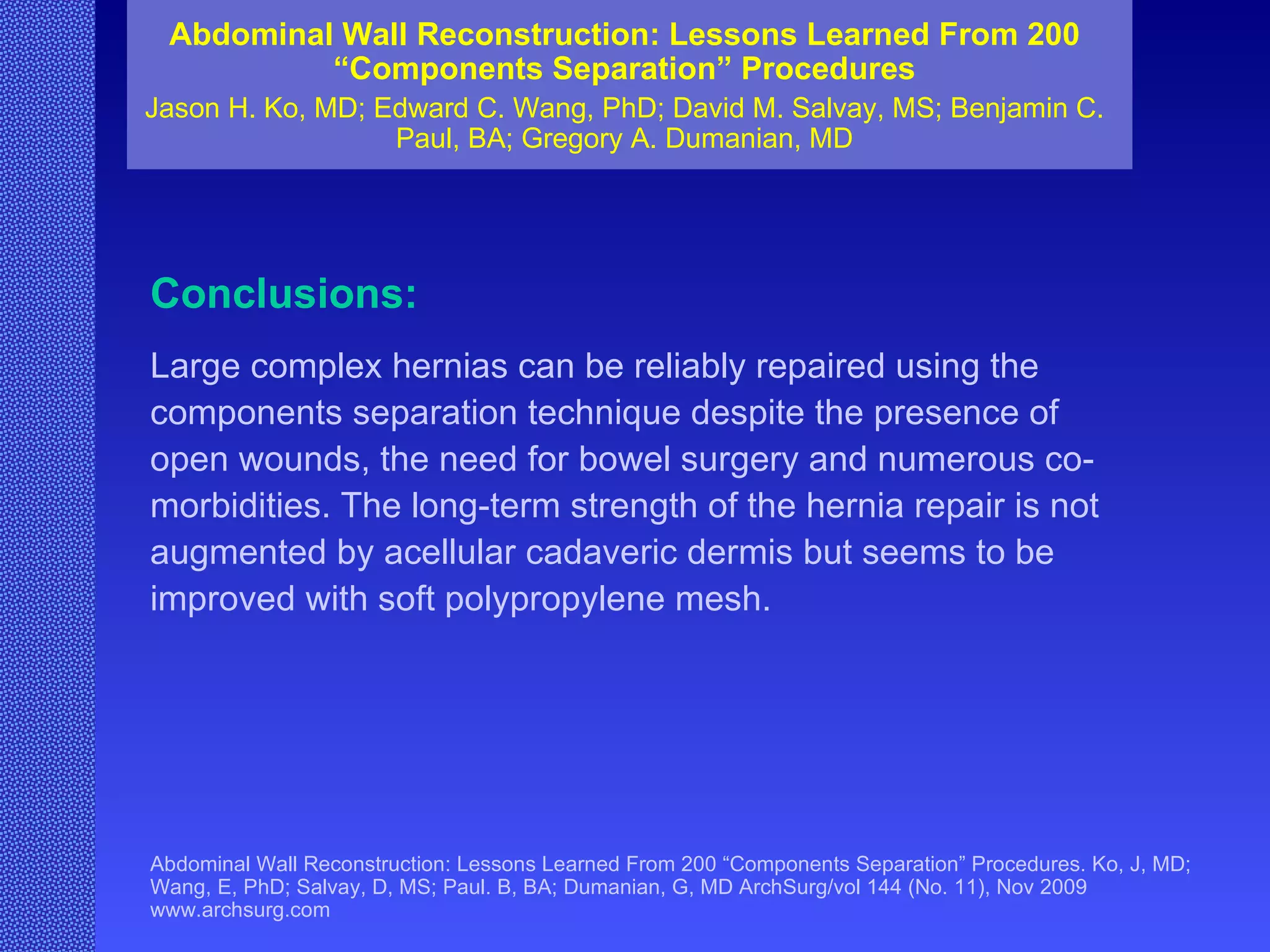
Abdominal Wall Reconstruction: Lessons Learned From 200 “Components Separation” Procedures Jason H. Ko, MD; Edward C. Wang, PhD; David M. Salvay, MS; Benjamin C. Paul, BA; Gregory A. Dumanian, MD Abdominal Wall Reconstruction: Lessons Learned From 200 “Components Separation” Procedures. Ko, J, MD; Wang, E, PhD; Salvay, D, MS; Paul. B, BA; Dumanian, G, MD ArchSurg/vol 144 (No. 11), Nov 2009  www.archsurg.com Conclusions:   Large complex hernias can be reliably repaired using the components separation technique despite the presence of open wounds, the need for bowel surgery and numerous co-morbidities. The long-term strength of the hernia repair is not augmented by acellular cadaveric dermis but seems to be improved with soft polypropylene mesh.
Abdominal Wall Reconstruction: Lessons Learned From 200 “Components Separation” Procedures. Ko, J, MD; Wang, E, PhD; Salvay, D, MS; Paul. B, BA; Dumanian, G, MD ArchSurg/vol 144 (No. 11), Nov 2009  www.archsurg.com Figure 1. Modified “components separation” technique using bilateral transverse subcostal incisions to access the external oblique muscle and fascia . A, Using a narrow Deaver retractor and a Bovie cautery with and extender, the external oblique muscle and fascia are divided superiorly (above the rib cage) and inferiorly. B, At the caudal aspect of the midline incision, the cut edge of the external oblique muscle and fascia is delivered using manual traction for complete release. Need illustration
Abdominal Wall Reconstruction: Lessons Learned From 200 “Components Separation” Procedures. Ko, J, MD; Wang, E, PhD; Salvay, D, MS; Paul. B, BA; Dumanian, G, MD ArchSurg/vol 144 (No. 11), Nov 2009  www.archsurg.com Figure 2 “Components separation” technique with midline approximation of the rectus abdominus muscles. A, No mesh. B, Acellular cadaveric dermis underlay. C, Soft polypropylene mesh underlay.  Need illustration
Abdominal Wall Reconstruction: Lessons Learned From 200 “Components Separation” Procedures. Ko, J, MD; Wang, E, PhD; Salvay, D, MS; Paul. B, BA; Dumanian, G, MD ArchSurg/vol 144 (No. 11), Nov 2009  www.archsurg.com Figure 3 A 41-year old man with a history of a perforated appendix treated through a midline incision who later developed an incisional hernia. A, Preoperative oblique view after a hernia repair with polypropylene mesh by another surgeon. B, Preoperative computed tomography scan demonstrating the small bowel herniating to the right of the polypropylene mesh, with wide displacement of the rectus abdominus muscles. C, Six-month postoperative oblique view demonstrates restoration of abdominal wall continuity. D, Postoperative anterior view demonstates stable midline closure and bilateral transverse subcostal incision scars.  Need photos
Figure 4. Predictors of hernia recurrence and major and minor complications using logistic regression controlling for mesh type and follow-up duration. Error bars represent 95% confidence intervals. BMI indicates body mass index. Abdominal Wall Reconstruction: Lessons Learned From 200 “Components Separation” Procedures. Ko, J, MD; Wang, E, PhD; Salvay, D, MS; Paul. B, BA; Dumanian, G, MD ArchSurg/vol 144 (No. 11), Nov 2009  www.archsurg.com Need graph
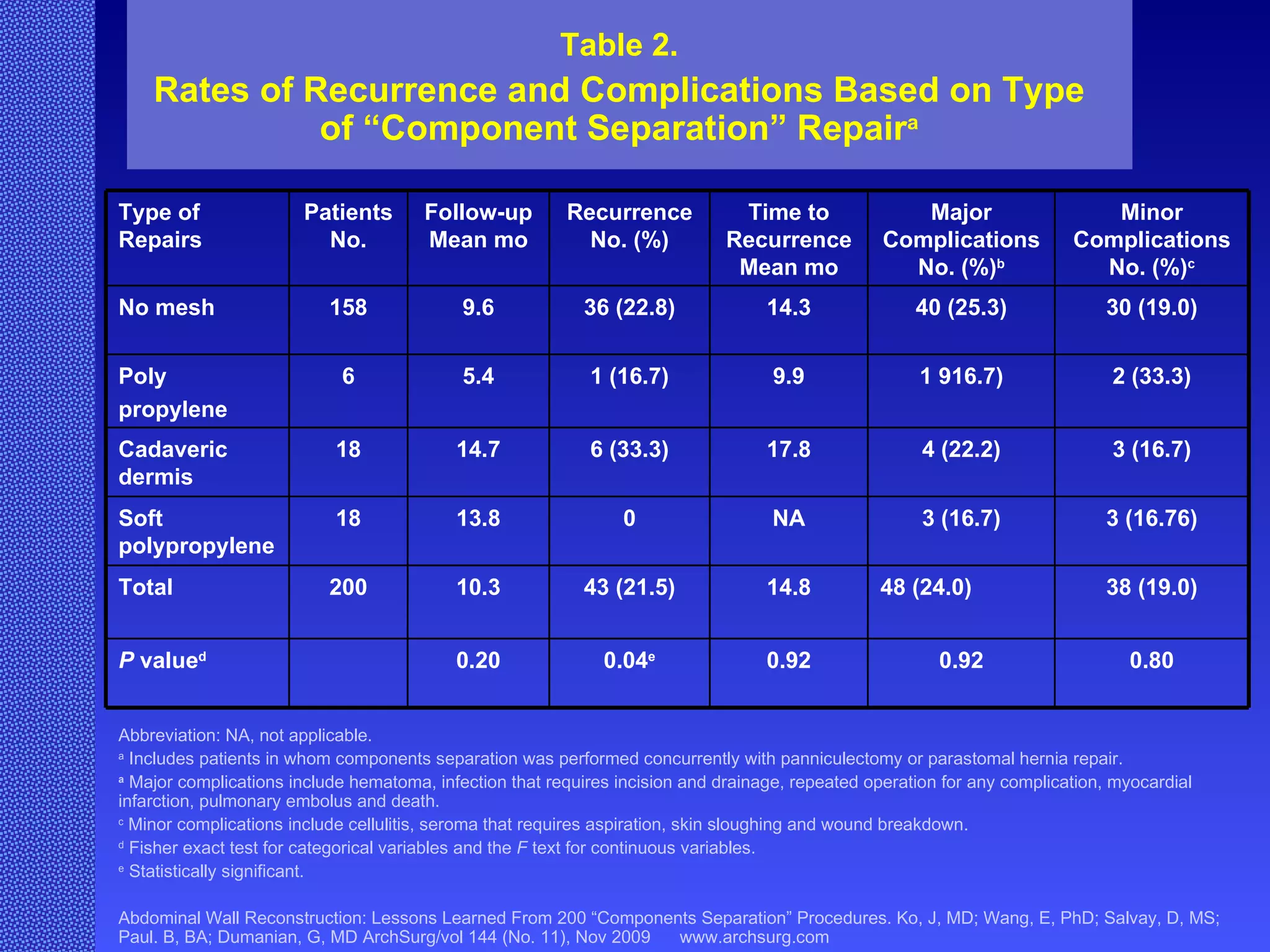
Abbreviation: NA, not applicable. a  Includes patients in whom components separation was performed concurrently with panniculectomy or parastomal hernia repair. a  Major complications include hematoma, infection that requires incision and drainage, repeated operation for any complication, myocardial infarction, pulmonary embolus and death. c  Minor complications include cellulitis, seroma that requires aspiration, skin sloughing and wound breakdown. d  Fisher exact test for categorical variables and the  F  text for continuous variables. e  Statistically significant. Abdominal Wall Reconstruction: Lessons Learned From 200 “Components Separation” Procedures. Ko, J, MD; Wang, E, PhD; Salvay, D, MS; Paul. B, BA; Dumanian, G, MD ArchSurg/vol 144 (No. 11), Nov 2009  www.archsurg.com Table 2. Rates of Recurrence and Complications Based on Type of “Component Separation” Repair a Type of Repairs Patients No. Follow-up Mean mo Recurrence No. (%) Time to Recurrence Mean mo Major ComplicationsNo. (%) b Minor Complications No. (%) c No mesh 158 9.6 36 (22.8) 14.3 40 (25.3) 30 (19.0) Poly propylene 6 5.4 1 (16.7) 9.9 1 916.7) 2 (33.3) Cadaveric dermis 18 14.7 6 (33.3) 17.8 4 (22.2) 3 (16.7) Soft polypropylene 18 13.8 0 NA 3 (16.7) 3 (16.76) Total 200 10.3 43 (21.5) 14.8 48 (24.0) 38 (19.0) P  value d 0.20 0.04 e 0.92 0.92 0.80
The components separation technique many be an ideal hernia repair for large defects because it weakens or loosens the contracted sides of the abdominal wall to augment the midline repair. Increased lateral wall compliance may reverse the lateral abdominal wall disuse atrophy and fibrosis seen in animal incisional hernia models. Abdominal Wall Reconstruction: Lessons Learned From 200 “Components Separation” Procedures. Ko, J, MD; Wang, E, PhD; Salvay, D, MS; Paul. B, BA; Dumanian, G, MD ArchSurg/vol 144 (No. 11), Nov 2009  www.archsurg.com Observations
The midline movement of tissue with the components separation technique permits the excision of all scarred and inflamed tissues. Abdominal Wall Reconstruction: Lessons Learned From 200 “Components Separation” Procedures. Ko, J, MD; Wang, E, PhD; Salvay, D, MS; Paul. B, BA; Dumanian, G, MD ArchSurg/vol 144 (No. 11), Nov 2009  www.archsurg.com Observations
•  The hernia recurrence rate with a cadaveric dermis underlay was even higher than that for primary closure. At the time of repeated operation the cadaveric dermis was often difficult to find and when present, large holes in the material itself, were often noted. •  Cadaveric dermis alone does not provide long-lasting or durable results in abdominal wall reconstruction and should therefore, be reserved for contaminated wounds, where a prosthetic mesh is best avoided. Abdominal Wall Reconstruction: Lessons Learned From 200 “Components Separation” Procedures. Ko, J, MD; Wang, E, PhD; Salvay, D, MS; Paul. B, BA; Dumanian, G, MD ArchSurg/vol 144 (No. 11), Nov 2009  www.archsurg.com Observations
Abdominal Wall Reconstruction: Lessons Learned From 200 “Components Separation” Procedures. Ko, J, MD; Wang, E, PhD; Salvay, D, MS; Paul. B, BA; Dumanian, G, MD ArchSurg/vol 144 (No. 11), Nov 2009  www.archsurg.com Conclusions:   •   A major lesson learned over the years is that handling of the skin is important, especially in patients with an elevated BMI. Wide undermining of the skin to release the oblique musculature disrupts the perforator blood flow to the midline abdominal skin, thereby contributing to wound complications in these patients.
Abdominal Wall Reconstruction: Lessons Learned From 200 “Components Separation” Procedures. Ko, J, MD; Wang, E, PhD; Salvay, D, MS; Paul. B, BA; Dumanian, G, MD ArchSurg/vol 144 (No. 11), Nov 2009  www.archsurg.com Conclusions:   •   Senior author Gregory Dumanian adapted his surgical technique to perform the external oblique releases through bilateral transverse subcostal incisions to avoid wide undermining, an evolution of the technique of “periumbilical perforator preservation.” Releases take only 15-20 minutes to perform and avoid the setup of endoscopic equipment.
Abdominal Wall Reconstruction: Lessons Learned From 200 “Components Separation” Procedures. Ko, J, MD; Wang, E, PhD; Salvay, D, MS; Paul. B, BA; Dumanian, G, MD ArchSurg/vol 144 (No. 11), Nov 2009  www.archsurg.com Conclusions:   •   Another skin-handling technique is to perform a panniculotomy at the time of the components separation for morbidly obese patients with infraumbilical hernias (repairs of hernias that extend above the umbilicus are generally performed using vertical midline incisions).  A third improvement for skin handling is the use of short-term subatomospheric pressure dressings as immediate postoperative dressings in patients with an elevated BMI, gross contamination and large suprapubic dead spaces. This “semi-closed” technique for skin management had led to decreased seroma formation and infections in addition to allowing access to the midline fascial closure in the immediate postoperative period.
Serious Complications Associated with Negative Pressure Wound Therapy Systems Date: November 13, 2009 Dear Healthcare Practitioner: This is to alert you to deaths and serious complications, especially bleeding and infection, associated with the use of Negative Pressure Wound Therapy (NPWT) systems, and to provide recommendations to reduce the risk. Although rare, these complications can occur wherever NPWT systems are used, including acute and long-term healthcare facilities and at home. FDA has received reports of six deaths and 77 injuries associated with NPWT systems over the past two years.
  Table 1: NPWT is contraindicated for these wound types/conditions:  Necrotic tissue with eschar present  Untreated osteomyelitis  Non-enteric and unexplored fistulas  Malignancy in the wound  Exposed vasculature  Exposed nerves  Exposed anastomotic site  Exposed organs
  Table 2: Patient risk factors/characteristics to consider before NPWT use:   Patients at high risk for bleeding and hemorrhage  Patients on anticoagulants or platelet aggregation inhibitors  P atients with:  F riable vessels and infected blood vessels  •  V ascular anastomosis  •  I nfected wounds  •  O steomyelitis  •  E xposed organs, vessels, nerves, tendon, and ligaments  •  S harp edges in the wound (i.e. bone fragments)  •  S pinal cord injury (stimulation of sympathetic nervous system)  •  E nteric fistulas  P atients requiring:   MRI   Hyperbaric chamber   Defibrillation   patient size and weight   use near vagus nerve (bradycardia)   circumferential dressing application   mode of therapy- intermittent versus continuous negative pressure
 
Potential Mesh-Related Complications: Infection Intestinal adhesions Bowel obstructions Erosion of the prosthesis into the adjacent hollow viscous Contraction of prosthesis
 
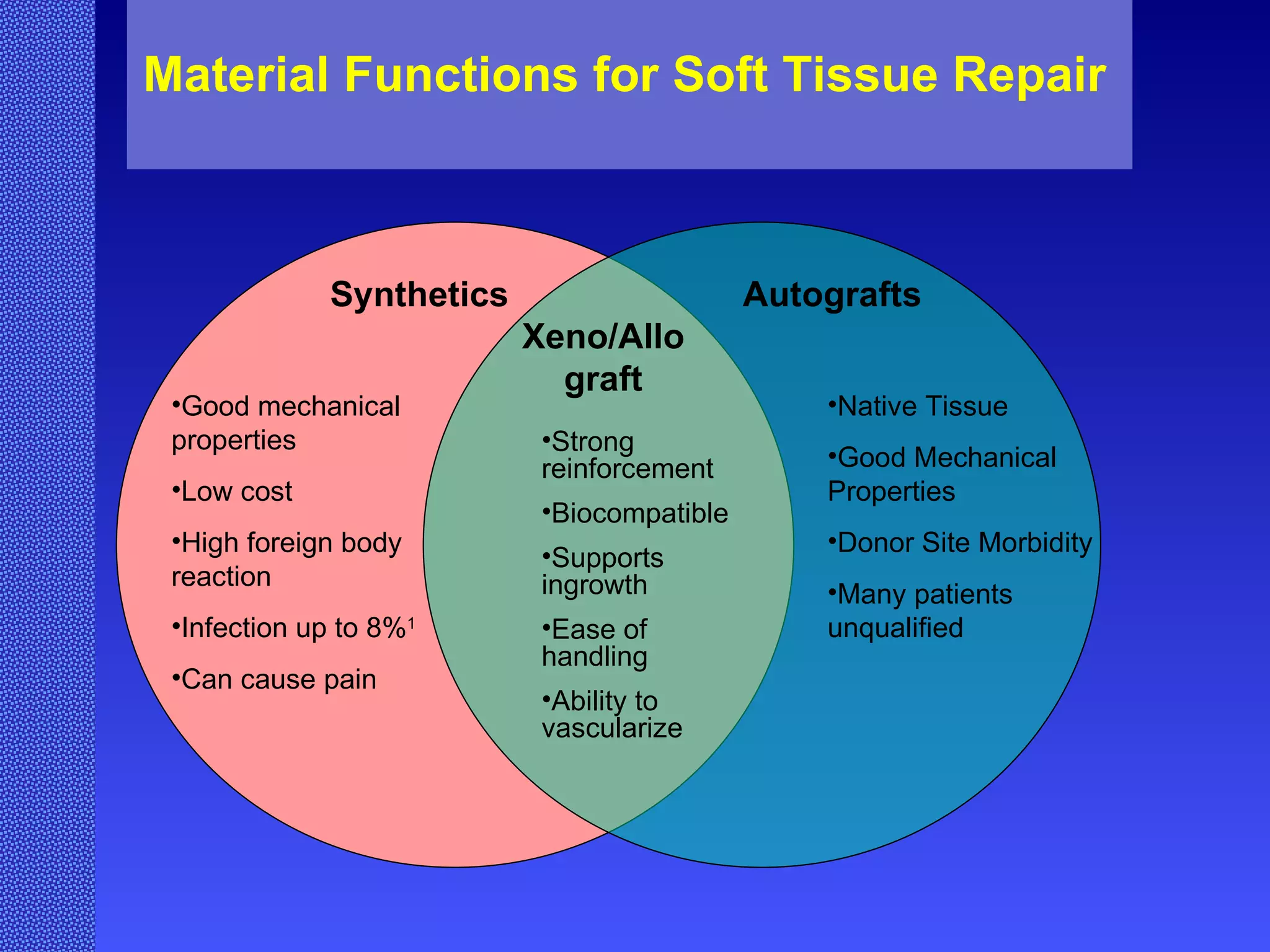
Material Functions for Soft Tissue Repair Synthetics Autografts Good mechanical properties Low cost High foreign body reaction Infection up to 8% 1 Can cause pain Native Tissue Good Mechanical Properties Donor Site Morbidity Many patients unqualified Strong reinforcement Biocompatible Supports ingrowth Ease of handling Ability to vascularize Xeno/Allo graft
Tissue-Generated Biomaterials Human acellular dermis Alloderm , LifeCell, Branchburg, NJ, USA Flex HD , Ethicon, Somerville, NJ, USA AlloMax , Davol, Cranston, NJ, USA Xenogenic acellular dermis Permacol  (porcine), Tissue Science Laboratories, Aldershot, Hampshire, Eng. SurgiMend  (bovine), TEI Biosciences, Boston, MA, USA CollaMend  (porcine), Davol, Cranston, NJ, USA XenMatriX  (porcine), Brennen Medical LLC ST. Paul, MN, USA  Strattice , (porcine) LifeCell, Branchburg, NJ, USA Porcine small intestinal submucosa Surgisis , Cook Medical, West Lafayette, IN, USA FortaGen , Organogenesis, Canton, MA, USA
Processing of Biomaterials Cadaveric, Bovine, Porcine , Equine : removal of all live cells and removal of all nuclear tissue to prevent rejection by the host. Cross-linking: serve to form either an intermolecular or an intramolecular cross-link between two aminoacids along protein structure ( HDMI and EDC are in common use). Crosslinked products are more resistant to collagenase degradation ( more stable in infected fields where collagenases are secreted by bacteria ). Rapid dissolution in the presence of enteric contents ( fistulas ). Must be placed in direct contact with healthy tissue ( no infection,fluid or dead tissue )  and under no tension . They should not be used in bridging the defects .
Cook ®  Surgisis Surgisis ®  Gold ™  (SIS) Porcine intestinal material Limited sizes – 7 cm x 10 cm up to 20 cm x 20 cm Must be layered for large sizes Not crosslinked Perforated to allow in-growth Reputation for not lasting 18 month shelf life http://www.cooksurgical.com/
Surgisis Mesh Four-ply prosthetic mesh derived from porcine small intestine submucosa, naturally occurring extracellular matrix that is easily absorbed, supports new vessel growth, and fosters cellular differentiation The lack of permanent foreign material may decrease risk of mesh infection
SIS SIS remodels to a tissue with strength that exceeds that of the native tissue when used as a body wall repair device. SIS aortic graphs with  S. aureus  – no evidence of infection after 30 days Bodylak et al. Comparison of the resistance to infection of intestinal submucosa arterial grafts versus PTFE arterial prosthesis in a dog model.  J Vasc Surg:  19; 465, 1994 Bodylak et al. Strength over time of a resorbable bioscaffold for body wall repair in a dog model.  J Surg Res  99 (2): 282-287 2001 SIS was associated with improved graft patency, less infection, complete incorporation, and no false aneurysm formation when compared with PTFE in adult mongrel pigs. T. Wright Jernigan et al.  Ann Surg  2004;239: 733-740.
Texas Endosurgery Institute  Experience with SIS Prospective study of use of  Surgisis mesh in potentially or grossly contaminated fields  Procedures all performed laparoscopically  116 patients (133 procedures performed) Hernias included:  Incisional 57 Umbilical 38 Inguinal 29 Spigelian 4 Femoral  3 Parastomal 2 > 2 different hernias repaired 13 Franklin ME, et al.The use of porcine small intestinal submucosa as a prosthetic material for laparoscopic hernia repair in infected and potentially contaminated fields: long-term follow-up.  Surg Endosc  2008 Sep;22(9):1941-6
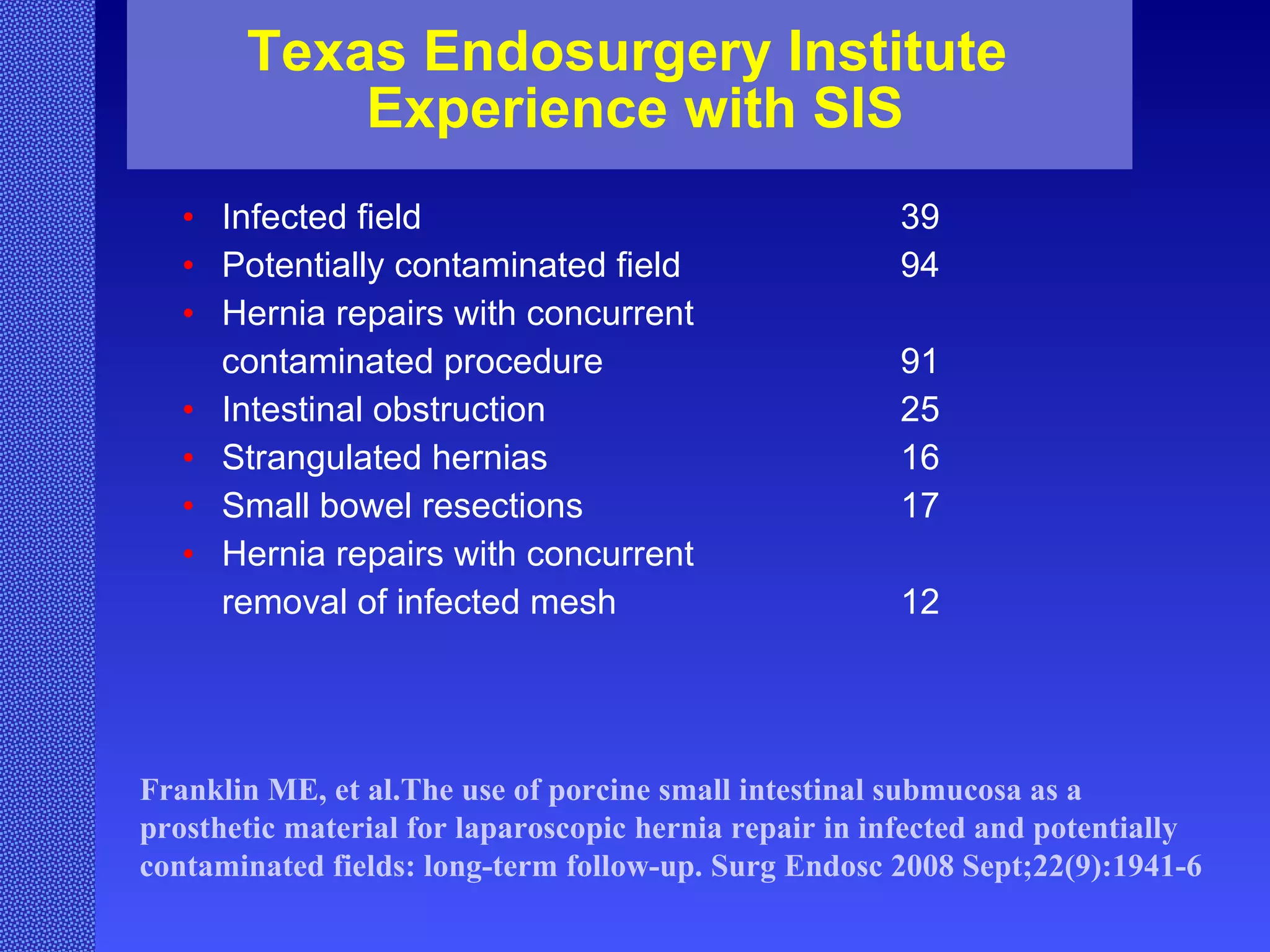
Texas Endosurgery Institute  Experience with SIS Infected field  39 Potentially contaminated field 94 Hernia repairs with concurrent  contaminated procedure 91 Intestinal obstruction 25 Strangulated hernias 16 Small bowel resections 17 Hernia repairs with concurrent  removal of infected mesh 12 Franklin ME, et al.The use of porcine small intestinal submucosa as a prosthetic material for laparoscopic hernia repair in infected and potentially contaminated fields: long-term follow-up. Surg Endosc 2008 Sept;22(9):1941-6
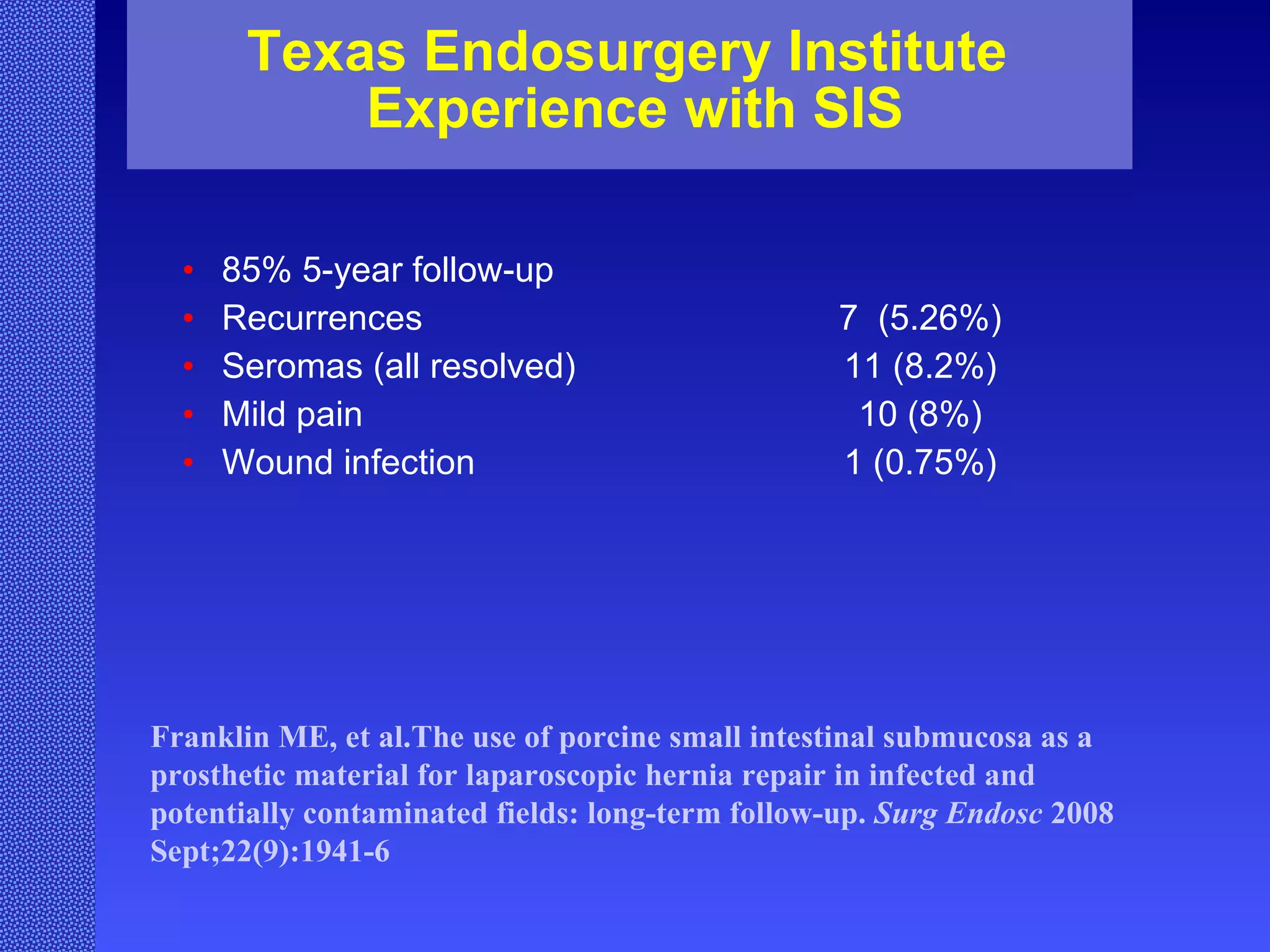
Texas Endosurgery Institute  Experience with SIS 85% 5-year follow-up  Recurrences 7  (5.26%) Seromas (all resolved) 11 (8.2%) Mild pain 10 (8%) Wound infection 1 (0.75%) Franklin ME, et al.The use of porcine small intestinal submucosa as a prosthetic material for laparoscopic hernia repair in infected and potentially contaminated fields: long-term follow-up.  Surg Endosc  2008 Sept;22(9):1941-6
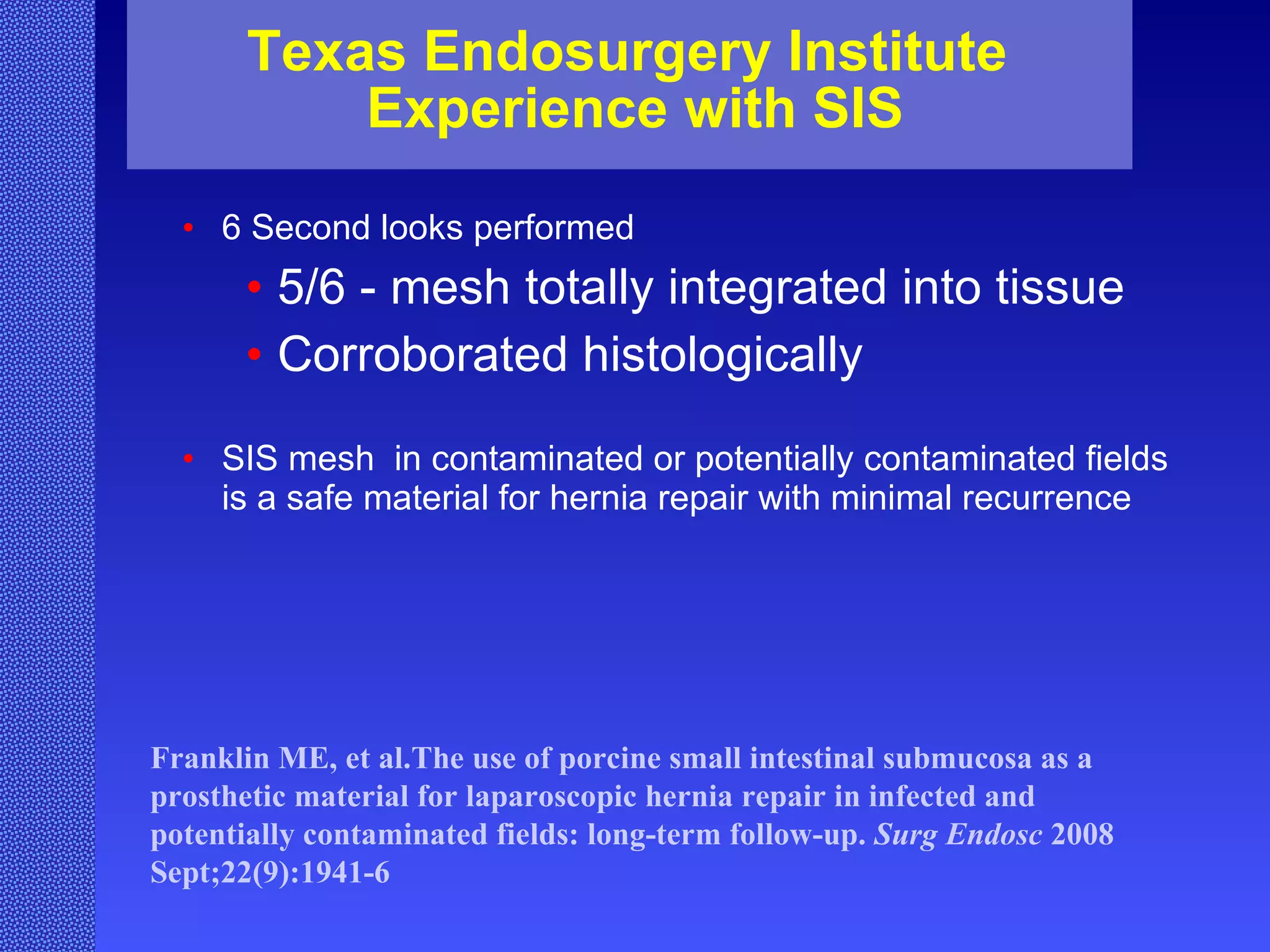
Texas Endosurgery Institute  Experience with SIS 6 Second looks performed  5/6 - mesh totally integrated into tissue Corroborated histologically SIS mesh  in contaminated or potentially contaminated fields is a safe material for hernia repair with minimal recurrence Franklin ME, et al.The use of porcine small intestinal submucosa as a prosthetic material for laparoscopic hernia repair in infected and potentially contaminated fields: long-term follow-up.  Surg Endosc  2008 Sept;22(9):1941-6
Texas Endosurgery Institute Experience with SIS Results: Near complete incorporation by surrounding tissues with microscopic confirmation of the abundant ingrowth of collagen material and a solid healing plate  Tensile strength comparable to the nonabsorbable meshes while retaining the benefits of the absorbable meshes. (    infection and     adhesion)
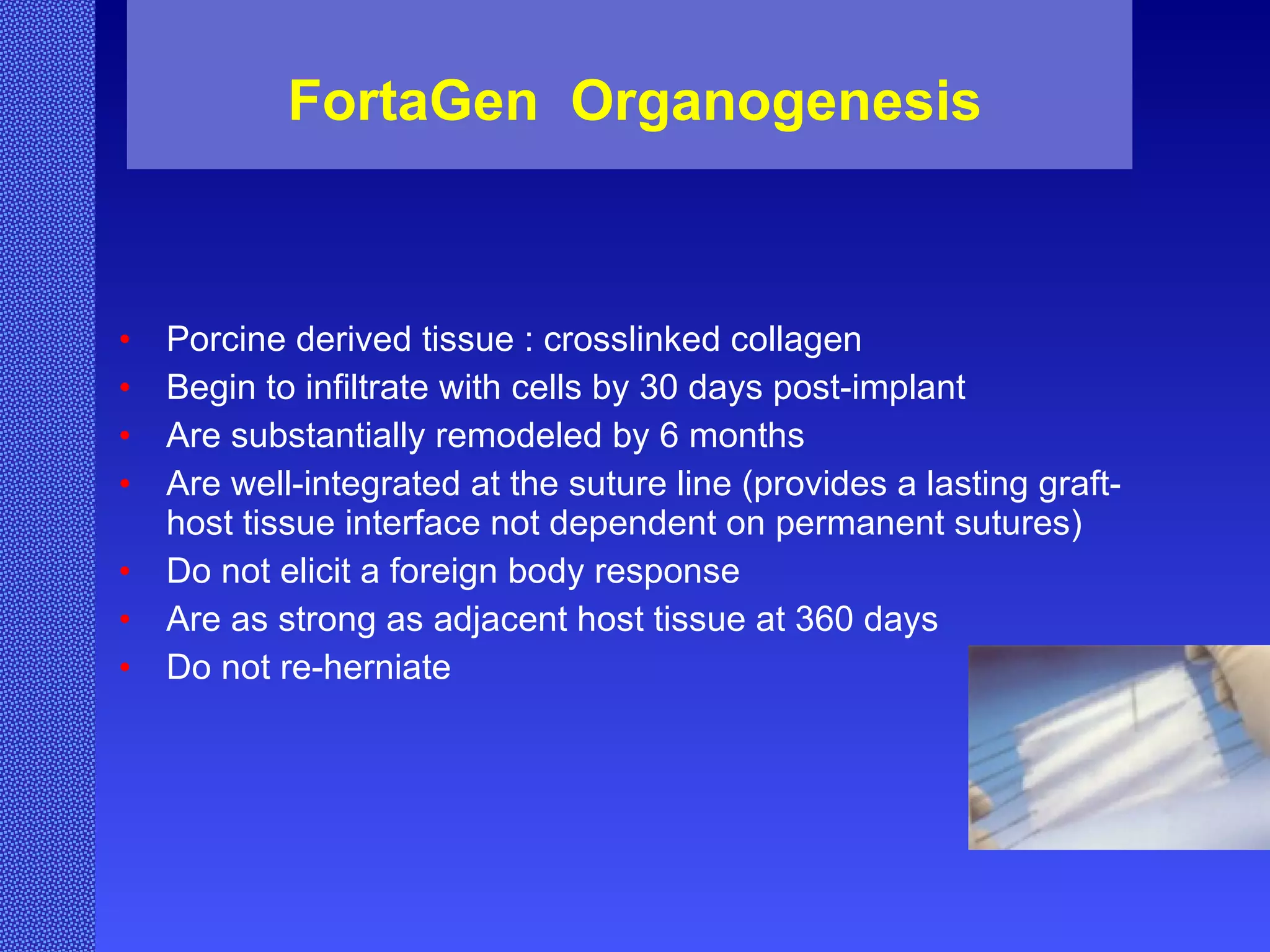
FortaGen  Organogenesis Porcine derived tissue : crosslinked collagen Begin to infiltrate with cells by 30 days post-implant Are substantially remodeled by 6 months Are well-integrated at the suture line (provides a lasting graft-host tissue interface not dependent on permanent sutures) Do not elicit a foreign body response Are as strong as adjacent host tissue at 360 days Do not re-herniate
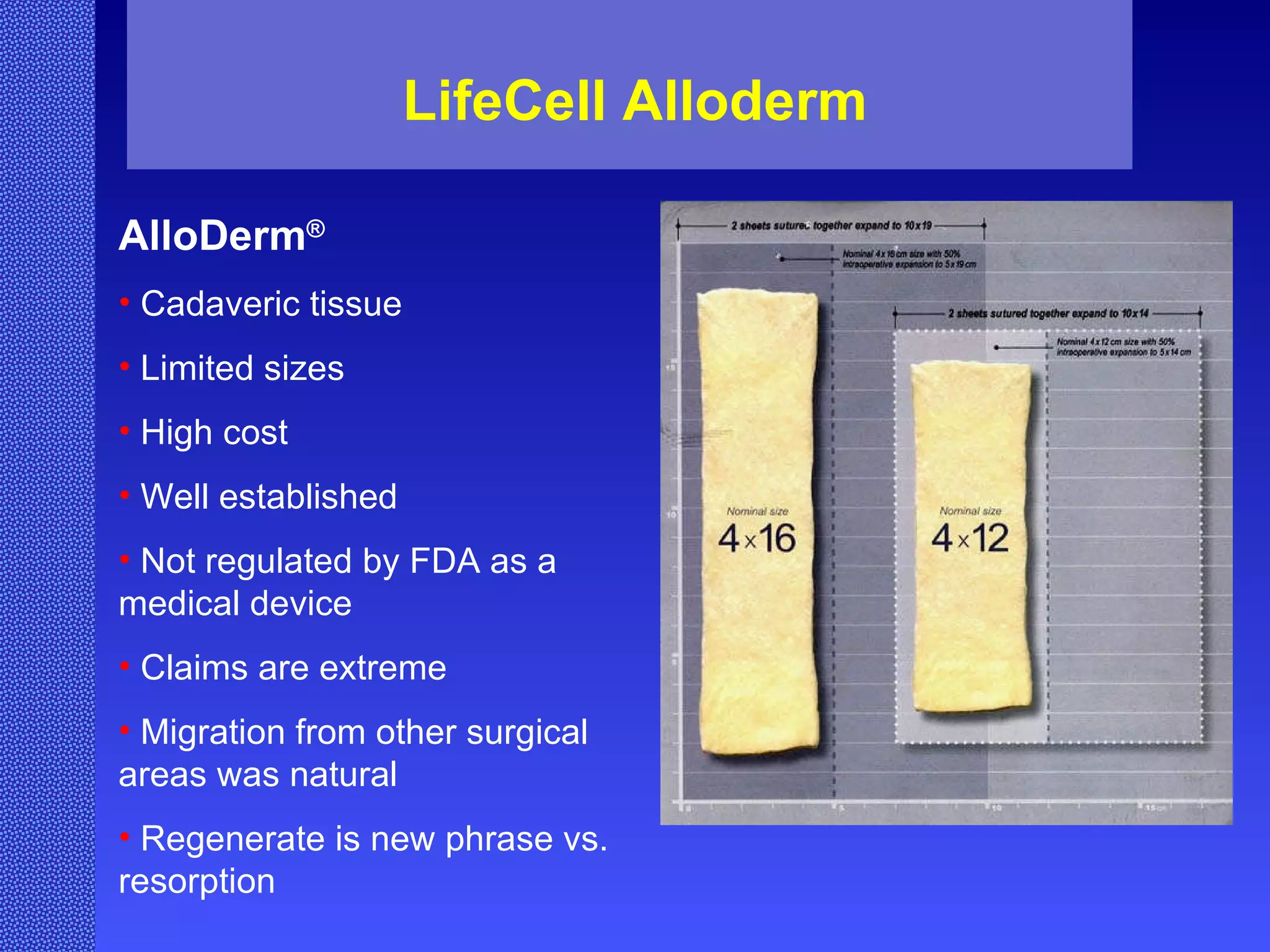
LifeCell Alloderm AlloDerm ® Cadaveric tissue Limited sizes High cost Well established Not regulated by FDA as a medical device Claims are extreme Migration from other surgical areas was natural Regenerate is new phrase vs. resorption
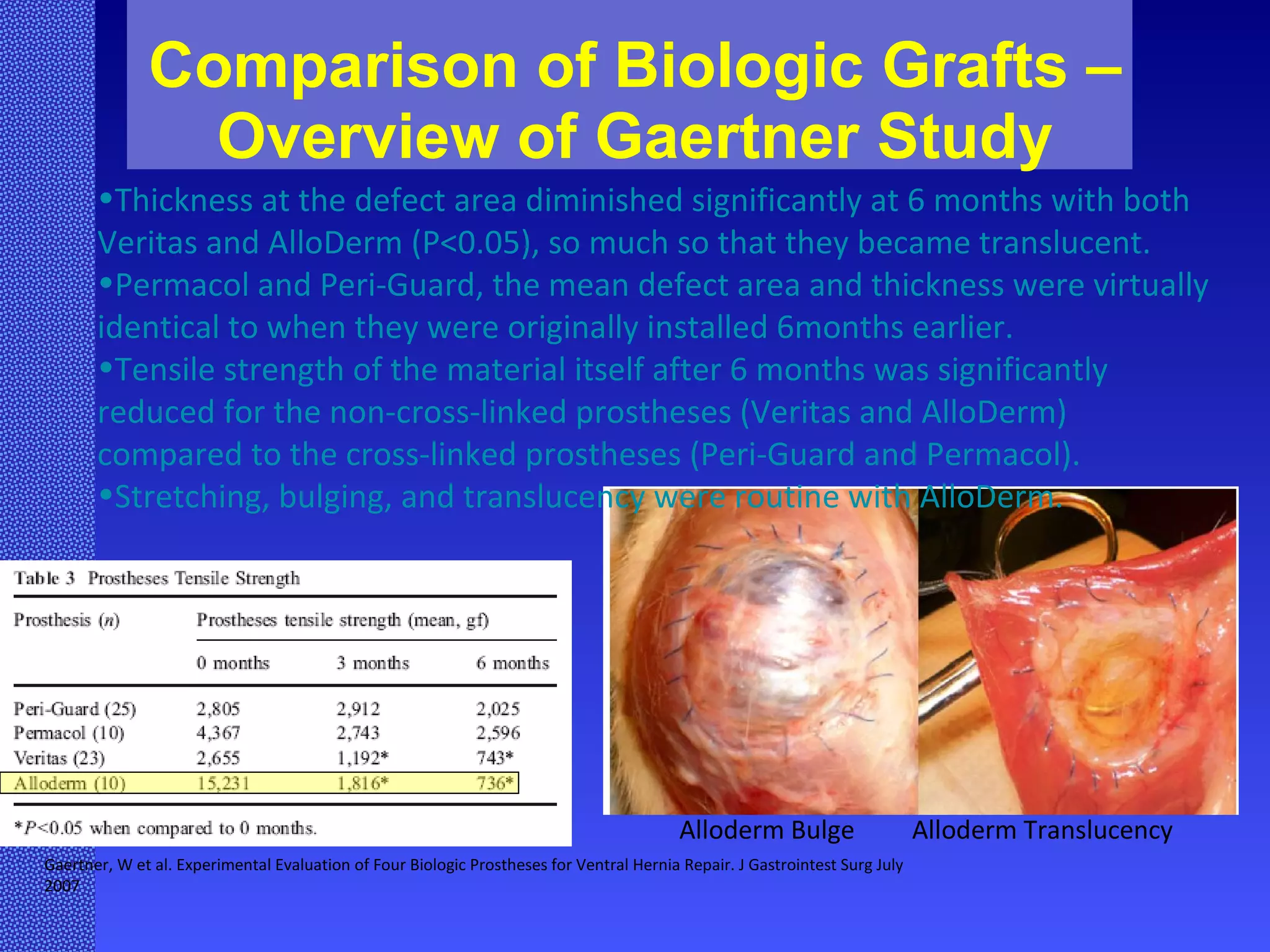
Comparison of Biologic Grafts – Overview of Gaertner Study Alloderm Bulge  Alloderm Translucency  Gaertner, W et al. Experimental Evaluation of Four Biologic Prostheses for Ventral Hernia Repair. J Gastrointest Surg July 2007 Thickness at the defect area diminished significantly at 6 months with both Veritas and AlloDerm (P<0.05), so much so that they became translucent. Permacol and Peri-Guard, the mean defect area and thickness were virtually identical to when they were originally installed 6months earlier.  Tensile strength of the material itself after 6 months was significantly reduced for the non-cross-linked prostheses (Veritas and AlloDerm) compared to the cross-linked prostheses (Peri-Guard and Permacol).  Stretching, bulging, and translucency were routine with AlloDerm.
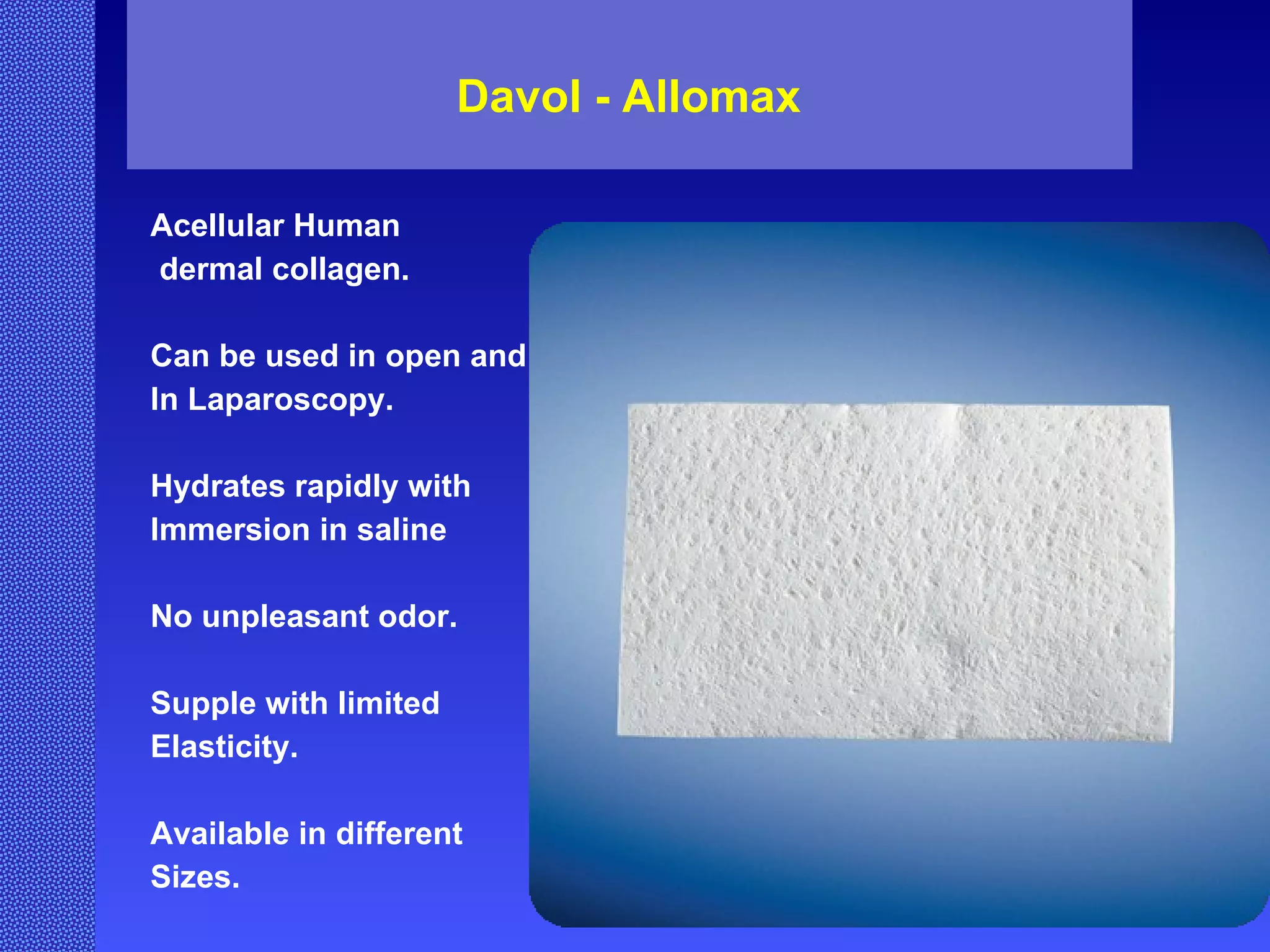
Davol - Allomax  Acellular Human dermal collagen. Can be used in open and  In Laparoscopy. Hydrates rapidly with  Immersion in saline No unpleasant odor. Supple with limited  Elasticity. Available in different Sizes.
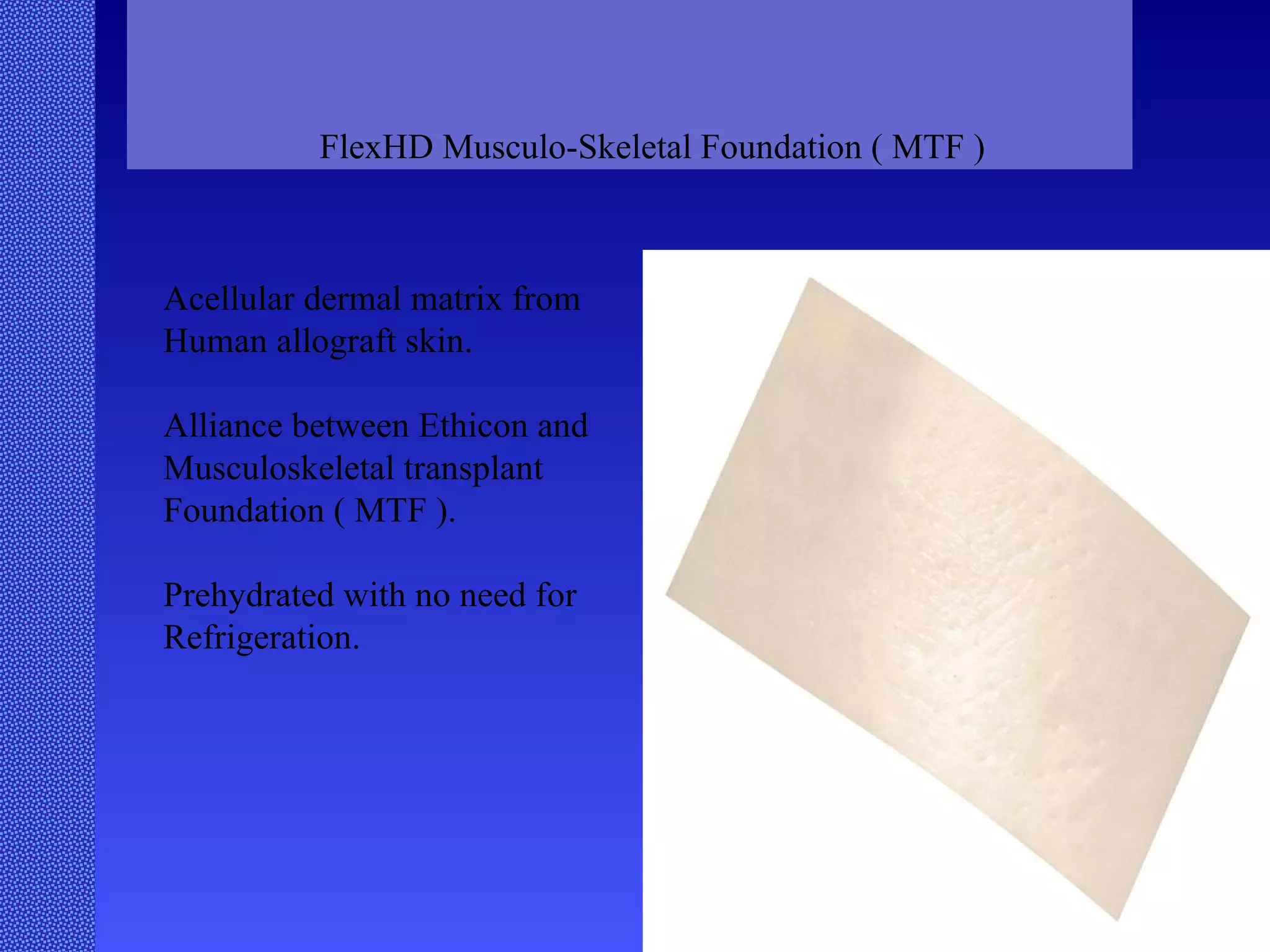
FlexHD Musculo-Skeletal Foundation ( MTF ) Acellular dermal matrix from Human allograft skin. Alliance between Ethicon and  Musculoskeletal transplant Foundation ( MTF ). Prehydrated with no need for Refrigeration.
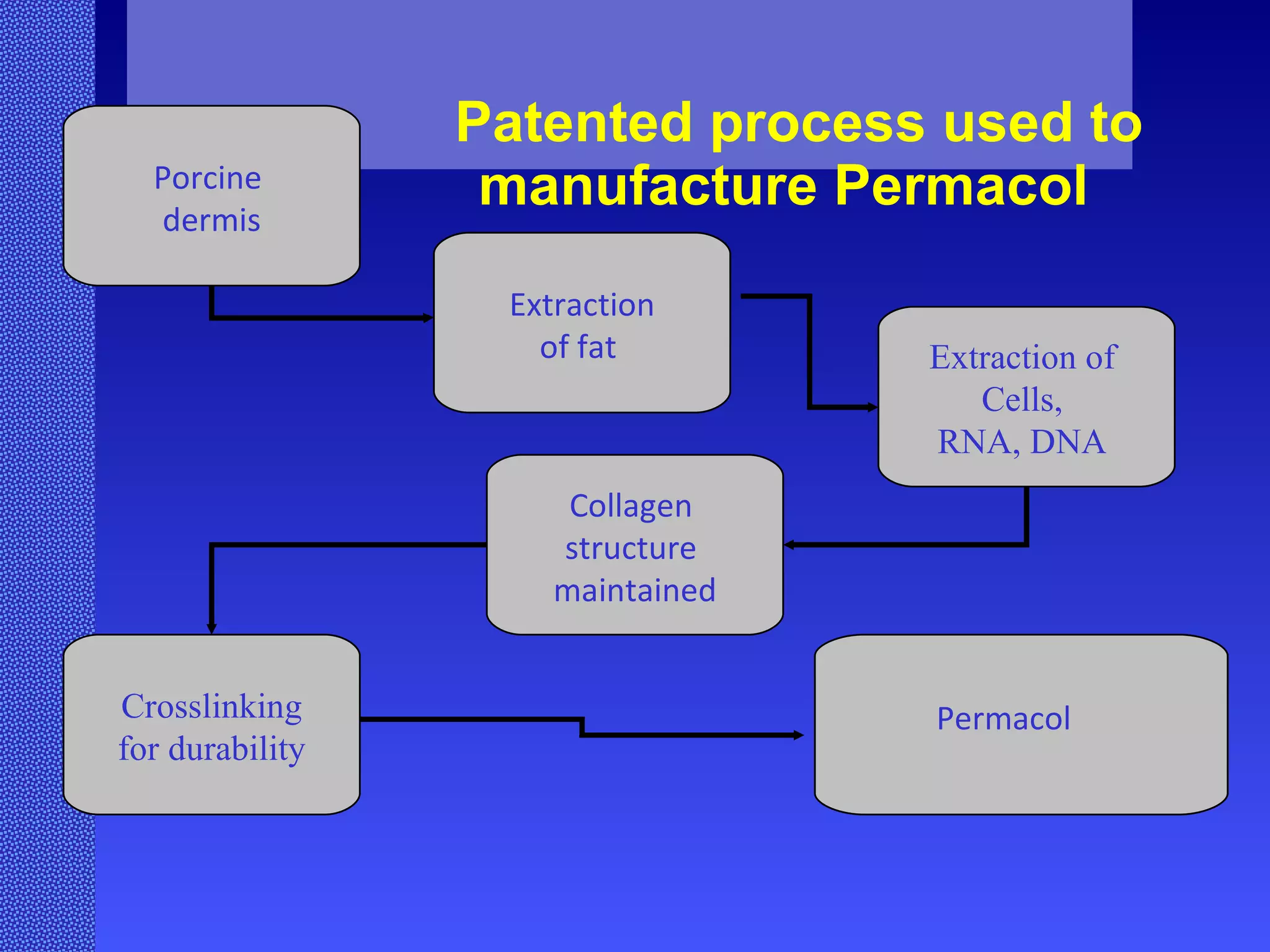
Permacol  Permacol is made from porcine dermis collagen and elastin Cells, cell debris, RNA and DNA are removed during a patented manufacturing process a crosslinking step renders the collagen resistant to collagenase Crosslinked ( with non-calcifying HDMI ) in its native state, collagen architecture and structure is maintained Permacol is not reconstituted. Porcine collagen is in its original 3D form. It has a bad odor. Must be hydrated in saline.
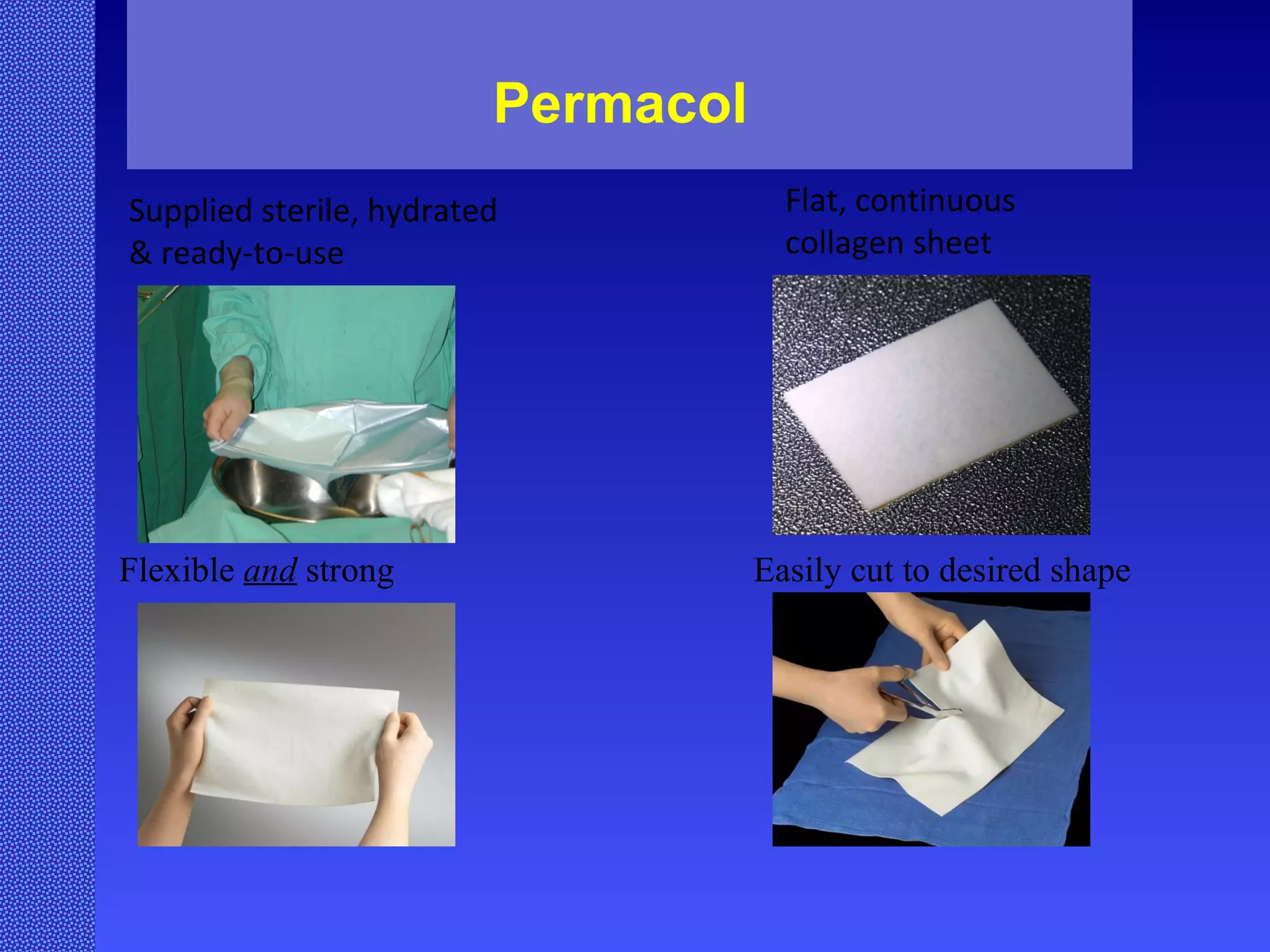
Permacol   Supplied sterile, hydrated & ready-to-use Flexible  and  strong Flat, continuous collagen sheet Easily cut to desired shape
Patented process used to manufacture Permacol  Porcine  dermis Extraction of  Cells,  RNA, DNA   Collagen  structure  maintained Crosslinking  for durability Extraction  of fat   Permacol
Strattice  lifecell  Strattice® Reconstructive Tissue Matrix is a surgical mesh that is derived from porcine skin and is processed and preserved in a phosphate buffered aqueous solution containing matrix stabilizers. Place device in maximum possible contact with healthy, well-vascularized tissue to promote cell ingrowth and tissue remodeling. Always use sterile gloved hands or forceps when handling Strattice. Must be soaked for two minutes at room temperature in Lactated Ringer. Use permanent sutures with at least 3 to 5 cm underlay. Must be in contact with healthy tissues to permit regeneration.
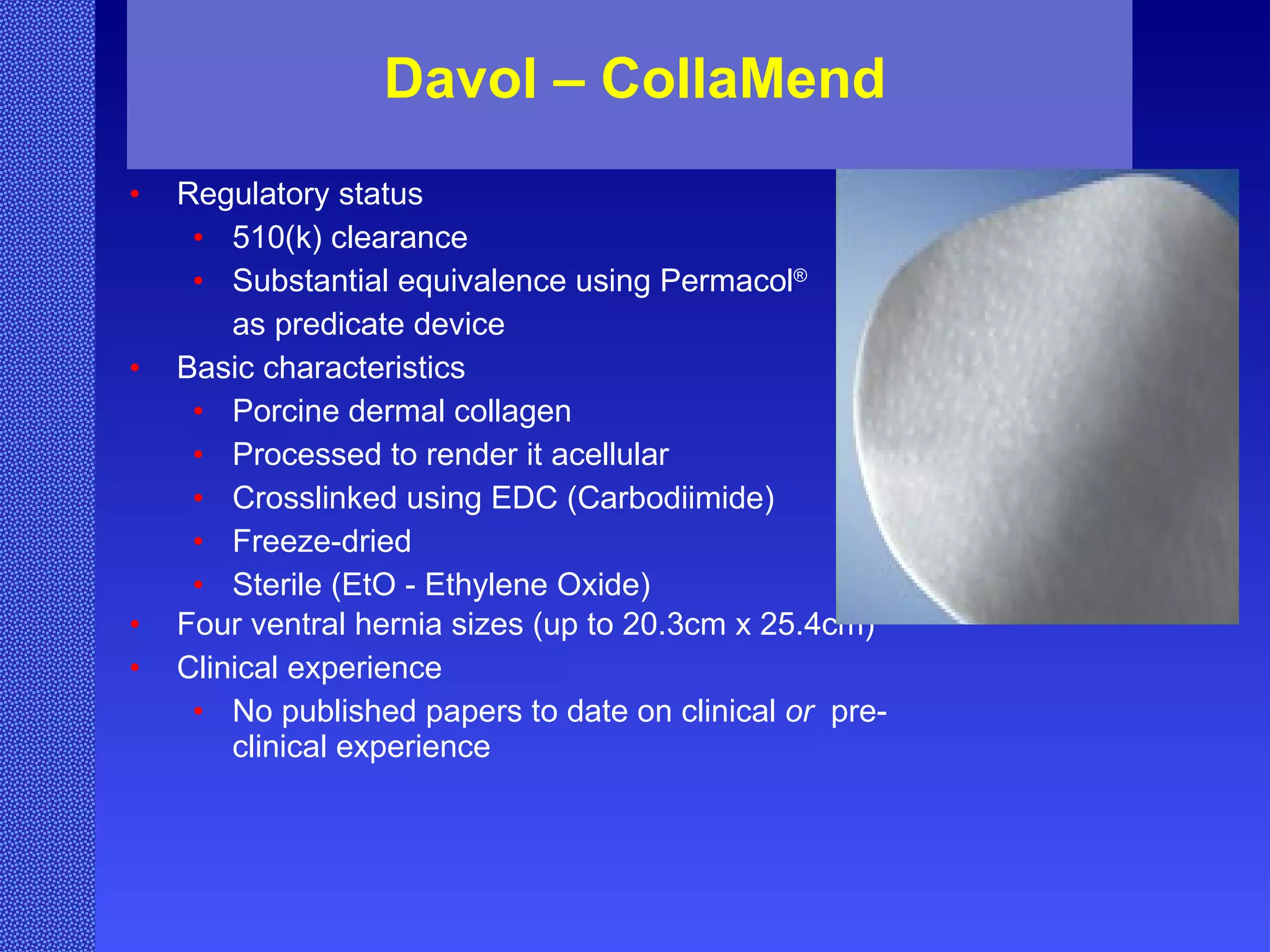
Davol – CollaMend Regulatory status 510(k) clearance Substantial equivalence using Permacol ®   as predicate device Basic characteristics Porcine dermal collagen Processed to render it acellular Crosslinked using EDC (Carbodiimide) Freeze-dried Sterile (EtO - Ethylene Oxide) Four ventral hernia sizes (up to 20.3cm x 25.4cm) Clinical experience No published papers to date on clinical  or   pre-clinical experience
Davol - Xenmatrix Porcine Dermis Cellular material is removed without a significant loss in strength. It is not cross -linked. Open structure supports tissue ingrowth and increased elasticity. Maintains significant strength in animal model 2-8 weeks  Post-implantation in animal model Favorable clinical results have been reported with the use  of Xenmatrix. Pomahac et al:Use of non cross linked porcine dermal scaffold in abdominal wall reconstruction Am J Surg 2009
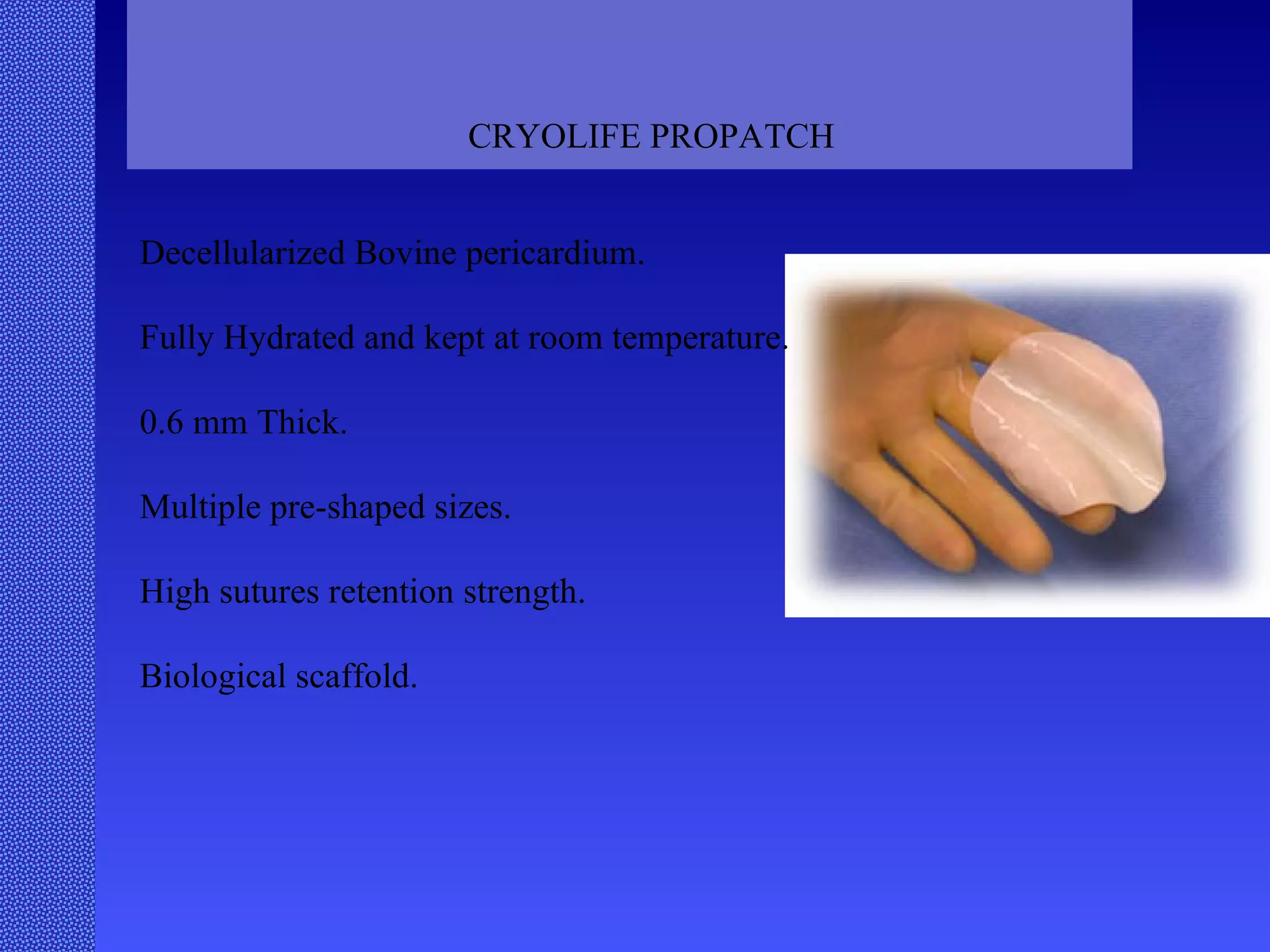
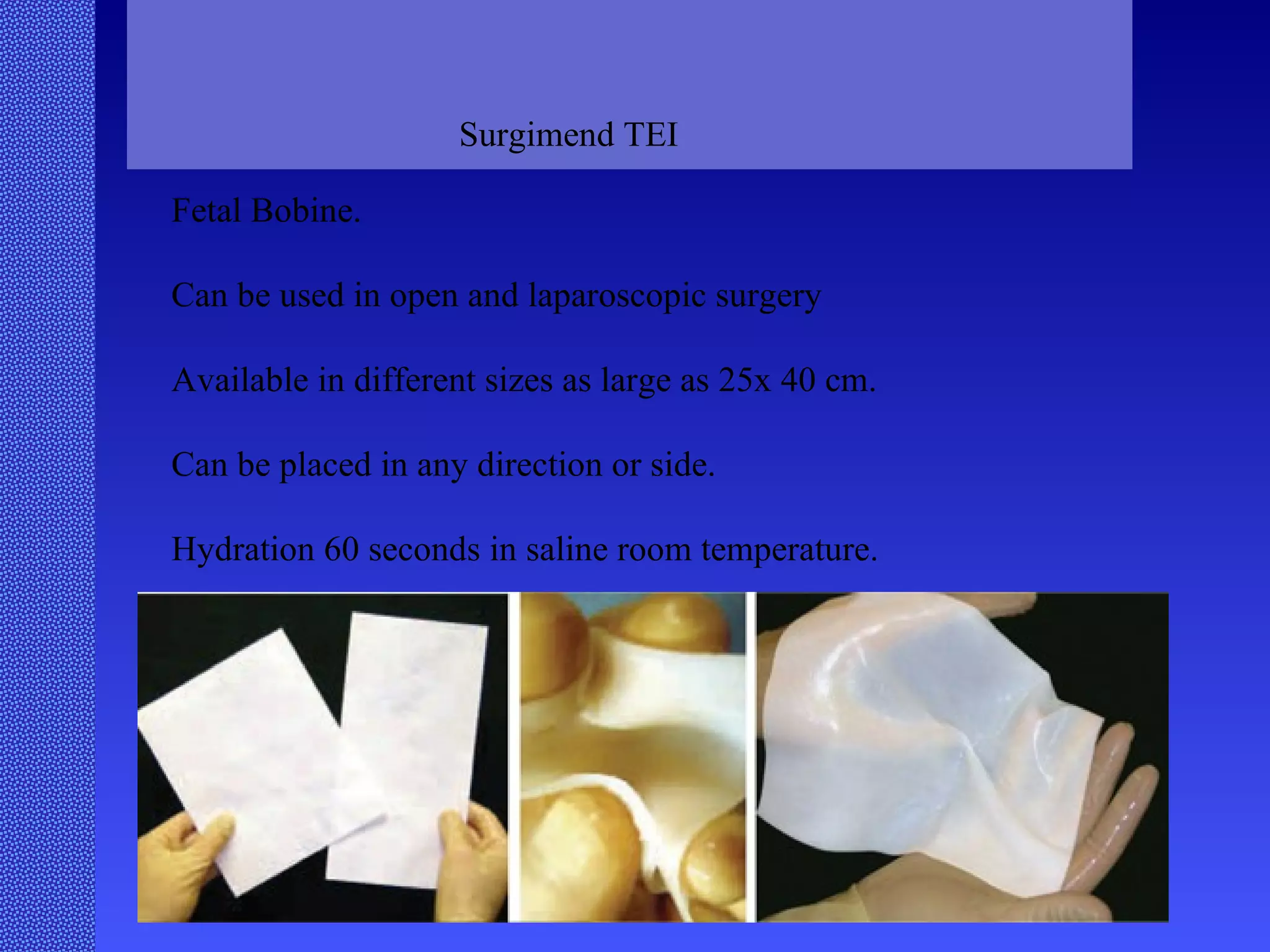
CRYOLIFE PROPATCH Decellularized Bovine pericardium. Fully Hydrated and kept at room temperature. 0.6 mm Thick. Multiple pre-shaped sizes. High sutures retention strength. Biological scaffold.
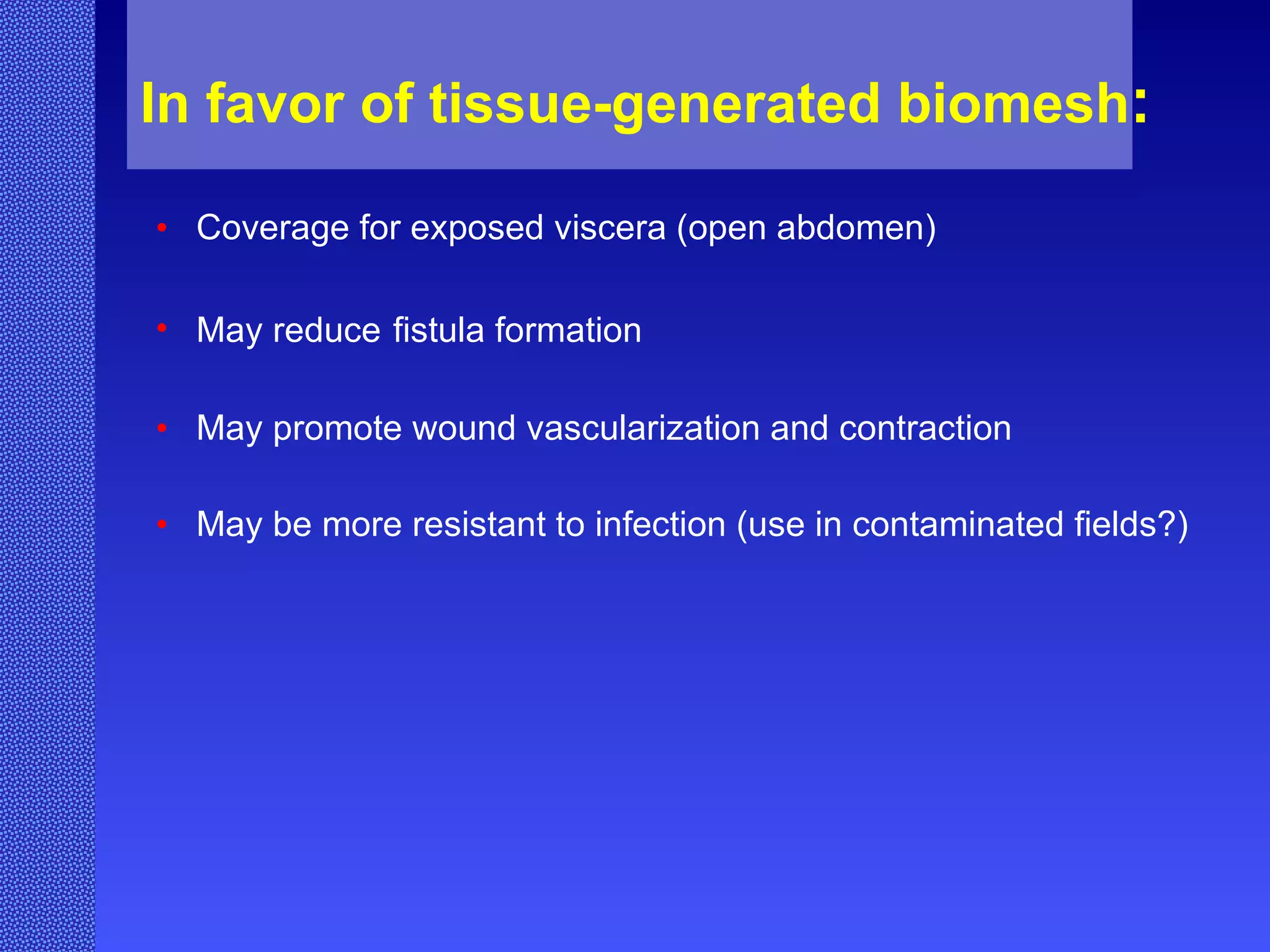
Surgimend TEI Fetal Bobine. Can be used in open and laparoscopic surgery Available in different sizes as large as 25x 40 cm. Can be placed in any direction or side. Hydration 60 seconds in saline room temperature.
In favor of tissue-generated biomesh : Coverage for exposed viscera (open abdomen) May reduce   fistula formation May promote wound vascularization and contraction May be more resistant to infection (use in contaminated fields?)
Against tissue-generated biomesh:   Clinical experience in laparoscopy is limited High cost Long-term tensile strength is unknown Poor collagen I/III ratios in the replaced and remodeled fascia Recurrence profile is unknown Risk of failure in smokers ,diabetics , steroid users ,morbid obese  and in heavily infected wounds.  Peri-operative prep time Theoretical potential to transmit viral or prior infection Allergy or hypersensitivity Unacceptable cosmetic results because of stretching of the elastin fibers Religious or ethical prohibitions
Tensile strength Pliability  Ease of manipulation Durability Degree of tissue in-growth Infection rate Inflammatory response / adhesion formation Seroma formation Cost The ideal mesh has yet to be developed and the management of complex ventral hernias remains a challenge.  Conclusion: are we there yet?
Questions???
Methods of Mesh Fixation Staples Tacks Laser-assisted tissue welding Fibrin sealant (Tisseel) Glue Salute “Q” ring (Onux Medical , Inc.) Mitek anchor Sutures
Tacks 3.8 mm depth of penetrations (staples 2mm) Sheer force resistance 4 times more than staples   Protruding end in contact with bowel will result in tear and perforation   ( Ladurner R. Mussack T.  Surg Endosc  2004 April) Small bowel obstruction next to a spiral tack  (Bower C.E. et al.  Surg Endosc  2004 18:672-675 )
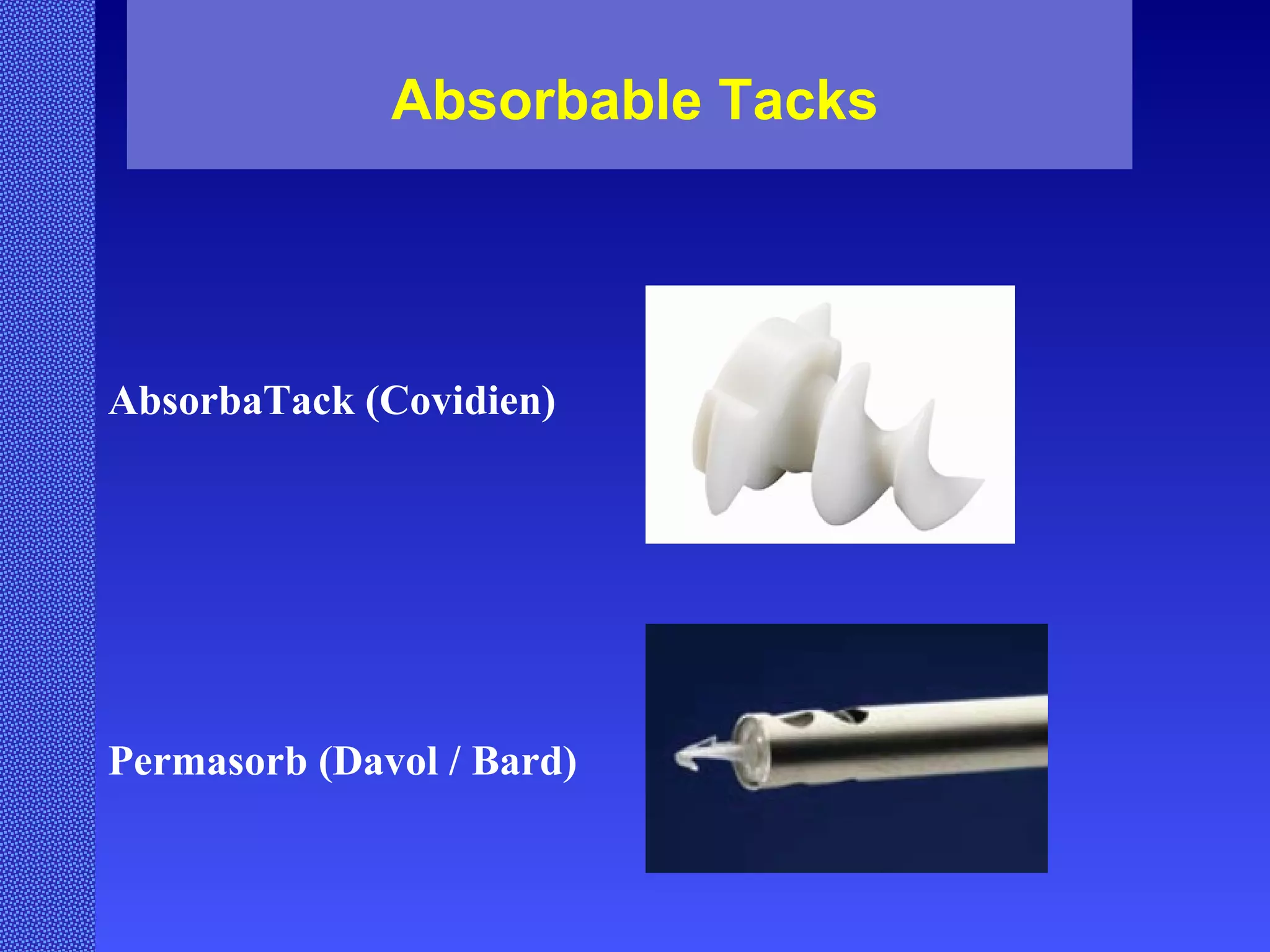
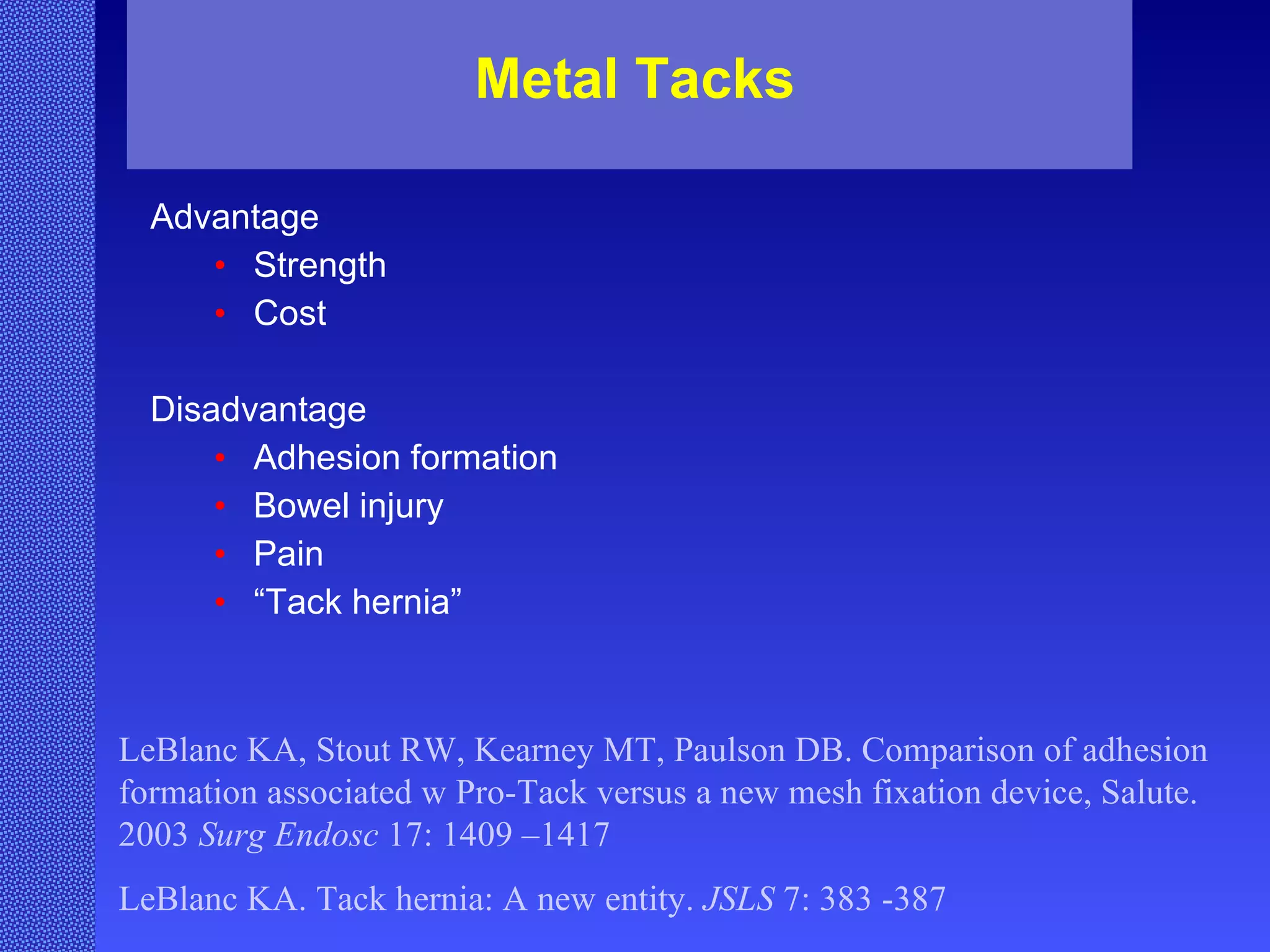
Absorbable Tacks Advantage  Dissolve in conjunction with mesh incorporation Theoretical benefit of decreased pain with tack absorption  Disadvantage Cost
Absorbable Tacks AbsorbaTack (Covidien)  Permasorb (Davol / Bard)
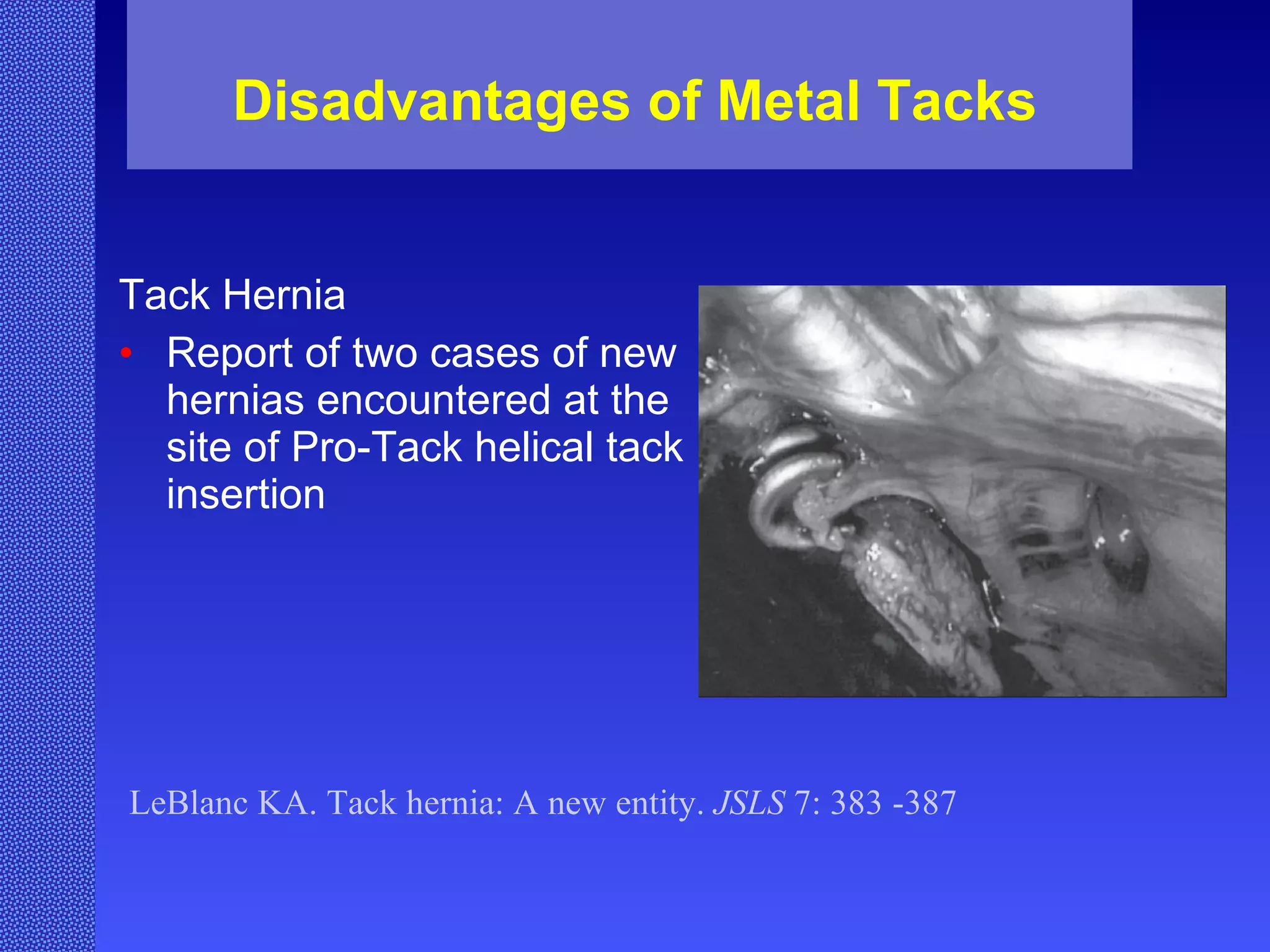
Metal Tacks Advantage  Strength Cost Disadvantage Adhesion formation Bowel injury Pain “ Tack hernia” LeBlanc KA, Stout RW, Kearney MT, Paulson DB. Comparison of adhesion formation associated w Pro-Tack versus a new mesh fixation device, Salute. 2003  Surg Endosc  17: 1409 –1417 LeBlanc KA. Tack hernia: A new entity.  JSLS  7: 383 -387
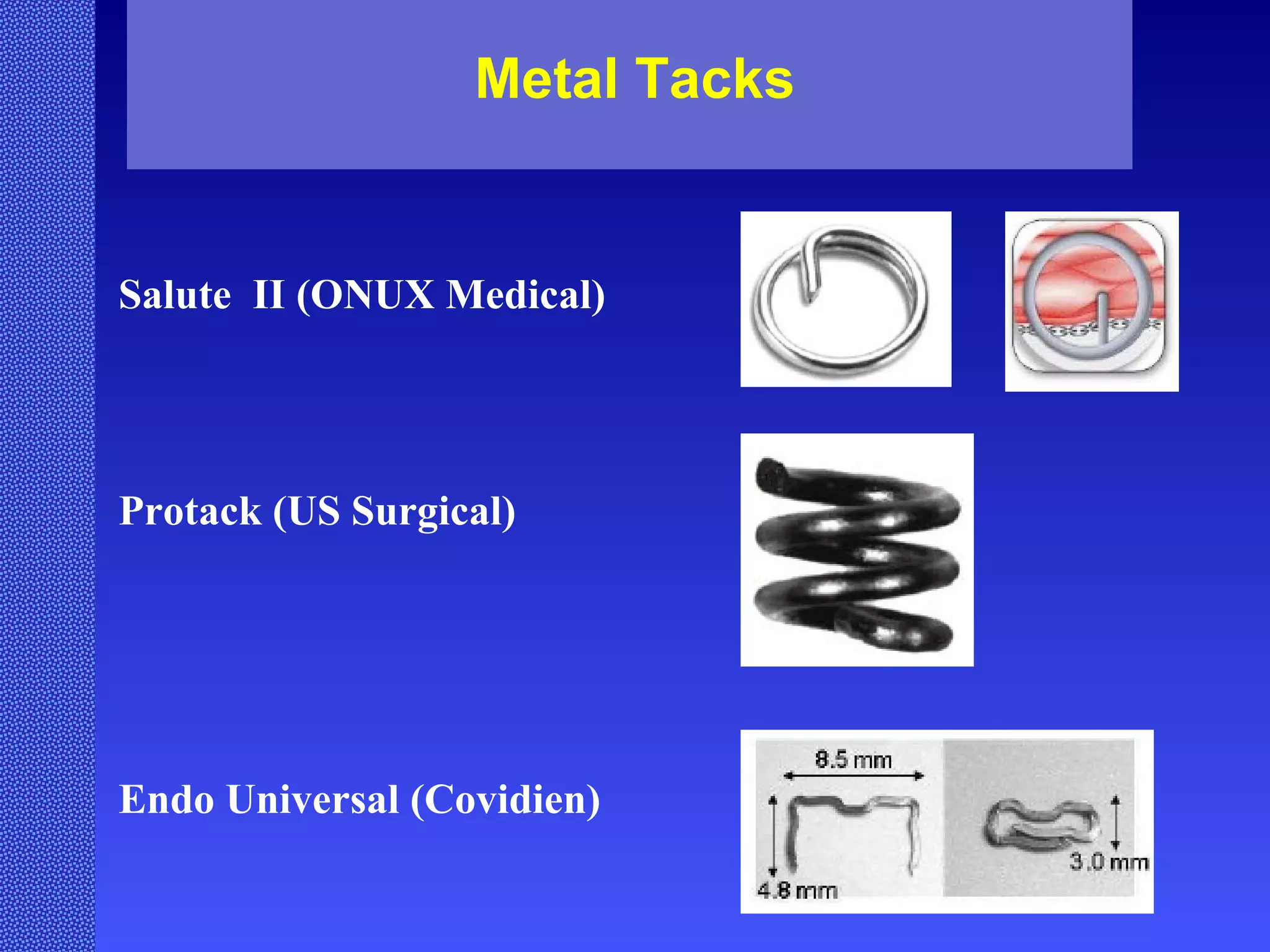
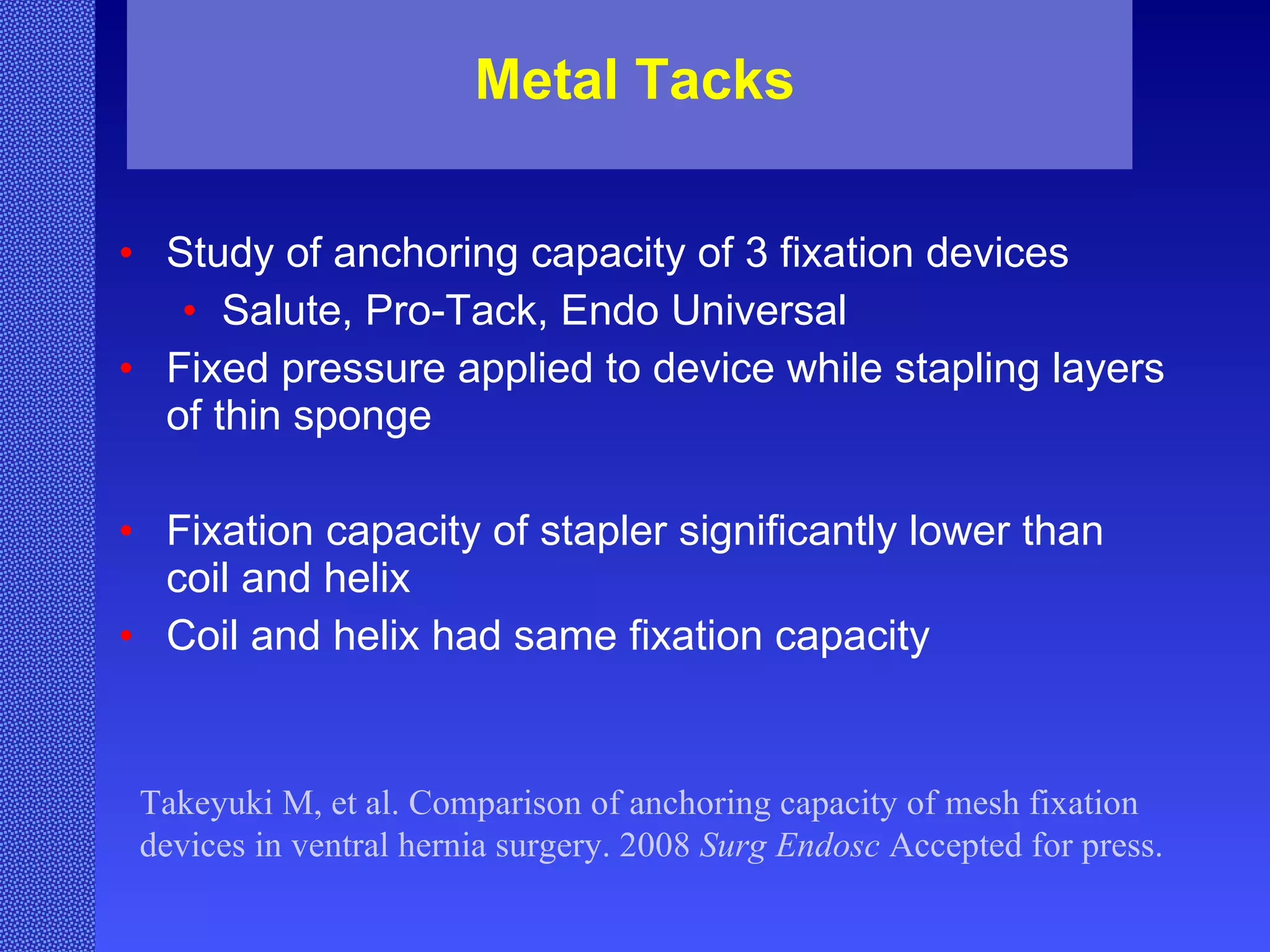
Metal Tacks Salute  II (ONUX Medical) Protack (US Surgical) Endo Universal (Covidien)
Metal Tacks Study of anchoring capacity of 3 fixation devices Salute, Pro-Tack, Endo Universal Fixed pressure applied to device while stapling layers of thin sponge Fixation capacity of stapler significantly lower than coil and helix Coil and helix had same fixation capacity  Takeyuki M, et al. Comparison of anchoring capacity of mesh fixation devices in ventral hernia surgery. 2008  Surg Endosc  Accepted for press.
Disadvantages of Metal Tacks Tack Hernia  Report of two cases of new hernias encountered at the site of Pro-Tack helical tack insertion LeBlanc KA. Tack hernia: A new entity.  JSLS  7: 383 -387
Disadvantages of Metal Tacks Adhesion formation  Comparison of adhesion formation in hernia repair in an animal model using Pro-Tack vs. Salute tacker for mesh fixation Density of adhesions was greater with Pro-Tack LeBlanc KA, Stout RW, Kearney MT, Paulson DB. Comparison of adhesion formation associated w Pro-Tack versus a new mesh fixation device, Salute. 2003  Surg Endosc  17: 1409 –1417
Disadvantages of Metal Tacks Bowel injury  Bowel erosion with colo-cutaneous fistula formation originating from surgery in proximity of colon De Maria EJ, Moss JM, Sugarman HJ.  Laparoscopic intraperitoneal polytetraluoroethylene (PTFE) prosthetic patch repair of ventral hernia, Prospective comparison to open prefascial polypropylene mesh repair.  Surg Endosc  2000, 14:326-329
In Favor of Suturing: Accurate mesh placement Recurrence prevention   Tacks can migrate   Sutures stronger than tacks (4 mm in length)
Against suturing:   Increased OR time   Abdominal wall bleeding/hematoma Suture site pain Cosmetic dimpling of skin Lengthy learning curve
Mitek Anchor Originally designed to secure soft tissue to bones as described for orthopedic shoulder repair It could play a role in repairing hernias near the costal margin
Laser Welding Novel technology using laser-assisted tissue welding to anchor mesh to peritoneum Solder fixation of mesh is feasible   No statistical difference noted between stapled or soldered   Lanzafame R. et al. Rochester General Hospital Denver 2004  Sages
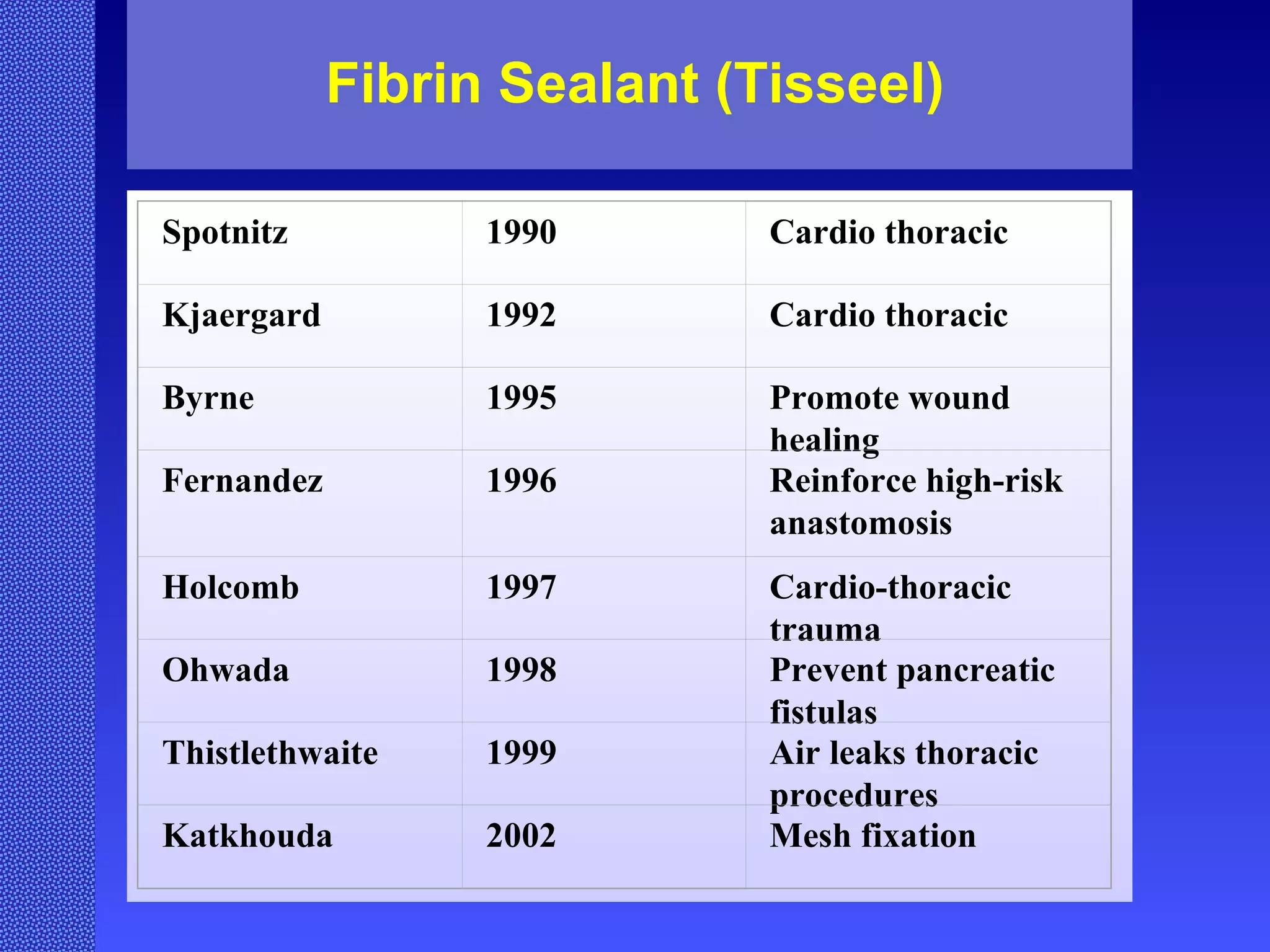
Fibrin Sealant (Tisseel) Biodegradable adhesive formed from the combination of fibrinogen and thrombin leading to the formation of polymerized fibrin chains   After application, it is broken down by fibrinolysis and replaced by fibrotic layer   Anti-fibrinolytic agents like aprotinin are added in order to enhance lifespan In addition to its hemostatic action, the fibrinogen component gives the product its strengthening and adhesive properties and the thrombin promotes fibroblasts proliferation
Fibrin Sealant (Tisseel) Spotnitz 1990 Cardio thoracic Kjaergard 1992 Cardio thoracic Byrne 1995 Promote wound healing Fernandez 1996 Reinforce high-risk anastomosis Holcomb 1997 Cardio-thoracic trauma Ohwada 1998 Prevent pancreatic fistulas Thistlethwaite 1999 Air leaks thoracic procedures Katkhouda 2002 Mesh fixation
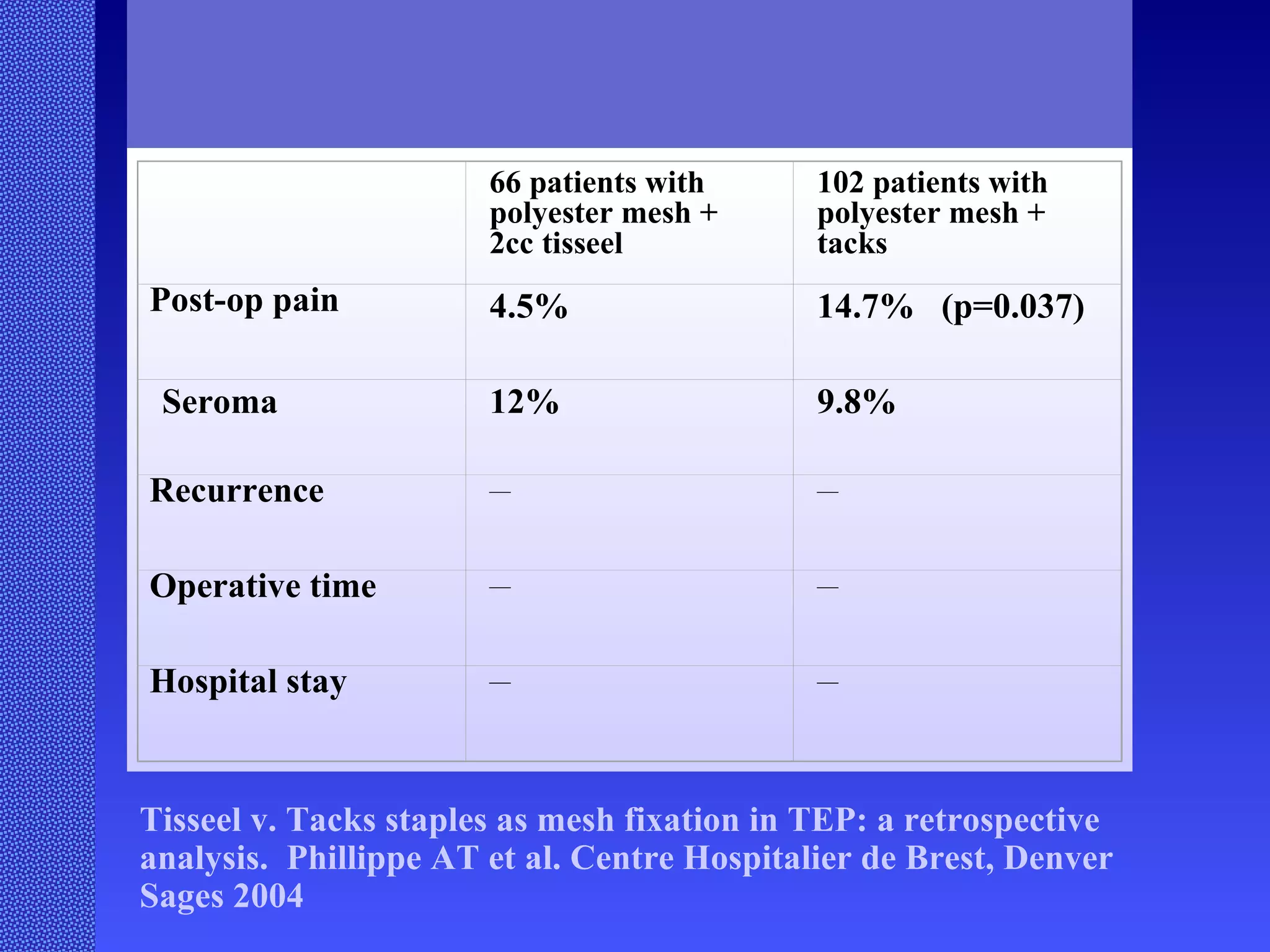
Tisseel v. Tacks staples as mesh fixation in TEP: a retrospective analysis.  Phillippe AT et al. Centre Hospitalier de Brest, Denver Sages 2004     66 patients with polyester mesh + 2cc tisseel 102 patients with polyester mesh + tacks Post-op pain 4.5% 14.7%  (p=0.037) Seroma 12% 9.8% Recurrence — — Operative time — — Hospital stay — —
Glue N butyl 2-cyanoacrylate glue for the fixation of polypropylene mesh in laparoscopic hernia repair   Jourdan IC, Bailey ME.  Surg Laparoscop Endoscop  1998; 8:291-3
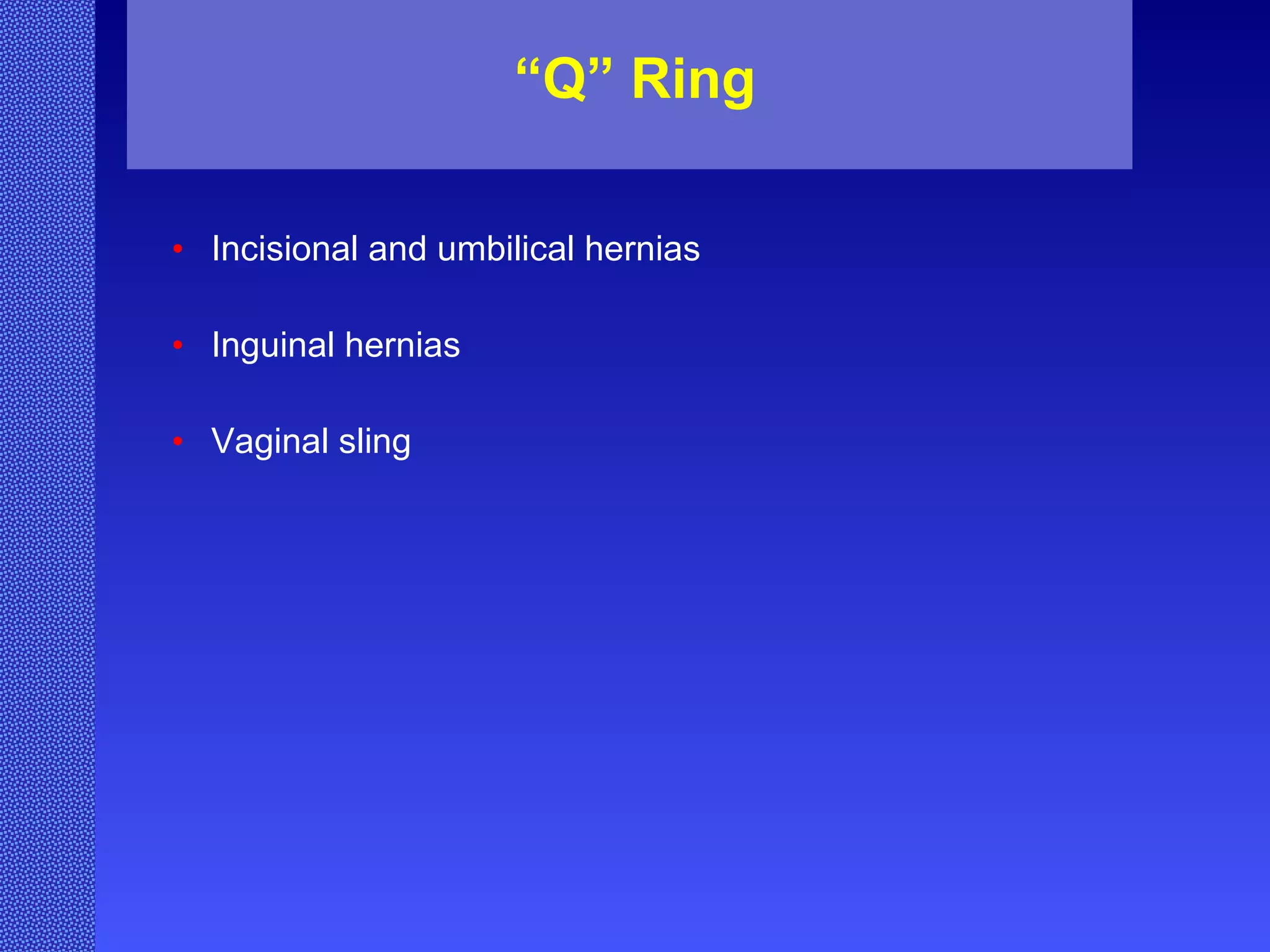
“ Q” Ring Incisional and umbilical hernias Inguinal hernias Vaginal sling
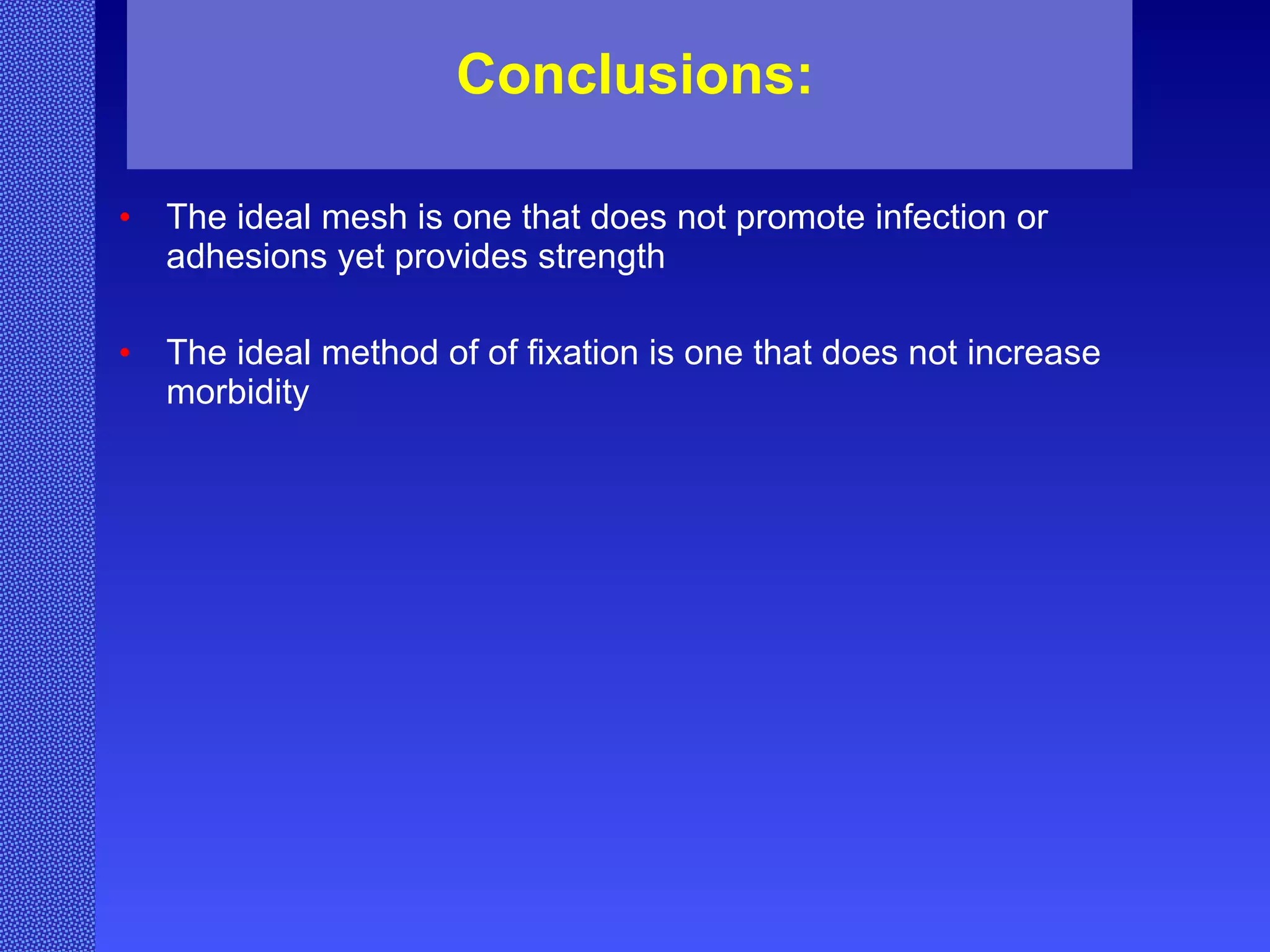
Conclusions: The ideal mesh is one that does not promote infection or adhesions yet provides strength The ideal method of of fixation is one that does not increase morbidity
“ If we could artificially produce tissues of the density and toughness of fascia, the  secret of the radical cure of hernia would  be discovered”. Theodore Billroth, 1857
Conclusions We still have not developed the ideal mesh or fixation material Problems associate with current meshes: Infection Recurrence  Seroma Adhesion formation Problems associate with current tacks: Pain Mesh migration Poor fixation
Polyester and atelocollagen type 1, polyethylene glycol, glycerol (Parietex) Mean follow up 45 months Recurrences  20 (3.04%) “ Second look” operation  for various reasons 70  Adhesion free 38 (54.3%) Minor adhesions 27 (38.6%) Serosal adhesions 5 (7.1%) Parietex is associated with low formation of dense adhesions Chelala E.  Personal correspondence
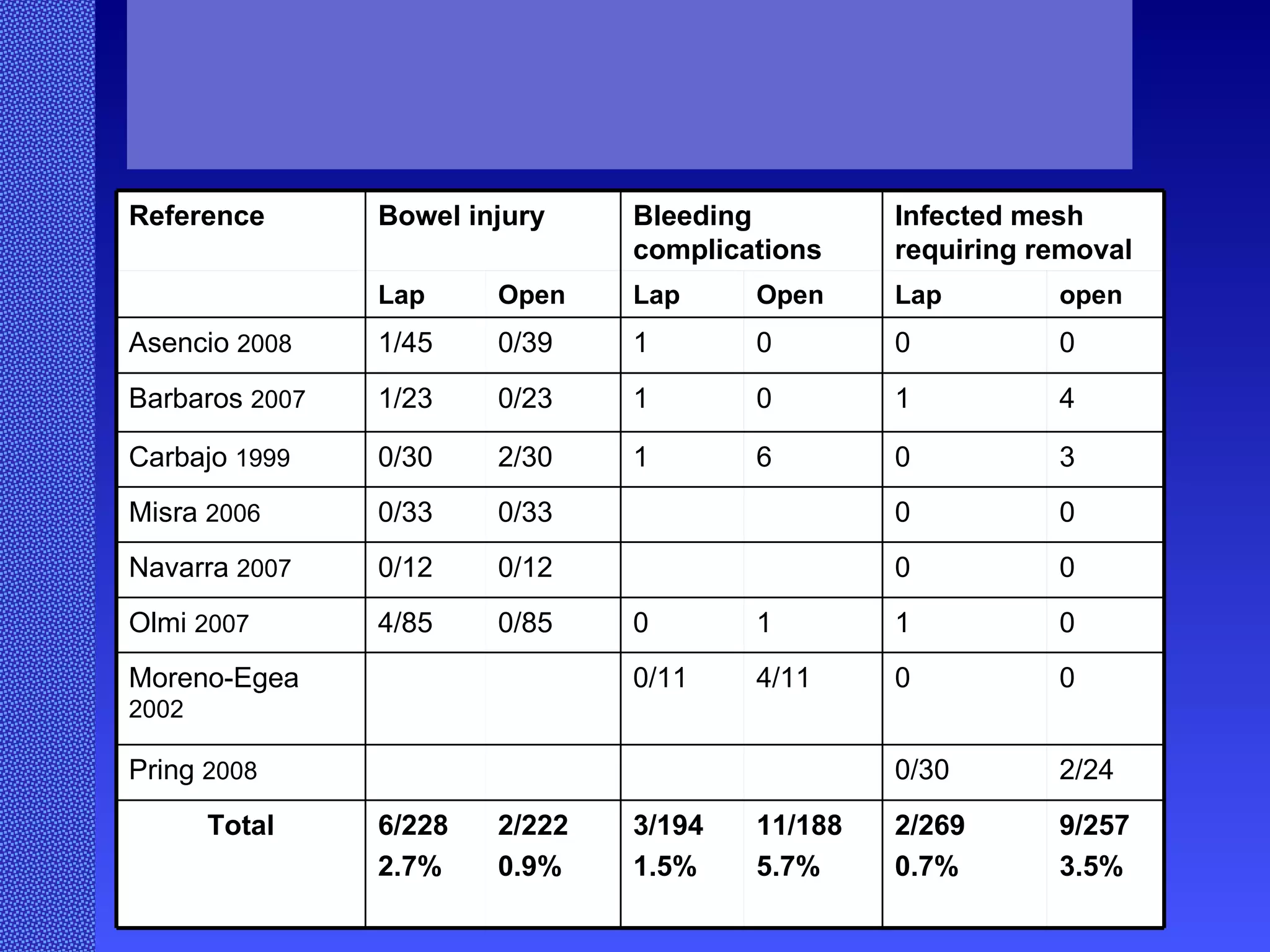
Safety Bowel injury: Meta-analysis of 6 RCT showed more bowel injuries in LVHR with a relative risk of almost 2 over OVHR Bleeding complications: Less bleeding complications in LVHR in 5 RCT Infected mesh requiring removal of mesh: Five times as likely in OVHR than LVHR in 7 RCT Erosion and/or fistula formation: Very rare with PTFE and barrier meshes
Reference Bowel injury Bleeding complications Infected mesh requiring removal Lap Open Lap  Open Lap open Asencio  2008 1/45 0/39 1 0 0 0 Barbaros  2007 1/23 0/23 1 0 1 4 Carbajo  1999 0/30 2/30 1 6 0 3 Misra  2006 0/33 0/33 0 0 Navarra  2007 0/12 0/12 0 0 Olmi  2007 4/85 0/85 0 1 1 0 Moreno-Egea  2002 0/11 4/11 0 0 Pring  2008 0/30 2/24 Total 6/228 2.7% 2/222 0.9% 3/194 1.5% 11/188 5.7% 2/269 0.7% 9/257 3.5%
Safety Review of 5245 patients entered into NSQIP (between 2005 and 2006) with comparable ASA class, wound class, and age revealed: No difference in return to OR within 30 days [2.6% vs. 2.6%] Less deep infections in the laparoscopic group [0.5% vs. 1.6%  p=0.001] Hwang, CS, Journal of Surgical Research, 3/2009
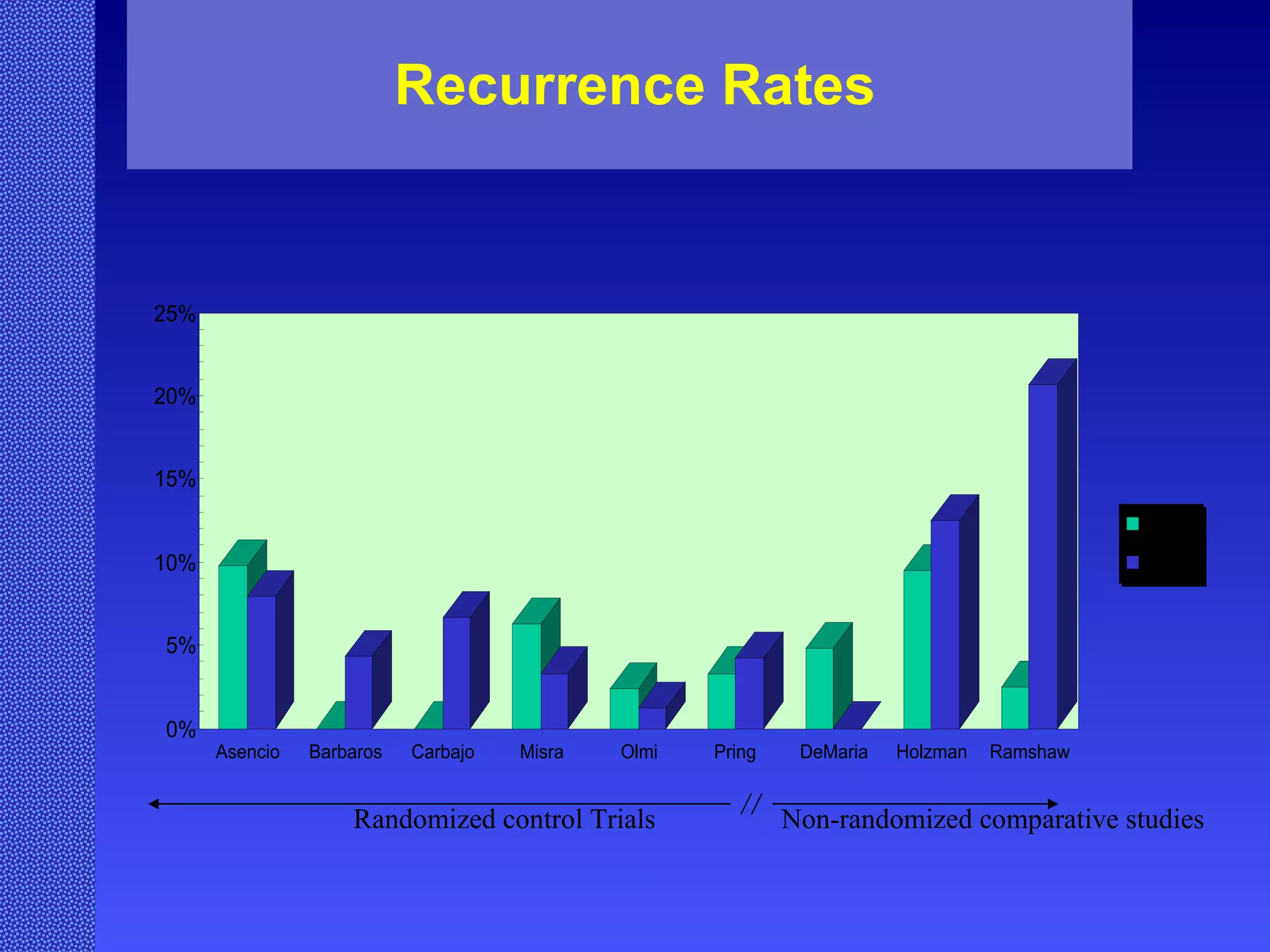
Durability No significant difference in rate of recurrence at follow up times ranging from 6 months to 41 months in pooled RCTs,  Lower recurrence rates in nonrandomized controlled studies Forbes, SS, British Journal of Surgery, 3/2009
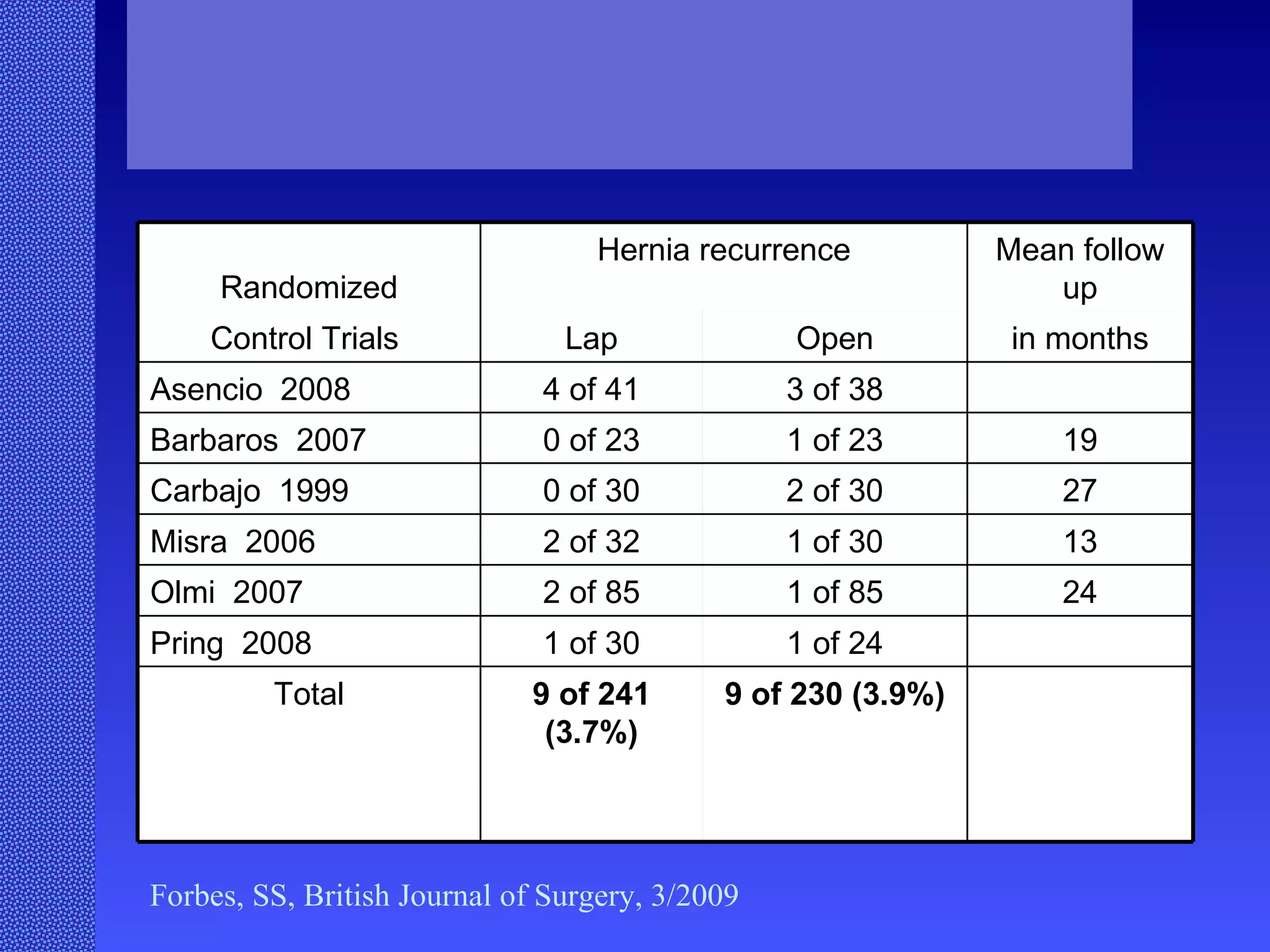
Forbes, SS, British Journal of Surgery, 3/2009 Randomized Hernia recurrence Mean follow up Control Trials  Lap Open in months Asencio  2008 4 of 41 3 of 38 Barbaros  2007 0 of 23 1 of 23 19 Carbajo  1999 0 of 30 2 of 30 27 Misra  2006 2 of 32 1 of 30 13 Olmi  2007 2 of 85 1 of 85 24 Pring  2008 1 of 30 1 of 24 Total 9 of 241 (3.7%) 9 of 230 (3.9%)
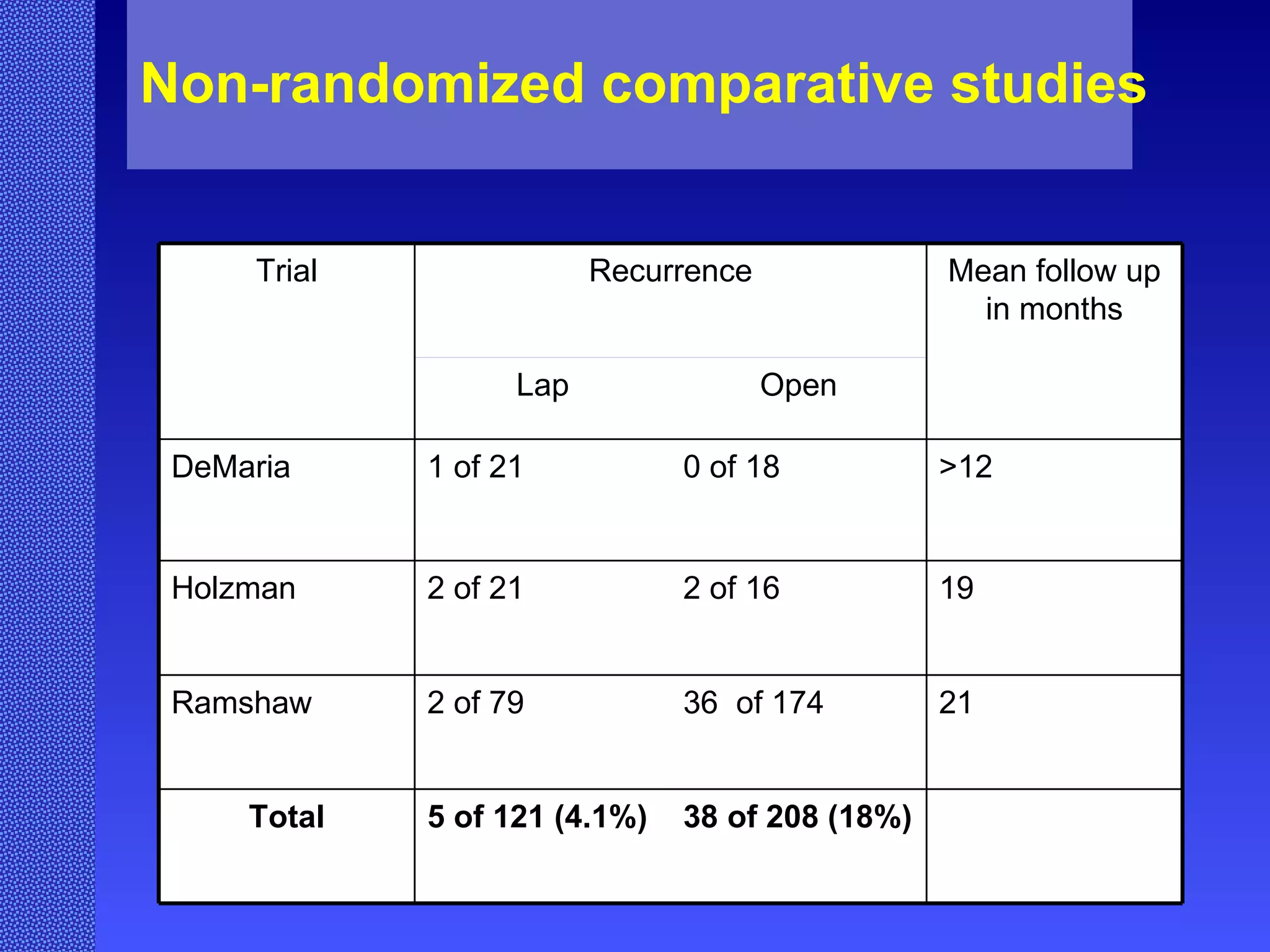
Non-randomized comparative studies Trial Recurrence Mean follow up in months Lap Open DeMaria 1 of 21 0 of 18 >12 Holzman 2 of 21 2 of 16 19 Ramshaw 2 of 79 36  of 174 21 Total 5 of 121 (4.1%) 38 of 208 (18%)
Recurrence Rates Randomized control Trials  Non-randomized comparative studies
Efficacy  Advantages of LVHR Improved visualization of abdominal wall Recognizing occult hernias Fewer overall complications Disadvantages of LVHR Mesh placed in abdominal cavity Cost OR time Not Cosmetic Surgery Clinics, 2/2008 Ramshaw….
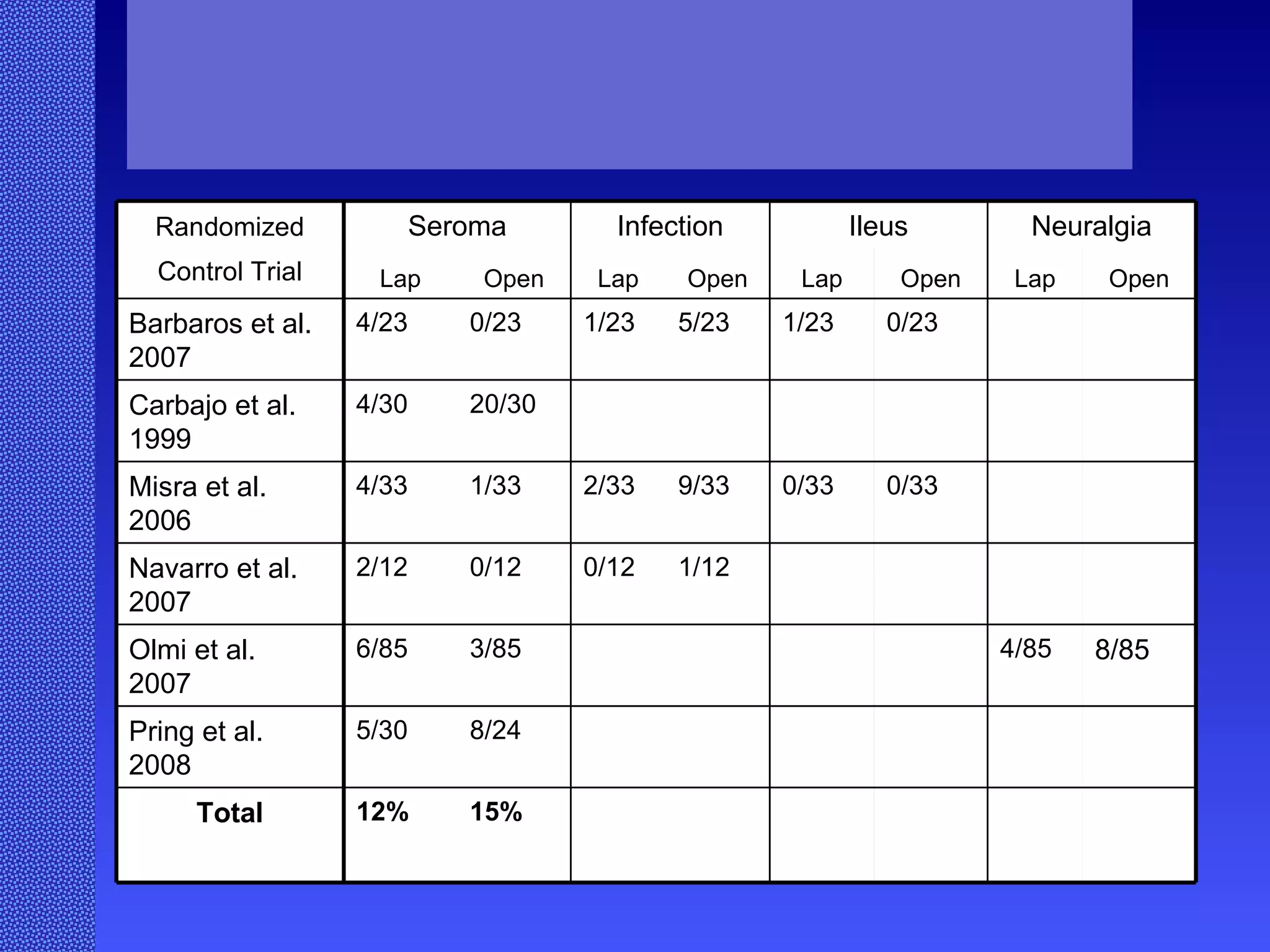
Efficacy Results in multiple RCTs comparing laparoscopic mesh repair with open mesh repair are equivalent or superior regarding the following complications Seroma  Infection Ileus Neuralgia
Procedure – entry  Hassan Veress needle LUQ cutdown/veress Remote from hernia site
Randomized Seroma Infection Ileus Neuralgia Control Trial Lap Open Lap Open Lap Open Lap Open Barbaros et al.  2007 4/23 0/23 1/23 5/23 1/23 0/23 Carbajo et al.  1999 4/30 20/30 Misra et al.  2006 4/33 1/33 2/33 9/33 0/33 0/33 Navarro et al.  2007 2/12 0/12 0/12 1/12 Olmi et al.  2007 6/85 3/85 4/85 8/85 Pring et al. 2008 5/30 8/24 Total 12% 15%
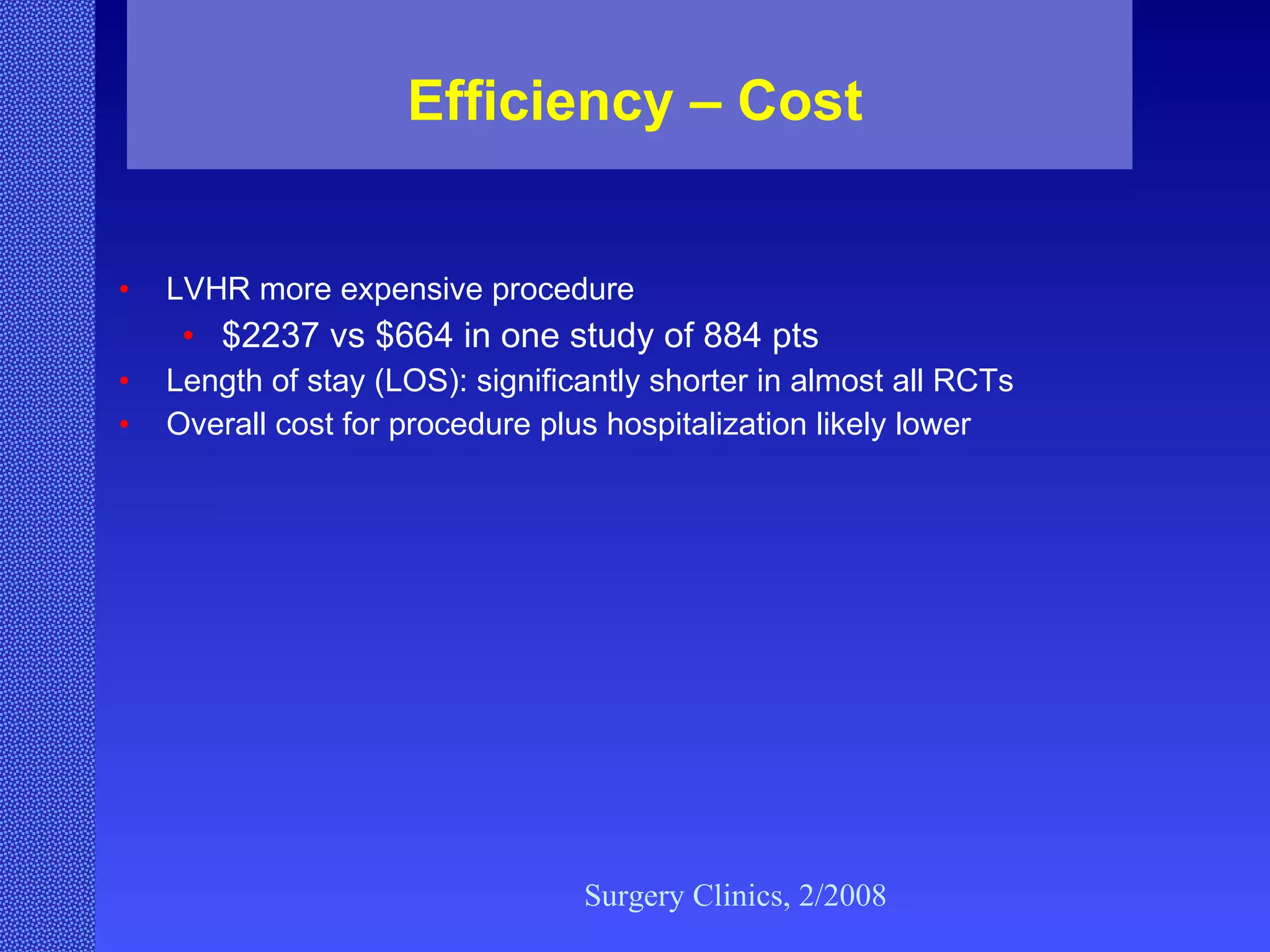
Efficiency – Cost LVHR more expensive procedure $2237 vs $664 in one study of 884 pts Length of stay (LOS): significantly shorter in almost all RCTs Overall cost for procedure plus hospitalization likely lower Surgery Clinics, 2/2008
Efficiency – OR Time Longer or times non-randomized trials: 149 minutes vs. 89 minutes NSQIP data from 2005-2006: 103 minutes vs. 95 minutes 1 Overall shorter times in pooled RCTs: 72 minutes vs. 115 minutes 2 May be dependent on surgeon’s learning curve Hwang, CS, Journal of Surgical Research, 3/2009  2. Forbes, SS, British Journal of Surgery, 3/2009
Quality Earlier return to work Less post-operative narcotic requirements Foreign body sensation?
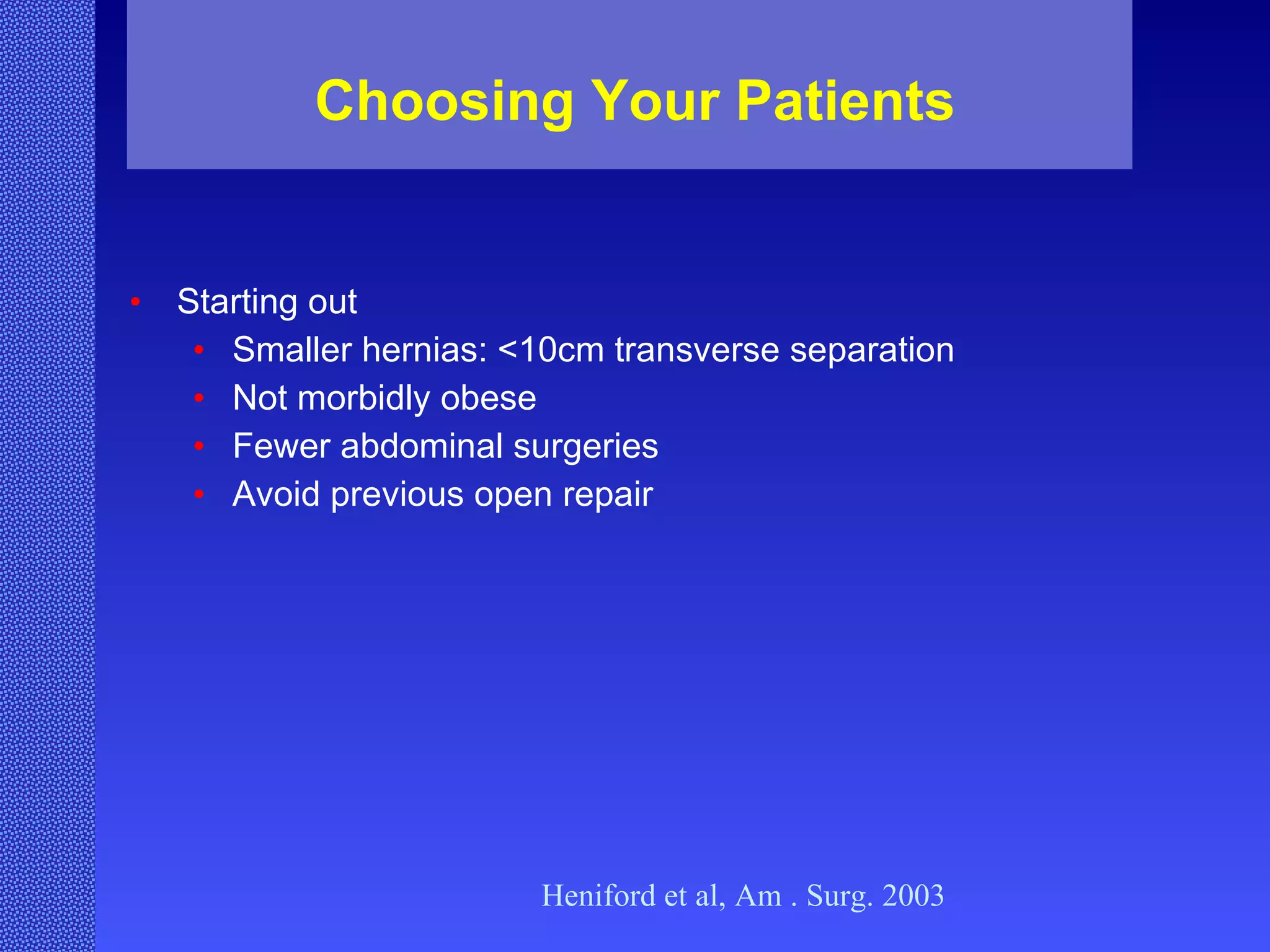
Choosing Your Patients Starting out Smaller hernias: <10cm transverse separation Not morbidly obese Fewer abdominal surgeries Avoid previous open repair Heniford et al, Am . Surg. 2003
Procedure – Preparation Consider bowel prep Pre-operative antibiotic prophylaxis Foley catheter NGT DVT prophylaxis: SCDs, heparin
Procedure – Patient positioning Tuck arms at side Secure patient to table Consider footboard Consider ioban drape
Procedure – fixation  Sutures  Tacks: metal, absorbable Staples Laser-assisted tissue welding Fibrin sealant (Tisseel) Glue Salute “Q” ring (Onux medical , inc.) Mitek anchor
Procedure – LOA,  reduce hernia Sharp Minimal electrocautery
Procedure – sizing defect/mesh What is the best way to measure the mesh? 3 options: Intracorporeal with pneumoperitoneum, extracorporeal with pneumoperitoneum, extracorporeal desufflated With extracorporeal measurement, the diameter of the outer (skin) circle is larger than the inner (peritoneal) circle.  This difference is proportional to the size of the patient. Result is overestimation of hernia size and mesh by 1.7 to 3.1 cm
Procedure- sizing defect/mesh Covering entire original incision as well as hernia defect may decrease recurrence Study LVHR with 8 recurrences all noted to be at original incision site. Wassener et al
Procedure—Choosing a mesh Allows for tension-free restoration of abdominal wall structure Goal of the mesh is to become incorporated into surrounding tissue Ideal mesh: inert, strong, sterile, not modified by body tissue, inexpensive
Choosing a Mesh Biologic derived graft vs. Synthetic mesh vs. Synthetic + coating (barrier mesh) Absorbable vs. Non-absorbable vs. Combined/composite Pore size, filament  Light weight (LW) vs. Heavy weight HW Knitted vs. Woven vs. Expanded
Choosing a Mesh Biologic derived graft:  Synthetic mesh Synthetic + coating (barrier mesh)
Choosing a Mesh Porosity Macro >75 microns Micro <10 microns Submicro <1 micron F I lament mono I polypropylene II Gore-Tex IV Multi III some polypropylene, polyester
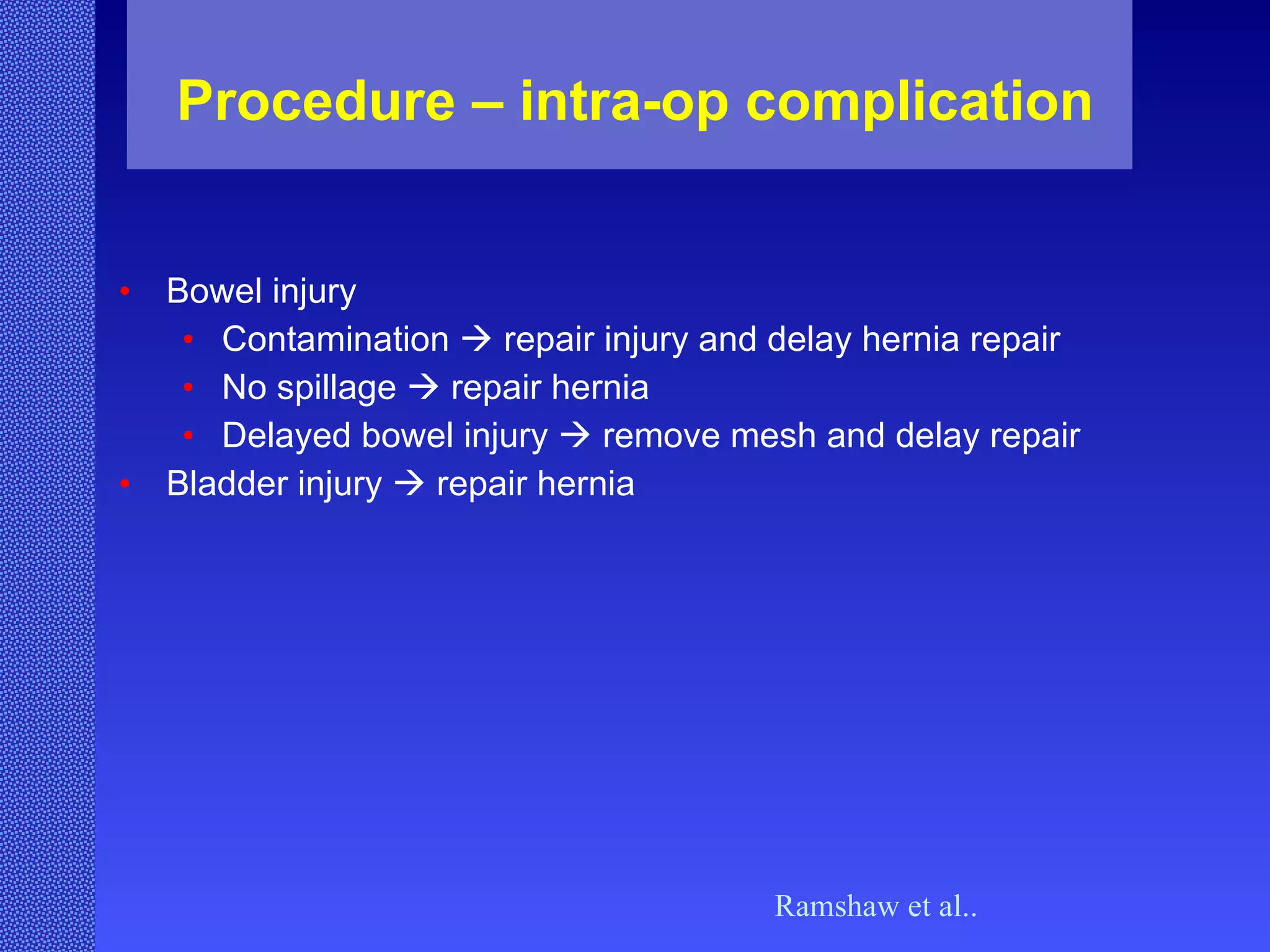
Procedure – intra-op complication Bowel injury Contamination    repair injury and delay hernia repair No spillage    repair hernia Delayed bowel injury    remove mesh and delay repair Bladder injury    repair hernia Ramshaw et al..
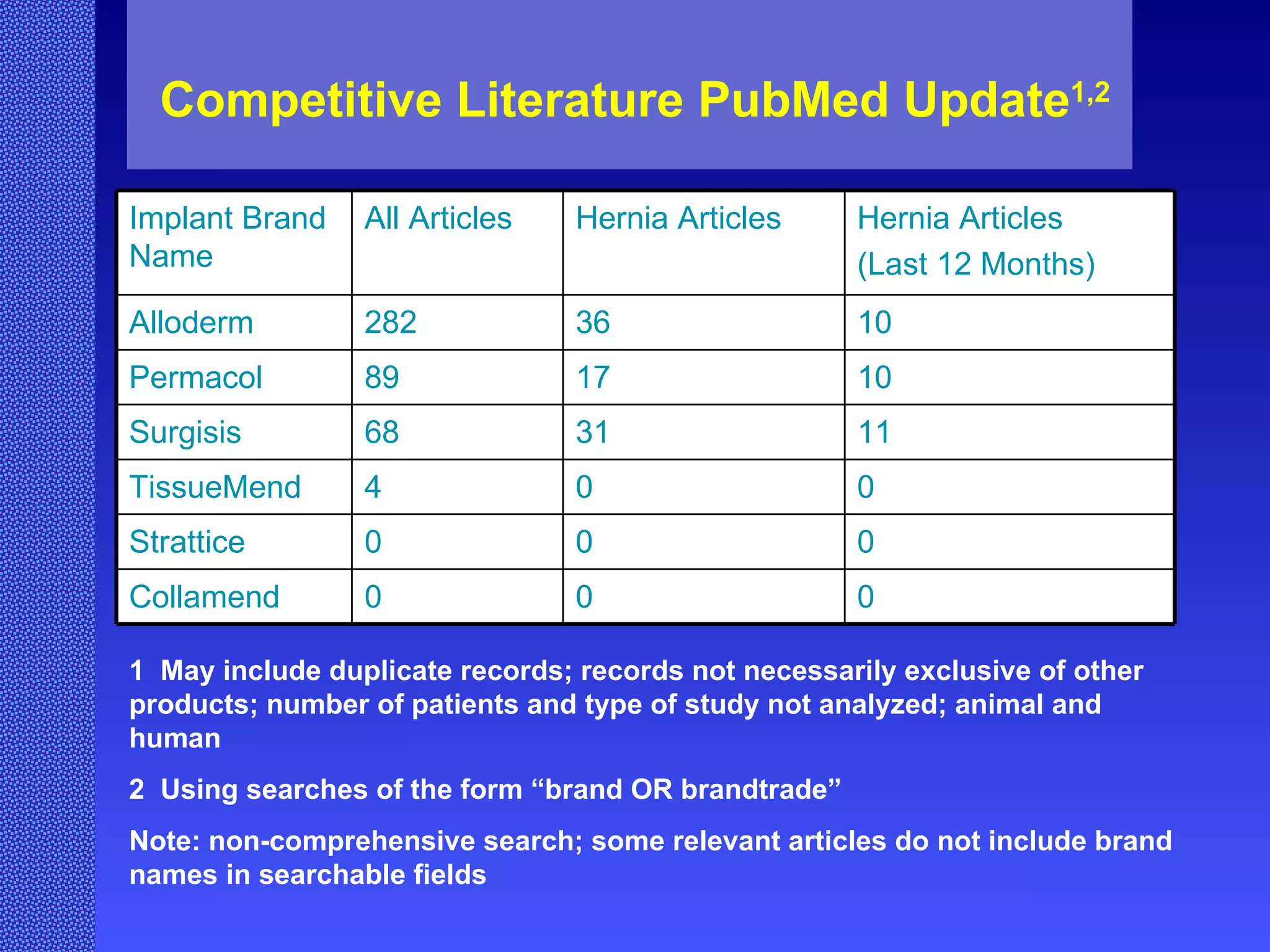
Competitive Literature PubMed Update 1,2 1  May include duplicate records; records not necessarily exclusive of other products; number of patients and type of study not analyzed; animal and human 2  Using searches of the form “brand OR brandtrade” Note: non-comprehensive search; some relevant articles do not include brand names in searchable fields Implant Brand Name All Articles Hernia Articles Hernia Articles (Last 12 Months) Alloderm 282 36 10 Permacol 89 17 10 Surgisis 68 31 11 TissueMend 4 0 0 Strattice 0 0 0 Collamend 0 0 0
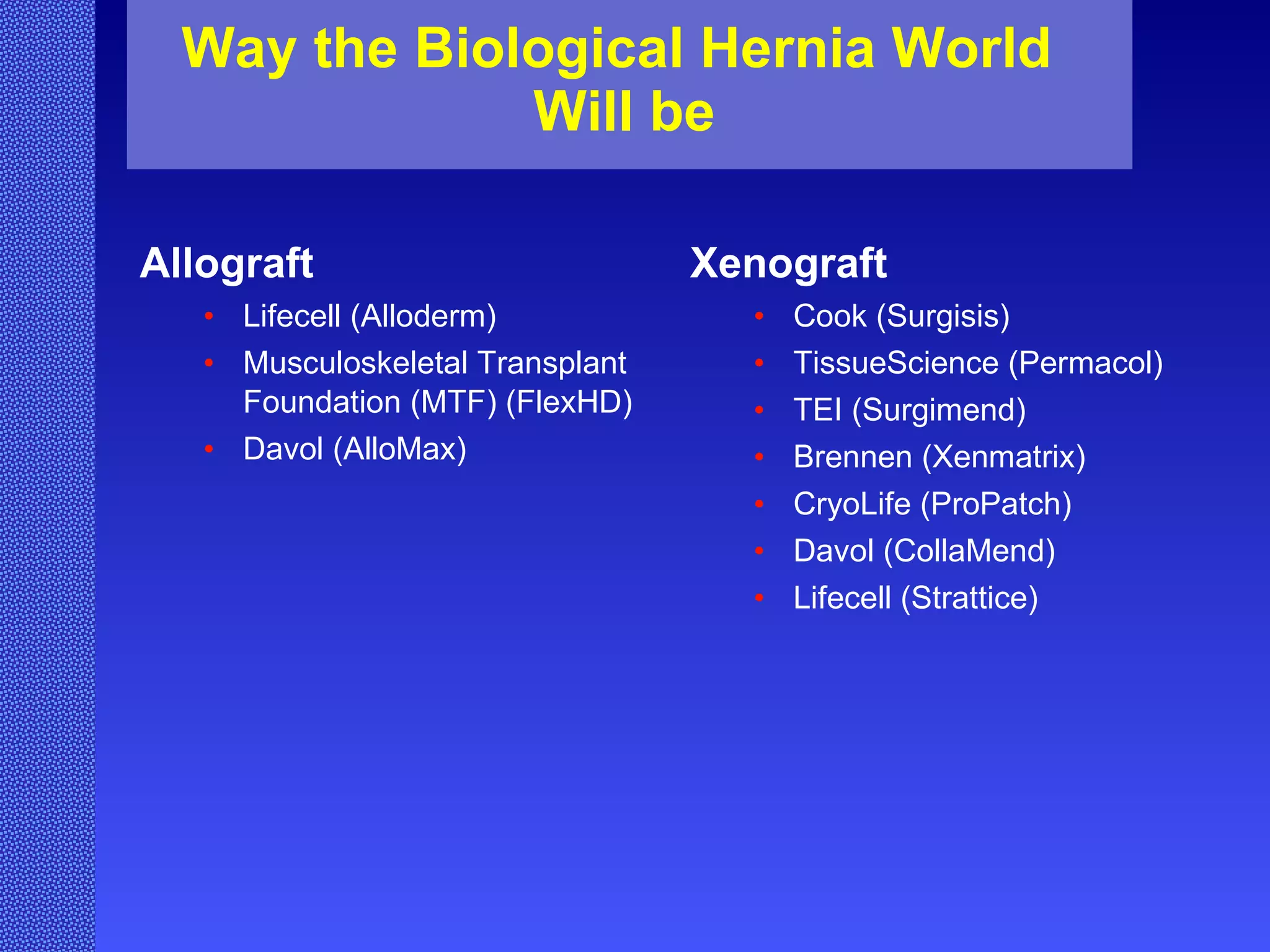
Way the Biological Hernia World  Will be Allograft Lifecell (Alloderm) Musculoskeletal Transplant Foundation (MTF) (FlexHD) Davol (AlloMax) Xenograft Cook (Surgisis) TissueScience (Permacol) TEI (Surgimend) Brennen (Xenmatrix) CryoLife (ProPatch) Davol (CollaMend) Lifecell (Strattice)
Types of prosthetics  for hernia repair: Type 1: totally macroporous prosthesis, pores > 75 microns; example prolene, marlex Type 2: totally microporous prosthesis; pores < 10 microns; example gortex or dual mesh Type 3: macroporous prosthesis with microporous components; example Teflon, mersilene Type 4: biomaterials with submicronic pore size; example cilastic, cell gard
Polypropylene Biomaterials Angimesh , Angiologics, S. Martino Sicc., Italy Biomesh P1 ,  Cousin Biotech, Wervicq-Sud, France Biomesh P3 ,  Cousin Biotech, Wervicq-Sud, France Biomesh 3D ,  Cousin Biotech, Wervicq-Sud, France C-QUR  (polypropylene / omega 3 fatty acid coating), Atrium, NH, USA DynaMesh  (polypropelene incorporated with polyvinylidene difluoride) FEG, Aachen, Germany Hetra 1, 2,   HerniaMesh, S.R.L., Torino, Italy Hermesh 3,4,5,   HerniaMesh, S.R.L., Torino, Italy Intramesh NKI, NK2, NK8,  Cousin Biotech, Wervicq-Sud, France Marlex,  C.R.Bard, Inc., Cranston NJ, USA
Polypropylene Biomaterials Parietene,  Sofradim International, Villfranche-sur-Saone, France Proceed  (polypropelene /  polydiaxanone / oxidized regenerated cellulose),  Ethicon, Somerville, NJ, USA Prolene , Ethicon, Somerville, NJ, USA Prolene Soft Mesh , Ethicon, Somerville, NJ, USA Prolite , Atrium Medical Corporation, Hudson, NH, USA Prolite Ultra , Atrium Medical Corporation, Hudson, NH, USA Surgipro (Monofilament),  United States Surgical Corp,/Tyco, Norwalk, CT, USA Sepramesh  ( polypropylene mesh coated with Seprafilm - modified sodium hyaluronate and carboxymethylcellulose)  Genzyme, MA, USA Surgipro (Multifilament),  United States Surgical Corp./Tyco, Norwalk, CT, USA TiMesh (titanium-coated polypropylene)  Medizintechnik GmbH, Nuremberg, Germany Trelex,  Meadox Medical Corporation, Oakland, NJ, USA   Ultrapro (Poliglecaprone-25 / Polypropylene) ,  Ethicon, Somerville, NJ, USA
Polypropylene Mesh Schmitt and Griman in 1967 first described successful use of polypropylene mesh in contaminated wounds Subsequent reports showed good initial healing but were fraught with long term complications   Those complications are chronic infection, fistula formation, erosion into bowels or through skin grafts Jones and Jurkoyiun in 1989 reviewed 14 studies, 128 patients, and found 55 overall complication rate - enteric fistulization being the most common.
In Favor of  Polypropylene Mesh: Extensive fibroblast ingrowth Complete host tissue incorporation Cheaper than PTFE
In Favor of Polypropylene Mesh: Can be used in contaminated fields Chowbey PK et al. Lap ventral hernia repair  J La Adv Surg   Tech  2000; 10:79-84 Bingener J et al. Adhesion formation after laparoscopic ventral  incisional hernia repair with polypropylene mesh: a study using abdominal ultrasound,  JSLS  (2004)8:127-131
In Favor of Polypropylene Mesh: Can be used in contaminated fields Franklin ME et al. Lap ventral and incisional hernial repair.  Surg Lap End  8(4):294-299 1998 285 lap ventral hernia and 520 lap inguinal hernia using IPOM with polypropylene mesh. 1 fistula formation (0.14%), 4 mesh infections (0.50%), and 6 reoperations for bowel obstruction secondary to mesh adhesions (0.75%). Relaparoscopy 27 patients (19 incisional, 8 inguinal): 1/3 no adhesions, 1/3 mild adhesions, 1/3 severe
Against polypropylene mesh: It is extremely difficult to lyse adhesions to polypropylene without causing enterotomies*   Major complications with polypropylene not evident until years later   9 cases of mesh erosion fistula  stainless steel (1)  tantalum (1)  mersilene (1)  dexon (1)  ppm (5). The time to the development of these fistulas ranged from 3 months to 14 years   *Losanoff JE et al. Entero-colocutaneous fistula: a late consequence of polypropylene mesh abdominal wall repair: case report and review of the literature,  Hernia  2002; 6: 144-147
Against polypropylene mesh: Dual mesh allows fibroblastic penetration and subsequent collagen deposition  Leblanc KA et al. Tissue attachment strength of prosthetic meshes used in ventral and incisional hernia repair.  Surg Endo  2002; 16(11):1542-1546
ePTFE Biomaterials DualMesh,  W.L. Gore and Associates, Flagstaff, AZ, USA DualMesh Emerge,  W.L. Gore and Associates, Flagstaff, AZ, USA DualMesh Plus , W.L. Gore and Associates, Flagstaff, AZ, USA DaulMesh Plus Emerge , W.L. Gore and Associates, Flagstaff, AZ, USA DualMesh with Holes , W.L. Gore and Associates, Flagstaff, AZ, USA DualMesh Plus with Holes , W.L. Gore and Associates, Flagstaff, AZ, USA   Dulex , C.R. Bard, Inc., Cranston NJ, USA Mycromesh , W.L. Gore and Associates, Flagstaff, AZ, USA Mycromesh Plus , W.L. Gore and Associates, Flagstaff, AZ, USA Reconix , C.R. Bard, Inc., Cranston NJ, USA Soft Tissue Patch , W.L. Gore and Associates, Flagstaff, AZ, USA
In Favor of ePTFE Microporous, smooth texture minimizes tissue in-growth and limits adhesion formation and bowel injury Combined with a large pore second layer it can adhere well to the abdominal wall
Against ePTFE Microporous construction limits ability of macrophages to destroy bacteria Mesh infection is not well treated by antibiotics and requires mesh removal Does not integrate well into host tissue when not combined with a large pore mesh
Laparoscopic ventral hernia repair with PTFE compared to open repair prefascial repair with polypropylene is associated with:  Less pain Shorter hospital stay Lower total cost Complication rates were equivalent Despite two reoperations in the PTFE group, overall costs remained lower De Maria EJ, Moss JM, Sugarman HJ.  Laparoscopic intraperitoneal polytetraluoroethylene (PTFE) prosthetic patch repair of ventral hernia, Prospective comparison to open prefascial polypropylene mesh repair.  Surg Endosc  2000, 14:326-329
Laparoscopic hernia repair with PTFE has low recurrence but may be associated with significant complications and morbidity  This technique requires meticulous technique and advanced laparoscopic skills Ben-Haim M, et al. Pitfalls and complications with laparoscopic intraperitoneal expanded polytetrafluoroethylene patch repair of postoperative ventral hernia.  Surg Endosc 2002 , 16(5) 785-788
Polyglactene Mesh (vicryl mesh)   Alternative to nonabsorbable meshes   Advantage host  invasion and subsequent absorption of implant   There is less infection complication, increase recurrence rate (satisfactory short term solution in infected hernias but not generally indicated when prolonged 10-side strength is required)
Polyester mesh Parietex  (polyester and atelocollagen type 1, polyethylene glycol, glycerol) Covidien, Hamilton, Bermuda Polyester mesh incorporates well into the abdominal wall Collagen covering on the visceral surface protects bowel and dissolves as the polyester is incorporated
Polyester and atelocollagen type 1, polyethylene glycol, glycerol (Parietex) Comparison of Parietex with Sepramesh for ventral hernia repair  in rabbit model Results at 5 months Parietx  Sepramesh Strength  of incorporation  70.9N 31.5N Bowel adhesions  0 4 Adhesion area 321 mm 2  840 mm 2 Shrinkage 17.4%  6.1%  Parietex has stronger incorporation and is better at prevention of adhesiona than sepra mesh, however it undergoes considerably more shrinkage Judge TW, Parker DM, Dinsmore RC. Abdominal wall hernia repair: A comparison of Sepramesh and Parietex composite mesh in a rabbit hernia model.  J Am Coll Surg  2007,  Feb;204(2):276-81
Polyester and atelocollagen type 1, polyethylene glycol, glycerol (Parietex) Retrospective study of the use of Parietex in laparoscopic ventral hernia repair n = 20 patients  Mean follow up - 10 months  No morbidity or mortality No infections, rejections, fistulas, recurrences, or alterations in bowel function Parietex  is safe for intra-abdominal use Moreno-Egea A, Liron R Girela E, Aguayo JL. Laparoscopic repair of ventral and incisional hernias using a new composite mesh (Parietex): initial experience. 2001  Surg Laparoc Endosc Percutan Tech  Apr;11(2):103-6
Polyester and atelocollagen type 1, polyethylene glycol, glycerol (Parietex) Experience with 656 laparoscopic ventral hernia repairs with Parietex Hernia defect closed with sutures to reduce seroma and restore abdominal wall function Laparoscopic mesh repair performed with Parietex mesh Chelala E. (2008) Personal correspondence
Repair of abdominal wound defects remains a challenge to the general surgeon. Suture repair of ventral hernia is associated with low infection rate but carries a risk of recurrence of 43% The rate increases to 58% with repair of recurrent hernia. Luijendijk   RW, et al.  A Comparison of Suture Repair with Mesh Repair for Incisional Hernia .NEJM  2000; 343:392-398
Against polypropylene mesh: Dual mesh allows fibroblastic penetration and subsequent collagen deposition  Leblanc KA et al. Tissue attachment strength of prosthetic meshes used in ventral and incisional hernia repair.  Surg Endo  2002; 16(11):1542-1546
The use of mesh drastically reduces recurrence but is associated with a risk of infection of about 9% The laparoscopic approach to mesh placement reduces the infection rate to as low as 0.7% Yerdel MA, et al. Effect of single-dose prophylactic ampicillin and sulbactum on wound infection after tension-free inguinal hernia repair with polypropylene mesh: the randomized, double blind, prospective trial.  AA Surg  2001; 223: 26 – 33 Heniford BT, et al. Laparoscopic repairs of ventral hernias: nine years experience with 850 consecutive hernias.  Ann Surg  2003; 238:391-400 Ventral Hernia Mesh
In Favor of Polypropylene Mesh: Can be used in contaminated fields Franklin ME et al. Lap ventral and incisional hernial repair.  Surg Lap End  8(4):294-299 1998 285 lap ventral hernia and 520 lap inguinal hernia using IPOM with polypropylene mesh. 1 fistula formation (0.14%), 4 mesh infections (0.50%), and 6 reoperations for bowel obstruction secondary to mesh adhesions (0.75%). Relaparoscopy 27 patients (19 incisional, 8 inguinal): 1/3 no adhesions, 1/3 mild adhesions, 1/3 severe
Laparoscopic ventral hernia repair with PTFE compared to open repair prefascial repair with polypropylene is associated with:  Less pain Shorter hospital stay Lower total cost Complication rates were equivalent Despite two reoperations in the PTFE group, overall costs remained lower De Maria EJ, Moss JM, Sugarman HJ.  Laparoscopic intraperitoneal polytetraluoroethylene (PTFE) prosthetic patch repair of ventral hernia, Prospective comparison to open prefascial polypropylene mesh repair.  Surg Endosc  2000, 14:326-329
Laparoscopic hernia repair with PTFE has low recurrence but may be associated with significant complications and morbidity  This technique requires meticulous technique and advanced laparoscopic skills Ben-Haim M, et al. Pitfalls and complications with laparoscopic intraperitoneal expanded polytetrafluoroethylene patch repair of postoperative ventral hernia.  Surg Endosc 2002 , 16(5) 785-788
Biologic Competition  The number of competitors offering biologic implant grafts has increased dramatically over the past few years  In 2004, there were three key biologic products, currently there are approximately 14 products produced by 13 companies....more to come…. J&J/Ethicon will sell FlexHD TM  (MTF) to the hernia repair market – others? On July 2, 2007, Mentor launched NeoForm TM  (Tutogen) for breast reconstruction, will they cross over into the abdomen for tram flap reinforcement? LifeCell – non-crosslinked porcine graft Strattice TM  in early 2008
Cook Surgisis -  How Do We Compete? Focus on crosslinked stability and durability of Permacol Question the need for perforations – do they weaken the product? Put Permacol in the surgeon’s hand and ask for comparison with Surgisis Does surgeon recall past Surgisis cases – what was his/her experience?
Cook Surgisis Strengths Market name and reach of sales force Broad line, low prices Porcine model versus cadaveric Weaknesses Complicated manufacturing process Not crosslinked so not as stable or strong as Permacol
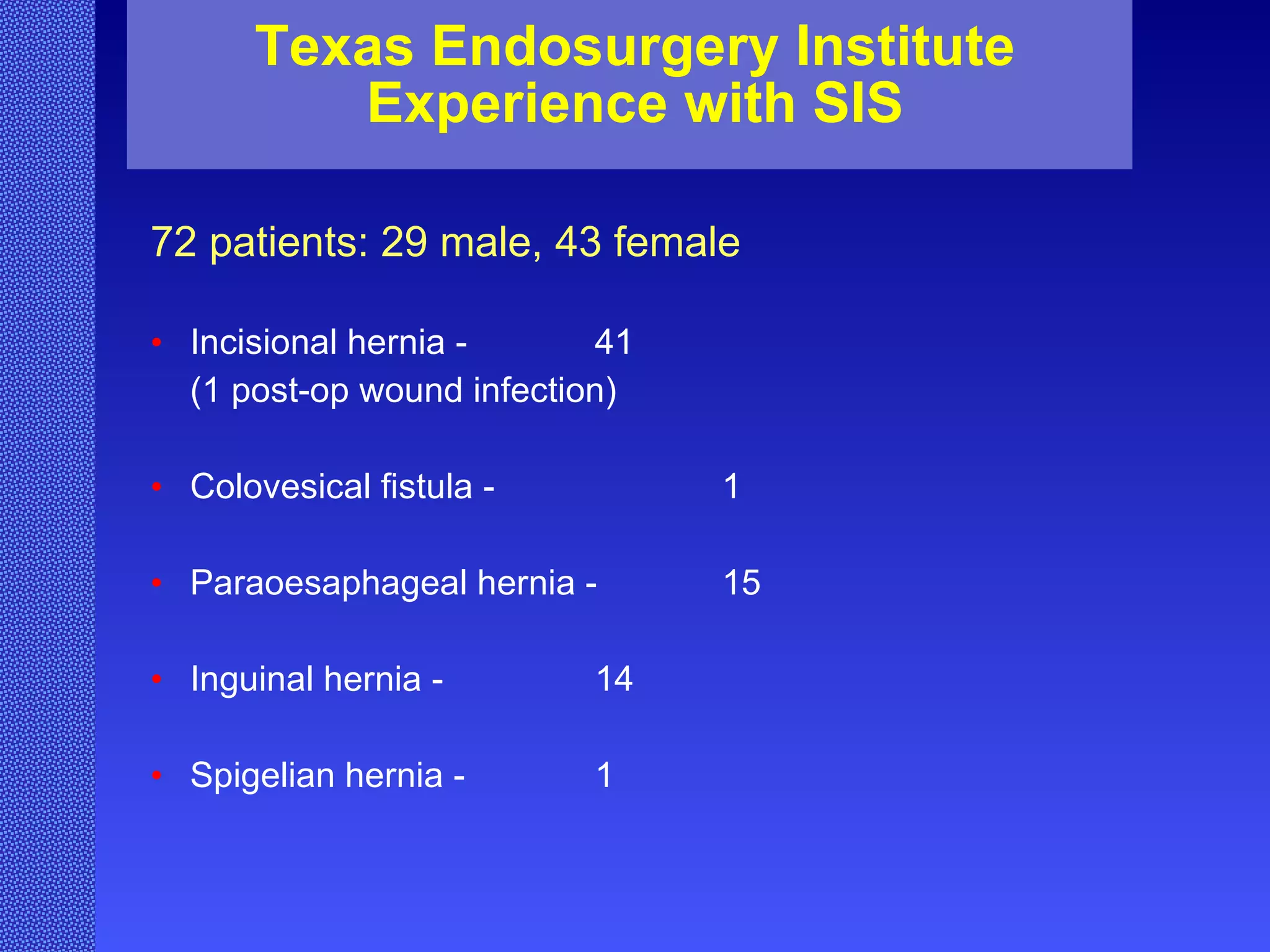
Texas Endosurgery Institute Experience with SIS 72 patients: 29 male, 43 female Incisional hernia - 41  (1 post-op wound infection) Colovesical fistula - 1 Paraoesaphageal hernia - 15 Inguinal hernia - 14 Spigelian hernia - 1
What about AlloDerm Issues? New AlloDerm instructions recommend “significant tension” – with a “tension free” repair technique…… Trying to minimize issues of laxity Recent studies with longer follow-up times are showing that AlloDerm presents significant problems (TSL 310) Jin, et al; “bridging repairs”, recurrence rates high at 60%, “not worth the high cost” - average $7,901 per patient “ Use only to reinforce primary fascial closure” – but still have recurrence rate of 21%
AlloDerm - How Do We Compete? Size matters! Permacol takes less time intraoperatively - no sewing on large repairs No waiting for rehydration, a problem especially if the surgeon underestimates required coverage size  No need to estimate “expansion” during surgery Permacol meets the needs for complicated cases Permacol is manufactured and marketed under strict FDA regulations Permacol has all of the advantages of a biologic with the added strength of crosslinking Lower cost per case
Description of Product Permacol is a sterile off-white, hydrated, tough but flexible flat sheet of acellular, crosslinked, porcine dermal collagen and its constituent elastin fibers. Crosslinked with non-calcifying HDMI  Porcine collagen in its original 3-D form. Permacol is a surgical implant and a medical device. Permacol is indicated for use as a soft tissue patch to reinforce soft  tissue where weakness exists and for the surgical repair of damaged or ruptured soft tissue membranes. FDA 510(k) concurrence for permanent implantation into human tissue  for specific indications.
Permacol Advantages Versus AlloDerm Crosslinking for dimensional stability, resistance to collagenase and long-term results Ease of use, handling and cost effective in the OR Pricing  Sizes Versus CollaMend Track Record – clinicals and experience  Sizes, better product shape and handling Well trained and knowledgeable sales force Versus Surgisis and all the others Crosslinking, resistance to collagenase and long-term results  Ease of use, handling and cost effective in the OR Sizes

Surgical Meshes and Methods of Fixation

  • 1.
    Surgical Meshes andMethods of Fixation George S. Ferzli MD, FACS Professor of Surgery, State University of New York
  • 2.
    We will covebiologic and synthetic meshes as well as closure of the defect during the course of the presentation.
  • 3.
    Is the abdomena weakness in the human race ?
  • 4.
    Incidence of VentralHernias Around 10 % of all laparotomies will generate incisional hernias. The bigger the incision, the higher the risk. ~77% are median hernias ~17% are lateral hernias ~6% are iliac hernias Direct closure have a high recurrences incidence (50%). The rate increases (58%) with repair of recurrent hernias. Significant reduction in recurrences is achieved when meshes are used. Luijendijk RW, et al. A Comparison of Suture Repair with Mesh Repair for Incisional Hernia .NEJM 2000; 343:392-398
  • 5.
    Factors influencing ventral hernia occurrence The most important functions of the abdominal wall are protection, compression and retention of the abdominal contents, flexion and rotation of the trunk and forced expiration. Endogen Exogene Others Age > 45 Sutures emergency BMI > 25 length of incision intra abdominal previous operation contamination pressure anemia Medication shock Type of incision smoker Corticoïds Aneurysm/Marfan (+30% risks)
  • 6.
    Hypothesis: In midline incisions closed with a single layer running suture, the rate of wound complications is lower when a suture length to wound length ratio of at least 4 is accomplished with a short stitch length rather than with a long one. Surgical site infection occurred in 35 of 343 patients (10.2%) in the long stitch group and in 17 of 326 (5.2%) in the short stitch group (P=0.2). Incisional hernia was present in 49 of 272 patients (18.0%) in the lo9ng stitch group and in 14 of 250 (5.6%) in the short stitch group (P<.001). Conclusion: In midline incisions closed with a running suture and having a suture length to wound length ratio of at least 4, current recommendations of placing stitches at least 10mm from the wound edge should be3 changed to avoid patient suffering and costly wound complications. Effect of Stitch Length on Wound Complications After Closure of Midline Incisions; A Randomized Controlled Study Daniel Millbourn, MD; Yucel Cengiz, MD, PhD; Leif A. Israelsson, MD, PhD Effect of Stitch Length on Wound Complications After Closure of Midline Incisions; A Randomized Controlled Study, Millbourn, D MD; Cengiz, Y MD, PhD; Israelsson, L MD, PhD Arch Surg/vol 144 (No. 11), Nov 2009 www.archsurg.com
  • 7.
    Table 2 .Wound complications related to stitch length Effect of Stitch Length on Wound Complications After Closure of Midline Incisions; A Randomized Controlled Study, Millbourn, D MD; Cengiz, Y MD, PhD; Israelsson, L MD, PhD Arch Surg/vol 144 (No. 11), Nov 2009 www.archsurg.com Stitch length a Fisher exact test. Complication Long Short P Value a Wound dehiscence, No. (%) of patients 1/381 (0.3) 0/356 .99 Surgical site infection No. (%) 35/343 (10.2) 17/326 (5.2) .02 Incisional hernia No. (%) 49/272 (18.0) 14/250 (5.6) .001
  • 8.
    Table 3 .Significant predictors of surgical site infection and incisional hernia a Effect of Stitch Length on Wound Complications After Closure of Midline Incisions; A Randomized Controlled Study, Millbourn, D MD; Cengiz, Y MD, PhD; Israelsson, L MD, PhD Arch Surg/vol 144 (No. 11), Nov 2009 www.archsurg.com Abbreviations: BMI, body mass index (calculated as weight in kilograms divided by height in meters squared); CI, confidence interval; OR odds ratio; SL, suture length; WL wound length A Results of logistic regression analysis. All recorded variables were included in the model and removed by a backward reduction strategy if nonsignificant. Predictor Regression Coefficient (SE) OR (95%CI) Surgical site infection Wound contamination 1.03 (0.48) 2.81 (1.09-7.25) Being diabetic 1.01 (0.38) 2.73 (1.30-5.72) Long stitch length 0.77 (0.31) 2.15 (1.17-3.96) Incisional hernia Male sex 0.76 (0.34) 2.14 (1.10-4.15) Higher BMI 0.05 (0.02) 1.05 (1.01-1.10) Longer operation time 0.005 (0.002) 1.01 (1.002-1.01) Surgical site infection 1.16 (0.40) 3.18 (1.44-7.02) SL to WL ratio <4 1.32 (0.52) 3.73 (1.36-10.26) Long stitch length 1.44 (0.34) 4.24 (2.19-8.23)
  • 9.
    Conclusions Effect ofStitch Length on Wound Complications After Closure of Midline Incisions; A Randomized Controlled Study, Millbourn, D MD; Cengiz, Y MD, PhD; Israelsson, L MD, PhD Arch Surg/vol 144 (No. 11), Nov 2009 www.archsurg.com When a long stitch length is used, the suture cuts through or compresses soft tissue included in the stitch. This increases the amount of devitalized tissue in the wound and may explain the correlation with infection. This also causes slackening of the suture, which allows the wound edges to separate and increases the risk of incisional hernia. • Surgeons should place stitches 5-8 mm from the wound edge, with minimal tension applied to the suture. • Midline incisions should be closed with a single layer, running monofilament suture and the SL to WL ratio should be at least 4. This ratio should be achieved with several small stitches that incorporate aponeurosis only.
  • 10.
  • 11.
    In humans theintra-abdominal pressure ranges from 0,2kPa (resting) to 20 kPa (maximum). Pressure
  • 12.
    Abdominal Wall ElasticityAfter the Intra-abdominal pressure, another important factor in the abdominal wall repair plays a role,it is the abdominal wall elasticity. The abdominal wall is elastic. The abdominal wall elasticity was studied by Pr Schumpelick and his team* He showed that the abdominal wall of a women is more elastic than the abdomen of a man. *Hernia (2001) 5: 113-118
  • 13.
    Ventral hernia meshpositioning: Onlay
  • 14.
    Ventral hernia meshpositioning: Inlay
  • 15.
    Ventral hernia meshpositioning: Underlay
  • 16.
    Ventral hernia meshpositioning: Intraperitoneal
  • 17.
    Types of prosthetics for hernia repair: Type 1: totally macroporous prosthesis, pores > 75 microns; example prolene, marlex Type 2: totally microporous prosthesis; pores < 10 microns; example gortex or dual mesh Type 3: macroporous prosthesis with microporous components; example Teflon, mersilene Type 4: biomaterials with submicronic pore size; example cilastic, cell gard
  • 18.
    Polyglactene Mesh (vicrylmesh) Alternative to nonabsorbable meshes Advantage host invasion and subsequent absorption of implant There is less infection complication, increase recurrence rate (satisfactory short term solution in infected hernias but not generally indicated when prolonged 10-side strength is required)
  • 19.
    Polypropylene Biomaterials Angimesh, Angiologics, S. Martino Sicc., Italy Biomesh P1 , Cousin Biotech, Wervicq-Sud, France Biomesh P3 , Cousin Biotech, Wervicq-Sud, France Biomesh 3D , Cousin Biotech, Wervicq-Sud, France C-QUR (polypropylene / omega 3 fatty acid coating), Atrium, NH, USA DynaMesh (polypropelene incorporated with polyvinylidene difluoride) FEG, Aachen, Germany Hetra 1, 2, HerniaMesh, S.R.L., Torino, Italy Hermesh 3,4,5, HerniaMesh, S.R.L., Torino, Italy Intramesh NKI, NK2, NK8, Cousin Biotech, Wervicq-Sud, France Marlex, C.R.Bard, Inc., Cranston NJ, USA
  • 20.
    Polypropylene Biomaterials Parietene, Sofradim International, Villfranche-sur-Saone, France Proceed (polypropelene / polydiaxanone / oxidized regenerated cellulose), Ethicon, Somerville, NJ, USA Prolene , Ethicon, Somerville, NJ, USA Prolene Soft Mesh , Ethicon, Somerville, NJ, USA Prolite , Atrium Medical Corporation, Hudson, NH, USA Prolite Ultra , Atrium Medical Corporation, Hudson, NH, USA Surgipro (Monofilament), United States Surgical Corp,/Tyco, Norwalk, CT, USA Sepramesh ( polypropylene mesh coated with Seprafilm - modified sodium hyaluronate and carboxymethylcellulose) Genzyme, MA, USA Surgipro (Multifilament), United States Surgical Corp./Tyco, Norwalk, CT, USA TiMesh (titanium-coated polypropylene) Medizintechnik GmbH, Nuremberg, Germany Trelex, Meadox Medical Corporation, Oakland, NJ, USA Ultrapro (Poliglecaprone-25 / Polypropylene) , Ethicon, Somerville, NJ, USA
  • 21.
    Polypropylene Mesh Schmittand Griman in 1967 first described successful use of polypropylene mesh in contaminated wounds Subsequent reports showed good initial healing but were fraught with long term complications Those complications are chronic infection, fistula formation, erosion into bowels or through skin grafts Jones and Jurkoyiun in 1989 reviewed 14 studies, 128 patients, and found 55 overall complication rate - enteric fistulization being the most common.
  • 22.
    In Favor ofPolypropylene Mesh: Extensive fibroblast in growth , incorporation by the host and can be used in contaminated fields Franklin ME et al. Lap ventral and incisional hernial repair. Surg Lap End 8(4):294-299 1998 285 lap ventral hernia and 520 lap inguinal hernia using IPOM with polypropylene mesh. 1 fistula formation (0.14%), 4 mesh infections (0.50%), and 6 reoperations for bowel obstruction secondary to mesh adhesions (0.75%). Relaparoscopy 27 patients (19 incisional, 8 inguinal): 1/3 no adhesions, 1/3 mild adhesions, 1/3 severe. Chowbey PK et al. Lap ventral hernia repair J La Adv Surg Tech 2000; 10:79-84 Bingener J et al. Adhesion formation after laparoscopic ventral incisional hernia repair with polypropylene mesh: a study using abdominal ultrasound, JSLS (2004)8:127-131
  • 23.
    Against polypropylene mesh:It is extremely difficult to lyse adhesions to polypropylene without causing enterotomies* Major complications with polypropylene not evident until years later 9 cases of mesh erosion fistula stainless steel (1) tantalum (1) mersilene (1) dexon (1) ppm (5). The time to the development of these fistulas ranged from 3 months to 14 years *Losanoff JE et al. Entero-colocutaneous fistula: a late consequence of polypropylene mesh abdominal wall repair: case report and review of the literature, Hernia 2002; 6: 144-147
  • 24.
    ePTFE Biomaterials DualMesh, W.L. Gore and Associates, Flagstaff, AZ, USA DualMesh Emerge, W.L. Gore and Associates, Flagstaff, AZ, USA DualMesh Plus , W.L. Gore and Associates, Flagstaff, AZ, USA DaulMesh Plus Emerge , W.L. Gore and Associates, Flagstaff, AZ, USA DualMesh with Holes , W.L. Gore and Associates, Flagstaff, AZ, USA DualMesh Plus with Holes , W.L. Gore and Associates, Flagstaff, AZ, USA Dulex , C.R. Bard, Inc., Cranston NJ, USA Mycromesh , W.L. Gore and Associates, Flagstaff, AZ, USA Mycromesh Plus , W.L. Gore and Associates, Flagstaff, AZ, USA Reconix , C.R. Bard, Inc., Cranston NJ, USA Soft Tissue Patch , W.L. Gore and Associates, Flagstaff, AZ, USA
  • 25.
    In Favor ofePTFE Microporous, smooth texture minimizes tissue in-growth and limits adhesion formation and bowel injury Combined with a large pore second layer it can adhere well to the abdominal wall
  • 26.
    Against ePTFE Microporousconstruction limits ability of macrophages to destroy bacteria Mesh infection is not well treated by antibiotics and requires mesh removal Does not integrate well into host tissue when not combined with a large pore mesh
  • 27.
    Polyester mesh Parietex (polyester and atelocollagen type 1, polyethylene glycol, glycerol) Covidien, Hamilton, Bermuda Polyester mesh incorporates well into the abdominal wall Collagen covering on the visceral surface protects bowel and dissolves as the polyester is incorporated
  • 28.
    Polyester and atelocollagentype 1, polyethylene glycol, glycerol (Parietex) Retrospective study of the use of Parietex in laparoscopic ventral hernia repair n = 20 patients Mean follow up - 10 months No morbidity or mortality No infections, rejections, fistulas, recurrences, or alterations in bowel function Parietex is safe for intra-abdominal use Moreno-Egea A, Liron R Girela E, Aguayo JL. Laparoscopic repair of ventral and incisional hernias using a new composite mesh (Parietex): initial experience. 2001 Surg Laparoc Endosc Percutan Tech Apr;11(2):103-6
  • 29.
    Polyester and atelocollagentype 1, polyethylene glycol, glycerol (Parietex) Comparison of Parietex with Sepramesh for ventral hernia repair in rabbit model Results at 5 months Parietx Sepramesh Strength of incorporation 70.9N 31.5N Bowel adhesions 0 4 Adhesion area 321 mm 2 840 mm 2 Shrinkage 17.4% 6.1% Parietex has stronger incorporation and is better at prevention of adhesiona than sepra mesh, however it undergoes considerably more shrinkage Judge TW, Parker DM, Dinsmore RC. Abdominal wall hernia repair: A comparison of Sepramesh and Parietex composite mesh in a rabbit hernia model. J Am Coll Surg 2007, Feb;204(2):276-81
  • 30.
    Polyester and atelocollagentype 1, polyethylene glycol, glycerol (Parietex) Experience with 656 laparoscopic ventral hernia repairs with Parietex Hernia defect closed with sutures to reduce seroma and restore abdominal wall function Laparoscopic mesh repair performed with Parietex mesh Chelala E. (2008) Personal correspondence
  • 31.
    Polyester and atelocollagentype 1, polyethylene glycol, glycerol (Parietex) Mean follow up 45 months Recurrences 20 (3.04%) “ Second look” operation for various reasons 70 Adhesion free 38 (54.3%) Minor adhesions 27 (38.6%) Serosal adhesions 5 (7.1%) Parietex is associated with low formation of dense adhesions Chelala E. Personal correspondence
  • 32.
    Open ventral herniarepair Competition BARD Ventralex Kugel Composix Composix E/X ETHICON Proceed ATRIUM C-Qur GORE Dualmesh GENZYME Sepramesh IP GfE TiMesh
  • 33.
    Properties of AbsorbableBarrier-Coated Meshes
  • 34.
    Ventral hernia repair- Mesh portfolio Open Open/Lap Hiatal Parastomal Covidien PCO OS PCO PPC PCO2H Coming soon Bard Ventralex (umbilical) Kugel composix Composix E/X Composix L/P Crurasoft Bard CK Ethicon Proceed Gore Dual mesh Atrium C-Qur
  • 35.
    Bard Ventralex Designedfor small ventral, umbilical, and epigastric hernia repairs Self-expanding polypropylene & ePTFE patch with a memory recoil ring Positioning straps to facilitate placement and suturing Memory recoil ring enables the patch to be folded and later “pop open” and lay flat after insertion into the intra-abdominal space. Available in 4, 6 and 8 cm diameter
  • 36.
    Bard Ventralex /Composix structure PTFE stitches makes the surface non continuous and create bridges between viscera and PP layers
  • 37.
    Bard Ventralex rebuttalStrengths Easy to implant Weaknesses Low antiadhesion efficacy PTFE stitches creates holes in the ePTFE layer allowing for adhesions
  • 38.
    Bard Composix E/XTwo distinctly different sides: Polypropylene mesh on one side to promote tissue ingrowth and sub-micronic ePTFE on the other side to minimize adhesions to the prosthesis. The 2 layers are stitched with PTFE monofilament. Elliptically shaped design: Reduces the need to trim the mesh, saving time. Low Profile: Makes it ideally suited for laparoscopic ventral hernia repairs. Sealed Edge: Prevents exposure of the polypropylene mesh side from contact with the bowel, thus potentially reducing the chances of adhesions around the edge of the prosthesis.
  • 39.
    Bard Composix E/Xrebuttal Strengths Protected edge Elliptic shape Weaknesses Heavy weight PP induces high fibrosis. Holes in the ePTFE side made by the PTFE stitches may create adhesions Cannot be cut as the PP layer will be widely exposed Low clinical efficacy (high rate of adhesions) The two layers from the Bard Composix E/X were no longer attached, and tissue or adhesions were found frequently between the two layers. The mesh edges were lifted and not smoothly encapsulated as with the previous mesh materials. Adhesions from the caecum to the mesh were found in five of the 12 animals (42%) Source: Gonzales study, Hernia 2004
  • 40.
    Bard Composix LPMade with lightweight, low profile polypropylene Soft Mesh that is 60% lighter than traditional polypropylene mesh Easier handling and laparoscopic insertion, all sizes can fit through a trocar Optional Introducer Tool, which is packaged with larger sizes, makes insertion even easier Two distinctly different sides: polypropylene Soft Mesh on one side to promote tissue ingrowth and sub-micronic ePTFE on the other side to minimize tissue attachment to the prosthesis Sealed Edge: Overlap of ePTFE protects the edge of the mesh from visceral attachment
  • 41.
    Bard composix L/Prebuttal Strengths Sealed edges Introducer tool Light PP mesh on parietal side Weaknesses Holes in the ePTFE side made by the PTFE stitches may create adhesions Low clinical efficacy (high rate of adhesions) Cannot be cut as the PP layer will be widely exposed
  • 42.
    Bard Composix KugelDouble layer of monofilament polypropylene. These two layers create a positioning pocket, which is used to guide the patch into the proper position. On the other side is a barrier of ePTFE. The PP layers and ePTFE are stitched with PTFE monofilament The patch also contains a patent-protected &quot;memory recoil ring,&quot; which causes the patch to spring open and maintain its shape during placement.
  • 43.
    Bard Composix Kugelrecall Risk of rupture of the PET memory recoil ring This can lead to bowel perforations (rupture) and/or chronic (recurring) intestinal fistulae (abnormal connections or passageways between the intestines and other organs). Product Code Description Lot Numbers Recalled Date Recalled 0010206 Bard® Composix® Kugel® Extra Large Oval, 8.7” x 10.7” All Lot Numbers December 2005 and January 2006 0010207 Bard® Composix® Kugel® Extra Large Oval 10.8” x 13.7” All Lot Numbers December 2005 and January 2006 0010208 Bard® Composix® Kugel® Extra Large Oval, 7.7” x 9.7” All Lot Numbers December 2005 and January 2006 0010209 Bard® Composix® Kugel® Oval, 6.3” x 12.3” All Lot Numbers March, 24, 2006 0010202 Bard® Composix® Kugel® Large Oval, 5.4” x 7.0” All Lot Numbers January 10, 2007 0010204 Bard® Composix® Kugel® Large Circle, 4.5” All Lot Numbers January 10, 2007
  • 44.
    Bard Composix Kugelrebuttal Weaknesses Kugel mesh too thick to be used laparoscopically (Ideal approach ) Mesh shrinkage and migration is a potential problem (there are several recurrences but the mesh is not visualized laparoscopically) Rupture of the memory recoil ring Low clinical efficacy on anti adhesion prevention Strengths Memory effect for intraperitoneal placement
  • 45.
    Ethicon Proceed Multilayeredtissue separating mesh comprised of: PROLENE* Soft polypropylene Mesh Monofilament polypropylene encapsulated with polydioxanone (PDS) Designed for strength, durability, and adaptability Oxidized regenerated cellulose (ORC) fabric Minimizes tissue attachment Plant-based material (non-animal) Absorbable polydioxanone (PDS) Creates a flexible, secure bond between the mesh and ORC layers
  • 46.
    Ethicon – ProceedMesh Lightweight Monofilament Construction Less foreign mass Flexible scar tissue Strong tissue incorporation Excellent Handling Low profile Blue-striped surface distinguishes the parietal from the visceral side Resists Bacterial Colonization No ePTFE Lightweight, macro porous, monofilament mesh structure Allows fluid flow-through Recovers to Original Shape Once Placed Easily deployed and positioned once inside abdominal cavity Conforms to anatomy Readily customized
  • 47.
    Timeline— The Progressof Peritoneal Healing Day 1- PROCEED mesh is implanted and the mesh begins to incorporate into the abdominal wall. ORC forms a continuous gel that physically separates mesh from underlying viscera surfaces, reducing the severity and extent of tissue attachment.
  • 48.
    Timeline— The Progressof Peritoneal Healing Day 7- Neoperitoneum is formed within 7 to 10 days. Absorbable components have begun to break down.
  • 49.
    Timeline— The Progressof Peritoneal Healing Day 14 - ORC is absorbed Peritoneum is fully restored
  • 50.
    Timeline— The Progressof Peritoneal Healing Day 91- The PDS and ORC are completely absorbed. The remaining polypropylene mesh is surrounded by fibroblasts and the neoperitoneum is supported by a well-organized fibroblast bed.
  • 51.
    PROCEED* Surgical MeshEssential Prescribing Information Warnings: When this mesh is used in infants, children, pregnant women, or women planning pregnancies, the surgeon should be aware that this product will not stretch significantly as the patient grows. PROCEED Mesh should not be placed in a contaminated surgical site. The mesh may not be used following planned intraoperative or accidental opening of the gastrointestinal tract. PROCEED Mesh has an ORC component, which must not be used in cases in which appropriate hemostasis has not been established. Tissue attachment to the mesh can result if appropriate hemostasis is not achieved.
  • 52.
    Ethicon Proceed rebuttalStrengths Weaknesses Low clinical efficacy Contraction of the Prolene Soft by 34% No memory shape, difficult to manipulate, tends to adhere to tissue when wet, Meticulous haemostasis must be achieved* Low intra-op light, No overlap over the edges, De-lamination cases due to resorbable PDS may induce seroma, higher sepsis risk Low resistance to suture *IFU WARNINGS PROCEED Mesh has an ORC component, which must not be used in cases in which appropriate hemostasis has not been established. Tissue attachment to the mesh can result if appropriate hemostasis is not achieved
  • 53.
    Atrium C-Qur andC-Qur edge Atrium’s new C-QUR™ Mesh technology combines lightweight ProLite Ultra™ polypropylene surgical mesh with a proprietary, highly purified Omega 3 fatty acid bio-absorbable coating. C-Qur edge features a reinforced edge design for enhanced fixation stability and ease of use. Fatty acid may have antimicrobial properties. Resorption of the coating occurred within 3 to 6 months
  • 54.
    Atrium C-Qur andC-Qur edge rebuttal Strengths Animal testing show minimal adhesion and good tissue integration Fatty acid may have antimicrobial effect (not validated in clinicals) Transparent, good visibility of landmarks Weaknesses Lack of human studies
  • 55.
    Dualmesh ® Gore,Inc. GORE DUALMESH® Biomaterial is a soft, conformable, ePTFE sheet material that offers a unique, two-surface design intended for such applications. The biomaterial features two functionally distinct surfaces: a closed structure surface for reduced tissue attachment and a macro porous structure surface for faster tissue attachment.
  • 56.
    Gore Dual mesh/ Dual mesh Plus Gore Dual mesh is a dual layer of ePTFE Visceral side is composed of ridges and valleys, called as Corduroy, to create porosity (22 µm). The smooth visceral side of the material is brown. GORE-TEX® DUALMESH® PLUS Biomaterial is impregnated with two antimicrobial agents – chlorhexidine and silver – intended to inhibit bacterial colonization of the prosthesis for a period of up to ten days post-implantation.
  • 57.
    Gore Dual meshrebuttal Strengths Used for many years Weaknesses No tissue integration High rate of seroma Need strong fixation: tacks and sutures Highest Shrinkage among material High density Opaque: cannot see the anatomical landmarks, vessel and nerves Shiny surface under lap “ The use of antimicrobial-impregnated ePTFE mesh with silver/chlorhexidine in laparoscopic ventral hernia repair is associated with noninfectious postoperative fever. In our patients, the evaluation and management of these fevers resulted in a significantly longer hospital stay.” Cobbs, Am Surg. 2006 Dec;72(12):1205-8;
  • 58.
    Genzyme Sepramesh IPSepramesh™ IP Bioresorbable Coating / Permanent Mesh is co-knitted using polypropylene (PP) and polyglycolic acid (PGA) fibers to result in a two-sided mesh with a PP surface and a PGA surface. The mesh is coated on the PGA surface with a bioresorbable, chemically modified sodium hyaluronate (HA), carboxymethylcellulose (CMC) and polyethylene glycol (PEG) based hydrogel. PGA Fibers maintain 50% of the reinforcement strength during the 1st 28 days Bioresorbable coating protects for up to 14 days while peritoneum heals Hydrogel swells to cover sutures, tacks and mesh edges
  • 59.
    Genzyme Sepramesh IPrebuttal Strengths Animal studies show low rate of adhesions Good mechanical properties (burst strength and suture retention) Translucent Good memory shape Weaknesses Lack of human studies Requires 12mm or 15mm trocar for lap insertion (8x15, 10x20, 15x20, 20x30)
  • 60.
    Genzyme Sepramesh IPIn preclinical animal studies, Sepramesh®IP demonstrated tissue incorporation superior to ePTFE composite mesh.1 In mechanical tests of burst strength and suture retention, Sepramesh®IP outperformed standard polypropylene mesh in both measures.1
  • 61.
    Genzyme Sepramesh IP Sepramesh®IP Versus Other Meshes In animal studies, Sepramesh®IP significantly outperformed alternative hernia repair products in protecting the bowel from adhering to the mesh.1 Representative images from preclinical animal studies demonstrate incidence of dense bowel adhesions to the mesh.1 The relevance of these findings to humans is not known.
  • 62.
    GfE TiMesh GfEis a German company TiMesh launched mid-2003 Key Points Monofilament polypropylene mesh completely coated in Titanium Sold in two forms – Light and Extra light Titanium is NOT an anti-adhesive Product sold in Europe for years Disadvantages Very expensive (~$195 - $225/flat sheet)
  • 63.
    Competition evaluation CovidienPariextex Composite Bard Composix E/X Bard Ventralex Ethicon Proceed Atrium C-Qur Gore Dualmesh Genzyme Sepramesh IP Adhesion prevention +++ + + + ? + ++ Tissue integration ++ + + + + - ++ Shrinkage + + + + + - + Elasticity ++ - - + ? - + Ease of fixation ++ + ++ + + - + Protected edge Y Y Y N N N N
  • 64.
  • 65.
  • 66.
    Level of ComplexityGrade 1 Low risk of infection Low risk of complications Grade 2 Smoker Immunosuppressed Obese Diabetic Grade 4 Active infection Infected mesh Grade 3 Contamination risk Stoma present Violation of bowel wall Previous Wound infection Grade 5 Traumatic fascia loss Extensive fascia loss Percent Performed Open Patients with co-morbid conditions have up to 4x increase in wound-infection rates Open incisional hernias are 10x more likely to have infection than a clean surgical case Infected mesh commonly results in a 2 nd procedure for removal Synthetic Biologic
  • 67.
  • 68.
    Repair Techniques AutologousMyocutaneous Flaps Morbidity and availability issues Tissue Bank Cadaveric Grafts Sterility and tissue quality issues Impact of Alloderm Components Separation Prosthetic Repair Healing by Secondary or Tertiary Intention
  • 69.
    Components Separation Developedby Dr. Ramirez in the late 80’s Employs the use of autologous myofascial tissue to effect abdominal wall closure Bilateral relaxation incisions 2cm lateral to the external oblique from costal margin to level of symphasis pubis Blunt separation of external oblique layer from underlying internal oblique layer taking care not to interrupt vascular/nerve supply May employ undermining of one or both posterior rectus sheaths to achieve further medial advancement **Provides dynamic support of the abdominal girdle**
  • 70.
  • 71.
    Grevious MA. CohenM. Shah SR. Rodriguez P. Structural and functional anatomy of the abdominal wall. Clinics in Plastic Surgery. 33(2):169-79, v, 2006 Apr. External Oblique Internal Oblique Transversus Abdominis Rectus Abdominis Components Separation
  • 72.
  • 73.
  • 74.
    Components Separation The Ideal Reconstructive Approach Should: Specifically address the nature of the defect Restore normal function Maintain short- and long-term mechanical integrity (absence of recurrent herniation) Have a low incidence of complications Be reliable in sub-optimal (hostile) wound environments Use autologous tissue
  • 75.
    Abdominal Wall Reconstruction:Lessons Learned From 200 “Components Separation” Procedures Jason H. Ko, MD; Edward C. Wang, PhD; David M. Salvay, MS; Benjamin C. Paul, BA; Gregory A. Dumanian, MD Abdominal Wall Reconstruction: Lessons Learned From 200 “Components Separation” Procedures. Ko, J, MD; Wang, E, PhD; Salvay, D, MS; Paul. B, BA; Dumanian, G, MD ArchSurg/vol 144 (No. 11), Nov 2009 www.archsurg.com Conclusions: Large complex hernias can be reliably repaired using the components separation technique despite the presence of open wounds, the need for bowel surgery and numerous co-morbidities. The long-term strength of the hernia repair is not augmented by acellular cadaveric dermis but seems to be improved with soft polypropylene mesh.
  • 76.
    Abdominal Wall Reconstruction:Lessons Learned From 200 “Components Separation” Procedures. Ko, J, MD; Wang, E, PhD; Salvay, D, MS; Paul. B, BA; Dumanian, G, MD ArchSurg/vol 144 (No. 11), Nov 2009 www.archsurg.com Figure 1. Modified “components separation” technique using bilateral transverse subcostal incisions to access the external oblique muscle and fascia . A, Using a narrow Deaver retractor and a Bovie cautery with and extender, the external oblique muscle and fascia are divided superiorly (above the rib cage) and inferiorly. B, At the caudal aspect of the midline incision, the cut edge of the external oblique muscle and fascia is delivered using manual traction for complete release. Need illustration
  • 77.
    Abdominal Wall Reconstruction:Lessons Learned From 200 “Components Separation” Procedures. Ko, J, MD; Wang, E, PhD; Salvay, D, MS; Paul. B, BA; Dumanian, G, MD ArchSurg/vol 144 (No. 11), Nov 2009 www.archsurg.com Figure 2 “Components separation” technique with midline approximation of the rectus abdominus muscles. A, No mesh. B, Acellular cadaveric dermis underlay. C, Soft polypropylene mesh underlay. Need illustration
  • 78.
    Abdominal Wall Reconstruction:Lessons Learned From 200 “Components Separation” Procedures. Ko, J, MD; Wang, E, PhD; Salvay, D, MS; Paul. B, BA; Dumanian, G, MD ArchSurg/vol 144 (No. 11), Nov 2009 www.archsurg.com Figure 3 A 41-year old man with a history of a perforated appendix treated through a midline incision who later developed an incisional hernia. A, Preoperative oblique view after a hernia repair with polypropylene mesh by another surgeon. B, Preoperative computed tomography scan demonstrating the small bowel herniating to the right of the polypropylene mesh, with wide displacement of the rectus abdominus muscles. C, Six-month postoperative oblique view demonstrates restoration of abdominal wall continuity. D, Postoperative anterior view demonstates stable midline closure and bilateral transverse subcostal incision scars. Need photos
  • 79.
    Figure 4. Predictorsof hernia recurrence and major and minor complications using logistic regression controlling for mesh type and follow-up duration. Error bars represent 95% confidence intervals. BMI indicates body mass index. Abdominal Wall Reconstruction: Lessons Learned From 200 “Components Separation” Procedures. Ko, J, MD; Wang, E, PhD; Salvay, D, MS; Paul. B, BA; Dumanian, G, MD ArchSurg/vol 144 (No. 11), Nov 2009 www.archsurg.com Need graph
  • 80.
    Abbreviation: NA, notapplicable. a Includes patients in whom components separation was performed concurrently with panniculectomy or parastomal hernia repair. a Major complications include hematoma, infection that requires incision and drainage, repeated operation for any complication, myocardial infarction, pulmonary embolus and death. c Minor complications include cellulitis, seroma that requires aspiration, skin sloughing and wound breakdown. d Fisher exact test for categorical variables and the F text for continuous variables. e Statistically significant. Abdominal Wall Reconstruction: Lessons Learned From 200 “Components Separation” Procedures. Ko, J, MD; Wang, E, PhD; Salvay, D, MS; Paul. B, BA; Dumanian, G, MD ArchSurg/vol 144 (No. 11), Nov 2009 www.archsurg.com Table 2. Rates of Recurrence and Complications Based on Type of “Component Separation” Repair a Type of Repairs Patients No. Follow-up Mean mo Recurrence No. (%) Time to Recurrence Mean mo Major ComplicationsNo. (%) b Minor Complications No. (%) c No mesh 158 9.6 36 (22.8) 14.3 40 (25.3) 30 (19.0) Poly propylene 6 5.4 1 (16.7) 9.9 1 916.7) 2 (33.3) Cadaveric dermis 18 14.7 6 (33.3) 17.8 4 (22.2) 3 (16.7) Soft polypropylene 18 13.8 0 NA 3 (16.7) 3 (16.76) Total 200 10.3 43 (21.5) 14.8 48 (24.0) 38 (19.0) P value d 0.20 0.04 e 0.92 0.92 0.80
  • 81.
    The components separationtechnique many be an ideal hernia repair for large defects because it weakens or loosens the contracted sides of the abdominal wall to augment the midline repair. Increased lateral wall compliance may reverse the lateral abdominal wall disuse atrophy and fibrosis seen in animal incisional hernia models. Abdominal Wall Reconstruction: Lessons Learned From 200 “Components Separation” Procedures. Ko, J, MD; Wang, E, PhD; Salvay, D, MS; Paul. B, BA; Dumanian, G, MD ArchSurg/vol 144 (No. 11), Nov 2009 www.archsurg.com Observations
  • 82.
    The midline movementof tissue with the components separation technique permits the excision of all scarred and inflamed tissues. Abdominal Wall Reconstruction: Lessons Learned From 200 “Components Separation” Procedures. Ko, J, MD; Wang, E, PhD; Salvay, D, MS; Paul. B, BA; Dumanian, G, MD ArchSurg/vol 144 (No. 11), Nov 2009 www.archsurg.com Observations
  • 83.
    • Thehernia recurrence rate with a cadaveric dermis underlay was even higher than that for primary closure. At the time of repeated operation the cadaveric dermis was often difficult to find and when present, large holes in the material itself, were often noted. • Cadaveric dermis alone does not provide long-lasting or durable results in abdominal wall reconstruction and should therefore, be reserved for contaminated wounds, where a prosthetic mesh is best avoided. Abdominal Wall Reconstruction: Lessons Learned From 200 “Components Separation” Procedures. Ko, J, MD; Wang, E, PhD; Salvay, D, MS; Paul. B, BA; Dumanian, G, MD ArchSurg/vol 144 (No. 11), Nov 2009 www.archsurg.com Observations
  • 84.
    Abdominal Wall Reconstruction:Lessons Learned From 200 “Components Separation” Procedures. Ko, J, MD; Wang, E, PhD; Salvay, D, MS; Paul. B, BA; Dumanian, G, MD ArchSurg/vol 144 (No. 11), Nov 2009 www.archsurg.com Conclusions: • A major lesson learned over the years is that handling of the skin is important, especially in patients with an elevated BMI. Wide undermining of the skin to release the oblique musculature disrupts the perforator blood flow to the midline abdominal skin, thereby contributing to wound complications in these patients.
  • 85.
    Abdominal Wall Reconstruction:Lessons Learned From 200 “Components Separation” Procedures. Ko, J, MD; Wang, E, PhD; Salvay, D, MS; Paul. B, BA; Dumanian, G, MD ArchSurg/vol 144 (No. 11), Nov 2009 www.archsurg.com Conclusions: • Senior author Gregory Dumanian adapted his surgical technique to perform the external oblique releases through bilateral transverse subcostal incisions to avoid wide undermining, an evolution of the technique of “periumbilical perforator preservation.” Releases take only 15-20 minutes to perform and avoid the setup of endoscopic equipment.
  • 86.
    Abdominal Wall Reconstruction:Lessons Learned From 200 “Components Separation” Procedures. Ko, J, MD; Wang, E, PhD; Salvay, D, MS; Paul. B, BA; Dumanian, G, MD ArchSurg/vol 144 (No. 11), Nov 2009 www.archsurg.com Conclusions: • Another skin-handling technique is to perform a panniculotomy at the time of the components separation for morbidly obese patients with infraumbilical hernias (repairs of hernias that extend above the umbilicus are generally performed using vertical midline incisions). A third improvement for skin handling is the use of short-term subatomospheric pressure dressings as immediate postoperative dressings in patients with an elevated BMI, gross contamination and large suprapubic dead spaces. This “semi-closed” technique for skin management had led to decreased seroma formation and infections in addition to allowing access to the midline fascial closure in the immediate postoperative period.
  • 87.
    Serious Complications Associatedwith Negative Pressure Wound Therapy Systems Date: November 13, 2009 Dear Healthcare Practitioner: This is to alert you to deaths and serious complications, especially bleeding and infection, associated with the use of Negative Pressure Wound Therapy (NPWT) systems, and to provide recommendations to reduce the risk. Although rare, these complications can occur wherever NPWT systems are used, including acute and long-term healthcare facilities and at home. FDA has received reports of six deaths and 77 injuries associated with NPWT systems over the past two years.
  • 88.
      Table 1:NPWT is contraindicated for these wound types/conditions:  Necrotic tissue with eschar present Untreated osteomyelitis Non-enteric and unexplored fistulas Malignancy in the wound Exposed vasculature Exposed nerves Exposed anastomotic site Exposed organs
  • 89.
      Table 2:Patient risk factors/characteristics to consider before NPWT use:   Patients at high risk for bleeding and hemorrhage Patients on anticoagulants or platelet aggregation inhibitors P atients with: F riable vessels and infected blood vessels • V ascular anastomosis • I nfected wounds • O steomyelitis • E xposed organs, vessels, nerves, tendon, and ligaments • S harp edges in the wound (i.e. bone fragments) • S pinal cord injury (stimulation of sympathetic nervous system) • E nteric fistulas P atients requiring:  MRI  Hyperbaric chamber  Defibrillation  patient size and weight  use near vagus nerve (bradycardia)  circumferential dressing application  mode of therapy- intermittent versus continuous negative pressure
  • 90.
  • 91.
    Potential Mesh-Related Complications:Infection Intestinal adhesions Bowel obstructions Erosion of the prosthesis into the adjacent hollow viscous Contraction of prosthesis
  • 92.
  • 93.
    Material Functions forSoft Tissue Repair Synthetics Autografts Good mechanical properties Low cost High foreign body reaction Infection up to 8% 1 Can cause pain Native Tissue Good Mechanical Properties Donor Site Morbidity Many patients unqualified Strong reinforcement Biocompatible Supports ingrowth Ease of handling Ability to vascularize Xeno/Allo graft
  • 94.
    Tissue-Generated Biomaterials Humanacellular dermis Alloderm , LifeCell, Branchburg, NJ, USA Flex HD , Ethicon, Somerville, NJ, USA AlloMax , Davol, Cranston, NJ, USA Xenogenic acellular dermis Permacol (porcine), Tissue Science Laboratories, Aldershot, Hampshire, Eng. SurgiMend (bovine), TEI Biosciences, Boston, MA, USA CollaMend (porcine), Davol, Cranston, NJ, USA XenMatriX (porcine), Brennen Medical LLC ST. Paul, MN, USA Strattice , (porcine) LifeCell, Branchburg, NJ, USA Porcine small intestinal submucosa Surgisis , Cook Medical, West Lafayette, IN, USA FortaGen , Organogenesis, Canton, MA, USA
  • 95.
    Processing of BiomaterialsCadaveric, Bovine, Porcine , Equine : removal of all live cells and removal of all nuclear tissue to prevent rejection by the host. Cross-linking: serve to form either an intermolecular or an intramolecular cross-link between two aminoacids along protein structure ( HDMI and EDC are in common use). Crosslinked products are more resistant to collagenase degradation ( more stable in infected fields where collagenases are secreted by bacteria ). Rapid dissolution in the presence of enteric contents ( fistulas ). Must be placed in direct contact with healthy tissue ( no infection,fluid or dead tissue ) and under no tension . They should not be used in bridging the defects .
  • 96.
    Cook ® Surgisis Surgisis ® Gold ™ (SIS) Porcine intestinal material Limited sizes – 7 cm x 10 cm up to 20 cm x 20 cm Must be layered for large sizes Not crosslinked Perforated to allow in-growth Reputation for not lasting 18 month shelf life http://www.cooksurgical.com/
  • 97.
    Surgisis Mesh Four-plyprosthetic mesh derived from porcine small intestine submucosa, naturally occurring extracellular matrix that is easily absorbed, supports new vessel growth, and fosters cellular differentiation The lack of permanent foreign material may decrease risk of mesh infection
  • 98.
    SIS SIS remodelsto a tissue with strength that exceeds that of the native tissue when used as a body wall repair device. SIS aortic graphs with S. aureus – no evidence of infection after 30 days Bodylak et al. Comparison of the resistance to infection of intestinal submucosa arterial grafts versus PTFE arterial prosthesis in a dog model. J Vasc Surg: 19; 465, 1994 Bodylak et al. Strength over time of a resorbable bioscaffold for body wall repair in a dog model. J Surg Res 99 (2): 282-287 2001 SIS was associated with improved graft patency, less infection, complete incorporation, and no false aneurysm formation when compared with PTFE in adult mongrel pigs. T. Wright Jernigan et al. Ann Surg 2004;239: 733-740.
  • 99.
    Texas Endosurgery Institute Experience with SIS Prospective study of use of Surgisis mesh in potentially or grossly contaminated fields Procedures all performed laparoscopically 116 patients (133 procedures performed) Hernias included: Incisional 57 Umbilical 38 Inguinal 29 Spigelian 4 Femoral 3 Parastomal 2 > 2 different hernias repaired 13 Franklin ME, et al.The use of porcine small intestinal submucosa as a prosthetic material for laparoscopic hernia repair in infected and potentially contaminated fields: long-term follow-up. Surg Endosc 2008 Sep;22(9):1941-6
  • 100.
    Texas Endosurgery Institute Experience with SIS Infected field 39 Potentially contaminated field 94 Hernia repairs with concurrent contaminated procedure 91 Intestinal obstruction 25 Strangulated hernias 16 Small bowel resections 17 Hernia repairs with concurrent removal of infected mesh 12 Franklin ME, et al.The use of porcine small intestinal submucosa as a prosthetic material for laparoscopic hernia repair in infected and potentially contaminated fields: long-term follow-up. Surg Endosc 2008 Sept;22(9):1941-6
  • 101.
    Texas Endosurgery Institute Experience with SIS 85% 5-year follow-up Recurrences 7 (5.26%) Seromas (all resolved) 11 (8.2%) Mild pain 10 (8%) Wound infection 1 (0.75%) Franklin ME, et al.The use of porcine small intestinal submucosa as a prosthetic material for laparoscopic hernia repair in infected and potentially contaminated fields: long-term follow-up. Surg Endosc 2008 Sept;22(9):1941-6
  • 102.
    Texas Endosurgery Institute Experience with SIS 6 Second looks performed 5/6 - mesh totally integrated into tissue Corroborated histologically SIS mesh in contaminated or potentially contaminated fields is a safe material for hernia repair with minimal recurrence Franklin ME, et al.The use of porcine small intestinal submucosa as a prosthetic material for laparoscopic hernia repair in infected and potentially contaminated fields: long-term follow-up. Surg Endosc 2008 Sept;22(9):1941-6
  • 103.
    Texas Endosurgery InstituteExperience with SIS Results: Near complete incorporation by surrounding tissues with microscopic confirmation of the abundant ingrowth of collagen material and a solid healing plate Tensile strength comparable to the nonabsorbable meshes while retaining the benefits of the absorbable meshes. (  infection and  adhesion)
  • 104.
    FortaGen OrganogenesisPorcine derived tissue : crosslinked collagen Begin to infiltrate with cells by 30 days post-implant Are substantially remodeled by 6 months Are well-integrated at the suture line (provides a lasting graft-host tissue interface not dependent on permanent sutures) Do not elicit a foreign body response Are as strong as adjacent host tissue at 360 days Do not re-herniate
  • 105.
    LifeCell Alloderm AlloDerm® Cadaveric tissue Limited sizes High cost Well established Not regulated by FDA as a medical device Claims are extreme Migration from other surgical areas was natural Regenerate is new phrase vs. resorption
  • 106.
    Comparison of BiologicGrafts – Overview of Gaertner Study Alloderm Bulge Alloderm Translucency Gaertner, W et al. Experimental Evaluation of Four Biologic Prostheses for Ventral Hernia Repair. J Gastrointest Surg July 2007 Thickness at the defect area diminished significantly at 6 months with both Veritas and AlloDerm (P<0.05), so much so that they became translucent. Permacol and Peri-Guard, the mean defect area and thickness were virtually identical to when they were originally installed 6months earlier. Tensile strength of the material itself after 6 months was significantly reduced for the non-cross-linked prostheses (Veritas and AlloDerm) compared to the cross-linked prostheses (Peri-Guard and Permacol). Stretching, bulging, and translucency were routine with AlloDerm.
  • 107.
    Davol - Allomax Acellular Human dermal collagen. Can be used in open and In Laparoscopy. Hydrates rapidly with Immersion in saline No unpleasant odor. Supple with limited Elasticity. Available in different Sizes.
  • 108.
    FlexHD Musculo-Skeletal Foundation( MTF ) Acellular dermal matrix from Human allograft skin. Alliance between Ethicon and Musculoskeletal transplant Foundation ( MTF ). Prehydrated with no need for Refrigeration.
  • 109.
    Permacol Permacolis made from porcine dermis collagen and elastin Cells, cell debris, RNA and DNA are removed during a patented manufacturing process a crosslinking step renders the collagen resistant to collagenase Crosslinked ( with non-calcifying HDMI ) in its native state, collagen architecture and structure is maintained Permacol is not reconstituted. Porcine collagen is in its original 3D form. It has a bad odor. Must be hydrated in saline.
  • 110.
    Permacol Supplied sterile, hydrated & ready-to-use Flexible and strong Flat, continuous collagen sheet Easily cut to desired shape
  • 111.
    Patented process usedto manufacture Permacol Porcine dermis Extraction of Cells, RNA, DNA Collagen structure maintained Crosslinking for durability Extraction of fat Permacol
  • 112.
    Strattice lifecell Strattice® Reconstructive Tissue Matrix is a surgical mesh that is derived from porcine skin and is processed and preserved in a phosphate buffered aqueous solution containing matrix stabilizers. Place device in maximum possible contact with healthy, well-vascularized tissue to promote cell ingrowth and tissue remodeling. Always use sterile gloved hands or forceps when handling Strattice. Must be soaked for two minutes at room temperature in Lactated Ringer. Use permanent sutures with at least 3 to 5 cm underlay. Must be in contact with healthy tissues to permit regeneration.
  • 113.
    Davol – CollaMendRegulatory status 510(k) clearance Substantial equivalence using Permacol ® as predicate device Basic characteristics Porcine dermal collagen Processed to render it acellular Crosslinked using EDC (Carbodiimide) Freeze-dried Sterile (EtO - Ethylene Oxide) Four ventral hernia sizes (up to 20.3cm x 25.4cm) Clinical experience No published papers to date on clinical or pre-clinical experience
  • 114.
    Davol - XenmatrixPorcine Dermis Cellular material is removed without a significant loss in strength. It is not cross -linked. Open structure supports tissue ingrowth and increased elasticity. Maintains significant strength in animal model 2-8 weeks Post-implantation in animal model Favorable clinical results have been reported with the use of Xenmatrix. Pomahac et al:Use of non cross linked porcine dermal scaffold in abdominal wall reconstruction Am J Surg 2009
  • 115.
    CRYOLIFE PROPATCH DecellularizedBovine pericardium. Fully Hydrated and kept at room temperature. 0.6 mm Thick. Multiple pre-shaped sizes. High sutures retention strength. Biological scaffold.
  • 116.
    Surgimend TEI FetalBobine. Can be used in open and laparoscopic surgery Available in different sizes as large as 25x 40 cm. Can be placed in any direction or side. Hydration 60 seconds in saline room temperature.
  • 117.
    In favor oftissue-generated biomesh : Coverage for exposed viscera (open abdomen) May reduce fistula formation May promote wound vascularization and contraction May be more resistant to infection (use in contaminated fields?)
  • 118.
    Against tissue-generated biomesh: Clinical experience in laparoscopy is limited High cost Long-term tensile strength is unknown Poor collagen I/III ratios in the replaced and remodeled fascia Recurrence profile is unknown Risk of failure in smokers ,diabetics , steroid users ,morbid obese and in heavily infected wounds. Peri-operative prep time Theoretical potential to transmit viral or prior infection Allergy or hypersensitivity Unacceptable cosmetic results because of stretching of the elastin fibers Religious or ethical prohibitions
  • 119.
    Tensile strength Pliability Ease of manipulation Durability Degree of tissue in-growth Infection rate Inflammatory response / adhesion formation Seroma formation Cost The ideal mesh has yet to be developed and the management of complex ventral hernias remains a challenge. Conclusion: are we there yet?
  • 120.
  • 121.
    Methods of MeshFixation Staples Tacks Laser-assisted tissue welding Fibrin sealant (Tisseel) Glue Salute “Q” ring (Onux Medical , Inc.) Mitek anchor Sutures
  • 122.
    Tacks 3.8 mmdepth of penetrations (staples 2mm) Sheer force resistance 4 times more than staples Protruding end in contact with bowel will result in tear and perforation ( Ladurner R. Mussack T. Surg Endosc 2004 April) Small bowel obstruction next to a spiral tack (Bower C.E. et al. Surg Endosc 2004 18:672-675 )
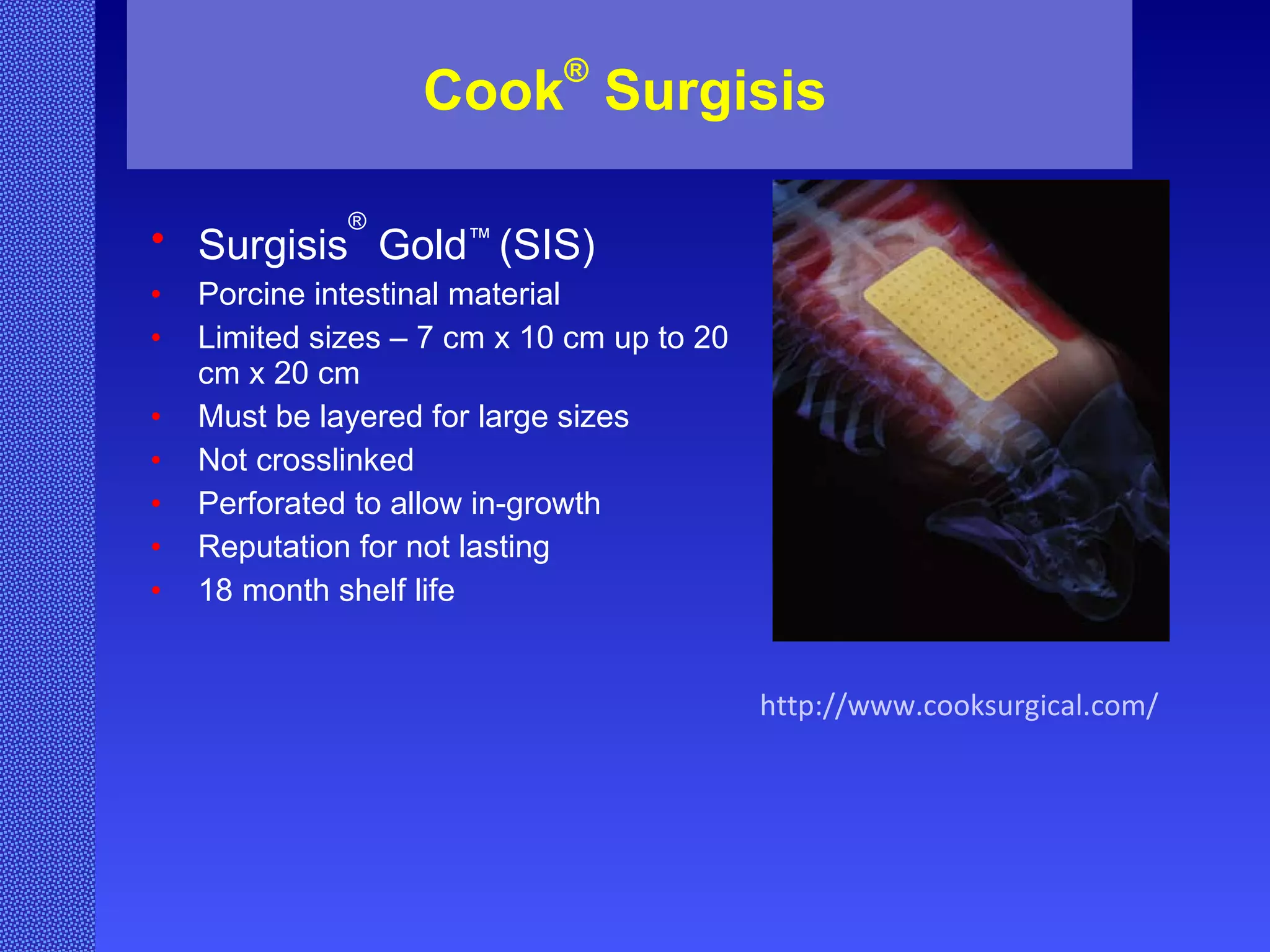
  • 123.
    Absorbable Tacks Advantage Dissolve in conjunction with mesh incorporation Theoretical benefit of decreased pain with tack absorption Disadvantage Cost
  • 124.
    Absorbable Tacks AbsorbaTack(Covidien) Permasorb (Davol / Bard)
  • 125.
    Metal Tacks Advantage Strength Cost Disadvantage Adhesion formation Bowel injury Pain “ Tack hernia” LeBlanc KA, Stout RW, Kearney MT, Paulson DB. Comparison of adhesion formation associated w Pro-Tack versus a new mesh fixation device, Salute. 2003 Surg Endosc 17: 1409 –1417 LeBlanc KA. Tack hernia: A new entity. JSLS 7: 383 -387
  • 126.
    Metal Tacks Salute II (ONUX Medical) Protack (US Surgical) Endo Universal (Covidien)
  • 127.
    Metal Tacks Studyof anchoring capacity of 3 fixation devices Salute, Pro-Tack, Endo Universal Fixed pressure applied to device while stapling layers of thin sponge Fixation capacity of stapler significantly lower than coil and helix Coil and helix had same fixation capacity Takeyuki M, et al. Comparison of anchoring capacity of mesh fixation devices in ventral hernia surgery. 2008 Surg Endosc Accepted for press.
  • 128.
    Disadvantages of MetalTacks Tack Hernia Report of two cases of new hernias encountered at the site of Pro-Tack helical tack insertion LeBlanc KA. Tack hernia: A new entity. JSLS 7: 383 -387
  • 129.
    Disadvantages of MetalTacks Adhesion formation Comparison of adhesion formation in hernia repair in an animal model using Pro-Tack vs. Salute tacker for mesh fixation Density of adhesions was greater with Pro-Tack LeBlanc KA, Stout RW, Kearney MT, Paulson DB. Comparison of adhesion formation associated w Pro-Tack versus a new mesh fixation device, Salute. 2003 Surg Endosc 17: 1409 –1417
  • 130.
    Disadvantages of MetalTacks Bowel injury Bowel erosion with colo-cutaneous fistula formation originating from surgery in proximity of colon De Maria EJ, Moss JM, Sugarman HJ. Laparoscopic intraperitoneal polytetraluoroethylene (PTFE) prosthetic patch repair of ventral hernia, Prospective comparison to open prefascial polypropylene mesh repair. Surg Endosc 2000, 14:326-329
  • 131.
    In Favor ofSuturing: Accurate mesh placement Recurrence prevention Tacks can migrate Sutures stronger than tacks (4 mm in length)
  • 132.
    Against suturing: Increased OR time Abdominal wall bleeding/hematoma Suture site pain Cosmetic dimpling of skin Lengthy learning curve
  • 133.
    Mitek Anchor Originallydesigned to secure soft tissue to bones as described for orthopedic shoulder repair It could play a role in repairing hernias near the costal margin
  • 134.
    Laser Welding Noveltechnology using laser-assisted tissue welding to anchor mesh to peritoneum Solder fixation of mesh is feasible No statistical difference noted between stapled or soldered Lanzafame R. et al. Rochester General Hospital Denver 2004 Sages
  • 135.
    Fibrin Sealant (Tisseel)Biodegradable adhesive formed from the combination of fibrinogen and thrombin leading to the formation of polymerized fibrin chains After application, it is broken down by fibrinolysis and replaced by fibrotic layer Anti-fibrinolytic agents like aprotinin are added in order to enhance lifespan In addition to its hemostatic action, the fibrinogen component gives the product its strengthening and adhesive properties and the thrombin promotes fibroblasts proliferation
  • 136.
    Fibrin Sealant (Tisseel)Spotnitz 1990 Cardio thoracic Kjaergard 1992 Cardio thoracic Byrne 1995 Promote wound healing Fernandez 1996 Reinforce high-risk anastomosis Holcomb 1997 Cardio-thoracic trauma Ohwada 1998 Prevent pancreatic fistulas Thistlethwaite 1999 Air leaks thoracic procedures Katkhouda 2002 Mesh fixation
  • 137.
    Tisseel v. Tacksstaples as mesh fixation in TEP: a retrospective analysis. Phillippe AT et al. Centre Hospitalier de Brest, Denver Sages 2004   66 patients with polyester mesh + 2cc tisseel 102 patients with polyester mesh + tacks Post-op pain 4.5% 14.7% (p=0.037) Seroma 12% 9.8% Recurrence — — Operative time — — Hospital stay — —
  • 138.
    Glue N butyl2-cyanoacrylate glue for the fixation of polypropylene mesh in laparoscopic hernia repair Jourdan IC, Bailey ME. Surg Laparoscop Endoscop 1998; 8:291-3
  • 139.
    “ Q” RingIncisional and umbilical hernias Inguinal hernias Vaginal sling
  • 140.
    Conclusions: The idealmesh is one that does not promote infection or adhesions yet provides strength The ideal method of of fixation is one that does not increase morbidity
  • 141.
    “ If wecould artificially produce tissues of the density and toughness of fascia, the secret of the radical cure of hernia would be discovered”. Theodore Billroth, 1857
  • 142.
    Conclusions We stillhave not developed the ideal mesh or fixation material Problems associate with current meshes: Infection Recurrence Seroma Adhesion formation Problems associate with current tacks: Pain Mesh migration Poor fixation
  • 143.
    Polyester and atelocollagentype 1, polyethylene glycol, glycerol (Parietex) Mean follow up 45 months Recurrences 20 (3.04%) “ Second look” operation for various reasons 70 Adhesion free 38 (54.3%) Minor adhesions 27 (38.6%) Serosal adhesions 5 (7.1%) Parietex is associated with low formation of dense adhesions Chelala E. Personal correspondence
  • 144.
    Safety Bowel injury:Meta-analysis of 6 RCT showed more bowel injuries in LVHR with a relative risk of almost 2 over OVHR Bleeding complications: Less bleeding complications in LVHR in 5 RCT Infected mesh requiring removal of mesh: Five times as likely in OVHR than LVHR in 7 RCT Erosion and/or fistula formation: Very rare with PTFE and barrier meshes
  • 145.
    Reference Bowel injuryBleeding complications Infected mesh requiring removal Lap Open Lap Open Lap open Asencio 2008 1/45 0/39 1 0 0 0 Barbaros 2007 1/23 0/23 1 0 1 4 Carbajo 1999 0/30 2/30 1 6 0 3 Misra 2006 0/33 0/33 0 0 Navarra 2007 0/12 0/12 0 0 Olmi 2007 4/85 0/85 0 1 1 0 Moreno-Egea 2002 0/11 4/11 0 0 Pring 2008 0/30 2/24 Total 6/228 2.7% 2/222 0.9% 3/194 1.5% 11/188 5.7% 2/269 0.7% 9/257 3.5%
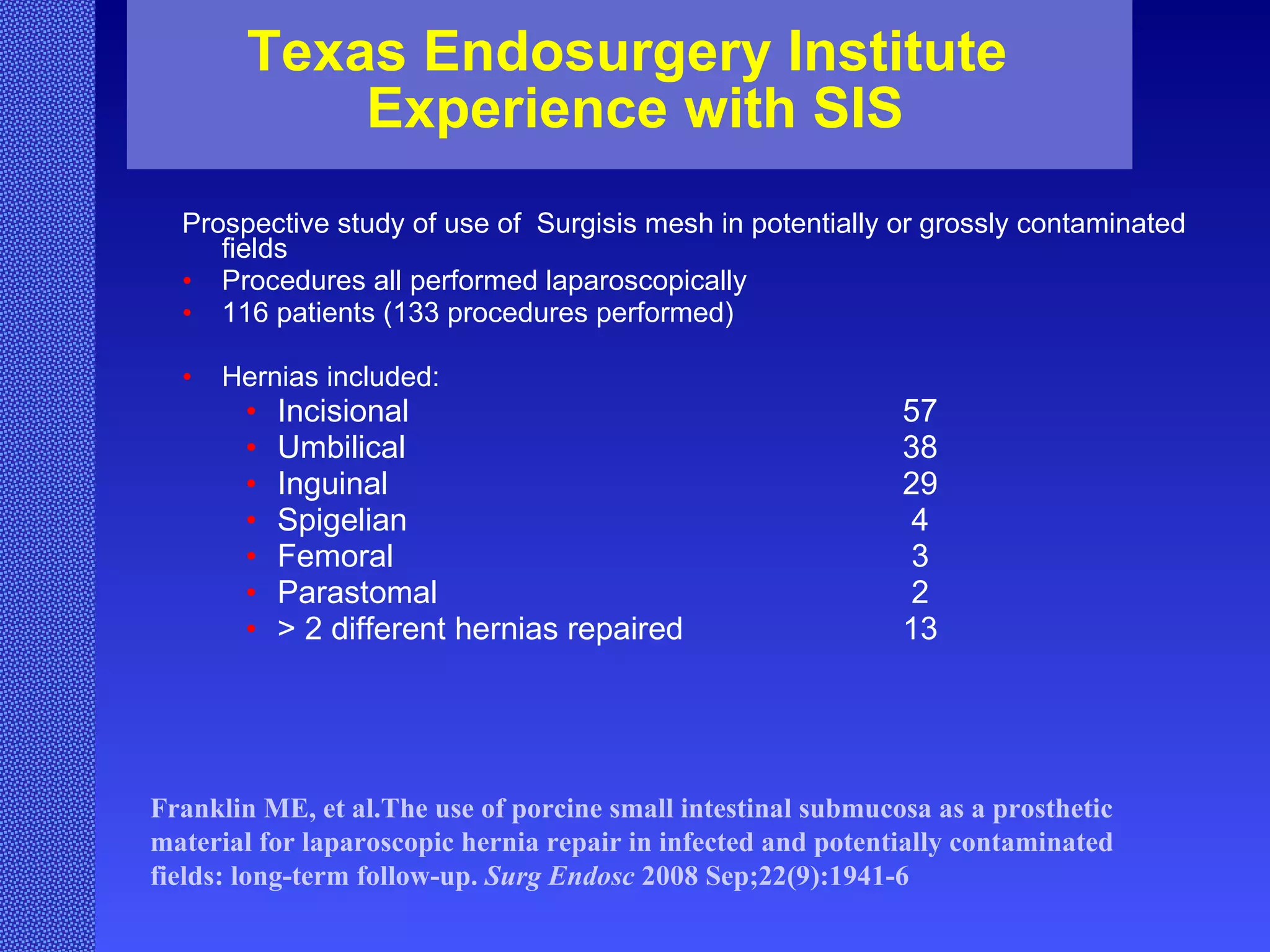
  • 146.
    Safety Review of5245 patients entered into NSQIP (between 2005 and 2006) with comparable ASA class, wound class, and age revealed: No difference in return to OR within 30 days [2.6% vs. 2.6%] Less deep infections in the laparoscopic group [0.5% vs. 1.6% p=0.001] Hwang, CS, Journal of Surgical Research, 3/2009
  • 147.
    Durability No significantdifference in rate of recurrence at follow up times ranging from 6 months to 41 months in pooled RCTs, Lower recurrence rates in nonrandomized controlled studies Forbes, SS, British Journal of Surgery, 3/2009
  • 148.
    Forbes, SS, BritishJournal of Surgery, 3/2009 Randomized Hernia recurrence Mean follow up Control Trials Lap Open in months Asencio 2008 4 of 41 3 of 38 Barbaros 2007 0 of 23 1 of 23 19 Carbajo 1999 0 of 30 2 of 30 27 Misra 2006 2 of 32 1 of 30 13 Olmi 2007 2 of 85 1 of 85 24 Pring 2008 1 of 30 1 of 24 Total 9 of 241 (3.7%) 9 of 230 (3.9%)
  • 149.
    Non-randomized comparative studiesTrial Recurrence Mean follow up in months Lap Open DeMaria 1 of 21 0 of 18 >12 Holzman 2 of 21 2 of 16 19 Ramshaw 2 of 79 36 of 174 21 Total 5 of 121 (4.1%) 38 of 208 (18%)
  • 150.
    Recurrence Rates Randomizedcontrol Trials Non-randomized comparative studies
  • 151.
    Efficacy Advantagesof LVHR Improved visualization of abdominal wall Recognizing occult hernias Fewer overall complications Disadvantages of LVHR Mesh placed in abdominal cavity Cost OR time Not Cosmetic Surgery Clinics, 2/2008 Ramshaw….
  • 152.
    Efficacy Results inmultiple RCTs comparing laparoscopic mesh repair with open mesh repair are equivalent or superior regarding the following complications Seroma Infection Ileus Neuralgia
  • 153.
    Procedure – entry Hassan Veress needle LUQ cutdown/veress Remote from hernia site
  • 154.
    Randomized Seroma InfectionIleus Neuralgia Control Trial Lap Open Lap Open Lap Open Lap Open Barbaros et al. 2007 4/23 0/23 1/23 5/23 1/23 0/23 Carbajo et al. 1999 4/30 20/30 Misra et al. 2006 4/33 1/33 2/33 9/33 0/33 0/33 Navarro et al. 2007 2/12 0/12 0/12 1/12 Olmi et al. 2007 6/85 3/85 4/85 8/85 Pring et al. 2008 5/30 8/24 Total 12% 15%
  • 155.
    Efficiency – CostLVHR more expensive procedure $2237 vs $664 in one study of 884 pts Length of stay (LOS): significantly shorter in almost all RCTs Overall cost for procedure plus hospitalization likely lower Surgery Clinics, 2/2008
  • 156.
    Efficiency – ORTime Longer or times non-randomized trials: 149 minutes vs. 89 minutes NSQIP data from 2005-2006: 103 minutes vs. 95 minutes 1 Overall shorter times in pooled RCTs: 72 minutes vs. 115 minutes 2 May be dependent on surgeon’s learning curve Hwang, CS, Journal of Surgical Research, 3/2009 2. Forbes, SS, British Journal of Surgery, 3/2009
  • 157.
    Quality Earlier returnto work Less post-operative narcotic requirements Foreign body sensation?
  • 158.
    Choosing Your PatientsStarting out Smaller hernias: <10cm transverse separation Not morbidly obese Fewer abdominal surgeries Avoid previous open repair Heniford et al, Am . Surg. 2003
  • 159.
    Procedure – PreparationConsider bowel prep Pre-operative antibiotic prophylaxis Foley catheter NGT DVT prophylaxis: SCDs, heparin
  • 160.
    Procedure – Patientpositioning Tuck arms at side Secure patient to table Consider footboard Consider ioban drape
  • 161.
    Procedure – fixation Sutures Tacks: metal, absorbable Staples Laser-assisted tissue welding Fibrin sealant (Tisseel) Glue Salute “Q” ring (Onux medical , inc.) Mitek anchor
  • 162.
    Procedure – LOA, reduce hernia Sharp Minimal electrocautery
  • 163.
    Procedure – sizingdefect/mesh What is the best way to measure the mesh? 3 options: Intracorporeal with pneumoperitoneum, extracorporeal with pneumoperitoneum, extracorporeal desufflated With extracorporeal measurement, the diameter of the outer (skin) circle is larger than the inner (peritoneal) circle. This difference is proportional to the size of the patient. Result is overestimation of hernia size and mesh by 1.7 to 3.1 cm
  • 164.
    Procedure- sizing defect/meshCovering entire original incision as well as hernia defect may decrease recurrence Study LVHR with 8 recurrences all noted to be at original incision site. Wassener et al
  • 165.
    Procedure—Choosing a meshAllows for tension-free restoration of abdominal wall structure Goal of the mesh is to become incorporated into surrounding tissue Ideal mesh: inert, strong, sterile, not modified by body tissue, inexpensive
  • 166.
    Choosing a MeshBiologic derived graft vs. Synthetic mesh vs. Synthetic + coating (barrier mesh) Absorbable vs. Non-absorbable vs. Combined/composite Pore size, filament Light weight (LW) vs. Heavy weight HW Knitted vs. Woven vs. Expanded
  • 167.
    Choosing a MeshBiologic derived graft: Synthetic mesh Synthetic + coating (barrier mesh)
  • 168.
    Choosing a MeshPorosity Macro >75 microns Micro <10 microns Submicro <1 micron F I lament mono I polypropylene II Gore-Tex IV Multi III some polypropylene, polyester
  • 169.
    Procedure – intra-opcomplication Bowel injury Contamination  repair injury and delay hernia repair No spillage  repair hernia Delayed bowel injury  remove mesh and delay repair Bladder injury  repair hernia Ramshaw et al..
  • 170.
    Competitive Literature PubMedUpdate 1,2 1 May include duplicate records; records not necessarily exclusive of other products; number of patients and type of study not analyzed; animal and human 2 Using searches of the form “brand OR brandtrade” Note: non-comprehensive search; some relevant articles do not include brand names in searchable fields Implant Brand Name All Articles Hernia Articles Hernia Articles (Last 12 Months) Alloderm 282 36 10 Permacol 89 17 10 Surgisis 68 31 11 TissueMend 4 0 0 Strattice 0 0 0 Collamend 0 0 0
  • 171.
    Way the BiologicalHernia World Will be Allograft Lifecell (Alloderm) Musculoskeletal Transplant Foundation (MTF) (FlexHD) Davol (AlloMax) Xenograft Cook (Surgisis) TissueScience (Permacol) TEI (Surgimend) Brennen (Xenmatrix) CryoLife (ProPatch) Davol (CollaMend) Lifecell (Strattice)
  • 172.
    Types of prosthetics for hernia repair: Type 1: totally macroporous prosthesis, pores > 75 microns; example prolene, marlex Type 2: totally microporous prosthesis; pores < 10 microns; example gortex or dual mesh Type 3: macroporous prosthesis with microporous components; example Teflon, mersilene Type 4: biomaterials with submicronic pore size; example cilastic, cell gard
  • 173.
    Polypropylene Biomaterials Angimesh, Angiologics, S. Martino Sicc., Italy Biomesh P1 , Cousin Biotech, Wervicq-Sud, France Biomesh P3 , Cousin Biotech, Wervicq-Sud, France Biomesh 3D , Cousin Biotech, Wervicq-Sud, France C-QUR (polypropylene / omega 3 fatty acid coating), Atrium, NH, USA DynaMesh (polypropelene incorporated with polyvinylidene difluoride) FEG, Aachen, Germany Hetra 1, 2, HerniaMesh, S.R.L., Torino, Italy Hermesh 3,4,5, HerniaMesh, S.R.L., Torino, Italy Intramesh NKI, NK2, NK8, Cousin Biotech, Wervicq-Sud, France Marlex, C.R.Bard, Inc., Cranston NJ, USA
  • 174.
    Polypropylene Biomaterials Parietene, Sofradim International, Villfranche-sur-Saone, France Proceed (polypropelene / polydiaxanone / oxidized regenerated cellulose), Ethicon, Somerville, NJ, USA Prolene , Ethicon, Somerville, NJ, USA Prolene Soft Mesh , Ethicon, Somerville, NJ, USA Prolite , Atrium Medical Corporation, Hudson, NH, USA Prolite Ultra , Atrium Medical Corporation, Hudson, NH, USA Surgipro (Monofilament), United States Surgical Corp,/Tyco, Norwalk, CT, USA Sepramesh ( polypropylene mesh coated with Seprafilm - modified sodium hyaluronate and carboxymethylcellulose) Genzyme, MA, USA Surgipro (Multifilament), United States Surgical Corp./Tyco, Norwalk, CT, USA TiMesh (titanium-coated polypropylene) Medizintechnik GmbH, Nuremberg, Germany Trelex, Meadox Medical Corporation, Oakland, NJ, USA Ultrapro (Poliglecaprone-25 / Polypropylene) , Ethicon, Somerville, NJ, USA
  • 175.
    Polypropylene Mesh Schmittand Griman in 1967 first described successful use of polypropylene mesh in contaminated wounds Subsequent reports showed good initial healing but were fraught with long term complications Those complications are chronic infection, fistula formation, erosion into bowels or through skin grafts Jones and Jurkoyiun in 1989 reviewed 14 studies, 128 patients, and found 55 overall complication rate - enteric fistulization being the most common.
  • 176.
    In Favor of Polypropylene Mesh: Extensive fibroblast ingrowth Complete host tissue incorporation Cheaper than PTFE
  • 177.
    In Favor ofPolypropylene Mesh: Can be used in contaminated fields Chowbey PK et al. Lap ventral hernia repair J La Adv Surg Tech 2000; 10:79-84 Bingener J et al. Adhesion formation after laparoscopic ventral incisional hernia repair with polypropylene mesh: a study using abdominal ultrasound, JSLS (2004)8:127-131
  • 178.
    In Favor ofPolypropylene Mesh: Can be used in contaminated fields Franklin ME et al. Lap ventral and incisional hernial repair. Surg Lap End 8(4):294-299 1998 285 lap ventral hernia and 520 lap inguinal hernia using IPOM with polypropylene mesh. 1 fistula formation (0.14%), 4 mesh infections (0.50%), and 6 reoperations for bowel obstruction secondary to mesh adhesions (0.75%). Relaparoscopy 27 patients (19 incisional, 8 inguinal): 1/3 no adhesions, 1/3 mild adhesions, 1/3 severe
  • 179.
    Against polypropylene mesh:It is extremely difficult to lyse adhesions to polypropylene without causing enterotomies* Major complications with polypropylene not evident until years later 9 cases of mesh erosion fistula stainless steel (1) tantalum (1) mersilene (1) dexon (1) ppm (5). The time to the development of these fistulas ranged from 3 months to 14 years *Losanoff JE et al. Entero-colocutaneous fistula: a late consequence of polypropylene mesh abdominal wall repair: case report and review of the literature, Hernia 2002; 6: 144-147
  • 180.
    Against polypropylene mesh:Dual mesh allows fibroblastic penetration and subsequent collagen deposition Leblanc KA et al. Tissue attachment strength of prosthetic meshes used in ventral and incisional hernia repair. Surg Endo 2002; 16(11):1542-1546
  • 181.
    ePTFE Biomaterials DualMesh, W.L. Gore and Associates, Flagstaff, AZ, USA DualMesh Emerge, W.L. Gore and Associates, Flagstaff, AZ, USA DualMesh Plus , W.L. Gore and Associates, Flagstaff, AZ, USA DaulMesh Plus Emerge , W.L. Gore and Associates, Flagstaff, AZ, USA DualMesh with Holes , W.L. Gore and Associates, Flagstaff, AZ, USA DualMesh Plus with Holes , W.L. Gore and Associates, Flagstaff, AZ, USA Dulex , C.R. Bard, Inc., Cranston NJ, USA Mycromesh , W.L. Gore and Associates, Flagstaff, AZ, USA Mycromesh Plus , W.L. Gore and Associates, Flagstaff, AZ, USA Reconix , C.R. Bard, Inc., Cranston NJ, USA Soft Tissue Patch , W.L. Gore and Associates, Flagstaff, AZ, USA
  • 182.
    In Favor ofePTFE Microporous, smooth texture minimizes tissue in-growth and limits adhesion formation and bowel injury Combined with a large pore second layer it can adhere well to the abdominal wall
  • 183.
    Against ePTFE Microporousconstruction limits ability of macrophages to destroy bacteria Mesh infection is not well treated by antibiotics and requires mesh removal Does not integrate well into host tissue when not combined with a large pore mesh
  • 184.
    Laparoscopic ventral herniarepair with PTFE compared to open repair prefascial repair with polypropylene is associated with: Less pain Shorter hospital stay Lower total cost Complication rates were equivalent Despite two reoperations in the PTFE group, overall costs remained lower De Maria EJ, Moss JM, Sugarman HJ. Laparoscopic intraperitoneal polytetraluoroethylene (PTFE) prosthetic patch repair of ventral hernia, Prospective comparison to open prefascial polypropylene mesh repair. Surg Endosc 2000, 14:326-329
  • 185.
    Laparoscopic hernia repairwith PTFE has low recurrence but may be associated with significant complications and morbidity This technique requires meticulous technique and advanced laparoscopic skills Ben-Haim M, et al. Pitfalls and complications with laparoscopic intraperitoneal expanded polytetrafluoroethylene patch repair of postoperative ventral hernia. Surg Endosc 2002 , 16(5) 785-788
  • 186.
    Polyglactene Mesh (vicrylmesh) Alternative to nonabsorbable meshes Advantage host invasion and subsequent absorption of implant There is less infection complication, increase recurrence rate (satisfactory short term solution in infected hernias but not generally indicated when prolonged 10-side strength is required)
  • 187.
    Polyester mesh Parietex (polyester and atelocollagen type 1, polyethylene glycol, glycerol) Covidien, Hamilton, Bermuda Polyester mesh incorporates well into the abdominal wall Collagen covering on the visceral surface protects bowel and dissolves as the polyester is incorporated
  • 188.
    Polyester and atelocollagentype 1, polyethylene glycol, glycerol (Parietex) Comparison of Parietex with Sepramesh for ventral hernia repair in rabbit model Results at 5 months Parietx Sepramesh Strength of incorporation 70.9N 31.5N Bowel adhesions 0 4 Adhesion area 321 mm 2 840 mm 2 Shrinkage 17.4% 6.1% Parietex has stronger incorporation and is better at prevention of adhesiona than sepra mesh, however it undergoes considerably more shrinkage Judge TW, Parker DM, Dinsmore RC. Abdominal wall hernia repair: A comparison of Sepramesh and Parietex composite mesh in a rabbit hernia model. J Am Coll Surg 2007, Feb;204(2):276-81
  • 189.
    Polyester and atelocollagentype 1, polyethylene glycol, glycerol (Parietex) Retrospective study of the use of Parietex in laparoscopic ventral hernia repair n = 20 patients Mean follow up - 10 months No morbidity or mortality No infections, rejections, fistulas, recurrences, or alterations in bowel function Parietex is safe for intra-abdominal use Moreno-Egea A, Liron R Girela E, Aguayo JL. Laparoscopic repair of ventral and incisional hernias using a new composite mesh (Parietex): initial experience. 2001 Surg Laparoc Endosc Percutan Tech Apr;11(2):103-6
  • 190.
    Polyester and atelocollagentype 1, polyethylene glycol, glycerol (Parietex) Experience with 656 laparoscopic ventral hernia repairs with Parietex Hernia defect closed with sutures to reduce seroma and restore abdominal wall function Laparoscopic mesh repair performed with Parietex mesh Chelala E. (2008) Personal correspondence
  • 191.
    Repair of abdominalwound defects remains a challenge to the general surgeon. Suture repair of ventral hernia is associated with low infection rate but carries a risk of recurrence of 43% The rate increases to 58% with repair of recurrent hernia. Luijendijk RW, et al. A Comparison of Suture Repair with Mesh Repair for Incisional Hernia .NEJM 2000; 343:392-398
  • 192.
    Against polypropylene mesh:Dual mesh allows fibroblastic penetration and subsequent collagen deposition Leblanc KA et al. Tissue attachment strength of prosthetic meshes used in ventral and incisional hernia repair. Surg Endo 2002; 16(11):1542-1546
  • 193.
    The use ofmesh drastically reduces recurrence but is associated with a risk of infection of about 9% The laparoscopic approach to mesh placement reduces the infection rate to as low as 0.7% Yerdel MA, et al. Effect of single-dose prophylactic ampicillin and sulbactum on wound infection after tension-free inguinal hernia repair with polypropylene mesh: the randomized, double blind, prospective trial. AA Surg 2001; 223: 26 – 33 Heniford BT, et al. Laparoscopic repairs of ventral hernias: nine years experience with 850 consecutive hernias. Ann Surg 2003; 238:391-400 Ventral Hernia Mesh
  • 194.
    In Favor ofPolypropylene Mesh: Can be used in contaminated fields Franklin ME et al. Lap ventral and incisional hernial repair. Surg Lap End 8(4):294-299 1998 285 lap ventral hernia and 520 lap inguinal hernia using IPOM with polypropylene mesh. 1 fistula formation (0.14%), 4 mesh infections (0.50%), and 6 reoperations for bowel obstruction secondary to mesh adhesions (0.75%). Relaparoscopy 27 patients (19 incisional, 8 inguinal): 1/3 no adhesions, 1/3 mild adhesions, 1/3 severe
  • 195.
    Laparoscopic ventral herniarepair with PTFE compared to open repair prefascial repair with polypropylene is associated with: Less pain Shorter hospital stay Lower total cost Complication rates were equivalent Despite two reoperations in the PTFE group, overall costs remained lower De Maria EJ, Moss JM, Sugarman HJ. Laparoscopic intraperitoneal polytetraluoroethylene (PTFE) prosthetic patch repair of ventral hernia, Prospective comparison to open prefascial polypropylene mesh repair. Surg Endosc 2000, 14:326-329
  • 196.
    Laparoscopic hernia repairwith PTFE has low recurrence but may be associated with significant complications and morbidity This technique requires meticulous technique and advanced laparoscopic skills Ben-Haim M, et al. Pitfalls and complications with laparoscopic intraperitoneal expanded polytetrafluoroethylene patch repair of postoperative ventral hernia. Surg Endosc 2002 , 16(5) 785-788
  • 197.
    Biologic Competition The number of competitors offering biologic implant grafts has increased dramatically over the past few years In 2004, there were three key biologic products, currently there are approximately 14 products produced by 13 companies....more to come…. J&J/Ethicon will sell FlexHD TM (MTF) to the hernia repair market – others? On July 2, 2007, Mentor launched NeoForm TM (Tutogen) for breast reconstruction, will they cross over into the abdomen for tram flap reinforcement? LifeCell – non-crosslinked porcine graft Strattice TM in early 2008
  • 198.
    Cook Surgisis - How Do We Compete? Focus on crosslinked stability and durability of Permacol Question the need for perforations – do they weaken the product? Put Permacol in the surgeon’s hand and ask for comparison with Surgisis Does surgeon recall past Surgisis cases – what was his/her experience?
  • 199.
    Cook Surgisis StrengthsMarket name and reach of sales force Broad line, low prices Porcine model versus cadaveric Weaknesses Complicated manufacturing process Not crosslinked so not as stable or strong as Permacol
  • 200.
    Texas Endosurgery InstituteExperience with SIS 72 patients: 29 male, 43 female Incisional hernia - 41 (1 post-op wound infection) Colovesical fistula - 1 Paraoesaphageal hernia - 15 Inguinal hernia - 14 Spigelian hernia - 1
  • 201.
    What about AlloDermIssues? New AlloDerm instructions recommend “significant tension” – with a “tension free” repair technique…… Trying to minimize issues of laxity Recent studies with longer follow-up times are showing that AlloDerm presents significant problems (TSL 310) Jin, et al; “bridging repairs”, recurrence rates high at 60%, “not worth the high cost” - average $7,901 per patient “ Use only to reinforce primary fascial closure” – but still have recurrence rate of 21%
  • 202.
    AlloDerm - HowDo We Compete? Size matters! Permacol takes less time intraoperatively - no sewing on large repairs No waiting for rehydration, a problem especially if the surgeon underestimates required coverage size No need to estimate “expansion” during surgery Permacol meets the needs for complicated cases Permacol is manufactured and marketed under strict FDA regulations Permacol has all of the advantages of a biologic with the added strength of crosslinking Lower cost per case
  • 203.
    Description of ProductPermacol is a sterile off-white, hydrated, tough but flexible flat sheet of acellular, crosslinked, porcine dermal collagen and its constituent elastin fibers. Crosslinked with non-calcifying HDMI Porcine collagen in its original 3-D form. Permacol is a surgical implant and a medical device. Permacol is indicated for use as a soft tissue patch to reinforce soft tissue where weakness exists and for the surgical repair of damaged or ruptured soft tissue membranes. FDA 510(k) concurrence for permanent implantation into human tissue for specific indications.
  • 204.
    Permacol Advantages VersusAlloDerm Crosslinking for dimensional stability, resistance to collagenase and long-term results Ease of use, handling and cost effective in the OR Pricing Sizes Versus CollaMend Track Record – clinicals and experience Sizes, better product shape and handling Well trained and knowledgeable sales force Versus Surgisis and all the others Crosslinking, resistance to collagenase and long-term results Ease of use, handling and cost effective in the OR Sizes

Editor's Notes

  • #145 Can we safely perform a laparoscopic ventral hernia repair?
  • #147 for either laparoscopic or open primary repair of ventral hernia
  • #148 Recurrence as major end point
  • #158 QoL As relates to HW vs LW meshes
  • #167 What’s out there- polypropylene, polyester, PTFE