



CONGENITAL 
UMBILICAL HERNIA 
Omnia M. Korani 
2011
Definition 
 a weakness of the baby's abdominal wall 
where the umbilical cord joins it. 
 This weakness allows the abdominal 
contents, mainly the bowel and the liver to 
protrude outside the abdominal cavity.
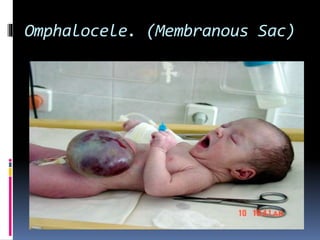
Omphalocele. (Membranous Sac)
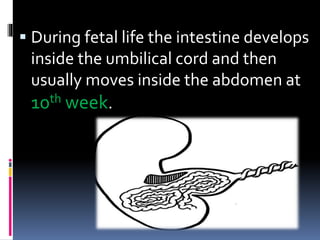
 During fetal life the intestine develops 
inside the umbilical cord and then 
usually moves inside the abdomen at 
10th week.
 Occasionally, the intestine stays inside 
the umbilical cord and so develops 
outside the abdominal wall. 
 Because the contents are lying outside 
the abdominal cavity often does not 
develop and remains small in size.
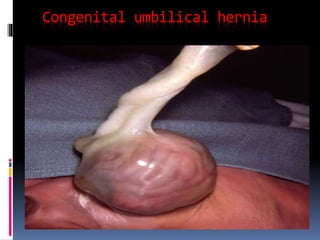
Congenital umbilical hernia
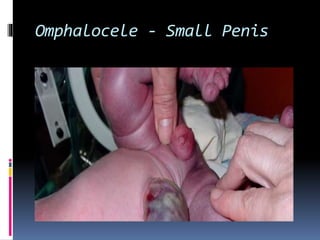
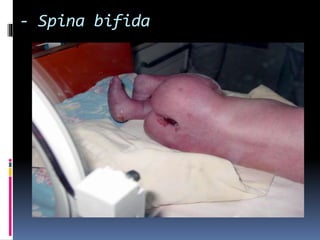
 The presence of an omphalocele is 
often associated with other 
malformations. 
 suggesting that this anomaly is not 
a simple failure of umbilical ring 
closure.
Multiple Malformatins 
_ Frontal Encephalocele 
_ Dysplastic Ear
Omphalocele - Small Penis
- Spina bifida
Types 
Exomphalos major Exomphalos minor
E. Minor E. Major 
Defect < 5 cm > 5 cm 
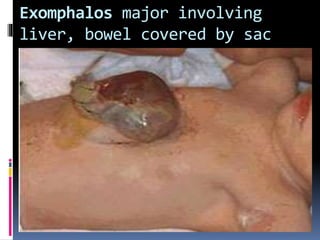
Content Intestine Viscera + liver 
Covering Layer of 
wharton’s jelly 
+ amniotic 
memb. 
Amniotic memb. 
only . 
TTT 1ry repair Staged repair
Exomphalos major involving 
liver, bowel covered by sac
Treatment 
 It’s an emergency operation 
as fluids and a lot of body heat are lost 
through the exposed intestines. 
 Type of operation depend on the 
type of the abdominal wall defect 
(major or minor ).
 The goal of the radical cure is to 
introduce the viscera into an 
abdominal cavity 
 they have never occupied before 
and maintain them there without 
creating intrabdominal 
hypertension!!!?
Small exomphalos 
 ‘primary repair’ under general 
anesthesia. 
 As a small amount of intestine outside 
the abdomen it Takes about 30 min. 
 where the surgeons move the 
intestines back inside the abdomen 
and then close up the muscles and 
skin.
1ry repair
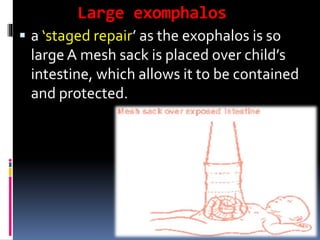
Large exomphalos 
 a ‘staged repair’ as the exophalos is so 
large A mesh sack is placed over child’s 
intestine, which allows it to be contained 
and protected.
 This sack is suspended above the 
child so that gravity moves the 
intestine back inside the 
abdomen. 
 The sack will be tightened 
regularly until all the intestine is 
inside the abdomen. This could 
take a number of days
The abdominal wall defect in 
omphalocele is covered with a 
synthetic membrane
The outcome 
There are Associated factors lead to 
complications 
 prematurity, 
 associated malformations 
 and finally the risks incurred from the 
effects of an abdominal hypertension 
following a hasty and forced reduction 
of the herniated viscera.
Screening 
 An omphalocele is often detected 
through a detailed fetal 
ultrasound.
Antenatal ultrasound demonstrates a large protroberancefrom 
the anterior abdominal wall, consistent with an omphalocoele.
References 
 http://congenitalmalformations.blogspot.co 
m/ 
 http://www.gosh.nhs.uk/gosh_families/infor 
mation_sheets/abdominal_wall_defects/abd 
ominal_wall_defects_families.html 
 http://en.wikipedia.org/wiki/Omphalocele
” الحمد لله الذى هدانا لهذا 
وما كنا لنهتدى لولا 
ان هدانا الله “ 
الاعراف الاية 43

Congenital umblical hernia

  • 2.
    CONGENITAL UMBILICAL HERNIA Omnia M. Korani 2011
  • 3.
    Definition  aweakness of the baby's abdominal wall where the umbilical cord joins it.  This weakness allows the abdominal contents, mainly the bowel and the liver to protrude outside the abdominal cavity.
  • 4.
  • 5.
     During fetallife the intestine develops inside the umbilical cord and then usually moves inside the abdomen at 10th week.
  • 6.
     Occasionally, theintestine stays inside the umbilical cord and so develops outside the abdominal wall.  Because the contents are lying outside the abdominal cavity often does not develop and remains small in size.
  • 7.
  • 9.
     The presenceof an omphalocele is often associated with other malformations.  suggesting that this anomaly is not a simple failure of umbilical ring closure.
  • 10.
    Multiple Malformatins _Frontal Encephalocele _ Dysplastic Ear
  • 11.
  • 12.
  • 13.
    Types Exomphalos majorExomphalos minor
  • 14.
    E. Minor E.Major Defect < 5 cm > 5 cm Content Intestine Viscera + liver Covering Layer of wharton’s jelly + amniotic memb. Amniotic memb. only . TTT 1ry repair Staged repair
  • 15.
    Exomphalos major involving liver, bowel covered by sac
  • 16.
    Treatment  It’san emergency operation as fluids and a lot of body heat are lost through the exposed intestines.  Type of operation depend on the type of the abdominal wall defect (major or minor ).
  • 18.
     The goalof the radical cure is to introduce the viscera into an abdominal cavity  they have never occupied before and maintain them there without creating intrabdominal hypertension!!!?
  • 19.
    Small exomphalos ‘primary repair’ under general anesthesia.  As a small amount of intestine outside the abdomen it Takes about 30 min.  where the surgeons move the intestines back inside the abdomen and then close up the muscles and skin.
  • 20.
  • 21.
    Large exomphalos a ‘staged repair’ as the exophalos is so large A mesh sack is placed over child’s intestine, which allows it to be contained and protected.
  • 22.
     This sackis suspended above the child so that gravity moves the intestine back inside the abdomen.  The sack will be tightened regularly until all the intestine is inside the abdomen. This could take a number of days
  • 23.
    The abdominal walldefect in omphalocele is covered with a synthetic membrane
  • 24.
    The outcome Thereare Associated factors lead to complications  prematurity,  associated malformations  and finally the risks incurred from the effects of an abdominal hypertension following a hasty and forced reduction of the herniated viscera.
  • 25.
    Screening  Anomphalocele is often detected through a detailed fetal ultrasound.
  • 26.
    Antenatal ultrasound demonstratesa large protroberancefrom the anterior abdominal wall, consistent with an omphalocoele.
  • 29.
    References  http://congenitalmalformations.blogspot.co m/  http://www.gosh.nhs.uk/gosh_families/infor mation_sheets/abdominal_wall_defects/abd ominal_wall_defects_families.html  http://en.wikipedia.org/wiki/Omphalocele
  • 30.
    ” الحمد للهالذى هدانا لهذا وما كنا لنهتدى لولا ان هدانا الله “ الاعراف الاية 43