GASTROSCHISIS
      Prepared by:
          Estrada, Sharmaine P.
              PCU-MJCN, SN
GASTROSCHISIS

ď‚— Is a congenital malformations in which a defect
  in the abdominal wall allows portions of the
  abdominal contents to herniate outside the
  abdominal cavity.
ď‚— Their incidence is 0.1 to 0.3 percent of 1,000
  live births.
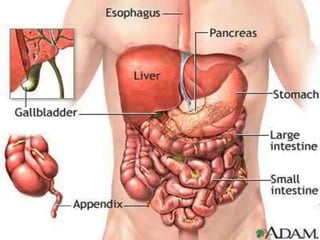
ď‚— The defect in the abdominal wall permits
  extrusions of the abdominal contents, primarily
  the small and the large intestines, without
  involving the umbilical cord
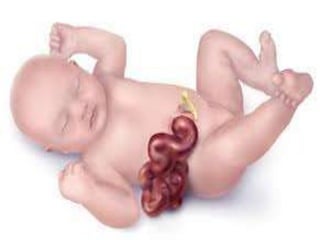
ď‚— The defect is usually at the right
  side of the umbilicus, and there is
  no protective sac covering the
  intestines.
ď‚— The etiology is unclear, although
  one theory explains gastroschisis
  as resulting from an incomplete
  lateral in infolding of the
  embryonic disc, which allows
  herination of the bowels
ASSOCIATED ANOMALIES

ď‚— Prematurity
ď‚— Malrotation of the intestines
ď‚— Decreased abdominal capacity
ď‚— Atresia
ď‚— Stenosis
 Meckel’s diverticulum
CLINICAL MANIFESTATIONS
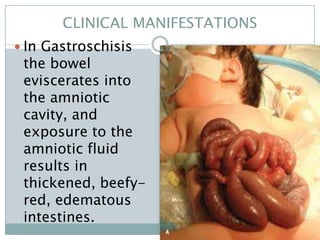
ď‚— In Gastroschisis
 the bowel
 eviscerates into
 the amniotic
 cavity, and
 exposure to the
 amniotic fluid
 results in
 thickened, beefy-
 red, edematous
 intestines.
THERAPEUTIC MANAGEMENT

ď‚— When bowel obstruction in confirmed, an
  orogastric o nasogastric tube in inserted and
  then attached to low suction or left open to the
  air to prevent further gastrointestinal distention
  from swallowed air.
ď‚— Intravenous therapy is necessary to restore fluid
ď‚— Immediate surgery is scheduled because bowel
  obstruction is an emergency that must be
  treated before dehydration
ď‚— ,electrolyte imbalance, or aspiration of vomitus
  occurs
NURSING MANAGEMENT

ď‚— Thermoregulation is critical because significant
  heat loss can occur through the exposed
  intestines . Use warmers and monitor the
  child’s temperature
ď‚— Use sterile technique in dealing with the defect.
Immediately cover w/ warm, moist, sterile gauze;
and wrap w/ plastic to keep moist.
ď‚— minimize movement of the infant and handling
  of the intestines.
ď‚— Assess for circulatory compromise, obstruction,
  sepsis: monitor temperature, pulses, capillary
  refill time, skin color, changes in the respiratory
  patterns and heart rate.
ď‚— Observe for respiratory distress secondary to
  high intraabdominal pressure as the gut returns
  to the peritoneal cavity.
ď‚— Fluid-volume management is crucial nursing
  responsibility: monitor intake and output and
  daily weights, assess fontanels and maintain IV
  line.
ď‚— Maintain NG tube for decompression, monitor
    bowel sounds and stools, measure abdominal
    girth.
ď‚—   Maintain parenteral nutrition to sustain growth
ď‚—   Offer pacifier to meet sucking needs
ď‚—   Provide emotional support for parents as they
    deal with the loss of the “perfect child”
ď‚—   Encourage parents to provide care as they are
    able, talk to and touch infant, and hold the
    infant when appropriate.
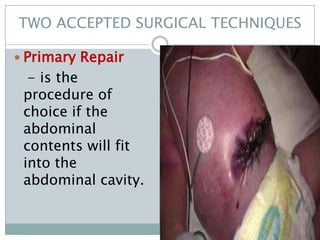
TWO ACCEPTED SURGICAL TECHNIQUES

ď‚— Primary Repair
  - is the
 procedure of
 choice if the
 abdominal
 contents will fit
 into the
 abdominal cavity.
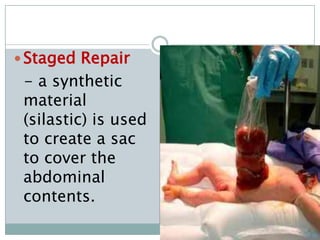
ď‚— Staged Repair
 - a synthetic
 material
 (silastic) is used
 to create a sac
 to cover the
 abdominal
 contents.

GASTROSCHISIS

  • 1.
    GASTROSCHISIS Prepared by: Estrada, Sharmaine P. PCU-MJCN, SN
  • 2.
    GASTROSCHISIS ď‚— Is acongenital malformations in which a defect in the abdominal wall allows portions of the abdominal contents to herniate outside the abdominal cavity. ď‚— Their incidence is 0.1 to 0.3 percent of 1,000 live births. ď‚— The defect in the abdominal wall permits extrusions of the abdominal contents, primarily the small and the large intestines, without involving the umbilical cord
  • 3.
    ď‚— The defectis usually at the right side of the umbilicus, and there is no protective sac covering the intestines. ď‚— The etiology is unclear, although one theory explains gastroschisis as resulting from an incomplete lateral in infolding of the embryonic disc, which allows herination of the bowels
  • 6.
    ASSOCIATED ANOMALIES  Prematurity Malrotation of the intestines  Decreased abdominal capacity  Atresia  Stenosis  Meckel’s diverticulum
  • 7.
    CLINICAL MANIFESTATIONS ď‚— InGastroschisis the bowel eviscerates into the amniotic cavity, and exposure to the amniotic fluid results in thickened, beefy- red, edematous intestines.
  • 8.
    THERAPEUTIC MANAGEMENT ď‚— Whenbowel obstruction in confirmed, an orogastric o nasogastric tube in inserted and then attached to low suction or left open to the air to prevent further gastrointestinal distention from swallowed air. ď‚— Intravenous therapy is necessary to restore fluid ď‚— Immediate surgery is scheduled because bowel obstruction is an emergency that must be treated before dehydration ď‚— ,electrolyte imbalance, or aspiration of vomitus occurs
  • 9.
    NURSING MANAGEMENT  Thermoregulationis critical because significant heat loss can occur through the exposed intestines . Use warmers and monitor the child’s temperature  Use sterile technique in dealing with the defect. Immediately cover w/ warm, moist, sterile gauze; and wrap w/ plastic to keep moist.  minimize movement of the infant and handling of the intestines.
  • 10.
    ď‚— Assess forcirculatory compromise, obstruction, sepsis: monitor temperature, pulses, capillary refill time, skin color, changes in the respiratory patterns and heart rate. ď‚— Observe for respiratory distress secondary to high intraabdominal pressure as the gut returns to the peritoneal cavity. ď‚— Fluid-volume management is crucial nursing responsibility: monitor intake and output and daily weights, assess fontanels and maintain IV line.
  • 11.
     Maintain NGtube for decompression, monitor bowel sounds and stools, measure abdominal girth.  Maintain parenteral nutrition to sustain growth  Offer pacifier to meet sucking needs  Provide emotional support for parents as they deal with the loss of the “perfect child”  Encourage parents to provide care as they are able, talk to and touch infant, and hold the infant when appropriate.
  • 12.
    TWO ACCEPTED SURGICALTECHNIQUES ď‚— Primary Repair - is the procedure of choice if the abdominal contents will fit into the abdominal cavity.
  • 13.
    ď‚— Staged Repair - a synthetic material (silastic) is used to create a sac to cover the abdominal contents.