July 2015
CBE Playbook Summary
Prepared for SXSW
Overview of CBE market
2
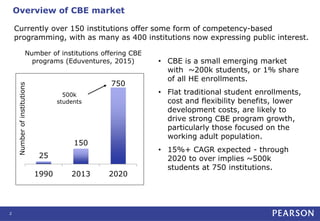
Number of institutions offering CBE
programs (Eduventures, 2015)
25
150
750
1990 2013 2020
• CBE is a small emerging market
with ~200k students, or 1% share
of all HE enrollments.
• Flat traditional student enrollments,
cost and flexibility benefits, lower
development costs, are likely to
drive strong CBE program growth,
particularly those focused on the
working adult population.
• 15%+ CAGR expected - through
2020 to over implies ~500k
students at 750 institutions.
500k
students
Numberofinstitutions
Currently over 150 institutions offer some form of competency-based
programming, with as many as 400 institutions now expressing public interest.
Market drivers
3
• Cost of higher education driving
demand for lower-priced, more
flexible options
• Expanding non-traditional student
population who seek open, flexible
learning
• Skills gap identified by employers
• Pressure on education institutions
from ED and/or other government
entities to offer more accessible and
shorter education pathways (to a
credential) to accommodate non-
traditional learners.
• The nontraditional segment is a new
and growing market of adult
learners with prior skills and
experience
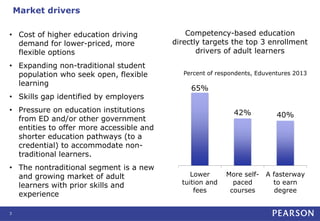
Competency-based education
directly targets the top 3 enrollment
drivers of adult learners
65%
42% 40%
Lower
tuition and
fees
More self-
paced
courses
A fasterway
to earn
degree
Percent of respondents, Eduventures 2013
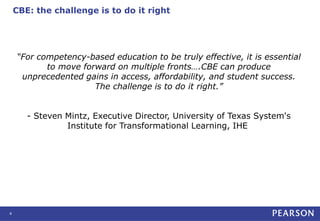
CBE: the challenge is to do it right
4
“For competency-based education to be truly effective, it is essential
to move forward on multiple fronts….CBE can produce
unprecedented gains in access, affordability, and student success.
The challenge is to do it right.”
- Steven Mintz, Executive Director, University of Texas System's
Institute for Transformational Learning, IHE
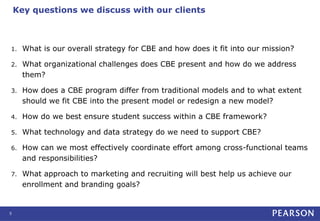
Key questions we discuss with our clients
5
1. What is our overall strategy for CBE and how does it fit into our mission?
2. What organizational challenges does CBE present and how do we address
them?
3. How does a CBE program differ from traditional models and to what extent
should we fit CBE into the present model or redesign a new model?
4. How do we best ensure student success within a CBE framework?
5. What technology and data strategy do we need to support CBE?
6. How can we most effectively coordinate effort among cross-functional teams
and responsibilities?
7. What approach to marketing and recruiting will best help us achieve our
enrollment and branding goals?
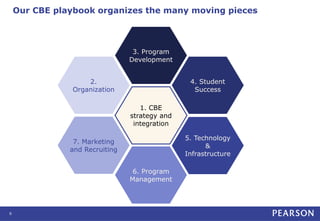
Our CBE playbook organizes the many moving pieces
6
1. CBE
strategy and
integration
5. Technology
&
Infrastructure
4. Student
Success
2.
Organization
3. Program
Development
6. Program
Management
7. Marketing
and Recruiting
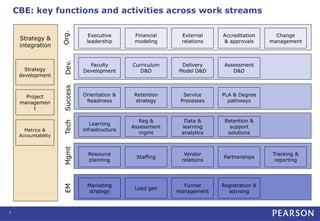
CBE: key functions and activities across work streams
7
Strategy &
integration
Strategy
development
Project
managemen
t
Metrics &
Accountability
Executive
leadership
Financial
modeling
External
relations
Accreditation
& approvals
Change
management
Org. Faculty
Development
Curriculum
D&D
Delivery
Model D&D
Assessment
D&D
Dev.
Orientation &
Readiness
Retention
strategy
Service
Processes
PLA & Degree
pathways
Success
Learning
infrastructure
Reg &
Assessment
mgmt
Data &
learning
analytics
Retention &
support
solutions
Tech
Resource
planning
Staffing
Vendor
relations
Partnerships
Tracking &
reporting
Mgmt
Marketing
strategy
Lead gen
Funnel
management
Registration &
advising
EM
8
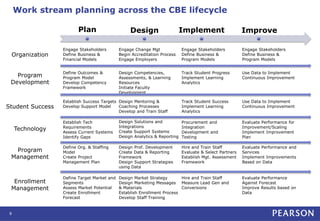
Plan Design Implement Improve
Organization
Program
Development
Student Success
Technology
Program
Management
Enrollment
Management
Define Outcomes &
Program Model
Develop Competency
Framework
Design Competencies,
Assessments, & Learning
Resources
Initiate Faculty
Development
Track Student Progress
Implement Learning
Analytics
Use Data to Implement
Continuous Improvement
Engage Stakeholders
Define Business &
Financial Models
Engage Change Mgt
Begin Accreditation Process
Engage Employers
Engage Stakeholders
Define Business &
Program Models
Engage Stakeholders
Define Business &
Program Models
Establish Success Targets
Develop Support Model
Design Mentoring &
Coaching Processes
Develop and Train Staff
Track Student Success
Implement Learning
Analytics
Use Data to Implement
Continuous Improvement
Establish Tech
Requirements
Assess Current Systems
Identify Gaps
Design Solutions and
Integrations
Create Support Systems
Design Analytics & Reporting
Procurement and
Integration
Development and
Testing
Evaluate Performance for
Improvement/Scaling
Implement Improvement
Plan
Define Org. & Staffing
Model
Create Project
Management Plan
Design Prof. Development
Create Data & Reporting
Framework
Design Support Strategies
using Data
Hire and Train Staff
Evaluate & Select Partners
Establish Mgt. Assessment
Framework
Evaluate Performance and
Services
Implement Improvements
Based on Data
Define Target Market and
Segments
Assess Market Potential
Create Enrollment
Forecast
Design Market Strategy
Design Marketing Messages
& Materials
Establish Enrollment Process
Develop Staff Training
Hire and Train Staff
Measure Lead Gen and
Conversions
Evaluate Performance
Against Forecast
Improve Results based on
Data
Work stream planning across the CBE lifecycle
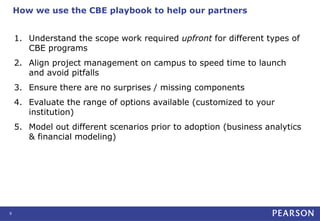
How we use the CBE playbook to help our partners
9
1. Understand the scope work required upfront for different types of
CBE programs
2. Align project management on campus to speed time to launch
and avoid pitfalls
3. Ensure there are no surprises / missing components
4. Evaluate the range of options available (customized to your
institution)
5. Model out different scenarios prior to adoption (business analytics
& financial modeling)

Pearson cbe playbook for sxsw 7 16

  • 1.
    July 2015 CBE PlaybookSummary Prepared for SXSW
  • 2.
    Overview of CBEmarket 2 Number of institutions offering CBE programs (Eduventures, 2015) 25 150 750 1990 2013 2020 • CBE is a small emerging market with ~200k students, or 1% share of all HE enrollments. • Flat traditional student enrollments, cost and flexibility benefits, lower development costs, are likely to drive strong CBE program growth, particularly those focused on the working adult population. • 15%+ CAGR expected - through 2020 to over implies ~500k students at 750 institutions. 500k students Numberofinstitutions Currently over 150 institutions offer some form of competency-based programming, with as many as 400 institutions now expressing public interest.
  • 3.
    Market drivers 3 • Costof higher education driving demand for lower-priced, more flexible options • Expanding non-traditional student population who seek open, flexible learning • Skills gap identified by employers • Pressure on education institutions from ED and/or other government entities to offer more accessible and shorter education pathways (to a credential) to accommodate non- traditional learners. • The nontraditional segment is a new and growing market of adult learners with prior skills and experience Competency-based education directly targets the top 3 enrollment drivers of adult learners 65% 42% 40% Lower tuition and fees More self- paced courses A fasterway to earn degree Percent of respondents, Eduventures 2013
  • 4.
    CBE: the challengeis to do it right 4 “For competency-based education to be truly effective, it is essential to move forward on multiple fronts….CBE can produce unprecedented gains in access, affordability, and student success. The challenge is to do it right.” - Steven Mintz, Executive Director, University of Texas System's Institute for Transformational Learning, IHE
  • 5.
    Key questions wediscuss with our clients 5 1. What is our overall strategy for CBE and how does it fit into our mission? 2. What organizational challenges does CBE present and how do we address them? 3. How does a CBE program differ from traditional models and to what extent should we fit CBE into the present model or redesign a new model? 4. How do we best ensure student success within a CBE framework? 5. What technology and data strategy do we need to support CBE? 6. How can we most effectively coordinate effort among cross-functional teams and responsibilities? 7. What approach to marketing and recruiting will best help us achieve our enrollment and branding goals?
  • 6.
    Our CBE playbookorganizes the many moving pieces 6 1. CBE strategy and integration 5. Technology & Infrastructure 4. Student Success 2. Organization 3. Program Development 6. Program Management 7. Marketing and Recruiting
  • 7.
    CBE: key functionsand activities across work streams 7 Strategy & integration Strategy development Project managemen t Metrics & Accountability Executive leadership Financial modeling External relations Accreditation & approvals Change management Org. Faculty Development Curriculum D&D Delivery Model D&D Assessment D&D Dev. Orientation & Readiness Retention strategy Service Processes PLA & Degree pathways Success Learning infrastructure Reg & Assessment mgmt Data & learning analytics Retention & support solutions Tech Resource planning Staffing Vendor relations Partnerships Tracking & reporting Mgmt Marketing strategy Lead gen Funnel management Registration & advising EM
  • 8.
    8 Plan Design ImplementImprove Organization Program Development Student Success Technology Program Management Enrollment Management Define Outcomes & Program Model Develop Competency Framework Design Competencies, Assessments, & Learning Resources Initiate Faculty Development Track Student Progress Implement Learning Analytics Use Data to Implement Continuous Improvement Engage Stakeholders Define Business & Financial Models Engage Change Mgt Begin Accreditation Process Engage Employers Engage Stakeholders Define Business & Program Models Engage Stakeholders Define Business & Program Models Establish Success Targets Develop Support Model Design Mentoring & Coaching Processes Develop and Train Staff Track Student Success Implement Learning Analytics Use Data to Implement Continuous Improvement Establish Tech Requirements Assess Current Systems Identify Gaps Design Solutions and Integrations Create Support Systems Design Analytics & Reporting Procurement and Integration Development and Testing Evaluate Performance for Improvement/Scaling Implement Improvement Plan Define Org. & Staffing Model Create Project Management Plan Design Prof. Development Create Data & Reporting Framework Design Support Strategies using Data Hire and Train Staff Evaluate & Select Partners Establish Mgt. Assessment Framework Evaluate Performance and Services Implement Improvements Based on Data Define Target Market and Segments Assess Market Potential Create Enrollment Forecast Design Market Strategy Design Marketing Messages & Materials Establish Enrollment Process Develop Staff Training Hire and Train Staff Measure Lead Gen and Conversions Evaluate Performance Against Forecast Improve Results based on Data Work stream planning across the CBE lifecycle
  • 9.
    How we usethe CBE playbook to help our partners 9 1. Understand the scope work required upfront for different types of CBE programs 2. Align project management on campus to speed time to launch and avoid pitfalls 3. Ensure there are no surprises / missing components 4. Evaluate the range of options available (customized to your institution) 5. Model out different scenarios prior to adoption (business analytics & financial modeling)