Instructional Designer Support Model
Curriculum Development
Mary Kohls — Department Chair, Computer Studies


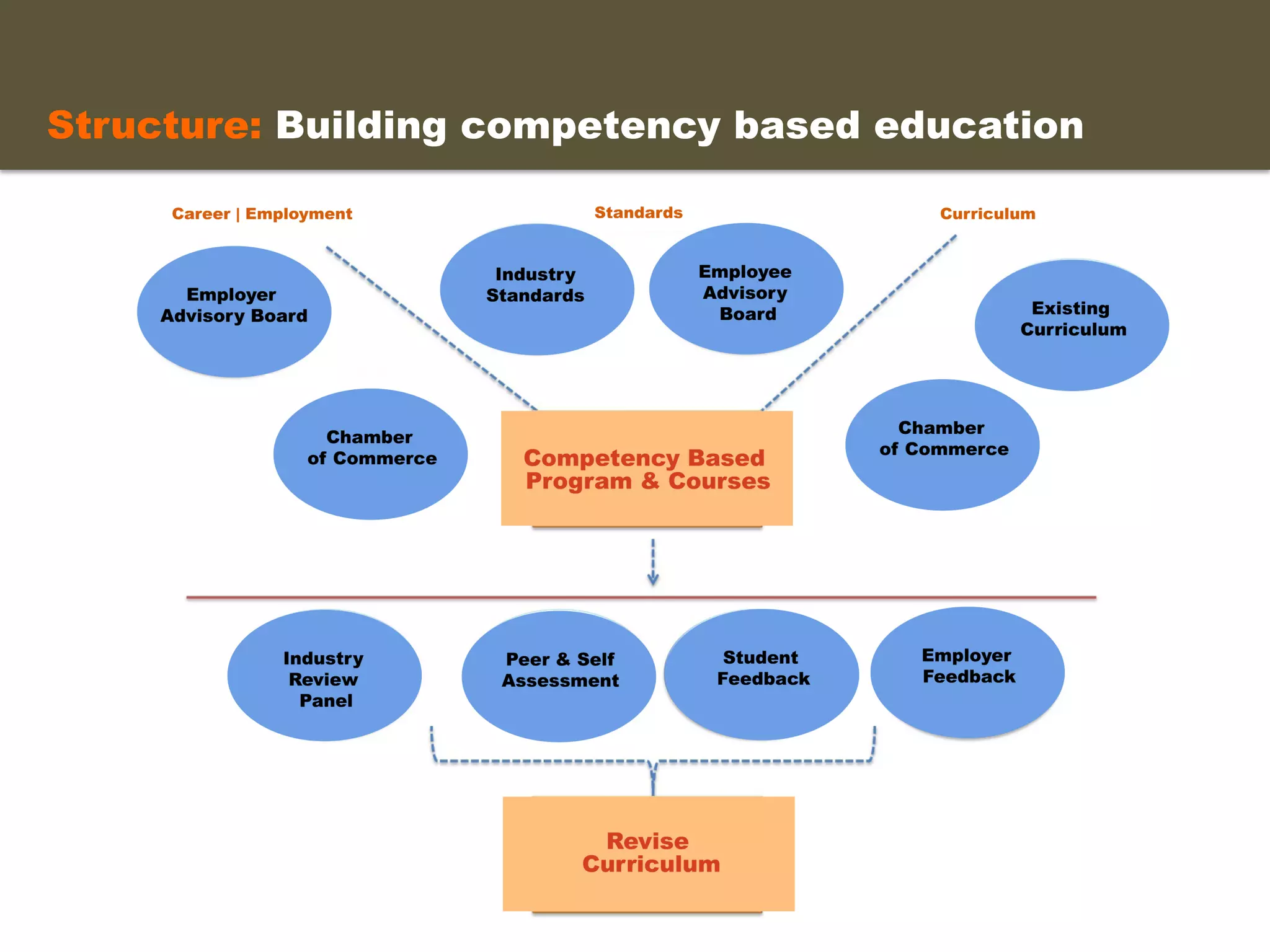
Structure: Building competency based education	
  
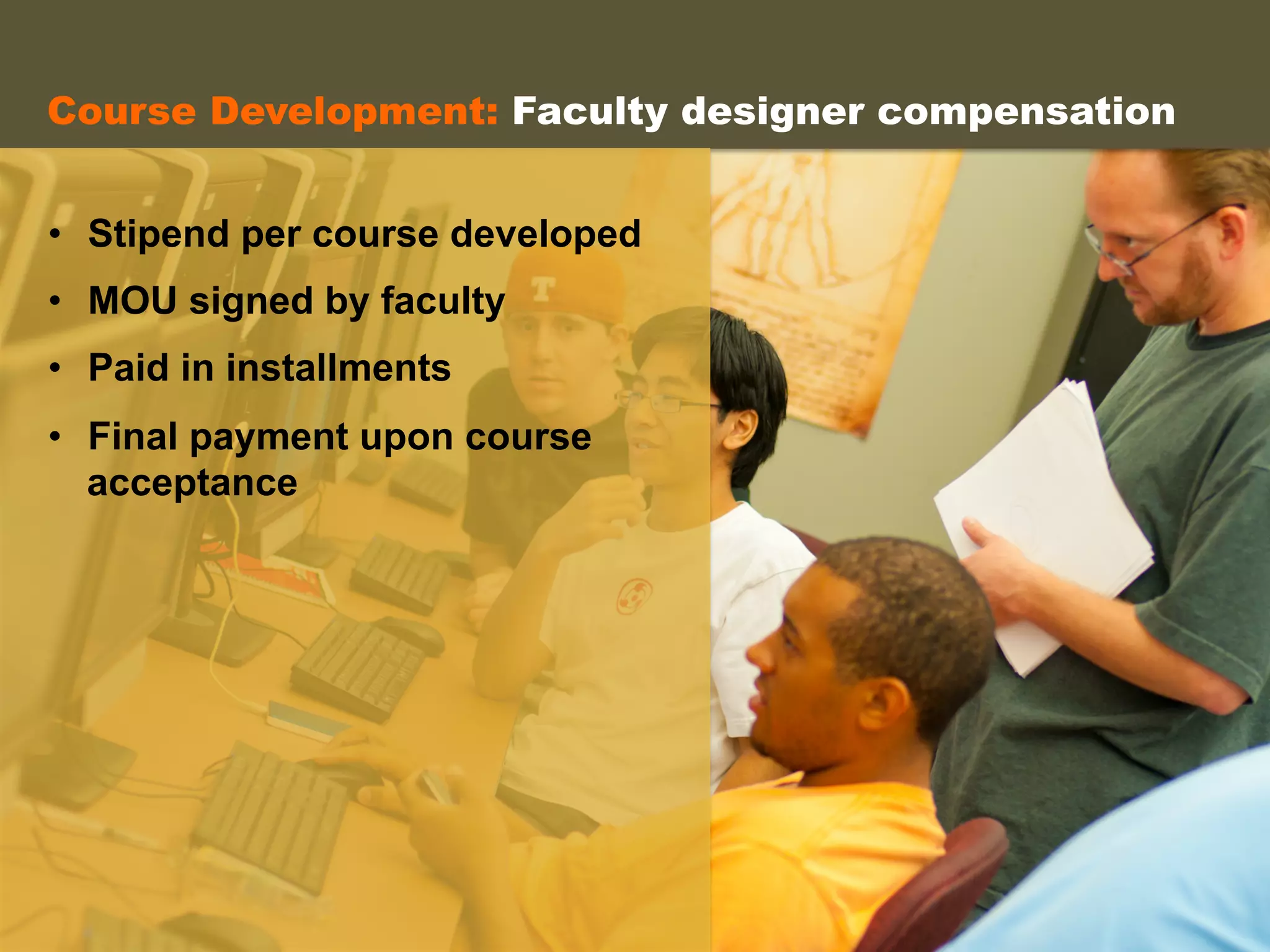
Course Development: Faculty designer compensation
•  Stipend per course developed
•  MOU signed by faculty
•  Paid in installments
•  Final payment upon course
acceptance
•  Competency definition
What: Developing competency based education 	
  
•  Flexible entry
•  Develop competency based, distance
learning education with substantial
interaction
•  Usage of multimedia to include:
ü  Video – short, responsive design
ü  Adobe connect – faculty interaction
ü  Social media – peer interaction
The Competency
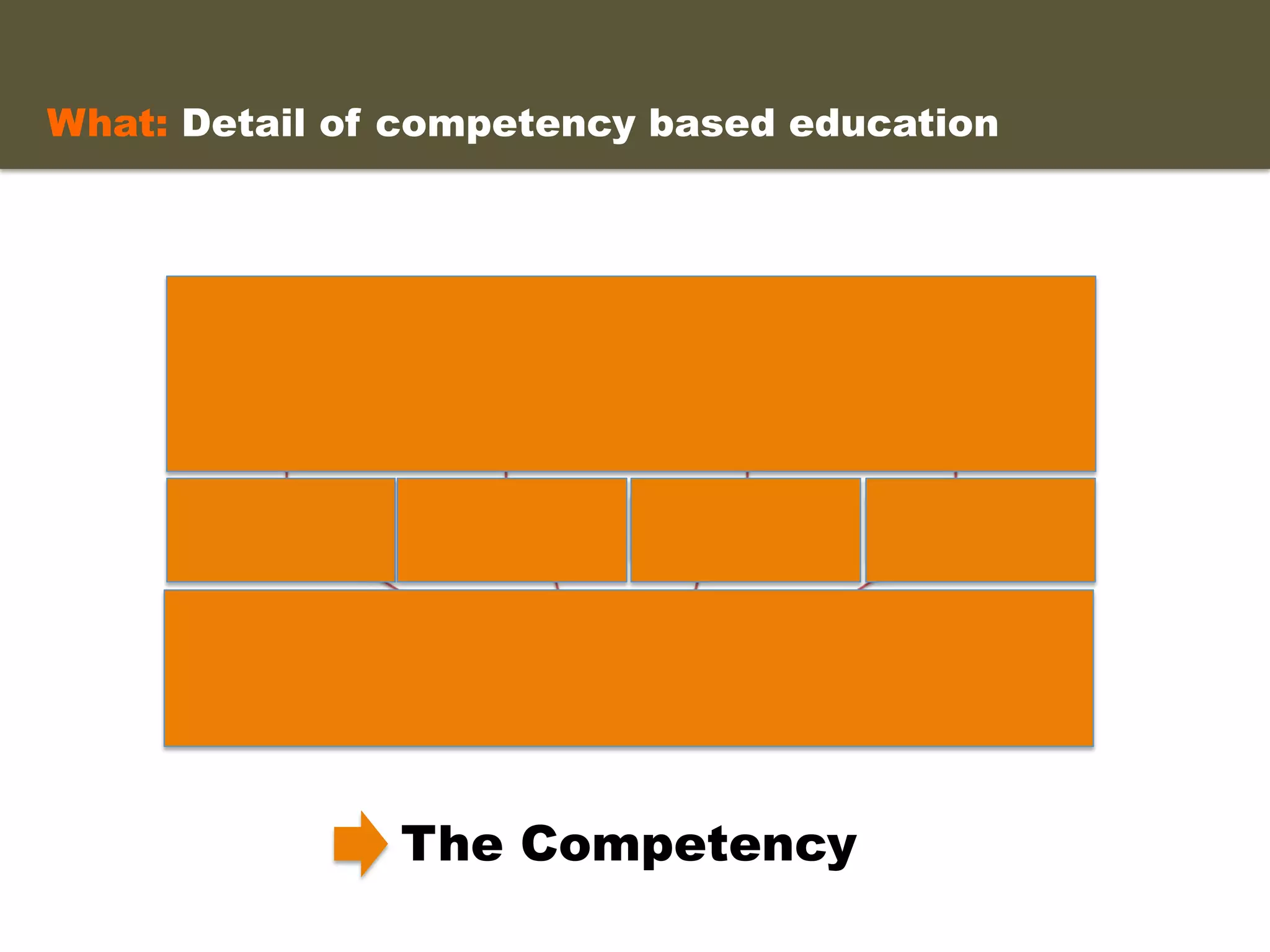
What: Detail of competency based education	
  
Industry
Required Skills
Measurable
Statement
Assessment
Entry Level
Position
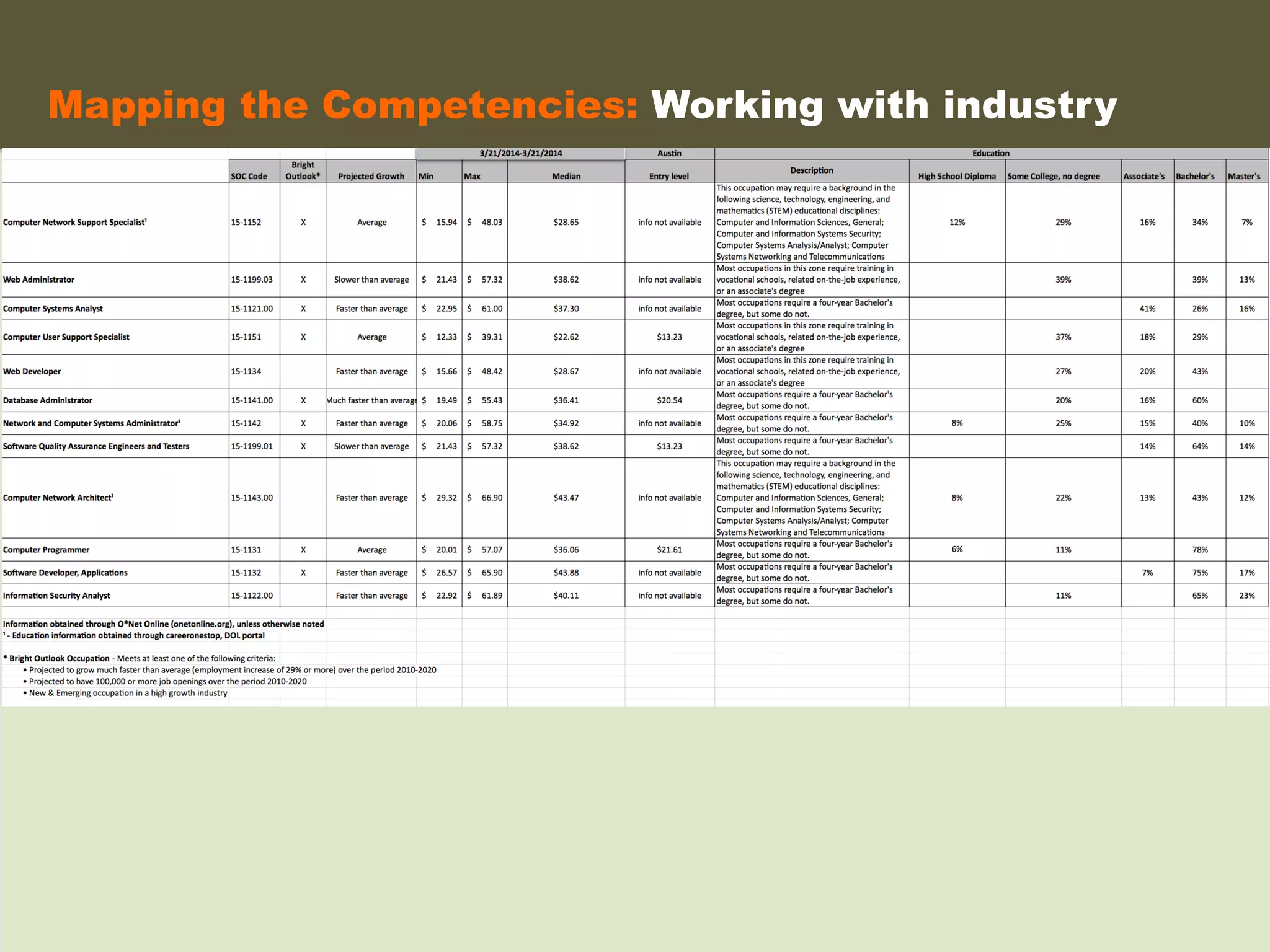
Mapping the Competencies: Working with industry	
  
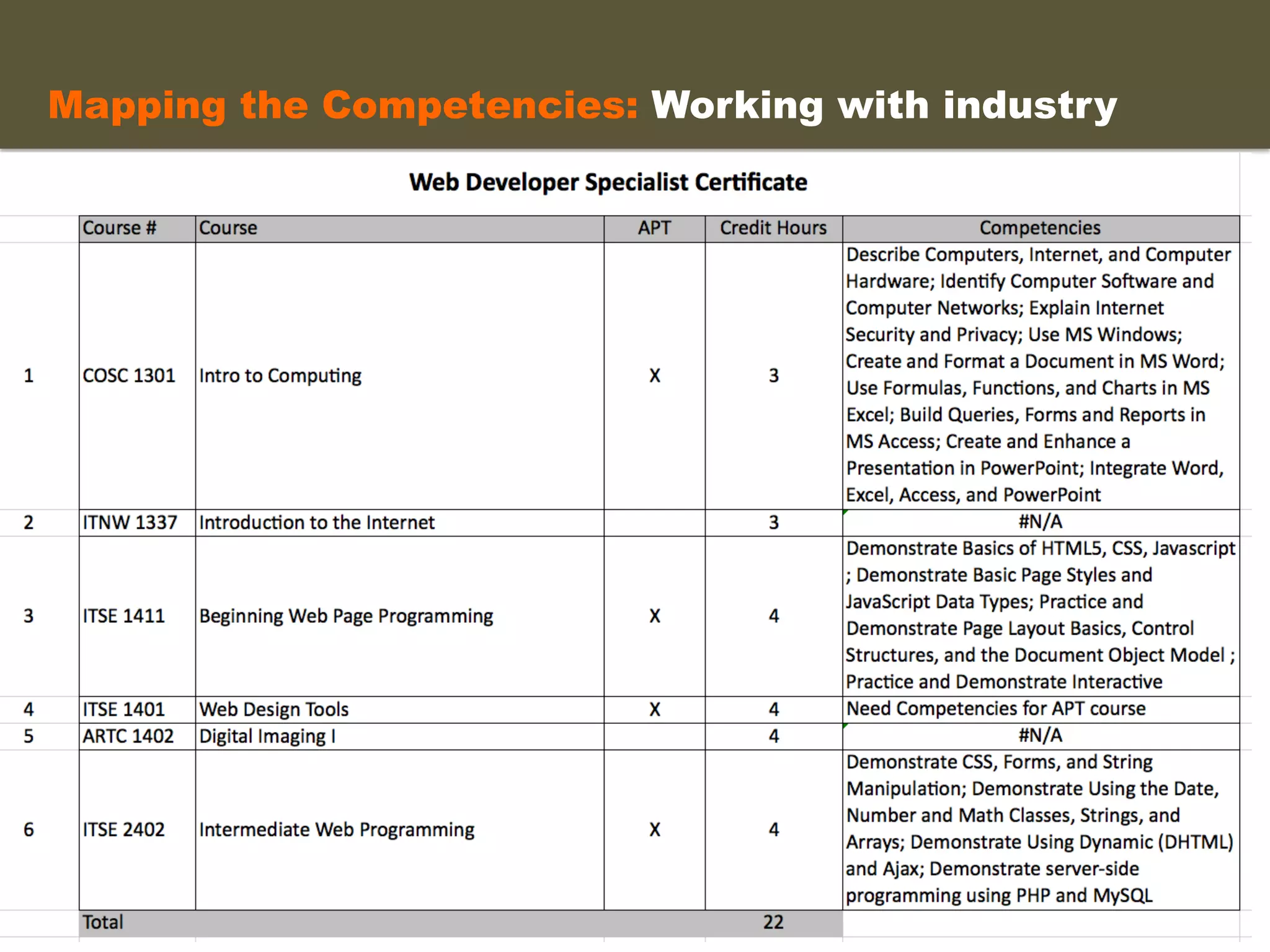
Mapping the Competencies: Working with industry	
  
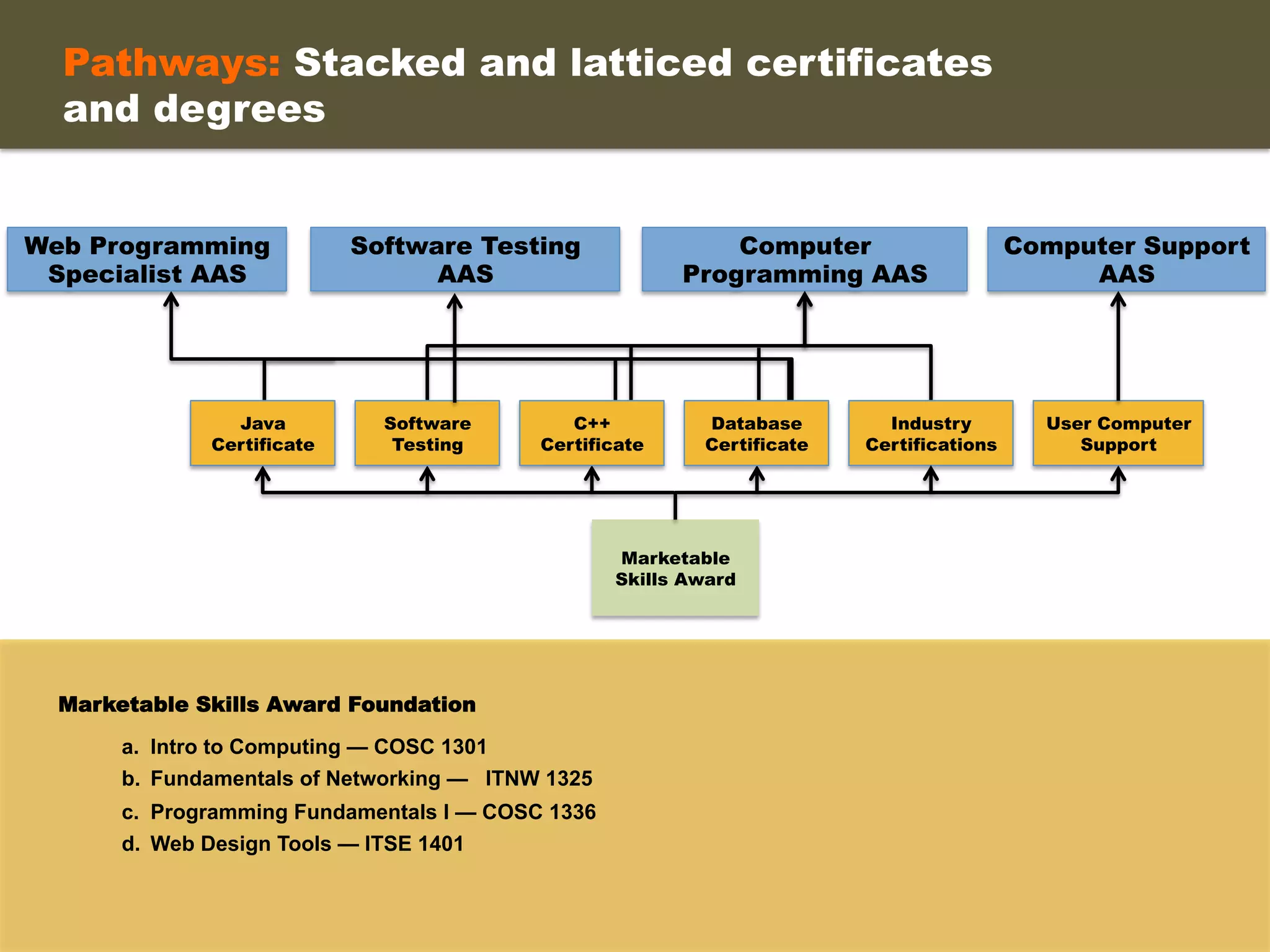
Pathways: Stacked and latticed certificates
and degrees	
  
Marketable
Skills Award
Web Programming
Specialist AAS
Computer
Programming AAS
User Computer
Support
Industry
Certifications
Java
Certificate
C++
Certificate
Software
Testing
Database
Certificate
Marketable Skills Award Foundation
a.  Intro to Computing — COSC 1301
b.  Fundamentals of Networking — ITNW 1325
c.  Programming Fundamentals I — COSC 1336
d.  Web Design Tools — ITSE 1401
	
  
Computer Support
AAS
Software Testing
AAS
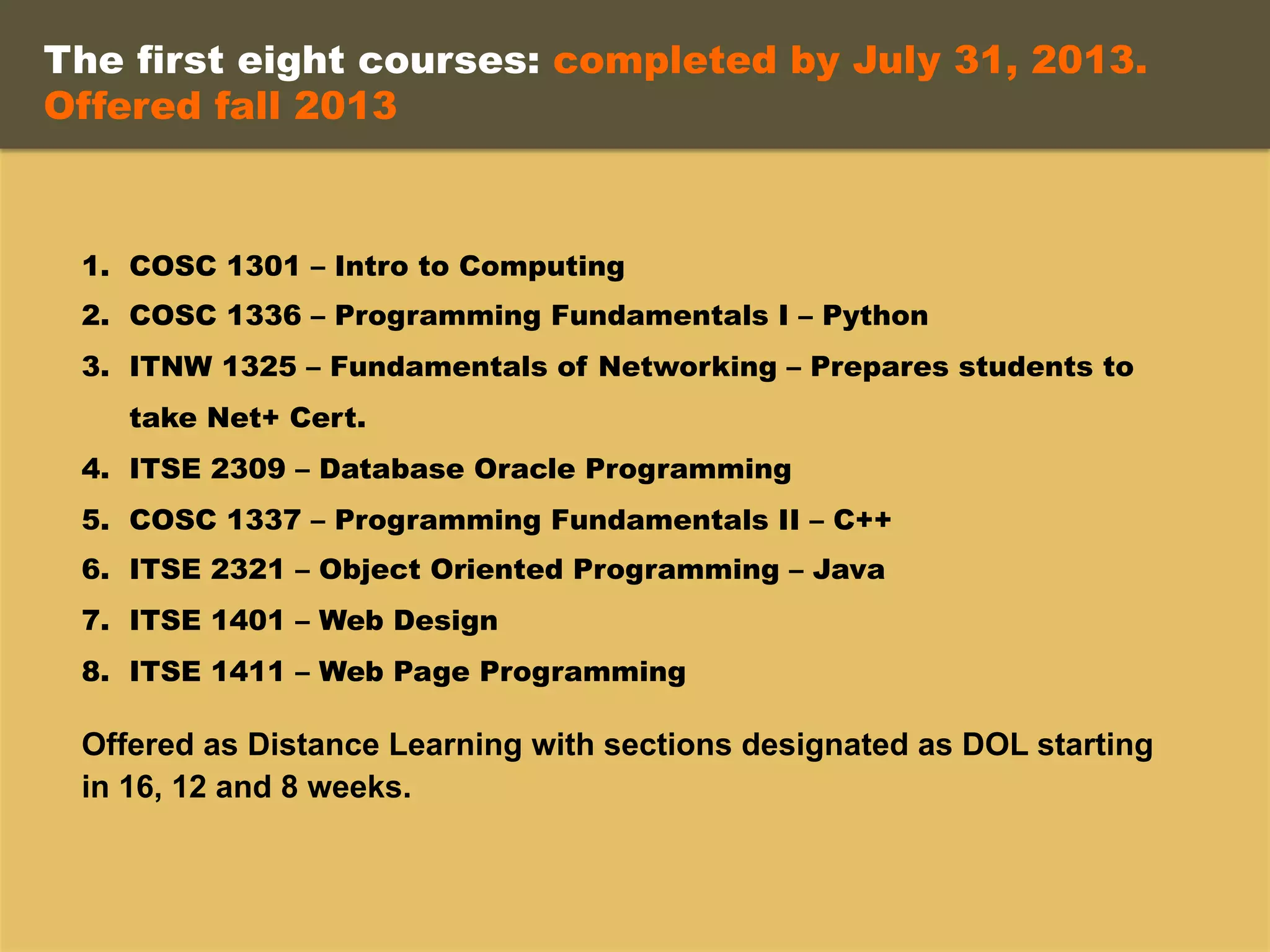
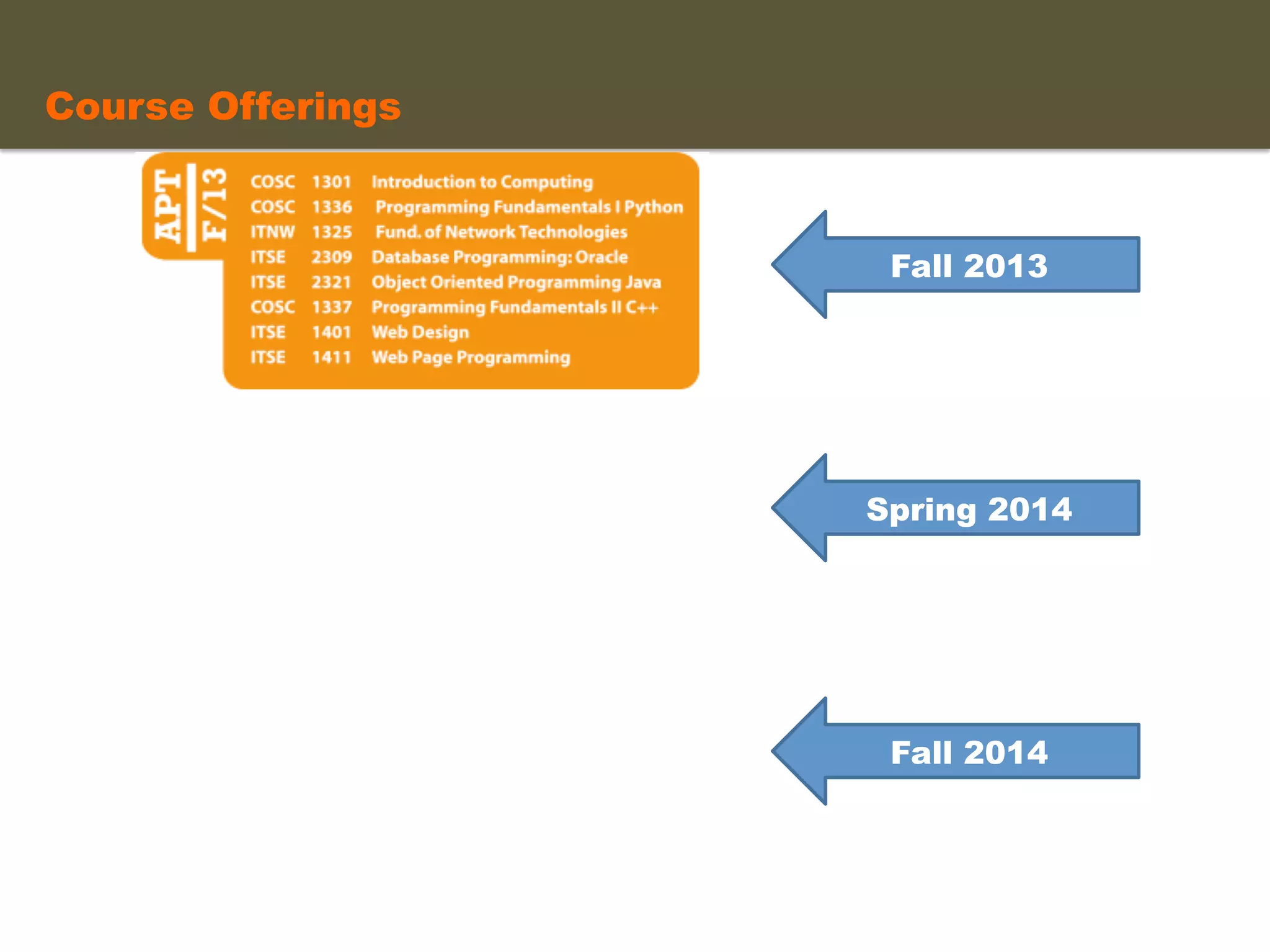
1.  COSC 1301 – Intro to Computing
2.  COSC 1336 – Programming Fundamentals I – Python
3.  ITNW 1325 – Fundamentals of Networking – Prepares students to
take Net+ Cert.
4.  ITSE 2309 – Database Oracle Programming
5.  COSC 1337 – Programming Fundamentals II – C++
6.  ITSE 2321 – Object Oriented Programming – Java
7.  ITSE 1401 – Web Design
8.  ITSE 1411 – Web Page Programming
Offered as Distance Learning with sections designated as DOL starting
in 16, 12 and 8 weeks.


The first eight courses: completed by July 31, 2013.
Offered fall 2013	
  
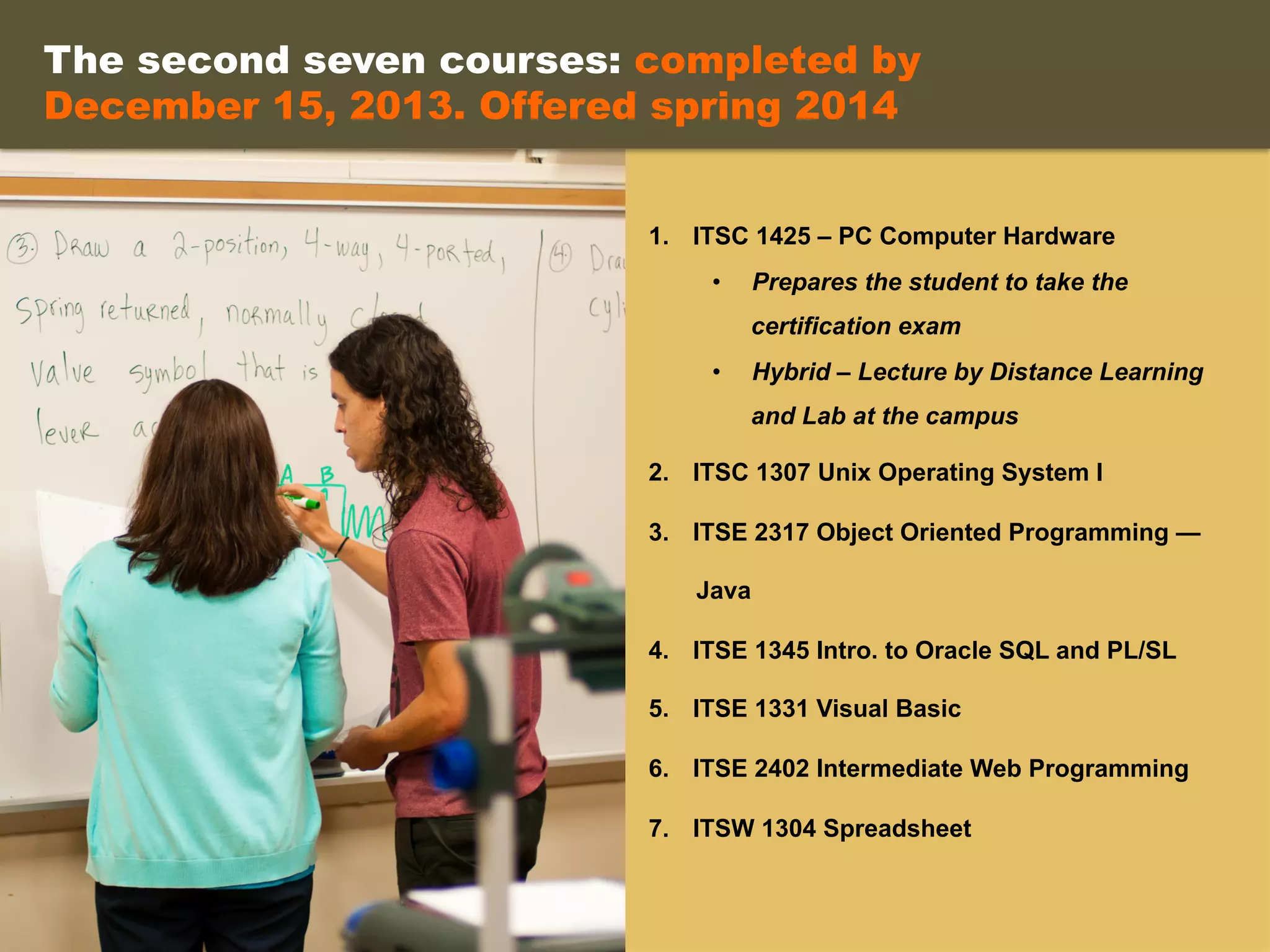
1.  ITSC 1425 – PC Computer Hardware
•  Prepares the student to take the
certification exam
•  Hybrid – Lecture by Distance Learning
and Lab at the campus
2.  ITSC 1307 Unix Operating System I
3.  ITSE 2317 Object Oriented Programming —
Java
4.  ITSE 1345 Intro. to Oracle SQL and PL/SL
5.  ITSE 1331 Visual Basic
6.  ITSE 2402 Intermediate Web Programming
7.  ITSW 1304 Spreadsheet
The second seven courses: completed by
December 15, 2013. Offered spring 2014	
  
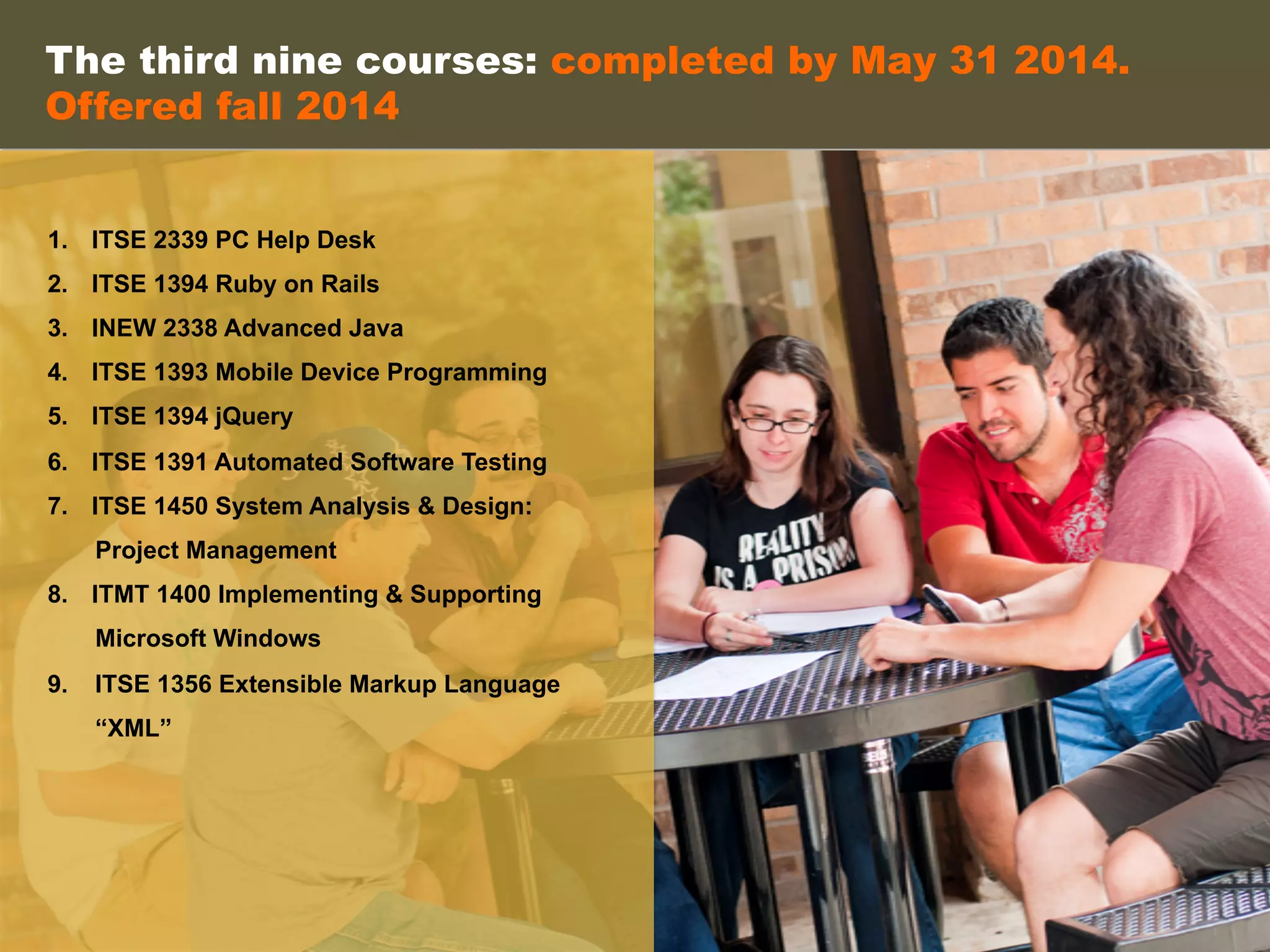
1.  ITSE 2339 PC Help Desk
2.  ITSE 1394 Ruby on Rails
3.  INEW 2338 Advanced Java
4.  ITSE 1393 Mobile Device Programming
5.  ITSE 1394 jQuery
6.  ITSE 1391 Automated Software Testing
7.  ITSE 1450 System Analysis & Design:
Project Management
8.  ITMT 1400 Implementing & Supporting
Microsoft Windows
9. ITSE 1356 Extensible Markup Language
“XML”
The third nine courses: completed by May 31 2014.
Offered fall 2014
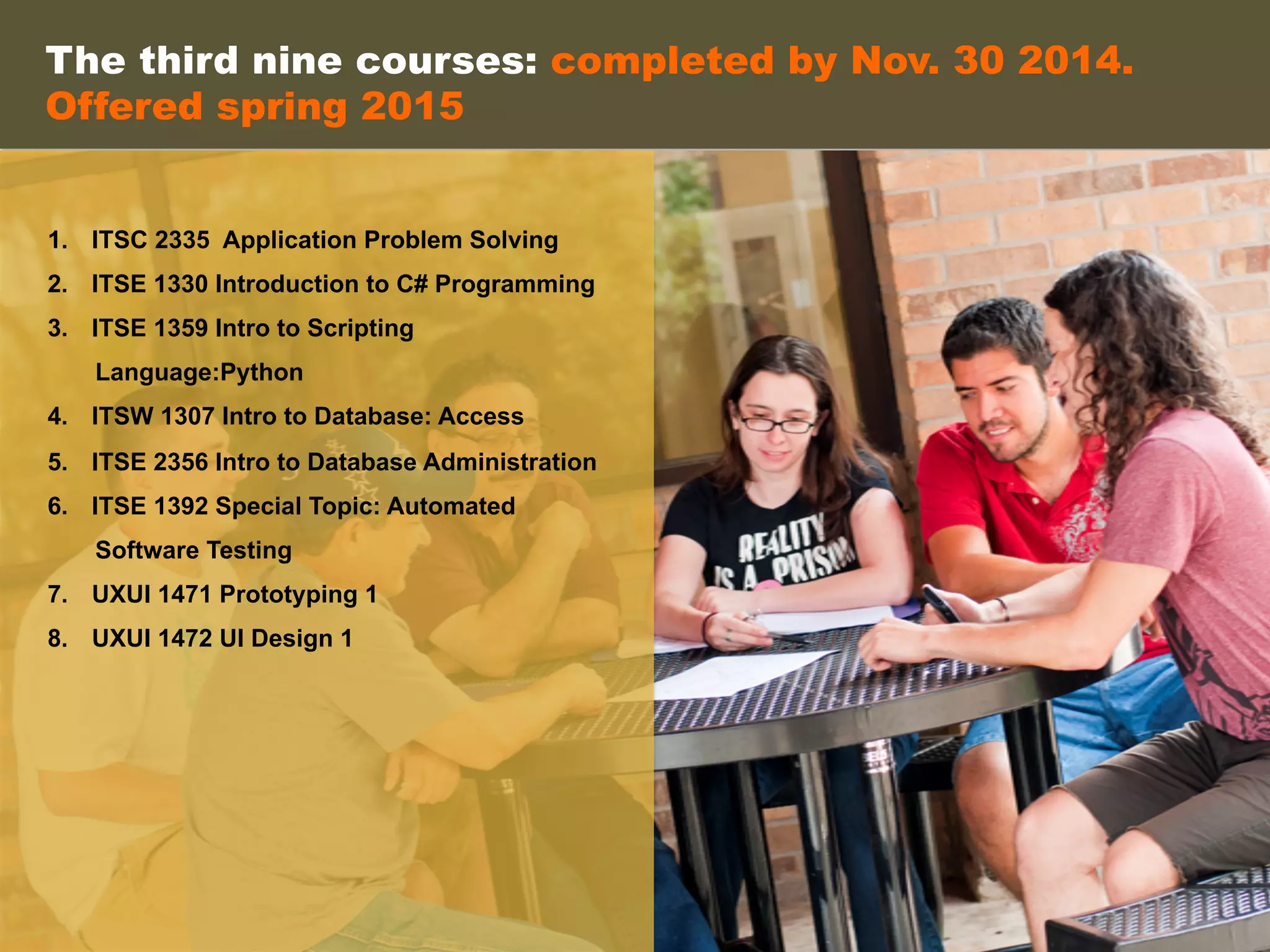
1.  ITSC 2335 Application Problem Solving
2.  ITSE 1330 Introduction to C# Programming
3.  ITSE 1359 Intro to Scripting
Language:Python
4.  ITSW 1307 Intro to Database: Access
5.  ITSE 2356 Intro to Database Administration
6.  ITSE 1392 Special Topic: Automated
Software Testing
7.  UXUI 1471 Prototyping 1
8.  UXUI 1472 UI Design 1
The third nine courses: completed by Nov. 30 2014.
Offered spring 2015
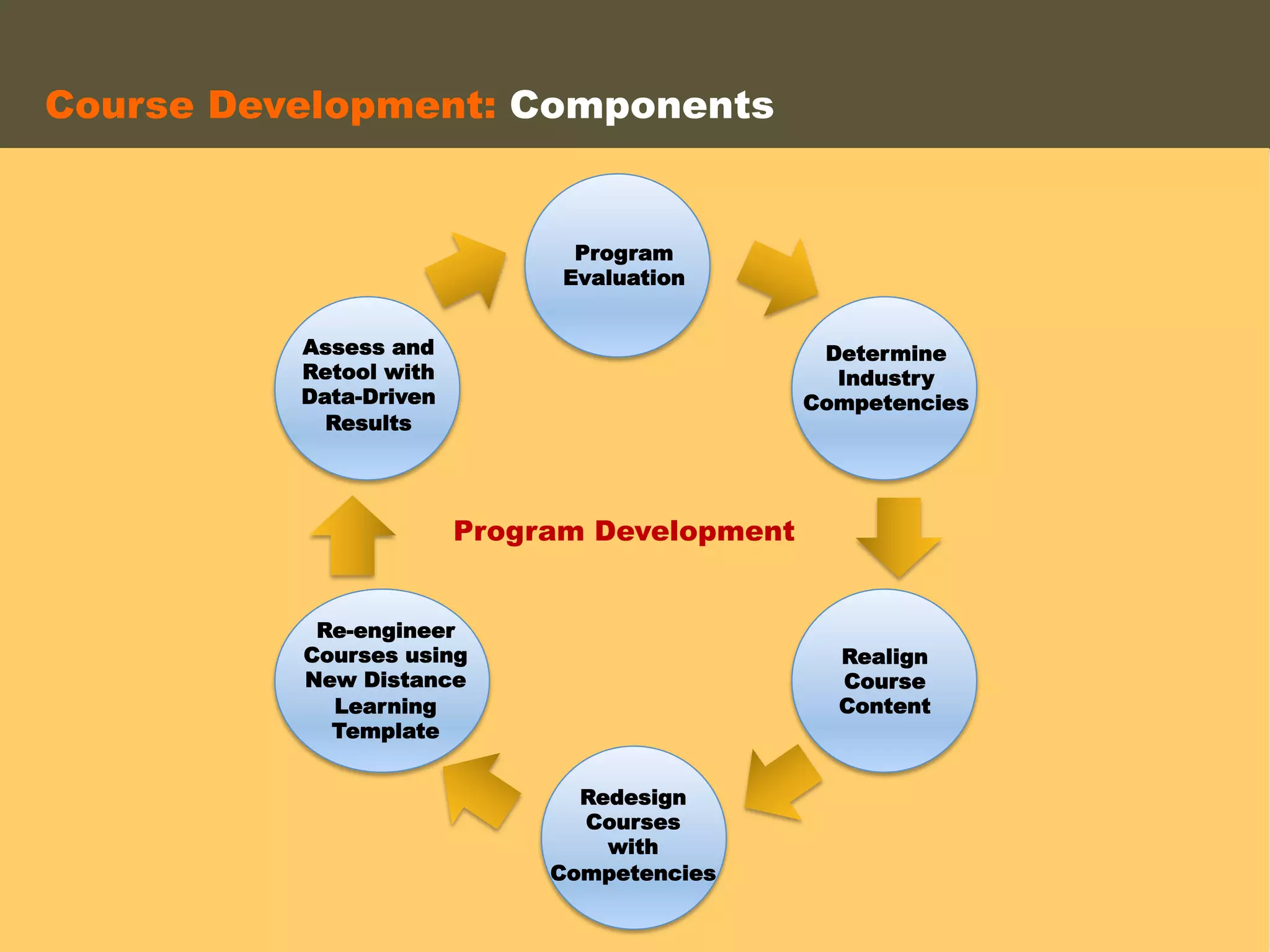
Course Development: Components
Realign
Course
Content
Re-engineer
Courses using
New Distance
Learning
Template
Program
Evaluation
Assess and
Retool with
Data-Driven
Results
Program Development
Determine
Industry
Competencies
Redesign
Courses
with
Competencies
Course Template


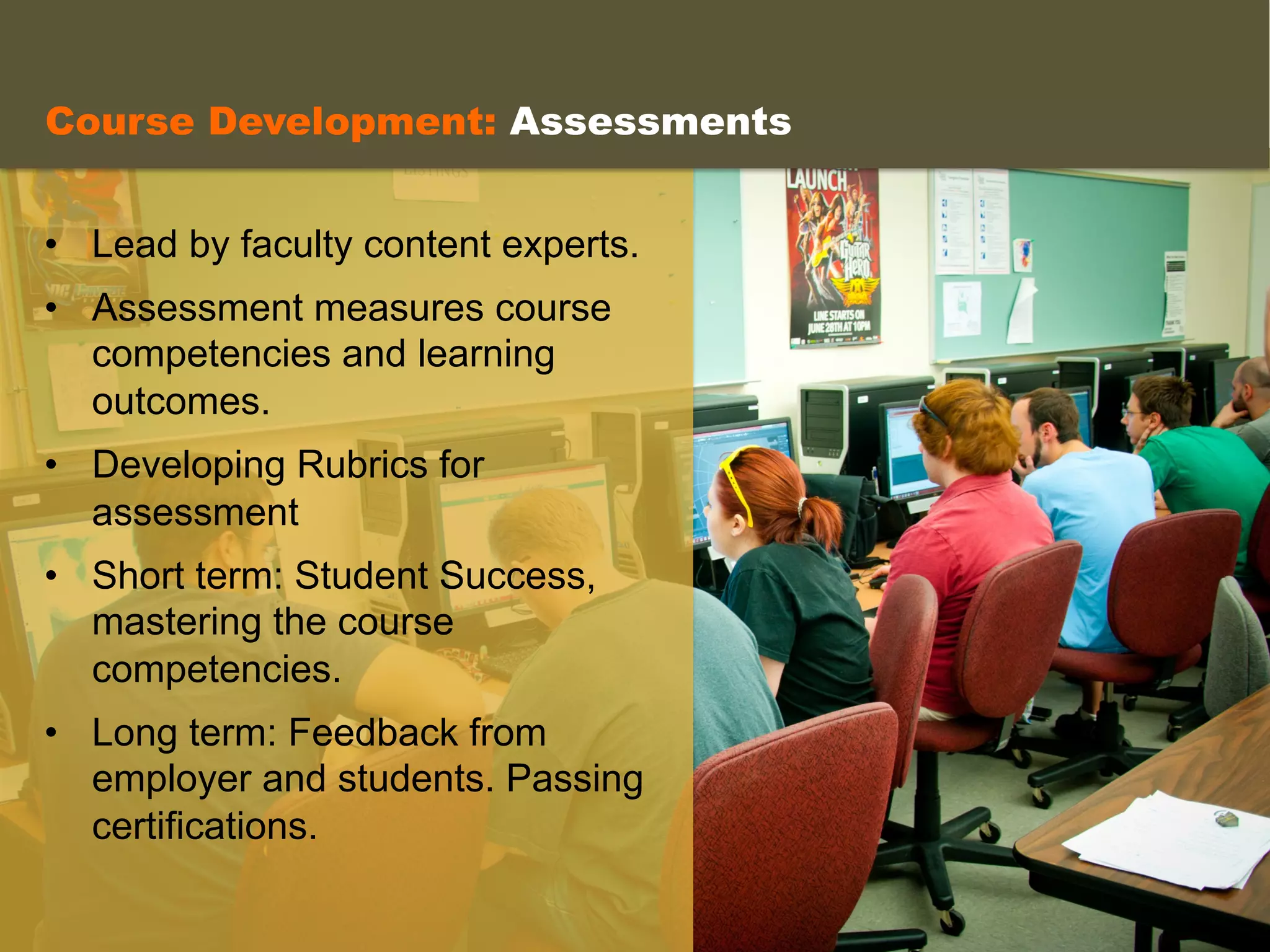
•  Lead by faculty content experts.
•  Assessment measures course
competencies and learning
outcomes.
•  Developing Rubrics for
assessment
•  Short term: Student Success,
mastering the course
competencies.
•  Long term: Feedback from
employer and students. Passing
certifications.
Course Development: Assessments
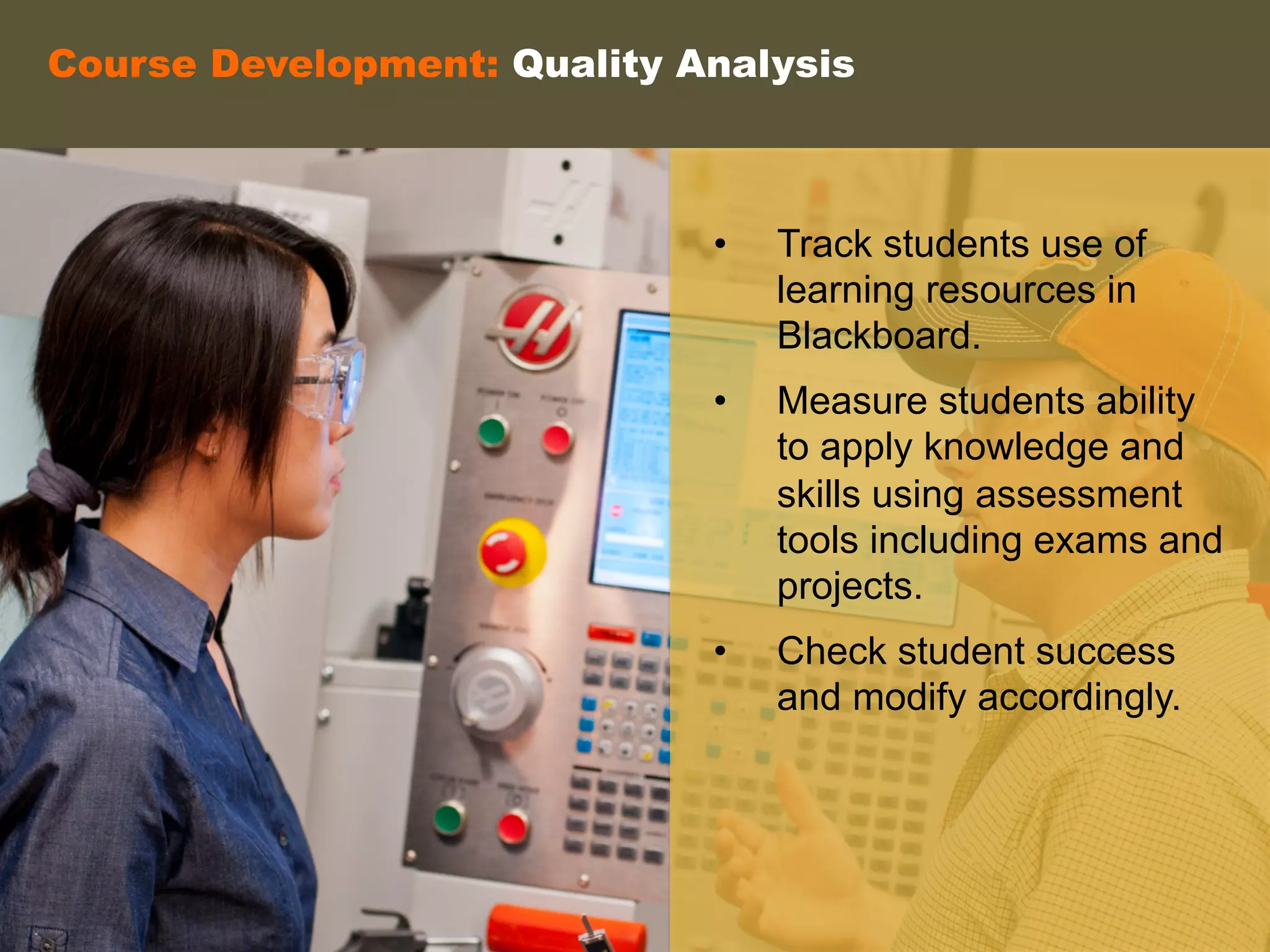
Course Development: Quality Analysis
•  Track students use of
learning resources in
Blackboard.
•  Measure students ability
to apply knowledge and
skills using assessment
tools including exams and
projects.
•  Check student success
and modify accordingly.


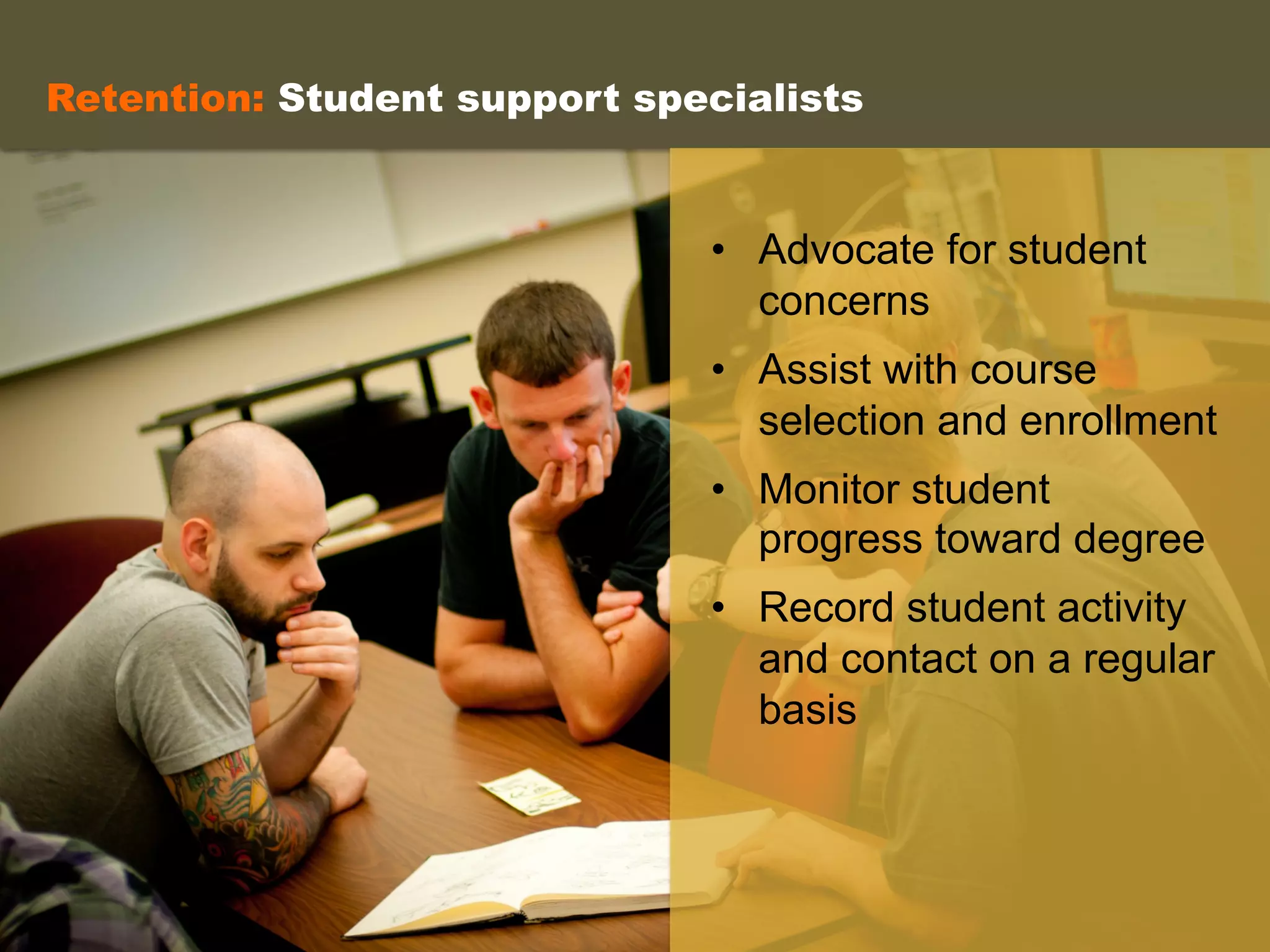
Retention: Student support specialists
•  Advocate for student
concerns
•  Assist with course
selection and enrollment
•  Monitor student
progress toward degree
•  Record student activity
and contact on a regular
basis


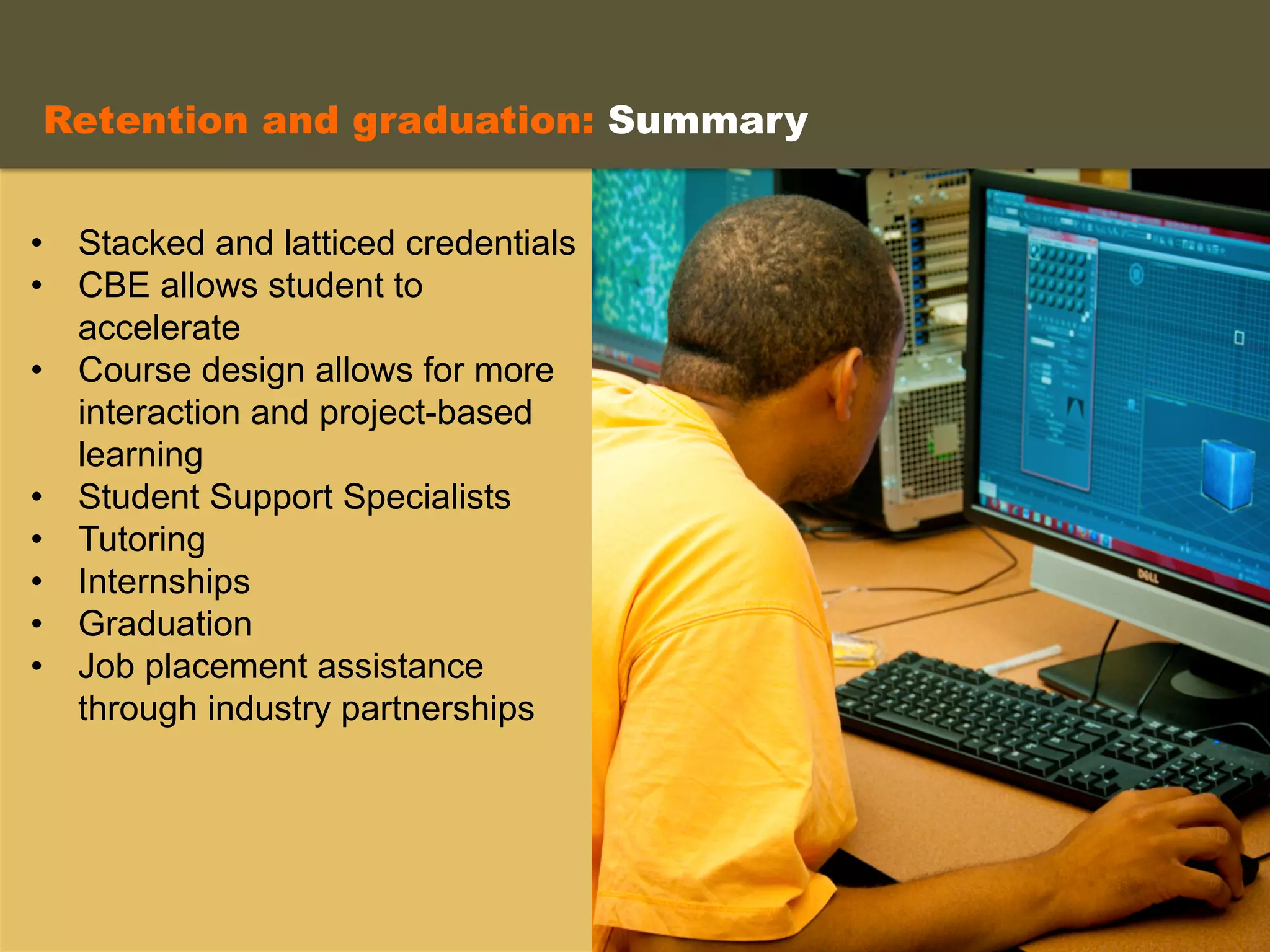
•  Stacked and latticed credentials
•  CBE allows student to
accelerate
•  Course design allows for more
interaction and project-based
learning
•  Student Support Specialists
•  Tutoring
•  Internships
•  Graduation
•  Job placement assistance
through industry partnerships
	
  
Retention and graduation: Summary
Instructional Designer Support Model
CBE Course Design
Dr. Ninghua Han – Instructional Design Specialist, APT program
Course Offerings	
  
Fall 2013
Spring 2014
Fall 2014
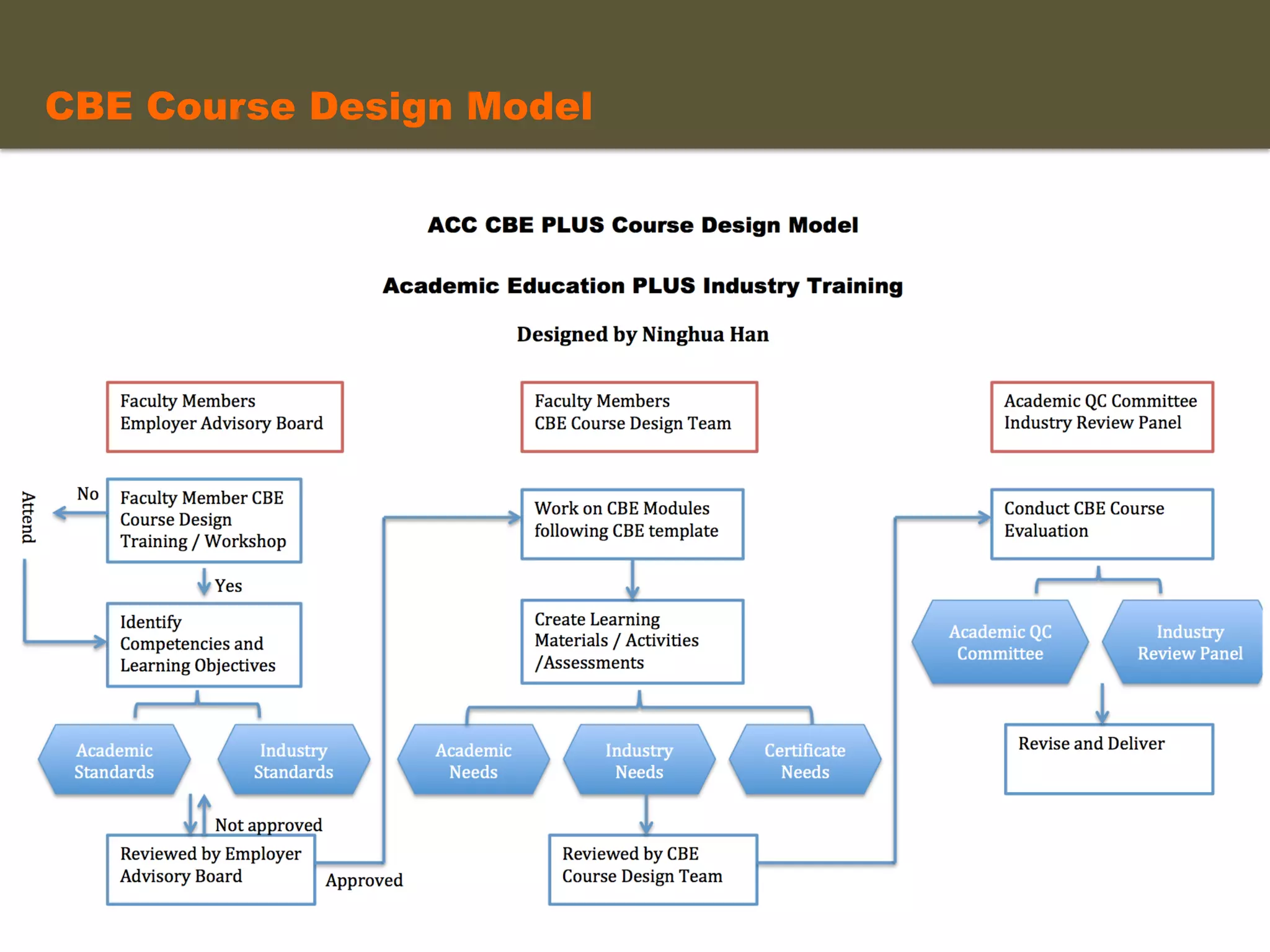
CBE Course Design Model	
  
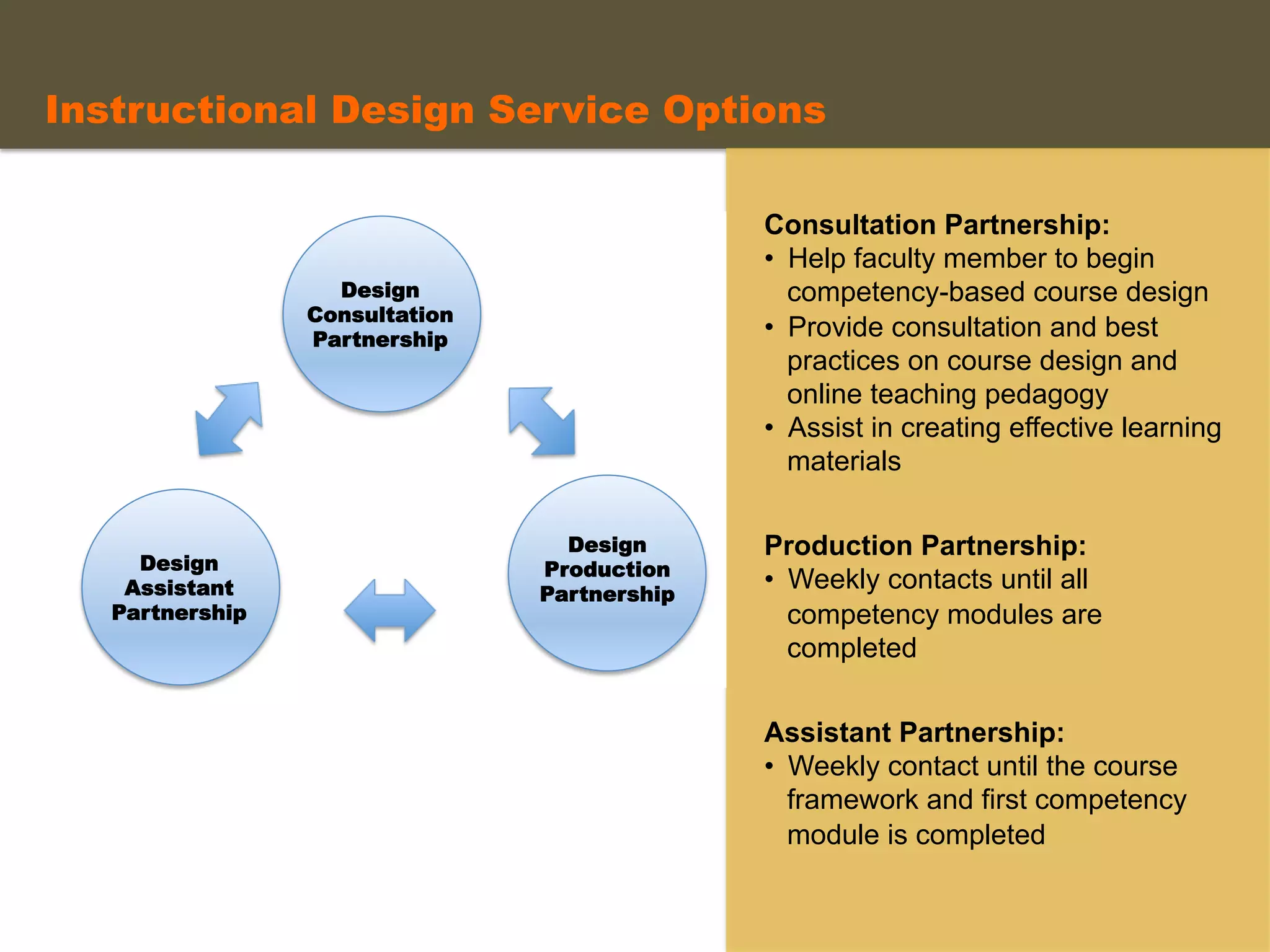
Instructional Design Service Options	
  	
  
Consultation Partnership:
•  Help faculty member to begin
competency-based course design
•  Provide consultation and best
practices on course design and
online teaching pedagogy
•  Assist in creating effective learning
materials
Production Partnership:
•  Weekly contacts until all
competency modules are
completed
Assistant Partnership:
•  Weekly contact until the course
framework and first competency
module is completed
Design
Consultation
Partnership
Design
Production
Partnership
Design
Assistant
Partnership
 
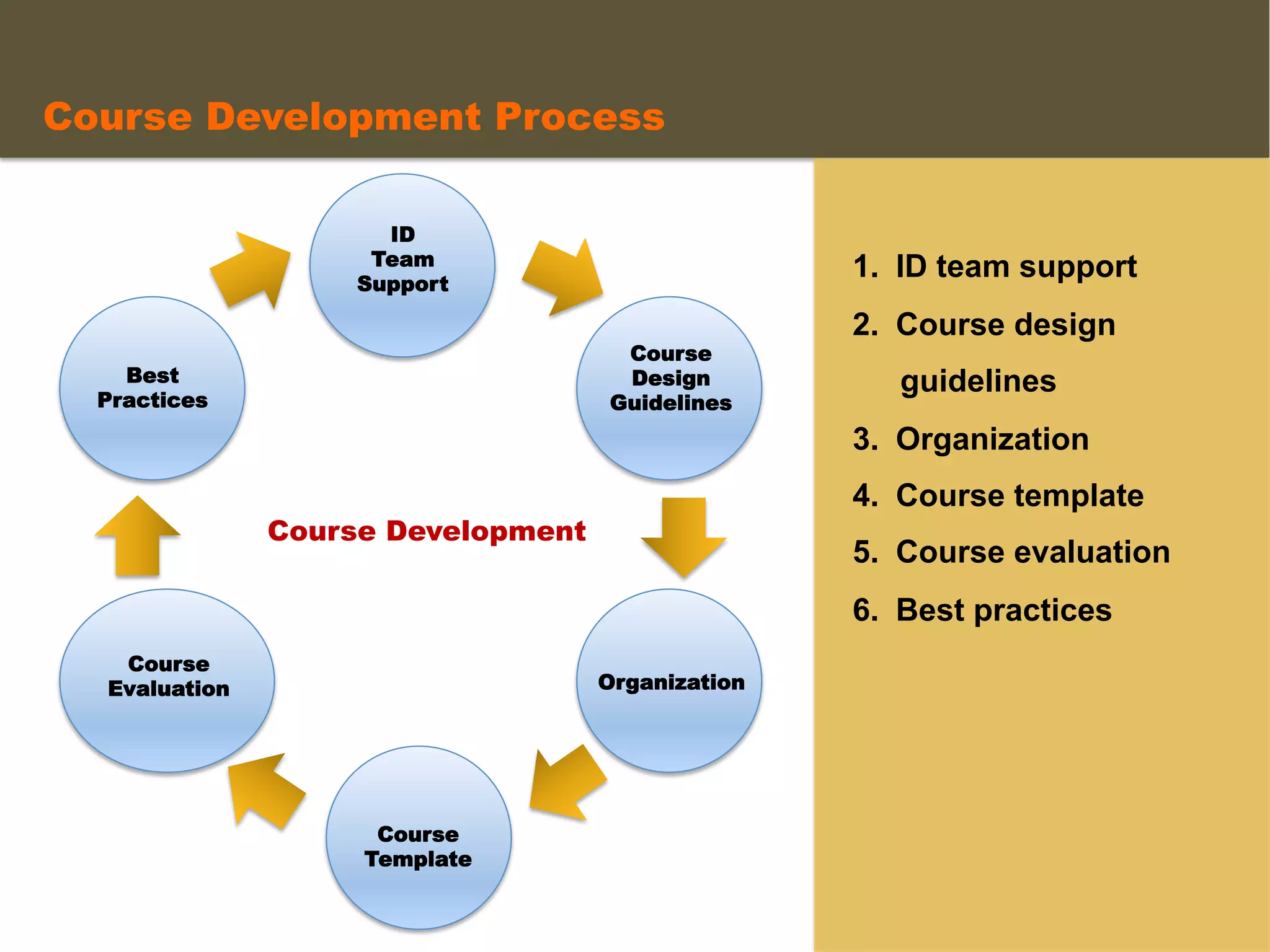
1.  ID team support
2.  Course design
guidelines
3.  Organization
4.  Course template
5.  Course evaluation
6.  Best practices


Course Development Process
Organization
Course
Evaluation
ID
Team
Support
Best
Practices
Course Development
Course
Design
Guidelines
Course
Template
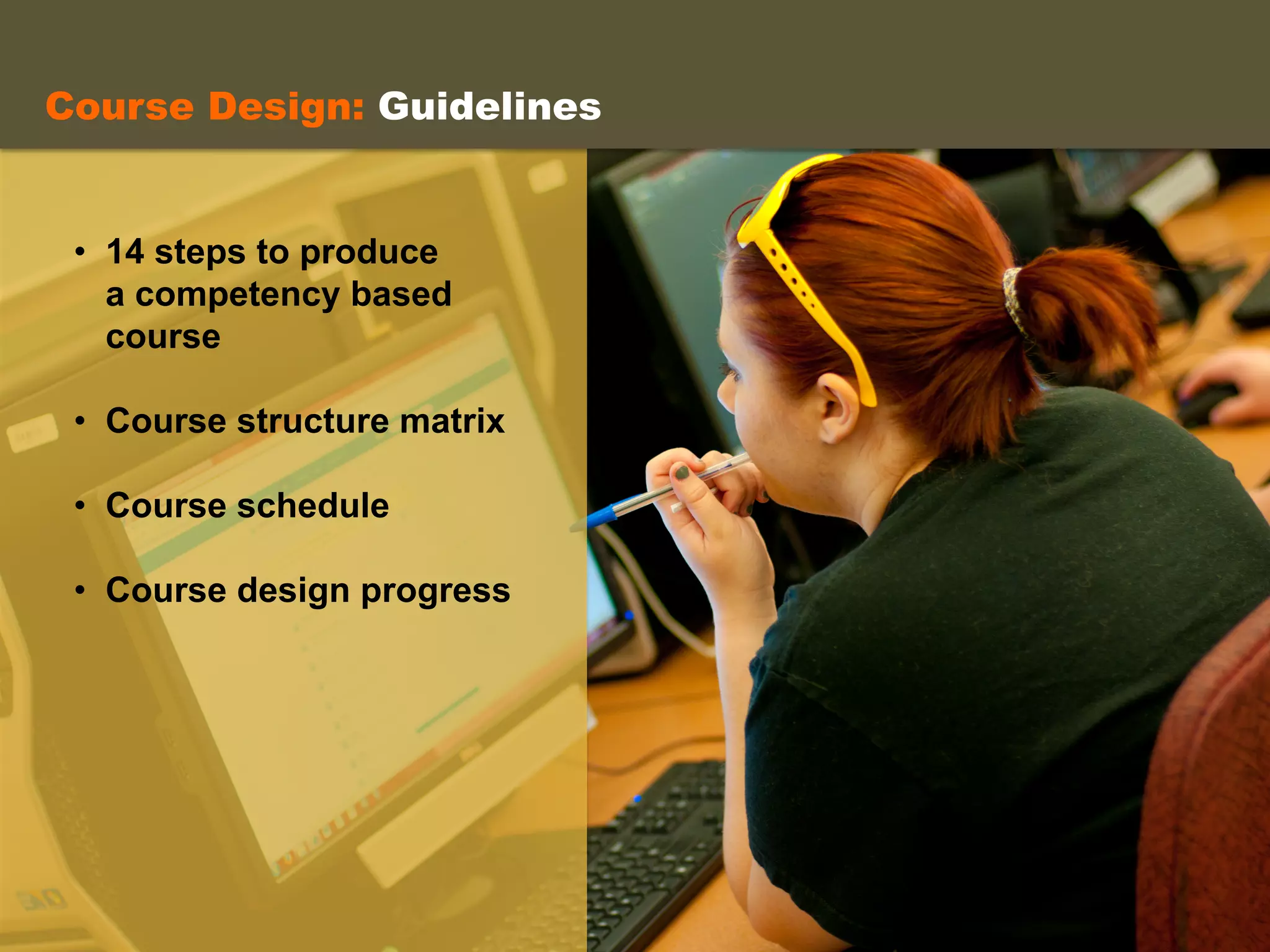
•  14 steps to produce
a competency based
course
•  Course structure matrix
•  Course schedule
•  Course design progress


Course Design: Guidelines	
  
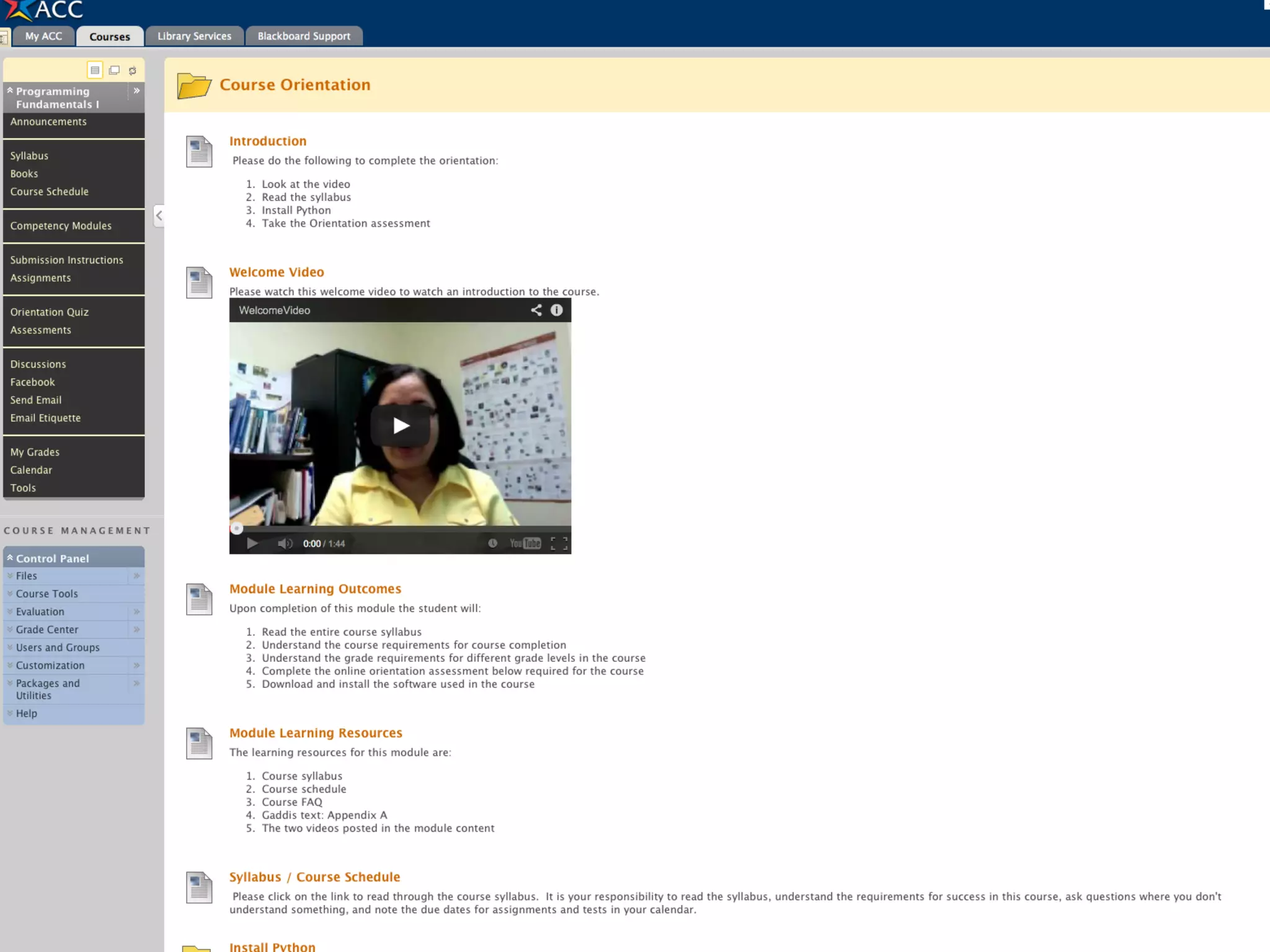
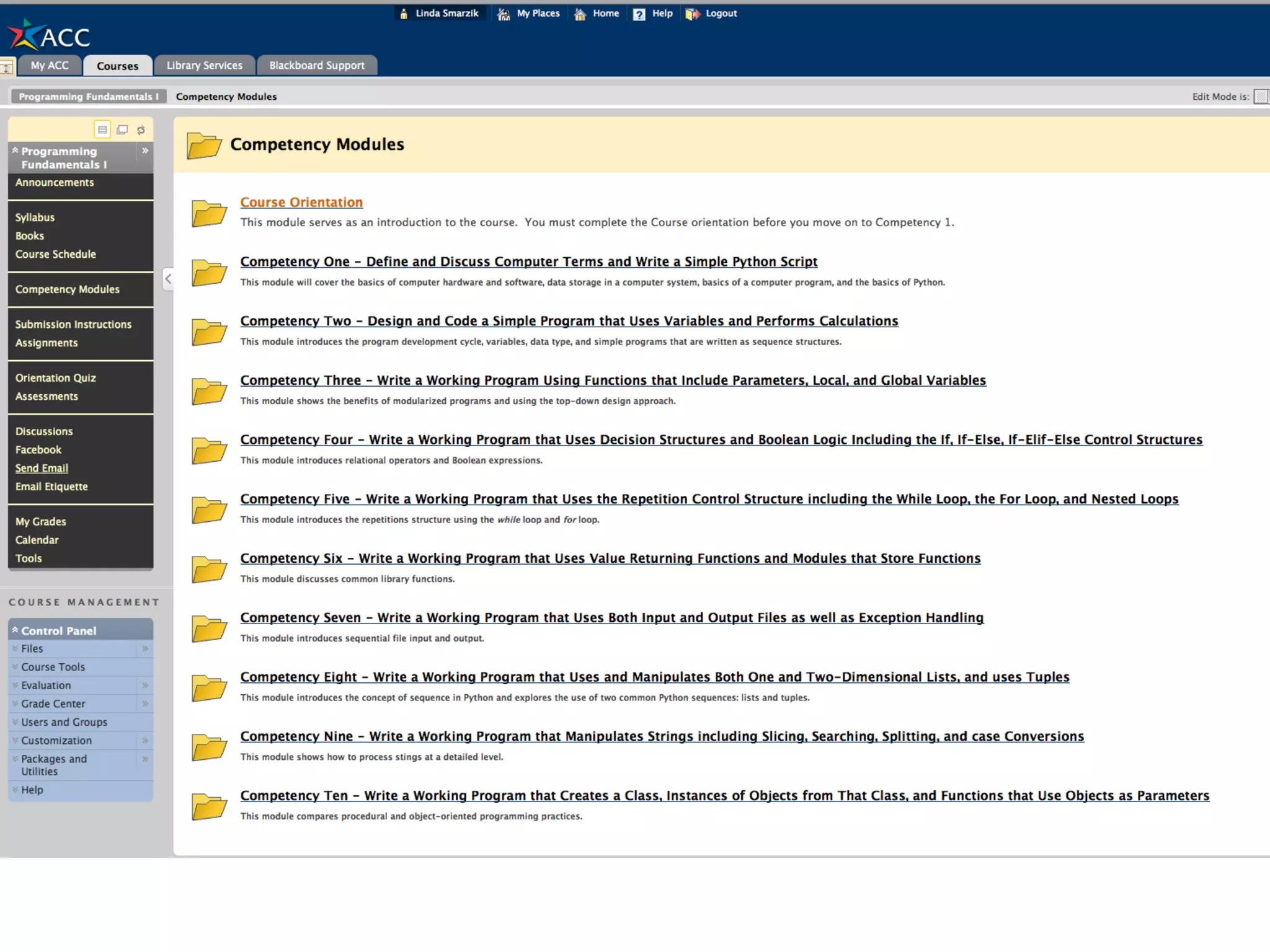
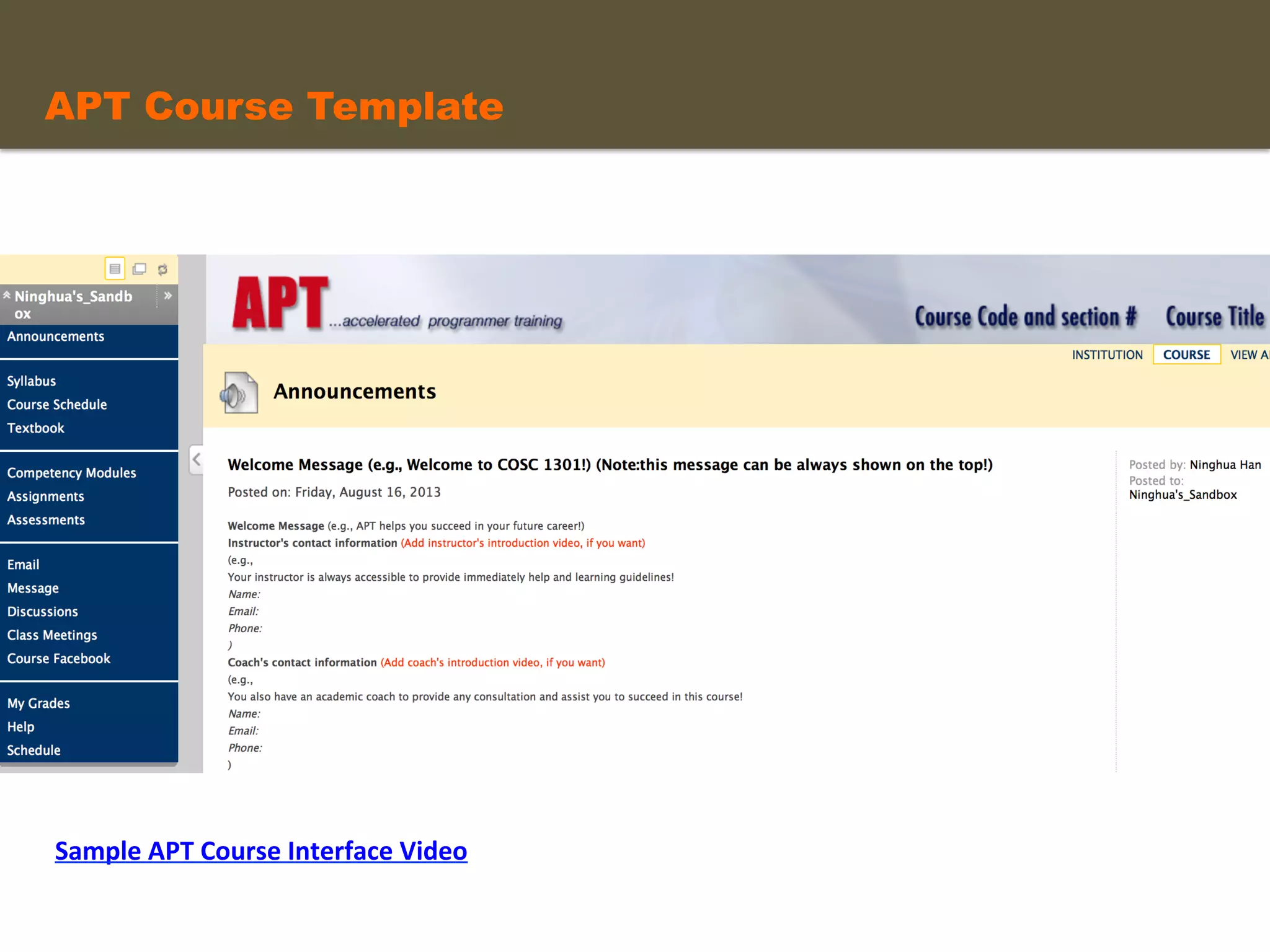
APT Course Template	
  
Sample	
  APT	
  Course	
  Interface	
  Video	
  
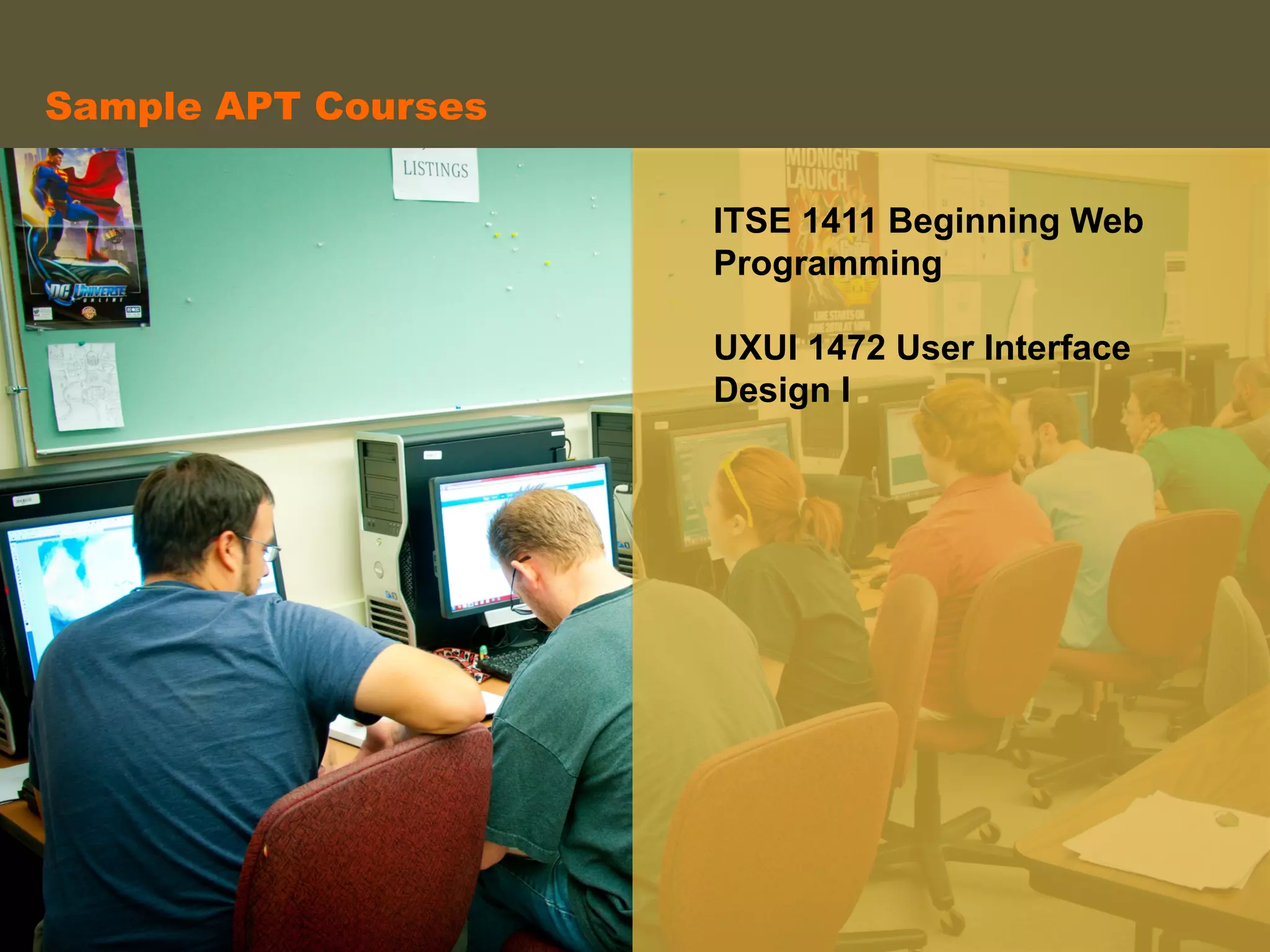
ITSE 1411 Beginning Web
Programming
UXUI 1472 User Interface
Design I


Sample APT Courses	
  
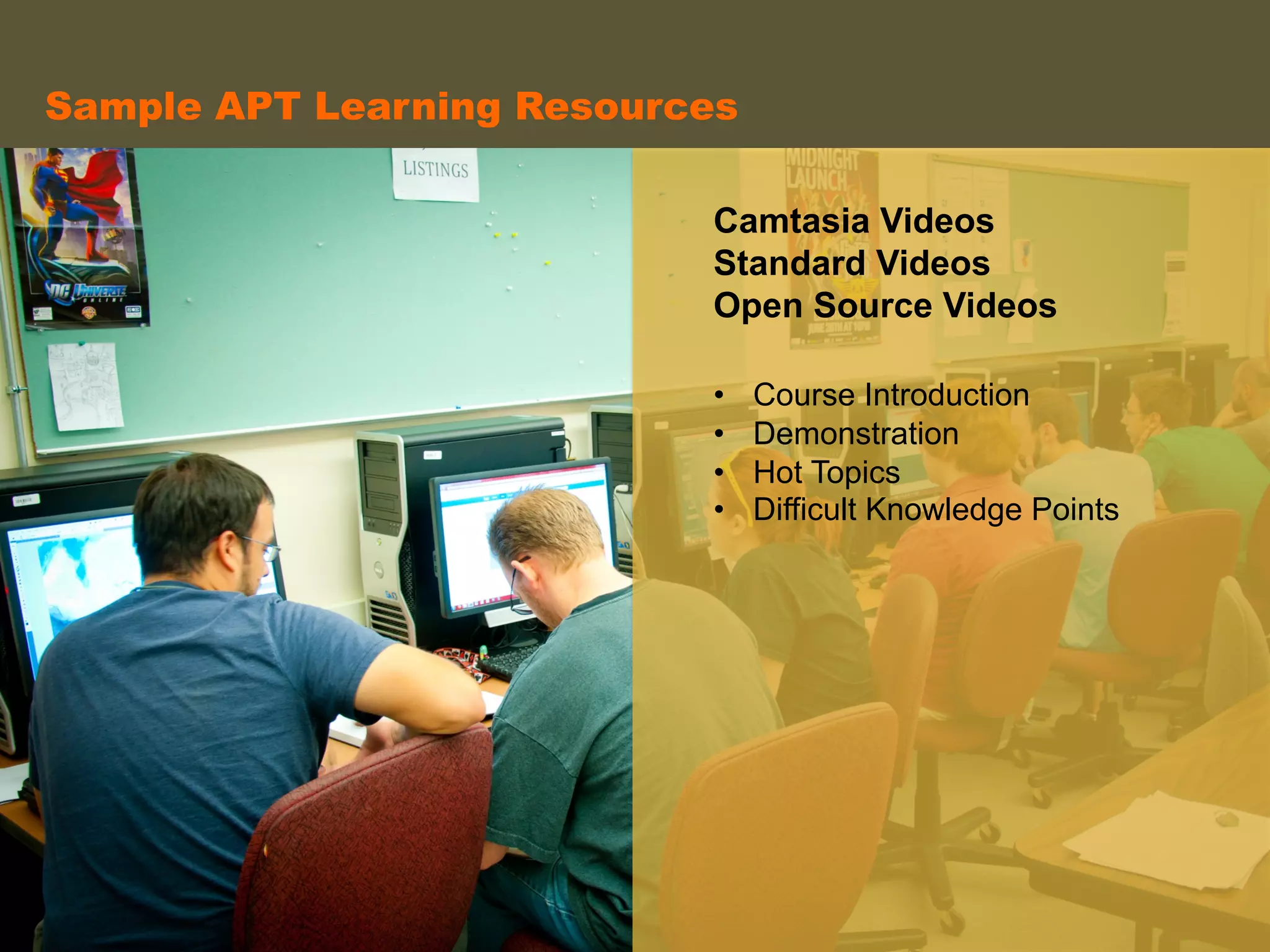
Camtasia Videos
Standard Videos
Open Source Videos
	
  
•  Course Introduction
•  Demonstration
•  Hot Topics
•  Difficult Knowledge Points


Sample APT Learning Resources	
  
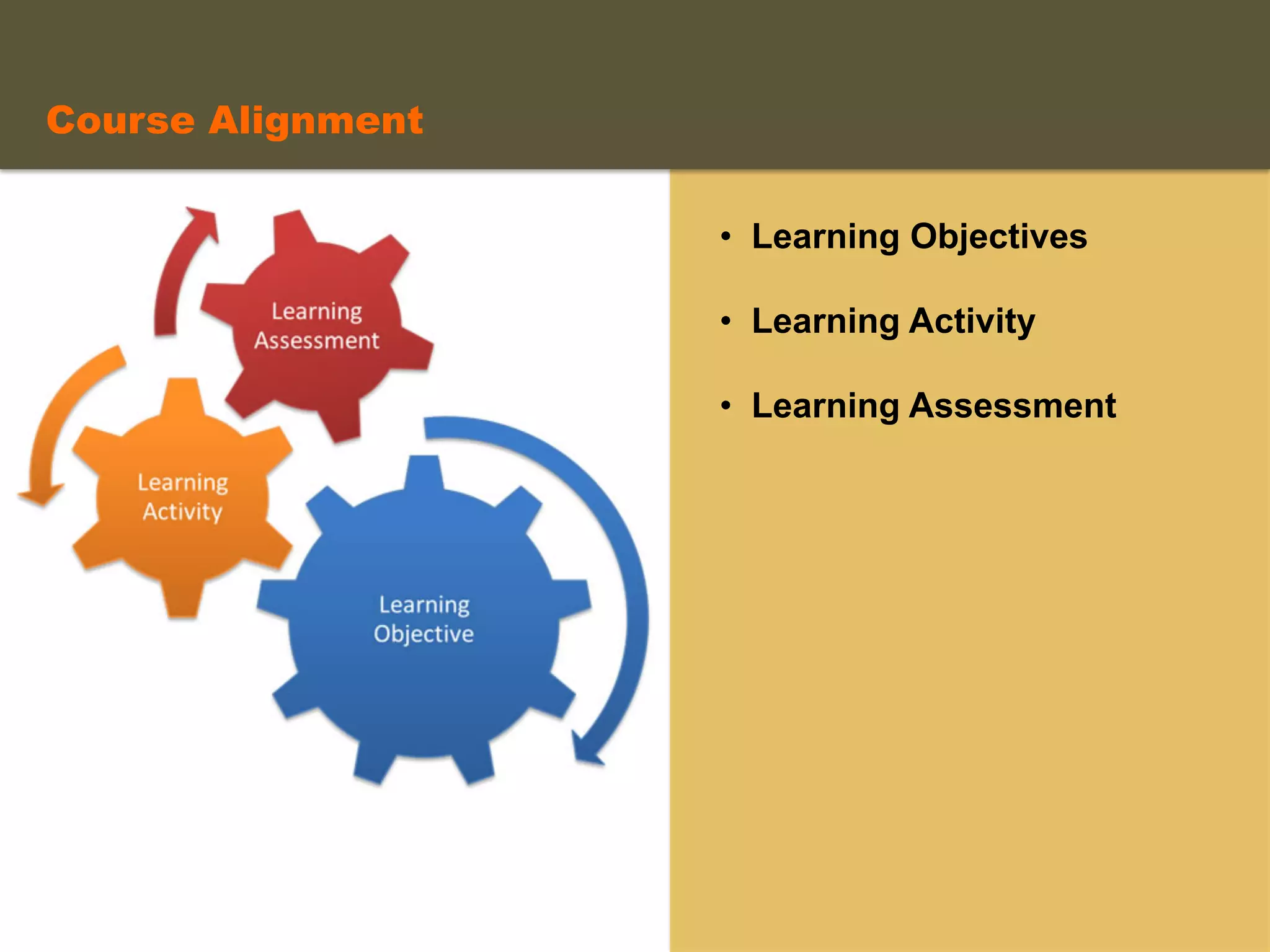
•  Learning Objectives
•  Learning Activity
•  Learning Assessment
Course Alignment	
  
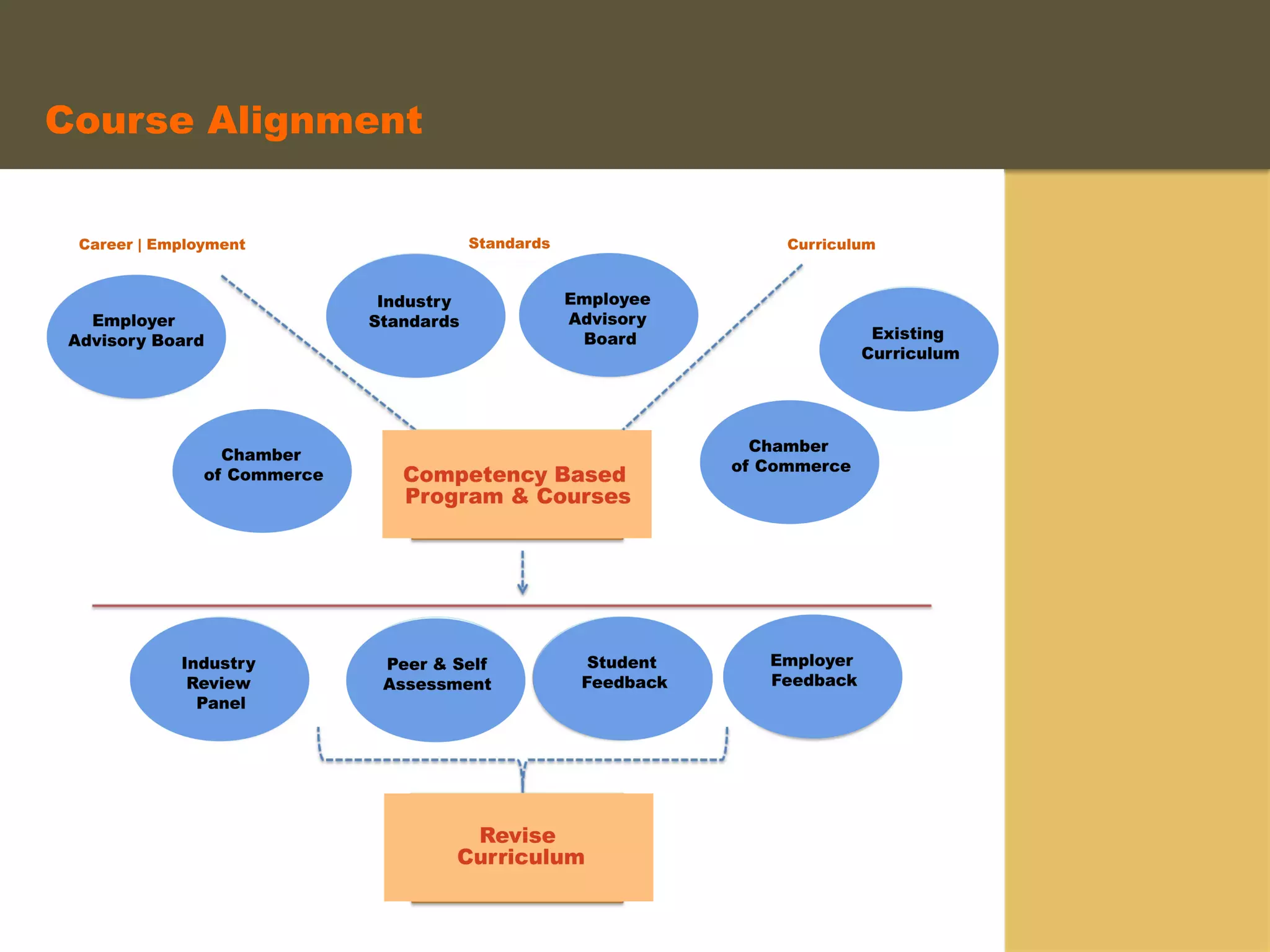
Course Alignment	
  
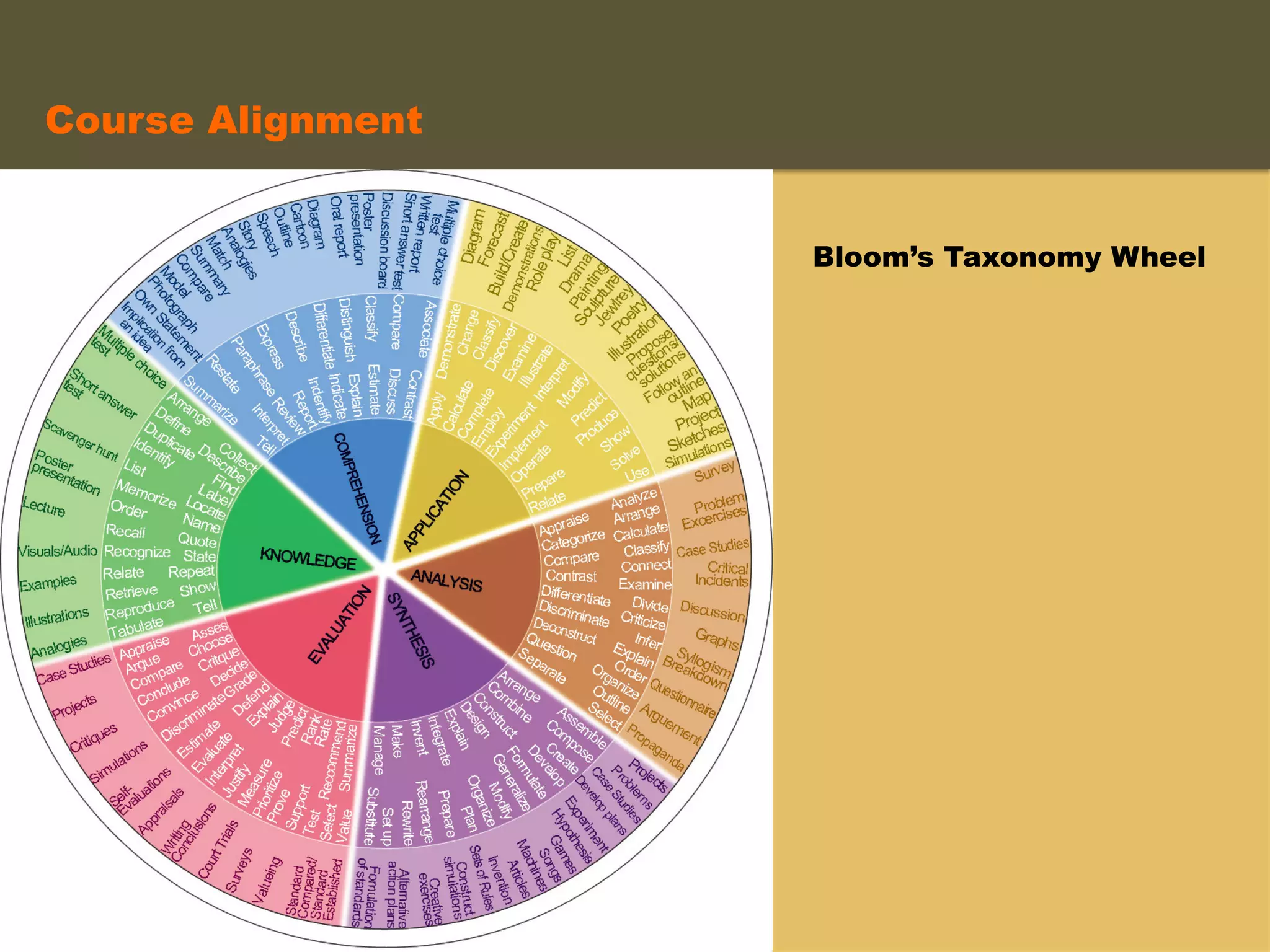
Bloom’s Taxonomy Wheel
Course Alignment	
  
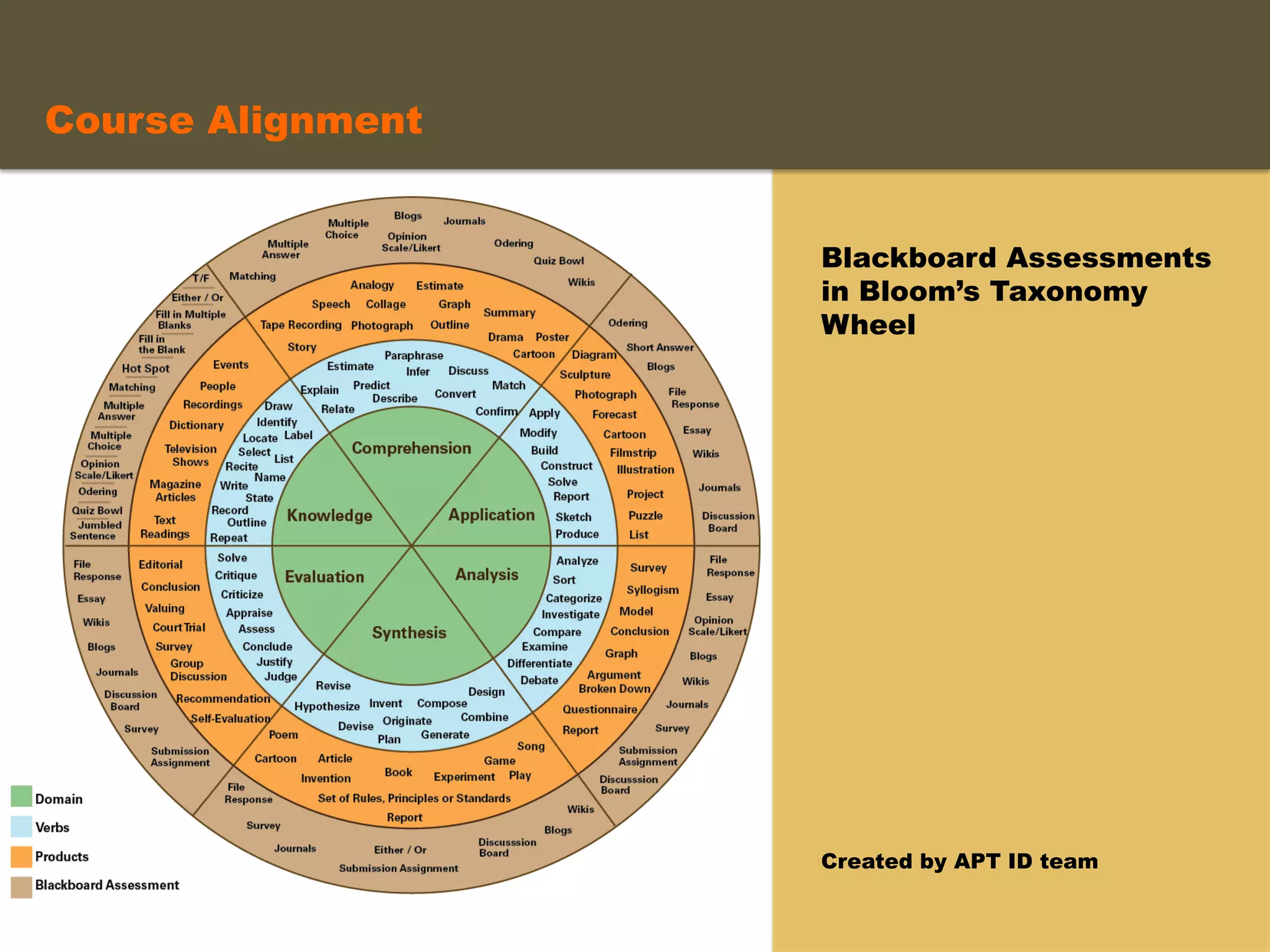
Blackboard Assessments
in Bloom’s Taxonomy
Wheel
Created by APT ID team
Course Alignment	
  
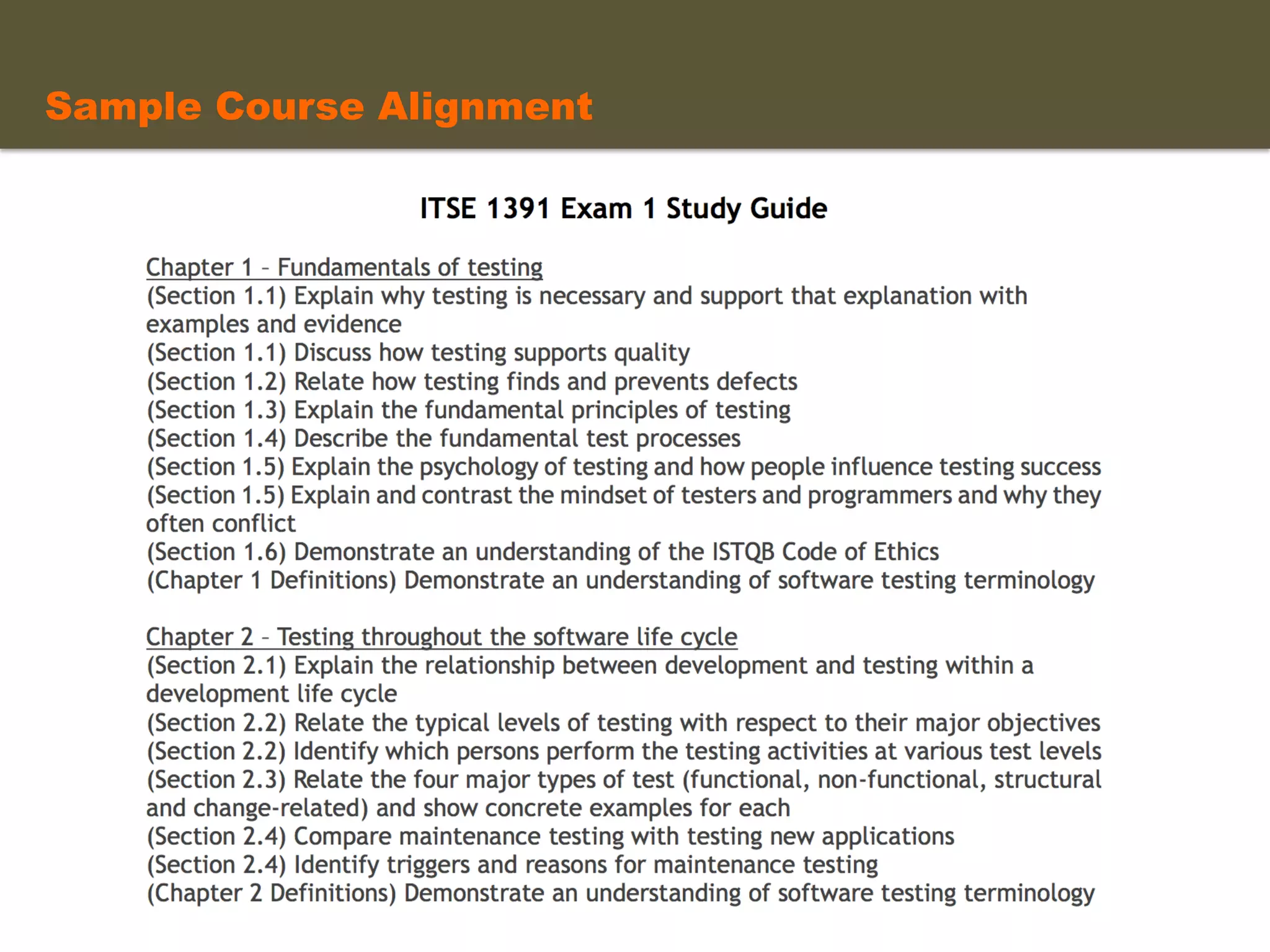
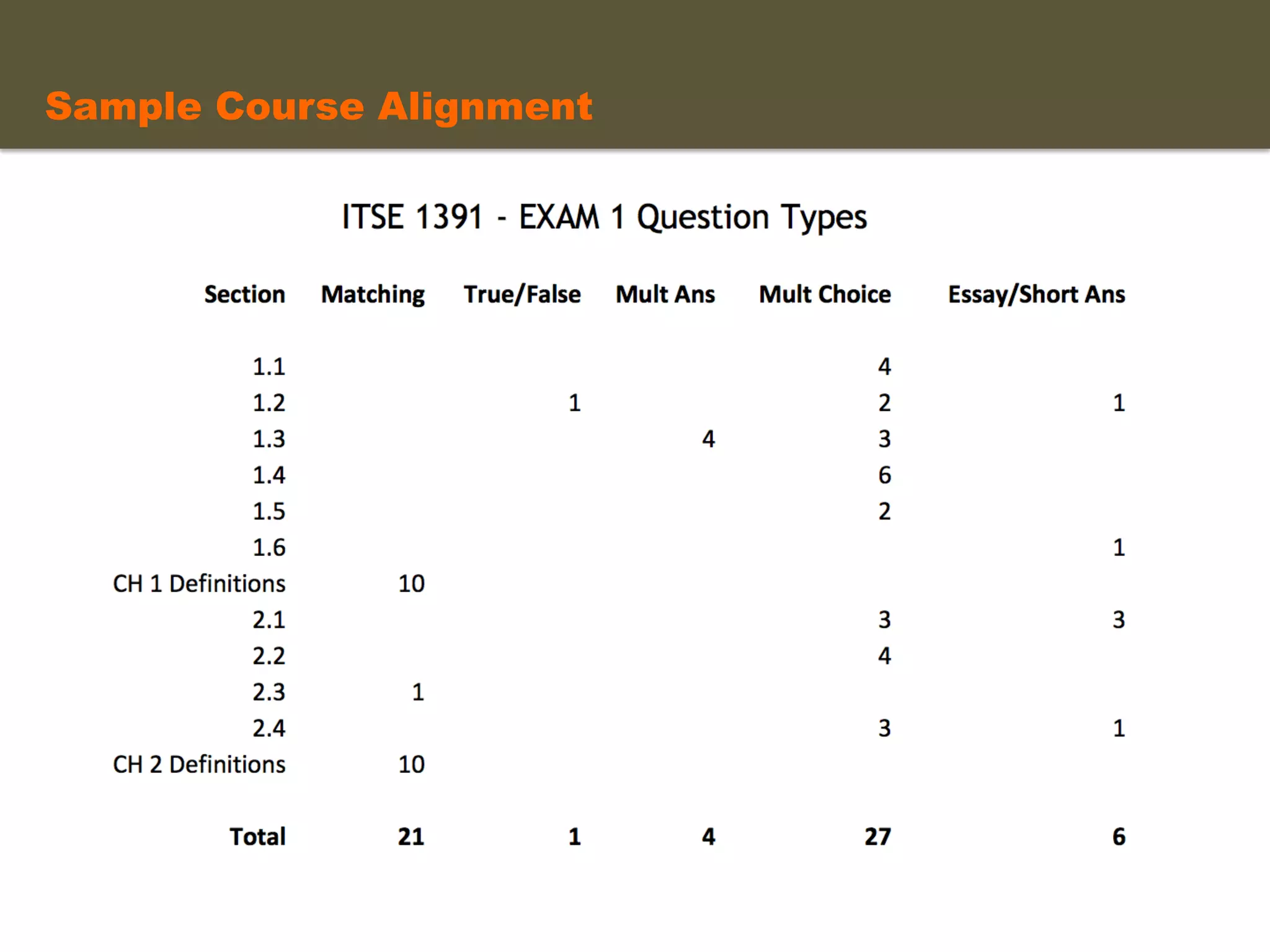
Sample Course Alignment	
  
Sample Course Alignment	
  
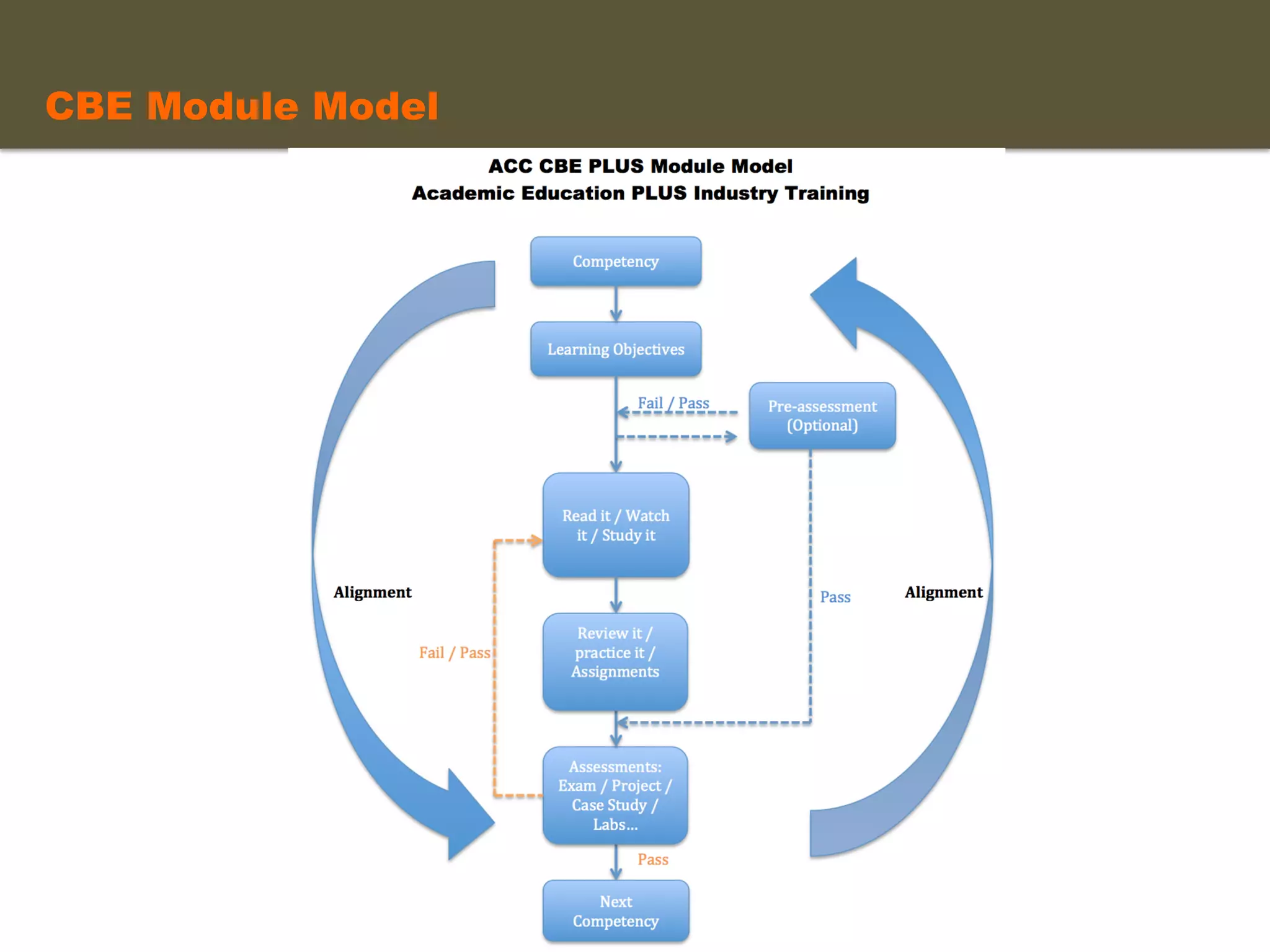
CBE Module Model	
  
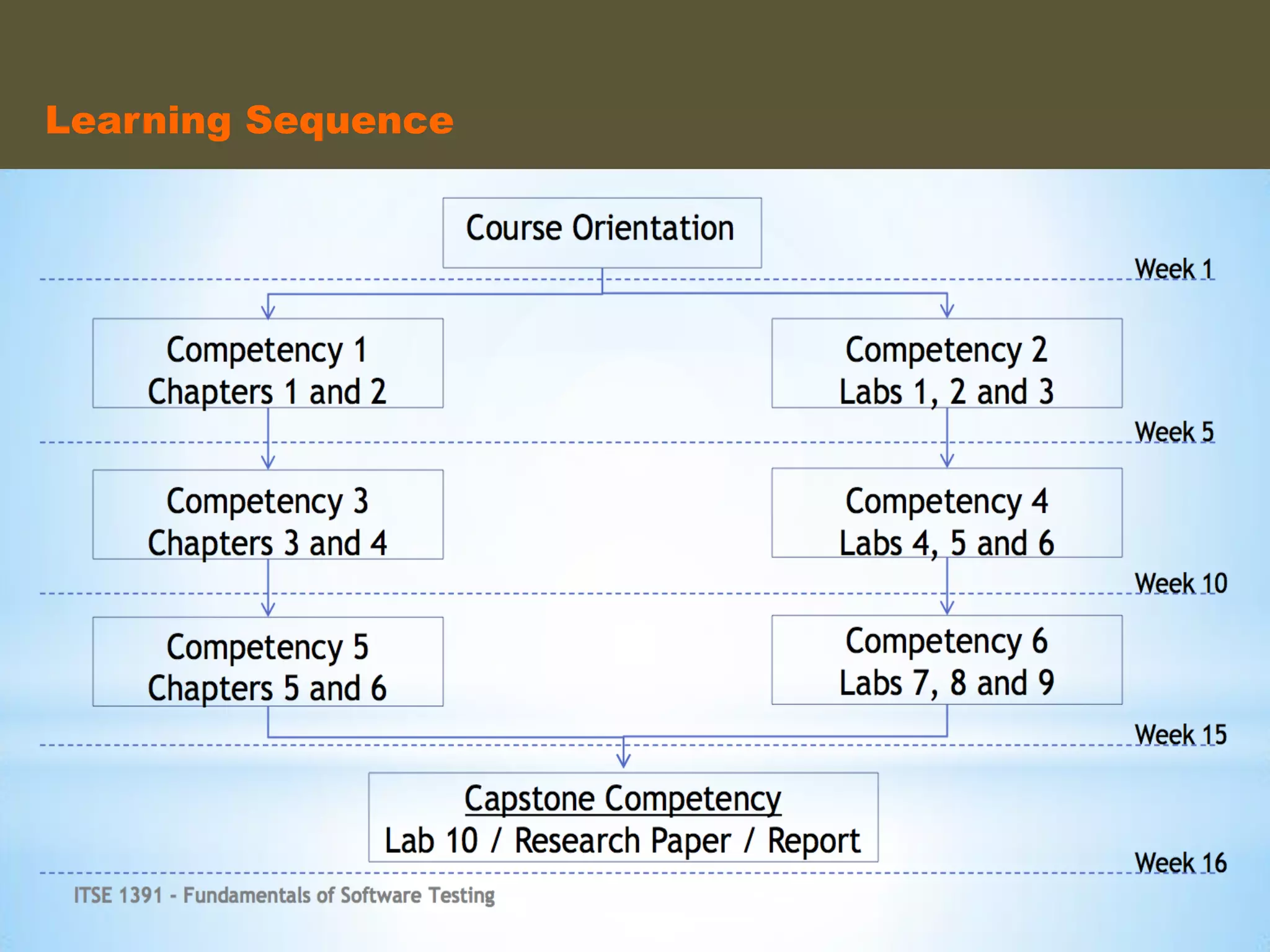
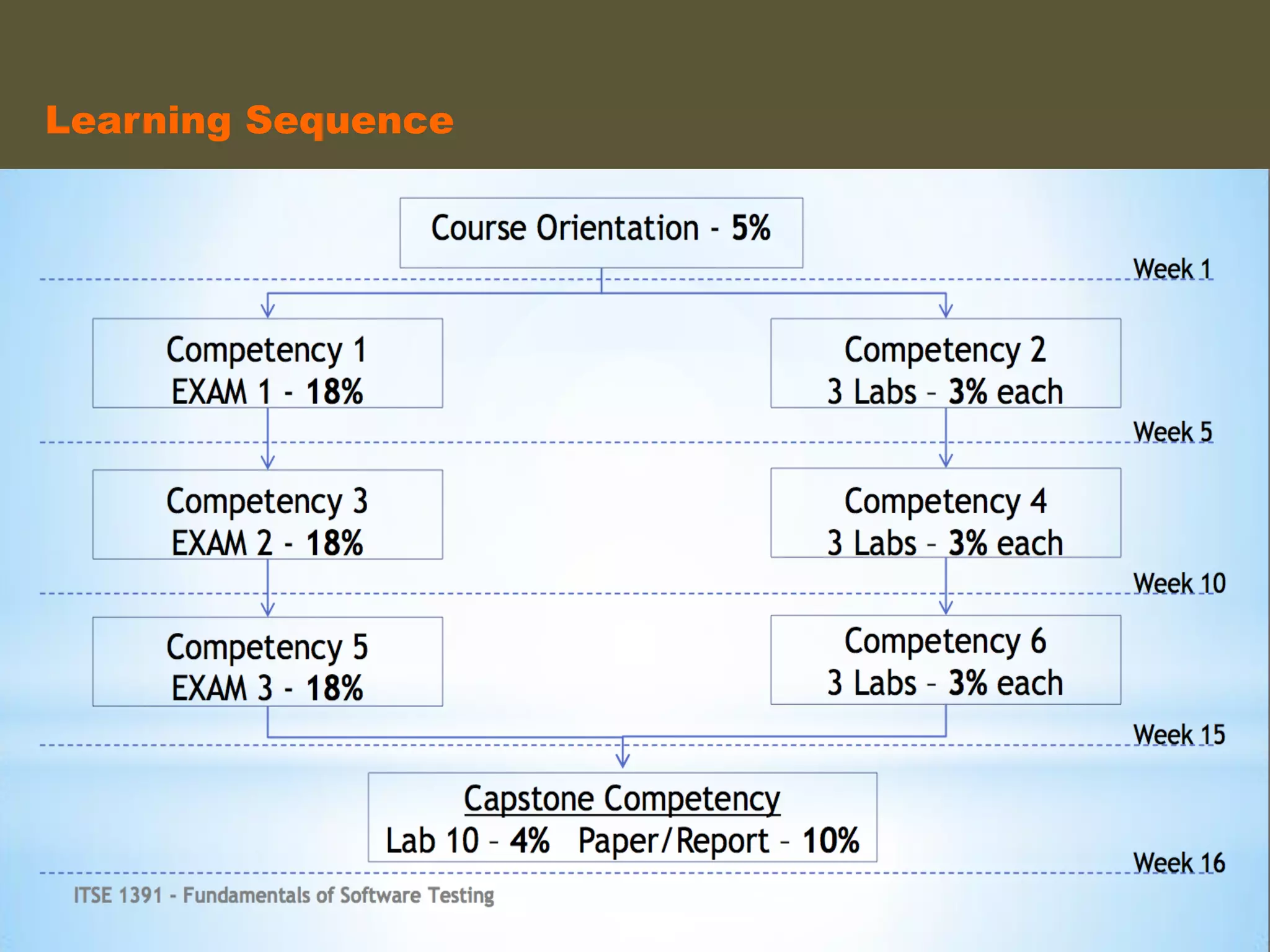
Learning Sequence	
  
Learning Sequence	
  
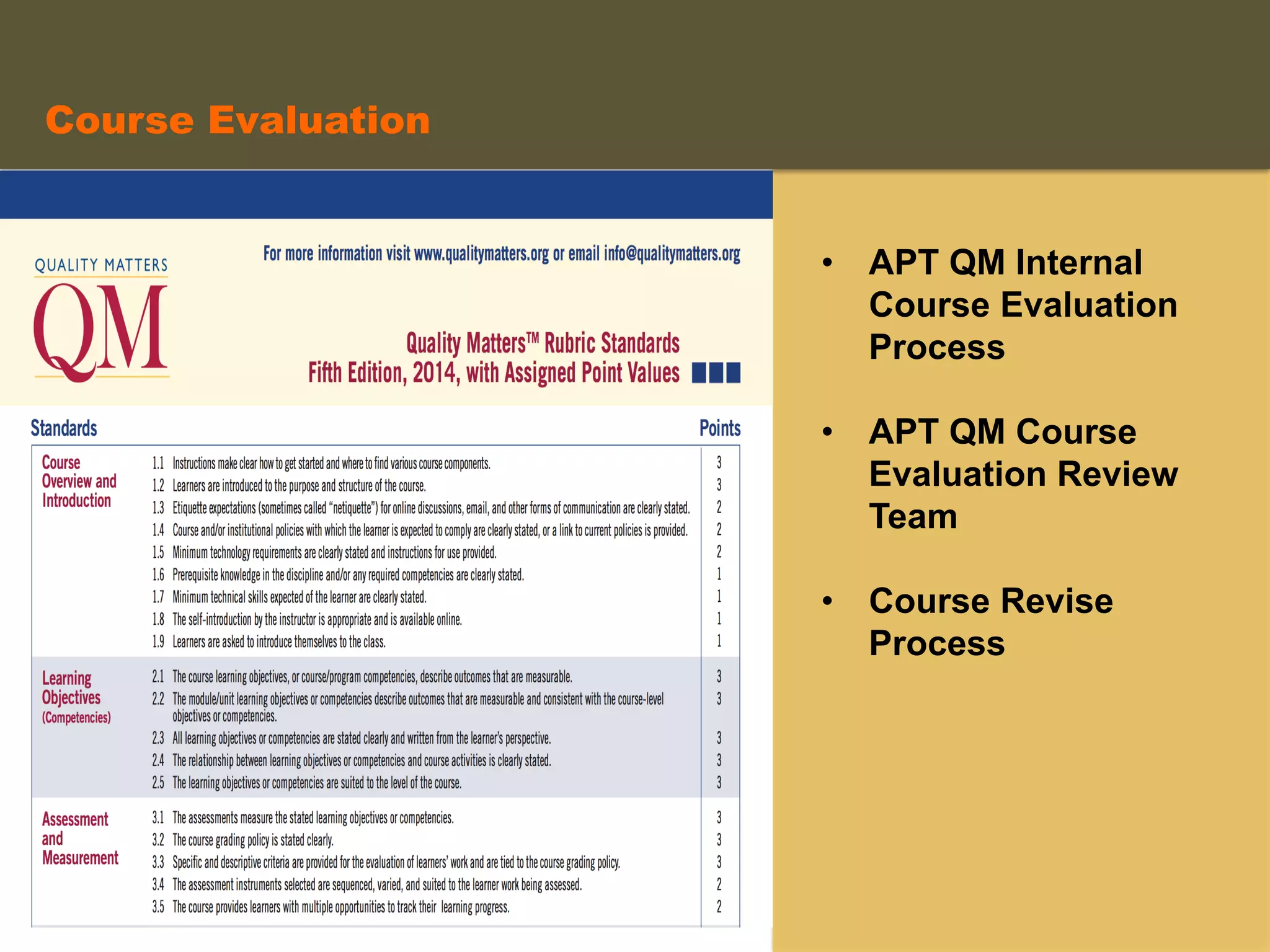
•  APT QM Internal
Course Evaluation
Process
•  APT QM Course
Evaluation Review
Team
•  Course Revise
Process
Course Evaluation	
  
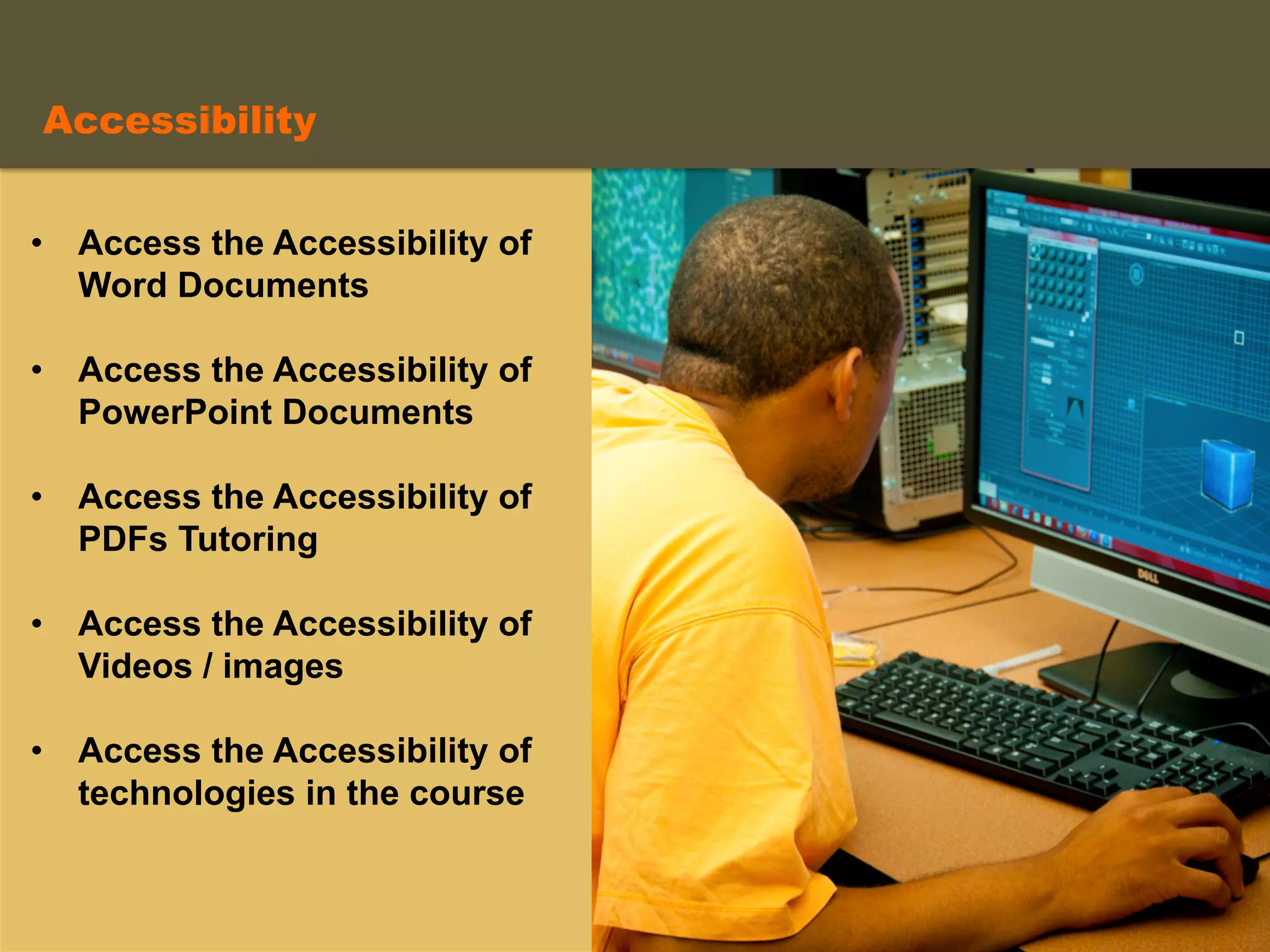
•  Access the Accessibility of
Word Documents
•  Access the Accessibility of
PowerPoint Documents
•  Access the Accessibility of
PDFs Tutoring
•  Access the Accessibility of
Videos / images
•  Access the Accessibility of
technologies in the course
Accessibility
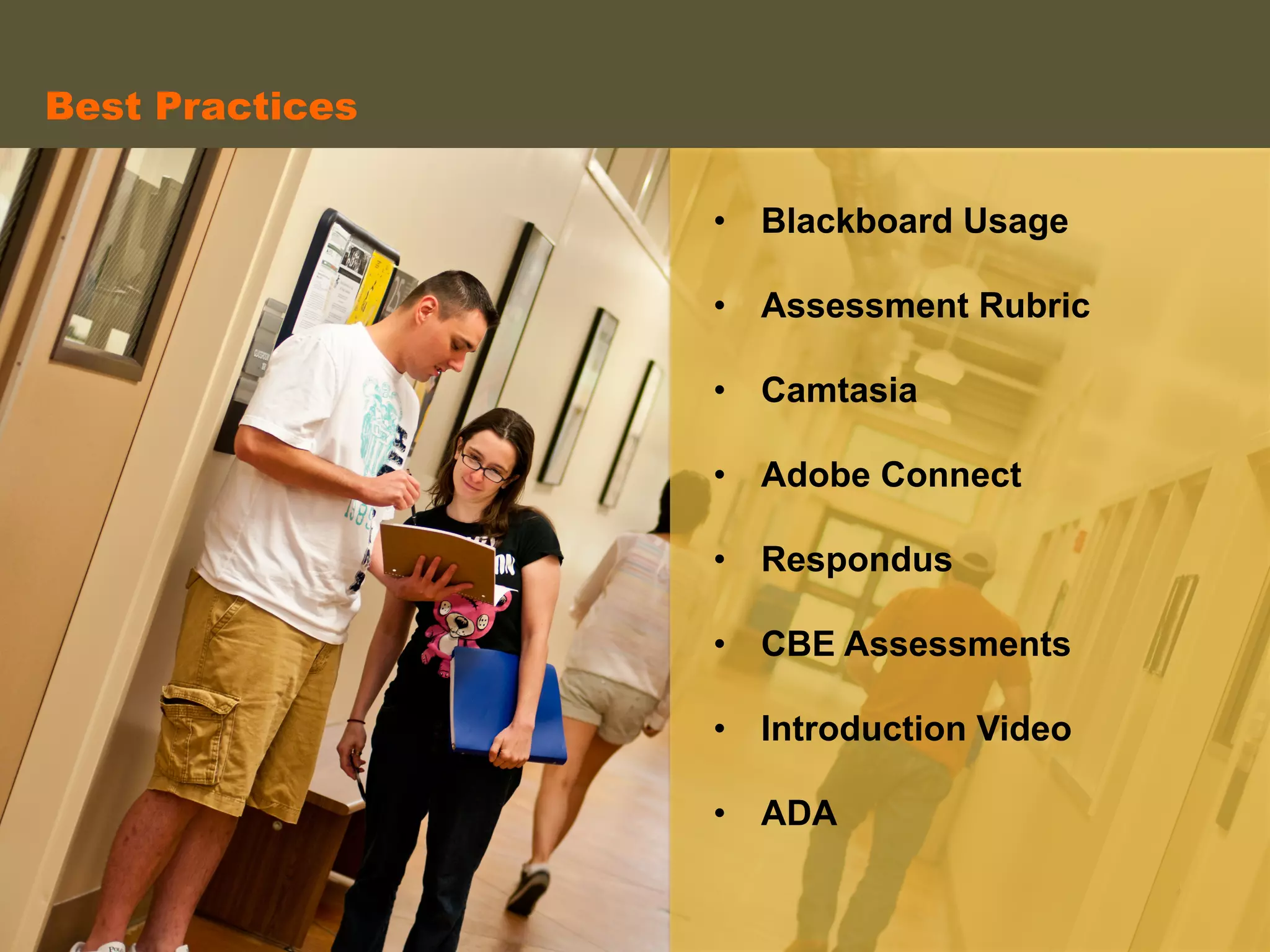
•  Blackboard Usage
•  Assessment Rubric
•  Camtasia
•  Adobe Connect
•  Respondus
•  CBE Assessments
•  Introduction Video
•  ADA
	
  
Best Practices	


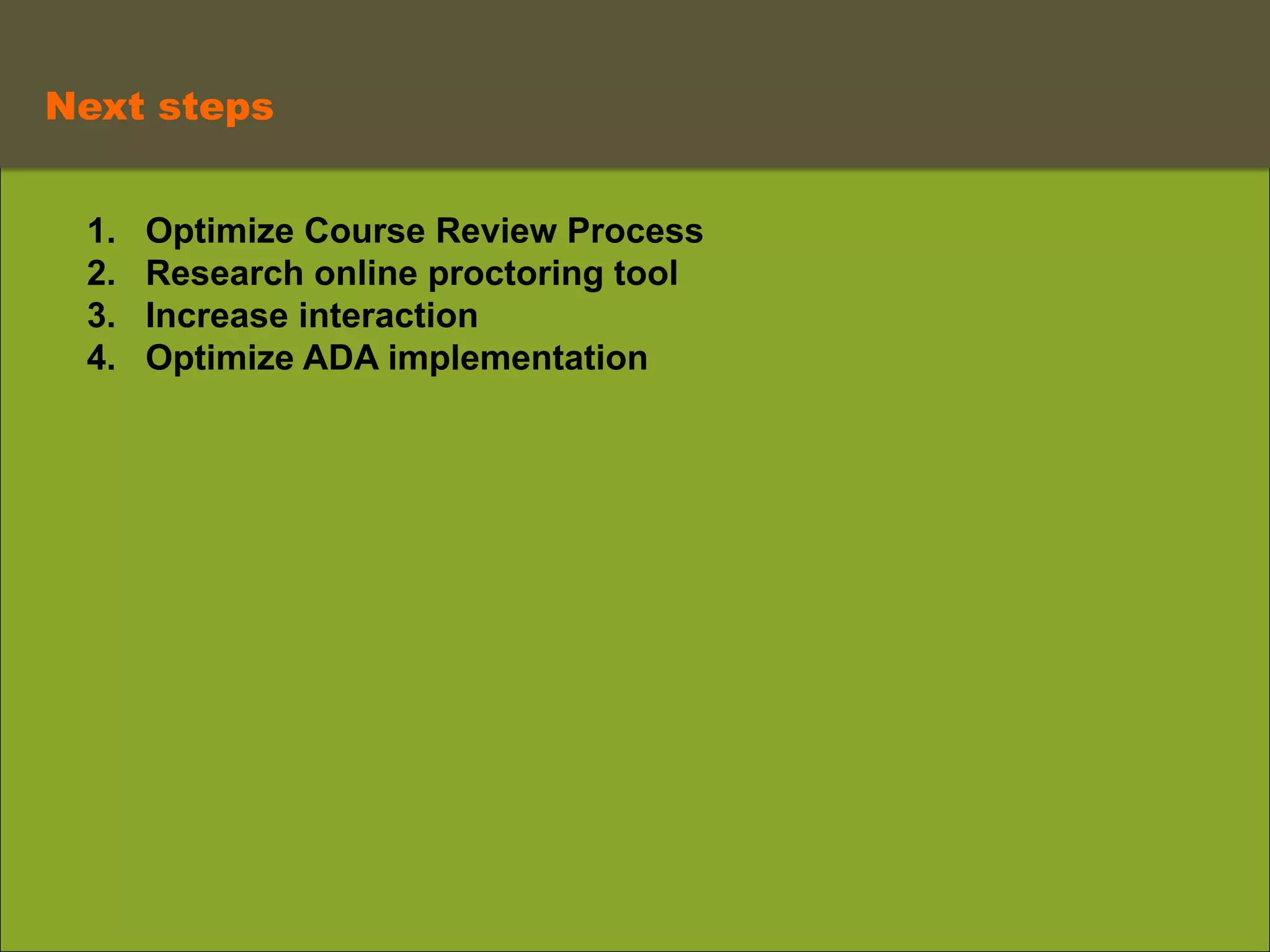
   Next steps	
  
1.  Optimize Course Review Process
2.  Research online proctoring tool
3.  Increase interaction
4.  Optimize ADA implementation
#AIcbe
Philadelphia, PA | May 18 - 20, 2015
DEVELOPING AND MANAGING COMPETENCY-BASED
EDUCATION
Course Design
Yi Zhang, Broward College
Instructional Designer
 
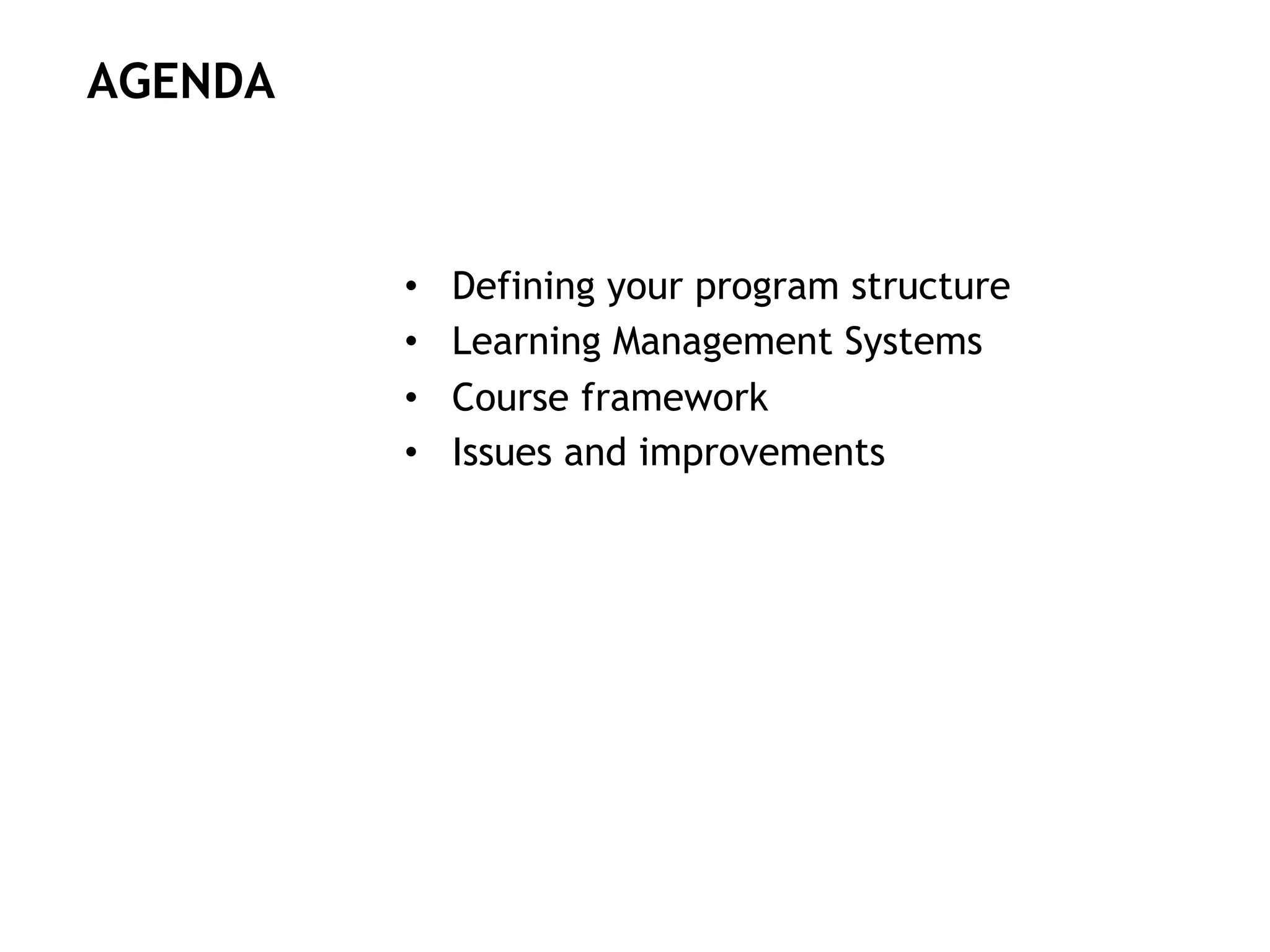
•  Defining your program structure
•  Learning Management Systems
•  Course framework
•  Issues and improvements
AGENDA
DEFINING	
  PROGRAM	
  STRUCTURE	
  
Course	
  Design	
  
 
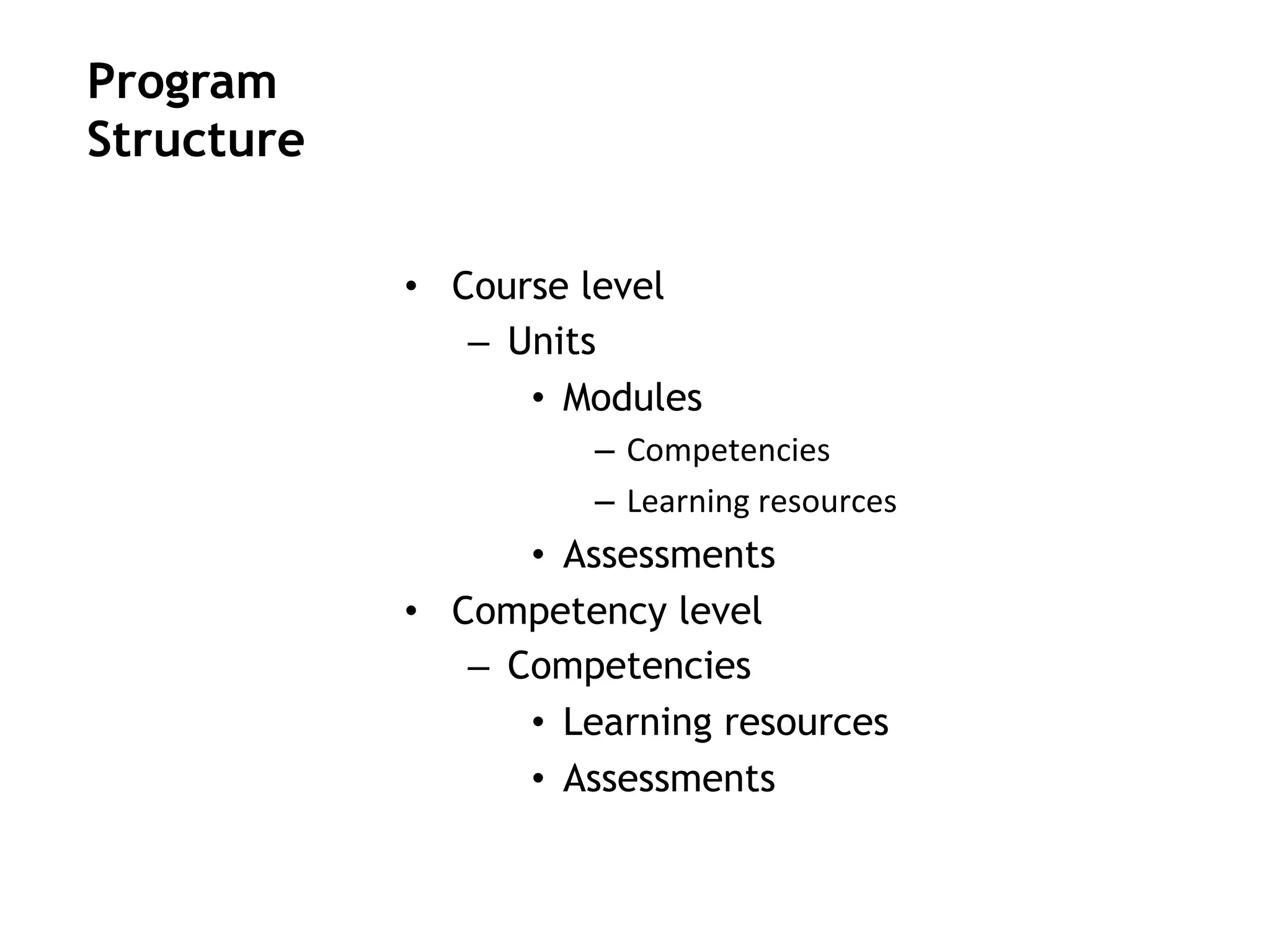
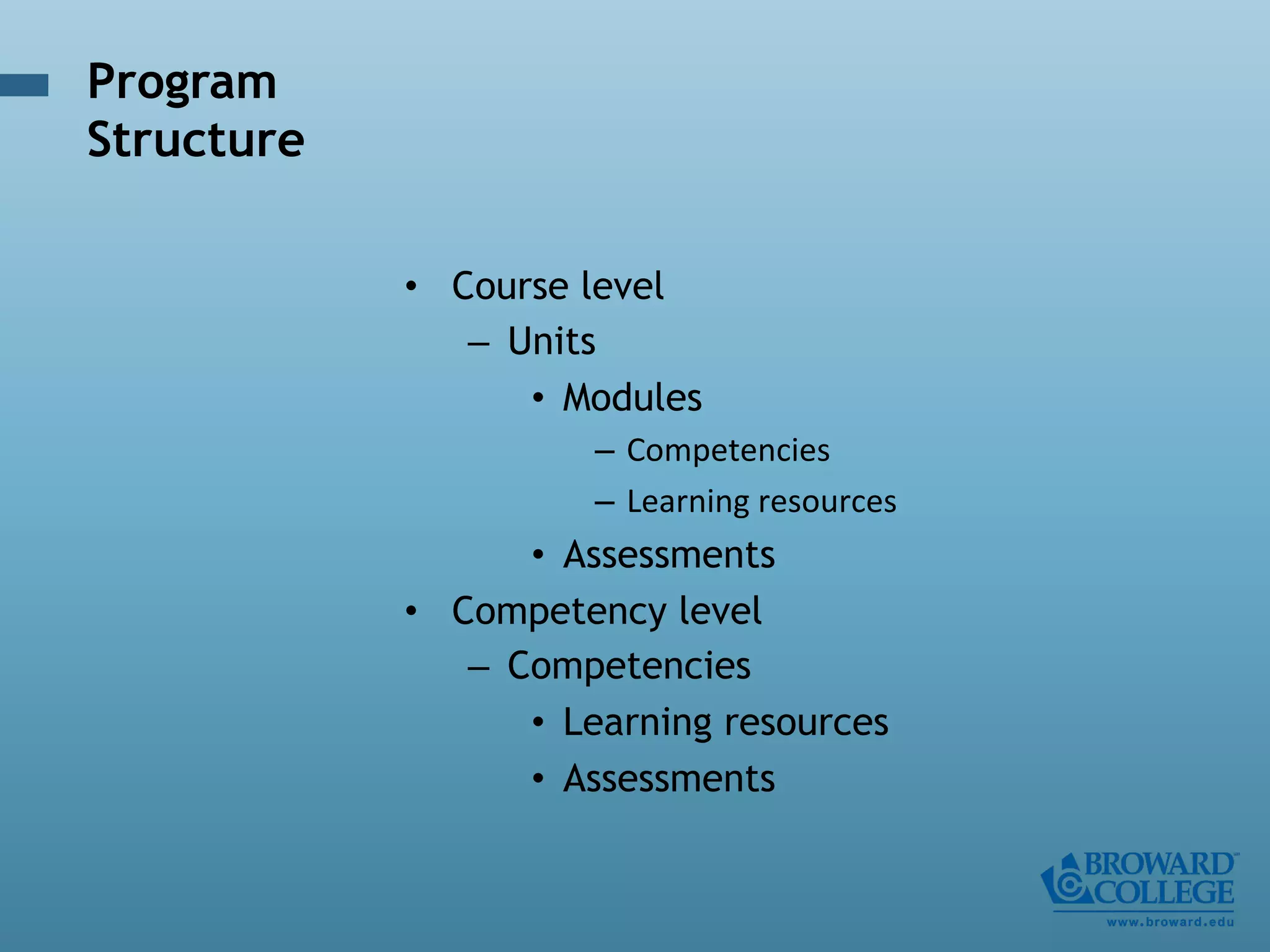
•  Course level
–  Units
•  Modules
–  Competencies	
  
–  Learning	
  resources	
  
•  Assessments
•  Competency level
–  Competencies
•  Learning resources
•  Assessments
Program
Structure
  Program
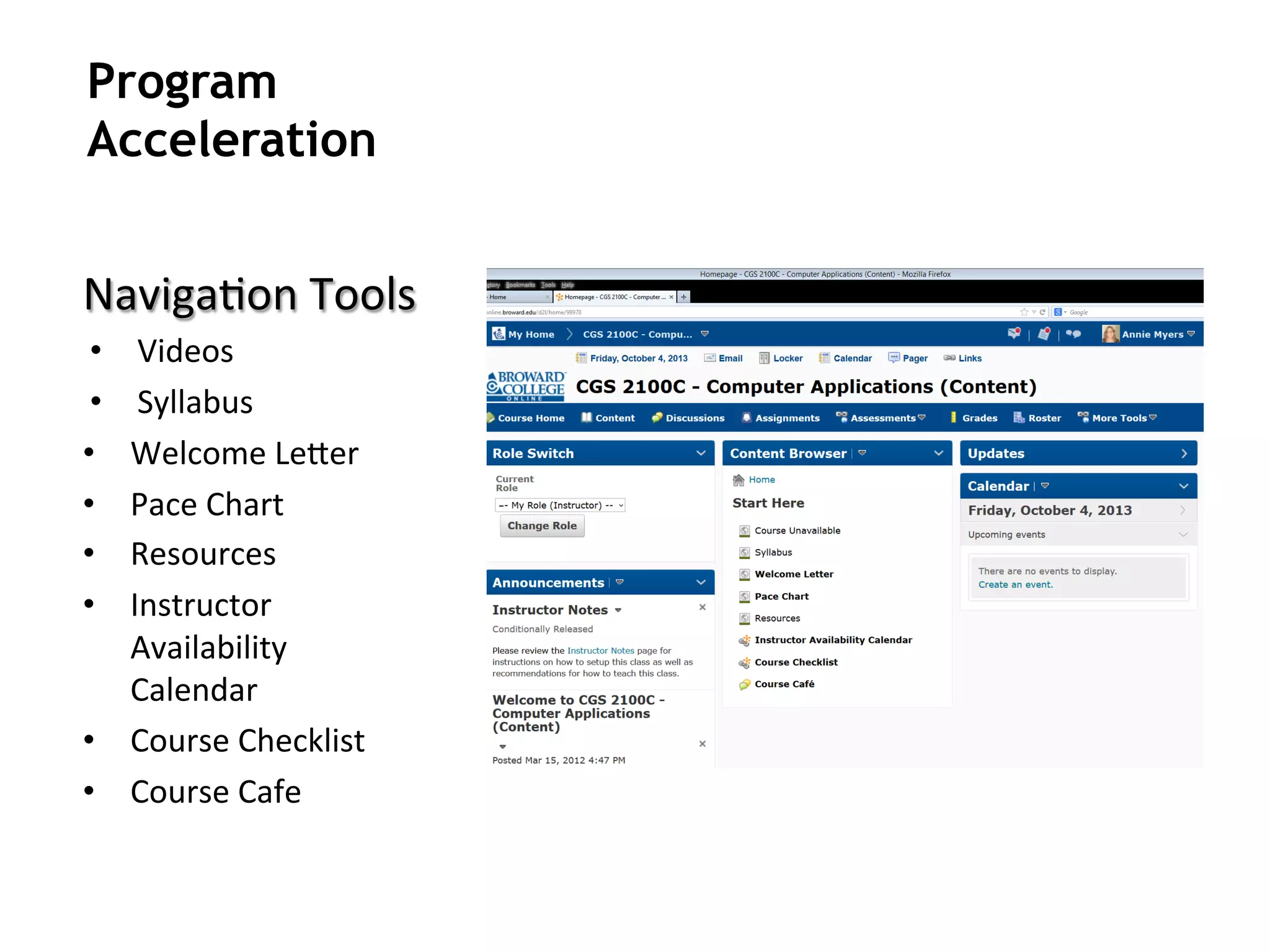
Acceleration
Naviga4on	
  Tools	
  
•  Videos	
  
•  Syllabus	
  
•  Welcome	
  Le=er	
  
•  Pace	
  Chart	
  
•  Resources	
  
•  Instructor	
  
Availability	
  
Calendar	
  
•  Course	
  Checklist	
  
•  Course	
  Cafe	
  
 
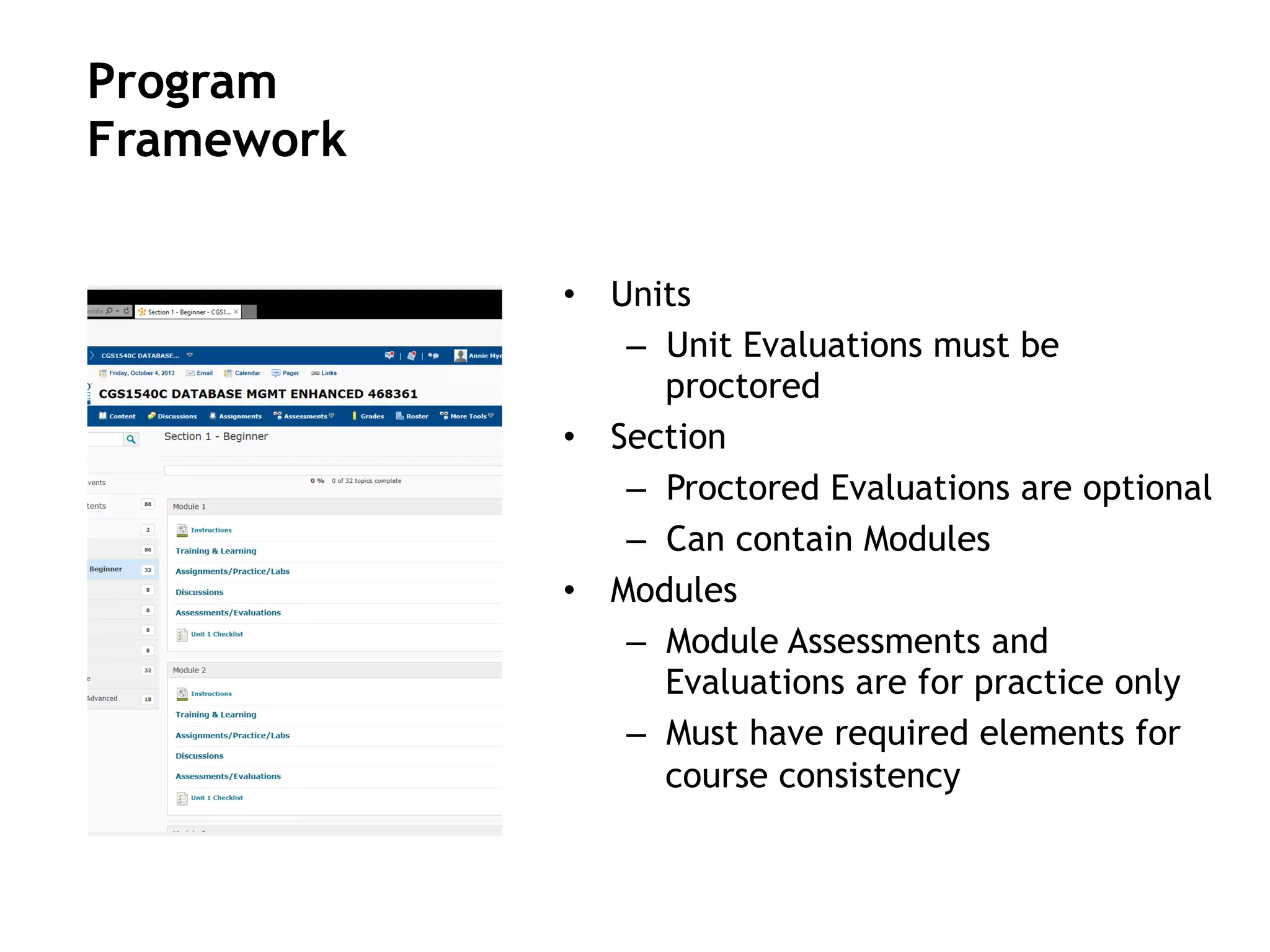
•  Units
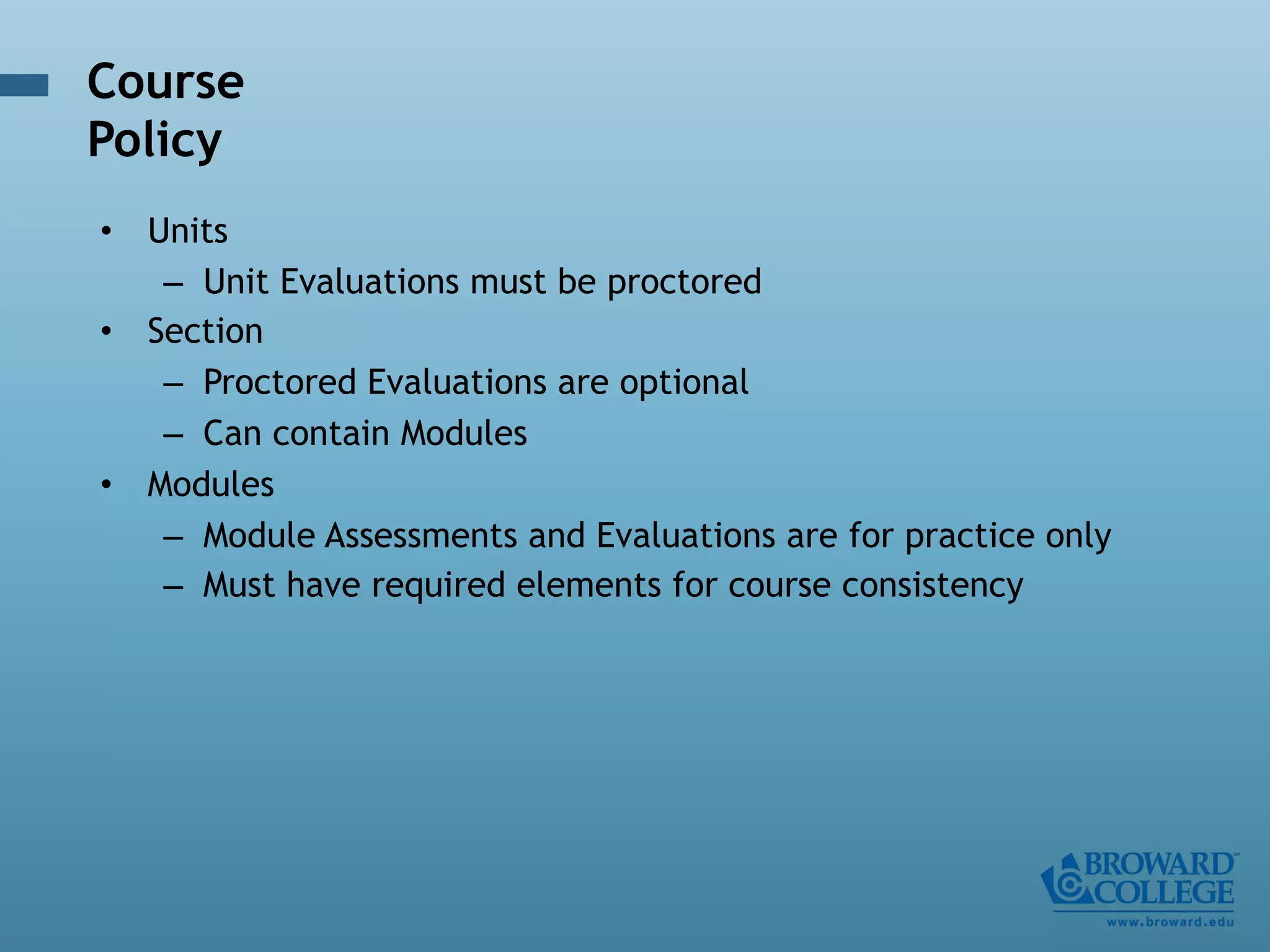
–  Unit Evaluations must be
proctored
•  Section
–  Proctored Evaluations are optional
–  Can contain Modules
•  Modules
–  Module Assessments and
Evaluations are for practice only
–  Must have required elements for
course consistency
Program
Framework
 
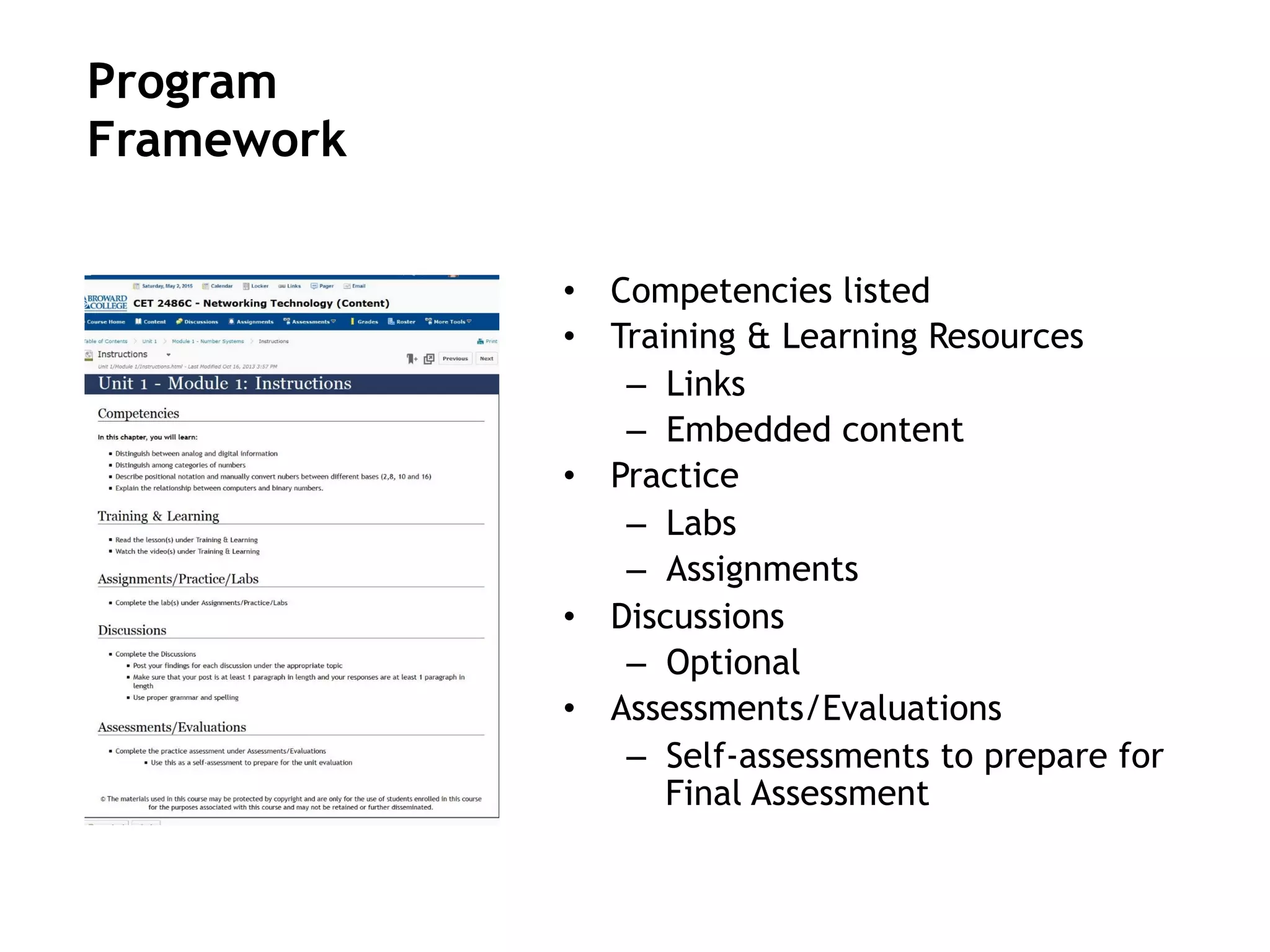
•  Competencies listed
•  Training & Learning Resources
–  Links
–  Embedded content
•  Practice
–  Labs
–  Assignments
•  Discussions
–  Optional
•  Assessments/Evaluations
–  Self-assessments to prepare for
Final Assessment
Program
Framework
•  Units
–  Unit Evaluations must be proctored
•  Section
–  Proctored Evaluations are optional
–  Can contain Modules
•  Modules
–  Module Assessments and Evaluations are for practice only
–  Must have required elements for course consistency
Course
Policy
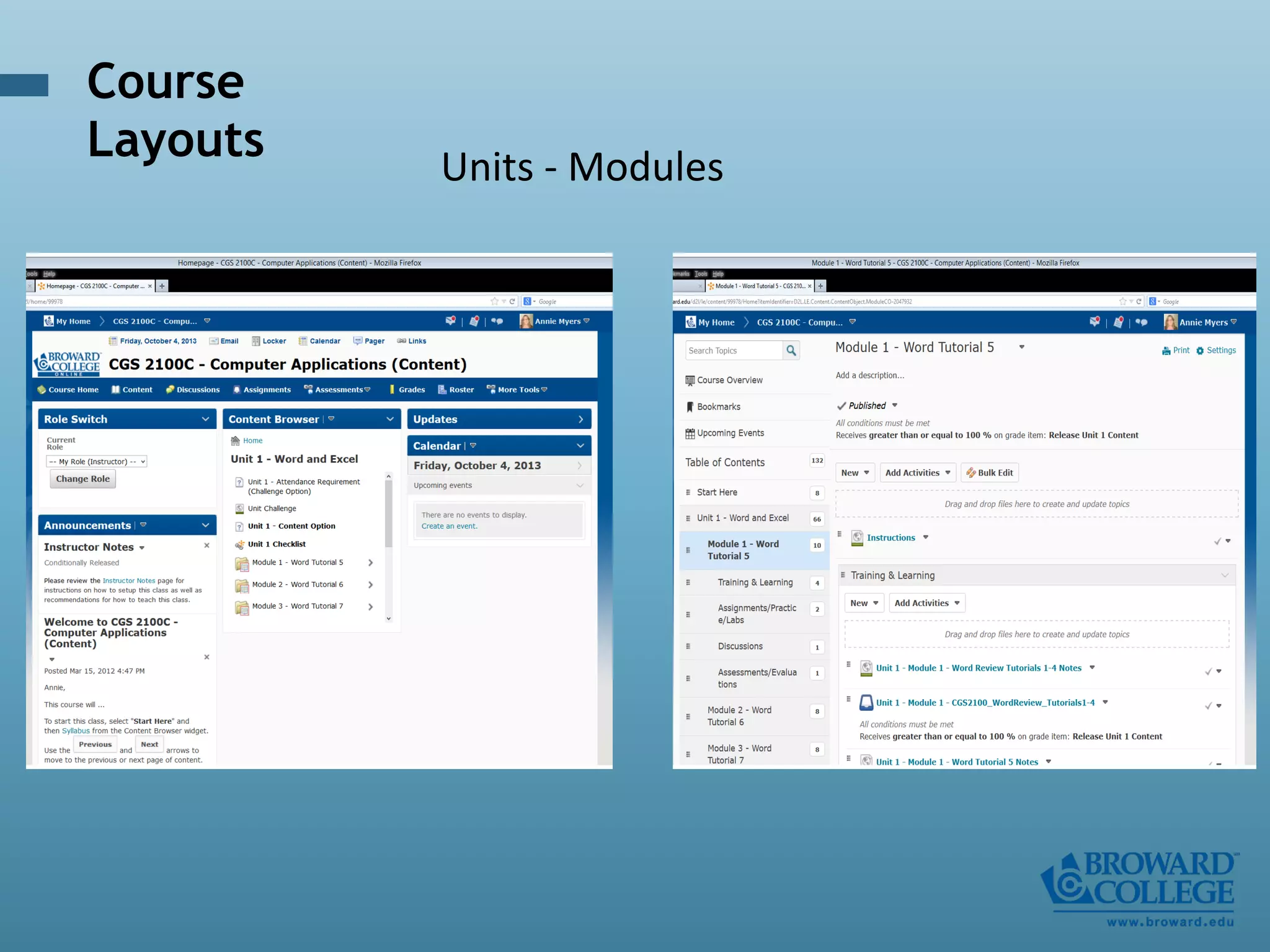
Units	
  -­‐	
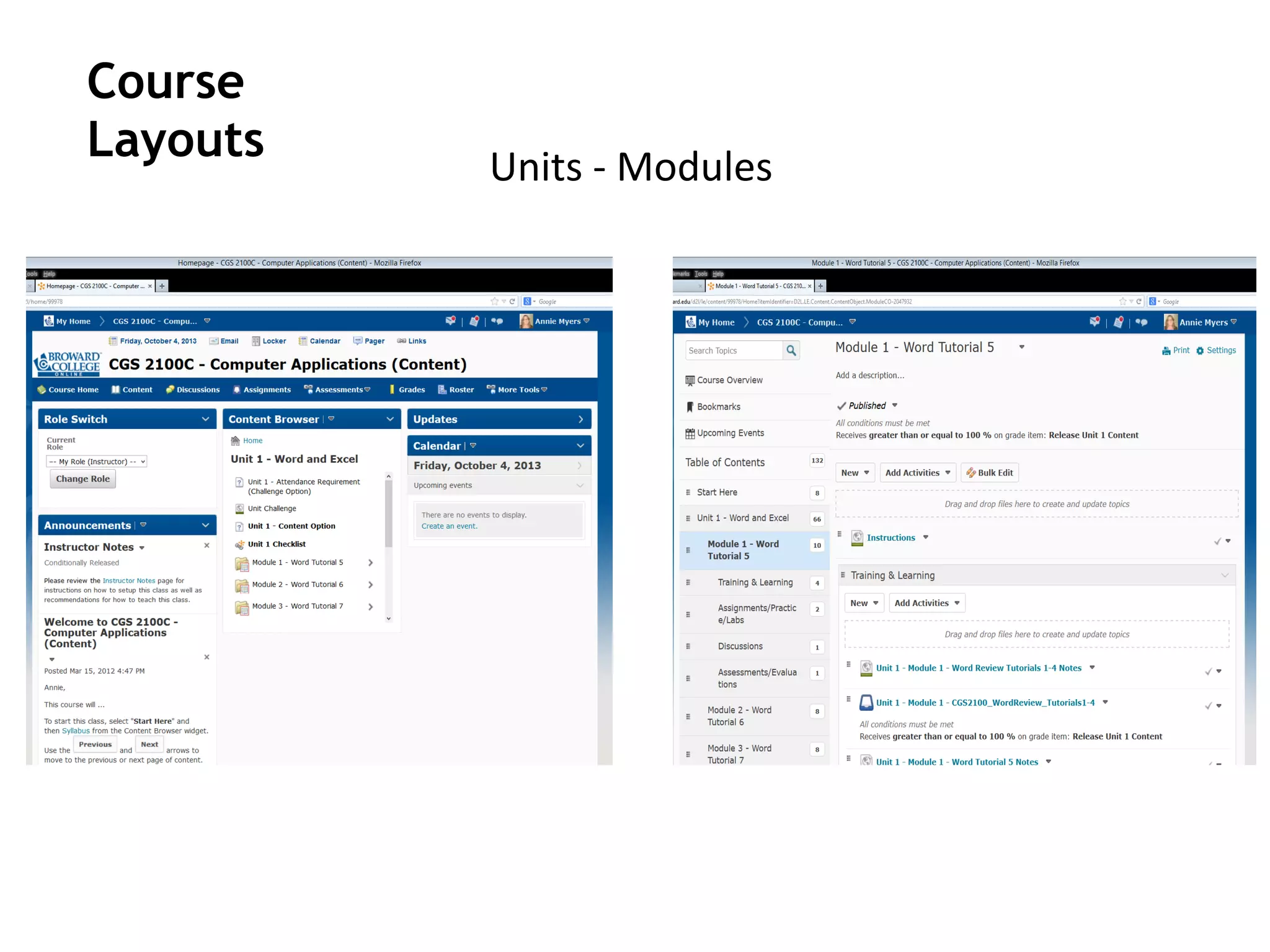
  Modules 	
  	
  
Course
Layouts
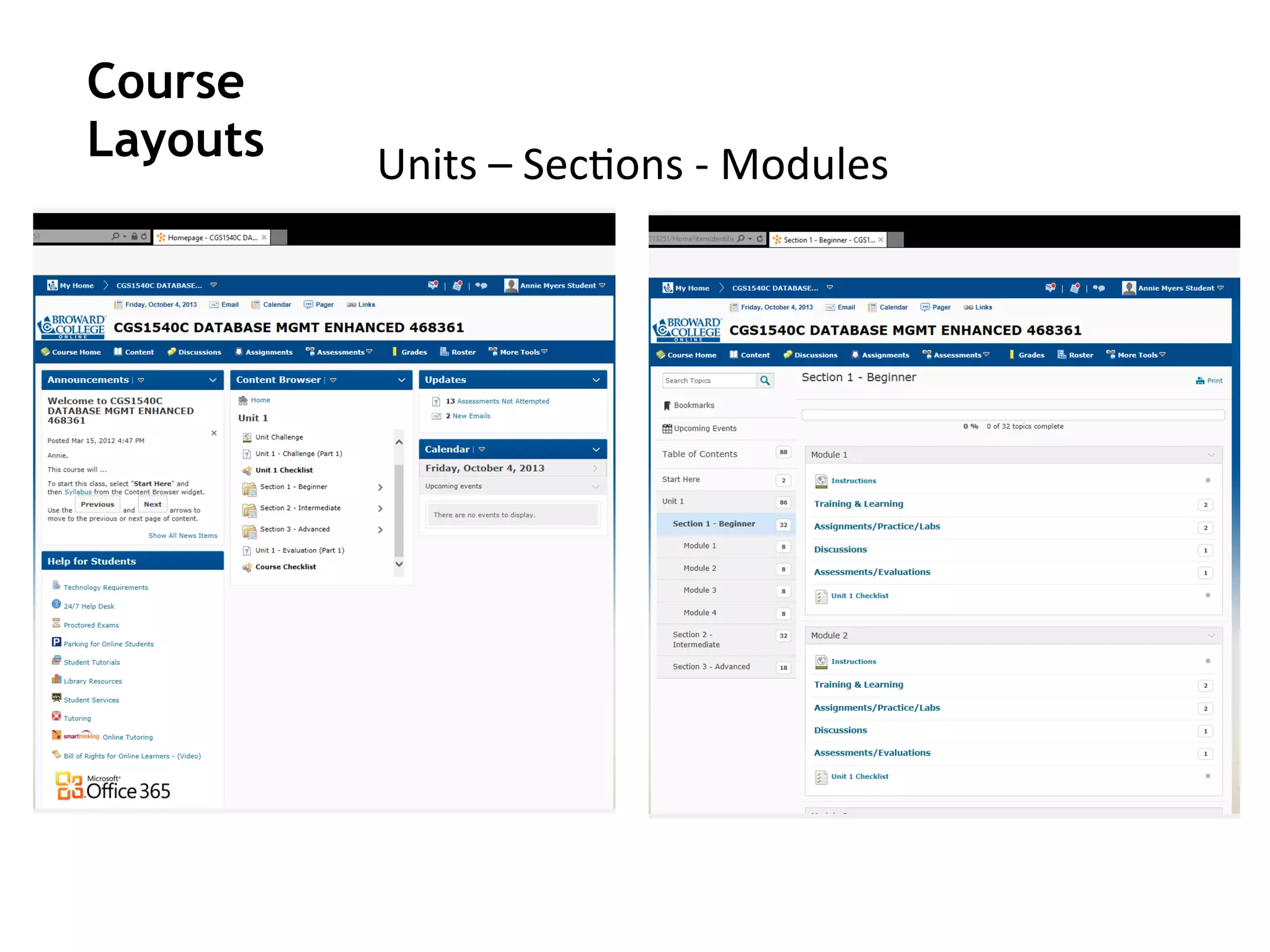
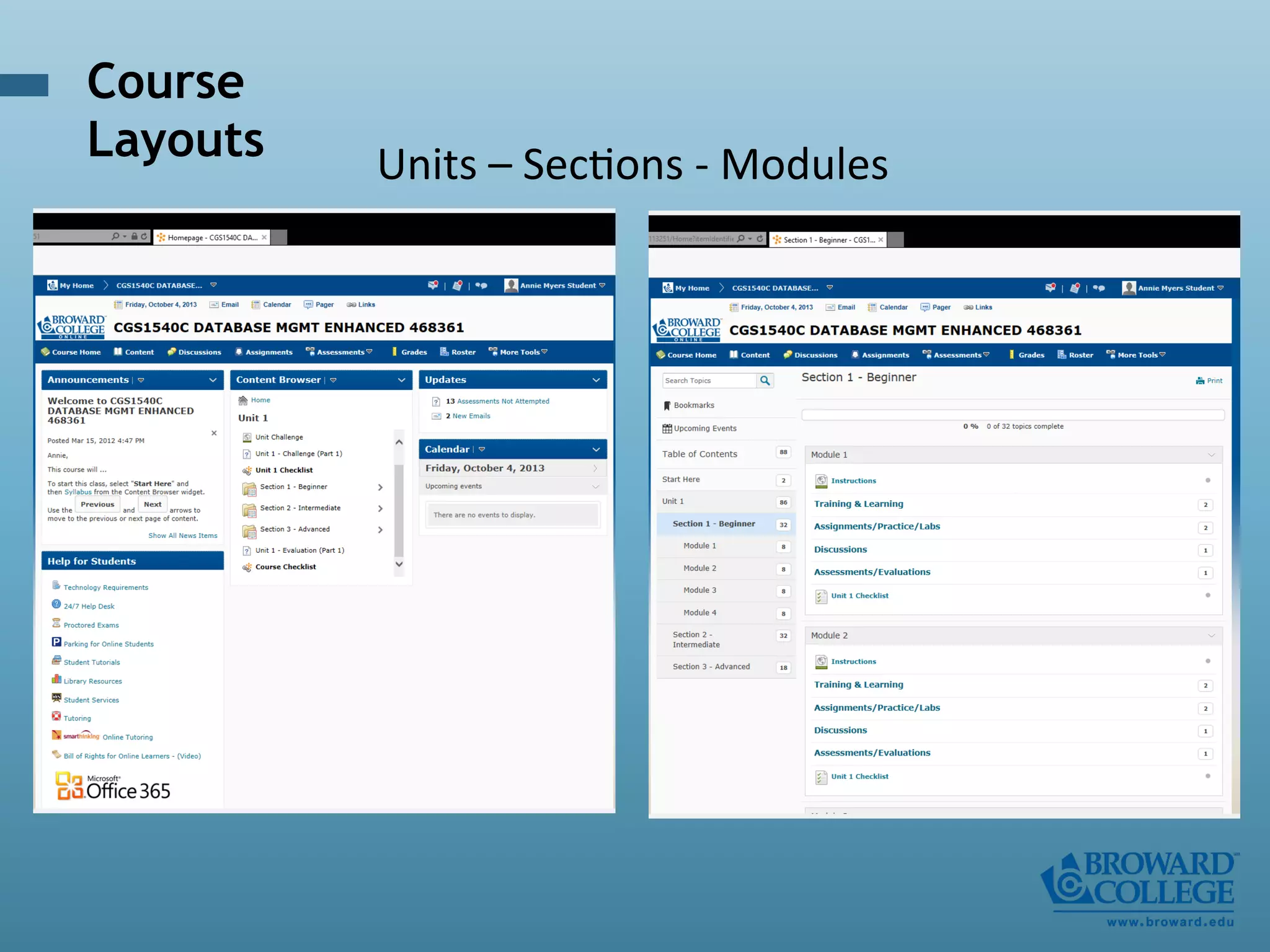
Units	
  –	
  Sec4ons	
  -­‐	
  Modules	
  
Course
Layouts
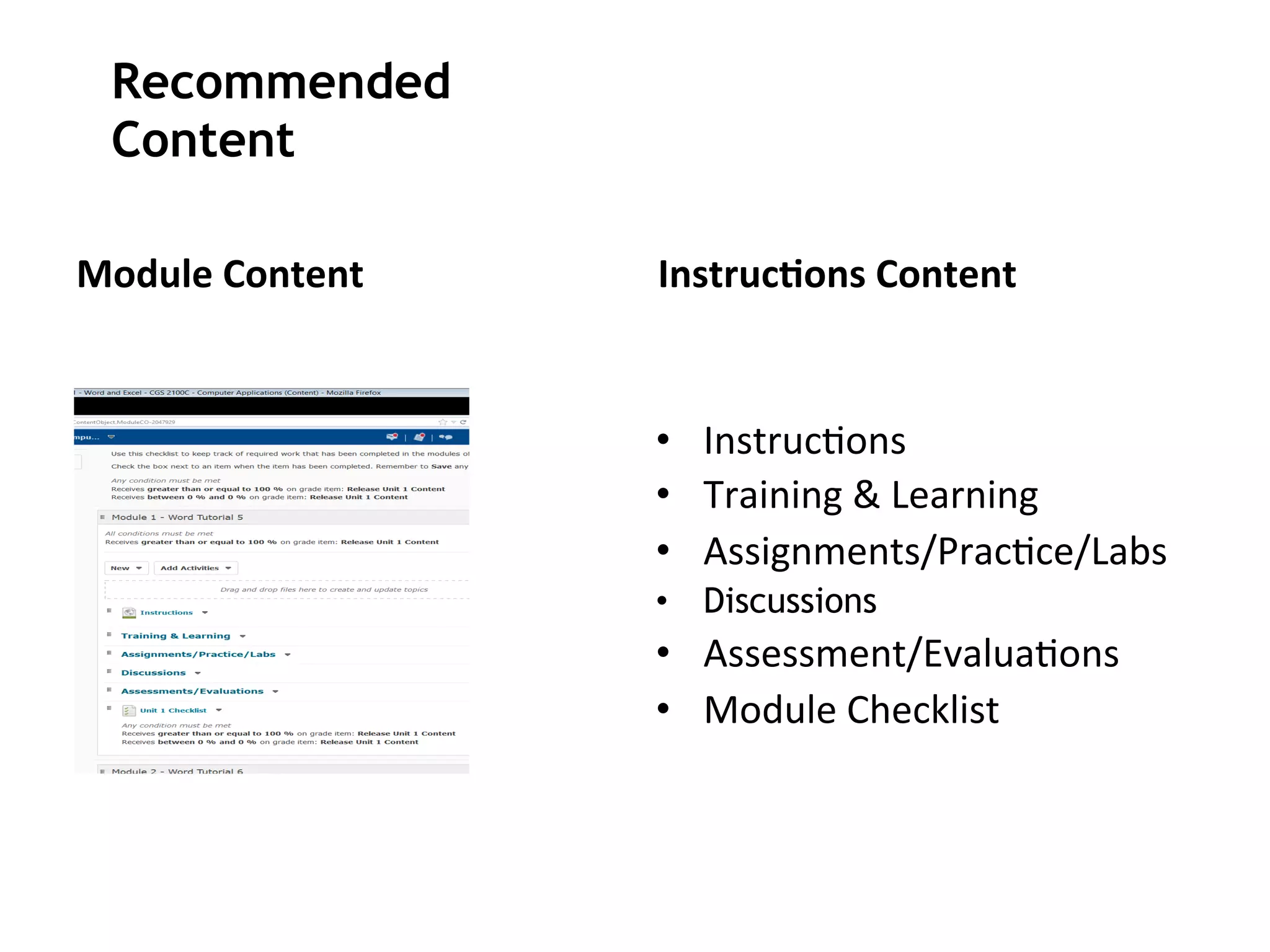
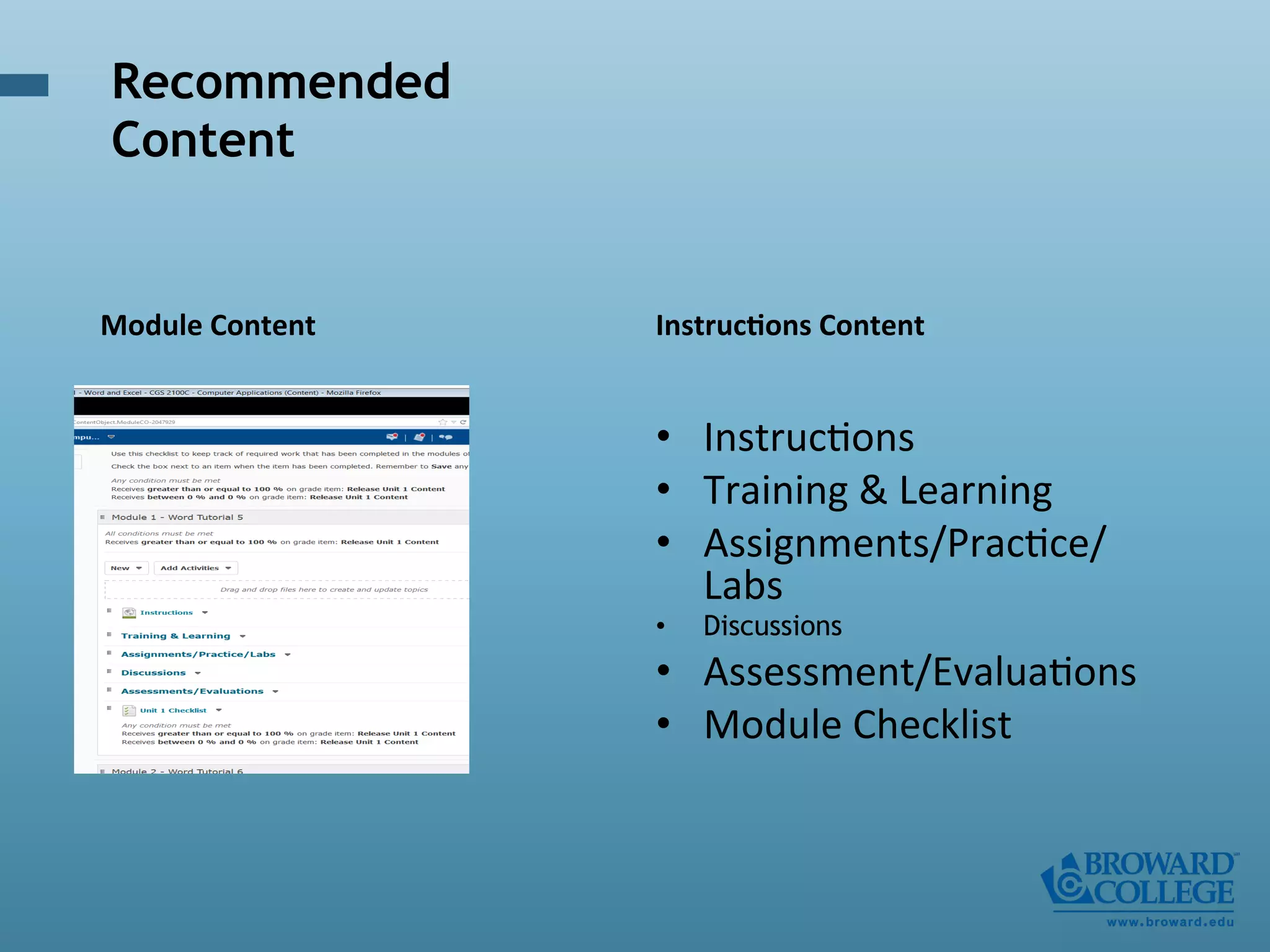
Module	
  Content	
   InstrucAons	
  Content	
  
•  Instruc4ons	
  
•  Training	
  &	
  Learning	
  
•  Assignments/Prac4ce/Labs	
  
•  Discussions
•  Assessment/Evalua4ons	
  
•  Module	
  Checklist	
  
Recommended
Content
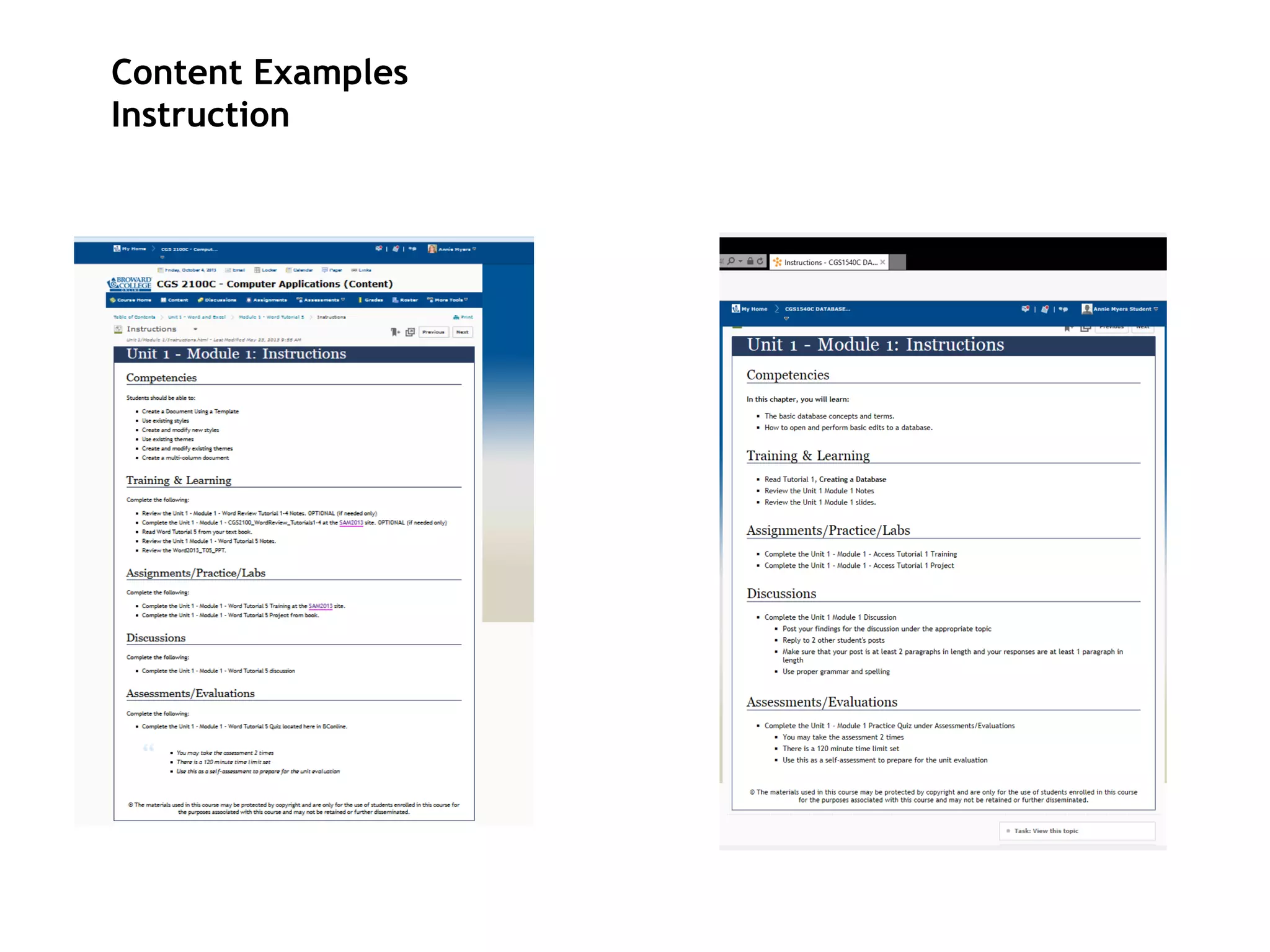
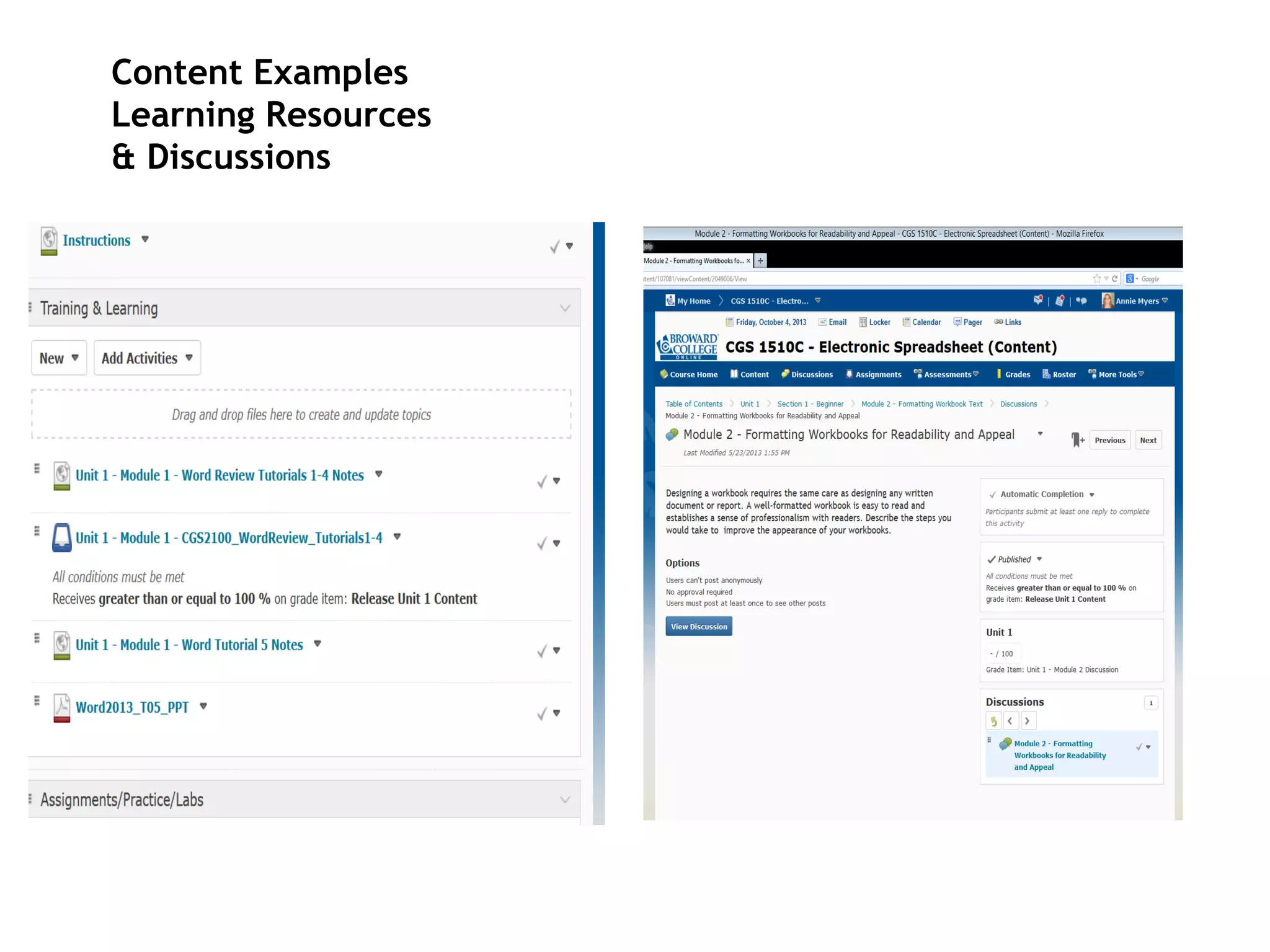
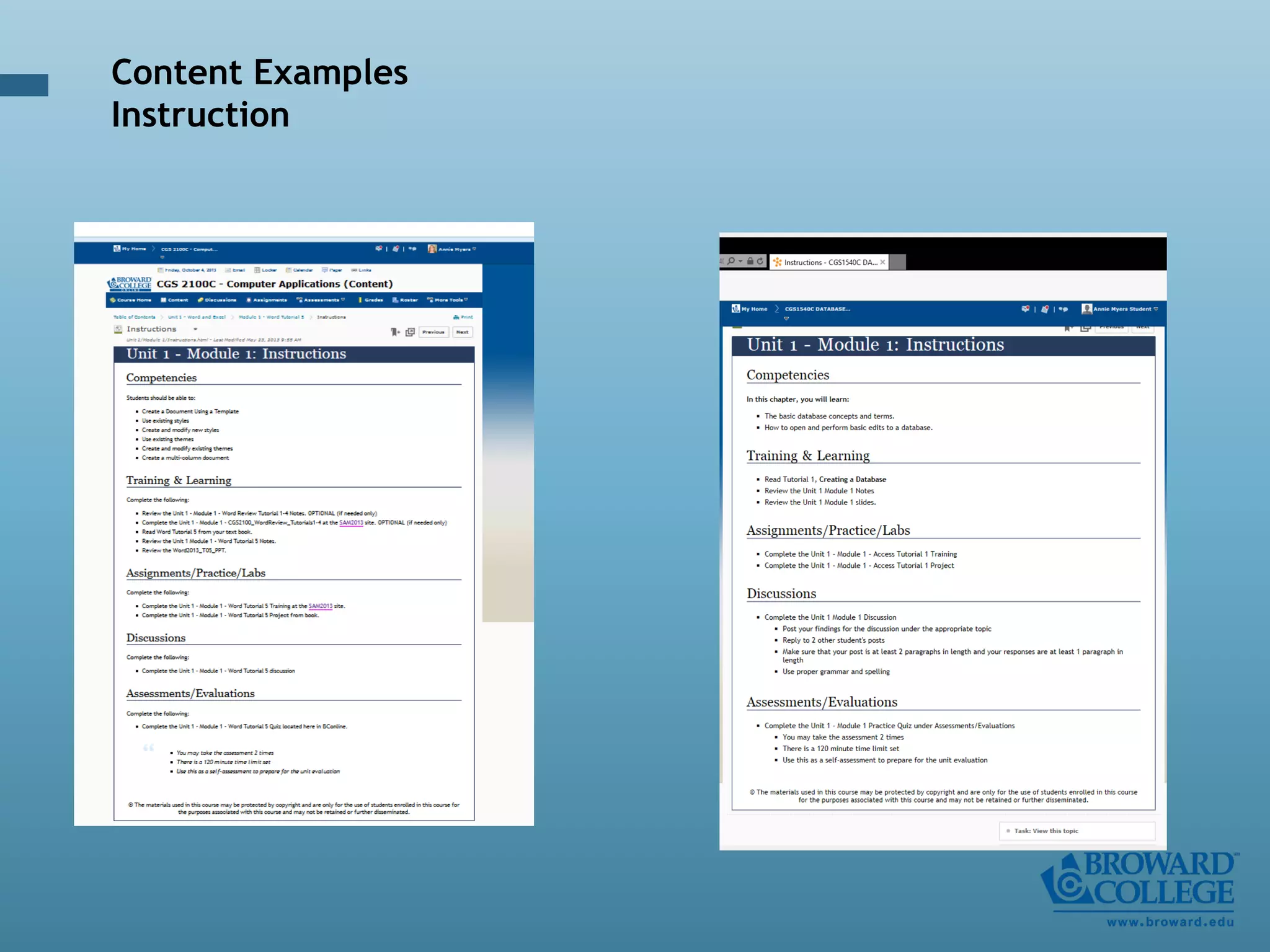
Content Examples
Instruction
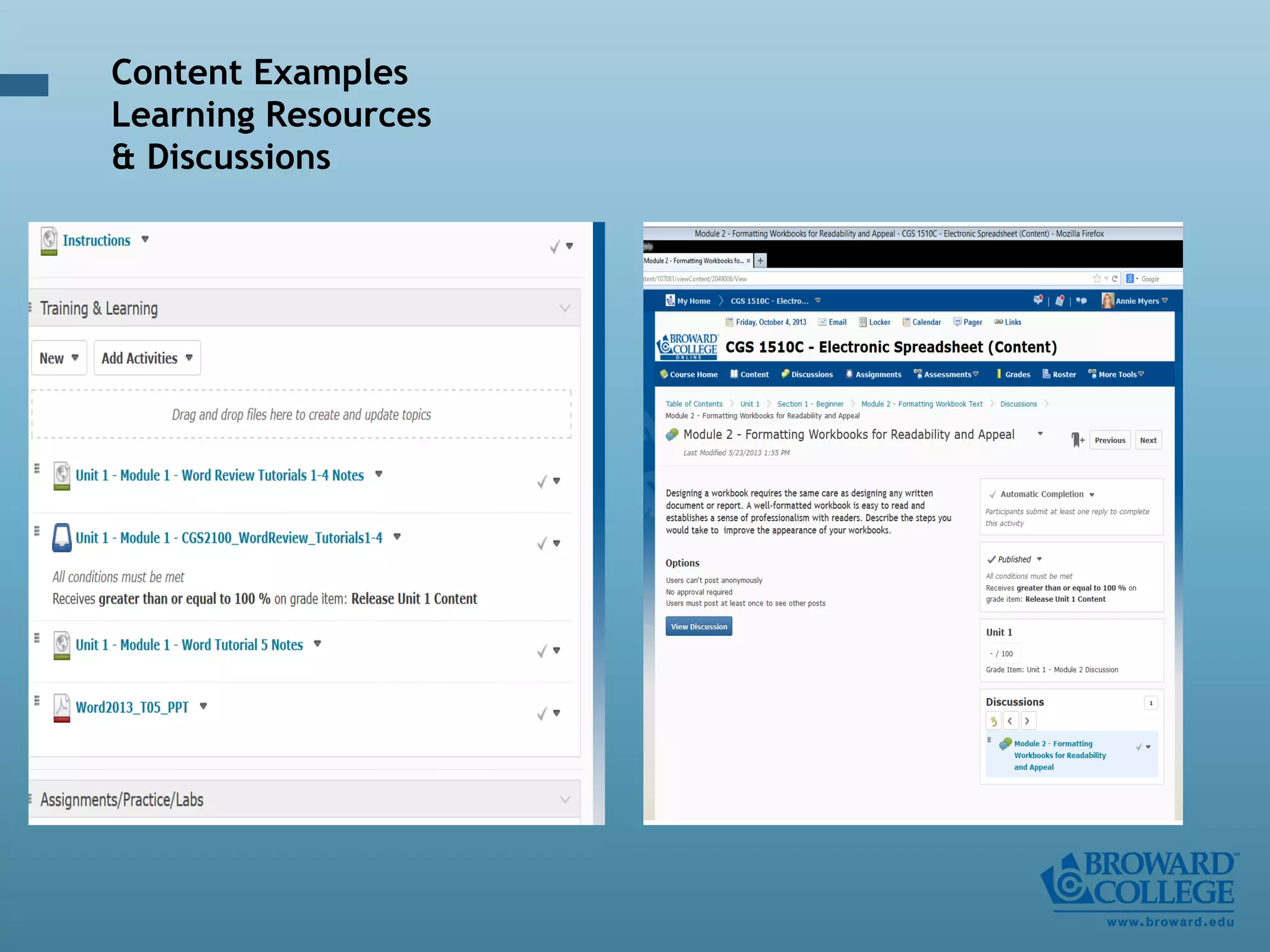
Content Examples
Learning Resources
& Discussions
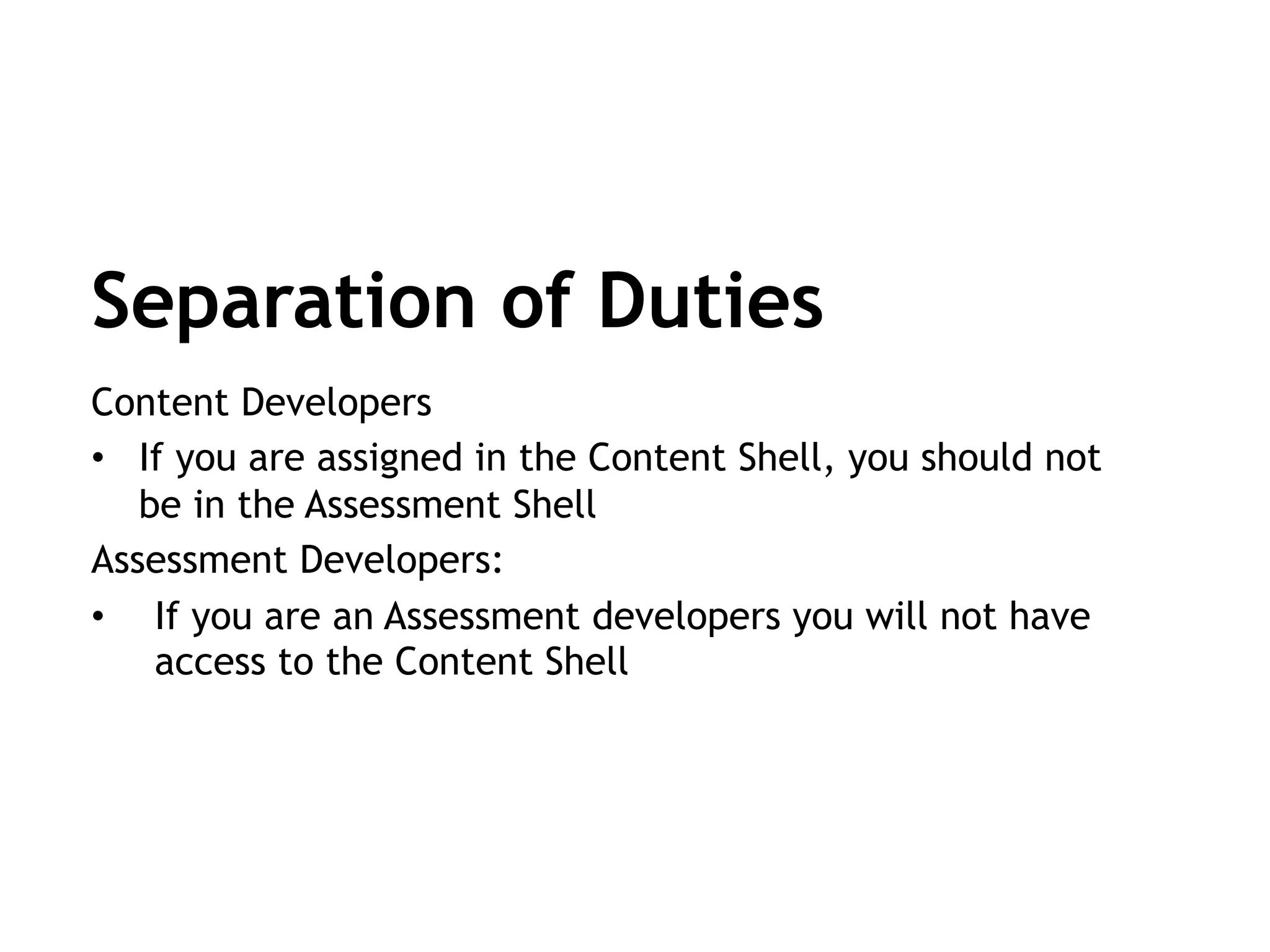
Content Developers
•  If you are assigned in the Content Shell, you should not
be in the Assessment Shell
Assessment Developers:
•  If you are an Assessment developers you will not have
access to the Content Shell
Separation of Duties
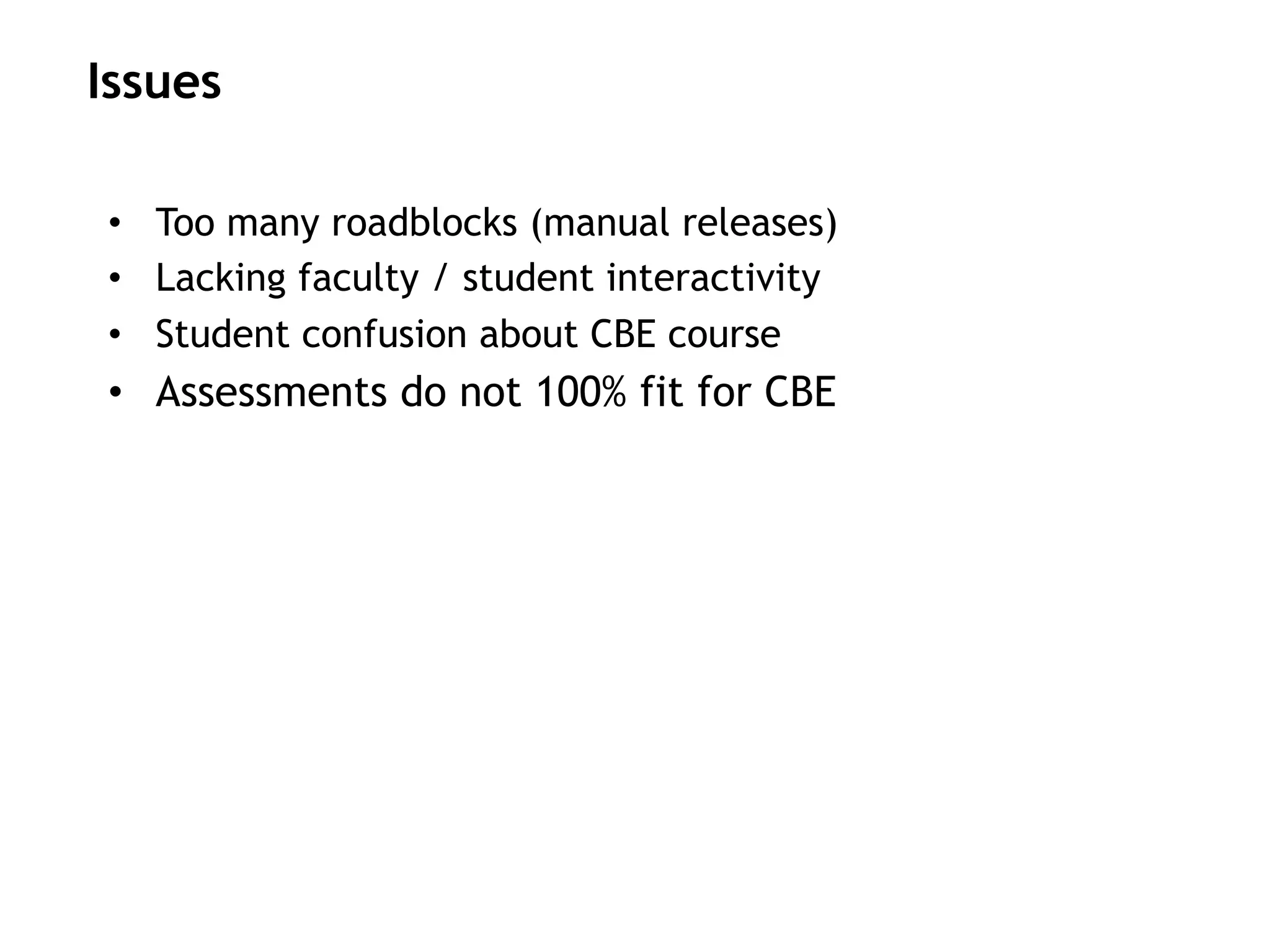
•  Too many roadblocks (manual releases)
•  Lacking faculty / student interactivity
•  Student confusion about CBE course
•  Assessments do not 100% fit for CBE
Issues
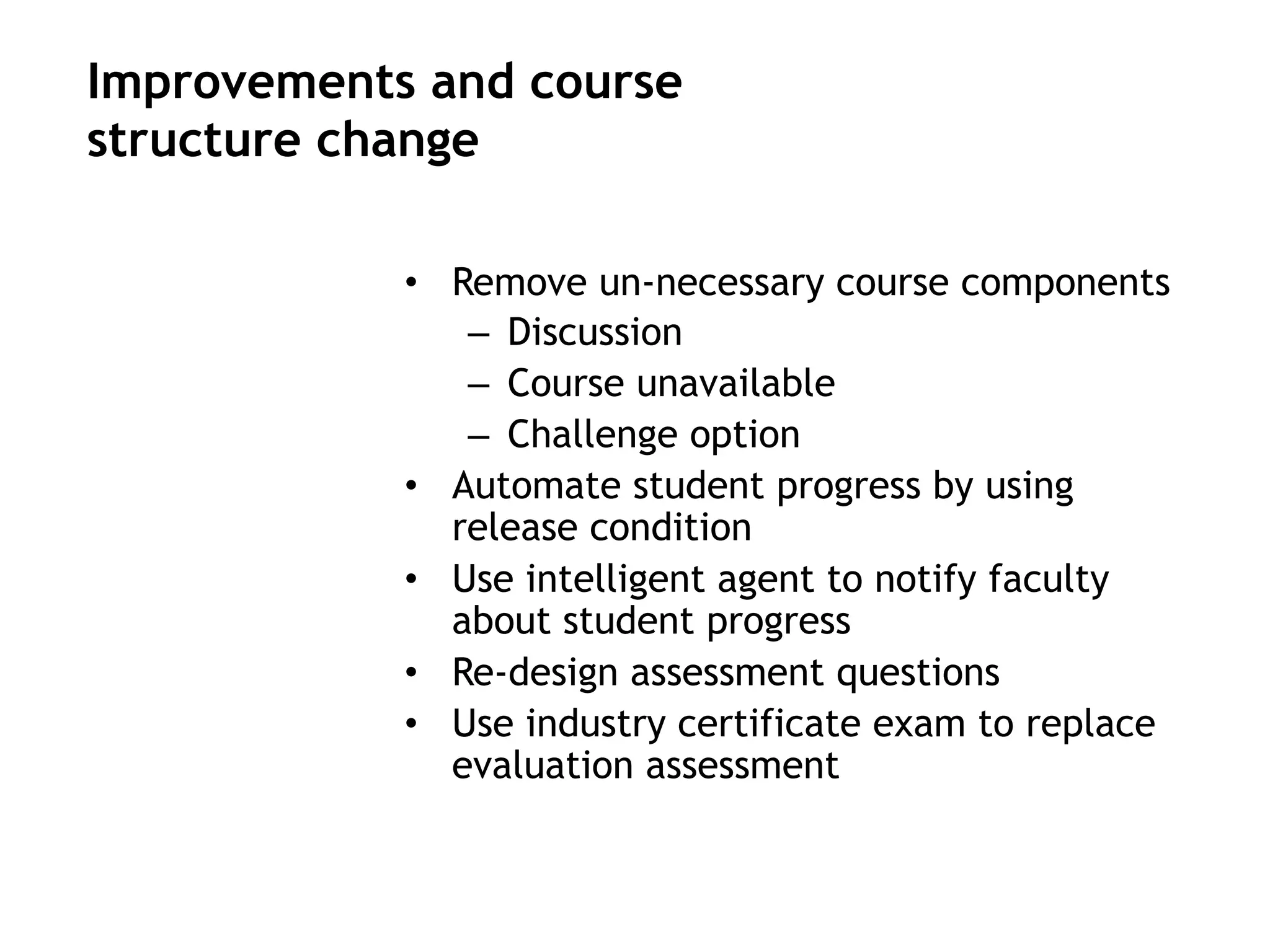
•  Remove un-necessary course components
–  Discussion
–  Course unavailable
–  Challenge option
•  Automate student progress by using
release condition
•  Use intelligent agent to notify faculty
about student progress
•  Re-design assessment questions
•  Use industry certificate exam to replace
evaluation assessment
Improvements and course
structure change
Future changes
•  Convert all course to be one unit course
•  Adding navigation video for student
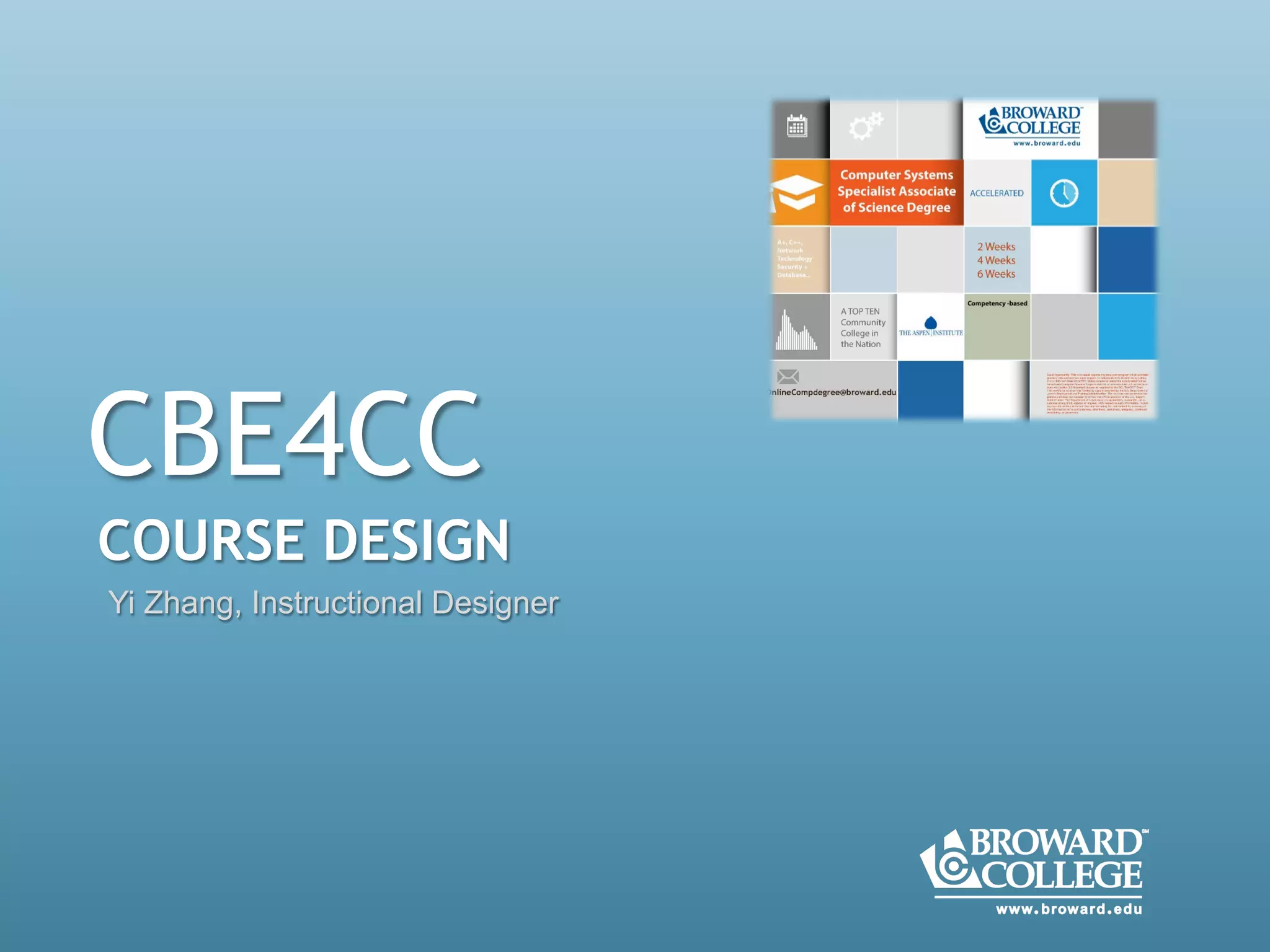
COURSE DESIGN
CBE4CC
Yi Zhang, Instructional Designer
 
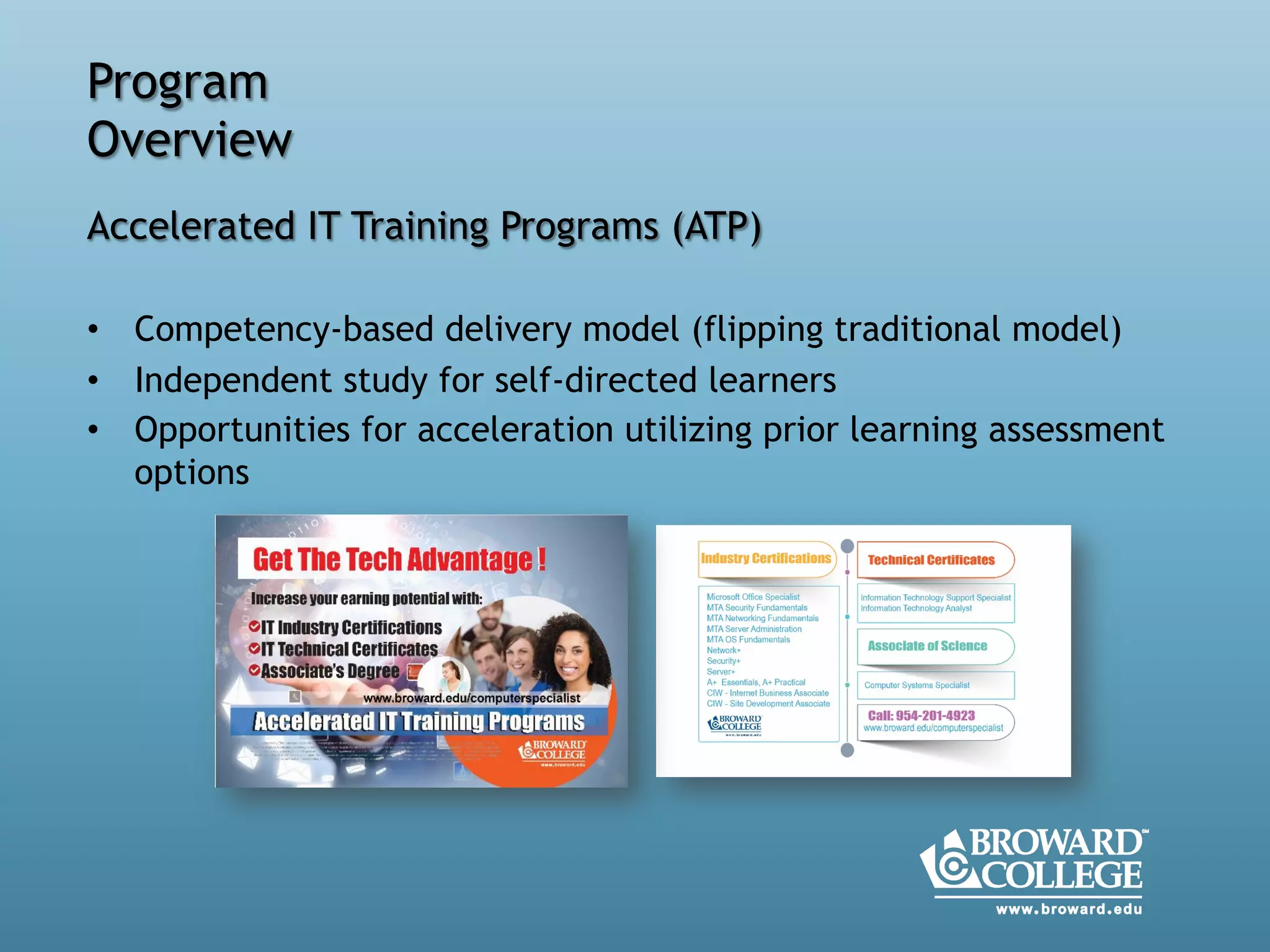
Accelerated IT Training Programs (ATP)
•  Competency-based delivery model (flipping traditional model)
•  Independent study for self-directed learners
•  Opportunities for acceleration utilizing prior learning assessment
options
Program
Overview
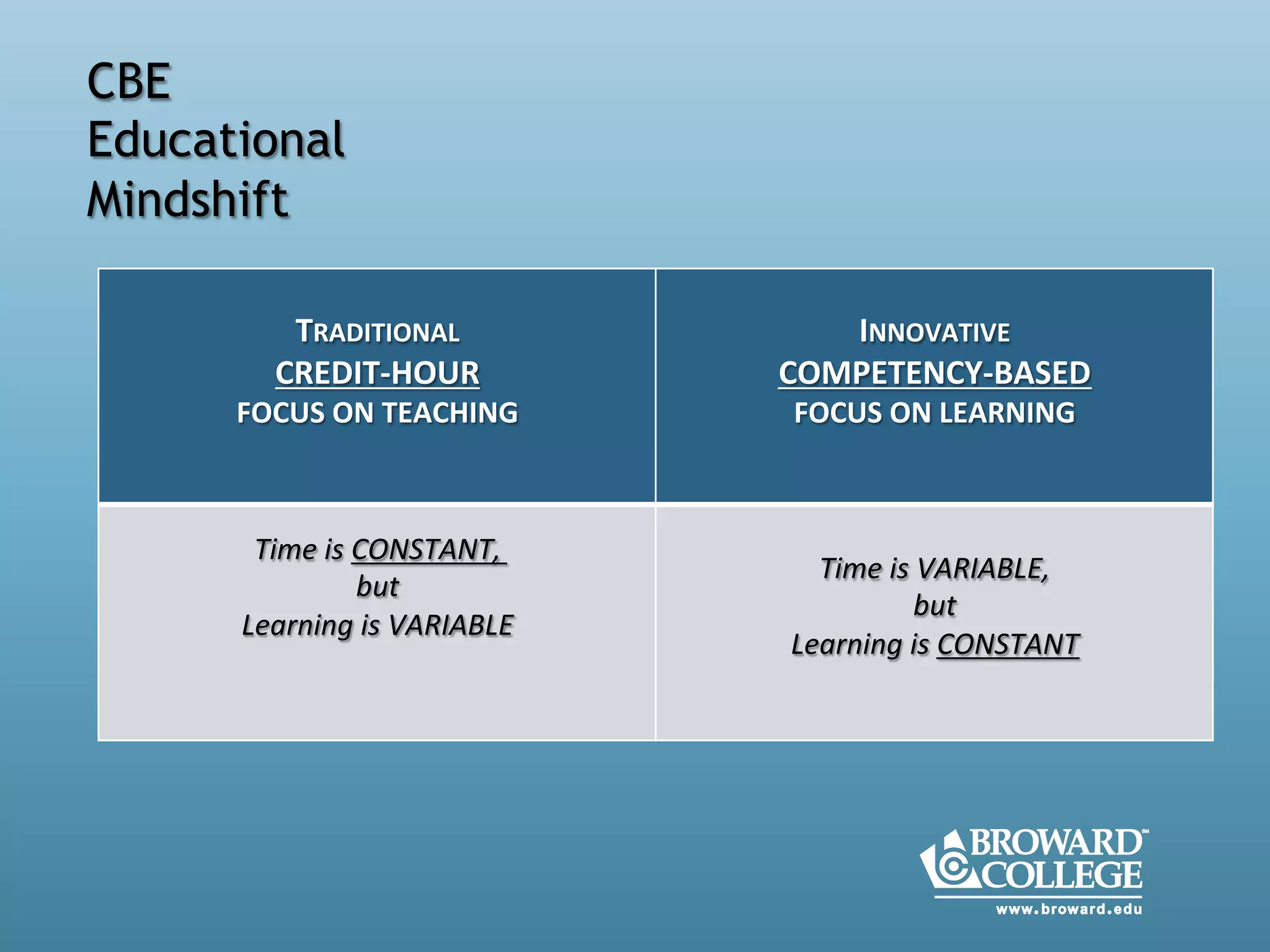
  CBE
Educational
Mindshift
TRADITIONAL	
  
CREDIT-­‐HOUR	
  
FOCUS	
  ON	
  TEACHING	


INNOVATIVE	
  
COMPETENCY-­‐BASED	
  
FOCUS	
  ON	
  LEARNING	


Time	
  is	
  CONSTANT,	
  	
  
but	
  
Learning	
  is	
  VARIABLE	


Time	
  is	
  VARIABLE,	
  
but	
  	
  
Learning	
  is	
  CONSTANT	


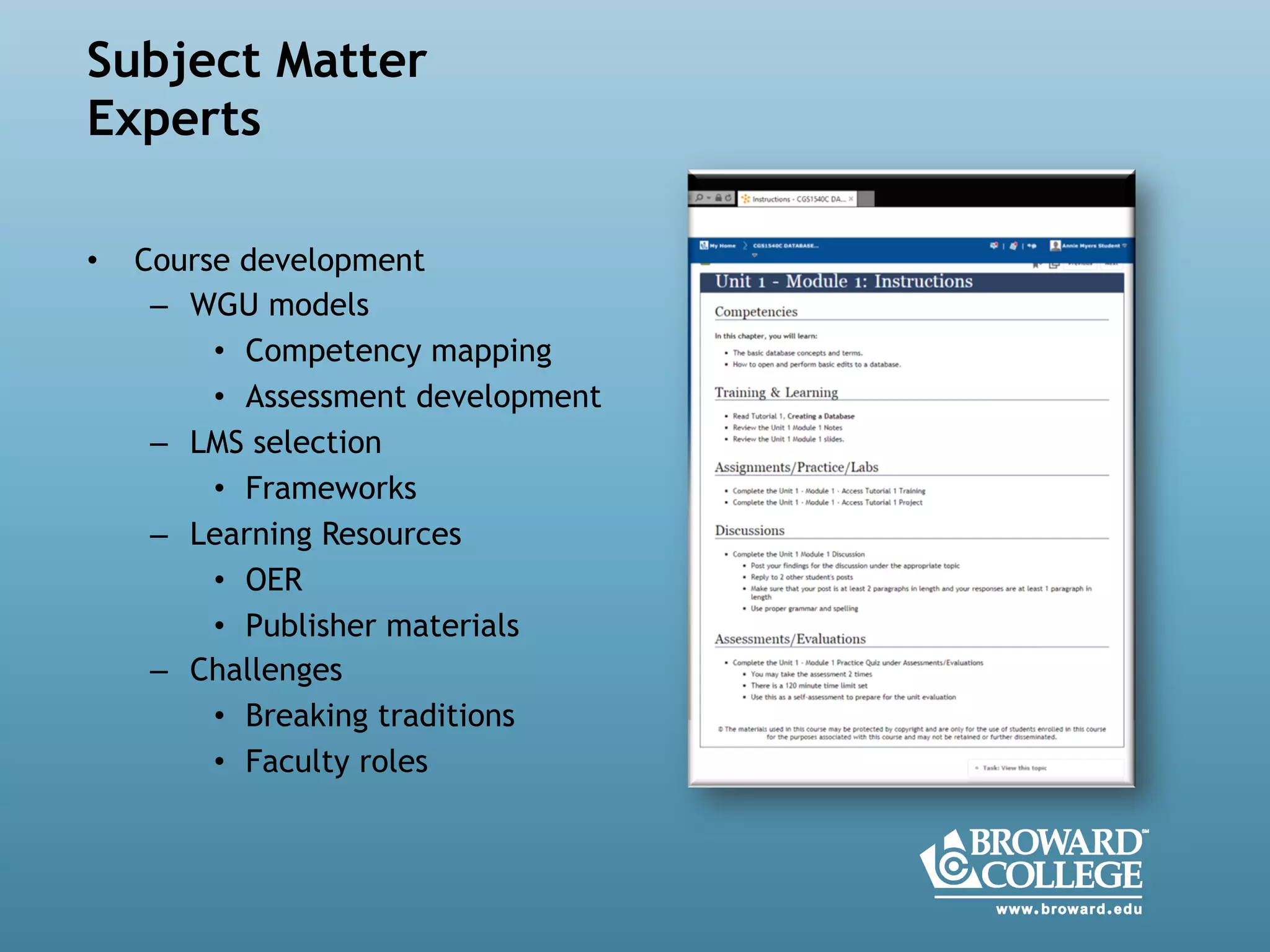
•  Course development
–  WGU models
•  Competency mapping
•  Assessment development
–  LMS selection
•  Frameworks
–  Learning Resources
•  OER
•  Publisher materials
–  Challenges
•  Breaking traditions
•  Faculty roles
Subject Matter
Experts
 
•  Uncoupling the instructional/
teaching role
–  Facilitating the mastering of
competencies
–  Assessing the mastery of
competencies
–  Team approach to supporting
students and the learning process
•  Recruiter
•  Instructor
•  Academic Coach
Faculty
 
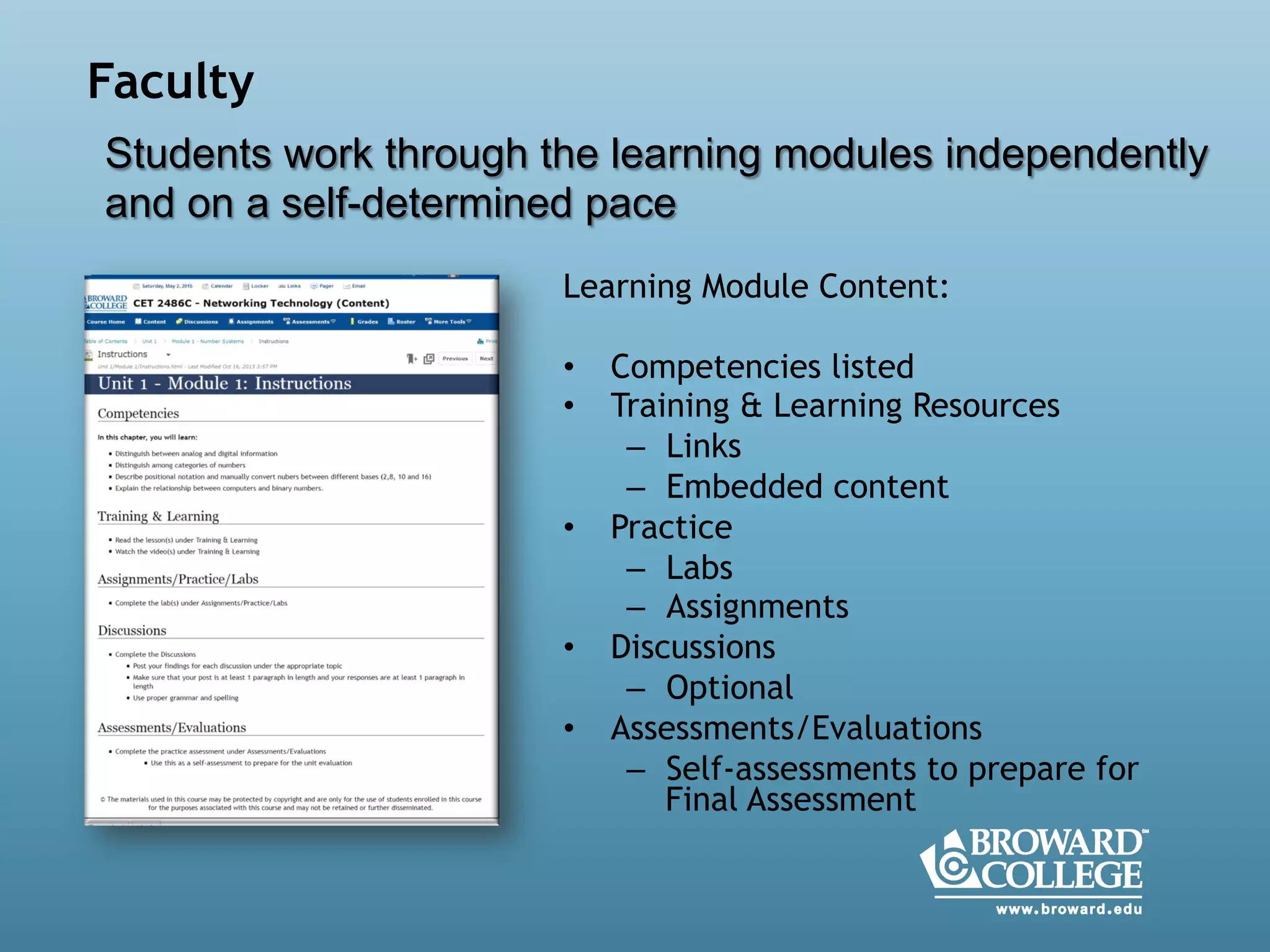
Learning Module Content:
•  Competencies listed
•  Training & Learning Resources
–  Links
–  Embedded content
•  Practice
–  Labs
–  Assignments
•  Discussions
–  Optional
•  Assessments/Evaluations
–  Self-assessments to prepare for
Final Assessment
Faculty
Students work through the learning modules independently
and on a self-determined pace
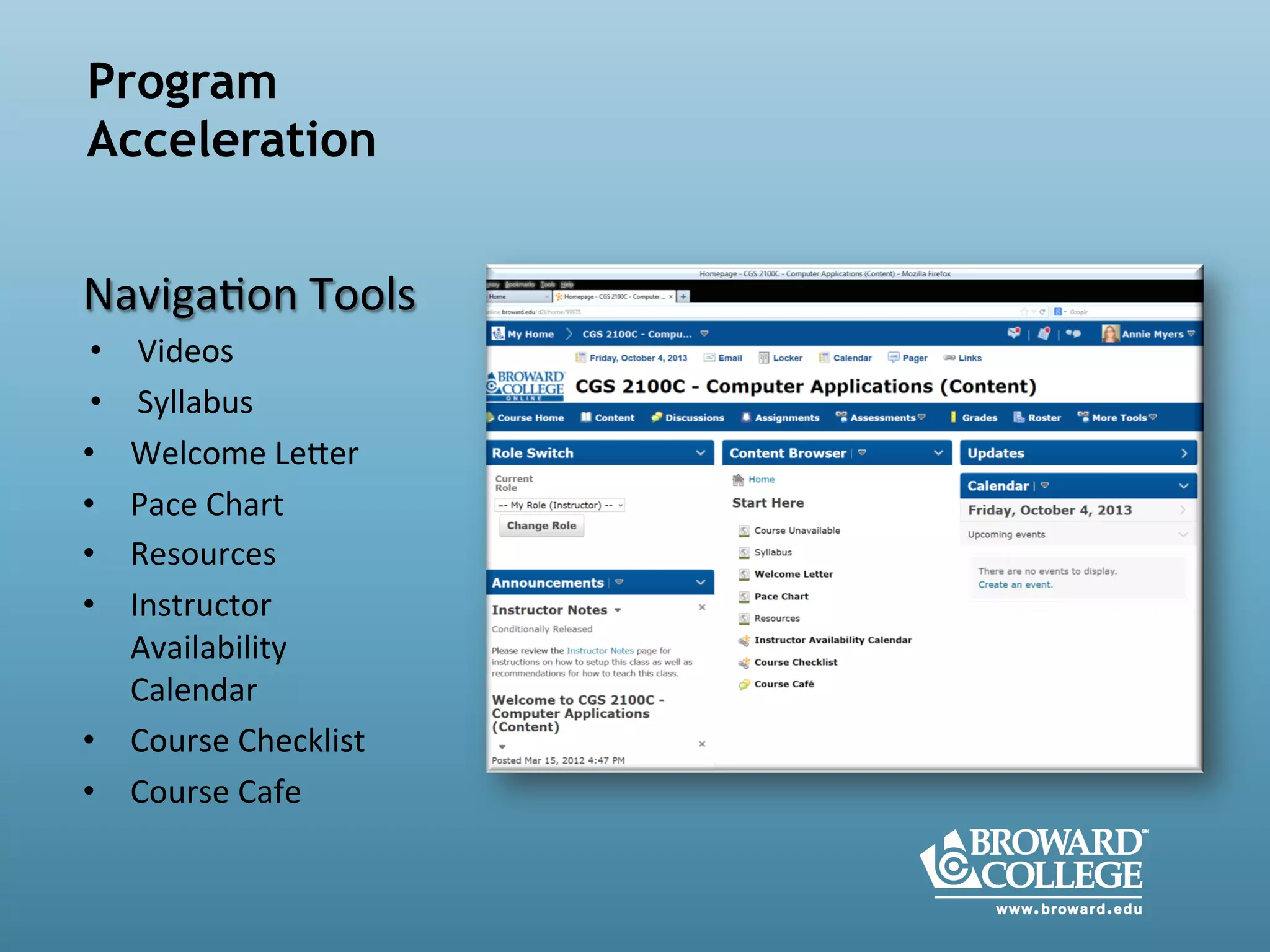
  Program
Acceleration
Naviga'on	
  Tools	
  
•  Videos	
  
•  Syllabus	
  
•  Welcome	
  Le8er	
  
•  Pace	
  Chart	
  
•  Resources	
  
•  Instructor	
  
Availability	
  
Calendar	
  
•  Course	
  Checklist	
  
•  Course	
  Cafe	
  
 
•  Course level
–  Units
•  Modules
–  Competencies	
  
–  Learning	
  resources	
  
•  Assessments
•  Competency level
–  Competencies
•  Learning resources
•  Assessments
Program
Structure
•  Units
–  Unit Evaluations must be proctored
•  Section
–  Proctored Evaluations are optional
–  Can contain Modules
•  Modules
–  Module Assessments and Evaluations are for practice only
–  Must have required elements for course consistency
Course
Policy
Units	
  -­‐	
  Modules 	
  	
  
Course
Layouts
Units	
  –	
  Sec'ons	
  -­‐	
  Modules	
  
Course
Layouts
Module	
  Content	
   InstrucAons	
  Content	
  
•  Instruc'ons	
  
•  Training	
  &	
  Learning	
  
•  Assignments/Prac'ce/
Labs	
  
•  Discussions
•  Assessment/Evalua'ons	
  
•  Module	
  Checklist	
  
Recommended
Content
Content Examples
Instruction
Content Examples
Learning Resources
& Discussions
Ques'ons?	
  
This workforce solution was funded by a $3,200,000 grant awarded
by the U.S. Department of Labor’s Employment and Training
Administration. The solution was created by the grantee and does
not necessarily reflect the official position of the U.S. Department of
labor. The Department of Labor makes no guarantees, warranties, or
assurances of any kind, express or implied, with respect to such
information, including any information on linked sites and including,
but not limited to, accuracy of the information or its completeness,
timeliness, usefulness, adequacy, continued availability, or
ownership

Instructional Designer Support Model Faculty Development Model - Competency-Based Education

  • 1.
    Instructional Designer SupportModel Curriculum Development Mary Kohls — Department Chair, Computer Studies
  • 2.
                              Structure: Building competency based education  
  • 3.
    Course Development: Facultydesigner compensation •  Stipend per course developed •  MOU signed by faculty •  Paid in installments •  Final payment upon course acceptance
  • 4.
    •  Competency definition What:Developing competency based education   •  Flexible entry •  Develop competency based, distance learning education with substantial interaction •  Usage of multimedia to include: ü  Video – short, responsive design ü  Adobe connect – faculty interaction ü  Social media – peer interaction
  • 5.
    The Competency What: Detailof competency based education   Industry Required Skills Measurable Statement Assessment Entry Level Position
  • 6.
    Mapping the Competencies:Working with industry  
  • 7.
    Mapping the Competencies:Working with industry  
  • 8.
    Pathways: Stacked andlatticed certificates and degrees   Marketable Skills Award Web Programming Specialist AAS Computer Programming AAS User Computer Support Industry Certifications Java Certificate C++ Certificate Software Testing Database Certificate Marketable Skills Award Foundation a.  Intro to Computing — COSC 1301 b.  Fundamentals of Networking — ITNW 1325 c.  Programming Fundamentals I — COSC 1336 d.  Web Design Tools — ITSE 1401   Computer Support AAS Software Testing AAS
  • 9.
    1.  COSC 1301– Intro to Computing 2.  COSC 1336 – Programming Fundamentals I – Python 3.  ITNW 1325 – Fundamentals of Networking – Prepares students to take Net+ Cert. 4.  ITSE 2309 – Database Oracle Programming 5.  COSC 1337 – Programming Fundamentals II – C++ 6.  ITSE 2321 – Object Oriented Programming – Java 7.  ITSE 1401 – Web Design 8.  ITSE 1411 – Web Page Programming Offered as Distance Learning with sections designated as DOL starting in 16, 12 and 8 weeks.       The first eight courses: completed by July 31, 2013. Offered fall 2013  
  • 10.
    1.  ITSC 1425– PC Computer Hardware •  Prepares the student to take the certification exam •  Hybrid – Lecture by Distance Learning and Lab at the campus 2.  ITSC 1307 Unix Operating System I 3.  ITSE 2317 Object Oriented Programming — Java 4.  ITSE 1345 Intro. to Oracle SQL and PL/SL 5.  ITSE 1331 Visual Basic 6.  ITSE 2402 Intermediate Web Programming 7.  ITSW 1304 Spreadsheet The second seven courses: completed by December 15, 2013. Offered spring 2014  
  • 11.
    1.  ITSE 2339PC Help Desk 2.  ITSE 1394 Ruby on Rails 3.  INEW 2338 Advanced Java 4.  ITSE 1393 Mobile Device Programming 5.  ITSE 1394 jQuery 6.  ITSE 1391 Automated Software Testing 7.  ITSE 1450 System Analysis & Design: Project Management 8.  ITMT 1400 Implementing & Supporting Microsoft Windows 9. ITSE 1356 Extensible Markup Language “XML” The third nine courses: completed by May 31 2014. Offered fall 2014
  • 12.
    1.  ITSC 2335Application Problem Solving 2.  ITSE 1330 Introduction to C# Programming 3.  ITSE 1359 Intro to Scripting Language:Python 4.  ITSW 1307 Intro to Database: Access 5.  ITSE 2356 Intro to Database Administration 6.  ITSE 1392 Special Topic: Automated Software Testing 7.  UXUI 1471 Prototyping 1 8.  UXUI 1472 UI Design 1 The third nine courses: completed by Nov. 30 2014. Offered spring 2015
  • 13.
    Course Development: Components Realign Course Content Re-engineer Coursesusing New Distance Learning Template Program Evaluation Assess and Retool with Data-Driven Results Program Development Determine Industry Competencies Redesign Courses with Competencies
  • 15.
  • 16.
        •  Leadby faculty content experts. •  Assessment measures course competencies and learning outcomes. •  Developing Rubrics for assessment •  Short term: Student Success, mastering the course competencies. •  Long term: Feedback from employer and students. Passing certifications. Course Development: Assessments
  • 17.
    Course Development: QualityAnalysis •  Track students use of learning resources in Blackboard. •  Measure students ability to apply knowledge and skills using assessment tools including exams and projects. •  Check student success and modify accordingly.      
  • 18.
    Retention: Student supportspecialists •  Advocate for student concerns •  Assist with course selection and enrollment •  Monitor student progress toward degree •  Record student activity and contact on a regular basis      
  • 19.
    •  Stacked andlatticed credentials •  CBE allows student to accelerate •  Course design allows for more interaction and project-based learning •  Student Support Specialists •  Tutoring •  Internships •  Graduation •  Job placement assistance through industry partnerships   Retention and graduation: Summary
  • 20.
    Instructional Designer SupportModel CBE Course Design Dr. Ninghua Han – Instructional Design Specialist, APT program
  • 21.
    Course Offerings   Fall2013 Spring 2014 Fall 2014
  • 22.
  • 23.
    Instructional Design ServiceOptions     Consultation Partnership: •  Help faculty member to begin competency-based course design •  Provide consultation and best practices on course design and online teaching pedagogy •  Assist in creating effective learning materials Production Partnership: •  Weekly contacts until all competency modules are completed Assistant Partnership: •  Weekly contact until the course framework and first competency module is completed Design Consultation Partnership Design Production Partnership Design Assistant Partnership
  • 24.
      1.  ID teamsupport 2.  Course design guidelines 3.  Organization 4.  Course template 5.  Course evaluation 6.  Best practices     Course Development Process Organization Course Evaluation ID Team Support Best Practices Course Development Course Design Guidelines Course Template
  • 25.
    •  14 stepsto produce a competency based course •  Course structure matrix •  Course schedule •  Course design progress         Course Design: Guidelines  
  • 26.
    APT Course Template   Sample  APT  Course  Interface  Video  
  • 27.
    ITSE 1411 BeginningWeb Programming UXUI 1472 User Interface Design I           Sample APT Courses  
  • 28.
    Camtasia Videos Standard Videos OpenSource Videos   •  Course Introduction •  Demonstration •  Hot Topics •  Difficult Knowledge Points         Sample APT Learning Resources  
  • 29.
    •  Learning Objectives • Learning Activity •  Learning Assessment Course Alignment  
  • 30.
  • 31.
  • 32.
    Blackboard Assessments in Bloom’sTaxonomy Wheel Created by APT ID team Course Alignment  
  • 33.
  • 34.
  • 35.
  • 36.
  • 37.
  • 38.
    •  APT QMInternal Course Evaluation Process •  APT QM Course Evaluation Review Team •  Course Revise Process Course Evaluation  
  • 39.
    •  Access theAccessibility of Word Documents •  Access the Accessibility of PowerPoint Documents •  Access the Accessibility of PDFs Tutoring •  Access the Accessibility of Videos / images •  Access the Accessibility of technologies in the course Accessibility
  • 40.
    •  Blackboard Usage • Assessment Rubric •  Camtasia •  Adobe Connect •  Respondus •  CBE Assessments •  Introduction Video •  ADA   Best Practices  
  • 41.
        Nextsteps   1.  Optimize Course Review Process 2.  Research online proctoring tool 3.  Increase interaction 4.  Optimize ADA implementation
  • 42.
    #AIcbe Philadelphia, PA |May 18 - 20, 2015 DEVELOPING AND MANAGING COMPETENCY-BASED EDUCATION
  • 43.
    Course Design Yi Zhang,Broward College Instructional Designer
  • 44.
      •  Defining yourprogram structure •  Learning Management Systems •  Course framework •  Issues and improvements AGENDA
  • 45.
    DEFINING  PROGRAM  STRUCTURE   Course  Design  
  • 46.
      •  Course level – Units •  Modules –  Competencies   –  Learning  resources   •  Assessments •  Competency level –  Competencies •  Learning resources •  Assessments Program Structure
  • 47.
      Program Acceleration Naviga4on  Tools   •  Videos   •  Syllabus   •  Welcome  Le=er   •  Pace  Chart   •  Resources   •  Instructor   Availability   Calendar   •  Course  Checklist   •  Course  Cafe  
  • 48.
      •  Units –  UnitEvaluations must be proctored •  Section –  Proctored Evaluations are optional –  Can contain Modules •  Modules –  Module Assessments and Evaluations are for practice only –  Must have required elements for course consistency Program Framework
  • 49.
      •  Competencies listed • Training & Learning Resources –  Links –  Embedded content •  Practice –  Labs –  Assignments •  Discussions –  Optional •  Assessments/Evaluations –  Self-assessments to prepare for Final Assessment Program Framework
  • 50.
    •  Units –  UnitEvaluations must be proctored •  Section –  Proctored Evaluations are optional –  Can contain Modules •  Modules –  Module Assessments and Evaluations are for practice only –  Must have required elements for course consistency Course Policy
  • 51.
    Units  -­‐  Modules     Course Layouts
  • 52.
    Units  –  Sec4ons  -­‐  Modules   Course Layouts
  • 53.
    Module  Content  InstrucAons  Content   •  Instruc4ons   •  Training  &  Learning   •  Assignments/Prac4ce/Labs   •  Discussions •  Assessment/Evalua4ons   •  Module  Checklist   Recommended Content
  • 54.
  • 55.
  • 56.
    Content Developers •  Ifyou are assigned in the Content Shell, you should not be in the Assessment Shell Assessment Developers: •  If you are an Assessment developers you will not have access to the Content Shell Separation of Duties
  • 57.
    •  Too manyroadblocks (manual releases) •  Lacking faculty / student interactivity •  Student confusion about CBE course •  Assessments do not 100% fit for CBE Issues
  • 58.
    •  Remove un-necessarycourse components –  Discussion –  Course unavailable –  Challenge option •  Automate student progress by using release condition •  Use intelligent agent to notify faculty about student progress •  Re-design assessment questions •  Use industry certificate exam to replace evaluation assessment Improvements and course structure change
  • 59.
    Future changes •  Convertall course to be one unit course •  Adding navigation video for student
  • 60.
    COURSE DESIGN CBE4CC Yi Zhang,Instructional Designer
  • 61.
      Accelerated IT TrainingPrograms (ATP) •  Competency-based delivery model (flipping traditional model) •  Independent study for self-directed learners •  Opportunities for acceleration utilizing prior learning assessment options Program Overview
  • 62.
      CBE Educational Mindshift TRADITIONAL   CREDIT-­‐HOUR   FOCUS  ON  TEACHING     INNOVATIVE   COMPETENCY-­‐BASED   FOCUS  ON  LEARNING     Time  is  CONSTANT,     but   Learning  is  VARIABLE       Time  is  VARIABLE,   but     Learning  is  CONSTANT    
  • 63.
      •  Course development – WGU models •  Competency mapping •  Assessment development –  LMS selection •  Frameworks –  Learning Resources •  OER •  Publisher materials –  Challenges •  Breaking traditions •  Faculty roles Subject Matter Experts
  • 64.
      •  Uncoupling theinstructional/ teaching role –  Facilitating the mastering of competencies –  Assessing the mastery of competencies –  Team approach to supporting students and the learning process •  Recruiter •  Instructor •  Academic Coach Faculty
  • 65.
      Learning Module Content: • Competencies listed •  Training & Learning Resources –  Links –  Embedded content •  Practice –  Labs –  Assignments •  Discussions –  Optional •  Assessments/Evaluations –  Self-assessments to prepare for Final Assessment Faculty Students work through the learning modules independently and on a self-determined pace
  • 66.
      Program Acceleration Naviga'on  Tools   •  Videos   •  Syllabus   •  Welcome  Le8er   •  Pace  Chart   •  Resources   •  Instructor   Availability   Calendar   •  Course  Checklist   •  Course  Cafe  
  • 67.
      •  Course level – Units •  Modules –  Competencies   –  Learning  resources   •  Assessments •  Competency level –  Competencies •  Learning resources •  Assessments Program Structure
  • 68.
    •  Units –  UnitEvaluations must be proctored •  Section –  Proctored Evaluations are optional –  Can contain Modules •  Modules –  Module Assessments and Evaluations are for practice only –  Must have required elements for course consistency Course Policy
  • 69.
    Units  -­‐  Modules     Course Layouts
  • 70.
    Units  –  Sec'ons  -­‐  Modules   Course Layouts
  • 71.
    Module  Content  InstrucAons  Content   •  Instruc'ons   •  Training  &  Learning   •  Assignments/Prac'ce/ Labs   •  Discussions •  Assessment/Evalua'ons   •  Module  Checklist   Recommended Content
  • 72.
  • 73.
  • 74.
  • 75.
    This workforce solutionwas funded by a $3,200,000 grant awarded by the U.S. Department of Labor’s Employment and Training Administration. The solution was created by the grantee and does not necessarily reflect the official position of the U.S. Department of labor. The Department of Labor makes no guarantees, warranties, or assurances of any kind, express or implied, with respect to such information, including any information on linked sites and including, but not limited to, accuracy of the information or its completeness, timeliness, usefulness, adequacy, continued availability, or ownership