
Patterns of Society
p. 84-91
Social Mobility
 England: land was scarce, population large, a small
but powerful group of landowners existed
 America: land was abundant, population small
 Relied less on land ownership than on control of a
large workforce
 Social mobility was more possible in America
The Plantation
 First plantations emerged in VA and MD: tobacco
 Most were actually rough and small estates
 Indentured servants worked in tough conditions
where daily deaths were common
 Workforce of a plantation was usually under 30
people
Plantation Economy
 Unstable economy: if markets were good, they
could make profit
 If crop prices fell (tobacco in 1660’s), it could
destroy the plantation
 Residents lived in a cluster of buildings since cities
were sparse
 Wives of plantation owners relied on servants, they
could then spend time on family
Plantation Slavery
 Smaller farms: not a rigid social separation between
whites and blacks
 Larger plantations: ¾ of all blacks lived with at least
10 slaves, ½ with 50 or more to a plantation
 Africans developed a society and culture of their
own
Plantation Slavery
 Slaves attempted to create nuclear families
 Could at times build stable households
 Problems:
 Any family member could be sold at any time
 Surrogate families were created to those sold
Slave Culture
 Slaves developed languages of their own
 Gullah: a hybrid of English and African
 Done to communicate so English masters couldn’t
understand what they said
 Religion was blended as well: Christianity and
African folklore were blended
 Treatment of slaves was very mixed; some were
treated well, others brutally
Stono Rebellion
 Symbolizes the most important slave revolt
 SC in 1739
 100 Africans rose up, seized weapons, and killed
several whites
 Attempted to escape to FL
 Uprising quickly crushed, most were executed
Other Facts:
 Some slaves worked in the fields
 Others cooked for and raised the whites’ children
 Some learned trades such as blacksmithing,
carpentry, shoemaking, spinning, weaving, sewing,
etc…
 Craftsmen (and women) could be hired out to other
planters
 Some could even buy freedom, but this was rare
Puritan Community
 Each settlement drew up a covenant among its
members
 Bound all residents in a religious and social
commitment to unity and harmony
 Towns had houses and a meeting house arranged
around a central pasture or common
 Divided up the fields and woodlands among the
residents
Puritan Community
 Size and location of a family’s field depended on the
family’s numbers, wealth, etc…
 Families generally lived in the village with their
neighbors close by
 Strong sense of community
Puritan Democracy
 A town was able to run its own affairs with little
interference from the colonial gov’t
 Yearly town meetings were held
 Decided on important issues
 Chose “selectmen” who governed until the next
meeting
 Adult males only allowed
 Church membership was required for full
participation
Puritan Democracy
 Primogeniture-the passing of all inherited property
to the firstborn son-did not take root in N.E.
 Fathers would divide land among all of his sons
 This control of inheritance was one of the most
effective means of exercising power over male
members of the family
Puritan Democracy
 Sons usually stayed close to their fathers after
moving
 Women were more mobile, as their dowries were
moveable objects (furniture, household goods,
money, etc…)
 Population growth become the major issue with the
Puritans, as it compromised their tight-knit
community
Population Pressure
 As towns grew, residents cultivated land further
from town centers
 Farmers wanted to be close to their land
 Some would ask to build a church out of town,
which created new towns
 This led to conflict
Population Pressure
 As generations increased in number, inherited land
was smaller and smaller by sons
 Other towns sprouting up limited the land available
on edges of towns
 Sons had to leave the family to find enough land
 Fathers needed their sons income as much as the
sons needed land: big problem!
 Family structure was weakened over time
SalemWitchTrials
 This is on pages 88-89. We will be going over this on
Tuesday.
 Witchcraft spread through many N.E. towns in the
1690’s
 Most were middle-aged women with few or no children
 Most were of low social position
 Frequently accused of other crimes
 Witchcraft was a common feature of Puritan religious
conviction
Growth of Colonial Cities
 See charts on p. 89!
 Growth of cities started slowly
 By 1770’s, Philly had 28,000 and NY had 25,000
people; Boston, Charleston, Newport
 Served as trading centers for farmers
 Leaders were mostly merchants
 In cities, social distinction was very evident
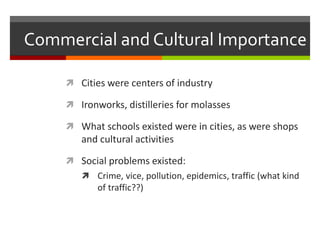
Commercial and Cultural Importance
 Cities were centers of industry
 Ironworks, distilleries for molasses
 What schools existed were in cities, as were shops
and cultural activities
 Social problems existed:
 Crime, vice, pollution, epidemics, traffic (what kind
of traffic??)
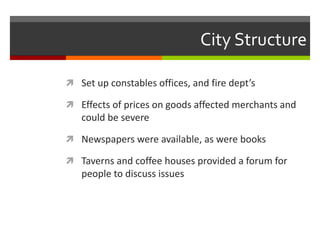
City Structure
 Set up constables offices, and fire dept’s
 Effects of prices on goods affected merchants and
could be severe
 Newspapers were available, as were books
 Taverns and coffee houses provided a forum for
people to discuss issues
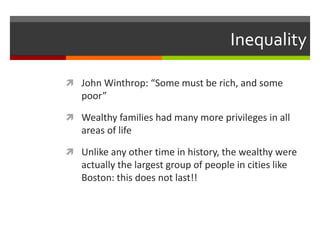
Inequality
 John Winthrop: “Some must be rich, and some
poor”
 Wealthy families had many more privileges in all
areas of life
 Unlike any other time in history, the wealthy were
actually the largest group of people in cities like
Boston: this does not last!!

Patterns of Society

  • 1.
  • 2.
    Social Mobility  England:land was scarce, population large, a small but powerful group of landowners existed  America: land was abundant, population small  Relied less on land ownership than on control of a large workforce  Social mobility was more possible in America
  • 3.
    The Plantation  Firstplantations emerged in VA and MD: tobacco  Most were actually rough and small estates  Indentured servants worked in tough conditions where daily deaths were common  Workforce of a plantation was usually under 30 people
  • 4.
    Plantation Economy  Unstableeconomy: if markets were good, they could make profit  If crop prices fell (tobacco in 1660’s), it could destroy the plantation  Residents lived in a cluster of buildings since cities were sparse  Wives of plantation owners relied on servants, they could then spend time on family
  • 5.
    Plantation Slavery  Smallerfarms: not a rigid social separation between whites and blacks  Larger plantations: ¾ of all blacks lived with at least 10 slaves, ½ with 50 or more to a plantation  Africans developed a society and culture of their own
  • 6.
    Plantation Slavery  Slavesattempted to create nuclear families  Could at times build stable households  Problems:  Any family member could be sold at any time  Surrogate families were created to those sold
  • 7.
    Slave Culture  Slavesdeveloped languages of their own  Gullah: a hybrid of English and African  Done to communicate so English masters couldn’t understand what they said  Religion was blended as well: Christianity and African folklore were blended  Treatment of slaves was very mixed; some were treated well, others brutally
  • 8.
    Stono Rebellion  Symbolizesthe most important slave revolt  SC in 1739  100 Africans rose up, seized weapons, and killed several whites  Attempted to escape to FL  Uprising quickly crushed, most were executed
  • 9.
    Other Facts:  Someslaves worked in the fields  Others cooked for and raised the whites’ children  Some learned trades such as blacksmithing, carpentry, shoemaking, spinning, weaving, sewing, etc…  Craftsmen (and women) could be hired out to other planters  Some could even buy freedom, but this was rare
  • 10.
    Puritan Community  Eachsettlement drew up a covenant among its members  Bound all residents in a religious and social commitment to unity and harmony  Towns had houses and a meeting house arranged around a central pasture or common  Divided up the fields and woodlands among the residents
  • 11.
    Puritan Community  Sizeand location of a family’s field depended on the family’s numbers, wealth, etc…  Families generally lived in the village with their neighbors close by  Strong sense of community
  • 12.
    Puritan Democracy  Atown was able to run its own affairs with little interference from the colonial gov’t  Yearly town meetings were held  Decided on important issues  Chose “selectmen” who governed until the next meeting  Adult males only allowed  Church membership was required for full participation
  • 13.
    Puritan Democracy  Primogeniture-thepassing of all inherited property to the firstborn son-did not take root in N.E.  Fathers would divide land among all of his sons  This control of inheritance was one of the most effective means of exercising power over male members of the family
  • 14.
    Puritan Democracy  Sonsusually stayed close to their fathers after moving  Women were more mobile, as their dowries were moveable objects (furniture, household goods, money, etc…)  Population growth become the major issue with the Puritans, as it compromised their tight-knit community
  • 15.
    Population Pressure  Astowns grew, residents cultivated land further from town centers  Farmers wanted to be close to their land  Some would ask to build a church out of town, which created new towns  This led to conflict
  • 16.
    Population Pressure  Asgenerations increased in number, inherited land was smaller and smaller by sons  Other towns sprouting up limited the land available on edges of towns  Sons had to leave the family to find enough land  Fathers needed their sons income as much as the sons needed land: big problem!  Family structure was weakened over time
  • 17.
    SalemWitchTrials  This ison pages 88-89. We will be going over this on Tuesday.  Witchcraft spread through many N.E. towns in the 1690’s  Most were middle-aged women with few or no children  Most were of low social position  Frequently accused of other crimes  Witchcraft was a common feature of Puritan religious conviction
  • 18.
    Growth of ColonialCities  See charts on p. 89!  Growth of cities started slowly  By 1770’s, Philly had 28,000 and NY had 25,000 people; Boston, Charleston, Newport  Served as trading centers for farmers  Leaders were mostly merchants  In cities, social distinction was very evident
  • 19.
    Commercial and CulturalImportance  Cities were centers of industry  Ironworks, distilleries for molasses  What schools existed were in cities, as were shops and cultural activities  Social problems existed:  Crime, vice, pollution, epidemics, traffic (what kind of traffic??)
  • 20.
    City Structure  Setup constables offices, and fire dept’s  Effects of prices on goods affected merchants and could be severe  Newspapers were available, as were books  Taverns and coffee houses provided a forum for people to discuss issues
  • 21.
    Inequality  John Winthrop:“Some must be rich, and some poor”  Wealthy families had many more privileges in all areas of life  Unlike any other time in history, the wealthy were actually the largest group of people in cities like Boston: this does not last!!