Immigration 1877-1914

   Give us your tired…….
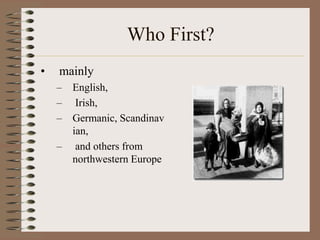
Who First?
•   mainly
    – English,
    – Irish,
    – Germanic, Scandinav
      ian,
    – and others from
      northwestern Europe
Reasons for “Old Immigration”
• Between 1840-1850, 1.5 million immigrants came to
  America.
• Nearly ½ were from Ireland due to the potato famine of
  that country.
• From 1846-1860, approximately 1.5 million Irish settled
  in port cities such as New York and Boston.
• In the 1840’s, large numbers of Germans immigrated to
  escape crop failures, and political persecution. German
  Jews were also seeking their freedom. Most German
  immigrants settled on farms in the Midwest, and in cities
  such as Cincinnati, Milwaukee, and St. Louis.
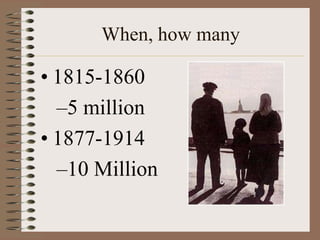
When, how many

• 1815-1860
  –5 million
• 1877-1914
  –10 Million
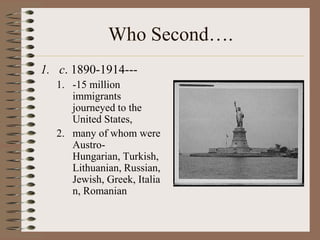
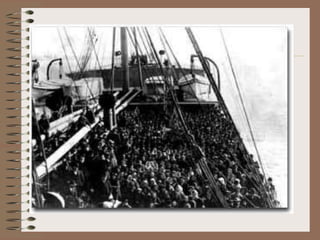
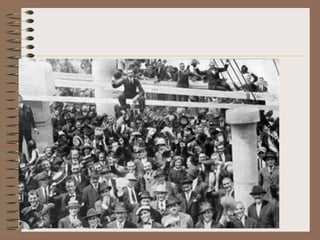
Who Second….
1. c. 1890-1914---
  1. -15 million
     immigrants
     journeyed to the
     United States,
  2. many of whom were
     Austro-
     Hungarian, Turkish,
     Lithuanian, Russian,
     Jewish, Greek, Italia
     n, Romanian
The Dillingham Commission
• In 1907, the US Senate, under pressure from the
  Immigration Restriction League, formed the
  Dillingham Commission
• Commission -a 1880 shift in immigration
  patterns corresponded to the rise of festering
  social and economic problems in the US
• "inferior" migrants from places in southeastern
  Europe were responsible
• Stricter immigration restrictions and literacy test
  should be used to limit the poor and uneducated.
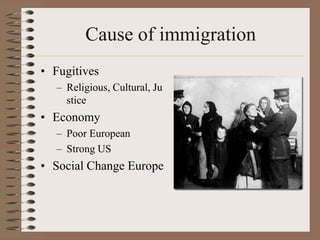
Cause of immigration
• Fugitives
   – Religious, Cultural, Ju
     stice
• Economy
   – Poor European
   – Strong US
• Social Change Europe
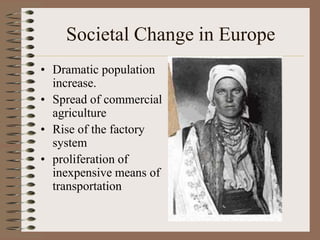
Societal Change in Europe
• Dramatic population
  increase.
• Spread of commercial
  agriculture
• Rise of the factory
  system
• proliferation of
  inexpensive means of
  transportation
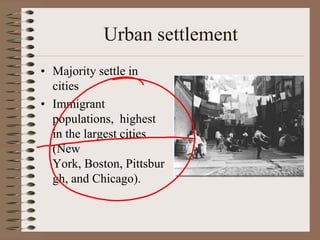
Urban settlement
• Majority settle in
  cities
• Immigrant
  populations, highest
  in the largest cities
  (New
  York, Boston, Pittsbur
  gh, and Chicago).
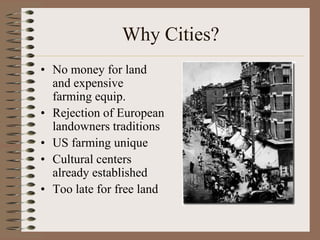
Why Cities?
• No money for land
  and expensive
  farming equip.
• Rejection of European
  landowners traditions
• US farming unique
• Cultural centers
  already established
• Too late for free land
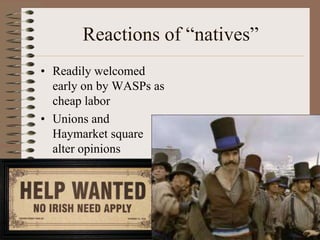
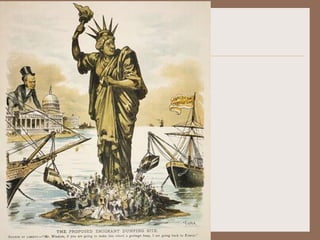
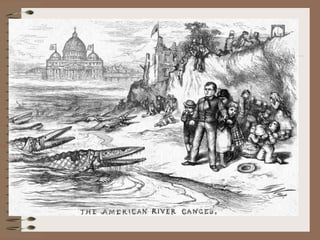
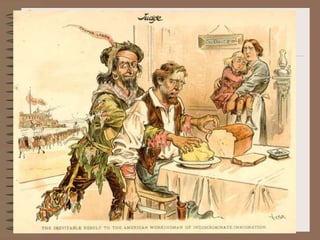
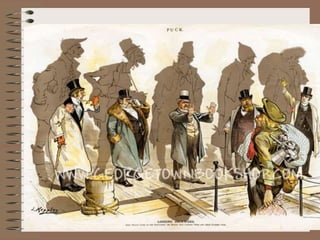
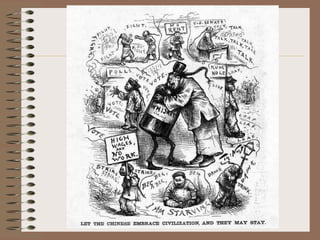
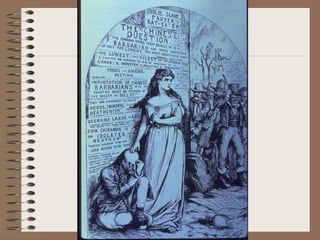
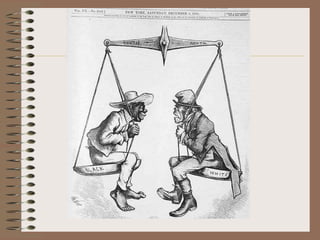
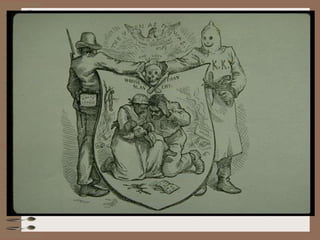
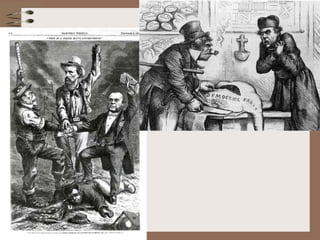
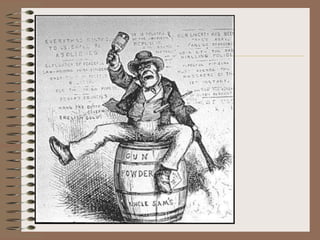
Reactions of “natives”
• Readily welcomed
  early on by WASPs as
  cheap labor
• Unions and
  Haymarket square
  alter opinions
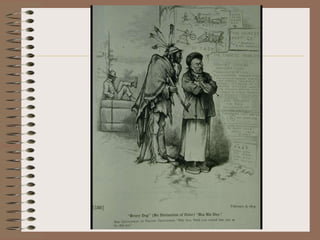
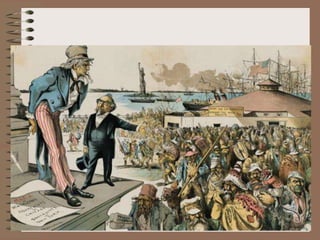
EMIGRANT.--Can I come in?
UNCLE SAM.--I 'spose you can;
  there's no law to keep you out.
Dr. Charles Benedict Davenport
• weaknesses in society were
  due to the unnatural
  preservation, by the use of
  modern medicine, of the
  "feeble-minded" and "unfit."
• "the population of the United
  States will, rapidly become
  darker in
  pigmentation, smaller in
  stature, more
  mercurial, more attached to
  music and art, [and] more
  given to crimes of
  larceny, kidnapping, assault,
  murder, rape and sex-
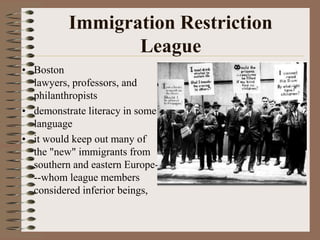
Immigration Restriction
                 League
• Boston
  lawyers, professors, and
  philanthropists
• demonstrate literacy in some
  language
• it would keep out many of
  the "new" immigrants from
  southern and eastern Europe-
  --whom league members
  considered inferior beings,
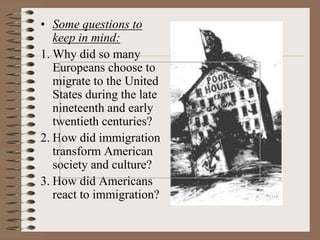
• Some questions to
   keep in mind:
1. Why did so many
   Europeans choose to
   migrate to the United
   States during the late
   nineteenth and early
   twentieth centuries?
2. How did immigration
   transform American
   society and culture?
3. How did Americans
   react to immigration?
Immigration 1877 1914 2008

Immigration 1877 1914 2008

  • 1.
    Immigration 1877-1914 Give us your tired…….
  • 2.
    Who First? • mainly – English, – Irish, – Germanic, Scandinav ian, – and others from northwestern Europe
  • 3.
    Reasons for “OldImmigration” • Between 1840-1850, 1.5 million immigrants came to America. • Nearly ½ were from Ireland due to the potato famine of that country. • From 1846-1860, approximately 1.5 million Irish settled in port cities such as New York and Boston. • In the 1840’s, large numbers of Germans immigrated to escape crop failures, and political persecution. German Jews were also seeking their freedom. Most German immigrants settled on farms in the Midwest, and in cities such as Cincinnati, Milwaukee, and St. Louis.
  • 4.
    When, how many •1815-1860 –5 million • 1877-1914 –10 Million
  • 6.
    Who Second…. 1. c.1890-1914--- 1. -15 million immigrants journeyed to the United States, 2. many of whom were Austro- Hungarian, Turkish, Lithuanian, Russian, Jewish, Greek, Italia n, Romanian
  • 7.
    The Dillingham Commission •In 1907, the US Senate, under pressure from the Immigration Restriction League, formed the Dillingham Commission • Commission -a 1880 shift in immigration patterns corresponded to the rise of festering social and economic problems in the US • "inferior" migrants from places in southeastern Europe were responsible • Stricter immigration restrictions and literacy test should be used to limit the poor and uneducated.
  • 8.
    Cause of immigration •Fugitives – Religious, Cultural, Ju stice • Economy – Poor European – Strong US • Social Change Europe
  • 9.
    Societal Change inEurope • Dramatic population increase. • Spread of commercial agriculture • Rise of the factory system • proliferation of inexpensive means of transportation
  • 10.
    Urban settlement • Majoritysettle in cities • Immigrant populations, highest in the largest cities (New York, Boston, Pittsbur gh, and Chicago).
  • 11.
    Why Cities? • Nomoney for land and expensive farming equip. • Rejection of European landowners traditions • US farming unique • Cultural centers already established • Too late for free land
  • 12.
    Reactions of “natives” •Readily welcomed early on by WASPs as cheap labor • Unions and Haymarket square alter opinions
  • 14.
    EMIGRANT.--Can I comein? UNCLE SAM.--I 'spose you can; there's no law to keep you out.
  • 17.
    Dr. Charles BenedictDavenport • weaknesses in society were due to the unnatural preservation, by the use of modern medicine, of the "feeble-minded" and "unfit." • "the population of the United States will, rapidly become darker in pigmentation, smaller in stature, more mercurial, more attached to music and art, [and] more given to crimes of larceny, kidnapping, assault, murder, rape and sex-
  • 19.
    Immigration Restriction League • Boston lawyers, professors, and philanthropists • demonstrate literacy in some language • it would keep out many of the "new" immigrants from southern and eastern Europe- --whom league members considered inferior beings,
  • 21.
    • Some questionsto keep in mind: 1. Why did so many Europeans choose to migrate to the United States during the late nineteenth and early twentieth centuries? 2. How did immigration transform American society and culture? 3. How did Americans react to immigration?