Graves’ Disease:
An Overview
Done by
Kulanthaivel Shanmugaraj,141B
Crimean Federal University, Russia.
Presented to
Assoc. Prof. Divinskaya Valentina Alexandrovna,
Ph. D. in Medicine
Thyrotoxicosis
n Thyrotoxicosis describes a constellation of
clinical features arising from elevated circulating
levels of thyroid hormone. The most common
causes are Graves’ disease, multinodular goitre
and autonomously functioning thyroid nodules
(toxic adenoma)
Epidemiology
n Prevalence of hyperthyroidism in the general
population is 1.2%
q 0.7% subclinical hyperthyroidism
q 0.4% Graves’ Disease – most common etiology;
note there is overlap with the subclinical group
n Graves’ Disease is more common in females
(7:1 ratio)
The Thyroid &
Grave’s
n Thyroid hormone is critical for regulating mood, weight, and
mental and physical energy levels.
n If the body makes too much thyroid hormone, the condition is
called hyperthyroidism. (An underactive thyroid leads to
hypothyroidism.)
n Graves disease is the most common cause of hyperthyroidism.
n Caused by an abnormal immune system response that causes the
thyroid gland to produce too much thyroid hormones.
n Body actually produces antibodies that activate thyroid hormone
production
Graves’ disease
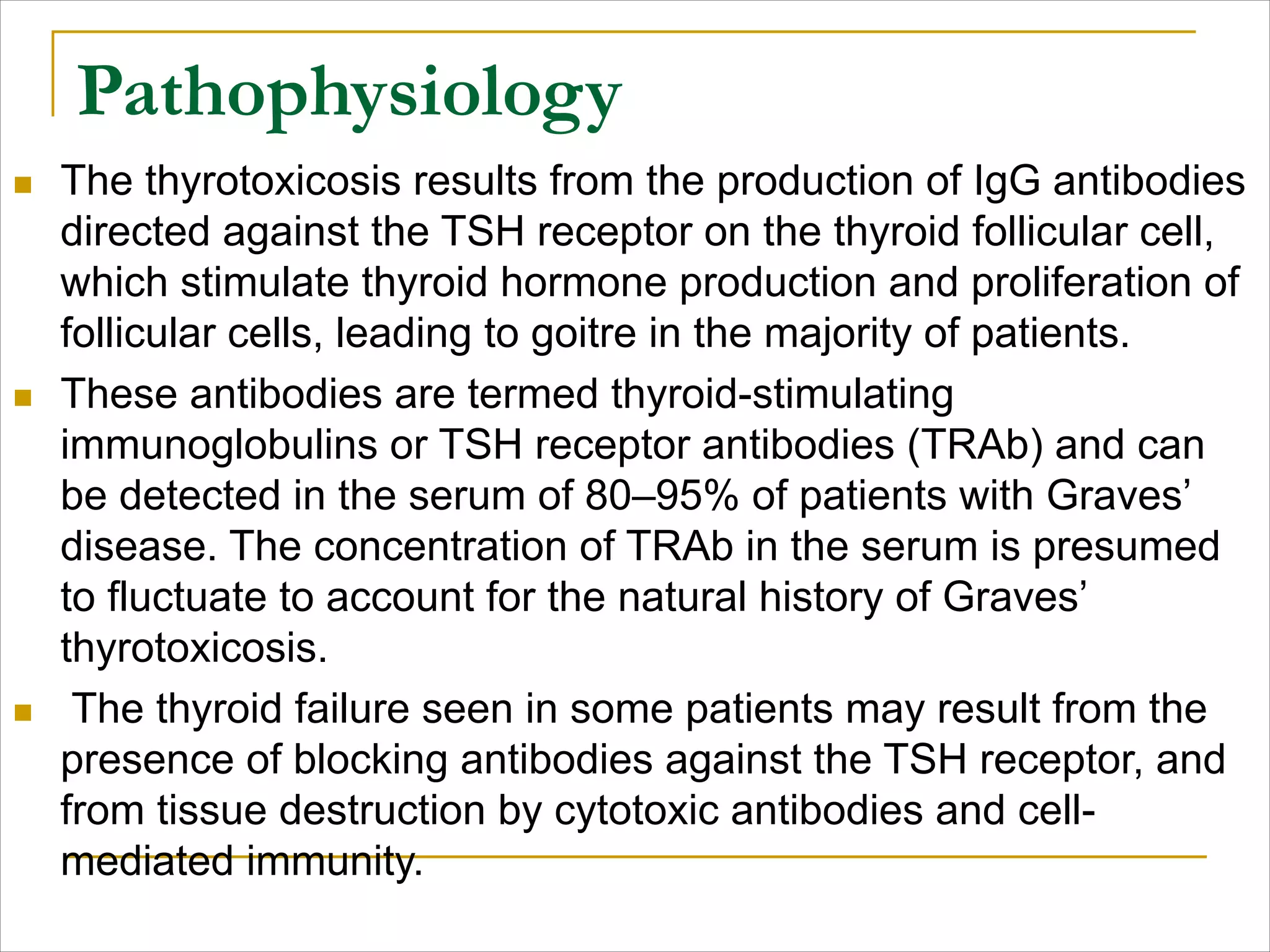
n Graves’ disease can occur at any age but is
unusual before puberty and most commonly
affects women aged 30–50 years. The most
common manifestation is thyrotoxicosis with or
without a diffuse goitre.
Pathophysiology
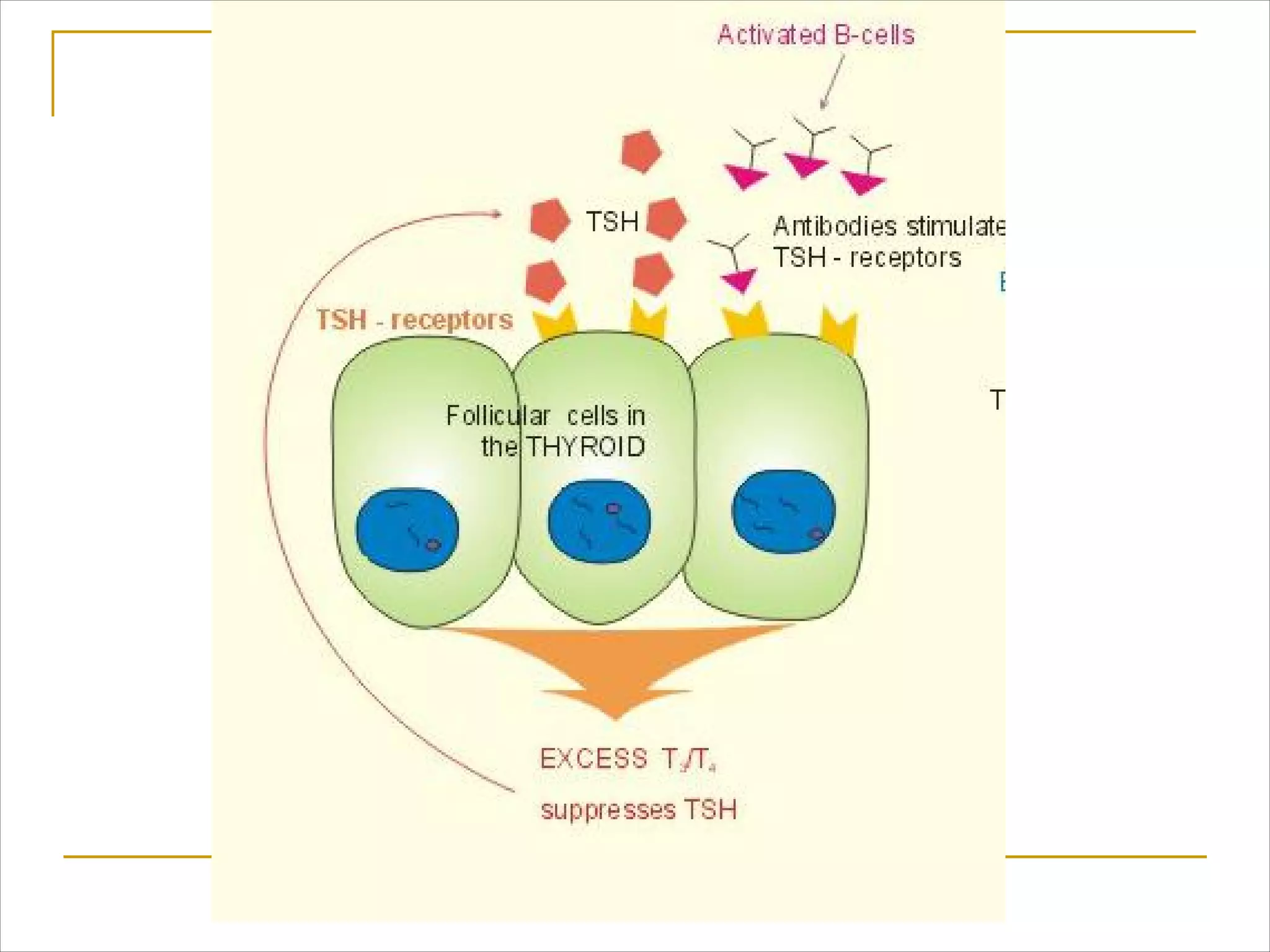
n The thyrotoxicosis results from the production of IgG antibodies
directed against the TSH receptor on the thyroid follicular cell,
which stimulate thyroid hormone production and proliferation of
follicular cells, leading to goitre in the majority of patients.
n These antibodies are termed thyroid-stimulating
immunoglobulins or TSH receptor antibodies (TRAb) and can
be detected in the serum of 80–95% of patients with Graves’
disease. The concentration of TRAb in the serum is presumed
to fluctuate to account for the natural history of Graves’
thyrotoxicosis.
n The thyroid failure seen in some patients may result from the
presence of blocking antibodies against the TSH receptor, and
from tissue destruction by cytotoxic antibodies and cell-
mediated immunity.
Pathogenesis
n An autoimmune phenomenon – presentation
determined by ratio of antibodies
TSH
Receptor
Thyroid Stimulating
Ab (TSAb)
Thyroid Stimulation
Blocking Ab (TSBAb)
Thyroid
+
-
Graves’ Disease
Autoimmune
Hypothyroidism
(Hashimoto’s)Thyroglobulin Ab
Thyroid peroxidase
Ab (anti TPO)
The Classic Triad of Graves’ Disease
n Hyperthyroidism (90%)
n Ophthalmopathy (20-40%)
q proptosis, ophthalmoplegia, conjunctival irritation
q 3-5% of cases require directed treatment
n Dermopathy (0.5-4.3%)
q localized myxedema, usually pretibial
q especially common with severe ophthalmopathy
There is also a close association with autoimmune findings
(e.g. vitiligo) and other autoimmune diseases (e.g. ITP)
Syndrome of Hyperthyroidism
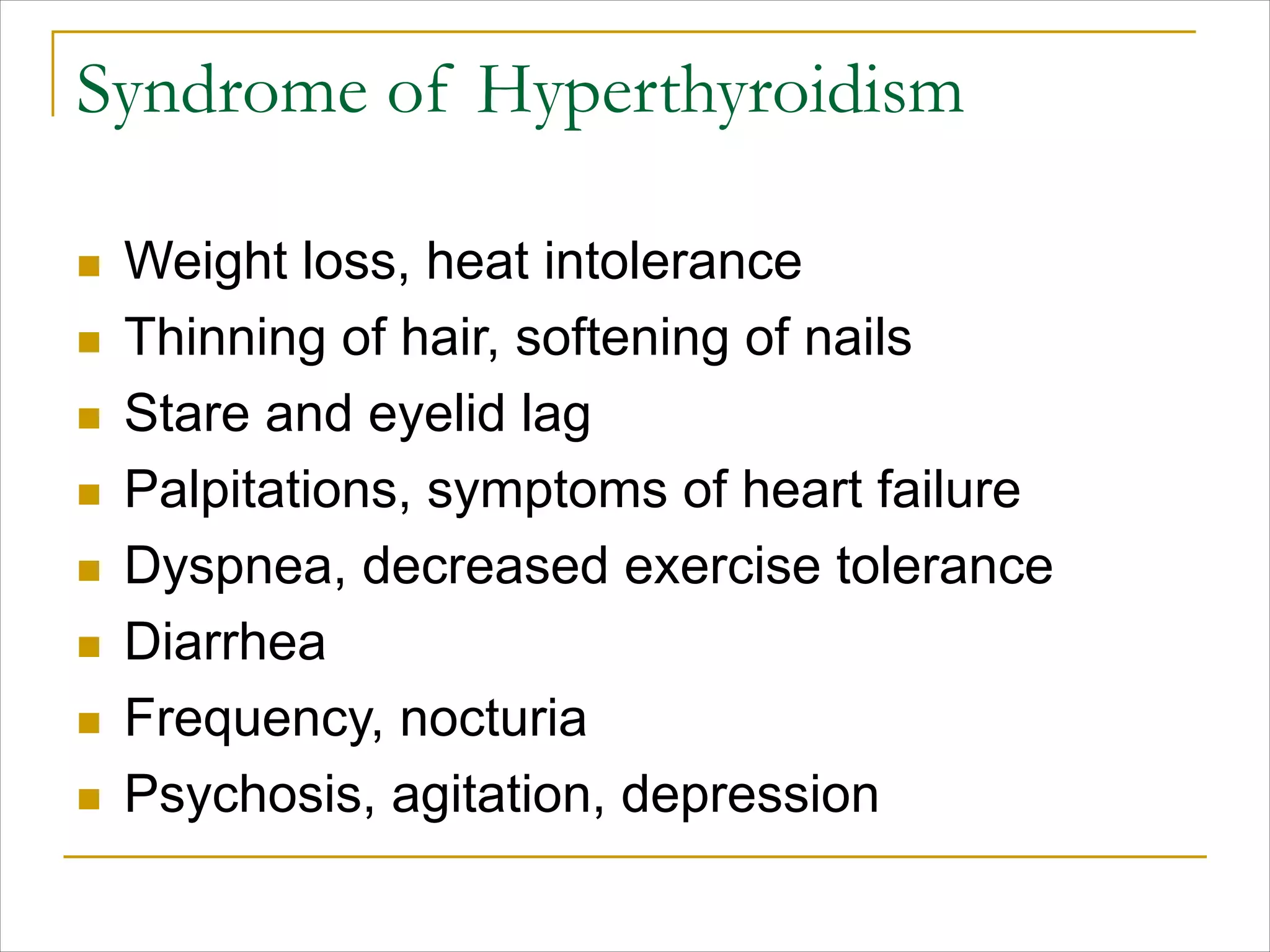
n Weight loss, heat intolerance
n Thinning of hair, softening of nails
n Stare and eyelid lag
n Palpitations, symptoms of heart failure
n Dyspnea, decreased exercise tolerance
n Diarrhea
n Frequency, nocturia
n Psychosis, agitation, depression
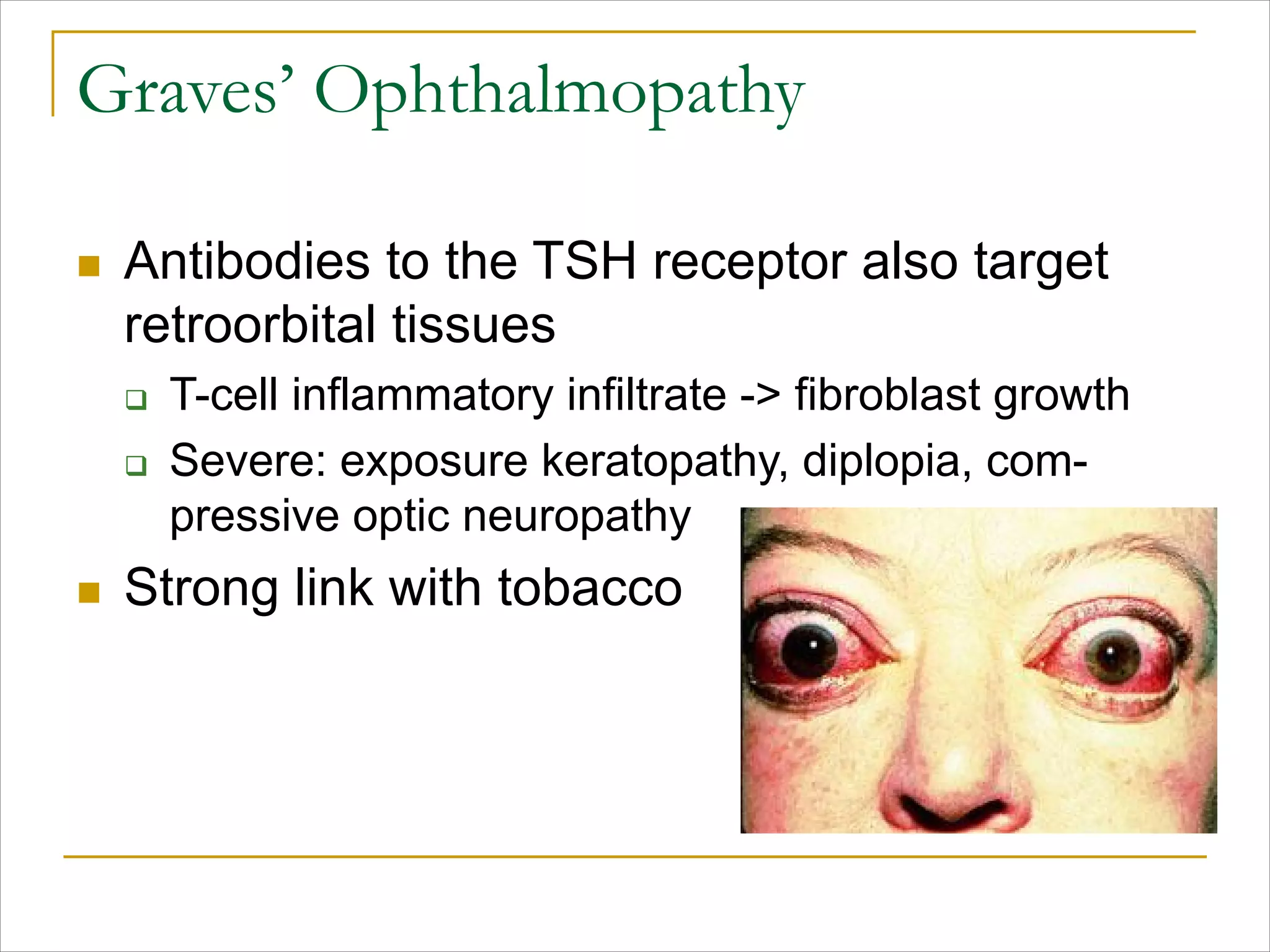
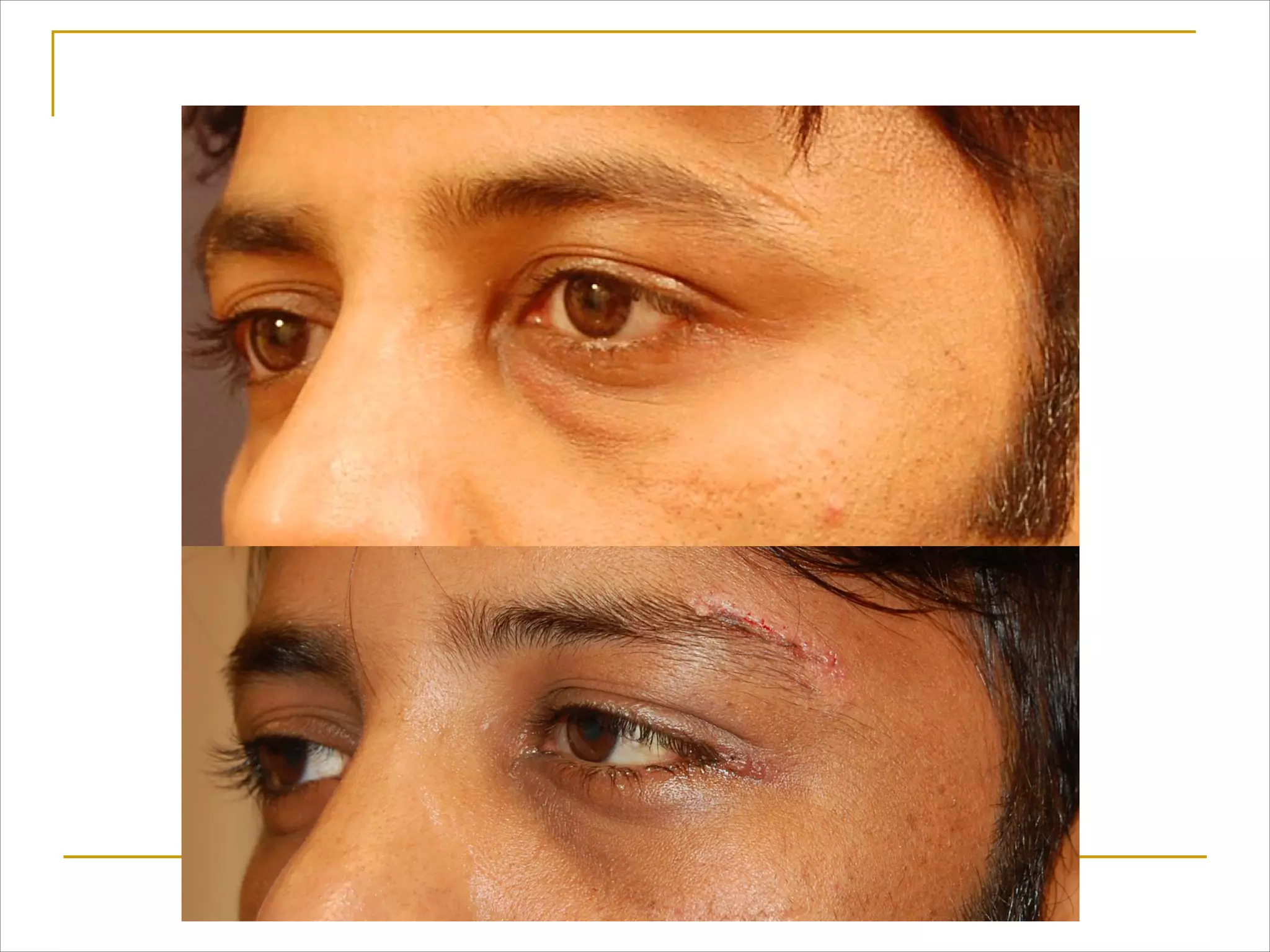
Graves’ Ophthalmopathy
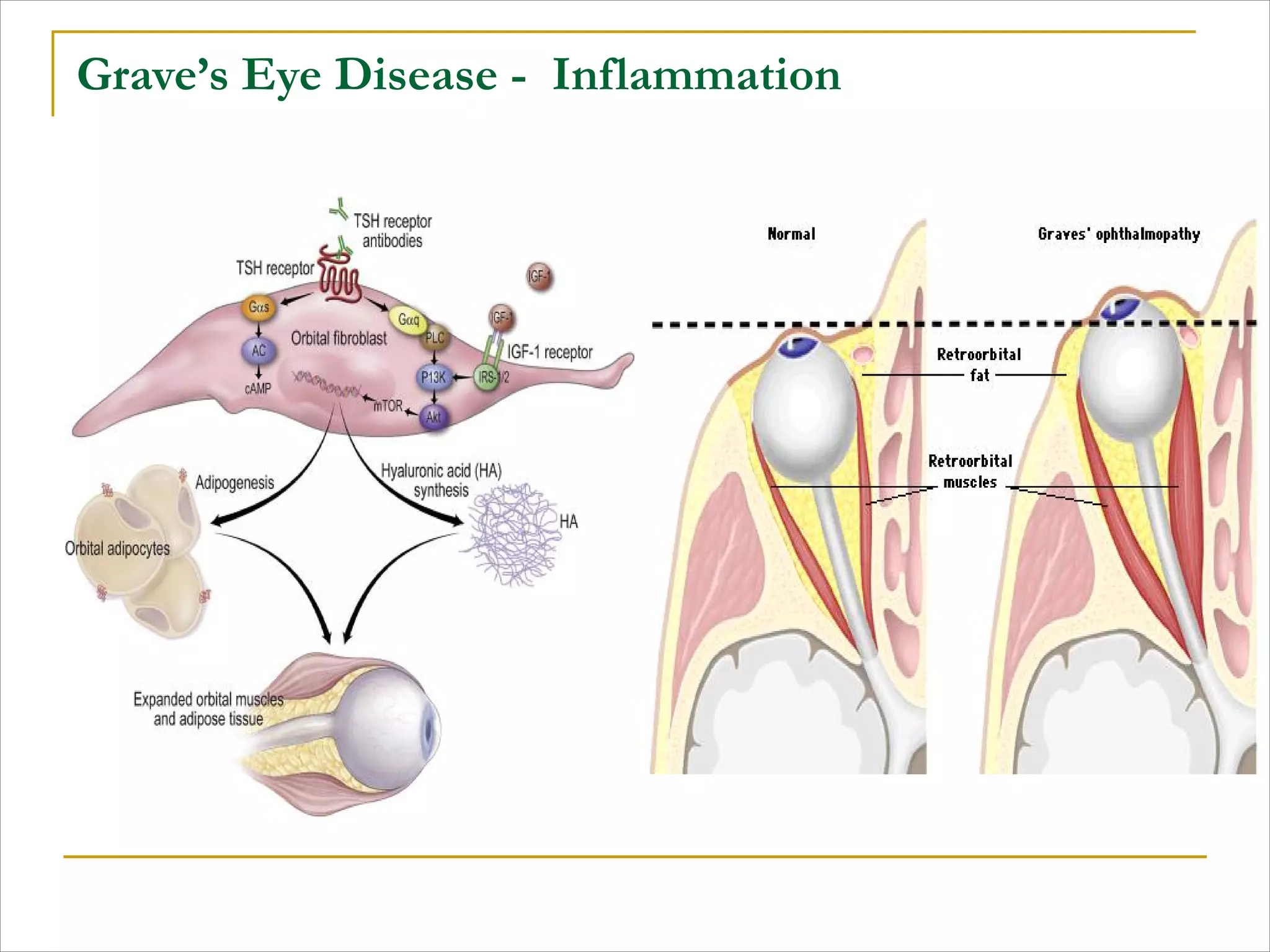
n Antibodies to the TSH receptor also target
retroorbital tissues
q T-cell inflammatory infiltrate -> fibroblast growth
q Severe: exposure keratopathy, diplopia, com-
pressive optic neuropathy
n Strong link with tobacco
Grave’s Eye Disease - Inflammation
Myxedema of Graves’
n Activation of fibroblasts leads to increased
hyaluronic acid and chondroitin sulfate
Asymmetric, raised,
firm, pink-to-purple,
brown plaques of
nonpitting edema
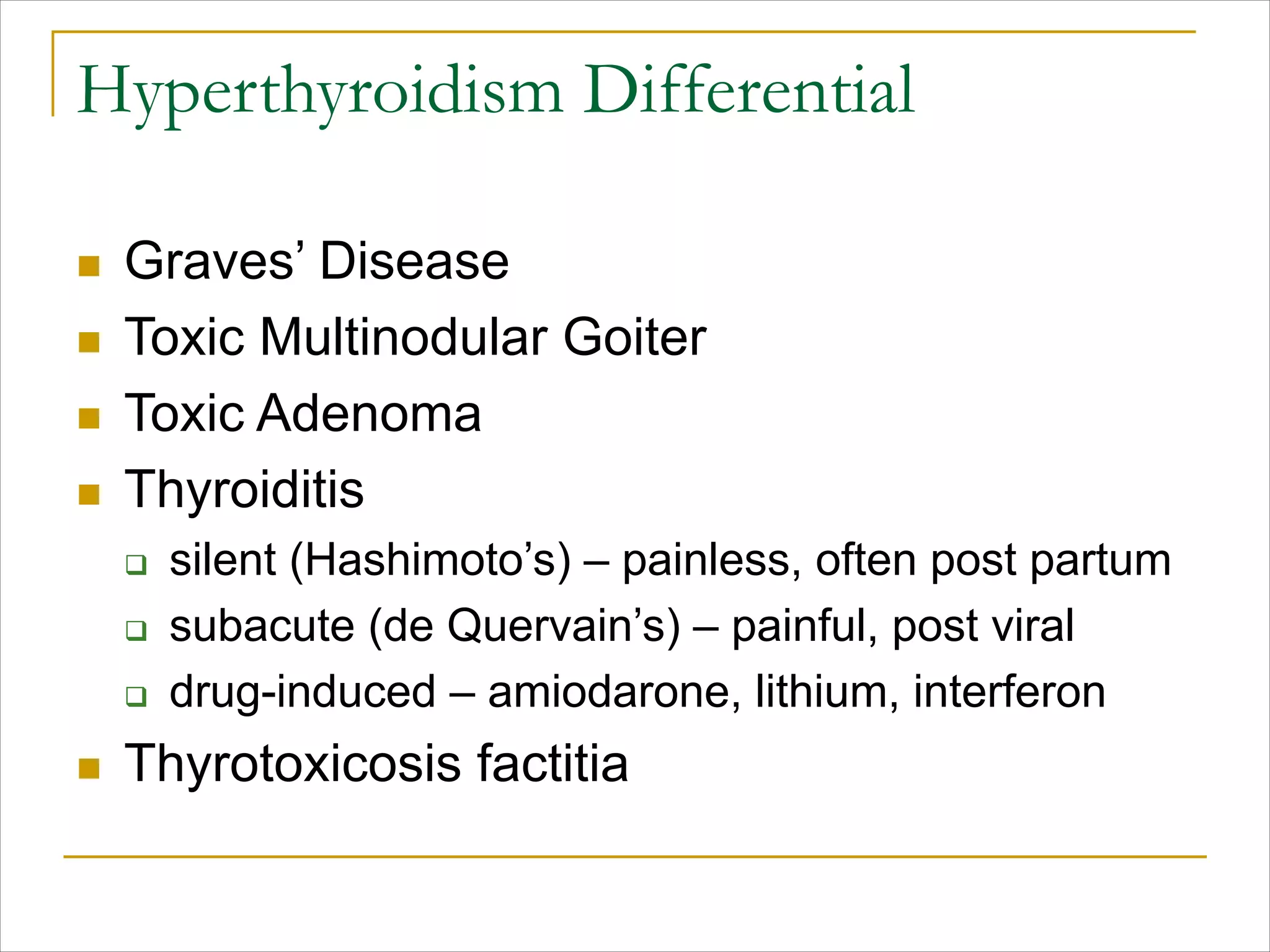
Hyperthyroidism Differential
n Graves’ Disease
n Toxic Multinodular Goiter
n Toxic Adenoma
n Thyroiditis
q silent (Hashimoto’s) – painless, often post partum
q subacute (de Quervain’s) – painful, post viral
q drug-induced – amiodarone, lithium, interferon
n Thyrotoxicosis factitia
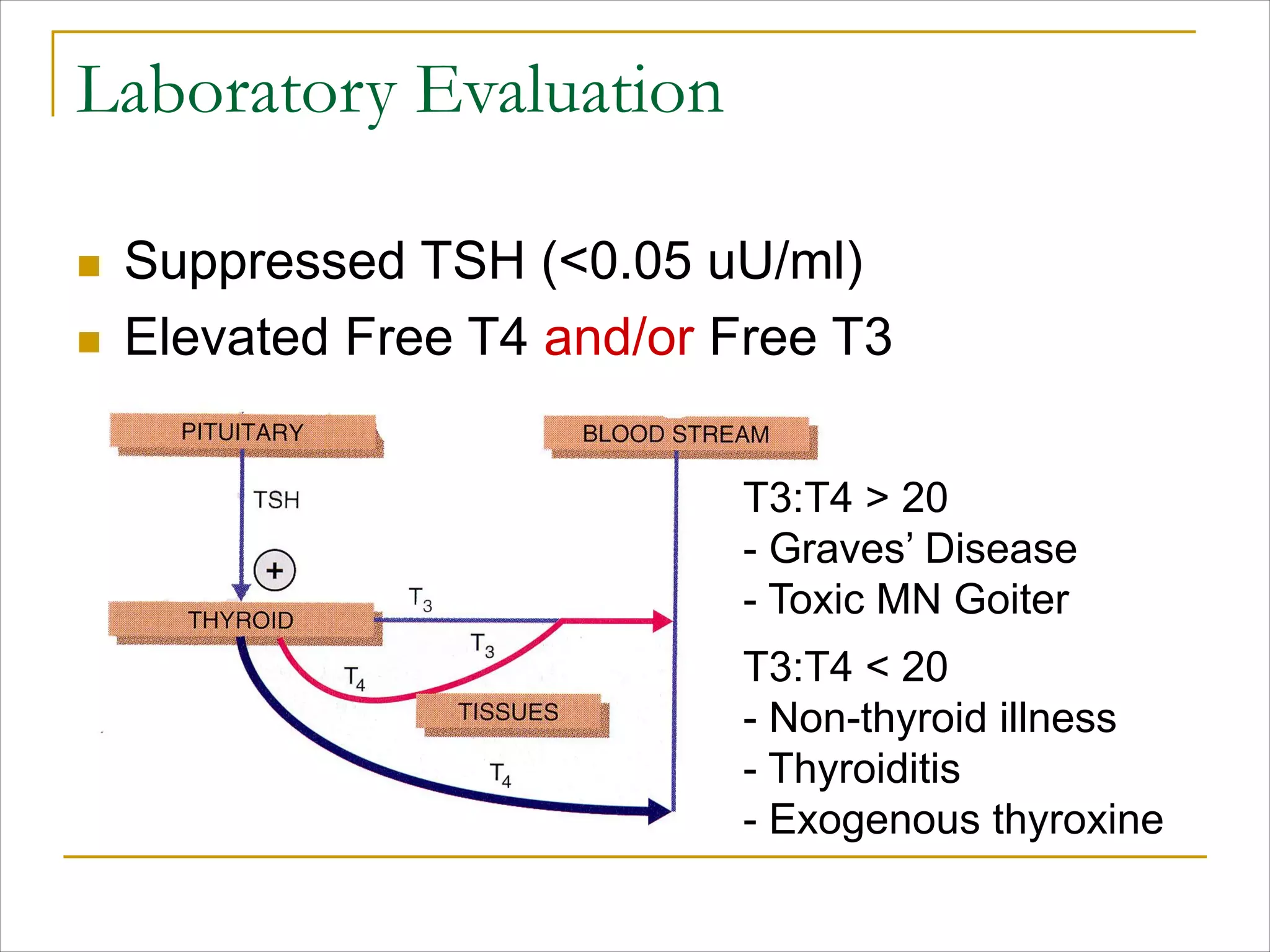
Laboratory Evaluation
n Suppressed TSH (<0.05 uU/ml)
n Elevated Free T4 and/or Free T3
T3:T4 > 20
- Graves’ Disease
- Toxic MN Goiter
T3:T4 < 20
- Non-thyroid illness
- Thyroiditis
- Exogenous thyroxine
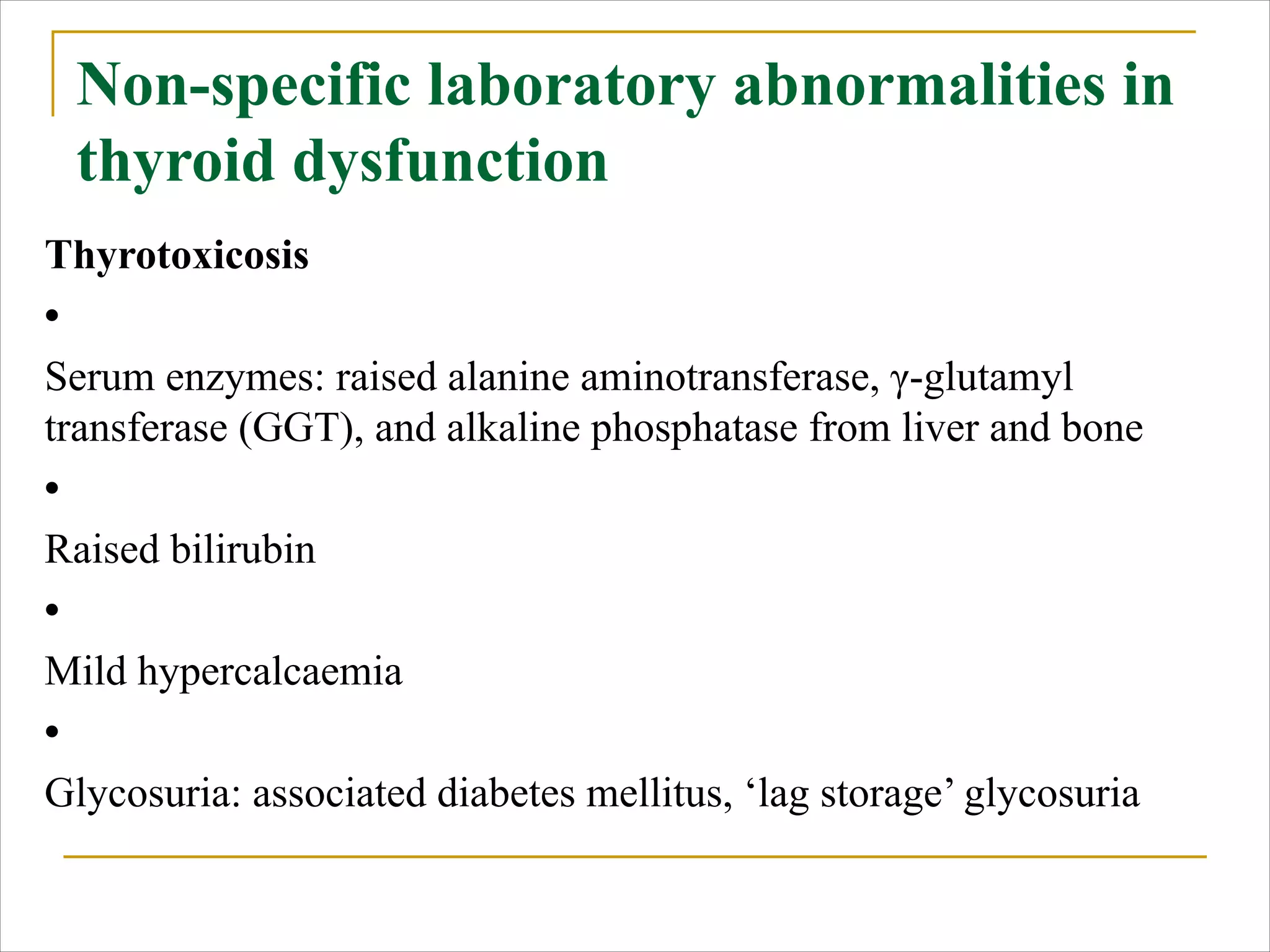
Non-specific laboratory abnormalities in
thyroid dysfunction
Thyrotoxicosis
•
Serum enzymes: raised alanine aminotransferase, γ-glutamyl
transferase (GGT), and alkaline phosphatase from liver and bone
•
Raised bilirubin
•
Mild hypercalcaemia
•
Glycosuria: associated diabetes mellitus, ‘lag storage’ glycosuria
Laboratory Evaluation
n Direct measurement of TSH receptor
antibodies (TSAb and TBAb)
q Can help with Graves diagnosis in confusing
cases (as high as 98% sensitivity)
q Can predict new-onset Graves’ in the post-partum
period
n Anti TPO Antibody and anti Tg Antibody
q Can be mildly elevated in Graves’
q Usually most active in Hashimoto’s
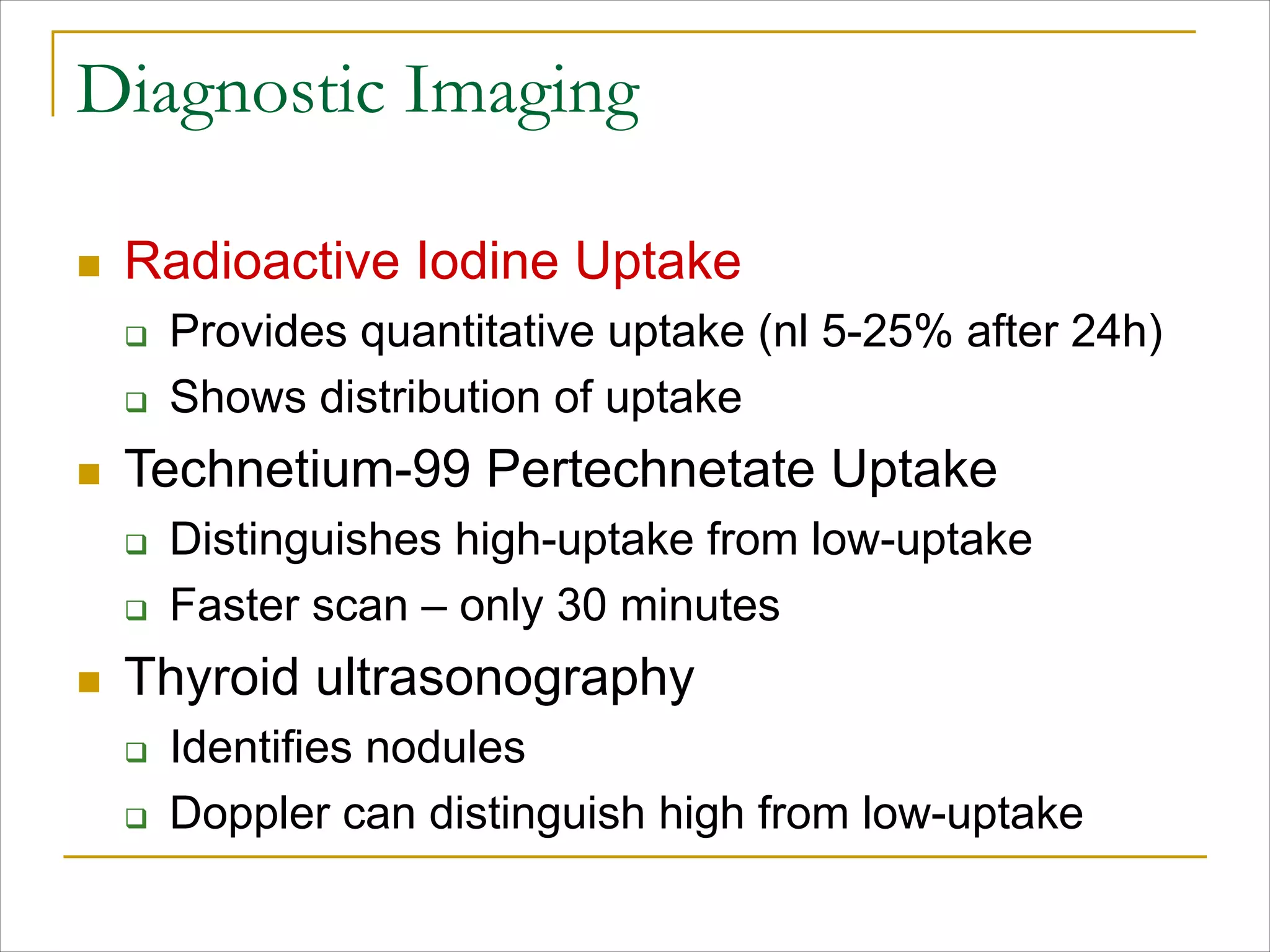
Diagnostic Imaging
n Radioactive Iodine Uptake
q Provides quantitative uptake (nl 5-25% after 24h)
q Shows distribution of uptake
n Technetium-99 Pertechnetate Uptake
q Distinguishes high-uptake from low-uptake
q Faster scan – only 30 minutes
n Thyroid ultrasonography
q Identifies nodules
q Doppler can distinguish high from low-uptake
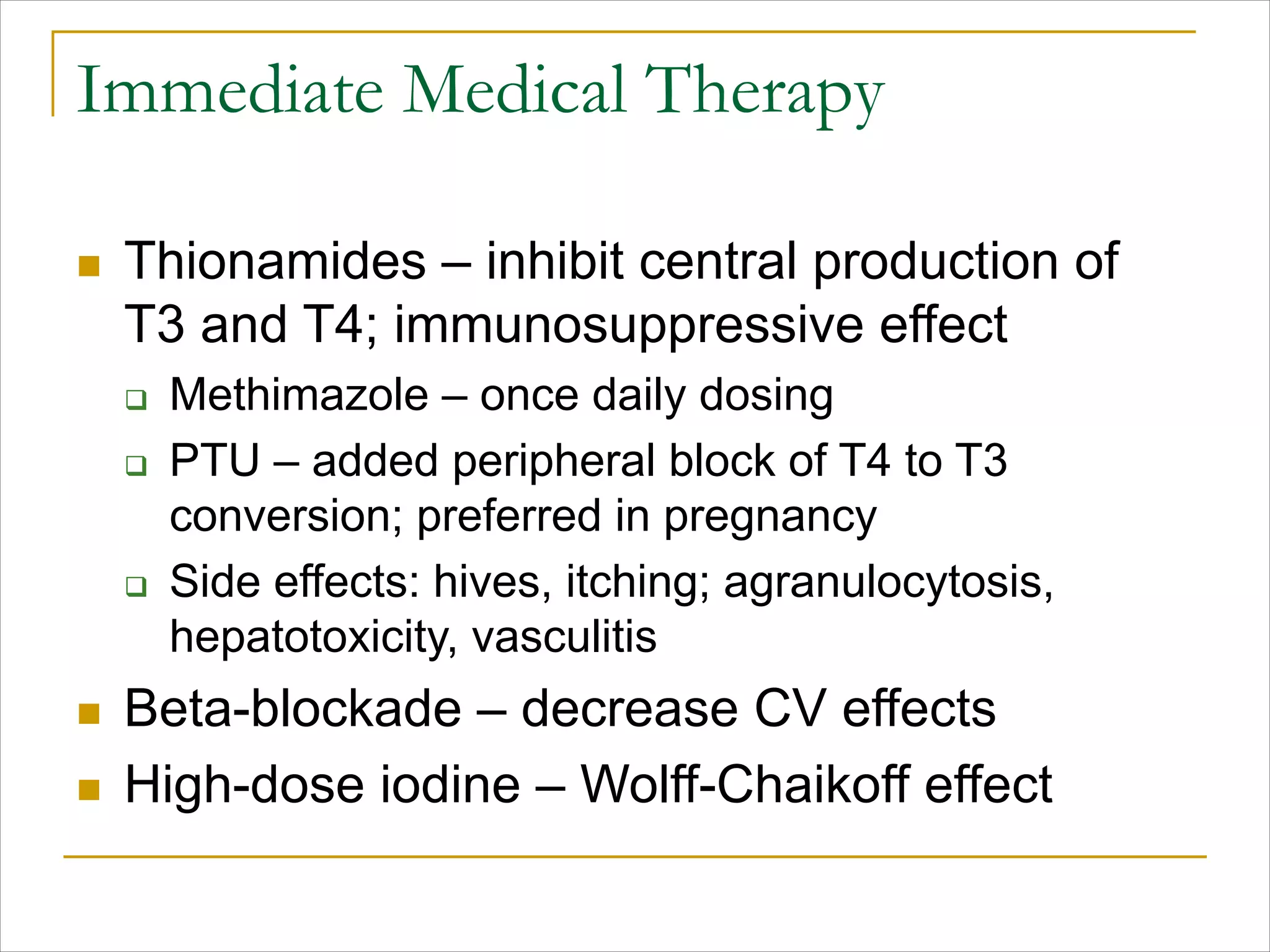
Immediate Medical Therapy
n Thionamides – inhibit central production of
T3 and T4; immunosuppressive effect
q Methimazole – once daily dosing
q PTU – added peripheral block of T4 to T3
conversion; preferred in pregnancy
q Side effects: hives, itching; agranulocytosis,
hepatotoxicity, vasculitis
n Beta-blockade – decrease CV effects
n High-dose iodine – Wolff-Chaikoff effect
Long-term Therapeutic Options
n Continued Medical Management
q Low dose (5-10mg/day of methimazole) for 12 to
18 months then withdraw therapy
q Lasting remission in 50-60%
n Radioiodine Ablation
q Discontinue any thionamides 3-5 days prior
q Overall 1% chance of thyrotoxicosis exacerbation
q Hypothyroidism in 10-20% at 1 yr, then 5% per yr
q Lasting remission in 85%
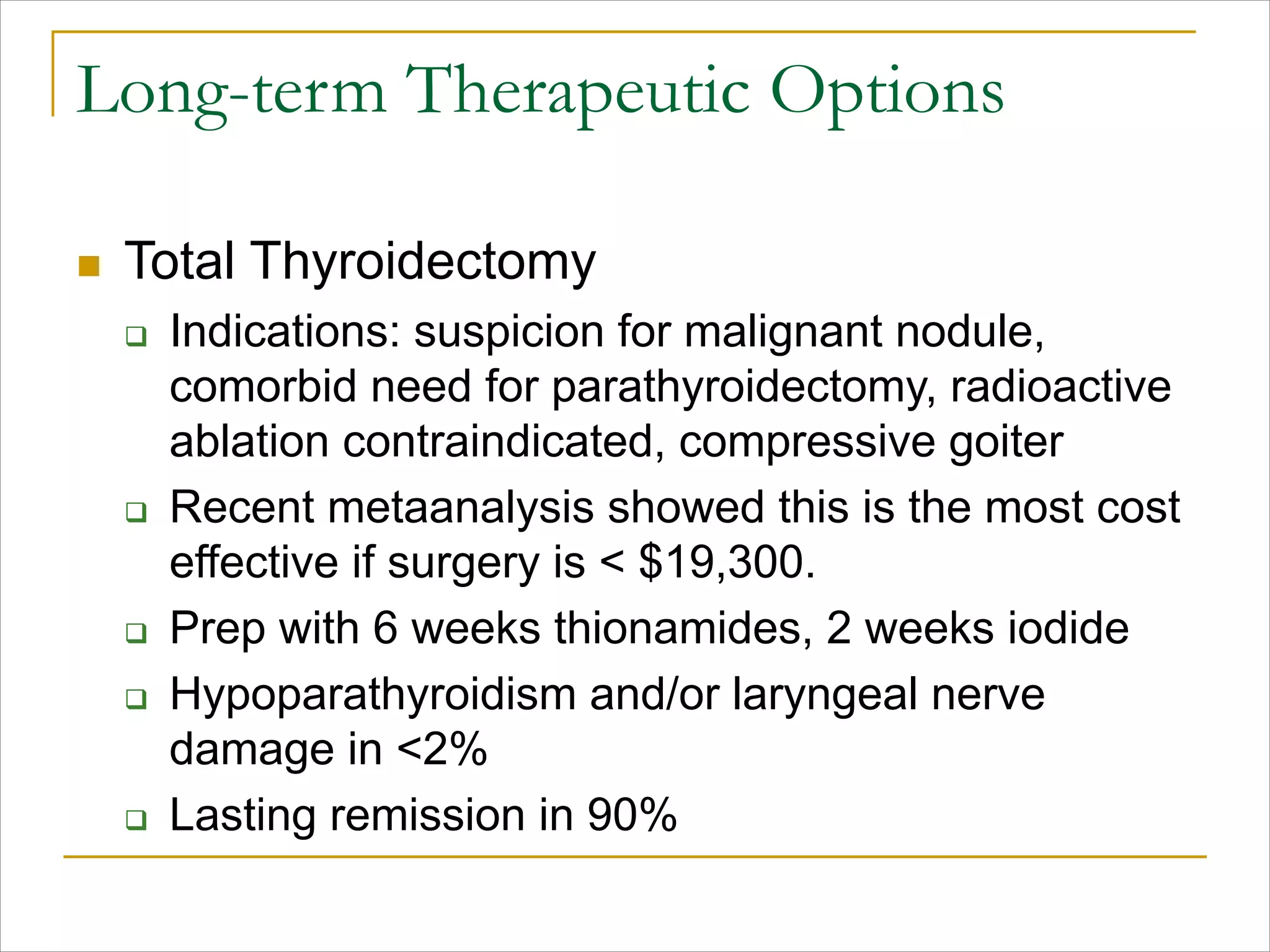
Long-term Therapeutic Options
n Total Thyroidectomy
q Indications: suspicion for malignant nodule,
comorbid need for parathyroidectomy, radioactive
ablation contraindicated, compressive goiter
q Recent metaanalysis showed this is the most cost
effective if surgery is < $19,300.
q Prep with 6 weeks thionamides, 2 weeks iodide
q Hypoparathyroidism and/or laryngeal nerve
damage in <2%
q Lasting remission in 90%
Treatment of Ophthalmopathy
n Mild Symptoms
q Eye shades, artificial tears
n Progressive symptoms (injection, pain)
q Oral steroids – typical dosage from 30-40mg/day
for 4 weeks
n Impending corneal ulceration, loss of vision
q Oral versus IV steroids
q Orbital Decompression surgery
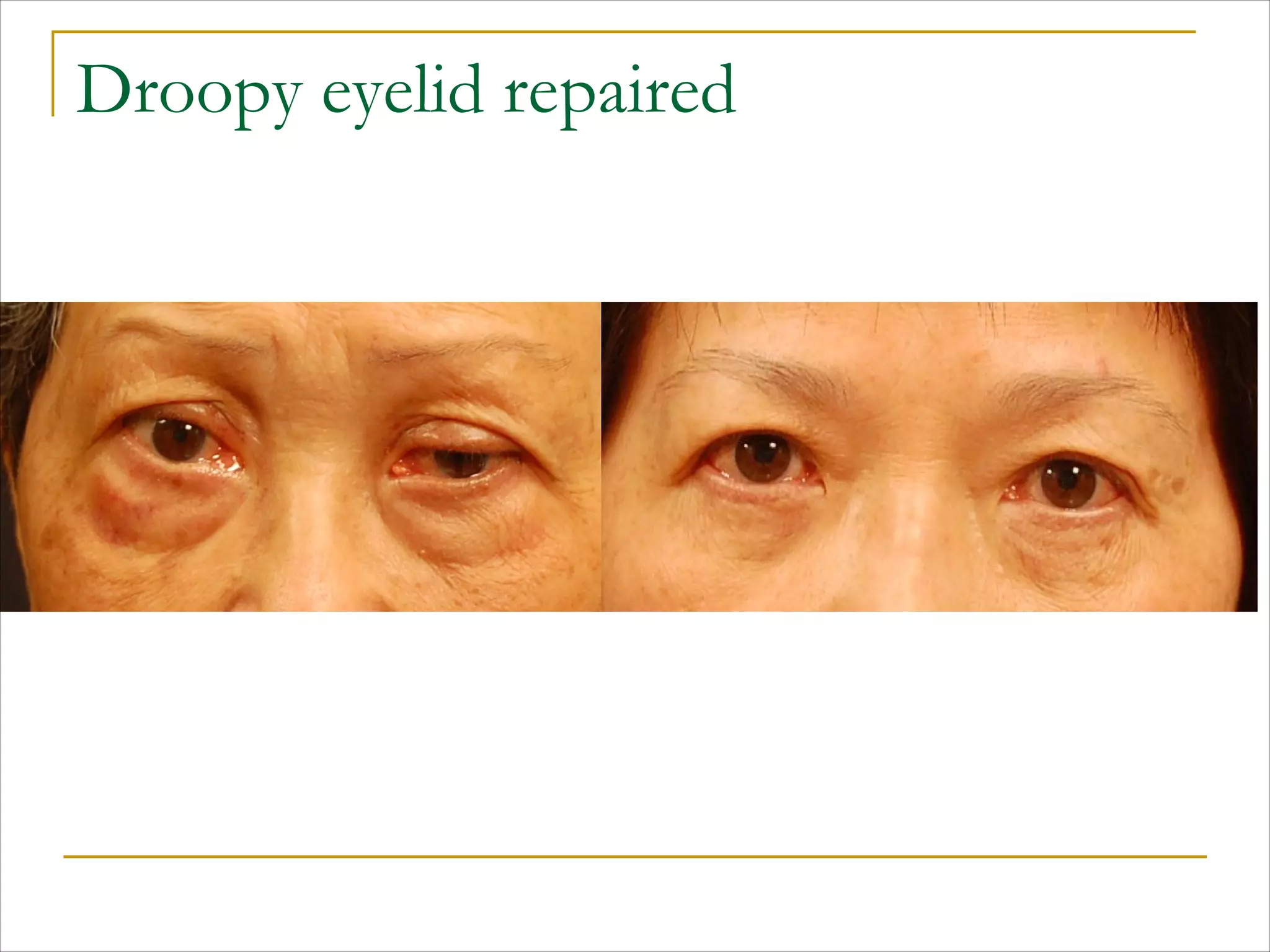
Droopy eyelid repaired
DDX

Graves by raj,141 b

  • 1.
    Graves’ Disease: An Overview Doneby Kulanthaivel Shanmugaraj,141B Crimean Federal University, Russia. Presented to Assoc. Prof. Divinskaya Valentina Alexandrovna, Ph. D. in Medicine
  • 2.
    Thyrotoxicosis n Thyrotoxicosis describesa constellation of clinical features arising from elevated circulating levels of thyroid hormone. The most common causes are Graves’ disease, multinodular goitre and autonomously functioning thyroid nodules (toxic adenoma)
  • 3.
    Epidemiology n Prevalence ofhyperthyroidism in the general population is 1.2% q 0.7% subclinical hyperthyroidism q 0.4% Graves’ Disease – most common etiology; note there is overlap with the subclinical group n Graves’ Disease is more common in females (7:1 ratio)
  • 4.
    The Thyroid & Grave’s nThyroid hormone is critical for regulating mood, weight, and mental and physical energy levels. n If the body makes too much thyroid hormone, the condition is called hyperthyroidism. (An underactive thyroid leads to hypothyroidism.) n Graves disease is the most common cause of hyperthyroidism. n Caused by an abnormal immune system response that causes the thyroid gland to produce too much thyroid hormones. n Body actually produces antibodies that activate thyroid hormone production
  • 5.
    Graves’ disease n Graves’disease can occur at any age but is unusual before puberty and most commonly affects women aged 30–50 years. The most common manifestation is thyrotoxicosis with or without a diffuse goitre.
  • 6.
    Pathophysiology n The thyrotoxicosisresults from the production of IgG antibodies directed against the TSH receptor on the thyroid follicular cell, which stimulate thyroid hormone production and proliferation of follicular cells, leading to goitre in the majority of patients. n These antibodies are termed thyroid-stimulating immunoglobulins or TSH receptor antibodies (TRAb) and can be detected in the serum of 80–95% of patients with Graves’ disease. The concentration of TRAb in the serum is presumed to fluctuate to account for the natural history of Graves’ thyrotoxicosis. n The thyroid failure seen in some patients may result from the presence of blocking antibodies against the TSH receptor, and from tissue destruction by cytotoxic antibodies and cell- mediated immunity.
  • 8.
    Pathogenesis n An autoimmunephenomenon – presentation determined by ratio of antibodies TSH Receptor Thyroid Stimulating Ab (TSAb) Thyroid Stimulation Blocking Ab (TSBAb) Thyroid + - Graves’ Disease Autoimmune Hypothyroidism (Hashimoto’s)Thyroglobulin Ab Thyroid peroxidase Ab (anti TPO)
  • 9.
    The Classic Triadof Graves’ Disease n Hyperthyroidism (90%) n Ophthalmopathy (20-40%) q proptosis, ophthalmoplegia, conjunctival irritation q 3-5% of cases require directed treatment n Dermopathy (0.5-4.3%) q localized myxedema, usually pretibial q especially common with severe ophthalmopathy There is also a close association with autoimmune findings (e.g. vitiligo) and other autoimmune diseases (e.g. ITP)
  • 10.
    Syndrome of Hyperthyroidism nWeight loss, heat intolerance n Thinning of hair, softening of nails n Stare and eyelid lag n Palpitations, symptoms of heart failure n Dyspnea, decreased exercise tolerance n Diarrhea n Frequency, nocturia n Psychosis, agitation, depression
  • 11.
    Graves’ Ophthalmopathy n Antibodiesto the TSH receptor also target retroorbital tissues q T-cell inflammatory infiltrate -> fibroblast growth q Severe: exposure keratopathy, diplopia, com- pressive optic neuropathy n Strong link with tobacco
  • 12.
    Grave’s Eye Disease- Inflammation
  • 13.
    Myxedema of Graves’ nActivation of fibroblasts leads to increased hyaluronic acid and chondroitin sulfate Asymmetric, raised, firm, pink-to-purple, brown plaques of nonpitting edema
  • 14.
    Hyperthyroidism Differential n Graves’Disease n Toxic Multinodular Goiter n Toxic Adenoma n Thyroiditis q silent (Hashimoto’s) – painless, often post partum q subacute (de Quervain’s) – painful, post viral q drug-induced – amiodarone, lithium, interferon n Thyrotoxicosis factitia
  • 15.
    Laboratory Evaluation n SuppressedTSH (<0.05 uU/ml) n Elevated Free T4 and/or Free T3 T3:T4 > 20 - Graves’ Disease - Toxic MN Goiter T3:T4 < 20 - Non-thyroid illness - Thyroiditis - Exogenous thyroxine
  • 16.
    Non-specific laboratory abnormalitiesin thyroid dysfunction Thyrotoxicosis • Serum enzymes: raised alanine aminotransferase, γ-glutamyl transferase (GGT), and alkaline phosphatase from liver and bone • Raised bilirubin • Mild hypercalcaemia • Glycosuria: associated diabetes mellitus, ‘lag storage’ glycosuria
  • 17.
    Laboratory Evaluation n Directmeasurement of TSH receptor antibodies (TSAb and TBAb) q Can help with Graves diagnosis in confusing cases (as high as 98% sensitivity) q Can predict new-onset Graves’ in the post-partum period n Anti TPO Antibody and anti Tg Antibody q Can be mildly elevated in Graves’ q Usually most active in Hashimoto’s
  • 18.
    Diagnostic Imaging n RadioactiveIodine Uptake q Provides quantitative uptake (nl 5-25% after 24h) q Shows distribution of uptake n Technetium-99 Pertechnetate Uptake q Distinguishes high-uptake from low-uptake q Faster scan – only 30 minutes n Thyroid ultrasonography q Identifies nodules q Doppler can distinguish high from low-uptake
  • 19.
    Immediate Medical Therapy nThionamides – inhibit central production of T3 and T4; immunosuppressive effect q Methimazole – once daily dosing q PTU – added peripheral block of T4 to T3 conversion; preferred in pregnancy q Side effects: hives, itching; agranulocytosis, hepatotoxicity, vasculitis n Beta-blockade – decrease CV effects n High-dose iodine – Wolff-Chaikoff effect
  • 20.
    Long-term Therapeutic Options nContinued Medical Management q Low dose (5-10mg/day of methimazole) for 12 to 18 months then withdraw therapy q Lasting remission in 50-60% n Radioiodine Ablation q Discontinue any thionamides 3-5 days prior q Overall 1% chance of thyrotoxicosis exacerbation q Hypothyroidism in 10-20% at 1 yr, then 5% per yr q Lasting remission in 85%
  • 21.
    Long-term Therapeutic Options nTotal Thyroidectomy q Indications: suspicion for malignant nodule, comorbid need for parathyroidectomy, radioactive ablation contraindicated, compressive goiter q Recent metaanalysis showed this is the most cost effective if surgery is < $19,300. q Prep with 6 weeks thionamides, 2 weeks iodide q Hypoparathyroidism and/or laryngeal nerve damage in <2% q Lasting remission in 90%
  • 22.
    Treatment of Ophthalmopathy nMild Symptoms q Eye shades, artificial tears n Progressive symptoms (injection, pain) q Oral steroids – typical dosage from 30-40mg/day for 4 weeks n Impending corneal ulceration, loss of vision q Oral versus IV steroids q Orbital Decompression surgery
  • 25.
  • 28.