HEPATOBILIARY SYSTEM
Dr Mohammad Shahidul Islam
Professor of Pediatric Anesthesiology
Dhaka Shishu Hospital
INTRODUCTION
 Consists of liver, biliary tree, gall bladder
 Liver is the largest gland in the body
 Multiple functions
 Disease of the liver and biliary tree influences drug
actions
 Every anesthetic drugs are metabolized by the liver
 So liver is very much important for anesthetists
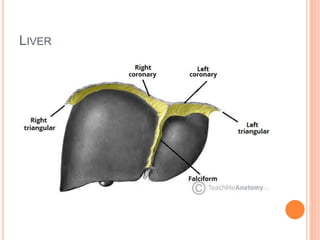
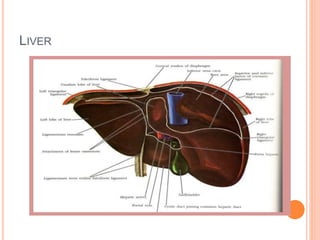
LIVER
LIVER
 Weight about 1500 gm
 Blood supply about 1500ml/min
 Occupies right hypochondrium and epigastrium
 It has two surfaces- diaphragmatic and visceral
 Diaphragmatic divided into anterior, superior and
posterior
LIVER
PORTA HEPATIS
 Hilum of the liver
 Vessels and ducts enter and leave the porta hepatis
 Right and left branches of hepatic artery
 Right and left hepatic duct
 Portal vein, lymphatic and nerves
LIVER
 Gall bladder lies on the visceral surface
 Bare area is devoid of peritonium and contact with
diaphragm and supra renal gland
 Visceral surface related to stomach,duodenum,
hepatic flexure and right kidney
 Liver is suspended by hepatic vein and inferior
vena cava
SURFACE ANATOMY
 Upper margin xipesternal joint
 Left fifth inter costal space 7-8 cm from mid line
 Right side to the fifth rib, 7-11 ribs mid axillary line
 Lower border lies at the level of the right costal
margin
LOBES
 Larger right lobe
 Smaller left lobe
 Line of attachment –falciform ligament anteriorly,
ligamentum teres, ligamentum venosum on the
visceral surface
 Caudate lobe
 Quadrate lobe
 Lobes are not arranged according to vascular and
biliary channels
FUNCTIONAL DIVISION
 Functional division of liver are right and left halves
 Oblique line from gallbladder bed and groove for
IVC
 Middle hepatic vein lies in this plane
 Useful landmark for radiological and
ultrasonographic investigations
SEGMENTS
 On the basis of blood supply and biliary drainage
there are four main hepatic segment
 Left lateral and medial, right lateral and medial.
 Caudate lobe is autonomous segment
 Blood receives from hepatic artery and portal vein
drains into the IVC
 Draining bile into heptatic duct
BLOOD SUPPLY OF LIVER
 From two sources – arterial from hepatic artery ,
venous from portal vein
 Hepatic artery arises from coeliac truk
 Hepatic artery may arise from supp. mesentric
artery or on aorta
 Right hepatic artery from supp.mesentric artery and
left hepatic artery from left gastric artery
LYMP DRAINAGE
 3-4 nodes lie in the porta hepatis
 Receives lymp of gall bladder
 Drain downwards to pyloric node and coeliac node
 Bare area lymphatics communicate with extra
peritoneal lymphatic drain to the nodes of posterior
mediastinum.
NERVE SUPPLY
 Both sympathetic and parasympathetic.
 Sympathetic through coeliac ganglia
 Vagal branch from hepatic branch of ant. Vagal
trunk
 Reach through porta hepatis.
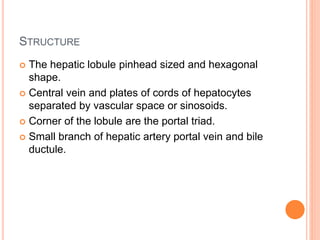
STRUCTURE OF LIVER
STRUCTURE
 The hepatic lobule pinhead sized and hexagonal
shape.
 Central vein and plates of cords of hepatocytes
separated by vascular space or sinosoids.
 Corner of the lobule are the portal triad.
 Small branch of hepatic artery portal vein and bile
ductule.
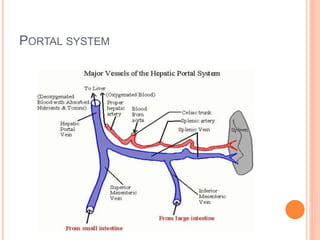
PORTAL SYSTEM
PORTAL VENOUS SYSTEM
 Portal Vein is the upward continuation of superior
mesentric vein
 Join with the splenic vein
 Portal vein receives right and left gastric vein,
superior pancreatoduodenal vein and cystic vein 10
cm long no valves
FIVE SIDES OF PORTAL ANASTOMOSIS
 Lower end esophagus
 Upper end of anal canal
 Bare area of liver
 Periumblical region
 Retroperitoneal area
In portal hypertension 80% of portal blood may be
Shunted, 20% reaches to the liver.

Hepatobiliary system

  • 1.
    HEPATOBILIARY SYSTEM Dr MohammadShahidul Islam Professor of Pediatric Anesthesiology Dhaka Shishu Hospital
  • 2.
    INTRODUCTION  Consists ofliver, biliary tree, gall bladder  Liver is the largest gland in the body  Multiple functions  Disease of the liver and biliary tree influences drug actions  Every anesthetic drugs are metabolized by the liver  So liver is very much important for anesthetists
  • 3.
  • 4.
    LIVER  Weight about1500 gm  Blood supply about 1500ml/min  Occupies right hypochondrium and epigastrium  It has two surfaces- diaphragmatic and visceral  Diaphragmatic divided into anterior, superior and posterior
  • 5.
  • 6.
    PORTA HEPATIS  Hilumof the liver  Vessels and ducts enter and leave the porta hepatis  Right and left branches of hepatic artery  Right and left hepatic duct  Portal vein, lymphatic and nerves
  • 7.
    LIVER  Gall bladderlies on the visceral surface  Bare area is devoid of peritonium and contact with diaphragm and supra renal gland  Visceral surface related to stomach,duodenum, hepatic flexure and right kidney  Liver is suspended by hepatic vein and inferior vena cava
  • 8.
    SURFACE ANATOMY  Uppermargin xipesternal joint  Left fifth inter costal space 7-8 cm from mid line  Right side to the fifth rib, 7-11 ribs mid axillary line  Lower border lies at the level of the right costal margin
  • 9.
    LOBES  Larger rightlobe  Smaller left lobe  Line of attachment –falciform ligament anteriorly, ligamentum teres, ligamentum venosum on the visceral surface  Caudate lobe  Quadrate lobe  Lobes are not arranged according to vascular and biliary channels
  • 10.
    FUNCTIONAL DIVISION  Functionaldivision of liver are right and left halves  Oblique line from gallbladder bed and groove for IVC  Middle hepatic vein lies in this plane  Useful landmark for radiological and ultrasonographic investigations
  • 11.
    SEGMENTS  On thebasis of blood supply and biliary drainage there are four main hepatic segment  Left lateral and medial, right lateral and medial.  Caudate lobe is autonomous segment  Blood receives from hepatic artery and portal vein drains into the IVC  Draining bile into heptatic duct
  • 12.
    BLOOD SUPPLY OFLIVER  From two sources – arterial from hepatic artery , venous from portal vein  Hepatic artery arises from coeliac truk  Hepatic artery may arise from supp. mesentric artery or on aorta  Right hepatic artery from supp.mesentric artery and left hepatic artery from left gastric artery
  • 13.
    LYMP DRAINAGE  3-4nodes lie in the porta hepatis  Receives lymp of gall bladder  Drain downwards to pyloric node and coeliac node  Bare area lymphatics communicate with extra peritoneal lymphatic drain to the nodes of posterior mediastinum.
  • 14.
    NERVE SUPPLY  Bothsympathetic and parasympathetic.  Sympathetic through coeliac ganglia  Vagal branch from hepatic branch of ant. Vagal trunk  Reach through porta hepatis.
  • 15.
  • 16.
    STRUCTURE  The hepaticlobule pinhead sized and hexagonal shape.  Central vein and plates of cords of hepatocytes separated by vascular space or sinosoids.  Corner of the lobule are the portal triad.  Small branch of hepatic artery portal vein and bile ductule.
  • 17.
  • 18.
    PORTAL VENOUS SYSTEM Portal Vein is the upward continuation of superior mesentric vein  Join with the splenic vein  Portal vein receives right and left gastric vein, superior pancreatoduodenal vein and cystic vein 10 cm long no valves
  • 19.
    FIVE SIDES OFPORTAL ANASTOMOSIS  Lower end esophagus  Upper end of anal canal  Bare area of liver  Periumblical region  Retroperitoneal area In portal hypertension 80% of portal blood may be Shunted, 20% reaches to the liver.