The Simple Past Tense 
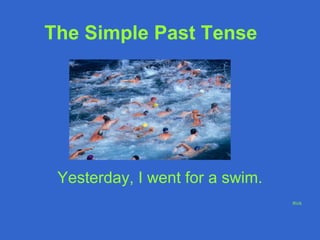
Yesterday, I went for a swim. 
RVA
PAST SIMPLE TENSE: REGULAR VERBS 
Affirmative: 
S + V-ed + C 
The past tense of regular verbs is formed by adding –d or 
–ed to the base form of the verb. I worked in a shop last 
year, I lived in a big house when I was younger. 
I worked hard last weekend.
Simple Past Tense: Irregular verbs 
Affirmative: 
Irregular past verb forms must be learned because they 
don’t follow any rule: 
Go went 
Come came 
Buy bought 
Drink drank 
Eat ate 
Find found 
I went to Paris last July 
See saw
PAST SIMPLE TENSE: REGULAR and IRREGULAR VERBS 
Neg ative: 
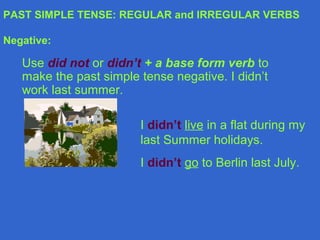
Use did not or didn’t + a base form verb to 
make the past simple tense negative. I didn’t 
work last summer. 
I didn’t live in a flat during my 
last Summer holidays. 
I didn’t go to Berlin last July.
PAST SIMPLE TENSE: REGULAR and IRREGULAR VERBS 
Interrogative: 
Use did + subject + a base form verb to make the past 
simple interrogative. 
Did you play sport last Summer? 
Did you travel by boat last 
holidays? 
Yes, I did. 
Did you see any dolphins? 
No, I didn’t.
Past simple tense: 
Affirmative 
Regular verbs 
Negative Questions Short 
answer 
Short 
answer 
I worked. I didn't work. Did I work? Yes, I 
did. 
No, I 
didn't. 
He worked. He didn't work. Did he work? Yes, he 
did. 
No, he 
didn't. 
She worked. She didn't work. Did she 
work? 
Yes, she 
did. 
No, she 
didn't. 
It worked. It didn't work. Did it work? Yes, it 
did. 
No, it 
didn't. 
You worked. You didn't work. Did you 
work? 
Yes you 
did. 
No, you 
didn't. 
We worked. We didn't work. Did we work? Yes we 
did. 
No, we 
didn't. 
They worked. They didn't work. Did they 
work? 
Yes they 
did. 
No,they 
didn't.
TO BE 
• It is the only verb whose form varies according 
to person and number: 
Affirmative: I was 
You were 
He / She / It was 
We / You / They were 
I was in Madrid yesterday.
TO BE 
Negative: I wasn’t 
You weren’t 
He / She / It wasn’t 
We / You / They weren’t 
My parents weren’t in Madrid yesterday.
TO BE 
Interrogative: Was I … 
Were you … 
Was he / she / it … 
Were we / you / they … 
Were you in London last year? Yes, I was. 
Was Peter in London last year? No, he wasn’t.
The Simple Past Tense is used 
1.To talk about actions that happened at a specific time in 
the past. You state when it happened using a time adverb 
(yesterday, last month.): 
“Last year I failed my exams”. 
2. It can be used to describe events that happened over a 
period of time in the past but not now: 
"I lived in Asia for two years." 
3. It is also used to talk about habitual or repeated actions 
that took place in the past: 
"When I was a child we always went to the beach on holidays."
The Simple Past Tense 
Time expressions: 
yesterday, last month, last year, last time, 
… ago. 
My friends travelled to Saudi 
Arabia two years ago.
SPELLING RULES FOR SIMPLE 
PAST TENSE OF REGULAR VERBS 
a.) If the verb ends in a consonant, add –ed. 
return - returned, help - helped, cook - cooked 
b.) If the verb ends in –e, add –d. 
live - lived, create - created, die - died 
c.) In one-syllable verbs, if the verb ends in a consonant + 
vowel + consonant, double the 
last consonant and add -ed. 
hop - hopped, rub - rubbed 
• However, do not double one-syllable verbs ending in –w, 
-x, or –y. 
bow - bowed, play - played, mix - mixed
SPELLING RULES FOR SIMPLE 
PAST TENSE OF REGULAR VERBS 
d.) In verbs of two or more syllables that end in consonant 
+ vowel + consonant, double the last 
consonant only if the last syllable is stressed. 
prefer - preferred admit - admitted 
But: visit - visited (The last syllable isn’t stressed). 
e.) If the verb ends in a consonant + y, change the -y to -i 
and add –ed. 
worry - worried, copy – copied. 
f.) If the verb ends in a vowel +y, add -ed. (Do not change 
the –y to –i.) 
play - played, annoy - annoyed 
• Exceptions: pay - paid, lay - laid, say – said 
g) Verbs ending in a vowel + -l --- travel – travelled (Br. E.)
PRONUNCIATION 
-ED ENDING: /t/, /d/, /Id/ 
- liked, laughed, jumped, washed 
(unvoiced) 
- robbed, loved, planned, played, snowed 
(voiced) 
- added, visited (verbs ending in /t/ & /d/.
USED TO 
Used to is used to talk about activities 
or situations in the past that do NOT 
happen any more. 
I used to get up at six, but now I get 
up at eight. 
I used to play basketball when I 
was younger.
USED TO 
NEGATIVE: 
I didn’t use to go the beach when I was 
younger. 
(No solía ir a la playa cuando era joven) 
INTERROGATIVE: 
Did you use to live in Liverpool? 
(¿Solías vivir en Liverpool?)

Past simple

  • 1.
    The Simple PastTense Yesterday, I went for a swim. RVA
  • 2.
    PAST SIMPLE TENSE:REGULAR VERBS Affirmative: S + V-ed + C The past tense of regular verbs is formed by adding –d or –ed to the base form of the verb. I worked in a shop last year, I lived in a big house when I was younger. I worked hard last weekend.
  • 3.
    Simple Past Tense:Irregular verbs Affirmative: Irregular past verb forms must be learned because they don’t follow any rule: Go went Come came Buy bought Drink drank Eat ate Find found I went to Paris last July See saw
  • 4.
    PAST SIMPLE TENSE:REGULAR and IRREGULAR VERBS Neg ative: Use did not or didn’t + a base form verb to make the past simple tense negative. I didn’t work last summer. I didn’t live in a flat during my last Summer holidays. I didn’t go to Berlin last July.
  • 5.
    PAST SIMPLE TENSE:REGULAR and IRREGULAR VERBS Interrogative: Use did + subject + a base form verb to make the past simple interrogative. Did you play sport last Summer? Did you travel by boat last holidays? Yes, I did. Did you see any dolphins? No, I didn’t.
  • 6.
    Past simple tense: Affirmative Regular verbs Negative Questions Short answer Short answer I worked. I didn't work. Did I work? Yes, I did. No, I didn't. He worked. He didn't work. Did he work? Yes, he did. No, he didn't. She worked. She didn't work. Did she work? Yes, she did. No, she didn't. It worked. It didn't work. Did it work? Yes, it did. No, it didn't. You worked. You didn't work. Did you work? Yes you did. No, you didn't. We worked. We didn't work. Did we work? Yes we did. No, we didn't. They worked. They didn't work. Did they work? Yes they did. No,they didn't.
  • 7.
    TO BE •It is the only verb whose form varies according to person and number: Affirmative: I was You were He / She / It was We / You / They were I was in Madrid yesterday.
  • 8.
    TO BE Negative:I wasn’t You weren’t He / She / It wasn’t We / You / They weren’t My parents weren’t in Madrid yesterday.
  • 9.
    TO BE Interrogative:Was I … Were you … Was he / she / it … Were we / you / they … Were you in London last year? Yes, I was. Was Peter in London last year? No, he wasn’t.
  • 10.
    The Simple PastTense is used 1.To talk about actions that happened at a specific time in the past. You state when it happened using a time adverb (yesterday, last month.): “Last year I failed my exams”. 2. It can be used to describe events that happened over a period of time in the past but not now: "I lived in Asia for two years." 3. It is also used to talk about habitual or repeated actions that took place in the past: "When I was a child we always went to the beach on holidays."
  • 11.
    The Simple PastTense Time expressions: yesterday, last month, last year, last time, … ago. My friends travelled to Saudi Arabia two years ago.
  • 12.
    SPELLING RULES FORSIMPLE PAST TENSE OF REGULAR VERBS a.) If the verb ends in a consonant, add –ed. return - returned, help - helped, cook - cooked b.) If the verb ends in –e, add –d. live - lived, create - created, die - died c.) In one-syllable verbs, if the verb ends in a consonant + vowel + consonant, double the last consonant and add -ed. hop - hopped, rub - rubbed • However, do not double one-syllable verbs ending in –w, -x, or –y. bow - bowed, play - played, mix - mixed
  • 13.
    SPELLING RULES FORSIMPLE PAST TENSE OF REGULAR VERBS d.) In verbs of two or more syllables that end in consonant + vowel + consonant, double the last consonant only if the last syllable is stressed. prefer - preferred admit - admitted But: visit - visited (The last syllable isn’t stressed). e.) If the verb ends in a consonant + y, change the -y to -i and add –ed. worry - worried, copy – copied. f.) If the verb ends in a vowel +y, add -ed. (Do not change the –y to –i.) play - played, annoy - annoyed • Exceptions: pay - paid, lay - laid, say – said g) Verbs ending in a vowel + -l --- travel – travelled (Br. E.)
  • 14.
    PRONUNCIATION -ED ENDING:/t/, /d/, /Id/ - liked, laughed, jumped, washed (unvoiced) - robbed, loved, planned, played, snowed (voiced) - added, visited (verbs ending in /t/ & /d/.
  • 15.
    USED TO Usedto is used to talk about activities or situations in the past that do NOT happen any more. I used to get up at six, but now I get up at eight. I used to play basketball when I was younger.
  • 16.
    USED TO NEGATIVE: I didn’t use to go the beach when I was younger. (No solía ir a la playa cuando era joven) INTERROGATIVE: Did you use to live in Liverpool? (¿Solías vivir en Liverpool?)