The Simple
Past Tense


  Form (structure)
  Meaning & Use
  Pronunciation
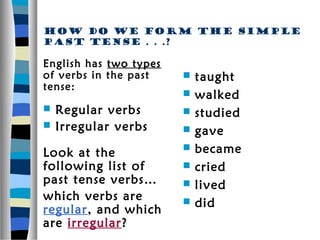
How do we form the simple
past tense . . .?

English has two types
of verbs in the past       taught
tense:
                           walked
   Regular verbs          studied
   Irregular verbs        gave
Look at the                became
following list of          cried
past tense verbs…          lived
which verbs are            did
regular, and which
are irregular?
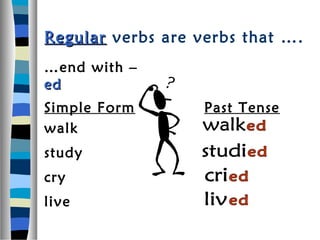
Regular verbs are verbs that ….
…end with –
ed
Simple Form        Past Tense
walk
study
cry
live
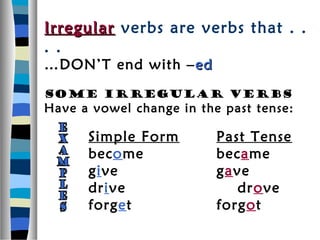
Irregular verbs are verbs that . .
. .
…DON’T end with – ed

some irregular verbs
Have a vowel change in the past tense:

      Simple Form         Past Tense
      become              became
      give                gave
      drive                  dr ove
      forget              forgot
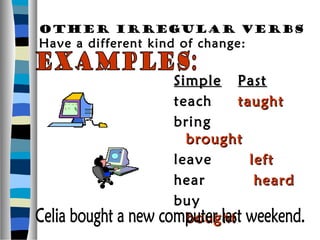
other irregular verbs
Have a different kind of change:


                    Simple Past
                    teach    taught
                    bring
                      brought
                    leave      left
                    hear        heard
                    buy
                      bought
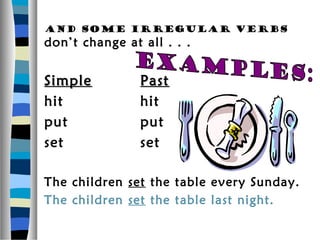
And some irregular verbs
don’t change at all . . .


Simple          Past
hit             hit
put             put
set             set

The children set the table every Sunday.
The children set the table last night.
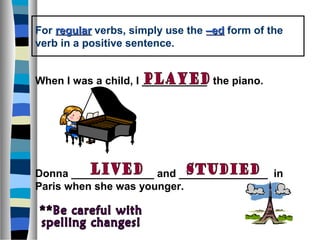
For regular verbs, simply use the –ed form of the
verb in a positive sentence.


When I was a child, I ___________ the piano.


Donna ______________ and _______________ in
Paris when she was younger.
For irregular verbs, use the correct
past tense form in positive sentences.


        sent you a letter.
Last week, I

She bought an expensive hat.
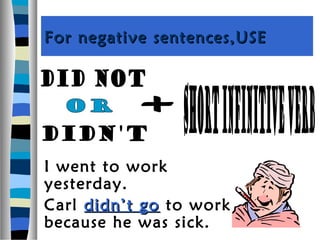
For negative sentences,USE


I went to work
yesterday.
Carl didn’t go to work
because he was sick.
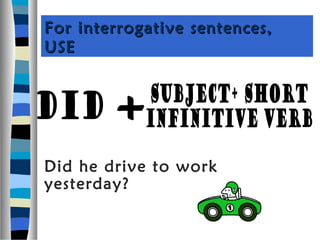
For interrogative sentences,
USE


Did he drive to work
yesterday?
Exception =
    THE VERB TO BE!
Never use DID NOT or DIDN’T
with the verb BE.
Instead, just use:
The verb “To Be”-affirmative form

 I was
  You were
  He/she/it was
  We were
  You were
  They were
The verb “To Be”-interrogative form

  Was I?
  Were you?
  Was he/she/it?
  Were we?
  Were you?
  Were they?
The verb “To Be”-negative form

I was not/ I wasn’t
 You were not/you weren’t
 He/she/it was not-He/she/it wasn’t
 We were not/we weren’t
 You were not/you weren’t
 They were not/they weren’t
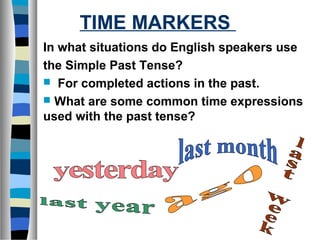
TIME MARKERS
In what situations do English speakers use
the Simple Past Tense?
 For completed actions in the past.
 What are some common time expressions
used with the past tense?
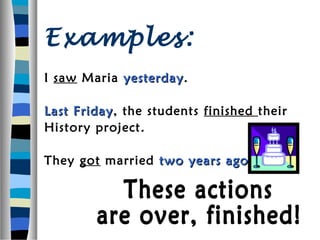
Examples:
I saw Maria yesterday.
            yesterday

Last Friday, the students finished their
     Friday
History project.

They got married two years ago.
                           ago
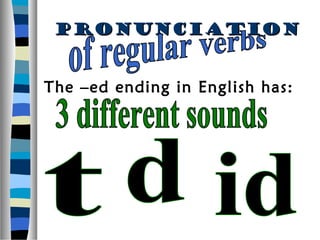
pronunciation


The –ed ending in English has:
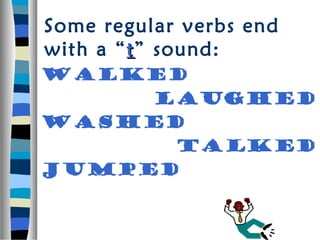
Some regular verbs end
with a “ t ” sound:
Walked
    Laughed
Washed
     Talked
jumped
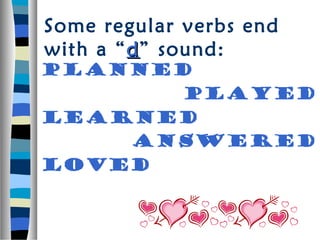
Some regular verbs end
with a “ d ” sound:
planned
      played
learned
   answered
loved
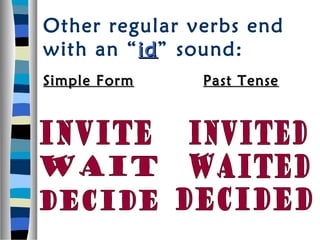
Other regular verbs end
with an “ id” sound:
          id
Simple Form    Past Tense

Past simple

  • 1.
    The Simple Past Tense  Form (structure)  Meaning & Use  Pronunciation
  • 2.
    How do weform the simple past tense . . .? English has two types of verbs in the past  taught tense:  walked  Regular verbs  studied  Irregular verbs  gave Look at the  became following list of  cried past tense verbs…  lived which verbs are  did regular, and which are irregular?
  • 3.
    Regular verbs areverbs that …. …end with – ed Simple Form Past Tense walk study cry live
  • 4.
    Irregular verbs areverbs that . . . . …DON’T end with – ed some irregular verbs Have a vowel change in the past tense: Simple Form Past Tense become became give gave drive dr ove forget forgot
  • 5.
    other irregular verbs Havea different kind of change: Simple Past teach taught bring brought leave left hear heard buy bought
  • 6.
    And some irregularverbs don’t change at all . . . Simple Past hit hit put put set set The children set the table every Sunday. The children set the table last night.
  • 7.
    For regular verbs,simply use the –ed form of the verb in a positive sentence. When I was a child, I ___________ the piano. Donna ______________ and _______________ in Paris when she was younger.
  • 8.
    For irregular verbs,use the correct past tense form in positive sentences. sent you a letter. Last week, I She bought an expensive hat.
  • 9.
    For negative sentences,USE Iwent to work yesterday. Carl didn’t go to work because he was sick.
  • 10.
    For interrogative sentences, USE Didhe drive to work yesterday?
  • 11.
    Exception = THE VERB TO BE! Never use DID NOT or DIDN’T with the verb BE. Instead, just use:
  • 12.
    The verb “ToBe”-affirmative form I was  You were  He/she/it was  We were  You were  They were
  • 13.
    The verb “ToBe”-interrogative form  Was I?  Were you?  Was he/she/it?  Were we?  Were you?  Were they?
  • 14.
    The verb “ToBe”-negative form I was not/ I wasn’t  You were not/you weren’t  He/she/it was not-He/she/it wasn’t  We were not/we weren’t  You were not/you weren’t  They were not/they weren’t
  • 15.
    TIME MARKERS In whatsituations do English speakers use the Simple Past Tense?  For completed actions in the past.  What are some common time expressions used with the past tense?
  • 16.
    Examples: I saw Mariayesterday. yesterday Last Friday, the students finished their Friday History project. They got married two years ago. ago
  • 17.
  • 18.
    Some regular verbsend with a “ t ” sound: Walked Laughed Washed Talked jumped
  • 19.
    Some regular verbsend with a “ d ” sound: planned played learned answered loved
  • 20.
    Other regular verbsend with an “ id” sound: id Simple Form Past Tense