The Simple Past Tense


      USE – FORM
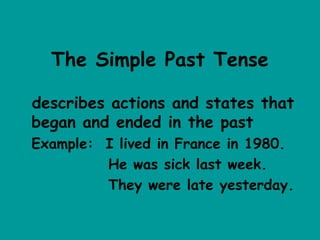
The Simple Past Tense

describes actions and states that
began and ended in the past
Example: I lived in France in 1980.
         He was sick last week.
         They were late yesterday.
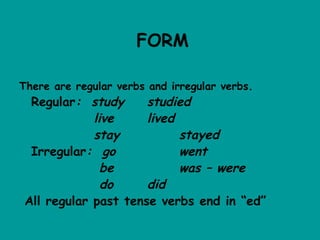
FORM

There are regular verbs and irregular verbs.
  Regular: study      studied
             live     lived
             stay           stayed
  Irregular: go             went
               be           was – were
               do     did
 All regular past tense verbs end in “ed”
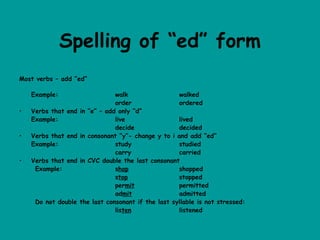
Spelling of “ed” form
Most verbs – add “ed”

    Example:                     walk                 walked
                                 order                ordered
•   Verbs that end   in “e” – add only “d”
    Example:                     live                 lived
                                 decide               decided
•   Verbs that end   in consonant “y”- change y to i and add “ed”
    Example:                     study                studied
                                 carry                carried
•   Verbs that end   in CVC double the last consonant
     Example:                    shop                 shopped
                                 stop                 stopped
                                 permit               permitted
                                 admit                admitted
     Do not double   the last consonant if the last syllable is not stressed:
                                 listen               listened
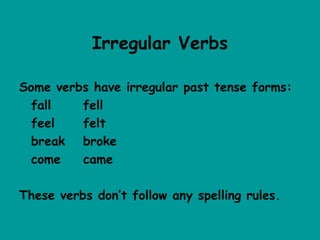
Irregular Verbs

Some verbs have irregular past tense forms:
  fall   fell
  feel   felt
  break broke
  come   came

These verbs don’t follow any spelling rules.
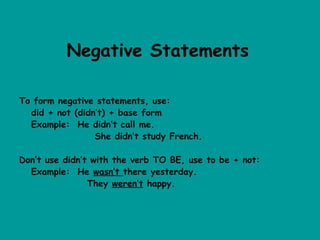
Negative Statements

To form negative statements, use:
  did + not (didn’t) + base form
  Example: He didn’t call me.
                 She didn’t study French.

Don’t use didn’t with the verb TO BE, use to be + not:
  Example: He wasn’t there yesterday.
                They weren’t happy.
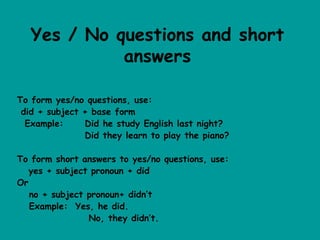
Yes / No questions and short
             answers

To form yes/no questions, use:
 did + subject + base form
  Example:     Did he study English last night?
               Did they learn to play the piano?

To form short answers to yes/no questions, use:
   yes + subject pronoun + did
Or
   no + subject pronoun+ didn’t
   Example: Yes, he did.
                No, they didn’t.
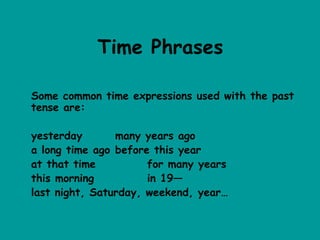
Time Phrases

Some common time expressions used with the past
tense are:

yesterday       many years ago
a long time ago before this year
at that time          for many years
this morning          in 19—
last night, Saturday, weekend, year…

The simple past tense

  • 1.
    The Simple PastTense USE – FORM
  • 2.
    The Simple PastTense describes actions and states that began and ended in the past Example: I lived in France in 1980. He was sick last week. They were late yesterday.
  • 3.
    FORM There are regularverbs and irregular verbs. Regular: study studied live lived stay stayed Irregular: go went be was – were do did All regular past tense verbs end in “ed”
  • 4.
    Spelling of “ed”form Most verbs – add “ed” Example: walk walked order ordered • Verbs that end in “e” – add only “d” Example: live lived decide decided • Verbs that end in consonant “y”- change y to i and add “ed” Example: study studied carry carried • Verbs that end in CVC double the last consonant Example: shop shopped stop stopped permit permitted admit admitted Do not double the last consonant if the last syllable is not stressed: listen listened
  • 5.
    Irregular Verbs Some verbshave irregular past tense forms: fall fell feel felt break broke come came These verbs don’t follow any spelling rules.
  • 6.
    Negative Statements To formnegative statements, use: did + not (didn’t) + base form Example: He didn’t call me. She didn’t study French. Don’t use didn’t with the verb TO BE, use to be + not: Example: He wasn’t there yesterday. They weren’t happy.
  • 7.
    Yes / Noquestions and short answers To form yes/no questions, use: did + subject + base form Example: Did he study English last night? Did they learn to play the piano? To form short answers to yes/no questions, use: yes + subject pronoun + did Or no + subject pronoun+ didn’t Example: Yes, he did. No, they didn’t.
  • 8.
    Time Phrases Some commontime expressions used with the past tense are: yesterday many years ago a long time ago before this year at that time for many years this morning in 19— last night, Saturday, weekend, year…