F. Shammas / 04
IBS – Epidemiology,
Pathogenesis
Presentation and Diagnosis
F. Shammas / 04
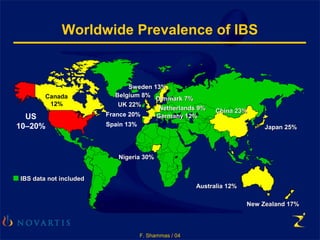
Worldwide Prevalence of IBS
Denmark 7%Denmark 7%
New Zealand 17%New Zealand 17%
UK 22%UK 22%
Nigeria 30%Nigeria 30%
Japan 25%Japan 25%
Australia 12%Australia 12%
China 23%China 23%
Germany 12%Germany 12%
Netherlands 9%Netherlands 9%
France 20%
Spain 13%
US
10–20%
Sweden 13%Sweden 13%
Belgium 8%Belgium 8%
IBS data not includedIBS data not included
Canada
12%
F. Shammas / 04
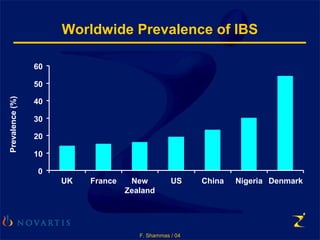
Worldwide Prevalence of IBS
0
10
20
30
40
50
60
Prevalence(%)
UK France New US China Nigeria Denmark
Zealand
F. Shammas / 04
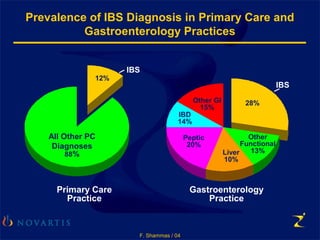
Prevalence of IBS Diagnosis in Primary Care and
Gastroenterology Practices
Primary Care
Practice
Gastroenterology
Practice
All Other PC
Diagnoses
88%
12%
IBS
IBS
28%Other GI
15%
IBD
14%
Peptic
20%
Liver
10%
Other
Functional
13%
F. Shammas / 04
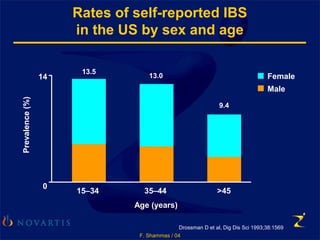
Rates of self-reported IBS
in the US by sex and age
Drossman D et al, Dig Dis Sci 1993;38:1569
Age (years)Age (years)
13.5
13.0
9.4
Female
Male
14
0
Prevalence(%)
15–34 35–44 >45
F. Shammas / 04
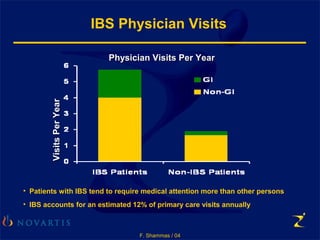
IBS Physician Visits
Physician Visits Per YearPhysician Visits Per YearVisitsPerYearVisitsPerYear
• Patients with IBS tend to require medical attention more than other persons
• IBS accounts for an estimated 12% of primary care visits annually
F. Shammas / 04
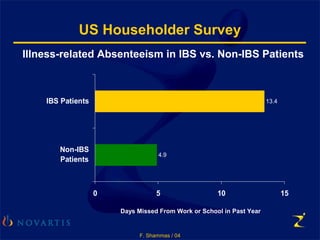
US Householder Survey
4.9
13.4
0 5 10 15
Non-IBS
Patients
IBS Patients
Days Missed From Work or School in Past Year
Illness-related Absenteeism in IBS vs. Non-IBS Patients
F. Shammas / 04
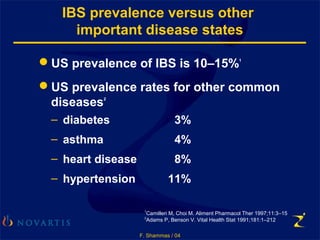
IBS prevalence versus other
important disease states
1
Camilleri M, Choi M. Aliment Pharmacol Ther 1997;11:3–15
2
Adams P, Benson V. Vital Health Stat 1991;181:1–212
US prevalence of IBS is 10–15%1
US prevalence rates for other common
diseases2
– diabetes 3%
– asthma 4%
– heart disease 8%
– hypertension 11%
F. Shammas / 04
Irritable Bowel Syndrome (IBS)
Epidemiology
● Affects approximately 15-20% of the population
worldwide
● 3 times more common in females than males
● Appears in early adolescence or early adulthood. Less
common in children
● Onset declines with advancing age
● Source of suffering, embarrassment, social disability,
and increased healthcare costs
F. Shammas / 04
Other Important Facts About the
Epidemiology of IBS
 Only 33–50% of people with IBS seek medical
attention
 GI disorders of function comprise
– 50% of gastroenterology referrals in the UK
– 41% of gastroenterology visits in the US
 IBS is estimated to cost the US healthcare system $8
billion per year
 IBS is the second most common cause of sick leave
after the common cold
F. Shammas / 04
Irritable bowel syndrome
impairs the Quality of Life
(QoL) of patients
F. Shammas / 04
Measuring Quality Of Life (SF-36)
 Used extensively in clinical trials
 Has a well-established validity and reliability
 Measures 8 dimensions of health:
• physical functioning
• social functioning
• physical role
• emotional role
• mental health
• vitality (degree of energy or fatigue)
• bodily pain
• general health
F. Shammas / 04
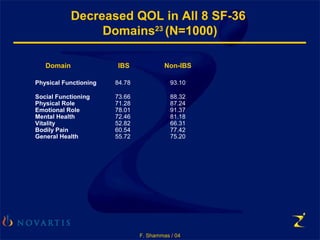
Decreased QOL in All 8 SF-36
Domains23
(N=1000)
Domain IBS Non-IBS
Physical Functioning 84.78 93.10
Social Functioning 73.66 88.32
Physical Role 71.28 87.24
Emotional Role 78.01 91.37
Mental Health 72.46 81.18
Vitality 52.82 66.31
Bodily Pain 60.54 77.42
General Health 55.72 75.20
F. Shammas / 04
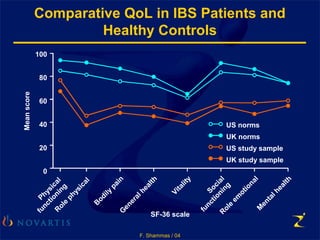
Comparative QoL in IBS Patients and
Healthy Controls
100
80
60
40
20
0
Meanscore
Physical
functioning
R
ole
physical
B
odily
painG
eneralhealth
Vitality
Social
functioning
R
ole
em
otionalM
entalhealth
SF-36 scale
US norms
UK norms
US study sample
UK study sample
F. Shammas / 04
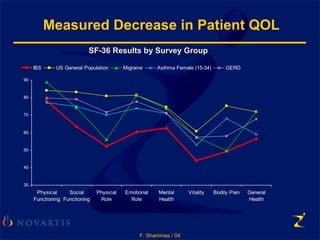
Measured Decrease in Patient QOL
SF-36 Results by Survey Group
30
40
50
60
70
80
90
Physical
Functioning
Social
Functioning
Physical
Role
Emotional
Role
Mental
Health
Vitality Bodily Pain General
Health
IBS US General Population Migraine Asthma Female (15-34) GERD
F. Shammas / 04
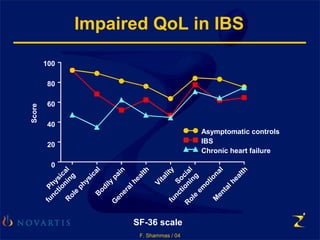
Impaired QoL in IBS
100
80
60
40
20
0
Asymptomatic controls
IBS
Chronic heart failure
Score
Physical
functioning
R
ole
physicalB
odily
pain
G
eneralhealth
Vitality
Social
functioning
R
ole
em
otional
M
entalhealth
SF-36 scale
F. Shammas / 04
IBS Impact on Quality of Life (QOL)
 Decrease patient QOL
 Interfere with daily activities, work, and leisure time
 Impact sleep, diet, ability to travel, and sexual
functioning
 Affect ability to function in family- and work-related
roles
 Contribute to lost productivity and work
absenteeism
F. Shammas / 04
Irritable Bowel Syndrome (IBS)
Pathogenesis
• Altered intestinal motility
• Abnormal visceral perception/sensitivity
The cause of IBS is poorly understood. However,
improvements in assessment of gut functioning, have
improved the understanding of the syndrome, which is
now considered to be through:
F. Shammas / 04
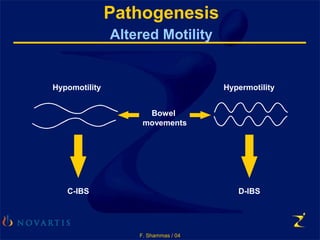
Pathogenesis
Altered Motility
Hypomotility
Bowel
movements
Hypermotility
C-IBS D-IBS
F. Shammas / 04
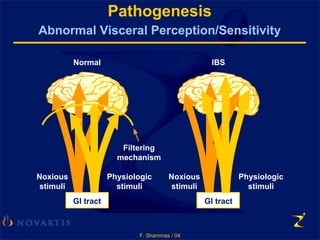
Pathogenesis
Abnormal Visceral Perception/Sensitivity
Physiologic
stimuli
Noxious
stimuli
IBS
Physiologic
stimuli
Filtering
mechanism
Noxious
stimuli
Normal
GI tractGI tract
F. Shammas / 04
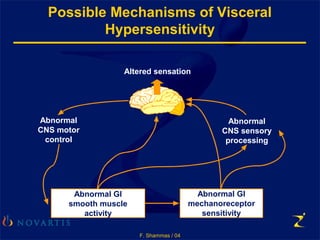
Possible Mechanisms of Visceral
Hypersensitivity
Altered sensation
Abnormal
CNS motor
control
Abnormal GI
smooth muscle
activity
Abnormal
CNS sensory
processing
Abnormal GI
mechanoreceptor
sensitivity
F. Shammas / 04
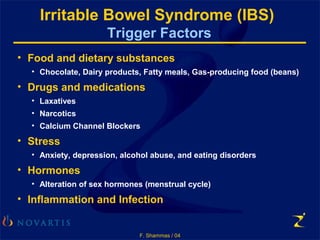
• Food and dietary substances
• Chocolate, Dairy products, Fatty meals, Gas-producing food (beans)
• Drugs and medications
• Laxatives
• Narcotics
• Calcium Channel Blockers
• Stress
• Anxiety, depression, alcohol abuse, and eating disorders
• Hormones
• Alteration of sex hormones (menstrual cycle)
• Inflammation and Infection
Irritable Bowel Syndrome (IBS)
Trigger Factors
F. Shammas / 04
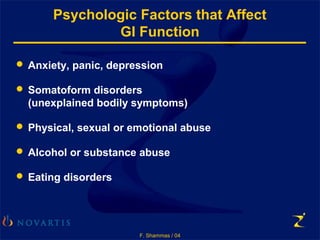
Psychologic Factors that Affect
GI Function
 Anxiety, panic, depression
 Somatoform disorders
(unexplained bodily symptoms)
 Physical, sexual or emotional abuse
 Alcohol or substance abuse
 Eating disorders
F. Shammas / 04
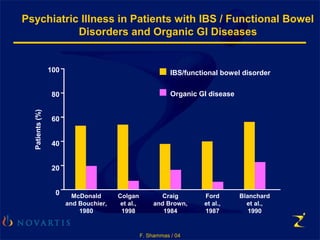
Psychiatric Illness in Patients with IBS / Functional Bowel
Disorders and Organic GI Diseases
100
80
60
40
20
0 McDonald Colgan Craig Ford Blanchard
and Bouchier, et al., and Brown, et al., et al.,
1980 1998 1984 1987 1990
IBS/functional bowel disorder
Organic GI disease
Patients(%)
F. Shammas / 04
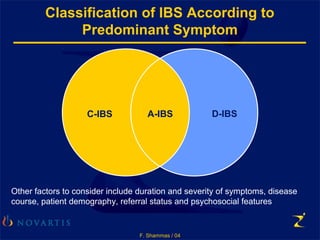
Classification of IBS According to
Predominant Symptom
Other factors to consider include duration and severity of symptoms, disease
course, patient demography, referral status and psychosocial features
C-IBS D-IBSA-IBS
F. Shammas / 04
Irritable Bowel Syndrome (IBS)
Diagnosis
IBS is a condition that can be diagnosed
positively on the basis of an established
series of criteria, together with limited
exclusion of organic, metabolic or
infectious diseases
F. Shammas / 04
IBS Diagnostic Criteria
• The Manning Criteria
• Rome I Criteria
• Rome II Criteria
F. Shammas / 04
The Manning Criteria (1978)
 Four symptoms significantly more common
in IBS than in organic disease:
– pain relieved by defecation
– more frequent stools at the onset of pain
– looser stools at the onset of pain
– visible abdominal distention
 A strong trend for the following:
– passage of mucus
– sensation of incomplete bowel emptying
F. Shammas / 04
1. At least 3 months of continuous or
recurrent symptoms of abdominal
pain or discomfort that is
– relieved by defecation and/or
– associated with a change in
frequency of stool; and/or
– associated with a change in
consistency of stool
2. Two or more of the following at least
25% of the time
– altered stool frequency
– altered stool form
– altered stool passage (straining,
urgency, feeling of incomplete
evacuation)
– passage of mucus; and/or
– bloating or feeling of abdominal
distention
Rome I Criteria1
Rome II Criteria2
1. At least 12 weeks, which need not be
consecutive, in the past 12 months, of
abdominal discomfort or pain that has two
of three features
– relieved by defecation; and/or
– onset associated with a change in
frequency of stool; and/or
– onset associated with a change in form
(appearance) of stool
2. The following symptoms are not essential
but the more of them that are present, the
more confident is the diagnosis:
– abnormal stool frequency
– abnormal stool form
– abnormal stool passage
– passage of mucus
– bloating or feeling of abdominal
distention
F. Shammas / 04
Rome II Criteria for Diagnosis of IBS
Abdominal pain or discomfort for at least
12 weeks (not necessarily consecutive) in
the preceding 12 months, that has at least
two of the following features
– Relieved by defecation
– A change in stool frequency
– A change in stool form or appearance
F. Shammas / 04
Rome II Criteria for Diagnosis of IBS
The following symptoms are not essential, but
the more of them that are present, the more
confident is the diagnosis
–Abnormal stool frequency (>3/day or <3/week)
–Abnormal stool form (lumpy/hard or loose/watery stool)
–Abnormal stool passage (straining, urgency or feeling
of incomplete evacuation)
–Passage of mucus
–Bloating or feeling of abdominal distention
F. Shammas / 04
Irritable Bowel Syndrome (IBS)
Recognizing IBS
Careful interpretation of the
pain and stool characteristics
is the most important step in
recognizing IBS
F. Shammas / 04
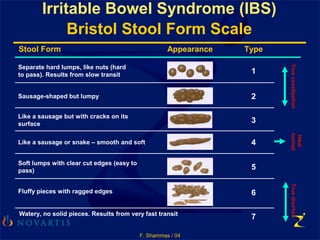
Irritable Bowel Syndrome (IBS)
Bristol Stool Form Scale
Separate hard lumps, like nuts (hard
to pass). Results from slow transit
Sausage-shaped but lumpy
Like a sausage but with cracks on its
surface
Like a sausage or snake – smooth and soft
Soft lumps with clear cut edges (easy to
pass)
Fluffy pieces with ragged edges
Watery, no solid pieces. Results from very fast transit
Stool Form Appearance Type
1
2
3
4
5
6
7
TrueconstipationTruediarrhea
Ideal
normal
F. Shammas / 04
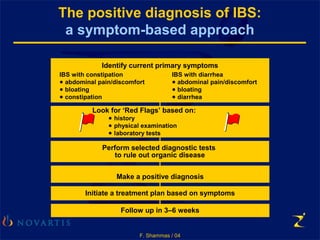
The positive diagnosis of IBS:
a symptom-based approach
Identify current primary symptoms
Initiate a treatment plan based on symptoms
Look for ‘Red Flags’ based on:
● history
● physical examination
● laboratory tests
Follow up in 3–6 weeks
Perform selected diagnostic tests
to rule out organic disease
Make a positive diagnosis
IBS with constipation
● abdominal pain/discomfort
● bloating
● constipation
IBS with diarrhea
● abdominal pain/discomfort
● bloating
● diarrhea
F. Shammas / 04
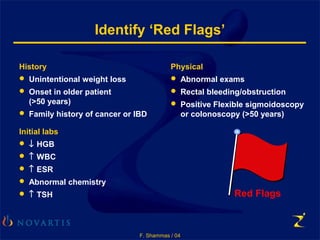
Identify ‘Red Flags’
History
 Unintentional weight loss
 Onset in older patient
(>50 years)
 Family history of cancer or IBD
Initial labs
 ↓ HGB
 ↑ WBC
 ↑ ESR
 Abnormal chemistry
 ↑ TSH
Physical
 Abnormal exams
 Rectal bleeding/obstruction
 Positive Flexible sigmoidoscopy
or colonoscopy (>50 years)
Red Flags
F. Shammas / 04
Irritable Bowel Syndrome (IBS)
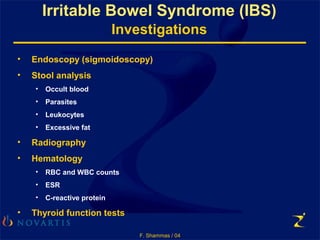
Investigations
• Endoscopy (sigmoidoscopy)
• Stool analysis
• Occult blood
• Parasites
• Leukocytes
• Excessive fat
• Radiography
• Hematology
• RBC and WBC counts
• ESR
• C-reactive protein
• Thyroid function tests
F. Shammas / 04
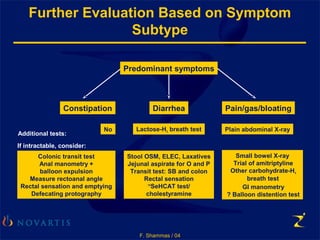
Further Evaluation Based on Symptom
Subtype
Constipation Diarrhea Pain/gas/bloating
No Lactose-H2 breath test
Additional tests:
Plain abdominal X-ray
If intractable, consider:
Small bowel X-ray
Trial of amitriptyline
Other carbohydrate-H2
breath test
GI manometry
? Balloon distention test
Colonic transit test
Anal manometry +
balloon expulsion
Measure rectoanal angle
Rectal sensation and emptying
Defecating protography
Stool OSM, ELEC, Laxatives
Jejunal aspirate for O and P
Transit test: SB and colon
Rectal sensation
75
SeHCAT test/
cholestyramine
Predominant symptoms
F. Shammas / 04
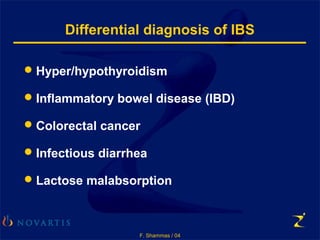
Differential diagnosis of IBS
Hyper/hypothyroidism
Inflammatory bowel disease (IBD)
Colorectal cancer
Infectious diarrhea
Lactose malabsorption
F. Shammas / 04
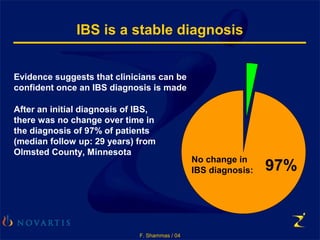
IBS is a stable diagnosis
No change in
IBS diagnosis: 97%
Evidence suggests that clinicians can be
confident once an IBS diagnosis is made
After an initial diagnosis of IBS,
there was no change over time in
the diagnosis of 97% of patients
(median follow up: 29 years) from
Olmsted County, Minnesota
F. Shammas / 04
Irritable Bowel Syndrome (IBS)
Principals of Management
• General principles
• Lifestyle modification (dietary changes)
• Psychotherapy/hypnotherapy
• Drug therapy
F. Shammas / 04
Irritable Bowel Syndrome (IBS)
Management – General Principles
• Establishing confidence
• Educating the patient about IBS
• Patient reassurance that IBS could be treated
• Dispelling the patient’s fears and misconceptions
• Individualizing a treatment plan based on the patient’s need
• Scheduling appointments for return visits
F. Shammas / 04
Patient Education in IBS
 Education and reassurance are essential
elements of clinical management
 Patients need information about the nature of
their condition, such as its high prevalence,
the causes, triggers, symptoms, and disease course
 Patients should be made aware of the available
treatment options e.g. pharmacologic and non-
pharmacologic therapies
F. Shammas / 04
Dietary and Lifestyle Modification in IBS
 Stress management/reduction techniques
have been shown to improve patient
well being
 Diet diaries may be used to identify dietary
factors that tend to trigger IBS symptoms.
Elimination or reduction in intake of these foods
may reduce the frequency and severity of
symptoms
F. Shammas / 04
• Dietary measures
• avoid foodstuff that may cause symptoms as legumes, caffeine, artificial
sweeteners, dairy products, chocolate, fat-rich diets
• encourage high-fiber diets
• prescribe wheat bran
• Avoid drugs that disturb bowel function
Dietary and Lifestyle Modification in IBS
– Drugs causing
constipation
• Opiates, Anticholinergics
• Tricyclic anti-depressants
• 5-HT3 antagonists
• Calcium channel blockers
– Drugs causing
diarrhea
• Misoprostol
• Cisapride
• Antacids containing MgOH
• Herbal teas containing senna
• Alcohol, caffeine
F. Shammas / 04
Psychotherapy/Hypnotherapy in IBS
Stress management
Interpersonal psychotherapy
Cognitive behavioral therapy
Relaxation techniques to reduce
anxiety
Hypnotherapy may also be useful for
treating both psychologic and physical
symptoms
F. Shammas / 04
Other Complementary Therapies
 Herbal medicine (ex: peppermint, ginger, etc…)
 Traditional Chinese medicine (herbs, acupuncture)
 Traditional Japanese medicine (Kampo)
 Traditional Indian medicine (ayurveda)
 ‘Probiotics’
F. Shammas / 04
Drug Therapy in IBS - Highlights
• There is currently no cure for IBS
• Current treatments for IBS are mainly
symptomatic (end-organ treatments)
• There is a profound placebo response to any
IBS treatment
• Most treated patients end up receiving a
combination of different drugs
F. Shammas / 04
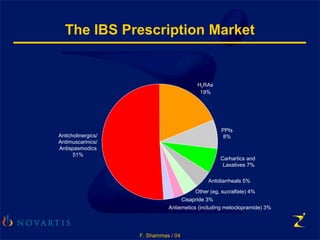
The IBS Prescription Market
Antidiarrheals 5%
Anticholinergics/
Antimuscarinics/
Antispasmodics
51%
Other (eg, sucralfate) 4%
Cisapride 3%
PPIs
8%
H2RAs
19%
Antiemetics (including metoclopramide) 3%
Carhartics and
Laxatives 7%
F. Shammas / 04
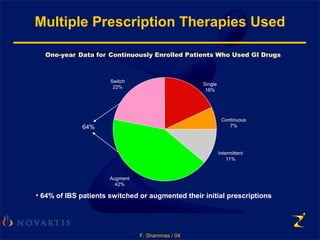
Multiple Prescription Therapies Used
One-year Data for Continuously Enrolled Patients Who Used GI Drugs
Switch
22%
Augment
42%
Single
18%
Continuous
7%
Intermittent
11%
64%
• 64% of IBS patients switched or augmented their initial prescriptions
F. Shammas / 04
Irritable Bowel Syndrome (IBS)
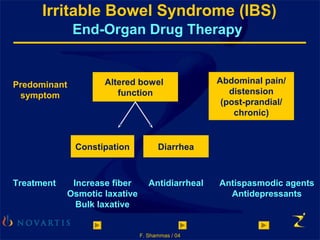
End-Organ Drug Therapy
Predominant
symptom
Treatment Increase fiber
Osmotic laxative
Bulk laxative
Antidiarrheal Antispasmodic agents
Antidepressants
DiarrheaConstipation
Abdominal pain/
distension
(post-prandial/
chronic)
Altered bowel
function
F. Shammas / 04
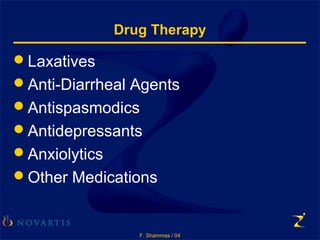
Drug Therapy
Laxatives
Anti-Diarrheal Agents
Antispasmodics
Antidepressants
Anxiolytics
Other Medications
F. Shammas / 04
Irritable Bowel Syndrome (IBS)
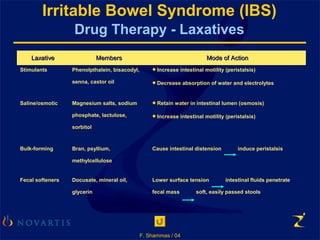
Drug Therapy - Laxatives
LaxativeLaxative MembersMembers Mode of ActionMode of Action
Stimulants Phenolpthalein, bisacodyl,
senna, castor oil
Increase intestinal motility (peristalsis)
Decrease absorption of water and electrolytes
Saline/osmotic Magnesium salts, sodium
phosphate, lactulose,
sorbitol
Retain water in intestinal lumen (osmosis)
Increase intestinal motility (peristalsis)
Bulk-forming Bran, psyllium,
methylcellulose
Cause intestinal distension induce peristalsis
Fecal softeners Docusate, mineral oil,
glycerin
Lower surface tension intestinal fluids penetrate
fecal mass soft, easily passed stools
F. Shammas / 04
Irritable Bowel Syndrome (IBS)
Anti-Diarrheal Agents
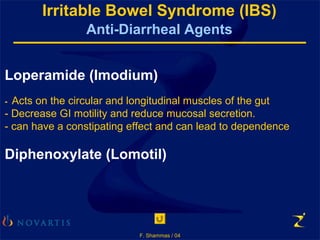
Loperamide (Imodium)
- Acts on the circular and longitudinal muscles of the gut
- Decrease GI motility and reduce mucosal secretion.
- can have a constipating effect and can lead to dependence
Diphenoxylate (Lomotil)
F. Shammas / 04
Irritable Bowel Syndrome (IBS)
Antispasmodics
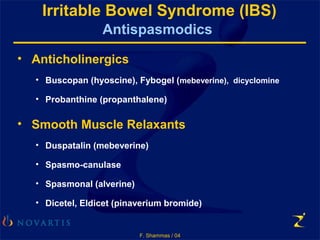
• Anticholinergics
• Buscopan (hyoscine), Fybogel (mebeverine), dicyclomine
• Probanthine (propanthalene)
• Smooth Muscle Relaxants
• Duspatalin (mebeverine)
• Spasmo-canulase
• Spasmonal (alverine)
• Dicetel, Eldicet (pinaverium bromide)
F. Shammas / 04
Irritable Bowel Syndrome (IBS)
Drug Therapy – Centrally-Acting Agents
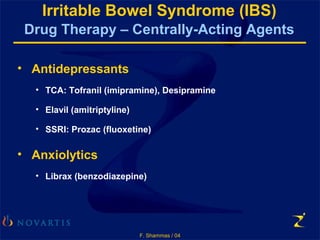
• Antidepressants
• TCA: Tofranil (imipramine), Desipramine
• Elavil (amitriptyline)
• SSRI: Prozac (fluoxetine)
• Anxiolytics
• Librax (benzodiazepine)
F. Shammas / 04
Irritable Bowel Syndrome (IBS)
Drug Therapy – Other Medications
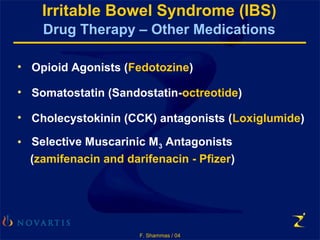
• Opioid Agonists (Fedotozine)
• Somatostatin (Sandostatin-octreotide)
• Cholecystokinin (CCK) antagonists (Loxiglumide)
• Selective Muscarinic M3 Antagonists
(zamifenacin and darifenacin - Pfizer)
F. Shammas / 04
Treatment of C-IBS
 Currently there is no approved drug treatment on the
market that has consistently proved to be more
effective than placebo in the management of ALL
symptoms of C-IBS
 There is a need for new effective treatments that are
well tolerated and target each individual symptom of
C-IBS
F. Shammas / 04
Irritable Bowel Syndrome
New Therapeutic Approaches
The 5-HydroxyTryptamine (5-HT)
Modulators
F. Shammas / 04
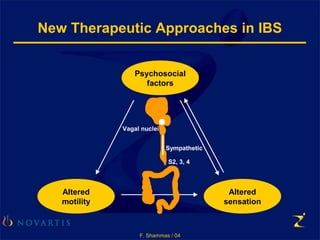
New Therapeutic Approaches in IBS
Psychosocial
factors
Altered
sensation
Altered
motility
Sympathetic
S2, 3, 4
Vagal nuclei
F. Shammas / 04
Alteration of 5-HT (serotonin)
function has been implicated in
the pathogenesis of IBS,
namely in the altered motility
and visceral hypersensitivity…
F. Shammas / 04
Serotonin (5-hydroxytryptamine)
• Serotonin is an important neurotransmitter in both the CNS
and ENS. It is found in 3 main areas in the body; intestinal
wall, blood vessels and CNS
• Approximately 90% of the body’s 5-HT is found in the GIT
• The remainder acts as a neurotransmitter in the myenteric
plexus
• Serotonin has various effects on the intestine, including:
• Inhibition of gastric acid secretion
• Stimulation of synthesis and release of gastric and colonic mucus
• Contraction or relaxation of the GI smooth muscles
F. Shammas / 04
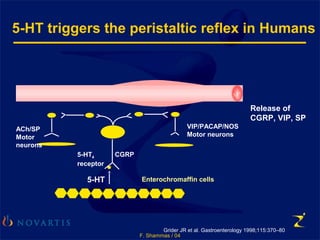
CGRP5-HT4
receptor
Enterochromaffin cells5-HT
Grider JR et al. Gastroenterology 1998;115:370–80
Release of
CGRP, VIP, SP
ACh/SP
Motor
neurons
VIP/PACAP/NOS
Motor neurons
5-HT triggers the peristaltic reflex in Humans
F. Shammas / 04
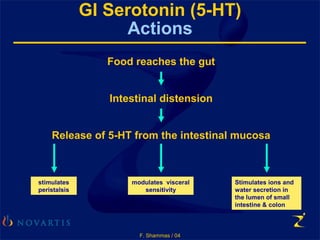
GI Serotonin (5-HT)
Actions
Food reaches the gut
Intestinal distension
stimulates
peristalsis
Release of 5-HT from the intestinal mucosa
modulates visceral
sensitivity
Stimulates ions and
water secretion in
the lumen of small
intestine & colon
F. Shammas / 04
The GI Serotonin Receptors
• Receptors for serotonin are located on the
afferent neurons and interneurons in the
ENS
• They are involved in the perception of
abdominal pain and GI motility
F. Shammas / 04
The Serotonin Receptors Subtypes
• Approximately 15 subtypes of 5-HT receptors have
been identified in the body
• Only 2 receptors are involved in GI motility and
abdominal pain
• Subtype 3 (5-HT3)
• Subtype 4 (5-HT4)
F. Shammas / 04
The Serotonin Receptors Subtypes
• Subtype 3 (5-HT3)
• Mediate visceral pain
• Reduces colonic transit (induces peristalsis)
• Increases intestinal secretions
• Subtype 4 (5-HT4)
• Stimulates peristalsis
• Involved in modulation of intestinal absorption/secretions
that influences stool consistency and visceral sensitivity
F. Shammas / 04
Role of 5-HT in the GI Tract
 5-HT has multiple roles in GI physiology with its effects
being due to different mechanisms and different
receptor subtypes
 5-HT3 receptor activation increases intestinal secretion,
motility and colonic tonus
 5-HT4 receptor activation leads to peristalsis and increased
water/chloride secretion. It can also result in inhibition of
intestinal tone and enhanced visceral sensitivity
 95% of body’s serotonin in GIT
• 90% in EC cells
• 10% in enteric neurons
F. Shammas / 04
The 5-HydroxyTryptamine (5-HT)
Receptors
Agonists & Antagonists
F. Shammas / 04
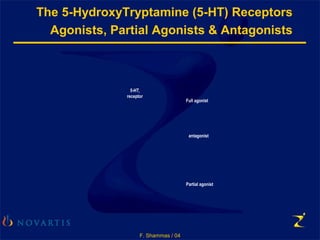
5-HT4
receptor
Partial agonist
Full agonist
antagonist
The 5-HydroxyTryptamine (5-HT) Receptors
Agonists, Partial Agonists & Antagonists
F. Shammas / 04
5-HT3 Antagonists
 5-HT3 antagonists cause constipation and increase
colonic transit time.
 5-HT3 antagonists have potential use in nausea and
vomiting as well as in D- IBS
 Ondansetron (Zofran) and Granisetron (Kytril) are
currently used to treat chemotherapy-induced
nausea and vomiting
 Alosetron (Lotronex) and Cilansetron (Calmactin)
are being developed for use in D-IBS patients
F. Shammas / 04
5-HT3 Antagonists in D- IBS
 Alosetron (Lotronex) approved for treatment of D-IBS
in female patients (not effective in men)
– Relieves abdominal pain / discomfort within 1-4 weeks
– Decreases fluid secretion in small intestine
– Relieves stool frequency and bowel urgency within 1
week
– Principal side effect: constipation in 20–30% of patients
 Cilansetron (Calmactin) decreased colonic contractile
responses to distention
F. Shammas / 04
5-HT4 Receptor Effects
Enhances esophageal clearance and gastric
emptying, and hastens intestinal and
colonic transit
Mediate reflexes controlling GI motility and
secretion
Mediate perception of visceral pain
F. Shammas / 04
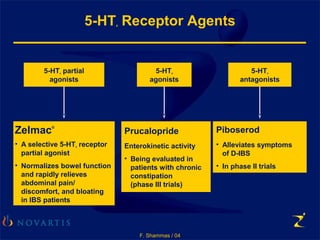
5-HT4 Receptor Agents
5-HT4 partial
agonists
Zelmac®
• A selective 5-HT4 receptor
partial agonist
• Normalizes bowel function
and rapidly relieves
abdominal pain/
discomfort, and bloating
in IBS patients
5-HT4
antagonists
Prucalopride
Enterokinetic activity
• Being evaluated in
patients with chronic
constipation
(phase III trials)
Piboserod
• Alleviates symptoms
of D-IBS
• In phase II trials
5-HT4
agonists
F. Shammas / 04
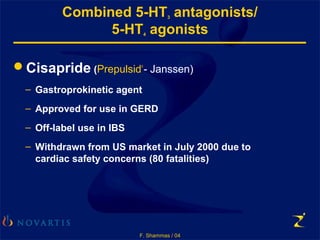
Combined 5-HT3 antagonists/
5-HT4 agonists
Cisapride (Prepulsid®
- Janssen)
– Gastroprokinetic agent
– Approved for use in GERD
– Off-label use in IBS
– Withdrawn from US market in July 2000 due to
cardiac safety concerns (80 fatalities)
F. Shammas / 04
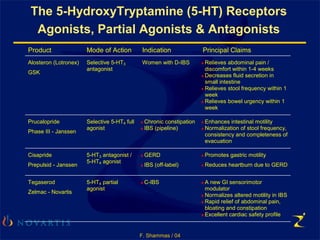
The 5-HydroxyTryptamine (5-HT) Receptors
Agonists, Partial Agonists & Antagonists
Product Mode of Action Indication Principal Claims
Alosteron (Lotronex)
GSK
Selective 5-HT3
antagonist
Women with D-IBS ♦Relieves abdominal pain /
discomfort within 1-4 weeks
♦Decreases fluid secretion in
small intestine
♦Relieves stool frequency within 1
week
♦Relieves bowel urgency within 1
week
Prucalopride
Phase III - Janssen
Selective 5-HT4 full
agonist
♦Chronic constipation
♦IBS (pipeline)
♦Enhances intestinal motility
♦Normalization of stool frequency,
consistency and completeness of
evacuation
Cisapride
Prepulsid - Janssen
5-HT3 antagonist /
5-HT4 agonist
♦GERD
♦IBS (off-label)
♦Promotes gastric motility
♦Reduces heartburn due to GERD
Tegaserod
Zelmac - Novartis
5-HT4 partial
agonist
♦C-IBS ♦A new GI sensorimotor
modulator
♦Normalizes altered motility in IBS
♦Rapid relief of abdominal pain,
bloating and constipation
♦Excellent cardiac safety profile
F. Shammas / 04
Targeting the 5-HT4 Receptor
Should Benefits
the
Constipation- Predominant
IBS Patients

Part4

  • 1.
    F. Shammas /04 IBS – Epidemiology, Pathogenesis Presentation and Diagnosis
  • 2.
    F. Shammas /04 Worldwide Prevalence of IBS Denmark 7%Denmark 7% New Zealand 17%New Zealand 17% UK 22%UK 22% Nigeria 30%Nigeria 30% Japan 25%Japan 25% Australia 12%Australia 12% China 23%China 23% Germany 12%Germany 12% Netherlands 9%Netherlands 9% France 20% Spain 13% US 10–20% Sweden 13%Sweden 13% Belgium 8%Belgium 8% IBS data not includedIBS data not included Canada 12%
  • 3.
    F. Shammas /04 Worldwide Prevalence of IBS 0 10 20 30 40 50 60 Prevalence(%) UK France New US China Nigeria Denmark Zealand
  • 4.
    F. Shammas /04 Prevalence of IBS Diagnosis in Primary Care and Gastroenterology Practices Primary Care Practice Gastroenterology Practice All Other PC Diagnoses 88% 12% IBS IBS 28%Other GI 15% IBD 14% Peptic 20% Liver 10% Other Functional 13%
  • 5.
    F. Shammas /04 Rates of self-reported IBS in the US by sex and age Drossman D et al, Dig Dis Sci 1993;38:1569 Age (years)Age (years) 13.5 13.0 9.4 Female Male 14 0 Prevalence(%) 15–34 35–44 >45
  • 6.
    F. Shammas /04 IBS Physician Visits Physician Visits Per YearPhysician Visits Per YearVisitsPerYearVisitsPerYear • Patients with IBS tend to require medical attention more than other persons • IBS accounts for an estimated 12% of primary care visits annually
  • 7.
    F. Shammas /04 US Householder Survey 4.9 13.4 0 5 10 15 Non-IBS Patients IBS Patients Days Missed From Work or School in Past Year Illness-related Absenteeism in IBS vs. Non-IBS Patients
  • 8.
    F. Shammas /04 IBS prevalence versus other important disease states 1 Camilleri M, Choi M. Aliment Pharmacol Ther 1997;11:3–15 2 Adams P, Benson V. Vital Health Stat 1991;181:1–212 US prevalence of IBS is 10–15%1 US prevalence rates for other common diseases2 – diabetes 3% – asthma 4% – heart disease 8% – hypertension 11%
  • 9.
    F. Shammas /04 Irritable Bowel Syndrome (IBS) Epidemiology ● Affects approximately 15-20% of the population worldwide ● 3 times more common in females than males ● Appears in early adolescence or early adulthood. Less common in children ● Onset declines with advancing age ● Source of suffering, embarrassment, social disability, and increased healthcare costs
  • 10.
    F. Shammas /04 Other Important Facts About the Epidemiology of IBS  Only 33–50% of people with IBS seek medical attention  GI disorders of function comprise – 50% of gastroenterology referrals in the UK – 41% of gastroenterology visits in the US  IBS is estimated to cost the US healthcare system $8 billion per year  IBS is the second most common cause of sick leave after the common cold
  • 11.
    F. Shammas /04 Irritable bowel syndrome impairs the Quality of Life (QoL) of patients
  • 12.
    F. Shammas /04 Measuring Quality Of Life (SF-36)  Used extensively in clinical trials  Has a well-established validity and reliability  Measures 8 dimensions of health: • physical functioning • social functioning • physical role • emotional role • mental health • vitality (degree of energy or fatigue) • bodily pain • general health
  • 13.
    F. Shammas /04 Decreased QOL in All 8 SF-36 Domains23 (N=1000) Domain IBS Non-IBS Physical Functioning 84.78 93.10 Social Functioning 73.66 88.32 Physical Role 71.28 87.24 Emotional Role 78.01 91.37 Mental Health 72.46 81.18 Vitality 52.82 66.31 Bodily Pain 60.54 77.42 General Health 55.72 75.20
  • 14.
    F. Shammas /04 Comparative QoL in IBS Patients and Healthy Controls 100 80 60 40 20 0 Meanscore Physical functioning R ole physical B odily painG eneralhealth Vitality Social functioning R ole em otionalM entalhealth SF-36 scale US norms UK norms US study sample UK study sample
  • 15.
    F. Shammas /04 Measured Decrease in Patient QOL SF-36 Results by Survey Group 30 40 50 60 70 80 90 Physical Functioning Social Functioning Physical Role Emotional Role Mental Health Vitality Bodily Pain General Health IBS US General Population Migraine Asthma Female (15-34) GERD
  • 16.
    F. Shammas /04 Impaired QoL in IBS 100 80 60 40 20 0 Asymptomatic controls IBS Chronic heart failure Score Physical functioning R ole physicalB odily pain G eneralhealth Vitality Social functioning R ole em otional M entalhealth SF-36 scale
  • 17.
    F. Shammas /04 IBS Impact on Quality of Life (QOL)  Decrease patient QOL  Interfere with daily activities, work, and leisure time  Impact sleep, diet, ability to travel, and sexual functioning  Affect ability to function in family- and work-related roles  Contribute to lost productivity and work absenteeism
  • 18.
    F. Shammas /04 Irritable Bowel Syndrome (IBS) Pathogenesis • Altered intestinal motility • Abnormal visceral perception/sensitivity The cause of IBS is poorly understood. However, improvements in assessment of gut functioning, have improved the understanding of the syndrome, which is now considered to be through:
  • 19.
    F. Shammas /04 Pathogenesis Altered Motility Hypomotility Bowel movements Hypermotility C-IBS D-IBS
  • 20.
    F. Shammas /04 Pathogenesis Abnormal Visceral Perception/Sensitivity Physiologic stimuli Noxious stimuli IBS Physiologic stimuli Filtering mechanism Noxious stimuli Normal GI tractGI tract
  • 21.
    F. Shammas /04 Possible Mechanisms of Visceral Hypersensitivity Altered sensation Abnormal CNS motor control Abnormal GI smooth muscle activity Abnormal CNS sensory processing Abnormal GI mechanoreceptor sensitivity
  • 22.
    F. Shammas /04 • Food and dietary substances • Chocolate, Dairy products, Fatty meals, Gas-producing food (beans) • Drugs and medications • Laxatives • Narcotics • Calcium Channel Blockers • Stress • Anxiety, depression, alcohol abuse, and eating disorders • Hormones • Alteration of sex hormones (menstrual cycle) • Inflammation and Infection Irritable Bowel Syndrome (IBS) Trigger Factors
  • 23.
    F. Shammas /04 Psychologic Factors that Affect GI Function  Anxiety, panic, depression  Somatoform disorders (unexplained bodily symptoms)  Physical, sexual or emotional abuse  Alcohol or substance abuse  Eating disorders
  • 24.
    F. Shammas /04 Psychiatric Illness in Patients with IBS / Functional Bowel Disorders and Organic GI Diseases 100 80 60 40 20 0 McDonald Colgan Craig Ford Blanchard and Bouchier, et al., and Brown, et al., et al., 1980 1998 1984 1987 1990 IBS/functional bowel disorder Organic GI disease Patients(%)
  • 25.
    F. Shammas /04 Classification of IBS According to Predominant Symptom Other factors to consider include duration and severity of symptoms, disease course, patient demography, referral status and psychosocial features C-IBS D-IBSA-IBS
  • 26.
    F. Shammas /04 Irritable Bowel Syndrome (IBS) Diagnosis IBS is a condition that can be diagnosed positively on the basis of an established series of criteria, together with limited exclusion of organic, metabolic or infectious diseases
  • 27.
    F. Shammas /04 IBS Diagnostic Criteria • The Manning Criteria • Rome I Criteria • Rome II Criteria
  • 28.
    F. Shammas /04 The Manning Criteria (1978)  Four symptoms significantly more common in IBS than in organic disease: – pain relieved by defecation – more frequent stools at the onset of pain – looser stools at the onset of pain – visible abdominal distention  A strong trend for the following: – passage of mucus – sensation of incomplete bowel emptying
  • 29.
    F. Shammas /04 1. At least 3 months of continuous or recurrent symptoms of abdominal pain or discomfort that is – relieved by defecation and/or – associated with a change in frequency of stool; and/or – associated with a change in consistency of stool 2. Two or more of the following at least 25% of the time – altered stool frequency – altered stool form – altered stool passage (straining, urgency, feeling of incomplete evacuation) – passage of mucus; and/or – bloating or feeling of abdominal distention Rome I Criteria1 Rome II Criteria2 1. At least 12 weeks, which need not be consecutive, in the past 12 months, of abdominal discomfort or pain that has two of three features – relieved by defecation; and/or – onset associated with a change in frequency of stool; and/or – onset associated with a change in form (appearance) of stool 2. The following symptoms are not essential but the more of them that are present, the more confident is the diagnosis: – abnormal stool frequency – abnormal stool form – abnormal stool passage – passage of mucus – bloating or feeling of abdominal distention
  • 30.
    F. Shammas /04 Rome II Criteria for Diagnosis of IBS Abdominal pain or discomfort for at least 12 weeks (not necessarily consecutive) in the preceding 12 months, that has at least two of the following features – Relieved by defecation – A change in stool frequency – A change in stool form or appearance
  • 31.
    F. Shammas /04 Rome II Criteria for Diagnosis of IBS The following symptoms are not essential, but the more of them that are present, the more confident is the diagnosis –Abnormal stool frequency (>3/day or <3/week) –Abnormal stool form (lumpy/hard or loose/watery stool) –Abnormal stool passage (straining, urgency or feeling of incomplete evacuation) –Passage of mucus –Bloating or feeling of abdominal distention
  • 32.
    F. Shammas /04 Irritable Bowel Syndrome (IBS) Recognizing IBS Careful interpretation of the pain and stool characteristics is the most important step in recognizing IBS
  • 33.
    F. Shammas /04 Irritable Bowel Syndrome (IBS) Bristol Stool Form Scale Separate hard lumps, like nuts (hard to pass). Results from slow transit Sausage-shaped but lumpy Like a sausage but with cracks on its surface Like a sausage or snake – smooth and soft Soft lumps with clear cut edges (easy to pass) Fluffy pieces with ragged edges Watery, no solid pieces. Results from very fast transit Stool Form Appearance Type 1 2 3 4 5 6 7 TrueconstipationTruediarrhea Ideal normal
  • 34.
    F. Shammas /04 The positive diagnosis of IBS: a symptom-based approach Identify current primary symptoms Initiate a treatment plan based on symptoms Look for ‘Red Flags’ based on: ● history ● physical examination ● laboratory tests Follow up in 3–6 weeks Perform selected diagnostic tests to rule out organic disease Make a positive diagnosis IBS with constipation ● abdominal pain/discomfort ● bloating ● constipation IBS with diarrhea ● abdominal pain/discomfort ● bloating ● diarrhea
  • 35.
    F. Shammas /04 Identify ‘Red Flags’ History  Unintentional weight loss  Onset in older patient (>50 years)  Family history of cancer or IBD Initial labs  ↓ HGB  ↑ WBC  ↑ ESR  Abnormal chemistry  ↑ TSH Physical  Abnormal exams  Rectal bleeding/obstruction  Positive Flexible sigmoidoscopy or colonoscopy (>50 years) Red Flags
  • 36.
    F. Shammas /04 Irritable Bowel Syndrome (IBS) Investigations • Endoscopy (sigmoidoscopy) • Stool analysis • Occult blood • Parasites • Leukocytes • Excessive fat • Radiography • Hematology • RBC and WBC counts • ESR • C-reactive protein • Thyroid function tests
  • 37.
    F. Shammas /04 Further Evaluation Based on Symptom Subtype Constipation Diarrhea Pain/gas/bloating No Lactose-H2 breath test Additional tests: Plain abdominal X-ray If intractable, consider: Small bowel X-ray Trial of amitriptyline Other carbohydrate-H2 breath test GI manometry ? Balloon distention test Colonic transit test Anal manometry + balloon expulsion Measure rectoanal angle Rectal sensation and emptying Defecating protography Stool OSM, ELEC, Laxatives Jejunal aspirate for O and P Transit test: SB and colon Rectal sensation 75 SeHCAT test/ cholestyramine Predominant symptoms
  • 38.
    F. Shammas /04 Differential diagnosis of IBS Hyper/hypothyroidism Inflammatory bowel disease (IBD) Colorectal cancer Infectious diarrhea Lactose malabsorption
  • 39.
    F. Shammas /04 IBS is a stable diagnosis No change in IBS diagnosis: 97% Evidence suggests that clinicians can be confident once an IBS diagnosis is made After an initial diagnosis of IBS, there was no change over time in the diagnosis of 97% of patients (median follow up: 29 years) from Olmsted County, Minnesota
  • 40.
    F. Shammas /04 Irritable Bowel Syndrome (IBS) Principals of Management • General principles • Lifestyle modification (dietary changes) • Psychotherapy/hypnotherapy • Drug therapy
  • 41.
    F. Shammas /04 Irritable Bowel Syndrome (IBS) Management – General Principles • Establishing confidence • Educating the patient about IBS • Patient reassurance that IBS could be treated • Dispelling the patient’s fears and misconceptions • Individualizing a treatment plan based on the patient’s need • Scheduling appointments for return visits
  • 42.
    F. Shammas /04 Patient Education in IBS  Education and reassurance are essential elements of clinical management  Patients need information about the nature of their condition, such as its high prevalence, the causes, triggers, symptoms, and disease course  Patients should be made aware of the available treatment options e.g. pharmacologic and non- pharmacologic therapies
  • 43.
    F. Shammas /04 Dietary and Lifestyle Modification in IBS  Stress management/reduction techniques have been shown to improve patient well being  Diet diaries may be used to identify dietary factors that tend to trigger IBS symptoms. Elimination or reduction in intake of these foods may reduce the frequency and severity of symptoms
  • 44.
    F. Shammas /04 • Dietary measures • avoid foodstuff that may cause symptoms as legumes, caffeine, artificial sweeteners, dairy products, chocolate, fat-rich diets • encourage high-fiber diets • prescribe wheat bran • Avoid drugs that disturb bowel function Dietary and Lifestyle Modification in IBS – Drugs causing constipation • Opiates, Anticholinergics • Tricyclic anti-depressants • 5-HT3 antagonists • Calcium channel blockers – Drugs causing diarrhea • Misoprostol • Cisapride • Antacids containing MgOH • Herbal teas containing senna • Alcohol, caffeine
  • 45.
    F. Shammas /04 Psychotherapy/Hypnotherapy in IBS Stress management Interpersonal psychotherapy Cognitive behavioral therapy Relaxation techniques to reduce anxiety Hypnotherapy may also be useful for treating both psychologic and physical symptoms
  • 46.
    F. Shammas /04 Other Complementary Therapies  Herbal medicine (ex: peppermint, ginger, etc…)  Traditional Chinese medicine (herbs, acupuncture)  Traditional Japanese medicine (Kampo)  Traditional Indian medicine (ayurveda)  ‘Probiotics’
  • 47.
    F. Shammas /04 Drug Therapy in IBS - Highlights • There is currently no cure for IBS • Current treatments for IBS are mainly symptomatic (end-organ treatments) • There is a profound placebo response to any IBS treatment • Most treated patients end up receiving a combination of different drugs
  • 48.
    F. Shammas /04 The IBS Prescription Market Antidiarrheals 5% Anticholinergics/ Antimuscarinics/ Antispasmodics 51% Other (eg, sucralfate) 4% Cisapride 3% PPIs 8% H2RAs 19% Antiemetics (including metoclopramide) 3% Carhartics and Laxatives 7%
  • 49.
    F. Shammas /04 Multiple Prescription Therapies Used One-year Data for Continuously Enrolled Patients Who Used GI Drugs Switch 22% Augment 42% Single 18% Continuous 7% Intermittent 11% 64% • 64% of IBS patients switched or augmented their initial prescriptions
  • 50.
    F. Shammas /04 Irritable Bowel Syndrome (IBS) End-Organ Drug Therapy Predominant symptom Treatment Increase fiber Osmotic laxative Bulk laxative Antidiarrheal Antispasmodic agents Antidepressants DiarrheaConstipation Abdominal pain/ distension (post-prandial/ chronic) Altered bowel function
  • 51.
    F. Shammas /04 Drug Therapy Laxatives Anti-Diarrheal Agents Antispasmodics Antidepressants Anxiolytics Other Medications
  • 52.
    F. Shammas /04 Irritable Bowel Syndrome (IBS) Drug Therapy - Laxatives LaxativeLaxative MembersMembers Mode of ActionMode of Action Stimulants Phenolpthalein, bisacodyl, senna, castor oil Increase intestinal motility (peristalsis) Decrease absorption of water and electrolytes Saline/osmotic Magnesium salts, sodium phosphate, lactulose, sorbitol Retain water in intestinal lumen (osmosis) Increase intestinal motility (peristalsis) Bulk-forming Bran, psyllium, methylcellulose Cause intestinal distension induce peristalsis Fecal softeners Docusate, mineral oil, glycerin Lower surface tension intestinal fluids penetrate fecal mass soft, easily passed stools
  • 53.
    F. Shammas /04 Irritable Bowel Syndrome (IBS) Anti-Diarrheal Agents Loperamide (Imodium) - Acts on the circular and longitudinal muscles of the gut - Decrease GI motility and reduce mucosal secretion. - can have a constipating effect and can lead to dependence Diphenoxylate (Lomotil)
  • 54.
    F. Shammas /04 Irritable Bowel Syndrome (IBS) Antispasmodics • Anticholinergics • Buscopan (hyoscine), Fybogel (mebeverine), dicyclomine • Probanthine (propanthalene) • Smooth Muscle Relaxants • Duspatalin (mebeverine) • Spasmo-canulase • Spasmonal (alverine) • Dicetel, Eldicet (pinaverium bromide)
  • 55.
    F. Shammas /04 Irritable Bowel Syndrome (IBS) Drug Therapy – Centrally-Acting Agents • Antidepressants • TCA: Tofranil (imipramine), Desipramine • Elavil (amitriptyline) • SSRI: Prozac (fluoxetine) • Anxiolytics • Librax (benzodiazepine)
  • 56.
    F. Shammas /04 Irritable Bowel Syndrome (IBS) Drug Therapy – Other Medications • Opioid Agonists (Fedotozine) • Somatostatin (Sandostatin-octreotide) • Cholecystokinin (CCK) antagonists (Loxiglumide) • Selective Muscarinic M3 Antagonists (zamifenacin and darifenacin - Pfizer)
  • 57.
    F. Shammas /04 Treatment of C-IBS  Currently there is no approved drug treatment on the market that has consistently proved to be more effective than placebo in the management of ALL symptoms of C-IBS  There is a need for new effective treatments that are well tolerated and target each individual symptom of C-IBS
  • 58.
    F. Shammas /04 Irritable Bowel Syndrome New Therapeutic Approaches The 5-HydroxyTryptamine (5-HT) Modulators
  • 59.
    F. Shammas /04 New Therapeutic Approaches in IBS Psychosocial factors Altered sensation Altered motility Sympathetic S2, 3, 4 Vagal nuclei
  • 60.
    F. Shammas /04 Alteration of 5-HT (serotonin) function has been implicated in the pathogenesis of IBS, namely in the altered motility and visceral hypersensitivity…
  • 61.
    F. Shammas /04 Serotonin (5-hydroxytryptamine) • Serotonin is an important neurotransmitter in both the CNS and ENS. It is found in 3 main areas in the body; intestinal wall, blood vessels and CNS • Approximately 90% of the body’s 5-HT is found in the GIT • The remainder acts as a neurotransmitter in the myenteric plexus • Serotonin has various effects on the intestine, including: • Inhibition of gastric acid secretion • Stimulation of synthesis and release of gastric and colonic mucus • Contraction or relaxation of the GI smooth muscles
  • 62.
    F. Shammas /04 CGRP5-HT4 receptor Enterochromaffin cells5-HT Grider JR et al. Gastroenterology 1998;115:370–80 Release of CGRP, VIP, SP ACh/SP Motor neurons VIP/PACAP/NOS Motor neurons 5-HT triggers the peristaltic reflex in Humans
  • 63.
    F. Shammas /04 GI Serotonin (5-HT) Actions Food reaches the gut Intestinal distension stimulates peristalsis Release of 5-HT from the intestinal mucosa modulates visceral sensitivity Stimulates ions and water secretion in the lumen of small intestine & colon
  • 64.
    F. Shammas /04 The GI Serotonin Receptors • Receptors for serotonin are located on the afferent neurons and interneurons in the ENS • They are involved in the perception of abdominal pain and GI motility
  • 65.
    F. Shammas /04 The Serotonin Receptors Subtypes • Approximately 15 subtypes of 5-HT receptors have been identified in the body • Only 2 receptors are involved in GI motility and abdominal pain • Subtype 3 (5-HT3) • Subtype 4 (5-HT4)
  • 66.
    F. Shammas /04 The Serotonin Receptors Subtypes • Subtype 3 (5-HT3) • Mediate visceral pain • Reduces colonic transit (induces peristalsis) • Increases intestinal secretions • Subtype 4 (5-HT4) • Stimulates peristalsis • Involved in modulation of intestinal absorption/secretions that influences stool consistency and visceral sensitivity
  • 67.
    F. Shammas /04 Role of 5-HT in the GI Tract  5-HT has multiple roles in GI physiology with its effects being due to different mechanisms and different receptor subtypes  5-HT3 receptor activation increases intestinal secretion, motility and colonic tonus  5-HT4 receptor activation leads to peristalsis and increased water/chloride secretion. It can also result in inhibition of intestinal tone and enhanced visceral sensitivity  95% of body’s serotonin in GIT • 90% in EC cells • 10% in enteric neurons
  • 68.
    F. Shammas /04 The 5-HydroxyTryptamine (5-HT) Receptors Agonists & Antagonists
  • 69.
    F. Shammas /04 5-HT4 receptor Partial agonist Full agonist antagonist The 5-HydroxyTryptamine (5-HT) Receptors Agonists, Partial Agonists & Antagonists
  • 70.
    F. Shammas /04 5-HT3 Antagonists  5-HT3 antagonists cause constipation and increase colonic transit time.  5-HT3 antagonists have potential use in nausea and vomiting as well as in D- IBS  Ondansetron (Zofran) and Granisetron (Kytril) are currently used to treat chemotherapy-induced nausea and vomiting  Alosetron (Lotronex) and Cilansetron (Calmactin) are being developed for use in D-IBS patients
  • 71.
    F. Shammas /04 5-HT3 Antagonists in D- IBS  Alosetron (Lotronex) approved for treatment of D-IBS in female patients (not effective in men) – Relieves abdominal pain / discomfort within 1-4 weeks – Decreases fluid secretion in small intestine – Relieves stool frequency and bowel urgency within 1 week – Principal side effect: constipation in 20–30% of patients  Cilansetron (Calmactin) decreased colonic contractile responses to distention
  • 72.
    F. Shammas /04 5-HT4 Receptor Effects Enhances esophageal clearance and gastric emptying, and hastens intestinal and colonic transit Mediate reflexes controlling GI motility and secretion Mediate perception of visceral pain
  • 73.
    F. Shammas /04 5-HT4 Receptor Agents 5-HT4 partial agonists Zelmac® • A selective 5-HT4 receptor partial agonist • Normalizes bowel function and rapidly relieves abdominal pain/ discomfort, and bloating in IBS patients 5-HT4 antagonists Prucalopride Enterokinetic activity • Being evaluated in patients with chronic constipation (phase III trials) Piboserod • Alleviates symptoms of D-IBS • In phase II trials 5-HT4 agonists
  • 74.
    F. Shammas /04 Combined 5-HT3 antagonists/ 5-HT4 agonists Cisapride (Prepulsid® - Janssen) – Gastroprokinetic agent – Approved for use in GERD – Off-label use in IBS – Withdrawn from US market in July 2000 due to cardiac safety concerns (80 fatalities)
  • 75.
    F. Shammas /04 The 5-HydroxyTryptamine (5-HT) Receptors Agonists, Partial Agonists & Antagonists Product Mode of Action Indication Principal Claims Alosteron (Lotronex) GSK Selective 5-HT3 antagonist Women with D-IBS ♦Relieves abdominal pain / discomfort within 1-4 weeks ♦Decreases fluid secretion in small intestine ♦Relieves stool frequency within 1 week ♦Relieves bowel urgency within 1 week Prucalopride Phase III - Janssen Selective 5-HT4 full agonist ♦Chronic constipation ♦IBS (pipeline) ♦Enhances intestinal motility ♦Normalization of stool frequency, consistency and completeness of evacuation Cisapride Prepulsid - Janssen 5-HT3 antagonist / 5-HT4 agonist ♦GERD ♦IBS (off-label) ♦Promotes gastric motility ♦Reduces heartburn due to GERD Tegaserod Zelmac - Novartis 5-HT4 partial agonist ♦C-IBS ♦A new GI sensorimotor modulator ♦Normalizes altered motility in IBS ♦Rapid relief of abdominal pain, bloating and constipation ♦Excellent cardiac safety profile
  • 76.
    F. Shammas /04 Targeting the 5-HT4 Receptor Should Benefits the Constipation- Predominant IBS Patients

Editor's Notes

  • #4 &amp;lt;number&amp;gt;
  • #5 &amp;lt;number&amp;gt;
  • #6 &amp;lt;number&amp;gt;
  • #7 &amp;lt;number&amp;gt;
  • #8 &amp;lt;number&amp;gt;
  • #9 &amp;lt;number&amp;gt;
  • #11 &amp;lt;number&amp;gt;
  • #13 &amp;lt;number&amp;gt;
  • #14 &amp;lt;number&amp;gt;
  • #15 &amp;lt;number&amp;gt;
  • #16 &amp;lt;number&amp;gt;
  • #17 &amp;lt;number&amp;gt;
  • #18 &amp;lt;number&amp;gt;
  • #19 &amp;lt;number&amp;gt;
  • #20 &amp;lt;number&amp;gt;
  • #21 &amp;lt;number&amp;gt;
  • #22 &amp;lt;number&amp;gt;
  • #23 &amp;lt;number&amp;gt;
  • #24 &amp;lt;number&amp;gt;
  • #25 &amp;lt;number&amp;gt;
  • #26 &amp;lt;number&amp;gt;
  • #27 &amp;lt;number&amp;gt;
  • #28 &amp;lt;number&amp;gt;
  • #29 &amp;lt;number&amp;gt;
  • #30 &amp;lt;number&amp;gt;
  • #31 &amp;lt;number&amp;gt;
  • #32 &amp;lt;number&amp;gt;
  • #34 &amp;lt;number&amp;gt;
  • #37 &amp;lt;number&amp;gt;
  • #38 &amp;lt;number&amp;gt;
  • #39 &amp;lt;number&amp;gt;
  • #41 &amp;lt;number&amp;gt;
  • #42 &amp;lt;number&amp;gt;
  • #43 &amp;lt;number&amp;gt;
  • #44 &amp;lt;number&amp;gt;
  • #45 &amp;lt;number&amp;gt;
  • #46 &amp;lt;number&amp;gt;
  • #47 &amp;lt;number&amp;gt;
  • #48 &amp;lt;number&amp;gt;
  • #49 &amp;lt;number&amp;gt;
  • #50 &amp;lt;number&amp;gt;
  • #51 &amp;lt;number&amp;gt;
  • #53 &amp;lt;number&amp;gt;
  • #54 &amp;lt;number&amp;gt;
  • #55 &amp;lt;number&amp;gt;
  • #56 &amp;lt;number&amp;gt;
  • #57 &amp;lt;number&amp;gt;
  • #58 &amp;lt;number&amp;gt;
  • #59 &amp;lt;number&amp;gt;
  • #60 &amp;lt;number&amp;gt;
  • #62 &amp;lt;number&amp;gt;
  • #63 &amp;lt;number&amp;gt;
  • #64 &amp;lt;number&amp;gt;
  • #65 &amp;lt;number&amp;gt;
  • #66 &amp;lt;number&amp;gt;
  • #67 &amp;lt;number&amp;gt;
  • #68 &amp;lt;number&amp;gt;
  • #70 &amp;lt;number&amp;gt;
  • #71 &amp;lt;number&amp;gt;
  • #72 &amp;lt;number&amp;gt;
  • #73 &amp;lt;number&amp;gt;
  • #74 &amp;lt;number&amp;gt;
  • #75 &amp;lt;number&amp;gt;
  • #76 &amp;lt;number&amp;gt;