Irritable Bowel Syndrome

     By: Rocco Paolino
Definition
• A combination of intermittent abdominal
  pain, constipation and/or diarrhea.
Cause
• Abnormal contractions of muscles in the intestinal
  walls
• Develops after gastrointestinal infection
• Stress, anxiety or depression are often part of
  (IBS)
• Peristalsis becomes irregular and uncoordinated
  disrupting normal digestive process
• Over eating or binge eating, known to aggravate
  (IBS)
• Too much fat in diet
• Eating too quickly, eating irregularly, smoking
Cause
• Muscles in colon don’t work may spasm
• Colon more sensitive to food and
  medication
• Food allergies, bacteria
Symptoms
• Abdominal bloating and excessive quantities of
  gas
• Abdominal pain, often on lower left side, relieved
  by defecation or passing gas
• Diarrhea may be most severe on waking and may
  alternate with inconsistent constipation that may
  produce rabbit pellet stools
• Feeling that bowel is not completely empty
• Mucus passing during defection
• Nausea and Vomiting
• Often full and not finishing meals
Symptoms
• Loose stools
• Diarrhea
• Constipation
• Alternating diarrhea and constipation
• Urge to move bowels again immediately
  following a bowel movement
• Mucus in the stool
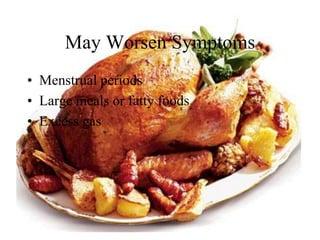
May Worsen Symptoms
• Menstrual periods
• Large meals or fatty foods
• Excess gas
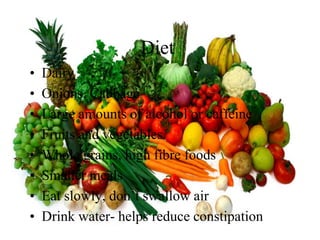
Diet
•   Dairy
•   Onions, Cabbage
•   Large amounts of alcohol or caffeine
•   Fruits and vegetables
•   Whole grains, high fibre foods
•   Smaller meals
•   Eat slowly, don’t swallow air
•   Drink water- helps reduce constipation
Stress Management
• Relaxation
• Biofeedback
• Counselling
Education
• Learn about (IBS)
• Join support group
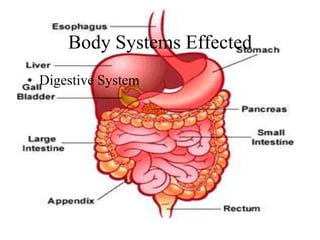
Body Systems Effected
• Digestive System
Transmission
• Not Contagious
• Possibly some genetic factors
• Cannot be spread
Diagnosis
•   The number of tests
•   No single test that can diagnose disorder
•   Emotional or physiological problems
•   Sigmoidoscopy
•   Barium Enema
Prevention
• Enough fibre in diet
• Stop smoking, avoid excessive amounts of
  caffeine
• Yoga, relaxation techniques
• Regular excersise
• Imagery tape to listen to at home
• A round of golf or tennis or a half hours
  worth of swimming laps
• Healthy outlets for stress
Treatment
• Change diet and relaxation techniques
• Antispasmodic drugs to relax contractions
  of digestive tract, help relieve abdominal
  pain
Outcome
• People recover with treatment
• No long term effects
• If no treatment you will have sever pain and
  sickness
People At Risk
•   20-30 year old men or women
•   Females twice as common
•   People with stress in their lives
•   Certain foods make symptoms worse
Other
• As many as 2 in 10 people have symptoms
  of (IBS)

Irritable bowel syndrome disease

  • 1.
    Irritable Bowel Syndrome By: Rocco Paolino
  • 2.
    Definition • A combinationof intermittent abdominal pain, constipation and/or diarrhea.
  • 3.
    Cause • Abnormal contractionsof muscles in the intestinal walls • Develops after gastrointestinal infection • Stress, anxiety or depression are often part of (IBS) • Peristalsis becomes irregular and uncoordinated disrupting normal digestive process • Over eating or binge eating, known to aggravate (IBS) • Too much fat in diet • Eating too quickly, eating irregularly, smoking
  • 4.
    Cause • Muscles incolon don’t work may spasm • Colon more sensitive to food and medication • Food allergies, bacteria
  • 5.
    Symptoms • Abdominal bloatingand excessive quantities of gas • Abdominal pain, often on lower left side, relieved by defecation or passing gas • Diarrhea may be most severe on waking and may alternate with inconsistent constipation that may produce rabbit pellet stools • Feeling that bowel is not completely empty • Mucus passing during defection • Nausea and Vomiting • Often full and not finishing meals
  • 6.
    Symptoms • Loose stools •Diarrhea • Constipation • Alternating diarrhea and constipation • Urge to move bowels again immediately following a bowel movement • Mucus in the stool
  • 7.
    May Worsen Symptoms •Menstrual periods • Large meals or fatty foods • Excess gas
  • 8.
    Diet • Dairy • Onions, Cabbage • Large amounts of alcohol or caffeine • Fruits and vegetables • Whole grains, high fibre foods • Smaller meals • Eat slowly, don’t swallow air • Drink water- helps reduce constipation
  • 9.
    Stress Management • Relaxation •Biofeedback • Counselling
  • 10.
    Education • Learn about(IBS) • Join support group
  • 11.
    Body Systems Effected •Digestive System
  • 12.
    Transmission • Not Contagious •Possibly some genetic factors • Cannot be spread
  • 13.
    Diagnosis • The number of tests • No single test that can diagnose disorder • Emotional or physiological problems • Sigmoidoscopy • Barium Enema
  • 14.
    Prevention • Enough fibrein diet • Stop smoking, avoid excessive amounts of caffeine • Yoga, relaxation techniques • Regular excersise • Imagery tape to listen to at home • A round of golf or tennis or a half hours worth of swimming laps • Healthy outlets for stress
  • 15.
    Treatment • Change dietand relaxation techniques • Antispasmodic drugs to relax contractions of digestive tract, help relieve abdominal pain
  • 16.
    Outcome • People recoverwith treatment • No long term effects • If no treatment you will have sever pain and sickness
  • 17.
    People At Risk • 20-30 year old men or women • Females twice as common • People with stress in their lives • Certain foods make symptoms worse
  • 18.
    Other • As manyas 2 in 10 people have symptoms of (IBS)