Advanced PathophysiologyN570/5270
Irritable Bowel SyndromeGastro Esophageal Reflux Disease
IBSIrritable Bowel SyndromeChaluza Kapaale RN, BSN
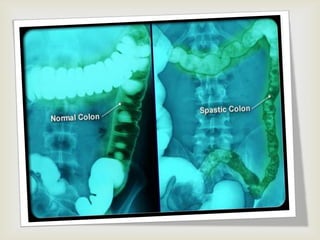
Spastic colon, Irritable colon, Mucous colitisAffects 10% to 15% of North American populationNot structuralCharacterized by abdominal pain and cramping with alterations in bowel movementsMore common in women ranging from teens to age 40IBS typically co-exists with anxiety and depressionIRRITABLE BOWEL SYNDROME
The cause of IBS is not known but suggestions about the cause based on possible explanations of symptoms have been made.What Causes IBS??
Usually accompanied by distention of the rectum and other areas of the intestine.  May be caused by disturbances  in the brain gut-axis, serotonin, action of mast cells and T-lymphocytes, changes in autonomic and central nervous system  function increasing perception of visceral pain.Visceral hypersensitivity or hyperalgesia
low grade inflammation and abnormal immune responses  in  intestinal tissue caused by intestinal infection  have been linked to some IBS symptoms.Post infectious IBS
Overgrowth of bowel flora is often associated with IBS symptoms.  Methane gas has been suggested to slow colonic transit times.Intestinal flora overpopulation
:    Allergic reactions to consumed food increase mucosal hypersensitivity and IBS symptoms.Foods such as chocolate, wheat, milk and alcohol are usually the culprits for these reactions. Food allergy and food intolerance
Influence  brain – gut interactions, including neuro endocrine and pain modulation activities encouraging IBS symptoms.Psychosocial  factors:
Those with diarrhea have fast colonic transit times and those with constipation have slower colon transit times.  Changes most likely caused by visceral hypersensitivity or  malfunction  of the brain-gut axis and the role of serotonin in the enteric nervous system.Abnormal motility and secretion
As the name implies IBS affects the bowel.Lower abdominal pain, diarrhea, constipation,  or both diarrhea and constipation, gas, bloating and nausea.  Fecal urgency and incomplete evacuation.Symptoms are usually relived by defecation.Does not cause permanent damage to bowel and does not lead to adverse complications such as cancer.TARGET SYSTEM
IBS is often a life long condition that is usually disabling.It affects life styles more than actual physical body systems by interfering with work, travel, socializing and other activities of daily living.The main  effect on the body is alterations in nutrition.Typically does not affect sleep patternsWHOLE BODY
Based on signs and symptoms after ruling out structural and biochemical  causes.  Blood tests to rule out anemia and stool cultures to rule out infection.   Celiac disease, colon cancer and inflammatory bowel disease are some causes of symptoms that must be ruled out. Sigmoidoscopy and colonoscopy as needed may be used.Diagnosis
3 months of continuous or recurring symptoms of abdominal pain or irritation thatMay be relieved with a bowel movement,May be coupled with a change in frequency, orMay be related to a change in the consistency of stools.ROME III
Two or more of the following are present at least 25 percent (one quarter) of the time:A change in stool frequency (more than 3 bowel movement per day or fewer than 3 bowel movements per week) Noticeable difference in stool form (hard, loose and watery stools or poorly formed stools) Passage of mucous in stoolsBloating or feeling of abdominal distentionAltered stool passage (e.g. sensations of incomplete evacuation, straining, or urgency)ROME III
There is no cure, treatment addresses symptoms which vary among individuals.Life style changes like avoiding foods and drinks that stimulate the intestine such as caffeine, soda or tea.Smaller meals are betterAvoid wheat, chocolate, milk products and alcoholIncrease dietary fiberTreatment
GERDGastro Esophageal Reflux DiseaseChaluza Kapaale RN,BSN
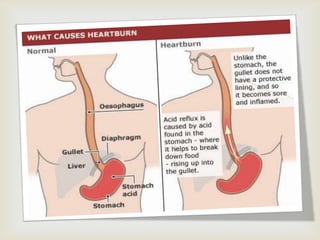
GERD is a more serious form of a common condition referred to as Gastro esophageal Reflux (GER)GER occurs when the lower esophageal sphincter becomes incompetent.  The failure of the sphincter to perform its function causes regurgitation  of stomach contents into the esophagus.The contents of the stomach include acidic digestive juices and food.GERD
The acid in the refluxed contents causes the burning sensation  in the chest and throat referred to as heart burn or acid indigestion.GER that is frequent and occurs more than twice a week is considered GERDRisk factors include obesity and GERD
The primary symptom is recurrent heart burn.Heart burn is described as a burning sensation in the lower part of the mid chest, behind the breast bone and mid abdomen.It is possible to have GERD without heart burnDry cough, asthma symptoms and trouble swallowing.Symptoms
The cause is undetermined in some  peopleThe lower esophageal  Sphincter relaxes randomlyAnatomical abnormalities include hiatal herniaThe diaphragm helps the lower esophageal sphincter  in its functionDuodenal ulcers and pyloric strictures that delay gastric emptyingWhat Causes GERD??
The presence of a hiatal hernia creates optimal conditions for GERD however it is possible to have a hiatal hernia and no symptoms of GERD.Other factors that facilitate the occurrence of GERD include obesity, pregnancy and smoking.Food types such as chocolate, citrus fruits, fatty fried foods etc.  potentiate reflux symptoms.What Causes GERD??
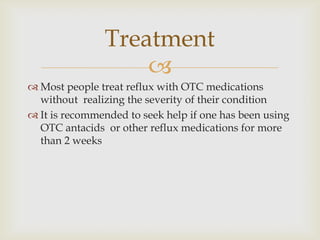
Most people treat reflux with OTC medications without  realizing the severity of their conditionIt is recommended to seek help if one has been using OTC antacids  or other reflux medications for more than 2 weeksTreatment
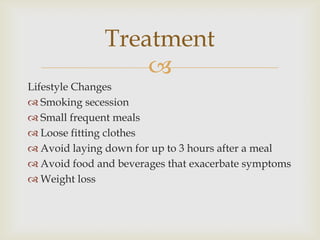
Lifestyle Changes Smoking secessionSmall frequent mealsLoose fitting clothesAvoid laying down for up to 3 hours after a mealAvoid food and beverages that exacerbate symptomsWeight lossTreatment
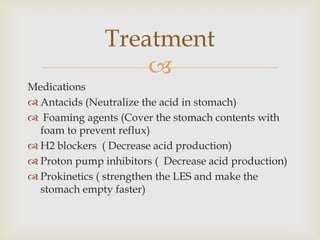
MedicationsAntacids (Neutralize the acid in stomach)Foaming agents (Cover the stomach contents with foam to prevent reflux)H2 blockers  ( Decrease acid production)Proton pump inhibitors (  Decrease acid production)Prokinetics ( strengthen the LES and make the stomach empty faster)Treatment
SurgeryFundoplicationVagotomyTests for unresolved symptomsBarium Swallow Radiograph Upper endoscopypH monitoringTreatment
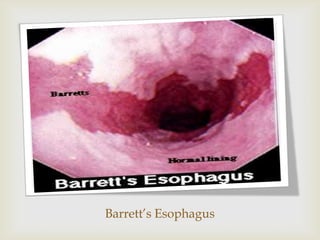
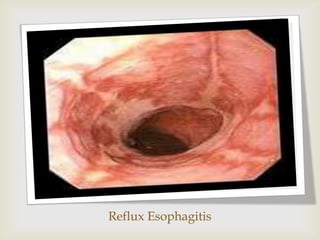
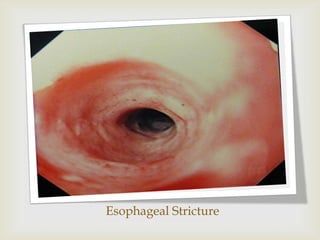
EsophagitisEsophageal StricturesBarrett’s Esophagus, occurs in 10% of GERD patients and 40 times more likely to develop into esophageal cancerEsophageal cancerTarget System
Barrett’s Esophagus
Reflux Esophagitis
Esophageal Stricture
Unrelieved GERD can lead to asthma exacerbation, chronic cough and pulmonary fibrosisIf complications progress to esophageal cancer there is a high possibility of metastasis.Alterations in nutritional intake.Whole Body
IBS is characterized byConstipationDiarrheaGasAll the aboveQuestions
IBS is associated withDiverticulum in the colonUlcerations in the colonColorectal cancerNon structural complicationsQuestions
Rome III is primarily used to?Classify stages of IBSDiagnose GERDDiagnose IBSNone of the aboveQuestions
Resection of the vagus nerve by vagotomy reduces symptoms GERD byIncreasing acid productionPromoting gastric emptyingReducing acid productionReducing gastric emptyingQuestions
Which complication of GERD most often leads to cancer?Barrett's esophagusEsophageal stricturesEsophageal varicesesophagitisQuestions
McCance k., Huether S., Brashers V., Rote N., (2010). Pathophysiology- The Biological Basis for Disease in Adults and Children (745-765). Missouri:MosbyElsevier.National Digestive Diseases Information Clearinghouse.Gastro Esophageal Disease.Retrieved March 20, 2011: http://digestive.niddk.nih.gov/ddiseases/pubs/gerd/Reference

Presentation IBS & GERD

  • 1.
  • 2.
    Irritable Bowel SyndromeGastroEsophageal Reflux Disease
  • 3.
  • 4.
    Spastic colon, Irritablecolon, Mucous colitisAffects 10% to 15% of North American populationNot structuralCharacterized by abdominal pain and cramping with alterations in bowel movementsMore common in women ranging from teens to age 40IBS typically co-exists with anxiety and depressionIRRITABLE BOWEL SYNDROME
  • 6.
    The cause ofIBS is not known but suggestions about the cause based on possible explanations of symptoms have been made.What Causes IBS??
  • 7.
    Usually accompanied bydistention of the rectum and other areas of the intestine. May be caused by disturbances in the brain gut-axis, serotonin, action of mast cells and T-lymphocytes, changes in autonomic and central nervous system function increasing perception of visceral pain.Visceral hypersensitivity or hyperalgesia
  • 8.
    low grade inflammationand abnormal immune responses in intestinal tissue caused by intestinal infection have been linked to some IBS symptoms.Post infectious IBS
  • 9.
    Overgrowth of bowelflora is often associated with IBS symptoms. Methane gas has been suggested to slow colonic transit times.Intestinal flora overpopulation
  • 10.
    : Allergic reactions to consumed food increase mucosal hypersensitivity and IBS symptoms.Foods such as chocolate, wheat, milk and alcohol are usually the culprits for these reactions. Food allergy and food intolerance
  • 11.
    Influence brain– gut interactions, including neuro endocrine and pain modulation activities encouraging IBS symptoms.Psychosocial factors:
  • 12.
    Those with diarrheahave fast colonic transit times and those with constipation have slower colon transit times. Changes most likely caused by visceral hypersensitivity or malfunction of the brain-gut axis and the role of serotonin in the enteric nervous system.Abnormal motility and secretion
  • 13.
    As the nameimplies IBS affects the bowel.Lower abdominal pain, diarrhea, constipation, or both diarrhea and constipation, gas, bloating and nausea. Fecal urgency and incomplete evacuation.Symptoms are usually relived by defecation.Does not cause permanent damage to bowel and does not lead to adverse complications such as cancer.TARGET SYSTEM
  • 14.
    IBS is oftena life long condition that is usually disabling.It affects life styles more than actual physical body systems by interfering with work, travel, socializing and other activities of daily living.The main effect on the body is alterations in nutrition.Typically does not affect sleep patternsWHOLE BODY
  • 15.
    Based on signsand symptoms after ruling out structural and biochemical causes. Blood tests to rule out anemia and stool cultures to rule out infection. Celiac disease, colon cancer and inflammatory bowel disease are some causes of symptoms that must be ruled out. Sigmoidoscopy and colonoscopy as needed may be used.Diagnosis
  • 16.
    3 months ofcontinuous or recurring symptoms of abdominal pain or irritation thatMay be relieved with a bowel movement,May be coupled with a change in frequency, orMay be related to a change in the consistency of stools.ROME III
  • 17.
    Two or moreof the following are present at least 25 percent (one quarter) of the time:A change in stool frequency (more than 3 bowel movement per day or fewer than 3 bowel movements per week) Noticeable difference in stool form (hard, loose and watery stools or poorly formed stools) Passage of mucous in stoolsBloating or feeling of abdominal distentionAltered stool passage (e.g. sensations of incomplete evacuation, straining, or urgency)ROME III
  • 18.
    There is nocure, treatment addresses symptoms which vary among individuals.Life style changes like avoiding foods and drinks that stimulate the intestine such as caffeine, soda or tea.Smaller meals are betterAvoid wheat, chocolate, milk products and alcoholIncrease dietary fiberTreatment
  • 19.
    GERDGastro Esophageal RefluxDiseaseChaluza Kapaale RN,BSN
  • 20.
    GERD is amore serious form of a common condition referred to as Gastro esophageal Reflux (GER)GER occurs when the lower esophageal sphincter becomes incompetent. The failure of the sphincter to perform its function causes regurgitation of stomach contents into the esophagus.The contents of the stomach include acidic digestive juices and food.GERD
  • 21.
    The acid inthe refluxed contents causes the burning sensation in the chest and throat referred to as heart burn or acid indigestion.GER that is frequent and occurs more than twice a week is considered GERDRisk factors include obesity and GERD
  • 22.
    The primary symptomis recurrent heart burn.Heart burn is described as a burning sensation in the lower part of the mid chest, behind the breast bone and mid abdomen.It is possible to have GERD without heart burnDry cough, asthma symptoms and trouble swallowing.Symptoms
  • 23.
    The cause isundetermined in some peopleThe lower esophageal Sphincter relaxes randomlyAnatomical abnormalities include hiatal herniaThe diaphragm helps the lower esophageal sphincter in its functionDuodenal ulcers and pyloric strictures that delay gastric emptyingWhat Causes GERD??
  • 24.
    The presence ofa hiatal hernia creates optimal conditions for GERD however it is possible to have a hiatal hernia and no symptoms of GERD.Other factors that facilitate the occurrence of GERD include obesity, pregnancy and smoking.Food types such as chocolate, citrus fruits, fatty fried foods etc. potentiate reflux symptoms.What Causes GERD??
  • 26.
    Most people treatreflux with OTC medications without realizing the severity of their conditionIt is recommended to seek help if one has been using OTC antacids or other reflux medications for more than 2 weeksTreatment
  • 27.
    Lifestyle Changes SmokingsecessionSmall frequent mealsLoose fitting clothesAvoid laying down for up to 3 hours after a mealAvoid food and beverages that exacerbate symptomsWeight lossTreatment
  • 28.
    MedicationsAntacids (Neutralize theacid in stomach)Foaming agents (Cover the stomach contents with foam to prevent reflux)H2 blockers ( Decrease acid production)Proton pump inhibitors ( Decrease acid production)Prokinetics ( strengthen the LES and make the stomach empty faster)Treatment
  • 29.
    SurgeryFundoplicationVagotomyTests for unresolvedsymptomsBarium Swallow Radiograph Upper endoscopypH monitoringTreatment
  • 30.
    EsophagitisEsophageal StricturesBarrett’s Esophagus,occurs in 10% of GERD patients and 40 times more likely to develop into esophageal cancerEsophageal cancerTarget System
  • 31.
  • 32.
  • 33.
  • 34.
    Unrelieved GERD canlead to asthma exacerbation, chronic cough and pulmonary fibrosisIf complications progress to esophageal cancer there is a high possibility of metastasis.Alterations in nutritional intake.Whole Body
  • 35.
    IBS is characterizedbyConstipationDiarrheaGasAll the aboveQuestions
  • 36.
    IBS is associatedwithDiverticulum in the colonUlcerations in the colonColorectal cancerNon structural complicationsQuestions
  • 37.
    Rome III isprimarily used to?Classify stages of IBSDiagnose GERDDiagnose IBSNone of the aboveQuestions
  • 38.
    Resection of thevagus nerve by vagotomy reduces symptoms GERD byIncreasing acid productionPromoting gastric emptyingReducing acid productionReducing gastric emptyingQuestions
  • 39.
    Which complication ofGERD most often leads to cancer?Barrett's esophagusEsophageal stricturesEsophageal varicesesophagitisQuestions
  • 40.
    McCance k., HuetherS., Brashers V., Rote N., (2010). Pathophysiology- The Biological Basis for Disease in Adults and Children (745-765). Missouri:MosbyElsevier.National Digestive Diseases Information Clearinghouse.Gastro Esophageal Disease.Retrieved March 20, 2011: http://digestive.niddk.nih.gov/ddiseases/pubs/gerd/Reference