A REVIEW ON ENERGY FROM
BIOMASS
(NON CONVENTIONAL ENERGY
SOURCES)
Sanjana:EEE
Alekhya:EEE
Importance of non-conventional
sources of energy:
1. The non-conventional sources of energy are abundant in
nature. According to energy experts the non-conventional
energy potential of India is estimated at about 95,000 MW.
2. These are renewable resources. The non-conventional
sources of energy can be renewed with minimum effort and
money.
3. Non-conventional sources of energy are pollution-free and
eco-friendly
• Bioenergy is renewable energy made available from materials derived from
biological sources.
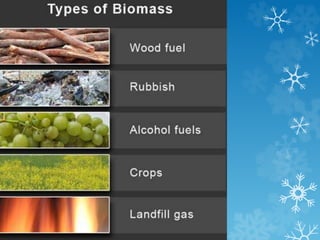
• Biomass is any organic material, may include wood, wood waste, straw,
manure, sugar cane and many other byproducts from a variety of
agricultural processes.
Bio-Energy
Biomass
 Biomass is organic matter produced by plants – terrestrial and
aquatic – and their derivatives. It includes
1. Forest crops and residues
2. Crops specially grown in ‘energy farms’ for their energy content
3. Animal manure
Biomass Energy
• Biomass continues to account for an estimated 1/3rd of primary
energy use, while in the poorest counties up to 90% of all energy is
supplied by biomass
• Biomass energy, or bio energy is the conversion of biomass (organic
material originating from plants, trees, and crops and essentially
the collection and storage of the sun’s energy through
photosynthesis) into useful forms of energy such as heat, electricity,
and liquid fuels
Biomass Energy Conversion Technologies
Biomass energy conversion technologies/applications include:
• Combustion
• Gasification
• Anaerobic Digestion
• Liquid Biofuels
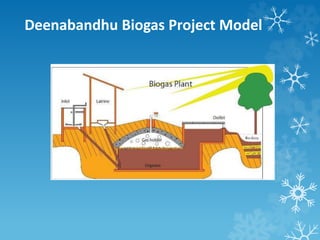
Deenabandhu Biogas Project Model
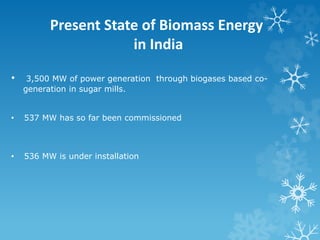
Present State of Biomass Energy
in India
• 3,500 MW of power generation through biogases based co-
generation in sugar mills.
• 537 MW has so far been commissioned
• 536 MW is under installation
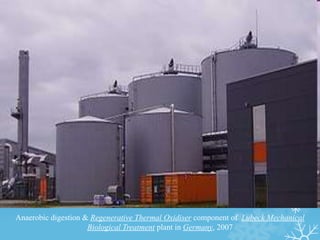
Anaerobic digestion & Regenerative Thermal Oxidiser component of Lubeck Mechanical
Biological Treatment plant in Germany, 2007
** By Alternative Investor **
Biomass How It Will Work ??
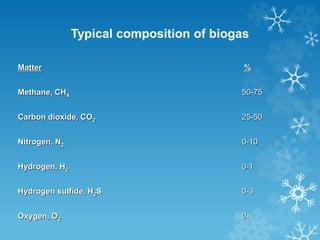
Typical composition of biogas
Matter %
Methane, CH4 50-75
Carbon dioxide, CO2 25-50
Nitrogen, N2 0-10
Hydrogen, H2 0-1
Hydrogen sulfide, H2S 0-3
Oxygen, O2 0-
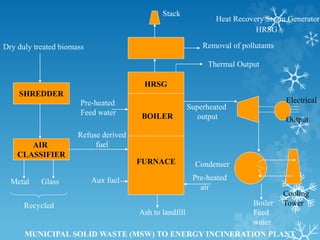
MUNICIPAL SOLID WASTE (MSW) TO ENERGY INCINERATION PLANT
SHREDDER
AIR
CLASSIFIER
Heat Recovery Steam Generator
HRSG
Dry duly treated biomass
HRSG
BOILER
FURNACE
Stack
Removal of pollutants
Superheated
output
Condenser
Boiler
Feed
water
Cooling
Tower
Pre-heated
Feed water
Refuse derived
fuel
Aux fuelMetal Glass
Recycled
Thermal Output
Electrical
Output
Ash to landfill
Pre-heated
air
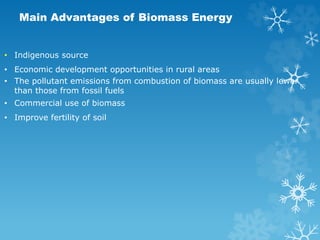
Main Advantages of Biomass Energy
• Indigenous source
• Economic development opportunities in rural areas
• The pollutant emissions from combustion of biomass are usually lower
than those from fossil fuels
• Commercial use of biomass
• Improve fertility of soil
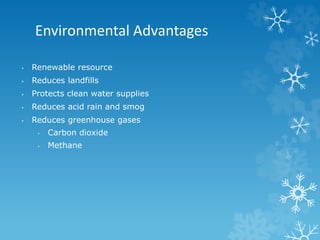
Environmental Advantages
• Renewable resource
• Reduces landfills
• Protects clean water supplies
• Reduces acid rain and smog
• Reduces greenhouse gases
• Carbon dioxide
• Methane
Disadvantages of Biomass Energy
• It is dispersed and land intensive as a source
• It is often of low energy density
• It is labour intensive and the cost of collecting large quantities for
commercial application is significant
Fuel Properties of Biogas
Calorific Value
60% Methane : 22.350 to 24.22 MJ/m3.
Without CO2 : 33.525 to 35.390 MJ/m3.
Octane rating without CO2 : 130
Octane rating with CO2 : 110
Ignition temperature : 6500 C
Air to methane ratio for complete
Combustion (by volume) : 10 to 1
Explosive limits to air (by volume) : 5 to 15
Applications
• Anaerobic digestion is used for effluent and sewage treatment.
• Anaerobic digestion is a simple process that can greatly reduce the
amount of organic matter which might otherwise be destined to be
landfilled or burnt in an incinerator.
• Almost any organic material can be processed with anaerobic digestion.
This includes biodegradable waste materials such as waste paper, grass
clippings, leftover food, sewage and animal waste.
• Anaerobic digesters can also be fed with specially grown energy crops
such as silage for dedicated biogas production.
Thank You

Biomass energy ppt

  • 1.
    A REVIEW ONENERGY FROM BIOMASS (NON CONVENTIONAL ENERGY SOURCES) Sanjana:EEE Alekhya:EEE
  • 2.
    Importance of non-conventional sourcesof energy: 1. The non-conventional sources of energy are abundant in nature. According to energy experts the non-conventional energy potential of India is estimated at about 95,000 MW. 2. These are renewable resources. The non-conventional sources of energy can be renewed with minimum effort and money. 3. Non-conventional sources of energy are pollution-free and eco-friendly
  • 3.
    • Bioenergy isrenewable energy made available from materials derived from biological sources. • Biomass is any organic material, may include wood, wood waste, straw, manure, sugar cane and many other byproducts from a variety of agricultural processes. Bio-Energy
  • 4.
    Biomass  Biomass isorganic matter produced by plants – terrestrial and aquatic – and their derivatives. It includes 1. Forest crops and residues 2. Crops specially grown in ‘energy farms’ for their energy content 3. Animal manure
  • 5.
    Biomass Energy • Biomasscontinues to account for an estimated 1/3rd of primary energy use, while in the poorest counties up to 90% of all energy is supplied by biomass • Biomass energy, or bio energy is the conversion of biomass (organic material originating from plants, trees, and crops and essentially the collection and storage of the sun’s energy through photosynthesis) into useful forms of energy such as heat, electricity, and liquid fuels
  • 7.
    Biomass Energy ConversionTechnologies Biomass energy conversion technologies/applications include: • Combustion • Gasification • Anaerobic Digestion • Liquid Biofuels
  • 8.
  • 9.
    Present State ofBiomass Energy in India • 3,500 MW of power generation through biogases based co- generation in sugar mills. • 537 MW has so far been commissioned • 536 MW is under installation
  • 10.
    Anaerobic digestion &Regenerative Thermal Oxidiser component of Lubeck Mechanical Biological Treatment plant in Germany, 2007
  • 11.
    ** By AlternativeInvestor ** Biomass How It Will Work ??
  • 12.
    Typical composition ofbiogas Matter % Methane, CH4 50-75 Carbon dioxide, CO2 25-50 Nitrogen, N2 0-10 Hydrogen, H2 0-1 Hydrogen sulfide, H2S 0-3 Oxygen, O2 0-
  • 13.
    MUNICIPAL SOLID WASTE(MSW) TO ENERGY INCINERATION PLANT SHREDDER AIR CLASSIFIER Heat Recovery Steam Generator HRSG Dry duly treated biomass HRSG BOILER FURNACE Stack Removal of pollutants Superheated output Condenser Boiler Feed water Cooling Tower Pre-heated Feed water Refuse derived fuel Aux fuelMetal Glass Recycled Thermal Output Electrical Output Ash to landfill Pre-heated air
  • 14.
    Main Advantages ofBiomass Energy • Indigenous source • Economic development opportunities in rural areas • The pollutant emissions from combustion of biomass are usually lower than those from fossil fuels • Commercial use of biomass • Improve fertility of soil
  • 15.
    Environmental Advantages • Renewableresource • Reduces landfills • Protects clean water supplies • Reduces acid rain and smog • Reduces greenhouse gases • Carbon dioxide • Methane
  • 16.
    Disadvantages of BiomassEnergy • It is dispersed and land intensive as a source • It is often of low energy density • It is labour intensive and the cost of collecting large quantities for commercial application is significant
  • 17.
    Fuel Properties ofBiogas Calorific Value 60% Methane : 22.350 to 24.22 MJ/m3. Without CO2 : 33.525 to 35.390 MJ/m3. Octane rating without CO2 : 130 Octane rating with CO2 : 110 Ignition temperature : 6500 C Air to methane ratio for complete Combustion (by volume) : 10 to 1 Explosive limits to air (by volume) : 5 to 15
  • 18.
    Applications • Anaerobic digestionis used for effluent and sewage treatment. • Anaerobic digestion is a simple process that can greatly reduce the amount of organic matter which might otherwise be destined to be landfilled or burnt in an incinerator. • Almost any organic material can be processed with anaerobic digestion. This includes biodegradable waste materials such as waste paper, grass clippings, leftover food, sewage and animal waste. • Anaerobic digesters can also be fed with specially grown energy crops such as silage for dedicated biogas production.
  • 19.