PANCREATITIS
DR EVA VELIKOSHI-INDONGO
(DIP NURSING/MIDWIFERY, RN/RM/RT, BNSC (HSM),
NED (NDP), MNSc, PhDNSc (UNAM), MBChB (ZAMBIA)
March 2020
1
Outline
• Definition
• Anatomy of the pancreas
• Pathophysiology
• Clinical manifestations
• Diagnosis
• Treatment
• Nursing care of patient with pancreatitis
2
1. Introduction
Definition: Inflammation of the pancreas
• Can be acute or chronic
• Acute- sudden onset of abdominal pain emergency
• Chronic- gradual damage, associated with fibrosis development
• Affects people of all ages, mortality worse with increasing age
• Mortality due to complications
3
2. Anatomy and physiology of pancreas
• Anatomy:
• Size 15cm
• Location: Concavity of duodenum
• Parts: Head, neck, body, tail
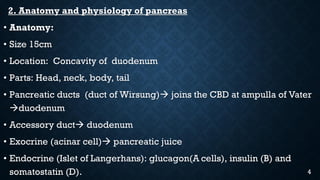
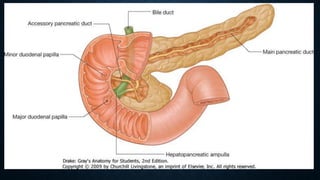
• Pancreatic ducts (duct of Wirsung) joins the CBD at ampulla of Vater
duodenum
• Accessory duct duodenum
• Exocrine (acinar cell) pancreatic juice
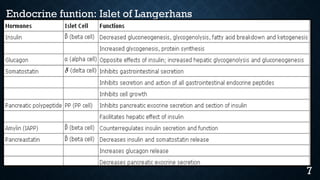
• Endocrine (Islet of Langerhans): glucagon(A cells), insulin (B) and
somatostatin (D). 4
5
6
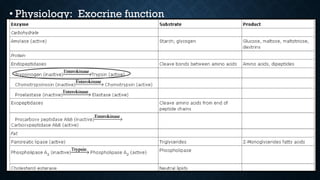
• Physiology: Exocrine function
Endocrine funtion: Islet of Langerhans
7
3. Acute pancreatitis
• Reversible parenchymal injury associated with inflammation
Pathophysiology
• Inappropriately activated enzymes leak into pancreatic parenchyma auto-
digestion mainly by trypsin.
• Not well understood
• Causes: 80% cases associated with gall stones and alcoholism
8
• Gall stones: Obstruction of the CBD at Ampulla of Vater
Obstruction of pancreatic juice and bile reflux of bile into main
pancreatic duct enzymes activation digestion of the gland
immune response vasodilation, ↑permeability, edema, necrosis,
blood vessels damage (haemorrhage).
• Alcohol: 1) May stimulate enzymes secretion
2) increases pancreatic secretion and contraction of sphincter of
Oddi
3) Direct toxic effect on acinar cells
9
Other causes
• Viral infections (e.g. CMV, Mumps)
• Drugs (AZT, steroids, diuretics, valporic acid)
• Metabolic (hyperlipidemia, hypocalcemia)
• Scorpion bite
• Trauma (blunt abdominal trauma)
• Operations (pancreas instrumentation procedures)
10
4. Clinical manifestations
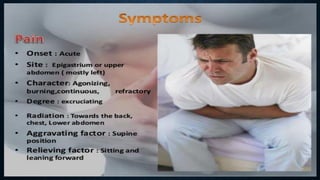
• Sudden severe abdominal pain after a meal/alcohol intake
• Radiates to the back
• Exacerbated by walking/lying supine
• Relieved by sitting or bending forward
• Nausea/vomiting, May present with fever, hypotension
11
12
• Ckdhfgd
Physical examination:
• tenderness in epigastric area
• Reduced or absent bowel sounds and guarding (peritonitis)
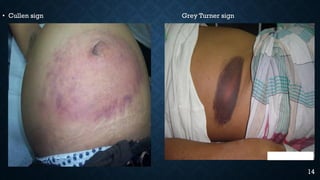
• Severe pancreatitis: Bruising and discoloration of the left flank due to
hemorrhagic pancreatitis
 Retroperitoneal bleeding: Cullen sign and Grey Turner’s Syndrome
13
14
• Cullen sign Grey Turner sign
Diagnosis
• History and physical examination
• Investigations:
• Pancreatic enzymes:
- Serum lipase - may stay elevated for up to 12 days (specific and sensitive)
- Serum amylase - usually returns to normal within a few days of treatment
• WBC- > ↑12 000 (leukocytosis) may inflammation or infection
• Hematocrit - ↑ indicates hypovolemia
• Creatinine and electrolytes- abnormalities may indicate ARF
• Serum glucose - monitor for hyperglycemia due to lack of insulin secretion
15
- Abdominal scan- US, CT, MRI
• Serum calcium
• Lipids profile (triglycerides)
16
Prognosis
• Complete recovery
• Progression to chronic pancreatitis
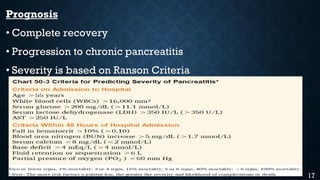
• Severity is based on Ranson Criteria
17
Complications
• Shock (recall immune response to inflammation)
• Acute renal failure
• Multi-organ failure
• Pancreatic abscess
• Pancreatic pseudocyst
• Chronic pancreatitis
• Duodenal obstruction
• Pancreatic Ca
18
19
Management
• Medical: as an emergency
• Resuscitative phase:
- IV fluids prevent hypovolemia/shock
- Breathing airway patency, oxygen administration
- Pain analgesics pref. opiods,
- Decrease HCl secretion: H2 inhibitors Cimetidine (Tagamet),
Ranitidine
- Keep NBM/NPO to rest the pancreas
• Surgical – if abscess or obstruction
Chronic Pancreatitis
• Progressive, irreversible, permanent destruction of the pancreas with chronic
inflammation and fibrosis
• Results in irreversible impairment in pancreatic function
• Common in middle aged males 50years of age
20
Pathophysiology
• Cause not well understood
• Pancreas becomes destroyed and replaced by fibrotic tissue
• Strictures and calcifications can also occur obstruction
• Ducts maybe obstructed with protein precipitates, block the
pancreatic duct and eventually calcify
• Persistent heavy alcohol use and long term smoking
Also long-standing duct obstruction by tumor or gallbladder stone
21
Clinical manifestation
• Recurrent or persistent abd and back pain
• Vomiting
• Attacks may be triggered by alcohol intake or food intake
• May present as pancreatic insufficiency or diabetes mellitus
• Malabsorption (90% exocrine function loss) steatorrhea
• Wt loss due to anorexia (food intake may trigger pain)
22
Diagnosis
• Based on signs/symptoms, laboratory studies, and imaging
• Investigations:
• Serum amylase/lipase (specific and sensitive)
• Serum Alkaline phosphatase
• FBC- Mild leukocytosis
• Elevated ESR
• U/S
• ERCP Endoscopic Retrograde Cholangiopanceatography
• Visualize pancreatic/common bile duct
23
Management
• Focus is on chronic care and health promotion
• Dietary control- low protein and fats diet
• No alcohol
• Control of diabetes
• Taking pancreatic enzymes
24
Nursing care plan
Problems and risks:
• Acute pain
• Risk for deficient fluid volume
• Imbalanced nutrition: less than body requirements
• Risk for infection
• Deficient knowledge
25
1) Pain due to obstruction of biliary and pancreatic duct as well as
by inflammation.
• Assess and manage pain
- Assess pain frequency and intensity
- Administer medications as prescribed
 analgesics (opiods e.g. Pethidine), antacids (H2 blockers e.g.
Cimetidine/Tagamet), PPI (Omeprazole), sedatives (e.g. valium)
• Provide alternative comfort measures (back rub), pain diverting
activities (TV, radio)
• Bed rest
• Keep patient NBM till pain lessens 26
2 ) Deficient fluid volume secondary to decreased intravascular
fluid exudation (inflammatory process) and vomiting.
• Give IV hydration fluids as prescribed
• Monitor skin turgor and mucous membranes hydration status
• Intake and output chart, including vomitus/gastric aspirate
• Urine output chart
• BP, pulse
• Monitor laboratory studies (Hb and Hct, electrolytes, creatinine,
urinalysis, electrolytes (Na, K,))
27
3) Imbalanced nutrition related to decreased/inadequate oral
intake.
• Maintain NPO status and gastric suctioning in acute phase
• Provide frequent oral care
• Assess bowel sounds return indicate readiness to feed
• Small frequent meals  resume oral intake with clear liquids/sips
• Continue with high-protein, high-carbohydrate diet low fat as indicated
(Prevent Malnutrition)
• Replacement enzymes (Pancreatin (Dizymes), pancrelipase (Viokase))
• Insulin replacement prn
• Parenteral nutrition - inhibit stimulation of pancreatic enzymes 28
4) Risk of infection related to nutritional deficiencies and
tissue destruction.
• Assess and monitor vitals TPR, Pulse
• Assess abdomen: increased abdominal pain, rigidity and
rebound tenderness (Peritonitis)
• Assess bowel sounds sluggish/absent bowel sounds
peritonitis
• Report abnormalities
• Administer antibiotic therapy as indicated
• Prepare for surgical intervention as necessary. 29
5) Deficient knowledge due to absence or deficiency of cognitive
information related to specific topic.
• Educate patient and his/her family on his condition and prognosis
• Educate on risk/causative factors: excessive alcohol intake,
gallbladder disease, hyperlipidemia, some drugs (Zidovudine,
sulfonamides, oral contraceptives etc)
• Diet: low fat and low protein
• Encourage cessation of alcohol and smoking, assist with rehabilitation
• Educate on signs and symptoms of Diabetes Mellitus (3Ps)
**** WHAT HEALTH EDUCATION ARE YOU GOING TO GIVE TO
THIS PATIENT? [10 marks]****
30
Summary
• Anatomy of the pancreas
• Pathophysiology
• Clinical manifestations
• Diagnosis
• Treatment
• Nursing care of patient with pancreatitis
• **Health education**
31
THE END…
32

Pancreatitis

  • 1.
    PANCREATITIS DR EVA VELIKOSHI-INDONGO (DIPNURSING/MIDWIFERY, RN/RM/RT, BNSC (HSM), NED (NDP), MNSc, PhDNSc (UNAM), MBChB (ZAMBIA) March 2020 1
  • 2.
    Outline • Definition • Anatomyof the pancreas • Pathophysiology • Clinical manifestations • Diagnosis • Treatment • Nursing care of patient with pancreatitis 2
  • 3.
    1. Introduction Definition: Inflammationof the pancreas • Can be acute or chronic • Acute- sudden onset of abdominal pain emergency • Chronic- gradual damage, associated with fibrosis development • Affects people of all ages, mortality worse with increasing age • Mortality due to complications 3
  • 4.
    2. Anatomy andphysiology of pancreas • Anatomy: • Size 15cm • Location: Concavity of duodenum • Parts: Head, neck, body, tail • Pancreatic ducts (duct of Wirsung) joins the CBD at ampulla of Vater duodenum • Accessory duct duodenum • Exocrine (acinar cell) pancreatic juice • Endocrine (Islet of Langerhans): glucagon(A cells), insulin (B) and somatostatin (D). 4
  • 5.
  • 6.
  • 7.
    Endocrine funtion: Isletof Langerhans 7
  • 8.
    3. Acute pancreatitis •Reversible parenchymal injury associated with inflammation Pathophysiology • Inappropriately activated enzymes leak into pancreatic parenchyma auto- digestion mainly by trypsin. • Not well understood • Causes: 80% cases associated with gall stones and alcoholism 8
  • 9.
    • Gall stones:Obstruction of the CBD at Ampulla of Vater Obstruction of pancreatic juice and bile reflux of bile into main pancreatic duct enzymes activation digestion of the gland immune response vasodilation, ↑permeability, edema, necrosis, blood vessels damage (haemorrhage). • Alcohol: 1) May stimulate enzymes secretion 2) increases pancreatic secretion and contraction of sphincter of Oddi 3) Direct toxic effect on acinar cells 9
  • 10.
    Other causes • Viralinfections (e.g. CMV, Mumps) • Drugs (AZT, steroids, diuretics, valporic acid) • Metabolic (hyperlipidemia, hypocalcemia) • Scorpion bite • Trauma (blunt abdominal trauma) • Operations (pancreas instrumentation procedures) 10
  • 11.
    4. Clinical manifestations •Sudden severe abdominal pain after a meal/alcohol intake • Radiates to the back • Exacerbated by walking/lying supine • Relieved by sitting or bending forward • Nausea/vomiting, May present with fever, hypotension 11
  • 12.
  • 13.
    Physical examination: • tendernessin epigastric area • Reduced or absent bowel sounds and guarding (peritonitis) • Severe pancreatitis: Bruising and discoloration of the left flank due to hemorrhagic pancreatitis  Retroperitoneal bleeding: Cullen sign and Grey Turner’s Syndrome 13
  • 14.
    14 • Cullen signGrey Turner sign
  • 15.
    Diagnosis • History andphysical examination • Investigations: • Pancreatic enzymes: - Serum lipase - may stay elevated for up to 12 days (specific and sensitive) - Serum amylase - usually returns to normal within a few days of treatment • WBC- > ↑12 000 (leukocytosis) may inflammation or infection • Hematocrit - ↑ indicates hypovolemia • Creatinine and electrolytes- abnormalities may indicate ARF • Serum glucose - monitor for hyperglycemia due to lack of insulin secretion 15
  • 16.
    - Abdominal scan-US, CT, MRI • Serum calcium • Lipids profile (triglycerides) 16
  • 17.
    Prognosis • Complete recovery •Progression to chronic pancreatitis • Severity is based on Ranson Criteria 17
  • 18.
    Complications • Shock (recallimmune response to inflammation) • Acute renal failure • Multi-organ failure • Pancreatic abscess • Pancreatic pseudocyst • Chronic pancreatitis • Duodenal obstruction • Pancreatic Ca 18
  • 19.
    19 Management • Medical: asan emergency • Resuscitative phase: - IV fluids prevent hypovolemia/shock - Breathing airway patency, oxygen administration - Pain analgesics pref. opiods, - Decrease HCl secretion: H2 inhibitors Cimetidine (Tagamet), Ranitidine - Keep NBM/NPO to rest the pancreas • Surgical – if abscess or obstruction
  • 20.
    Chronic Pancreatitis • Progressive,irreversible, permanent destruction of the pancreas with chronic inflammation and fibrosis • Results in irreversible impairment in pancreatic function • Common in middle aged males 50years of age 20
  • 21.
    Pathophysiology • Cause notwell understood • Pancreas becomes destroyed and replaced by fibrotic tissue • Strictures and calcifications can also occur obstruction • Ducts maybe obstructed with protein precipitates, block the pancreatic duct and eventually calcify • Persistent heavy alcohol use and long term smoking Also long-standing duct obstruction by tumor or gallbladder stone 21
  • 22.
    Clinical manifestation • Recurrentor persistent abd and back pain • Vomiting • Attacks may be triggered by alcohol intake or food intake • May present as pancreatic insufficiency or diabetes mellitus • Malabsorption (90% exocrine function loss) steatorrhea • Wt loss due to anorexia (food intake may trigger pain) 22
  • 23.
    Diagnosis • Based onsigns/symptoms, laboratory studies, and imaging • Investigations: • Serum amylase/lipase (specific and sensitive) • Serum Alkaline phosphatase • FBC- Mild leukocytosis • Elevated ESR • U/S • ERCP Endoscopic Retrograde Cholangiopanceatography • Visualize pancreatic/common bile duct 23
  • 24.
    Management • Focus ison chronic care and health promotion • Dietary control- low protein and fats diet • No alcohol • Control of diabetes • Taking pancreatic enzymes 24
  • 25.
    Nursing care plan Problemsand risks: • Acute pain • Risk for deficient fluid volume • Imbalanced nutrition: less than body requirements • Risk for infection • Deficient knowledge 25
  • 26.
    1) Pain dueto obstruction of biliary and pancreatic duct as well as by inflammation. • Assess and manage pain - Assess pain frequency and intensity - Administer medications as prescribed  analgesics (opiods e.g. Pethidine), antacids (H2 blockers e.g. Cimetidine/Tagamet), PPI (Omeprazole), sedatives (e.g. valium) • Provide alternative comfort measures (back rub), pain diverting activities (TV, radio) • Bed rest • Keep patient NBM till pain lessens 26
  • 27.
    2 ) Deficientfluid volume secondary to decreased intravascular fluid exudation (inflammatory process) and vomiting. • Give IV hydration fluids as prescribed • Monitor skin turgor and mucous membranes hydration status • Intake and output chart, including vomitus/gastric aspirate • Urine output chart • BP, pulse • Monitor laboratory studies (Hb and Hct, electrolytes, creatinine, urinalysis, electrolytes (Na, K,)) 27
  • 28.
    3) Imbalanced nutritionrelated to decreased/inadequate oral intake. • Maintain NPO status and gastric suctioning in acute phase • Provide frequent oral care • Assess bowel sounds return indicate readiness to feed • Small frequent meals  resume oral intake with clear liquids/sips • Continue with high-protein, high-carbohydrate diet low fat as indicated (Prevent Malnutrition) • Replacement enzymes (Pancreatin (Dizymes), pancrelipase (Viokase)) • Insulin replacement prn • Parenteral nutrition - inhibit stimulation of pancreatic enzymes 28
  • 29.
    4) Risk ofinfection related to nutritional deficiencies and tissue destruction. • Assess and monitor vitals TPR, Pulse • Assess abdomen: increased abdominal pain, rigidity and rebound tenderness (Peritonitis) • Assess bowel sounds sluggish/absent bowel sounds peritonitis • Report abnormalities • Administer antibiotic therapy as indicated • Prepare for surgical intervention as necessary. 29
  • 30.
    5) Deficient knowledgedue to absence or deficiency of cognitive information related to specific topic. • Educate patient and his/her family on his condition and prognosis • Educate on risk/causative factors: excessive alcohol intake, gallbladder disease, hyperlipidemia, some drugs (Zidovudine, sulfonamides, oral contraceptives etc) • Diet: low fat and low protein • Encourage cessation of alcohol and smoking, assist with rehabilitation • Educate on signs and symptoms of Diabetes Mellitus (3Ps) **** WHAT HEALTH EDUCATION ARE YOU GOING TO GIVE TO THIS PATIENT? [10 marks]**** 30
  • 31.
    Summary • Anatomy ofthe pancreas • Pathophysiology • Clinical manifestations • Diagnosis • Treatment • Nursing care of patient with pancreatitis • **Health education** 31
  • 32.