Bruna Caltabiano
Caltabiano Idiomas
January 17, 2014.
Discuss
 What is professional development? In what areas is it

important?
Going beyond...
“It has been said that teachers who have been teaching
for twenty years may be divided into two categories:
those with twenty years’ experience and those with one
year’s experience repeated twenty times.”
(Ur 1996: 317)
In other words
 Sheer time on the job does not ensure experience
 Successful teachers are those who continue to develop

throughout their professional lives – the completion of
an initial qualification is just a beginning
(Ur, 1996)
 It is difficult to mantain a sense of engagement when
using the same old lesson routines or reading texts
time after time
 If we do not take steps towards development,
it is difficult to mantain the initial enthusiasm
(Harmer, 2007)
The vital importance...
Have you ever felt
 as if you were doing the same thing again and again?
 you have too many demands?
 boredom?
 very tired?

 like not taking risks because you’re safe?
 you have too many pressures?
 burned out?

 stressed?

(Scrivener, 2005)
Burnout
 Caused by such things as teaching too many contact

hours, having too much homework to mark, other
conditions at work, comutting, etc
 The best route out of teacher burnout is to re-engage,

with
TEACHER DEVELOPMENT
(Harmer, 2012)
‘You can train me, you can educate me,
but you can’t develop me – I develop’
(Piai 2005:21, in Harmer, 2007)
LANGUAGE
COURSES/CERTIFICATES
 Cambridge English: Proficiency (CPE)
 Cambridge English: Advanced (CAE)

 University of Michigan: Examination for the

Certificate of Proficiency in English (ECPE)
TEACHING CERTIFICATES
 TKT (Teacher Knowledge Test)
 CELTA (Certificate in English Language Teaching to

Adults)
 ICELT (In-service Certificate in English Language
Teaching)
 DELTA (Diploma in English Language
 Teaching to Adults)
 CerTESOL (Certificate in Teaching English for

Speakers of Other Languages)
 DipTESOL (Diploma in Teaching English for Speakers

of Other Languages)
REFLECTION
 What kind of teacher am I?
 What am I trying to achieve for myself and my

learners?
 What are my strengths and limitations as a language
teacher?
 How do my students and collegues view me?
 Why do I teach the way I do?
 How have I developed as a teacher since I started
teaching?
 What are the gaps in my knowledge?
(Richards, 2011)
Discuss
 Have you ever written down your thoughts about

lessons that you have taught or will teach?
If so, what were your impressions when rereading them?
Did you find them interesting? Useful as reminders?
Thought-provoking?
(Ur, 1991)
Ways of reflecting:
- Keeping journals;
- Joining a teacher support group;
- Audio or video-recording a lesson;
- Case reports;

- Teaching portfolio;
- Critical Incidents;
- Action Research.

(Richards, 2005)
Discuss
 Does your institution hold regular staff meetings? If

so, are they only for decision-making or do they also
include reflecting and sharing? How do you feel about
them?
We can:
Teach and teach or Teach and learn
Learn teaching = desire to move foward, to keep learning
from what happens. It involves feedback from others and
from ourserlves, reflection, attempts to do in different
way next time.
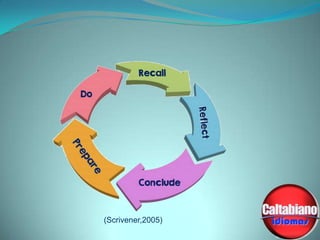
(Scrivener,2005)
Discuss

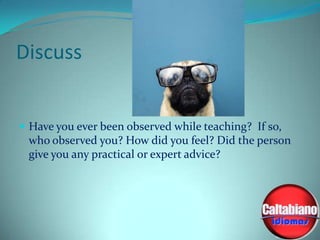
 Have you ever been observed while teaching? If so,

who observed you? How did you feel? Did the person
give you any practical or expert advice?
CLASS OBSERVATION
 Peer observation

Fellow teachers observe each other’s lesson. It helps:
- The observer learn new things and reflect on their own
teaching
- The observed have a chance to talk about their lesson
with an observer they trust
(Harmer, 2012)
 Formal Observation

Purposes:
Training, develpment, assessment, data collection
It provides perhaps the most useful help a learning
teacher can get.
An outside eye, who can help us see our particular
habits, ways of working, ways of speaking, avoidances,
etc.
(Scrivener, 2005)
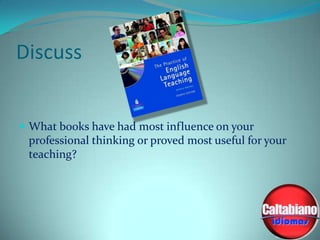
Discuss

 What books have had most influence on your

professional thinking or proved most useful for your
teaching?
LITERATURE
 Methodology books
 Journals
 Magazines

 Books in general – language improvement
Discuss
 Do you know any national or international

organization for English teachers?
 Have you attended at least one professional
conference? If so, how much do you feel the
experience contributed to you as a professional? How?
(Ur, 2001)
 Have you ever considered writing a paper and

presenting in a conference?
(Scrivener, 2005)
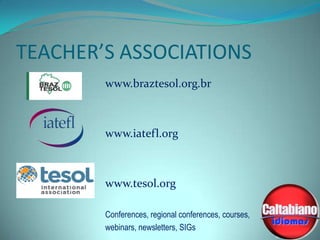
TEACHER’S ASSOCIATIONS
www.braztesol.org.br

www.iatefl.org

www.tesol.org
Conferences, regional conferences, courses,
webinars, newsletters, SIGs
Conferences
 They allow us to “hear about the latest developments in

the field, take part in investigative workshops and enter
into debates about current issues in theory and
practice. We can ‘network’ with other members of the
ELT community ...”
(Harmer, 2007: 423)
And
 “Submitting a paper or a workshop for a teachers’

association meeting, whether regional, national or
international, is one of the most powerful catalysts for
reflecting upon our practice. When we try to work out
exactly what we want to say and the best way of doing
it, we are forcing ourselves to assess what we do. The
challenge of a future audience sharpens our
perceptions.”
(Harmer, 2007: 422)
THE VIRTUAL COMMUNITY
Jeremy Harmer, Higor Cavalcante,
Luiz Otávio Barros, Willy Cardoso
BRELT, English Teachers, IATEFL,
Teachers of English, Facebook &
Learning
To sum it up – Professional
Priorities
 Attending Conferences
 Taking courses
 Getting a certificate, diploma or degree
 Peer observations/formal observations

 Lesson planning and reflection
 Reading
 Writing

 Getting online
BIBLIOGRAPY
 Harmer, Jeremy. Essential English Knowledge. Essex: Pearson

Education Limited, 2012.
 Harmer, Jeremy. The Practice of English Language Teaching. Essex:
Pearson Education Limited, 2007.
 Richards, Jack.; Farrel, Thomas. Practice Teaching – A Reflective
Approach. New York: Cambridge University Press, 2001.
 Richards, Jack; Farrel, Thomas. Professional Development for
Language Teachers: strategies for teacher learning.New York:
Cambridge University Press, 2005.
 Scrivener, Jim. Learning Teaching. Oxford: Macmillan Education,

2005.
 Ur, Penny. A Course in Language Teaching. Cambridge: Cambridge
University Press, 1991.
THANK YOU!
@caltabianoidio1
caltabiano.idiomas
bruna@caltabianoidiomas.com.br
www.caltabianoidiomas.com.br

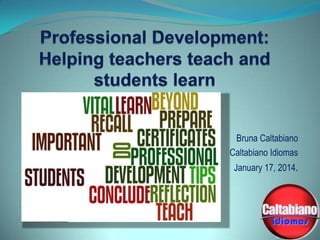
Professional Development: helping teachers and students learn

  • 1.
  • 2.
    Discuss  What isprofessional development? In what areas is it important?
  • 4.
    Going beyond... “It hasbeen said that teachers who have been teaching for twenty years may be divided into two categories: those with twenty years’ experience and those with one year’s experience repeated twenty times.” (Ur 1996: 317)
  • 5.
    In other words Sheer time on the job does not ensure experience  Successful teachers are those who continue to develop throughout their professional lives – the completion of an initial qualification is just a beginning (Ur, 1996)  It is difficult to mantain a sense of engagement when using the same old lesson routines or reading texts time after time  If we do not take steps towards development, it is difficult to mantain the initial enthusiasm (Harmer, 2007)
  • 6.
  • 7.
    Have you everfelt  as if you were doing the same thing again and again?  you have too many demands?  boredom?  very tired?  like not taking risks because you’re safe?  you have too many pressures?  burned out?  stressed? (Scrivener, 2005)
  • 8.
    Burnout  Caused bysuch things as teaching too many contact hours, having too much homework to mark, other conditions at work, comutting, etc  The best route out of teacher burnout is to re-engage, with TEACHER DEVELOPMENT (Harmer, 2012)
  • 9.
    ‘You can trainme, you can educate me, but you can’t develop me – I develop’ (Piai 2005:21, in Harmer, 2007)
  • 10.
    LANGUAGE COURSES/CERTIFICATES  Cambridge English:Proficiency (CPE)  Cambridge English: Advanced (CAE)  University of Michigan: Examination for the Certificate of Proficiency in English (ECPE)
  • 11.
    TEACHING CERTIFICATES  TKT(Teacher Knowledge Test)  CELTA (Certificate in English Language Teaching to Adults)  ICELT (In-service Certificate in English Language Teaching)  DELTA (Diploma in English Language  Teaching to Adults)
  • 12.
     CerTESOL (Certificatein Teaching English for Speakers of Other Languages)  DipTESOL (Diploma in Teaching English for Speakers of Other Languages)
  • 13.
    REFLECTION  What kindof teacher am I?  What am I trying to achieve for myself and my learners?  What are my strengths and limitations as a language teacher?  How do my students and collegues view me?  Why do I teach the way I do?  How have I developed as a teacher since I started teaching?  What are the gaps in my knowledge? (Richards, 2011)
  • 14.
    Discuss  Have youever written down your thoughts about lessons that you have taught or will teach? If so, what were your impressions when rereading them? Did you find them interesting? Useful as reminders? Thought-provoking? (Ur, 1991)
  • 15.
    Ways of reflecting: -Keeping journals; - Joining a teacher support group; - Audio or video-recording a lesson; - Case reports; - Teaching portfolio; - Critical Incidents; - Action Research. (Richards, 2005)
  • 16.
    Discuss  Does yourinstitution hold regular staff meetings? If so, are they only for decision-making or do they also include reflecting and sharing? How do you feel about them?
  • 17.
    We can: Teach andteach or Teach and learn Learn teaching = desire to move foward, to keep learning from what happens. It involves feedback from others and from ourserlves, reflection, attempts to do in different way next time.
  • 18.
  • 19.
    Discuss  Have youever been observed while teaching? If so, who observed you? How did you feel? Did the person give you any practical or expert advice?
  • 20.
    CLASS OBSERVATION  Peerobservation Fellow teachers observe each other’s lesson. It helps: - The observer learn new things and reflect on their own teaching - The observed have a chance to talk about their lesson with an observer they trust (Harmer, 2012)
  • 21.
     Formal Observation Purposes: Training,develpment, assessment, data collection It provides perhaps the most useful help a learning teacher can get. An outside eye, who can help us see our particular habits, ways of working, ways of speaking, avoidances, etc. (Scrivener, 2005)
  • 22.
    Discuss  What bookshave had most influence on your professional thinking or proved most useful for your teaching?
  • 23.
    LITERATURE  Methodology books Journals  Magazines  Books in general – language improvement
  • 24.
    Discuss  Do youknow any national or international organization for English teachers?  Have you attended at least one professional conference? If so, how much do you feel the experience contributed to you as a professional? How? (Ur, 2001)  Have you ever considered writing a paper and presenting in a conference? (Scrivener, 2005)
  • 25.
  • 26.
    Conferences  They allowus to “hear about the latest developments in the field, take part in investigative workshops and enter into debates about current issues in theory and practice. We can ‘network’ with other members of the ELT community ...” (Harmer, 2007: 423)
  • 27.
    And  “Submitting apaper or a workshop for a teachers’ association meeting, whether regional, national or international, is one of the most powerful catalysts for reflecting upon our practice. When we try to work out exactly what we want to say and the best way of doing it, we are forcing ourselves to assess what we do. The challenge of a future audience sharpens our perceptions.” (Harmer, 2007: 422)
  • 28.
    THE VIRTUAL COMMUNITY JeremyHarmer, Higor Cavalcante, Luiz Otávio Barros, Willy Cardoso BRELT, English Teachers, IATEFL, Teachers of English, Facebook & Learning
  • 29.
    To sum itup – Professional Priorities  Attending Conferences  Taking courses  Getting a certificate, diploma or degree  Peer observations/formal observations  Lesson planning and reflection  Reading  Writing  Getting online
  • 30.
    BIBLIOGRAPY  Harmer, Jeremy.Essential English Knowledge. Essex: Pearson Education Limited, 2012.  Harmer, Jeremy. The Practice of English Language Teaching. Essex: Pearson Education Limited, 2007.  Richards, Jack.; Farrel, Thomas. Practice Teaching – A Reflective Approach. New York: Cambridge University Press, 2001.  Richards, Jack; Farrel, Thomas. Professional Development for Language Teachers: strategies for teacher learning.New York: Cambridge University Press, 2005.
  • 31.
     Scrivener, Jim.Learning Teaching. Oxford: Macmillan Education, 2005.  Ur, Penny. A Course in Language Teaching. Cambridge: Cambridge University Press, 1991.
  • 32.