Download to read offline
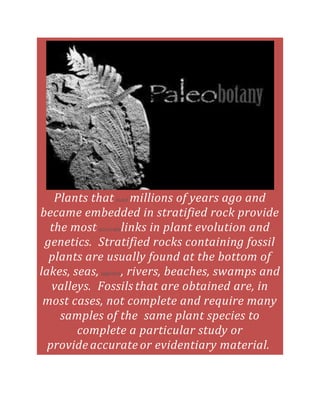
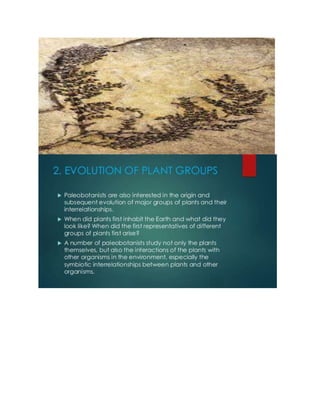

Plants that lived millions of years ago and became embedded in stratified rock provide the most accurate links in plant evolution and genetics. Fossils are preserved in many ways such as compressions, impressions, incrustations, casts, petrification, and inclusion in amber, with each method preserving different details of the plant. Paleobotany is important for reconstructing ancient ecosystems, climate, and the development and evolution of plants by studying plant fossils preserved in various forms and using techniques like radiocarbon dating to determine the age of fossils.


![谷歌留痕技术 [ 𝙩𝙤𝙥 𝟮𝟯𝟯. 𝙘 𝙤𝙢 ]](https://cdn.slidesharecdn.com/ss_thumbnails/top233-260130174328-3833018c-thumbnail.jpg?width=640&height=640&fit=bounds)


