- P.B.SHELLEY
“Ozymandias” is a sonnet, a fourteen-line poem metered in
iambic pentameter. Shelley completed the poem in 1817 and published
it in England's The Examiner in 1818. Some of his other remarkable
works are “The Ode to the Westwind”, “Ode to A Skylark”, “The
Cloud”, and “Adonais”, an elegy on the death of John Keats. The poem
"Ozymandias" is one of the best sonnets of Percy Bysshe Shelley. In this
poem he described a mighty king who was striving in his whole life for
his possessions and got involved in worldly assignments so much that he
forgot his ultimate destiny. Beside this, Shelley reminds the readers of
their mortality through the realization that our earthly
accomplishments will one day be finished. By drawing these vivid and
ironic pictures in readers minds, with different symbols, Shelley tries to
illustrate that no one lives forever in the world, not even their assets or
belongings. The person referred to here is Rameses II of Egypt.
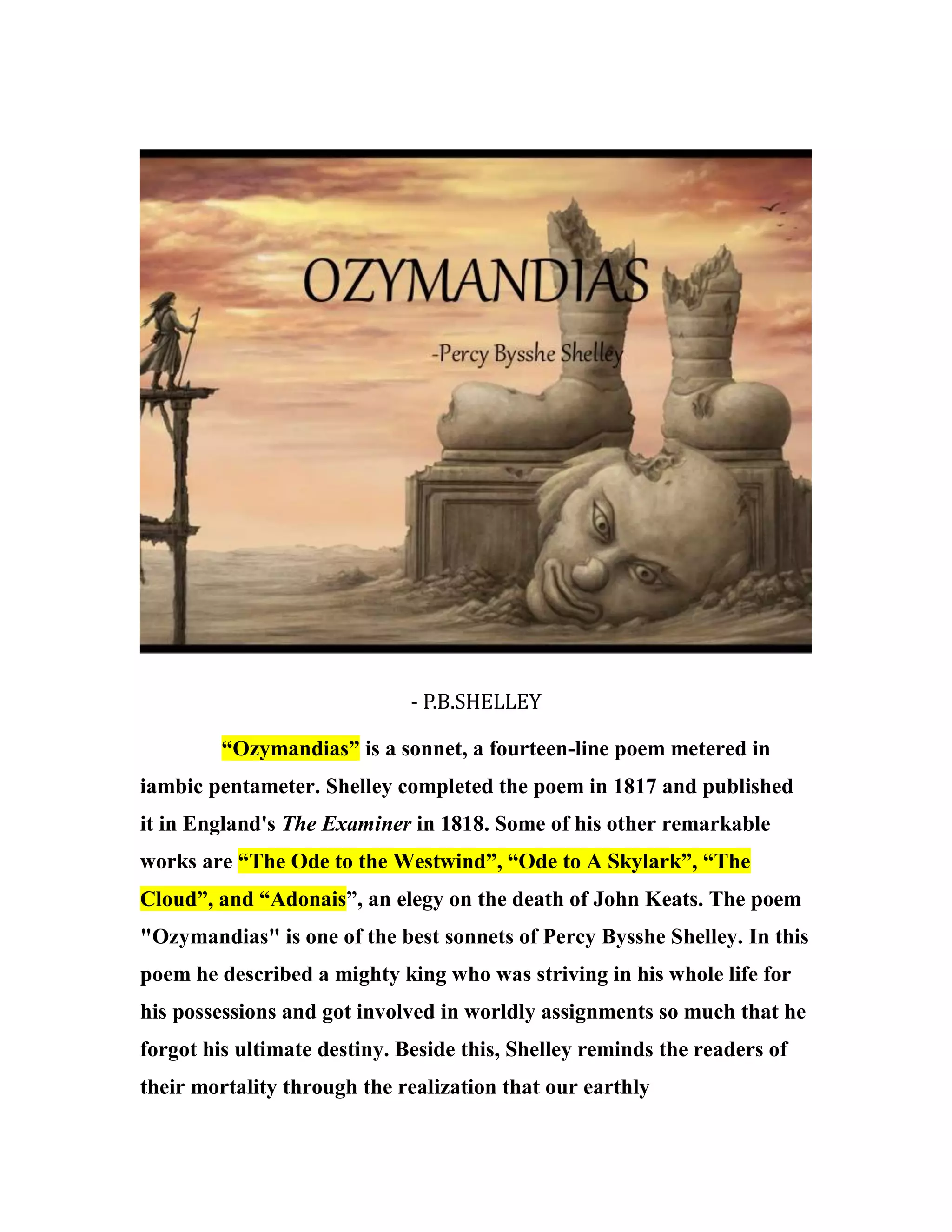
The speaker recalls having met a traveler “from an antique land,”
who told him a story about the ruins of a statue in the desert of his
native country. Two vast legs of stone stand without a body, and near
them a massive, crumbling stone head lies “half sunk” in the sand. The
traveler told the speaker that the frown and “sneer of cold command”
on the statue’s face indicate that the sculptor understood well the
emotions or "passions" of the statue’s subject. The memory of those
emotions survives "stamped" on the lifeless statue, even though both the
sculptor and his subject are both now dead. On the pedestal of the
statue appear the words,
“My name is Ozymandias, king of kings:
Look on my works, ye Mighty, and despair!”
But around the decaying ruin of the statue, nothing remains, only the
“lone and level sands,” which stretch out around it.
“Nothing beside remains. Round the decay
of that colossal wreck,boundless and bare
The lone and level sands stretch far away”
Thus, Shelly vividly portrays the impermanence of human vanity, pride
and authority through the mighty king Ozymandias. Howmuchever one
establishes on this material earth viz., name, fame wealth, reputation
would be washed away in due course of time with no
impression.

. ozymandias poem by shelly

  • 1.
    - P.B.SHELLEY “Ozymandias” isa sonnet, a fourteen-line poem metered in iambic pentameter. Shelley completed the poem in 1817 and published it in England's The Examiner in 1818. Some of his other remarkable works are “The Ode to the Westwind”, “Ode to A Skylark”, “The Cloud”, and “Adonais”, an elegy on the death of John Keats. The poem "Ozymandias" is one of the best sonnets of Percy Bysshe Shelley. In this poem he described a mighty king who was striving in his whole life for his possessions and got involved in worldly assignments so much that he forgot his ultimate destiny. Beside this, Shelley reminds the readers of their mortality through the realization that our earthly
  • 2.
    accomplishments will oneday be finished. By drawing these vivid and ironic pictures in readers minds, with different symbols, Shelley tries to illustrate that no one lives forever in the world, not even their assets or belongings. The person referred to here is Rameses II of Egypt. The speaker recalls having met a traveler “from an antique land,” who told him a story about the ruins of a statue in the desert of his native country. Two vast legs of stone stand without a body, and near them a massive, crumbling stone head lies “half sunk” in the sand. The traveler told the speaker that the frown and “sneer of cold command” on the statue’s face indicate that the sculptor understood well the emotions or "passions" of the statue’s subject. The memory of those emotions survives "stamped" on the lifeless statue, even though both the sculptor and his subject are both now dead. On the pedestal of the statue appear the words, “My name is Ozymandias, king of kings: Look on my works, ye Mighty, and despair!” But around the decaying ruin of the statue, nothing remains, only the “lone and level sands,” which stretch out around it. “Nothing beside remains. Round the decay of that colossal wreck,boundless and bare The lone and level sands stretch far away” Thus, Shelly vividly portrays the impermanence of human vanity, pride and authority through the mighty king Ozymandias. Howmuchever one
  • 3.
    establishes on thismaterial earth viz., name, fame wealth, reputation would be washed away in due course of time with no impression.