
Product Packaging
Dr. Pooja
Assistant Professor
Dept. of Commerce
AMPGC, BHU
Product Decisions
Packaging
Introduction
• The history of packaging dates back to the year 1035, when a Persian traveller, visiting
markets in Cairo, noted that vegetables, spices and hardware were wrapped in paper for the
customers after they were sold. With the passage of time, attempts were made to use the
natural materials available, such as, Baskets of reeds, wooden boxes, pottery vases, woven
bags etc. However, the use of card board’s paperboard cartons was first done in the 19th
century.
• The Michigan State University was the first to offer a degree course in “Packaging
Engineering” Since then, there has been no looking back. The packaging industry boomed as
more than the content, it is the ”packaging” which attracts the attention of the buyer.
• There was a revolution in Packaging in the early 20th century due to several modes of
packaging designed such as Bakelite closures on bottles, transparent cellophane overwraps
and panels on cartons, which increased processing efficiency and improved food safety. As
additional materials such as aluminium and several types of plastic were developed, they were
incorporated into packages to improve performance and functionality.
What is Packaging?
• Packaging is the general group of activities which concentrate in formulating the
design of a package, and producing an appropriate and attractive container or
wrapper for the product. Packing refers to the wrapping and crating of goods before
they are transported or stored.
• It is a physical action which provides a handling convenience, e.g., rice, cotton,
wheat or any other agricultural produce. It is necessary to prevent flowing out of
liquids and is essential to maintain freshness and quality. It can prevent the danger of
adulteration.
• Packaging is the subdivision of the packing function of marketing. It involves more
than simply placing products in containers or covering them with wrappers. Philip
Kotler defines packaging as an activity which is concerned with protection,
economy, convenience, and promotional considerations.
What is Packaging?
• The terms packing and packaging are used synonymously but there is a certain
amount of difference between the two. Packaging means covering the product itself
so that it is protected from damage, leakage, dust, pollution, contamination etc.
Examples – Chocolates packaged in thin sheet, milk packaged in sachets etc.
• Packing means putting all the packages in a big box, container, chest, crate etc.
for the purposes of storage, transportation, handling etc. Moreover the functions of
packing and packaging, in the present context have gone beyond the basic
expectations of protection of the product.
Definitions
• “Packing is the preparation of product or commodity for proper storage and/or
transportation. It may entail blocking, bracing, cushioning, marking, sealing,
strapping, weather proofing, wrapping, etc.” – Business Dictionary
• “Packing is the activity of putting your possessions into bags, cases, or boxes so
that you can take or send them somewhere.” – MacMillan Dictionary
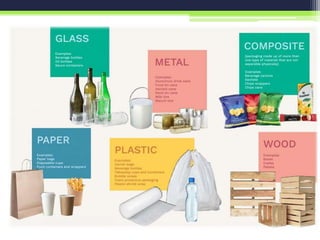
• “Packaging refers to the processes (such as cleaning, drying, and preserving) and
materials (such as glass, metal, paper or paperboard, plastic) employed to contain,
handle, protect, and/or transport an article. Role of packaging is broadening and may
include functions such as to attract attention, assist in promotion, provide machine
identification (barcodes, etc.), impart essential or additional information, and help in
utilization.” – Business Dictionary
Objectives of Packing and Packaging
1. To Provide Physical Protection:
Packaging of objects insures that they are protected against vibration, temperature, shock,
compression, deterioration in quality etc. Packing and packaging also protect the products
against theft, leakage, pilferage, breakage, dust, moisture, bright light etc.
2. To Enable Marketing:
Packing and packaging play an important role in marketing. Good packing and packaging along
with attractive labelling are used by sellers to promote the products to potential buyers. The
shape, size, colour, appearance etc. are designed to attract the attention of potential buyers.
3. To Convey Message:
There is so much of information about the product that a manufacturer would like to convey to
the users of the product. Information relating to the raw materials used the type of
manufacturing process; usage instructions, use by date etc. are all very important and should be
conveyed to the users. Manufacturers print such information on the packages.
Objectives of Packing and Packaging
4. To Provide Convenience:
Packing and packaging also add to the convenience in handling, display, opening, distribution,
transportation, storage, sale, use, reuse and disposal. Packages with easy to carry handles, soft
squeezed tubes, metallic containers, conveniently placed nozzles etc. are all examples of this.
5. To Provide Containment or Agglomeration:
Small objects are typically put together in one package for reasons of efficiency and economy.
6. To Provide Portion Control:
In the medicinal and pharmaceutical field, the precise amount of contents is needed to control
usage. Medicine tablets are divided into packages that are of a more suitable size for individual
use. It also helps in the control of inventory.
Objectives of Packing and Packaging
7. To Enable Product Identification:
Packing and packaging enable a product to have its own identity. This is done by designing a unique
and distinct package through the effective use of colours, shapes, graphics etc. Such identification and
distinction are very essential in the present situation of intense competition and product clutter.
8. To Enhance Profits:
Since consumers are willing to pay a higher price for packaged goods, there will be higher profit
realization. Moreover packaged goods reduce the cost of handling, transportation, distribution etc. and
also cut down wastage and thereby increase profits.
9. To Enable Self-Service Sales:
The present trend in retailing is effective display and self-service sales. Products require effective
packing for self-service sales.
10. To Enhance Brand Image:
Attractive packing and packaging in a consistent manner over a long time enhances the brand image of
the product.
Why Packaging?
1. Important Element of Marketing Plan
2. Silent Salesman
3. Communication with Consumer
4. Package Designing
5. Convenience
6. Protection
7. Increased Value
8. Recent Developments/Trends:
I. Maintain sales volume. Privacy - Terms
II. Expand market by new packaging.
III. Use packaging as a means for advertising and sales promotion.
Why Packaging?
9. Other Aspects:
I. Increase sales.
II. Adds to use of a product.
III. Helps in storage.
IV. Product differentiation.
V. Promote a product.
VI. Contributes to safety of a product from damage.
VII. Branding and promoting brand loyalty.
VIII. Cut marketing costs and thus enhance profit/ profitability of
product.
IX. Portability/transportability of product.
X. Helps publicity.
Why Packaging?
10. Use of Packaging Machines:
i. Integral Part of industries.
ii. Health consciousness, urbanization and even changing habits are some of the
factors
iii. Food and Pharma sectors have contributed significantly in growing use of these
machines.
Functions of Packaging
1. Protection and Preservation:
The basic function of packaging is to protect and preserve the contents
during transit from the manufacturer to the ultimate consumer.
2. Containment:
Most products must be contained before they can be moved from one place
to another. To function successfully, the .package must contain the product.
This containment function of packaging makes a huge contribution to
protect the environment. A better packaging helps to maintain the quality of
the product and reachability of the product in the consumer’s hand without
spillages. It gives better image to the organization.
Functions of Packaging
3. Communication:
A major function of packaging is the communication of the product. A package must
communicate what it sells. When international trade is involved and different languages
are spoken, the use of unambiguous and readily understood symbols on the distribution
package is essential. It helps in appropriate communication to the consumer about the
product, how to use it and other utility information. Packaging protects the interests of
consumers. Information includes quantity, price, inventory levels, lot number, distribution
routes, size, and elapsed time since packaging, colour, merchandizing and premium data.
4. Convenience:
i. Properly packed goods require less space.
ii. Easy methods could be suggested to take goods out from a pack and keep the rest
intact.
Functions of Packaging
5. Promotion Function:
i. Self-service – The package must be and capable of performing many of the sales
tasks. It must attract attention, describe the products’ features, give consumer
confidence and make a favourable overall impression.
ii. Consumer affluence – The prestige of a product is maintained with the help of
proper packaging. Good packaging is capable of projecting various qualities of the
product as well as that of the manufacturers.
iii. Integrated marketing concept – Brand names now occupy a dominant role in
marketing. The brand names are popularized through advertisement but the reminding
of brand names and making the brands acceptable to consumers are achieved
through packaging.
iv. Innovation opportunity – Packaging is capable of bringing large-scale gains.
Functions of Packaging
6. Economy:
Package provides various economies, both to the producers and the consumers.
i. Loss in quantity is prevented thereby avoiding the monetary loss also.
ii. Creates an opportunity to communicate with the customers.
Essentials/Qualities of Good Packaging
1. Attractive Appearance
2. Convenient for Storage and Display including storage in lesser space.
3. Safety of Goods from damage, spoilage, breakage, insects, rodents etc.
4. Product Description be shown on Package.
5. Recognizable – Package must be recognizable.
6. Eye-Appeal of package.
7. Transport Economies
8. Uniformity and Consistency.
9. Convenience in Transport Handling e.g., provided with hooks, handles, grippers etc.
10. Able to withstand hazards of transport e.g., tilting, throwing, pulling, pushing, rolling etc.
12. Easy to dispose-off after opening of goods.
13. Proper and Adequate Marking.
Product Packaging

Product Packaging

  • 1.
    Product Packaging Dr. Pooja AssistantProfessor Dept. of Commerce AMPGC, BHU Product Decisions
  • 2.
  • 3.
    Introduction • The historyof packaging dates back to the year 1035, when a Persian traveller, visiting markets in Cairo, noted that vegetables, spices and hardware were wrapped in paper for the customers after they were sold. With the passage of time, attempts were made to use the natural materials available, such as, Baskets of reeds, wooden boxes, pottery vases, woven bags etc. However, the use of card board’s paperboard cartons was first done in the 19th century. • The Michigan State University was the first to offer a degree course in “Packaging Engineering” Since then, there has been no looking back. The packaging industry boomed as more than the content, it is the ”packaging” which attracts the attention of the buyer. • There was a revolution in Packaging in the early 20th century due to several modes of packaging designed such as Bakelite closures on bottles, transparent cellophane overwraps and panels on cartons, which increased processing efficiency and improved food safety. As additional materials such as aluminium and several types of plastic were developed, they were incorporated into packages to improve performance and functionality.
  • 4.
    What is Packaging? •Packaging is the general group of activities which concentrate in formulating the design of a package, and producing an appropriate and attractive container or wrapper for the product. Packing refers to the wrapping and crating of goods before they are transported or stored. • It is a physical action which provides a handling convenience, e.g., rice, cotton, wheat or any other agricultural produce. It is necessary to prevent flowing out of liquids and is essential to maintain freshness and quality. It can prevent the danger of adulteration. • Packaging is the subdivision of the packing function of marketing. It involves more than simply placing products in containers or covering them with wrappers. Philip Kotler defines packaging as an activity which is concerned with protection, economy, convenience, and promotional considerations.
  • 5.
    What is Packaging? •The terms packing and packaging are used synonymously but there is a certain amount of difference between the two. Packaging means covering the product itself so that it is protected from damage, leakage, dust, pollution, contamination etc. Examples – Chocolates packaged in thin sheet, milk packaged in sachets etc. • Packing means putting all the packages in a big box, container, chest, crate etc. for the purposes of storage, transportation, handling etc. Moreover the functions of packing and packaging, in the present context have gone beyond the basic expectations of protection of the product.
  • 7.
    Definitions • “Packing isthe preparation of product or commodity for proper storage and/or transportation. It may entail blocking, bracing, cushioning, marking, sealing, strapping, weather proofing, wrapping, etc.” – Business Dictionary • “Packing is the activity of putting your possessions into bags, cases, or boxes so that you can take or send them somewhere.” – MacMillan Dictionary • “Packaging refers to the processes (such as cleaning, drying, and preserving) and materials (such as glass, metal, paper or paperboard, plastic) employed to contain, handle, protect, and/or transport an article. Role of packaging is broadening and may include functions such as to attract attention, assist in promotion, provide machine identification (barcodes, etc.), impart essential or additional information, and help in utilization.” – Business Dictionary
  • 8.
    Objectives of Packingand Packaging 1. To Provide Physical Protection: Packaging of objects insures that they are protected against vibration, temperature, shock, compression, deterioration in quality etc. Packing and packaging also protect the products against theft, leakage, pilferage, breakage, dust, moisture, bright light etc. 2. To Enable Marketing: Packing and packaging play an important role in marketing. Good packing and packaging along with attractive labelling are used by sellers to promote the products to potential buyers. The shape, size, colour, appearance etc. are designed to attract the attention of potential buyers. 3. To Convey Message: There is so much of information about the product that a manufacturer would like to convey to the users of the product. Information relating to the raw materials used the type of manufacturing process; usage instructions, use by date etc. are all very important and should be conveyed to the users. Manufacturers print such information on the packages.
  • 9.
    Objectives of Packingand Packaging 4. To Provide Convenience: Packing and packaging also add to the convenience in handling, display, opening, distribution, transportation, storage, sale, use, reuse and disposal. Packages with easy to carry handles, soft squeezed tubes, metallic containers, conveniently placed nozzles etc. are all examples of this. 5. To Provide Containment or Agglomeration: Small objects are typically put together in one package for reasons of efficiency and economy. 6. To Provide Portion Control: In the medicinal and pharmaceutical field, the precise amount of contents is needed to control usage. Medicine tablets are divided into packages that are of a more suitable size for individual use. It also helps in the control of inventory.
  • 10.
    Objectives of Packingand Packaging 7. To Enable Product Identification: Packing and packaging enable a product to have its own identity. This is done by designing a unique and distinct package through the effective use of colours, shapes, graphics etc. Such identification and distinction are very essential in the present situation of intense competition and product clutter. 8. To Enhance Profits: Since consumers are willing to pay a higher price for packaged goods, there will be higher profit realization. Moreover packaged goods reduce the cost of handling, transportation, distribution etc. and also cut down wastage and thereby increase profits. 9. To Enable Self-Service Sales: The present trend in retailing is effective display and self-service sales. Products require effective packing for self-service sales. 10. To Enhance Brand Image: Attractive packing and packaging in a consistent manner over a long time enhances the brand image of the product.
  • 11.
    Why Packaging? 1. ImportantElement of Marketing Plan 2. Silent Salesman 3. Communication with Consumer 4. Package Designing 5. Convenience 6. Protection 7. Increased Value 8. Recent Developments/Trends: I. Maintain sales volume. Privacy - Terms II. Expand market by new packaging. III. Use packaging as a means for advertising and sales promotion.
  • 12.
    Why Packaging? 9. OtherAspects: I. Increase sales. II. Adds to use of a product. III. Helps in storage. IV. Product differentiation. V. Promote a product. VI. Contributes to safety of a product from damage. VII. Branding and promoting brand loyalty. VIII. Cut marketing costs and thus enhance profit/ profitability of product. IX. Portability/transportability of product. X. Helps publicity.
  • 13.
    Why Packaging? 10. Useof Packaging Machines: i. Integral Part of industries. ii. Health consciousness, urbanization and even changing habits are some of the factors iii. Food and Pharma sectors have contributed significantly in growing use of these machines.
  • 14.
    Functions of Packaging 1.Protection and Preservation: The basic function of packaging is to protect and preserve the contents during transit from the manufacturer to the ultimate consumer. 2. Containment: Most products must be contained before they can be moved from one place to another. To function successfully, the .package must contain the product. This containment function of packaging makes a huge contribution to protect the environment. A better packaging helps to maintain the quality of the product and reachability of the product in the consumer’s hand without spillages. It gives better image to the organization.
  • 15.
    Functions of Packaging 3.Communication: A major function of packaging is the communication of the product. A package must communicate what it sells. When international trade is involved and different languages are spoken, the use of unambiguous and readily understood symbols on the distribution package is essential. It helps in appropriate communication to the consumer about the product, how to use it and other utility information. Packaging protects the interests of consumers. Information includes quantity, price, inventory levels, lot number, distribution routes, size, and elapsed time since packaging, colour, merchandizing and premium data. 4. Convenience: i. Properly packed goods require less space. ii. Easy methods could be suggested to take goods out from a pack and keep the rest intact.
  • 16.
    Functions of Packaging 5.Promotion Function: i. Self-service – The package must be and capable of performing many of the sales tasks. It must attract attention, describe the products’ features, give consumer confidence and make a favourable overall impression. ii. Consumer affluence – The prestige of a product is maintained with the help of proper packaging. Good packaging is capable of projecting various qualities of the product as well as that of the manufacturers. iii. Integrated marketing concept – Brand names now occupy a dominant role in marketing. The brand names are popularized through advertisement but the reminding of brand names and making the brands acceptable to consumers are achieved through packaging. iv. Innovation opportunity – Packaging is capable of bringing large-scale gains.
  • 17.
    Functions of Packaging 6.Economy: Package provides various economies, both to the producers and the consumers. i. Loss in quantity is prevented thereby avoiding the monetary loss also. ii. Creates an opportunity to communicate with the customers.
  • 18.
    Essentials/Qualities of GoodPackaging 1. Attractive Appearance 2. Convenient for Storage and Display including storage in lesser space. 3. Safety of Goods from damage, spoilage, breakage, insects, rodents etc. 4. Product Description be shown on Package. 5. Recognizable – Package must be recognizable. 6. Eye-Appeal of package. 7. Transport Economies 8. Uniformity and Consistency. 9. Convenience in Transport Handling e.g., provided with hooks, handles, grippers etc. 10. Able to withstand hazards of transport e.g., tilting, throwing, pulling, pushing, rolling etc. 12. Easy to dispose-off after opening of goods. 13. Proper and Adequate Marking.