PRESENTED
BY:
      Anil mundra; roll no. 11
      Atul Kumar ;roll no. 15
INTRODUCTION:
ď‚— An experimental procedure that provides an
 opportunity to test a new product or a new marketing
 plan under realistic market conditions.
ď‚— Test marketing is an experiment conducted in a field
 laboratory (the test market) comprising of actual stores
 and real-life buying situations, where the buyers is
 unaware of participation.

ď‚— test marketing may last from few weeks to
 several months.
Market testing depends on different factors:

 ď‚— The investment cost and risk , time pressure and the research
   cost .

 ď‚— High investment-high risk products where the chance of failure
   is high.

 ď‚— High risk products those who creates new product categories or
   have novel features.

 ď‚— The amount of market testing is reduced if the company is
   having great time pressure because the season is just starting.
CONSUMER GOODS MARKET
TESTING:
 1.   Sales wave research

 2. Simulated test marketing


 3. Controlled test marketing


 4. Test markets
1. Sales wave research:
ď‚— In sales wave research a consumer who initially tried
  the product at no cost are reoffered it, or a competitor’s
  product at slightly reduced prices. The offer may be
  made as many as five times (sales waves), while the
  company notes how many consumers selected the
  product again and their reported level of satisfaction.

 It’s quick, secure, and can be carried out without final
  packaging.
2. Simulated test marketing:
ď‚— 30 to 40 qualified shoppers were called and questioned brand
  familiarity and preferences in a specific product category.

ď‚— These consumers attended a brief screening of well known as
  well as new TV commercials or print ads.

ď‚— Consumer are provided small amount of money and they are
  invited to a store where they may buy any items.

ď‚— This provides a measure of the ads relative effectiveness against
  competing ads in the market.

ď‚— This method gives fairly accurate result of effect of ads and trial
  rates. The results are incorporated in to new product
  forecasting model to project ultimate sales levels.
3. Controlled test marketing:
ď‚— A panel of stores carries new product for a fee.
ď‚— Specific number of stores and geographic location.
ď‚— Controlled shelf position; number of facings,
ď‚— Sales are measured at check out.
ď‚— A sample of consumers interviewed later to give their
  impression of the product.

       Disadvantage:
ď‚— This technique exposes the product and its
  features to competitors’ scrutiny.
4. Test markets:
ď‚— Few representative cities,
ď‚— Good shelf exposure.
ď‚— Full Advertisement and Promotion campaign.


In this method company have to take following decisions:

        -        HOW MANY TEST CITIES?
        -        WHICH CITIES?
        -        LENGTH OF TEST?
        -        WHAT INFORMATION TO BE COLLECTED?
        -        WHAT ACTION TO TAKE?
BUSINESS GOODS MARKET TESTING:
ď‚— Expensive industrial goods and new technologies will normally undergo two
  type of test marketing.:

         ď‚—   Alpha testing (within the company)
         ď‚—   Beta testing (with outside customers)

 During beta testing the company’s technical people observes how test
  customers use the product.

ď‚— The company can also observe how much value the equipment to the
  customers operation as a cue to subsequent pricing.

ď‚— The company asks test customers their purchase intention and other reaction
  after the test.
Disadvantages:

ď‚— Customer who comes in might not represent the target
  market.
 Customer might place early orders that can’t be filled.
Test Marketing of McLobsters:
Reliance Home Products: FMCG Test Marketing
The End

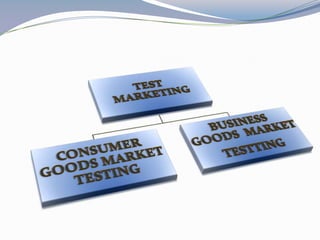
Test Marketing

  • 1.
    PRESENTED BY: Anil mundra; roll no. 11 Atul Kumar ;roll no. 15
  • 2.
    INTRODUCTION: ď‚— An experimentalprocedure that provides an opportunity to test a new product or a new marketing plan under realistic market conditions.
  • 3.
    ď‚— Test marketingis an experiment conducted in a field laboratory (the test market) comprising of actual stores and real-life buying situations, where the buyers is unaware of participation. ď‚— test marketing may last from few weeks to several months.
  • 4.
    Market testing dependson different factors: ď‚— The investment cost and risk , time pressure and the research cost . ď‚— High investment-high risk products where the chance of failure is high. ď‚— High risk products those who creates new product categories or have novel features. ď‚— The amount of market testing is reduced if the company is having great time pressure because the season is just starting.
  • 6.
    CONSUMER GOODS MARKET TESTING: 1. Sales wave research 2. Simulated test marketing 3. Controlled test marketing 4. Test markets
  • 7.
    1. Sales waveresearch:  In sales wave research a consumer who initially tried the product at no cost are reoffered it, or a competitor’s product at slightly reduced prices. The offer may be made as many as five times (sales waves), while the company notes how many consumers selected the product again and their reported level of satisfaction.  It’s quick, secure, and can be carried out without final packaging.
  • 8.
    2. Simulated testmarketing: ď‚— 30 to 40 qualified shoppers were called and questioned brand familiarity and preferences in a specific product category. ď‚— These consumers attended a brief screening of well known as well as new TV commercials or print ads. ď‚— Consumer are provided small amount of money and they are invited to a store where they may buy any items. ď‚— This provides a measure of the ads relative effectiveness against competing ads in the market. ď‚— This method gives fairly accurate result of effect of ads and trial rates. The results are incorporated in to new product forecasting model to project ultimate sales levels.
  • 9.
    3. Controlled testmarketing:  A panel of stores carries new product for a fee.  Specific number of stores and geographic location.  Controlled shelf position; number of facings,  Sales are measured at check out.  A sample of consumers interviewed later to give their impression of the product. Disadvantage:  This technique exposes the product and its features to competitors’ scrutiny.
  • 10.
    4. Test markets: ď‚—Few representative cities, ď‚— Good shelf exposure. ď‚— Full Advertisement and Promotion campaign. In this method company have to take following decisions: - HOW MANY TEST CITIES? - WHICH CITIES? - LENGTH OF TEST? - WHAT INFORMATION TO BE COLLECTED? - WHAT ACTION TO TAKE?
  • 11.
    BUSINESS GOODS MARKETTESTING:  Expensive industrial goods and new technologies will normally undergo two type of test marketing.:  Alpha testing (within the company)  Beta testing (with outside customers)  During beta testing the company’s technical people observes how test customers use the product.  The company can also observe how much value the equipment to the customers operation as a cue to subsequent pricing.  The company asks test customers their purchase intention and other reaction after the test.
  • 12.
    Disadvantages:  Customer whocomes in might not represent the target market.  Customer might place early orders that can’t be filled.
  • 13.
    Test Marketing ofMcLobsters:
  • 14.
    Reliance Home Products:FMCG Test Marketing
  • 15.