Packing
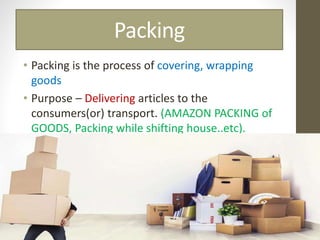
• Packing is the process of covering, wrapping
goods
• Purpose – Delivering articles to the
consumers(or) transport. (AMAZON PACKING of
GOODS, Packing while shifting house..etc).
PACKAGING
-SILENT SALESMAN
•Placing goods in a small package.
•Designing and Producing a Container
or Wrapper for a product.
•Size convenient to the customer.
•Focussed on sale to ultimate
customer.
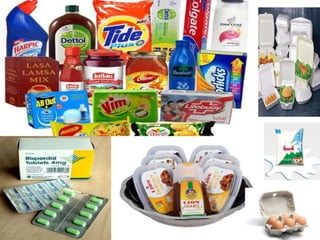
•Boxes, Bottles, Cans, Barrels…..
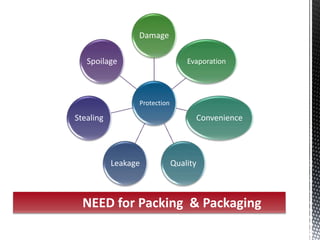
Protection
Damage
Evaporation
Convenience
QualityLeakage
Stealing
Spoilage
NEED for Packing & Packaging
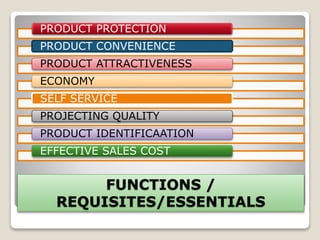
FUNCTIONS /
REQUISITES/ESSENTIALS
PRODUCT PROTECTION
PRODUCT CONVENIENCE
PRODUCT ATTRACTIVENESS
ECONOMY
SELF SERVICE
PROJECTING QUALITY
PRODUCT IDENTIFICAATION
EFFECTIVE SALES COST
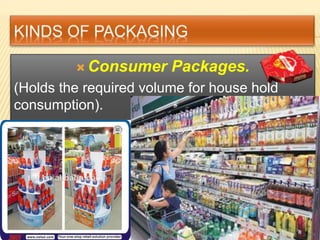
 Consumer Packages.
(Holds the required volume for house hold
consumption).
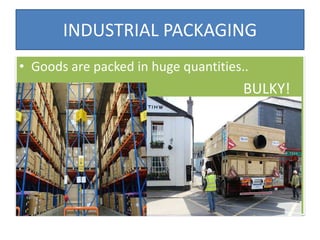
INDUSTRIAL PACKAGING
• Goods are packed in huge quantities..
BULKY!
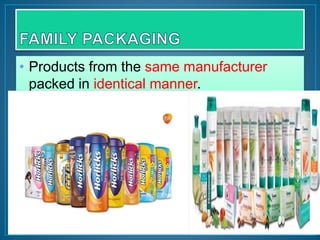
• Products from the same manufacturer
packed in identical manner.
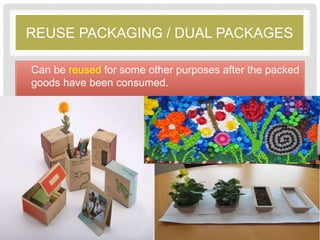
REUSE PACKAGING / DUAL PACKAGES
• Can be reused for some other purposes after the packed
goods have been consumed.
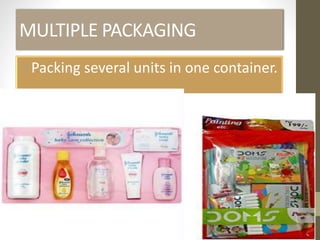
MULTIPLE PACKAGING
•Packing several units in one container.
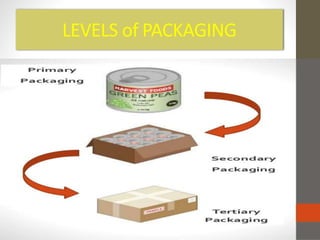
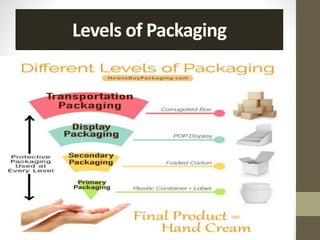
LEVELS of PACKAGING
Levels of Packaging
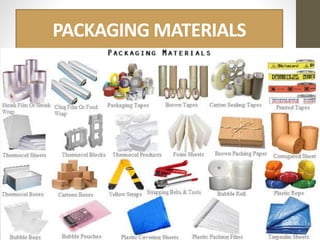
PACKAGING MATERIALS
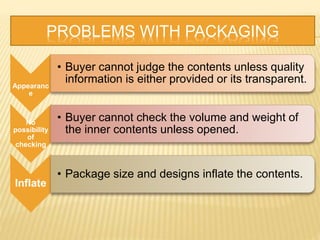
PROBLEMS WITH PACKAGING
Appearanc
e
• Buyer cannot judge the contents unless quality
information is either provided or its transparent.
No
possibility
of
checking
• Buyer cannot check the volume and weight of
the inner contents unless opened.
Inflate
• Package size and designs inflate the contents.
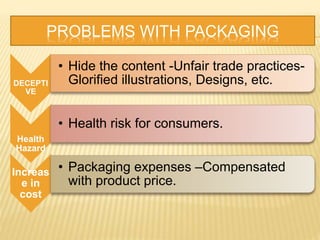
PROBLEMS WITH PACKAGING
DECEPTI
VE
• Hide the content -Unfair trade practices-
Glorified illustrations, Designs, etc.
Health
Hazard
• Health risk for consumers.
Increas
e in
cost
• Packaging expenses –Compensated
with product price.
Solutions /
Suggestions.
• To avoid Pollution,
• Resource Scarcity,
• Wastage of Energy
resources,
• Environmental
Damage.
 Use of reusable containers.
 Awareness on disposing
without affecting
environment.
 Containers decompose over
a period of time.
 Light weight Material.
 Inactive Hazardous waste
Disposal programs.
SECTION 2
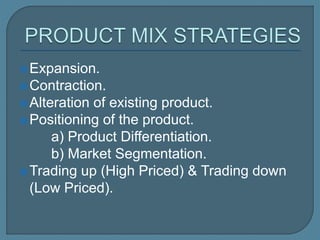
Expansion.
Contraction.
Alteration of existing product.
Positioning of the product.
a) Product Differentiation.
b) Market Segmentation.
Trading up (High Priced) & Trading down
(Low Priced).
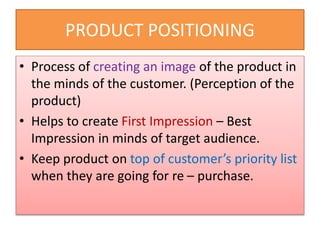
PRODUCT POSITIONING
• Process of creating an image of the product in
the minds of the customer. (Perception of the
product)
• Helps to create First Impression – Best
Impression in minds of target audience.
• Keep product on top of customer’s priority list
when they are going for re – purchase.
Differentiate the product from Competitors.
Indicate important customer buying
criteria.
Articulate Product / Company
characteristics.
*
*Know Target Audience.
*Identify Product feature.
*USP.
*Know your competitors.
*Way to promote brands. (catchy taglines, right
theme, highlight benefits…)
*Maintain the Position.(never compromise on
quality, don’t reduce prices drastically…)

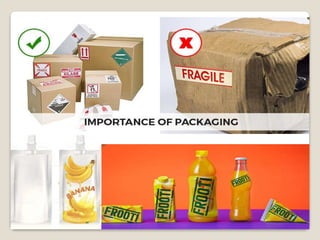
Importance of Packaging