Nursing foundation
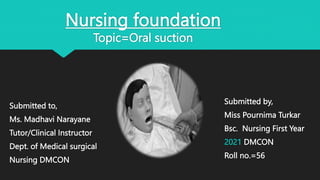
Topic=Oral suction
Submitted to,
Ms. Madhavi Narayane
Tutor/Clinical Instructor
Dept. of Medical surgical
Nursing DMCON
Submitted by,
Miss Pournima Turkar
Bsc. Nursing First Year
2021 DMCON
Roll no.=56
Learning objectives
 Introduction of oral suction
 Definition
 Purpose
 Article
 Indication
 Contraindication
 Procedure
Introduction
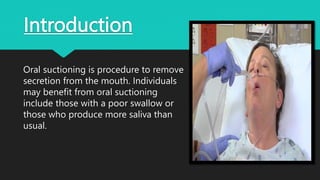
Oral suctioning is procedure to remove
secretion from the mouth. Individuals
may benefit from oral suctioning
include those with a poor swallow or
those who produce more saliva than
usual.
Definition
Oral suctioning is suctioning of the upper
airway passage of mouth and pharynx.
This procedure is used to assist the patient
in eliminating secretions before he has
regained full consciousness and can not
split out secretion.
Purpose
To remove secretion that obstruct the airway.
To facilitate ventilation.
To obtain secretions for diagnostic purpose.
To prevent infection that may result from accumulated
secretions.
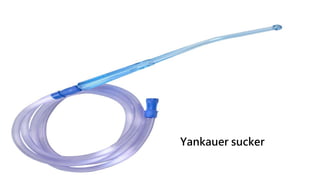
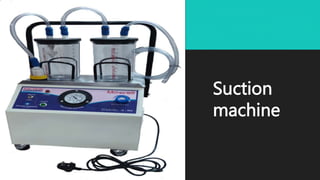
Article
Yankauer sucker
Suction
machine
Indication
Client inability to clear secretion independently (sputum,
saliva,vomit) from their upper airway by a cough, huff or other
method of airway clearance.
This may be due to obstruction, falling level of consciousness of
physical disability and the presence of which is causing
discomfort, distress or obstruction.
Contraindications
 Facial fracture
 Head and neck surgery
 Loose teeth or dentures
 Clotting or haematological disorder
 Sore mouth or damaged mucosa
 Severe brochospasm
 Stridor
 Restless/anxious client
 Fitting patient
 Spasm or increased muscle tone of face and neck muscles
Procedure
Prior to Procedure Nurse has to be,
Explain procedure, to gain consent and cooperation.
The patient requiring oral suctioning may be semiconcious or
unconscious.
The hand must be washed and dried thoroughly.
An apron and gloves should be worm.
Goggles will be required if airborne secretion are likely to occur.
,
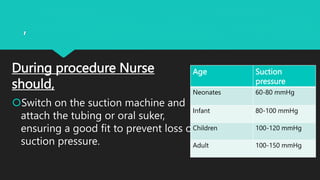
During procedure Nurse
should,
Switch on the suction machine and
attach the tubing or oral suker,
ensuring a good fit to prevent loss of
suction pressure.
Age Suction
pressure
Neonates 60-80 mmHg
Infant 80-100 mmHg
Children 100-120 mmHg
Adult 100-150 mmHg
If able to co-operate ask the patient to open their mouth.
The oral sucker may have a hole, which when occluded by
thumb, enable suction to be applied.
If the oral suction control mechanism kink the suction tubing so
that suction is not applied until required.
Gently insert the oral sucker into the mouth, taking care not to
make the patient 'gag’ by inserting it too far.
Apply suction, moving the sucker to all parts of the month as
necessary.
After Procedure Nurse should,
Ensure the patient is comfortable.
Mouth care may be required following oral suctioning.
Clean the oral sucker and suction tubing by suctioning sterile
water through it until all traces of sputum have gone.
The oral sucker may be used again on the same patient
providing it is left clean and covered by a plastic bag 🛍️
between uses. The sucker and tubing should be replaced
every 24 hours.
Replace the cap on the bottle of sterile distilled water 💦.
If the suction machine has a reusable bottle, this should be
emptied at least every 24 hours.
Goggles 🥽 should be worm when emptying it.
If it has a disposable sealed and discarded when full or no
longer require suctioning.
Remove gloves 🥽, apron and wash hands.
Document 📄 oral suctioning,noting the amount and
appearance of the secretion.
Points for practice
 Oral suctioning may be required by patient who are able to cough,but are
too weak to expectorate .
 It may be necessary in unconscious patient,if there are copious secretion
and during cardiopulmonary resuscitation.
 The sterile distilled water is used to clean the suction tubing after use and
must be kept closed to discourage bacterial growth.
 The bottle must be changed for every 24 hours.
 If poured into a bowl must be kept clean and dry when not is use
Summary
We are learn about definition of oral suction, purpose of
oral suction, articles of oral suction, indication,
contraindications of oral suction and procedure of oral
suction.
Conclusion
Oral suction plays important role in health care. It
remove secretions and prevent infection in body
👅 so we conclude that oral suction is best
procedure for preventing infection in respiratory
or digestive system.
Bibliography
BT Basavanthappa , Nursing foundation JAYPEE first edition.
I Clement, Textbook of Nursing foundation third edition, JAYPEE.
Annamma Jocob Rekha R Jadhav Sonali Tarachand,Clinical
Nursing Procedure:The Art of Nursing Practice second edition
JAYPEE
Question ❓
Define oral suctioning?
What is the purpose of oral suctioning?
Enlist the name of articles?
In which condition give oral suctioning?
What is the Contraindication of oral suctioning?
Thank you 😊

Oral suction

  • 1.
    Nursing foundation Topic=Oral suction Submittedto, Ms. Madhavi Narayane Tutor/Clinical Instructor Dept. of Medical surgical Nursing DMCON Submitted by, Miss Pournima Turkar Bsc. Nursing First Year 2021 DMCON Roll no.=56
  • 2.
    Learning objectives  Introductionof oral suction  Definition  Purpose  Article  Indication  Contraindication  Procedure
  • 3.
    Introduction Oral suctioning isprocedure to remove secretion from the mouth. Individuals may benefit from oral suctioning include those with a poor swallow or those who produce more saliva than usual.
  • 4.
    Definition Oral suctioning issuctioning of the upper airway passage of mouth and pharynx. This procedure is used to assist the patient in eliminating secretions before he has regained full consciousness and can not split out secretion.
  • 5.
    Purpose To remove secretionthat obstruct the airway. To facilitate ventilation. To obtain secretions for diagnostic purpose. To prevent infection that may result from accumulated secretions.
  • 6.
  • 8.
  • 9.
  • 10.
    Indication Client inability toclear secretion independently (sputum, saliva,vomit) from their upper airway by a cough, huff or other method of airway clearance. This may be due to obstruction, falling level of consciousness of physical disability and the presence of which is causing discomfort, distress or obstruction.
  • 11.
    Contraindications  Facial fracture Head and neck surgery  Loose teeth or dentures  Clotting or haematological disorder  Sore mouth or damaged mucosa  Severe brochospasm  Stridor  Restless/anxious client  Fitting patient  Spasm or increased muscle tone of face and neck muscles
  • 12.
    Procedure Prior to ProcedureNurse has to be, Explain procedure, to gain consent and cooperation. The patient requiring oral suctioning may be semiconcious or unconscious. The hand must be washed and dried thoroughly. An apron and gloves should be worm. Goggles will be required if airborne secretion are likely to occur.
  • 13.
    , During procedure Nurse should, Switchon the suction machine and attach the tubing or oral suker, ensuring a good fit to prevent loss of suction pressure. Age Suction pressure Neonates 60-80 mmHg Infant 80-100 mmHg Children 100-120 mmHg Adult 100-150 mmHg
  • 14.
    If able toco-operate ask the patient to open their mouth. The oral sucker may have a hole, which when occluded by thumb, enable suction to be applied. If the oral suction control mechanism kink the suction tubing so that suction is not applied until required. Gently insert the oral sucker into the mouth, taking care not to make the patient 'gag’ by inserting it too far. Apply suction, moving the sucker to all parts of the month as necessary.
  • 15.
    After Procedure Nurseshould, Ensure the patient is comfortable. Mouth care may be required following oral suctioning. Clean the oral sucker and suction tubing by suctioning sterile water through it until all traces of sputum have gone. The oral sucker may be used again on the same patient providing it is left clean and covered by a plastic bag 🛍️ between uses. The sucker and tubing should be replaced every 24 hours. Replace the cap on the bottle of sterile distilled water 💦.
  • 16.
    If the suctionmachine has a reusable bottle, this should be emptied at least every 24 hours. Goggles 🥽 should be worm when emptying it. If it has a disposable sealed and discarded when full or no longer require suctioning. Remove gloves 🥽, apron and wash hands. Document 📄 oral suctioning,noting the amount and appearance of the secretion.
  • 17.
    Points for practice Oral suctioning may be required by patient who are able to cough,but are too weak to expectorate .  It may be necessary in unconscious patient,if there are copious secretion and during cardiopulmonary resuscitation.  The sterile distilled water is used to clean the suction tubing after use and must be kept closed to discourage bacterial growth.  The bottle must be changed for every 24 hours.  If poured into a bowl must be kept clean and dry when not is use
  • 18.
    Summary We are learnabout definition of oral suction, purpose of oral suction, articles of oral suction, indication, contraindications of oral suction and procedure of oral suction.
  • 19.
    Conclusion Oral suction playsimportant role in health care. It remove secretions and prevent infection in body 👅 so we conclude that oral suction is best procedure for preventing infection in respiratory or digestive system.
  • 20.
    Bibliography BT Basavanthappa ,Nursing foundation JAYPEE first edition. I Clement, Textbook of Nursing foundation third edition, JAYPEE. Annamma Jocob Rekha R Jadhav Sonali Tarachand,Clinical Nursing Procedure:The Art of Nursing Practice second edition JAYPEE
  • 21.
    Question ❓ Define oralsuctioning? What is the purpose of oral suctioning? Enlist the name of articles? In which condition give oral suctioning? What is the Contraindication of oral suctioning?
  • 22.