OPEN WEB APPLICATION SECURITY PROJECT
OWASP TOP 10 VULNERABILITIES
What is the OWASP Top 10?
 list of the top ten web application vulnerabilities
 Determined by OWASP and the security
 Community at large
 Released every few years
 Most recently released in 2017
 First release in 2003
What are the OWASP Top 10 Vulnerabilities for 2017?
• A1: Injection
• A2: Broken Authentication
• A3: Sensitive Data Exposure
• A4: XML External Entities (XEE)
• A5: Broken Access Control
• A6: Security Misconfiguration
• A7: Cross-Site Scripting
• A8: Insecure Deserialization
• A9: Using Components with Known Vulnerabilities
• A10: Insufficient Logging and Monitoring
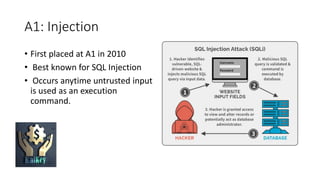
A1: Injection
• First placed at A1 in 2010
• Best known for SQL Injection
• Occurs anytime untrusted input
is used as an execution
command.
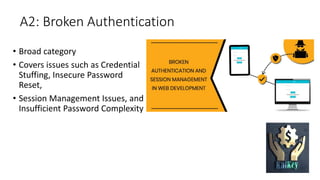
A2: Broken Authentication
• Broad category
• Covers issues such as Credential
Stuffing, Insecure Password
Reset,
• Session Management Issues, and
Insufficient Password Complexity
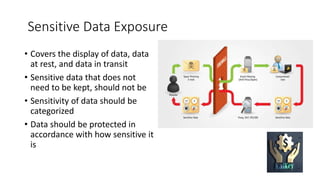
Sensitive Data Exposure
• Covers the display of data, data
at rest, and data in transit
• Sensitive data that does not
need to be kept, should not be
• Sensitivity of data should be
categorized
• Data should be protected in
accordance with how sensitive it
is
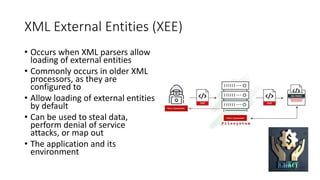
XML External Entities (XEE)
• Occurs when XML parsers allow
loading of external entities
• Commonly occurs in older XML
processors, as they are
configured to
• Allow loading of external entities
by default
• Can be used to steal data,
perform denial of service
attacks, or map out
• The application and its
environment
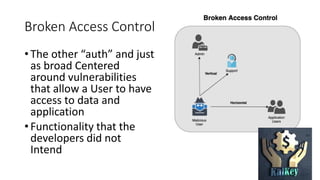
Broken Access Control
• The other “auth” and just
as broad Centered
around vulnerabilities
that allow a User to have
access to data and
application
• Functionality that the
developers did not
Intend
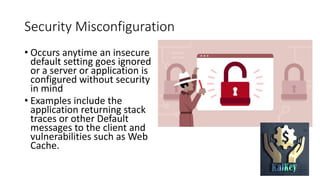
Security Misconfiguration
• Occurs anytime an insecure
default setting goes ignored
or a server or application is
configured without security
in mind
• Examples include the
application returning stack
traces or other Default
messages to the client and
vulnerabilities such as Web
Cache.
Cross-Site Scripting
• Also known as XSS
• Occurs in applications that
do not Properly handle
untrusted input.
• Two most common “flavors”
are Persisted and Reflected
Insecure Deserialization
• Insecure deserialization often leads to remote code execution. Even if
deserialization flaws
• Do not result in remote code execution, they can be used to perform
attacks, including replay attacks, injection attacks, and privilege
escalation attacks.
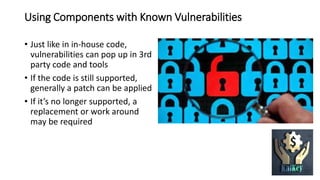
Using Components with Known Vulnerabilities
• Just like in in-house code,
vulnerabilities can pop up in 3rd
party code and tools
• If the code is still supported,
generally a patch can be applied
• If it’s no longer supported, a
replacement or work around
may be required
Insufficient Monitoring and Logging
• Logging and monitoring is often overlooked
• • Proper logging provides valuable information to developers and
• security teams that can be used to improve weak points
• • In the event of a breach, logging and monitoring data can be used
to
• assist with quicker response times, reducing impact
OWASP Summary
• The OWASP Top 10 does not cover every web application security
vulnerability
• The Top 10 is a fantastic foundation on which to build an application
• Security plan that also considers the needs of the application and
organization
• OWASP is a non-profit and is always looking for volunteer
• Assistance for its projects, you can find their website here
https://owasp.org/

Owasp

  • 1.
    OPEN WEB APPLICATIONSECURITY PROJECT OWASP TOP 10 VULNERABILITIES
  • 2.
    What is theOWASP Top 10?  list of the top ten web application vulnerabilities  Determined by OWASP and the security  Community at large  Released every few years  Most recently released in 2017  First release in 2003
  • 3.
    What are theOWASP Top 10 Vulnerabilities for 2017? • A1: Injection • A2: Broken Authentication • A3: Sensitive Data Exposure • A4: XML External Entities (XEE) • A5: Broken Access Control • A6: Security Misconfiguration • A7: Cross-Site Scripting • A8: Insecure Deserialization • A9: Using Components with Known Vulnerabilities • A10: Insufficient Logging and Monitoring
  • 4.
    A1: Injection • Firstplaced at A1 in 2010 • Best known for SQL Injection • Occurs anytime untrusted input is used as an execution command.
  • 5.
    A2: Broken Authentication •Broad category • Covers issues such as Credential Stuffing, Insecure Password Reset, • Session Management Issues, and Insufficient Password Complexity
  • 6.
    Sensitive Data Exposure •Covers the display of data, data at rest, and data in transit • Sensitive data that does not need to be kept, should not be • Sensitivity of data should be categorized • Data should be protected in accordance with how sensitive it is
  • 7.
    XML External Entities(XEE) • Occurs when XML parsers allow loading of external entities • Commonly occurs in older XML processors, as they are configured to • Allow loading of external entities by default • Can be used to steal data, perform denial of service attacks, or map out • The application and its environment
  • 8.
    Broken Access Control •The other “auth” and just as broad Centered around vulnerabilities that allow a User to have access to data and application • Functionality that the developers did not Intend
  • 9.
    Security Misconfiguration • Occursanytime an insecure default setting goes ignored or a server or application is configured without security in mind • Examples include the application returning stack traces or other Default messages to the client and vulnerabilities such as Web Cache.
  • 10.
    Cross-Site Scripting • Alsoknown as XSS • Occurs in applications that do not Properly handle untrusted input. • Two most common “flavors” are Persisted and Reflected
  • 11.
    Insecure Deserialization • Insecuredeserialization often leads to remote code execution. Even if deserialization flaws • Do not result in remote code execution, they can be used to perform attacks, including replay attacks, injection attacks, and privilege escalation attacks.
  • 12.
    Using Components withKnown Vulnerabilities • Just like in in-house code, vulnerabilities can pop up in 3rd party code and tools • If the code is still supported, generally a patch can be applied • If it’s no longer supported, a replacement or work around may be required
  • 13.
    Insufficient Monitoring andLogging • Logging and monitoring is often overlooked • • Proper logging provides valuable information to developers and • security teams that can be used to improve weak points • • In the event of a breach, logging and monitoring data can be used to • assist with quicker response times, reducing impact
  • 14.
    OWASP Summary • TheOWASP Top 10 does not cover every web application security vulnerability • The Top 10 is a fantastic foundation on which to build an application • Security plan that also considers the needs of the application and organization • OWASP is a non-profit and is always looking for volunteer • Assistance for its projects, you can find their website here https://owasp.org/