OSTEOPOROSIS
Dr. Navin Adhikari
INTRODUCTION
• Osteoporosis is a skeletal disease characterized by low
bone mass and micro-architectural deterioration of bone
tissue with a consequent increase in bone fragility and
susceptibility to fracture .
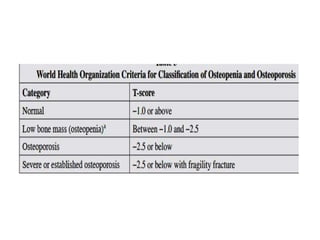
• World Health Organization (WHO) provided a practical
definition of osteoporosis as a bone mineral density
(BMD) of below 2.5 SD of the young female normal
mean .
• Who has defined osteopenia as a T-score at the femoral
neck of between –1.0 SD and –2.5 SD below the young
female adult mean.
Factors contributing to decreased strength
• Low bone mass
• Small bone size,
• Unfavorable macroarchitecture (eg, increased length of
the femoral neck),
• Disrupted microarchitecture cortical porosity,
• Decreased viability of osteocytes
RISK FACTORS
• Age
• Low body mass index (BMI)
• Excessive alcohol intake (daily intake or >10 servings per
week)
• Current smoking
• Chronic corticosteroid use
• History of prior fractures
• History of falls within the past year,
• History of cerebrovascular accident, and
• Diabetes Mellitus
Types
• Primary and Secondary types
Primary Osteoporosis
• Type I primary osteoporosis has been called
postmenopausal osteoporosis because it affects many
more women than men associated with the dramatic loss
of estrogen. Active trabecular bone is lost. Vertebral
fractures are more common.
• Type II primary osteoporosis is associated with ages 70
years in both sexes and affects both trabecular and
cortical bone. Therefore both vertebral and hip fractures
occur in such patients.
CAUSES OF SECONDARY
OSTEOPOROSIS
• Endocrine diseases – Hypogonadism, delayed puberty,
estrogen deficiency, hypercortisolism hyperthyroidism,
hyperparathyroidism, vitamin D deficiency, growth
hormone deficiency Diabetes mellitus (type 1 and 2)
• Gastrointestinal diseases – Malabsorption syndromes
(eg, celiac disease, postoperative states), Inflammatory
bowel disease, Cirrhosis of liver.
• Hematologic disorders – Multiple myeloma, Chronic
hemolytic anemia, Systemic mastocytosis
• Connective tissue diseases – Osteogenesis imperfecta,
Ehlers-Danlos syndrome, Marfan syndrome and
Homocystinuria
• Drugs – Alcohol, Heparin, Glucocorticoids Thyroxine,
Antiseizure medications, Gonadotropin-releasing
hormone analogs, Cyclosporine, Chemotherapy, HIV
medications (eg, tenofovir)
• Miscellaneous – Eating disorders (eg, anorexia nervosa),
Hypercalciuria, Immobilization )
CLINICAL FEATURES
• No clinical manifestations until there is a fracture.
• Vertebral fracture is the most common clinical
manifestation of osteoporosis
• Hip fractures are also common
• Distal radius fractures (Colles fractures)
• The pain from a vertebral compression fracture is
variable in quality and may be sharp or dull aggravated
by sitting, spine extension, Valsalva maneuver, and
movement and mostly assosiated with sleep disturbance.
• Acute episodes of pain following a vertebral body
fracture usually resolve after four to six weeks, but pain
may persist for longer periods (many months)
• On physical examination, tenderness upon palpation and
percussion of the corresponding spinous process and
paravertebral structures.
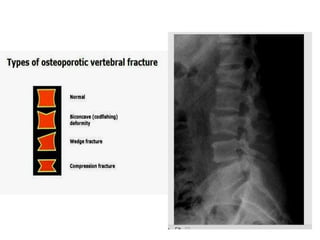
• kyphosis ("dowager hump") may be an indicator of
multiple vertebral compression fractures.
DIAGNOSIS
Clinical diagnosis in presence fragility fracture,
particularly at the spine, hip, wrist, humerus, rib, and
pelvis
or
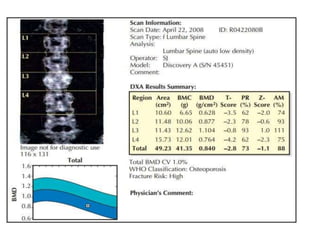
T-score ≤-2.5 standard deviations (SDs) at any site based
upon bone mineral density (BMD) measurement by dual-
energy x-ray absorptiometry (DXA). (WHO )
• Fragility fractures are those occurring spontaneously or
from minor trauma, such as a fall from a standing height
or less. Fragility fracture common sites are spine, hip,
wrist, humerus, rib, and pelvis.
ISCD criteria
• Postmenopausal women and men ≥50 years – The ISCD
advises that the WHO criteria be used in postmenopausal
women and in men age 50 years and older.
• Premenopausal women and men <50 years – The ISCD
advises that the WHO criteria not be used in premenopausal
women or men under age 50 years, because the relationship
between BMD and fracture risk is not the same in younger
women and men.
• Children – The WHO classification should not be used in
children (male or female under age 20 years), Z-scores, not T-
scores, should be used, since it is not appropriate to compare
the BMD of someone who has not yet achieved peak bone
mass with that of an adult who has.
• Osteoporosis can be diagnosed in children based on the
presence of a vertebral compression fracture, or a Z-score <-2
in combination with a significant fracture history (eg, two
long bone fractures before age 10 years or three long bone
fractures before 19 years)
DIFFERENTIAL DIAGNOSIS
• Osteomalacia
• Bone malignancy
• Potts Spine
• Osteonecrosis
• Physical abuse
FRACTURE RISK ASSESSMENT TOOL
(FRAX)
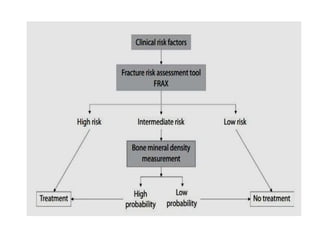
• Estimates the patient’s ten-year probability of sustaining a
hip or major (i.e., hip, clinical vertebral, proximal humerus
or forearm) osteoporotic fracture .
• permutation is country-specific
• takes into account the patient’s age, weight, height, and
seven risk factors: a history of hip fractures in one of the
biologic parents, a personal history of fragility fractures,
cigarette smoking, alcohol abuse, rheumatoid arthritis,
corticosteroid therapy, and secondary osteoporosis
LIMITATION AND ADVANTAGES
• Limitations are risk factors are dichotomized and
have to be answered in a yes/no manner, no
assessment of severity of risk factor , cant be used
for follow up.
• One of the advantages of FRAX is that it can be
calculated without BMD and therefore can be used
to identify patients who would need a DXA scan.
BMD
• Bone mineral density (BMD) testing is a widely available
clinical tool to diagnose osteoporosis predict fracture risk, and
monitor response to therapy.
• conventional radiography, dual-energy x-ray absorptiometry
(DEXA), quantitative computed tomography (QCT), and high-
resolution
imaging techniques
• DXA is the best method for monitoring changes in BMD over
time because of a strong correlation between mechanical
strength and BMD measured by DXA.
• Contraindications of DXA pregnancy.
• Skeletal site selection — The World Health Organization
(WHO) recommends that the international standard for
diagnosis of osteoporosis be made using the T-score
measured by DXA at the femoral neck .
• However the International Society for Clinical
Densitometry (ISCD) suggest that the diagnosis of
osteoporosis in clinical practice be made by DXA using
the lowest T-score of the lumbar spine (L1-L4), total
proximal femur, or femoral neck .
INDICATIONS
• Fragility fracture
• Glucocorticoid therapy (≥5 mg prednisone for ≥ 3 months)
• Androgen deprivation therapy for prostate cancer
• Hypogonadism
• Height loss > 1.5–2 inches from maximum height
• Current smoking/chronic obstructive pulmonary disease
• Malabsorption
• Bariatric or Bilroth surgery
• Use of medication associated with secondary osteoporosis
• Hyperparathyroidism
• Hypercalciuria/recurrent calcium-containing kidney stones
• All postmenopausal women With a history of fracture without
major trauma, osteopenia identified radiographically
LABORATORY EVALUATION
• Biochemistry profile (especially calcium, phosphorous,
albumin, total protein, creatinine, liver enzymes including
alkaline phosphatase, electrolytes)
• 25-hydroxyvitamin D (25[OH]D)
• Complete blood count (CBC)
• If the diagnosis of osteoporosis is based upon the
presence of a fragility fracture, obtain a BMD
measurement (dual-energy x-ray absorptiometry
[DXA]), performed on a nonurgent basis, for
quantitative assessment of bone density and to monitor
response to therapy.
• Unexplained anemia, vitamin D deficiency, and/or low
urinary calcium excretion should be tested for celiac
disease.
• Cancer or multiple myeloma should be considered in
patients with hypercalcemia, otherwise unexplained
anemia, weight loss, or proteinuria. Measurement of
serum and urine protein electrophoresis would be
indicated.
• Serum parathyroid hormone (PTH) should be
measured in patients with hypercalcemia,
hypercalciuria, a history of renal stones, or osteopenia.
• Urinary cortisol excretion should be measured if
Cushing's syndrome is suspected and in patients with
unexplained osteoporosis and vertebral fracture since
patients with subclinical hypercortisolism (mild
hypercortisolism without clinical manifestations of
Cushing's syndrome) are also at risk for low BMD and
fractures.
• TSH –measure thyroid-stimulating hormone (TSH) in men
who are taking levothyroxine, or if there are clinical
findings suspicious for hyperthyroidism.
Treatment
1. Hormonal
2. Pharmacological
3. Lifestyle Modifications
Lifestyle measures include adequate calcium and
vitamin D, exercise, smoking cessation, counseling
on fall prevention, and avoidance of heavy alcohol
use, Weight-bearing exercise has beneficial effects
on BMD but has not been shown to reduce fracture
risk
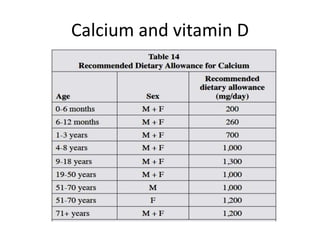
Calcium and vitamin D
• Dietary calcium may be preferred over supplemental
calcium and that total calcium intake should not exceed
1,500 mg/day .Increasing calcium intake beyond the
recommended levels has lead to increased risk of
cardiovascular disease, stroke and nephrolithiasis .
• Recommended intake of vitamin D is at least
1,000 IU of per day for adults aged 50 years and
older.
• Adults who are vitamin D insufficient or deficient
(serum 25[OH]D 20 to 29 or <20 ng/mL, respectively)
maybe treated with 5,000 IU vitamin D3 daily for 8 to 12
weeks to achieve a 25(OH)D blood level >30 ng/mL.
BISPHOSPHONATE THERAPY
• Bisphosphonates bind to hydroxyapatite in bone,
particularly at sites of active bone remodeling, and reduce
activity of bone-resorbing osteoclasts .
• Four bisphosphonates are available (alendronate,
ibandronate,
risedronate, and zoledronate) .
• Three of the four (alendronate, risedronate, and
zoledronate) have evidence for broad-spectrum
antifracture efficacy .
INDICATIONS
• Postmenopausal women with a history of fragility
fracture or with osteoporosis based upon bone mineral
density (BMD) measurement (T-score ≤-2.5 )
• high-risk postmenopausal women with T-scores
between -1.0 and -2.5. calculate fracture risk using the
Fracture Risk Assessment Tool (FRAX)
• For men with osteoporosis (history of fragility fracture,
or a T-score below -2.5 in men ≥50 years)
• Men ≥50 years with T-scores between -1.0 and -2.5 who
are at high risk for fracture.
• Alendronate or risedronate as the initial choice of oral
bisphosphonate
• Alendronate, in part due to direct evidence showing
residual fracture benefit
• If history of gastrointestinal (GI) side effects to
alendronate (but without esophageal disorders),
risedronate can be substituted.
Contraindications to oral therapy
• Esophageal disorders (eg, achalasia, esophageal
stricture, esophageal varices, Barrett's esophagus) or
with an inability to follow the dosing requirements .
• Bariatric surgery in which surgical anastomoses are
present in the gastrointestinal (GI) tract .
• If contraindications or intolerance to oral
bisphosphonates, IV zoledronic acid is used
Assessment before starting bisphosphonates
1. Biochemical
• Calcium
• 25-hydroxyvitamin D (25[OH]D)
• Creatinine
• For both oral and intravenous (IV)
bisphosphonates, correction of hypocalcemia
and/or vitamin D deficiency (to at least 20 ng/mL
[50 nmol/L]) is necessary prior to administration
2. Assess comorbidities history to detect any abnormalities
of the esophagus (stricture, achalasia) and an inability to
remain upright for at least 30 to 60 minutes.
3. Plans for invasive dental procedures developing
osteonecrosis of the jaw.
DURATION OF THERAPY
• Low risk for fracture – For patients at low risk for fracture in
the near future (eg, stable bone mineral density [BMD], no
previous vertebral or hip fractures), discontinuing the drug
(after three years for zoledronic acid, five years for
alendronate or risedronate)
• High risk for fracture – For patients at highest risk for fracture
(history of osteoporotic fracture before or during therapy, T-
score below -3.0 in the absence of fractures) who are taking
alendronate or risedronate, continuing therapy for up to 10
years
• Drug holiday because bisphosphonates accumulate and may
have a prolonged residence time in bone (and residual
therapeutic effect after stopping), “bisphosphonate holidays”
may be considered. Drug holiday can be considered after 5
years of stability on oral bisphosphonates or 3 years of IV
zoledronate
ADVERSE EFFECT
• Upper gastrointestinal symptoms, oesophagitis bowel
disturbance, headaches and musculoskeletal pain.
• Tablets should be swallowed whole with a glass of plain
water (∼200 ml) while the patient is sitting or standing in
an upright position. Patients should not lie down for 30
min after taking the tablet
DENOSUMAB
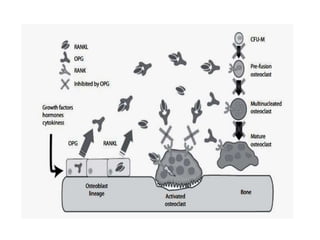
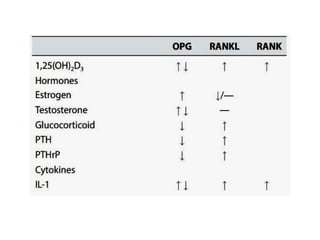
• Denosumab, a fully human monoclonal antibody that
specifically binds RANKL, blocks the binding of RANKL to
RANK and thereby reduces the formation, function, and
survival of osteoclasts, which results in decreased bone
resorption and increased bone density.
• Denosumab (60 mg) is administered by subcutaneous
injection once every six months.
• Denosumab is an option for patients who are intolerant
of or unresponsive to other therapies.
Other Pharmacological Treatment
• Injectable and nasal spray recombinant salmon
calcitonin are forpostmenopausal osteoporosis. The
approved dosage of injectable calcitonin for treatment
of postmenopausal osteoporosis is 100 IU daily given
subcutaneously or intramuscularly.
• Raloxifene is approved for prevention
and treatment of postmenopausal osteoporosis .
• Estrogen is approved by the for prevention of
postmenopausal osteoporosis not for treatment
Main factor influencing drug of choice
• Gastrointestinal intolerance - intravenous ibandronate,
rolaxifane and denosumab.
• Convenience monthly - ibandronate, intravenous
zolendonate, denosumab
• Cost effectiveness - alendronate and risedronate
• High risk of breast cancer - rolaxifane
• Severe osteoporosis - teriperatide
MONITORING THE RESPONSE TO
THERAPY
• obtain a follow-up dual-energy x-ray absorptiometry
(DXA) of hip and spine after one or two years and, if
bone mineral density (BMD) is stable or improved,
less monitoring can de done frequently thereafter.
GLUCOCORTICOID-INDUCED
OSTEOPOROSIS
• Glucocorticoids (GCs) play an important role in
the treatment of many inflammatory conditions .
• 10% of patients who receive long-term GC treatment are
diagnosed with a fracture, and 30–40% have radiographic
evidence of vertebral fractures . The highest rate of bone
loss occurs within the first 3–6 months of GC treatment,
and a slower decline continues with persistent use .
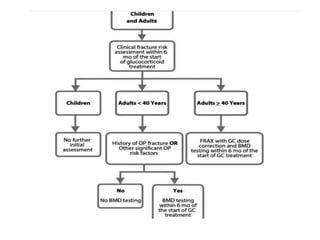
• ACR has stratified risk based on clinical
settings, adults 40 years of age based on BMD, history of
fracture, and10-year risk of major OP fracture and hip
fracture calculated
using a tool that combines risk factors with GC dose . Risk
group are High fracture risk , Moderate fracture risk and
Low fracture risk .
Initial Treatment For Prevention Of
GIOP In Adults
• Recommendations
All adults taking prednisone at a dose of 2.5 mg/day for
3months Optimize calcium intake (1,000–1,200 mg/day)
and vitamin D intake (600–800 IU/day) and lifestyle
modifications.
• Adults age 40 years at low risk of fracture and Adults
age <40 years at low risk of fracture
Optimize calcium and vitamin D intake and lifestyle
modifications over treatment with bisphosphonates,
teriparatide, denosumab, or raloxifene.
• Adults age 40 years at moderate risk of major fracture
and high risk of fracture.Treat with an oral
bisphosphonate over calcium and vitamin D alone.
MANAGEMENT OF OSTEOPOROTIC
VERTEBRAL COMPRESSION
• Pain control and activity modification.
• Oral analgesics are first-line therapy for the relief of
acute pain.
• acetaminophen, ibuprofen, naproxen, mild opioids
combined with acetaminophen, or mixed mechanism
drugs (eg, tramadol, tapentadol). Choice of initial agent
depends upon the severity of the pain). For patients
incapacitated by pain due to vertebral compression
fractures, hospitalization and parenteral analgesia may
be necessary.
• Vertebral augmentation procedures (vertebroplasty and
kyphoplasty
References
• Surgical and Medical Treatment of Osteoporosis_
Principles and Practice 1st Edition
• Uptodate
• American College Of Endocrinology Clinical Practice
Guidelines For The Diagnosis And Treatment Of
Postmenopausal Osteoporosis
• UK clinical guideline for the prevention
and treatment of osteoporosis
• Osteoporosis Diagnosis and Management by Dale w.

Osteoporosis

  • 1.
  • 2.
    INTRODUCTION • Osteoporosis isa skeletal disease characterized by low bone mass and micro-architectural deterioration of bone tissue with a consequent increase in bone fragility and susceptibility to fracture . • World Health Organization (WHO) provided a practical definition of osteoporosis as a bone mineral density (BMD) of below 2.5 SD of the young female normal mean . • Who has defined osteopenia as a T-score at the femoral neck of between –1.0 SD and –2.5 SD below the young female adult mean.
  • 4.
    Factors contributing todecreased strength • Low bone mass • Small bone size, • Unfavorable macroarchitecture (eg, increased length of the femoral neck), • Disrupted microarchitecture cortical porosity, • Decreased viability of osteocytes
  • 8.
    RISK FACTORS • Age •Low body mass index (BMI) • Excessive alcohol intake (daily intake or >10 servings per week) • Current smoking • Chronic corticosteroid use • History of prior fractures • History of falls within the past year, • History of cerebrovascular accident, and • Diabetes Mellitus
  • 9.
    Types • Primary andSecondary types Primary Osteoporosis • Type I primary osteoporosis has been called postmenopausal osteoporosis because it affects many more women than men associated with the dramatic loss of estrogen. Active trabecular bone is lost. Vertebral fractures are more common. • Type II primary osteoporosis is associated with ages 70 years in both sexes and affects both trabecular and cortical bone. Therefore both vertebral and hip fractures occur in such patients.
  • 10.
    CAUSES OF SECONDARY OSTEOPOROSIS •Endocrine diseases – Hypogonadism, delayed puberty, estrogen deficiency, hypercortisolism hyperthyroidism, hyperparathyroidism, vitamin D deficiency, growth hormone deficiency Diabetes mellitus (type 1 and 2) • Gastrointestinal diseases – Malabsorption syndromes (eg, celiac disease, postoperative states), Inflammatory bowel disease, Cirrhosis of liver. • Hematologic disorders – Multiple myeloma, Chronic hemolytic anemia, Systemic mastocytosis
  • 11.
    • Connective tissuediseases – Osteogenesis imperfecta, Ehlers-Danlos syndrome, Marfan syndrome and Homocystinuria • Drugs – Alcohol, Heparin, Glucocorticoids Thyroxine, Antiseizure medications, Gonadotropin-releasing hormone analogs, Cyclosporine, Chemotherapy, HIV medications (eg, tenofovir) • Miscellaneous – Eating disorders (eg, anorexia nervosa), Hypercalciuria, Immobilization )
  • 12.
    CLINICAL FEATURES • Noclinical manifestations until there is a fracture. • Vertebral fracture is the most common clinical manifestation of osteoporosis • Hip fractures are also common • Distal radius fractures (Colles fractures) • The pain from a vertebral compression fracture is variable in quality and may be sharp or dull aggravated by sitting, spine extension, Valsalva maneuver, and movement and mostly assosiated with sleep disturbance.
  • 13.
    • Acute episodesof pain following a vertebral body fracture usually resolve after four to six weeks, but pain may persist for longer periods (many months) • On physical examination, tenderness upon palpation and percussion of the corresponding spinous process and paravertebral structures. • kyphosis ("dowager hump") may be an indicator of multiple vertebral compression fractures.
  • 15.
    DIAGNOSIS Clinical diagnosis inpresence fragility fracture, particularly at the spine, hip, wrist, humerus, rib, and pelvis or T-score ≤-2.5 standard deviations (SDs) at any site based upon bone mineral density (BMD) measurement by dual- energy x-ray absorptiometry (DXA). (WHO ) • Fragility fractures are those occurring spontaneously or from minor trauma, such as a fall from a standing height or less. Fragility fracture common sites are spine, hip, wrist, humerus, rib, and pelvis.
  • 16.
    ISCD criteria • Postmenopausalwomen and men ≥50 years – The ISCD advises that the WHO criteria be used in postmenopausal women and in men age 50 years and older. • Premenopausal women and men <50 years – The ISCD advises that the WHO criteria not be used in premenopausal women or men under age 50 years, because the relationship between BMD and fracture risk is not the same in younger women and men. • Children – The WHO classification should not be used in children (male or female under age 20 years), Z-scores, not T- scores, should be used, since it is not appropriate to compare the BMD of someone who has not yet achieved peak bone mass with that of an adult who has. • Osteoporosis can be diagnosed in children based on the presence of a vertebral compression fracture, or a Z-score <-2 in combination with a significant fracture history (eg, two long bone fractures before age 10 years or three long bone fractures before 19 years)
  • 17.
    DIFFERENTIAL DIAGNOSIS • Osteomalacia •Bone malignancy • Potts Spine • Osteonecrosis • Physical abuse
  • 18.
    FRACTURE RISK ASSESSMENTTOOL (FRAX) • Estimates the patient’s ten-year probability of sustaining a hip or major (i.e., hip, clinical vertebral, proximal humerus or forearm) osteoporotic fracture . • permutation is country-specific • takes into account the patient’s age, weight, height, and seven risk factors: a history of hip fractures in one of the biologic parents, a personal history of fragility fractures, cigarette smoking, alcohol abuse, rheumatoid arthritis, corticosteroid therapy, and secondary osteoporosis
  • 19.
    LIMITATION AND ADVANTAGES •Limitations are risk factors are dichotomized and have to be answered in a yes/no manner, no assessment of severity of risk factor , cant be used for follow up. • One of the advantages of FRAX is that it can be calculated without BMD and therefore can be used to identify patients who would need a DXA scan.
  • 20.
    BMD • Bone mineraldensity (BMD) testing is a widely available clinical tool to diagnose osteoporosis predict fracture risk, and monitor response to therapy. • conventional radiography, dual-energy x-ray absorptiometry (DEXA), quantitative computed tomography (QCT), and high- resolution imaging techniques • DXA is the best method for monitoring changes in BMD over time because of a strong correlation between mechanical strength and BMD measured by DXA. • Contraindications of DXA pregnancy.
  • 21.
    • Skeletal siteselection — The World Health Organization (WHO) recommends that the international standard for diagnosis of osteoporosis be made using the T-score measured by DXA at the femoral neck . • However the International Society for Clinical Densitometry (ISCD) suggest that the diagnosis of osteoporosis in clinical practice be made by DXA using the lowest T-score of the lumbar spine (L1-L4), total proximal femur, or femoral neck .
  • 22.
    INDICATIONS • Fragility fracture •Glucocorticoid therapy (≥5 mg prednisone for ≥ 3 months) • Androgen deprivation therapy for prostate cancer • Hypogonadism • Height loss > 1.5–2 inches from maximum height • Current smoking/chronic obstructive pulmonary disease • Malabsorption • Bariatric or Bilroth surgery • Use of medication associated with secondary osteoporosis • Hyperparathyroidism • Hypercalciuria/recurrent calcium-containing kidney stones • All postmenopausal women With a history of fracture without major trauma, osteopenia identified radiographically
  • 25.
    LABORATORY EVALUATION • Biochemistryprofile (especially calcium, phosphorous, albumin, total protein, creatinine, liver enzymes including alkaline phosphatase, electrolytes) • 25-hydroxyvitamin D (25[OH]D) • Complete blood count (CBC) • If the diagnosis of osteoporosis is based upon the presence of a fragility fracture, obtain a BMD measurement (dual-energy x-ray absorptiometry [DXA]), performed on a nonurgent basis, for quantitative assessment of bone density and to monitor response to therapy.
  • 26.
    • Unexplained anemia,vitamin D deficiency, and/or low urinary calcium excretion should be tested for celiac disease. • Cancer or multiple myeloma should be considered in patients with hypercalcemia, otherwise unexplained anemia, weight loss, or proteinuria. Measurement of serum and urine protein electrophoresis would be indicated. • Serum parathyroid hormone (PTH) should be measured in patients with hypercalcemia, hypercalciuria, a history of renal stones, or osteopenia.
  • 27.
    • Urinary cortisolexcretion should be measured if Cushing's syndrome is suspected and in patients with unexplained osteoporosis and vertebral fracture since patients with subclinical hypercortisolism (mild hypercortisolism without clinical manifestations of Cushing's syndrome) are also at risk for low BMD and fractures. • TSH –measure thyroid-stimulating hormone (TSH) in men who are taking levothyroxine, or if there are clinical findings suspicious for hyperthyroidism.
  • 28.
    Treatment 1. Hormonal 2. Pharmacological 3.Lifestyle Modifications Lifestyle measures include adequate calcium and vitamin D, exercise, smoking cessation, counseling on fall prevention, and avoidance of heavy alcohol use, Weight-bearing exercise has beneficial effects on BMD but has not been shown to reduce fracture risk
  • 29.
  • 30.
    • Dietary calciummay be preferred over supplemental calcium and that total calcium intake should not exceed 1,500 mg/day .Increasing calcium intake beyond the recommended levels has lead to increased risk of cardiovascular disease, stroke and nephrolithiasis . • Recommended intake of vitamin D is at least 1,000 IU of per day for adults aged 50 years and older. • Adults who are vitamin D insufficient or deficient (serum 25[OH]D 20 to 29 or <20 ng/mL, respectively) maybe treated with 5,000 IU vitamin D3 daily for 8 to 12 weeks to achieve a 25(OH)D blood level >30 ng/mL.
  • 31.
    BISPHOSPHONATE THERAPY • Bisphosphonatesbind to hydroxyapatite in bone, particularly at sites of active bone remodeling, and reduce activity of bone-resorbing osteoclasts . • Four bisphosphonates are available (alendronate, ibandronate, risedronate, and zoledronate) . • Three of the four (alendronate, risedronate, and zoledronate) have evidence for broad-spectrum antifracture efficacy .
  • 32.
    INDICATIONS • Postmenopausal womenwith a history of fragility fracture or with osteoporosis based upon bone mineral density (BMD) measurement (T-score ≤-2.5 ) • high-risk postmenopausal women with T-scores between -1.0 and -2.5. calculate fracture risk using the Fracture Risk Assessment Tool (FRAX) • For men with osteoporosis (history of fragility fracture, or a T-score below -2.5 in men ≥50 years) • Men ≥50 years with T-scores between -1.0 and -2.5 who are at high risk for fracture.
  • 33.
    • Alendronate orrisedronate as the initial choice of oral bisphosphonate • Alendronate, in part due to direct evidence showing residual fracture benefit • If history of gastrointestinal (GI) side effects to alendronate (but without esophageal disorders), risedronate can be substituted. Contraindications to oral therapy • Esophageal disorders (eg, achalasia, esophageal stricture, esophageal varices, Barrett's esophagus) or with an inability to follow the dosing requirements . • Bariatric surgery in which surgical anastomoses are present in the gastrointestinal (GI) tract . • If contraindications or intolerance to oral bisphosphonates, IV zoledronic acid is used
  • 34.
    Assessment before startingbisphosphonates 1. Biochemical • Calcium • 25-hydroxyvitamin D (25[OH]D) • Creatinine • For both oral and intravenous (IV) bisphosphonates, correction of hypocalcemia and/or vitamin D deficiency (to at least 20 ng/mL [50 nmol/L]) is necessary prior to administration 2. Assess comorbidities history to detect any abnormalities of the esophagus (stricture, achalasia) and an inability to remain upright for at least 30 to 60 minutes. 3. Plans for invasive dental procedures developing osteonecrosis of the jaw.
  • 35.
    DURATION OF THERAPY •Low risk for fracture – For patients at low risk for fracture in the near future (eg, stable bone mineral density [BMD], no previous vertebral or hip fractures), discontinuing the drug (after three years for zoledronic acid, five years for alendronate or risedronate) • High risk for fracture – For patients at highest risk for fracture (history of osteoporotic fracture before or during therapy, T- score below -3.0 in the absence of fractures) who are taking alendronate or risedronate, continuing therapy for up to 10 years • Drug holiday because bisphosphonates accumulate and may have a prolonged residence time in bone (and residual therapeutic effect after stopping), “bisphosphonate holidays” may be considered. Drug holiday can be considered after 5 years of stability on oral bisphosphonates or 3 years of IV zoledronate
  • 36.
    ADVERSE EFFECT • Uppergastrointestinal symptoms, oesophagitis bowel disturbance, headaches and musculoskeletal pain. • Tablets should be swallowed whole with a glass of plain water (∼200 ml) while the patient is sitting or standing in an upright position. Patients should not lie down for 30 min after taking the tablet
  • 37.
    DENOSUMAB • Denosumab, afully human monoclonal antibody that specifically binds RANKL, blocks the binding of RANKL to RANK and thereby reduces the formation, function, and survival of osteoclasts, which results in decreased bone resorption and increased bone density. • Denosumab (60 mg) is administered by subcutaneous injection once every six months. • Denosumab is an option for patients who are intolerant of or unresponsive to other therapies.
  • 38.
    Other Pharmacological Treatment •Injectable and nasal spray recombinant salmon calcitonin are forpostmenopausal osteoporosis. The approved dosage of injectable calcitonin for treatment of postmenopausal osteoporosis is 100 IU daily given subcutaneously or intramuscularly. • Raloxifene is approved for prevention and treatment of postmenopausal osteoporosis . • Estrogen is approved by the for prevention of postmenopausal osteoporosis not for treatment
  • 39.
    Main factor influencingdrug of choice • Gastrointestinal intolerance - intravenous ibandronate, rolaxifane and denosumab. • Convenience monthly - ibandronate, intravenous zolendonate, denosumab • Cost effectiveness - alendronate and risedronate • High risk of breast cancer - rolaxifane • Severe osteoporosis - teriperatide
  • 40.
    MONITORING THE RESPONSETO THERAPY • obtain a follow-up dual-energy x-ray absorptiometry (DXA) of hip and spine after one or two years and, if bone mineral density (BMD) is stable or improved, less monitoring can de done frequently thereafter.
  • 41.
    GLUCOCORTICOID-INDUCED OSTEOPOROSIS • Glucocorticoids (GCs)play an important role in the treatment of many inflammatory conditions . • 10% of patients who receive long-term GC treatment are diagnosed with a fracture, and 30–40% have radiographic evidence of vertebral fractures . The highest rate of bone loss occurs within the first 3–6 months of GC treatment, and a slower decline continues with persistent use . • ACR has stratified risk based on clinical settings, adults 40 years of age based on BMD, history of fracture, and10-year risk of major OP fracture and hip fracture calculated using a tool that combines risk factors with GC dose . Risk group are High fracture risk , Moderate fracture risk and Low fracture risk .
  • 43.
    Initial Treatment ForPrevention Of GIOP In Adults • Recommendations All adults taking prednisone at a dose of 2.5 mg/day for 3months Optimize calcium intake (1,000–1,200 mg/day) and vitamin D intake (600–800 IU/day) and lifestyle modifications. • Adults age 40 years at low risk of fracture and Adults age <40 years at low risk of fracture Optimize calcium and vitamin D intake and lifestyle modifications over treatment with bisphosphonates, teriparatide, denosumab, or raloxifene. • Adults age 40 years at moderate risk of major fracture and high risk of fracture.Treat with an oral bisphosphonate over calcium and vitamin D alone.
  • 44.
    MANAGEMENT OF OSTEOPOROTIC VERTEBRALCOMPRESSION • Pain control and activity modification. • Oral analgesics are first-line therapy for the relief of acute pain. • acetaminophen, ibuprofen, naproxen, mild opioids combined with acetaminophen, or mixed mechanism drugs (eg, tramadol, tapentadol). Choice of initial agent depends upon the severity of the pain). For patients incapacitated by pain due to vertebral compression fractures, hospitalization and parenteral analgesia may be necessary. • Vertebral augmentation procedures (vertebroplasty and kyphoplasty
  • 45.
    References • Surgical andMedical Treatment of Osteoporosis_ Principles and Practice 1st Edition • Uptodate • American College Of Endocrinology Clinical Practice Guidelines For The Diagnosis And Treatment Of Postmenopausal Osteoporosis • UK clinical guideline for the prevention and treatment of osteoporosis • Osteoporosis Diagnosis and Management by Dale w.