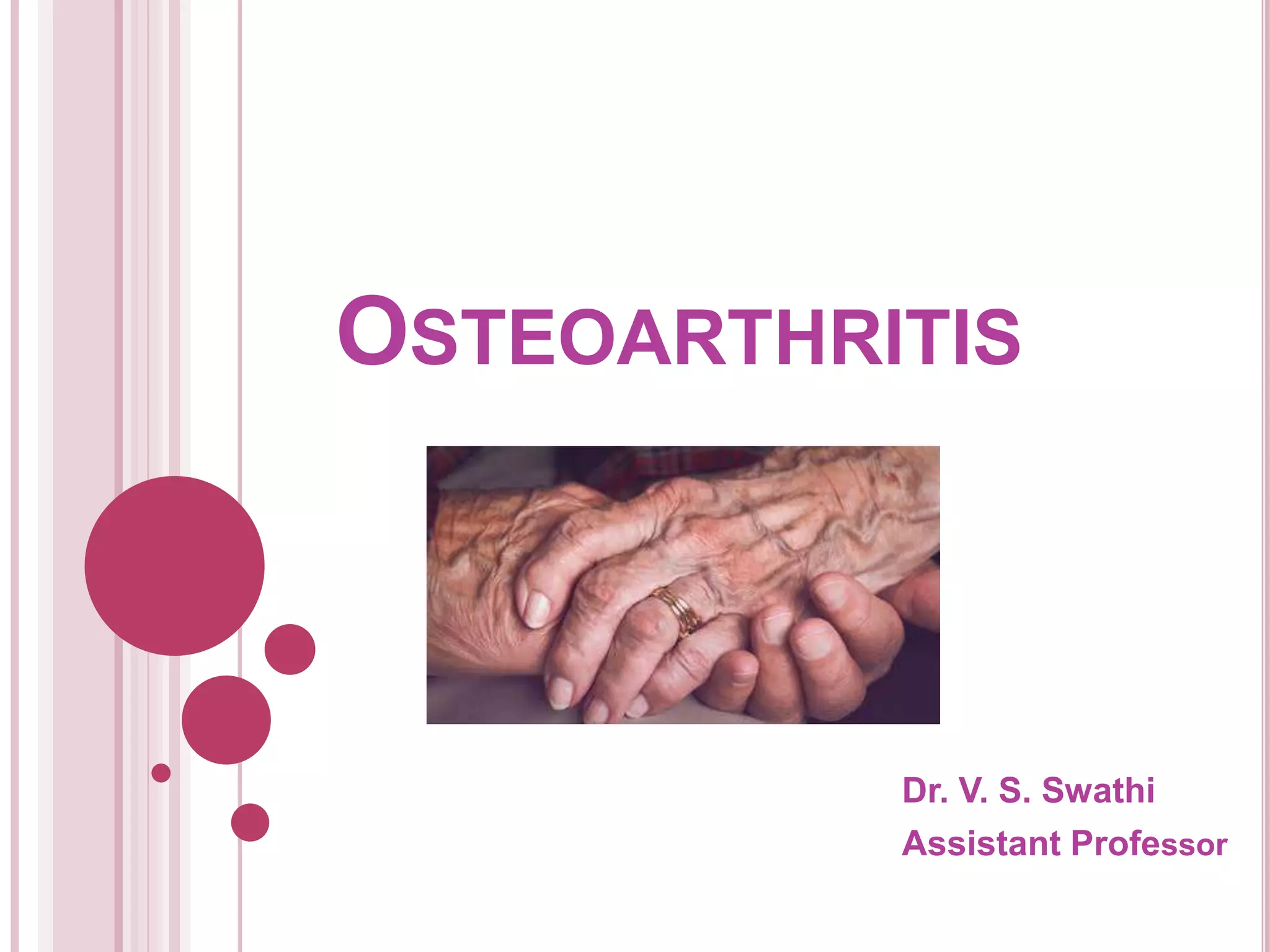
OSTEOARTHRITIS
Dr. V. S. Swathi
Assistant Professor
DEFINITION
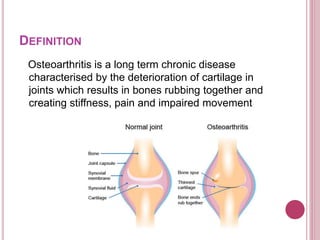
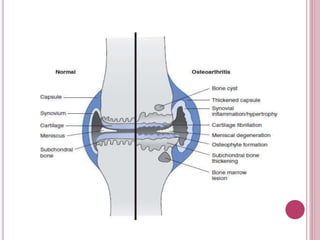
Osteoarthritis is a long term chronic disease
characterised by the deterioration of cartilage in
joints which results in bones rubbing together and
creating stiffness, pain and impaired movement
EPIDEMIOLOGY
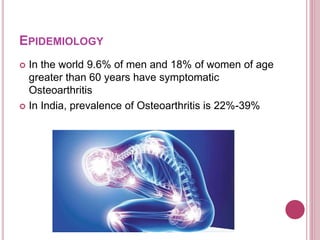
 In the world 9.6% of men and 18% of women of age
greater than 60 years have symptomatic
Osteoarthritis
 In India, prevalence of Osteoarthritis is 22%-39%
TYPES
Primary Osteoarthritis
 Also called as idiopathic OA
 Cause of this type is unknown
Secondary Osteoarthritis
It is occurs due to specific cause like:
 Rheumatoid Arthritis
 Other type of arthritis
 Trauma
 Metabolic and endocrine disorders
 Congenital factors
RISK FACTORS
 Age- Increasing the age increases risk of Osteoarthritis
 Gender-Women are greater risk of getting Osteoarthritis
than men
 Obesity
 Traumatic injury
 Persons with family history of OA
 Persons working in:
 Construction sites
 Health care settings
 Factories
 Carpentry works
 Farming
 Sports persons like:
 Wrestlers
 Boxers
 Cyclers
 Football and base ball players
ETIOLOGY
Abnormal expression of genes like:
 Col11A1 (extracellular matrix)
 Chrom 19 (cartilage morphogenesis)
 MCFL (pain perception)
 CHST11 (cartilage morphogenesis)
 GDF5 (TGF-beta signaling)
 Chrom7Q22
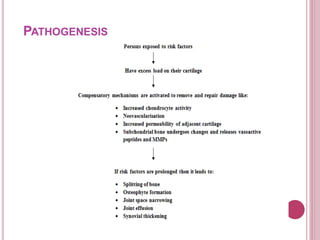
PATHOGENESIS
CLINICAL PRESENTATION
 Pain
 Tenderness
 Crepitus
In joints of hands, knee, hip, spine and feet
 Limited motion with passive or active movement
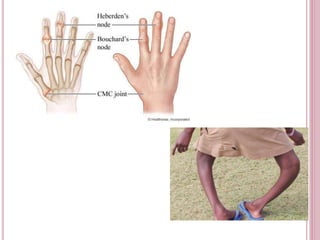
 Deformities like:
 Herberden’s nodes (at distal interphalangeal joints)
 Bouchard’s nodes ( at proximal interphalangeal joints)
 Bow legs
 Loss of reflexes if spine is affected
 Parasthesia
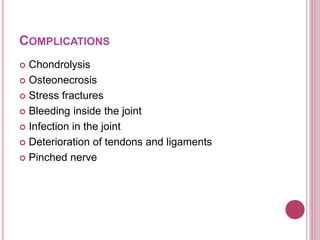
COMPLICATIONS
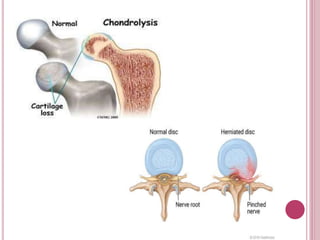
 Chondrolysis
 Osteonecrosis
 Stress fractures
 Bleeding inside the joint
 Infection in the joint
 Deterioration of tendons and ligaments
 Pinched nerve
DIAGNOSIS
 Medical history of other arthritic problems
 Physical examination
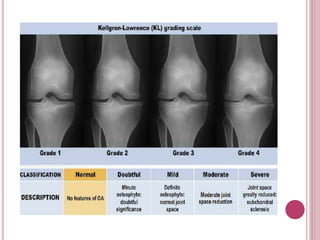
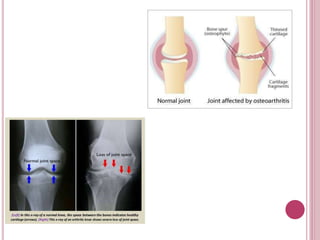
 Radiograph findings
 Lab tests
DIAGNOSIS CRITERIA
For hip OA
 Pain in the hip
 Any 2 of the following:
 ESR<20mm/hour/
 Femoral / Acetabular Osteophytes on
radiography/
 Joint space narrowing
DIAGNOSIS CRITERIA
For Knee OA
 Pain in the knee
 Osteophytes on radiography
 Any 1 of the following:
 Age greater than 50 years
 Morning stiffness not more than 30 minutes
 Crepitus on motion
 Bony enlargement
 Bony tenderness
 Palpable warmth
NON PHARMACOLOGICAL TREATMENT
 Exercise
 Weight loss
 Patient education
 Use of assistive devices
 Use of shoe insoles
 Application of heat
 Use of fitted knee braces
 Lateral patellar taping
 Surgeries like:
 Arthroplasty
 Osteotomy
 Arthrodesis
 Joint replacement
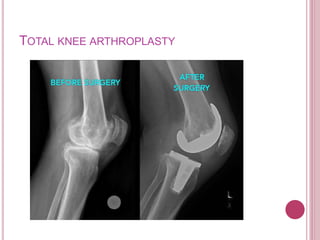
TOTAL KNEE ARTHROPLASTY
TREATMENT ALGORITHM
Knee and hip osteoarthritis
First line agents include:
 Acetamiophen
 Topical NSAIDs
 Oral NSAIDs
 Tramadol
 Intraarticular corticosteroids
IF ABOVE DRUG FAILS
Second line agents (if above treatment fails or contraindicated) include:
 Opiod analgesics
 Surgery
 Duloxetine
 Intraarticular hyaluronates
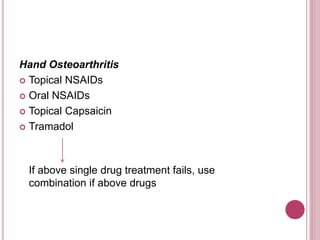
Hand Osteoarthritis
 Topical NSAIDs
 Oral NSAIDs
 Topical Capsaicin
 Tramadol
If above single drug treatment fails, use
combination if above drugs
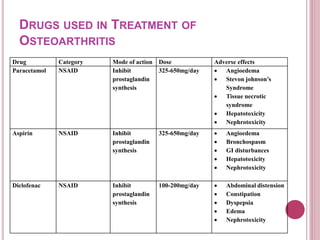
DRUGS USED IN TREATMENT OF
OSTEOARTHRITIS
Drug Category Mode of action Dose Adverse effects
Paracetamol NSAID Inhibit
prostaglandin
synthesis
325-650mg/day  Angioedema
 Stevon johnson’s
Syndrome
 Tissue necrotic
syndrome
 Hepatotoxicity
 Nephrotoxicity
Aspirin NSAID Inhibit
prostaglandin
synthesis
325-650mg/day  Angioedema
 Bronchospasm
 GI disturbances
 Hepatotoxicity
 Nephrotoxicity
Diclofenac NSAID Inhibit
prostaglandin
synthesis
100-200mg/day  Abdominal distension
 Constipation
 Dyspepsia
 Edema
 Nephrotoxicity
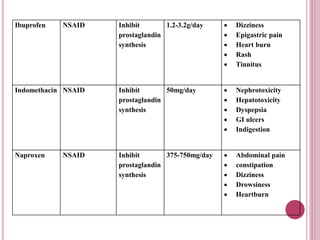
Ibuprofen NSAID Inhibit
prostaglandin
synthesis
1.2-3.2g/day  Dizziness
 Epigastric pain
 Heart burn
 Rash
 Tinnitus
Indomethacin NSAID Inhibit
prostaglandin
synthesis
50mg/day  Nephrotoxicity
 Hepatotoxicity
 Dyspepsia
 GI ulcers
 Indigestion
Naproxen NSAID Inhibit
prostaglandin
synthesis
375-750mg/day  Abdominal pain
 constipation
 Dizziness
 Drowsiness
 Heartburn
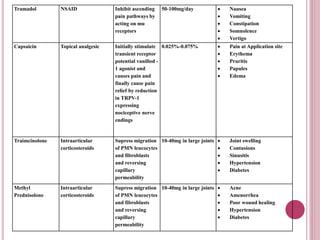
Tramadol NSAID Inhibit ascending
pain pathways by
acting on mu
receptors
50-100mg/day  Nausea
 Vomiting
 Constipation
 Somnolence
 Vertigo
Capsaicin Topical analgesic Initially stimulate
transient receptor
potential vanillod -
1 agonist and
causes pain and
finally cause pain
relief by reduction
in TRPV-1
expressing
nociceptive nerve
endings
0.025%-0.075%  Pain at Application site
 Erythema
 Pruritis
 Papules
 Edema
Traimcinolone Intraarticular
corticosteroids
Supress migration
of PMN leucocytes
and fibroblasts
and reversing
capillary
permeability
10-40mg in large joints  Joint swelling
 Contusions
 Sinusitis
 Hypertension
 Diabetes
Methyl
Prednisolone
Intraarticular
corticosteroids
Supress migration
of PMN leucocytes
and fibroblasts
and reversing
capillary
permeability
10-40mg in large joints  Acne
 Amenorrhea
 Poor wound healing
 Hypertension
 Diabetes
RESOURCES
 https://www.ncbi.nlm.nih.gov/pmc/articles/PMC6456
984/
 https://www.ncbi.nlm.nih.gov/pmc/articles/PMC5830
849/
 https://www.ncbi.nlm.nih.gov/pmc/articles/PMC3792
285/
 https://www.ncbi.nlm.nih.gov/pubmed/24114251
 https://www.ncbi.nlm.nih.gov/pmc/articles/PMC6302
694/

Osteoarthritis

  • 1.
    OSTEOARTHRITIS Dr. V. S.Swathi Assistant Professor
  • 2.
    DEFINITION Osteoarthritis is along term chronic disease characterised by the deterioration of cartilage in joints which results in bones rubbing together and creating stiffness, pain and impaired movement
  • 3.
    EPIDEMIOLOGY  In theworld 9.6% of men and 18% of women of age greater than 60 years have symptomatic Osteoarthritis  In India, prevalence of Osteoarthritis is 22%-39%
  • 4.
    TYPES Primary Osteoarthritis  Alsocalled as idiopathic OA  Cause of this type is unknown Secondary Osteoarthritis It is occurs due to specific cause like:  Rheumatoid Arthritis  Other type of arthritis  Trauma  Metabolic and endocrine disorders  Congenital factors
  • 6.
    RISK FACTORS  Age-Increasing the age increases risk of Osteoarthritis  Gender-Women are greater risk of getting Osteoarthritis than men  Obesity  Traumatic injury  Persons with family history of OA  Persons working in:  Construction sites  Health care settings  Factories  Carpentry works  Farming  Sports persons like:  Wrestlers  Boxers  Cyclers  Football and base ball players
  • 7.
    ETIOLOGY Abnormal expression ofgenes like:  Col11A1 (extracellular matrix)  Chrom 19 (cartilage morphogenesis)  MCFL (pain perception)  CHST11 (cartilage morphogenesis)  GDF5 (TGF-beta signaling)  Chrom7Q22
  • 8.
  • 10.
    CLINICAL PRESENTATION  Pain Tenderness  Crepitus In joints of hands, knee, hip, spine and feet  Limited motion with passive or active movement  Deformities like:  Herberden’s nodes (at distal interphalangeal joints)  Bouchard’s nodes ( at proximal interphalangeal joints)  Bow legs  Loss of reflexes if spine is affected  Parasthesia
  • 12.
    COMPLICATIONS  Chondrolysis  Osteonecrosis Stress fractures  Bleeding inside the joint  Infection in the joint  Deterioration of tendons and ligaments  Pinched nerve
  • 14.
    DIAGNOSIS  Medical historyof other arthritic problems  Physical examination  Radiograph findings  Lab tests
  • 16.
    DIAGNOSIS CRITERIA For hipOA  Pain in the hip  Any 2 of the following:  ESR<20mm/hour/  Femoral / Acetabular Osteophytes on radiography/  Joint space narrowing
  • 17.
    DIAGNOSIS CRITERIA For KneeOA  Pain in the knee  Osteophytes on radiography  Any 1 of the following:  Age greater than 50 years  Morning stiffness not more than 30 minutes  Crepitus on motion  Bony enlargement  Bony tenderness  Palpable warmth
  • 18.
    NON PHARMACOLOGICAL TREATMENT Exercise  Weight loss  Patient education  Use of assistive devices  Use of shoe insoles  Application of heat  Use of fitted knee braces  Lateral patellar taping  Surgeries like:  Arthroplasty  Osteotomy  Arthrodesis  Joint replacement
  • 19.
  • 20.
    TREATMENT ALGORITHM Knee andhip osteoarthritis First line agents include:  Acetamiophen  Topical NSAIDs  Oral NSAIDs  Tramadol  Intraarticular corticosteroids IF ABOVE DRUG FAILS Second line agents (if above treatment fails or contraindicated) include:  Opiod analgesics  Surgery  Duloxetine  Intraarticular hyaluronates
  • 21.
    Hand Osteoarthritis  TopicalNSAIDs  Oral NSAIDs  Topical Capsaicin  Tramadol If above single drug treatment fails, use combination if above drugs
  • 22.
    DRUGS USED INTREATMENT OF OSTEOARTHRITIS Drug Category Mode of action Dose Adverse effects Paracetamol NSAID Inhibit prostaglandin synthesis 325-650mg/day  Angioedema  Stevon johnson’s Syndrome  Tissue necrotic syndrome  Hepatotoxicity  Nephrotoxicity Aspirin NSAID Inhibit prostaglandin synthesis 325-650mg/day  Angioedema  Bronchospasm  GI disturbances  Hepatotoxicity  Nephrotoxicity Diclofenac NSAID Inhibit prostaglandin synthesis 100-200mg/day  Abdominal distension  Constipation  Dyspepsia  Edema  Nephrotoxicity
  • 23.
    Ibuprofen NSAID Inhibit prostaglandin synthesis 1.2-3.2g/day Dizziness  Epigastric pain  Heart burn  Rash  Tinnitus Indomethacin NSAID Inhibit prostaglandin synthesis 50mg/day  Nephrotoxicity  Hepatotoxicity  Dyspepsia  GI ulcers  Indigestion Naproxen NSAID Inhibit prostaglandin synthesis 375-750mg/day  Abdominal pain  constipation  Dizziness  Drowsiness  Heartburn
  • 24.
    Tramadol NSAID Inhibitascending pain pathways by acting on mu receptors 50-100mg/day  Nausea  Vomiting  Constipation  Somnolence  Vertigo Capsaicin Topical analgesic Initially stimulate transient receptor potential vanillod - 1 agonist and causes pain and finally cause pain relief by reduction in TRPV-1 expressing nociceptive nerve endings 0.025%-0.075%  Pain at Application site  Erythema  Pruritis  Papules  Edema Traimcinolone Intraarticular corticosteroids Supress migration of PMN leucocytes and fibroblasts and reversing capillary permeability 10-40mg in large joints  Joint swelling  Contusions  Sinusitis  Hypertension  Diabetes Methyl Prednisolone Intraarticular corticosteroids Supress migration of PMN leucocytes and fibroblasts and reversing capillary permeability 10-40mg in large joints  Acne  Amenorrhea  Poor wound healing  Hypertension  Diabetes
  • 25.
    RESOURCES  https://www.ncbi.nlm.nih.gov/pmc/articles/PMC6456 984/  https://www.ncbi.nlm.nih.gov/pmc/articles/PMC5830 849/ https://www.ncbi.nlm.nih.gov/pmc/articles/PMC3792 285/  https://www.ncbi.nlm.nih.gov/pubmed/24114251  https://www.ncbi.nlm.nih.gov/pmc/articles/PMC6302 694/