tahir99
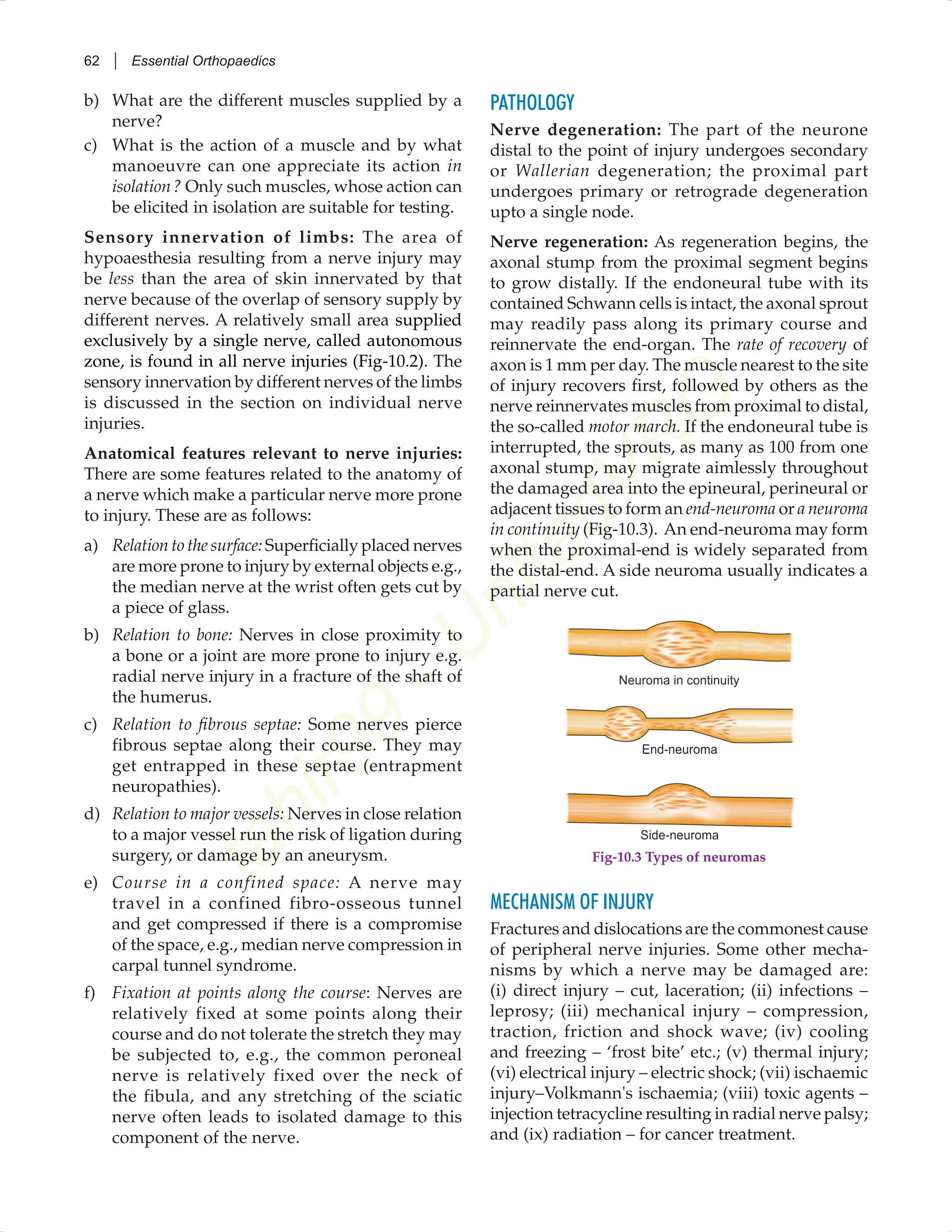
- UnitedVRG
Essential Orthopaedics
Knee & Shoulder Clinic
New Delhi
Promoted by
Released by
Tahir99 - UnitedVRG
Kickass Torrents
https://kat.cr/user/Blink99/
tahir99
- UnitedVRG
Essential Orthopaedics
J. Maheshwari
MS Orth (AIIMS)
Formerly
Additional Professor of Orthopaedics
All India Institute of Medical Sciences
New Delhi, India
Presently
Director
Knee and Shoulder Clinic, New Delhi, India
Vikram A Mhaskar
MS Orth, MCh Orth (UK)
Consultant Orthopaedic Surgeon
Knee and Shoulder Clinic, New Delhi, India
FIFTH EDITION
(Including Clinical Methods)
New Delhi | London | Philadelphia | Panama
The Health Sciences Publisher
Published by
J. Maheshwari
MS Orth (AIIMS)
Flat No. 541, Type-IIIA Category SFS-III
Seventh Floor, East of Kailash
New Delhi, India
EssentialOrthopaedics
© 2015, J. Maheshwari
All rights reserved. No part of this publication should be reproduced, stored in a retrieval system, or transmitted in any
form or by any means: electronic, mechanical, photocopying, recording, or otherwise, without the prior written permission
of the author.
This book has been published by the author. Every effort is made to ensure accuracy of material, but the author,
distributor and printer will not be held responsible for any inadvertent error(s). In case of any dispute, all legal
matters are to be settled under Delhi jurisdiction only.
First Edition : 5 Reprints
Second Edition : 5 Reprints
Third Edition : Aug. 2001 (6 Reprints)
Third Edition (Revised) : May 2005 (7 Reprints)
Fourth Edition : 2011
Reprint : 2014
Fifth Edition : 2015
ISBN : 978-93-5196-808-5
Printed in India
https://kat.cr/user/Blink99/
tahir99
- UnitedVRG
Dedicated to
My patients
for giving me an opportunity to make a difference in their lives
and
My family & friends
for continuous support at all times
https://kat.cr/user/Blink99/
tahir99
- UnitedVRG
FOREWORD TO THE FIRST EDITION
This book written by Dr Maheshwari, is designed to introduce the trainee doctor and the young surgeon to orthopaedic
surgery as he will meet it in the developing countries. There have been many good books on orthopaedic surgery and
trauma written by experienced authors from Britain and America but their exposure to the real orthopaedic problems
experienced in developing countries has often been limited, and today the difference in presentation of orthopaedic
surgery in these countries and the presentation of conditions in developing countries like India and Africa is so
different that this book, written by a surgeon with a good grounding of clinical experience in India, is most appropriate
for the trainee from the developing countries.
I have read a number of chapters and have been impressed with the simple text and clarity with which the
different conditions are explained.
Dr Maheshwari has visited my centre in Nottingham for a period of two months. I was impressed with his clarity
of thought and his depth of understanding of orthopaedic conditions. I anticipate that this book will be one of many that
he writes in future years and is likely to be a major contribution to orthopaedic training in developing countries.
WA Wallace
Professor of Orthopaedic and Accident Surgery
University Hospital, Queen's Medical Centre
Nottingham NG7 2UH
United Kingdom
https://kat.cr/user/Blink99/
tahir99
- UnitedVRG
PREFACE TO THE FIFTH EDITION
The unique position of this book is, that it is meant for undergraduate medical students and those preparing for PG
entrance exam. We have had temptation to expand various chapters every time we are called upon to revise the
book. But, we keep reminding ourselves of a medical student who has to cover so much curriculum while he is in
final year or preparing for PG entrance exam, and thus restrain ourselves from adding ‘too much’.
Though there are rapid advances in medicine, but only few qualify place in a basic book such as this. Every few
years when we look at the book we find that some concepts have changed. What was being practiced in only big
cities and was mentioned only for the sake of completion in the earlier edition, has become a routine. Also, since the
book has remained a popular choice for those appearing for PG entrance, we have added a section on MCQ’s after
each chapter.
Like as we would, to add a lot of new information, but all such thoughts go through the mental screening whether
it is required for the target audience! We are cognisant of the fact that no change should be made for the heck of it.
We hope the essential changes in this new edition would be appreciated by the readers. Feedback welcome.
Knee and Shoulder Clinic J. Maheshwari
F-7, East of Kailash Vikram A Mhaskar
New Delhi, India
drjmaheshwari.com
drjmaheshwari@hotmail.com
https://kat.cr/user/Blink99/
PREFACE TO THE FIRST EDITION
What was the thought behind this book in 1993
As an undergraduate, though exposed to orthopaedics only for a short period, I was impressed by the ease with which
I could understand the wonderful texts I studied. The problems were that their contents did not exactly meet the
requirements of an undergraduate, and most of these books, written by authors from developed countries, did not
provide adequate information about diseases peculiar to tropical and underdeveloped countries. Above all, I thought
that the concepts could be presented with still more clarity, and improved by way of presentation.
This feeling continued to haunt me everytime I was called upon to teach undergraduates. A couple of years later,
an experience at home helped me give a practical shape to this feeling. My wife, who was preparing for PG entrance
examination, expected me to teach her orthopaedics. I tried out my ideas on her, and the result was extremely
gratifying. Soon after, many more such occasions of teaching undergraduates gave me further opportunities for
refining the material. It was on the request of the students that I decided to give it the shape of a book.
The book is primarily addressed to undergraduates and those preparing for the postgraduate entrance tests.
General practitioners, particularly in the early stage of their practice would find it useful reference. It would enable
nurses and physiotherapists to understand the basic concepts in orthopaedics. Junior postgraduates would find it an
enjoyable reading.
Following are the salient features of the book:
1. Most chapters begin with a brief review of the relevant anatomy. This is because by the time a student comes to
clinical departments, he has forgotten most of the anatomy he had learnt in the dissection hall.
2. While discussing treatment of a condition, a brief mention of principles is made first, followed by various methods
and their indications. This is followed by treatment plan; a practical plan of treatment which is either being
followed or can be developed in an average hospital. A brief mention of recent developments is also made.
3. The book has three additional chapters. These are "Approach to a Patient with Limb Injury", "Approach to a
Patient with Back Pain", and "Recent Advances in Treatment of Fractures". The first two present a practical
approach to handling these frequently encountered emergencies, and the third chapter updates the reader with the
latest in this rapidly developing field. Due emphasis has been given to aspects of rehabilitation, considering the
recent recommendations of Medical Council of India for including 'rehabilitation' in undergraduate curriculum.
4. Simple line diagrams have been used to supplement the text. Most of them have been developed by myself while
teaching the undergraduates. Simplified line diagrams, rather than photographs, enable students understand the
basic concepts better.
5. Self-explanatory flow charts are made use of wherever they would help to develop a concept in decision-
making.
6. Tables have been used liberally. These serve two purposes: Firstly, they present the text matter in a concentrated
form and allow review at a glance. Secondly, they permit quick and easily understandable comparison between
related conditions.
7. Necessary information on instruments and implants commonly used in orthopaedics has been provided as an
appendix, purely considering the requirement of such knowledge for final professional examination.
New Delhi
September 1993 J. Maheshwari
https://kat.cr/user/Blink99/
CONTENTS
1. Orthopaedic Trauma: Introduction ...................... 1
• Classification of fractures ................................... 1
• Fractures with eponyms...................................... 2
• Pathological fractures .......................................... 3
• Injuries to joints ................................................... 5
• Injuries to ligaments ............................................ 5
• Injuries to muscles and tendons .......................... 6
2. Anatomy of Bone and Fracture Healing .............. 8
• Anatomy of bone ................................................. 8
• Growth of a long bone ........................................ 9
• Blood supply of bones ......................................... 9
• Fracture healing ................................................. 10
• Healing of cancellous bones .............................. 11
• Primary and secondary bone healing................. 11
• Factors affecting fracture healing ..................... 11
3. Treatment of Fractures: General Principles ..... 13
• Phase I Emergency care ............................... 13
• Phase II Definitive care .................................. 14
• Phase III Rehabilitation of a fractured limb ..... 19
• Management of open fractures ......................... 21
4. Splints and Tractions ............................................ 25
• Splints ................................................................ 25
• Tractions ........................................................... 26
5. Recent Advances in the Treatment
of Fractures ........................................................... 29
• AO method of fracture treatment ...................... 29
• Changing AO concepts ...................................... 31
• Functional bracing ............................................. 33
• Ilizarov's technique ............................................ 33
6. Approach to a Patient with Limb Injury ............ 36
• Clinical examination ........................................... 36
• Radiological examination ................................... 38
• Old fracture ....................................................... 40
• Approach to a polytrauma patient ..................... 40
7. Complications of Fractures ................................. 42
• Classification ..................................................... 42
• Hypovolaemic shock ......................................... 42
• Adult respiratory distress syndrome ................. 43
• Fat embolism syndrome .................................... 43
• Deep vein thrombosis (DVT) and
pulmonary embolism.................................... 44
• Crush syndrome ................................................ 44
• Injury to major blood vessels ............................ 44
• Injury to nerves ................................................. 46
• Injury to muscles and tendons .......................... 46
• Injury to joints ................................................... 46
• Injury to viscera ................................................ 46
• Infection — osteomyelitis ................................. 47
• Compartment syndrome .................................... 47
• Delayed and non-union ...................................... 48
• Malunion ............................................................ 49
• Shortening ......................................................... 50
• Avascular necrosis............................................. 50
• Stiffness of joints .............................................. 51
• Reflex sympathetic dystrophy
(Sudeck‘s dystrophy) .................................. 51
• Myositis ossificans (Post-traumatic
ossification) ................................................. 52
8. Injury to Joints: Dislocation and Subluxation .. 54
• Relevant anatomy .............................................. 54
• Definitions ......................................................... 54
• Classification ..................................................... 54
• Pathoanatomy .................................................... 55
• Diagnosis ........................................................... 55
• Complications .................................................... 56
• Treatment .......................................................... 56
9. Fractures in Children........................................... 57
• Relevant anatomy .............................................. 57
• Types of fractures ............................................. 57
• Diagnosis ........................................................... 59
xiv | Essential Orthopaedics
• Treatment .......................................................... 59
• Complications .................................................... 59
10. Peripheral Nerve Injuries .................................... 61
• Relevant anatomy .............................................. 61
• Pathology ........................................................... 62
• Mechanism of injury.......................................... 62
• Classification ..................................................... 63
• Diagnosis ........................................................... 63
• Electrodiagnostic studies ................................... 69
• Treatment .......................................................... 71
• Prognosis ........................................................... 74
11. Deformities and Their Management .................. 75
• Causes ............................................................... 75
• Treatment .......................................................... 77
12. Treatment of Orthopaedic Disorders:
A General Review ................................................. 80
• Non-operative methods of treatment................. 80
• Operative methods of treatment ........................ 82
13. Injuries Around the Shoulder,
Fracture Humerus ................................................ 87
• Relevant anatomy .............................................. 87
• Fracture of the clavicle...................................... 88
• Fractures of the scapula .................................... 89
• Dislocation of the sterno-clavicular joint ........... 89
• Subluxation or dislocation of the
acromio-clavicular joint ..................................... 89
• Dislocation of the shoulder................................ 89
• Fracture of the surgical neck of the humerus ... 92
• Fracture of the greater tuberosity
of the humerus .................................................. 92
• Fracture of the shaft of the humerus ................ 93
14. Injuries Around the Elbow ................................... 96
• Relevant anatomy .............................................. 96
• Supracondylar fracture of the humerus ............ 97
• Fracture of the lateral condyle of the humerus .. 103
• Intercondylar fracture of the humerus ............ 104
• Fracture of the medial epicondyle
of the humerus ................................................ 105
• Dislocation of the elbow joint.......................... 105
• Pulled elbow .................................................... 105
• Fracture of the olecranon ................................ 105
• Fracture of the head of the radius ................... 106
• Fracture of neck of the radius......................... 107
• Fracture of the capitulum ................................ 107
15. Injuries of the Forearm and Wrist................... 108
• Relevant anatomy ............................................ 108
• Fractures of the forearm bones....................... 109
• Monteggia fracture-dislocation........................ 110
• Galeazzi fracture-dislocation ............................111
• Colles' fracture .................................................111
• Smith's fracture (Reverse of colles' fracture) .... 114
• Barton's fracture .............................................. 114
• Scaphoid fracture ............................................ 115
• Lunate dislocations .......................................... 116
16. Hand Injuries ...................................................... 117
• Bennett's fracture-dislocation .......................... 117
• Rolando's fracture ........................................... 118
• Fractures of the metacarpals ........................... 118
• Fractures of the phalanges .............................. 118
• Dislocation of the metacarpo-phalangeal joints ... 118
• Amputation of fingers: Principles
of treatment ..................................................... 119
• Tendon injuries of the hand ............................. 119
• Crush injury to the hand .................................. 120
17. Pelvic Fractures .................................................. 123
• Relevant anatomy ............................................ 123
• Classification ................................................... 124
• Pathoanatomy .................................................. 125
• Diagnosis ......................................................... 125
• Treatment ........................................................ 126
• Complications .................................................. 127
18. Injuries Around the Hip ..................................... 129
• Relevant anatomy ............................................ 129
• Disclocation of the hip .................................... 130
• Posterior dislocation of the hip........................ 130
• Anterior dislocation of the hip ......................... 131
• Central fracture-dislocation of the hip ............. 131
https://kat.cr/user/Blink99/
Contents | xv
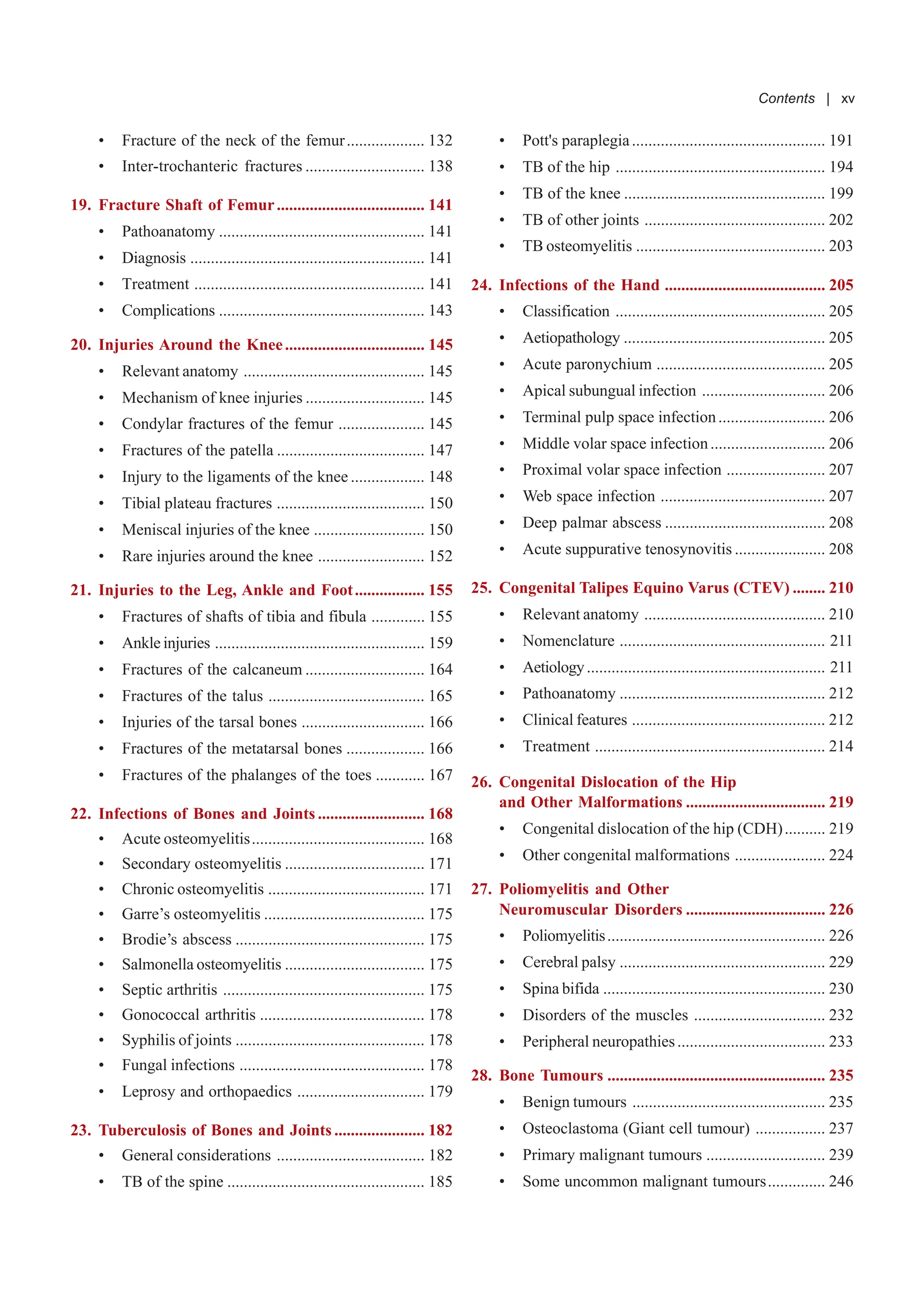
• Fracture of the neck of the femur................... 132
• Inter-trochanteric fractures ............................. 138
19. Fracture Shaft of Femur.................................... 141
• Pathoanatomy .................................................. 141
• Diagnosis ......................................................... 141
• Treatment ........................................................ 141
• Complications .................................................. 143
20. Injuries Around the Knee.................................. 145
• Relevant anatomy ............................................ 145
• Mechanism of knee injuries ............................. 145
• Condylar fractures of the femur ..................... 145
• Fractures of the patella .................................... 147
• Injury to the ligaments of the knee .................. 148
• Tibial plateau fractures .................................... 150
• Meniscal injuries of the knee ........................... 150
• Rare injuries around the knee .......................... 152
21. Injuries to the Leg, Ankle and Foot................. 155
• Fractures of shafts of tibia and fibula ............. 155
• Ankle injuries ................................................... 159
• Fractures of the calcaneum ............................. 164
• Fractures of the talus ...................................... 165
• Injuries of the tarsal bones .............................. 166
• Fractures of the metatarsal bones ................... 166
• Fractures of the phalanges of the toes ............ 167
22. Infections of Bones and Joints .......................... 168
• Acute osteomyelitis.......................................... 168
• Secondary osteomyelitis .................................. 171
• Chronic osteomyelitis ...................................... 171
• Garre’s osteomyelitis ....................................... 175
• Brodie’s abscess .............................................. 175
• Salmonella osteomyelitis .................................. 175
• Septic arthritis ................................................. 175
• Gonococcal arthritis ........................................ 178
• Syphilis of joints .............................................. 178
• Fungal infections ............................................. 178
• Leprosy and orthopaedics ............................... 179
23. Tuberculosis of Bones and Joints ...................... 182
• General considerations .................................... 182
• TB of the spine ................................................ 185
• Pott's paraplegia............................................... 191
• TB of the hip ................................................... 194
• TB of the knee ................................................. 199
• TB of other joints ............................................ 202
• TB osteomyelitis .............................................. 203
24. Infections of the Hand ....................................... 205
• Classification ................................................... 205
• Aetiopathology ................................................. 205
• Acute paronychium ......................................... 205
• Apical subungual infection .............................. 206
• Terminal pulp space infection.......................... 206
• Middle volar space infection............................ 206
• Proximal volar space infection ........................ 207
• Web space infection ........................................ 207
• Deep palmar abscess ....................................... 208
• Acute suppurative tenosynovitis ...................... 208
25. Congenital Talipes Equino Varus (CTEV) ........ 210
• Relevant anatomy ............................................ 210
• Nomenclature .................................................. 211
• Aetiology.......................................................... 211
• Pathoanatomy .................................................. 212
• Clinical features ............................................... 212
• Treatment ........................................................ 214
26. Congenital Dislocation of the Hip
and Other Malformations .................................. 219
• Congenital dislocation of the hip (CDH).......... 219
• Other congenital malformations ...................... 224
27. Poliomyelitis and Other
Neuromuscular Disorders .................................. 226
• Poliomyelitis..................................................... 226
• Cerebral palsy .................................................. 229
• Spina bifida ...................................................... 230
• Disorders of the muscles ................................ 232
• Peripheral neuropathies.................................... 233
28. Bone Tumours ..................................................... 235
• Benign tumours ............................................... 235
• Osteoclastoma (Giant cell tumour) ................. 237
• Primary malignant tumours ............................. 239
• Some uncommon malignant tumours.............. 246
xvi | Essential Orthopaedics
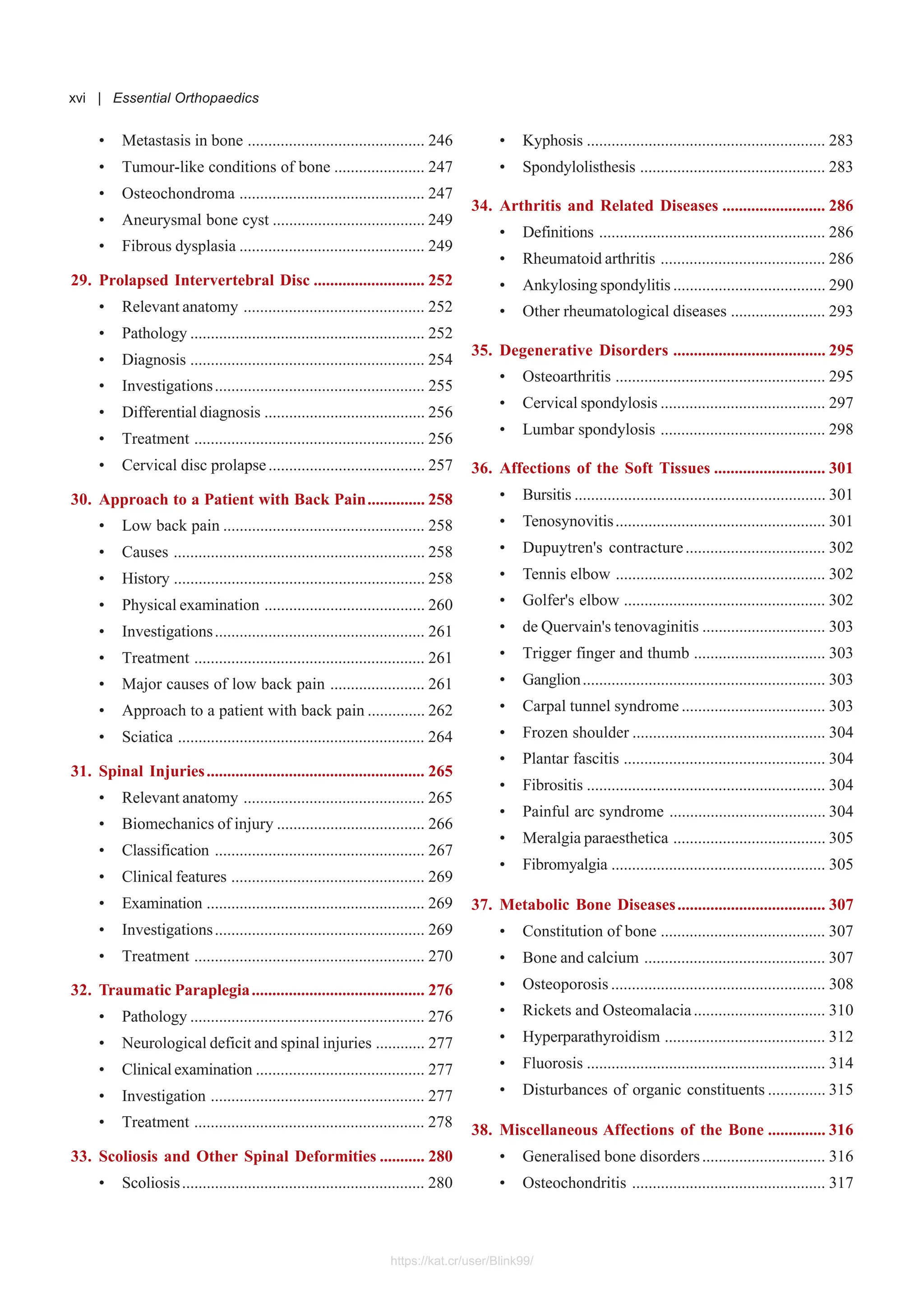
• Metastasis in bone ........................................... 246
• Tumour-like conditions of bone ...................... 247
• Osteochondroma ............................................. 247
• Aneurysmal bone cyst ..................................... 249
• Fibrous dysplasia ............................................. 249
29. Prolapsed Intervertebral Disc ........................... 252
• Relevant anatomy ............................................ 252
• Pathology ......................................................... 252
• Diagnosis ......................................................... 254
• Investigations................................................... 255
• Differential diagnosis ....................................... 256
• Treatment ........................................................ 256
• Cervical disc prolapse...................................... 257
30. Approach to a Patient with Back Pain.............. 258
• Low back pain ................................................. 258
• Causes ............................................................. 258
• History ............................................................. 258
• Physical examination ....................................... 260
• Investigations................................................... 261
• Treatment ........................................................ 261
• Major causes of low back pain ....................... 261
• Approach to a patient with back pain .............. 262
• Sciatica ............................................................ 264
31. Spinal Injuries..................................................... 265
• Relevant anatomy ............................................ 265
• Biomechanics of injury .................................... 266
• Classification ................................................... 267
• Clinical features ............................................... 269
• Examination ..................................................... 269
• Investigations................................................... 269
• Treatment ........................................................ 270
32. Traumatic Paraplegia.......................................... 276
• Pathology ......................................................... 276
• Neurological deficit and spinal injuries ............ 277
• Clinical examination ......................................... 277
• Investigation .................................................... 277
• Treatment ........................................................ 278
33. Scoliosis and Other Spinal Deformities ........... 280
• Scoliosis........................................................... 280
• Kyphosis .......................................................... 283
• Spondylolisthesis ............................................. 283
34. Arthritis and Related Diseases ......................... 286
• Definitions ....................................................... 286
• Rheumatoid arthritis ........................................ 286
• Ankylosing spondylitis ..................................... 290
• Other rheumatological diseases ....................... 293
35. Degenerative Disorders ..................................... 295
• Osteoarthritis ................................................... 295
• Cervical spondylosis ........................................ 297
• Lumbar spondylosis ........................................ 298
36. Affections of the Soft Tissues ........................... 301
• Bursitis ............................................................. 301
• Tenosynovitis................................................... 301
• Dupuytren's contracture.................................. 302
• Tennis elbow ................................................... 302
• Golfer's elbow ................................................. 302
• de Quervain's tenovaginitis .............................. 303
• Trigger finger and thumb ................................ 303
• Ganglion........................................................... 303
• Carpal tunnel syndrome ................................... 303
• Frozen shoulder ............................................... 304
• Plantar fascitis ................................................. 304
• Fibrositis .......................................................... 304
• Painful arc syndrome ...................................... 304
• Meralgia paraesthetica ..................................... 305
• Fibromyalgia .................................................... 305
37. Metabolic Bone Diseases.................................... 307
• Constitution of bone ........................................ 307
• Bone and calcium ............................................ 307
• Osteoporosis .................................................... 308
• Rickets and Osteomalacia................................ 310
• Hyperparathyroidism ....................................... 312
• Fluorosis .......................................................... 314
• Disturbances of organic constituents .............. 315
38. Miscellaneous Affections of the Bone .............. 316
• Generalised bone disorders.............................. 316
• Osteochondritis ............................................... 317
https://kat.cr/user/Blink99/
Contents | xvii
• Avascular necrosis........................................... 318
• Some other developmental abnormalities
of orthopaedic interest ..................................... 319
39. Miscellaneous Regional Diseases ..................... 321
• Torticollis ......................................................... 321
• Cervical rib ...................................................... 322
• Observation hip ............................................... 323
• Coxa vara......................................................... 323
• Slipped capital femoral epiphysis..................... 323
• Deformities of the knee ................................... 324
• Popliteal cyst ................................................... 326
• Loose bodies in joints ...................................... 326
• Flat foot ........................................................... 326
• Deformities of the toes .................................... 327
40. Amputations, Prosthetics and Orthotics.......... 328
• Amputations..................................................... 328
• Special features of amputations in children ..... 331
• Prostheses in orthopaedic practice .................. 331
• Orthoses in orthopaedic practice..................... 332
41. Arthroscopic Surgery ......................................... 334
• Advantages ...................................................... 334
• Indications ....................................................... 335
• Procedure ........................................................ 336
• Limitations ....................................................... 336
42. Joint Replacement Surgery ............................... 338
• Hemiarthroplasty ............................................. 338
• Total joint replacement .................................... 339
• Partial knee replacement .................................. 341
• Total shoulder replacement.............................. 341
• Total elbow replacement.................................. 341
Annexures .................................................................. 343
Annexure 1 : Clinical Methods ..................................... 343
Annexure 2 : Orthopaedic Terminology ....................... 367
Annexure 3 : Orthopaedic Instruments and Implants ... 371
Index ................................................................... 377
TOPICS
• Classification of fractures
• Fractures with eponyms
• Pathological fractures
• Injuries to joints
• Injuries to ligaments
• Injuries to muscles and tendons
An injury to the musculo-skeletal system can result
in damage to bones, joints, muscles and tendons.
In addition, the neurovascular bundle of the limb
may be damaged. This section will outline the broad
principles used in the diagnosis and management
of these injuries. These principles can be applied,
with suitable modifications, in the management of
any musculo-skeletal injury.
CLASSIFICATION OF FRACTURES
A fracture is a break in the continuity of a bone.
It can be classified on the basis of aetiology, the
relationship of the fracture with the external
environment, the displacement of the fracture, and
the pattern of the fracture.
ON THE BASIS OF AETIOLOGY
Traumatic fracture: A fracture sustained due to
trauma is called a traumatic fracture*. Normal bone
can withstand considerable force, and breaks only
when subjected to excessive force. Most fractures
seen in day-to-day practice fall into this category
e.g., fractures caused by a fall, road traffic accident,
fight etc.
Pathological fracture: A fracture through a bone
which has been made weak by some underlying
disease is called a pathological fracture. A trivial or
no force may be required to cause such a fracture e.g.,
a fracture through a bone weakened by metastasis.
Although, traumatic fractures have a predictable
and generally successful outcome, pathological
fractures often go into non-union.
Stress Fracture: This is a special type of fracture
sustained due to chronic repetitive injury (stress)
causing a break in bony trabeculae. These often
present as only pain and may not be visible on
X-rays.
ON THE BASIS OF DISPLACEMENTS
Undisplaced fracture: These fractures are easy to
identify by the absence of significant displacement.
Displaced fracture: A fracture may be displaced.
The factors responsible for displacement are: (i) the
fracturing force; (ii) the muscle pull on the fracture
fragments; and (iii) the gravity. While describing
the displacements of a fracture, conventionally, it is
the displacement of the distal fragment in relation
to the proximal fragment which is mentioned. The
displacement can be in the form of shift, angulation
or rotation (Fig-1.1).
* An unqualified word 'fracture' usually means a traumatic fracture.
C H A P T E R 1
Orthopaedic Trauma:
Introduction
** Terms, simple fracture for closed fracture, and compound fracture
for open fracture is being dropped, as it is confusing. In fact, new
terminology of simple and complex fracture is being introduced
(page 2) to mean whether the fracture is simple or complex to
treat.
https://kat.cr/user/Blink99/
2 | Essential Orthopaedics
is extensive devascularisation of fracture ends. Such
fractures are often unstable, and slow to heal.
Low-velocity injury: These fractures are sustained
as a result of mild trauma force, as in a fall. There is
little associated soft tissue injury, and hence these
fractures often heal predictably. Lately, there is a
change in the pattern of fractures due to shift from
low-velocity to high-velocity injuries. The latter
gives rise to more complex fractures, which are
difficult to treat.
ON THE BASIS OF PATTERN
Transverse fracture: In this fracture, the fracture
line is perpendicular to the long axis of the bone.
Such a fracture is caused by a tapping or bending
force (Fig-1.2).
Oblique fracture: In this fracture, the fracture line
is oblique. Such a fracture is caused by a bending
force which, in addition, has a component along the
long axis of the bone.
Spiral fracture: In this fracture, the fracture line
runs spirally in more than one plane. Such a fracture
is caused by a primarily twisting force.
Comminuted fracture: This is a fracture with
multiple fragments. It is caused by a crushing or
compression force along the long axis of the bone.
ONTHEBASISOFRELATIONSHIPWITHEXTERNALENVIRONMENT
Closed** fracture: A fracture not communicating
with the external environment, i.e., the overlying
skin and other soft tissues are intact, is called a
closed fracture.
Openfracture:Afracture with break in the overlying
skin and soft tissues, leading to the fracture
communicating with the external environment,
is called an open fracture. A fracture may be open
from within or outside, the so called internally or
externally open fracture respectively.
a) Internally open (from within): The sharp fracture
end pierces the skin from within, resulting in an
open fracture.
b) Externally open (open from outside): The object
causing the fracture lacerates the skin and soft
tissues over the bone, as it breaks the bone,
resulting in an open fracture.
Exposure of an open fracture to the external
environment makes it prone to infection. This risk
is more in externally open fracture.
ON THE BASIS OF COMPLEXITY OF TREATMENT
Simple fracture: A fracture in two pieces, usually
easy to treat, is called simple fracture, e.g. a
transverse fracture of humerus.
Complex fracture: A fracture in multiple pieces,
usually difficult to treat, is called complex fracture,
e.g. a communited fracture of tibia.
ON THE BASIS OF QUANTUM OF FORCE CAUSING FRACTURE
High-velocity injury: These are fractures sustained
as a result of severe trauma force, as in traffic
accidents. In these fractures, there is severe soft
tissue injury (periosteal and muscle injury). There
Fig-1.1 Displacements in fractures
Fig-1.2 Patterns of fractures
Segmental fracture: In this type, there are two
fractures in one bone, but at different levels.
A fracture may have a combination of two or
more patterns.Forexample,itmaybeacomminuted
but primarily a transverse fracture.
FRACTURES WITH EPONYMS
Some fractures are better known by names, mostly
of those who first described them. Some such
fractures are as follows:
Orthopaedic Trauma: Introduction | 3
Jone's fracture: Avulsion fracture of the base of the
5th metatarsal.
Rolando fracture: Fracture of the base of the first
metacarpal (extra-articular).
Jefferson’s fracture: Fracture of the first cervical
vertebra.
Whiplash injury: Cervical spine injury where sudden
flexion followed by hyperextension takes place.
Chance fracture: Also called seat belt fracture, the
fracture line runs horizontally through the body of
the vertebra, through and through, to the posterior
elements.
March fracture: Fatigue fracture of the shaft of 2nd
or 3rd metatarsal.
Burst fracture: It is a comminuted fracture of the
vertebral body where fragments ‘‘burst out’’ in
different directions (page 268).
Clay-Shoveller fracture: It is an avulsion fracture of
spinous process of one or more of the lower cervical
or upper thoracic vertebrae.
Hangman's fracture: It is a fracture through the
pedicle and lamina of C2
vertebra, with subluxation
of C2
over C3
, sustained in hanging.
Dashboard fracture: A fracture of posterior lip of
the acetabulum, often associated with posterior
dislocation of the hip.
Straddle fracture: Bilateral superior and inferior
pubic rami fractures.
Malgaigne's fracture: A type of pelvis fracture in
which there is a combination of fractures, pubic
rami anteriorly and sacro-iliac joint or ilium
posteriorly, on the same side.
Mallet finger: A finger flexed at the DIP joint due to
avulsion or rupture of extensor tendon at the base
of the distal phalanx.
PATHOLOGICAL FRACTURES
A fracture is termed pathological when it occurs in
a bone made weak by some disease (Fig-1.3). Often,
the bone breaks as a result of a trivial trauma, or
even spontaneously.
CAUSES
Abone may be rendered weak by a disease localised
to that particular bone, or by a generalised bone
disorder. Table–1.1 gives some of the common
Monteggia fracture-dislocation: Fracture of the
proximal third of the ulna, with dislocation of the
head of the radius (page 110).
Galeazzi fracture-dislocation: Fracture of the distal
third of the radius with dislocation of the distal
radio-ulnar joint (page 111).
Night-stick fracture: Isolated fracture of the shaft of
the ulna, sustained while trying to ward off a stick
blow.
Colles’ fracture: A fracture occurring in adults, at
the cortico-cancellous junction of the distal end of
the radius with dorsal tilt and other displacements
(page 111).
Smith's fracture: A fracture occurring in adults, at
the cortico-cancellous junction of the distal end of
the radius with ventral tilt and other displacements
(reverse of Colles').
Barton's fracture (Marginal fracture): Intra-articular
fractures through the distal articular surface of the
radius, taking a margin, anterior or posterior, of the
distal radius with the carpals, displaced anteriorly
or posteriorly (page 114).
Chauffeur fracture: An intra-articular, oblique
fracture of the styloid process of the radius.
Bennett's fracture-dislocation: It is an oblique, intra-
articular fracture of the base of the first metacarpal
with subluxation of the trapezio-metacarpal joint
(page 117).
Boxers' fracture: It is a ventrally displaced fracture
through the neck of the 5th metacarpal, usually
occurs in boxers.
Side-swipe fracture: It is an elbow injury sustained
when one's elbow, projecting out of a car, is ‘side-
swept’ by another vehicle. It has a combination
of fractures of the distal end of the humerus with
fractures of proximal ends of radius and/or ulna.
It is also called baby car fracture.
Bumper fracture: It is a comminuted, depressed
fracture of the lateral condyle of the tibia.
Pott's fracture: Bimalleolar ankle fracture.
Cotton's fracture: Trimalleolar ankle fracture.
Massonaise's fracture: It is a type of ankle fracture
in which fracture of the neck of the fibula occurs.
Pilon fracture: It is a comminuted intra-articular
fracture of the distal end of the tibia.
Aviator's fracture: Fracture of neck of the talus.
Chopart fracture-dislocation: A fracture-dislocation
through inter-tarsal joints.
https://kat.cr/user/Blink99/
4 | Essential Orthopaedics
Often the patient, when directly questioned,
admits to having suffered from some discomfort
in the region of the affected bone for some time
before the fracture. The patient may be a diagnosed
case of a disease known to produce pathological
fractures (e.g., a known case of malignancy), thus
making the diagnosis of a pathological fracture
simple. At times, the patient may present with
a pathological fracture, the cause of which is
determined only after a detailed work up.
TREATMENT
Treatment of a pathological fracture consists of:
(i) detecting the underlying cause of the fracture;
and (ii) making an assessment of the capacity of
the fracture to unite, based on the nature of the
underlying disease.
Afracture in a bone affected by a generalised disor-
der like Paget's disease, osteogenesis imperfecta or
causes of pathological fractures. Osteoporosis is the
commonest cause of pathological fracture. The bones
most often affected are the vertebral bodies (thoracic
and lumbar). Other common fractures associated
with osteoporosis are fracture of the neck of the
femur and Colles' fracture.
Alocalorcircumscribedlesionofthebone,responsible
for a pathological fracture, may be due to varying
causesindifferentagegroups(Table–1.2).Inchildren,
it is commonly due to chronic osteomyelitis or a bone
cyst. In adults, it is often due to a bone cyst or giant
cell tumour. In elderly people, metastatic tumour is
a frequent cause.
Fig-1.3 (a) X-ray of the hip showing destruction of the bone,
(b) which lead to a pathological fracture through the weak
portion
Table–1.1: Causes of pathological fractures
Localised Diseases
Inflammatory
• Pyogenic osteomyelitis
• Tubercular osteomyelitis
Neoplastic
• Benign tumours
– Giant cell tumour, Enchondroma
• Malignant tumours
– Primary
	 	Osteosarcoma, Ewing's tumour
– Secondary
		 In males: lung, prostate, kidney
	 	In females: breast, lung, genitals
Miscellaneous
• Simple bone cyst
• Aneurysmal bone cyst
• Monostotic fibrous dysplasia
• Eosinophilic granuloma
• Bone atrophy secondary to polio etc.
Generalised Diseases
Hereditary
• Osteogenesis imperfecta
• Dyschondroplasia (Ollier's disease)
• Osteopetrosis
Acquired
• Osteoporosis
• Osteomalacia
• Rickets
• Scurvy
• Disseminated malignancy in bones
– Multiple myeloma
– Diffuse metastatic carcinoma
• Miscellaneous
– Paget's disease
– Polyostotic fibrous dysplasia
Table–1.2: Causes of pathological fractures at
different ages
Age		Causes
• At birth Osteogenesis imperfecta
• 0-5 years Osteogenesis imperfecta
			 Osteomyelitis
• 5-20 years Osteomyelitis
			 Simple bone cyst
			 Primary bone malignancy
• 20-50 years Cystic lesions of the bone
			 Malignancy
			 Osteomalacia
			 Giant cell tumour
• After 50 years Osteoporosis
			 Multiple myeloma
			 Secondaries in the bone
DIAGNOSIS
A fracture sustained without a significant trauma
should arouse suspicion of a pathological fracture.
Orthopaedic Trauma: Introduction | 5
osteoporosis is expected to unite with conventional
methods of treatment.Afracture at the site of a bone
cyst or a benign tumour will also generally unite,
but the union may be delayed. Fractures occur-
ring in osteo
­
myelitic bones often take a long time,
and sometimes fail to unite despite best efforts.
Fractures through metastatic bone lesions often do
not unite at all, though the union may occur if the
malignancy has been brought under control with
chemotherapy or radiotherapy.
With the availability of facilities for internal fixation,
more and more pathological fractures are now
treated operatively with an aim to: (i) enhance the
process of union by bone grafting (e.g. in bone
cyst or benign tumour); or (ii) mobilise the patient
by surgical stabilisation of the fracture. Achieving
stable fixation in these fractures is difficult because
of the bone defect caused by the underlying
pathology. The defect may have to be filled using
bone grafts or bone cement.
INJURIES TO JOINTS
Joint injuries may be either a subluxation or a
dislocation. A joint is subluxated when its articular
surfaces are partially displaced but retain some
contact between them (Fig-1.4).
A joint is dislocated when its articular surfaces are
so much displaced that all contact between them is
lost. Adislocated joint is an emergency, and should
be treated at the earliest.
INJURIES TO LIGAMENTS
An injury to a ligament is termed as a sprain. This
is to be differentiated from the term ‘strain’ which
means stretching of a muscle or its tendinous
attachment.
CLASSIFICATION
Sprains are classified into three degrees (Fig-1.5):
First-degree sprain is a tear of only a few fibres of the
ligament. It is characterised by minimal swelling,
localised tenderness but little functional disability.
Second-degree sprain is the one where, anything from
a third to almost all the fibres of a ligament are
disrupted. The patient presents with pain, swelling
and inability to use the limb. Joint movements are
normal. The diagnosis can be made on performing
a stress test as discussed subsequently.
Third-degree sprain is a complete tear of the ligament.
There is swelling and pain over the torn ligament.
Contrary to expectations, often the pain in such tears
is minimal. Diagnosis can be made by performing
a stress test, and by investigations such as MRI or
arthroscopy.
PATHOLOGY
A ligament may get torn in its substance (mid-
substance tear) or at either end. In the latter case,
it often avulses with a small piece of bone from its
attachment (Fig-1.6).
DIAGNOSIS
Adetailed history, eliciting the exact mechanism of
injury, often indicates the likely ligament injured.
The examination helps in finding the precise
location and severity of the sprain, which can then
be confirmed by investigations.
Fig-1.4 Dislocation and subluxation
Fig-1.5 Degrees of ligament sprain
https://kat.cr/user/Blink99/
6 | Essential Orthopaedics
* Sometimes, following a complete tear of ligament, the blood seeps
out of the joint through the rent in the ligament, and it appears as
if there is no haemarthrosis.
X-ray taken while the ligament is being stressed
(stress X-ray) may document an abnormal opening
up of the joint in a third-degree sprain.
Other investigations required in a few cases are
MRI or arthroscopy.
TREATMENT
There has been a significant change in the treatment
of sprains.All sprains are treated initially with rest,
ice therapy, compression bandage, elevation (RICE).
Suitable analgesics and anti-inflammatory medica-
tion is given. This is enough for first-degree sprains.
Second and third-degree sprains are immobilised in
a brace or a plaster cast for a period of 1-2 weeks,
mainly for pain relief. No longer is plaster immo-
bilisation advised for long periods. In fact, early
mobili­
sation and walking with support enhances
healing of ligaments. In some third-degree sprains,
surgery may be required.
INJURIES TO MUSCLES AND TENDONS
Muscles are ruptured more often than tendons
in young people, while the reverse is true in the
elderly. The most frequent cause of partial or
complete rupture of a muscle or a tendon is sudden
vigorous contraction of a muscle. It may be by
overstretching of a muscle at rest. Such an injury
to muscle is termed strain (and not sprain, which
is ligament injury). A muscle or tendon injury may
also be produced by a sharp object such as a sword.
PATHOLOGY
Aruptureoccurswithinatendononlyifitisabnormal
and has become weak, either due to degeneration
or wear and tear. Degenerative tendon ruptures
commonly occur in rheumatoid arthritis, SLE,
senile degeneration, etc. Tendon rupture related
to wear and tear commonly occurs in the biceps
(long head), and in extensor pollicis longus tendons.
Some tendons known to rupture commonly are as
given in Table–1.3. Diagnosis of a ruptured tendon
is usually easy. The patient complains of pain and
Fig-1.6 Avulsion of bone chip
from ligament attachment
Clinical examination: A localised swelling,
tenderness, and ecchymosis over a ligament
indicates injury to that ligament. Usually, a
haemarthrosis is noticed in second and third-degree
sprains within 2 hours. It may be absent* despite
a complete tear, or if the torn ligament is covered
by synovium (e.g., intra-synovial tear of anterior
cruciate ligament).
Stress test (Fig-1.7): This is a very useful test in
diagnosing a sprain and judging its severity. The
ligament in question is put to stress by a manoeuvre.
The manoeuvre used for testing of individual
ligaments will be discussed in respective chapters.
When a ligament is stressed, in first and second-
degree sprains, there will be pain at the site of the
tear. In third-degree sprain, the joint will ‘open up’
as well.
Fig-1.7 Stress test for medial collateral ligament of the knee
Table–1.3: Common sites of tendon rupture
• Supraspinatus tendon
• Achilles tendon
• Biceps tendon – long head
• Extensor pollicis longus tendon
• Quadriceps tendon
• Patellar tendon
INVESTIGATIONS
A plain X-ray of the joint is usually normal.
Sometimes, a chip of bone may be seen in the region
of the attachment of the ligament to the bone. An
Orthopaedic Trauma: Introduction | 7
inability to perform the movement for which the
tendon is meant.
TREATMENT
The best treatment of a fresh rupture is to regain
continuity by end-to-end repair. When the gap is
too much, it can be filled with the help of a tendon
graft. In cases where the repair is not possible, a
tendon transfer may be performed. In some old
Additional information: From the entrance exams point of view
Best diagnostic test for unilateral stress fracture is MRI, and for bilateral is bone scan: The most
common cause of pathological fracture is osteoporosis.
tendon ruptures, especially in the elderly, there
may be only a minimal functional disability. These
patients do well without treatment.
Further Reading
• Gustilo RB, Kyle RF, Templeman D: Fractures and
Dislocations, St. Louis: Mosby–Year Book. Inc.
• Wilson JN (Ed.): Watson-Jone's Fractures and Joint Injuries,
6th edn. Edinburgh: Churchill Livingstone, 1982.
What have we learnt?
When we see a fracture, we must find out:
• Is it purely a traumatic fracture or is there an underlying pathology (weak bone)?
• What is the pattern of the fracture, so as to know the inherent stability of the fracture.
Stable fractures can generally be treated non-operatively, unstable fractures often need
surgery.
• What is the force causing the fracture? Is it a 'high-velocity' injury where fracture is likely
to be unstable with lot of associated injury or a 'low-velocity' injury. The type of force
producing the injury has bearing on healing of the fracture.
• It is a simple or complex fracture? The latter may be a badly comminuted fracture as a
result of a bad trauma, and hence may be associated with lot of soft tissue damage. Such
fractures often need surgical treatment.
• An open fracture has additional problem of getting infected. Hence, appropriate care in the
early part of management is important.
• Sprain and strain are not interchangeable terms.
• A 'no bony injury' on X-ray does not mean no injury. Look for ligament or muscle injuries.
https://kat.cr/user/Blink99/
ANATOMY OF BONE
Bones may be classified into four types on the basis
of their shape i.e., long, short, flat and irregular. For
practical purposes, anatomy of a typical long bone
only is being discussed here.
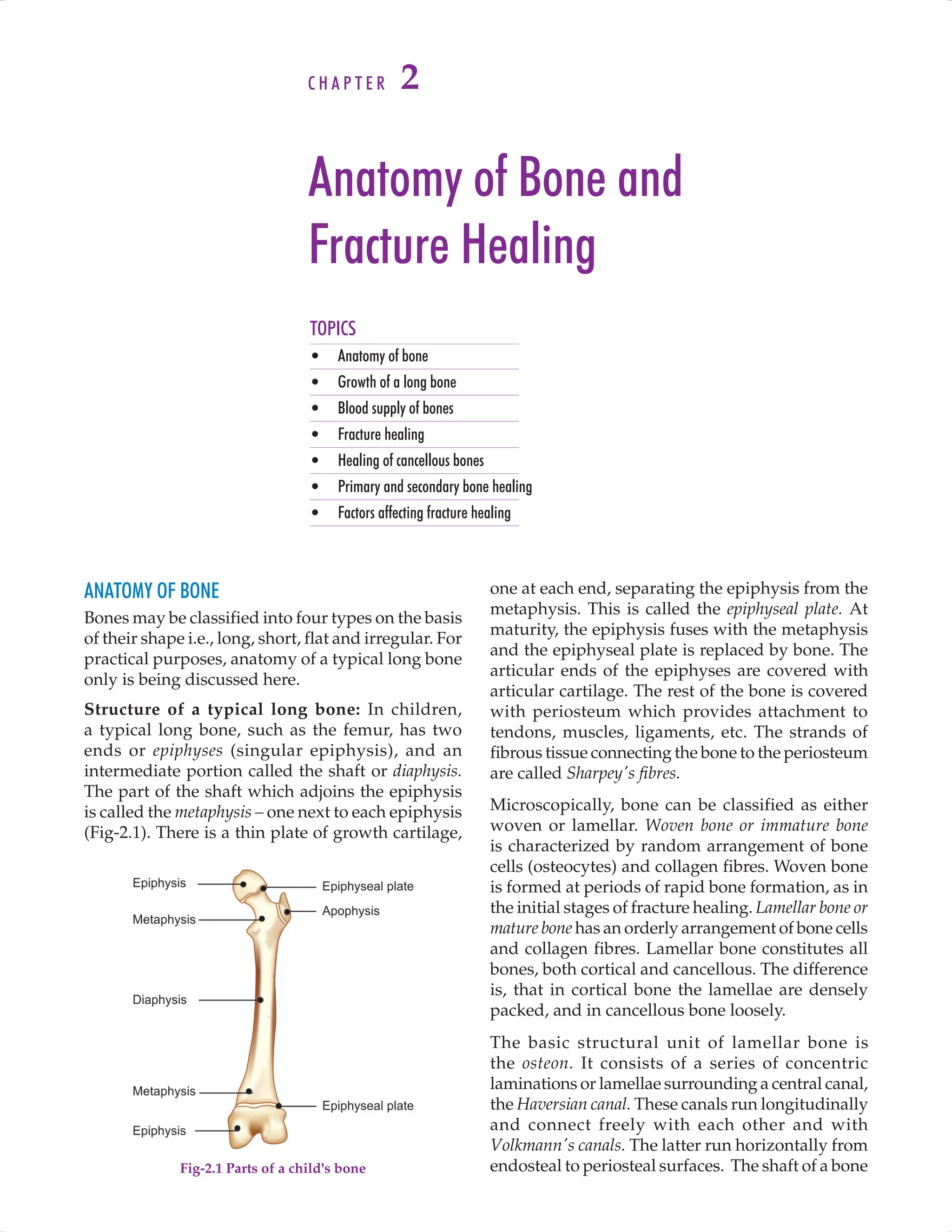
Structure of a typical long bone: In children,
a typical long bone, such as the femur, has two
ends or epiphyses (singular epiphysis), and an
intermediate portion called the shaft or diaphysis.
The part of the shaft which adjoins the epiphysis
is called the metaphysis – one next to each epiphysis
(Fig-2.1). There is a thin plate of growth cartilage,
one at each end, separating the epiphysis from the
metaphysis. This is called the epiphyseal plate. At
maturity, the epiphysis fuses with the metaphysis
and the epiphyseal plate is replaced by bone. The
articular ends of the epiphyses are covered with
articular cartilage. The rest of the bone is covered
with periosteum which provides attachment to
tendons, muscles, ligaments, etc. The strands of
fibrous tissue connecting the bone to the periosteum
are called Sharpey's fibres.
Microscopically, bone can be classified as either
woven or lamellar. Woven bone or immature bone
is characterized by random arrangement of bone
cells (osteocytes) and collagen fibres. Woven bone
is formed at periods of rapid bone formation, as in
the initial stages of fracture healing. Lamellar bone or
mature bone has an orderly arrangement of bone cells
and collagen fibres. Lamellar bone constitutes all
bones, both cortical and cancellous. The difference
is, that in cortical bone the lamellae are densely
packed, and in cancellous bone loosely.
The basic structural unit of lamellar bone is
the osteon. It consists of a series of concentric
laminations or lamellae surrounding a central canal,
the Haversian canal. These canals run longitudinally
and connect freely with each other and with
Volkmann's canals. The latter run horizontally from
endosteal to periosteal surfaces. The shaft of a bone
TOPICS
• Anatomy of bone
• Growth of a long bone
• Blood supply of bones
• Fracture healing
• 	 Healing of cancellous bones
• Primary and secondary bone healing
• Factors affecting fracture healing
C H A P T E R 2
Anatomy of Bone and
Fracture Healing
Fig-2.1 Parts of a child's bone
Anatomy of Bone and Fracture Healing | 9
is made up of cortical bone, and the ends mainly
of cancellous bone. The junction between the two,
termed the cortico-cancellous junction is a common
site of fractures (Fig-2.2).
Structural composition of bone: The bone is made
up of bone cells and extra-cellular matrix. The
matrix consists of two types of materials, organic
and inorganic. The organic matrix is formed by the
collagen, which forms 30-35 percent of dry weight
of a bone. The inorganic matrix is primarily calcium
and phosphorus salts, especially hydroxyapatite
[Ca10
(PO4
)6
(OH)2
]. It constitutes about 65-70 percent
of dry weight of a bone.
Bone cells: There are three main cell types in the
bone. These are:
a) Osteoblasts: Concerned with ossification, these
cells are rich in alkaline phosphatase, glycolytic
enzymes and phosphorylases.
b) Osteocytes: These are mature bone cells which
vary in activity, and may assume the form of an
osteoclast or reticulocyte. These cells are rich in
glycogen and PAS positive granules.
c) Osteoclasts: These are multi-nucleate mesen
­
chymal cells concerned with bone resorption.
These have glycolytic acid hydrolases, collage-
nases and acid phosphatase enzymes.
GROWTH OF A LONG BONE
All long bones, with the exception of the clavicle,
develop from cartilaginous primordia (enchondral
ossification). This type of ossification commences
in the middle of the shaft (primary centre of
ossification) before birth. The secondary ossification
centres (the epiphyses) appear at the ends of the
bone, mostly* after birth.
The bone grows in length by a continuous growth
at the epiphyseal plate. The increase in the girth of
the bone is by subperiosteal new bone deposition.
* The epiphysis of distal end of the femur is present at birth.
At the end of the growth period, the epiphysis
fuses with the diaphysis, and the growth stops. The
secondary centres of ossification, not contributing
to the length of a bone, are termed apophysis (e.g.,
apophysis of the greater trochanter). The time and
sequence of appearance and fusion of epiphysis has
clinical relevance in deciding the true age (bone age)
of a child. Sometimes, an epiphyseal plate may be
wrongly interpreted as a fracture.
Remodelling of bone: Bone has the ability to
alter its size, shape and structure in response to
stress. This happens throughout life though not
perceptible. According to Wolff's law of bone
remodelling, bone hypertrophy occurs in the plane
of stress.
BLOOD SUPPLY OF BONES
There is a standard pattern of the blood supply of a
typical long bone. Blood supply of individual bones
will be discussed wherever considered relevant. The
blood supply of a typical long bone is derived from
the following sources (Fig-2.3):
a) Nutrient artery: This vessel enters the bone
around its middle and divides into two branches,
one running towards either end of the bone.
Fig-2.2 Cortico-cancellous junction
Each of these further divide into a leash of
parallel vessels which run towards the respective
metaphysis.
b) Metaphyseal vessels: These are numerous small
vessels derived from the anastomosis around the
joint. They pierce the metaphysis along the line
of attachment of the joint capsule.
c) Epiphyseal vessels: These are vessels which
enter directly into the epiphysis.
Fig-2.3 Blood supply of a typical long bone
https://kat.cr/user/Blink99/
10 | Essential Orthopaedics
d) Periosteal vessels: The periosteum has a rich
blood supply, from which many little vessels
enter the bone to supply roughly the outer-third
of the cortex of the adult bone.
Blood supply to the inner two-thirds of the bone
comes from the nutrient artery and the outer one-
third from the periosteal vessels.
FRACTURE HEALING
The healing of fractures is in many ways similar to
the healing of soft tissue wounds, except that soft
tissue heals with fibrous tissue, and end result of
bone healing is mineralised mesenchymal tissue, i.e.
bone. A fracture begins to heal soon after it occurs,
through a continuous series of stages described
below (Table–2.1).
STAGESINFRACTUREHEALINGOFCORTICALBONE(FROST,1989)
• Stage of haematoma
• Stage of granulation tissue
• Stage of callus
• Stageofremodelling(formerlycalledconsolidation)
• Stage of modelling (formerly called remodelling)
Stage of haematoma: This stage lasts up to 7 days.
When a bone is fractured, blood leaks out through
torn vessels in the bone and forms a haematoma
between and around the fracture. The periosteum
and local soft tissues are stripped from the fracture
ends. This results in ischaemic necrosis of the
fracture ends over a variable length, usually only
a few millimetres. Deprived of their blood supply,
some osteocytes die whereas others are sensitised
to respond subsequently by differentiating into
daughter cells. These cells later contribute to the
healing process.
Stage of granulation tissue: This stage lasts for about
2-3 weeks. In this stage, the sensitised precursor cells
(daughter cells) produce cells which differentiate
and organise to provide blood vessels, fibroblasts,
osteoblastsetc.Collectivelytheyformasoftgranulation
tissueinthespacebetweenthefracturefragments.This
cellulartissueeventuallygivesasofttissue anchorage
to the fracture, without any structural rigidity. The
blood clot gives rise to a loose fibrous mesh which
serves as a framework for the ingrowth of fibroblasts
andnewcapillaries.Theclotiseventuallyremovedby
Table–2.1: Stages of fracture healing (Frost, 1989)
Stage of healing Approximate time Essential features
Stage of haematoma Less than 7 days Fracture end necrosis occurs.
		 Sensitisation of precursor cells.
		
Stage of granulation tissue Up to 2-3 weeks Proliferation and differentiation
		 of daughter cells into vessels,
		 fibroblasts, osteoblasts etc.
		Fracture still mobile.
		
Stage of callus 4-12 weeks Mineralisation of granulation tissue.
		
Callus radiologically visible.
		 Fracture clinically united, no more mobile.
Stage of remodelling 1-2 years Lamellar bone formation by multicellular
		 unit based remodelling of callus. Outline
		 of callus becomes dense and sharply defined.
Stage of modelling Many years Modelling of endosteal and periosteal 		
		 surfaces so that the fracture site becomes
		 indistinguishable from the parent bone.
Anatomy of Bone and Fracture Healing | 11
treated operatively. The bone heals directly, without
callus formatiom, and it is therefore diffcult to
evaluate union on X-rays. Secondary fracture healing
occurs in fractures where fracture haematoma is
not disturbed, as in cases treated non-operatively.
There is healing, with callus formation, and
can be evaluated on X-rays. It also occurs in
fractures operated without disturbing the fracture
haematoma, as in fractures fixed with relative
stability (e.g. comminuted fractures).
FACTORS AFFECTING FRACTURE HEALING
a) Age of the patient: Fractures unite faster in
children. In younger children, callus is often
visible on X-rays as early as two weeks after
the fracture. On an average, bones in children
unite in half the time compared to that in adults.
Failure of union is uncommon in fractures of
children.
b) Type of bone: Flat and cancellous bones unite
faster than tubular and cortical bones.
c) Pattern of fracture: Spiral fractures unite faster
than oblique fractures, which in turn unite faster
than transverse fractures. Comminuted fractures
are usually result of a severe trauma or occur in
osteoporotic bones, and thus heal slower.
d) Disturbed pathoanatomy: Following a fracture,
changes may occur at the fracture site, and may
hinder the normal healing process. These are:
(i) soft tissue interposition; and (ii) ischaemic
fracture ends. In the former, the fracture ends
pierce through the surrounding soft tissues, and
macrophages, giant cells and other cells arising in
the granulation tissue.
From this stage, the healing of bone differs from that
of soft tissue. In soft tissue healing the granulation
tissue is replaced by fibrous tissue, whereas in bone
healing the granulation tissue further differentiates
to create osteoblasts which subsequently form bone.
Stage of callus: This stage lasts for about 4-12
weeks. In this stage, the granulation tissue
differentiates further and creates osteoblasts. These
cells lay down an intercellular matrix which soon
becomes impregnated with calcium salts. This
results in formulation of the callus, also called woven
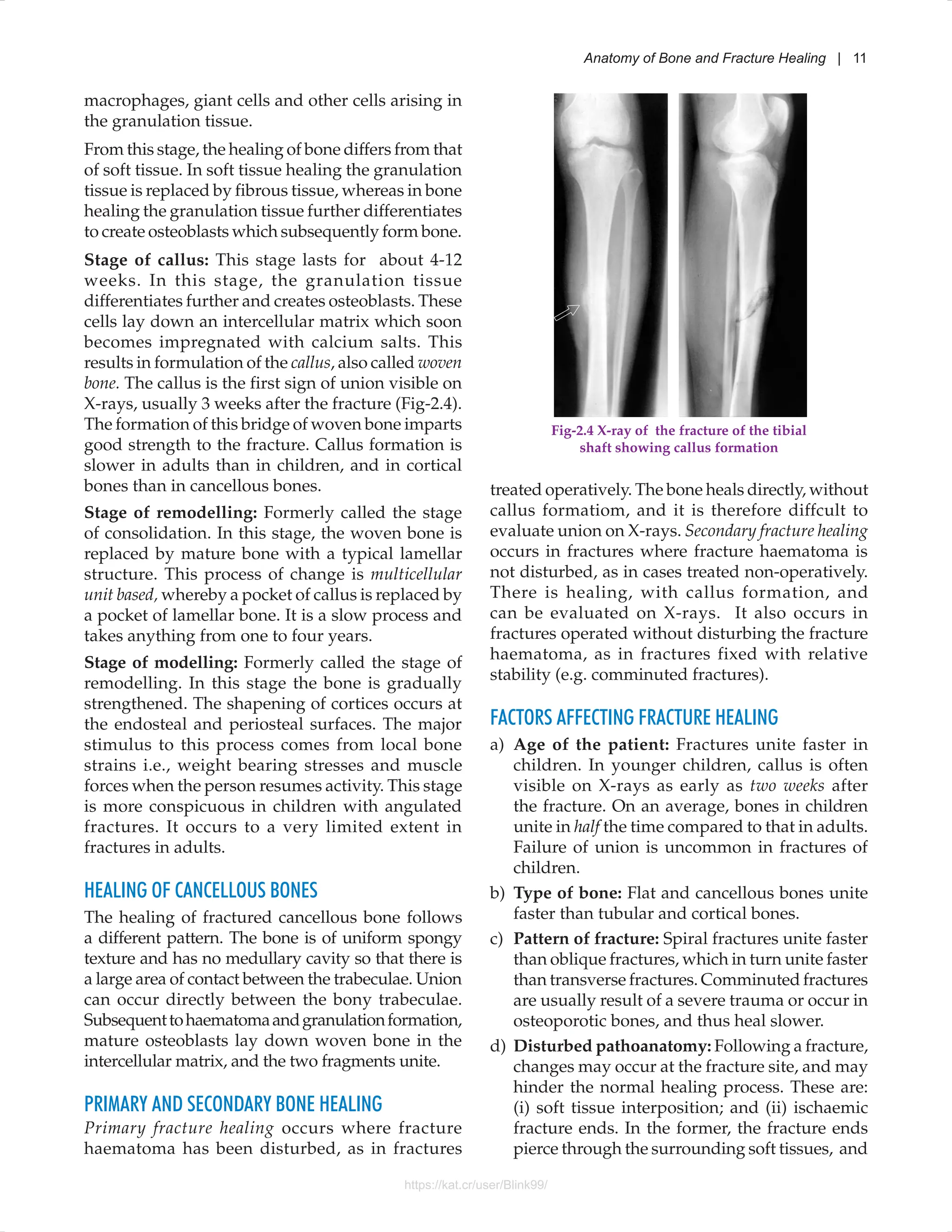
bone. The callus is the first sign of union visible on
X-rays, usually 3 weeks after the fracture (Fig-2.4).
The formation of this bridge of woven bone imparts
good strength to the fracture. Callus formation is
slower in adults than in children, and in cortical
bones than in cancellous bones.
Stage of remodelling: Formerly called the stage
of consolidation. In this stage, the woven bone is
replaced by mature bone with a typical lamellar
structure. This process of change is multicellular
unit based, whereby a pocket of callus is replaced by
a pocket of lamellar bone. It is a slow process and
takes anything from one to four years.
Stage of modelling: Formerly called the stage of
remodelling. In this stage the bone is gradually
strengthened. The shapening of cortices occurs at
the endosteal and periosteal surfaces. The major
stimulus to this process comes from local bone
strains i.e., weight bearing stresses and muscle
forces when the person resumes activity. This stage
is more conspicuous in children with angulated
fractures. It occurs to a very limited extent in
fractures in adults.
HEALING OF CANCELLOUS BONES
The healing of fractured cancellous bone follows
a different pattern. The bone is of uniform spongy
texture and has no medullary cavity so that there is
a large area of contact between the trabeculae. Union
can occur directly between the bony trabeculae.
Subsequenttohaematomaandgranulationformation,
mature osteoblasts lay down woven bone in the
intercellular matrix, and the two fragments unite.
PRIMARY AND SECONDARY BONE HEALING
Primary fracture healing occurs where fracture
haematoma has been disturbed, as in fractures
Fig-2.4 X-ray of the fracture of the tibial
shaft showing callus formation
https://kat.cr/user/Blink99/
12 | Essential Orthopaedics
get stuck. This causes soft tissue interposition
between the fragments, and prevents the callus
from bridging the fragments. In the latter, due
to anatomical peculiarities of blood supply of
some bones (e.g. scaphoid), vascularity of one
of the fragments is cut off. Since vascularised
bone ends are important for optimal fracture
union, these fractures unite slowly or do not
unite at all.
e) Type of reduction: Good apposition of the
fracture results in faster union. At least half the
fracture surface should be in contact for optimal
union in adults. In children, a fracture may unite
even if bones are only side-to-side in contact
(bayonet reduction).
f) Immobilisation: It is not necessary to immobi­
lise all fractures (e.g., fracture ribs, scapula, etc).
They heal anyway. Some fractures need strict
immobilisation (e.g., fracture of the neck of the
femur), and may still not heal.
g) Open fractures: Open fractures often go
into delayed union and non-union (discussed
subsequently on page 21).
h) Compression at fracture site: Compression
enhances the rate of union in cancellous bone.
In cortical bones, compression at the fracture
site enhances rigidity of fixation, and possibly
results in primary bone healing.
Further Reading
• Frost HM: The biology of fracture healing.An overview for
clinicians, Part I. Clinical Orthopaedics and Related Research.
Nov: 1989 (248): 283-293.
• Frost HM: The biology of fracture healing. An overview
for clinicians, Part II. Clinical Orthopaedics and Related Research,
Nov: 1989 (248): 294-309.
What have we learnt?
• There are different parts of a long bone such as diaphysis, metaphysis and epiphysis. There
are diseases which typically affect only some parts of the bones.
• Growing skeleton is identified by presence of growth plate.
• The structure of the bone is complex, made of the basic structural unit called osteon.
• Different bone cells have different functions.
• Fracture healing follows a series of stages.
• Fracture healing depends upon a number of factors.
Additional information: From the entrance exams point of view
Pathognomonic sign of traumatic and fresh fracture is crepitus.
Most common cause of non-union is inadequate immobilisation.
Markers of bone formation: Serum bone specific alkaline phosphatase
                                            Serum osteocalcin
                                            Serum peptide of type 1 collagen
Markers of bone resorption: Urine and serum crosslinked ‘N’ telopeptide
                                             Urine and serum crosslinked ‘C’ telopeptide
                                             Urine total free deoxypyridinoline
Rate of mineralisation determined by labelled tetracycline.
Treatment of a fracture can be considered in three
phases:
• Phase I - Emergency care
• Phase II - Definitive care
• Phase III - Rehabilitation
PHASE I - EMERGENCY CARE
At the site of accident: Emergency care of a fracture
begins at the site of the accident. In principle, it
consists of RICE, which means:
• Rest to the part, by splinting.
• Ice therapy, to reduce occurrence of swelling
• Compression, to reduce swelling
• Elevation, to reduce swelling
Rest to the part (splinting) is done by splinting.
'Splint them where they lie'. Before applying the
splint, remove ring or bangles worn by the pa-
tient. Almost any available object at the site of
the accident can be used for splinting. It may be a
folded newspaper, a magazine, a rigid card
­­
board,
a stick, an umbrella, a pillow, or a wooden plank.
Any available long piece of cloth can be used for
tying the splint to the fractured limb. Some of the
examples of splinting a fractured extremity at the
site of the accident are shown in Fig-3.1. One may
correct any gross deformity by gentle traction. Feel
for distal pulses, and do a quick assessment of nerve
TOPICS
• Phase I -Emergency care
• Phase II -Definitive care
		
• Phase III -Rehabilitation of a fractured limb
• Management of open fractures
C H A P T E R 3
Treatment of Fractures:
General Principles
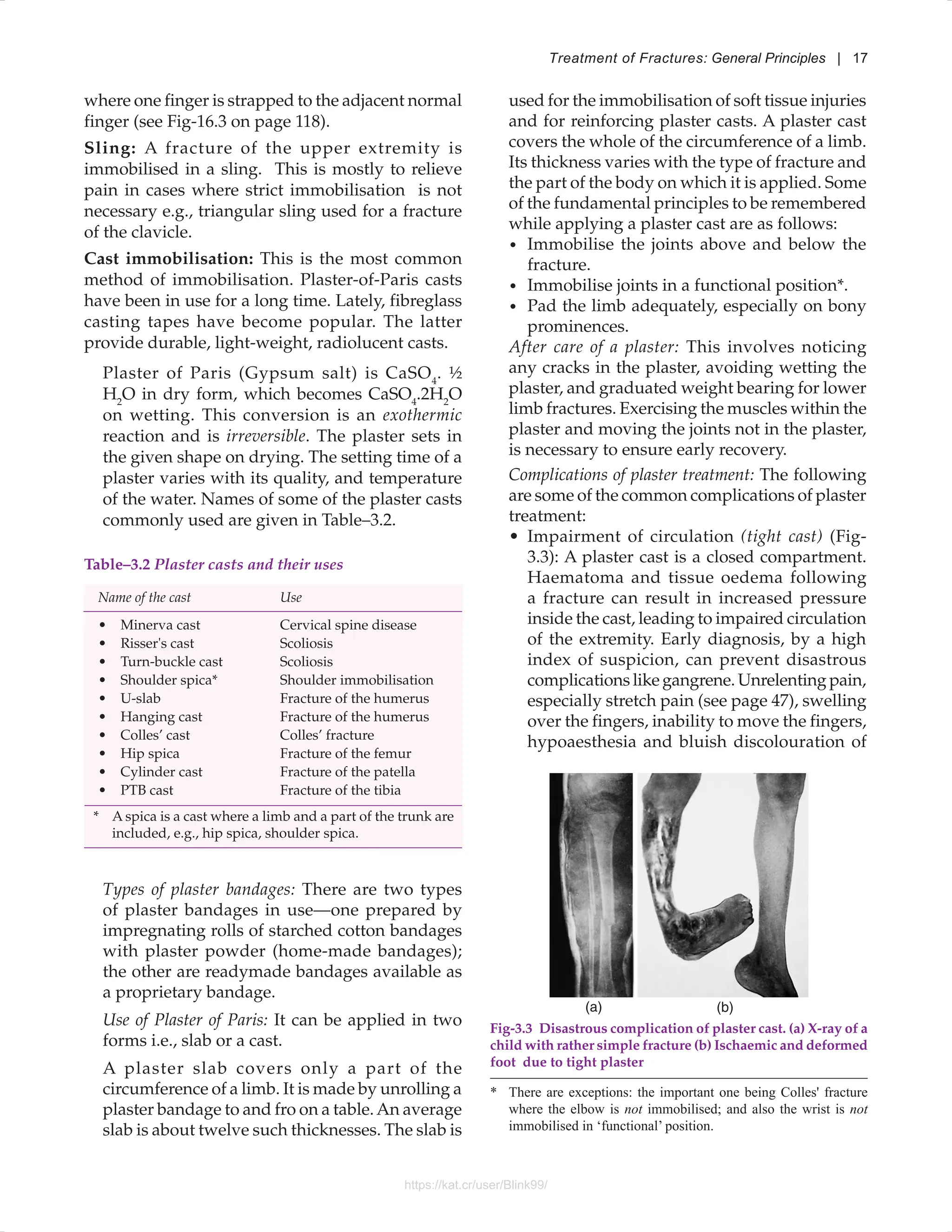
Fig-3.1 Some of the commonly available articles
used for splintage of fractures
https://kat.cr/user/Blink99/
tahir99
- UnitedVRG
14 | Essential Orthopaedics
enables a doctor to understand the seriousness of
the problem. Particular attention is paid to head
injury, chest injury and abdominal injury. These can
be cause of early fatality.Any bleeding is recognised
and stopped by local pressure. The fractured limb
is examined to exclude injury to nerves or vessels.
As soon as the general condition of the patient is
stablised, the limb is splinted. It is important to
check the bandaging done elsewhere, as it may be
too tight. Some of the splints used in the emergency
department are as shown in Fig-3.2.
In addition to splintage, the patient should be
made comfortable by giving him intramuscular
analgesics. In a case with suspected head injury,
narcotic analgesics should be avoided. A broad
spectrum antibiotic may be given to those with
open fractures. It is only after the emergency care
has been given, and it is ensured that the patient is
stable. He should be sent for suitable radiological
and other investigations, under supervision.
PHASE II - DEFINITIVE CARE
Philosophy of fracture treatment: Over the years,
treatment of fractures has undergone change in
philosophy. In the past, the aim of treatment was a
mere fracture union. This could be achieved in most
cases by immobilisation, which would cause joint
stiffness, muscle wasting etc., and may result in less
than optimal functional recovery. The aim now is
to get the limb functions back to pre-injury level.
For this, early mobilisation of the limb is desirable,
as this helps in preserving joint movements and
muscle functions.
Perfect anatomical reduction and stable fixation
is preferred for intra-articular fractures, as only
then early mobilisation can be done. In diaphyseal
fractures, the aim is to achieve union in good
alignment and length. This can be done by non-
operativemethods,ifthefractureisstable.Operative
methods are required for unstable fractures. With
currently available techniques of surgery, the
trend is towards treating more and more fractures
operatively as this gives more predictable results,
early recovery and better functions. The discussion
that follows will give the reader a guideline.
Fundamental principles of fracture treatment:
The three fundamental principles of treatment of a
fracture are: (i) reduction; (ii) immobilisation; and
(iii) preservation of functions.
Fig-3.2 Splints used in the emergency department
supply before and after splinting. The advantages
of splinting are:
• Relief of pain, by preventing movement at the
fracture.
• Prevention of further damage to skin, soft
tissues and neurovascular bundle of the injured
extremity.
• Prevention of complications such as fat embolism
and hypovolaemic shock.
• Transportation of the patient made easier.
Ice therapy: An immediate application of ice to
injured part helps in reducing pain and swelling.
Thiscanbedonebytakingcrushediceinapolythene
bag and covering it with a wet cloth. Commercially
available ice packs can also be used. Any wound, if
present, has to be covered with sterile clean cloth.
Compression: A crepe bandage is applied over the
injured part, making sure that it is not too tight.
Elevation: The limb is elevated so that the injured
part is above the level of the heart. For lower limb,
this can be done using pillows. For upper limb, a
sling and pillow can be used.
In the emergency department: Soon after a
patient with a musculo-skeletal trauma is received
in an emergency department, one has to act in a
coordinated way. It is most important to provide,
if required, basic life support (BLS). If in shock,
the patient is stabilised before any definitive
orthopaedic treatment is carried out. A quick
evaluation of the extent of injury at this stage
Treatment of Fractures: General Principles | 15
Reduction is the technique of ‘setting’ a displaced
fracture to proper alignment. This may be done
non-operatively or operatively, so-called closed and
open reduction respectively.
Immobilisation is necessary to maintain the
bones in reduced position. This may be done by
external immobilisation such as plaster etc., or by
internal fixation of the fracture using rods, plates,
screw etc.
To preserve the functions of the limb, physiotherapy
all throughout the treatment, even when the limb
is immobilised, is necessary.
Methodsoftreatment:Notallthethreefundamental
treatment principles discussed above apply to all
fractures. Treatment of a particular fracture can fall
in one of the following categories:
a) Treatment by functional use of the limb: Some
fractures (e.g., fractured ribs, scapula) need no
reduction or immobilisation. These fractures
unite despite functional use of the part. Simple
analgesics and splinting are needed for the
initial few days, basically for pain relief.
b) Treatment by immobilisation alone: In some
fractures, mere immobilisation of the fracture in
whatever position, is enough. Fractures without
significant displacement or fractures where the
displacement is of no consequence (e.g., some
fractures of surgical neck of the humerus) are
treated this way.
c) Treatment by closed reduction followed by
immobilisation: This is required for most
displaced fractures treated non-operatively. The
reduction could be done under mild sedation
or under anaesthesia. Immobilisation is usually
in a plaster cast. There is trend towards use
of image intensifier (page 32) to aid closed
reduction.
d) Closed reduction and percutaneous fixation: This
is done for fractures, which though can be re-
duced by closed manipulation, but are unstable,
and are likely to displace subse
­
quently. These
fractures are reduced under image intensifier,
and fixed with percutaneous devices such as K-
wire, rush pins etc., which hold the fracture in
position. External support of a plaster or splint
is usually required, in addition.
e) Open reduction and internal fixation: There are
some fractures, such as intra-articular fractures,
where accurate reduction, stable fixation and
early mobilisation are very important to regain
joint functions. Such fractures are best treated
by open reduction and internal fixation. Some
unstable fractures are also treated by this
method.
f) Minimally invasive surgery (MIS): There is trend
towards treating fractures with minimally inva-
sive techniques. In this, image intensifier is used
to aid reduction without opening the fracture.
The fracture is, then stabilised internally using
special devices such as rods, plates etc. These
devices are intro
­
duced through small incisions
using special instrumentation. MIS has the
advantage that the blood supply of the bone is
preserved, and thus early union occurs. Less
pain, early recovery and cosmesis are other
advantages.
Which of the above method is used in a particular
fracture depends upon a number of factors such
as patient's profession, whether the injured
limb is dominant or not, surgeon's experience,
availability of facilities, patient's affordability etc.
It is therefore common to see differing opinions on
the treatment of a particular fracture.
Discussed below are the three fundamental princi
­
ples of fracture treatment: reduction, immobili
­
sation and preservation of functions.
REDUCTION OF FRACTURES
Indications: Not all fractures require reduction,
either because there is no displacement or because
the displacement is immaterial to the final outcome.
For example, a child's clavicle fracture does not need
reduction because normal function and appearance
will be restored without any intervention.
In general, imperfect apposition of fragments can
be accepted more readily than imperfect angulatory
alignment or rotational mal-alignment. Perfect
anatomical reduction is desirable in some fractures,
even if for this an operation is required (e.g. intra-
articular fractures).
Methods: Reduction of a fracture can be carried out
by one of the following methods:
a) Closed manipulation: This is the standard initial
method of reducing most of the common frac-
tures. It is usually carried out under general
anaesthesia* and requires experience. It is an
art of realigning a displaced bone by feeling
* For reasons of practicality, sometimes closed reduction is carried
out under sedation.
https://kat.cr/user/Blink99/
tahir99
- UnitedVRG
16 | Essential Orthopaedics
through the soft tissues. The availability of
an image intensifier has greatly added to the
skills of closed reduction. It is not necessary
that perfect anatomical reduction be achieved
in all cases. Displacements compatible
with normal functions are considered 'accept-
able'. Most fractures reduced by closed manipu-
lation need some kind of immobi
­
lisation (PoP,
brace, bandaging etc.) discussed subsequently.
b) Continuous traction: It is used to counter the
forces which will not allow reduction to
happen or would cause redisplacement. These
are muscle forces and the force of gravity. A
common example is that of an inter-trochanteric
fracture, in which the muscles attached to
different fragments cause displacements. A
continuous traction can counter this force, and
bring the bones in proper alignment.
Continuous traction has its own problem of
keeping the patient in bed for long time with
its complications such as bedsores etc. It is for
this reason that once the fracture so treated
becomes 'sticky', and has little possibility of
redisplacement, the traction is discontinued
and the fracture supported in a plaster cast
till healing occurs. It is because of uncertainty
of result and need for in-bed immobilisation
that many of these fractures are now treated
operatively. Different methods of applying
traction are discussed in Chapter 4.
c) Open reduction: In this method, the fracture
is surgically exposed, and the fragments are
reduced under vision. Some form of internal
fixation is used in order to maintain the
position. This is commonly referred as 'open
reduction and internal fixation' or ORIF.
This is one area of fracture treatment which
is continuously evolving. There used to be
times when orthopaedic wards used to be
full of patients in traction and huge plaster
casts for months. Today, with advancement in
surgical treatment, the paradigm has shifted to
operative treatment. The big deciding factor for
adopting ORIF as the treatment of choice is the
facilities available and training of the surgeon.
The potential risks of surgery are sometimes
worse than the disadvantages of non-operative
treatment.
One reason to do open reduction is when other
methods of achieving reduction have failed.
There are fractures which are so unstable that
one knows that these fractures will redisplace
in due course. In such fractures, open reduction
and secure internal fixation is carried out in the
first instance.
Some of the widely accepted indications of ORIF
are given in Table–3.1.
IMMOBILISATION OF FRACTURES
Indications: Not all fractures require immobi
­
lisation. The reasons for immobilising a fracture
may be:
a) To prevent displacement or angulation:In general,
if reduction has been necessary, immobilisation
will be required.
b) To prevent movement that might interfere with
the union: Persistent movement might tear the
delicate early capillaries bridging the fracture.
More strict immobilisation is necessary for some
fractures (e.g., scaphoid fracture).
c) To relieve pain: This is the most important reason
for the immobilisation of most fractures. As
the fracture become pain free and feels stable,
guarded mobilisation can be started.
Methods: Immobilisation of a fracture can be done
by non-operative or operative methods.
NON-OPERATIVE METHODS
Most fractures can be immobilised by one of the
following non-operative methods:
Strapping: The fractured part is strapped to an
adjacent part of the body e.g., a phalanx fracture,
Table–3.1 Indications for open reduction
Absolute
• Failure of closed reduction
• Displaced intra-articular fractures
• Some displaced epiphyseal injuries (types III and IV)
• Major avulsion fractures e.g., fracture of patella
• Non-union
Relative
• Delayed union and malunion
• Multiple fractures
• Pathological fractures
• Where closed reduction is known to be ineffective
e.g., fracture of the neck of the femur
• Fractures with vascular or neural injuries
Treatment of Fractures: General Principles | 17
used for the immobilisation of soft tissue injuries
and for reinforcing plaster casts. A plaster cast
covers the whole of the circumference of a limb.
Its thickness varies with the type of fracture and
the part of the body on which it is applied. Some
of the fundamental principles to be remembered
while applying a plaster cast are as follows:
• Immobilise the joints above and below the
fracture.
• Immobilise joints in a functional position*.
• Pad the limb adequately, especially on bony
prominences.
After care of a plaster: This involves noticing
any cracks in the plaster, avoiding wetting the
plaster, and graduated weight bearing for lower
limb fractures. Exercising the muscles within the
plaster and moving the joints not in the plaster,
is necessary to ensure early recovery.
Complications of plaster treatment: The following
are some of the common compli
­
cations of plaster
treatment:
• Impairment of circulation (tight cast) (Fig-
3.3): A plaster cast is a closed compartment.
Haematoma and tissue oedema following
a fracture can result in increased pressure
inside the cast, leading to impaired circulation
of the extremity. Early diagnosis, by a high
index of suspicion, can prevent disastrous
complications like gangrene. Unrelenting pain,
especially stretch pain (see page 47), swelling
over the fingers, inability to move the fingers,
hypoaesthesia and bluish discolouration of
where one finger is strapped to the adjacent normal
finger (see Fig-16.3 on page 118).
Sling: A fracture of the upper extremity is
immobilised in a sling. This is mostly to relieve
pain in cases where strict immobilisation is not
necessary e.g., triangular sling used for a fracture
of the clavicle.
Cast immobilisation: This is the most common
method of immobilisation. Plaster-of-Paris casts
have been in use for a long time. Lately, fibreglass
casting tapes have become popular. The latter
provide durable, light-weight, radiolucent casts.
Plaster of Paris (Gypsum salt) is CaSO4
. ½
  
H2
O in dry form, which becomes CaSO4
.2H2
O
on wetting. This conversion is an exothermic
reaction and is irreversible. The plaster sets in
the given shape on drying. The setting time of a
plaster varies with its quality, and temperature
of the water. Names of some of the plaster casts
commonly used are given in Table–3.2.
* There are exceptions: the important one being Colles' fracture
where the elbow is not immobilised; and also the wrist is not
immobilised in ‘functional’ position.
Fig-3.3 Disastrous complication of plaster cast. (a) X-ray of a
child with rather simple fracture (b) Ischaemic and deformed
foot due to tight plaster
(a) (b)
Types of plaster bandages: There are two types
of plaster bandages in use—one prepared by
impregnating rolls of starched cotton bandages
with plaster powder (home-made bandages);
the other are readymade bandages available as
a proprietary bandage.
Use of Plaster of Paris: It can be applied in two
forms i.e., slab or a cast.
A plaster slab covers only a part of the
circumference of a limb. It is made by unrolling a
plaster bandage to and fro on a table.An average
slab is about twelve such thicknesses. The slab is
Table–3.2 Plaster casts and their uses
Name of the cast Use
• Minerva cast Cervical spine disease
• Risser's cast Scoliosis
• Turn-buckle cast Scoliosis
• Shoulder spica* Shoulder immobilisation
• U-slab Fracture of the humerus
• Hanging cast Fracture of the humerus
• Colles’ cast Colles’ fracture
• Hip spica Fracture of the femur
• Cylinder cast Fracture of the patella
• PTB cast Fracture of the tibia
* A spica is a cast where a limb and a part of the trunk are
included, e.g., hip spica, shoulder spica.
https://kat.cr/user/Blink99/
tahir99
- UnitedVRG
18 | Essential Orthopaedics
the digits are signs of a tight cast. A tight cast
can be prevented by adequately padding the
cast and elevating the extremity for the first
2-3 days following a cast application.
• Plaster sores: These are caused by inadequate
padding, irregularity of the inner surface of
the cast, or foreign bodies in the plaster. A
sore formation within a plaster cast can be
suspected by the following:
• Pain, out of proportion to fracture
• Fretfulness
• Disturbed sleep
• Recurrence of swelling over toes or fingers
• Low grade fever
• Patch of blood/soakage over the cast.
Aplaster sore can be prevented by examination
of the suspected area through a window in the
cast. It is possible to dress a small sore through
this window. Occasio
­
nally, the plaster has to
be removed and reapplied.
Functional bracing (Fig-3.4): A brace is a type of
cast where the joints are not included, so that while
the fracture is kept in position, the joints can also be
mobilised. This method is commonly used for stable
fractures of the tibia and humerus. It is based on the
principle that continuous use of the affected limb
while the fracture is kept adequately supported,
encourages union and prevents joint stiffness. The
brace is usually applied after the fracture becomes
'sticky'. In experienced hands, the rate of fracture
healing by this method is comparable to other
methods (see details on page 33). It is a useful option
at places where facilities for surgical treatment are
not available.
Splints and traction: Splints of various designs
are used for the definitive treatment of fractures.
Thomas splint is still very popular for the treatment
of fractures of the lower limb. Disadvantages
of this method of treatment are prolonged
hospitalisation and confinement to the bed. This
can be hazardous, especially in elderly people who
develop complications secondary to recumbency
(e.g. bed sores, chest infection etc.). For details about
splints, see Chapter 4.
OPERATIVE METHODS
Wherever open reduction is performed, fixation
(internal or external) should also be used. External
fixation is usually indicated in situations where for
some reason, internal fixation cannot be done.
Internal fixation: In this method, the fracture, once
reduced, is held internally with the help of some
metallic or non-metallic device (implant), such as
steel wire, screw, plate, Kirschner wire (K-wire),
intra-medullary nail etc. These implants are made
of high quality stainless steel to which the body is
inert.
Indications: Internal fixation of fractures may be
indicated under the following circumstances:
a) When a fracture is so unstable that it is difficult
to maintain it in an acceptable position by non-
operative means. This is the most frequent
indication for internal fixation.
b) As a treatment of choice in some fractures, in
order to secure rigid immobilisation and to
allow early mobility of the patient.
c) When it has been necessary to perform open
reduction for any other reason such as an
associated neurovascular injury.
Methods: A fracture can be fixed internally by
any one or combination of implants given in
Table-3.3.
a) Steel wire: A gauge 18 or 20 steel wire is used
for internal fixation of small fractures (e.g.,
fracture of the patella, comminuted fragments
of large bones etc.).
b) Kirschner wire: It is a straight stainless steel
wire, 1-3 mm in diameter. It is used for the
fixation of small bones of the hands and feet.
c) Intra-medullary nail: It is erroneously
called 'nail', but in fact is a hollow rod made
Fig-3.4 A plastic brace is used for a sticky fracture of the tibia.
The patient is up and about, can put on shoes and go to work
Treatment of Fractures: General Principles | 19
Advantages of internal fixation: With the use of
modern techniques and implants, there is minimal
need for external immobilisation. It allows early
mobility of the patient out of bed and hospital.
Joints do not get stiff and the muscle functions
remain good. The complications associated with
confinement of a patient to bed are also avoided.
Disadvantages: The disadvantages of internal
fixation are infection and non-union. It needs a
trained orthopaedic surgeon, free availability of
implants and a good operation theatre; failing
which, the results of internal fixation may not only
be poor but disastrous.
External fixator: It is a device (Fig-3.5) by which the
fracture is held in a steel frame outside the limb.
For this, pins are passed percutaneously to hold
the bone, and are connected outside to a bar with
the help of clamps. This method is useful in the
treatment of open fractures where internal fixation
cannot be carried out due to risk of infection.
These are of the following type:
i. Pin fixators: In these, 3–4 mm sized pins are
passed through the bone. The same are held
outside the bone with the help of a variety of
tubular rods and clamps [Fig-3.5 (a)]
ii. Ring fixators: In thesethin ‘K’ wires (1–2 mm)
are passed through the bone. The same are held
outside the bone with rings [Fig-3.5 (b)], (For
details, page 32).
PHASE III - REHABILITATION OF A FRACTURED LIMB
Rehabilitation of a fractured limb begins at the
time of injury, and goes on till maximum possible
functions have been regained. It consists of joint
Fig-3.5 External fixator. (a) Pin fixator; (b) Ring fixator
Table–3.3 Some implants used in treatment of fractures
Intra-medullary nails
PFN, DFN, PHN, Recon nail supracondylar nail
• Kuntscher's nail Fracture shaft femur
• Smith-Petersen nail Fracture neck femur
• Talwalkar's nail Fracture forearm bones
• V-nail Fracture tibia
• Ender's nail Intertrochanteric fracture
• Rush nail General purpose
• Hartshill rectangle Spine injuries
• GK nail Fracture shaft femur
• Gamma nail Intertrochanteric fracture
Plates and screws
• Compression plate Transverse and oblique
		
fractures of any long bone
• Neutralisation plate Comminuted fractures
• Buttress plate Condylar fracture of tibia
• Locking compression Peri-articular fractures
plate
Special implants
• SP nail-plate Intertrochanteric fracture
• Dynamic hip screw Intertrochanteric fracture
(DHS)
• Condylar blade-plate Condylar fracture of femur
• T-plate Condylar fracture of tibia
• Spoon plate Fracture of lower end of
tibia
• Cobra plate Hip arthrodesis
Others
• Steel wire Fracture of patella
• K-wire Fracture of small bones
of stainless steel. This can be introduced into
the medullary cavity of the long bones such as
femur and tibia. Different shapes and sizes of
these nails are available.
d) Screws: These can be used for fixing small
fragments of bone to the main bone (e.g., for
fixation of medial malleolus).
e) Plate and screws: This is a device which can
be fixed on the surface of a bone with the help of
screws. Different thicknesses, shapes and sizes
are available.
f) Special, fracture specific implants: These
are used for internal fixation of some fractures
(Table–3.3).
g) Combination: A combination of the above
mentioned implants can be used for a given
fracture.
For details about commonly used implants, refer to
Annexure–I, page 343.
a b
https://kat.cr/user/Blink99/
tahir99
- UnitedVRG
20 | Essential Orthopaedics
mobilisation, muscle re-education exercises and
instructions regarding gait training.
Joint mobilisation: The joint adjacent to an injured
bone tends to get stiff due to: (i) immobi
­
lisation; (ii)
inability to move the joints due to pain; and (iii)
associated injury to the joint as well. To prevent
stiffness, the joint should be mobilised as soon as
possible. This is done initially by passive mobilisation
(some one else does it for the patient). Once the pain
reduces, patient is encouraged to move the joint
himself with assistance (active assisted), or move
the joint by himself (active mobilisation). Motor-
ized devices which slowly move the joint through a
predetermined range of motion can be used. These
are called continuous passive motion (CPM) machines.
Techniques such as hot fomentation, gentle massage
and manipu
­
lation aid in joint mobilisation.
Muscle re-education exercises: Because of lack
of use, the muscles get wasted quickly. Hence, it
is desirable that muscle activity be maintained
all through the treatment. This can be done even
during immobilisation (static contractions) or
after removal of external immobilisation (dynamic
contractions), as discussed below:
a) During immobilisation: Even while a fracture
is immobilised, the joints which are out of the
plaster, should be moved to prevent stiffness
and wasting of muscles. Such movements do not
cause any deleterious effect on the position of
the fracture. The muscles working on the joints
inside the plaster can be contracted without
moving the joint (static contractions). This
maintains some functions of the immobilised
muscles.
b) After removal of immobilisation: After a limb is
immobilised for some period, it gets stiff. As
the plaster is removed, the following care is
required:
• The skin is cleaned, scales removed, and some
oil applied.
• The joints are moved to regain the range
of motion. Hot fomentation, active and
active-assisted joint mobilising exercises are
required for this (page 81).
• The muscles wasted due to prolonged
immobilisation are exercised.
Functional use of the limb: Once a fracture is on
way to union, at a suitable opportunity, the limb is
put to use in a guarded way. For example, in lower
limb injuries, gradual weight bearing is started –
partial followed by full. One may need to support
the limb in a brace, caliper, cast etc. Walking aids
such as a walker, a pair of crutches, stick etc. may
be necessary.
A general plan of management for a usual fracture
is shown in Flow chart-3.1.
Flow chart-3.1 General plan for treatment of fractures
Treatment of Fractures: General Principles | 21
MANAGEMENT OF OPEN FRACTURES
A fracture is called open (compound) when there
is a break in the overlying skin and soft tissues,
establishing communication between the fracture
and the external environment. Three specific
consequences may result from this.
a) Infection of bone: Contamination of the wound
with bacteria from the outside environment may
lead to infection of the bone (osteomyelitis).
b) Inability to use traditional methods: A small
wound can be managed through a window
in a plaster cast. But, it may not be possible to
manage a big wound through a window. The
presence of a wound may also be a deterrent to
operative fixation of the fracture.
c) Problems related to union: Non-union and mal-
union occur commonly in open fractures. This
may be because of one or more of the following
reasons: (i) a piece of bone may be lost from
the wound at the time of the fracture, the gap
thus created predisposes to non-union; (ii) the
fracture haematoma, which is supposed to have
osteogenic potential, is lost from the wound; (iii)
the 'vascular' cover by the overlying soft tissues,
so important for fracture union, may be missing;
and (iv) the bone may get secondarily infected,
and thus affect union.
It is because of these possible consequences that
open fractures deserve utmost care throughout their
management. Open fractures have been classified
into three types, depending upon the extent of soft
tissue injury (Table–3.4).
TREATMENT
The principle of treatment is to convert an open
fracture into a closed fracture by meticulous wound
care. Thereafter, the treatment of open fracture
is essentially on the lines of closed fractures.
The following discussion emphasises the points
pertinent to the treatment of open fractures.
Phase I - Emergency Care
At the site of accident: The following measures are
taken at the site of the accident:
a) The bleeding from the wound is stopped by
applying firm pressure using a clean piece of
cloth. At times it may be necessary to use a
tight circular bandage proximal to the wound
in order to stop bleeding.
b) The wound is washed with clean tap water or
saline, and covered with a clean cloth.
c) The fracture is splinted.
At times, a piece of bone devoid of all soft tissue
attachments may be lying out of the wound. It
should be washed and taken to the hospital in a
clean cloth. It may be useful in reconstruction of
the fracture.
In the emergency department: Open fractures are
known to be associated with neurovascular injuries
more often than the simple fractures. Hence, one
should carefully look for these associated injuries.
The following treatment is performed in the
emergency department :
a) Woundcare:Careintheemergencyroomconsists
of washing the wound under strict aseptic
conditions and covering it with sterile dressing.
Sometimes, the bone may be jetting out of the
skin, causing stretching of the skin around
the wound. Replacing the projecting bone is
necessary in order to prevent devascularisation
of the skin.Apiece of bone with intact soft tissue
attachments hanging out of the wound, should
Table–3.4: Modified Gustilo and Anderson Classific-
ation for open fractures
Type Description
I Skin wound less than 1 cm
Clean
Simple fracture pattern
II Skin wound more than 1 cm
Soft-tissue damage not extensive
No flaps or avulsions
Simple fracture pattern
III High-energy injury involving extensive soft-
tissue damage
Or multi-fragmentary fracture, segmental
fractures, or bone loss irrespective of the size of
skin wound
Or severe crush injuries
Or vascular injury requiring repair
Or severe contamination including farmyard
injuries
A later modification subdivided type III injuries
based on the degree of contamination, the
extent of periosteal stripping and the presence
of vascular injury.
IIIA. Adequate soft-tissue cover of bone despite
extensive soft-tissue damage
IIIB. Extensive soft-tissue injury with periosteal
stripping and bone exposure
Major wound contamination
IIIC. High-energy injury involving extensive
soft-tissue damage
https://kat.cr/user/Blink99/
tahir99
- UnitedVRG
22 | Essential Orthopaedics
be washed and put back in the wound. All this
is done under proper aseptic conditions.
b) Splintage as described on page 13.
c) Prophylactic antibiotics should be given to all
patients. Cephalexin is a good broad spectrum
antibiotic for this purpose. In serious compound
fractures, a combination of third generation
cephalosporins and an amino-glycoside is
preferred.
d) Tetanus prophylaxis is given after evaluating the
tetanus immunisation status of the patient.
e) Analgesics to be given parenterally to make the
patient comfortable.
f) X-rays are done to evaluate the fracture in order
to plan further treatment.
Phase II - Definitive Care
Definitive care of an open fracture is possible at a
place equipped with a high class aseptic operation
theatre, plenty of orthopaedic instruments and
implants, and a competent orthopaedic surgeon. In
somecompoundfractures,thedamagetosofttissues
is so much that it is wise to consult a plastic surgeon
right at the beginning. The patient may need plastic
surgery techniques, such as flap reconstruction, at
the time of the first operation itself. Longer a bone
is exposed to outside environment, more it gets
desicated, resulting in subsequent non-union.
In principle, in the treatment of open fractures, care
of the wound goes hand in hand with that of the
fracture.
Wound care: This consists of early wound
debridement and subsequent care.
a) Wound debridement: Wound debridement is
needed in all cases. There may be only a punc-
ture wound, needing minimal debride
­
ment,
irrigation and wound closure; or the limb may
be so badly crushed that repeated debridement
may be required. While debriding the wound,
the skin should be excised as little as necessary.
The muscles and fascia can be excised liberally.
The most reliable indicator of the viability of a
muscle is its contractility, on pinching it with
a forceps. Only badly lacerated tendons are
excised. The ends of a cut tendon are approxi-
mated with non-absorbable sutures so that they
can be identified at a later date, and a defini-
tive repair performed. Bone ends are cleaned
thoroughly with normal saline. The margins
of the fractured ends may be nibbled. A bone
fragment with attached soft tissues is replaced
at the fracture site. Small fragments without
soft tissue attachments can be discarded.
Sometimes, the limb is so badly injured that the
prospects of salvaging the limb to a reasonable
function is poor. In such cases, amputation,
straight away, may be a better option. It is
recommended that opinion of at least one more
surgeon be taken before taking such a drastic
decision.
b) Definitive wound management: Once the wound
is debrided, decision regarding its closure is to
be made. Primary closure by suturing the skin
edges or by raising a flap, can be okay for clean
wounds. In all wounds debrided after 6-8 hours,
immediate closure should not be done. The
wound, in such cases should be covered with
sterile dressings, and subsequently treated by
delayed primary closure or be allowed to heal
by secondary intention. Whenever in doubt,
it is best to leave the wound open. A plan of
wound closure in open fractures is shown in
Flow chart-3.2.
Fracture management: In spite of the best
debridement, an open fracture is a potentially
infected fracture. Non-operative methods of
treatment, as in closed fractures, usually give
good results. In case an operative reduction of the
fracture is considered necessary, it is safer to wait
for the wound to heal before intervening. In cases
where there is extensive damage to soft tissues,
external fixation provides fixation of the fracture
and allows good care of the wound. Some of the
commonly used methods in the definitive care of
an open fracture are as follows:
a) Immobilisation in plaster: For cases with moderate
size wound, where a stable reduction of the
fracture can be achieved, treatment by Plaster
of Paris cast is as appropriate as for closed
fractures. Care of the wound is possible through
a window in the cast. Once the wound heals,
the window is closed and the fracture treated
on the lines of closed fractures.
b) Pins and plaster: For cases where the wound is
moderate in size and is manageable through
a window in a plaster cast, but reduction
is unstable; the fracture can be stabilised
by passing pins in the proximal and distal
fragments, achieving reduction, and applying
plaster cast with pins incorporated in it. This
method is useful in open, unstable tibial
fractures (Fig-3.6).
Treatment of Fractures: General Principles | 23
Flow chart-3.2 Plan of wound closure in open fractures
Fig-3.6 Pin and plaster method
c) Skeletal traction: In cases where there is
circumferential loss of skin or the wound is big,
it may not be possible to treat them in plaster.
In such cases, skeletal traction can be used
to keep the fracture in good alignment until
the wound heals. After healing of the wound,
one can continue traction until the fracture
unites, or change over to some other form of
immobilisation such as plaster cast.
d) External skeletal fixation: It provides stability
to fracture and permits access to virtually
the whole circumference of the limb (see also
page33).
e) Internal fixation: Approach to management of
open fractures has become very aggressive
in last few years. In trauma centres in devel-
oped countries, more and more open frac-
tures received early enough are treated with
primary internal fixation. Closed methods of
intra
­
medullary fixation have been particularly
useful. If everything goes well, the rehabili
­
tation
of the patient is highly accelerated. Such facili-
ties are fast becoming available in most centres
in India and other developing countries.
Phase III - Rehabilitation
Rehabilitation of a limb with an open fracture is
along the lines of a simple fracture as discussed on
page 19. It consists of joint mobilisation, muscle
exercises during immobilisation, after removal of
immobilisation, and advice regarding mobilisation
of the injured limb.
Further Reading
• Gustilo RB, Kyle RF, Templeman D:Fractures and Dislocations,
St. Louis: Mosby-Year Book Inc.
• Wilson JN (Ed): Watson–Jone's Fractures and Joint Injuries.
6th edn. Edinburgh: Churchill Livingstone, 1982.
• Chapman MW (Ed): Operative Orthopaedics, 2nd edn.
Philadelphia: J.B. Lippincott Company, 1988.
• Rockwood CA(Jr.), Green David P (Ed.): Fractures, 2nd edn.
Philadelphia: J.B. Lippincott Company, 1984.
https://kat.cr/user/Blink99/
24 | Essential Orthopaedics
What have we learnt?
• Fracture has to be splinted as soon as possible.
• Fracture treatment consists of keeping the fracture in acceptable position till union. This can
be done by non-operative methods or operative methods.
• Non-operative methods consists of bandaging, plaster application, use of brace, traction etc.
• Operative treatment consists of reduction of the fracture and holding it in position by internal
fixation or external fixation.
• Open fractures are serious injuries, as they are more prone to complications. Adequate wound
care and fracture treatment is required.
Additional information: From the entrance exams point of view
Securing the airway is the first step in treatment of polytrauma.
SPLINTS
OBJECTIVES
Splints are used for immobilising fractures; either
temporarily during transportation or for definitive
treatment. They are also used in other orthopaedic
conditions like infection, congenital dislocation of
the hip, etc.
TYPES
Some of the splints used in orthopaedic practice,
and the conditions for which they are used are given
TOPICS
• Splints
• Tractions
C H A P T E R 4
Splints and Tractions
Table–4.1: Common splints/braces and their uses
Name Use
Cramer-wire splint Emergency immobilisation
Thomas splint Fracture femur - anywhere
Bohler-Braun splint Fracture femur - anywhere
Aluminium splint Immobilisation of fingers
Dennis Brown splint CTEV
Cock-up splint Radial nerve palsy
Knuckle–bender splint Ulnar nerve palsy
Toe-raising splint Foot drop
Volkmann's splint Volkmann's ischaemic
contracture (VIC)
Four-post collar Neck immobilisation
Aeroplane splint Brachial plexus injury
SOMI brace Cervical spine injury
ASHE (Anterior spinal Dorso-lumbar spinal injury
hyper extension) brace
Taylor's brace Dorso-lumbar immobilisation
Milwaukee brace Scoliosis
Boston brace Scoliosis
Lumbar corset Backache
transportation. It is made up of two thick parallel
wires with interlacing wires (Fig-4.1). It can be
bent into different shapes in order to immobilise
different parts of the body.
• Thomas knee-bed splint (Thomas splint): It is
one of the commonest splints used in orthopaedic
practice. It was devised by H.O. Thomas, initially
for immobilisation for tuberculosis of the knee.
It is now commonly used for the immobilisation
of hip and thigh injuries.
Parts of a Thomas splint (Fig-4.2): AThomas splint
has a ring and two side bars joined distally. The
ring is at an angle of 120o
to the inside bar. The
outside bar has a curvature near its junction with
the ring to accommodate the greater trochanter.
Fig-4.1 Cramer-wire splint
in Table–4.1. The following are a few examples of
common splints.
• Cramer-wire splint: This splint is used for
temporary splintage of fractures during
https://kat.cr/user/Blink99/
26 | Essential Orthopaedics
CARE OF A PATIENT IN A SPLINT
A patient in splint needs the following care:
a) The splint should be properly applied, well
padded at bony prominences and at the fracture
site.
b) The bandage of the splint should not be too
tight as it may produce sores; nor too loose, lest
it becomes ineffective.
c) The patient should be encouraged to actively
exercise the muscles and the joints inside the
splint as much as permitted.
d) Any compression of nerve or vessel, usually
due to too tight a bandage or lack of adequate
padding, should be detected early and managed
accordingly.
e) Daily checking and adjustments, if required,
should be made. Regular portable X-rays
may be taken to ensure good position of the
fracture.
Now-a-days, readymade braces are available for
immobilising different joints. These are available
in small to extra large (XL) sizes. Common ones in
use are knee immobiliser, wrist immobiliser, and
ankle support.
TRACTIONS
OBJECTIVES
Traction is used for: (i) reduction of fractures
and dislocations, and their maintenance; (ii) for
immobilising a painful, inflamed joint; (iii) for
the prevention of deformity, by counteracting
the muscle spasms associated with painful joint
conditions; and (iv) for the correction of soft tissue
contractures by stretching them out.
TYPES OF TRACTION
For effectiveness of any traction, a counter-traction
is necessary. Depending upon what acts as counter-
traction, a traction can be fixed or sliding.
• Fixed traction: In this type, counter-traction is
provided by a part of the body e.g., in Thomas
splint fixed traction, the ring of the splint comes
to lie against the ischial tuberosity and provides
counter-traction (Fig-4.4a).
Size of a Thomas splint: This is measured by
finding the ring size and the length of the splint.
The ring size is found by addition of 2 inches
to the thigh circumference at the highest point
of the groin. The length of a Thomas splint is
the measurement from the highest point on the
medial side of the groin up to the heel plus
6 inches.
Uses: AThomas splint is used for immobilisation
of the lower limb. The ring of the Thomas splint
is introduced around the limb. The thigh and leg
are supported on slings tied over the side bars.
• Bohler-Braun splint: This is a frame as shown in
Fig-4.3.Ithasanumberofpulleys(1-3)overwhich
the traction cord passes while giving traction for
different fractures. It is more convenient than
Fig-4.2 Thomas splint
Fig-4.3 Bohler-Braun splint (pulleys 1-3 for traction)
Thomas splint since it has no ring. The ring of a
Thomas splint is a common cause of discomfort,
especially in elderly people. A Bohler-Braun
splint has no inbuilt system of countertraction,
hence it is not suitable for transportation.
Splints and Tractions | 27
• Sliding traction: In this type, the weight of the
body acts as counter-traction; e.g., traction given
for a pelvic fracture, where the weight of the
body acts as counter-traction; made effective by
elevating the foot-end of the bed (Fig. 4.4b).
METHODS OF APPLYING TRACTION
There are two methods of applying traction – skin
and skeletal (Fig-4.4).
• Skin traction: An adhesive strap is applied on
the skin and traction applied. The traction force
is transmitted from the skin through the deep
fascia and intermuscular septae to the bone.
These days, readymade foam traction kits are
available for this purpose.
• Skeletal traction: The traction is applied directly
on the bone by inserting a K-wire or Steinmann
pin through the bone.
Fig-4.4a Skin traction
Fig-4.4b Skeletal traction
Table–4.3: Traction systems and their uses
Name Use
Gallow's traction Fracture shaft of the femur in chil-
dren below 2 years
Bryant's traction Same
Russell's traction Trochanteric fractures
Buck's traction Conventional skin traction
Perkin's traction Fracture shaft of femur in adults
90°-90° traction Fracture shaft of femur in children
Agnes-Hunt traction Correction of hip deformity
Well-leg traction Correction of adduction or abduc-
tion deformity of hip
Dunlop traction Supracondylar fracture of humerus
Smith's traction Supracondylar fracture of humerus
Calcaneal traction Open fractures of ankle or leg
Metacarpal traction Open forearm fractures
Head-halter traction Cervical spine injuries
Crutchfield traction Cervical spine injuries
Halo-pelvic traction Scoliosis
Table–4.2: Comparison between skin and skeletal tractions
Point Skin traction Skeletal traction
• Required for Mild to moderate force Moderate to severe force
• Age used for Children Adults
• Applied with Adhesive plaster Steinmann pin, K-wire
• Applied On skin Through bone
• Common site Below knee Upper tibial pin traction
• Weight permitted Up to 3-4 kg Up to 20 kg
• Used for Short duration Long duration
Some of the differentiating features of skin and
skeletal tractions are given in Table–4.2.
Common traction systems used are given in
Table–4.3.
DAILY CARE OF A PATIENT IN TRACTION
A patient in traction can develop serious
complications and needs the following care:
a) The traction should be as comfortable as
possible.
b) Proper functioning of the traction unit must
be ensured. Traction weights should not be
touching the ground. See that the ropes are
in the grooves of the pulleys. The foot of the
patient or the end of the traction device should
not be touching the pulley, as it makes traction
ineffective.
https://kat.cr/user/Blink99/
28 | Essential Orthopaedics
c) One must see that terminal part of the limb in
traction (hand or foot) is warm and of normal
colour. Sensations over toes and fingers
should be normal. Any numbness or tingling
may point to a traction palsy of a nerve.
d) Any swelling over the fingers or toes may point
to a tight bandage or slipped skin traction.
e) A pin tract infection in skeletal traction can
be detected early by eliciting pain on gentle
tapping at the site of the pin insertion.
f) The proper position of the fracture should
be ensured by taking check X-rays in traction.
g) Physiotherapy of the limb in traction should be
continued to minimise muscle wasting.
h) Awatch must be kept on general compli­cations
of recumbency, i.e., bed sores, chest congestion,
UTI, constipation etc.
i) Diversion therapy is important for any patient
confined to bed for a long period of time. This
may be done by suggesting the patient to do
things he likes – such as reading, craft, games,
watching television, net surfing, etc.
Further Reading
• Stewart JDM & Hallett JP: Traction and Orthopaedic
Appliances. Edinburgh: Churchill Livingstone, 1983.
Additional information: From the entrance exams point of view
Skin traction is contraindicated in skin damage, deep vein thrombosis, significant vascular deficit
and neurological deficit.
What have we learnt?
• Splints are useful and readily available methods of immobilising a limb. Due care is required
while treating a patient in splint.
• There are two types of traction — fixed and sliding.
• There are two methods of applying traction — skin and skeletal.
• Skeletal traction is more convenient for giving traction for longer duration. Also, more
weight can be applied by skeletal traction. Skin traction is suitable for short term traction
only.
• How to take proper care of a patient in traction?
AO METHOD OF FRACTURE TREATMENT
The AO (Arbeitsgemeinschaft fur Osteosynthese-
fragen, a Swiss term meaning association
for osteosynthesis) and its English counterpart,
the ASIF (Association for the Study of
Internal Fixation) advocated the internal
fixation of fractures based on principles laid
down by them. The basic guiding principle is
that by achieving stable fixation of fractures, a
limb can be mobilised early, thereby avoiding the
disadvantages of immobilisation i.e., stiffness of
joints, muscle wasting etc., all of which have been
termed ‘fracture disease’ by them. The following
principles are used to achieve stable fixation
(Fig-5.1):
a) Inter-fragmentary compression i.e., achieving
compression between different fracture
fragments.
b) Splinting i.e., splinting the fracture internally or
externally.
c) Combination of a and b.
INTER-FRAGMENTARY COMPRESSION
This means that the fracture fragments are
not merely in contact with each other, but are
compressed against each other. It improves the
strength of the fixation. Compression between
fragments can be produced at the time of surgery,
and is called static compression. It can also occur
between fragments as a result of muscle action
as the limb is put to use, the so called dynamic
Methods of producing static compression: It can
be produced by the following methods:
a) Lag* screw fixation: A screw is passed across
the fracture site in such a way that, as the screw
is tightened, the fracture surfaces are compres
­
sed against each other. In this technique, the
fracture is reduced and held with a clamp. A
hole is drilled across the fracture, as shown in
Fig-5.1a. The proximal cortex is 'overdrilled'. As
the screw is passed, it slides through the proxi-
mal cortex (being overdrilled), and its threads
catch the opposite cortex (Fig-5.1a). The head of
the screw pushes the proximal cortex against the
TOPICS
• AO method of fracture treatment
• Changing AO concepts
• Functional bracing
• Ilizarov's technique
C H A P T E R 5
Recent Advances in the
Treatment of Fractures
* Lag screw is no special screw. It is just the way a screw is used.
Partially threaded screws are used to produce lag-screw effect.
Any threaded screw can be used as a lag screw by 'over drilling'
the near cortex.
Fig-5.1 Principles of AO method. (a) Inter-fragmentary
compression (b) Splintage (c) Combination of a and b
compression.
https://kat.cr/user/Blink99/
30 | Essential Orthopaedics
SPLINTING
There are various methods of ‘splinting’ the
fracture surgically. These do not provide 'rigid'
fixation, but the fixation is good enough to support
fracture healing. Following are some such methods
(Fig-5.4).
a) Intra-medullary splinting: This is useful for
fixation of fractures of the long bones, e.g.,
fracture of the shaft of the femur. Along hollow
rod, called 'nail' is inserted in the medullary
cavity of the long bone (Fig-5.4a).
b) Extra-medullary splinting: This can be done for
any fracture by applying a plate on the surface
opposite cortex, producing inter-fragmentary
compres­
sion. This technique is suitable for
achieving compres­
sion across a short oblique
or a spiral fracture.
b) Compression plating (Fig-5.2b): A thick metallic
strip (a plate) is used on the surface of the bone.
The two fragments of a transverse or short
oblique fracture can be compressed against
each other using the plate. Compression across
the fracture can be achieved by a special device
called Muller's compression clamp or by the
use of a specially designed, self-compression
plates. In the latter, the screw holes of the plate
are so designed that as the screws are tightened,
compression is produced.
c) External fixator (Fig-5.2c): It can also be used to
produce compression between the fragments at
the time of its application.
Methods of producing dynamic compression:
A fractured bone has a tension side i.e., the side
Fig-5.3 Tension-band principle. a) Wiring b) Plating
Fig-5.2 Methods of producing compression. (a) A lag
screw (b) A compression plate (c) An external fixator
whichtendsto‘openup’onuseofthelimb,  because
it is subjected to a distracting force. If this force is
countered by some device fixed on the tension side,
the fracture comes under compression. This is
called tension-band principle. Dynamic compression
can be achieved by the following methods:
a) Tension-band wire (Fig-5.3a): This can be used for
producing dynamic compression in fractures of
the patella and olecranon.
b) Tension-band plate (Fig-5.3b): This can be used for
fractures of the humerus and tibia by applying
the plate on tension surface.
Fig-5.4 Various methods of splinting the fracture surgically
Recent Advances in the Treatment of Fractures | 31
AO principles (as explained earlier). The aim of
rigid fixation was to achieve bone-to-bone healing,
without callus formation (primary bone healing). In
an attempt to achieve anatomical reduction and
rigid fixation, it became necessary to widely expose
the fracture, and thus damage its blood supply.
It was soon realised that, although this method
is mechanically superior, it does not respect the
biological environment of the fracture, and hence
often resulted in problems in fracture healing.
CURRENT AO CONCEPTS
Hence, in the 90's, the concept changed from rigid
fixation to 'stable fixation'. By stable fixation it
meant that the fixation should be good enough to
achieve union. In intra-articular fractures, stable
fixation meant anatomical reduction and absolute
stable fixation, the concept similar to early AO
concept. But for diaphyseal fractures, anatomical
reduction is not necessary. A more biological, less-
than-rigid (relative stable) fixation is compatible
with healing. For this, exact anatomical reduction
is not considered necessary. Just functional reduc-
tion (achieving length and overall alignment) is
okay. For example, recommen
­
dations in the past
for a comminuted fracture of the femur was to
reconstruct the femur, fixing each and every small
piece of bone to where it belonged, using small
screws and plates. It was more like solving a jig-saw
puzzle. It caused a lot of damage to blood supply
of individual fragments, and hence delayed union.
Now, the same fracture is 'stabilized' by using a
bridging plate (Fig-5.6), or a nail where the length
of the bone. This plate, being used just to 'splint'
the fracture, without producing compression, is
called a neutralisation plate (Fig-5.4b). Sometimes,
the plate may just be buttressing the fracture,
without really fixing it (buttress plating), as done
for fixing tibial condyle fractures (Fig-5.4c).
c) Outside the body: Pins are inserted through
the skin into the bone, and the same are held
outside with clamps and rod (external fixators).
This is used to hold the fragments of an open
fracture (Fig-5.4d).
Fig-5.5 An example of use of combination of compression
screws and a neutralisation plate, used for a spiral fracture
Fig-5.6 Biological fixation: the fracture is stabilised without
touching the small comminuted pieces of bone (bridging
plate)
COMBINATION OF COMPRESSION AND SPLINTING
A combination of these two principles is required
in achieving stable fixation in most fractures e.g.,
a spiral fracture of the shaft of the femur can be
stabilised by using inter-fragmentary screws
across the fracture, and a neutralisation plate to add
to fixation (Fig-5.5). Just inter-fragmentary screw
fixation alone may not be strong enough fixation.
CHANGING AO CONCEPTS
Before 50's, fractures were treated primarily non-
operatively. The healing of fractures occurred as
per stages described in Chapter 2. Callus formation
was an important stage in the healing of fractures.
Non-operative treatment required immobilisation
of the limb, which lead to stiffness of joints, wasting
of muscles etc. (the so-called fracture disease).
Operative techniques were primitive, and were
associated with unacceptable complications.
EARLY AO CONCEPTS
In the late 50's, AO group brought revolution in the
treatment of fractures. They proposed anatomical
reduction of the fracture, which meant, putting
each and every bone fragment back to where it
belonged. The fragments were rigidly fixed using
https://kat.cr/user/Blink99/
32 | Essential Orthopaedics
of the bone and its alignment is restored, without
exposing the comminuted segment of the bone. The
'relative stability' provided by these devices is good
enough to allow early mobilisation, but since the
blood supply of the bone is preserved, the chances
of fracture healing are better.
In order to preserve the blood supply of the
fracture, emphasis has shifted from direct reduction
where fragments are exposed and directly reduced,
to indirect reduction where reduction is achieved
by manipulating the limb without touching the
fracture.
There has been a change in the design of the con-
ventional plates too. The new plates are so designed
that they are in contact with the bone at minimum
surface (low contact dynamic compres­
sion plates –
LCDCP). This allows better vascularization of the
fracture under the plate.
The latest development in plating technique is
Locking Compression Plate (LCP). This plate has
a specially designed 'combination' screw hole.
The screw hole has two halfs; one half is like
a conventional DCP hole, and the other half is
threaded (Fig-5.9a). The screw head also has
threads so that as the screw is tightened, the head
gets 'locked' in the plate (Fig-5.9b). This provides a
rigid plate-screw construct, which has been found
Fig-5.7 Interlock nailing
Fig-5.8 An image intensifier is an integral part of modern
fracture treatment
Fig-5.9 Screw hole of a locking compression plate
In general, intra-medullary nailing has been
considered a mechanically superior device
compared to plating. This is because a nail is a
load sharing device (the load is shared by nail and
bone). Intra-medullary nailing is a preferred option
for fractures of long bones. The only disadvantage
of the conventional nailing was that it did not
provide rotational stability to the fracture. For this,
the conventional nail has been modified. Holes
have been made at the two ends of the nail. After
the nail is inserted into the medullary canal, it is
locked in place with the help of two bolts (Fig-5.7).
This gives rotational stability to the fixation, and
results in improved stability. The technique of
‘interlock nailing' is state-of-the-art treatment for
fixation of long bone diaphyseal fractures. An
image intensifier (Fig-5.8), a special fracture table
and surgical experience are pre-requisites for this
technically demanding procedure.
Recent Advances in the Treatment of Fractures | 33
to be mechanically superior to a conventional
plate. LCP can be used as a compression plate,
as a neutralisation plate, as a buttress plate,
as a bridging plate, and as a locked plate. It is
particularly suitable for peri-articular fractures and
fractures in osteoporotic bones.
Carbon plates and bio-degradable* implants
are also being used. They do not show up on the
X-rays, and get 'absorbed' after sometime. These
have yet not been widely accepted.
FUNCTIONAL BRACING
Sarmiento (1973) popularized functional bracing
technique for treating fractures. In principle, the
technique consists of applying an external splint
(called a brace) to a fractured limb. The brace
provides adequate support to the fracture while
permitting function of that limb, until the union
is complete. Bracing is done if the reduction of
the fracture is satisfactory, and the swelling has
subsided – usually 2-3 weeks after the injury.
hydraulic pressure within the brace, which helps
in maintaining the fracture alignment. In long
series of cases treated this way, it was found that
shortening and angulation was not a significant
problem.
Bracing may not reduce the time taken by the
fracture to unite, but it markedly reduces the
stiffness and wasting of muscles caused by
immobilisation in traction or plaster. It also
drastically reduces the length of rehabilitation.
Functional bracing is used for simple fractures
where the reduction is stable. It is also useful for a
fracture fixed internally where internal fixation is
inadequate. In such cases, a guarded mobilisation
may be done using a brace, and thus strain on
the implant is avoided. In severely compound
fractures, after initial treatment with external
fixator or traction, brace can be used to allow
functional use of the limb.
Overall, bracing is most popular for fractures of the
shaft of the tibia, humerus, and femur.
ILIZAROV'S TECHNIQUE
(Ring fixator)
Gavril A. Ilizarov, a Russian surgeon revolu-
tionized the application of external fixation in
the management of difficult non-unions and
limb lengthening (Fig-5.11). These used to be some
of the most difficult orthopaedic problems before
the advent of Ilizarov's technique.
The basic premise of Ilizarov’s technique is that
osteogenesis requires dynamic state. The dynamic
state means that the site of osteogenesis (e.g., a
fracture) requires either a controlled distraction
or a controlled compression. This dynamic force,
Fig-5.11 Ilizarov's fixation applied to thigh and leg
Fig-5.10 Functional bracing – the principle. The hydraulic
pressure generated within the braced compartment
immobilises the fracture
It seems likely that the brace works by supporting
the soft tissues in a tight compartment (Fig-5.10).
As the limb is put to use, the axial pressure on
the limb (caused by weight bearing or due to
muscle contraction) tends to shorten the bone
segment, producing a ‘bulging effect’ on the
soft tissues. Since the whole leg is enclosed in a
confined space (the brace), there develops a sort of
* These are implants made of special plastic, which 'dissolves'
over a period of time.
https://kat.cr/user/Blink99/
34 | Essential Orthopaedics
when properly applied, causes the dormant
mesenchymal cells at the non-union site to
differentiate into functioning osteoblasts. This
results in bone synthesis and fracture healing. The
concept that compression enhances bone healing,
was known even prior to Ilizarov, but the concept
of distraction osteogenesis was put on a sound
footing by Ilizarov. According to his theory in
wider perspective, any living tissue when subjected
to constant stretch under biological conditions, can
grow to any extent. The biological conditions are
provided by: (i) aligning the fracture with minimal
damage to its vascularity, and (ii) performing an
‘osteotomy’ of the bone (e.g., in limb lengthening
surgeries), without damaging its periosteal and
endosteal blood supply. Such an ‘osteotomy’ was
termed corticotomy by Ilizarov.
The whole segment of the limb is stabilised
by a specially designed fixation system called
ring fixator. This protects the growing tissues
from bending or shearing forces, but permits
loading in the long axis of the limb. Distraction
or compression can be applied at the fracture or
corticotomy site by twisting nuts on the fixation
system (Fig-5.12). Distraction or compression is
carried out at the rate of 1 mm per day. This is
done in four sittings— ¼ mm, four times a day.
Ring fixator application consists of inserting thin
(1.5 or 1.8 mm) stainless steel wires through the
bone. Outside the limb, the wires are attached to
steel rings with the help of bolts. Before fixing the
wire to the ring, the wire is put under tension so
as  to make it ‘stiff’, and thus impart stability to the
fixator. The rings are interconnected with the help
of threaded rods with nuts on either ends. It is by
twisting these nuts that the rings can be moved up
or down, and the fracture distracted or compressed.
Ilizarov technique is useful in the management of
the following conditions:
a) Limb lengthening, especially when the
shortening is associated with deformity. In this
situation the fixator assembly is so designed
that it corrects the deformity and produces
lengthening at the same time. Massive limb
lengthening (even up to 18 inches) have been
performed by using this technique. The fixator
provides a stable biological environment to the
new bone at the site of lengthening (Fig-5.13).
b) Non-union, especially those resistant to
conventional methods of treatment or those
associated with deformity or shortening. By
this method, non-union, deformity as well
Fig-5.13 Correction of a deformity and
lengthening done simultaneously
Fig-5.12 Ilizarov's technique: The fragments can be transported up or down by turning the bolts on the fixator
Recent Advances in the Treatment of Fractures | 35
shortening can be treated by one-stage fixator
application. Non-unions requiring skin cover
and bone grafting operations can be managed
by using Ilizarov technique without subjecting
the patient to staged surgeries.
c) Deformity correction, which may be congenital
or acquired can be corrected by Ilizarov's
technique.
d) Osteomyelitis can be treated, as this technique
offers the possibility of liberal excision of
necrotic bone. The gap thus created can
subsequently be made up by transporting a
segment of bone from either end.
e) Arthrodesis can be performed by “crushing” the
articular surfaces against each other, and thus
stimulating union between opposite bones.
ADVANTAGES OF ILIZAROV'S TECHNIQUE
• Immediate load bearing
• Ahealthy viable bone in place of devascularized
bone
• Correction of more than one problems by one-
stage operation.
DISADVANTAGES OF ILIZAROV'S TECHNIQUE
• Inconvenience, as the external fixator hampers
normal activity
• Long duration of treatment
• Pin tract infection
• Nerve palsy by pin insertion or traction
• Joint stiffness caused by transfixation of the soft
tissues by the external fixator.
Further Reading
• Muller ME, Allgower M, Schreider R, Willenegger H:
Manual of Internal Fixation. Springer- Verlag, 1990.
• Sarmiento A, Latta L, Sinclair WF: Functional bracing of
fractures In: Instructional Course Lectures, American Academy
of Orthopaedic Surgeons 25. C.V. Mosby St. Louis, Ch9, pp
184-239, 1976.
• Ilizarov GA: Transosseous Osteosynthesis. Springer Verlag
1992.
What have we learnt?
• The AO methods of internal fixation are based on achieving inter-fragmentary compression
or splintage or both. Plates and screws can be used to achieve this. Nailing is a splintage
device, interlock nailing being a recent modification.
• In the treatment of diaphyseal fracture, emphasis has shifted from rigid (absolute) stability
to relative stability. Anatomical reduction has been replaced by functional reduction.
• Plate fixation has undergone changes to make it a more 'biological' implant. Locking
compression plate (LCP) is a recent addition to plating techniques.
  
• Functional bracing is a non-operative method of treating fractures of the long bones.
• Ilizarov method is a type of external fixator system which is versatile in its application,
particularly suited for difficult non-unions, malunions and limb length discrepancies.
https://kat.cr/user/Blink99/
* For ease of discussion, the term ‘fracture’is used for both, fracture
and dislocation.
** In children, force around a joint produces an epiphyseal injury
through the epiphyseal plate, and not a dislocation.
This will be missed if a clinical examination is
not carried out.
Thus, a thorough clinical examination must precede
an X-ray in all cases of musculo-skeletal injury. The
following questions should be kept in mind while
performing the clinical examination:
IS THERE A FRACTURE?
Most often a fracture can be diagnosed on the
basis of history and clinical examination. The
following points in clinical examination need to
be considered:
Age of the patient: Fractures occur at all ages but
dislocations are uncommon in children**. Some
fractures are common in a particular age group,
as shown in the Table–6.1.
Table–6.1: Common fractures at different ages
Age group		 Fractures
• At birth		 Clavicle, Humerus
• In children		 Supracondylar fracture of
		humerus
		 Epiphyseal injuries
• In adults		 Fractures of shafts of long
		bones
• In elderly people 		 Colles' fracture
		 Fracture neck of femur
Mechanism of injury: The mechanism by which
the patient sustains the injury often gives an idea
While examining a case of injury to the musculo-
skeletal system, answers to the following questions
are sought:
• Is there a fracture*?
• Is it a closed or an open fracture?
• Is it a traumatic or a pathological fracture?
• Are there any complications associated with
the fracture?
CLINICAL EXAMINATION
With widespread availability of X-ray facilities,
diagnosis of fractures and dislocations has become
easy. But the clinical examination still continues to
be important, especially in the following situations:
a) To decide whether an X-ray examination is
needed. This is particularly relevant when a
patient has to travel to far off places for X-ray.
b) To ascertain whether the injury under
consideration needs a special view. For
example, an oblique view of the wrist best
shows a scaphoid fracture.
c) To avoid making a wrong diagnosis, by
correlating the clinical findings with the
radiological findings. This way, some artifacts
otherwise likely to be diagnosed as 'fracture',
are recognised.
d) To detect complications associated with a
fracture e.g., injury to the neurovascular bundle.
TOPICS
• Clinical examination
• Radiological examination
• Old fracture
• Approach to a polytrauma patient
C H A P T E R 6
Approach to a Patient with
Limb Injury
Approach to a Patient with Limb Injury | 37
about the expected fracture/dislocation. For
example, in a fall from some height onto the heels,
one is likely to sustain a fracture of the calcaneum,
fracture of lumbar vertebrae and fracture of pubic
rami. Some common injuries and mechanisms
involved are shown in Table–6.2.
Presenting complaints: A patient with suspected
fracture may present with the following com
­
plaints:
• Pain: It is the commonest presenting complaint
in cases of musculo-skeletal injury. The severity
of pain has no bearing on the diagnosis. Sprains
and strains can be as painful as fracture.
• Swelling: Fractures are usually accompanied
with swelling. The swelling may be slight if
patient presents immediately after the injury;
but in those presenting late, the whole limb
may be swollen, mostly because of gravitational
oedema.
• Deformity: A fractured bone may result in
deformity of that part of the body.
• Loss of function: Following a fracture, the patient
may* be unable to use the affected limb.
Examination: A proper exposure of the body part
is crucial to an accurate examination.At times the
findings are subtle, and comparison of the injured
limb with the opposite normal extremity may be
useful. Joints proximal and distal to the injured
bone should always be examined. In a patient of
road traffic accident with multiple injuries, it is
wise to expose the patient completely and examine
each body part in a systematic manner. One should
look for the following signs:
• Swelling:Thoughmostfracturesareaccompanied
with swelling at the site, it can be a misleading
sign as there may be minimal visible swelling in
the presence of a serious fracture (e.g., fracture
of the neck of the femur); on the other hand, a
massive swelling may be present in the absence
of a fracture (e.g., in cases of ligament sprain
and muscle injuries). The swelling may be due
to a haematoma, prominence of the bone ends
or passive oedema.
• Deformity: An obvious deformity of a body
part is a very specific sign of a fracture or
dislocation. So characteristic is the deformity in
some fractures and dislocations that a diagnosis
can be made just by looking at the deformity
(Table–6.3). Deformity may be absent if there is
an impacted fracture.
* Ability to keep using the limb after an injury is not conclusive
of no fracture, especially in children.
Table–6.2: Mechanisms of injury and fractures/
dislocations
Mechanism Common injuries
• Fall on an out-stretched Fracture clavicle
hand Fractures around the
elbow
• Fall with spine forced Flexion injuries,
in a particular direction Extension injuries etc.
• Slipping in the Fractures neck of the
bathroom (trivial trauma) femur
• Dashboard injury Posterior dislocation of
hip
• Fall onto the heel Fracture calcaneum
• Hit by a stick Fracture ulna
Table–6.3: Injuries with characteristic deformities
Deformity Injury
• Flattening of shoulder
		
Shoulder dislocation
			
(anterior)
• Dinner fork deformity
		
Colles' fracture
• Mallet finger
		
Avulsion of the insertion
			
of the extensor tendon
			
from the distal phalanx
• Flexion, adduction and		
Posterior dislocation of
internal rotation of the hip		
the hip
• Abduction, external
		
Anterior dislocation of
rotation of the hip
		
the hip
• External rotation
		
Fracture neck of femur
of the leg
		
Trochanteric fracture
• Tenderness: Pain elicited by direct pressure at the
fracture site or by indirect pressure may suggest
a fracture.
Direct Pressure: A localised tenderness on a
subcutaneous bone, elicited by gently running
the back of the thumb (Fig-6.1a) may suggest
an underlying fracture. The site of maximum
tenderness helps in differentiating ligament
injuries from that of fractures around a joint (e.g.,
ankle injuries). One may feel or hear a crepitus
while eliciting tenderness.
Indirect Pressure: It may be possible to elicit
pain at the fracture site by applying pressure at
a site away from the fracture. Some examples
are given below:
• Springing test: It may be possible to elicit
pain from a fracture of the forearm bones
https://kat.cr/user/Blink99/
38 | Essential Orthopaedics
by pressing the two bones towards each
other at a distance away from the fracture
(Fig-6.1b).
• Axial pressure: An axial pressure along the
second metacarpal may elicit pain in the
scaphoid fossa, in a case of scaphoid fracture.
• Bony irregularity: It is possible to feel bony
elevations and depressions in fractures of
subcutaneous bones such as the tibia. This is a
definite sign of fracture.
• Abnormal mobility: In any limb, movements
occur only at joints. If one can elicit mobility
at sites other than the joints (say in the middle
of the arm), or an abnormal range of movement
at a joint, a fracture or dislocation is definite. One
may hear or feel a crepitus while doing this.
• Absence of transmitted movements: Normally,
if a bone is moved holding it at one end, the
movement can be felt at the other end. This
transmitted movement will be absent in case
of a displaced fracture. In case the fracture is
undisplaced or impacted, the movement will be
transmitted even in the presence of a fracture.
IS IT AN OPEN FRACTURE?
Whenever there is a wound in the vicinity of a frac-
ture, it is important to ascertain whether the wound
is communicating with the fracture. This is done by
examination of the wound under strict aseptic con-
ditions. Usually it is easy, as one may see the bone
under the wound. Sometimes it may be difficult to
say whether a wound is communi­
cating with the
fracture or not, in which situation, it should be taken
as an open fracture. It must be ascertained whether
the compounding is internal or from outside.
IS IT A PATHOLOGICAL FRACTURE?
A pathological fracture must be suspected if:
(i) the force producing the fracture is insignificant
(trivial trauma); (ii) there is a history of pain or
swelling in the affected bone prior to the occurrence
of fracture; (iii) there is history suggestive of
frequent fractures in the past (e.g., osteogenesis
imperfecta); and (iv) the patient is suffering from
a debilitating systemic illness known to weaken
bones (e.g., rheumatoid arthritis).
ANY ASSOCIATED COMPLICATION?
Complicationssuchasinjuriestothenervesandvessels
etc. may be associated with a fracture. These can be
diagnosed on clinical examination (see Chapter 10).
RADIOLOGICAL EXAMINATION
A radiological examination helps in: (i) diagnosis of a
fractureordislocation;(ii)evaluationofdisplacements,
if any; and (iii) studying the nature of the force
causing fracture. The following are some of
the points to be remembered in a radiological
examination of a case of skeletal injury:
ASKING FOR AN X-RAY
Before asking for an X-ray, the following points
should be kept in mind:
• Both, antero-posterior and lateral views should
be requested in most situations.
• Joint above and below should be included in
the X-ray.
• Special views show fractures better in some cases
(Table–6.4).
Fig-6.1 Eliciting tenderness (a) With back of the thumb
(b) Springing of forearm
Table–6.4: Some commonly used special views
Oblique view wrist		 Scaphoid fracture
Judet view		 Acetabular fracture
Merchant view		 Patello-femoral joint
Skyline view		 Calcaneum fracture
• X-ray requisition must specify the area of
suspicion e.g., if an injury to D12
vertebra is
suspected, ask for an X-ray of the dorso-lumbar
spine focussing D12
.
• X-ray of the pelvis wtih both hips should be asked
for in all cases of suspected pelvic injury. Major
Approach to a Patient with Limb Injury | 39
injuries of the thigh are often associated with
fractures of the pelvis, hence an X-ray of the
pelvis must be taken as a routine in cases with
major fractures of the leg.
• For an X-ray evaluation of the hands and feet,
antero-posterior and oblique views (not lateral)
are required.
READING AN X-RAY
An X-ray view box should be used in all cases. If
a fracture is obvious, one must make a note of the
following points:
• Which bone is affected?
• Which part of the bone is affected? e.g., shaft
etc.
• At what level is the fracture? i.e., whether the
fracture is in the upper, middle or lower third.
• What is the pattern of the fracture? i.e., whether
the fracture is transverse, oblique etc.
• Is the fracture displaced? If yes, in what direction,
i.e., whether it is a shift (antero-posterior,
sideways),atilt,orangulationinanydirection,ora
rotational displacement. Rotational displacement
is sometimes not visible on X-rays, and can only
be diagnosed clinically.
• Isthefracturelineextending into the nearby joint?
• Does the underlying bone appear pathological?
e.g., a cyst, abnormal texture of the whole bone,
etc.
Flow chart-6.1 Approach to a patient with limb injury
https://kat.cr/user/Blink99/
40 | Essential Orthopaedics
• Is it a fresh or an old fracture?An X-ray of a fresh
fracture shows a soft tissue shadow resulting
from haematoma, and the fracture ends are
sharp. An old fracture shows callus formation
and disuse osteoporosis and the fracture ends
are smoothened.
If the fracture is not obvious immediately, all
the bones and joints seen on the X-ray must be
examined systematically for a break in the cortex
or loss of joint congruity.
X-ray findings should be correlated with clinical
findings, so as to avoid error because of some
artifacts which may mimic a fracture. Also one
must ensure that the part under question is visible
on X-ray.An X-ray of a bone must include the joints
proximal and distal to the bone. Do look for an
associated injury to all the other bones and joints
visible on the X-ray.
One must be aware of some normal X-ray findings
which are often misinterpreted as fracture e.g.,
epiphyseal lines, vascular markings on bones,
accessory bones etc. A comparison with the X-ray
of the opposite limb helps in clearing any doubt.
There are some injuries particularly liable to be
missed by a novice (Table–6.5). Before an X-ray
is passed as normal, one must carefully look for
these injuries.
A diagrammatic presentation of approach to
a patient with a limb injury is as shown in
Flow chart-6.1.
OLD FRACTURE
After 2-3 weeks, signs of a fresh fracture like pain,
soft tissue swelling, tenderness etc. diminish
markedly. On X-ray examination, the fracture
ends will not appear sharp. Callus may be present.
When a patient with fracture presents late after
injury, to decide further treatment, it is important
to ascertain: (i) whether the position of the fracture
fragments is acceptable; and (ii) at what stage of
union is the fracture? e.g., united, uniting or non-
union (Fig-6.2).
APPROACH TO A POLYTRAUMA PATIENT
An isolated skeletal injury rarely poses any
threat, but in association with multiple injuries,
musculo-skeletal injuries assume great significance
in terms of morbidity and mortality. Proper,
well-articulated, early management plays a vital
role in improving the outcome of these patients.
The following constitute the key points in the
management.
FIELD TRIAGE
Ideally, the management of a multiple injured
should begin at the scene of accident where the
medical technician should be able to work in
coordination with the doctors. He should be
able to provide basic life support and help in
transportation. He should be able to decide, on the
basis of the level of injury, whether the victim needs
to be transferred to the local hospital or a hospital
with developed trauma services. In the present
day context, trauma services are not so well
Fig-6.2 X-rays showing old fractures.
(Note smoothening of the ends)
Table–6.5: Fractures commonly missed
Upper Limb
- Greater tuberosity: In AP view of the shoulder, fracture of
greater tuberosity is missed, as the fragment gets displaced
behind the head of humerus.
- AC joint subluxation
- Posterior dislocation of shoulder
- Head of radius, neck of the radius
- Capitulum
- Scaphoid
Lower Limb
- Fracture neck of femur (Impacted)
- Acetabulum
- Patella
- Calcaneum
- Dislocation of foot
Other
- Epiphyseal injuries
Approach to a Patient with Limb Injury | 41
developed in countries like India, but this is
something to aspire for.
TREATMENT IN THE EMERGENCY DEPARTMENT
Once the patient reaches the emergency depart
­
ment, management consists of the following:
• Primary survey: This constitutes rapid
assessment of vitals of the patient and ensuring
patent airway, adequate breathing, circulation
and control of external bleeding.
• Resuscitation: This is conducted on established
lines of ABCDE (please refer to book on
Anaesthesia for details).
• Secondary survey: Once the patient is stable,
proper neurologic assessment, thoraco-abdom-
inal assessment, genito-urinary assess
­
ment and
musculo-skeletal assessment is carried out. As
is obvious from the above sequence, musculo-
skeletal assessment is not high on priority. The
only injuries related to musculo-skeletal system
which are important at this stage are: (i) vascu-
lar injuries – so check all peri
­
pheral pulses and
capillary circulation; (ii) nerve injuries – check
peripheral nerves and correct malposition of
the fractures to relieve pressure or stretch on
the affected nerve; (iii) dislocation or sublux-
ation – these need to be corrected early.All other
orthopaedic injuries can be treated once other
systems have been stabilised.
• Definitive treatment: From orthopaedic view
point, this consists of planning whether some
fractures need internal fixation. Those being
treated coservatively, need to be reduced and
immobilised. Current trend is to internally fix
as many fractures as possible in a polytrauma
patient, often in one sitting. This has been shown
to help in nursing care, and has resulted in
decrease in mortality and morbidity.
Further Reading
• Rockwood CA(Jr.), Green DP, (Eds.): Fractures in Adults; Vols
1 and 2, 2nd edn. Philadelphia: JB Lippincott Co., 1984.
• Wilson JN (Ed.): Watson-Jone's Fractures and Joint Injuries,
6th edn. Edinburgh: Churchill Livingstone.
What have we learnt?
• When evaluating a fracture, a correlation between clinical findings and X-ray findings is a
must.
• Wherever possible take AP and lateral X-rays.
• Think of the possibility of a background pathological process which may have contributed to
the fracture.
• Proper X-ray requisition can prevent a lot of problems.
• Comparative X-ray of the normal, opposite side may help in diagnosing a doubtful fracture.
https://kat.cr/user/Blink99/
Complications inevitably occur in a proportion of
fractures. With early diagnosis and treatment, the
disability caused by these complications can be
greatly reduced.
CLASSIFICATION
Complications of fractures can be classified into
three broad groups depending upon their time of
occurrence. These are as follows:
a) Immediate complications – occurring at the time
of the fracture.
b) Early complications – occurring in the initial
few days after the fracture.
c) Late complications – occurring a long time after
the fracture.
Some of the complications of the fractures seen in
day-to-day practice are given in Table–7.1.
HYPOVOLAEMIC SHOCK
Hypovolaemic shock is the commonest cause of
death following fractures of major bones such
as the pelvis and femur. Its frequency is on the
increase due to a rise in the number of patients
with multiple injuries.
Cause: The cause of hypovolaemia could be
external haemorrhage or internal haemorrhage.
Externalhaemorrhagemayresultfromacompound
fracture with or without an associated injury to a
major vessel of the limb. Internal haemorrhage is
more difficult to diagnose. It is usually massive
bleeding in the body cavities such as chest or
abdomen. Significant blood loss may occur
in fractures of the major bones like the pelvis
(1500–2000 ml), and femur (1000–1500 ml).
Management: This begins even before the cause
can be ascertained. An immediate step is to put in
at least two large bore intravenous cannulas (No. 16
or No. 14). If there is peripheral vasoconstriction,
no time should be wasted in performing a cut
down. 2000 ml of crystalloids (preferably Ringer
lactate), should be infused rapidly, followed by
colloids (Haemaccel) and blood. At the earliest
opportunity, effort is made to localize the site of
bleed – whether it is in the chest or in the abdomen.
Needle aspiration from the chest, and diagnostic
peritoneal lavage provide quick information to this
effect. If possible, a plain X-ray chest, and X-ray
abdomen may be done. A chest tube for chest
bleeding, laparotomy for abdominal bleeding, may
be required.
Excessive blood loss from fractured bone may be
prevented by avoiding moving the patient from
one couch to another. For fractures of the pelvis,
temporary stabilisation with an external fixator
has been found useful in reducing haemorrhage.
In advanced trauma centres, an emergency
angiography and embolisation of the bleeding
TOPICS
• Classification • Injury to viscera
• Hypovolaemic shock • Infection – osteomyelitis
• Adult respiratory distress syndrome • Compartment syndrome
• Fat embolism syndrome • Delayed and non-union
• Deep vein thrombosis • Malunion
• Crush syndrome • Shortening
• Injury to major blood vessels • Avascular necrosis
• Injury to nerves • Stiffness of joints
• Injury to muscles and tendons • Sudeck‘s dystrophy
• Injury to joints • Myositis ossificans
C H A P T E R 7
Complications of Fractures
Complications of Fractures | 43
vessel is performed to control bleeding from deeper
vessels.
ADULT RESPIRATORY DISTRESS SYNDROME
Adult respiratory distress syndrome (ARDS) can be
a sequelae of trauma with subsequent shock. The
exact mechanism is not known, but it is supposed
to be due to release of inflammatory mediators
which cause disruption of micro
­
vasculature of the
pulmonary system. The onset is usually 24 hours
after the injury. The patient develops tachypnoea
and laboured breathing. X-ray chest shows diffuse
pulmonary infiltrates.Arterial PO2
falls to less than
50. Management consists of 100 percent oxygen and
assisted ventillation. It takes from 4-7 days for the
chest to clear, and the patient returns to normal. If
not detected early, patient's condition deteriorates
rapidly, he develops cardio-respiratory failure and
dies.
FAT EMBOLISM SYNDROME
This is one of the most serious complications, the
essential feature being occlusion of small vessels
by fat globules.
Causes: The fat globules may originate from
bone marrow or adipose tissue. Fat embolism
is more common following severe injuries with
multiple fractures and fractures of major bones.
The pathogenesis of the syndrome is not clear,
but it seems likely that two events occur: (i)
release of free fatty acids (by action of lipases on
the neutral fat), which induces a toxic vasculitis,
followed by platelet-fibrin thrombosis; and (ii)
actual obstruction of small pulmonary vessels by
fat globules.
Consequences: Symptoms are evident a day or
so after the injury. Presenting features are in the
form of two, more or less distinct types: (i) cerebral;
and (ii) pulmonary. In the cerebral type, the
patient becomes drowsy, restless and disoriented
and gradually goes into a state of coma. In the
pulmonary type, tachypnoea and tachycardia are
the more prominent features. The other common
feature of fat embolism is a patechial rash, usually
on the front of the neck, anterior axillary folds,
chest or conjunctiva. If untreated, and sometimes
despite treatment, the patient develops respiratory
failure and dies.
Diagnosis: In a case with multiple fractures, early
diagnosis may be possible by strong suspicion. In
addition to the classic clinical features, signs of
retinal artery emboli (striate haemorrhages and
exudates) may be present. Sputum and urine may
reveal the presence of fat globules. X-ray of the
chest may show a patchy pulmonary infiltration
(snow storm appearance). Blood PO2
of less than 50
mmHg may indicate impending respiratory failure.
Treatment: This consists of respiratory support,
heparinisation, intravenous low molecular
weight dextran (Lomodex-20) and corticosteroids.
An intravenous 5 percent dextrose solution with
5 percent alcohol helps in emulsification of fat
globules, and is used by some.
Table–7.1: Complications of fractures
Immediate complications
Systemic
• Hypovolaemic shock
Local
• Injury to major vessels
• Injury to muscles and tendons
• Injury to joints
• Injury to viscera
Early complications
Systemic
• Hypovolaemic shock
• ARDS
• Fat embolism syndrome
• DVT and Pulmonary embolism
• Aseptic traumatic fever
• Septicaemia (in open fractures)
• Crush syndrome
Local
• Infection
• Compartment syndrome
Late complications
Imperfect union of the fracture
• Delayed union
• Non-union
• Malunion
• Cross union
Others
• Avascular necrosis
• Shortening
• Joint stiffness
• Sudeck’s dystrophy (Reflex Sympathetic Dystrophy)
• Osteomyelitis
• Ischaemic contracture
• Myositis ossificans
• Osteoarthritis
https://kat.cr/user/Blink99/
44 | Essential Orthopaedics
DEEP VEIN THROMBOSIS (DVT) AND
PULMONARY EMBOLISM
Deep vein thrombosis (DVT) is a common
complication associated with lower limb injuries
and with spinal injuries.
Cause: Immobilisation following trauma leads to
venous stasis which results in thrombosis of veins.
DVT proximal to the knee is a common cause of life
threatening complication of pulmonary embolism.
DVT can be recognised as early as 48 hours after
the injury. Embolism occurs, usually 4-5 days after
the injury.
Consequences: DVT can be diagnosed early with
high index of suspicion. The group of patients ‘at
risk’ include the elderly and the obese patients. Leg
swelling and calf tenderness are usual signs. The
calf tenderness may get exaggerated by passive
dorsiflexion of the ankle (Homan’s sign). Definitive
diagnosis can be made by venography. One should
keep a patient of DVT on constant watch for
development of pulmonary embolism. This can
be suspected if the patient develops tachypnoea
and dyspnoea, usually 4-5 days after the accident.
There may be chest pain or haemoptysis.
Treatment of DVT is elevation of the limb, elastic
bandage and anticoagulant therapy. For pulmo­
–
nary embolism, respiratory support and heparin
therapy is to be done. Early internal fixation of
fractures, so as to allow early, active mobilisation
of the extremity is an effective means of prevention
of DVT, and hence of pulmonary embolism.
CRUSH SYNDROME
This syndrome results from massive crushing of
the muscles, commonly associated with crush
injuries sustained during earthquakes, air raids,
mining and other such accidents. A similar effect
may follow the application of tourniquet for an
excessive period.
Causes: Crushing of muscles results in entry
of myohaemoglobin into the circulation, which
precipitates in renal tubules, leading to acute renal
tubular necrosis.
Consequences: Acute tubular necrosis produces
signs of deficient renal functions such as scanty
urine, apathy, restlessness and delirium. It may
take 2-3 days for these features to appear.
Treatment: In a case with crushed limb, first
aid treatment may necessitate the application
of a tourniquet, which is gradually released, so
that deleterious substances are released into the
circulation in small quantities. If oliguria develops,
the patient is treated as for acute renal failure.
INJURY TO MAJOR BLOOD VESSELS
Blood vessels lie in close proximity to bones, and
hence are liable to injury with different fractures
and dislocations (Table–7.2). The popliteal artery
is the most frequently damaged vessel in musculo-
skeletal injuries.
Causes: The artery may be damaged by the object
causing the fracture (e.g., bullet), or by a sharp edge
of a bone fragment (e.g., supracondylar fracture of
the humerus). The damage to the vessel may vary
from just a pressure from outside to a complete
rupture.
Consequences. Obstruction to blood flow will
not always lead to gangrene. Where the collateral
circulation is good, the following may result:
• No effect: If collateral circulation of the limb
around the site of vascular damage is good, there
will be no adverse effect of the vascular injury.
• Exercise ischaemia: The collaterals are good
enough to keep the limb viable but any
further demand on the blood supply during
exercise, causes ischaemic pain (vascular
claudication).
• Ischaemic contracture: If the collaterals do not
provide adequate blood supply to the muscles,
there results an ischaemic muscle necrosis.
This is followed by contracture and fibrosis
of the necrotic muscles, leading to deformities
(e.g., Volkmann’s ischaemic contracture, see
page 102).
• Gangrene: If the blood supply is grossly
insufficient, gangrene occurs.
Table–7.2: Vascular injuries and skeletal trauma
Vessel injured Trauma
Femoral Fracture lower third of femur
Popliteal Supracondylar fracture of the femur
Posterior tibial Dislocation of the knee, Fracture tibia
Subclavian Fracture of the clavicle
Axillary Fracture-dislocation of the shoulder
Brachial Supracondylar fracture of the 		
humerus
Complications of Fractures | 45
• Pain – cramplike
• Pulse – absent
• Pallor
• Paraesthesias
• Paralysis
As a matter of rule, absent peripheral pulses in
an injured limb should be considered to be due
to vascular damage unless proved otherwise. The
confirmation of obstruction to blood flow in a
vessel and its site can be easily done by Doppler
study. In the absence of such a facility, there is
no need to waste crucial time by ordering an
angiogram merely for confirmation of diagnosis.
Diagnosis: The pulses distal to the injury
should be examined in every case of a fracture or
dislocation. Some of the features which suggest a
possible vascular injury of a limb are listed below:
a) Signs at the fracture site: The following signs may
be present at the fracture site:
• Rapidly increasing swelling
• Massive external bleeding (in open fractures)
• A wound in the normal anatomical path of
the vessel
b) Signs in the limb distal to the fracture: The
following signs may be present in the limb
distal to the fracture (five P’s):
Flow chart-7.1 Management of vascular injury to limb
https://kat.cr/user/Blink99/
46 | Essential Orthopaedics
An angiogram may be justified in cases with
multiple fractures in the same limb, where it may
help in localising the site of the vascular injury.
Treatment: Early diagnosis and urgent treatment
are of paramount importance because of the serious
consequences that may follow. Correct treatment at
the site of first contact (Flow chart-7.1), followed by
referral to a centre equipped with facilities to treat
vascular injuries is essential. In case exploration
of the vessel is required, the fracture should be
suitably stabilised using internal or external
fixation.
INJURY TO NERVES
Nerves lie in close proximity to bones, and hence
are liable to damage in different fractures or
dislocations (Table–7.3). The radial nerve is the
most frequently damaged nerve in musculo-
skeletal injuries. Nerves and vessels lie together in
limbs, and so are often injured together.
Causes: A nerve may be damaged in one of the
following ways:
• By the agent causing the fracture (e.g., bullet).
• By direct pressure by the fracture ends at the
time of fracture or during manipulation.
• Traction injury at the time of fracture, when the
fracture is being manipulated or during skeletal
traction.
• Entrapment in callus at the fracture site.
Consequences: Damage to the nerve may be
neurapraxia, axonotmesis, or neurotmesis. It may
result in a variable degree of motor and sensory loss
along the distribution of the nerve (see Chapter 10,
Peripheral Nerve Injuries).
Treatment: This depends upon the type of
fracture, whether it is closed or open. When the
nerve injury is associated with a closed fracture,
the type of damage is generally neurapraxia or
axonotmesis, and nerve recovery is good with
conservative treatment. In case the fracture per se
needs open reduction for other reasons, the nerve
should also be explored. When associated with an
open fracture, the type of nerve damage is often
neurotmesis. In such cases, the nerve should be
explored and repaired as per need, and the fracture
fixed internally with nail, plate etc.
INJURY TO MUSCLES AND TENDONS
Some degree of damage to muscles and tendons
occurs with most fractures. It may result from
the object causing the fracture (e.g., an axe), or
from the sharp edge of the fractured bone. Often
these injuries are overshadowed by more alarming
fractures, and are detected only late, when
the joint distal to the fracture becomes
stiff and deformed due to scarring of the injured
muscle.
Rest to the injured muscle and analgesics is enough
in cases with partial rupture. A complete rupture
requires repair. Rarely, if rupture of a tendon or
muscle is detected late, reconstruction may be
required.
INJURY TO JOINTS
Fractures near a joint may be associated
with subluxation or dislocation of that joint.
This combination is becoming more frequent
due to high-velocity traffic accidents. Early open
reduction and stabilisation of the fracture to permit
early joint movements has improved the results.
INJURY TO VISCERA
Visceral injuries are seen in pelvic and rib fractures.
Their management is discussed in Surgery
textbooks.
Table–7.3: Nerve injuries and skeletal trauma
Nerve Trauma Effect
• Axillary nerve Dislocation of the shoulder Deltoid paralysis
• Radial nerve Fracture shaft of the humerus Wrist drop
• Median nerve Supracondylar fracture of humerus Pointing index
• Ulnar nerve Fracture medial epicondyle humerus Claw hand
• Sciatic nerve Posterior dislocation of the hip Foot drop due to weakness of
dorsiflexors of the foot
• Common peroneal nerve Knee dislocation Foot drop
		 Fracture of neck of the fibula
Complications of Fractures | 47
Fig-7.2 Eaton and Green cycle for compartment syndrome
INFECTION – OSTEOMYELITIS
Causes:Infectionoftheboneisanearlycomplication
of fractures. It occurs more commonly in open
fractures, particularly in those where compounding
occurs from outside (external compounding).
The increasing use of operative methods in the
treatment of fractures is responsible for the rise
in the incidence of infection of the bone, often
years later. Infection may be superficial, moderate
(osteomyelitis), or severe (gas gangrene).
Treatment: Proper care of an open fracture can
prevent osteomyelitis. Once infection occurs, it
should be adequately treated.
COMPARTMENT SYNDROME
The limbs contain muscles in compartments
enclosed by bones, fascia and interosseous
membrane (Fig-7.1).Arise in pressure within these
compartments due to any reason may jeopardize
the blood supply to the muscles and nerves within
the compartment, resulting in what is known as
“compartment syndrome”.
Causes: The rise in compartment pressure can be
due to any of the following reasons:
• Any injury leading to oedema of muscles.
• Fracture haematoma within the compartment.
• Ischaemia to the compartment, leading to muscle
oedema.
Consequences: The increased pressure within
the compartment compromises the circulation
Fig-7.1 Osseo-fascial compartment
leading to contractures. Nerve damage may result
in motor and sensory loss. In an extreme case,
gangrene may occur.
Diagnosis: Compartment syndrome can be
diagnosed early by high index of suspicion.
Excessive pain, not relieved with usual doses of
analgesics, in a patient with an injury known to
cause compartment syndrome must raise an alarm
in the mind of the treating doctor. Injuries with a
high risk of developing compartment syndrome
are as follows:
• Supracondylar fracture of the humerus
• Forearm bone fractures
• Closed tibial fractures
• Crush injuries to leg and forearm.
Stretch test: This is the earliest sign of impending
compartment syndrome. The ischaemic muscles,
when stretched, give rise to pain. It is possible to
stretch the affected muscles by passively moving
the joints in direction opposite to that of the
damaged muscle’s action. (e.g., passive extension
of fingers produces pain in flexor compartment of
the forearm).
Other signs include a tense compartment, hypo
­
aesthesia in the distribution of involved nerves,
muscle weakness etc. Compartment syndrome can
be confirmed by measuring compartment pressure.
A pressure higher than 40 mm of water is indica-
tive of compartment syndrome. Pulses may remain
palpable till very late in impending compartment
syndrome, and should not provide a false sense of
security that all is well.
Treatment: A close watch for an impending
compartment syndrome and effective early
preventive measures like limb elevation, active
finger movements etc. can prevent this serious
complication. Early surgical decompression
leading to further muscle ischaemia.Avicious cycle
is thus initiated (Fig-7.2) and continues until the
total vascularity of the muscles and nerves within
the compartment is jeopardized. This results in
ischaemic muscle necrosis and nerve damage. The
necrotic muscles undergo healing with fibrosis,
https://kat.cr/user/Blink99/
48 | Essential Orthopaedics
Table–7.4: Causes of delayed and non-union, and their
common sites
Causes related to the patient
Age: Common in old age
Associated systemic illness: Malignancy, Osteomalacia
Causes related to fracture
Distraction at the fracture site
• Muscle pulling the fragments
		 – Fracture patella
		 – Fracture olecranon
• Gravity
		 – Fracture shaft of humerus
Soft tissue interposition
• Fracture shaft of humerus
• Fracture shaft of femur
• Fracture medial malleolus (abduction type)
Bone loss at the time of fracture
• Fracture tibia (open type)
• Fracture ulna (open type)
Infection from an open fracture
• Fracture tibia
Damage to blood supply of fracture fragments
• Fracture neck of femur
• Fracture lower third of tibia
Pathological fracture
• Fracture of the shaft of the femur
• Fracture of humerus
Causes related to treatment
Inadequate reduction
• Fracture shafts of long bones
Inadequate immobilisation
• Fracture shafts of long bones
• Fracture neck of femur
Distraction during treatment
• Fracture shaft of femur
is necessary in established cases. This can be
performed by the following methods:
• Fasciotomy: The deep fascia of the compartment
is slit longitudinally (e.g., in forearm).
• Fibulectomy: The middle third of the fibula is
excised in order to decompress all compart­ments
of the leg.
DELAYED AND NON-UNION
When a fracture takes more than the usual time to
unite, it is said to have gone in delayed union. Alarge
percentage of such fractures eventually unite. In
some, the union does not progress, and they fail to
unite. These are called non-union. Conventionally, it
isnotbefore6monthsthatafracturecanbedeclared
as non-union. It is often difficult to say whether the
fracture is in delayed union, or has gone into non-
union. Only progressive evaluation of the X-rays
over a period of time can solve this issue. Presence
of mobility at the fracture after a reasonable period
is surely a sign of non-union. Presence of pain at
the fracture site on using the limbs also indicates
non-union. Non-union may be painless if
pseudo joint forms between the fracture ends
(pseudoarthrosis).
Causes: Some of the factors responsible for delayed
union are given in Table–7.4. In any given case,
there may be one or more factors operating.
Types of non-union: There are two main types of
non-unions (Fig-7.3):
• Atrophic, where there is minimal or no attempt
at callus formation.
• Hypertrophic, where though the callus is
present, it does not bridge the fracture site.
Common sites: Sites where non-union occurs
commonly are neck of the femur, scaphoid, lower
third of the tibia, lower third of the ulna and lateral
condyle of the humerus.
Consequences: Delayed and non-union can
result in persistent pain, deformity, or
abnormal mobility at the fracture site. A
fracture in delayed union, if stressed, can lead to
refracture.
Diagnosis: Delayed union is a diagnosis in
relation to time. The fracture may not show
any abnormal signs clinically, but X-rays may fail
to show bony union. The following are some of
the clinical findings which suggest delayed union
and non-union:
Fig-7.3 Types of non-union. (a) Atrophic (b) Hypertrophic
(a) (b)
Complications of Fractures | 49
• Persistent pain
• Pain on stressing the fracture
• Mobility (in non-union)
• Increasing deformity at the fracture site (in non-
union).
The following are some of the radiological features
suggestive of these complications:
• Delayed union: The fracture line is visible. There
may be inadequate callus bridging the fracture
site.
• Non-union: The fracture line is visible. There is
little bridging callus. The fracture ends may be
rounded, smooth and sclerotic. The medullary
cavity may be obliterated.
It is sometimes very difficult to be sure about
union of a fracture where internal fixation has
been used. Evaluation of serial X-rays may help
detect subtle angulation, non-progress of bridging
callus, resorption of callus, loosening of screws and
bending of the nail or plate. Excessive rotation may
be the only abnormal mobility in a case with intra-
medullary rod in situ. Oblique views, done under
fluoroscopy may show an unhealed fracture better
than conventional AP and lateral X-rays. It may be
possible to demonstrate mobility at the fracture by
stress X-rays or weight bearing X-rays. 3-D CT scan
is sometimes helpful in differentiating between
delayed and non-union.
Treatment: Most fractures in delayed union
unite on continuing the conservative treatment.
Sometimes, this may not occur and the fracture
may need surgical intervention. Bone grafting
with or without internal fixation may be required.
Treatment of non-union depends upon the site
of non-union and the disability caused by it. The
following possibilities of treatment should be
considered, depending upon the individual cases.
• Open reduction, internal fixation and bone grafting:
This is the commonest operation performed for
non-union. The grafts are taken from iliac crest.
Internal fixation is required in most cases.
• Excision of fragments: Sometimes, achieving
union is difficult and time consuming compared
to excision of one of the fragments. This can only
be done where excision of the fragment will not
cause any loss of functions. An excision may or
may not need to be combined with replacement
with an artificial mould (prosthesis). For
example, the lower-end of the ulna can be
excised for non-union of the fracture of the
distal-end of the ulna without much loss. In
non-union of fracture of the neck of femur in an
elderly, the head of the femur can be replaced
by a prosthesis (replacement arthroplasty).
• No treatment: Some non-unions do not give
rise to any symptoms, and hence require no
treatment, e.g., some non-unions of the fracture
scaphoid.
• Ilizarov’s method: Prof. Ilizarov from the former
USSR designed a special external fixation
apparatus for treating non-union (see page 33).
MALUNION
When a fracture does not unite in proper
position, it is said to have malunited. A slight
degree of malunion occurs in a large proportion
of fractures, but in practice the term is reserved
for cases where the resulting disability is of
clinical significance.
Causes: Improper treatment is the commonest
cause. Malunion is therefore preventable in most
cases by keeping a close watch on position of the
fracture during treatment. Sometimes, malunion is
inevitable because of unchecked muscle pull (e.g.,
fracture of the clavicle), or excessive comminution
(e.g., Colles’ fracture).
Common sites: Fractures at the ends of a bone always
unite, but they often malunite e.g., supracondylar
fracture of the humerus, Colles’ fracture etc.
Consequences: Malunion results in deformity,
shorteningofthelimb,andlimitationofmovements.
Treatment: Each case is treated on its merit. A
slight degree of malunion may not require any
treatment, but a malunion producing significant
disability, especially in adults, needs operative
intervention. The following treatment possibilities
can be considered:
a) Treatment required: Malunion may require
treatment because of deformity (e.g.,
supracondylar fracture of the humerus),
shortening (e.g., fracture of the shaft of the
femur) or functional limitations (e.g. limitation
of rotations in malunion of forearm fractures).
Some of the methods for treating malunion are
as follows:
https://kat.cr/user/Blink99/
50 | Essential Orthopaedics
• Osteoclasis (refracturing the bone): It is used
for correction of mild to moderate angular
deformities in children. Under general an-
aesthesia the fracture is recreated, the angu-
lation corrected, and the limb immo­
bilised
in plaster.
• Redoing the fracture surgically: This is the
most commonly performed operation for
malunion. The fracture site is exposed,
the malunion corrected and the fracture
fixed internally with suitable implants.
Bone grafting is also performed, in addition,
in most cases e.g., malunion of long
bones.
• Corrective osteotomy: In some cases, redoing
the fracture, as discussed above may not be
desirable due to variety of reasons such as
poor skin condition, poor vascularity of bone
in that area etc. In such cases, the deformity
is corrected by osteotomy at a site away from
the fracture as the healing may be quicker at
this new site, e.g. supra-malleolar corrective
osteotomy for malunion of distal-third tibial
fractures.
• Excision of the protruding bone: In a fracture
of the clavicle, a bone spike protruding
under the skin may be shaved off. Same may
be required in a spikey malunion of fracture
of the shaft of the tibia.
b) No treatment: Sometimes malunion may not
need any treatment, either because it does not
cause any disability, or because it is expected
to correct by remodelling. Remodelling of a
fracture depends on the following factors.
• Age: Remodelling is better in children.
• Type of deformity: Sideways shifts are well
corrected by remodelling. Five to ten degrees
of angulation may also get corrected, but
mal-rotation does not get corrected.
• Angulation in the plane of movement of the
adjacent joint is remodelled better than that
in other planes e.g., posterior angulation in
a fracture of the tibial shaft remodels better.
• Location of fracture: Fractures near joints
remodel better.
Cross union is a special type of malunion which
occurs in fractures of the forearm bones, wherein
the two bones unite with each other. For details
please refer to page 110.
SHORTENING
Causes: It is a common complication of fractures,
resulting from the following causes:
• Malunion: The fracture unites with an overlap
or marked angulation e.g., most long bone
fractures.
• Crushing: Actual bone loss e.g., bone loss in
gunshot wounds.
• Growth defect: Injury to the growth plate may re-
sult in shortening (see Salter-Harris classi­fication
of epiphyseal injuries, page 58).
Treatment: A little shortening in upper limbs goes
unnoticed, hence no treatment is required. For
shortening in lower limbs, treatment depends upon
the amount of shortening.
• Shortening less than 2 cm is not much noticeable,
hence can be compensated by a shoe raise.
• Shortening more than 2 cm is noticeable. In elderly
patients, it may be compensated for by raising
the shoe on the affected side. In younger patients,
correction of angulation or overlap by operative
method is necessary. Limb length equalisation
procedure is required to correct shortening in an
old, healed, remodelled fracture.
AVASCULAR NECROSIS
Blood supply of some bones is such that the
vascularity of a part of it is seriously jeopardized
following fracture, resulting in necrosis of that part.
Common sites: Some of the sites where avascular
necrosis commonly occurs are given in Table–7.5.
Consequences: Avascular necrosis causes
deformation of the bone. This leads to secondary
Table–7.5: Common sites of avascular necrosis
Site Cause
• Head of the femur Fracture neck of the femur.
		 Posterior dislocation of the hip
• Proximal pole of Fracture through the waist
scaphoid of the scaphoid
• Body of the talus Fracture through neck of the talus
osteoarthritis a few years later, thus causing painful
limitation of joint movement.
Complications of Fractures | 51
• Excision of the avascular segment of bone where
doing so does not hamper functions e.g. fracture
of the scaphoid.
• Excision followed by replacement e.g., in fracture
of the neck of the femur, the avascular head can
be replaced by a prosthesis.
• Total joint replacement or arthrodesis may be
required once the patient is disabled because of
pain from osteoarthritis secondary to avascular
necrosis.
STIFFNESS OF JOINTS
It is a common complication of fracture treatment.
Shoulder, elbow and knee joints are particularly
prone to stiffness following fractures.
Causes: The following are some of the causes of
joint stiffness:
• Intra-articular and peri-articular adhesions
secondary to immobilisation, mostly in intra-
articular fractures.
• Contracture of the muscles around a joint
because of prolonged immobilisation.
• Tethering of muscle at the fracture site (e.g.
quadriceps adhesion to a fracture of femoral
shaft).
• Myositis ossificans (refer page 52).
Consequences: Stiff joints hamper normal physical
activity of the patient.
Treatment: The treatment is heat therapy (hot
fomentation, wax bath, diathermy etc.) and
exercises. Sometimes, there may be a need for
manipulating the joint under general anaesthesia.
Surgical intervention is required in the following
circumstances:
• To excise intra-articular adhesions, preferably
arthroscopically.
• To excise an extra-articular bone block which
may be acting as a 'door stopper'.
• To lengthen contracted muscles.
• Joint replacement, if there is pain due to
secondary osteoarthritis
REFLEX SYMPATHETIC DYSTROPHY
(SUDECK’S DYSTROPHY)
This is a term given to a group of vague painful
conditions observed as a sequelae of trauma. The
trauma is sometimes relatively minor, and hence
symptoms and signs are out of proportion to the
trauma.
Fig-7.4 Avascular necrosis of the femoral head after a
neck fracture fixed with screws

Diagnosis: Avascular necrosis should always
be suspected in fracture where it is known to
occur. Pain and stiffness appear rather late.
Radiological changes as given below appear
earlier (Fig-7.4).
• Sclerosis of necrotic area: The avascular bone is
unable to share disuse osteoporosis as occurs in
the surrounding normal bones. Hence, it stands
out densely on the X-ray.
• Deformity of the bone occurs because of the
collapse of necrotic bone.
• Osteoarthritis supervenes giving rise to
diminished joint space, osteophytes (lipping of
bone from margins) etc.
It is possible to diagnose avascular necrosis
on bone scan before changes appear on plain
X-rays. It is visible as ‘cold area’ on the bone scan.
Treatment: Avascular necrosis may be prevented
by early, energetic reduction of susceptible
fractures and dislocations. Once it has occurred,
the following treatment options remain:
• Delay weight bearing on the necrotic bone until it
is revascularised, thereby preventing its collapse.
It takes anywhere from 6-8 months for the bone
to revascularise.
• Revascularisation procedure by using vascularised
bone grafts (e.g. vascularised bone pedicle graft
from greater trochanter in an avascular femoral
head in fracture of the neck of the femur).
https://kat.cr/user/Blink99/
52 | Essential Orthopaedics
Consequences: Clinical features consist of pain,
hyperaesthesia, tenderness and swelling. Skin
becomes red, shiny and warm in early stage.
Progressive atrophy of the skin, muscles and nails
occur in the later stage. Joint deformities and
stiffness ensues. X-ray shows characteristic spotty
rarefaction.
Treatment: It is a difficult condition to explain to
the patient, and also the treatment is prolonged.
Physiotherapy constitutes the principle modality
of treatment. Further trauma in the form of an
operation or forceful mobilisation is detrimental.
In some cases, beta blockers have been shown
to produce good response. In resistant cases,
sympathetic blocks may aid in recovery. Prolonged
physiotherapy and patience on the part of the
doctor and the patient is usually rewarding.
MYOSITIS OSSIFICANS (POST-TRAUMATIC
OSSIFICATION)
This is ossification of the haematoma around a
joint, resulting in the formation of a mass of bone
restricting joint movements, often completely.
Causes: It occurs in cases with severe injury
to a joint, especially when the capsule and the
periosteum have been stripped from the bones
by violent displacement of the fragments. It
is common in children because in them the
periosteum is loosely attached to the bones. It
is particularly common around the elbow joint.
There is also a relatively high incidence in patients
with prolonged or permanent neuronal damage
from head injury, and in patient with paraplegia.
Massage following trauma is a factor known to
aggravate myositis.
Consequences: The bone formation leads to
stiffness of the joint, either due to thickening of the
capsule or due to the bone blocking movement. In
Fig-7.5 X-ray of the elbow showing myositis ossificans
extreme cases, the bone bridges the joint resulting
in complete loss of movements (extra-articular
ankylosis).
Radiologically, an active myositis and a mature
myositis have been identified. In the former, the
margins of the bone mass are fluffy (Fig-7.5); in
the latter the bone appears trabeculated with well-
defined margins.
Treatment: Massage following injury is strictly
prohibited. In the early active stage of myositis
the limb should be rested, and NSAID is given. In
late stages, it is possible to regain movement by
physiotherapy. In some cases, once the myositic
mass matures, surgical excision of the bone mass
may help regain movement.
Further Reading
• Wilson JN (Ed.): Watson Jone's Fractures and Joint Injuries,
6th edn. Edinburgh: Churchill Livingstone, 1982.
• Gustilo RB, Merkow RL, Templeman D: The Management of
Open Fractures. J.B.J.S. (A) 1990; 72: 299.
• Charnley J: The Closed Treatment of Common Fractures. E&S
Livingstone Ltd. 1968.
What have we learnt?
• A neurovascular examination of the limb distal to the fracture is a must in every patient
with fracture. It is a disasterous complication, if not attended to in time.
• Not all delayed union, non-union and malunion need surgical treatment. Some are quite
compatible with normal functions. Treatment has to be tailored to patient's need.
• Active joint mobilisation is necessary to prevent joint stiffness.
• No massage after a fracture or joint injury. It can lead to myositis ossificans.
Complications of Fractures | 53
Additional information: From the entrance exams point of view
• Basic pathology in myositis ossificans lies in the muscle fibres.
• Most common location for mysositis ossificans is elbow, next common is hip.
• In myositis ossificans mature bone is seen in the periphery and immature bone in the centre.
• Myositis ossificans progressiva (fibrodysplasia): The life expectancy decreases and the most
common cause of death is lung disease. It affects children before the age of 6 and involoves
deformities of spine, hands and feet.
• Bone scan (Tc99 three phase scan) is the most sensitive for early detection of heterotropic
ossification.
• Alkaline phosphatase and 24 hrs PGE2 urinary excretion are screening tests for heterotropic
ossification.
https://kat.cr/user/Blink99/
tahir99
- UnitedVRG
RELEVANT ANATOMY
It is important to first understand the factors
responsible for the stability of a joint in order
to understand why a particular joint dislocates
more often than another. Normally, a joint is held
in position because of the inherent stability in its
design, by the ligaments, and by the surrounding
muscles, as discussed below:
The shape of a joint: The shape of the articulating
surfaces in themselves may provide great security
against displacement, e.g., the hip joint with its deep
socket (the acetabulum) and an almost spherical
ball (the femoral head) is a good design from the
stability viewpoint. On the other hand, the shoulder
joint with its shallow socket (the glenoid) and a
large ball (the humeral head) is a poor design and
therefore dislocates more easily than the hip joint.
The ligaments: These prevent any abnormal
mobility of a joint and are called static stabilisers.
The role of the ligaments in providing stability to
a joint is variable. In some joints (e.g., the knee and
finger joints), ligaments form the main stabilising
structures, whereas in others (e.g., the hip or
shoulder) they do not play an important role.
The muscles: A strong muscle cover around a
joint gives it stability. Muscles may also provide
a supporting function to the ligaments by reflexly
contracting to protect the ligaments, when the latter
come under harmful stresses. These are, therefore,
called the dynamic stabilisers of a joint.
DEFINITIONS
Dislocation: Ajoint is dislocated when its articular
surfaces are completely displaced, one from the other,
so that all contact between them is lost (see Fig-1.4,
page 5).
Subluxation: Ajoint is subluxated when its articular
surfaces are only partly displaced and retain some
contact between them.
CLASSIFICATION
Dislocations and subluxations may be classified on
the basis of aetiology into congenital or acquired.
Congenital dislocation is a condition where a joint
is dislocated at birth e.g., congenital dislocation of
the hip (CDH). Acquired dislocation may occur
at any age. It may be traumatic or pathological as
discussed below.
Table–8.1: Common dislocations at different joints
• Spine Cervical spine
		
(anterior C5
over C6
)
• Hip Posterior, anterior
• Shoulder Anterior (commonest overall),
		
posterior
• Elbow Posterior, postero-lateral
• Wrist Lunate, perilunate
• MP joint Dorsal (index finger)
• Knee Posterior
• Patella Lateral
• Ankle Antero-lateral
• Foot
	 
Inter-tarsal Chopart's dislocation
	 
Tarso-metatarsal Lisfranc's dislocation
TOPICS
• Relevant anatomy • Diagnosis
• Definitions • Complications
• Classification • Treatment
• Pathoanatomy
C H A P T E R 8
Injury to Joints: Dislocation
and Subluxation
Injury to Joints: Dislocation and Subluxation | 55
Traumatic dislocation: Injury is by far the
commonest cause of dislocations and sub-luxa
­
tions
at almost all joints (Table–8.1). The force required to
dislocate a particular joint varies from joint to joint.
The following are the different types of traumatic
dislocations seen in clinical practice:
a) Acute traumatic dislocation: This is an episode
of dislocation where the force of injury is
the main contributing factor e.g., shoulder
dislocation.
b) Old unreduced dislocation: A traumatic dislo-
cation, not reduced, may present as an old
unreduced dislocation e.g., old posterior dislo-
cation of the hip.
c) Recurrent dislocation: In some joints, proper
healing does not occur after the first dislocation.
This results in weakness of the supporting
structures of the joint so that the joint dislocates
repeatedly, often with trivial trauma. Recurrent
dislocation of the shoulder and patella are
common.
d) Fracture-dislocation: When a dislocation is
associated with a fracture of one or both of
the articulating bones, it is called fracture-
dislocation. A dislocation of the hip is often
associated with a fracture of the lip of the
acetabulum.
Pathological dislocation: The articulating
surfaces forming a joint may be destroyed by an
infective or a neoplastic process, or the ligaments
may be damaged due to some disease. This results
in dislocation or subluxation of the joint without
any trauma e.g., dislocation of the hip in septic
arthritis.
PATHOANATOMY
Dislocation cannot occur without damage to the
protective ligaments or joint capsule. Usually
the capsule and one or more of the reinforcing
ligaments are torn, permitting the articular end of
the bone to escape through the rent. Sometimes,
the capsule is not torn in its substance but is
stripped from one of its bony attachments
(Fig-8.1).Rarely, a ligamentmay withstandtheforce
of the injury so that instead of ligament rupture, a
fragment of bone at one of its attachments may be
chipped off (avulsed).
At the time of dislocation, as movement occurs
between the two articulating surfaces, a piece of
articular cartilage with or without its underlying
bonemaybe‘shaved off’producing anosteochondral
fragment within the joint. This fragment may lie
loose inside the joint and may cause symptoms
long after the dislocation is reduced (Fig-8.2).
Fig-8.1 Pathoanatomy of dislocations
DIAGNOSIS
Clinical examination: In most cases of dislocation,
the clinical features are sufficiently striking
and make the diagnosis easy. Never-the
­
less, a
dislocationorsubluxationissometimesoverlooked,
especially in a multiple injury case, an unconscious
patient or in a case where the bony landmarks
are obscured by severe
  
swelling or obesity. Some
dislocations, which are particularly notorious for
getting overlooked are: (i) posterior dislocation
of the shoulder especially in an epileptic; and (ii)
dislocation of the hip associated with a fracture of
the shaft of the femur on the same side. The classic
deformity of a hip dislocation does not occur, and
the attention is drawn on the more obvious injury
– the femoral shaft fracture. Some of the salient
clinical features of dislocation are as follows:
Fig-8.2 X-ray showing osteochondral fragment
https://kat.cr/user/Blink99/
tahir99
- UnitedVRG
56 | Essential Orthopaedics
• Pain: Dislocations are very painful.
• Deformity: In most dislocations the limb attains
a classic attitude (Table–8.2).
• Swelling: It is obvious in the dislocation of a
superficial joint, but may not be so in a joint
located deep.
• Loss of movement because of severe pain and
muscle spasm and loss of articulation.
• Shortening of the limb occurs in most disloca
­
tions
except in anterior dislocation of the hip where
lengthening occurs.
• Telescopy: In this test, it is possible to produce an
abnormal to and fro movement in a dislocated
joint (see Annexure-III).
As with all limbs injuries, specific tests to establish
the integrity or otherwise of major nerves and
vessels of the extremity must be established in all
cases of dislocation.
Radiological examination: In doubtful cases, the
diagnosis must finally depend on adequate X-ray
examination. The following principles should be
remembered:
• X-ray should always be taken in two planes at
right angles to each other, because a dislocation
may not be apparent on a single projection.
• If in doubt, X-rays of the opposite limb may be
takenforcomparison.CTscanmayalsobeofhelp.
• An associated fracture or an osteochondral
fragment must always be looked for.
COMPLICATIONS
As with a fracture, complications following
a dislocation can be immediate, early or late.
Immediate complication is an injury to the neuro-
vascular bundle of the limb. Early complications
are: (i) recurrence; (ii) myositis ossificans; (iii)
persistent instability; and (iv) joint stiffness. Late
  
complications are: (i) recurrence; (ii) osteoarthritis;
and (iii) avascular necrosis.
TREATMENT
Treatment of a dislocation or subluxation depends
upon its type, as discussed below:
Acute traumatic dislocation: In acute traumatic
dislocation, an urgent reduction of the dislocation
is of paramount importance. Often it is possible
to do so by conservative methods, although
sometimes operative reduction may be required.
a) Conservative methods: A dislocation may be
reduced by closed manipulative manoeuvres.
Reduction of a dislocated joint is one of the most
gratifying jobs an orthopaedic surgeon is called
upon to do, as it produces instant pain relief to
the patient. Prolonged traction may be required
for reducing some dislocations.
b) Operative methods: Operative reduction may be
required in some cases. Following are some of
the indications:
• Failure of closed reduction, often because
the dislocation is detected late.
• Fracture-dislocation: (i) if the fracture has
produced significant incongruity of the joint
surfaces; (ii) a loose piece of bone is lying
within the joint; and (iii) the dislocation is
difficult to maintain by closed treatment.
Old unreduced dislocations: This often needs
operative reduction. In some cases, if the function
of the dislocated joint is good, nothing needs to be
done. These are discussed in the respective chapters.
Recurrent dislocations; An individual episode is
treated like a traumatic dislocation. For prevention
of recurrences, reconstructive proce
­
-dures are
required. These are discussed in the respective
chapters.
Further Reading
• Wilson JN (Ed.): Watson-Jone's Fractures and Joint Injuries,
6th edn. Edinburgh: Churchill Livingstone, 1982.
• Gustilo RB, Kyle RF, Templeman D: Fractures and
Dislocations, St. Louis: Mosby-Year Book. Inc., 1992.
Table–8.2: Typical deformities in dislocations
Joint (dislocation) Deformity
• Shoulder (anterior) Abduction
• Elbow (posterior) Flexion
• Hip
Posterior Flexion, adduction,
		
internal rotation
Anterior Abduction, external rotation
• Knee Flexion, external rotation
• Ankle Varus
What have we learnt?
• Dislocation means complete loss of contact between articulating bones.
• Treatment of acute dislocation is an emergency.
• Shoulder is the joint to dislocate most often.
RELEVANT ANATOMY
Fractures in children are different from those in
adults, mostly because of some anatomical and
physiological differences between a child's and an
adult's bone. Some of these are discussed below:
• Growing skeleton: Bones in children are
growing. At each end of major long bones, and
usually at only one end of short bones, there is
a cartilaginous growth plate. This is a potential
weak point giving rise to different types of
epiphyseal injuries. In some injuries through the
epiphyseal plate, the growth of the limb may be
affected.
• Springy bones: Bones in children are more
resilient and springy, withstanding greater de-
formation without fracture. This charac
­
teristic is
responsible for ‘greenstick’ fractures in children.
Such fractures do not occur in adults.
• Loose periosteum: The periosteum is attached
loosely to the diaphysis in a child's bones. This
results in easy stripping of the periosteum
over a considerable part following fracture.
The haematoma soon gets calcified to become
callus, therefore a child's bone unites with a lot
of callus.
• Site of fractures: Some fractures are more
common in children than in adults as given in
Table–9.1.
• Healing of fractures: Fractures unite quickly in
children, taking almost half the time taken in
adults.
• Remodelling: Fractures in children have greater
remodelling potential; so much so that any
evidence of a past fracture may be absent after
a few months. The remodelling potential varies
with the: (i) age of the child; (ii) location of the
fracture; and (iii) degree and type of angulation.
TYPES OF FRACTURES
Fractures in children can be conveniently considered
under four headings: (i) birth fractures and related
injuries; (ii) epiphyseal injuries; (iii) fractures of
shafts of long bones in older children; and (iv)
pathological fractures.
Birth fractures: Three types of fractures may occur
in a newborn. These are as follows:
a) Fracture or epiphyseal separation sustained
duringadifficultdelivery:Thesearethecommonest
fractures seen at birth. Fracture of the shaft of
the humerus occurs most frequently; others
are fracture of the shaft of the femur, fracture
clavicle etc. Simple strapping of the fracture may
be sufficient. Union occurs rapidly with a lot of
Table–9.1: Fractures* common in children
• Forearm bones fractures
• Supracondylar fracture of the humerus
• Fracture of lateral condyle of the humerus
• Epiphyseal injuries
• Spiral fracture of tibial shaft
* Dislocations are uncommon in children. Fractures of hands
and feet are also uncommon in children.
TOPICS
• Relevant anatomy
• Types of fractures
• Diagnosis
• Treatment
• Complications
C H A P T E R 9
Fractures in Children
https://kat.cr/user/Blink99/
tahir99
- UnitedVRG
58 | Essential Orthopaedics
Fig-9.1 Salter and Harris classification of epiphyseal injuries
callus. Remodelling occurs during the first few
years of life.
b) Multiple fractures associated with the congenital
fragility of bones e.g., osteogenesis imperfecta
(see page 316).
c) Pseudoarthrosis of tibia: This is a pathological
entity, very different from a simple fracture or
birth injury mentioned above. In this type, there
is an inherent indolence of the fracture to unite.
Epiphyseal injuries: This is a group of injuries
seen in a growing skeleton. An injury involving
the growth plate may result in deformities due to
irregular growth. Shortening may occur because of
premature epiphyseal closure.
Salter and Harris classification (Fig-9.1): Epiphyseal
injuries have been classified into 5 types based on
their X-ray appearance. The higher the classification,
the more severe the injury. The incidence of growth
disturbance is common in types III, IV and V
(Table–9.2).
Shaft fractures in older children: Although,
fractures of the shaft of long bones have many
similarities in children and adults, the following are
some of the features peculiar to children:
a) Displacement is less: Fractures of the shaft of long
bones in children often do not displace much.A
special type called ‘greenstick fracture’ occurs
only in children. In this type, the bones being
resilient, do not break completely. The inner
cortex bends, while the outer cortex breaks
(Fig-9.2). Such fractures occur commonly in the
shafts of forearm bones.
b) Alignment: Perfect, end-to-end alignment is not
mandatory. Some amount of ‘mal-alignment’ is
corrected with growth.
c) Union: Fractures unite faster in children.
Table–9.2: Essential features of epiphyseal injuries (Salter and Harris classification)
Type Example Treatment Prognosis
I Radial neck epiphysis separation Closed reduction Good
II Lower end radius epiphysis Closed reduction Good
III Medial malleolus epiphysis Open reduction Growth disturbance can occur
IV Lateral condyle of humerus Open reduction Growth disturbance common
V Lower tibial epiphysis injury Conservative Growth disturbance always
Fractures in Children | 59
d) Treatment: Fractures in children can usually be
treated by conservative methods. An operation
is rarely necessary.
Pathological fractures: These are uncommon in
children. However, there are some diseases which
are particularly common in children and result
in pathological fractures. These are: (i) fractures
through infected bones; (ii) fractures through cysts;
and (iii) fractures associated with osteogenesis
imperfecta.
DIAGNOSIS
Diagnosis of fractures in children is often missed
for the following reasons:
a) History of trauma is either concealed, or the
child is not old enough to communicate.
b) The more dramatic signs of fracture may be
absent, especially in incomplete fractures.
Thus, there may be no deformity, no abnormal
mobility, no crepitus etc.
c) Parents may attempt to conceal the fact that an
infant has been injured, especially when there
has been abuse (battered baby syndrome).
d) Undisplaced fractures are often missed on
X-ray, unless carefully looked for.
Therefore, irrespective of the history, possibility of
an injury should always be considered whenever
marked loss of function, pain and tenderness, and
unwillingness to use a limb occurs in children. On
the other hand, trauma may be falsely implicated
as a cause, in some non-traumatic diseases; the
episode of trauma being often days or weeks
earlier.
TREATMENT
Most fractures in children can be successfully
treated by non-operative methods like plaster
immobilisation, traction, sling etc.
Following are some facts about fractures in children
• Fractures in children heal faster.
• Fractures close to the joint heal faster.
• Sideways displacement will remodel.
• Angulation in the plane of the adjacent joint is
acceptable.
• Rotational malalignment will never remodel.
• Physis subjected to compressive forces inhibits
growth.
Operative intervention is necessary in some
fractures, as listed below:
• Fracture of the neck of the femur, displaced.
• Fracture lateral condyle of the humerus (Type IV
epiphyseal injury).
• Fracture of the shaft of femur, in an adolescent.
• Wherever operation is considered necessary for
some other reason such as vascular injury, the
fracture is also fixed internally.
With the availability of image intensifier and
development of percutaneous methods of fixation,
operative fixation of unstable fractures in children,
using TENS nails or rush nails has become popular.
This makes treatment of an unstable fracture more
predictable.
COMPLICATIONS
Fractures in children are associated with few
complications. Union of a fracture is generally
not a problem; non-union being very rare. Some
complications relatively important in children's
fractures are:
• Growth disturbances in epiphyseal injuries.
• Brachial artery injury in supracondylar fracture
of the humerus.
• Myositis ossificans in injuries around the elbow.
• Avascular necrosis in fracture of the neck of the
femur.
Further Reading
• Staheli LT: Fundamentals of Paediatric Orthopaedics. Raven
Press: New York, 1992
• Wober BG, Brunner C, Freular F (Eds.): Treatment of
Fractures in Children and Adolescents. Springer – Verlag:
Berlin, 1980.
Fig–9.2 X-ray of the forearm of a child showing a greenstick
fracture. (Note that the outer cortex breaks, and the inner
cortex bends)
https://kat.cr/user/Blink99/
tahir99
- UnitedVRG
60 | Essential Orthopaedics
What have we learnt?
• Fractures in children are easier to treat.
• A special category, i.e. epiphyseal injuries, occur in children, and can lead to growth
disturbances.
• History of injury has to be carefully probed, as often non-traumatic problems such as infection
or tumour, may be erroneously linked to an unrelated episode of 'injury'.
Additional information: From the entrance exams point of view
• Distal radius and ulna are the most common fracture locations in children followed by the
clavicle.
• Most common bone fractured during birth is the clavicle.
• Injury to the perichondrial ring is type VI Salter Harris fracture or Rang’s injury.
• Multiple fractures at various stages of healing in a child, always consider battered baby
syndrome.
• Epiphyseal enlargement seen in haemophilia.
• Epiphyseal dysgnesis seen in Hypothyroidism.
RELEVANT ANATOMY
Structure of a peripheral nerve: A peripheral
nerve consists of masses of axis cylinders
(axons), each with a neurilemmal tube (Fig-10.1).
An individual nerve fibre is enclosed in a
collagen connective tissue known as endoneurium.
A bundle of such nerve fibres are further bound
together by fibrous tissue to form a fasciculus. The
binding fibrous tissue is known as perineurium. A
number of fasciculi are bound together by a fibrous
tissue sheath known as epineurium. An individual
nerve, therefore, is a bundle of a number of fasciculi.
Formation of a peripheral nerve: These are
formed from nerves arising from the spinal cord
(spinal nerves). There are 31 pairs of spinal nerves
in the body, each representing a segment of the
spinal cord. These, either through direct branching
or through a network of nerves (plexus), give rise
to peripheral nerves. Peripheral nerves are mixed
nerves carrying motor, sensory and autonomous
Fig-10.1 Structure of a nerve
Fig-10.2 Sensory innervation of the hand. The picture in
the box shows autonomous sensory zones in the hand
supply to the limbs. The anatomy of individual
nerves will be discussed in respective sections.
Motor innervation of limb muscles: A knowledge
of motor innervation of different muscles in the
limb is essential for diagnosis of a nerve injury.
The following knowledge of anatomy is often
required when dealing with a case of nerve injury,
and is discussed subsequently in the sections on
individual nerve injuries:
a) What is the nerve supply of a particular
muscle?
TOPICS
• Relevant anatomy • Diagnosis
• Pathology • Electrodiagnostic studies
• Mechanism of injury • Treatment
• Classification • Prognosis
C H A P T E R 10
Peripheral Nerve Injuries
https://kat.cr/user/Blink99/
tahir99
- UnitedVRG
62 | Essential Orthopaedics
b) What are the different muscles supplied by a
nerve?
c) What is the action of a muscle and by what
manoeuvre can one appreciate its action in
isolation? Only such muscles, whose action can
be elicited in isolation are suitable for testing.
Sensory innervation of limbs: The area of
hypoaesthesia resulting from a nerve injury may
be less than the area of skin innervated by that
nerve because of the overlap of sensory supply by
different nerves. A relatively small area supplied
exclusively by a single nerve, called autonomous
zone, is found in all nerve injuries (Fig-10.2). The
sensory innervation by different nerves of the limbs
is discussed in the section on individual nerve
injuries.
Anatomical features relevant to nerve injuries:
There are some features related to the anatomy of
a nerve which make a particular nerve more prone
to injury. These are as follows:
a) Relation to the surface: Superficially placed nerves
are more prone to injury by external objects e.g.,
the median nerve at the wrist often gets cut by
a piece of glass.
b) Relation to bone: Nerves in close proximity to
a bone or a joint are more prone to injury e.g.
radial nerve injury in a fracture of the shaft of
the humerus.
c) Relation to fibrous septae: Some nerves pierce
fibrous septae along their course. They may
get entrapped in these septae (entrapment
neuropathies).
d) Relation to major vessels: Nerves in close relation
to a major vessel run the risk of ligation during
surgery, or damage by an aneurysm.
e) Course in a confined space: A nerve may
travel in a confined fibro-osseous tunnel
and get compressed if there is a compromise
of the space, e.g., median nerve compression in
carpal tunnel syndrome.
f) Fixation at points along the course: Nerves are
relatively fixed at some points along their
course and do not tolerate the stretch they may
be subjected to, e.g., the common peroneal
nerve is relatively fixed over the neck of
the fibula, and any stretching of the sciatic
nerve often leads to isolated damage to this
component of the nerve.
PATHOLOGY
Nerve degeneration: The part of the neurone
distal to the point of injury undergoes secondary
or Wallerian degeneration; the proximal part
undergoes primary or retrograde degeneration
upto a single node.
Nerve regeneration: As regeneration begins, the
axonal stump from the proximal segment begins
to grow distally. If the endoneural tube with its
contained Schwann cells is intact, the axonal sprout
may readily pass along its primary course and
reinnervate the end-organ. The rate of recovery of
axon is 1 mm per day. The muscle nearest to the site
of injury recovers first, followed by others as the
nerve reinnervates muscles from proximal to distal,
the so-called motor march. If the endoneural tube is
interrupted, the sprouts, as many as 100 from one
axonal stump, may migrate aimlessly throughout
the damaged area into the epineural, perineural or
adjacent tissues to form an end-neuroma or a neuroma
in continuity (Fig-10.3). An end-neuroma may form
when the proximal-end is widely separated from
the distal-end. A side neuroma usually indicates a
partial nerve cut.
Fig-10.3 Types of neuromas
MECHANISM OF INJURY
Fractures and dislocations are the commonest cause
of peripheral nerve injuries. Some other mecha
­
-
nisms by which a nerve may be damaged are:
(i) direct injury – cut, laceration; (ii) infections –
leprosy; (iii) mechanical injury – compression,
traction, friction and shock wave; (iv) cooling
and freezing – ‘frost bite’ etc.; (v) thermal injury;
(vi) electrical injury – electric shock; (vii) ischaemic
injury–Volkmann's ischaemia; (viii) toxic agents –
injection tetracycline resulting in radial nerve palsy;
and (ix) radiation – for cancer treatment.
Peripheral Nerve Injuries | 63
CLASSIFICATION
Seddon's classification: Seddon classifies
nerve injuries into three types: (i) neurapraxia;
(ii) axonotmesis; and (iii) neurotmesis.
• Neurapraxia: It is a physiological disruption of
conduction in the nerve fibre. No structural
changes occur. Recovery occurs spontaneously
within a few weeks, and is complete.
• Axonotmesis: The axons are damaged but the
internal architecture of the nerve is preserved.
Wallerian degeneration occurs. Recovery may
occur spontaneously but may take many months.
Complete recovery may not occur.
• Neurotmesis: The structure of a nerve is damaged
by actual cutting or scarring of a segment.
Wallerian degeneration occurs. Spontaneous
recovery is not possible, and nerve repair is
required.
Most nerve injuries are a combination of these.
Table
­
–10.1 compares the essential features of the
three types of nerve injuries.
DIAGNOSIS
In a case of peripheral nerve injury, the following
information should be obtained by careful history
and examination:
a) Which nerve is affected?
b) At what level is the nerve affected?
c) What is the cause?
d) What type of nerve injury (neurapraxia etc.) is
it likely to be?
e) In case of an old injury, is the nerve recovering?
History: A patient with a nerve injury commonly
presents with complaints of inability to move a part
of the limb, weakness and numbness. The cause of
nerve injury may or may not be obvious.
Table–10.1: Seddon's classification of nerve injuries
Type of injury Pathology Degeneration Neuroma Prognosis
Neurapraxia Physiological Nil Nil Recovery complete
interruption,
			
within 6 weeks
anatomically
normal
Axonotmesis Axons broken, Proximally + distally Neuroma Recovery +/-,
nerve intact
		
in continuity Motor march +
Neurotmesis Axons as well Proximally + distally End or side Recovery poor
as nerve broken
		
neuroma
In case the cause is obvious, say a penetrating wound
along the course of a peripheral nerve (e.g., glass
cut injury to the median nerve), the nerve affected
and its level is easy to decide. Similarly, nerve in-
jury may occur during an operation as a result of
stretching or direct injury.
When the cause is not obvious, an inquiry must be
made regarding any history of injection in the
proximity of the nerve. Neurotoxic drugs such
as quinine and tetracycline are known to damage
nerves. Medical causes of nerve affection like
leprosy, diabetes should be considered in patients
who do not give a history of injury.
Examination: Often, the clinical findings in a
case of nerve palsy are very few. Therefore, it is
essential to perform a systematic motor and
sensory examination of the involved limb. Classic
deformities may not be present in an early case or
in a case with partial nerve injury.Acombination of
nerve injuries and anatomical variation in the nerve
supply may distort the clinical picture of a classic
nerve lesion. The following observations must be
made during examination:
WHICH NERVE IS AFFECTED?
Attitude and deformity: Patients with some
peripheral nerve injuries present with a classic
attitude and deformity of the limb. Some such
attitudes in different nerve injuries are as follows:
• Wrist drop: The wrist remains in palmar flexion
due to weakness of the dorsiflexors. It is seen in
radial nerve palsy.
• Foot drop: The foot remains in plantar flexion
due to weakness of the dorsiflexors. It occurs in
common peroneal nerve palsy.
• Winging of scapula: The vertebral border of the
scapula becomes prominent when the patient
tries to push against a wall. It occurs in paralysis
of the serratus anterior muscle in long thoracic
nerve palsy.
https://kat.cr/user/Blink99/
64 | Essential Orthopaedics
• Claw hand (Main-en-griffe): Claw hand means
hyperextension at the metacarpo-phalangeal
joints and flexion at the proximal and distal
inter-phalangeal joints (Fig-10.4). This occurs
due to paralysis of the lumbricals, which flex
the metacarpo-phalangeal joints and extend the
inter-phalangeal joints. Paradoxically, clawing
is more marked in low ulnar nerve palsy than
in high ulnar nerve palsy. This is because in the
latter, flexors of the fingers (both profundus and
superficialis), which cause clawing affect are also
paralysed. In ulnar nerve palsy, only the medial
two fingers develop clawing while all the four
fingers develop clawing in combined median and
ulnar nerve palsies. Clawing may not become
apparent in the early post-injury period.
Wasting of muscles: This will be obvious some time
after the paralysis. It may be slight and become
apparent only on comparing the affected limb with
the sound limb. Some examples of this are given in
Table–10.2.
Table–10.2: Muscle wasting in nerve injuries
Muscle wasting Nerve
• Flat shoulder Axillary nerve
(Deltoid M.)
• Thenar eminence Median nerve
(Thenar M.)
• Hypothenar eminence Ulnar nerve
(Hypothenar M.)
• Hollowing between Ulnar nerve
metacarpals
(Interossei M.)
• Thigh wasting Femoral nerve
(Quadriceps M.)
• Calf wasting Sciatic nerve
(Gastrosoleus M.)
Skin: The skin becomes dry (there is no sweating
due to the involvement of the sympathetic nerves),
glossy and smooth. In partial lesions, there may be
vasomotor changes in the form of pallor, cyanosis,
or excessive sweating. There may be trophic
disturbances such as ridged and brittle nails, shiny
atrophic skin, trophic ulcers etc.
Temperature:Aparalysed part is usually colder and
drier because of loss of sweating, best appreciated
by comparing it with normal skin.
Sensory examination: The different forms of
sensation to be tested in a suspected case of
nerve palsy are touch, pain, temperature and
vibration. The area of sensory loss may be smaller
than expected. If it is so, look for sensation in the
autonomous zone (Fig-10.2, page 61).
Reflexes: Reflexes in the area of nerve distribution
are absent in cases of peripheral nerve injuries.
Sweat test: This is a test to detect sympathetic
functionintheskinsuppliedbyanerve.Sympathetic
fibres are among the most resistant to mechanical
trauma. The presence of sweating within an
autonomous zone of an injured peripheral nerve
reassures the examiner that complete interruption
of the nerve has not occurred. Sweating can be
determined by the starch test or ninhydrin print
test. In these tests, the extremity is dusted with an
Fig-10.4 Claw hand (hyperextension at the MP joint)
• ‘Ape thumb’ deformity: In this deformity the thumb
is in the same plane as the wrist. It occurs due
to paralysis of the opponens pollicis muscle in
median nerve palsy.
• ‘Pointing index’: On asking the patient to make
a fist, it is noticed that the index finger remains
straight. This is due to paralysis of both the
flexors (digitorum superficialis and lateral half
of the digitorum profundus) of the index finger,
which occurs in median nerve palsy at a level
proximal to the elbow. The other fingers can be
flexed by the functioning medial side of the flexor
digitorum profundus, supplied by the ulnar
nerve.
• ‘Policeman tip' deformity: In this deformity, the
arm hangs by the side of the body with elbow
extended and forearm fully pronated. This is
because of the paralysis of the abductor and
external rotators of the shoulder alongwith
flexors and supinators of the elbow.
Peripheral Nerve Injuries | 65
agent that changes colour on coming in contact
with sweat.
Motor examination: For evaluation of motor
functions, clear concepts about the anatomy, as to
which nerve supplies which muscle is essential.
The muscles which are exclusively supplied by
a particular nerve are most suitable for motor
examination. The tests are nothing but manoeuvres
tomakeamusclecontract.Onemustcarefullywatch
for trick movements—the movement produced by
the adjacent muscles, often substituting for the
paralysed muscle. The contraction of the muscle
must be appreciated, wherever possible, by
feeling its belly or its tendon getting taut. Motor
examination conducted for different nerves is
discussed below.
RADIAL NERVE
Anatomy: This nerve is a continuation of the
posterior cord of the brachial plexus. In the axilla,
it gives off a branch to the long head of triceps, and
enters the arm.
Course in the arm: As it comes into the arm, the
radial nerve gives off the posterior cutaneous
nerve of the arm and a branch to the medial head
of the triceps. It now travels infero-laterally into
the groove for the radial nerve on the posterior
surface of the humerus, winding spirally around
the bone. In the groove, it gives branches to the
lateral head of triceps and anconeus muscles,
and cutaneous branches to the arm and forearm.
After winding around the humerus, the nerve
pierces the lateral intermuscular septum from
behind, at the junction of the middle and lower-
third of the arm. In the distal-third of the arm it
comes to lie in the anterior compartment, between
the brachialis muscle on the medial side and
brachioradialis and extensor carpi radialis longus
on the lateral side.
Before it crosses the elbow in front of the lateral
condyle, it divides into two branches – superficial
and deep. The superficial branch is primarily
sensory and travels along side the radial artery into
the forearm. The deep branch is primarily motor. It
gives branches to the extensor carpi radialis brevis
and the supinator. It then pierces the supinator
and emerges in the posterior compartment of
the forearm to become the posterior interosseous
nerve, which divides immediately into branches
supplying the extensor muscles of the forearm.
Branches of the radial nerve are as given in
Table–10.3.
Table–10.3: Major motor branches of radial nerve
• Before the radial Long and medial heads
groove of triceps
• After the radial groove, Lateral head of triceps,
before crossing anconeus, brachioradialis,
the elbow extensor carpi
		
		
radialis longus
• After crossing the Extensor carpi radialis brevis,
elbow, before piercing the supinator
the supinator
• After piercing the Other extensor muscles
supinator of the forearm and hand
Tests: Various muscles supplied by the radial nerve
will be affected according to the level of radial nerve
injury i.e. high or low.
a) High radial nerve palsy: This occurs if the nerve
is injured in the radial groove. In this type, all
the muscles supplied by radial nerve except
the triceps and anconeus are paralysed.
Occasionally, the radial nerve may be injured
still higher up, in which case even the triceps
may be paralysed. This is called very high radial
nerve palsy.
b) Low radial nerve palsy: This occurs if the nerve
is injured around the elbow so that the muscles
supplied by the radial nerve in the distal arm
(brachioradialis, extensor carpi radialis longus
and brevis) are spared.
From proximal to distal, the following muscles can
be examined:
• Triceps: The patient is asked to extend his elbow
against resistance applied by the examiner,
whose other hand feels for triceps contraction.
• Brachioradialis: The patient is asked to flex the
elbow from 90o
onwards, keeping the forearm
midprone. As he does so against resistance, the
brachioradialis stands out, and can be felt.
• Wrist extensors: The patient with paralysed wrist
extensors has ‘wrist drop'. In case the paralysis
is partial, the contraction of the extensor carpi
radialis and extensor carpi ulnaris muscle can
be felt, though actual movement may not occur.
• Extensor digitorum: It causes extension at the
metacarpo-phalangeal joints. The patient cannot
do so if it is paralysed (finger drop). The examiner
https://kat.cr/user/Blink99/
66 | Essential Orthopaedics
will be paralysed. In addition, there will be
anaesthesia over the median nerve distribution
in the hand.
From proximal to distal, the following muscles can
be examined:
• Flexor pollicis longus: The patient is asked to
flex the terminal phalanx of the thumb against
resistance while the proximal phalanx is kept
steady by the examiner.
• Flexor digitorum superficialis and lateral half of flexor
digitorum profundus: If the patient is asked to clasp
his hand, the index finger will remain straight,
the so-called 'pointing index'. This occurs because
both the finger flexors, superficialis as well as
the profundus of the index finger are paralysed;
though the available medial-half of the flexor
digitorum profundus (supplied by the ulnar
nerve) makes flexion of the other fingers possible.
• Flexor carpi radialis: Normally, the palmar
flexion at the wrist occurs in the long axis of
the forearm. In a patient with paralysed flexor
carpi radialis, the wrist deviates to the ulnar
side while palmar flexion occurs. In addition,
one cannot feel the tendon of the flexor carpi
radialis getting taut.
• Muscles of the thenar eminence: Out of the three
muscles of the thenar eminence, only two can
be examined for their isolated action. These are
as follows: (i) abductor pollicis brevis (Fig-10.5):
The action of this muscle is to draw the thumb
forwards at right angle to the palm. The patient
is asked to lay his hand flat on the table with
palm facing the ceiling. A pen is held above the
thumb and the patient is asked to touch the pen
with tip of his thumb. This is called the 'pen
test'; (ii) opponens pollicis: The function of this
should not be misled by the ability of the patient
to 'extend the fingers' at the inter-phalangeal
joints (function performed by the lumbricals).
• Extensor pollicis longus: This causes extension
at the inter-phalangeal joint of the thumb.
It is examined by stabilising the metacarpo-
phalangeal joint of the thumb, while the patient
is asked to extend the inter-phalangeal joint.
MEDIAN NERVE
Anatomy: This nerve is formed by the joining
of branches from the lateral and medial cords
of brachial plexus. In the arm, the median nerve
descends adjacent to the brachial artery.
Course in the forearm: The nerve enters the forearm
between the two heads of the pronator teres. It then
passes deep to the tendinous bridge of the origin of
the flexor digitorum superficialis, in the proximal-
third of the forearm. In the mid-forearm it descends
between the flexor digitorum superficialis and
flexor digitorum profundus. About 5 cm above the
wrist, it comes to lie on the lateral side of the flexor
digitorum superficialis. It becomes superficial just
above the wrist, where it lies between the tendons
of the flexor digitorum superficialis and flexor carpi
radialis.
Course in the hand: The nerve passes deep to the
flexor retinaculum and enters the palm. Here a
short and stout muscular branch from it supplies
the muscles of the thenar eminence (abductor
pollicis brevis, opponens pollicis and flexor pollicis
brevis). The median nerve finally divides into 4 to
5 palmar digital branches supplying the area of
skin shown in Fig-10.2. Also, motor branches are
given to the first and second lumbrical muscles
at this level. The nerve supply to various muscles
by the median nerve along its course is given in
Table–10.4.
Tests: The various muscles supplied by the median
nerve will be affected according to the level of
median nerve injury i.e. high or low.
a) High median nerve palsy (injury proximal to
the elbow): This will cause paralysis of all the
muscles supplied by the median nerve in the
forearm and hand. In addition, there will be
sensory deficit in the skin of the hand.
b) Low median nerve palsy (injury in the distal-third
of the forearm): There will be sparing of the
forearm muscles, but the muscles of the hand
Table–10.4: Major motor branches of the median nerve
• In the arm Nil
• In the forearm All the flexor muscles of the
	  Proximal forearm, except the flexor
		 carpi ulnaris and medial-half
		 of the flexor digitorum 		
		 profundus
	  Distal Nil
• In the hand Thenar muscles* (three)
		 First two lumbricals
* The three muscles are flexor pollicis brevis, opponens
pollicis and abductor pollicis. Adductor pollicis is not supplied
by median nerve.
1
3
1
3
Peripheral Nerve Injuries | 67
ULNAR NERVE
Anatomy: This nerve arises from the medial cord
of the brachial plexus. In the arm, it lies on the
medial side of the axillary artery. At the junction
of the middle and lower-third of the arm, it pierces
the medial intermuscular septum and comes to lie
in the posterior compartment. It becomes more and
more superficial as it approaches the elbow, where
it lies behind the medial epicondyle.
Course in the forearm: The ulnar nerve enters the
forearm between the two heads of the flexor carpi
ulnaris, and descends along the medial side of the
forearm. Here it lies anterior to the flexor digitorum
profundus, along with the ulnar vessels.
Course at the wrist: It passes in front of the flexor
retinaculum just lateral to the pisiform bone. On
entering the palm, the ulnar nerve finally divides
into superficial and deep terminal branches
supplying the hand muscles. The nerve supply to
various muscles by the ulnar nerve along its course
are given in Table–10.5.
Tests: Various muscles supplied by ulnar nerve will
be affected according to the level of ulnar nerve
injury i.e., high or low.
a) High ulnar nerve palsy (injury proximal to the
elbow): This will cause paralysis of all the
muscles supplied by the ulnar nerve in the
forearm and hand. In addition, there will be a
sensory deficit in the skin of the hand.
b) Low ulnar nerve palsy (injury in distal-third
of forearm): There will be sparing of forearm
muscles but the muscles of the hand will be
paralysed. Sensory deficit will be same as in
high ulnar nerve palsy.
Individual muscles which could be examined in a
case of ulnar nerve palsy are given below:
• Flexor carpi ulnaris: The patient is asked to
palmar flex the wrist against gravity. In doing
so, the hand deviates towards the radial side.
The tendon of flexor carpi ulnaris just above the
pisiform, does not stand out. On performing the
same test against resistance, the tendon cannot
be felt.
• Abductor digiti minimi: The patient is asked to
abduct the little finger against resistance while
keeping the hand flat on the table (in order to
avoid action of flexors of the finger).
• Interossei: Palmar interossei do adduction (PAD),
the dorsal interossei do abduction (DAB) of the
fingers at metacarpo-phalangeal joints. These can
be tested as follows:
Egawa's Test (Fig-10.6a): This is for dorsal
interossei (abductors) of the middle finger.
With the hand kept flat on a table palmar
surface down, the patient is asked to move his
middle finger sideways.
Card Test (Fig-10.6b): This is for palmar
interossei (adductors) of the fingers. In this
test, the examiner inserts a card between two
extended fingers and the patient is asked to
hold it as tightly as possible while the examiner
Table–10.5: Major motor branches of the ulnar nerve
• In the arm Nil
• In the forearm
	 
Proximal Flexor carpi ulnaris,
		
medial half of flexor
		
digitorum profundus
Distal Nil
• In the hand
Superficial branch Hypothenar muscles
	 
Deep branch Adductor pollicis,
		
all interossei and
		
medial two lumbricals
1
3
1
3
Fig-10.5 The pen test
muscle is to appose the tip of the thumb to other
fingers. Apposition is a swinging movement
of the thumb across the palm and not a simple
adduction. The latter movement is by the
adductor pollicis muscle supplied by the ulnar
nerve.
https://kat.cr/user/Blink99/
68 | Essential Orthopaedics
tries to pull the card out. The power of
adductors can thus be judged. In case of weak
palmar interossei, it is easy to pull out the
card. First dorsal interosseous muscle can be
separately examinated by asking the patient
to abduct the index finger against resistance
(Fig-10.6c).
• The lumbricals: These are mainly responsible for
flexion at the metacarpo-phalangeal joints but
their isolated action cannot be tested.
• Adductor pollicis: The patient is asked to grasp
a book between the thumb and index finger.
Normally, a person will grasp the book firmly
with thumb extended, taking full advantage
of the adductor pollicis and the first dorsal
interosseous muscles. If the ulnar nerve is
injured, the adductor pollicis will be paralysed
and the patient will hold the book by using
the flexor pollicis longus (supplied by median
nerve) in place of the adductor. This produces
flexion at the inter-phalangeal joint of the thumb.
(Fig-10.7). This becomes more pronounced if the
Fig-10.6 Tests for ulnar nerve
Fig-10.7 Froment's sign (book test)
examiner tries to pull the book out while the
patient tries to hold it. This sign is known as
'Froment's sign' or the 'book test.'
ACCESSORY NERVE
This supplies the trapezius muscle.
Test: The trapezius muscle is tested by asking the
patient to elevate his shoulder against resistance.
One can see and feel the trapezius belly stand out.
Similarly, the patient is asked to brace his shoulder
backward and depress it to examine middle and
lower part of the muscle.
LONG THORACIC NERVE
Anatomy: The nerve arises from the ventral rami
of C5, C6 and C7. It descends behind the brachial
plexus on the lateral surface of the serratus anterior,
which it supplies.
Test: The serratus anterior muscle can be examined
by asking the patient to push against a wall with
both hands. The medial border of the scapula on
the affected side will become prominent (winging
of scapula, Fig-10.8).
AXILLARY NERVE
Anatomy: The axillary nerve arises from the
posterior cord of the brachial plexus and curves
backwardsonthelowerborderofthesubscapularis.
It crosses the quadrangular space and comes to
lie on the medial side of the surgical neck of the
humerus, medial and inferior to the capsule of the
shoulder joint. Here it divides into anterior and
posterior branches. The posterior branch supplies
Peripheral Nerve Injuries | 69
the teres minor and posterior part of the deltoid and
terminates as the cutaneous nerve which supplies
the skin over the lower-half of the deltoid. The
anterior branch continues horizontally between the
deltoid and the surgical neck of the humerus, and
supplies the rest of the deltoid.
THE CAUSES OF INJURY
Once it is decided on clinical examination, which
nerve is affected and at what level, one must look
for a tell tale signs along the course of the nerve for
the cause. This may be in the form of an injury such
as displaced bone fragments or a scar to suggest an
old external injury. The nerve may be thickened (e.g.
leprosy). If no such exteral evidence is present, the
paralysis could be due to some medical cause such
as neuropathy, myelopathy etc. (Refer to a Textbook
of Medicine).
THE TYPE OF INJURY
Once the cause of nerve injury is established, one
must make an attempt to evaluate the predo-minant
type of nerve injury (Seddon's classifi-cation).
The nature of the causative factor, a period of
observation and electrodiagnostic studies may help
in deciding this.
SIGNS OF REGENERATION
Whenever a case of nerve injury is seen some
time after the injury or following a repair, signs
of regeneration of the nerve should be looked for
during examination. These are as follows:
• Tinel's sign: On gently tapping over the nerve
along its course, from distal to proximal, a pins
and needle sensation is felt in the area of the skin
supplied by the nerve.Adistal progression of the
level at which this occurs, suggests regeneration.
• Motor examination: The muscle supplied nearest
to the site of injury is the first to recover, noticed
clinically by the ability of the muscle to contract.
The muscles in the more distal area begin to
contract as they are reinnervated one after
another (motor march). This phenomenon is
absent in neuropraxia where all muscles recover
together.
• Electrodiagnostic test: This can help in predicting
nerve recovery even before it is apparent
clinically.
ELECTRODIAGNOSTIC STUDIES
Electromyography: Electromyography (EMG) is
a graphic recording of the electrical activity of a
muscle at rest and during activity.
Normal muscle: A normal muscle at rest shows
no electrical activity. With voluntary contraction,
Fig-10.8 Winging of the scapula
Test: The surgeon stabilises the scapula with one
hand while the other hand is kept on the deltoid
to feel for its contraction. The patient is asked
to abduct his shoulder. Inability to abduct the
shoulder, and the absence of the deltoid becoming
taut indicates deltoid paralysis.
SCIATIC NERVE
Anatomy: The sciatic nerve consists of two
anatomically distinct components – the tibial and
common peroneal nerves. The common peroneal
component is more frequently affected than the
tibial. Complete lesion of the sciatic nerve is rare.
Tests: The common peroneal nerve supplies the
extensors and the evertors of the foot. Paralysis of
these muscles results in foot drop. The patient walks
with a 'high-step gait', i.e. while walking he has to
lift the foot high in order to clear the ground. The
plantar flexors of the foot are normal.
The tibial nerve supplies the plantar flexors of the
foot. One can test for weakness of these muscles by
asking the patient to plantar-flex the ankle and toes.
The function of the hamstring group of muscles,
also supplied by the sciatic nerve, can be tested by
flexing the knee against resistance.
https://kat.cr/user/Blink99/
70 | Essential Orthopaedics
action potentials develop in the motor units. In a
weak contraction, these may be recordable as single
motor unit potentials in the vicinity of the recording
electrode. In a strong contraction, impulses of a
number of motor units firing simultaneously are
superimposed, giving rise to an interference pattern
(Fig-10.9)
Fig-10.9 Electromyography
Denervated muscle. The denervated muscle has
spontaneous electrical activity at rest. This is called
denervation potentials. These potentials represent the
embryonic electrical activity of a muscle, which
is normally suppressed by stronger nerve action
potentials. These appear at around 15-20 days after
the muscle denervation. As nerve degeneration
progresses, more and more denervation potentials
appear. If these potentials have not appeared by
the end of the 2nd week after a nerve injury, it is a
good prognostic sign.
Electromyography is useful in deciding the following:
a) Whether or not a nerve injury is present: It helps
in differentiating a muscle paralysis because of
nerve injury from that due to other causes such
as myopathy.
b) Whether it is a complete or incomplete nerve injury:
If the nerve supply of a muscle is partially cut,
there will be evidence of residual innervation of
the muscles. This may be too small to produce
any clinically detectable muscle contraction, but
can be picked up on the EMG.Also, if a group of
muscles supplied by a nerve do not show signs
of denervation, it indicates a preserved nerve
supply to these muscles, hence an incomplete
nerve injury.
c) Whether any regeneration occurring: The earliest
evidence of reinnervation of a muscle is
the appearance of reinnervation potentials
on attempted voluntary contraction of the
muscle. These potentials appear weeks before
a contraction can be noticed clinically. The
progress of a nerve recovery can thus be
monitored.
d) Level of nerve injury: By performing an EMG
of all the muscle supplied by a nerve, one
can decide the level of nerve injury. Muscles
supplied distal to the site of nerve injury would
show changes of denervation.
Strength-duration curve: This is a graphic
representation of the excitability of muscle and
nerve tissue under test. A small strength of
current can excite a normal muscle. This occurs by
excitation of the muscle through neuromuscular
junction, which needs a weaker current. In a
denervated muscle, the excitation is possible only
on direct stimulation of the muscle fibres, which
need a higher strength of current.
A very low-strength current is given for a duration
of 300 milliseconds and its response noted. The
strength of the current is gradually increased until
a minimal visible contraction of the muscle is
observed. This minimal current strength, required
to elicit muscle contraction, is called the Rheobase,
and is measured in milliamperes. The Chronaxie is
the duration of current required to excite a muscle
with a current-strength of double the rheobase. It is
measured in milliseconds. These two are the basic
parameters of excitability of a muscle.
For knowing excitability of a muscle in relation
to current-strength and its duration, the muscle
is stimulated by reducing the duration of the
current from 300 milliseconds, gradually to a 1
millisecond or even lower.Acorresponding increase
in strength of the current required is detected. A
graph is plotted between current-duration and
corresponding current-strength. This is called a
strength-duration curve (Fig-10.10).
Interpretation: The pattern of the strength-duration
curve of an innervated muscle is different from that
of a denervated muscle or regenerating muscle, as
discussed below:
• Normal strength-duration curve: A normal muscle
will respond to stimuli varying in duration
Peripheral Nerve Injuries | 71
from 300 milliseconds to as low as 3 or even 1
millisecondwithoutanyincreaseinthestrengthof
the current. If the duration of current is decreased
beyond it, a progressive increase in the strength
of current is required in order to produce a
contraction. A strength-duration curve plotted
fromsuchamuscleistermedanervecurve,because
the muscle contraction is caused by stimulation of
the motor nerve entering the muscle.
• Denervated muscle: A totally denervated muscle
will need current either of more strength or for
a longer duration. A curve from such a muscle
is termed a muscle curve.
• A partially denervated muscle: The curve of
a partially denervated muscle or a muscle
recovering after nerve injury lies between the
normal and the curve of denervation, and is
characterised by an upward kink. The kink
denotes the superimposition of the two basic
types of curves.
• Assessment of recovery by the strength-duration
curve: If progressive recovery is occurring the
curve will, on serial examination, become flatter
with a shift to the left. On the other hand, if the
process of denervation is progressive, the curve
will become steeper and will shift to the right.
Nerve conduction studies: It is a measure of the
velocity of conduction of impulse in a nerve. A
stimulating electrode is applied over a point on
the nerve trunk and the response is picked up
by an electrode at a distance or directly over the
muscle. The velocity of the conduction of the
impulse between any two points of the nerve can be
calculated. The normal nerve conduction velocity of
motor nerve is 70 metres/second. This conduction
study helps in the following:
a) Whether a nerve injury is present: If a nerve injury
is present there will be no conduction of the
impulse across the suspected level.
b) Whether it is a complete or partial nerve injury:
Absence of any transmitted impulse across
the suspected site is an indicator of a complete
nerve injury.
c) Compressive lesion: The conduction velocity may
simply be delayed in compressive nerve lesions
such as carpal tunnel syndrome, etc.
TREATMENT
General consideration: In fresh nerve injuries, the
general condition of the patient must be evaluated
before undertaking a nerve repair. Arterial, bone
and joint repair takes precedence over nerve repair.
The treatment of nerve injuries may be conservative
or operative. Though conservative treatment yields
good results, in selected cases an operation should
not be delayed in the hope of spontaneous recovery.
CONSERVATIVE TREATMENT
This alone or in addition to operative treatment is
required in all types of nerve injuries. The aim of
conservative treatment is to preserve the mobility
of the affected limb while the nerve recovers.
The following are the essential components of
conservative treatment:
• Splintage of the paralysed limb: The first procedure
to be adopted in every case of nerve injury is to
splint the limb in the position which will most
effectively relax the affected muscles. The type
of splints used for common nerve injuries are as
given in Table–10.6.
• Preserve mobility of the joints: Every joint of the
affected limb must be put through full range of
movement at least once every day.
• Care of the skin and nails: Since the skin is
anaesthetic, it should be protected from trauma,
Fig-10.10 Strength-duration curve
a) Nerve curve b) Muscle curve c) Partial denervation
Table–10.6: Splints used for various nerve injuries
Nerve injured Splint
• Axillary nerve Aeroplane splint
(deltoid paralysis)
• Radial nerve palsy Cock-up splint
(extensors of wrist &
MP joints paralysed)
• Ulnar nerve palsy Knuckle-bender splint
(lumbricals paralysis)
• Sciatic N. palsy or common Foot drop splint
peroneal N. palsy
https://kat.cr/user/Blink99/
72 | Essential Orthopaedics
burn or pressure sores. Trophic ulcers should be
meticulously treated. Nails should be cleaned
and cut with care.
• Physiotherapy: Physiotherapeutic measures
consist of (i) massage of the paralysed muscles;
(ii) passive exercises to the limb; (iii) building up
of the recovering muscles; and (iv) developing
the unaffected or partially affected muscles.
Attempts were made in the past to preserve tone
and functions of denervated muscles by electrical
stimulation, but it has been found to be of no use.
• Relief of pain: Suitable analgesics are prescribed
for relief of pain.
OPERATIVE TREATMENT
Operative procedures for nerve injuries consist of
nerve repair, neurolysis, and tendon transfers.
Nerve repair: It may be performed within a few
days of injury (primary repair) or later (secondary
repair).
Primary repair: It is indicated when the nerve is cut
by a sharp object, and the patient reports early. In
such cases an immediate primary repair is the best.
One needs experience in the use of the fine sutures
and operative microscope for this kind of surgery.
In case the wound is contaminated or the patient
reports late, a delayed primary repair is better. In
this, in the first stage, the wound is debrided and
the two nerve ends approximated with one or two
fine silk sutures so as to prevent retraction of the
cut ends. This also makes identification of the cut
ends easy at a later date. After two weeks, once
the wound heals, a definitive repair is done. Some
surgeons routinely perform a delayed primary
repair because they feel that the epineurium gets
thickened in two weeks and sutures hold better.
Secondary repair: It is indicated for the following
cases:
a) Nerve lesions presenting some time after injury:
Often nerve injuries are missed at the time of
injury, or it may not have been possible to treat
them early for reason, such as poor general
condition of the patient.
b) Syndrome of incomplete interruption: If no definite
improvement occurs in 6 weeks in cases with
an apparently incomplete nerve injury, nerve
exploration, and if required secondary repair
should be carried out.
c) Syndrome of irritation: Cases with signs of nerve
irritation need exploration and sometimes a
secondary repair.
d) Failure of conservative treatment: If a nerve injury
is treated conservatively and no improvement
occurs within 3 weeks, one should proceed to
electrodiagnostic studies, and if required, nerve
exploration.
Techniques of nerve repair: Nerve repair can be either
end-to-end or by using a nerve graft.
a) Nerve suture: When the nerve ends can be
brought close to each other, they may be
sutured by one of the following techniques
(Fig-10.11):
• Epineural suture
• Epi-perineural suture
• Perineural suture
• Group fascicular repair
Methods of closing nerve gaps: Sometimes, the loss
of nerve tissue is so much, that an end-to-end
suture cannot be obtained. In such a situation,
the following measures are adopted to gain
length and achieve an end-to-end suture:
Fig-10.11 Techniques of nerve repair. (a) Epineural
(b) Perineural (c) Epi-perineural d) Nerve grafting
• Mobilisation of the nerve on both sides of the
lesion.
• Relaxation of the nerve by temporarily
positioning the joints in a favourable position.
• Alteration of the course of the nerve, e.g. the
ulnar nerve may be brought in front of the
medial epicondyle (anterior transposition).
• Stripping the branches from the parent nerve
without tearing them.
• Sacrificing some unimportant branch if it is
hampering nerve mobilisation.
Peripheral Nerve Injuries | 73
b) Nerve grafting: When the nerve gap is more
than 10 cm or end-to-end suture is likely to result
in tension at the suture line, nerve grafting may
be done. In this, an expandable nerve (the sural
nerve) is taken and sutured between two ends of
the original nerve as shown in Fig-10.11d.
Neurolysis: This term is applied to the
operation where the nerve is freed from
enveloping scar (perineural fibrosis). This is
called external neurolysis. In many cases, the
nerve sheath may be dissected longitudinally
to relieve the pressure from the fibrous tissue within
the nerve (intra-neural fibrosis). This is called
internal neurolysis.
Reconstructive surgery: These are operations
performed when there is no hope of the recovery
of a nerve, usually after 18 months of injury. After
this time even if the nerve recovers, transmission
of impulses across the neuromuscular junction
does not occur because the neuromuscular function
itself has degenerated. Operations included in this
group are tendon transfers, arthrodesis and muscle
transfer. Rarely, an amputation may be justified for
an anaesthetic limb or the one with causalgia.
Flow chart-10.1 Treatment plan for management of peripheral nerve injury
https://kat.cr/user/Blink99/
74 | Essential Orthopaedics
DECISION MAKING IN NERVE INJURIES
It is often difficult to decide when to operate in a
case of nerve injury. This is especially so if there
is a partial lesion or partial recovery has taken
place. Electrodiagnostic studies are helpful in
these cases.
Unless the nature of the nerve injury is known
before the operation, the appearance of the involved
nerve is often the best guide to deciding on the type
of operative procedure. Where the nerve ends are
visibly apart, nerve repair is the only choice. Where
the nerve is in continuity, it is often difficult to
decide the further course. A fusiform thickening of
a nerve (neuroma in continuity) indicates a partial
cut. Anerve stimulator may be used to find if there
is any continuity of the nerve. If there is a brisk
response in the muscles supplied by the nerve on
stimulating the nerve proximal to the neuroma,
there is no need for nerve suture; neurolysis may
suffice. In case there is little or no response, the
neuroma should be excised and the nerve repaired.
A practical plan for management of nerve injury is
shown in Flow chart-10.1.
PROGNOSIS
The following factors dictate recovery following a
nerve repair:
a) Age: The lower the age, the better the prognosis.
b) Tension at the suture line:The more the tension,
the poorer the prognosis.
c) Time since injury: After 18 months only sensory
functions can be expected.
d) Location of injury: The more proximal the
injury, the worse the prognosis.
e) Type of nerve: A primarily motor nerve, like
radial nerve, has a better prognosis than a mixed
nerve.
f) Condition of the nerve ends: The more the
crushing and infection, the poorer the prognosis.
g) Associated conditions: Infection, ischaemia etc.
indicate poor prognosis.
What have we learnt?
• There are three types of nerve injuries: Neurapraxia, Axonotmesis, Neurotmesis.
• Nerve recovers at the rate of 1 mm/day.
• How to diagnose a nerve injury, clinical signs & their explanation.
• How to monitor nerve regeneration, and role of electrodiagnostic studies.
• Methods of nerve repair.
• Decision making in nerve injury.
• How to predict whether a nerve will recover or not?
Additional informationL: From the entrance exams point of view
• Tinel’s sign indicates regeneration of nerves.
• Prognosis after nerve suturing: radial nerve > ulnar nerve > peroneal nerve> sciatic nerve>
femoral nerve.
• Erb’s palsy is the most common neurological deficit in the upper limb.
• Erb’s palsy is injury to upper C5,6 roots of brachial plexus.
• Klumpke’s palsy is injury to the lower trunk C8 and partially T1.
• Crutch palsy is injury to the radial nerve.
• Claw hand due to leprosy is classified as Grade II WHO grading.
• Sudden hyperflexion of the thigh over the abdomen (McRobert’s procedure) done on the
mother for delivery of babies with shoulder dystocia leads to injury to the lateral cutaneous
nerve of thigh (meralgia paresthetica).
CAUSES
Deformities may arise from an abnormality in
the bone (e.g., a malunited fracture), joint (e.g.,
tuberculosis of the knee), or soft tissues (e.g.,
clubfoot). These may be either congenital or
acquired.
CONGENITAL DEFORMITIES
These are deformities or malformations present at
birth (e.g., clubfoot). Some of these malformations,
though present at birth, may become apparent
only later in life (e.g. spina bifida). The deformity
may be severe and incompatible with life (e.g.,
osteogenesis imperfecta congenita), and can only
be found in stillborn infants. On the other hand, it
maybeveryminorandhavenopracticalsignificance.
The underlying causative factors may be: (i) a
genetic abnormality (e.g., diaphysial aclasis,
mongolism etc.); (ii) environmental factors (e.g.,
phocomelia); and (iii) combined – genetic and
environmental factors (e.g., congenital dislocation
of the hip, clubfoot).
ACQUIRED DEFORMITIES
Deformities acquired later in life may be divided
into those arising at a joint or in a bone (Fig-11.1),
as discussed below:
Deformities arising at a joint: A joint may become
deformed because of any of the following factors:
a) Dislocations and subluxations: These may
be traumatic (e.g., most dislocations and
subluxations seen in day-to-day practice)
or pathological (e.g., following acute septic
arthritis). Classic deformities are produced in
some subluxation or dislocation (Table–8.2,
page 56).
b) Muscle imbalance: All joints are spanned by two
opposing groups of muscles. Normally, these
muscles maintain a balance so that the joint
can be kept in any position. In some diseases,
an unbalanced action of the muscles may hold
the joint in a particular position. With time the
other soft tissues around the joint (the capsule,
ligaments etc.) also contract and prevent the
joint from returning to its neutral position. The
muscle imbalance may arise from paralysis of a
group (e.g., polio) or overactivity (e.g., spasticity
in cerebral palsy).
c) Tethering or contracture of muscles and tendons:
Joint movement is associated with contraction
of a group of muscles and elongation of
opposing group. To and fro gliding of tendons
also happens in this process. If by some
disease, these functions are interrupted, the
joint is prevented from moving full range.
For example, the muscles or tendons, may get
tethered to the underlying bone (e.g., tethering
of the quadriceps to the femur in a fracture).
Themusclemaygetcontracture(e.g.,Volkmann's
ischaemic contracture of the flexor muscles of
forearm, leading to flexion deformity of the
wrist and fingers).
TOPICS
• Causes
• Treatment
C H A P T E R 11
Deformities and Their
Management
https://kat.cr/user/Blink99/
76 | Essential Orthopaedics
Fig-11.1 Causes of deformities at joints
d) Contracture of soft tissues other than muscles:Apart
from muscles, contracture of other soft-tissues
like skin, deep fascia etc. may account for the
deformity. For example, contracture of palmar
aponeurosismaypullthemetacarpo-phalangeal
and proximal inter-phalangeal joints of one
or more fingers (Dupuytren's contracture).
Similarly, contracture of the scarred skin on the
flexor aspect of the elbow or knee following a
burn, may result in a flexion deformity of the
respective joint.
e) Arthritis: Joint deformity may result from
arthritis. This may occur: (i) because of sustained
spasm of a group of muscles in response to
pain; or (ii) as a result of damage to important
structures like ligaments, cartilage etc., by the
arthritic process.
f) Posture: The habitual keeping of a joint in a
deformed position may result in a deformity,
for example, lateral deviation of the great toe
(hallux valgus) is seen in women who wear
narrow pointed high-heeled shoes.
g) Unknown factors: Some deformities of joints
result from no apparent reason. For example,
knock knees deformity (genu valgum)
commonly seen in children, often has no
cause.
Deformities arising in a bone: Three major causes
of deformity arising in a bone are fractures, bone
diseases and abnormally growing bones.
a) Fracture: This is the commonest cause of
deformity of a bone. This results when a fracture
unites in a mal-aligned position. Some of the
common deformities resulting from malunion
of fractures are given in Table–11.1.
b) Bone diseases: Some diseases of the bone result
in a softening and bending of the bones. Most
of these are generalised disorders where several
or all of the bones are affected. The following
are some examples:
Table–11.1: Deformities due to fractures
Deformity Fracture
• Gun stock deformity Supracondylar fracture of
(cubitus varus) the humerus
• Cubitus valgus Fracture of lateral condyle
of humerus
• Dinner fork deformity Colles' fracture
• Mallet finger Avulsion of the extensor
		 tendon from base of distal
		 phalanx
• Coxa vara Inter-trochanteric fracture
• Genu valgum Condylar fractures of tibia
		 (e.g., bumper fracture)
• Varus-valgus Ankle injuries
at ankle
Deformities and Their Management | 77
Fig-11.2 A child with bilateral genu valgum corrected by supracondylar osteotomy on both the sides
and have to be corrected. Some deformities (e.g.
bow legs), may not be of immediate functional
concern, but may cause problem in long term, and
thus may need to be corrected. The methods used
for correction of deformities may be non-operative
or operative.
NON OPERATIVE METHODS
Wherever possible, non-operative methods are
attempted first. These are suitable for deformities
due to soft tissue contracture. The method
essentially consists of stretching the contracted
soft tissue, and then maintaining the correction by
splints. The disadvantage of this method is that the
treatment is long drawn, and an equally prolonged
effort at maintenance is required. Recurrence of
deformity is common. Correction of deformity by
non-operative methods is done by the following
ways:
a) Manipulative correction: The contracture is
gently manipulated, so as to stretch it. Once
corrected, it is maintained in the corrected
position in a plaster cast or splint. An example
of use of this method is treatment of a club foot
by manipulation and PoP.
b) Wedging cast: In this technique, a cast is applied
on the limb with deformed joint. A wedge of
plaster is cut out on the convex side of the
deformity, the wedge closed by forcing the part,
thus achieving correction.
c) Traction: Gradual traction can stretch out
contracted soft tissues. The correction is
subsequently maintained in a splint or calipers.
d) Splints: These are special splints which permit
gradual stretching of the soft tissues, leading to
the correction of deformities (e.g., turn-buckle
splint for VIC see page 103).
• Metabolic disorders – rickets, osteomalacia.
• Endocrine disorders – parathyroid osteodys
­
trophy, Cushing's syndrome.
• Disorder of unknown aetiology – Paget's dis-
ease, fibrous dysplasia, senile osteo
­
porosis.
c) Abnormal bone growth: Bone deformity may
result from uneven growth occuring at the
epiphyseal plate. Unequal growth of one of the
two bones in a part of the limb with two bones
(e.g. forearm or leg), may result in deformity
at the joint adjacent (e.g. wrist or ankle). The
common causes of uneven growth at the
epiphyseal plate are as follows:
• Crushing fracture involving the epiphyseal
plate (Grade-V, Salter and Harris epiphyseal
injury).
• Infection from a nearby osteomyelitis or
arthritis, spreading to the epiphyseal plate,
and damaging it.
• Atumour may retard the growth of a nearby
epiphyseal plate (e.g., enchondroma as in
Ollier's disease). Occasionally, the tumour
may stimulate uneven growth of the adjacent
plate by causing local hyperaemia (e.g.,
haemangioma).
• Dysplasia: In some epiphyseal dysplasias,
abnormal growth at the epiphysis results in
joint deformities.
TREATMENT
Many deformities do not need treatment, as they
are of no significant functional or cosmetic concern.
A simple reassurance and watchful neglect may be
appropriate in these cases. Most other deformities
cause functional impediment or cosmetic concerns,
https://kat.cr/user/Blink99/
78 | Essential Orthopaedics
OPERATIVE METHODS
In cases where the non-operative methods fail
or the deformity is primarily bony, operative
correction may be required. The following
methods are used:
a) Soft tissue release: The contracted soft
tissues are released. Tethering of soft tissues
is removed.
b) Osteotomy (Fig-11.2): It is used for correcting
bony deformity. The deformed bone is cut and
suitably realigned in a corrected position (e.g.,
for genu varum and genu valgum).
c) Arthrodesis (fusion of joint): This method is
adopted where a joint is not only deformed,
but also its articulating surfaces damaged
beyond repair. Arthrodesis is suitable for
joints where loss of motion at the joint does
not produce much functional disability (e.g.
wrist). In other situations, such as hip and knee,
joint replacement is a better option. With the
availability and better longevity of artificial
joints, arthrodesis has become less popular.
There are situations where joint replacement
cannot be done (e.g. joint infection, paralysed
limb), and arthrodesis remains the only option.
The procedure involves opening up the joint,
removing its cartilage, and immobilizing it in
functional position. The raw bone ends unite
(as in a fracture), resulting in fusion.
d) Arthroplasty: The term arthroplasty means
'reconstructing a joint'. Reconstruction can be
done by two methods: (i) by excising a part
of the deformed joint, thereby relaxing the
surrounding soft tissues, and thus correcting
deformity or (ii) by replacing the joint with
artificial components. The former is called
excision arthroplasty, and is done for joints
damaged due to infection. The latter is called
replacement arthroplasty (joint replacement), and
is done for most other damaged and deformed
joints (e.g. osteoarthritis knee). See also Chapter
42.
e) Correctionofdeformitybyselectiveretardation
of epiphyseal growth: This is useful in cases
where the cause of deformity is unequal
epiphyseal growth, and the child has residual
growth potential. Here, the faster growing side
of the epiphysis is temporarily or permanently
Flow chart-11.1 Plan of management of a deformed joint
Deformities and Their Management | 79
stopped by surgical means (stapling, direct
damage etc.). Over a period of time, the slower
growing side keeps growing, while the stapled
side does not, resulting in correction of the
deformity. This is performed in selected cases
of genu varum or valgum in a growing child.
It is a minimally invasive operation, but a little
unpredictable.
f) Ilizarov's technique: This is a versatile
technique of correcting deformity. Its utility
is more when the deformity is associated
with shortening, or if the deformity is in more
than one plane. The apparatus provides an
opportunity for correcting the deformity very
accurately (see also page 33) A comprehensive
plan of management of a deformed joint is given
in Flow chart-11.1.
Further Reading
• Weinstein SL, Buckwalter JA (Eds.): Turek's Orthopaedics:
Principles and their Applications, 5th ed. Philadelphia: JB
Lippincott Co, 1994.
• Nickel VL (Ed.): Orthopaedic Rehabilitation. Churchill
Livingstone, New York, 1982.
What have we learnt?
• Deformities may be since birth, or develop later.
• The cause of deformity may be bone (e.g. malunion), joint (e.g. OA knee), or soft tissue
contracture (e.g. Volkmann's contracture).
• Initial treatment of deformity is by non-operative methods, and thereafter operative methods.
• Different operative methods of correction of deformity exist.
https://kat.cr/user/Blink99/
Orthopaedic treatment can be broadly divided
into two types, non-operative and operative. At
times a patient needs no definite treatment except
reassurance. Whenever treatment is required, it
is preferable to try non-operative methods first,
though there are occasions when early or an
immediate operation must be advised.
NON-OPERATIVE METHODS OF TREATMENT
REST
Since olden times, rest has been the mainstay
of orthopaedic treatment. It helps in reducing
inflammation and pain. The word ‘rest’ could
mean complete inactivity or immobility, as
is sometimes required in acute inflammatory
conditions like acute osteomyelitis etc. But, more
often than not, it means no more than ‘relative
rest’, implying simply a reduction of activity and
avoidance of strain. With advances in orthopaedic
treatment, more and more methods have been
devised by which the period of rest could be
reduced significantly (e.g., by internal fixation for
most fractures).
SUPPORT
A limb or a joint not capable of functioning
because of inadequate muscle power needs
support (e.g., a polio limb). Temporary support
may be given with a splint made from Plaster
of Paris or other plastic splinting material. A
permanent or prolonged support may be required
in some cases, in the form of life time appliances
called orthoses (see page 332).
PHYSIOTHERAPY
This includes a variety of treatment modalities
based on physical methods of treatment such as heat
therapy, exercises etc. It may be aimed at alleviation
of pain, restoration of functions, or both. It may
be used as a primary treatment modality (e.g., for
backache etc.) or in conjunction with other methods
of treatment (e.g., post-operative physiotherapy).
When appropriately prescribed and adequately
pursued under the supervision of a skilled
physiotherapist, it can perform wonders. On the
other hand, an unskilled physiotherapist by his over
enthusiastic approach may retard rather than hasten
patient's recovery. The following are the common
methods used in physiotherapy:
Ice therapy: Ice therapy is beneficial during the
first 24-72 hours after injury. It causes relief in
pain, reduces haematoma formation and reduces
inflammation. The pain relieving effect of cold
therapy is appreciated more after the application
than during it.
Heat therapy: Heat produces a soothing effect on
many aches and pains, probably by increasing the
blood flow, or possibly by some other mechanism.
TOPICS
• Non-operative methods of treatment
• Operative methods of treatment
Treatment of Orthopaedic
Disorders: A General Review
C H A P T E R 12
Treatment of Orthopaedic Disorders: A General Review | 81
Heat application is done for 15 to 20 minutes 2 or 3
times a day. Heat must not be applied to insensitive
or ischaemic skin, and if there is underlying acute
infection or neoplastic tissue. Depending upon the
depth of penetration of the heat, it can be either
surface heat i.e., only the skin and subcutaneous
tissues are heated, or deep heat i.e. deeper structures
are heated.
a) Surface heat: This can be provided by (i) hot water
bottle (rubber-bottle); (ii) warm bath; (iii) hot
soaks or compresses; (iv) infra-red lamp; and
(v) wax bath.
b) Deep heat: This can be provided by (i) short-
wave diathermy—heat generated by a high
frequency alternating current (frequency 27
mega cycles/second) using a short-wave
diathermy emitter; (ii) ultrasonic therapy –
these waves (a million cycles/second) are
projected as a beam from a transducer; and
(iii) microwave. The ultrasonic waves and
microwaves penetrate to a considerable depth.
When the waves strike the tissues, energy
is converted into heat. It is most useful for
localised tender fibrous nodules.
Exercise therapy: These are given for three
purposes: (i) to mobilise joints; (ii) to strengthen
muscles; and (iii) to improve coordination and
balance.
a) Joint mobilising exercises: The following exercises
may be advised:
• Passive joint movements: These are used to
preserve joint mobility when the patient is
unable to move the joint himself (e.g., when
the muscles are paralysed).
• Active joint movements: The patient moves
his joints actively so as to gain more and more
range of movement. Sometimes, a patient's
active efforts may be assisted by gentle
pressure from the physiotherapist.
• Continuous passive mobilisation (CPM): The
joint is fitted in a machine which moves the
joint slowly through a predetermined arc of
motion. Since the motion produced is very
slow, it is tolerated by the patient in even the
very early post-operative period.
b) Muscle strengthening exercises: These are used to
preserve or improve the strength of the muscles.
These may be of the following types:
• Static or isometric exercises i.e., the muscle
contracts while its length remains the same
e.g., muscle contraction while pushing a
wall.
• Dynamic or isotonic exercises i.e., the
muscle contracts and produces movement.
These exercises could be: (i) active —
the patient does the movements himself;
(ii) active-assisted — the patient does
the movement while the physiotherapist
helps; or (iii) active-resisted — the patient
does the movement against resistance. The
last is the most effective in gaining muscle
strength.
c) Exercises to improve coordination: These are
special exercises, useful in polio and cerebral
palsy patients.
Tractions: In physiotherapy, traction is applied:
(i) to separate joint surfaces while giving passive
movements to a joint; (ii) to obtain the relaxation of
muscles which are in spasm (e.g., by giving cervical
or lumbar traction); or (iii) to correct deformities by
gentle continuous traction. For details please refer
to Chapter 4.
Massage: This is a systematic and scientific
manipulation of the skin and the underlying
soft tissues which gives rise to relief of pain and
the relaxation of muscles. Most massage and
mani-pulations are soothing except for frictions
which are painful, and are used to breakdown
adhesions.
Hydrotherapy: The principles of buoyancy help
to reduce pain by relaxation of the muscles,
mobilisation of stiff joints, and thereby assist in the
development of muscle power. This is useful as it
produces a general sense of well-being.
Occupational therapy: Occupational therapy aims
at enabling the person to become as independent
as possible, inspite of the disability he may have.
Aperson needs independence in following day-to-
day activities:
a) Activities of daily living (ADL): These constitute
activities such as self care, bathing, eating, wear-
ing clothes etc.
b) Work related activities: These constitute employ-
ment related and home management related
activities.
c) Leisure time activities: These constitute sports
and social activities.
https://kat.cr/user/Blink99/
82 | Essential Orthopaedics
Initial emphasis in rehabilitation is on restor-
ing the abilities of the person by physiotherapy
measures such as exercises, positioning etc. Even
during this period, occupational therapy helps the
patient to be as independent as possible. When it is
not possible to achieve any further improvement,
adaptation is done in the patient’s environment, so
that he is able to maintain independence. Psycho-
logical adaptation constitutes an important part of
this. Use of adaptive devices such as walking aids,
adaptive clothing etc. is encouraged. The person
is also trained to perform purposeful activities of
daily living (ADL), and activities related to work
and play environment. All these make him inde-
pendent inspite of his disability.
DRUGS
Drugs have a limited role in orthopaedic disorders.
Those used may be placed in five categories as
given below:
a) Analgesics anti-inflammatory: These are
the most important group of drugs. They
are broadly divided into non-steroidal anti-
inflammatory drugs (NSAIDs) and steroids.
Depending upon the need, the choice varies
from a primarily analgesic to a mainly anti-
inflammatory drug. In long standing illnesses,
it is desirable to use single daily-dose drugs e.g.,
Coxibs and slow release (SR) formulations.
b) Antibacterial drugs: These drugs are of
immense value in acute infective conditions
such as septic arthritis, acute osteomyelitis etc.
It is important to start with a broad-spectrum
drug and change over to specific drug after a
culture-sensitivity report.
c) Hormones: The main drugs in this group are
anabolic steroids, estrogens (for osteoporosis)
and stilbesterol (for metastasis from prostate).
d) Specific drugs: These are used in certain specific
disorders e.g., vitamin D for rickets, vitamin C
for scurvy, etc.
e) Cytotoxic drugs: These are used in the treat­ment
of malignant bone tumours.
f) Local injections of a depot preparation of
hydrocortisone or methylprednisolone are used
to control non-specific inflammation of a joint
or an extra-articular lesion like tennis elbow.
MANIPULATION
This is a term used for a manoeuvre whereby
passive movements of joints, bones or soft tissues
are carried out with or without an anaesthetic, and
often forcefully, as a deliberate step in treatment.
It may be done for: (i) correction of deformity; (ii)
improving the range of movement of a stiff joint; or
(iii) relief of chronic pain in or about a joint.
a) Manipulation for the correction of a deformity:
In this category, manipulation has its most
obvious application in the reduction of fractures
and dislocations. It is also used to correct a
deformity due to contracted soft tissues, as in
CTEV.
b) Manipulation for stiff joints: In the treatment of
stiff joints, while efforts being made to achieve
movements by joint mobilising exercises,
manipulation under anaesthesia may speed up
the process of recovery. The joint most amenable
to manipulation is the knee. Manipulation is
strictly contraindicated in the elbow because it
may lead to increased stiffness due to ‘myositis’.
c) Manipulation for the relief of pain: The role
of manipulation in some chronic painful
conditions is empirical. It has been shown to be
effective in some conditions like tennis elbow,
low backache etc.
RADIOTHERAPY
Radiotherapy is useful in the following orthopaedic
disorders:
a) Malignant tumours: Ewing's sarcoma is a
highly radiosensitive malignant bone tumour.
Radiotherapy is also used for other malignant
tumours, either pre or post surgery.
b) Benign tumours: Giant cell tumours of the
bone which are unsuitable for excision can be
irradiated.
c) Other conditions: Recalcitrant ankylosing
spondylitis.
OPERATIVE METHODS OF TREATMENT
An operation is a useful yet serious undertaking.
A trained surgeon, modern operation theatre and
adequate instruments are essential before one
ventures to perform an orthopaedic operation.
Treatment of Orthopaedic Disorders: A General Review | 83
Failing this, one may have to face serious
complications like osteomyelitis etc. The
following are some of the common orthopaedic
operations:
OSTEOTOMY
It means the cutting of a bone (Fig-12.1). Indications
for performing osteotomy are as follows:
• To correct excessive angulation, bowing or
rotation of long bone.
• To correct mal-alignment of a joint.
• To permit elongation or shortening of a bone in
cases of leg length inequality.
• Specialindicationswhereosteotomyisperformed
for purposes other than above e.g., McMurray's
osteotomy.
Fig-12.1 Types of osteotomies
Fig-12.2 X-rays of the knee, AP and Lateral views, showing
arthrodesis of the knee
when the advantages of eliminating the joint are
more than disadvantages of keeping a joint. For
example a stiff, painful ankle may be more disabling
than an arthrodesed (fused) ankle (stiff but painless).
An arthrodesis is used most often for a painful, stiff
joint. It is also performed for grossly unstable joints
in polio etc.
Types of arthrodesis:An arthrodesis may be intra-
articular, extra-articular or combined (Fig-12.3).
In an intra-articular arthrodesis, the articulating
surfaces are made raw and the joint immobilised
in the position of optimum function until there is a
bony union between the bones. In an extra-articular
Fig-12.3 Types of arthrodesis
ARTHRODESIS
In this operation, fusion is achieved between the
bones forming a joint so as to eliminate any motion
at the joint (Fig-12.2). Although fusing a joint has
its disadvantages, this operation becomes necessary
Table–12.1 gives some of the commonly performed
osteotomies and their indications.
Table–12.1: Common osteotomies and their indications
Name Indication
• McMurray's osteotomy Fracture neck of femur
• Pauwel's osteotomy Osteoarthritis of the hip
		
Fracture neck of femur
• High tibial osteotomy Osteoarthritis of the knee
• French osteotomy Correction of cubitus
		
varus deformity
• Spinal osteotomy Ankylosing spondylitis
https://kat.cr/user/Blink99/
84 | Essential Orthopaedics
ARTHROPLASTY
An arthroplasty is an operation for ‘construction’
of a new movable joint.
Indications: There is a considerable diversity of
opinion regarding indications for arthroplasty.
Broadly, it is used for painful joints where joint
mobility is desirable. It is commonly performed
for: (i) osteoarthritis of the hip and knee; (ii)
ankylosis of the elbow; and (iii) un-united femoral
neck fracture.
Types of arthroplasty (Fig-12.4): There are three
types of arthroplasty in general use.
a) Excision arthroplasty: In this type, one or both
of the articular ends are excised so that a gap
is created between them. The fibrous tissue
that fills this gap, by virtue of its flexibility,
provides movement at the joint. Commonly this
is performed for the hip and elbow.
b) Hemiarthroplasty or half joint replacement: In this
type, only one of the articulating surfaces is
removed and is replaced by a prosthesis of a
similar type. The prosthesis is made of metal,
silicon or rubber. Commonly, it is performed
for fractures of the neck of the femur in elderly
people (e.g., Austin-Moore hemiarthroplasty).
(Details on pages 136).
c) Total replacement arthroplasty: Both the apposing
articulating surfaces are excised and replaced
by prosthetic components. Commonly, it is
performed for hip osteoarthritis – Total hip
replacement (THR). (Details on page 339).
BONE GRAFTING
Bone grafting is an operation whereby pieces
of bone (bone grafts) taken from some part of a
patient's body are placed at another site. Bone
grafts are sometimes taken from another person or
another species. Bone grafting is usually required
for stimulating bone formation in a case of non-
union of a fracture, or for filling bone defects. The
defect may have been caused by a disease or by a
surgeon.
Type of bone grafts: There are three types of bone
grafts (Flow chart-12.1); autograft (from the same
person); allograft (from another person of the
same species); xenograft (from a different species).
Autografts are used most commonly.
Autogenous grafting: This is the ‘gold standard’ bone
grafting technique. Human body has a lot of ‘spare’
bone for such use. Iliac crests are the commonest site
for taking bone grafts. When the graft is required
for osteogenic purpose (as in non-union), cancellous
arthrodesis, an extra-capsular bridge of bone is
created between the articulating bones. This acts
as a block to movement. Triple arthrodesis (talo-
calcaneal, calcaneo-cuboid and talo-navicular) is
one of the most commonly performed arthrodesis.
Position of arthrodesis of different joints: The
best position of arthrodesis of a joint is the one that
conforms to the requirements of the patient's work.
Table–12.2 gives positions in which common joints
are fused.
Fig-12.4 Types of arthroplasties
Table–12.2: Position of arthrodesis of joints
Joint Position
• Shoulder Flex. 25°, abd. 30°, int. rot. 45°
• Elbow
	  Single Flex. 75°
	  Both One in flex. 70°, other in flex. 130°
• Wrist Dorsiflex. 20°
• Hip Flex. 15°, no add./abd.
		 neutral rotation
• Knee Flex. 5-10°
• Ankle
	  Males Neutral position
	  Females Plantar flexion for high heels
Treatment of Orthopaedic Disorders: A General Review | 85
Allogenous grafting: Allogenous bone grafts
(Allografts) are usually required when enough
bone is not available from the host e.g., where a big
defect is created following a tumour resection. Such
bone grafts could be obtained from another human
being, living or dead. The latter is called cadaveric
graft. Allogenous graft from live donors could be,
for example, from the mother when larger amount
of bone graft is required for a child. It could be
bone from another person, which is preserved by
different techniques. Some of the techniques of bone
preservation are: deep freezing (at –70°C), freeze
dried, preservation by decalcifying bone (decal
bone), or by formalin preservation. Such preserved
bone can be used for another patient at a later date.
Hospitals performing tumour excision surgery in
a big way have a regular department procuring
bones from patients and cadavers, processing it and
storing it. These are called bone banks.
Xenografting: Bone grafts from other species, usually
bovine are now available off the shelf. These are
available in tailor made sizes. Their use is not
common yet.
Artificial bone: This is a material derived from corals.
It is hydroxyapetite with porous structure. It is
supposed to have osteo-conductive potential, and
is being used in some countries.
Indications: Bone grafts are used mainly for three
types of cases; (i) non-union of fractures – to
promote union; (ii) arthrodesis of joints – to achieve
fusion between joint surfaces; and (iii) filling of bone
defects or cavities in a bone.
bone grafts are preferred. It is available in plenty
from iliac crests and upper end of tibia. When the
graft is used for providing stability (as for filling
bone gaps), cortical graft is used. Fibulae are the
common source of cortical bone grafts.
The grafts described above are free grafts. These
do not survive as it is. These primarily provide a
scaffolding upon which the new bone is laid down.
A bone stimulating protein called bone morphogenic
protein (BMP) is liberated from bone grafts. This
helps in osteogenesis. Over a period of time the
bone grafts are replaced by new, living bone.
Newer techniques of autogenous bone grafting are
such that the vascularity of a graft is preserved
while it is being placed on its receptor area. There
are two ways of doing it. In one, the bone graft is
taken along with a pedicle of muscle. The muscle
(with its intact blood supply) continues to supply
blood to the graft, and hence it is a vascularised
graft. It is called muscle-pedicle bone graft. It is
commonly used for treating non-union of fracture
of the neck of the femur.
The other method of preserving blood supply of a
bone graft is free vascularized bone grafting. In this, the
bone (usually fibula) is taken along with the vessels
supplying it. It is placed at the new site, and its
vessels anastomosed to a nearby vascular bundle.
This way, the graft gets its blood supply almost
instantaneously. Such a graft, therefore, remains ‘as
it is’, and gets incorporated with the parent bone
much faster. Microsurgical techniques are required
for free vascularized grafting.
Flow chart-12.1 Types of bone grafts
https://kat.cr/user/Blink99/
86 | Essential Orthopaedics
The tendon transfer operation is commonly done
for radial nerve palsy (Jone's transfer). Some of the
basic principles of tendon transfer procedure are as
given in Table–12.3.
EXCISION OF TUMOURS
Excision of tumours (Fig. 12.5) can be of the
following types: (i) intra-lesional excision: The lesion
is curetted from within, as done for a simple bone
cyst; (ii) extra-lesional excision: The lesion is removed
along with its wall, as done for lipoma; (iii) wide
excision: The lesion is removed with a margin of
normal tissue; and (iv) radical excision: The tumour
is removed along with the whole compartment in
which it lies.
AMPUTATIONS
Amputation is the term used when a part of the limb
is removed through a bone. Disarticulation is the
corresponding term, used when a limb is removed
through a joint. These operations are commonly
performed for tumour ablation. This topic is
discussed in detail in Chapter 40.
Further Reading
• Weinstein SL, Buckwalter JA (Eds.): Turek's Orthopaedics:
Principles and their Application, 5th ed. Philadelphia: JB
Lippincott Co., 1994.
• Nickel VL (Ed.): Orthopaedic Rehabilitations. Churchill
Livingstone, New York, 1982.
Technique:Agraft may be used as a solid slab from
a cortical bone (commonly a segment of the fibula),
or as cancellous bone slivers or chips (commonly
from the iliac crest).
TENDON TRANSFER OPERATIONS
Atendon transfer is an operation in which insertion
of the tendon of a functioning muscle is moved to
a new site, so that the muscle, henceforth, has a
different action. The transfer operation is planned
in such a way that loss of the transferred muscle's
original function does not cause problem.
Fig-12.5 Types of tumour excision
Table–12.3: Principles of tendon transfers
Donor tendon
• Should be expandable
• Minimum power 4/5
• Amplitude of excursion to match that of the recipient
muscle
• Preferably a synergistic muscle
Recipient site
• Range of movements of the joints on which the
transferred muscle is expected to work should be good
• No scarring at the bed of the transferred tendon
Technical considerations
• Transferred tendon should take a straight route
• It should be placed in subcutaneous space
• Fixation must be under adequate tension
Patient considerations
• Age – minimum 5 years*
• The disease should be non-progressive
* Minimum age when a child can be trained in using the
transferred muscle.
What have we learnt?
• Orthopaedic treatment methods fall in two groups: Non-operative and Operative. Non-
operative methods are mainly physiotherapy and medication. Operative methods are
osteotomy, arthrodesis, arthroplasty, tendon transfer, etc.
• Different techniques of bone grafting can be used. The most common is autografting.
Indications: Tendon transfers have their main
application in three group of conditions: (i) muscle
paralysis – to restore or improve active control of
a joint by utilising a healthy muscle to act in place
of a paralysed one (e.g., in nerve palsy); (ii) muscle
imbalance – to restore the balance between opposite
groups of muscles in case one is weaker than the
other (e.g., in polio); (iii) rupture of a tendon – in
cases where direct suture is not practicable.
RELEVANT ANATOMY
Shoulder girdle: It comprises of the clavicle,
the scapula and the humerus. These three bones
articulate with one another to give the shoulder
a unique feature of freedom of movement in all
directions. This maximises the reach of the hand
in all directions.
The clavicle is the only long bone with membranous
ossification. The muscles attached to its medial
and lateral thirds are responsible for displacement
following a fracture. Medial end of the clavicle
articulates with the sternum to form the sterno-
clavicular joint, the stability of which is provided
by thickened portions of the capsule. The lateral
end of the clavicle articulates with the acromion
process to form the acromio-clavicular joint. The
stability of this joint depends partially upon
the acromio-clavicular ligaments, and the more
important stabilising structures, the coraco-
clavicular ligaments. The latter connect the conoid
tubercle on the undersurface of the lateral end
of clavicle to the coracoid process. This ligament
has two parts – conoid and trapezoid (Fig-13.1).
These ligaments must be torn before the acromio-
clavicular joint can widely displace following an
injury.
The scapula is a flat bone, thickly covered by muscles.
Such thick cover do not allow displacement of
fractures of this bone. Also, because of its rich
vascularity, scapular fractures usually unite.
The proximal end of the humerus consists of
the head articulating with glenoid cavity of the
scapula (the gleno-humeral joint or the shoulder
joint proper). The head is separated from the
greater and lesser tuberosities by anatomical
neck. The region below the tuberosities where
the globular upper end of the bone joins the
tubular shaft of the bone is called the surgical neck.
Fractures are more common at the surgical than
the anatomical neck.
TOPICS
• Relevant anatomy • Dislocation of the shoulder
• Fracture of the clavicle • Fracture of the surgical neck of the humerus
• Fractures of the scapula • Fracture of the greater tuberosity of the humerus
• Dislocation of the sterno-clavicular joint • Fracture of the shaft of the humerus
• Subluxation or dislocation of the
acromio-clavicular joint
Injuries Around the Shoulder,
Fracture Humerus
C H A P T E R 13
Fig-13.1 Anatomy of the shoulder
https://kat.cr/user/Blink99/
88 | Essential Orthopaedics
Shoulder (gleno-humeral) joint: This is a ball
and socket joint, inherently unstable because
the ‘ball’ is big and the ‘socket’ is small and
shallow. Consequently, only about one-third
of the humeral head is in contact with the
glenoid cavity at any one time. The capsule of
the shoulder joint is lax and permits freedom of
movement. The strong muscles surrounding the
joint contribute a great deal to the stability of this
joint. The important among these are the ‘rotator-
cuff’ muscles (supra-spinatus, infraspinatus, teres
minor, sub-scapularis). The interval between
subscapularis tendon and supraspinatous tendon
is called rotator interval.
FRACTURE OF THE CLAVICLE
This is a common fracture at all age groups. It
usually results from a fall on the shoulder or
sometimes on an out stretched hand.
PATHOANATOMY
The junction of the middle and outer-third of the
clavicle is the commonest site; the other common site
being the outer-third of the clavicle. This fracture
is usually displaced. The outer fragment displaces
medially and downwards because of the gravity
and pull by the pectoralis major muscle attached to
it (Fig-13.2). The inner fragment displaces upwards
because of the pull by the sterno-cleidomastoid
muscle attached to it.
DIAGNOSIS
Diagnosis is simple in most cases. There is a
history of trauma followed by pain, swelling,
crepitus etc. at the site of fracture. One must look
Fig-13.2 Displacement of clavicle fracture
Fig-13.3 Figure-of-8 bandage
TREATMENT
Fractures of the clavicle unite readily even if
displaced, hence reduction of the fragment is not
essential. A triangular sling is sufficient in cases
with minimum displacement. Active shoulder
exercises should be started as soon as the initial
severe pain subsides, usually 10-14 days after the
injury. A figure-of-8 bandage may be applied to a
young adult with a displaced fracture (Fig-13.3).
It serves the purpose of immobilisation, and gives
pain relief. Open reduction and internal fixation
is required, either when the fracture is associated
with neurovascular deficit, or in some severely
displaced fractures, where it may be more of a
cosmetic concern. In such cases, the fracture is fixed
internally with a plate or a nail.
COMPLICATIONS
Early complications: The fractured fragment may
injure the subclavian vessels or brachial plexus.
Late complications: Shoulder stiffness is a common
complication, especially in elderly patients. It can
be prevented by shoulder mobilisation as soon
as the patient becomes pain free. Malunion and
non-union (the latter being very rare) often cause
no functional disability and need no treatment.
Rarely, for a painful non-union of the clavicle, open
reduction and internal fixation with bone grafting
may be necessary.
for any evidence of neurovascular deficit in the
distal limb. The diagnosis can be confirmed on an
X-ray.
Injuries Around the Shoulder, Fracture Humerus | 89
FRACTURES OF THE SCAPULA
Fractures of the scapula are less common, and in
most cases unimportant because patients recover
well without much treatment. The scapula can
break at four sites: (i) the body; (ii) the neck; (iii)
the acromion process and (iv) the coracoid process.
Most often the fracture is undisplaced because the
fragments are held in position by the surrounding
muscles.
TREATMENT
The mainstay of treatment is to restore shoulder
mobility by active exercises as soon as the pain
subsides. A triangular sling for the period of pain
and swelling (usually 1 week – 10 days) is usually
sufficient.
DISLOCATION OF THE STERNO-CLAVICULAR JOINT
This is a rare injury. Here, the medial end of the
clavicle is displaced forwards, or rarely backwards.
Diagnosis is easier clinically than radiologically,
because it is difficult to visualise this joint on X-ray.
TREATMENT
This is by reduction using direct pressure over
the dislocated end. Reduction is maintained by a
figure-of-8 bandage. Recurrence is common, but
causes no disability.
SUBLUXATION OR DISLOCATION OF THE ACROMIO-
CLAVICULAR JOINT
This is an uncommon injury, caused by a fall on the
outer prominence of the shoulder.
PATHOANATOMY
The injury may result in a partial or complete
rupture of the acromio-clavicular or coraco-
clavicular ligaments. Acromio-clavicular joint
injuries are divided into three grades depending
upon their severity (Table–13.1).
DIAGNOSIS
Pain and swelling localised to the acromio-
clavicular joint indicates an injury to this joint. In a
Grade III injury the lateral end of the clavicle may
be unusually prominent. X-ray with the acromio-
clavicular joints of both sides, for comparison,
in the same film will show the subluxation or
dislocation.
TREATMENT
Grades I and II injuries are treated by rest in a
triangular sling and analgesics. Grade III injury in
young athletic individuals is treated by surgical
repair.
DISLOCATION OF THE SHOULDER
This is the commonest joint in the human body to
dislocate. It occurs more commonly in adults, and is
rare in children. Anterior dislocation is much more
common than posterior dislocation.
Shoulder instability: This is a broad term used for
shoulder problems, where head of the humerus is
not stable in the glenoid. It has a wide spectrum
- from minor instability or a 'loose shoulder' to
a frank dislocation. In the former, the patient
may present with just pain in the shoulder,
more on using the shoulder. Pain occurs due to
stretching of the capsule, as the head 'moves out'
in some direction without actually dislocating.
A patient with frank instability may present
with an 'abnormal' movement of the head of
the humerus. This could be partial movement
(subluxation) which gets spontaneously reduced,
or a dislocation. The instability may be in one
direction (unidirectional) or more (bidirectional).
It may be in multiple directions – anterior, inferior,
posterior, where it is called multi-directional
instability (MDI).
MECHANISM
A fall on an out-stretched hand with the shoulder
abducted and externally rotated, is the common
mechanism of injury. Occasionally, it results from
a direct force pushing the humerus head out of the
glenoid cavity. A posterior dislocation may result
from a direct blow on the front of the shoulder,
driving the head backwards. More often, however,
posterior dislocation is the consequence of an
electric shock or an epilepti
­
form convulsion.
Table–13.1: Grades of acromio-clavicular injury
Grade Pathoanatomy
Grade I: Minimal strain to acromio-clavicular ligament
and joint capsule
Grade II: Rupture of acromio-clavicular ligament and
joint capsule
Grade III: Rupture of acromio-clavicular ligament, joint
capsule and coraco-clavicular ligaments
https://kat.cr/user/Blink99/
90 | Essential Orthopaedics
PATHOANATOMY
Classification: Dislocations of the shoulder may be
of the following types:
a) Anterior dislocation: In this injury, the head of
the humerus comes out of the glenoid cavity
and lies anteriorly. It may be further classified
into three subtypes depending on the position
of the dislocated head (Fig-13.4).
• Preglenoid: The head lies in front of the
glenoid.
• Subcoracoid: The head lies below the coracoid
process. Most common type of dislocation.
• Subclavicular: The head lies below the
clavicle.
b) Posterior dislocation: In this injury, the head of
the humerus comes to lie posteriorly, behind
the glenoid.
b) Hill-Sachs lesion: This is a depression on the
humeral head in its postero-lateral quadrant,
caused by impingement by the anterior edge
of the glenoid on the head as it dislocates.
c) Rounding off of the anterior glenoid rim occurs in
chronic cases as the head dislocates repeatedly
over it.
d) There may be associated injuries: like fracture of
greater tuberosity, rotator-cuff tear, chondral
damage etc.
DIAGNOSIS
Presenting complaints: The patient enters the
casualty with his shoulder abducted and the elbow
supported with opposite hand. There is a history
of a fall on an out-stretched hand followed by pain
and inability to move the shoulder. There may be
a history of similar episodes in the past.
On examination: The patient keeps his arm
abducted. The normal round contour of the
shoulder joint is lost, and it becomes flattened. On
careful inspection, one may notice fullness below
the clavicle due to the displaced head. This can be
felt by rotating the arm. The following are some
of the signs, associated with anterior dislocation
mostly of academic significance:
• Dugas' test: Inability to touch the opposite
shoulder.
Fig-13.4 Types of anterior dislocation of shoulder
c) Luxatio erecta (inferior dislocation): This is a
rare type, where the head comes to lie in the
subglenoid position.
Pathological changes: The following pathological
changes occur in the commoner, anterior dislocation
(Fig-13.5):
a) Bankart's lesion: Dislocation causes stripping of
the glenoidal labrum along with the periosteum
from the antero-inferior surface of the glenoid
and scapular neck. The head thus comes to lie in
front of the scapular neck, in the pouch thereby
created. In severe injuries, it may be avulsion
of a piece of bone from antero-inferior glenoid
rim, called bony Bankart lesion.
Fig-13.5 Pathoanatomy of anterior dislocation of shoulder
Injuries Around the Shoulder, Fracture Humerus | 91
• Hamilton ruler test: Because of the flattening of
the shoulder, it is possible to place a ruler on
the lateral side of the arm. This touches the
acromion and lateral condyle of the humerus
simultaneously.
The diagnosis is easily confirmed on an antero-
posterior X-ray of the shoulder (Fig-13.6). An
axillary view is sometimes required.
Posterior dislocation usually occurs following a
convulsion. There are few symptoms and signs.
rotated internally so that the hand falls across to the
opposite shoulder.
Hippocrates manoeuvre: In this method, the
surgeon applies a firm and steady pull on the semi-
abducted arm. He keeps his foot in the axilla against
the chest wall. The head of the humerus is levered
back into position using the foot as a fulcrum.
Afracture of the greater tuberosity, often associated
with an anterior dislocation usually comes back to
its position as the head is reduced, and needs no
special treatment.
COMPLICATIONS
Complications can be divided into early and late.
Early complications: Injury to the axillary nerve
may occur resulting in paralysis of the deltoid
muscle, with a small area of anaesthesia over the
lateral aspect of the shoulder. The diagnosis is
confirmed by asking the patient to try to abduct
the shoulder. Though shoulder abduction may
not be possible because of pain, one can feel the
absence of contraction of the deltoid. Treatment is
conservative, and the prognosis is good.
Late complications: The shoulder is the commonest
joint to undergo recurrent dislocation. This
results from the following causes: (i) anatomically
unstable joint e.g., in Marfan's syndrome;
(ii) inadequate healing after the first dislocation, or
(iii) an epileptic patient.
Treatment: If the disability is troublesome,
operation is required. The following operations
may be considered:
a) Putti-Platt operation: Double-breasting of the
subscapularis tendon is performed in order
to prevent external rotation and abduction,
thereby preventing recurrences.
b) Bankart's operation: The glenoid labrum and
capsule are re-attached to the front of the
glenoid rim. This is a technically demanding
procedure, but has become simpler with the use
of special fixation devices called anchors.
c) Bristow's operation: In this operation, the
coracoid process, along with its attached
muscles, is osteotomized at its base and fixed to
lower-half of the anterior margin of the glenoid.
The muscles attached to the coracoid provide
a dynamic anterior support to the head of the
humerus.
* To remember the steps of reduction, remember TEA-I (Traction,
Ext. rotation, Adduction, Int. rotation).
Fig-13.6 X-ray of the shoulder, AP view, showing
anterior dislocation of the shoulder
This injury is often missed even on X-ray.A clinical
examination eliciting loss of external rotation, and
a careful look at the X-ray may help diagnose these
cases. CT scan may be diagnostic.
TREATMENT
Treatment of acute dislocation is reduction under
sedation or general anaesthesia, followed by
immobilisation of the shoulder in a chest-arm
bandage for three weeks. After the bandage is
removed, shoulder exercises are begun.
TECHNIQUES OF REDUCTION OF SHOULDER DISLOCATION
Kocher's manoeuvre: This is the most commonly
used method. The steps* are as follows: (i) traction—
with the elbow flexed to a right angle steady traction
is applied along the long axis of the humerus; (ii)
external rotation—the arm is rotated externally; (iii)
adduction—the externally rotated arm is adducted
by carrying the elbow across the body towards
the midline; and (iv) internal rotation – the arm is
https://kat.cr/user/Blink99/
92 | Essential Orthopaedics
d) Arthroscopic Bankart repair (Fig-13.7) : With the
development of arthroscopic techniques, it
has become possible to stabilise a recurrently
unstable shoulder arthroscopically. Initially
it was considered suitable for cases where
number of dislocations has been less than 5.
But, with present day arthroscopic techniques,
it is possible to stabilise most unstable
shoulders arthroscopically. Apart from being
a more cosmetic option, the rehabilitation after
arthroscopic repair is faster and better. It is
a technically demanding operation, and the
anchor sutures used for repair are expensive.
This technique is available only in select
centres.
FRACTURE OF THE SURGICAL NECK OF THE HUMERUS
Fracture through the surgical neck of the humerus
occurs most often in elderly women. The fracture
is usually caused by a fall on the shoulder.
In the majority of cases, these fractures are
impacted; sometimes they are widely displaced.
The possibility of this fracture should be kept in
mind in all elderly persons complaining of pain in
the shoulder following a fall. Often the symptoms
are minimal.
It is important to properly evaluate these fractures
by AP and axial X-rays. Neer has classified
these fractures into 4 types depending upon the
construction of the fracture. He identified 4 parts in
the upper end of the humerus – shaft, head, greater
tuberosity and lesser tuberosity. Depending upon
in how many parts the bone has fractured, he
divided them into one to four part fracture. For
example, a fracture where the head, the greater
tuberosity, the lesser tuberosity and the shaft,
all have separated, it will be called a four-part
fracture. This classification helps in deciding the
treatment and prognosis.
TREATMENT
In elderly persons, even with moderate
displacements,itisgenerallyadequatetoimmobilise
the affected shoulder in a triangular sling. As soon
as the pain subsides, shoulder mobilisation is
started. In younger persons, if the fragments are
widely displaced, they are reduced by manipulation
under anaesthesia. Once reduced, the fracture
can be stabilised by multiple K-wires passed
percutaneously under image intensifier control.
Often, open reduction and internal fixation may
be required. A number of internal fixation devices
have been in use; from simple K-wires to modern
LCP based special plates (Fig-13.8). In badly
comminuted fractures in an elderly, replacement
arthroplasty is desirable. Axillary nerve palsy and
shoulder stiffness are common complications.
Fig-13.7 Arthroscopic repair of shoulder dislocation
Fig-13.8 Methods of fixation of
surgical neck of the humerus
FRACTURE OF THE GREATER TUBEROSITY OF
THE HUMERUS
Fracture of the greater tuberosity of the humerus
occurs in adults. The fracture is usually caused
by a fall on the shoulder, and is undisplaced and
comminuted. Sometimes, it is widely separated due
to the pull by the muscle (supraspinatus) attached
to it.
Injuries Around the Shoulder, Fracture Humerus | 93
distraction occurs at the fracture site because of the
gravity.
DIAGNOSIS
Diagnosis is simple because the patient presents
with the classic signs and symptoms of a fracture.
There may be wrist drop, if the radial nerve is
injured. An X-ray of the whole arm including the
shoulder and elbow should be done.
TREATMENT
Most of these fractures unite easily. Anatomical
reduction is not necessary as long as the fracture is
stable. Some amount of displacement and angula-
tion is acceptable.
This is due to the following reasons: (i) limitation
of motion because of a moderate malunion in
angulation or rotation goes unnoticed because of
the multi-axial shoulder joint proximally; (ii) some
amount of shortening goes undetected in the upper
limb (unlike in the lower limb where shortening
produces a limp); and (iii) the bone is covered
with thick muscles so that a malunited fracture is
not noticeable (unlike the tibia where malunion is
easily noticeable).
Strict immobilisation is not necessary. The aim of
treatment is pain relief and prevention of lateral
angulation and distraction. It is possible to achieve
this by conservative means in most cases.
Conservative methods: The following conser
­
vative
methods are useful in most cases:
a) U-slab (Fig-13.10a): This is a plaster slab
extending from the base of the neck, over the
shoulder onto the lateral aspect of the arm;
TREATMENT
For minimally displaced, comminuted fractures,
rest in a triangular sling is enough. The shoulder
is mobilised as soon as the pain subsides. For
displaced fractures, reduction is achieved by either
holding the shoulder abducted in a plaster cast, or
by open reduction and internal fixation. Painful arc
syndrome (see page 304) and shoulder stiffness are
the usual complications.
FRACTURE OF THE SHAFT OF THE HUMERUS
This is a common fracture in patients at any age.
It is usually sustained from an indirect twisting
or bending force – as may be sustained in a fall
on out-stretched hand or by a direct injury to
the arm.
RELEVANT ANATOMY
The humerus is a typical long bone (see page 8).
The upper-half of the shaft is roughly cylindrical,
and begins to flatten in its lower-half in the
antero-posterior direction. The deltoid muscle is
inserted on the deltoid tuberosity on the antero-
lateral surface of the bone just proximal to its
middle-third. The posterior surface is crossed
obliquely by a shallow groove for the radial
nerve.
The humerus is surrounded by muscles. This has
the following clinical relevance: (i) the incidence
of compound fractures is low; (ii) the union of
fractures occurs early because a bone so well
surrounded by muscles has a rich periosteal blood
supply; and (iii) some degree of malunion is masked
by the thick muscle cover.
PATHOANATOMY
A humerus fracture can be considered a prototype
fracture because it occurs in all patterns (transverse,
oblique, spiral, comminuted, segmental etc.),
may be closed or open, and may be traumatic or
pathological.
Displacements are variable. It may be an undisplaced
fracture, or there may be marked angulation or
overlapping of fragments. Lateral angulation is
common because of the abduction of the proximal
fragment by the deltoid muscle (Fig-13.9). This
angulation is further increased by the tendency of
the patient to keep the limb by the side of his chest,
resulting in adduction of the distal fragment. Often,
Fig-13.9 Displacement in fracture shaft of the humerus
https://kat.cr/user/Blink99/
tahir99
- UnitedVRG
94 | Essential Orthopaedics
under the elbow to the medial side of the arm.
It should be moulded on the lateral side of the
arm in order to prevent lateral angulation. The
U-slab is supported with a triangular sling.
Once the fracture unites, the slab is removed
(approximately 6-8 weeks) and shoulder
exercises started.
b) Hanging cast (Fig-13.10b): It is used in some cases
of lower-third fractures of the humerus. The
weight of the limb and the cast is supposed to
provide necessary traction to keep the fracture
aligned.
c) Chest-arm bandage: The arm is strapped to the
chest. This much immobilisation is sufficient
for fracture of the humerus in children less than
five years of age.
manipulation of the fracture or while the fracture is
healing (nerve entrapment in the callus). A special
type of humerus fracture, where there is a spiral
fracture at the junction of the middle and distal
third, is commonly known to be associated with
a radial nerve palsy. This is called Holstein Lewis
fracture. The radial nerve injury results in paralysis
of the wrist, finger and thumb extensors (wrist
drop), brachioradialis and the supinator. There is a
sensory change in a small area on the radial side of
the back of the hand.
Treatment: For cases reporting early, treatment
depends on the expected type of nerve injury
(for details, refer to Chapter 10). In most closed
fractures, the nerve recovers spontaneously. In
open fractures, exploration is usually required. In
neglected cases or when repair of a divided nerve is
impractical, tendon transfers are needed. Modified
Jone's transfer is most popular. Here the muscles of
the forearm, supplied by median and ulnar nerves,
are used for substituting wrist extension, finger
extension and thumb abduction-extension. The
following tendons are used:
• Pronator teres → Ext. carpi radialis brevis
• Flex. carpi ulnaris → Ext. digitorum
• Palmaris longus → Ext. pollicis longus
2. Delayed and non-union: Fractures of the shaft
of the humerus, especially transverse fracture of the
midshaft, often go into delayed or non-union. The
causes of non-union are: inadequate immobilisation
or distraction at the fracture site because of the
gravity.
Treatment: Open reduction, internal fixation with
a plate, and bone grafting is usually performed. In
cases where the quality of bone is poor, an intra-
medullary fibular graft may be used to enhance the
fixation. The limb is suitably immobilised using a
U-slab or a shoulder spica.
Further Reading
• Rockwood CA(Jr.), Green DP (Eds.): Fractures in Adults, Vols
1 and 2, 2nd edn. Philadelphia: JB Lippincott Co, 1984.
• Chapman MW (Ed.): Operative Orthopaedics Vol., 1 to 4, 2nd
edn. Philadelphia: JB Lippincott Co, 1993.
Fig-13.10 Methods of treating fracture humerus
In adults, early mobilisation of the limb can be
begun by using a cast-brace once the fracture
becomes sticky.
Operative method: In cases where a reduction is
not possible by closed manipulation or if the frac-
ture is very unstable, open reduction and internal
fixation is required. Most fractures can be fixed well
with plate and screws. Intra
­
medullary nailing is
another method of internal fixation. Contaminated
open or infected fractures are stabilised by using an
external fixator.
COMPLICATIONS
1. Nerve injury: The radial nerve is commonly
injured in a fracture of the humeral shaft. The
injury to the nerve is generally a neurapraxia only.
It may be sustained at the time of fracture, during
Injuries Around the Shoulder, Fracture Humerus | 95
What have we learnt?
• Shoulder is a group of joints — sterno-clavicular, acromio-clavicular, gleno-humeral and
scapulo-thoracic.
• Rotator cuff muscles are important for shoulder functions.
• Fracture of the clavicle is usually treated non-operatively.
• Anterior shoulder dislocation is a common injury. It frequently leads to recurrent dislocation.
• Treatment of humerus shaft fractures is essentially non-operative. Unstable fractures need
to be operated. Non-union is treated with plating and bone grafting.
Additional information: From the entrance exams point of view
• Inferior capsule is the weakest portion of the shoulder joint.
• Tests for anterior glenohumeral instability are apprehension test, fulcrum test, crank test,
Jobe’s relocation test and surprise test.
• Test for posterior glenohumeral instability is jerk test.
• Sulcus test done for multi-directional and inferior instability.
• Lift off test evaluates subscapularis muscle activity.
https://kat.cr/user/Blink99/
tahir99
- UnitedVRG
RELEVANT ANATOMY
The elbow joint is a hinge joint, formed by the articu-
lation between the lower end of the humerus with
the ulna (humero-ulnar joint), and with the head of
the radius (humero-radial joint). The lower end of
the humerus is enlarged to form the trochlea medi-
ally and capitulum laterally. Medial to the trochlea
is a prominent process i.e., medial epicondyle, and
lateral to the capitulum is the lateral epicondyle.
The two epicondyles are continuation of the medial
and lateral supra
­
condylar ridges respectively. The
lateral epi
­
condyle and capitulum together consti-
tute the lateral condyle.
Three bony points relationship: The three
prominent bony points around the elbow i.e., the
medial epicondyle, lateral epicondyle and tip of
the olecranon are important landmarks in the
diagnosis of injuries around the elbow. Normally,
in an elbow flexed to 90°, these three bony points
form a near-isosceles triangle (Fig-14.1), but they
lie in a straight horizontal line in an extended
elbow. The base of the triangle (between the two
epicondyles) is the longest arm. The side between
the medial epicondyle and olecranon tip is the
shortest. The head of the radius, also considered
the 4th bony point, can be palpated in a semi-
flexed elbow, just distal to the lateral epicondyle.
It can be better felt moving during supination-
pronation of the forearm.
TOPICS
• Relevant anatomy • Pulled elbow
• Supracondylar fracture of the humerus • Fracture of the olecranon
• Fracture of the lateral condyle of the humerus • Fracture of the head of the radius
• Intercondylar fracture of the humerus • Fracture of neck of the radius
• Fracture of the medial epicondyle of the humerus • Fracture of the capitulum
• Dislocation of the elbow joint
Injuries Around the Elbow
C H A P T E R 14
Fig-14.2 The carrying angle
Fig-14.1 Three bony points relationship. (a) Medial
epicondyle, (b) Lateral epicondyle, (c) Tip of olecranon
Carrying angle: When the elbow joint is fully
extended and supinated, the forearm and the
arm do not lie in a straight line, but form an
angle (Fig-14.2). This is called the carrying angle.
It disappears on flexing the elbow. The normal
carrying angle is 11° in males and 14° in females. In
injuries around the elbow this angle may decrease
or increase.
Injuries Around the Elbow | 97
elbow is subjected determines which fracture will
occur. The elbow may be forced into valgus, varus,
or hyperextension resulting in different injuries
(Table–14.1).
Direct violence: This results either from a fall
on to the point of the elbow or a direct hit on the
olecranon. The result may be: (i) an olecranon
fracture or (ii) an intercondylar fracture of the
humerus.
SUPRACONDYLAR FRACTURE OF THE HUMERUS
This is one of the most serious fractures in childhood
as it is often associated with complications.
MECHANISM
The fracture is caused by a fall on an out-stretched
hand. As the hand strikes the ground, the elbow is
forced into hyperextension resulting in fracture of
the humerus above the condyles.
PATHOANATOMY
The fracture line extends transversely through
the distal metaphysis of humerus just above the
condyles.
Types:Asupracondylarfracturemaybeofextension
or flexion type, depending upon the displacement
of the distal fragment (Fig-14.4).
MECHANISM OF INJURY
Injuries around the elbow may result from an
indirect or direct violence.
Indirect violence: This is the commoner of the two
mechanisms. The cause is generally a fall onto the
out-stretched hand. The type of force to which the
Fig-14.4 Types of supracondylar fractures
Fig-14.3 Epiphyseal centres around the elbow and their
time of appearance
Stability of the elbow: This mainly depends upon
the inherent stability of the articulating surfaces of
the elbow joint i.e., the olecranon and the trochlea.
The strong capsule and collateral ligaments add to
the stability. The head of the radius rotates within
an annular ligament which encircles it. In children,
the head can slip out of this ligament (pulled elbow).
Ossification around the elbow: Knowledge of
the appearance and fusion of different ossification
centres around the elbow is necessary because these
are sometimes mistaken for a fracture. Fig-14.3
shows the time of appearance of these epiphyses.
Theextensiontypeisthecommonerofthetwo.Inthis,
the distal fragment is extended (tilted backwards)
in relation to the proximal fragment. In the flexion
type, the distal fragment is flexed (tilted forwards)
in relation to the proximal fragment. Subsequent
text is limited to the commoner, extension type of
supracondylar fracture.
Table–14.1: Injuries around the elbow and their
mechanisms
Indirect
• Valgus injury – Fracture head of the radius
– Fracture neck of the radius
– Avulsion fracture of medial
		
epicondyle of the humerus
• Varus injury – Fracture lateral condyle of the
		
humerus
• Hyperextension – Supracondylar fracture of
injury the humerus
• Axial force – Fracture of the capitulum
– Dislocation of the elbow
Direct
• Fall on the point – Olecranon fracture
of elbow – Intercondylar fractures of humerus
https://kat.cr/user/Blink99/
tahir99
- UnitedVRG
98 | Essential Orthopaedics
Displacements: Commonly, a supracondylar
fracture is displaced (Fig-14.5). The distal fragment
may be displaced in the following directions:
(i) posterior or backward shift; (ii) posterior or
backward tilt; (iii) proximal shift; (iv) medial or
lateral shift; (v) medial tilt; and (vi) internal rotation.
Fig-14.6 X-rays of elbow, AP and Lateral views, showing
typical supracondylar fracture humerus
Fig-14.5 Displacements in supracondylar fracture
DIAGNOSIS
Presenting complaints: The child is brought to the
hospital with a history of fall, followed by pain,
swelling, deformity and inability to move the
affected elbow.
On examination: When presented early, before
significant swelling has occurred, the following
clinical signs may be observed:
• Unusual posterior prominence of the point of the
elbow (tip of olecranon) because of the backward
tilt of the distal fragment.
• Since the fracture is above the condyles, the three
bony points relationship is maintained as in a
normal elbow.
When presented late, gross swelling makes it
difficult to appreciate these signs, thus making
clinical diagnosis difficult. The possibility of
interruption of the blood supply to the distal
extremity because of an associated brachial artery
injury, must be carefully looked for in all cases.
Radial and ulnar pulses may be absent with or
without signs of ischaemia (five p’s–page 36).
One must look for an injury to the median nerve
(pointing index) or the radial nerve (wrist drop).
Radiological examination: Most often, it is easy to
diagnose the fracture because of wide displacement.
Sometimes, the presence of ossification centres
around the elbow make diagnosis of a minimally
displaced fracture difficult. A comparison with
an X-ray of the opposite elbow may help. The
following displacements may be seen on an X-ray
(Fig-14.6).
• In an antero-posterior view, one can see the
proximal shift, medial or lateral shift, medial tilt
and rotation of the distal fragment.
• In a lateral view, one can see the proximal shift,
posterior shift, posterior tilt and rotation of the
distal fragment.
TREATMENT
Undisplaced fractures require immobilisation in
an above-elbow plaster slab, with the elbow in
90° flexion. In all displaced fractures, the child
should be admitted to a hospital because serious
complications can occur within the first 48 hours.
The following methods of treatment are used in
displaced fractures:
a) Closed reduction and percutaneous K-wire fixa-
tion: Most displaced fractures are easily reduced
by closed reduction, but they often slip. Hence,
it is best to fix them with one or two K-wires,
passed percutaneously under image intensifier
guidance. Where facility for image intensifier
is not available, a close watch on the fracture
position in plaster, is a must.
Technique of closed reduction of a supracondylar
fracture: Closed reduction of a supracondylar
fracture requires experience. It is carried out in
the following steps (Fig-14.7).
Traction with the elbow in 30-40° of flexion:
Traction is applied for two minutes, with an
assistant giving counter-traction at the arm.
While in traction, the elbow is gradually
Injuries Around the Elbow | 99
extended and the forearm fully supinated. This
manoeuvre corrects proximal displacement and
medial-lateral displacements. If required, the
‘carrying angle’ of the elbow is corrected at this
stage.
Flexion in traction: With one hand
maintaining traction, the upper arm is grasped
with the other hand, placing the fingers over the
biceps, so that the thumb rests on the olecranon.
The elbow is now flexed slowly, using the hand
with which traction is being applied, so as to
flex the elbow while continuous traction is
maintained in the long axis of the forearm.
Pressure over the olecranon: While the
above manoeuvre is continued, the thumb over
the olecranon presses the olecranon (and with
it the distal fragment) forward into flexion.
Traction is maintained as the elbow is flexed to
beyond 90°.
Throughout this manoeuvre the radial pulse
is felt. If it is obliterated on flexion, the elbow
Fig-14.8 Internal splint
is extended again until the pulse returns and a
posterior slab is applied in whatever position
achieved. Further treatment in such cases will
depend upon the acceptability of reduction.
If it is possible to flex the elbow beyond 90°,
the fragments become locked. The intact
periosteum and triceps on the dorsal
aspect of fracture act as an ‘internal splint’
(Fig-14.8), thereby stabilising the reduction.
A posterior slab is applied in this position
for 3 weeks. It is necessary to make a check
X-ray after 48 hours, and after 1 week in
order to detect any redisplacement. In case no
redisplacement occurs, the plaster is removed
after 3 weeks.
Fig-14.7 Steps in the reduction of supracondylar fracture
b) Open reduction and K-wire fixation: In some
cases, it is not possible to achieve a good
position by closed methods, or the fracture
gets redisplaced after reduction. In such cases,
open reduction and K-wire fixation is necessary
(Fig-14.9). This is also used as a first line of
treatment in some open fractures, and in those
requiring exploration of the brachial artery for
suspected injury.
c) Continuous traction: This is required in cases
presenting late with excessive swelling or bad
Fig-14.9 X-rays showing a supracondylar
fracture fixed with K-wires
https://kat.cr/user/Blink99/
tahir99
- UnitedVRG
100 | Essential Orthopaedics
supracondylar fracture. The brachial artery is
usually injured by the sharp edge of the proximal
fragment (Fig-14.10). The damage may vary from
just a pressure on the artery to complete disruption.
The affects of arterial occlusion at the elbow differ
from case to case. Most often, enough blood gets
wounds around the elbow. The traction may
be given with a K-wire passed through the
olecranon (Smith’s traction) or a below-elbow
skin traction (Dunlop’s traction). These methods
are no longer used.
A general treatment plan for a supracondylar
fracture is shown in Flow chart-14.1.
COMPLICATIONS
The supracondylar fracture is notorious for a
number of serious complications. These can be:
(i) Immediate – occurring at the time of fracture;
(ii) Early – occurring within first 2-3 days;
(iii) Late – occurring weeks to months after the
fracture.
Immediate Complications
1. Injury to the brachial artery: This is a com-
plication commonly associated with a displaced Fig-14.10 Vascular injury in a supracondylar fracture
Flow chart-14.1 Treatment plan for supracondylar fracture
Injuries Around the Elbow | 101
through the collaterals around the elbow to
keep the hand alive, but flexor muscles of the
forearm may suffer ischaemic damage leading
to Volkmann’s ischaemia. At times, the vascular
compromise may be severe enough to result in
gangrene.
The treatment plan for a supracondylar fracture
with an absent pulse is shown in Flow chart-14.2.
2. Injury to nerves: The median nerve is the most
commonly injured nerve. Radial nerve is also
sometimes affected. Spontaneous recovery occurs
in most cases.
Early Complications
1. Volkmann’s ischaemia: This is an ischaemic
injury to the muscles and nerves of the flexor
compartment of the forearm. It is caused due to
occlusion of the brachial artery by a supracondylar
fracture.
Pathophysiology: Volkmann’s ischaemia is the result
of diminished blood supply to the flexor muscles of
the forearm. The muscles supplied by the anterior
interosseous artery, a branch of brachial artery, are
most susceptible to ischaemic damage because this
artery is an end-artery*. Most commonly affected
muscles are the flexor pollicis longus and medial
half of flexor digitorum profundus. The muscle
ischaemia leads to compartment syndrome (see
page 47).
Diagnosis: Early diagnosis of Volkmann’s ischaemia
is of extreme importance. The following are some
of the early signs:
• The child complains of severe pain in the forearm.
He is unable to move the fingers fully. Ischaemic
pain is more severe than the pain due to the
fracture. A child needing more than usual doses
Flow chart-14.2 Treatment plan for supracondylar fracture with absent pulse
* End artery is the one which doesn't have any collaterals joining it.
https://kat.cr/user/Blink99/
tahir99
- UnitedVRG
102 | Essential Orthopaedics
of analgesics may be developing a compartment
syndrome.
• Stretch pain: The child complains of pain in the
flexor aspect of the forearm when the fingers are
extended passively.
• Swelling and numbness over the fingers occur
rather late.
• There is tenderness on pressing the forearm
muscles.
Treatment: Volkmann’s ischaemia is an emergency
of the highest order. The following actions need to
be taken urgently in a suspected case:
• Any external splints or bandages that might be
causing constriction are removed.
• The forearm is elevated and the child encouraged
to move fingers.
• If no improvement occurs within 2 hours, an
urgent decompression of the tight compartment
is necessary. This is done by a fasciotomy – an
operation where the deep fascia covering the
flexor muscles of the forearm is slit along its
entire length.
Late Complications
1. Malunion: It is the commonest complication of a
supracondylar fracture and results in a cubitus varus
deformity. This is because the fracture unites with
the distal fragment tilted medially and in internal
rotation. Malunion may occur either because of
failure to achieve good reduction, or displacement
of the fracture within the plaster. The cubitus varus
deformity is often termed the Gun stock deformity
(Fig-14.11). Sometimes, the distal fragment unites
with an excessive backward tilt, resulting in
hyperextension at the elbow along with limitation of
flexion – basically a change in the arc of movement
at the elbow.
Treatment: Cubitus varus deformity is a cosmetic
problem, usually without much functional
impairment. Mild deformity may not require
Fig-14.11 Gun stock deformity
treatment, but a badly deformed elbow should be
corrected. Treatment is a supracondylar corrective
osteotomy (French osteotomy).
2. Myositis ossificans: This is an ectopic new
bone formation around the elbow joint, resulting
in stiffness. Massage following the injury, so
commonly resorted to in some places, is a major
factor responsible for it.
Treatment: In the early stages, the elbow is put to
rest in an above-elbow slab for 3 weeks. Follow
­­­
ing
this, gentle elbow mobilisation is started. In some
late cases, excision of the myositic bone or excision
arthroplasty of the elbow is required. Whatever
treatment is undertaken, the chances of the elbow
regaining full range of movement are little.
3. Volkmann’s ischaemic contracture (VIC): This
is a sequel of Volkmann’s ischaemia. The ischaemic
muscles are gradually replaced by fibrous tissue,
which contracts and draws the wrist and fingers
into flexion (Fig-14.12a). If the peripheral nerves
are also affected, there will be sensory loss and
motor paralysis in the forearm and hand.
Fig-14.12 (a) Volkmann’s ischaemic contracture (VIC).
(b) Volkmann’s sign
Clinical features: There is marked atrophy of the
forearm, with flexion deformity of the wrist and
fingers. The skin over the forearm and hand
is dry and scaly. The nails also show atrophic
changes. Volkmann’s sign helps in deciding the
cause of flexion deformity of the fingers. In this
sign, it is possible to extend the fingers fully at
the interphalangeal joints only when the wrist is
flexed (Fig-14.12b). On extending the wrist, the
fingers get flexed at the inter-phalangeal joints.
This is because when the wrist is extended, the
shortened flexor muscle-tendon unit is stretched
over the front of the wrist, resulting in flexion
of the fingers. There may be hypoaesthesia or
anaesthesia of the hand.
Injuries Around the Elbow | 103
Treatment: Mild deformities can be corrected by
passive stretching of the contracted muscles, using a
turn-buckle splint (Volkmann’ssplint). For moderate
deformities, a soft tissue sliding operation, where the
flexor muscles are released from their origin at the
medial epicondyle and ulna, is performed (Maxpage
operation). For a severe deformity, bone operations
such as shortening of the forearm bones, carpal bone
excision etc. may be required.
FRACTURE OF THE LATERAL CONDYLE OF THE
HUMERUS
A common fracture in children, it results from a
varus injury to the elbow.
PATHOANATOMY
The fracture fragment comprises of the capitulum
and the lateral epicondyle. The fracture line
runs obliquely upwards and laterally from the
intercondylar area (Fig-14.13).
Fig-14.14 Displacements in a lateral condyle fracture.
(a) along horizontal axis. (b) along vertical axis
Fig-14.13 Lateral condyle fracture
Fig-14.15 X-ray of the elbow, AP view, showing a displaced
fracture of lateral condyle of the humerus
TREATMENT
For the fracture, a type-IV epiphyseal injury,
accurate reduction is important if normal
growth of the elbow is to be expected. Treatment
depends upon whether the fracture is displaced
or not.
a) An undisplaced fracture (an uncommon
situation) needs support in an above-elbow
plaster slab for 2-3 weeks.
b) A displaced fracture is treated by open
reduction and internal fixation using two
K-wires.
COMPLICATIONS
1. Non-union: If unreduced, the fracture goes
into non-union. This is either because of wide
displacement of the fragment or a constant ‘pulling’
force of the extensor muscles attached to it. The
In younger children, the greater part of the detached
fragment may be cartilaginous, and therefore
appears smaller on X-rays, than it is in reality. It
is Salter and Harris type IV epiphyseal injury (ref.
page 58).
Displacement: It is common and occurs due to
the ‘pull’ of the common extensor muscles which
take origin from the lateral epicondyle. The
fragment is rotated outwards along its vertical
and horizontal axis (Fig-14.14); sometimes even
as much as 90°.
DIAGNOSIS
There is mild swelling and pain over the outer
aspect of the elbow. This is associated with
tenderness over the lateral epicondyle. The fracture
is usually diagnosed on X-rays, as the symptoms
are not much (Fig-14.15).
https://kat.cr/user/Blink99/
tahir99
- UnitedVRG
104 | Essential Orthopaedics
result is a persistent pain or growth disturbance at
the distal humeral epiphysis.
Treatment: If detected early (usually within 2
months), it is treated with open reduction and
internal fixation. In late cases, it may not be possible
to achieve any improvement even after open
reduction. In such cases, it is better to accept the
position and treat its consequences (deformity etc.).
2. Cubitus valgus deformity: Diminished growth at
the lateral side of distal humerus epiphysis results
in a cubitus valgus deformity (Fig-14.16). This may
result in late ulnar nerve palsy (tardy ulnar nerve
palsy) because of friction neuritis of the ulnar nerve
as it moves over the medial epicondyle, everytime
the elbow is flexed and extended.
is driven into the distal humerus, splitting the two
humeral condyles apart.
PATHOANATOMY
The fracture line may take the shape of a T or
Y (Fig-14.17). The fracture is generally badly
comminuted and displaced. When displaced, the
two condyles fall apart and are rotated along their
horizontal axis.
Treatment: No treatment is required for a mild
deformity. A moderate to severe deformity may
need correction by a supracondylar osteotomy. A
developing tardy ulnar nerve palsy may present
as tingling and numbness in the distribution of the
ulnar nerve. At the earliest opportunity, the nerve
should be transposed anteriorly from behind the
medial epicondyle to prevent friction (anterior
transposition of ulnar nerve).
3. Osteoarthritis: In cases where the articular
surface is significantly disorganised, elbow
osteoarthritis develops after many years. Pain and
stiffness are presenting symptoms. Physiotherapy
is rewarding in most cases.
INTERCONDYLAR FRACTURE OF THE HUMERUS
This is a common fracture in adults. It results from
a fall on the point of the elbow so that the olecranon
Fig-14.16 Cubitus valgus deformity.
(Increased carrying angle)
Fig-14.17 Types of intercondylar fractures
DIAGNOSIS
There is generally severe pain, swelling, ecchymosis
and crepitus around the elbow. The diagnosis is
confirmed on X-rays.
TREATMENT
It depends upon the displacement.An undisplaced
fracture needs support in an above-elbow plaster
slab for 3-4 weeks, followed by exercises. A
displaced fracture is treated generally by open
reduction and internal fixation (Fig-14.18). In cases
with severe comminution, olecranon pin traction
Fig-14.18 X-rays of the elbow, AP and Lateral views, showing
an intercondylar fracture reconstructed with plates and
screws
Injuries Around the Elbow | 105
plaster slab for 3 weeks. Elbow stiffness and
myositis are common complications.
PULLED ELBOW
This condition occurs in children between 2-5
years of age. The head of the radius is pulled
partly out of the annular ligament when a child
is lifted by the wrist. The child starts crying and
is unable to move the affected limb. The forearm
lies in an attitude of pronation. There may be
mild swelling at the elbow. It is not possible to
see the subluxated head on an X-ray because it is
still cartilaginous; X-rays are taken only to rule
out any other bony injury.
Treatment: The head is reduced by fully supinating
the forearm and applying direct pressure over the
head of the radius.Asudden click is heard or felt as
the head goes back to its place. The child becomes
comfortable and starts moving his elbow almost
immediately.
FRACTURE OF THE OLECRANON
This is usually seen in adults. It results
from a direct injury as in a fall onto the point of
the elbow.
PATHOANATOMY
The proximal fragment may be pulled proximally
by the attached triceps muscle, thus creating a gap
at the fracture site. The fracture may be one of the
three types (Fig-14.20).
is given to reduce the fracture and maintain the
reduction.
COMPLICATIONS
1. Stiffness of the elbow: This is a common
complication because of the intra-articular nature
of this fracture. There may be associated myositis
ossificans. Treatment is by physiotherapy.
2. Malunion: The fracture usually unites, but may
unite in a bad position. This leads to cubitus varus
or valgus deformity. A corrective osteotomy may
be required for severe deformities.
3. Osteoarthritis: See in section on supracondylar
fracture.
FRACTURE OF THE MEDIAL EPICONDYLE
OF THE HUMERUS
It is more commonly injured than the lateral
epicondyle, because the epiphysis of the medial
epicondyle appears early and fuses late with the
main epiphysis of the lower humerus. Its displace-
ment varies from minimal to displacement of the
whole fragment into the elbow joint. This fracture
is commonly associated with posterior dislocation
of the elbow. It may be associated with an ulnar
nerve injury.
Treatment is generally conservative, by immobi
­
lisation in an above-elbow slab. If displaced into
the joint, it may require open reduction and internal
fixation.
DISLOCATION OF THE ELBOW JOINT
Posterior dislocation is the commonest type of
elbow dislocation. Other dislocations are postero-
medial, postero-lateral, and divergent*. It may be
associated with fracture of the medial epicondyle,
fracture of the head of the radius, or fracture of the
coronoid process of the ulna.
Clinically, there is severe pain at the elbow.
The triceps tendon stands prominent (bowstringing
of triceps). The three bony points relationship is
reversed. There is often an associated median nerve
palsy. Diagnosis is easily confirmed on X-rays
  
(Fig-
14.19).
Treatment: It is by reduction under anaesthesia
followed by immobilisation in an above-elbow
Fig-14.19 X-rays of the elbow, AP and Lateral views,
showing posterior dislocation of the elbow
* A dislocation of the elbow where the radius and ulna displace
laterally and medially respectively (diverge).
https://kat.cr/user/Blink99/
106 | Essential Orthopaedics
Fig-14.21 X-ray of the elbow, Lateral view, showing
tension-band wiring of the olecranon
* Unlike usual elbow fractures, which are immobilised in 90°
flexion, here it is done in 30° of flexion to relax the triceps, and
thus avoid pulling the olecranon away.
Fig-14.20 Types of olecranon fractures
Type I : Crack without displacement of fragments.
Type II : Clean break with separation of fragments.
Type III : Comminuted fracture.
DIAGNOSIS
Pain, swelling and tenderness are present at the
point of the elbow. A crepitus or a gap between the
fragments may be present. Active extension of the
elbow is not possible in fractures with a gap The
diagnosis is confirmed on an X-ray (Fig-14.21).
TREATMENT
It depends upon the type of fracture:
Type I: A crack without displacement is treated by
immobilising the elbow in an above-elbow plaster
slab in 30 degree* of flexion. After 3 weeks the
plaster is removed and elbow exercises begun.
Type II: A clean break with separation of the
fragments is treated by open reduction and internal
fixation using the technique of tension-band wiring
(Fig-14.21). It is not possible to keep the fragments
together in the plaster alone because of the constant
pull exerted by the triceps.
Type III: A comminuted fracture, if not separated,
is treated in a plaster slab as in type-I, but if the
fragments are separated, tension-band wiring or
excision of the fragments may be required.
With improvement in methods of internal
fixation, fracture of the olecranon, being an intra-
articular fracture is treated by internal fixation
wherever possible. This helps in early mobilisation
of elbow, and hence achieving good range of
movements.
COMPLICATIONS
1. Non-union is a common complication in
cases with a gap at the fracture site which
prevents the fracture from uniting. Treatment is by
open reduction, internal fixation and bone grafting.
2. Elbow stiffness occurs in some cases.
Treatment is physiotherapy. In selected cases
surgical release of adhesions (arthrolysis) may be
required. This can be now done arthroscopically.
3. Osteoarthritis occurs late, often after many years
in some cases, because of the irregularity of the
articular surface. Treatment is physiotherapy. In
selected cases, elbow replacement may be required.
FRACTURE OF THE HEAD OF THE RADIUS
This is seen in adults, in contrast to fractures of the
neck of the radius which occurs in children. It is a
valgus injury.
PATHOANATOMY
The head is deformed because of scattering
offragments.Sometimesafragmentofbonebecomes
looseandliesinsidetheelbowjoint.Thefracturemay
be of the following three types (Fig-14.22):
• A crack only.
• A fragment of the head is broken off.
• Comminuted fracture (the commonest type).
Fig-14.22 Types of fracture head of radius. (a) Undisplaced
(b) Fragment < 1/3 (c) Fragment >1/3 (d) Comminuted
Injuries Around the Elbow | 107
2. Osteoarthritis: It is an uncommon compli–cation,
and occurs because of joint irregularity. It usually
does not cause much disability.
FRACTURE OF NECK OF THE RADIUS
This fracture occurs in children. It is a valgus
injury of the elbow. Displacements are usually
mild, and immobilisation of such fracture in
an above-elbow plaster slab for 2-3 weeks is
generally sufficient. In some cases with severe
angulation (usually more than 60°), it may be
possible to achieve acceptable reduction by closed
manipulation. Sometimes, open reduction and
fixation with K-wire is required. Cubitus valgus
deformity may occur in a malunited fracture.
FRACTURE OF THE CAPITULUM
This is an uncommon fracture, seen in adults. The
chipped off capitulum may get displaced into the
joint. Due to overlap of bones, the fracture fragment
may go unnoticed on X-rays. If the fragment is
small or comminuted, excision is carried out. If it is
a big fragment, open reduction and internal fixation
is performed.
Further Reading
* Rockwood CA(Jr.), Green DP, (Eds.): Fractures in Adults; Vols
1 and 2, 2nd ed. Philadelphia: JB Lippincott Co, 1984.
DIAGNOSIS
This fracture is often missed because of minimal
symptoms. There is mild pain and swelling over the
lateral aspect of the elbow. A localised tenderness
over the head of the radius, located immediately
distal to the lateral epicondyle in a semi-flexed
elbow, and painful forearm rotation are useful signs.
TREATMENT
It depends upon the type of fracture as discussed
below:
a) A crack only: The fracture is treated by
immobilisation in an above-elbow plaster slab
for 2 weeks with the elbow at 90° of flexion and
the forearm in mid pronation.
b) A fragment of the head broken off: If the
fragment is less than 1/3 the size of the head it
can be treated as above. If it is more than 1/3
in size, or if it is lying loose inside the joint, it
needs excision.
c) Comminuted fracture with displacement: This
is treated by excision of the head.
COMPLICATIONS
1. Joint stiffness: Limitations of supination-prona-
tion is a common complication associated with this
injury. Treatment is persistent physio
­
therapy.
Additional information: From the entrance exams point of view
• Anconeus triangle formed by radial head, lateral epicondyle and the tip of the olecranon.
• The most common cause of Volkman’s ischaemic contracture (VIC) in a child is supracondylar
fracture of the humerus.
• Most common muscle involved in VIC is flexor digitorum profundus.
• Head of radius excision leads to valgus deformity at the elbow.
What have we learnt?
• Three bony point relationship has a diagnostic value in elbow fractures.
• Supracondylar fracture is a common injury in children, and is fraught with complications
such as malunion, Volkmann's ischaemia etc.
• Fracture of the lateral condyle of humerus is a type IV epiphyseal injury, and needs primary
internal fixation in most cases.
• A displaced olecranon fracture needs early surgery, as it commonly leads to non-union.
• Fractures around the elbow, commonly missed on X-rays are: (a) fracture capitulum; (b) fracture
medial epicondyle; (c) fracture head or neck of radius; and (d) fracture lateral condyle.
https://kat.cr/user/Blink99/
The radius and ulna are common sites for
fracture in all age groups. These may result
from direct or indirect injury. Frequently, these
fractures are open, mostly from within. Common
combinations of injury in this region are:
(i) fracture of both bones of the forearm;
(ii) Monteggia fracture-dislocation; and (iii)
Galeazzi fracture-dislocation.
RELEVANT ANATOMY
Muscles controlling supination and pronation
Supination and pronation occur at the radio-ulnar
joints. The muscles producing these movements are
attached to the forearm bones, and are responsible
for the rotational displacement of these fractures.
The supinators of the forearm (biceps and the
supinator) are attached to the radius in its proximal-
third (Fig-15.1). The pronators (pronator teres and
pronator quadratus) are attached to the middle
and distal-thirds of the radius respectively. This
means that the supinators control the proximal
half of the forearm whereas the pronators control
the distal-half.
Therefore, in fractures of the proximal-third of the
forearm bones, the proximal half of the forearm has
only supinators attached to it, and is supinated.
The distal half on the other hand is pronated. In
fractures of the middle-third, both the proximal
and the distal halves of the forearm are in mid
pronation. This knowledge helps in predicting
relative positions of the proximal and distal halves
Fig-15.1 Muscles of forearm and
displacements after fracture
TOPICS
• Relevant anatomy • Smith's fracture
• Fractures of the forearm bones • Barton's fracture
• Monteggia fracture-dislocation • Scaphoid fracture
• Galeazzi fracture-dislocation • Lunate dislocations
• Colles' fracture
Injuries of the Forearm and Wrist
C H A P T E R 15
of the forearm after a fracture. Once this is known,
the reduction can be obtained by realigning the
distal part of the forearm in relation to the expected
rotational position of the proximal part.
Radio-ulnar articulation: The radius and ulna
articulate with each other by the proximal and distal
radio-ulnar joints, and interosseous membrane.
Hence, an injury to the forearm usually results in
fractures of both the bones. In a case where there
is a fracture of only one bone, and the fracture
is displaced, there should be dislocation of the
proximal or the distal radio-ulnar joint.
Injuries of the Forearm and Wrist | 109
FRACTURES OF THE FOREARM BONES
The radius and ulna are commonly fractured
together – termed fracture of ‘both bones of the
forearm’. Sometimes, there may be a fracture of
either of the bones without much displacement.
The cause of fracture may be either an indirect force
such as a fall on the hand, or a direct force such as
a ‘lathi’ blow to the forearm.
DISPLACEMENTS
In children, these fractures are often undisplaced,
or minimally displaced (greenstick fractures), but
in adults they are notoriously prone to severe
displacement.Acombination of any of the following
displacements may occur:
• Angulation – commonly medial and anterior
• Shift – in any direction
• Rotation – the proximal and distal fragments
lie in different positions of rotations (e.g., the
proximal fragment may be supinated and the
distal pronated).
DIAGNOSIS
It is usually simple because of the obvious signs.
Fractures in children are often undisplaced and
may not have much signs.
TREATMENT
Conservative treatment is sufficient in most cases.
For adults with displaced fractures, operative
treatment is often required.
Conservative treatment: This consists of closed
reduction by manipulation under general anaes-
thesia, and immobilisation in an above-elbow
plaster cast.
Technique of closed manipulation: The elbow is flexed
to 90°. The surgeon applies traction to the hand
against counter-traction by an assistant grasping
the upper arm. Angulation and displacement are
generally corrected by traction alone. The distal
part of the forearm can now be placed in the correct
rotational alignment in relation to the proximal
part, as judged from the site of the fracture
(Refer to page 108, Fig-15.1). Once a fracture is
reduced, an above-elbow plaster cast is applied.
It is important to keep the two bones apart and
maintain the interosseous space, by moulding the
cast while it is setting (Fig-15.2). Weekly X-rays
should be taken for 3 weeks, for early detection
of redisplacement.
Open reduction and internal fixation: In a large
proportion of cases, especially in adults, it is
impossible to obtain satisfactory reduction by
closed manipulation, or to maintain it in plaster.
Open reduction and internal fixation has become
a popular method now. The following points have
to be kept in mind:
• The radius and ulna should be approached
through separate incisions to avoid cross union.
• Compression plating is the preferred method.
The other method is intra-medullary nailing.
• Additional bone grafting should be used in
fractures older than three weeks.
• The limb should be mobilised depending upon
rigidity of the fixation.
• External fixation is used in some compound
fracture for ease of dressing.
Deciding plan of treatment: Main point is to decide
whether it is a closed or an open fracture. If it is
a closed fracture, as it commonly is, the plan of
treatment is as shown in Flow chart-15.1.
COMPLICATIONS
1. Infection: An open fracture of both bones of the
forearm may become secondarily infected, leading
to osteomyelitis.
2. Volkmann's ischaemia: This occurs within 8
hours of injury, as a result of ischaemic damage
to the muscles of the flexor compartment of the
forearm (For details, please refer to page 47).
3. Delayed union and non-union: Fractures of
shafts of both bones of the forearm are prone to
delayed union, particularly that of ulnar shaft at
the junction of the middle and lower-thirds. The
cause of non-union is usually inadequate immobi-
lisation. Partial impairment of the blood supply to
one of the fragments is also a contributory factor
in some cases.
Fig-15.2 Moulding of plaster to
maintain interosseous space
https://kat.cr/user/Blink99/
110 | Essential Orthopaedics
* To remember, in Monteggia, medial side bone (i.e. ulna) is
fractured.
Treatment: Treatment of non-union of these bones
is open reduction and internal fixation using
plates, and bone grafting. In a non-union involving
the distal 5 cm of the ulna, good functions can
be achieved by simply excising the short distal
fragment.
4. Malunion: This results from failure to achieve
and maintain a good reduction so that the bones
unite in an unacceptable position, leading to
deformity and limitation of movement – especially
that of rotation of the forearm. Treatment is open
reduction and internal fixation using plates, and
bone grafting.
5. Cross union: When radius and ulna fractures
are joined to each other by a bridge of callus, it
is called a cross union. It is likely to develop in a
case where the two fractures are at the same
level. It result in a complete limitation of forearm
rotations.
Treatment: If the cross union is in mid-pronation,
the position most suitable for function, it is left as it
is. If it occurs in excessive pronation or supination,
operative treatment may be required. The cross
union is undone, mal-alignment corrected, and the
fracture internally fixed.
MONTEGGIA* FRACTURE-DISLOCATION
This is a fracture of the upper-third of the ulna with
dislocation of the head of the radius. It is caused by
a fall on an out-stretched hand. It may also result
from a direct blow on the back of the upper forearm.
TYPES
These fall into two main categories depending upon
the angulation of the ulna fracture – extension and
flexion type. The extension type, is the commoner
of the two, where the ulna fracture angulates
Flow chart-15.1 Plan of treatment of forearm bone fractures
Injuries of the Forearm and Wrist | 111
Fig-15.4 X-rays of the forearm, AP and Lateral views, showing
Galeazzi fracture-dislocation. Note the dislocated distal
radio-ulnar joint (arrow)
Fig-15.3 X-rays of the forearm, AP and Lateral views, showing
Monteggia fracture-dislocation. (Note anteriorly dislocated
head of the radius (arrow)
DIAGNOSIS
In a case with an isolated fracture of the ulna in its
upper half, a dislocation of the head of the radius
should be carefully looked for (Fig-15.3).
TREATMENT
Thisisaveryunstableinjury,frequentlyredisplacing
even if it has been reduced once. One attempt at
reduction under general anaesthesia is justified.
If reduction is successful, a close watch is kept by
weekly check X-rays for the initial 3-4 weeks. In case,
the reduction is not possible or if redisplacement
occurs, an open reduction and internal fixation
using a plate is performed. The radial head
automatically falls into position, once the ulna
fracture is reduced.
COMPLICATIONS
Malunion occurs commonly in cases treat-
ed conservatively, because of an undetected
re-displacement within the plaster. It causes defor-
mity of the forearm and limitation of elbow and
forearm movements.
GALEAZZI FRACTURE-DISLOCATION
This injury is the counterpart of the Monteggia
fracture-dislocation. Here, there is a fracture of
COLLES' FRACTURE
This is a fracture at the distal end of the radius, at
its cortico-cancellous junction (about 2 cm from
the lower third of the radius with dislocation
or subluxation of the distal radio-ulnar joint. It
commonly results from a fall on an out stretched
hand.
DISPLACEMENT
The radius fracture is angulated medially and
anteriorly (Fig-15.4). The distal radio-ulnar joint
is disrupted, resulting in dorsal dislocation of the
distal end of the ulna.
DIAGNOSIS
In an isolated fracture of the distal-half of the
radius, the distal radio-ulnar joint must be carefully
evaluated for subluxation or dislocation.
TREATMENT
Perfect reduction is essential for complete restora-
tion of functions, particularly rotation of the fore-
arm. It is difficult to achieve and maintain perfect
reduction by conservative methods (except in
children). Most adults require open reduction and
internal fixation of the radius with a plate. The
dislocated radio-ulnar joint may auto
­
matically fall
back in place or may require open reduction.
COMPLICATIONS
Malunion occurs because of displacement of the
fragment. It results in deformity and limitation of
supination and pronation.
anteriorly (extends) and the radial head dislocates
anteriorly. The flexion type is where the ulna fracture
angulates posteriorly (flexes) and the radial head
dislocates posteriorly.
https://kat.cr/user/Blink99/
112 | Essential Orthopaedics
Fig-15.5 X-ray of the wrist, AP and Lateral views, showing a
Colles' fracture. Note that the distal articular surface of the
radius faces dorsally (tilted dorsally)
Fig-15.7 Displacements in Colles' fracture
the distal articular surface), in adults, with typical
displacement (Fig-15.5). It is the commonest
fracture in people above forty years of age, and is
particularly common in women because of post-
menopausal osteoporosis. It nearly always results
from a fall on an out-stretched hand.
RELEVANT ANATOMY
The distal end of the radius articulates with the
carpal bones (radio-carpal joint), and the distal end
of the ulna (radio-ulnar joint). Normally, the distal
articular surface of the radius faces ventrally and
medially (Fig-15.6). The tip of the radial styloid is
about 1 cm distal to the tip of the ulnar styloid.
• Fracture of the styloid process of the ulna.
• Rupture of the ulnar collateral ligament.
• Rupture of the triangular cartilage of the ulna.
• Rupture of the interosseous radio-ulnar ligament,
causing radio-ulnar subluxation.
DIAGNOSIS
Clinical features: The patient presents with
pain, swelling and deformity of the wrist. On
examination, tenderness and irregularity of the
lower end of the radius is found. There may be a
typical ‘dinner fork deformity’ (Fig-15.8). The radial
Fig-15.6 Normal distal articular surface of radius.
a) faces medially, b) faces ventrally
Fig-15.8 Dinner fork deformity
PATHOANATOMY
Displacement: The fracture line runs transversely
at the cortico-cancellous junction. In the majority of
cases, one or more of the displacements described
below occur; although in a few cases it may
be a crack fracture without displacement. The
following are the displacements seen in Colles'
fracture (Fig-15.7):
• Impaction of fragments
• Dorsal displacement
• Dorsal tilt
• Lateral displacement
• Lateral tilt
• Supination
As the displacement occurs, some amount of
comminution of the dorsal and lateral cortices,
and that of the soft cancellous bone of the distal
fragment occurs. Rarely, the whole of the distal
fragment is broken into pieces. Some of the
following injuries are commonly associated with
Colles' fracture:
Injuries of the Forearm and Wrist | 113
styloid process comes to lie at the same level or a little
higher than the ulnar styloid process.
Radiological features:It is important to differentiate
this fracture from other fractures at the same site
(e.g., Smith's fracture, Barton's fracture) by looking
at the displacements.
Thedorsaltiltisthemostcharacteristicdisplacement.
Itcan be detected by looking at the direction of the
distal articular surface of the radius on a lateral
X-ray. Normally it faces ventrally*. If after fracture
it faces dorsally or becomes neutral, a dorsal
tilt has occurred. Similarly, a lateral tilt can be
detected on an antero-posterior X-ray. Normally
the distal articular surface faces medially; if it
faces laterally or becomes horizontal, a lateral
tilt has occurred. Most displacements can be
identified on X-ray.
TREATMENT
Treatment of Colles' fracture is essentially conser
­
vative. For an undisplaced fracture, immobi
­
lisation in a below-elbow plaster cast for six
weeks is sufficient. For displaced fractures, the
standard method of treatment is manipulative
reduction followed by immobilisation in Colles'
cast (Fig-15.9).
Fig-15.9 Colles' cast. (a) In palmar flexion.
(b) In ulnar deviation
* Normal ventral tilt of the distal articular surface can be identified on
lateral X-ray of the wrist by noting that the surface faces (i) toward
the side of the thumb; and (ii) toward the thicker soft-tissues of the
palm, both of which are structures on ventral side.
Fig-15.10 Technique of reduction of Colles' fracture
Technique of closed manipulation (Fig-15.10):
The muscles of forearm must be relaxed, either by
general or regional anaesthesia. The surgeon grasps
the injured hand as if he was ‘shaking hands’. The
first step is to disimpact the fragments which have
often been driven together. This is achieved by
firm longitudinal traction to the hand against the
counter-traction by an assistant who grasps the
arm above the flexed elbow. Some displacements
are corrected by traction alone. The surgeon now
presses the distal fragment into palmar flexion and
ulnar deviation using the thumb of his other hand.
As this is done, the patient's hand is drawn into
pronation, palmar flexion and ulnar deviation. A
plaster cast is applied extending from below the
elbow to the metacarpal heads, maintaining the
wrist in palmar flexion and ulnar deviation. This
is Colles' cast.
An X-ray is taken to check the success of the closed
reduction. Besides displacements, it is important to
look for correction of the dorsal tilts i.e., the distal
articular surface of the radius must face ventrally
(as in a normal case).
The patient is encouraged to move his fingers as
soon as the plaster dries. In addition, the shoulder
and elbow joints are moved through their full range
several times in a day. It is important to make check
X-rays every week for the first 3 weeks in order to
detectre-displacement.Theplasterisremovedaftersix
weeksandjointmobilisingandmusclestrengthening
exercises started for the wrist and fingers.
In comminuted fractures treated by the above
method, incidence of re-displacement is very high.
In most elderly people, malunion is compatible
with useful functions, and is acceptable. In young
adults, particularly those where a dominant
hand is involved, more aggressive approach of
surgical stabilisation is followed. These fractures
are sometimes transfixed percutaneously using two
K-wires which are incorporated in the plaster
https://kat.cr/user/Blink99/
114 | Essential Orthopaedics
Fig-15.11 Barton's fracture: a) Anterior, b) Posterior
cast. In some centres, an external fixator is used to
keep the fracture ‘distracted’, so that the stretched
ligaments and periosteum keep the comminuted
fragments in place (ligamentoraxis). A more recent
addition to the surgical treatment is to fix these
fractures with LCP (Locking compression plate).
COMPLICATIONS
Most patients progress rapidly to full functional
recovery. Stiffness of the fingers and malunion are
common complications. Other complications seen
occasionally are – Sudeck's osteodys­
trophy, carpal
tunnel syndrome, and rupture of the extensor pol-
licis longus tendon.
1. Stiffness of joints: Finger stiffness is the
commonest complication; the shoulder, wrist and
elbow are the other joints which commonly get
stiff. This occurs because of lack of exercise, and
can be prevented by actively moving these joints.
The joints which are out of plaster should be moved
several times a day.
2. Malunion: A Colles' fracture always unites, but
malunion occurs in a large proportion of cases.
The cause of malunion is redisplacement of the
fracture within the plaster so that a ‘dinner fork‘
deformity results. There may be a limitation of wrist
movement and forearm rotation.
Treatment: Not always does a malunited Colles'
fractureneedtreatment.Often,theonlydisadvantage
istheuglydeformity,whichdoesnothampertheday-
to-day activities of the patient. In some active adults,
the deformity and impairment of functions may be
severe enough to justify correction by an osteotomy.
3. Subluxation of the inferior radio-ulnar joint:
Shortening of the radius because of the impaction of
the distal fragment leads to subluxation of the distal
radio-ulnar joint. The head of the ulna becomes
unduly prominent. Wrist movements, especially
ulnar deviation and forearm rotations are painful
and restricted.
Treatment: A minor degree of displacement,
especially in an elderly person may be accepted. In
selected cases, excision of the lower end of the ulna
(Darrach's resection) is worthwhile.
4. Carpal tunnel syndrome: This uncommon
complication, occurs a long time after the fracture
unites. The median nerve is compressed in the
carpal tunnel, which is encroached by the fracture
callus. Treatment is decompression of the carpal
tunnel.
5. Sudeck's osteodystrophy: Colles' fracture is the
commonestcauseofSudeck'sdystrophyintheupper
limb. It is noticed after the plaster is removed. The
patient complains of pain, stiffness and swelling of
the hand. The overlying skin appears stretched and
glossy. Treatment is by intensive physiotherapy. Full
recovery takes a long time, but eventually occurs.
6. Rupture of the extensor pollicis longus tendon:
This is an extremely rare complication and occurs a
long time after the fracture has united. It is either due
to loss of blood supply to the tendon at the time of
fracture (a tiny vessel supplying blood to a part of
the tendon is severed), or due to friction the tendon
is subjected to everytime it moves over a malunited
fracture. Treatment is by tendon transfer (extensor
indicis to extensor pollicis longus).
SMITH'S FRACTURE (Reverse of Colles' Fracture)
This uncommon fracture is seen in adults and in
elderlypeople.Itsimportanceliesindifferentiating it
from the commoner Colles' fracture which occurs at
thesamesite.ItdiffersfromColles'fractureinthatthe
distalfragmentdisplacesventrallyandtiltsventrally.
Treatment is by closed reduction and plaster cast
immobilisation for 6 weeks. Complications are
similar to those in Colles' fracture.
BARTON'S FRACTURE
This is an intra-articular fracture of the distal radius.
Here, the fracture extends from the articular surface
of the radius to either its anterior or posterior
cortices. The small distal fragment gets displaced
and carries with it, the carpals (Fig-15.11).
Depending upon the displacement, there is a volar
Barton's fracture (anterior type), and a dorsal
Barton's fracture (posterior type). Treatment is
closed manipulation and a plaster cast. Open
reduction and internal fixation with plate may be
required in those cases where closed reduction fails.
It may be considered as a primary choice in young
adults with significantly displaced fractures.
Injuries of the Forearm and Wrist | 115
* It is the fossa between tendons of extensor pollicis longus and
brevis, at the wrist.
SCAPHOID FRACTURE
A scaphoid fracture is more common in young
adults. It is rare in children and in elderly people.
Commonly, the fracture occurs through the waist of
the scaphoid (Fig-15.12). Rarely, it occurs through
the tuberosity. It may be either a crack fracture or a
displaced fracture.
DIAGNOSIS
Clinical features: Pain and swelling over the radial
aspect of the wrist following a fall on an out-
stretched hand, in an adult, should make one suspect
strongly the possibility of a scaphoid fracture. On
examination, one may be able to elicit tenderness in
the scaphoid fossa* (anatomical snuff box). A force
transmitted along the axis of second metacarpal may
produce pain in the region of the scaphoid bone.
Fig-15.12 The scaphoid bone
Radiological features: Whenever suspected, an
oblique view of the wrist, in addition to the antero-
posterior and lateral views, is essential. Sometimes,
it is just a crack fracture (Fig-15.13) and is not visible
on initial X-rays. If a fracture is strongly suspected,
X-rays should be repeated after 2 weeks.
TREATMENT
The treatment of a scaphoid fracture is essentially
conservative. The affected hand is immobilised
in a scaphoid cast for 3-4 months. Sometimes, the
fracture may not be visible on the initial X-ray. All
such cases with clinical suspicion of a scaphoid
fracture should be treated in a scaphoid cast for
2 weeks. After two weeks the X-ray is repeated.
Sometimes, the fracture becomes visible at this
stage, because of resorption of the fracture ends
in two weeks time. If no fracture is seen even
at 2 weeks, no further treatment is required.
Scaphoid cast: This is a cast extending from below
the elbow to the metacarpal heads, includes the
Fig-15.13 X-ray of the wrist showing
fracture of the scaphoid
thumb, up to the inter-phalangeal joint. The wrist
is maintained in a little dorsiflexion and radial
deviation (glass holding position). In widely
displaced fractures, open reduction and internal
fixation using a special compression screw
(Herbert's screw) is required.
COMPLICATIONS
Fractures of the scaphoid bone are potentially
troublesome. The incidence of complications, inspite
of the best treatment, is high. The most important
complications are as follows:
1. Avascular necrosis: The blood supply of the
scaphoid is precarious. In fractures through the
waist, there is high probability of the proximal
fragmentbecomingavascular.Thepatientcomplains
of pain and weakness of the wrist. On the X-ray one
finds non-union of the fracture with sclerosis and
crushing of the proximal pole of the scaphoid.
Treatment: It is a difficult problem to treat. If the
patient is symptomatic, the avascular segment
of the bone is excised. In some cases, the wrist
develops osteoarthritis, and is treated accordingly
(as discussed later).
2. Delayed and non-union: A high proportion
of cases of fractures of the scaphoid go into
delayed or non-union. More than one factor
contributes to this. It may be because of imperfect
immobilisation, the synovial fluid hindering
the formation of fibrinous bridge between the
fragments, or impaired blood supply to one of the
fragments. The diagnosis is made on the X-ray. In
delayed union, the fracture, line may persist on
https://kat.cr/user/Blink99/
116 | Essential Orthopaedics
dislocation (Fig-15.14). In lunate dislocation the
lunate dislocates anteriorly but the rest of the
carpals remain in position. In peri-lunate dislocation,
the lunate remains in position and the rest of the
carpal bones dislocate dorsally. The former type is
commoner. Treatment is usually by open reduction.
Severe loss of wrist movements is inevitable.
Avascular necrosis of the lunate is a common
complication.
Further Reading
• Rockwood CA(Jr.), Green DP(Eds.): Fractures in Adults,
Vols 1 and 2, 2nd edn. Philadelphia: JB Lippincott Co,
1984.
• Chapman MW (Ed.): Operative Orthopaedics Vol., 1 to
4, 2nd edn. Philadelphia: JB Lippincott Co, 1993.
X-ray even after 4-6 months. In non-union, distinct
radiological features present are: (i) rounding of the
fracture surfaces; (ii) the fracture becomes rather
sharply defined; and (iii) cystic changes occur in
one or both fragments. In a late case of non-union,
changes of wrist osteoarthritis such as joint space
reduction, osteophyte formation may also be seen.
Treatment: The treatment of delayed union and
non-union depends largely on the severity of the
symptoms. In a case where functions are not much
impaired, nothing needs to be done. In a case where
there is wrist pain and weakness of grip, operative
intervention is necessary. For delayed union, bone
grafting is sufficient. For non-union, the type of
operation depends upon the presence of associated
osteoarthritis of the radio-carpal joint. Once this
happens, it is too late to expect relief by aiming
at fracture union alone. An excision of part of the
radio-carpal joint, or its fusion may be required.
3. Wrist osteoarthritis: In some cases of scaphoid
fractures, osteoarthritis of the wrist develop as a
result of avascular necrosis or non-union. Treatment
depends upon the symptoms. Conservative
treatment with hot fomentation and physiotherapy
is sufficient in most cases. In some, excision of the
styloid process of the radius; or in extreme cases,
wrist arthrodesis may be required.
LUNATE DISLOCATIONS
These are rare dislocations of the wrist. These are
of two types: lunate dislocation and peri-lunate
Fig-15.14 Lateral views of the wrist X-rays showing
(a) Lunate dislocation; and (b) Peri-lunate dislocation.
What have we learnt?
• Forearm fractures are common, usually displaced. Open reduction has become a method
of choice in unstable, displaced fractures; and in those associated with radio-ulnar joint
dislocations (Monteggia and Galeazzi).
• Colles' fracture occurs at the cortico-cancellous function of the distal radius. It is often
comminuted and displaced. It usually malunites, but this does not cause much functional
disability. Colles' fracture should be differentiated from less common Smith's fracture and
Barton's fracture.
Additional information: From the entrance exams point of view
Fractures of both bones of the forearm, above the insertion of the pronator teres is immobilised
in supination, below the insertion of the pronator teres is immobilised in mid-neutral position.
The hand is an important functional unit of
the upper limb without which the whole of the
upper limb becomes almost useless. This calls
for adequate treatment of all hand injuries, how-
so-ever minor they may appear. The following
discussion includes only the important hand
injuries.
BENNETT'S FRACTURE-DISLOCATION
It is an oblique intra-articular fracture of the
base of the first metacarpal with subluxation
or dislocation of the metacarpal [Fig-16.1(a)]. It
is sustained as a result of a longitudinal force
applied to the thumb.
TREATMENT
Accurate reduction and restoration of the smooth
joint surface is important. This is because, being an
intra-articular fracture, if not reduced accurately,
it will lead to incongruity of the articular surfaces.
Fig-16.2 X-rays showing Bennett's fracture-dislocation
fixed with K-wire
TOPICS
• Bennett's fracture-dislocation • Dislocation of the metacarpo-phalangeal joints
• Rolando's fracture • Amputation of fingers – principles of treatment
• Fractures of the metacarpals • Tendon injuries of the hand
• Fractures of the phalanges • Crush injury to the hand
Hand Injuries
C H A P T E R 16
This would increase the chances of developing
osteoarthritis. The following methods of treatment
are used:
a) Closed reduction and percutaneous K-wire
fixation under an image intensifier, is a good
technique. K-wire is used and incorporated in
a plaster cast (Fig-16.2).
b) Open reduction and internal fixation with a
K-wire or a screw may be necessary in some
cases.
COMPLICATIONS
Osteoarthritis develops if the joint surface is left
irregular. It may cause persistent pain and loss of
grip, so the patient is disabled when attempting
heavy work. Excision of the trapezium may be
required in particularly painful arthritis cases.
Fig-16.1 (a) Bennett's fracture. (b) Rolando's fracture
https://kat.cr/user/Blink99/
118 | Essential Orthopaedics
TREATMENT
Union is not a problem; the problem is maintaining
proper alignment of the fracture. Treatment is as
follows:
a) Undisplaced fracture: Treatment is basically for
the relief of pain. A simple method of splintage
is to strap the injured finger to an adjacent
finger for 2 weeks (Fig-16.3). After this, finger
mobilisation is started.
ROLANDO'S FRACTURE
This is a complete articular, ‘T’ or ‘Y’ shaped fracture
of the first metacarpal [Fig-16.1(b)] Perfect reduction
is not as important as in Bennett’s fracture-
dislocation. Treatment is by accurate reduction
and fixation with ‘K1
’ wires and immobilisation in
a thumb spica for 3 weeks.
FRACTURES OF THE METACARPALS
Fractures of the metacarpal shaft are common at all
ages. The common causes are: (i) a fall on the hand,
(ii) a blow on the knuckles (as in boxing) and (iii)
crushing of the hand under a heavy object. Fracture
of one or more metacarpals may occur. The fracture
may be classified, according to the site, as follows:
a) Fracture through the base of the metacarpal,
usually transverse and undisplaced.
b) Fracture through the shaft – transverse or
oblique. These fractures are usually not much
displaced because of the splinting effect of the
interossei muscles and adjacent metacarpals.
When more than one metacarpal shafts are
fractured,this “auto-immobilisation”advantage
is lost. Such fractures are unstable and require
operative treatment.
c) Fracture through the neck of the metacarpal
– It commonly affects the neck of the fifth
metacarpal. The distal fragment is tilted
forwards. It is usually sustained when a closed
fist hits against a hard object (Boxer's fracture).
TREATMENT
Conservative treatment is sufficient in most cases.
It consists of immobilisation of the hand in a light
dorsal slab for 3 weeks. A minimal displacement is
acceptable, but in cases with severe displace­ment or
angulation, reduction is necessary. This is achieved
in most cases by closed reduction; in some, par-
ticularly those with multiple metacarpal fractures,
internal fixation with K-wires or mini plates may
be required.
FRACTURES OF THE PHALANGES
These are common fractures, generally sustained
by fall of a heavy object on the finger or crushing
of fingers. The fractures can have various patterns,
and may be displaced or undisplaced.
Fig-16.3 Finger strapping
b) Displaced fracture: An attempt should be made
to reduce the fracture by manipulation, and
immobilised in a simple malleable aluminium
splint.Active exercises must be started not later
than 3 weeks after the injury. If displacement
cannot be controlled by the above means,
a percutaneous fixation or open reduction
and internal fixation using K-wire, may be
necessary. A comminuted fracture of the tip of
the distal phalanx does not need any special
treatment, and attention should be directed
solely to treatment of any soft tissue injury.
Mallet finger (Baseball finger) results from the
sudden passive flexion of the distal inter­phalangeal
joint so that the extensor tendon of the distal inter-
phalangeal (DIP) joint is avulsed from its insertion
at the base of the distal phalanx. Sometimes it takes
a fragment of bone with it. Clinically, distal phalanx
is in slight flexion. Treatment is by immobilising
the DIP joint in hyperextension with the help of an
aluminium splint or plaster cast.
DISLOCATION OF THE METACARPO-PHALANGEAL
JOINTS
These are uncommon injuries, resulting from
hyperextension of the metacarpo-phalangeal
(MP) joint, so that the head of the metacarpal
Hand Injuries | 119
radialis is cut, on asking the patient to palmar-flex
the wrist, one will see that the hand goes towards
the ulnar side. The tendon of the muscle which is
working can also be felt as it gets taut when the
muscle contracts.
Flexor digitorum: There are two groups of these
tendons, the flexor digitorum superficialis (FDS)
and flexor digitorum profundus (FDP). The FDS
flexes the proximal interphalangeal (PIP) joint; the
FDP flexes primarily the distal interphalangeal
(DIP) joint. But, since FDP runs across the PIP joint
also, it causes flexion at this joint as well. To test FDP,
the PIP joint of the respective finger is stabilized
(Fig-16.4a), and the patient asked to flex the DIP
joint. It will not be possible if FDP of that finger is
cut. FDS is tested by looking at flexion at PIP joint.
But, in the presence of an intact FDP, even if FDS of
that finger is cut, it will be possible to flex the PIP
joint by the action of the FDP (which works on both
PIP & DIP joints). This makes testing of cut FDS a
little tricky. To be able to test the FDS of a finger,
the action of FDP of that finger is to be eliminated.
This is done by hyperextending the other fingers
(Fig-16.4b). By doing so, the FDP of the finger
being tested is kept taut. This is because profundus
tendons of all the fingers are interconnected by
fibrous strands.
The arrangement of tendons of finger flexors is
such at the wrist, that tendons of some fingers are
cut more often than those of the others (Fig-16.5).
Small digital nerves and vessels run alongside
flexor tendons, and are commonly cut along with
flexor tendons.
button-holes through the volar capsule. The
MP joint of the index finger is affected most
commonly. Open reduction is required in most
cases.
AMPUTATION OF FINGERS:PRINCIPLES OF TREATMENT
1. Every effort should be made to save as much
length of the thumb as possible.
2. Amputations in children are more conser
­
vative.
3. Finger tip amputations need reconstruction in
such a way that full-thickness skin covers the
tip.
4. In amputations at the level of the distal phalanx,
replantation is not possible.
5. Replantation is not performed in the elderly
persons, or sometimes in labourers who do not
need delicate functions of the hand. In such
cases, rather the finger is amputated and the
stump closed.
6. Thumb reconstruction is possible using
microsurgical technique by: (i) replantation;
(ii) pollicisation of the finger (one of the
fingers is made into a thumb); or (iii) transfer
of a toe with its neurovascular bundle using
microsurgery.
TENDON INJURIES OF THE HAND
Flexor tendons of the fingers are commonly injured
by sharp weapons. Extensor tendons are injured
less commonly.
DIAGNOSIS
Often these injuries are missed. The reason is that an
apparently ‘small’ cut wound in the hand is sutured
as it is, without examining for the underlying
tendon injury which goes unnoticed. Hence,
whenever confronted with a wound over hand or
wrist (or foot), one must visualise the tendons and
nerves underlying that wound, and test for their
function.
Testing for flexor tendons: For this, we must know
the action of each and every flexor tendon in the
hand.
Flexor carpi radialis and flexor carpi ulnaris: These
are flexors of the wrist. To test for these, the patient
is asked to palmar-flex the wrist. Normally, this
motion occurs in the long axis of the forearm. In
case tendon of one of the flexor carpi (radialis
or ulnaris) is cut; the wrist while being flexed
will deviate in the direction of the muscle whose
tendon is intact. For example, if flexor carpi Fig-16.4 Methods of testing flexor tendons of finger
https://kat.cr/user/Blink99/
120 | Essential Orthopaedics
CRUSH INJURY TO THE HAND
With industrialisation, the incidence of crush
injury to the hand is on the rise. In developing
countries, farm injuries, machine injuries and
road traffic accidents constitute a majority of
such injuries. The purpose of treatment in such
injuries is to restore function of the hand. With
advances in microsurgical techniques and powerful
antibiotics, a lot of ‘badly crushed hands’, which
were not considered salvageable in the past, can
now be rehabilitated to useful function.
CONSIDERATIONS FOR AMPUTATION
The most demanding aspect of treatment of a
crushed hand is the assessment of the injury.
The first question faced by the treating doctor is
whether the hand or its part is salvageable. The
only indication for a primary amputation is an
irreversible loss of blood supply to the part. In
the absence of such an indication, a number of
factors must be considered in deciding whether
an amputation is advisable. These are discussed
as follows:
a) Age of the patient: In children, amputation
is indicated only when the part is totally non-
viable. However, in persons over 50 years of
age, amputation of one or two digits, except
the thumb, may be indicated when both digital
nerves and both flexor tendons are severed.
b) Cause of crushing: The severity of crushing can
be judged from the history of injury. High speed,
machine injuries produce more crushing than
those caused by fall of a heavy object onto the
hand. The causative factor also determines the
extent of contamination, and thereby chances of
infection; which in turn influences the decision
to salvage the hand or not.
c) Time since injury: In developing countries, often
a patient reaches the hospital after considerable
delay, without proper first-aid. In such situations,
there is increased risk of infection and poor tissue
viability, which may tilt the balance in favour of
an amputation.
d)Severity of crushing: A systematic examination
of the hand, with a viewpoint to evaluate the five
tissue areas (skin, tendon, nerve, bone and joint)
helps in judging the severity of crushing. When
three or more of these require special procedures
Fig-16.5 Cut section through the wrist, showing
arrangement of flexor tendons at that level
Testing for extensor tendons: If extensor tendon
of a finger is cut, the metacarpo-phalangeal (MP)
joint cannot be extended. It is sometimes possible to
mistake extension of the fingers at IP joints (and not
at MPjoints) as an indication of ‘extensors working’.
The finger extensors (extensor digitorum) extend
only the MP joints. The IP joints are extended by
slips from extensor expansion constituted by the
lumbricals and interossei.
TREATMENT
Tendon injuries may be treated by the following
methods:
a) Primary repair, end-to-end, if it is a clean cut
injury. In the finger if both flexor tendons are
cut, only the profundus tendon is repaired.
b) Delayed repair, reconstruction by tendon graft
is performed if it is a crushed tendon. The
palmaris longus is the most commonly used
tendon for grafting.
c) Tendon transfer: If a tendon cannot be
reconstructed, or sometimes as a matter of
choice, another dispensable tendon can be
transferred to its position, e.g., in rupture of the
extensor pollicis longus, the extensor indicis can
be used.
The results of tendon repair are best in injuries at
the wrist, and are worst in those in the ‘danger
area’ of the hand i.e., the area of pulleys (between
distal palmar crease and proximal inter-phalangeal
joint). The danger area is also known as ‘no man's
land’. Extensor tendon repair has better prognosis
than flexor tendon repair. The main complication
of tendon surgery is post-operative adhesion of
the tendon to the surrounding tissues, thereby not
allowing the tendon to glide properly.
Hand Injuries | 121
such as grafting of skin, tendon suture, alignment
of bone and joint, amputation should be strongly
considered.
e) The part of the hand affected: Every effort
should be made to salvage as much of thumb and
index finger as possible. One should be hesitant
in amputating a finger when other fingers are
also injured.
f) Other considerations: In some cases, the
expected ultimate function of the part may not
be good enough to warrant the time and effort
required of the patient in not amputating the part.
For example, a person engaged in manual labour
may be served better by amputating a severely
crushed finger, and putting him back to work,
than subjecting him to a series of operations only
to produce a ‘cosmetic’ finger.
PRINCIPLES OF TREATMENT
Once it has been decided that the crushed part of
the hand can be salvaged, the purpose of treatment
is to restore functions. Following basic principles
guide the surgeon:
a) Assessment of the injury: A detailed history
and thorough clinical examination is most
important for accurate assessment of the injury.
It is done in two stages: (i) soon after the patient
is seen, and (ii) again prior to the operation. The
purpose of first examination is to assess whether
the injury needs care in a specialised hand unit.
The basic principle guiding the assessment is
that each one of the deeper structures must be
considered damaged until proved otherwise.An
orderly examination is helpful. Attention is first
directed to the skin and then to bones, tendons
and nerves.
b) Treatment priorities: The first priority is
thorough cleaning and debridement of the
wound. Next is stabilisation of fractures and
dislocations, and after that is wound closure
with or without skin graft, skin flaps etc. Nerves
and tendons may be repaired in the primary
phase of the care, but this is of secondary
importance.
c) Individual tissue considerations: Even debride
­
ment of a crushed hand needs sufficiently experi-
enced surgeon. Skin should be excised conserva-
tively. Any enlargement of the skin wound must
not cross a skin crease. Skeletal stabilisation is
Fig-16.6 Position of immobilisation of a hand (Note MP
joints in 90° flexion, IP joints in extension)
performed if fracture or dislocation is unstable.
Joshi's fixator (JESS system) is a versatile fixator
for stabilising all types of fractures of the bones
of the hand, with the possibility of adequate
soft tissue care. Small K-wires can also be used
for this purpose. Primary repair of the extensor
tendons, if ends can be visualised, is usually pos-
sible. Repair of the flexor tendons must not be
attempted if the wound is grossly contaminated
or if extensive dissection is required to find its
ends. Cut ends of the tendons are either tagged
to each other or to the surrounding tissues in
order to prevent retraction. Secondary suture or
grafting can be carried out 3-6 weeks later in such
cases. Dead muscles, and those with doubtful
viability are excised with care to avoid nerves.
Digital nerves can be repaired primarily in a clean
wound, or they can be repaired after 3-6 weeks.
d)Proper splintage (Fig-16.6): Proper splintage
of the hand during treatment is necessary,
otherwise the ligaments at MP and IP joints
shorten, causing stiffness. The ideal position
of immobilisation is with the MP joints in 90°
of flexion and IP joints in extension (Jame's
position). In this position, the collateral ligaments
of these joints are kept. If possible, the finger
tips are left visible to evaluate circulation from
time to time.
e) Supportive care: The following supportive care
is required:
• Elevation of the hand for first 3-4 days to avoid
oedema
https://kat.cr/user/Blink99/
122 | Essential Orthopaedics
• Finger movements to avoid oedema and
stiffness
• Antibiotics, prophylaxis against tetanus and
gas gangrene
• Suitable analgesics
• Dressings as necessary
f) Rehabilitation: In the initial period, this consists
of exercises, wax bath and splintage. Later,
various appliances may be designed to help the
patient perform better. Once maximum benefit
has been obtained by physiotherapy, secondary
operations may be considered for further
improvement in functions.
Further Reading
• Green DP (Ed.): Operative Hand Surgery, 2nd ed.
Churchill Livingstone, 1988.
What have we learnt?
• Intra-articular fracture of Ist metacarpal has to be accurately reduced, as it causes disabling
arthritis.
• Minimally displaced metacarpal fractures can be treated by splintage.
• Phalangeal fractures need accurate reduction, sometimes surgically.
• Tendon injuries around the hand are often missed. A thorough clinical examination of each
and every tendon is the key to diagnosis.
• Crushed hand is a serious injury. Prognosis depends upon accurate initial assessment, good
first-aid and splintage, and early referral to specialised facility.
Additional information: From the entrance exams point of view
• The proximal fragment of a scaphoid fracture is more prone to avascular necrosis due to
retrograde blood flow to the proximal fragment.
• Lunate dislocation can lead to median nerve injury.
• The incidence of injury in carpal bones is scaphoid > triquetral > trapezium > lunate.
• Bennett’s fracture is difficult to maintain in a reduced position due to the pull of the Abductor
pollicis longus.
• Skier’s thumb/Gamekeeper’s thumb is an injury to the ulnar collateral ligament of the
metacarpo-phalyngeal joint. It is injured during skiing, holding a catch and twisting the neck of
small animals. An incomplete rupture is treated conservatively with a thumb spica or functional
cast brace. A complete rupture is treated by surgical repair.
• Stener lesion occurs when the adductor pollicis aponeurosis becomes interposed between the
retracted ligament, and this hinders healing.
The incidence of pelvic fractures is on the rise
following the increased number of vehicular
accidents. It is commonly found as one of the
fractures in a patient with multiple injuries. Often
this fracture is not a serious management problem
in itself, but may become so, because of the visceral
complications so often associated with it. These
fractures occur in all age groups but are most
common in young adults.
RELEVANT ANATOMY
Pelvic ring: The pelvis is a ring shaped structure
joined in the front by the pubic symphysis and
behind by the sacro-iliac joints. There are projecting
iliac wings on either side, a frequent site of fractures.
The pelvic ring is formed, in continuity from the
front, by pubic symphysis, pubic crest, pectineal
line of pubis, arcuate line of the ilium, and ala and
TOPICS
• Relevant anatomy • Diagnosis
• Classification • Treatment
• Pathoanatomy • Complications
Pelvic Fractures
C H A P T E R 17
Fig-17.1 The pelvic ring
promontory of the sacrum (Fig-17.1). Fractures in
the anterior half of the ring may have an associated
injury in the posterior half. Such injuries make the
pelvic ring unstable.
Stability of the pelvis: The stability of the pelvic
ring depends, posteriorly on the sacro-iliac joints
and anteriorly on the symphysis pubis. The sacro-
iliac joints are bound in front and behind by the
strong, band-like, sacro-iliac ligaments (Fig-17.2).
The pubic symphysis is reinforced by ligamentous
fibres above and below it. Accessory ligaments
of the pelvis, such as ilio-lumbar ligament, sacro-
tuberous ligaments and sacro-spinous ligaments
provide additional stability to the ring.
Nerves in relation to the pelvis: The obturator
nerve and the sacral plexus pass over the ala of the
sacrum, and cross the pelvic brim. These are likely
to suffer injury in fractures in this region.
Fig-17.2 Transverse section through the pelvic ring
https://kat.cr/user/Blink99/
124 | Essential Orthopaedics
CLASSIFICATION
Marvin Tile (1988) classifies pelvis fractures on the
basis of stability into three types: Types A, B and C
(Table–17.1). TypeA, the minimally displaced stable
fractures, were previously known as ‘isolated’
fractures. Types B and C, the unstable fractures,
were previously known as ‘pelvic ring disruption’
injuries.
TYPE A: Stable, minimally displaced fractures: In
this type, the pelvic ring is stable and displacement
is insignificant. These are avulsion fractures of
the parts of pelvis and fractures of the iliac wing,
pubic rami fractures and undisplaced fractures
of the acetabulum. These are generally treated
conservatively, and have good prognosis.
TYPE B: Unstable fractures - rotationally unstable
but vertically stable: In this type of injury, the
pelvis is unstable. Rotational displacement can
occur but no vertical displacement can occur.
Open-book injury is an example of this type where
an antero-posterior force causes disruption of
symphysis pubis, and thus tends to open up the
pelvis (Fig-17.3). There is no vertical displacement.
Table–17.1: Classification of pelvic injuries (Tile, 1988)
TYPE A: Stable
• A1 – Fractures of the pelvis not involving the ring
• A2 – Stable, minimally displaced fractures of the ring
TYPE B: Rotationally unstable, vertically stable
• B1 – Open-book type
• B2 – Lateral compression – ipsilateral
• B3 – Lateral compression – contralateral
		 (Bucket-handle type)
TYPE C: Rotationally and vertically unstable
• C1 – Unilateral
• C2 – Bilateral
• C3 – Associated with acetabular fracture
Fig-17.4 Type C pelvis injury – Vertical displacement
TYPE A INJURY — ISOLATED FRACTURES
This is the commonest injury but the least serious
of the three types. Any part of the pelvis may be
affected. The essential feature being that the pelvis
remains stable. Complications are uncommon in
these relatively minor fractures of the pelvis. The
following are some of the fractures included in
this group:
Ischio-Pubic Rami Fracture
These are the commonest of pelvic fractures. One or
more rami may be fractured on one or both sides;
the latter is called as straddle fracture. Displacement
is usually minimal. The fracture of rami may extend
into the acetabulum. There may be an associated
injury to the urethra or bladder.
Clinically the patient presents with pain and
tenderness over the fracture site. Sometimes,
a patient with multiple injuries may not have
any complaint referring to this fracture, and it is
detected by the routine pelvic compression test
(see page 124).
Radiologically, once an ischio-pubic rami
fracture is detected, one must carefully rule out
an associated fracture in the posterior half of the
pelvic ring (i.e. fracture through sacrum, sacro-
iliac joint or ilium). It is only after this is done
that a diagnosis of ‘isolated’ pubic rami fracture
can be made.
Treatment: These fractures pose no problems
in successful union. Treatment is basically for
relief of pain. Bed rest for 1-3 weeks is usually
sufficient.
Fig-17.3 Type B pelvis injury. Rotational displacement, no
vertical displacement
Type C: Unstable - rotationally and vertically:
These are the most unstable injuries, the essential
feature being vertical instability (Fig-17.4).
Pelvic Fractures | 125
Iliac Wing Fracture
This is a relatively uncommon fracture resulting
from direct injury to the wing of the ilium (e.g. in
a road traffic accident). Sometimes, these patients
may lose so much blood from ‘vascular’ iliac
wings that they develop hypovolaemic shock. The
fractures are otherwise without complications, and
unite in 4-6 weeks with rest and analgesics.
Avulsion Fracture of Anterior Inferior Iliac Spine
The straight head of the rectus femoris muscle
takes its origin from the anterior inferior iliac spine.
Sometimes, due to a violent contraction of this
muscle, as may occur during a jump, the anterior
inferior iliac spine may be pulled off (avulsed). The
fracture unites quickly in 3-4 weeks without any
complications.
Acetabular Fractures
Some of the undisplaced or minimally displaced
fractures of the acetabulum can be considered in
this group of relatively ‘benign’ fractures. These
fractures usually unite without any compli-cations.
Late, secondary osteoarthritis develops in some
cases because of the irregularity of the articular
surface following the injury.
TYPES B AND C INJURIES (RING DISRUPTION INJURIES)
These are uncommon but more important injuries
because of the higher incidence of associated
complications. Road traffic accidents are the
commonest cause of such injuries.
PATHOANATOMY
If a portion of the pelvic ring is broken, and the
fragments displaced, there must be a fracture or
dislocation in another portion of the ring. The
following combinations of fracture and dislocation
in anterior and posterior halves of the pelvis may
occur:
Anterior
		
Posterior
• Fracture of superior • Fracture through ala
and inferior pubic rami
		
of sacrum
• Dislocation through
			
SI joint
• Disruption of pubic • Fracture through
symphysis
		
ilium
Displacements: It is generally slight. The type of
displacement depends upon the force causing the
fracture. The following displacements may occur:
a) External rotation of the hemi-pelvis (open-
book type): The pelvic ring is opened up from
the front like a book. There may be a pubic
symphysis disruption or rami fractures in front
and damage to the sacro-iliac joint behind.
b) Internal rotation of hemi-pelvis: This may result
from a lateral compression force. There may
be an overlap anteriorly with or without a
posterior lesion.
c) Rotation superiorly (bucket-handle type):
The hemi-pelvis rotates superiorly along a
horizontal antero-posterior axis.
d) Vertical displacement: This results from a vertical
force causing upward displacement of half of
the pelvis.
DIAGNOSIS
Clinical examination: Pelvic fractures are major
injuries, often with little or no clinically obvious
deformity. It may be one of the fractures in a
seriously injured patient where the surgeon's
attention may be diverted to other injuries with
more obvious manifestations.Apelvic fracture must
be carefully looked for in all cases of road accident,
especially in those with multiple injuries, those
associated with hypovolaemic shock, and those
with major lower limb fractures (fracture of the
femur etc.). The pelvic compression test is a useful
screening test in all such cases.
Pelvic compression test: The patient lies supine on the
couch. The examiner compresses both iliac crests of
the patient's pelvis towards each other. Any pain
during this manoeuvre or a ‘springy’ feeling, is an
indicator of pelvic fracture.Apelvic distraction test
may reveal similar findings.
Indisplacedpelvicfracturestheremaybeshortening
of one of the lower limbs. The limb may lie in
external rotation. There may be a haematoma in
the region of pubic symphysis or at the back, in the
region of sacro-iliac joints. Palpation may reveal
a localised tenderness or crepitus. A gap at the
symphysis pubis is occasionally felt. There may
be signs due to associated injury to the urethra,
bladder or intestine etc., as discussed on page 127.
There may be anaesthesia or weakness of one leg
due to injury to the sciatic plexus.
Radiological examination: Pelvis with both
hips-AP is the basic X-ray required for screening
https://kat.cr/user/Blink99/
126 | Essential Orthopaedics
purposes. In case there is a pelvic injury, special
views (inlet/outlet views) are sometimes necessary.
CT scan may be needed for better evaluation
in cases where operative intervention is
contemplated. With current CT scan machines
3-dimensional reconstruction is possible. This helps
in better evaluation of the fracture.
TREATMENT
The importance of treatment of pelvic fractures
lies in identifying the possibility of life threatening
hypovolaemic shock and associated visceral
injuries. The patient should be moved as little as
possible, as movement at the fracture site may result
in further bleeding or fat embolism.
Once the patient is stabilised, an assessment
regarding the nature of the injury is made by
suitable X-ray examination. Further treatment of
the pelvic fracture depends on the type of fracture
and presence of associated complications. In case
a complication like urethral injury etc. is present,
emergency treatment for the same is executed. A
pelvic fracture may fall into one of the following
three categories from the treatment viewpoint:
a) An injury with minimal or no displacement:
The patient is advised absolute bed rest for
3-4 weeks. Once the fracture becomes ‘sticky’
and the pain subsides, gradual mobilisation
and weight bearing is permitted. It takes from
6-8 weeks for the patient to be up and about.
b) An injury with anterior opening of the pelvis
(open-book injury): A minimal opening up
(less than 2.5 cm) does not need any special
treatment, and is treated on the lines of (a).
Reduction is needed if the opening is more than
2.5 cm. This is done by manual pressure on the
two iliac wings so as to ‘close’ the pelvic ring.
The reduction thus achieved is maintained by
one of the following methods:
• External fixator: This is a reliable and
comfortable method. Two or three pins
threaded at the tip (Schanz pin) are inserted
in the anterior part of the wing of the iliac
bone on each side. After reduction of the
displacement by manual pressure, the pins
are clamped to a metal rod or frame placed
transversely over the front of the pelvis (Fig-
17.5b).
• Internal fixation: The pubic symphysis
disruption may be reduced and internally
fixed with a plate.
• Hammock-sling traction (Fig-17.5a): It was a
popular method in the past but poses nursing
problems. The patient requires prolonged
hospitalisation.
c) Injuries with vertical displacement: These are
the most difficult pelvic injuries to treat. These
are treated by bilateral upper tibial skeletal
traction. A heavy weight (upto 20 kg) may be
required to achieve reduction. After 3 weeks,
Fig-17.5 Treatment of ‘open-book’ injury. (a) Hammock-sling, (b) External fixator
Pelvic Fractures | 127
the weight is reduced to about 10 kg to maintain
the position. The traction is removed after 6-8
weeks, and the patient mobilised.
Flow chart-17.1 shows a treatment plan for pelvic
ring disruption injuries.
Recently, a critical review of patients with
pelvic fractures (Tile, 1988) has shown that late
sequelae like persistent pain etc., occur in patients
treated by non-operative methods. There is now a
trend towards treating these fractures by operative
reduction and stabilisation. This method allows
early mobility of the patient, and is most suitable for
patients with multiple injuries. It requires adequate
facilities and a surgeon well-versed in operative
fixation of these fractures.
COMPLICATIONS
1. Rupture of urethra: This is commonly associated
in cases where wide disruption of symphysis pubis
and pubic rami fractures is present. The urethra in
males is more commonly injured – membranous
urethra being the commonest site. The rupture may
be complete or incomplete, partial thickness or full
thickness. Diagnosis may be made by three cardinal
signs of urethral injury i.e., blood per urethra,
perineal haematoma and distended bladder.
Treatment: It may be possible to pass a catheter
gently in a case with partial and incomplete urethral
tear. In case this fails, the help of a uro-surgeon
should be sought. Principles of treatment are: (i)
drainage of the bladder by suprapubic cystostomy;
Flow chart-17.1 Treatment plan for pelvic ring disruption injuries
https://kat.cr/user/Blink99/
128 | Essential Orthopaedics
and (ii) micturating cysto-urethrogram after 6
weeks to assess the severity of urethral stricture,
and treatment accordingly.
2. Rupture of bladder: The bladder is ruptured
in pubic symphysis disruption or pubic rami
fractures. In case the bladder is full at the time of
injury, the rupture is usually extra-peritoneal, and
urine extravasates into perivesical space. Diagnosis
may be suspected if a patient has not passed urine
for a long time after the fracture. Catheterisation
may be successful but only a few drops of blood-
stained urine come out. A cysto-urethrogram will
distinguish between a bladder and a urethral
rupture.
Treatment: An urgent operation is required,
preferably by a urologist. The principles of
treatment are: (i) to repair the rent in the bladder;
(ii) drainage of the bladder by an indwelling
catheter, and (ii) to drain the urine in the prevesical
space.
3. Injury to rectum or vagina: There may be
disruption of the perineum with damage to
the rectum or vagina. General surgeons and
gynaecologists suitably manage these injuries.
What have we learnt?
• Pelvic fractures are serious, potentially life threatening injuries.
• These are often associated with visceral injuries.
• Prolonged hospitalization and in-bed immobilisation becomes necessary for treatment of
these fractures.
• Operative fixation, resulting in early mobilisation has become a desired treatment now.
4. Injury to major vessels: This is a rare but serious
complication of a pelvic fracture. The common iliac
artery or one of its branches may be damaged by a
spike of bone.Aggressive management is crucial. If
facilities are available, embolisation of the bleeding
vessel under X-ray control is a good procedure. In
other cases, the vessel is explored surgically and
ligated or repaired.
5. Injury to nerves: In case of major disruption of
the pelvic ring with marked vertical displacement
of half of the pelvis, it is common for the nerves of
the lumbo-sacral plexus to be injured. The damage
may be caused by a fragment pressing on the
nerves, or by stretching. Treatment is conservative.
Recovery occurs in some cases, but in most the
injury is irreversible and the consequent paralysis
permanent.
6. Rupture of the diaphragm: Atraumatic rupture
of the diaphragm sometimes occurs in cases with
severely displaced pelvic fractures. It is worthwhile
getting an X-ray of the chest in case a patient with
pelvic fracture complains of breathing trouble or
pain in the upper abdomen. Treatment is by surgical
repair.
Additional information: From the entrance exams point of view
• In a pelvic fracture, the blood loss is 4–8 units.
• Jumper’s fracture is a type of pelvic fracture.
• Kocher-Langenbeck approach is for posterior caudal exposure.
• Ilioinguinal approach is for internal or anterior approach.
• Extended iliofemoral approach is to expose both the anterior and posterior columns.
These constitute some of the most difficult injuries
of the musculo-skeletal system, from treatment
point of view. The following injuries will be
discussed in this chapter: (i) dislocations of the
hip; (ii) fractures of neck of the femur (intra-
capsular); and (iii) inter-trochanteric fractures
(extra-capsular).
RELEVANT ANATOMY
The hip joint is a ball and socket joint with inherent
stability, largely as a result of the adaptation of the
articulating surfaces of the acetabulum and femoral
head to each other. The capsule and ligaments of
the joint provide additional stability.
The acetabulum faces an angle of 30o
outwards
and anteriorly. The normal neck-shaft angle of the
femur is 125o
in adults, with 15o
of anteversion.
The neck is made up of spongy bone with
aggregation of bony trabeculae along the lines of
stress. The most important of these is the medial
longitudinal trabecular stream. These run from the
lesser trochanter, along the medial cortex of the
neck to the postero-medial quadrant of the head
(Fig-18.1). A thin vertical plate of bone springs
from the compact medial wall of the shaft, and
extends into the spongy bone of the neck. This is
called the calcar femorale.
Blood supply of the femoral head: This comes
from three main sources (Fig-18.2): (i) the medullary
vessels from the neck; (ii) the retinacular vessels
entering from the lateral side of the head; and (iii)
the foveal vessel from the ligamentum teres. The
most important of these, (i) and (ii) are generally
cut off following a fracture of the neck of the
femur, and sometime result in avascular necrosis
of the head.
The abductor mechanism of the hip: When
a person stands on one leg, the body weight
tends to tilt the pelvis down on the other side.
The ipsilateral hip acts as a fulcrum in this. The
TOPICS
• Relevant anatomy • Central fracture-dislocation of the hip
• Posterior dislocation of the hip • Fracture of the neck of the femur
• Anterior dislocation of the hip • Inter-trochanteric fractures
Injuries Around the Hip
C H A P T E R 18
Fig-18.1 Medial longitudinal trabeculae Fig-18.2 Blood supply of head of the femur
https://kat.cr/user/Blink99/
130 | Essential Orthopaedics
occupant of the car is thrown forwards and his
knee strikes against the dashboard. The force is
transmitted up the femoral shaft, resulting in
posterior dislocation of the hip. It is, therefore,
also known as dashboard injury.
DIAGNOSIS
Clinical features: An isolated posterior dislocation
of the hip is easy to diagnose. The patient presents
with a history of severe trauma followed by
pain, swelling and deformity (flexion, adduction
and internal rotation). This is associated with a
shortening of the leg. One may be able to feel the
head of the femur in the gluteal region. The injury
is sometimes missed, especially when associated
with other more obvious injuries such as fracture
of the shaft of the femur. It may go unnoticed in an
unconscious patient. It is wise to X-ray the pelvis
in all patients with fracture of the femur to avoid
this mistake.
Radiological features: The femoral head is out of
the acetabulum. The thigh is internally rotated so
that the lesser trochanter is not seen. Shenton’s line*
is broken. One must look for any bony chip from the
posterior lip of the acetabulum or from the head. A
comparison from the opposite, normal side may be
useful. CT scan may be necessary, in cases where
an associated fracture is suspected.
TREATMENT
Reduction of a dislocated hip is an emergency, since
longer the head remains out, more the chances of
it becoming avascular. In most cases it is possible
to reduce the hip by manipulation under general
anaesthesia. The chip fracture of the acetabulum, if
present, usually falls in place as the head is reduced.
Open reduction may be required in cases where:
(i) closed reduction fails, usually in those presenting
late; (ii) if there is intra-articular loose fragment
not allowing accurate reduction; and (iii) if the
acetabular fragment is large and is from the weight
bearing part of the acetabulum. Such a fragment
makes the hip unstable.
Technique of closed reduction: The patient
is anaesthetised and placed supine on the
floor. An assistant grasps the pelvis firmly. The
surgeon flexes the hip and knee at a right angle
Fig-18.3 Abductor mechanism of the hip
abductors of the hip on the side on which one
is standing, contract to counter this. This helps
in keeping the pelvis horizontal. This abductor
mechanism (hip joint – neck of the femur – abductor
muscles) is called abductor lever arm, as it acts like
a lever (Fig-18.3). This has great clinical relevance
in biomechanics of the hip, and is disrupted in
conditions like dislocation of the hip, fracture of
the neck of the femur etc.
DISLOCATIONS OF THE HIP
CLASSIFICATION
There are three main types of dislocations of the
hip: (i) posterior dislocation (the commonest);
(ii) anterior dislocation; (iii) central fracture-
dislocation. All of these may be associated with
fracture of the lip of the acetabulum.
POSTERIOR DISLOCATION OF THE HIP
The head of the femur is pushed out of the
acetabulum posteriorly. In about 50 per cent of
cases, this is associated with a chip fracture of the
posterior lip of the acetabulum, in which case it is
called a fracture-dislocation.
MECHANISM OF INJURY
The injury is sustained by violence directed
along the shaft of the femur, with the hip flexed.
It requires a moderately severe force to dislocate
a hip, as often occurs in motor accidents. The
* It is an imaginary semi-circular line joining medial cortex of the
femoral neck to lower border of the superior pubic ramus. See
also Fig-26.7 on page 222.
Injuries Around the Hip | 131
(Fig-18.4), and exerts an axial pull. Usually one
hears a ‘sound’ of reduction, after which it becomes
possible to move the hip freely in all directions. The
leg is kept in light traction with the hip abducted,
for 3 weeks. After this, hip mobilisation exercises
are initiated.
COMPLICATIONS
1. Injury to the sciatic nerve: The sciatic nerve
lies behind the posterior wall of the acetabulum.
Therefore, it may be damaged in a posterior
dislocation of the hip; more so if the dislocation
is associated with a large bony fragment from the
posterior lip of the acetabulum.
Treatment: Injury is a neurapraxia in most cases
and recovers spontaneously. In cases where the
fragment of the posterior lip is not reduced by
closed method, open reduction of the fracture, and
nerve exploration may be required. If the sciatic
nerve is severely damaged at this level, prognosis
is poor.
2. Avascular necrosis of the femoral head: In some
15-20 per cent of cases of dislocation, the femoral
head undergoes avascular necrosis. The changes of
avascular necrosis appear on X-rays generally 1-2
years after the injury. The avascular head appears
dense, and gradually collapses—wholly or in part.
The patient complains of pain in the hip after a
seemingly painless period following treatment
for a dislocated hip. Over a period of a few
years, changes of osteoarthritis become apparent,
clinically and radiologically. Such cases eventually
need hip replacement.
3. Osteoarthritis: This is a late complication of hip
dislocation, occurring a few to many years after the
injury. The underlying cause may be an avascular
deformed head, or an incongruous acetabulum
and femoral head. The treatment is initially
conservative. In some cases an operation may be
necessary. Commonly, a total hip replacement is
required (see also page 339).
4. Myositis ossificans: This occurs a few weeks
to months after the injury. The patient complains
of persistent pain and stiffness of the hip. X-rays
shows a mass of fluffy new bone around the hip.
It is particularly common in patients with head
injury. Treatment is rest and analgesics (for details
see page 52).
ANTERIOR DISLOCATION OF THE HIP
This is a rare injury, usually sustained when the
legs are forcibly abducted and externally rotated.
This may occur in a fall from a tree when the foot
gets stuck and the hip abducts excessively, or in a
road accident. Clinically, the limb is in an attitude
of external rotation. There may be true lengthening,
with the head palpable in the groin. Treatment
and complications are similar to that of posterior
dislocation.
CENTRAL FRACTURE-DISLOCATION OF THE HIP
In this common injury, the femoral head is driven
through the medial wall of the acetabulum towards
the pelvic cavity (Fig-18.5). The displacement of
the head varies from the minimal to as much as the
whole head lying inside the pelvis. Joint stiffness
and osteoarthritis are inevitable. Therefore, the aim
of treatment in these cases is to achieve as congruous
an articular surface as possible. For this, skeletal
traction is applied distally and laterally. If the
Fig-18.5 X-ray of the hip, AP view, showing central
fracture-dislocation
Fig-18.4 Technique of reduction of hip dislocation
https://kat.cr/user/Blink99/
132 | Essential Orthopaedics
limb). Inter-trochanteric fracture is an extra-capsular
fracture. Being outside the attachment of the capsule,
there is nothing stopping wide displacements.
CLASSIFICATION
Fractures of the neck of the femur can be classified
on different basis as discussed below:
a) Anatomical classification (Fig-18.8): On the
basis of anatomical location of the fracture, it
can be classified as: (i) subcapital – a fracture just
below the head; (ii) transcervical – a fracture in
the middle of the neck; or (iii) basal – a fracture
at the base of the neck. The more proximally the
fracture is located, the worse is the prognosis.
fragments fall in place and reasonably reconstitute
the articular margins, the traction is continued for
8-12 weeks. In some young individuals, in whom
the fragments do not fall back in place by traction,
surgical reconstruction of the acetabular floor may
be necessary.
COMPLICATIONS
Hip stiffness, myositis and osteoarthritis are
common complications of this injury.
FRACTURE OF NECK OF THE FEMUR
There are two types of fractures of neck of the
femur: intra-capsular and extra-capsular. As a
matter of convention, the term ‘fracture of the neck
of the femur’ is used for intra-capsular fracture
of the neck (Fig-18.6). The extra-capsular fracture
is usually called inter-trochanteric fracture. The
necessity to differently classify these fractures in
rather close proximity, is due to the fact that they
behave differently in terms of outcome. Whereas,
Fig-18.6 Fracture around neck of femur
Fig-18.7 Displacements in fracture neck of the femur
Fig-18.8 Anatomical classification
b) Pauwel’s classification: This classification is
based on the angle of inclination of the fracture
in relation to the horizontal plane (Pauwel’s
angle, Fig-18.9). The fractures are divided into
three types (type I–III). The more the angle,
fracture of neck of the femur almost never unites,
inter-trochanteric fracture unites readily. Other
differences between these two 'neighbours' are as
given in Table 18.1 on page 134.
PATHOANATOMY
Most of these fractures are displaced, with the
distal fragment externally rotated and proximally
migrated (Fig-18.7). These displacements also occur
in inter-trochanteric fracture in which these are more
marked. This is because in an intra-capsular fracture,
the capsule of the hip joint is attached to the distal
fragment.Thiscapsulepreventsextremerotationand
displacement of the distal fragment (and with it, the
Injuries Around the Hip | 133
externally, it causes internal rotation of the
head. One can make out rotation of the head
and displacement of the fracture by carefully
following the medial trabecular stream. The
trabecular stream at the fracture site is broken
and displaced. Alignment between the
trabeculae of the head and the acetabulum is
also lost because of the rotation of the head
in relation to the acetabulum.
• Stage 4: The fracture is complete and fully
displaced. As the distal fragment rotates
further outwards, it looses contact with
the head, which springs back to its original
position. Therefore, whereas there is a
total loss of contact between the head and
neck trabecular streams, those between the
head and the acetabulum are normally
aligned.
Though Garden's classification is scientifically
more appealing, but unless one can make proper
assessment on good quality X-rays, it is difficult
to decide the stage of the fracture.
the more unstable is the fracture, and worse the
prognosis.
c) Garden’s classification: This is based on
the degree of displacement of the fracture
(mainly rotational displacement). The degree
of displacement is judged from change in the
direction of the medial trabecular stream of
the neck, in relation to the bony trabeculae
in the weight bearing part of the head and
in the corresponding part of the acetabulum
(Fig-18.10).
• Stage 1: The fracture is incomplete, with the
head tilted in postero-lateral direction, so
that there is an obtuse angle laterally at the
trabecular stream. This is also called an
impacted or abducted fracture.
• Stage 2: The fracture is complete but undisplaced,
so that there is a break in the trabecular
stream with little angulation.
• Stage 3: The fracture is complete and partially
displaced. As the distal fragment rotates
Fig-18.9 Pauwel’s classification
Fig-18.10 Garden’s classification
https://kat.cr/user/Blink99/
134 | Essential Orthopaedics
MECHANISM
In elderly people, the fracture occurs with a
seemingly trivial fall. Osteoporosis is considered
an important contributory factor at this age.
In young adults, this fracture is the result of a
more severe injury. The fracture is uncommon in
children.
DIAGNOSIS
Clinical features: Occasionally, a patient with
an impacted fracture may arrive walking; the
only complaint being a little pain in the groin.
More often, the patient is an elderly, brought
to the casualty department with complaints of
pain in the groin and inability to move his limb
or bear weight on the limb following a ‘trivial’
injury like slipping on the floor, missing a step
etc. There is little pain or swelling. Often, the
injury is trivial, and pain and swelling almost
absent. In such cases, the fracture diagnosis is
missed for days or weeks. Careful examinations
reveals the following:
• External rotation of the leg, the patella facing
outwards.
• Shortening of the leg, usually slight.
• Tenderness in the groin.
• Attempted hip movements painful, and associated
with severe spasm.
• Active straight leg raising not possible.
Clinically, it is possible to differentiate this
fracture from an inter-trochanteric fracture which
presents with similar signs. In general, signs and
symptoms are more in an inter-trochanteric fracture
(Table–18.1).
Radiological features (Fig-18.11): It is useful to ask
for X-ray of pelvis with both hips, rather than that
of the affected hip alone. This helps in comparing
the two sides. The following features should be
noted.
• Break in the medial cortex of the neck.
• External rotation of the femur is evident; the
lesser trochanter appearing more prominent*.
• Overriding of greater trochanter, so that it lies at
the level of the head of the femur.
• Break in the trabecular stream.
• Break in Shenton’s line (page 222).
In impacted fracture, the only radiological finding
is bending of the trabeculae. There is no clear cut
Fig-18.11 X-rays of the hip, showing fracture neck of the
femur; fixed with three cancellous screws
* The lesser trochanter is situated postero-medially on the shaft. So if the leg is externally rotated, the lesser trochanter appears more prominent
on the X-ray.
Table–18.1: Differences between fracture neck of the femur and inter-trochanteric fracture
Point Fracture neck femur Inter-trochanteric fracture
Age After 50 yrs After 60 yrs
Sex F > M M > F
Injury Trivial Significant
Ability to walk May walk in impacted fracture Not possible
Pain Mild Severe
Swelling Nil Severe
Ecchymosis Nil Present
Tenderness In Scarpa’s triangle On the greater trochanter
Ext. rotation deformity Less than 45º More than 45º
Shortening Less than 1 inch More than 1 inch
Treatment Int. fixation always Can be managed in traction
Complications Non-union Malunion
Injuries Around the Hip | 135
fracture line. Comparison with the opposite hip
may be useful.
TREATMENT
This fracture is rightly termed an ‘unsolved fracture’
because of the high incidence of complications.
Two factors which make the treatment of this
fracture particularly difficult are: (i) the blood
supply to the proximal fragment (head) is cut
off; and (ii) it is difficult to achieve reduction and
maintain it because the proximal fragment is
too small. Because of these factors, the fracture
invariably needs operative treatment. There are
numerous controversies in the treatment of this
fracture. Discussed below is a balanced approach
followed in most hospitals.
Impacted fracture: An impacted fracture can be
treated in all age groups by conservative methods.
Some surgeons fix these fractures internally with
screws for fear of displacement. In children, a hip
spica, and in adults immobilisation in a Thomas
splint are preferred methods.
Unimpacted or displaced fractures: The aim of
treatment in patients up to 60 years* of age is to
achieve union. For this, internal fixation is usually
required. Since incidence of failure of this type
of treatment is reasonably high, in the elderly, it
is preferable to excise the head of the femur and
replace it by a prosthesis. In some younger patients
presenting late, to achieve closed reduction of the
fracture may be difficult. In such cases, an open
reduction of the fracture is done. An accurate
reduction and good fixation is important for a good
result. Operations such as McMurray's osteotomy,
which were popular in the past, when facility of
image intensifier was not available, are no longer
* It is the physiological age which is considered. It means that the appearance, activities and health of the patient is that of a healthy person
at 60 years of age. Often a patient may be more than 60 years, but physiologically younger, or vice versa.
Flow chart-18.1 Treatment plan of fresh (< 3 wks.) fracture of neck of the femur
https://kat.cr/user/Blink99/
136 | Essential Orthopaedics
done. Flow chart-18.1 shows the treatment plan of
these fractures in adults.
Internal fixation: Any of the following implants may
be used for internal fixation:
• Multiple cancellous screws – most commonly
used.
• Dynamic hip screw (DHS) – used sometimes.
• Multiple Knowle’s pins/Moore’s pins used in
children.
The technique of internal fixation: The technique
being described here is, use of multiple cancellous
screws. The screws used are partially threaded
(Fig-18.11), the threaded part holds in the head,
whereas the smooth part permits controlled
collapse of the fracture, which helps in union.
Facility of image intensifier is a must. Under
anaesthesia, the patient is fixed to a special
operating table (fracture table). The fracture is
reduced by closed manipulation. The reduction
is checked on image intensifier. The base of the
greater trochanter is exposed and a guide-wire
inserted in the centre of the femoral neck. If
the position of the guide-wire is satisfactory, a
cannulated screw is threaded over it. Minimum
three screws, preferably parellel, are necessary.
Cannulated screws make the operation simple.
After the operation, no external immobilisation
is required. The patient is allowed to sit up in
bed, and be out of bed with crutches (non weight
bearing) in the early post-operative period.
Gradual weight bearing is permitted as the
fracture shows evidence of union (usually 2-3
months).
Fig-18.12 McMurray’s osteotomy
McMurray’s osteotomy: This was a popular
operation in yesteryears. This is an oblique
osteotomy at the inter-trochanteric region. The
direction of osteotomy is medially upwards,
beginning at the base of the greater trochanter and
ending just above the lesser trochanter (Fig-18.12).
Once the osteotomy is made, the distal fragment is
displaced medially and is abducted. The position
is held by an external support (hip spica) or
by internal fixation with plate and screws. The
osteotomy converts the shearing stresses at the
fracture site into compressive forces, thus enhancing
fracture union. The line of weight bearing after
the osteotomy passes from the head to the distal
fragment. It therefore bypasses the fracture site.
By this osteotomy the head is supported by the
distal fragment (arm-chair effect). This helps in
limb taking the weight on walking. This operation
is done rarely now-a-days.
Fig-18.13 Hemi-replacement arthroplasty
Hemiarthroplasty (Fig-18.13): This is a procedure
used for elderly patients. In this, the head of the
femur is excised and replaced by a prosthesis.
There are two types of prosthesis commonly in
use: unipolar and bipolar. Unipolar prosthesis
have a 'head' with an attached stem. The stem
is introduced inside the medullary canal of the
femur, and the head sits over the neck of the femur.
In bipolar prosthesis, the head has two parts: a
smaller head, and a mobile plastic cup on top of it.
Hence, when the prosthesis is fitted on the neck,
there is movement at two planes – one between the
acetabulum and the plastic cup, and other between
the plastic cup and the head. This is why it is called
'bipolar, and is supposed to be mechanically better
(For details see pages 338).
Injuries Around the Hip | 137
The patient presents either with a fracture not
treated at all, or a fracture which has failed to
unite even after treatment. The main complaint is
pain and inability to bear weight on the affected
limb. The limb is short and externally rotated.
Active straight leg raising is not possible. The
pain may be minimal and hip movements may be
increased because of free mobility at the fracture
site (pseudarthrosis). Trendelenburg’s test will be
positive. Telescopy will be present.
In a patient who has been treated by internal
fixation, non-union should be suspected if there
is renewed pain after seemingly normal progress.
Often, there is sudden deterioration in these cases;
with acute pain, external rotation of the limb,
shortening, and inability to walk. This is because the
implant, which was 'holding' an ununited fracture,
finally gives way (implant failure).
Treatment: The treatment of non-union depends
upon the age of the patient, and on whether or not
there is avascular necrosis of the femoral head. In
patients beyond the age of 60 years, replacement
arthroplasty is performed. In younger individuals,
attempt is made to preserve the head of the femur
by one of the following methods:
a) Neck reconstruction: The fracture is exposed
from behind, the ends freshened and the
fracture stabilized with multiple screws and
muscle-pedicle graft (Baksi's procedure). Some
surgeons use free fibular graft for reconstructing
the neck.
b) Pauwel's osteotomy: This is a valgus ostestomy
at the level of the lesser trochanter (Fig. 18.15).
A valgus effect so created at the fracture site
Meyer’s procedure (Fig-18.14): In this procedure,
the fracture is reduced by exposing it from
behind. It is fixed with multiple screws and
supplemented with a vascularised muscle-pedicle
bone graft taken from the femoral attachment of
the quadratus femoris muscle. This operation is
used in treating the fractures presenting late or
those with significant comminution at the fracture
site. It is also used for non-union of the femoral
neck fractures.
Treatment of cases presenting late: Patient
with fracture of the neck of the femur often
present late, either because the fracture is not
diagnosed in time or the facilities for treatment
were not available. These present a difficult problem
because after 2-3 weeks, closed reduction is not
possible, and opening the fracture is associated
with complications such as avascular necrosis.
In patients above 60 years of age, replacement
arthroplasty is the best option. In younger
patients, treatment depends upon whether the
head of the femur is `vascular' or not. This can
be assessed by bone scanning or MRI. If the head
is vascular, the hip should be reconstructed by
either osteotomy (McMurray's or Pauwel's),
or reconstruction procedures such as Meyers'
operation. If the head is not vascular, and the patient
is young, bipolar prosthesis is preferred.
COMPLICATIONS
1. Non-union: It occurs in approximately 30 to
40 per cent of intra-capsular fractures. It is due to
inadequate immobilisation of the fracture even with
internal fixation, and its poor blood supply.
Fig-18.14 Meyer's procedure
Fig-18.15 Pauwel's osteotomy for non-union of fracture of
the neck of the femur
https://kat.cr/user/Blink99/
138 | Essential Orthopaedics
PATHOANATOMY
The distal fragment rides up so that the femoral
neck-shaft angle is reduced (coxa vara). The fracture
is generally comminuted and displaced. Very rarely,
it can be an undisplaced fracture.
DIAGNOSIS
Clinical features: As for fractures of the neck of
the femur, the patient is brought in with a history
of a fall or road accident, followed by pain in the
region of the groin and an inability to move the leg.
There will be swelling in the region of the hip, and
the leg will be short and externally rotated. There is
tenderness over the greater trochanter. The physical
findings in such a case are more marked compared to
those in a fracture of the neck of the femur.
Radiological features: Diagnosis is easy on an
X-ray. Presence of comminution of the medial cortex
of the neck, avulsion of the lesser trochanter and
extension of the fracture to the subtro-chanteric
region indicate an unstable fracture, and a poor
prognosis.
TREATMENT
Contrary to fracture of the neck of the femur,
trochanteric fractures unite readily. The main
objective of treatment is to maintain a normal
femoral neck-shaft angle during the process of
union. This can be done by conservative means
(traction) or by internal fixation. In elderly
patients, internal fixation is preferred because in
them prolonged bed rest (as much as 3-4 months)
in traction may cause complications related to
recumbency i.e., bed sores, pneumonia etc.
results in converting the shearing forces at
the fracture site into compression forces. The
osteotomy is fixed with double-angle blade
plate. It is a technically demanding operation.
2. Avascular necrosis: After a fracture through the
neck, all the medullary blood supply and most of
the capsular blood supply to the head are cut off.
The viability of the femoral head may therefore
depend almost entirely on the blood supply
through the ligamentum teres. If this blood supply
is insufficient, avascular necrosis of a segment or
whole of the head occurs. This may, in addition,
be a cause of non-union. The avascular head may
collapse and become deformed. These changes
may not become evident early. It is only after a
few months to as long as 2 years, that one can
diagnose avascular necrosis on X-rays. MRI is the
best investigation for this purpose. Deformation of
the head results in osteoarthritis after a few years.
Treatment: A fracture of the neck of the femur with
avascular necrosis of the head is a very difficult
problem to treat. In young patients treatment
options are between arthrodesing the hip, bipolar
arthroplasty (a special type of prosthesis), Meyer’s
procedure or rarely, total hip replacement (THR). In
elderly patients, a hemi-replacement arthro­
-plasty
is performed. In cases where there is an associated
damage to the hip, a total hip replacement may be
preferred.
3. Osteoarthritis: It develops a few years following
fracture of the neck of femur. It may be because of:
(i) avascular deformation of the head; or (ii) union
in faulty alignment. The patient presents with
pain and stiffness of the joint. Initially the pain is
intermittent, but later it persists.
Treatment: It depends upon the age and functional
requirement of the patient. Younger patients are
treated by either an inter-trochanteric osteotomy
or arthrodesing of the hip. For an elderly patient,
total hip replacement is the best option.
INTER-TROCHANTERIC FRACTURES
Fractures in the inter trochanteric region of the
proximal femur, involving either the greater or the
lessertrochanterorboth,aregroupedinthiscategory
(Fig-18.16). In the elderly, the fracture is normally
sustained by a sideway fall or a blow over the greater
trochanter. In the young, it occurs following violent
trauma, as in a road traffic accident.
Fig-18.16 X-ray of the hip, AP view, showing
inter-trochanteric fracture
Injuries Around the Hip | 139
Conservative methods: There are a number of
tractions described for an inter-trochanteric fracture.
Those used most frequently are Russell’s traction
(Fig-18.17) and skeletal traction in a Thomas splint.
With the success of operative methods, whereby,
early mobilisation is possible, conservative methods
are used less often.
Operative methods: The fracture is reduced under
X-ray control and fixed with internal fixation
devices. The most commonly used ones are:
(i) Dynamic Hip Screw (DHS) (Fig-18.18); (ii)
Ender’s nails and (iii) Nails such as gamma nail,
Proximal femoral nail (PFN). External fixation is
useful for patients with bed sores, and for those
who are unfit for a major operation.
COMPLICATIONS
1. Malunion: As discussed earlier, inter-trochanteric
fractures almost always unite, but because of
possible failure in keeping the fragments aligned,
these often malunite. Malunion gives rise to
coxa vara (decreased femoral neck-shaft angle),
shortening and the leg in external rotation.
Treatment: In elderly patients, malunion does not
cause a great deal of disability, except a limp while
Fig-18.17 Russell’s traction
Fig-18.18 Devices used for internal fixation of an inter-
trochanteric fracture
walking, and shortening. Compensation for this
shortening, by giving a suitable shoe raise, suffices
in most cases. In young people with severe coxa vara
and shortening, correction may be required. This
is achieved by an inter-trochanteric osteotomy
whereby the neck-shaft angle is corrected and held
in the proper position by internal fixation devices.
2. Osteoarthritis: Due to changes in the hip
biomechanics following trochanteric fractures,
osteoarthritis of the hip develops after a few
years. The patient complains of pain and stiffness
in the hip after a reasonably symptom free
period following union of the fracture. An X-ray
confirms changes of osteoarthritis in the hip joint.
Treatment: In the early stages, treatment is by
physiotherapy. Later, a trochanteric osteotomy
(in younger patient) or a total hip replacement (in
elderly patient) may be required.
What have we learnt?
• Injury around the hip is common in elderly.
• Fracture neck of femur is notorious for complications such as non-union.
• Treatment of fracture neck of femur in younger patients is by internal fixation (head
preservation), and in the elderly by replacement (head replacement).
• Inter-trochanteric fractures are cousins of fracture neck femur, but very different behaviour-
wise. Union usually occurs, though malunion is common. These can be treated by conservative
methods, but internal fixation is preferred.
https://kat.cr/user/Blink99/
140 | Essential Orthopaedics
Additional information: From the entrance exams point of view
• Main blood supply to the head of the femur in adults is the lateral ascending cervical or reti-
nacular and epiphyseal branches of the medial circumflex femoral artery.
• The commonest hip injury in the elderly patient is intertrochanteric (extracapsular fractures).
• Occult fracture neck of femur is best diagnosed by MRI.
• Maximum chances of avascular necrosis in subcapital fractures.
• Fracture head of femur classified by Pipkin classification.
• Femoral head palpable on per rectal examination in central dislocation of hip.
• Paralysis of gluteus medius/minimus supplied by the superior gluteal nerve causes Trendelen-
burg’s gait.
A fracture of the shaft of the femur is usually
sustained by a severe violence, as may occur in a
road accident. The force causing the fracture may
be indirect (twisting or bending force) or direct
(traffic accidents).
PATHOANATOMY
The fracture may occur at any site and is almost
equally common in the upper, middle and lower
thirds of the shaft. It may be a transverse, oblique,
spiral or comminuted fracture depending upon the
nature of the fracturing force.
Displacements: In children, the fracture does not
displace a great deal; but in adults, more often than
not, there is marked displacement. The proximal
fragment is flexed, abducted and externally rotated
by the pull of the muscles attached to it (Fig-
19.1). The distal fragment is adducted because of
attachment of adductor muscles. The unsupported
fracture end of the distal fragment sags because
of the gravity. There is proximal migration
(overriding) of this fragment because of the pull
by the muscles going across the fracture.
DIAGNOSIS
Clinical features: The patient presents with a
history of severe violence followed by classic signs
of fracture in the region of the thigh (pain, swelling,
deformity, abnormal mobility etc.). Diagnosis is
not difficult.
Radiological examination: X-rays done for a
femoral shaft fracture must include the whole femur.
In addition, an X-ray of the pelvis should be done. It
is common that a patient with fracture of the femur
has an associated injury in the pelvis.
TREATMENT
Fracture of the shaft of the femur occurs in so
many different forms that practically all methods
of fracture treatment discussed in Chapter 3 may
be applicable. The treatment methods can be
conservative or operative.
Conservative methods: This consists of the
following:
a) Traction:Afracture of the shaft of the femur can
be treated by traction, with or without a splint.
Usually a Thomas splint is used. Skin traction
is sufficient in children, but skeletal traction is
required in adults. Skeletal traction is given by
a Stienmann pin passed through the upper-end
of tibia.
Fig-19.1 Displacements in fracture of the shaft of the femur
TOPICS
• Pathoanatomy • Treatment
• Diagnosis • Complications
Fracture Shaft of Femur
C H A P T E R 19
https://kat.cr/user/Blink99/
142 | Essential Orthopaedics
b) Hip spica: This is a plaster cast incorporating
part of the trunk and the limb. It may be a
single spica (involving only the fractured limb)
or one-and-a-half as shown in Fig-19.2. It can be
safely used for immobilising these fractures
in children. It may also be used for treating
fractures in young adults, once the fracture
becomes ’sticky’.
With wider availability of operative methods, more
and more fractures of the shaft of femur, even in
children, are now treated operatively.
Fig-19.3 X-rays showing intra-medullary nailing
done for fracture of femoral shaft
b) Plating (fixing with a thick strip of metal): For
fractures where medullary canal is too wide
for a nail to provide a good hold, or for a
comminuted fracture, plating may be used
(Fig-19.4). Minimum of 16 cortex hold (8
screws) is desirable. AO heavy duty plates
with or without compression may be used.
Special condylar blade-plate may be used for
fractures closer to either end of the bone. With
the advent of interlock nailing, the fractures
which were unsuitable for simple nailing, can
be satisfactorily stabilized by interlock nailing.
Therefore, there is a trend towards nailing the
fractures of the shaft of the femur rather than
plating.
Fig-19.2 Hip spica (1½)
Operative methods: Intra-medullary nailing is the
preferred method. The fracture may be reduced
by closed or open methods. Plating is preferred in
cases where good hold is not possible by a nail. The
following are some of the commonly used methods
of operative treatment:
a) Closed Interlock nailing: This is the preferred
method of treatment of most femoral shaft
fractures. In this, the fracture is reduced
under X-ray control (Image intensifier),
without opening it. The nail (a kind of rod)
is introduced into the medullary canal from
the greater trochanter under monitoring by
image intensifier. This is called closed nailing.
It is a minimally invasive counterpart of
conventional nailing done by opening the
fracture (open nailing). The recent addition to
closed nailing is interlock nailing. In this, two
horizontal screws are passed through two holes
attheendsofthenail.Thislocksthenailinplace.
It is a technically demanding operation, and an
image intensifier is necessary for this.
Fig-19.4 X-rays showing plating done for fracture of distal
third of the shaft of the femur
Fracture Shaft of Femur | 143
COMPLICATIONS
The complications following a fracture of the
femoral shaft can be divided into early and late.
EARLY COMPLICATIONS
1. Shock: In a closed fracture of the shaft of the
femur, on an average, 1000-1500 ml of blood is
lost. Such sudden loss of blood can result in
hypovolaemic shock. Hence, all patients with this
fracture should be on I.V. line, with blood arranged,
in case the need arises. A close watch should be
kept on pulse and blood pressure during the early
post-injury period.
2.Fatembolism:Patientshowssignsandsymptoms
of fat embolism after 24-48 hours of the fracture.
Frequent shifting of the patient without proper
splintage of the fracture should be avoided.
3. Injury to femoral artery: Rarely, a sharp
edge of the bone may penetrate the soft tissues
and damage the femoral artery. This occurs
most commonly in fractures at the junction of
middle and distal-third of the femoral shaft.
Unless the continuity of the vessel is restored by
immediate operation, the viability of the limb is
in danger.
4. Injury to sciatic nerve: It may be damaged
by a sharp bone end or by traction. The severity
of damage varies from neurapraxia to complete
severance of the nerve. Treatment is discussed in
Chapter 10.
5. Infection: In cases with open fractures, wound
contamination with consequent infection, can lead
to osteomyelitis. The risk is maximum in fractures
with extensive wounds, and those with gun shot
wounds.
LATE COMPLICATIONS
1. Delayed union: Although, there is no definite
time period beyond which the union of a fracture is
said to be delayed, but if union is still insufficient to
allow unprotected weight bearing after 5 months,
it is considered delayed. X-ray will show evidence
of union, but not solid enough to allow weight
bearing.
Treatment: It needs experience to decide whether
continuation of conservative treatment would lead
to fracture union, or an operative intervention is
required. It is better to cut short the uncertainty by
resorting to bone grafting, especially in an elderly
person.
DECIDING TREATMENT PLAN
The treatment depends primarily upon the age
of the patient, location of the fracture, type of the
fracture (transverse, oblique etc.) and presence of
a wound. In general, an open fracture is treated
conservatively; in bad cases an external fixator
may be used.
In children, treatment is mostly by non-operative
methods. The technique of traction varies in
different age groups.
Fig-19.5 Gallow's traction
a) From birth to 2 years: These fractures are
treated by Gallow's traction (Fig-19.5). In this,
the legs of the child are tied to a overhead
beam. The hips are kept a little raised from the
bed so that the weight of the body provides
counter-traction and the fracture is reduced.
This is continued till sufficient callus forms (3-6
weeks).
b) From 2 years to 16 years: The treatment at
this age is essentially conservative. Different
methods of traction are used to keep frag
­
ments in proper alignment. Once the fracture
becomes ’sticky’, further immobilisation can be
provided in a hip spica. Older the child, more
difficult it becomes to keep the fracture reduced
for required period. It is therefore, sometimes
preferred to internally fix the fracture in older
children (more than 10 yrs. of age). TENS (Ti-
tanium Elastic Nail System) nails are used for
this.
In adults and in the elderly, as far as possible, and
if proper facilities are available, the treatment of
these fractures is by operation. It allows the patient
to be up and about, out of bed with the help of
crutches very early.
https://kat.cr/user/Blink99/
144 | Essential Orthopaedics
2. Non-union: It occurs when the fracture surfaces
becomeroundedandsclerotic.Apersistentmobility
at the fracture site in a fracture fixed internally, not
yet united, sometimes leads to fatigue fractures
of the plate or nail (implant failure). Clinically,
there may be frank mobility, pain on stressing
or tenderness at the fracture site. Treatment is by
internal fixation and bone grafting.Anail or a plate
may be used for fixation.
3. Malunion: If a fracture of the shaft of the
femur is not kept in proper position, or if it
redisplaces,itmayuniteinanunacceptableposition.
The deformity is generally lateral angulation
and external rotation. There may be significant
shortening due to overlap of the fragments.
Treatment: This depends upon the degree of
malunion and age of the patient. In an elderly
patient, if the disability is not much, tendency is
toward accepting the deformity. Shortening may
be compensated by giving a shoe raise. In younger
patients, correction of the deformity is done by
operative means. After redoing the fracture or
by osteotomy, the deformities are corrected and
the fracture fixed with internal fixation devices.
Bone grafting is done in addition. In children,
mild deformities get corrected by the process
of remodelling. Significant deformities require
corrective surgery.
4. Knee stiffness: Some amount of temporary knee
stiffness occurs in most cases of fracture of the shaft
of the femur. It is possible to regain full movements
with physiotherapy. At times, the stiffness
persists. The following could be the reasons: (i)
intra-articular and peri-articular adhesions; (ii)
quadriceps adhering to the fracture site; (iii) an
associated, often undetected, knee injury.
Treatment: Cases where a conscientious treatment
by exercises has not been rewarding, a proper
assessment of the contributing factor and its
treatment is required. Intra-articular adhesions
can be released by arthroscopic technique
(arthrolysis), or by gentle manipulation under
GA. Quadriceps adhesion may require release, and
contracted quadriceps may need to be ‘lengthened’
(Quadricepsplasty).
Further Reading
• Rockwood CA (Jr.), Green DP (Eds.): Fractures in
Adults, Vols 1 and 2, 2nd edn. Philadelphia: JB
Lippincott Co, 1984.
• Chapman MW (Ed.): Operative Orthopaedics Vol., 1 to
4, 2nd edn. Philadelphia: JB Lippincott Co, 1993.
What have we learnt?
• Fracture of the femur is a major, disabling injury.
• It is treated by conservative methods in children. Most fractures in adults and elderly are
treated by operation.
• Nailing and plating are the two methods of internal fixation.
• Interlock nailing is the current choice of treatment. Non-union, delayed union and malunion
are common complications.
Additional information: From the entrance exams point of view
• Upper one-third shaft of femur most commonly fractured at birth.
• Maximum shortening of lower limb is seen in fracture shaft of femur and posterior dislocation
of hip.
The knee joint is the most frequently injured
joint. The following injuries will be discussed in
this chapter: (i) condylar fractures of the femur;
(ii) fracture of the plateau; (iii) tibial plateau
fractures; (iv) injuries to the ligaments of the
knee; (v) injuries to the menisci of the knee; (vi)
miscellaneous knee injuries.
RELEVANT ANATOMY
The knee is a hinge joint formed between the tibia
and femur (tibio-femoral). The patella glides over
the front of femoral condyles to form a patello-
femoral joint. The stability of the knee depends
primarily upon its ligaments. The functions
of different ligaments of the knee are given in
Table–20.1.
Table–20.1: Functions of the knee ligaments
Ligament Function
• Medial collateral Prevents medial opening up
• Lateral collateral Prevents lateral opening up
• Anterior cruciate Prevents anterior translation of
the tibia on the femur
• Posterior cruciate Prevents posterior translation of
the tibia on the femur
Extensor apparatus of the knee: It is constituted
from proximal to distal, by quadriceps muscle,
quadriceps tendon, patella with patellar retinaculae
on the sides, and the patellar tendon (Fig-20.1).
Failure of any of these results in inability to actively
extend the knee, called extensor lag.
MECHANISM OF KNEE INJURIES
The knee joint is subjected to a variety of forces
during day-to-day activities and sports. The nature
of the forces may be direct or indirect. An indirect
force on the knee may be: (i) valgus; (ii) varus; (iii)
hyperextension; or (iv) twisting (Fig-20.2). Most
often it is a combination of the above forces.
CONDYLAR FRACTURES OF THE FEMUR
Condylar fractures of the femur are of three
types (Fig-20.3): (i) supracondylar fractures;
(ii) intercondylar fractures – T or Y types; and
(iii) unicondylar fractures – medial or lateral.
These fractures commonly result from a direct
trauma to the lower end of the femur. An indirect
force more often results in unicondylar (by a varus/
valgus bending force) or supracondylar fracture
(by a hyperextension force).
DIAGNOSIS
Diagnosis of these fractures is suggested by pain,
swelling and bruising around the knee. These
Fig-20.1 Extensor apparatus of the knee
TOPICS
• Relevant anatomy • Injuries to the ligaments of the knee
• Mechanism of knee injuries • Tibial plateau fractures
• Condylar fractures of the femur • Meniscal injuries of the knee
• Fractures of the patella • Rare injuries around the knee
Injuries Around the Knee
C H A P T E R 20
https://kat.cr/user/Blink99/
146 | Essential Orthopaedics
fractures are often missed, when associated with
more severe injuries, such as a fracture of the
shaft of the femur. Diagnosis is made on X-rays. A
careful assessment of the intra-articular extension
of the fracture and joint incongruity must be
made.
TREATMENT
Unicondylar fractures: If undisplaced, a long leg
cast is given for 3-6 weeks, followed by protected
weight bearing. If displaced, open reduction and
internal fixation with multiple cancellous screws
is performed. A buttress plate may be required in
some cases.
Intercondylar fractures: The aim of treatment
is to restore congruity of the articular surface as
far as possible. In displaced T or Y fracture with
minimal comminution, the joint is reconstructed
by open reduction and internal fixation. Condylar
blade-plate, DCS and LCP are popular implants.
Comminuted fractures are difficult to accurately
reconstruct, but well done open reduction and
internal fixation permits early knee mobilisation
and thus better functions. In selected comminuted
fractures, conservative treatment in skeletal
traction may be the best option, and give
acceptable results.
Supracondylar fractures: It is best to treat displaced
supracondylar fractures with internal fixation. This
could be done by closed or open techniques. Nail
or plate may be used.
COMPLICATIONS
1. Knee stiffness: Residual knee stiffness
sometimes remains because of dense intra-
and peri-articular adhesions. A long course of
physiotherapy is usually rewarding. Arthrolysis
may be required in resistant cases.
2. Osteoarthritis: Fractures with intra-articular
extension give rise to osteoarthritis a few years
later.
Fig-20.2 Mechanisms of knee injuries
Fig-20.3 Condylar fractures of femur
Injuries Around the Knee | 147
3. Malunion: A malunion may result in varus
or valgus deformities, sometimes requiring a
corrective osteotomy.
FRACTURES OF THE PATELLA
This is a common fracture. It may result from a
direct or an indirect force. In a direct injury, as
may occur by a blow on the anterior aspect of
the flexed knee, usually a comminuted fracture
results. The comminution may be limited to a
part or whole of the patella. The latter is also
called a stellate fracture (Fig-20.4a). Sometimes,
a sudden violent contraction of the quadriceps,
gives rise to a fracture with the fracture line
running transversely across the patella, dividing
it into two; the so-called two-part fracture. Most
often, both of these mechanisms are at play
simultaneously, so that once the fracture occurs
by a direct violence, a simultaneous contraction
of the quadriceps pulls the fragments apart, and
results in a separated fracture of the patella with
some comminution.
PATHOANATOMY
The fracture may remain undisplaced because the
fragments are held in position by intact pre-patellar
expansion of the quadriceps tendon in front, and
by patellar retinaculae on the sides. If the force of
the quadriceps contraction is strong, it will pull
the fragments apart and will result in rupture of
patellar retinaculae (Fig-20.4b).
Fig-20.4 Types of patella fractures.
a) Two-part fracture, b) Stellate fracture
CLINICAL FEATURES
Presenting complaints: The patient complains of
pain and swelling over the knee. In an undisplaced
fracture the swelling and tenderness may be
localised over the patella. A crepitus is felt in a
comminuted fracture. In displaced fractures, one
may feel a gap between the fracture fragments.
The patient will not be able to lift his leg with the
knee in full extension; it remains in a position
short of full extension (extensor lag) because of
disruption of the extensor apparatus. There may
be bruises over the front of the knee – a tell tale
sign of direct trauma. The knee may be swollen
because of haemarthrosis.
Fig-20.5 Skyline view of patella
Radiological examination: Antero-posterior
and lateral X-rays of the knee are sufficient in
most cases. In some undisplaced fractures, a
‘skyline view’ of the patella (Fig-20.5) may be
required. A fracture with wide separation of the
fragments is easy to diagnose on a lateral X-ray.
Often it is not possible to visualise comminution
on the X-ray; it becomes obvious only during
surgery (Fig-20.6).
TREATMENT
It depends upon the type of fracture, and in some
cases on the age of the patient. The following
groups may be considered:
a) Undisplaced fracture: Treatment is aimed
primarily at relief of pain. A plaster cast
extending from the groin to just above the
malleoli, with the knee in full extension
(cylinder cast) should be given for 3 weeks,
followed by physiotherapy.
https://kat.cr/user/Blink99/
148 | Essential Orthopaedics
b) Clean break with separation of fragments
(two-part fracture): The pull of the quadriceps
muscle on the proximal fragment keeps
the fragments apart, hence an operation is
always necessary. The operation consists
of reduction of the fragments, fixing them
with tension-band wiring (TBW) and repair
of extensor retinaculae. The knee can be
mobilised early following this operation.
In cases where it is not possible to achieve
accurate reduction of the fragments, it is
better to excise the fragments (patellectomy)
and repair the extensor retinaculae. In cases
where one of the fragments constitutes only
one of the poles of the patella, it is excised. The
major fragment is preserved and the extensor
retinaculae repaired (partial patellectomy).
Such operations on the patella are followed
by support in a cylinder cast for 4-6 weeks.
c) Comminuted fracture: In comminuted
fractures with displacement, it is difficult to
restore a perfectly smooth articular surface,
so excision of the patella (patellectomy) is
the preferred option. This takes care of any
future risk of osteoarthritis at the patello-
femoral joint. With improvement in fixation
techniques, more and more comminuted
fractures of the patella are being reconstructed
(patella saving operations).
COMPLICATIONS
1. Knee stiffness: It is a common complication
after a fracture of the patella, mostly due to intra-
and peri-articular adhesions. Treatment is by
Fig-20.6 X-rays of the knees lateral view showing (a) two-part fracture; (b) comminuted fracture; and
(c) a fracture treated with tension-band wiring
physiotherapy. Sometimes, an arthroscopic release
of adhesions may be required.
2. Extensor weakness: This results from an
inadequate repair of the extensor apparatus or due
to quadriceps weakness.
3. Osteoarthritis: Patello-femoral osteoarthritis
occurs a few years after the injury.
INJURIES TO THE LIGAMENTS OF THE KNEE
With increasing sporting activities, injuries to the
knee ligaments are on the rise. The type of injury
depends upon the direction of force and its severity.
MECHANISM
Knee ligaments are injured most often from
indirect, twisting or bending forces on the knee.
The various mechanisms by which knee ligaments
are injured are given below:
• Medial collateral ligament: This ligament is
damaged if the injuring force has the effect of
abducting the leg on the femur (valgus force).
It ruptures most commonly from its femoral
attachment.
• Lateral collateral ligament: This ligament
is damaged by a mechanism just the reverse
of above i.e., adduction of the tibia on the
femur (varus force). Commonly, the ligament
is avulsed from head of the fibula with a piece
of bone. Lateral collateral ligament injuries
are uncommon because the knee is not often
subjected to varus force (the knee is not likely
to be hit from the inside).
• Anterior cruciate ligament: This ligament is most
commonly ruptured, often in association with the
Injuries Around the Knee | 149
tears of medial or lateral collateral ligaments.
Commonly, it occurs as a result of twisting force
on a semi-flexed knee. Often the injurytomedial
collateralligament, medial meniscus and anterior
cruciate ligament occur together. This is called
O'Donoghue triad.
• Posterior cruciate ligament: This ligament is
damaged if the anterior aspect of the tibia is
struck with the knee semi-flexed so as to force
the tibia backwards on to the femur.
PATHOANATOMY
The ligament may tear at either of its attachment.
Sometimes, it takes a chip of bone from its
attachment. The ligament may be torn in its
substance (mid-substance tear). The severity of
the tear varies from a rupture of just a few fibres
to a complete tear (see classsification of ligament
injury on page 5).
It may be an 'isolated' ligament injury, or more than
one ligaments may be injured. The combination
depends upon the direction and severity of the
force. Rarely, in a very severe injury, the knee may
get dislocated and a number of ligaments injured.
DIAGNOSIS
Clinicalexamination: Painandswellingoftheknee
are the usual complaints. Often, the patient is able
to give a history of having sustained a particular
type of deforming force at the knee (valgus, varus
etc.), followed by a sound of something tearing.
The pain may be localised over the torn ligament (in
cases of injury to collateral ligaments), but there
is vague pain in cruciate ligament injuries. The
swelling (haemarthrosis) is variable, but appears
early after the injury.
Damage to the medial and lateral collateral ligaments
can be assessed clinically by stress tests* (see page 6).
Pain at the site of the torn ligament and/or an
abnormal opening up of the joint indicate a tear.
Cruciate ligaments prevent anterior–posterior
gliding of the tibia. The anterior cruciate prevents
anterior glide, and the posterior cruciate prevents
posterior glide. This property is made use in
detecting injury to these ligaments.
Anterior drawer test: This is a test to detect injury
to the anterior cruciate ligament. A similar test in
which anterior glide of the tibia is judged with the
knee in 10-15 degrees of flexion is called Lachmann
test.
Posterior drawer test: This is a test to detect injury to
the posterior cruciate ligament.Aposterior sagging
of the upper tibia may be obvious, and indicates a
posterior cruciate tear.
Essential features of common knee ligament
injuries are given in Table 20.2.
Radiological examination: A plain X-ray may be
normal, or a chip of bone avulsed from the ligament
attachment may be visible. It may be possible to
demonstrate an abnormal opening-up of the joint
on stress X-rays. MRI is a non-invasive method of
diagnosing ligament injuries, and may be of use
in doubtful cases.
Other investigation: Arthroscopic examination
may be needed in cases where doubt persists.
A patient with acute knee haemarthrosis may have
sustained: (i) an intra-articular fracture of femur,
tibia or patella; (ii) ligament injury; (iii) meniscus
tear and (iv) patellar subluxation or dislocation.
An X-ray is usually done, where a fracture can
be easily diagnosed. Of all cases with 'no bony
injury', an accurate clinical examination may
lead to diagnosis of a ligament injury or patellar
subluxation. In doubtful cases, an MRI is asked for.
In some cases, an examination under anaesthesia
and arthroscopy may be required to come to a
diagnosis. In young females presenting with
* In an acutely injured knee, stress test is performed under
anaesthesia.
Table–20.2: Essential features of knee ligament injury
Name of the Mechanism
		    
Clinical features
ligament of injury Pain Swelling Tenderness Tests
• Medial collateral Valgus force Medial side Medial side Medially, on the Valgus stress +
					
femoral condyle at 30° knee flexion
• Lateral collateral Varus force Lateral side Lateral side Laterally, on Varus stress +
					
fibular head at 30° knee flexion
• Anterior cruciate Twisting extension Diffuse Haemarthrosis Vague Anterior drawer test +
						
Lachmann test +
• Posterior cruciate Backward force Diffuse Haemarthrosis Vague Posterior drawer test +
		
on tibia
https://kat.cr/user/Blink99/
150 | Essential Orthopaedics
acute knee haemarthrosis, a self-reduced patellar
subluxation must be thought of.
TREATMENT
Treatment of ligament injuries is a controversial
subject. Conventionally, these injuries have
been treated by non-operative methods. With
availability of newer techniques, better results
have been achieved by operative reconstruction.
Therefore, operative treatment has become more
popular in high demand athletic individuals,
particularly for anterior cruciate ligament tear.
Conservative method: The haematoma is aspirated
and the knee is immobilised in a cylinder cast or
commercially available knee immobiliser. Most
cases of grade I and II injuries can be successfully
treated by this method. After a few weeks, the
swelling subsides, and adequate strength can be
regained by physiotherapy.
Operativemethods:These are indicated in multiple
ligament injured knee, especially in young
atheletes. The operation is usually performed 2-3
weeks after injury after the acute phase subsides.
It consists of the following:
a) Repair of the ligament: It is performed for fresh,
grade III collateral ligament injuries. In cases
presenting after 2-3 weeks, an additional
reinforcement is provided by a fascial or tendon
graft.
b) Reconstruction: This is done in cases of ligament
injuries presenting late with features of knee
instability. A ligament is ‘constructed’ using
patient's tendon or fascia lata. A tendon or
fascia taken from another person (allograft) or
a synthetic ligament has also been used.
Knee ligaments are torn more often than they
are diagnosed. Unfortunately, since this injury
is not detected on X-rays, it gets neglected.
Patients usually present late with symptoms of
knee giving-way (instability). The treatment
at this stage depends upon activity level of the
patient. For a patient with sedentary lifestyle,
adequate stability is achieved with physiotherapy
alone. In active patients, ligament reconstruction
is necessary. The ACL is the commonest to be
ruptured. The treatment of choice is arthroscopic
ACL reconstruction. In this, the torn ligament
is replaced with a tendon graft. This is done
endoscopically (arthroscopic surgery), without
opening the joint. The joint is first examined by
a 4 mm telescope (arthroscope). A tendon graft
taken from patellar tendon or hamstring tendons
is introduced into the knee through bone tunnels.
The graft is fixed at both ends with screws or other
devices. Bio-absorbable screws are now being used.
Arthroscopic surgery has advantages of being
minimally invasive, and results in quick return to
function with minimal risks.
COMPLICATIONS
1. Knee instability: An unhealed ligament leads
to instability. The patient 'loses confidence' on his
knee, and the knee often "gives-way". Surgery is
usually required.
2. Osteoarthritis: A neglected ligament injury
may result in further damage to the knee in the
form of meniscus tear, chondral damage etc. This
eventually leads to knee osteoarthritis.
TIBIAL PLATEAU FRACTURES
These are common fractures sustained in two
wheeler accidents when one lands on the knee.
Either or both condyles of tibia are fractured. The
mechanism of injury is:
(a) an indirect force causing varus or valgus force
on the knee or (b) a direct hit on the knee.
Types of fracture: These fractures commonly
occur in six patterns (Schatzker types).
Type I-IV involve only one condyle, lateral
or medial. Type V and VI are more complex
intercondylar fractures.
Symptoms and signs: The patient complains of
pain and swelling, and inability to bear weight.
Often crepitus is heard or felt. Diagnosis can be
made on X-rays. CT scan may be required for
accurate evaluation.
Treatment: Like most fractures, both conser­
vative
and operative methods can be used. Conservative
methods are used for minimally displaced frac-
tures, and those in elderly people. There is more
and more trend towards accurate reduction and
early mobilisation of these fractures. Surgical treat-
ment of these fractures is a technically demanding
procedure, and needs variety of equipment and lot
of experience.
MENISCAL INJURIES OF THE KNEE
These constitute a common group of injuries
peculiar to the knee, frequently being reported
with increasing sporting activity.
Injuries Around the Knee | 151
CLINICAL FEATURES
Presenting complaints: The patient is generally
a young male actively engaged in sports like
football, volleyball etc. The presenting complaint
is recurrent episodes of pain, and locking** of the
knee.At times, the patient complains of a ‘jhatka’, a
sudden jerk while walking, or ‘something
  
flicking
over’ inside the joint. This may be followed by a
swelling, appearing after a few hours and lasting
for a few days. After some time, the pain becomes
persistent but with little or no swelling.
On tracing back the symptoms to their origin, one
often finds a history of a classic twisting injury
to the knee, followed by a swelling appearing
overnight*** as effusion collects. After the
effusion subsides, the knee may remain in about
10 degrees of flexion, beyond which the patient
is unable to extend his knee (locking). This is
because the torn portion of the meniscus gets
interposed between the femoral and the tibial
condyles. Locking may be missed because the
attention is drawn to more obvious signs of pain
and swelling. The displaced fragment sometimes
returns to its original position spontaneously and
thus the original episode of locking may never be
noticed. Every successive episode of locking may
be either spontaneously corrected or may need
manipulation by the patient or a physician. The
history of sudden locking and unlocking, with a
click located in one or other joint compartment,
is diagnostic of a meniscus tear.
On examination: In a typical episode presenting
after injury, the knee may be swollen. There may
be tenderness in the region of the joint line, either
anteriorly or posteriorly. The knee may be locked.
Gentle attempts to force full extension produces
a sensation of elastic resistance and pain, local-
ised to the appropriate joint compartment. In
between the episodes, the knee may not have
any finding except wasting of the quadriceps.
The mano
­
euvres carried out to detect a hidden
meniscus tear are McMurray's and Apley's test
(see Annexure-III).
MECHANISM
Theinjuryissustainedwhenaperson, standing on a
semi-flexed knee, twists his body to one side. The
twisting movement, an important component of
the mechanism of injury, is possible only with a
flexed knee. During this movement the meniscus is
'sucked in' and nipped as rotation occurs between
the condyles of femur and tibia. This results in a
longitudinal tear of the meniscus. The meniscus
may be torn with a minor twisting, as may occur
while walking on uneven surface. A degenerated
meniscus in the elderly may get torn by minimal
or no injury. The medial meniscus gets torn more
often because it is less mobile (being fixed to the
medial collateral ligament).
PATHOANATOMY
The meniscus is torn most commonly at its posterior
horn. With every subsequent injury, the tear
extends anteriorly. The meniscus, being an
avascular structure, once torn does not heal*. If
left untreated, it undergoes many more subtears,
and damages the articular cartilage, thus initiating
the process of osteoarthritis.
Types of meniscal tear: The bucket-handle tears
(Fig-20.7) are the commonest type; others are
radial, anterior horn, posterior horn and complex
tears. Some underlying pathological changes
in the meniscus make it prone to tear. These
are discoid meniscus (the meniscus, unlike the
normal semilunar shape, is shaped like a disc),
degenerated meniscus (in osteoarthritis), and a
meniscal cyst.
* The peripheral meniscal tears, being in a vascular area, often
heal.
Fig-20.7 Types of meniscus tear
** True locking is an inability to extend the knee for the last few
degrees. It is different from ‘pseudo-locking’ where the knee
catches temporarily in one position due to sudden pain. The
latter may occur in cases with a loose body. It may also occur
due to hamstring muscles spasm, thus not allowing the knee to
get extended.
*** The swelling in a case of meniscus tear is due to synovial
reaction, hence appears after a few hours. This is unlike the
swelling in other knee injuries, where haemarthrosis results in
early swelling.
https://kat.cr/user/Blink99/
152 | Essential Orthopaedics
Often it is difficult to diagnose the cause of knee
symptoms on history and clinical examination.
Such non-specific symptom-complex is termed as
internal derangement of the knee (IDK).
RADIOLOGICAL EXAMINATION
With meniscal tears there are no abnormal X-ray
findings. X-rays are taken to rule out any associated
bony pathology. MRI is a non-invasive method
of detecting meniscus tears. It is a very sensitive
investigation, and sometimes picks up tears which
are of no clinical significance.
Arthrography: It is a technique where X-rays
are taken after injecting radiopaque dye into the
knee. The dye outlines the menisci, so that a tear,
if present, can be visualised. Being an invasive
technique, it is no longer used.
ARTHROSCOPY
This is a technique where a thin endoscope, about
4-5 mm in diameter – the arthroscope, is introduced
into the joint through a small stab wound,
and inside of the joint examined (Fig-20.8). For
details see page 334.
TREATMENT
Treatment of acute meniscal tear: If the knee is
locked, it is manipulated under general anaesthesia.
No special manoeuvre is needed. As the knee
relaxes, the torn meniscus falls into place and the
knee is unlocked. The knee is immobilised for 2-3
weeks, followed by physiotherapy. In a case where
locking is not present, immobilisation in a knee
immobiliser is sufficient. With this, a small number
of peripheral tears will heal. Rest of the tears may
produce recurrent symptoms.
Treatment of a chronic meniscal tear: Once the
diagnosis is established clinically, the treatment is
to excise the displaced fragment of the meniscus.
Now-a-days, it is possible to excise a torn meniscus
arthroscopically (arthroscopic surgery). By this
technique, once the fault is detected (e.g., a loose
meniscal flap), the same is corrected using fine
cutting instruments introduced from another
puncture wound. This technique is a significant
advancement as it can be done as a day care
procedure. Since it is a minimally invasive
technique, early return to work is possible. Recent
research has shown that menisci are not ‘useless’
structures as was thought earlier. Hence, wherever
possible the trend is to preserve the meniscus
by suturing. The state-of-the-art is arthroscopic
meniscus suturing.
RARE INJURIES AROUND THE KNEE
Dislocation of the knee: This rare injury results
from severe violence to the knee so that all of its
supporting ligaments are torn. It is a major damage
to the joint, and is often associated with injury
to the popliteal artery. Treatment is by reduction
followed by immobilisation in a cylinder cast.
Recent studies have shown superior results by
operative treatment of these severe knee injuries,
by multiple ligament reconstruction.
Disruption of extensor apparatus: Injury from
sudden quadriceps contraction most often results
in fracture of the patella. Sometimes, it may
result in tearing of the quadriceps tendon from
its attachment on the patella, or tearing of the
attachment of the patellar tendon from the tibial
tubercle. In either case, operative repair of the
tendon is required.
Dislocation of the patella: The patella usually
dislocates laterally. It can be one of three types:
(i) acute dislocation; (ii) recurrent dislocation; and
(iii) habitual dislocation.
Acute dislocation of the patella results from a sudden
contraction of the quadriceps while the knee
is flexed or semi-flexed. The patella dislocates
laterally and lies on the outer side of the knee.
The patient is unable to straighten the knee. The
Fig-20.8 Arthroscopic examination of the knee. The lower
picture is an arthroscopic appearance of inside of the knee
Injuries Around the Knee | 153
medial condyle of femur appears more prominent.
Sometimes, the dislocation reduces spontaneously
but one can elicit marked tenderness antero-
medially as a result of the rupture of the capsule
at that site. Treatment consists of reduction
and immobilisation in a cylinder cast or knee
immobiliser for 3 weeks. A piece of bone covered
with articular cartilage (osteochondral fragment),
may be shaved off from the patella or the femoral
condyle at the time of dislocation (Fig-20.9). This
  
results in repeated episodes of pain, swelling and
sensation of a loose body. Arthroscopic removal
may be required.
Recurrent dislocation of the patella: After the
first episode of dislocation, generally during
adolescence, the dislocation tends to recur with
more and more ease. The reason for recurrence may
be laxity of the medial capsule or some underlying
defect in the anatomy of the knee. These could
be: (i) excessive joint laxity; (ii) a small patella;
(iii) a patella alta (i.e., the patella is high–lying in
the shallower part of intercondylar groove); and
(iv) genu valgum. Treatment consists of operative
reconstruction where the insertion of the patellar
tendon on the tibial tuberosity is shifted medially
and downwards so that the line of pull of the
quadriceps shifts medially (Hauser's operation).
Prof. Baksi from Calcutta has described a useful
operation for this condition whereby pes anserinus
is transferred to lower pole of the patella to provide
a ‘checkrein’ effect.
The current trend is to precisely find the cause of
the recurrence, which may be bony (genu valgus,
increased Q-angle etc.), or soft tissue (ruptured
medial patello-femoral ligament). The corrective
surgery is aimed at correcting the underlying
cause. The operations are done arthroscopic-
assisted.
Habitual dislocation of the patella: It means that the
patella dislocates laterally everytime the knee is
flexed. The patient presents early in childhood.
Underlying defects are very similar to those in
recurrent dislocation. In addition, a shortened
quadriceps (vastus lateralis component) may result
in an abnormal lateral pull on the patella when
the knee is flexed. Treatment is by release of the
tight structures on the lateral side and repair of
the lax structures on the medial side.An additional
’checkrein’ mechanism of some sort is created to
prevent re-dislocation.
Fig-20.9 X-ray of the knee, Lateral view, showing an
intra-articular osteochondral fragment
What have we learnt?
• Knee injuries are commonly sustained in scooter accident and sports.
• Fractures around the knee are difficult injuries as they commonly lead to knee stiffness.
Hence, open reduction and internal fixation is the more popular method of treatment.
• Internal derangement of the knee (IDK) is a term used to group all the other, non-bony
injuries of the knee. These consist of ligament injuries, meniscus injury and patello-femoral
problems.
• MRI is an important investigation for diagnosis of ligament and meniscus injuries.
• Arthroscopic surgery has become a standard method of treating meniscus and ligament
injuries of the knee.
https://kat.cr/user/Blink99/
154 | Essential Orthopaedics
Additional information: From the entrance exams point of view
• In 90° flexion of the knee, the tibial tuberosity is in line with the centre of the patella, on
extension, it moves towards the lateral border due to the screw home mechanism.
• People with anterior cruciate deficient knees have a problem climbing downhill.
• Dial test, tests posterolateral corner and the posterior cruciate ligament.
– Posterolateral corner deficiency positive at 30° flexion.
– Posterior cruciate ligament positive at both 30° and 90° flexion.
• Physiological locking occurs with internal rotation of the femur over a fixed tibia by the
quadriceps, unlocking refers to the lateral rotation of the femur over a stabilized tibia by the
popliteus.
• Rotation force is most important in causing a meniscal injury.
FRACTURES OF SHAFTS OF TIBIA AND FIBULA
RELEVANT ANATOMY
The tibia is the major weight bearing bone of the
leg. It is connected to the less important bone,
the fibula, through the proximal and distal tibio-
fibular joints. Like fractures of forearm bones,
these bones frequently fracture together, and are
referred to as ‘fracture both bones of leg’. The
following are some of the characteristics of these
bones.
a) A subcutaneous bone: This is responsible for
the large number of open tibial fractures; also,
often there is loss of bone through the wound.
b) Fractures in this region are often associated
with massive loss of skin, necessitating care by
plastic surgeons, early in the treatment.
c) Precarious blood supply: The distal-third
of tibia is particularly prone to delayed and
non-union because of its precarious blood
supply. The major source of blood supply to the
bone is the medullary vessels. The periosteal
blood supply is poor because of few muscular
attachments on the distal-third of the bone.
The fibula, on the other hand is a bone with
many muscular attachments, and thus has a
rich blood supply.
d) Hinge joints proximally and distally: Both,
the proximal and distal joints (the knee and
ankle) are hinge joints. So, even a small degree
of rotational mal-alignment of the leg fracture
becomes noticeable. This is unlike a fracture
of the femur or humerus, where some degree
of rotational mal-alignment goes unnoticed
because of the polyaxial ball and socket joint
proximally.
MECHANISM
The tibia and fibula may be fractured by a direct
or indirect injury.
Direct injury: Road traffic accidents are the
commonest cause of these fractures, mostly due
to direct violence. The fracture occurs at about the
same level in both bones. Frequently the object
causing the fracture lacerates the skin over it,
resulting in an open fracture.
Indirect injury: A bending or torsional force
on the tibia may result in an oblique or spiral
fracture respectively. The sharp edge of the fracture
fragment may pierce the skin from within, resulting
in an open fracture.
PATHOANATOMY
The fracture may be closed or open, and may have
various patterns. It may occur at different levels
(upper, middle or lower-third). Occasionally, it may
be a single bone fracture i.e., only the tibia or fibula
is fractured. Displacements may be sideways,
angulatory or rotational. Occasionally, the fracture
may remain undisplaced.
CLINICAL FEATURES
The patient is brought to the hospital with a history
of injury to the leg followed by the classic features
of a fracture i.e., pain, swelling, deformity etc.
TOPICS
• Fractures of shafts of tibia and fibula • Injuries of the tarsal bones
• Ankle injuries • Fractures of the metatarsal bones
• Fractures of the calcaneum • Fractures of the phalanges of the toes
• Fractures of the talus
Injuries to the Leg, Ankle and Foot
C H A P T E R 21
https://kat.cr/user/Blink99/
156 | Essential Orthopaedics
There may be a wound communicating with the
underlying bone.
RADIOLOGICAL FEATURES
The diagnosis is usually confirmed by X-ray
examination. Evaluation of the anatomical
configuration of the fracture on X-ray helps in
reduction.
TREATMENT
For the purpose of treatment, fractures of the tibia
and fibula may be divided into two types: closed
or open.
Closed fractures: Treatment of closed fractures,
both in children and in adults, is by closed
reduction under anaesthesia followed by an
above-knee plaster cast. In children, it is possible
to achieve good alignment in most cases, and
the fracture unites in about 6 weeks. In adults,
the fracture unites in 16-20 weeks. Sometimes,
reduction is not achieved, or the fracture displaces
in the plaster. In both these cases open reduction
and internal fixation is required.
The trend is changing with the availability of
minimally invasive techniques such as of closed
nailing. More and more unstable tibial fractures are
being treated with closed interlock nailing.
Open fractures: The aim in the treatment of open
fractures is to convert it into a closed fracture by
judicious care of the wound, and maintain the
fracture in good alignment. Following methods
can be used for treating the fracture, depending
upon the grade of open fracture:
• Grade I: Wound dressing through a window in
an above-knee plaster cast, and antibiotics.
• Grade II: Wound debridement and primary
closure (if less than 6 hours old), and above-knee
plaster cast. The wound may need dressings
through a window in the plaster cast.
• Grade III: Wound debridement, dressing and
external fixator application. The wound is left
open.
The trend is changing, from primarily conser­
vative treatment to operative treatment, in care of
open tibial fractures. More and more open frac-
tures in grade I and II are being fixed internally.
In a number of other cases, a delayed operation
(ORIF) is done once the wound is taken care of.
Fig-21.1 Technique of reduction of fractures of the leg
Technique of closed reduction: Under anaesthesia,
the patient lies supine with his knees flexed over
the end of the table. The surgeon is seated on a
stool, facing the injured leg. The leg is kept in
traction using a halter, made of ordinary bandage,
around the ankle (Fig-21.1). The fracture ends
are manipulated and good alignment achieved.
Initially, a below-knee cast is applied over evenly
applied cotton padding. Once this part of the
plaster sets, the cast is extended to above the knee.
Wedging: Sometimes, after a fracture has been
reduced and the plaster applied, check X-ray
shows a little angulation at the fracture site.
Instead of cutting open the plaster and reapplying
it, it is better to wedge the plaster as shown in
Fig-21.2. In this technique, the plaster is cut
circumferentially at the level of the fracture, the
angulation corrected by forcing open the cut on
the concave side of the angulation, and the plaster
reinforced with additional plaster bandages.
Fig-21.2: Wedging of a cast
Injuries to the Leg, Ankle and Foot | 157
Once the fracture becomes 'sticky' (in about
6 weeks), above-knee plaster is removed and
below-knee PTB (patellar tendon bearing) cast is
put. Use of modern, synthetic casting tapes (made
of plastic polymer) has made 'plaster' treatment
more convenient. Once the fracture has partly
united, the cast can be replaced by removable
plastic supports (braces), and the joints mobilised.
Role of operative treatment: Open reduction and
internal fixation is necessary when it is not possible
to achieve a satisfactory alignment of a fracture
by non-operative methods. The internal fixation
device used may be a plate or an intra-medullary
nail depending upon the configuration of the
fracture. Interlock nailing provides the possibility
of internally fixing a wide spectrum of tibial
shaft fractures. With the availability of facilities,
operative treatment has now become a method of
preference.
Deciding the plan of treatment: It depends
on whether the fracture is closed or open.
A practical plan of treatment is as shown in
Flow chart-21.1.
Flow chart-21.1 Treatment plan of tibial shaft fractures
https://kat.cr/user/Blink99/
158 | Essential Orthopaedics
cause problems in walking and result in early
osteoarthritis of the knee and ankle. Treatment
requires correction of the deformity by redoing
the fracture and fixing it by plating or nailing, and
bone grafting.
3. Infection: Because of the frequency with which
tibialfracturesareassociatedwithacommunicating
skin wound, contamination and subsequent
infection is a common complication. Most often the
infection is superficial and is controlled by dressing
and antibiotics. Sometimes, the underlying
bone gets infected, in which case more elaborate
treatment on the lines of osteomyelitis may be
necessary (see page 171). The fracture in such
cases often does not unite. Ilizarov's method is the
treatment of choice in such infected non-unions.
4. Compartment syndrome (see page 47): Some
cases of closed fracture of the tibia may be associ-
ated with significant crushing of soft tissues, lead-
ing to compartment syndrome. A compart­
ment
syndrome should be suspected if a fracture of
the tibia is associated with excessive pain, swell-
ing and inability to move the toes. Immediate
operative decompression of the compartments is
imperative.
5. Injury to major vessels and nerves: Occasionally
a fracture of the tibia, especially in the upper-
third of the shaft may be associated with injury
to the popliteal artery or the common peroneal
and tibial nerves. Therefore, examination of the
neurovascular status of the limb in a fresh case is of
vital importance to prevent serious complications
Fig-21.3 Phemister grafting
COMPLICATIONS
1. Delayed union and non-union: Fractures of
the tibia sometimes take unusually long to unite;
more so the ones in the lower-third. In some cases,
clear signs of non-union become apparent on
X-rays. The most important factor responsible
for delayed and non-union is the precarious
blood supply of the tibia; others being frequent
compounding with loss of fracture haematoma,
wound infection, etc. Failure of union results in
pain and inability to bear weight on the leg.
Treatment: Treatment of delayed union and non-
union is essentially by bone grafting, with or
without internal fixation. Following treatment
options are available:
a) Nailing with bone grafting: This is indicated
in cases of non-union, where the alignment is
not acceptable, or there is free mobility at the
fracture site. Some surgeons prefer plating and
bone grafting.
b) Phemister grafting: This is a type of bone
grafting done for selected cases which fullfil
the following criteria:
• There is minimal or no mobility at the
fracture site (fibrous union).
• The fracture has an acceptable alignment.
• Thekneejointhasagoodrangeofmovement.
In this technique, grafting is performed
without disturbing the sound fibrous union at
the fracture site. The aim is to stimulate bone
formation in the ‘fibro-cartilaginous tissue’
already bridging the fracture. Cancellous
bone grafts are placed after raising the osteo-
periosteal flaps around the fracture (Fig-21.3).
In addition, petalling (lifting slivers of cortical
bone attached at base) is carried out around the
fracture. This results in bony union in about
3-4 months.
c) Ilizarov's method: This method is useful in
treatment of difficult non-unions of tibia. These
are non-unions with bone gap, infection, or
those with bad overlying skin. (details on page
33)
2. Malunion: Some amount of angulation is
acceptable in children as it gets corrected by
remodelling. In adults, displacements especially
angulations and rotations are not acceptable. These
Injuries to the Leg, Ankle and Foot | 159
only with fractures of the malleoli. The elongated
posterior part of the distal articular surface of
the tibia, often termed as posterior malleous gets
chipped-off in some ankle injuries.
Ligaments of the ankle: The ankle joint has two
main ligaments; the medial and lateral collateral
ligaments (Fig-21.5).
Medial collateral ligament (deltoid ligament): This
is a strong ligament on the medial side. It has a
superficial (tibio-calcaneal) and a deep (tibio-talar)
part.
Lateral collateral ligament: This is a weak ligament
and is often injured. It has three parts: (i) anterior
talo-fibular; (ii) calcaneo-fibular in the middle; and
(iii) posterior talo-fibular.
Some terms used in relation to ankle injuries
(Fig-21.6): Following are some of the terms used to
like vascular gangrene etc. Treatment of these
complications is as discussed in Chapter 7.
ANKLE INJURIES
The bones forming the ankle joint are a frequent
site of injury. A large variety of bending and
twisting forces result in a number of fractures and
fracture-dislocation at this joint. All these injuries
are sometimes grouped under a general title ‘Pott’s
fracture’.
RELEVANT ANATOMY
The ankle joint is a modified hinge joint. The
‘socket’ is formed by the distal articular surfaces
of the tibia and fibula, the intervening tibio-
fibular ligament and the articular surfaces
of the malleoli. These together constitute the
ankle-mortise (Fig-21.4). The superior articular
surface of the talus (the dome) articulates with
this socket.
Fig-21.4 The ankle-mortise
Fig-21.5 Ligaments of the ankle
Thestrongtibio-fibularsyndesmosis,alongwiththe
medial and lateral malleoli make the ankle a strong
and stable articulation. Therefore, pure dislocation
of the ankle is rare. Commonly, dislocation occurs
Fig-21.6 Forces at the ankle
https://kat.cr/user/Blink99/
160 | Essential Orthopaedics
Fig-21.7 Adduction injury
describe different forces the ankle may be subjected
to:
a) Inversion (adduction): Inward twisting of the
ankle.
b) Eversion (abduction): Outward twisting of
ankle.
c) Supination: Inversion plus adduction of the foot
so that the sole faces medially and in plant-
arflexion
d) Pronation: Eversion and abduction of the foot so
that the sole faces laterally and in dorsiflexion
e) Rotation (external or internal): A rotatory
movementofthefootsothatthetalusissubjected
to a rotatory force along its vertical axis.
f) Vertical compression: Aforce along the long axis
of the tibia.
CLASSIFICATION
The Lauge-Hansen classification (Table–21.1) of
ankle injuries is most widely used. It is based on
the mechanism of injury. It is believed that a specific
pattern of bending and twisting forces results in
specific fracture pattern. Different types of ankle
injuries have been classified on the basis of five
basic mechanisms. These are as follows:
a) Adduction injuries.
b) Abduction injuries.
c) Pronation-external rotation injuries.
d) Supination-external rotation injuries.
e) Vertical compression injuries.
When a foot is subjected to these forces, different
parts of the ankle-mortise are subjected to
distraction and compression stress. The specific
fracture pattern depends on the type of stress and
its severity, as discussed below:
Adduction injuries (inversion):An inversion force
with the foot in plantar-flexion results in a sprain of
the lateral ligament of the ankle. It may be either
a partial or complete rupture. A partial rupture
is limited to the anterior fasciculus of the lateral
ligament (talo-fibular component). In a complete
rupture, the tear extends backwards to involve the
whole of the lateral ligament complex.As complete
rupture occurs, the talus tends to subluxate out of
the ankle-mortise.
The inversion force on an ankle in neutral or
dorsiflexed position results in a fracture of the
medial malleolus, typically, a fracture with the
fracture line running obliquely upwards from the
medial angle of the ankle-mortise (Fig-21.7). On
the lateral side, this may be associated with a low
transverse (below the ankle-mortise) avulsion
Table–21.1: Lauge-Hansen classification of ankle injuries
Type of injury On medial side Tibio-fibular On lateral Others
		 syndesmosis side
• Adduction Med. malleolus Normal Avulsion fractures —
injury fracture with an		 of lat. malleolus
oblique fracture		   or
line		 Lat. coll. lig. injury
• Abduction Avulsion fracture of Normal Fracture of lateral —
injury med. malleolus (low)		 malleolus at the
	    or		 level of ankle mortice
Med. coll. lig. injury		 with comminution of its
			 lateral cortex
• Pronation-external Transverse fracture of Damaged Spiral fracture of the fibula above
rotation injury med. malleolus at		 the level of ankle-mortise
the level of ankle-mortise		 or no fracture
• Supination-external Transverse fracture of Normal Spiral fracture of the Fracture of the
rotation injury med. malleolus at		 lat. malleolus at the posterior
the level of ankle-mortise		 level of ankle-mortise malleolus
• Vertical compression Comminuted fractures of med. malleolus, distal end of the tibia and lateral malleolus.
Injuries to the Leg, Ankle and Foot | 161
fracture of the lateral malleolus, or a lateral
ligament rupture.
Abduction injuries (eversion): In this type, the
medial structures are subjected to a distracting force
and the lateral structures to compressive force. This
results in rupture of the deltoid ligament or a low-
lying transverse fracture of the medial malleolus
(avulsion fracture) on the medial side. On the
lateral side, a fracture of the lateral malleolus at the
level of the ankle-mortise with comminution of the
outer cortex occurs (Fig-21.8). The talus, with both
malleoli fractured, subluxates laterally.
the fracture may occur as high as the neck of the
fibula (Massonaie's fracture). Thus, a fracture of the
fibula above the ankle-mortise, in an ankle injury,
is an indication of disruption of the tibio-fibular
syndesmosis*.
Supination-external rotation injuries: With the
foot supinated, the talus twists externally within
the mortise. As the medial structures are lax, the
first structure to give way is that on the lateral
side, the head of the talus striking against the
lateral malleolus, producing a spiral fracture at
the level of the ankle-mortise. The next structure
to break is the posterior malleolus. As the talus
rotates further, it hits against the medial malleolus
resulting in a transverse fracture (Fig-21.10). The
Pronation-external rotation injuries: When a
pronated foot rotates externally, the talus also
rotates outwards along its vertical axis. The first
structures to give way are those on the medial
side. There may occur a transverse fracture of the
medial malleolus at the level of the ankle-mortise,
or a rupture of the medial collateral ligament. With
further rotation of the talus, the anterior tibio-
fibular ligament is torn. This is followed by a spiral
fracture of the lower end of the fibula as the rotating
talus hits the lateral malleolus. In a case, where the
tibio-fibular syndesmosis is completely disrupted,
the fracture occurs above the syndesmosis i.e., in
the lower-third of the fibula (Fig-21.9). At times
* It is important to recognise disruption of
  
tibio-fibular syndesmosis
on a proper AP X-ray of the ankle, and reconstruct it.
Fig-21.8 Abduction injury
Fig-21.9 Pronation-external rotation injury
Fig-21.10 Supination-external rotation injury
tibio-fibular syndesmosis remains intact. In extreme
cases, the whole foot along with the three malleoli,
is displaced.
Vertical compression injuries: All the above
injuries may become complex due to a component
of vertical compression force. It may be primarily
Fig-21.11 Vertical compression injury
a vertical compression injury resulting in either
an anterior marginal fracture of the tibia or
a comminuted fracture of the tibial articular
surface with a fracture of the fibula—Pilon fracture
(Fig-21.11).
https://kat.cr/user/Blink99/
162 | Essential Orthopaedics
CLINICAL FEATURES
There is history of a twisting injury to the ankle
followed by pain and swelling. Often the patient
is able to describe exactly the way the ankle got
twisted. On examination, the ankle is found to be
swollen. Swelling and tenderness may be localised
to the area of injury (bone or ligament). Crepitus
may be noticed if there is a fracture. The ankle may
be lying deformed (adducted or abducted, with or
without rotation).
RADIOLOGICAL EXAMINATION
Antero-posterior and lateral X-rays of the ankle
are sufficient in most cases (Fig-21.12). While
examining an X-ray, it is important to make note
of the following features:
• Fracture line of the medial and lateral malleoli
should be studied in order to evaluate the type
of ankle injury (Lauge-Hansen classification).
Small avulsion fractures from the malleoli are
sometimes missed. These often have attached
to them the whole ligament.
• Tibio-fibular syndesmosis: All ankle injuries
where the fibular fracture is above the mortice,
the syndesmosis is bound to have been
disrupted. In injuries where the fibular fracture
is at the level of the syndesmosis, one must
carefully look for any lateral subluxation of the
talus; if it is so, width of the joint space between
the medial malleolus and the talus will be more
than the space between the weight bearing
surfaces of tibia and talus.
• Posterior subluxation of the talus should be
looked for, on the lateral X-ray.
• Soft tissue swelling on the medial or lateral
side in the absence of a fracture, must arouse
suspicion of a ligament injury. This should be
confirmed or ruled out after thorough clinical
examination and stress X-rays. MRI may help.
TREATMENT
Principles of treatment: The complexity of the
forces involved produce a variety of combinations
of fractures and fracture-dislocations around the
ankle. The basic principle of treatment is to achieve
anatomical reconstruction of the ankle-mortise.
This helps in regaining good function and reducing
the possibility of osteoarthritis developing later. In
some cases, it is possible to do so by conservative
methods. But in most, an operative reduction and
internal fixation is required. Given below are some
general principles:
Fractures without displacement: It is usually
sufficient to protect the ankle in a below-knee
plaster for 3-6 weeks. Good, ready-made braces
can be used in place of rather uncomfortable
plaster cast.
Fractureswithdisplacement: Aimoftreatmentisto
ensure anatomical reduction of the ankle-mortise.
This means, ensuring anatomical reduction of
medial and lateral malleoli, and reduction of the
talus acurately within the mortise. Following
modes of treatment may be useful:
a) Operative methods: More and more surgeons
are now resorting to internal fixation for all
displaced fractures of ankle without attempting
closed reduction. This is done because by
operative reduction, it is possible to achieve
perfect alignment as well as stable fixation
of fragments. This allows early motion of the
ankle joint, thereby improving overall results.
This approach is justified in hospitals where
trained staff and all equipment necessary for
such work is available.
Internal fixation: In general, operative reduction
and internal fixation may be used in cases where
closed reduction has not been successful, or
the reduction has slipped during the course of
conservative treatment. The following techniques
Fig-21.12 X-rays of the ankle, AP and Lateral views,
showing an ankle injury
(Note, the talus is subluxated, and there is
a fracture of the posterior malleolus)
Injuries to the Leg, Ankle and Foot | 163
COMPLICATIONS
Simple types of ankle injuries are almost free of
complications. More serious fracture-dislocation
maybecomplicatedbecauseofimpropertreatment.
Sometimes, the nature of injury is such that perfect
functions cannot be restored. The following
complications may occur:
1. Stiffness of the ankle: Following immobi
­
lisation in plaster, stiffness occurs. In ankle in-
juries, recovery takes a long time because of the
tendency for gravitational oedema which may
hinder mobilisation exercises. It is most common
in elderly persons. With persistent treatment, us-
ing limb elevation, crepe bandage and active toe
movements, oedema subsides. It may be necessary
to continue ankle exercises for a long period (6-8
months).
2. Osteoarthritis: Since most ankle fractures
involve the articular surfaces, anything short of
a perfect anatomical reduction with smooth and
congruous joint surfaces will lead to wear and
tear of the articular cartilage. This will start the
process of degenerative osteoarthritis. Greater
the irregularity of the articular surfaces, more
rapidly will the degenerative changes occur. The
patient will complain of persistent pain, swelling
and joint stiffness. Once established, osteoarthritis
cannot be reversed. In a case where the disability
(pain, etc.) is severe, it may be required to
eliminate the joint by fusing the talus to the tibia
(ankle arthrodesis).
SPRAINED ANKLE
It is the term used for ligament injuries of the
ankle. Commonly, it is an inversion injury, and the
lateral collateral ligament is sprained. Sometimes,
an eversion force may result in a sprain of the
medial collateral ligament of the ankle.
Diagnosis: The patient gives history of a twisting
injury to the ankle followed by pain and swelling
over the injured ligament. Weight bearing gives rise
to excruciating pain. In cases with complete tears,
patient gives a history of feeling of 'something
tearing' at the time of the injury.
There may be swelling and tenderness localised to
the site of the torn ligament. If a torn ligament is
subjected to stress by the following manoeuvres,
the patient experiences severe pain:
of internal fixation are used depending upon the
type of fracture.
Medial Malleolus Fracture
• Transverse fracture – compression screw,
tension-band wiring
• Oblique fracture – compression screws
• Avulsion fracture – tension-band wiring
L
ateral Malleolus Fracture
• Transverse fracture – tension-band wiring
• Spiral fracture – compression screws
• Comminuted fracture – buttress* plating
• Fracture of the lower third of fibula – 4-hole plate
Posterior Malleolus
• Involving less than one-third of the articulating
surface of the tibia – no additional treatment
• Involving more than one-third of the articulating
surface of the tibia – internal fixation with
compression screws
• Tibio-fibular syndesmosis disruption – needs to be
stabilised by inserting a long screw from the
fibula into the tibia
All major ligament injuries e.g., that of deltoid
ligament, lateral ligament should be repaired.
b) Conservative methods: It is often possible to
achieve a good reduction by manipulation
under general anaesthesia. The essential feature
of the reduction is to concentrate on restoring
the alignment of the foot to the leg. By doing
so the fragments automatically fall into place.
Once reduced, a below-knee plaster cast is
applied. If the check X-ray shows a satisfactory
position, the plaster cast is continued for 8-10
weeks. The patient is not allowed to bear any
weight on the leg during this period. Check
X-rays are taken frequently to make sure the
fracture does not get displaced. If everything
goes well, the plaster is removed after 8-10
weeks and the patient taught physiotherapy
to regain movement at the ankle.
External fixation: This may be required in cases
where closed methods cannot be used e.g., open
fractures with bad crushing of the muscles and
tendons, with skin loss around the ankle.
* In comminuted fractures, it may not be possible to fix the frag-
ments; in such situations, buttress plate keeps the fragments in
place.
https://kat.cr/user/Blink99/
164 | Essential Orthopaedics
front surface with the cuboid. Its inferior surface
is prolonged backwards as the tuber calcanei.
Normally, the angle between the superior articular
surface (between talus and calcaneum) and the
upper surface of the tuberosity is 35o
(tuber-joint
angle, Fig-21.13). It is reduced in most fractures of
the calcaneum.
• Inversion of a plantar-flexed foot for anterior
talo-fibular ligament sprain.
• Inversion in neutral position for complete lateral
collateral ligament sprain.
• Eversion in neutral position for medial collateral
ligament sprain.
Radiological examination: X-rays of the ankle
(AP and lateral) are usually normal. In some cases,
stress X-rays may be done to judge the severity of
the sprain. A tilt of the talus greater than 20o
on
forced inversion or eversion indicates a complete
tear of the lateral or medial collateral ligament
respectively.
Treatment: It depends upon the grade of sprain:
• Grade I: Below-knee plaster cast for 2 weeks
followed by mobilisation.
• Grade II: Below-knee cast for 4 weeks followed
by mobilisation.
• Grade III: Below-knee cast for 6 weeks followed
by mobilisation.
Current trend is to treat ligament injuries, in
general, by ‘functional’ method i.e., without
immobilisation. Treatment consists of rest, ice
packs, compression, and elevation (RICE) for the
first 2-3 days. The patient begins early protected
range of motion exercises. Methods are devised
by which during mobilisation, stress is avoided
on ‘healing’ ligaments, and the muscles around
the joint are built up. For this approach, a well-
developed physiotherapy unit is required. For
grade III ligament injury to the ankle, especially
in young athletic individuals, operative repair is
preferred by some surgeons.
CHRONIC ANKLE SPRAIN
Chronic recurrent sprain ankle is a disabling condi-
tion. If a course of physiotherapy and modification
in shoe has not helped, a detailed evaluation with
MRI and arthroscopy may be necessary. Pain in a
number of these so-called chronic ankle sprains is
in fact due to impingement of the scarred capsule
or chondromalacia of the talus. Arthroscopy is a
good technique for diagnosis and treatment of
such cases.
FRACTURES OF THE CALCANEUM
RELEVANT ANATOMY
The calcaneum forms the bone of the heel. Its
upper surface articulates with the talus, and the
PATHOANATOMY
Fractures of the calcaneum are caused by fall
from height onto the heels, thus both heels may be
injured at the same time. The fracture may be: (i) an
isolated crack fracture, usually in the region of the
tuberosity; or (ii) more often a compression injury
where the bone is shattered like an egg shell. The
degree of displacement varies according to the
severity of trauma. The fracture may be of one of
the following types (Fig-21.14).
• Undisplaced fracture resulting from a minimal
trauma.
Fig-21.13 Tuber-joint angle
Fig-21.14 Types of fracture calcaneum
Injuries to the Leg, Ankle and Foot | 165
• Extra-articular fracture, where the articular
surfaces remain intact, and the force splits the
calcaneal tuberosity vertically.
• Intra-articular fracture, where the articular
surface of the calcaneum fails to withstand the
stress. It is shattered and is driven downwards
into the body of the bone, crushing the delicate
trabeculae of the cancellous bone into powder.
This is the commonest type of fracture.
DIAGNOSIS
Clinical features: The patient often gives a
history of a fall from height, landing on their
heels (e.g. a thief jumping from the first floor
of a house). There is pain and swelling in the
region of the heel. The patient is not able to
bear weight on the affected foot. On examination,
there is marked swelling and broadening
of the heel. If first seen after a day or two, there
will be ecchymosis around the heel and on the
sole. Movement at the ankle is not appreciably
impaired.
Many cases of compression fractures of the
calcaneum are associated with a compression
fracture of a vertebral body (usually in the dorso-
lumbar region), fractures of the pubic rami, or
an atlanto-axial injury. One must look for these
injuries in a case of a fracture of the calcaneum.
Radiological examination: It is possible to
diagnose most calcaneum fractures on a lateral
X-ray of the heel. In some cases, an additional
axial view of the calcaneum may be required.
Very often, rather than a clear fracture extending
through the calcaneum, there occurs crushing
of the bone. This can be diagnosed on a lateral
X-ray of the heel by reduction in the tuber-joint
angle (Fig-21.15).
TREATMENT
Undisplaced fracture: Below-knee plaster cast for
4 weeks followed by mobilisation exercises.
Compression fracture: This is a serious injury
which inevitably leads to permanent impairment
of functions. Many different methods of treatment
havebeenadvocatedwithnoappreciabledifference
in results. The following method is one used most
widely.
The foot is elevated in a well padded below-knee
plaster slab for 2-3 weeks. Once pain and swelling
subside, the slab is removed and ankle and foot
mobilisation begun. Leg elevation is continued,
and a compression bandage (crepe bandage)
applied for a period of 4-6 weeks in order to
avoid gravitational oedema. Weight bearing is not
permitted for a period of 12 weeks.
Trend is towards surgical reconstruction of these
fractures, at centres where facilities are available.
COMPLICATIONS
1. Stiffness of the subtalar and mid-tarsal joints:
Some amount of stiffness of the subtalar joint,
resulting in limitation to the inversion-eversion
motion of the foot is inevitable in most compression
fractures of the calcaneum. Stiffness can be kept to
minimum by early physiotherapy.
2. Osteoarthritis. Because of the irreparable
distortion of the subtalar joint surface, osteoarthritis
is an expected complication. It results in pain
and stiffness, most noticeable while walking
on an uneven surface. A patient with a severe
disability may require fusion of the subtalar joint
(arthrodesis).
FRACTURES OF THE TALUS
Minor fractures in the form of a small chip from the
margins of one of the articular surfaces of the talus
are more common than the more serious fracture
i.e. fracture of the neck of the talus.
RELEVANT ANATOMY
Blood supply to the talus: This is the only bone of
the foot without any muscle attachment. The main
blood supply to the talus is from the anastomotic
ring of blood vessels, the osseous vessels entering
its neck and running postero-laterally within the
bone to supply its body. Therefore, blood supply
to the body of the talus is often cut off following
fractures occurring through the neck.
Fig-21.15 X-ray showing fracture calcaneum
https://kat.cr/user/Blink99/
166 | Essential Orthopaedics
INJURIES OF THE TARSAL BONES
Fractures and dislocations of other tarsal bones are
uncommon. Most of the fractures can be treated
by a below-knee plaster cast. Most dislocations at
any of the tarsal joints (subtalar, talo-navicular or
inter-tarsal) can be treated by manipulation and
immobilisation in a plaster cast. Sometimes, an
open reduction and internal fixation with K-wires
may be required.
FRACTURES OF THE METATARSAL BONES
Most metatarsal fractures are caused by direct
violence from a heavy object falling onto the foot.
A metatarsal fracture may be caused by repeated
stress without any specific injury (march fracture).
Some of the commoner types of metatarsal fractures
are discussed below.
FRACTURE OF THE BASE OF 5TH METATARSAL
(Jones' fracture)
This is a fracture at the base of the 5th metatarsal,
caused by the pull exerted by the tendon of the
peroneus brevis muscle inserted on it. Clinically,
there is pain, swelling and tenderness at the outer
border of the foot, most marked at the base of the
5th metatarsal. Diagnosis is easily confirmed on
X-ray (Fig-21.17). Treatment is by a below-knee
walking plaster cast for 3 weeks.
DIAGNOSIS
Unless carefully examined on a lateral X-ray of the
ankle, this fracture is frequently missed because of
the overlapping of the tarsal bones.
TREATMENT
It depends upon the displacement. If undisplaced,
a below-knee plaster cast for 8-10 weeks is
sufficient. In a displaced fracture, open reduction
and internal fixation of the fracture with a screw
is required.
COMPLICATIONS
1. Avascular necrosis and non-union: Because
of the poor blood supply, after a fracture through
the neck, the body of the talus becomes avascular.
The avascular fragment fails to unite with rest
of the bone and gradually collapses, leading
to deformation of the bone, and eventually
osteoarthritis of the ankle.
2. Osteoarthritis: Besides avascular necrosis of the
talus, an associated injury to its articular cartilage
may lead to osteoarthritis of the ankle. The patient
complains of pain and stiffness. Treatment is mostly
by physiotherapy and fomentation. In severe cases,
an ankle arthrodesis may be needed.
FRACTURE OF THE METATARSAL SHAFTS
One or more metatarsal shafts may be fractured,
mostly following a crush injury. Treatment is by
below-knee plaster cast for 3-4 weeks.
MARCH FRACTURE
It is a ‘fatigue’ fracture of third metatarsal, resulting
from long continued or often repeated stress,
particularly from prolonged walking or running
Fig-21.16 Mechanism of injury of fracture neck of the talus
Fig-21.17 X-ray of the foot, oblique view,
showing Jone's fracture (arrow)
MECHANISM
Fracture of the neck of the talus results from forced
dorsiflexion of the ankle (Fig-21.16). Typically, this
injury is sustained in an aircraft crash where the
rudder bar is driven forcibly against the middle of
the sole of the foot (Aviator's fracture), resulting in
forced dorsiflexion of the ankle; the neck, being a
weak area, gives way. This may be associated with
dislocation of the body of the talus backwards, out
of the ankle-mortise. Vascularity of the body of the
talus may be compromised.
Injuries to the Leg, Ankle and Foot | 167
in those not accustomed to it. Thus, it may occur
in army recruits freshly committed to marching –
hence the term ‘March fracture’. The fracture heals
spontaneously, so treatment is purely symptomatic.
FRACTURES OF PHALANGES OF THE TOES
These are common injuries, most often resulting
from fall of a heavy object, or twisting of the toes.
Thegreattoeisinjuredmostcommonly.Satisfactory
general alignment is maintained in most cases and
little or no treatment is required. The injured toe is
covered with a soft woolly dressing and strapped
to the toe adjacent to it.
Further Reading
• Evans GA, Hardcastle P, Freryo AD: Acute Rupture of the
Lateral Ligament of the Ankle: To suture or not to suture?
J.B.J.S(B); 66:209, 1984.
What have we learnt?
• Fracture both bones of leg is one of the commonest fracture of lower extremity.
• These fractures are commonly open, hence associated with complications.
• Closed interlock nailing is a usual method of treating these fractures.
• Ankle injuries are common, operative stabilisation is the treatment of choice.
• Fracture of calcaneum occurs due to fall from height, is essentially treated by non-
operative methods.
Additional information: From the entrance exams point of view
• Tuber-joint angle (Bohler’s angle), Gissane (crucial) angle and neutral angle are measured on
a radiograph in a calcaneal fracture.
• Most common site for ligament injury in the body is the ankle.
• Most common mode of ankle injury is inversion and plantarflexion of the foot.
• Most common cause of insertional tendonitis and ruptured Achilles tendon is overuse.
https://kat.cr/user/Blink99/
zone are arranged in the form of a loop (hair-pin
arrangement). The blood stasis resulting from such
an arrangement is probably responsible for the
metaphysis being a favourite site for bacteria to
settle, and thus a common site for osteomyelitis.
In most joints, the capsule is attached at the
junction of the epiphysis with the metaphysis i.e.,
the metaphysis is extra-articular (Fig-22.2). In some
joints, part of the metaphysis is intra-articular, so
that the infection from the metaphysis can spread
to the joint, resulting in pyogenic arthritis.
AETIOPATHOGENESIS
Staphylococcus aureus is the commonest
causative organism. Others are Streptococcus and
Pneumococcus. These organisms reach the bone via
the blood circulation. Primary focus of infection is
generally not detectable.
Infection of the bone by micro-organisms is called
osteomyelitis. Conventionally, an unqualified term
‘osteomyelitis’ is used for infection of the bone by
pyogenic organisms. Osteomyelitis can be acute
or chronic.
ACUTE OSTEOMYELITIS
This can be primary (haematogenous) or secondary
(following an open fracture or bone operation).
Haematogeous osteomyelitis is the commonest,
and is often seen in children.
RELEVANT ANATOMY
Metaphysis of the long bones (Fig-22.1): It is a
highly vascularised zone. From the diaphysis the
medullary arteries reach up to the growth plate; the
area of greatest activity, and branch into capillaries.
The venous system begins in this area and drains
toward the diaphysis. Thus, the vessels in this
Fig-22.2 Types of metaphysis. a) Extra-articular,
b) Intra-articular
Fig-22.1 Vascular arrangement at metaphysis of a long bone
TOPICS
• Acute osteomyelitis • Septic arthritis
• Secondary osteomyelitis • Gonococcal arthritis
• Chronic osteomyelitis • Syphilis of joints
• Garre’s osteomyelitis • Fungal infections
• Brodie’s abscess • Leprosy and orthopaedics
• Salmonella osteomyelitis
Infections of Bones and Joints
C H A P T E R 22
Infections of Bones and Joints | 169
segment of bone is thus rendered avascular
(sequestrum). Dimensions of this segment
vary from a small invisible piece to the whole
diaphysis of the bone (Fig-22.4). Pus under
the periosteum generates sub-periosteal new
bone (periosteal reaction). Eventually the
periosteum is perforated, letting the pus out
into the muscle or subcutaneous plane, where
it can be felt as an abscess. The abscess, if
unattended, bursts out of the skin, forming a
discharging sinus.
c) In other directions: The epiphyseal plate is
resistant to the spread of pus. At times it may
be affected by the inflammatory process.
The capsular attachment at the epiphysis-
metaphysis junction prevents the pus from
entering the nearby joint. In joints with an
intra-articular metaphysis, pus can spread to
the joint, and cause acute pyogenic arthritis
e.g., in the hip, in the shoulder etc.
DIAGNOSIS
The diagnosis of acute osteomyelitis is basically
clinical. It is a disease of childhood, more common
in boys, probably because they are more prone to
injury.
Presenting complaints: The child presents with an
acute onset of pain and swelling at the end of
a bone, associated with systemic features of
infection like fever etc. Often the parents attribute
the symptoms to an episode of injury, but the
injury is coincidental. One may find a primary
focus of infection elsewhere in the body (tonsils,
skin, etc.).
Examination: The child is febrile and dehydrated
with classic signs of inflammation – redness, heat,
etc. localised to the metaphyseal area of the bone. In
later stages, one may find an abscess in the muscle
or subcutaneous plane. There may be swelling of
the adjacent joint, because of either sympathetic
effusion or concomitant arthritis.
Investigations: Investigations provide few clues in
the early phase of the disease.
• Blood: There may be polymorphonuclear
leucocytosis and an elevated ESR. A blood
culture at the peak of the fever may yield the
causative organism.
• X-rays (Fig-22.5): The earliest sign to appear on
the X-ray is a periosteal new bone deposition
The bacteria, as they pass through the bone,
get lodged in the metaphysis. Lower femoral
metaphysis is the commonest site. The other
common sites are the upper tibial, upper femoral
and upper humeral metaphyses.
Pathology: The host bone initiates an inflammatory
reaction in response to the bacteria. This leads to
bonedestructionandproductionofaninflammatory
exudate and cells (pus). Once sufficient pus forms
in the medullary cavity, it spreads in the following
directions (Fig-22.3).
a) Along the medullary cavity: Pus trickles along the
medullary cavity and causes thrombosis of the
venous and arterial medullary vessels. Blood
supply to a segment of the bone is thus cut off.
b) Out of the cortex: Pus travels along Volkmann’s
canals and comes to lie sub-periosteally. The
periosteum is thus lifted off the underlying
bone, resulting in damage to the periosteal
blood supply to that part of the bone. A
Fig-22.4 X-rays showing different sizes of
sequestra in osteomyelitis
Fig-22.3 Spread of pus from metaphysis. a) Along
medullary cavity, b) Out of the cortex, c) To the joint
https://kat.cr/user/Blink99/
170 | Essential Orthopaedics
(periosteal reaction) at the metaphysis. It takes
about 7-10 days to appear.
• Bone scan: A bone scan using Technetium-99
may show increased uptake by the bone in the
metaphysis. This is positive before changes
appear on X-ray. This may be indicated in a very
early case where diagnosis is in doubt.
Indium-111 labelled leucocyte scan is most
specific for diagnosis of bone infection.
DIFFERENTIAL DIAGNOSIS
Anyacuteinflammatorydiseaseattheendofabone,
in a child, should be taken as acute osteomyelitis
unless proved otherwise. Following are some of the
differential diagnosis to be considered:
a) Acute septic arthritis:This can be differentiated
from acute osteomyelitis by the following
features in arthritis:
• Tenderness and swelling localised to the
joint rather than the metaphysis.
• Movement at the joint is painful and
restricted.
• In case of doubt, joint fluid may be aspirated
under strict aseptic conditions, and the fluid
examined for inflammatory cells.
b) Acute rheumatic arthritis: The features are
similar to acute septic arthritis. The fleeting
character of joint pains, elevated ASLO titre
and CRP values may help in diagnosis.
c) Scurvy: There is formation of sub-periosteal
haematomas in scurvy. These may mimic acute
osteomyelitis radiologically, but the relative
absence of pain, tenderness and fever points
to the diagnosis of scurvy. There may be other
features of malnutrition.
d) Acute poliomyelitis: In the acute phase of
poliomyelitis, there is fever and the muslces
are tender, but there is no tenderness on the
bones.
Parents often tend to relate an episode of injury to
onset of symptoms in any musculo-skeletal pain.
This may give a wrong lead, and a novice may
make a diagnosis of a fracture or soft tissue injury.
Often such a patient is immobilised in plaster cast,
only to know later that the infection was the cause.
Any history of trauma, particularly in children must be
thoroughly questioned.
TREATMENT
Early, adequate treatment of acute osteomyelitis
is the key to success. The child is admitted and
investigated. Treatment depends upon the duration
of illness after which the child is brought. Cases
can be arbitrarily divided into two groups:
a) If the child is brought within 48 hours of the
onset of symptoms: If a child is brought early,
it is supposed that pus has not yet formed
and the inflammatory process can be halted
by systemic antibiotics. Treatment consists of
rest, antibiotics and general building-up of
the patient. The limb is put to rest in a splint
or by traction. Choice of antibiotics varies
from centre to centre. It broadly depends
upon the age of the child and choice of the
doctor. In children less than 4 months of age, a
combination of Ceftriaxone and Vancomycin in
appropriate dose is preferred. In older children,
a combination of Ceftriaxone and Cloxacillin
is given. Antibiotics are started after taking
blood for culture and sensitivity. Antibiotics
are changed to specific ones depending upon
the culture and sensitivity report.
The child is adequately rehydrated with
intravenous fluids. Response to the above
treatment is evaluated by frequent assessment
of the patient. Afour hourly temperature chart
and pulse record is maintained. It is a good
idea to outline the area of local tenderness
precisely, with the help of the back of a match
stick over regular intervals. If the patient
responds favourably, fever will start declining
and local inflammatory signs will diminish.As
the child improves, the limb can be mobilised.
Weight bearing is restricted for 6-8 weeks.
Fig-22.5 X-ray of leg, AP and Lateral views, showing
acute osteomyelitis of tibia
(Note early periosteal reaction–arrow)
Infections of Bones and Joints | 171
After 2 weeks, antibiotics can be administered
by oral route for 6 weeks. If the patient does not
respond favourably within 48 hours of starting
the treatment, surgical intervention is required.
b) If the child is brought after 48 hours of the
onset of symptoms: If the child is brought
late or if he does not respond to conservative
treatment, it is taken for granted that there is
already a collection of pus within or outside
the bone. Detection of pus is often difficult by
clinical examination because it may lie deep to
the periosteum. An ultrasound examination of
the affected part may help in early detection
of deep collection of pus. Surgical exploration
and drainage is the mainstay of treatment at
this stage. A drill hole is made in the bone in
the region of the metaphysis. If pus wells up
from the drill hole, the hole is enlarged until
free drainage is obtained. A swab is taken for
culture and sensitivity. The wound is closed
over a sterile suction drain. Rest, antibiotics
and hydration are continued post-operatively.
Gradually, the inflammation is controlled and
the limb is put to use.Antibiotics are continued
for 6 weeks.
COMPLICATIONS
This can be divided into two types, general and
local:
General complications: In the early stage, the child
may develop septicaemia and pyaemia. Either
complication, if left uncontrolled, may prove fatal.
Local complications: It is unfortunate that a
large number of cases of acute osteomyelitis
in developing countries develop serious
complications. Most of these are because of delay
in diagnosis, and inadequate treatment. Some of
the common complications are as follows:
1. Chronic osteomyelitis: It is the commonest
complication of acute osteomyelitis. There are
hardly any radiological features in the early stage.
Adelay in diagnosis leads to sequestrum formation
(Fig-22.6) and pent-up pus in the cavities inside the
bone. Poor host resistance is another reason for the
chronicity of the disease.
2. Acute pyogenic arthritis: This occurs in joints
where the metaphysis is intra-articular e.g., the hip
(upper femoral metaphysis), the shoulder (upper
humeral metaphysis), etc.
3. Pathological fracture: This occurs through a bone
which has been weakened by the disease or by the
window made during surgery. It can be avoided
by adequately splinting the limb.
4. Growth plate disturbances: It may be damaged
leading to complete or partial cessation of growth.
This may give rise to shortening, lengthening or
deformity of the limb.
SECONDARY OSTEOMYELITIS
This condition arises from a wound infection in
open fractures or after operations on the bone. The
incidence of these cases are on the rise because of
increase in operative intervention in the treatment
of fractures.
The constitutional symptoms are less severe than
those in haematogenous osteomyelitis as the wound
provides some drainage. The condition can be
largely prevented by adequate initial treatment of
open fractures, and adherence to sterile operating
conditions for routine orthopaedic operations.
CHRONIC OSTEOMYELITIS
Conventionally, the term ‘chronic osteomyelitis’ is
used for chronic pyogenic osteomyelitis. Although,
its incidence is on the decline in developed
countries, it continues to be an important problem
indevelopingcountries.The othercausesofchronic
osteomyelitis are tuberculosis, fungal infections etc.
There are three types of chronic osteomyelitis:
a) Chronic osteomyelitis secondary to acute
osteomyelitis.
b) Garre’s osteomyelitis.
c) Brodie’s abscess.
Fig-22.6 X-rays of forearm of a child showing osteomyelitis
of the radius. The X-ray on the right shows the sequestration
of the whole shaft
https://kat.cr/user/Blink99/
172 | Essential Orthopaedics
Fig-22.7 Bone sequestra
(Note the rough outer surface)
PATHOLOGY
Acute osteomyelitis commonly leads to chronic
osteomyelitis because of one or more of the
following reasons:
a) Delayed and inadequate treatment: This
is the commonest cause for the persistence
of an osteomyelitis. Delay causes spread of
pus within the medullary cavity and sub-
periosteally. This results in the death of a part of
the bone (sequestrum formation). Destruction
of cancellous bone leads to the formation of
cavities within the bone. Such ‘non-collapsing’
bone cavities and sequestra are responsible for
persistent infection.
b) Type and virulence of organism: Sometimes,
despite early, adequate treatment of acute
osteomyelitis, the body’s defense mechanism
may not be able to control the damaging
influence of a highly virulent organism, and
the infection persists.
c) Reduced host resistance: Malnutrition
compromises the body’s defense mechanisms,
thus letting the infection persist.
When infection persists because of the above
reasons, the host bone responds by generating
more and more sub-periosteal new bone. This
results in thickening of the bone. The sub-periosteal
bone is deposited in an irregular fashion so that
the osteomyelitic bone has an irregular surface.
Continuous discharge of pus results in the
formation of a sinus. With time, the sinus tract gets
fibrosed and the sinus becomes fixed to the bone.
Sequestrum is a piece of dead bone, surrounded
by infected granulation tissue trying to ‘eat’
the sequestrum away. It appears pale and has a
smooth inner and rough outer surface (Fig-22.7),
because the latter is being constantly eroded by the
surrounding granulation tissue.
Different types of sequestra seen in different
conditions as shown in Table 22.1.
Involucrum is the dense sclerotic bone overlying
a sequestrum. There may be some holes in the
involucrum for pus to drain out. These holes
are called cloacae. The bony cavities are lined by
infected granulation tissue.
DIAGNOSIS
Diagnosis is suspected clinically but can be
confirmed radiologically by its characteristic
features. The disease begins in childhood but may
present later. The lower-end of the femur is the
commonest site.
Presenting complaints: A chronic discharging sinus is
the commonest presenting symptom. The onset of
sinus may be traced back to an episode of acute
osteomyelitis during childhood. Often sinuses heal
for short periods, only to reappear with each acute
exacerbation. Quality of discharge varies from sero-
purulent to thick pus. There may be a history of
extrusion of small bone fragments from the sinus.
Painisusuallyminimalbutmaybecomeaggravated
during acute exacerbations. Generalised symptoms
of infection such as fever etc., are present only
during acute exacerbations. A patient with chronic
osteomyelitis may present with complications
discussed subsequently (see page 174).
Examination: Some of the salient features observed
on examination are as follows:
• Chronicdischargingsinus:Thisisacharacteristic
feature of chronic infection. A sinus fixed to the
underlying bone indicates that infection is
coming from the bone. There may be sprouting
granulation tissue at its opening, indicating a
sequestrum within the bone. The sequestrum
may be visible at the mouth of the sinus itself.
The sinus may be surrounded by healed
puckered scars, indicating previous healed
sinuses.
Table 22.1: Different types of sequestra
Type Disease
Tubular Pyogenic
Ring External fixator
Black Actinomycosis
Coralliform Perthe’s disease
Coke Tuberculosis
Sandy Tuberculosis
Feathery Syphillis
Infections of Bones and Joints | 173
on chronic stage of the disease. It may also help in
selecting the pre-operative antibiotics as and when
operation is performed.
DIFFERENTIAL DIAGNOSIS
A discharging sinus on a limb indicates deeper
infection which could be from tissues, skin
downward. A history of bone piece discharge
from a sinus is diagnostic of chronic osteomyelitis.
Other differential diagnosis to be considered in the
absence of such a history are as follows:
a) Tubercular osteomyelitis: The discharge is
often thin and watery. A tubercular sinus
may show its characteristic features like
undermined margins and bluish surrounding
skin. Tubercular osteomyelitis is often
multifocal. Patient may be suffering from
or may have suffered from pulmonary
tuberculosis.
b) Soft tissue infection: A longstanding soft
tissue infection with a discharging sinus may
mimic osteomyelitis. Absence of thickening of
underlying bone, and absence of sinus fixed
to the bone, may point towards the infection
not coming from the bone. Absence of any
radiological changes in the bone would help
conform the diagnosis.
c) Ewing’s sarcoma: A child with Ewing’s
sarcoma sometimes presents with a rather
sudden onset pain and swelling, mostly in
the diaphysis. Radiological appearance often
resembles that of osteomyelitis. A biopsy will
settle the diagnosis.
TREATMENT
Principles of treatment: Treatment of chronic osteo-
myelitis is primarily surgical. Antibiotics are useful
only during acute exacerbations and during post-
operative period. Aim of surgical interven
­
tion is:
(i) removal of dead bone; (ii) elimination of dead
space and cavities; and (iii) removal of infected
granulation tissue and sinuses.
Operative procedures: Following are some of the
operative procedures commonly performed:
a) Sequestrectomy: This means removal of the
sequestrum. If it lies within the medullary
cavity, a window is made in the overlying
involucrum and the sequestrum removed. One
must wait for adequate involucrum formation
before performing sequestrectomy.
• Thickened, irregular bone: This can be
appreciated on comparing the girth of the
affected bone with that of the bone on the normal
side
• Tenderness on deep palpation, usually mild, is
present in some cases
• Adjacent joint may be stiff, either due to
excessive scarring in the soft tissues around the
joint, or because of associated arthritis of the
joint.
INVESTIGATIONS
Radiological examination: The following are some
of the salient radiological features seen in chronic
osteomyelitis:
• Thickening and irregularity of the cortices
• Patchy sclerosis
• Bone cavity: This is seen as an area of rarefaction
surrounded by sclerosis
• Sequestrum: This appears denser than the
surrounding normal bone because the
decalcification which occurs in normal bone,
does not occur in dead bone. Granulation tissue
surrounding the sequestrum gives rise to a
radiolucent zone around it. A sequestrum may
be visible in soft tissues
• Involucrum and cloacae may be visible.
Sinogram: In this test, a sterile thin catheter is
introduced into the sinus as far as it can go. Then,
a radio-opaque dye is injected, and X-rays taken.
The radio-opaque dye travels to the root of the
infection, and thus helps localise it better. It is
indicated in situations where one cannot tell on
X-rays where the pus may be coming from.
CT scan and MRI: are sometimes indicated in
patients where diagnosis is in doubt. CT scan is
of particular use in better defining the cavities
and sequestra, which sometimes cannot be seen
on routine X-rays. Exact localisation of a cavity
or sequestrum has bearing on surgical treatment.
Blood: A blood examination is usually of no help.
ESR may be normal or mildly elevated. Total blood
counts may be normal, may be increased during
acute exacerbation only.
Pus: Pus culture may grow the causative organism.
This should be taken from depth of the sinus after
proper cleaning of the skin. If an organism is
grown, it may be useful in controlling the acute
https://kat.cr/user/Blink99/
174 | Essential Orthopaedics
b) Saucerisation: Abone cavity is a ‘non-collapsing
cavity’, so that there is always some pent-
up pus inside it. This is responsible for the
persistence of an infection. In saucerisation, the
cavity is converted into a ‘saucer’ by removing
its wall (Fig-22.8). This allows free drainage of
the infected material.
c) Curettage: The wall of the cavity, lined by
infected granulation tissue, is curetted until
the underlying normal-looking bone is seen.
The cavity is sometimes obliterated by filling
it with gentamycin impregnated cement beads
or local muscle flap.
COMPLICATIONS
1.Anacuteexacerbationor‘flareup’oftheinfection
occurs commonly. It subsides with a period of rest,
and antibiotics, either broad-spectrum or based on
the pus culture and sensitivity report.
2. Growth abnormalities: Osteomyelitis may cause
growth disturbances at the adjacent growth plate,
in one of the following ways:
• Shortening, when the growth plate is damaged.
• Lengthening because of increased vascularity
of the growth plate due to the nearby
osteomyelitis.
• Deformities may appear if a part of the growth
plate is damaged and the remaining keeps
growing.
3. Pathological fracture may occur through
a weakened area of the bone. Treatment is by
conservative methods.
4. Joint stiffness may occur because of scarring
of soft tissues around the joint or due to the joint
gettting secondarily involved.
5. Sinus tract malignancy is a rare complication. It
occurs many years after the onset of osteomyelitis.
It is usually a squamous cell carcinoma. The patient
may need amputation.
6. Amyloidosis: As with all other long standing
suppurations, this is a late complication of
osteomyelitis.
Fig-22.8 Saucerisation
d) Excision of an infected bone: In a case where the
affected bone can be excised en bloc without
compromising the functions of the limb, it is
a good method e.g., osteomyelitis of a part of
the fibula. With the availability of Ilizarov’s
technique, an aggressive approach, i.e., excising
the infected bone segment and building up the
gap by transporting a segment of the bone from
adjacent part has shown good results (Ref. page
34).
e) Amputation: It may, very rarely, be preferred in
a case with a long standing discharging sinus,
especially if the sinus undergoes a malignant
change.
In most cases, a combination of these procedures is
required. After surgery the wound is closed over a
continuous suction irrigation system (Fig-22.9). This
system has an inlet tube going to the medullary
cavity, and an outlet tube bringing the irrigation
fluid out. A slow suction is applied to the outlet
tube. The irrigation fluid consists of suitable
antibiotics and a detergent. The medullary canal
is irrigated in this way for 4 to 7 days.
Fig-22.9 Continuous suction irrigation
Infections of Bones and Joints | 175
PROGNOSIS
To cure a bone infection is very difficult. Operative
intervention may be useful if there is an obvious
factor responsible for the persistence of the
infection e.g., sequestrum, cavity etc.
GARRE’S OSTEOMYELITIS
This is a sclerosing, non-suppurative chronic
osteomyelitis. It may begin with acute local pain,
pyrexia and swelling. Pyrexia and pain subside
but the fusiform osseous enlargement persists.
There is tenderness on deep palpation. There is no
discharging sinus. Shafts of the femur or tibia are
the most commonly affected.
The importance of Garre’s osteomyelitis lies
in differentiating it from bone tumours, which
commonly present with similar features e.g.,
Ewing’s tumour or osteosarcoma.
Treatment is guarded.Acute symptoms subside with
rest and broad-spectrum antibiotics. Sometimes,
making a gutter or holes in the bone bring relief
in pain.
BRODIE’S ABSCESS
It is a special type of osteomyelitis in which the
body’s defense mechanisms have been able to
contain the infection so as to create a chronic bone
abscess containing pus or jelly-like granulation
tissue surrounded by a zone of sclerosis (Fig-22.10).
Clinical features: The patient is usually between 11
to 20 years of age. Common sites are the upper-
end of the tibia and lower-end of the femur. It
is usually located at the metaphysis. A deep
boring pain is the predominant symptom. It
may become worse at night. In some instances,
it becomes worse on walking and is relieved
by rest. Occasionally, there may be a transient
effusion in the adjacent joint during exacerbation
of symptoms. An examination may reveal
tenderness and thickening of the bone.
Radiological features: The radiological picture is
diagnostic. It shows a circular or oval lucent area
surrounded by a zone of sclerosis. The rest of the
bone is normal.
Treatment is by operation. Surgical evacuation and
curettage is performed under antibiotic cover. If
the cavity is large, it is packed with cancellous
bone chips.
SALMONELLA OSTEOMYELITIS
This occurs during the convalescent phase after
an attack of typhoid fever. It is subacute type
of osteomyelitis, usually occurring in the ulna,
tibia, or vertebra. Often, multiple bones are
affected, sometimes bilaterally symmetrical. The
predominant radiological feature is a diaphyseal
sclerosis. The disease occurs more commonly in
children with sickle cell anaemia.
SEPTIC ARTHRITIS
This is an arthritis caused by pyogenic organisms.
Typically, it presents as an acute painful arthritis,
but it may present as subacute or chronic arthritis.
Other terms often used to describe this condition
are pyogenic arthritis, infective arthritis or
suppurative arthritis.
AETIOPATHOGENESIS
It is more common in children, and males are
more susceptible. Other predisposing factors
are poor hygiene, poor resistance, diabetes etc.
Staphylococcus aureus is the commonest causative
organism. Other organisms are Streptococcus
Pneumococcus and Gonococcus. The organisms reach
the joint by one of the following routes:
a) Haematogenous: This is the commonest route.
There may be a primary focus of infection in the
form of pyoderma, throat infection, septicaemia
etc.
b) Secondary to nearby osteomyelitis: This is a
particularly common route in joints with intra-
articular metaphysis e.g., the hip, shoulder etc.
Fig-22.10 Brodie’s abscess
https://kat.cr/user/Blink99/
176 | Essential Orthopaedics
c) Penetrating wounds: The knee, being a
superficial joint, is often affected via this route.
d) Iatrogenic: This may occur following intra-
articular steroid injections in different arthritis,
and during femoral artery punctures for blood
collection.
e) Umbilical cord sepsis in infants can travel to
joints.
As the organism reaches the joint by one of the
above routes, there begins an inflammatory
response in the synovium resulting in the exudation
of fluid within the joint. Joint cartilage is destroyed
by inflammatory granulation tissue and lysosomal
enzymes in the joint exudate. Outcome varies from
complete healing to total destruction of the joint.
The latter may result in a complete loss of joint
movement (ankylosis).
DIAGNOSIS
Diagnosis is mainly clinical. The patient is usually
a child. The knee is the commonest joint affected.
Other joints commonly affected are the hip,
shoulder, elbow etc.
Presenting complaints: In its typical acute form, a
child with septic arthritis presents with a severe
throbbing pain, swelling and redness of the affected
joint. This is associated with high grade fever and
malaise. The child is unable to use the affected
limb. In its subacute form, the parents may notice
that the child is not allowing anybody to touch
the joint. He may not be moving it properly. In the
lower limbs, a painful limp may be the first thing
to draw attention. It may be associated with low
grade fever.
On examination: The child is generally severely
toxic with high temperature and tachycardia. The
affected joint is swollen and held in the position
of ease (Table–22.2). Palpation reveals increased
temperature, tenderness and effusion. There is
severe limitation in the joint movements in all
directions. Any attempt at either passive or active
movements causes severe pain and muscle spasms.
In subacute forms, some amount of joint movement
is possible.
INVESTIGATIONS
Radiological Examination: Diagnosis in early
stage is crucial. X-rays are usually normal. A care-
ful look at the X-ray may reveal increased joint
space and a soft tissue shadow corresponding to
the distended capsule due to swelling of the joint.
Ultrasound examination is useful in detecting collec-
tion in deep joints such as the hip and shoulder.
If found, one could aspirate the fluid and send for
culturing the organism responsible for infection.
In the later stage, the joint space is narrowed.
There may be irregularity of the joint margins.
Occasionally, there may be a subluxation or
dislocation of the joint.
Blood shows neutrophilic leucocytosis. ESR is
markedly elevated. A blood culture may grow the
causative organism.
Joint aspiration is the quickest and the best method
of diagnosing septic arthritis. The fluid may show
features of acute septic inflammation (Table–22.3).
Gram staining provides a clue to the type of
organism, till one gets the culture report.
DIFFERENTIAL DIAGNOSIS
A case with an acute septic arthritis should be
differentiated from the following conditions:
a) Otheracuteinflammatoryconditions:Diseases
near a joint, such as acute osteomyelitis, acute
lymphadenitis, acute bursitis etc. may mimic
an arthritis because in some of these conditions,
the joint is kept in a deformed position. Also,
there may be pain and muscle spasm with
attempted movements, but these signs are
basically because the body is trying to prevent
any motion in the vicinity of the inflamed part.
Careful examination reveals that reasonably
pain free movements are present at the joint,
and the movements are not limited in every
direction. The swelling may also be localised
to one side of the joint.
b) Other causes of acute arthritis: An acute septic
arthritis should also be differentiated from
other causes of arthritis as discussed below:
Table­
–22.2: Position of ease of common joints
Joint Position of ease
• Shoulder Adduction, internal rotation
• Elbow Flexion, mid pronation
• Wrist Flexion
• Hip Flexion, abduction, external rotation
• Knee Flexion
• Ankle Plantar-flexion
Infections of Bones and Joints | 177
with a suction drain. The same can be now done
arthroscopically. As the inflammation is brought
under control, general condition of the patient
improves, fever and local signs of inflammation
subside, the joint is then gradually mobilised.
Antibiotics are continued for 6 weeks.
In late cases, with radiological destruction of
the joint margins, subluxation or dislocation, it
is not possible to expect joint movement. In
such cases, after an arthrotomy and extensive
debridement of the joint, it is immobilised in the
position of optimum function, so that as the disease
heals, ankylosis occurs in that position.
COMPLICATIONS
These can be divided into general and local, as for
osteomyelitis. Inadequate early treatment leads to
the following local complications.
1. Deformity and stiffness: The joint gets stiff due
to intra-articular and peri-articular adhesions. In
cases with advanced disease, the articular cartilage
may be completely damaged, resulting in ankylosis.
Bony ankylosis is the usual outcome of a neglected
septic arthritis.
2. Pathological dislocation: As the joint gets
filled with inflammatory exudate, the supporting
ligaments and joint capsule get stretched. Muscle
spasm associated with the disease may result in
pathological dislocation of the joint. Posterior
dislocation of the hip and triple displacement of
the knee occur (Fig-22.11).
• Rheumatic arthritis: Commonly a migratory
polyarthritis, but may present with only
one joint affected. The subsequent fleeting
character of the arthritis, high C-reactive
protein levels in the serum, and joint
aspiration helps in its diagnosis.
• Haemophilia: A past history of a bleeding
disorder, especially in a boy with an acute
painful joint, would suggest the diagnosis.
Abnormal bleeding and clotting times are
helpful for confirmation.
• Tubercular arthritis: It may sometimes present
in a rather acute form. A past or family
history of tuberculosis may be present. Joint
aspiration and AFB examination may help
in its diagnosis.
TREATMENT
Initsearlystage,beforeanysignsofjointdestruction
appear on X-ray, a correct diagnosis and aggressive
treatment can save a joint from permanent damage.
Whenever suspected, diagnosis of septic arthritis
must be confirmed or ruled out by joint aspiration.
Broad-spectrum antibiotics should be started by
parenteral route. A combination of Ceftriaxone
and Cloxacillin, in appropriate doses is usually
given. These are subsequently changed to specific
antibiotics as per aspirate culture and sensitivity
reports. The joint must be put to rest in a splint or
in traction.
Whenever pus is aspirated, the joint should be
opened up (arthrotomy), washed and closed
Table–22.3: Synovial fluid examination
Points Normal Non-inflammatory Inflammatory Septic
Gross examination
Volume (ml) Often < 3.5 ml Often > 3.5 ml Often > 3.5 ml > 3.5 ml.
• Viscosity High High Low Variable
• Colour Colourless Straw yellow Yellow Variable
• Clarity Transparent Transparent Translucent Opaque
Examination in lab.
• WBC count < 200 200-2000 2000-7500 > 10000
• PMN leucocytes < 25% < 25% > 50% > 75%
• Culture – – – +
• Mucin clot Firm Firm Friable Friable
• Glucose level Equal to Nearly equal < 25 mg% > 25 mg%
			
blood glucose to blood glucose of blood glucose of blood
		
					
glucose
• Crystal examination: Positive in Gout – Sodium biurate, Positive in Pseudogout – Ca pyrophosphate
https://kat.cr/user/Blink99/
178 | Essential Orthopaedics
Onset is sudden, similar to septic arthritis, but the
general condition of the patient is well maintained
in spite of severe local signs. This is typical of
gonococcal arthritis. Knee is the commonest joint
affected. Treatment is similar to that of septic
arthritis. Penicillin is the drug of choice.
SYPHILIS OF THE JOINTS
CONGENITAL SYPHILIS
The joint may be affected early or late in congenital
syphilis.
Early: During infancy, osteochondritis in the juxta-
epiphyseal region results in breakdown of the bone
and cartilage.
Late: A manifestation of congenital syphilis,
‘Clutton’s joints’ is a painless synovitis occurring
at puberty. It most commonly affects the knee and
elbow, mostly bilaterally.
ACQUIRED SYPHILIS
The joints may be affected in the secondary
and tertiary stages of acquired syphilis. In
the secondary stage, transient polyarthritis
and polyarthralgia involving the larger joints
occur. In tertiary stage, gummatous arthritis
occurs where the larger joints are most often
involved. Neuropathic (Charcot’s) joint is an indirect
consequence of syphilis. Please refer to a Medicine
textbook for tests carried out for the diagnosis of
syphilis.
FUNGAL INFECTIONS
Fungal infections of the bone occur usually in
patients with suppressed immunological status.
The infection, particularly common in a rural
population, is that of the foot, called ‘Madura foot’.
As the infection results in a tumour-like mass, it is
also called ‘Mycetoma’.
MADURA FOOT
This is caused by Maduromycosis. It starts as a
nodular swelling over the dorsum or sole of the
foot. The nodule bursts and discharges a thin
pus. Gradually more nodules form and result in a
swollen foot with a nodular surface and multiple
discharging sinuses.
Pain is not a prominent feature, unless there is a
secondary infection. The pus, characteristically
containssmallblackgranules,whichonmicroscopic
examination reveal the fungus. X-ray shows soft
Fig-22.11 X-ray showing pathological dislocation, as a
sequelae of septic arthritis of the hip
3. Osteoarthritis: Even if septic arthritis has been
treated rather early, some permanent changes in
the articular cartilage occur, and give rise to early
osteoarthritis a few years later.
SEPTIC ARTHRITIS IN INFANCY
(Tom-Smith Arthritis)
This is a septic arthritis of the hip seen in infants.
At this age, the head of the femur is cartilaginous
and is rapidly and completely destroyed by
the pyogenic process. Onset is acute with rapid
abscess formation, which may burst out or be
incised and heals rapidly. Usually it is mistaken
as a superficial infection and the child presents
some time later with complaint of a limp without
any pain. On examination, it is found that the
child walks with an unstable gait. The affected
leg is shorter and hip movements are increased
in all directions. Telescopy test is positive. On
X-ray, one finds complete absence of the head and
neck of the femur.
Clinically, this condition closely resembles a
congenital dislocation of the hip (CDH) which also
sometimes presents at that age. Complete absence
of the head and neck, and a normally developed
round acetabulum differentiate this condition from
CDH. In the latter, acetabulum is shallow.
GONOCOCCAL ARTHRITIS
Gonorrhoea may be complicated by acute arthritis
which arises within two weeks of urethral
discharge. As a rule the inflammation is confined
to sub-synovial layers. Though the fluid in the
joint may be purulent, granulation tissue does
not invade the joint. Very often the inflammation
subsides without pus formation.
Infections of Bones and Joints | 179
Treatment: A great deal of deformities in leprosy
are preventable, firstly by early detection of
leprosy and adequate drug therapy; secondly
by health education about hygienic care of
anaesthetic foot, prevention of insect bites,
proper splintage of paralysed part, and prompt
and adequate care of trophic ulcers. Conservative
treatment using splints, exercises and other
physiotherapeutic measures are used in most
cases. In some cases, surgical correction of the
deformity is required. For details about methods
of correction of deformities in general, please
refer to Chapter 11.
MOTOR WEAKNESS AND MUSCLE ATROPHY
As a result of nerve involvement, commonly seen
motor weakness are claw hand and wrist drop in
the hand, and foot drop in the leg. Conservative
treatment is by splints. Following reconstructive
procedures may be performed in some cases.
• For claw hand: Paul Brand’s multi-tail tendon
transfer.
• For opponens weakness: Opponensplasty,
a tendon transfer operation where tendon of
flexor digitorum superficialis of the ring finger
is rerouted so that it passes through a pulley
created at the flexor carpi ulnaris tendon, and
is attached to the thumb.
• For wrist drop: Jone’s transfer.
• For foot drop: Transfer of tibialis posterior
tendon on the dorsum of the foot.
TROPHIC ULCERS
These are found at anaesthetic sites, and are
precipitated and perpetuated by recurrent injury
or abnormal areas of pressure developing on
paralysed hands and feet. Cause of injury could be
mechanical, thermal etc. Common sites of trophic
ulcers are heads of first and fifth metatarsals,
heels and terminal phalanges of fingers. Early
manifestation may be a spontaneous blister,
a nodule or an injury at the anaesthetic site.
This leads to ulcer formation, which may get
secondarily infected. The ulcer may extend deep
and affect soft tissues and bones, and become
chronic and progressive. Causes responsible for
chronicity of an ulcer are: (i) impeded vascular
supply; (ii) repeated trauma to the ulcer; and
(iii) superadded infection.
Treatment: Prevention of ulcer is most important,
because once it occurs, healing takes a long time.
tissue swelling around the foot bones. There may
be multiple small sieve-like erosions in the bones
of the foot.
Treatment: In early stages, the lesion responds to
massive doses of penicillin or dapsone. In later
stages, once the foot has become disorganised
and there are multiple discharging sinuses,
amputation may be necessary.
LEPROSY AND ORTHOPAEDICS
Leprosy is known in the society as a disease
producing ugly deformities and mutilations.
Deformities are seen in all types of leprosy, but
are more common in tuberculoid and polyneuritic
types.
Mechanisms causing disability: Nerve involve­
ment leading to anaesthesia, dryness of the skin,
and paralysis, is primarily responsible for defor-
mity and disability of hands and feet. These factors
predispose the affected limb to misuse, resulting in
ulceration, scar formation and secondary infection.
These, in turn, add to disability and create a vicious
cycle whereby loss of deep tissue results. Flow
chart-22.1 summarises the mechanism of disability.
Clinical manifestations of leprosy relevant from
viewpoint of orthopaedics are: (i) deformities; (ii)
motor weakness and muscle atrophy; (iii) trophic
ulcers; (iv) mutilations; and (v) neuritis.
DEFORMITIES
The primary factor responsible for deformities
in leprosy is involvement of peripheral nerves,
but secondary factors contribute to a large
percentage of deformities. The latter are totally
preventable, hence important. Some such factors
are malpositioning of paralysed limbs, scarring and
ulceration, self inflicted injuries to an anaesthetic
part etc. Nerves commonly affected in leprosy are
those in superficial locations. In order of frequency
these are: ulnar nerve at the elbow, median nerve
above the wrist and common peroneal nerve at the
knee. Following are the common deformities seen:
• Hand: Common deformities in the hand are:
partial claw hand in ulnar nerve palsy, total
claw hand in ulnar plus median nerve palsy,
ape thumb deformity in median nerve palsy and
wrist drop in radial nerve palsy.
• Foot: Foot drop occurs commonly due to
involvement of common peroneal nerve.
https://kat.cr/user/Blink99/
180 | Essential Orthopaedics
Flow chart-22.1 Pathogenesis of disability in leprosy
Treatment of an established ulcer consists of the
following:
• Eliminating stress caused by walking, in acute
stage, by resting the foot and in later stages by
application of plaster cast.
• Eradication of infection by: (i) debridement;
(ii) sequestrectomy; (iii) securing free drainage
of the wound; (iv) antibiotics; and (v) occlusive
dressings.
• Other: Besides debridement, the role of surgery
is in using plastic surgery procedures to cover
a large ulcer. Amputation may sometimes be
considered necessary for a big, infected ulcer
with osteomyelitis.
• Prevention of recurrences by protecting the foot
and the scar from further injuries by good care of
the part, proper footwear or splints, and careful
use of the part (e.g., avoiding jumping, walking
in cases with foot ulcers).
MUTILATIONS
Mutilations result from recurrent trophic ulcers,
sequestration of bone and decalcification of bones.
These are a result of ultimate neglect of a fairly
treatable condition.
Infections of Bones and Joints | 181
What have we learnt?
• Staphylococcus aureus is the commonest organism to cause bone and joint infection.
• Early diagnosis is crucial in acute osteomyelitis. Bone scan may be done in suspected cases.
• Early surgical drainage may prevent an acute osteomyelitis developing into chronic.
• Treatment of chronic osteomyelitis is essentially surgical. Giving prolonged antibiotics is of
no use.
• In a case of suspected septic arthritis, aspiration of the joint is the best way to confirm the
diagnosis. In case of a deep joint infection, ultrasound examination can help detect increased
intra-articular fluid. Ultrasound guided aspiration can be done.
• In case of septic arthritis, early surgical drainage saves the joint from permanent damage.
  
NEURITIS
Leprosy may result in acute or chronic neuritis.
The patient complains of pain along the course
of the nerve and later, neurological symptoms.
In acute stage, rest to the part and anti-leprosy
chemotherapy is given. Some surgeons prefer
local or systemic corticosteroids in acute stage.
In chronic cases, there is diffuse thickening of
the nerves. Occasionally, a nerve abscess can be
palpated. Indications for surgical intervention
are: (i) abscess inside the nerve – in which case
it is drained; and (ii) intractable pain in a person
in whom paralysis in the distribution of the
nerve is already present. Neurolysis has been
attempted in these cases as no further harm can
be done.
Further Reading
• Duthie RB & Bentley G. (Eds.): Mercer’s Orthopaedic
Surgery, 8th edn. London: Edward Arnold, 1983.
• WedgeJH:BoneandJointinfection:Clinicalpresentation.
Current Orthopaedics, 2, 65, 1988.
• Letts RM: Bone and Joint infection: Treatment of
pyogenic infection. Current Orthopaedics, 2,80, 1988.
Additional information: From the entrance exams point of view
• The earliest sign of osteomyelitis on X-ray is loss of soft tissue planes.
• The earliest bony change on X-ray is periosteal reaction.
• Evidence of osteomyelitis on X-ray occurs after 2 weeks of onset.
• Most common cause of post-surgical, post-traumatic and osteomyelitis of the spine is
Staphylococcus aureus.
• Most common cause of osteomyelitis in drug abusers is Pseudomonas aeruginosa.
• Chondrolysis is seen in septic arthritis of infancy.
• Most common cause of bone and joint infection is haematogenous.
Septic Arthritis Transient synovitis
Age 0–5 yrs 6–12 yrs
ESR,WBC counts Grossly elevated Mild increase
Signs and Symptoms More pronounced Less than septic arthritis
https://kat.cr/user/Blink99/
AETIOPATHOGENESIS
Common causative organism is Mycobacterium
tuberculosis. Bone and joint tuberculosis is always
secondary to some primary focus in the lungs,
lymph nodes etc. Mode of spread from the primary
focus may be either haematogenous or by direct
extension from a neighbouring focus.
Pathology: Tubercular infection of the bone and
synovial tissue produces similar response as it
produces in the lungs i.e., chronic granulomatous
inflammation with caseation necrosis. The response
may be proliferative, exudative or both;
a) Proliferative response: This is the commoner of
the two responses. It is characterised by chronic
granulomatous inflammation with a lot of
fibrosis.
b) Exudative response: In some cases, particularly in
immuno-deficient individuals, elderly people
and people suffering from leukaemia etc., there
is extensive caseation necrosis without much
cellular reaction. This results in extensive pus
formation. These are also termed non-reactive
cases.
Natural history: Inflammation results in local
trabecular necrosis and caseation. Deminera-
lisation of the bone occurs because of intense
local hyperaemia. In the absence of adequate
body resistance or chemotherapy, the cortices of
the bone get eroded, and the infected granulation
tissue and pus find their way to the sub-periosteal
and soft tissue planes. Here they present as cold
abscesses, and may burst out to form sinuses. The
affected bone may undergo a pathological fracture.
GENERAL CONSIDERATIONS
Tuberculosis (TB) is still a common infection in
developing countries.After lung and lymph nodes,
bone and joint is the next common site of tubercu-
losis in the body. It constitutes about 1-4 per cent
of the total number of cases of tuber­
culosis.
The spine is the commonest site of bone and joint
tuberculosis, constituting about 50 per cent of the
total number of cases. Next in order of frequency
are the hip, the knee and the elbow. Tubercular
osteomyelitis more commonly affects the ends
of the long bone, unlike pyogenic osteomyelitis
which affects the metaphysis. This is also the
reason for early involvement of the adjacent joint
in tubercular osteomyelitis. Table–23.1 shows the
common musculo-skeletal structures affected by
tuberculosis.
Table–23.1: Musculo-skeletal tuberculosis
Tissue Disease Remarks
Bone
• Long bone TB osteomyelitis Tibia commonly
			 affected
• Short bone Tubercular Also called spina
(phalanges) dactylitis ventosa
• Spine TB spondylitis Also called Pott's
			 disease
Joint
• Arthritis TB arthritis Hip joint commonly
			 affected
• Synovium Synovial TB Knee-commonest site
Others
• Tendon TB tenosynovitis Compound palmar
(synovium) of flexor tendons ganglion
		 at wrist
• Bursae TB bursitis Trochanteric
		 of trochanteric bursitis
		 bursa
TOPICS
• General considerations • TB of the knee
• TB of the spine • TB of other joints
• Pott's paraplegia • TB osteomyelitis
• TB of the hip
Tuberculosis of Bones and Joints
C H A P T E R 23
Tuberculosis of Bones and Joints | 183
CLINICAL FEATURES
Clinical features depend upon the site affected.
Patients of all ages and both sexes are affected
frequently. The onset is gradual in most cases.
Usual presenting complaints are pain, swelling,
deformity and inability to use that part. Sometimes,
the presentation is atypical. The following general
principles will help in making a diagnosis:
a) High index of suspicion: Tuberculosis should
be included in the differential diagnosis
of any slow onset disease of the musculo-
skeletal system, particularly in countries where
tuberculosis is still prevalent. Because of its
slow onset and progress, the symptoms and
signs are often minimal and non-specific.Ahigh
index of suspicion and a close watch over such
symptoms in susceptible individuals, is the key
to early diagnosis.
b) Fallacious history of trauma: Very often the
patient assigns all his symptoms to an episode
of injury. One should not get carried away
by such information, as the injury may be
coincidental. A detailed inquiry in such cases
will reveal a symptom-free period between
the episode of trauma and the beginning of
symptoms, thus establishing the non-traumatic
nature of the disease.
c) Lack of constitutional symptoms: Symptoms
like fever, loss of appetite, weight loss etc. are
present in only about 20 per cent cases. An
active primary focus is detected only in about
15 per cent of cases at the time of diagnosis; in
the rest it has already healed by the time the
patient presents.
Specific signs and symptoms in patients with
tuberculosis at major sites will be discussed in
respective sections.
INVESTIGATIONS
Radiological examination: X-ray examination
of the affected part, antero-posterior and lateral
views, is the single most important investigation.
Findings in the early stages may be minimal and
are likely to be missed. A comparison with an
identical X-ray of the opposite limb or with an
X-ray repeated after some period, may be helpful.
Following are some of the general radiological
features of tuberculosis of the bones and joints:
TB osteomyelitis: Atubercular osteomyelitis presents
as a well-defined area of bone destruction, typically
with minimal reactive new bone formation. This
is unlike a pyogenic infection, where reactive
periosteal new bone formation is an important
feature.
A tubercular osteomyelitis in the vicinity of a joint
may result in the involvement of the joint.
Joint involvement is usually in the form of a
low-grade synovitis, with thickening of the
synovial membrane. Unlike pyogenic arthritis
where proteolytic enzymes cause severe early
destruction of the articular cartilage, tubercular
infection causes slow destruction. Once the
synovium is inflamed, it starts destroying the
cartilage from the periphery. This inflammatory
synovium at the periphery of the cartilage is
called Pannus. Eventually, the articular cartilage
is completely destroyed. The joint gets distended
with the pus. Joint capsule and ligaments become
lax, and the joint may get subluxated. Pus and
tubercular debris burst out of the joint capsule to
form a cold abscess, and subsequently a chronic
discharging sinus.
Healing: It occurs by fibrosis, which results in
significant limitation or near complete loss of joint
movement (fibrous ankylosis). If considerable
destruction of the articular cartilage has occurred,
the joint space is completely lost, and is traversed
by bony trabeculae between the bones forming
the joint (bony ankylosis) as shown in Fig-23.1.
Fibrous ankylosis is a common outcome of healed
tuberculosis of the joints, except in the spine where
bony ankylosis follows more often.
Fig-23.1 Types of ankylosis
https://kat.cr/user/Blink99/
184 | Essential Orthopaedics
Control of infection: It is brought about by potent
anti-tubercular drugs, rest to the affected part and
the building up of patient's resistance.
a) Anti-tubercular drugs: Table–23.2 shows com­
mon anti-tubercular drugs, their dosage, route
of administration and common side-effects.
It is usual practice to start the treatment with
4 drugs — Rifampicin, INH, Pyra­
zinamide,
Ethambutol for 3 months. In selected cases with
multifocal tuberculosis, 5 drugs — RF, INH,
PZ, ETH and Streptomycin, may be required
for the initial period. The patient is monitored*
to detect any failure to respond or for any side-
effects of the drugs.
b) Rest: The affected part should be rested during
the period of pain. In the upper extremities this
can be done with a plaster slab; in the lower
extremities traction can be applied. In most
cases of spinal tuberculosis bed rest for a short
period is sufficient; in others, support with a
brace may be necessary.
c) Building up the patient's resistance: The patient
should be given a high protein diet and exposed
to fresh air and sunlight to build up his general
resistance.
Care of the affected part: This consists of protection
of the affected part from further damage, correction
of any deformities and prevention of joint
contractures. Once the disease is brought under
control, exercises to regain functions of the joint are
carried out. Care consists of the following:
a) Proper positioning of the joint: The joints should
be kept in proper position so that contractures
do not develop.
b) Mobilisation: As the disease comes under con-
trol and the pain reduces, joint mobi­lisation is
begun. This prevents contractures and helps
regain movement. In cases with extreme dam-
age to the joint, it is best to expect ankylosis of
the joint in the position of most useful func-
tion.
c) Exercises: As the joint regains movement, muscle
strength building exercises are taught.
d) Weight bearing: It is started gradually as
osteoporosis secondary to the disease is
reversed.
TB arthritis: In tubercular arthritis there is reduction
of the joint space, erosion of the articular surfaces
and marked peri-articular rarefaction. This is unlike
many other causes of joint space reduction such as
osteoarthritis, septic arthritis, etc., where there is
subchondral sclerosis instead.
X-ray features specific to different sites will
be discussed in their respective sections. A chest
X-ray should be done routinely to detect any
tubercular lesion in the lungs.
Other investigations: Some of the following
investigations may be helpful in diagnosis:
• Blood examination: Lymphocytic leukocytosis,
high ESR.
• Mantoux test: useful in children.
• Serum ELISA test for detecting anti-myco bacte-
rium antibodies.
• Synovial fluid aspiration (see Table–22.3, page177).
• Aspiration of cold abscess and examination of
pus for AFB.
• Histopathological examination of the granulation
tissue obtained by biopsy or curettage of a
lesion.
TREATMENT
Principles of treatment: Treatment of tuber­culosis
of bones and joints consists of control of the infec-
tion and care of the diseased part. In most cases,
conservative treatment suffices; sometimes opera-
tive intervention is required.
* Multi-drug resistance is a serious upcoming problem. Anti-
tubercular drugs, in proper combination, in proper dosages and
under close supervision is the key to its prevention.
Table–23.2: Common anti-tubercular drugs and their
dosages
Name/ Side effects
Daily dose (max.)
Bactericidal
• Rifampicin (RF) –Hepatotoxicity, pink coloured
10 mg/kg (600 mg) urine
• Isoniazide (INH) –Hepatotoxicity, Peripheral
5-10 mg/kg (300)	  neuritis
• Streptomycin (SM) –Vestibular damage, Nephrotoxicity
30 mg/kg (1 gm)	  Circumoral paraesthesia
• Pyrazinamide (PZ) –Hepatotoxicity
25 mg/kg (1.5 gm)
Bacteriostatic
• Ethambutol (ETH) –Optic neuritis, Colour blindness
25 mg/kg for 4 wks
(1000 mg), thereafter
15 mg/kg (800 mg)
• Cycloserine –CNS toxicity -Headache, Tremor,
10 mg/kg (500 mg)	  Dysarthria
• Ethionamide –Anorexia, Nausea, Vomiting
25 mg/kg (750 mg)
• Para-amino salicilate –Anorexia, Nausea, Vomiting
(PAS)
200-400 mg/kg (12 g)
Tuberculosis of Bones and Joints | 185
Operative intervention may be required in some
cases. Following are some procedures commonly
used:
a) Biopsy: For cases where the diagnosis is in doubt,
a fine needle aspiration cytology (FNAC) may
be performed from an enlarged lymph node
or from a soft tissue swelling. An open biopsy
may be necessary from a bony lesion, or in case
FNAC fails to confirm the diagnosis.
b) Treatment of cold abscess: A small stationary
abscess may be left alone as it will regress with
the healing of the disease.Abigger cold abscess
may need aspiration or evacuation (discussed
in detail on page 191).
c) Curettage of the lesion: If the lesion is in the
vicinity of a joint, infection is likely to spread to
the joint. An early curettage of the lesion may
prevent this complication.
d) Joint debridement: In cases with moderate joint
destruction, surgical removal of infected and
necrotic material from the joint may be required.
This helps in the early healing of the disease,
and thus promotes recovery of the joint.
e) Synovectomy: In cases of synovial tuberculosis, a
synovectomy may be required to promote early
recovery.
f) Salvage operations: These are procedures
performed for markedly destroyed joints in
order to salvage whatever useful functions are
possible e.g., Girdlestone arthroplasty of the hip
(page 198).
g) Decompression: In cases with paraplegia
secondary to spinal TB, surgical decomp-ression
may be necessary.
TUBERCULOSIS OF THE SPINE
(Pott's disease)
The spine is the commonest site of bone and joint
tuberculosis; the dorso-lumbar region being the
one affected most frequently.
RELEVANT ANATOMY
Development of a vertebra (Fig-23.2): A vertebra
develops from the sclerotomes which lie on either
side of the notochord. The lower-half of one
vertebra and upper-half of the one below it, along
with the intervening disc develop from each pair
of sclerotomes and have a common blood supply.
Therefore, infections via the arteries involve the
‘embryological’ section, as in the commoner
paradiscal tuberculosis of the spine.
Surface anatomy of the vertebral column: The
only part of the vertebra which is accessible
to palpation is its spinous process, hence this
is used for localising the level of the vertebral
segment. Table–23.3 shows the relationship
between the vertebral spinous processes to
that of some of the easily palpable anatomical
landmarks. Once the affected vertebra is known,
the corresponding cord-segment can be found as
discussed subsequently.
Cord-segment localisation: Because of the
disproportionate growth of the vertebral column
Fig-23.2 Blood supply of vertebrae
(diagrammatic, simplified)
Table–23.3: Vertebral level – landmarks
• Most prominent spinous process at the T1
base of the neck
• At the level of the spine of the scapula D3
• At the level of lower angle of the scapula D7
• Floating rib D12
• At the level of the iliac crests L4
• At the level of the post. sup. iliac spine S2
Table–23.4: Relationship between spinal and cord
segments
Spinal segment Cord segment
• Cervical vertebrae Add 1 to vertebral level
• Upper dorsal vertebrae Add 2 to vertebral level
• Lower dorsal vertebrae Add 3 to vertebral level
• At D10
All dorsal segments over
• At D12
All lumbar segments
over
• At L1
All sacral segments over
• Below L1
Cauda equina
https://kat.cr/user/Blink99/
186 | Essential Orthopaedics
d) Posterior: In this type, the posterior complex of
the vertebra i.e., the pedicle, lamina, spinous
process and transverse process are affected.
Pathology: Basic pathology is the same as that in
other bone and joint tuberculosis. In the commoner
paradiscal type, bacteria lodge in the contiguous
areas of two adjacent vertebrae. Granulomatous
inflammation results in erosion of the margins
of these vertebrae. Nutrition of the intervening
disc, which comes from the end-plates of the
adjacent vertebrae is compromised. This results
in disc degeneration, and as the process continues,
complete destruction.
Weakening of the trabeculae of the vertebral body
results in collapse of the vertebra. Type of collapse is
generally a wedging, occurs early, and is severe
in lesions of the dorsal spine. This is because, in
the dorsal spine the line of weight bearing passes
anterior to the vertebra, so that the anterior part of
the weakened vertebra is more compressed than the
posterior, resulting in wedging. In the cervical and
Fig-23.3 Types of vertebral tuberculosis
and spinal cord, the cord ends at the lower border
of first lumbar vertebra. Beyond this, up to S2
there
is only the dural sac containing a bunch of nerve
roots (cauda equina). The segment of the cord
which corresponds to a given vertebra is therefore
above the level of that vertebra. Relationship
between the spinal segment and cord segment in
different regions of the spinal column is as shown
in Table–23.4, page 185.
PATHOLOGY
Like tuberculosis of the bones and joints elsewhere
in the body, TB of the spine is always secondary.
The bacteria reach the spine via the haematogenous
route, from the lungs or lymph nodes. It spreads
via the para-vertebral plexus of veins i.e., Batson's
plexus, which has free communication with the
visceral plexus of the abdomen, a common site of
tuberculosis.
Types of vertebral tuberculosis: Lesions in the
vertebrae may be of the following types (Fig-23.3):
a) Paradiscal: This is the commonest type. In this,
the contiguous areas of two adjacent vertebrae
along with the intervening disc are affected.
b) Central: In this type, the body of a single vertebra
is affected. This leads to early collapse of the
weakened vertebra. The nearby disc may be
normal. The collapse may be a ‘wedging’ or
‘concertina’ collapse (Fig-23.4); wedging being
commoner.
c) Anterior: In this type, infection is localised to
the anterior part of the vertebral body. The
infection spreads up and down under the
anterior longitudinal ligament. Fig-23.4 Types of collapse of vertebrae
Tuberculosis of Bones and Joints | 187
may be a ‘radicular’ pain i.e., a pain radiating
along a nerve root. Depending upon the nerve
root affected, it may present as pain in the arm
(cervical roots), girdle pain (dorsal roots), pain
abdomen (dorso-lumbar roots), groin pain
(lumbar roots) or ‘sciatic’ pain (lumbo-sacral
roots).
• Stiffness: It is a very early symptom in TB of
the spine. It is a protective mechanism of the
body, wherein the para-vertebral muscles go
into spasm to prevent movement at the affected
vertebra.
• Cold abscess: The patient may present the first
time with a swelling (cold abscess) or problems
secondary to its compression effects on the
nearby visceral structures, such as dysphagia in
TB of the cervical spine. Adetailed examination
in such cases reveals underlying TB of the
spine.
• Paraplegia: If neglected, which is often the case
in developing countries, a case of TB of the
spine presents with this serious complication.
For details see Pott's paraplegia, page 191.
• Deformity: Attention to TB of the spine may
be attracted, especially in children, by a
gradually increasing prominence of the
spine – a gibbus.
• Constitutional symptoms: Symptoms like fever,
weight loss etc., are rarely the only presenting
symptoms.
EXAMINATION
The aim of examination is: (i) to pick up findings
suggestive of tuberculosis of the spine; (ii) to
localise the site of lesion; (iii) find skip lesions;
and (iv) to detect any associated complications
like cold abscesses or paraplegia. Following is the
systematic way in which one should proceed to
examine a case of suspected TB of the spine.
• Gait: A patient with TB of the spine walks with
short steps in order to avoid jerking the spine.
He may take time and may be very cautious
while attempting to lie on the examination
couch. In TB of the cervical spine, the patient
often supports his head with both hands under
the chin and twists his whole body in order to
look sideways.
• Attitude and deformity: A patient with TB
of the cervical spine has a stiff, straight neck.
In dorsal spine TB, part of the spine becomes
prominent (gibbus or kyphus*). Significant
lumbar spines, because of their lordotic curvature
(round forwards), wedging is less. Destruction
occurs early, and is severe in children.
Cold abscess: This is a collection of pus and
tubercular debris from a diseased vertebra. It is
called a cold abscess because it is not associated
with the usual signs of inflammation – heat,
redness etc., found with a pyogenic abscess.
The tubercular pus can track in any direction
from the affected vertebra (Fig-23.5). If it travels
backwards, it may press upon the important
neural structures in the spinal canal. Pus may
come out anteriorly (pre-vertebral abscess) or on
the sides of the vertebral body (para-vertebral
abscess). Once outside the vertebra the pus may
travel along the musculo-fascial planes or neuro-
vascular bundles to appear superficially at places
far away from the site of lesion.
Fig-23.5 Directions of tracking of tubercular
pus from a vertebral focus
Healing: As healing occurs, the lytic areas in the
bone are replaced by new bone. The adjacent
vertebrae undergo fusion by bony-bridges.
Whatever changes have occurred in the shape of
the vertebral body are, however, permanent.
CLINICAL FEATURES
Presenting complaints: Clinical presentations of
a case of TB of the spine is very variable – from a
seemingly non-specific pain in the back to complete
paraplegia. Following are some of the common
presenting complaints:
• Pain: Back pain is the commonest presenting
symptom. It may be diffuse; no more than a
dull ache in the early stages, but later becomes
localised to the affected diseased segment. It
https://kat.cr/user/Blink99/
188 | Essential Orthopaedics
deformity is generally absent in lumbar spine
tuberculosis; there may just be loss of lumbar
lordosis.
• Para-vertebral swelling: A superficial cold
abscess may present as fullness or swelling on
the back, along the chest wall or anteriorly. It is
easy to diagnose because of its fluctuant nature.
Sometimes, an abscess may be tense and it may
not be possible to elicit fluctuation. A needle
aspiration may be performed in such cases, to
confirm the diagnosis. It is important to look
for cold abscesses in not so obvious locations,
depending upon the region of the spine affected
(Table–23.5).
• Tenderness: It can be elicited by pressing upon
the side of the spinous process in an attempt to
rotate the vertebra.
• Movement: There is no necessity to examine for
spinal movement in a patient with obviously
painful spine. Spinal movement are limited
in a case of TB of the spine, and can be tested,
wherever considered suitable.
• Neurological examination: A thorough neuro-
logical examination of the limbs, upper or lower,
depending on the site of tuberculosis should be
performed. In addition to motor, sensory and
reflexes examination, an assessment should
be made of urinary or bowel functions. Aim of
neurological examination is to find: (i) whether
or not there is any neurological compression;
(ii) level of neuro­
logical compression; and (iii)
severity of neurological compression.
Table–23.5: Presentation of cold abscesses from different regions of the spine
Region		      Presentation
of spine Anteriorly On the sides Along musculo-facial plane Along
neurovascular plane
Cervical Retro-pharyngeal Para-vertebral At the posterior border of To axilla, to arm along neuro-
spine abscess abscess sterno-cleidomastoid muscle, vascular bundle of the arm
			 in the posterior triangle of neck
Thoracic Mediastinal Para-vertebral Trickles downward and enters Along thoracic spinal nerves to
spine abscess abscess either of the two lumbo costal present at
			 arches: • Anterior chest wall
			 • Lateral lumbo-costal arch • Mid-axillary line
			   –to present as lumbar abscess • Posterior chest wall			
			 • Medial lumbo-costal arch
			   –to present as psoas abscess
Lumbar Pre-vertebral Para-vertebral Lumbar abscess or psoas Along neurovascular bundle of
spine abscess abscess abscess the leg to present in groin or 		
			 lower down in the leg
Fig-23.6 X-ray findings in TB of the spine. (a) Early case, minimal loss of disc prolapse, (b) Complete loss of disc prolapse, (c)
Destruction of vertebral bodies with loss of disc prolapse, (d) Advance destruction and wedging of vertebrae
* There are three types of kyphotic deformities:
(i) Knuckle – prominence of one spinous process
(ii) Gibbus – prominence of two or three spinous processes
(iii) Kyphus – diffuse rounding of the vertebral column
(a) (b) (c) (d)
Tuberculosis of Bones and Joints | 189
• General examination: A general physical
examination should be performed to detect any
active or healed primary lesion. The patient may
have some other systemic illness like diabetes,
hypertension, jaundice etc., which may have a
bearing on further treatment.
RADIOLOGICAL INVESTIGATIONS
X-ray examination: One must specify the level of
the suspected damage, when requisitioning an
X-ray of the spine. Minimum of two views,AP and
lateral, are necessary. A chest X-ray for primary
focus or an X-ray of the abdomen – KUB, if a psoas
abscess is suspected, may also be taken. Following
are some of the important radiological features.
• Reduction of disc space: This is the earliest sign in
the commoner, paradiscal type of tuberculosis
(Fig-23.6a). In early stages, reduction in disc space
may be minimal, and may be detectable only on
comparingtheheightofthesuspecteddiscwiththose
aboveandbelowit. In advanced stages, disc space
maybecompletelylost(Fig-23.6b).AlateralX-ray
is better for evaluation of disc space. Reduction of
disc space is an important sign because in other
diseases of the spine e.g. secondaries in the spine,
the disc space is well preserved.
• Destruction of the vertebral body: In early stages,
the contiguous margins of the affected vertebrae
may be eroded. The diseased, weakened
vertebra may undergo wedging. In late stages,
a significant part or whole of the vertebral
body may be destroyed (Fig-23.6c), leading
to angular kyphotic deformity. Severity of the
deformity depends upon the extent of wedging
and number of affected vertebrae (Table–23.6).
Fig-23.7 Types of para-vertebral abscesses
(a) (b) (c)
Fusiform abscess Tense abscess Retro-pharyngeal abscess
Table 23.6: Number of affected vertebrae
Type No. of vertebrae involved
Knuckle
	    
1
Gibbus
	    
2-3
Angular kyphosis
    
3-4
Rounded kyphosis
	    
>4
• Evidence of cold abscess: Radiological evidence
of a cold abscess is a very useful finding in
diagnosing a case of suspected spinal TB.
Following abscesses may be seen on X-rays:
• Para-vertebral abscess: A para-vertebral
soft tissue shadow corresponding to the site
of the affected vertebra in AP view indicates
a para-vertebral abscess. It may be of the
following types: (i) a fusiform para-vertebral
abscess (bird nest abscess – an abscess whose
length is greater than its width (Fig-23.7a);
and (ii) globular or tense abscess – an abscess
whose width is greater than the length
(Fig-23.7b). The latter indicates pus under
pressure and is commonly associated with
paraplegia.
• Widened mediastinum: An abscess from
the dorsal spine may present as widened
mediastinum on AP X-ray.
• Retro-pharyngeal abscess: In cervical spine
TB, a retro-pharyngeal abscess may be seen on
a lateral X-ray. Normally, soft tissue shadow
in front of the C3
vertebral body is 4 mm thick;
an increase in its thickness indi
­
cates a retro-
pharyngeal abscess (Fig-23.7c).
https://kat.cr/user/Blink99/
190 | Essential Orthopaedics
the clinical level of neurological deficit does not
correspond to the radiological level of the lesion.
Biopsy: CT guided needle biopsy, or an open
biopsy may be required in a case with doubtful
diagnosis.
Other general investigations: Investigations like
ESR, Mantoux test, ELISA test for detecting anti-
tubercular antibodies, chest X-ray, etc., to support
the diagnosis of tuberculosis, may be carried out
whenever required.
DIFFERENTIAL DIAGNOSIS
Cases with TB of the spine report fairly late in
developing countries, so they present mostly
with classic signs, symptoms and radiological
features. In the early stages, and sometimes
in some atypical presentations, diagnosis may
be difficult. Some of the common differential
diagnosis and their differentiating features are
given in Table­
–23.7.
TREATMENT
Principles of treatment: Aim of treatment is:
(i) to achieve healing of the disease; and (ii) to
prevent, detect early, and treat promptly any
complication like paraplegia etc. Treatment consists
of anti-tubercular chemotherapy (page 184),
general care (page 184), care of the spine, and
treatment of the cold abscess. Only the latter two
will be discussed here.
Care of the spine: This consists of providing rest
to the spine during the acute phase, followed by
guarded mobilisation.
• Psoas abscess: In dorso-lumbar and lumbar
tuberculosis, psoas shadow on an X-ray of the
abdomen may show a bulge.
• Rarefaction: There is diffuse rarefaction of the
vertebrae above and below the lesion.
• Unusual signs: In tuberculosis involving the
posterior complex, there may be erosion of the
posterior elements of pedicle, lamina etc. These
are better visible on oblique X-rays of the spine.
Anterior type of vertebral tuberculosis may
show erosion of the anterior part of the body,
much the same as that possibly seen sometimes
in cases with aneurysm of aorta, thus termed
aneurysmal sign. There may be lytic lesions in
the ribs in the vicinity of the affected vertebra.
• Signs of healing: Once the disease starts healing,
the density of the affected bones gradually
improves. Areas surrounding the lytic lesion
show sclerosis, and over a period of time these
lesions are replaced by sclerotic bone. The
adjacent vertebrae undergo bony fusion.
CT scan: It may detect a small para-vertebral
abscess, not otherwise seen on plain X-ray; may
indicate precisely the extent of destruction of the
vertebral body and posterior elements; and may
show a sequestrum or a bony ridge pressing on the
cord (Fig-23.8). This is a very useful investigation
in cases presenting as ‘spinal tumour syndrome’,
where there may be no signs on plain X-rays.
Fig-23.9 MRI of the spine (T1
& T2
images),
showing TB spine
(Note the compression on the cord and
huge pre-vertebral abscess)
Fig-23.8 CT scan of a case of TB spine
(Note bony fragments in the canal)
MRI is the investigation of choice to evaluate the
type and extent of compression of the cord (Fig-
23.9). It also shows condition of the underlying
neural tissues, and thus helps in predicting the
prognosis in a particular case.
Myelography: This may be indicated in cases
presenting with ‘spinal tumour syndrome’, or when
Tuberculosis of Bones and Joints | 191
Table–23.7: TB of the spine – Differential diagnosis
Symptoms Clinical features Investigations
Back pain
• Traumatic History of trauma present X-ray – disc height normal.
No fever or abscess Wedging of vertebrae present
		
No para-vertebral shadow seen
• Secondaries/Myeloma History of ‘primary’ elsewhere Disc space normal
or myeloma Pedicles may be involved
		
in secondaries
		
Lesions in other bones present
• Prolapsed disc Radiating pain Normal X-rays
SLRT – positive
Localised nerve root deficit
• Ank. spondylitis Chronic back pain, starts in lower back ‘Bamboo spine’ appearance on X-rays
Diffuse morning stiffness SI joints affected – hazy, fused
Chest expansion reduced
Neurological deficit
• Spinal tumour Present with gradually increasing X-ray – interpedicle space increased
neurological deficit Pedicle erosion present
No back pain, or other CT myelogram confirms
findings on spine examination
• Traumatic History of definite trauma present X-ray suggestive of Fracture-dislocation
Weakness is sudden onset
• Secondaries in the No history of trauma X-ray shows erosion of vertebrae
  
spine Back pain present
History of ‘primary’ elsewhere
• Rest:Ashortperiodofbedrestforpainreliefmay
be sufficient during early stages of treatment.
In cases with significant vertebral destruction, a
longer period of bed rest is desirable to prevent
further collapse and pathological dislocation of
the diseased vertebrae. In children, a body cast
is sometimes given, basically to force them to
rest. Minerva jacket or a collar may be given for
immobilising the cervical spine.
• Mobilisation: As the patient improves, he is
allowed to sit and walk while the spine is
supported in a collar for the cervical spine,
or an ASH brace for the dorso-lumbar spine.
The patient is weaned off the brace once bony
fusion occurs. He is advised to avoid sports
for 2 years.
Treatment of cold abscess: A small cold abscess
may subside with anti-tubercular treatment.
Abscesses presenting superficially need treatment
as discussed below;
• Aspiration: A thick needle is required because
often there is thick caseous material. It should
be an anti-gravity insertion with the needle
entering through a zig-zag tract.
• Evacuation: In this procedure, the cold abscess
is drained, its walls curetted, and the wound
closed without a drain. This is unlike drainage
of a pyogenic abscess, where a post-operative
drain is always left. A psoas abscess can be
drained extra-peritoneally using a kidney
incision.
Medical Research Council of Great Britain
conducted controlled trials to study various
aspects of TB spine and published findings
in four reports (1973-74). Their conclusions
were that (i) bed rest is not necessary; (ii)
Streptomycin is not necessary; (iii) PoP jacket
offers no benefit; and (iv) debridement is not a
good operation.
COMPLICATIONS
1. Coldabscess:Thisisthecommonestcomplication
of TB of the spine. Treatment is as discussed above.
2. Neurological compression:At times the patient
presents as a case of spinal tumour syndrome; the
first clinical symptom being a neurological deficit
(discussed subsequently).
POTT'S PARAPLEGIA
(TB Spine with Neurological Involvement)
The incidence of neurological deficit has been
reported to be 20 per cent. It occurs most commonly
in tuberculosis of the dorsal spine because the
spinal canal is narrowest in this part, and even
https://kat.cr/user/Blink99/
192 | Essential Orthopaedics
a small compromise can lead to a neurological
deficit.
PATHOLOGY
This consists of pressure on the neural tissues
within the canal by products from the diseased
vertebrae. It could occur in the following ways:
• Inflammatory oedema: The neural tissues
become oedematous because of vascular stasis
in the adjacent diseased area.
• Extradural pus and granulation tissue: This is
the commonest cause of compression on neural
structures. The abscess formed around the
diseased vertebrae may compress the neural
structures from the front, much the same way
as an extradural tumour.
• Sequestra: Devascularised bone and extruded
disc material may be displaced into the canal.
• Internal ‘gibbus’: Angulation of the diseased
spine may lead to formation of the bony
ridge on the anterior wall of the spinal
canal (Fig-23.10). This is called the internal
gibbus.
Types of Pott's paraplegia: It can be divided into two
types:
a) Early onset paraplegia i.e., paraplegia occurring
during the active phase of the disease, usually
within two years of onset of the disease.
b) Late onset paraplegia i.e., paraplegia occurring
several years after the disease has become
quiescent, usually at least two years after the
onset of disease.
Pathology of the two types is different, as also is
the prognosis. Table–23.8 gives the causes of
neurological deficit in early and late onset
paraplegia.
CLINICAL FEATURES
Neurological complications can occur in a known
case of tuberculosis of the spine; or the case may
present for the first time with a neurological deficit.
In the latter, tuberculosis as the cause of paraplegia
is detected only on examination and further
investigation. Onset of paraplegia is gradual in
most cases, but in some it is sudden. Tubercular
paraplegia is usually spastic to start with. Clonus
(ankle or patellar) is the most prominent early sign.
Paralysis may pass with varying rapidity, through
the following stages:
• Muscleweakness,spasticityandin-coordination
due to pressure on the corticospinal tracts
which are placed anteriorly in the cord and are
probably more sensitive to pressure.
• Paraplegia in extension: Tone of the muscles
is increased due to absence of normal cortico-
spinal inhibition, resulting in paraplegia in
extension.
• Paraplegia in flexion: Absence of paraspinal
tract functions in addition to the corticospinal
functions leads to paraplegia in flexion.
• Complete flaccid paraplegia: Paraplegia
becomes completely flaccid once all transmission
across the cord stops.
Grades of Pott's paraplegia: Potts' paraplegia has
been graded on the basis of degree of motor
involvement, into four grades (Goel, 1967):
Grade I: Patient is unaware of the neural deficit;
the physician detects Babinski positive
and ankle or patellar clonus on clinical
examination.
Fig-23.10 Internal gibbus
• Infarction of the spinal cord: This is an unusual
but important cause of paralysis. It results from
blockage of the anterior spinal artery, caused by
the inflammatory reaction.
• Extradural granuloma: Very rarely, an extradural
granuloma may form without any damage to
the osseous structures. Such a patient presents
with a clinical picture of a spinal tumour – the
so-called ‘Spinal tumour syndrome’.
Tuberculosis of Bones and Joints | 193
a) To promote recovery of the affected neural
tissues, by reversing the cause responsible for
compression, either by drugs or by operation.
b) To achieve healing of the vertebral lesion, and
to support the spine till the diseased segment
becomes stable.
c) To undertake rehabilitative measures to prevent
contractures, and to regain strength in the
affected part.
Treatment of Pott's paraplegia has been the topic
of considerable study and discussion. Following
is the treatment considered most acceptable in
author's opinion. Treatment may be divided into
conservative and operative. All cases of Pott's
paraplegia must be treated under supervision, after
admission to a hospital.
Conservative treatment: Anti-tubercular
chemotherapy forms the mainstay of treatment.
All patients are started on 4-drugs anti-tubercular
chemotherapy as soon as the diagnosis is made.
The spine is put to absolute rest by a sling traction
for the cervical spine, and bed rest for the dorso-
lumbar spine. The paralysed limbs are taken
care of, as discussed in the Chapter 32. During
treatment, repeated neurological examination of
the limbs is carried out to detect any deterioration
or improvement in the neurological status.
If paraplegia improves, conservative treatment
is continued. Patient is allowed to sit in the bed
with the help of a brace as soon as the spine has
gained sufficient strength. Bracing is continued for
a period of about 6 to 12 months.
Operativetreatment:Ifparaplegiadoesnotimprove
at a satisfactory rate, or if it actually deteriorates;
surgical intervention is indicated. Following are
the indications for surgery considered suitable in
most centres.
Absolute indications
1. Paraplegia occurring during usual conser
­
vative
treatment.
2. Paraplegia getting worse or remaining statio
­
nary
despite adequate conservative treatment.
3. Severe paraplegia with rapid onset may indicate
severe pressure from a mechanical accident or
abscess.
4. Any severe paraplegia such as paraplegia in
flexion, motor or sensory loss for more than
six months, complete loss of motor power
for one month despite adequate conservative
treatment.
Grade II: Patient presents with complaints
of clumsiness, in-coordination or
spasticity while walking, but manages
to walk with or without support.
Grade III: Patient is not able to walk because of
severe weakness. On examination, he
has paraplegia in extension. There may
be partial loss of sensation.
Grade IV: Patient is unable to walk, and
has paraplegia in flexion with severe
muscle spasm. There is near complete
loss of sensation with sphincter
disturbances.
INVESTIGATIONS
It is usually possible to diagnose vertebral
tuberculosis as a cause of paraplegia by typical
radiological signs. In some cases, a MRI scan may
be done to see: (i) type of vertebral destruction;
(ii) presence of para-vertebral soft tissue abscess;
and (iii) cause of paraplegia i.e., whether it is pus,
sequestra etc. CT scan may be required in some
cases to better evaluate the vertebral canal. MRI
is the investigation of choice, wherever available.
TREATMENT
Principles of treatment: Aims of treatment are as
follows:
Table–23.8: Causes* of paraplegia in TB of the spine
Early onset paraplegia
Inflammatory causes
• Abscess – commonest
• Granulation tissue
• Circumscribed tuberculous focus
• Posterior spinal disease
• Infective thrombosis of the spinal
blood supply
Mechanical causes
• Sequestrum in the canal
• Infected degenerated disc in the canal
• Pathological dislocation – a ridge of bone
  
pressing on the cord
Late onset paraplegia
• Recurrence of the disease
• Prominent anterior wall of the spinal canal in
case of severe kyphosis (Internal gibbus)
• Fibrous septae following healing
* Although these several mechanisms have been described
as acting separately to produce paraplegia, more than one
cause may be responsible in a particular patient.
https://kat.cr/user/Blink99/
194 | Essential Orthopaedics
5. Paraplegia accompanied by uncontrolled spasticity
of such severity that reasonable rest and
immobilisation are not possible.
Relative indications
1. Recurrent paraplegia, even with paralysis that
would cause no concern in the first attack.
2. Paraplegia with onset in old age: Indications for
surgery are stronger because of the hazards of
recumbency.
3. Painful paraplegia, pain resulting from spasm or
root compression.
4. Complications such as urinary tract infection and
stones.
Rare indications
1. Paraplegia due to posterior spinal disease.
2. Spinal tumour syndrome.
3. Severe paralysis secondary to the cervical
disease.
4. Severe cauda equina paralysis.
Operative procedures for Pott's paraplegia: The operative
method aims at removal of the agents causing
compression on the neural structures. The
following operations are commonly performed:
a) Costo-transversectomy (Fig-23.11a): As
the name suggests, this operation consists
of the removal of a section of rib (about 2
inches), and transverse process. As this is
done, sometimes liquid pus comes out under
pressure. This is considered by some as a
tense abscess relieved, and thus enough to
decompress the neural tissues. It is indicated
in a child with paraplegia, and when a tense
abscess is visible on X-ray. In all other cases,
it may not produce adequate decompression
and an antero-lateral decompression may be
necessary.
b) Antero-lateral decompression (ALD): This
is the most commonly performed operation.
In this operation, the spine is opened from
its lateral side and access is made to the front
and side of the cord, thus it is called antero-
lateral decompression. The cord is laid free of
any granulation tissue, caseous material, bony
spur or sequestrum pressing on it. Structures
removed in order to achieve adequate exposure
of the cord are; the rib, transverse process,
pedicle and part of the body of the vertebra (Fig-
23.11b). Lamina or facet joints are not removed,
otherwise stability of the spine will be seriously
jeopardized.
c) Radical debridement and arthrodesis
(Hongkong operation): Wherever facilities are
available, a radical debridement is performed
by exposing the spine from front using trans-
thoracic or trans-peritoneal approaches. All
the dead and diseased vertebrae are excised
and replaced by rib grafts. Advantage of this
operation is early healing of the disease and no
progress of the kyphosis.
d) Laminectomy. It is indicated in cases of
spinal tumour syndrome, and those where
paraplegia has resulted from posterior spinal
disease.
Surgery for the cervical spine tuberculosis requires
a separate technique; anterior decompression is
preferable in this area.
PROGNOSIS
Prognosis of Pott's paraplegia depends upon the
following factors:
1. Age: Children respond to treatment better than
adults.
2. Onset: Acute onset paraplegia has a better
prognosis.
3. Duration: Long standing paraplegia has a worse
prognosis.
4. Severity: Motor paralysis alone has a good
prognosis. Sphincter involvement i.e., urinary
or bowel incontinence are bad prognostic
indicators.
5. Progress: Sudden progress of the paraplegia has
a bad prognosis.
TUBERCULOSIS OF THE HIP
After spine, the hip is affected, most commonly.
It usually occurs in children and adolescents, but
patients at any age can be affected.
Fig-23.11 Structures to be removed
Tuberculosis of Bones and Joints | 195
the region of the greater trochanter. Pus may
perforate the acetabulum and appear as a pelvic
abscess.
Healing: If left untreated, healing may take place
by fibrosis, leading to ankylosis of the hip usually
in a deformed position (fibrous ankylosis).
CLINICAL FEATURES
Presenting complaints: The disease is insidious
in onset and runs a chronic course. The child may
be apathetic and pale with loss of appetite before
definite symptoms pertaining to the hip appear.
One of the first symptoms is stiffness of the hip,
and it produces a limp. Initially, stiffness may occur
only after rest, but later it persists all the time.
Pain may be absent in early stages, or if present,
may be referred to the knee. The child may
complain of ‘night cries’, the so called ‘starting
pain’, caused by the rubbing of the two diseased
surfaces, when movement occurs as a result of the
muscle relaxation during sleep. Later, there may be
cold abscesses around the hip or these may burst,
resulting in discharging sinuses.
EXAMINATION
It should be carried out with the patient undressed.
Following physical findings may be present:
• Gait: Lameness is one of the first signs. In
the early stage, it is because of stiffness and
deformity of the hip. Because of the flexion
deformity at the hip, the child stands with
compensatory exaggerated lumbar lordosis.
While walking the hip is kept stiff. Forward–
backward movement at the lumbar spine is used
for propulsion of the lower limb. This is called
the ‘stiff-hip gait’. Later the limp is exaggerated
by pain so the child hastens to take the weight
off the affected side. This is called the ‘painful
or antalgic gait’.
Fig-23.12 TB hip – Common sites
Fig-23.13 ‘Wandering’ acetabulum
Natural history: The infected granulation tissue
harbouring the bacilli, from the initial bony
focus erodes the overlying cartilage or bone and
reaches the joint. In early stage, this results in
synovial hypertrophy and effusion. The pannus
of hypertrophied synovium around the articular
cartilage gradually extends over and under it.
Cartilage is thus destroyed and the joint becomes
full of pus and granulation tissue. Synovium
gets thickened, oedematous, grey and ulcerated.
Denuded of their protective cartilage, the bone
ends become raw.
Multiple cavitation is typical of tuberculosis.
Such cavities are formed in the femoral head
and the acetabulum. Eventually, the head or
the acetabulum gets partially absorbed. By the
constant pull of the muscles acting on the hip,
the remaining head of the femur may dislocate
from the acetabulum onto the ilium, giving rise
to the so-called wandering acetabulum (Fig-23.13).
In later stages, pus bursts through the capsule
and spreads in the line of least resistance. It
may present as cold abscess in the groin or in
PATHOLOGY
The basic pathology is the same as that discussed
on page 182. The usual initial lesion is in the bone
adjacent to the joint i.e., either the acetabulum or
the head of the femur (osseous tuberculosis). In
some cases, the lesion may begin in the synovium
(synovial tuberculosis), but quickly the articular
cartilage and the bones are affected. A purely
synovial tuberculosis, as seen in the knee joint, is
uncommon in the hip. Common sites of initial bone
focus in TB of the hip are as shown in Fig-23.12.
https://kat.cr/user/Blink99/
196 | Essential Orthopaedics
There may be severe limitation of movements, both
active and passive, in all directions in late cases of
tuberculosis. This is called ankylosis of the hip. If
there is no movement at all, it is bony ankylosis.
• Abnormal position of the head: In a dislocated
hip, the head can be felt in the gluteal region.
• Telescopy: This test assesses the instability of
the head if it is out of the acetabulum (details in
Annexure-III).
STAGES OF TB OF THE HIP
TB of the hip has been arbitrarily divided into three
stages in its clinical course (Fig-23.14).
Stage I (stage of synovitis): There is effusion
into the joint which demands the hip to be in a
position of maximum capacity. This is a position
of flexion, abduction and external rotation. Since
flexion and abduction deformities are only slight
and are compensated for by tilting of the pelvis,
these do not become obvious. The limb remains
in external rotation. As the pelvis tilts downwards
to compensate for the abduction deformity,
Fig-23.14 Stages of TB hip
• Muscle wasting: The thigh muscles and gluteal
muscles are wasted.
• Swelling: There may be swelling around the hip
because of a cold abscess.
• Discharging sinuses: There may be discharging
sinuses in the groin or around the greater
trochanter. There may be puckered scars from
healed sinuses.
• Deformity: Gross deformities may be obvious on
inspection.Minimaldeformitiesarecompensated
for by pelvic tilt and can be made obvious by
tests. Commonly it is flexion, adduction and
internal rotation deformity of the hip. Method
of measuring deformities is as discussed in
Annexure-III.
• Shortening: There is generally a true shortening
in TB of the hip, except in Stage I, in which
an apparent lengthening occurs (Annexure
III). Limb length discrepancy can occur at this
joint not only because of actual shortening of
the bones (true length) but also because of the
adduction-abduction deformity, which results in
pelvic tilt and thus affects the length of the limb
(apparent length). The method of measuring
true and apparent lengths is as discussed in
Annexure-III. True and apparent length, and their
relation to different deformities of the hip are given
in Table–23.9.
• Movements: Both, active and passive move–
ments are limited in all directions.An attemp­ted
movement is associated with muscle spasm.
Table–23.9: Hip deformities, ASIS and limb length
Deformity ASIS level Limb length
Adduction higher apparent < true
		 (apparent shortening)
Abduction lower apparent > true
		 (apparent lengthening)
No add. abd. same apparent = true
Tuberculosis of Bones and Joints | 197
INVESTIGATIONS
Radiological examination: An X-ray exami
­
nation
of the pelvis with both hips, AP and lateral views
of the affected hip are essential. Inclusion of the
normal hip in the same film on the AP view helps
in comparing the joint spaces on the two sides. MRI
scan and bone scan may be useful in early diagno-
sis. Some of the radiological signs in an established
case of TB of the hip are as follows:
• Haziness: Haziness of the bones around the hip is
the earliest sign. To appreciate it best, the affected
hip is compared with the normal hip.
• Lytic lesion: There may be lytic lesions in the
regions specified in Fig-23.12, on page 195).
• Reduction of joint space: This occurs because of
destruction of the cartilage. It may be uniformly
or irregularly diminished, better appreciated
in the early stages on comparing it with the
opposite side (Fig-23.15a).
• Irregular outline: The outline of the articular
ends of the bone becomes irregular because of
destruction by the disease process. In severe
cases,asignificantpartoftheheadoracetabulum
may be destroyed (Figs-23.15b and c).
• Acetabular changes: The head may be lying out
of the acetabulum in a ‘pseudo’ acetabulum on
the ilium – the wandering acetabulum. In some
cases, the acetabulum simply gets enlarged
and deepened with the deformed head shifted
medially, giving the appearance of the ‘pestle and
mortar’.
• Signs of healing: If the disease starts healing, there
may be sclerosis around the hip.
the affected limb appears longer (apparent
lengthening), though on measuring true limb
lengths, the two limbs are found to be equal. This
stage is also called the stage of apparent lengthening.
It lasts for a very short period. Very rarely does
a patient present to the hospital in such an early
stage of the disease.
Stage II (stage of the arthritis): In this stage, the
articular cartilage is involved. This leads to spasm
of the powerful muscles around the hip. Since the
flexors and adductors are stronger muscle groups
than the extensors and abductors, the hip takes the
attitude of flexion, adduction and internal rotation.
Flexion and adduction may be concealed by
compensatory tilt of the pelvis but internal rotation
of the leg is obvious. As the pelvis tilts upwards
to compensate for the adduction, the affected limb
appears shorter (apparent shortening), although on
comparing the limb lengths in similar positions, the
two limbs are equal. This is also called the stage of
apparent shortening.
Stage III (stage of erosion): In this stage, the
cartilage is destroyed and the head and/or the
acetabulum is eroded. There may be a pathological
dislocation or subluxation of the hip. Attitude of
the limb is the same as that in Stage II i.e., flexion,
adduction and internal rotation except for the
fact that the deformities are exaggerated. There
is true shortening of the limb because of the actual
destruction of the bone. In addition, apparent
length of the limb is further reduced because of
the adduction deformity.
Fig-23.15 Radiological features of TB of the hip
(a) (b) (c)
https://kat.cr/user/Blink99/
198 | Essential Orthopaedics
Other investigations: The investigations that
can be carried out to confirm the diagnosis are as
discussed on page 169.
Biopsy: It may be needed in some doubtful cases.
This is done by exposing the hip by the posterior
approach and taking a piece of the synovium for
histopathological examination. It is possible to do
an arthroscopic biopsy.
DIFFERENTIAL DIAGNOSIS
TB of the hip is the commonest cause of pain in
the hip in children in countries where TB is still
prevalent. Following differential diagnosis should
be considered:
a) Other causes of monoarthritis of the hip:
Subacute low grade monoarthritis due to low
grade septic infection or rheumatoid arthritis
also presents with pain and stiffness of the hip.
LackofsupportiveevidenceforTB(likepositive
family history, past history) and destruction
and sclerosis on X-ray, favour a diagnosis of
septic arthritis. It may sometimes be difficult to
differentiate the two. In rheumatoid arthritis,
joint space is uniformly reduced.
b) Inguinal lymphadenopathy or psoas abscess:
Patients with these extra-articular diseases
often present with a flexion deformity of the
hip because of spasm of the iliopsoas. An
examination reveals that all movements of the
hip except extension are pain free.
c) Other diseases of the hip presenting at that
age: In a child presenting with a limp without
much pain the following conditions should be
considered:
• Congenital dislocation of the hip: The limp is
painless. It can generally be detected at birth,
but is often noticed only when the child starts
walking. An abnormal femoral head can be
felt in the gluteal region. Telescopy test is
positive. X-rays are decisive.
• Congenital coxa vara: The limp is painless.
The movements limited are abduction and
internal rotation. In fact, adduction and
external rotation may be increased. X-ray
examination usually confirms the diagnosis.
• Perthes' disease: This occurs in children in the
age group of 5-10 years. The main complaint
is a limp, which is generally painful. There
is minimal limitation of movement, mainly
that of abduction and internal rotation. Little
or no shortening is present. Typically, X-ray
changes are out of proportion to the physical
findings. The joint space, unlike in TB of
the hip, may even be widened (for details see
page318).
d) Osteoarthritis: This occurs in older individuals.
Hip movements are limited in all directions
but only terminally. There is associated pain
and crepitus. Most cases are of osteoarthritis
secondary to some other pathology (see
Chapter 35).
TREATMENT
Principles of treatment: It is to control the disease
activity, and to preserve joint movement. In early
stages (Stages I and II), it is possible to achieve this
by conservative treatment. In later stages (Stage II
and after), significant limitation of joint functions
occur despite best treatment. Treatment may be
conservative or operative.
Conservative treatment: It consists of anti-
tubercular chemotherapy (page 184) and care of
the hip.
• Care of the hip: The affected hip is put to rest by
immobilisation using below-knee skin traction.
In addition to providing pain relief, this also
corrects any deformity by counteracting the
muscle spasm.
• General care - Same as on page 184.
Operative treatment: The following operative
procedures may be indicated in TB of the hip (see
plan of treatment on page 200).
• Joint debridement: The joint is opened using
posteriorapproach. Pus, necrotic tissue,inflamed
synovium and dead cartilage are removed from
the joint. Any cavities in the head of the femur
or acetabulum are curetted. The joint is washed
thoroughly with saline and the wound closed.
Post-operatively the joint surfaces are kept apart
by traction to the leg.After the wound heals, the
joint is mobilised.
• Girdlestone arthroplasty: The hip joint is exposed
using the posterior approach. Head and neck of
the femur are excised (Fig-23.16). Dead necrotic
tissues and granulation tissues are excised. Post-
operatively, bilateral skeletal traction is given for
4 weeks, followed by mobilisation of the hip. It
is possible to regain reasonable movement of the
Tuberculosis of Bones and Joints | 199
hip by this procedure even in severely damaged
joints.
• Arthrodesis: In selected cases, where a stiff
hip in a functional position is more suitable
considering day-to-day activities of the patient,
it is produced surgically by knocking the joint
out.
• Corrective osteotomy: Cases where bony ankylosis
of the hip has occurred in an unacceptable
position from the functional viewpoint, a sub-
trochanteric corrective osteotomy of the femur
may be required.
• Total hip replacement: There is enough evidence
now, that a total hip replacement is a useful
operation in some patients with quiescent
tuberculosis. But as of now in most Afro-Asian
countries, where most cannot afford a total hip
replacement, and where most patients want to
be able to squat even at the cost of instability, an
excision arthroplasty is a preferred option.
Deciding the plan of treatment: In early stages,
ATT and skin traction is given. As the disease
comes under control, as is evident from the relief
of symptoms; joint mobilisation is begun. By
physiotherapy good joint functions can be regained
in most cases. In cases presenting in late stages,
initial treatment is by ATT and below-knee skin
traction. The traction keeps the hip in a functional
position with the joint surfaces apart while healing
occurs.As the disease activity comes under control
and symptoms (pain etc.) subside, a decision has
to be made whether useful hip functions can be
regained, depending upon the X-ray appearance
of the hip. In a case, where there is no or minimal
destruction of the hip joint mobilisation is begun
with the hope of regaining as much movement
as possible. In a case where the X-ray picture
suggests significant joint damage or subluxation,
one expects that normal joint functions cannot be
regained. In such a situation, the options before the
surgeon are essentially these:
a) To provide a painless, mobile but unstable joint
by an excision arthroplasty (Girdlestone
arthroplasty). Though the hip becomes unstable
and the limb short, one can expect that patient
will be able to squat on the floor.
b) To provide a painless, stable but fixed joint by
surgically fusing the joint (arthrodesis) or by
conservative means. Though the hip is stable,
lack of movement, and thus an inability to
squat is the major problem.
Incountries,whereformostofday-to-dayactivities
squatting is required, Girdlestone arthroplasty is
still considered a suitable operation. In addition to
providing a mobile hip, this operation enhances
healing of the disease as physical removal of the
infected bone, synovium etc. is done. In selected
patients, joint debridement has resulted in a stable
hip with reasonable mobility of the hip. A total
hip replacement has also been advocated in some
cases of healed TB.
Flow chart-23.1 shows a general plan of treatment
for TB of the hip.
TUBERCULOSIS OF THE KNEE
The knee is a common site of tuberculosis. Being a
superficial joint, early diagnosis is usually possible.
Adelay in diagnosis can severely compromise joint
functions.
PATHOLOGY
The basic pathology is same as that described
on page 182. The disease may begin in the bone
(osseous tuberculosis), usually in the femoral or
tibial condyles, or more rarely in the patella. More
commonly, the disease begins in the synovial
membrane (synovial tuberculosis), leading to
hypertrophy of the synovium. In early stages, the
disease may be confined to the synovium without
significant damage to the joint.
Natural history: In later stages, the articular
cartilage and bone are destroyed irrespective of
the site of origin. In all types, there occurs synovial
hypertrophy, synovial effusion and pus formation
in the joint. The hypertrophied synovium spreads
Fig-23.16 Girdlestone arthroplasty
(shaded portion excised)
https://kat.cr/user/Blink99/
200 | Essential Orthopaedics
Flow chart-23.1 Treatment plan for TB hip
under and over the cartilage and destroys it. The
cartilage may become detached, leaving the bone
exposed. Long standing distension of the joint and
destruction of the ligaments produces subluxation
of the tibia. The tibia flexes, slips backwards and
rotates externally on the femoral condyles (triple
subluxation). Pus may burst out of the capsule to
present as a cold abscess, and subsequently a sinus.
Healing: If untreated, nature's attempt at healing
may result in fibrosis, and thereby stiffness of the
joint in a deformed position. Healing is by fibrosis
(fibrous ankylosis).
CLINICAL FEATURES
Presenting complaints: The patient, usually in the
age group of 10-25 years, presents with complaints
of pain and swelling in the knee. It is gradual in
onset without any preceding history of trauma.
Subsequently, pain increases and the knee takes
an attitude of flexion. The patient starts limping.
There is severe stiffness of the knee.
EXAMINATION
Followingfindingsmaybepresentonexamination:
Tuberculosis of Bones and Joints | 201
• Swelling: The joint is swollen, which may be
due to synovial hypertrophy or effusion. The
same can be detected by tests, as discussed on
pages 189 and 190.
• Muscle atrophy: Atrophy of the thigh muscles is
more than what can be accounted for by disuse
alone. This is an unexplained feature of joint
tuberculosis.
• Coldabscess:There may be swelling due to a cold
abscess, either around the knee or in the calf.
• Sinus: There may be discharging or healed
sinuses.
• Deformity: In early stages, there is a mild
flexion deformity of the knee because of effusion
in the knee, and muscle spasm. Later, triple
displacement (flexion, posterior subluxation and
external rotation) occurs due to ligament laxity.
• Movements: The movements at the joint are
limited. There is pain and muscle spasm on
attempting movement.
INVESTIGATIONS
Radiological examination (Fig-23.17): X-ray
is essentially normal in a case of synovial
tuberculosis, except for a soft tissue shadow
corresponding to the distended knee. The
joint space may be widened. There is diffuse
osteoporosis of the bones around the joint. In
osseous tuberculosis, one may see juxta-articular
lytic lesions. The joint surfaces may be eroded.
In later stages, joint space may be diminished
or completely lost. In advanced stages, triple
subluxation with cavitatory bone lesions may be
present.
Other investigations along the lines already
discussed on page 183 may be carried out.Abiopsy
is sometimes required.
DIFFERENTIAL DIAGNOSIS
Diagnosis is not difficult in a late case, but
when the patient presents with synovitis, other
causes of synovitis should be excluded before
arriving at a diagnosis of TB of the knee. These
include subacute pyogenic infection, mono-
articular rheumatoid arthritis, chronic traumatic
synovitis, rheumatic arthritis and haemophilic
arthritis.
TREATMENT
Principles of treatment: Aim of treatment is to
achieve, wherever possible, a painless mobile
joint. This is possible if a patient has come early
for treatment. In later stages, some amount of pain
and stiffness persist in spite of treatment.
Conservative treatment: This consists of
antitubercular chemotherapy, general care and
local care of the part affected. It is started an all
cases and decision for surgery taken if indicated,
as discussed later.
• Care of the knee: The knee is rested by applying
below-knee skin traction or an above-knee PoP
slab. This helps in the healing process, and also
takes care of the associated muscle spasm which
keeps the knee in a deformed position.
Operative treatment: Following operative
procedures may be required in suitable cases:
• Synovectomy: It may be required in cases of
purely synovial tuberculosis. Very often one
finds ‘melon seed’ bodies within the joint.
• Joint debridement: This may be required in cases
where the articular cartilage is essentially
preserved. The pus is drained, the synovium
excised, and all the cavities curetted.
• Arthrodesis: In advanced stages of the disease
with triple subluxation and complete cartilage
destruction, the knee is arthrodesed in
Fig-23.17 X-ray of the knee, AP and Lateral views,
showing changes in tuberculosis of the knee
(Note, reduction in joint space and
marginal erosions - arrow)
https://kat.cr/user/Blink99/
202 | Essential Orthopaedics
functional position, i.e., about 5-10o
of flexion
and neutral rotation. One popular method of
knee arthrodesis is Charnley's compression
arthrodesis.
With the current state of development of surgery, all
these operations can be performed by minimally
invasive arthroscopic surgery.
Plan of treatment: A plan of treatment for a case
of TB of the knee is similar to that of the hip and is
shown in Flow chart-23.2.
TUBERCULOSIS OF OTHER JOINTS
Other joints uncommonly affected by tuberculosis
are the elbow, shoulder and ankle joints. Clinical
features are similar to tuberculosis of other
joints. Diagnosis is generally possible by X-ray
examination. Occasionally a biopsy may be
required.
Shoulder joint tuberculosis, at times, may not
produce any pus etc., and hence is called ‘caries
sicca’ and should always be considered in
Flow chart-23.2 Treatment plan for TB knee
Tuberculosis of Bones and Joints | 203
Fig-23.18 X-ray of the calcaneum, lateral view showing
tubercular cavity in the calcaneum
What have we learnt?
• Bone and joint tuberculosis constitute 1-4 percent of total number of cases of tuberculosis.
• Systemic features of infection, such as fever, do not occur commonly in bone and joint
tuberculosis.
• Spine is the commonest site of bone and joint tuberculosis.
• Dorsolumbar spine is the commonest region to get affected; Paradiscal being the commonest
type.
• Reduction of disc space is the earliest radiological sign of TB spine.
• It is the neurological complications associated with spine TB, which are of serious concern.
• TB hip is common cause of monoarthritis in children. Early diagnosis can save the joint from
developing ankylosis.
• TB knee is of two types: Synovial and articular.
• Joints gets affected early, if there is a juxta-articular tubercular osteomyelitis.
• Treatment is focussed on (a) control of the disease, (b) functional recovery.
• Healing of tuberculous arthritis occurs by fibrous ankylosis.
• TB osteomyelitis is common in small bones.
subacute osteomyelitis of the shaft. Very often these
are multifocal lesions. An important radiological
feature is that the bone lysis is out of proportion
to the new bone formation, unlike in pyogenic
osteomyelitis. A biopsy may be necessary in some
cases.
Tuberculosis of short bones: Tuberculosis of the small
bones of the feet and hands is a rather common
entity. These may occur as isolated lesions or
as multiple ones. Diagnosis is easy with X-ray.
Calcaneum is a common site (Fig-23.18). Treatment
is by rest and ATT. In cases where diagnosis is in
doubt, curettage of the lesion and histopathological
examination of the curetted material may be
required.
Spina ventosa: This is a name given to tuber
­
culosis
of the phalanges of hand. The affected phalanx
swells up like a balloon. An X-ray typically shows
a lytic lesion distending the phalanx, and a lot of
new bone formation.
Further Reading
• Martini M (Ed.): Tuberculosis of the Bones and Joints.
Berlin: Springer Verlag, 1988.
• Tuli SM: Tuberculosis of Bone and Joint: Jaypee Brothers
Medical Publishers, Delhi, 1996.
differential diagnosis of much commoner shoulder
problem – ‘frozen shoulder’.
TB OSTEOMYELITIS
Tuberculosis of long bones: Tuberculosis rarely affect
the shafts of long bones. It is usually a low grade
https://kat.cr/user/Blink99/
204 | Essential Orthopaedics
Additional information: From the entrance exams point of view
• Tuberculosis most commonly affects the dorsolumbar region of the spine, mainly T12 L1
junction.
• The earliest feature of tuberculosis is pain.
• Tuberculosis of the spine affects the vertebral body first.
• Tuberculosis with polyarthritis is called Poncet’s disease.
• Hong Kong operation is done in TB.
• Poor prognostic factors in Pott’s paraplegia are acute onset, sudden progression and long
standing paraplegia.
• Most common sequelae of TB spondylitis is bony ankylosis.
• First sign of TB spin is loss of curvature of the spine followed by reduction in intervertebral
space radiologically.
• Most common cause of early onset paraplegia is cold abscess.
• Triple deformity is seen in TB knee and is characterized by posterior subluxation of the
knee, external or lateral rotation of the tibia and flexion of the knee. It is treated by anti-
tubercular drugs with replacement or arthrodesis.
CLASSIFICATION
Infections of the hand can be classified into two
broad categories;spreading infections and localised
infections. Spreading infections are the ones which
spread to involve a large area of the hand e.g.,
lymphangitis, cellulitis etc. Localised infections are
those which are localised to an area of the hand
because of certain anatomical factors. Infections
of the hand are classified as given in Table–24.1.
Table–24.1: Hand infections
Spreading type
• Cellulitis
• Lymphangitis
Localised type
On the dorsum of the hand
• Subcutaneous infection
• Infection deep to the aponeurosis
On the palmar aspect of the hand
• Superficial aponeurotic infection
• Deep aponeurotic infection
• Thenar space infection
• Mid-palmar space infection
Others
• Apical space of finger infection
• Terminal pulp space infection
• Middle volar space infection
• Proximal volar space infection
• Web space infection
• Tenosynovitis
• Space of Parona's infection
AETIOPATHOLOGY
Hand infections are common in manual workers
and housewives who frequently suffer small
pricks or abrasions in the course of their work.
Staphylococcus aureus is the causative organism
in 80 per cent of cases; in others Streptococcus and
other gram-negative bacteria are responsible.
The organisms reach the tissue planes by direct
implantation from outside or via the blood. They
set up an acute inflammatory reaction, which in
many cases progresses to suppuration. Without
effective treatment, the infection may spread to
adjacent tissue planes.
ACUTE PARONYCHIUM
Paronychium is an infection of the nail fold. It is
the commonest infection of the hand, and usually
results from careless nail paring or use of unsterile
manicure instruments.
Clinical features: There is pain, tenderness, redness
and swelling at one or both sides of the nail
fold, and at the base of the nail if suppuration
has extended deep to the nail. There is a marked
tenderness on pressing the nail.
TOPICS
• Classification • Middle volar space infection
• Aetiopathology • Proximal volar space infection
• Acute paronychium • Web space infection
• Apical subungual infection • Deep palmar abscess
• Terminal pulp space infection • Acute suppurative tenosynovitis
Infections of the Hand
C H A P T E R 24
Fig-24.1 Incision for draining acute paronychium
https://kat.cr/user/Blink99/
tahir99
- UnitedVRG
206 | Essential Orthopaedics
Treatment: In its early stage, when no suppuration
has occurred, conservative treatment may abort the
infection. Once suppuration has occurred, the pus
must be let out. For a mild infection, it is sufficient
to raise the cuticle alone without incising, but better
drainage is secured by vertical incision through
the cuticle on one or both sides (Fig-24.1). When
the pus extends beneath the nail, it is necessary
to remove the proximal one-third of the nail for
adequate drainage.
Complications: These are: (i) extension of the
infection to the pulp space; and (ii) chronic
paronychium.
APICAL SUBUNGUAL INFECTION
This is an infection of the tissues between the nail
plate and the periosteum of the terminal phalanx.
It results from a pin-prick or splinter beneath the
nail. The lesion is excruciatingly painful with little
swelling. Tenderness is maximum just beneath the
free edge of the nail. The pus comes to the surface
at the free edge of the nail.
Treatment: In the early stage, the infection can
be aborted by conservative treatment, but once
suppuration occurs, drainage is required. For
drainage, a small V-shaped piece is removed
from the centre of the free edge of the nail along
with a little wedge of the full thickness of the skin
overlying the abscess (Fig-24.2).
(Fig-24.3). At its proximal end, this space is closed
by a septum of deep fascia connecting the distal
flexor crease of the finger to the periosteum just
distal to the insertion of the profundus flexor
tendon. The digital artery, before it enters the space
gives a branch to the epiphysis at the base of the
distal phalanx. On entering the space it divides into
terminal branches.
Clinical features: This is the second most common
infection of the hand, commonly resulting from
a pin-prick. The index finger and the thumb are
affected most often. The pulp is swollen, tense and
tender. A severe throbbing pain and excruciating
tenderness suggest suppuration.
Treatment: In its early stage, conservative treatment
may abort the infection. In the later stage, when
suppuration has occurred, drainage is required.
This is achieved either by incising directly over
the centre of the abscess where it is pointing, or
by a lateral incision just in front of the plane of the
terminal phalanx.
Complications: These are: (i) osteomyelitis of
the terminal phalanx, often with necrosis and
sequestration of its distal half. Thrombo-arteritis of
the terminal branches of the digital vessels accounts
for this. The basal plate of the epiphysis is rarely
involved; (ii) pyogenic arthritis of the distal inter-
phalangeal joint; and (iii) very rarely, infection
spreads to the flexor tendon sheath (suppurative
tenosynovitis).
MIDDLE VOLAR SPACE INFECTION
Surgical anatomy: The middle volar space extends
from the proximal to the distal volar creases of the
finger. It is filled with loosely packed fibro-fatty
tissue.
Fig-24.2 Apical subungual infection
Complications: Pus may spread under the nail, and
may lead to a chronic sinus. Occasionally, the tip
of the phalanx becomes infected.
TERMINAL PULP SPACE INFECTION
(Whitlow or Felon)
Surgicalanatomy:The terminal pulp space is the volar
space of the distal digit. It is filled with compact
fat, feebly partitioned by multiple fibrous septae
Fig-24.3 Terminal pulp space
Infections of the Hand | 207
Clinical features: It commonly results from a
pin-prick. Pain, swelling, and tenderness are
maximally localised to this space. The finger is
kept in semi flexion. Frequently a purulent blister
appears in the distal flexor crease. In early cases,
it may be difficult to distinguish this infection
from infection of the underlying flexor tendon
sheath. However, in the former, tenderness over
the proximal end of tendon sheath – at the base of
the finger, is lacking.
Treatment:In the early stage, conservative treatment
is enough. In late stage, drainage of pus via
a longitudinal incision on the lateral side is
performed.
Complications: Infection may spread to the distal or
the proximal volar spaces, into the inter-phalangeal
joints, or into the synovial sheath of the flexor
tendons.
PROXIMAL VOLAR SPACE INFECTION
Surgicalanatomy:This space is well partitioned from
the middle volar space, but it communicates freely
with the corresponding web space.
Clinical features: It is usually a consequence of a pin-
prick. Pain, swelling and tenderness are localised
to the space. Often the swelling is asymmetrical
because of the concomitant involvement of the
web space.
Treatment: The abscess is drained by an incision
on the lateral side or at the point of maximum
tenderness.
WEB SPACE INFECTION
Surgical anatomy: The web space is the triangular
space between the bases of adjacent fingers; the
first one being between the thumb and the index
finger.
Clinical features: The infection arises: (i) from a skin
crack; (ii) from a purulent blister on the forepart
of the hand; or (iii) from a proximal volar space
infection which communicates with the web
space through the lumbrical canal (the canal that
carries the lumbrical tendon from the hand into
the finger). In the early stage, before localisation
of infection occurs, there is oedema over back of
the hand. Although, the condition is strongly
suspected by the location of the tenderness, a
precise diagnosis is often difficult at this stage.
Once localisation has occurred, signs of web space
infection manifest themselves. The swelling at
the base of the finger becomes obvious. In severe
cases, the finger immediately adjacent to the space
is ‘separated’ because of the mechanical effect of
the abscess. Maximum tenderness is found in the
web and on the volar surface of the base of the
finger.
Treatment:In the early stage, conservative treatment
may abort the infection. In late stage, drainage of
the pus is required. The web space abscess is
drained by a transverse incision on the palmar
surface over the affected web space. Care needs
to be taken to deepen the incision cautiously
until the subcutaneous fat is reached. Only a few
strands of palmar fascia need to be divided, and
if pus does not flow, it is sought with a probe or
a dissector. The edges of the wound are cut away
so as to leave a diamond-shaped opening. When
the abscess communicates with a dorsal pocket,
a counter-incision is advisable on the dorsum of
the hand.
Fig-24.4 Deep palmar spaces
https://kat.cr/user/Blink99/
tahir99
- UnitedVRG
208 | Essential Orthopaedics
Complications: Spread of the infection to the
nearby spaces and tendon sheaths is a common
complication.
DEEP PALMAR ABSCESS
An abscess beneath the palmar fascia is a serious
but rare infection of the hand. It may be an infection
in the thenar* or mid-palmar space.
Surgicalanatomy:The deep palmar spaces of the hand
lie in the hollow of the palm, deep to the flexor
tendons and their synovial sheaths. The space is
divided into two halves – a medial half (the mid-
palmar space), and a lateral half (the thenar space).
The posterior relation of the space is formed by
the fascia covering the interossei and metacarpal
bones on the medial side, and the adductor pollicis
muscle on the lateral side. On the two sides of
the space are the thenar and hypothenar muscles
(Fig-24.4).
Clinical features: The infection can arise from a
penetrating wound, via the blood stream, or as a
complication of suppurative tenosynovitis. At an
early stage, there is an intense throbbing pain, and
deep tenderness in the palm. There is only little
swelling on the volar aspect of the palm; rather it
is severe on the dorsum of the hand, sometimes
so great as to give rise to what is called ‘frog
hand’. The fingers are kept flexed. Extension at
the metacarpo-phalangeal joints is very painful,
but painless at the inter-phalangeal joints. This
distinguishes this condition from suppurative
tenosynovitis where there is pain on extending the
metacarpo-phalangeal as well as inter-phalangeal
joints. Regional lymphadeno
­
pathy is commonly
present.
As tension within the space mounts, the normal
concavity of the palm becomes flattened.
Subsequently, the pus erodes through the palmar
fascia and the intense pain eases off. The palm now
becomes slightly convex, and it may be possible to
elicit fluctuation only at this stage of the infection.
Treatment: It is often difficult to diagnose deep
palmar space infection in its early stages because
of its deep location. In some cases, treatment by
conservative methods may abort the infection, but
more often suppuration follows. The pus, being
in a deeper plane, is difficult to detect because of
the lack of fluctuation. A strong suspicion and a
throbbing pain are indications of deep seated pus
requiring drainage. A needle aspiration may be
helpful in confirming the presence of pus.
A central transverse incision is made in the line of
the flexor crease, passing across the middle of the
palm at the site of maximum tenderness. If pus is
encountered beneath the aponeurosis, the floor of
the abscess must be probed systematically for a
sinus leading to a deeper plane. In order to ensure
free drainage of the pus, the skin edges as well as
those of the palmar fascia are trimmed.
Complications: Spread of infection to nearby spaces
and tendon sheaths may occur.Achronic infection
may result in a discharging sinus and stiffness of
the hand.
ACUTE SUPPURATIVE TENOSYNOVITIS
This is a rare but important infection because
prompt treatment is essential if the function of the
finger is to be preserved.
Surgical anatomy: The flexor tendons of the hand
are covered with fibrous and synovial flexor
sheaths (Fig-24.5). The fibrous sheaths exist only
up to the bases of the digits. A synovial sheath
lines the fibrous sheaths. In the thumb and little
finger, the synovial lining extends proximally
through the palm and ends 2–3 cms above the
wrist. The synovial sheaths of the index, middle
* Thenar space is not same as the space containing thenar muscles See
Fig. 26.4
Fig-24.5 Flexor tendon sheaths
and ring fingers end proximally at the level of the
transverse palmar skin crease. The proximal part
of the sheath of the flexor tendon of the thumb is
known as the radial bursa. The sheath of the little
finger tendons open proximally into the ulnar
bursa, which encloses the grouped tendons of the
Infections of the Hand | 209
Fig-24.6 Kanavel's sign
flexor digitorum superficialis and flexor digitorum
profundus.
It should be noted that there is normal but great
anatomical variation in the arrangement of the
synovial tendon sheaths. The ulnar and radial
bursae may communicate. The tendon sheaths
of the index, middle and ring fingers may
communicate with the ulnar bursa.
Clinicalfeatures:The bacteria enter the tendon sheath
with the point of a needle or other sharp objects
penetrating the tendon sheath. Exceptionally, the
sheath is infected by extension from the terminal
pulp space infection.
The finger is swollen throughout its length, and
is acutely tender over the flexor tendon sheath.
It is held semi-flexed, and active or passive
extension at the inter-phalangeal joint is very
painful. In tenosynovitis of the little finger, the
ulnar bursa also becomes involved, giving rise
to swelling of the palm and sometimes fullness
immediately above the flexor retinaculum. The
area of maximum tenderness in an ulnar bursa
infection can be elicited over that part of the bursa
lying between the transverse palmar creases.
This is Kanavel's sign (Fig-24.6). In infections of
the radial bursa, there is more swelling over the
thenar eminence and thumb. The other findings
are similar to other tendon sheath infections.
Treatment: An aggressive conservative treatment is
started at an early stage. Clinical re-examinations
arecarriedoutevery6hourstoassessimprovement.
Conservative treatment is continued only so long
as there is good local and general response. Any
delay in decompression leads to a spread of the
infection proximally into the forearm.
Complications: These are: (i) permanent stiffness of
the finger in semi-flexion because of necrosis of the
tendons and adhesions between the tendon and the
sheath; and (ii) spread of the infection to nearby
structures such as the ulnar and radial bursae.
Further Reading
• Green DP (Ed.): Operative Hand Surgery, 2nd ed.
Churchill Livingstone, 1988.
What have we learnt?
• Hand infections are of two types: Superficial and Deep.
• Early surgical intervention is preferred.
• Stiffness is a common complication.
Additional information: From the entrance exams point of view
• Felon most commonly affects the thumb.
• Kanavel’s sign is seen in tenosynovitis, it consists of eliciting tenderness on percussion over
the flexor tendon sheath of the finger, flexion posture of fingers with pain on hyprextension
and uniform swelling involving the entire finger.
https://kat.cr/user/Blink99/
tahir99
- UnitedVRG
• Deltoid ligament: This is the medial collateral
ligament of the ankle. It has a superficial and a
deep component.
• Spring ligament: This is a ligament which joins the
anterior end of the calcaneum to the navicular.
• Interosseous ligament: This ligament is between
the talus and calcaneum, joining their apposing
surfaces.
• Capsular ligaments: The thickened portions of
the capsule of the talo-navicular, naviculo-
cuneiform, and cuneiform-metatarsal joints,
termed as the capsular ligaments, are important
structures in pathology of CTEV.
‘Clubfoot’ is a rather vague term which has been
usedtodescribeanumberofdifferentabnormalities
in the shape of the foot, but over the years it has
come to be synonymous with the commonest
congenital foot deformity i.e., Congenital Talipes
Equino Varus (CTEV). It occurs once in every 1000
live births.
RELEVANT ANATOMY
The joints of the foot relevant to understanding
of this chapter are: (i) the ankle joint between the
tibia and the talus; (ii) the subtalar joint between
the talus and the calcaneum; (iii) the talo-navicular
joint; and (iv) the calcaneo-cuboid joint (Fig-25.1).
For the purpose of description, the foot is often
divided into hindfoot, midfoot and forefoot. The
hindfoot is the part comprising of talo-calcaneal
(subtalar) and calcaneo-cuboid joints. Midfoot
comprisesoftalo-navicularandnaviculo-cuneiform
joints. The forefoot is cuneiform-metatarsal and
other joints beyond it.
Fig-25.1 Joints of the foot
TOPICS
• Relevant anatomy • Pathoanatomy
• Nomenclature • Clinical features
• Aetiology • Treatment
Congenital Talipes Equino Varus
(CTEV)
C H A P T E R 25
Fig-25.2 Ligaments of the foot
The ligaments related to the aetiology of clubfoot
are as follows (Fig-25.2):
Congenital Talipes Equino Varus (CTEV) | 211
• Plantar ligaments: These are ligaments extending
from the plantar surface of the calcaneum to the
foot, giving rise to the longitudinal arch of the
foot.
Tendons related to the pathology of clubfoot are
those on the medial side of the foot (Fig-25.3). The
tendon immediately behind the medial malleolus
is that of the tibialis posterior. More posteriorly
are the flexor digitorum longus tendon, posterior
tibial artery and nerve, and flexor hallucis longus
tendon. The tibialis posterior tendon has its main
insertion on the navicular. This is the most important
muscle related to pathology of clubfoot.
NOMENCLATURE
Before discussing this topic further, it is wise to
understand the meaning of the various terms
used to describe foot deformities (Fig-25.4). The
following are some such terms:
• Equinus: (derived from ‘equine’ i.e., a horse
who walks on toes). This is a deformity where
the foot is fixed in plantar-flexion.
• Calcaneus (reverse of equinus): This is a
deformity where the foot is fixed in dorsiflexion.
• Varus: The foot is inverted and adducted at the
mid-tarsal joints so that the sole ‘faces’ inwards.
• Valgus: The foot is everted and abducted at the
mid-tarsal joints so that the sole ‘faces’ outwards.
• Cavus: The logitudinal arch of the foot is
exaggerated.
• Planus: The longitudinal arch is flattened.
• Splay: The transverse arch is flattened.
Invariably, the foot has a combination of above
mentioned deformities; the commonest being
equino-varus. The next most common congenital
foot deformity is calcaneo-valgus.
AETIOLOGY
In the vast majority of cases, aetiology is not
known, hence it is termed idiopathic. In others,
the so called secondary clubfoot, some underlying
cause such as arthrogryposis multiplex congenita
(AMC) can be found.
Idiopathicclubfoot: Following are some of the theories
proposed for the aetiology of idiopathic clubfoot:
a) Mechanical theory: The raised intrauterine
pressure forces the foot against the wall of the
uterus in the position of the deformity.
b) Ischaemic theory: Ischaemia of the calf muscles
during intrauterine life, due to some unknown
factor, results in contractures, leading to foot
deformities.
c) Genetic theory: Some genetically related
disturbances in the development of the foot
have been held responsible for the deformity.
Secondary clubfoot: Following are some of the causes
of secondary clubfoot:
a) Paralytic disorders: In a case where there
is a muscle imbalance i.e., the invertors and
plantar flexors are stronger than the evertors
and dorsiflexors, an equino-varus deformity
will develop. This occurs in paralytic disorders
such as polio, spina bifida, myelodysplasia and
Freidreich’s ataxia.
Fig-25.3 Tendons on medial side of foot
Fig-25.4 Types of foot deformities
https://kat.cr/user/Blink99/
tahir99
- UnitedVRG
212 | Essential Orthopaedics
b) Arthrogryposis multiplex congenita (AMC):
This is a disorder of defective development of
themuscles.Themusclesarefibroticandresultin
foot deformities, and deformities at other joints.
PATHOANATOMY
All the tissues of the foot i.e., the bones, joints,
ligaments and muscles have developmental
abnormality.
Bones: Bones of the foot are smaller than normal.
Neck of the talus is angulated so that the head of the
talus faces downwards and medially. Calcaneum
is small, and concave medially.
Joints: Deformities occur from the malpositioning
of different joints:
• Equinus deformity occurs primarily at the ankle
joint. Other tarsal joints also contribute to it.
• Inversion deformity occurs primarily at the
subtalar joint. The inverted calcaneum takes the
whole foot with it so that the sole faces medially.
• Forefoot adduction deformity occurs at the mid-
tarsal joints, mainly at talo-navicular joint.
• Forefootcavus deformity istheresult ofexcessive
arching of the foot at the mid-tarsal joints.
Muscles and tendons: Muscles of the calf are underde-
veloped.As a result, the following muscles–tendon
units are contracted:
• Posteriorly - Tendoachilles
• Medially - Tibialis posterior
(3 muscles) - Flexor digitorum longus
- Flexor hallucis longus
Capsuleandligaments:All the ligamentous structures
on the postero-medial side of the foot are shortened.
Following are some of these structures:
• Posterior Posterior capsule of the
(3 structures) ankle joint
Posterior capsule of the subtalar
joint
Posterior talo-fibular and
calcaneo-fibular ligaments
• Medial Talo-navicular ligament
(3 ligaments) Spring ligament
Deltoid ligament
• Plantar Plantar fascia
Plantar ligaments
• Others Interosseous ligament between
the talus and calcaneum
Skin:The skin develops adaptive shortening on the
medial side of the sole. There are deep creases on
the medial side. There are dimples on the lateral
aspect of the ankle and midfoot.
Secondary changes: These changes occur in the
foot if the child starts walking on the deformed
feet. Weight bearing exaggerates the deformity.
Callosities and bursae develop over the bony
prominences on the lateral side of the foot.
CLINICAL FEATURES
Presentingcomplaints:Though, the history dates back
to birth, a child with CTEV may present some time
after birth, often as late as adulthood. Following
are some of the common presentations:
a) Detected at birth: At places where delivery is
conducted by trained medical personnel, CTEV
is detected at the time of routine screening of
newborns for congenital mal-formations. At
times, the deformity is very mild, the so-called
postural equino-varus.
b) Brought during early infancy: At places where
delivery is conducted at primary health centres,
the child is generally brought to the hospital
around the age of 3-6 weeks.
c) Brought during late infancy and early
childhood: In these cases, the child has
received treatment elsewhere, or the deformity
has recurred, or it has never been corrected.
Unfortunately, in developing countries, a large
number of cases report to the hospital late.
d) Brought during late childhood: It is not
uncommon in developing countries to have a
grown up child, or sometimes an adult with
clubfoot, reporting to the hospital for the first
time. Ignorance, poverty and illiteracy are
generallythe reasonsforsuch late presentations.
EXAMINATION
In addition to foot examination, a general
examination should be carried out to detect
associated malformations in other parts of the body.
Foot examination: Normally, the foot of a newborn
child can be dorsiflexed until the dorsum touches
the anterior aspect of the shin of the tibia (Fig-
25.5). This is a good screening test for detecting
the milder variety of clubfoot. The more classic one
will have the following findings:
• Bilateral foot deformity in 60 per cent cases.
• Size of the foot smaller (in unilateral cases).
Congenital Talipes Equino Varus (CTEV) | 213
• Foot is in equinus, varus and adduction. This can
be judged by the inability to bring the foot in
the opposite direction. In late cases, in addition,
cavus of the foot may also be present.
• Heel is small in size; the calcaneum may be felt
with great difficulty.
• Deep skin creases on the back of the heel and on
the medial side of the sole.
• Bony prominences felt on the lateral side of the
foot, the head of the talus and lateral malleolus.
• Outer side of the foot is gently convex. There are
dimples on the outer aspect of the ankle.
On attempted correction, one can feel the tight
structures posteriorly (tendoachilles) and plantar-
wards (plantar fascia).
Achildpresentinglatemayhavecallositiesoverthe
lateralaspectofthefoot.Thecalfmusclesarewasted.
Terminology to describe clubfoot in different
presentations is as shown in Table-25.1.
General examination: It is aimed at finding an
underlying cause of the deformity as discussed on
* This is an angle between long axis of talus and calcaneum – also
called as Kite's angle.
Fig-25.6 X-rays showing reduced talo-
calcaneal angles in clubfoot (normal 35o
)
Fig-25.5 Foot of a newborn. It is possible to touch the dor-
sum of the foot to the shin
Table-25.2: Differences between primary and secondary club feet
Differentiating features Primary clubfoot Secondary clubfoot
Present since birth Yes Sometimes
Side affected Bilateral common (60%) Unilateral common
Foot size Much smaller Normal or small
Heel size Small with fat++ Normal with fat
Skin Chubby, creases present Atrophic, creases absent
Neurological examination Essentially normal Motor and sensory loss present
Prognosis Good Poor
Table 25-1: Terminology to describe clubfoot
Type Description
Supple Foot can be brought to normal position
Rigid Foot deformities not correctable
Resistant Foot deformities not responding to
manipulation and POP casting
Neglected Not treated for 1 year
Relapsed Got corrected but recurred
page 210. A patient of residual polio may present
with equino-varus deformity, which may mimic
clubfoot, but there will be paralysis of some other
part of the limb. Presence of sensory deficit points
to an underlying neurological cause. The presence
of deformities at other joints indicate possible
arthrogryposis multiplex congenita (AMC).
DIAGNOSIS
This is easy in cases presenting soon after birth.
In those presenting late, secondary causes of
talipes equino-varus deformity must be excluded
(Table–25.2). X-rays of the foot are done (antero-
posterior and lateral) with the foot in whatever
corrected position possible. The talo-calcaneal
angles*, in both, AP and lateral views, in a normal
foot are more than 35o
, but in CTEV these are
reduced (Fig-25.6). X-rays are used by some
https://kat.cr/user/Blink99/
tahir99
- UnitedVRG
214 | Essential Orthopaedics
by manipulation and PoP, beginning at the
age of 1 month. The deformities are corrected
sequentially.Adduction deformity is corrected
first followed by inversion deformity and then
equinus deformity. A below-knee plaster cast
is usually sufficient. The casts are changed
every 2 weeks, and are continued until it is
possible to ‘overcorrect’ all the deformities.
Once this happens, the foot is kept in a suitable
maintenance device (discussed subsequently).
By this method, correction is achieved in 30%
of cases, over a period of 6-9 months. The rest
need surgical correction.
• Ponsetti's philosophy: This philosophy is based
on better understanding of the pathoanatomy
of the deformed foot. According to Ponsetti, the
calcaneo-cuboid-navicular complex is internally
rotated (adducted) under the plantarflexed ta-
lus, Hence, the deformity can be corrected by
bringing the complex back
  
under the talus by
gradually stretching the tight structures. This is
done by putting thumb pressure over the talus
head (and not over calcaneo-cuboid joint as in
Kite's method). By doing this, the calcaneo-
cuboid-navicular complex is externally ro-
tated under the talar head. Treatment is started
within 1st week of life. The cavus aspect of the
deformity is corrected first, followed by the
adduction, then varus and lastly equinus.After
every manipulation, an above-knee PoP cast
is applied, which is changed every 5-7 days.
It is usually possible to correct all components
of the deformity within 6 weeks. The equinus
deformity often remains undercorrected, and
can be treated by
  
percutaneous tenotomy of
tendoachilles. The cut tendoachilles regener-
ates spon
­
taneously.
Operative methods: In more severe deformities,
which are not corrected by conservative methods,
or in those that recur, operative treatment is
required. Soft tissue release operations may be
sufficient in younger children (younger than
3 years), but bony operations are required in older
children. The following operations are performed:
a) Postero-medial soft tissue release (PMSTR): This
operation consists of releasing the tight soft
tissue structures (tendons, ligaments, capsule
etc.) on the posterior and medial side of
as a method of baseline documentation of the
deformities and a method for assessment of
correction after treatment.
TREATMENT
Principles of treatment: In principle, treatment
consists of correction of the deformity, and its
maintenance. Correction can be achieved by non-
operative or operative methods. Maintenance is
continued until the foot (and its bones) grows to
a reasonable size, so that the deformity does not
recur.
METHODS OF CORRECTION OF DEFORMITY
A deformity can be corrected by non-operative or
operative methods.
Non-operative methods: Following are the non-
operative methods of correcting deformities:
a) Manipulation alone: In a newborn, the mother is
taught to manipulate the foot after every feed.
The foot is dorsiflexed and everted as shown
in Fig-25.7. While manipulating, sufficient
pressure should be applied by the person so as
to blanch her own fingers. This pressure should
be maintained for about 5 seconds, and this is
repeated several times, over a period of roughly
5 minutes. Minor deformities are usually
corrected by this method alone. For major
deformities, further treatment by corrective
plaster casts is required.
b) Manipulation and PoP: In this method, the
surgeon manipulates the foot after sedating
the child. The foot is then held in the corrected
position with plaster casts. There are two
philosophies of treatment of clubfoot: Kite's
and Ponsetti's.
• Kite's philosophy: This has been a popular
method for over 40 years.
  
The foot is treated
Fig-25.7 Manipulation of a clubfoot
Congenital Talipes Equino Varus (CTEV) | 215
• For cavus alone a plantar release.
c) Tendon transfers: In some cases, the tibialis
anterior and tibialis posterior (both invertors
of the foot) may exert a deforming force against
the weak peronei (evertors). This muscle
imbalance may be corrected by transfering the
tibialis anterior to the outer side of the foot,
where it acts as an everter. Minimum age for
tendon transfers is 5 years.
d) Dwyer's osteotomy: This is an open-wedge
osteotomy of the calcaneum, performed in
Fig-25.10 Dilwyn Evan's operation
Fig-25.8 Z-plasty of tendoachilles
the foot. This can be performed in younger
children. In older children, an additional
bony procedure is required. The following
structures are generally released:
On The Posterior Side:
• Lengthening of the tendoachilles by
Z-plasty (Fig-25.8).
• Release of posterior capsules of the ankle
and subtalar joints.
• Releaseofposteriortalo-fibularandcalcaneo-
fibular ligaments.
On The Medial Side:
• Lengthening of 3 tendons* i.e., tibialis
posterior, flexor digitorum longus and flexor
hallucis longus. In addition, their contracted
thickened sheaths are excised.
• Release of 3 ligaments i.e., talo-navicular
ligament, superficial part of the deltoid
ligament and the spring ligament.
• Release of 3 more structures is needed in
severe cases. These are the interosseous talo-
calcaneal ligament, capsules of the naviculo-
cuneiform and cuneiform-first metatarsal
joints.
On The Plantar Side:
• Plantar fascia release.
• Release of the short flexors of the toes (flexor
digitorum brevis) and abductor hallucis
from their origin on the calcaneum.
b) Limited soft tissue release: In some cases, the foot
remains partially corrected after conservative
treatment, and only limited soft tissue release
may be sufficient as shown below:
• For equinus alone a posterior release
• For adduction alone a medial release
Fig-25.9 Dwyer's osteotomy (open wedge)
calcaneo-cuboid fusion (Fig-25.10). It is used
for a neglected or recurred clubfoot in children
between 4-8 years. With fusion of the calcaneo-
cuboid joint, the lateral side of the foot does not
* For ease of remembering, a ‘rule of 3’makes it simple – 3 tendons,
3 ligaments and 3 more structures are released.
order to correct varus of the heel (Fig-25.9).
Minimum age at which this operation can
be performed is 3 years, as prior to this the
calcaneum is mainly cartilaginous. Some prefer
a closed-wedge osteotomy on the lateral side.
e) Dilwyn Evan's procedure: This consists of a
thorough soft tissue release (PMSTR) with
https://kat.cr/user/Blink99/
216 | Essential Orthopaedics
Fig-25.12 Triple arthrodesis
Fig-25.13 Denis Brown splint
recurred after previous operation. A simpler
technique based on above principles has been
popularized by Dr. B.B. Joshi from Bombay
(JESS fixation).
METHODS OF MAINTENANCE OF THE CORRECTION
Correction once achieved, is maintained by the
following methods:
a)   CTEV splints: These are splints made of plastic,
moulded in such a way that when tied with
straps, it keeps the foot in corrected position.
b) Denis-Brown splint (DB splint): This is a
Fig-25.11 Wedge tarsectomy (Dorsolateral wedge)
Fig-25.14 CTEV shoes
cuboid and talo-navicular), after taking suitable
wedges to correct the deformity (Fig-25.12). It
is performed after the age of 12 years, because
before this the bones are cartilaginous and it is
difficult to achieve fusion. Of the three, talo-
navicular joint fusion is most difficult to achieve.
h) Ilizarov's technique: Using the principles of
Ilizarov's technique, different components
of the deformity are corrected by gradual
stretching, using an external fixator. Once
correction is achieved, it is maintained by
plaster casts. Ilizarov's technique is indicated in
neglected clubfeet, and in those in which it has
splint to hold the foot in the corrected position
(Fig-25.13). It is used throughout the day
before the child starts walking. Once he starts
walking, a DB splint is used at night and CTEV
shoes during the day.
c) CTEV shoes: These are modified shoes,
used once a child starts walking. The
following modifications are made in the shoe
(Fig-25.14):
grow as much as the medial side, thus resulting
in gradual correction of the deformity.
f) Wedge tarsectomy: This consists of removing
a wedge of bones from the mid-tarsal area
(Fig-25.11). The wedge is cut with its base on the
dorso-lateral side. Once the wedge is removed
the foot can be brought to normal (plantigrade)
position. This operation is performed for
neglected clubfeet between the age of 8-11 years.
g) Triple arthrodesis: This consists of the fusion
of three joints of the foot (subtalar, calcaneo-
Congenital Talipes Equino Varus (CTEV) | 217
Flow chart-25.1 Treatment plan for CTEV
https://kat.cr/user/Blink99/
218 | Essential Orthopaedics
• Straight inner border to prevent forefoot
adduction.
• Outer shoe raise to prevent foot inversion.
• No heel to prevent equinus.
These shoes are used until the child is 5 years
old.
PLAN OF TREATMENT
Most cases which are treated early, respond well to
non-operative methods. Operative methods may
be indicated in the following cases:
a) Achild who does not respond to non-operative
treatment (resistant clubfeet): These feet are
generally severely deformed, ‘chubby’ or
associated with underlying arthrogryposis
multiplex congenita (AMC).
b) A child whose deformities have recurred
(recurrent clubfeet): This usually happens if
correction is not maintained. The first deformity
to recur is the equinus.
c) Achild who has presented late or has not been
adequately treated (neglected clubfeet).
Once corrected a clubfoot has to be maintained in
the corrected position by the methods described
earlier. A comprehensive plan of treatment for
CTEV is shown in Flow chart-25.1.
Further Reading
• Sharrard WJW: Paediatric Orthopaedics and Fractures, 3rd edn.
Oxford: Blackwell, 1993.
What have we learnt?
• Idiopathic clubfoot is to be differentiated from secondary clubfoot, as the prognosis of the
two is different.
• Treatment consists of manipulation and PoP, followed by maintenance in splints. Conservative
treatment is successful in most cases.
• Different surgical procedures are indicated at different stages.
CONGENITAL DISLOCATION OF THE HIP (CDH)
This is a spontaneous dislocation of the hip
occurring before, during or shortly after birth.
In western countries, it is one of the commonest
congenital disorder. It is uncommon in India and
some other Asian countries, probably because of
the culture of mother carrying the child on the side
of her waist with the hips of the child abducted
(Fig-26.1). This position helps in reduction of
an unstable hip, which otherwise would have
dislocated. The general term “dysplastic hip” is
sometimes used for these congenital malformations
of the hip.
AETIOLOGY
Aetiology is not well understood, but the following
factors appear to be important:
a) Hereditary predisposition to joint laxity:
Heredity related lax joints are predisposed to
hip dislocation in some positions.
b) Hormone induced joint laxity: CDH is 3-5
times more common in females. This may
be due to the fact that the maternal relaxin
(a ligament relaxing hormone in the mother
during pregnancy) crosses the placental
barrier to enter the foetus. If the hormonal
environment of the foetus is a female, relaxin
acts on the foetus's joints in the same way as
it does on those of the mother. This produces
joint laxity, and thus dislocation.
c) Breech malposition: The incidence of an
unstablehipisabout10timesmoreinnewborns
with breech presentation than those with
vertex presentation. It is possible that in
breech presentation the foetal legs are pressed
inside the uterus in such a way that if the hip
ligaments are lax, dislocation may occur.
PATHOLOGY
Presentevidencesuggeststhattherearetwodistinct
types of dysplastic hips; (i) those dislocated at birth
(classic CDH); and (ii) those dislocatable after birth.
The first are primarily due to a hereditary faulty
development of the acetabulum, and are difficult to
treat. The second are due to underlying joint laxity,
TOPICS
• Congenital dislocation of the hip (CDH)
• Other congenital malformations
Congenital Dislocation of the
Hip and Other Malformations
C H A P T E R 26
Fig-26.1 Mother carrying a child by her side
https://kat.cr/user/Blink99/
220 | Essential Orthopaedics
• Femoral head is dislocated upwards and laterally;
its epiphysis is small and ossifies late.
• Femoral neck is excessively anteverted.
• Acetabulum is shallow, with a steep sloping roof.
• Ligamentum teres is hypertrophied.
• Fibro-cartilaginous labrum of the acetabulum
(limbus) may be folded into the cavity of the
acetabulum (inverted limbus).
• Capsule of the hip joint is stretched.
• Muscles around the hip, especially the adductors,
undergo adaptive shortening.
DIAGNOSIS
Diagnosis is easy in an older child; but may be
very difficult in younger children, especially
during infancy. This is because of subtle clinical
findings and difficulties in interpreting X-rays of
these children.
CLINICAL FEATURES
CDH is more common in first born babies, more
on the left, more common in females (M:F=1:5),
bilateral in 20% cases. CDH may be detected at birth
or soon after; sometimes not noticed until the child
starts walking. Following are the salient clinical
features at different ages:
• At birth: Routine screening of all newborns is
necessary. The examining paedia­
trician may
notice signs suggestive of a dislocated or a dis-
locatable hip, as discussed subsequently.
• Early childhood: Sometimes, the child is brought
because the parents have noticed an asymmetry
of creases of the groin, limitation of movements
of the affected hip, or a click everytime the hip
is moved.
• Older child: CDH may become apparent once
the child starts walking. Parents notice that the
child walks with a ‘peculiar gait’ though there is
no pain. On examination a CDH may be found
to be the underlying cause.
EXAMINATION
A meticulous examination is the key to the early
diagnosis of CDH. There may be limitation of
hip abduction, asymmetry of groin creases or an
audible click. Physical findings in a younger child
may be little, and diagnosis may only be possible
by special tests designed to elicit instability. These
are as follows:
Barlow's test: The test has two parts. In the first
part, the surgeon faces the child's perineum. He
grasps the upper part of each thigh, with his
fingers behind on the greater trochanter and
thumb in front. The child's knees are fully flexed
and the hips flexed to a right angle (Fig-26.3). The
hip is now gently adducted. As this is being done,
gentle pressure is exerted by the examining hand
in a proximal direction while the thumb tries
to ‘push out’ the hip. As the femoral head rolls
over the posterior lip of the acetabulum, it may,
if dislocatable (but not, if dislocated) slip out of
the acetabulum. One feels an abnormal posterior
Fig-26.2 Pathology of CDH
with a precipitating factor causing the dislocation.
Following changes are seen in a dislocated joint
(Fig-26.2):
Fig-26.3 Barlow's test
movement, appreciated by the fingers behind the
greater trochanter. There may be a distinct ‘clunk’.
If nothing happens, the hip may be normal or may
already be dislocated; in the latter, second part of
the test would be more relevant.
Congenital Dislocation of the Hip and Other Malformations | 221
In the second part of the test, with the hips in 90o
flexionandfullyadducted,heldasdescribedabove,
thighs are gently abducted. The examiner's hand
tries to pull the hips while the fingers on the greater
trochanter exert pressure in a forward direction, as
if one is trying to put back a dislocated hip. If the
hip is dislocated, either because of the first part of
the test or if it was dislocated to start with, a ‘clunk’
will be heard and felt, indicating reduction of the
dislocated hip. If nothing happens, the hip may
be normal or it is an irreducible dislocation. In the
latter case, there will be limitation of hip abduction.
In a normal hip, it is possible to abduct the hips till
the knee touches the couch.
Ortolani'stest: This test is similar to the second part
of Barlow's test. The hips and knees are held in a
flexed position and gradually abducted.A‘click of
entrance’ will be felt as the femoral head slips into
the acetabulum from the position of dislocation.
In an older child, the following findings may be
present:
• Limitation of abduction of the hip.
• Asymmetrical thigh folds (Fig-26.4).
• The limb is short and slightly externally rotated.
There is lordosis of the lumbar spine.
• Telescopy positive: In a case of a dislocated hip,
it will be possible to produce an up and down
piston-like movement at the hip. This can be
appreciated by feeling the movement of the
greater trochanter under the fingers (details in
Annexure-III).
• A child with unilateral dislocation exhibits a
typical gait in which the body lurches to the
affected side as the child bears weight on it
(Trendelenburg's gait). In a child with bilateral
dislocation, there is alternate lurching on both
sides (waddling gait).
• Some hip pathologies mimicking CDH are:
Coxa vara, posterior hip dislocation and
paralytic hip dislocation and paralytic hip
dislocation.
RADIOLOGICAL FEATURES
In a child below the age of 1 year, since the epiphysis
of the femoral head is not ossified, it is difficult to
diagnose a dislocated hip on plain X-rays (Fig-
26.6). Von Rosen's view may help. Ultrasound
Fig-26.4 Asymmetrical thigh folds
• Higher buttock fold on the affected side.
• Galeazzi's sign: The level of the knees are
compared in a child lying with hip flexed to 70o
and knees flexed. There is a lowering of the knee
on the affected side (Fig-26.5).
• Ortolani's test may be positive.
• Trendelenburg's test is positive: This test is
performed in an older child. The child is asked
to stand on the affected side. The opposite ASIS
(that of the normal side) dips down (details in
Annexure-III).
Fig-26.6 X-ray of the pelvis of an infant with
CDH on the left.
(Note that the epiphysis on the affected
side has not appeared yet)
Fig-26.5 Galeazzi sign
https://kat.cr/user/Blink99/
222 | Essential Orthopaedics
great deal of force or if it fails, the hip is kept
in traction for some time, and is progressively
abducted. As this is done, it may be possible to
reduce the femoral head easily under general
anaesthesia. An adductor tenotomy is often
necessary in some cases to allow the hip to be
fully abducted.
d) Open reduction: This is indicated if closed
reduction fails. Reasons of failure of closed
reduction could be the presence of fibro-fatty
tissue in the acetabulum or a fold of capsule and
acetabular labrum (inverted limbus) between
the femoral head and the superior part of
the acetabulum. In such situations, the hip is
exposed, the soft tissues obstructing the head
excised or released, and the head repositioned
in the acetabulum.
Maintenance of reduction: Once the hip has been
reduced by closed or open methods, following
methods may be used for maintaining the head
inside the acetabulum.
a) Plaster cast: A frog leg or Bachelor's cast
(Fig-26.8).
examination is useful in early diagnosis at birth.
In an older child, the following are the important
X-ray findings:
• Delayed appearance* of the ossification centre
of the head of the femur.
• Retarded development of the ossification centre
of the head of the femur.
• Sloping acetabulum.
• Lateral and upward displacement of the
ossification centre of the femoral head.
• A break in Shenton's line (Fig-26.7).
Fig-26.7 Diagrammatic representation of the X-ray, show-
ing break in Shenton's line
TREATMENT
Principlesoftreatment:Aim is to achieve reduction
of the head into the acetabulum, and maintain it
until the hip becomes clinically stable and a 'round'
acetabulum covers the head. In most cases, it is
possible to reduce the hip by closed means; in some
an open reduction is required. Once the head is
inside the acetabulum, in younger children, under
the mould-like effect of the head, it develops into a
round acetabulum. If reduction has been delayed
for more than 2 years, acetabular remodelling may
not occur even after the head is reduced for a long
time. Hence, in such cases, surgical reconstruction
of the acetabulum may be required.
Methods of reduction: Following methods of
reduction may be used:
a) Closed manipulation: It is sometimes possible in
younger children to reduce the hip by gentle
closed manipulation under general anaesthesia.
b) Inunilateralcases,reductioncanbeattemptedtill
10 years of age and till 8 years in bilateral cases
c) Traction followed by closed manipulation: In cases
where the manipulative reduction requires a
* Normally, epiphysis of the head of the femur appears at 1 year
of age.
Fig-26.8 Casts for CDH
Fig-26.9 Von Rosen’s splint
b) Splint: Some form of splint such as Von Rosen's
splint (Fig-26.9).
Congenital Dislocation of the Hip and Other Malformations | 223
External splints can be removed once the
acetabulum develops to a round shape. The hip is
now mobilised, and kept under observation for a
period of 2-3 years for any recurrence.
Acetabular reconstruction procedures: The
available procedures are:
a) Salter's osteotomy: This is an osteotomy of the
iliac bone, above the acetabulum. The roof of
the acetabulum is rotated with the fulcrum at
the pubic symphysis, so that the acetabulum
becomes more horizontal, and thus covers the
head (Fig-26.10a).
is done at the sub-trochanteric region. The distal
fragment is realigned and the osteotomy fixed
with a plate.
Treatment plan: Treatment varies according to the
age at which the patient presents. For convenience
of discussion, this has been divided into four
groups on the basis of age of the patient:
• Birth to 6 months: The femoral head is reduced
into the acetabulum by closed manipulation, and
maintained with plaster cast or splint.
• 6 months to 6 years: It may be possible up to 2
years to reduce the head into the acetabulum
by closed methods. After 2 years, it is difficult
and also unwise to attempt closed reduction.
This is because, when the head has been out
for some time, the soft tissues around the hip
become tight. Such a hip, if reduced forcibly
into the acetabulum, develops avascular
necrosis of the femoral head. In these cases,
reduction is achieved by open methods, and
an additional femoral shortening may be
required. In older children, an acetabular
reconstruction may be performed at the same
time or later. Salter's osteotomy is preferred
by most surgeons.
• 6-10 years: The first point to be decided in
children at this age is whether or not to treat the
dislocation at all. No treatment may be indicated
for children with bilateral dislocations because
of the following reasons:
• The limp is less noticeable.
• Although having some posture and gait
abnormalities, these patients tend to live
normal lives until their 40's or 50's.
• Results of treatment are unpredictable and a
series of operations may be required.
• Inunilateralcases,anattemptatopenreduction
with reconstruction of the acetabulum may be
made. A derotation osteotomy is needed in
most cases.
• 11 years onwards: Indication for treatment in
these patients is pain. If only one hip is affected,
a total hip replacement may be practical once
adulthood is reached. Sometimes, arthrodesis
of the hip may be a reasonable choice.
Ageneral plan of treatment of a child with CDH is
as shown in Flow chart-26.1.
Fig-26.10 Acetabular reconstruction procedures
b) Chiari's pelvic displacement osteotomy: The
iliac bone is divided almost transversely
immediately above the acetabulum, and the
lower fragment (bearing the acetabulum) is
displaced medially. The margin of the upper
fragment provides additional depth to the
acetabulum (Fig-26.10b).
c) Pemberton's pericapsular osteotomy: A curved
osteotomy as shown in the (Fig-26.10c) is
made. The roof of the acetabulum is deflected
downwards over the femoral head, with
the fulcrum at the triradiate cartilage of the
acetabulum.
In some cases, reduction of the hip may be possible
only in extreme abduction or internal rotation of
the thigh. In such cases a varus derotation osteotomy
https://kat.cr/user/Blink99/
224 | Essential Orthopaedics
Flow chart-26.1 Treatment plan for congenital dislocation of hip (CDH)
OTHER CONGENITAL MALFORMATIONS
TRUNK AND SPINE
1. Klippel-Feil syndrome: Congenital short and
stiff neck due to fused or deformed cervical
vertebrae.
2. Sprengel's shoulder: Failure of descent of the
scapula, which is developmentally a cervical
appendage, i.e. congenital high scapula.
3. Hemivertebra: Growth of only one half of a
vertebra resulting in congenital scoliosis. This
is common in the dorsal spine.
4. Block vertebra: The bodies of two vertebrae are
joined together with no intervening disc space.
This is common in the cervical spine.
5. Spondylolysis: A break in the pars inter-
articularis of one of the lumbar vertebra,
commonly L5
(see page 285).
Congenital Dislocation of the Hip and Other Malformations | 225
6. Spondylolisthesis: Displacement of one
vertebra over the one below it, because of
defective development, commonly L5
over S1
(see page 285).
7. Diastematomyelia: A longitudinal fibrous or
bony septum dividing the spinal canal.
UPPER LIMB
8. Phocomelia: Lack of development of proximal
part of the limb, the distal part being present
(seal limb).
9. Absence of radius: The hand deviates to lateral
side because of lack of normal support by the
radius (radial club hand or manus valgus).
10. Congenitalradio-ulnarsynostosis:Theforearm
bones are joined together at the proximal end,
thus preventing forearm rotation.
11. Madelung's deformity:Defective growth of the
distal radial epiphysis resulting in deformity of
the distal end of the radius, and dislocation of
the head of the ulna, dorsally.
12. Syndactyly: Webbing of two or more digits; the
commonest being middle and ring fingers.
13. Polydactyly: More than five fingers; commonly
an extra thumb.
LOWER LIMB
14. Congenital dislocation of the hip.
15. Congenital coxa vara: Reduced femoral neck-
shaft angle due to a developmental defect in the
growth of the proximal femur (see page323).
16. Congenitalshortfemur:Failureofdevelopment
of the proximal half of the femur resulting in
severe shortening.
17. Congenital pseudarthrosis of the tibia:Abirth
defect in the lower third of the tibia in children,
whereby a fracture in this region fails to unite.
18. CTEV or ‘Clubfoot’: Congenital deformed foot
(see page 210).
19. Congenital vertical talus or ‘Rocker bottom
foot’: Avertically placed talus due to defective
development (see page 326).
Further Reading
• Sharrard WJW: Paediatric Orthopaedics and Fractures, 3rd
edn. Oxford: Blackwell, 1993.
What have we learnt?
• Congenital dilocation of the hip is uncommon in developing countries.
• Early diagnosis by ultrasound at birth, is useful.
• Aim of treatment is to put the dislocated head back in place, as soon as possible.
• Late cases need surgery, which essentially consists of reducing the head into acetabulum,
and doing something to keep it there by reconstructing the acetabulum and/or femur.
Additional information: From the entrance exams point of view
• The best diagnostic modality for DDH is MRI.
• Screening for DDH done by ultrasound.
• Ultrasound-guided aspiration is the best way of differentiating septic arthritis and transient
synovitis.
• Investigation of choice to diagnose early Perthe’s disease is MRI.
https://kat.cr/user/Blink99/
POLIOMYELITIS
Poliomyelitis, commonly called polio, is an acute
infectious disease caused by the poliovirus. In
the majority of cases, the infection may manifest
merely as an episode of diarrhoea; in others
the virus may affect the anterior horn cells of the
spinal cord and lead to extensive paralysis of the
muscles. In extreme forms, the paralysis may
involve the respiratory muscles, and may lead to
death.
AETIOPATHOLOGY
The poliovirus enters the body either through
the faeco-oral route or by inhalation of droplets.
The infection occurs commonly in summer.
Paralysis may be precipitated after strenuous
physical activity, by an intramuscular injection or
in a child on cortisone therapy. A tonsillectomy,
adenoidectomy or tooth extraction predisposes to
paralysis during polio epidemics.
Pathogenesis: The virus multiplies in the intestine.
From here it travels to the regional lymph nodes
and reticulo-endothelial structures, from where
it enters the blood circulation. If the defense
mechanism of the body is poor, the virus reaches
the nervous system (mainly the anterior horn
cells) via the blood or peripheral nerves. The
neurons undergo varying degree of damage –
some may permanently die, others may be only
temporarily damaged, still others may undergo
only functional impairment due to tissue oedema.
The neurons, which are permanently damaged,
lead to permanent paralysis; while the others
may regenerate, so that partial recovery of the
paralysis may occur. It is this residual paralysis
(called post-polio residual paralysis – PPRP) which
is responsible for the host of problems associated
with a paralytic limb (deformities, weakness etc.).
CLINICAL FEATURES
Presenting complaints: Often, the patient is a child
around the age of 9 months. The mother gives
a history that the child developed mild pyrexia
associated with diarrhoea, followed by inability
to move a part or whole of the limb. The lower
limbs are affected most commonly. Paralysis is of
varying severity and asymmetrical in distribution.
In extreme cases, the respiratory muscles may also
be paralysed.
Often, the child is seen by a paediatrician in the
early stages. When he is referred to an orthopaedic
surgeon, the paralysis may already be on its
TOPICS
• Poliomyelitis • Disorders of the muscles
• Cerebral palsy • Peripheral neuropathies
• Spina bifida
Poliomyelitis and Other
Neuromuscular Disorders
C H A P T E R 27
Fig-27.1 Stages of poliomyelitis. (a) Incubation period
(b) Pre-paralysis stage (c) Stage of maximum paralysis
(d) Stage of recovery (e) Post-polio residual paralysis
Poliomyelitis and Other Neuromuscular Disorders | 227
way to recovery. Recovery of power, if it occurs,
may continue for a period of 2 years. Most of the
recovery occurs within the first 6 months. Any
residual weakness persisting after 2 years is
permanent, and will not recover. For descriptive
purposes, the disease is conveniently divided into
five stages (Fig-27.1, page 226).
EXAMINATION
A patient of the paralytic polio may have the
following features, on examination:
a) In the early stage, the child is febrile, often
with rigidity of the neck and tender muscles.
This may be associated with diffuse muscle
paralysis. The following are some of the typical
features of a paralysis resulting from polio:
• It is asymmetric i.e., the involvement of the
affected muscles is haphazard.
• It occurs commonly in the lower limbs
because the anterior horn cells of the lumbar
enlargement of the spinal cord are affected
most often.
• The muscle affected most commonly is the
quadriceps, although in most cases it is only
partially paralysed.
• The muscle which most often undergoes
complete paralysis is the tibialis anterior.
• The muscle in the hand affected most
commonly is the opponens pollicis.
• The motor paralysis is not associated with
any sensory loss.
• Bulbar or bulbo-spinal polio: This is a rare
but life threatening polio, where the motor
neurons of the medulla are affected. This
results in involvement of respiratory and
cardiovascular centres, and may cause death.
b) In late stage (PPRP), the paralysis may result
in wasting, weakness, and deformities of the
limbs. The deformities result from imbalance
between muscles of opposite groups at a
joint, or due to the action of the gravity on
the paralysed limb. The common deformity at
the hip is flexion-abduction-external rotation.
At the knee, flexion deformity is common;
in severe cases triple deformity comprising of
flexion, posterior subluxation and external
rotation occurs. At the foot, equino-varus
deformity is the commonest; others being
equino-valgus, calcaneo-valgus and calcaneo-
carus, in that order. In the upper limbs, polio
affects shoulder and elbow muscles. Muscles
of the hand are usually spared. The limb may
become short. With time, the deformities
become permanent due to contracture of the
soft tissues and mal-development of the bones
in the deformed position.
DIAGNOSIS
A diagnosis of poliomyelitis should be considered
in an endemic area if a child presents with pyrexia
and acutely tender muscles. At this stage, the
poliomyelitis is usually confused with influenza,
osteomyelitis, septic arthritis, scurvy etc. Once
the paralysis sets in, other common conditions
producing flaccid paralysis must be excluded.
Some of these are as follows:
• Pyogenic meningitis: A lumbar puncture may
reveal the diagnosis.
• Post-diphtheritic paralysis.
• Guillain Barre syndrome: This is to be consid-
ered if flaccid paralysis occurs later in life. In
this syndrome, paralysis is symmetrical, and
facial nerve involvement occurs early. Complete
recovery usually occurs within 6 months.
In a patient presenting in the stage of residual
paralysis, polio should be differentiated from
other causes of flaccid paralysis. Some of these
are myopathy, spina bifida, other spinal disorders
producing paralysis, and peripheral neuropathy
(Table–27.1).
Table–27.1: Differential diagnosis of post-polio
paralysis
• Poliomyelitis - Asymmetrical
		
- Lower motor neurone type
		
- No sensory loss
		
- Improves with time, or is static
• Myopathy - Usually symmetrical,
			
follows a pattern
		
- Lower motor neurone type
		
- No sensory loss
		
- Deteriorates with time
• Spina bifida and - Usually symmetrical
other spinal - Motor+sensory loss
disorders - Deteriorates with growth
• Neuropathy - Usually bilateral,
			
‘Glove and stocking’ pattern
		
- Motor+sensory loss
		
- May improve with treatment
PROGNOSIS
Of the total number of cases infected with the
poliovirus, 50 per cent do not develop paralysis
https://kat.cr/user/Blink99/
228 | Essential Orthopaedics
at all (non-paralytic polio). 40 per cent develop
paralysis of a varying degree (mild, moderate,
or severe). 10 per cent patients die because of
respiratory muscle paralysis. Of the patients with
paralytic polio, 33 per cent recover fully, 33 per
cent continue to have moderate paralysis, while
another 33 per cent remain with severe paralysis.
TREATMENT
Principles of treatment: Polio can be prevented
by immunisation. It is important to immunise
patients even after an attack of acute poliomyelitis.
This is because there are three strains of the virus,
and the patient could still get paralytic polio by
another strain. Once polio infection occurs, there
is no specific treatment for it, and there is no way
of preventing the paralysis or limiting its severity.
Whatever recovery from paralysis occurs is
spontaneous, and there is very little a doctor can
do to enhance the recovery. The role of a doctor
is: (i) to provide supportive treatment during the
stage of paralysis or recovery; (ii) to prevent the
development of deformities during this period;
and (iii) to use, in a more efficient way, whatever
muscles are functioning. The treatment appropriate
to each stage of the disease is best considered stage
by stage.
a) Stage of onset: It is generally not possible to
diagnose polio at this stage. In an endemic
area, if a child is suspected of having polio,
intramuscular injections and excessive physical
activity should be avoided.
b) Stage of maximum paralysis: In this stage,
the child needs mainly supportive treatment.
A close watch is kept for signs suggestive
of bulbar polio. These are signs of paralysis
of the vagus nerve, causing weakness of the
soft palate, pharynx and the vocal cords –
hence problem in deglutition, and speech. A
respirator may be necessary to save life if the
respiratory muscles are paralysed. Paralytic
limbs may have to be supported by splints
to prevent the development of contractures.
All the joints should be moved through
the full range of motion several times a day.
Muscle pain may be eased by applying hot
packs.
c) Stage of recovery: The patient should be kept
under close supervision of a skilled physio-
therapist. The principles of treatment during
this stage are as follows:
d) Stage of residual paralysis: It is the stage where
more active orthopaedic treatment is required.
It consists of the following:
• Detailed evaluation of the patient: Most
patients with residual polio (PPRP) walk
with a limp, with or without calipers. An
assessment is made whether functional
status of the patient can be improved.
For this, an evaluation of the deformities
and muscle weakness is made. Gait can
be improved by the use of a caliper or by
operations.
• Prevention or correction of deformities: The
main emphasis is on prevention of defor-
mity. This is done by splinting the paralysed
part in such a way that the effect of muscle
imbalance and gravity is negated (details in
Chapter-11). An operation may sometimes
be required to prevent the deformity. For
example, in a foot with severe muscle
imbalance between opposite group of
muscles, a tendon transfer operation is done.
This produces a more ‘balanced’ foot, hence
less possibility of deformity. Commonly
• Prevention of deformity by proper splintage,
and joint mobilising exercises.
• Correction of the deformity that may have
already occurred (discussed in Chapter 11).
• Retraining of muscles that are recovering by
exercises. Progress is judged by repeated
examination of the motor power of the
paralysed limb (muscle charting).
• Encouragewalkingwiththehelpofappliances,
wherever possible (Fig-27.2).
Fig-27.2 A caliper
Poliomyelitis and Other Neuromuscular Disorders | 229
performed operation for correction of
deformities are as follows:
• For hip deformity (flexion-abduction-
external rotation): Soutters’ release.
• For knee flexion deformity: Wilson’s
release.
• For equinus deformity of the ankle:
Tendoachilles lengthening.
• For cavus deformity of the foot:Steindler’s
release.
• Tendon transfers: The available muscle
power is redistributed either to equalise
an unbalanced paralysis, or to use the motor
power for a more useful function (see page
86). It is not done before 5 years of age, as
the child has to be manageable enough to
be taught proper exercises. More commonly
performed tendon transfers are as follows:
• Transfer of extensor hallucis longus (EHL)
from the distal phalanx of great toe to
the neck of the first metatarsal (modified
Jone's operation). This is done to correct
first metatarsal drop in case of tibialis
anterior muscle weakness.
• Transfer of peronius tertious and brevis
muscles (evertors of the foot) to the
dorsum of the foot. The transfer is
required in a foot with dorsiflexor weak-
ness. Evertors can be spared for more
useful function of dorsiflexion of the foot.
• Hamstring (knee flexors) transfer to the
quadriceps muscle to support a weak knee
extensor.
• Stabilisation of flail joints: Joints with such
severe muscle paralysis that the body loses
control over them are called flail joints.
Stabilisation of these joints is necessary for
walking. This can be achieved by operative
or non-operative methods. Non-operative
methods consist of calipers, shoes etc.
Operative methods consist of fusion of the
joints (e.g., triple arthrodesis for stabilisation
of the foot).
• Leg length equalisation: In cases where a leg is
short by more than 4 cm, a leg lengthening
procedure may be required.
CEREBRAL PALSY (CP)
This is defined as a non-progressive neuro-muscular
disorder of cerebral origin. It includes a number of
clinical disorders, mostly arising in childhood. The
essential features of all these disorders is a varying
degree of upper motor neurone type of limb
paralysis (spasticity), together with difficulty in
coordination (ataxia) and purposeless movements
(athetosis).
AETIOPATHOLOGY
Birth anoxia and injuries are the commonest
cause of CP in developing countries. Causes can
be divided into prenatal, natal and postnatal
(Table–27.2).
Table–27.2: Causes of cerebral palsy
• Prenatal causes
		
Defective development
			
Kernicterus
• Natal causes Birth anoxia*
			
Birth injury
• Postnatal causes Encephalitis
			
Meningitis
			
Head injury
* The commonest
Pathology: The pathology of this disorder
is the degeneration of the cerebral cortex or
basal ganglion, either because of their faulty
development or because of damage caused by the
various factors given in Table–27.2.
CLINICAL FEATURES
Presenting complaints: The clinical features vary
according to the severity of the lesion, the site of
the neurological deficit and the associated defects.
• Severity of lesion: The lesion may be mild in 20 per
cent of cases, in which case the child may remain
ambulatory without any help and may never
require consultation. In the majority (almost 50
per cent of cases), the child requires help with
ambulation. The usual presentation is a child
less than one year old, in whom the parents have
noticed a lack of control on the affected limb.
There is a delay in the deve-lopmental milestones
such as sitting up, standing or walking. In about
30 per cent of cases, the involvement is severe,
and the child is bed-ridden.
• Pattern of involvement: The pyramidal tracts are
involved in 65 per cent of cases, and they present
with spasticity, exaggerated reflexes etc. One or
all the limbs may be involved. The commonest
pattern is a symmetrical spastic paresis of the
https://kat.cr/user/Blink99/
230 | Essential Orthopaedics
Fig-27.3 Development of vertebral column
lower limbs, resulting in a tendency to flex and
adduct the hips (scissoring), to keep the knees
flexed and the feet in equinus. Less commonly,
it may present as monoplegia, hemiplegia or
quadriplegia. In the upper limb, there is typical
flexion of the wrist and fingers with adduction
of the thumb and pronation of the forearm. In
35 per cent of cases, extra-pyramidal symptoms
such as ataxia, athetoid movements, dystonia
predominate.
• Associated defects: These consist of speech defect,
sensory defect, epilepsy, occular defects and
mental retardation. About 50 per cent of the
patients are severely mentally retarded, 25 per
cent have moderate mental retardation and 25
per cent have borderline mental retardation.
EXAMINATION
On examination, there may be weakness of
muscles, the distribution of which is variable.
This leads to marked muscle imbalance, resulting
in deformities. The joints are stiff because of
spasticity; hence when a steady pressure is
applied, the muscle relaxes and the deformity is
partially corrected. As the pressure is released, the
spasm returns immediately. The tendon reflexes
are exaggerated, and clonus may be present.
The patient exhibits a lack of voluntary control
when asked to hold an object. As the patient tries
to move a single group of muscles, other groups
contract at the same time (athetoid movements).
Mental deficiency may be present. There may also
be defective vision and impaired hearing.
TREATMENT
Principles of treatment: The aim of treatment is
to maintain and develop whatever physical and
mental capabilities the child has. It consists of:
(i) orthopaedic treatment; and (ii) speech and
occupational therapy.
Orthopaedic treatment consists of the prevention
and correction of deformities, and keeping the
spasticity under check. Methods of controlling the
spasticity are: (i) drugs – e.g., Diazepam, Beclofen;
(ii) phenol nerve block; and (iii) neurectomy. Neu-
rectomy may be required to control severe muscle
spasm interfering with optimal rehabili­
tation.
Obturator neurectomy is performed for spasm of
adductors of the thigh. A number of other opera-
tive procedures may be necessary for improving
selective functions.
Speech therapy and occupational therapy constitutes
an important adjunct to the overall treatment of
the child. Mild cases can be looked after at home,
but specialised residential schools are required for
severely handicapped children.
PROGNOSIS
Complete cure is impossible since an essential part
of the brain is destroyed and cannot be repaired or
replaced.All that can be hoped for is improvement.
Depending upon the severity of the underlying
damage, a child can be made independent enough
to earn his own living in due course. A child for-
merly dependent on others for many daily activi-
ties may often become independent. This needs a
great amount of patience and perseverance on the
part of the parents and attendants of the child. In
spite of all the treatment, there are a few in whom
worth­while improvement cannot be gained.
SPINA BIFIDA
RELEVANT ANATOMY
The vertebral bodies develop from the mesoderm
around the notochord. From the centre of each
body extend two projections which grow around
the neural canal to form the vertebral arch (Fig-
27.3). The two halves of the arch fuse in the
thoracic region, from where the fusion extends
up and down. Failure of fusion of these arches
gives rise to spina bifida. It is often associated
with maldevelopment of the spinal cord and the
membranes.
TYPES
The defect varies in severity from a mere failure of
fusion of the spinous processes, to a bony defect
Poliomyelitis and Other Neuromuscular Disorders | 231
Commonest site: The dorso-lumbar spine is affected
most commonly. There is a variable structural
defect of closure of the embryonal neural tube
giving rise to the following (Fig-27.4):
a) Meningocele i.e., protrusion of meninges
through a defect in the neural arch. This
contains only CSF.
b) Meningomyelocele i.e., the protrusion of the
meninges along with some neural elements
(normally developed spinal cord or cauda
equina).
c) Syringomyelocele i.e., the central canal of the
cord is dilated (syringomyelia), and the cord
lies within the protruded meningeal sac
together with the nerves arising from it.
d) Myelocele: This results from an arrest in the
development at the time of closure of the neural
groove. An elliptical raw surface, representing
the ununited groove is seen. At the upper end
of this surface opens the central canal through
which CSF may be seen leaking.
Withtheexceptionofspinabifidaocculta,myelocele
is the commonest type of spina bifida; though many
of these cases are stillborn. If the child is born alive,
death ensues within a few days from infection of
the cord and meninges. The other types of spina
Fig-27.4 Types of spina bifida
with a major aberration in the development of the
neural elements. Accordingly, there are two main
types of spina bifida: (i) spina bifida occulta; and
(ii) spina bifida aperta.
Spina bifida occulta: This is the mildest and the
commonest. In this, the failure of the vertebral
arches to fuse results in bifid spinous processes of
vertebrae. The following are some of the important
features:
• Commonest site: This is common in the lumbo-
sacral spine; S1
being the commonest site.
• Externally, the skin may be normal or there may
be tell tale signs in the form of a dimple in the
skin, a lipomatous mass, a dermal sinus or a tuft
of hair.
• Neurological impairment is not related to the
severity of the bone defect. The commonest
manifestation of neurological involvement is
a muscle imbalance in the lower limbs with
selective muscle wasting. This leads to foot
deformities because of muscle imbalance;
common ones being equinovarus or cavus. The
cause of neural impairment may be: (i) tethering
of the cord to the undersurface of the skin by
a fibrous membrane (membrana reuniens); (ii)
tethering of the cord to the filum terminale; (iii)
bifid cord, transfixed with an antero-posterior
bone bar (diastematomyelia); or (iv) defective
neural development (myelodysplasia).
Treatment: A symptomless patient, where the
lesion is detected on an X-ray taken for some other
problem, needs no treatment. Cases presenting
with backache respond to physiotherapy. Cases
presenting with a neurological deficit need to be
evaluated regarding the cause and likelihood of
worsening of the neurological deficit. MRI is the
imaging modality of choice. Surgical treatment may
be required in some cases. Orthopaedic treatment is
the same as for a paralytic limb, i.e., (i) prevention
and correction of deformities; (ii) using residual
muscle power for more useful functions by tendon
transfers and joint stabilisation; (iii) giving support
for walking.
Spina bifida aperta: This developmental defect
involves not only the vertebral arches but also
the overlying soft tissues, skin, and often the
meninges. In severe cases, the nerve tube itself
may be exposed. The following are some of the
important features:
https://kat.cr/user/Blink99/
232 | Essential Orthopaedics
bifida with neural development defects where
the patient often survives is meningocele and
meningomyelocele. There may be mild to severe
paralysis of the lower limbs. These children are
often born with deformities, particularly flexion-
adduction contracture of the hip, and deformities
of the foot. These deformities are the direct result
of muscle imbalance due to paralysis. There may
be urinary and bowel incontinence.
Treatment: Treatment of this condition consists of:
(i) treatment of the basic defect i.e., spina bifida; (ii)
orthopaedic treatment to prevent and correct the
deformities, and to use the residual motor power in
the best possible way; and (iii) urological treatment
for bladder incontinence.
DISORDERS OF THE MUSCLES
These diseases are still incurable. Accurate
diagnosis is important: (i) to rule out other
treatable disorders; (ii) to act as a guide to optimal
rehabilitation efforts; and (iii) to permit genetic
counselling.
DEFINITIONS
Myopathy is a generic term for somatic motor
dysfunctions due to diseases of the skeletal muscles
i.e., dysfunctions not otherwise attri–butable to
lesions of the central nervous system, the lower
motor neurone (LMN) or the neuro-muscular
junction (NMJ).
Myopathy may be inherited or acquired. The
underlying pathological process may be restricted
to the muscles or may affect other organ systems as
well.Inaninheritedmyopathy,thedefectmaybe:(i)
abnormal cellular enzymes; (ii) abnormal structural
proteins; or (iii) both. It is the inherited myopathy
withstructuralproteinasitsunderlyingdefect,which
isdesignatedmuscular dystrophy (Flow chart-27.1). It
comprises of a group of heterogenous disorders that
share in common: (i) bilateral, usually symmetrical,
topographically patterned loss of strength and
muscle wasting; (ii) progression over several
years; and (iii) largely non-specific laboratory and
histologic evidence of myofibril necrosis. One type
of dystrophy is distinguishable from another type
by the following criteria:
Flow chart-27.1 Approach to a patient with motor dysfunction
Poliomyelitis and Other Neuromuscular Disorders | 233
• Age at clinical onset.
• Type of inheritance.
• Distribution of physical findings.
• Presence or absence of myotonia.
• Progression of illness (temporal profile).
• Evidence of any additional genetically
determined medical problem.
There are no proven pathognomonic clinical or
laboratory tests to diagnose a muscular dystrophy.
Aconfirmedfamilyhistoryisaverystrongindicator
of diagnosis. Classic syndromes present few
diagnostic problems, but unfortunately incomplete
or atypical forms are common. Diagnostic accuracy
is directly proportional to the reliability of the
neurologic data (the history, physical examination,
and ancillary laboratory findings), and the care
with which it is analysed (Flow chart-27.2). A
systematic approach as suggested below helps in
arriving at the correct diagnosis.
a) First localise the neuroanatomic site of the
lesion. (Is it in the CNS, LMN, NMJ, or
muscle?).
b) Establish its most likely pathogenetic
mechanism (is it an inherited or acquired,
myopathy?). If inherited, is it metabolic
or structural? If acquired, is it infectious,
metabolic, toxic drug induced, or dysimmu–
nologic?
c) Identify a particular disease consistent with
thesiteofthelesionandpresumedpathogenesis.
Treatment: It is difficult. Most of the common
types pursue a gradual course leading to severe
muscular weakness. In selected cases, treatment
along the lines of a paralytic limb may be used
(refer to page 228).
PERIPHERAL NEUROPATHIES
This topic is discussed in detail in Medicine
textbooks, and is discussed here since a paralysis
secondary to neuropathy may present to an
orthopaedic surgeon. Peripheral neuropathies
are of two types – mononeuropathy, and poly-
neuropathy. Mononeuropathy is commonly due to
Flowchart-27.2 Muscular dystrophy — How to distinguish various types?
https://kat.cr/user/Blink99/
234 | Essential Orthopaedics
trauma and other causes as discussed in Chapter
10. The causes of polyneuropathy are as given in
Table–27.3.
Nutritional deficiency, diabetes and infections
constitute majority of the cases of polyneuro­
pathy.
Guillain Barre syndrome is an important treatable
cause.Thecauseofneuropathycanbefoundinabout
50-60 per cent of cases by clinical examination and
investigations. The patient presents with bilateral
involvement, complains of weakness of most distal
groupofmusclesandparaesthesiasinthedistalparts
of the extremities. There is loss of deep jerks in the
affected extremities, and glove and stocking type of
hypo-aesthesia.Adetailedneurologicalexamination
should be performed in all cases.
TREATMENT
It consists of the following:
• Treatment of the underlying cause, if possible.
• Prevention of contractures by splintage and
physiotherapy.
• Care of the anaesthetic limb by protecting it from
injury.
• Treatment of neuropathic pain with analgesics
and nerve blocks.
Further Reading
• BrooksD:Surgeryforpoliomyelitis.CurrentOrthopaedics,
3,101, 1989.
• Sharrard WJW: Paediatric Orthopaedics and Fractures, 3rd
edn. Oxford: Blackwell, 1993.
What have we learnt?
• It is the residue of polio, which needs treatment by orthopaedic surgery.
• In the initial stage, aim is to prevent occurrance of deformity. In late stages, reconstructive
surgery is required to improve the functional capability of the affected part.
Infections
• Leprosy, Diphtheria
• Guillain Barre syndrome
Genetic causes
• Peroneal muscular atrophy
• Progressive hypertrophic polyneuropathy
Inflammatory causes
• Polyarteritis nodosa (PAN)
• Rheumatoid arthritis
• Systemic lupus erythematosus (SLE)
Malignancy
• Carcinoma bronchus
• Lymphoma
• Multiple myeloma
Table–27.3: Common causes of peripheral polyneuropathies
Toxic
• Alcoholism
• Drugs: Nitrofurantoin, INH, Diphenylhydantoin
• Metals: Pb, As, Hg
Deficiency states
• Vit. B1
deficiency
• Vit. B12
deficiency
• Multiple deficiencies
• Malnutrition
• Malabsorption
Metabolic diseases
• Diabetes mellitus
• Uraemia
• Acute intermittent porphyria
• Hepatic failure
Additional information: From the entrance exams point of view
• Progression of congenital scoliosis is maximum in unilateral unsegmented bar with a hemi-
vertebra.
• Progression of congenital scoliosis is least with a block vertebra.
The term ‘bone tumour’ is a broad term used
for benign and malignant neoplasms, as well
as ‘tumour-like conditions’ of the bone (e.g.,
osteochondroma). Metastatic deposits in the bone
are commoner than primary bone tumours. Of the
primary bone malignancies, multiple myeloma is
the commonest. Osteochondroma is the commonest
benign tumour* of the bone. Most primary
malignant bone tumours occur in children and
young adults; in whom these constitute one of
the common malignant tumours. The nature of a
bone tumour can be suspected based on the type
of destruction seen on an X-ray ( Table–28.1).
TOPICS
• Benign tumours • Tumour-like conditions of bone
• Osteoclastoma (GCT) • Osteochondroma
• Primary malignant tumours • Aneurysmal bone cyst
• Some uncommon malignant tumours • Fibrous dysplasia
• Metastasis in bone
Bone Tumours
C H A P T E R 28
* Though it is not a true neoplasm.
of a bone. The bones involved most often are the
skull and facial bones. Generally, the tumour is of
no clinical significance except that it may produce
visible swelling. Sometimes, it may bulge into one
of the air sinuses (frontal, ethmoidal or others), and
causeobstructiontothesinuscavity,leadingtopain.
Treatment: No treatment is generally required
except for cosmetic reasons, where a simple excision
is sufficient. It is not a pre-malignant lesion.
OSTEOID OSTEOMA
It is the commonest true benign tumour of the bone.
Pathologically, it consists of a nidus of tangled
arrays of partially mineralised osteoid trabeculae
surrounded by dense sclerotic bone.
Clinical presentation: The tumour is seen
commonly between the ages of 5-25 years. The
bones of the lower extremity are more commonly
affected; tibia being the commonest. The tumour is
generally located in the diaphysis of long bones.
Posterior elements of the vertebrae are a common
site. The presenting complaint is a nagging pain,
worst at night, and is relieved by salicylates. There
are minimal or no clinical signs, except for mild
tenderness at the site of the lesion, and a palpable
swelling if it is a superficial lesion.
Diagnosis: It is generally confirmed on X-ray. The
tumour is visible as a zone of sclerosis surrounding
a radiolucent nidus, usually less than 1 cm in size
(Fig-28.1a). In some cases, the nidus may not be seen
on a plain X-ray because of extensive surrounding
sclerosis, and may be detected on a CT scan.
Table-28.1: Types of lesions radiographically
Type of Lesion Aggression Examples
Geographic lesion: Least aggressive Simple bone
well-defined lesion
		
cyst
Moth eaten: Less well- More aggressive Low grade
defined with a moth
		
osteosarcoma,
eaten appearance
		
Giant cell
		
		
tumour
Permeative lesion: Most aggressive Telengiectatic
least defined
		
osteosarcoma
Classification and nomeclature of bone tumours is
given in Table–28.2.
BENIGN TUMOURS
OSTEOMA
This is a benign tumour composed of sclerotic, well-
formed bone protruding from the cortical surface
https://kat.cr/user/Blink99/
236 | Essential Orthopaedics
Treatment: Complete excision of the nidus along
with the sclerotic bone is done. Prognosis is good.
It is not a pre-malignant condition.
UNCOMMON BENIGN TUMOURS OF THE BONE
Osteoblastoma: This is a benign tumour consisting
of vascular osteoid and new bone. It occurs in the
jaw and the spine. If in long bones, it occurs in the
diaphysis or metaphysis, but never in the epiphysis.
It occurs in patients in their 2nd decade of life. The
patient presents with an aching pain. Radiologically,
it is a well-defined radiolucent expansile bone lesion
2-12 cm in size. There is minimal reactive new bone
formation. Treatment is by curettage.
Chondroblastoma: This is a cartilaginous tumour
containing characteristic multiple calcium deposits.
It occurs in young adults, and is located around
the epiphyseal plate. Bones around the knee are
commonly affected. Radiologically, there is a
well-defined lytic lesion surrounded by a zone
of sclerosis. Areas of calcification within the tumour
substance give rise to a mottled appearance (Fig-
28.1b). Treatment is by curettage and bone grafting.
Haemangioma of the bone: This is a benign tumour
of angiomatous origin, commonly affecting the
vertebrae and the skull. It occurs in young adults.
Common presenting symptoms are persistent pain
and features of cord compression. At times the
lesion is asymptomatic. Typically, one of the lumbar
vertebrae is affected. Radiologically, it appears
as loss of horizontal striations and prominence of
Fig-28.1 Benign tumours of the bone
Table–28.2: Nomenclature and classfication of bone
tumours (WHO classification simplified)
a) Bone forming tumours
• Benign: - Osteoid osteoma, osteoma
			 - Osteoblastoma
• Indeterminate - Aggressive osteoblastoma
• Malignant - Osteosarcoma
				 conventional, variants
b) Cartilage forming tumours
• Benign: - Osteochondroma (exostosis)
			 - Enchondroma (chondroma)
			 - Chondromyxoid fibroma
			 - Chondroblastoma
• Malignant: - Chondrosarcoma
c) Giant cell tumours (GCT)
• Benign GCT
• Indeterminate GCT
• Malignant GCT
d) Marrow tumours
• Malignant: - Ewing’s sarcoma
			 - Plasma cell tumour
			 - Multiple myeloma
			 - Lymphoma
e) Vascular tumours
• Benign: - Haemangioma
			 - Glomangioma
• Malignant: - Angiosarcoma
f) Others
• Benign: - Neurilemmoma
			 - Neurofibroma
• Malignant: - Malignant fibrous histiocytoma
			 - Liposarcoma
			 - Undifferentiated sarcoma
			 - Adamantinoma
g) Tumour-like lesions
• Bone cysts – simple or aneurysmal
• Fibrous dysplasia – mono or polyostotic
• Reparative giant cell granuloma (e.g. epulis)
• Fibrous cortical defect
• Eosinophilic granuloma
Bone Tumours | 237
cells. The tumour stroma is highly vascular. These
giant cells were mistaken as osteoclasts in the past,
hence the name osteoclastoma.
CLINICAL FEATURES
The tumour is seen commonly in the age group of
20-40 years i.e., after epiphyseal fusion. The bones
affected commonly are those around the knee i.e.,
lower-end of the femur and upper-end of the tibia.
Lower-end of the radius is another common site.
The tumour is located at the epiphysis**. It often
reaches almost up to the joint surface. Common
presenting complaints are swelling and vague pain.
Sometimes, the patient, unaware of the lesion,
presents for the first time with a pathological
fracture through the lesion.
EXAMINATION
Examination reveals a bony swelling,
eccentrically located at the end of the bone.
Surface of the swelling is smooth. There may be
tenderness on firm palpation. A characteristic
‘egg-shell crackling’ is often not elicited. The
limb may be deformed if a pathological fracture
has occurred.
DIAGNOSIS
GCT is one of the common cause of a solitary lytic
lesion of the bone, and must be differentiated from
other such lesions (Table–28.3). Following are some
of the characteristic radiological features of this
tumour:
• A solitary, may be loculated, lytic lesion.
• Eccentric location, often subchondral (Fig-28.2a).
• Expansion of the overlying cortex (expansile
lesion).
vertical striations of the affected vertebral body
(Fig-28.1c). The importance of this tumour lies
in differentiating it from commoner diseases like
TB spine or metastatic bone disease of the spine.
Treatment is by radiotherapy.
Adamantinoma: It is a common tumour of the jaw
bone; also sometimes occurring in the tibia in its
lower-half. It occurs between 10-35 years of age.
The swelling is associated with only minimal
pain, and it increases in size gradually. Typically,
it appears as a honeycomb-like, loculated lesion on
X-ray (Fig-28.1d). Local recurrence is common.
Treatment is by resection.
Chordoma: This is a locally malignant, sometimes
actually malignant tumour supposedly originating
from the remnants of notochord. Sacrum and
cervical spine are common sites. It presents with
a persistent pain and swelling, sometimes with
a neurological deficit. Bone destruction is the
only hallmark feature of this tumour (Fig-28.1e).
Treatment, wherever possible, is complete excision.
If complete excision is not possible, radiotherapy
is done.
OSTEOCLASTOMA (GIANT CELL TUMOUR)
Giant cell tumour (GCT) is a common bone tumour
with variable growth potential. Though generally
classified as benign*, it tends to recur after local
removal.Franklymalignantvariantsarealsoknown.
PATHOLOGY
The cell of origin is uncertain. Microscopically, the
tumour consists of undifferentiated spindle cells,
profusely interspersed with multi-nucleate giant
* 1/3 are benign, 1/3 locally malignant and 1/3 frankly malignant.
** It is the area which was epiphysis before its fusion with the metaphysis.
Table–28.3: Differential diagnosis of a solitary bone lesion
Features Giant cell Simple bone Aneurysmal Fibrous
		
tumour cyst bone cyst dysplasia
• Age 20-40 yrs. < 20 yrs. 10-40 yrs. 20-30 yrs.
• Common Lower femur, Upper humerus Tibia Neck of the femur
bones Upper tibia Upper femur Humerus Tibia
		
Lower radius
• Location Epiphysis Metaphysis Metaphysis Metaphysis
• X-ray Soap-bubble Maximum width Distending Multi-loculated
		
appearance, less than width lesion, Ground-glass
		
eccentrically of the growth plate ‘ballooning’ the bone appearance
		
placed
			
Trabeculations++
• Treatment Excision Curettage Curettage Curettage
preferred
		
and bone graft and bone graft and bone graft
https://kat.cr/user/Blink99/
238 | Essential Orthopaedics
• ‘Soap-bubble’ appearance – the tumour is
homogeneously lytic with trabeculae of the
remnants of bone traversing it, giving rise to a
loculated appearance.
• No calcification within the tumour (Fig-28.2b).
• None or minimal reactive sclerosis around the
tumour.
• Cortex may be thinned out, or perforated at
places.
• Tumour usually does not enter the adjacent joint.
TREATMENT
Wherever possible, excision of the tumour is the
best treatment. For sites like the spine, where
excision is sometimes technically not possible,
radiotherapy is done. Following treatment
methods are commonly used:
a) Excision: This is the treatment of choice when
the tumour affects a bone whose removal does
not hamper with functions e.g., the fibula,
lower-end of the ulna etc.
b) Excisionwithreconstruction:Whenexcision of
a tumour at some site may result in significant
functional impairment, the defect created by
excision is made up, usually partially, by some
reconstructive procedure. For example, in
tumours affecting the lower-end of femur, the
affected part is excised en bloc, and the defect
thus created made up by one of the following
methods:
• Arthrodesis by the Turn-o-Plasty procedure
(Fig-28.3a): In this technique, the required
length of the tibia is split into two halves.
One half is turned upside down and fixed
with the stump of the femur left after
excising the tumour. A similar procedure
can be used for a tibial lesion by taking half
of the femur.
• Arthrodesis by bridging the gap by double
fibulae (Fig-28.3b), one taken from same
extremity and the other from the opposite
leg (Yadav, 1990).
• Arthroplasty: In this procedure, the tumour
is excised, and an attempt is made to
reconstruct the joint in some way (Fig-28.3c).
(b) X-ray of the radius, AP and Lateral views, showing
GCT of the lower end of the radius.
(Note that the tumour is eccentrically placed) (A lytic tumour, with no new bone formation)
(a) X-ray of the tibia, AP and Lateral views, showing GCT of
upper end of the tibia.
Fig-28.2 Radiological features of giant cell tumour
Fig-28.3 Methods of treating GCT around the knee.
Bone Tumours | 239
This can be carried out using an autograft
(patella to substitute the articular defect),
allograft (replacing the defect with the
preserved bone of a cadaver), or an artificial
joint (prosthesis).
c) Curettage with or without supplementary
procedures: Curettage performed alone has the
disadvantage of a high recurrence rate. This is
because however thorough the curettage may
be, some cells are always left along the walls
of the cavity. Some supplementary procedures
used with curettage have been reported to
reduce recurrence. Cryotherapy, where liquid
nitrogen is used to produce a freezing effect and
thus kill the residual cells, and thermal burning
of the residual cells using cauterization of the
walls of the tumour are popular. Lately, thermal
effect of bone cement has been used. The cavity
is filled with ‘bone cement’, which by the heat it
produces while setting, ‘kills’ the residual cells.
d) Amputation: For more aggressive tumours,
or following recurrence, amputation may be
necessary.
e) Radiotherapy: It is the preferred treatment
method for GCT affecting the vertebrae.
Treatment for GCT at commoner sites is as
given in Table–28.4.
Table–28.4: Treatment of GCT at common sites
Site Treatment of choice
Lower end of femur Excision with Turn-o-Plasty
Upper end of tibia Excision with Turn-o-Plasty
Lower end of radius Excision with fibular* grafting
Lower end of ulna Excision
Upper end of fibula Excision
* Proximal end of the opposite fibula is preferred, since it
matches the lower end of radius in shape.
PROGNOSIS
Recurrence following treatment is a serious
problem. With every subsequent recurrence, the
tumour becomes more aggressive.
PRIMARY MALIGNANT TUMOURS
OSTEOSARCOMA (OSTEOGENIC SARCOMA)
Osteosarcoma is the second most common, and a
highly malignant primary bone tumour.
Pathology: An osteosarcoma can be defined as
a malignant tumour of the mesenchymal cells,
characterised by formation of osteoid or bone by
the tumour cells.
Classification:This tumour has been subclassified on
the basis of: (i) the clinical setting where it occurs;
and (ii) its dominant histo-morphology.
a) On the basis of clinical setting, this tumour
can be divided into primary and secondary.
Primary osteosarcoma, the commoner, occurs
in the age group of 15-25 years. There are no
known pre-malignant conditions related to
it. It is very much more malignant than the
secondary one. The secondary osteosarcoma
occurs in older age (45 years onwards).
Some of the pre-malignant conditions
often associated with it are Paget’s disease,
multiple enchondromatosis, fibrous dysplasia,
irradiation to bones, multiple osteochondroma
etc.
b) On the basis of dominant histo-morphology, an
osteosarcoma may be: (i) osteoblastic i.e., with
a lot of new bone formation; (ii) chondroid
i.e., with basic cell being a cartilage cell; (iii)
fibroblastic i.e. the basic cell being a fibroblast;
and (iv) telangiectatic or osteolytic type, a
predominantly lytic tumour.
Whatever be the histo-morphologic characteristics
and the site of origin, all osteosarcomas are
aggressive lesions and metastasise widely through
the blood stream, usually first to the lungs.
Lymph node involvement, even local, is unusual.
Osteolytic type is more malignant than the
osteoblastic type. Despite its aggressiveness,
osteosarcoma rarely penetrates the epiphyseal
plate. Most osteosarcomas fall into the primary
conventional category, and have the following
important features.
• Age at onset: These tumours occur between the
ages of 15-25 years, constituting the commonest
musculo-skeletal tumour at that age.
• Common sites of origin: In decreasing order of
frequency these are: the lower-end of the femur;
upper-end of the tibia; and upper-end of the
humerus. However, any bone of the body may
be affected.
• Gross appearance of the tumour depends upon
its dominant histo-morphology. An osteoblastic
tumour is greyish white, hard, and has a gritty
feeling when cut. A chondroid type may appear
opalescent and bluish grey. A fibroblastic type
has a more typical fish flesh sarcomatous
appearance. The highly malignant, telangiectatic
type may have large areas of tumour necrosis
https://kat.cr/user/Blink99/
240 | Essential Orthopaedics
and blood filled spaces within the tumour mass.
Most tumours have mixed areas.
• Histologically, these tumours vary in the
richness of the osteoid, cartilaginous, or vascular
components; but common to all is a basically
anaplastic mesenchymal parenchyma with
tumour cells surrounded by osteoid.
Clinical features: Pain is usually the first symptom,
soon followed by swelling. Pain is constant
and boring, and becomes worse as the swelling
increases in size. There may be a history of trauma,
but more often it is incidental and just draws the
attention of the patient to the swelling. Sometimes,
the patient presents with a pathological fracture.
Examination: The swelling is in the region of the
metaphysis. Skin over the swelling is shiny
with prominent veins. The swelling is warm
and tender. Margins of the swelling are not well-
defined. Movement at the adjacent joint may be
limited mainly because of the mechanical block
by the swelling. The tumour may compress the
neurovascular structures of the limb, and produce
symptoms due to that. Regional lymph nodes may
be enlarged, but are usually reactive.
Investigations: Following investigations may be
carried out to confirm the diagnosis:
• Radiological examination: X-ray shows the
following features (Fig-28.4):
• An area of irregular destruction in the
metaphysis, sometimes overshadowed by
the new bone formation. The cortex overlying
the lesion is eroded. There is new bone formation
in the matrix of the tumour.
• Periosteal reaction: As the tumour lifts the
periosteum, it incites an intense periosteal
reaction. The periosteal reaction in
an osteosarcoma is irregular, unlike in
osteomyelitis where it is smooth and in layers.
• Codman’s triangle: A triangular area of sub-
periosteal new bone is seen at the tumour-host
cortex junction at the ends of the tumour.
• Sun-ray appearance: As the periosteum is
unable to contain the tumour, the tumour
grows into the overlying soft tissues. New
bone is laid down along the blood vessels
within the tumour growing centrifugally,
giving rise to a ‘sun-ray appearance’ on the
X-ray.
• Serum alkaline phosphatase (SAP): It is
generally elevated, but is of no diagnostic
significance. It has been considered a useful
parameterforfollowupofacaseofosteosarcoma.
A rise of SAP after an initial fall after tumour
removal is taken as an indicator of recurrence
or metastasis.
• Biopsy: An open biopsy is performed to confirm
the diagnosis. Some pathologists have gained
experience in diagnosing osteosarcoma by a
small tissue sample obtained by a needle (core-
biopsy), or by fine needle aspiration cytology
(FNAC).
Treatment: The aim is to confirm the diagnosis, to
evaluate spread of the tumour, and to execute
adequate treatment.
a) Confirmation of the diagnosis: Histologi­
cally,
tumour new bone formation is patho­
gnomonic
of osteosarcoma. In the absence of a classic
appearance on histology, the clinical and ra-
diological picture is taken into consideration.
b) Evaluation of spread of tumour: This consists
of evaluation of the extent of involvement of
the affected bone and that of spread of the
tumour to other sites. Lung is the earliest site
for metastasis. A chest X-ray should be done
to detect the same. CT scan may be required in
cases where the metastatic lesion is unclear on
chest X-ray. It is important to know the extent of
involvement of the affected bone by the tumour
for the following reasons:
Fig-28.4 X-ray of the femur, AP and Lateral views showing
osteosarcoma of lower end of the femur
(Note the metaphyseal origin and lot of new bone formation)
Bone Tumours | 241
• Toplanamputationsurgery:Completeremoval
of local tumour is of vital importance in
amputation surgery. The tumour may have
slip areas in the medullary cavities, and can
result in recurrence even after amputation
• To plan a limb saving operation: In cases
presenting early, a radical excision of the
tumour is being performed these days (limb
saving surgery), thus avoiding amputation.
• Methods used for precise evaluation of spread of
the tumour locally are: bone scan for finding
the intra-medullary spread (‘skip’ lesions),
CT and MRI scans for finding the soft tissue
spread. These investigations are indicated
only if limb saving surgery or an amputation
through the affected bone is contemplated.
c) Treatment of the tumour: Treatment consists
of local control of the tumour, and control of
the micro or macro-metastases.
• Local control: This is achieved by surgical
ablation. Amputation remains the mainstay
of treatment. It can be a palliative amputation,
performed for advanced disease, aiming at
pain relief and a better life. When done for
a more definitive purpose, complete removal
of the tumour must be ensured. In the
past, high amputations or disarticulations
through a joint proximal to the affected bone
were done to avoid stump recurrence. With
the availability of effective chemotherapy,
stump recurrence can be prevented even
if the amputation is performed through
the affected bone, provided it is performed
taking a safe margin beyond the tumour
(usually 10 cm from the tumour margin).
Table–28.5 gives the recommended levels
of amputation in osteosarcoma at common
sites.
Recently, with the possibility of early diagnosis,
there is a trend towards limb saving surgery. After
proper assessment of the local spread of the tumour,
a radical excision is performed. Bone defect may be
made up with bone grafts, or by using a prosthesis.
Effective chemotherapy has played an important
role in this change of approach.
Role Of Radiotherapy: Radiotherapy is used for
local control of the disease for tumours occurring at
surgically inaccessible sites, or in patients refusing
surgery. Routine pre-operative radiotherapy is no
longer a preferred method.
• Control of distant macro or micro-metastasis: In
the majority of cases, micro-metastasis has
already occurred by the time diagnosis is made.
These are effectively controlled by adjuvant
chemotherapy, immunotherapy etc. A solitary
lung metastasis may sometimes be considered
suitable for excision.
Role of Chemotherapy: Chemotherapy has
revolutionised the treatment of osteosarcoma. It
is given pre or post-operative; the basic principle
being that the micro-metastases which are
supposed to have occurred by the time diagnosis
is made, can be effectively controlled. The drugs
used are high dose Methotrexate, Citrovorum
factor, Endoxan, and sometimes Cisplatinum.
Many drug combinations and protocols are under
trial. These drugs are highly toxic and should be
given in centres where their side effects can be
effectively managed.
Role of Immunotherapy: This is a new concept
not yet practiced widely. In this technique, a
portion of the tumour is implanted into a sarcoma
survivor and is removed after 14 days. The
sensitised lymphocytes from the survivor are
infused into the patient. These cells then selectively
kill the cancer cells.
d) Follow up: The patient is checked up every
6-8 weeks. Any evidence of recurrence of
the primary tumour, or appearance of the
secondary (usually in the chest) is diagnosed
early and treated.
A practical plan for treatment management
of a case of osteosarcoma is shown in
Flow chart-28.1.
Prognosis: Without treatment, death occurs within
2 years, usually within 6 months of detection of
Table–28.5: Osteosarcoma – Level of amputation
Site Level
• Lower end of femur Mid thigh* amputation
		
Hip disarticulation
• Upper end of femur Hip disarticulation*
		
Hindquarter amputation
• Upper end of tibia Mid thigh amputation
• Upper end of humerus Forequarter amputation
* Only for early lesions.
https://kat.cr/user/Blink99/
242 | Essential Orthopaedics
metastasis. 5-year survival with surgery alone is 20
per cent. With surgery and adjuvant chemotherapy,
a 5-year disease free period is reported to be as high
as 70 per cent.Aprimarily lytic type (telangiectatic)
osteosarcoma has the worst prognosis.
SECONDARY OSTEOSARCOMA
This is an osteosarcoma developing in a bone
affected by a pre-malignant disease. Some such
diseases are as given in Table–28.6. The tumour
is usually less malignant than the primary
osteosarcoma. It is seen in the older age group
(after 40 years). Treatment is along the lines of the
conventional osteosarcoma.
PAROSTEAL OSTEOSARCOMA
This is a type of osteosarcoma, arising in the region
of the periosteum. It is a slower growing tumour,
seen in adults. The common site is lower-end of the
femur. Treatment is on the lines of osteosarcoma.
Prognosis is better.
Flow chart-28.1 Treatment plan for osteosarcoma
Table–28.6: Pre-malignant bone lesions
• Paget’s disease
• Diaphysial aclasis
• Enchondromatosis
• Post-radiation
Bone Tumours | 243
Differential diagnosis: Ewing’s sarcoma can be
differentiated from other bone tumours by features
given in Table–28.7. From chronic osteomyelitis, it
can be differentiated by the following features in
the former:
• Sequestrum
• Well-defined cloacae and a rather smooth
periosteal reaction
• Located at metaphysis
Treatment: This is a highly radio-sensitive tumour,
melts quickly but recurs. In most cases, distant
metastasis has occurred by the time diagnosis is
made. Treatment consists of control of local tumour
by radiotherapy (6000 rads), and control of metas-
tasis by chemotherapy. Chemo
­
therapy consists of
Vincristine, Cyclophos
­
phamide, and Adriamycin
in cycles, repeated every 3-4 weeks for about 12-
18 cycles.
Prognosis: It is very poor. Bone to bone secon
­
daries
are very common. With the availability of potent
chemotherapeutic drugs, 5-year survival (which
was only 10 per cent), has now improved to 30-40
per cent.
MULTIPLE MYELOMA
It is a malignant neoplasm derived from plasma
cells.
EWING’S SARCOMA
This is highly malignant tumour occurring between
the age of 10-20 years, sometimes up to 30 years.
Pathology: Following are some of the important
pathological features:
• Bones affected: It commonly occurs in long
bones (in two-third cases), mainly in the femur
and tibia. About one-third of cases occur in flat
bones, usually in the pelvis and calcaneum.
Occasionally, it is known to have a multicentric
origin.
• Site: The tumour may begin anywhere, but
diaphysis of the long bone is the most common
site.
• Gross pathology: The tumour characteristically
involvesalargearea,oreventheentiremedullary
cavity. The tumour tissue is grey white. It is soft
and may be thin, almost like pus. The bone may
be expanded, and the periosteum elevated, with
sub-periosteal new bone formation, often in
layers. The tumour ruptures through the cortex
early, and extends into the soft tissues.
• Histopathology: The tumour comprises of
sheets of quite uniform, small cells, resembling
lymphocytes. Often, the tumour cells surround
a central clear area, forming a pseudo-rosette. The
tumour grows fast and metastasises through the
blood stream to the lungs and to other bones.
Clinical features: The tumour occurs between 10-
20 years of age. The patient presents with pain
and swelling. There may be a history of trauma
preceding onset, but it is usually incidental. Often
there is an associated fever, in which case it may
be confused with osteomyelitis.
Examination: On examination, the swelling is
usually located in the diaphysis and has features
suggesting a malignant swelling.
Radiological features: In a typical case, there is a lytic
lesion in the medullary zone of the midshaft of a
long bone, with cortical destruction and new bone
formation in layers – onion-peel appearance (Fig-
28.5). In atypical presentations, the tumour may
be located in the metaphysis, and may be confused
with osteomyelitis. It may have a predominant soft
tissue component with little cortical destruction,
and may resemble a soft tissue sarcoma. In flat
bones, it is primarily a lytic lesion with hardly any
new bone formation.
Fig-28.5 X-rays of the femur, AP and Lateral views
showing Ewing’s sarcoma of the fibula
(Note the onion-peel appearance.)
https://kat.cr/user/Blink99/
244 | Essential Orthopaedics
Table–28.7:
Essential
features
of
common
bone
tumours
T
umour
Age
Common
Location
Clinical
features
X-ray
picture
Differential
Pathology
Treatment
(Yrs)
sites				
diagnosis
Osteosarcoma
15-25
Lower
end
of
Metaphysis
Pain
++
Sun
ray
Ewing’s
Tumour
Local
		
femur,
upper		
Swelling
++
appearance,
tumour
cells
with
ablation+
		
end
of
tibia		
Duration
is
Codman’s
		
osteoid
or
bone
Chemotherapy
				
wks
-
mths
triangle,
tumour		
formation
					
new
bone
+		
Alkaline
phos-
							
phatase
increased
							
in
50%
cases
Ewing’s
tumour*
5-15
Femur,
tibia
Diaphysis
Pain
++
Onion-peel
Osteosarcoma,
Sheaths
of
Radiotherapy
		
flat
bones*,
		
Swelling+
appearance
Osteomyelitis
round
cells
+
Chemotherapy
		
multi-centric**		
often
fever+
				
Duration
wks-mths
Osteoclastoma
20-40
Lower
femur
Epiphysis
Pain
+
Soap
bubble
Aneurysmal
Multi-
Excision
of
		
upper
tibia
region
Swelling
+
appearance,
bone
cyst,
nucleate
giant
tumour
+
		
Lower
radius		
Duration–mths
No
tumour
Fibrous
cells
in
fibrous
Reconstruction
					
new
bone
dysplasia
stroma
Chondrosarcoma
30-60
Flat
bones,
Anywhere
Pain
+
Mottled
Osteosarcoma
Chondro-
Local
ablation
		
upper
end
in
the
bone
Swelling
+++
calcification		
blasts,
and
+
Radiotherapy
		
of
femur		
Duration
is
within
the		
cartilaginous
				
mths-yrs
tumour		
matrix
*
Ewing’s
tumour
is
the
commonest
malignant
tumour
of
flat
bones.
**
Ewing’s
tumour
is
the
commonest
malignant
bone
tumour
which
has
multicentric
origin.
Bone Tumours | 245
Pathology: The neoplasm characteristically affects
flat bones i.e., the pelvis, vertebrae, skull, and ribs.
It may occur as a solitary lesion (plasmacytoma),
multiple lesion (multiple myeloma), extra-
medullary myelomatosis or diffuse myelomatosis.
The lesions are mostly small and circumscribed.
The bone is simply replaced by tumour tissue and
there is no reactive new bone formation.
Grossly, the tumour is soft, grey and friable.
Microscopically, it consists of sheets of closely
packed cells. Typically, the tumour cells have an
eccentric nucleus with clumped chromatin.
Clinical features: The tumour affects adults above
40 years of age. Men are affected more often than
women. Usual presentation is that of multiple site
involvement. Common presenting complaint is
increasingly severe pain in the lumbar and thoracic
spine. Pathological fractures, especially of the
vertebrae and ribs may result in acute symptoms.
The patient is weak, and will have loss of weight.
Neurological symptoms may result if the tumour
presses on the spinal cord or the nerves in the spinal
canal. There is local tenderness over the affected
bones. There may be no swelling or deformity
unless a pathological fracture occurs.
Investigations: Following investigations prove
helpful:
• Radiological examination: Characteristic
radiological features are as follows (Fig-28.6):
• Multiple punched out lesions in the skull and
other flat bones.
• Pathological wedge collapse of the vertebra,
usually more than one, commonly in the
thoracic spine. The pedicles are usually
spared.
Fig-28.6 X-rays showing features of multiple myeloma
• Diffuse, severe rarefaction of bones.
• Erosions of the borders of the ribs.
• Other investigations carried out to support the
diagnosis of multiple myeloma are as follows:
• Blood: Low haemoglobin, high ESR (usually
very high), increased total protein, A/G ratio
reversed, increased serum calcium, normal
alkaline phosphatase.
• Urine: Bence Jones proteins are found in 30
per cent of cases.
• Serum electrophoresis: Abnormal spike in the
region of gamma globulin (myeloma spike)
is present in 90 per cent of cases.
• Sternal puncture: Myeloma cells may be seen.
• Bone biopsy from the iliac crest, or a CT guided
needle biopsy from the vertebral lesion
may show features suggestive of multiple
myeloma.
• Bone scan: This may be required in cases
presenting as solitary bone lesion, where
lesions at other sites may be detected on a
bone scan.
• Open biopsy: An open biopsy from the lesion
may sometimes be required to confirm the
diagnosis.
Treatment: It consists of control of the tumour by
chemotherapy, and splintage to the diseased part
by PoP, brace etc. Radiotherapy plays a useful
role in cases with neurological compression,
localised painful lesions, fractures and soft tissue
masses. Complications like pathological fractures
must be prevented by splinting the affected part.
Treatment of a pathological fracture can be done
by conservative or operative methods as discussed
in Chapter 1.
https://kat.cr/user/Blink99/
246 | Essential Orthopaedics
Chemotherapy: Melphalan is the drug of choice.
It is given in combination with Vincristine,
Prednisolone, and sometimes Cyclophosphamide.
The cycles are repeated every 3-4 weeks for 6-12
cycles.
SOME UNCOMMON MALIGNANT TUMOURS
CHONDROSARCOMA
This is a malignant bone tumour arising from
cartilage cells. It may arise in hitherto normal bone
(primary chondrosarcoma), or in a pre-existing
cartilaginous tumour such as enchondroma
(secondary chondrosarcoma). It may arise in any
bone but is common in flat bones such as scapula,
pelvis and ribs.
Diagnosis: It occurs commonly in adults between
30-60 years of age, and is rare in children. The
tumour has a wide spectrum of aggressiveness;
from low grade malignant to highly malignant.
Metastasis occurs through the blood vessels,
commonly to the lungs. Presenting symptoms are
pain and swelling, often of long duration. X-ray
shows erosion of the cortex and bone destruction.
The tumour matrix may have mottled calcification,
typical of a cartilaginous tumour (Fig-28.7).
Diagnosis is confirmed by a biopsy.
Treatment depends upon the behaviour of
the tumour. Amputation is necessary for most
tumours. In some low grade tumours, after proper
assessment, wide resection of the tumour is done
(limb saving surgery). Role of chemotherapy and
radiotherapy is doubtful.
SYNOVIAL SARCOMA
This is a malignant tumour, histologically a
combination of synovial cells and fibroblasts. It
occurs most commonly around the knee. It may not
necessarily originate from the synovial membrane.
More often than not, it is extra-articular in origin.
The tumour spreads via the blood vessels,
lymphatics, and along the soft tissue planes.
Treatment is by amputation, as for other bone
malignancies. Prognosis is poor.
RETICULUM CELL SARCOMA
This is a tumour arising from the marrow reticulum
cells. It has a clinical and pathological resemblance
to Ewing’s tumour, but different behaviour. It
has a more favourable prognosis. Long bones are
commonly affected, but it also occurs in flat bones.
The most common age group affected is20-50years,
and males are affected more commonly. Overall,
it has a slow rate of growth and metastasises late.
Pathological fractures occur commonly.
Radiological findings: Small multiple irregular
areas of destruction can be seen in the medulla
with hardly any reactive new bone, either within
the tumour or in the form of periosteal reaction.
This is typically described as moth-eaten appearance.
Treatment: This is a highly radiosensitive tumour.
Amputation with radiotherapy gives 5 years
survival upto 50 per cent.
METASTASIS IN BONE
Metastatic tumours in the bone are commoner than
the primary bone tumours. The tumours most
commonly metastasising to bone are carcinoma of
the lung in the male and carcinoma of the breast
in the female. Other malignancies metastasising
to the bone are carcinoma of prostrate, carcinoma
of thyroid etc.
CLINICAL FEATURES
Apatient with secondaries in the bone may present
in the following ways:
a) It may be a patient with known primary
malignancy, who presents with symptoms
suggestive of secondaries in the bone. These
Fig-28.7 X-ray showing chondrosarcoma of the femur
(Note mottled calcification)
Bone Tumours | 247
symptoms are: (i) bone pain – in the spine
(commonest site), ribs or extremities; and
(ii) pathological fracture – commonly in the
spine.
b) It may be a patient, not a known case of primary
malignancy, who presents with: (i) bone pain,
which on subsequent investigations is found
to be due to a destructive lesion in the bone;
or (ii) a pathological fracture through an
area of bone weakened by such a lesion. On
further investigations the lesion is found to be
a secondary from somewhere else.
Malignancies which are known to present first
time with secondaries (with silent primary)
are carcinoma of thyroid, renal cell carcinoma,
carcinoma of the bladder etc.
INVESTIGATIONS
Acaseofsecondariesinthebonecanbeinvestigated
as follows:
a) In a case with known primary, a complaint of
bone pain may be due to metastatic lesion of the
bone. On plain X-rays, 20-25 per cent or more
of metastatic deposits are missed. Hence, in a
case where bone secondaries are suspected, a
bone scan should be performed (Fig-28.8). This
also helps in evaluating the extent of spread
of metastasis in bones. PET scan is the most
recent imaging modality for early detection of
metastasis.
b) In a case presenting first time with bony
secondaries, a systematic investigation
programme is required to detect the primary.
In spite of the best efforts, it is not possible to
detect the primary in 10 per cent of cases. The
following investigations may be carried out:
• Radiological examination: Majority of bone
secondaries are osteolytic, but a few are
osteoblastic. Carcinoma of the prostate in males
and carcinoma of the breast in females are the
commonest tumours to give rise to sclerotic
secondaries in the bone. Vertebral bodies
are affected most frequently. Other common
sites are the ribs, pelvis, humerus and femur.
Secondaries in bone are uncommon distal to
the elbow and knee.
• Blood: A high ESR, and an elevated serum
calcium are indications of bony secondaries in
a suspected case. Other tests may be positive,
depending upon the nature of the primary e.g.,
elevated serum acid phosphatase in prostatic
malignancy.
• Other investigations: These depend upon the
site suspected on clinical examination. In a
secondary without a known primary, useful
investigations are an abdominal ultrasound,
Ba studies, IVP, thyroid scan etc.
Treatment: It consists of symptomatic relief of pain,
prevention of any pathological fracture, and control
of secondaries by chemotherapy or radiotherapy,
depending upon the nature of the primary
tumour. Role of surgery is limited, mostly to the
management of pathological fractures.
TUMOUR-LIKE CONDITIONS OF THE BONE
OSTEOCHONDROMA
This is the commonest benign “tumour” of the
bone. It is not a true neoplasm since its growth
stops with cessation of growth at the epiphyseal
plate. It is a result of an aberration at the growth
plate, where a few cells from the plate grow
centrifugally as a separate lump of bone. Though
the tumour originates at the growth plate, it gets
‘left behind’ as the bone grows in length, and
thus comes to lie at the metaphysis. The stalk and
part of the head of the tumour are made up of
mature bone, but the tip is covered with cartilage.
Clinical presentation: The patient, usually around
adolescence, presents with a painless swelling
around a joint, usually around the knee. There may
be similar swellings in other parts of the body in
case of multiple exostosis (see page317).
Fig-28.8 Bone scan of a patient suspected of
secondaries in the bone
https://kat.cr/user/Blink99/
248 | Essential Orthopaedics
Examination: The swelling has all the features
of a benign bony swelling. Usual location is
metaphyseal, but often it comes to lie as far as
the diaphysis. It may be a sessile or pedunculated
swelling. There may be signs suggestive of
complications secondary to the swelling. These
are: (i) pain due to bursitis at the tip of the swelling
or due to fracture of the exostosis; (ii) signs due to
compression of the neurovascular bundle of the
limb; and (iii) limitation of joint movements due
to mechanical block by the swelling. Occasionally,
the tumour undergoes malignant transformation
(chondrosarcoma). A rapid increase in the size of
the tumour and appearance of pain in a hitherto
painless swelling may be suggestive of malignant
transformation. Diagnosis is made on X-ray where
one can see a bony growth made up of mature affected. The presenting complaint is a long
standing swelling from one or more phalanges
or metacarpals, without much pain. The swelling
increases in size very slowly, often totally replacing
the bone. An X-ray shows expanding lytic lesions
in one or more bones (Fig-28.10). Overlying cortices
are thinned out. The tumour matrix has stippled
calcification.
Treatment: An unsightly appearance is generally
the indication for treatment. The lesion is curetted
thoroughly, and the cavity, if it is big, is filled
with bone grafts. Prognosis is good. Although,
chondromas in small bones are not known to
undergo malignant change, those in the long bones
may change into chondrosarcoma.
UncommonpresentationsofEnchondromas(Ollier'sdiseases):
This is a non-hereditary disorder seen in childhood.
In this, masses of unossified cartilage persist
within the metaphysis of some long bones, usually
multiple. Growth at the adjacent epiphyseal
plates may be affected, leading to shortening and
deformities.
Maffucci syndrome: This is a hereditary disorder
where multiple enchondromas and cavernous
haemangiomas occur together.
SIMPLE BONE CYST
This is the only true cyst of the bone, different from
other lesions, which though appear clear ‘cyst-like’
on X-ray, are actually osteolytic, some-times solid
lesions. Its aetiology is not known. Pathologically,
it is a cavity in the bone lined by thin membrane,
and contains serous or sero-sanguinous yellow
coloured fluid.
Fig-28.9 X-ray of knee, lateral view, showing
osteochondroma from upper end of tibia
cortical bone and marrow (Fig-28.9). The cartilage
cap is not visible on the X-ray.
Treatment: When necessary, the tumour should be
excised. The excision includes the periosteum over
the exostosis; since leaving it may result in leaving
a few cartilage cells, which will grow again and
cause recurrence of the swelling.
ENCHONDROMA
This is a benign tumour consisting of a lobulated
mass of cartilage encapsulated by fibrous tissue.
The intercellular matrix may undergo mucoid
degeneration. Frequently the fibrous septae
dividing the lobules are calcified. The tumour is
seen commonly between the ages of 20-30 years.
Small bones of the hands and feet are commonly
Fig-28.10 X-ray of the hand, oblique view, showing
enchondromas of the hand bones
Bone Tumours | 249
Diagnosis: It occurs in children and adolescents.
The ends of the long bones are the favourite sites;
the commonest being the upper-end of the humerus.
The cyst itself may not produce many symptoms,
and attention is brought to it by a pathological
fracture through it. X-rays show a well-defined,
lobulated, radiolucent zone in the metaphysis or
diaphysis of a bone (Fig-28.11a). Maximum width
of the lesion is less than the width of the epiphyseal
plate. A lesion close to the epiphyseal plate is
considered ‘active’, as against the one away from
it – say in the diaphysis.
The other common cyst of the bone with which
this lesion often needs to be differentiated is the
aneurysmal bone cyst (Fig-28.11b). It also needs
to be differentiated from other causes of a solitary
cystic lesion in a bone as discussed in Table–28.2.
Treatment: The cyst is known to undergo
spontaneous healing, particularly after a fracture.
One or two injections of methylprednisolone
into the cyst results in healing. Some cases need
curettage and bone grafting.
ANEURYSMAL BONE CYST
This is a benign bone lesion occurring in wide age
group, and affects almost any bone. It consists of
a blood-filled space enclosed in a shell, ballooning
up the overlying cortex – hence its name.
Diagnosis: It is common between 10-40 years of
age. Common sites are the long bones, usually
at their ends. A gradually increasing swelling is
the predominant presentation. There is little pain.
Often it presents with a pathological fracture.
Typical radiological fractures are as follows (Fig-
28.11b):
(b)
Aneurysmal bone cyst
(a)
Simple bone cyst
Fig-28.11 X-rays showing bone cysts
Fig-28.12 X-rays of the pelvis showing fibrous
dysplasia of upper end of the femur.
(Note, multiloculated lesion).
• Eccentric well-defined radiolucent area.
• Expansion of the overlying cortex.
• Trabeculation within the substance of the
tumour.
Treatment is by curettage and bone grafting.
Recurrence occurs in 25 per cent cases. Some
surgeons prefer to excise the lesion en bloc and fill
the gap with bone grafts.
FIBROUS DYSPLASIA
This is a disorder in which the normal bone is
replaced by fibrous tissue – hence its name. The
mass of fibrous tissue thus formed grows inside
the bone and erodes the cortices of the bone
from within. A thin layer of sub-periosteal bone
forms around the mass, so that the bone appears
expanded.
CLINICAL FEATURES
It may affect only one bone (monostotic),
or many bones (polyostotic). Often in the
polyostotic variety, the bones of a single limb are
affected. A polyostotic fibrous dysplasia in girls
may have precocious puberty and cutaneous
pigmentation (Albright’s syndrome). The disease
commonly occurs in children and adolescents.
Pain, deformity and pathological fracture are
the common presenting symptoms. The bones
commonly affected are the upper-ends of femur
and tibia, and ribs.
Radiologically,theaffectedboneshowstranslucent
to ground-glass appearance. The lesion is usually
https://kat.cr/user/Blink99/
250 | Essential Orthopaedics
What have we learnt?
• Primary malignant bone tumours occur in children.
• Knee is the commonest site of primary bone tumours.
• GCT is a locally agressive tumour, sometimes metastasising.
• Secondaries in the bone is a common cause of pathological fractures.
• Limb salvage, rather than amputation is the aim of modern bone tumour surgery.
multiloculated, expanding the cortex of the bone
(Fig-28.12). Serum alkaline phosphatase is often
elevated. Diagnosis is confirmed by biopsy.
Treatment is curettage and bone grafting.
Further Reading
• Enneking WF: A system of staging musculoskeletal
neoplasms. Clinical Orthopaedics, 204,9, 1986.
• Schojowics F (Ed.): Tumour and Tumourlike Lesions of
Bone: Pathology, Radiology and Treatment, 2nd edn.
Berlin: Springer Verlag, 1994.
Additional information: From the entrance exams point of view
Most common sites of primary bone tumours
Tumour Site
Chondroblastoma Epiphyseal (most common tumour in this region
before puberty)
Osteoclastoma Epiphyseal (most common tumour in this
region after puberty)
Chondrosarcoma, osteochondroma, Metaphyseal
bone cyst, enchondroma, osteosarcoma,
osteoclastoma
Ewing’s tumour, lymphoma, multiple Diaphyseal
myeloma, adamantinoma, osteoid osteoma
Most Common sites of individual bone tumours
Tumour Site
Solitary bone cyst Upper end of humerus
Aneurysmal bone cyst Lower limb metaphysis
Osteochondroma Distal femur
Osteoid osteoma Femur
Osteoblastoma Vertebrae
Osteoma Skull, facial bones
Enchondroma Short bones of hand
Chordoma Sacrum
Adamantinoma Tibia
Ameloblastoma Mandible
Osteoclastoma Lower end femur
Contd...
Bone Tumours | 251
Fibrous dysplasia Polyostotic—craniofacial
Monostotic—upper femur
Multiple myeloma Lumbar vertebrae
Osteosarcoma Lower end femur
Ewings’s sarcoma Femur
Chondrosarcoma Pelvis
Secondary tumours Dorsal vertebrae
Tumour type and appearance
Tumour Appearance
Fibrous dysplasia Ground glass
Chondrogenic tumours Patchy calcification
Osteogenic tumours Homogenous calcification
Unicameral bone cyst Fallen leaf sign
Contd...
https://kat.cr/user/Blink99/
RELEVANT ANATOMY
The intervertebral disc consists of three distinct
components — the cartilage end-plates, nucleus
pulposus and annulus fibrosus. The cartilage plates
are thin layers of hyaline cartilage between adjacent
vertebral bodies and the disc proper (Fig-29.1). The
disc receives its nutrition from the vertebral bodies
via these end-plates, by diffusion.
The nucleus pulposus is a gelatinous material
which lies a little posterior to the central axis of
the vertebrae. It is enclosed in annulus fibrosus,
a structure composed of concentric rings of
fibro-cartilaginous tissue. The nucleus pulposus
is normally under considerable pressure and
is restrained by the crucible-like annulus. The
posterior longitudinal ligament is a strap-like
ligament at the back of the vertebral bodies and
discs.
PATHOLOGY
The term 'prolapsed disc' means the protrusion
or extrusion of the nucleus pulposus through a
rent in the annulus fibrosus. It is not a one time
phenomenon; rather it is a sequence of changes
in the disc, which ultimately lead to its prolapse.
These changes consist of the following:
a) Nucleusdegeneration:Degenerative changes occur
in the disc before displacement of the nuclear
material. These changes are: (i) softening of the
nucleus and its fragmen­
tation; and (ii) weaken-
TOPICS
• Relevant anatomy • Differential diagnosis
• Pathology • Treatment
• Diagnosis • Cervical disc prolapse
• Investigations
Prolapsed Intervertebral Disc
C H A P T E R 29
Fig-29.1 Intervertebral disc and related structures
Prolapsed Intervertebral Disc | 253
ing and disintegration of the posterior part of
the annulus (Fig-29.2a).
b) Nucleus displacement: The nucleus is under
positive pressure at all times. When the
annulus becomes weak, either because a small
area of its entire thickness has disintegrated
spontaneously or because of injury, the nucleus
tends to bulge through the defect (Fig-29.2b).
This is called disc protrusion. This tendency is
greatly increased if the nucleus is degenerated
and fragmented. Finally, the nucleus comes
out of the annulus and lies under the posterior
longitudinal ligament; though it has not lost
contact with the parent disc. This is called disc
extrusion (Fig-29.2c). Once extruded, the disc
does not go back. The posterior longitudinal
ligament is not strong enough to prevent the
nucleus from protruding further. The extruded
disc may loose its contact with the parent disc,
when it is called sequestrated disc (Fig-29.2d).
The sequestrated disc may come to lie behind
the posterior longitudinal ligament or may
become free fragment in the canal.
c) Stage of fibrosis: This is the stage of repair. This
begins alongside of degeneration. The residual
nucleus pulposus becomes fibrosed. The
extruded nucleus pulposus becomes flattened,
fibrosed and finally undergoes calcification.
At the same time, new bone formation occurs
at the points where the posterior longitudinal
ligament has been stripped from the vertebral
body and spur formation occurs.
The site of exit of the nucleus is usually postero-
lateral (Fig-29.3) on one or the other side.
Occasionally, it can be central (posterior-midline)
disc prolapse. The type of nuclear protrusion may
be: a protrusion, an extrusion or a sequestration.
A dissecting extrusion, (an extrusion with disc
material between the body of the vertebra and
posterior longitudinal ligament, stripping the latter
off the body), may occur. The commonest level of disc
prolapse is between L4
-L5
in the lumbar spine and
C5
-C6
in the cervical spine. In the lumbar spine, it
is uncommon above L3
­
–L4
level.
Secondary changes associated with disc prolapse: As a
consequence of disc prolapse, changes occur in the
structures occupying the spinal canal and in the
intervertebral joints. These are as follows:
a) Changes in structures occupying spinal canal:
• Commonly, the unilateral protrusion is in
contact with the spinal theca and compresses
one or more roots in their extra-thecal course.
Usually, a single root is affected. Sometimes,
two roots on the same or opposite sides are
affected. The nerve root affected is usually
the one which leaves the spinal canal below
the next vertebra. This is because the root
at the level of the prolapsed disc leaves
the canal in the upper-half of the foramen
(Fig-29.1). Thus, the nerve root affected in
a disc prolapse between L4
-L5
vertebrae is
Fig-29.2 Pathology of disc prolapse
Fig-29.3 Postero-lateral disc prolapse
https://kat.cr/user/Blink99/
254 | Essential Orthopaedics
L5
, although it is the L4
root which exits the
canal at this level.
• Pressure effects on the intra-thecal roots of the
cauda equina may occur by a sudden large
disc protrusion in the spinal canal and may
present as cauda equina syndrome. This is
uncommon.
b) Changes in the intervertebral joints: With
the loss of a part of the nucleus pulposus and
its subsequent fibrosis, the height of the disc
is reduced. This affects the articulation of the
posteriorfacetjoints.Theincongruityofthefacet
articulation leads to degenerative arthritis.
DIAGNOSIS
The diagnosis is mainly clinical. Investigations like
CT scan and MRI scan may be done to confirm the
diagnosis, especially if surgery is being considered.
CLINICAL FEATURES
The patient is usually an adult between 20-40 years
of age, with a sedentary lifestyle. The commonest
presentingsymptomislowbackpainwithorwithout
the pain radiating down the back of the leg (sciatica).
A preceding history of trauma is present in some
cases. In a few cases, there is a history of exertion
such as having lifted something heavy or pushed
something immediately preceding a sudden onset
backache. The following symptoms are common:
• Low backache: The onset of backache may be
acute or chronic. An acute backache is severe
with the spine held rigid by muscle spasm,
and any movement at the spine painful. The
patient may be able to go about with difficulty.
In extreme cases, he is completely incapacitated,
any attempted movement producing severe pain
and spasm. In chronic backache, the pain is dull
and diffuse, usually made worse by exertion,
forward bending, sitting or standing in one
position for a long time. It is relieved by rest.
• Sciatic pain: This is usually associated with
low back pain, but may be the sole presenting
symptom. The pain radiates to the gluteal region,
the back of the thigh and leg. The pattern of
radiation depends upon the root compressed.
In S1
root compression, the pain radiates to
the postero-lateral calf and heel. In L5
root
compression the pain radiates to the antero-
lateral aspect of the leg and ankle. In a disc
prolapse at a higher level (L2
-L3
etc.), the pain
sideways tilt tends to exaggerate on attempted
bending forwards.
• Movements: The patient is unable to bend
forwards; any such attempt initiates severe
muscle spasm in the paraspinal muscles.
• Tenderness: There is diffuse tenderness in the
lumbo-sacral region. A localised tenderness in
the midline or lateral to the spinous process is
found in some cases.
Fig-29.4 Posture of a patient of disc prolapse
may radiate to the front of the thigh. Often the
radiation may begin on walking, and is relieved
on rest (neurological claudication).
• Neurological symptoms: Sometimes, the
patient complains of paraesthesias, most often
described as ‘pins and needles’ corresponding
to the dermatome of the affected nerve root.
There may be numbness in the leg or foot and
weakness of the muscles. In cases with large
disc material compressing the theca and roots,
a cauda equina syndrome results, where the
patient has irregular LMN type paralysis in the
lower limbs, bilateral absent ankle jerks, with
hypoaesthesia in the region of L5
to S4
derma-
tomes and urinary and bowel incontinence.
EXAMINATION
The back and limbs are examined with the
patient undressed. The following observations
are made:
• Posture: The patient stands with a rigid,
flattened lumbar spine. The whole trunk is
shifted forwards on the hips (Fig-29.4). The trunk
is tilted to one side (sciatic tilt or scoliosis). The
Prolapsed Intervertebral Disc | 255
• Straight leg raising test (SLRT): This test
indicates nerve root compression (details in
Annexure-III). A positive SLRT at 40° or less is
suggestive of root compression. More important
is a positive contralateral SLRT.
• Lasegue test: This is a modification of SLRT
where first the hip is lifted to 90° with the knee
bent. The knee is then gradually extended by the
examiner. If nerve stretch is present, it will not be
possible to do so and the patient will experience
pain in the back of the thigh or leg.
• Neurological examination: A careful neuro
­
logical examination would reveal a motor weak-
ness, sensory loss or loss of reflex corresponding
to the affected nerve root. Of special importance
is the examination of the muscles of the foot sup-
plied by L4
, L5
and S1
roots, as these are the roots
affected more commonly. The extensor hallucis
longus muscle is exclusively supplied by L5
root
and its weakness is easily detected by asking the
patient to dorsiflex the big toe against resistance.
Sensory loss may merely be the blunting of sen-
sation or hypoaesthesia in the dermatome of the
affected root. Table–29.1 gives the neurological
findings as a result of compression of different
roots.
INVESTIGATIONS
Plain X-ray: It does not show any positive signs
in a case of acute disc prolapse. X-rays are done
basically to rule out bony pathology such as
infection etc. In a case of chronic disc prolapse,
the affected disc space may be narrowed and there
may be lipping of the vertebral margins posteriorly.
Myelography: With the availability of non-invasive
imaging techniques like the CT scan, the
usefulness of myelography has become limited.
It is performed in cases where precise localisation
of the neurological signs is not possible. It is also
used in cases where facilities for a CT scan are not
Table–29.1: Neurological deficit in disc prolapse
Level Nerve root affected Motor weakness Sensory loss Reflexes
L5
-S1
S1
root Weakness of plantar- Over lateral side of Ankle jerk sluggish
		
flexors of the foot the foot or absent
L4
-L5
L5
root Weakness of EHL* and Over dorsum of the foot Ankle jerk normal
		
dorsiflexors of the foot and lateral side of the leg
L3
-L4
L4
root Weakness of Over great toe and medial Knee jerk sluggish
		
extensors of the knee side of the leg or absent
*EHL: extensor hallucis longus
available. Following myelographic features suggest
disc prolapse:
• Complete or incomplete block to the flow of dye
at the level of a disc
• An indentation of the dye column
Fig-29.5 Myelogram showing disc prolapse
(Note the disc indentating the thecal sac)
• Root cut off sign: Normally, the dye fills up
the nerve root sheath. In cases where a lateral
disc prolapse is pressing on the nerve root,
the sheath may not be filled. It appears on the
X-ray, as an abrupt blunting of the dye column
filling the root sheath (Fig-29.5).
Fig-29.6 CT scan showing a large central disc prolapse
https://kat.cr/user/Blink99/
256 | Essential Orthopaedics
mimic a disc prolapse. These include ankylosing
spondylitis, vascular insufficiency, extra-dural
tumour, spinal tuberculosis etc. (Ref. page 185).
TREATMENT
PRINCIPLES OF TREATMENT
Aim of treatment is to achieve remission of
symptoms, mostly possible by conservative
means. Cases who do not respond to conservative
treatment for 3-6 weeks, and those presenting with
cauda equina syndrome may require operative
intervention.
CONSERVATIVE TREATMENT
This consists of the following:
• Rest: It is most important in the treatment of a
prolapsed disc. Rest on a hard bed is necessary
for not more than 2–4 days.
• Drugs: These consist mainly of analgesics and
muscle relaxants.
• Physiotherapy: This consists of hot fomentation,
gentle arching exercises, etc.
• Others: These consist of lumbar traction,
transcutaneous electrical nerve stimulation
(TENS) etc.
OPERATIVE TREATMENT
Indications for operative treatment are: (i) failure
of conservative treatment; (ii) cauda equina
syndrome; and (iii) severe sciatic tilt. The disc is
removed by the following techniques (Fig-29.8):
• Fenestration: The ligamentum flavum bridging
the two adjacent laminae is excised and the
spinal canal at the affected level exposed.
• Laminotomy: In addition to fenestration, a hole
is made in the lamina for wider exposure.
Fig-29.8 Surgery for disc prolapse (The shaded portion only is removed)
CT scan: Normally, in an axial cut section, the
posterior border of a disc appears concave. In a case
where there is disc prolapse, it will appear flat or
convex. There will be loss of pre-thecal fat shadow
normally seen between the posterior margin of the
disc and theca. The herniated disc material can be
seen within the spinal canal, pressing on the nerve
roots or theca (Fig-29.6).
MRIScan:This is the investigation of choice. It shows
the prolapsed disc, theca, nerve roots etc. very
clearly (Fig-29.7).
Electromyography (EMG): Findings of dener­
vation, lo-
calised to the distribution of a particular nerve root,
helps in localising the offending disc in cases with
multiple disc prolapse. This test is rarely required.
DIFFERENTIAL DIAGNOSIS
A prolapsed disc is a common cause of low
backache, especially the backache associated with
sciatic pain. One must be extremely cautious and
avoid misdiagnosing other diseases that may
Fig-29.7 MRI scan showing a L5
–S1
disc
Prolapsed Intervertebral Disc | 257
• Hemi-laminectomy: The whole of the lamina
on one side is removed.
• Laminectomy: The laminae on both sides,
with the spinous process, are removed. Such a
wide exposure is required for a big, central disc
producing cauda equina syndrome.
CHEMONUCLEOSIS
In this technique, an enzyme (chymopapain) with
the property of dissolving fibrous and cartilaginous
tissue, is injected into the disc, under X-ray control.
This leads to dissolution and fibrosis of the disc and
thus relief of symptoms. It can be done through a
few puncture wounds.
PERCUTANEOUS DISCECTOMY
This is a more recent technique where the
disc is removed by using an endoscope. Fine
endoscopic instruments or laser probes are inserted
percutaneously through small stab wounds.
Though a minimally invasive technique, its
indications are limited, and one requires adequate
instrumentation and training.
CERVICAL DISC PROLAPSE
Prolapse of the intervertebral disc in the cervical
spine is much less common than it is in the lumbar
spine. The disc between C5
-C6
is the one affected
most frequently. Postero-lateral protrusion is the
commonest. A typical patient presents with a
vague history of injury to the neck, often a jerk or
a twisting strain. Symptoms may begin hours after
the episode of injury. The neck becomes stiff and
the pain radiates down the shoulder to the outer
aspect of the limb, up to the thumb. Paraesthesias
may be felt in the hand. On examination, it may
be possible to localise the neurological deficit
to a particular nerve root, usually C5
. In some
cases, there may be signs of cord compression
from the front (UMN signs). X-rays do not
show any abnormality. MRI scan is the imaging
modality of choice but should be done if operative
intervention is con
­
templeted.
TREATMENT
There is a strong tendency to spontaneous recovery.
Cases may present with signs of cord compression
or root compression in the upper limb. Such cases
may require surgery. The disc is exposed from the
front and the material removed.
Further Reading
• Hardy RW (Jr.) (Ed.): Lumbar Disc Disease 2nd edn. New
York, Raven Press, 1993.
What have we learnt?
• Disc prolapse is common at L5
–S1
.
• SLRT, particularly contralateral positive SLRT, is highly suggestive of disc prolapse.
• Treatment depends upon the stage of the disease.
https://kat.cr/user/Blink99/
Table–30.1: Causes of low back pain
Congenital causes
• Spina bifida
• Lumbar scoliosis
• Spondylolysis
• Spondylolisthesis
• Transitional vertebra
• Facet tropism
Traumatic causes
• Sprain, strain
• Vertebral fractures
• Prolapsed disc
Inflammatory causes
• Tuberculosis
• Ankylosing spondylitis
• Seronegative spond-arthritis (SSA)
Degenerative
• Osteoarthritis
Neoplastic
• Benign
– Osteoid osteoma
– Eosinophilic granuloma
• Malignant
– Primary: Multiple myeloma, Lymphoma
– Secondaries from other sites
Metabolic causes
• Osteoporosis
• Osteomalacia
Pain referred from viscera
• Genitourinary diseases
• Gynaecological diseases
Miscellaneous causes
• Functional back pain
• Postural back pain
– Protuberant abdomen
– Occupational bad posture
– Habitual bad posture
LOW BACK PAIN
Back pain is an extremely common human
phenomenon, a price mankind has to pay for their
upright posture.According to one study, almost 80
per cent of persons in modern industrial society
will experience back pain at some time during
their life. Fortunately, in 70 per cent of these,
it subsides within a month. But, in as many as
70 per cent of these (in whom pain had subsided),
the pain recurs.
CAUSES
The specific aetiology of most back pains is not
clear. Table–30.1 gives some common causes of
back pain. Postural and traumatic back pains are
among the commonest. Back pain could be a fea-
ture of an extra-spinal disease like a genito­
urinary
or gynaecological disease. The following findings
in the clinical examination are helpful in reaching
a diagnosis.
HISTORY
Age: Some diseases are commoner at a particular
age. Back pain is uncommon in children, but if
present, it is often due to some organic disease.
This is different from adults, in whom psycho-
logical factors play an important role in producing  
back pain. In adolescents, postural and traumatic
back pain are commoner. In adults, ankylosing
spondylitis and disc prolapse are common. In
elderly persons, degenerative arthritis, osteo-
TOPICS
• Low back pain • Treatment
• Causes • Major causes of low back pain
• History • Approach to a patient with back pain
• Physical examination • Sciatica
• Investigations
ApproachtoaPatientwithBackPain
C H A P T E R 30
Approach to a Patient with Back Pain | 259
porosis and metastatic bone disease are usually
the cause.
Sex: Back pain is commoner in women who have
hadseveralpregnancies.Lackofexerciseleading to
poor muscle tone, and nutritional osteomalacia are
contributory factors in these patients. Some women
put on a lot of weight during pregnancy, and later
develop mechanical back pain.
Occupation: A history regarding the patient's
occupation may provide valuable clues to risk
factors responsible for back pain. These are often
not apparent to the patient, and could be a part
of his ‘routine’. People in sedentary jobs are more
vulnerable to back pain than those whose work
involves varied activities. Back pain is common in
surgeons, dentists, miners, truck drivers etc.
Pasthistory:Apast history of having suffered from a
spinal disease such as a traumatic or inflammatory
disease may point to that as the possible cause of
back pain.
Features of pain: The following features are to be
noted:
• Location: Pain may be located in the lower,
middle or upper back. Disc prolapse and
degenerative spondylitis occur in the lower
lumbar spine; infection and trauma occur in the
dorso-lumbar spine.
• Onset: Often, there is a history of significant
trauma immediately preceding an episode
of back pain, and may indicate a traumatic
pathology such as a fracture, ligament sprain,
muscle strain etc. A precipitating history is
presentinabout40percentcasesofdiscprolapse.
The trauma may not particularly be a significant
one. It may be subtle, resulting from a routine
activity such as twisting to pull something out of
a drawer. Careful questioning regarding leisure
activities and exercise is important because
inconsistency in activity levels during work and
leisure time can precipitate back pain.
• Localisation of pain: Pain arising from a tendon
or muscle injury is localised, whereas that
originating from deeper structure is diffuse.
Often, pain referred to a dermatome of the
lower limb, with associated neurological signs
pertaining to a particular root, points to nerve
root entrapment.
• Progress of the pain (Fig-30.1): In traumatic
conditions, or in acute disc prolapse, pain is
maximum at the onset, and then gradually
subsides over days or weeks. Back pain due to
disc prolapse often has periods of remissions
and exacerbations. An arthritic or spondylitic
pain is more constant, and is aggravated by
activity. Pain due to infection or tumour takes
a progressive course, with nothing causing
relief.
• Relieving and aggravating factors: Most back
pains are worsened by activity and relieved by
rest. Pain due to ankylosing spondylitis, and
seronegative spond-arthritis (SSA) is typically
worse after rest, and improves with activity.
Severe back pain at night that responds to
aspirin may indicate a benign tumour. Pain
initiated on walking or standing and relieved by
rest, is a feature of spinal stenosis. An increase
in pain during menstruation may indicate a
gynaecological pathology.
Associated symptoms: The following associated
symptoms may point to the cause of back pain:
• Stiffness: It is associated with most painful
backs, but it is a prominent symptom in pain due
to ankylosing spondylitis, more so early in the
morning. There may be an associated limitation
of chest expansion.
• Pain in other joints: In some rheumatic diseases,
back pain may be the presenting feature, but on
detailed questioning one may get a history of
pain and swelling of other joints.
• Neurological symptoms: Symptoms like
paraesthesias, numbness or weakness may point
to a lesion of the nervous tissue, or a lesion in
close proximity to it (e.g., a disc prolapse).
Fig-30.1 Progression of back pain due to different
aetiologies. (a) Traumatic (b) Disc prolapse (c) Osteoarthritis
(d) Tumour/Inflammation
https://kat.cr/user/Blink99/
260 | Essential Orthopaedics
• Extra-skeletal symptoms: A history suggestive
of abdominal complaints, urogenital complaints,
or gynaecological complaints may indicate
an extra-skeletal cause of back pain.
• Mental status of the patient must be judged to
rule out any psychological cause of back pain
(hysteria, malingering, etc.). A patient suffering
from an organic disease may have an signi­
ficant
underlying psychological disturbance also.
PHYSICAL EXAMINATION
The patient should be stripped except
undergarments, and examined in the standing
and lying down positions:
Standing position: The following observations are
made in the standing position:
• Position: Normally a person stands erect with
the centre of the occiput in the line with the natal
cleft (Fig-30.2), the two shoulders are at the same
level, the lumbar hollows are symmetrical and
the pelvis is ‘square’. In a case with back pain,
look for scoliosis, kyphosis, lordosis, pelvic tilt
and forward flexion of the torso on the lower
limbs.
• Spasm: Muscle spasm may be present in
acute back pain and can be discerned by the
prominence of the para-vertebral muscles at rest,
which stand out on slightest movement.
• Tenderness: Localised tenderness may indicate  
ligament or muscle tear. There may be trigger
points or tender nodules in cases of fibrositis
(see page 304). Pain originating from the sacro-
iliac joint may have tenderness localised to the
posterior superior iliac spine.
• Swelling: A cold abscess may be present,
indicating tuberculosis as the cause.
Fig-30.3 Bending forwards
Fig-30.2 Posture and back pain
• Range of movement: There is limitation of
movement in organic diseases of the spine. One
must carefully differentiate spinal movements
from the patient's ability to bend at the hips
(Fig-30.3).
Lying down position: In the supine position the
following observations are made:
• Straight leg raising test (SLRT): This is a test to
detect nerve root compression (Annexure-III).
• Neurological examination: Sensation, motor
power and reflexes of the lower limb are
examined. This helps in localising the site of
spine pathology.
• Peripheral pulses: The peripheral pulses should
be palpated to detect a vascular cause of low back
Approach to a Patient with Back Pain | 261
pain, which may be due to vascular claudication.
The skin temperature in the affected leg may be
lower.
• Adjacent joints: Often, the pain originates from
the hip joints or the sacro-iliac joints, hence these
should be examined routinely.
• Abdominal, rectal or per vaginal exami
­
nation
may be done wherever necessary. Chest expan-
sion should be measured in young adults with
back pain.
INVESTIGATIONS
The diagnosis of back pain is essentially clinical.
There is no use getting X-rays done
  
in acute
back pain less than 3 weeks duration, as it does
not affect the treatment. On the contrary, X-ray
exami
­
nation is a must for back pain lasting
more than 3 weeks; it is almost an extension
  
of
the clinical examination. There are a number
of other investigations
  
like CT scan, MRI scan,
bone
  
scan, blood investigations etc. One has to be
very thoughtful in ordering these investigations.
Order only when you think it is going
  
to change
your line of action, or if the clinical diagnosis is
doubtful.
Radiologicalexamination:Routine X-rays of the lumbo-
sacral spine (APand lateral) and pelvis (AP) should
be done in all cases. These are useful in diagnosing
metabolic, inflammatory and neoplastic conditions.
Though, X-rays are usually normal in non-specific
back pain, these provide a base line. X-rays should
be done after preparation of the bowel with laxatives
and charcoal tablets.
CT scan has replaced more invasive techniques
like myelography etc. It shows most bony and soft
tissue problems around the spine and spinal canal.
MRI scan is an expensive investigation, now
available in big cities. It delineates soft tissues
extremely well, and may be needed in some cases.
Blood investigations: These should be carried out if
one suspects malignancy, metabolic disorders, or
chronic infection (please refer to their respective
Chapters for details).
Electromyography: If nerve root compression is a
possibility, electromyography (EMG) may be
appropriate (please refer to page 69).
Bonescan:It may be helpful if a benign or malignant
bone tumour is suspected on clinical examination
but is not seen on plain X-rays.
TREATMENT
Principles of treatment: For specific pathologies,
treatment is discussed in respective chapters. Most
back pains falling in the ‘non-specific’ category
have a set programme of treatment, mostly
conservative. It consists of rest, drugs, hot packs,
spinal exercises, traction, corset and education
regarding the prevention of back pain.
• Rest: In the acute phase, absolute bed rest on a
hard bed (a mattress is allowed) is advised. Bed
rest for more
  
than 2-3 weeks
  
is
  
of no use; rather,
a
  
gradual mobilisation using aids like brace is
preferred.
• Drugs: Mainly analgesic—anti-inflammatory
drugs are required. In cases with a stiff spine,
muscle relaxants are advised.
• Physiotherapy: This consists of heat therapy (hot
packs, short-wave diathermy, ultrasonic wave
etc.). Gradually, a spinal exercises programme
is started.
• Traction: It is given to a patient with back pain
with lot of muscle spasm. It also sometimes help
in ‘forcing’ the patient to rest in the bed.
• Use of corset: This is used as a temporary
measure in treating acute back pain, in back pain
due to lumbar spondylosis, etc.
• Education: Patients must be taught what they
can do to alleviate the pain and to avoid injury
or re-injury to the back. This includes education
to avoid straining the back in activities of daily
living such as sitting, standing, lifting weight
etc. ‘Back Schools’ are formalised approach to
this education.
MAJOR CAUSES OF LOW BACK PAIN
CONGENITAL DISORDERS
Spina bifida (see page 230 also): This and other
minor congenital anomalies of the spine are
present in about half the population, but are not
necessarily the cause of back pain. Therefore,
other pathological conditions should be ruled out
before diagnosing this as the cause of
  
symptoms.
Treatment is as for non-specific back pain.
Transitional vertebrae: A transitional vertebra
is the one at the junction of two segments of the
spine, so that the characteristics of both segments is
present in one vertebra. It is common in the lumbo-
sacral region, either as lumbarisation (S1
becoming
L6
) or sacralisation (L5
fused with the sacrum, either
completely or partially).
https://kat.cr/user/Blink99/
262 | Essential Orthopaedics
TRAUMATIC DISORDERS
Back strain (acute or chronic): The terms back strain
and back sprain are often used interchangeably.
Most often this arises from a ‘trauma’ sustained in
daily routine activities rather than from a definite
injury. People prone to back strain are athletes, tall
and thin people, those in a job requiring standing
for long hours and those working in bad postures.
Sedentary workers and women after pregnancy
are also frequent candidates for back strain.
Acute ligament sprain may occur while lifting a
heavy weight, sudden straightening from bent
position, pushing etc. Treatment is ‘non-specific’
as discussed earlier.
Compression fractures: These fractures occur
commonly in the thoraco-lumbar region (see
page267). Treatment depends upon the severity
of compression. It is important to be suspicious of
any underlying pathology. Diseases such as early
secondary deposits in an elderly, may produce
a fracture spontaneously, in one or multiple
vertebrae.
INFLAMMATORY DISORDERS
Tuberculosis: Spinal tuberculosis is a common
cause of persistent back pain, especially in
undernourished people living in unhygienic
conditions. Early diagnosis and treatment
is crucial for complete recovery (details on
page 185).
Ankylosing spondylitis: This should be suspected
in a young male presenting with back pain and
stiffness. Symptoms are worst in the morning and
are relieved on walking about. Spinal movements
may be markedly limited along with limitation of
chest expansion.
DEGENERATIVE DISORDERS
Osteoarthritis: See page 295.
Prolapsed disc: See page 252.
Spinal stenosis: Narrowing of the spinal canal
may occur in the whole of the lumbar spine (e.g.,
achondroplasia), or more often, in a segment of
the spine (commonly in the lumbo-sacral region).
Stenosis may be in all parts of the canal or only
in the lateral part; the latter is called as root canal
stenosis. It may give rise to pressure or tension on
the nerves of the cauda equina or lumbar nerve
roots. Typically, the patient complains of pain
radiating down the lower limbs on walking some
distance, and is relieved on taking rest for a few
minutes (neurological claudication). Diagnosis is
confirmed by a CT scan or MRI. Treatment is by
decompression of the spinal canal or root canal, as
the case may be.
TUMOURS
Both benign and malignant tumours occur in the
spine and the spinal canal. Tumours of the spinal
canal, usually benign, are classified as extradural or
intradural; the latter can be either intra-medullary
or extra-medullary. These tumours are usually
diagnosed on myelogram or CT scan. Tumours of
the spine are mostly malignant, usually secondaries
from some other primary tumours (details on page
246). Some commoner tumours of the spine are as
discussed below.
Benign tumours: These are uncommon. Osteoid
osteoma is the commonest benign tumour of the
spine. It causes severe back pain, especially at
night. Typically the pain is relieved by aspirin.
The tumour, usually the size of a pea, is found in
the pedicle or lamina. Haemangioma also occurs
in the vertebral body. Meningioma is a common
intradural, extra-medullary tumour which presents
with back pain or radiating pain.
Malignant tumours: Multiple myeloma is the
commonest primary malignancy of the spine.
Metastatic deposits are extremely common in
the spine because of its rich venous connections,
especially with the vertebral venous plexus. Pain
often precedes X-ray evidence of a metastatic
deposit. By the time a deposit is visible on
X-ray, the tumour has replaced about 30 per cent of
the bony content of the vertebra. A bone scan can
detect the lesion earlier.
OTHER CAUSES
Metabolic disorders: Osteoporosis and
osteomalacia are common causes of back pain
(see page307).
Spondylolysis and spondylolisthesis discussed
on page 285.
Facet arthropathy and subtle arthritis of
the facet  joints can result from a degenerative
disease and mal-development of the facets
(facet tropism).
APPROACH TO A PATIENT WITH BACK PAIN
The source of back pain is difficult to find because
of variable factors. The aim is to identify the
pathology that needs immediate treatment, such
Approach to a Patient with Back Pain | 263
Flow chart-30.1 Approach to a patient with low back pain
as an infection, neoplasm, disc prolapse etc.
All other back pains are treated as 'non-specific
back pain' with more or less common treatment
programme. While the patient is on this treatment
programme, he is reviewed at regular intervals
for any additional signs suggesting an organic
illness. First establish whether the problem is acute
(3 to 6 months) or chronic (longer than 6 months).
If it is
  
an acute
  
pain, whether it is related to a
definite episode of trauma or is spontaneous in
onset. The causes are accordingly worked out
(Flow chart-30.1). In cases with chronic back pain,
it is helpful to judge whether it is mechanical or
inflammatory by asking the patient whether rest
https://kat.cr/user/Blink99/
264 | Essential Orthopaedics
Flow chart-30.1 gives an outline of how to approach
a patient with low back pain.
SCIATICA
Sciatica is a symptom and not a diagnosis. It means
a pain radiating down the back of the thigh and
calf. Degenerative arthritis and disc prolapse are
the common causes. Some other causes are given in
Table–30.2. Broadly, sciatica can either be because
of inflammation of the sciatic nerve or because of
compression of one of the roots constituting the
sciatic nerve.
Further Reading
• Porter Richard W: Management of Back Pain, 2nd ed.,
Edinburgh: Churchill Livingstone, 1993.
Table–30.2: Causes of sciatica
Inflammatory
• Sciatic neuritis
• Arachnoiditis
Nerve root compression
• Compression in the vertebral canal by disc, tumour,
tuberculosis
• Compression in the intervertebral foramen due to root
canal stenosis because of OA, spondylolisthesis, facet
arthropathy or tumours
• Compression in the buttock or pelvis by abscess, tumour,
haematoma
What have we learnt?
• 70 per cent of acute back pains recover with rest.
• There are two types of back pain: (a) Inflammatory, which are worst in the morning (after rest);
and (b) Mechanical, which come up after exertion.
• Treatment depends upon the cause.
brings relief or makes the pain worse.Accordingly,
further signs and symptoms help in diagnosis.
Fractures and dislocations of the spine are
serious injuries because they may be associated
with damage to the spinal cord or cauda equina.
Thoraco-lumbar segment is the commonest site of
injury; lower cervical being the next common.
About 20 per cent of all spinal injuries result in a
neurological deficit in the form of paraplegia in
thoraco-lumbar spine injuries or quadriplegia in
cervical spine injuries. Often, the patient does not
recover from the deficit, resulting in prolonged
invalidism or death.
RELEVANT ANATOMY
STRUCTURE
The vertebral column consists of 33 vertebrae
(7 cervical, 12 dorsal, 5 lumbar, 5 sacral and 4
coccygeal) joined together by ligaments and
muscles. Each vertebra consists of an anterior
body and a posterior neural arch (Fig-31.1). Each
vertebral body has a central part of cancellous
bone and a peripheral cortex of compact bone. The
margins of the upper and the lower surfaces of
the vertebral body are thickened to form vertebral
Fig-31.1 Anatomy of the spine
TOPICS
• Relevant anatomy • Examination
• Biomechanics of injury • Investigations
• Classification • Treatment
• Clinical features
Spinal Injuries
C H A P T E R 31
https://kat.cr/user/Blink99/
266 | Essential Orthopaedics
rings. The neural arch is constituted by pedicles,
laminae, spinous process and articulating facets.
Between any two vertebrae is a strong ‘cushion’–
the intervertebral disc. It consists of two portions, a
central nucleus pulposus and a peripheral annulus
fibrosus. The nucleus pulposus is a remnant of the
notochord and is made up of muco-gelatinous
material. The annulus fibrosus is made up of fibrous
tissue and surrounds the nucleus pulposus.
ARTICULATION
The entire vertebral column has similar articulation
(except atlanto-axial joint). The vertebral bodies are
primarily joined by intervertebral discs.Anteriorly,
the vertebral bodies are connected to one another
by a long, strap-like, anterior longitudinal ligament
and posteriorly by a similar posterior longitudinal
ligament.
The neural arches of adjacent vertebrae articulate
through facet joints. These are synovial joints with
a thick capsule. The adjacent laminae are joined
together by a thick elastic ligament, the ligamentum
flavum. Interspinous ligaments connect the adjacent
spinous processes. The supra­
spinous ligament
connects the tips of the adjacent spinous processes.
Inter-transverse ligaments connect the adjacent
transverse processes. These ligaments are together
often termed the posterior ligament complex.
The direction and size of the articular facets
forming the facet joints is different in different
parts of the spine (Fig-31.2). In the cervical spine,
they are short and more horizontally placed,
becoming stouter and more vertical lower down
the vertebral column. The facets of the lumbar
spine are stout and vertically placed, hence pure
dislocation (without associated fracture) does not
occur in this region.
BIOMECHANICS OF INJURY
MODE OF INJURY
A fall from height, e.g., a fall from a tree, is the
commonest mode of sustaining a spinal injury in
developing countries. In developed countries, road
traffic accidents account for the maximum number.
Other modes are: fall of a heavy object on the back
e.g., fall of a rock onto the back of a miner, sports
injuries etc.
STABLE AND UNSTABLE INJURIES
For purpose of treatment, it is crucial to assess
the stability of an injured spine. A stable injury
is one where further displacement between two
Fig-31.2 Direction of facet joints
Fig-31.3 Three column concept. (a) Anterior column
(b) Middle column (c) Posterior column
vertebral bodies does not occur because of the
intact ‘mechanical linkages’. An unstable injury is
one where further displacement can occur because
of serious disruption of the structures responsible
for stability. Often, it is difficult to decide with some
surety whether the spine is stable; in all such cases
it is safer to treat them as unstable injuries.
Recent biomechanic studies show that from the
viewpoint of stability, the spine can be divided into
three columns: anterior, middle and posterior (Fig-
31.3). The anterior column consists of the anterior
longitudinal ligament and the anterior part of
annulus fibrosus along with the anterior half of
the vertebral body. The middle column consists
of the posterior longitudinal ligament and the
posterior part of the annulus fibrosus along with
the posterior half of the vertebral body. The posterior
Spinal Injuries | 267
column consists of the posterior bony arches along
with the posterior ligament complex.
In different spinal injuries, the integrity of one or
more of these columns may be disrupted, resulting
in threat to the stability of the spine. When only one
column is disrupted (e.g., a wedge compression
fracture of the vertebra) the spine is stable. When
two columns are disrupted (e.g., a burst fracture
of the body of the vertebra) the spine is considered
unstable. When all the three columns are disrupted,
the spine is always unstable (e.g., dislocation of one
vertebra over other).
CLASSIFICATION
Spinal injuries are best classified on the basis of
mechanism of injury into the following types:
• Flexion injury
• Flexion-rotation injury
• Vertical compression injury
• Extension injury
• Flexion-distraction injury
• Direct injury
• Indirect injury due to violent muscle
contraction
FLEXION INJURY
This is the commonest spinal injury.
Examples: (i) heavy blow across the shoulder by
a heavy object; (ii) fall from height on the heels or
the buttocks (Fig-31.4).
Fig-31.4 Flexion injury
Fig-31.5 Flexion-rotation injury
Results: In the cervical spine, a flexion force can
result in: (i) a sprain of the ligaments and muscles
of the back of the neck: (ii) compression fracture
of the vertebral body, C5
to C7
; and (iii) dislocation
of one vertebra over another (commonest C5
over
C6
). In the dorso-lumbar spine, this force can
result in the wedge compression of a vertebra
(L1
commonest, followed by L2
and D12
). It is a stable
injury if compression of the vertebra is less than 50
per cent of its posterior height.
FLEXION-ROTATION INJURY
This is the worst type of spinal injury because it
leaves a highly unstable spine, and is associated
with a high incidence of neurological damage.
Examples: (i) heavy blow onto one shoulder
causing the trunk to be in flexion and rotation to
the opposite side; (Fig-31.5) (ii) a blow or fall on
postero-lateral aspect of the head.
Results: In the cervical spine this force can result
in: (i) dislocation of the facet joints on one or both
sides; and (ii) fracture-dislocation of the cervical
vertebra. In the dorso-lumbar spine, this force can
result in a fracture-dislocation of the spine. Here
one vertebra is twisted off in front of the one below
it. While dislocating, the upper vertebra takes
a slice of the body of the lower vertebra with it.
There is extensive damage to the neural arch and
posterior ligament complex. It is a highly unstable
injury.
VERTICAL COMPRESSION INJURY
It is a common spinal injury.
Examples: (i) a blow on the top of the head by some
object falling on the head; (ii) a fall from height in
erect position (Fig-31.6).
Results: In the cervical spine, this force results in
a burst fracture i.e., the vertebral body is crushed
https://kat.cr/user/Blink99/
268 | Essential Orthopaedics
Results: This injury results in a chip fracture of the
anterior rim of a vertebra. Sometimes, these injuries
may be unstable.
FLEXION-DISTRACTION INJURY
This is a recently described spinal injury, being
recognised in western countries where use of a seat
belt is compulsory while driving a car.
Example: With the sudden stopping of a car,
the upper part of the body is forced forward by
inertia, while the lower part is tied to the seat by
the seat belt. The flexion force thus generated has
a component of ‘distraction’ with it (Fig-31.8).
Results: It commonly results in a horizontal
fracture extending into the posterior elements
and involving a part of the body. It is termed a
‘Chance fracture’. It is an unstable injury.
Fig-31.8 The Chance fracture
Fig-31.7 Hyperextension injury
throughout its vertical dimensions.Apiece of bone
or disc may get displaced into the spinal canal,
causing pressure on the cord. In the dorso-lumbar
spine, this force results in a fracture similar to that
in the cervical spine, but due to a wide canal at
this level, neurological deficit rarely occurs. It is
an unstable injury.
EXTENSION INJURY
This injury is commonly seen in the cervical spine.
Examples: (i) motor vehicle accident – the forehead
striking against the windscreen forcing the neck
into hyperextension; (ii) shallow water diving –
the head hitting the ground, extending the neck
(Fig-31.7).
Fig-31.6 Vertical compression injury
DIRECT INJURY
This is a rare type of spinal injury.
Examples: (i) bullet injury; (ii) a lathi blow hitting
the spinous processes of the cervical vertebrae.
Results: Any part of the vertebra may be smashed
by a bullet, but, a lathi blow generally causes a
fracture of the spinous processes only.
VIOLENT MUSCLE CONTRACTION
This is a rare injury.
Example: Sudden violent contraction of the psoas.
Results: It results in fractures of the transverse
processes of multiple lumbar vertebrae. It may
Spinal Injuries | 269
enough to permit the surgeon’s hand to be
introduced under the injured segment. One may
be able to feel the prominence of one or more of
the spinous processes, tenderness, crepitus or
haematoma at the site of injury.
INVESTIGATIONS
Good antero-posterior and lateral X-rays centering
on the involved segment provide reasonable
information about the injury. Sometimes, special
imaging techniques are required e.g., CT scan,
MRI etc.
Plain X-rays: This is helpful in: (i) confirmation of
diagnosis; (ii) assessment of mechanism of injury;
and (iii) assessment of the stability of the spine.
Following features may be noted on plain X-rays
(Fig-31.9).
• Change in the general alignment of the spine i.e.,
antero-posterior bending (kyphosis) or sideways
bending (scoliosis).
• Reduction in the height of a vertebra.
• Antero-posterior or sideways displacement of
one vertebra over another.
• Fracture of a vertebral body.
• Fracture of the posterior elements i.e., pedicle,
lamina, transverse process etc.
Occasionally,plainX-raysmayappearnormalinthe
presence of a highly unstable spinal injury. This is
commonly seen in ‘whiplash’ injury to the cervical
spine where all the three columns of the spine are
disrupted in a sudden hyperflexion followed by
sudden hyperextension of the neck e.g., after the
be associated with a huge retro-peritoneal
haematoma.
CLINICAL FEATURES
Presenting complaints: A patient with a spinal injury
may present in the following ways:
• Pain in the back following a severe violence to
the spine: The history is often so classic that one
can predict the type of injury likely to have been
sustained. At times the pain is slight, and one
may not even suspect a spinal injury. Sometimes,
a mild compression fracture of a vertebra may
occur from a little jerk in the osteoporotic spine
of an elderly person.
• Neurological deficit: Sometimes, a patient
is brought to the hospital with complaints of
inability to move the limbs and loss of sensation.
Mostly there is a history of violence to the
spine immediately preceding the onset of these
complaints. Sometimes, the paralysis may ensue
late, or may extend proximally due to traumatic
intra-spinal haemorrhage.
EXAMINATION
A patient with suspected spinal injury should be
treated as if it were certain unless proved otherwise
on further clinical examination and investigation.
Utmost care is required during examination and
moving such a patient. Examination consists of
the following:
• Generalexamination:Aquick general exami
­
nation
should be carried out to evaluate any hypovo-
laemic shock and associated injuries to the head,
chest or abdomen.
• Neurological examination: It is carried out before
examining the spine per se. By doing so, it will
be possible to find the expected segment of
vertebral damage. The level of motor paralysis,
loss of sensation and the absence of reflexes are a
guide to the neurological level of injury. It is easy
to calculate the expected vertebral level from the
neurological level (Table–23.4 on page185).
• Examination of the spine: In a patient with a
suspected spinal injury, utmost care must be
observed during examination of the spinal
column. If such care is not observed, in an
unstable spine, movement at the fracture site
may cause damage to the spinal cord. The
patient should be tilted by an assistant just
Fig-31.9 X-rays showing compression fracture of D12
vertebra
https://kat.cr/user/Blink99/
270 | Essential Orthopaedics
injured bones and soft tissues, it shows very well
the anatomy of the cord.
CT scan: This can be done, where facility for MRI is
not available. One can see the damaged structures
more clearly, and make note of any bony fragments
in the canal.
Essential features of different types of spinal
injuries is given in Table 31.1.
TREATMENT
The treatment of spinal injuries can be divided into
three phases, as in other injuries:
Phase I Emergency care at the scene of accident
or in emergency department.
Phase II Definitive care in emergency depart­
ment, or in the ward.
Phase III Rehabilitation.
sudden stopping of a car. Sometimes, a dislocation
of the cervical spine may be spontaneously reduced
so that there are only minimal findings on X-ray.
Following are some of the radiological features
suggestive of an unstable injury:
• Wedging of the body with the anterior height
of the vertebra reduced more than half of the
posterior height.
• A fracture-dislocation on X-ray.
• Rotational displacement of the spine.
• Injury to the facet joints, pedicle or lamina.
• An increase in the space between the adjacent
spinous processes as seen on a lateral X-ray.
Tomogram: A tomogram helps in better delineation
of a doubtful area. Myelogram has no role in the
management of acute spinal injuries.
MRI: It is the best modality of imaging an injured
spine. In addition to showing better the details of
Table–31.1: Essential features of different types of spinal injuries
Mechanism Type of injury Common site Column failure X-ray features Stability
Flexion injury Compression L1
> L2
> D12
Only anterior Diminished Stable
e.g., Fall on buttock/head, fracture C5
- C7
column failure anterior height of
Heavy object falling				 vertebra, posterior
on flexed spine				 part remains intact
Flexion-rotation injury Fracture- L1
, D12
All the three Direct evidence Unstable
e.g., Fall on one side, dislocation C5
- C7
columns (subluxation/dislocation)
Blow on the side			 failure • Posterior arch fracture
					 • Broken facets
					 • Vertebral body offset
					 
anteriorly
					 Indirect evidence
					 • Broken ribs
					 • Broken transverse processes
					 • Increased disc height
					 • Increased interspinous distance
Vertical compression injury Burst C5
- C6
Anterior & Diminished anterior and May be
e.g., Object falling on head fracture		 middle posterior heights of vertebra unstable
				 columns CT scan may be of help in
				failure demonstrating compromise
					 of the spinal canal by bony fragments
Extension injury Avulsion C5
- C6
, Only anterior Small chip from margin of Stable
e.g., Motor vehicle accident, fracture of lumbar column vertebra, CT scan of no help
Shallow water diving anterior lip spine failure
		 of vertebra
Flexion-distraction injury Chance Dorsal Middle & Horizontal fracture line May be
e.g., Car seat belt injury fracture spine posterior through posterior arch and unstable
				 column posterior part of body of the
		 		failure vertebra
Direct injury Fracture of Any Any/All Variable Variable
e.g., Bullet injury, spinous or region columns
  	
Muscle contraction transverse		 failure
		 processes
Spinal Injuries | 271
PHASE I - EMERGENCY CARE
At the site of accident: An acute pain in the back
following an injury is to be considered a spinal
injury unless proved otherwise.Also, all suspected
spinal injuries are to be considered unstable
unless their stability is confirmed on subsequent
investigation. Based on this, a patient with a spinal
injury has to be given utmost care right at the site
of accident; the basic principle being to avoid any
movement at the injured segment.
While moving a person with a suspected cervical
spine injury, one person should hold the neck in
traction by keeping the head pulled. The rest of the
bodyissupportedattheshoulder,pelvisandlegsby
three other people. Whenever required, the whole
bodyistobemovedinonepiecesothatnomovement
occurs at the spine. The same precaution is observed
in a case with suspected dorso-lumbar injury.
In the emergency department: The patient should
not be moved from the trolley on which he is first
received until stability of the spine is confirmed.
In cases with cervical spine injury, two sand bags
should be used on either side of the neck in order to
avoid any movement of the neck. A quick general
examination of the patient is carried out in order
to detect any other associated injuries to the chest,
abdomen,pelvis,limbsetc.Athoroughneurological
examination of the limbs is performed. The spine is
examined for any tenderness, crepitus, haematoma
etc. X-ray examination, as desired, is requisitioned.
Medical management of spinal cord injury: If
the patient presents within 8 hours of injury, IV
methylprednisolone is administered as a bolus
dose followed by maintainence dose. Naloxone,
thyrotropin-releasing hormone and GM1
gangliosides have been used.
PHASE II - DEFINITIVE CARE
Definitivecareofapatientwithspinalinjurydepends
upon the stability of the spine and the presence of a
neurological deficit. The aim of treatment is: (i) to
avoid any deterioration of the neurological status;
(ii) to achieve stability of the spine by conservative
or operative methods; and (iii) to rehabilitate
the paralysed patient to the best possible extent.
Treatment of the various type of spinal injuries, as
practiced most widely is as discussed below:
Treatmentofcervicalspineinjuries:Cervical spine injuries
are often associated with head injury, the effect of
which may mask the spinal lesion. Therefore, it is
necessary to get an X-ray of the cervical spine in
any serious case of head injury.
Aim of treatment is to achieve proper alignment
of vertebrae, and maintain it in that position
till the vertebral column stabilises. Operative
stabilization of the fractured spine has become the
treatment of choice, as it enhances rehabilitation.
Where facilities are not available, reduction and
stabilisation can be done by non-operative methods
as discussed below:
Reduction is achieved by skull traction applied
through skull calipers – Crutchfield tongs
(Fig-31.10). A weight of up to 10 kg is applied
and check X-rays taken every 12 hours. Also a
close watch is kept on the patient’s neurological
status, because it is possible to damage the spinal
cord or the medulla by injudicious traction.
When it is confirmed on X-rays that reduction
has been achieved, light traction is continued for
6 weeks. This is followed by immobilisation of the
neck in a moulded PoP cast or a plastic collar. In
about 3-4 months, a bony bridge forms between
the subluxed vertebrae, and the spine stabilises.
The collar can then be discarded.
Operation: This may be particularly required for:
(i) irreducible subluxation because of ‘locking’ of
the articular processes or (ii) persistent instability.
The operation consists of inter-body fusion
(anterior fusion) or fusion of the spinous processes
and laminae (posterior fusion). Internal fixation
may be required.
Fig-31.10 Crutchfield tongs traction
https://kat.cr/user/Blink99/
272 | Essential Orthopaedics
* Even with an apparently good looking alignment on the X-ray,
the spine may be highly unstable.
Fig-31.11 Cervical collar
Common cervical spine injuries:
• Wedge compression fracture of the vertebral
body: This results from a flexion force. The
posterior elements are usually intact so that the
injury is stable.
Treatment: Reduction is not required. The neck is
kept immobilised with the help of skull traction/
sling traction. Once pain and muscle spasm
subside, the neck is supported in a cervical collar,
PoP cast or a brace (Fig-31.11). Exercises of the
neck are started after 8-12 weeks.
• Burst fracture of the vertebral body: This results
from a vertical compression force. The posterior
elements are usually intact but because of the
severity of crushing of the vertebra, fracture is
considered unstable. It may be associated with a
neurological deficit if a broken fragment from
the body gets displaced inside the spinal canal.
Treatment: Where there is no neurological deficit,
the injury can be treated on the same lines as for
wedge compression fractures mentioned above.
Management of a patient with neurological
involvement is discussed later.
• Subluxation or dislocation of the cervical spine:
A flexion rotation force or a severe flexion force
may result in the forward displacement of one
vertebra over the other (commonly C5
over C6
).
The displacement may be partial or complete.
Sometimes, the displacement may be spon­
taneously reduced*, leaving a well aligned spine
but significantly devoid of supporting ligament;
these are unstable injuries. For proper assessment,
in addition to antero-posterior and lateral views,
oblique X-ray views may be taken. MRI gives
critical information about extent of injury.
Treatment: Surgical stabilisation is the treatment
of choice. Some cases can be treated conser-
vatively. The aim of treatment is to achieve
reduction of the subluxed vertebra and maintain
it in a reduced position until the spine becomes
stable.
Uncommoncervicalspineinjuries:Included in this group
are the following injuries:
• Fracture of the atlas: A ‘burst’ fracture where
both, anterior and posterior arches of the atlas,
are fractured by a vertical force acting through
the skull is a common atlas fracture (Jefferson’s
fracture). Displacement is seldom severe, and
more often than not, the spinal cord escapes
injury. Treatment consists of traction, followed
by immobilisation in Minerva jacket or halo-
pelvic support (Fig-31.12).
Fig-31.12 (a) Minerva jacket, (b) Halo-pelvic traction
Fig-31.13 Atlanto-Axial injuries. (a) Fracture-dislocation
(b) Only dislocation
• Atlanto-axial fracture-dislocation: A fracture-
dislocation of the atlanto-axial joint is more
common than pure dislocation (Fig-31.13).
Spinal Injuries | 273
Flow chart-31.1: Treatment plan for a cervical spine injury patient
A pure dislocation is more often associated
with a neurological deficit. The displacement
is commonly anterior. Treatment consists of
skull traction, followed by immobilisation in a
Minerva jacket. In due course, the fracture unites
and a bridge of bone joins C1
to C2
anteriorly,
thereby stabilising the spine.
• Clay shoveller’s fracture: This is a fracture of
the spinous process of D1
vertebra. It is caused
by muscular action as occurs in shovelling by
labourers, hence its name.
• Displacement of intervertebral disc: A violent
flexion-compression force can sometimes result
in sudden prolapse of the nucleus pulposus of a
https://kat.cr/user/Blink99/
274 | Essential Orthopaedics
Flow chart-31.2 Treatment plan of dorso-lumbar spine injury
Fig-31.14 X-rays of the spine showing methods of internal
fixation of the spine (a) Harrington rod fixation, (b) Hartshill
rectangle fixation
cervical disc into the vertebral canal resulting in
quadriplegia.An early decom­pression may give
good results.
A practical plan of treatment of cervical spine
injuries is as shown in Flow chart-31.1.
Treatment of thoracic and lumbar spine injuries:
Definitive treatment of a thoracic spine injury
depends upon the presence of neurological
deficit and on the type of vertebral injury i.e.,
whether it is stable or unstable. In general,
conservative treatment is sufficient for stable
injuries. Recently, some centres have adopted
a more aggressive approach i.e., treatment by
operative methods. Though they have reported
good results, to use these methods one needs
facilities of a high standard.
Stable injuries: Most of these need a period of bed
rest and analgesics followed by mobilisation. Initial
mobilisation may be by some external support, like
a brace etc., but gradually these are discarded and
an active programme of rehabilitation continued
till full functions are achieved. During the period
of bed rest, one must take special care of possible
complications such as bed sores, chest infection,
urinary tract infection etc.
Unstable injuries: These are either associated
with a neurological deficit or are likely to develop
it during treatment. Open reduction and surgical
stabilisation gives the best choice of recovery but
(b)
(a)
Spinal Injuries | 275
conventionally, these cases have been treated
non-operatively with: (i) bed rest for 6 weeks; (ii)
bracing till spine stabilises; and (iii) care of the back.
Operative intervention: This is particularly required
under the following circumstances:
a) Partial neurological deficit with CT or MRI
proven compromise of the spinal canal.
b) Worsening of the neurological deficit.
c) Multiple injured patient.
Operative methods: Whenever necessary the
following operative methods are performed (Fig-
31.14):
• Harrington instrumentation – bilateral
• Luque instrumentation
• Hartshill rectangle fixation
• Pedicle screw fixation
• Moss Miami system
Flow chart-31.2 shows a practical plan of treatment
of injuries to dorso-lumbar spine.
Further Reading
• Errico TJ et al (Eds.): Spinal Trauma. Lippincott, 1991.
• Denis F: The Three Column Spine and its Significance in the
Classification of Acute Thoraco-lumbar Spine Injuries. Spine
1983; 8: 817.
• Holdsworth F: Fractures, Dislocations, and Fracture-
dislocations of the Spine. J.B.J.S. (A) 1970;52:1534.
What have we learnt?
• Spinal injuries are a complex combination of bony and neural injuries.
• Meticulous care, right from the scene of injury, till final rehabilitation is necessary to
prevent neurological damage.
• Stability of the injured spine is the most important parameter in deciding whether to go
for operative or non-operative treatment.
• The trend is towards operative stabilisation of the spinal injuries, and their treatment
in specialised centres.
Additional information: From the entrance exams point of view
• Motorcyclist's fracture is a ring fracture of the skull base.
• Most common cause of spinal cord injury in India (developing countries) is fall from height
whereas in developed countries, it is road traffic accidents.
• Dislocation without fracture can be seen in the cervical spine.
• Vertebroplasty: Polymethylmethacrylate is injected into fractured (compressed) vertebral bod-
ies to decrease pain and strengthen the bone. This does not restore the height of the verte-
brae or prevent deformity.
• Baloon kyphoplasty: A small balloon is inflated in the compressed vertebral body to restore its
height and alignment.
• Both procedures are absolutely contraindicated in infection, untreated coagulopathy and
healed osteoporotic fractures.
https://kat.cr/user/Blink99/
Only a small proportion of cases of spinal injuries
are complicated by injury to the neural structures
within the vertebral column. In the cervical
spine, it may lead to paralysis of all four limbs
(quadriplegia). In thoracic and thoraco-lumbar
spine, it may result in paralysis of the trunk
and both lower limbs (paraplegia). The terms
quadriparesis and paraparesis are sometimes used
for incomplete paralysis of all four limbs or the lower
limbs respectively.
The commonest spinal injury to be associated with
paraplegia is a fracture-dislocation (flexion-rotation
injury) of the dorso-lumbar spine. Quadriplegia
most commonly results from fracture-dislocation
(flexion-rotation injuries) at the C5
-C6
junction.
Only severely displaced lumbar spine injuries
below L1
level, produce cauda equina type of
paralysis.
PATHOLOGY
The displaced vertebra may either damage the
cord (very unlikely), the cord along with the
nerve roots lying by its side or the roots alone.
Pathologically, damage to neural structures may
be a cord concussion, cord transection or root
transection (Fig-32.1).
Cord concussion: In this type, the disturbance is
one of functional loss without a demonstrable
anatomical lesion. Motor paralysis (flaccid),
sensory loss and visceral paralysis occur below
the level of the affected cord segment. Recovery
begins within 8 hours, and eventually the patient
recovers fully.
Cord transection: In this type, the cord and its
surrounding tissues are transected. The injury is
anatomical and irreparable. Initially, the motor
paralysis is flaccid because the cord below the
level of injury is in a state of ‘spinal shock’. After
some time, however, the cord recovers from shock
and acts as an independent structure, without
any control from the higher centres. In this state,
though the cord manifests reflex activity at spinal
level, there is no voluntary control over body
parts below the level of injury. There is total loss
of sensation and autonomic functions below the
level of injury.
The appearance of signs suggestive of reflex
cord activity i.e., bulbo-cavernosus reflex, anal
reflex and plantar reflex, without recovery of
motor power or sensations is an indicator of
cord transection. These reflexes usually appear
within 24 hours of the injury. In a few days
or weeks, the flaccid paralysis (due to spinal
shock) becomes spastic, with exaggerated
tendon reflexes and clonus. Involuntary flexor
spasms at different joints and spasticity leads to
contractures. Sensation and autonomic functions
never return.
TOPICS
• Pathology • Investigations
• Neurological deficit and spinal injuries • Treatment
• Clinical examination
Traumatic Paraplegia
C H A P T E R 32
Fig-32.1 Pathology of neural injury. (a) Only roots affected,
(b) Only the cord affected, (c) Roots + cord affected
Traumatic Paraplegia | 277
Roottransection:Spinal nerve roots may be damaged
alone in injuries of the lumbar spine, or in addition
to cord injury, in injuries of the dorso-lumbar spine.
Neurological damage in nerve root injury is similar
to that in cord transection except that in the former
residual motor paralysis remains permanently
flaccid and regeneration is theoretically* possible.
A discrepancy between the neurological and
skeletal levels may occur in spinal injuries below
D10
level because the roots descending from the
segments higher than the affected cord level may
also be transected, thereby producing a higher
neurological level than expected.
Incomplete lesions: Occasionally, the neurological
lesion may be incomplete i.e., affecting only a
portion of the cord. In these cases, there is evidence
of neurological sparing distal to the injury (perianal
sensation sparing is common). Such sparing is an
indication of a favourable prognosis. Incomplete
lesions may be of the following types.
a) Central cord lesion: This is the commonest
incomplete lesion. There is initial flaccid
weakness followed by a lower motor neurone
type of paralysis of the upper limbs and upper
motor neurone (spastic) paralysis of the lower
limbs, with preservation of bladder control and
perianal sensations (sacral sparing).
b) Anterior cord lesion: There is complete
paralysis and anaesthesia but deep pressure
and position sense are retained in the lower
limbs (dorsal column sparing).
c) Posterior cord lesion: It is a very rare lesion.
Only deep pressure and proprioception are lost.
d) Cord hemi-section (Brown-Sequard
syndrome): There is ipsilateral paralysis and
contralateral loss of pain sensation.
NEUROLOGICAL DEFICIT AND SPINAL INJURIES
Cervical spine: In these injuries, the segmental level
of the cord transection nearly always corresponds
to the level of bony damage. A high cervical cord
transection (above C5
) is fatal because all the
respiratory muscles (thoracic and diaphragmatic)
are paralysed. Transection at the C5
segment
results in paralysis of the muscles of the upper
limbs, thorax, trunk, and lower limbs, with loss of
sensation and visceral functions. With transection
at level below the C5
segment, some muscles of the
upper limbs are spared, resulting in characteristic
deformities, depending upon the level.
Thoracic lesion (between T1
and T10
): In cord transection
from T1
to T10
, trunk and lower limb muscles are
paralysed. At the tenth thoracic vertebra, the
corresponding cord segment is L1
,so in injuries at
this level, only the lower limbs are affected.
Dorso-lumbar lesions (between D11
and L1
): Between 11th
dorsal and 1st lumbar vertebrae lie all the lumbar
and sacral segments along with their nerve roots.
Hence, injuries at this level cause cord transection
with or without involvement of nerve roots. This
is the cause of difference in neurological deficit in
fractures and fracture-dislocations with apparently
similar X-ray appearances. In injuries of the cord
with nerve root transection, paralysis in the lower
limbs is mixed (UMN+LMN type). It is important
to differentiate it from a lesion of cord transection
with root escape, as the latter has a better prognosis.
Lesions below L1
: This area of the canal has only
bunch of nerve roots, which subsequently emerge
at successive levels of the lumbo-sacral spine.
Thus, injury in this area results in root damage,
resulting in flaccid paralysis, sensory loss and
autonomic disturbances in the distribution of the
affected roots.
CLINICAL EXAMINATION
Aneurological deficit following trauma to the spine
is difficult to miss. More important is to perform
a thorough neurological examination to evaluate
the following: (i) the level of neurological deficit;
(ii) any evidence of an incomplete lesion; and (iii)
any indication of complete cord transection.
INVESTIGATIONS
Radiologicalexamination:Often there is no correlation
between the severity of the injury on the X-rays and
the degree of neurological deficit.
CT and MRI scan: This may be indicated in cases
with incomplete paralysis, particularly if it is
increasing. It is also indicated in cases where no
bony lesions are visible on plain X-rays. MRI has
become the imaging modality of choice for these
cases.
* The root, being made up of myelinated fibres, behaves
like any other nerve as far as recovery is concerned. But,
because the distance between the level of injury and the
neuromuscular junction is big, motor recovery is only a
theoretical possibility.
https://kat.cr/user/Blink99/
278 | Essential Orthopaedics
TREATMENT
A patient with traumatic paraplegia, wherever
possible, should be admitted to specialised
units, where necessary facilities for management
of these cases are available. In developing
countries, these cases are still managed in
general hospitals. Treatment can be discussed
in 3 phases:
Phase I Emergencycareatthesceneofaccident
and in the emergency department
Phase II Definitive care on in-patient basis
Phase III Rehabilitation
PHASE I – EMERGENCY CARE
The care in phase I is along the lines already
discussed in ‘treatment of spinal injuries’ on
page270.
PHASE II – DEFINITIVE CARE
Care in phase II consists of: (i) clinical assessment
of the neurological deficit; (ii) radiological and
special investigations to understand the type of
vertebral lesion, and to detect the possibility of
persistent cord compression by a bone fragment
in the vertebral canal; and (iii) care of paraplegic
in the ward. (i) and (ii) are discussed in Chapter
31; (iii) is being discussed here.
Ward care of a paraplegic: Ward care of a traumatic
paraplegic or quadriplegic consists of: (i)
management of the fracture; (ii) nursing care; (iii)
care of the bladder and bowel; and (iv) physio-
therapy.
Management of the fracture: Treatment of
the fracture or fracture-dislocation per se is
the same as that for spinal injury at that level
without neurological lesion. This is as discussed
on page 271. Role of operative treatment is
controversial. It consists of stabilisation of the spine
by internally fixing it. This ensures better nursing
care of the patient but offers no security about the
recovery of neurological function. The generally
accepted indications for surgery in developing
countries, with limited expertise, can be considered
as follows:
a) Incomplete paralysis, particularly if it is
increasing, and a CT scan shows fragments of
bone encroaching upon the spinal canal.
b) Patient with multiple injuries, in whom it is
desirable to stabilise the spine for overall
optimum care of the patient.
Nursing care: Specialised nursing care has
dramatically changed the prognosis of a traumatic
paraplegic. It can be considered under the
following heads:
a) Positioning in bed: The patient is nursed flat
on a hard bed with a mattress. The limbs are
positioned with pillows so that contractures
do not develop; also pressure points are
adequately padded (Fig-32.2).
b) Care of the back: Frequent turning in bed is vital
so that the patient lies for equal periods on his
Fig-32.2 Care of paraplegic - positioning in bed
1. Pillow to support the feet
2. Pillows to keep the knees flexed &
separated from each other
3. Pillow to support the spine
4. Pillow under the head
5. Hard bed
Traumatic Paraplegia | 279
back and on either side. The bed is kept dry
and free of wrinkles. Special beds are available
which provide an ease of turning the patient
periodically (Stryker frame), and constantly
changing pressure-point (water-bed, alpha-
bed).
c) Personal hygiene: All personal hygiene of the
patient from top to toe, is to be looked after.
This includes combing hair, cleaning teeth,
mouth wash, care of the skin and nails etc.
Care of the bladder: Intermittent catheterisation is
the best but for convenience an indwelling catheter
is used. Catheter is changed once a week, and the
patient is kept on prophylactic antiseptic drugs.
A urine culture is done once every two weeks. As
the patient becomes haemodynamically stable,
catheter is periodically clamped so that the bladder
capacity is maintained.
In most cases of cord transection, satisfactory
automatic emptying is established within
one to three months of the injury (automatic
bladder). In a case, where the sacral segments are
irrecoverably damaged, as in a cauda equina lesion,
reflex emptying does not occur. In such cases,
micturition will have to be started or aided by other
mechanisms like abdominal straining or manual
compression etc. (autonomous bladder).
Care of the bowel: The patient develops bowel
incontinence and constipation. The latter may
result in periodic bloating up of the abdomen. A
frequent soap water enema or manual evacuation
of the bowel may be required.
Physiotherapy: Aim of physiotherapy in the
initial few weeks is to maintain mobility of the
paralysed limbs by moving all the joints through
the full range gently, several times a day. Later,
in cases where partial recovery occurs, exercises
specifically for building up the muscle groups
are taught.
PHASE III – REHABILITATION
In most cases with traumatic paraplegia and
quadriplegia, the deficit is permanent. With
concentrated efforts at rehabilitation, a majority of
these cases can be made reasonably independent
and enabled to lead a useful life within the
constraints of their disability. Rehabilitation can
be considered under the following headings:
(i) physical rehabilitation; (ii) psychological
and social rehabilitation; and (iii) economic
rehabilitation.
Physical rehabilitation: It consists of making the
patient as independent in his activities of daily
living (ADL) as possible. The patient may be given
special appliances like calipers, wheelchair etc. for
this.
Psychological and Social rehabilitation: Keeping
the morale of a paraplegic high is a great challenge.
The doctor, nursing staff, family, friends and social
organisations have a great role to play in this.
Economic rehabilitation: This is an important
aspect of rehabilitation of a paraplegic. As soon
as the patient is able to do a worthwhile job,
efforts should be made to procure some form of
renumerative employment for him.
In developed countries, these patients are managed
in special spinal injury centres. There are now more
and more surgeons in these centres who believe in
the operative treatment of most cases of paraplegia
and quadriplegia.According to them, stabilisation
of the spine after reduction of the displacement
gives the patient: (a) best chance of relieving
compression on the cord, if at all; and, (b) helps in
better nursing care of the patient.
What have we learnt?
• Traumatic paraplegia is one of the most common spinal injury.
• Recovery depends upon the nature of neural damage, and whether it is a complete or
incomplete cord damage.
• Nursing care during recovery phase is crucial.
• Prolonged rehabilitation is required.
https://kat.cr/user/Blink99/
SCOLIOSIS
Scoliosis is the sideways curvature of the spine.
CLASSIFICATION
It is of two types: non-structural (transient) and
structural (permanent). In structural scoliosis, the
vertebrae, in addition to sideways tilt, are rotated
along their long axis; in non-structural scoliosis
they are not.
Non-structural scoliosis: This is a mobile or
transient scoliosis. It has three subtypes, as
discussed below:
• Postural scoliosis: It is the commonest overall
type, often seen in adolescent girls. The
curve is mild and convex, usually to the left.
The main diagnostic feature is that the curve
straightens completely when the patient bends
forwards.
• Compensatory scoliosis: In this type, the scoliosis
is a compensatory phenomenon, occurring in
order to compensate for the tilt of the pelvis (e.g.,
in a hip disease or for a short leg). The scoliosis
disappears when the patient is examined in a
sitting position (in case the leg is short) or when
the causative factor is removed.
• Sciatic scoliosis: This is as a result of unilateral
painful spasm of the paraspinal muscles, as may
occur in a case of prolapsed intervertebral disc.
Structural scoliosis: It is a scoliosis with a
component of permanent deformity. The following
are the different subtypes:
• Idiopathic: It is the commonest type of structural
scoliosis. It may begin during infancy, childhood
or adolescence. Infantile scoliosis begins in the
first year of life, and is different from the other
in that, it can be a resolving or progressive type.
Scoliosis beginning later in life progresses at a
variable rate, and leads to an ugly deformity.
The deformity is most obvious in thoracic
scoliosis because of the formation of a rib hump.
In the lumbar region, even a moderate curve
goes unnoticed because it gets masked by the
compensatory curvature of the adjacent part of
the spine. Idiopathic curves progress until the
cessation of skeletal growth.
• Congenital scoliosis: This type is always associated
with some form of radiologically demonstrable
TOPICS
• Scoliosis • Spondylolisthesis
• Kyphosis
Scoliosis and Other Spinal
Deformities
C H A P T E R 33
(b) Diffuse deformation
of vertebrae
Fig-33.1 X-rays of the spine, AP views, (a) congenital sco-
liosis; (b) idiopathic scoliosis
(a) Note, vertebral
anomalies
Scoliosis and Other Spinal Deformities | 281
anomaly of the vertebral bodies (Fig-33.1).
These are: (i) hemivertebrae (only one-half of
the vertebra grows); (ii) block vertebrae (two
vertebral bodies fused); or (iii) an unsegmented
bar (a bar of bone joining two adjacent vertebrae
on one side, thereby preventing growth on that
side). These curves grow, often at a very fast
rate. Sometimes, there are associated anomalies
in the growth of the neural structures, leading
to a neurological deficit in the lower limbs.
• Paralytic scoliosis:An unbalanced paralysis of the
trunk muscles results in paralytic scoliosis of the
spine. Poliomyelitis is the commonest cause in
developing countries. Other common causes are
cerebral palsy and muscular dystrophies.
• Other pathologies: There are other causes of
structural scoliosis such as neurofibromatosis
which produces a sharp kyphoscoliosis.
PATHOLOGY
The main pathology is lateral curvature of a part
of the spine. This is called the primary curve. The
spine above or below the primary curve undergoes
compensatory curvature in the opposite direction.
These are called the compensatory or secondary curves
(Fig-33.2a). The lateral curvature is associated with
rotation of the vertebrae. In curves of the thoracic
spine, rotation of the vertebrae leads to prominence
of the rib cage on the convex side, giving rise to a
rib hump (Fig-33.2b).
Any part of the thoraco-lumbar spine may be
affected. The pattern of the curve and its natural
evolution are fairly constant for each site. The
following types are recognised: (i) dorsal scoliosis;
(ii) dorso-lumbar scoliosis; and (iii) lumbar
scoliosis.
DIAGNOSIS
Clinical features: In most cases, visible deformity
is the only symptom. Pain is occasionally a feature
in adults with a long-standing deformity. In
exceptional cases of severe long-standing scoliosis,
sharp angulation of the spinal cord over the apex
of the curve may result in interference with cord
functions, leading to a neurological deficit.
Radiological features: For proper assessment of
scoliosis, a full antero-posterior X-ray of the spine
in supine and erect positions, plus a lateral view
are necessary. Severity of the curve is measured
by Cobb's angle – an angle between the line passing
through the margins of the vertebrae at the ends
of the curve (Fig-33.3a). Radiological assessment
regarding the likelihood of progress of the curve
can be made by looking at the iliac apophysis (Fig-
33.3b). It fuses with the iliac bone at maturity and
indicates the completion of growth, and thus no
possibility of the curve worsening. This is called
Reisser's sign.
Fig-33.2 Pathology of scoliosis
https://kat.cr/user/Blink99/
282 | Essential Orthopaedics
(a) Cobb's angle (b) Reisser's sign (c) Rotation of vertebrae.
Rotation of a vertebra can be appreciated by looking
at the position of the spinous processes and
pedicles on AP view. Normally, a spinous process
is in the centre of the vertebral body. In a case
where there is a rotation of a vertebra, the spinous
process is shifted to one side (Fig-33.3c).Also, there
will be asymmetry in the position of the pedicles
on the two sides.
In congenital scoliosis, one may find wedging,
hemivertebrae, an unsegmented bone bar between
the vertebrae, fused ribs etc. In scoliosis associated
with neurofibromatosis an erosion of the vertebral
bodies may be seen. Intervertebral foramina may
be widened in a dumbell-shaped neurofibroma
producing scoliosis.
TREATMENT
Principlesoftreatment:Aimoftreatmentistoassess
the prognosis of the curve in terms of the visible
deformity it is likely to produce. This depends
upon: (i) the type of the curve; (ii) age at onset;
and (iii) the site of the curve. Congenital curves
progress at variable rates depending upon the type
of vertebral malformation, but overall they grow
faster than idiopathic curves. Neurofibromatotic
curves progress faster. In general, younger the
patient, the worse the prognosis. Thoracic curves
produce the worst deformities.
As soon as it is realised that a curve is likely
to progress and result in an ugly deformity,
the affected part of the spine is fused. The basic
guiding principle is that a straight, stiff spine is better
than a curved, flexible one. Treatment of postural
curves is non-operative. Proper training and
exercises form the mainstay of treatment. Structural
curves of less than 30°, and well-balanced double-
curves can also be successfully treated by
non-operative methods. The following are the
indications for surgical intervention:
• Congenital scoliosis, where the radiological
signs suggest the possibility of fast progression
of the curve, especially those in the thoracic
spine.
• Curves showing deterioration radiologically,
and are in the region where they are likely to
produce ugly deformities at pubertal growth
spurt.
• Scoliosis associated with backache.
For all other curves, the patient is started on a
non-operative regimen consisting of exercises and
a brace. The progress of the curve is monitored
clinically and radiologically every 6 months.
Following are the non-operative and operative
methods of treatment:
Non-operative methods: These consist of
exercises to tone up the spinal muscles and give
support to the spine. Following supports are
commonly used:
• Milwaukee brace: This is named after the city of
Milwaukee where it was designed (Fig-33.4).
• Boston brace: It is cosmetically more acceptable.
• Reisser's turn-buckle cast: This is a body cast with
a turn-buckle in between. Tightening of the turn-
Fig-33.3 Radiological features of idiopathic scoliosis
Scoliosis and Other Spinal Deformities | 283
commonly in tuberculosis where usually two or
more vertebrae are affected.
CAUSES
The following are the common causes of diffuse
kyphosis:
a) Postural: This is the commonest type, seen in
tall individuals, especially in some tall women,
because of their tendency to stand with a
forward stoop. It occurs in the upper dorsal
spine, and can be corrected by postural training
and physiotherapy.
b) Compensatory: If there is an exaggerated lum
­
bar lordosis due to some disease, the thoracic
spine develops compensatory kyphosis.
c) Scheurmann's disease: It is a common type.
There is a gentle round kyphosis in the lower
thoracic spine. It is due to osteochondritis
affecting the ring-epiphyses of the vertebral
bodies. On X-rays, the vertebral bodies
appear wedge-shaped, narrower in front.
There may be a dull constant pain during
early stages of the disease, but later, only
kyphosis remains. Conservative treatment is
adequate for most patients with pain as the
complaint. If the deformity is severe, especially
if it is compromising the activities in any way,
surgical intervention may be required.
d) Ankylosing spondylitis: The disease produces
a stiff and kyphotic spine. It begins in young
men as low backache, which gradually spreads
to affect the whole spine. Chest expansion is
reduced because of the limitation of movements
at the costo-vertebral joints. In a few cases, hips
and shoulders are also affected.
SPONDYLOLISTHESIS
Spondylolisthesis is forward displacement of
a vertebra over the one below it (Fig-33.5a). It
commonly occurs between L5
-S1
, and between
L4
-L5
. Occasionally, the displacement is back
­
wards
(retrolisthesis).
PATHOLOGY
Normally, forward displacement of a vertebral
body is prevented primarily by the engagement
of its articular processes with that of the vertebra
below it. The attachments of the intervertebral
disc and ligaments between vertebrae also check
this displacement, but to a small extent. Thus,
any defect in this ‘check’ mechanism leads to
buckle stretches the concave side of the curve,
thus correcting the deformity.
• Localiser cast: This is a body cast applied with
the spine in traction. A special localiser table is
required for this.
Operative methods: Operative methods comprise
of fusion of the spine. In congenital scoliosis,
simple fusion is sufficient. In idiopathic scoliosis,
the spine is fused after achieving some correction
by stretching the spine. Stretching could be done
pre-operatively by traction (Cotrel traction),
localiser cast, or halo-pelvic distraction system. It
could be achieved per-operatively by Harrington's
distraction system, Dwyer's compression assembly
and Luque-Hartshill systems.
KYPHOSIS
This is a general term used for excessive backward
convexity of the spine. It is of two types; round or
angular.
Round kyphosis means a gentle backward
curvature of the spinal column. It is caused by
diseases affecting a number of vertebrae (e.g., senile
kyphosis). Such a kyphosis may be localised to a
segment of the spine, or it may be diffuse.
Angular kyphosis means a sharp backward
prominence of the spinal column. It may be
prominence of only one spinous process because
of the collapse of only one vertebral body: as may
occur in a compression fracture of a vertebra. This is
called as knuckle. There may be a kyphosis localised
to a few vertebrae, and is called as gibbus. It is seen
Fig-33.4 Treatment of scoliosis by Milwaukee brace
https://kat.cr/user/Blink99/
284 | Essential Orthopaedics
spondylolisthesis. Accordingly, spondylolisthesis
has been divided into the following types:
a) Isthmic: This is the commonest type overall.
The lesion is in the pars interarticularis*. Three
sub­
types are recognised:
• Lytic: Fatigue fracture of the pars inter
articularis
• Intact but elongated pars interarticularis
• Acute fracture of the pars interarticularis.
The defect allows the separation of the two
halves of the vertebra. The anterior half (i.e., the
body with the pedicles and superior articular
facet) along with the whole of the spinal column
above it, slips forwards over the vertebra below.
The posterior half of the affected vertebra (i.e.,
laminae and inferior articular facets), remain
with the lower vertebrae (Fig-33.5b).
b) Dysplastic: In this, the least common type, there
is a congenital abnormality in the development
of the vertebrae, so that one vertebra slips over
the other.
c) Degenerative: This is seen fairly commonly
in elderly people. The posterior facet joints
becomes unstable because of osteoarthritis,
and subluxate. Vertebral displacement is
occasionally backwards rather than forwards
(retrolisthesis). Displacement is usually
not severe, and neurological disturbance is
unusual.
d) Pathological: This type results from a genera-
lised or localised bone disease weakening the
articulation between the vertebrae.
e) Traumatic: This is a very rare type, where one
vertebra slips over other following an injury.
DIAGNOSIS
Clinical features: The isthmic type of spondy-
lolisthesis presents in adolescents and young
adults. The degenerative type occurs in old age.
The presenting symptom is usually backache,
with or without sciatica. Symptoms become worse
on standing or walking. Sometimes, there may
be neurological symptoms in the lower limbs.
In a large number of cases, the abnormality is
symptomless, and is detected on a routine X-ray
taken during screening for a health checkup.
On examination, there is often a visible or palpable
'step' above the sacral crest due to the forward
displacement of the spinal column. There may be
increased lumbar lordosis. There may be evidence
of stretching of the sciatic nerve, as found by the
straight leg raising test (SLRT).
X-ray examination: Anterior displacement of one
vertebra over other can be seen on a lateral view
of the spine (Fig-33.6). The displacement can be
graded into four categories depending upon the
severity of slip. Grade I spondylolisthesis means
vertebral displacement up to 25 per cent of the
antero-posterior width of the lower vertebral body,
whereas grade IV means the complete forward
displacement of the affected vertebra. An oblique
* Pars interarticularis - As the name suggests, it is the part of the
vertebra bridging the superior and inferior articular facets.
Fig-33.5 Spondylolisthesis
Fig-33.6 X-ray of the lumbar spine, lateral view, showing
spondylolisthesis of L4
over L5
vertebra
Scoliosis and Other Spinal Deformities | 285
view of the spine may show defect in the pars
interarticularis. In this view, in a normal vertebra,
the pars interarticularis looks like a 'scottish dog'
(Fig-33.7). If the appearance is that of a scottish dog
‘wearing a collar’, the defect is in the isthmus (pars
interarticularis), and the patient has a spondylolysis
(a defect without slipping of the vertebra). If the
head of the ‘scottish dog’ is separated from the
neck, the patient has spondylolisthesis (a defect with
slip of the vertebra.)
TREATMENT
Principles of treatment: For a mild symptomless
spondylolisthesis, no treatment is required. When
symptoms are mild, they are adequately relieved
by conservative methods, such as a brace and spinal
exercises. When symptoms are moderately severe
or more, especially if these hamper the activity of
the patient, an operation may be required.
Methodsoftreatment:Theseconsistofconservative
and operative methods.
Conservative methods consist of rest and external
support to the affected segment followed by flexion
exercises. The patient is advised to change his job
to a physically less demanding one.
Operative methods consist of decompression
of the compressed nerves if any, followed by
fusion of the affected segments of the spine. This
is commonly achieved by fusion between the
transverse processes of adjacent vertebrae (inter-
transverse fusion). Use of internal fixation devices
like pedicular screws and rods has helped in early
mobilisation of the patient.
Fig-33.7 Scottish dog sign (seen in
oblique views of the spine)
What have we learnt?
• Scoliosis is sideways curvature of spine, different from kyphosis and lordosis, which are
antero-posterior curves.
• Non-structural scoliosis is transient, whereas structural is permanent.
• Treatment depends upon severity of the scoliotic curve, its location and how it is likely
to affect cosmesis and functions.
https://kat.cr/user/Blink99/
DEFINITIONS
Arthritis is an inflammation of a joint. It is
characterised by pain, swelling and limitation of
joint movement. The cause may be purely a local
pathology such as pyogenic arthritis, or a more
generalised illness such as rheumatoid arthritis.
Arthralgia is a term used for pain in a joint, without
any associated signs of inflammation.
CLASSIFICATION
From the clinical viewpoint, arthritis can be
divided into two types: (i) monoarthritis; and
(ii) polyarthritis. Some common causes of the two
types are given in Table–34.1.
Table–34.1: Types of arthritis
Monoarthritis
Pyogenic arthritis
Tubercular arthritis
Haemophilic arthritis
Secondary osteoarthritis
Gout - sometimes
Polyarthritis
Rheumatoid arthritis
Rheumatic fever
Juvenile chronic polyarthritis
Primary osteoarthritis
Seronegative spondarthritis
RHEUMATOID ARTHRITIS
Rheumatoid arthritis is a chronic non-suppurative
inflammation of the synovial joints diagnosed as
perthecriterialaiddownbyAmericanRheumatism
Association in 1987 (Table–34.2).
AETIOPATHOLOGY
Aetiology: The exact aetiology is not known.
Following factors have been thought to play a role
in causation of the disease:
Table–34.2: New diagnostic criteria for rheumatoid
arthritis (1987)
• Morning stiffness
• Swelling of three or more specified joints
• Swelling of joint(s) in the hands and wrist
• Symmetrical swellings
• Rheumatoid nodule
• Rheumatoid factor positive
• X-ray changes – erosion or unequivocal peri-articular
osteopenia
If four or more of these are present, it is rheumatoid
arthritis
Sensitivity of these criteria 93 per cent
Specificity of these criteria 90 per cent
• A genetic predisposition is strongly suspected
because of certain histocompatibility markers
associated with it (HLA-drw4/HLA-DR1).
• Agents such as mycoplasma, clostridium and
some viruses (EB virus) have been implicated
in its aetiology.
It is now believed that rheumatoid arthritis re-
sults from exposure of a genetically predisposed
individual to some infectious agent. This leads
to autoimmunity and formation of immune com-
plexes with IgM antibodies in the serum. These
immune complexes are deposited in the synovial
membrane and initiate a self-perpetuating chronic
granulomatous inflam­mation of the synovial
membrane.
TOPICS
• Definitions • Ankylosing spondylitis
• Rheumatoid arthritis • Other rheumatological diseases
Arthritis and Related Diseases
C H A P T E R 34
Arthritis and Related Diseases | 287
Pathology: Initially the synovium becomes
oedematous, filled with fibrin exudates and cellular
infiltrates. There is an increase in synovial fluid.
As the inflammation persists, the synovium gets
hypertrophied and surrounds the periphery of the
articular cartilage to form a pannus. The articular
cartilage loses its smooth shiny appearance.
The pannus extends over the cartilage from the
periphery and burrows into the subchondral bone.
With further progress of the disease, the cartilage
becomes worn off and the bone surfaces become
raw. The joints gets deformed, initially because
of severe muscle spasm associated with pain, but
later due to fibrosis of the capsule and other soft
tissue structures.
In some cases, adhesions develop between
apposing layers of pannus, leading to fibrous
ankylosis, and later bony ankylosis. In an advanced
disease, the joint capsule gets distended by the
hypertrophied synovium and synovial fluid, and
the ligaments supporting the joint are stretched,
resulting in subluxation of the joint. Osteoporosis
develops in the bones adjacent to the diseased joint.
Peri-articular tissues, notably tendons and muscles
become oedematous and infiltrated with cells, and
may rupture spontaneously.
The course of the disease varies from patient to
patient. In some, it is no more than a mild arthritis
which totally recovers; in others it may be a severe,
chronic debilitating disease, ultimately ending
up in deformities. A typical case has a history of
spontaneous remissions and exacerbations. Some
of the factors known to precipitate an attack are
physical exertion, psychological stress, infections
and occasionally, trauma.
Stages of rheumatoid arthritis: From clinical viewpoint
rheumatoid arthritis can be divided into three
stages:
1. Potentially reversible soft tissue prolife
­
rations: In
this stage, the disease is limited to the synovi-
um. There occurs synovial hypertrophy and
effusion. No destructive changes can be seen
on X-rays.
2. Controllable but irreversible soft tissue
destruction and early cartilage erosions:
X-rays shows a reduction in the joint space,
but outline of the articular surfaces is
maintained.
3. Irreversible soft tissue and bony changes:
The pannus ultimately destroys the articular
cartilage and erodes the subchondral bone.
The joint becomes ankylosed usually in a
deformed position (fibrous ankylosis). It may
be subluxated or dislocated.
Associated changes: In rheumatoid arthritis there
is sometimes evidence of diffuse vasculitis. The
most serious lesions occur in the arterial tree; which
may be mild non-necrotising arteritis, or severe and
fulminant arteritis akin to polyarteritis nodosa. The
latter is fatal.
DIAGNOSIS
Clinical features: It occurs between the age of 20
to 50 years. Women are affected about 3 times more
commonly than men. Following presen
­
tations are
common:
a) An acute, symmetrical polyarthritis: Pain and
stiffness in multiple joints (at least four),
particularly in the morning, mark the beginning
of the disease. This may be followed by frank
symptoms of articular inflammation. The joints
affected most commonly are the metacarpo-
phalangeal joints, particularly that of the index
finger. Other joints affected commonly are as
given in Table–34.3.
Table–34.3: Joints affected in Rheumatoid arthritis
Common • MP joints of hand
• PIP joints of fingers
• Wrists, knees, elbows, ankles
Less common • Hip joint
• Temporo-mandibular joint
Uncommon • Atlanto-axial joint
• Facet joints of cervical spine
b) Others: Theonsetmaybewithfever,thecauseof
which cannot be established (PUO), especially
in children. Sometimes, visceral manifestations
of the disease such as pneumonitis, rheumatoid
nodules etc. may antedate the joint complaints.
On examination, one finds swollen boggy
joints as a result of intra-articular effusion,
synovial hypertrophy and oedema of the peri-
articular structures. The joints may be deformed
(Table–34.4).
https://kat.cr/user/Blink99/
288 | Essential Orthopaedics
Table–34.4: Deformities in Rheumatoid arthritis
Hand • Ulnar drift of the hand
• Boutonniere deformity
• Swan neck deformity
Elbow • Flexion deformity
Knee • Early - flexion deformity
		 Late - triple* subluxation
Ankle • Equinus deformity
Foot • Hallux valgus, Hammer toe, etc.
* Flexion, posterior subluxation and external rotation.
Joints of the hand show typical deformities as
shown in Fig-34.1. There may be severe muscle
spasm. Range of motion of the joints may be
limited. In later stages, the joints may be subluxated
or dislocated. There may be fever, rash and signs
suggestive of systemic vasculitis. The rash in
rheumatoid arthritis is typically non-pruritic and
maculo-papular on the face, trunk and extremities.
Fig–34.2 X-rays of both hands, AP view, showing
juxta-articular rarefaction
• Juxta-articular rarefaction
• Soft tissue shadow at the level of the
joint because of joint effusion or synovial
hypertrophy
• Deformities of the hand and fingers
2) Blood: It shows the following changes:
• Elevated ESR
• Low haemoglobin value
• Rheumatoid factor (RF): This is an auto­
antibody directed against the Fc fragment of
immunoglobulin G (IgG). RF can belong to
Fig–34.1 Deformities in rheumatoid arthritis
Extra-articular manifestations of rheumatoid
arthritis: Although, rheumatoid arthritis is
primarily a chronic polyarthritis, extra-articular
manifestations are very common, and sometimes
govern the prognosis of a case. These are given in
Table–34.5.
Investigations: Following investigations are useful:
1) Radiological examination: This consists of
X-rays of both hands and of the affected joints.
Following features may be present (Fig-34.2):
• Reduced joint space
• Erosion of articular margins
• Subchondral cysts
Table–34.5: Extra-articular manifestations of
Rheumatoid arthritis
Vasculitis • Digital arteritis
• Raynaud's phenomenon
• Fever, skin lesions, chronic leg ulcers
• Peripheral neuritis (mononeuritis 		
			multiplex)
• Necrotising arteritis involving coronary,
			mesentric or renal vessels
Rheumatoid • Commonest site - olecranon
nodules • Other sites - dorsal surface of 		
			forearm, tendoachilles
Serositis • Lung and pleura - pleurisy,
		 parenchymatous nodules,
		 Caplan's syndrome,
		 Honey comb lung
• Heart - cardiomyopathy, pericarditis
• Eye - iridocyclitis
• Nervous system - peripheral neuritis,
		 carpal tunnel syndrome
Others • Anaemia
• Felty's syndrome
• Sjogren's syndrome
• Amyloidosis
Arthritis and Related Diseases | 289
any class of immunoglobulins i.e., IgG-RF,
IgM-RF, IgA-RF, or IgE-RF, but commonly
done tests detect only the IgM type of RF. It
can be detected in the serum of the patient by
the following tests:
• Latexfixationtest:Thisisanagglutination
test where the antibodies are coated to latex
particles. Positivity in titres more than 1/20
is significant. Sensitivity is 80 per cent.
• Rose-Waaler test: In this agglutination
test sheep's red blood cells are used as a
carrier. Sensitivity is 60 per cent.
• All patients with positive rheumatoid
factor do not have rheumatoid arthritis.
Conversely, all patients with rheumatoid
arthritis do not have a positive rheumatoid
factor. It is the constellation of signs and
symptoms, titre in which the RF is positive,
presence or absence of other positive tests,
etc, which determine whether the patient
has rheumatoid arthritis or not.
• Synovial fluid examination—See Table–22.2 on
page 177.
• Synovial biopsy: This can be obtained
arthroscopically or by open methods.
DIFFERENTIAL DIAGNOSIS
Rheumatoid arthritis must be differentiated from
the following diseases:
a) Systemic lupus erythematosus (SLE): In SLE,
the joint involvement is not symmetrical; nor
are ankylosis and erosions common.Absence of
anti-nuclear antibody factor (ANF) is in favour
of rheumatoid arthritis, although its presence
does not confirm SLE. It is present in 25 per
cent cases of rheumatoid arthritis, though in
low titres.
b) Osteoarthritis: This occurs in older patients.
There is complete lack of the systemic features
of rheumatoid arthritis such as fever, weight
loss, fatigue etc. Distal inter-phalangeal joints
are often involved. Duration of morning
stiffness, joint swelling, ESR etc., are less
compared to rheumatoid arthritis.
c) Psoriatic arthropathy: Characteristic skin
and nail lesions may be present. Distal
inter-phalangeal joints are usually involved.
Rheumatoid factor is negative.
TREATMENT
Principles of treatment: Aims of treatment are as
follows:
a) Induction of remission and its maintenance:
Disease activity is brought under control by
drugs.
b) Preservation of joint functions and prevention of
deformities during the activity of the disease and
thereafter, by physiotherapy and splinting.
c) Repair of joint damage which already exists, if
it will relieve pain or facilitate functions. It
sometimes requires surgical intervention e.g.,
synovectomy.
Methods of treatment: Above mentioned goals can
be achieved by medical and orthopaedic treatment.
Medical treatment: Medical treatment essentially
consists of anti-rheumatic drugs. These consist
of: (i) non-steroidal anti-inflammatory drugs
(NSAIDs): (ii) disease modifying anti-rheumatic
drugs (DMARDs): and (iii) steroids. For details
please refer to a Medicine textbook.
Orthopaedic treatment: Orthopaedic treatment
aims at prevention of deformity, preservation of
joint functions and rehabilitation. It falls essentially
into non-operative and operative methods of
treatment.
Non-Operative Methods: These consist of the
following:
• Physiotherapy: This consists of: (i) splintage
of the joints in proper position during the
acute phase: (ii) heat therapy – wax bath, hot
water fomentation for symptomatic relief; (iii)
joint mobilisation exercises to maintain joint
functions; and (iv) muscle building exercises to
gain strength.
• Occupationaltherapy:Roleofoccupationaltherapy
is to help the patient cope with his occupational
requirements in the most comfortable way, by
modifying them.
• Rehabilitation: Role of rehabilitation is to improve
the functions of the patient with the help of
devices like braces, walking aids etc.
Operative Methods: Surgical treatment of
rheumatoid arthritis can be divided into:
(i) preventive surgery; (ii) palliative surgery;
(iii) reconstructive surgery; and (iv) salvage
surgery.
https://kat.cr/user/Blink99/
290 | Essential Orthopaedics
• Preventive surgery: This is done to prevent
damage to the joint and nearby tendons by the
inflamed, hypertrophied synovium. It consists
of synovectomy of the wrist, knee and MP joints.
• Palliative surgery: This is done in situations
where general condition of the patient does not
permit corrective surgery, but some relief can be
provided by limited surgical procedures such as
bone block operations, tendon lengthening etc.
• Reconstructive surgery: This has revolutionised
the rehabilitation of patients with deformed
and painful joints. It includes tendon transfers,
interposition arthroplasties and total joint
replacement. With improvement in surgical
techniques and better design of artificial joints,
it is now possible to replace practically any joint
of the body. The joints where total replacement is
most popular are the hip, knee and metacarpo-
phalangeal joints.
Plan of treatment: Management depends upon the
stage of the disease, as discussed below:
1. Potentially reversible soft tissue proliferation,
where drug therapy constitutes the mainstay
of treatment.
2. Controllable but irreversible soft tissue
destruction and early cartilage erosion, where
a combination of drug therapy and orthopaedic
treatment is required.
3. Advanced stage of joint destruction with
subluxation or dislocation, where primarily
surgical treatment is necessary. Drugs alone
are of no use at this stage.
Plan of treatment in these three stages is as given
in Table–34.6.
Prognosis: Following factors decide the outcome
of a patient diagnosed to have rheumatoid
arthritis.
• Natural history of the disease: It is well known
that rheumatoid arthritis is a disease with
variable natural history. It may be fulminant
i.e., damaging joints quickly and producing
deformities in spite of best care, or more usually
a disease with persistent course punctuated with
remissions and exacerbations. It is not possible
to predict the precise nature of the disease in a
particular patient.
• Sexandageatonset:Womenofchildbearingage
with predominant upper extremity involvement
have a progressively severe disease. Males,
with sparing of upper extremity, where onset of
disease is under the age of 30 years, show less
severe disease.
• Type of onset: It is generally believed that
insidous onset disease progresses to have more
severe disease.
• Anaemia:Anaemiaisassociatedwithprogressive
rheumatoid arthritis. Also, it is believed that
unresponsiveness of anaemia to oral iron
therapy is a bad prognostic indicater.
• ESR and C-reactive protein: High levels are
associated with more erosive arthritis.
• Rheumatoidfactor:Apositiverheumatoidfactor
is associated with more progressive disease.
High titres of rheumatoid factor, appearing early
in the disease, carry a bad prognosis.
• Radiological erosions: Presence of erosions
within 2 years of onset of the disease, is a bad
prognostic indicator.
• Histopathological changes: Acase with synovial
proliferation, with increased number of synovial
cells with DR antigen, carries bad prognosis.
ANKYLOSING SPONDYLITIS
(Marie strumpell disease)
Ankylosing spondylitis is a chronic disease
characterised by a progressive inflammatory
Table–34.6: Staged therapy in rheumatoid arthritis
Stage Medical Surgical Physiotherapy
Stage I DMARDs* Synovectomy Joint mobilisation
		 NSAIDs**
Stage II NSAIDs Soft tissue repair Splints
		 DMARDs Arthroplasty
Stage III NSAIDs Arthroplasty (joint replacement) Splints and
			 Arthrodesis walking aids
* Disease modifying anti-rheumatic drugs              ** Non steroidal anti-inflammatory drugs
Arthritis and Related Diseases | 291
in the heel, pubic symphysis, manubrium
sterni and costo-sternal joints. In later stages,
kyphotic deformity of spine and deformity of
the hips may be prominent features.
b) Unusual presentations: Patient may occa
­
sionally
present with involvement of peripheral joints
such as the shoulders, hips and knees. Smaller
joints are rarely involved. Sometimes, a patient
with ankylosing spondy
­
litis may present with
chronic inflammatory bowel disease; the joint
symptoms follow.
On examination it is found that the patient
walks with a straight stiff back. There may be a
diffuse kyphosis. Following clinical signs may be
present:
• Stiff spine: There may be a loss of lumbar lordosis.
Lumbar spine flexion may be limited.
• Testsfordetectingsacro-iliacinvolvement:Following
tests may be positive in a case with sacro-iliac
joint involvement:
• Tenderness, localised to the posterior
superior iliac spine or deep in the gluteal
region.
• Sacro-iliac compression: Direct side to side
compression of the pelvis may cause pain at
the sacro-iliac joints.
• Gaenslen's test: The hip and the knee joints
of the opposite side are flexed to fix the
pelvis, and the hip joint of the side under
test is hyperextended over the edge of the
table. This will exert a rotational strain over
the sacro-iliac joint and give rise to pain
(Fig-34.3a).
• Straight leg raising test: The patient is asked
to lift the leg up with the knee extended.
stiffening of the joints, with a predilection for the
joints of the axial skeleton, especially the sacro-
iliac joints.
AETIOPATHOLOGY
The exact aetiology is not known. A strong
association has been found between a genetic
marker—HLA-B27 and this disease. Whereas, the
incidence of HLA-B27 is less than 1 per cent in
general population, it is present in more than 85
per cent of patients with ankylosing spondylitis.
Pathology: Sacro-iliac joints are usually the first
to get involved; followed by the spine from the
lumbar region upwards. The hip, the knee and
the manubrio-sternal joints are also involved
frequently. Initially synovitis occurs; followed
later, by cartilage destruction and bony erosion.
Resultant fibrosis ultimately leads to fibrous,
followed by bony ankylosis. Ossification also
occurs in the anterior longitudinal ligament and
other ligaments of the spine. After bony fusion
occurs, the pain may subside, leaving the spine
permanently stiff (burnt out disease).
CLINICAL FEATURES
Presenting complaints: This is a disease of young
adults, more common in males (M : F=10 : 1). The
following clinical presentations may be seen:
a) Classic presentation: The patient is a young
adult 15-30 years old male, presenting with a
gradual onset of pain and stiffness of the lower
back. Initially, the stiffness may be noticed
only after a period of rest, and improves with
movement. Pain tends to be worst at night or
early morning, awakening the patient from
sleep. He gets better only after he walks about
or does some exercises. There may be pain
Fig–34.3 Tests for sacro-iliac joint affections
https://kat.cr/user/Blink99/
292 | Essential Orthopaedics
This will cause pain at the affected sacro-
iliac joint.
• Pump-handle test: With the patient lying
supine, the examiner flexes his hip and knee
completely, and forces the affected knee across
the chest, so as to bring it close to the opposite
shoulder (Fig-34.3b). This will cause pain on
the affected side.
• Tests for cervical spine involvement: In advanced
stages, the cervical spine gets completely stiff.
The Fle'che test may detect an early involve­
ment
of the cervical spine.
• Fle'che test: The patient stands with his heel
and back against the wall and tries to touch
the wall with the back of his head without
raising the chin. Inability to touch the head to
the wall suggests cervical spine involvement.
• Thoracic spine involvement: Maximum chest
expansion, from full expiration to full
inspiration is measured at the level of the
nipples. A chest expansion less than 5 cm
indicates involvement of the costo-vertebral
joints.
Extra-articular manifestations: In addition to
articular symptoms, a patient with ankylosing
spondylitis may have the following extra-articular
manifestations:
a) Ocular: About 25 per cent patients with
ankylosing spondylitis develop at least one
attack of acute iritis sometimes during the
natural history of the disease. Many patients
suffer from recurrent episodes, which may
result in scarring and depigmentation of the
iris.
b) Cardiovascular: Patients with ankylosing
spondylitis, especially those with a long
standing illness, develop cardiovascular
manifestations in the form of aortic
incompetence, cardiomegaly, conduction
defects, pericarditis etc.
c) Neurological: Patients may develop spontaneous
dislocation and subluxation of the atlanto-axial
joint or fractures of the cervical spine with
trivial trauma, and may present with signs and
symptoms of spinal cord compression.
d) Pulmonary: Involvement of the costo-vertebral
joints lead to painless restriction of the thoracic
cage. This can be detected clinically by
diminished chest expansion, or by performing
pulmonary function tests (PFT). There may
also occur bilateral apical lobe fibrosis with
cavitation, which remarkably simulates
tuberculosis on X-ray.
e) Systemic: Generalised osteoporosis occurs
commonly. Occasionally, a patient may develop
amyloidosis.
INVESTIGATIONS
Radiologicalexamination (Fig-34.4):Inasuspected
case, X-rays of the pelvis (AP), and dorso-lumbar
spine (AP and lateral) are required. Oblique views
of sacro-iliac joints may be required in early stages
to appreciate their involvement. Following changes
may be seen on X-ray of the pelvis:
• Haziness of the sacro-iliac joints
• Irregular subchondral erosions in SI joints
(a) (b)
Fig–34.4 X-rays showing changes in ankylosing spondylitis.
(a) X-ray of the pelvis, AP view, showing bilateral SI joint
and hip involvement (b) X-ray of the lumbar spine, Lateral
view, showing calcification of the ligaments
• Sclerosis of the articulating surfaces of SI joints
• Widening of the sacro-iliac joint space
• Bony ankylosis of the sacro-iliac joints
• Calcification of the sacro-iliac ligament and
sacro-tuberous ligaments
• Evidence of enthesopathy – calcification at
the attachment of the muscles, tendons and
ligaments, particularly around the pelvis and
around the heel.
X-ray of the lumbar spine may show the following:
• Squaring of vertebrae: The normal anterior
concavity of the vertebral body is lost because
Arthritis and Related Diseases | 293
of calcification of the anterior longitudinal
ligament.
• Loss of the lumbar lordosis.
• Bridging ‘osteophytes’ (syndesmophytes).
• Bamboo spine appearance.
In the peripheral joints, X-ray changes are similar to
those seen in rheumatoid arthritis, except that there
is formation of large osteophytes and peri-articular
calcification. Bony ankylosis occurs commonly.
Other investigations: These are the following:
• ESR: elevated
• Hb: mild anaemia
• HLA-B27: positive (to be tested in doubtful cases)
DIFFERENTIAL DIAGNOSIS
In early stages, ankylosing spondylitis may
be confused with other disorders, as given in
Table-34.7.
OTHER RHEUMATOLOGICAL DISEASES
Gout
		
Disturbed purine metabolism leading to excessive accumulation of uric acid in the
blood — an inherited disorder; or impaired excretion of uric acid by the kidneys.
The result is accumulation of sodium biurate crystals in some soft tissues. Tissues of
predilection are cartilage, tendon, bursa
		
Patient, usually beyond 40 years of age, presents as (i) arthritis – MP joint of the big
toe being a favourite site, onset is acute, pain is severe; (ii) bursitis – commonly of the
olecranon bursa; or (iii) tophi formation deposit of uric acid salt in the soft tissue
		
Confirmation of diagnosis – urate crystals in the aspirate from a joint or bursa, high
serum uric acid levels
		
Treatment – NSAIDs, uricosuric drugs, uric acid inhibitors.
Pseudogout Sodium pyrophosphate crystal deposition
		
Symptoms like those of gout
		
Meniscus calcification may be seen on X-rays of the knee
		
Treatment - NSAIDs.
Table–34.7 Differential diagnosis of Ankylosing spondylitis
Disease Clinical Investigations
Stiffness
TB spine
		
Occurs at any age or sex Signs of TB spine on X-rays
		
Localised tenderness present Primary lesion in the chest
		
Cold abscess present
		
Constitutional symptoms present
		
Family or past history of TB present
Fluorosis Any age or sex Posterior longitudinal ligament calcified, seen
		
Dental mottling present on X-rays
		
Chest expansion normal Interosseous membrane calcification seen on
			
X-rays
			
Serum and urine fluoride studies – high levels
Back pain
Lumbo-sacral strain Non-specific, X-rays normal
		
Localised tenderness present ESR normal
Disc prolapse SLRT positive No radiological changes
			
ESR normal
Osteoarthritis Seen in elderly patients Osteophytes present
			
ESR normal
SI joint diseases
TB of SI joint Any age affected Lytic lesions with sclerosis seen on X-ray,
		
Generally unilateral Cold abscess may be seen on CT, ESR high
		
Cold abscess present
Osteitis condensans Bilateral, non-specific ESR normal
iliac sclerosis of ilium, Sclerosis of subchondral bone on the illiac
		
Seen in parous women side of the SI joint only
https://kat.cr/user/Blink99/
294 | Essential Orthopaedics
Psoriatic arthropathy Presentation is like rheumatoid arthritis – a polyarthritis, distal IP joints of hands
involved (unlike rheumatoid arthritis, where these are spared)
		 Classic skin lesions help in diagnosis
		 Treatment is by steroids.
Alkaptonuric arthritis An inherited defect in enzyme system involved in metabolism of phenylalanine
(Ocronosis)		 and tyrosine. As a result homogentisic acid is excreted in patient's urine. As a long
term result, it accumulates in the cartilage and other connecting tissues.
		 Joint symptoms occur after 40 years of age. Spine and shoulder joint are commonly
affected. There may be evidence of pigment deposit in the sclera. Homogentisic acid
is present in the urine, and results in the colour of the urine turning dark brown on
standing (due to oxidation of homogentisic acid on exposure to air)
		 X-ray – disc space calcification, peri-articular calcification in large joints
		 Treatment same as that for osteoarthritis.
Haemophilic arthritis Occurs due to a number of bleeding disorders
		 Occurs in males
		 Joints affected commonly are knee, elbow and ankle
		 May present as acute or chronic haemarthrosis. There are other manifestations of
bleeding disorders
		 X-ray – non-specific signs including bone resorption, cyst formation, osteoporosis,
widening of intercondylar notch in the knee.
		 Treatment – rest during acute stage along with factor VIII supplementation or other
deficient factor replacement. In the chronic stage, physiotherapy, bracing etc. are
required. Deformities may be corrected by conservative or operative methods.
Neuropathic arthropathy These are changes seen in a neuropathic joint, where repeated strain
(Charcot's joint)		 on a joint due to loss of sensations leads to severe degeneration
		 Clinically, the joint manifests as painless effusion, deformity or instability
		 The X-ray changes are those of severe osteoarthritis but without much clinical findings
like pain, muscle spasm etc.
		 Treatment is difficult. Bracing is usually advised for some joints. Fusion of the joint
may be required.
TREATMENT
No specific therapy is available. Aim is to control
the pain and maintain maximum degree of joint
mobility. This can readily be achieved by life long
pursuit of a structured exercise programme. In
some cases surgical intervention is required.
Conservative methods: These consist of: (i)
drugs—NSAIDs are given for pain relief; Indo-
methacin is effective in most cases; long acting
preparations are preferred; (ii) physio­
therapy – this
consists of proper posture guidance, heat therapy
and mobilisation exercises; (iii) radiotherapy – in
some resistant cases; and (iv) yoga therapy.
Operative methods: Role of operative treatment is
in correction of kyphotic deformities of the spine by
spinal osteotomy, and joint replacement for cases
with hip or knee joint ankylosis.
What have we learnt?
• There are two types of arthritis: inflammatory and degenerative.
• Rheumatoid arthritis is a chronic polyarthritis of inflammatory nature, typically affect-
ing peripheral joints.
• Orthopaedic management of rheumatoid arthritis is aimed at prevention of deformity,
correction of deformity and joint replacement.
• Ankylosing spondylitis occurs in young men. Treatment is aimed at physiotherapy.
previous disease producing a damaged articular
surface; (iv) internal derangement of the knee,
such as a loose body; (v) mal-alignment (bow
legs etc.); and (vi) obesity and excessive weight.
PATHOLOGY
Osteoarthritis is a degenerative condition primarily
affecting the articular cartilage. The first change
observed is an increase in water content and
depletion of the proteoglycans from the cartilage
matrix. Repeated weight bearing on such a cartilage
leads to its fibrillation. The cartilage gets abraded
by the grinding mechanism at work at the points
of contact between the apposing articular surfaces,
until eventually the underlying bone is exposed.
With further ‘rubbing’, the subchondral bone
becomes hard and glossy (eburnated). Meanwhile,
the bone at the margins of the joint hypertrophies to
form a rim of projecting spurs known as osteophytes.
A similar mechanism results in the formation of
subchondral cysts and sclerosis.
The loose flakes of cartilage incite synovial
inflammation and thickening of the capsule, leading
to deformity and stiffness of the joint. Often one
compartment of a joint is affected more than the
other. For example, in the knee joint, the medial
compartment is affected more than the lateral,
leading to a varus deformity (genu varum).
CLINICAL FEATURES
The disease occurs in elderly people, mostly in
the major joints of the lower limb, frequently
bilaterally. There is a geographical variation in the
joints involved, depending probably upon the daily
OSTEOARTHRITIS (Osteoarthrosis)
Osteoarthritis (OA) is a degenerative joint disease.
Aetiology is multifactorial, and still not understood.
Commonly it is thought to be wear and tear of joints
as one ages. Two types of OA are recognised –
primary and secondary.
• PrimaryOA:This occurs in a joint de novo. It occurs
in old age, mainly in the weight bearing joints
(knee and hip). In a generalised variety, the
trapezio-metacarpal joint of the thumb and the
distal inter-phalangeal joints of the fingers are
also affected. Primary OA is commoner than
secondary OA.
• Secondary OA: In this type, there is an underlying
primary disease of the joint which leads to
degeneration of the joint, often many years
later. It may occur at any age after adolescence,
and occurs commonly at the hip (Table–35.1).
Predisposing factors are: (i) congenital mal-
development of a joint; (ii) irregularity of
the joint surfaces from previous trauma; (iii)
TOPICS
• Osteoarthritis • Lumbar spondylosis
• Cervical spondylosis
Degenerative Disorders
C H A P T E R 35
Table–35.1: Causes of secondary OA of the hip
Avascular necrosis
• Idiopathic
• Post-traumatic e.g., fracture of femoral neck
• Alcoholism
• Post-partum osteonecrosis
• Chronic liver failure
• Patient on steroids
• Patient on dialysis
• Sickle cell anaemia
Coxa vara
Congenital dislocation of hip (CDH)
Old septic arthritis of the hip
Malunited fractures
Fractures of the acetabulum
https://kat.cr/user/Blink99/
296 | Essential Orthopaedics
activities of a population. The hip joint is commonly
affected in a population with western living habits,
while the knee is involved more commonly in a
population with Asian living habits i.e., the habit
of squatting and sitting cross legged.
Pain is the earliest symptom. It occurs inter­mittently
in the beginning, but becomes constant over
months or years. Initially, it is dull pain and comes
on starting an activity after a period of rest; but later
it becomes worse and cramp-like, and comes after
activity.Acoarse crepitus may be complained of by
some patients. Swelling of the joint is usually a late
feature, and is due to the effusion caused by inflam-
mation of the synovial tissues. Stiffness is initially
due to pain and muscle spasm; but later, capsular
contracture and incongruity of the joint surface
contribute to it. Other symptoms are: a feeling of
'instability' of the joint, and 'locking' resulting from
loose bodies and frayed menisci.
EXAMINATION
Following findings may be present:
• Tenderness on the joint line
• Crepitus on moving the joint
• Irregular and enlarged-looking joint due to
formation of peripheral osteophytes
• Deformity–varusoftheknee,flexion-adduction-
external rotation of the hip
• Effusion – rare and transient
• Terminal limitation of joint movement
• Subluxation detected on ligament testing
• Wasting of quadriceps femoris muscle
INVESTIGATIONS
Radiological examination: The diagnosis of
osteoarthritis is mainly radiological (Fig-35.1). The
following are some of the radiological features:
• Narrowing of joint space, often limited to a
part of the joint e.g., may be limited to medial
compartment of tibio-femoral joint of the knee.
• Subchondral sclerosis – dense bone under the
articular surface
• Subchondral cysts
• Osteophyte formation
• Loose bodies
• Deformity of the joint
Other investigations are made primarily to detect
an underlying cause. These consist of the following:
• Serological tests and ESR to rule out rheumatoid
arthritis
• Serum uric acid to rule out gout
• Arthroscopy, if a loose body or frayed meniscus
is suspected
TREATMENT
Principles of treatment: Once the disease starts, it
progresses gradually, and there is no way to stop
it. Hence efforts are directed, wherever possible,
to the following:
a) To delay the occurrence of the disease, if the
disease has not begun yet.
b) To stall progress of the disease and relieve
symptoms, if the disease is in early stages.
c) To rehabilitate the patient, with or without
surgery, if his disabilities can be partially or
completely alleviated.
Methods of treatment: To achieve the above
objectives, the following therapeutic measures may
be undertaken:
a) Drugs: Analgesics are used mainly to suppress
pain. A trial of different drugs is carried out to
find a suitable drug for a particular patient.
Long-acting formulations are preferred.
b) Chondroprotective agents: Agents such as
Glucosamine and Chondroitin sulphate have
been introduced, claiming to be the agents
which result in repair of the damaged cartilage.
Their role as disease modifying agents has yet
not been established, but these could be tried
in some early cases.
Fig-35.1 X-rays of the knee, AP and Lateral views, show-
ing osteoarthritis of the knee
(Note reduction in joint space on the medial side,
osteophyte formation –arrow)
Degenerative Disorders | 297
• Joint replacement: For cases crippled
with advanced damage to the joint, total
joint replacement operation (Fig-35.2b) has
provided remarkable rehabilitation. These
are now commonly performed for the hip
and knee. An artificial joint serves for about
10-15 years.
• Joint debridement: This operation is not
so popular now. In this, the affected joint
is opened, degenerated cartilage
smoothened, and osteophytes and the
hypertrophied synovium excised. The
results are unpredictable.
• Arthroscopic procedures: Arthroscopic
removal of loose bodies, degenerated menis-
cal tears and other such procedures have
become popular because of their less inva-
sive nature. In arthroscopic chondro
­
plasty,
the degenerated, fibrillated cartilage is
excised using a power-driven shaver under
arthroscopic vision. Results are unpredict-
able.
CERVICAL SPONDYLOSIS
This is a degenerative condition of the cervical
spine found almost universally in persons over 50
years of age. It occurs early in persons pursuing
'white collar jobs' or those susceptible to neck
strain because of keeping the neck constantly in
one position while reading, writing etc.
PATHOLOGY
The pathology begins in the intervertebral discs.
Degeneration of disc results in reduction of disc
space and peripheral osteophyte formation. The
posterior intervertebral joints get secondarily
involved and generate pain in the neck. The
osteophytes impinging on the nerve roots give rise
to radicular pain in the upper limb. Exceptionally,
the osteophytes may press on the spinal cord,
giving rise to signs of cord compression. Cervical
spondylosis occurs most commonly in the lowest
three cervical intervertebral joints (the commonest
is at C5
-C6
).
CLINICAL FEATURES
Complaints are often vague. Following are the
common presentations:
• Pain and stiffness: This is the commonest
presenting symptom, initially intermittent but
c) Viscosuplementation: Sodium Hylarunon has
been introduced. It is injected in the joint 3-5
times at weekly interval. It is supposed to im-
prove cartilage functions, and is claimed to be
chondroprotective.
d) Supportive therapy: This is a useful and harmless
method of treatment and often gives gratifying
results. It consists of the following:
• Weight reduction, in an obese patient.
• Avoidance of stress and strain to the affected
joint in day-to-day activities. For example,
a patient with OA of the knee is advised
to avoid standing or running whenever
possible. Sitting cross legged and squatting
is harmful for OA of the knee.
• Local heat provides relief of pain and stiffness.
• Exercises for building up the muscles
controlling the joint help in providing
stability to the joint.
• The local application of counter-irritants
and liniments sometimes provide dramatic
relief.
e) Surgical treatment: In selected cases, surgery
can provide significant relief. Following
are some of the surgical procedures performed
for OA:
• Osteotomy: Osteotomy near a joint
has been known to bring about relief in
symptoms, especially in arthritic joints with
deformities. Ahigh tibial osteotomy for OA
of the knee with genu varum (Fig-35.2a),
and inter-trochanteric osteotomy for OA
of the hip have been shown to be useful for
pain relief.
(b) Total knee replacement
(a) High tibial osteotomy
Fig. 35.2 Surgical treatment of osteoarthritis knee
https://kat.cr/user/Blink99/
298 | Essential Orthopaedics
later persistent. Occipital headache may occur
if the upper-half of the cervical spine is affected.
• Radiating pain: Patient may present with pain
radiating to the shoulder or downwards on the
outer aspect of the forearm and hand. There
may be paraesthesia in the region of a nerve
root, commonly over the base of the thumb
(along the C6
nerve root). Muscle weakness is
uncommon.
• Giddiness: Patient may present with an
episode of giddiness because of vertebro-basilar
syndrome.
EXAMINATION
There is loss of normal cervical lordosis and
limitation in neck movements. There may be
tenderness over the lower cervical spine or in the
muscles of the para-vertebral region (myalgia).
The upper limb may have signs suggestive of
nerve root compression – usually that of C6
root
involvement. Motor weakness is uncommon. The
lower limbs must be examined for signs of early
cord compression (e.g. a positive Babinski reflex
etc.).
RADIOLOGICAL FINDINGS
X-rays of the cervical spine (AP and lateral) are
sufficient in most cases. Following radiological
features may be present (Fig-35.3):
• Narrowing of intervertebral disc spaces (most
commonly between C5
-C6
).
• Osteophytes at the vertebral margins, anteriorly
and posteriorly.
• Narrowing of the intervertebral foramen in cases
presenting with radicular symptoms, may be
best seen on oblique views.
DIFFERENTIAL DIAGNOSIS
The diseases to be considered in differential
diagnosis of cervical spondylosis are: (i) other
causes of neck pain such as infection, tumours
and cervical disc prolapse; and (ii) other causes of
upper limb pain like Pancoast tumour, cervical rib,
spinal cord tumours, carpal tunnel syndrome etc.
TREATMENT
Principles of treatment: The symptoms of cervical
spondylosis undergo spontaneous remissions and
exacerbations. Treatment is aimed at assisting the
natural resolution of the temporarily inflamed
soft tissues. During the period of remission, the
prevention of any further attacks is of utmost
importance, and is done by advising the patient
regarding the following:
a) Properneckposture:Patientmustavoidsituations
where he has to keep his neck in one position
for a long time. Only a thin pillow should be
used at night.
b) Neck muscle exercises: These help in improving
the neck posture.
During an episode of acute exacerbation, the
following treatment is required:
• Analgesics
• Hot fomentation
• Rest to the neck in a cervical collar
• Traction to the neck if there is stiffness
• Anti-emetics, if there is giddiness
In an exceptional case, where the spinal cord
is compressed by osteophytes, surgical decom­
pression may be necessary.
LUMBAR SPONDYLOSIS
This is a degenerative disorder of the lumbar spine
characterised clinically by an insidious onset of
pain and stiffness and radiologically by osteophyte
formation.
CAUSE
Bad posture and chronic back strain is the
commonest cause. Other causes are, previous
injury to the spine, previous disease of the spine,
birth defects and old intervertebral disc prolapse.
Fig-35.3 X-ray of the cervical spine, Lateral view,
showing cervical spondylosis
(Note the lipping of C5
-C6
vertebrae)
Degenerative Disorders | 299
PATHOLOGY
Primarily, degeneration begins in the inter
­
vertebral
joints. This is followed by a reduction in the disc
space and marginal osteophyte formation. De-
generative changes develop in the posterior facet
joints. Osteophytes around the intervertebral fora-
men may encroach upon the nerve root canal, and
thus interfere with the functioning of the emerging
nerve.
DIAGNOSIS
Clinical features: Symptoms begin as low
backache, initially worst during activity, but
later present almost all the time. There may be
a feeling of ‘a catch’ while getting up from a
sitting position, which improves as one walks a
few steps. Pain may radiate down the limb up
to the calf (sciatica) because of irritation of one
of the nerve root. There may be complaints
of transient numbness and paraesthesia in the
dermatome of a nerve root, commonly on the
lateral side of leg or foot (L5
, S1
roots) respectively.
EXAMINATION
The spinal movements are limited terminally,
but there is little muscle spasm. The straight leg
raising test (SLRT) may be positive if the nerve root
compression is present.
RADIOLOGICAL FINDINGS
Good AP and lateral views of the lumbo-sacral
spine (Fig-35.4) should be done after preparing
the bowel with a mild laxative and gas adsorbent
like charcoal tablets. It is particularly difficult in
obese patients, the ones usually suffering from this
disease. Following signs may be present:
• Reduction of disc space
• Osteophyte formation
Fig-35.4 X-ray of the lumbo-sacral spine, Lateral view,
showing lumbar spondylosis
(Note reduced disc spaces, osteophytes)
• Narrowing of joint space of the facet joints
• Subluxation of one vertebra over another
TREATMENT
Principles of treatment: Like cervical spondylosis,
lumbar spondylosis also undergoes spontaneous
remissions and exacerbations. Treatment is
essentially similar to cervical spondylosis. In
the acute stage, bed rest, hot fomentation and
analgesics are advised. As the symptoms subside,
spinal exercises are advised. In some resistant
cases, a lumbar corset may have to be used at all
times. Spinal fusion may occasionally be necessary.
What have we learnt?
• Osteoarthritis is a degenerative, progressive disorder. It commonly affects the knee and
the back.
• Treatment is preventive, if predisposing factors are known.
• Once progressed, physiotherapy and surgery remain the only options.
https://kat.cr/user/Blink99/
300 | Essential Orthopaedics
Additional information: From the entrance exams point of view
Osteoarthritis Rheumatoid arthritis
Characteristic findings Osteophytes and new Juxta-articular osteoporosis,
bone formation osteophytes and new bone
formation usually absent
Joints Involved commonly Distal interphalyngeal joints Wrist joint,
of hand (Heberden’s nodes), metacarpophalyngeal joints,
Proximal interphalyngeal joints proximal interphalyngeal
of hand (Bouchard’s nodes), joints, knee, and hip
1st carpometacarpal joint, hip,
knee   
Joints not involved Metacarpophalyngeal joints Lumbar spine, distal
and wrist joint interphalyngeal joint
• Type A synovial cells are phagocytes that engulf joint debris
• Type B synovial cells secrete synovial fluid
BURSITIS
Inflammation may occur in a normally situated
bursa or in an adventitious bursa. It may arise from
mechanical irritation or from bacterial infection.
Accordingly, there are two types of bursitis:
Irritative bursitis: This is the commoner of the
two types. It is caused by excessive pressure or
friction, occasionally due to a gouty deposit.
Inflammation of the bursa results in the effusion of
a clear fluid within the bursal sac. With prolonged
inflammation, the sac gets thickened and may
cause pressure erosion on the adjacent bone. Some
commonly seen bursites are given in Table–36.1.
Table-36.1: Common bursites
Prepatellar bursitis Housemaid's knee
Infrapatellar bursitis Clergyman's knee
Olecranon bursitis Student's elbow
Ischial bursitis Weaver's bottom
On lateral malleolus Tailor's ankle
On great toe Bunion
Treatment: Most cases respond to analgesics, rest
to the part and removal of the causative factor i.e.,
friction or pressure. In some resistant cases, the
sac is infiltrated with hydrocortisone. Very rarely,
excision of the bursa is required.
Infective bursitis: Uncommonly, a bursa may get
infected by a pyogenic or tubercular infection.
It occurs commonly in trochanteric bursa or
prepatellar bursa. Treatment is by surgical drainage
and antibacterial drugs.
TENOSYNOVITIS
Inflammation of the thin synovial lining of a tendon
sheath (Fig-36.1) is termed tenosynovitis. It may
arise from mechanical irritation or from bacterial
infection.
Irritative tenosynovitis is commonly seen in
the tendons of the hand and results in pain and
swelling. Treatmentisbyrest,analgesicsandultrasonic
therapy. Some cases need local hydrocortisone
infiltration.
Infective tenosynovitis is an infection of the
synovial lining of the tendon by pyogenic or
tubercular bacteria. Pyogenic infection is common
Fig-36.1 Synovial lining of tendon
TOPICS
• Bursitis • Ganglion
• Tenosynovitis • Carpal tunnel syndrome
• Dupuytren's contracture • Frozen shoulder
• Tennis elbow • Plantar fascitis
• Golfer's elbow • Fibrositis
• de Quervain's tenosynovitis • Painful arc syndrome
• Trigger finger and thumb • Meralgia paraesthetica
• Fibromyalgia
Affections of the Soft Tissues
C H A P T E R 36
https://kat.cr/user/Blink99/
302 | Essential Orthopaedics
in the flexor tendons of the hand. Tubercular
tenosynovitis of the sheaths of the flexor tendons
of the forearm at the level of the wrist occurs
commonly (compound palmar ganglion).
DUPUYTREN'S CONTRACTURE
(Contracture of the palmar aponeurosis)
Thisisaconditioncharacterisedbyaflexion deformity
of one or more fingers due to a thickening and
shortening of the palmar aponeurosis. The cause is
unknown, but a hereditary predisposition has been
established. There is an increased incidence of the
disorder among cirrhotic patients and in epileptics
on sodium hydantoin.
PATHOANATOMY
Normally, the palmar aponeurosis is a thin but
tough membrane, lying immediately beneath the
skin of the palm. Proximally, it is in continuation
with the palmaris longus tendon. Distally,itdivides
intoslips,oneforeachfinger.Theslipblendswiththe
fibrousflexorsheathscoveringtheflexortendonofthe
finger, and extends up to the middle phalanx (Fig-
36.2a).InDupuytren'scontracture,theaponeurosisora
partof it becomes thickened and slowly contracts,
drawing the fingers into flexion at the metacarpo-
phalangeal and proximal inter-phalangeal joints
(Fig-36.2b). The ring finger is the one affected most
commonly. The contracture is generally limited
to the medial three fingers. Sometimes, it may be
associated with a thickening of plantar fascia or
that of the penile fascia (Peyronie's disease).
CLINICAL FEATURES
Inearlystages,thickeningofthepalmaraponeurosis
is felt at the bases of ring and little fingers. Later,
a flexion deformity of the fingers develops.
Dupuytren's contracture can be differentiated from
a similar deformity due to contracture of the flexor
tendons; in the former only the MP and PIP joints
are flexed, unlike the latter where the DIP joints
are also flexed.
TREATMENT
An elderly patient with mild contracture does not
need any treatment. If the deformity is significant
and hampers the activity of the patient, excision
of the palmar aponeurosis (subtotal excision) may
be required.
TENNIS ELBOW
(Lateral epicondylitis)
This is a condition characterised by pain and
tenderness at the lateral epicondyle of the humerus
due to non-specific inflammation at the origin of
the extensor muscles of the forearm. Although, it
is sometimes seen in tennis players, other activities
such as squeezing clothes, carrying a suitcase etc.
are frequently responsible.
CLINICAL FEATURES
One finds tenderness, precisely localised to the
lateral epicondyle of the humerus. Painisaggravated
by putting the extensor tendons to a stretch; for
example, by palmar-flexing the wrist and fingers
with the forearm pronated. Elbow movements are
normal. X-ray does not reveal any abnormality.
TREATMENT
The patient is initially treated with analgesics–anti-
inflammatory drugs for a week or so. If there is
no response, a local injection of hydrocortisone at
the point of maximum tenderness generally
brings relief.
GOLFER'S ELBOW
(Medial epicondylitis)
This is a condition similar to tennis elbow where
the inflammation is at the origin of the flexor
tendons at the medial epicondyle of the humerus.
Treatment is on the lines of a tennis elbow.
Fig-36.2 Dupuytren's contracture
Affections of the Soft Tissues | 303
de QUERVAIN'S TENOSYNOVITIS
This is a condition characterised by pain and
swelling over the radial styloid process. It results
from inflammation of the common sheath of
abductor pollicis longus and extensor pollicis
brevis tendons (Fig-36.3). On examination, the
tenderness is localised to the radial styloid process.
Pain is aggravated by adducting the thumb across
the palm and forcing ulnar deviation and on asking
the patient to perform radial deviation against
resistance (Finkelstein's test). There may be a
palpable thickening of the sheath.
TREATMENT
In early stage, rest to the wrist in a crepe bandage
or a slab, analgesics and ultrasonic radiation may
bring relief. In some cases, a local infiltration of
hydrocortisone is required. A chronic case may
need slitting and excision of a part of the tendon
sheath.
Fig-36.3 de Quervain's tenosynovitis
(affected tendon sheaths)
Fig-36.4 Trigger finger – Pathology
Fig-36.5 The carpal tunnel
TRIGGER FINGER/THUMB
This is a condition resulting from the constriction
of the fibrous digital sheath, so that free gliding of
the contained flexor tendon does not occur.
CLINICAL FEATURES
Initially, the only symptom is pain at the base of
the affected finger, especially on trying to passively
extend the finger. As the sheath further thickens,
the contained tendon gets swollen proximal to it
(Fig-36.4). The swollen segment of the tendon does
not enter the sheath when an attempt is made to
straighten the finger from the flexed position. This
is called ‘locking of finger’. This locking can be
overcome either by a strong effort in which case the
finger extends with a snap-like trigger of a pistol or
by extending the finger passively with other hand.
TREATMENT
In early stages, local ultrasonic therapy provides
relief. In a long standing problem, a local injection
of hydrocortisone relieves the pain. In some
cases, splitting of the tight tendon sheath may be
required.
GANGLION
It is the commonest cystic swelling on the dorsum
of the wrist. It results from mucoid degeneration of
the tendon sheath or the joint capsule. Ordinarily,
there are no symptoms other than the swelling
itself. Sometimes, a mild discomfort or pain is
experienced. The cyst may sometimes be so tense
as to resemble a solid tumour of the tendon sheath.
Often the cyst is multi-loculated. Aspiration of the
cyst is performed and an injection of hylase given.
If the cyst recurs, excision may be required.
CARPAL TUNNEL SYNDROME
Thisisasyndromecharacterisedbythecompression
of the median nerve as it passes beneath the flexor
retinaculum (Fig-36.5).
CAUSES
Any space occupying lesion of the carpal tunnel
may be responsible. Some of the common causes
are given in Table–36.2.
https://kat.cr/user/Blink99/
304 | Essential Orthopaedics
PLANTAR FASCITIS
This is a common cause of pain in the heel. It
occurs as a result of inflammation of the plantar
aponeurosis at its attachment on the tuberosity of
the calcaneum (Fig-36.6). The pain is worst early
in the morning, and often improves with activity.
On examination, there is marked tenderness over
the medial aspect of the calcaneal tuberosity, at the
site of attachment of the plantar fascia.
CLINICAL FEATURES
The patient is generally a middle aged woman
complaining of tingling, numbness or discomfort
in the thumb and radial one and a half fingers
i.e., in the median nerve distribution. Tingling is
more prominent during sleep. There is a feeling
of clumsiness in carrying out fine movements.
On examination, features of low median nerve
compression are found (see page 66). Nerve
conduction studies show delayed or absent
conduction of impulses in the median nerve across
the wrist. Treatment is by dividing the flexor
retinaculum, and thus decompressing the nerve.
‘FROZEN’ SHOULDER
(Periarthritis shoulder)
This is a disease of unknown aetiology where the
gleno-humeral joint becomes painful and stiff
because of the loss of resilience of the joint capsule,
possibly with adhesions between its folds. Often,
there is a history of preceding trauma. The disease
is commoner in diabetics.
CLINICAL FEATURES
It produces pain and stiffness of the shoulder. In
early stages, the pain is worst at night, and the
stiffness limited to abduction and internal rotation
of the shoulder. Later, the pain is present at all
times and all the movements of the shoulder are
severely limited.
TREATMENT
This is a self-limiting disease lasting for 6-9 months,
after which in most cases, the inflammation
subsides, leaving a stiff but painless shoulder.
Treatment is by analgesics, hot fomen- tation
and physiotherapy. An intra-articular injection
of hydrocortisone may speed up the recovery.
Stiffness can be prevented by continuous shoulder
mobilising exercises.
Fig-36.6 Causes of heel pain
1. Diseases of calcaneum 2. Plantar fascitis
3. Fat pad inflammation 4. Retro-calcaneal bursitis
5. Achillis tendinitis 6. Diseases of subtalar joint
Table–36.2: Causes of carpal tunnel syndrome
• Idiopathic The commonest cause
• Inflammatory causes Rheumatoid arthritis
		 Wrist osteoarthritis
• Post-traumatic causes Bone thickening after a
		 Colles' fracture
• Endocrine causes Myxoedema,   		
		 Acromegaly
X-rayssometimesshowasharpbonespurprojecting
forwards from the tuberosity of the calcaneum. Its
significance is doubtful since it is also found in
some cases without heel pain. Analgesics, the use
of a heel pad and local induction of steroids brings
relief in most cases.
FIBROSITIS
This is a non-specific condition where there is pain
in certain muscles, with tenderness when they
are gripped. One can palpate small, firm nodules,
mostly over the trapezius and spinal muscles.
These nodules are supposed to be trigger points.
There are no other objective signs. The patient
responds to ultrasonic therapy or local steroid
infiltration.
PAINFUL ARC SYNDROME
This is a clinical syndrome in which there is pain in
the shoulder and upper arm during the mid-range
of gleno-humeral abduction (Fig-36.7). Following
are the common causes:
• Minor tears of the supraspinatus tendon
• 	Supraspinatus tendinitis
Affections of the Soft Tissues | 305
•
 	
Calcification of supraspinatus tendon
•
 	
Subacromial bursitis
•
 	
Fracture of the greater tuberosity
In all these conditions, the space between the
upper-end of the humerus and the acromion gets
compromised, so that during mid-abduction the
tendon of the rotator-cuff gets nipped between
the greater tuberosity and acromion. X-ray of the
shoulder may show calcific deposit, or a fracture
of the greater tuberosity or acromion. Treatment
consists of ultrasonics to the tender point and
anti-inflammatory drugs. Some cases need an
injection hydrocortisone in the subacromial space
or excision of the anterior, often prominent part of
the acromion.
MERALGIA PARAESTHETICA
This is a feeling of tingling, burning, and numb-
ness in the skin supplied by the lateral cutaneous
nerve of the thigh as it gets entrapped in the fascia
just medial to the anterior superior iliac spine.
Treatment is non-specific with analgesics, local
hydrocortisone etc. Sometimes, surgical decom-
pression of the nerve may be required.
FIBROMYALGIA
This is a widespread disease characterized by
multiple tender points, affecting both sides of
the body – both above and below the waist,
lasting more than 3 months. It is known to
be associated with irritable bowel, headache,
dysmenorrhea and chronic fatigue syndrome.
It is an entity, distinct from fibrositis which is
a localised disorder. Aetiology is not known,
but it is proposed to be a part of fatigue syn-
drome. Diseases like hypothyroidism, SLE,
hyper
­
parathyroidism and osteomalacia need
to be ruled out by careful investigation. Treat-
ment is by patient counselling, avoidance of
aggravating factors, physical therapy and an-
tidepressants.
Fig-36.7 Painful arc syndrome
What have we learnt?
• Bursae are deflated baloons around areas which are subjected to friction. They get
inflammed and produce pain.
• Dupuytren's contracture is contracture of palmer fascia.
• Tennis elbow and golfer's elbow are epicondylitis.
• de Quervain's disease is tenosynovitis of tendons around the wrist.
• Frozen shoulder is idiopathic capsular inflammation of shoulder, usually responds to
physiotherapy.
• Painful arc syndrome occurs because of impingement of rotator-cuff.
https://kat.cr/user/Blink99/
306 | Essential Orthopaedics
Additional information: From the entrance exams point of view
• Types of superficial heat therapy: Hot bath, chemical pack, paraffin wax bath, infrared lamp,
moist air cabinet.
• Types of deep heat therapy: Short wave diathermy, microwave therapy, ultrasound therapy.
• ‘O’ Brien’s test done for a tight iliotibial band.
• Dupuytren’s contracture: Surgery required if proximal interphalyngal joint contracture >15°
and metacarpophalyngeal joint contraction >30°.
• Level of tendon sheath constriction in trigger finger is metacarpophalyngeal joint (A1 pulley).
• Bursa pes anserinus is between the tendons of the sartorius, gracilis, semitendinosus and the
tibial collateral ligament.
• Thoracic outlet syndrome is best diagnosed via clinical examination.
• Athletic pubalgia is due to strain of the rectus abdominus muscle.
CONSTITUTION OF BONE
Osseous tissue is made up of organic and inorganic
material along with water. Relative proportions of
these constituents are as shown in Flow chart-37.1.
Inorganic constituents of bone: It constitutes 65 per
cent of the dry weight of bones. The bulk of this
is calcium and phosphate, which in an adult is
primarily crystalline (hydroxyapatite crystals).
Besides calcium, other minor mineral constituents
are Magnesium, Sodium, Potassium etc.Although,
the bone contains a large amount of calcium, only
about 65 per cent of it is in an exchangeable form.
Organic constituents of bone: On a dry weight basis,
the organic matrix constitutes 35 per cent of the
total weight of human bones. Of this, 95 per cent is
collagen; other constituents being poly
­
saccharides
(mucoproteins or glycoproteins) and lipids (includ-
ing phospholipids).
BONE AND CALCIUM
Bone serves as a storehouse for 99 per cent of the
body's calcium. Changes in the calcium ion activity
in the extracellular fluid affects multiple biological
processes. Hence, special regulatory mechanisms
are required to provide an overall control of this
Flow chart-37.1: Constitution of bone
TOPICS
• Constitution of bone • Hyperparathyroidism
• Bone and calcium • Fluorosis
• Osteoporosis • Disturbances of organic constituents
• Rickets and Osteomalacia
Metabolic Bone Diseases
C H A P T E R 37
Table–37.1: Effects of PTH, vitamin D and calcitonin on kidney, GIT and bone
Agent Effect on Kidney GIT Bone
serum levels
PTH  Ca,  P Direct action
        
— Direct action
		
 renal phosphate
		
 mobilisation of Ca
		  
excretion (phosphaturia)
		
from bone
		
 resorption of Ca
Vitamin D  Ca,  P
    
— Direct action Direct action
			
absorption of  mobilisation of Ca
			  
Ca and P from gut
	  
from bone
Calcitonin  Ca,  P  urinary
   
— 
  
mobilisation of Ca
	  
excretion of Ca
		 
from bone
https://kat.cr/user/Blink99/
308 | Essential Orthopaedics
activity. If for any reason, the serum level of calcium
falls below its normal value, the body can react in
three specific ways: (i) it may increase intestinal
absorption; (ii) it may decrease urinary excretion;
or (iii) it may increase the release of calcium from
bone. The factors responsible for monitoring these
activities are parathyroid hormone (PTH), vitamin
D and calcitonin as given in Table–37.1.
In cases with acute lowering of the serum calcium
level, such as that induced by the administration
of calcium complexing substances, the intestinal
tract and kidney cannot act swiftly enough to
restore the level to normal. In this instance, the
first supply of calcium comes from the lacunar
and canalicular surfaces of the bone. This effect is
believed to be an equilibrium exchange. It accounts
for only a small amount of mineral and lasts for
only a few minutes. After this source is depleted,
and if the serum level of calcium is still low,
parathyroid hormone secretion is stimulated as
a direct consequence of the lowered serum level
of calcium. This hormone provides a second
source of calcium from the bone, from the zone
surrounding the osteocytes. This is called osteocytic
osteolysis. This happens first in cancellous bone
and finally in cortical bone. Increase in the number
and activity of osteoclasts results in resorption of
large amount of bone. This type of resorption is
called osteoclastic resorption.
There are four types of metabolic bone diseases
(Fig-37.1).
a) Osteopenic diseases: These diseases are
characterised by a generalised decrease in
bone mass (i.e., loss of bone matrix), though
whatever bone is there, is normally mineralised
(e.g., osteoporosis).
b) Osteosclerotic diseases: These are diseases
characterised by an increase in bone mass (e.g.,
fluorosis).
c) Osteomalacic diseases: These are diseases
characterised by an increase in the ratio of the
organic fraction to the mineralised fraction
i.e., the available organic matter is under-
mineralised (e.g., osteomalacia).
d) Mixed diseases: These are diseases that are a
combination of osteopenia and osteomalacia
(e.g., hyperparathyroidism).
OSTEOPOROSIS
Osteoporosis is by far the commonest metabolic
bone disease. It is characterised by a diffuse
reduction in the bone density due to a decrease
in the bone mass. It occurs when the rate of bone
resorption exceeds the rate of bone formation.
CAUSES
Several aetiological factors may be operative in a
given patient. Commonest factor in males is senility
and in females is menopause. Table–37.2 gives
some of the causes of generalised osteoporosis.
Fig-37.1 Metabolic bone diseases
CLINICAL FEATURES
Osteoporosis is an asymptomatic disorder unless
complications (predominantly fractures) occur.
Loss of bone mass leads to loss of strength so that
a trivial trauma is sufficient to cause a fracture.
Dorso-lumbar spine is the most frequent site.
Pain from these fractures is usually the reason for
a person to consult a physician. Other fractures
whose aetiology has been linked to underlying
osteoporosis are Colles' fracture and fracture of
the neck of femur.
Table–37.2: Causes of generalised osteoporosis
• Senility
• Post-immobilisation e.g. a bed-ridden patient
• Post-menopausal
• Protein deficiency
		Inadequate intake – old age, illness
		Malnutrition
		Mal-absorption
		 Excess protein loss (3rd degree burns, CRF etc.)
• Endocrinal
		Cushing's disease
		Cushing's syndrome
		Hyperthyroid state
• Drug induced
Long term steroid therapy
		 Phenobarbitone therapy
Metabolic Bone Diseases | 309
• Densitometry: This is a method to quantify
osteoporosis. In this method absorption
of photons (emitted from gamma emitting
isotopes) by the bone calcium is measured.
Two types of bone densitometry are available
– ultrasound based and X-ray based.
  
DEXA
scan is an X-ray based bone densitometry, and
is the gold standard in the quantification of
bone mass.
• Neutron activation analysis: In this method,
calcium in the bone is activated by neutron
bombing, and its activity measured.
• Bone biopsy.
TREATMENT
Since the aetiology of osteoporosis is multifactorial
and the diagnosis usually delayed, treatment
becomes difficult. There are no set treatment
methods as yet. The principle objectives of
treatment are alleviation of pain and prevention of
fractures. Treatment can be divided into medical
and orthopaedic.
Medical treatment: This consists of the following:
• High protein diet: Many elderly patients suffer
from malnutrition. Increasing their protein
intake may increase the formation of organic
matrix of the bone.
• Calcium supplementation: Its role is doubtful,
but may be helpful in cases with deficiency of
calcium in their diet.
• Androgens: These hormones have an anabolic
effect on the protein matrix of bone, and in some
instances ameliorate symptoms.
• Estrogens: Estrogens have been shown to halt
the progressive loss of bone mass in post-
menopausal osteoporosis.
• Vitamin D: This is given, in addition to the above,
to increase calcium absorption from the gut.
• Fluoride: The use of fluoride is still under study.
It is supposed to make the crystallinity of the
bone greater; thereby making bone resorption
slower.
• Alandronate: These are used in once a day dose,
empty stomach. Oesophagitis is a troubling
complication.
• Calcitonin: Parentral administration of calcitonin
helps in building up the bone mass and also acts
as an analgesic.
On examination, the findings are subtle and can
be missed. A slight loss of height and increased
kyphosis due to compression of the anterior part
of the vertebral bodies is seen in most cases.
RADIOLOGICAL FEATURES
Radiological evidence of decreased bone mass is
more reliable, but about 30 per cent of the bone
mass must be lost before it becomes apparent
on X-rays (Fig-37.2). Following features may be
noticed on X-rays:
• Loss of vertical height of a vertebra due to
collapse.
• Cod fish appearance: The disc bulges into
the adjacent vertebral bodies so that the disc
becomes biconvex.
• Ground glass appearance of the bones,
conspicuous in bones like the pelvis.
• Singh's index: Singh et al. graded osteoporosis
into 6 grades based on the trabecular pattern of
the femoral neck trabeculae. Details are outside
the scope of this book.
• Metacarpal index and vertebral index are other
methods of quantification of osteoporosis.
OTHER INVESTIGATIONS
These include the following, some of them more
recent:
• Biochemistry: Serum calcium, phosphates and
alkaline phosphatase are within normal limits.
Total plasma proteins and plasma albumin may
be low.
Fig-37.2 X-ray of the dorsal spine, Lateral view,
showing marked osteoporosis
https://kat.cr/user/Blink99/
310 | Essential Orthopaedics
• Teriparatide: Anabolic agent increasing osteo-
blastic new bone formation.
• Denosumab, Strontium: Antiresorptive agents.
Orthopaedic treatment: Thisconsistsofthefollowing:
• Exercises: Weight bearing is a major stimulus
to bone formation. Increased guarded activity
would therefore be of benefit to the patient.
• Bracing: Prophylactic bracing of the spine by
using an ASH brace or Taylor brace may be
useful in prevention of pathological fractures in
a severely osteoporotic spine.
RICKETS AND OSTEOMALACIA
Rickets and osteomalacia are the diseases where the
organic matrix of the bone fails to calcify properly,
leaving large osteoid seams. Manifestations of the
two diseases are different only with respect to the
stage in life at which they occur. Rickets occurs in
the growing bones of children; osteomalacia in the
bones of adults. Both conditions are primarily due
to a deficiency of vitamin D or a disturbance in its
metabolism secondary to renal disease.
Vitamin D and its metabolism: The endogenous
form of vitamin D i.e., cholecalciferol, is found in
the skin as a product of cholesterol metabolism
in a process requiring ultraviolet radiation. The
exogenous form of the vitamin is usually D3
. The
two most important nutritionally useful forms
of vitamin D are D2
(ergocalciferol) and D3
(cholecalciferol).
Steps in activation: The basic forms, vitamin D2
and
D3
are inactive until hydroxylated. The first step of
hydroxylation (25 hydroxylation) occurs in the liver
and the second step (1 hydroxylation) occurs in the
kidney. 1,25 dihydroxylated form is the active form
and stimulates the intestinal absorption of calcium
and also acts on the bone.
Control: The most sensitive of the physiological
actions of 1-25 dihydroxy vitamin D is to
increase intestinal absorption of calcium. The
action of vitamin D metabolites in bone tissue is
controversial. To calcify the bone matrix properly,
small amounts of the metabolites are necessary
along with sufficient calcium.
RICKETS
Rickets is a disease of the growing skeleton. It is
characterised by failure of normal mineralisation,
seen prominently at the growth plates, resulting
in softening of the bones and development of
deformities.
CAUSES
There are two types of rickets i.e., Type I and Type
II (Table–37.3). In Type I, there is either a deficiency
of vitamin D or a defect in its metabolism. In Type II,
the rickets occurs due to a deficiency of phosphates
in the extra-cellular fluid because of defective
tubular resorption or diminished phosphate intake.
Nutritionaldeficiencycontinuestobethe commonest
cause of rickets in developing countries because of
poor socio-economic conditions.
CLINICAL FEATURES
Nutritionalricketsoccursinchildrenabout1yearold.
It may occur in older children with mal-absorption
syndrome. Following are the clinical features:
• Craniotabes: This is the manifestation of rickets
seen in young infants. Pressure over the soft
membranous bones of the skull gives the feeling
of a ping pong ball being compressed and
released.
• Bossing of the skull: Bossing of the frontal and
parietal bones becomes evident after the age of
6 months.
Table–37.3: Types of rickets
Type 1
a) Due to a deficiency of vitamin D
• Diminished intake e.g., malnutrition
• Diminished absorption e.g.,
– mal-absorption syndrome
– gastric abnormalities
– biliary diseases
• Lack of exposure to sunlight
b) Due to disturbance in vitamin D metabolism
• Hepatic factor e.g.,
– lack of 25 hydroxylation of vitamin D
– increased degradation of vitamin D in
patients on prolonged anti-convulsant therapy
• Renal factor e.g.,
– lack of 1 hydroxylation (autosomal recessive)
• Unresponsiveness of target cells to 1-25 dihydroxy
vitamin D
• Renal osteodystrophy
Type II
a) Defective absorption of phosphates through renal
tubules
• Hypophosphataemic rickets (x-linked dominant)
• Fanconi syndrome
• Renal tubular acidosis
• Oncogenic rickets
b) Diminished intake or absorption of phosphates
Metabolic Bone Diseases | 311
• Splaying of the metaphysis: The end of the
metaphysis is splayed because of the pressure
by the cartilage cells accumulating at the growth
plate.
• Rarefaction of the diaphysial cortex occurs late.
• Bone deformities: Knock knees, bow legs and
coxa vara are common deformities in older
children.
OTHER INVESTIGATIONS
Serum calcium is usually normal or low, serum
phosphate is low, but serum alkaline phosphatase
is high.
TREATMENT
It consists of medical and orthopaedic treatment.
Medical treatment: Administration of vitamin D
6,00,000 units as a single oral dose induces rapid
healing. If the line of healing (a line of sclerosis on
the metaphyseal side of the growth plate) is not
seen on X-rays within 3-4 weeks of therapy, same
dose may be repeated. In cases where the child
responds to vitamin D therapy, a maintenance
dose of 400 I.U. of vitamin D is given per day.
If there is no response even after the second
dose, a diagnosis of refractory rickets is made.
Such patients are evaluated in detail by multi
speciality team of nephrologist, endocrinologist
and physician.
Orthopaedic treatment: It is required for the
correction of deformities by conservative or
operative methods.
a) Conservative methods: Mild deformities correct
spontaneously, as rickets heals. Some surgeons
use specially designed splints (mermaid
• Broadening of the ends of long bones, most
prominently around wrists and knees. It is seen
around 6-9 months of age.
• Delayed teeth eruption is noticed in infants.
• Harrison's sulcus:Ahorizontal depression, along
the lower part of the chest, corresponding to the
insertion of diaphragm.
• Pigeon chest: The sternum is prominent.
• Rachitic rosary: The costo-chondral junctions on
the anterior chest wall become prominent, giving
rise to appearance of a rosary.
• Muscular hypotonia: The child's abdomen
becomes protruberant (pot belly) because of
marked muscular hypotonia. Visceroptosis and
lumbar lordosis occurs.
• Deformities: Deformities of the long bones
resulting in knock knees or bow legs is a
common presentation of rickets, once the child
starts walking.
RADIOLOGICAL FEATURES
Early radiological changes are observed in the
lower ends of the radius and ulna. X-rays of both
wrists and knees – antero-posterior views are
used for screening a patient suspected of rickets.
Following radiological signs may be seen (Fig-
37.3):
• Delayed appearance of epiphyses.
• Widening of the epiphyseal plates: Normal width
of the epiphyseal plate is 2-4 mm. In rickets it is
increased because of excessive accumulation of
uncalcified osteoid at the growth plate.
• Cupping of the metaphysis: Normally, the
metaphysis meets the epiphyseal plate as a
smooth line of sclerosis (zone of provisional
calcification). In rachitic bones, this line is absent
and the metaphyseal end appears irregular. The
cartilage cells accumulating at the growth plate
Fig-37.3 X-ray of the wrists, AP view,
showing changes in rickets
Fig-37.4 Radiological features of rickets
create a depression in the soft metaphyseal end,
giving rise to a cup shaped appearance (Fig-
37.4).
https://kat.cr/user/Blink99/
312 | Essential Orthopaedics
rapid resorption and slow mineralisation and
may be surrounded by a collar of callus.
• Triradiate pelvis in females.
• Protrusio-acetabuli i.e., the acetabulum
protruding into the pelvis.
• Bone biopsy: A bone biopsy from the iliac
crest usually confirms the diagnosis. The
characteristic histological finding is excessive
uncalcified osteoid.
• Serum: The serum calcium level is low, the
phosphates are low and alkaline phosphatase
high.
TREATMENT
When osteomalacia is due to defective intake,
vitamin D supplementation therapy, as for rickets,
brings dramatic results. Vitamin D in daily
maintenance doses of 400 I.U. is sufficient. If there
is mal-absorption, higher dose or intramuscular
dose may be needed. In patients with renal
disease, alfa-calcidol (an activated form of vitamin
D) may be used. Calcium supplementation should
also be given. In addition, the underlying cause
is treated.
HYPERPARATHYROIDISM
Clinical bone disease occurs in less than half of the
patients with hyperparathyroidism. For reasons
unknown, hyperparathyroidism tends to present
either with bone disease or with renal stones, but
not both.
Before we discuss this topic further, here is a brief
account of the action of parathyroid hormone on
bone.
Parathyroid hormone and bone: The parathyroid
hormone acts directly on the bone to release
calcium into the extra-cellular fluid by stimulating
splints) or orthopaedic shoes for correction of
knee deformities.
b) Operative methods: Moderate or severe
deformities often require surgery. This can be
performed any time after 6 months of starting
the medical treatment. Corrective osteotomies,
depending upon the nature of deformities, are
performed.
OSTEOMALACIA
Osteomalacia, which means softening of bones, is
the adult counterpart of rickets. It is primarily due
to deficiency of vitamin D. This results in failure to
replace the turnover of calcium and phosphorus in
the organic matrix of bone. Hence, the bone content
is demineralised and the bony substance is replaced
by soft osteoid tissue.
AETIOLOGY
It is common in women who live in ‘purdah,’ and
lack exposure to sunlight. Other causes are: dietary
deficiency of vitamin D, under-nutrition during
pregnancy, mal-absorp­tion syndrome, after partial
gastrectomy, etc.
CLINICAL FEATURES
In its early stages, symptoms and signs are non-
specific and the diagnosis is often missed.
Following presentations may be seen:
• Bone pains: Skeletal discomfort ranging from
backache to diffuse bone pains may occur. Bone
tenderness is common.
• Muscular weakness: The patient feels very
weak. He may have difficulty in climbing up
and down the stairs. A waddling gait is not
unusual. Tetany may manifest as carpopedal
spasm and facial twitching.
• Spontaneous fractures occur usually in spine,
and may result in kyphosis.
INVESTIGATIONS
Following investigations may be carried out:
• Radiological examination: Plain X-rays appear
to be of ‘poor quality’ i.e., not sharp and well-
defined. Following findings may be present
(Fig-37.5):
• Diffuse rarefaction of bones.
• Looser's zone (pseudo-fractures): These are
radiolucent zones occurring at sites of stress.
Common sites are the pubic rami, axillary
border of scapula, ribs and the medial cortex
of the neck of the femur. These are caused by
Fig-37.5 X-ray of pelvis showing ‘loosers zones’
on the pubic rami
Metabolic Bone Diseases | 313
osteoclastic resorption. It activates the adenyl
cyclase so that the formation of cyclic AMP is
increased, which in turn increases the synthesis
of specific lysosomal enzymes. These enzymes
break down the organic matrix of bone and release
calcium.
CLINICAL FEATURES
The disease can affect either sex, but is more
common in women. The majority of cases occur
from the third to fifth decades of life. Following are
the more common presenting complaints:
• Bone pains: This is the most common initial
feature. There is tenderness on palpating
the bones, especially in the lower limbs and
back. Pain is usually associated with general
weakness, pallor and hypotonia.
• Pathological fracture: Fractures occur with trivial
injuries and unite in a deformed position.
Common sites of fractures are dorso-lumbar
spine, neck of the femur and pubic rami.
• Brown's tumour: This is an expansile bone lesion,
a collection of osteoclasts. It commonly affects
the maxilla or mandible, though any bone may
be affected.
• Anorexia, nausea, vomiting and abdominal cramps
are common presenting complaints.
• Occasionally, renal colics with haematuria,
because of renal calculus, may occur.
RADIOLOGICAL INVESTIGATIONS
X-ray examination consists of the lateral view of
the skull, dorso-lumbar spine (AP/lateral views),
both hands (AP view), pelvis (AP view) and
X-ray of the region with symptoms. Following
signs may be present (Fig-37.6):
• Irregular, diffuse rarefaction of the bones.
• Salt pepper appearance: The skull bones show a
well-marked stippling, but the opaque areas are
small pin head size.
• Loss of lamina dura: A tooth socket is made up of
thin cortical bone seen as a white line surround-
ing the teeth. This is called the lamina dura. It
gets absorbed in hyper
­
parathyroidism.
• Sub-periosteal resorption of the phalanges is
a diagnostic feature of hyperparathyroidism
(generalised variety). Resorption may also occur
at lateral end of the clavicle.
• Spine shows central collapse of the vertebral
body and biconvex discs.
• Pelvis and other bones show coarse striations
with clear cyst-like spaces.
• Brown's tumour is an expansile lytic lesion, which
appears like a bone tumour, generally affecting
the maxilla/mandible.
• Extra-osseous radiological features such as renal
calculi etc. may be present.
OTHER INVESTIGATIONS
• Serum calcium is high, phosphates low and
alkaline phosphatase high.
• Urinary excretion of calcium is low and that of
phosphates high, as found on 24 hour urine
analysis.
• Investigations for finding the underlying cause
ofhyperparathyroidismi.e.,CTscanoftheneck
for parathyroids, and for the evaluation of other
organs for ectopic secretion of parathormone.
Fig-37.6 X-rays showing changes in hyperparathyroidism
(a)
Subperiosteal resorption in phalanges
(b)
Sub-periosteal resorption
of lateral end of the clavicle
(c)
Salt pepper appearance
https://kat.cr/user/Blink99/
314 | Essential Orthopaedics
Fig-37.7 Radiological features of fluorosis
(b)
Inter-osseous
membrane calcification
(a)
Sclerosis
Calcified ligaments (arrow)
TREATMENT
It consists of: (i) removal of the basic cause; (ii)
orthopaedic treatment; and (iii) urologic treatment.
a) Treatment of the basic cause is by surgical
excision of the hormone secreting tissue.
b) Orthopaedic treatment is directed towards
adequate protection of the softened bones
from all deforming stress and strain. Once the
disease has been arrested and recalcification of
bones occurs, the established deformities may
be corrected surgically.
c) Urology treatment: This is directed towards
the removal of calculi and maintenance of renal
functions.
FLUOROSIS
Fluorosis is a disease where excessive deposition
of calcium occurs in bone and soft tissues. It
results from excessive ingestion of fluorides in
drinking water. The fluoride content of normal
water is less than 1 PPM. In India and parts of
south east Asia, large areas have been reported
with high water fluoride content. Fluorosis is an
endemic disease and a public health problem in
some states of India i.e., Punjab, Andhra Pradesh,
Tamil Nadu etc.
CLINICAL FEATURES
The symptoms and signs may pertain to skeletal
system or teeth.
a) Skeletal fluorosis: The patient complains
of pain in the back and joints. There may
be associated stiffness of the spine and
paraesthesias in the limbs. In advanced stages,
the patient presents with spastic paraparesis
and anaemia. Paraparesis occurs because of
cord compression resulting from calcification
of the posterior longitudinal ligament and
subsequent pressure on the cord.
b) Dental fluorosis: This is the earliest sign of
fluorosis. The earliest to occur is mottling of the
enamel, best seen in the incisors of the upper
jaw. Later the teeth get eroded and fall off.
RADIOLOGICAL INVESTIGATIONS
X-rays of the spine, pelvis and forearms are
required in a suspected case. Following features
may be seen (Fig-37.7):
• Spine: Increased density, calcification of the
posterior longitudinal ligament.
• Pelvis: Increased density, calcification of the
ischio-pubic and sacro-iliac ligaments.
• Forearm and leg: Interosseous membrane
calcification.
OTHER INVESTIGATIONS
• Elevated serum fluoride levels.
• Elevated fluoride levels in urine and drinking
water.
• A biopsy shows high fluoride levels in bones.
DIFFERENTIAL DIAGNOSIS
Fluorosis is an osteosclerotic disease, and must be
differentiated from other causes of osteosclerosis
given in Table–37.4.
TREATMENT
Prevention is the most important aspect of
treatment of this difficult disease. Defluorination
Table–37.4: Cause of generalised osteosclerosis
• Fluorosis
• Paget's disease of bone
• Renal osteodystrophy
• Secondaries from prostate, other organs
• Marble bone disease (osteopetrosis)
• Engelmann's disease
Metabolic Bone Diseases | 315
of the water is carried out as a public health
programme. Patients improve symptomatically
once the defluorinated water is used for some time.
DISTURBANCES OF ORGANIC CONSTITUENTS
LATHYRISM
Ingestion of certain agents called lathyrogens
causes profound alterations in the collagen of
connective tissues and bones. The bones of such
individuals are soft, their arteries become weak
and develop aneurysms. Treatment is removal of
causative factor.
SCURVY
This disease is caused by deficiency of vitamin C
(ascorbic acid). The result is decreased production
andpoorqualitycollagen.Inadults,itpresentswith
swollen gums, gingivitis and abnormal bleeding
tendencies typically producing perifollicular
haemorrhages over the lower part of the thighs.
Petechial haemorrhages and spontaneous bruises
may occur anywhere in the body, but usually
first in the lower extremities. In infantile scurvy,
important features are lassitude, anaemia, painful
limbs due to sub-periosteal haematoma, and
scorbutic rosary (bead like thickening of the ribs
due to calcified sub-periosteal haematomas).
Treatment is by supplementation with vitamin C.
POLYSACCHARIDOSIS
The principle polysaccharide of bone is a
mucopolysaccharide — chondroitin-4-sulfate
(chondroitin sulfate A). In certain diseases called
as mucopolysaccharidosis, there is increased
excretion of polysaccharides in the urine. Loss
of these polysaccharides from bone and cartilage
results in specific skeletal deformities.
What have we learnt?
• 65% of weight of the bone is inorganic.
• Osteoporosis is deficiency in matrix, whereas osteomalacia is deficiency of mineralisa-
tion of bone.
• Rickets and osteomalacia are diseases of deficiency in bone mineralisation.
• Hyperparathyroidism results in mobilisation of calcium from bone.
• Fluorosis is excessive deposition of calcium in bone and soft tissues.
Additional information: From the entrance exams point of view
• Rugger jersey spine is seen in renal osteodystrophy and is due to hyperparathyroidism.
• Milkman fractures are pseudofractures in adults.
https://kat.cr/user/Blink99/
tahir99
- UnitedVRG
GENERALISED BONE DISORDERS
ACHONDROPLASIA
This is a condition caused by the failure of normal
ossification of bones, mainly the long bones,
resulting in dwarfism (Fig-38.1). Since growth of
the trunk is only marginally affected, the dwarfism
is disproportionate; the limbs being out of proportion
with the trunk. Shortening is especially marked in
the proximal segments of the limbs.
spinal canal stenosis. Common causes of dwarfism
are given in Table–38.1.
Table–38.1: Common causes of dwarfism
• Achondroplasia
• Dyschondroplasia
• Diaphysial aclasis
• Multiple epiphyseal dysplasia
• Cretinism
• Malnutrition
• Morquio's, Hurler's, Hunter's diseases
OSTEOGENESIS IMPERFECTA
(Fragilitas ossium, Vrolik's disease)
This is a condition characterised by tendency for
frequent fractures because of weak and brittle bones. It
results from defective collagen synthesis, and thus
affects other collagen containing soft tissues such
as the skin, sclera, teeth, ligaments etc., as well. The
disease is commonly inherited as an autosomal
dominant disorder, but a severe variant is known to
occur where the inheritance is autosomal recessive.
Typically, the patient has a tendency for frequent
fractures, usually with minimal trauma.Associated
features are blue sclera, joint laxity and otosclerosis
in adulthood. Patients with the severe type do not
survive beyond a few years, but those with the
milder disease live their full life interrupted by
frequent fractures. The fractures unite normally
but deformities secondary to malunion or joint
contractures may occur. The tendency to fracture
often reduces with age. Some of the common
causes of tendency for easy fracture are given in
Table–38.2.
TOPICS
• Generalised bone disorders • Avascular necrosis
• Osteochondritis • Some other developmental abnormalities of
orthopaedic interest
Miscellaneous Affections
of the Bone
C H A P T E R 38
Fig-38.1 Achondroplasia
The disease is of autosomal dominant inheritance,
but many cases arise from a fresh gene mutation.
Intelligence is normal. Typically, the patient has
a large skull with a bulging vault and forehead,
a flat nose, short limbs, short and stubby fingers
and increased lumbar lordosis. These patients lead
a near normal life, except for a few who develop
Miscellaneous Affections of the Bone | 317
PAGET'S DISEASE
(Osteitis deformans)
This is a condition characterised by a progressive
tendency for one or more bones to bend, get
thickened and spongy. Tibia is the bone affected
most commonly. The cause is not known, but
it is understood to be a defect in the osteoclast
functions, so that irregular bone resorption and
increased bone turnover occurs. The bone is soft
and vascular in the initial stages, but becomes
dense and hard later. The disease begins after 40
years of age. Presenting complaints are dull pain,
and bowing and thickening of the affected bone.
X-rays show multiple confluent lytic areas with
interspread new bone formation. Bone scan shows
an increased uptake. Serum alkaline phosphatase
is elevated. Usual complications are pathological
fracture and malignant change. Treatment is by
calcitonin or diphosphonate.
NEUROFIBROMATOSIS
A generalised variety of neurofibromatosis
(von Recklinghausen's disease) may have skeletal
disturbances like scoliosis, solitary bone lesions,
pseudarthrosis of the tibia, compressive myelo
­
pathy, local gigantism, limb length inequality etc.
In addition, other soft tissue manifestations of the
disease may be present. For details, please refer to
a Surgery textbook.
HISTIOCYTOSIS X
This comprises of a group of diseases charac
­
terised
by proliferation of histiocytes in the bones. Three
clinical entities are recognised:
a) Eosinophilic granuloma: This is a solitary bone
lesion, commonly seen in the femur, tibia, spine
and ribs. The patient usually presents with a
dull pain or a pathological fracture. Treatment
is curettage and bone grafting.
b) Hand-Schuller-Christian disease: It is a
variation of (a), where the lesions are found at
multiple sites.
c) Litterer-Siwe disease: This is the most severe
form. There is involvement of multiple bones.
It begins in childhood and progresses rapidly
to death.
OSTEOCHONDRITIS
These are a group of miscellaneous affections of the
growing epiphyses in children and adolescents.
Typically, a bony nucleus of the epiphysis affected
by osteochondritis becomes temporarily softened;
Table–38.2: Causes of tendency for easy fractures
• Osteogenesis imperfecta
• Osteoporosis
• Osteopetrosis
• Osteomalacia
• Polio limb
DIAPHYSIAL ACLASIS
(Multiple exostosis)
This is a condition characterised by multiple,
cartilage-capped bony outgrowths from the
metaphysis of long bones, and some from flat
bones. It is inherited as an autosomal dominant
disorder. The basic defect is that of remodelling. The
columns of cartilage at the epiphyseal plate grow
rapidly and sideways due to poor remodelling
forces. X-rays typically show a ‘trumpet-shaped’
metaphysis and bony projections from it (Fig-38.2).
The problem is of dwarfism, pressure effects of
the exostosis, deformities, and a tendency of the
exostosis to undergo malignant change. Since, it
is impractical to excise all the exostosis, the one
causing symptoms is excised.
Fig-38.2 X-ray of both knees, AP view,
showing multiple exostoses
OSTEOPETROSIS
(Marble bone disease, Albers-Schonberg disease)
This is a disorder characterised by dense but brittle
bones (marble bones). In a less severe, autosomal
dominant variety the patient has a tendency
to fracture. In a severe, congenital, autosomal
recessive variety, the child may have severe
anaemia, jaw osteomyelitis and cranial nerve
palsies. Most of the patients of the latter type do
not survive for long.
https://kat.cr/user/Blink99/
tahir99
- UnitedVRG
318 | Essential Orthopaedics
depending upon the extent of involvement of the
head. He also describes the adverse prognostic
signs (head at risk signs).
Treatment:Preventing the head from mis-shapening
while the bone is in softening phase, is the primary
aim of the treatment. The head is required to be kept
inside the acetabulum while the revascularisation
takes place (head containment). This may be
achieved by conservative methods (plaster, splint
etc) or by operation (containment osteotomy).
AVASCULAR NECROSIS
Avascular necrosis (AVN) of the bone due to loss of
a vascularity of a part of the bone occurs commonly
after a fracture or dislocation (e.g., AVN of head
of the femur in a fracture of the femoral neck).
Sometimes, a part of the bone undergoes avascular
necrosis spontaneously. The head of the femur is a
common site of AVN. It occurs in adults between
the ages of 20-40 years. Some of the causes of
avascular necrosis of the femoral head are given
in Table–38.4.
Table–38.4: Causes of avascular necrosis of femoral
head
• Idiopathic – commonest
• Alcoholism
• Steroid therapy
• Sickle cell disease
• Patient on renal dialysis
• Patient on anti-cancer drugs
• Post-partum necrosis
• Goucher's disease
• Caisson's disease
Diagnosis: The disease is often bilateral (75%).
Patient complains of pain in the groin or in front of
the thigh. Pain is present at all times, but increases
and while in the softened stage it is liable to
deformation by pressure. Perthes' disease, the
osteochondritis of the epiphysis of the head
of the femur is the commonest. Osteochondritis
is sometimes classified into: (i) crushing type or
osteochondrosis; (ii) osteochondritis dissecans; and
(iii) traction osteochondritis or traction apophysitis.
Table–38.3 gives names of some of the common
osteochondrites.
Table–38.3: Common osteochondrites
Name Site affected
• Perthes' disease Femoral head
• Panner's disease Capitulum
• Kienbock's disease Lunate bone
• Osgood Shlatter's disease Tibial tubercle
• Sever's disease Calcaneal tuberosity
• Kohler's disease Navicular bone
• Freiberg's disease Metatarsal head
• Scheurmann's disease Ring epiphysis of vertebrae
• Calve's disease Central bony nucleus of
		
vertebral body
• Iselin's disease 5th metatarsal
PERTHES' DISEASE
(Coxa plana, Pseudocoxalgia)
This is an osteochondritis of the epiphysis of
the femoral head. In this disease, the femoral
head becomes partly or wholly avascular and
deformed. The cause is not definitely known, but
it is supposed to be due to recurrent episodes of
ischaemia of the head in the susceptible age group,
probably precipitated by episodes of synovitis.
Pathologically, the disease progresses in three
ill-defined stages: (i) stage of synovitis; (ii) stage
of trabecular necrosis; and (iii) stage of healing.
The disease occurs commonly in boys in the age
group of 5-10 years. The child presents with pain
in the hip, often radiating to the knee. There may be
limping or hip stiffness. On examination, findings
may be minimal – sometimes the only findings
being a limitation of abduction and internal
rotation and shortening. Radiological examination
reveals collapse and sclerosis of the epiphysis of
the femoral head. Hip joint space is increased. In
fact, the contrast between the paucity of symptoms
and signs in the presence of gross X-ray changes
is striking (Fig-38.3). Bone scan may show a
decreased uptake by the head of the femur. Four
groups have been described by Catterall (1972),
Fig-38.3 X-rays showing changes of Perthes' disease of the
hip. (Both the hips should be included to be able to appreci-
ate early changes)
Miscellaneous Affections of the Bone | 319
on exertion. X-rays may be normal in early stage;
if suspicion is strong, a bone scan may be done.
In later stage, an osteolytic lesion can be seen in
supero-lateral part of the head. There may be
Fig-38.4 X-rays showing avascular necrosis
of head of the femur on the right side
diffuse osteosclerosis of the head, but the shape
of the head may be maintained. In advanced stage,
the head collapses (Fig-38.4). Eventually, changes
of secondary osteoarthritis become apparent. MRI
scan is the best modality for early diagnosis of
avascular necrosis.
Treatment: In early stages, diagnosis is often missed
as there are no X-ray findings. Core decompression
and fibular grafting is done if the head of the
femur has not got deformed. In later stages, once
the head gets deformed, muscle-pedicle bone
grafting using tensor facia lata has been shown
to produce good results (Baksi). In some cases
with involvement of a part of the head, an inter-
trochantric osteotomy has been described. In cases
with changes of advanced osteoarthritis, total hip
replacement becomes necessary.
SOME OTHER DEVELOPMENTAL ABNORMALITIES OF ORTHOPAEDIC INTEREST
1. Ollier's disease • Not familial
(multiple enchondromas) • Masses of cartilage in the metaphysis remain unossified
Dyschondroplasia • Defective ossification
2. Melorrheostosis • Candle bone disease
3. Osteopathia striata • Striped bones disease
4. Osteopoikilosis • Spotted bones disease
5. Morquio's disease • Familial (autosomal recessive) disease
		
• Gives rise to dwarfism affecting both, limbs and trunk
		
• Mental development normal
		
• Corneal opacity sometimes present
		
• X-ray – typical 'tonguing' of lumbar vertebrae
		
• Keratan sulphate in urine
6. Hunter's disease • Familial x-linked disease
		
• Defect is the excretion of large amount of Keratan sulphate in urine
		
• Dwarf with dorso lumbar kyphosis, knock knees, flat feet
		
• Mental deficiency may occur
		
• No corneal opacity
7. Hurler's disease • Familial (autosomal recessive) disease
(Gargoylism) • Gives rise to dwarfism of both, limbs and trunk
		
• Defect is an error in development of fibroblasts
		
• There is excretion of dermatan sulphate and heparitan sulphate in urine
		
• Typical facial appearance
		
• Mental development abnormal
		
• Corneal opacity present
		
• X-ray typical ‘beak’ in 2nd lumbar vertebra
8. Engelmann's disease • Familial (autosomal recessive) disease
		
• Symmetrical, fusiform enlargement and sclerosis of shafts of the long
			
bones in children. Femur affected commonly.
		
• Epiphysis is spared
9. Caffey's disease • Non-familial disease
(infantile cortical • Starts early in life (before the 5th month)
hyperostosis) • There is a formation of sub-periosteal bone on the shafts of long bones,
			
and on the mandible
		
• Self limiting course, resolves by 3 years of age
		
• Tibia more common than ulna in familial form
Contd...
https://kat.cr/user/Blink99/
tahir99
- UnitedVRG
320 | Essential Orthopaedics
10. Albright's syndrome • Polyostotic fibrous dysplasia and precocious puberty
11. Arthrogryposis multiplex • Defective development of muscles
congenita (AMC) • Stiff, deformed joints
		
• Multiple joint dislocations with 'shapeless extremities'
		
• May present as clubfoot
12. Myositis ossificans • Ectopic ossification, often beginning in trunk
progressiva • Short big toe
13. Multiple epiphyseal • Least rare type
dysplasia • Affects all the epiphyses, resulting in stunted growth, deformities
			
(varum, valgum etc.)
		
• Epiphysis looks ill defined, irregular on X-rays
14. Spondylo-epiphyseal dysplasia • Spine is also involved in addition to limb epiphyses
15. Metaphyseal dysplasia • Autosomal recessive
(Pyle's disease) • A modelling defect results in 'Erlenmeyer flask' deformity of the
			
distal femur and proximal tibia
16. Blount's disease • The growth of the medial-half of the proximal tibial epiphysis is
			
retarded, resulting in severe tibia vara deformity in childhood,
			
common in West Indies
17. Cleido-cranial • Faulty development of membranous bones
dysostosis • Clavicles are absent
		
• Skull sutures remain open
		
• Coxa vara
		
• Wide foramen magnum
18. Nail patella syndrome • Familial disorder
		
• Hypoplastic nails and absence of patella
19. Marfan's syndrome • Spider fingers
(Arachnodactly) • Associated atrial regurgitation
		
• Occular lens dislocation
20. Apert syndrome • Tower shaped head
		
• Syndactyly
Contd...
What have we learnt?
• Achondroplasia produces disproportionate dwarfism.
• Osteogenesis imperfecta is the cause of frequent fractures.
• Diaphyseal aclasis is an autosomal dominant disorder.
• Avascular necrosis commonly affects head of the femur. It is common in patients with
sickle cell disease.
Additional information: From the entrance exams point of view
• Investigation of choice to diagnose early Perthe’s disease is MRI.
• Vertebra plana seen in eosinophilic granuloma, Ewing’s sarcoma, TB, Calve’s disease,
leukemia and metastasis.
• Trident hand is seen in achondroplasia.
• Osteogensis imperfecta is due to abnormal type I procollagen in the body.
• Muscles most commonly absent congenitally are pectoralis major and minor.
• Ostochondritis dessicans most commonly affects lateral part of medial femoral condyle.
TORTICOLLIS (Wry neck)
This is a deformity of the neck where the head and
neck are turned and twisted to one side. It may be
permanent, temporary, or spasmodic. Spasmodic
torticollis is the commonest. Table–39.1 gives some
of the common causes of torticollis. Most often,
torticollis is secondary to pain and reflex muscle
spasm and recovers once the inflammatory
process subsides. Congenital torticollis, a common
cause of permanent torticollis, is of orthopaedic
interest.
Table–39.1: Causes of torticollis
• Congenital Sterno-mastoid tumour
• Infection Tonsillitis
Atlanto-axial infections
Labyrinthitis
• Reflex spasm Acute disc prolapse (cervical)
• Neurogenic Spasmodic condition
Paralytic condition
• Ocular Compensation for squint
• Others Rheumatoid arthritis
Spasmodic torticollis
CONGENITAL TORTICOLLIS
(Infantile torticollis, Sterno-mastoid tumour)
The sterno-mastoid muscle on one side of the neck
is fibrosed and fails to elongate as the child grows,
and thus results in a progressive deformity. The
cause of fibrosis is not known, but it is possibly a
result of ischaemic necrosis of the sterno-mastoid
muscle at birth. Evidence in favour of this theory is
the presence of a lump in the sterno-mastoid mus-
cle in the first few weeks of life, probably a swollen
ischaemic muscle. This is termed sterno-mastoid
tumour. The lump disappears spon
­
taneously within
a few months, leaving a fibrosed muscle. Torticol-
lis occurs more commonly in children with breech
presentation.
Diagnosis: The child usually presents at 3-4 years of
age, often as late as puberty. The head is tilted to
one side so that the chin faces to the opposite side
(Fig-39.1). The sterno-mastoid is prominent on the
side the head tilts, and becomes more prominent
on trying to passively correct the head tilt. In cases
presenting in the first few weeks of life, a lump
may be felt in the sterno-mastoid muscle. Facial
asymmetry develops in cases who present later
in life. Radiological examination is normal, and is
carried out to rule out an underlying bone defect
such as scoliosis.
Treatment: In a child presenting with a sterno-
mastoid tumour, progress to torticollis can be
prevented by passive stretching and splinting. The
same may also be sufficient for mild deformities in
TOPICS
• Torticollis • Deformities of the knee
• Cervical rib • Popliteal cyst
• Observation hip • Loose bodies in joints
• Coxa vara • Flat foot
• Slipped capital femoral epiphysis • Deformities of the toes
Miscellaneous Regional Diseases
C H A P T E R 39
Fig-39.1 Torticollis
https://kat.cr/user/Blink99/
tahir99
- UnitedVRG
322 | Essential Orthopaedics
younger children. For severe deformities, especially
in older children, release of the contracted sterno-
mastoid muscle is required. It is usually released
from its lower attachment, but sometimes both
attachments need to be released. Following surgery,
the neck is maintained in the corrected position in
a Callot's cast.
CERVICAL RIB
This is an additional rib which arises from the 7th
cervical vertebra. It is usually attached to the first
rib close to the insertion of the scalenus anterior
muscle, and is present in less than 0.5 per cent of
the population. It may be a complete rib, but more
often it is present posteriorly for a short distance
only; the anterior part being just a fibrous band.
The cervical rib is usually unilateral and is more
common on the right side.
CLINICAL FEATURES
In 90 per cent of cases, there are no symptoms; an
extra rib is detected on an X-ray made for some
other purpose. In others, it produces symptoms
after the age of 30 years, probably because with
declining youth the shoulders sag, increasing
the angulation of the neurovascular structures of
the upper limb as they come out of the neck. It
is more often symptomatic in females. A patient
may present with the following symptoms:
a) Neurological symptoms: Tingling and numb
­
ness along the distribution of the lowest part of
the brachial plexus (T1
dermatome), along the
medial border of the forearm and hand, is the
commonest complaint. There may be weakness
and wasting of the hand muscles and clumsi-
ness in the use of the hand.
b) Vascular symptoms: These are uncommon.
Compression of the subclavian artery may
result in an aneurysm distal to constriction.
This is a potential source of tiny emboli to the
hand and may cause gangrene of the finger tips.
There may be a history of pain in the upper
limb on using the arm or elevating the hand
(claudication).
c) Local symptoms: Occasionally, the patient
presents with a tender supraclavicular lump
(the anterior end of the cervical rib) which, on
palpation, is bony hard and fixed.
RADIOLOGICAL EXAMINATION
X-ray examination may show a well-formed rib
articulating posteriorly with transverse process of
C7
vertebra. It is attached anteriorly to middle of
the 1st rib. More often there is no fully developed
cervical rib but merely an enlargement of the
transverse process of the seventh cervical vertebra
(Fig-39.2).
DIFFERENTIAL DIAGNOSIS
A patient with cervical rib is to be differentiated
from those presenting with pain radiating down
the upper limb due to other causes. Some of these
causes are as follows:
a) Carpal tunnel syndrome: The symptoms are in
the median nerve distribution. Nocturnal pain
is characteristic.
b) Cervical spine lesions: In cases with cervical
disc prolapse and spondylosis, pain radiates to
the outer side of the arm and forearm. Associ-
ated limitation of neck movement and charac-
teristic X-ray appearance may help in diagnosis.
c) Spinal cord lesions: Syringomyelia or other
spinal cord lesions may cause wasting of the
hand, but other neurological features help in
reaching a diagnosis.
d) Ulnar neuritis may mimic this lesion but can
be differentiated on clinical examination or by
electrodiagnostic studies.
TREATMENT
Conservative treatment is usually rewarding. It
consists of ‘shrugging the shoulder’ exercises to
Fig-39.2 X-ray of the neck, AP view, showing a cervical rib
Miscellaneous Regional Diseases | 323
build up the muscles, and avoidance of carrying
heavy objects like shopping bag, bucket full of
water, suitcase etc. Occasionally, surgical excision of
the first rib may be required to relieve compression
on the neurovascular bundle of the upper limb.
OBSERVATION HIP
(Transient synovitis)
This is a non-specific synovitis of the hip seen in
children 4-8 years of age. It results in a painful
stiffness of the hip which subsides after 2-3 weeks
of rest and analgesics. X-ray examination and the
ESR are normal. It is termed ‘observation hip’
because it must be ‘observed’ and differentiated
from the following conditions:
a) Early infective arthritis: Some cases of early
tuberculosis or septic arthritis may have
features similar to observation hip.Ahigh ESR,
systemic symptoms, and persistent signs may
necessitate a biopsy; especially in countries
where tuberculosis is common.
b) Chronic synovitis: A mono-articular rheuma
­
toid arthritis may resemble an ‘observation hip’.
c) Perthes' disease: In its early stages, before
X-ray findings appear, Perthes’ disease may
resemble a transient synovitis, but further
follow up shows characteristic X-ray changes
of the former.
Treatment: It consists of bed rest and analgesics.
Recovery occurs within a few weeks.
COXA VARA
Coxa vara is a term used to describe a reduced
angle between the neck and shaft of the femur. It
may be congenital or acquired.
INFANTILE COXA VARA
This is coxa vara resulting from some unknown
growth anomaly at the upper femoral epiphysis.
It is noticed as a painless limp in a child who has
just started walking. In severe cases, shortening of
the leg may be obvious. On examination, abduction
and internal rotation of the hip are limited and the
leg is short. X-rays will show a reduction in neck-
shaft angle (Fig-39.3).
The epiphyseal plate may be too vertical. There
may be a separate triangle of bone in the inferior
portion of the metaphysis, called Fairbank's tri-
Fig-39.3 X-ray of the pelvis, AP view,
showing coxa vara of the hip
(Note reduction of neck-shaft angle of the femur)
Fig-39.4 Coxa vara – Fairbank's triangle
angle (Fig-39.4). Treatment is by a sub
­
trochanteric
corrective osteotomy.
SLIPPED CAPITAL FEMORAL EPIPHYSIS
In this condition, the upper femoral epiphysis
may get displaced at the growth plate, usually
postero-medially, resulting in coxa vara. The slip
occurs gradually in majority of cases, but in some
it occurs suddenly.
CAUSES
Aetiology is not known but it is thought to be a
result of trauma in the presence of some not yet
understood underlying abnormality. It occurs
more commonly in unduly fat and sexually
underdeveloped; or tall, thin sexually normal
children.
CLINICAL FEATURES
Following are the salient clinical features:
• Age: It occurs at puberty (between 12-14 years).
https://kat.cr/user/Blink99/
tahir99
- UnitedVRG
324 | Essential Orthopaedics
Fig-39.5 Clinical examination in slipped capital femoral
epiphysis. The knee points towards axilla
Fig-39.6 Trethowan's sign
• Sex: It is commoner in boys.
• Side: It occurs on both sides in 30 per cent of
cases.
• There is a definite history of trauma in some
cases.
• It is commoner in patients with endocrine
abnormalities.
Presenting symptoms: Pain in the groin, often
radiating to the thigh and the knee is the common
presenting complaint. Often in the initial stages,
the symptoms are considered due to a ‘sprain’, and
are disregarded. They soon disappear only to recur.
Limp occurs early and is more constant.
Examination:The leg is found to be externally rotated
and 1-2 cm short. Limitation of hip movements
is characteristic – there is limited abduction and
internal rotation, with a corresponding increase
in adduction and external rotation. When the hip
is flexed, the knee goes towards the ipsilateral
axilla (Fig-39.5). Muscle bulk may be reduced.
Trendelenburg's sign may be positive.
TREATMENT
It is based on the following considerations:
a) Treatment of an acute slip: This is by closed
reduction and pinning, as for a fracture of the
neck of the femur.
b) Treatment of a gradual slip: This depends
upon the severity of the slip present. If it is
less than 1/3 the diameter of the femoral neck,
the epiphysis is fixed internally in situ. If the
slip is more than 1/3, a corrective osteotomy
is performed at the inter-trochanteric region.
c) Treatment of the unaffected side in unilateral
cases: Since the incidence of bilateral
involvement is 30 per cent, prophylactic
pinning of the unaffected side in a case with
unilateral slip is justified.
DEFORMITIES OF THE KNEE
KNOCK KNEES (Genu Valgum)
This is a condition where the knees are abnormally
approximated and the ankles abnormally divergent
(Fig-39.7a).
Causes: The commonest type is idiopathic, almost
invariably bilateral. The deformity basically results
from the unequal growth of two sides of the growth
plate of the lower femoral epiphysis or upper tibial
epiphysis (Table–39.2).
Clinicalfeatures:Physiological genu valgum appears
at the age of 2-3 years and nearly always corrects
by the age of 6. It may be associated with flat feet.
The degree of deformity is estimated by measuring
the inter-malleolar distance, with the child lying
supine, with the knees in contact. In genu valgum
secondary to a disease such as rickets, there will be
findings suggestive of the primary disease.
RADIOLOGICAL FEATURES
X-ray changes are best seen on a lateral view of the
hip. The following signs may be present:
• On AP view: The growth plate is displaced
towards the metaphyseal side. A line drawn
along the superior surface of the neck remains
superiortotheheadunlikeinanormalhip where
it passes bisecting the head –Trethowan's sign
(Fig-39.6).
• On lateral view: The head is angulated on the
neck. This can be detected early.
Miscellaneous Regional Diseases | 325
Treatment: Spontaneous recovery occurs in most
idiopathic cases. Amedial shoe raise (3/16 inch) is
sometimes prescribed. It has no proven scientific
rationale but does help in satisfying anxious
parents. If the inter-malleolar distance is 10 cm or
more by the age 4, the child may need an operation.
A supracondylar closed wedge osteotomy is
performed.
BOW LEGS (Genu varum)
This is a condition where the knees are abnormally
divergent (bow like) and the ankles abnormally
approximated (Fig-39.7b).
Causes:Idiopathic is the commonest type. In others,
causes similar to those for genu valgum can be
identified, except that the defective growth is on
the medial side of the epiphyseal plate. Blount's
disease is a special type of genu varum where the
postero-medial part of the proximal tibial epiphysis
fails to grow during the first 3 years of life.
Clinical features: An ugly deformity is the main
complaint. Severity of deformity can be estimated
by measuring the distance between the two knees
with the ankles held together. If the distance is more
than 8 cm, further investigations for an underlying
cause are required.
Treatment: Idiopathic type usually corrects spon
­
taneously. Shoes with an outer raise (3/16 inch)
are usually prescribed. If bowing persists be-
yond childhood, surgical correction may be re-
quired.
GENU RECURVATUM (Fig-39.7c)
This means hyperextension at the knee joint. It may
be congenital or acquired. Polio is the commonest
cause of acquired genu recurvatum. Others causes
are: (i) diseases known to produce lax ligaments
(Marfan's syndrome, Charcot's arthropathy); (ii)
epiphyseal growth defects; and (iii) malunited
fractures.
Treatment: It is difficult. Generally, support with
braces is required. In some cases, upper tibial
corrective osteotomy may be required.
Fig-39.7 Deformities of the knee
Table–39.2: Causes of genu valgum
Idiopathic
Post-traumatic
• Fractures of the lateral femoral or tibial condyles
• Damage to the lateral side of the lower femoral or upper
tibial epiphyses or epiphyseal plates
Post-inflammatory
• Damage to the lateral side of the lower femoral or upper
tibial epiphyses or epiphyseal plates by infection
Neoplastic causes
• A tumour causing a growth disparity at the epiphyseal
plate e.g., chondroblastoma
Bone softening
• Rickets and osteomalacia
• Bone dysplasias
• Rheumatoid arthritis
Stretching of joints
• Charcot's disease
• Paralytic disease
Cartilage thinning
• OA of the lateral compartment of the knee
https://kat.cr/user/Blink99/
tahir99
- UnitedVRG
326 | Essential Orthopaedics
POPLITEAL CYST
This follows a synovial rupture or its herniation in
thepoplitealregion.Itmaybeosteoarthritic(Morrant-
Baker's cyst) or secondary to rheumatoid arthritis.
The lump is in the midline and fluctuant, but is not
tender.Itmayshrinkfollowingkneeaspirationifitis
connected to the knee, or may leak or rupture so that
the fluid tracks down the calf. Arthroscopic excision
is the treatment of choice for symptomatic cases not
responding to conservative treatment.
LOOSE BODIES IN JOINTS
This is a common problem, seen most frequently
in the knee joint. A fractured osteophyte, becoming
loose in an osteoarthritic, is the commonest
cause. Other causes are knee osteochondritis,
osteochondral fractures, synovial chondromatosis
etc. In synovial chondromatosis, the number of
bodiesis morethan 50-60.Thecomplaintofa patient
with a loose body in the joint is sudden locking of
the joint. Often he can feel the loose body within
the joint. Most loose bodies are radiopaque and can
be seen on plain X-rays. In some, an arthroscopic
examination may be required. Treatment is removal
of the body arthroscopically or by opening the joint.
FLAT FOOT
Thisisafootwithlessdevelopedlongitudinalarches.
Relevantanatomy:Anormal foot has longi
­
tudinal and
transverse arches. The longitudinal arch consists
of medial and lateral components resting on a
common pillar posteriorly – the tuberosity of the
calcaneum (Fig-39.8). The talus is the keystone of
the arches. It receives the body weight and trans-
mits it to the arches below. Through the arches,
the weight is transmitted to the ground via the
tuberosity of the calcaneum and the heads of first
and fifth metatarsals.
The integrity of the arches is maintained by the
plantar ligaments, the plantar aponeurosis, the
extrinsic and intrinsic muscles and the structure
of the bones of the foot. Ligaments are the most
important of these structures; especially the spring
ligament, long plantar ligament, short plantar
ligament, interosseous ligaments and plantar
aponeurosis. Of the muscles, tibialis posterior and
peroneus longus are more important.
Causes:Idiopathic flat foot is the commonest. There
are factors related to the anatomical development
Fig-39.8 Arches of the foot – anatomy
of the foot which predispose to formation of a flat
foot. Some common causes of flat foot are given
in Table–39.3.
CONGENITAL FLAT FOOT (vertical talus)
The feet of all newborns appear flat because the
postural tone of the intrinsic muscles has not yet
developed; but in some, the foot is not only flat
but also its undersurface is convex (rocker-bottom
foot). Such a foot may be in severe valgus. This
is due to a congenital anomaly where the talus
lies in a vertical position rather than the normal
horizontal (Fig-39.9). Diagnosis can usually be
confirmed by taking an X-ray of the foot (lateral
view), on which one can see the head of the talus
facing vertically downwards. The navicular, along
with rest of the foot, rests on the dorsal surface of
the talus. Treatment is difficult. In mild cases, the
footwear is modified to provide an arch support
at mid foot. In severe cases, corrective surgery is
required.
Table–39.3: Causes of flat foot
Biomechanical causes
Congenital
• Infantile or physiological
• Congenital vertical talus
Acquired
• Occupational
• Obesity
• Postural
• Secondary to anatomical defect elsewhere
			
External rotation of the limb
			
Genu valgum
			
Equinus deformity of the ankle
			
Varus deformity of the foot
Others
Paralytic
		
Flaccid flat foot
Spasmodic
		
Due to peroneal spasm
Arthritic Rheumatoid arthritis
Traumatic
		
Fracture calcaneum
Miscellaneous Regional Diseases | 327
INFANTILE FLAT FOOT
This is the most common type. The child is brought
usually soon after he starts walking with the
complaints that he walks on flat feet. There is
sometimes a tendency for frequent falls. Arches
develop as the child grows, and no special treatment
is required. In some children, the feet may remain
flat but there are no symptoms. Either of the parents
usuallyhaveflatfeet.Suchindividualsleadanormal
life except that they are prone to developing foot
strain and are unfit for joining professions requiring
high levels of physical fitness (e.g., army). Foot
exercises are taught and arch support is given in the
shoes.Inlateadulthood,paininthefootandstiffness
after physical exertion are common complaints.
ACQUIRED FLAT FOOT
These are static flat feet, where there has been a
structural change in the foot e.g., flail foot in a fat
person, post-traumatic flat foot following a fracture
ofthecalcaneum,flatfootsecondarytogenuvalgum
etc. The other type is spasmodic flat foot where there
is a spasm of the peronei muscles due to some
painful condition of the foot such as rheumatoid
arthritis, tuberculosis, inter-tarsal bar etc.
DEFORMITIES OF THE TOES
HALLUX VALGUS
It is the lateral deviation of the great toe at
the metatarso-phalangeal joint. Causes are
many, but it is commonly due to rheumatoid
arthritis, wearing pointed shoes with high heels,
idiopathic etc. Usually there are no symptoms. If
symptoms are present, surgical correction may be
necessary. Common operations performed are: (i)
osteotomy of neck of the first metatarsal (Mitchell's
osteotomy); (ii) excision of the metatarsal head
(Mayo's operation); and (iii) excision of the base of
the proximal phalanx (Keller's operation).
HALLUX RIGIDUS
This means a stiff big toe due to OA of the
metatarso-phalangeal joint of the great toe. It is
usually a result of old trauma, arthritis etc.
HAMMER TOE
It is a fixed flexion deformity of an inter-phalangeal
joint of the toe, usually with callosity over the
prominent proximal joint.
Fig-39.9 Congenital vertical talus
Additional information: From the entrance exams point of view
• Steel’s metaphyseal blanch sign and Scham’s loss of dense triangular appaearance of infero-
medial articular neck is seen in SCFE.
• Phocomelia is a defect in the development of long bones.
• Madelung’s deformity is seen in the wrist.
• Congenital pseudoarthrosis of the tibia and fibula and musculoskeletal deformities are seen
in neurofibromatosis type II. They are treated by internal fixation and bone grafting.
What have we learnt?
• Fibrosis of sterno-mastoid muscle is the cause of torticollis.
• Cervical rib arises from 7th cervical vertebra.
• In infantile coxa vara, neck-shaft angle is reduced.
• Slipped capital femoral epiphysis is a disease of adolescence, commonly associated with
endocrine disorders.
• Genu valgus, Genu varum, flat foot are developmental disorders which often get cor-
rected with growth.
https://kat.cr/user/Blink99/
AMPUTATIONS
Amputation is a procedure where a part of the limb
is removed through one or more bones. It should
be distinguished from disarticulation where a part
is removed through a joint. For simplifying this
discussion, the term ‘amputation’ is applied to
both these procedures. Amputation of lower limb
is more commonly performed than that of upper
limb; however, partial amputation of fingers or
hand is common in developing countries, mainly
as a sequelae of farm and machine injuries.
INDICATIONS
Overall, injury is the commonest cause of
amputation in developing countries. The injury
may be sustained in traffic accidents, in agriculture
fields during harvesting season, in riots etc.
Upper limb amputations occur commonly by kutti
chopper or thresher machines. Train accidents, at a
level railway crossing, unaware of a coming train,
is a common cause of lower limb amputation. Some
common indications for amputation are given in
Table–40.1.
Indications for amputation vary in different age
groups. In the elderly (50-75 years), peripheral
vascular disease with or without diabetes is
the main cause. In younger adults (25-30 years),
amputation is most often secondary to injury or its
sequelae. In children, limbs may be deficient since
birth. Amongst the acquired causes, injury and
malignancy top the list.
TYPES
Guillotine or Open Amputation
This is where the skin is not closed over the
amputation stump, usually when the wound is
not healthy. The operation is followed, after some
period, by one of the following procedures for
constructing a satisfactory stump:
• Secondary closure: Closure of skin flaps after a
few days.
• Plastic repair: Soft tissues are repaired without
cutting the bone and skin flaps are closed.
• Revision of the stump: Terminal granulation
tissue and scar tissue, as well as a moderate
amount of bone is removed and the stump
reconstructed.
TOPICS
• Amputations
• Special features of amputations in children
• Prostheses in orthopaedic practice
• Orthoses in orthopaedic practice
Amputations, Prosthetics
and Orthotics
C H A P T E R 40
Table–40.1: Indications for amputation
• Injury
• Peripheral vascular disease, including diabetes
• Infections e.g., gas gangrene
• Tumours
• Nerve injuries
• Congenital anomalies
Amputations, Prosthetics and Orthotics | 329
• Re-amputation: This is amputation at a higher
level, as if an amputation is being performed for
the first time.
Closed Amputation
This is where the skin is closed primarily (e.g., most
elective amputations).
SURGICAL PRINCIPLES – FOR CLOSED TYPE
Amputation surgery is a very important step
in the rehabilitation of an amputee, and must
be approached as a plastic and reconstructive
procedure. Following are some of the basic
principles to be followed meticulously:
a) Tourniquet: Use of a tourniquet is highly
desirable except in case of an ischaemic limb.
b) Ex-sanguination: Usually a limb should be
squeezed (ex-sanguinated) by wrapping it with
astretchablebandage(Esmarchbandage)before
a tourniquet is inflated. It is contraindicated in
cases of infection and malignancy for fear of
spread of the same proximally.
c) Level of amputation: With modern techni
­
ques
of fitting artificial limbs, strict levels adhered
to in the past are no longer tenable. Principles
guiding the level of ampu
­
tations are as follows:
• The disease: Extent and nature of the disease
or trauma, for which amputation is being
done, is an important consi
­
deration. One
tends to be conservative with dry-gangrene
(vascular) and trauma, but liberal with
acute life threatening infections and malig-
nancies.
• Anatomical principles: Ajoint must be saved as
far as possible. These days, it is possible to fit
artificial limbs to stumps shorter than ‘ideal’
length, as long as the stump is well healed,
non-tender and properly cons
­
tructed.
• Suitability for the efficient functioning of
the artificial limb: Sometimes, length is
compromised for efficient functioning of
an artificial limb to be fitted on a stump.
For example, a long stump of an above-
knee amputee may hamper with optimal
prosthetic fitting.
Classification of amputation on the basis of its level
is given in Table–40.2.
Table–40.2: Nomenclature of amputation by levels
Name Part of the limb removed
Upper limb
• Forequarter Scapula + lateral 2
/3
of clavicle +
amputation whole of the upper limb
• Shoulder Removal through the gleno-humeral
disarticulation joint
• Above elbow Through the arm
amputation
• Elbow Through the elbow
disarticulation
• Below elbow Through the forearm bones
amputation
• Wrist Through the radio-carpal joint
disarticulation
• Ray amputation Removal of a finger with respective
		
metacarpal from carpo-metacarpal joint
• Krukenburg's Making 'forceps' with two forearm bones
amputation
Lower limb
• Hindquarter Whole of the lower limb with one side
amputation of the ilium removed
• Hip Through the hip
disarticulation
• Above knee Through the femur
amputation
• Knee Through the knee
disarticulation
• Below knee Through the tibia-fibula
amputation
• Syme's amputation Through the ankle joint
• Chopart's Through talo-navicular joint
amputation
• Lisfranc's Through inter-tarsal joints
amputation
Skin flaps: The skin over the stump should be
mobile and normally sensitive, but atypical skin
flaps are preferable to amputation at a more
proximal level.
Muscles: Muscles should be cut distal to the level
of bone. Following methods of muscle sutures have
been found advantageous:
• Myoplasty i.e., the opposite group of muscles are
sutured to each other.
• Myodesis i.e., the muscles are sutured to the end
of the stump.
These are contraindicated in peripheral vascular
diseases.
Nerves are gently pulled distally into the wound,
and divided with a sharp knife so that the cut end
retracts well proximal to the level of bone section.
https://kat.cr/user/Blink99/
330 | Essential Orthopaedics
Large nerves such as the sciatic nerve contain
relatively large vessels and should be ligated before
they are divided.
Major blood vessels should be isolated and
doubly ligated using non-absorbable sutures. The
tourniquet should be released before skin closure
and meticulous haemostasis should be secured.
Bone level is decided as discussed earlier.
Excessive periosteal stripping proximally may lead
to the formation of 'ring sequestrum' from the end
of the bone. Bony prominences which are not well
padded by soft tissues should be resected. Sharp
edges of the cut bone should be made smooth.
Drain: A corrugated rubber drain should be used
for 48-72 hours post-operatively.
After treatment: Treatment, from the time
amputation is completed till the definitive
prosthesis fitted, is important if a strong and
maximally functioning stump is desired. Following
care is needed:
• Dressing: There are two types of dressings used
after amputation surgery: (i) conventional or
soft dressing; and (ii) rigid dressing. The latter
has been found to be advantageous for wound
healing and early prosthetic fitting.
Soft Dressing: This is conventional dressing
using gauge, cotton and bandage.
Rigid Dressing: In this type of dressing, after a
conventional dressing, a well moulded PoP cast
is applied on to the stump at the conclusion of
surgery. This helps in enhancing wound healing
and maturation of the stump. In addition, the
patient can be fitted with a temporary artificial
limb with a prosthetic foot (pilon) for almost
immediate mobilisation.
• Positioning and elevation of the stump: This is
required to prevent contracture and promote
healing.
• Exercises: Stump exercises are necessary for
maintaining range of motion of the joint
proximal to the stump and for building up
strength of the muscles controlling the stump.
• Wrapping the stump helps in its healing,
shrinkage and maturation. This can be done with
a crepe bandage.
• Prosthetic fitting and gait training: This is started
usually 3 months after the amputation.
COMPLICATIONS
1. Haematoma: Inadequate haemostasis, loosening
of the ligature and inadequate wound drainage are
the common causes. Haematoma results in delayed
wound healing and infection. It should be aspirated
and a pressure bandage given.
2. Infection: The cause generally is an underlying
peripheral vascular disease, diabetes or a
haematoma. Wound breakdown and occasionally
spread of infection proximally may necessitate
amputation at a higher level. A wound should not
be closed whenever the surgeon is in doubt about
the vascularity of the muscles or the skin at the
cut end. Any discharge from the wound should
be treated promptly.
3. Skin flap necrosis: A minor or major skin flap
necrosis indicates insufficient circulation of the skin
flap. It can be avoided by taking care at the time
of designing skin flaps that as much subcutaneous
tissues remain with the skin flap as possible. Small
areas of flap necrosis may heel with dressings but
for larger areas, redesigning of the flaps may be
required.
4. Deformities of the joints: These results from
improper positioning of the amputation stump,
leading to contractures. A mild or moderate
contracture is treated by appropriate positioning
and gentle passive-stretching exercises. Severe
deformity may need surgical correction.
5. Neuroma: A neuroma always forms at the end
of a cut nerve. In case a neuroma is bound down to
the scar because of adhesions, it becomes painful.
Painful neuroma can usually be prevented by
dividing the nerves sharply at a proximal level
and allowing it to retract well proximal to the end
of the stump, to lie in normal soft tissues. If it does
form, it is to be excised at a more proximal level.
6. Phantom sensation: All individuals with
acquired amputations experience some form of
phantom sensation, a sensation as if the amputated
part is still present. This sensation is most
prominent in the period immediately following
amputation, and gradually diminishes with time.
Phantom pain is the awareness of pain in the
amputated limb. Treatment is difficult.
Amputations, Prosthetics and Orthotics | 331
SPECIAL FEATURES OF AMPUTATIONS IN CHILDREN
Amputations in children have the following special
features:
• Children may have amputation since birth.
• A disarticulation is preferred to an amputation
through the shaft of a long bone at a more
proximal level. This is because disarticulation
preserves the epiphysis distally, and therefore
growth of the stump continues at the normal
rate.
• As the child grows, terminal overgrowth of the
bone occurs and needs frequent revisions.
• Achild needs frequent changes in the size of the
artificial limb.
• Children tolerate artificial limbs much better and
get used to wearing it more quickly.
PROSTHESES IN ORTHOPAEDIC PRACTICE
Prosthetics is a unit of rehabilitation medicine
dealing with the replacement of whole or a part
of a missing extremity with an artificial device.
The device so manufactured is called a prosthesis.
Uses of prostheses: A prosthesis may be used to
replace a body part externally (e.g., an artificial
limb) or internally (e.g., an artificial hip joint).
During the past two decades considerable progress
has occurred in prosthetics and rehabilitation of
an amputee. Improved materials, new designs,
and better evaluation and fitting techniques have
resulted in prostheses that are lighter and stronger,
and provide improved function, cosmesis and
comfort. By and large, prosthetic replacement of the
lower limb offers excellent restoration of function,
and the cosmetic appearance is satisfactory.
However, providing prosthesis for the upper
limb is more dificult. It is almost impossible for
a mechanical device to reproduce the versatility,
dexterity and appearance of the natural hand. One
of the most important aspect of a rehabilitation
programme for a patient with amputation is
to orient the patient realistically as to what the
prosthesis can and cannot do.
Aprosthesis can be: (i) cosmetic – to provide normal
appearance or (ii) functional – to provide function
of the missing part. The prosthesis does not have
sensation, proprioception or muscle power. The
power is provided to a prosthesis by forces arising
from movement of the residual or other side limb.
These are called body powered prostheses; in others
an external source of power, usually rechargeable
batteries is used.
In general, more distal the amputation, more
functional the individual is with the use of
a prosthesis. Poor candidates for functional
prosthetic fitting are the following:
a) A lower limb amputee with ischaemic limb,
with an open or poorly healed wound.
b) An above-knee amputee with 45 degrees
flexion contracture at the hip.
c) Abelow-elbow amputee with a flail elbow and
shoulder.
d) Bilateral above-knee amputee with short
stumps.
Partsofaprosthesis:The prosthesis consists of a socket,
designed to be in close contact with the stump;
a suspension to hold the socket to the stump; a
prosthetic extension with substitue joints; and a
terminal device (Fig-40.1). The sockets are shaped
* Solid Ankle Cushioned Heel.
Fig-40.1 Common prostheses
according to the shape of the stump. These could be
end bearing sockets – where end of the stump bears
the weight, or total contact socket – where the weight
is distributed evenly throughout the surface of the
socket. The socket is the fundamental component
to which the remaining components are attached.
Most sockets are double-walled. A plaster cast
moulding of the stump is used to fabricate the
socket for optimal fit, function and comfort.
https://kat.cr/user/Blink99/
332 | Essential Orthopaedics
Traditionally, the terminal device of a lower limb
prosthesis is a prosthetic foot, called SACH*
foot. It is a simple device that has a wooden core
surrounded by a solid rubber foot. This permits
a combination of stiffness with pliability. The
cushioned heel absorbs the impact of heel strike.
In India, at Jaipur, SACH foot has been modified
in a number of ways to make it suitable for
barefoot walking. Essentially, these modifications
are: (i) appearance of the foot is that of a normal
foot; and (ii) it allows movement at forefoot and
midfoot, making walking on uneven surfaces
easier. Similarly, for an above-knee amputee, a
prosthesis has been developed at AIIMS, New
Delhi, which permits squatting and sitting cross-
legged. Upper limb prostheses are named by the
level of amputation. Some of the commonly used
prostheses are given in Table–40.3.
Table–40.3: Commonly used prostheses
• Above-knee amputation Quadrilateral socket prosthesis
• Below-knee amputation PTB (Patellar Tendon Bearing)
		 prosthesis
• Syme's amputation Canadian Syme's prosthesis
• Partial foot amputation Shoe fillers
Recently, electrically operated prostheses have
been developed. These have opened up a new
world of freedom and function for persons with
amputation, but these are very expensive. There
have been a number of advances in designing of
prosthesis. With the help of computers, the socket
can be so designed keeping in mind particular areas
over which pressure could be relieved.
ORTHOSES IN ORTHOPAEDIC PRACTICE
Orthotics is the unit of rehabilitation which deals
with improving function of the body by the
application of a device which aids the body part.
The device so manufactured is called an orthosis.
NOMENCLATURE OF ORTHOSES
Until recently, the terms braces, calipers, splints,
and corsets, used to name and describe orthoses
were not uniform. Now a logical, easy to use
system of standard terminology has been
developed. This system uses the first letter of the
name of each joint which the orthosis crosses in
correct sequence, with the letter O (for orthosis)
attached at the end. Some of the commonly used
orthoses are given below:
• AFO Ankle Foot Orthosis
		 (previously called below-knee caliper)
• KAFO Knee-Ankle-Foot Orthosis
		 (previously called above-knee caliper)
• HKAFO Hip-Knee-Ankle-Foot Orthosis
		 (previously called above-knee caliper
		 with pelvic band)
• KO Knee Orthosis (previously called knee
brace)
• CO Cervical Orthosis
		 (previously called cervical collar)
• WHO Wrist Hand Orthosis
		 (previously called cock up splint)
• CTLSO Cervico-Thoraco-Lumbo-Sacral Orthosis
		 (previously called body brace)
• FO Foot Orthosis
		 (previously called surgical shoes)
Orthoses can be divided into static and
dynamic types. Static orthoses are used: (i) to
support an arthritic joint or a fractured bone; (ii)
to prevent joint contractures in a paralytic limb;
and (iii) for serial splinting of a joint to correct
contracture. Dynamic orthoses are used to apply
forces to a joint which is damaged by arthritis or
when the muscles that normally control the joint
are weak.
USES OF ORTHOSES
Orthoses are used for the following functions:
• To immobilise a joint or body part e.g., a painful joint
• To prevent a deformity e.g., in a polio limb
• To correct a deformity e.g., in Volkmann's contracture
• To assist movement e.g., in a polio limb
• To relieve weight bearing e.g., in an un-united
fracture
• To provide support e.g., to a fractured spine
Some common clinical conditions requiring
orthoses are cervical spondylosis or whiplash injury
(common cervical collar or cervical orthosis),
Table–40.4: Surgical shoes
• Shoe with Thomas heel		 Flat foot
(C and E heel*)
• Shoe with arch support		 Flat foot
• CTEV shoes		 Clubfoot
• Shoe with heel pad		 Plantar fascitis
• Shoe with metatarsal pad		 Corns
• Shoe with metatarsal bar		 Metatarsalgia
• Shoe with medial raise		 Genu valgum
• Shoe with lateral raise		 Genu varun
• Shoe with universal raise		 Short leg
* Crooked & Elongated heel
Amputations, Prosthetics and Orthotics | 333
Fig-40.2 Common orthoses
wrist drop (WHO), foot drop (AFO), poliomyelitis
(orthosis depending upon muscle power),
rheumatoid arthritis, and spinal injury (Fig-
40.2). Some surgical shoe modifications made
for different orthopaedic conditions are given in
Table–40.4.
In recent years, quality of orthosis has improved
with availability of better material and designing
facilities. For polio, traditional calipers can now
be replaced by aesthetic plastic inserts which can
go inside the shoes and can be worn under clothes
(Fig-40.2c). More and more orthoses are made
available in 'ready to use' designs; these can be
adjusted to fit individual patients. Also, custom
made components of orthosis are available. These
can be assembled and a caliper/orthosis made,
thus saving time. In newer designs, adjustment of
heightoftheorthosisispossibleingrowingchildren.
Contributed by: Dr. Sanjay Wadhwa,
Professor,
Department of Physical Medicine
All India Institute of Medical Sciences, New Delhi.
What have we learnt?
• Amputations are named according to their level.
• Well constructed stump and well fitted prosthesis are key to good functions.
• Modern nomenclature of orthoses is based on the joints the orthosis is supposed to con-
trol.
• Shoe modifications help settle foot disorders.
https://kat.cr/user/Blink99/
Sports medicine has become a fast growing sub-
speciality of orthopaedics. Initially, it was to do
with the knee injuries in competitive athletes,
but now it has expanded to include the overall
care of an athlete at every level. The speciality
consists of care of the injured athlete, his pul-
monary and cardiovascular build up, training
techniques, nutrition etc. Hence, it has become
a speciality with multi-disciplinary approach
involving trainers, physical therapists, cardio­
logists, pulmonologists, orthopaedic surgeons
and general practitioners.
Arthroscopy is a technique of surgery on the
joints in which tip of a thin (4 mm diameter)
telescope called arthroscope is introduced into a
joint, and the inside of the joint examined (Fig-
41.1). This is called diagnostic arthroscopy. Once
the diagnosis is made, necessary correction can
be done, there and then, by introducing micro-
instruments through another small skin puncture.
This is called arthroscopic surgery. Today, most
operations on the joints, particularly on the knee
and shoulder, can be carried out arthroscopically.
This technique has revolutionised the treatment of
joint disorders.
ADVANTAGES OF ARTHROSCOPIC SURGERY
• Minimally invasive technique: The operation
is performed through small punctures, without
cutting open the joint. There is almost no blood
loss.
• Day-care surgery: The surgery is performed on
day-care basis, which means that the patient is
admitted on the morning of the operation and
sent home the same evening.
• Little immobilisation required: The only
immobilisation of the knee is in the form of a
small dressing for 48 hours. It allows the knee
to be bent. It is possible for the patient to be up
and about in the house within 48 hours. Very
little or no physiotherapy is required.
• Barely visible scars: Since the whole operation
is performed through multiple small punctures,
the scars are barely visible.
• Possible under local anaesthesia: In selected
cases, it is possible to perform the operation
under local anaesthesia. The patient can
literally walk into the operation theatre and
walk out of it.
• Better assessment of the joint: Arthroscopy
is the best modality for diagnosing a joint
pathology. Even MRI, which is a close next to
arthroscopy gives only limited information.
MRI, being a sensitive investigation, can
sometime pick up lesions which may not be
TOPICS
• Advantages • Procedure
• Indications • Limitations
Arthroscopic Surgery
C H A P T E R 41
Fig-41.1 Knee arthroscopic surgery
Arthroscopic Surgery | 335
clinically significant (false positive), and also
may miss lesions which are better picked up by
actually seeing them and probing them (false
negative).
• Dynamic assessment of the joint possible:
Since it is possible to move the joint while
arthroscopy is being performed, one can
actually see how the structures inside the joint
appear when the joint is moved. A new group
of abnormalities in the joint have come to light
due to the possibility of dynamic assessement.
For example, an abnormal tracking of the
patella (patella not moving concentrically in the
trochlear notch) may be seen very convincingly
arthroscopically.
• New diagnostic possibilities: A number of
new diagnostic possibilities have come to
know
­
ledge since the availability of arthroscope.
A whole new group of conditions in the knee
called Plicas have been understood to be as-
sociated with patient’s symptoms. Similarly,
some lesions such as SLAP* lesions, which
cause shoulder pain, can be diagnosed only
arthroscopically.
• Research possibility: Being a minimally
invasive procedure, arthroscopy offers the
possibility of studying the changes in the
intra-articular structures e.g., changes in an
implanted artificial ligament and its process
of acceptance by the body.
INDICATIONS FOR ARTHROSCOPIC SURGERY
Arthroscopy may be done to confirm a diagnosis
in case it has not been possible to do so otherwise.
In most cases, a provisional diagnosis is made
before proceeding with arthroscopic surgery.
Once the diagnosis is confirmed arthroscopically,
necessary corrective measures are taken. Some of
the common procedures which can be successfully
performed arthroscopically are as shown in
Table–41.1.
EQUIPMENT
Arthroscopic surgery is an equipment dependent
surgery. Most of the equipment is imported and
expensive. The following equipment is necessary.
(a) To visualise inside the joint: Arthroscope,
light source, fibre-optic cable, video camera
and TV monitor.
(b) To perform basic operations: Hand instru
­
ments such as a probe, cutters, graspers, scis-
sors, knives etc.
(c) To perform complex operations: Instru
­
ments
such as motorized shaver, underwater cutting
cautery etc. Some special instruments are re-
quired for particular operations such asACL,
PCL reconstructions.
An arthroscope is a 4 mm telescope having a 30o
forward oblique angle (Fig-41.2). This obliquity
helps in increasing the field of vision. Smaller size
arthroscope is used for smaller joints.
Table–41.1: Indications for arthroscopic surgery
Knee Joint:
- Loose body removal
- Partial or complete menisectomy
- Chondroplasty (repair or removal of degenerated carti-
lage)
- Excision of plicas, the thickened synovial folds in the
knee
- Correction of patellar maltracking
- Synovial biopsy
- Synovectomy
- Release of a stiff knee (Arthrolysis)
- Ligament reconstruction
- Fusion of the knee (Arthrodesis)
Shoulder Joint
- Loose body removal
- Debridement of loose labrum glenoidale
- Diagnosis of the cause of shoulder pain
- Arthroscopic shoulder stabilisation in recurrent disloca-
tion of the shoulder
- Excision of AC joint
- Subacromial decompression
- Release of a frozen shoulder
- Rotator-cuff repair
Ankle Joint
- Loose body removal
- Correction of anterior impingement
- Chondroplasty
- Synovectomy
- Synovial biopsy
- Arthrodesis
Elbow
- Release of stiff elbow
- Removal of loose body
- Synovectomy
Wrist
- Diagnosis of wrist pain
- Debridement of torn triangular cartilage
- Synovial biopsy and synovectomy
* Superior Labrum Anterior-Posterior
https://kat.cr/user/Blink99/
336 | Essential Orthopaedics
PROCEDURE
One needs to develop special psychomotor skills to
be able to perform arthroscopic surgery. Following
are the commonly scoped joints.
KNEE ARTHROSCOPY
Procedure on the knee is done with the patient
under spinal or general anaesthesia. A tourniquet
is applied on the thigh. The knee is cleaned and
draped as would be done for any other major
knee operation. The arthroscope and instruments
are introduced through small cuts called portals,
as shown in Fig-41.3. The commonest portal is
antero-lateral portal located just lateral to the
patellar tendon, at the level of the joint.This is the
one through which the arthroscope is introduced.A
small video camera is attached to the arthroscope,
and the inside of the knee can be seen on the TV
monitor. The arthroscope can be moved to different
parts of the joint, and all the structures inside the
joint are thoroughly examined. A second portal is
used for introducing probe or other instruments.
The portal used commonly for this purpose is
made on the medial side of the patellar tendon
(antero-medial portal). The crux of performing
arthroscopic surgery is the ability to bring the
tip of the instruments in front of the telescope
(triangulation).
SHOULDER ARTHROSCOPY
It is very useful in making a correct diagnosis
in shoulder problems. The usual approach to
arthroscopic shoulder examination is via a
posterior portal. This is located 2 cm below and
medial to the postero-lateral angle of the acromian.
Other instruments such as a probe, are passed
from anterior portals, all of which are lateral to the
coracoid process. In order to ensure clear visibility,
and since a tourniquet cannot be used, clarity is
maintained by inflating the joint with saline and
maintaining it under pressure with the help of a
fluid pump.
LIMITATIONS OF ARTHROSCOPIC SURGERY
CASE SUITABILITY
Arthroscopic surgery is not a panacea for each and
every joint disorder. It has no role where the disease
istooearlyandcanbemanagedwithmedicinesand
physiotherapy. Sometimes the damage is beyond
arthroscopic repair. In the knee, arthroscopic
procedures have failed to produce significant
relief in advanced stages of osteoarthritis. Also, a
stiff knee with quadriceps scarring and adhesions
cannot be managed only arthroscopically, and open
surgery is required.
In the shoulder, arthroscopy is not effective if the
exact cause of pain has not been diagnosed before
surgery. Arthroscopy has limited role in treatment
of shoulder osteoarthritis, massive rotator-
cuff tears and multidirectional instability. The
fascinating aspect of arthroscopic surgery is that
what its limitation is today, may not remain so in
future as advances in technology makes it possible.
LEARNING CURVE
Arthroscopy has a steep learning curve. One has to
work within a confined space, and manoeuvering
the scope as well as instruments is difficult. Rough
movements can cause damage to the intra-articular
structures and breakage of the rather delicate
instruments.
Fig-41.2 An arthroscope
Fig-41.3 Portals used in knee arthroscopic surgery
Arthroscopic Surgery | 337
EQUIPMENT
The equipment used for arthroscopy is expensive.
The instruments being delicate, need continuous
care and replenishment. A number of procedure
specific instruments are necessary. One has to keep
a big inventory of instruments and implants. There
is no role of make-shift (Jugaad) in arthroscopic
surgery.
What have we learnt?
• Arthroscopy is a fast developing field of orthopaedics with a steep learning curve.
• Most operations on joints can be performed by keyhole surgery. It is particularly useful
for knee and shoulder.
Additional information: From the entrance exams point of view
Microfracturing is done for osteochondral defects.
https://kat.cr/user/Blink99/
Joint replacement is a procedure whereby one or
both the components forming a joint are replaced
with artificial components (called prosthesis). The
prostheses are made up of special metal alloy or
special high density polyethylene. A lot of research
has gone into choice of the material, designing of the
prosthesis and technique of their implantation. But,
even till today, no artificial joint is as good as God
given joint. Following are some of the commonly
performed joint replacement procedures.
HEMIARTHROPLASTY
(Partial joint replacement)
This means replacing only one side of a joint. For
instance the head of the femur is replaced with
an artificial component while the acetabulum is
left as it is. Hemiarthroplasty is indicated in situ-
ations where only one half of the joint is affected,
e.g., fracture neck of the femur in the elderly. A
variety of prostheses are used – it could be a single
piece (monopolar) or two piece (bipolar) prosthesis
(Fig-42.1). In the latter, motion occurs between the
two parts of the prosthesis itself. The prosthesis
could be modular, where the prosthesis could be
assembled on the table from a choice of combina-
tion of stem and head sizes. The prosthesis could
be cemented (bonded to the host bone by bone
cement), or uncemented (a press-fit design where
natural bonding occurs between the host bone and
the prosthesis). The operative technique consists of
exposing the hip, dislocating the hip, resecting the
ends, preparing the medullary canal for receiving
the prosthesis, implanting the prosthesis in the Fig-42.1 Types of hip replacement
TOPICS
• Hemiarthroplasty • Total shoulder replacement
• Total joint replacement • Total elbow replacement
• Partial knee replacement
Joint Replacement Surgery
C H A P T E R 42
Joint Replacement Surgery | 339
canal, reducing the hip and closing the wound.
Post-operative rehabilitation is very important. A
similar hemiarthroplasty operation is also done
in the shoulder where the damaged head of the
humerus is replaced with a prosthesis.
TOTAL JOINT REPLACEMENT
This means that both the components of the joint are
replaced – e.g., the head as well as the acetabulum
arereplacedinatotalhipreplacementoperation.This
procedureisoftenrequiredinpatientssufferingfrom
arthritic afflictions of the joint. The procedure was
first developed by Sir John Charnley in 1960. It has
provedtobeasuccessfuloperationgiving15-20years
of good function. Success of this operation depends
upon the skill of the surgeon, his understanding of
the basic biomechanics and the functional status of
the joint before surgery.
These are expensive operations because good qual-
ity artificial joints are imported. Just for an idea,
the cost of the artificial joint itself is approximately
Rs. 30,000–100,000 (variable). Good quality Indian
joints have become available and give satisfactory
results in the hands of those using them. Apart
from the joint, training of the surgeon, standard
of the operation theatre and post-operative care
constitute essential ingredients to making this
operation successful.
Total joint replacement operations started with
hip replacement, quickly went on to the knee, the
shoulder, the elbow etc. Today, almost all joints
of the body have been replaced with varying de-
gree of success. Two most popular replacement
operations are the hip and the knee replacement.
TOTAL HIP REPLACEMENT
This is an operation where both, the acetabulum
and the head of the femur are replaced with artifi-
cial components. For the acetabulum, a cup made
of high density polyethylene is used, and for the
head a specially designed prosthesis made of metal
alloy (cobalt-chromium alloy) is used. Both com-
ponents are fixed in place with or without bone
cement (Fig-42.2).
Indications:An overall indication of total hip replace-
ment is incapacitating arthritis of the hip, severely
affecting patient’s functions. It could result from
a variety of reasons such as rheumatoid arthritis,
osteoarthritis etc. Before considering a hip for
replacement, full non-operative treatment should
have been tried. Also should have been taken into
consideration, other less invasive joint preserving
procedures such as osteotomy, joint debridement
and hemi
­
arthroplasty. An arthrodesis may be a
more suitable option in some cases.
Choice must be made between cemented and
uncemented joint replacement. In general, ce-
mented arthroplasty is used in elderly people with
expected life of 10-15 years and uncemented in
younger people.
Complications: It is a highly demanding operation.
The following complications can occur:
a) Deep venous thrombosis (DVT): This occurs
due to inadvertent manipulation of the thigh
during surgery, venous stasis in the limb due
to immobility, and some inherent factors in
the patient which put him at a higher risk
for developing DVT. Treatment consists of
prevention of DVT by pharmacologic agents
such as heparin and its newer derivatives,
and by mechanical means such as continuous
exercises of the leg, compression garments,
elevation of the leg etc.
b) Nerve palsies: These are relatively infre
­
quent.
Sciatic nerve is the most commonly affected,
particularly in procedures requiring complex
hip reconstruction.
c) Vascular injury: This is uncommon, but can
occur mainly due to technical reasons.
d) Fracture: These may occur during the pro-
cess of implantation of the prothesis, mainly
on the femoral side, or later due to stress
concentration. The latter usually occurs just
Fig-42.2 X-ray showing bilateral total hip replacement
https://kat.cr/user/Blink99/
340 | Essential Orthopaedics
Fig-42.3 Total knee replacement is actually only a
resurfacing operation
the ends of tibia and femur to take the artificial
components. The important goal of the procedure
is to achieve optimal alignment of the leg and soft
tissue balance between ligaments around the knee.
This provides crucial stability to the artificial joint
(Fig-42.5). The most recent advance in knee replace-
ment surgery is use of computer navigation during
surgery. This ensures accuracy.
It is fair to expect 10-15 years of excellent functions
after a properly executed total knee replacement.
The success of this operation depends upon proper
selection of the patient, technically perfect execu-
tion of the procedure and sincere rehabilitation
effort.
Complications: Following complications can occur:
1. Infection: Infection could be minor in the form
of wound breakdown, or a major infection
necessitating another operation to clean up
Fig-42.4 Parts of an artificial knee joint
distal to the tip of the femoral stem. Treat-
ment depends upon the site and type of frac-
ture, and it does prolong the rehabilitation.
e) Dislocation: The rate of dislocation of an ar-
tificial hip joint is between 1-8 per cent. It is
primarily due to malpositioning of the limb
during early post-operative period, malposi-
tion of the replaced components, and later,
loosening of the components.
f) Infection: This is the most serious of all com-
plications. Prevention is the best way.
g) Heterotrophic bone formation: New bone
formation around the components occurs in
somecases such as ankylosing spondylitis,and
results in decreased range of joint movements.
TOTAL KNEE REPLACEMENT
This is a relatively newer operation. In true sense,
the term total knee replacement is a misnomer,
since unlike the hip replacement where a part of the
head and neck are actually removed and replaced
with similar shaped artificial compo­
nents, in the
knee only the damaged articular surface is sliced
off to prepare the bone ends to take the artificial
components which ‘cap’ the ends of the bones. In
a way, this could be more appropriately called a
knee resurfacing operation (Fig-42.3).
Indications:Like in the hip, painful disabling arthritis
is the main indication of doing a total knee arthro-
plasty. It is contraindicated if there is a focus of
sepsis, extensor mechanism is insufficient or if the
joint is neuropathic. Relative contraindications are:
a younger patient (less than 50 years), obesity and
those in physically demanding profession where
results may not be as good.
The Implant and the Procedure: The artificial knee joint
consists of the following parts (Fig-42.4):
a) A U-shaped femoral component to ‘cap’ the
prepared lower end of the femur.
b) Atibial base plate to cover the cut flat surface
of the upper end of the tibia. Either both cruci-
ates or only anterior cruciate is excised.
c) Aplastic tray inserted between the above two
metallic components.
d) A patellar button made of polyethylene to
replace the damaged surface of the patella.
The procedure consists of a series of steps based
on specially designed jigs. These jigs are used in a
step by step manner. The whole idea is to prepare
Joint Replacement Surgery | 341
the joint. Sometimes the infection may not be
controlled, and removal of the prosthesis and
fusion of the joint may become necessary.
2. Deep Venous Thrombosis (DVT): It occurs as
a result of immobility. Treatment is on lines as
discussed in hip section.
3. Nerve palsy: Common peroneal nerve palsy
sometimes occurs in cases requiring dissection
on the lateral side of the knee. Spontaneous
recovery occurs in most cases.
4. Fractures: Fractures may occur while perform-
ing the operation, particularly in osteoporotic
bones of a bedridden rheumatiod patient. Frac-
tures may occur late through the bones near the
prosthesis due to stress concentration in that
area.
5. Extensor mechanism complications: Handling
of extensor mechanism is required during the
course of the operation. These may occur due
to avulsion of the patellar tendon, inadvertent
cutting of the tendon etc.
6. Knee stiffness: The patient may not be able to
regain range of motion due to heterotropic bone
formation or intra-articular adhesions.
PARTIAL KNEE REPLACEMENT
(Unicondylar Replacement)
This is a newer operation, done for a knee where
only a part is damaged (partial damage). Here the
knee is opened using a small incision, a cap is put
on top of the damaged part without removing any
ligaments, muscles, etc. In selected cases, this works
as well as the more invasive total knee replacement.
It is indicated in strictly partially damaged knee.
TOTAL SHOULDER REPLACEMENT
This operation has limited indications because
osteoarthritis of the shoulder is an uncommon
condition. Most patients with stiff, painful
shoulder due to other causes manage to live
with it. Like in the hip, here also, the cup
(glenoid) and the ball (head humerus) are replaced.
TOTAL ELBOW REPLACEMENT
This is indicated in stiff and painful elbows due
to rheumatoid arthritis and as a fall out of elbow
injuries. The techniques have now got established
to ensure good functions for 10-15 years.
Fig-42.5 X-ray of the knee, AP view showing
(a) Partial knee replacement (b) Total knee replacement
(a) (b)
What have we learnt?
• Joint replacement surgery is well established with practically all joints of the body hav-
ing been replaced.
• Hip, knee and shoulder replacement are common.
• Joint replacement can be partial or total depending upon whether one or both articulating
surfaces are replaced.
Additional information: From the entrance exams point of view
• Metal on metal joints are contraindicated in women of child bearing age.
• Most common cause of death after total hip replacement is pulmonary thromboembolism.
• Site to harvest first order, primary and cancellous bone graft is pelvis and iliac crest. It is
also the best site to harvest the same.
https://kat.cr/user/Blink99/
GENERAL
The art of clinical methods can be mastered only in the ward.
It essentially consists of the following:
Developing a rapport with the patient: The patient should
be made comfortable in a chair or on a couch. Initial general
talking will make the patient feel at home, and give the
examiner an idea of the mental status of the patient. Patients
usually feel at ease with one of their relatives with them.
Patients have a concept that doctors are extremely busy
people, and forget half the things when they face a doctor. It
is the duty of a doctor to present himself as a well-composed,
well-dressed, full of concern, not-in-a-hurry person.
Establishing communication with the patient so that you
can understand what he says and means. Patients have their
own concepts about diseases and their causes. Do not get
carried away by what they say. Ascertain what they mean by
intelligent cross questioning.
History taking: This consists of two parts. The first part is
the presenting complaint i.e., what complaint has brought
the patient to the hospital. The second part is the history of
present illness i.e., the sequence of events starting from the
onset of the problem till the time of presentation. It is best to
let the patient say whatever he has to, or whatever he feels
about his illness. You can always extract relevant information
by moderating history.
Examination: This consists of examining the patient to look
for salient features which may be in support of or against the
diagnosis. It is best to arrive at some differential diagnoses
on the basis of the history, before beginning the examination.
Therefore, the aims of clinical history and examination are
as follows:
a) To arrive at a diagnosis i.e., to find out the cause of the
problem.
b) To find out whether the basic disease has produced
any complication. For example, a patient with chronic
osteomyelitis may have developed shortening of the bone
due to effect of the disease on the growth plate.
c) To determine what way has the disease or its complication,
if any, affected the functions of the patient. For example, in
the case of a patient with affection of the lower limb there
may be decreased ability to walk – there may be limp, or
support may be needed for walking.
The last part of the work-up — the functional disability, is
the most important in orthopaedics. It represents the way the
disease has affected the functions of the patient; and it is this
that concerns us and the patient the most. Upon it depends
the treatment planning.
HISTORY TAKING
History taking is not merely a record of what the patient says,
but it is an art of understanding and collecting information
regarding what happened to the patient, what could have
caused it, what way the patient has been affected by it, what
treatment has the patient taken for it, and ultimately, what
functional level of activity does the patient possess. For
extracting relevant information, background knowledge of
different diseases, their presentation, their complications
etc. are necessary. The following discussion is only to form
concepts in clinical orthopaedics. There is no ‘always’ in
medicine. At places the reader may find over-emphasis; these
are only meant to highlight some concepts.
Broadly, the history tells us about the disease aetiology (i.e.,
whether it is infection, tumour etc.), and the examination about
the site of involvement (i.e., whether it is the bone or joint or
the tendon etc., the tissue affected).
GENERAL INFORMATION
First note the name, age, sex, address and occupation of the
patient. Some of this information may be helpful in thinking
about the possible diagnosis, as discussed below:
Table–1: Diseases which occur at a particular age
• Polio 1-2 yrs.
• Rickets (Nutritional) 1-2 yrs.
• Perthes’ disease 5-10 yrs.
• Slipped capital epiphysis 12- 16 yrs.
• Acute Osteomyelitis/arthritis <15 yrs.
• Bone malignancies 10-20 yrs.
• PIVD 20-40 yrs.
• Rheumatoid arthritis 20-40 yrs
Age: There are fractures which occur more commonly in
children, others occur more often in adults or in the elderly.
Hence by knowing the age, one can think of possible injuries
which could occur at that age. Patients with congenital
malformations such as CDH present early in life. Infections
and bone tumours are common in children. Degenerative
diseases occur at an older age. Some diseases occur in a
particular age group and age consideration becomes very
important in the diagnosis of these diseases (Table–1).
Sex: Some diseases are more common in males; some others
in females. Table–2 lists some of these diseases. In general, all
type of injuries are nearly as frequent in males as in females.
Table–2: Sex predisposition in Orthopaedic diseases
• CDH Females
• Slipped epiphysis Males
• Rheumatoid arthritis Females
• Ankylosing spondylitis Females
• Osteomalacia Females
Occupation: What the patient does has a lot of relevance in
orthopaedics in two ways: (a) a number of complaints can be
traced back to the kind of occupation. For example a patient,
who is required to bend forward and lift heavy weight in the
course of his job, may develop back strain; (b) in cases where
cure is not possible, physical requirements of the patient
become the basis for deciding the treatment. For example, a
Clinical Methods
Annexure - I
Annexures
344 | Essential Orthopaedics
little limp due to instability, at the cost of gaining movements
at the hip, may be acceptable for a housewife. The same may be
severely disabling for a heavy manual worker, who may prefer
a stiff but stable hip. Similarly the living style of a patient (e.g.,
the habit of sitting on the floor), may become an important
consideration in planning the treatment.
PRESENTING COMPLAINTS
History taking begins with asking the patient what exactly
bothers him (i.e., what is his complaint?), and for how long. It
takes a little while to be able to understand what and for how
long has the problem been. One should let the patient say what
he has to say, rather than obstructing his flow of thoughts and
trying to fit them into the ‘sequence of questions’ you have
learnt in the ‘book’. Often, the patient’s story is required to be
guidedbysomeclarificationanddirectquestions.Thefollowing
are some of the common complaints of an orthopaedic patient.
• Pain
• Difficulty in using the limb (usually upper limb)
• Inability to walk (patient is brought in a wheel chair, trolley,
in the lap)
• Limp
• Deformity of a limb
• Swelling
• Stiffness
• Weakness
• Discharging sinus
• Altered sensation
There are usually more than one presenting complaints. If so,
note the sequence in which they appeared.
HISTORY OF PRESENTING ILLNESS
One must give the patient time to settle down. A general
greeting, or a nonspecific talk will make the patient at ease.
One should let the patient narrate the ‘story’ of his illness. The
following points need to be brought out from patient’s account:
Onset of Symptoms: Broadly, orthopaedic diseases can be
divided into two groups – trauma related and nontrauma
related. Hence, the first question to be asked is whether or
not there was a trauma preceding the onset of symptoms. A
number of patients may falsely implicate an unrelated episode
of trauma as the cause of their disease. Adetailed inquiry into
the nature of the injury, the period between the injury and
onset of the symptoms etc. can help in deciding whether injury
did play a role in causing the disease or not. The following
leading questions help in this assessment.
a) When did the injury occur in relation to the onset of
symptoms i.e., immediately preceding, or a few days or
weeks before*.
b) How did the injury occur? i.e., to assess whether severity
of the trauma was sufficient to cause whatever the patient
complains of, and also to know the exact mode of the injury.
c) Did the patient have symptoms (such as pain, swelling
etc.) immediately following the trauma or did they occur
'after a few days or weeks'?
d) Was the patient able to carry out his activities despite the
injury or in the case of a child, did the child continue to
play after the ‘injury’? Obviously, if this was so, the episode
of trauma is unlikely to be related to the symptoms.
e) Was the patient given any treatment? Did he get any
X-ray done at that time? These suggest that the injury was
serious enough.
In case one is sure that the disease is not related to trauma
inquire into the type of onset of the symptoms – whether
acute, subacute or chronic.
Progress of the disease: This consists of finding out how the
symptoms progressed over a period of time. The questions
one must ask are: Whether it is a progressively worsening
disease? Is it a disease with remissions and exacerbations? Is
it a disease which came rather suddenly and subsided over
a period of time? etc. etc. Any treatment carried out during
this period and its effect should also be noted. At the end,
one should make an assessment of the current status of the
patient, his functional activity, severity of pain, etc. (Table–3).
Table–3: Sample history
After a history taking session, a student should be able to
arrange the sequence of events in this way:
The patient was all right till ......... when he noticed ........ There
was no* history of trauma related to the onset. The symptom
appeared slowly**. Gradually the patient noticed additional
symptoms such as (....... ). He consulted ........ and was
prescribed ........ There was some*** relief with that treatment.
In the meanwhile, the symptoms worsened.**** The patient
could not do ....... things. Now the patient can not do ........
* or yes. ** or suddenly *** or no relief. ****or improved/
did not change.
COMMON COMPLAINTS OF AN ORTHOPAEDIC PATIENT
The following is an account of some of the common complaints
of an orthopaedic patient and the way they are analysed.
Pain: This is the commonest complaint. The pain may be at the
site of the disease or it may be a pain referred from some other
part. The following details about the pain need to be elicited.
a) What is the exact site of the pain? Try to be as specific as
possible. It helps to ask the patient topoint to the site of pain.
b) Does the pain radiate to some other area? It is common in
limbs to have pain originating in one part and radiating
to another part (Table–4).
Table–4: Radiation of pain
Site from Radiation to
Neck shoulder, arm
Shoulder arm
Elbow forearm and hand
Thoracic spine girdle pain
Lumbar Spine loin
Lumbo-sacral spine gluteal region
SI joint back of thigh and knee
Hip front of thigh and knee
Thigh knee
Knee shin of tibia
c) Is the pain present at all times? A pain due to neoplasia is
present at all times; it may fluctuate, but is persistent. A
pain due to trauma is maximum within 4 to 6 hours of
injury and then starts subsiding. A pain of inflammatory
origin builds up rather suddenly and then subsides.
Remissions and exacerbations are seen in pain due to
chronic inflammatory diseases such as rheumatoid
arthritis.Asudden appearance of pain in a rather painless
* It is a fact that sometimes there may be a long period between
the injury and onset of symptoms (of course unrelated).
https://kat.cr/user/Blink99/
disease is an indication of change in the nature of the
disease. For example, it could be malignant change in a
benign swelling, or a pathological fracture through a bone
affected with some disease.
d) What aggravates or relieves the pain? A pain of mechanical
origin becomes worse with activity, and improves with
rest. On the other hand, a pain of chronic inflammation
like osteoarthritis and rheumatoid arthritis comes up after
a period of rest, and improves with activity.
e) What term can best describe the pain? This sometimes helps in
localising the cause of the pain. A dull ache usually arises
from a deeper structure; a shooting pain may indicate a
neurogenic pain or that due to acute inflammation.
f) Are there any other symptoms associated with the pain? In
most painful conditions of inflammatory, neoplastic or
traumatic origin, pain is associated with the swelling,
though in some cases it may not be clinically detectable. A
referred pain or a pain of neurogenic origin may not have
any local symptoms.
Difficulty in using the limb: This is usually a result of the pain.
Sometimes, stiffness of joints deformity or muscle weakness
may be responsible for the difficulty in using the limb.
Inability to walk: The cause of this is the same as above. It is
important to know at what rate has the disease progressed to
cause whatever limitation of walking i.e. whether it has been
sudden, over days, over weeks etc.
Limp: This is a common early symptom in a patient with lower
limb disease. Limp is of two types – painful or painless. Causes
of limp are as given in Table–5.
Table–5: Causes of Limp
• Painful limp
• Any traumatic condition of the limb
• Any inflammatoiy condition of the limb e.g., TB hip
• Osteoarthritis hip
• Painless limp
• Polio affecting lower limb
• Coxa vara deformity of the hip
• CDH
• Deformity of a joint or bone
• Fused hip, knee or ankle
Deformity: It is required to know the onset of the deformity.
A deformity following an episode of injury could be due to
subluxation or dislocation of a joint, or malunion or nonunion
of a fracture. It may be as a result of a complication related to
the trauma (e.g., VIC following a fracture). In an acute painful
condition the deformity comes up due to the muscle spasm
initiated by the pain. Later, contractures of the muscles and
capsule develop. Gradual progress of the deformity occurs in
chronic infections, growth related disorders, or in gradually
worsening diseases. It is important to know whether the
deformity is progressive or static; and what does the deformity
not allow the patient to do.
Swelling: Swelling. with or without pain, is a common
complaint. When without or with a little pain it is due to a
benign growth or a low grade malignant growth. Swelling
following a fracture may be due to callus formation or
displacement at the fracture site. Swelling associated with
pain is due to inflammatory or neoplastic disorders. The way
the swelling progresses indicates its aetiology. A neoplastic
swelling keeps on growing, whatever the rate may be. On
the other hand, an inflammatory swelling has remission
after an initial rapid onset. The key question is whether the
swelling ever reduced in size – if it did, suggests that it is not
a neoplastic swelling*. Swellings at more than one site are
seen in diseases like neurofibromatosis, multiple exostosis,
multifocal tuberculosis or polyarthritis etc.
Stiffness: Stiffness is a symptom of joint involvement. In early
stages of the disease, stiffness occurs due to protective spasm of
the muscles around the joint. This is nature’s way of avoiding
movement at a painful joint. In late stages the joint becomes
stiff due to intra-articular and extra-articular adhesions. In
advanced stages, severe limitation of joint movement occurs.
This is called ankylosis of the joint. The cause of ankylosis could
be intra-articular or extra-articular (Table–6). In inflammatory
diseases like rheumatoid arthritis and ankylosing spondylitis,
stiffness increases after rest (e.g., after an overnight sleep) but
improves with activity.
Table–6: Causes of ankylosis
• Intra-articular
• TB
• Septic arthritis
• Viral arthritis
• Extra-articular
• Myositis
• Arthrogyposis Multiplex Congenita
• Burn contracture
• Scleroderma and other such diseases
Weakness: Weakness of a limb is due to loss of muscle power.
This could be secondary to disuse atrophy of the muscle or
due to some neurological condition. The cause of neurological
weakness may be affection of the brain, (e.g., a stroke),
spinal cord (e.g., poliomyelitis), nerve (e.g. neuropathy),
neuro-muscular junction (e.g., myasthenia) or muscle (e.g.,
myopathy). If there is no associated sensory loss, the cause
may be either myopathy, neuropathy of a motor nerve, polio,
or other motor neurone diseases. The onset of weakness may
be sudden as in injury; or insidious as in myopathy, leprosy
etc. Weakness is progressive in neuropathy and myopathy, but
it improves with time (in the first few months) in polio.
Discharging sinus: A sinus discharging pus over a period of
time, not healing with usual treatment, may indicate deeper
infection. This could be an underlying bone infection. History
of discharge of a piece of bone (sequestrum) from the sinus
is a sure evidence of bone involvement. Other causes of a
persistent discharging sinus are as listed in Table–7.
Table–7: Causes of persistent discharging sinus
• Generalised disease like diabetes
• Resistant bacteria
• Fungal infection
• Osteomyelitis
• Foreign body
• Epithelialisation of the sinus
• Scar tissue around the sinus
• Malignant change in the sinus
Annexure I | 345
* Sometimes, a neoplastic swelling may reduce in size due
to tumour degeneration.
346 | Essential Orthopaedics
PAST ILLNESS
Some illnesses in the past may give rise to symptoms years
after apparent ‘healing’ of the disease.
Some of these are as follows:
• An old injury: Osteoarthritis, presenting with pain and
stiffness, is common many years after a joint is damaged
due to injury or infection.
• In an old infection, recurrence may occur years after
apparent healing of the infection.
• An old tubercular lesion anywhere in the body, may
present as TB in the bone or joint.
PERSONAL HISTORY
The occupation of the patient, his living style, the kind of
physical activity he is required to do, etc., have a bearing on
his treatment.
FAMILY HISTORY
This may be relevant in a genetically transmitted disorder
and in tuberculosis.
EXAMINATION
Before beginning the examination of a patient, the doctor must
ensure the following:
a) Patient is comfortably lying on a couch, or sitting on a chair.
b) The part to be examined is exposed, and also the opposite
limb, in the case of examination of a limb. This provides
an opportunity of comparing the involved limb with the
opposite, normal one.
c) Things required to examine a patient are available. These
are as follows:
• An inch tape
• Patellar hammer
• Cotton wool, pins, a tuning fork
• Skin marking pen
• Goniometer to measure angles
GENERAL EXAMINATION: A general review of the different
systems of the body, as is done in any other case, is performed.
REGIONALEXAMINATION: This differs from region to region, and
will be discussed subsequently.
GAITANALYSIS: Evaluation of gait constitutes an important part
of orthopaedic examination for the following reasons:
a) It gives a clue to the cause of gait abnormality and hence
the diagnosis.
b) It gives an idea of the extent of disability caused by the
abnormal gait so that the treatment could be aimed at
correction of the gait.
Gait can be evaluated by observing a person walk in slow
motion. Normal gait has a definite pattern. It is made up of
a number of gait cycles (Fig-1). One gait cycle constitutes the
period from heel strike of a leg to its next heel strike. Gait cycle
can be divided into two phases:
a) Stance phase
b) Swing phase
Stance phase: This is the part of the gait cycle when the foot
is on the ground. It starts with heel strike and ends with toe
off. It constitutes 60 percent of the gait cycle and consists of
essentially three events.
• Heel strike – when heel strikes the ground
• Mid stance – when the whole foot is flat on the ground, and
• Push off – when the body is propelled by taking a push from
thefoot;firsttheheelgoesofftheground,andfinallythetoes.
Swing phase: This is the part of the gait cycle when the foot is
off the ground. It starts with toe off and finishes when the foot
is ready to strike the ground again. It constitutes 40 percent of
the gait cycle, and consists of essentially the following events:
• Acceleration: Once the foot is off the ground, the leg moves
forward with the help of hip flexors.
• Mid swing: This is the mid part of the swinging leg.
• Deceleration: The swinging leg is slowed down to get the
foot ready for heel strike.
Normal gait: In normal walking, each leg goes through a
stance phase and a swing phase alternately. The rhythmic
repetition of such cycles provides grace to the gait. Normal
gait is mechanically efficient, and therefore, only minimal
energy is consumed while walking. In case the rhythm of the
gait is disturbed due to any reason, one lands up using extra
energy for walking, and thus gets easily tired.
Abnormal gait: There are number of reasons for abnormality
of gait. Usually there are a combination of factors. Some of
the typical abnormal gaits which are of value in making a
diagnosis are as shown in Table–8.
EXAMINATION OF THE HIP
The hip joint is special in the following ways:
a) It is a joint thickly covered with soft tissues, thus making
it difficult to elicit signs.
Fig-1 Gait cycle
https://kat.cr/user/Blink99/
Annexure I | 347
Table–8: Abnormal gaits
Gait Pattern Cause
Antalgic or painful gait Time taken on the affected leg is reduced. Painful condition of the leg
Body weight is shifted quickly
to the normal leg.
Stiff hip gait Lifts the pelvis, and swings it forward TB hip, Rheumatoid hip,
with leg in one piece Ankylosing Spondylitis
Stiff knee gait The leg is circumducted and brought TB knee, Painful stiff knee
forward in order to get clearance.
Short limb gait Becomes apparent only if the limb is shorter than Congenital short femur,
2 inches. The body on the affected side moves Shortening secondary to fracture
up and down every time the weight is borne
on the affected leg.
Trendelenburg gait or The body swings to the affected side every time Dislocated hip, CDH
Gluteus medius gait weight is borne on that side Congential coxa vara
		 Fracture neck of femur
		 Gluteus medius paralysis
Gluteus maximus lurch The body swings backwards every time Gluteus maximus paralysis
weight is borne in polio
Quadriceps lurch The person walks by hyperextending, and Quadriceps paralysis
thereby locking the knee
Hand-knee gait The person walks with hand on the knee to Polio
prevent the knee from buckling in a quadriceps
deficient knee with flexion deformity.
High stepping gait or Due to drop of the foot, the leg is lifted more Common peroneal nerve
Foot drop gait in order to get clearance. palsy, Sciatic nerve palsy
First to touch the ground is the forefoot,
and not the heel.
Scissor gait Legs are crossed in front of each other while Cerebral Palsy
walking due to spasm of the adductors of the hip
b) There are a number of diseases exclusive to the hip, for
example, Perthes’ disease, slipped femoral epiphysis.
c) The compensatory mechanisms mask the deformities at
the hip e.g., the flexion deformity is masked by forward
tilting of the pelvis.
d) It is near the private parts, hence proper exposure and
cooperation of the patient becomes difficult.
HISTORY TAKING
Presenting Complaints: As the hip is a deep joint, the patient
often cannot localize the site of his problem. Rather, he
complains of what he finds difficult to do. Common complaints
of a patient with hip disease are as follows:
Pain in the groin, in the front of the thigh or sometimes in
the knee*. Pain in the groin can be a referred pain from upper
lumbar spine.
Inability to squat: This is due to stiffness of the hip. The
stiffness may be due to painful spasm of the muscles around
the hip or because of the adhesions within or around the hip.
Limb: This may be painless as in CDH or coxa vara, or painful
as in early arthritis.
Inability to walk: This may be due to a painful condition or
due to mechanical failure in the region of the hip (e.g., fracture
neck of the femur, polio etc.)
Swelling: A swelling arising from the hip comes to notice
very late, except when it is from the greater trochanter or
pubic bone.
Deformity: Deformity of the hip may be the presenting
symptom. The patient walks with a bend at the hip. The cause
of the deformity could be the hip joint per se or the structures
around the hip (e.g., psoas spasm due to inflammatory lesion
in the vicinity of the psoas).
HISTORY OF PRESENTING COMPLAINTS
Pain: When pain is the major presenting complaint, the
following details need to be elicited.
• Where is the pain? In the groin, in front of the thigh, outer
side of the hip, back of the hip**.
• Does the pain radiate? Pain from the hip radiates to the
knee, but not beyond. If the pain radiates beyond, its origin
could be from the spine.
• Duration of the pain: Short duration pains are due to
trauma, acute infections, acute arthritis etc. Long duration
* A pain from the hip is often referred to the knee. ** Pain in the gluteal region is not from the hip, it is usually
from LS spine or SI joints.
348 | Essential Orthopaedics
pains are due to chronic infections, chronic arthritis,
secondary osteoarthritis, tumours etc.
• Onset and progress of the pain: The main idea is to find
out whether there was any trauma at the time of onset of
the pain, and whether there is remission and exacerbation
of the pain.
• What exaggerates or relieves the pain?: This may give a
clue to the nature of the disease.
EXAMINATION
Exposure: Proper exposure is essential for examination of the
hip. The part of the body below the mid-thorax should be
exposed, except for the area of the private parts, which should
be covered with a small cloth. In Indian culture, especially
in a female patient, such an exposure may not be socially
acceptable. It is a must to have a female attendant/nurse
while examining the hip of a female patient. While examining
a patient with hip disease, the examination couch should be
away from the wall. This makes it possible to go to both sides
of the body to examine the respective hip. It also allows space
for abduction of both the hips.
Gait: Observe the gait of the patient. The following are some
of the common gait patterns in hip diseases. A combination
of these may be present.
Antalgic gait: In a painful hip disease, the patient can hardly
bear weight on the affected side. So, he quickly takes the
weight off the affected limb to the normal limb. Hence, he
keeps the affected limb on the ground for a shorter time than
the normal side.
Trendelenburg gait: In a hip disease, where the hip joint is
not stable, (i.e., the abductor mechanism of the hip is not
effective) in order to avoid falling, the torso of the patient
tilts to the affected side. In case of a bilateral unstable hip, the
swing may be bilateral – the so called waddling gait (e.g., in
bilateral CDH).
Short limb gait: If the affected limb has become short due
to some disease, when the patient walks, the whole affected
side of the body dips down in order to make it possible for the
patient to bring the foot to the ground. It is the ‘up and down’
movement of the half of the body, which is characteristic of
a short limb gait as against the ‘sideways lurching’ seen in a
Trendelenburg ga
Orthopedics Maheshwari 5th edition.pdf

Orthopedics Maheshwari 5th edition.pdf

  • 1.
    tahir99 - UnitedVRG Essential Orthopaedics Knee& Shoulder Clinic Knee & Shoulder Clinic Knee & Shoulder Clinic Knee & Shoulder Clinic Knee & Shoulder Clinic New Delhi Promoted by Released by Tahir99 - UnitedVRG Kickass Torrents
  • 2.
  • 3.
    tahir99 - UnitedVRG Essential Orthopaedics J.Maheshwari MS Orth (AIIMS) Formerly Additional Professor of Orthopaedics All India Institute of Medical Sciences New Delhi, India Presently Director Knee and Shoulder Clinic, New Delhi, India Vikram A Mhaskar MS Orth, MCh Orth (UK) Consultant Orthopaedic Surgeon Knee and Shoulder Clinic, New Delhi, India FIFTH EDITION (Including Clinical Methods) New Delhi | London | Philadelphia | Panama The Health Sciences Publisher
  • 4.
    Published by J. Maheshwari MSOrth (AIIMS) Flat No. 541, Type-IIIA Category SFS-III Seventh Floor, East of Kailash New Delhi, India EssentialOrthopaedics © 2015, J. Maheshwari All rights reserved. No part of this publication should be reproduced, stored in a retrieval system, or transmitted in any form or by any means: electronic, mechanical, photocopying, recording, or otherwise, without the prior written permission of the author. This book has been published by the author. Every effort is made to ensure accuracy of material, but the author, distributor and printer will not be held responsible for any inadvertent error(s). In case of any dispute, all legal matters are to be settled under Delhi jurisdiction only. First Edition : 5 Reprints Second Edition : 5 Reprints Third Edition : Aug. 2001 (6 Reprints) Third Edition (Revised) : May 2005 (7 Reprints) Fourth Edition : 2011 Reprint : 2014 Fifth Edition : 2015 ISBN : 978-93-5196-808-5 Printed in India https://kat.cr/user/Blink99/
  • 5.
    tahir99 - UnitedVRG Dedicated to Mypatients for giving me an opportunity to make a difference in their lives and My family & friends for continuous support at all times
  • 6.
  • 7.
    tahir99 - UnitedVRG FOREWORD TOTHE FIRST EDITION This book written by Dr Maheshwari, is designed to introduce the trainee doctor and the young surgeon to orthopaedic surgery as he will meet it in the developing countries. There have been many good books on orthopaedic surgery and trauma written by experienced authors from Britain and America but their exposure to the real orthopaedic problems experienced in developing countries has often been limited, and today the difference in presentation of orthopaedic surgery in these countries and the presentation of conditions in developing countries like India and Africa is so different that this book, written by a surgeon with a good grounding of clinical experience in India, is most appropriate for the trainee from the developing countries. I have read a number of chapters and have been impressed with the simple text and clarity with which the different conditions are explained. Dr Maheshwari has visited my centre in Nottingham for a period of two months. I was impressed with his clarity of thought and his depth of understanding of orthopaedic conditions. I anticipate that this book will be one of many that he writes in future years and is likely to be a major contribution to orthopaedic training in developing countries. WA Wallace Professor of Orthopaedic and Accident Surgery University Hospital, Queen's Medical Centre Nottingham NG7 2UH United Kingdom
  • 8.
  • 9.
    tahir99 - UnitedVRG PREFACE TOTHE FIFTH EDITION The unique position of this book is, that it is meant for undergraduate medical students and those preparing for PG entrance exam. We have had temptation to expand various chapters every time we are called upon to revise the book. But, we keep reminding ourselves of a medical student who has to cover so much curriculum while he is in final year or preparing for PG entrance exam, and thus restrain ourselves from adding ‘too much’. Though there are rapid advances in medicine, but only few qualify place in a basic book such as this. Every few years when we look at the book we find that some concepts have changed. What was being practiced in only big cities and was mentioned only for the sake of completion in the earlier edition, has become a routine. Also, since the book has remained a popular choice for those appearing for PG entrance, we have added a section on MCQ’s after each chapter. Like as we would, to add a lot of new information, but all such thoughts go through the mental screening whether it is required for the target audience! We are cognisant of the fact that no change should be made for the heck of it. We hope the essential changes in this new edition would be appreciated by the readers. Feedback welcome. Knee and Shoulder Clinic J. Maheshwari F-7, East of Kailash Vikram A Mhaskar New Delhi, India drjmaheshwari.com drjmaheshwari@hotmail.com
  • 10.
  • 11.
    PREFACE TO THEFIRST EDITION What was the thought behind this book in 1993 As an undergraduate, though exposed to orthopaedics only for a short period, I was impressed by the ease with which I could understand the wonderful texts I studied. The problems were that their contents did not exactly meet the requirements of an undergraduate, and most of these books, written by authors from developed countries, did not provide adequate information about diseases peculiar to tropical and underdeveloped countries. Above all, I thought that the concepts could be presented with still more clarity, and improved by way of presentation. This feeling continued to haunt me everytime I was called upon to teach undergraduates. A couple of years later, an experience at home helped me give a practical shape to this feeling. My wife, who was preparing for PG entrance examination, expected me to teach her orthopaedics. I tried out my ideas on her, and the result was extremely gratifying. Soon after, many more such occasions of teaching undergraduates gave me further opportunities for refining the material. It was on the request of the students that I decided to give it the shape of a book. The book is primarily addressed to undergraduates and those preparing for the postgraduate entrance tests. General practitioners, particularly in the early stage of their practice would find it useful reference. It would enable nurses and physiotherapists to understand the basic concepts in orthopaedics. Junior postgraduates would find it an enjoyable reading. Following are the salient features of the book: 1. Most chapters begin with a brief review of the relevant anatomy. This is because by the time a student comes to clinical departments, he has forgotten most of the anatomy he had learnt in the dissection hall. 2. While discussing treatment of a condition, a brief mention of principles is made first, followed by various methods and their indications. This is followed by treatment plan; a practical plan of treatment which is either being followed or can be developed in an average hospital. A brief mention of recent developments is also made. 3. The book has three additional chapters. These are "Approach to a Patient with Limb Injury", "Approach to a Patient with Back Pain", and "Recent Advances in Treatment of Fractures". The first two present a practical approach to handling these frequently encountered emergencies, and the third chapter updates the reader with the latest in this rapidly developing field. Due emphasis has been given to aspects of rehabilitation, considering the recent recommendations of Medical Council of India for including 'rehabilitation' in undergraduate curriculum. 4. Simple line diagrams have been used to supplement the text. Most of them have been developed by myself while teaching the undergraduates. Simplified line diagrams, rather than photographs, enable students understand the basic concepts better. 5. Self-explanatory flow charts are made use of wherever they would help to develop a concept in decision- making. 6. Tables have been used liberally. These serve two purposes: Firstly, they present the text matter in a concentrated form and allow review at a glance. Secondly, they permit quick and easily understandable comparison between related conditions. 7. Necessary information on instruments and implants commonly used in orthopaedics has been provided as an appendix, purely considering the requirement of such knowledge for final professional examination. New Delhi September 1993 J. Maheshwari
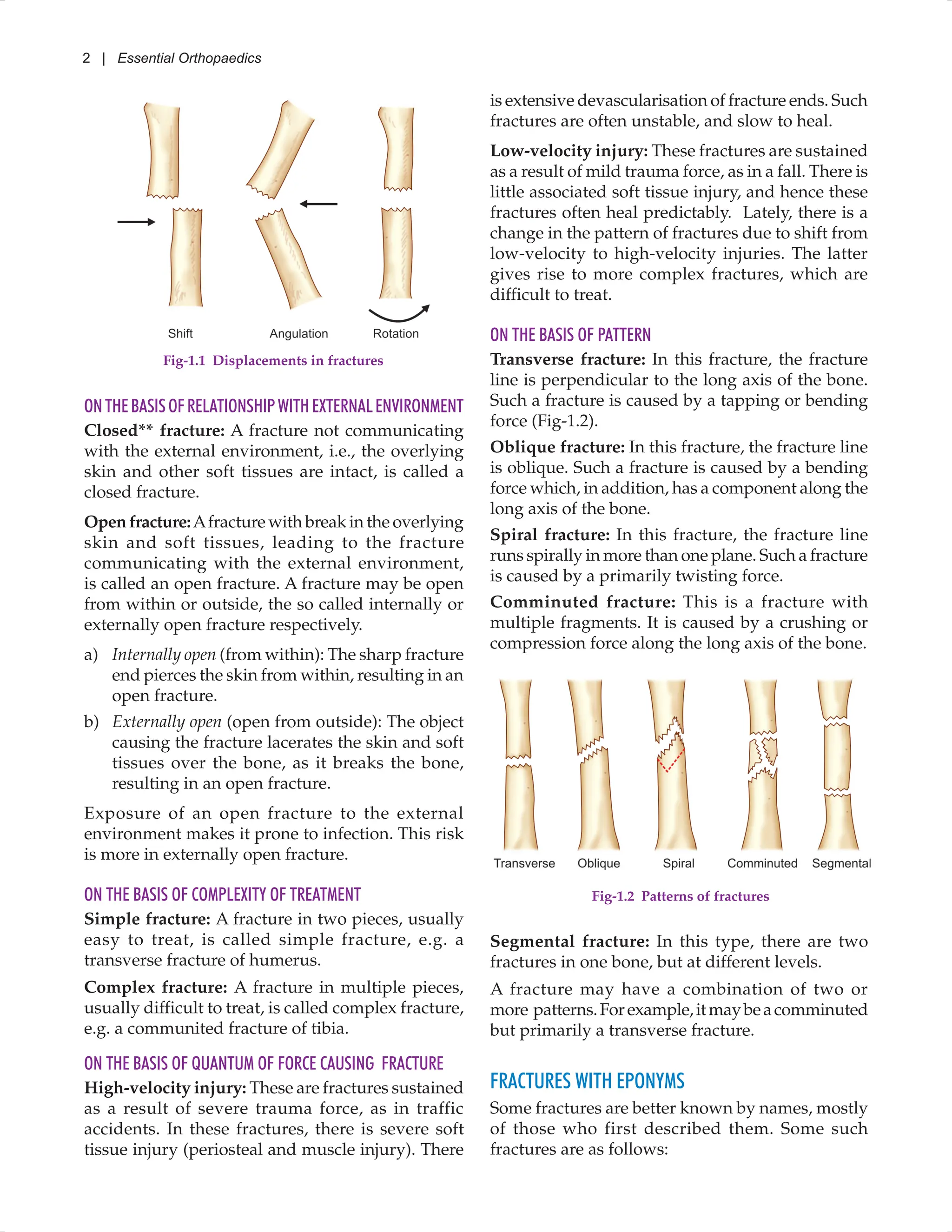
  • 12.
  • 13.
    CONTENTS 1. Orthopaedic Trauma:Introduction ...................... 1 • Classification of fractures ................................... 1 • Fractures with eponyms...................................... 2 • Pathological fractures .......................................... 3 • Injuries to joints ................................................... 5 • Injuries to ligaments ............................................ 5 • Injuries to muscles and tendons .......................... 6 2. Anatomy of Bone and Fracture Healing .............. 8 • Anatomy of bone ................................................. 8 • Growth of a long bone ........................................ 9 • Blood supply of bones ......................................... 9 • Fracture healing ................................................. 10 • Healing of cancellous bones .............................. 11 • Primary and secondary bone healing................. 11 • Factors affecting fracture healing ..................... 11 3. Treatment of Fractures: General Principles ..... 13 • Phase I Emergency care ............................... 13 • Phase II Definitive care .................................. 14 • Phase III Rehabilitation of a fractured limb ..... 19 • Management of open fractures ......................... 21 4. Splints and Tractions ............................................ 25 • Splints ................................................................ 25 • Tractions ........................................................... 26 5. Recent Advances in the Treatment of Fractures ........................................................... 29 • AO method of fracture treatment ...................... 29 • Changing AO concepts ...................................... 31 • Functional bracing ............................................. 33 • Ilizarov's technique ............................................ 33 6. Approach to a Patient with Limb Injury ............ 36 • Clinical examination ........................................... 36 • Radiological examination ................................... 38 • Old fracture ....................................................... 40 • Approach to a polytrauma patient ..................... 40 7. Complications of Fractures ................................. 42 • Classification ..................................................... 42 • Hypovolaemic shock ......................................... 42 • Adult respiratory distress syndrome ................. 43 • Fat embolism syndrome .................................... 43 • Deep vein thrombosis (DVT) and pulmonary embolism.................................... 44 • Crush syndrome ................................................ 44 • Injury to major blood vessels ............................ 44 • Injury to nerves ................................................. 46 • Injury to muscles and tendons .......................... 46 • Injury to joints ................................................... 46 • Injury to viscera ................................................ 46 • Infection — osteomyelitis ................................. 47 • Compartment syndrome .................................... 47 • Delayed and non-union ...................................... 48 • Malunion ............................................................ 49 • Shortening ......................................................... 50 • Avascular necrosis............................................. 50 • Stiffness of joints .............................................. 51 • Reflex sympathetic dystrophy (Sudeck‘s dystrophy) .................................. 51 • Myositis ossificans (Post-traumatic ossification) ................................................. 52 8. Injury to Joints: Dislocation and Subluxation .. 54 • Relevant anatomy .............................................. 54 • Definitions ......................................................... 54 • Classification ..................................................... 54 • Pathoanatomy .................................................... 55 • Diagnosis ........................................................... 55 • Complications .................................................... 56 • Treatment .......................................................... 56 9. Fractures in Children........................................... 57 • Relevant anatomy .............................................. 57 • Types of fractures ............................................. 57 • Diagnosis ........................................................... 59
  • 14.
    xiv | EssentialOrthopaedics • Treatment .......................................................... 59 • Complications .................................................... 59 10. Peripheral Nerve Injuries .................................... 61 • Relevant anatomy .............................................. 61 • Pathology ........................................................... 62 • Mechanism of injury.......................................... 62 • Classification ..................................................... 63 • Diagnosis ........................................................... 63 • Electrodiagnostic studies ................................... 69 • Treatment .......................................................... 71 • Prognosis ........................................................... 74 11. Deformities and Their Management .................. 75 • Causes ............................................................... 75 • Treatment .......................................................... 77 12. Treatment of Orthopaedic Disorders: A General Review ................................................. 80 • Non-operative methods of treatment................. 80 • Operative methods of treatment ........................ 82 13. Injuries Around the Shoulder, Fracture Humerus ................................................ 87 • Relevant anatomy .............................................. 87 • Fracture of the clavicle...................................... 88 • Fractures of the scapula .................................... 89 • Dislocation of the sterno-clavicular joint ........... 89 • Subluxation or dislocation of the acromio-clavicular joint ..................................... 89 • Dislocation of the shoulder................................ 89 • Fracture of the surgical neck of the humerus ... 92 • Fracture of the greater tuberosity of the humerus .................................................. 92 • Fracture of the shaft of the humerus ................ 93 14. Injuries Around the Elbow ................................... 96 • Relevant anatomy .............................................. 96 • Supracondylar fracture of the humerus ............ 97 • Fracture of the lateral condyle of the humerus .. 103 • Intercondylar fracture of the humerus ............ 104 • Fracture of the medial epicondyle of the humerus ................................................ 105 • Dislocation of the elbow joint.......................... 105 • Pulled elbow .................................................... 105 • Fracture of the olecranon ................................ 105 • Fracture of the head of the radius ................... 106 • Fracture of neck of the radius......................... 107 • Fracture of the capitulum ................................ 107 15. Injuries of the Forearm and Wrist................... 108 • Relevant anatomy ............................................ 108 • Fractures of the forearm bones....................... 109 • Monteggia fracture-dislocation........................ 110 • Galeazzi fracture-dislocation ............................111 • Colles' fracture .................................................111 • Smith's fracture (Reverse of colles' fracture) .... 114 • Barton's fracture .............................................. 114 • Scaphoid fracture ............................................ 115 • Lunate dislocations .......................................... 116 16. Hand Injuries ...................................................... 117 • Bennett's fracture-dislocation .......................... 117 • Rolando's fracture ........................................... 118 • Fractures of the metacarpals ........................... 118 • Fractures of the phalanges .............................. 118 • Dislocation of the metacarpo-phalangeal joints ... 118 • Amputation of fingers: Principles of treatment ..................................................... 119 • Tendon injuries of the hand ............................. 119 • Crush injury to the hand .................................. 120 17. Pelvic Fractures .................................................. 123 • Relevant anatomy ............................................ 123 • Classification ................................................... 124 • Pathoanatomy .................................................. 125 • Diagnosis ......................................................... 125 • Treatment ........................................................ 126 • Complications .................................................. 127 18. Injuries Around the Hip ..................................... 129 • Relevant anatomy ............................................ 129 • Disclocation of the hip .................................... 130 • Posterior dislocation of the hip........................ 130 • Anterior dislocation of the hip ......................... 131 • Central fracture-dislocation of the hip ............. 131 https://kat.cr/user/Blink99/
  • 15.
    Contents | xv •Fracture of the neck of the femur................... 132 • Inter-trochanteric fractures ............................. 138 19. Fracture Shaft of Femur.................................... 141 • Pathoanatomy .................................................. 141 • Diagnosis ......................................................... 141 • Treatment ........................................................ 141 • Complications .................................................. 143 20. Injuries Around the Knee.................................. 145 • Relevant anatomy ............................................ 145 • Mechanism of knee injuries ............................. 145 • Condylar fractures of the femur ..................... 145 • Fractures of the patella .................................... 147 • Injury to the ligaments of the knee .................. 148 • Tibial plateau fractures .................................... 150 • Meniscal injuries of the knee ........................... 150 • Rare injuries around the knee .......................... 152 21. Injuries to the Leg, Ankle and Foot................. 155 • Fractures of shafts of tibia and fibula ............. 155 • Ankle injuries ................................................... 159 • Fractures of the calcaneum ............................. 164 • Fractures of the talus ...................................... 165 • Injuries of the tarsal bones .............................. 166 • Fractures of the metatarsal bones ................... 166 • Fractures of the phalanges of the toes ............ 167 22. Infections of Bones and Joints .......................... 168 • Acute osteomyelitis.......................................... 168 • Secondary osteomyelitis .................................. 171 • Chronic osteomyelitis ...................................... 171 • Garre’s osteomyelitis ....................................... 175 • Brodie’s abscess .............................................. 175 • Salmonella osteomyelitis .................................. 175 • Septic arthritis ................................................. 175 • Gonococcal arthritis ........................................ 178 • Syphilis of joints .............................................. 178 • Fungal infections ............................................. 178 • Leprosy and orthopaedics ............................... 179 23. Tuberculosis of Bones and Joints ...................... 182 • General considerations .................................... 182 • TB of the spine ................................................ 185 • Pott's paraplegia............................................... 191 • TB of the hip ................................................... 194 • TB of the knee ................................................. 199 • TB of other joints ............................................ 202 • TB osteomyelitis .............................................. 203 24. Infections of the Hand ....................................... 205 • Classification ................................................... 205 • Aetiopathology ................................................. 205 • Acute paronychium ......................................... 205 • Apical subungual infection .............................. 206 • Terminal pulp space infection.......................... 206 • Middle volar space infection............................ 206 • Proximal volar space infection ........................ 207 • Web space infection ........................................ 207 • Deep palmar abscess ....................................... 208 • Acute suppurative tenosynovitis ...................... 208 25. Congenital Talipes Equino Varus (CTEV) ........ 210 • Relevant anatomy ............................................ 210 • Nomenclature .................................................. 211 • Aetiology.......................................................... 211 • Pathoanatomy .................................................. 212 • Clinical features ............................................... 212 • Treatment ........................................................ 214 26. Congenital Dislocation of the Hip and Other Malformations .................................. 219 • Congenital dislocation of the hip (CDH).......... 219 • Other congenital malformations ...................... 224 27. Poliomyelitis and Other Neuromuscular Disorders .................................. 226 • Poliomyelitis..................................................... 226 • Cerebral palsy .................................................. 229 • Spina bifida ...................................................... 230 • Disorders of the muscles ................................ 232 • Peripheral neuropathies.................................... 233 28. Bone Tumours ..................................................... 235 • Benign tumours ............................................... 235 • Osteoclastoma (Giant cell tumour) ................. 237 • Primary malignant tumours ............................. 239 • Some uncommon malignant tumours.............. 246
  • 16.
    xvi | EssentialOrthopaedics • Metastasis in bone ........................................... 246 • Tumour-like conditions of bone ...................... 247 • Osteochondroma ............................................. 247 • Aneurysmal bone cyst ..................................... 249 • Fibrous dysplasia ............................................. 249 29. Prolapsed Intervertebral Disc ........................... 252 • Relevant anatomy ............................................ 252 • Pathology ......................................................... 252 • Diagnosis ......................................................... 254 • Investigations................................................... 255 • Differential diagnosis ....................................... 256 • Treatment ........................................................ 256 • Cervical disc prolapse...................................... 257 30. Approach to a Patient with Back Pain.............. 258 • Low back pain ................................................. 258 • Causes ............................................................. 258 • History ............................................................. 258 • Physical examination ....................................... 260 • Investigations................................................... 261 • Treatment ........................................................ 261 • Major causes of low back pain ....................... 261 • Approach to a patient with back pain .............. 262 • Sciatica ............................................................ 264 31. Spinal Injuries..................................................... 265 • Relevant anatomy ............................................ 265 • Biomechanics of injury .................................... 266 • Classification ................................................... 267 • Clinical features ............................................... 269 • Examination ..................................................... 269 • Investigations................................................... 269 • Treatment ........................................................ 270 32. Traumatic Paraplegia.......................................... 276 • Pathology ......................................................... 276 • Neurological deficit and spinal injuries ............ 277 • Clinical examination ......................................... 277 • Investigation .................................................... 277 • Treatment ........................................................ 278 33. Scoliosis and Other Spinal Deformities ........... 280 • Scoliosis........................................................... 280 • Kyphosis .......................................................... 283 • Spondylolisthesis ............................................. 283 34. Arthritis and Related Diseases ......................... 286 • Definitions ....................................................... 286 • Rheumatoid arthritis ........................................ 286 • Ankylosing spondylitis ..................................... 290 • Other rheumatological diseases ....................... 293 35. Degenerative Disorders ..................................... 295 • Osteoarthritis ................................................... 295 • Cervical spondylosis ........................................ 297 • Lumbar spondylosis ........................................ 298 36. Affections of the Soft Tissues ........................... 301 • Bursitis ............................................................. 301 • Tenosynovitis................................................... 301 • Dupuytren's contracture.................................. 302 • Tennis elbow ................................................... 302 • Golfer's elbow ................................................. 302 • de Quervain's tenovaginitis .............................. 303 • Trigger finger and thumb ................................ 303 • Ganglion........................................................... 303 • Carpal tunnel syndrome ................................... 303 • Frozen shoulder ............................................... 304 • Plantar fascitis ................................................. 304 • Fibrositis .......................................................... 304 • Painful arc syndrome ...................................... 304 • Meralgia paraesthetica ..................................... 305 • Fibromyalgia .................................................... 305 37. Metabolic Bone Diseases.................................... 307 • Constitution of bone ........................................ 307 • Bone and calcium ............................................ 307 • Osteoporosis .................................................... 308 • Rickets and Osteomalacia................................ 310 • Hyperparathyroidism ....................................... 312 • Fluorosis .......................................................... 314 • Disturbances of organic constituents .............. 315 38. Miscellaneous Affections of the Bone .............. 316 • Generalised bone disorders.............................. 316 • Osteochondritis ............................................... 317 https://kat.cr/user/Blink99/
  • 17.
    Contents | xvii •Avascular necrosis........................................... 318 • Some other developmental abnormalities of orthopaedic interest ..................................... 319 39. Miscellaneous Regional Diseases ..................... 321 • Torticollis ......................................................... 321 • Cervical rib ...................................................... 322 • Observation hip ............................................... 323 • Coxa vara......................................................... 323 • Slipped capital femoral epiphysis..................... 323 • Deformities of the knee ................................... 324 • Popliteal cyst ................................................... 326 • Loose bodies in joints ...................................... 326 • Flat foot ........................................................... 326 • Deformities of the toes .................................... 327 40. Amputations, Prosthetics and Orthotics.......... 328 • Amputations..................................................... 328 • Special features of amputations in children ..... 331 • Prostheses in orthopaedic practice .................. 331 • Orthoses in orthopaedic practice..................... 332 41. Arthroscopic Surgery ......................................... 334 • Advantages ...................................................... 334 • Indications ....................................................... 335 • Procedure ........................................................ 336 • Limitations ....................................................... 336 42. Joint Replacement Surgery ............................... 338 • Hemiarthroplasty ............................................. 338 • Total joint replacement .................................... 339 • Partial knee replacement .................................. 341 • Total shoulder replacement.............................. 341 • Total elbow replacement.................................. 341 Annexures .................................................................. 343 Annexure 1 : Clinical Methods ..................................... 343 Annexure 2 : Orthopaedic Terminology ....................... 367 Annexure 3 : Orthopaedic Instruments and Implants ... 371 Index ................................................................... 377
  • 18.
    TOPICS • Classification offractures • Fractures with eponyms • Pathological fractures • Injuries to joints • Injuries to ligaments • Injuries to muscles and tendons An injury to the musculo-skeletal system can result in damage to bones, joints, muscles and tendons. In addition, the neurovascular bundle of the limb may be damaged. This section will outline the broad principles used in the diagnosis and management of these injuries. These principles can be applied, with suitable modifications, in the management of any musculo-skeletal injury. CLASSIFICATION OF FRACTURES A fracture is a break in the continuity of a bone. It can be classified on the basis of aetiology, the relationship of the fracture with the external environment, the displacement of the fracture, and the pattern of the fracture. ON THE BASIS OF AETIOLOGY Traumatic fracture: A fracture sustained due to trauma is called a traumatic fracture*. Normal bone can withstand considerable force, and breaks only when subjected to excessive force. Most fractures seen in day-to-day practice fall into this category e.g., fractures caused by a fall, road traffic accident, fight etc. Pathological fracture: A fracture through a bone which has been made weak by some underlying disease is called a pathological fracture. A trivial or no force may be required to cause such a fracture e.g., a fracture through a bone weakened by metastasis. Although, traumatic fractures have a predictable and generally successful outcome, pathological fractures often go into non-union. Stress Fracture: This is a special type of fracture sustained due to chronic repetitive injury (stress) causing a break in bony trabeculae. These often present as only pain and may not be visible on X-rays. ON THE BASIS OF DISPLACEMENTS Undisplaced fracture: These fractures are easy to identify by the absence of significant displacement. Displaced fracture: A fracture may be displaced. The factors responsible for displacement are: (i) the fracturing force; (ii) the muscle pull on the fracture fragments; and (iii) the gravity. While describing the displacements of a fracture, conventionally, it is the displacement of the distal fragment in relation to the proximal fragment which is mentioned. The displacement can be in the form of shift, angulation or rotation (Fig-1.1). * An unqualified word 'fracture' usually means a traumatic fracture. C H A P T E R 1 Orthopaedic Trauma: Introduction ** Terms, simple fracture for closed fracture, and compound fracture for open fracture is being dropped, as it is confusing. In fact, new terminology of simple and complex fracture is being introduced (page 2) to mean whether the fracture is simple or complex to treat. https://kat.cr/user/Blink99/
  • 19.
    2 | EssentialOrthopaedics is extensive devascularisation of fracture ends. Such fractures are often unstable, and slow to heal. Low-velocity injury: These fractures are sustained as a result of mild trauma force, as in a fall. There is little associated soft tissue injury, and hence these fractures often heal predictably. Lately, there is a change in the pattern of fractures due to shift from low-velocity to high-velocity injuries. The latter gives rise to more complex fractures, which are difficult to treat. ON THE BASIS OF PATTERN Transverse fracture: In this fracture, the fracture line is perpendicular to the long axis of the bone. Such a fracture is caused by a tapping or bending force (Fig-1.2). Oblique fracture: In this fracture, the fracture line is oblique. Such a fracture is caused by a bending force which, in addition, has a component along the long axis of the bone. Spiral fracture: In this fracture, the fracture line runs spirally in more than one plane. Such a fracture is caused by a primarily twisting force. Comminuted fracture: This is a fracture with multiple fragments. It is caused by a crushing or compression force along the long axis of the bone. ONTHEBASISOFRELATIONSHIPWITHEXTERNALENVIRONMENT Closed** fracture: A fracture not communicating with the external environment, i.e., the overlying skin and other soft tissues are intact, is called a closed fracture. Openfracture:Afracture with break in the overlying skin and soft tissues, leading to the fracture communicating with the external environment, is called an open fracture. A fracture may be open from within or outside, the so called internally or externally open fracture respectively. a) Internally open (from within): The sharp fracture end pierces the skin from within, resulting in an open fracture. b) Externally open (open from outside): The object causing the fracture lacerates the skin and soft tissues over the bone, as it breaks the bone, resulting in an open fracture. Exposure of an open fracture to the external environment makes it prone to infection. This risk is more in externally open fracture. ON THE BASIS OF COMPLEXITY OF TREATMENT Simple fracture: A fracture in two pieces, usually easy to treat, is called simple fracture, e.g. a transverse fracture of humerus. Complex fracture: A fracture in multiple pieces, usually difficult to treat, is called complex fracture, e.g. a communited fracture of tibia. ON THE BASIS OF QUANTUM OF FORCE CAUSING FRACTURE High-velocity injury: These are fractures sustained as a result of severe trauma force, as in traffic accidents. In these fractures, there is severe soft tissue injury (periosteal and muscle injury). There Fig-1.1 Displacements in fractures Fig-1.2 Patterns of fractures Segmental fracture: In this type, there are two fractures in one bone, but at different levels. A fracture may have a combination of two or more patterns.Forexample,itmaybeacomminuted but primarily a transverse fracture. FRACTURES WITH EPONYMS Some fractures are better known by names, mostly of those who first described them. Some such fractures are as follows:
  • 20.
    Orthopaedic Trauma: Introduction| 3 Jone's fracture: Avulsion fracture of the base of the 5th metatarsal. Rolando fracture: Fracture of the base of the first metacarpal (extra-articular). Jefferson’s fracture: Fracture of the first cervical vertebra. Whiplash injury: Cervical spine injury where sudden flexion followed by hyperextension takes place. Chance fracture: Also called seat belt fracture, the fracture line runs horizontally through the body of the vertebra, through and through, to the posterior elements. March fracture: Fatigue fracture of the shaft of 2nd or 3rd metatarsal. Burst fracture: It is a comminuted fracture of the vertebral body where fragments ‘‘burst out’’ in different directions (page 268). Clay-Shoveller fracture: It is an avulsion fracture of spinous process of one or more of the lower cervical or upper thoracic vertebrae. Hangman's fracture: It is a fracture through the pedicle and lamina of C2 vertebra, with subluxation of C2 over C3 , sustained in hanging. Dashboard fracture: A fracture of posterior lip of the acetabulum, often associated with posterior dislocation of the hip. Straddle fracture: Bilateral superior and inferior pubic rami fractures. Malgaigne's fracture: A type of pelvis fracture in which there is a combination of fractures, pubic rami anteriorly and sacro-iliac joint or ilium posteriorly, on the same side. Mallet finger: A finger flexed at the DIP joint due to avulsion or rupture of extensor tendon at the base of the distal phalanx. PATHOLOGICAL FRACTURES A fracture is termed pathological when it occurs in a bone made weak by some disease (Fig-1.3). Often, the bone breaks as a result of a trivial trauma, or even spontaneously. CAUSES Abone may be rendered weak by a disease localised to that particular bone, or by a generalised bone disorder. Table–1.1 gives some of the common Monteggia fracture-dislocation: Fracture of the proximal third of the ulna, with dislocation of the head of the radius (page 110). Galeazzi fracture-dislocation: Fracture of the distal third of the radius with dislocation of the distal radio-ulnar joint (page 111). Night-stick fracture: Isolated fracture of the shaft of the ulna, sustained while trying to ward off a stick blow. Colles’ fracture: A fracture occurring in adults, at the cortico-cancellous junction of the distal end of the radius with dorsal tilt and other displacements (page 111). Smith's fracture: A fracture occurring in adults, at the cortico-cancellous junction of the distal end of the radius with ventral tilt and other displacements (reverse of Colles'). Barton's fracture (Marginal fracture): Intra-articular fractures through the distal articular surface of the radius, taking a margin, anterior or posterior, of the distal radius with the carpals, displaced anteriorly or posteriorly (page 114). Chauffeur fracture: An intra-articular, oblique fracture of the styloid process of the radius. Bennett's fracture-dislocation: It is an oblique, intra- articular fracture of the base of the first metacarpal with subluxation of the trapezio-metacarpal joint (page 117). Boxers' fracture: It is a ventrally displaced fracture through the neck of the 5th metacarpal, usually occurs in boxers. Side-swipe fracture: It is an elbow injury sustained when one's elbow, projecting out of a car, is ‘side- swept’ by another vehicle. It has a combination of fractures of the distal end of the humerus with fractures of proximal ends of radius and/or ulna. It is also called baby car fracture. Bumper fracture: It is a comminuted, depressed fracture of the lateral condyle of the tibia. Pott's fracture: Bimalleolar ankle fracture. Cotton's fracture: Trimalleolar ankle fracture. Massonaise's fracture: It is a type of ankle fracture in which fracture of the neck of the fibula occurs. Pilon fracture: It is a comminuted intra-articular fracture of the distal end of the tibia. Aviator's fracture: Fracture of neck of the talus. Chopart fracture-dislocation: A fracture-dislocation through inter-tarsal joints. https://kat.cr/user/Blink99/
  • 21.
    4 | EssentialOrthopaedics Often the patient, when directly questioned, admits to having suffered from some discomfort in the region of the affected bone for some time before the fracture. The patient may be a diagnosed case of a disease known to produce pathological fractures (e.g., a known case of malignancy), thus making the diagnosis of a pathological fracture simple. At times, the patient may present with a pathological fracture, the cause of which is determined only after a detailed work up. TREATMENT Treatment of a pathological fracture consists of: (i) detecting the underlying cause of the fracture; and (ii) making an assessment of the capacity of the fracture to unite, based on the nature of the underlying disease. Afracture in a bone affected by a generalised disor- der like Paget's disease, osteogenesis imperfecta or causes of pathological fractures. Osteoporosis is the commonest cause of pathological fracture. The bones most often affected are the vertebral bodies (thoracic and lumbar). Other common fractures associated with osteoporosis are fracture of the neck of the femur and Colles' fracture. Alocalorcircumscribedlesionofthebone,responsible for a pathological fracture, may be due to varying causesindifferentagegroups(Table–1.2).Inchildren, it is commonly due to chronic osteomyelitis or a bone cyst. In adults, it is often due to a bone cyst or giant cell tumour. In elderly people, metastatic tumour is a frequent cause. Fig-1.3 (a) X-ray of the hip showing destruction of the bone, (b) which lead to a pathological fracture through the weak portion Table–1.1: Causes of pathological fractures Localised Diseases Inflammatory • Pyogenic osteomyelitis • Tubercular osteomyelitis Neoplastic • Benign tumours – Giant cell tumour, Enchondroma • Malignant tumours – Primary   Osteosarcoma, Ewing's tumour – Secondary In males: lung, prostate, kidney   In females: breast, lung, genitals Miscellaneous • Simple bone cyst • Aneurysmal bone cyst • Monostotic fibrous dysplasia • Eosinophilic granuloma • Bone atrophy secondary to polio etc. Generalised Diseases Hereditary • Osteogenesis imperfecta • Dyschondroplasia (Ollier's disease) • Osteopetrosis Acquired • Osteoporosis • Osteomalacia • Rickets • Scurvy • Disseminated malignancy in bones – Multiple myeloma – Diffuse metastatic carcinoma • Miscellaneous – Paget's disease – Polyostotic fibrous dysplasia Table–1.2: Causes of pathological fractures at different ages Age Causes • At birth Osteogenesis imperfecta • 0-5 years Osteogenesis imperfecta Osteomyelitis • 5-20 years Osteomyelitis Simple bone cyst Primary bone malignancy • 20-50 years Cystic lesions of the bone Malignancy Osteomalacia Giant cell tumour • After 50 years Osteoporosis Multiple myeloma Secondaries in the bone DIAGNOSIS A fracture sustained without a significant trauma should arouse suspicion of a pathological fracture.
  • 22.
    Orthopaedic Trauma: Introduction| 5 osteoporosis is expected to unite with conventional methods of treatment.Afracture at the site of a bone cyst or a benign tumour will also generally unite, but the union may be delayed. Fractures occur- ring in osteo ­ myelitic bones often take a long time, and sometimes fail to unite despite best efforts. Fractures through metastatic bone lesions often do not unite at all, though the union may occur if the malignancy has been brought under control with chemotherapy or radiotherapy. With the availability of facilities for internal fixation, more and more pathological fractures are now treated operatively with an aim to: (i) enhance the process of union by bone grafting (e.g. in bone cyst or benign tumour); or (ii) mobilise the patient by surgical stabilisation of the fracture. Achieving stable fixation in these fractures is difficult because of the bone defect caused by the underlying pathology. The defect may have to be filled using bone grafts or bone cement. INJURIES TO JOINTS Joint injuries may be either a subluxation or a dislocation. A joint is subluxated when its articular surfaces are partially displaced but retain some contact between them (Fig-1.4). A joint is dislocated when its articular surfaces are so much displaced that all contact between them is lost. Adislocated joint is an emergency, and should be treated at the earliest. INJURIES TO LIGAMENTS An injury to a ligament is termed as a sprain. This is to be differentiated from the term ‘strain’ which means stretching of a muscle or its tendinous attachment. CLASSIFICATION Sprains are classified into three degrees (Fig-1.5): First-degree sprain is a tear of only a few fibres of the ligament. It is characterised by minimal swelling, localised tenderness but little functional disability. Second-degree sprain is the one where, anything from a third to almost all the fibres of a ligament are disrupted. The patient presents with pain, swelling and inability to use the limb. Joint movements are normal. The diagnosis can be made on performing a stress test as discussed subsequently. Third-degree sprain is a complete tear of the ligament. There is swelling and pain over the torn ligament. Contrary to expectations, often the pain in such tears is minimal. Diagnosis can be made by performing a stress test, and by investigations such as MRI or arthroscopy. PATHOLOGY A ligament may get torn in its substance (mid- substance tear) or at either end. In the latter case, it often avulses with a small piece of bone from its attachment (Fig-1.6). DIAGNOSIS Adetailed history, eliciting the exact mechanism of injury, often indicates the likely ligament injured. The examination helps in finding the precise location and severity of the sprain, which can then be confirmed by investigations. Fig-1.4 Dislocation and subluxation Fig-1.5 Degrees of ligament sprain https://kat.cr/user/Blink99/
  • 23.
    6 | EssentialOrthopaedics * Sometimes, following a complete tear of ligament, the blood seeps out of the joint through the rent in the ligament, and it appears as if there is no haemarthrosis. X-ray taken while the ligament is being stressed (stress X-ray) may document an abnormal opening up of the joint in a third-degree sprain. Other investigations required in a few cases are MRI or arthroscopy. TREATMENT There has been a significant change in the treatment of sprains.All sprains are treated initially with rest, ice therapy, compression bandage, elevation (RICE). Suitable analgesics and anti-inflammatory medica- tion is given. This is enough for first-degree sprains. Second and third-degree sprains are immobilised in a brace or a plaster cast for a period of 1-2 weeks, mainly for pain relief. No longer is plaster immo- bilisation advised for long periods. In fact, early mobili­ sation and walking with support enhances healing of ligaments. In some third-degree sprains, surgery may be required. INJURIES TO MUSCLES AND TENDONS Muscles are ruptured more often than tendons in young people, while the reverse is true in the elderly. The most frequent cause of partial or complete rupture of a muscle or a tendon is sudden vigorous contraction of a muscle. It may be by overstretching of a muscle at rest. Such an injury to muscle is termed strain (and not sprain, which is ligament injury). A muscle or tendon injury may also be produced by a sharp object such as a sword. PATHOLOGY Aruptureoccurswithinatendononlyifitisabnormal and has become weak, either due to degeneration or wear and tear. Degenerative tendon ruptures commonly occur in rheumatoid arthritis, SLE, senile degeneration, etc. Tendon rupture related to wear and tear commonly occurs in the biceps (long head), and in extensor pollicis longus tendons. Some tendons known to rupture commonly are as given in Table–1.3. Diagnosis of a ruptured tendon is usually easy. The patient complains of pain and Fig-1.6 Avulsion of bone chip from ligament attachment Clinical examination: A localised swelling, tenderness, and ecchymosis over a ligament indicates injury to that ligament. Usually, a haemarthrosis is noticed in second and third-degree sprains within 2 hours. It may be absent* despite a complete tear, or if the torn ligament is covered by synovium (e.g., intra-synovial tear of anterior cruciate ligament). Stress test (Fig-1.7): This is a very useful test in diagnosing a sprain and judging its severity. The ligament in question is put to stress by a manoeuvre. The manoeuvre used for testing of individual ligaments will be discussed in respective chapters. When a ligament is stressed, in first and second- degree sprains, there will be pain at the site of the tear. In third-degree sprain, the joint will ‘open up’ as well. Fig-1.7 Stress test for medial collateral ligament of the knee Table–1.3: Common sites of tendon rupture • Supraspinatus tendon • Achilles tendon • Biceps tendon – long head • Extensor pollicis longus tendon • Quadriceps tendon • Patellar tendon INVESTIGATIONS A plain X-ray of the joint is usually normal. Sometimes, a chip of bone may be seen in the region of the attachment of the ligament to the bone. An
  • 24.
    Orthopaedic Trauma: Introduction| 7 inability to perform the movement for which the tendon is meant. TREATMENT The best treatment of a fresh rupture is to regain continuity by end-to-end repair. When the gap is too much, it can be filled with the help of a tendon graft. In cases where the repair is not possible, a tendon transfer may be performed. In some old Additional information: From the entrance exams point of view Best diagnostic test for unilateral stress fracture is MRI, and for bilateral is bone scan: The most common cause of pathological fracture is osteoporosis. tendon ruptures, especially in the elderly, there may be only a minimal functional disability. These patients do well without treatment. Further Reading • Gustilo RB, Kyle RF, Templeman D: Fractures and Dislocations, St. Louis: Mosby–Year Book. Inc. • Wilson JN (Ed.): Watson-Jone's Fractures and Joint Injuries, 6th edn. Edinburgh: Churchill Livingstone, 1982. What have we learnt? When we see a fracture, we must find out: • Is it purely a traumatic fracture or is there an underlying pathology (weak bone)? • What is the pattern of the fracture, so as to know the inherent stability of the fracture. Stable fractures can generally be treated non-operatively, unstable fractures often need surgery. • What is the force causing the fracture? Is it a 'high-velocity' injury where fracture is likely to be unstable with lot of associated injury or a 'low-velocity' injury. The type of force producing the injury has bearing on healing of the fracture. • It is a simple or complex fracture? The latter may be a badly comminuted fracture as a result of a bad trauma, and hence may be associated with lot of soft tissue damage. Such fractures often need surgical treatment. • An open fracture has additional problem of getting infected. Hence, appropriate care in the early part of management is important. • Sprain and strain are not interchangeable terms. • A 'no bony injury' on X-ray does not mean no injury. Look for ligament or muscle injuries. https://kat.cr/user/Blink99/
  • 25.
    ANATOMY OF BONE Bonesmay be classified into four types on the basis of their shape i.e., long, short, flat and irregular. For practical purposes, anatomy of a typical long bone only is being discussed here. Structure of a typical long bone: In children, a typical long bone, such as the femur, has two ends or epiphyses (singular epiphysis), and an intermediate portion called the shaft or diaphysis. The part of the shaft which adjoins the epiphysis is called the metaphysis – one next to each epiphysis (Fig-2.1). There is a thin plate of growth cartilage, one at each end, separating the epiphysis from the metaphysis. This is called the epiphyseal plate. At maturity, the epiphysis fuses with the metaphysis and the epiphyseal plate is replaced by bone. The articular ends of the epiphyses are covered with articular cartilage. The rest of the bone is covered with periosteum which provides attachment to tendons, muscles, ligaments, etc. The strands of fibrous tissue connecting the bone to the periosteum are called Sharpey's fibres. Microscopically, bone can be classified as either woven or lamellar. Woven bone or immature bone is characterized by random arrangement of bone cells (osteocytes) and collagen fibres. Woven bone is formed at periods of rapid bone formation, as in the initial stages of fracture healing. Lamellar bone or mature bone has an orderly arrangement of bone cells and collagen fibres. Lamellar bone constitutes all bones, both cortical and cancellous. The difference is, that in cortical bone the lamellae are densely packed, and in cancellous bone loosely. The basic structural unit of lamellar bone is the osteon. It consists of a series of concentric laminations or lamellae surrounding a central canal, the Haversian canal. These canals run longitudinally and connect freely with each other and with Volkmann's canals. The latter run horizontally from endosteal to periosteal surfaces. The shaft of a bone TOPICS • Anatomy of bone • Growth of a long bone • Blood supply of bones • Fracture healing •  Healing of cancellous bones • Primary and secondary bone healing • Factors affecting fracture healing C H A P T E R 2 Anatomy of Bone and Fracture Healing Fig-2.1 Parts of a child's bone
  • 26.
    Anatomy of Boneand Fracture Healing | 9 is made up of cortical bone, and the ends mainly of cancellous bone. The junction between the two, termed the cortico-cancellous junction is a common site of fractures (Fig-2.2). Structural composition of bone: The bone is made up of bone cells and extra-cellular matrix. The matrix consists of two types of materials, organic and inorganic. The organic matrix is formed by the collagen, which forms 30-35 percent of dry weight of a bone. The inorganic matrix is primarily calcium and phosphorus salts, especially hydroxyapatite [Ca10 (PO4 )6 (OH)2 ]. It constitutes about 65-70 percent of dry weight of a bone. Bone cells: There are three main cell types in the bone. These are: a) Osteoblasts: Concerned with ossification, these cells are rich in alkaline phosphatase, glycolytic enzymes and phosphorylases. b) Osteocytes: These are mature bone cells which vary in activity, and may assume the form of an osteoclast or reticulocyte. These cells are rich in glycogen and PAS positive granules. c) Osteoclasts: These are multi-nucleate mesen ­ chymal cells concerned with bone resorption. These have glycolytic acid hydrolases, collage- nases and acid phosphatase enzymes. GROWTH OF A LONG BONE All long bones, with the exception of the clavicle, develop from cartilaginous primordia (enchondral ossification). This type of ossification commences in the middle of the shaft (primary centre of ossification) before birth. The secondary ossification centres (the epiphyses) appear at the ends of the bone, mostly* after birth. The bone grows in length by a continuous growth at the epiphyseal plate. The increase in the girth of the bone is by subperiosteal new bone deposition. * The epiphysis of distal end of the femur is present at birth. At the end of the growth period, the epiphysis fuses with the diaphysis, and the growth stops. The secondary centres of ossification, not contributing to the length of a bone, are termed apophysis (e.g., apophysis of the greater trochanter). The time and sequence of appearance and fusion of epiphysis has clinical relevance in deciding the true age (bone age) of a child. Sometimes, an epiphyseal plate may be wrongly interpreted as a fracture. Remodelling of bone: Bone has the ability to alter its size, shape and structure in response to stress. This happens throughout life though not perceptible. According to Wolff's law of bone remodelling, bone hypertrophy occurs in the plane of stress. BLOOD SUPPLY OF BONES There is a standard pattern of the blood supply of a typical long bone. Blood supply of individual bones will be discussed wherever considered relevant. The blood supply of a typical long bone is derived from the following sources (Fig-2.3): a) Nutrient artery: This vessel enters the bone around its middle and divides into two branches, one running towards either end of the bone. Fig-2.2 Cortico-cancellous junction Each of these further divide into a leash of parallel vessels which run towards the respective metaphysis. b) Metaphyseal vessels: These are numerous small vessels derived from the anastomosis around the joint. They pierce the metaphysis along the line of attachment of the joint capsule. c) Epiphyseal vessels: These are vessels which enter directly into the epiphysis. Fig-2.3 Blood supply of a typical long bone https://kat.cr/user/Blink99/
  • 27.
    10 | EssentialOrthopaedics d) Periosteal vessels: The periosteum has a rich blood supply, from which many little vessels enter the bone to supply roughly the outer-third of the cortex of the adult bone. Blood supply to the inner two-thirds of the bone comes from the nutrient artery and the outer one- third from the periosteal vessels. FRACTURE HEALING The healing of fractures is in many ways similar to the healing of soft tissue wounds, except that soft tissue heals with fibrous tissue, and end result of bone healing is mineralised mesenchymal tissue, i.e. bone. A fracture begins to heal soon after it occurs, through a continuous series of stages described below (Table–2.1). STAGESINFRACTUREHEALINGOFCORTICALBONE(FROST,1989) • Stage of haematoma • Stage of granulation tissue • Stage of callus • Stageofremodelling(formerlycalledconsolidation) • Stage of modelling (formerly called remodelling) Stage of haematoma: This stage lasts up to 7 days. When a bone is fractured, blood leaks out through torn vessels in the bone and forms a haematoma between and around the fracture. The periosteum and local soft tissues are stripped from the fracture ends. This results in ischaemic necrosis of the fracture ends over a variable length, usually only a few millimetres. Deprived of their blood supply, some osteocytes die whereas others are sensitised to respond subsequently by differentiating into daughter cells. These cells later contribute to the healing process. Stage of granulation tissue: This stage lasts for about 2-3 weeks. In this stage, the sensitised precursor cells (daughter cells) produce cells which differentiate and organise to provide blood vessels, fibroblasts, osteoblastsetc.Collectivelytheyformasoftgranulation tissueinthespacebetweenthefracturefragments.This cellulartissueeventuallygivesasofttissue anchorage to the fracture, without any structural rigidity. The blood clot gives rise to a loose fibrous mesh which serves as a framework for the ingrowth of fibroblasts andnewcapillaries.Theclotiseventuallyremovedby Table–2.1: Stages of fracture healing (Frost, 1989) Stage of healing Approximate time Essential features Stage of haematoma Less than 7 days Fracture end necrosis occurs. Sensitisation of precursor cells. Stage of granulation tissue Up to 2-3 weeks Proliferation and differentiation of daughter cells into vessels, fibroblasts, osteoblasts etc. Fracture still mobile. Stage of callus 4-12 weeks Mineralisation of granulation tissue. Callus radiologically visible. Fracture clinically united, no more mobile. Stage of remodelling 1-2 years Lamellar bone formation by multicellular unit based remodelling of callus. Outline of callus becomes dense and sharply defined. Stage of modelling Many years Modelling of endosteal and periosteal surfaces so that the fracture site becomes indistinguishable from the parent bone.
  • 28.
    Anatomy of Boneand Fracture Healing | 11 treated operatively. The bone heals directly, without callus formatiom, and it is therefore diffcult to evaluate union on X-rays. Secondary fracture healing occurs in fractures where fracture haematoma is not disturbed, as in cases treated non-operatively. There is healing, with callus formation, and can be evaluated on X-rays. It also occurs in fractures operated without disturbing the fracture haematoma, as in fractures fixed with relative stability (e.g. comminuted fractures). FACTORS AFFECTING FRACTURE HEALING a) Age of the patient: Fractures unite faster in children. In younger children, callus is often visible on X-rays as early as two weeks after the fracture. On an average, bones in children unite in half the time compared to that in adults. Failure of union is uncommon in fractures of children. b) Type of bone: Flat and cancellous bones unite faster than tubular and cortical bones. c) Pattern of fracture: Spiral fractures unite faster than oblique fractures, which in turn unite faster than transverse fractures. Comminuted fractures are usually result of a severe trauma or occur in osteoporotic bones, and thus heal slower. d) Disturbed pathoanatomy: Following a fracture, changes may occur at the fracture site, and may hinder the normal healing process. These are: (i) soft tissue interposition; and (ii) ischaemic fracture ends. In the former, the fracture ends pierce through the surrounding soft tissues, and macrophages, giant cells and other cells arising in the granulation tissue. From this stage, the healing of bone differs from that of soft tissue. In soft tissue healing the granulation tissue is replaced by fibrous tissue, whereas in bone healing the granulation tissue further differentiates to create osteoblasts which subsequently form bone. Stage of callus: This stage lasts for about 4-12 weeks. In this stage, the granulation tissue differentiates further and creates osteoblasts. These cells lay down an intercellular matrix which soon becomes impregnated with calcium salts. This results in formulation of the callus, also called woven bone. The callus is the first sign of union visible on X-rays, usually 3 weeks after the fracture (Fig-2.4). The formation of this bridge of woven bone imparts good strength to the fracture. Callus formation is slower in adults than in children, and in cortical bones than in cancellous bones. Stage of remodelling: Formerly called the stage of consolidation. In this stage, the woven bone is replaced by mature bone with a typical lamellar structure. This process of change is multicellular unit based, whereby a pocket of callus is replaced by a pocket of lamellar bone. It is a slow process and takes anything from one to four years. Stage of modelling: Formerly called the stage of remodelling. In this stage the bone is gradually strengthened. The shapening of cortices occurs at the endosteal and periosteal surfaces. The major stimulus to this process comes from local bone strains i.e., weight bearing stresses and muscle forces when the person resumes activity. This stage is more conspicuous in children with angulated fractures. It occurs to a very limited extent in fractures in adults. HEALING OF CANCELLOUS BONES The healing of fractured cancellous bone follows a different pattern. The bone is of uniform spongy texture and has no medullary cavity so that there is a large area of contact between the trabeculae. Union can occur directly between the bony trabeculae. Subsequenttohaematomaandgranulationformation, mature osteoblasts lay down woven bone in the intercellular matrix, and the two fragments unite. PRIMARY AND SECONDARY BONE HEALING Primary fracture healing occurs where fracture haematoma has been disturbed, as in fractures Fig-2.4 X-ray of the fracture of the tibial shaft showing callus formation https://kat.cr/user/Blink99/
  • 29.
    12 | EssentialOrthopaedics get stuck. This causes soft tissue interposition between the fragments, and prevents the callus from bridging the fragments. In the latter, due to anatomical peculiarities of blood supply of some bones (e.g. scaphoid), vascularity of one of the fragments is cut off. Since vascularised bone ends are important for optimal fracture union, these fractures unite slowly or do not unite at all. e) Type of reduction: Good apposition of the fracture results in faster union. At least half the fracture surface should be in contact for optimal union in adults. In children, a fracture may unite even if bones are only side-to-side in contact (bayonet reduction). f) Immobilisation: It is not necessary to immobi­ lise all fractures (e.g., fracture ribs, scapula, etc). They heal anyway. Some fractures need strict immobilisation (e.g., fracture of the neck of the femur), and may still not heal. g) Open fractures: Open fractures often go into delayed union and non-union (discussed subsequently on page 21). h) Compression at fracture site: Compression enhances the rate of union in cancellous bone. In cortical bones, compression at the fracture site enhances rigidity of fixation, and possibly results in primary bone healing. Further Reading • Frost HM: The biology of fracture healing.An overview for clinicians, Part I. Clinical Orthopaedics and Related Research. Nov: 1989 (248): 283-293. • Frost HM: The biology of fracture healing. An overview for clinicians, Part II. Clinical Orthopaedics and Related Research, Nov: 1989 (248): 294-309. What have we learnt? • There are different parts of a long bone such as diaphysis, metaphysis and epiphysis. There are diseases which typically affect only some parts of the bones. • Growing skeleton is identified by presence of growth plate. • The structure of the bone is complex, made of the basic structural unit called osteon. • Different bone cells have different functions. • Fracture healing follows a series of stages. • Fracture healing depends upon a number of factors. Additional information: From the entrance exams point of view Pathognomonic sign of traumatic and fresh fracture is crepitus. Most common cause of non-union is inadequate immobilisation. Markers of bone formation: Serum bone specific alkaline phosphatase Serum osteocalcin Serum peptide of type 1 collagen Markers of bone resorption: Urine and serum crosslinked ‘N’ telopeptide Urine and serum crosslinked ‘C’ telopeptide Urine total free deoxypyridinoline Rate of mineralisation determined by labelled tetracycline.
  • 30.
    Treatment of afracture can be considered in three phases: • Phase I - Emergency care • Phase II - Definitive care • Phase III - Rehabilitation PHASE I - EMERGENCY CARE At the site of accident: Emergency care of a fracture begins at the site of the accident. In principle, it consists of RICE, which means: • Rest to the part, by splinting. • Ice therapy, to reduce occurrence of swelling • Compression, to reduce swelling • Elevation, to reduce swelling Rest to the part (splinting) is done by splinting. 'Splint them where they lie'. Before applying the splint, remove ring or bangles worn by the pa- tient. Almost any available object at the site of the accident can be used for splinting. It may be a folded newspaper, a magazine, a rigid card ­­ board, a stick, an umbrella, a pillow, or a wooden plank. Any available long piece of cloth can be used for tying the splint to the fractured limb. Some of the examples of splinting a fractured extremity at the site of the accident are shown in Fig-3.1. One may correct any gross deformity by gentle traction. Feel for distal pulses, and do a quick assessment of nerve TOPICS • Phase I -Emergency care • Phase II -Definitive care • Phase III -Rehabilitation of a fractured limb • Management of open fractures C H A P T E R 3 Treatment of Fractures: General Principles Fig-3.1 Some of the commonly available articles used for splintage of fractures https://kat.cr/user/Blink99/
  • 31.
    tahir99 - UnitedVRG 14 |Essential Orthopaedics enables a doctor to understand the seriousness of the problem. Particular attention is paid to head injury, chest injury and abdominal injury. These can be cause of early fatality.Any bleeding is recognised and stopped by local pressure. The fractured limb is examined to exclude injury to nerves or vessels. As soon as the general condition of the patient is stablised, the limb is splinted. It is important to check the bandaging done elsewhere, as it may be too tight. Some of the splints used in the emergency department are as shown in Fig-3.2. In addition to splintage, the patient should be made comfortable by giving him intramuscular analgesics. In a case with suspected head injury, narcotic analgesics should be avoided. A broad spectrum antibiotic may be given to those with open fractures. It is only after the emergency care has been given, and it is ensured that the patient is stable. He should be sent for suitable radiological and other investigations, under supervision. PHASE II - DEFINITIVE CARE Philosophy of fracture treatment: Over the years, treatment of fractures has undergone change in philosophy. In the past, the aim of treatment was a mere fracture union. This could be achieved in most cases by immobilisation, which would cause joint stiffness, muscle wasting etc., and may result in less than optimal functional recovery. The aim now is to get the limb functions back to pre-injury level. For this, early mobilisation of the limb is desirable, as this helps in preserving joint movements and muscle functions. Perfect anatomical reduction and stable fixation is preferred for intra-articular fractures, as only then early mobilisation can be done. In diaphyseal fractures, the aim is to achieve union in good alignment and length. This can be done by non- operativemethods,ifthefractureisstable.Operative methods are required for unstable fractures. With currently available techniques of surgery, the trend is towards treating more and more fractures operatively as this gives more predictable results, early recovery and better functions. The discussion that follows will give the reader a guideline. Fundamental principles of fracture treatment: The three fundamental principles of treatment of a fracture are: (i) reduction; (ii) immobilisation; and (iii) preservation of functions. Fig-3.2 Splints used in the emergency department supply before and after splinting. The advantages of splinting are: • Relief of pain, by preventing movement at the fracture. • Prevention of further damage to skin, soft tissues and neurovascular bundle of the injured extremity. • Prevention of complications such as fat embolism and hypovolaemic shock. • Transportation of the patient made easier. Ice therapy: An immediate application of ice to injured part helps in reducing pain and swelling. Thiscanbedonebytakingcrushediceinapolythene bag and covering it with a wet cloth. Commercially available ice packs can also be used. Any wound, if present, has to be covered with sterile clean cloth. Compression: A crepe bandage is applied over the injured part, making sure that it is not too tight. Elevation: The limb is elevated so that the injured part is above the level of the heart. For lower limb, this can be done using pillows. For upper limb, a sling and pillow can be used. In the emergency department: Soon after a patient with a musculo-skeletal trauma is received in an emergency department, one has to act in a coordinated way. It is most important to provide, if required, basic life support (BLS). If in shock, the patient is stabilised before any definitive orthopaedic treatment is carried out. A quick evaluation of the extent of injury at this stage
  • 32.
    Treatment of Fractures:General Principles | 15 Reduction is the technique of ‘setting’ a displaced fracture to proper alignment. This may be done non-operatively or operatively, so-called closed and open reduction respectively. Immobilisation is necessary to maintain the bones in reduced position. This may be done by external immobilisation such as plaster etc., or by internal fixation of the fracture using rods, plates, screw etc. To preserve the functions of the limb, physiotherapy all throughout the treatment, even when the limb is immobilised, is necessary. Methodsoftreatment:Notallthethreefundamental treatment principles discussed above apply to all fractures. Treatment of a particular fracture can fall in one of the following categories: a) Treatment by functional use of the limb: Some fractures (e.g., fractured ribs, scapula) need no reduction or immobilisation. These fractures unite despite functional use of the part. Simple analgesics and splinting are needed for the initial few days, basically for pain relief. b) Treatment by immobilisation alone: In some fractures, mere immobilisation of the fracture in whatever position, is enough. Fractures without significant displacement or fractures where the displacement is of no consequence (e.g., some fractures of surgical neck of the humerus) are treated this way. c) Treatment by closed reduction followed by immobilisation: This is required for most displaced fractures treated non-operatively. The reduction could be done under mild sedation or under anaesthesia. Immobilisation is usually in a plaster cast. There is trend towards use of image intensifier (page 32) to aid closed reduction. d) Closed reduction and percutaneous fixation: This is done for fractures, which though can be re- duced by closed manipulation, but are unstable, and are likely to displace subse ­ quently. These fractures are reduced under image intensifier, and fixed with percutaneous devices such as K- wire, rush pins etc., which hold the fracture in position. External support of a plaster or splint is usually required, in addition. e) Open reduction and internal fixation: There are some fractures, such as intra-articular fractures, where accurate reduction, stable fixation and early mobilisation are very important to regain joint functions. Such fractures are best treated by open reduction and internal fixation. Some unstable fractures are also treated by this method. f) Minimally invasive surgery (MIS): There is trend towards treating fractures with minimally inva- sive techniques. In this, image intensifier is used to aid reduction without opening the fracture. The fracture is, then stabilised internally using special devices such as rods, plates etc. These devices are intro ­ duced through small incisions using special instrumentation. MIS has the advantage that the blood supply of the bone is preserved, and thus early union occurs. Less pain, early recovery and cosmesis are other advantages. Which of the above method is used in a particular fracture depends upon a number of factors such as patient's profession, whether the injured limb is dominant or not, surgeon's experience, availability of facilities, patient's affordability etc. It is therefore common to see differing opinions on the treatment of a particular fracture. Discussed below are the three fundamental princi ­ ples of fracture treatment: reduction, immobili ­ sation and preservation of functions. REDUCTION OF FRACTURES Indications: Not all fractures require reduction, either because there is no displacement or because the displacement is immaterial to the final outcome. For example, a child's clavicle fracture does not need reduction because normal function and appearance will be restored without any intervention. In general, imperfect apposition of fragments can be accepted more readily than imperfect angulatory alignment or rotational mal-alignment. Perfect anatomical reduction is desirable in some fractures, even if for this an operation is required (e.g. intra- articular fractures). Methods: Reduction of a fracture can be carried out by one of the following methods: a) Closed manipulation: This is the standard initial method of reducing most of the common frac- tures. It is usually carried out under general anaesthesia* and requires experience. It is an art of realigning a displaced bone by feeling * For reasons of practicality, sometimes closed reduction is carried out under sedation. https://kat.cr/user/Blink99/
  • 33.
    tahir99 - UnitedVRG 16 |Essential Orthopaedics through the soft tissues. The availability of an image intensifier has greatly added to the skills of closed reduction. It is not necessary that perfect anatomical reduction be achieved in all cases. Displacements compatible with normal functions are considered 'accept- able'. Most fractures reduced by closed manipu- lation need some kind of immobi ­ lisation (PoP, brace, bandaging etc.) discussed subsequently. b) Continuous traction: It is used to counter the forces which will not allow reduction to happen or would cause redisplacement. These are muscle forces and the force of gravity. A common example is that of an inter-trochanteric fracture, in which the muscles attached to different fragments cause displacements. A continuous traction can counter this force, and bring the bones in proper alignment. Continuous traction has its own problem of keeping the patient in bed for long time with its complications such as bedsores etc. It is for this reason that once the fracture so treated becomes 'sticky', and has little possibility of redisplacement, the traction is discontinued and the fracture supported in a plaster cast till healing occurs. It is because of uncertainty of result and need for in-bed immobilisation that many of these fractures are now treated operatively. Different methods of applying traction are discussed in Chapter 4. c) Open reduction: In this method, the fracture is surgically exposed, and the fragments are reduced under vision. Some form of internal fixation is used in order to maintain the position. This is commonly referred as 'open reduction and internal fixation' or ORIF. This is one area of fracture treatment which is continuously evolving. There used to be times when orthopaedic wards used to be full of patients in traction and huge plaster casts for months. Today, with advancement in surgical treatment, the paradigm has shifted to operative treatment. The big deciding factor for adopting ORIF as the treatment of choice is the facilities available and training of the surgeon. The potential risks of surgery are sometimes worse than the disadvantages of non-operative treatment. One reason to do open reduction is when other methods of achieving reduction have failed. There are fractures which are so unstable that one knows that these fractures will redisplace in due course. In such fractures, open reduction and secure internal fixation is carried out in the first instance. Some of the widely accepted indications of ORIF are given in Table–3.1. IMMOBILISATION OF FRACTURES Indications: Not all fractures require immobi ­ lisation. The reasons for immobilising a fracture may be: a) To prevent displacement or angulation:In general, if reduction has been necessary, immobilisation will be required. b) To prevent movement that might interfere with the union: Persistent movement might tear the delicate early capillaries bridging the fracture. More strict immobilisation is necessary for some fractures (e.g., scaphoid fracture). c) To relieve pain: This is the most important reason for the immobilisation of most fractures. As the fracture become pain free and feels stable, guarded mobilisation can be started. Methods: Immobilisation of a fracture can be done by non-operative or operative methods. NON-OPERATIVE METHODS Most fractures can be immobilised by one of the following non-operative methods: Strapping: The fractured part is strapped to an adjacent part of the body e.g., a phalanx fracture, Table–3.1 Indications for open reduction Absolute • Failure of closed reduction • Displaced intra-articular fractures • Some displaced epiphyseal injuries (types III and IV) • Major avulsion fractures e.g., fracture of patella • Non-union Relative • Delayed union and malunion • Multiple fractures • Pathological fractures • Where closed reduction is known to be ineffective e.g., fracture of the neck of the femur • Fractures with vascular or neural injuries
  • 34.
    Treatment of Fractures:General Principles | 17 used for the immobilisation of soft tissue injuries and for reinforcing plaster casts. A plaster cast covers the whole of the circumference of a limb. Its thickness varies with the type of fracture and the part of the body on which it is applied. Some of the fundamental principles to be remembered while applying a plaster cast are as follows: • Immobilise the joints above and below the fracture. • Immobilise joints in a functional position*. • Pad the limb adequately, especially on bony prominences. After care of a plaster: This involves noticing any cracks in the plaster, avoiding wetting the plaster, and graduated weight bearing for lower limb fractures. Exercising the muscles within the plaster and moving the joints not in the plaster, is necessary to ensure early recovery. Complications of plaster treatment: The following are some of the common compli ­ cations of plaster treatment: • Impairment of circulation (tight cast) (Fig- 3.3): A plaster cast is a closed compartment. Haematoma and tissue oedema following a fracture can result in increased pressure inside the cast, leading to impaired circulation of the extremity. Early diagnosis, by a high index of suspicion, can prevent disastrous complications like gangrene. Unrelenting pain, especially stretch pain (see page 47), swelling over the fingers, inability to move the fingers, hypoaesthesia and bluish discolouration of where one finger is strapped to the adjacent normal finger (see Fig-16.3 on page 118). Sling: A fracture of the upper extremity is immobilised in a sling. This is mostly to relieve pain in cases where strict immobilisation is not necessary e.g., triangular sling used for a fracture of the clavicle. Cast immobilisation: This is the most common method of immobilisation. Plaster-of-Paris casts have been in use for a long time. Lately, fibreglass casting tapes have become popular. The latter provide durable, light-weight, radiolucent casts. Plaster of Paris (Gypsum salt) is CaSO4 . ½ H2 O in dry form, which becomes CaSO4 .2H2 O on wetting. This conversion is an exothermic reaction and is irreversible. The plaster sets in the given shape on drying. The setting time of a plaster varies with its quality, and temperature of the water. Names of some of the plaster casts commonly used are given in Table–3.2. * There are exceptions: the important one being Colles' fracture where the elbow is not immobilised; and also the wrist is not immobilised in ‘functional’ position. Fig-3.3 Disastrous complication of plaster cast. (a) X-ray of a child with rather simple fracture (b) Ischaemic and deformed foot due to tight plaster (a) (b) Types of plaster bandages: There are two types of plaster bandages in use—one prepared by impregnating rolls of starched cotton bandages with plaster powder (home-made bandages); the other are readymade bandages available as a proprietary bandage. Use of Plaster of Paris: It can be applied in two forms i.e., slab or a cast. A plaster slab covers only a part of the circumference of a limb. It is made by unrolling a plaster bandage to and fro on a table.An average slab is about twelve such thicknesses. The slab is Table–3.2 Plaster casts and their uses Name of the cast Use • Minerva cast Cervical spine disease • Risser's cast Scoliosis • Turn-buckle cast Scoliosis • Shoulder spica* Shoulder immobilisation • U-slab Fracture of the humerus • Hanging cast Fracture of the humerus • Colles’ cast Colles’ fracture • Hip spica Fracture of the femur • Cylinder cast Fracture of the patella • PTB cast Fracture of the tibia * A spica is a cast where a limb and a part of the trunk are included, e.g., hip spica, shoulder spica. https://kat.cr/user/Blink99/
  • 35.
    tahir99 - UnitedVRG 18 |Essential Orthopaedics the digits are signs of a tight cast. A tight cast can be prevented by adequately padding the cast and elevating the extremity for the first 2-3 days following a cast application. • Plaster sores: These are caused by inadequate padding, irregularity of the inner surface of the cast, or foreign bodies in the plaster. A sore formation within a plaster cast can be suspected by the following: • Pain, out of proportion to fracture • Fretfulness • Disturbed sleep • Recurrence of swelling over toes or fingers • Low grade fever • Patch of blood/soakage over the cast. Aplaster sore can be prevented by examination of the suspected area through a window in the cast. It is possible to dress a small sore through this window. Occasio ­ nally, the plaster has to be removed and reapplied. Functional bracing (Fig-3.4): A brace is a type of cast where the joints are not included, so that while the fracture is kept in position, the joints can also be mobilised. This method is commonly used for stable fractures of the tibia and humerus. It is based on the principle that continuous use of the affected limb while the fracture is kept adequately supported, encourages union and prevents joint stiffness. The brace is usually applied after the fracture becomes 'sticky'. In experienced hands, the rate of fracture healing by this method is comparable to other methods (see details on page 33). It is a useful option at places where facilities for surgical treatment are not available. Splints and traction: Splints of various designs are used for the definitive treatment of fractures. Thomas splint is still very popular for the treatment of fractures of the lower limb. Disadvantages of this method of treatment are prolonged hospitalisation and confinement to the bed. This can be hazardous, especially in elderly people who develop complications secondary to recumbency (e.g. bed sores, chest infection etc.). For details about splints, see Chapter 4. OPERATIVE METHODS Wherever open reduction is performed, fixation (internal or external) should also be used. External fixation is usually indicated in situations where for some reason, internal fixation cannot be done. Internal fixation: In this method, the fracture, once reduced, is held internally with the help of some metallic or non-metallic device (implant), such as steel wire, screw, plate, Kirschner wire (K-wire), intra-medullary nail etc. These implants are made of high quality stainless steel to which the body is inert. Indications: Internal fixation of fractures may be indicated under the following circumstances: a) When a fracture is so unstable that it is difficult to maintain it in an acceptable position by non- operative means. This is the most frequent indication for internal fixation. b) As a treatment of choice in some fractures, in order to secure rigid immobilisation and to allow early mobility of the patient. c) When it has been necessary to perform open reduction for any other reason such as an associated neurovascular injury. Methods: A fracture can be fixed internally by any one or combination of implants given in Table-3.3. a) Steel wire: A gauge 18 or 20 steel wire is used for internal fixation of small fractures (e.g., fracture of the patella, comminuted fragments of large bones etc.). b) Kirschner wire: It is a straight stainless steel wire, 1-3 mm in diameter. It is used for the fixation of small bones of the hands and feet. c) Intra-medullary nail: It is erroneously called 'nail', but in fact is a hollow rod made Fig-3.4 A plastic brace is used for a sticky fracture of the tibia. The patient is up and about, can put on shoes and go to work
  • 36.
    Treatment of Fractures:General Principles | 19 Advantages of internal fixation: With the use of modern techniques and implants, there is minimal need for external immobilisation. It allows early mobility of the patient out of bed and hospital. Joints do not get stiff and the muscle functions remain good. The complications associated with confinement of a patient to bed are also avoided. Disadvantages: The disadvantages of internal fixation are infection and non-union. It needs a trained orthopaedic surgeon, free availability of implants and a good operation theatre; failing which, the results of internal fixation may not only be poor but disastrous. External fixator: It is a device (Fig-3.5) by which the fracture is held in a steel frame outside the limb. For this, pins are passed percutaneously to hold the bone, and are connected outside to a bar with the help of clamps. This method is useful in the treatment of open fractures where internal fixation cannot be carried out due to risk of infection. These are of the following type: i. Pin fixators: In these, 3–4 mm sized pins are passed through the bone. The same are held outside the bone with the help of a variety of tubular rods and clamps [Fig-3.5 (a)] ii. Ring fixators: In thesethin ‘K’ wires (1–2 mm) are passed through the bone. The same are held outside the bone with rings [Fig-3.5 (b)], (For details, page 32). PHASE III - REHABILITATION OF A FRACTURED LIMB Rehabilitation of a fractured limb begins at the time of injury, and goes on till maximum possible functions have been regained. It consists of joint Fig-3.5 External fixator. (a) Pin fixator; (b) Ring fixator Table–3.3 Some implants used in treatment of fractures Intra-medullary nails PFN, DFN, PHN, Recon nail supracondylar nail • Kuntscher's nail Fracture shaft femur • Smith-Petersen nail Fracture neck femur • Talwalkar's nail Fracture forearm bones • V-nail Fracture tibia • Ender's nail Intertrochanteric fracture • Rush nail General purpose • Hartshill rectangle Spine injuries • GK nail Fracture shaft femur • Gamma nail Intertrochanteric fracture Plates and screws • Compression plate Transverse and oblique fractures of any long bone • Neutralisation plate Comminuted fractures • Buttress plate Condylar fracture of tibia • Locking compression Peri-articular fractures plate Special implants • SP nail-plate Intertrochanteric fracture • Dynamic hip screw Intertrochanteric fracture (DHS) • Condylar blade-plate Condylar fracture of femur • T-plate Condylar fracture of tibia • Spoon plate Fracture of lower end of tibia • Cobra plate Hip arthrodesis Others • Steel wire Fracture of patella • K-wire Fracture of small bones of stainless steel. This can be introduced into the medullary cavity of the long bones such as femur and tibia. Different shapes and sizes of these nails are available. d) Screws: These can be used for fixing small fragments of bone to the main bone (e.g., for fixation of medial malleolus). e) Plate and screws: This is a device which can be fixed on the surface of a bone with the help of screws. Different thicknesses, shapes and sizes are available. f) Special, fracture specific implants: These are used for internal fixation of some fractures (Table–3.3). g) Combination: A combination of the above mentioned implants can be used for a given fracture. For details about commonly used implants, refer to Annexure–I, page 343. a b https://kat.cr/user/Blink99/
  • 37.
    tahir99 - UnitedVRG 20 |Essential Orthopaedics mobilisation, muscle re-education exercises and instructions regarding gait training. Joint mobilisation: The joint adjacent to an injured bone tends to get stiff due to: (i) immobi ­ lisation; (ii) inability to move the joints due to pain; and (iii) associated injury to the joint as well. To prevent stiffness, the joint should be mobilised as soon as possible. This is done initially by passive mobilisation (some one else does it for the patient). Once the pain reduces, patient is encouraged to move the joint himself with assistance (active assisted), or move the joint by himself (active mobilisation). Motor- ized devices which slowly move the joint through a predetermined range of motion can be used. These are called continuous passive motion (CPM) machines. Techniques such as hot fomentation, gentle massage and manipu ­ lation aid in joint mobilisation. Muscle re-education exercises: Because of lack of use, the muscles get wasted quickly. Hence, it is desirable that muscle activity be maintained all through the treatment. This can be done even during immobilisation (static contractions) or after removal of external immobilisation (dynamic contractions), as discussed below: a) During immobilisation: Even while a fracture is immobilised, the joints which are out of the plaster, should be moved to prevent stiffness and wasting of muscles. Such movements do not cause any deleterious effect on the position of the fracture. The muscles working on the joints inside the plaster can be contracted without moving the joint (static contractions). This maintains some functions of the immobilised muscles. b) After removal of immobilisation: After a limb is immobilised for some period, it gets stiff. As the plaster is removed, the following care is required: • The skin is cleaned, scales removed, and some oil applied. • The joints are moved to regain the range of motion. Hot fomentation, active and active-assisted joint mobilising exercises are required for this (page 81). • The muscles wasted due to prolonged immobilisation are exercised. Functional use of the limb: Once a fracture is on way to union, at a suitable opportunity, the limb is put to use in a guarded way. For example, in lower limb injuries, gradual weight bearing is started – partial followed by full. One may need to support the limb in a brace, caliper, cast etc. Walking aids such as a walker, a pair of crutches, stick etc. may be necessary. A general plan of management for a usual fracture is shown in Flow chart-3.1. Flow chart-3.1 General plan for treatment of fractures
  • 38.
    Treatment of Fractures:General Principles | 21 MANAGEMENT OF OPEN FRACTURES A fracture is called open (compound) when there is a break in the overlying skin and soft tissues, establishing communication between the fracture and the external environment. Three specific consequences may result from this. a) Infection of bone: Contamination of the wound with bacteria from the outside environment may lead to infection of the bone (osteomyelitis). b) Inability to use traditional methods: A small wound can be managed through a window in a plaster cast. But, it may not be possible to manage a big wound through a window. The presence of a wound may also be a deterrent to operative fixation of the fracture. c) Problems related to union: Non-union and mal- union occur commonly in open fractures. This may be because of one or more of the following reasons: (i) a piece of bone may be lost from the wound at the time of the fracture, the gap thus created predisposes to non-union; (ii) the fracture haematoma, which is supposed to have osteogenic potential, is lost from the wound; (iii) the 'vascular' cover by the overlying soft tissues, so important for fracture union, may be missing; and (iv) the bone may get secondarily infected, and thus affect union. It is because of these possible consequences that open fractures deserve utmost care throughout their management. Open fractures have been classified into three types, depending upon the extent of soft tissue injury (Table–3.4). TREATMENT The principle of treatment is to convert an open fracture into a closed fracture by meticulous wound care. Thereafter, the treatment of open fracture is essentially on the lines of closed fractures. The following discussion emphasises the points pertinent to the treatment of open fractures. Phase I - Emergency Care At the site of accident: The following measures are taken at the site of the accident: a) The bleeding from the wound is stopped by applying firm pressure using a clean piece of cloth. At times it may be necessary to use a tight circular bandage proximal to the wound in order to stop bleeding. b) The wound is washed with clean tap water or saline, and covered with a clean cloth. c) The fracture is splinted. At times, a piece of bone devoid of all soft tissue attachments may be lying out of the wound. It should be washed and taken to the hospital in a clean cloth. It may be useful in reconstruction of the fracture. In the emergency department: Open fractures are known to be associated with neurovascular injuries more often than the simple fractures. Hence, one should carefully look for these associated injuries. The following treatment is performed in the emergency department : a) Woundcare:Careintheemergencyroomconsists of washing the wound under strict aseptic conditions and covering it with sterile dressing. Sometimes, the bone may be jetting out of the skin, causing stretching of the skin around the wound. Replacing the projecting bone is necessary in order to prevent devascularisation of the skin.Apiece of bone with intact soft tissue attachments hanging out of the wound, should Table–3.4: Modified Gustilo and Anderson Classific- ation for open fractures Type Description I Skin wound less than 1 cm Clean Simple fracture pattern II Skin wound more than 1 cm Soft-tissue damage not extensive No flaps or avulsions Simple fracture pattern III High-energy injury involving extensive soft- tissue damage Or multi-fragmentary fracture, segmental fractures, or bone loss irrespective of the size of skin wound Or severe crush injuries Or vascular injury requiring repair Or severe contamination including farmyard injuries A later modification subdivided type III injuries based on the degree of contamination, the extent of periosteal stripping and the presence of vascular injury. IIIA. Adequate soft-tissue cover of bone despite extensive soft-tissue damage IIIB. Extensive soft-tissue injury with periosteal stripping and bone exposure Major wound contamination IIIC. High-energy injury involving extensive soft-tissue damage https://kat.cr/user/Blink99/
  • 39.
    tahir99 - UnitedVRG 22 |Essential Orthopaedics be washed and put back in the wound. All this is done under proper aseptic conditions. b) Splintage as described on page 13. c) Prophylactic antibiotics should be given to all patients. Cephalexin is a good broad spectrum antibiotic for this purpose. In serious compound fractures, a combination of third generation cephalosporins and an amino-glycoside is preferred. d) Tetanus prophylaxis is given after evaluating the tetanus immunisation status of the patient. e) Analgesics to be given parenterally to make the patient comfortable. f) X-rays are done to evaluate the fracture in order to plan further treatment. Phase II - Definitive Care Definitive care of an open fracture is possible at a place equipped with a high class aseptic operation theatre, plenty of orthopaedic instruments and implants, and a competent orthopaedic surgeon. In somecompoundfractures,thedamagetosofttissues is so much that it is wise to consult a plastic surgeon right at the beginning. The patient may need plastic surgery techniques, such as flap reconstruction, at the time of the first operation itself. Longer a bone is exposed to outside environment, more it gets desicated, resulting in subsequent non-union. In principle, in the treatment of open fractures, care of the wound goes hand in hand with that of the fracture. Wound care: This consists of early wound debridement and subsequent care. a) Wound debridement: Wound debridement is needed in all cases. There may be only a punc- ture wound, needing minimal debride ­ ment, irrigation and wound closure; or the limb may be so badly crushed that repeated debridement may be required. While debriding the wound, the skin should be excised as little as necessary. The muscles and fascia can be excised liberally. The most reliable indicator of the viability of a muscle is its contractility, on pinching it with a forceps. Only badly lacerated tendons are excised. The ends of a cut tendon are approxi- mated with non-absorbable sutures so that they can be identified at a later date, and a defini- tive repair performed. Bone ends are cleaned thoroughly with normal saline. The margins of the fractured ends may be nibbled. A bone fragment with attached soft tissues is replaced at the fracture site. Small fragments without soft tissue attachments can be discarded. Sometimes, the limb is so badly injured that the prospects of salvaging the limb to a reasonable function is poor. In such cases, amputation, straight away, may be a better option. It is recommended that opinion of at least one more surgeon be taken before taking such a drastic decision. b) Definitive wound management: Once the wound is debrided, decision regarding its closure is to be made. Primary closure by suturing the skin edges or by raising a flap, can be okay for clean wounds. In all wounds debrided after 6-8 hours, immediate closure should not be done. The wound, in such cases should be covered with sterile dressings, and subsequently treated by delayed primary closure or be allowed to heal by secondary intention. Whenever in doubt, it is best to leave the wound open. A plan of wound closure in open fractures is shown in Flow chart-3.2. Fracture management: In spite of the best debridement, an open fracture is a potentially infected fracture. Non-operative methods of treatment, as in closed fractures, usually give good results. In case an operative reduction of the fracture is considered necessary, it is safer to wait for the wound to heal before intervening. In cases where there is extensive damage to soft tissues, external fixation provides fixation of the fracture and allows good care of the wound. Some of the commonly used methods in the definitive care of an open fracture are as follows: a) Immobilisation in plaster: For cases with moderate size wound, where a stable reduction of the fracture can be achieved, treatment by Plaster of Paris cast is as appropriate as for closed fractures. Care of the wound is possible through a window in the cast. Once the wound heals, the window is closed and the fracture treated on the lines of closed fractures. b) Pins and plaster: For cases where the wound is moderate in size and is manageable through a window in a plaster cast, but reduction is unstable; the fracture can be stabilised by passing pins in the proximal and distal fragments, achieving reduction, and applying plaster cast with pins incorporated in it. This method is useful in open, unstable tibial fractures (Fig-3.6).
  • 40.
    Treatment of Fractures:General Principles | 23 Flow chart-3.2 Plan of wound closure in open fractures Fig-3.6 Pin and plaster method c) Skeletal traction: In cases where there is circumferential loss of skin or the wound is big, it may not be possible to treat them in plaster. In such cases, skeletal traction can be used to keep the fracture in good alignment until the wound heals. After healing of the wound, one can continue traction until the fracture unites, or change over to some other form of immobilisation such as plaster cast. d) External skeletal fixation: It provides stability to fracture and permits access to virtually the whole circumference of the limb (see also page33). e) Internal fixation: Approach to management of open fractures has become very aggressive in last few years. In trauma centres in devel- oped countries, more and more open frac- tures received early enough are treated with primary internal fixation. Closed methods of intra ­ medullary fixation have been particularly useful. If everything goes well, the rehabili ­ tation of the patient is highly accelerated. Such facili- ties are fast becoming available in most centres in India and other developing countries. Phase III - Rehabilitation Rehabilitation of a limb with an open fracture is along the lines of a simple fracture as discussed on page 19. It consists of joint mobilisation, muscle exercises during immobilisation, after removal of immobilisation, and advice regarding mobilisation of the injured limb. Further Reading • Gustilo RB, Kyle RF, Templeman D:Fractures and Dislocations, St. Louis: Mosby-Year Book Inc. • Wilson JN (Ed): Watson–Jone's Fractures and Joint Injuries. 6th edn. Edinburgh: Churchill Livingstone, 1982. • Chapman MW (Ed): Operative Orthopaedics, 2nd edn. Philadelphia: J.B. Lippincott Company, 1988. • Rockwood CA(Jr.), Green David P (Ed.): Fractures, 2nd edn. Philadelphia: J.B. Lippincott Company, 1984. https://kat.cr/user/Blink99/
  • 41.
    24 | EssentialOrthopaedics What have we learnt? • Fracture has to be splinted as soon as possible. • Fracture treatment consists of keeping the fracture in acceptable position till union. This can be done by non-operative methods or operative methods. • Non-operative methods consists of bandaging, plaster application, use of brace, traction etc. • Operative treatment consists of reduction of the fracture and holding it in position by internal fixation or external fixation. • Open fractures are serious injuries, as they are more prone to complications. Adequate wound care and fracture treatment is required. Additional information: From the entrance exams point of view Securing the airway is the first step in treatment of polytrauma.
  • 42.
    SPLINTS OBJECTIVES Splints are usedfor immobilising fractures; either temporarily during transportation or for definitive treatment. They are also used in other orthopaedic conditions like infection, congenital dislocation of the hip, etc. TYPES Some of the splints used in orthopaedic practice, and the conditions for which they are used are given TOPICS • Splints • Tractions C H A P T E R 4 Splints and Tractions Table–4.1: Common splints/braces and their uses Name Use Cramer-wire splint Emergency immobilisation Thomas splint Fracture femur - anywhere Bohler-Braun splint Fracture femur - anywhere Aluminium splint Immobilisation of fingers Dennis Brown splint CTEV Cock-up splint Radial nerve palsy Knuckle–bender splint Ulnar nerve palsy Toe-raising splint Foot drop Volkmann's splint Volkmann's ischaemic contracture (VIC) Four-post collar Neck immobilisation Aeroplane splint Brachial plexus injury SOMI brace Cervical spine injury ASHE (Anterior spinal Dorso-lumbar spinal injury hyper extension) brace Taylor's brace Dorso-lumbar immobilisation Milwaukee brace Scoliosis Boston brace Scoliosis Lumbar corset Backache transportation. It is made up of two thick parallel wires with interlacing wires (Fig-4.1). It can be bent into different shapes in order to immobilise different parts of the body. • Thomas knee-bed splint (Thomas splint): It is one of the commonest splints used in orthopaedic practice. It was devised by H.O. Thomas, initially for immobilisation for tuberculosis of the knee. It is now commonly used for the immobilisation of hip and thigh injuries. Parts of a Thomas splint (Fig-4.2): AThomas splint has a ring and two side bars joined distally. The ring is at an angle of 120o to the inside bar. The outside bar has a curvature near its junction with the ring to accommodate the greater trochanter. Fig-4.1 Cramer-wire splint in Table–4.1. The following are a few examples of common splints. • Cramer-wire splint: This splint is used for temporary splintage of fractures during https://kat.cr/user/Blink99/
  • 43.
    26 | EssentialOrthopaedics CARE OF A PATIENT IN A SPLINT A patient in splint needs the following care: a) The splint should be properly applied, well padded at bony prominences and at the fracture site. b) The bandage of the splint should not be too tight as it may produce sores; nor too loose, lest it becomes ineffective. c) The patient should be encouraged to actively exercise the muscles and the joints inside the splint as much as permitted. d) Any compression of nerve or vessel, usually due to too tight a bandage or lack of adequate padding, should be detected early and managed accordingly. e) Daily checking and adjustments, if required, should be made. Regular portable X-rays may be taken to ensure good position of the fracture. Now-a-days, readymade braces are available for immobilising different joints. These are available in small to extra large (XL) sizes. Common ones in use are knee immobiliser, wrist immobiliser, and ankle support. TRACTIONS OBJECTIVES Traction is used for: (i) reduction of fractures and dislocations, and their maintenance; (ii) for immobilising a painful, inflamed joint; (iii) for the prevention of deformity, by counteracting the muscle spasms associated with painful joint conditions; and (iv) for the correction of soft tissue contractures by stretching them out. TYPES OF TRACTION For effectiveness of any traction, a counter-traction is necessary. Depending upon what acts as counter- traction, a traction can be fixed or sliding. • Fixed traction: In this type, counter-traction is provided by a part of the body e.g., in Thomas splint fixed traction, the ring of the splint comes to lie against the ischial tuberosity and provides counter-traction (Fig-4.4a). Size of a Thomas splint: This is measured by finding the ring size and the length of the splint. The ring size is found by addition of 2 inches to the thigh circumference at the highest point of the groin. The length of a Thomas splint is the measurement from the highest point on the medial side of the groin up to the heel plus 6 inches. Uses: AThomas splint is used for immobilisation of the lower limb. The ring of the Thomas splint is introduced around the limb. The thigh and leg are supported on slings tied over the side bars. • Bohler-Braun splint: This is a frame as shown in Fig-4.3.Ithasanumberofpulleys(1-3)overwhich the traction cord passes while giving traction for different fractures. It is more convenient than Fig-4.2 Thomas splint Fig-4.3 Bohler-Braun splint (pulleys 1-3 for traction) Thomas splint since it has no ring. The ring of a Thomas splint is a common cause of discomfort, especially in elderly people. A Bohler-Braun splint has no inbuilt system of countertraction, hence it is not suitable for transportation.
  • 44.
    Splints and Tractions| 27 • Sliding traction: In this type, the weight of the body acts as counter-traction; e.g., traction given for a pelvic fracture, where the weight of the body acts as counter-traction; made effective by elevating the foot-end of the bed (Fig. 4.4b). METHODS OF APPLYING TRACTION There are two methods of applying traction – skin and skeletal (Fig-4.4). • Skin traction: An adhesive strap is applied on the skin and traction applied. The traction force is transmitted from the skin through the deep fascia and intermuscular septae to the bone. These days, readymade foam traction kits are available for this purpose. • Skeletal traction: The traction is applied directly on the bone by inserting a K-wire or Steinmann pin through the bone. Fig-4.4a Skin traction Fig-4.4b Skeletal traction Table–4.3: Traction systems and their uses Name Use Gallow's traction Fracture shaft of the femur in chil- dren below 2 years Bryant's traction Same Russell's traction Trochanteric fractures Buck's traction Conventional skin traction Perkin's traction Fracture shaft of femur in adults 90°-90° traction Fracture shaft of femur in children Agnes-Hunt traction Correction of hip deformity Well-leg traction Correction of adduction or abduc- tion deformity of hip Dunlop traction Supracondylar fracture of humerus Smith's traction Supracondylar fracture of humerus Calcaneal traction Open fractures of ankle or leg Metacarpal traction Open forearm fractures Head-halter traction Cervical spine injuries Crutchfield traction Cervical spine injuries Halo-pelvic traction Scoliosis Table–4.2: Comparison between skin and skeletal tractions Point Skin traction Skeletal traction • Required for Mild to moderate force Moderate to severe force • Age used for Children Adults • Applied with Adhesive plaster Steinmann pin, K-wire • Applied On skin Through bone • Common site Below knee Upper tibial pin traction • Weight permitted Up to 3-4 kg Up to 20 kg • Used for Short duration Long duration Some of the differentiating features of skin and skeletal tractions are given in Table–4.2. Common traction systems used are given in Table–4.3. DAILY CARE OF A PATIENT IN TRACTION A patient in traction can develop serious complications and needs the following care: a) The traction should be as comfortable as possible. b) Proper functioning of the traction unit must be ensured. Traction weights should not be touching the ground. See that the ropes are in the grooves of the pulleys. The foot of the patient or the end of the traction device should not be touching the pulley, as it makes traction ineffective. https://kat.cr/user/Blink99/
  • 45.
    28 | EssentialOrthopaedics c) One must see that terminal part of the limb in traction (hand or foot) is warm and of normal colour. Sensations over toes and fingers should be normal. Any numbness or tingling may point to a traction palsy of a nerve. d) Any swelling over the fingers or toes may point to a tight bandage or slipped skin traction. e) A pin tract infection in skeletal traction can be detected early by eliciting pain on gentle tapping at the site of the pin insertion. f) The proper position of the fracture should be ensured by taking check X-rays in traction. g) Physiotherapy of the limb in traction should be continued to minimise muscle wasting. h) Awatch must be kept on general compli­cations of recumbency, i.e., bed sores, chest congestion, UTI, constipation etc. i) Diversion therapy is important for any patient confined to bed for a long period of time. This may be done by suggesting the patient to do things he likes – such as reading, craft, games, watching television, net surfing, etc. Further Reading • Stewart JDM & Hallett JP: Traction and Orthopaedic Appliances. Edinburgh: Churchill Livingstone, 1983. Additional information: From the entrance exams point of view Skin traction is contraindicated in skin damage, deep vein thrombosis, significant vascular deficit and neurological deficit. What have we learnt? • Splints are useful and readily available methods of immobilising a limb. Due care is required while treating a patient in splint. • There are two types of traction — fixed and sliding. • There are two methods of applying traction — skin and skeletal. • Skeletal traction is more convenient for giving traction for longer duration. Also, more weight can be applied by skeletal traction. Skin traction is suitable for short term traction only. • How to take proper care of a patient in traction?
  • 46.
    AO METHOD OFFRACTURE TREATMENT The AO (Arbeitsgemeinschaft fur Osteosynthese- fragen, a Swiss term meaning association for osteosynthesis) and its English counterpart, the ASIF (Association for the Study of Internal Fixation) advocated the internal fixation of fractures based on principles laid down by them. The basic guiding principle is that by achieving stable fixation of fractures, a limb can be mobilised early, thereby avoiding the disadvantages of immobilisation i.e., stiffness of joints, muscle wasting etc., all of which have been termed ‘fracture disease’ by them. The following principles are used to achieve stable fixation (Fig-5.1): a) Inter-fragmentary compression i.e., achieving compression between different fracture fragments. b) Splinting i.e., splinting the fracture internally or externally. c) Combination of a and b. INTER-FRAGMENTARY COMPRESSION This means that the fracture fragments are not merely in contact with each other, but are compressed against each other. It improves the strength of the fixation. Compression between fragments can be produced at the time of surgery, and is called static compression. It can also occur between fragments as a result of muscle action as the limb is put to use, the so called dynamic Methods of producing static compression: It can be produced by the following methods: a) Lag* screw fixation: A screw is passed across the fracture site in such a way that, as the screw is tightened, the fracture surfaces are compres ­ sed against each other. In this technique, the fracture is reduced and held with a clamp. A hole is drilled across the fracture, as shown in Fig-5.1a. The proximal cortex is 'overdrilled'. As the screw is passed, it slides through the proxi- mal cortex (being overdrilled), and its threads catch the opposite cortex (Fig-5.1a). The head of the screw pushes the proximal cortex against the TOPICS • AO method of fracture treatment • Changing AO concepts • Functional bracing • Ilizarov's technique C H A P T E R 5 Recent Advances in the Treatment of Fractures * Lag screw is no special screw. It is just the way a screw is used. Partially threaded screws are used to produce lag-screw effect. Any threaded screw can be used as a lag screw by 'over drilling' the near cortex. Fig-5.1 Principles of AO method. (a) Inter-fragmentary compression (b) Splintage (c) Combination of a and b compression. https://kat.cr/user/Blink99/
  • 47.
    30 | EssentialOrthopaedics SPLINTING There are various methods of ‘splinting’ the fracture surgically. These do not provide 'rigid' fixation, but the fixation is good enough to support fracture healing. Following are some such methods (Fig-5.4). a) Intra-medullary splinting: This is useful for fixation of fractures of the long bones, e.g., fracture of the shaft of the femur. Along hollow rod, called 'nail' is inserted in the medullary cavity of the long bone (Fig-5.4a). b) Extra-medullary splinting: This can be done for any fracture by applying a plate on the surface opposite cortex, producing inter-fragmentary compres­ sion. This technique is suitable for achieving compres­ sion across a short oblique or a spiral fracture. b) Compression plating (Fig-5.2b): A thick metallic strip (a plate) is used on the surface of the bone. The two fragments of a transverse or short oblique fracture can be compressed against each other using the plate. Compression across the fracture can be achieved by a special device called Muller's compression clamp or by the use of a specially designed, self-compression plates. In the latter, the screw holes of the plate are so designed that as the screws are tightened, compression is produced. c) External fixator (Fig-5.2c): It can also be used to produce compression between the fragments at the time of its application. Methods of producing dynamic compression: A fractured bone has a tension side i.e., the side Fig-5.3 Tension-band principle. a) Wiring b) Plating Fig-5.2 Methods of producing compression. (a) A lag screw (b) A compression plate (c) An external fixator whichtendsto‘openup’onuseofthelimb, because it is subjected to a distracting force. If this force is countered by some device fixed on the tension side, the fracture comes under compression. This is called tension-band principle. Dynamic compression can be achieved by the following methods: a) Tension-band wire (Fig-5.3a): This can be used for producing dynamic compression in fractures of the patella and olecranon. b) Tension-band plate (Fig-5.3b): This can be used for fractures of the humerus and tibia by applying the plate on tension surface. Fig-5.4 Various methods of splinting the fracture surgically
  • 48.
    Recent Advances inthe Treatment of Fractures | 31 AO principles (as explained earlier). The aim of rigid fixation was to achieve bone-to-bone healing, without callus formation (primary bone healing). In an attempt to achieve anatomical reduction and rigid fixation, it became necessary to widely expose the fracture, and thus damage its blood supply. It was soon realised that, although this method is mechanically superior, it does not respect the biological environment of the fracture, and hence often resulted in problems in fracture healing. CURRENT AO CONCEPTS Hence, in the 90's, the concept changed from rigid fixation to 'stable fixation'. By stable fixation it meant that the fixation should be good enough to achieve union. In intra-articular fractures, stable fixation meant anatomical reduction and absolute stable fixation, the concept similar to early AO concept. But for diaphyseal fractures, anatomical reduction is not necessary. A more biological, less- than-rigid (relative stable) fixation is compatible with healing. For this, exact anatomical reduction is not considered necessary. Just functional reduc- tion (achieving length and overall alignment) is okay. For example, recommen ­ dations in the past for a comminuted fracture of the femur was to reconstruct the femur, fixing each and every small piece of bone to where it belonged, using small screws and plates. It was more like solving a jig-saw puzzle. It caused a lot of damage to blood supply of individual fragments, and hence delayed union. Now, the same fracture is 'stabilized' by using a bridging plate (Fig-5.6), or a nail where the length of the bone. This plate, being used just to 'splint' the fracture, without producing compression, is called a neutralisation plate (Fig-5.4b). Sometimes, the plate may just be buttressing the fracture, without really fixing it (buttress plating), as done for fixing tibial condyle fractures (Fig-5.4c). c) Outside the body: Pins are inserted through the skin into the bone, and the same are held outside with clamps and rod (external fixators). This is used to hold the fragments of an open fracture (Fig-5.4d). Fig-5.5 An example of use of combination of compression screws and a neutralisation plate, used for a spiral fracture Fig-5.6 Biological fixation: the fracture is stabilised without touching the small comminuted pieces of bone (bridging plate) COMBINATION OF COMPRESSION AND SPLINTING A combination of these two principles is required in achieving stable fixation in most fractures e.g., a spiral fracture of the shaft of the femur can be stabilised by using inter-fragmentary screws across the fracture, and a neutralisation plate to add to fixation (Fig-5.5). Just inter-fragmentary screw fixation alone may not be strong enough fixation. CHANGING AO CONCEPTS Before 50's, fractures were treated primarily non- operatively. The healing of fractures occurred as per stages described in Chapter 2. Callus formation was an important stage in the healing of fractures. Non-operative treatment required immobilisation of the limb, which lead to stiffness of joints, wasting of muscles etc. (the so-called fracture disease). Operative techniques were primitive, and were associated with unacceptable complications. EARLY AO CONCEPTS In the late 50's, AO group brought revolution in the treatment of fractures. They proposed anatomical reduction of the fracture, which meant, putting each and every bone fragment back to where it belonged. The fragments were rigidly fixed using https://kat.cr/user/Blink99/
  • 49.
    32 | EssentialOrthopaedics of the bone and its alignment is restored, without exposing the comminuted segment of the bone. The 'relative stability' provided by these devices is good enough to allow early mobilisation, but since the blood supply of the bone is preserved, the chances of fracture healing are better. In order to preserve the blood supply of the fracture, emphasis has shifted from direct reduction where fragments are exposed and directly reduced, to indirect reduction where reduction is achieved by manipulating the limb without touching the fracture. There has been a change in the design of the con- ventional plates too. The new plates are so designed that they are in contact with the bone at minimum surface (low contact dynamic compres­ sion plates – LCDCP). This allows better vascularization of the fracture under the plate. The latest development in plating technique is Locking Compression Plate (LCP). This plate has a specially designed 'combination' screw hole. The screw hole has two halfs; one half is like a conventional DCP hole, and the other half is threaded (Fig-5.9a). The screw head also has threads so that as the screw is tightened, the head gets 'locked' in the plate (Fig-5.9b). This provides a rigid plate-screw construct, which has been found Fig-5.7 Interlock nailing Fig-5.8 An image intensifier is an integral part of modern fracture treatment Fig-5.9 Screw hole of a locking compression plate In general, intra-medullary nailing has been considered a mechanically superior device compared to plating. This is because a nail is a load sharing device (the load is shared by nail and bone). Intra-medullary nailing is a preferred option for fractures of long bones. The only disadvantage of the conventional nailing was that it did not provide rotational stability to the fracture. For this, the conventional nail has been modified. Holes have been made at the two ends of the nail. After the nail is inserted into the medullary canal, it is locked in place with the help of two bolts (Fig-5.7). This gives rotational stability to the fixation, and results in improved stability. The technique of ‘interlock nailing' is state-of-the-art treatment for fixation of long bone diaphyseal fractures. An image intensifier (Fig-5.8), a special fracture table and surgical experience are pre-requisites for this technically demanding procedure.
  • 50.
    Recent Advances inthe Treatment of Fractures | 33 to be mechanically superior to a conventional plate. LCP can be used as a compression plate, as a neutralisation plate, as a buttress plate, as a bridging plate, and as a locked plate. It is particularly suitable for peri-articular fractures and fractures in osteoporotic bones. Carbon plates and bio-degradable* implants are also being used. They do not show up on the X-rays, and get 'absorbed' after sometime. These have yet not been widely accepted. FUNCTIONAL BRACING Sarmiento (1973) popularized functional bracing technique for treating fractures. In principle, the technique consists of applying an external splint (called a brace) to a fractured limb. The brace provides adequate support to the fracture while permitting function of that limb, until the union is complete. Bracing is done if the reduction of the fracture is satisfactory, and the swelling has subsided – usually 2-3 weeks after the injury. hydraulic pressure within the brace, which helps in maintaining the fracture alignment. In long series of cases treated this way, it was found that shortening and angulation was not a significant problem. Bracing may not reduce the time taken by the fracture to unite, but it markedly reduces the stiffness and wasting of muscles caused by immobilisation in traction or plaster. It also drastically reduces the length of rehabilitation. Functional bracing is used for simple fractures where the reduction is stable. It is also useful for a fracture fixed internally where internal fixation is inadequate. In such cases, a guarded mobilisation may be done using a brace, and thus strain on the implant is avoided. In severely compound fractures, after initial treatment with external fixator or traction, brace can be used to allow functional use of the limb. Overall, bracing is most popular for fractures of the shaft of the tibia, humerus, and femur. ILIZAROV'S TECHNIQUE (Ring fixator) Gavril A. Ilizarov, a Russian surgeon revolu- tionized the application of external fixation in the management of difficult non-unions and limb lengthening (Fig-5.11). These used to be some of the most difficult orthopaedic problems before the advent of Ilizarov's technique. The basic premise of Ilizarov’s technique is that osteogenesis requires dynamic state. The dynamic state means that the site of osteogenesis (e.g., a fracture) requires either a controlled distraction or a controlled compression. This dynamic force, Fig-5.11 Ilizarov's fixation applied to thigh and leg Fig-5.10 Functional bracing – the principle. The hydraulic pressure generated within the braced compartment immobilises the fracture It seems likely that the brace works by supporting the soft tissues in a tight compartment (Fig-5.10). As the limb is put to use, the axial pressure on the limb (caused by weight bearing or due to muscle contraction) tends to shorten the bone segment, producing a ‘bulging effect’ on the soft tissues. Since the whole leg is enclosed in a confined space (the brace), there develops a sort of * These are implants made of special plastic, which 'dissolves' over a period of time. https://kat.cr/user/Blink99/
  • 51.
    34 | EssentialOrthopaedics when properly applied, causes the dormant mesenchymal cells at the non-union site to differentiate into functioning osteoblasts. This results in bone synthesis and fracture healing. The concept that compression enhances bone healing, was known even prior to Ilizarov, but the concept of distraction osteogenesis was put on a sound footing by Ilizarov. According to his theory in wider perspective, any living tissue when subjected to constant stretch under biological conditions, can grow to any extent. The biological conditions are provided by: (i) aligning the fracture with minimal damage to its vascularity, and (ii) performing an ‘osteotomy’ of the bone (e.g., in limb lengthening surgeries), without damaging its periosteal and endosteal blood supply. Such an ‘osteotomy’ was termed corticotomy by Ilizarov. The whole segment of the limb is stabilised by a specially designed fixation system called ring fixator. This protects the growing tissues from bending or shearing forces, but permits loading in the long axis of the limb. Distraction or compression can be applied at the fracture or corticotomy site by twisting nuts on the fixation system (Fig-5.12). Distraction or compression is carried out at the rate of 1 mm per day. This is done in four sittings— ¼ mm, four times a day. Ring fixator application consists of inserting thin (1.5 or 1.8 mm) stainless steel wires through the bone. Outside the limb, the wires are attached to steel rings with the help of bolts. Before fixing the wire to the ring, the wire is put under tension so as to make it ‘stiff’, and thus impart stability to the fixator. The rings are interconnected with the help of threaded rods with nuts on either ends. It is by twisting these nuts that the rings can be moved up or down, and the fracture distracted or compressed. Ilizarov technique is useful in the management of the following conditions: a) Limb lengthening, especially when the shortening is associated with deformity. In this situation the fixator assembly is so designed that it corrects the deformity and produces lengthening at the same time. Massive limb lengthening (even up to 18 inches) have been performed by using this technique. The fixator provides a stable biological environment to the new bone at the site of lengthening (Fig-5.13). b) Non-union, especially those resistant to conventional methods of treatment or those associated with deformity or shortening. By this method, non-union, deformity as well Fig-5.13 Correction of a deformity and lengthening done simultaneously Fig-5.12 Ilizarov's technique: The fragments can be transported up or down by turning the bolts on the fixator
  • 52.
    Recent Advances inthe Treatment of Fractures | 35 shortening can be treated by one-stage fixator application. Non-unions requiring skin cover and bone grafting operations can be managed by using Ilizarov technique without subjecting the patient to staged surgeries. c) Deformity correction, which may be congenital or acquired can be corrected by Ilizarov's technique. d) Osteomyelitis can be treated, as this technique offers the possibility of liberal excision of necrotic bone. The gap thus created can subsequently be made up by transporting a segment of bone from either end. e) Arthrodesis can be performed by “crushing” the articular surfaces against each other, and thus stimulating union between opposite bones. ADVANTAGES OF ILIZAROV'S TECHNIQUE • Immediate load bearing • Ahealthy viable bone in place of devascularized bone • Correction of more than one problems by one- stage operation. DISADVANTAGES OF ILIZAROV'S TECHNIQUE • Inconvenience, as the external fixator hampers normal activity • Long duration of treatment • Pin tract infection • Nerve palsy by pin insertion or traction • Joint stiffness caused by transfixation of the soft tissues by the external fixator. Further Reading • Muller ME, Allgower M, Schreider R, Willenegger H: Manual of Internal Fixation. Springer- Verlag, 1990. • Sarmiento A, Latta L, Sinclair WF: Functional bracing of fractures In: Instructional Course Lectures, American Academy of Orthopaedic Surgeons 25. C.V. Mosby St. Louis, Ch9, pp 184-239, 1976. • Ilizarov GA: Transosseous Osteosynthesis. Springer Verlag 1992. What have we learnt? • The AO methods of internal fixation are based on achieving inter-fragmentary compression or splintage or both. Plates and screws can be used to achieve this. Nailing is a splintage device, interlock nailing being a recent modification. • In the treatment of diaphyseal fracture, emphasis has shifted from rigid (absolute) stability to relative stability. Anatomical reduction has been replaced by functional reduction. • Plate fixation has undergone changes to make it a more 'biological' implant. Locking compression plate (LCP) is a recent addition to plating techniques. • Functional bracing is a non-operative method of treating fractures of the long bones. • Ilizarov method is a type of external fixator system which is versatile in its application, particularly suited for difficult non-unions, malunions and limb length discrepancies. https://kat.cr/user/Blink99/
  • 53.
    * For easeof discussion, the term ‘fracture’is used for both, fracture and dislocation. ** In children, force around a joint produces an epiphyseal injury through the epiphyseal plate, and not a dislocation. This will be missed if a clinical examination is not carried out. Thus, a thorough clinical examination must precede an X-ray in all cases of musculo-skeletal injury. The following questions should be kept in mind while performing the clinical examination: IS THERE A FRACTURE? Most often a fracture can be diagnosed on the basis of history and clinical examination. The following points in clinical examination need to be considered: Age of the patient: Fractures occur at all ages but dislocations are uncommon in children**. Some fractures are common in a particular age group, as shown in the Table–6.1. Table–6.1: Common fractures at different ages Age group Fractures • At birth Clavicle, Humerus • In children Supracondylar fracture of humerus Epiphyseal injuries • In adults Fractures of shafts of long bones • In elderly people Colles' fracture Fracture neck of femur Mechanism of injury: The mechanism by which the patient sustains the injury often gives an idea While examining a case of injury to the musculo- skeletal system, answers to the following questions are sought: • Is there a fracture*? • Is it a closed or an open fracture? • Is it a traumatic or a pathological fracture? • Are there any complications associated with the fracture? CLINICAL EXAMINATION With widespread availability of X-ray facilities, diagnosis of fractures and dislocations has become easy. But the clinical examination still continues to be important, especially in the following situations: a) To decide whether an X-ray examination is needed. This is particularly relevant when a patient has to travel to far off places for X-ray. b) To ascertain whether the injury under consideration needs a special view. For example, an oblique view of the wrist best shows a scaphoid fracture. c) To avoid making a wrong diagnosis, by correlating the clinical findings with the radiological findings. This way, some artifacts otherwise likely to be diagnosed as 'fracture', are recognised. d) To detect complications associated with a fracture e.g., injury to the neurovascular bundle. TOPICS • Clinical examination • Radiological examination • Old fracture • Approach to a polytrauma patient C H A P T E R 6 Approach to a Patient with Limb Injury
  • 54.
    Approach to aPatient with Limb Injury | 37 about the expected fracture/dislocation. For example, in a fall from some height onto the heels, one is likely to sustain a fracture of the calcaneum, fracture of lumbar vertebrae and fracture of pubic rami. Some common injuries and mechanisms involved are shown in Table–6.2. Presenting complaints: A patient with suspected fracture may present with the following com ­ plaints: • Pain: It is the commonest presenting complaint in cases of musculo-skeletal injury. The severity of pain has no bearing on the diagnosis. Sprains and strains can be as painful as fracture. • Swelling: Fractures are usually accompanied with swelling. The swelling may be slight if patient presents immediately after the injury; but in those presenting late, the whole limb may be swollen, mostly because of gravitational oedema. • Deformity: A fractured bone may result in deformity of that part of the body. • Loss of function: Following a fracture, the patient may* be unable to use the affected limb. Examination: A proper exposure of the body part is crucial to an accurate examination.At times the findings are subtle, and comparison of the injured limb with the opposite normal extremity may be useful. Joints proximal and distal to the injured bone should always be examined. In a patient of road traffic accident with multiple injuries, it is wise to expose the patient completely and examine each body part in a systematic manner. One should look for the following signs: • Swelling:Thoughmostfracturesareaccompanied with swelling at the site, it can be a misleading sign as there may be minimal visible swelling in the presence of a serious fracture (e.g., fracture of the neck of the femur); on the other hand, a massive swelling may be present in the absence of a fracture (e.g., in cases of ligament sprain and muscle injuries). The swelling may be due to a haematoma, prominence of the bone ends or passive oedema. • Deformity: An obvious deformity of a body part is a very specific sign of a fracture or dislocation. So characteristic is the deformity in some fractures and dislocations that a diagnosis can be made just by looking at the deformity (Table–6.3). Deformity may be absent if there is an impacted fracture. * Ability to keep using the limb after an injury is not conclusive of no fracture, especially in children. Table–6.2: Mechanisms of injury and fractures/ dislocations Mechanism Common injuries • Fall on an out-stretched Fracture clavicle hand Fractures around the elbow • Fall with spine forced Flexion injuries, in a particular direction Extension injuries etc. • Slipping in the Fractures neck of the bathroom (trivial trauma) femur • Dashboard injury Posterior dislocation of hip • Fall onto the heel Fracture calcaneum • Hit by a stick Fracture ulna Table–6.3: Injuries with characteristic deformities Deformity Injury • Flattening of shoulder Shoulder dislocation (anterior) • Dinner fork deformity Colles' fracture • Mallet finger Avulsion of the insertion of the extensor tendon from the distal phalanx • Flexion, adduction and Posterior dislocation of internal rotation of the hip the hip • Abduction, external Anterior dislocation of rotation of the hip the hip • External rotation Fracture neck of femur of the leg Trochanteric fracture • Tenderness: Pain elicited by direct pressure at the fracture site or by indirect pressure may suggest a fracture. Direct Pressure: A localised tenderness on a subcutaneous bone, elicited by gently running the back of the thumb (Fig-6.1a) may suggest an underlying fracture. The site of maximum tenderness helps in differentiating ligament injuries from that of fractures around a joint (e.g., ankle injuries). One may feel or hear a crepitus while eliciting tenderness. Indirect Pressure: It may be possible to elicit pain at the fracture site by applying pressure at a site away from the fracture. Some examples are given below: • Springing test: It may be possible to elicit pain from a fracture of the forearm bones https://kat.cr/user/Blink99/
  • 55.
    38 | EssentialOrthopaedics by pressing the two bones towards each other at a distance away from the fracture (Fig-6.1b). • Axial pressure: An axial pressure along the second metacarpal may elicit pain in the scaphoid fossa, in a case of scaphoid fracture. • Bony irregularity: It is possible to feel bony elevations and depressions in fractures of subcutaneous bones such as the tibia. This is a definite sign of fracture. • Abnormal mobility: In any limb, movements occur only at joints. If one can elicit mobility at sites other than the joints (say in the middle of the arm), or an abnormal range of movement at a joint, a fracture or dislocation is definite. One may hear or feel a crepitus while doing this. • Absence of transmitted movements: Normally, if a bone is moved holding it at one end, the movement can be felt at the other end. This transmitted movement will be absent in case of a displaced fracture. In case the fracture is undisplaced or impacted, the movement will be transmitted even in the presence of a fracture. IS IT AN OPEN FRACTURE? Whenever there is a wound in the vicinity of a frac- ture, it is important to ascertain whether the wound is communicating with the fracture. This is done by examination of the wound under strict aseptic con- ditions. Usually it is easy, as one may see the bone under the wound. Sometimes it may be difficult to say whether a wound is communi­ cating with the fracture or not, in which situation, it should be taken as an open fracture. It must be ascertained whether the compounding is internal or from outside. IS IT A PATHOLOGICAL FRACTURE? A pathological fracture must be suspected if: (i) the force producing the fracture is insignificant (trivial trauma); (ii) there is a history of pain or swelling in the affected bone prior to the occurrence of fracture; (iii) there is history suggestive of frequent fractures in the past (e.g., osteogenesis imperfecta); and (iv) the patient is suffering from a debilitating systemic illness known to weaken bones (e.g., rheumatoid arthritis). ANY ASSOCIATED COMPLICATION? Complicationssuchasinjuriestothenervesandvessels etc. may be associated with a fracture. These can be diagnosed on clinical examination (see Chapter 10). RADIOLOGICAL EXAMINATION A radiological examination helps in: (i) diagnosis of a fractureordislocation;(ii)evaluationofdisplacements, if any; and (iii) studying the nature of the force causing fracture. The following are some of the points to be remembered in a radiological examination of a case of skeletal injury: ASKING FOR AN X-RAY Before asking for an X-ray, the following points should be kept in mind: • Both, antero-posterior and lateral views should be requested in most situations. • Joint above and below should be included in the X-ray. • Special views show fractures better in some cases (Table–6.4). Fig-6.1 Eliciting tenderness (a) With back of the thumb (b) Springing of forearm Table–6.4: Some commonly used special views Oblique view wrist Scaphoid fracture Judet view Acetabular fracture Merchant view Patello-femoral joint Skyline view Calcaneum fracture • X-ray requisition must specify the area of suspicion e.g., if an injury to D12 vertebra is suspected, ask for an X-ray of the dorso-lumbar spine focussing D12 . • X-ray of the pelvis wtih both hips should be asked for in all cases of suspected pelvic injury. Major
  • 56.
    Approach to aPatient with Limb Injury | 39 injuries of the thigh are often associated with fractures of the pelvis, hence an X-ray of the pelvis must be taken as a routine in cases with major fractures of the leg. • For an X-ray evaluation of the hands and feet, antero-posterior and oblique views (not lateral) are required. READING AN X-RAY An X-ray view box should be used in all cases. If a fracture is obvious, one must make a note of the following points: • Which bone is affected? • Which part of the bone is affected? e.g., shaft etc. • At what level is the fracture? i.e., whether the fracture is in the upper, middle or lower third. • What is the pattern of the fracture? i.e., whether the fracture is transverse, oblique etc. • Is the fracture displaced? If yes, in what direction, i.e., whether it is a shift (antero-posterior, sideways),atilt,orangulationinanydirection,ora rotational displacement. Rotational displacement is sometimes not visible on X-rays, and can only be diagnosed clinically. • Isthefracturelineextending into the nearby joint? • Does the underlying bone appear pathological? e.g., a cyst, abnormal texture of the whole bone, etc. Flow chart-6.1 Approach to a patient with limb injury https://kat.cr/user/Blink99/
  • 57.
    40 | EssentialOrthopaedics • Is it a fresh or an old fracture?An X-ray of a fresh fracture shows a soft tissue shadow resulting from haematoma, and the fracture ends are sharp. An old fracture shows callus formation and disuse osteoporosis and the fracture ends are smoothened. If the fracture is not obvious immediately, all the bones and joints seen on the X-ray must be examined systematically for a break in the cortex or loss of joint congruity. X-ray findings should be correlated with clinical findings, so as to avoid error because of some artifacts which may mimic a fracture. Also one must ensure that the part under question is visible on X-ray.An X-ray of a bone must include the joints proximal and distal to the bone. Do look for an associated injury to all the other bones and joints visible on the X-ray. One must be aware of some normal X-ray findings which are often misinterpreted as fracture e.g., epiphyseal lines, vascular markings on bones, accessory bones etc. A comparison with the X-ray of the opposite limb helps in clearing any doubt. There are some injuries particularly liable to be missed by a novice (Table–6.5). Before an X-ray is passed as normal, one must carefully look for these injuries. A diagrammatic presentation of approach to a patient with a limb injury is as shown in Flow chart-6.1. OLD FRACTURE After 2-3 weeks, signs of a fresh fracture like pain, soft tissue swelling, tenderness etc. diminish markedly. On X-ray examination, the fracture ends will not appear sharp. Callus may be present. When a patient with fracture presents late after injury, to decide further treatment, it is important to ascertain: (i) whether the position of the fracture fragments is acceptable; and (ii) at what stage of union is the fracture? e.g., united, uniting or non- union (Fig-6.2). APPROACH TO A POLYTRAUMA PATIENT An isolated skeletal injury rarely poses any threat, but in association with multiple injuries, musculo-skeletal injuries assume great significance in terms of morbidity and mortality. Proper, well-articulated, early management plays a vital role in improving the outcome of these patients. The following constitute the key points in the management. FIELD TRIAGE Ideally, the management of a multiple injured should begin at the scene of accident where the medical technician should be able to work in coordination with the doctors. He should be able to provide basic life support and help in transportation. He should be able to decide, on the basis of the level of injury, whether the victim needs to be transferred to the local hospital or a hospital with developed trauma services. In the present day context, trauma services are not so well Fig-6.2 X-rays showing old fractures. (Note smoothening of the ends) Table–6.5: Fractures commonly missed Upper Limb - Greater tuberosity: In AP view of the shoulder, fracture of greater tuberosity is missed, as the fragment gets displaced behind the head of humerus. - AC joint subluxation - Posterior dislocation of shoulder - Head of radius, neck of the radius - Capitulum - Scaphoid Lower Limb - Fracture neck of femur (Impacted) - Acetabulum - Patella - Calcaneum - Dislocation of foot Other - Epiphyseal injuries
  • 58.
    Approach to aPatient with Limb Injury | 41 developed in countries like India, but this is something to aspire for. TREATMENT IN THE EMERGENCY DEPARTMENT Once the patient reaches the emergency depart ­ ment, management consists of the following: • Primary survey: This constitutes rapid assessment of vitals of the patient and ensuring patent airway, adequate breathing, circulation and control of external bleeding. • Resuscitation: This is conducted on established lines of ABCDE (please refer to book on Anaesthesia for details). • Secondary survey: Once the patient is stable, proper neurologic assessment, thoraco-abdom- inal assessment, genito-urinary assess ­ ment and musculo-skeletal assessment is carried out. As is obvious from the above sequence, musculo- skeletal assessment is not high on priority. The only injuries related to musculo-skeletal system which are important at this stage are: (i) vascu- lar injuries – so check all peri ­ pheral pulses and capillary circulation; (ii) nerve injuries – check peripheral nerves and correct malposition of the fractures to relieve pressure or stretch on the affected nerve; (iii) dislocation or sublux- ation – these need to be corrected early.All other orthopaedic injuries can be treated once other systems have been stabilised. • Definitive treatment: From orthopaedic view point, this consists of planning whether some fractures need internal fixation. Those being treated coservatively, need to be reduced and immobilised. Current trend is to internally fix as many fractures as possible in a polytrauma patient, often in one sitting. This has been shown to help in nursing care, and has resulted in decrease in mortality and morbidity. Further Reading • Rockwood CA(Jr.), Green DP, (Eds.): Fractures in Adults; Vols 1 and 2, 2nd edn. Philadelphia: JB Lippincott Co., 1984. • Wilson JN (Ed.): Watson-Jone's Fractures and Joint Injuries, 6th edn. Edinburgh: Churchill Livingstone. What have we learnt? • When evaluating a fracture, a correlation between clinical findings and X-ray findings is a must. • Wherever possible take AP and lateral X-rays. • Think of the possibility of a background pathological process which may have contributed to the fracture. • Proper X-ray requisition can prevent a lot of problems. • Comparative X-ray of the normal, opposite side may help in diagnosing a doubtful fracture. https://kat.cr/user/Blink99/
  • 59.
    Complications inevitably occurin a proportion of fractures. With early diagnosis and treatment, the disability caused by these complications can be greatly reduced. CLASSIFICATION Complications of fractures can be classified into three broad groups depending upon their time of occurrence. These are as follows: a) Immediate complications – occurring at the time of the fracture. b) Early complications – occurring in the initial few days after the fracture. c) Late complications – occurring a long time after the fracture. Some of the complications of the fractures seen in day-to-day practice are given in Table–7.1. HYPOVOLAEMIC SHOCK Hypovolaemic shock is the commonest cause of death following fractures of major bones such as the pelvis and femur. Its frequency is on the increase due to a rise in the number of patients with multiple injuries. Cause: The cause of hypovolaemia could be external haemorrhage or internal haemorrhage. Externalhaemorrhagemayresultfromacompound fracture with or without an associated injury to a major vessel of the limb. Internal haemorrhage is more difficult to diagnose. It is usually massive bleeding in the body cavities such as chest or abdomen. Significant blood loss may occur in fractures of the major bones like the pelvis (1500–2000 ml), and femur (1000–1500 ml). Management: This begins even before the cause can be ascertained. An immediate step is to put in at least two large bore intravenous cannulas (No. 16 or No. 14). If there is peripheral vasoconstriction, no time should be wasted in performing a cut down. 2000 ml of crystalloids (preferably Ringer lactate), should be infused rapidly, followed by colloids (Haemaccel) and blood. At the earliest opportunity, effort is made to localize the site of bleed – whether it is in the chest or in the abdomen. Needle aspiration from the chest, and diagnostic peritoneal lavage provide quick information to this effect. If possible, a plain X-ray chest, and X-ray abdomen may be done. A chest tube for chest bleeding, laparotomy for abdominal bleeding, may be required. Excessive blood loss from fractured bone may be prevented by avoiding moving the patient from one couch to another. For fractures of the pelvis, temporary stabilisation with an external fixator has been found useful in reducing haemorrhage. In advanced trauma centres, an emergency angiography and embolisation of the bleeding TOPICS • Classification • Injury to viscera • Hypovolaemic shock • Infection – osteomyelitis • Adult respiratory distress syndrome • Compartment syndrome • Fat embolism syndrome • Delayed and non-union • Deep vein thrombosis • Malunion • Crush syndrome • Shortening • Injury to major blood vessels • Avascular necrosis • Injury to nerves • Stiffness of joints • Injury to muscles and tendons • Sudeck‘s dystrophy • Injury to joints • Myositis ossificans C H A P T E R 7 Complications of Fractures
  • 60.
    Complications of Fractures| 43 vessel is performed to control bleeding from deeper vessels. ADULT RESPIRATORY DISTRESS SYNDROME Adult respiratory distress syndrome (ARDS) can be a sequelae of trauma with subsequent shock. The exact mechanism is not known, but it is supposed to be due to release of inflammatory mediators which cause disruption of micro ­ vasculature of the pulmonary system. The onset is usually 24 hours after the injury. The patient develops tachypnoea and laboured breathing. X-ray chest shows diffuse pulmonary infiltrates.Arterial PO2 falls to less than 50. Management consists of 100 percent oxygen and assisted ventillation. It takes from 4-7 days for the chest to clear, and the patient returns to normal. If not detected early, patient's condition deteriorates rapidly, he develops cardio-respiratory failure and dies. FAT EMBOLISM SYNDROME This is one of the most serious complications, the essential feature being occlusion of small vessels by fat globules. Causes: The fat globules may originate from bone marrow or adipose tissue. Fat embolism is more common following severe injuries with multiple fractures and fractures of major bones. The pathogenesis of the syndrome is not clear, but it seems likely that two events occur: (i) release of free fatty acids (by action of lipases on the neutral fat), which induces a toxic vasculitis, followed by platelet-fibrin thrombosis; and (ii) actual obstruction of small pulmonary vessels by fat globules. Consequences: Symptoms are evident a day or so after the injury. Presenting features are in the form of two, more or less distinct types: (i) cerebral; and (ii) pulmonary. In the cerebral type, the patient becomes drowsy, restless and disoriented and gradually goes into a state of coma. In the pulmonary type, tachypnoea and tachycardia are the more prominent features. The other common feature of fat embolism is a patechial rash, usually on the front of the neck, anterior axillary folds, chest or conjunctiva. If untreated, and sometimes despite treatment, the patient develops respiratory failure and dies. Diagnosis: In a case with multiple fractures, early diagnosis may be possible by strong suspicion. In addition to the classic clinical features, signs of retinal artery emboli (striate haemorrhages and exudates) may be present. Sputum and urine may reveal the presence of fat globules. X-ray of the chest may show a patchy pulmonary infiltration (snow storm appearance). Blood PO2 of less than 50 mmHg may indicate impending respiratory failure. Treatment: This consists of respiratory support, heparinisation, intravenous low molecular weight dextran (Lomodex-20) and corticosteroids. An intravenous 5 percent dextrose solution with 5 percent alcohol helps in emulsification of fat globules, and is used by some. Table–7.1: Complications of fractures Immediate complications Systemic • Hypovolaemic shock Local • Injury to major vessels • Injury to muscles and tendons • Injury to joints • Injury to viscera Early complications Systemic • Hypovolaemic shock • ARDS • Fat embolism syndrome • DVT and Pulmonary embolism • Aseptic traumatic fever • Septicaemia (in open fractures) • Crush syndrome Local • Infection • Compartment syndrome Late complications Imperfect union of the fracture • Delayed union • Non-union • Malunion • Cross union Others • Avascular necrosis • Shortening • Joint stiffness • Sudeck’s dystrophy (Reflex Sympathetic Dystrophy) • Osteomyelitis • Ischaemic contracture • Myositis ossificans • Osteoarthritis https://kat.cr/user/Blink99/
  • 61.
    44 | EssentialOrthopaedics DEEP VEIN THROMBOSIS (DVT) AND PULMONARY EMBOLISM Deep vein thrombosis (DVT) is a common complication associated with lower limb injuries and with spinal injuries. Cause: Immobilisation following trauma leads to venous stasis which results in thrombosis of veins. DVT proximal to the knee is a common cause of life threatening complication of pulmonary embolism. DVT can be recognised as early as 48 hours after the injury. Embolism occurs, usually 4-5 days after the injury. Consequences: DVT can be diagnosed early with high index of suspicion. The group of patients ‘at risk’ include the elderly and the obese patients. Leg swelling and calf tenderness are usual signs. The calf tenderness may get exaggerated by passive dorsiflexion of the ankle (Homan’s sign). Definitive diagnosis can be made by venography. One should keep a patient of DVT on constant watch for development of pulmonary embolism. This can be suspected if the patient develops tachypnoea and dyspnoea, usually 4-5 days after the accident. There may be chest pain or haemoptysis. Treatment of DVT is elevation of the limb, elastic bandage and anticoagulant therapy. For pulmo­ – nary embolism, respiratory support and heparin therapy is to be done. Early internal fixation of fractures, so as to allow early, active mobilisation of the extremity is an effective means of prevention of DVT, and hence of pulmonary embolism. CRUSH SYNDROME This syndrome results from massive crushing of the muscles, commonly associated with crush injuries sustained during earthquakes, air raids, mining and other such accidents. A similar effect may follow the application of tourniquet for an excessive period. Causes: Crushing of muscles results in entry of myohaemoglobin into the circulation, which precipitates in renal tubules, leading to acute renal tubular necrosis. Consequences: Acute tubular necrosis produces signs of deficient renal functions such as scanty urine, apathy, restlessness and delirium. It may take 2-3 days for these features to appear. Treatment: In a case with crushed limb, first aid treatment may necessitate the application of a tourniquet, which is gradually released, so that deleterious substances are released into the circulation in small quantities. If oliguria develops, the patient is treated as for acute renal failure. INJURY TO MAJOR BLOOD VESSELS Blood vessels lie in close proximity to bones, and hence are liable to injury with different fractures and dislocations (Table–7.2). The popliteal artery is the most frequently damaged vessel in musculo- skeletal injuries. Causes: The artery may be damaged by the object causing the fracture (e.g., bullet), or by a sharp edge of a bone fragment (e.g., supracondylar fracture of the humerus). The damage to the vessel may vary from just a pressure from outside to a complete rupture. Consequences. Obstruction to blood flow will not always lead to gangrene. Where the collateral circulation is good, the following may result: • No effect: If collateral circulation of the limb around the site of vascular damage is good, there will be no adverse effect of the vascular injury. • Exercise ischaemia: The collaterals are good enough to keep the limb viable but any further demand on the blood supply during exercise, causes ischaemic pain (vascular claudication). • Ischaemic contracture: If the collaterals do not provide adequate blood supply to the muscles, there results an ischaemic muscle necrosis. This is followed by contracture and fibrosis of the necrotic muscles, leading to deformities (e.g., Volkmann’s ischaemic contracture, see page 102). • Gangrene: If the blood supply is grossly insufficient, gangrene occurs. Table–7.2: Vascular injuries and skeletal trauma Vessel injured Trauma Femoral Fracture lower third of femur Popliteal Supracondylar fracture of the femur Posterior tibial Dislocation of the knee, Fracture tibia Subclavian Fracture of the clavicle Axillary Fracture-dislocation of the shoulder Brachial Supracondylar fracture of the humerus
  • 62.
    Complications of Fractures| 45 • Pain – cramplike • Pulse – absent • Pallor • Paraesthesias • Paralysis As a matter of rule, absent peripheral pulses in an injured limb should be considered to be due to vascular damage unless proved otherwise. The confirmation of obstruction to blood flow in a vessel and its site can be easily done by Doppler study. In the absence of such a facility, there is no need to waste crucial time by ordering an angiogram merely for confirmation of diagnosis. Diagnosis: The pulses distal to the injury should be examined in every case of a fracture or dislocation. Some of the features which suggest a possible vascular injury of a limb are listed below: a) Signs at the fracture site: The following signs may be present at the fracture site: • Rapidly increasing swelling • Massive external bleeding (in open fractures) • A wound in the normal anatomical path of the vessel b) Signs in the limb distal to the fracture: The following signs may be present in the limb distal to the fracture (five P’s): Flow chart-7.1 Management of vascular injury to limb https://kat.cr/user/Blink99/
  • 63.
    46 | EssentialOrthopaedics An angiogram may be justified in cases with multiple fractures in the same limb, where it may help in localising the site of the vascular injury. Treatment: Early diagnosis and urgent treatment are of paramount importance because of the serious consequences that may follow. Correct treatment at the site of first contact (Flow chart-7.1), followed by referral to a centre equipped with facilities to treat vascular injuries is essential. In case exploration of the vessel is required, the fracture should be suitably stabilised using internal or external fixation. INJURY TO NERVES Nerves lie in close proximity to bones, and hence are liable to damage in different fractures or dislocations (Table–7.3). The radial nerve is the most frequently damaged nerve in musculo- skeletal injuries. Nerves and vessels lie together in limbs, and so are often injured together. Causes: A nerve may be damaged in one of the following ways: • By the agent causing the fracture (e.g., bullet). • By direct pressure by the fracture ends at the time of fracture or during manipulation. • Traction injury at the time of fracture, when the fracture is being manipulated or during skeletal traction. • Entrapment in callus at the fracture site. Consequences: Damage to the nerve may be neurapraxia, axonotmesis, or neurotmesis. It may result in a variable degree of motor and sensory loss along the distribution of the nerve (see Chapter 10, Peripheral Nerve Injuries). Treatment: This depends upon the type of fracture, whether it is closed or open. When the nerve injury is associated with a closed fracture, the type of damage is generally neurapraxia or axonotmesis, and nerve recovery is good with conservative treatment. In case the fracture per se needs open reduction for other reasons, the nerve should also be explored. When associated with an open fracture, the type of nerve damage is often neurotmesis. In such cases, the nerve should be explored and repaired as per need, and the fracture fixed internally with nail, plate etc. INJURY TO MUSCLES AND TENDONS Some degree of damage to muscles and tendons occurs with most fractures. It may result from the object causing the fracture (e.g., an axe), or from the sharp edge of the fractured bone. Often these injuries are overshadowed by more alarming fractures, and are detected only late, when the joint distal to the fracture becomes stiff and deformed due to scarring of the injured muscle. Rest to the injured muscle and analgesics is enough in cases with partial rupture. A complete rupture requires repair. Rarely, if rupture of a tendon or muscle is detected late, reconstruction may be required. INJURY TO JOINTS Fractures near a joint may be associated with subluxation or dislocation of that joint. This combination is becoming more frequent due to high-velocity traffic accidents. Early open reduction and stabilisation of the fracture to permit early joint movements has improved the results. INJURY TO VISCERA Visceral injuries are seen in pelvic and rib fractures. Their management is discussed in Surgery textbooks. Table–7.3: Nerve injuries and skeletal trauma Nerve Trauma Effect • Axillary nerve Dislocation of the shoulder Deltoid paralysis • Radial nerve Fracture shaft of the humerus Wrist drop • Median nerve Supracondylar fracture of humerus Pointing index • Ulnar nerve Fracture medial epicondyle humerus Claw hand • Sciatic nerve Posterior dislocation of the hip Foot drop due to weakness of dorsiflexors of the foot • Common peroneal nerve Knee dislocation Foot drop Fracture of neck of the fibula
  • 64.
    Complications of Fractures| 47 Fig-7.2 Eaton and Green cycle for compartment syndrome INFECTION – OSTEOMYELITIS Causes:Infectionoftheboneisanearlycomplication of fractures. It occurs more commonly in open fractures, particularly in those where compounding occurs from outside (external compounding). The increasing use of operative methods in the treatment of fractures is responsible for the rise in the incidence of infection of the bone, often years later. Infection may be superficial, moderate (osteomyelitis), or severe (gas gangrene). Treatment: Proper care of an open fracture can prevent osteomyelitis. Once infection occurs, it should be adequately treated. COMPARTMENT SYNDROME The limbs contain muscles in compartments enclosed by bones, fascia and interosseous membrane (Fig-7.1).Arise in pressure within these compartments due to any reason may jeopardize the blood supply to the muscles and nerves within the compartment, resulting in what is known as “compartment syndrome”. Causes: The rise in compartment pressure can be due to any of the following reasons: • Any injury leading to oedema of muscles. • Fracture haematoma within the compartment. • Ischaemia to the compartment, leading to muscle oedema. Consequences: The increased pressure within the compartment compromises the circulation Fig-7.1 Osseo-fascial compartment leading to contractures. Nerve damage may result in motor and sensory loss. In an extreme case, gangrene may occur. Diagnosis: Compartment syndrome can be diagnosed early by high index of suspicion. Excessive pain, not relieved with usual doses of analgesics, in a patient with an injury known to cause compartment syndrome must raise an alarm in the mind of the treating doctor. Injuries with a high risk of developing compartment syndrome are as follows: • Supracondylar fracture of the humerus • Forearm bone fractures • Closed tibial fractures • Crush injuries to leg and forearm. Stretch test: This is the earliest sign of impending compartment syndrome. The ischaemic muscles, when stretched, give rise to pain. It is possible to stretch the affected muscles by passively moving the joints in direction opposite to that of the damaged muscle’s action. (e.g., passive extension of fingers produces pain in flexor compartment of the forearm). Other signs include a tense compartment, hypo ­ aesthesia in the distribution of involved nerves, muscle weakness etc. Compartment syndrome can be confirmed by measuring compartment pressure. A pressure higher than 40 mm of water is indica- tive of compartment syndrome. Pulses may remain palpable till very late in impending compartment syndrome, and should not provide a false sense of security that all is well. Treatment: A close watch for an impending compartment syndrome and effective early preventive measures like limb elevation, active finger movements etc. can prevent this serious complication. Early surgical decompression leading to further muscle ischaemia.Avicious cycle is thus initiated (Fig-7.2) and continues until the total vascularity of the muscles and nerves within the compartment is jeopardized. This results in ischaemic muscle necrosis and nerve damage. The necrotic muscles undergo healing with fibrosis, https://kat.cr/user/Blink99/
  • 65.
    48 | EssentialOrthopaedics Table–7.4: Causes of delayed and non-union, and their common sites Causes related to the patient Age: Common in old age Associated systemic illness: Malignancy, Osteomalacia Causes related to fracture Distraction at the fracture site • Muscle pulling the fragments – Fracture patella – Fracture olecranon • Gravity – Fracture shaft of humerus Soft tissue interposition • Fracture shaft of humerus • Fracture shaft of femur • Fracture medial malleolus (abduction type) Bone loss at the time of fracture • Fracture tibia (open type) • Fracture ulna (open type) Infection from an open fracture • Fracture tibia Damage to blood supply of fracture fragments • Fracture neck of femur • Fracture lower third of tibia Pathological fracture • Fracture of the shaft of the femur • Fracture of humerus Causes related to treatment Inadequate reduction • Fracture shafts of long bones Inadequate immobilisation • Fracture shafts of long bones • Fracture neck of femur Distraction during treatment • Fracture shaft of femur is necessary in established cases. This can be performed by the following methods: • Fasciotomy: The deep fascia of the compartment is slit longitudinally (e.g., in forearm). • Fibulectomy: The middle third of the fibula is excised in order to decompress all compart­ments of the leg. DELAYED AND NON-UNION When a fracture takes more than the usual time to unite, it is said to have gone in delayed union. Alarge percentage of such fractures eventually unite. In some, the union does not progress, and they fail to unite. These are called non-union. Conventionally, it isnotbefore6monthsthatafracturecanbedeclared as non-union. It is often difficult to say whether the fracture is in delayed union, or has gone into non- union. Only progressive evaluation of the X-rays over a period of time can solve this issue. Presence of mobility at the fracture after a reasonable period is surely a sign of non-union. Presence of pain at the fracture site on using the limbs also indicates non-union. Non-union may be painless if pseudo joint forms between the fracture ends (pseudoarthrosis). Causes: Some of the factors responsible for delayed union are given in Table–7.4. In any given case, there may be one or more factors operating. Types of non-union: There are two main types of non-unions (Fig-7.3): • Atrophic, where there is minimal or no attempt at callus formation. • Hypertrophic, where though the callus is present, it does not bridge the fracture site. Common sites: Sites where non-union occurs commonly are neck of the femur, scaphoid, lower third of the tibia, lower third of the ulna and lateral condyle of the humerus. Consequences: Delayed and non-union can result in persistent pain, deformity, or abnormal mobility at the fracture site. A fracture in delayed union, if stressed, can lead to refracture. Diagnosis: Delayed union is a diagnosis in relation to time. The fracture may not show any abnormal signs clinically, but X-rays may fail to show bony union. The following are some of the clinical findings which suggest delayed union and non-union: Fig-7.3 Types of non-union. (a) Atrophic (b) Hypertrophic (a) (b)
  • 66.
    Complications of Fractures| 49 • Persistent pain • Pain on stressing the fracture • Mobility (in non-union) • Increasing deformity at the fracture site (in non- union). The following are some of the radiological features suggestive of these complications: • Delayed union: The fracture line is visible. There may be inadequate callus bridging the fracture site. • Non-union: The fracture line is visible. There is little bridging callus. The fracture ends may be rounded, smooth and sclerotic. The medullary cavity may be obliterated. It is sometimes very difficult to be sure about union of a fracture where internal fixation has been used. Evaluation of serial X-rays may help detect subtle angulation, non-progress of bridging callus, resorption of callus, loosening of screws and bending of the nail or plate. Excessive rotation may be the only abnormal mobility in a case with intra- medullary rod in situ. Oblique views, done under fluoroscopy may show an unhealed fracture better than conventional AP and lateral X-rays. It may be possible to demonstrate mobility at the fracture by stress X-rays or weight bearing X-rays. 3-D CT scan is sometimes helpful in differentiating between delayed and non-union. Treatment: Most fractures in delayed union unite on continuing the conservative treatment. Sometimes, this may not occur and the fracture may need surgical intervention. Bone grafting with or without internal fixation may be required. Treatment of non-union depends upon the site of non-union and the disability caused by it. The following possibilities of treatment should be considered, depending upon the individual cases. • Open reduction, internal fixation and bone grafting: This is the commonest operation performed for non-union. The grafts are taken from iliac crest. Internal fixation is required in most cases. • Excision of fragments: Sometimes, achieving union is difficult and time consuming compared to excision of one of the fragments. This can only be done where excision of the fragment will not cause any loss of functions. An excision may or may not need to be combined with replacement with an artificial mould (prosthesis). For example, the lower-end of the ulna can be excised for non-union of the fracture of the distal-end of the ulna without much loss. In non-union of fracture of the neck of femur in an elderly, the head of the femur can be replaced by a prosthesis (replacement arthroplasty). • No treatment: Some non-unions do not give rise to any symptoms, and hence require no treatment, e.g., some non-unions of the fracture scaphoid. • Ilizarov’s method: Prof. Ilizarov from the former USSR designed a special external fixation apparatus for treating non-union (see page 33). MALUNION When a fracture does not unite in proper position, it is said to have malunited. A slight degree of malunion occurs in a large proportion of fractures, but in practice the term is reserved for cases where the resulting disability is of clinical significance. Causes: Improper treatment is the commonest cause. Malunion is therefore preventable in most cases by keeping a close watch on position of the fracture during treatment. Sometimes, malunion is inevitable because of unchecked muscle pull (e.g., fracture of the clavicle), or excessive comminution (e.g., Colles’ fracture). Common sites: Fractures at the ends of a bone always unite, but they often malunite e.g., supracondylar fracture of the humerus, Colles’ fracture etc. Consequences: Malunion results in deformity, shorteningofthelimb,andlimitationofmovements. Treatment: Each case is treated on its merit. A slight degree of malunion may not require any treatment, but a malunion producing significant disability, especially in adults, needs operative intervention. The following treatment possibilities can be considered: a) Treatment required: Malunion may require treatment because of deformity (e.g., supracondylar fracture of the humerus), shortening (e.g., fracture of the shaft of the femur) or functional limitations (e.g. limitation of rotations in malunion of forearm fractures). Some of the methods for treating malunion are as follows: https://kat.cr/user/Blink99/
  • 67.
    50 | EssentialOrthopaedics • Osteoclasis (refracturing the bone): It is used for correction of mild to moderate angular deformities in children. Under general an- aesthesia the fracture is recreated, the angu- lation corrected, and the limb immo­ bilised in plaster. • Redoing the fracture surgically: This is the most commonly performed operation for malunion. The fracture site is exposed, the malunion corrected and the fracture fixed internally with suitable implants. Bone grafting is also performed, in addition, in most cases e.g., malunion of long bones. • Corrective osteotomy: In some cases, redoing the fracture, as discussed above may not be desirable due to variety of reasons such as poor skin condition, poor vascularity of bone in that area etc. In such cases, the deformity is corrected by osteotomy at a site away from the fracture as the healing may be quicker at this new site, e.g. supra-malleolar corrective osteotomy for malunion of distal-third tibial fractures. • Excision of the protruding bone: In a fracture of the clavicle, a bone spike protruding under the skin may be shaved off. Same may be required in a spikey malunion of fracture of the shaft of the tibia. b) No treatment: Sometimes malunion may not need any treatment, either because it does not cause any disability, or because it is expected to correct by remodelling. Remodelling of a fracture depends on the following factors. • Age: Remodelling is better in children. • Type of deformity: Sideways shifts are well corrected by remodelling. Five to ten degrees of angulation may also get corrected, but mal-rotation does not get corrected. • Angulation in the plane of movement of the adjacent joint is remodelled better than that in other planes e.g., posterior angulation in a fracture of the tibial shaft remodels better. • Location of fracture: Fractures near joints remodel better. Cross union is a special type of malunion which occurs in fractures of the forearm bones, wherein the two bones unite with each other. For details please refer to page 110. SHORTENING Causes: It is a common complication of fractures, resulting from the following causes: • Malunion: The fracture unites with an overlap or marked angulation e.g., most long bone fractures. • Crushing: Actual bone loss e.g., bone loss in gunshot wounds. • Growth defect: Injury to the growth plate may re- sult in shortening (see Salter-Harris classi­fication of epiphyseal injuries, page 58). Treatment: A little shortening in upper limbs goes unnoticed, hence no treatment is required. For shortening in lower limbs, treatment depends upon the amount of shortening. • Shortening less than 2 cm is not much noticeable, hence can be compensated by a shoe raise. • Shortening more than 2 cm is noticeable. In elderly patients, it may be compensated for by raising the shoe on the affected side. In younger patients, correction of angulation or overlap by operative method is necessary. Limb length equalisation procedure is required to correct shortening in an old, healed, remodelled fracture. AVASCULAR NECROSIS Blood supply of some bones is such that the vascularity of a part of it is seriously jeopardized following fracture, resulting in necrosis of that part. Common sites: Some of the sites where avascular necrosis commonly occurs are given in Table–7.5. Consequences: Avascular necrosis causes deformation of the bone. This leads to secondary Table–7.5: Common sites of avascular necrosis Site Cause • Head of the femur Fracture neck of the femur. Posterior dislocation of the hip • Proximal pole of Fracture through the waist scaphoid of the scaphoid • Body of the talus Fracture through neck of the talus osteoarthritis a few years later, thus causing painful limitation of joint movement.
  • 68.
    Complications of Fractures| 51 • Excision of the avascular segment of bone where doing so does not hamper functions e.g. fracture of the scaphoid. • Excision followed by replacement e.g., in fracture of the neck of the femur, the avascular head can be replaced by a prosthesis. • Total joint replacement or arthrodesis may be required once the patient is disabled because of pain from osteoarthritis secondary to avascular necrosis. STIFFNESS OF JOINTS It is a common complication of fracture treatment. Shoulder, elbow and knee joints are particularly prone to stiffness following fractures. Causes: The following are some of the causes of joint stiffness: • Intra-articular and peri-articular adhesions secondary to immobilisation, mostly in intra- articular fractures. • Contracture of the muscles around a joint because of prolonged immobilisation. • Tethering of muscle at the fracture site (e.g. quadriceps adhesion to a fracture of femoral shaft). • Myositis ossificans (refer page 52). Consequences: Stiff joints hamper normal physical activity of the patient. Treatment: The treatment is heat therapy (hot fomentation, wax bath, diathermy etc.) and exercises. Sometimes, there may be a need for manipulating the joint under general anaesthesia. Surgical intervention is required in the following circumstances: • To excise intra-articular adhesions, preferably arthroscopically. • To excise an extra-articular bone block which may be acting as a 'door stopper'. • To lengthen contracted muscles. • Joint replacement, if there is pain due to secondary osteoarthritis REFLEX SYMPATHETIC DYSTROPHY (SUDECK’S DYSTROPHY) This is a term given to a group of vague painful conditions observed as a sequelae of trauma. The trauma is sometimes relatively minor, and hence symptoms and signs are out of proportion to the trauma. Fig-7.4 Avascular necrosis of the femoral head after a neck fracture fixed with screws  Diagnosis: Avascular necrosis should always be suspected in fracture where it is known to occur. Pain and stiffness appear rather late. Radiological changes as given below appear earlier (Fig-7.4). • Sclerosis of necrotic area: The avascular bone is unable to share disuse osteoporosis as occurs in the surrounding normal bones. Hence, it stands out densely on the X-ray. • Deformity of the bone occurs because of the collapse of necrotic bone. • Osteoarthritis supervenes giving rise to diminished joint space, osteophytes (lipping of bone from margins) etc. It is possible to diagnose avascular necrosis on bone scan before changes appear on plain X-rays. It is visible as ‘cold area’ on the bone scan. Treatment: Avascular necrosis may be prevented by early, energetic reduction of susceptible fractures and dislocations. Once it has occurred, the following treatment options remain: • Delay weight bearing on the necrotic bone until it is revascularised, thereby preventing its collapse. It takes anywhere from 6-8 months for the bone to revascularise. • Revascularisation procedure by using vascularised bone grafts (e.g. vascularised bone pedicle graft from greater trochanter in an avascular femoral head in fracture of the neck of the femur). https://kat.cr/user/Blink99/
  • 69.
    52 | EssentialOrthopaedics Consequences: Clinical features consist of pain, hyperaesthesia, tenderness and swelling. Skin becomes red, shiny and warm in early stage. Progressive atrophy of the skin, muscles and nails occur in the later stage. Joint deformities and stiffness ensues. X-ray shows characteristic spotty rarefaction. Treatment: It is a difficult condition to explain to the patient, and also the treatment is prolonged. Physiotherapy constitutes the principle modality of treatment. Further trauma in the form of an operation or forceful mobilisation is detrimental. In some cases, beta blockers have been shown to produce good response. In resistant cases, sympathetic blocks may aid in recovery. Prolonged physiotherapy and patience on the part of the doctor and the patient is usually rewarding. MYOSITIS OSSIFICANS (POST-TRAUMATIC OSSIFICATION) This is ossification of the haematoma around a joint, resulting in the formation of a mass of bone restricting joint movements, often completely. Causes: It occurs in cases with severe injury to a joint, especially when the capsule and the periosteum have been stripped from the bones by violent displacement of the fragments. It is common in children because in them the periosteum is loosely attached to the bones. It is particularly common around the elbow joint. There is also a relatively high incidence in patients with prolonged or permanent neuronal damage from head injury, and in patient with paraplegia. Massage following trauma is a factor known to aggravate myositis. Consequences: The bone formation leads to stiffness of the joint, either due to thickening of the capsule or due to the bone blocking movement. In Fig-7.5 X-ray of the elbow showing myositis ossificans extreme cases, the bone bridges the joint resulting in complete loss of movements (extra-articular ankylosis). Radiologically, an active myositis and a mature myositis have been identified. In the former, the margins of the bone mass are fluffy (Fig-7.5); in the latter the bone appears trabeculated with well- defined margins. Treatment: Massage following injury is strictly prohibited. In the early active stage of myositis the limb should be rested, and NSAID is given. In late stages, it is possible to regain movement by physiotherapy. In some cases, once the myositic mass matures, surgical excision of the bone mass may help regain movement. Further Reading • Wilson JN (Ed.): Watson Jone's Fractures and Joint Injuries, 6th edn. Edinburgh: Churchill Livingstone, 1982. • Gustilo RB, Merkow RL, Templeman D: The Management of Open Fractures. J.B.J.S. (A) 1990; 72: 299. • Charnley J: The Closed Treatment of Common Fractures. E&S Livingstone Ltd. 1968. What have we learnt? • A neurovascular examination of the limb distal to the fracture is a must in every patient with fracture. It is a disasterous complication, if not attended to in time. • Not all delayed union, non-union and malunion need surgical treatment. Some are quite compatible with normal functions. Treatment has to be tailored to patient's need. • Active joint mobilisation is necessary to prevent joint stiffness. • No massage after a fracture or joint injury. It can lead to myositis ossificans.
  • 70.
    Complications of Fractures| 53 Additional information: From the entrance exams point of view • Basic pathology in myositis ossificans lies in the muscle fibres. • Most common location for mysositis ossificans is elbow, next common is hip. • In myositis ossificans mature bone is seen in the periphery and immature bone in the centre. • Myositis ossificans progressiva (fibrodysplasia): The life expectancy decreases and the most common cause of death is lung disease. It affects children before the age of 6 and involoves deformities of spine, hands and feet. • Bone scan (Tc99 three phase scan) is the most sensitive for early detection of heterotropic ossification. • Alkaline phosphatase and 24 hrs PGE2 urinary excretion are screening tests for heterotropic ossification. https://kat.cr/user/Blink99/
  • 71.
    tahir99 - UnitedVRG RELEVANT ANATOMY Itis important to first understand the factors responsible for the stability of a joint in order to understand why a particular joint dislocates more often than another. Normally, a joint is held in position because of the inherent stability in its design, by the ligaments, and by the surrounding muscles, as discussed below: The shape of a joint: The shape of the articulating surfaces in themselves may provide great security against displacement, e.g., the hip joint with its deep socket (the acetabulum) and an almost spherical ball (the femoral head) is a good design from the stability viewpoint. On the other hand, the shoulder joint with its shallow socket (the glenoid) and a large ball (the humeral head) is a poor design and therefore dislocates more easily than the hip joint. The ligaments: These prevent any abnormal mobility of a joint and are called static stabilisers. The role of the ligaments in providing stability to a joint is variable. In some joints (e.g., the knee and finger joints), ligaments form the main stabilising structures, whereas in others (e.g., the hip or shoulder) they do not play an important role. The muscles: A strong muscle cover around a joint gives it stability. Muscles may also provide a supporting function to the ligaments by reflexly contracting to protect the ligaments, when the latter come under harmful stresses. These are, therefore, called the dynamic stabilisers of a joint. DEFINITIONS Dislocation: Ajoint is dislocated when its articular surfaces are completely displaced, one from the other, so that all contact between them is lost (see Fig-1.4, page 5). Subluxation: Ajoint is subluxated when its articular surfaces are only partly displaced and retain some contact between them. CLASSIFICATION Dislocations and subluxations may be classified on the basis of aetiology into congenital or acquired. Congenital dislocation is a condition where a joint is dislocated at birth e.g., congenital dislocation of the hip (CDH). Acquired dislocation may occur at any age. It may be traumatic or pathological as discussed below. Table–8.1: Common dislocations at different joints • Spine Cervical spine (anterior C5 over C6 ) • Hip Posterior, anterior • Shoulder Anterior (commonest overall), posterior • Elbow Posterior, postero-lateral • Wrist Lunate, perilunate • MP joint Dorsal (index finger) • Knee Posterior • Patella Lateral • Ankle Antero-lateral • Foot   Inter-tarsal Chopart's dislocation   Tarso-metatarsal Lisfranc's dislocation TOPICS • Relevant anatomy • Diagnosis • Definitions • Complications • Classification • Treatment • Pathoanatomy C H A P T E R 8 Injury to Joints: Dislocation and Subluxation
  • 72.
    Injury to Joints:Dislocation and Subluxation | 55 Traumatic dislocation: Injury is by far the commonest cause of dislocations and sub-luxa ­ tions at almost all joints (Table–8.1). The force required to dislocate a particular joint varies from joint to joint. The following are the different types of traumatic dislocations seen in clinical practice: a) Acute traumatic dislocation: This is an episode of dislocation where the force of injury is the main contributing factor e.g., shoulder dislocation. b) Old unreduced dislocation: A traumatic dislo- cation, not reduced, may present as an old unreduced dislocation e.g., old posterior dislo- cation of the hip. c) Recurrent dislocation: In some joints, proper healing does not occur after the first dislocation. This results in weakness of the supporting structures of the joint so that the joint dislocates repeatedly, often with trivial trauma. Recurrent dislocation of the shoulder and patella are common. d) Fracture-dislocation: When a dislocation is associated with a fracture of one or both of the articulating bones, it is called fracture- dislocation. A dislocation of the hip is often associated with a fracture of the lip of the acetabulum. Pathological dislocation: The articulating surfaces forming a joint may be destroyed by an infective or a neoplastic process, or the ligaments may be damaged due to some disease. This results in dislocation or subluxation of the joint without any trauma e.g., dislocation of the hip in septic arthritis. PATHOANATOMY Dislocation cannot occur without damage to the protective ligaments or joint capsule. Usually the capsule and one or more of the reinforcing ligaments are torn, permitting the articular end of the bone to escape through the rent. Sometimes, the capsule is not torn in its substance but is stripped from one of its bony attachments (Fig-8.1).Rarely, a ligamentmay withstandtheforce of the injury so that instead of ligament rupture, a fragment of bone at one of its attachments may be chipped off (avulsed). At the time of dislocation, as movement occurs between the two articulating surfaces, a piece of articular cartilage with or without its underlying bonemaybe‘shaved off’producing anosteochondral fragment within the joint. This fragment may lie loose inside the joint and may cause symptoms long after the dislocation is reduced (Fig-8.2). Fig-8.1 Pathoanatomy of dislocations DIAGNOSIS Clinical examination: In most cases of dislocation, the clinical features are sufficiently striking and make the diagnosis easy. Never-the ­ less, a dislocationorsubluxationissometimesoverlooked, especially in a multiple injury case, an unconscious patient or in a case where the bony landmarks are obscured by severe swelling or obesity. Some dislocations, which are particularly notorious for getting overlooked are: (i) posterior dislocation of the shoulder especially in an epileptic; and (ii) dislocation of the hip associated with a fracture of the shaft of the femur on the same side. The classic deformity of a hip dislocation does not occur, and the attention is drawn on the more obvious injury – the femoral shaft fracture. Some of the salient clinical features of dislocation are as follows: Fig-8.2 X-ray showing osteochondral fragment https://kat.cr/user/Blink99/
  • 73.
    tahir99 - UnitedVRG 56 |Essential Orthopaedics • Pain: Dislocations are very painful. • Deformity: In most dislocations the limb attains a classic attitude (Table–8.2). • Swelling: It is obvious in the dislocation of a superficial joint, but may not be so in a joint located deep. • Loss of movement because of severe pain and muscle spasm and loss of articulation. • Shortening of the limb occurs in most disloca ­ tions except in anterior dislocation of the hip where lengthening occurs. • Telescopy: In this test, it is possible to produce an abnormal to and fro movement in a dislocated joint (see Annexure-III). As with all limbs injuries, specific tests to establish the integrity or otherwise of major nerves and vessels of the extremity must be established in all cases of dislocation. Radiological examination: In doubtful cases, the diagnosis must finally depend on adequate X-ray examination. The following principles should be remembered: • X-ray should always be taken in two planes at right angles to each other, because a dislocation may not be apparent on a single projection. • If in doubt, X-rays of the opposite limb may be takenforcomparison.CTscanmayalsobeofhelp. • An associated fracture or an osteochondral fragment must always be looked for. COMPLICATIONS As with a fracture, complications following a dislocation can be immediate, early or late. Immediate complication is an injury to the neuro- vascular bundle of the limb. Early complications are: (i) recurrence; (ii) myositis ossificans; (iii) persistent instability; and (iv) joint stiffness. Late complications are: (i) recurrence; (ii) osteoarthritis; and (iii) avascular necrosis. TREATMENT Treatment of a dislocation or subluxation depends upon its type, as discussed below: Acute traumatic dislocation: In acute traumatic dislocation, an urgent reduction of the dislocation is of paramount importance. Often it is possible to do so by conservative methods, although sometimes operative reduction may be required. a) Conservative methods: A dislocation may be reduced by closed manipulative manoeuvres. Reduction of a dislocated joint is one of the most gratifying jobs an orthopaedic surgeon is called upon to do, as it produces instant pain relief to the patient. Prolonged traction may be required for reducing some dislocations. b) Operative methods: Operative reduction may be required in some cases. Following are some of the indications: • Failure of closed reduction, often because the dislocation is detected late. • Fracture-dislocation: (i) if the fracture has produced significant incongruity of the joint surfaces; (ii) a loose piece of bone is lying within the joint; and (iii) the dislocation is difficult to maintain by closed treatment. Old unreduced dislocations: This often needs operative reduction. In some cases, if the function of the dislocated joint is good, nothing needs to be done. These are discussed in the respective chapters. Recurrent dislocations; An individual episode is treated like a traumatic dislocation. For prevention of recurrences, reconstructive proce ­ -dures are required. These are discussed in the respective chapters. Further Reading • Wilson JN (Ed.): Watson-Jone's Fractures and Joint Injuries, 6th edn. Edinburgh: Churchill Livingstone, 1982. • Gustilo RB, Kyle RF, Templeman D: Fractures and Dislocations, St. Louis: Mosby-Year Book. Inc., 1992. Table–8.2: Typical deformities in dislocations Joint (dislocation) Deformity • Shoulder (anterior) Abduction • Elbow (posterior) Flexion • Hip Posterior Flexion, adduction, internal rotation Anterior Abduction, external rotation • Knee Flexion, external rotation • Ankle Varus What have we learnt? • Dislocation means complete loss of contact between articulating bones. • Treatment of acute dislocation is an emergency. • Shoulder is the joint to dislocate most often.
  • 74.
    RELEVANT ANATOMY Fractures inchildren are different from those in adults, mostly because of some anatomical and physiological differences between a child's and an adult's bone. Some of these are discussed below: • Growing skeleton: Bones in children are growing. At each end of major long bones, and usually at only one end of short bones, there is a cartilaginous growth plate. This is a potential weak point giving rise to different types of epiphyseal injuries. In some injuries through the epiphyseal plate, the growth of the limb may be affected. • Springy bones: Bones in children are more resilient and springy, withstanding greater de- formation without fracture. This charac ­ teristic is responsible for ‘greenstick’ fractures in children. Such fractures do not occur in adults. • Loose periosteum: The periosteum is attached loosely to the diaphysis in a child's bones. This results in easy stripping of the periosteum over a considerable part following fracture. The haematoma soon gets calcified to become callus, therefore a child's bone unites with a lot of callus. • Site of fractures: Some fractures are more common in children than in adults as given in Table–9.1. • Healing of fractures: Fractures unite quickly in children, taking almost half the time taken in adults. • Remodelling: Fractures in children have greater remodelling potential; so much so that any evidence of a past fracture may be absent after a few months. The remodelling potential varies with the: (i) age of the child; (ii) location of the fracture; and (iii) degree and type of angulation. TYPES OF FRACTURES Fractures in children can be conveniently considered under four headings: (i) birth fractures and related injuries; (ii) epiphyseal injuries; (iii) fractures of shafts of long bones in older children; and (iv) pathological fractures. Birth fractures: Three types of fractures may occur in a newborn. These are as follows: a) Fracture or epiphyseal separation sustained duringadifficultdelivery:Thesearethecommonest fractures seen at birth. Fracture of the shaft of the humerus occurs most frequently; others are fracture of the shaft of the femur, fracture clavicle etc. Simple strapping of the fracture may be sufficient. Union occurs rapidly with a lot of Table–9.1: Fractures* common in children • Forearm bones fractures • Supracondylar fracture of the humerus • Fracture of lateral condyle of the humerus • Epiphyseal injuries • Spiral fracture of tibial shaft * Dislocations are uncommon in children. Fractures of hands and feet are also uncommon in children. TOPICS • Relevant anatomy • Types of fractures • Diagnosis • Treatment • Complications C H A P T E R 9 Fractures in Children https://kat.cr/user/Blink99/
  • 75.
    tahir99 - UnitedVRG 58 |Essential Orthopaedics Fig-9.1 Salter and Harris classification of epiphyseal injuries callus. Remodelling occurs during the first few years of life. b) Multiple fractures associated with the congenital fragility of bones e.g., osteogenesis imperfecta (see page 316). c) Pseudoarthrosis of tibia: This is a pathological entity, very different from a simple fracture or birth injury mentioned above. In this type, there is an inherent indolence of the fracture to unite. Epiphyseal injuries: This is a group of injuries seen in a growing skeleton. An injury involving the growth plate may result in deformities due to irregular growth. Shortening may occur because of premature epiphyseal closure. Salter and Harris classification (Fig-9.1): Epiphyseal injuries have been classified into 5 types based on their X-ray appearance. The higher the classification, the more severe the injury. The incidence of growth disturbance is common in types III, IV and V (Table–9.2). Shaft fractures in older children: Although, fractures of the shaft of long bones have many similarities in children and adults, the following are some of the features peculiar to children: a) Displacement is less: Fractures of the shaft of long bones in children often do not displace much.A special type called ‘greenstick fracture’ occurs only in children. In this type, the bones being resilient, do not break completely. The inner cortex bends, while the outer cortex breaks (Fig-9.2). Such fractures occur commonly in the shafts of forearm bones. b) Alignment: Perfect, end-to-end alignment is not mandatory. Some amount of ‘mal-alignment’ is corrected with growth. c) Union: Fractures unite faster in children. Table–9.2: Essential features of epiphyseal injuries (Salter and Harris classification) Type Example Treatment Prognosis I Radial neck epiphysis separation Closed reduction Good II Lower end radius epiphysis Closed reduction Good III Medial malleolus epiphysis Open reduction Growth disturbance can occur IV Lateral condyle of humerus Open reduction Growth disturbance common V Lower tibial epiphysis injury Conservative Growth disturbance always
  • 76.
    Fractures in Children| 59 d) Treatment: Fractures in children can usually be treated by conservative methods. An operation is rarely necessary. Pathological fractures: These are uncommon in children. However, there are some diseases which are particularly common in children and result in pathological fractures. These are: (i) fractures through infected bones; (ii) fractures through cysts; and (iii) fractures associated with osteogenesis imperfecta. DIAGNOSIS Diagnosis of fractures in children is often missed for the following reasons: a) History of trauma is either concealed, or the child is not old enough to communicate. b) The more dramatic signs of fracture may be absent, especially in incomplete fractures. Thus, there may be no deformity, no abnormal mobility, no crepitus etc. c) Parents may attempt to conceal the fact that an infant has been injured, especially when there has been abuse (battered baby syndrome). d) Undisplaced fractures are often missed on X-ray, unless carefully looked for. Therefore, irrespective of the history, possibility of an injury should always be considered whenever marked loss of function, pain and tenderness, and unwillingness to use a limb occurs in children. On the other hand, trauma may be falsely implicated as a cause, in some non-traumatic diseases; the episode of trauma being often days or weeks earlier. TREATMENT Most fractures in children can be successfully treated by non-operative methods like plaster immobilisation, traction, sling etc. Following are some facts about fractures in children • Fractures in children heal faster. • Fractures close to the joint heal faster. • Sideways displacement will remodel. • Angulation in the plane of the adjacent joint is acceptable. • Rotational malalignment will never remodel. • Physis subjected to compressive forces inhibits growth. Operative intervention is necessary in some fractures, as listed below: • Fracture of the neck of the femur, displaced. • Fracture lateral condyle of the humerus (Type IV epiphyseal injury). • Fracture of the shaft of femur, in an adolescent. • Wherever operation is considered necessary for some other reason such as vascular injury, the fracture is also fixed internally. With the availability of image intensifier and development of percutaneous methods of fixation, operative fixation of unstable fractures in children, using TENS nails or rush nails has become popular. This makes treatment of an unstable fracture more predictable. COMPLICATIONS Fractures in children are associated with few complications. Union of a fracture is generally not a problem; non-union being very rare. Some complications relatively important in children's fractures are: • Growth disturbances in epiphyseal injuries. • Brachial artery injury in supracondylar fracture of the humerus. • Myositis ossificans in injuries around the elbow. • Avascular necrosis in fracture of the neck of the femur. Further Reading • Staheli LT: Fundamentals of Paediatric Orthopaedics. Raven Press: New York, 1992 • Wober BG, Brunner C, Freular F (Eds.): Treatment of Fractures in Children and Adolescents. Springer – Verlag: Berlin, 1980. Fig–9.2 X-ray of the forearm of a child showing a greenstick fracture. (Note that the outer cortex breaks, and the inner cortex bends) https://kat.cr/user/Blink99/
  • 77.
    tahir99 - UnitedVRG 60 |Essential Orthopaedics What have we learnt? • Fractures in children are easier to treat. • A special category, i.e. epiphyseal injuries, occur in children, and can lead to growth disturbances. • History of injury has to be carefully probed, as often non-traumatic problems such as infection or tumour, may be erroneously linked to an unrelated episode of 'injury'. Additional information: From the entrance exams point of view • Distal radius and ulna are the most common fracture locations in children followed by the clavicle. • Most common bone fractured during birth is the clavicle. • Injury to the perichondrial ring is type VI Salter Harris fracture or Rang’s injury. • Multiple fractures at various stages of healing in a child, always consider battered baby syndrome. • Epiphyseal enlargement seen in haemophilia. • Epiphyseal dysgnesis seen in Hypothyroidism.
  • 78.
    RELEVANT ANATOMY Structure ofa peripheral nerve: A peripheral nerve consists of masses of axis cylinders (axons), each with a neurilemmal tube (Fig-10.1). An individual nerve fibre is enclosed in a collagen connective tissue known as endoneurium. A bundle of such nerve fibres are further bound together by fibrous tissue to form a fasciculus. The binding fibrous tissue is known as perineurium. A number of fasciculi are bound together by a fibrous tissue sheath known as epineurium. An individual nerve, therefore, is a bundle of a number of fasciculi. Formation of a peripheral nerve: These are formed from nerves arising from the spinal cord (spinal nerves). There are 31 pairs of spinal nerves in the body, each representing a segment of the spinal cord. These, either through direct branching or through a network of nerves (plexus), give rise to peripheral nerves. Peripheral nerves are mixed nerves carrying motor, sensory and autonomous Fig-10.1 Structure of a nerve Fig-10.2 Sensory innervation of the hand. The picture in the box shows autonomous sensory zones in the hand supply to the limbs. The anatomy of individual nerves will be discussed in respective sections. Motor innervation of limb muscles: A knowledge of motor innervation of different muscles in the limb is essential for diagnosis of a nerve injury. The following knowledge of anatomy is often required when dealing with a case of nerve injury, and is discussed subsequently in the sections on individual nerve injuries: a) What is the nerve supply of a particular muscle? TOPICS • Relevant anatomy • Diagnosis • Pathology • Electrodiagnostic studies • Mechanism of injury • Treatment • Classification • Prognosis C H A P T E R 10 Peripheral Nerve Injuries https://kat.cr/user/Blink99/
  • 79.
    tahir99 - UnitedVRG 62 |Essential Orthopaedics b) What are the different muscles supplied by a nerve? c) What is the action of a muscle and by what manoeuvre can one appreciate its action in isolation? Only such muscles, whose action can be elicited in isolation are suitable for testing. Sensory innervation of limbs: The area of hypoaesthesia resulting from a nerve injury may be less than the area of skin innervated by that nerve because of the overlap of sensory supply by different nerves. A relatively small area supplied exclusively by a single nerve, called autonomous zone, is found in all nerve injuries (Fig-10.2). The sensory innervation by different nerves of the limbs is discussed in the section on individual nerve injuries. Anatomical features relevant to nerve injuries: There are some features related to the anatomy of a nerve which make a particular nerve more prone to injury. These are as follows: a) Relation to the surface: Superficially placed nerves are more prone to injury by external objects e.g., the median nerve at the wrist often gets cut by a piece of glass. b) Relation to bone: Nerves in close proximity to a bone or a joint are more prone to injury e.g. radial nerve injury in a fracture of the shaft of the humerus. c) Relation to fibrous septae: Some nerves pierce fibrous septae along their course. They may get entrapped in these septae (entrapment neuropathies). d) Relation to major vessels: Nerves in close relation to a major vessel run the risk of ligation during surgery, or damage by an aneurysm. e) Course in a confined space: A nerve may travel in a confined fibro-osseous tunnel and get compressed if there is a compromise of the space, e.g., median nerve compression in carpal tunnel syndrome. f) Fixation at points along the course: Nerves are relatively fixed at some points along their course and do not tolerate the stretch they may be subjected to, e.g., the common peroneal nerve is relatively fixed over the neck of the fibula, and any stretching of the sciatic nerve often leads to isolated damage to this component of the nerve. PATHOLOGY Nerve degeneration: The part of the neurone distal to the point of injury undergoes secondary or Wallerian degeneration; the proximal part undergoes primary or retrograde degeneration upto a single node. Nerve regeneration: As regeneration begins, the axonal stump from the proximal segment begins to grow distally. If the endoneural tube with its contained Schwann cells is intact, the axonal sprout may readily pass along its primary course and reinnervate the end-organ. The rate of recovery of axon is 1 mm per day. The muscle nearest to the site of injury recovers first, followed by others as the nerve reinnervates muscles from proximal to distal, the so-called motor march. If the endoneural tube is interrupted, the sprouts, as many as 100 from one axonal stump, may migrate aimlessly throughout the damaged area into the epineural, perineural or adjacent tissues to form an end-neuroma or a neuroma in continuity (Fig-10.3). An end-neuroma may form when the proximal-end is widely separated from the distal-end. A side neuroma usually indicates a partial nerve cut. Fig-10.3 Types of neuromas MECHANISM OF INJURY Fractures and dislocations are the commonest cause of peripheral nerve injuries. Some other mecha ­ - nisms by which a nerve may be damaged are: (i) direct injury – cut, laceration; (ii) infections – leprosy; (iii) mechanical injury – compression, traction, friction and shock wave; (iv) cooling and freezing – ‘frost bite’ etc.; (v) thermal injury; (vi) electrical injury – electric shock; (vii) ischaemic injury–Volkmann's ischaemia; (viii) toxic agents – injection tetracycline resulting in radial nerve palsy; and (ix) radiation – for cancer treatment.
  • 80.
    Peripheral Nerve Injuries| 63 CLASSIFICATION Seddon's classification: Seddon classifies nerve injuries into three types: (i) neurapraxia; (ii) axonotmesis; and (iii) neurotmesis. • Neurapraxia: It is a physiological disruption of conduction in the nerve fibre. No structural changes occur. Recovery occurs spontaneously within a few weeks, and is complete. • Axonotmesis: The axons are damaged but the internal architecture of the nerve is preserved. Wallerian degeneration occurs. Recovery may occur spontaneously but may take many months. Complete recovery may not occur. • Neurotmesis: The structure of a nerve is damaged by actual cutting or scarring of a segment. Wallerian degeneration occurs. Spontaneous recovery is not possible, and nerve repair is required. Most nerve injuries are a combination of these. Table ­ –10.1 compares the essential features of the three types of nerve injuries. DIAGNOSIS In a case of peripheral nerve injury, the following information should be obtained by careful history and examination: a) Which nerve is affected? b) At what level is the nerve affected? c) What is the cause? d) What type of nerve injury (neurapraxia etc.) is it likely to be? e) In case of an old injury, is the nerve recovering? History: A patient with a nerve injury commonly presents with complaints of inability to move a part of the limb, weakness and numbness. The cause of nerve injury may or may not be obvious. Table–10.1: Seddon's classification of nerve injuries Type of injury Pathology Degeneration Neuroma Prognosis Neurapraxia Physiological Nil Nil Recovery complete interruption, within 6 weeks anatomically normal Axonotmesis Axons broken, Proximally + distally Neuroma Recovery +/-, nerve intact in continuity Motor march + Neurotmesis Axons as well Proximally + distally End or side Recovery poor as nerve broken neuroma In case the cause is obvious, say a penetrating wound along the course of a peripheral nerve (e.g., glass cut injury to the median nerve), the nerve affected and its level is easy to decide. Similarly, nerve in- jury may occur during an operation as a result of stretching or direct injury. When the cause is not obvious, an inquiry must be made regarding any history of injection in the proximity of the nerve. Neurotoxic drugs such as quinine and tetracycline are known to damage nerves. Medical causes of nerve affection like leprosy, diabetes should be considered in patients who do not give a history of injury. Examination: Often, the clinical findings in a case of nerve palsy are very few. Therefore, it is essential to perform a systematic motor and sensory examination of the involved limb. Classic deformities may not be present in an early case or in a case with partial nerve injury.Acombination of nerve injuries and anatomical variation in the nerve supply may distort the clinical picture of a classic nerve lesion. The following observations must be made during examination: WHICH NERVE IS AFFECTED? Attitude and deformity: Patients with some peripheral nerve injuries present with a classic attitude and deformity of the limb. Some such attitudes in different nerve injuries are as follows: • Wrist drop: The wrist remains in palmar flexion due to weakness of the dorsiflexors. It is seen in radial nerve palsy. • Foot drop: The foot remains in plantar flexion due to weakness of the dorsiflexors. It occurs in common peroneal nerve palsy. • Winging of scapula: The vertebral border of the scapula becomes prominent when the patient tries to push against a wall. It occurs in paralysis of the serratus anterior muscle in long thoracic nerve palsy. https://kat.cr/user/Blink99/
  • 81.
    64 | EssentialOrthopaedics • Claw hand (Main-en-griffe): Claw hand means hyperextension at the metacarpo-phalangeal joints and flexion at the proximal and distal inter-phalangeal joints (Fig-10.4). This occurs due to paralysis of the lumbricals, which flex the metacarpo-phalangeal joints and extend the inter-phalangeal joints. Paradoxically, clawing is more marked in low ulnar nerve palsy than in high ulnar nerve palsy. This is because in the latter, flexors of the fingers (both profundus and superficialis), which cause clawing affect are also paralysed. In ulnar nerve palsy, only the medial two fingers develop clawing while all the four fingers develop clawing in combined median and ulnar nerve palsies. Clawing may not become apparent in the early post-injury period. Wasting of muscles: This will be obvious some time after the paralysis. It may be slight and become apparent only on comparing the affected limb with the sound limb. Some examples of this are given in Table–10.2. Table–10.2: Muscle wasting in nerve injuries Muscle wasting Nerve • Flat shoulder Axillary nerve (Deltoid M.) • Thenar eminence Median nerve (Thenar M.) • Hypothenar eminence Ulnar nerve (Hypothenar M.) • Hollowing between Ulnar nerve metacarpals (Interossei M.) • Thigh wasting Femoral nerve (Quadriceps M.) • Calf wasting Sciatic nerve (Gastrosoleus M.) Skin: The skin becomes dry (there is no sweating due to the involvement of the sympathetic nerves), glossy and smooth. In partial lesions, there may be vasomotor changes in the form of pallor, cyanosis, or excessive sweating. There may be trophic disturbances such as ridged and brittle nails, shiny atrophic skin, trophic ulcers etc. Temperature:Aparalysed part is usually colder and drier because of loss of sweating, best appreciated by comparing it with normal skin. Sensory examination: The different forms of sensation to be tested in a suspected case of nerve palsy are touch, pain, temperature and vibration. The area of sensory loss may be smaller than expected. If it is so, look for sensation in the autonomous zone (Fig-10.2, page 61). Reflexes: Reflexes in the area of nerve distribution are absent in cases of peripheral nerve injuries. Sweat test: This is a test to detect sympathetic functionintheskinsuppliedbyanerve.Sympathetic fibres are among the most resistant to mechanical trauma. The presence of sweating within an autonomous zone of an injured peripheral nerve reassures the examiner that complete interruption of the nerve has not occurred. Sweating can be determined by the starch test or ninhydrin print test. In these tests, the extremity is dusted with an Fig-10.4 Claw hand (hyperextension at the MP joint) • ‘Ape thumb’ deformity: In this deformity the thumb is in the same plane as the wrist. It occurs due to paralysis of the opponens pollicis muscle in median nerve palsy. • ‘Pointing index’: On asking the patient to make a fist, it is noticed that the index finger remains straight. This is due to paralysis of both the flexors (digitorum superficialis and lateral half of the digitorum profundus) of the index finger, which occurs in median nerve palsy at a level proximal to the elbow. The other fingers can be flexed by the functioning medial side of the flexor digitorum profundus, supplied by the ulnar nerve. • ‘Policeman tip' deformity: In this deformity, the arm hangs by the side of the body with elbow extended and forearm fully pronated. This is because of the paralysis of the abductor and external rotators of the shoulder alongwith flexors and supinators of the elbow.
  • 82.
    Peripheral Nerve Injuries| 65 agent that changes colour on coming in contact with sweat. Motor examination: For evaluation of motor functions, clear concepts about the anatomy, as to which nerve supplies which muscle is essential. The muscles which are exclusively supplied by a particular nerve are most suitable for motor examination. The tests are nothing but manoeuvres tomakeamusclecontract.Onemustcarefullywatch for trick movements—the movement produced by the adjacent muscles, often substituting for the paralysed muscle. The contraction of the muscle must be appreciated, wherever possible, by feeling its belly or its tendon getting taut. Motor examination conducted for different nerves is discussed below. RADIAL NERVE Anatomy: This nerve is a continuation of the posterior cord of the brachial plexus. In the axilla, it gives off a branch to the long head of triceps, and enters the arm. Course in the arm: As it comes into the arm, the radial nerve gives off the posterior cutaneous nerve of the arm and a branch to the medial head of the triceps. It now travels infero-laterally into the groove for the radial nerve on the posterior surface of the humerus, winding spirally around the bone. In the groove, it gives branches to the lateral head of triceps and anconeus muscles, and cutaneous branches to the arm and forearm. After winding around the humerus, the nerve pierces the lateral intermuscular septum from behind, at the junction of the middle and lower- third of the arm. In the distal-third of the arm it comes to lie in the anterior compartment, between the brachialis muscle on the medial side and brachioradialis and extensor carpi radialis longus on the lateral side. Before it crosses the elbow in front of the lateral condyle, it divides into two branches – superficial and deep. The superficial branch is primarily sensory and travels along side the radial artery into the forearm. The deep branch is primarily motor. It gives branches to the extensor carpi radialis brevis and the supinator. It then pierces the supinator and emerges in the posterior compartment of the forearm to become the posterior interosseous nerve, which divides immediately into branches supplying the extensor muscles of the forearm. Branches of the radial nerve are as given in Table–10.3. Table–10.3: Major motor branches of radial nerve • Before the radial Long and medial heads groove of triceps • After the radial groove, Lateral head of triceps, before crossing anconeus, brachioradialis, the elbow extensor carpi radialis longus • After crossing the Extensor carpi radialis brevis, elbow, before piercing the supinator the supinator • After piercing the Other extensor muscles supinator of the forearm and hand Tests: Various muscles supplied by the radial nerve will be affected according to the level of radial nerve injury i.e. high or low. a) High radial nerve palsy: This occurs if the nerve is injured in the radial groove. In this type, all the muscles supplied by radial nerve except the triceps and anconeus are paralysed. Occasionally, the radial nerve may be injured still higher up, in which case even the triceps may be paralysed. This is called very high radial nerve palsy. b) Low radial nerve palsy: This occurs if the nerve is injured around the elbow so that the muscles supplied by the radial nerve in the distal arm (brachioradialis, extensor carpi radialis longus and brevis) are spared. From proximal to distal, the following muscles can be examined: • Triceps: The patient is asked to extend his elbow against resistance applied by the examiner, whose other hand feels for triceps contraction. • Brachioradialis: The patient is asked to flex the elbow from 90o onwards, keeping the forearm midprone. As he does so against resistance, the brachioradialis stands out, and can be felt. • Wrist extensors: The patient with paralysed wrist extensors has ‘wrist drop'. In case the paralysis is partial, the contraction of the extensor carpi radialis and extensor carpi ulnaris muscle can be felt, though actual movement may not occur. • Extensor digitorum: It causes extension at the metacarpo-phalangeal joints. The patient cannot do so if it is paralysed (finger drop). The examiner https://kat.cr/user/Blink99/
  • 83.
    66 | EssentialOrthopaedics will be paralysed. In addition, there will be anaesthesia over the median nerve distribution in the hand. From proximal to distal, the following muscles can be examined: • Flexor pollicis longus: The patient is asked to flex the terminal phalanx of the thumb against resistance while the proximal phalanx is kept steady by the examiner. • Flexor digitorum superficialis and lateral half of flexor digitorum profundus: If the patient is asked to clasp his hand, the index finger will remain straight, the so-called 'pointing index'. This occurs because both the finger flexors, superficialis as well as the profundus of the index finger are paralysed; though the available medial-half of the flexor digitorum profundus (supplied by the ulnar nerve) makes flexion of the other fingers possible. • Flexor carpi radialis: Normally, the palmar flexion at the wrist occurs in the long axis of the forearm. In a patient with paralysed flexor carpi radialis, the wrist deviates to the ulnar side while palmar flexion occurs. In addition, one cannot feel the tendon of the flexor carpi radialis getting taut. • Muscles of the thenar eminence: Out of the three muscles of the thenar eminence, only two can be examined for their isolated action. These are as follows: (i) abductor pollicis brevis (Fig-10.5): The action of this muscle is to draw the thumb forwards at right angle to the palm. The patient is asked to lay his hand flat on the table with palm facing the ceiling. A pen is held above the thumb and the patient is asked to touch the pen with tip of his thumb. This is called the 'pen test'; (ii) opponens pollicis: The function of this should not be misled by the ability of the patient to 'extend the fingers' at the inter-phalangeal joints (function performed by the lumbricals). • Extensor pollicis longus: This causes extension at the inter-phalangeal joint of the thumb. It is examined by stabilising the metacarpo- phalangeal joint of the thumb, while the patient is asked to extend the inter-phalangeal joint. MEDIAN NERVE Anatomy: This nerve is formed by the joining of branches from the lateral and medial cords of brachial plexus. In the arm, the median nerve descends adjacent to the brachial artery. Course in the forearm: The nerve enters the forearm between the two heads of the pronator teres. It then passes deep to the tendinous bridge of the origin of the flexor digitorum superficialis, in the proximal- third of the forearm. In the mid-forearm it descends between the flexor digitorum superficialis and flexor digitorum profundus. About 5 cm above the wrist, it comes to lie on the lateral side of the flexor digitorum superficialis. It becomes superficial just above the wrist, where it lies between the tendons of the flexor digitorum superficialis and flexor carpi radialis. Course in the hand: The nerve passes deep to the flexor retinaculum and enters the palm. Here a short and stout muscular branch from it supplies the muscles of the thenar eminence (abductor pollicis brevis, opponens pollicis and flexor pollicis brevis). The median nerve finally divides into 4 to 5 palmar digital branches supplying the area of skin shown in Fig-10.2. Also, motor branches are given to the first and second lumbrical muscles at this level. The nerve supply to various muscles by the median nerve along its course is given in Table–10.4. Tests: The various muscles supplied by the median nerve will be affected according to the level of median nerve injury i.e. high or low. a) High median nerve palsy (injury proximal to the elbow): This will cause paralysis of all the muscles supplied by the median nerve in the forearm and hand. In addition, there will be sensory deficit in the skin of the hand. b) Low median nerve palsy (injury in the distal-third of the forearm): There will be sparing of the forearm muscles, but the muscles of the hand Table–10.4: Major motor branches of the median nerve • In the arm Nil • In the forearm All the flexor muscles of the   Proximal forearm, except the flexor carpi ulnaris and medial-half of the flexor digitorum profundus   Distal Nil • In the hand Thenar muscles* (three) First two lumbricals * The three muscles are flexor pollicis brevis, opponens pollicis and abductor pollicis. Adductor pollicis is not supplied by median nerve. 1 3 1 3
  • 84.
    Peripheral Nerve Injuries| 67 ULNAR NERVE Anatomy: This nerve arises from the medial cord of the brachial plexus. In the arm, it lies on the medial side of the axillary artery. At the junction of the middle and lower-third of the arm, it pierces the medial intermuscular septum and comes to lie in the posterior compartment. It becomes more and more superficial as it approaches the elbow, where it lies behind the medial epicondyle. Course in the forearm: The ulnar nerve enters the forearm between the two heads of the flexor carpi ulnaris, and descends along the medial side of the forearm. Here it lies anterior to the flexor digitorum profundus, along with the ulnar vessels. Course at the wrist: It passes in front of the flexor retinaculum just lateral to the pisiform bone. On entering the palm, the ulnar nerve finally divides into superficial and deep terminal branches supplying the hand muscles. The nerve supply to various muscles by the ulnar nerve along its course are given in Table–10.5. Tests: Various muscles supplied by ulnar nerve will be affected according to the level of ulnar nerve injury i.e., high or low. a) High ulnar nerve palsy (injury proximal to the elbow): This will cause paralysis of all the muscles supplied by the ulnar nerve in the forearm and hand. In addition, there will be a sensory deficit in the skin of the hand. b) Low ulnar nerve palsy (injury in distal-third of forearm): There will be sparing of forearm muscles but the muscles of the hand will be paralysed. Sensory deficit will be same as in high ulnar nerve palsy. Individual muscles which could be examined in a case of ulnar nerve palsy are given below: • Flexor carpi ulnaris: The patient is asked to palmar flex the wrist against gravity. In doing so, the hand deviates towards the radial side. The tendon of flexor carpi ulnaris just above the pisiform, does not stand out. On performing the same test against resistance, the tendon cannot be felt. • Abductor digiti minimi: The patient is asked to abduct the little finger against resistance while keeping the hand flat on the table (in order to avoid action of flexors of the finger). • Interossei: Palmar interossei do adduction (PAD), the dorsal interossei do abduction (DAB) of the fingers at metacarpo-phalangeal joints. These can be tested as follows: Egawa's Test (Fig-10.6a): This is for dorsal interossei (abductors) of the middle finger. With the hand kept flat on a table palmar surface down, the patient is asked to move his middle finger sideways. Card Test (Fig-10.6b): This is for palmar interossei (adductors) of the fingers. In this test, the examiner inserts a card between two extended fingers and the patient is asked to hold it as tightly as possible while the examiner Table–10.5: Major motor branches of the ulnar nerve • In the arm Nil • In the forearm   Proximal Flexor carpi ulnaris, medial half of flexor digitorum profundus Distal Nil • In the hand Superficial branch Hypothenar muscles   Deep branch Adductor pollicis, all interossei and medial two lumbricals 1 3 1 3 Fig-10.5 The pen test muscle is to appose the tip of the thumb to other fingers. Apposition is a swinging movement of the thumb across the palm and not a simple adduction. The latter movement is by the adductor pollicis muscle supplied by the ulnar nerve. https://kat.cr/user/Blink99/
  • 85.
    68 | EssentialOrthopaedics tries to pull the card out. The power of adductors can thus be judged. In case of weak palmar interossei, it is easy to pull out the card. First dorsal interosseous muscle can be separately examinated by asking the patient to abduct the index finger against resistance (Fig-10.6c). • The lumbricals: These are mainly responsible for flexion at the metacarpo-phalangeal joints but their isolated action cannot be tested. • Adductor pollicis: The patient is asked to grasp a book between the thumb and index finger. Normally, a person will grasp the book firmly with thumb extended, taking full advantage of the adductor pollicis and the first dorsal interosseous muscles. If the ulnar nerve is injured, the adductor pollicis will be paralysed and the patient will hold the book by using the flexor pollicis longus (supplied by median nerve) in place of the adductor. This produces flexion at the inter-phalangeal joint of the thumb. (Fig-10.7). This becomes more pronounced if the Fig-10.6 Tests for ulnar nerve Fig-10.7 Froment's sign (book test) examiner tries to pull the book out while the patient tries to hold it. This sign is known as 'Froment's sign' or the 'book test.' ACCESSORY NERVE This supplies the trapezius muscle. Test: The trapezius muscle is tested by asking the patient to elevate his shoulder against resistance. One can see and feel the trapezius belly stand out. Similarly, the patient is asked to brace his shoulder backward and depress it to examine middle and lower part of the muscle. LONG THORACIC NERVE Anatomy: The nerve arises from the ventral rami of C5, C6 and C7. It descends behind the brachial plexus on the lateral surface of the serratus anterior, which it supplies. Test: The serratus anterior muscle can be examined by asking the patient to push against a wall with both hands. The medial border of the scapula on the affected side will become prominent (winging of scapula, Fig-10.8). AXILLARY NERVE Anatomy: The axillary nerve arises from the posterior cord of the brachial plexus and curves backwardsonthelowerborderofthesubscapularis. It crosses the quadrangular space and comes to lie on the medial side of the surgical neck of the humerus, medial and inferior to the capsule of the shoulder joint. Here it divides into anterior and posterior branches. The posterior branch supplies
  • 86.
    Peripheral Nerve Injuries| 69 the teres minor and posterior part of the deltoid and terminates as the cutaneous nerve which supplies the skin over the lower-half of the deltoid. The anterior branch continues horizontally between the deltoid and the surgical neck of the humerus, and supplies the rest of the deltoid. THE CAUSES OF INJURY Once it is decided on clinical examination, which nerve is affected and at what level, one must look for a tell tale signs along the course of the nerve for the cause. This may be in the form of an injury such as displaced bone fragments or a scar to suggest an old external injury. The nerve may be thickened (e.g. leprosy). If no such exteral evidence is present, the paralysis could be due to some medical cause such as neuropathy, myelopathy etc. (Refer to a Textbook of Medicine). THE TYPE OF INJURY Once the cause of nerve injury is established, one must make an attempt to evaluate the predo-minant type of nerve injury (Seddon's classifi-cation). The nature of the causative factor, a period of observation and electrodiagnostic studies may help in deciding this. SIGNS OF REGENERATION Whenever a case of nerve injury is seen some time after the injury or following a repair, signs of regeneration of the nerve should be looked for during examination. These are as follows: • Tinel's sign: On gently tapping over the nerve along its course, from distal to proximal, a pins and needle sensation is felt in the area of the skin supplied by the nerve.Adistal progression of the level at which this occurs, suggests regeneration. • Motor examination: The muscle supplied nearest to the site of injury is the first to recover, noticed clinically by the ability of the muscle to contract. The muscles in the more distal area begin to contract as they are reinnervated one after another (motor march). This phenomenon is absent in neuropraxia where all muscles recover together. • Electrodiagnostic test: This can help in predicting nerve recovery even before it is apparent clinically. ELECTRODIAGNOSTIC STUDIES Electromyography: Electromyography (EMG) is a graphic recording of the electrical activity of a muscle at rest and during activity. Normal muscle: A normal muscle at rest shows no electrical activity. With voluntary contraction, Fig-10.8 Winging of the scapula Test: The surgeon stabilises the scapula with one hand while the other hand is kept on the deltoid to feel for its contraction. The patient is asked to abduct his shoulder. Inability to abduct the shoulder, and the absence of the deltoid becoming taut indicates deltoid paralysis. SCIATIC NERVE Anatomy: The sciatic nerve consists of two anatomically distinct components – the tibial and common peroneal nerves. The common peroneal component is more frequently affected than the tibial. Complete lesion of the sciatic nerve is rare. Tests: The common peroneal nerve supplies the extensors and the evertors of the foot. Paralysis of these muscles results in foot drop. The patient walks with a 'high-step gait', i.e. while walking he has to lift the foot high in order to clear the ground. The plantar flexors of the foot are normal. The tibial nerve supplies the plantar flexors of the foot. One can test for weakness of these muscles by asking the patient to plantar-flex the ankle and toes. The function of the hamstring group of muscles, also supplied by the sciatic nerve, can be tested by flexing the knee against resistance. https://kat.cr/user/Blink99/
  • 87.
    70 | EssentialOrthopaedics action potentials develop in the motor units. In a weak contraction, these may be recordable as single motor unit potentials in the vicinity of the recording electrode. In a strong contraction, impulses of a number of motor units firing simultaneously are superimposed, giving rise to an interference pattern (Fig-10.9) Fig-10.9 Electromyography Denervated muscle. The denervated muscle has spontaneous electrical activity at rest. This is called denervation potentials. These potentials represent the embryonic electrical activity of a muscle, which is normally suppressed by stronger nerve action potentials. These appear at around 15-20 days after the muscle denervation. As nerve degeneration progresses, more and more denervation potentials appear. If these potentials have not appeared by the end of the 2nd week after a nerve injury, it is a good prognostic sign. Electromyography is useful in deciding the following: a) Whether or not a nerve injury is present: It helps in differentiating a muscle paralysis because of nerve injury from that due to other causes such as myopathy. b) Whether it is a complete or incomplete nerve injury: If the nerve supply of a muscle is partially cut, there will be evidence of residual innervation of the muscles. This may be too small to produce any clinically detectable muscle contraction, but can be picked up on the EMG.Also, if a group of muscles supplied by a nerve do not show signs of denervation, it indicates a preserved nerve supply to these muscles, hence an incomplete nerve injury. c) Whether any regeneration occurring: The earliest evidence of reinnervation of a muscle is the appearance of reinnervation potentials on attempted voluntary contraction of the muscle. These potentials appear weeks before a contraction can be noticed clinically. The progress of a nerve recovery can thus be monitored. d) Level of nerve injury: By performing an EMG of all the muscle supplied by a nerve, one can decide the level of nerve injury. Muscles supplied distal to the site of nerve injury would show changes of denervation. Strength-duration curve: This is a graphic representation of the excitability of muscle and nerve tissue under test. A small strength of current can excite a normal muscle. This occurs by excitation of the muscle through neuromuscular junction, which needs a weaker current. In a denervated muscle, the excitation is possible only on direct stimulation of the muscle fibres, which need a higher strength of current. A very low-strength current is given for a duration of 300 milliseconds and its response noted. The strength of the current is gradually increased until a minimal visible contraction of the muscle is observed. This minimal current strength, required to elicit muscle contraction, is called the Rheobase, and is measured in milliamperes. The Chronaxie is the duration of current required to excite a muscle with a current-strength of double the rheobase. It is measured in milliseconds. These two are the basic parameters of excitability of a muscle. For knowing excitability of a muscle in relation to current-strength and its duration, the muscle is stimulated by reducing the duration of the current from 300 milliseconds, gradually to a 1 millisecond or even lower.Acorresponding increase in strength of the current required is detected. A graph is plotted between current-duration and corresponding current-strength. This is called a strength-duration curve (Fig-10.10). Interpretation: The pattern of the strength-duration curve of an innervated muscle is different from that of a denervated muscle or regenerating muscle, as discussed below: • Normal strength-duration curve: A normal muscle will respond to stimuli varying in duration
  • 88.
    Peripheral Nerve Injuries| 71 from 300 milliseconds to as low as 3 or even 1 millisecondwithoutanyincreaseinthestrengthof the current. If the duration of current is decreased beyond it, a progressive increase in the strength of current is required in order to produce a contraction. A strength-duration curve plotted fromsuchamuscleistermedanervecurve,because the muscle contraction is caused by stimulation of the motor nerve entering the muscle. • Denervated muscle: A totally denervated muscle will need current either of more strength or for a longer duration. A curve from such a muscle is termed a muscle curve. • A partially denervated muscle: The curve of a partially denervated muscle or a muscle recovering after nerve injury lies between the normal and the curve of denervation, and is characterised by an upward kink. The kink denotes the superimposition of the two basic types of curves. • Assessment of recovery by the strength-duration curve: If progressive recovery is occurring the curve will, on serial examination, become flatter with a shift to the left. On the other hand, if the process of denervation is progressive, the curve will become steeper and will shift to the right. Nerve conduction studies: It is a measure of the velocity of conduction of impulse in a nerve. A stimulating electrode is applied over a point on the nerve trunk and the response is picked up by an electrode at a distance or directly over the muscle. The velocity of the conduction of the impulse between any two points of the nerve can be calculated. The normal nerve conduction velocity of motor nerve is 70 metres/second. This conduction study helps in the following: a) Whether a nerve injury is present: If a nerve injury is present there will be no conduction of the impulse across the suspected level. b) Whether it is a complete or partial nerve injury: Absence of any transmitted impulse across the suspected site is an indicator of a complete nerve injury. c) Compressive lesion: The conduction velocity may simply be delayed in compressive nerve lesions such as carpal tunnel syndrome, etc. TREATMENT General consideration: In fresh nerve injuries, the general condition of the patient must be evaluated before undertaking a nerve repair. Arterial, bone and joint repair takes precedence over nerve repair. The treatment of nerve injuries may be conservative or operative. Though conservative treatment yields good results, in selected cases an operation should not be delayed in the hope of spontaneous recovery. CONSERVATIVE TREATMENT This alone or in addition to operative treatment is required in all types of nerve injuries. The aim of conservative treatment is to preserve the mobility of the affected limb while the nerve recovers. The following are the essential components of conservative treatment: • Splintage of the paralysed limb: The first procedure to be adopted in every case of nerve injury is to splint the limb in the position which will most effectively relax the affected muscles. The type of splints used for common nerve injuries are as given in Table–10.6. • Preserve mobility of the joints: Every joint of the affected limb must be put through full range of movement at least once every day. • Care of the skin and nails: Since the skin is anaesthetic, it should be protected from trauma, Fig-10.10 Strength-duration curve a) Nerve curve b) Muscle curve c) Partial denervation Table–10.6: Splints used for various nerve injuries Nerve injured Splint • Axillary nerve Aeroplane splint (deltoid paralysis) • Radial nerve palsy Cock-up splint (extensors of wrist & MP joints paralysed) • Ulnar nerve palsy Knuckle-bender splint (lumbricals paralysis) • Sciatic N. palsy or common Foot drop splint peroneal N. palsy https://kat.cr/user/Blink99/
  • 89.
    72 | EssentialOrthopaedics burn or pressure sores. Trophic ulcers should be meticulously treated. Nails should be cleaned and cut with care. • Physiotherapy: Physiotherapeutic measures consist of (i) massage of the paralysed muscles; (ii) passive exercises to the limb; (iii) building up of the recovering muscles; and (iv) developing the unaffected or partially affected muscles. Attempts were made in the past to preserve tone and functions of denervated muscles by electrical stimulation, but it has been found to be of no use. • Relief of pain: Suitable analgesics are prescribed for relief of pain. OPERATIVE TREATMENT Operative procedures for nerve injuries consist of nerve repair, neurolysis, and tendon transfers. Nerve repair: It may be performed within a few days of injury (primary repair) or later (secondary repair). Primary repair: It is indicated when the nerve is cut by a sharp object, and the patient reports early. In such cases an immediate primary repair is the best. One needs experience in the use of the fine sutures and operative microscope for this kind of surgery. In case the wound is contaminated or the patient reports late, a delayed primary repair is better. In this, in the first stage, the wound is debrided and the two nerve ends approximated with one or two fine silk sutures so as to prevent retraction of the cut ends. This also makes identification of the cut ends easy at a later date. After two weeks, once the wound heals, a definitive repair is done. Some surgeons routinely perform a delayed primary repair because they feel that the epineurium gets thickened in two weeks and sutures hold better. Secondary repair: It is indicated for the following cases: a) Nerve lesions presenting some time after injury: Often nerve injuries are missed at the time of injury, or it may not have been possible to treat them early for reason, such as poor general condition of the patient. b) Syndrome of incomplete interruption: If no definite improvement occurs in 6 weeks in cases with an apparently incomplete nerve injury, nerve exploration, and if required secondary repair should be carried out. c) Syndrome of irritation: Cases with signs of nerve irritation need exploration and sometimes a secondary repair. d) Failure of conservative treatment: If a nerve injury is treated conservatively and no improvement occurs within 3 weeks, one should proceed to electrodiagnostic studies, and if required, nerve exploration. Techniques of nerve repair: Nerve repair can be either end-to-end or by using a nerve graft. a) Nerve suture: When the nerve ends can be brought close to each other, they may be sutured by one of the following techniques (Fig-10.11): • Epineural suture • Epi-perineural suture • Perineural suture • Group fascicular repair Methods of closing nerve gaps: Sometimes, the loss of nerve tissue is so much, that an end-to-end suture cannot be obtained. In such a situation, the following measures are adopted to gain length and achieve an end-to-end suture: Fig-10.11 Techniques of nerve repair. (a) Epineural (b) Perineural (c) Epi-perineural d) Nerve grafting • Mobilisation of the nerve on both sides of the lesion. • Relaxation of the nerve by temporarily positioning the joints in a favourable position. • Alteration of the course of the nerve, e.g. the ulnar nerve may be brought in front of the medial epicondyle (anterior transposition). • Stripping the branches from the parent nerve without tearing them. • Sacrificing some unimportant branch if it is hampering nerve mobilisation.
  • 90.
    Peripheral Nerve Injuries| 73 b) Nerve grafting: When the nerve gap is more than 10 cm or end-to-end suture is likely to result in tension at the suture line, nerve grafting may be done. In this, an expandable nerve (the sural nerve) is taken and sutured between two ends of the original nerve as shown in Fig-10.11d. Neurolysis: This term is applied to the operation where the nerve is freed from enveloping scar (perineural fibrosis). This is called external neurolysis. In many cases, the nerve sheath may be dissected longitudinally to relieve the pressure from the fibrous tissue within the nerve (intra-neural fibrosis). This is called internal neurolysis. Reconstructive surgery: These are operations performed when there is no hope of the recovery of a nerve, usually after 18 months of injury. After this time even if the nerve recovers, transmission of impulses across the neuromuscular junction does not occur because the neuromuscular function itself has degenerated. Operations included in this group are tendon transfers, arthrodesis and muscle transfer. Rarely, an amputation may be justified for an anaesthetic limb or the one with causalgia. Flow chart-10.1 Treatment plan for management of peripheral nerve injury https://kat.cr/user/Blink99/
  • 91.
    74 | EssentialOrthopaedics DECISION MAKING IN NERVE INJURIES It is often difficult to decide when to operate in a case of nerve injury. This is especially so if there is a partial lesion or partial recovery has taken place. Electrodiagnostic studies are helpful in these cases. Unless the nature of the nerve injury is known before the operation, the appearance of the involved nerve is often the best guide to deciding on the type of operative procedure. Where the nerve ends are visibly apart, nerve repair is the only choice. Where the nerve is in continuity, it is often difficult to decide the further course. A fusiform thickening of a nerve (neuroma in continuity) indicates a partial cut. Anerve stimulator may be used to find if there is any continuity of the nerve. If there is a brisk response in the muscles supplied by the nerve on stimulating the nerve proximal to the neuroma, there is no need for nerve suture; neurolysis may suffice. In case there is little or no response, the neuroma should be excised and the nerve repaired. A practical plan for management of nerve injury is shown in Flow chart-10.1. PROGNOSIS The following factors dictate recovery following a nerve repair: a) Age: The lower the age, the better the prognosis. b) Tension at the suture line:The more the tension, the poorer the prognosis. c) Time since injury: After 18 months only sensory functions can be expected. d) Location of injury: The more proximal the injury, the worse the prognosis. e) Type of nerve: A primarily motor nerve, like radial nerve, has a better prognosis than a mixed nerve. f) Condition of the nerve ends: The more the crushing and infection, the poorer the prognosis. g) Associated conditions: Infection, ischaemia etc. indicate poor prognosis. What have we learnt? • There are three types of nerve injuries: Neurapraxia, Axonotmesis, Neurotmesis. • Nerve recovers at the rate of 1 mm/day. • How to diagnose a nerve injury, clinical signs & their explanation. • How to monitor nerve regeneration, and role of electrodiagnostic studies. • Methods of nerve repair. • Decision making in nerve injury. • How to predict whether a nerve will recover or not? Additional informationL: From the entrance exams point of view • Tinel’s sign indicates regeneration of nerves. • Prognosis after nerve suturing: radial nerve > ulnar nerve > peroneal nerve> sciatic nerve> femoral nerve. • Erb’s palsy is the most common neurological deficit in the upper limb. • Erb’s palsy is injury to upper C5,6 roots of brachial plexus. • Klumpke’s palsy is injury to the lower trunk C8 and partially T1. • Crutch palsy is injury to the radial nerve. • Claw hand due to leprosy is classified as Grade II WHO grading. • Sudden hyperflexion of the thigh over the abdomen (McRobert’s procedure) done on the mother for delivery of babies with shoulder dystocia leads to injury to the lateral cutaneous nerve of thigh (meralgia paresthetica).
  • 92.
    CAUSES Deformities may arisefrom an abnormality in the bone (e.g., a malunited fracture), joint (e.g., tuberculosis of the knee), or soft tissues (e.g., clubfoot). These may be either congenital or acquired. CONGENITAL DEFORMITIES These are deformities or malformations present at birth (e.g., clubfoot). Some of these malformations, though present at birth, may become apparent only later in life (e.g. spina bifida). The deformity may be severe and incompatible with life (e.g., osteogenesis imperfecta congenita), and can only be found in stillborn infants. On the other hand, it maybeveryminorandhavenopracticalsignificance. The underlying causative factors may be: (i) a genetic abnormality (e.g., diaphysial aclasis, mongolism etc.); (ii) environmental factors (e.g., phocomelia); and (iii) combined – genetic and environmental factors (e.g., congenital dislocation of the hip, clubfoot). ACQUIRED DEFORMITIES Deformities acquired later in life may be divided into those arising at a joint or in a bone (Fig-11.1), as discussed below: Deformities arising at a joint: A joint may become deformed because of any of the following factors: a) Dislocations and subluxations: These may be traumatic (e.g., most dislocations and subluxations seen in day-to-day practice) or pathological (e.g., following acute septic arthritis). Classic deformities are produced in some subluxation or dislocation (Table–8.2, page 56). b) Muscle imbalance: All joints are spanned by two opposing groups of muscles. Normally, these muscles maintain a balance so that the joint can be kept in any position. In some diseases, an unbalanced action of the muscles may hold the joint in a particular position. With time the other soft tissues around the joint (the capsule, ligaments etc.) also contract and prevent the joint from returning to its neutral position. The muscle imbalance may arise from paralysis of a group (e.g., polio) or overactivity (e.g., spasticity in cerebral palsy). c) Tethering or contracture of muscles and tendons: Joint movement is associated with contraction of a group of muscles and elongation of opposing group. To and fro gliding of tendons also happens in this process. If by some disease, these functions are interrupted, the joint is prevented from moving full range. For example, the muscles or tendons, may get tethered to the underlying bone (e.g., tethering of the quadriceps to the femur in a fracture). Themusclemaygetcontracture(e.g.,Volkmann's ischaemic contracture of the flexor muscles of forearm, leading to flexion deformity of the wrist and fingers). TOPICS • Causes • Treatment C H A P T E R 11 Deformities and Their Management https://kat.cr/user/Blink99/
  • 93.
    76 | EssentialOrthopaedics Fig-11.1 Causes of deformities at joints d) Contracture of soft tissues other than muscles:Apart from muscles, contracture of other soft-tissues like skin, deep fascia etc. may account for the deformity. For example, contracture of palmar aponeurosismaypullthemetacarpo-phalangeal and proximal inter-phalangeal joints of one or more fingers (Dupuytren's contracture). Similarly, contracture of the scarred skin on the flexor aspect of the elbow or knee following a burn, may result in a flexion deformity of the respective joint. e) Arthritis: Joint deformity may result from arthritis. This may occur: (i) because of sustained spasm of a group of muscles in response to pain; or (ii) as a result of damage to important structures like ligaments, cartilage etc., by the arthritic process. f) Posture: The habitual keeping of a joint in a deformed position may result in a deformity, for example, lateral deviation of the great toe (hallux valgus) is seen in women who wear narrow pointed high-heeled shoes. g) Unknown factors: Some deformities of joints result from no apparent reason. For example, knock knees deformity (genu valgum) commonly seen in children, often has no cause. Deformities arising in a bone: Three major causes of deformity arising in a bone are fractures, bone diseases and abnormally growing bones. a) Fracture: This is the commonest cause of deformity of a bone. This results when a fracture unites in a mal-aligned position. Some of the common deformities resulting from malunion of fractures are given in Table–11.1. b) Bone diseases: Some diseases of the bone result in a softening and bending of the bones. Most of these are generalised disorders where several or all of the bones are affected. The following are some examples: Table–11.1: Deformities due to fractures Deformity Fracture • Gun stock deformity Supracondylar fracture of (cubitus varus) the humerus • Cubitus valgus Fracture of lateral condyle of humerus • Dinner fork deformity Colles' fracture • Mallet finger Avulsion of the extensor tendon from base of distal phalanx • Coxa vara Inter-trochanteric fracture • Genu valgum Condylar fractures of tibia (e.g., bumper fracture) • Varus-valgus Ankle injuries at ankle
  • 94.
    Deformities and TheirManagement | 77 Fig-11.2 A child with bilateral genu valgum corrected by supracondylar osteotomy on both the sides and have to be corrected. Some deformities (e.g. bow legs), may not be of immediate functional concern, but may cause problem in long term, and thus may need to be corrected. The methods used for correction of deformities may be non-operative or operative. NON OPERATIVE METHODS Wherever possible, non-operative methods are attempted first. These are suitable for deformities due to soft tissue contracture. The method essentially consists of stretching the contracted soft tissue, and then maintaining the correction by splints. The disadvantage of this method is that the treatment is long drawn, and an equally prolonged effort at maintenance is required. Recurrence of deformity is common. Correction of deformity by non-operative methods is done by the following ways: a) Manipulative correction: The contracture is gently manipulated, so as to stretch it. Once corrected, it is maintained in the corrected position in a plaster cast or splint. An example of use of this method is treatment of a club foot by manipulation and PoP. b) Wedging cast: In this technique, a cast is applied on the limb with deformed joint. A wedge of plaster is cut out on the convex side of the deformity, the wedge closed by forcing the part, thus achieving correction. c) Traction: Gradual traction can stretch out contracted soft tissues. The correction is subsequently maintained in a splint or calipers. d) Splints: These are special splints which permit gradual stretching of the soft tissues, leading to the correction of deformities (e.g., turn-buckle splint for VIC see page 103). • Metabolic disorders – rickets, osteomalacia. • Endocrine disorders – parathyroid osteodys ­ trophy, Cushing's syndrome. • Disorder of unknown aetiology – Paget's dis- ease, fibrous dysplasia, senile osteo ­ porosis. c) Abnormal bone growth: Bone deformity may result from uneven growth occuring at the epiphyseal plate. Unequal growth of one of the two bones in a part of the limb with two bones (e.g. forearm or leg), may result in deformity at the joint adjacent (e.g. wrist or ankle). The common causes of uneven growth at the epiphyseal plate are as follows: • Crushing fracture involving the epiphyseal plate (Grade-V, Salter and Harris epiphyseal injury). • Infection from a nearby osteomyelitis or arthritis, spreading to the epiphyseal plate, and damaging it. • Atumour may retard the growth of a nearby epiphyseal plate (e.g., enchondroma as in Ollier's disease). Occasionally, the tumour may stimulate uneven growth of the adjacent plate by causing local hyperaemia (e.g., haemangioma). • Dysplasia: In some epiphyseal dysplasias, abnormal growth at the epiphysis results in joint deformities. TREATMENT Many deformities do not need treatment, as they are of no significant functional or cosmetic concern. A simple reassurance and watchful neglect may be appropriate in these cases. Most other deformities cause functional impediment or cosmetic concerns, https://kat.cr/user/Blink99/
  • 95.
    78 | EssentialOrthopaedics OPERATIVE METHODS In cases where the non-operative methods fail or the deformity is primarily bony, operative correction may be required. The following methods are used: a) Soft tissue release: The contracted soft tissues are released. Tethering of soft tissues is removed. b) Osteotomy (Fig-11.2): It is used for correcting bony deformity. The deformed bone is cut and suitably realigned in a corrected position (e.g., for genu varum and genu valgum). c) Arthrodesis (fusion of joint): This method is adopted where a joint is not only deformed, but also its articulating surfaces damaged beyond repair. Arthrodesis is suitable for joints where loss of motion at the joint does not produce much functional disability (e.g. wrist). In other situations, such as hip and knee, joint replacement is a better option. With the availability and better longevity of artificial joints, arthrodesis has become less popular. There are situations where joint replacement cannot be done (e.g. joint infection, paralysed limb), and arthrodesis remains the only option. The procedure involves opening up the joint, removing its cartilage, and immobilizing it in functional position. The raw bone ends unite (as in a fracture), resulting in fusion. d) Arthroplasty: The term arthroplasty means 'reconstructing a joint'. Reconstruction can be done by two methods: (i) by excising a part of the deformed joint, thereby relaxing the surrounding soft tissues, and thus correcting deformity or (ii) by replacing the joint with artificial components. The former is called excision arthroplasty, and is done for joints damaged due to infection. The latter is called replacement arthroplasty (joint replacement), and is done for most other damaged and deformed joints (e.g. osteoarthritis knee). See also Chapter 42. e) Correctionofdeformitybyselectiveretardation of epiphyseal growth: This is useful in cases where the cause of deformity is unequal epiphyseal growth, and the child has residual growth potential. Here, the faster growing side of the epiphysis is temporarily or permanently Flow chart-11.1 Plan of management of a deformed joint
  • 96.
    Deformities and TheirManagement | 79 stopped by surgical means (stapling, direct damage etc.). Over a period of time, the slower growing side keeps growing, while the stapled side does not, resulting in correction of the deformity. This is performed in selected cases of genu varum or valgum in a growing child. It is a minimally invasive operation, but a little unpredictable. f) Ilizarov's technique: This is a versatile technique of correcting deformity. Its utility is more when the deformity is associated with shortening, or if the deformity is in more than one plane. The apparatus provides an opportunity for correcting the deformity very accurately (see also page 33) A comprehensive plan of management of a deformed joint is given in Flow chart-11.1. Further Reading • Weinstein SL, Buckwalter JA (Eds.): Turek's Orthopaedics: Principles and their Applications, 5th ed. Philadelphia: JB Lippincott Co, 1994. • Nickel VL (Ed.): Orthopaedic Rehabilitation. Churchill Livingstone, New York, 1982. What have we learnt? • Deformities may be since birth, or develop later. • The cause of deformity may be bone (e.g. malunion), joint (e.g. OA knee), or soft tissue contracture (e.g. Volkmann's contracture). • Initial treatment of deformity is by non-operative methods, and thereafter operative methods. • Different operative methods of correction of deformity exist. https://kat.cr/user/Blink99/
  • 97.
    Orthopaedic treatment canbe broadly divided into two types, non-operative and operative. At times a patient needs no definite treatment except reassurance. Whenever treatment is required, it is preferable to try non-operative methods first, though there are occasions when early or an immediate operation must be advised. NON-OPERATIVE METHODS OF TREATMENT REST Since olden times, rest has been the mainstay of orthopaedic treatment. It helps in reducing inflammation and pain. The word ‘rest’ could mean complete inactivity or immobility, as is sometimes required in acute inflammatory conditions like acute osteomyelitis etc. But, more often than not, it means no more than ‘relative rest’, implying simply a reduction of activity and avoidance of strain. With advances in orthopaedic treatment, more and more methods have been devised by which the period of rest could be reduced significantly (e.g., by internal fixation for most fractures). SUPPORT A limb or a joint not capable of functioning because of inadequate muscle power needs support (e.g., a polio limb). Temporary support may be given with a splint made from Plaster of Paris or other plastic splinting material. A permanent or prolonged support may be required in some cases, in the form of life time appliances called orthoses (see page 332). PHYSIOTHERAPY This includes a variety of treatment modalities based on physical methods of treatment such as heat therapy, exercises etc. It may be aimed at alleviation of pain, restoration of functions, or both. It may be used as a primary treatment modality (e.g., for backache etc.) or in conjunction with other methods of treatment (e.g., post-operative physiotherapy). When appropriately prescribed and adequately pursued under the supervision of a skilled physiotherapist, it can perform wonders. On the other hand, an unskilled physiotherapist by his over enthusiastic approach may retard rather than hasten patient's recovery. The following are the common methods used in physiotherapy: Ice therapy: Ice therapy is beneficial during the first 24-72 hours after injury. It causes relief in pain, reduces haematoma formation and reduces inflammation. The pain relieving effect of cold therapy is appreciated more after the application than during it. Heat therapy: Heat produces a soothing effect on many aches and pains, probably by increasing the blood flow, or possibly by some other mechanism. TOPICS • Non-operative methods of treatment • Operative methods of treatment Treatment of Orthopaedic Disorders: A General Review C H A P T E R 12
  • 98.
    Treatment of OrthopaedicDisorders: A General Review | 81 Heat application is done for 15 to 20 minutes 2 or 3 times a day. Heat must not be applied to insensitive or ischaemic skin, and if there is underlying acute infection or neoplastic tissue. Depending upon the depth of penetration of the heat, it can be either surface heat i.e., only the skin and subcutaneous tissues are heated, or deep heat i.e. deeper structures are heated. a) Surface heat: This can be provided by (i) hot water bottle (rubber-bottle); (ii) warm bath; (iii) hot soaks or compresses; (iv) infra-red lamp; and (v) wax bath. b) Deep heat: This can be provided by (i) short- wave diathermy—heat generated by a high frequency alternating current (frequency 27 mega cycles/second) using a short-wave diathermy emitter; (ii) ultrasonic therapy – these waves (a million cycles/second) are projected as a beam from a transducer; and (iii) microwave. The ultrasonic waves and microwaves penetrate to a considerable depth. When the waves strike the tissues, energy is converted into heat. It is most useful for localised tender fibrous nodules. Exercise therapy: These are given for three purposes: (i) to mobilise joints; (ii) to strengthen muscles; and (iii) to improve coordination and balance. a) Joint mobilising exercises: The following exercises may be advised: • Passive joint movements: These are used to preserve joint mobility when the patient is unable to move the joint himself (e.g., when the muscles are paralysed). • Active joint movements: The patient moves his joints actively so as to gain more and more range of movement. Sometimes, a patient's active efforts may be assisted by gentle pressure from the physiotherapist. • Continuous passive mobilisation (CPM): The joint is fitted in a machine which moves the joint slowly through a predetermined arc of motion. Since the motion produced is very slow, it is tolerated by the patient in even the very early post-operative period. b) Muscle strengthening exercises: These are used to preserve or improve the strength of the muscles. These may be of the following types: • Static or isometric exercises i.e., the muscle contracts while its length remains the same e.g., muscle contraction while pushing a wall. • Dynamic or isotonic exercises i.e., the muscle contracts and produces movement. These exercises could be: (i) active — the patient does the movements himself; (ii) active-assisted — the patient does the movement while the physiotherapist helps; or (iii) active-resisted — the patient does the movement against resistance. The last is the most effective in gaining muscle strength. c) Exercises to improve coordination: These are special exercises, useful in polio and cerebral palsy patients. Tractions: In physiotherapy, traction is applied: (i) to separate joint surfaces while giving passive movements to a joint; (ii) to obtain the relaxation of muscles which are in spasm (e.g., by giving cervical or lumbar traction); or (iii) to correct deformities by gentle continuous traction. For details please refer to Chapter 4. Massage: This is a systematic and scientific manipulation of the skin and the underlying soft tissues which gives rise to relief of pain and the relaxation of muscles. Most massage and mani-pulations are soothing except for frictions which are painful, and are used to breakdown adhesions. Hydrotherapy: The principles of buoyancy help to reduce pain by relaxation of the muscles, mobilisation of stiff joints, and thereby assist in the development of muscle power. This is useful as it produces a general sense of well-being. Occupational therapy: Occupational therapy aims at enabling the person to become as independent as possible, inspite of the disability he may have. Aperson needs independence in following day-to- day activities: a) Activities of daily living (ADL): These constitute activities such as self care, bathing, eating, wear- ing clothes etc. b) Work related activities: These constitute employ- ment related and home management related activities. c) Leisure time activities: These constitute sports and social activities. https://kat.cr/user/Blink99/
  • 99.
    82 | EssentialOrthopaedics Initial emphasis in rehabilitation is on restor- ing the abilities of the person by physiotherapy measures such as exercises, positioning etc. Even during this period, occupational therapy helps the patient to be as independent as possible. When it is not possible to achieve any further improvement, adaptation is done in the patient’s environment, so that he is able to maintain independence. Psycho- logical adaptation constitutes an important part of this. Use of adaptive devices such as walking aids, adaptive clothing etc. is encouraged. The person is also trained to perform purposeful activities of daily living (ADL), and activities related to work and play environment. All these make him inde- pendent inspite of his disability. DRUGS Drugs have a limited role in orthopaedic disorders. Those used may be placed in five categories as given below: a) Analgesics anti-inflammatory: These are the most important group of drugs. They are broadly divided into non-steroidal anti- inflammatory drugs (NSAIDs) and steroids. Depending upon the need, the choice varies from a primarily analgesic to a mainly anti- inflammatory drug. In long standing illnesses, it is desirable to use single daily-dose drugs e.g., Coxibs and slow release (SR) formulations. b) Antibacterial drugs: These drugs are of immense value in acute infective conditions such as septic arthritis, acute osteomyelitis etc. It is important to start with a broad-spectrum drug and change over to specific drug after a culture-sensitivity report. c) Hormones: The main drugs in this group are anabolic steroids, estrogens (for osteoporosis) and stilbesterol (for metastasis from prostate). d) Specific drugs: These are used in certain specific disorders e.g., vitamin D for rickets, vitamin C for scurvy, etc. e) Cytotoxic drugs: These are used in the treat­ment of malignant bone tumours. f) Local injections of a depot preparation of hydrocortisone or methylprednisolone are used to control non-specific inflammation of a joint or an extra-articular lesion like tennis elbow. MANIPULATION This is a term used for a manoeuvre whereby passive movements of joints, bones or soft tissues are carried out with or without an anaesthetic, and often forcefully, as a deliberate step in treatment. It may be done for: (i) correction of deformity; (ii) improving the range of movement of a stiff joint; or (iii) relief of chronic pain in or about a joint. a) Manipulation for the correction of a deformity: In this category, manipulation has its most obvious application in the reduction of fractures and dislocations. It is also used to correct a deformity due to contracted soft tissues, as in CTEV. b) Manipulation for stiff joints: In the treatment of stiff joints, while efforts being made to achieve movements by joint mobilising exercises, manipulation under anaesthesia may speed up the process of recovery. The joint most amenable to manipulation is the knee. Manipulation is strictly contraindicated in the elbow because it may lead to increased stiffness due to ‘myositis’. c) Manipulation for the relief of pain: The role of manipulation in some chronic painful conditions is empirical. It has been shown to be effective in some conditions like tennis elbow, low backache etc. RADIOTHERAPY Radiotherapy is useful in the following orthopaedic disorders: a) Malignant tumours: Ewing's sarcoma is a highly radiosensitive malignant bone tumour. Radiotherapy is also used for other malignant tumours, either pre or post surgery. b) Benign tumours: Giant cell tumours of the bone which are unsuitable for excision can be irradiated. c) Other conditions: Recalcitrant ankylosing spondylitis. OPERATIVE METHODS OF TREATMENT An operation is a useful yet serious undertaking. A trained surgeon, modern operation theatre and adequate instruments are essential before one ventures to perform an orthopaedic operation.
  • 100.
    Treatment of OrthopaedicDisorders: A General Review | 83 Failing this, one may have to face serious complications like osteomyelitis etc. The following are some of the common orthopaedic operations: OSTEOTOMY It means the cutting of a bone (Fig-12.1). Indications for performing osteotomy are as follows: • To correct excessive angulation, bowing or rotation of long bone. • To correct mal-alignment of a joint. • To permit elongation or shortening of a bone in cases of leg length inequality. • Specialindicationswhereosteotomyisperformed for purposes other than above e.g., McMurray's osteotomy. Fig-12.1 Types of osteotomies Fig-12.2 X-rays of the knee, AP and Lateral views, showing arthrodesis of the knee when the advantages of eliminating the joint are more than disadvantages of keeping a joint. For example a stiff, painful ankle may be more disabling than an arthrodesed (fused) ankle (stiff but painless). An arthrodesis is used most often for a painful, stiff joint. It is also performed for grossly unstable joints in polio etc. Types of arthrodesis:An arthrodesis may be intra- articular, extra-articular or combined (Fig-12.3). In an intra-articular arthrodesis, the articulating surfaces are made raw and the joint immobilised in the position of optimum function until there is a bony union between the bones. In an extra-articular Fig-12.3 Types of arthrodesis ARTHRODESIS In this operation, fusion is achieved between the bones forming a joint so as to eliminate any motion at the joint (Fig-12.2). Although fusing a joint has its disadvantages, this operation becomes necessary Table–12.1 gives some of the commonly performed osteotomies and their indications. Table–12.1: Common osteotomies and their indications Name Indication • McMurray's osteotomy Fracture neck of femur • Pauwel's osteotomy Osteoarthritis of the hip Fracture neck of femur • High tibial osteotomy Osteoarthritis of the knee • French osteotomy Correction of cubitus varus deformity • Spinal osteotomy Ankylosing spondylitis https://kat.cr/user/Blink99/
  • 101.
    84 | EssentialOrthopaedics ARTHROPLASTY An arthroplasty is an operation for ‘construction’ of a new movable joint. Indications: There is a considerable diversity of opinion regarding indications for arthroplasty. Broadly, it is used for painful joints where joint mobility is desirable. It is commonly performed for: (i) osteoarthritis of the hip and knee; (ii) ankylosis of the elbow; and (iii) un-united femoral neck fracture. Types of arthroplasty (Fig-12.4): There are three types of arthroplasty in general use. a) Excision arthroplasty: In this type, one or both of the articular ends are excised so that a gap is created between them. The fibrous tissue that fills this gap, by virtue of its flexibility, provides movement at the joint. Commonly this is performed for the hip and elbow. b) Hemiarthroplasty or half joint replacement: In this type, only one of the articulating surfaces is removed and is replaced by a prosthesis of a similar type. The prosthesis is made of metal, silicon or rubber. Commonly, it is performed for fractures of the neck of the femur in elderly people (e.g., Austin-Moore hemiarthroplasty). (Details on pages 136). c) Total replacement arthroplasty: Both the apposing articulating surfaces are excised and replaced by prosthetic components. Commonly, it is performed for hip osteoarthritis – Total hip replacement (THR). (Details on page 339). BONE GRAFTING Bone grafting is an operation whereby pieces of bone (bone grafts) taken from some part of a patient's body are placed at another site. Bone grafts are sometimes taken from another person or another species. Bone grafting is usually required for stimulating bone formation in a case of non- union of a fracture, or for filling bone defects. The defect may have been caused by a disease or by a surgeon. Type of bone grafts: There are three types of bone grafts (Flow chart-12.1); autograft (from the same person); allograft (from another person of the same species); xenograft (from a different species). Autografts are used most commonly. Autogenous grafting: This is the ‘gold standard’ bone grafting technique. Human body has a lot of ‘spare’ bone for such use. Iliac crests are the commonest site for taking bone grafts. When the graft is required for osteogenic purpose (as in non-union), cancellous arthrodesis, an extra-capsular bridge of bone is created between the articulating bones. This acts as a block to movement. Triple arthrodesis (talo- calcaneal, calcaneo-cuboid and talo-navicular) is one of the most commonly performed arthrodesis. Position of arthrodesis of different joints: The best position of arthrodesis of a joint is the one that conforms to the requirements of the patient's work. Table–12.2 gives positions in which common joints are fused. Fig-12.4 Types of arthroplasties Table–12.2: Position of arthrodesis of joints Joint Position • Shoulder Flex. 25°, abd. 30°, int. rot. 45° • Elbow   Single Flex. 75°   Both One in flex. 70°, other in flex. 130° • Wrist Dorsiflex. 20° • Hip Flex. 15°, no add./abd. neutral rotation • Knee Flex. 5-10° • Ankle   Males Neutral position   Females Plantar flexion for high heels
  • 102.
    Treatment of OrthopaedicDisorders: A General Review | 85 Allogenous grafting: Allogenous bone grafts (Allografts) are usually required when enough bone is not available from the host e.g., where a big defect is created following a tumour resection. Such bone grafts could be obtained from another human being, living or dead. The latter is called cadaveric graft. Allogenous graft from live donors could be, for example, from the mother when larger amount of bone graft is required for a child. It could be bone from another person, which is preserved by different techniques. Some of the techniques of bone preservation are: deep freezing (at –70°C), freeze dried, preservation by decalcifying bone (decal bone), or by formalin preservation. Such preserved bone can be used for another patient at a later date. Hospitals performing tumour excision surgery in a big way have a regular department procuring bones from patients and cadavers, processing it and storing it. These are called bone banks. Xenografting: Bone grafts from other species, usually bovine are now available off the shelf. These are available in tailor made sizes. Their use is not common yet. Artificial bone: This is a material derived from corals. It is hydroxyapetite with porous structure. It is supposed to have osteo-conductive potential, and is being used in some countries. Indications: Bone grafts are used mainly for three types of cases; (i) non-union of fractures – to promote union; (ii) arthrodesis of joints – to achieve fusion between joint surfaces; and (iii) filling of bone defects or cavities in a bone. bone grafts are preferred. It is available in plenty from iliac crests and upper end of tibia. When the graft is used for providing stability (as for filling bone gaps), cortical graft is used. Fibulae are the common source of cortical bone grafts. The grafts described above are free grafts. These do not survive as it is. These primarily provide a scaffolding upon which the new bone is laid down. A bone stimulating protein called bone morphogenic protein (BMP) is liberated from bone grafts. This helps in osteogenesis. Over a period of time the bone grafts are replaced by new, living bone. Newer techniques of autogenous bone grafting are such that the vascularity of a graft is preserved while it is being placed on its receptor area. There are two ways of doing it. In one, the bone graft is taken along with a pedicle of muscle. The muscle (with its intact blood supply) continues to supply blood to the graft, and hence it is a vascularised graft. It is called muscle-pedicle bone graft. It is commonly used for treating non-union of fracture of the neck of the femur. The other method of preserving blood supply of a bone graft is free vascularized bone grafting. In this, the bone (usually fibula) is taken along with the vessels supplying it. It is placed at the new site, and its vessels anastomosed to a nearby vascular bundle. This way, the graft gets its blood supply almost instantaneously. Such a graft, therefore, remains ‘as it is’, and gets incorporated with the parent bone much faster. Microsurgical techniques are required for free vascularized grafting. Flow chart-12.1 Types of bone grafts https://kat.cr/user/Blink99/
  • 103.
    86 | EssentialOrthopaedics The tendon transfer operation is commonly done for radial nerve palsy (Jone's transfer). Some of the basic principles of tendon transfer procedure are as given in Table–12.3. EXCISION OF TUMOURS Excision of tumours (Fig. 12.5) can be of the following types: (i) intra-lesional excision: The lesion is curetted from within, as done for a simple bone cyst; (ii) extra-lesional excision: The lesion is removed along with its wall, as done for lipoma; (iii) wide excision: The lesion is removed with a margin of normal tissue; and (iv) radical excision: The tumour is removed along with the whole compartment in which it lies. AMPUTATIONS Amputation is the term used when a part of the limb is removed through a bone. Disarticulation is the corresponding term, used when a limb is removed through a joint. These operations are commonly performed for tumour ablation. This topic is discussed in detail in Chapter 40. Further Reading • Weinstein SL, Buckwalter JA (Eds.): Turek's Orthopaedics: Principles and their Application, 5th ed. Philadelphia: JB Lippincott Co., 1994. • Nickel VL (Ed.): Orthopaedic Rehabilitations. Churchill Livingstone, New York, 1982. Technique:Agraft may be used as a solid slab from a cortical bone (commonly a segment of the fibula), or as cancellous bone slivers or chips (commonly from the iliac crest). TENDON TRANSFER OPERATIONS Atendon transfer is an operation in which insertion of the tendon of a functioning muscle is moved to a new site, so that the muscle, henceforth, has a different action. The transfer operation is planned in such a way that loss of the transferred muscle's original function does not cause problem. Fig-12.5 Types of tumour excision Table–12.3: Principles of tendon transfers Donor tendon • Should be expandable • Minimum power 4/5 • Amplitude of excursion to match that of the recipient muscle • Preferably a synergistic muscle Recipient site • Range of movements of the joints on which the transferred muscle is expected to work should be good • No scarring at the bed of the transferred tendon Technical considerations • Transferred tendon should take a straight route • It should be placed in subcutaneous space • Fixation must be under adequate tension Patient considerations • Age – minimum 5 years* • The disease should be non-progressive * Minimum age when a child can be trained in using the transferred muscle. What have we learnt? • Orthopaedic treatment methods fall in two groups: Non-operative and Operative. Non- operative methods are mainly physiotherapy and medication. Operative methods are osteotomy, arthrodesis, arthroplasty, tendon transfer, etc. • Different techniques of bone grafting can be used. The most common is autografting. Indications: Tendon transfers have their main application in three group of conditions: (i) muscle paralysis – to restore or improve active control of a joint by utilising a healthy muscle to act in place of a paralysed one (e.g., in nerve palsy); (ii) muscle imbalance – to restore the balance between opposite groups of muscles in case one is weaker than the other (e.g., in polio); (iii) rupture of a tendon – in cases where direct suture is not practicable.
  • 104.
    RELEVANT ANATOMY Shoulder girdle:It comprises of the clavicle, the scapula and the humerus. These three bones articulate with one another to give the shoulder a unique feature of freedom of movement in all directions. This maximises the reach of the hand in all directions. The clavicle is the only long bone with membranous ossification. The muscles attached to its medial and lateral thirds are responsible for displacement following a fracture. Medial end of the clavicle articulates with the sternum to form the sterno- clavicular joint, the stability of which is provided by thickened portions of the capsule. The lateral end of the clavicle articulates with the acromion process to form the acromio-clavicular joint. The stability of this joint depends partially upon the acromio-clavicular ligaments, and the more important stabilising structures, the coraco- clavicular ligaments. The latter connect the conoid tubercle on the undersurface of the lateral end of clavicle to the coracoid process. This ligament has two parts – conoid and trapezoid (Fig-13.1). These ligaments must be torn before the acromio- clavicular joint can widely displace following an injury. The scapula is a flat bone, thickly covered by muscles. Such thick cover do not allow displacement of fractures of this bone. Also, because of its rich vascularity, scapular fractures usually unite. The proximal end of the humerus consists of the head articulating with glenoid cavity of the scapula (the gleno-humeral joint or the shoulder joint proper). The head is separated from the greater and lesser tuberosities by anatomical neck. The region below the tuberosities where the globular upper end of the bone joins the tubular shaft of the bone is called the surgical neck. Fractures are more common at the surgical than the anatomical neck. TOPICS • Relevant anatomy • Dislocation of the shoulder • Fracture of the clavicle • Fracture of the surgical neck of the humerus • Fractures of the scapula • Fracture of the greater tuberosity of the humerus • Dislocation of the sterno-clavicular joint • Fracture of the shaft of the humerus • Subluxation or dislocation of the acromio-clavicular joint Injuries Around the Shoulder, Fracture Humerus C H A P T E R 13 Fig-13.1 Anatomy of the shoulder https://kat.cr/user/Blink99/
  • 105.
    88 | EssentialOrthopaedics Shoulder (gleno-humeral) joint: This is a ball and socket joint, inherently unstable because the ‘ball’ is big and the ‘socket’ is small and shallow. Consequently, only about one-third of the humeral head is in contact with the glenoid cavity at any one time. The capsule of the shoulder joint is lax and permits freedom of movement. The strong muscles surrounding the joint contribute a great deal to the stability of this joint. The important among these are the ‘rotator- cuff’ muscles (supra-spinatus, infraspinatus, teres minor, sub-scapularis). The interval between subscapularis tendon and supraspinatous tendon is called rotator interval. FRACTURE OF THE CLAVICLE This is a common fracture at all age groups. It usually results from a fall on the shoulder or sometimes on an out stretched hand. PATHOANATOMY The junction of the middle and outer-third of the clavicle is the commonest site; the other common site being the outer-third of the clavicle. This fracture is usually displaced. The outer fragment displaces medially and downwards because of the gravity and pull by the pectoralis major muscle attached to it (Fig-13.2). The inner fragment displaces upwards because of the pull by the sterno-cleidomastoid muscle attached to it. DIAGNOSIS Diagnosis is simple in most cases. There is a history of trauma followed by pain, swelling, crepitus etc. at the site of fracture. One must look Fig-13.2 Displacement of clavicle fracture Fig-13.3 Figure-of-8 bandage TREATMENT Fractures of the clavicle unite readily even if displaced, hence reduction of the fragment is not essential. A triangular sling is sufficient in cases with minimum displacement. Active shoulder exercises should be started as soon as the initial severe pain subsides, usually 10-14 days after the injury. A figure-of-8 bandage may be applied to a young adult with a displaced fracture (Fig-13.3). It serves the purpose of immobilisation, and gives pain relief. Open reduction and internal fixation is required, either when the fracture is associated with neurovascular deficit, or in some severely displaced fractures, where it may be more of a cosmetic concern. In such cases, the fracture is fixed internally with a plate or a nail. COMPLICATIONS Early complications: The fractured fragment may injure the subclavian vessels or brachial plexus. Late complications: Shoulder stiffness is a common complication, especially in elderly patients. It can be prevented by shoulder mobilisation as soon as the patient becomes pain free. Malunion and non-union (the latter being very rare) often cause no functional disability and need no treatment. Rarely, for a painful non-union of the clavicle, open reduction and internal fixation with bone grafting may be necessary. for any evidence of neurovascular deficit in the distal limb. The diagnosis can be confirmed on an X-ray.
  • 106.
    Injuries Around theShoulder, Fracture Humerus | 89 FRACTURES OF THE SCAPULA Fractures of the scapula are less common, and in most cases unimportant because patients recover well without much treatment. The scapula can break at four sites: (i) the body; (ii) the neck; (iii) the acromion process and (iv) the coracoid process. Most often the fracture is undisplaced because the fragments are held in position by the surrounding muscles. TREATMENT The mainstay of treatment is to restore shoulder mobility by active exercises as soon as the pain subsides. A triangular sling for the period of pain and swelling (usually 1 week – 10 days) is usually sufficient. DISLOCATION OF THE STERNO-CLAVICULAR JOINT This is a rare injury. Here, the medial end of the clavicle is displaced forwards, or rarely backwards. Diagnosis is easier clinically than radiologically, because it is difficult to visualise this joint on X-ray. TREATMENT This is by reduction using direct pressure over the dislocated end. Reduction is maintained by a figure-of-8 bandage. Recurrence is common, but causes no disability. SUBLUXATION OR DISLOCATION OF THE ACROMIO- CLAVICULAR JOINT This is an uncommon injury, caused by a fall on the outer prominence of the shoulder. PATHOANATOMY The injury may result in a partial or complete rupture of the acromio-clavicular or coraco- clavicular ligaments. Acromio-clavicular joint injuries are divided into three grades depending upon their severity (Table–13.1). DIAGNOSIS Pain and swelling localised to the acromio- clavicular joint indicates an injury to this joint. In a Grade III injury the lateral end of the clavicle may be unusually prominent. X-ray with the acromio- clavicular joints of both sides, for comparison, in the same film will show the subluxation or dislocation. TREATMENT Grades I and II injuries are treated by rest in a triangular sling and analgesics. Grade III injury in young athletic individuals is treated by surgical repair. DISLOCATION OF THE SHOULDER This is the commonest joint in the human body to dislocate. It occurs more commonly in adults, and is rare in children. Anterior dislocation is much more common than posterior dislocation. Shoulder instability: This is a broad term used for shoulder problems, where head of the humerus is not stable in the glenoid. It has a wide spectrum - from minor instability or a 'loose shoulder' to a frank dislocation. In the former, the patient may present with just pain in the shoulder, more on using the shoulder. Pain occurs due to stretching of the capsule, as the head 'moves out' in some direction without actually dislocating. A patient with frank instability may present with an 'abnormal' movement of the head of the humerus. This could be partial movement (subluxation) which gets spontaneously reduced, or a dislocation. The instability may be in one direction (unidirectional) or more (bidirectional). It may be in multiple directions – anterior, inferior, posterior, where it is called multi-directional instability (MDI). MECHANISM A fall on an out-stretched hand with the shoulder abducted and externally rotated, is the common mechanism of injury. Occasionally, it results from a direct force pushing the humerus head out of the glenoid cavity. A posterior dislocation may result from a direct blow on the front of the shoulder, driving the head backwards. More often, however, posterior dislocation is the consequence of an electric shock or an epilepti ­ form convulsion. Table–13.1: Grades of acromio-clavicular injury Grade Pathoanatomy Grade I: Minimal strain to acromio-clavicular ligament and joint capsule Grade II: Rupture of acromio-clavicular ligament and joint capsule Grade III: Rupture of acromio-clavicular ligament, joint capsule and coraco-clavicular ligaments https://kat.cr/user/Blink99/
  • 107.
    90 | EssentialOrthopaedics PATHOANATOMY Classification: Dislocations of the shoulder may be of the following types: a) Anterior dislocation: In this injury, the head of the humerus comes out of the glenoid cavity and lies anteriorly. It may be further classified into three subtypes depending on the position of the dislocated head (Fig-13.4). • Preglenoid: The head lies in front of the glenoid. • Subcoracoid: The head lies below the coracoid process. Most common type of dislocation. • Subclavicular: The head lies below the clavicle. b) Posterior dislocation: In this injury, the head of the humerus comes to lie posteriorly, behind the glenoid. b) Hill-Sachs lesion: This is a depression on the humeral head in its postero-lateral quadrant, caused by impingement by the anterior edge of the glenoid on the head as it dislocates. c) Rounding off of the anterior glenoid rim occurs in chronic cases as the head dislocates repeatedly over it. d) There may be associated injuries: like fracture of greater tuberosity, rotator-cuff tear, chondral damage etc. DIAGNOSIS Presenting complaints: The patient enters the casualty with his shoulder abducted and the elbow supported with opposite hand. There is a history of a fall on an out-stretched hand followed by pain and inability to move the shoulder. There may be a history of similar episodes in the past. On examination: The patient keeps his arm abducted. The normal round contour of the shoulder joint is lost, and it becomes flattened. On careful inspection, one may notice fullness below the clavicle due to the displaced head. This can be felt by rotating the arm. The following are some of the signs, associated with anterior dislocation mostly of academic significance: • Dugas' test: Inability to touch the opposite shoulder. Fig-13.4 Types of anterior dislocation of shoulder c) Luxatio erecta (inferior dislocation): This is a rare type, where the head comes to lie in the subglenoid position. Pathological changes: The following pathological changes occur in the commoner, anterior dislocation (Fig-13.5): a) Bankart's lesion: Dislocation causes stripping of the glenoidal labrum along with the periosteum from the antero-inferior surface of the glenoid and scapular neck. The head thus comes to lie in front of the scapular neck, in the pouch thereby created. In severe injuries, it may be avulsion of a piece of bone from antero-inferior glenoid rim, called bony Bankart lesion. Fig-13.5 Pathoanatomy of anterior dislocation of shoulder
  • 108.
    Injuries Around theShoulder, Fracture Humerus | 91 • Hamilton ruler test: Because of the flattening of the shoulder, it is possible to place a ruler on the lateral side of the arm. This touches the acromion and lateral condyle of the humerus simultaneously. The diagnosis is easily confirmed on an antero- posterior X-ray of the shoulder (Fig-13.6). An axillary view is sometimes required. Posterior dislocation usually occurs following a convulsion. There are few symptoms and signs. rotated internally so that the hand falls across to the opposite shoulder. Hippocrates manoeuvre: In this method, the surgeon applies a firm and steady pull on the semi- abducted arm. He keeps his foot in the axilla against the chest wall. The head of the humerus is levered back into position using the foot as a fulcrum. Afracture of the greater tuberosity, often associated with an anterior dislocation usually comes back to its position as the head is reduced, and needs no special treatment. COMPLICATIONS Complications can be divided into early and late. Early complications: Injury to the axillary nerve may occur resulting in paralysis of the deltoid muscle, with a small area of anaesthesia over the lateral aspect of the shoulder. The diagnosis is confirmed by asking the patient to try to abduct the shoulder. Though shoulder abduction may not be possible because of pain, one can feel the absence of contraction of the deltoid. Treatment is conservative, and the prognosis is good. Late complications: The shoulder is the commonest joint to undergo recurrent dislocation. This results from the following causes: (i) anatomically unstable joint e.g., in Marfan's syndrome; (ii) inadequate healing after the first dislocation, or (iii) an epileptic patient. Treatment: If the disability is troublesome, operation is required. The following operations may be considered: a) Putti-Platt operation: Double-breasting of the subscapularis tendon is performed in order to prevent external rotation and abduction, thereby preventing recurrences. b) Bankart's operation: The glenoid labrum and capsule are re-attached to the front of the glenoid rim. This is a technically demanding procedure, but has become simpler with the use of special fixation devices called anchors. c) Bristow's operation: In this operation, the coracoid process, along with its attached muscles, is osteotomized at its base and fixed to lower-half of the anterior margin of the glenoid. The muscles attached to the coracoid provide a dynamic anterior support to the head of the humerus. * To remember the steps of reduction, remember TEA-I (Traction, Ext. rotation, Adduction, Int. rotation). Fig-13.6 X-ray of the shoulder, AP view, showing anterior dislocation of the shoulder This injury is often missed even on X-ray.A clinical examination eliciting loss of external rotation, and a careful look at the X-ray may help diagnose these cases. CT scan may be diagnostic. TREATMENT Treatment of acute dislocation is reduction under sedation or general anaesthesia, followed by immobilisation of the shoulder in a chest-arm bandage for three weeks. After the bandage is removed, shoulder exercises are begun. TECHNIQUES OF REDUCTION OF SHOULDER DISLOCATION Kocher's manoeuvre: This is the most commonly used method. The steps* are as follows: (i) traction— with the elbow flexed to a right angle steady traction is applied along the long axis of the humerus; (ii) external rotation—the arm is rotated externally; (iii) adduction—the externally rotated arm is adducted by carrying the elbow across the body towards the midline; and (iv) internal rotation – the arm is https://kat.cr/user/Blink99/
  • 109.
    92 | EssentialOrthopaedics d) Arthroscopic Bankart repair (Fig-13.7) : With the development of arthroscopic techniques, it has become possible to stabilise a recurrently unstable shoulder arthroscopically. Initially it was considered suitable for cases where number of dislocations has been less than 5. But, with present day arthroscopic techniques, it is possible to stabilise most unstable shoulders arthroscopically. Apart from being a more cosmetic option, the rehabilitation after arthroscopic repair is faster and better. It is a technically demanding operation, and the anchor sutures used for repair are expensive. This technique is available only in select centres. FRACTURE OF THE SURGICAL NECK OF THE HUMERUS Fracture through the surgical neck of the humerus occurs most often in elderly women. The fracture is usually caused by a fall on the shoulder. In the majority of cases, these fractures are impacted; sometimes they are widely displaced. The possibility of this fracture should be kept in mind in all elderly persons complaining of pain in the shoulder following a fall. Often the symptoms are minimal. It is important to properly evaluate these fractures by AP and axial X-rays. Neer has classified these fractures into 4 types depending upon the construction of the fracture. He identified 4 parts in the upper end of the humerus – shaft, head, greater tuberosity and lesser tuberosity. Depending upon in how many parts the bone has fractured, he divided them into one to four part fracture. For example, a fracture where the head, the greater tuberosity, the lesser tuberosity and the shaft, all have separated, it will be called a four-part fracture. This classification helps in deciding the treatment and prognosis. TREATMENT In elderly persons, even with moderate displacements,itisgenerallyadequatetoimmobilise the affected shoulder in a triangular sling. As soon as the pain subsides, shoulder mobilisation is started. In younger persons, if the fragments are widely displaced, they are reduced by manipulation under anaesthesia. Once reduced, the fracture can be stabilised by multiple K-wires passed percutaneously under image intensifier control. Often, open reduction and internal fixation may be required. A number of internal fixation devices have been in use; from simple K-wires to modern LCP based special plates (Fig-13.8). In badly comminuted fractures in an elderly, replacement arthroplasty is desirable. Axillary nerve palsy and shoulder stiffness are common complications. Fig-13.7 Arthroscopic repair of shoulder dislocation Fig-13.8 Methods of fixation of surgical neck of the humerus FRACTURE OF THE GREATER TUBEROSITY OF THE HUMERUS Fracture of the greater tuberosity of the humerus occurs in adults. The fracture is usually caused by a fall on the shoulder, and is undisplaced and comminuted. Sometimes, it is widely separated due to the pull by the muscle (supraspinatus) attached to it.
  • 110.
    Injuries Around theShoulder, Fracture Humerus | 93 distraction occurs at the fracture site because of the gravity. DIAGNOSIS Diagnosis is simple because the patient presents with the classic signs and symptoms of a fracture. There may be wrist drop, if the radial nerve is injured. An X-ray of the whole arm including the shoulder and elbow should be done. TREATMENT Most of these fractures unite easily. Anatomical reduction is not necessary as long as the fracture is stable. Some amount of displacement and angula- tion is acceptable. This is due to the following reasons: (i) limitation of motion because of a moderate malunion in angulation or rotation goes unnoticed because of the multi-axial shoulder joint proximally; (ii) some amount of shortening goes undetected in the upper limb (unlike in the lower limb where shortening produces a limp); and (iii) the bone is covered with thick muscles so that a malunited fracture is not noticeable (unlike the tibia where malunion is easily noticeable). Strict immobilisation is not necessary. The aim of treatment is pain relief and prevention of lateral angulation and distraction. It is possible to achieve this by conservative means in most cases. Conservative methods: The following conser ­ vative methods are useful in most cases: a) U-slab (Fig-13.10a): This is a plaster slab extending from the base of the neck, over the shoulder onto the lateral aspect of the arm; TREATMENT For minimally displaced, comminuted fractures, rest in a triangular sling is enough. The shoulder is mobilised as soon as the pain subsides. For displaced fractures, reduction is achieved by either holding the shoulder abducted in a plaster cast, or by open reduction and internal fixation. Painful arc syndrome (see page 304) and shoulder stiffness are the usual complications. FRACTURE OF THE SHAFT OF THE HUMERUS This is a common fracture in patients at any age. It is usually sustained from an indirect twisting or bending force – as may be sustained in a fall on out-stretched hand or by a direct injury to the arm. RELEVANT ANATOMY The humerus is a typical long bone (see page 8). The upper-half of the shaft is roughly cylindrical, and begins to flatten in its lower-half in the antero-posterior direction. The deltoid muscle is inserted on the deltoid tuberosity on the antero- lateral surface of the bone just proximal to its middle-third. The posterior surface is crossed obliquely by a shallow groove for the radial nerve. The humerus is surrounded by muscles. This has the following clinical relevance: (i) the incidence of compound fractures is low; (ii) the union of fractures occurs early because a bone so well surrounded by muscles has a rich periosteal blood supply; and (iii) some degree of malunion is masked by the thick muscle cover. PATHOANATOMY A humerus fracture can be considered a prototype fracture because it occurs in all patterns (transverse, oblique, spiral, comminuted, segmental etc.), may be closed or open, and may be traumatic or pathological. Displacements are variable. It may be an undisplaced fracture, or there may be marked angulation or overlapping of fragments. Lateral angulation is common because of the abduction of the proximal fragment by the deltoid muscle (Fig-13.9). This angulation is further increased by the tendency of the patient to keep the limb by the side of his chest, resulting in adduction of the distal fragment. Often, Fig-13.9 Displacement in fracture shaft of the humerus https://kat.cr/user/Blink99/
  • 111.
    tahir99 - UnitedVRG 94 |Essential Orthopaedics under the elbow to the medial side of the arm. It should be moulded on the lateral side of the arm in order to prevent lateral angulation. The U-slab is supported with a triangular sling. Once the fracture unites, the slab is removed (approximately 6-8 weeks) and shoulder exercises started. b) Hanging cast (Fig-13.10b): It is used in some cases of lower-third fractures of the humerus. The weight of the limb and the cast is supposed to provide necessary traction to keep the fracture aligned. c) Chest-arm bandage: The arm is strapped to the chest. This much immobilisation is sufficient for fracture of the humerus in children less than five years of age. manipulation of the fracture or while the fracture is healing (nerve entrapment in the callus). A special type of humerus fracture, where there is a spiral fracture at the junction of the middle and distal third, is commonly known to be associated with a radial nerve palsy. This is called Holstein Lewis fracture. The radial nerve injury results in paralysis of the wrist, finger and thumb extensors (wrist drop), brachioradialis and the supinator. There is a sensory change in a small area on the radial side of the back of the hand. Treatment: For cases reporting early, treatment depends on the expected type of nerve injury (for details, refer to Chapter 10). In most closed fractures, the nerve recovers spontaneously. In open fractures, exploration is usually required. In neglected cases or when repair of a divided nerve is impractical, tendon transfers are needed. Modified Jone's transfer is most popular. Here the muscles of the forearm, supplied by median and ulnar nerves, are used for substituting wrist extension, finger extension and thumb abduction-extension. The following tendons are used: • Pronator teres → Ext. carpi radialis brevis • Flex. carpi ulnaris → Ext. digitorum • Palmaris longus → Ext. pollicis longus 2. Delayed and non-union: Fractures of the shaft of the humerus, especially transverse fracture of the midshaft, often go into delayed or non-union. The causes of non-union are: inadequate immobilisation or distraction at the fracture site because of the gravity. Treatment: Open reduction, internal fixation with a plate, and bone grafting is usually performed. In cases where the quality of bone is poor, an intra- medullary fibular graft may be used to enhance the fixation. The limb is suitably immobilised using a U-slab or a shoulder spica. Further Reading • Rockwood CA(Jr.), Green DP (Eds.): Fractures in Adults, Vols 1 and 2, 2nd edn. Philadelphia: JB Lippincott Co, 1984. • Chapman MW (Ed.): Operative Orthopaedics Vol., 1 to 4, 2nd edn. Philadelphia: JB Lippincott Co, 1993. Fig-13.10 Methods of treating fracture humerus In adults, early mobilisation of the limb can be begun by using a cast-brace once the fracture becomes sticky. Operative method: In cases where a reduction is not possible by closed manipulation or if the frac- ture is very unstable, open reduction and internal fixation is required. Most fractures can be fixed well with plate and screws. Intra ­ medullary nailing is another method of internal fixation. Contaminated open or infected fractures are stabilised by using an external fixator. COMPLICATIONS 1. Nerve injury: The radial nerve is commonly injured in a fracture of the humeral shaft. The injury to the nerve is generally a neurapraxia only. It may be sustained at the time of fracture, during
  • 112.
    Injuries Around theShoulder, Fracture Humerus | 95 What have we learnt? • Shoulder is a group of joints — sterno-clavicular, acromio-clavicular, gleno-humeral and scapulo-thoracic. • Rotator cuff muscles are important for shoulder functions. • Fracture of the clavicle is usually treated non-operatively. • Anterior shoulder dislocation is a common injury. It frequently leads to recurrent dislocation. • Treatment of humerus shaft fractures is essentially non-operative. Unstable fractures need to be operated. Non-union is treated with plating and bone grafting. Additional information: From the entrance exams point of view • Inferior capsule is the weakest portion of the shoulder joint. • Tests for anterior glenohumeral instability are apprehension test, fulcrum test, crank test, Jobe’s relocation test and surprise test. • Test for posterior glenohumeral instability is jerk test. • Sulcus test done for multi-directional and inferior instability. • Lift off test evaluates subscapularis muscle activity. https://kat.cr/user/Blink99/
  • 113.
    tahir99 - UnitedVRG RELEVANT ANATOMY Theelbow joint is a hinge joint, formed by the articu- lation between the lower end of the humerus with the ulna (humero-ulnar joint), and with the head of the radius (humero-radial joint). The lower end of the humerus is enlarged to form the trochlea medi- ally and capitulum laterally. Medial to the trochlea is a prominent process i.e., medial epicondyle, and lateral to the capitulum is the lateral epicondyle. The two epicondyles are continuation of the medial and lateral supra ­ condylar ridges respectively. The lateral epi ­ condyle and capitulum together consti- tute the lateral condyle. Three bony points relationship: The three prominent bony points around the elbow i.e., the medial epicondyle, lateral epicondyle and tip of the olecranon are important landmarks in the diagnosis of injuries around the elbow. Normally, in an elbow flexed to 90°, these three bony points form a near-isosceles triangle (Fig-14.1), but they lie in a straight horizontal line in an extended elbow. The base of the triangle (between the two epicondyles) is the longest arm. The side between the medial epicondyle and olecranon tip is the shortest. The head of the radius, also considered the 4th bony point, can be palpated in a semi- flexed elbow, just distal to the lateral epicondyle. It can be better felt moving during supination- pronation of the forearm. TOPICS • Relevant anatomy • Pulled elbow • Supracondylar fracture of the humerus • Fracture of the olecranon • Fracture of the lateral condyle of the humerus • Fracture of the head of the radius • Intercondylar fracture of the humerus • Fracture of neck of the radius • Fracture of the medial epicondyle of the humerus • Fracture of the capitulum • Dislocation of the elbow joint Injuries Around the Elbow C H A P T E R 14 Fig-14.2 The carrying angle Fig-14.1 Three bony points relationship. (a) Medial epicondyle, (b) Lateral epicondyle, (c) Tip of olecranon Carrying angle: When the elbow joint is fully extended and supinated, the forearm and the arm do not lie in a straight line, but form an angle (Fig-14.2). This is called the carrying angle. It disappears on flexing the elbow. The normal carrying angle is 11° in males and 14° in females. In injuries around the elbow this angle may decrease or increase.
  • 114.
    Injuries Around theElbow | 97 elbow is subjected determines which fracture will occur. The elbow may be forced into valgus, varus, or hyperextension resulting in different injuries (Table–14.1). Direct violence: This results either from a fall on to the point of the elbow or a direct hit on the olecranon. The result may be: (i) an olecranon fracture or (ii) an intercondylar fracture of the humerus. SUPRACONDYLAR FRACTURE OF THE HUMERUS This is one of the most serious fractures in childhood as it is often associated with complications. MECHANISM The fracture is caused by a fall on an out-stretched hand. As the hand strikes the ground, the elbow is forced into hyperextension resulting in fracture of the humerus above the condyles. PATHOANATOMY The fracture line extends transversely through the distal metaphysis of humerus just above the condyles. Types:Asupracondylarfracturemaybeofextension or flexion type, depending upon the displacement of the distal fragment (Fig-14.4). MECHANISM OF INJURY Injuries around the elbow may result from an indirect or direct violence. Indirect violence: This is the commoner of the two mechanisms. The cause is generally a fall onto the out-stretched hand. The type of force to which the Fig-14.4 Types of supracondylar fractures Fig-14.3 Epiphyseal centres around the elbow and their time of appearance Stability of the elbow: This mainly depends upon the inherent stability of the articulating surfaces of the elbow joint i.e., the olecranon and the trochlea. The strong capsule and collateral ligaments add to the stability. The head of the radius rotates within an annular ligament which encircles it. In children, the head can slip out of this ligament (pulled elbow). Ossification around the elbow: Knowledge of the appearance and fusion of different ossification centres around the elbow is necessary because these are sometimes mistaken for a fracture. Fig-14.3 shows the time of appearance of these epiphyses. Theextensiontypeisthecommonerofthetwo.Inthis, the distal fragment is extended (tilted backwards) in relation to the proximal fragment. In the flexion type, the distal fragment is flexed (tilted forwards) in relation to the proximal fragment. Subsequent text is limited to the commoner, extension type of supracondylar fracture. Table–14.1: Injuries around the elbow and their mechanisms Indirect • Valgus injury – Fracture head of the radius – Fracture neck of the radius – Avulsion fracture of medial epicondyle of the humerus • Varus injury – Fracture lateral condyle of the humerus • Hyperextension – Supracondylar fracture of injury the humerus • Axial force – Fracture of the capitulum – Dislocation of the elbow Direct • Fall on the point – Olecranon fracture of elbow – Intercondylar fractures of humerus https://kat.cr/user/Blink99/
  • 115.
    tahir99 - UnitedVRG 98 |Essential Orthopaedics Displacements: Commonly, a supracondylar fracture is displaced (Fig-14.5). The distal fragment may be displaced in the following directions: (i) posterior or backward shift; (ii) posterior or backward tilt; (iii) proximal shift; (iv) medial or lateral shift; (v) medial tilt; and (vi) internal rotation. Fig-14.6 X-rays of elbow, AP and Lateral views, showing typical supracondylar fracture humerus Fig-14.5 Displacements in supracondylar fracture DIAGNOSIS Presenting complaints: The child is brought to the hospital with a history of fall, followed by pain, swelling, deformity and inability to move the affected elbow. On examination: When presented early, before significant swelling has occurred, the following clinical signs may be observed: • Unusual posterior prominence of the point of the elbow (tip of olecranon) because of the backward tilt of the distal fragment. • Since the fracture is above the condyles, the three bony points relationship is maintained as in a normal elbow. When presented late, gross swelling makes it difficult to appreciate these signs, thus making clinical diagnosis difficult. The possibility of interruption of the blood supply to the distal extremity because of an associated brachial artery injury, must be carefully looked for in all cases. Radial and ulnar pulses may be absent with or without signs of ischaemia (five p’s–page 36). One must look for an injury to the median nerve (pointing index) or the radial nerve (wrist drop). Radiological examination: Most often, it is easy to diagnose the fracture because of wide displacement. Sometimes, the presence of ossification centres around the elbow make diagnosis of a minimally displaced fracture difficult. A comparison with an X-ray of the opposite elbow may help. The following displacements may be seen on an X-ray (Fig-14.6). • In an antero-posterior view, one can see the proximal shift, medial or lateral shift, medial tilt and rotation of the distal fragment. • In a lateral view, one can see the proximal shift, posterior shift, posterior tilt and rotation of the distal fragment. TREATMENT Undisplaced fractures require immobilisation in an above-elbow plaster slab, with the elbow in 90° flexion. In all displaced fractures, the child should be admitted to a hospital because serious complications can occur within the first 48 hours. The following methods of treatment are used in displaced fractures: a) Closed reduction and percutaneous K-wire fixa- tion: Most displaced fractures are easily reduced by closed reduction, but they often slip. Hence, it is best to fix them with one or two K-wires, passed percutaneously under image intensifier guidance. Where facility for image intensifier is not available, a close watch on the fracture position in plaster, is a must. Technique of closed reduction of a supracondylar fracture: Closed reduction of a supracondylar fracture requires experience. It is carried out in the following steps (Fig-14.7). Traction with the elbow in 30-40° of flexion: Traction is applied for two minutes, with an assistant giving counter-traction at the arm. While in traction, the elbow is gradually
  • 116.
    Injuries Around theElbow | 99 extended and the forearm fully supinated. This manoeuvre corrects proximal displacement and medial-lateral displacements. If required, the ‘carrying angle’ of the elbow is corrected at this stage. Flexion in traction: With one hand maintaining traction, the upper arm is grasped with the other hand, placing the fingers over the biceps, so that the thumb rests on the olecranon. The elbow is now flexed slowly, using the hand with which traction is being applied, so as to flex the elbow while continuous traction is maintained in the long axis of the forearm. Pressure over the olecranon: While the above manoeuvre is continued, the thumb over the olecranon presses the olecranon (and with it the distal fragment) forward into flexion. Traction is maintained as the elbow is flexed to beyond 90°. Throughout this manoeuvre the radial pulse is felt. If it is obliterated on flexion, the elbow Fig-14.8 Internal splint is extended again until the pulse returns and a posterior slab is applied in whatever position achieved. Further treatment in such cases will depend upon the acceptability of reduction. If it is possible to flex the elbow beyond 90°, the fragments become locked. The intact periosteum and triceps on the dorsal aspect of fracture act as an ‘internal splint’ (Fig-14.8), thereby stabilising the reduction. A posterior slab is applied in this position for 3 weeks. It is necessary to make a check X-ray after 48 hours, and after 1 week in order to detect any redisplacement. In case no redisplacement occurs, the plaster is removed after 3 weeks. Fig-14.7 Steps in the reduction of supracondylar fracture b) Open reduction and K-wire fixation: In some cases, it is not possible to achieve a good position by closed methods, or the fracture gets redisplaced after reduction. In such cases, open reduction and K-wire fixation is necessary (Fig-14.9). This is also used as a first line of treatment in some open fractures, and in those requiring exploration of the brachial artery for suspected injury. c) Continuous traction: This is required in cases presenting late with excessive swelling or bad Fig-14.9 X-rays showing a supracondylar fracture fixed with K-wires https://kat.cr/user/Blink99/
  • 117.
    tahir99 - UnitedVRG 100 |Essential Orthopaedics supracondylar fracture. The brachial artery is usually injured by the sharp edge of the proximal fragment (Fig-14.10). The damage may vary from just a pressure on the artery to complete disruption. The affects of arterial occlusion at the elbow differ from case to case. Most often, enough blood gets wounds around the elbow. The traction may be given with a K-wire passed through the olecranon (Smith’s traction) or a below-elbow skin traction (Dunlop’s traction). These methods are no longer used. A general treatment plan for a supracondylar fracture is shown in Flow chart-14.1. COMPLICATIONS The supracondylar fracture is notorious for a number of serious complications. These can be: (i) Immediate – occurring at the time of fracture; (ii) Early – occurring within first 2-3 days; (iii) Late – occurring weeks to months after the fracture. Immediate Complications 1. Injury to the brachial artery: This is a com- plication commonly associated with a displaced Fig-14.10 Vascular injury in a supracondylar fracture Flow chart-14.1 Treatment plan for supracondylar fracture
  • 118.
    Injuries Around theElbow | 101 through the collaterals around the elbow to keep the hand alive, but flexor muscles of the forearm may suffer ischaemic damage leading to Volkmann’s ischaemia. At times, the vascular compromise may be severe enough to result in gangrene. The treatment plan for a supracondylar fracture with an absent pulse is shown in Flow chart-14.2. 2. Injury to nerves: The median nerve is the most commonly injured nerve. Radial nerve is also sometimes affected. Spontaneous recovery occurs in most cases. Early Complications 1. Volkmann’s ischaemia: This is an ischaemic injury to the muscles and nerves of the flexor compartment of the forearm. It is caused due to occlusion of the brachial artery by a supracondylar fracture. Pathophysiology: Volkmann’s ischaemia is the result of diminished blood supply to the flexor muscles of the forearm. The muscles supplied by the anterior interosseous artery, a branch of brachial artery, are most susceptible to ischaemic damage because this artery is an end-artery*. Most commonly affected muscles are the flexor pollicis longus and medial half of flexor digitorum profundus. The muscle ischaemia leads to compartment syndrome (see page 47). Diagnosis: Early diagnosis of Volkmann’s ischaemia is of extreme importance. The following are some of the early signs: • The child complains of severe pain in the forearm. He is unable to move the fingers fully. Ischaemic pain is more severe than the pain due to the fracture. A child needing more than usual doses Flow chart-14.2 Treatment plan for supracondylar fracture with absent pulse * End artery is the one which doesn't have any collaterals joining it. https://kat.cr/user/Blink99/
  • 119.
    tahir99 - UnitedVRG 102 |Essential Orthopaedics of analgesics may be developing a compartment syndrome. • Stretch pain: The child complains of pain in the flexor aspect of the forearm when the fingers are extended passively. • Swelling and numbness over the fingers occur rather late. • There is tenderness on pressing the forearm muscles. Treatment: Volkmann’s ischaemia is an emergency of the highest order. The following actions need to be taken urgently in a suspected case: • Any external splints or bandages that might be causing constriction are removed. • The forearm is elevated and the child encouraged to move fingers. • If no improvement occurs within 2 hours, an urgent decompression of the tight compartment is necessary. This is done by a fasciotomy – an operation where the deep fascia covering the flexor muscles of the forearm is slit along its entire length. Late Complications 1. Malunion: It is the commonest complication of a supracondylar fracture and results in a cubitus varus deformity. This is because the fracture unites with the distal fragment tilted medially and in internal rotation. Malunion may occur either because of failure to achieve good reduction, or displacement of the fracture within the plaster. The cubitus varus deformity is often termed the Gun stock deformity (Fig-14.11). Sometimes, the distal fragment unites with an excessive backward tilt, resulting in hyperextension at the elbow along with limitation of flexion – basically a change in the arc of movement at the elbow. Treatment: Cubitus varus deformity is a cosmetic problem, usually without much functional impairment. Mild deformity may not require Fig-14.11 Gun stock deformity treatment, but a badly deformed elbow should be corrected. Treatment is a supracondylar corrective osteotomy (French osteotomy). 2. Myositis ossificans: This is an ectopic new bone formation around the elbow joint, resulting in stiffness. Massage following the injury, so commonly resorted to in some places, is a major factor responsible for it. Treatment: In the early stages, the elbow is put to rest in an above-elbow slab for 3 weeks. Follow ­­­ ing this, gentle elbow mobilisation is started. In some late cases, excision of the myositic bone or excision arthroplasty of the elbow is required. Whatever treatment is undertaken, the chances of the elbow regaining full range of movement are little. 3. Volkmann’s ischaemic contracture (VIC): This is a sequel of Volkmann’s ischaemia. The ischaemic muscles are gradually replaced by fibrous tissue, which contracts and draws the wrist and fingers into flexion (Fig-14.12a). If the peripheral nerves are also affected, there will be sensory loss and motor paralysis in the forearm and hand. Fig-14.12 (a) Volkmann’s ischaemic contracture (VIC). (b) Volkmann’s sign Clinical features: There is marked atrophy of the forearm, with flexion deformity of the wrist and fingers. The skin over the forearm and hand is dry and scaly. The nails also show atrophic changes. Volkmann’s sign helps in deciding the cause of flexion deformity of the fingers. In this sign, it is possible to extend the fingers fully at the interphalangeal joints only when the wrist is flexed (Fig-14.12b). On extending the wrist, the fingers get flexed at the inter-phalangeal joints. This is because when the wrist is extended, the shortened flexor muscle-tendon unit is stretched over the front of the wrist, resulting in flexion of the fingers. There may be hypoaesthesia or anaesthesia of the hand.
  • 120.
    Injuries Around theElbow | 103 Treatment: Mild deformities can be corrected by passive stretching of the contracted muscles, using a turn-buckle splint (Volkmann’ssplint). For moderate deformities, a soft tissue sliding operation, where the flexor muscles are released from their origin at the medial epicondyle and ulna, is performed (Maxpage operation). For a severe deformity, bone operations such as shortening of the forearm bones, carpal bone excision etc. may be required. FRACTURE OF THE LATERAL CONDYLE OF THE HUMERUS A common fracture in children, it results from a varus injury to the elbow. PATHOANATOMY The fracture fragment comprises of the capitulum and the lateral epicondyle. The fracture line runs obliquely upwards and laterally from the intercondylar area (Fig-14.13). Fig-14.14 Displacements in a lateral condyle fracture. (a) along horizontal axis. (b) along vertical axis Fig-14.13 Lateral condyle fracture Fig-14.15 X-ray of the elbow, AP view, showing a displaced fracture of lateral condyle of the humerus TREATMENT For the fracture, a type-IV epiphyseal injury, accurate reduction is important if normal growth of the elbow is to be expected. Treatment depends upon whether the fracture is displaced or not. a) An undisplaced fracture (an uncommon situation) needs support in an above-elbow plaster slab for 2-3 weeks. b) A displaced fracture is treated by open reduction and internal fixation using two K-wires. COMPLICATIONS 1. Non-union: If unreduced, the fracture goes into non-union. This is either because of wide displacement of the fragment or a constant ‘pulling’ force of the extensor muscles attached to it. The In younger children, the greater part of the detached fragment may be cartilaginous, and therefore appears smaller on X-rays, than it is in reality. It is Salter and Harris type IV epiphyseal injury (ref. page 58). Displacement: It is common and occurs due to the ‘pull’ of the common extensor muscles which take origin from the lateral epicondyle. The fragment is rotated outwards along its vertical and horizontal axis (Fig-14.14); sometimes even as much as 90°. DIAGNOSIS There is mild swelling and pain over the outer aspect of the elbow. This is associated with tenderness over the lateral epicondyle. The fracture is usually diagnosed on X-rays, as the symptoms are not much (Fig-14.15). https://kat.cr/user/Blink99/
  • 121.
    tahir99 - UnitedVRG 104 |Essential Orthopaedics result is a persistent pain or growth disturbance at the distal humeral epiphysis. Treatment: If detected early (usually within 2 months), it is treated with open reduction and internal fixation. In late cases, it may not be possible to achieve any improvement even after open reduction. In such cases, it is better to accept the position and treat its consequences (deformity etc.). 2. Cubitus valgus deformity: Diminished growth at the lateral side of distal humerus epiphysis results in a cubitus valgus deformity (Fig-14.16). This may result in late ulnar nerve palsy (tardy ulnar nerve palsy) because of friction neuritis of the ulnar nerve as it moves over the medial epicondyle, everytime the elbow is flexed and extended. is driven into the distal humerus, splitting the two humeral condyles apart. PATHOANATOMY The fracture line may take the shape of a T or Y (Fig-14.17). The fracture is generally badly comminuted and displaced. When displaced, the two condyles fall apart and are rotated along their horizontal axis. Treatment: No treatment is required for a mild deformity. A moderate to severe deformity may need correction by a supracondylar osteotomy. A developing tardy ulnar nerve palsy may present as tingling and numbness in the distribution of the ulnar nerve. At the earliest opportunity, the nerve should be transposed anteriorly from behind the medial epicondyle to prevent friction (anterior transposition of ulnar nerve). 3. Osteoarthritis: In cases where the articular surface is significantly disorganised, elbow osteoarthritis develops after many years. Pain and stiffness are presenting symptoms. Physiotherapy is rewarding in most cases. INTERCONDYLAR FRACTURE OF THE HUMERUS This is a common fracture in adults. It results from a fall on the point of the elbow so that the olecranon Fig-14.16 Cubitus valgus deformity. (Increased carrying angle) Fig-14.17 Types of intercondylar fractures DIAGNOSIS There is generally severe pain, swelling, ecchymosis and crepitus around the elbow. The diagnosis is confirmed on X-rays. TREATMENT It depends upon the displacement.An undisplaced fracture needs support in an above-elbow plaster slab for 3-4 weeks, followed by exercises. A displaced fracture is treated generally by open reduction and internal fixation (Fig-14.18). In cases with severe comminution, olecranon pin traction Fig-14.18 X-rays of the elbow, AP and Lateral views, showing an intercondylar fracture reconstructed with plates and screws
  • 122.
    Injuries Around theElbow | 105 plaster slab for 3 weeks. Elbow stiffness and myositis are common complications. PULLED ELBOW This condition occurs in children between 2-5 years of age. The head of the radius is pulled partly out of the annular ligament when a child is lifted by the wrist. The child starts crying and is unable to move the affected limb. The forearm lies in an attitude of pronation. There may be mild swelling at the elbow. It is not possible to see the subluxated head on an X-ray because it is still cartilaginous; X-rays are taken only to rule out any other bony injury. Treatment: The head is reduced by fully supinating the forearm and applying direct pressure over the head of the radius.Asudden click is heard or felt as the head goes back to its place. The child becomes comfortable and starts moving his elbow almost immediately. FRACTURE OF THE OLECRANON This is usually seen in adults. It results from a direct injury as in a fall onto the point of the elbow. PATHOANATOMY The proximal fragment may be pulled proximally by the attached triceps muscle, thus creating a gap at the fracture site. The fracture may be one of the three types (Fig-14.20). is given to reduce the fracture and maintain the reduction. COMPLICATIONS 1. Stiffness of the elbow: This is a common complication because of the intra-articular nature of this fracture. There may be associated myositis ossificans. Treatment is by physiotherapy. 2. Malunion: The fracture usually unites, but may unite in a bad position. This leads to cubitus varus or valgus deformity. A corrective osteotomy may be required for severe deformities. 3. Osteoarthritis: See in section on supracondylar fracture. FRACTURE OF THE MEDIAL EPICONDYLE OF THE HUMERUS It is more commonly injured than the lateral epicondyle, because the epiphysis of the medial epicondyle appears early and fuses late with the main epiphysis of the lower humerus. Its displace- ment varies from minimal to displacement of the whole fragment into the elbow joint. This fracture is commonly associated with posterior dislocation of the elbow. It may be associated with an ulnar nerve injury. Treatment is generally conservative, by immobi ­ lisation in an above-elbow slab. If displaced into the joint, it may require open reduction and internal fixation. DISLOCATION OF THE ELBOW JOINT Posterior dislocation is the commonest type of elbow dislocation. Other dislocations are postero- medial, postero-lateral, and divergent*. It may be associated with fracture of the medial epicondyle, fracture of the head of the radius, or fracture of the coronoid process of the ulna. Clinically, there is severe pain at the elbow. The triceps tendon stands prominent (bowstringing of triceps). The three bony points relationship is reversed. There is often an associated median nerve palsy. Diagnosis is easily confirmed on X-rays (Fig- 14.19). Treatment: It is by reduction under anaesthesia followed by immobilisation in an above-elbow Fig-14.19 X-rays of the elbow, AP and Lateral views, showing posterior dislocation of the elbow * A dislocation of the elbow where the radius and ulna displace laterally and medially respectively (diverge). https://kat.cr/user/Blink99/
  • 123.
    106 | EssentialOrthopaedics Fig-14.21 X-ray of the elbow, Lateral view, showing tension-band wiring of the olecranon * Unlike usual elbow fractures, which are immobilised in 90° flexion, here it is done in 30° of flexion to relax the triceps, and thus avoid pulling the olecranon away. Fig-14.20 Types of olecranon fractures Type I : Crack without displacement of fragments. Type II : Clean break with separation of fragments. Type III : Comminuted fracture. DIAGNOSIS Pain, swelling and tenderness are present at the point of the elbow. A crepitus or a gap between the fragments may be present. Active extension of the elbow is not possible in fractures with a gap The diagnosis is confirmed on an X-ray (Fig-14.21). TREATMENT It depends upon the type of fracture: Type I: A crack without displacement is treated by immobilising the elbow in an above-elbow plaster slab in 30 degree* of flexion. After 3 weeks the plaster is removed and elbow exercises begun. Type II: A clean break with separation of the fragments is treated by open reduction and internal fixation using the technique of tension-band wiring (Fig-14.21). It is not possible to keep the fragments together in the plaster alone because of the constant pull exerted by the triceps. Type III: A comminuted fracture, if not separated, is treated in a plaster slab as in type-I, but if the fragments are separated, tension-band wiring or excision of the fragments may be required. With improvement in methods of internal fixation, fracture of the olecranon, being an intra- articular fracture is treated by internal fixation wherever possible. This helps in early mobilisation of elbow, and hence achieving good range of movements. COMPLICATIONS 1. Non-union is a common complication in cases with a gap at the fracture site which prevents the fracture from uniting. Treatment is by open reduction, internal fixation and bone grafting. 2. Elbow stiffness occurs in some cases. Treatment is physiotherapy. In selected cases surgical release of adhesions (arthrolysis) may be required. This can be now done arthroscopically. 3. Osteoarthritis occurs late, often after many years in some cases, because of the irregularity of the articular surface. Treatment is physiotherapy. In selected cases, elbow replacement may be required. FRACTURE OF THE HEAD OF THE RADIUS This is seen in adults, in contrast to fractures of the neck of the radius which occurs in children. It is a valgus injury. PATHOANATOMY The head is deformed because of scattering offragments.Sometimesafragmentofbonebecomes looseandliesinsidetheelbowjoint.Thefracturemay be of the following three types (Fig-14.22): • A crack only. • A fragment of the head is broken off. • Comminuted fracture (the commonest type). Fig-14.22 Types of fracture head of radius. (a) Undisplaced (b) Fragment < 1/3 (c) Fragment >1/3 (d) Comminuted
  • 124.
    Injuries Around theElbow | 107 2. Osteoarthritis: It is an uncommon compli–cation, and occurs because of joint irregularity. It usually does not cause much disability. FRACTURE OF NECK OF THE RADIUS This fracture occurs in children. It is a valgus injury of the elbow. Displacements are usually mild, and immobilisation of such fracture in an above-elbow plaster slab for 2-3 weeks is generally sufficient. In some cases with severe angulation (usually more than 60°), it may be possible to achieve acceptable reduction by closed manipulation. Sometimes, open reduction and fixation with K-wire is required. Cubitus valgus deformity may occur in a malunited fracture. FRACTURE OF THE CAPITULUM This is an uncommon fracture, seen in adults. The chipped off capitulum may get displaced into the joint. Due to overlap of bones, the fracture fragment may go unnoticed on X-rays. If the fragment is small or comminuted, excision is carried out. If it is a big fragment, open reduction and internal fixation is performed. Further Reading * Rockwood CA(Jr.), Green DP, (Eds.): Fractures in Adults; Vols 1 and 2, 2nd ed. Philadelphia: JB Lippincott Co, 1984. DIAGNOSIS This fracture is often missed because of minimal symptoms. There is mild pain and swelling over the lateral aspect of the elbow. A localised tenderness over the head of the radius, located immediately distal to the lateral epicondyle in a semi-flexed elbow, and painful forearm rotation are useful signs. TREATMENT It depends upon the type of fracture as discussed below: a) A crack only: The fracture is treated by immobilisation in an above-elbow plaster slab for 2 weeks with the elbow at 90° of flexion and the forearm in mid pronation. b) A fragment of the head broken off: If the fragment is less than 1/3 the size of the head it can be treated as above. If it is more than 1/3 in size, or if it is lying loose inside the joint, it needs excision. c) Comminuted fracture with displacement: This is treated by excision of the head. COMPLICATIONS 1. Joint stiffness: Limitations of supination-prona- tion is a common complication associated with this injury. Treatment is persistent physio ­ therapy. Additional information: From the entrance exams point of view • Anconeus triangle formed by radial head, lateral epicondyle and the tip of the olecranon. • The most common cause of Volkman’s ischaemic contracture (VIC) in a child is supracondylar fracture of the humerus. • Most common muscle involved in VIC is flexor digitorum profundus. • Head of radius excision leads to valgus deformity at the elbow. What have we learnt? • Three bony point relationship has a diagnostic value in elbow fractures. • Supracondylar fracture is a common injury in children, and is fraught with complications such as malunion, Volkmann's ischaemia etc. • Fracture of the lateral condyle of humerus is a type IV epiphyseal injury, and needs primary internal fixation in most cases. • A displaced olecranon fracture needs early surgery, as it commonly leads to non-union. • Fractures around the elbow, commonly missed on X-rays are: (a) fracture capitulum; (b) fracture medial epicondyle; (c) fracture head or neck of radius; and (d) fracture lateral condyle. https://kat.cr/user/Blink99/
  • 125.
    The radius andulna are common sites for fracture in all age groups. These may result from direct or indirect injury. Frequently, these fractures are open, mostly from within. Common combinations of injury in this region are: (i) fracture of both bones of the forearm; (ii) Monteggia fracture-dislocation; and (iii) Galeazzi fracture-dislocation. RELEVANT ANATOMY Muscles controlling supination and pronation Supination and pronation occur at the radio-ulnar joints. The muscles producing these movements are attached to the forearm bones, and are responsible for the rotational displacement of these fractures. The supinators of the forearm (biceps and the supinator) are attached to the radius in its proximal- third (Fig-15.1). The pronators (pronator teres and pronator quadratus) are attached to the middle and distal-thirds of the radius respectively. This means that the supinators control the proximal half of the forearm whereas the pronators control the distal-half. Therefore, in fractures of the proximal-third of the forearm bones, the proximal half of the forearm has only supinators attached to it, and is supinated. The distal half on the other hand is pronated. In fractures of the middle-third, both the proximal and the distal halves of the forearm are in mid pronation. This knowledge helps in predicting relative positions of the proximal and distal halves Fig-15.1 Muscles of forearm and displacements after fracture TOPICS • Relevant anatomy • Smith's fracture • Fractures of the forearm bones • Barton's fracture • Monteggia fracture-dislocation • Scaphoid fracture • Galeazzi fracture-dislocation • Lunate dislocations • Colles' fracture Injuries of the Forearm and Wrist C H A P T E R 15 of the forearm after a fracture. Once this is known, the reduction can be obtained by realigning the distal part of the forearm in relation to the expected rotational position of the proximal part. Radio-ulnar articulation: The radius and ulna articulate with each other by the proximal and distal radio-ulnar joints, and interosseous membrane. Hence, an injury to the forearm usually results in fractures of both the bones. In a case where there is a fracture of only one bone, and the fracture is displaced, there should be dislocation of the proximal or the distal radio-ulnar joint.
  • 126.
    Injuries of theForearm and Wrist | 109 FRACTURES OF THE FOREARM BONES The radius and ulna are commonly fractured together – termed fracture of ‘both bones of the forearm’. Sometimes, there may be a fracture of either of the bones without much displacement. The cause of fracture may be either an indirect force such as a fall on the hand, or a direct force such as a ‘lathi’ blow to the forearm. DISPLACEMENTS In children, these fractures are often undisplaced, or minimally displaced (greenstick fractures), but in adults they are notoriously prone to severe displacement.Acombination of any of the following displacements may occur: • Angulation – commonly medial and anterior • Shift – in any direction • Rotation – the proximal and distal fragments lie in different positions of rotations (e.g., the proximal fragment may be supinated and the distal pronated). DIAGNOSIS It is usually simple because of the obvious signs. Fractures in children are often undisplaced and may not have much signs. TREATMENT Conservative treatment is sufficient in most cases. For adults with displaced fractures, operative treatment is often required. Conservative treatment: This consists of closed reduction by manipulation under general anaes- thesia, and immobilisation in an above-elbow plaster cast. Technique of closed manipulation: The elbow is flexed to 90°. The surgeon applies traction to the hand against counter-traction by an assistant grasping the upper arm. Angulation and displacement are generally corrected by traction alone. The distal part of the forearm can now be placed in the correct rotational alignment in relation to the proximal part, as judged from the site of the fracture (Refer to page 108, Fig-15.1). Once a fracture is reduced, an above-elbow plaster cast is applied. It is important to keep the two bones apart and maintain the interosseous space, by moulding the cast while it is setting (Fig-15.2). Weekly X-rays should be taken for 3 weeks, for early detection of redisplacement. Open reduction and internal fixation: In a large proportion of cases, especially in adults, it is impossible to obtain satisfactory reduction by closed manipulation, or to maintain it in plaster. Open reduction and internal fixation has become a popular method now. The following points have to be kept in mind: • The radius and ulna should be approached through separate incisions to avoid cross union. • Compression plating is the preferred method. The other method is intra-medullary nailing. • Additional bone grafting should be used in fractures older than three weeks. • The limb should be mobilised depending upon rigidity of the fixation. • External fixation is used in some compound fracture for ease of dressing. Deciding plan of treatment: Main point is to decide whether it is a closed or an open fracture. If it is a closed fracture, as it commonly is, the plan of treatment is as shown in Flow chart-15.1. COMPLICATIONS 1. Infection: An open fracture of both bones of the forearm may become secondarily infected, leading to osteomyelitis. 2. Volkmann's ischaemia: This occurs within 8 hours of injury, as a result of ischaemic damage to the muscles of the flexor compartment of the forearm (For details, please refer to page 47). 3. Delayed union and non-union: Fractures of shafts of both bones of the forearm are prone to delayed union, particularly that of ulnar shaft at the junction of the middle and lower-thirds. The cause of non-union is usually inadequate immobi- lisation. Partial impairment of the blood supply to one of the fragments is also a contributory factor in some cases. Fig-15.2 Moulding of plaster to maintain interosseous space https://kat.cr/user/Blink99/
  • 127.
    110 | EssentialOrthopaedics * To remember, in Monteggia, medial side bone (i.e. ulna) is fractured. Treatment: Treatment of non-union of these bones is open reduction and internal fixation using plates, and bone grafting. In a non-union involving the distal 5 cm of the ulna, good functions can be achieved by simply excising the short distal fragment. 4. Malunion: This results from failure to achieve and maintain a good reduction so that the bones unite in an unacceptable position, leading to deformity and limitation of movement – especially that of rotation of the forearm. Treatment is open reduction and internal fixation using plates, and bone grafting. 5. Cross union: When radius and ulna fractures are joined to each other by a bridge of callus, it is called a cross union. It is likely to develop in a case where the two fractures are at the same level. It result in a complete limitation of forearm rotations. Treatment: If the cross union is in mid-pronation, the position most suitable for function, it is left as it is. If it occurs in excessive pronation or supination, operative treatment may be required. The cross union is undone, mal-alignment corrected, and the fracture internally fixed. MONTEGGIA* FRACTURE-DISLOCATION This is a fracture of the upper-third of the ulna with dislocation of the head of the radius. It is caused by a fall on an out-stretched hand. It may also result from a direct blow on the back of the upper forearm. TYPES These fall into two main categories depending upon the angulation of the ulna fracture – extension and flexion type. The extension type, is the commoner of the two, where the ulna fracture angulates Flow chart-15.1 Plan of treatment of forearm bone fractures
  • 128.
    Injuries of theForearm and Wrist | 111 Fig-15.4 X-rays of the forearm, AP and Lateral views, showing Galeazzi fracture-dislocation. Note the dislocated distal radio-ulnar joint (arrow) Fig-15.3 X-rays of the forearm, AP and Lateral views, showing Monteggia fracture-dislocation. (Note anteriorly dislocated head of the radius (arrow) DIAGNOSIS In a case with an isolated fracture of the ulna in its upper half, a dislocation of the head of the radius should be carefully looked for (Fig-15.3). TREATMENT Thisisaveryunstableinjury,frequentlyredisplacing even if it has been reduced once. One attempt at reduction under general anaesthesia is justified. If reduction is successful, a close watch is kept by weekly check X-rays for the initial 3-4 weeks. In case, the reduction is not possible or if redisplacement occurs, an open reduction and internal fixation using a plate is performed. The radial head automatically falls into position, once the ulna fracture is reduced. COMPLICATIONS Malunion occurs commonly in cases treat- ed conservatively, because of an undetected re-displacement within the plaster. It causes defor- mity of the forearm and limitation of elbow and forearm movements. GALEAZZI FRACTURE-DISLOCATION This injury is the counterpart of the Monteggia fracture-dislocation. Here, there is a fracture of COLLES' FRACTURE This is a fracture at the distal end of the radius, at its cortico-cancellous junction (about 2 cm from the lower third of the radius with dislocation or subluxation of the distal radio-ulnar joint. It commonly results from a fall on an out stretched hand. DISPLACEMENT The radius fracture is angulated medially and anteriorly (Fig-15.4). The distal radio-ulnar joint is disrupted, resulting in dorsal dislocation of the distal end of the ulna. DIAGNOSIS In an isolated fracture of the distal-half of the radius, the distal radio-ulnar joint must be carefully evaluated for subluxation or dislocation. TREATMENT Perfect reduction is essential for complete restora- tion of functions, particularly rotation of the fore- arm. It is difficult to achieve and maintain perfect reduction by conservative methods (except in children). Most adults require open reduction and internal fixation of the radius with a plate. The dislocated radio-ulnar joint may auto ­ matically fall back in place or may require open reduction. COMPLICATIONS Malunion occurs because of displacement of the fragment. It results in deformity and limitation of supination and pronation. anteriorly (extends) and the radial head dislocates anteriorly. The flexion type is where the ulna fracture angulates posteriorly (flexes) and the radial head dislocates posteriorly. https://kat.cr/user/Blink99/
  • 129.
    112 | EssentialOrthopaedics Fig-15.5 X-ray of the wrist, AP and Lateral views, showing a Colles' fracture. Note that the distal articular surface of the radius faces dorsally (tilted dorsally) Fig-15.7 Displacements in Colles' fracture the distal articular surface), in adults, with typical displacement (Fig-15.5). It is the commonest fracture in people above forty years of age, and is particularly common in women because of post- menopausal osteoporosis. It nearly always results from a fall on an out-stretched hand. RELEVANT ANATOMY The distal end of the radius articulates with the carpal bones (radio-carpal joint), and the distal end of the ulna (radio-ulnar joint). Normally, the distal articular surface of the radius faces ventrally and medially (Fig-15.6). The tip of the radial styloid is about 1 cm distal to the tip of the ulnar styloid. • Fracture of the styloid process of the ulna. • Rupture of the ulnar collateral ligament. • Rupture of the triangular cartilage of the ulna. • Rupture of the interosseous radio-ulnar ligament, causing radio-ulnar subluxation. DIAGNOSIS Clinical features: The patient presents with pain, swelling and deformity of the wrist. On examination, tenderness and irregularity of the lower end of the radius is found. There may be a typical ‘dinner fork deformity’ (Fig-15.8). The radial Fig-15.6 Normal distal articular surface of radius. a) faces medially, b) faces ventrally Fig-15.8 Dinner fork deformity PATHOANATOMY Displacement: The fracture line runs transversely at the cortico-cancellous junction. In the majority of cases, one or more of the displacements described below occur; although in a few cases it may be a crack fracture without displacement. The following are the displacements seen in Colles' fracture (Fig-15.7): • Impaction of fragments • Dorsal displacement • Dorsal tilt • Lateral displacement • Lateral tilt • Supination As the displacement occurs, some amount of comminution of the dorsal and lateral cortices, and that of the soft cancellous bone of the distal fragment occurs. Rarely, the whole of the distal fragment is broken into pieces. Some of the following injuries are commonly associated with Colles' fracture:
  • 130.
    Injuries of theForearm and Wrist | 113 styloid process comes to lie at the same level or a little higher than the ulnar styloid process. Radiological features:It is important to differentiate this fracture from other fractures at the same site (e.g., Smith's fracture, Barton's fracture) by looking at the displacements. Thedorsaltiltisthemostcharacteristicdisplacement. Itcan be detected by looking at the direction of the distal articular surface of the radius on a lateral X-ray. Normally it faces ventrally*. If after fracture it faces dorsally or becomes neutral, a dorsal tilt has occurred. Similarly, a lateral tilt can be detected on an antero-posterior X-ray. Normally the distal articular surface faces medially; if it faces laterally or becomes horizontal, a lateral tilt has occurred. Most displacements can be identified on X-ray. TREATMENT Treatment of Colles' fracture is essentially conser ­ vative. For an undisplaced fracture, immobi ­ lisation in a below-elbow plaster cast for six weeks is sufficient. For displaced fractures, the standard method of treatment is manipulative reduction followed by immobilisation in Colles' cast (Fig-15.9). Fig-15.9 Colles' cast. (a) In palmar flexion. (b) In ulnar deviation * Normal ventral tilt of the distal articular surface can be identified on lateral X-ray of the wrist by noting that the surface faces (i) toward the side of the thumb; and (ii) toward the thicker soft-tissues of the palm, both of which are structures on ventral side. Fig-15.10 Technique of reduction of Colles' fracture Technique of closed manipulation (Fig-15.10): The muscles of forearm must be relaxed, either by general or regional anaesthesia. The surgeon grasps the injured hand as if he was ‘shaking hands’. The first step is to disimpact the fragments which have often been driven together. This is achieved by firm longitudinal traction to the hand against the counter-traction by an assistant who grasps the arm above the flexed elbow. Some displacements are corrected by traction alone. The surgeon now presses the distal fragment into palmar flexion and ulnar deviation using the thumb of his other hand. As this is done, the patient's hand is drawn into pronation, palmar flexion and ulnar deviation. A plaster cast is applied extending from below the elbow to the metacarpal heads, maintaining the wrist in palmar flexion and ulnar deviation. This is Colles' cast. An X-ray is taken to check the success of the closed reduction. Besides displacements, it is important to look for correction of the dorsal tilts i.e., the distal articular surface of the radius must face ventrally (as in a normal case). The patient is encouraged to move his fingers as soon as the plaster dries. In addition, the shoulder and elbow joints are moved through their full range several times in a day. It is important to make check X-rays every week for the first 3 weeks in order to detectre-displacement.Theplasterisremovedaftersix weeksandjointmobilisingandmusclestrengthening exercises started for the wrist and fingers. In comminuted fractures treated by the above method, incidence of re-displacement is very high. In most elderly people, malunion is compatible with useful functions, and is acceptable. In young adults, particularly those where a dominant hand is involved, more aggressive approach of surgical stabilisation is followed. These fractures are sometimes transfixed percutaneously using two K-wires which are incorporated in the plaster https://kat.cr/user/Blink99/
  • 131.
    114 | EssentialOrthopaedics Fig-15.11 Barton's fracture: a) Anterior, b) Posterior cast. In some centres, an external fixator is used to keep the fracture ‘distracted’, so that the stretched ligaments and periosteum keep the comminuted fragments in place (ligamentoraxis). A more recent addition to the surgical treatment is to fix these fractures with LCP (Locking compression plate). COMPLICATIONS Most patients progress rapidly to full functional recovery. Stiffness of the fingers and malunion are common complications. Other complications seen occasionally are – Sudeck's osteodys­ trophy, carpal tunnel syndrome, and rupture of the extensor pol- licis longus tendon. 1. Stiffness of joints: Finger stiffness is the commonest complication; the shoulder, wrist and elbow are the other joints which commonly get stiff. This occurs because of lack of exercise, and can be prevented by actively moving these joints. The joints which are out of plaster should be moved several times a day. 2. Malunion: A Colles' fracture always unites, but malunion occurs in a large proportion of cases. The cause of malunion is redisplacement of the fracture within the plaster so that a ‘dinner fork‘ deformity results. There may be a limitation of wrist movement and forearm rotation. Treatment: Not always does a malunited Colles' fractureneedtreatment.Often,theonlydisadvantage istheuglydeformity,whichdoesnothampertheday- to-day activities of the patient. In some active adults, the deformity and impairment of functions may be severe enough to justify correction by an osteotomy. 3. Subluxation of the inferior radio-ulnar joint: Shortening of the radius because of the impaction of the distal fragment leads to subluxation of the distal radio-ulnar joint. The head of the ulna becomes unduly prominent. Wrist movements, especially ulnar deviation and forearm rotations are painful and restricted. Treatment: A minor degree of displacement, especially in an elderly person may be accepted. In selected cases, excision of the lower end of the ulna (Darrach's resection) is worthwhile. 4. Carpal tunnel syndrome: This uncommon complication, occurs a long time after the fracture unites. The median nerve is compressed in the carpal tunnel, which is encroached by the fracture callus. Treatment is decompression of the carpal tunnel. 5. Sudeck's osteodystrophy: Colles' fracture is the commonestcauseofSudeck'sdystrophyintheupper limb. It is noticed after the plaster is removed. The patient complains of pain, stiffness and swelling of the hand. The overlying skin appears stretched and glossy. Treatment is by intensive physiotherapy. Full recovery takes a long time, but eventually occurs. 6. Rupture of the extensor pollicis longus tendon: This is an extremely rare complication and occurs a long time after the fracture has united. It is either due to loss of blood supply to the tendon at the time of fracture (a tiny vessel supplying blood to a part of the tendon is severed), or due to friction the tendon is subjected to everytime it moves over a malunited fracture. Treatment is by tendon transfer (extensor indicis to extensor pollicis longus). SMITH'S FRACTURE (Reverse of Colles' Fracture) This uncommon fracture is seen in adults and in elderlypeople.Itsimportanceliesindifferentiating it from the commoner Colles' fracture which occurs at thesamesite.ItdiffersfromColles'fractureinthatthe distalfragmentdisplacesventrallyandtiltsventrally. Treatment is by closed reduction and plaster cast immobilisation for 6 weeks. Complications are similar to those in Colles' fracture. BARTON'S FRACTURE This is an intra-articular fracture of the distal radius. Here, the fracture extends from the articular surface of the radius to either its anterior or posterior cortices. The small distal fragment gets displaced and carries with it, the carpals (Fig-15.11). Depending upon the displacement, there is a volar Barton's fracture (anterior type), and a dorsal Barton's fracture (posterior type). Treatment is closed manipulation and a plaster cast. Open reduction and internal fixation with plate may be required in those cases where closed reduction fails. It may be considered as a primary choice in young adults with significantly displaced fractures.
  • 132.
    Injuries of theForearm and Wrist | 115 * It is the fossa between tendons of extensor pollicis longus and brevis, at the wrist. SCAPHOID FRACTURE A scaphoid fracture is more common in young adults. It is rare in children and in elderly people. Commonly, the fracture occurs through the waist of the scaphoid (Fig-15.12). Rarely, it occurs through the tuberosity. It may be either a crack fracture or a displaced fracture. DIAGNOSIS Clinical features: Pain and swelling over the radial aspect of the wrist following a fall on an out- stretched hand, in an adult, should make one suspect strongly the possibility of a scaphoid fracture. On examination, one may be able to elicit tenderness in the scaphoid fossa* (anatomical snuff box). A force transmitted along the axis of second metacarpal may produce pain in the region of the scaphoid bone. Fig-15.12 The scaphoid bone Radiological features: Whenever suspected, an oblique view of the wrist, in addition to the antero- posterior and lateral views, is essential. Sometimes, it is just a crack fracture (Fig-15.13) and is not visible on initial X-rays. If a fracture is strongly suspected, X-rays should be repeated after 2 weeks. TREATMENT The treatment of a scaphoid fracture is essentially conservative. The affected hand is immobilised in a scaphoid cast for 3-4 months. Sometimes, the fracture may not be visible on the initial X-ray. All such cases with clinical suspicion of a scaphoid fracture should be treated in a scaphoid cast for 2 weeks. After two weeks the X-ray is repeated. Sometimes, the fracture becomes visible at this stage, because of resorption of the fracture ends in two weeks time. If no fracture is seen even at 2 weeks, no further treatment is required. Scaphoid cast: This is a cast extending from below the elbow to the metacarpal heads, includes the Fig-15.13 X-ray of the wrist showing fracture of the scaphoid thumb, up to the inter-phalangeal joint. The wrist is maintained in a little dorsiflexion and radial deviation (glass holding position). In widely displaced fractures, open reduction and internal fixation using a special compression screw (Herbert's screw) is required. COMPLICATIONS Fractures of the scaphoid bone are potentially troublesome. The incidence of complications, inspite of the best treatment, is high. The most important complications are as follows: 1. Avascular necrosis: The blood supply of the scaphoid is precarious. In fractures through the waist, there is high probability of the proximal fragmentbecomingavascular.Thepatientcomplains of pain and weakness of the wrist. On the X-ray one finds non-union of the fracture with sclerosis and crushing of the proximal pole of the scaphoid. Treatment: It is a difficult problem to treat. If the patient is symptomatic, the avascular segment of the bone is excised. In some cases, the wrist develops osteoarthritis, and is treated accordingly (as discussed later). 2. Delayed and non-union: A high proportion of cases of fractures of the scaphoid go into delayed or non-union. More than one factor contributes to this. It may be because of imperfect immobilisation, the synovial fluid hindering the formation of fibrinous bridge between the fragments, or impaired blood supply to one of the fragments. The diagnosis is made on the X-ray. In delayed union, the fracture, line may persist on https://kat.cr/user/Blink99/
  • 133.
    116 | EssentialOrthopaedics dislocation (Fig-15.14). In lunate dislocation the lunate dislocates anteriorly but the rest of the carpals remain in position. In peri-lunate dislocation, the lunate remains in position and the rest of the carpal bones dislocate dorsally. The former type is commoner. Treatment is usually by open reduction. Severe loss of wrist movements is inevitable. Avascular necrosis of the lunate is a common complication. Further Reading • Rockwood CA(Jr.), Green DP(Eds.): Fractures in Adults, Vols 1 and 2, 2nd edn. Philadelphia: JB Lippincott Co, 1984. • Chapman MW (Ed.): Operative Orthopaedics Vol., 1 to 4, 2nd edn. Philadelphia: JB Lippincott Co, 1993. X-ray even after 4-6 months. In non-union, distinct radiological features present are: (i) rounding of the fracture surfaces; (ii) the fracture becomes rather sharply defined; and (iii) cystic changes occur in one or both fragments. In a late case of non-union, changes of wrist osteoarthritis such as joint space reduction, osteophyte formation may also be seen. Treatment: The treatment of delayed union and non-union depends largely on the severity of the symptoms. In a case where functions are not much impaired, nothing needs to be done. In a case where there is wrist pain and weakness of grip, operative intervention is necessary. For delayed union, bone grafting is sufficient. For non-union, the type of operation depends upon the presence of associated osteoarthritis of the radio-carpal joint. Once this happens, it is too late to expect relief by aiming at fracture union alone. An excision of part of the radio-carpal joint, or its fusion may be required. 3. Wrist osteoarthritis: In some cases of scaphoid fractures, osteoarthritis of the wrist develop as a result of avascular necrosis or non-union. Treatment depends upon the symptoms. Conservative treatment with hot fomentation and physiotherapy is sufficient in most cases. In some, excision of the styloid process of the radius; or in extreme cases, wrist arthrodesis may be required. LUNATE DISLOCATIONS These are rare dislocations of the wrist. These are of two types: lunate dislocation and peri-lunate Fig-15.14 Lateral views of the wrist X-rays showing (a) Lunate dislocation; and (b) Peri-lunate dislocation. What have we learnt? • Forearm fractures are common, usually displaced. Open reduction has become a method of choice in unstable, displaced fractures; and in those associated with radio-ulnar joint dislocations (Monteggia and Galeazzi). • Colles' fracture occurs at the cortico-cancellous function of the distal radius. It is often comminuted and displaced. It usually malunites, but this does not cause much functional disability. Colles' fracture should be differentiated from less common Smith's fracture and Barton's fracture. Additional information: From the entrance exams point of view Fractures of both bones of the forearm, above the insertion of the pronator teres is immobilised in supination, below the insertion of the pronator teres is immobilised in mid-neutral position.
  • 134.
    The hand isan important functional unit of the upper limb without which the whole of the upper limb becomes almost useless. This calls for adequate treatment of all hand injuries, how- so-ever minor they may appear. The following discussion includes only the important hand injuries. BENNETT'S FRACTURE-DISLOCATION It is an oblique intra-articular fracture of the base of the first metacarpal with subluxation or dislocation of the metacarpal [Fig-16.1(a)]. It is sustained as a result of a longitudinal force applied to the thumb. TREATMENT Accurate reduction and restoration of the smooth joint surface is important. This is because, being an intra-articular fracture, if not reduced accurately, it will lead to incongruity of the articular surfaces. Fig-16.2 X-rays showing Bennett's fracture-dislocation fixed with K-wire TOPICS • Bennett's fracture-dislocation • Dislocation of the metacarpo-phalangeal joints • Rolando's fracture • Amputation of fingers – principles of treatment • Fractures of the metacarpals • Tendon injuries of the hand • Fractures of the phalanges • Crush injury to the hand Hand Injuries C H A P T E R 16 This would increase the chances of developing osteoarthritis. The following methods of treatment are used: a) Closed reduction and percutaneous K-wire fixation under an image intensifier, is a good technique. K-wire is used and incorporated in a plaster cast (Fig-16.2). b) Open reduction and internal fixation with a K-wire or a screw may be necessary in some cases. COMPLICATIONS Osteoarthritis develops if the joint surface is left irregular. It may cause persistent pain and loss of grip, so the patient is disabled when attempting heavy work. Excision of the trapezium may be required in particularly painful arthritis cases. Fig-16.1 (a) Bennett's fracture. (b) Rolando's fracture https://kat.cr/user/Blink99/
  • 135.
    118 | EssentialOrthopaedics TREATMENT Union is not a problem; the problem is maintaining proper alignment of the fracture. Treatment is as follows: a) Undisplaced fracture: Treatment is basically for the relief of pain. A simple method of splintage is to strap the injured finger to an adjacent finger for 2 weeks (Fig-16.3). After this, finger mobilisation is started. ROLANDO'S FRACTURE This is a complete articular, ‘T’ or ‘Y’ shaped fracture of the first metacarpal [Fig-16.1(b)] Perfect reduction is not as important as in Bennett’s fracture- dislocation. Treatment is by accurate reduction and fixation with ‘K1 ’ wires and immobilisation in a thumb spica for 3 weeks. FRACTURES OF THE METACARPALS Fractures of the metacarpal shaft are common at all ages. The common causes are: (i) a fall on the hand, (ii) a blow on the knuckles (as in boxing) and (iii) crushing of the hand under a heavy object. Fracture of one or more metacarpals may occur. The fracture may be classified, according to the site, as follows: a) Fracture through the base of the metacarpal, usually transverse and undisplaced. b) Fracture through the shaft – transverse or oblique. These fractures are usually not much displaced because of the splinting effect of the interossei muscles and adjacent metacarpals. When more than one metacarpal shafts are fractured,this “auto-immobilisation”advantage is lost. Such fractures are unstable and require operative treatment. c) Fracture through the neck of the metacarpal – It commonly affects the neck of the fifth metacarpal. The distal fragment is tilted forwards. It is usually sustained when a closed fist hits against a hard object (Boxer's fracture). TREATMENT Conservative treatment is sufficient in most cases. It consists of immobilisation of the hand in a light dorsal slab for 3 weeks. A minimal displacement is acceptable, but in cases with severe displace­ment or angulation, reduction is necessary. This is achieved in most cases by closed reduction; in some, par- ticularly those with multiple metacarpal fractures, internal fixation with K-wires or mini plates may be required. FRACTURES OF THE PHALANGES These are common fractures, generally sustained by fall of a heavy object on the finger or crushing of fingers. The fractures can have various patterns, and may be displaced or undisplaced. Fig-16.3 Finger strapping b) Displaced fracture: An attempt should be made to reduce the fracture by manipulation, and immobilised in a simple malleable aluminium splint.Active exercises must be started not later than 3 weeks after the injury. If displacement cannot be controlled by the above means, a percutaneous fixation or open reduction and internal fixation using K-wire, may be necessary. A comminuted fracture of the tip of the distal phalanx does not need any special treatment, and attention should be directed solely to treatment of any soft tissue injury. Mallet finger (Baseball finger) results from the sudden passive flexion of the distal inter­phalangeal joint so that the extensor tendon of the distal inter- phalangeal (DIP) joint is avulsed from its insertion at the base of the distal phalanx. Sometimes it takes a fragment of bone with it. Clinically, distal phalanx is in slight flexion. Treatment is by immobilising the DIP joint in hyperextension with the help of an aluminium splint or plaster cast. DISLOCATION OF THE METACARPO-PHALANGEAL JOINTS These are uncommon injuries, resulting from hyperextension of the metacarpo-phalangeal (MP) joint, so that the head of the metacarpal
  • 136.
    Hand Injuries |119 radialis is cut, on asking the patient to palmar-flex the wrist, one will see that the hand goes towards the ulnar side. The tendon of the muscle which is working can also be felt as it gets taut when the muscle contracts. Flexor digitorum: There are two groups of these tendons, the flexor digitorum superficialis (FDS) and flexor digitorum profundus (FDP). The FDS flexes the proximal interphalangeal (PIP) joint; the FDP flexes primarily the distal interphalangeal (DIP) joint. But, since FDP runs across the PIP joint also, it causes flexion at this joint as well. To test FDP, the PIP joint of the respective finger is stabilized (Fig-16.4a), and the patient asked to flex the DIP joint. It will not be possible if FDP of that finger is cut. FDS is tested by looking at flexion at PIP joint. But, in the presence of an intact FDP, even if FDS of that finger is cut, it will be possible to flex the PIP joint by the action of the FDP (which works on both PIP & DIP joints). This makes testing of cut FDS a little tricky. To be able to test the FDS of a finger, the action of FDP of that finger is to be eliminated. This is done by hyperextending the other fingers (Fig-16.4b). By doing so, the FDP of the finger being tested is kept taut. This is because profundus tendons of all the fingers are interconnected by fibrous strands. The arrangement of tendons of finger flexors is such at the wrist, that tendons of some fingers are cut more often than those of the others (Fig-16.5). Small digital nerves and vessels run alongside flexor tendons, and are commonly cut along with flexor tendons. button-holes through the volar capsule. The MP joint of the index finger is affected most commonly. Open reduction is required in most cases. AMPUTATION OF FINGERS:PRINCIPLES OF TREATMENT 1. Every effort should be made to save as much length of the thumb as possible. 2. Amputations in children are more conser ­ vative. 3. Finger tip amputations need reconstruction in such a way that full-thickness skin covers the tip. 4. In amputations at the level of the distal phalanx, replantation is not possible. 5. Replantation is not performed in the elderly persons, or sometimes in labourers who do not need delicate functions of the hand. In such cases, rather the finger is amputated and the stump closed. 6. Thumb reconstruction is possible using microsurgical technique by: (i) replantation; (ii) pollicisation of the finger (one of the fingers is made into a thumb); or (iii) transfer of a toe with its neurovascular bundle using microsurgery. TENDON INJURIES OF THE HAND Flexor tendons of the fingers are commonly injured by sharp weapons. Extensor tendons are injured less commonly. DIAGNOSIS Often these injuries are missed. The reason is that an apparently ‘small’ cut wound in the hand is sutured as it is, without examining for the underlying tendon injury which goes unnoticed. Hence, whenever confronted with a wound over hand or wrist (or foot), one must visualise the tendons and nerves underlying that wound, and test for their function. Testing for flexor tendons: For this, we must know the action of each and every flexor tendon in the hand. Flexor carpi radialis and flexor carpi ulnaris: These are flexors of the wrist. To test for these, the patient is asked to palmar-flex the wrist. Normally, this motion occurs in the long axis of the forearm. In case tendon of one of the flexor carpi (radialis or ulnaris) is cut; the wrist while being flexed will deviate in the direction of the muscle whose tendon is intact. For example, if flexor carpi Fig-16.4 Methods of testing flexor tendons of finger https://kat.cr/user/Blink99/
  • 137.
    120 | EssentialOrthopaedics CRUSH INJURY TO THE HAND With industrialisation, the incidence of crush injury to the hand is on the rise. In developing countries, farm injuries, machine injuries and road traffic accidents constitute a majority of such injuries. The purpose of treatment in such injuries is to restore function of the hand. With advances in microsurgical techniques and powerful antibiotics, a lot of ‘badly crushed hands’, which were not considered salvageable in the past, can now be rehabilitated to useful function. CONSIDERATIONS FOR AMPUTATION The most demanding aspect of treatment of a crushed hand is the assessment of the injury. The first question faced by the treating doctor is whether the hand or its part is salvageable. The only indication for a primary amputation is an irreversible loss of blood supply to the part. In the absence of such an indication, a number of factors must be considered in deciding whether an amputation is advisable. These are discussed as follows: a) Age of the patient: In children, amputation is indicated only when the part is totally non- viable. However, in persons over 50 years of age, amputation of one or two digits, except the thumb, may be indicated when both digital nerves and both flexor tendons are severed. b) Cause of crushing: The severity of crushing can be judged from the history of injury. High speed, machine injuries produce more crushing than those caused by fall of a heavy object onto the hand. The causative factor also determines the extent of contamination, and thereby chances of infection; which in turn influences the decision to salvage the hand or not. c) Time since injury: In developing countries, often a patient reaches the hospital after considerable delay, without proper first-aid. In such situations, there is increased risk of infection and poor tissue viability, which may tilt the balance in favour of an amputation. d)Severity of crushing: A systematic examination of the hand, with a viewpoint to evaluate the five tissue areas (skin, tendon, nerve, bone and joint) helps in judging the severity of crushing. When three or more of these require special procedures Fig-16.5 Cut section through the wrist, showing arrangement of flexor tendons at that level Testing for extensor tendons: If extensor tendon of a finger is cut, the metacarpo-phalangeal (MP) joint cannot be extended. It is sometimes possible to mistake extension of the fingers at IP joints (and not at MPjoints) as an indication of ‘extensors working’. The finger extensors (extensor digitorum) extend only the MP joints. The IP joints are extended by slips from extensor expansion constituted by the lumbricals and interossei. TREATMENT Tendon injuries may be treated by the following methods: a) Primary repair, end-to-end, if it is a clean cut injury. In the finger if both flexor tendons are cut, only the profundus tendon is repaired. b) Delayed repair, reconstruction by tendon graft is performed if it is a crushed tendon. The palmaris longus is the most commonly used tendon for grafting. c) Tendon transfer: If a tendon cannot be reconstructed, or sometimes as a matter of choice, another dispensable tendon can be transferred to its position, e.g., in rupture of the extensor pollicis longus, the extensor indicis can be used. The results of tendon repair are best in injuries at the wrist, and are worst in those in the ‘danger area’ of the hand i.e., the area of pulleys (between distal palmar crease and proximal inter-phalangeal joint). The danger area is also known as ‘no man's land’. Extensor tendon repair has better prognosis than flexor tendon repair. The main complication of tendon surgery is post-operative adhesion of the tendon to the surrounding tissues, thereby not allowing the tendon to glide properly.
  • 138.
    Hand Injuries |121 such as grafting of skin, tendon suture, alignment of bone and joint, amputation should be strongly considered. e) The part of the hand affected: Every effort should be made to salvage as much of thumb and index finger as possible. One should be hesitant in amputating a finger when other fingers are also injured. f) Other considerations: In some cases, the expected ultimate function of the part may not be good enough to warrant the time and effort required of the patient in not amputating the part. For example, a person engaged in manual labour may be served better by amputating a severely crushed finger, and putting him back to work, than subjecting him to a series of operations only to produce a ‘cosmetic’ finger. PRINCIPLES OF TREATMENT Once it has been decided that the crushed part of the hand can be salvaged, the purpose of treatment is to restore functions. Following basic principles guide the surgeon: a) Assessment of the injury: A detailed history and thorough clinical examination is most important for accurate assessment of the injury. It is done in two stages: (i) soon after the patient is seen, and (ii) again prior to the operation. The purpose of first examination is to assess whether the injury needs care in a specialised hand unit. The basic principle guiding the assessment is that each one of the deeper structures must be considered damaged until proved otherwise.An orderly examination is helpful. Attention is first directed to the skin and then to bones, tendons and nerves. b) Treatment priorities: The first priority is thorough cleaning and debridement of the wound. Next is stabilisation of fractures and dislocations, and after that is wound closure with or without skin graft, skin flaps etc. Nerves and tendons may be repaired in the primary phase of the care, but this is of secondary importance. c) Individual tissue considerations: Even debride ­ ment of a crushed hand needs sufficiently experi- enced surgeon. Skin should be excised conserva- tively. Any enlargement of the skin wound must not cross a skin crease. Skeletal stabilisation is Fig-16.6 Position of immobilisation of a hand (Note MP joints in 90° flexion, IP joints in extension) performed if fracture or dislocation is unstable. Joshi's fixator (JESS system) is a versatile fixator for stabilising all types of fractures of the bones of the hand, with the possibility of adequate soft tissue care. Small K-wires can also be used for this purpose. Primary repair of the extensor tendons, if ends can be visualised, is usually pos- sible. Repair of the flexor tendons must not be attempted if the wound is grossly contaminated or if extensive dissection is required to find its ends. Cut ends of the tendons are either tagged to each other or to the surrounding tissues in order to prevent retraction. Secondary suture or grafting can be carried out 3-6 weeks later in such cases. Dead muscles, and those with doubtful viability are excised with care to avoid nerves. Digital nerves can be repaired primarily in a clean wound, or they can be repaired after 3-6 weeks. d)Proper splintage (Fig-16.6): Proper splintage of the hand during treatment is necessary, otherwise the ligaments at MP and IP joints shorten, causing stiffness. The ideal position of immobilisation is with the MP joints in 90° of flexion and IP joints in extension (Jame's position). In this position, the collateral ligaments of these joints are kept. If possible, the finger tips are left visible to evaluate circulation from time to time. e) Supportive care: The following supportive care is required: • Elevation of the hand for first 3-4 days to avoid oedema https://kat.cr/user/Blink99/
  • 139.
    122 | EssentialOrthopaedics • Finger movements to avoid oedema and stiffness • Antibiotics, prophylaxis against tetanus and gas gangrene • Suitable analgesics • Dressings as necessary f) Rehabilitation: In the initial period, this consists of exercises, wax bath and splintage. Later, various appliances may be designed to help the patient perform better. Once maximum benefit has been obtained by physiotherapy, secondary operations may be considered for further improvement in functions. Further Reading • Green DP (Ed.): Operative Hand Surgery, 2nd ed. Churchill Livingstone, 1988. What have we learnt? • Intra-articular fracture of Ist metacarpal has to be accurately reduced, as it causes disabling arthritis. • Minimally displaced metacarpal fractures can be treated by splintage. • Phalangeal fractures need accurate reduction, sometimes surgically. • Tendon injuries around the hand are often missed. A thorough clinical examination of each and every tendon is the key to diagnosis. • Crushed hand is a serious injury. Prognosis depends upon accurate initial assessment, good first-aid and splintage, and early referral to specialised facility. Additional information: From the entrance exams point of view • The proximal fragment of a scaphoid fracture is more prone to avascular necrosis due to retrograde blood flow to the proximal fragment. • Lunate dislocation can lead to median nerve injury. • The incidence of injury in carpal bones is scaphoid > triquetral > trapezium > lunate. • Bennett’s fracture is difficult to maintain in a reduced position due to the pull of the Abductor pollicis longus. • Skier’s thumb/Gamekeeper’s thumb is an injury to the ulnar collateral ligament of the metacarpo-phalyngeal joint. It is injured during skiing, holding a catch and twisting the neck of small animals. An incomplete rupture is treated conservatively with a thumb spica or functional cast brace. A complete rupture is treated by surgical repair. • Stener lesion occurs when the adductor pollicis aponeurosis becomes interposed between the retracted ligament, and this hinders healing.
  • 140.
    The incidence ofpelvic fractures is on the rise following the increased number of vehicular accidents. It is commonly found as one of the fractures in a patient with multiple injuries. Often this fracture is not a serious management problem in itself, but may become so, because of the visceral complications so often associated with it. These fractures occur in all age groups but are most common in young adults. RELEVANT ANATOMY Pelvic ring: The pelvis is a ring shaped structure joined in the front by the pubic symphysis and behind by the sacro-iliac joints. There are projecting iliac wings on either side, a frequent site of fractures. The pelvic ring is formed, in continuity from the front, by pubic symphysis, pubic crest, pectineal line of pubis, arcuate line of the ilium, and ala and TOPICS • Relevant anatomy • Diagnosis • Classification • Treatment • Pathoanatomy • Complications Pelvic Fractures C H A P T E R 17 Fig-17.1 The pelvic ring promontory of the sacrum (Fig-17.1). Fractures in the anterior half of the ring may have an associated injury in the posterior half. Such injuries make the pelvic ring unstable. Stability of the pelvis: The stability of the pelvic ring depends, posteriorly on the sacro-iliac joints and anteriorly on the symphysis pubis. The sacro- iliac joints are bound in front and behind by the strong, band-like, sacro-iliac ligaments (Fig-17.2). The pubic symphysis is reinforced by ligamentous fibres above and below it. Accessory ligaments of the pelvis, such as ilio-lumbar ligament, sacro- tuberous ligaments and sacro-spinous ligaments provide additional stability to the ring. Nerves in relation to the pelvis: The obturator nerve and the sacral plexus pass over the ala of the sacrum, and cross the pelvic brim. These are likely to suffer injury in fractures in this region. Fig-17.2 Transverse section through the pelvic ring https://kat.cr/user/Blink99/
  • 141.
    124 | EssentialOrthopaedics CLASSIFICATION Marvin Tile (1988) classifies pelvis fractures on the basis of stability into three types: Types A, B and C (Table–17.1). TypeA, the minimally displaced stable fractures, were previously known as ‘isolated’ fractures. Types B and C, the unstable fractures, were previously known as ‘pelvic ring disruption’ injuries. TYPE A: Stable, minimally displaced fractures: In this type, the pelvic ring is stable and displacement is insignificant. These are avulsion fractures of the parts of pelvis and fractures of the iliac wing, pubic rami fractures and undisplaced fractures of the acetabulum. These are generally treated conservatively, and have good prognosis. TYPE B: Unstable fractures - rotationally unstable but vertically stable: In this type of injury, the pelvis is unstable. Rotational displacement can occur but no vertical displacement can occur. Open-book injury is an example of this type where an antero-posterior force causes disruption of symphysis pubis, and thus tends to open up the pelvis (Fig-17.3). There is no vertical displacement. Table–17.1: Classification of pelvic injuries (Tile, 1988) TYPE A: Stable • A1 – Fractures of the pelvis not involving the ring • A2 – Stable, minimally displaced fractures of the ring TYPE B: Rotationally unstable, vertically stable • B1 – Open-book type • B2 – Lateral compression – ipsilateral • B3 – Lateral compression – contralateral (Bucket-handle type) TYPE C: Rotationally and vertically unstable • C1 – Unilateral • C2 – Bilateral • C3 – Associated with acetabular fracture Fig-17.4 Type C pelvis injury – Vertical displacement TYPE A INJURY — ISOLATED FRACTURES This is the commonest injury but the least serious of the three types. Any part of the pelvis may be affected. The essential feature being that the pelvis remains stable. Complications are uncommon in these relatively minor fractures of the pelvis. The following are some of the fractures included in this group: Ischio-Pubic Rami Fracture These are the commonest of pelvic fractures. One or more rami may be fractured on one or both sides; the latter is called as straddle fracture. Displacement is usually minimal. The fracture of rami may extend into the acetabulum. There may be an associated injury to the urethra or bladder. Clinically the patient presents with pain and tenderness over the fracture site. Sometimes, a patient with multiple injuries may not have any complaint referring to this fracture, and it is detected by the routine pelvic compression test (see page 124). Radiologically, once an ischio-pubic rami fracture is detected, one must carefully rule out an associated fracture in the posterior half of the pelvic ring (i.e. fracture through sacrum, sacro- iliac joint or ilium). It is only after this is done that a diagnosis of ‘isolated’ pubic rami fracture can be made. Treatment: These fractures pose no problems in successful union. Treatment is basically for relief of pain. Bed rest for 1-3 weeks is usually sufficient. Fig-17.3 Type B pelvis injury. Rotational displacement, no vertical displacement Type C: Unstable - rotationally and vertically: These are the most unstable injuries, the essential feature being vertical instability (Fig-17.4).
  • 142.
    Pelvic Fractures |125 Iliac Wing Fracture This is a relatively uncommon fracture resulting from direct injury to the wing of the ilium (e.g. in a road traffic accident). Sometimes, these patients may lose so much blood from ‘vascular’ iliac wings that they develop hypovolaemic shock. The fractures are otherwise without complications, and unite in 4-6 weeks with rest and analgesics. Avulsion Fracture of Anterior Inferior Iliac Spine The straight head of the rectus femoris muscle takes its origin from the anterior inferior iliac spine. Sometimes, due to a violent contraction of this muscle, as may occur during a jump, the anterior inferior iliac spine may be pulled off (avulsed). The fracture unites quickly in 3-4 weeks without any complications. Acetabular Fractures Some of the undisplaced or minimally displaced fractures of the acetabulum can be considered in this group of relatively ‘benign’ fractures. These fractures usually unite without any compli-cations. Late, secondary osteoarthritis develops in some cases because of the irregularity of the articular surface following the injury. TYPES B AND C INJURIES (RING DISRUPTION INJURIES) These are uncommon but more important injuries because of the higher incidence of associated complications. Road traffic accidents are the commonest cause of such injuries. PATHOANATOMY If a portion of the pelvic ring is broken, and the fragments displaced, there must be a fracture or dislocation in another portion of the ring. The following combinations of fracture and dislocation in anterior and posterior halves of the pelvis may occur: Anterior Posterior • Fracture of superior • Fracture through ala and inferior pubic rami of sacrum • Dislocation through SI joint • Disruption of pubic • Fracture through symphysis ilium Displacements: It is generally slight. The type of displacement depends upon the force causing the fracture. The following displacements may occur: a) External rotation of the hemi-pelvis (open- book type): The pelvic ring is opened up from the front like a book. There may be a pubic symphysis disruption or rami fractures in front and damage to the sacro-iliac joint behind. b) Internal rotation of hemi-pelvis: This may result from a lateral compression force. There may be an overlap anteriorly with or without a posterior lesion. c) Rotation superiorly (bucket-handle type): The hemi-pelvis rotates superiorly along a horizontal antero-posterior axis. d) Vertical displacement: This results from a vertical force causing upward displacement of half of the pelvis. DIAGNOSIS Clinical examination: Pelvic fractures are major injuries, often with little or no clinically obvious deformity. It may be one of the fractures in a seriously injured patient where the surgeon's attention may be diverted to other injuries with more obvious manifestations.Apelvic fracture must be carefully looked for in all cases of road accident, especially in those with multiple injuries, those associated with hypovolaemic shock, and those with major lower limb fractures (fracture of the femur etc.). The pelvic compression test is a useful screening test in all such cases. Pelvic compression test: The patient lies supine on the couch. The examiner compresses both iliac crests of the patient's pelvis towards each other. Any pain during this manoeuvre or a ‘springy’ feeling, is an indicator of pelvic fracture.Apelvic distraction test may reveal similar findings. Indisplacedpelvicfracturestheremaybeshortening of one of the lower limbs. The limb may lie in external rotation. There may be a haematoma in the region of pubic symphysis or at the back, in the region of sacro-iliac joints. Palpation may reveal a localised tenderness or crepitus. A gap at the symphysis pubis is occasionally felt. There may be signs due to associated injury to the urethra, bladder or intestine etc., as discussed on page 127. There may be anaesthesia or weakness of one leg due to injury to the sciatic plexus. Radiological examination: Pelvis with both hips-AP is the basic X-ray required for screening https://kat.cr/user/Blink99/
  • 143.
    126 | EssentialOrthopaedics purposes. In case there is a pelvic injury, special views (inlet/outlet views) are sometimes necessary. CT scan may be needed for better evaluation in cases where operative intervention is contemplated. With current CT scan machines 3-dimensional reconstruction is possible. This helps in better evaluation of the fracture. TREATMENT The importance of treatment of pelvic fractures lies in identifying the possibility of life threatening hypovolaemic shock and associated visceral injuries. The patient should be moved as little as possible, as movement at the fracture site may result in further bleeding or fat embolism. Once the patient is stabilised, an assessment regarding the nature of the injury is made by suitable X-ray examination. Further treatment of the pelvic fracture depends on the type of fracture and presence of associated complications. In case a complication like urethral injury etc. is present, emergency treatment for the same is executed. A pelvic fracture may fall into one of the following three categories from the treatment viewpoint: a) An injury with minimal or no displacement: The patient is advised absolute bed rest for 3-4 weeks. Once the fracture becomes ‘sticky’ and the pain subsides, gradual mobilisation and weight bearing is permitted. It takes from 6-8 weeks for the patient to be up and about. b) An injury with anterior opening of the pelvis (open-book injury): A minimal opening up (less than 2.5 cm) does not need any special treatment, and is treated on the lines of (a). Reduction is needed if the opening is more than 2.5 cm. This is done by manual pressure on the two iliac wings so as to ‘close’ the pelvic ring. The reduction thus achieved is maintained by one of the following methods: • External fixator: This is a reliable and comfortable method. Two or three pins threaded at the tip (Schanz pin) are inserted in the anterior part of the wing of the iliac bone on each side. After reduction of the displacement by manual pressure, the pins are clamped to a metal rod or frame placed transversely over the front of the pelvis (Fig- 17.5b). • Internal fixation: The pubic symphysis disruption may be reduced and internally fixed with a plate. • Hammock-sling traction (Fig-17.5a): It was a popular method in the past but poses nursing problems. The patient requires prolonged hospitalisation. c) Injuries with vertical displacement: These are the most difficult pelvic injuries to treat. These are treated by bilateral upper tibial skeletal traction. A heavy weight (upto 20 kg) may be required to achieve reduction. After 3 weeks, Fig-17.5 Treatment of ‘open-book’ injury. (a) Hammock-sling, (b) External fixator
  • 144.
    Pelvic Fractures |127 the weight is reduced to about 10 kg to maintain the position. The traction is removed after 6-8 weeks, and the patient mobilised. Flow chart-17.1 shows a treatment plan for pelvic ring disruption injuries. Recently, a critical review of patients with pelvic fractures (Tile, 1988) has shown that late sequelae like persistent pain etc., occur in patients treated by non-operative methods. There is now a trend towards treating these fractures by operative reduction and stabilisation. This method allows early mobility of the patient, and is most suitable for patients with multiple injuries. It requires adequate facilities and a surgeon well-versed in operative fixation of these fractures. COMPLICATIONS 1. Rupture of urethra: This is commonly associated in cases where wide disruption of symphysis pubis and pubic rami fractures is present. The urethra in males is more commonly injured – membranous urethra being the commonest site. The rupture may be complete or incomplete, partial thickness or full thickness. Diagnosis may be made by three cardinal signs of urethral injury i.e., blood per urethra, perineal haematoma and distended bladder. Treatment: It may be possible to pass a catheter gently in a case with partial and incomplete urethral tear. In case this fails, the help of a uro-surgeon should be sought. Principles of treatment are: (i) drainage of the bladder by suprapubic cystostomy; Flow chart-17.1 Treatment plan for pelvic ring disruption injuries https://kat.cr/user/Blink99/
  • 145.
    128 | EssentialOrthopaedics and (ii) micturating cysto-urethrogram after 6 weeks to assess the severity of urethral stricture, and treatment accordingly. 2. Rupture of bladder: The bladder is ruptured in pubic symphysis disruption or pubic rami fractures. In case the bladder is full at the time of injury, the rupture is usually extra-peritoneal, and urine extravasates into perivesical space. Diagnosis may be suspected if a patient has not passed urine for a long time after the fracture. Catheterisation may be successful but only a few drops of blood- stained urine come out. A cysto-urethrogram will distinguish between a bladder and a urethral rupture. Treatment: An urgent operation is required, preferably by a urologist. The principles of treatment are: (i) to repair the rent in the bladder; (ii) drainage of the bladder by an indwelling catheter, and (ii) to drain the urine in the prevesical space. 3. Injury to rectum or vagina: There may be disruption of the perineum with damage to the rectum or vagina. General surgeons and gynaecologists suitably manage these injuries. What have we learnt? • Pelvic fractures are serious, potentially life threatening injuries. • These are often associated with visceral injuries. • Prolonged hospitalization and in-bed immobilisation becomes necessary for treatment of these fractures. • Operative fixation, resulting in early mobilisation has become a desired treatment now. 4. Injury to major vessels: This is a rare but serious complication of a pelvic fracture. The common iliac artery or one of its branches may be damaged by a spike of bone.Aggressive management is crucial. If facilities are available, embolisation of the bleeding vessel under X-ray control is a good procedure. In other cases, the vessel is explored surgically and ligated or repaired. 5. Injury to nerves: In case of major disruption of the pelvic ring with marked vertical displacement of half of the pelvis, it is common for the nerves of the lumbo-sacral plexus to be injured. The damage may be caused by a fragment pressing on the nerves, or by stretching. Treatment is conservative. Recovery occurs in some cases, but in most the injury is irreversible and the consequent paralysis permanent. 6. Rupture of the diaphragm: Atraumatic rupture of the diaphragm sometimes occurs in cases with severely displaced pelvic fractures. It is worthwhile getting an X-ray of the chest in case a patient with pelvic fracture complains of breathing trouble or pain in the upper abdomen. Treatment is by surgical repair. Additional information: From the entrance exams point of view • In a pelvic fracture, the blood loss is 4–8 units. • Jumper’s fracture is a type of pelvic fracture. • Kocher-Langenbeck approach is for posterior caudal exposure. • Ilioinguinal approach is for internal or anterior approach. • Extended iliofemoral approach is to expose both the anterior and posterior columns.
  • 146.
    These constitute someof the most difficult injuries of the musculo-skeletal system, from treatment point of view. The following injuries will be discussed in this chapter: (i) dislocations of the hip; (ii) fractures of neck of the femur (intra- capsular); and (iii) inter-trochanteric fractures (extra-capsular). RELEVANT ANATOMY The hip joint is a ball and socket joint with inherent stability, largely as a result of the adaptation of the articulating surfaces of the acetabulum and femoral head to each other. The capsule and ligaments of the joint provide additional stability. The acetabulum faces an angle of 30o outwards and anteriorly. The normal neck-shaft angle of the femur is 125o in adults, with 15o of anteversion. The neck is made up of spongy bone with aggregation of bony trabeculae along the lines of stress. The most important of these is the medial longitudinal trabecular stream. These run from the lesser trochanter, along the medial cortex of the neck to the postero-medial quadrant of the head (Fig-18.1). A thin vertical plate of bone springs from the compact medial wall of the shaft, and extends into the spongy bone of the neck. This is called the calcar femorale. Blood supply of the femoral head: This comes from three main sources (Fig-18.2): (i) the medullary vessels from the neck; (ii) the retinacular vessels entering from the lateral side of the head; and (iii) the foveal vessel from the ligamentum teres. The most important of these, (i) and (ii) are generally cut off following a fracture of the neck of the femur, and sometime result in avascular necrosis of the head. The abductor mechanism of the hip: When a person stands on one leg, the body weight tends to tilt the pelvis down on the other side. The ipsilateral hip acts as a fulcrum in this. The TOPICS • Relevant anatomy • Central fracture-dislocation of the hip • Posterior dislocation of the hip • Fracture of the neck of the femur • Anterior dislocation of the hip • Inter-trochanteric fractures Injuries Around the Hip C H A P T E R 18 Fig-18.1 Medial longitudinal trabeculae Fig-18.2 Blood supply of head of the femur https://kat.cr/user/Blink99/
  • 147.
    130 | EssentialOrthopaedics occupant of the car is thrown forwards and his knee strikes against the dashboard. The force is transmitted up the femoral shaft, resulting in posterior dislocation of the hip. It is, therefore, also known as dashboard injury. DIAGNOSIS Clinical features: An isolated posterior dislocation of the hip is easy to diagnose. The patient presents with a history of severe trauma followed by pain, swelling and deformity (flexion, adduction and internal rotation). This is associated with a shortening of the leg. One may be able to feel the head of the femur in the gluteal region. The injury is sometimes missed, especially when associated with other more obvious injuries such as fracture of the shaft of the femur. It may go unnoticed in an unconscious patient. It is wise to X-ray the pelvis in all patients with fracture of the femur to avoid this mistake. Radiological features: The femoral head is out of the acetabulum. The thigh is internally rotated so that the lesser trochanter is not seen. Shenton’s line* is broken. One must look for any bony chip from the posterior lip of the acetabulum or from the head. A comparison from the opposite, normal side may be useful. CT scan may be necessary, in cases where an associated fracture is suspected. TREATMENT Reduction of a dislocated hip is an emergency, since longer the head remains out, more the chances of it becoming avascular. In most cases it is possible to reduce the hip by manipulation under general anaesthesia. The chip fracture of the acetabulum, if present, usually falls in place as the head is reduced. Open reduction may be required in cases where: (i) closed reduction fails, usually in those presenting late; (ii) if there is intra-articular loose fragment not allowing accurate reduction; and (iii) if the acetabular fragment is large and is from the weight bearing part of the acetabulum. Such a fragment makes the hip unstable. Technique of closed reduction: The patient is anaesthetised and placed supine on the floor. An assistant grasps the pelvis firmly. The surgeon flexes the hip and knee at a right angle Fig-18.3 Abductor mechanism of the hip abductors of the hip on the side on which one is standing, contract to counter this. This helps in keeping the pelvis horizontal. This abductor mechanism (hip joint – neck of the femur – abductor muscles) is called abductor lever arm, as it acts like a lever (Fig-18.3). This has great clinical relevance in biomechanics of the hip, and is disrupted in conditions like dislocation of the hip, fracture of the neck of the femur etc. DISLOCATIONS OF THE HIP CLASSIFICATION There are three main types of dislocations of the hip: (i) posterior dislocation (the commonest); (ii) anterior dislocation; (iii) central fracture- dislocation. All of these may be associated with fracture of the lip of the acetabulum. POSTERIOR DISLOCATION OF THE HIP The head of the femur is pushed out of the acetabulum posteriorly. In about 50 per cent of cases, this is associated with a chip fracture of the posterior lip of the acetabulum, in which case it is called a fracture-dislocation. MECHANISM OF INJURY The injury is sustained by violence directed along the shaft of the femur, with the hip flexed. It requires a moderately severe force to dislocate a hip, as often occurs in motor accidents. The * It is an imaginary semi-circular line joining medial cortex of the femoral neck to lower border of the superior pubic ramus. See also Fig-26.7 on page 222.
  • 148.
    Injuries Around theHip | 131 (Fig-18.4), and exerts an axial pull. Usually one hears a ‘sound’ of reduction, after which it becomes possible to move the hip freely in all directions. The leg is kept in light traction with the hip abducted, for 3 weeks. After this, hip mobilisation exercises are initiated. COMPLICATIONS 1. Injury to the sciatic nerve: The sciatic nerve lies behind the posterior wall of the acetabulum. Therefore, it may be damaged in a posterior dislocation of the hip; more so if the dislocation is associated with a large bony fragment from the posterior lip of the acetabulum. Treatment: Injury is a neurapraxia in most cases and recovers spontaneously. In cases where the fragment of the posterior lip is not reduced by closed method, open reduction of the fracture, and nerve exploration may be required. If the sciatic nerve is severely damaged at this level, prognosis is poor. 2. Avascular necrosis of the femoral head: In some 15-20 per cent of cases of dislocation, the femoral head undergoes avascular necrosis. The changes of avascular necrosis appear on X-rays generally 1-2 years after the injury. The avascular head appears dense, and gradually collapses—wholly or in part. The patient complains of pain in the hip after a seemingly painless period following treatment for a dislocated hip. Over a period of a few years, changes of osteoarthritis become apparent, clinically and radiologically. Such cases eventually need hip replacement. 3. Osteoarthritis: This is a late complication of hip dislocation, occurring a few to many years after the injury. The underlying cause may be an avascular deformed head, or an incongruous acetabulum and femoral head. The treatment is initially conservative. In some cases an operation may be necessary. Commonly, a total hip replacement is required (see also page 339). 4. Myositis ossificans: This occurs a few weeks to months after the injury. The patient complains of persistent pain and stiffness of the hip. X-rays shows a mass of fluffy new bone around the hip. It is particularly common in patients with head injury. Treatment is rest and analgesics (for details see page 52). ANTERIOR DISLOCATION OF THE HIP This is a rare injury, usually sustained when the legs are forcibly abducted and externally rotated. This may occur in a fall from a tree when the foot gets stuck and the hip abducts excessively, or in a road accident. Clinically, the limb is in an attitude of external rotation. There may be true lengthening, with the head palpable in the groin. Treatment and complications are similar to that of posterior dislocation. CENTRAL FRACTURE-DISLOCATION OF THE HIP In this common injury, the femoral head is driven through the medial wall of the acetabulum towards the pelvic cavity (Fig-18.5). The displacement of the head varies from the minimal to as much as the whole head lying inside the pelvis. Joint stiffness and osteoarthritis are inevitable. Therefore, the aim of treatment in these cases is to achieve as congruous an articular surface as possible. For this, skeletal traction is applied distally and laterally. If the Fig-18.5 X-ray of the hip, AP view, showing central fracture-dislocation Fig-18.4 Technique of reduction of hip dislocation https://kat.cr/user/Blink99/
  • 149.
    132 | EssentialOrthopaedics limb). Inter-trochanteric fracture is an extra-capsular fracture. Being outside the attachment of the capsule, there is nothing stopping wide displacements. CLASSIFICATION Fractures of the neck of the femur can be classified on different basis as discussed below: a) Anatomical classification (Fig-18.8): On the basis of anatomical location of the fracture, it can be classified as: (i) subcapital – a fracture just below the head; (ii) transcervical – a fracture in the middle of the neck; or (iii) basal – a fracture at the base of the neck. The more proximally the fracture is located, the worse is the prognosis. fragments fall in place and reasonably reconstitute the articular margins, the traction is continued for 8-12 weeks. In some young individuals, in whom the fragments do not fall back in place by traction, surgical reconstruction of the acetabular floor may be necessary. COMPLICATIONS Hip stiffness, myositis and osteoarthritis are common complications of this injury. FRACTURE OF NECK OF THE FEMUR There are two types of fractures of neck of the femur: intra-capsular and extra-capsular. As a matter of convention, the term ‘fracture of the neck of the femur’ is used for intra-capsular fracture of the neck (Fig-18.6). The extra-capsular fracture is usually called inter-trochanteric fracture. The necessity to differently classify these fractures in rather close proximity, is due to the fact that they behave differently in terms of outcome. Whereas, Fig-18.6 Fracture around neck of femur Fig-18.7 Displacements in fracture neck of the femur Fig-18.8 Anatomical classification b) Pauwel’s classification: This classification is based on the angle of inclination of the fracture in relation to the horizontal plane (Pauwel’s angle, Fig-18.9). The fractures are divided into three types (type I–III). The more the angle, fracture of neck of the femur almost never unites, inter-trochanteric fracture unites readily. Other differences between these two 'neighbours' are as given in Table 18.1 on page 134. PATHOANATOMY Most of these fractures are displaced, with the distal fragment externally rotated and proximally migrated (Fig-18.7). These displacements also occur in inter-trochanteric fracture in which these are more marked. This is because in an intra-capsular fracture, the capsule of the hip joint is attached to the distal fragment.Thiscapsulepreventsextremerotationand displacement of the distal fragment (and with it, the
  • 150.
    Injuries Around theHip | 133 externally, it causes internal rotation of the head. One can make out rotation of the head and displacement of the fracture by carefully following the medial trabecular stream. The trabecular stream at the fracture site is broken and displaced. Alignment between the trabeculae of the head and the acetabulum is also lost because of the rotation of the head in relation to the acetabulum. • Stage 4: The fracture is complete and fully displaced. As the distal fragment rotates further outwards, it looses contact with the head, which springs back to its original position. Therefore, whereas there is a total loss of contact between the head and neck trabecular streams, those between the head and the acetabulum are normally aligned. Though Garden's classification is scientifically more appealing, but unless one can make proper assessment on good quality X-rays, it is difficult to decide the stage of the fracture. the more unstable is the fracture, and worse the prognosis. c) Garden’s classification: This is based on the degree of displacement of the fracture (mainly rotational displacement). The degree of displacement is judged from change in the direction of the medial trabecular stream of the neck, in relation to the bony trabeculae in the weight bearing part of the head and in the corresponding part of the acetabulum (Fig-18.10). • Stage 1: The fracture is incomplete, with the head tilted in postero-lateral direction, so that there is an obtuse angle laterally at the trabecular stream. This is also called an impacted or abducted fracture. • Stage 2: The fracture is complete but undisplaced, so that there is a break in the trabecular stream with little angulation. • Stage 3: The fracture is complete and partially displaced. As the distal fragment rotates Fig-18.9 Pauwel’s classification Fig-18.10 Garden’s classification https://kat.cr/user/Blink99/
  • 151.
    134 | EssentialOrthopaedics MECHANISM In elderly people, the fracture occurs with a seemingly trivial fall. Osteoporosis is considered an important contributory factor at this age. In young adults, this fracture is the result of a more severe injury. The fracture is uncommon in children. DIAGNOSIS Clinical features: Occasionally, a patient with an impacted fracture may arrive walking; the only complaint being a little pain in the groin. More often, the patient is an elderly, brought to the casualty department with complaints of pain in the groin and inability to move his limb or bear weight on the limb following a ‘trivial’ injury like slipping on the floor, missing a step etc. There is little pain or swelling. Often, the injury is trivial, and pain and swelling almost absent. In such cases, the fracture diagnosis is missed for days or weeks. Careful examinations reveals the following: • External rotation of the leg, the patella facing outwards. • Shortening of the leg, usually slight. • Tenderness in the groin. • Attempted hip movements painful, and associated with severe spasm. • Active straight leg raising not possible. Clinically, it is possible to differentiate this fracture from an inter-trochanteric fracture which presents with similar signs. In general, signs and symptoms are more in an inter-trochanteric fracture (Table–18.1). Radiological features (Fig-18.11): It is useful to ask for X-ray of pelvis with both hips, rather than that of the affected hip alone. This helps in comparing the two sides. The following features should be noted. • Break in the medial cortex of the neck. • External rotation of the femur is evident; the lesser trochanter appearing more prominent*. • Overriding of greater trochanter, so that it lies at the level of the head of the femur. • Break in the trabecular stream. • Break in Shenton’s line (page 222). In impacted fracture, the only radiological finding is bending of the trabeculae. There is no clear cut Fig-18.11 X-rays of the hip, showing fracture neck of the femur; fixed with three cancellous screws * The lesser trochanter is situated postero-medially on the shaft. So if the leg is externally rotated, the lesser trochanter appears more prominent on the X-ray. Table–18.1: Differences between fracture neck of the femur and inter-trochanteric fracture Point Fracture neck femur Inter-trochanteric fracture Age After 50 yrs After 60 yrs Sex F > M M > F Injury Trivial Significant Ability to walk May walk in impacted fracture Not possible Pain Mild Severe Swelling Nil Severe Ecchymosis Nil Present Tenderness In Scarpa’s triangle On the greater trochanter Ext. rotation deformity Less than 45º More than 45º Shortening Less than 1 inch More than 1 inch Treatment Int. fixation always Can be managed in traction Complications Non-union Malunion
  • 152.
    Injuries Around theHip | 135 fracture line. Comparison with the opposite hip may be useful. TREATMENT This fracture is rightly termed an ‘unsolved fracture’ because of the high incidence of complications. Two factors which make the treatment of this fracture particularly difficult are: (i) the blood supply to the proximal fragment (head) is cut off; and (ii) it is difficult to achieve reduction and maintain it because the proximal fragment is too small. Because of these factors, the fracture invariably needs operative treatment. There are numerous controversies in the treatment of this fracture. Discussed below is a balanced approach followed in most hospitals. Impacted fracture: An impacted fracture can be treated in all age groups by conservative methods. Some surgeons fix these fractures internally with screws for fear of displacement. In children, a hip spica, and in adults immobilisation in a Thomas splint are preferred methods. Unimpacted or displaced fractures: The aim of treatment in patients up to 60 years* of age is to achieve union. For this, internal fixation is usually required. Since incidence of failure of this type of treatment is reasonably high, in the elderly, it is preferable to excise the head of the femur and replace it by a prosthesis. In some younger patients presenting late, to achieve closed reduction of the fracture may be difficult. In such cases, an open reduction of the fracture is done. An accurate reduction and good fixation is important for a good result. Operations such as McMurray's osteotomy, which were popular in the past, when facility of image intensifier was not available, are no longer * It is the physiological age which is considered. It means that the appearance, activities and health of the patient is that of a healthy person at 60 years of age. Often a patient may be more than 60 years, but physiologically younger, or vice versa. Flow chart-18.1 Treatment plan of fresh (< 3 wks.) fracture of neck of the femur https://kat.cr/user/Blink99/
  • 153.
    136 | EssentialOrthopaedics done. Flow chart-18.1 shows the treatment plan of these fractures in adults. Internal fixation: Any of the following implants may be used for internal fixation: • Multiple cancellous screws – most commonly used. • Dynamic hip screw (DHS) – used sometimes. • Multiple Knowle’s pins/Moore’s pins used in children. The technique of internal fixation: The technique being described here is, use of multiple cancellous screws. The screws used are partially threaded (Fig-18.11), the threaded part holds in the head, whereas the smooth part permits controlled collapse of the fracture, which helps in union. Facility of image intensifier is a must. Under anaesthesia, the patient is fixed to a special operating table (fracture table). The fracture is reduced by closed manipulation. The reduction is checked on image intensifier. The base of the greater trochanter is exposed and a guide-wire inserted in the centre of the femoral neck. If the position of the guide-wire is satisfactory, a cannulated screw is threaded over it. Minimum three screws, preferably parellel, are necessary. Cannulated screws make the operation simple. After the operation, no external immobilisation is required. The patient is allowed to sit up in bed, and be out of bed with crutches (non weight bearing) in the early post-operative period. Gradual weight bearing is permitted as the fracture shows evidence of union (usually 2-3 months). Fig-18.12 McMurray’s osteotomy McMurray’s osteotomy: This was a popular operation in yesteryears. This is an oblique osteotomy at the inter-trochanteric region. The direction of osteotomy is medially upwards, beginning at the base of the greater trochanter and ending just above the lesser trochanter (Fig-18.12). Once the osteotomy is made, the distal fragment is displaced medially and is abducted. The position is held by an external support (hip spica) or by internal fixation with plate and screws. The osteotomy converts the shearing stresses at the fracture site into compressive forces, thus enhancing fracture union. The line of weight bearing after the osteotomy passes from the head to the distal fragment. It therefore bypasses the fracture site. By this osteotomy the head is supported by the distal fragment (arm-chair effect). This helps in limb taking the weight on walking. This operation is done rarely now-a-days. Fig-18.13 Hemi-replacement arthroplasty Hemiarthroplasty (Fig-18.13): This is a procedure used for elderly patients. In this, the head of the femur is excised and replaced by a prosthesis. There are two types of prosthesis commonly in use: unipolar and bipolar. Unipolar prosthesis have a 'head' with an attached stem. The stem is introduced inside the medullary canal of the femur, and the head sits over the neck of the femur. In bipolar prosthesis, the head has two parts: a smaller head, and a mobile plastic cup on top of it. Hence, when the prosthesis is fitted on the neck, there is movement at two planes – one between the acetabulum and the plastic cup, and other between the plastic cup and the head. This is why it is called 'bipolar, and is supposed to be mechanically better (For details see pages 338).
  • 154.
    Injuries Around theHip | 137 The patient presents either with a fracture not treated at all, or a fracture which has failed to unite even after treatment. The main complaint is pain and inability to bear weight on the affected limb. The limb is short and externally rotated. Active straight leg raising is not possible. The pain may be minimal and hip movements may be increased because of free mobility at the fracture site (pseudarthrosis). Trendelenburg’s test will be positive. Telescopy will be present. In a patient who has been treated by internal fixation, non-union should be suspected if there is renewed pain after seemingly normal progress. Often, there is sudden deterioration in these cases; with acute pain, external rotation of the limb, shortening, and inability to walk. This is because the implant, which was 'holding' an ununited fracture, finally gives way (implant failure). Treatment: The treatment of non-union depends upon the age of the patient, and on whether or not there is avascular necrosis of the femoral head. In patients beyond the age of 60 years, replacement arthroplasty is performed. In younger individuals, attempt is made to preserve the head of the femur by one of the following methods: a) Neck reconstruction: The fracture is exposed from behind, the ends freshened and the fracture stabilized with multiple screws and muscle-pedicle graft (Baksi's procedure). Some surgeons use free fibular graft for reconstructing the neck. b) Pauwel's osteotomy: This is a valgus ostestomy at the level of the lesser trochanter (Fig. 18.15). A valgus effect so created at the fracture site Meyer’s procedure (Fig-18.14): In this procedure, the fracture is reduced by exposing it from behind. It is fixed with multiple screws and supplemented with a vascularised muscle-pedicle bone graft taken from the femoral attachment of the quadratus femoris muscle. This operation is used in treating the fractures presenting late or those with significant comminution at the fracture site. It is also used for non-union of the femoral neck fractures. Treatment of cases presenting late: Patient with fracture of the neck of the femur often present late, either because the fracture is not diagnosed in time or the facilities for treatment were not available. These present a difficult problem because after 2-3 weeks, closed reduction is not possible, and opening the fracture is associated with complications such as avascular necrosis. In patients above 60 years of age, replacement arthroplasty is the best option. In younger patients, treatment depends upon whether the head of the femur is `vascular' or not. This can be assessed by bone scanning or MRI. If the head is vascular, the hip should be reconstructed by either osteotomy (McMurray's or Pauwel's), or reconstruction procedures such as Meyers' operation. If the head is not vascular, and the patient is young, bipolar prosthesis is preferred. COMPLICATIONS 1. Non-union: It occurs in approximately 30 to 40 per cent of intra-capsular fractures. It is due to inadequate immobilisation of the fracture even with internal fixation, and its poor blood supply. Fig-18.14 Meyer's procedure Fig-18.15 Pauwel's osteotomy for non-union of fracture of the neck of the femur https://kat.cr/user/Blink99/
  • 155.
    138 | EssentialOrthopaedics PATHOANATOMY The distal fragment rides up so that the femoral neck-shaft angle is reduced (coxa vara). The fracture is generally comminuted and displaced. Very rarely, it can be an undisplaced fracture. DIAGNOSIS Clinical features: As for fractures of the neck of the femur, the patient is brought in with a history of a fall or road accident, followed by pain in the region of the groin and an inability to move the leg. There will be swelling in the region of the hip, and the leg will be short and externally rotated. There is tenderness over the greater trochanter. The physical findings in such a case are more marked compared to those in a fracture of the neck of the femur. Radiological features: Diagnosis is easy on an X-ray. Presence of comminution of the medial cortex of the neck, avulsion of the lesser trochanter and extension of the fracture to the subtro-chanteric region indicate an unstable fracture, and a poor prognosis. TREATMENT Contrary to fracture of the neck of the femur, trochanteric fractures unite readily. The main objective of treatment is to maintain a normal femoral neck-shaft angle during the process of union. This can be done by conservative means (traction) or by internal fixation. In elderly patients, internal fixation is preferred because in them prolonged bed rest (as much as 3-4 months) in traction may cause complications related to recumbency i.e., bed sores, pneumonia etc. results in converting the shearing forces at the fracture site into compression forces. The osteotomy is fixed with double-angle blade plate. It is a technically demanding operation. 2. Avascular necrosis: After a fracture through the neck, all the medullary blood supply and most of the capsular blood supply to the head are cut off. The viability of the femoral head may therefore depend almost entirely on the blood supply through the ligamentum teres. If this blood supply is insufficient, avascular necrosis of a segment or whole of the head occurs. This may, in addition, be a cause of non-union. The avascular head may collapse and become deformed. These changes may not become evident early. It is only after a few months to as long as 2 years, that one can diagnose avascular necrosis on X-rays. MRI is the best investigation for this purpose. Deformation of the head results in osteoarthritis after a few years. Treatment: A fracture of the neck of the femur with avascular necrosis of the head is a very difficult problem to treat. In young patients treatment options are between arthrodesing the hip, bipolar arthroplasty (a special type of prosthesis), Meyer’s procedure or rarely, total hip replacement (THR). In elderly patients, a hemi-replacement arthro­ -plasty is performed. In cases where there is an associated damage to the hip, a total hip replacement may be preferred. 3. Osteoarthritis: It develops a few years following fracture of the neck of femur. It may be because of: (i) avascular deformation of the head; or (ii) union in faulty alignment. The patient presents with pain and stiffness of the joint. Initially the pain is intermittent, but later it persists. Treatment: It depends upon the age and functional requirement of the patient. Younger patients are treated by either an inter-trochanteric osteotomy or arthrodesing of the hip. For an elderly patient, total hip replacement is the best option. INTER-TROCHANTERIC FRACTURES Fractures in the inter trochanteric region of the proximal femur, involving either the greater or the lessertrochanterorboth,aregroupedinthiscategory (Fig-18.16). In the elderly, the fracture is normally sustained by a sideway fall or a blow over the greater trochanter. In the young, it occurs following violent trauma, as in a road traffic accident. Fig-18.16 X-ray of the hip, AP view, showing inter-trochanteric fracture
  • 156.
    Injuries Around theHip | 139 Conservative methods: There are a number of tractions described for an inter-trochanteric fracture. Those used most frequently are Russell’s traction (Fig-18.17) and skeletal traction in a Thomas splint. With the success of operative methods, whereby, early mobilisation is possible, conservative methods are used less often. Operative methods: The fracture is reduced under X-ray control and fixed with internal fixation devices. The most commonly used ones are: (i) Dynamic Hip Screw (DHS) (Fig-18.18); (ii) Ender’s nails and (iii) Nails such as gamma nail, Proximal femoral nail (PFN). External fixation is useful for patients with bed sores, and for those who are unfit for a major operation. COMPLICATIONS 1. Malunion: As discussed earlier, inter-trochanteric fractures almost always unite, but because of possible failure in keeping the fragments aligned, these often malunite. Malunion gives rise to coxa vara (decreased femoral neck-shaft angle), shortening and the leg in external rotation. Treatment: In elderly patients, malunion does not cause a great deal of disability, except a limp while Fig-18.17 Russell’s traction Fig-18.18 Devices used for internal fixation of an inter- trochanteric fracture walking, and shortening. Compensation for this shortening, by giving a suitable shoe raise, suffices in most cases. In young people with severe coxa vara and shortening, correction may be required. This is achieved by an inter-trochanteric osteotomy whereby the neck-shaft angle is corrected and held in the proper position by internal fixation devices. 2. Osteoarthritis: Due to changes in the hip biomechanics following trochanteric fractures, osteoarthritis of the hip develops after a few years. The patient complains of pain and stiffness in the hip after a reasonably symptom free period following union of the fracture. An X-ray confirms changes of osteoarthritis in the hip joint. Treatment: In the early stages, treatment is by physiotherapy. Later, a trochanteric osteotomy (in younger patient) or a total hip replacement (in elderly patient) may be required. What have we learnt? • Injury around the hip is common in elderly. • Fracture neck of femur is notorious for complications such as non-union. • Treatment of fracture neck of femur in younger patients is by internal fixation (head preservation), and in the elderly by replacement (head replacement). • Inter-trochanteric fractures are cousins of fracture neck femur, but very different behaviour- wise. Union usually occurs, though malunion is common. These can be treated by conservative methods, but internal fixation is preferred. https://kat.cr/user/Blink99/
  • 157.
    140 | EssentialOrthopaedics Additional information: From the entrance exams point of view • Main blood supply to the head of the femur in adults is the lateral ascending cervical or reti- nacular and epiphyseal branches of the medial circumflex femoral artery. • The commonest hip injury in the elderly patient is intertrochanteric (extracapsular fractures). • Occult fracture neck of femur is best diagnosed by MRI. • Maximum chances of avascular necrosis in subcapital fractures. • Fracture head of femur classified by Pipkin classification. • Femoral head palpable on per rectal examination in central dislocation of hip. • Paralysis of gluteus medius/minimus supplied by the superior gluteal nerve causes Trendelen- burg’s gait.
  • 158.
    A fracture ofthe shaft of the femur is usually sustained by a severe violence, as may occur in a road accident. The force causing the fracture may be indirect (twisting or bending force) or direct (traffic accidents). PATHOANATOMY The fracture may occur at any site and is almost equally common in the upper, middle and lower thirds of the shaft. It may be a transverse, oblique, spiral or comminuted fracture depending upon the nature of the fracturing force. Displacements: In children, the fracture does not displace a great deal; but in adults, more often than not, there is marked displacement. The proximal fragment is flexed, abducted and externally rotated by the pull of the muscles attached to it (Fig- 19.1). The distal fragment is adducted because of attachment of adductor muscles. The unsupported fracture end of the distal fragment sags because of the gravity. There is proximal migration (overriding) of this fragment because of the pull by the muscles going across the fracture. DIAGNOSIS Clinical features: The patient presents with a history of severe violence followed by classic signs of fracture in the region of the thigh (pain, swelling, deformity, abnormal mobility etc.). Diagnosis is not difficult. Radiological examination: X-rays done for a femoral shaft fracture must include the whole femur. In addition, an X-ray of the pelvis should be done. It is common that a patient with fracture of the femur has an associated injury in the pelvis. TREATMENT Fracture of the shaft of the femur occurs in so many different forms that practically all methods of fracture treatment discussed in Chapter 3 may be applicable. The treatment methods can be conservative or operative. Conservative methods: This consists of the following: a) Traction:Afracture of the shaft of the femur can be treated by traction, with or without a splint. Usually a Thomas splint is used. Skin traction is sufficient in children, but skeletal traction is required in adults. Skeletal traction is given by a Stienmann pin passed through the upper-end of tibia. Fig-19.1 Displacements in fracture of the shaft of the femur TOPICS • Pathoanatomy • Treatment • Diagnosis • Complications Fracture Shaft of Femur C H A P T E R 19 https://kat.cr/user/Blink99/
  • 159.
    142 | EssentialOrthopaedics b) Hip spica: This is a plaster cast incorporating part of the trunk and the limb. It may be a single spica (involving only the fractured limb) or one-and-a-half as shown in Fig-19.2. It can be safely used for immobilising these fractures in children. It may also be used for treating fractures in young adults, once the fracture becomes ’sticky’. With wider availability of operative methods, more and more fractures of the shaft of femur, even in children, are now treated operatively. Fig-19.3 X-rays showing intra-medullary nailing done for fracture of femoral shaft b) Plating (fixing with a thick strip of metal): For fractures where medullary canal is too wide for a nail to provide a good hold, or for a comminuted fracture, plating may be used (Fig-19.4). Minimum of 16 cortex hold (8 screws) is desirable. AO heavy duty plates with or without compression may be used. Special condylar blade-plate may be used for fractures closer to either end of the bone. With the advent of interlock nailing, the fractures which were unsuitable for simple nailing, can be satisfactorily stabilized by interlock nailing. Therefore, there is a trend towards nailing the fractures of the shaft of the femur rather than plating. Fig-19.2 Hip spica (1½) Operative methods: Intra-medullary nailing is the preferred method. The fracture may be reduced by closed or open methods. Plating is preferred in cases where good hold is not possible by a nail. The following are some of the commonly used methods of operative treatment: a) Closed Interlock nailing: This is the preferred method of treatment of most femoral shaft fractures. In this, the fracture is reduced under X-ray control (Image intensifier), without opening it. The nail (a kind of rod) is introduced into the medullary canal from the greater trochanter under monitoring by image intensifier. This is called closed nailing. It is a minimally invasive counterpart of conventional nailing done by opening the fracture (open nailing). The recent addition to closed nailing is interlock nailing. In this, two horizontal screws are passed through two holes attheendsofthenail.Thislocksthenailinplace. It is a technically demanding operation, and an image intensifier is necessary for this. Fig-19.4 X-rays showing plating done for fracture of distal third of the shaft of the femur
  • 160.
    Fracture Shaft ofFemur | 143 COMPLICATIONS The complications following a fracture of the femoral shaft can be divided into early and late. EARLY COMPLICATIONS 1. Shock: In a closed fracture of the shaft of the femur, on an average, 1000-1500 ml of blood is lost. Such sudden loss of blood can result in hypovolaemic shock. Hence, all patients with this fracture should be on I.V. line, with blood arranged, in case the need arises. A close watch should be kept on pulse and blood pressure during the early post-injury period. 2.Fatembolism:Patientshowssignsandsymptoms of fat embolism after 24-48 hours of the fracture. Frequent shifting of the patient without proper splintage of the fracture should be avoided. 3. Injury to femoral artery: Rarely, a sharp edge of the bone may penetrate the soft tissues and damage the femoral artery. This occurs most commonly in fractures at the junction of middle and distal-third of the femoral shaft. Unless the continuity of the vessel is restored by immediate operation, the viability of the limb is in danger. 4. Injury to sciatic nerve: It may be damaged by a sharp bone end or by traction. The severity of damage varies from neurapraxia to complete severance of the nerve. Treatment is discussed in Chapter 10. 5. Infection: In cases with open fractures, wound contamination with consequent infection, can lead to osteomyelitis. The risk is maximum in fractures with extensive wounds, and those with gun shot wounds. LATE COMPLICATIONS 1. Delayed union: Although, there is no definite time period beyond which the union of a fracture is said to be delayed, but if union is still insufficient to allow unprotected weight bearing after 5 months, it is considered delayed. X-ray will show evidence of union, but not solid enough to allow weight bearing. Treatment: It needs experience to decide whether continuation of conservative treatment would lead to fracture union, or an operative intervention is required. It is better to cut short the uncertainty by resorting to bone grafting, especially in an elderly person. DECIDING TREATMENT PLAN The treatment depends primarily upon the age of the patient, location of the fracture, type of the fracture (transverse, oblique etc.) and presence of a wound. In general, an open fracture is treated conservatively; in bad cases an external fixator may be used. In children, treatment is mostly by non-operative methods. The technique of traction varies in different age groups. Fig-19.5 Gallow's traction a) From birth to 2 years: These fractures are treated by Gallow's traction (Fig-19.5). In this, the legs of the child are tied to a overhead beam. The hips are kept a little raised from the bed so that the weight of the body provides counter-traction and the fracture is reduced. This is continued till sufficient callus forms (3-6 weeks). b) From 2 years to 16 years: The treatment at this age is essentially conservative. Different methods of traction are used to keep frag ­ ments in proper alignment. Once the fracture becomes ’sticky’, further immobilisation can be provided in a hip spica. Older the child, more difficult it becomes to keep the fracture reduced for required period. It is therefore, sometimes preferred to internally fix the fracture in older children (more than 10 yrs. of age). TENS (Ti- tanium Elastic Nail System) nails are used for this. In adults and in the elderly, as far as possible, and if proper facilities are available, the treatment of these fractures is by operation. It allows the patient to be up and about, out of bed with the help of crutches very early. https://kat.cr/user/Blink99/
  • 161.
    144 | EssentialOrthopaedics 2. Non-union: It occurs when the fracture surfaces becomeroundedandsclerotic.Apersistentmobility at the fracture site in a fracture fixed internally, not yet united, sometimes leads to fatigue fractures of the plate or nail (implant failure). Clinically, there may be frank mobility, pain on stressing or tenderness at the fracture site. Treatment is by internal fixation and bone grafting.Anail or a plate may be used for fixation. 3. Malunion: If a fracture of the shaft of the femur is not kept in proper position, or if it redisplaces,itmayuniteinanunacceptableposition. The deformity is generally lateral angulation and external rotation. There may be significant shortening due to overlap of the fragments. Treatment: This depends upon the degree of malunion and age of the patient. In an elderly patient, if the disability is not much, tendency is toward accepting the deformity. Shortening may be compensated by giving a shoe raise. In younger patients, correction of the deformity is done by operative means. After redoing the fracture or by osteotomy, the deformities are corrected and the fracture fixed with internal fixation devices. Bone grafting is done in addition. In children, mild deformities get corrected by the process of remodelling. Significant deformities require corrective surgery. 4. Knee stiffness: Some amount of temporary knee stiffness occurs in most cases of fracture of the shaft of the femur. It is possible to regain full movements with physiotherapy. At times, the stiffness persists. The following could be the reasons: (i) intra-articular and peri-articular adhesions; (ii) quadriceps adhering to the fracture site; (iii) an associated, often undetected, knee injury. Treatment: Cases where a conscientious treatment by exercises has not been rewarding, a proper assessment of the contributing factor and its treatment is required. Intra-articular adhesions can be released by arthroscopic technique (arthrolysis), or by gentle manipulation under GA. Quadriceps adhesion may require release, and contracted quadriceps may need to be ‘lengthened’ (Quadricepsplasty). Further Reading • Rockwood CA (Jr.), Green DP (Eds.): Fractures in Adults, Vols 1 and 2, 2nd edn. Philadelphia: JB Lippincott Co, 1984. • Chapman MW (Ed.): Operative Orthopaedics Vol., 1 to 4, 2nd edn. Philadelphia: JB Lippincott Co, 1993. What have we learnt? • Fracture of the femur is a major, disabling injury. • It is treated by conservative methods in children. Most fractures in adults and elderly are treated by operation. • Nailing and plating are the two methods of internal fixation. • Interlock nailing is the current choice of treatment. Non-union, delayed union and malunion are common complications. Additional information: From the entrance exams point of view • Upper one-third shaft of femur most commonly fractured at birth. • Maximum shortening of lower limb is seen in fracture shaft of femur and posterior dislocation of hip.
  • 162.
    The knee jointis the most frequently injured joint. The following injuries will be discussed in this chapter: (i) condylar fractures of the femur; (ii) fracture of the plateau; (iii) tibial plateau fractures; (iv) injuries to the ligaments of the knee; (v) injuries to the menisci of the knee; (vi) miscellaneous knee injuries. RELEVANT ANATOMY The knee is a hinge joint formed between the tibia and femur (tibio-femoral). The patella glides over the front of femoral condyles to form a patello- femoral joint. The stability of the knee depends primarily upon its ligaments. The functions of different ligaments of the knee are given in Table–20.1. Table–20.1: Functions of the knee ligaments Ligament Function • Medial collateral Prevents medial opening up • Lateral collateral Prevents lateral opening up • Anterior cruciate Prevents anterior translation of the tibia on the femur • Posterior cruciate Prevents posterior translation of the tibia on the femur Extensor apparatus of the knee: It is constituted from proximal to distal, by quadriceps muscle, quadriceps tendon, patella with patellar retinaculae on the sides, and the patellar tendon (Fig-20.1). Failure of any of these results in inability to actively extend the knee, called extensor lag. MECHANISM OF KNEE INJURIES The knee joint is subjected to a variety of forces during day-to-day activities and sports. The nature of the forces may be direct or indirect. An indirect force on the knee may be: (i) valgus; (ii) varus; (iii) hyperextension; or (iv) twisting (Fig-20.2). Most often it is a combination of the above forces. CONDYLAR FRACTURES OF THE FEMUR Condylar fractures of the femur are of three types (Fig-20.3): (i) supracondylar fractures; (ii) intercondylar fractures – T or Y types; and (iii) unicondylar fractures – medial or lateral. These fractures commonly result from a direct trauma to the lower end of the femur. An indirect force more often results in unicondylar (by a varus/ valgus bending force) or supracondylar fracture (by a hyperextension force). DIAGNOSIS Diagnosis of these fractures is suggested by pain, swelling and bruising around the knee. These Fig-20.1 Extensor apparatus of the knee TOPICS • Relevant anatomy • Injuries to the ligaments of the knee • Mechanism of knee injuries • Tibial plateau fractures • Condylar fractures of the femur • Meniscal injuries of the knee • Fractures of the patella • Rare injuries around the knee Injuries Around the Knee C H A P T E R 20 https://kat.cr/user/Blink99/
  • 163.
    146 | EssentialOrthopaedics fractures are often missed, when associated with more severe injuries, such as a fracture of the shaft of the femur. Diagnosis is made on X-rays. A careful assessment of the intra-articular extension of the fracture and joint incongruity must be made. TREATMENT Unicondylar fractures: If undisplaced, a long leg cast is given for 3-6 weeks, followed by protected weight bearing. If displaced, open reduction and internal fixation with multiple cancellous screws is performed. A buttress plate may be required in some cases. Intercondylar fractures: The aim of treatment is to restore congruity of the articular surface as far as possible. In displaced T or Y fracture with minimal comminution, the joint is reconstructed by open reduction and internal fixation. Condylar blade-plate, DCS and LCP are popular implants. Comminuted fractures are difficult to accurately reconstruct, but well done open reduction and internal fixation permits early knee mobilisation and thus better functions. In selected comminuted fractures, conservative treatment in skeletal traction may be the best option, and give acceptable results. Supracondylar fractures: It is best to treat displaced supracondylar fractures with internal fixation. This could be done by closed or open techniques. Nail or plate may be used. COMPLICATIONS 1. Knee stiffness: Residual knee stiffness sometimes remains because of dense intra- and peri-articular adhesions. A long course of physiotherapy is usually rewarding. Arthrolysis may be required in resistant cases. 2. Osteoarthritis: Fractures with intra-articular extension give rise to osteoarthritis a few years later. Fig-20.2 Mechanisms of knee injuries Fig-20.3 Condylar fractures of femur
  • 164.
    Injuries Around theKnee | 147 3. Malunion: A malunion may result in varus or valgus deformities, sometimes requiring a corrective osteotomy. FRACTURES OF THE PATELLA This is a common fracture. It may result from a direct or an indirect force. In a direct injury, as may occur by a blow on the anterior aspect of the flexed knee, usually a comminuted fracture results. The comminution may be limited to a part or whole of the patella. The latter is also called a stellate fracture (Fig-20.4a). Sometimes, a sudden violent contraction of the quadriceps, gives rise to a fracture with the fracture line running transversely across the patella, dividing it into two; the so-called two-part fracture. Most often, both of these mechanisms are at play simultaneously, so that once the fracture occurs by a direct violence, a simultaneous contraction of the quadriceps pulls the fragments apart, and results in a separated fracture of the patella with some comminution. PATHOANATOMY The fracture may remain undisplaced because the fragments are held in position by intact pre-patellar expansion of the quadriceps tendon in front, and by patellar retinaculae on the sides. If the force of the quadriceps contraction is strong, it will pull the fragments apart and will result in rupture of patellar retinaculae (Fig-20.4b). Fig-20.4 Types of patella fractures. a) Two-part fracture, b) Stellate fracture CLINICAL FEATURES Presenting complaints: The patient complains of pain and swelling over the knee. In an undisplaced fracture the swelling and tenderness may be localised over the patella. A crepitus is felt in a comminuted fracture. In displaced fractures, one may feel a gap between the fracture fragments. The patient will not be able to lift his leg with the knee in full extension; it remains in a position short of full extension (extensor lag) because of disruption of the extensor apparatus. There may be bruises over the front of the knee – a tell tale sign of direct trauma. The knee may be swollen because of haemarthrosis. Fig-20.5 Skyline view of patella Radiological examination: Antero-posterior and lateral X-rays of the knee are sufficient in most cases. In some undisplaced fractures, a ‘skyline view’ of the patella (Fig-20.5) may be required. A fracture with wide separation of the fragments is easy to diagnose on a lateral X-ray. Often it is not possible to visualise comminution on the X-ray; it becomes obvious only during surgery (Fig-20.6). TREATMENT It depends upon the type of fracture, and in some cases on the age of the patient. The following groups may be considered: a) Undisplaced fracture: Treatment is aimed primarily at relief of pain. A plaster cast extending from the groin to just above the malleoli, with the knee in full extension (cylinder cast) should be given for 3 weeks, followed by physiotherapy. https://kat.cr/user/Blink99/
  • 165.
    148 | EssentialOrthopaedics b) Clean break with separation of fragments (two-part fracture): The pull of the quadriceps muscle on the proximal fragment keeps the fragments apart, hence an operation is always necessary. The operation consists of reduction of the fragments, fixing them with tension-band wiring (TBW) and repair of extensor retinaculae. The knee can be mobilised early following this operation. In cases where it is not possible to achieve accurate reduction of the fragments, it is better to excise the fragments (patellectomy) and repair the extensor retinaculae. In cases where one of the fragments constitutes only one of the poles of the patella, it is excised. The major fragment is preserved and the extensor retinaculae repaired (partial patellectomy). Such operations on the patella are followed by support in a cylinder cast for 4-6 weeks. c) Comminuted fracture: In comminuted fractures with displacement, it is difficult to restore a perfectly smooth articular surface, so excision of the patella (patellectomy) is the preferred option. This takes care of any future risk of osteoarthritis at the patello- femoral joint. With improvement in fixation techniques, more and more comminuted fractures of the patella are being reconstructed (patella saving operations). COMPLICATIONS 1. Knee stiffness: It is a common complication after a fracture of the patella, mostly due to intra- and peri-articular adhesions. Treatment is by Fig-20.6 X-rays of the knees lateral view showing (a) two-part fracture; (b) comminuted fracture; and (c) a fracture treated with tension-band wiring physiotherapy. Sometimes, an arthroscopic release of adhesions may be required. 2. Extensor weakness: This results from an inadequate repair of the extensor apparatus or due to quadriceps weakness. 3. Osteoarthritis: Patello-femoral osteoarthritis occurs a few years after the injury. INJURIES TO THE LIGAMENTS OF THE KNEE With increasing sporting activities, injuries to the knee ligaments are on the rise. The type of injury depends upon the direction of force and its severity. MECHANISM Knee ligaments are injured most often from indirect, twisting or bending forces on the knee. The various mechanisms by which knee ligaments are injured are given below: • Medial collateral ligament: This ligament is damaged if the injuring force has the effect of abducting the leg on the femur (valgus force). It ruptures most commonly from its femoral attachment. • Lateral collateral ligament: This ligament is damaged by a mechanism just the reverse of above i.e., adduction of the tibia on the femur (varus force). Commonly, the ligament is avulsed from head of the fibula with a piece of bone. Lateral collateral ligament injuries are uncommon because the knee is not often subjected to varus force (the knee is not likely to be hit from the inside). • Anterior cruciate ligament: This ligament is most commonly ruptured, often in association with the
  • 166.
    Injuries Around theKnee | 149 tears of medial or lateral collateral ligaments. Commonly, it occurs as a result of twisting force on a semi-flexed knee. Often the injurytomedial collateralligament, medial meniscus and anterior cruciate ligament occur together. This is called O'Donoghue triad. • Posterior cruciate ligament: This ligament is damaged if the anterior aspect of the tibia is struck with the knee semi-flexed so as to force the tibia backwards on to the femur. PATHOANATOMY The ligament may tear at either of its attachment. Sometimes, it takes a chip of bone from its attachment. The ligament may be torn in its substance (mid-substance tear). The severity of the tear varies from a rupture of just a few fibres to a complete tear (see classsification of ligament injury on page 5). It may be an 'isolated' ligament injury, or more than one ligaments may be injured. The combination depends upon the direction and severity of the force. Rarely, in a very severe injury, the knee may get dislocated and a number of ligaments injured. DIAGNOSIS Clinicalexamination: Painandswellingoftheknee are the usual complaints. Often, the patient is able to give a history of having sustained a particular type of deforming force at the knee (valgus, varus etc.), followed by a sound of something tearing. The pain may be localised over the torn ligament (in cases of injury to collateral ligaments), but there is vague pain in cruciate ligament injuries. The swelling (haemarthrosis) is variable, but appears early after the injury. Damage to the medial and lateral collateral ligaments can be assessed clinically by stress tests* (see page 6). Pain at the site of the torn ligament and/or an abnormal opening up of the joint indicate a tear. Cruciate ligaments prevent anterior–posterior gliding of the tibia. The anterior cruciate prevents anterior glide, and the posterior cruciate prevents posterior glide. This property is made use in detecting injury to these ligaments. Anterior drawer test: This is a test to detect injury to the anterior cruciate ligament. A similar test in which anterior glide of the tibia is judged with the knee in 10-15 degrees of flexion is called Lachmann test. Posterior drawer test: This is a test to detect injury to the posterior cruciate ligament.Aposterior sagging of the upper tibia may be obvious, and indicates a posterior cruciate tear. Essential features of common knee ligament injuries are given in Table 20.2. Radiological examination: A plain X-ray may be normal, or a chip of bone avulsed from the ligament attachment may be visible. It may be possible to demonstrate an abnormal opening-up of the joint on stress X-rays. MRI is a non-invasive method of diagnosing ligament injuries, and may be of use in doubtful cases. Other investigation: Arthroscopic examination may be needed in cases where doubt persists. A patient with acute knee haemarthrosis may have sustained: (i) an intra-articular fracture of femur, tibia or patella; (ii) ligament injury; (iii) meniscus tear and (iv) patellar subluxation or dislocation. An X-ray is usually done, where a fracture can be easily diagnosed. Of all cases with 'no bony injury', an accurate clinical examination may lead to diagnosis of a ligament injury or patellar subluxation. In doubtful cases, an MRI is asked for. In some cases, an examination under anaesthesia and arthroscopy may be required to come to a diagnosis. In young females presenting with * In an acutely injured knee, stress test is performed under anaesthesia. Table–20.2: Essential features of knee ligament injury Name of the Mechanism      Clinical features ligament of injury Pain Swelling Tenderness Tests • Medial collateral Valgus force Medial side Medial side Medially, on the Valgus stress + femoral condyle at 30° knee flexion • Lateral collateral Varus force Lateral side Lateral side Laterally, on Varus stress + fibular head at 30° knee flexion • Anterior cruciate Twisting extension Diffuse Haemarthrosis Vague Anterior drawer test + Lachmann test + • Posterior cruciate Backward force Diffuse Haemarthrosis Vague Posterior drawer test + on tibia https://kat.cr/user/Blink99/
  • 167.
    150 | EssentialOrthopaedics acute knee haemarthrosis, a self-reduced patellar subluxation must be thought of. TREATMENT Treatment of ligament injuries is a controversial subject. Conventionally, these injuries have been treated by non-operative methods. With availability of newer techniques, better results have been achieved by operative reconstruction. Therefore, operative treatment has become more popular in high demand athletic individuals, particularly for anterior cruciate ligament tear. Conservative method: The haematoma is aspirated and the knee is immobilised in a cylinder cast or commercially available knee immobiliser. Most cases of grade I and II injuries can be successfully treated by this method. After a few weeks, the swelling subsides, and adequate strength can be regained by physiotherapy. Operativemethods:These are indicated in multiple ligament injured knee, especially in young atheletes. The operation is usually performed 2-3 weeks after injury after the acute phase subsides. It consists of the following: a) Repair of the ligament: It is performed for fresh, grade III collateral ligament injuries. In cases presenting after 2-3 weeks, an additional reinforcement is provided by a fascial or tendon graft. b) Reconstruction: This is done in cases of ligament injuries presenting late with features of knee instability. A ligament is ‘constructed’ using patient's tendon or fascia lata. A tendon or fascia taken from another person (allograft) or a synthetic ligament has also been used. Knee ligaments are torn more often than they are diagnosed. Unfortunately, since this injury is not detected on X-rays, it gets neglected. Patients usually present late with symptoms of knee giving-way (instability). The treatment at this stage depends upon activity level of the patient. For a patient with sedentary lifestyle, adequate stability is achieved with physiotherapy alone. In active patients, ligament reconstruction is necessary. The ACL is the commonest to be ruptured. The treatment of choice is arthroscopic ACL reconstruction. In this, the torn ligament is replaced with a tendon graft. This is done endoscopically (arthroscopic surgery), without opening the joint. The joint is first examined by a 4 mm telescope (arthroscope). A tendon graft taken from patellar tendon or hamstring tendons is introduced into the knee through bone tunnels. The graft is fixed at both ends with screws or other devices. Bio-absorbable screws are now being used. Arthroscopic surgery has advantages of being minimally invasive, and results in quick return to function with minimal risks. COMPLICATIONS 1. Knee instability: An unhealed ligament leads to instability. The patient 'loses confidence' on his knee, and the knee often "gives-way". Surgery is usually required. 2. Osteoarthritis: A neglected ligament injury may result in further damage to the knee in the form of meniscus tear, chondral damage etc. This eventually leads to knee osteoarthritis. TIBIAL PLATEAU FRACTURES These are common fractures sustained in two wheeler accidents when one lands on the knee. Either or both condyles of tibia are fractured. The mechanism of injury is: (a) an indirect force causing varus or valgus force on the knee or (b) a direct hit on the knee. Types of fracture: These fractures commonly occur in six patterns (Schatzker types). Type I-IV involve only one condyle, lateral or medial. Type V and VI are more complex intercondylar fractures. Symptoms and signs: The patient complains of pain and swelling, and inability to bear weight. Often crepitus is heard or felt. Diagnosis can be made on X-rays. CT scan may be required for accurate evaluation. Treatment: Like most fractures, both conser­ vative and operative methods can be used. Conservative methods are used for minimally displaced frac- tures, and those in elderly people. There is more and more trend towards accurate reduction and early mobilisation of these fractures. Surgical treat- ment of these fractures is a technically demanding procedure, and needs variety of equipment and lot of experience. MENISCAL INJURIES OF THE KNEE These constitute a common group of injuries peculiar to the knee, frequently being reported with increasing sporting activity.
  • 168.
    Injuries Around theKnee | 151 CLINICAL FEATURES Presenting complaints: The patient is generally a young male actively engaged in sports like football, volleyball etc. The presenting complaint is recurrent episodes of pain, and locking** of the knee.At times, the patient complains of a ‘jhatka’, a sudden jerk while walking, or ‘something flicking over’ inside the joint. This may be followed by a swelling, appearing after a few hours and lasting for a few days. After some time, the pain becomes persistent but with little or no swelling. On tracing back the symptoms to their origin, one often finds a history of a classic twisting injury to the knee, followed by a swelling appearing overnight*** as effusion collects. After the effusion subsides, the knee may remain in about 10 degrees of flexion, beyond which the patient is unable to extend his knee (locking). This is because the torn portion of the meniscus gets interposed between the femoral and the tibial condyles. Locking may be missed because the attention is drawn to more obvious signs of pain and swelling. The displaced fragment sometimes returns to its original position spontaneously and thus the original episode of locking may never be noticed. Every successive episode of locking may be either spontaneously corrected or may need manipulation by the patient or a physician. The history of sudden locking and unlocking, with a click located in one or other joint compartment, is diagnostic of a meniscus tear. On examination: In a typical episode presenting after injury, the knee may be swollen. There may be tenderness in the region of the joint line, either anteriorly or posteriorly. The knee may be locked. Gentle attempts to force full extension produces a sensation of elastic resistance and pain, local- ised to the appropriate joint compartment. In between the episodes, the knee may not have any finding except wasting of the quadriceps. The mano ­ euvres carried out to detect a hidden meniscus tear are McMurray's and Apley's test (see Annexure-III). MECHANISM Theinjuryissustainedwhenaperson, standing on a semi-flexed knee, twists his body to one side. The twisting movement, an important component of the mechanism of injury, is possible only with a flexed knee. During this movement the meniscus is 'sucked in' and nipped as rotation occurs between the condyles of femur and tibia. This results in a longitudinal tear of the meniscus. The meniscus may be torn with a minor twisting, as may occur while walking on uneven surface. A degenerated meniscus in the elderly may get torn by minimal or no injury. The medial meniscus gets torn more often because it is less mobile (being fixed to the medial collateral ligament). PATHOANATOMY The meniscus is torn most commonly at its posterior horn. With every subsequent injury, the tear extends anteriorly. The meniscus, being an avascular structure, once torn does not heal*. If left untreated, it undergoes many more subtears, and damages the articular cartilage, thus initiating the process of osteoarthritis. Types of meniscal tear: The bucket-handle tears (Fig-20.7) are the commonest type; others are radial, anterior horn, posterior horn and complex tears. Some underlying pathological changes in the meniscus make it prone to tear. These are discoid meniscus (the meniscus, unlike the normal semilunar shape, is shaped like a disc), degenerated meniscus (in osteoarthritis), and a meniscal cyst. * The peripheral meniscal tears, being in a vascular area, often heal. Fig-20.7 Types of meniscus tear ** True locking is an inability to extend the knee for the last few degrees. It is different from ‘pseudo-locking’ where the knee catches temporarily in one position due to sudden pain. The latter may occur in cases with a loose body. It may also occur due to hamstring muscles spasm, thus not allowing the knee to get extended. *** The swelling in a case of meniscus tear is due to synovial reaction, hence appears after a few hours. This is unlike the swelling in other knee injuries, where haemarthrosis results in early swelling. https://kat.cr/user/Blink99/
  • 169.
    152 | EssentialOrthopaedics Often it is difficult to diagnose the cause of knee symptoms on history and clinical examination. Such non-specific symptom-complex is termed as internal derangement of the knee (IDK). RADIOLOGICAL EXAMINATION With meniscal tears there are no abnormal X-ray findings. X-rays are taken to rule out any associated bony pathology. MRI is a non-invasive method of detecting meniscus tears. It is a very sensitive investigation, and sometimes picks up tears which are of no clinical significance. Arthrography: It is a technique where X-rays are taken after injecting radiopaque dye into the knee. The dye outlines the menisci, so that a tear, if present, can be visualised. Being an invasive technique, it is no longer used. ARTHROSCOPY This is a technique where a thin endoscope, about 4-5 mm in diameter – the arthroscope, is introduced into the joint through a small stab wound, and inside of the joint examined (Fig-20.8). For details see page 334. TREATMENT Treatment of acute meniscal tear: If the knee is locked, it is manipulated under general anaesthesia. No special manoeuvre is needed. As the knee relaxes, the torn meniscus falls into place and the knee is unlocked. The knee is immobilised for 2-3 weeks, followed by physiotherapy. In a case where locking is not present, immobilisation in a knee immobiliser is sufficient. With this, a small number of peripheral tears will heal. Rest of the tears may produce recurrent symptoms. Treatment of a chronic meniscal tear: Once the diagnosis is established clinically, the treatment is to excise the displaced fragment of the meniscus. Now-a-days, it is possible to excise a torn meniscus arthroscopically (arthroscopic surgery). By this technique, once the fault is detected (e.g., a loose meniscal flap), the same is corrected using fine cutting instruments introduced from another puncture wound. This technique is a significant advancement as it can be done as a day care procedure. Since it is a minimally invasive technique, early return to work is possible. Recent research has shown that menisci are not ‘useless’ structures as was thought earlier. Hence, wherever possible the trend is to preserve the meniscus by suturing. The state-of-the-art is arthroscopic meniscus suturing. RARE INJURIES AROUND THE KNEE Dislocation of the knee: This rare injury results from severe violence to the knee so that all of its supporting ligaments are torn. It is a major damage to the joint, and is often associated with injury to the popliteal artery. Treatment is by reduction followed by immobilisation in a cylinder cast. Recent studies have shown superior results by operative treatment of these severe knee injuries, by multiple ligament reconstruction. Disruption of extensor apparatus: Injury from sudden quadriceps contraction most often results in fracture of the patella. Sometimes, it may result in tearing of the quadriceps tendon from its attachment on the patella, or tearing of the attachment of the patellar tendon from the tibial tubercle. In either case, operative repair of the tendon is required. Dislocation of the patella: The patella usually dislocates laterally. It can be one of three types: (i) acute dislocation; (ii) recurrent dislocation; and (iii) habitual dislocation. Acute dislocation of the patella results from a sudden contraction of the quadriceps while the knee is flexed or semi-flexed. The patella dislocates laterally and lies on the outer side of the knee. The patient is unable to straighten the knee. The Fig-20.8 Arthroscopic examination of the knee. The lower picture is an arthroscopic appearance of inside of the knee
  • 170.
    Injuries Around theKnee | 153 medial condyle of femur appears more prominent. Sometimes, the dislocation reduces spontaneously but one can elicit marked tenderness antero- medially as a result of the rupture of the capsule at that site. Treatment consists of reduction and immobilisation in a cylinder cast or knee immobiliser for 3 weeks. A piece of bone covered with articular cartilage (osteochondral fragment), may be shaved off from the patella or the femoral condyle at the time of dislocation (Fig-20.9). This results in repeated episodes of pain, swelling and sensation of a loose body. Arthroscopic removal may be required. Recurrent dislocation of the patella: After the first episode of dislocation, generally during adolescence, the dislocation tends to recur with more and more ease. The reason for recurrence may be laxity of the medial capsule or some underlying defect in the anatomy of the knee. These could be: (i) excessive joint laxity; (ii) a small patella; (iii) a patella alta (i.e., the patella is high–lying in the shallower part of intercondylar groove); and (iv) genu valgum. Treatment consists of operative reconstruction where the insertion of the patellar tendon on the tibial tuberosity is shifted medially and downwards so that the line of pull of the quadriceps shifts medially (Hauser's operation). Prof. Baksi from Calcutta has described a useful operation for this condition whereby pes anserinus is transferred to lower pole of the patella to provide a ‘checkrein’ effect. The current trend is to precisely find the cause of the recurrence, which may be bony (genu valgus, increased Q-angle etc.), or soft tissue (ruptured medial patello-femoral ligament). The corrective surgery is aimed at correcting the underlying cause. The operations are done arthroscopic- assisted. Habitual dislocation of the patella: It means that the patella dislocates laterally everytime the knee is flexed. The patient presents early in childhood. Underlying defects are very similar to those in recurrent dislocation. In addition, a shortened quadriceps (vastus lateralis component) may result in an abnormal lateral pull on the patella when the knee is flexed. Treatment is by release of the tight structures on the lateral side and repair of the lax structures on the medial side.An additional ’checkrein’ mechanism of some sort is created to prevent re-dislocation. Fig-20.9 X-ray of the knee, Lateral view, showing an intra-articular osteochondral fragment What have we learnt? • Knee injuries are commonly sustained in scooter accident and sports. • Fractures around the knee are difficult injuries as they commonly lead to knee stiffness. Hence, open reduction and internal fixation is the more popular method of treatment. • Internal derangement of the knee (IDK) is a term used to group all the other, non-bony injuries of the knee. These consist of ligament injuries, meniscus injury and patello-femoral problems. • MRI is an important investigation for diagnosis of ligament and meniscus injuries. • Arthroscopic surgery has become a standard method of treating meniscus and ligament injuries of the knee. https://kat.cr/user/Blink99/
  • 171.
    154 | EssentialOrthopaedics Additional information: From the entrance exams point of view • In 90° flexion of the knee, the tibial tuberosity is in line with the centre of the patella, on extension, it moves towards the lateral border due to the screw home mechanism. • People with anterior cruciate deficient knees have a problem climbing downhill. • Dial test, tests posterolateral corner and the posterior cruciate ligament. – Posterolateral corner deficiency positive at 30° flexion. – Posterior cruciate ligament positive at both 30° and 90° flexion. • Physiological locking occurs with internal rotation of the femur over a fixed tibia by the quadriceps, unlocking refers to the lateral rotation of the femur over a stabilized tibia by the popliteus. • Rotation force is most important in causing a meniscal injury.
  • 172.
    FRACTURES OF SHAFTSOF TIBIA AND FIBULA RELEVANT ANATOMY The tibia is the major weight bearing bone of the leg. It is connected to the less important bone, the fibula, through the proximal and distal tibio- fibular joints. Like fractures of forearm bones, these bones frequently fracture together, and are referred to as ‘fracture both bones of leg’. The following are some of the characteristics of these bones. a) A subcutaneous bone: This is responsible for the large number of open tibial fractures; also, often there is loss of bone through the wound. b) Fractures in this region are often associated with massive loss of skin, necessitating care by plastic surgeons, early in the treatment. c) Precarious blood supply: The distal-third of tibia is particularly prone to delayed and non-union because of its precarious blood supply. The major source of blood supply to the bone is the medullary vessels. The periosteal blood supply is poor because of few muscular attachments on the distal-third of the bone. The fibula, on the other hand is a bone with many muscular attachments, and thus has a rich blood supply. d) Hinge joints proximally and distally: Both, the proximal and distal joints (the knee and ankle) are hinge joints. So, even a small degree of rotational mal-alignment of the leg fracture becomes noticeable. This is unlike a fracture of the femur or humerus, where some degree of rotational mal-alignment goes unnoticed because of the polyaxial ball and socket joint proximally. MECHANISM The tibia and fibula may be fractured by a direct or indirect injury. Direct injury: Road traffic accidents are the commonest cause of these fractures, mostly due to direct violence. The fracture occurs at about the same level in both bones. Frequently the object causing the fracture lacerates the skin over it, resulting in an open fracture. Indirect injury: A bending or torsional force on the tibia may result in an oblique or spiral fracture respectively. The sharp edge of the fracture fragment may pierce the skin from within, resulting in an open fracture. PATHOANATOMY The fracture may be closed or open, and may have various patterns. It may occur at different levels (upper, middle or lower-third). Occasionally, it may be a single bone fracture i.e., only the tibia or fibula is fractured. Displacements may be sideways, angulatory or rotational. Occasionally, the fracture may remain undisplaced. CLINICAL FEATURES The patient is brought to the hospital with a history of injury to the leg followed by the classic features of a fracture i.e., pain, swelling, deformity etc. TOPICS • Fractures of shafts of tibia and fibula • Injuries of the tarsal bones • Ankle injuries • Fractures of the metatarsal bones • Fractures of the calcaneum • Fractures of the phalanges of the toes • Fractures of the talus Injuries to the Leg, Ankle and Foot C H A P T E R 21 https://kat.cr/user/Blink99/
  • 173.
    156 | EssentialOrthopaedics There may be a wound communicating with the underlying bone. RADIOLOGICAL FEATURES The diagnosis is usually confirmed by X-ray examination. Evaluation of the anatomical configuration of the fracture on X-ray helps in reduction. TREATMENT For the purpose of treatment, fractures of the tibia and fibula may be divided into two types: closed or open. Closed fractures: Treatment of closed fractures, both in children and in adults, is by closed reduction under anaesthesia followed by an above-knee plaster cast. In children, it is possible to achieve good alignment in most cases, and the fracture unites in about 6 weeks. In adults, the fracture unites in 16-20 weeks. Sometimes, reduction is not achieved, or the fracture displaces in the plaster. In both these cases open reduction and internal fixation is required. The trend is changing with the availability of minimally invasive techniques such as of closed nailing. More and more unstable tibial fractures are being treated with closed interlock nailing. Open fractures: The aim in the treatment of open fractures is to convert it into a closed fracture by judicious care of the wound, and maintain the fracture in good alignment. Following methods can be used for treating the fracture, depending upon the grade of open fracture: • Grade I: Wound dressing through a window in an above-knee plaster cast, and antibiotics. • Grade II: Wound debridement and primary closure (if less than 6 hours old), and above-knee plaster cast. The wound may need dressings through a window in the plaster cast. • Grade III: Wound debridement, dressing and external fixator application. The wound is left open. The trend is changing, from primarily conser­ vative treatment to operative treatment, in care of open tibial fractures. More and more open frac- tures in grade I and II are being fixed internally. In a number of other cases, a delayed operation (ORIF) is done once the wound is taken care of. Fig-21.1 Technique of reduction of fractures of the leg Technique of closed reduction: Under anaesthesia, the patient lies supine with his knees flexed over the end of the table. The surgeon is seated on a stool, facing the injured leg. The leg is kept in traction using a halter, made of ordinary bandage, around the ankle (Fig-21.1). The fracture ends are manipulated and good alignment achieved. Initially, a below-knee cast is applied over evenly applied cotton padding. Once this part of the plaster sets, the cast is extended to above the knee. Wedging: Sometimes, after a fracture has been reduced and the plaster applied, check X-ray shows a little angulation at the fracture site. Instead of cutting open the plaster and reapplying it, it is better to wedge the plaster as shown in Fig-21.2. In this technique, the plaster is cut circumferentially at the level of the fracture, the angulation corrected by forcing open the cut on the concave side of the angulation, and the plaster reinforced with additional plaster bandages. Fig-21.2: Wedging of a cast
  • 174.
    Injuries to theLeg, Ankle and Foot | 157 Once the fracture becomes 'sticky' (in about 6 weeks), above-knee plaster is removed and below-knee PTB (patellar tendon bearing) cast is put. Use of modern, synthetic casting tapes (made of plastic polymer) has made 'plaster' treatment more convenient. Once the fracture has partly united, the cast can be replaced by removable plastic supports (braces), and the joints mobilised. Role of operative treatment: Open reduction and internal fixation is necessary when it is not possible to achieve a satisfactory alignment of a fracture by non-operative methods. The internal fixation device used may be a plate or an intra-medullary nail depending upon the configuration of the fracture. Interlock nailing provides the possibility of internally fixing a wide spectrum of tibial shaft fractures. With the availability of facilities, operative treatment has now become a method of preference. Deciding the plan of treatment: It depends on whether the fracture is closed or open. A practical plan of treatment is as shown in Flow chart-21.1. Flow chart-21.1 Treatment plan of tibial shaft fractures https://kat.cr/user/Blink99/
  • 175.
    158 | EssentialOrthopaedics cause problems in walking and result in early osteoarthritis of the knee and ankle. Treatment requires correction of the deformity by redoing the fracture and fixing it by plating or nailing, and bone grafting. 3. Infection: Because of the frequency with which tibialfracturesareassociatedwithacommunicating skin wound, contamination and subsequent infection is a common complication. Most often the infection is superficial and is controlled by dressing and antibiotics. Sometimes, the underlying bone gets infected, in which case more elaborate treatment on the lines of osteomyelitis may be necessary (see page 171). The fracture in such cases often does not unite. Ilizarov's method is the treatment of choice in such infected non-unions. 4. Compartment syndrome (see page 47): Some cases of closed fracture of the tibia may be associ- ated with significant crushing of soft tissues, lead- ing to compartment syndrome. A compart­ ment syndrome should be suspected if a fracture of the tibia is associated with excessive pain, swell- ing and inability to move the toes. Immediate operative decompression of the compartments is imperative. 5. Injury to major vessels and nerves: Occasionally a fracture of the tibia, especially in the upper- third of the shaft may be associated with injury to the popliteal artery or the common peroneal and tibial nerves. Therefore, examination of the neurovascular status of the limb in a fresh case is of vital importance to prevent serious complications Fig-21.3 Phemister grafting COMPLICATIONS 1. Delayed union and non-union: Fractures of the tibia sometimes take unusually long to unite; more so the ones in the lower-third. In some cases, clear signs of non-union become apparent on X-rays. The most important factor responsible for delayed and non-union is the precarious blood supply of the tibia; others being frequent compounding with loss of fracture haematoma, wound infection, etc. Failure of union results in pain and inability to bear weight on the leg. Treatment: Treatment of delayed union and non- union is essentially by bone grafting, with or without internal fixation. Following treatment options are available: a) Nailing with bone grafting: This is indicated in cases of non-union, where the alignment is not acceptable, or there is free mobility at the fracture site. Some surgeons prefer plating and bone grafting. b) Phemister grafting: This is a type of bone grafting done for selected cases which fullfil the following criteria: • There is minimal or no mobility at the fracture site (fibrous union). • The fracture has an acceptable alignment. • Thekneejointhasagoodrangeofmovement. In this technique, grafting is performed without disturbing the sound fibrous union at the fracture site. The aim is to stimulate bone formation in the ‘fibro-cartilaginous tissue’ already bridging the fracture. Cancellous bone grafts are placed after raising the osteo- periosteal flaps around the fracture (Fig-21.3). In addition, petalling (lifting slivers of cortical bone attached at base) is carried out around the fracture. This results in bony union in about 3-4 months. c) Ilizarov's method: This method is useful in treatment of difficult non-unions of tibia. These are non-unions with bone gap, infection, or those with bad overlying skin. (details on page 33) 2. Malunion: Some amount of angulation is acceptable in children as it gets corrected by remodelling. In adults, displacements especially angulations and rotations are not acceptable. These
  • 176.
    Injuries to theLeg, Ankle and Foot | 159 only with fractures of the malleoli. The elongated posterior part of the distal articular surface of the tibia, often termed as posterior malleous gets chipped-off in some ankle injuries. Ligaments of the ankle: The ankle joint has two main ligaments; the medial and lateral collateral ligaments (Fig-21.5). Medial collateral ligament (deltoid ligament): This is a strong ligament on the medial side. It has a superficial (tibio-calcaneal) and a deep (tibio-talar) part. Lateral collateral ligament: This is a weak ligament and is often injured. It has three parts: (i) anterior talo-fibular; (ii) calcaneo-fibular in the middle; and (iii) posterior talo-fibular. Some terms used in relation to ankle injuries (Fig-21.6): Following are some of the terms used to like vascular gangrene etc. Treatment of these complications is as discussed in Chapter 7. ANKLE INJURIES The bones forming the ankle joint are a frequent site of injury. A large variety of bending and twisting forces result in a number of fractures and fracture-dislocation at this joint. All these injuries are sometimes grouped under a general title ‘Pott’s fracture’. RELEVANT ANATOMY The ankle joint is a modified hinge joint. The ‘socket’ is formed by the distal articular surfaces of the tibia and fibula, the intervening tibio- fibular ligament and the articular surfaces of the malleoli. These together constitute the ankle-mortise (Fig-21.4). The superior articular surface of the talus (the dome) articulates with this socket. Fig-21.4 The ankle-mortise Fig-21.5 Ligaments of the ankle Thestrongtibio-fibularsyndesmosis,alongwiththe medial and lateral malleoli make the ankle a strong and stable articulation. Therefore, pure dislocation of the ankle is rare. Commonly, dislocation occurs Fig-21.6 Forces at the ankle https://kat.cr/user/Blink99/
  • 177.
    160 | EssentialOrthopaedics Fig-21.7 Adduction injury describe different forces the ankle may be subjected to: a) Inversion (adduction): Inward twisting of the ankle. b) Eversion (abduction): Outward twisting of ankle. c) Supination: Inversion plus adduction of the foot so that the sole faces medially and in plant- arflexion d) Pronation: Eversion and abduction of the foot so that the sole faces laterally and in dorsiflexion e) Rotation (external or internal): A rotatory movementofthefootsothatthetalusissubjected to a rotatory force along its vertical axis. f) Vertical compression: Aforce along the long axis of the tibia. CLASSIFICATION The Lauge-Hansen classification (Table–21.1) of ankle injuries is most widely used. It is based on the mechanism of injury. It is believed that a specific pattern of bending and twisting forces results in specific fracture pattern. Different types of ankle injuries have been classified on the basis of five basic mechanisms. These are as follows: a) Adduction injuries. b) Abduction injuries. c) Pronation-external rotation injuries. d) Supination-external rotation injuries. e) Vertical compression injuries. When a foot is subjected to these forces, different parts of the ankle-mortise are subjected to distraction and compression stress. The specific fracture pattern depends on the type of stress and its severity, as discussed below: Adduction injuries (inversion):An inversion force with the foot in plantar-flexion results in a sprain of the lateral ligament of the ankle. It may be either a partial or complete rupture. A partial rupture is limited to the anterior fasciculus of the lateral ligament (talo-fibular component). In a complete rupture, the tear extends backwards to involve the whole of the lateral ligament complex.As complete rupture occurs, the talus tends to subluxate out of the ankle-mortise. The inversion force on an ankle in neutral or dorsiflexed position results in a fracture of the medial malleolus, typically, a fracture with the fracture line running obliquely upwards from the medial angle of the ankle-mortise (Fig-21.7). On the lateral side, this may be associated with a low transverse (below the ankle-mortise) avulsion Table–21.1: Lauge-Hansen classification of ankle injuries Type of injury On medial side Tibio-fibular On lateral Others syndesmosis side • Adduction Med. malleolus Normal Avulsion fractures — injury fracture with an of lat. malleolus oblique fracture    or line Lat. coll. lig. injury • Abduction Avulsion fracture of Normal Fracture of lateral — injury med. malleolus (low) malleolus at the     or level of ankle mortice Med. coll. lig. injury with comminution of its lateral cortex • Pronation-external Transverse fracture of Damaged Spiral fracture of the fibula above rotation injury med. malleolus at the level of ankle-mortise the level of ankle-mortise or no fracture • Supination-external Transverse fracture of Normal Spiral fracture of the Fracture of the rotation injury med. malleolus at lat. malleolus at the posterior the level of ankle-mortise level of ankle-mortise malleolus • Vertical compression Comminuted fractures of med. malleolus, distal end of the tibia and lateral malleolus.
  • 178.
    Injuries to theLeg, Ankle and Foot | 161 fracture of the lateral malleolus, or a lateral ligament rupture. Abduction injuries (eversion): In this type, the medial structures are subjected to a distracting force and the lateral structures to compressive force. This results in rupture of the deltoid ligament or a low- lying transverse fracture of the medial malleolus (avulsion fracture) on the medial side. On the lateral side, a fracture of the lateral malleolus at the level of the ankle-mortise with comminution of the outer cortex occurs (Fig-21.8). The talus, with both malleoli fractured, subluxates laterally. the fracture may occur as high as the neck of the fibula (Massonaie's fracture). Thus, a fracture of the fibula above the ankle-mortise, in an ankle injury, is an indication of disruption of the tibio-fibular syndesmosis*. Supination-external rotation injuries: With the foot supinated, the talus twists externally within the mortise. As the medial structures are lax, the first structure to give way is that on the lateral side, the head of the talus striking against the lateral malleolus, producing a spiral fracture at the level of the ankle-mortise. The next structure to break is the posterior malleolus. As the talus rotates further, it hits against the medial malleolus resulting in a transverse fracture (Fig-21.10). The Pronation-external rotation injuries: When a pronated foot rotates externally, the talus also rotates outwards along its vertical axis. The first structures to give way are those on the medial side. There may occur a transverse fracture of the medial malleolus at the level of the ankle-mortise, or a rupture of the medial collateral ligament. With further rotation of the talus, the anterior tibio- fibular ligament is torn. This is followed by a spiral fracture of the lower end of the fibula as the rotating talus hits the lateral malleolus. In a case, where the tibio-fibular syndesmosis is completely disrupted, the fracture occurs above the syndesmosis i.e., in the lower-third of the fibula (Fig-21.9). At times * It is important to recognise disruption of tibio-fibular syndesmosis on a proper AP X-ray of the ankle, and reconstruct it. Fig-21.8 Abduction injury Fig-21.9 Pronation-external rotation injury Fig-21.10 Supination-external rotation injury tibio-fibular syndesmosis remains intact. In extreme cases, the whole foot along with the three malleoli, is displaced. Vertical compression injuries: All the above injuries may become complex due to a component of vertical compression force. It may be primarily Fig-21.11 Vertical compression injury a vertical compression injury resulting in either an anterior marginal fracture of the tibia or a comminuted fracture of the tibial articular surface with a fracture of the fibula—Pilon fracture (Fig-21.11). https://kat.cr/user/Blink99/
  • 179.
    162 | EssentialOrthopaedics CLINICAL FEATURES There is history of a twisting injury to the ankle followed by pain and swelling. Often the patient is able to describe exactly the way the ankle got twisted. On examination, the ankle is found to be swollen. Swelling and tenderness may be localised to the area of injury (bone or ligament). Crepitus may be noticed if there is a fracture. The ankle may be lying deformed (adducted or abducted, with or without rotation). RADIOLOGICAL EXAMINATION Antero-posterior and lateral X-rays of the ankle are sufficient in most cases (Fig-21.12). While examining an X-ray, it is important to make note of the following features: • Fracture line of the medial and lateral malleoli should be studied in order to evaluate the type of ankle injury (Lauge-Hansen classification). Small avulsion fractures from the malleoli are sometimes missed. These often have attached to them the whole ligament. • Tibio-fibular syndesmosis: All ankle injuries where the fibular fracture is above the mortice, the syndesmosis is bound to have been disrupted. In injuries where the fibular fracture is at the level of the syndesmosis, one must carefully look for any lateral subluxation of the talus; if it is so, width of the joint space between the medial malleolus and the talus will be more than the space between the weight bearing surfaces of tibia and talus. • Posterior subluxation of the talus should be looked for, on the lateral X-ray. • Soft tissue swelling on the medial or lateral side in the absence of a fracture, must arouse suspicion of a ligament injury. This should be confirmed or ruled out after thorough clinical examination and stress X-rays. MRI may help. TREATMENT Principles of treatment: The complexity of the forces involved produce a variety of combinations of fractures and fracture-dislocations around the ankle. The basic principle of treatment is to achieve anatomical reconstruction of the ankle-mortise. This helps in regaining good function and reducing the possibility of osteoarthritis developing later. In some cases, it is possible to do so by conservative methods. But in most, an operative reduction and internal fixation is required. Given below are some general principles: Fractures without displacement: It is usually sufficient to protect the ankle in a below-knee plaster for 3-6 weeks. Good, ready-made braces can be used in place of rather uncomfortable plaster cast. Fractureswithdisplacement: Aimoftreatmentisto ensure anatomical reduction of the ankle-mortise. This means, ensuring anatomical reduction of medial and lateral malleoli, and reduction of the talus acurately within the mortise. Following modes of treatment may be useful: a) Operative methods: More and more surgeons are now resorting to internal fixation for all displaced fractures of ankle without attempting closed reduction. This is done because by operative reduction, it is possible to achieve perfect alignment as well as stable fixation of fragments. This allows early motion of the ankle joint, thereby improving overall results. This approach is justified in hospitals where trained staff and all equipment necessary for such work is available. Internal fixation: In general, operative reduction and internal fixation may be used in cases where closed reduction has not been successful, or the reduction has slipped during the course of conservative treatment. The following techniques Fig-21.12 X-rays of the ankle, AP and Lateral views, showing an ankle injury (Note, the talus is subluxated, and there is a fracture of the posterior malleolus)
  • 180.
    Injuries to theLeg, Ankle and Foot | 163 COMPLICATIONS Simple types of ankle injuries are almost free of complications. More serious fracture-dislocation maybecomplicatedbecauseofimpropertreatment. Sometimes, the nature of injury is such that perfect functions cannot be restored. The following complications may occur: 1. Stiffness of the ankle: Following immobi ­ lisation in plaster, stiffness occurs. In ankle in- juries, recovery takes a long time because of the tendency for gravitational oedema which may hinder mobilisation exercises. It is most common in elderly persons. With persistent treatment, us- ing limb elevation, crepe bandage and active toe movements, oedema subsides. It may be necessary to continue ankle exercises for a long period (6-8 months). 2. Osteoarthritis: Since most ankle fractures involve the articular surfaces, anything short of a perfect anatomical reduction with smooth and congruous joint surfaces will lead to wear and tear of the articular cartilage. This will start the process of degenerative osteoarthritis. Greater the irregularity of the articular surfaces, more rapidly will the degenerative changes occur. The patient will complain of persistent pain, swelling and joint stiffness. Once established, osteoarthritis cannot be reversed. In a case where the disability (pain, etc.) is severe, it may be required to eliminate the joint by fusing the talus to the tibia (ankle arthrodesis). SPRAINED ANKLE It is the term used for ligament injuries of the ankle. Commonly, it is an inversion injury, and the lateral collateral ligament is sprained. Sometimes, an eversion force may result in a sprain of the medial collateral ligament of the ankle. Diagnosis: The patient gives history of a twisting injury to the ankle followed by pain and swelling over the injured ligament. Weight bearing gives rise to excruciating pain. In cases with complete tears, patient gives a history of feeling of 'something tearing' at the time of the injury. There may be swelling and tenderness localised to the site of the torn ligament. If a torn ligament is subjected to stress by the following manoeuvres, the patient experiences severe pain: of internal fixation are used depending upon the type of fracture. Medial Malleolus Fracture • Transverse fracture – compression screw, tension-band wiring • Oblique fracture – compression screws • Avulsion fracture – tension-band wiring L ateral Malleolus Fracture • Transverse fracture – tension-band wiring • Spiral fracture – compression screws • Comminuted fracture – buttress* plating • Fracture of the lower third of fibula – 4-hole plate Posterior Malleolus • Involving less than one-third of the articulating surface of the tibia – no additional treatment • Involving more than one-third of the articulating surface of the tibia – internal fixation with compression screws • Tibio-fibular syndesmosis disruption – needs to be stabilised by inserting a long screw from the fibula into the tibia All major ligament injuries e.g., that of deltoid ligament, lateral ligament should be repaired. b) Conservative methods: It is often possible to achieve a good reduction by manipulation under general anaesthesia. The essential feature of the reduction is to concentrate on restoring the alignment of the foot to the leg. By doing so the fragments automatically fall into place. Once reduced, a below-knee plaster cast is applied. If the check X-ray shows a satisfactory position, the plaster cast is continued for 8-10 weeks. The patient is not allowed to bear any weight on the leg during this period. Check X-rays are taken frequently to make sure the fracture does not get displaced. If everything goes well, the plaster is removed after 8-10 weeks and the patient taught physiotherapy to regain movement at the ankle. External fixation: This may be required in cases where closed methods cannot be used e.g., open fractures with bad crushing of the muscles and tendons, with skin loss around the ankle. * In comminuted fractures, it may not be possible to fix the frag- ments; in such situations, buttress plate keeps the fragments in place. https://kat.cr/user/Blink99/
  • 181.
    164 | EssentialOrthopaedics front surface with the cuboid. Its inferior surface is prolonged backwards as the tuber calcanei. Normally, the angle between the superior articular surface (between talus and calcaneum) and the upper surface of the tuberosity is 35o (tuber-joint angle, Fig-21.13). It is reduced in most fractures of the calcaneum. • Inversion of a plantar-flexed foot for anterior talo-fibular ligament sprain. • Inversion in neutral position for complete lateral collateral ligament sprain. • Eversion in neutral position for medial collateral ligament sprain. Radiological examination: X-rays of the ankle (AP and lateral) are usually normal. In some cases, stress X-rays may be done to judge the severity of the sprain. A tilt of the talus greater than 20o on forced inversion or eversion indicates a complete tear of the lateral or medial collateral ligament respectively. Treatment: It depends upon the grade of sprain: • Grade I: Below-knee plaster cast for 2 weeks followed by mobilisation. • Grade II: Below-knee cast for 4 weeks followed by mobilisation. • Grade III: Below-knee cast for 6 weeks followed by mobilisation. Current trend is to treat ligament injuries, in general, by ‘functional’ method i.e., without immobilisation. Treatment consists of rest, ice packs, compression, and elevation (RICE) for the first 2-3 days. The patient begins early protected range of motion exercises. Methods are devised by which during mobilisation, stress is avoided on ‘healing’ ligaments, and the muscles around the joint are built up. For this approach, a well- developed physiotherapy unit is required. For grade III ligament injury to the ankle, especially in young athletic individuals, operative repair is preferred by some surgeons. CHRONIC ANKLE SPRAIN Chronic recurrent sprain ankle is a disabling condi- tion. If a course of physiotherapy and modification in shoe has not helped, a detailed evaluation with MRI and arthroscopy may be necessary. Pain in a number of these so-called chronic ankle sprains is in fact due to impingement of the scarred capsule or chondromalacia of the talus. Arthroscopy is a good technique for diagnosis and treatment of such cases. FRACTURES OF THE CALCANEUM RELEVANT ANATOMY The calcaneum forms the bone of the heel. Its upper surface articulates with the talus, and the PATHOANATOMY Fractures of the calcaneum are caused by fall from height onto the heels, thus both heels may be injured at the same time. The fracture may be: (i) an isolated crack fracture, usually in the region of the tuberosity; or (ii) more often a compression injury where the bone is shattered like an egg shell. The degree of displacement varies according to the severity of trauma. The fracture may be of one of the following types (Fig-21.14). • Undisplaced fracture resulting from a minimal trauma. Fig-21.13 Tuber-joint angle Fig-21.14 Types of fracture calcaneum
  • 182.
    Injuries to theLeg, Ankle and Foot | 165 • Extra-articular fracture, where the articular surfaces remain intact, and the force splits the calcaneal tuberosity vertically. • Intra-articular fracture, where the articular surface of the calcaneum fails to withstand the stress. It is shattered and is driven downwards into the body of the bone, crushing the delicate trabeculae of the cancellous bone into powder. This is the commonest type of fracture. DIAGNOSIS Clinical features: The patient often gives a history of a fall from height, landing on their heels (e.g. a thief jumping from the first floor of a house). There is pain and swelling in the region of the heel. The patient is not able to bear weight on the affected foot. On examination, there is marked swelling and broadening of the heel. If first seen after a day or two, there will be ecchymosis around the heel and on the sole. Movement at the ankle is not appreciably impaired. Many cases of compression fractures of the calcaneum are associated with a compression fracture of a vertebral body (usually in the dorso- lumbar region), fractures of the pubic rami, or an atlanto-axial injury. One must look for these injuries in a case of a fracture of the calcaneum. Radiological examination: It is possible to diagnose most calcaneum fractures on a lateral X-ray of the heel. In some cases, an additional axial view of the calcaneum may be required. Very often, rather than a clear fracture extending through the calcaneum, there occurs crushing of the bone. This can be diagnosed on a lateral X-ray of the heel by reduction in the tuber-joint angle (Fig-21.15). TREATMENT Undisplaced fracture: Below-knee plaster cast for 4 weeks followed by mobilisation exercises. Compression fracture: This is a serious injury which inevitably leads to permanent impairment of functions. Many different methods of treatment havebeenadvocatedwithnoappreciabledifference in results. The following method is one used most widely. The foot is elevated in a well padded below-knee plaster slab for 2-3 weeks. Once pain and swelling subside, the slab is removed and ankle and foot mobilisation begun. Leg elevation is continued, and a compression bandage (crepe bandage) applied for a period of 4-6 weeks in order to avoid gravitational oedema. Weight bearing is not permitted for a period of 12 weeks. Trend is towards surgical reconstruction of these fractures, at centres where facilities are available. COMPLICATIONS 1. Stiffness of the subtalar and mid-tarsal joints: Some amount of stiffness of the subtalar joint, resulting in limitation to the inversion-eversion motion of the foot is inevitable in most compression fractures of the calcaneum. Stiffness can be kept to minimum by early physiotherapy. 2. Osteoarthritis. Because of the irreparable distortion of the subtalar joint surface, osteoarthritis is an expected complication. It results in pain and stiffness, most noticeable while walking on an uneven surface. A patient with a severe disability may require fusion of the subtalar joint (arthrodesis). FRACTURES OF THE TALUS Minor fractures in the form of a small chip from the margins of one of the articular surfaces of the talus are more common than the more serious fracture i.e. fracture of the neck of the talus. RELEVANT ANATOMY Blood supply to the talus: This is the only bone of the foot without any muscle attachment. The main blood supply to the talus is from the anastomotic ring of blood vessels, the osseous vessels entering its neck and running postero-laterally within the bone to supply its body. Therefore, blood supply to the body of the talus is often cut off following fractures occurring through the neck. Fig-21.15 X-ray showing fracture calcaneum https://kat.cr/user/Blink99/
  • 183.
    166 | EssentialOrthopaedics INJURIES OF THE TARSAL BONES Fractures and dislocations of other tarsal bones are uncommon. Most of the fractures can be treated by a below-knee plaster cast. Most dislocations at any of the tarsal joints (subtalar, talo-navicular or inter-tarsal) can be treated by manipulation and immobilisation in a plaster cast. Sometimes, an open reduction and internal fixation with K-wires may be required. FRACTURES OF THE METATARSAL BONES Most metatarsal fractures are caused by direct violence from a heavy object falling onto the foot. A metatarsal fracture may be caused by repeated stress without any specific injury (march fracture). Some of the commoner types of metatarsal fractures are discussed below. FRACTURE OF THE BASE OF 5TH METATARSAL (Jones' fracture) This is a fracture at the base of the 5th metatarsal, caused by the pull exerted by the tendon of the peroneus brevis muscle inserted on it. Clinically, there is pain, swelling and tenderness at the outer border of the foot, most marked at the base of the 5th metatarsal. Diagnosis is easily confirmed on X-ray (Fig-21.17). Treatment is by a below-knee walking plaster cast for 3 weeks. DIAGNOSIS Unless carefully examined on a lateral X-ray of the ankle, this fracture is frequently missed because of the overlapping of the tarsal bones. TREATMENT It depends upon the displacement. If undisplaced, a below-knee plaster cast for 8-10 weeks is sufficient. In a displaced fracture, open reduction and internal fixation of the fracture with a screw is required. COMPLICATIONS 1. Avascular necrosis and non-union: Because of the poor blood supply, after a fracture through the neck, the body of the talus becomes avascular. The avascular fragment fails to unite with rest of the bone and gradually collapses, leading to deformation of the bone, and eventually osteoarthritis of the ankle. 2. Osteoarthritis: Besides avascular necrosis of the talus, an associated injury to its articular cartilage may lead to osteoarthritis of the ankle. The patient complains of pain and stiffness. Treatment is mostly by physiotherapy and fomentation. In severe cases, an ankle arthrodesis may be needed. FRACTURE OF THE METATARSAL SHAFTS One or more metatarsal shafts may be fractured, mostly following a crush injury. Treatment is by below-knee plaster cast for 3-4 weeks. MARCH FRACTURE It is a ‘fatigue’ fracture of third metatarsal, resulting from long continued or often repeated stress, particularly from prolonged walking or running Fig-21.16 Mechanism of injury of fracture neck of the talus Fig-21.17 X-ray of the foot, oblique view, showing Jone's fracture (arrow) MECHANISM Fracture of the neck of the talus results from forced dorsiflexion of the ankle (Fig-21.16). Typically, this injury is sustained in an aircraft crash where the rudder bar is driven forcibly against the middle of the sole of the foot (Aviator's fracture), resulting in forced dorsiflexion of the ankle; the neck, being a weak area, gives way. This may be associated with dislocation of the body of the talus backwards, out of the ankle-mortise. Vascularity of the body of the talus may be compromised.
  • 184.
    Injuries to theLeg, Ankle and Foot | 167 in those not accustomed to it. Thus, it may occur in army recruits freshly committed to marching – hence the term ‘March fracture’. The fracture heals spontaneously, so treatment is purely symptomatic. FRACTURES OF PHALANGES OF THE TOES These are common injuries, most often resulting from fall of a heavy object, or twisting of the toes. Thegreattoeisinjuredmostcommonly.Satisfactory general alignment is maintained in most cases and little or no treatment is required. The injured toe is covered with a soft woolly dressing and strapped to the toe adjacent to it. Further Reading • Evans GA, Hardcastle P, Freryo AD: Acute Rupture of the Lateral Ligament of the Ankle: To suture or not to suture? J.B.J.S(B); 66:209, 1984. What have we learnt? • Fracture both bones of leg is one of the commonest fracture of lower extremity. • These fractures are commonly open, hence associated with complications. • Closed interlock nailing is a usual method of treating these fractures. • Ankle injuries are common, operative stabilisation is the treatment of choice. • Fracture of calcaneum occurs due to fall from height, is essentially treated by non- operative methods. Additional information: From the entrance exams point of view • Tuber-joint angle (Bohler’s angle), Gissane (crucial) angle and neutral angle are measured on a radiograph in a calcaneal fracture. • Most common site for ligament injury in the body is the ankle. • Most common mode of ankle injury is inversion and plantarflexion of the foot. • Most common cause of insertional tendonitis and ruptured Achilles tendon is overuse. https://kat.cr/user/Blink99/
  • 185.
    zone are arrangedin the form of a loop (hair-pin arrangement). The blood stasis resulting from such an arrangement is probably responsible for the metaphysis being a favourite site for bacteria to settle, and thus a common site for osteomyelitis. In most joints, the capsule is attached at the junction of the epiphysis with the metaphysis i.e., the metaphysis is extra-articular (Fig-22.2). In some joints, part of the metaphysis is intra-articular, so that the infection from the metaphysis can spread to the joint, resulting in pyogenic arthritis. AETIOPATHOGENESIS Staphylococcus aureus is the commonest causative organism. Others are Streptococcus and Pneumococcus. These organisms reach the bone via the blood circulation. Primary focus of infection is generally not detectable. Infection of the bone by micro-organisms is called osteomyelitis. Conventionally, an unqualified term ‘osteomyelitis’ is used for infection of the bone by pyogenic organisms. Osteomyelitis can be acute or chronic. ACUTE OSTEOMYELITIS This can be primary (haematogenous) or secondary (following an open fracture or bone operation). Haematogeous osteomyelitis is the commonest, and is often seen in children. RELEVANT ANATOMY Metaphysis of the long bones (Fig-22.1): It is a highly vascularised zone. From the diaphysis the medullary arteries reach up to the growth plate; the area of greatest activity, and branch into capillaries. The venous system begins in this area and drains toward the diaphysis. Thus, the vessels in this Fig-22.2 Types of metaphysis. a) Extra-articular, b) Intra-articular Fig-22.1 Vascular arrangement at metaphysis of a long bone TOPICS • Acute osteomyelitis • Septic arthritis • Secondary osteomyelitis • Gonococcal arthritis • Chronic osteomyelitis • Syphilis of joints • Garre’s osteomyelitis • Fungal infections • Brodie’s abscess • Leprosy and orthopaedics • Salmonella osteomyelitis Infections of Bones and Joints C H A P T E R 22
  • 186.
    Infections of Bonesand Joints | 169 segment of bone is thus rendered avascular (sequestrum). Dimensions of this segment vary from a small invisible piece to the whole diaphysis of the bone (Fig-22.4). Pus under the periosteum generates sub-periosteal new bone (periosteal reaction). Eventually the periosteum is perforated, letting the pus out into the muscle or subcutaneous plane, where it can be felt as an abscess. The abscess, if unattended, bursts out of the skin, forming a discharging sinus. c) In other directions: The epiphyseal plate is resistant to the spread of pus. At times it may be affected by the inflammatory process. The capsular attachment at the epiphysis- metaphysis junction prevents the pus from entering the nearby joint. In joints with an intra-articular metaphysis, pus can spread to the joint, and cause acute pyogenic arthritis e.g., in the hip, in the shoulder etc. DIAGNOSIS The diagnosis of acute osteomyelitis is basically clinical. It is a disease of childhood, more common in boys, probably because they are more prone to injury. Presenting complaints: The child presents with an acute onset of pain and swelling at the end of a bone, associated with systemic features of infection like fever etc. Often the parents attribute the symptoms to an episode of injury, but the injury is coincidental. One may find a primary focus of infection elsewhere in the body (tonsils, skin, etc.). Examination: The child is febrile and dehydrated with classic signs of inflammation – redness, heat, etc. localised to the metaphyseal area of the bone. In later stages, one may find an abscess in the muscle or subcutaneous plane. There may be swelling of the adjacent joint, because of either sympathetic effusion or concomitant arthritis. Investigations: Investigations provide few clues in the early phase of the disease. • Blood: There may be polymorphonuclear leucocytosis and an elevated ESR. A blood culture at the peak of the fever may yield the causative organism. • X-rays (Fig-22.5): The earliest sign to appear on the X-ray is a periosteal new bone deposition The bacteria, as they pass through the bone, get lodged in the metaphysis. Lower femoral metaphysis is the commonest site. The other common sites are the upper tibial, upper femoral and upper humeral metaphyses. Pathology: The host bone initiates an inflammatory reaction in response to the bacteria. This leads to bonedestructionandproductionofaninflammatory exudate and cells (pus). Once sufficient pus forms in the medullary cavity, it spreads in the following directions (Fig-22.3). a) Along the medullary cavity: Pus trickles along the medullary cavity and causes thrombosis of the venous and arterial medullary vessels. Blood supply to a segment of the bone is thus cut off. b) Out of the cortex: Pus travels along Volkmann’s canals and comes to lie sub-periosteally. The periosteum is thus lifted off the underlying bone, resulting in damage to the periosteal blood supply to that part of the bone. A Fig-22.4 X-rays showing different sizes of sequestra in osteomyelitis Fig-22.3 Spread of pus from metaphysis. a) Along medullary cavity, b) Out of the cortex, c) To the joint https://kat.cr/user/Blink99/
  • 187.
    170 | EssentialOrthopaedics (periosteal reaction) at the metaphysis. It takes about 7-10 days to appear. • Bone scan: A bone scan using Technetium-99 may show increased uptake by the bone in the metaphysis. This is positive before changes appear on X-ray. This may be indicated in a very early case where diagnosis is in doubt. Indium-111 labelled leucocyte scan is most specific for diagnosis of bone infection. DIFFERENTIAL DIAGNOSIS Anyacuteinflammatorydiseaseattheendofabone, in a child, should be taken as acute osteomyelitis unless proved otherwise. Following are some of the differential diagnosis to be considered: a) Acute septic arthritis:This can be differentiated from acute osteomyelitis by the following features in arthritis: • Tenderness and swelling localised to the joint rather than the metaphysis. • Movement at the joint is painful and restricted. • In case of doubt, joint fluid may be aspirated under strict aseptic conditions, and the fluid examined for inflammatory cells. b) Acute rheumatic arthritis: The features are similar to acute septic arthritis. The fleeting character of joint pains, elevated ASLO titre and CRP values may help in diagnosis. c) Scurvy: There is formation of sub-periosteal haematomas in scurvy. These may mimic acute osteomyelitis radiologically, but the relative absence of pain, tenderness and fever points to the diagnosis of scurvy. There may be other features of malnutrition. d) Acute poliomyelitis: In the acute phase of poliomyelitis, there is fever and the muslces are tender, but there is no tenderness on the bones. Parents often tend to relate an episode of injury to onset of symptoms in any musculo-skeletal pain. This may give a wrong lead, and a novice may make a diagnosis of a fracture or soft tissue injury. Often such a patient is immobilised in plaster cast, only to know later that the infection was the cause. Any history of trauma, particularly in children must be thoroughly questioned. TREATMENT Early, adequate treatment of acute osteomyelitis is the key to success. The child is admitted and investigated. Treatment depends upon the duration of illness after which the child is brought. Cases can be arbitrarily divided into two groups: a) If the child is brought within 48 hours of the onset of symptoms: If a child is brought early, it is supposed that pus has not yet formed and the inflammatory process can be halted by systemic antibiotics. Treatment consists of rest, antibiotics and general building-up of the patient. The limb is put to rest in a splint or by traction. Choice of antibiotics varies from centre to centre. It broadly depends upon the age of the child and choice of the doctor. In children less than 4 months of age, a combination of Ceftriaxone and Vancomycin in appropriate dose is preferred. In older children, a combination of Ceftriaxone and Cloxacillin is given. Antibiotics are started after taking blood for culture and sensitivity. Antibiotics are changed to specific ones depending upon the culture and sensitivity report. The child is adequately rehydrated with intravenous fluids. Response to the above treatment is evaluated by frequent assessment of the patient. Afour hourly temperature chart and pulse record is maintained. It is a good idea to outline the area of local tenderness precisely, with the help of the back of a match stick over regular intervals. If the patient responds favourably, fever will start declining and local inflammatory signs will diminish.As the child improves, the limb can be mobilised. Weight bearing is restricted for 6-8 weeks. Fig-22.5 X-ray of leg, AP and Lateral views, showing acute osteomyelitis of tibia (Note early periosteal reaction–arrow)
  • 188.
    Infections of Bonesand Joints | 171 After 2 weeks, antibiotics can be administered by oral route for 6 weeks. If the patient does not respond favourably within 48 hours of starting the treatment, surgical intervention is required. b) If the child is brought after 48 hours of the onset of symptoms: If the child is brought late or if he does not respond to conservative treatment, it is taken for granted that there is already a collection of pus within or outside the bone. Detection of pus is often difficult by clinical examination because it may lie deep to the periosteum. An ultrasound examination of the affected part may help in early detection of deep collection of pus. Surgical exploration and drainage is the mainstay of treatment at this stage. A drill hole is made in the bone in the region of the metaphysis. If pus wells up from the drill hole, the hole is enlarged until free drainage is obtained. A swab is taken for culture and sensitivity. The wound is closed over a sterile suction drain. Rest, antibiotics and hydration are continued post-operatively. Gradually, the inflammation is controlled and the limb is put to use.Antibiotics are continued for 6 weeks. COMPLICATIONS This can be divided into two types, general and local: General complications: In the early stage, the child may develop septicaemia and pyaemia. Either complication, if left uncontrolled, may prove fatal. Local complications: It is unfortunate that a large number of cases of acute osteomyelitis in developing countries develop serious complications. Most of these are because of delay in diagnosis, and inadequate treatment. Some of the common complications are as follows: 1. Chronic osteomyelitis: It is the commonest complication of acute osteomyelitis. There are hardly any radiological features in the early stage. Adelay in diagnosis leads to sequestrum formation (Fig-22.6) and pent-up pus in the cavities inside the bone. Poor host resistance is another reason for the chronicity of the disease. 2. Acute pyogenic arthritis: This occurs in joints where the metaphysis is intra-articular e.g., the hip (upper femoral metaphysis), the shoulder (upper humeral metaphysis), etc. 3. Pathological fracture: This occurs through a bone which has been weakened by the disease or by the window made during surgery. It can be avoided by adequately splinting the limb. 4. Growth plate disturbances: It may be damaged leading to complete or partial cessation of growth. This may give rise to shortening, lengthening or deformity of the limb. SECONDARY OSTEOMYELITIS This condition arises from a wound infection in open fractures or after operations on the bone. The incidence of these cases are on the rise because of increase in operative intervention in the treatment of fractures. The constitutional symptoms are less severe than those in haematogenous osteomyelitis as the wound provides some drainage. The condition can be largely prevented by adequate initial treatment of open fractures, and adherence to sterile operating conditions for routine orthopaedic operations. CHRONIC OSTEOMYELITIS Conventionally, the term ‘chronic osteomyelitis’ is used for chronic pyogenic osteomyelitis. Although, its incidence is on the decline in developed countries, it continues to be an important problem indevelopingcountries.The othercausesofchronic osteomyelitis are tuberculosis, fungal infections etc. There are three types of chronic osteomyelitis: a) Chronic osteomyelitis secondary to acute osteomyelitis. b) Garre’s osteomyelitis. c) Brodie’s abscess. Fig-22.6 X-rays of forearm of a child showing osteomyelitis of the radius. The X-ray on the right shows the sequestration of the whole shaft https://kat.cr/user/Blink99/
  • 189.
    172 | EssentialOrthopaedics Fig-22.7 Bone sequestra (Note the rough outer surface) PATHOLOGY Acute osteomyelitis commonly leads to chronic osteomyelitis because of one or more of the following reasons: a) Delayed and inadequate treatment: This is the commonest cause for the persistence of an osteomyelitis. Delay causes spread of pus within the medullary cavity and sub- periosteally. This results in the death of a part of the bone (sequestrum formation). Destruction of cancellous bone leads to the formation of cavities within the bone. Such ‘non-collapsing’ bone cavities and sequestra are responsible for persistent infection. b) Type and virulence of organism: Sometimes, despite early, adequate treatment of acute osteomyelitis, the body’s defense mechanism may not be able to control the damaging influence of a highly virulent organism, and the infection persists. c) Reduced host resistance: Malnutrition compromises the body’s defense mechanisms, thus letting the infection persist. When infection persists because of the above reasons, the host bone responds by generating more and more sub-periosteal new bone. This results in thickening of the bone. The sub-periosteal bone is deposited in an irregular fashion so that the osteomyelitic bone has an irregular surface. Continuous discharge of pus results in the formation of a sinus. With time, the sinus tract gets fibrosed and the sinus becomes fixed to the bone. Sequestrum is a piece of dead bone, surrounded by infected granulation tissue trying to ‘eat’ the sequestrum away. It appears pale and has a smooth inner and rough outer surface (Fig-22.7), because the latter is being constantly eroded by the surrounding granulation tissue. Different types of sequestra seen in different conditions as shown in Table 22.1. Involucrum is the dense sclerotic bone overlying a sequestrum. There may be some holes in the involucrum for pus to drain out. These holes are called cloacae. The bony cavities are lined by infected granulation tissue. DIAGNOSIS Diagnosis is suspected clinically but can be confirmed radiologically by its characteristic features. The disease begins in childhood but may present later. The lower-end of the femur is the commonest site. Presenting complaints: A chronic discharging sinus is the commonest presenting symptom. The onset of sinus may be traced back to an episode of acute osteomyelitis during childhood. Often sinuses heal for short periods, only to reappear with each acute exacerbation. Quality of discharge varies from sero- purulent to thick pus. There may be a history of extrusion of small bone fragments from the sinus. Painisusuallyminimalbutmaybecomeaggravated during acute exacerbations. Generalised symptoms of infection such as fever etc., are present only during acute exacerbations. A patient with chronic osteomyelitis may present with complications discussed subsequently (see page 174). Examination: Some of the salient features observed on examination are as follows: • Chronicdischargingsinus:Thisisacharacteristic feature of chronic infection. A sinus fixed to the underlying bone indicates that infection is coming from the bone. There may be sprouting granulation tissue at its opening, indicating a sequestrum within the bone. The sequestrum may be visible at the mouth of the sinus itself. The sinus may be surrounded by healed puckered scars, indicating previous healed sinuses. Table 22.1: Different types of sequestra Type Disease Tubular Pyogenic Ring External fixator Black Actinomycosis Coralliform Perthe’s disease Coke Tuberculosis Sandy Tuberculosis Feathery Syphillis
  • 190.
    Infections of Bonesand Joints | 173 on chronic stage of the disease. It may also help in selecting the pre-operative antibiotics as and when operation is performed. DIFFERENTIAL DIAGNOSIS A discharging sinus on a limb indicates deeper infection which could be from tissues, skin downward. A history of bone piece discharge from a sinus is diagnostic of chronic osteomyelitis. Other differential diagnosis to be considered in the absence of such a history are as follows: a) Tubercular osteomyelitis: The discharge is often thin and watery. A tubercular sinus may show its characteristic features like undermined margins and bluish surrounding skin. Tubercular osteomyelitis is often multifocal. Patient may be suffering from or may have suffered from pulmonary tuberculosis. b) Soft tissue infection: A longstanding soft tissue infection with a discharging sinus may mimic osteomyelitis. Absence of thickening of underlying bone, and absence of sinus fixed to the bone, may point towards the infection not coming from the bone. Absence of any radiological changes in the bone would help conform the diagnosis. c) Ewing’s sarcoma: A child with Ewing’s sarcoma sometimes presents with a rather sudden onset pain and swelling, mostly in the diaphysis. Radiological appearance often resembles that of osteomyelitis. A biopsy will settle the diagnosis. TREATMENT Principles of treatment: Treatment of chronic osteo- myelitis is primarily surgical. Antibiotics are useful only during acute exacerbations and during post- operative period. Aim of surgical interven ­ tion is: (i) removal of dead bone; (ii) elimination of dead space and cavities; and (iii) removal of infected granulation tissue and sinuses. Operative procedures: Following are some of the operative procedures commonly performed: a) Sequestrectomy: This means removal of the sequestrum. If it lies within the medullary cavity, a window is made in the overlying involucrum and the sequestrum removed. One must wait for adequate involucrum formation before performing sequestrectomy. • Thickened, irregular bone: This can be appreciated on comparing the girth of the affected bone with that of the bone on the normal side • Tenderness on deep palpation, usually mild, is present in some cases • Adjacent joint may be stiff, either due to excessive scarring in the soft tissues around the joint, or because of associated arthritis of the joint. INVESTIGATIONS Radiological examination: The following are some of the salient radiological features seen in chronic osteomyelitis: • Thickening and irregularity of the cortices • Patchy sclerosis • Bone cavity: This is seen as an area of rarefaction surrounded by sclerosis • Sequestrum: This appears denser than the surrounding normal bone because the decalcification which occurs in normal bone, does not occur in dead bone. Granulation tissue surrounding the sequestrum gives rise to a radiolucent zone around it. A sequestrum may be visible in soft tissues • Involucrum and cloacae may be visible. Sinogram: In this test, a sterile thin catheter is introduced into the sinus as far as it can go. Then, a radio-opaque dye is injected, and X-rays taken. The radio-opaque dye travels to the root of the infection, and thus helps localise it better. It is indicated in situations where one cannot tell on X-rays where the pus may be coming from. CT scan and MRI: are sometimes indicated in patients where diagnosis is in doubt. CT scan is of particular use in better defining the cavities and sequestra, which sometimes cannot be seen on routine X-rays. Exact localisation of a cavity or sequestrum has bearing on surgical treatment. Blood: A blood examination is usually of no help. ESR may be normal or mildly elevated. Total blood counts may be normal, may be increased during acute exacerbation only. Pus: Pus culture may grow the causative organism. This should be taken from depth of the sinus after proper cleaning of the skin. If an organism is grown, it may be useful in controlling the acute https://kat.cr/user/Blink99/
  • 191.
    174 | EssentialOrthopaedics b) Saucerisation: Abone cavity is a ‘non-collapsing cavity’, so that there is always some pent- up pus inside it. This is responsible for the persistence of an infection. In saucerisation, the cavity is converted into a ‘saucer’ by removing its wall (Fig-22.8). This allows free drainage of the infected material. c) Curettage: The wall of the cavity, lined by infected granulation tissue, is curetted until the underlying normal-looking bone is seen. The cavity is sometimes obliterated by filling it with gentamycin impregnated cement beads or local muscle flap. COMPLICATIONS 1.Anacuteexacerbationor‘flareup’oftheinfection occurs commonly. It subsides with a period of rest, and antibiotics, either broad-spectrum or based on the pus culture and sensitivity report. 2. Growth abnormalities: Osteomyelitis may cause growth disturbances at the adjacent growth plate, in one of the following ways: • Shortening, when the growth plate is damaged. • Lengthening because of increased vascularity of the growth plate due to the nearby osteomyelitis. • Deformities may appear if a part of the growth plate is damaged and the remaining keeps growing. 3. Pathological fracture may occur through a weakened area of the bone. Treatment is by conservative methods. 4. Joint stiffness may occur because of scarring of soft tissues around the joint or due to the joint gettting secondarily involved. 5. Sinus tract malignancy is a rare complication. It occurs many years after the onset of osteomyelitis. It is usually a squamous cell carcinoma. The patient may need amputation. 6. Amyloidosis: As with all other long standing suppurations, this is a late complication of osteomyelitis. Fig-22.8 Saucerisation d) Excision of an infected bone: In a case where the affected bone can be excised en bloc without compromising the functions of the limb, it is a good method e.g., osteomyelitis of a part of the fibula. With the availability of Ilizarov’s technique, an aggressive approach, i.e., excising the infected bone segment and building up the gap by transporting a segment of the bone from adjacent part has shown good results (Ref. page 34). e) Amputation: It may, very rarely, be preferred in a case with a long standing discharging sinus, especially if the sinus undergoes a malignant change. In most cases, a combination of these procedures is required. After surgery the wound is closed over a continuous suction irrigation system (Fig-22.9). This system has an inlet tube going to the medullary cavity, and an outlet tube bringing the irrigation fluid out. A slow suction is applied to the outlet tube. The irrigation fluid consists of suitable antibiotics and a detergent. The medullary canal is irrigated in this way for 4 to 7 days. Fig-22.9 Continuous suction irrigation
  • 192.
    Infections of Bonesand Joints | 175 PROGNOSIS To cure a bone infection is very difficult. Operative intervention may be useful if there is an obvious factor responsible for the persistence of the infection e.g., sequestrum, cavity etc. GARRE’S OSTEOMYELITIS This is a sclerosing, non-suppurative chronic osteomyelitis. It may begin with acute local pain, pyrexia and swelling. Pyrexia and pain subside but the fusiform osseous enlargement persists. There is tenderness on deep palpation. There is no discharging sinus. Shafts of the femur or tibia are the most commonly affected. The importance of Garre’s osteomyelitis lies in differentiating it from bone tumours, which commonly present with similar features e.g., Ewing’s tumour or osteosarcoma. Treatment is guarded.Acute symptoms subside with rest and broad-spectrum antibiotics. Sometimes, making a gutter or holes in the bone bring relief in pain. BRODIE’S ABSCESS It is a special type of osteomyelitis in which the body’s defense mechanisms have been able to contain the infection so as to create a chronic bone abscess containing pus or jelly-like granulation tissue surrounded by a zone of sclerosis (Fig-22.10). Clinical features: The patient is usually between 11 to 20 years of age. Common sites are the upper- end of the tibia and lower-end of the femur. It is usually located at the metaphysis. A deep boring pain is the predominant symptom. It may become worse at night. In some instances, it becomes worse on walking and is relieved by rest. Occasionally, there may be a transient effusion in the adjacent joint during exacerbation of symptoms. An examination may reveal tenderness and thickening of the bone. Radiological features: The radiological picture is diagnostic. It shows a circular or oval lucent area surrounded by a zone of sclerosis. The rest of the bone is normal. Treatment is by operation. Surgical evacuation and curettage is performed under antibiotic cover. If the cavity is large, it is packed with cancellous bone chips. SALMONELLA OSTEOMYELITIS This occurs during the convalescent phase after an attack of typhoid fever. It is subacute type of osteomyelitis, usually occurring in the ulna, tibia, or vertebra. Often, multiple bones are affected, sometimes bilaterally symmetrical. The predominant radiological feature is a diaphyseal sclerosis. The disease occurs more commonly in children with sickle cell anaemia. SEPTIC ARTHRITIS This is an arthritis caused by pyogenic organisms. Typically, it presents as an acute painful arthritis, but it may present as subacute or chronic arthritis. Other terms often used to describe this condition are pyogenic arthritis, infective arthritis or suppurative arthritis. AETIOPATHOGENESIS It is more common in children, and males are more susceptible. Other predisposing factors are poor hygiene, poor resistance, diabetes etc. Staphylococcus aureus is the commonest causative organism. Other organisms are Streptococcus Pneumococcus and Gonococcus. The organisms reach the joint by one of the following routes: a) Haematogenous: This is the commonest route. There may be a primary focus of infection in the form of pyoderma, throat infection, septicaemia etc. b) Secondary to nearby osteomyelitis: This is a particularly common route in joints with intra- articular metaphysis e.g., the hip, shoulder etc. Fig-22.10 Brodie’s abscess https://kat.cr/user/Blink99/
  • 193.
    176 | EssentialOrthopaedics c) Penetrating wounds: The knee, being a superficial joint, is often affected via this route. d) Iatrogenic: This may occur following intra- articular steroid injections in different arthritis, and during femoral artery punctures for blood collection. e) Umbilical cord sepsis in infants can travel to joints. As the organism reaches the joint by one of the above routes, there begins an inflammatory response in the synovium resulting in the exudation of fluid within the joint. Joint cartilage is destroyed by inflammatory granulation tissue and lysosomal enzymes in the joint exudate. Outcome varies from complete healing to total destruction of the joint. The latter may result in a complete loss of joint movement (ankylosis). DIAGNOSIS Diagnosis is mainly clinical. The patient is usually a child. The knee is the commonest joint affected. Other joints commonly affected are the hip, shoulder, elbow etc. Presenting complaints: In its typical acute form, a child with septic arthritis presents with a severe throbbing pain, swelling and redness of the affected joint. This is associated with high grade fever and malaise. The child is unable to use the affected limb. In its subacute form, the parents may notice that the child is not allowing anybody to touch the joint. He may not be moving it properly. In the lower limbs, a painful limp may be the first thing to draw attention. It may be associated with low grade fever. On examination: The child is generally severely toxic with high temperature and tachycardia. The affected joint is swollen and held in the position of ease (Table–22.2). Palpation reveals increased temperature, tenderness and effusion. There is severe limitation in the joint movements in all directions. Any attempt at either passive or active movements causes severe pain and muscle spasms. In subacute forms, some amount of joint movement is possible. INVESTIGATIONS Radiological Examination: Diagnosis in early stage is crucial. X-rays are usually normal. A care- ful look at the X-ray may reveal increased joint space and a soft tissue shadow corresponding to the distended capsule due to swelling of the joint. Ultrasound examination is useful in detecting collec- tion in deep joints such as the hip and shoulder. If found, one could aspirate the fluid and send for culturing the organism responsible for infection. In the later stage, the joint space is narrowed. There may be irregularity of the joint margins. Occasionally, there may be a subluxation or dislocation of the joint. Blood shows neutrophilic leucocytosis. ESR is markedly elevated. A blood culture may grow the causative organism. Joint aspiration is the quickest and the best method of diagnosing septic arthritis. The fluid may show features of acute septic inflammation (Table–22.3). Gram staining provides a clue to the type of organism, till one gets the culture report. DIFFERENTIAL DIAGNOSIS A case with an acute septic arthritis should be differentiated from the following conditions: a) Otheracuteinflammatoryconditions:Diseases near a joint, such as acute osteomyelitis, acute lymphadenitis, acute bursitis etc. may mimic an arthritis because in some of these conditions, the joint is kept in a deformed position. Also, there may be pain and muscle spasm with attempted movements, but these signs are basically because the body is trying to prevent any motion in the vicinity of the inflamed part. Careful examination reveals that reasonably pain free movements are present at the joint, and the movements are not limited in every direction. The swelling may also be localised to one side of the joint. b) Other causes of acute arthritis: An acute septic arthritis should also be differentiated from other causes of arthritis as discussed below: Table­ –22.2: Position of ease of common joints Joint Position of ease • Shoulder Adduction, internal rotation • Elbow Flexion, mid pronation • Wrist Flexion • Hip Flexion, abduction, external rotation • Knee Flexion • Ankle Plantar-flexion
  • 194.
    Infections of Bonesand Joints | 177 with a suction drain. The same can be now done arthroscopically. As the inflammation is brought under control, general condition of the patient improves, fever and local signs of inflammation subside, the joint is then gradually mobilised. Antibiotics are continued for 6 weeks. In late cases, with radiological destruction of the joint margins, subluxation or dislocation, it is not possible to expect joint movement. In such cases, after an arthrotomy and extensive debridement of the joint, it is immobilised in the position of optimum function, so that as the disease heals, ankylosis occurs in that position. COMPLICATIONS These can be divided into general and local, as for osteomyelitis. Inadequate early treatment leads to the following local complications. 1. Deformity and stiffness: The joint gets stiff due to intra-articular and peri-articular adhesions. In cases with advanced disease, the articular cartilage may be completely damaged, resulting in ankylosis. Bony ankylosis is the usual outcome of a neglected septic arthritis. 2. Pathological dislocation: As the joint gets filled with inflammatory exudate, the supporting ligaments and joint capsule get stretched. Muscle spasm associated with the disease may result in pathological dislocation of the joint. Posterior dislocation of the hip and triple displacement of the knee occur (Fig-22.11). • Rheumatic arthritis: Commonly a migratory polyarthritis, but may present with only one joint affected. The subsequent fleeting character of the arthritis, high C-reactive protein levels in the serum, and joint aspiration helps in its diagnosis. • Haemophilia: A past history of a bleeding disorder, especially in a boy with an acute painful joint, would suggest the diagnosis. Abnormal bleeding and clotting times are helpful for confirmation. • Tubercular arthritis: It may sometimes present in a rather acute form. A past or family history of tuberculosis may be present. Joint aspiration and AFB examination may help in its diagnosis. TREATMENT Initsearlystage,beforeanysignsofjointdestruction appear on X-ray, a correct diagnosis and aggressive treatment can save a joint from permanent damage. Whenever suspected, diagnosis of septic arthritis must be confirmed or ruled out by joint aspiration. Broad-spectrum antibiotics should be started by parenteral route. A combination of Ceftriaxone and Cloxacillin, in appropriate doses is usually given. These are subsequently changed to specific antibiotics as per aspirate culture and sensitivity reports. The joint must be put to rest in a splint or in traction. Whenever pus is aspirated, the joint should be opened up (arthrotomy), washed and closed Table–22.3: Synovial fluid examination Points Normal Non-inflammatory Inflammatory Septic Gross examination Volume (ml) Often < 3.5 ml Often > 3.5 ml Often > 3.5 ml > 3.5 ml. • Viscosity High High Low Variable • Colour Colourless Straw yellow Yellow Variable • Clarity Transparent Transparent Translucent Opaque Examination in lab. • WBC count < 200 200-2000 2000-7500 > 10000 • PMN leucocytes < 25% < 25% > 50% > 75% • Culture – – – + • Mucin clot Firm Firm Friable Friable • Glucose level Equal to Nearly equal < 25 mg% > 25 mg% blood glucose to blood glucose of blood glucose of blood glucose • Crystal examination: Positive in Gout – Sodium biurate, Positive in Pseudogout – Ca pyrophosphate https://kat.cr/user/Blink99/
  • 195.
    178 | EssentialOrthopaedics Onset is sudden, similar to septic arthritis, but the general condition of the patient is well maintained in spite of severe local signs. This is typical of gonococcal arthritis. Knee is the commonest joint affected. Treatment is similar to that of septic arthritis. Penicillin is the drug of choice. SYPHILIS OF THE JOINTS CONGENITAL SYPHILIS The joint may be affected early or late in congenital syphilis. Early: During infancy, osteochondritis in the juxta- epiphyseal region results in breakdown of the bone and cartilage. Late: A manifestation of congenital syphilis, ‘Clutton’s joints’ is a painless synovitis occurring at puberty. It most commonly affects the knee and elbow, mostly bilaterally. ACQUIRED SYPHILIS The joints may be affected in the secondary and tertiary stages of acquired syphilis. In the secondary stage, transient polyarthritis and polyarthralgia involving the larger joints occur. In tertiary stage, gummatous arthritis occurs where the larger joints are most often involved. Neuropathic (Charcot’s) joint is an indirect consequence of syphilis. Please refer to a Medicine textbook for tests carried out for the diagnosis of syphilis. FUNGAL INFECTIONS Fungal infections of the bone occur usually in patients with suppressed immunological status. The infection, particularly common in a rural population, is that of the foot, called ‘Madura foot’. As the infection results in a tumour-like mass, it is also called ‘Mycetoma’. MADURA FOOT This is caused by Maduromycosis. It starts as a nodular swelling over the dorsum or sole of the foot. The nodule bursts and discharges a thin pus. Gradually more nodules form and result in a swollen foot with a nodular surface and multiple discharging sinuses. Pain is not a prominent feature, unless there is a secondary infection. The pus, characteristically containssmallblackgranules,whichonmicroscopic examination reveal the fungus. X-ray shows soft Fig-22.11 X-ray showing pathological dislocation, as a sequelae of septic arthritis of the hip 3. Osteoarthritis: Even if septic arthritis has been treated rather early, some permanent changes in the articular cartilage occur, and give rise to early osteoarthritis a few years later. SEPTIC ARTHRITIS IN INFANCY (Tom-Smith Arthritis) This is a septic arthritis of the hip seen in infants. At this age, the head of the femur is cartilaginous and is rapidly and completely destroyed by the pyogenic process. Onset is acute with rapid abscess formation, which may burst out or be incised and heals rapidly. Usually it is mistaken as a superficial infection and the child presents some time later with complaint of a limp without any pain. On examination, it is found that the child walks with an unstable gait. The affected leg is shorter and hip movements are increased in all directions. Telescopy test is positive. On X-ray, one finds complete absence of the head and neck of the femur. Clinically, this condition closely resembles a congenital dislocation of the hip (CDH) which also sometimes presents at that age. Complete absence of the head and neck, and a normally developed round acetabulum differentiate this condition from CDH. In the latter, acetabulum is shallow. GONOCOCCAL ARTHRITIS Gonorrhoea may be complicated by acute arthritis which arises within two weeks of urethral discharge. As a rule the inflammation is confined to sub-synovial layers. Though the fluid in the joint may be purulent, granulation tissue does not invade the joint. Very often the inflammation subsides without pus formation.
  • 196.
    Infections of Bonesand Joints | 179 Treatment: A great deal of deformities in leprosy are preventable, firstly by early detection of leprosy and adequate drug therapy; secondly by health education about hygienic care of anaesthetic foot, prevention of insect bites, proper splintage of paralysed part, and prompt and adequate care of trophic ulcers. Conservative treatment using splints, exercises and other physiotherapeutic measures are used in most cases. In some cases, surgical correction of the deformity is required. For details about methods of correction of deformities in general, please refer to Chapter 11. MOTOR WEAKNESS AND MUSCLE ATROPHY As a result of nerve involvement, commonly seen motor weakness are claw hand and wrist drop in the hand, and foot drop in the leg. Conservative treatment is by splints. Following reconstructive procedures may be performed in some cases. • For claw hand: Paul Brand’s multi-tail tendon transfer. • For opponens weakness: Opponensplasty, a tendon transfer operation where tendon of flexor digitorum superficialis of the ring finger is rerouted so that it passes through a pulley created at the flexor carpi ulnaris tendon, and is attached to the thumb. • For wrist drop: Jone’s transfer. • For foot drop: Transfer of tibialis posterior tendon on the dorsum of the foot. TROPHIC ULCERS These are found at anaesthetic sites, and are precipitated and perpetuated by recurrent injury or abnormal areas of pressure developing on paralysed hands and feet. Cause of injury could be mechanical, thermal etc. Common sites of trophic ulcers are heads of first and fifth metatarsals, heels and terminal phalanges of fingers. Early manifestation may be a spontaneous blister, a nodule or an injury at the anaesthetic site. This leads to ulcer formation, which may get secondarily infected. The ulcer may extend deep and affect soft tissues and bones, and become chronic and progressive. Causes responsible for chronicity of an ulcer are: (i) impeded vascular supply; (ii) repeated trauma to the ulcer; and (iii) superadded infection. Treatment: Prevention of ulcer is most important, because once it occurs, healing takes a long time. tissue swelling around the foot bones. There may be multiple small sieve-like erosions in the bones of the foot. Treatment: In early stages, the lesion responds to massive doses of penicillin or dapsone. In later stages, once the foot has become disorganised and there are multiple discharging sinuses, amputation may be necessary. LEPROSY AND ORTHOPAEDICS Leprosy is known in the society as a disease producing ugly deformities and mutilations. Deformities are seen in all types of leprosy, but are more common in tuberculoid and polyneuritic types. Mechanisms causing disability: Nerve involve­ ment leading to anaesthesia, dryness of the skin, and paralysis, is primarily responsible for defor- mity and disability of hands and feet. These factors predispose the affected limb to misuse, resulting in ulceration, scar formation and secondary infection. These, in turn, add to disability and create a vicious cycle whereby loss of deep tissue results. Flow chart-22.1 summarises the mechanism of disability. Clinical manifestations of leprosy relevant from viewpoint of orthopaedics are: (i) deformities; (ii) motor weakness and muscle atrophy; (iii) trophic ulcers; (iv) mutilations; and (v) neuritis. DEFORMITIES The primary factor responsible for deformities in leprosy is involvement of peripheral nerves, but secondary factors contribute to a large percentage of deformities. The latter are totally preventable, hence important. Some such factors are malpositioning of paralysed limbs, scarring and ulceration, self inflicted injuries to an anaesthetic part etc. Nerves commonly affected in leprosy are those in superficial locations. In order of frequency these are: ulnar nerve at the elbow, median nerve above the wrist and common peroneal nerve at the knee. Following are the common deformities seen: • Hand: Common deformities in the hand are: partial claw hand in ulnar nerve palsy, total claw hand in ulnar plus median nerve palsy, ape thumb deformity in median nerve palsy and wrist drop in radial nerve palsy. • Foot: Foot drop occurs commonly due to involvement of common peroneal nerve. https://kat.cr/user/Blink99/
  • 197.
    180 | EssentialOrthopaedics Flow chart-22.1 Pathogenesis of disability in leprosy Treatment of an established ulcer consists of the following: • Eliminating stress caused by walking, in acute stage, by resting the foot and in later stages by application of plaster cast. • Eradication of infection by: (i) debridement; (ii) sequestrectomy; (iii) securing free drainage of the wound; (iv) antibiotics; and (v) occlusive dressings. • Other: Besides debridement, the role of surgery is in using plastic surgery procedures to cover a large ulcer. Amputation may sometimes be considered necessary for a big, infected ulcer with osteomyelitis. • Prevention of recurrences by protecting the foot and the scar from further injuries by good care of the part, proper footwear or splints, and careful use of the part (e.g., avoiding jumping, walking in cases with foot ulcers). MUTILATIONS Mutilations result from recurrent trophic ulcers, sequestration of bone and decalcification of bones. These are a result of ultimate neglect of a fairly treatable condition.
  • 198.
    Infections of Bonesand Joints | 181 What have we learnt? • Staphylococcus aureus is the commonest organism to cause bone and joint infection. • Early diagnosis is crucial in acute osteomyelitis. Bone scan may be done in suspected cases. • Early surgical drainage may prevent an acute osteomyelitis developing into chronic. • Treatment of chronic osteomyelitis is essentially surgical. Giving prolonged antibiotics is of no use. • In a case of suspected septic arthritis, aspiration of the joint is the best way to confirm the diagnosis. In case of a deep joint infection, ultrasound examination can help detect increased intra-articular fluid. Ultrasound guided aspiration can be done. • In case of septic arthritis, early surgical drainage saves the joint from permanent damage. NEURITIS Leprosy may result in acute or chronic neuritis. The patient complains of pain along the course of the nerve and later, neurological symptoms. In acute stage, rest to the part and anti-leprosy chemotherapy is given. Some surgeons prefer local or systemic corticosteroids in acute stage. In chronic cases, there is diffuse thickening of the nerves. Occasionally, a nerve abscess can be palpated. Indications for surgical intervention are: (i) abscess inside the nerve – in which case it is drained; and (ii) intractable pain in a person in whom paralysis in the distribution of the nerve is already present. Neurolysis has been attempted in these cases as no further harm can be done. Further Reading • Duthie RB & Bentley G. (Eds.): Mercer’s Orthopaedic Surgery, 8th edn. London: Edward Arnold, 1983. • WedgeJH:BoneandJointinfection:Clinicalpresentation. Current Orthopaedics, 2, 65, 1988. • Letts RM: Bone and Joint infection: Treatment of pyogenic infection. Current Orthopaedics, 2,80, 1988. Additional information: From the entrance exams point of view • The earliest sign of osteomyelitis on X-ray is loss of soft tissue planes. • The earliest bony change on X-ray is periosteal reaction. • Evidence of osteomyelitis on X-ray occurs after 2 weeks of onset. • Most common cause of post-surgical, post-traumatic and osteomyelitis of the spine is Staphylococcus aureus. • Most common cause of osteomyelitis in drug abusers is Pseudomonas aeruginosa. • Chondrolysis is seen in septic arthritis of infancy. • Most common cause of bone and joint infection is haematogenous. Septic Arthritis Transient synovitis Age 0–5 yrs 6–12 yrs ESR,WBC counts Grossly elevated Mild increase Signs and Symptoms More pronounced Less than septic arthritis https://kat.cr/user/Blink99/
  • 199.
    AETIOPATHOGENESIS Common causative organismis Mycobacterium tuberculosis. Bone and joint tuberculosis is always secondary to some primary focus in the lungs, lymph nodes etc. Mode of spread from the primary focus may be either haematogenous or by direct extension from a neighbouring focus. Pathology: Tubercular infection of the bone and synovial tissue produces similar response as it produces in the lungs i.e., chronic granulomatous inflammation with caseation necrosis. The response may be proliferative, exudative or both; a) Proliferative response: This is the commoner of the two responses. It is characterised by chronic granulomatous inflammation with a lot of fibrosis. b) Exudative response: In some cases, particularly in immuno-deficient individuals, elderly people and people suffering from leukaemia etc., there is extensive caseation necrosis without much cellular reaction. This results in extensive pus formation. These are also termed non-reactive cases. Natural history: Inflammation results in local trabecular necrosis and caseation. Deminera- lisation of the bone occurs because of intense local hyperaemia. In the absence of adequate body resistance or chemotherapy, the cortices of the bone get eroded, and the infected granulation tissue and pus find their way to the sub-periosteal and soft tissue planes. Here they present as cold abscesses, and may burst out to form sinuses. The affected bone may undergo a pathological fracture. GENERAL CONSIDERATIONS Tuberculosis (TB) is still a common infection in developing countries.After lung and lymph nodes, bone and joint is the next common site of tubercu- losis in the body. It constitutes about 1-4 per cent of the total number of cases of tuber­ culosis. The spine is the commonest site of bone and joint tuberculosis, constituting about 50 per cent of the total number of cases. Next in order of frequency are the hip, the knee and the elbow. Tubercular osteomyelitis more commonly affects the ends of the long bone, unlike pyogenic osteomyelitis which affects the metaphysis. This is also the reason for early involvement of the adjacent joint in tubercular osteomyelitis. Table–23.1 shows the common musculo-skeletal structures affected by tuberculosis. Table–23.1: Musculo-skeletal tuberculosis Tissue Disease Remarks Bone • Long bone TB osteomyelitis Tibia commonly affected • Short bone Tubercular Also called spina (phalanges) dactylitis ventosa • Spine TB spondylitis Also called Pott's disease Joint • Arthritis TB arthritis Hip joint commonly affected • Synovium Synovial TB Knee-commonest site Others • Tendon TB tenosynovitis Compound palmar (synovium) of flexor tendons ganglion at wrist • Bursae TB bursitis Trochanteric of trochanteric bursitis bursa TOPICS • General considerations • TB of the knee • TB of the spine • TB of other joints • Pott's paraplegia • TB osteomyelitis • TB of the hip Tuberculosis of Bones and Joints C H A P T E R 23
  • 200.
    Tuberculosis of Bonesand Joints | 183 CLINICAL FEATURES Clinical features depend upon the site affected. Patients of all ages and both sexes are affected frequently. The onset is gradual in most cases. Usual presenting complaints are pain, swelling, deformity and inability to use that part. Sometimes, the presentation is atypical. The following general principles will help in making a diagnosis: a) High index of suspicion: Tuberculosis should be included in the differential diagnosis of any slow onset disease of the musculo- skeletal system, particularly in countries where tuberculosis is still prevalent. Because of its slow onset and progress, the symptoms and signs are often minimal and non-specific.Ahigh index of suspicion and a close watch over such symptoms in susceptible individuals, is the key to early diagnosis. b) Fallacious history of trauma: Very often the patient assigns all his symptoms to an episode of injury. One should not get carried away by such information, as the injury may be coincidental. A detailed inquiry in such cases will reveal a symptom-free period between the episode of trauma and the beginning of symptoms, thus establishing the non-traumatic nature of the disease. c) Lack of constitutional symptoms: Symptoms like fever, loss of appetite, weight loss etc. are present in only about 20 per cent cases. An active primary focus is detected only in about 15 per cent of cases at the time of diagnosis; in the rest it has already healed by the time the patient presents. Specific signs and symptoms in patients with tuberculosis at major sites will be discussed in respective sections. INVESTIGATIONS Radiological examination: X-ray examination of the affected part, antero-posterior and lateral views, is the single most important investigation. Findings in the early stages may be minimal and are likely to be missed. A comparison with an identical X-ray of the opposite limb or with an X-ray repeated after some period, may be helpful. Following are some of the general radiological features of tuberculosis of the bones and joints: TB osteomyelitis: Atubercular osteomyelitis presents as a well-defined area of bone destruction, typically with minimal reactive new bone formation. This is unlike a pyogenic infection, where reactive periosteal new bone formation is an important feature. A tubercular osteomyelitis in the vicinity of a joint may result in the involvement of the joint. Joint involvement is usually in the form of a low-grade synovitis, with thickening of the synovial membrane. Unlike pyogenic arthritis where proteolytic enzymes cause severe early destruction of the articular cartilage, tubercular infection causes slow destruction. Once the synovium is inflamed, it starts destroying the cartilage from the periphery. This inflammatory synovium at the periphery of the cartilage is called Pannus. Eventually, the articular cartilage is completely destroyed. The joint gets distended with the pus. Joint capsule and ligaments become lax, and the joint may get subluxated. Pus and tubercular debris burst out of the joint capsule to form a cold abscess, and subsequently a chronic discharging sinus. Healing: It occurs by fibrosis, which results in significant limitation or near complete loss of joint movement (fibrous ankylosis). If considerable destruction of the articular cartilage has occurred, the joint space is completely lost, and is traversed by bony trabeculae between the bones forming the joint (bony ankylosis) as shown in Fig-23.1. Fibrous ankylosis is a common outcome of healed tuberculosis of the joints, except in the spine where bony ankylosis follows more often. Fig-23.1 Types of ankylosis https://kat.cr/user/Blink99/
  • 201.
    184 | EssentialOrthopaedics Control of infection: It is brought about by potent anti-tubercular drugs, rest to the affected part and the building up of patient's resistance. a) Anti-tubercular drugs: Table–23.2 shows com­ mon anti-tubercular drugs, their dosage, route of administration and common side-effects. It is usual practice to start the treatment with 4 drugs — Rifampicin, INH, Pyra­ zinamide, Ethambutol for 3 months. In selected cases with multifocal tuberculosis, 5 drugs — RF, INH, PZ, ETH and Streptomycin, may be required for the initial period. The patient is monitored* to detect any failure to respond or for any side- effects of the drugs. b) Rest: The affected part should be rested during the period of pain. In the upper extremities this can be done with a plaster slab; in the lower extremities traction can be applied. In most cases of spinal tuberculosis bed rest for a short period is sufficient; in others, support with a brace may be necessary. c) Building up the patient's resistance: The patient should be given a high protein diet and exposed to fresh air and sunlight to build up his general resistance. Care of the affected part: This consists of protection of the affected part from further damage, correction of any deformities and prevention of joint contractures. Once the disease is brought under control, exercises to regain functions of the joint are carried out. Care consists of the following: a) Proper positioning of the joint: The joints should be kept in proper position so that contractures do not develop. b) Mobilisation: As the disease comes under con- trol and the pain reduces, joint mobi­lisation is begun. This prevents contractures and helps regain movement. In cases with extreme dam- age to the joint, it is best to expect ankylosis of the joint in the position of most useful func- tion. c) Exercises: As the joint regains movement, muscle strength building exercises are taught. d) Weight bearing: It is started gradually as osteoporosis secondary to the disease is reversed. TB arthritis: In tubercular arthritis there is reduction of the joint space, erosion of the articular surfaces and marked peri-articular rarefaction. This is unlike many other causes of joint space reduction such as osteoarthritis, septic arthritis, etc., where there is subchondral sclerosis instead. X-ray features specific to different sites will be discussed in their respective sections. A chest X-ray should be done routinely to detect any tubercular lesion in the lungs. Other investigations: Some of the following investigations may be helpful in diagnosis: • Blood examination: Lymphocytic leukocytosis, high ESR. • Mantoux test: useful in children. • Serum ELISA test for detecting anti-myco bacte- rium antibodies. • Synovial fluid aspiration (see Table–22.3, page177). • Aspiration of cold abscess and examination of pus for AFB. • Histopathological examination of the granulation tissue obtained by biopsy or curettage of a lesion. TREATMENT Principles of treatment: Treatment of tuber­culosis of bones and joints consists of control of the infec- tion and care of the diseased part. In most cases, conservative treatment suffices; sometimes opera- tive intervention is required. * Multi-drug resistance is a serious upcoming problem. Anti- tubercular drugs, in proper combination, in proper dosages and under close supervision is the key to its prevention. Table–23.2: Common anti-tubercular drugs and their dosages Name/ Side effects Daily dose (max.) Bactericidal • Rifampicin (RF) –Hepatotoxicity, pink coloured 10 mg/kg (600 mg) urine • Isoniazide (INH) –Hepatotoxicity, Peripheral 5-10 mg/kg (300)   neuritis • Streptomycin (SM) –Vestibular damage, Nephrotoxicity 30 mg/kg (1 gm)   Circumoral paraesthesia • Pyrazinamide (PZ) –Hepatotoxicity 25 mg/kg (1.5 gm) Bacteriostatic • Ethambutol (ETH) –Optic neuritis, Colour blindness 25 mg/kg for 4 wks (1000 mg), thereafter 15 mg/kg (800 mg) • Cycloserine –CNS toxicity -Headache, Tremor, 10 mg/kg (500 mg)   Dysarthria • Ethionamide –Anorexia, Nausea, Vomiting 25 mg/kg (750 mg) • Para-amino salicilate –Anorexia, Nausea, Vomiting (PAS) 200-400 mg/kg (12 g)
  • 202.
    Tuberculosis of Bonesand Joints | 185 Operative intervention may be required in some cases. Following are some procedures commonly used: a) Biopsy: For cases where the diagnosis is in doubt, a fine needle aspiration cytology (FNAC) may be performed from an enlarged lymph node or from a soft tissue swelling. An open biopsy may be necessary from a bony lesion, or in case FNAC fails to confirm the diagnosis. b) Treatment of cold abscess: A small stationary abscess may be left alone as it will regress with the healing of the disease.Abigger cold abscess may need aspiration or evacuation (discussed in detail on page 191). c) Curettage of the lesion: If the lesion is in the vicinity of a joint, infection is likely to spread to the joint. An early curettage of the lesion may prevent this complication. d) Joint debridement: In cases with moderate joint destruction, surgical removal of infected and necrotic material from the joint may be required. This helps in the early healing of the disease, and thus promotes recovery of the joint. e) Synovectomy: In cases of synovial tuberculosis, a synovectomy may be required to promote early recovery. f) Salvage operations: These are procedures performed for markedly destroyed joints in order to salvage whatever useful functions are possible e.g., Girdlestone arthroplasty of the hip (page 198). g) Decompression: In cases with paraplegia secondary to spinal TB, surgical decomp-ression may be necessary. TUBERCULOSIS OF THE SPINE (Pott's disease) The spine is the commonest site of bone and joint tuberculosis; the dorso-lumbar region being the one affected most frequently. RELEVANT ANATOMY Development of a vertebra (Fig-23.2): A vertebra develops from the sclerotomes which lie on either side of the notochord. The lower-half of one vertebra and upper-half of the one below it, along with the intervening disc develop from each pair of sclerotomes and have a common blood supply. Therefore, infections via the arteries involve the ‘embryological’ section, as in the commoner paradiscal tuberculosis of the spine. Surface anatomy of the vertebral column: The only part of the vertebra which is accessible to palpation is its spinous process, hence this is used for localising the level of the vertebral segment. Table–23.3 shows the relationship between the vertebral spinous processes to that of some of the easily palpable anatomical landmarks. Once the affected vertebra is known, the corresponding cord-segment can be found as discussed subsequently. Cord-segment localisation: Because of the disproportionate growth of the vertebral column Fig-23.2 Blood supply of vertebrae (diagrammatic, simplified) Table–23.3: Vertebral level – landmarks • Most prominent spinous process at the T1 base of the neck • At the level of the spine of the scapula D3 • At the level of lower angle of the scapula D7 • Floating rib D12 • At the level of the iliac crests L4 • At the level of the post. sup. iliac spine S2 Table–23.4: Relationship between spinal and cord segments Spinal segment Cord segment • Cervical vertebrae Add 1 to vertebral level • Upper dorsal vertebrae Add 2 to vertebral level • Lower dorsal vertebrae Add 3 to vertebral level • At D10 All dorsal segments over • At D12 All lumbar segments over • At L1 All sacral segments over • Below L1 Cauda equina https://kat.cr/user/Blink99/
  • 203.
    186 | EssentialOrthopaedics d) Posterior: In this type, the posterior complex of the vertebra i.e., the pedicle, lamina, spinous process and transverse process are affected. Pathology: Basic pathology is the same as that in other bone and joint tuberculosis. In the commoner paradiscal type, bacteria lodge in the contiguous areas of two adjacent vertebrae. Granulomatous inflammation results in erosion of the margins of these vertebrae. Nutrition of the intervening disc, which comes from the end-plates of the adjacent vertebrae is compromised. This results in disc degeneration, and as the process continues, complete destruction. Weakening of the trabeculae of the vertebral body results in collapse of the vertebra. Type of collapse is generally a wedging, occurs early, and is severe in lesions of the dorsal spine. This is because, in the dorsal spine the line of weight bearing passes anterior to the vertebra, so that the anterior part of the weakened vertebra is more compressed than the posterior, resulting in wedging. In the cervical and Fig-23.3 Types of vertebral tuberculosis and spinal cord, the cord ends at the lower border of first lumbar vertebra. Beyond this, up to S2 there is only the dural sac containing a bunch of nerve roots (cauda equina). The segment of the cord which corresponds to a given vertebra is therefore above the level of that vertebra. Relationship between the spinal segment and cord segment in different regions of the spinal column is as shown in Table–23.4, page 185. PATHOLOGY Like tuberculosis of the bones and joints elsewhere in the body, TB of the spine is always secondary. The bacteria reach the spine via the haematogenous route, from the lungs or lymph nodes. It spreads via the para-vertebral plexus of veins i.e., Batson's plexus, which has free communication with the visceral plexus of the abdomen, a common site of tuberculosis. Types of vertebral tuberculosis: Lesions in the vertebrae may be of the following types (Fig-23.3): a) Paradiscal: This is the commonest type. In this, the contiguous areas of two adjacent vertebrae along with the intervening disc are affected. b) Central: In this type, the body of a single vertebra is affected. This leads to early collapse of the weakened vertebra. The nearby disc may be normal. The collapse may be a ‘wedging’ or ‘concertina’ collapse (Fig-23.4); wedging being commoner. c) Anterior: In this type, infection is localised to the anterior part of the vertebral body. The infection spreads up and down under the anterior longitudinal ligament. Fig-23.4 Types of collapse of vertebrae
  • 204.
    Tuberculosis of Bonesand Joints | 187 may be a ‘radicular’ pain i.e., a pain radiating along a nerve root. Depending upon the nerve root affected, it may present as pain in the arm (cervical roots), girdle pain (dorsal roots), pain abdomen (dorso-lumbar roots), groin pain (lumbar roots) or ‘sciatic’ pain (lumbo-sacral roots). • Stiffness: It is a very early symptom in TB of the spine. It is a protective mechanism of the body, wherein the para-vertebral muscles go into spasm to prevent movement at the affected vertebra. • Cold abscess: The patient may present the first time with a swelling (cold abscess) or problems secondary to its compression effects on the nearby visceral structures, such as dysphagia in TB of the cervical spine. Adetailed examination in such cases reveals underlying TB of the spine. • Paraplegia: If neglected, which is often the case in developing countries, a case of TB of the spine presents with this serious complication. For details see Pott's paraplegia, page 191. • Deformity: Attention to TB of the spine may be attracted, especially in children, by a gradually increasing prominence of the spine – a gibbus. • Constitutional symptoms: Symptoms like fever, weight loss etc., are rarely the only presenting symptoms. EXAMINATION The aim of examination is: (i) to pick up findings suggestive of tuberculosis of the spine; (ii) to localise the site of lesion; (iii) find skip lesions; and (iv) to detect any associated complications like cold abscesses or paraplegia. Following is the systematic way in which one should proceed to examine a case of suspected TB of the spine. • Gait: A patient with TB of the spine walks with short steps in order to avoid jerking the spine. He may take time and may be very cautious while attempting to lie on the examination couch. In TB of the cervical spine, the patient often supports his head with both hands under the chin and twists his whole body in order to look sideways. • Attitude and deformity: A patient with TB of the cervical spine has a stiff, straight neck. In dorsal spine TB, part of the spine becomes prominent (gibbus or kyphus*). Significant lumbar spines, because of their lordotic curvature (round forwards), wedging is less. Destruction occurs early, and is severe in children. Cold abscess: This is a collection of pus and tubercular debris from a diseased vertebra. It is called a cold abscess because it is not associated with the usual signs of inflammation – heat, redness etc., found with a pyogenic abscess. The tubercular pus can track in any direction from the affected vertebra (Fig-23.5). If it travels backwards, it may press upon the important neural structures in the spinal canal. Pus may come out anteriorly (pre-vertebral abscess) or on the sides of the vertebral body (para-vertebral abscess). Once outside the vertebra the pus may travel along the musculo-fascial planes or neuro- vascular bundles to appear superficially at places far away from the site of lesion. Fig-23.5 Directions of tracking of tubercular pus from a vertebral focus Healing: As healing occurs, the lytic areas in the bone are replaced by new bone. The adjacent vertebrae undergo fusion by bony-bridges. Whatever changes have occurred in the shape of the vertebral body are, however, permanent. CLINICAL FEATURES Presenting complaints: Clinical presentations of a case of TB of the spine is very variable – from a seemingly non-specific pain in the back to complete paraplegia. Following are some of the common presenting complaints: • Pain: Back pain is the commonest presenting symptom. It may be diffuse; no more than a dull ache in the early stages, but later becomes localised to the affected diseased segment. It https://kat.cr/user/Blink99/
  • 205.
    188 | EssentialOrthopaedics deformity is generally absent in lumbar spine tuberculosis; there may just be loss of lumbar lordosis. • Para-vertebral swelling: A superficial cold abscess may present as fullness or swelling on the back, along the chest wall or anteriorly. It is easy to diagnose because of its fluctuant nature. Sometimes, an abscess may be tense and it may not be possible to elicit fluctuation. A needle aspiration may be performed in such cases, to confirm the diagnosis. It is important to look for cold abscesses in not so obvious locations, depending upon the region of the spine affected (Table–23.5). • Tenderness: It can be elicited by pressing upon the side of the spinous process in an attempt to rotate the vertebra. • Movement: There is no necessity to examine for spinal movement in a patient with obviously painful spine. Spinal movement are limited in a case of TB of the spine, and can be tested, wherever considered suitable. • Neurological examination: A thorough neuro- logical examination of the limbs, upper or lower, depending on the site of tuberculosis should be performed. In addition to motor, sensory and reflexes examination, an assessment should be made of urinary or bowel functions. Aim of neurological examination is to find: (i) whether or not there is any neurological compression; (ii) level of neuro­ logical compression; and (iii) severity of neurological compression. Table–23.5: Presentation of cold abscesses from different regions of the spine Region       Presentation of spine Anteriorly On the sides Along musculo-facial plane Along neurovascular plane Cervical Retro-pharyngeal Para-vertebral At the posterior border of To axilla, to arm along neuro- spine abscess abscess sterno-cleidomastoid muscle, vascular bundle of the arm in the posterior triangle of neck Thoracic Mediastinal Para-vertebral Trickles downward and enters Along thoracic spinal nerves to spine abscess abscess either of the two lumbo costal present at arches: • Anterior chest wall • Lateral lumbo-costal arch • Mid-axillary line    –to present as lumbar abscess • Posterior chest wall • Medial lumbo-costal arch    –to present as psoas abscess Lumbar Pre-vertebral Para-vertebral Lumbar abscess or psoas Along neurovascular bundle of spine abscess abscess abscess the leg to present in groin or lower down in the leg Fig-23.6 X-ray findings in TB of the spine. (a) Early case, minimal loss of disc prolapse, (b) Complete loss of disc prolapse, (c) Destruction of vertebral bodies with loss of disc prolapse, (d) Advance destruction and wedging of vertebrae * There are three types of kyphotic deformities: (i) Knuckle – prominence of one spinous process (ii) Gibbus – prominence of two or three spinous processes (iii) Kyphus – diffuse rounding of the vertebral column (a) (b) (c) (d)
  • 206.
    Tuberculosis of Bonesand Joints | 189 • General examination: A general physical examination should be performed to detect any active or healed primary lesion. The patient may have some other systemic illness like diabetes, hypertension, jaundice etc., which may have a bearing on further treatment. RADIOLOGICAL INVESTIGATIONS X-ray examination: One must specify the level of the suspected damage, when requisitioning an X-ray of the spine. Minimum of two views,AP and lateral, are necessary. A chest X-ray for primary focus or an X-ray of the abdomen – KUB, if a psoas abscess is suspected, may also be taken. Following are some of the important radiological features. • Reduction of disc space: This is the earliest sign in the commoner, paradiscal type of tuberculosis (Fig-23.6a). In early stages, reduction in disc space may be minimal, and may be detectable only on comparingtheheightofthesuspecteddiscwiththose aboveandbelowit. In advanced stages, disc space maybecompletelylost(Fig-23.6b).AlateralX-ray is better for evaluation of disc space. Reduction of disc space is an important sign because in other diseases of the spine e.g. secondaries in the spine, the disc space is well preserved. • Destruction of the vertebral body: In early stages, the contiguous margins of the affected vertebrae may be eroded. The diseased, weakened vertebra may undergo wedging. In late stages, a significant part or whole of the vertebral body may be destroyed (Fig-23.6c), leading to angular kyphotic deformity. Severity of the deformity depends upon the extent of wedging and number of affected vertebrae (Table–23.6). Fig-23.7 Types of para-vertebral abscesses (a) (b) (c) Fusiform abscess Tense abscess Retro-pharyngeal abscess Table 23.6: Number of affected vertebrae Type No. of vertebrae involved Knuckle      1 Gibbus      2-3 Angular kyphosis      3-4 Rounded kyphosis      >4 • Evidence of cold abscess: Radiological evidence of a cold abscess is a very useful finding in diagnosing a case of suspected spinal TB. Following abscesses may be seen on X-rays: • Para-vertebral abscess: A para-vertebral soft tissue shadow corresponding to the site of the affected vertebra in AP view indicates a para-vertebral abscess. It may be of the following types: (i) a fusiform para-vertebral abscess (bird nest abscess – an abscess whose length is greater than its width (Fig-23.7a); and (ii) globular or tense abscess – an abscess whose width is greater than the length (Fig-23.7b). The latter indicates pus under pressure and is commonly associated with paraplegia. • Widened mediastinum: An abscess from the dorsal spine may present as widened mediastinum on AP X-ray. • Retro-pharyngeal abscess: In cervical spine TB, a retro-pharyngeal abscess may be seen on a lateral X-ray. Normally, soft tissue shadow in front of the C3 vertebral body is 4 mm thick; an increase in its thickness indi ­ cates a retro- pharyngeal abscess (Fig-23.7c). https://kat.cr/user/Blink99/
  • 207.
    190 | EssentialOrthopaedics the clinical level of neurological deficit does not correspond to the radiological level of the lesion. Biopsy: CT guided needle biopsy, or an open biopsy may be required in a case with doubtful diagnosis. Other general investigations: Investigations like ESR, Mantoux test, ELISA test for detecting anti- tubercular antibodies, chest X-ray, etc., to support the diagnosis of tuberculosis, may be carried out whenever required. DIFFERENTIAL DIAGNOSIS Cases with TB of the spine report fairly late in developing countries, so they present mostly with classic signs, symptoms and radiological features. In the early stages, and sometimes in some atypical presentations, diagnosis may be difficult. Some of the common differential diagnosis and their differentiating features are given in Table­ –23.7. TREATMENT Principles of treatment: Aim of treatment is: (i) to achieve healing of the disease; and (ii) to prevent, detect early, and treat promptly any complication like paraplegia etc. Treatment consists of anti-tubercular chemotherapy (page 184), general care (page 184), care of the spine, and treatment of the cold abscess. Only the latter two will be discussed here. Care of the spine: This consists of providing rest to the spine during the acute phase, followed by guarded mobilisation. • Psoas abscess: In dorso-lumbar and lumbar tuberculosis, psoas shadow on an X-ray of the abdomen may show a bulge. • Rarefaction: There is diffuse rarefaction of the vertebrae above and below the lesion. • Unusual signs: In tuberculosis involving the posterior complex, there may be erosion of the posterior elements of pedicle, lamina etc. These are better visible on oblique X-rays of the spine. Anterior type of vertebral tuberculosis may show erosion of the anterior part of the body, much the same as that possibly seen sometimes in cases with aneurysm of aorta, thus termed aneurysmal sign. There may be lytic lesions in the ribs in the vicinity of the affected vertebra. • Signs of healing: Once the disease starts healing, the density of the affected bones gradually improves. Areas surrounding the lytic lesion show sclerosis, and over a period of time these lesions are replaced by sclerotic bone. The adjacent vertebrae undergo bony fusion. CT scan: It may detect a small para-vertebral abscess, not otherwise seen on plain X-ray; may indicate precisely the extent of destruction of the vertebral body and posterior elements; and may show a sequestrum or a bony ridge pressing on the cord (Fig-23.8). This is a very useful investigation in cases presenting as ‘spinal tumour syndrome’, where there may be no signs on plain X-rays. Fig-23.9 MRI of the spine (T1 & T2 images), showing TB spine (Note the compression on the cord and huge pre-vertebral abscess) Fig-23.8 CT scan of a case of TB spine (Note bony fragments in the canal) MRI is the investigation of choice to evaluate the type and extent of compression of the cord (Fig- 23.9). It also shows condition of the underlying neural tissues, and thus helps in predicting the prognosis in a particular case. Myelography: This may be indicated in cases presenting with ‘spinal tumour syndrome’, or when
  • 208.
    Tuberculosis of Bonesand Joints | 191 Table–23.7: TB of the spine – Differential diagnosis Symptoms Clinical features Investigations Back pain • Traumatic History of trauma present X-ray – disc height normal. No fever or abscess Wedging of vertebrae present No para-vertebral shadow seen • Secondaries/Myeloma History of ‘primary’ elsewhere Disc space normal or myeloma Pedicles may be involved in secondaries Lesions in other bones present • Prolapsed disc Radiating pain Normal X-rays SLRT – positive Localised nerve root deficit • Ank. spondylitis Chronic back pain, starts in lower back ‘Bamboo spine’ appearance on X-rays Diffuse morning stiffness SI joints affected – hazy, fused Chest expansion reduced Neurological deficit • Spinal tumour Present with gradually increasing X-ray – interpedicle space increased neurological deficit Pedicle erosion present No back pain, or other CT myelogram confirms findings on spine examination • Traumatic History of definite trauma present X-ray suggestive of Fracture-dislocation Weakness is sudden onset • Secondaries in the No history of trauma X-ray shows erosion of vertebrae    spine Back pain present History of ‘primary’ elsewhere • Rest:Ashortperiodofbedrestforpainreliefmay be sufficient during early stages of treatment. In cases with significant vertebral destruction, a longer period of bed rest is desirable to prevent further collapse and pathological dislocation of the diseased vertebrae. In children, a body cast is sometimes given, basically to force them to rest. Minerva jacket or a collar may be given for immobilising the cervical spine. • Mobilisation: As the patient improves, he is allowed to sit and walk while the spine is supported in a collar for the cervical spine, or an ASH brace for the dorso-lumbar spine. The patient is weaned off the brace once bony fusion occurs. He is advised to avoid sports for 2 years. Treatment of cold abscess: A small cold abscess may subside with anti-tubercular treatment. Abscesses presenting superficially need treatment as discussed below; • Aspiration: A thick needle is required because often there is thick caseous material. It should be an anti-gravity insertion with the needle entering through a zig-zag tract. • Evacuation: In this procedure, the cold abscess is drained, its walls curetted, and the wound closed without a drain. This is unlike drainage of a pyogenic abscess, where a post-operative drain is always left. A psoas abscess can be drained extra-peritoneally using a kidney incision. Medical Research Council of Great Britain conducted controlled trials to study various aspects of TB spine and published findings in four reports (1973-74). Their conclusions were that (i) bed rest is not necessary; (ii) Streptomycin is not necessary; (iii) PoP jacket offers no benefit; and (iv) debridement is not a good operation. COMPLICATIONS 1. Coldabscess:Thisisthecommonestcomplication of TB of the spine. Treatment is as discussed above. 2. Neurological compression:At times the patient presents as a case of spinal tumour syndrome; the first clinical symptom being a neurological deficit (discussed subsequently). POTT'S PARAPLEGIA (TB Spine with Neurological Involvement) The incidence of neurological deficit has been reported to be 20 per cent. It occurs most commonly in tuberculosis of the dorsal spine because the spinal canal is narrowest in this part, and even https://kat.cr/user/Blink99/
  • 209.
    192 | EssentialOrthopaedics a small compromise can lead to a neurological deficit. PATHOLOGY This consists of pressure on the neural tissues within the canal by products from the diseased vertebrae. It could occur in the following ways: • Inflammatory oedema: The neural tissues become oedematous because of vascular stasis in the adjacent diseased area. • Extradural pus and granulation tissue: This is the commonest cause of compression on neural structures. The abscess formed around the diseased vertebrae may compress the neural structures from the front, much the same way as an extradural tumour. • Sequestra: Devascularised bone and extruded disc material may be displaced into the canal. • Internal ‘gibbus’: Angulation of the diseased spine may lead to formation of the bony ridge on the anterior wall of the spinal canal (Fig-23.10). This is called the internal gibbus. Types of Pott's paraplegia: It can be divided into two types: a) Early onset paraplegia i.e., paraplegia occurring during the active phase of the disease, usually within two years of onset of the disease. b) Late onset paraplegia i.e., paraplegia occurring several years after the disease has become quiescent, usually at least two years after the onset of disease. Pathology of the two types is different, as also is the prognosis. Table–23.8 gives the causes of neurological deficit in early and late onset paraplegia. CLINICAL FEATURES Neurological complications can occur in a known case of tuberculosis of the spine; or the case may present for the first time with a neurological deficit. In the latter, tuberculosis as the cause of paraplegia is detected only on examination and further investigation. Onset of paraplegia is gradual in most cases, but in some it is sudden. Tubercular paraplegia is usually spastic to start with. Clonus (ankle or patellar) is the most prominent early sign. Paralysis may pass with varying rapidity, through the following stages: • Muscleweakness,spasticityandin-coordination due to pressure on the corticospinal tracts which are placed anteriorly in the cord and are probably more sensitive to pressure. • Paraplegia in extension: Tone of the muscles is increased due to absence of normal cortico- spinal inhibition, resulting in paraplegia in extension. • Paraplegia in flexion: Absence of paraspinal tract functions in addition to the corticospinal functions leads to paraplegia in flexion. • Complete flaccid paraplegia: Paraplegia becomes completely flaccid once all transmission across the cord stops. Grades of Pott's paraplegia: Potts' paraplegia has been graded on the basis of degree of motor involvement, into four grades (Goel, 1967): Grade I: Patient is unaware of the neural deficit; the physician detects Babinski positive and ankle or patellar clonus on clinical examination. Fig-23.10 Internal gibbus • Infarction of the spinal cord: This is an unusual but important cause of paralysis. It results from blockage of the anterior spinal artery, caused by the inflammatory reaction. • Extradural granuloma: Very rarely, an extradural granuloma may form without any damage to the osseous structures. Such a patient presents with a clinical picture of a spinal tumour – the so-called ‘Spinal tumour syndrome’.
  • 210.
    Tuberculosis of Bonesand Joints | 193 a) To promote recovery of the affected neural tissues, by reversing the cause responsible for compression, either by drugs or by operation. b) To achieve healing of the vertebral lesion, and to support the spine till the diseased segment becomes stable. c) To undertake rehabilitative measures to prevent contractures, and to regain strength in the affected part. Treatment of Pott's paraplegia has been the topic of considerable study and discussion. Following is the treatment considered most acceptable in author's opinion. Treatment may be divided into conservative and operative. All cases of Pott's paraplegia must be treated under supervision, after admission to a hospital. Conservative treatment: Anti-tubercular chemotherapy forms the mainstay of treatment. All patients are started on 4-drugs anti-tubercular chemotherapy as soon as the diagnosis is made. The spine is put to absolute rest by a sling traction for the cervical spine, and bed rest for the dorso- lumbar spine. The paralysed limbs are taken care of, as discussed in the Chapter 32. During treatment, repeated neurological examination of the limbs is carried out to detect any deterioration or improvement in the neurological status. If paraplegia improves, conservative treatment is continued. Patient is allowed to sit in the bed with the help of a brace as soon as the spine has gained sufficient strength. Bracing is continued for a period of about 6 to 12 months. Operativetreatment:Ifparaplegiadoesnotimprove at a satisfactory rate, or if it actually deteriorates; surgical intervention is indicated. Following are the indications for surgery considered suitable in most centres. Absolute indications 1. Paraplegia occurring during usual conser ­ vative treatment. 2. Paraplegia getting worse or remaining statio ­ nary despite adequate conservative treatment. 3. Severe paraplegia with rapid onset may indicate severe pressure from a mechanical accident or abscess. 4. Any severe paraplegia such as paraplegia in flexion, motor or sensory loss for more than six months, complete loss of motor power for one month despite adequate conservative treatment. Grade II: Patient presents with complaints of clumsiness, in-coordination or spasticity while walking, but manages to walk with or without support. Grade III: Patient is not able to walk because of severe weakness. On examination, he has paraplegia in extension. There may be partial loss of sensation. Grade IV: Patient is unable to walk, and has paraplegia in flexion with severe muscle spasm. There is near complete loss of sensation with sphincter disturbances. INVESTIGATIONS It is usually possible to diagnose vertebral tuberculosis as a cause of paraplegia by typical radiological signs. In some cases, a MRI scan may be done to see: (i) type of vertebral destruction; (ii) presence of para-vertebral soft tissue abscess; and (iii) cause of paraplegia i.e., whether it is pus, sequestra etc. CT scan may be required in some cases to better evaluate the vertebral canal. MRI is the investigation of choice, wherever available. TREATMENT Principles of treatment: Aims of treatment are as follows: Table–23.8: Causes* of paraplegia in TB of the spine Early onset paraplegia Inflammatory causes • Abscess – commonest • Granulation tissue • Circumscribed tuberculous focus • Posterior spinal disease • Infective thrombosis of the spinal blood supply Mechanical causes • Sequestrum in the canal • Infected degenerated disc in the canal • Pathological dislocation – a ridge of bone    pressing on the cord Late onset paraplegia • Recurrence of the disease • Prominent anterior wall of the spinal canal in case of severe kyphosis (Internal gibbus) • Fibrous septae following healing * Although these several mechanisms have been described as acting separately to produce paraplegia, more than one cause may be responsible in a particular patient. https://kat.cr/user/Blink99/
  • 211.
    194 | EssentialOrthopaedics 5. Paraplegia accompanied by uncontrolled spasticity of such severity that reasonable rest and immobilisation are not possible. Relative indications 1. Recurrent paraplegia, even with paralysis that would cause no concern in the first attack. 2. Paraplegia with onset in old age: Indications for surgery are stronger because of the hazards of recumbency. 3. Painful paraplegia, pain resulting from spasm or root compression. 4. Complications such as urinary tract infection and stones. Rare indications 1. Paraplegia due to posterior spinal disease. 2. Spinal tumour syndrome. 3. Severe paralysis secondary to the cervical disease. 4. Severe cauda equina paralysis. Operative procedures for Pott's paraplegia: The operative method aims at removal of the agents causing compression on the neural structures. The following operations are commonly performed: a) Costo-transversectomy (Fig-23.11a): As the name suggests, this operation consists of the removal of a section of rib (about 2 inches), and transverse process. As this is done, sometimes liquid pus comes out under pressure. This is considered by some as a tense abscess relieved, and thus enough to decompress the neural tissues. It is indicated in a child with paraplegia, and when a tense abscess is visible on X-ray. In all other cases, it may not produce adequate decompression and an antero-lateral decompression may be necessary. b) Antero-lateral decompression (ALD): This is the most commonly performed operation. In this operation, the spine is opened from its lateral side and access is made to the front and side of the cord, thus it is called antero- lateral decompression. The cord is laid free of any granulation tissue, caseous material, bony spur or sequestrum pressing on it. Structures removed in order to achieve adequate exposure of the cord are; the rib, transverse process, pedicle and part of the body of the vertebra (Fig- 23.11b). Lamina or facet joints are not removed, otherwise stability of the spine will be seriously jeopardized. c) Radical debridement and arthrodesis (Hongkong operation): Wherever facilities are available, a radical debridement is performed by exposing the spine from front using trans- thoracic or trans-peritoneal approaches. All the dead and diseased vertebrae are excised and replaced by rib grafts. Advantage of this operation is early healing of the disease and no progress of the kyphosis. d) Laminectomy. It is indicated in cases of spinal tumour syndrome, and those where paraplegia has resulted from posterior spinal disease. Surgery for the cervical spine tuberculosis requires a separate technique; anterior decompression is preferable in this area. PROGNOSIS Prognosis of Pott's paraplegia depends upon the following factors: 1. Age: Children respond to treatment better than adults. 2. Onset: Acute onset paraplegia has a better prognosis. 3. Duration: Long standing paraplegia has a worse prognosis. 4. Severity: Motor paralysis alone has a good prognosis. Sphincter involvement i.e., urinary or bowel incontinence are bad prognostic indicators. 5. Progress: Sudden progress of the paraplegia has a bad prognosis. TUBERCULOSIS OF THE HIP After spine, the hip is affected, most commonly. It usually occurs in children and adolescents, but patients at any age can be affected. Fig-23.11 Structures to be removed
  • 212.
    Tuberculosis of Bonesand Joints | 195 the region of the greater trochanter. Pus may perforate the acetabulum and appear as a pelvic abscess. Healing: If left untreated, healing may take place by fibrosis, leading to ankylosis of the hip usually in a deformed position (fibrous ankylosis). CLINICAL FEATURES Presenting complaints: The disease is insidious in onset and runs a chronic course. The child may be apathetic and pale with loss of appetite before definite symptoms pertaining to the hip appear. One of the first symptoms is stiffness of the hip, and it produces a limp. Initially, stiffness may occur only after rest, but later it persists all the time. Pain may be absent in early stages, or if present, may be referred to the knee. The child may complain of ‘night cries’, the so called ‘starting pain’, caused by the rubbing of the two diseased surfaces, when movement occurs as a result of the muscle relaxation during sleep. Later, there may be cold abscesses around the hip or these may burst, resulting in discharging sinuses. EXAMINATION It should be carried out with the patient undressed. Following physical findings may be present: • Gait: Lameness is one of the first signs. In the early stage, it is because of stiffness and deformity of the hip. Because of the flexion deformity at the hip, the child stands with compensatory exaggerated lumbar lordosis. While walking the hip is kept stiff. Forward– backward movement at the lumbar spine is used for propulsion of the lower limb. This is called the ‘stiff-hip gait’. Later the limp is exaggerated by pain so the child hastens to take the weight off the affected side. This is called the ‘painful or antalgic gait’. Fig-23.12 TB hip – Common sites Fig-23.13 ‘Wandering’ acetabulum Natural history: The infected granulation tissue harbouring the bacilli, from the initial bony focus erodes the overlying cartilage or bone and reaches the joint. In early stage, this results in synovial hypertrophy and effusion. The pannus of hypertrophied synovium around the articular cartilage gradually extends over and under it. Cartilage is thus destroyed and the joint becomes full of pus and granulation tissue. Synovium gets thickened, oedematous, grey and ulcerated. Denuded of their protective cartilage, the bone ends become raw. Multiple cavitation is typical of tuberculosis. Such cavities are formed in the femoral head and the acetabulum. Eventually, the head or the acetabulum gets partially absorbed. By the constant pull of the muscles acting on the hip, the remaining head of the femur may dislocate from the acetabulum onto the ilium, giving rise to the so-called wandering acetabulum (Fig-23.13). In later stages, pus bursts through the capsule and spreads in the line of least resistance. It may present as cold abscess in the groin or in PATHOLOGY The basic pathology is the same as that discussed on page 182. The usual initial lesion is in the bone adjacent to the joint i.e., either the acetabulum or the head of the femur (osseous tuberculosis). In some cases, the lesion may begin in the synovium (synovial tuberculosis), but quickly the articular cartilage and the bones are affected. A purely synovial tuberculosis, as seen in the knee joint, is uncommon in the hip. Common sites of initial bone focus in TB of the hip are as shown in Fig-23.12. https://kat.cr/user/Blink99/
  • 213.
    196 | EssentialOrthopaedics There may be severe limitation of movements, both active and passive, in all directions in late cases of tuberculosis. This is called ankylosis of the hip. If there is no movement at all, it is bony ankylosis. • Abnormal position of the head: In a dislocated hip, the head can be felt in the gluteal region. • Telescopy: This test assesses the instability of the head if it is out of the acetabulum (details in Annexure-III). STAGES OF TB OF THE HIP TB of the hip has been arbitrarily divided into three stages in its clinical course (Fig-23.14). Stage I (stage of synovitis): There is effusion into the joint which demands the hip to be in a position of maximum capacity. This is a position of flexion, abduction and external rotation. Since flexion and abduction deformities are only slight and are compensated for by tilting of the pelvis, these do not become obvious. The limb remains in external rotation. As the pelvis tilts downwards to compensate for the abduction deformity, Fig-23.14 Stages of TB hip • Muscle wasting: The thigh muscles and gluteal muscles are wasted. • Swelling: There may be swelling around the hip because of a cold abscess. • Discharging sinuses: There may be discharging sinuses in the groin or around the greater trochanter. There may be puckered scars from healed sinuses. • Deformity: Gross deformities may be obvious on inspection.Minimaldeformitiesarecompensated for by pelvic tilt and can be made obvious by tests. Commonly it is flexion, adduction and internal rotation deformity of the hip. Method of measuring deformities is as discussed in Annexure-III. • Shortening: There is generally a true shortening in TB of the hip, except in Stage I, in which an apparent lengthening occurs (Annexure III). Limb length discrepancy can occur at this joint not only because of actual shortening of the bones (true length) but also because of the adduction-abduction deformity, which results in pelvic tilt and thus affects the length of the limb (apparent length). The method of measuring true and apparent lengths is as discussed in Annexure-III. True and apparent length, and their relation to different deformities of the hip are given in Table–23.9. • Movements: Both, active and passive move– ments are limited in all directions.An attemp­ted movement is associated with muscle spasm. Table–23.9: Hip deformities, ASIS and limb length Deformity ASIS level Limb length Adduction higher apparent < true (apparent shortening) Abduction lower apparent > true (apparent lengthening) No add. abd. same apparent = true
  • 214.
    Tuberculosis of Bonesand Joints | 197 INVESTIGATIONS Radiological examination: An X-ray exami ­ nation of the pelvis with both hips, AP and lateral views of the affected hip are essential. Inclusion of the normal hip in the same film on the AP view helps in comparing the joint spaces on the two sides. MRI scan and bone scan may be useful in early diagno- sis. Some of the radiological signs in an established case of TB of the hip are as follows: • Haziness: Haziness of the bones around the hip is the earliest sign. To appreciate it best, the affected hip is compared with the normal hip. • Lytic lesion: There may be lytic lesions in the regions specified in Fig-23.12, on page 195). • Reduction of joint space: This occurs because of destruction of the cartilage. It may be uniformly or irregularly diminished, better appreciated in the early stages on comparing it with the opposite side (Fig-23.15a). • Irregular outline: The outline of the articular ends of the bone becomes irregular because of destruction by the disease process. In severe cases,asignificantpartoftheheadoracetabulum may be destroyed (Figs-23.15b and c). • Acetabular changes: The head may be lying out of the acetabulum in a ‘pseudo’ acetabulum on the ilium – the wandering acetabulum. In some cases, the acetabulum simply gets enlarged and deepened with the deformed head shifted medially, giving the appearance of the ‘pestle and mortar’. • Signs of healing: If the disease starts healing, there may be sclerosis around the hip. the affected limb appears longer (apparent lengthening), though on measuring true limb lengths, the two limbs are found to be equal. This stage is also called the stage of apparent lengthening. It lasts for a very short period. Very rarely does a patient present to the hospital in such an early stage of the disease. Stage II (stage of the arthritis): In this stage, the articular cartilage is involved. This leads to spasm of the powerful muscles around the hip. Since the flexors and adductors are stronger muscle groups than the extensors and abductors, the hip takes the attitude of flexion, adduction and internal rotation. Flexion and adduction may be concealed by compensatory tilt of the pelvis but internal rotation of the leg is obvious. As the pelvis tilts upwards to compensate for the adduction, the affected limb appears shorter (apparent shortening), although on comparing the limb lengths in similar positions, the two limbs are equal. This is also called the stage of apparent shortening. Stage III (stage of erosion): In this stage, the cartilage is destroyed and the head and/or the acetabulum is eroded. There may be a pathological dislocation or subluxation of the hip. Attitude of the limb is the same as that in Stage II i.e., flexion, adduction and internal rotation except for the fact that the deformities are exaggerated. There is true shortening of the limb because of the actual destruction of the bone. In addition, apparent length of the limb is further reduced because of the adduction deformity. Fig-23.15 Radiological features of TB of the hip (a) (b) (c) https://kat.cr/user/Blink99/
  • 215.
    198 | EssentialOrthopaedics Other investigations: The investigations that can be carried out to confirm the diagnosis are as discussed on page 169. Biopsy: It may be needed in some doubtful cases. This is done by exposing the hip by the posterior approach and taking a piece of the synovium for histopathological examination. It is possible to do an arthroscopic biopsy. DIFFERENTIAL DIAGNOSIS TB of the hip is the commonest cause of pain in the hip in children in countries where TB is still prevalent. Following differential diagnosis should be considered: a) Other causes of monoarthritis of the hip: Subacute low grade monoarthritis due to low grade septic infection or rheumatoid arthritis also presents with pain and stiffness of the hip. LackofsupportiveevidenceforTB(likepositive family history, past history) and destruction and sclerosis on X-ray, favour a diagnosis of septic arthritis. It may sometimes be difficult to differentiate the two. In rheumatoid arthritis, joint space is uniformly reduced. b) Inguinal lymphadenopathy or psoas abscess: Patients with these extra-articular diseases often present with a flexion deformity of the hip because of spasm of the iliopsoas. An examination reveals that all movements of the hip except extension are pain free. c) Other diseases of the hip presenting at that age: In a child presenting with a limp without much pain the following conditions should be considered: • Congenital dislocation of the hip: The limp is painless. It can generally be detected at birth, but is often noticed only when the child starts walking. An abnormal femoral head can be felt in the gluteal region. Telescopy test is positive. X-rays are decisive. • Congenital coxa vara: The limp is painless. The movements limited are abduction and internal rotation. In fact, adduction and external rotation may be increased. X-ray examination usually confirms the diagnosis. • Perthes' disease: This occurs in children in the age group of 5-10 years. The main complaint is a limp, which is generally painful. There is minimal limitation of movement, mainly that of abduction and internal rotation. Little or no shortening is present. Typically, X-ray changes are out of proportion to the physical findings. The joint space, unlike in TB of the hip, may even be widened (for details see page318). d) Osteoarthritis: This occurs in older individuals. Hip movements are limited in all directions but only terminally. There is associated pain and crepitus. Most cases are of osteoarthritis secondary to some other pathology (see Chapter 35). TREATMENT Principles of treatment: It is to control the disease activity, and to preserve joint movement. In early stages (Stages I and II), it is possible to achieve this by conservative treatment. In later stages (Stage II and after), significant limitation of joint functions occur despite best treatment. Treatment may be conservative or operative. Conservative treatment: It consists of anti- tubercular chemotherapy (page 184) and care of the hip. • Care of the hip: The affected hip is put to rest by immobilisation using below-knee skin traction. In addition to providing pain relief, this also corrects any deformity by counteracting the muscle spasm. • General care - Same as on page 184. Operative treatment: The following operative procedures may be indicated in TB of the hip (see plan of treatment on page 200). • Joint debridement: The joint is opened using posteriorapproach. Pus, necrotic tissue,inflamed synovium and dead cartilage are removed from the joint. Any cavities in the head of the femur or acetabulum are curetted. The joint is washed thoroughly with saline and the wound closed. Post-operatively the joint surfaces are kept apart by traction to the leg.After the wound heals, the joint is mobilised. • Girdlestone arthroplasty: The hip joint is exposed using the posterior approach. Head and neck of the femur are excised (Fig-23.16). Dead necrotic tissues and granulation tissues are excised. Post- operatively, bilateral skeletal traction is given for 4 weeks, followed by mobilisation of the hip. It is possible to regain reasonable movement of the
  • 216.
    Tuberculosis of Bonesand Joints | 199 hip by this procedure even in severely damaged joints. • Arthrodesis: In selected cases, where a stiff hip in a functional position is more suitable considering day-to-day activities of the patient, it is produced surgically by knocking the joint out. • Corrective osteotomy: Cases where bony ankylosis of the hip has occurred in an unacceptable position from the functional viewpoint, a sub- trochanteric corrective osteotomy of the femur may be required. • Total hip replacement: There is enough evidence now, that a total hip replacement is a useful operation in some patients with quiescent tuberculosis. But as of now in most Afro-Asian countries, where most cannot afford a total hip replacement, and where most patients want to be able to squat even at the cost of instability, an excision arthroplasty is a preferred option. Deciding the plan of treatment: In early stages, ATT and skin traction is given. As the disease comes under control, as is evident from the relief of symptoms; joint mobilisation is begun. By physiotherapy good joint functions can be regained in most cases. In cases presenting in late stages, initial treatment is by ATT and below-knee skin traction. The traction keeps the hip in a functional position with the joint surfaces apart while healing occurs.As the disease activity comes under control and symptoms (pain etc.) subside, a decision has to be made whether useful hip functions can be regained, depending upon the X-ray appearance of the hip. In a case, where there is no or minimal destruction of the hip joint mobilisation is begun with the hope of regaining as much movement as possible. In a case where the X-ray picture suggests significant joint damage or subluxation, one expects that normal joint functions cannot be regained. In such a situation, the options before the surgeon are essentially these: a) To provide a painless, mobile but unstable joint by an excision arthroplasty (Girdlestone arthroplasty). Though the hip becomes unstable and the limb short, one can expect that patient will be able to squat on the floor. b) To provide a painless, stable but fixed joint by surgically fusing the joint (arthrodesis) or by conservative means. Though the hip is stable, lack of movement, and thus an inability to squat is the major problem. Incountries,whereformostofday-to-dayactivities squatting is required, Girdlestone arthroplasty is still considered a suitable operation. In addition to providing a mobile hip, this operation enhances healing of the disease as physical removal of the infected bone, synovium etc. is done. In selected patients, joint debridement has resulted in a stable hip with reasonable mobility of the hip. A total hip replacement has also been advocated in some cases of healed TB. Flow chart-23.1 shows a general plan of treatment for TB of the hip. TUBERCULOSIS OF THE KNEE The knee is a common site of tuberculosis. Being a superficial joint, early diagnosis is usually possible. Adelay in diagnosis can severely compromise joint functions. PATHOLOGY The basic pathology is same as that described on page 182. The disease may begin in the bone (osseous tuberculosis), usually in the femoral or tibial condyles, or more rarely in the patella. More commonly, the disease begins in the synovial membrane (synovial tuberculosis), leading to hypertrophy of the synovium. In early stages, the disease may be confined to the synovium without significant damage to the joint. Natural history: In later stages, the articular cartilage and bone are destroyed irrespective of the site of origin. In all types, there occurs synovial hypertrophy, synovial effusion and pus formation in the joint. The hypertrophied synovium spreads Fig-23.16 Girdlestone arthroplasty (shaded portion excised) https://kat.cr/user/Blink99/
  • 217.
    200 | EssentialOrthopaedics Flow chart-23.1 Treatment plan for TB hip under and over the cartilage and destroys it. The cartilage may become detached, leaving the bone exposed. Long standing distension of the joint and destruction of the ligaments produces subluxation of the tibia. The tibia flexes, slips backwards and rotates externally on the femoral condyles (triple subluxation). Pus may burst out of the capsule to present as a cold abscess, and subsequently a sinus. Healing: If untreated, nature's attempt at healing may result in fibrosis, and thereby stiffness of the joint in a deformed position. Healing is by fibrosis (fibrous ankylosis). CLINICAL FEATURES Presenting complaints: The patient, usually in the age group of 10-25 years, presents with complaints of pain and swelling in the knee. It is gradual in onset without any preceding history of trauma. Subsequently, pain increases and the knee takes an attitude of flexion. The patient starts limping. There is severe stiffness of the knee. EXAMINATION Followingfindingsmaybepresentonexamination:
  • 218.
    Tuberculosis of Bonesand Joints | 201 • Swelling: The joint is swollen, which may be due to synovial hypertrophy or effusion. The same can be detected by tests, as discussed on pages 189 and 190. • Muscle atrophy: Atrophy of the thigh muscles is more than what can be accounted for by disuse alone. This is an unexplained feature of joint tuberculosis. • Coldabscess:There may be swelling due to a cold abscess, either around the knee or in the calf. • Sinus: There may be discharging or healed sinuses. • Deformity: In early stages, there is a mild flexion deformity of the knee because of effusion in the knee, and muscle spasm. Later, triple displacement (flexion, posterior subluxation and external rotation) occurs due to ligament laxity. • Movements: The movements at the joint are limited. There is pain and muscle spasm on attempting movement. INVESTIGATIONS Radiological examination (Fig-23.17): X-ray is essentially normal in a case of synovial tuberculosis, except for a soft tissue shadow corresponding to the distended knee. The joint space may be widened. There is diffuse osteoporosis of the bones around the joint. In osseous tuberculosis, one may see juxta-articular lytic lesions. The joint surfaces may be eroded. In later stages, joint space may be diminished or completely lost. In advanced stages, triple subluxation with cavitatory bone lesions may be present. Other investigations along the lines already discussed on page 183 may be carried out.Abiopsy is sometimes required. DIFFERENTIAL DIAGNOSIS Diagnosis is not difficult in a late case, but when the patient presents with synovitis, other causes of synovitis should be excluded before arriving at a diagnosis of TB of the knee. These include subacute pyogenic infection, mono- articular rheumatoid arthritis, chronic traumatic synovitis, rheumatic arthritis and haemophilic arthritis. TREATMENT Principles of treatment: Aim of treatment is to achieve, wherever possible, a painless mobile joint. This is possible if a patient has come early for treatment. In later stages, some amount of pain and stiffness persist in spite of treatment. Conservative treatment: This consists of antitubercular chemotherapy, general care and local care of the part affected. It is started an all cases and decision for surgery taken if indicated, as discussed later. • Care of the knee: The knee is rested by applying below-knee skin traction or an above-knee PoP slab. This helps in the healing process, and also takes care of the associated muscle spasm which keeps the knee in a deformed position. Operative treatment: Following operative procedures may be required in suitable cases: • Synovectomy: It may be required in cases of purely synovial tuberculosis. Very often one finds ‘melon seed’ bodies within the joint. • Joint debridement: This may be required in cases where the articular cartilage is essentially preserved. The pus is drained, the synovium excised, and all the cavities curetted. • Arthrodesis: In advanced stages of the disease with triple subluxation and complete cartilage destruction, the knee is arthrodesed in Fig-23.17 X-ray of the knee, AP and Lateral views, showing changes in tuberculosis of the knee (Note, reduction in joint space and marginal erosions - arrow) https://kat.cr/user/Blink99/
  • 219.
    202 | EssentialOrthopaedics functional position, i.e., about 5-10o of flexion and neutral rotation. One popular method of knee arthrodesis is Charnley's compression arthrodesis. With the current state of development of surgery, all these operations can be performed by minimally invasive arthroscopic surgery. Plan of treatment: A plan of treatment for a case of TB of the knee is similar to that of the hip and is shown in Flow chart-23.2. TUBERCULOSIS OF OTHER JOINTS Other joints uncommonly affected by tuberculosis are the elbow, shoulder and ankle joints. Clinical features are similar to tuberculosis of other joints. Diagnosis is generally possible by X-ray examination. Occasionally a biopsy may be required. Shoulder joint tuberculosis, at times, may not produce any pus etc., and hence is called ‘caries sicca’ and should always be considered in Flow chart-23.2 Treatment plan for TB knee
  • 220.
    Tuberculosis of Bonesand Joints | 203 Fig-23.18 X-ray of the calcaneum, lateral view showing tubercular cavity in the calcaneum What have we learnt? • Bone and joint tuberculosis constitute 1-4 percent of total number of cases of tuberculosis. • Systemic features of infection, such as fever, do not occur commonly in bone and joint tuberculosis. • Spine is the commonest site of bone and joint tuberculosis. • Dorsolumbar spine is the commonest region to get affected; Paradiscal being the commonest type. • Reduction of disc space is the earliest radiological sign of TB spine. • It is the neurological complications associated with spine TB, which are of serious concern. • TB hip is common cause of monoarthritis in children. Early diagnosis can save the joint from developing ankylosis. • TB knee is of two types: Synovial and articular. • Joints gets affected early, if there is a juxta-articular tubercular osteomyelitis. • Treatment is focussed on (a) control of the disease, (b) functional recovery. • Healing of tuberculous arthritis occurs by fibrous ankylosis. • TB osteomyelitis is common in small bones. subacute osteomyelitis of the shaft. Very often these are multifocal lesions. An important radiological feature is that the bone lysis is out of proportion to the new bone formation, unlike in pyogenic osteomyelitis. A biopsy may be necessary in some cases. Tuberculosis of short bones: Tuberculosis of the small bones of the feet and hands is a rather common entity. These may occur as isolated lesions or as multiple ones. Diagnosis is easy with X-ray. Calcaneum is a common site (Fig-23.18). Treatment is by rest and ATT. In cases where diagnosis is in doubt, curettage of the lesion and histopathological examination of the curetted material may be required. Spina ventosa: This is a name given to tuber ­ culosis of the phalanges of hand. The affected phalanx swells up like a balloon. An X-ray typically shows a lytic lesion distending the phalanx, and a lot of new bone formation. Further Reading • Martini M (Ed.): Tuberculosis of the Bones and Joints. Berlin: Springer Verlag, 1988. • Tuli SM: Tuberculosis of Bone and Joint: Jaypee Brothers Medical Publishers, Delhi, 1996. differential diagnosis of much commoner shoulder problem – ‘frozen shoulder’. TB OSTEOMYELITIS Tuberculosis of long bones: Tuberculosis rarely affect the shafts of long bones. It is usually a low grade https://kat.cr/user/Blink99/
  • 221.
    204 | EssentialOrthopaedics Additional information: From the entrance exams point of view • Tuberculosis most commonly affects the dorsolumbar region of the spine, mainly T12 L1 junction. • The earliest feature of tuberculosis is pain. • Tuberculosis of the spine affects the vertebral body first. • Tuberculosis with polyarthritis is called Poncet’s disease. • Hong Kong operation is done in TB. • Poor prognostic factors in Pott’s paraplegia are acute onset, sudden progression and long standing paraplegia. • Most common sequelae of TB spondylitis is bony ankylosis. • First sign of TB spin is loss of curvature of the spine followed by reduction in intervertebral space radiologically. • Most common cause of early onset paraplegia is cold abscess. • Triple deformity is seen in TB knee and is characterized by posterior subluxation of the knee, external or lateral rotation of the tibia and flexion of the knee. It is treated by anti- tubercular drugs with replacement or arthrodesis.
  • 222.
    CLASSIFICATION Infections of thehand can be classified into two broad categories;spreading infections and localised infections. Spreading infections are the ones which spread to involve a large area of the hand e.g., lymphangitis, cellulitis etc. Localised infections are those which are localised to an area of the hand because of certain anatomical factors. Infections of the hand are classified as given in Table–24.1. Table–24.1: Hand infections Spreading type • Cellulitis • Lymphangitis Localised type On the dorsum of the hand • Subcutaneous infection • Infection deep to the aponeurosis On the palmar aspect of the hand • Superficial aponeurotic infection • Deep aponeurotic infection • Thenar space infection • Mid-palmar space infection Others • Apical space of finger infection • Terminal pulp space infection • Middle volar space infection • Proximal volar space infection • Web space infection • Tenosynovitis • Space of Parona's infection AETIOPATHOLOGY Hand infections are common in manual workers and housewives who frequently suffer small pricks or abrasions in the course of their work. Staphylococcus aureus is the causative organism in 80 per cent of cases; in others Streptococcus and other gram-negative bacteria are responsible. The organisms reach the tissue planes by direct implantation from outside or via the blood. They set up an acute inflammatory reaction, which in many cases progresses to suppuration. Without effective treatment, the infection may spread to adjacent tissue planes. ACUTE PARONYCHIUM Paronychium is an infection of the nail fold. It is the commonest infection of the hand, and usually results from careless nail paring or use of unsterile manicure instruments. Clinical features: There is pain, tenderness, redness and swelling at one or both sides of the nail fold, and at the base of the nail if suppuration has extended deep to the nail. There is a marked tenderness on pressing the nail. TOPICS • Classification • Middle volar space infection • Aetiopathology • Proximal volar space infection • Acute paronychium • Web space infection • Apical subungual infection • Deep palmar abscess • Terminal pulp space infection • Acute suppurative tenosynovitis Infections of the Hand C H A P T E R 24 Fig-24.1 Incision for draining acute paronychium https://kat.cr/user/Blink99/
  • 223.
    tahir99 - UnitedVRG 206 |Essential Orthopaedics Treatment: In its early stage, when no suppuration has occurred, conservative treatment may abort the infection. Once suppuration has occurred, the pus must be let out. For a mild infection, it is sufficient to raise the cuticle alone without incising, but better drainage is secured by vertical incision through the cuticle on one or both sides (Fig-24.1). When the pus extends beneath the nail, it is necessary to remove the proximal one-third of the nail for adequate drainage. Complications: These are: (i) extension of the infection to the pulp space; and (ii) chronic paronychium. APICAL SUBUNGUAL INFECTION This is an infection of the tissues between the nail plate and the periosteum of the terminal phalanx. It results from a pin-prick or splinter beneath the nail. The lesion is excruciatingly painful with little swelling. Tenderness is maximum just beneath the free edge of the nail. The pus comes to the surface at the free edge of the nail. Treatment: In the early stage, the infection can be aborted by conservative treatment, but once suppuration occurs, drainage is required. For drainage, a small V-shaped piece is removed from the centre of the free edge of the nail along with a little wedge of the full thickness of the skin overlying the abscess (Fig-24.2). (Fig-24.3). At its proximal end, this space is closed by a septum of deep fascia connecting the distal flexor crease of the finger to the periosteum just distal to the insertion of the profundus flexor tendon. The digital artery, before it enters the space gives a branch to the epiphysis at the base of the distal phalanx. On entering the space it divides into terminal branches. Clinical features: This is the second most common infection of the hand, commonly resulting from a pin-prick. The index finger and the thumb are affected most often. The pulp is swollen, tense and tender. A severe throbbing pain and excruciating tenderness suggest suppuration. Treatment: In its early stage, conservative treatment may abort the infection. In the later stage, when suppuration has occurred, drainage is required. This is achieved either by incising directly over the centre of the abscess where it is pointing, or by a lateral incision just in front of the plane of the terminal phalanx. Complications: These are: (i) osteomyelitis of the terminal phalanx, often with necrosis and sequestration of its distal half. Thrombo-arteritis of the terminal branches of the digital vessels accounts for this. The basal plate of the epiphysis is rarely involved; (ii) pyogenic arthritis of the distal inter- phalangeal joint; and (iii) very rarely, infection spreads to the flexor tendon sheath (suppurative tenosynovitis). MIDDLE VOLAR SPACE INFECTION Surgical anatomy: The middle volar space extends from the proximal to the distal volar creases of the finger. It is filled with loosely packed fibro-fatty tissue. Fig-24.2 Apical subungual infection Complications: Pus may spread under the nail, and may lead to a chronic sinus. Occasionally, the tip of the phalanx becomes infected. TERMINAL PULP SPACE INFECTION (Whitlow or Felon) Surgicalanatomy:The terminal pulp space is the volar space of the distal digit. It is filled with compact fat, feebly partitioned by multiple fibrous septae Fig-24.3 Terminal pulp space
  • 224.
    Infections of theHand | 207 Clinical features: It commonly results from a pin-prick. Pain, swelling, and tenderness are maximally localised to this space. The finger is kept in semi flexion. Frequently a purulent blister appears in the distal flexor crease. In early cases, it may be difficult to distinguish this infection from infection of the underlying flexor tendon sheath. However, in the former, tenderness over the proximal end of tendon sheath – at the base of the finger, is lacking. Treatment:In the early stage, conservative treatment is enough. In late stage, drainage of pus via a longitudinal incision on the lateral side is performed. Complications: Infection may spread to the distal or the proximal volar spaces, into the inter-phalangeal joints, or into the synovial sheath of the flexor tendons. PROXIMAL VOLAR SPACE INFECTION Surgicalanatomy:This space is well partitioned from the middle volar space, but it communicates freely with the corresponding web space. Clinical features: It is usually a consequence of a pin- prick. Pain, swelling and tenderness are localised to the space. Often the swelling is asymmetrical because of the concomitant involvement of the web space. Treatment: The abscess is drained by an incision on the lateral side or at the point of maximum tenderness. WEB SPACE INFECTION Surgical anatomy: The web space is the triangular space between the bases of adjacent fingers; the first one being between the thumb and the index finger. Clinical features: The infection arises: (i) from a skin crack; (ii) from a purulent blister on the forepart of the hand; or (iii) from a proximal volar space infection which communicates with the web space through the lumbrical canal (the canal that carries the lumbrical tendon from the hand into the finger). In the early stage, before localisation of infection occurs, there is oedema over back of the hand. Although, the condition is strongly suspected by the location of the tenderness, a precise diagnosis is often difficult at this stage. Once localisation has occurred, signs of web space infection manifest themselves. The swelling at the base of the finger becomes obvious. In severe cases, the finger immediately adjacent to the space is ‘separated’ because of the mechanical effect of the abscess. Maximum tenderness is found in the web and on the volar surface of the base of the finger. Treatment:In the early stage, conservative treatment may abort the infection. In late stage, drainage of the pus is required. The web space abscess is drained by a transverse incision on the palmar surface over the affected web space. Care needs to be taken to deepen the incision cautiously until the subcutaneous fat is reached. Only a few strands of palmar fascia need to be divided, and if pus does not flow, it is sought with a probe or a dissector. The edges of the wound are cut away so as to leave a diamond-shaped opening. When the abscess communicates with a dorsal pocket, a counter-incision is advisable on the dorsum of the hand. Fig-24.4 Deep palmar spaces https://kat.cr/user/Blink99/
  • 225.
    tahir99 - UnitedVRG 208 |Essential Orthopaedics Complications: Spread of the infection to the nearby spaces and tendon sheaths is a common complication. DEEP PALMAR ABSCESS An abscess beneath the palmar fascia is a serious but rare infection of the hand. It may be an infection in the thenar* or mid-palmar space. Surgicalanatomy:The deep palmar spaces of the hand lie in the hollow of the palm, deep to the flexor tendons and their synovial sheaths. The space is divided into two halves – a medial half (the mid- palmar space), and a lateral half (the thenar space). The posterior relation of the space is formed by the fascia covering the interossei and metacarpal bones on the medial side, and the adductor pollicis muscle on the lateral side. On the two sides of the space are the thenar and hypothenar muscles (Fig-24.4). Clinical features: The infection can arise from a penetrating wound, via the blood stream, or as a complication of suppurative tenosynovitis. At an early stage, there is an intense throbbing pain, and deep tenderness in the palm. There is only little swelling on the volar aspect of the palm; rather it is severe on the dorsum of the hand, sometimes so great as to give rise to what is called ‘frog hand’. The fingers are kept flexed. Extension at the metacarpo-phalangeal joints is very painful, but painless at the inter-phalangeal joints. This distinguishes this condition from suppurative tenosynovitis where there is pain on extending the metacarpo-phalangeal as well as inter-phalangeal joints. Regional lymphadeno ­ pathy is commonly present. As tension within the space mounts, the normal concavity of the palm becomes flattened. Subsequently, the pus erodes through the palmar fascia and the intense pain eases off. The palm now becomes slightly convex, and it may be possible to elicit fluctuation only at this stage of the infection. Treatment: It is often difficult to diagnose deep palmar space infection in its early stages because of its deep location. In some cases, treatment by conservative methods may abort the infection, but more often suppuration follows. The pus, being in a deeper plane, is difficult to detect because of the lack of fluctuation. A strong suspicion and a throbbing pain are indications of deep seated pus requiring drainage. A needle aspiration may be helpful in confirming the presence of pus. A central transverse incision is made in the line of the flexor crease, passing across the middle of the palm at the site of maximum tenderness. If pus is encountered beneath the aponeurosis, the floor of the abscess must be probed systematically for a sinus leading to a deeper plane. In order to ensure free drainage of the pus, the skin edges as well as those of the palmar fascia are trimmed. Complications: Spread of infection to nearby spaces and tendon sheaths may occur.Achronic infection may result in a discharging sinus and stiffness of the hand. ACUTE SUPPURATIVE TENOSYNOVITIS This is a rare but important infection because prompt treatment is essential if the function of the finger is to be preserved. Surgical anatomy: The flexor tendons of the hand are covered with fibrous and synovial flexor sheaths (Fig-24.5). The fibrous sheaths exist only up to the bases of the digits. A synovial sheath lines the fibrous sheaths. In the thumb and little finger, the synovial lining extends proximally through the palm and ends 2–3 cms above the wrist. The synovial sheaths of the index, middle * Thenar space is not same as the space containing thenar muscles See Fig. 26.4 Fig-24.5 Flexor tendon sheaths and ring fingers end proximally at the level of the transverse palmar skin crease. The proximal part of the sheath of the flexor tendon of the thumb is known as the radial bursa. The sheath of the little finger tendons open proximally into the ulnar bursa, which encloses the grouped tendons of the
  • 226.
    Infections of theHand | 209 Fig-24.6 Kanavel's sign flexor digitorum superficialis and flexor digitorum profundus. It should be noted that there is normal but great anatomical variation in the arrangement of the synovial tendon sheaths. The ulnar and radial bursae may communicate. The tendon sheaths of the index, middle and ring fingers may communicate with the ulnar bursa. Clinicalfeatures:The bacteria enter the tendon sheath with the point of a needle or other sharp objects penetrating the tendon sheath. Exceptionally, the sheath is infected by extension from the terminal pulp space infection. The finger is swollen throughout its length, and is acutely tender over the flexor tendon sheath. It is held semi-flexed, and active or passive extension at the inter-phalangeal joint is very painful. In tenosynovitis of the little finger, the ulnar bursa also becomes involved, giving rise to swelling of the palm and sometimes fullness immediately above the flexor retinaculum. The area of maximum tenderness in an ulnar bursa infection can be elicited over that part of the bursa lying between the transverse palmar creases. This is Kanavel's sign (Fig-24.6). In infections of the radial bursa, there is more swelling over the thenar eminence and thumb. The other findings are similar to other tendon sheath infections. Treatment: An aggressive conservative treatment is started at an early stage. Clinical re-examinations arecarriedoutevery6hourstoassessimprovement. Conservative treatment is continued only so long as there is good local and general response. Any delay in decompression leads to a spread of the infection proximally into the forearm. Complications: These are: (i) permanent stiffness of the finger in semi-flexion because of necrosis of the tendons and adhesions between the tendon and the sheath; and (ii) spread of the infection to nearby structures such as the ulnar and radial bursae. Further Reading • Green DP (Ed.): Operative Hand Surgery, 2nd ed. Churchill Livingstone, 1988. What have we learnt? • Hand infections are of two types: Superficial and Deep. • Early surgical intervention is preferred. • Stiffness is a common complication. Additional information: From the entrance exams point of view • Felon most commonly affects the thumb. • Kanavel’s sign is seen in tenosynovitis, it consists of eliciting tenderness on percussion over the flexor tendon sheath of the finger, flexion posture of fingers with pain on hyprextension and uniform swelling involving the entire finger. https://kat.cr/user/Blink99/
  • 227.
    tahir99 - UnitedVRG • Deltoidligament: This is the medial collateral ligament of the ankle. It has a superficial and a deep component. • Spring ligament: This is a ligament which joins the anterior end of the calcaneum to the navicular. • Interosseous ligament: This ligament is between the talus and calcaneum, joining their apposing surfaces. • Capsular ligaments: The thickened portions of the capsule of the talo-navicular, naviculo- cuneiform, and cuneiform-metatarsal joints, termed as the capsular ligaments, are important structures in pathology of CTEV. ‘Clubfoot’ is a rather vague term which has been usedtodescribeanumberofdifferentabnormalities in the shape of the foot, but over the years it has come to be synonymous with the commonest congenital foot deformity i.e., Congenital Talipes Equino Varus (CTEV). It occurs once in every 1000 live births. RELEVANT ANATOMY The joints of the foot relevant to understanding of this chapter are: (i) the ankle joint between the tibia and the talus; (ii) the subtalar joint between the talus and the calcaneum; (iii) the talo-navicular joint; and (iv) the calcaneo-cuboid joint (Fig-25.1). For the purpose of description, the foot is often divided into hindfoot, midfoot and forefoot. The hindfoot is the part comprising of talo-calcaneal (subtalar) and calcaneo-cuboid joints. Midfoot comprisesoftalo-navicularandnaviculo-cuneiform joints. The forefoot is cuneiform-metatarsal and other joints beyond it. Fig-25.1 Joints of the foot TOPICS • Relevant anatomy • Pathoanatomy • Nomenclature • Clinical features • Aetiology • Treatment Congenital Talipes Equino Varus (CTEV) C H A P T E R 25 Fig-25.2 Ligaments of the foot The ligaments related to the aetiology of clubfoot are as follows (Fig-25.2):
  • 228.
    Congenital Talipes EquinoVarus (CTEV) | 211 • Plantar ligaments: These are ligaments extending from the plantar surface of the calcaneum to the foot, giving rise to the longitudinal arch of the foot. Tendons related to the pathology of clubfoot are those on the medial side of the foot (Fig-25.3). The tendon immediately behind the medial malleolus is that of the tibialis posterior. More posteriorly are the flexor digitorum longus tendon, posterior tibial artery and nerve, and flexor hallucis longus tendon. The tibialis posterior tendon has its main insertion on the navicular. This is the most important muscle related to pathology of clubfoot. NOMENCLATURE Before discussing this topic further, it is wise to understand the meaning of the various terms used to describe foot deformities (Fig-25.4). The following are some such terms: • Equinus: (derived from ‘equine’ i.e., a horse who walks on toes). This is a deformity where the foot is fixed in plantar-flexion. • Calcaneus (reverse of equinus): This is a deformity where the foot is fixed in dorsiflexion. • Varus: The foot is inverted and adducted at the mid-tarsal joints so that the sole ‘faces’ inwards. • Valgus: The foot is everted and abducted at the mid-tarsal joints so that the sole ‘faces’ outwards. • Cavus: The logitudinal arch of the foot is exaggerated. • Planus: The longitudinal arch is flattened. • Splay: The transverse arch is flattened. Invariably, the foot has a combination of above mentioned deformities; the commonest being equino-varus. The next most common congenital foot deformity is calcaneo-valgus. AETIOLOGY In the vast majority of cases, aetiology is not known, hence it is termed idiopathic. In others, the so called secondary clubfoot, some underlying cause such as arthrogryposis multiplex congenita (AMC) can be found. Idiopathicclubfoot: Following are some of the theories proposed for the aetiology of idiopathic clubfoot: a) Mechanical theory: The raised intrauterine pressure forces the foot against the wall of the uterus in the position of the deformity. b) Ischaemic theory: Ischaemia of the calf muscles during intrauterine life, due to some unknown factor, results in contractures, leading to foot deformities. c) Genetic theory: Some genetically related disturbances in the development of the foot have been held responsible for the deformity. Secondary clubfoot: Following are some of the causes of secondary clubfoot: a) Paralytic disorders: In a case where there is a muscle imbalance i.e., the invertors and plantar flexors are stronger than the evertors and dorsiflexors, an equino-varus deformity will develop. This occurs in paralytic disorders such as polio, spina bifida, myelodysplasia and Freidreich’s ataxia. Fig-25.3 Tendons on medial side of foot Fig-25.4 Types of foot deformities https://kat.cr/user/Blink99/
  • 229.
    tahir99 - UnitedVRG 212 |Essential Orthopaedics b) Arthrogryposis multiplex congenita (AMC): This is a disorder of defective development of themuscles.Themusclesarefibroticandresultin foot deformities, and deformities at other joints. PATHOANATOMY All the tissues of the foot i.e., the bones, joints, ligaments and muscles have developmental abnormality. Bones: Bones of the foot are smaller than normal. Neck of the talus is angulated so that the head of the talus faces downwards and medially. Calcaneum is small, and concave medially. Joints: Deformities occur from the malpositioning of different joints: • Equinus deformity occurs primarily at the ankle joint. Other tarsal joints also contribute to it. • Inversion deformity occurs primarily at the subtalar joint. The inverted calcaneum takes the whole foot with it so that the sole faces medially. • Forefoot adduction deformity occurs at the mid- tarsal joints, mainly at talo-navicular joint. • Forefootcavus deformity istheresult ofexcessive arching of the foot at the mid-tarsal joints. Muscles and tendons: Muscles of the calf are underde- veloped.As a result, the following muscles–tendon units are contracted: • Posteriorly - Tendoachilles • Medially - Tibialis posterior (3 muscles) - Flexor digitorum longus - Flexor hallucis longus Capsuleandligaments:All the ligamentous structures on the postero-medial side of the foot are shortened. Following are some of these structures: • Posterior Posterior capsule of the (3 structures) ankle joint Posterior capsule of the subtalar joint Posterior talo-fibular and calcaneo-fibular ligaments • Medial Talo-navicular ligament (3 ligaments) Spring ligament Deltoid ligament • Plantar Plantar fascia Plantar ligaments • Others Interosseous ligament between the talus and calcaneum Skin:The skin develops adaptive shortening on the medial side of the sole. There are deep creases on the medial side. There are dimples on the lateral aspect of the ankle and midfoot. Secondary changes: These changes occur in the foot if the child starts walking on the deformed feet. Weight bearing exaggerates the deformity. Callosities and bursae develop over the bony prominences on the lateral side of the foot. CLINICAL FEATURES Presentingcomplaints:Though, the history dates back to birth, a child with CTEV may present some time after birth, often as late as adulthood. Following are some of the common presentations: a) Detected at birth: At places where delivery is conducted by trained medical personnel, CTEV is detected at the time of routine screening of newborns for congenital mal-formations. At times, the deformity is very mild, the so-called postural equino-varus. b) Brought during early infancy: At places where delivery is conducted at primary health centres, the child is generally brought to the hospital around the age of 3-6 weeks. c) Brought during late infancy and early childhood: In these cases, the child has received treatment elsewhere, or the deformity has recurred, or it has never been corrected. Unfortunately, in developing countries, a large number of cases report to the hospital late. d) Brought during late childhood: It is not uncommon in developing countries to have a grown up child, or sometimes an adult with clubfoot, reporting to the hospital for the first time. Ignorance, poverty and illiteracy are generallythe reasonsforsuch late presentations. EXAMINATION In addition to foot examination, a general examination should be carried out to detect associated malformations in other parts of the body. Foot examination: Normally, the foot of a newborn child can be dorsiflexed until the dorsum touches the anterior aspect of the shin of the tibia (Fig- 25.5). This is a good screening test for detecting the milder variety of clubfoot. The more classic one will have the following findings: • Bilateral foot deformity in 60 per cent cases. • Size of the foot smaller (in unilateral cases).
  • 230.
    Congenital Talipes EquinoVarus (CTEV) | 213 • Foot is in equinus, varus and adduction. This can be judged by the inability to bring the foot in the opposite direction. In late cases, in addition, cavus of the foot may also be present. • Heel is small in size; the calcaneum may be felt with great difficulty. • Deep skin creases on the back of the heel and on the medial side of the sole. • Bony prominences felt on the lateral side of the foot, the head of the talus and lateral malleolus. • Outer side of the foot is gently convex. There are dimples on the outer aspect of the ankle. On attempted correction, one can feel the tight structures posteriorly (tendoachilles) and plantar- wards (plantar fascia). Achildpresentinglatemayhavecallositiesoverthe lateralaspectofthefoot.Thecalfmusclesarewasted. Terminology to describe clubfoot in different presentations is as shown in Table-25.1. General examination: It is aimed at finding an underlying cause of the deformity as discussed on * This is an angle between long axis of talus and calcaneum – also called as Kite's angle. Fig-25.6 X-rays showing reduced talo- calcaneal angles in clubfoot (normal 35o ) Fig-25.5 Foot of a newborn. It is possible to touch the dor- sum of the foot to the shin Table-25.2: Differences between primary and secondary club feet Differentiating features Primary clubfoot Secondary clubfoot Present since birth Yes Sometimes Side affected Bilateral common (60%) Unilateral common Foot size Much smaller Normal or small Heel size Small with fat++ Normal with fat Skin Chubby, creases present Atrophic, creases absent Neurological examination Essentially normal Motor and sensory loss present Prognosis Good Poor Table 25-1: Terminology to describe clubfoot Type Description Supple Foot can be brought to normal position Rigid Foot deformities not correctable Resistant Foot deformities not responding to manipulation and POP casting Neglected Not treated for 1 year Relapsed Got corrected but recurred page 210. A patient of residual polio may present with equino-varus deformity, which may mimic clubfoot, but there will be paralysis of some other part of the limb. Presence of sensory deficit points to an underlying neurological cause. The presence of deformities at other joints indicate possible arthrogryposis multiplex congenita (AMC). DIAGNOSIS This is easy in cases presenting soon after birth. In those presenting late, secondary causes of talipes equino-varus deformity must be excluded (Table–25.2). X-rays of the foot are done (antero- posterior and lateral) with the foot in whatever corrected position possible. The talo-calcaneal angles*, in both, AP and lateral views, in a normal foot are more than 35o , but in CTEV these are reduced (Fig-25.6). X-rays are used by some https://kat.cr/user/Blink99/
  • 231.
    tahir99 - UnitedVRG 214 |Essential Orthopaedics by manipulation and PoP, beginning at the age of 1 month. The deformities are corrected sequentially.Adduction deformity is corrected first followed by inversion deformity and then equinus deformity. A below-knee plaster cast is usually sufficient. The casts are changed every 2 weeks, and are continued until it is possible to ‘overcorrect’ all the deformities. Once this happens, the foot is kept in a suitable maintenance device (discussed subsequently). By this method, correction is achieved in 30% of cases, over a period of 6-9 months. The rest need surgical correction. • Ponsetti's philosophy: This philosophy is based on better understanding of the pathoanatomy of the deformed foot. According to Ponsetti, the calcaneo-cuboid-navicular complex is internally rotated (adducted) under the plantarflexed ta- lus, Hence, the deformity can be corrected by bringing the complex back under the talus by gradually stretching the tight structures. This is done by putting thumb pressure over the talus head (and not over calcaneo-cuboid joint as in Kite's method). By doing this, the calcaneo- cuboid-navicular complex is externally ro- tated under the talar head. Treatment is started within 1st week of life. The cavus aspect of the deformity is corrected first, followed by the adduction, then varus and lastly equinus.After every manipulation, an above-knee PoP cast is applied, which is changed every 5-7 days. It is usually possible to correct all components of the deformity within 6 weeks. The equinus deformity often remains undercorrected, and can be treated by percutaneous tenotomy of tendoachilles. The cut tendoachilles regener- ates spon ­ taneously. Operative methods: In more severe deformities, which are not corrected by conservative methods, or in those that recur, operative treatment is required. Soft tissue release operations may be sufficient in younger children (younger than 3 years), but bony operations are required in older children. The following operations are performed: a) Postero-medial soft tissue release (PMSTR): This operation consists of releasing the tight soft tissue structures (tendons, ligaments, capsule etc.) on the posterior and medial side of as a method of baseline documentation of the deformities and a method for assessment of correction after treatment. TREATMENT Principles of treatment: In principle, treatment consists of correction of the deformity, and its maintenance. Correction can be achieved by non- operative or operative methods. Maintenance is continued until the foot (and its bones) grows to a reasonable size, so that the deformity does not recur. METHODS OF CORRECTION OF DEFORMITY A deformity can be corrected by non-operative or operative methods. Non-operative methods: Following are the non- operative methods of correcting deformities: a) Manipulation alone: In a newborn, the mother is taught to manipulate the foot after every feed. The foot is dorsiflexed and everted as shown in Fig-25.7. While manipulating, sufficient pressure should be applied by the person so as to blanch her own fingers. This pressure should be maintained for about 5 seconds, and this is repeated several times, over a period of roughly 5 minutes. Minor deformities are usually corrected by this method alone. For major deformities, further treatment by corrective plaster casts is required. b) Manipulation and PoP: In this method, the surgeon manipulates the foot after sedating the child. The foot is then held in the corrected position with plaster casts. There are two philosophies of treatment of clubfoot: Kite's and Ponsetti's. • Kite's philosophy: This has been a popular method for over 40 years. The foot is treated Fig-25.7 Manipulation of a clubfoot
  • 232.
    Congenital Talipes EquinoVarus (CTEV) | 215 • For cavus alone a plantar release. c) Tendon transfers: In some cases, the tibialis anterior and tibialis posterior (both invertors of the foot) may exert a deforming force against the weak peronei (evertors). This muscle imbalance may be corrected by transfering the tibialis anterior to the outer side of the foot, where it acts as an everter. Minimum age for tendon transfers is 5 years. d) Dwyer's osteotomy: This is an open-wedge osteotomy of the calcaneum, performed in Fig-25.10 Dilwyn Evan's operation Fig-25.8 Z-plasty of tendoachilles the foot. This can be performed in younger children. In older children, an additional bony procedure is required. The following structures are generally released: On The Posterior Side: • Lengthening of the tendoachilles by Z-plasty (Fig-25.8). • Release of posterior capsules of the ankle and subtalar joints. • Releaseofposteriortalo-fibularandcalcaneo- fibular ligaments. On The Medial Side: • Lengthening of 3 tendons* i.e., tibialis posterior, flexor digitorum longus and flexor hallucis longus. In addition, their contracted thickened sheaths are excised. • Release of 3 ligaments i.e., talo-navicular ligament, superficial part of the deltoid ligament and the spring ligament. • Release of 3 more structures is needed in severe cases. These are the interosseous talo- calcaneal ligament, capsules of the naviculo- cuneiform and cuneiform-first metatarsal joints. On The Plantar Side: • Plantar fascia release. • Release of the short flexors of the toes (flexor digitorum brevis) and abductor hallucis from their origin on the calcaneum. b) Limited soft tissue release: In some cases, the foot remains partially corrected after conservative treatment, and only limited soft tissue release may be sufficient as shown below: • For equinus alone a posterior release • For adduction alone a medial release Fig-25.9 Dwyer's osteotomy (open wedge) calcaneo-cuboid fusion (Fig-25.10). It is used for a neglected or recurred clubfoot in children between 4-8 years. With fusion of the calcaneo- cuboid joint, the lateral side of the foot does not * For ease of remembering, a ‘rule of 3’makes it simple – 3 tendons, 3 ligaments and 3 more structures are released. order to correct varus of the heel (Fig-25.9). Minimum age at which this operation can be performed is 3 years, as prior to this the calcaneum is mainly cartilaginous. Some prefer a closed-wedge osteotomy on the lateral side. e) Dilwyn Evan's procedure: This consists of a thorough soft tissue release (PMSTR) with https://kat.cr/user/Blink99/
  • 233.
    216 | EssentialOrthopaedics Fig-25.12 Triple arthrodesis Fig-25.13 Denis Brown splint recurred after previous operation. A simpler technique based on above principles has been popularized by Dr. B.B. Joshi from Bombay (JESS fixation). METHODS OF MAINTENANCE OF THE CORRECTION Correction once achieved, is maintained by the following methods: a) CTEV splints: These are splints made of plastic, moulded in such a way that when tied with straps, it keeps the foot in corrected position. b) Denis-Brown splint (DB splint): This is a Fig-25.11 Wedge tarsectomy (Dorsolateral wedge) Fig-25.14 CTEV shoes cuboid and talo-navicular), after taking suitable wedges to correct the deformity (Fig-25.12). It is performed after the age of 12 years, because before this the bones are cartilaginous and it is difficult to achieve fusion. Of the three, talo- navicular joint fusion is most difficult to achieve. h) Ilizarov's technique: Using the principles of Ilizarov's technique, different components of the deformity are corrected by gradual stretching, using an external fixator. Once correction is achieved, it is maintained by plaster casts. Ilizarov's technique is indicated in neglected clubfeet, and in those in which it has splint to hold the foot in the corrected position (Fig-25.13). It is used throughout the day before the child starts walking. Once he starts walking, a DB splint is used at night and CTEV shoes during the day. c) CTEV shoes: These are modified shoes, used once a child starts walking. The following modifications are made in the shoe (Fig-25.14): grow as much as the medial side, thus resulting in gradual correction of the deformity. f) Wedge tarsectomy: This consists of removing a wedge of bones from the mid-tarsal area (Fig-25.11). The wedge is cut with its base on the dorso-lateral side. Once the wedge is removed the foot can be brought to normal (plantigrade) position. This operation is performed for neglected clubfeet between the age of 8-11 years. g) Triple arthrodesis: This consists of the fusion of three joints of the foot (subtalar, calcaneo-
  • 234.
    Congenital Talipes EquinoVarus (CTEV) | 217 Flow chart-25.1 Treatment plan for CTEV https://kat.cr/user/Blink99/
  • 235.
    218 | EssentialOrthopaedics • Straight inner border to prevent forefoot adduction. • Outer shoe raise to prevent foot inversion. • No heel to prevent equinus. These shoes are used until the child is 5 years old. PLAN OF TREATMENT Most cases which are treated early, respond well to non-operative methods. Operative methods may be indicated in the following cases: a) Achild who does not respond to non-operative treatment (resistant clubfeet): These feet are generally severely deformed, ‘chubby’ or associated with underlying arthrogryposis multiplex congenita (AMC). b) A child whose deformities have recurred (recurrent clubfeet): This usually happens if correction is not maintained. The first deformity to recur is the equinus. c) Achild who has presented late or has not been adequately treated (neglected clubfeet). Once corrected a clubfoot has to be maintained in the corrected position by the methods described earlier. A comprehensive plan of treatment for CTEV is shown in Flow chart-25.1. Further Reading • Sharrard WJW: Paediatric Orthopaedics and Fractures, 3rd edn. Oxford: Blackwell, 1993. What have we learnt? • Idiopathic clubfoot is to be differentiated from secondary clubfoot, as the prognosis of the two is different. • Treatment consists of manipulation and PoP, followed by maintenance in splints. Conservative treatment is successful in most cases. • Different surgical procedures are indicated at different stages.
  • 236.
    CONGENITAL DISLOCATION OFTHE HIP (CDH) This is a spontaneous dislocation of the hip occurring before, during or shortly after birth. In western countries, it is one of the commonest congenital disorder. It is uncommon in India and some other Asian countries, probably because of the culture of mother carrying the child on the side of her waist with the hips of the child abducted (Fig-26.1). This position helps in reduction of an unstable hip, which otherwise would have dislocated. The general term “dysplastic hip” is sometimes used for these congenital malformations of the hip. AETIOLOGY Aetiology is not well understood, but the following factors appear to be important: a) Hereditary predisposition to joint laxity: Heredity related lax joints are predisposed to hip dislocation in some positions. b) Hormone induced joint laxity: CDH is 3-5 times more common in females. This may be due to the fact that the maternal relaxin (a ligament relaxing hormone in the mother during pregnancy) crosses the placental barrier to enter the foetus. If the hormonal environment of the foetus is a female, relaxin acts on the foetus's joints in the same way as it does on those of the mother. This produces joint laxity, and thus dislocation. c) Breech malposition: The incidence of an unstablehipisabout10timesmoreinnewborns with breech presentation than those with vertex presentation. It is possible that in breech presentation the foetal legs are pressed inside the uterus in such a way that if the hip ligaments are lax, dislocation may occur. PATHOLOGY Presentevidencesuggeststhattherearetwodistinct types of dysplastic hips; (i) those dislocated at birth (classic CDH); and (ii) those dislocatable after birth. The first are primarily due to a hereditary faulty development of the acetabulum, and are difficult to treat. The second are due to underlying joint laxity, TOPICS • Congenital dislocation of the hip (CDH) • Other congenital malformations Congenital Dislocation of the Hip and Other Malformations C H A P T E R 26 Fig-26.1 Mother carrying a child by her side https://kat.cr/user/Blink99/
  • 237.
    220 | EssentialOrthopaedics • Femoral head is dislocated upwards and laterally; its epiphysis is small and ossifies late. • Femoral neck is excessively anteverted. • Acetabulum is shallow, with a steep sloping roof. • Ligamentum teres is hypertrophied. • Fibro-cartilaginous labrum of the acetabulum (limbus) may be folded into the cavity of the acetabulum (inverted limbus). • Capsule of the hip joint is stretched. • Muscles around the hip, especially the adductors, undergo adaptive shortening. DIAGNOSIS Diagnosis is easy in an older child; but may be very difficult in younger children, especially during infancy. This is because of subtle clinical findings and difficulties in interpreting X-rays of these children. CLINICAL FEATURES CDH is more common in first born babies, more on the left, more common in females (M:F=1:5), bilateral in 20% cases. CDH may be detected at birth or soon after; sometimes not noticed until the child starts walking. Following are the salient clinical features at different ages: • At birth: Routine screening of all newborns is necessary. The examining paedia­ trician may notice signs suggestive of a dislocated or a dis- locatable hip, as discussed subsequently. • Early childhood: Sometimes, the child is brought because the parents have noticed an asymmetry of creases of the groin, limitation of movements of the affected hip, or a click everytime the hip is moved. • Older child: CDH may become apparent once the child starts walking. Parents notice that the child walks with a ‘peculiar gait’ though there is no pain. On examination a CDH may be found to be the underlying cause. EXAMINATION A meticulous examination is the key to the early diagnosis of CDH. There may be limitation of hip abduction, asymmetry of groin creases or an audible click. Physical findings in a younger child may be little, and diagnosis may only be possible by special tests designed to elicit instability. These are as follows: Barlow's test: The test has two parts. In the first part, the surgeon faces the child's perineum. He grasps the upper part of each thigh, with his fingers behind on the greater trochanter and thumb in front. The child's knees are fully flexed and the hips flexed to a right angle (Fig-26.3). The hip is now gently adducted. As this is being done, gentle pressure is exerted by the examining hand in a proximal direction while the thumb tries to ‘push out’ the hip. As the femoral head rolls over the posterior lip of the acetabulum, it may, if dislocatable (but not, if dislocated) slip out of the acetabulum. One feels an abnormal posterior Fig-26.2 Pathology of CDH with a precipitating factor causing the dislocation. Following changes are seen in a dislocated joint (Fig-26.2): Fig-26.3 Barlow's test movement, appreciated by the fingers behind the greater trochanter. There may be a distinct ‘clunk’. If nothing happens, the hip may be normal or may already be dislocated; in the latter, second part of the test would be more relevant.
  • 238.
    Congenital Dislocation ofthe Hip and Other Malformations | 221 In the second part of the test, with the hips in 90o flexionandfullyadducted,heldasdescribedabove, thighs are gently abducted. The examiner's hand tries to pull the hips while the fingers on the greater trochanter exert pressure in a forward direction, as if one is trying to put back a dislocated hip. If the hip is dislocated, either because of the first part of the test or if it was dislocated to start with, a ‘clunk’ will be heard and felt, indicating reduction of the dislocated hip. If nothing happens, the hip may be normal or it is an irreducible dislocation. In the latter case, there will be limitation of hip abduction. In a normal hip, it is possible to abduct the hips till the knee touches the couch. Ortolani'stest: This test is similar to the second part of Barlow's test. The hips and knees are held in a flexed position and gradually abducted.A‘click of entrance’ will be felt as the femoral head slips into the acetabulum from the position of dislocation. In an older child, the following findings may be present: • Limitation of abduction of the hip. • Asymmetrical thigh folds (Fig-26.4). • The limb is short and slightly externally rotated. There is lordosis of the lumbar spine. • Telescopy positive: In a case of a dislocated hip, it will be possible to produce an up and down piston-like movement at the hip. This can be appreciated by feeling the movement of the greater trochanter under the fingers (details in Annexure-III). • A child with unilateral dislocation exhibits a typical gait in which the body lurches to the affected side as the child bears weight on it (Trendelenburg's gait). In a child with bilateral dislocation, there is alternate lurching on both sides (waddling gait). • Some hip pathologies mimicking CDH are: Coxa vara, posterior hip dislocation and paralytic hip dislocation and paralytic hip dislocation. RADIOLOGICAL FEATURES In a child below the age of 1 year, since the epiphysis of the femoral head is not ossified, it is difficult to diagnose a dislocated hip on plain X-rays (Fig- 26.6). Von Rosen's view may help. Ultrasound Fig-26.4 Asymmetrical thigh folds • Higher buttock fold on the affected side. • Galeazzi's sign: The level of the knees are compared in a child lying with hip flexed to 70o and knees flexed. There is a lowering of the knee on the affected side (Fig-26.5). • Ortolani's test may be positive. • Trendelenburg's test is positive: This test is performed in an older child. The child is asked to stand on the affected side. The opposite ASIS (that of the normal side) dips down (details in Annexure-III). Fig-26.6 X-ray of the pelvis of an infant with CDH on the left. (Note that the epiphysis on the affected side has not appeared yet) Fig-26.5 Galeazzi sign https://kat.cr/user/Blink99/
  • 239.
    222 | EssentialOrthopaedics great deal of force or if it fails, the hip is kept in traction for some time, and is progressively abducted. As this is done, it may be possible to reduce the femoral head easily under general anaesthesia. An adductor tenotomy is often necessary in some cases to allow the hip to be fully abducted. d) Open reduction: This is indicated if closed reduction fails. Reasons of failure of closed reduction could be the presence of fibro-fatty tissue in the acetabulum or a fold of capsule and acetabular labrum (inverted limbus) between the femoral head and the superior part of the acetabulum. In such situations, the hip is exposed, the soft tissues obstructing the head excised or released, and the head repositioned in the acetabulum. Maintenance of reduction: Once the hip has been reduced by closed or open methods, following methods may be used for maintaining the head inside the acetabulum. a) Plaster cast: A frog leg or Bachelor's cast (Fig-26.8). examination is useful in early diagnosis at birth. In an older child, the following are the important X-ray findings: • Delayed appearance* of the ossification centre of the head of the femur. • Retarded development of the ossification centre of the head of the femur. • Sloping acetabulum. • Lateral and upward displacement of the ossification centre of the femoral head. • A break in Shenton's line (Fig-26.7). Fig-26.7 Diagrammatic representation of the X-ray, show- ing break in Shenton's line TREATMENT Principlesoftreatment:Aim is to achieve reduction of the head into the acetabulum, and maintain it until the hip becomes clinically stable and a 'round' acetabulum covers the head. In most cases, it is possible to reduce the hip by closed means; in some an open reduction is required. Once the head is inside the acetabulum, in younger children, under the mould-like effect of the head, it develops into a round acetabulum. If reduction has been delayed for more than 2 years, acetabular remodelling may not occur even after the head is reduced for a long time. Hence, in such cases, surgical reconstruction of the acetabulum may be required. Methods of reduction: Following methods of reduction may be used: a) Closed manipulation: It is sometimes possible in younger children to reduce the hip by gentle closed manipulation under general anaesthesia. b) Inunilateralcases,reductioncanbeattemptedtill 10 years of age and till 8 years in bilateral cases c) Traction followed by closed manipulation: In cases where the manipulative reduction requires a * Normally, epiphysis of the head of the femur appears at 1 year of age. Fig-26.8 Casts for CDH Fig-26.9 Von Rosen’s splint b) Splint: Some form of splint such as Von Rosen's splint (Fig-26.9).
  • 240.
    Congenital Dislocation ofthe Hip and Other Malformations | 223 External splints can be removed once the acetabulum develops to a round shape. The hip is now mobilised, and kept under observation for a period of 2-3 years for any recurrence. Acetabular reconstruction procedures: The available procedures are: a) Salter's osteotomy: This is an osteotomy of the iliac bone, above the acetabulum. The roof of the acetabulum is rotated with the fulcrum at the pubic symphysis, so that the acetabulum becomes more horizontal, and thus covers the head (Fig-26.10a). is done at the sub-trochanteric region. The distal fragment is realigned and the osteotomy fixed with a plate. Treatment plan: Treatment varies according to the age at which the patient presents. For convenience of discussion, this has been divided into four groups on the basis of age of the patient: • Birth to 6 months: The femoral head is reduced into the acetabulum by closed manipulation, and maintained with plaster cast or splint. • 6 months to 6 years: It may be possible up to 2 years to reduce the head into the acetabulum by closed methods. After 2 years, it is difficult and also unwise to attempt closed reduction. This is because, when the head has been out for some time, the soft tissues around the hip become tight. Such a hip, if reduced forcibly into the acetabulum, develops avascular necrosis of the femoral head. In these cases, reduction is achieved by open methods, and an additional femoral shortening may be required. In older children, an acetabular reconstruction may be performed at the same time or later. Salter's osteotomy is preferred by most surgeons. • 6-10 years: The first point to be decided in children at this age is whether or not to treat the dislocation at all. No treatment may be indicated for children with bilateral dislocations because of the following reasons: • The limp is less noticeable. • Although having some posture and gait abnormalities, these patients tend to live normal lives until their 40's or 50's. • Results of treatment are unpredictable and a series of operations may be required. • Inunilateralcases,anattemptatopenreduction with reconstruction of the acetabulum may be made. A derotation osteotomy is needed in most cases. • 11 years onwards: Indication for treatment in these patients is pain. If only one hip is affected, a total hip replacement may be practical once adulthood is reached. Sometimes, arthrodesis of the hip may be a reasonable choice. Ageneral plan of treatment of a child with CDH is as shown in Flow chart-26.1. Fig-26.10 Acetabular reconstruction procedures b) Chiari's pelvic displacement osteotomy: The iliac bone is divided almost transversely immediately above the acetabulum, and the lower fragment (bearing the acetabulum) is displaced medially. The margin of the upper fragment provides additional depth to the acetabulum (Fig-26.10b). c) Pemberton's pericapsular osteotomy: A curved osteotomy as shown in the (Fig-26.10c) is made. The roof of the acetabulum is deflected downwards over the femoral head, with the fulcrum at the triradiate cartilage of the acetabulum. In some cases, reduction of the hip may be possible only in extreme abduction or internal rotation of the thigh. In such cases a varus derotation osteotomy https://kat.cr/user/Blink99/
  • 241.
    224 | EssentialOrthopaedics Flow chart-26.1 Treatment plan for congenital dislocation of hip (CDH) OTHER CONGENITAL MALFORMATIONS TRUNK AND SPINE 1. Klippel-Feil syndrome: Congenital short and stiff neck due to fused or deformed cervical vertebrae. 2. Sprengel's shoulder: Failure of descent of the scapula, which is developmentally a cervical appendage, i.e. congenital high scapula. 3. Hemivertebra: Growth of only one half of a vertebra resulting in congenital scoliosis. This is common in the dorsal spine. 4. Block vertebra: The bodies of two vertebrae are joined together with no intervening disc space. This is common in the cervical spine. 5. Spondylolysis: A break in the pars inter- articularis of one of the lumbar vertebra, commonly L5 (see page 285).
  • 242.
    Congenital Dislocation ofthe Hip and Other Malformations | 225 6. Spondylolisthesis: Displacement of one vertebra over the one below it, because of defective development, commonly L5 over S1 (see page 285). 7. Diastematomyelia: A longitudinal fibrous or bony septum dividing the spinal canal. UPPER LIMB 8. Phocomelia: Lack of development of proximal part of the limb, the distal part being present (seal limb). 9. Absence of radius: The hand deviates to lateral side because of lack of normal support by the radius (radial club hand or manus valgus). 10. Congenitalradio-ulnarsynostosis:Theforearm bones are joined together at the proximal end, thus preventing forearm rotation. 11. Madelung's deformity:Defective growth of the distal radial epiphysis resulting in deformity of the distal end of the radius, and dislocation of the head of the ulna, dorsally. 12. Syndactyly: Webbing of two or more digits; the commonest being middle and ring fingers. 13. Polydactyly: More than five fingers; commonly an extra thumb. LOWER LIMB 14. Congenital dislocation of the hip. 15. Congenital coxa vara: Reduced femoral neck- shaft angle due to a developmental defect in the growth of the proximal femur (see page323). 16. Congenitalshortfemur:Failureofdevelopment of the proximal half of the femur resulting in severe shortening. 17. Congenital pseudarthrosis of the tibia:Abirth defect in the lower third of the tibia in children, whereby a fracture in this region fails to unite. 18. CTEV or ‘Clubfoot’: Congenital deformed foot (see page 210). 19. Congenital vertical talus or ‘Rocker bottom foot’: Avertically placed talus due to defective development (see page 326). Further Reading • Sharrard WJW: Paediatric Orthopaedics and Fractures, 3rd edn. Oxford: Blackwell, 1993. What have we learnt? • Congenital dilocation of the hip is uncommon in developing countries. • Early diagnosis by ultrasound at birth, is useful. • Aim of treatment is to put the dislocated head back in place, as soon as possible. • Late cases need surgery, which essentially consists of reducing the head into acetabulum, and doing something to keep it there by reconstructing the acetabulum and/or femur. Additional information: From the entrance exams point of view • The best diagnostic modality for DDH is MRI. • Screening for DDH done by ultrasound. • Ultrasound-guided aspiration is the best way of differentiating septic arthritis and transient synovitis. • Investigation of choice to diagnose early Perthe’s disease is MRI. https://kat.cr/user/Blink99/
  • 243.
    POLIOMYELITIS Poliomyelitis, commonly calledpolio, is an acute infectious disease caused by the poliovirus. In the majority of cases, the infection may manifest merely as an episode of diarrhoea; in others the virus may affect the anterior horn cells of the spinal cord and lead to extensive paralysis of the muscles. In extreme forms, the paralysis may involve the respiratory muscles, and may lead to death. AETIOPATHOLOGY The poliovirus enters the body either through the faeco-oral route or by inhalation of droplets. The infection occurs commonly in summer. Paralysis may be precipitated after strenuous physical activity, by an intramuscular injection or in a child on cortisone therapy. A tonsillectomy, adenoidectomy or tooth extraction predisposes to paralysis during polio epidemics. Pathogenesis: The virus multiplies in the intestine. From here it travels to the regional lymph nodes and reticulo-endothelial structures, from where it enters the blood circulation. If the defense mechanism of the body is poor, the virus reaches the nervous system (mainly the anterior horn cells) via the blood or peripheral nerves. The neurons undergo varying degree of damage – some may permanently die, others may be only temporarily damaged, still others may undergo only functional impairment due to tissue oedema. The neurons, which are permanently damaged, lead to permanent paralysis; while the others may regenerate, so that partial recovery of the paralysis may occur. It is this residual paralysis (called post-polio residual paralysis – PPRP) which is responsible for the host of problems associated with a paralytic limb (deformities, weakness etc.). CLINICAL FEATURES Presenting complaints: Often, the patient is a child around the age of 9 months. The mother gives a history that the child developed mild pyrexia associated with diarrhoea, followed by inability to move a part or whole of the limb. The lower limbs are affected most commonly. Paralysis is of varying severity and asymmetrical in distribution. In extreme cases, the respiratory muscles may also be paralysed. Often, the child is seen by a paediatrician in the early stages. When he is referred to an orthopaedic surgeon, the paralysis may already be on its TOPICS • Poliomyelitis • Disorders of the muscles • Cerebral palsy • Peripheral neuropathies • Spina bifida Poliomyelitis and Other Neuromuscular Disorders C H A P T E R 27 Fig-27.1 Stages of poliomyelitis. (a) Incubation period (b) Pre-paralysis stage (c) Stage of maximum paralysis (d) Stage of recovery (e) Post-polio residual paralysis
  • 244.
    Poliomyelitis and OtherNeuromuscular Disorders | 227 way to recovery. Recovery of power, if it occurs, may continue for a period of 2 years. Most of the recovery occurs within the first 6 months. Any residual weakness persisting after 2 years is permanent, and will not recover. For descriptive purposes, the disease is conveniently divided into five stages (Fig-27.1, page 226). EXAMINATION A patient of the paralytic polio may have the following features, on examination: a) In the early stage, the child is febrile, often with rigidity of the neck and tender muscles. This may be associated with diffuse muscle paralysis. The following are some of the typical features of a paralysis resulting from polio: • It is asymmetric i.e., the involvement of the affected muscles is haphazard. • It occurs commonly in the lower limbs because the anterior horn cells of the lumbar enlargement of the spinal cord are affected most often. • The muscle affected most commonly is the quadriceps, although in most cases it is only partially paralysed. • The muscle which most often undergoes complete paralysis is the tibialis anterior. • The muscle in the hand affected most commonly is the opponens pollicis. • The motor paralysis is not associated with any sensory loss. • Bulbar or bulbo-spinal polio: This is a rare but life threatening polio, where the motor neurons of the medulla are affected. This results in involvement of respiratory and cardiovascular centres, and may cause death. b) In late stage (PPRP), the paralysis may result in wasting, weakness, and deformities of the limbs. The deformities result from imbalance between muscles of opposite groups at a joint, or due to the action of the gravity on the paralysed limb. The common deformity at the hip is flexion-abduction-external rotation. At the knee, flexion deformity is common; in severe cases triple deformity comprising of flexion, posterior subluxation and external rotation occurs. At the foot, equino-varus deformity is the commonest; others being equino-valgus, calcaneo-valgus and calcaneo- carus, in that order. In the upper limbs, polio affects shoulder and elbow muscles. Muscles of the hand are usually spared. The limb may become short. With time, the deformities become permanent due to contracture of the soft tissues and mal-development of the bones in the deformed position. DIAGNOSIS A diagnosis of poliomyelitis should be considered in an endemic area if a child presents with pyrexia and acutely tender muscles. At this stage, the poliomyelitis is usually confused with influenza, osteomyelitis, septic arthritis, scurvy etc. Once the paralysis sets in, other common conditions producing flaccid paralysis must be excluded. Some of these are as follows: • Pyogenic meningitis: A lumbar puncture may reveal the diagnosis. • Post-diphtheritic paralysis. • Guillain Barre syndrome: This is to be consid- ered if flaccid paralysis occurs later in life. In this syndrome, paralysis is symmetrical, and facial nerve involvement occurs early. Complete recovery usually occurs within 6 months. In a patient presenting in the stage of residual paralysis, polio should be differentiated from other causes of flaccid paralysis. Some of these are myopathy, spina bifida, other spinal disorders producing paralysis, and peripheral neuropathy (Table–27.1). Table–27.1: Differential diagnosis of post-polio paralysis • Poliomyelitis - Asymmetrical - Lower motor neurone type - No sensory loss - Improves with time, or is static • Myopathy - Usually symmetrical, follows a pattern - Lower motor neurone type - No sensory loss - Deteriorates with time • Spina bifida and - Usually symmetrical other spinal - Motor+sensory loss disorders - Deteriorates with growth • Neuropathy - Usually bilateral, ‘Glove and stocking’ pattern - Motor+sensory loss - May improve with treatment PROGNOSIS Of the total number of cases infected with the poliovirus, 50 per cent do not develop paralysis https://kat.cr/user/Blink99/
  • 245.
    228 | EssentialOrthopaedics at all (non-paralytic polio). 40 per cent develop paralysis of a varying degree (mild, moderate, or severe). 10 per cent patients die because of respiratory muscle paralysis. Of the patients with paralytic polio, 33 per cent recover fully, 33 per cent continue to have moderate paralysis, while another 33 per cent remain with severe paralysis. TREATMENT Principles of treatment: Polio can be prevented by immunisation. It is important to immunise patients even after an attack of acute poliomyelitis. This is because there are three strains of the virus, and the patient could still get paralytic polio by another strain. Once polio infection occurs, there is no specific treatment for it, and there is no way of preventing the paralysis or limiting its severity. Whatever recovery from paralysis occurs is spontaneous, and there is very little a doctor can do to enhance the recovery. The role of a doctor is: (i) to provide supportive treatment during the stage of paralysis or recovery; (ii) to prevent the development of deformities during this period; and (iii) to use, in a more efficient way, whatever muscles are functioning. The treatment appropriate to each stage of the disease is best considered stage by stage. a) Stage of onset: It is generally not possible to diagnose polio at this stage. In an endemic area, if a child is suspected of having polio, intramuscular injections and excessive physical activity should be avoided. b) Stage of maximum paralysis: In this stage, the child needs mainly supportive treatment. A close watch is kept for signs suggestive of bulbar polio. These are signs of paralysis of the vagus nerve, causing weakness of the soft palate, pharynx and the vocal cords – hence problem in deglutition, and speech. A respirator may be necessary to save life if the respiratory muscles are paralysed. Paralytic limbs may have to be supported by splints to prevent the development of contractures. All the joints should be moved through the full range of motion several times a day. Muscle pain may be eased by applying hot packs. c) Stage of recovery: The patient should be kept under close supervision of a skilled physio- therapist. The principles of treatment during this stage are as follows: d) Stage of residual paralysis: It is the stage where more active orthopaedic treatment is required. It consists of the following: • Detailed evaluation of the patient: Most patients with residual polio (PPRP) walk with a limp, with or without calipers. An assessment is made whether functional status of the patient can be improved. For this, an evaluation of the deformities and muscle weakness is made. Gait can be improved by the use of a caliper or by operations. • Prevention or correction of deformities: The main emphasis is on prevention of defor- mity. This is done by splinting the paralysed part in such a way that the effect of muscle imbalance and gravity is negated (details in Chapter-11). An operation may sometimes be required to prevent the deformity. For example, in a foot with severe muscle imbalance between opposite group of muscles, a tendon transfer operation is done. This produces a more ‘balanced’ foot, hence less possibility of deformity. Commonly • Prevention of deformity by proper splintage, and joint mobilising exercises. • Correction of the deformity that may have already occurred (discussed in Chapter 11). • Retraining of muscles that are recovering by exercises. Progress is judged by repeated examination of the motor power of the paralysed limb (muscle charting). • Encouragewalkingwiththehelpofappliances, wherever possible (Fig-27.2). Fig-27.2 A caliper
  • 246.
    Poliomyelitis and OtherNeuromuscular Disorders | 229 performed operation for correction of deformities are as follows: • For hip deformity (flexion-abduction- external rotation): Soutters’ release. • For knee flexion deformity: Wilson’s release. • For equinus deformity of the ankle: Tendoachilles lengthening. • For cavus deformity of the foot:Steindler’s release. • Tendon transfers: The available muscle power is redistributed either to equalise an unbalanced paralysis, or to use the motor power for a more useful function (see page 86). It is not done before 5 years of age, as the child has to be manageable enough to be taught proper exercises. More commonly performed tendon transfers are as follows: • Transfer of extensor hallucis longus (EHL) from the distal phalanx of great toe to the neck of the first metatarsal (modified Jone's operation). This is done to correct first metatarsal drop in case of tibialis anterior muscle weakness. • Transfer of peronius tertious and brevis muscles (evertors of the foot) to the dorsum of the foot. The transfer is required in a foot with dorsiflexor weak- ness. Evertors can be spared for more useful function of dorsiflexion of the foot. • Hamstring (knee flexors) transfer to the quadriceps muscle to support a weak knee extensor. • Stabilisation of flail joints: Joints with such severe muscle paralysis that the body loses control over them are called flail joints. Stabilisation of these joints is necessary for walking. This can be achieved by operative or non-operative methods. Non-operative methods consist of calipers, shoes etc. Operative methods consist of fusion of the joints (e.g., triple arthrodesis for stabilisation of the foot). • Leg length equalisation: In cases where a leg is short by more than 4 cm, a leg lengthening procedure may be required. CEREBRAL PALSY (CP) This is defined as a non-progressive neuro-muscular disorder of cerebral origin. It includes a number of clinical disorders, mostly arising in childhood. The essential features of all these disorders is a varying degree of upper motor neurone type of limb paralysis (spasticity), together with difficulty in coordination (ataxia) and purposeless movements (athetosis). AETIOPATHOLOGY Birth anoxia and injuries are the commonest cause of CP in developing countries. Causes can be divided into prenatal, natal and postnatal (Table–27.2). Table–27.2: Causes of cerebral palsy • Prenatal causes Defective development Kernicterus • Natal causes Birth anoxia* Birth injury • Postnatal causes Encephalitis Meningitis Head injury * The commonest Pathology: The pathology of this disorder is the degeneration of the cerebral cortex or basal ganglion, either because of their faulty development or because of damage caused by the various factors given in Table–27.2. CLINICAL FEATURES Presenting complaints: The clinical features vary according to the severity of the lesion, the site of the neurological deficit and the associated defects. • Severity of lesion: The lesion may be mild in 20 per cent of cases, in which case the child may remain ambulatory without any help and may never require consultation. In the majority (almost 50 per cent of cases), the child requires help with ambulation. The usual presentation is a child less than one year old, in whom the parents have noticed a lack of control on the affected limb. There is a delay in the deve-lopmental milestones such as sitting up, standing or walking. In about 30 per cent of cases, the involvement is severe, and the child is bed-ridden. • Pattern of involvement: The pyramidal tracts are involved in 65 per cent of cases, and they present with spasticity, exaggerated reflexes etc. One or all the limbs may be involved. The commonest pattern is a symmetrical spastic paresis of the https://kat.cr/user/Blink99/
  • 247.
    230 | EssentialOrthopaedics Fig-27.3 Development of vertebral column lower limbs, resulting in a tendency to flex and adduct the hips (scissoring), to keep the knees flexed and the feet in equinus. Less commonly, it may present as monoplegia, hemiplegia or quadriplegia. In the upper limb, there is typical flexion of the wrist and fingers with adduction of the thumb and pronation of the forearm. In 35 per cent of cases, extra-pyramidal symptoms such as ataxia, athetoid movements, dystonia predominate. • Associated defects: These consist of speech defect, sensory defect, epilepsy, occular defects and mental retardation. About 50 per cent of the patients are severely mentally retarded, 25 per cent have moderate mental retardation and 25 per cent have borderline mental retardation. EXAMINATION On examination, there may be weakness of muscles, the distribution of which is variable. This leads to marked muscle imbalance, resulting in deformities. The joints are stiff because of spasticity; hence when a steady pressure is applied, the muscle relaxes and the deformity is partially corrected. As the pressure is released, the spasm returns immediately. The tendon reflexes are exaggerated, and clonus may be present. The patient exhibits a lack of voluntary control when asked to hold an object. As the patient tries to move a single group of muscles, other groups contract at the same time (athetoid movements). Mental deficiency may be present. There may also be defective vision and impaired hearing. TREATMENT Principles of treatment: The aim of treatment is to maintain and develop whatever physical and mental capabilities the child has. It consists of: (i) orthopaedic treatment; and (ii) speech and occupational therapy. Orthopaedic treatment consists of the prevention and correction of deformities, and keeping the spasticity under check. Methods of controlling the spasticity are: (i) drugs – e.g., Diazepam, Beclofen; (ii) phenol nerve block; and (iii) neurectomy. Neu- rectomy may be required to control severe muscle spasm interfering with optimal rehabili­ tation. Obturator neurectomy is performed for spasm of adductors of the thigh. A number of other opera- tive procedures may be necessary for improving selective functions. Speech therapy and occupational therapy constitutes an important adjunct to the overall treatment of the child. Mild cases can be looked after at home, but specialised residential schools are required for severely handicapped children. PROGNOSIS Complete cure is impossible since an essential part of the brain is destroyed and cannot be repaired or replaced.All that can be hoped for is improvement. Depending upon the severity of the underlying damage, a child can be made independent enough to earn his own living in due course. A child for- merly dependent on others for many daily activi- ties may often become independent. This needs a great amount of patience and perseverance on the part of the parents and attendants of the child. In spite of all the treatment, there are a few in whom worth­while improvement cannot be gained. SPINA BIFIDA RELEVANT ANATOMY The vertebral bodies develop from the mesoderm around the notochord. From the centre of each body extend two projections which grow around the neural canal to form the vertebral arch (Fig- 27.3). The two halves of the arch fuse in the thoracic region, from where the fusion extends up and down. Failure of fusion of these arches gives rise to spina bifida. It is often associated with maldevelopment of the spinal cord and the membranes. TYPES The defect varies in severity from a mere failure of fusion of the spinous processes, to a bony defect
  • 248.
    Poliomyelitis and OtherNeuromuscular Disorders | 231 Commonest site: The dorso-lumbar spine is affected most commonly. There is a variable structural defect of closure of the embryonal neural tube giving rise to the following (Fig-27.4): a) Meningocele i.e., protrusion of meninges through a defect in the neural arch. This contains only CSF. b) Meningomyelocele i.e., the protrusion of the meninges along with some neural elements (normally developed spinal cord or cauda equina). c) Syringomyelocele i.e., the central canal of the cord is dilated (syringomyelia), and the cord lies within the protruded meningeal sac together with the nerves arising from it. d) Myelocele: This results from an arrest in the development at the time of closure of the neural groove. An elliptical raw surface, representing the ununited groove is seen. At the upper end of this surface opens the central canal through which CSF may be seen leaking. Withtheexceptionofspinabifidaocculta,myelocele is the commonest type of spina bifida; though many of these cases are stillborn. If the child is born alive, death ensues within a few days from infection of the cord and meninges. The other types of spina Fig-27.4 Types of spina bifida with a major aberration in the development of the neural elements. Accordingly, there are two main types of spina bifida: (i) spina bifida occulta; and (ii) spina bifida aperta. Spina bifida occulta: This is the mildest and the commonest. In this, the failure of the vertebral arches to fuse results in bifid spinous processes of vertebrae. The following are some of the important features: • Commonest site: This is common in the lumbo- sacral spine; S1 being the commonest site. • Externally, the skin may be normal or there may be tell tale signs in the form of a dimple in the skin, a lipomatous mass, a dermal sinus or a tuft of hair. • Neurological impairment is not related to the severity of the bone defect. The commonest manifestation of neurological involvement is a muscle imbalance in the lower limbs with selective muscle wasting. This leads to foot deformities because of muscle imbalance; common ones being equinovarus or cavus. The cause of neural impairment may be: (i) tethering of the cord to the undersurface of the skin by a fibrous membrane (membrana reuniens); (ii) tethering of the cord to the filum terminale; (iii) bifid cord, transfixed with an antero-posterior bone bar (diastematomyelia); or (iv) defective neural development (myelodysplasia). Treatment: A symptomless patient, where the lesion is detected on an X-ray taken for some other problem, needs no treatment. Cases presenting with backache respond to physiotherapy. Cases presenting with a neurological deficit need to be evaluated regarding the cause and likelihood of worsening of the neurological deficit. MRI is the imaging modality of choice. Surgical treatment may be required in some cases. Orthopaedic treatment is the same as for a paralytic limb, i.e., (i) prevention and correction of deformities; (ii) using residual muscle power for more useful functions by tendon transfers and joint stabilisation; (iii) giving support for walking. Spina bifida aperta: This developmental defect involves not only the vertebral arches but also the overlying soft tissues, skin, and often the meninges. In severe cases, the nerve tube itself may be exposed. The following are some of the important features: https://kat.cr/user/Blink99/
  • 249.
    232 | EssentialOrthopaedics bifida with neural development defects where the patient often survives is meningocele and meningomyelocele. There may be mild to severe paralysis of the lower limbs. These children are often born with deformities, particularly flexion- adduction contracture of the hip, and deformities of the foot. These deformities are the direct result of muscle imbalance due to paralysis. There may be urinary and bowel incontinence. Treatment: Treatment of this condition consists of: (i) treatment of the basic defect i.e., spina bifida; (ii) orthopaedic treatment to prevent and correct the deformities, and to use the residual motor power in the best possible way; and (iii) urological treatment for bladder incontinence. DISORDERS OF THE MUSCLES These diseases are still incurable. Accurate diagnosis is important: (i) to rule out other treatable disorders; (ii) to act as a guide to optimal rehabilitation efforts; and (iii) to permit genetic counselling. DEFINITIONS Myopathy is a generic term for somatic motor dysfunctions due to diseases of the skeletal muscles i.e., dysfunctions not otherwise attri–butable to lesions of the central nervous system, the lower motor neurone (LMN) or the neuro-muscular junction (NMJ). Myopathy may be inherited or acquired. The underlying pathological process may be restricted to the muscles or may affect other organ systems as well.Inaninheritedmyopathy,thedefectmaybe:(i) abnormal cellular enzymes; (ii) abnormal structural proteins; or (iii) both. It is the inherited myopathy withstructuralproteinasitsunderlyingdefect,which isdesignatedmuscular dystrophy (Flow chart-27.1). It comprises of a group of heterogenous disorders that share in common: (i) bilateral, usually symmetrical, topographically patterned loss of strength and muscle wasting; (ii) progression over several years; and (iii) largely non-specific laboratory and histologic evidence of myofibril necrosis. One type of dystrophy is distinguishable from another type by the following criteria: Flow chart-27.1 Approach to a patient with motor dysfunction
  • 250.
    Poliomyelitis and OtherNeuromuscular Disorders | 233 • Age at clinical onset. • Type of inheritance. • Distribution of physical findings. • Presence or absence of myotonia. • Progression of illness (temporal profile). • Evidence of any additional genetically determined medical problem. There are no proven pathognomonic clinical or laboratory tests to diagnose a muscular dystrophy. Aconfirmedfamilyhistoryisaverystrongindicator of diagnosis. Classic syndromes present few diagnostic problems, but unfortunately incomplete or atypical forms are common. Diagnostic accuracy is directly proportional to the reliability of the neurologic data (the history, physical examination, and ancillary laboratory findings), and the care with which it is analysed (Flow chart-27.2). A systematic approach as suggested below helps in arriving at the correct diagnosis. a) First localise the neuroanatomic site of the lesion. (Is it in the CNS, LMN, NMJ, or muscle?). b) Establish its most likely pathogenetic mechanism (is it an inherited or acquired, myopathy?). If inherited, is it metabolic or structural? If acquired, is it infectious, metabolic, toxic drug induced, or dysimmu– nologic? c) Identify a particular disease consistent with thesiteofthelesionandpresumedpathogenesis. Treatment: It is difficult. Most of the common types pursue a gradual course leading to severe muscular weakness. In selected cases, treatment along the lines of a paralytic limb may be used (refer to page 228). PERIPHERAL NEUROPATHIES This topic is discussed in detail in Medicine textbooks, and is discussed here since a paralysis secondary to neuropathy may present to an orthopaedic surgeon. Peripheral neuropathies are of two types – mononeuropathy, and poly- neuropathy. Mononeuropathy is commonly due to Flowchart-27.2 Muscular dystrophy — How to distinguish various types? https://kat.cr/user/Blink99/
  • 251.
    234 | EssentialOrthopaedics trauma and other causes as discussed in Chapter 10. The causes of polyneuropathy are as given in Table–27.3. Nutritional deficiency, diabetes and infections constitute majority of the cases of polyneuro­ pathy. Guillain Barre syndrome is an important treatable cause.Thecauseofneuropathycanbefoundinabout 50-60 per cent of cases by clinical examination and investigations. The patient presents with bilateral involvement, complains of weakness of most distal groupofmusclesandparaesthesiasinthedistalparts of the extremities. There is loss of deep jerks in the affected extremities, and glove and stocking type of hypo-aesthesia.Adetailedneurologicalexamination should be performed in all cases. TREATMENT It consists of the following: • Treatment of the underlying cause, if possible. • Prevention of contractures by splintage and physiotherapy. • Care of the anaesthetic limb by protecting it from injury. • Treatment of neuropathic pain with analgesics and nerve blocks. Further Reading • BrooksD:Surgeryforpoliomyelitis.CurrentOrthopaedics, 3,101, 1989. • Sharrard WJW: Paediatric Orthopaedics and Fractures, 3rd edn. Oxford: Blackwell, 1993. What have we learnt? • It is the residue of polio, which needs treatment by orthopaedic surgery. • In the initial stage, aim is to prevent occurrance of deformity. In late stages, reconstructive surgery is required to improve the functional capability of the affected part. Infections • Leprosy, Diphtheria • Guillain Barre syndrome Genetic causes • Peroneal muscular atrophy • Progressive hypertrophic polyneuropathy Inflammatory causes • Polyarteritis nodosa (PAN) • Rheumatoid arthritis • Systemic lupus erythematosus (SLE) Malignancy • Carcinoma bronchus • Lymphoma • Multiple myeloma Table–27.3: Common causes of peripheral polyneuropathies Toxic • Alcoholism • Drugs: Nitrofurantoin, INH, Diphenylhydantoin • Metals: Pb, As, Hg Deficiency states • Vit. B1 deficiency • Vit. B12 deficiency • Multiple deficiencies • Malnutrition • Malabsorption Metabolic diseases • Diabetes mellitus • Uraemia • Acute intermittent porphyria • Hepatic failure Additional information: From the entrance exams point of view • Progression of congenital scoliosis is maximum in unilateral unsegmented bar with a hemi- vertebra. • Progression of congenital scoliosis is least with a block vertebra.
  • 252.
    The term ‘bonetumour’ is a broad term used for benign and malignant neoplasms, as well as ‘tumour-like conditions’ of the bone (e.g., osteochondroma). Metastatic deposits in the bone are commoner than primary bone tumours. Of the primary bone malignancies, multiple myeloma is the commonest. Osteochondroma is the commonest benign tumour* of the bone. Most primary malignant bone tumours occur in children and young adults; in whom these constitute one of the common malignant tumours. The nature of a bone tumour can be suspected based on the type of destruction seen on an X-ray ( Table–28.1). TOPICS • Benign tumours • Tumour-like conditions of bone • Osteoclastoma (GCT) • Osteochondroma • Primary malignant tumours • Aneurysmal bone cyst • Some uncommon malignant tumours • Fibrous dysplasia • Metastasis in bone Bone Tumours C H A P T E R 28 * Though it is not a true neoplasm. of a bone. The bones involved most often are the skull and facial bones. Generally, the tumour is of no clinical significance except that it may produce visible swelling. Sometimes, it may bulge into one of the air sinuses (frontal, ethmoidal or others), and causeobstructiontothesinuscavity,leadingtopain. Treatment: No treatment is generally required except for cosmetic reasons, where a simple excision is sufficient. It is not a pre-malignant lesion. OSTEOID OSTEOMA It is the commonest true benign tumour of the bone. Pathologically, it consists of a nidus of tangled arrays of partially mineralised osteoid trabeculae surrounded by dense sclerotic bone. Clinical presentation: The tumour is seen commonly between the ages of 5-25 years. The bones of the lower extremity are more commonly affected; tibia being the commonest. The tumour is generally located in the diaphysis of long bones. Posterior elements of the vertebrae are a common site. The presenting complaint is a nagging pain, worst at night, and is relieved by salicylates. There are minimal or no clinical signs, except for mild tenderness at the site of the lesion, and a palpable swelling if it is a superficial lesion. Diagnosis: It is generally confirmed on X-ray. The tumour is visible as a zone of sclerosis surrounding a radiolucent nidus, usually less than 1 cm in size (Fig-28.1a). In some cases, the nidus may not be seen on a plain X-ray because of extensive surrounding sclerosis, and may be detected on a CT scan. Table-28.1: Types of lesions radiographically Type of Lesion Aggression Examples Geographic lesion: Least aggressive Simple bone well-defined lesion cyst Moth eaten: Less well- More aggressive Low grade defined with a moth osteosarcoma, eaten appearance Giant cell tumour Permeative lesion: Most aggressive Telengiectatic least defined osteosarcoma Classification and nomeclature of bone tumours is given in Table–28.2. BENIGN TUMOURS OSTEOMA This is a benign tumour composed of sclerotic, well- formed bone protruding from the cortical surface https://kat.cr/user/Blink99/
  • 253.
    236 | EssentialOrthopaedics Treatment: Complete excision of the nidus along with the sclerotic bone is done. Prognosis is good. It is not a pre-malignant condition. UNCOMMON BENIGN TUMOURS OF THE BONE Osteoblastoma: This is a benign tumour consisting of vascular osteoid and new bone. It occurs in the jaw and the spine. If in long bones, it occurs in the diaphysis or metaphysis, but never in the epiphysis. It occurs in patients in their 2nd decade of life. The patient presents with an aching pain. Radiologically, it is a well-defined radiolucent expansile bone lesion 2-12 cm in size. There is minimal reactive new bone formation. Treatment is by curettage. Chondroblastoma: This is a cartilaginous tumour containing characteristic multiple calcium deposits. It occurs in young adults, and is located around the epiphyseal plate. Bones around the knee are commonly affected. Radiologically, there is a well-defined lytic lesion surrounded by a zone of sclerosis. Areas of calcification within the tumour substance give rise to a mottled appearance (Fig- 28.1b). Treatment is by curettage and bone grafting. Haemangioma of the bone: This is a benign tumour of angiomatous origin, commonly affecting the vertebrae and the skull. It occurs in young adults. Common presenting symptoms are persistent pain and features of cord compression. At times the lesion is asymptomatic. Typically, one of the lumbar vertebrae is affected. Radiologically, it appears as loss of horizontal striations and prominence of Fig-28.1 Benign tumours of the bone Table–28.2: Nomenclature and classfication of bone tumours (WHO classification simplified) a) Bone forming tumours • Benign: - Osteoid osteoma, osteoma - Osteoblastoma • Indeterminate - Aggressive osteoblastoma • Malignant - Osteosarcoma conventional, variants b) Cartilage forming tumours • Benign: - Osteochondroma (exostosis) - Enchondroma (chondroma) - Chondromyxoid fibroma - Chondroblastoma • Malignant: - Chondrosarcoma c) Giant cell tumours (GCT) • Benign GCT • Indeterminate GCT • Malignant GCT d) Marrow tumours • Malignant: - Ewing’s sarcoma - Plasma cell tumour - Multiple myeloma - Lymphoma e) Vascular tumours • Benign: - Haemangioma - Glomangioma • Malignant: - Angiosarcoma f) Others • Benign: - Neurilemmoma - Neurofibroma • Malignant: - Malignant fibrous histiocytoma - Liposarcoma - Undifferentiated sarcoma - Adamantinoma g) Tumour-like lesions • Bone cysts – simple or aneurysmal • Fibrous dysplasia – mono or polyostotic • Reparative giant cell granuloma (e.g. epulis) • Fibrous cortical defect • Eosinophilic granuloma
  • 254.
    Bone Tumours |237 cells. The tumour stroma is highly vascular. These giant cells were mistaken as osteoclasts in the past, hence the name osteoclastoma. CLINICAL FEATURES The tumour is seen commonly in the age group of 20-40 years i.e., after epiphyseal fusion. The bones affected commonly are those around the knee i.e., lower-end of the femur and upper-end of the tibia. Lower-end of the radius is another common site. The tumour is located at the epiphysis**. It often reaches almost up to the joint surface. Common presenting complaints are swelling and vague pain. Sometimes, the patient, unaware of the lesion, presents for the first time with a pathological fracture through the lesion. EXAMINATION Examination reveals a bony swelling, eccentrically located at the end of the bone. Surface of the swelling is smooth. There may be tenderness on firm palpation. A characteristic ‘egg-shell crackling’ is often not elicited. The limb may be deformed if a pathological fracture has occurred. DIAGNOSIS GCT is one of the common cause of a solitary lytic lesion of the bone, and must be differentiated from other such lesions (Table–28.3). Following are some of the characteristic radiological features of this tumour: • A solitary, may be loculated, lytic lesion. • Eccentric location, often subchondral (Fig-28.2a). • Expansion of the overlying cortex (expansile lesion). vertical striations of the affected vertebral body (Fig-28.1c). The importance of this tumour lies in differentiating it from commoner diseases like TB spine or metastatic bone disease of the spine. Treatment is by radiotherapy. Adamantinoma: It is a common tumour of the jaw bone; also sometimes occurring in the tibia in its lower-half. It occurs between 10-35 years of age. The swelling is associated with only minimal pain, and it increases in size gradually. Typically, it appears as a honeycomb-like, loculated lesion on X-ray (Fig-28.1d). Local recurrence is common. Treatment is by resection. Chordoma: This is a locally malignant, sometimes actually malignant tumour supposedly originating from the remnants of notochord. Sacrum and cervical spine are common sites. It presents with a persistent pain and swelling, sometimes with a neurological deficit. Bone destruction is the only hallmark feature of this tumour (Fig-28.1e). Treatment, wherever possible, is complete excision. If complete excision is not possible, radiotherapy is done. OSTEOCLASTOMA (GIANT CELL TUMOUR) Giant cell tumour (GCT) is a common bone tumour with variable growth potential. Though generally classified as benign*, it tends to recur after local removal.Franklymalignantvariantsarealsoknown. PATHOLOGY The cell of origin is uncertain. Microscopically, the tumour consists of undifferentiated spindle cells, profusely interspersed with multi-nucleate giant * 1/3 are benign, 1/3 locally malignant and 1/3 frankly malignant. ** It is the area which was epiphysis before its fusion with the metaphysis. Table–28.3: Differential diagnosis of a solitary bone lesion Features Giant cell Simple bone Aneurysmal Fibrous tumour cyst bone cyst dysplasia • Age 20-40 yrs. < 20 yrs. 10-40 yrs. 20-30 yrs. • Common Lower femur, Upper humerus Tibia Neck of the femur bones Upper tibia Upper femur Humerus Tibia Lower radius • Location Epiphysis Metaphysis Metaphysis Metaphysis • X-ray Soap-bubble Maximum width Distending Multi-loculated appearance, less than width lesion, Ground-glass eccentrically of the growth plate ‘ballooning’ the bone appearance placed Trabeculations++ • Treatment Excision Curettage Curettage Curettage preferred and bone graft and bone graft and bone graft https://kat.cr/user/Blink99/
  • 255.
    238 | EssentialOrthopaedics • ‘Soap-bubble’ appearance – the tumour is homogeneously lytic with trabeculae of the remnants of bone traversing it, giving rise to a loculated appearance. • No calcification within the tumour (Fig-28.2b). • None or minimal reactive sclerosis around the tumour. • Cortex may be thinned out, or perforated at places. • Tumour usually does not enter the adjacent joint. TREATMENT Wherever possible, excision of the tumour is the best treatment. For sites like the spine, where excision is sometimes technically not possible, radiotherapy is done. Following treatment methods are commonly used: a) Excision: This is the treatment of choice when the tumour affects a bone whose removal does not hamper with functions e.g., the fibula, lower-end of the ulna etc. b) Excisionwithreconstruction:Whenexcision of a tumour at some site may result in significant functional impairment, the defect created by excision is made up, usually partially, by some reconstructive procedure. For example, in tumours affecting the lower-end of femur, the affected part is excised en bloc, and the defect thus created made up by one of the following methods: • Arthrodesis by the Turn-o-Plasty procedure (Fig-28.3a): In this technique, the required length of the tibia is split into two halves. One half is turned upside down and fixed with the stump of the femur left after excising the tumour. A similar procedure can be used for a tibial lesion by taking half of the femur. • Arthrodesis by bridging the gap by double fibulae (Fig-28.3b), one taken from same extremity and the other from the opposite leg (Yadav, 1990). • Arthroplasty: In this procedure, the tumour is excised, and an attempt is made to reconstruct the joint in some way (Fig-28.3c). (b) X-ray of the radius, AP and Lateral views, showing GCT of the lower end of the radius. (Note that the tumour is eccentrically placed) (A lytic tumour, with no new bone formation) (a) X-ray of the tibia, AP and Lateral views, showing GCT of upper end of the tibia. Fig-28.2 Radiological features of giant cell tumour Fig-28.3 Methods of treating GCT around the knee.
  • 256.
    Bone Tumours |239 This can be carried out using an autograft (patella to substitute the articular defect), allograft (replacing the defect with the preserved bone of a cadaver), or an artificial joint (prosthesis). c) Curettage with or without supplementary procedures: Curettage performed alone has the disadvantage of a high recurrence rate. This is because however thorough the curettage may be, some cells are always left along the walls of the cavity. Some supplementary procedures used with curettage have been reported to reduce recurrence. Cryotherapy, where liquid nitrogen is used to produce a freezing effect and thus kill the residual cells, and thermal burning of the residual cells using cauterization of the walls of the tumour are popular. Lately, thermal effect of bone cement has been used. The cavity is filled with ‘bone cement’, which by the heat it produces while setting, ‘kills’ the residual cells. d) Amputation: For more aggressive tumours, or following recurrence, amputation may be necessary. e) Radiotherapy: It is the preferred treatment method for GCT affecting the vertebrae. Treatment for GCT at commoner sites is as given in Table–28.4. Table–28.4: Treatment of GCT at common sites Site Treatment of choice Lower end of femur Excision with Turn-o-Plasty Upper end of tibia Excision with Turn-o-Plasty Lower end of radius Excision with fibular* grafting Lower end of ulna Excision Upper end of fibula Excision * Proximal end of the opposite fibula is preferred, since it matches the lower end of radius in shape. PROGNOSIS Recurrence following treatment is a serious problem. With every subsequent recurrence, the tumour becomes more aggressive. PRIMARY MALIGNANT TUMOURS OSTEOSARCOMA (OSTEOGENIC SARCOMA) Osteosarcoma is the second most common, and a highly malignant primary bone tumour. Pathology: An osteosarcoma can be defined as a malignant tumour of the mesenchymal cells, characterised by formation of osteoid or bone by the tumour cells. Classification:This tumour has been subclassified on the basis of: (i) the clinical setting where it occurs; and (ii) its dominant histo-morphology. a) On the basis of clinical setting, this tumour can be divided into primary and secondary. Primary osteosarcoma, the commoner, occurs in the age group of 15-25 years. There are no known pre-malignant conditions related to it. It is very much more malignant than the secondary one. The secondary osteosarcoma occurs in older age (45 years onwards). Some of the pre-malignant conditions often associated with it are Paget’s disease, multiple enchondromatosis, fibrous dysplasia, irradiation to bones, multiple osteochondroma etc. b) On the basis of dominant histo-morphology, an osteosarcoma may be: (i) osteoblastic i.e., with a lot of new bone formation; (ii) chondroid i.e., with basic cell being a cartilage cell; (iii) fibroblastic i.e. the basic cell being a fibroblast; and (iv) telangiectatic or osteolytic type, a predominantly lytic tumour. Whatever be the histo-morphologic characteristics and the site of origin, all osteosarcomas are aggressive lesions and metastasise widely through the blood stream, usually first to the lungs. Lymph node involvement, even local, is unusual. Osteolytic type is more malignant than the osteoblastic type. Despite its aggressiveness, osteosarcoma rarely penetrates the epiphyseal plate. Most osteosarcomas fall into the primary conventional category, and have the following important features. • Age at onset: These tumours occur between the ages of 15-25 years, constituting the commonest musculo-skeletal tumour at that age. • Common sites of origin: In decreasing order of frequency these are: the lower-end of the femur; upper-end of the tibia; and upper-end of the humerus. However, any bone of the body may be affected. • Gross appearance of the tumour depends upon its dominant histo-morphology. An osteoblastic tumour is greyish white, hard, and has a gritty feeling when cut. A chondroid type may appear opalescent and bluish grey. A fibroblastic type has a more typical fish flesh sarcomatous appearance. The highly malignant, telangiectatic type may have large areas of tumour necrosis https://kat.cr/user/Blink99/
  • 257.
    240 | EssentialOrthopaedics and blood filled spaces within the tumour mass. Most tumours have mixed areas. • Histologically, these tumours vary in the richness of the osteoid, cartilaginous, or vascular components; but common to all is a basically anaplastic mesenchymal parenchyma with tumour cells surrounded by osteoid. Clinical features: Pain is usually the first symptom, soon followed by swelling. Pain is constant and boring, and becomes worse as the swelling increases in size. There may be a history of trauma, but more often it is incidental and just draws the attention of the patient to the swelling. Sometimes, the patient presents with a pathological fracture. Examination: The swelling is in the region of the metaphysis. Skin over the swelling is shiny with prominent veins. The swelling is warm and tender. Margins of the swelling are not well- defined. Movement at the adjacent joint may be limited mainly because of the mechanical block by the swelling. The tumour may compress the neurovascular structures of the limb, and produce symptoms due to that. Regional lymph nodes may be enlarged, but are usually reactive. Investigations: Following investigations may be carried out to confirm the diagnosis: • Radiological examination: X-ray shows the following features (Fig-28.4): • An area of irregular destruction in the metaphysis, sometimes overshadowed by the new bone formation. The cortex overlying the lesion is eroded. There is new bone formation in the matrix of the tumour. • Periosteal reaction: As the tumour lifts the periosteum, it incites an intense periosteal reaction. The periosteal reaction in an osteosarcoma is irregular, unlike in osteomyelitis where it is smooth and in layers. • Codman’s triangle: A triangular area of sub- periosteal new bone is seen at the tumour-host cortex junction at the ends of the tumour. • Sun-ray appearance: As the periosteum is unable to contain the tumour, the tumour grows into the overlying soft tissues. New bone is laid down along the blood vessels within the tumour growing centrifugally, giving rise to a ‘sun-ray appearance’ on the X-ray. • Serum alkaline phosphatase (SAP): It is generally elevated, but is of no diagnostic significance. It has been considered a useful parameterforfollowupofacaseofosteosarcoma. A rise of SAP after an initial fall after tumour removal is taken as an indicator of recurrence or metastasis. • Biopsy: An open biopsy is performed to confirm the diagnosis. Some pathologists have gained experience in diagnosing osteosarcoma by a small tissue sample obtained by a needle (core- biopsy), or by fine needle aspiration cytology (FNAC). Treatment: The aim is to confirm the diagnosis, to evaluate spread of the tumour, and to execute adequate treatment. a) Confirmation of the diagnosis: Histologi­ cally, tumour new bone formation is patho­ gnomonic of osteosarcoma. In the absence of a classic appearance on histology, the clinical and ra- diological picture is taken into consideration. b) Evaluation of spread of tumour: This consists of evaluation of the extent of involvement of the affected bone and that of spread of the tumour to other sites. Lung is the earliest site for metastasis. A chest X-ray should be done to detect the same. CT scan may be required in cases where the metastatic lesion is unclear on chest X-ray. It is important to know the extent of involvement of the affected bone by the tumour for the following reasons: Fig-28.4 X-ray of the femur, AP and Lateral views showing osteosarcoma of lower end of the femur (Note the metaphyseal origin and lot of new bone formation)
  • 258.
    Bone Tumours |241 • Toplanamputationsurgery:Completeremoval of local tumour is of vital importance in amputation surgery. The tumour may have slip areas in the medullary cavities, and can result in recurrence even after amputation • To plan a limb saving operation: In cases presenting early, a radical excision of the tumour is being performed these days (limb saving surgery), thus avoiding amputation. • Methods used for precise evaluation of spread of the tumour locally are: bone scan for finding the intra-medullary spread (‘skip’ lesions), CT and MRI scans for finding the soft tissue spread. These investigations are indicated only if limb saving surgery or an amputation through the affected bone is contemplated. c) Treatment of the tumour: Treatment consists of local control of the tumour, and control of the micro or macro-metastases. • Local control: This is achieved by surgical ablation. Amputation remains the mainstay of treatment. It can be a palliative amputation, performed for advanced disease, aiming at pain relief and a better life. When done for a more definitive purpose, complete removal of the tumour must be ensured. In the past, high amputations or disarticulations through a joint proximal to the affected bone were done to avoid stump recurrence. With the availability of effective chemotherapy, stump recurrence can be prevented even if the amputation is performed through the affected bone, provided it is performed taking a safe margin beyond the tumour (usually 10 cm from the tumour margin). Table–28.5 gives the recommended levels of amputation in osteosarcoma at common sites. Recently, with the possibility of early diagnosis, there is a trend towards limb saving surgery. After proper assessment of the local spread of the tumour, a radical excision is performed. Bone defect may be made up with bone grafts, or by using a prosthesis. Effective chemotherapy has played an important role in this change of approach. Role Of Radiotherapy: Radiotherapy is used for local control of the disease for tumours occurring at surgically inaccessible sites, or in patients refusing surgery. Routine pre-operative radiotherapy is no longer a preferred method. • Control of distant macro or micro-metastasis: In the majority of cases, micro-metastasis has already occurred by the time diagnosis is made. These are effectively controlled by adjuvant chemotherapy, immunotherapy etc. A solitary lung metastasis may sometimes be considered suitable for excision. Role of Chemotherapy: Chemotherapy has revolutionised the treatment of osteosarcoma. It is given pre or post-operative; the basic principle being that the micro-metastases which are supposed to have occurred by the time diagnosis is made, can be effectively controlled. The drugs used are high dose Methotrexate, Citrovorum factor, Endoxan, and sometimes Cisplatinum. Many drug combinations and protocols are under trial. These drugs are highly toxic and should be given in centres where their side effects can be effectively managed. Role of Immunotherapy: This is a new concept not yet practiced widely. In this technique, a portion of the tumour is implanted into a sarcoma survivor and is removed after 14 days. The sensitised lymphocytes from the survivor are infused into the patient. These cells then selectively kill the cancer cells. d) Follow up: The patient is checked up every 6-8 weeks. Any evidence of recurrence of the primary tumour, or appearance of the secondary (usually in the chest) is diagnosed early and treated. A practical plan for treatment management of a case of osteosarcoma is shown in Flow chart-28.1. Prognosis: Without treatment, death occurs within 2 years, usually within 6 months of detection of Table–28.5: Osteosarcoma – Level of amputation Site Level • Lower end of femur Mid thigh* amputation Hip disarticulation • Upper end of femur Hip disarticulation* Hindquarter amputation • Upper end of tibia Mid thigh amputation • Upper end of humerus Forequarter amputation * Only for early lesions. https://kat.cr/user/Blink99/
  • 259.
    242 | EssentialOrthopaedics metastasis. 5-year survival with surgery alone is 20 per cent. With surgery and adjuvant chemotherapy, a 5-year disease free period is reported to be as high as 70 per cent.Aprimarily lytic type (telangiectatic) osteosarcoma has the worst prognosis. SECONDARY OSTEOSARCOMA This is an osteosarcoma developing in a bone affected by a pre-malignant disease. Some such diseases are as given in Table–28.6. The tumour is usually less malignant than the primary osteosarcoma. It is seen in the older age group (after 40 years). Treatment is along the lines of the conventional osteosarcoma. PAROSTEAL OSTEOSARCOMA This is a type of osteosarcoma, arising in the region of the periosteum. It is a slower growing tumour, seen in adults. The common site is lower-end of the femur. Treatment is on the lines of osteosarcoma. Prognosis is better. Flow chart-28.1 Treatment plan for osteosarcoma Table–28.6: Pre-malignant bone lesions • Paget’s disease • Diaphysial aclasis • Enchondromatosis • Post-radiation
  • 260.
    Bone Tumours |243 Differential diagnosis: Ewing’s sarcoma can be differentiated from other bone tumours by features given in Table–28.7. From chronic osteomyelitis, it can be differentiated by the following features in the former: • Sequestrum • Well-defined cloacae and a rather smooth periosteal reaction • Located at metaphysis Treatment: This is a highly radio-sensitive tumour, melts quickly but recurs. In most cases, distant metastasis has occurred by the time diagnosis is made. Treatment consists of control of local tumour by radiotherapy (6000 rads), and control of metas- tasis by chemotherapy. Chemo ­ therapy consists of Vincristine, Cyclophos ­ phamide, and Adriamycin in cycles, repeated every 3-4 weeks for about 12- 18 cycles. Prognosis: It is very poor. Bone to bone secon ­ daries are very common. With the availability of potent chemotherapeutic drugs, 5-year survival (which was only 10 per cent), has now improved to 30-40 per cent. MULTIPLE MYELOMA It is a malignant neoplasm derived from plasma cells. EWING’S SARCOMA This is highly malignant tumour occurring between the age of 10-20 years, sometimes up to 30 years. Pathology: Following are some of the important pathological features: • Bones affected: It commonly occurs in long bones (in two-third cases), mainly in the femur and tibia. About one-third of cases occur in flat bones, usually in the pelvis and calcaneum. Occasionally, it is known to have a multicentric origin. • Site: The tumour may begin anywhere, but diaphysis of the long bone is the most common site. • Gross pathology: The tumour characteristically involvesalargearea,oreventheentiremedullary cavity. The tumour tissue is grey white. It is soft and may be thin, almost like pus. The bone may be expanded, and the periosteum elevated, with sub-periosteal new bone formation, often in layers. The tumour ruptures through the cortex early, and extends into the soft tissues. • Histopathology: The tumour comprises of sheets of quite uniform, small cells, resembling lymphocytes. Often, the tumour cells surround a central clear area, forming a pseudo-rosette. The tumour grows fast and metastasises through the blood stream to the lungs and to other bones. Clinical features: The tumour occurs between 10- 20 years of age. The patient presents with pain and swelling. There may be a history of trauma preceding onset, but it is usually incidental. Often there is an associated fever, in which case it may be confused with osteomyelitis. Examination: On examination, the swelling is usually located in the diaphysis and has features suggesting a malignant swelling. Radiological features: In a typical case, there is a lytic lesion in the medullary zone of the midshaft of a long bone, with cortical destruction and new bone formation in layers – onion-peel appearance (Fig- 28.5). In atypical presentations, the tumour may be located in the metaphysis, and may be confused with osteomyelitis. It may have a predominant soft tissue component with little cortical destruction, and may resemble a soft tissue sarcoma. In flat bones, it is primarily a lytic lesion with hardly any new bone formation. Fig-28.5 X-rays of the femur, AP and Lateral views showing Ewing’s sarcoma of the fibula (Note the onion-peel appearance.) https://kat.cr/user/Blink99/
  • 261.
    244 | EssentialOrthopaedics Table–28.7: Essential features of common bone tumours T umour Age Common Location Clinical features X-ray picture Differential Pathology Treatment (Yrs) sites diagnosis Osteosarcoma 15-25 Lower end of Metaphysis Pain ++ Sun ray Ewing’s Tumour Local femur, upper Swelling ++ appearance, tumour cells with ablation+ end of tibia Duration is Codman’s osteoid or bone Chemotherapy wks - mths triangle, tumour formation new bone + Alkaline phos- phatase increased in 50% cases Ewing’s tumour* 5-15 Femur, tibia Diaphysis Pain ++ Onion-peel Osteosarcoma, Sheaths of Radiotherapy flat bones*, Swelling+ appearance Osteomyelitis round cells + Chemotherapy multi-centric** often fever+ Duration wks-mths Osteoclastoma 20-40 Lower femur Epiphysis Pain + Soap bubble Aneurysmal Multi- Excision of upper tibia region Swelling + appearance, bone cyst, nucleate giant tumour + Lower radius Duration–mths No tumour Fibrous cells in fibrous Reconstruction new bone dysplasia stroma Chondrosarcoma 30-60 Flat bones, Anywhere Pain + Mottled Osteosarcoma Chondro- Local ablation upper end in the bone Swelling +++ calcification blasts, and + Radiotherapy of femur Duration is within the cartilaginous mths-yrs tumour matrix * Ewing’s tumour is the commonest malignant tumour of flat bones. ** Ewing’s tumour is the commonest malignant bone tumour which has multicentric origin.
  • 262.
    Bone Tumours |245 Pathology: The neoplasm characteristically affects flat bones i.e., the pelvis, vertebrae, skull, and ribs. It may occur as a solitary lesion (plasmacytoma), multiple lesion (multiple myeloma), extra- medullary myelomatosis or diffuse myelomatosis. The lesions are mostly small and circumscribed. The bone is simply replaced by tumour tissue and there is no reactive new bone formation. Grossly, the tumour is soft, grey and friable. Microscopically, it consists of sheets of closely packed cells. Typically, the tumour cells have an eccentric nucleus with clumped chromatin. Clinical features: The tumour affects adults above 40 years of age. Men are affected more often than women. Usual presentation is that of multiple site involvement. Common presenting complaint is increasingly severe pain in the lumbar and thoracic spine. Pathological fractures, especially of the vertebrae and ribs may result in acute symptoms. The patient is weak, and will have loss of weight. Neurological symptoms may result if the tumour presses on the spinal cord or the nerves in the spinal canal. There is local tenderness over the affected bones. There may be no swelling or deformity unless a pathological fracture occurs. Investigations: Following investigations prove helpful: • Radiological examination: Characteristic radiological features are as follows (Fig-28.6): • Multiple punched out lesions in the skull and other flat bones. • Pathological wedge collapse of the vertebra, usually more than one, commonly in the thoracic spine. The pedicles are usually spared. Fig-28.6 X-rays showing features of multiple myeloma • Diffuse, severe rarefaction of bones. • Erosions of the borders of the ribs. • Other investigations carried out to support the diagnosis of multiple myeloma are as follows: • Blood: Low haemoglobin, high ESR (usually very high), increased total protein, A/G ratio reversed, increased serum calcium, normal alkaline phosphatase. • Urine: Bence Jones proteins are found in 30 per cent of cases. • Serum electrophoresis: Abnormal spike in the region of gamma globulin (myeloma spike) is present in 90 per cent of cases. • Sternal puncture: Myeloma cells may be seen. • Bone biopsy from the iliac crest, or a CT guided needle biopsy from the vertebral lesion may show features suggestive of multiple myeloma. • Bone scan: This may be required in cases presenting as solitary bone lesion, where lesions at other sites may be detected on a bone scan. • Open biopsy: An open biopsy from the lesion may sometimes be required to confirm the diagnosis. Treatment: It consists of control of the tumour by chemotherapy, and splintage to the diseased part by PoP, brace etc. Radiotherapy plays a useful role in cases with neurological compression, localised painful lesions, fractures and soft tissue masses. Complications like pathological fractures must be prevented by splinting the affected part. Treatment of a pathological fracture can be done by conservative or operative methods as discussed in Chapter 1. https://kat.cr/user/Blink99/
  • 263.
    246 | EssentialOrthopaedics Chemotherapy: Melphalan is the drug of choice. It is given in combination with Vincristine, Prednisolone, and sometimes Cyclophosphamide. The cycles are repeated every 3-4 weeks for 6-12 cycles. SOME UNCOMMON MALIGNANT TUMOURS CHONDROSARCOMA This is a malignant bone tumour arising from cartilage cells. It may arise in hitherto normal bone (primary chondrosarcoma), or in a pre-existing cartilaginous tumour such as enchondroma (secondary chondrosarcoma). It may arise in any bone but is common in flat bones such as scapula, pelvis and ribs. Diagnosis: It occurs commonly in adults between 30-60 years of age, and is rare in children. The tumour has a wide spectrum of aggressiveness; from low grade malignant to highly malignant. Metastasis occurs through the blood vessels, commonly to the lungs. Presenting symptoms are pain and swelling, often of long duration. X-ray shows erosion of the cortex and bone destruction. The tumour matrix may have mottled calcification, typical of a cartilaginous tumour (Fig-28.7). Diagnosis is confirmed by a biopsy. Treatment depends upon the behaviour of the tumour. Amputation is necessary for most tumours. In some low grade tumours, after proper assessment, wide resection of the tumour is done (limb saving surgery). Role of chemotherapy and radiotherapy is doubtful. SYNOVIAL SARCOMA This is a malignant tumour, histologically a combination of synovial cells and fibroblasts. It occurs most commonly around the knee. It may not necessarily originate from the synovial membrane. More often than not, it is extra-articular in origin. The tumour spreads via the blood vessels, lymphatics, and along the soft tissue planes. Treatment is by amputation, as for other bone malignancies. Prognosis is poor. RETICULUM CELL SARCOMA This is a tumour arising from the marrow reticulum cells. It has a clinical and pathological resemblance to Ewing’s tumour, but different behaviour. It has a more favourable prognosis. Long bones are commonly affected, but it also occurs in flat bones. The most common age group affected is20-50years, and males are affected more commonly. Overall, it has a slow rate of growth and metastasises late. Pathological fractures occur commonly. Radiological findings: Small multiple irregular areas of destruction can be seen in the medulla with hardly any reactive new bone, either within the tumour or in the form of periosteal reaction. This is typically described as moth-eaten appearance. Treatment: This is a highly radiosensitive tumour. Amputation with radiotherapy gives 5 years survival upto 50 per cent. METASTASIS IN BONE Metastatic tumours in the bone are commoner than the primary bone tumours. The tumours most commonly metastasising to bone are carcinoma of the lung in the male and carcinoma of the breast in the female. Other malignancies metastasising to the bone are carcinoma of prostrate, carcinoma of thyroid etc. CLINICAL FEATURES Apatient with secondaries in the bone may present in the following ways: a) It may be a patient with known primary malignancy, who presents with symptoms suggestive of secondaries in the bone. These Fig-28.7 X-ray showing chondrosarcoma of the femur (Note mottled calcification)
  • 264.
    Bone Tumours |247 symptoms are: (i) bone pain – in the spine (commonest site), ribs or extremities; and (ii) pathological fracture – commonly in the spine. b) It may be a patient, not a known case of primary malignancy, who presents with: (i) bone pain, which on subsequent investigations is found to be due to a destructive lesion in the bone; or (ii) a pathological fracture through an area of bone weakened by such a lesion. On further investigations the lesion is found to be a secondary from somewhere else. Malignancies which are known to present first time with secondaries (with silent primary) are carcinoma of thyroid, renal cell carcinoma, carcinoma of the bladder etc. INVESTIGATIONS Acaseofsecondariesinthebonecanbeinvestigated as follows: a) In a case with known primary, a complaint of bone pain may be due to metastatic lesion of the bone. On plain X-rays, 20-25 per cent or more of metastatic deposits are missed. Hence, in a case where bone secondaries are suspected, a bone scan should be performed (Fig-28.8). This also helps in evaluating the extent of spread of metastasis in bones. PET scan is the most recent imaging modality for early detection of metastasis. b) In a case presenting first time with bony secondaries, a systematic investigation programme is required to detect the primary. In spite of the best efforts, it is not possible to detect the primary in 10 per cent of cases. The following investigations may be carried out: • Radiological examination: Majority of bone secondaries are osteolytic, but a few are osteoblastic. Carcinoma of the prostate in males and carcinoma of the breast in females are the commonest tumours to give rise to sclerotic secondaries in the bone. Vertebral bodies are affected most frequently. Other common sites are the ribs, pelvis, humerus and femur. Secondaries in bone are uncommon distal to the elbow and knee. • Blood: A high ESR, and an elevated serum calcium are indications of bony secondaries in a suspected case. Other tests may be positive, depending upon the nature of the primary e.g., elevated serum acid phosphatase in prostatic malignancy. • Other investigations: These depend upon the site suspected on clinical examination. In a secondary without a known primary, useful investigations are an abdominal ultrasound, Ba studies, IVP, thyroid scan etc. Treatment: It consists of symptomatic relief of pain, prevention of any pathological fracture, and control of secondaries by chemotherapy or radiotherapy, depending upon the nature of the primary tumour. Role of surgery is limited, mostly to the management of pathological fractures. TUMOUR-LIKE CONDITIONS OF THE BONE OSTEOCHONDROMA This is the commonest benign “tumour” of the bone. It is not a true neoplasm since its growth stops with cessation of growth at the epiphyseal plate. It is a result of an aberration at the growth plate, where a few cells from the plate grow centrifugally as a separate lump of bone. Though the tumour originates at the growth plate, it gets ‘left behind’ as the bone grows in length, and thus comes to lie at the metaphysis. The stalk and part of the head of the tumour are made up of mature bone, but the tip is covered with cartilage. Clinical presentation: The patient, usually around adolescence, presents with a painless swelling around a joint, usually around the knee. There may be similar swellings in other parts of the body in case of multiple exostosis (see page317). Fig-28.8 Bone scan of a patient suspected of secondaries in the bone https://kat.cr/user/Blink99/
  • 265.
    248 | EssentialOrthopaedics Examination: The swelling has all the features of a benign bony swelling. Usual location is metaphyseal, but often it comes to lie as far as the diaphysis. It may be a sessile or pedunculated swelling. There may be signs suggestive of complications secondary to the swelling. These are: (i) pain due to bursitis at the tip of the swelling or due to fracture of the exostosis; (ii) signs due to compression of the neurovascular bundle of the limb; and (iii) limitation of joint movements due to mechanical block by the swelling. Occasionally, the tumour undergoes malignant transformation (chondrosarcoma). A rapid increase in the size of the tumour and appearance of pain in a hitherto painless swelling may be suggestive of malignant transformation. Diagnosis is made on X-ray where one can see a bony growth made up of mature affected. The presenting complaint is a long standing swelling from one or more phalanges or metacarpals, without much pain. The swelling increases in size very slowly, often totally replacing the bone. An X-ray shows expanding lytic lesions in one or more bones (Fig-28.10). Overlying cortices are thinned out. The tumour matrix has stippled calcification. Treatment: An unsightly appearance is generally the indication for treatment. The lesion is curetted thoroughly, and the cavity, if it is big, is filled with bone grafts. Prognosis is good. Although, chondromas in small bones are not known to undergo malignant change, those in the long bones may change into chondrosarcoma. UncommonpresentationsofEnchondromas(Ollier'sdiseases): This is a non-hereditary disorder seen in childhood. In this, masses of unossified cartilage persist within the metaphysis of some long bones, usually multiple. Growth at the adjacent epiphyseal plates may be affected, leading to shortening and deformities. Maffucci syndrome: This is a hereditary disorder where multiple enchondromas and cavernous haemangiomas occur together. SIMPLE BONE CYST This is the only true cyst of the bone, different from other lesions, which though appear clear ‘cyst-like’ on X-ray, are actually osteolytic, some-times solid lesions. Its aetiology is not known. Pathologically, it is a cavity in the bone lined by thin membrane, and contains serous or sero-sanguinous yellow coloured fluid. Fig-28.9 X-ray of knee, lateral view, showing osteochondroma from upper end of tibia cortical bone and marrow (Fig-28.9). The cartilage cap is not visible on the X-ray. Treatment: When necessary, the tumour should be excised. The excision includes the periosteum over the exostosis; since leaving it may result in leaving a few cartilage cells, which will grow again and cause recurrence of the swelling. ENCHONDROMA This is a benign tumour consisting of a lobulated mass of cartilage encapsulated by fibrous tissue. The intercellular matrix may undergo mucoid degeneration. Frequently the fibrous septae dividing the lobules are calcified. The tumour is seen commonly between the ages of 20-30 years. Small bones of the hands and feet are commonly Fig-28.10 X-ray of the hand, oblique view, showing enchondromas of the hand bones
  • 266.
    Bone Tumours |249 Diagnosis: It occurs in children and adolescents. The ends of the long bones are the favourite sites; the commonest being the upper-end of the humerus. The cyst itself may not produce many symptoms, and attention is brought to it by a pathological fracture through it. X-rays show a well-defined, lobulated, radiolucent zone in the metaphysis or diaphysis of a bone (Fig-28.11a). Maximum width of the lesion is less than the width of the epiphyseal plate. A lesion close to the epiphyseal plate is considered ‘active’, as against the one away from it – say in the diaphysis. The other common cyst of the bone with which this lesion often needs to be differentiated is the aneurysmal bone cyst (Fig-28.11b). It also needs to be differentiated from other causes of a solitary cystic lesion in a bone as discussed in Table–28.2. Treatment: The cyst is known to undergo spontaneous healing, particularly after a fracture. One or two injections of methylprednisolone into the cyst results in healing. Some cases need curettage and bone grafting. ANEURYSMAL BONE CYST This is a benign bone lesion occurring in wide age group, and affects almost any bone. It consists of a blood-filled space enclosed in a shell, ballooning up the overlying cortex – hence its name. Diagnosis: It is common between 10-40 years of age. Common sites are the long bones, usually at their ends. A gradually increasing swelling is the predominant presentation. There is little pain. Often it presents with a pathological fracture. Typical radiological fractures are as follows (Fig- 28.11b): (b) Aneurysmal bone cyst (a) Simple bone cyst Fig-28.11 X-rays showing bone cysts Fig-28.12 X-rays of the pelvis showing fibrous dysplasia of upper end of the femur. (Note, multiloculated lesion). • Eccentric well-defined radiolucent area. • Expansion of the overlying cortex. • Trabeculation within the substance of the tumour. Treatment is by curettage and bone grafting. Recurrence occurs in 25 per cent cases. Some surgeons prefer to excise the lesion en bloc and fill the gap with bone grafts. FIBROUS DYSPLASIA This is a disorder in which the normal bone is replaced by fibrous tissue – hence its name. The mass of fibrous tissue thus formed grows inside the bone and erodes the cortices of the bone from within. A thin layer of sub-periosteal bone forms around the mass, so that the bone appears expanded. CLINICAL FEATURES It may affect only one bone (monostotic), or many bones (polyostotic). Often in the polyostotic variety, the bones of a single limb are affected. A polyostotic fibrous dysplasia in girls may have precocious puberty and cutaneous pigmentation (Albright’s syndrome). The disease commonly occurs in children and adolescents. Pain, deformity and pathological fracture are the common presenting symptoms. The bones commonly affected are the upper-ends of femur and tibia, and ribs. Radiologically,theaffectedboneshowstranslucent to ground-glass appearance. The lesion is usually https://kat.cr/user/Blink99/
  • 267.
    250 | EssentialOrthopaedics What have we learnt? • Primary malignant bone tumours occur in children. • Knee is the commonest site of primary bone tumours. • GCT is a locally agressive tumour, sometimes metastasising. • Secondaries in the bone is a common cause of pathological fractures. • Limb salvage, rather than amputation is the aim of modern bone tumour surgery. multiloculated, expanding the cortex of the bone (Fig-28.12). Serum alkaline phosphatase is often elevated. Diagnosis is confirmed by biopsy. Treatment is curettage and bone grafting. Further Reading • Enneking WF: A system of staging musculoskeletal neoplasms. Clinical Orthopaedics, 204,9, 1986. • Schojowics F (Ed.): Tumour and Tumourlike Lesions of Bone: Pathology, Radiology and Treatment, 2nd edn. Berlin: Springer Verlag, 1994. Additional information: From the entrance exams point of view Most common sites of primary bone tumours Tumour Site Chondroblastoma Epiphyseal (most common tumour in this region before puberty) Osteoclastoma Epiphyseal (most common tumour in this region after puberty) Chondrosarcoma, osteochondroma, Metaphyseal bone cyst, enchondroma, osteosarcoma, osteoclastoma Ewing’s tumour, lymphoma, multiple Diaphyseal myeloma, adamantinoma, osteoid osteoma Most Common sites of individual bone tumours Tumour Site Solitary bone cyst Upper end of humerus Aneurysmal bone cyst Lower limb metaphysis Osteochondroma Distal femur Osteoid osteoma Femur Osteoblastoma Vertebrae Osteoma Skull, facial bones Enchondroma Short bones of hand Chordoma Sacrum Adamantinoma Tibia Ameloblastoma Mandible Osteoclastoma Lower end femur Contd...
  • 268.
    Bone Tumours |251 Fibrous dysplasia Polyostotic—craniofacial Monostotic—upper femur Multiple myeloma Lumbar vertebrae Osteosarcoma Lower end femur Ewings’s sarcoma Femur Chondrosarcoma Pelvis Secondary tumours Dorsal vertebrae Tumour type and appearance Tumour Appearance Fibrous dysplasia Ground glass Chondrogenic tumours Patchy calcification Osteogenic tumours Homogenous calcification Unicameral bone cyst Fallen leaf sign Contd... https://kat.cr/user/Blink99/
  • 269.
    RELEVANT ANATOMY The intervertebraldisc consists of three distinct components — the cartilage end-plates, nucleus pulposus and annulus fibrosus. The cartilage plates are thin layers of hyaline cartilage between adjacent vertebral bodies and the disc proper (Fig-29.1). The disc receives its nutrition from the vertebral bodies via these end-plates, by diffusion. The nucleus pulposus is a gelatinous material which lies a little posterior to the central axis of the vertebrae. It is enclosed in annulus fibrosus, a structure composed of concentric rings of fibro-cartilaginous tissue. The nucleus pulposus is normally under considerable pressure and is restrained by the crucible-like annulus. The posterior longitudinal ligament is a strap-like ligament at the back of the vertebral bodies and discs. PATHOLOGY The term 'prolapsed disc' means the protrusion or extrusion of the nucleus pulposus through a rent in the annulus fibrosus. It is not a one time phenomenon; rather it is a sequence of changes in the disc, which ultimately lead to its prolapse. These changes consist of the following: a) Nucleusdegeneration:Degenerative changes occur in the disc before displacement of the nuclear material. These changes are: (i) softening of the nucleus and its fragmen­ tation; and (ii) weaken- TOPICS • Relevant anatomy • Differential diagnosis • Pathology • Treatment • Diagnosis • Cervical disc prolapse • Investigations Prolapsed Intervertebral Disc C H A P T E R 29 Fig-29.1 Intervertebral disc and related structures
  • 270.
    Prolapsed Intervertebral Disc| 253 ing and disintegration of the posterior part of the annulus (Fig-29.2a). b) Nucleus displacement: The nucleus is under positive pressure at all times. When the annulus becomes weak, either because a small area of its entire thickness has disintegrated spontaneously or because of injury, the nucleus tends to bulge through the defect (Fig-29.2b). This is called disc protrusion. This tendency is greatly increased if the nucleus is degenerated and fragmented. Finally, the nucleus comes out of the annulus and lies under the posterior longitudinal ligament; though it has not lost contact with the parent disc. This is called disc extrusion (Fig-29.2c). Once extruded, the disc does not go back. The posterior longitudinal ligament is not strong enough to prevent the nucleus from protruding further. The extruded disc may loose its contact with the parent disc, when it is called sequestrated disc (Fig-29.2d). The sequestrated disc may come to lie behind the posterior longitudinal ligament or may become free fragment in the canal. c) Stage of fibrosis: This is the stage of repair. This begins alongside of degeneration. The residual nucleus pulposus becomes fibrosed. The extruded nucleus pulposus becomes flattened, fibrosed and finally undergoes calcification. At the same time, new bone formation occurs at the points where the posterior longitudinal ligament has been stripped from the vertebral body and spur formation occurs. The site of exit of the nucleus is usually postero- lateral (Fig-29.3) on one or the other side. Occasionally, it can be central (posterior-midline) disc prolapse. The type of nuclear protrusion may be: a protrusion, an extrusion or a sequestration. A dissecting extrusion, (an extrusion with disc material between the body of the vertebra and posterior longitudinal ligament, stripping the latter off the body), may occur. The commonest level of disc prolapse is between L4 -L5 in the lumbar spine and C5 -C6 in the cervical spine. In the lumbar spine, it is uncommon above L3 ­ –L4 level. Secondary changes associated with disc prolapse: As a consequence of disc prolapse, changes occur in the structures occupying the spinal canal and in the intervertebral joints. These are as follows: a) Changes in structures occupying spinal canal: • Commonly, the unilateral protrusion is in contact with the spinal theca and compresses one or more roots in their extra-thecal course. Usually, a single root is affected. Sometimes, two roots on the same or opposite sides are affected. The nerve root affected is usually the one which leaves the spinal canal below the next vertebra. This is because the root at the level of the prolapsed disc leaves the canal in the upper-half of the foramen (Fig-29.1). Thus, the nerve root affected in a disc prolapse between L4 -L5 vertebrae is Fig-29.2 Pathology of disc prolapse Fig-29.3 Postero-lateral disc prolapse https://kat.cr/user/Blink99/
  • 271.
    254 | EssentialOrthopaedics L5 , although it is the L4 root which exits the canal at this level. • Pressure effects on the intra-thecal roots of the cauda equina may occur by a sudden large disc protrusion in the spinal canal and may present as cauda equina syndrome. This is uncommon. b) Changes in the intervertebral joints: With the loss of a part of the nucleus pulposus and its subsequent fibrosis, the height of the disc is reduced. This affects the articulation of the posteriorfacetjoints.Theincongruityofthefacet articulation leads to degenerative arthritis. DIAGNOSIS The diagnosis is mainly clinical. Investigations like CT scan and MRI scan may be done to confirm the diagnosis, especially if surgery is being considered. CLINICAL FEATURES The patient is usually an adult between 20-40 years of age, with a sedentary lifestyle. The commonest presentingsymptomislowbackpainwithorwithout the pain radiating down the back of the leg (sciatica). A preceding history of trauma is present in some cases. In a few cases, there is a history of exertion such as having lifted something heavy or pushed something immediately preceding a sudden onset backache. The following symptoms are common: • Low backache: The onset of backache may be acute or chronic. An acute backache is severe with the spine held rigid by muscle spasm, and any movement at the spine painful. The patient may be able to go about with difficulty. In extreme cases, he is completely incapacitated, any attempted movement producing severe pain and spasm. In chronic backache, the pain is dull and diffuse, usually made worse by exertion, forward bending, sitting or standing in one position for a long time. It is relieved by rest. • Sciatic pain: This is usually associated with low back pain, but may be the sole presenting symptom. The pain radiates to the gluteal region, the back of the thigh and leg. The pattern of radiation depends upon the root compressed. In S1 root compression, the pain radiates to the postero-lateral calf and heel. In L5 root compression the pain radiates to the antero- lateral aspect of the leg and ankle. In a disc prolapse at a higher level (L2 -L3 etc.), the pain sideways tilt tends to exaggerate on attempted bending forwards. • Movements: The patient is unable to bend forwards; any such attempt initiates severe muscle spasm in the paraspinal muscles. • Tenderness: There is diffuse tenderness in the lumbo-sacral region. A localised tenderness in the midline or lateral to the spinous process is found in some cases. Fig-29.4 Posture of a patient of disc prolapse may radiate to the front of the thigh. Often the radiation may begin on walking, and is relieved on rest (neurological claudication). • Neurological symptoms: Sometimes, the patient complains of paraesthesias, most often described as ‘pins and needles’ corresponding to the dermatome of the affected nerve root. There may be numbness in the leg or foot and weakness of the muscles. In cases with large disc material compressing the theca and roots, a cauda equina syndrome results, where the patient has irregular LMN type paralysis in the lower limbs, bilateral absent ankle jerks, with hypoaesthesia in the region of L5 to S4 derma- tomes and urinary and bowel incontinence. EXAMINATION The back and limbs are examined with the patient undressed. The following observations are made: • Posture: The patient stands with a rigid, flattened lumbar spine. The whole trunk is shifted forwards on the hips (Fig-29.4). The trunk is tilted to one side (sciatic tilt or scoliosis). The
  • 272.
    Prolapsed Intervertebral Disc| 255 • Straight leg raising test (SLRT): This test indicates nerve root compression (details in Annexure-III). A positive SLRT at 40° or less is suggestive of root compression. More important is a positive contralateral SLRT. • Lasegue test: This is a modification of SLRT where first the hip is lifted to 90° with the knee bent. The knee is then gradually extended by the examiner. If nerve stretch is present, it will not be possible to do so and the patient will experience pain in the back of the thigh or leg. • Neurological examination: A careful neuro ­ logical examination would reveal a motor weak- ness, sensory loss or loss of reflex corresponding to the affected nerve root. Of special importance is the examination of the muscles of the foot sup- plied by L4 , L5 and S1 roots, as these are the roots affected more commonly. The extensor hallucis longus muscle is exclusively supplied by L5 root and its weakness is easily detected by asking the patient to dorsiflex the big toe against resistance. Sensory loss may merely be the blunting of sen- sation or hypoaesthesia in the dermatome of the affected root. Table–29.1 gives the neurological findings as a result of compression of different roots. INVESTIGATIONS Plain X-ray: It does not show any positive signs in a case of acute disc prolapse. X-rays are done basically to rule out bony pathology such as infection etc. In a case of chronic disc prolapse, the affected disc space may be narrowed and there may be lipping of the vertebral margins posteriorly. Myelography: With the availability of non-invasive imaging techniques like the CT scan, the usefulness of myelography has become limited. It is performed in cases where precise localisation of the neurological signs is not possible. It is also used in cases where facilities for a CT scan are not Table–29.1: Neurological deficit in disc prolapse Level Nerve root affected Motor weakness Sensory loss Reflexes L5 -S1 S1 root Weakness of plantar- Over lateral side of Ankle jerk sluggish flexors of the foot the foot or absent L4 -L5 L5 root Weakness of EHL* and Over dorsum of the foot Ankle jerk normal dorsiflexors of the foot and lateral side of the leg L3 -L4 L4 root Weakness of Over great toe and medial Knee jerk sluggish extensors of the knee side of the leg or absent *EHL: extensor hallucis longus available. Following myelographic features suggest disc prolapse: • Complete or incomplete block to the flow of dye at the level of a disc • An indentation of the dye column Fig-29.5 Myelogram showing disc prolapse (Note the disc indentating the thecal sac) • Root cut off sign: Normally, the dye fills up the nerve root sheath. In cases where a lateral disc prolapse is pressing on the nerve root, the sheath may not be filled. It appears on the X-ray, as an abrupt blunting of the dye column filling the root sheath (Fig-29.5). Fig-29.6 CT scan showing a large central disc prolapse https://kat.cr/user/Blink99/
  • 273.
    256 | EssentialOrthopaedics mimic a disc prolapse. These include ankylosing spondylitis, vascular insufficiency, extra-dural tumour, spinal tuberculosis etc. (Ref. page 185). TREATMENT PRINCIPLES OF TREATMENT Aim of treatment is to achieve remission of symptoms, mostly possible by conservative means. Cases who do not respond to conservative treatment for 3-6 weeks, and those presenting with cauda equina syndrome may require operative intervention. CONSERVATIVE TREATMENT This consists of the following: • Rest: It is most important in the treatment of a prolapsed disc. Rest on a hard bed is necessary for not more than 2–4 days. • Drugs: These consist mainly of analgesics and muscle relaxants. • Physiotherapy: This consists of hot fomentation, gentle arching exercises, etc. • Others: These consist of lumbar traction, transcutaneous electrical nerve stimulation (TENS) etc. OPERATIVE TREATMENT Indications for operative treatment are: (i) failure of conservative treatment; (ii) cauda equina syndrome; and (iii) severe sciatic tilt. The disc is removed by the following techniques (Fig-29.8): • Fenestration: The ligamentum flavum bridging the two adjacent laminae is excised and the spinal canal at the affected level exposed. • Laminotomy: In addition to fenestration, a hole is made in the lamina for wider exposure. Fig-29.8 Surgery for disc prolapse (The shaded portion only is removed) CT scan: Normally, in an axial cut section, the posterior border of a disc appears concave. In a case where there is disc prolapse, it will appear flat or convex. There will be loss of pre-thecal fat shadow normally seen between the posterior margin of the disc and theca. The herniated disc material can be seen within the spinal canal, pressing on the nerve roots or theca (Fig-29.6). MRIScan:This is the investigation of choice. It shows the prolapsed disc, theca, nerve roots etc. very clearly (Fig-29.7). Electromyography (EMG): Findings of dener­ vation, lo- calised to the distribution of a particular nerve root, helps in localising the offending disc in cases with multiple disc prolapse. This test is rarely required. DIFFERENTIAL DIAGNOSIS A prolapsed disc is a common cause of low backache, especially the backache associated with sciatic pain. One must be extremely cautious and avoid misdiagnosing other diseases that may Fig-29.7 MRI scan showing a L5 –S1 disc
  • 274.
    Prolapsed Intervertebral Disc| 257 • Hemi-laminectomy: The whole of the lamina on one side is removed. • Laminectomy: The laminae on both sides, with the spinous process, are removed. Such a wide exposure is required for a big, central disc producing cauda equina syndrome. CHEMONUCLEOSIS In this technique, an enzyme (chymopapain) with the property of dissolving fibrous and cartilaginous tissue, is injected into the disc, under X-ray control. This leads to dissolution and fibrosis of the disc and thus relief of symptoms. It can be done through a few puncture wounds. PERCUTANEOUS DISCECTOMY This is a more recent technique where the disc is removed by using an endoscope. Fine endoscopic instruments or laser probes are inserted percutaneously through small stab wounds. Though a minimally invasive technique, its indications are limited, and one requires adequate instrumentation and training. CERVICAL DISC PROLAPSE Prolapse of the intervertebral disc in the cervical spine is much less common than it is in the lumbar spine. The disc between C5 -C6 is the one affected most frequently. Postero-lateral protrusion is the commonest. A typical patient presents with a vague history of injury to the neck, often a jerk or a twisting strain. Symptoms may begin hours after the episode of injury. The neck becomes stiff and the pain radiates down the shoulder to the outer aspect of the limb, up to the thumb. Paraesthesias may be felt in the hand. On examination, it may be possible to localise the neurological deficit to a particular nerve root, usually C5 . In some cases, there may be signs of cord compression from the front (UMN signs). X-rays do not show any abnormality. MRI scan is the imaging modality of choice but should be done if operative intervention is con ­ templeted. TREATMENT There is a strong tendency to spontaneous recovery. Cases may present with signs of cord compression or root compression in the upper limb. Such cases may require surgery. The disc is exposed from the front and the material removed. Further Reading • Hardy RW (Jr.) (Ed.): Lumbar Disc Disease 2nd edn. New York, Raven Press, 1993. What have we learnt? • Disc prolapse is common at L5 –S1 . • SLRT, particularly contralateral positive SLRT, is highly suggestive of disc prolapse. • Treatment depends upon the stage of the disease. https://kat.cr/user/Blink99/
  • 275.
    Table–30.1: Causes oflow back pain Congenital causes • Spina bifida • Lumbar scoliosis • Spondylolysis • Spondylolisthesis • Transitional vertebra • Facet tropism Traumatic causes • Sprain, strain • Vertebral fractures • Prolapsed disc Inflammatory causes • Tuberculosis • Ankylosing spondylitis • Seronegative spond-arthritis (SSA) Degenerative • Osteoarthritis Neoplastic • Benign – Osteoid osteoma – Eosinophilic granuloma • Malignant – Primary: Multiple myeloma, Lymphoma – Secondaries from other sites Metabolic causes • Osteoporosis • Osteomalacia Pain referred from viscera • Genitourinary diseases • Gynaecological diseases Miscellaneous causes • Functional back pain • Postural back pain – Protuberant abdomen – Occupational bad posture – Habitual bad posture LOW BACK PAIN Back pain is an extremely common human phenomenon, a price mankind has to pay for their upright posture.According to one study, almost 80 per cent of persons in modern industrial society will experience back pain at some time during their life. Fortunately, in 70 per cent of these, it subsides within a month. But, in as many as 70 per cent of these (in whom pain had subsided), the pain recurs. CAUSES The specific aetiology of most back pains is not clear. Table–30.1 gives some common causes of back pain. Postural and traumatic back pains are among the commonest. Back pain could be a fea- ture of an extra-spinal disease like a genito­ urinary or gynaecological disease. The following findings in the clinical examination are helpful in reaching a diagnosis. HISTORY Age: Some diseases are commoner at a particular age. Back pain is uncommon in children, but if present, it is often due to some organic disease. This is different from adults, in whom psycho- logical factors play an important role in producing back pain. In adolescents, postural and traumatic back pain are commoner. In adults, ankylosing spondylitis and disc prolapse are common. In elderly persons, degenerative arthritis, osteo- TOPICS • Low back pain • Treatment • Causes • Major causes of low back pain • History • Approach to a patient with back pain • Physical examination • Sciatica • Investigations ApproachtoaPatientwithBackPain C H A P T E R 30
  • 276.
    Approach to aPatient with Back Pain | 259 porosis and metastatic bone disease are usually the cause. Sex: Back pain is commoner in women who have hadseveralpregnancies.Lackofexerciseleading to poor muscle tone, and nutritional osteomalacia are contributory factors in these patients. Some women put on a lot of weight during pregnancy, and later develop mechanical back pain. Occupation: A history regarding the patient's occupation may provide valuable clues to risk factors responsible for back pain. These are often not apparent to the patient, and could be a part of his ‘routine’. People in sedentary jobs are more vulnerable to back pain than those whose work involves varied activities. Back pain is common in surgeons, dentists, miners, truck drivers etc. Pasthistory:Apast history of having suffered from a spinal disease such as a traumatic or inflammatory disease may point to that as the possible cause of back pain. Features of pain: The following features are to be noted: • Location: Pain may be located in the lower, middle or upper back. Disc prolapse and degenerative spondylitis occur in the lower lumbar spine; infection and trauma occur in the dorso-lumbar spine. • Onset: Often, there is a history of significant trauma immediately preceding an episode of back pain, and may indicate a traumatic pathology such as a fracture, ligament sprain, muscle strain etc. A precipitating history is presentinabout40percentcasesofdiscprolapse. The trauma may not particularly be a significant one. It may be subtle, resulting from a routine activity such as twisting to pull something out of a drawer. Careful questioning regarding leisure activities and exercise is important because inconsistency in activity levels during work and leisure time can precipitate back pain. • Localisation of pain: Pain arising from a tendon or muscle injury is localised, whereas that originating from deeper structure is diffuse. Often, pain referred to a dermatome of the lower limb, with associated neurological signs pertaining to a particular root, points to nerve root entrapment. • Progress of the pain (Fig-30.1): In traumatic conditions, or in acute disc prolapse, pain is maximum at the onset, and then gradually subsides over days or weeks. Back pain due to disc prolapse often has periods of remissions and exacerbations. An arthritic or spondylitic pain is more constant, and is aggravated by activity. Pain due to infection or tumour takes a progressive course, with nothing causing relief. • Relieving and aggravating factors: Most back pains are worsened by activity and relieved by rest. Pain due to ankylosing spondylitis, and seronegative spond-arthritis (SSA) is typically worse after rest, and improves with activity. Severe back pain at night that responds to aspirin may indicate a benign tumour. Pain initiated on walking or standing and relieved by rest, is a feature of spinal stenosis. An increase in pain during menstruation may indicate a gynaecological pathology. Associated symptoms: The following associated symptoms may point to the cause of back pain: • Stiffness: It is associated with most painful backs, but it is a prominent symptom in pain due to ankylosing spondylitis, more so early in the morning. There may be an associated limitation of chest expansion. • Pain in other joints: In some rheumatic diseases, back pain may be the presenting feature, but on detailed questioning one may get a history of pain and swelling of other joints. • Neurological symptoms: Symptoms like paraesthesias, numbness or weakness may point to a lesion of the nervous tissue, or a lesion in close proximity to it (e.g., a disc prolapse). Fig-30.1 Progression of back pain due to different aetiologies. (a) Traumatic (b) Disc prolapse (c) Osteoarthritis (d) Tumour/Inflammation https://kat.cr/user/Blink99/
  • 277.
    260 | EssentialOrthopaedics • Extra-skeletal symptoms: A history suggestive of abdominal complaints, urogenital complaints, or gynaecological complaints may indicate an extra-skeletal cause of back pain. • Mental status of the patient must be judged to rule out any psychological cause of back pain (hysteria, malingering, etc.). A patient suffering from an organic disease may have an signi­ ficant underlying psychological disturbance also. PHYSICAL EXAMINATION The patient should be stripped except undergarments, and examined in the standing and lying down positions: Standing position: The following observations are made in the standing position: • Position: Normally a person stands erect with the centre of the occiput in the line with the natal cleft (Fig-30.2), the two shoulders are at the same level, the lumbar hollows are symmetrical and the pelvis is ‘square’. In a case with back pain, look for scoliosis, kyphosis, lordosis, pelvic tilt and forward flexion of the torso on the lower limbs. • Spasm: Muscle spasm may be present in acute back pain and can be discerned by the prominence of the para-vertebral muscles at rest, which stand out on slightest movement. • Tenderness: Localised tenderness may indicate ligament or muscle tear. There may be trigger points or tender nodules in cases of fibrositis (see page 304). Pain originating from the sacro- iliac joint may have tenderness localised to the posterior superior iliac spine. • Swelling: A cold abscess may be present, indicating tuberculosis as the cause. Fig-30.3 Bending forwards Fig-30.2 Posture and back pain • Range of movement: There is limitation of movement in organic diseases of the spine. One must carefully differentiate spinal movements from the patient's ability to bend at the hips (Fig-30.3). Lying down position: In the supine position the following observations are made: • Straight leg raising test (SLRT): This is a test to detect nerve root compression (Annexure-III). • Neurological examination: Sensation, motor power and reflexes of the lower limb are examined. This helps in localising the site of spine pathology. • Peripheral pulses: The peripheral pulses should be palpated to detect a vascular cause of low back
  • 278.
    Approach to aPatient with Back Pain | 261 pain, which may be due to vascular claudication. The skin temperature in the affected leg may be lower. • Adjacent joints: Often, the pain originates from the hip joints or the sacro-iliac joints, hence these should be examined routinely. • Abdominal, rectal or per vaginal exami ­ nation may be done wherever necessary. Chest expan- sion should be measured in young adults with back pain. INVESTIGATIONS The diagnosis of back pain is essentially clinical. There is no use getting X-rays done in acute back pain less than 3 weeks duration, as it does not affect the treatment. On the contrary, X-ray exami ­ nation is a must for back pain lasting more than 3 weeks; it is almost an extension of the clinical examination. There are a number of other investigations like CT scan, MRI scan, bone scan, blood investigations etc. One has to be very thoughtful in ordering these investigations. Order only when you think it is going to change your line of action, or if the clinical diagnosis is doubtful. Radiologicalexamination:Routine X-rays of the lumbo- sacral spine (APand lateral) and pelvis (AP) should be done in all cases. These are useful in diagnosing metabolic, inflammatory and neoplastic conditions. Though, X-rays are usually normal in non-specific back pain, these provide a base line. X-rays should be done after preparation of the bowel with laxatives and charcoal tablets. CT scan has replaced more invasive techniques like myelography etc. It shows most bony and soft tissue problems around the spine and spinal canal. MRI scan is an expensive investigation, now available in big cities. It delineates soft tissues extremely well, and may be needed in some cases. Blood investigations: These should be carried out if one suspects malignancy, metabolic disorders, or chronic infection (please refer to their respective Chapters for details). Electromyography: If nerve root compression is a possibility, electromyography (EMG) may be appropriate (please refer to page 69). Bonescan:It may be helpful if a benign or malignant bone tumour is suspected on clinical examination but is not seen on plain X-rays. TREATMENT Principles of treatment: For specific pathologies, treatment is discussed in respective chapters. Most back pains falling in the ‘non-specific’ category have a set programme of treatment, mostly conservative. It consists of rest, drugs, hot packs, spinal exercises, traction, corset and education regarding the prevention of back pain. • Rest: In the acute phase, absolute bed rest on a hard bed (a mattress is allowed) is advised. Bed rest for more than 2-3 weeks is of no use; rather, a gradual mobilisation using aids like brace is preferred. • Drugs: Mainly analgesic—anti-inflammatory drugs are required. In cases with a stiff spine, muscle relaxants are advised. • Physiotherapy: This consists of heat therapy (hot packs, short-wave diathermy, ultrasonic wave etc.). Gradually, a spinal exercises programme is started. • Traction: It is given to a patient with back pain with lot of muscle spasm. It also sometimes help in ‘forcing’ the patient to rest in the bed. • Use of corset: This is used as a temporary measure in treating acute back pain, in back pain due to lumbar spondylosis, etc. • Education: Patients must be taught what they can do to alleviate the pain and to avoid injury or re-injury to the back. This includes education to avoid straining the back in activities of daily living such as sitting, standing, lifting weight etc. ‘Back Schools’ are formalised approach to this education. MAJOR CAUSES OF LOW BACK PAIN CONGENITAL DISORDERS Spina bifida (see page 230 also): This and other minor congenital anomalies of the spine are present in about half the population, but are not necessarily the cause of back pain. Therefore, other pathological conditions should be ruled out before diagnosing this as the cause of symptoms. Treatment is as for non-specific back pain. Transitional vertebrae: A transitional vertebra is the one at the junction of two segments of the spine, so that the characteristics of both segments is present in one vertebra. It is common in the lumbo- sacral region, either as lumbarisation (S1 becoming L6 ) or sacralisation (L5 fused with the sacrum, either completely or partially). https://kat.cr/user/Blink99/
  • 279.
    262 | EssentialOrthopaedics TRAUMATIC DISORDERS Back strain (acute or chronic): The terms back strain and back sprain are often used interchangeably. Most often this arises from a ‘trauma’ sustained in daily routine activities rather than from a definite injury. People prone to back strain are athletes, tall and thin people, those in a job requiring standing for long hours and those working in bad postures. Sedentary workers and women after pregnancy are also frequent candidates for back strain. Acute ligament sprain may occur while lifting a heavy weight, sudden straightening from bent position, pushing etc. Treatment is ‘non-specific’ as discussed earlier. Compression fractures: These fractures occur commonly in the thoraco-lumbar region (see page267). Treatment depends upon the severity of compression. It is important to be suspicious of any underlying pathology. Diseases such as early secondary deposits in an elderly, may produce a fracture spontaneously, in one or multiple vertebrae. INFLAMMATORY DISORDERS Tuberculosis: Spinal tuberculosis is a common cause of persistent back pain, especially in undernourished people living in unhygienic conditions. Early diagnosis and treatment is crucial for complete recovery (details on page 185). Ankylosing spondylitis: This should be suspected in a young male presenting with back pain and stiffness. Symptoms are worst in the morning and are relieved on walking about. Spinal movements may be markedly limited along with limitation of chest expansion. DEGENERATIVE DISORDERS Osteoarthritis: See page 295. Prolapsed disc: See page 252. Spinal stenosis: Narrowing of the spinal canal may occur in the whole of the lumbar spine (e.g., achondroplasia), or more often, in a segment of the spine (commonly in the lumbo-sacral region). Stenosis may be in all parts of the canal or only in the lateral part; the latter is called as root canal stenosis. It may give rise to pressure or tension on the nerves of the cauda equina or lumbar nerve roots. Typically, the patient complains of pain radiating down the lower limbs on walking some distance, and is relieved on taking rest for a few minutes (neurological claudication). Diagnosis is confirmed by a CT scan or MRI. Treatment is by decompression of the spinal canal or root canal, as the case may be. TUMOURS Both benign and malignant tumours occur in the spine and the spinal canal. Tumours of the spinal canal, usually benign, are classified as extradural or intradural; the latter can be either intra-medullary or extra-medullary. These tumours are usually diagnosed on myelogram or CT scan. Tumours of the spine are mostly malignant, usually secondaries from some other primary tumours (details on page 246). Some commoner tumours of the spine are as discussed below. Benign tumours: These are uncommon. Osteoid osteoma is the commonest benign tumour of the spine. It causes severe back pain, especially at night. Typically the pain is relieved by aspirin. The tumour, usually the size of a pea, is found in the pedicle or lamina. Haemangioma also occurs in the vertebral body. Meningioma is a common intradural, extra-medullary tumour which presents with back pain or radiating pain. Malignant tumours: Multiple myeloma is the commonest primary malignancy of the spine. Metastatic deposits are extremely common in the spine because of its rich venous connections, especially with the vertebral venous plexus. Pain often precedes X-ray evidence of a metastatic deposit. By the time a deposit is visible on X-ray, the tumour has replaced about 30 per cent of the bony content of the vertebra. A bone scan can detect the lesion earlier. OTHER CAUSES Metabolic disorders: Osteoporosis and osteomalacia are common causes of back pain (see page307). Spondylolysis and spondylolisthesis discussed on page 285. Facet arthropathy and subtle arthritis of the facet joints can result from a degenerative disease and mal-development of the facets (facet tropism). APPROACH TO A PATIENT WITH BACK PAIN The source of back pain is difficult to find because of variable factors. The aim is to identify the pathology that needs immediate treatment, such
  • 280.
    Approach to aPatient with Back Pain | 263 Flow chart-30.1 Approach to a patient with low back pain as an infection, neoplasm, disc prolapse etc. All other back pains are treated as 'non-specific back pain' with more or less common treatment programme. While the patient is on this treatment programme, he is reviewed at regular intervals for any additional signs suggesting an organic illness. First establish whether the problem is acute (3 to 6 months) or chronic (longer than 6 months). If it is an acute pain, whether it is related to a definite episode of trauma or is spontaneous in onset. The causes are accordingly worked out (Flow chart-30.1). In cases with chronic back pain, it is helpful to judge whether it is mechanical or inflammatory by asking the patient whether rest https://kat.cr/user/Blink99/
  • 281.
    264 | EssentialOrthopaedics Flow chart-30.1 gives an outline of how to approach a patient with low back pain. SCIATICA Sciatica is a symptom and not a diagnosis. It means a pain radiating down the back of the thigh and calf. Degenerative arthritis and disc prolapse are the common causes. Some other causes are given in Table–30.2. Broadly, sciatica can either be because of inflammation of the sciatic nerve or because of compression of one of the roots constituting the sciatic nerve. Further Reading • Porter Richard W: Management of Back Pain, 2nd ed., Edinburgh: Churchill Livingstone, 1993. Table–30.2: Causes of sciatica Inflammatory • Sciatic neuritis • Arachnoiditis Nerve root compression • Compression in the vertebral canal by disc, tumour, tuberculosis • Compression in the intervertebral foramen due to root canal stenosis because of OA, spondylolisthesis, facet arthropathy or tumours • Compression in the buttock or pelvis by abscess, tumour, haematoma What have we learnt? • 70 per cent of acute back pains recover with rest. • There are two types of back pain: (a) Inflammatory, which are worst in the morning (after rest); and (b) Mechanical, which come up after exertion. • Treatment depends upon the cause. brings relief or makes the pain worse.Accordingly, further signs and symptoms help in diagnosis.
  • 282.
    Fractures and dislocationsof the spine are serious injuries because they may be associated with damage to the spinal cord or cauda equina. Thoraco-lumbar segment is the commonest site of injury; lower cervical being the next common. About 20 per cent of all spinal injuries result in a neurological deficit in the form of paraplegia in thoraco-lumbar spine injuries or quadriplegia in cervical spine injuries. Often, the patient does not recover from the deficit, resulting in prolonged invalidism or death. RELEVANT ANATOMY STRUCTURE The vertebral column consists of 33 vertebrae (7 cervical, 12 dorsal, 5 lumbar, 5 sacral and 4 coccygeal) joined together by ligaments and muscles. Each vertebra consists of an anterior body and a posterior neural arch (Fig-31.1). Each vertebral body has a central part of cancellous bone and a peripheral cortex of compact bone. The margins of the upper and the lower surfaces of the vertebral body are thickened to form vertebral Fig-31.1 Anatomy of the spine TOPICS • Relevant anatomy • Examination • Biomechanics of injury • Investigations • Classification • Treatment • Clinical features Spinal Injuries C H A P T E R 31 https://kat.cr/user/Blink99/
  • 283.
    266 | EssentialOrthopaedics rings. The neural arch is constituted by pedicles, laminae, spinous process and articulating facets. Between any two vertebrae is a strong ‘cushion’– the intervertebral disc. It consists of two portions, a central nucleus pulposus and a peripheral annulus fibrosus. The nucleus pulposus is a remnant of the notochord and is made up of muco-gelatinous material. The annulus fibrosus is made up of fibrous tissue and surrounds the nucleus pulposus. ARTICULATION The entire vertebral column has similar articulation (except atlanto-axial joint). The vertebral bodies are primarily joined by intervertebral discs.Anteriorly, the vertebral bodies are connected to one another by a long, strap-like, anterior longitudinal ligament and posteriorly by a similar posterior longitudinal ligament. The neural arches of adjacent vertebrae articulate through facet joints. These are synovial joints with a thick capsule. The adjacent laminae are joined together by a thick elastic ligament, the ligamentum flavum. Interspinous ligaments connect the adjacent spinous processes. The supra­ spinous ligament connects the tips of the adjacent spinous processes. Inter-transverse ligaments connect the adjacent transverse processes. These ligaments are together often termed the posterior ligament complex. The direction and size of the articular facets forming the facet joints is different in different parts of the spine (Fig-31.2). In the cervical spine, they are short and more horizontally placed, becoming stouter and more vertical lower down the vertebral column. The facets of the lumbar spine are stout and vertically placed, hence pure dislocation (without associated fracture) does not occur in this region. BIOMECHANICS OF INJURY MODE OF INJURY A fall from height, e.g., a fall from a tree, is the commonest mode of sustaining a spinal injury in developing countries. In developed countries, road traffic accidents account for the maximum number. Other modes are: fall of a heavy object on the back e.g., fall of a rock onto the back of a miner, sports injuries etc. STABLE AND UNSTABLE INJURIES For purpose of treatment, it is crucial to assess the stability of an injured spine. A stable injury is one where further displacement between two Fig-31.2 Direction of facet joints Fig-31.3 Three column concept. (a) Anterior column (b) Middle column (c) Posterior column vertebral bodies does not occur because of the intact ‘mechanical linkages’. An unstable injury is one where further displacement can occur because of serious disruption of the structures responsible for stability. Often, it is difficult to decide with some surety whether the spine is stable; in all such cases it is safer to treat them as unstable injuries. Recent biomechanic studies show that from the viewpoint of stability, the spine can be divided into three columns: anterior, middle and posterior (Fig- 31.3). The anterior column consists of the anterior longitudinal ligament and the anterior part of annulus fibrosus along with the anterior half of the vertebral body. The middle column consists of the posterior longitudinal ligament and the posterior part of the annulus fibrosus along with the posterior half of the vertebral body. The posterior
  • 284.
    Spinal Injuries |267 column consists of the posterior bony arches along with the posterior ligament complex. In different spinal injuries, the integrity of one or more of these columns may be disrupted, resulting in threat to the stability of the spine. When only one column is disrupted (e.g., a wedge compression fracture of the vertebra) the spine is stable. When two columns are disrupted (e.g., a burst fracture of the body of the vertebra) the spine is considered unstable. When all the three columns are disrupted, the spine is always unstable (e.g., dislocation of one vertebra over other). CLASSIFICATION Spinal injuries are best classified on the basis of mechanism of injury into the following types: • Flexion injury • Flexion-rotation injury • Vertical compression injury • Extension injury • Flexion-distraction injury • Direct injury • Indirect injury due to violent muscle contraction FLEXION INJURY This is the commonest spinal injury. Examples: (i) heavy blow across the shoulder by a heavy object; (ii) fall from height on the heels or the buttocks (Fig-31.4). Fig-31.4 Flexion injury Fig-31.5 Flexion-rotation injury Results: In the cervical spine, a flexion force can result in: (i) a sprain of the ligaments and muscles of the back of the neck: (ii) compression fracture of the vertebral body, C5 to C7 ; and (iii) dislocation of one vertebra over another (commonest C5 over C6 ). In the dorso-lumbar spine, this force can result in the wedge compression of a vertebra (L1 commonest, followed by L2 and D12 ). It is a stable injury if compression of the vertebra is less than 50 per cent of its posterior height. FLEXION-ROTATION INJURY This is the worst type of spinal injury because it leaves a highly unstable spine, and is associated with a high incidence of neurological damage. Examples: (i) heavy blow onto one shoulder causing the trunk to be in flexion and rotation to the opposite side; (Fig-31.5) (ii) a blow or fall on postero-lateral aspect of the head. Results: In the cervical spine this force can result in: (i) dislocation of the facet joints on one or both sides; and (ii) fracture-dislocation of the cervical vertebra. In the dorso-lumbar spine, this force can result in a fracture-dislocation of the spine. Here one vertebra is twisted off in front of the one below it. While dislocating, the upper vertebra takes a slice of the body of the lower vertebra with it. There is extensive damage to the neural arch and posterior ligament complex. It is a highly unstable injury. VERTICAL COMPRESSION INJURY It is a common spinal injury. Examples: (i) a blow on the top of the head by some object falling on the head; (ii) a fall from height in erect position (Fig-31.6). Results: In the cervical spine, this force results in a burst fracture i.e., the vertebral body is crushed https://kat.cr/user/Blink99/
  • 285.
    268 | EssentialOrthopaedics Results: This injury results in a chip fracture of the anterior rim of a vertebra. Sometimes, these injuries may be unstable. FLEXION-DISTRACTION INJURY This is a recently described spinal injury, being recognised in western countries where use of a seat belt is compulsory while driving a car. Example: With the sudden stopping of a car, the upper part of the body is forced forward by inertia, while the lower part is tied to the seat by the seat belt. The flexion force thus generated has a component of ‘distraction’ with it (Fig-31.8). Results: It commonly results in a horizontal fracture extending into the posterior elements and involving a part of the body. It is termed a ‘Chance fracture’. It is an unstable injury. Fig-31.8 The Chance fracture Fig-31.7 Hyperextension injury throughout its vertical dimensions.Apiece of bone or disc may get displaced into the spinal canal, causing pressure on the cord. In the dorso-lumbar spine, this force results in a fracture similar to that in the cervical spine, but due to a wide canal at this level, neurological deficit rarely occurs. It is an unstable injury. EXTENSION INJURY This injury is commonly seen in the cervical spine. Examples: (i) motor vehicle accident – the forehead striking against the windscreen forcing the neck into hyperextension; (ii) shallow water diving – the head hitting the ground, extending the neck (Fig-31.7). Fig-31.6 Vertical compression injury DIRECT INJURY This is a rare type of spinal injury. Examples: (i) bullet injury; (ii) a lathi blow hitting the spinous processes of the cervical vertebrae. Results: Any part of the vertebra may be smashed by a bullet, but, a lathi blow generally causes a fracture of the spinous processes only. VIOLENT MUSCLE CONTRACTION This is a rare injury. Example: Sudden violent contraction of the psoas. Results: It results in fractures of the transverse processes of multiple lumbar vertebrae. It may
  • 286.
    Spinal Injuries |269 enough to permit the surgeon’s hand to be introduced under the injured segment. One may be able to feel the prominence of one or more of the spinous processes, tenderness, crepitus or haematoma at the site of injury. INVESTIGATIONS Good antero-posterior and lateral X-rays centering on the involved segment provide reasonable information about the injury. Sometimes, special imaging techniques are required e.g., CT scan, MRI etc. Plain X-rays: This is helpful in: (i) confirmation of diagnosis; (ii) assessment of mechanism of injury; and (iii) assessment of the stability of the spine. Following features may be noted on plain X-rays (Fig-31.9). • Change in the general alignment of the spine i.e., antero-posterior bending (kyphosis) or sideways bending (scoliosis). • Reduction in the height of a vertebra. • Antero-posterior or sideways displacement of one vertebra over another. • Fracture of a vertebral body. • Fracture of the posterior elements i.e., pedicle, lamina, transverse process etc. Occasionally,plainX-raysmayappearnormalinthe presence of a highly unstable spinal injury. This is commonly seen in ‘whiplash’ injury to the cervical spine where all the three columns of the spine are disrupted in a sudden hyperflexion followed by sudden hyperextension of the neck e.g., after the be associated with a huge retro-peritoneal haematoma. CLINICAL FEATURES Presenting complaints: A patient with a spinal injury may present in the following ways: • Pain in the back following a severe violence to the spine: The history is often so classic that one can predict the type of injury likely to have been sustained. At times the pain is slight, and one may not even suspect a spinal injury. Sometimes, a mild compression fracture of a vertebra may occur from a little jerk in the osteoporotic spine of an elderly person. • Neurological deficit: Sometimes, a patient is brought to the hospital with complaints of inability to move the limbs and loss of sensation. Mostly there is a history of violence to the spine immediately preceding the onset of these complaints. Sometimes, the paralysis may ensue late, or may extend proximally due to traumatic intra-spinal haemorrhage. EXAMINATION A patient with suspected spinal injury should be treated as if it were certain unless proved otherwise on further clinical examination and investigation. Utmost care is required during examination and moving such a patient. Examination consists of the following: • Generalexamination:Aquick general exami ­ nation should be carried out to evaluate any hypovo- laemic shock and associated injuries to the head, chest or abdomen. • Neurological examination: It is carried out before examining the spine per se. By doing so, it will be possible to find the expected segment of vertebral damage. The level of motor paralysis, loss of sensation and the absence of reflexes are a guide to the neurological level of injury. It is easy to calculate the expected vertebral level from the neurological level (Table–23.4 on page185). • Examination of the spine: In a patient with a suspected spinal injury, utmost care must be observed during examination of the spinal column. If such care is not observed, in an unstable spine, movement at the fracture site may cause damage to the spinal cord. The patient should be tilted by an assistant just Fig-31.9 X-rays showing compression fracture of D12 vertebra https://kat.cr/user/Blink99/
  • 287.
    270 | EssentialOrthopaedics injured bones and soft tissues, it shows very well the anatomy of the cord. CT scan: This can be done, where facility for MRI is not available. One can see the damaged structures more clearly, and make note of any bony fragments in the canal. Essential features of different types of spinal injuries is given in Table 31.1. TREATMENT The treatment of spinal injuries can be divided into three phases, as in other injuries: Phase I Emergency care at the scene of accident or in emergency department. Phase II Definitive care in emergency depart­ ment, or in the ward. Phase III Rehabilitation. sudden stopping of a car. Sometimes, a dislocation of the cervical spine may be spontaneously reduced so that there are only minimal findings on X-ray. Following are some of the radiological features suggestive of an unstable injury: • Wedging of the body with the anterior height of the vertebra reduced more than half of the posterior height. • A fracture-dislocation on X-ray. • Rotational displacement of the spine. • Injury to the facet joints, pedicle or lamina. • An increase in the space between the adjacent spinous processes as seen on a lateral X-ray. Tomogram: A tomogram helps in better delineation of a doubtful area. Myelogram has no role in the management of acute spinal injuries. MRI: It is the best modality of imaging an injured spine. In addition to showing better the details of Table–31.1: Essential features of different types of spinal injuries Mechanism Type of injury Common site Column failure X-ray features Stability Flexion injury Compression L1 > L2 > D12 Only anterior Diminished Stable e.g., Fall on buttock/head, fracture C5 - C7 column failure anterior height of Heavy object falling vertebra, posterior on flexed spine part remains intact Flexion-rotation injury Fracture- L1 , D12 All the three Direct evidence Unstable e.g., Fall on one side, dislocation C5 - C7 columns (subluxation/dislocation) Blow on the side failure • Posterior arch fracture • Broken facets • Vertebral body offset   anteriorly Indirect evidence • Broken ribs • Broken transverse processes • Increased disc height • Increased interspinous distance Vertical compression injury Burst C5 - C6 Anterior & Diminished anterior and May be e.g., Object falling on head fracture middle posterior heights of vertebra unstable columns CT scan may be of help in failure demonstrating compromise of the spinal canal by bony fragments Extension injury Avulsion C5 - C6 , Only anterior Small chip from margin of Stable e.g., Motor vehicle accident, fracture of lumbar column vertebra, CT scan of no help Shallow water diving anterior lip spine failure of vertebra Flexion-distraction injury Chance Dorsal Middle & Horizontal fracture line May be e.g., Car seat belt injury fracture spine posterior through posterior arch and unstable column posterior part of body of the failure vertebra Direct injury Fracture of Any Any/All Variable Variable e.g., Bullet injury, spinous or region columns    Muscle contraction transverse failure processes
  • 288.
    Spinal Injuries |271 PHASE I - EMERGENCY CARE At the site of accident: An acute pain in the back following an injury is to be considered a spinal injury unless proved otherwise.Also, all suspected spinal injuries are to be considered unstable unless their stability is confirmed on subsequent investigation. Based on this, a patient with a spinal injury has to be given utmost care right at the site of accident; the basic principle being to avoid any movement at the injured segment. While moving a person with a suspected cervical spine injury, one person should hold the neck in traction by keeping the head pulled. The rest of the bodyissupportedattheshoulder,pelvisandlegsby three other people. Whenever required, the whole bodyistobemovedinonepiecesothatnomovement occurs at the spine. The same precaution is observed in a case with suspected dorso-lumbar injury. In the emergency department: The patient should not be moved from the trolley on which he is first received until stability of the spine is confirmed. In cases with cervical spine injury, two sand bags should be used on either side of the neck in order to avoid any movement of the neck. A quick general examination of the patient is carried out in order to detect any other associated injuries to the chest, abdomen,pelvis,limbsetc.Athoroughneurological examination of the limbs is performed. The spine is examined for any tenderness, crepitus, haematoma etc. X-ray examination, as desired, is requisitioned. Medical management of spinal cord injury: If the patient presents within 8 hours of injury, IV methylprednisolone is administered as a bolus dose followed by maintainence dose. Naloxone, thyrotropin-releasing hormone and GM1 gangliosides have been used. PHASE II - DEFINITIVE CARE Definitivecareofapatientwithspinalinjurydepends upon the stability of the spine and the presence of a neurological deficit. The aim of treatment is: (i) to avoid any deterioration of the neurological status; (ii) to achieve stability of the spine by conservative or operative methods; and (iii) to rehabilitate the paralysed patient to the best possible extent. Treatment of the various type of spinal injuries, as practiced most widely is as discussed below: Treatmentofcervicalspineinjuries:Cervical spine injuries are often associated with head injury, the effect of which may mask the spinal lesion. Therefore, it is necessary to get an X-ray of the cervical spine in any serious case of head injury. Aim of treatment is to achieve proper alignment of vertebrae, and maintain it in that position till the vertebral column stabilises. Operative stabilization of the fractured spine has become the treatment of choice, as it enhances rehabilitation. Where facilities are not available, reduction and stabilisation can be done by non-operative methods as discussed below: Reduction is achieved by skull traction applied through skull calipers – Crutchfield tongs (Fig-31.10). A weight of up to 10 kg is applied and check X-rays taken every 12 hours. Also a close watch is kept on the patient’s neurological status, because it is possible to damage the spinal cord or the medulla by injudicious traction. When it is confirmed on X-rays that reduction has been achieved, light traction is continued for 6 weeks. This is followed by immobilisation of the neck in a moulded PoP cast or a plastic collar. In about 3-4 months, a bony bridge forms between the subluxed vertebrae, and the spine stabilises. The collar can then be discarded. Operation: This may be particularly required for: (i) irreducible subluxation because of ‘locking’ of the articular processes or (ii) persistent instability. The operation consists of inter-body fusion (anterior fusion) or fusion of the spinous processes and laminae (posterior fusion). Internal fixation may be required. Fig-31.10 Crutchfield tongs traction https://kat.cr/user/Blink99/
  • 289.
    272 | EssentialOrthopaedics * Even with an apparently good looking alignment on the X-ray, the spine may be highly unstable. Fig-31.11 Cervical collar Common cervical spine injuries: • Wedge compression fracture of the vertebral body: This results from a flexion force. The posterior elements are usually intact so that the injury is stable. Treatment: Reduction is not required. The neck is kept immobilised with the help of skull traction/ sling traction. Once pain and muscle spasm subside, the neck is supported in a cervical collar, PoP cast or a brace (Fig-31.11). Exercises of the neck are started after 8-12 weeks. • Burst fracture of the vertebral body: This results from a vertical compression force. The posterior elements are usually intact but because of the severity of crushing of the vertebra, fracture is considered unstable. It may be associated with a neurological deficit if a broken fragment from the body gets displaced inside the spinal canal. Treatment: Where there is no neurological deficit, the injury can be treated on the same lines as for wedge compression fractures mentioned above. Management of a patient with neurological involvement is discussed later. • Subluxation or dislocation of the cervical spine: A flexion rotation force or a severe flexion force may result in the forward displacement of one vertebra over the other (commonly C5 over C6 ). The displacement may be partial or complete. Sometimes, the displacement may be spon­ taneously reduced*, leaving a well aligned spine but significantly devoid of supporting ligament; these are unstable injuries. For proper assessment, in addition to antero-posterior and lateral views, oblique X-ray views may be taken. MRI gives critical information about extent of injury. Treatment: Surgical stabilisation is the treatment of choice. Some cases can be treated conser- vatively. The aim of treatment is to achieve reduction of the subluxed vertebra and maintain it in a reduced position until the spine becomes stable. Uncommoncervicalspineinjuries:Included in this group are the following injuries: • Fracture of the atlas: A ‘burst’ fracture where both, anterior and posterior arches of the atlas, are fractured by a vertical force acting through the skull is a common atlas fracture (Jefferson’s fracture). Displacement is seldom severe, and more often than not, the spinal cord escapes injury. Treatment consists of traction, followed by immobilisation in Minerva jacket or halo- pelvic support (Fig-31.12). Fig-31.12 (a) Minerva jacket, (b) Halo-pelvic traction Fig-31.13 Atlanto-Axial injuries. (a) Fracture-dislocation (b) Only dislocation • Atlanto-axial fracture-dislocation: A fracture- dislocation of the atlanto-axial joint is more common than pure dislocation (Fig-31.13).
  • 290.
    Spinal Injuries |273 Flow chart-31.1: Treatment plan for a cervical spine injury patient A pure dislocation is more often associated with a neurological deficit. The displacement is commonly anterior. Treatment consists of skull traction, followed by immobilisation in a Minerva jacket. In due course, the fracture unites and a bridge of bone joins C1 to C2 anteriorly, thereby stabilising the spine. • Clay shoveller’s fracture: This is a fracture of the spinous process of D1 vertebra. It is caused by muscular action as occurs in shovelling by labourers, hence its name. • Displacement of intervertebral disc: A violent flexion-compression force can sometimes result in sudden prolapse of the nucleus pulposus of a https://kat.cr/user/Blink99/
  • 291.
    274 | EssentialOrthopaedics Flow chart-31.2 Treatment plan of dorso-lumbar spine injury Fig-31.14 X-rays of the spine showing methods of internal fixation of the spine (a) Harrington rod fixation, (b) Hartshill rectangle fixation cervical disc into the vertebral canal resulting in quadriplegia.An early decom­pression may give good results. A practical plan of treatment of cervical spine injuries is as shown in Flow chart-31.1. Treatment of thoracic and lumbar spine injuries: Definitive treatment of a thoracic spine injury depends upon the presence of neurological deficit and on the type of vertebral injury i.e., whether it is stable or unstable. In general, conservative treatment is sufficient for stable injuries. Recently, some centres have adopted a more aggressive approach i.e., treatment by operative methods. Though they have reported good results, to use these methods one needs facilities of a high standard. Stable injuries: Most of these need a period of bed rest and analgesics followed by mobilisation. Initial mobilisation may be by some external support, like a brace etc., but gradually these are discarded and an active programme of rehabilitation continued till full functions are achieved. During the period of bed rest, one must take special care of possible complications such as bed sores, chest infection, urinary tract infection etc. Unstable injuries: These are either associated with a neurological deficit or are likely to develop it during treatment. Open reduction and surgical stabilisation gives the best choice of recovery but (b) (a)
  • 292.
    Spinal Injuries |275 conventionally, these cases have been treated non-operatively with: (i) bed rest for 6 weeks; (ii) bracing till spine stabilises; and (iii) care of the back. Operative intervention: This is particularly required under the following circumstances: a) Partial neurological deficit with CT or MRI proven compromise of the spinal canal. b) Worsening of the neurological deficit. c) Multiple injured patient. Operative methods: Whenever necessary the following operative methods are performed (Fig- 31.14): • Harrington instrumentation – bilateral • Luque instrumentation • Hartshill rectangle fixation • Pedicle screw fixation • Moss Miami system Flow chart-31.2 shows a practical plan of treatment of injuries to dorso-lumbar spine. Further Reading • Errico TJ et al (Eds.): Spinal Trauma. Lippincott, 1991. • Denis F: The Three Column Spine and its Significance in the Classification of Acute Thoraco-lumbar Spine Injuries. Spine 1983; 8: 817. • Holdsworth F: Fractures, Dislocations, and Fracture- dislocations of the Spine. J.B.J.S. (A) 1970;52:1534. What have we learnt? • Spinal injuries are a complex combination of bony and neural injuries. • Meticulous care, right from the scene of injury, till final rehabilitation is necessary to prevent neurological damage. • Stability of the injured spine is the most important parameter in deciding whether to go for operative or non-operative treatment. • The trend is towards operative stabilisation of the spinal injuries, and their treatment in specialised centres. Additional information: From the entrance exams point of view • Motorcyclist's fracture is a ring fracture of the skull base. • Most common cause of spinal cord injury in India (developing countries) is fall from height whereas in developed countries, it is road traffic accidents. • Dislocation without fracture can be seen in the cervical spine. • Vertebroplasty: Polymethylmethacrylate is injected into fractured (compressed) vertebral bod- ies to decrease pain and strengthen the bone. This does not restore the height of the verte- brae or prevent deformity. • Baloon kyphoplasty: A small balloon is inflated in the compressed vertebral body to restore its height and alignment. • Both procedures are absolutely contraindicated in infection, untreated coagulopathy and healed osteoporotic fractures. https://kat.cr/user/Blink99/
  • 293.
    Only a smallproportion of cases of spinal injuries are complicated by injury to the neural structures within the vertebral column. In the cervical spine, it may lead to paralysis of all four limbs (quadriplegia). In thoracic and thoraco-lumbar spine, it may result in paralysis of the trunk and both lower limbs (paraplegia). The terms quadriparesis and paraparesis are sometimes used for incomplete paralysis of all four limbs or the lower limbs respectively. The commonest spinal injury to be associated with paraplegia is a fracture-dislocation (flexion-rotation injury) of the dorso-lumbar spine. Quadriplegia most commonly results from fracture-dislocation (flexion-rotation injuries) at the C5 -C6 junction. Only severely displaced lumbar spine injuries below L1 level, produce cauda equina type of paralysis. PATHOLOGY The displaced vertebra may either damage the cord (very unlikely), the cord along with the nerve roots lying by its side or the roots alone. Pathologically, damage to neural structures may be a cord concussion, cord transection or root transection (Fig-32.1). Cord concussion: In this type, the disturbance is one of functional loss without a demonstrable anatomical lesion. Motor paralysis (flaccid), sensory loss and visceral paralysis occur below the level of the affected cord segment. Recovery begins within 8 hours, and eventually the patient recovers fully. Cord transection: In this type, the cord and its surrounding tissues are transected. The injury is anatomical and irreparable. Initially, the motor paralysis is flaccid because the cord below the level of injury is in a state of ‘spinal shock’. After some time, however, the cord recovers from shock and acts as an independent structure, without any control from the higher centres. In this state, though the cord manifests reflex activity at spinal level, there is no voluntary control over body parts below the level of injury. There is total loss of sensation and autonomic functions below the level of injury. The appearance of signs suggestive of reflex cord activity i.e., bulbo-cavernosus reflex, anal reflex and plantar reflex, without recovery of motor power or sensations is an indicator of cord transection. These reflexes usually appear within 24 hours of the injury. In a few days or weeks, the flaccid paralysis (due to spinal shock) becomes spastic, with exaggerated tendon reflexes and clonus. Involuntary flexor spasms at different joints and spasticity leads to contractures. Sensation and autonomic functions never return. TOPICS • Pathology • Investigations • Neurological deficit and spinal injuries • Treatment • Clinical examination Traumatic Paraplegia C H A P T E R 32 Fig-32.1 Pathology of neural injury. (a) Only roots affected, (b) Only the cord affected, (c) Roots + cord affected
  • 294.
    Traumatic Paraplegia |277 Roottransection:Spinal nerve roots may be damaged alone in injuries of the lumbar spine, or in addition to cord injury, in injuries of the dorso-lumbar spine. Neurological damage in nerve root injury is similar to that in cord transection except that in the former residual motor paralysis remains permanently flaccid and regeneration is theoretically* possible. A discrepancy between the neurological and skeletal levels may occur in spinal injuries below D10 level because the roots descending from the segments higher than the affected cord level may also be transected, thereby producing a higher neurological level than expected. Incomplete lesions: Occasionally, the neurological lesion may be incomplete i.e., affecting only a portion of the cord. In these cases, there is evidence of neurological sparing distal to the injury (perianal sensation sparing is common). Such sparing is an indication of a favourable prognosis. Incomplete lesions may be of the following types. a) Central cord lesion: This is the commonest incomplete lesion. There is initial flaccid weakness followed by a lower motor neurone type of paralysis of the upper limbs and upper motor neurone (spastic) paralysis of the lower limbs, with preservation of bladder control and perianal sensations (sacral sparing). b) Anterior cord lesion: There is complete paralysis and anaesthesia but deep pressure and position sense are retained in the lower limbs (dorsal column sparing). c) Posterior cord lesion: It is a very rare lesion. Only deep pressure and proprioception are lost. d) Cord hemi-section (Brown-Sequard syndrome): There is ipsilateral paralysis and contralateral loss of pain sensation. NEUROLOGICAL DEFICIT AND SPINAL INJURIES Cervical spine: In these injuries, the segmental level of the cord transection nearly always corresponds to the level of bony damage. A high cervical cord transection (above C5 ) is fatal because all the respiratory muscles (thoracic and diaphragmatic) are paralysed. Transection at the C5 segment results in paralysis of the muscles of the upper limbs, thorax, trunk, and lower limbs, with loss of sensation and visceral functions. With transection at level below the C5 segment, some muscles of the upper limbs are spared, resulting in characteristic deformities, depending upon the level. Thoracic lesion (between T1 and T10 ): In cord transection from T1 to T10 , trunk and lower limb muscles are paralysed. At the tenth thoracic vertebra, the corresponding cord segment is L1 ,so in injuries at this level, only the lower limbs are affected. Dorso-lumbar lesions (between D11 and L1 ): Between 11th dorsal and 1st lumbar vertebrae lie all the lumbar and sacral segments along with their nerve roots. Hence, injuries at this level cause cord transection with or without involvement of nerve roots. This is the cause of difference in neurological deficit in fractures and fracture-dislocations with apparently similar X-ray appearances. In injuries of the cord with nerve root transection, paralysis in the lower limbs is mixed (UMN+LMN type). It is important to differentiate it from a lesion of cord transection with root escape, as the latter has a better prognosis. Lesions below L1 : This area of the canal has only bunch of nerve roots, which subsequently emerge at successive levels of the lumbo-sacral spine. Thus, injury in this area results in root damage, resulting in flaccid paralysis, sensory loss and autonomic disturbances in the distribution of the affected roots. CLINICAL EXAMINATION Aneurological deficit following trauma to the spine is difficult to miss. More important is to perform a thorough neurological examination to evaluate the following: (i) the level of neurological deficit; (ii) any evidence of an incomplete lesion; and (iii) any indication of complete cord transection. INVESTIGATIONS Radiologicalexamination:Often there is no correlation between the severity of the injury on the X-rays and the degree of neurological deficit. CT and MRI scan: This may be indicated in cases with incomplete paralysis, particularly if it is increasing. It is also indicated in cases where no bony lesions are visible on plain X-rays. MRI has become the imaging modality of choice for these cases. * The root, being made up of myelinated fibres, behaves like any other nerve as far as recovery is concerned. But, because the distance between the level of injury and the neuromuscular junction is big, motor recovery is only a theoretical possibility. https://kat.cr/user/Blink99/
  • 295.
    278 | EssentialOrthopaedics TREATMENT A patient with traumatic paraplegia, wherever possible, should be admitted to specialised units, where necessary facilities for management of these cases are available. In developing countries, these cases are still managed in general hospitals. Treatment can be discussed in 3 phases: Phase I Emergencycareatthesceneofaccident and in the emergency department Phase II Definitive care on in-patient basis Phase III Rehabilitation PHASE I – EMERGENCY CARE The care in phase I is along the lines already discussed in ‘treatment of spinal injuries’ on page270. PHASE II – DEFINITIVE CARE Care in phase II consists of: (i) clinical assessment of the neurological deficit; (ii) radiological and special investigations to understand the type of vertebral lesion, and to detect the possibility of persistent cord compression by a bone fragment in the vertebral canal; and (iii) care of paraplegic in the ward. (i) and (ii) are discussed in Chapter 31; (iii) is being discussed here. Ward care of a paraplegic: Ward care of a traumatic paraplegic or quadriplegic consists of: (i) management of the fracture; (ii) nursing care; (iii) care of the bladder and bowel; and (iv) physio- therapy. Management of the fracture: Treatment of the fracture or fracture-dislocation per se is the same as that for spinal injury at that level without neurological lesion. This is as discussed on page 271. Role of operative treatment is controversial. It consists of stabilisation of the spine by internally fixing it. This ensures better nursing care of the patient but offers no security about the recovery of neurological function. The generally accepted indications for surgery in developing countries, with limited expertise, can be considered as follows: a) Incomplete paralysis, particularly if it is increasing, and a CT scan shows fragments of bone encroaching upon the spinal canal. b) Patient with multiple injuries, in whom it is desirable to stabilise the spine for overall optimum care of the patient. Nursing care: Specialised nursing care has dramatically changed the prognosis of a traumatic paraplegic. It can be considered under the following heads: a) Positioning in bed: The patient is nursed flat on a hard bed with a mattress. The limbs are positioned with pillows so that contractures do not develop; also pressure points are adequately padded (Fig-32.2). b) Care of the back: Frequent turning in bed is vital so that the patient lies for equal periods on his Fig-32.2 Care of paraplegic - positioning in bed 1. Pillow to support the feet 2. Pillows to keep the knees flexed & separated from each other 3. Pillow to support the spine 4. Pillow under the head 5. Hard bed
  • 296.
    Traumatic Paraplegia |279 back and on either side. The bed is kept dry and free of wrinkles. Special beds are available which provide an ease of turning the patient periodically (Stryker frame), and constantly changing pressure-point (water-bed, alpha- bed). c) Personal hygiene: All personal hygiene of the patient from top to toe, is to be looked after. This includes combing hair, cleaning teeth, mouth wash, care of the skin and nails etc. Care of the bladder: Intermittent catheterisation is the best but for convenience an indwelling catheter is used. Catheter is changed once a week, and the patient is kept on prophylactic antiseptic drugs. A urine culture is done once every two weeks. As the patient becomes haemodynamically stable, catheter is periodically clamped so that the bladder capacity is maintained. In most cases of cord transection, satisfactory automatic emptying is established within one to three months of the injury (automatic bladder). In a case, where the sacral segments are irrecoverably damaged, as in a cauda equina lesion, reflex emptying does not occur. In such cases, micturition will have to be started or aided by other mechanisms like abdominal straining or manual compression etc. (autonomous bladder). Care of the bowel: The patient develops bowel incontinence and constipation. The latter may result in periodic bloating up of the abdomen. A frequent soap water enema or manual evacuation of the bowel may be required. Physiotherapy: Aim of physiotherapy in the initial few weeks is to maintain mobility of the paralysed limbs by moving all the joints through the full range gently, several times a day. Later, in cases where partial recovery occurs, exercises specifically for building up the muscle groups are taught. PHASE III – REHABILITATION In most cases with traumatic paraplegia and quadriplegia, the deficit is permanent. With concentrated efforts at rehabilitation, a majority of these cases can be made reasonably independent and enabled to lead a useful life within the constraints of their disability. Rehabilitation can be considered under the following headings: (i) physical rehabilitation; (ii) psychological and social rehabilitation; and (iii) economic rehabilitation. Physical rehabilitation: It consists of making the patient as independent in his activities of daily living (ADL) as possible. The patient may be given special appliances like calipers, wheelchair etc. for this. Psychological and Social rehabilitation: Keeping the morale of a paraplegic high is a great challenge. The doctor, nursing staff, family, friends and social organisations have a great role to play in this. Economic rehabilitation: This is an important aspect of rehabilitation of a paraplegic. As soon as the patient is able to do a worthwhile job, efforts should be made to procure some form of renumerative employment for him. In developed countries, these patients are managed in special spinal injury centres. There are now more and more surgeons in these centres who believe in the operative treatment of most cases of paraplegia and quadriplegia.According to them, stabilisation of the spine after reduction of the displacement gives the patient: (a) best chance of relieving compression on the cord, if at all; and, (b) helps in better nursing care of the patient. What have we learnt? • Traumatic paraplegia is one of the most common spinal injury. • Recovery depends upon the nature of neural damage, and whether it is a complete or incomplete cord damage. • Nursing care during recovery phase is crucial. • Prolonged rehabilitation is required. https://kat.cr/user/Blink99/
  • 297.
    SCOLIOSIS Scoliosis is thesideways curvature of the spine. CLASSIFICATION It is of two types: non-structural (transient) and structural (permanent). In structural scoliosis, the vertebrae, in addition to sideways tilt, are rotated along their long axis; in non-structural scoliosis they are not. Non-structural scoliosis: This is a mobile or transient scoliosis. It has three subtypes, as discussed below: • Postural scoliosis: It is the commonest overall type, often seen in adolescent girls. The curve is mild and convex, usually to the left. The main diagnostic feature is that the curve straightens completely when the patient bends forwards. • Compensatory scoliosis: In this type, the scoliosis is a compensatory phenomenon, occurring in order to compensate for the tilt of the pelvis (e.g., in a hip disease or for a short leg). The scoliosis disappears when the patient is examined in a sitting position (in case the leg is short) or when the causative factor is removed. • Sciatic scoliosis: This is as a result of unilateral painful spasm of the paraspinal muscles, as may occur in a case of prolapsed intervertebral disc. Structural scoliosis: It is a scoliosis with a component of permanent deformity. The following are the different subtypes: • Idiopathic: It is the commonest type of structural scoliosis. It may begin during infancy, childhood or adolescence. Infantile scoliosis begins in the first year of life, and is different from the other in that, it can be a resolving or progressive type. Scoliosis beginning later in life progresses at a variable rate, and leads to an ugly deformity. The deformity is most obvious in thoracic scoliosis because of the formation of a rib hump. In the lumbar region, even a moderate curve goes unnoticed because it gets masked by the compensatory curvature of the adjacent part of the spine. Idiopathic curves progress until the cessation of skeletal growth. • Congenital scoliosis: This type is always associated with some form of radiologically demonstrable TOPICS • Scoliosis • Spondylolisthesis • Kyphosis Scoliosis and Other Spinal Deformities C H A P T E R 33 (b) Diffuse deformation of vertebrae Fig-33.1 X-rays of the spine, AP views, (a) congenital sco- liosis; (b) idiopathic scoliosis (a) Note, vertebral anomalies
  • 298.
    Scoliosis and OtherSpinal Deformities | 281 anomaly of the vertebral bodies (Fig-33.1). These are: (i) hemivertebrae (only one-half of the vertebra grows); (ii) block vertebrae (two vertebral bodies fused); or (iii) an unsegmented bar (a bar of bone joining two adjacent vertebrae on one side, thereby preventing growth on that side). These curves grow, often at a very fast rate. Sometimes, there are associated anomalies in the growth of the neural structures, leading to a neurological deficit in the lower limbs. • Paralytic scoliosis:An unbalanced paralysis of the trunk muscles results in paralytic scoliosis of the spine. Poliomyelitis is the commonest cause in developing countries. Other common causes are cerebral palsy and muscular dystrophies. • Other pathologies: There are other causes of structural scoliosis such as neurofibromatosis which produces a sharp kyphoscoliosis. PATHOLOGY The main pathology is lateral curvature of a part of the spine. This is called the primary curve. The spine above or below the primary curve undergoes compensatory curvature in the opposite direction. These are called the compensatory or secondary curves (Fig-33.2a). The lateral curvature is associated with rotation of the vertebrae. In curves of the thoracic spine, rotation of the vertebrae leads to prominence of the rib cage on the convex side, giving rise to a rib hump (Fig-33.2b). Any part of the thoraco-lumbar spine may be affected. The pattern of the curve and its natural evolution are fairly constant for each site. The following types are recognised: (i) dorsal scoliosis; (ii) dorso-lumbar scoliosis; and (iii) lumbar scoliosis. DIAGNOSIS Clinical features: In most cases, visible deformity is the only symptom. Pain is occasionally a feature in adults with a long-standing deformity. In exceptional cases of severe long-standing scoliosis, sharp angulation of the spinal cord over the apex of the curve may result in interference with cord functions, leading to a neurological deficit. Radiological features: For proper assessment of scoliosis, a full antero-posterior X-ray of the spine in supine and erect positions, plus a lateral view are necessary. Severity of the curve is measured by Cobb's angle – an angle between the line passing through the margins of the vertebrae at the ends of the curve (Fig-33.3a). Radiological assessment regarding the likelihood of progress of the curve can be made by looking at the iliac apophysis (Fig- 33.3b). It fuses with the iliac bone at maturity and indicates the completion of growth, and thus no possibility of the curve worsening. This is called Reisser's sign. Fig-33.2 Pathology of scoliosis https://kat.cr/user/Blink99/
  • 299.
    282 | EssentialOrthopaedics (a) Cobb's angle (b) Reisser's sign (c) Rotation of vertebrae. Rotation of a vertebra can be appreciated by looking at the position of the spinous processes and pedicles on AP view. Normally, a spinous process is in the centre of the vertebral body. In a case where there is a rotation of a vertebra, the spinous process is shifted to one side (Fig-33.3c).Also, there will be asymmetry in the position of the pedicles on the two sides. In congenital scoliosis, one may find wedging, hemivertebrae, an unsegmented bone bar between the vertebrae, fused ribs etc. In scoliosis associated with neurofibromatosis an erosion of the vertebral bodies may be seen. Intervertebral foramina may be widened in a dumbell-shaped neurofibroma producing scoliosis. TREATMENT Principlesoftreatment:Aimoftreatmentistoassess the prognosis of the curve in terms of the visible deformity it is likely to produce. This depends upon: (i) the type of the curve; (ii) age at onset; and (iii) the site of the curve. Congenital curves progress at variable rates depending upon the type of vertebral malformation, but overall they grow faster than idiopathic curves. Neurofibromatotic curves progress faster. In general, younger the patient, the worse the prognosis. Thoracic curves produce the worst deformities. As soon as it is realised that a curve is likely to progress and result in an ugly deformity, the affected part of the spine is fused. The basic guiding principle is that a straight, stiff spine is better than a curved, flexible one. Treatment of postural curves is non-operative. Proper training and exercises form the mainstay of treatment. Structural curves of less than 30°, and well-balanced double- curves can also be successfully treated by non-operative methods. The following are the indications for surgical intervention: • Congenital scoliosis, where the radiological signs suggest the possibility of fast progression of the curve, especially those in the thoracic spine. • Curves showing deterioration radiologically, and are in the region where they are likely to produce ugly deformities at pubertal growth spurt. • Scoliosis associated with backache. For all other curves, the patient is started on a non-operative regimen consisting of exercises and a brace. The progress of the curve is monitored clinically and radiologically every 6 months. Following are the non-operative and operative methods of treatment: Non-operative methods: These consist of exercises to tone up the spinal muscles and give support to the spine. Following supports are commonly used: • Milwaukee brace: This is named after the city of Milwaukee where it was designed (Fig-33.4). • Boston brace: It is cosmetically more acceptable. • Reisser's turn-buckle cast: This is a body cast with a turn-buckle in between. Tightening of the turn- Fig-33.3 Radiological features of idiopathic scoliosis
  • 300.
    Scoliosis and OtherSpinal Deformities | 283 commonly in tuberculosis where usually two or more vertebrae are affected. CAUSES The following are the common causes of diffuse kyphosis: a) Postural: This is the commonest type, seen in tall individuals, especially in some tall women, because of their tendency to stand with a forward stoop. It occurs in the upper dorsal spine, and can be corrected by postural training and physiotherapy. b) Compensatory: If there is an exaggerated lum ­ bar lordosis due to some disease, the thoracic spine develops compensatory kyphosis. c) Scheurmann's disease: It is a common type. There is a gentle round kyphosis in the lower thoracic spine. It is due to osteochondritis affecting the ring-epiphyses of the vertebral bodies. On X-rays, the vertebral bodies appear wedge-shaped, narrower in front. There may be a dull constant pain during early stages of the disease, but later, only kyphosis remains. Conservative treatment is adequate for most patients with pain as the complaint. If the deformity is severe, especially if it is compromising the activities in any way, surgical intervention may be required. d) Ankylosing spondylitis: The disease produces a stiff and kyphotic spine. It begins in young men as low backache, which gradually spreads to affect the whole spine. Chest expansion is reduced because of the limitation of movements at the costo-vertebral joints. In a few cases, hips and shoulders are also affected. SPONDYLOLISTHESIS Spondylolisthesis is forward displacement of a vertebra over the one below it (Fig-33.5a). It commonly occurs between L5 -S1 , and between L4 -L5 . Occasionally, the displacement is back ­ wards (retrolisthesis). PATHOLOGY Normally, forward displacement of a vertebral body is prevented primarily by the engagement of its articular processes with that of the vertebra below it. The attachments of the intervertebral disc and ligaments between vertebrae also check this displacement, but to a small extent. Thus, any defect in this ‘check’ mechanism leads to buckle stretches the concave side of the curve, thus correcting the deformity. • Localiser cast: This is a body cast applied with the spine in traction. A special localiser table is required for this. Operative methods: Operative methods comprise of fusion of the spine. In congenital scoliosis, simple fusion is sufficient. In idiopathic scoliosis, the spine is fused after achieving some correction by stretching the spine. Stretching could be done pre-operatively by traction (Cotrel traction), localiser cast, or halo-pelvic distraction system. It could be achieved per-operatively by Harrington's distraction system, Dwyer's compression assembly and Luque-Hartshill systems. KYPHOSIS This is a general term used for excessive backward convexity of the spine. It is of two types; round or angular. Round kyphosis means a gentle backward curvature of the spinal column. It is caused by diseases affecting a number of vertebrae (e.g., senile kyphosis). Such a kyphosis may be localised to a segment of the spine, or it may be diffuse. Angular kyphosis means a sharp backward prominence of the spinal column. It may be prominence of only one spinous process because of the collapse of only one vertebral body: as may occur in a compression fracture of a vertebra. This is called as knuckle. There may be a kyphosis localised to a few vertebrae, and is called as gibbus. It is seen Fig-33.4 Treatment of scoliosis by Milwaukee brace https://kat.cr/user/Blink99/
  • 301.
    284 | EssentialOrthopaedics spondylolisthesis. Accordingly, spondylolisthesis has been divided into the following types: a) Isthmic: This is the commonest type overall. The lesion is in the pars interarticularis*. Three sub­ types are recognised: • Lytic: Fatigue fracture of the pars inter articularis • Intact but elongated pars interarticularis • Acute fracture of the pars interarticularis. The defect allows the separation of the two halves of the vertebra. The anterior half (i.e., the body with the pedicles and superior articular facet) along with the whole of the spinal column above it, slips forwards over the vertebra below. The posterior half of the affected vertebra (i.e., laminae and inferior articular facets), remain with the lower vertebrae (Fig-33.5b). b) Dysplastic: In this, the least common type, there is a congenital abnormality in the development of the vertebrae, so that one vertebra slips over the other. c) Degenerative: This is seen fairly commonly in elderly people. The posterior facet joints becomes unstable because of osteoarthritis, and subluxate. Vertebral displacement is occasionally backwards rather than forwards (retrolisthesis). Displacement is usually not severe, and neurological disturbance is unusual. d) Pathological: This type results from a genera- lised or localised bone disease weakening the articulation between the vertebrae. e) Traumatic: This is a very rare type, where one vertebra slips over other following an injury. DIAGNOSIS Clinical features: The isthmic type of spondy- lolisthesis presents in adolescents and young adults. The degenerative type occurs in old age. The presenting symptom is usually backache, with or without sciatica. Symptoms become worse on standing or walking. Sometimes, there may be neurological symptoms in the lower limbs. In a large number of cases, the abnormality is symptomless, and is detected on a routine X-ray taken during screening for a health checkup. On examination, there is often a visible or palpable 'step' above the sacral crest due to the forward displacement of the spinal column. There may be increased lumbar lordosis. There may be evidence of stretching of the sciatic nerve, as found by the straight leg raising test (SLRT). X-ray examination: Anterior displacement of one vertebra over other can be seen on a lateral view of the spine (Fig-33.6). The displacement can be graded into four categories depending upon the severity of slip. Grade I spondylolisthesis means vertebral displacement up to 25 per cent of the antero-posterior width of the lower vertebral body, whereas grade IV means the complete forward displacement of the affected vertebra. An oblique * Pars interarticularis - As the name suggests, it is the part of the vertebra bridging the superior and inferior articular facets. Fig-33.5 Spondylolisthesis Fig-33.6 X-ray of the lumbar spine, lateral view, showing spondylolisthesis of L4 over L5 vertebra
  • 302.
    Scoliosis and OtherSpinal Deformities | 285 view of the spine may show defect in the pars interarticularis. In this view, in a normal vertebra, the pars interarticularis looks like a 'scottish dog' (Fig-33.7). If the appearance is that of a scottish dog ‘wearing a collar’, the defect is in the isthmus (pars interarticularis), and the patient has a spondylolysis (a defect without slipping of the vertebra). If the head of the ‘scottish dog’ is separated from the neck, the patient has spondylolisthesis (a defect with slip of the vertebra.) TREATMENT Principles of treatment: For a mild symptomless spondylolisthesis, no treatment is required. When symptoms are mild, they are adequately relieved by conservative methods, such as a brace and spinal exercises. When symptoms are moderately severe or more, especially if these hamper the activity of the patient, an operation may be required. Methodsoftreatment:Theseconsistofconservative and operative methods. Conservative methods consist of rest and external support to the affected segment followed by flexion exercises. The patient is advised to change his job to a physically less demanding one. Operative methods consist of decompression of the compressed nerves if any, followed by fusion of the affected segments of the spine. This is commonly achieved by fusion between the transverse processes of adjacent vertebrae (inter- transverse fusion). Use of internal fixation devices like pedicular screws and rods has helped in early mobilisation of the patient. Fig-33.7 Scottish dog sign (seen in oblique views of the spine) What have we learnt? • Scoliosis is sideways curvature of spine, different from kyphosis and lordosis, which are antero-posterior curves. • Non-structural scoliosis is transient, whereas structural is permanent. • Treatment depends upon severity of the scoliotic curve, its location and how it is likely to affect cosmesis and functions. https://kat.cr/user/Blink99/
  • 303.
    DEFINITIONS Arthritis is aninflammation of a joint. It is characterised by pain, swelling and limitation of joint movement. The cause may be purely a local pathology such as pyogenic arthritis, or a more generalised illness such as rheumatoid arthritis. Arthralgia is a term used for pain in a joint, without any associated signs of inflammation. CLASSIFICATION From the clinical viewpoint, arthritis can be divided into two types: (i) monoarthritis; and (ii) polyarthritis. Some common causes of the two types are given in Table–34.1. Table–34.1: Types of arthritis Monoarthritis Pyogenic arthritis Tubercular arthritis Haemophilic arthritis Secondary osteoarthritis Gout - sometimes Polyarthritis Rheumatoid arthritis Rheumatic fever Juvenile chronic polyarthritis Primary osteoarthritis Seronegative spondarthritis RHEUMATOID ARTHRITIS Rheumatoid arthritis is a chronic non-suppurative inflammation of the synovial joints diagnosed as perthecriterialaiddownbyAmericanRheumatism Association in 1987 (Table–34.2). AETIOPATHOLOGY Aetiology: The exact aetiology is not known. Following factors have been thought to play a role in causation of the disease: Table–34.2: New diagnostic criteria for rheumatoid arthritis (1987) • Morning stiffness • Swelling of three or more specified joints • Swelling of joint(s) in the hands and wrist • Symmetrical swellings • Rheumatoid nodule • Rheumatoid factor positive • X-ray changes – erosion or unequivocal peri-articular osteopenia If four or more of these are present, it is rheumatoid arthritis Sensitivity of these criteria 93 per cent Specificity of these criteria 90 per cent • A genetic predisposition is strongly suspected because of certain histocompatibility markers associated with it (HLA-drw4/HLA-DR1). • Agents such as mycoplasma, clostridium and some viruses (EB virus) have been implicated in its aetiology. It is now believed that rheumatoid arthritis re- sults from exposure of a genetically predisposed individual to some infectious agent. This leads to autoimmunity and formation of immune com- plexes with IgM antibodies in the serum. These immune complexes are deposited in the synovial membrane and initiate a self-perpetuating chronic granulomatous inflam­mation of the synovial membrane. TOPICS • Definitions • Ankylosing spondylitis • Rheumatoid arthritis • Other rheumatological diseases Arthritis and Related Diseases C H A P T E R 34
  • 304.
    Arthritis and RelatedDiseases | 287 Pathology: Initially the synovium becomes oedematous, filled with fibrin exudates and cellular infiltrates. There is an increase in synovial fluid. As the inflammation persists, the synovium gets hypertrophied and surrounds the periphery of the articular cartilage to form a pannus. The articular cartilage loses its smooth shiny appearance. The pannus extends over the cartilage from the periphery and burrows into the subchondral bone. With further progress of the disease, the cartilage becomes worn off and the bone surfaces become raw. The joints gets deformed, initially because of severe muscle spasm associated with pain, but later due to fibrosis of the capsule and other soft tissue structures. In some cases, adhesions develop between apposing layers of pannus, leading to fibrous ankylosis, and later bony ankylosis. In an advanced disease, the joint capsule gets distended by the hypertrophied synovium and synovial fluid, and the ligaments supporting the joint are stretched, resulting in subluxation of the joint. Osteoporosis develops in the bones adjacent to the diseased joint. Peri-articular tissues, notably tendons and muscles become oedematous and infiltrated with cells, and may rupture spontaneously. The course of the disease varies from patient to patient. In some, it is no more than a mild arthritis which totally recovers; in others it may be a severe, chronic debilitating disease, ultimately ending up in deformities. A typical case has a history of spontaneous remissions and exacerbations. Some of the factors known to precipitate an attack are physical exertion, psychological stress, infections and occasionally, trauma. Stages of rheumatoid arthritis: From clinical viewpoint rheumatoid arthritis can be divided into three stages: 1. Potentially reversible soft tissue prolife ­ rations: In this stage, the disease is limited to the synovi- um. There occurs synovial hypertrophy and effusion. No destructive changes can be seen on X-rays. 2. Controllable but irreversible soft tissue destruction and early cartilage erosions: X-rays shows a reduction in the joint space, but outline of the articular surfaces is maintained. 3. Irreversible soft tissue and bony changes: The pannus ultimately destroys the articular cartilage and erodes the subchondral bone. The joint becomes ankylosed usually in a deformed position (fibrous ankylosis). It may be subluxated or dislocated. Associated changes: In rheumatoid arthritis there is sometimes evidence of diffuse vasculitis. The most serious lesions occur in the arterial tree; which may be mild non-necrotising arteritis, or severe and fulminant arteritis akin to polyarteritis nodosa. The latter is fatal. DIAGNOSIS Clinical features: It occurs between the age of 20 to 50 years. Women are affected about 3 times more commonly than men. Following presen ­ tations are common: a) An acute, symmetrical polyarthritis: Pain and stiffness in multiple joints (at least four), particularly in the morning, mark the beginning of the disease. This may be followed by frank symptoms of articular inflammation. The joints affected most commonly are the metacarpo- phalangeal joints, particularly that of the index finger. Other joints affected commonly are as given in Table–34.3. Table–34.3: Joints affected in Rheumatoid arthritis Common • MP joints of hand • PIP joints of fingers • Wrists, knees, elbows, ankles Less common • Hip joint • Temporo-mandibular joint Uncommon • Atlanto-axial joint • Facet joints of cervical spine b) Others: Theonsetmaybewithfever,thecauseof which cannot be established (PUO), especially in children. Sometimes, visceral manifestations of the disease such as pneumonitis, rheumatoid nodules etc. may antedate the joint complaints. On examination, one finds swollen boggy joints as a result of intra-articular effusion, synovial hypertrophy and oedema of the peri- articular structures. The joints may be deformed (Table–34.4). https://kat.cr/user/Blink99/
  • 305.
    288 | EssentialOrthopaedics Table–34.4: Deformities in Rheumatoid arthritis Hand • Ulnar drift of the hand • Boutonniere deformity • Swan neck deformity Elbow • Flexion deformity Knee • Early - flexion deformity Late - triple* subluxation Ankle • Equinus deformity Foot • Hallux valgus, Hammer toe, etc. * Flexion, posterior subluxation and external rotation. Joints of the hand show typical deformities as shown in Fig-34.1. There may be severe muscle spasm. Range of motion of the joints may be limited. In later stages, the joints may be subluxated or dislocated. There may be fever, rash and signs suggestive of systemic vasculitis. The rash in rheumatoid arthritis is typically non-pruritic and maculo-papular on the face, trunk and extremities. Fig–34.2 X-rays of both hands, AP view, showing juxta-articular rarefaction • Juxta-articular rarefaction • Soft tissue shadow at the level of the joint because of joint effusion or synovial hypertrophy • Deformities of the hand and fingers 2) Blood: It shows the following changes: • Elevated ESR • Low haemoglobin value • Rheumatoid factor (RF): This is an auto­ antibody directed against the Fc fragment of immunoglobulin G (IgG). RF can belong to Fig–34.1 Deformities in rheumatoid arthritis Extra-articular manifestations of rheumatoid arthritis: Although, rheumatoid arthritis is primarily a chronic polyarthritis, extra-articular manifestations are very common, and sometimes govern the prognosis of a case. These are given in Table–34.5. Investigations: Following investigations are useful: 1) Radiological examination: This consists of X-rays of both hands and of the affected joints. Following features may be present (Fig-34.2): • Reduced joint space • Erosion of articular margins • Subchondral cysts Table–34.5: Extra-articular manifestations of Rheumatoid arthritis Vasculitis • Digital arteritis • Raynaud's phenomenon • Fever, skin lesions, chronic leg ulcers • Peripheral neuritis (mononeuritis multiplex) • Necrotising arteritis involving coronary, mesentric or renal vessels Rheumatoid • Commonest site - olecranon nodules • Other sites - dorsal surface of forearm, tendoachilles Serositis • Lung and pleura - pleurisy, parenchymatous nodules, Caplan's syndrome, Honey comb lung • Heart - cardiomyopathy, pericarditis • Eye - iridocyclitis • Nervous system - peripheral neuritis, carpal tunnel syndrome Others • Anaemia • Felty's syndrome • Sjogren's syndrome • Amyloidosis
  • 306.
    Arthritis and RelatedDiseases | 289 any class of immunoglobulins i.e., IgG-RF, IgM-RF, IgA-RF, or IgE-RF, but commonly done tests detect only the IgM type of RF. It can be detected in the serum of the patient by the following tests: • Latexfixationtest:Thisisanagglutination test where the antibodies are coated to latex particles. Positivity in titres more than 1/20 is significant. Sensitivity is 80 per cent. • Rose-Waaler test: In this agglutination test sheep's red blood cells are used as a carrier. Sensitivity is 60 per cent. • All patients with positive rheumatoid factor do not have rheumatoid arthritis. Conversely, all patients with rheumatoid arthritis do not have a positive rheumatoid factor. It is the constellation of signs and symptoms, titre in which the RF is positive, presence or absence of other positive tests, etc, which determine whether the patient has rheumatoid arthritis or not. • Synovial fluid examination—See Table–22.2 on page 177. • Synovial biopsy: This can be obtained arthroscopically or by open methods. DIFFERENTIAL DIAGNOSIS Rheumatoid arthritis must be differentiated from the following diseases: a) Systemic lupus erythematosus (SLE): In SLE, the joint involvement is not symmetrical; nor are ankylosis and erosions common.Absence of anti-nuclear antibody factor (ANF) is in favour of rheumatoid arthritis, although its presence does not confirm SLE. It is present in 25 per cent cases of rheumatoid arthritis, though in low titres. b) Osteoarthritis: This occurs in older patients. There is complete lack of the systemic features of rheumatoid arthritis such as fever, weight loss, fatigue etc. Distal inter-phalangeal joints are often involved. Duration of morning stiffness, joint swelling, ESR etc., are less compared to rheumatoid arthritis. c) Psoriatic arthropathy: Characteristic skin and nail lesions may be present. Distal inter-phalangeal joints are usually involved. Rheumatoid factor is negative. TREATMENT Principles of treatment: Aims of treatment are as follows: a) Induction of remission and its maintenance: Disease activity is brought under control by drugs. b) Preservation of joint functions and prevention of deformities during the activity of the disease and thereafter, by physiotherapy and splinting. c) Repair of joint damage which already exists, if it will relieve pain or facilitate functions. It sometimes requires surgical intervention e.g., synovectomy. Methods of treatment: Above mentioned goals can be achieved by medical and orthopaedic treatment. Medical treatment: Medical treatment essentially consists of anti-rheumatic drugs. These consist of: (i) non-steroidal anti-inflammatory drugs (NSAIDs): (ii) disease modifying anti-rheumatic drugs (DMARDs): and (iii) steroids. For details please refer to a Medicine textbook. Orthopaedic treatment: Orthopaedic treatment aims at prevention of deformity, preservation of joint functions and rehabilitation. It falls essentially into non-operative and operative methods of treatment. Non-Operative Methods: These consist of the following: • Physiotherapy: This consists of: (i) splintage of the joints in proper position during the acute phase: (ii) heat therapy – wax bath, hot water fomentation for symptomatic relief; (iii) joint mobilisation exercises to maintain joint functions; and (iv) muscle building exercises to gain strength. • Occupationaltherapy:Roleofoccupationaltherapy is to help the patient cope with his occupational requirements in the most comfortable way, by modifying them. • Rehabilitation: Role of rehabilitation is to improve the functions of the patient with the help of devices like braces, walking aids etc. Operative Methods: Surgical treatment of rheumatoid arthritis can be divided into: (i) preventive surgery; (ii) palliative surgery; (iii) reconstructive surgery; and (iv) salvage surgery. https://kat.cr/user/Blink99/
  • 307.
    290 | EssentialOrthopaedics • Preventive surgery: This is done to prevent damage to the joint and nearby tendons by the inflamed, hypertrophied synovium. It consists of synovectomy of the wrist, knee and MP joints. • Palliative surgery: This is done in situations where general condition of the patient does not permit corrective surgery, but some relief can be provided by limited surgical procedures such as bone block operations, tendon lengthening etc. • Reconstructive surgery: This has revolutionised the rehabilitation of patients with deformed and painful joints. It includes tendon transfers, interposition arthroplasties and total joint replacement. With improvement in surgical techniques and better design of artificial joints, it is now possible to replace practically any joint of the body. The joints where total replacement is most popular are the hip, knee and metacarpo- phalangeal joints. Plan of treatment: Management depends upon the stage of the disease, as discussed below: 1. Potentially reversible soft tissue proliferation, where drug therapy constitutes the mainstay of treatment. 2. Controllable but irreversible soft tissue destruction and early cartilage erosion, where a combination of drug therapy and orthopaedic treatment is required. 3. Advanced stage of joint destruction with subluxation or dislocation, where primarily surgical treatment is necessary. Drugs alone are of no use at this stage. Plan of treatment in these three stages is as given in Table–34.6. Prognosis: Following factors decide the outcome of a patient diagnosed to have rheumatoid arthritis. • Natural history of the disease: It is well known that rheumatoid arthritis is a disease with variable natural history. It may be fulminant i.e., damaging joints quickly and producing deformities in spite of best care, or more usually a disease with persistent course punctuated with remissions and exacerbations. It is not possible to predict the precise nature of the disease in a particular patient. • Sexandageatonset:Womenofchildbearingage with predominant upper extremity involvement have a progressively severe disease. Males, with sparing of upper extremity, where onset of disease is under the age of 30 years, show less severe disease. • Type of onset: It is generally believed that insidous onset disease progresses to have more severe disease. • Anaemia:Anaemiaisassociatedwithprogressive rheumatoid arthritis. Also, it is believed that unresponsiveness of anaemia to oral iron therapy is a bad prognostic indicater. • ESR and C-reactive protein: High levels are associated with more erosive arthritis. • Rheumatoidfactor:Apositiverheumatoidfactor is associated with more progressive disease. High titres of rheumatoid factor, appearing early in the disease, carry a bad prognosis. • Radiological erosions: Presence of erosions within 2 years of onset of the disease, is a bad prognostic indicator. • Histopathological changes: Acase with synovial proliferation, with increased number of synovial cells with DR antigen, carries bad prognosis. ANKYLOSING SPONDYLITIS (Marie strumpell disease) Ankylosing spondylitis is a chronic disease characterised by a progressive inflammatory Table–34.6: Staged therapy in rheumatoid arthritis Stage Medical Surgical Physiotherapy Stage I DMARDs* Synovectomy Joint mobilisation NSAIDs** Stage II NSAIDs Soft tissue repair Splints DMARDs Arthroplasty Stage III NSAIDs Arthroplasty (joint replacement) Splints and Arthrodesis walking aids * Disease modifying anti-rheumatic drugs              ** Non steroidal anti-inflammatory drugs
  • 308.
    Arthritis and RelatedDiseases | 291 in the heel, pubic symphysis, manubrium sterni and costo-sternal joints. In later stages, kyphotic deformity of spine and deformity of the hips may be prominent features. b) Unusual presentations: Patient may occa ­ sionally present with involvement of peripheral joints such as the shoulders, hips and knees. Smaller joints are rarely involved. Sometimes, a patient with ankylosing spondy ­ litis may present with chronic inflammatory bowel disease; the joint symptoms follow. On examination it is found that the patient walks with a straight stiff back. There may be a diffuse kyphosis. Following clinical signs may be present: • Stiff spine: There may be a loss of lumbar lordosis. Lumbar spine flexion may be limited. • Testsfordetectingsacro-iliacinvolvement:Following tests may be positive in a case with sacro-iliac joint involvement: • Tenderness, localised to the posterior superior iliac spine or deep in the gluteal region. • Sacro-iliac compression: Direct side to side compression of the pelvis may cause pain at the sacro-iliac joints. • Gaenslen's test: The hip and the knee joints of the opposite side are flexed to fix the pelvis, and the hip joint of the side under test is hyperextended over the edge of the table. This will exert a rotational strain over the sacro-iliac joint and give rise to pain (Fig-34.3a). • Straight leg raising test: The patient is asked to lift the leg up with the knee extended. stiffening of the joints, with a predilection for the joints of the axial skeleton, especially the sacro- iliac joints. AETIOPATHOLOGY The exact aetiology is not known. A strong association has been found between a genetic marker—HLA-B27 and this disease. Whereas, the incidence of HLA-B27 is less than 1 per cent in general population, it is present in more than 85 per cent of patients with ankylosing spondylitis. Pathology: Sacro-iliac joints are usually the first to get involved; followed by the spine from the lumbar region upwards. The hip, the knee and the manubrio-sternal joints are also involved frequently. Initially synovitis occurs; followed later, by cartilage destruction and bony erosion. Resultant fibrosis ultimately leads to fibrous, followed by bony ankylosis. Ossification also occurs in the anterior longitudinal ligament and other ligaments of the spine. After bony fusion occurs, the pain may subside, leaving the spine permanently stiff (burnt out disease). CLINICAL FEATURES Presenting complaints: This is a disease of young adults, more common in males (M : F=10 : 1). The following clinical presentations may be seen: a) Classic presentation: The patient is a young adult 15-30 years old male, presenting with a gradual onset of pain and stiffness of the lower back. Initially, the stiffness may be noticed only after a period of rest, and improves with movement. Pain tends to be worst at night or early morning, awakening the patient from sleep. He gets better only after he walks about or does some exercises. There may be pain Fig–34.3 Tests for sacro-iliac joint affections https://kat.cr/user/Blink99/
  • 309.
    292 | EssentialOrthopaedics This will cause pain at the affected sacro- iliac joint. • Pump-handle test: With the patient lying supine, the examiner flexes his hip and knee completely, and forces the affected knee across the chest, so as to bring it close to the opposite shoulder (Fig-34.3b). This will cause pain on the affected side. • Tests for cervical spine involvement: In advanced stages, the cervical spine gets completely stiff. The Fle'che test may detect an early involve­ ment of the cervical spine. • Fle'che test: The patient stands with his heel and back against the wall and tries to touch the wall with the back of his head without raising the chin. Inability to touch the head to the wall suggests cervical spine involvement. • Thoracic spine involvement: Maximum chest expansion, from full expiration to full inspiration is measured at the level of the nipples. A chest expansion less than 5 cm indicates involvement of the costo-vertebral joints. Extra-articular manifestations: In addition to articular symptoms, a patient with ankylosing spondylitis may have the following extra-articular manifestations: a) Ocular: About 25 per cent patients with ankylosing spondylitis develop at least one attack of acute iritis sometimes during the natural history of the disease. Many patients suffer from recurrent episodes, which may result in scarring and depigmentation of the iris. b) Cardiovascular: Patients with ankylosing spondylitis, especially those with a long standing illness, develop cardiovascular manifestations in the form of aortic incompetence, cardiomegaly, conduction defects, pericarditis etc. c) Neurological: Patients may develop spontaneous dislocation and subluxation of the atlanto-axial joint or fractures of the cervical spine with trivial trauma, and may present with signs and symptoms of spinal cord compression. d) Pulmonary: Involvement of the costo-vertebral joints lead to painless restriction of the thoracic cage. This can be detected clinically by diminished chest expansion, or by performing pulmonary function tests (PFT). There may also occur bilateral apical lobe fibrosis with cavitation, which remarkably simulates tuberculosis on X-ray. e) Systemic: Generalised osteoporosis occurs commonly. Occasionally, a patient may develop amyloidosis. INVESTIGATIONS Radiologicalexamination (Fig-34.4):Inasuspected case, X-rays of the pelvis (AP), and dorso-lumbar spine (AP and lateral) are required. Oblique views of sacro-iliac joints may be required in early stages to appreciate their involvement. Following changes may be seen on X-ray of the pelvis: • Haziness of the sacro-iliac joints • Irregular subchondral erosions in SI joints (a) (b) Fig–34.4 X-rays showing changes in ankylosing spondylitis. (a) X-ray of the pelvis, AP view, showing bilateral SI joint and hip involvement (b) X-ray of the lumbar spine, Lateral view, showing calcification of the ligaments • Sclerosis of the articulating surfaces of SI joints • Widening of the sacro-iliac joint space • Bony ankylosis of the sacro-iliac joints • Calcification of the sacro-iliac ligament and sacro-tuberous ligaments • Evidence of enthesopathy – calcification at the attachment of the muscles, tendons and ligaments, particularly around the pelvis and around the heel. X-ray of the lumbar spine may show the following: • Squaring of vertebrae: The normal anterior concavity of the vertebral body is lost because
  • 310.
    Arthritis and RelatedDiseases | 293 of calcification of the anterior longitudinal ligament. • Loss of the lumbar lordosis. • Bridging ‘osteophytes’ (syndesmophytes). • Bamboo spine appearance. In the peripheral joints, X-ray changes are similar to those seen in rheumatoid arthritis, except that there is formation of large osteophytes and peri-articular calcification. Bony ankylosis occurs commonly. Other investigations: These are the following: • ESR: elevated • Hb: mild anaemia • HLA-B27: positive (to be tested in doubtful cases) DIFFERENTIAL DIAGNOSIS In early stages, ankylosing spondylitis may be confused with other disorders, as given in Table-34.7. OTHER RHEUMATOLOGICAL DISEASES Gout Disturbed purine metabolism leading to excessive accumulation of uric acid in the blood — an inherited disorder; or impaired excretion of uric acid by the kidneys. The result is accumulation of sodium biurate crystals in some soft tissues. Tissues of predilection are cartilage, tendon, bursa Patient, usually beyond 40 years of age, presents as (i) arthritis – MP joint of the big toe being a favourite site, onset is acute, pain is severe; (ii) bursitis – commonly of the olecranon bursa; or (iii) tophi formation deposit of uric acid salt in the soft tissue Confirmation of diagnosis – urate crystals in the aspirate from a joint or bursa, high serum uric acid levels Treatment – NSAIDs, uricosuric drugs, uric acid inhibitors. Pseudogout Sodium pyrophosphate crystal deposition Symptoms like those of gout Meniscus calcification may be seen on X-rays of the knee Treatment - NSAIDs. Table–34.7 Differential diagnosis of Ankylosing spondylitis Disease Clinical Investigations Stiffness TB spine Occurs at any age or sex Signs of TB spine on X-rays Localised tenderness present Primary lesion in the chest Cold abscess present Constitutional symptoms present Family or past history of TB present Fluorosis Any age or sex Posterior longitudinal ligament calcified, seen Dental mottling present on X-rays Chest expansion normal Interosseous membrane calcification seen on X-rays Serum and urine fluoride studies – high levels Back pain Lumbo-sacral strain Non-specific, X-rays normal Localised tenderness present ESR normal Disc prolapse SLRT positive No radiological changes ESR normal Osteoarthritis Seen in elderly patients Osteophytes present ESR normal SI joint diseases TB of SI joint Any age affected Lytic lesions with sclerosis seen on X-ray, Generally unilateral Cold abscess may be seen on CT, ESR high Cold abscess present Osteitis condensans Bilateral, non-specific ESR normal iliac sclerosis of ilium, Sclerosis of subchondral bone on the illiac Seen in parous women side of the SI joint only https://kat.cr/user/Blink99/
  • 311.
    294 | EssentialOrthopaedics Psoriatic arthropathy Presentation is like rheumatoid arthritis – a polyarthritis, distal IP joints of hands involved (unlike rheumatoid arthritis, where these are spared) Classic skin lesions help in diagnosis Treatment is by steroids. Alkaptonuric arthritis An inherited defect in enzyme system involved in metabolism of phenylalanine (Ocronosis) and tyrosine. As a result homogentisic acid is excreted in patient's urine. As a long term result, it accumulates in the cartilage and other connecting tissues. Joint symptoms occur after 40 years of age. Spine and shoulder joint are commonly affected. There may be evidence of pigment deposit in the sclera. Homogentisic acid is present in the urine, and results in the colour of the urine turning dark brown on standing (due to oxidation of homogentisic acid on exposure to air) X-ray – disc space calcification, peri-articular calcification in large joints Treatment same as that for osteoarthritis. Haemophilic arthritis Occurs due to a number of bleeding disorders Occurs in males Joints affected commonly are knee, elbow and ankle May present as acute or chronic haemarthrosis. There are other manifestations of bleeding disorders X-ray – non-specific signs including bone resorption, cyst formation, osteoporosis, widening of intercondylar notch in the knee. Treatment – rest during acute stage along with factor VIII supplementation or other deficient factor replacement. In the chronic stage, physiotherapy, bracing etc. are required. Deformities may be corrected by conservative or operative methods. Neuropathic arthropathy These are changes seen in a neuropathic joint, where repeated strain (Charcot's joint) on a joint due to loss of sensations leads to severe degeneration Clinically, the joint manifests as painless effusion, deformity or instability The X-ray changes are those of severe osteoarthritis but without much clinical findings like pain, muscle spasm etc. Treatment is difficult. Bracing is usually advised for some joints. Fusion of the joint may be required. TREATMENT No specific therapy is available. Aim is to control the pain and maintain maximum degree of joint mobility. This can readily be achieved by life long pursuit of a structured exercise programme. In some cases surgical intervention is required. Conservative methods: These consist of: (i) drugs—NSAIDs are given for pain relief; Indo- methacin is effective in most cases; long acting preparations are preferred; (ii) physio­ therapy – this consists of proper posture guidance, heat therapy and mobilisation exercises; (iii) radiotherapy – in some resistant cases; and (iv) yoga therapy. Operative methods: Role of operative treatment is in correction of kyphotic deformities of the spine by spinal osteotomy, and joint replacement for cases with hip or knee joint ankylosis. What have we learnt? • There are two types of arthritis: inflammatory and degenerative. • Rheumatoid arthritis is a chronic polyarthritis of inflammatory nature, typically affect- ing peripheral joints. • Orthopaedic management of rheumatoid arthritis is aimed at prevention of deformity, correction of deformity and joint replacement. • Ankylosing spondylitis occurs in young men. Treatment is aimed at physiotherapy.
  • 312.
    previous disease producinga damaged articular surface; (iv) internal derangement of the knee, such as a loose body; (v) mal-alignment (bow legs etc.); and (vi) obesity and excessive weight. PATHOLOGY Osteoarthritis is a degenerative condition primarily affecting the articular cartilage. The first change observed is an increase in water content and depletion of the proteoglycans from the cartilage matrix. Repeated weight bearing on such a cartilage leads to its fibrillation. The cartilage gets abraded by the grinding mechanism at work at the points of contact between the apposing articular surfaces, until eventually the underlying bone is exposed. With further ‘rubbing’, the subchondral bone becomes hard and glossy (eburnated). Meanwhile, the bone at the margins of the joint hypertrophies to form a rim of projecting spurs known as osteophytes. A similar mechanism results in the formation of subchondral cysts and sclerosis. The loose flakes of cartilage incite synovial inflammation and thickening of the capsule, leading to deformity and stiffness of the joint. Often one compartment of a joint is affected more than the other. For example, in the knee joint, the medial compartment is affected more than the lateral, leading to a varus deformity (genu varum). CLINICAL FEATURES The disease occurs in elderly people, mostly in the major joints of the lower limb, frequently bilaterally. There is a geographical variation in the joints involved, depending probably upon the daily OSTEOARTHRITIS (Osteoarthrosis) Osteoarthritis (OA) is a degenerative joint disease. Aetiology is multifactorial, and still not understood. Commonly it is thought to be wear and tear of joints as one ages. Two types of OA are recognised – primary and secondary. • PrimaryOA:This occurs in a joint de novo. It occurs in old age, mainly in the weight bearing joints (knee and hip). In a generalised variety, the trapezio-metacarpal joint of the thumb and the distal inter-phalangeal joints of the fingers are also affected. Primary OA is commoner than secondary OA. • Secondary OA: In this type, there is an underlying primary disease of the joint which leads to degeneration of the joint, often many years later. It may occur at any age after adolescence, and occurs commonly at the hip (Table–35.1). Predisposing factors are: (i) congenital mal- development of a joint; (ii) irregularity of the joint surfaces from previous trauma; (iii) TOPICS • Osteoarthritis • Lumbar spondylosis • Cervical spondylosis Degenerative Disorders C H A P T E R 35 Table–35.1: Causes of secondary OA of the hip Avascular necrosis • Idiopathic • Post-traumatic e.g., fracture of femoral neck • Alcoholism • Post-partum osteonecrosis • Chronic liver failure • Patient on steroids • Patient on dialysis • Sickle cell anaemia Coxa vara Congenital dislocation of hip (CDH) Old septic arthritis of the hip Malunited fractures Fractures of the acetabulum https://kat.cr/user/Blink99/
  • 313.
    296 | EssentialOrthopaedics activities of a population. The hip joint is commonly affected in a population with western living habits, while the knee is involved more commonly in a population with Asian living habits i.e., the habit of squatting and sitting cross legged. Pain is the earliest symptom. It occurs inter­mittently in the beginning, but becomes constant over months or years. Initially, it is dull pain and comes on starting an activity after a period of rest; but later it becomes worse and cramp-like, and comes after activity.Acoarse crepitus may be complained of by some patients. Swelling of the joint is usually a late feature, and is due to the effusion caused by inflam- mation of the synovial tissues. Stiffness is initially due to pain and muscle spasm; but later, capsular contracture and incongruity of the joint surface contribute to it. Other symptoms are: a feeling of 'instability' of the joint, and 'locking' resulting from loose bodies and frayed menisci. EXAMINATION Following findings may be present: • Tenderness on the joint line • Crepitus on moving the joint • Irregular and enlarged-looking joint due to formation of peripheral osteophytes • Deformity–varusoftheknee,flexion-adduction- external rotation of the hip • Effusion – rare and transient • Terminal limitation of joint movement • Subluxation detected on ligament testing • Wasting of quadriceps femoris muscle INVESTIGATIONS Radiological examination: The diagnosis of osteoarthritis is mainly radiological (Fig-35.1). The following are some of the radiological features: • Narrowing of joint space, often limited to a part of the joint e.g., may be limited to medial compartment of tibio-femoral joint of the knee. • Subchondral sclerosis – dense bone under the articular surface • Subchondral cysts • Osteophyte formation • Loose bodies • Deformity of the joint Other investigations are made primarily to detect an underlying cause. These consist of the following: • Serological tests and ESR to rule out rheumatoid arthritis • Serum uric acid to rule out gout • Arthroscopy, if a loose body or frayed meniscus is suspected TREATMENT Principles of treatment: Once the disease starts, it progresses gradually, and there is no way to stop it. Hence efforts are directed, wherever possible, to the following: a) To delay the occurrence of the disease, if the disease has not begun yet. b) To stall progress of the disease and relieve symptoms, if the disease is in early stages. c) To rehabilitate the patient, with or without surgery, if his disabilities can be partially or completely alleviated. Methods of treatment: To achieve the above objectives, the following therapeutic measures may be undertaken: a) Drugs: Analgesics are used mainly to suppress pain. A trial of different drugs is carried out to find a suitable drug for a particular patient. Long-acting formulations are preferred. b) Chondroprotective agents: Agents such as Glucosamine and Chondroitin sulphate have been introduced, claiming to be the agents which result in repair of the damaged cartilage. Their role as disease modifying agents has yet not been established, but these could be tried in some early cases. Fig-35.1 X-rays of the knee, AP and Lateral views, show- ing osteoarthritis of the knee (Note reduction in joint space on the medial side, osteophyte formation –arrow)
  • 314.
    Degenerative Disorders |297 • Joint replacement: For cases crippled with advanced damage to the joint, total joint replacement operation (Fig-35.2b) has provided remarkable rehabilitation. These are now commonly performed for the hip and knee. An artificial joint serves for about 10-15 years. • Joint debridement: This operation is not so popular now. In this, the affected joint is opened, degenerated cartilage smoothened, and osteophytes and the hypertrophied synovium excised. The results are unpredictable. • Arthroscopic procedures: Arthroscopic removal of loose bodies, degenerated menis- cal tears and other such procedures have become popular because of their less inva- sive nature. In arthroscopic chondro ­ plasty, the degenerated, fibrillated cartilage is excised using a power-driven shaver under arthroscopic vision. Results are unpredict- able. CERVICAL SPONDYLOSIS This is a degenerative condition of the cervical spine found almost universally in persons over 50 years of age. It occurs early in persons pursuing 'white collar jobs' or those susceptible to neck strain because of keeping the neck constantly in one position while reading, writing etc. PATHOLOGY The pathology begins in the intervertebral discs. Degeneration of disc results in reduction of disc space and peripheral osteophyte formation. The posterior intervertebral joints get secondarily involved and generate pain in the neck. The osteophytes impinging on the nerve roots give rise to radicular pain in the upper limb. Exceptionally, the osteophytes may press on the spinal cord, giving rise to signs of cord compression. Cervical spondylosis occurs most commonly in the lowest three cervical intervertebral joints (the commonest is at C5 -C6 ). CLINICAL FEATURES Complaints are often vague. Following are the common presentations: • Pain and stiffness: This is the commonest presenting symptom, initially intermittent but c) Viscosuplementation: Sodium Hylarunon has been introduced. It is injected in the joint 3-5 times at weekly interval. It is supposed to im- prove cartilage functions, and is claimed to be chondroprotective. d) Supportive therapy: This is a useful and harmless method of treatment and often gives gratifying results. It consists of the following: • Weight reduction, in an obese patient. • Avoidance of stress and strain to the affected joint in day-to-day activities. For example, a patient with OA of the knee is advised to avoid standing or running whenever possible. Sitting cross legged and squatting is harmful for OA of the knee. • Local heat provides relief of pain and stiffness. • Exercises for building up the muscles controlling the joint help in providing stability to the joint. • The local application of counter-irritants and liniments sometimes provide dramatic relief. e) Surgical treatment: In selected cases, surgery can provide significant relief. Following are some of the surgical procedures performed for OA: • Osteotomy: Osteotomy near a joint has been known to bring about relief in symptoms, especially in arthritic joints with deformities. Ahigh tibial osteotomy for OA of the knee with genu varum (Fig-35.2a), and inter-trochanteric osteotomy for OA of the hip have been shown to be useful for pain relief. (b) Total knee replacement (a) High tibial osteotomy Fig. 35.2 Surgical treatment of osteoarthritis knee https://kat.cr/user/Blink99/
  • 315.
    298 | EssentialOrthopaedics later persistent. Occipital headache may occur if the upper-half of the cervical spine is affected. • Radiating pain: Patient may present with pain radiating to the shoulder or downwards on the outer aspect of the forearm and hand. There may be paraesthesia in the region of a nerve root, commonly over the base of the thumb (along the C6 nerve root). Muscle weakness is uncommon. • Giddiness: Patient may present with an episode of giddiness because of vertebro-basilar syndrome. EXAMINATION There is loss of normal cervical lordosis and limitation in neck movements. There may be tenderness over the lower cervical spine or in the muscles of the para-vertebral region (myalgia). The upper limb may have signs suggestive of nerve root compression – usually that of C6 root involvement. Motor weakness is uncommon. The lower limbs must be examined for signs of early cord compression (e.g. a positive Babinski reflex etc.). RADIOLOGICAL FINDINGS X-rays of the cervical spine (AP and lateral) are sufficient in most cases. Following radiological features may be present (Fig-35.3): • Narrowing of intervertebral disc spaces (most commonly between C5 -C6 ). • Osteophytes at the vertebral margins, anteriorly and posteriorly. • Narrowing of the intervertebral foramen in cases presenting with radicular symptoms, may be best seen on oblique views. DIFFERENTIAL DIAGNOSIS The diseases to be considered in differential diagnosis of cervical spondylosis are: (i) other causes of neck pain such as infection, tumours and cervical disc prolapse; and (ii) other causes of upper limb pain like Pancoast tumour, cervical rib, spinal cord tumours, carpal tunnel syndrome etc. TREATMENT Principles of treatment: The symptoms of cervical spondylosis undergo spontaneous remissions and exacerbations. Treatment is aimed at assisting the natural resolution of the temporarily inflamed soft tissues. During the period of remission, the prevention of any further attacks is of utmost importance, and is done by advising the patient regarding the following: a) Properneckposture:Patientmustavoidsituations where he has to keep his neck in one position for a long time. Only a thin pillow should be used at night. b) Neck muscle exercises: These help in improving the neck posture. During an episode of acute exacerbation, the following treatment is required: • Analgesics • Hot fomentation • Rest to the neck in a cervical collar • Traction to the neck if there is stiffness • Anti-emetics, if there is giddiness In an exceptional case, where the spinal cord is compressed by osteophytes, surgical decom­ pression may be necessary. LUMBAR SPONDYLOSIS This is a degenerative disorder of the lumbar spine characterised clinically by an insidious onset of pain and stiffness and radiologically by osteophyte formation. CAUSE Bad posture and chronic back strain is the commonest cause. Other causes are, previous injury to the spine, previous disease of the spine, birth defects and old intervertebral disc prolapse. Fig-35.3 X-ray of the cervical spine, Lateral view, showing cervical spondylosis (Note the lipping of C5 -C6 vertebrae)
  • 316.
    Degenerative Disorders |299 PATHOLOGY Primarily, degeneration begins in the inter ­ vertebral joints. This is followed by a reduction in the disc space and marginal osteophyte formation. De- generative changes develop in the posterior facet joints. Osteophytes around the intervertebral fora- men may encroach upon the nerve root canal, and thus interfere with the functioning of the emerging nerve. DIAGNOSIS Clinical features: Symptoms begin as low backache, initially worst during activity, but later present almost all the time. There may be a feeling of ‘a catch’ while getting up from a sitting position, which improves as one walks a few steps. Pain may radiate down the limb up to the calf (sciatica) because of irritation of one of the nerve root. There may be complaints of transient numbness and paraesthesia in the dermatome of a nerve root, commonly on the lateral side of leg or foot (L5 , S1 roots) respectively. EXAMINATION The spinal movements are limited terminally, but there is little muscle spasm. The straight leg raising test (SLRT) may be positive if the nerve root compression is present. RADIOLOGICAL FINDINGS Good AP and lateral views of the lumbo-sacral spine (Fig-35.4) should be done after preparing the bowel with a mild laxative and gas adsorbent like charcoal tablets. It is particularly difficult in obese patients, the ones usually suffering from this disease. Following signs may be present: • Reduction of disc space • Osteophyte formation Fig-35.4 X-ray of the lumbo-sacral spine, Lateral view, showing lumbar spondylosis (Note reduced disc spaces, osteophytes) • Narrowing of joint space of the facet joints • Subluxation of one vertebra over another TREATMENT Principles of treatment: Like cervical spondylosis, lumbar spondylosis also undergoes spontaneous remissions and exacerbations. Treatment is essentially similar to cervical spondylosis. In the acute stage, bed rest, hot fomentation and analgesics are advised. As the symptoms subside, spinal exercises are advised. In some resistant cases, a lumbar corset may have to be used at all times. Spinal fusion may occasionally be necessary. What have we learnt? • Osteoarthritis is a degenerative, progressive disorder. It commonly affects the knee and the back. • Treatment is preventive, if predisposing factors are known. • Once progressed, physiotherapy and surgery remain the only options. https://kat.cr/user/Blink99/
  • 317.
    300 | EssentialOrthopaedics Additional information: From the entrance exams point of view Osteoarthritis Rheumatoid arthritis Characteristic findings Osteophytes and new Juxta-articular osteoporosis, bone formation osteophytes and new bone formation usually absent Joints Involved commonly Distal interphalyngeal joints Wrist joint, of hand (Heberden’s nodes), metacarpophalyngeal joints, Proximal interphalyngeal joints proximal interphalyngeal of hand (Bouchard’s nodes), joints, knee, and hip 1st carpometacarpal joint, hip, knee Joints not involved Metacarpophalyngeal joints Lumbar spine, distal and wrist joint interphalyngeal joint • Type A synovial cells are phagocytes that engulf joint debris • Type B synovial cells secrete synovial fluid
  • 318.
    BURSITIS Inflammation may occurin a normally situated bursa or in an adventitious bursa. It may arise from mechanical irritation or from bacterial infection. Accordingly, there are two types of bursitis: Irritative bursitis: This is the commoner of the two types. It is caused by excessive pressure or friction, occasionally due to a gouty deposit. Inflammation of the bursa results in the effusion of a clear fluid within the bursal sac. With prolonged inflammation, the sac gets thickened and may cause pressure erosion on the adjacent bone. Some commonly seen bursites are given in Table–36.1. Table-36.1: Common bursites Prepatellar bursitis Housemaid's knee Infrapatellar bursitis Clergyman's knee Olecranon bursitis Student's elbow Ischial bursitis Weaver's bottom On lateral malleolus Tailor's ankle On great toe Bunion Treatment: Most cases respond to analgesics, rest to the part and removal of the causative factor i.e., friction or pressure. In some resistant cases, the sac is infiltrated with hydrocortisone. Very rarely, excision of the bursa is required. Infective bursitis: Uncommonly, a bursa may get infected by a pyogenic or tubercular infection. It occurs commonly in trochanteric bursa or prepatellar bursa. Treatment is by surgical drainage and antibacterial drugs. TENOSYNOVITIS Inflammation of the thin synovial lining of a tendon sheath (Fig-36.1) is termed tenosynovitis. It may arise from mechanical irritation or from bacterial infection. Irritative tenosynovitis is commonly seen in the tendons of the hand and results in pain and swelling. Treatmentisbyrest,analgesicsandultrasonic therapy. Some cases need local hydrocortisone infiltration. Infective tenosynovitis is an infection of the synovial lining of the tendon by pyogenic or tubercular bacteria. Pyogenic infection is common Fig-36.1 Synovial lining of tendon TOPICS • Bursitis • Ganglion • Tenosynovitis • Carpal tunnel syndrome • Dupuytren's contracture • Frozen shoulder • Tennis elbow • Plantar fascitis • Golfer's elbow • Fibrositis • de Quervain's tenosynovitis • Painful arc syndrome • Trigger finger and thumb • Meralgia paraesthetica • Fibromyalgia Affections of the Soft Tissues C H A P T E R 36 https://kat.cr/user/Blink99/
  • 319.
    302 | EssentialOrthopaedics in the flexor tendons of the hand. Tubercular tenosynovitis of the sheaths of the flexor tendons of the forearm at the level of the wrist occurs commonly (compound palmar ganglion). DUPUYTREN'S CONTRACTURE (Contracture of the palmar aponeurosis) Thisisaconditioncharacterisedbyaflexion deformity of one or more fingers due to a thickening and shortening of the palmar aponeurosis. The cause is unknown, but a hereditary predisposition has been established. There is an increased incidence of the disorder among cirrhotic patients and in epileptics on sodium hydantoin. PATHOANATOMY Normally, the palmar aponeurosis is a thin but tough membrane, lying immediately beneath the skin of the palm. Proximally, it is in continuation with the palmaris longus tendon. Distally,itdivides intoslips,oneforeachfinger.Theslipblendswiththe fibrousflexorsheathscoveringtheflexortendonofthe finger, and extends up to the middle phalanx (Fig- 36.2a).InDupuytren'scontracture,theaponeurosisora partof it becomes thickened and slowly contracts, drawing the fingers into flexion at the metacarpo- phalangeal and proximal inter-phalangeal joints (Fig-36.2b). The ring finger is the one affected most commonly. The contracture is generally limited to the medial three fingers. Sometimes, it may be associated with a thickening of plantar fascia or that of the penile fascia (Peyronie's disease). CLINICAL FEATURES Inearlystages,thickeningofthepalmaraponeurosis is felt at the bases of ring and little fingers. Later, a flexion deformity of the fingers develops. Dupuytren's contracture can be differentiated from a similar deformity due to contracture of the flexor tendons; in the former only the MP and PIP joints are flexed, unlike the latter where the DIP joints are also flexed. TREATMENT An elderly patient with mild contracture does not need any treatment. If the deformity is significant and hampers the activity of the patient, excision of the palmar aponeurosis (subtotal excision) may be required. TENNIS ELBOW (Lateral epicondylitis) This is a condition characterised by pain and tenderness at the lateral epicondyle of the humerus due to non-specific inflammation at the origin of the extensor muscles of the forearm. Although, it is sometimes seen in tennis players, other activities such as squeezing clothes, carrying a suitcase etc. are frequently responsible. CLINICAL FEATURES One finds tenderness, precisely localised to the lateral epicondyle of the humerus. Painisaggravated by putting the extensor tendons to a stretch; for example, by palmar-flexing the wrist and fingers with the forearm pronated. Elbow movements are normal. X-ray does not reveal any abnormality. TREATMENT The patient is initially treated with analgesics–anti- inflammatory drugs for a week or so. If there is no response, a local injection of hydrocortisone at the point of maximum tenderness generally brings relief. GOLFER'S ELBOW (Medial epicondylitis) This is a condition similar to tennis elbow where the inflammation is at the origin of the flexor tendons at the medial epicondyle of the humerus. Treatment is on the lines of a tennis elbow. Fig-36.2 Dupuytren's contracture
  • 320.
    Affections of theSoft Tissues | 303 de QUERVAIN'S TENOSYNOVITIS This is a condition characterised by pain and swelling over the radial styloid process. It results from inflammation of the common sheath of abductor pollicis longus and extensor pollicis brevis tendons (Fig-36.3). On examination, the tenderness is localised to the radial styloid process. Pain is aggravated by adducting the thumb across the palm and forcing ulnar deviation and on asking the patient to perform radial deviation against resistance (Finkelstein's test). There may be a palpable thickening of the sheath. TREATMENT In early stage, rest to the wrist in a crepe bandage or a slab, analgesics and ultrasonic radiation may bring relief. In some cases, a local infiltration of hydrocortisone is required. A chronic case may need slitting and excision of a part of the tendon sheath. Fig-36.3 de Quervain's tenosynovitis (affected tendon sheaths) Fig-36.4 Trigger finger – Pathology Fig-36.5 The carpal tunnel TRIGGER FINGER/THUMB This is a condition resulting from the constriction of the fibrous digital sheath, so that free gliding of the contained flexor tendon does not occur. CLINICAL FEATURES Initially, the only symptom is pain at the base of the affected finger, especially on trying to passively extend the finger. As the sheath further thickens, the contained tendon gets swollen proximal to it (Fig-36.4). The swollen segment of the tendon does not enter the sheath when an attempt is made to straighten the finger from the flexed position. This is called ‘locking of finger’. This locking can be overcome either by a strong effort in which case the finger extends with a snap-like trigger of a pistol or by extending the finger passively with other hand. TREATMENT In early stages, local ultrasonic therapy provides relief. In a long standing problem, a local injection of hydrocortisone relieves the pain. In some cases, splitting of the tight tendon sheath may be required. GANGLION It is the commonest cystic swelling on the dorsum of the wrist. It results from mucoid degeneration of the tendon sheath or the joint capsule. Ordinarily, there are no symptoms other than the swelling itself. Sometimes, a mild discomfort or pain is experienced. The cyst may sometimes be so tense as to resemble a solid tumour of the tendon sheath. Often the cyst is multi-loculated. Aspiration of the cyst is performed and an injection of hylase given. If the cyst recurs, excision may be required. CARPAL TUNNEL SYNDROME Thisisasyndromecharacterisedbythecompression of the median nerve as it passes beneath the flexor retinaculum (Fig-36.5). CAUSES Any space occupying lesion of the carpal tunnel may be responsible. Some of the common causes are given in Table–36.2. https://kat.cr/user/Blink99/
  • 321.
    304 | EssentialOrthopaedics PLANTAR FASCITIS This is a common cause of pain in the heel. It occurs as a result of inflammation of the plantar aponeurosis at its attachment on the tuberosity of the calcaneum (Fig-36.6). The pain is worst early in the morning, and often improves with activity. On examination, there is marked tenderness over the medial aspect of the calcaneal tuberosity, at the site of attachment of the plantar fascia. CLINICAL FEATURES The patient is generally a middle aged woman complaining of tingling, numbness or discomfort in the thumb and radial one and a half fingers i.e., in the median nerve distribution. Tingling is more prominent during sleep. There is a feeling of clumsiness in carrying out fine movements. On examination, features of low median nerve compression are found (see page 66). Nerve conduction studies show delayed or absent conduction of impulses in the median nerve across the wrist. Treatment is by dividing the flexor retinaculum, and thus decompressing the nerve. ‘FROZEN’ SHOULDER (Periarthritis shoulder) This is a disease of unknown aetiology where the gleno-humeral joint becomes painful and stiff because of the loss of resilience of the joint capsule, possibly with adhesions between its folds. Often, there is a history of preceding trauma. The disease is commoner in diabetics. CLINICAL FEATURES It produces pain and stiffness of the shoulder. In early stages, the pain is worst at night, and the stiffness limited to abduction and internal rotation of the shoulder. Later, the pain is present at all times and all the movements of the shoulder are severely limited. TREATMENT This is a self-limiting disease lasting for 6-9 months, after which in most cases, the inflammation subsides, leaving a stiff but painless shoulder. Treatment is by analgesics, hot fomen- tation and physiotherapy. An intra-articular injection of hydrocortisone may speed up the recovery. Stiffness can be prevented by continuous shoulder mobilising exercises. Fig-36.6 Causes of heel pain 1. Diseases of calcaneum 2. Plantar fascitis 3. Fat pad inflammation 4. Retro-calcaneal bursitis 5. Achillis tendinitis 6. Diseases of subtalar joint Table–36.2: Causes of carpal tunnel syndrome • Idiopathic The commonest cause • Inflammatory causes Rheumatoid arthritis Wrist osteoarthritis • Post-traumatic causes Bone thickening after a Colles' fracture • Endocrine causes Myxoedema,    Acromegaly X-rayssometimesshowasharpbonespurprojecting forwards from the tuberosity of the calcaneum. Its significance is doubtful since it is also found in some cases without heel pain. Analgesics, the use of a heel pad and local induction of steroids brings relief in most cases. FIBROSITIS This is a non-specific condition where there is pain in certain muscles, with tenderness when they are gripped. One can palpate small, firm nodules, mostly over the trapezius and spinal muscles. These nodules are supposed to be trigger points. There are no other objective signs. The patient responds to ultrasonic therapy or local steroid infiltration. PAINFUL ARC SYNDROME This is a clinical syndrome in which there is pain in the shoulder and upper arm during the mid-range of gleno-humeral abduction (Fig-36.7). Following are the common causes: • Minor tears of the supraspinatus tendon •  Supraspinatus tendinitis
  • 322.
    Affections of theSoft Tissues | 305 •   Calcification of supraspinatus tendon •   Subacromial bursitis •   Fracture of the greater tuberosity In all these conditions, the space between the upper-end of the humerus and the acromion gets compromised, so that during mid-abduction the tendon of the rotator-cuff gets nipped between the greater tuberosity and acromion. X-ray of the shoulder may show calcific deposit, or a fracture of the greater tuberosity or acromion. Treatment consists of ultrasonics to the tender point and anti-inflammatory drugs. Some cases need an injection hydrocortisone in the subacromial space or excision of the anterior, often prominent part of the acromion. MERALGIA PARAESTHETICA This is a feeling of tingling, burning, and numb- ness in the skin supplied by the lateral cutaneous nerve of the thigh as it gets entrapped in the fascia just medial to the anterior superior iliac spine. Treatment is non-specific with analgesics, local hydrocortisone etc. Sometimes, surgical decom- pression of the nerve may be required. FIBROMYALGIA This is a widespread disease characterized by multiple tender points, affecting both sides of the body – both above and below the waist, lasting more than 3 months. It is known to be associated with irritable bowel, headache, dysmenorrhea and chronic fatigue syndrome. It is an entity, distinct from fibrositis which is a localised disorder. Aetiology is not known, but it is proposed to be a part of fatigue syn- drome. Diseases like hypothyroidism, SLE, hyper ­ parathyroidism and osteomalacia need to be ruled out by careful investigation. Treat- ment is by patient counselling, avoidance of aggravating factors, physical therapy and an- tidepressants. Fig-36.7 Painful arc syndrome What have we learnt? • Bursae are deflated baloons around areas which are subjected to friction. They get inflammed and produce pain. • Dupuytren's contracture is contracture of palmer fascia. • Tennis elbow and golfer's elbow are epicondylitis. • de Quervain's disease is tenosynovitis of tendons around the wrist. • Frozen shoulder is idiopathic capsular inflammation of shoulder, usually responds to physiotherapy. • Painful arc syndrome occurs because of impingement of rotator-cuff. https://kat.cr/user/Blink99/
  • 323.
    306 | EssentialOrthopaedics Additional information: From the entrance exams point of view • Types of superficial heat therapy: Hot bath, chemical pack, paraffin wax bath, infrared lamp, moist air cabinet. • Types of deep heat therapy: Short wave diathermy, microwave therapy, ultrasound therapy. • ‘O’ Brien’s test done for a tight iliotibial band. • Dupuytren’s contracture: Surgery required if proximal interphalyngal joint contracture >15° and metacarpophalyngeal joint contraction >30°. • Level of tendon sheath constriction in trigger finger is metacarpophalyngeal joint (A1 pulley). • Bursa pes anserinus is between the tendons of the sartorius, gracilis, semitendinosus and the tibial collateral ligament. • Thoracic outlet syndrome is best diagnosed via clinical examination. • Athletic pubalgia is due to strain of the rectus abdominus muscle.
  • 324.
    CONSTITUTION OF BONE Osseoustissue is made up of organic and inorganic material along with water. Relative proportions of these constituents are as shown in Flow chart-37.1. Inorganic constituents of bone: It constitutes 65 per cent of the dry weight of bones. The bulk of this is calcium and phosphate, which in an adult is primarily crystalline (hydroxyapatite crystals). Besides calcium, other minor mineral constituents are Magnesium, Sodium, Potassium etc.Although, the bone contains a large amount of calcium, only about 65 per cent of it is in an exchangeable form. Organic constituents of bone: On a dry weight basis, the organic matrix constitutes 35 per cent of the total weight of human bones. Of this, 95 per cent is collagen; other constituents being poly ­ saccharides (mucoproteins or glycoproteins) and lipids (includ- ing phospholipids). BONE AND CALCIUM Bone serves as a storehouse for 99 per cent of the body's calcium. Changes in the calcium ion activity in the extracellular fluid affects multiple biological processes. Hence, special regulatory mechanisms are required to provide an overall control of this Flow chart-37.1: Constitution of bone TOPICS • Constitution of bone • Hyperparathyroidism • Bone and calcium • Fluorosis • Osteoporosis • Disturbances of organic constituents • Rickets and Osteomalacia Metabolic Bone Diseases C H A P T E R 37 Table–37.1: Effects of PTH, vitamin D and calcitonin on kidney, GIT and bone Agent Effect on Kidney GIT Bone serum levels PTH  Ca,  P Direct action   — Direct action  renal phosphate  mobilisation of Ca    excretion (phosphaturia) from bone  resorption of Ca Vitamin D  Ca,  P      — Direct action Direct action absorption of  mobilisation of Ca    Ca and P from gut    from bone Calcitonin  Ca,  P  urinary     —     mobilisation of Ca    excretion of Ca   from bone https://kat.cr/user/Blink99/
  • 325.
    308 | EssentialOrthopaedics activity. If for any reason, the serum level of calcium falls below its normal value, the body can react in three specific ways: (i) it may increase intestinal absorption; (ii) it may decrease urinary excretion; or (iii) it may increase the release of calcium from bone. The factors responsible for monitoring these activities are parathyroid hormone (PTH), vitamin D and calcitonin as given in Table–37.1. In cases with acute lowering of the serum calcium level, such as that induced by the administration of calcium complexing substances, the intestinal tract and kidney cannot act swiftly enough to restore the level to normal. In this instance, the first supply of calcium comes from the lacunar and canalicular surfaces of the bone. This effect is believed to be an equilibrium exchange. It accounts for only a small amount of mineral and lasts for only a few minutes. After this source is depleted, and if the serum level of calcium is still low, parathyroid hormone secretion is stimulated as a direct consequence of the lowered serum level of calcium. This hormone provides a second source of calcium from the bone, from the zone surrounding the osteocytes. This is called osteocytic osteolysis. This happens first in cancellous bone and finally in cortical bone. Increase in the number and activity of osteoclasts results in resorption of large amount of bone. This type of resorption is called osteoclastic resorption. There are four types of metabolic bone diseases (Fig-37.1). a) Osteopenic diseases: These diseases are characterised by a generalised decrease in bone mass (i.e., loss of bone matrix), though whatever bone is there, is normally mineralised (e.g., osteoporosis). b) Osteosclerotic diseases: These are diseases characterised by an increase in bone mass (e.g., fluorosis). c) Osteomalacic diseases: These are diseases characterised by an increase in the ratio of the organic fraction to the mineralised fraction i.e., the available organic matter is under- mineralised (e.g., osteomalacia). d) Mixed diseases: These are diseases that are a combination of osteopenia and osteomalacia (e.g., hyperparathyroidism). OSTEOPOROSIS Osteoporosis is by far the commonest metabolic bone disease. It is characterised by a diffuse reduction in the bone density due to a decrease in the bone mass. It occurs when the rate of bone resorption exceeds the rate of bone formation. CAUSES Several aetiological factors may be operative in a given patient. Commonest factor in males is senility and in females is menopause. Table–37.2 gives some of the causes of generalised osteoporosis. Fig-37.1 Metabolic bone diseases CLINICAL FEATURES Osteoporosis is an asymptomatic disorder unless complications (predominantly fractures) occur. Loss of bone mass leads to loss of strength so that a trivial trauma is sufficient to cause a fracture. Dorso-lumbar spine is the most frequent site. Pain from these fractures is usually the reason for a person to consult a physician. Other fractures whose aetiology has been linked to underlying osteoporosis are Colles' fracture and fracture of the neck of femur. Table–37.2: Causes of generalised osteoporosis • Senility • Post-immobilisation e.g. a bed-ridden patient • Post-menopausal • Protein deficiency Inadequate intake – old age, illness Malnutrition Mal-absorption Excess protein loss (3rd degree burns, CRF etc.) • Endocrinal Cushing's disease Cushing's syndrome Hyperthyroid state • Drug induced Long term steroid therapy Phenobarbitone therapy
  • 326.
    Metabolic Bone Diseases| 309 • Densitometry: This is a method to quantify osteoporosis. In this method absorption of photons (emitted from gamma emitting isotopes) by the bone calcium is measured. Two types of bone densitometry are available – ultrasound based and X-ray based. DEXA scan is an X-ray based bone densitometry, and is the gold standard in the quantification of bone mass. • Neutron activation analysis: In this method, calcium in the bone is activated by neutron bombing, and its activity measured. • Bone biopsy. TREATMENT Since the aetiology of osteoporosis is multifactorial and the diagnosis usually delayed, treatment becomes difficult. There are no set treatment methods as yet. The principle objectives of treatment are alleviation of pain and prevention of fractures. Treatment can be divided into medical and orthopaedic. Medical treatment: This consists of the following: • High protein diet: Many elderly patients suffer from malnutrition. Increasing their protein intake may increase the formation of organic matrix of the bone. • Calcium supplementation: Its role is doubtful, but may be helpful in cases with deficiency of calcium in their diet. • Androgens: These hormones have an anabolic effect on the protein matrix of bone, and in some instances ameliorate symptoms. • Estrogens: Estrogens have been shown to halt the progressive loss of bone mass in post- menopausal osteoporosis. • Vitamin D: This is given, in addition to the above, to increase calcium absorption from the gut. • Fluoride: The use of fluoride is still under study. It is supposed to make the crystallinity of the bone greater; thereby making bone resorption slower. • Alandronate: These are used in once a day dose, empty stomach. Oesophagitis is a troubling complication. • Calcitonin: Parentral administration of calcitonin helps in building up the bone mass and also acts as an analgesic. On examination, the findings are subtle and can be missed. A slight loss of height and increased kyphosis due to compression of the anterior part of the vertebral bodies is seen in most cases. RADIOLOGICAL FEATURES Radiological evidence of decreased bone mass is more reliable, but about 30 per cent of the bone mass must be lost before it becomes apparent on X-rays (Fig-37.2). Following features may be noticed on X-rays: • Loss of vertical height of a vertebra due to collapse. • Cod fish appearance: The disc bulges into the adjacent vertebral bodies so that the disc becomes biconvex. • Ground glass appearance of the bones, conspicuous in bones like the pelvis. • Singh's index: Singh et al. graded osteoporosis into 6 grades based on the trabecular pattern of the femoral neck trabeculae. Details are outside the scope of this book. • Metacarpal index and vertebral index are other methods of quantification of osteoporosis. OTHER INVESTIGATIONS These include the following, some of them more recent: • Biochemistry: Serum calcium, phosphates and alkaline phosphatase are within normal limits. Total plasma proteins and plasma albumin may be low. Fig-37.2 X-ray of the dorsal spine, Lateral view, showing marked osteoporosis https://kat.cr/user/Blink99/
  • 327.
    310 | EssentialOrthopaedics • Teriparatide: Anabolic agent increasing osteo- blastic new bone formation. • Denosumab, Strontium: Antiresorptive agents. Orthopaedic treatment: Thisconsistsofthefollowing: • Exercises: Weight bearing is a major stimulus to bone formation. Increased guarded activity would therefore be of benefit to the patient. • Bracing: Prophylactic bracing of the spine by using an ASH brace or Taylor brace may be useful in prevention of pathological fractures in a severely osteoporotic spine. RICKETS AND OSTEOMALACIA Rickets and osteomalacia are the diseases where the organic matrix of the bone fails to calcify properly, leaving large osteoid seams. Manifestations of the two diseases are different only with respect to the stage in life at which they occur. Rickets occurs in the growing bones of children; osteomalacia in the bones of adults. Both conditions are primarily due to a deficiency of vitamin D or a disturbance in its metabolism secondary to renal disease. Vitamin D and its metabolism: The endogenous form of vitamin D i.e., cholecalciferol, is found in the skin as a product of cholesterol metabolism in a process requiring ultraviolet radiation. The exogenous form of the vitamin is usually D3 . The two most important nutritionally useful forms of vitamin D are D2 (ergocalciferol) and D3 (cholecalciferol). Steps in activation: The basic forms, vitamin D2 and D3 are inactive until hydroxylated. The first step of hydroxylation (25 hydroxylation) occurs in the liver and the second step (1 hydroxylation) occurs in the kidney. 1,25 dihydroxylated form is the active form and stimulates the intestinal absorption of calcium and also acts on the bone. Control: The most sensitive of the physiological actions of 1-25 dihydroxy vitamin D is to increase intestinal absorption of calcium. The action of vitamin D metabolites in bone tissue is controversial. To calcify the bone matrix properly, small amounts of the metabolites are necessary along with sufficient calcium. RICKETS Rickets is a disease of the growing skeleton. It is characterised by failure of normal mineralisation, seen prominently at the growth plates, resulting in softening of the bones and development of deformities. CAUSES There are two types of rickets i.e., Type I and Type II (Table–37.3). In Type I, there is either a deficiency of vitamin D or a defect in its metabolism. In Type II, the rickets occurs due to a deficiency of phosphates in the extra-cellular fluid because of defective tubular resorption or diminished phosphate intake. Nutritionaldeficiencycontinuestobethe commonest cause of rickets in developing countries because of poor socio-economic conditions. CLINICAL FEATURES Nutritionalricketsoccursinchildrenabout1yearold. It may occur in older children with mal-absorption syndrome. Following are the clinical features: • Craniotabes: This is the manifestation of rickets seen in young infants. Pressure over the soft membranous bones of the skull gives the feeling of a ping pong ball being compressed and released. • Bossing of the skull: Bossing of the frontal and parietal bones becomes evident after the age of 6 months. Table–37.3: Types of rickets Type 1 a) Due to a deficiency of vitamin D • Diminished intake e.g., malnutrition • Diminished absorption e.g., – mal-absorption syndrome – gastric abnormalities – biliary diseases • Lack of exposure to sunlight b) Due to disturbance in vitamin D metabolism • Hepatic factor e.g., – lack of 25 hydroxylation of vitamin D – increased degradation of vitamin D in patients on prolonged anti-convulsant therapy • Renal factor e.g., – lack of 1 hydroxylation (autosomal recessive) • Unresponsiveness of target cells to 1-25 dihydroxy vitamin D • Renal osteodystrophy Type II a) Defective absorption of phosphates through renal tubules • Hypophosphataemic rickets (x-linked dominant) • Fanconi syndrome • Renal tubular acidosis • Oncogenic rickets b) Diminished intake or absorption of phosphates
  • 328.
    Metabolic Bone Diseases| 311 • Splaying of the metaphysis: The end of the metaphysis is splayed because of the pressure by the cartilage cells accumulating at the growth plate. • Rarefaction of the diaphysial cortex occurs late. • Bone deformities: Knock knees, bow legs and coxa vara are common deformities in older children. OTHER INVESTIGATIONS Serum calcium is usually normal or low, serum phosphate is low, but serum alkaline phosphatase is high. TREATMENT It consists of medical and orthopaedic treatment. Medical treatment: Administration of vitamin D 6,00,000 units as a single oral dose induces rapid healing. If the line of healing (a line of sclerosis on the metaphyseal side of the growth plate) is not seen on X-rays within 3-4 weeks of therapy, same dose may be repeated. In cases where the child responds to vitamin D therapy, a maintenance dose of 400 I.U. of vitamin D is given per day. If there is no response even after the second dose, a diagnosis of refractory rickets is made. Such patients are evaluated in detail by multi speciality team of nephrologist, endocrinologist and physician. Orthopaedic treatment: It is required for the correction of deformities by conservative or operative methods. a) Conservative methods: Mild deformities correct spontaneously, as rickets heals. Some surgeons use specially designed splints (mermaid • Broadening of the ends of long bones, most prominently around wrists and knees. It is seen around 6-9 months of age. • Delayed teeth eruption is noticed in infants. • Harrison's sulcus:Ahorizontal depression, along the lower part of the chest, corresponding to the insertion of diaphragm. • Pigeon chest: The sternum is prominent. • Rachitic rosary: The costo-chondral junctions on the anterior chest wall become prominent, giving rise to appearance of a rosary. • Muscular hypotonia: The child's abdomen becomes protruberant (pot belly) because of marked muscular hypotonia. Visceroptosis and lumbar lordosis occurs. • Deformities: Deformities of the long bones resulting in knock knees or bow legs is a common presentation of rickets, once the child starts walking. RADIOLOGICAL FEATURES Early radiological changes are observed in the lower ends of the radius and ulna. X-rays of both wrists and knees – antero-posterior views are used for screening a patient suspected of rickets. Following radiological signs may be seen (Fig- 37.3): • Delayed appearance of epiphyses. • Widening of the epiphyseal plates: Normal width of the epiphyseal plate is 2-4 mm. In rickets it is increased because of excessive accumulation of uncalcified osteoid at the growth plate. • Cupping of the metaphysis: Normally, the metaphysis meets the epiphyseal plate as a smooth line of sclerosis (zone of provisional calcification). In rachitic bones, this line is absent and the metaphyseal end appears irregular. The cartilage cells accumulating at the growth plate Fig-37.3 X-ray of the wrists, AP view, showing changes in rickets Fig-37.4 Radiological features of rickets create a depression in the soft metaphyseal end, giving rise to a cup shaped appearance (Fig- 37.4). https://kat.cr/user/Blink99/
  • 329.
    312 | EssentialOrthopaedics rapid resorption and slow mineralisation and may be surrounded by a collar of callus. • Triradiate pelvis in females. • Protrusio-acetabuli i.e., the acetabulum protruding into the pelvis. • Bone biopsy: A bone biopsy from the iliac crest usually confirms the diagnosis. The characteristic histological finding is excessive uncalcified osteoid. • Serum: The serum calcium level is low, the phosphates are low and alkaline phosphatase high. TREATMENT When osteomalacia is due to defective intake, vitamin D supplementation therapy, as for rickets, brings dramatic results. Vitamin D in daily maintenance doses of 400 I.U. is sufficient. If there is mal-absorption, higher dose or intramuscular dose may be needed. In patients with renal disease, alfa-calcidol (an activated form of vitamin D) may be used. Calcium supplementation should also be given. In addition, the underlying cause is treated. HYPERPARATHYROIDISM Clinical bone disease occurs in less than half of the patients with hyperparathyroidism. For reasons unknown, hyperparathyroidism tends to present either with bone disease or with renal stones, but not both. Before we discuss this topic further, here is a brief account of the action of parathyroid hormone on bone. Parathyroid hormone and bone: The parathyroid hormone acts directly on the bone to release calcium into the extra-cellular fluid by stimulating splints) or orthopaedic shoes for correction of knee deformities. b) Operative methods: Moderate or severe deformities often require surgery. This can be performed any time after 6 months of starting the medical treatment. Corrective osteotomies, depending upon the nature of deformities, are performed. OSTEOMALACIA Osteomalacia, which means softening of bones, is the adult counterpart of rickets. It is primarily due to deficiency of vitamin D. This results in failure to replace the turnover of calcium and phosphorus in the organic matrix of bone. Hence, the bone content is demineralised and the bony substance is replaced by soft osteoid tissue. AETIOLOGY It is common in women who live in ‘purdah,’ and lack exposure to sunlight. Other causes are: dietary deficiency of vitamin D, under-nutrition during pregnancy, mal-absorp­tion syndrome, after partial gastrectomy, etc. CLINICAL FEATURES In its early stages, symptoms and signs are non- specific and the diagnosis is often missed. Following presentations may be seen: • Bone pains: Skeletal discomfort ranging from backache to diffuse bone pains may occur. Bone tenderness is common. • Muscular weakness: The patient feels very weak. He may have difficulty in climbing up and down the stairs. A waddling gait is not unusual. Tetany may manifest as carpopedal spasm and facial twitching. • Spontaneous fractures occur usually in spine, and may result in kyphosis. INVESTIGATIONS Following investigations may be carried out: • Radiological examination: Plain X-rays appear to be of ‘poor quality’ i.e., not sharp and well- defined. Following findings may be present (Fig-37.5): • Diffuse rarefaction of bones. • Looser's zone (pseudo-fractures): These are radiolucent zones occurring at sites of stress. Common sites are the pubic rami, axillary border of scapula, ribs and the medial cortex of the neck of the femur. These are caused by Fig-37.5 X-ray of pelvis showing ‘loosers zones’ on the pubic rami
  • 330.
    Metabolic Bone Diseases| 313 osteoclastic resorption. It activates the adenyl cyclase so that the formation of cyclic AMP is increased, which in turn increases the synthesis of specific lysosomal enzymes. These enzymes break down the organic matrix of bone and release calcium. CLINICAL FEATURES The disease can affect either sex, but is more common in women. The majority of cases occur from the third to fifth decades of life. Following are the more common presenting complaints: • Bone pains: This is the most common initial feature. There is tenderness on palpating the bones, especially in the lower limbs and back. Pain is usually associated with general weakness, pallor and hypotonia. • Pathological fracture: Fractures occur with trivial injuries and unite in a deformed position. Common sites of fractures are dorso-lumbar spine, neck of the femur and pubic rami. • Brown's tumour: This is an expansile bone lesion, a collection of osteoclasts. It commonly affects the maxilla or mandible, though any bone may be affected. • Anorexia, nausea, vomiting and abdominal cramps are common presenting complaints. • Occasionally, renal colics with haematuria, because of renal calculus, may occur. RADIOLOGICAL INVESTIGATIONS X-ray examination consists of the lateral view of the skull, dorso-lumbar spine (AP/lateral views), both hands (AP view), pelvis (AP view) and X-ray of the region with symptoms. Following signs may be present (Fig-37.6): • Irregular, diffuse rarefaction of the bones. • Salt pepper appearance: The skull bones show a well-marked stippling, but the opaque areas are small pin head size. • Loss of lamina dura: A tooth socket is made up of thin cortical bone seen as a white line surround- ing the teeth. This is called the lamina dura. It gets absorbed in hyper ­ parathyroidism. • Sub-periosteal resorption of the phalanges is a diagnostic feature of hyperparathyroidism (generalised variety). Resorption may also occur at lateral end of the clavicle. • Spine shows central collapse of the vertebral body and biconvex discs. • Pelvis and other bones show coarse striations with clear cyst-like spaces. • Brown's tumour is an expansile lytic lesion, which appears like a bone tumour, generally affecting the maxilla/mandible. • Extra-osseous radiological features such as renal calculi etc. may be present. OTHER INVESTIGATIONS • Serum calcium is high, phosphates low and alkaline phosphatase high. • Urinary excretion of calcium is low and that of phosphates high, as found on 24 hour urine analysis. • Investigations for finding the underlying cause ofhyperparathyroidismi.e.,CTscanoftheneck for parathyroids, and for the evaluation of other organs for ectopic secretion of parathormone. Fig-37.6 X-rays showing changes in hyperparathyroidism (a) Subperiosteal resorption in phalanges (b) Sub-periosteal resorption of lateral end of the clavicle (c) Salt pepper appearance https://kat.cr/user/Blink99/
  • 331.
    314 | EssentialOrthopaedics Fig-37.7 Radiological features of fluorosis (b) Inter-osseous membrane calcification (a) Sclerosis Calcified ligaments (arrow) TREATMENT It consists of: (i) removal of the basic cause; (ii) orthopaedic treatment; and (iii) urologic treatment. a) Treatment of the basic cause is by surgical excision of the hormone secreting tissue. b) Orthopaedic treatment is directed towards adequate protection of the softened bones from all deforming stress and strain. Once the disease has been arrested and recalcification of bones occurs, the established deformities may be corrected surgically. c) Urology treatment: This is directed towards the removal of calculi and maintenance of renal functions. FLUOROSIS Fluorosis is a disease where excessive deposition of calcium occurs in bone and soft tissues. It results from excessive ingestion of fluorides in drinking water. The fluoride content of normal water is less than 1 PPM. In India and parts of south east Asia, large areas have been reported with high water fluoride content. Fluorosis is an endemic disease and a public health problem in some states of India i.e., Punjab, Andhra Pradesh, Tamil Nadu etc. CLINICAL FEATURES The symptoms and signs may pertain to skeletal system or teeth. a) Skeletal fluorosis: The patient complains of pain in the back and joints. There may be associated stiffness of the spine and paraesthesias in the limbs. In advanced stages, the patient presents with spastic paraparesis and anaemia. Paraparesis occurs because of cord compression resulting from calcification of the posterior longitudinal ligament and subsequent pressure on the cord. b) Dental fluorosis: This is the earliest sign of fluorosis. The earliest to occur is mottling of the enamel, best seen in the incisors of the upper jaw. Later the teeth get eroded and fall off. RADIOLOGICAL INVESTIGATIONS X-rays of the spine, pelvis and forearms are required in a suspected case. Following features may be seen (Fig-37.7): • Spine: Increased density, calcification of the posterior longitudinal ligament. • Pelvis: Increased density, calcification of the ischio-pubic and sacro-iliac ligaments. • Forearm and leg: Interosseous membrane calcification. OTHER INVESTIGATIONS • Elevated serum fluoride levels. • Elevated fluoride levels in urine and drinking water. • A biopsy shows high fluoride levels in bones. DIFFERENTIAL DIAGNOSIS Fluorosis is an osteosclerotic disease, and must be differentiated from other causes of osteosclerosis given in Table–37.4. TREATMENT Prevention is the most important aspect of treatment of this difficult disease. Defluorination Table–37.4: Cause of generalised osteosclerosis • Fluorosis • Paget's disease of bone • Renal osteodystrophy • Secondaries from prostate, other organs • Marble bone disease (osteopetrosis) • Engelmann's disease
  • 332.
    Metabolic Bone Diseases| 315 of the water is carried out as a public health programme. Patients improve symptomatically once the defluorinated water is used for some time. DISTURBANCES OF ORGANIC CONSTITUENTS LATHYRISM Ingestion of certain agents called lathyrogens causes profound alterations in the collagen of connective tissues and bones. The bones of such individuals are soft, their arteries become weak and develop aneurysms. Treatment is removal of causative factor. SCURVY This disease is caused by deficiency of vitamin C (ascorbic acid). The result is decreased production andpoorqualitycollagen.Inadults,itpresentswith swollen gums, gingivitis and abnormal bleeding tendencies typically producing perifollicular haemorrhages over the lower part of the thighs. Petechial haemorrhages and spontaneous bruises may occur anywhere in the body, but usually first in the lower extremities. In infantile scurvy, important features are lassitude, anaemia, painful limbs due to sub-periosteal haematoma, and scorbutic rosary (bead like thickening of the ribs due to calcified sub-periosteal haematomas). Treatment is by supplementation with vitamin C. POLYSACCHARIDOSIS The principle polysaccharide of bone is a mucopolysaccharide — chondroitin-4-sulfate (chondroitin sulfate A). In certain diseases called as mucopolysaccharidosis, there is increased excretion of polysaccharides in the urine. Loss of these polysaccharides from bone and cartilage results in specific skeletal deformities. What have we learnt? • 65% of weight of the bone is inorganic. • Osteoporosis is deficiency in matrix, whereas osteomalacia is deficiency of mineralisa- tion of bone. • Rickets and osteomalacia are diseases of deficiency in bone mineralisation. • Hyperparathyroidism results in mobilisation of calcium from bone. • Fluorosis is excessive deposition of calcium in bone and soft tissues. Additional information: From the entrance exams point of view • Rugger jersey spine is seen in renal osteodystrophy and is due to hyperparathyroidism. • Milkman fractures are pseudofractures in adults. https://kat.cr/user/Blink99/
  • 333.
    tahir99 - UnitedVRG GENERALISED BONEDISORDERS ACHONDROPLASIA This is a condition caused by the failure of normal ossification of bones, mainly the long bones, resulting in dwarfism (Fig-38.1). Since growth of the trunk is only marginally affected, the dwarfism is disproportionate; the limbs being out of proportion with the trunk. Shortening is especially marked in the proximal segments of the limbs. spinal canal stenosis. Common causes of dwarfism are given in Table–38.1. Table–38.1: Common causes of dwarfism • Achondroplasia • Dyschondroplasia • Diaphysial aclasis • Multiple epiphyseal dysplasia • Cretinism • Malnutrition • Morquio's, Hurler's, Hunter's diseases OSTEOGENESIS IMPERFECTA (Fragilitas ossium, Vrolik's disease) This is a condition characterised by tendency for frequent fractures because of weak and brittle bones. It results from defective collagen synthesis, and thus affects other collagen containing soft tissues such as the skin, sclera, teeth, ligaments etc., as well. The disease is commonly inherited as an autosomal dominant disorder, but a severe variant is known to occur where the inheritance is autosomal recessive. Typically, the patient has a tendency for frequent fractures, usually with minimal trauma.Associated features are blue sclera, joint laxity and otosclerosis in adulthood. Patients with the severe type do not survive beyond a few years, but those with the milder disease live their full life interrupted by frequent fractures. The fractures unite normally but deformities secondary to malunion or joint contractures may occur. The tendency to fracture often reduces with age. Some of the common causes of tendency for easy fracture are given in Table–38.2. TOPICS • Generalised bone disorders • Avascular necrosis • Osteochondritis • Some other developmental abnormalities of orthopaedic interest Miscellaneous Affections of the Bone C H A P T E R 38 Fig-38.1 Achondroplasia The disease is of autosomal dominant inheritance, but many cases arise from a fresh gene mutation. Intelligence is normal. Typically, the patient has a large skull with a bulging vault and forehead, a flat nose, short limbs, short and stubby fingers and increased lumbar lordosis. These patients lead a near normal life, except for a few who develop
  • 334.
    Miscellaneous Affections ofthe Bone | 317 PAGET'S DISEASE (Osteitis deformans) This is a condition characterised by a progressive tendency for one or more bones to bend, get thickened and spongy. Tibia is the bone affected most commonly. The cause is not known, but it is understood to be a defect in the osteoclast functions, so that irregular bone resorption and increased bone turnover occurs. The bone is soft and vascular in the initial stages, but becomes dense and hard later. The disease begins after 40 years of age. Presenting complaints are dull pain, and bowing and thickening of the affected bone. X-rays show multiple confluent lytic areas with interspread new bone formation. Bone scan shows an increased uptake. Serum alkaline phosphatase is elevated. Usual complications are pathological fracture and malignant change. Treatment is by calcitonin or diphosphonate. NEUROFIBROMATOSIS A generalised variety of neurofibromatosis (von Recklinghausen's disease) may have skeletal disturbances like scoliosis, solitary bone lesions, pseudarthrosis of the tibia, compressive myelo ­ pathy, local gigantism, limb length inequality etc. In addition, other soft tissue manifestations of the disease may be present. For details, please refer to a Surgery textbook. HISTIOCYTOSIS X This comprises of a group of diseases charac ­ terised by proliferation of histiocytes in the bones. Three clinical entities are recognised: a) Eosinophilic granuloma: This is a solitary bone lesion, commonly seen in the femur, tibia, spine and ribs. The patient usually presents with a dull pain or a pathological fracture. Treatment is curettage and bone grafting. b) Hand-Schuller-Christian disease: It is a variation of (a), where the lesions are found at multiple sites. c) Litterer-Siwe disease: This is the most severe form. There is involvement of multiple bones. It begins in childhood and progresses rapidly to death. OSTEOCHONDRITIS These are a group of miscellaneous affections of the growing epiphyses in children and adolescents. Typically, a bony nucleus of the epiphysis affected by osteochondritis becomes temporarily softened; Table–38.2: Causes of tendency for easy fractures • Osteogenesis imperfecta • Osteoporosis • Osteopetrosis • Osteomalacia • Polio limb DIAPHYSIAL ACLASIS (Multiple exostosis) This is a condition characterised by multiple, cartilage-capped bony outgrowths from the metaphysis of long bones, and some from flat bones. It is inherited as an autosomal dominant disorder. The basic defect is that of remodelling. The columns of cartilage at the epiphyseal plate grow rapidly and sideways due to poor remodelling forces. X-rays typically show a ‘trumpet-shaped’ metaphysis and bony projections from it (Fig-38.2). The problem is of dwarfism, pressure effects of the exostosis, deformities, and a tendency of the exostosis to undergo malignant change. Since, it is impractical to excise all the exostosis, the one causing symptoms is excised. Fig-38.2 X-ray of both knees, AP view, showing multiple exostoses OSTEOPETROSIS (Marble bone disease, Albers-Schonberg disease) This is a disorder characterised by dense but brittle bones (marble bones). In a less severe, autosomal dominant variety the patient has a tendency to fracture. In a severe, congenital, autosomal recessive variety, the child may have severe anaemia, jaw osteomyelitis and cranial nerve palsies. Most of the patients of the latter type do not survive for long. https://kat.cr/user/Blink99/
  • 335.
    tahir99 - UnitedVRG 318 |Essential Orthopaedics depending upon the extent of involvement of the head. He also describes the adverse prognostic signs (head at risk signs). Treatment:Preventing the head from mis-shapening while the bone is in softening phase, is the primary aim of the treatment. The head is required to be kept inside the acetabulum while the revascularisation takes place (head containment). This may be achieved by conservative methods (plaster, splint etc) or by operation (containment osteotomy). AVASCULAR NECROSIS Avascular necrosis (AVN) of the bone due to loss of a vascularity of a part of the bone occurs commonly after a fracture or dislocation (e.g., AVN of head of the femur in a fracture of the femoral neck). Sometimes, a part of the bone undergoes avascular necrosis spontaneously. The head of the femur is a common site of AVN. It occurs in adults between the ages of 20-40 years. Some of the causes of avascular necrosis of the femoral head are given in Table–38.4. Table–38.4: Causes of avascular necrosis of femoral head • Idiopathic – commonest • Alcoholism • Steroid therapy • Sickle cell disease • Patient on renal dialysis • Patient on anti-cancer drugs • Post-partum necrosis • Goucher's disease • Caisson's disease Diagnosis: The disease is often bilateral (75%). Patient complains of pain in the groin or in front of the thigh. Pain is present at all times, but increases and while in the softened stage it is liable to deformation by pressure. Perthes' disease, the osteochondritis of the epiphysis of the head of the femur is the commonest. Osteochondritis is sometimes classified into: (i) crushing type or osteochondrosis; (ii) osteochondritis dissecans; and (iii) traction osteochondritis or traction apophysitis. Table–38.3 gives names of some of the common osteochondrites. Table–38.3: Common osteochondrites Name Site affected • Perthes' disease Femoral head • Panner's disease Capitulum • Kienbock's disease Lunate bone • Osgood Shlatter's disease Tibial tubercle • Sever's disease Calcaneal tuberosity • Kohler's disease Navicular bone • Freiberg's disease Metatarsal head • Scheurmann's disease Ring epiphysis of vertebrae • Calve's disease Central bony nucleus of vertebral body • Iselin's disease 5th metatarsal PERTHES' DISEASE (Coxa plana, Pseudocoxalgia) This is an osteochondritis of the epiphysis of the femoral head. In this disease, the femoral head becomes partly or wholly avascular and deformed. The cause is not definitely known, but it is supposed to be due to recurrent episodes of ischaemia of the head in the susceptible age group, probably precipitated by episodes of synovitis. Pathologically, the disease progresses in three ill-defined stages: (i) stage of synovitis; (ii) stage of trabecular necrosis; and (iii) stage of healing. The disease occurs commonly in boys in the age group of 5-10 years. The child presents with pain in the hip, often radiating to the knee. There may be limping or hip stiffness. On examination, findings may be minimal – sometimes the only findings being a limitation of abduction and internal rotation and shortening. Radiological examination reveals collapse and sclerosis of the epiphysis of the femoral head. Hip joint space is increased. In fact, the contrast between the paucity of symptoms and signs in the presence of gross X-ray changes is striking (Fig-38.3). Bone scan may show a decreased uptake by the head of the femur. Four groups have been described by Catterall (1972), Fig-38.3 X-rays showing changes of Perthes' disease of the hip. (Both the hips should be included to be able to appreci- ate early changes)
  • 336.
    Miscellaneous Affections ofthe Bone | 319 on exertion. X-rays may be normal in early stage; if suspicion is strong, a bone scan may be done. In later stage, an osteolytic lesion can be seen in supero-lateral part of the head. There may be Fig-38.4 X-rays showing avascular necrosis of head of the femur on the right side diffuse osteosclerosis of the head, but the shape of the head may be maintained. In advanced stage, the head collapses (Fig-38.4). Eventually, changes of secondary osteoarthritis become apparent. MRI scan is the best modality for early diagnosis of avascular necrosis. Treatment: In early stages, diagnosis is often missed as there are no X-ray findings. Core decompression and fibular grafting is done if the head of the femur has not got deformed. In later stages, once the head gets deformed, muscle-pedicle bone grafting using tensor facia lata has been shown to produce good results (Baksi). In some cases with involvement of a part of the head, an inter- trochantric osteotomy has been described. In cases with changes of advanced osteoarthritis, total hip replacement becomes necessary. SOME OTHER DEVELOPMENTAL ABNORMALITIES OF ORTHOPAEDIC INTEREST 1. Ollier's disease • Not familial (multiple enchondromas) • Masses of cartilage in the metaphysis remain unossified Dyschondroplasia • Defective ossification 2. Melorrheostosis • Candle bone disease 3. Osteopathia striata • Striped bones disease 4. Osteopoikilosis • Spotted bones disease 5. Morquio's disease • Familial (autosomal recessive) disease • Gives rise to dwarfism affecting both, limbs and trunk • Mental development normal • Corneal opacity sometimes present • X-ray – typical 'tonguing' of lumbar vertebrae • Keratan sulphate in urine 6. Hunter's disease • Familial x-linked disease • Defect is the excretion of large amount of Keratan sulphate in urine • Dwarf with dorso lumbar kyphosis, knock knees, flat feet • Mental deficiency may occur • No corneal opacity 7. Hurler's disease • Familial (autosomal recessive) disease (Gargoylism) • Gives rise to dwarfism of both, limbs and trunk • Defect is an error in development of fibroblasts • There is excretion of dermatan sulphate and heparitan sulphate in urine • Typical facial appearance • Mental development abnormal • Corneal opacity present • X-ray typical ‘beak’ in 2nd lumbar vertebra 8. Engelmann's disease • Familial (autosomal recessive) disease • Symmetrical, fusiform enlargement and sclerosis of shafts of the long bones in children. Femur affected commonly. • Epiphysis is spared 9. Caffey's disease • Non-familial disease (infantile cortical • Starts early in life (before the 5th month) hyperostosis) • There is a formation of sub-periosteal bone on the shafts of long bones, and on the mandible • Self limiting course, resolves by 3 years of age • Tibia more common than ulna in familial form Contd... https://kat.cr/user/Blink99/
  • 337.
    tahir99 - UnitedVRG 320 |Essential Orthopaedics 10. Albright's syndrome • Polyostotic fibrous dysplasia and precocious puberty 11. Arthrogryposis multiplex • Defective development of muscles congenita (AMC) • Stiff, deformed joints • Multiple joint dislocations with 'shapeless extremities' • May present as clubfoot 12. Myositis ossificans • Ectopic ossification, often beginning in trunk progressiva • Short big toe 13. Multiple epiphyseal • Least rare type dysplasia • Affects all the epiphyses, resulting in stunted growth, deformities (varum, valgum etc.) • Epiphysis looks ill defined, irregular on X-rays 14. Spondylo-epiphyseal dysplasia • Spine is also involved in addition to limb epiphyses 15. Metaphyseal dysplasia • Autosomal recessive (Pyle's disease) • A modelling defect results in 'Erlenmeyer flask' deformity of the distal femur and proximal tibia 16. Blount's disease • The growth of the medial-half of the proximal tibial epiphysis is retarded, resulting in severe tibia vara deformity in childhood, common in West Indies 17. Cleido-cranial • Faulty development of membranous bones dysostosis • Clavicles are absent • Skull sutures remain open • Coxa vara • Wide foramen magnum 18. Nail patella syndrome • Familial disorder • Hypoplastic nails and absence of patella 19. Marfan's syndrome • Spider fingers (Arachnodactly) • Associated atrial regurgitation • Occular lens dislocation 20. Apert syndrome • Tower shaped head • Syndactyly Contd... What have we learnt? • Achondroplasia produces disproportionate dwarfism. • Osteogenesis imperfecta is the cause of frequent fractures. • Diaphyseal aclasis is an autosomal dominant disorder. • Avascular necrosis commonly affects head of the femur. It is common in patients with sickle cell disease. Additional information: From the entrance exams point of view • Investigation of choice to diagnose early Perthe’s disease is MRI. • Vertebra plana seen in eosinophilic granuloma, Ewing’s sarcoma, TB, Calve’s disease, leukemia and metastasis. • Trident hand is seen in achondroplasia. • Osteogensis imperfecta is due to abnormal type I procollagen in the body. • Muscles most commonly absent congenitally are pectoralis major and minor. • Ostochondritis dessicans most commonly affects lateral part of medial femoral condyle.
  • 338.
    TORTICOLLIS (Wry neck) Thisis a deformity of the neck where the head and neck are turned and twisted to one side. It may be permanent, temporary, or spasmodic. Spasmodic torticollis is the commonest. Table–39.1 gives some of the common causes of torticollis. Most often, torticollis is secondary to pain and reflex muscle spasm and recovers once the inflammatory process subsides. Congenital torticollis, a common cause of permanent torticollis, is of orthopaedic interest. Table–39.1: Causes of torticollis • Congenital Sterno-mastoid tumour • Infection Tonsillitis Atlanto-axial infections Labyrinthitis • Reflex spasm Acute disc prolapse (cervical) • Neurogenic Spasmodic condition Paralytic condition • Ocular Compensation for squint • Others Rheumatoid arthritis Spasmodic torticollis CONGENITAL TORTICOLLIS (Infantile torticollis, Sterno-mastoid tumour) The sterno-mastoid muscle on one side of the neck is fibrosed and fails to elongate as the child grows, and thus results in a progressive deformity. The cause of fibrosis is not known, but it is possibly a result of ischaemic necrosis of the sterno-mastoid muscle at birth. Evidence in favour of this theory is the presence of a lump in the sterno-mastoid mus- cle in the first few weeks of life, probably a swollen ischaemic muscle. This is termed sterno-mastoid tumour. The lump disappears spon ­ taneously within a few months, leaving a fibrosed muscle. Torticol- lis occurs more commonly in children with breech presentation. Diagnosis: The child usually presents at 3-4 years of age, often as late as puberty. The head is tilted to one side so that the chin faces to the opposite side (Fig-39.1). The sterno-mastoid is prominent on the side the head tilts, and becomes more prominent on trying to passively correct the head tilt. In cases presenting in the first few weeks of life, a lump may be felt in the sterno-mastoid muscle. Facial asymmetry develops in cases who present later in life. Radiological examination is normal, and is carried out to rule out an underlying bone defect such as scoliosis. Treatment: In a child presenting with a sterno- mastoid tumour, progress to torticollis can be prevented by passive stretching and splinting. The same may also be sufficient for mild deformities in TOPICS • Torticollis • Deformities of the knee • Cervical rib • Popliteal cyst • Observation hip • Loose bodies in joints • Coxa vara • Flat foot • Slipped capital femoral epiphysis • Deformities of the toes Miscellaneous Regional Diseases C H A P T E R 39 Fig-39.1 Torticollis https://kat.cr/user/Blink99/
  • 339.
    tahir99 - UnitedVRG 322 |Essential Orthopaedics younger children. For severe deformities, especially in older children, release of the contracted sterno- mastoid muscle is required. It is usually released from its lower attachment, but sometimes both attachments need to be released. Following surgery, the neck is maintained in the corrected position in a Callot's cast. CERVICAL RIB This is an additional rib which arises from the 7th cervical vertebra. It is usually attached to the first rib close to the insertion of the scalenus anterior muscle, and is present in less than 0.5 per cent of the population. It may be a complete rib, but more often it is present posteriorly for a short distance only; the anterior part being just a fibrous band. The cervical rib is usually unilateral and is more common on the right side. CLINICAL FEATURES In 90 per cent of cases, there are no symptoms; an extra rib is detected on an X-ray made for some other purpose. In others, it produces symptoms after the age of 30 years, probably because with declining youth the shoulders sag, increasing the angulation of the neurovascular structures of the upper limb as they come out of the neck. It is more often symptomatic in females. A patient may present with the following symptoms: a) Neurological symptoms: Tingling and numb ­ ness along the distribution of the lowest part of the brachial plexus (T1 dermatome), along the medial border of the forearm and hand, is the commonest complaint. There may be weakness and wasting of the hand muscles and clumsi- ness in the use of the hand. b) Vascular symptoms: These are uncommon. Compression of the subclavian artery may result in an aneurysm distal to constriction. This is a potential source of tiny emboli to the hand and may cause gangrene of the finger tips. There may be a history of pain in the upper limb on using the arm or elevating the hand (claudication). c) Local symptoms: Occasionally, the patient presents with a tender supraclavicular lump (the anterior end of the cervical rib) which, on palpation, is bony hard and fixed. RADIOLOGICAL EXAMINATION X-ray examination may show a well-formed rib articulating posteriorly with transverse process of C7 vertebra. It is attached anteriorly to middle of the 1st rib. More often there is no fully developed cervical rib but merely an enlargement of the transverse process of the seventh cervical vertebra (Fig-39.2). DIFFERENTIAL DIAGNOSIS A patient with cervical rib is to be differentiated from those presenting with pain radiating down the upper limb due to other causes. Some of these causes are as follows: a) Carpal tunnel syndrome: The symptoms are in the median nerve distribution. Nocturnal pain is characteristic. b) Cervical spine lesions: In cases with cervical disc prolapse and spondylosis, pain radiates to the outer side of the arm and forearm. Associ- ated limitation of neck movement and charac- teristic X-ray appearance may help in diagnosis. c) Spinal cord lesions: Syringomyelia or other spinal cord lesions may cause wasting of the hand, but other neurological features help in reaching a diagnosis. d) Ulnar neuritis may mimic this lesion but can be differentiated on clinical examination or by electrodiagnostic studies. TREATMENT Conservative treatment is usually rewarding. It consists of ‘shrugging the shoulder’ exercises to Fig-39.2 X-ray of the neck, AP view, showing a cervical rib
  • 340.
    Miscellaneous Regional Diseases| 323 build up the muscles, and avoidance of carrying heavy objects like shopping bag, bucket full of water, suitcase etc. Occasionally, surgical excision of the first rib may be required to relieve compression on the neurovascular bundle of the upper limb. OBSERVATION HIP (Transient synovitis) This is a non-specific synovitis of the hip seen in children 4-8 years of age. It results in a painful stiffness of the hip which subsides after 2-3 weeks of rest and analgesics. X-ray examination and the ESR are normal. It is termed ‘observation hip’ because it must be ‘observed’ and differentiated from the following conditions: a) Early infective arthritis: Some cases of early tuberculosis or septic arthritis may have features similar to observation hip.Ahigh ESR, systemic symptoms, and persistent signs may necessitate a biopsy; especially in countries where tuberculosis is common. b) Chronic synovitis: A mono-articular rheuma ­ toid arthritis may resemble an ‘observation hip’. c) Perthes' disease: In its early stages, before X-ray findings appear, Perthes’ disease may resemble a transient synovitis, but further follow up shows characteristic X-ray changes of the former. Treatment: It consists of bed rest and analgesics. Recovery occurs within a few weeks. COXA VARA Coxa vara is a term used to describe a reduced angle between the neck and shaft of the femur. It may be congenital or acquired. INFANTILE COXA VARA This is coxa vara resulting from some unknown growth anomaly at the upper femoral epiphysis. It is noticed as a painless limp in a child who has just started walking. In severe cases, shortening of the leg may be obvious. On examination, abduction and internal rotation of the hip are limited and the leg is short. X-rays will show a reduction in neck- shaft angle (Fig-39.3). The epiphyseal plate may be too vertical. There may be a separate triangle of bone in the inferior portion of the metaphysis, called Fairbank's tri- Fig-39.3 X-ray of the pelvis, AP view, showing coxa vara of the hip (Note reduction of neck-shaft angle of the femur) Fig-39.4 Coxa vara – Fairbank's triangle angle (Fig-39.4). Treatment is by a sub ­ trochanteric corrective osteotomy. SLIPPED CAPITAL FEMORAL EPIPHYSIS In this condition, the upper femoral epiphysis may get displaced at the growth plate, usually postero-medially, resulting in coxa vara. The slip occurs gradually in majority of cases, but in some it occurs suddenly. CAUSES Aetiology is not known but it is thought to be a result of trauma in the presence of some not yet understood underlying abnormality. It occurs more commonly in unduly fat and sexually underdeveloped; or tall, thin sexually normal children. CLINICAL FEATURES Following are the salient clinical features: • Age: It occurs at puberty (between 12-14 years). https://kat.cr/user/Blink99/
  • 341.
    tahir99 - UnitedVRG 324 |Essential Orthopaedics Fig-39.5 Clinical examination in slipped capital femoral epiphysis. The knee points towards axilla Fig-39.6 Trethowan's sign • Sex: It is commoner in boys. • Side: It occurs on both sides in 30 per cent of cases. • There is a definite history of trauma in some cases. • It is commoner in patients with endocrine abnormalities. Presenting symptoms: Pain in the groin, often radiating to the thigh and the knee is the common presenting complaint. Often in the initial stages, the symptoms are considered due to a ‘sprain’, and are disregarded. They soon disappear only to recur. Limp occurs early and is more constant. Examination:The leg is found to be externally rotated and 1-2 cm short. Limitation of hip movements is characteristic – there is limited abduction and internal rotation, with a corresponding increase in adduction and external rotation. When the hip is flexed, the knee goes towards the ipsilateral axilla (Fig-39.5). Muscle bulk may be reduced. Trendelenburg's sign may be positive. TREATMENT It is based on the following considerations: a) Treatment of an acute slip: This is by closed reduction and pinning, as for a fracture of the neck of the femur. b) Treatment of a gradual slip: This depends upon the severity of the slip present. If it is less than 1/3 the diameter of the femoral neck, the epiphysis is fixed internally in situ. If the slip is more than 1/3, a corrective osteotomy is performed at the inter-trochanteric region. c) Treatment of the unaffected side in unilateral cases: Since the incidence of bilateral involvement is 30 per cent, prophylactic pinning of the unaffected side in a case with unilateral slip is justified. DEFORMITIES OF THE KNEE KNOCK KNEES (Genu Valgum) This is a condition where the knees are abnormally approximated and the ankles abnormally divergent (Fig-39.7a). Causes: The commonest type is idiopathic, almost invariably bilateral. The deformity basically results from the unequal growth of two sides of the growth plate of the lower femoral epiphysis or upper tibial epiphysis (Table–39.2). Clinicalfeatures:Physiological genu valgum appears at the age of 2-3 years and nearly always corrects by the age of 6. It may be associated with flat feet. The degree of deformity is estimated by measuring the inter-malleolar distance, with the child lying supine, with the knees in contact. In genu valgum secondary to a disease such as rickets, there will be findings suggestive of the primary disease. RADIOLOGICAL FEATURES X-ray changes are best seen on a lateral view of the hip. The following signs may be present: • On AP view: The growth plate is displaced towards the metaphyseal side. A line drawn along the superior surface of the neck remains superiortotheheadunlikeinanormalhip where it passes bisecting the head –Trethowan's sign (Fig-39.6). • On lateral view: The head is angulated on the neck. This can be detected early.
  • 342.
    Miscellaneous Regional Diseases| 325 Treatment: Spontaneous recovery occurs in most idiopathic cases. Amedial shoe raise (3/16 inch) is sometimes prescribed. It has no proven scientific rationale but does help in satisfying anxious parents. If the inter-malleolar distance is 10 cm or more by the age 4, the child may need an operation. A supracondylar closed wedge osteotomy is performed. BOW LEGS (Genu varum) This is a condition where the knees are abnormally divergent (bow like) and the ankles abnormally approximated (Fig-39.7b). Causes:Idiopathic is the commonest type. In others, causes similar to those for genu valgum can be identified, except that the defective growth is on the medial side of the epiphyseal plate. Blount's disease is a special type of genu varum where the postero-medial part of the proximal tibial epiphysis fails to grow during the first 3 years of life. Clinical features: An ugly deformity is the main complaint. Severity of deformity can be estimated by measuring the distance between the two knees with the ankles held together. If the distance is more than 8 cm, further investigations for an underlying cause are required. Treatment: Idiopathic type usually corrects spon ­ taneously. Shoes with an outer raise (3/16 inch) are usually prescribed. If bowing persists be- yond childhood, surgical correction may be re- quired. GENU RECURVATUM (Fig-39.7c) This means hyperextension at the knee joint. It may be congenital or acquired. Polio is the commonest cause of acquired genu recurvatum. Others causes are: (i) diseases known to produce lax ligaments (Marfan's syndrome, Charcot's arthropathy); (ii) epiphyseal growth defects; and (iii) malunited fractures. Treatment: It is difficult. Generally, support with braces is required. In some cases, upper tibial corrective osteotomy may be required. Fig-39.7 Deformities of the knee Table–39.2: Causes of genu valgum Idiopathic Post-traumatic • Fractures of the lateral femoral or tibial condyles • Damage to the lateral side of the lower femoral or upper tibial epiphyses or epiphyseal plates Post-inflammatory • Damage to the lateral side of the lower femoral or upper tibial epiphyses or epiphyseal plates by infection Neoplastic causes • A tumour causing a growth disparity at the epiphyseal plate e.g., chondroblastoma Bone softening • Rickets and osteomalacia • Bone dysplasias • Rheumatoid arthritis Stretching of joints • Charcot's disease • Paralytic disease Cartilage thinning • OA of the lateral compartment of the knee https://kat.cr/user/Blink99/
  • 343.
    tahir99 - UnitedVRG 326 |Essential Orthopaedics POPLITEAL CYST This follows a synovial rupture or its herniation in thepoplitealregion.Itmaybeosteoarthritic(Morrant- Baker's cyst) or secondary to rheumatoid arthritis. The lump is in the midline and fluctuant, but is not tender.Itmayshrinkfollowingkneeaspirationifitis connected to the knee, or may leak or rupture so that the fluid tracks down the calf. Arthroscopic excision is the treatment of choice for symptomatic cases not responding to conservative treatment. LOOSE BODIES IN JOINTS This is a common problem, seen most frequently in the knee joint. A fractured osteophyte, becoming loose in an osteoarthritic, is the commonest cause. Other causes are knee osteochondritis, osteochondral fractures, synovial chondromatosis etc. In synovial chondromatosis, the number of bodiesis morethan 50-60.Thecomplaintofa patient with a loose body in the joint is sudden locking of the joint. Often he can feel the loose body within the joint. Most loose bodies are radiopaque and can be seen on plain X-rays. In some, an arthroscopic examination may be required. Treatment is removal of the body arthroscopically or by opening the joint. FLAT FOOT Thisisafootwithlessdevelopedlongitudinalarches. Relevantanatomy:Anormal foot has longi ­ tudinal and transverse arches. The longitudinal arch consists of medial and lateral components resting on a common pillar posteriorly – the tuberosity of the calcaneum (Fig-39.8). The talus is the keystone of the arches. It receives the body weight and trans- mits it to the arches below. Through the arches, the weight is transmitted to the ground via the tuberosity of the calcaneum and the heads of first and fifth metatarsals. The integrity of the arches is maintained by the plantar ligaments, the plantar aponeurosis, the extrinsic and intrinsic muscles and the structure of the bones of the foot. Ligaments are the most important of these structures; especially the spring ligament, long plantar ligament, short plantar ligament, interosseous ligaments and plantar aponeurosis. Of the muscles, tibialis posterior and peroneus longus are more important. Causes:Idiopathic flat foot is the commonest. There are factors related to the anatomical development Fig-39.8 Arches of the foot – anatomy of the foot which predispose to formation of a flat foot. Some common causes of flat foot are given in Table–39.3. CONGENITAL FLAT FOOT (vertical talus) The feet of all newborns appear flat because the postural tone of the intrinsic muscles has not yet developed; but in some, the foot is not only flat but also its undersurface is convex (rocker-bottom foot). Such a foot may be in severe valgus. This is due to a congenital anomaly where the talus lies in a vertical position rather than the normal horizontal (Fig-39.9). Diagnosis can usually be confirmed by taking an X-ray of the foot (lateral view), on which one can see the head of the talus facing vertically downwards. The navicular, along with rest of the foot, rests on the dorsal surface of the talus. Treatment is difficult. In mild cases, the footwear is modified to provide an arch support at mid foot. In severe cases, corrective surgery is required. Table–39.3: Causes of flat foot Biomechanical causes Congenital • Infantile or physiological • Congenital vertical talus Acquired • Occupational • Obesity • Postural • Secondary to anatomical defect elsewhere External rotation of the limb Genu valgum Equinus deformity of the ankle Varus deformity of the foot Others Paralytic Flaccid flat foot Spasmodic Due to peroneal spasm Arthritic Rheumatoid arthritis Traumatic Fracture calcaneum
  • 344.
    Miscellaneous Regional Diseases| 327 INFANTILE FLAT FOOT This is the most common type. The child is brought usually soon after he starts walking with the complaints that he walks on flat feet. There is sometimes a tendency for frequent falls. Arches develop as the child grows, and no special treatment is required. In some children, the feet may remain flat but there are no symptoms. Either of the parents usuallyhaveflatfeet.Suchindividualsleadanormal life except that they are prone to developing foot strain and are unfit for joining professions requiring high levels of physical fitness (e.g., army). Foot exercises are taught and arch support is given in the shoes.Inlateadulthood,paininthefootandstiffness after physical exertion are common complaints. ACQUIRED FLAT FOOT These are static flat feet, where there has been a structural change in the foot e.g., flail foot in a fat person, post-traumatic flat foot following a fracture ofthecalcaneum,flatfootsecondarytogenuvalgum etc. The other type is spasmodic flat foot where there is a spasm of the peronei muscles due to some painful condition of the foot such as rheumatoid arthritis, tuberculosis, inter-tarsal bar etc. DEFORMITIES OF THE TOES HALLUX VALGUS It is the lateral deviation of the great toe at the metatarso-phalangeal joint. Causes are many, but it is commonly due to rheumatoid arthritis, wearing pointed shoes with high heels, idiopathic etc. Usually there are no symptoms. If symptoms are present, surgical correction may be necessary. Common operations performed are: (i) osteotomy of neck of the first metatarsal (Mitchell's osteotomy); (ii) excision of the metatarsal head (Mayo's operation); and (iii) excision of the base of the proximal phalanx (Keller's operation). HALLUX RIGIDUS This means a stiff big toe due to OA of the metatarso-phalangeal joint of the great toe. It is usually a result of old trauma, arthritis etc. HAMMER TOE It is a fixed flexion deformity of an inter-phalangeal joint of the toe, usually with callosity over the prominent proximal joint. Fig-39.9 Congenital vertical talus Additional information: From the entrance exams point of view • Steel’s metaphyseal blanch sign and Scham’s loss of dense triangular appaearance of infero- medial articular neck is seen in SCFE. • Phocomelia is a defect in the development of long bones. • Madelung’s deformity is seen in the wrist. • Congenital pseudoarthrosis of the tibia and fibula and musculoskeletal deformities are seen in neurofibromatosis type II. They are treated by internal fixation and bone grafting. What have we learnt? • Fibrosis of sterno-mastoid muscle is the cause of torticollis. • Cervical rib arises from 7th cervical vertebra. • In infantile coxa vara, neck-shaft angle is reduced. • Slipped capital femoral epiphysis is a disease of adolescence, commonly associated with endocrine disorders. • Genu valgus, Genu varum, flat foot are developmental disorders which often get cor- rected with growth. https://kat.cr/user/Blink99/
  • 345.
    AMPUTATIONS Amputation is aprocedure where a part of the limb is removed through one or more bones. It should be distinguished from disarticulation where a part is removed through a joint. For simplifying this discussion, the term ‘amputation’ is applied to both these procedures. Amputation of lower limb is more commonly performed than that of upper limb; however, partial amputation of fingers or hand is common in developing countries, mainly as a sequelae of farm and machine injuries. INDICATIONS Overall, injury is the commonest cause of amputation in developing countries. The injury may be sustained in traffic accidents, in agriculture fields during harvesting season, in riots etc. Upper limb amputations occur commonly by kutti chopper or thresher machines. Train accidents, at a level railway crossing, unaware of a coming train, is a common cause of lower limb amputation. Some common indications for amputation are given in Table–40.1. Indications for amputation vary in different age groups. In the elderly (50-75 years), peripheral vascular disease with or without diabetes is the main cause. In younger adults (25-30 years), amputation is most often secondary to injury or its sequelae. In children, limbs may be deficient since birth. Amongst the acquired causes, injury and malignancy top the list. TYPES Guillotine or Open Amputation This is where the skin is not closed over the amputation stump, usually when the wound is not healthy. The operation is followed, after some period, by one of the following procedures for constructing a satisfactory stump: • Secondary closure: Closure of skin flaps after a few days. • Plastic repair: Soft tissues are repaired without cutting the bone and skin flaps are closed. • Revision of the stump: Terminal granulation tissue and scar tissue, as well as a moderate amount of bone is removed and the stump reconstructed. TOPICS • Amputations • Special features of amputations in children • Prostheses in orthopaedic practice • Orthoses in orthopaedic practice Amputations, Prosthetics and Orthotics C H A P T E R 40 Table–40.1: Indications for amputation • Injury • Peripheral vascular disease, including diabetes • Infections e.g., gas gangrene • Tumours • Nerve injuries • Congenital anomalies
  • 346.
    Amputations, Prosthetics andOrthotics | 329 • Re-amputation: This is amputation at a higher level, as if an amputation is being performed for the first time. Closed Amputation This is where the skin is closed primarily (e.g., most elective amputations). SURGICAL PRINCIPLES – FOR CLOSED TYPE Amputation surgery is a very important step in the rehabilitation of an amputee, and must be approached as a plastic and reconstructive procedure. Following are some of the basic principles to be followed meticulously: a) Tourniquet: Use of a tourniquet is highly desirable except in case of an ischaemic limb. b) Ex-sanguination: Usually a limb should be squeezed (ex-sanguinated) by wrapping it with astretchablebandage(Esmarchbandage)before a tourniquet is inflated. It is contraindicated in cases of infection and malignancy for fear of spread of the same proximally. c) Level of amputation: With modern techni ­ ques of fitting artificial limbs, strict levels adhered to in the past are no longer tenable. Principles guiding the level of ampu ­ tations are as follows: • The disease: Extent and nature of the disease or trauma, for which amputation is being done, is an important consi ­ deration. One tends to be conservative with dry-gangrene (vascular) and trauma, but liberal with acute life threatening infections and malig- nancies. • Anatomical principles: Ajoint must be saved as far as possible. These days, it is possible to fit artificial limbs to stumps shorter than ‘ideal’ length, as long as the stump is well healed, non-tender and properly cons ­ tructed. • Suitability for the efficient functioning of the artificial limb: Sometimes, length is compromised for efficient functioning of an artificial limb to be fitted on a stump. For example, a long stump of an above- knee amputee may hamper with optimal prosthetic fitting. Classification of amputation on the basis of its level is given in Table–40.2. Table–40.2: Nomenclature of amputation by levels Name Part of the limb removed Upper limb • Forequarter Scapula + lateral 2 /3 of clavicle + amputation whole of the upper limb • Shoulder Removal through the gleno-humeral disarticulation joint • Above elbow Through the arm amputation • Elbow Through the elbow disarticulation • Below elbow Through the forearm bones amputation • Wrist Through the radio-carpal joint disarticulation • Ray amputation Removal of a finger with respective metacarpal from carpo-metacarpal joint • Krukenburg's Making 'forceps' with two forearm bones amputation Lower limb • Hindquarter Whole of the lower limb with one side amputation of the ilium removed • Hip Through the hip disarticulation • Above knee Through the femur amputation • Knee Through the knee disarticulation • Below knee Through the tibia-fibula amputation • Syme's amputation Through the ankle joint • Chopart's Through talo-navicular joint amputation • Lisfranc's Through inter-tarsal joints amputation Skin flaps: The skin over the stump should be mobile and normally sensitive, but atypical skin flaps are preferable to amputation at a more proximal level. Muscles: Muscles should be cut distal to the level of bone. Following methods of muscle sutures have been found advantageous: • Myoplasty i.e., the opposite group of muscles are sutured to each other. • Myodesis i.e., the muscles are sutured to the end of the stump. These are contraindicated in peripheral vascular diseases. Nerves are gently pulled distally into the wound, and divided with a sharp knife so that the cut end retracts well proximal to the level of bone section. https://kat.cr/user/Blink99/
  • 347.
    330 | EssentialOrthopaedics Large nerves such as the sciatic nerve contain relatively large vessels and should be ligated before they are divided. Major blood vessels should be isolated and doubly ligated using non-absorbable sutures. The tourniquet should be released before skin closure and meticulous haemostasis should be secured. Bone level is decided as discussed earlier. Excessive periosteal stripping proximally may lead to the formation of 'ring sequestrum' from the end of the bone. Bony prominences which are not well padded by soft tissues should be resected. Sharp edges of the cut bone should be made smooth. Drain: A corrugated rubber drain should be used for 48-72 hours post-operatively. After treatment: Treatment, from the time amputation is completed till the definitive prosthesis fitted, is important if a strong and maximally functioning stump is desired. Following care is needed: • Dressing: There are two types of dressings used after amputation surgery: (i) conventional or soft dressing; and (ii) rigid dressing. The latter has been found to be advantageous for wound healing and early prosthetic fitting. Soft Dressing: This is conventional dressing using gauge, cotton and bandage. Rigid Dressing: In this type of dressing, after a conventional dressing, a well moulded PoP cast is applied on to the stump at the conclusion of surgery. This helps in enhancing wound healing and maturation of the stump. In addition, the patient can be fitted with a temporary artificial limb with a prosthetic foot (pilon) for almost immediate mobilisation. • Positioning and elevation of the stump: This is required to prevent contracture and promote healing. • Exercises: Stump exercises are necessary for maintaining range of motion of the joint proximal to the stump and for building up strength of the muscles controlling the stump. • Wrapping the stump helps in its healing, shrinkage and maturation. This can be done with a crepe bandage. • Prosthetic fitting and gait training: This is started usually 3 months after the amputation. COMPLICATIONS 1. Haematoma: Inadequate haemostasis, loosening of the ligature and inadequate wound drainage are the common causes. Haematoma results in delayed wound healing and infection. It should be aspirated and a pressure bandage given. 2. Infection: The cause generally is an underlying peripheral vascular disease, diabetes or a haematoma. Wound breakdown and occasionally spread of infection proximally may necessitate amputation at a higher level. A wound should not be closed whenever the surgeon is in doubt about the vascularity of the muscles or the skin at the cut end. Any discharge from the wound should be treated promptly. 3. Skin flap necrosis: A minor or major skin flap necrosis indicates insufficient circulation of the skin flap. It can be avoided by taking care at the time of designing skin flaps that as much subcutaneous tissues remain with the skin flap as possible. Small areas of flap necrosis may heel with dressings but for larger areas, redesigning of the flaps may be required. 4. Deformities of the joints: These results from improper positioning of the amputation stump, leading to contractures. A mild or moderate contracture is treated by appropriate positioning and gentle passive-stretching exercises. Severe deformity may need surgical correction. 5. Neuroma: A neuroma always forms at the end of a cut nerve. In case a neuroma is bound down to the scar because of adhesions, it becomes painful. Painful neuroma can usually be prevented by dividing the nerves sharply at a proximal level and allowing it to retract well proximal to the end of the stump, to lie in normal soft tissues. If it does form, it is to be excised at a more proximal level. 6. Phantom sensation: All individuals with acquired amputations experience some form of phantom sensation, a sensation as if the amputated part is still present. This sensation is most prominent in the period immediately following amputation, and gradually diminishes with time. Phantom pain is the awareness of pain in the amputated limb. Treatment is difficult.
  • 348.
    Amputations, Prosthetics andOrthotics | 331 SPECIAL FEATURES OF AMPUTATIONS IN CHILDREN Amputations in children have the following special features: • Children may have amputation since birth. • A disarticulation is preferred to an amputation through the shaft of a long bone at a more proximal level. This is because disarticulation preserves the epiphysis distally, and therefore growth of the stump continues at the normal rate. • As the child grows, terminal overgrowth of the bone occurs and needs frequent revisions. • Achild needs frequent changes in the size of the artificial limb. • Children tolerate artificial limbs much better and get used to wearing it more quickly. PROSTHESES IN ORTHOPAEDIC PRACTICE Prosthetics is a unit of rehabilitation medicine dealing with the replacement of whole or a part of a missing extremity with an artificial device. The device so manufactured is called a prosthesis. Uses of prostheses: A prosthesis may be used to replace a body part externally (e.g., an artificial limb) or internally (e.g., an artificial hip joint). During the past two decades considerable progress has occurred in prosthetics and rehabilitation of an amputee. Improved materials, new designs, and better evaluation and fitting techniques have resulted in prostheses that are lighter and stronger, and provide improved function, cosmesis and comfort. By and large, prosthetic replacement of the lower limb offers excellent restoration of function, and the cosmetic appearance is satisfactory. However, providing prosthesis for the upper limb is more dificult. It is almost impossible for a mechanical device to reproduce the versatility, dexterity and appearance of the natural hand. One of the most important aspect of a rehabilitation programme for a patient with amputation is to orient the patient realistically as to what the prosthesis can and cannot do. Aprosthesis can be: (i) cosmetic – to provide normal appearance or (ii) functional – to provide function of the missing part. The prosthesis does not have sensation, proprioception or muscle power. The power is provided to a prosthesis by forces arising from movement of the residual or other side limb. These are called body powered prostheses; in others an external source of power, usually rechargeable batteries is used. In general, more distal the amputation, more functional the individual is with the use of a prosthesis. Poor candidates for functional prosthetic fitting are the following: a) A lower limb amputee with ischaemic limb, with an open or poorly healed wound. b) An above-knee amputee with 45 degrees flexion contracture at the hip. c) Abelow-elbow amputee with a flail elbow and shoulder. d) Bilateral above-knee amputee with short stumps. Partsofaprosthesis:The prosthesis consists of a socket, designed to be in close contact with the stump; a suspension to hold the socket to the stump; a prosthetic extension with substitue joints; and a terminal device (Fig-40.1). The sockets are shaped * Solid Ankle Cushioned Heel. Fig-40.1 Common prostheses according to the shape of the stump. These could be end bearing sockets – where end of the stump bears the weight, or total contact socket – where the weight is distributed evenly throughout the surface of the socket. The socket is the fundamental component to which the remaining components are attached. Most sockets are double-walled. A plaster cast moulding of the stump is used to fabricate the socket for optimal fit, function and comfort. https://kat.cr/user/Blink99/
  • 349.
    332 | EssentialOrthopaedics Traditionally, the terminal device of a lower limb prosthesis is a prosthetic foot, called SACH* foot. It is a simple device that has a wooden core surrounded by a solid rubber foot. This permits a combination of stiffness with pliability. The cushioned heel absorbs the impact of heel strike. In India, at Jaipur, SACH foot has been modified in a number of ways to make it suitable for barefoot walking. Essentially, these modifications are: (i) appearance of the foot is that of a normal foot; and (ii) it allows movement at forefoot and midfoot, making walking on uneven surfaces easier. Similarly, for an above-knee amputee, a prosthesis has been developed at AIIMS, New Delhi, which permits squatting and sitting cross- legged. Upper limb prostheses are named by the level of amputation. Some of the commonly used prostheses are given in Table–40.3. Table–40.3: Commonly used prostheses • Above-knee amputation Quadrilateral socket prosthesis • Below-knee amputation PTB (Patellar Tendon Bearing) prosthesis • Syme's amputation Canadian Syme's prosthesis • Partial foot amputation Shoe fillers Recently, electrically operated prostheses have been developed. These have opened up a new world of freedom and function for persons with amputation, but these are very expensive. There have been a number of advances in designing of prosthesis. With the help of computers, the socket can be so designed keeping in mind particular areas over which pressure could be relieved. ORTHOSES IN ORTHOPAEDIC PRACTICE Orthotics is the unit of rehabilitation which deals with improving function of the body by the application of a device which aids the body part. The device so manufactured is called an orthosis. NOMENCLATURE OF ORTHOSES Until recently, the terms braces, calipers, splints, and corsets, used to name and describe orthoses were not uniform. Now a logical, easy to use system of standard terminology has been developed. This system uses the first letter of the name of each joint which the orthosis crosses in correct sequence, with the letter O (for orthosis) attached at the end. Some of the commonly used orthoses are given below: • AFO Ankle Foot Orthosis (previously called below-knee caliper) • KAFO Knee-Ankle-Foot Orthosis (previously called above-knee caliper) • HKAFO Hip-Knee-Ankle-Foot Orthosis (previously called above-knee caliper with pelvic band) • KO Knee Orthosis (previously called knee brace) • CO Cervical Orthosis (previously called cervical collar) • WHO Wrist Hand Orthosis (previously called cock up splint) • CTLSO Cervico-Thoraco-Lumbo-Sacral Orthosis (previously called body brace) • FO Foot Orthosis (previously called surgical shoes) Orthoses can be divided into static and dynamic types. Static orthoses are used: (i) to support an arthritic joint or a fractured bone; (ii) to prevent joint contractures in a paralytic limb; and (iii) for serial splinting of a joint to correct contracture. Dynamic orthoses are used to apply forces to a joint which is damaged by arthritis or when the muscles that normally control the joint are weak. USES OF ORTHOSES Orthoses are used for the following functions: • To immobilise a joint or body part e.g., a painful joint • To prevent a deformity e.g., in a polio limb • To correct a deformity e.g., in Volkmann's contracture • To assist movement e.g., in a polio limb • To relieve weight bearing e.g., in an un-united fracture • To provide support e.g., to a fractured spine Some common clinical conditions requiring orthoses are cervical spondylosis or whiplash injury (common cervical collar or cervical orthosis), Table–40.4: Surgical shoes • Shoe with Thomas heel Flat foot (C and E heel*) • Shoe with arch support Flat foot • CTEV shoes Clubfoot • Shoe with heel pad Plantar fascitis • Shoe with metatarsal pad Corns • Shoe with metatarsal bar Metatarsalgia • Shoe with medial raise Genu valgum • Shoe with lateral raise Genu varun • Shoe with universal raise Short leg * Crooked & Elongated heel
  • 350.
    Amputations, Prosthetics andOrthotics | 333 Fig-40.2 Common orthoses wrist drop (WHO), foot drop (AFO), poliomyelitis (orthosis depending upon muscle power), rheumatoid arthritis, and spinal injury (Fig- 40.2). Some surgical shoe modifications made for different orthopaedic conditions are given in Table–40.4. In recent years, quality of orthosis has improved with availability of better material and designing facilities. For polio, traditional calipers can now be replaced by aesthetic plastic inserts which can go inside the shoes and can be worn under clothes (Fig-40.2c). More and more orthoses are made available in 'ready to use' designs; these can be adjusted to fit individual patients. Also, custom made components of orthosis are available. These can be assembled and a caliper/orthosis made, thus saving time. In newer designs, adjustment of heightoftheorthosisispossibleingrowingchildren. Contributed by: Dr. Sanjay Wadhwa, Professor, Department of Physical Medicine All India Institute of Medical Sciences, New Delhi. What have we learnt? • Amputations are named according to their level. • Well constructed stump and well fitted prosthesis are key to good functions. • Modern nomenclature of orthoses is based on the joints the orthosis is supposed to con- trol. • Shoe modifications help settle foot disorders. https://kat.cr/user/Blink99/
  • 351.
    Sports medicine hasbecome a fast growing sub- speciality of orthopaedics. Initially, it was to do with the knee injuries in competitive athletes, but now it has expanded to include the overall care of an athlete at every level. The speciality consists of care of the injured athlete, his pul- monary and cardiovascular build up, training techniques, nutrition etc. Hence, it has become a speciality with multi-disciplinary approach involving trainers, physical therapists, cardio­ logists, pulmonologists, orthopaedic surgeons and general practitioners. Arthroscopy is a technique of surgery on the joints in which tip of a thin (4 mm diameter) telescope called arthroscope is introduced into a joint, and the inside of the joint examined (Fig- 41.1). This is called diagnostic arthroscopy. Once the diagnosis is made, necessary correction can be done, there and then, by introducing micro- instruments through another small skin puncture. This is called arthroscopic surgery. Today, most operations on the joints, particularly on the knee and shoulder, can be carried out arthroscopically. This technique has revolutionised the treatment of joint disorders. ADVANTAGES OF ARTHROSCOPIC SURGERY • Minimally invasive technique: The operation is performed through small punctures, without cutting open the joint. There is almost no blood loss. • Day-care surgery: The surgery is performed on day-care basis, which means that the patient is admitted on the morning of the operation and sent home the same evening. • Little immobilisation required: The only immobilisation of the knee is in the form of a small dressing for 48 hours. It allows the knee to be bent. It is possible for the patient to be up and about in the house within 48 hours. Very little or no physiotherapy is required. • Barely visible scars: Since the whole operation is performed through multiple small punctures, the scars are barely visible. • Possible under local anaesthesia: In selected cases, it is possible to perform the operation under local anaesthesia. The patient can literally walk into the operation theatre and walk out of it. • Better assessment of the joint: Arthroscopy is the best modality for diagnosing a joint pathology. Even MRI, which is a close next to arthroscopy gives only limited information. MRI, being a sensitive investigation, can sometime pick up lesions which may not be TOPICS • Advantages • Procedure • Indications • Limitations Arthroscopic Surgery C H A P T E R 41 Fig-41.1 Knee arthroscopic surgery
  • 352.
    Arthroscopic Surgery |335 clinically significant (false positive), and also may miss lesions which are better picked up by actually seeing them and probing them (false negative). • Dynamic assessment of the joint possible: Since it is possible to move the joint while arthroscopy is being performed, one can actually see how the structures inside the joint appear when the joint is moved. A new group of abnormalities in the joint have come to light due to the possibility of dynamic assessement. For example, an abnormal tracking of the patella (patella not moving concentrically in the trochlear notch) may be seen very convincingly arthroscopically. • New diagnostic possibilities: A number of new diagnostic possibilities have come to know ­ ledge since the availability of arthroscope. A whole new group of conditions in the knee called Plicas have been understood to be as- sociated with patient’s symptoms. Similarly, some lesions such as SLAP* lesions, which cause shoulder pain, can be diagnosed only arthroscopically. • Research possibility: Being a minimally invasive procedure, arthroscopy offers the possibility of studying the changes in the intra-articular structures e.g., changes in an implanted artificial ligament and its process of acceptance by the body. INDICATIONS FOR ARTHROSCOPIC SURGERY Arthroscopy may be done to confirm a diagnosis in case it has not been possible to do so otherwise. In most cases, a provisional diagnosis is made before proceeding with arthroscopic surgery. Once the diagnosis is confirmed arthroscopically, necessary corrective measures are taken. Some of the common procedures which can be successfully performed arthroscopically are as shown in Table–41.1. EQUIPMENT Arthroscopic surgery is an equipment dependent surgery. Most of the equipment is imported and expensive. The following equipment is necessary. (a) To visualise inside the joint: Arthroscope, light source, fibre-optic cable, video camera and TV monitor. (b) To perform basic operations: Hand instru ­ ments such as a probe, cutters, graspers, scis- sors, knives etc. (c) To perform complex operations: Instru ­ ments such as motorized shaver, underwater cutting cautery etc. Some special instruments are re- quired for particular operations such asACL, PCL reconstructions. An arthroscope is a 4 mm telescope having a 30o forward oblique angle (Fig-41.2). This obliquity helps in increasing the field of vision. Smaller size arthroscope is used for smaller joints. Table–41.1: Indications for arthroscopic surgery Knee Joint: - Loose body removal - Partial or complete menisectomy - Chondroplasty (repair or removal of degenerated carti- lage) - Excision of plicas, the thickened synovial folds in the knee - Correction of patellar maltracking - Synovial biopsy - Synovectomy - Release of a stiff knee (Arthrolysis) - Ligament reconstruction - Fusion of the knee (Arthrodesis) Shoulder Joint - Loose body removal - Debridement of loose labrum glenoidale - Diagnosis of the cause of shoulder pain - Arthroscopic shoulder stabilisation in recurrent disloca- tion of the shoulder - Excision of AC joint - Subacromial decompression - Release of a frozen shoulder - Rotator-cuff repair Ankle Joint - Loose body removal - Correction of anterior impingement - Chondroplasty - Synovectomy - Synovial biopsy - Arthrodesis Elbow - Release of stiff elbow - Removal of loose body - Synovectomy Wrist - Diagnosis of wrist pain - Debridement of torn triangular cartilage - Synovial biopsy and synovectomy * Superior Labrum Anterior-Posterior https://kat.cr/user/Blink99/
  • 353.
    336 | EssentialOrthopaedics PROCEDURE One needs to develop special psychomotor skills to be able to perform arthroscopic surgery. Following are the commonly scoped joints. KNEE ARTHROSCOPY Procedure on the knee is done with the patient under spinal or general anaesthesia. A tourniquet is applied on the thigh. The knee is cleaned and draped as would be done for any other major knee operation. The arthroscope and instruments are introduced through small cuts called portals, as shown in Fig-41.3. The commonest portal is antero-lateral portal located just lateral to the patellar tendon, at the level of the joint.This is the one through which the arthroscope is introduced.A small video camera is attached to the arthroscope, and the inside of the knee can be seen on the TV monitor. The arthroscope can be moved to different parts of the joint, and all the structures inside the joint are thoroughly examined. A second portal is used for introducing probe or other instruments. The portal used commonly for this purpose is made on the medial side of the patellar tendon (antero-medial portal). The crux of performing arthroscopic surgery is the ability to bring the tip of the instruments in front of the telescope (triangulation). SHOULDER ARTHROSCOPY It is very useful in making a correct diagnosis in shoulder problems. The usual approach to arthroscopic shoulder examination is via a posterior portal. This is located 2 cm below and medial to the postero-lateral angle of the acromian. Other instruments such as a probe, are passed from anterior portals, all of which are lateral to the coracoid process. In order to ensure clear visibility, and since a tourniquet cannot be used, clarity is maintained by inflating the joint with saline and maintaining it under pressure with the help of a fluid pump. LIMITATIONS OF ARTHROSCOPIC SURGERY CASE SUITABILITY Arthroscopic surgery is not a panacea for each and every joint disorder. It has no role where the disease istooearlyandcanbemanagedwithmedicinesand physiotherapy. Sometimes the damage is beyond arthroscopic repair. In the knee, arthroscopic procedures have failed to produce significant relief in advanced stages of osteoarthritis. Also, a stiff knee with quadriceps scarring and adhesions cannot be managed only arthroscopically, and open surgery is required. In the shoulder, arthroscopy is not effective if the exact cause of pain has not been diagnosed before surgery. Arthroscopy has limited role in treatment of shoulder osteoarthritis, massive rotator- cuff tears and multidirectional instability. The fascinating aspect of arthroscopic surgery is that what its limitation is today, may not remain so in future as advances in technology makes it possible. LEARNING CURVE Arthroscopy has a steep learning curve. One has to work within a confined space, and manoeuvering the scope as well as instruments is difficult. Rough movements can cause damage to the intra-articular structures and breakage of the rather delicate instruments. Fig-41.2 An arthroscope Fig-41.3 Portals used in knee arthroscopic surgery
  • 354.
    Arthroscopic Surgery |337 EQUIPMENT The equipment used for arthroscopy is expensive. The instruments being delicate, need continuous care and replenishment. A number of procedure specific instruments are necessary. One has to keep a big inventory of instruments and implants. There is no role of make-shift (Jugaad) in arthroscopic surgery. What have we learnt? • Arthroscopy is a fast developing field of orthopaedics with a steep learning curve. • Most operations on joints can be performed by keyhole surgery. It is particularly useful for knee and shoulder. Additional information: From the entrance exams point of view Microfracturing is done for osteochondral defects. https://kat.cr/user/Blink99/
  • 355.
    Joint replacement isa procedure whereby one or both the components forming a joint are replaced with artificial components (called prosthesis). The prostheses are made up of special metal alloy or special high density polyethylene. A lot of research has gone into choice of the material, designing of the prosthesis and technique of their implantation. But, even till today, no artificial joint is as good as God given joint. Following are some of the commonly performed joint replacement procedures. HEMIARTHROPLASTY (Partial joint replacement) This means replacing only one side of a joint. For instance the head of the femur is replaced with an artificial component while the acetabulum is left as it is. Hemiarthroplasty is indicated in situ- ations where only one half of the joint is affected, e.g., fracture neck of the femur in the elderly. A variety of prostheses are used – it could be a single piece (monopolar) or two piece (bipolar) prosthesis (Fig-42.1). In the latter, motion occurs between the two parts of the prosthesis itself. The prosthesis could be modular, where the prosthesis could be assembled on the table from a choice of combina- tion of stem and head sizes. The prosthesis could be cemented (bonded to the host bone by bone cement), or uncemented (a press-fit design where natural bonding occurs between the host bone and the prosthesis). The operative technique consists of exposing the hip, dislocating the hip, resecting the ends, preparing the medullary canal for receiving the prosthesis, implanting the prosthesis in the Fig-42.1 Types of hip replacement TOPICS • Hemiarthroplasty • Total shoulder replacement • Total joint replacement • Total elbow replacement • Partial knee replacement Joint Replacement Surgery C H A P T E R 42
  • 356.
    Joint Replacement Surgery| 339 canal, reducing the hip and closing the wound. Post-operative rehabilitation is very important. A similar hemiarthroplasty operation is also done in the shoulder where the damaged head of the humerus is replaced with a prosthesis. TOTAL JOINT REPLACEMENT This means that both the components of the joint are replaced – e.g., the head as well as the acetabulum arereplacedinatotalhipreplacementoperation.This procedureisoftenrequiredinpatientssufferingfrom arthritic afflictions of the joint. The procedure was first developed by Sir John Charnley in 1960. It has provedtobeasuccessfuloperationgiving15-20years of good function. Success of this operation depends upon the skill of the surgeon, his understanding of the basic biomechanics and the functional status of the joint before surgery. These are expensive operations because good qual- ity artificial joints are imported. Just for an idea, the cost of the artificial joint itself is approximately Rs. 30,000–100,000 (variable). Good quality Indian joints have become available and give satisfactory results in the hands of those using them. Apart from the joint, training of the surgeon, standard of the operation theatre and post-operative care constitute essential ingredients to making this operation successful. Total joint replacement operations started with hip replacement, quickly went on to the knee, the shoulder, the elbow etc. Today, almost all joints of the body have been replaced with varying de- gree of success. Two most popular replacement operations are the hip and the knee replacement. TOTAL HIP REPLACEMENT This is an operation where both, the acetabulum and the head of the femur are replaced with artifi- cial components. For the acetabulum, a cup made of high density polyethylene is used, and for the head a specially designed prosthesis made of metal alloy (cobalt-chromium alloy) is used. Both com- ponents are fixed in place with or without bone cement (Fig-42.2). Indications:An overall indication of total hip replace- ment is incapacitating arthritis of the hip, severely affecting patient’s functions. It could result from a variety of reasons such as rheumatoid arthritis, osteoarthritis etc. Before considering a hip for replacement, full non-operative treatment should have been tried. Also should have been taken into consideration, other less invasive joint preserving procedures such as osteotomy, joint debridement and hemi ­ arthroplasty. An arthrodesis may be a more suitable option in some cases. Choice must be made between cemented and uncemented joint replacement. In general, ce- mented arthroplasty is used in elderly people with expected life of 10-15 years and uncemented in younger people. Complications: It is a highly demanding operation. The following complications can occur: a) Deep venous thrombosis (DVT): This occurs due to inadvertent manipulation of the thigh during surgery, venous stasis in the limb due to immobility, and some inherent factors in the patient which put him at a higher risk for developing DVT. Treatment consists of prevention of DVT by pharmacologic agents such as heparin and its newer derivatives, and by mechanical means such as continuous exercises of the leg, compression garments, elevation of the leg etc. b) Nerve palsies: These are relatively infre ­ quent. Sciatic nerve is the most commonly affected, particularly in procedures requiring complex hip reconstruction. c) Vascular injury: This is uncommon, but can occur mainly due to technical reasons. d) Fracture: These may occur during the pro- cess of implantation of the prothesis, mainly on the femoral side, or later due to stress concentration. The latter usually occurs just Fig-42.2 X-ray showing bilateral total hip replacement https://kat.cr/user/Blink99/
  • 357.
    340 | EssentialOrthopaedics Fig-42.3 Total knee replacement is actually only a resurfacing operation the ends of tibia and femur to take the artificial components. The important goal of the procedure is to achieve optimal alignment of the leg and soft tissue balance between ligaments around the knee. This provides crucial stability to the artificial joint (Fig-42.5). The most recent advance in knee replace- ment surgery is use of computer navigation during surgery. This ensures accuracy. It is fair to expect 10-15 years of excellent functions after a properly executed total knee replacement. The success of this operation depends upon proper selection of the patient, technically perfect execu- tion of the procedure and sincere rehabilitation effort. Complications: Following complications can occur: 1. Infection: Infection could be minor in the form of wound breakdown, or a major infection necessitating another operation to clean up Fig-42.4 Parts of an artificial knee joint distal to the tip of the femoral stem. Treat- ment depends upon the site and type of frac- ture, and it does prolong the rehabilitation. e) Dislocation: The rate of dislocation of an ar- tificial hip joint is between 1-8 per cent. It is primarily due to malpositioning of the limb during early post-operative period, malposi- tion of the replaced components, and later, loosening of the components. f) Infection: This is the most serious of all com- plications. Prevention is the best way. g) Heterotrophic bone formation: New bone formation around the components occurs in somecases such as ankylosing spondylitis,and results in decreased range of joint movements. TOTAL KNEE REPLACEMENT This is a relatively newer operation. In true sense, the term total knee replacement is a misnomer, since unlike the hip replacement where a part of the head and neck are actually removed and replaced with similar shaped artificial compo­ nents, in the knee only the damaged articular surface is sliced off to prepare the bone ends to take the artificial components which ‘cap’ the ends of the bones. In a way, this could be more appropriately called a knee resurfacing operation (Fig-42.3). Indications:Like in the hip, painful disabling arthritis is the main indication of doing a total knee arthro- plasty. It is contraindicated if there is a focus of sepsis, extensor mechanism is insufficient or if the joint is neuropathic. Relative contraindications are: a younger patient (less than 50 years), obesity and those in physically demanding profession where results may not be as good. The Implant and the Procedure: The artificial knee joint consists of the following parts (Fig-42.4): a) A U-shaped femoral component to ‘cap’ the prepared lower end of the femur. b) Atibial base plate to cover the cut flat surface of the upper end of the tibia. Either both cruci- ates or only anterior cruciate is excised. c) Aplastic tray inserted between the above two metallic components. d) A patellar button made of polyethylene to replace the damaged surface of the patella. The procedure consists of a series of steps based on specially designed jigs. These jigs are used in a step by step manner. The whole idea is to prepare
  • 358.
    Joint Replacement Surgery| 341 the joint. Sometimes the infection may not be controlled, and removal of the prosthesis and fusion of the joint may become necessary. 2. Deep Venous Thrombosis (DVT): It occurs as a result of immobility. Treatment is on lines as discussed in hip section. 3. Nerve palsy: Common peroneal nerve palsy sometimes occurs in cases requiring dissection on the lateral side of the knee. Spontaneous recovery occurs in most cases. 4. Fractures: Fractures may occur while perform- ing the operation, particularly in osteoporotic bones of a bedridden rheumatiod patient. Frac- tures may occur late through the bones near the prosthesis due to stress concentration in that area. 5. Extensor mechanism complications: Handling of extensor mechanism is required during the course of the operation. These may occur due to avulsion of the patellar tendon, inadvertent cutting of the tendon etc. 6. Knee stiffness: The patient may not be able to regain range of motion due to heterotropic bone formation or intra-articular adhesions. PARTIAL KNEE REPLACEMENT (Unicondylar Replacement) This is a newer operation, done for a knee where only a part is damaged (partial damage). Here the knee is opened using a small incision, a cap is put on top of the damaged part without removing any ligaments, muscles, etc. In selected cases, this works as well as the more invasive total knee replacement. It is indicated in strictly partially damaged knee. TOTAL SHOULDER REPLACEMENT This operation has limited indications because osteoarthritis of the shoulder is an uncommon condition. Most patients with stiff, painful shoulder due to other causes manage to live with it. Like in the hip, here also, the cup (glenoid) and the ball (head humerus) are replaced. TOTAL ELBOW REPLACEMENT This is indicated in stiff and painful elbows due to rheumatoid arthritis and as a fall out of elbow injuries. The techniques have now got established to ensure good functions for 10-15 years. Fig-42.5 X-ray of the knee, AP view showing (a) Partial knee replacement (b) Total knee replacement (a) (b) What have we learnt? • Joint replacement surgery is well established with practically all joints of the body hav- ing been replaced. • Hip, knee and shoulder replacement are common. • Joint replacement can be partial or total depending upon whether one or both articulating surfaces are replaced. Additional information: From the entrance exams point of view • Metal on metal joints are contraindicated in women of child bearing age. • Most common cause of death after total hip replacement is pulmonary thromboembolism. • Site to harvest first order, primary and cancellous bone graft is pelvis and iliac crest. It is also the best site to harvest the same. https://kat.cr/user/Blink99/
  • 359.
    GENERAL The art ofclinical methods can be mastered only in the ward. It essentially consists of the following: Developing a rapport with the patient: The patient should be made comfortable in a chair or on a couch. Initial general talking will make the patient feel at home, and give the examiner an idea of the mental status of the patient. Patients usually feel at ease with one of their relatives with them. Patients have a concept that doctors are extremely busy people, and forget half the things when they face a doctor. It is the duty of a doctor to present himself as a well-composed, well-dressed, full of concern, not-in-a-hurry person. Establishing communication with the patient so that you can understand what he says and means. Patients have their own concepts about diseases and their causes. Do not get carried away by what they say. Ascertain what they mean by intelligent cross questioning. History taking: This consists of two parts. The first part is the presenting complaint i.e., what complaint has brought the patient to the hospital. The second part is the history of present illness i.e., the sequence of events starting from the onset of the problem till the time of presentation. It is best to let the patient say whatever he has to, or whatever he feels about his illness. You can always extract relevant information by moderating history. Examination: This consists of examining the patient to look for salient features which may be in support of or against the diagnosis. It is best to arrive at some differential diagnoses on the basis of the history, before beginning the examination. Therefore, the aims of clinical history and examination are as follows: a) To arrive at a diagnosis i.e., to find out the cause of the problem. b) To find out whether the basic disease has produced any complication. For example, a patient with chronic osteomyelitis may have developed shortening of the bone due to effect of the disease on the growth plate. c) To determine what way has the disease or its complication, if any, affected the functions of the patient. For example, in the case of a patient with affection of the lower limb there may be decreased ability to walk – there may be limp, or support may be needed for walking. The last part of the work-up — the functional disability, is the most important in orthopaedics. It represents the way the disease has affected the functions of the patient; and it is this that concerns us and the patient the most. Upon it depends the treatment planning. HISTORY TAKING History taking is not merely a record of what the patient says, but it is an art of understanding and collecting information regarding what happened to the patient, what could have caused it, what way the patient has been affected by it, what treatment has the patient taken for it, and ultimately, what functional level of activity does the patient possess. For extracting relevant information, background knowledge of different diseases, their presentation, their complications etc. are necessary. The following discussion is only to form concepts in clinical orthopaedics. There is no ‘always’ in medicine. At places the reader may find over-emphasis; these are only meant to highlight some concepts. Broadly, the history tells us about the disease aetiology (i.e., whether it is infection, tumour etc.), and the examination about the site of involvement (i.e., whether it is the bone or joint or the tendon etc., the tissue affected). GENERAL INFORMATION First note the name, age, sex, address and occupation of the patient. Some of this information may be helpful in thinking about the possible diagnosis, as discussed below: Table–1: Diseases which occur at a particular age • Polio 1-2 yrs. • Rickets (Nutritional) 1-2 yrs. • Perthes’ disease 5-10 yrs. • Slipped capital epiphysis 12- 16 yrs. • Acute Osteomyelitis/arthritis <15 yrs. • Bone malignancies 10-20 yrs. • PIVD 20-40 yrs. • Rheumatoid arthritis 20-40 yrs Age: There are fractures which occur more commonly in children, others occur more often in adults or in the elderly. Hence by knowing the age, one can think of possible injuries which could occur at that age. Patients with congenital malformations such as CDH present early in life. Infections and bone tumours are common in children. Degenerative diseases occur at an older age. Some diseases occur in a particular age group and age consideration becomes very important in the diagnosis of these diseases (Table–1). Sex: Some diseases are more common in males; some others in females. Table–2 lists some of these diseases. In general, all type of injuries are nearly as frequent in males as in females. Table–2: Sex predisposition in Orthopaedic diseases • CDH Females • Slipped epiphysis Males • Rheumatoid arthritis Females • Ankylosing spondylitis Females • Osteomalacia Females Occupation: What the patient does has a lot of relevance in orthopaedics in two ways: (a) a number of complaints can be traced back to the kind of occupation. For example a patient, who is required to bend forward and lift heavy weight in the course of his job, may develop back strain; (b) in cases where cure is not possible, physical requirements of the patient become the basis for deciding the treatment. For example, a Clinical Methods Annexure - I Annexures
  • 360.
    344 | EssentialOrthopaedics little limp due to instability, at the cost of gaining movements at the hip, may be acceptable for a housewife. The same may be severely disabling for a heavy manual worker, who may prefer a stiff but stable hip. Similarly the living style of a patient (e.g., the habit of sitting on the floor), may become an important consideration in planning the treatment. PRESENTING COMPLAINTS History taking begins with asking the patient what exactly bothers him (i.e., what is his complaint?), and for how long. It takes a little while to be able to understand what and for how long has the problem been. One should let the patient say what he has to say, rather than obstructing his flow of thoughts and trying to fit them into the ‘sequence of questions’ you have learnt in the ‘book’. Often, the patient’s story is required to be guidedbysomeclarificationanddirectquestions.Thefollowing are some of the common complaints of an orthopaedic patient. • Pain • Difficulty in using the limb (usually upper limb) • Inability to walk (patient is brought in a wheel chair, trolley, in the lap) • Limp • Deformity of a limb • Swelling • Stiffness • Weakness • Discharging sinus • Altered sensation There are usually more than one presenting complaints. If so, note the sequence in which they appeared. HISTORY OF PRESENTING ILLNESS One must give the patient time to settle down. A general greeting, or a nonspecific talk will make the patient at ease. One should let the patient narrate the ‘story’ of his illness. The following points need to be brought out from patient’s account: Onset of Symptoms: Broadly, orthopaedic diseases can be divided into two groups – trauma related and nontrauma related. Hence, the first question to be asked is whether or not there was a trauma preceding the onset of symptoms. A number of patients may falsely implicate an unrelated episode of trauma as the cause of their disease. Adetailed inquiry into the nature of the injury, the period between the injury and onset of the symptoms etc. can help in deciding whether injury did play a role in causing the disease or not. The following leading questions help in this assessment. a) When did the injury occur in relation to the onset of symptoms i.e., immediately preceding, or a few days or weeks before*. b) How did the injury occur? i.e., to assess whether severity of the trauma was sufficient to cause whatever the patient complains of, and also to know the exact mode of the injury. c) Did the patient have symptoms (such as pain, swelling etc.) immediately following the trauma or did they occur 'after a few days or weeks'? d) Was the patient able to carry out his activities despite the injury or in the case of a child, did the child continue to play after the ‘injury’? Obviously, if this was so, the episode of trauma is unlikely to be related to the symptoms. e) Was the patient given any treatment? Did he get any X-ray done at that time? These suggest that the injury was serious enough. In case one is sure that the disease is not related to trauma inquire into the type of onset of the symptoms – whether acute, subacute or chronic. Progress of the disease: This consists of finding out how the symptoms progressed over a period of time. The questions one must ask are: Whether it is a progressively worsening disease? Is it a disease with remissions and exacerbations? Is it a disease which came rather suddenly and subsided over a period of time? etc. etc. Any treatment carried out during this period and its effect should also be noted. At the end, one should make an assessment of the current status of the patient, his functional activity, severity of pain, etc. (Table–3). Table–3: Sample history After a history taking session, a student should be able to arrange the sequence of events in this way: The patient was all right till ......... when he noticed ........ There was no* history of trauma related to the onset. The symptom appeared slowly**. Gradually the patient noticed additional symptoms such as (....... ). He consulted ........ and was prescribed ........ There was some*** relief with that treatment. In the meanwhile, the symptoms worsened.**** The patient could not do ....... things. Now the patient can not do ........ * or yes. ** or suddenly *** or no relief. ****or improved/ did not change. COMMON COMPLAINTS OF AN ORTHOPAEDIC PATIENT The following is an account of some of the common complaints of an orthopaedic patient and the way they are analysed. Pain: This is the commonest complaint. The pain may be at the site of the disease or it may be a pain referred from some other part. The following details about the pain need to be elicited. a) What is the exact site of the pain? Try to be as specific as possible. It helps to ask the patient topoint to the site of pain. b) Does the pain radiate to some other area? It is common in limbs to have pain originating in one part and radiating to another part (Table–4). Table–4: Radiation of pain Site from Radiation to Neck shoulder, arm Shoulder arm Elbow forearm and hand Thoracic spine girdle pain Lumbar Spine loin Lumbo-sacral spine gluteal region SI joint back of thigh and knee Hip front of thigh and knee Thigh knee Knee shin of tibia c) Is the pain present at all times? A pain due to neoplasia is present at all times; it may fluctuate, but is persistent. A pain due to trauma is maximum within 4 to 6 hours of injury and then starts subsiding. A pain of inflammatory origin builds up rather suddenly and then subsides. Remissions and exacerbations are seen in pain due to chronic inflammatory diseases such as rheumatoid arthritis.Asudden appearance of pain in a rather painless * It is a fact that sometimes there may be a long period between the injury and onset of symptoms (of course unrelated). https://kat.cr/user/Blink99/
  • 361.
    disease is anindication of change in the nature of the disease. For example, it could be malignant change in a benign swelling, or a pathological fracture through a bone affected with some disease. d) What aggravates or relieves the pain? A pain of mechanical origin becomes worse with activity, and improves with rest. On the other hand, a pain of chronic inflammation like osteoarthritis and rheumatoid arthritis comes up after a period of rest, and improves with activity. e) What term can best describe the pain? This sometimes helps in localising the cause of the pain. A dull ache usually arises from a deeper structure; a shooting pain may indicate a neurogenic pain or that due to acute inflammation. f) Are there any other symptoms associated with the pain? In most painful conditions of inflammatory, neoplastic or traumatic origin, pain is associated with the swelling, though in some cases it may not be clinically detectable. A referred pain or a pain of neurogenic origin may not have any local symptoms. Difficulty in using the limb: This is usually a result of the pain. Sometimes, stiffness of joints deformity or muscle weakness may be responsible for the difficulty in using the limb. Inability to walk: The cause of this is the same as above. It is important to know at what rate has the disease progressed to cause whatever limitation of walking i.e. whether it has been sudden, over days, over weeks etc. Limp: This is a common early symptom in a patient with lower limb disease. Limp is of two types – painful or painless. Causes of limp are as given in Table–5. Table–5: Causes of Limp • Painful limp • Any traumatic condition of the limb • Any inflammatoiy condition of the limb e.g., TB hip • Osteoarthritis hip • Painless limp • Polio affecting lower limb • Coxa vara deformity of the hip • CDH • Deformity of a joint or bone • Fused hip, knee or ankle Deformity: It is required to know the onset of the deformity. A deformity following an episode of injury could be due to subluxation or dislocation of a joint, or malunion or nonunion of a fracture. It may be as a result of a complication related to the trauma (e.g., VIC following a fracture). In an acute painful condition the deformity comes up due to the muscle spasm initiated by the pain. Later, contractures of the muscles and capsule develop. Gradual progress of the deformity occurs in chronic infections, growth related disorders, or in gradually worsening diseases. It is important to know whether the deformity is progressive or static; and what does the deformity not allow the patient to do. Swelling: Swelling. with or without pain, is a common complaint. When without or with a little pain it is due to a benign growth or a low grade malignant growth. Swelling following a fracture may be due to callus formation or displacement at the fracture site. Swelling associated with pain is due to inflammatory or neoplastic disorders. The way the swelling progresses indicates its aetiology. A neoplastic swelling keeps on growing, whatever the rate may be. On the other hand, an inflammatory swelling has remission after an initial rapid onset. The key question is whether the swelling ever reduced in size – if it did, suggests that it is not a neoplastic swelling*. Swellings at more than one site are seen in diseases like neurofibromatosis, multiple exostosis, multifocal tuberculosis or polyarthritis etc. Stiffness: Stiffness is a symptom of joint involvement. In early stages of the disease, stiffness occurs due to protective spasm of the muscles around the joint. This is nature’s way of avoiding movement at a painful joint. In late stages the joint becomes stiff due to intra-articular and extra-articular adhesions. In advanced stages, severe limitation of joint movement occurs. This is called ankylosis of the joint. The cause of ankylosis could be intra-articular or extra-articular (Table–6). In inflammatory diseases like rheumatoid arthritis and ankylosing spondylitis, stiffness increases after rest (e.g., after an overnight sleep) but improves with activity. Table–6: Causes of ankylosis • Intra-articular • TB • Septic arthritis • Viral arthritis • Extra-articular • Myositis • Arthrogyposis Multiplex Congenita • Burn contracture • Scleroderma and other such diseases Weakness: Weakness of a limb is due to loss of muscle power. This could be secondary to disuse atrophy of the muscle or due to some neurological condition. The cause of neurological weakness may be affection of the brain, (e.g., a stroke), spinal cord (e.g., poliomyelitis), nerve (e.g. neuropathy), neuro-muscular junction (e.g., myasthenia) or muscle (e.g., myopathy). If there is no associated sensory loss, the cause may be either myopathy, neuropathy of a motor nerve, polio, or other motor neurone diseases. The onset of weakness may be sudden as in injury; or insidious as in myopathy, leprosy etc. Weakness is progressive in neuropathy and myopathy, but it improves with time (in the first few months) in polio. Discharging sinus: A sinus discharging pus over a period of time, not healing with usual treatment, may indicate deeper infection. This could be an underlying bone infection. History of discharge of a piece of bone (sequestrum) from the sinus is a sure evidence of bone involvement. Other causes of a persistent discharging sinus are as listed in Table–7. Table–7: Causes of persistent discharging sinus • Generalised disease like diabetes • Resistant bacteria • Fungal infection • Osteomyelitis • Foreign body • Epithelialisation of the sinus • Scar tissue around the sinus • Malignant change in the sinus Annexure I | 345 * Sometimes, a neoplastic swelling may reduce in size due to tumour degeneration.
  • 362.
    346 | EssentialOrthopaedics PAST ILLNESS Some illnesses in the past may give rise to symptoms years after apparent ‘healing’ of the disease. Some of these are as follows: • An old injury: Osteoarthritis, presenting with pain and stiffness, is common many years after a joint is damaged due to injury or infection. • In an old infection, recurrence may occur years after apparent healing of the infection. • An old tubercular lesion anywhere in the body, may present as TB in the bone or joint. PERSONAL HISTORY The occupation of the patient, his living style, the kind of physical activity he is required to do, etc., have a bearing on his treatment. FAMILY HISTORY This may be relevant in a genetically transmitted disorder and in tuberculosis. EXAMINATION Before beginning the examination of a patient, the doctor must ensure the following: a) Patient is comfortably lying on a couch, or sitting on a chair. b) The part to be examined is exposed, and also the opposite limb, in the case of examination of a limb. This provides an opportunity of comparing the involved limb with the opposite, normal one. c) Things required to examine a patient are available. These are as follows: • An inch tape • Patellar hammer • Cotton wool, pins, a tuning fork • Skin marking pen • Goniometer to measure angles GENERAL EXAMINATION: A general review of the different systems of the body, as is done in any other case, is performed. REGIONALEXAMINATION: This differs from region to region, and will be discussed subsequently. GAITANALYSIS: Evaluation of gait constitutes an important part of orthopaedic examination for the following reasons: a) It gives a clue to the cause of gait abnormality and hence the diagnosis. b) It gives an idea of the extent of disability caused by the abnormal gait so that the treatment could be aimed at correction of the gait. Gait can be evaluated by observing a person walk in slow motion. Normal gait has a definite pattern. It is made up of a number of gait cycles (Fig-1). One gait cycle constitutes the period from heel strike of a leg to its next heel strike. Gait cycle can be divided into two phases: a) Stance phase b) Swing phase Stance phase: This is the part of the gait cycle when the foot is on the ground. It starts with heel strike and ends with toe off. It constitutes 60 percent of the gait cycle and consists of essentially three events. • Heel strike – when heel strikes the ground • Mid stance – when the whole foot is flat on the ground, and • Push off – when the body is propelled by taking a push from thefoot;firsttheheelgoesofftheground,andfinallythetoes. Swing phase: This is the part of the gait cycle when the foot is off the ground. It starts with toe off and finishes when the foot is ready to strike the ground again. It constitutes 40 percent of the gait cycle, and consists of essentially the following events: • Acceleration: Once the foot is off the ground, the leg moves forward with the help of hip flexors. • Mid swing: This is the mid part of the swinging leg. • Deceleration: The swinging leg is slowed down to get the foot ready for heel strike. Normal gait: In normal walking, each leg goes through a stance phase and a swing phase alternately. The rhythmic repetition of such cycles provides grace to the gait. Normal gait is mechanically efficient, and therefore, only minimal energy is consumed while walking. In case the rhythm of the gait is disturbed due to any reason, one lands up using extra energy for walking, and thus gets easily tired. Abnormal gait: There are number of reasons for abnormality of gait. Usually there are a combination of factors. Some of the typical abnormal gaits which are of value in making a diagnosis are as shown in Table–8. EXAMINATION OF THE HIP The hip joint is special in the following ways: a) It is a joint thickly covered with soft tissues, thus making it difficult to elicit signs. Fig-1 Gait cycle https://kat.cr/user/Blink99/
  • 363.
    Annexure I |347 Table–8: Abnormal gaits Gait Pattern Cause Antalgic or painful gait Time taken on the affected leg is reduced. Painful condition of the leg Body weight is shifted quickly to the normal leg. Stiff hip gait Lifts the pelvis, and swings it forward TB hip, Rheumatoid hip, with leg in one piece Ankylosing Spondylitis Stiff knee gait The leg is circumducted and brought TB knee, Painful stiff knee forward in order to get clearance. Short limb gait Becomes apparent only if the limb is shorter than Congenital short femur, 2 inches. The body on the affected side moves Shortening secondary to fracture up and down every time the weight is borne on the affected leg. Trendelenburg gait or The body swings to the affected side every time Dislocated hip, CDH Gluteus medius gait weight is borne on that side Congential coxa vara Fracture neck of femur Gluteus medius paralysis Gluteus maximus lurch The body swings backwards every time Gluteus maximus paralysis weight is borne in polio Quadriceps lurch The person walks by hyperextending, and Quadriceps paralysis thereby locking the knee Hand-knee gait The person walks with hand on the knee to Polio prevent the knee from buckling in a quadriceps deficient knee with flexion deformity. High stepping gait or Due to drop of the foot, the leg is lifted more Common peroneal nerve Foot drop gait in order to get clearance. palsy, Sciatic nerve palsy First to touch the ground is the forefoot, and not the heel. Scissor gait Legs are crossed in front of each other while Cerebral Palsy walking due to spasm of the adductors of the hip b) There are a number of diseases exclusive to the hip, for example, Perthes’ disease, slipped femoral epiphysis. c) The compensatory mechanisms mask the deformities at the hip e.g., the flexion deformity is masked by forward tilting of the pelvis. d) It is near the private parts, hence proper exposure and cooperation of the patient becomes difficult. HISTORY TAKING Presenting Complaints: As the hip is a deep joint, the patient often cannot localize the site of his problem. Rather, he complains of what he finds difficult to do. Common complaints of a patient with hip disease are as follows: Pain in the groin, in the front of the thigh or sometimes in the knee*. Pain in the groin can be a referred pain from upper lumbar spine. Inability to squat: This is due to stiffness of the hip. The stiffness may be due to painful spasm of the muscles around the hip or because of the adhesions within or around the hip. Limb: This may be painless as in CDH or coxa vara, or painful as in early arthritis. Inability to walk: This may be due to a painful condition or due to mechanical failure in the region of the hip (e.g., fracture neck of the femur, polio etc.) Swelling: A swelling arising from the hip comes to notice very late, except when it is from the greater trochanter or pubic bone. Deformity: Deformity of the hip may be the presenting symptom. The patient walks with a bend at the hip. The cause of the deformity could be the hip joint per se or the structures around the hip (e.g., psoas spasm due to inflammatory lesion in the vicinity of the psoas). HISTORY OF PRESENTING COMPLAINTS Pain: When pain is the major presenting complaint, the following details need to be elicited. • Where is the pain? In the groin, in front of the thigh, outer side of the hip, back of the hip**. • Does the pain radiate? Pain from the hip radiates to the knee, but not beyond. If the pain radiates beyond, its origin could be from the spine. • Duration of the pain: Short duration pains are due to trauma, acute infections, acute arthritis etc. Long duration * A pain from the hip is often referred to the knee. ** Pain in the gluteal region is not from the hip, it is usually from LS spine or SI joints.
  • 364.
    348 | EssentialOrthopaedics pains are due to chronic infections, chronic arthritis, secondary osteoarthritis, tumours etc. • Onset and progress of the pain: The main idea is to find out whether there was any trauma at the time of onset of the pain, and whether there is remission and exacerbation of the pain. • What exaggerates or relieves the pain?: This may give a clue to the nature of the disease. EXAMINATION Exposure: Proper exposure is essential for examination of the hip. The part of the body below the mid-thorax should be exposed, except for the area of the private parts, which should be covered with a small cloth. In Indian culture, especially in a female patient, such an exposure may not be socially acceptable. It is a must to have a female attendant/nurse while examining the hip of a female patient. While examining a patient with hip disease, the examination couch should be away from the wall. This makes it possible to go to both sides of the body to examine the respective hip. It also allows space for abduction of both the hips. Gait: Observe the gait of the patient. The following are some of the common gait patterns in hip diseases. A combination of these may be present. Antalgic gait: In a painful hip disease, the patient can hardly bear weight on the affected side. So, he quickly takes the weight off the affected limb to the normal limb. Hence, he keeps the affected limb on the ground for a shorter time than the normal side. Trendelenburg gait: In a hip disease, where the hip joint is not stable, (i.e., the abductor mechanism of the hip is not effective) in order to avoid falling, the torso of the patient tilts to the affected side. In case of a bilateral unstable hip, the swing may be bilateral – the so called waddling gait (e.g., in bilateral CDH). Short limb gait: If the affected limb has become short due to some disease, when the patient walks, the whole affected side of the body dips down in order to make it possible for the patient to bring the foot to the ground. It is the ‘up and down’ movement of the half of the body, which is characteristic of a short limb gait as against the ‘sideways lurching’ seen in a Trendelenburg ga