David Ip
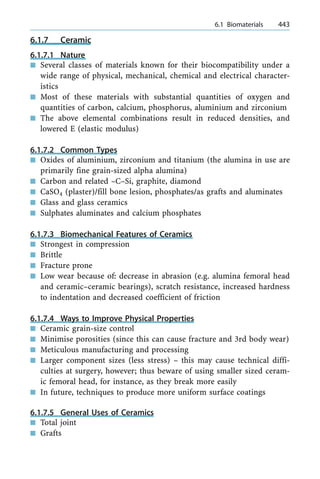
Orthopedic Principles ± A Resident's Guide
David Ip
Orthopedic Principles
± A Resident's Guide
1 2
David Ip
MBBS (HKU), FRCS (Ed) Orth, FHKCOS,
FHKAM (Orthopaedic Surgery), LFIBA (UK)
Director of Division of Rehabilitation, Department of Orthopaedics
and Traumatology, Pamela Youde Nethersole Eastern Hospital,
Hong Kong
Deputy Governor, American Biographical Institute Research Association,
Deputy Director General, International Biographical Centre, Cambridge
ISBN 3-540-23259-1 Springer Berlin Heidelberg New York
Library of Congress Control Number: 2004113413
This work is subject to copyright. All rights are reserved, whether the whole or part of the
material is concerned, specifically the rights of translation, reprinting, reuse of illustrations,
recitation, broadcasting, reproduction on microfilm or in any other way, and storage in data
banks. Duplication of this publication or parts thereof is permitted only under the provi-
sions of the German Copyright Law of September 9, 1965, in its current version, and per-
mission for use must always be obtained from Springer-Verlag. Violations are liable for
prosecution under the German Copyright Law.
Springer is a part of Springer Science+Business Media
springeronline.com
° Springer Berlin ´ Heidelberg 2005
Printed in Germany
The use of general descriptive names, registered names, trademarks, etc. in this publication
does not imply, even in the absence of a specific statement, that such names are exempt
from the relevant protective laws and regulations and therefore free for general use.
Editor: Gabriele M. Schræder, Heidelberg, Germany
Desk Editor: Irmela Bohn, Heidelberg, Germany
Production: Pro Edit GmbH, Heidelberg, Germany
Cover: Frido Steinen-Broo, eStudio Calamar, Spain
Typesetting: K+V Fotosatz GmbH, Beerfelden, Germany
SPIN 11013594 24/3130Di 5 4 3 2 1 0 ± Printed on acid-free paper
This book is dedicated to:
n My loving wife Esther without whose support
this book would not have been a reality
n All my mentors, including Professor John Leong,
Professor Luk, and Drs F.K. Ip and S.H. Yeung
n All my teachers in different fields of orthopaedics,
including Professors Jesse Jupiter, Charles Court-Brown,
John Wedge, Rorabeck and William Harris
Dedication
Dr. Ip is a graduate of Hong Kong University Medical School. Since his
graduation (1985), he developed an interest in the field of orthopaedics
and traumatology. He is the fellow of multiple professional organisations,
including the Royal College of Surgeons of Edinburgh and the Hong
Kong College of Orthopaedic Surgeons. He has published multiple jour-
nal articles in peer-reviewed journals in the fields of total joint surgery,
paediatric orthopaedics and traumatology. He is the winner of the Inter-
national Health Professional of the Year 2004 Award and received the
Universal Award of Accomplishment for Year 2004. He was also awarded
the International Peace Prize by United Cultural Conventions of USA,
among other awards that include the Man of the Year Award 2004, the
Key Award (leader in science), Lifetime Achievement Award and 21st
Century Award for Achievement, etc.
His biography has been included in famous biographical works, such
as Marquis Who's Who in Science and Engineering, Marquis Who's Who
in the World, Great Minds of the 21st Century, Leading Intellectuals of
the 21st Century, 2000 Outstanding Scientists of the 21st Century and
the Cambridge Blue Book.
His main interests include total joint replacement, osteoporosis and
fragility fractures of the hip in elderly.
About the Author
The scope of orthopaedic knowledge has expanded to such a degree that
it has become increasingly difficult to maintain a fundamental grasp of
the required knowledge base. Add to this the time constraints of adult
learning, with the student or practitioner facing ever-increasing demands
on their time.
Dr. David Ip has laboured intensively to produce a much-needed re-
source of orthopaedic knowledge that will prove useful not only to those
in training but also in the ever-increasing demand of certification and
re-certification examinations.
Organized into eight chapters extending from basic science to every
speciality of orthopaedic surgery ± including hand, foot and ankle,
sports medicine and spine, just to name a few with information provided
in outline form ± the reader will find it quite easy to locate information
on a specific subject for direct patient care, conferences or rounds, or
examination review. Alternatively, the organisation of each chapter facili-
tates on overall review of the subject matter. The chapters are well illus-
trated with 120 figures throughout the text.
By virtue of its succinct style of presentation of information, I am
confident that this text will prove to be most useful to students and prac-
titioners throughout the world.
Jesse B. Jupiter, M.D.
Director, Orthopaedic Hand Service
Massachusetts General Hospital
Hansjærg Wyss/AO Professor
Harvard Medical School
Foreword
The aim of writing this book on orthopaedic principles was manifold.
This book helps to arouse interest in the field of orthopaedics and high-
light important points or concepts the reader might have overlooked
during his reading of the subject matter in other large, thick standard
textbooks. It is not meant to be a shortcut. The author feels that it is
most useful to read this book after studying the standard texts and also
useful to review the subject before professional examinations, grand
rounds and vivas, even the long case of clinical examinations, since most
examiners nowadays stress on asking clinical principles rather than dig-
ging into details of how to perform a difficult operation. The second ma-
jor aim of this book was that it aims at a wide readership, including sur-
geons-in-training, practitioners, surgeons requiring re-certification and,
in particular, surgeons in developing and under-developed countries
where division into speciality or sub-speciality subjects is the exception
rather than the rule. It may also prove useful for the orthopaedic sur-
geon who had specialised in a field for many years, but wishes to know
the latest concepts of orthopaedic management in other fields of ortho-
paedics.
Lastly, the author wishes to express his gratitude to the world-re-
nowned Professor Jupiter of Harvard University for writing a Foreword
to this book. Happy reading!
Hong Kong, November 2004
David Ip
Preface
This section highlights the pearls to make reading of this book more
fruitful for the reader. Please be reminded that the author expects the
reader to know the classifications used for most of the common ortho-
paedic conditions mentioned in this book, the detailed description of
which is outside the scope of this book.
Chapter 1 deals with orthopaedic basic science, with clinical examples
taken from many of the common sports injuries. Other common sports in-
juries not mentioned, such as shoulder dislocation, etc., will be covered in
a forthcoming textbook written by the same author on the field of Trauma-
tology. Discussion of biomaterial science can be found in Chapter 6.
Chapter 2 deals with paediatric orthopaedics. The author recommends
the reader to read textbooks written by Mercer Rang from the famous
Hospital for Sick Children in Toronto before beginning clinical rotation
to a paediatric orthopaedic service for training. Also, since this field of
orthopaedics is sometimes more difficult to understand, this chapter has
many illustrations.
Chapter 3 deals with hand surgery. The author strongly recommends
the reader to read the books and articles published by Lister and Jupiter
as a general reference. Quite lengthy description on management of the
rheumatoid hand was given together with more illustrations, since this
topic is more difficult to understand.
Chapter 4 deals with foot and ankle surgery. The author notices that
many trainee surgeons consider gait analysis to be very difficult. This is
not the view of the author. Gait analysis is an interesting yet important
walk of orthopaedics, and a thorough understanding of pathological gait
in different orthopaedic conditions is important. The books listed in the
reference section for Chap. 4 provide a good basis for understanding this
topic. Many an examiner expects the candidate to diagnose the patient
just by looking at their gait.
Chapter 5 deals with spine surgery. There are many good articles on
the degenerate spine, especially in the Japanese literature on the topic of
How to Use this Book
cervical myelopathy, which the reader should know. There are also many
good articles on scoliosis published by eminent professors such as Pro-
fessor John Leong and Professor Luk and Cheung of Hong Kong Univer-
sity. Also the famous works of McMaster, Robert Winter and the Scolio-
sis Research Society should be noted.
Chapter 6 deals with total joint surgery. Owing to the size constraints
of the book, it is impossible for the author to include a lengthy discus-
sion on revision of total knee and total hip surgeries. I strongly advise
the reader to read the works of Professor Rorabeck when it comes to re-
vision of total knee surgery and the works of Rosenberg, Harris, Calla-
ghan and Jasty ± as well as Paprosky ± when it comes to revision of total
hip surgery.
Chapter 7 deals with orthopaedic infections. Infections in the pres-
ence of an orthopaedic implant is a common clinical problem as well as
examination question. I strongly advise the reader to read the articles
written by Gristina, Parry, Oga and also refer to the important animal
studies coming from great works done in Case Western University.
Chapter 8 deals with tumour surgery. I advise the reader to read the
books and articles published by Enneking. Limb salvage is quite a hot
topic nowadays, but detailed discussions are outside the scope of this
book. Many articles published in Clinical Orthopaedics and Related Re-
search are worth reading, as are the great advances made in this field
thanks to the marvellous works from the Mayo Clinic.
XII How to Use this Book
1 Orthopaedic Basic Science and Common Sports Injuries 1
2 General Paediatric Orthopaedics 91
3 Principles of Hand Surgery 193
4 Principles of Foot and Ankle Surgery 293
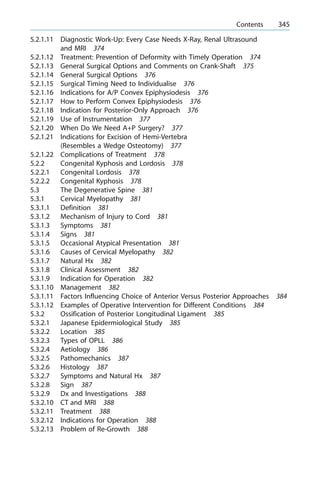
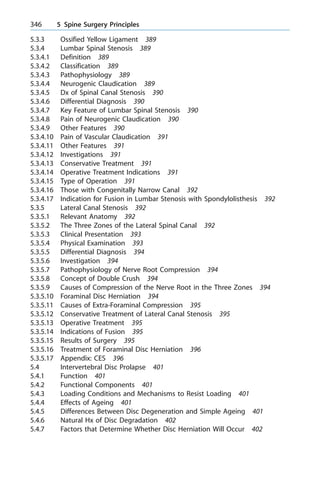
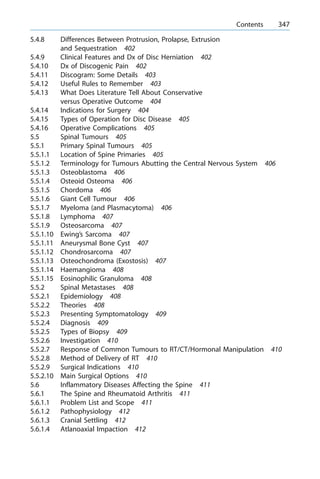
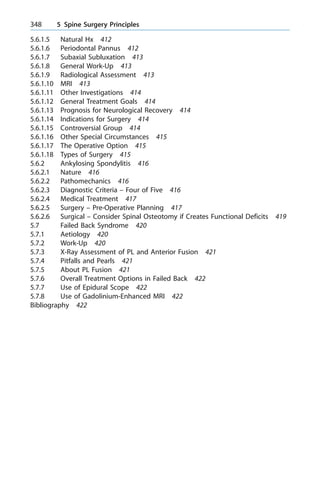
5 Spine Surgery Principles 343
6 Total Joint Surgery 425
7 Orthopaedic Infections 537
8 Musculoskeletal Tumour Principles 575
Subject Index 617
Contents
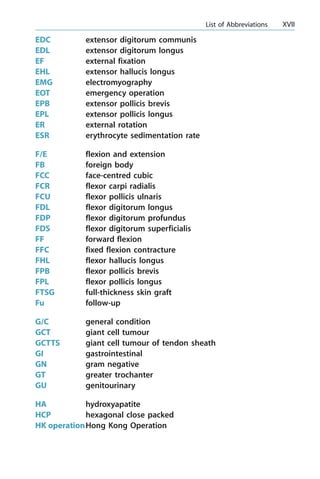
AAI atlanoaxial impaction
ABC aneurysmal bone cyst
ABI ankle brachial index
ACL anterior cruciate ligament
AD autosomal dominant
ADI Atlas-Dens Interval
ADL activities of daily living
AFO ankle foot orthosis
AKA above knee amputation
ALL anterior longitudinal ligament
ALP alkaline phosphatase
AMA Austin Moore hemiarthroplasty
AP anteroposterior
APL abductor pollicis longus
AS ankylosing spondylitis
ASD atrial septal defect
ASF anterior spinal fusion
ASIS anterior superior iliac spine
ATR angle of trunk rotation
AV atrioventricular
AVM arteriovenous malformation
AVN avascular necrosis
BCC body-centred cubic
BG bone graft
BKA below knee amputation
BP blood pressure
BR brachioradialis
Bx biopsy
List of Abbreviations
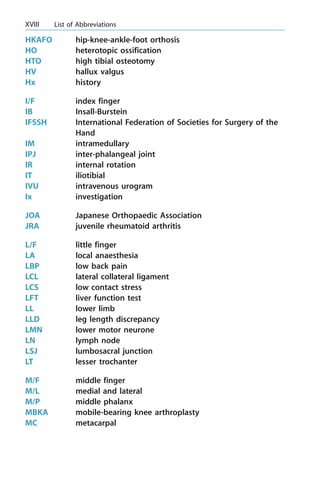
C.G centre of gravity
C/F clinical features
C/I contraindication
CA carcinoma
CCJ calcaneo-cuboid joint
CE centre-edge
CES cauda equina syndrome
CIA carpal instability adaptive
CIC carpal instability complex
CID carpal instability dissociative
CIND carpal instability non-dissociative
CMC carpal-metacarpal
CMCJ carpal-metacarpal joint
CN calcaneal-navicular
COM centre of motion
CP cerebral palsy
CPM continuous passive motion
CR close reduction
CRF chronic renal failure
CRP C-reactive protein
CSM cervical spondylotic myelopathy
CVS cardiovascular system
Cx complication
D/P distal phalanx
DDH developmental dysplasia of the hip
DDx differential diagnoses
DF dorsiflexion
DIPJ distal interphalangeal joint
DISH diffuse idiopathic skeletal hyperostosis
DISI dorsal intercalated segment instability
DJD degenerative joint disease
DM diabetes mellitus
DRUJ distal radioulna joint
DVT deep vein thrombosis
ECRL extensor carpi radialis longus
ECU extensor carpi ulnaris
XVI List of Abbreviations
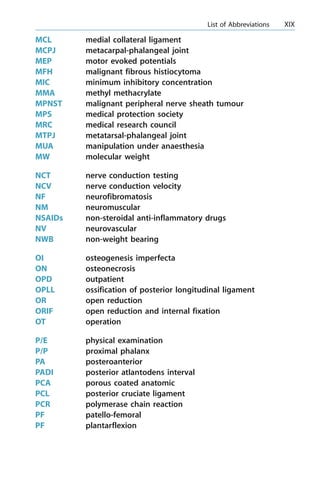
EDC extensor digitorum communis
EDL extensor digitorum longus
EF external fixation
EHL extensor hallucis longus
EMG electromyography
EOT emergency operation
EPB extensor pollicis brevis
EPL extensor pollicis longus
ER external rotation
ESR erythrocyte sedimentation rate
F/E flexion and extension
FB foreign body
FCC face-centred cubic
FCR flexor carpi radialis
FCU flexor pollicis ulnaris
FDL flexor digitorum longus
FDP flexor digitorum profundus
FDS flexor digitorum superficialis
FF forward flexion
FFC fixed flexion contracture
FHL flexor hallucis longus
FPB flexor pollicis brevis
FPL flexor pollicis longus
FTSG full-thickness skin graft
Fu follow-up
G/C general condition
GCT giant cell tumour
GCTTS giant cell tumour of tendon sheath
GI gastrointestinal
GN gram negative
GT greater trochanter
GU genitourinary
HA hydroxyapatite
HCP hexagonal close packed
HK operationHong Kong Operation
a List of Abbreviations XVII
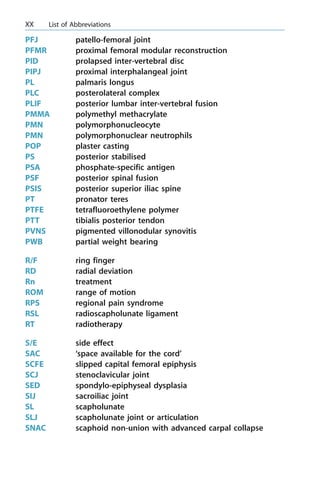
HKAFO hip-knee-ankle-foot orthosis
HO heterotopic ossification
HTO high tibial osteotomy
HV hallux valgus
Hx history
I/F index finger
IB Insall-Burstein
IFSSH International Federation of Societies for Surgery of the
Hand
IM intramedullary
IPJ inter-phalangeal joint
IR internal rotation
IT iliotibial
IVU intravenous urogram
Ix investigation
JOA Japanese Orthopaedic Association
JRA juvenile rheumatoid arthritis
L/F little finger
LA local anaesthesia
LBP low back pain
LCL lateral collateral ligament
LCS low contact stress
LFT liver function test
LL lower limb
LLD leg length discrepancy
LMN lower motor neurone
LN lymph node
LSJ lumbosacral junction
LT lesser trochanter
M/F middle finger
M/L medial and lateral
M/P middle phalanx
MBKA mobile-bearing knee arthroplasty
MC metacarpal
XVIII List of Abbreviations
MCL medial collateral ligament
MCPJ metacarpal-phalangeal joint
MEP motor evoked potentials
MFH malignant fibrous histiocytoma
MIC minimum inhibitory concentration
MMA methyl methacrylate
MPNST malignant peripheral nerve sheath tumour
MPS medical protection society
MRC medical research council
MTPJ metatarsal-phalangeal joint
MUA manipulation under anaesthesia
MW molecular weight
NCT nerve conduction testing
NCV nerve conduction velocity
NF neurofibromatosis
NM neuromuscular
NSAIDs non-steroidal anti-inflammatory drugs
NV neurovascular
NWB non-weight bearing
OI osteogenesis imperfecta
ON osteonecrosis
OPD outpatient
OPLL ossification of posterior longitudinal ligament
OR open reduction
ORIF open reduction and internal fixation
OT operation
P/E physical examination
P/P proximal phalanx
PA posteroanterior
PADI posterior atlantodens interval
PCA porous coated anatomic
PCL posterior cruciate ligament
PCR polymerase chain reaction
PF patello-femoral
PF plantarflexion
a List of Abbreviations XIX
PFJ patello-femoral joint
PFMR proximal femoral modular reconstruction
PID prolapsed inter-vertebral disc
PIPJ proximal interphalangeal joint
PL palmaris longus
PLC posterolateral complex
PLIF posterior lumbar inter-vertebral fusion
PMMA polymethyl methacrylate
PMN polymorphonucleocyte
PMN polymorphonuclear neutrophils
POP plaster casting
PS posterior stabilised
PSA phosphate-specific antigen
PSF posterior spinal fusion
PSIS posterior superior iliac spine
PT pronator teres
PTFE tetrafluoroethylene polymer
PTT tibialis posterior tendon
PVNS pigmented villonodular synovitis
PWB partial weight bearing
R/F ring finger
RD radial deviation
Rn treatment
ROM range of motion
RPS regional pain syndrome
RSL radioscapholunate ligament
RT radiotherapy
S/E side effect
SAC `space available for the cord'
SCFE slipped capital femoral epiphysis
SCJ stenoclavicular joint
SED spondylo-epiphyseal dysplasia
SIJ sacroiliac joint
SL scapholunate
SLJ scapholunate joint or articulation
SNAC scaphoid non-union with advanced carpal collapse
XX List of Abbreviations
SNAP sensory nerve action potential
SOL space-occupying lesion
SPECT single photon emission computed tomography
SSEP somatosensory evoked potentials
SSG split thickness skin graft
TA tendo-achilles
TAL tendo-achilles lengthening
TB tuberculosis
TC talocalcaneal
TF tibio-fibular
TFC triangular fibrocartilage
TFCC triangular fibrocartilage complex
TFL tensor fascia lata
THR total hip replacement
TKR total knee replacement
TL thoracolumbar
TNJ talo-navicular joint
TP tibialis posterior
UD ulnar deviation
UHMWPE ultra high molecular weight polyethylene
UL upper limb
UMN upper motor neurone
USS ultrasound
VBG vascularised bone graft
VDRO varus derotational osteotomy
VISI volar intercalated segment instability
VSD ventricular septal defect
WBCs white blood cells
a List of Abbreviations XXI
Contents
1.1 Bone Structure and Function 7
1.1.1 Normal Function of Bone 7
1.1.2 Normal Structure 7
1.1.2.1 Microscopic Types 7
1.1.2.2 Nomenclature 7
1.1.2.3 Bone Cells 7
1.1.2.4 Collagen 10
1.1.2.5 CaPO4 Hydroxyapatite 10
1.1.2.6 Other Substances in the Bone 10
1.1.2.7 Other Non-Collagenous Proteins 11
1.1.2.8 Non-Proteins 11
1.1.2.9 Growth Factors 11
1.1.2.10 Bone Circulation 11
1.1.3 Biomechanics of Bone 12
1.1.3.1 Viscoelasticity 12
1.1.3.2 Concept of Bone as a Two-Phase Material 12
1.1.3.3 Anisotropism 13
1.1.3.4 Coupling of Bone Formation and Destruction 13
1.1.4 Normal Protective Mechanisms Against Trauma 14
1.1.5 Fatigue Fractures 14
1.1.6 Bone Healing 14
1.1.6.1 Stages of Bone Healing 14
1.1.6.2 Initial Stages 14
1.1.6.3 Effect of Hypoxia After Fracture 14
1.1.6.4 Soft Callus 15
1.1.6.5 Hard Callus 15
1.1.6.6 Remodelling Phase 15
1.1.6.7 Healing in Special Situation 15
1.1.6.8 'Primary Bone Healing' 16
1.1.7 Metabolic Bone Disease 16
1.1.7.1 Introduction 16
1.1.7.2 Basic Rules of Calcium Metabolism 17
1.1.7.3 Normal and Abnormal Calcium and Phosphate Metabolism 17
1.2 Cartilage Structure and Function 21
1.2.1 General Important Features 21
Orthopaedic Basic Science
and Commmon Sports Injuries
1
1.2.2 Why Is Cartilage Near to a Perfect Machine? 21
1.2.3 Biomechanics 21
1.2.4 Other Features 21
1.2.5 Structure Anatomy in Layers 22
1.2.5.1 On a Microscopic Scale 22
1.2.5.2 Structure of Cartilage 22
1.2.6 Nutrition: Two Barriers to Diffusion 23
1.2.7 On the Potential for `Healing' 23
1.2.8 General Management of Chondral Defects 23
1.2.8.1 Natural History of Chondral Defects 23
1.2.8.2 Diagnosis of Chondral Defects 23
1.2.8.3 Essential Steps in Managing Chondral Defects 24
1.2.8.4 Details of Assessment Methods of Chondral Damage/Defects 24
1.2.8.5 Role of MRI 24
1.2.8.6 General Options for Managing Chondral Defects 25
1.3 Comparison of Ageing versus OA:
Features of the Osteoarthritic Process 30
1.3.1 Definition of Primary Osteoarthritis 31
1.3.2 Other Features 31
1.3.3 Differential Diagnosis Causes of Secondary OA 31
1.3.4 Normal and Excessive Joint Use versus Degeneration 32
1.4 Osteochondritis Dessicans 32
1.4.1 Differential Diagnosis from Traumatic Osteochondral Fracture 32
1.4.2 Nature of OCD 32
1.4.3 Other Features 32
1.4.4 Possible Aetiology of OCD 33
1.4.5 Classification 33
1.4.6 Main Rn Options 33
1.4.7 Clinical Significance of OCD 33
1.4.8 Types and Prognosis 34
1.4.9 Why Occur at the Classic Location? 34
1.4.10 Clinical Features 34
1.4.11 Diagnosis and Investigation 34
1.4.12 Factors Affecting Decision Making 34
1.4.13 Management Schemes 35
1.4.14 Management 35
1.4.15 Operative Rn 35
1.4.16 Other Methods 37
1.5 Tendon Basic Science 37
1.5.1 Tendon Structure 37
1.5.2 General Features 37
1.5.3 Function 37
1.5.4 Anatomy 38
1.5.5 Structural Hierarchy 38
1.5.5.1 Junctional Zones 38
2 1 Orthopaedic Basic Science and Commmon Injuries
1.5.6 Structure versus Function Correlation 38
1.5.7 Blood Supply 39
1.5.8 Nerve Supply 39
1.5.9 Biomechanics 39
1.5.10 Force±Elongation Curve 39
1.5.11 Stress±Strain Curve 40
1.5.11.1 Viscoelasticity 40
1.5.11.2 Storage of Energy 40
1.5.12 Tendon Failure 41
1.5.12.1 Terminology: Concentric, Isometric, Eccentric Contractions 41
1.5.12.2 Sites of Tendon Injury 41
1.5.12.3 Other Terms Concerning Injury Mechanics 41
1.5.12.4 Four Types of Micro-Traumatic Tendon Injury 41
1.5.12.5 Three Phases of Tendon Healing 42
1.5.12.6 Rehabilitation 42
1.5.12.7 The Scar 42
1.5.12.8 Effects of Use, Disuse and Immobilisation 42
1.5.12.9 Clinical Example: Ruptured Tendo-Achilles.
(Described in the Section on Foot and Ankle Surgery) 43
1.6 Ligament Basic Science 43
1.6.1 General Functions 43
1.6.2 Important Features 43
1.6.3 Anatomy 43
1.6.4 Gross and Microscopic Structure 44
1.6.5 Biomechanics 44
1.6.5.1 Viscoelasticity (Using ACL Reconstruction as Illustration) 44
1.6.5.2 Shape of the Stress±Strain Curve 45
1.6.5.3 Effect of Strain Rate 45
1.6.5.4 Site of Ligament Rupture and Age 45
1.6.5.5 Healing of the Injured Ligament 45
1.6.5.6 Factors Affecting Healing 45
1.6.5.7 Effect of Immobilisation and Exercise 46
1.6.5.8 Example 1: Isolated MCL Injury 46
1.6.5.9 Example 2: MCL and ACL Injury 46
1.6.5.10 Example 3: ACL Reconstruction 47
1.6.5.11 Appendix: Growth of Ligaments 47
1.6.5.12 Related Topic: Important Aspects of ACL Reconstruction 48
1.6.5.13 PCL Injury 56
1.7 Meniscus 60
1.7.1 Epidemiology 60
1.7.2 Anatomy 60
1.7.3 Fibre Orientation in the Meniscus 60
1.7.4 Overall Function 60
1.7.5 General Features 61
1.7.6 Post±Total Menisectomy: Fairbank's Changes 61
a Contents 3
1.7.7 Meniscus Vascular Supply 61
1.7.8 Nutrition and Neural Innervation 61
1.7.9 Anatomic Variants, Especially for the Lateral Meniscus 62
1.7.9.1 Classification of Meniscus Tear (by Aetiology) 62
1.7.9.2 Classification of Meniscus Tear (by Pattern) 62
1.7.9.3 Appendix to the Different Types of Tears 62
1.7.10 Diagnosis 63
1.7.10.1 Pros and Cons of MRI 63
1.7.10.2 MRI Grading of Meniscal Tear 63
1.7.10.3 Diagnosis by Arthroscopy: Gold Standard 63
1.7.10.4 Indication for Arthroscopy 64
1.7.11 Meniscal Repair 64
1.7.11.1 Indication for Meniscal Repair 64
1.7.11.2 Groups that Do Not Need Intervention 64
1.7.11.3 Groups that Need Partial Menisectomy 64
1.7.11.4 Important Factors Affecting Repair Ability 65
1.7.12 Meniscal Cysts 65
1.7.13 Discoid Meniscus 65
1.7.13.1 Features 65
1.7.13.2 Physical Assessment 65
1.7.13.3 Mechanism of Clunk in Discoids 65
1.7.13.4 Investigation 65
1.7.13.5 Theories of Aetiology 66
1.7.13.6 Traditional Classification (Wantabe) 66
1.7.13.7 New Classification (Jordan) 66
1.7.13.8 Overall Management Guideline 66
1.7.13.9 Overall Aim of Rn 67
1.8 Muscles 67
1.8.1 General Comments 67
1.8.1.1 Muscles 67
1.8.2 Clinical and Rehabilitation Issues 69
1.8.2.1 Types of Muscle Fibre and Effect of Training 69
1.8.2.2 Terminology 69
1.8.2.3 Response to Injuries 69
1.8.2.4 Proprioception 70
1.9 Neural Injury 70
1.9.1 Nerve Anatomy 70
1.9.2 What Happens After Nerve Injury 70
1.9.3 What Happens After Nerve Injury: Microscopic 70
1.9.4 Outcome 71
1.9.5 Seddon Classes of Nerve Injury 71
1.9.6 Sunderland Classification (Six Types) 71
1.9.7 Feature of the Sunderland Classification 71
1.9.8 Assessing After a Nerve Injury 71
1.9.9 Autonomic Changes After Nerve Injury 72
4 1 Orthopaedic Basic Science and Commmon Injuries
1.9.10 Checking for, and the Importance of, the Tinel Sign 72
1.9.11 Motor and Sensory Charting 72
1.9.12 Investigations 73
1.9.13 NCT 73
1.9.13.1 Terminology 73
1.9.13.2 Timing of NCT 73
1.9.13.3 EMG 73
1.9.14 Primary versus Delayed Repair of Nerves: Clinical Scenarios 74
1.9.15 Repair Methods 74
1.9.16 After Repair 74
1.9.17 Assessing Return of Neural Function 74
1.9.17.1 Assessing Return of Motor Power 75
1.9.17.2 Assessing Return of Sensation (General Recovery Sequence:
Pain>Touch>Vibration>Two-Point/Stereognosis) 75
1.10 Growth Factors in Orthopaedics 75
1.10.1 Clinical Relevance and Introduction 75
1.10.2 Clinical Studies of BMP 76
1.10.3 Clinical Case One: Fracture Healing 76
1.10.4 Clinical Case Two: Oestrogen-Related Osteoporosis 76
1.10.5 Clinical Case Three: Age-Related Osteoporosis 76
1.10.6 Clinical Case Four: Idiopathic Osteoporosis 77
1.10.7 Clinical Case Five: Anorexia Nervosa 77
1.10.8 Clinical Case Six: Distraction Osteogenesis 77
1.10.9 Clinical Case Seven: BMP-Related Clinical Condition 77
1.10.10 Clinical Case Eight: To Enhance Bony Fusion and Use with BG 78
1.10.11 Clinical Case Nine: Prevention of Osteolysis in Implanted Devices 78
1.10.12 Clinical Case Ten: Osteopetrosis 78
1.10.13 Special Details of Different Factors in Bone Healing 78
1.10.13.1 Transforming Growth Factor Beta 78
1.10.13.2 Bone Morphogenic Protein 79
1.10.13.3 Insulin Growth Factor 79
1.10.13.4 Fibroblast Growth Factor 79
1.10.13.5 Platelet-derived Growth Factors 79
1.11 Osteoporosis 79
1.11.1 Definition: WHO Criteria 79
1.11.2 Pathogenesis 79
1.11.3 Caution in Interpretation of WHO Criteria 80
1.11.4 Pitfalls in Interpretation of T Score 80
1.11.5 Caution About Interpretation of T Scores from Peripheral Sites 81
1.11.6 Cautions in Interpretation of Z scores 81
1.11.7 Suggested Method for Diagnosis and Assessment of Fracture Risk 81
1.11.8 Rn Guidelines: Word of Caution 81
1.11.9 Monitoring of Rn 82
1.11.10 Pros and Cons of BMD as a Monitor
(or Use Alternative: the Bone Markers) 82
a Contents 5
1.11.11 Traditional Teachings of Two Main Types of Osteoporosis 82
1.11.12 Clinical Assessment 82
1.11.13 Management of Osteoporosis 83
1.11.13.1 Prevention versus Rn 83
1.11.13.2 Categories of Agents with Examples 83
1.11.13.3 What Makes Bisphosphonates so Different? 83
1.11.13.4 The Opposite of the Anti-Resorptive Agents are Formative Agents 83
1.11.13.5 Individual Agents 84
1.11.14 Appendix 87
1.11.14.1 Key to Osteoporosis 87
1.11.14.2 Causes of Secondary Osteoporosis 87
1.11.14.3 Causes of Idiopathic Osteoporosis 87
1.11.14.4 Possible Pathomechanics of Idiopathic Group 88
1.11.14.5 Role of Possible Genetic Basis 88
1.11.14.6 Epidemiology in USA 88
1.11.14.7 Comparing Trends in US/Europe versus Asia 88
1.11.14.8 Epidemiology from Asia 89
1.11.14.9 Trend in Hong Kong 89
References 89
6 1 Orthopaedic Basic Science and Commmon Injuries
1.1 Bone Structure and Function
1.1.1 Normal Function of Bone
n Protection
n Muscle attachment
n Leverage for motion
n Form and shape of body
n Mineral reserve: 98% of total body calcium
n Haemopoiesis role
1.1.2 Normal Structure
n Cells: osteoblast, osteocyte, osteoclast and osteoprogenitor cells
n Organic: collagenous and non-collagenous
n Inorganic: calcium hydroxyapatite
n Proteoglycans
n Water: 20%
1.1.2.1 Microscopic Types
n Trabecular: orientation determined by load according to Wolff's law;
only 20% of skeletal mass is in trabecular bone, but it constitutes
80% of the surface area. High cellular activity at surface
n Harvesian system: at compact bone area, consists of central Haversian
canal and circumferential collagen lamellae. Surface area greatly in-
creased by canaliculi, lacunae and vascular channels
n Periosteal: deposited by cells at inner cambium layer of periosteum;
collagen lamellae parallel to surface
n Subcortical: area of quite high bioactivity and active remodelling
1.1.2.2 Nomenclature
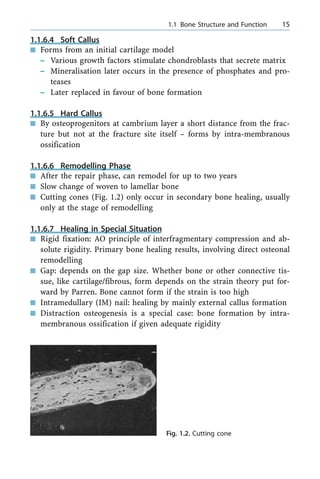
n Lamella versus woven bone: normal compact bone and trabecular
bone are composed of lamellar bone (Fig. 1.1). Woven bone in a dis-
organised array is present in embryonic bone, in some stage of bone
fracture healing and in some disease states like fibrous dysplasia
n Macroscopic type: compact bone versus trabecular bone
1.1.2.3 Bone Cells
n Osteoblasts
n Osteocytes
a 1.1 Bone Structure and Function 7
n Osteoclasts
n Marrow with pluripotential cells
1.1.2.3.1 Osteoblasts
n Functions
± Synthesise matrix (collagen and non-collagenous proteins)
± Work in unison with osteoclasts in bone modelling and remodel-
ling
± Mineralise bone (matrix vesicles production)
± Control electrolyte flux between extracellular fluid (ECF) and the
bone fluid
[act via the receptor activator of NFjB (RANK)/RANK-L system to
exert its action on the osteoclasts]
n Origin likely from undifferentiated mesenchymal cells in connective
tissue and cambium layer of periosteum
n Locations in the bone
e.g. endosteum, under periosteum, at ends of long bones with growth
plate and on surface of newly formed trabecular bone
n Contain alkaline phosphatase that may be used as an indicator of
bone formation
n Transient cells only
1.1.2.3.2 Osteocytes
n Functions
± Possibly act as mechanoreceptor, via its multiple long processes
± Cyclic loading releases chemical mediators, such as insulin growth
factors (IGFs), causing osteoblast formation
± Coordinate formation and resorption of bone
8 1 Orthopaedic Basic Science and Commmon Injuries
Fig. 1.1. Cross-section of lamellar bone
± Help in minute-to-minute control of bone mineral homeostasis via
exchange between cell and bone fluid compartment
n Origin
± Incarcerated in bone matrix/lacunae during osteoid formation
± Linkage with one another by fine cellular processes, hence in-
creased surface area of bone matrix. Osteocytes are surrounded by
ECF
1.1.2.3.3 Osteoclasts
n Functions
± Bone remodelling and modelling (remodelling involves sequential
action of osteoclasts and osteoblasts at same site. Modelling in-
volves simultaneous action of osteoclasts and osteoblasts at adja-
cent locations)
± Releasing calcium and digesting collagen
n Origin: From fusion of monocytes of macrophagic lineage in haemo-
poietic marrow
n Transient and very short lived
Mechanism of Action of Osteoclasts
n First decalcify, then digest collagen via:
± First, adhere to bone surface to seal off a space
± Ruffled border formation with nearby clear zone with no organelle
immediately adjacent to the ruffled border
± Endosomes move to ruffled border, transport protons into the dead
space; decalcify bone by making pH 4
± Then, organic matrix degraded by acidic protease and pro-colla-
genase
± Note: osteoclasts have calcitonin receptors which will shrink the
cell and not be able to form ruffled border
Regulation of Osteoclast Activity
n General factors: parathyroid hormone (PTH), 1,25-dihydroxy vitamin
D3, calcitonin and others [oestrogen, androgen, growth hormone (GH)]
n Local chemical factors: cytokines and growth factors
n Local mechanical stimuli
(Note: PTH and vitamin D are unable to stimulate osteoclastic bone
resorption in vitro in the absence of osteoblastic cells ± there is no vi-
a 1.1 Bone Structure and Function 9
tamin D receptor on osteoclasts and doubtful for PTH. Calcitonin acts
directly on osteoclasts since its receptor is present)
1.1.2.4 Collagen
n From 90% to 95% organic components
n Mostly type 1
n Fibrils in each lamella are in the same direction
n Adjacent lamellae are at 908 to each other, hence affording strength
1.1.2.5 CaPO4 Hydroxyapatite
n Inorganic component constitutes 60±70% of the dry weight
n Calcium and phosphate as hydroxyapatite crystals
n Crystals contain labile carbonate and acid phosphate groups needed
in interaction with surrounding ECF and organic matrix
1.1.2.5.1 Process of Mineralisation
n Site of mineralisation at the `pores' on the collagen triple helix. Com-
mence at the mineralisation front (at interface of osteoid and mineral-
ised substance)
n Osteoblasts eject intracellular membrane bound vesicles (rich in so-
dium and sulphate) in rapid exchange with calcium and phosphate.
Extracellular matrix vesicles act as foci of mineralisation
n Occur in the presence of PTH and activated D3
1.1.2.5.2 On Mineralisation
n If you want to take away calcium, you need also to take PO4 with you
from the bone
n If you want deposit calcium, you also need to give adequate PO4 to
the bone
n It follows, therefore, that if PO4 is very low, it is very difficult to de-
posit enough calcium to have good bones
1.1.2.6 Other Substances in the Bone
n Water ± 10%; importance of water content
n Other substances
10 1 Orthopaedic Basic Science and Commmon Injuries
1.1.2.7 Other Non-Collagenous Proteins
n Integrin ± helps binding of osteoclasts
n Osteocalcin ± modulates bone formation and absorption
n Osteonectin ± modulates mineralisation process
n Osteopontin
n Bone sialoprotein
n Cytokines
n Growth factors, e.g. transforming growth factor-b (TGF-b)
1.1.2.8 Non-proteins
n Complex saccharides
n Lipids
1.1.2.9 Growth Factors
n Bone morphogenetic protein (BMP)
n Transforming growth factors
n Fibroblast based
n Platelet-derived growth factors
1.1.2.10 Bone Circulation
n Sources:
± Nutrient arterial system
± Periosteal system
± Metaphyseal
± Epiphyseal system (child)
n Arterial supply of the cortex is centrifugal. Direction is reversed in a
displaced fracture that disrupts the endosteal nutrient arterial system
n Venous flow is centripetal. The cortical capillaries drain from sinus-
oids to emissary venous system
1.1.2.10.1 Nutrient System
n Supplies inner two-thirds of cortex
n Nutrient artery enters the medullary cavity, sending arterioles proxi-
mally and distally
n High pressure, hence centrifugal flow
a 1.1 Bone Structure and Function 11
1.1.2.10.2 Periosteal System
n Extensive network covering the entire shaft
n Supplies outer one-third of cortex
n Low pressure system
n Important in children and required for growth in width
1.1.2.10.3 Metaphyseal System
n Anastomoses with the nutrient artery system
n In child, supplies zone of provisional calcification of the growth plate
1.1.2.10.4 Epiphyseal System
n Present in children
n Supplies the resting, germinal, proliferating and upper hypertrophic
zones of the physis
1.1.3 Biomechanics of Bone
n Bone can be thought of as a biphasic composite material, one phase be-
ing the mineral, the other phase being the collagen and ground sub-
stance
n The combination is stronger for their weight than either substance
alone
n Normal bone: resistance to compression is greater than tensile, which
is greater than shear
1.1.3.1 Viscoelasticity
n Bone is also viscoelastic, like other connective tissues such as carti-
lage, tendons, etc. The viscoelasticity of a tissue is a time-dependent
property where the deformation of material is related to rate of load-
ing
n Bone loaded at a higher rate is stiffer and more brittle and may sus-
tain higher load to failure. It also stores more energy before failure
with a higher rate of loading
1.1.3.2 Concept of Bone as a Two-Phase Material
n Explains some adaptations such as increase in strength especially at
high strain rates like running, or even higher strain rates like impact
n Marrow (and fat) flows under pressure at a high strain rate along the
maze of trabeculae
12 1 Orthopaedic Basic Science and Commmon Injuries
1.1.3.3 Anisotropism
n Bone is anisotropic, thus having different mechanical properties when
loaded along different axes
n Caused by different bony structure along its longitudinal and trans-
verse axes
n Human long bones are stronger in compression than tension, but
weakest in shear
1.1.3.4 Coupling of Bone Formation and Destruction
n Coupling process: under normal circumstances, if more bone forms,
more bone will be destroyed; if more bone is destroyed, more bone
will form, etc.
n Uncoupling occurs in osteoporosis and some other pathological con-
ditions that affect bone (e.g. osteopetrosis, etc.)
1.1.3.4.1 Bone Remodelling and Wolff's Law
Wolff's Law:
n Bone has the ability to adapt by changing its size, shape and struc-
ture in response to the mechanical demands placed on the bone.
(Form follows function)
n Bone is being laid down where needed and resorbed where not
needed
n Remodelling can be external (changed external shape of the bone) or
internal structure (mineral content and density)
1.1.3.4.2 Possible Mechanism Explaining Wolff's Law
n Compression side of a long bone is piezoelectric negative, which stim-
ulates osteoblasts; tension side is piezoelectric positive, which stimu-
lates osteoclasts
1.1.3.4.3 Application of Wolff's Law
n Disuse leads to periosteal and sub-periosteal bone resorption
n In the presence of an implant, stress shielding/protection of bone oc-
curs, thus there is less bone density in the stress shielded area, since
the implant shared the imposed load upon the bone leading to resorp-
tion of the surrounding bone
n Prolonged weightlessness in space can cause bony resorption as well
a 1.1 Bone Structure and Function 13
1.1.4 Normal Protective Mechanisms Against Trauma
n Importance of muscle contractions to counteract the load application
to bone and offer a protective effect (fatigue fracture has more ten-
dency to occur with muscle fatigue upon prolonged strenuous exer-
cise)
n Ability of normal bone to remodel and repair its defects help prevent
fatigue fracture
n With ageing, bones increase their area moment of inertia by distribut-
ing even more bone tissue in the periphery away from the central axis
by increasing the diameter of the medullary cavity
1.1.5 Fatigue Fractures
n Caused by cyclic applications of a load below the ultimate strength of
the bone
n Only occur when the rate of remodelling is outpaced by the loading
process
n Likelihood of fatigue fracture depends on the amount of load, fre-
quency of loading and number of repetitions
1.1.6 Bone Healing
1.1.6.1 Stages of Bone Healing
n Fracture haematoma formation
n Soft callus formation
n Hard callus formation
n Remodelling
1.1.6.2 Initial Stages
n After the initial haematoma formation and acute inflammation domi-
nated by neutrophils that secrete cytokines (brings in multipotent
cells, angiogenesis and phagocytes)
1.1.6.3 Effect of Hypoxia After Fracture
n Hypoxia after fracture is due to interruption of vascular supply
n It is thought that hypoxia, resultant acidity and changes in pH cause
the neutrophils to release the cytokines ± one effect of which is to
bring in more angiogenesis
14 1 Orthopaedic Basic Science and Commmon Injuries
1.1.6.4 Soft Callus
n Forms from an initial cartilage model
± Various growth factors stimulate chondroblasts that secrete matrix
± Mineralisation later occurs in the presence of phosphates and pro-
teases
± Later replaced in favour of bone formation
1.1.6.5 Hard Callus
n By osteoprogenitors at cambrium layer a short distance from the frac-
ture but not at the fracture site itself ± forms by intra-membranous
ossification
1.1.6.6 Remodelling Phase
n After the repair phase, can remodel for up to two years
n Slow change of woven to lamellar bone
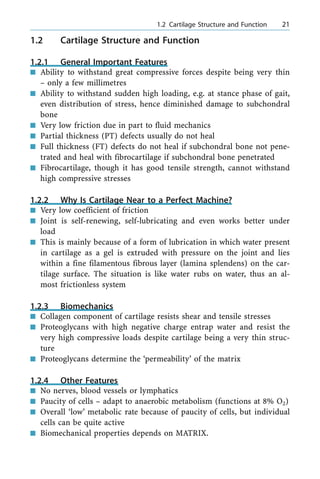
n Cutting cones (Fig. 1.2) only occur in secondary bone healing, usually
only at the stage of remodelling
1.1.6.7 Healing in Special Situation
n Rigid fixation: AO principle of interfragmentary compression and ab-
solute rigidity. Primary bone healing results, involving direct osteonal
remodelling
n Gap: depends on the gap size. Whether bone or other connective tis-
sue, like cartilage/fibrous, form depends on the strain theory put for-
ward by Parren. Bone cannot form if the strain is too high
n Intramedullary (IM) nail: healing by mainly external callus formation
n Distraction osteogenesis is a special case: bone formation by intra-
membranous ossification if given adequate rigidity
a 1.1 Bone Structure and Function 15
Fig. 1.2. Cutting cone
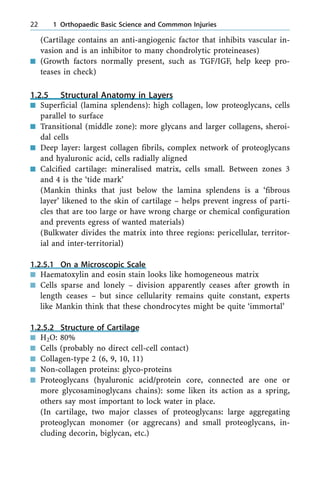
[By contrast, natural healing by callus can be strong, although often
malaligned. (Fig. 1.3)]
1.1.6.8 `Primary Bone Healing'
n Primary bone healing ± direct osteonal remodelling ± cutting cones at
cortical bone and vascularity and osteoblasts at its trailing end to re-
create the Harversian model
1.1.7 Metabolic Bone Disease
1.1.7.1 Introduction
n To really understand the role of bone in calcium and phosphorus me-
tabolism and in metabolic bone disease, one must note that bone is
really an extension of the extracellular space
n The surface area of exchange is much increased by the hydroxyapatite
crystals ± dimension 200´100 angstroms
16 1 Orthopaedic Basic Science and Commmon Injuries
Fig. 1.3. Natural healing by external calluses
1.1.7.2 Basic Rules of Calcium Metabolism
n Bone formation and destruction is coupled
n Unlike PO4, calcium difficult to get across cells and need transport
system ± affected by PTH that creates `holes' in cells and 1,25-dihy-
droxy vitamin D to provide calcium-binding proteins inside cells
1.1.7.3 Normal and Abnormal Calcium and Phosphate Metabolism
1.1.7.3.1 Calcium
n Function: neuromuscular conduction/activation, coagulation cascade,
enzyme co-factor and formation of the rigid mineral content of bone
n Daily requirement: total body calcium 1100 g, 98% of which is in
bone and teeth. Requirement of adult 1000 mg, adolescent 1300 mg
n Absorption from gastrointestinal (GI) tract include: active transport
in duodenum and facilitated diffusion in jejunum. Active transport re-
quires both vitamin D and PTH. PTH is needed for transport across
the cellular membrane and to stimulate production of 1,25-dihydroxy
vitamin D3, while vitamin D helps form proteins to bind calcium in-
side cells
n Of dietary calcium, 35% is absorbed. Excretory routes include both
the GI tract and kidneys. In the kidney, two-thirds is reabsorbed in
the proximal tubule, one-third adjustable absorption in the distal tu-
bule
1.1.7.3.2 Calcium Regulation (Homeostasis)
n Minute-to-minute control (rapid process)
± Involves transfer of calcium from bone surface to ECF in response
to PTH. Involves osteocytes and osteoblasts, especially the former
n Draining from bone reserve (slow process)
± Really a balance between osteoblastic bone formation and osteo-
clastic resorption
n Hormonal control
1.1.7.3.3 Details of Hormonal Control
n PTH: stimulated by low [Ca]. Acts by decreasing renal excretion and
stimulating 1,25-dihydroxy vitamin D, hence increasing GI absorption
of calcium. Acts on osteoclasts to release calcium from bone mainly
indirectly via osteoblast cells
a 1.1 Bone Structure and Function 17
n Calcitonin: stimulated by high [Ca]. Acts by decreasing the number
and activity of osteoclasts. Osteoclasts have calcitonin receptors and
calcitonin will shrink the osteoclast in in vitro experiments
n The role of vitamin D was mentioned. Other hormones include GH,
cortisol etc., but are not the main players
1.1.7.3.4 Effect of Phosphates and Magnesium on Calcium Metabolism
n Phosphates: stimulate PTH production, bind to calcium rendering it
inert. Insoluble calcium phosphate crystals deposit to bone and are
removed in stool
n Magnesium: if [Mg] low, suppresses PTH secretion even if [Ca] is low
n Drugs: substances like thiazide diuretics can increase calcium excre-
tion
1.1.7.3.5 Other Issues Concerning Calcium
n Concentration of ionised calcium in blood depends on:
± pH: e.g. acidosis decreases protein binding and causes increased
ionised calcium, etc.
± Albumin concentration: decrease of [albumin] by 1 g/dl changes
protein-bound calcium by 0.8 mg/dl. Thus, hypercalcaemia may be
missed in cases of hypoalbuminaemia
n The reader is referred to physiology texts as regards causes and man-
agement of hypercalcaemia and hypocalcaemia
1.1.7.3.6 Phosphorus
n Functions: component of cell membrane, messenger for hormone
adenosine monophosphate (AMP), energy transfer (adenosine tri-
phosphate/adenosine diphosphate), components of fats and proteins
n Daily requirement: 800 mg
n Distribution: total body contains 600 g; 90% in bone and teeth as re-
servoir, 10% intracellular
n Absorption: in duodenum and small bowel as inorganic phosphate,
depends on amount taken
1.1.7.3.7 Homeostasis
n PTH stimulated by high [P]: acts by increasing urinary excretion and
decreasing absorption. Also increases mobilisation from bone and
stimulates increased 1,25-dihydroxy vitamin D
18 1 Orthopaedic Basic Science and Commmon Injuries
n Increased 1,25-dihydroxy vitamin D in turn increases phosphate ab-
sorption in the gut
n Other regulators: e.g. GH increases renal absorption, calcitonin de-
creases its excretion in urine
1.1.7.3.8 Appendix 1
Role of Vitamin D in Calcium and Phosphate Metabolism
n UV light converts dietary pro-vitamin D2 and D3 to cholecalciferol
n Then undergoes 25- and 1-hydroxylation at the liver and kidney re-
spectively (in cases with high calcium, mainly 24,25-dihydroxy vita-
min D will be made in the kidney)
n Acts on targets by diffusion through cytoplasmic membrane; bound
to cellular protein and transported to the nucleus
n In bone, stimulates both osteoblasts and osteoclasts, increases miner-
alisation and resorption and increases collagen production
n Kidney: like PTH, vitamin D increases calcium absorption. However,
unlike PTH, increases phosphate absorption
n GI tract: synthesis of calcium-binding proteins helps calcium absorp-
tion and increases phosphate absorption
Role of PTH in Calcium and Phosphate Metabolism
n Produced in parathyroid gland, prepro-PTH made from mRNA,
changed to pre-PTH in rough endoplasmic reticulum, then PTH in
Golgi apparatus and packed for secretion
n Acts as a sensitive control of [Ca]
n Mechanism: most actions via membrane receptor attachment, in turn
activating cAMP and protein kinase and increasing intracellular cal-
cium
n Bone: (short-term) induces increased permeability of osteocyte cell
membrane to calcium, promotes exchange between calcium and ECF.
(Longer term) induces osteoclasts (via osteoblasts) to mobilise cal-
cium from bone
n Kidney: increased calcium but decreased phosphate absorption, in-
creased 1,25-dihydroxy vitamin D
n GI tract: increased calcium and phosphate absorption via increased
vitamin D
a 1.1 Bone Structure and Function 19
Role of Calcitonin in Calcium and Phosphate Metabolism
n Produced from the C cells of thyroid as a large precursor, then
cleaved into 32 amino acids
n Stimulated by increased [Ca]
n Mechanism: binds to cell membrane receptor and activates adenyl cy-
clase
n Bone: shrinks osteoclasts, prevents ruffled border formation and in-
hibits formation of osteoclasts
n Kidney: decreases absorption of calcium and phosphate
n GI tract: uncertain, storage of calcium in peri-lacunar space after
meal
1.1.7.3.9 Appendix 2
Types of Rickets
n Common types include:
± Nutritional: supplements needed
± Vitamin D-resistant rickets: PO4 lost in urine ± PO4 and vitamin D
needed in treatment (Rn)
± RTA: Needs alkaline in Rn
± End organ non-response: needs activated 1,25-dihydroxy vitamin
D3
± Renal rickets: loss of the normal natural adjustments of calcium
absorption and PO4 excretion ± Rn not easy, consult renal physi-
cian
Adult Osteomalacia
n Massachusetts General Hospital study: 27% of patients coming in for
hip fracture with osteomalacia
n Sometimes co-exists with osteoporosis
n Looser's zones and milkman's lines at the concave side of the long
bone if present are characteristic
20 1 Orthopaedic Basic Science and Commmon Injuries
1.2 Cartilage Structure and Function
1.2.1 General Important Features
n Ability to withstand great compressive forces despite being very thin
± only a few millimetres
n Ability to withstand sudden high loading, e.g. at stance phase of gait,
even distribution of stress, hence diminished damage to subchondral
bone
n Very low friction due in part to fluid mechanics
n Partial thickness (PT) defects usually do not heal
n Full thickness (FT) defects do not heal if subchondral bone not pene-
trated and heal with fibrocartilage if subchondral bone penetrated
n Fibrocartilage, though it has good tensile strength, cannot withstand
high compressive stresses
1.2.2 Why Is Cartilage Near to a Perfect Machine?
n Very low coefficient of friction
n Joint is self-renewing, self-lubricating and even works better under
load
n This is mainly because of a form of lubrication in which water present
in cartilage as a gel is extruded with pressure on the joint and lies
within a fine filamentous fibrous layer (lamina splendens) on the car-
tilage surface. The situation is like water rubs on water, thus an al-
most frictionless system
1.2.3 Biomechanics
n Collagen component of cartilage resists shear and tensile stresses
n Proteoglycans with high negative charge entrap water and resist the
very high compressive loads despite cartilage being a very thin struc-
ture
n Proteoglycans determine the `permeability' of the matrix
1.2.4 Other Features
n No nerves, blood vessels or lymphatics
n Paucity of cells ± adapt to anaerobic metabolism (functions at 8% O2)
n Overall `low' metabolic rate because of paucity of cells, but individual
cells can be quite active
n Biomechanical properties depends on MATRIX.
a 1.2 Cartilage Structure and Function 21
(Cartilage contains an anti-angiogenic factor that inhibits vascular in-
vasion and is an inhibitor to many chondrolytic proteineases)
n (Growth factors normally present, such as TGF/IGF, help keep pro-
teases in check)
1.2.5 Structural Anatomy in Layers
n Superficial (lamina splendens): high collagen, low proteoglycans, cells
parallel to surface
n Transitional (middle zone): more glycans and larger collagens, sheroi-
dal cells
n Deep layer: largest collagen fibrils, complex network of proteoglycans
and hyaluronic acid, cells radially aligned
n Calcified cartilage: mineralised matrix, cells small. Between zones 3
and 4 is the `tide mark'
(Mankin thinks that just below the lamina splendens is a `fibrous
layer' likened to the skin of cartilage ± helps prevent ingress of parti-
cles that are too large or have wrong charge or chemical configuration
and prevents egress of wanted materials)
(Bulkwater divides the matrix into three regions: pericellular, territor-
ial and inter-territorial)
1.2.5.1 On a Microscopic Scale
n Haematoxylin and eosin stain looks like homogeneous matrix
n Cells sparse and lonely ± division apparently ceases after growth in
length ceases ± but since cellularity remains quite constant, experts
like Mankin think that these chondrocytes might be quite `immortal'
1.2.5.2 Structure of Cartilage
n H2O: 80%
n Cells (probably no direct cell-cell contact)
n Collagen-type 2 (6, 9, 10, 11)
n Non-collagen proteins: glyco-proteins
n Proteoglycans (hyaluronic acid/protein core, connected are one or
more glycosaminoglycans chains): some liken its action as a spring,
others say most important to lock water in place.
(In cartilage, two major classes of proteoglycans: large aggregating
proteoglycan monomer (or aggrecans) and small proteoglycans, in-
cluding decorin, biglycan, etc.)
22 1 Orthopaedic Basic Science and Commmon Injuries
n (Collagen fibres of cartilage not anchored into bone; but the cartilage
tissue is `keyed' into the irregular surface of bone like a jigsaw puz-
zle)
1.2.6 Nutrition: Two Barriers to Diffusion
n Synovial linings
n Different layers of cartilage
1.2.7 On the Potential for `Healing'
n Unlike adult cartilage, foetal cartilage can heal spontaneously (seen in
foetal lamb animal studies)
n PT defects ± transient cell reaction in the edge of lesion, usually does
not heal (except in the rare case when mesenchymal cells can be in-
duced to migrate from the synovial membrane across the articular
surface into the defect)
n Osteochondral lesions heal with fibrocartilage: combined type 2 and 1
collagen, not tough enough to withstand high compression stresses
n Salter had shown a positive effect of continuous passive motion
(CPM) on cartilage healing (e.g. in studies with periosteal grafts) ±
immobilization is detrimental to cartilage repair and development
1.2.8 General Management of Chondral Defects
1.2.8.1 Natural History of Chondral Defects
n (Arthroscopy 1997) ± In over 30,000 knee arthroscopies for knee inju-
ries, a chondral lesion was found in 60%
n Other studies report 23% when associated with anterior cruciate liga-
ment (ACL) injuries, increasing to 54% with chronic ACL injuries
n But, exact natural history of isolated lesions not known for certainty
1.2.8.2 Diagnosis of Chondral Defects
n With an arthroscope
n Magnetic resonance imaging (MRI)
n Others [physical examination (P/E) not too reliable]
n New method: Finland originated the use of articular cartilage stiffness
tester/probe (trade name ArtScan) ± potentially useful since cartilage
softening is one of the first signs of the degenerative process ± seems
a 1.2 Cartilage Structure and Function 23
proportional to the degree of superficial loss/re-distribution of col-
lagen/proteoglycans.
Artscan may be more objective than a simple probe
1.2.8.3 Essential Steps in Managing Chondral Defects
n Find aetiology
n Adequate description of the lesion: location, depth, size (Frank Noyes
classification)
n Degree of containment and any kissing lesions
n Assess ligament integrity
n Any limb malalignment: if not corrected, will ruin any repair of carti-
lage defects
n Status of meniscus
n Cruciates integrity: (e.g. ACL-deficient knees subjected to multiplanar
shear forces)
Also ensure proper rehabilitation protocol ± most cases need CPM
and period of protected weight bearing
1.2.8.4 Details of Assessment Methods of Chondral Damage/Defects
n Noyes four-point scale (to this, may add checking for any kissing le-
sion): location, depth, description and diameter
n Outerbridge: four types (only depth of involvement stressed here,
originally Outerbridge meant to assess chondromalacia, not chondral
defects)
n Bauer and Jackson: descriptive, e.g. linear crack/stellate/flap/crater/fi-
brillation/degrading
n ICRS (International Cartilage Repair Society): with detailed forms to
be filled in
1.2.8.5 Role of MRI
n MRI not too useful for diagnosis, especially poor in diagnosis of PT
defects
n Most used sequence being `fat suppressed three-dimensional T1-
weighted gradient echo technique'
n Bone bruise now believed by some experts as indicator of possible
significant cartilage injury
24 1 Orthopaedic Basic Science and Commmon Injuries
n New advances: spectroscopic imaging with view-angle tilting; spec-
tral-spatial 3-D magnetisation transfer; high-resolution short echo
time spectroscopic imaging, etc.
1.2.8.6 General Options for Managing Chondral Defects
n Supervised neglect
n `Chondro-protection'/debridement and curettage [mainly for relief of
say, knee osteoarthritis (OA) symptoms]
n Fixation of chondral fragments (especially if osteochondral)
n Stimulation of healing ± drilling, abrasion, micro-fracture techniques
n Autologous osteochondral transfer
n Autologous chondrocyte culture/reimplantation (ACI)
n Periosteal and perichondrial transplantation
n Use of allografts and growth factors
n Future ± regeneration and gene therapy
1.2.8.6.1 Supervised Neglect
n Increasing evidence that especially FT defects may lead to OA
n Although some defects remain asymptomatic for considerable period
and true incidence not known for sure
1.2.8.6.2 `Chondro-Protection'
n Hyaluronic acid: animal studies claim protective effect; mechanics ±
unknown. Probably provides lubrication
n Glucosamine and chondroitin sulphate: since OA results when carti-
lage breakdown exceeds synthesis of chondrocytes, providing exoge-
nous glucosamine increases matrix production and alters natural
course. While chondroitin sulphate is the most abundant glucosami-
noglycans in articular cartilage, may inhibit many degradative en-
zymes in synovial fluid in OA
1.2.8.6.3 Lavage and Debridement
n Pain relief in OA cases from removal of loose intra-articular debris,
inflammation, mediators, enzymes. Changing the ionic environment
of the synovial fluid
n Paper by Robert Jackson in the States: relief in 50% at 3.5 years ±
seems better if mechanical debridement added
n Drawback: cannot treat the chondral defect
a 1.2 Cartilage Structure and Function 25
1.2.8.6.4 Subchondral Drilling
n Advocated by Pridie 1959
n Aim at repair by formation of fibro-cartilage and/or a little hyaline
cartilage (animal studies noted that hyaline nature lost at 8 months)
n Drilled in pin-point fashion, results in fibrin clot formation
1.2.8.6.5 Microfracture Technique
n Advocated by Richard Steadman of Colorado
n Procedure: Steadman believes that removal of the calcified layer is
very important and damage to the subchondral bone should be
avoided
n Arthroscopic awl used to make many holes (microfractures) in the ex-
posed subchondral bone; 3±4 mm apart; depth of about 4 mm
n Goal: a blood clot rich in pluripotential marrow elements to form and
stabilise while it covers the lesion. The technique provides a rough
surface that clot can adhere to ± less thermal necrosis
n Tissue produced: hybrid of hyaline and fibro-cartilage, with viable
chondrocytes in lacuna ± but, the good results deteriorate over time,
because of poor wear character of the repair tissue. (Proper post-op
rehabilitation and Ô joint unloading procedures are important)
1.2.8.6.6 Abrasion Arthroplasty
n Advocated by Johnson 1981
n Extension of the drilling procedure, except that a superficial layer of
subchondral bone 1±3 mm thick is removed to expose intra-osseous
vessels with added debridement of the cartilaginous defect to an edge
containing normal looking tissue
n (There have been some arguments about the depth of drilling and
also as to whether the debridement of the sclerotic lesion should be
intra-cortical or cancellous.)
n Tissue formed is mainly fibro-cartilage
1.2.8.6.7 Perichondral Transplant
n Theory: previous animal experiment ± neochondrogenesis possible
with autologous perichondrial grafts sutured or glued with cambium
layer facing the joint
26 1 Orthopaedic Basic Science and Commmon Injuries
n It was demonstrated that perichondrium taken from the cartilaginous
covering of the rib could be placed in a joint where it will develop
into hyaline cartilage
n Drawback: 60% graft failure at a mean of 6 years with symptom re-
currence
1.2.8.6.8 Periosteal Transplantation
n This technique (tried by O'Driscoll) may not yet be ready for very
wide general use
n Involves harvest of periosteal graft from proximal tibia and suture
into the defect with cambrium layer facing up; recipient area must
debride down to subchondral bone
n O'Driscoll results fair, occasional failures
1.2.8.6.9 Autologous Chondrocyte Implantation
n Idea: cultured chondrocytes placed into defects and a periosteal flap
used to retain the gel
n Swedish experience ± 14 of 16 patients with femoral condyle trans-
plant had good results at 2 years. Claims near normal hyaline carti-
lage regenerated (N Engl J Med 1994/ Brittberg). Resulted in hyaline-
like cartilage
n (Cultured chondrocytes harvested from patients replanted in 3±4
weeks time; important that the cambium layer of the periosteum is
facing the joint, as it may serve as a source of growth factors or cells
in the new matrix.)
Further Comments on ACI
n Unanswered questions ± long-term efficacy not known, initial success
in rabbits not reproduced in canine model; what are the biomechani-
cal properties of this surface, any reproduction of the tide mark?
n So far, no evidence to suggest clinical outcome better than repair-
stimulating techniques. It is expensive. It is possible that the clinical
application may be ahead of time
1.2.8.6.10 Osteochondral Autograft Transplantation
n Only for osteochondral defects (forms hyaline cartilage)
n Contraindication: deep and large subchondral defects, since limited
availability and difficult to restore contour of large defects
a 1.2 Cartilage Structure and Function 27
n Best used in: FT 10±20 mm, i.e. smaller lesions
n Main reason for long-term survival of the hyaline cartilage is preser-
vation of the tide mark and as bone carrier
n The bone base acts as an anchor ± enables secure fixation and inte-
gration with nearby bone ± likely that nutritional pattern not affected
Details of Osteochondral Autograft Transplantation
n Donor: along the outer edge of the lateral femoral condyle, above the
sulcus terminalis (exposed to less contact pressure because this area
has a convex articular surface similar to the central weight-bearing
area of the femoral condyles and is seldom worn out, even in OA)
n Alternative donor: just adjacent to the superolateral margin of the in-
tercondylar notch ± in the notchplasty and roof area of ACL recon-
struction
n Sized by sizers, harvesting perpendicular to the surface, driven to
15 mm depth ± if not, will not be flush and graft will not be circular.
Before extracting, rotate clockwise and anti-clockwise and fracture
base of cancellous bone. Never use power; thus preserve cells. Recipi-
ent tube driven into subchondral bone to depth of 13 mm. Ensure
perpendicular and flush with surface. (P.S. Cartilage between grafts
are fibro-cartilage, donor in second look usually covered by fibrous
tissue/fibrocartilage)
n Complication: haemarthrosis, pain, graft fracture, condyle fracture,
loose bodies, avascular necrosis (AVN) if too many harvested from
one area
Osteochondral Autograft Transplantation: 10-Year Result
n One recent study: 3% donor morbidity ± includes deep infections and
claims that serial scope shows 90% congruent gliding surfaces
1.2.8.6.11 Other Potential Methods
Transforming Growth Factors
n Recent experiment of the use of timed release of TGF-b in PT defects
reported that the cells migrated into the defect from synovial tissue
and formed a fibrous matrix. (Trans Orthop Res Soc 1994)
n For FT defects, potential to use in future since it has the potential to
stimulate the restoration of an articular surface superior to that
formed by current repair-stimulating techniques
28 1 Orthopaedic Basic Science and Commmon Injuries
Artificial Matrices
n In animal experiments, fibrous polyglycolic acid, collagen gels and fi-
brin have proved effective matrices for the implantation of cells and
fibrin has been used for timed release of growth factors
n Brittberg/Muckle (JBJS-Br 1990) reported use of woven carbon fibre
pads ± 77% good results in 3 years
Allografts
n Current rationale for fresh osteochondral allografts ± clinical and ex-
perimental evidence of maintenance of viability and function of chon-
drocytes ± 95% at 5 years, 77% at 10 years, 66% at 20 years; histologi-
cal evidence that the bony part of these grafts can be replaced by host
bone in a uniform fashion in 2±3 years
n Successful reports by Allan, Gross and Garrett in the setting of trau-
matic defects and osteochondritis dessicans (OCD)
1.2.8.6.12 Appendix
Regulation of Synthesis and Degradation of Cartilage
n Since there are no nerves or blood vessels, it looks logical that protein
synthesis may be regulated by mechanical forces and there is ample
evidence to suggest that the key player in altering synthetic activity is
`intermittent hydrostatic pressure'. (Other agents, e.g. drugs and
change in cation distribution may also be at work)
Effects of Cartilage Loading
n Normal cartilage is subjected to: (1) static and (2) dynamic peak
stresses
n Physical stimuli, e.g. deformation of cells and matrix, fluid flow, hy-
drostatic pressure, electrical streaming potentials, altered intracellular
pH and ion composite
n Static compression may inhibit collagen aggrecan and small proteo-
glycan synthesis
n Dynamic compression may stimulate synthesis of macromolecules
and dynamic shear stimulates collagen synthesis
a 1.2 Cartilage Structure and Function 29
1.2.8.6.13 Progression to OA
n No data on natural history for isolated chondral defects
n It seems that FT cartilage defects continue to progress and deteriorate,
though at a slow rate (recent serial MRI follow-up studies)
n Common occurrence in traumatic knee haemarthrosis in one series
(Shelbourne)
n Severe defects: most believe will progress to OA
n Even milder cases can sometimes occur, e.g. experimental evidence
that disruption of the superficial zone can contribute to OA from al-
tered biomechanical behaviour of tissues
n Bone bruise in MRI, e.g. common in ACL injuries, is believed by
many to represent cartilage/subchondral bone damage ± might pro-
gress to OA
1.3 Comparison of Ageing versus OA:
Features of the Osteoarthritic Process
n Stage 1: (from high impact loading, etc.) disrupted matrix macromo-
lecular structure ± results in more water, less proteoglycan aggregates
n Stage 2: chondrocytes detect the tissue damage and release mediators
that stimulate a cellular response ± both anabolic/catabolic activities
increased, and more cells (explains why in some cases the process
may improve/abort/revert). Histology: `clones of proliferating cells
surrounded by newly synthesised matrix molecules is a hallmark'
n Stage 3: progression of cartilage loss and abated anabolic response
n Subchondral area: increased density, cyst forms, cyst cavities with
myxoid/fibrous/cartilage tissues, appearance of regenerating cartilage
within and on subchondral bone surface. End stage, thick dense bone
on bone articulation
n Osteophytes: around the periphery of joints ± marginal at the `carti-
lage-bone interface' and along the insertions of the joint capsule (cap-
sular osteophytes). Most marginal osteophytes with cartilaginous sur-
face that resemble normal articular cartilage look like extension of
the joint surface
n Why osteophytes form: probably a response to the degeneration of the
articular cartilage and the remodelling of subchondral bone; including
30 1 Orthopaedic Basic Science and Commmon Injuries
the release of anabolic cytokines that stimulate cell proliferation and
formation of osseous and cartilage matrices
1.3.1 Definition of Primary Osteoarthritis
n The process involves progressive loss of articular cartilage accompa-
nied by attempted repair of the cartilage; remodelling and sclerosis of
subchondral bone, with or without forming subchondral cysts and
marginal osteophytes
n More in weight-bearing joints and hand joints; theoretically any syno-
vial joints
(Possible role of chondrocyte senescence was also suggested by recent
papers)
1.3.2 Other Features
n Inflammation not a major component
n More primary OA with ageing
n Normal life-long joint use differs from cartilage of people with OA
n Rate of OA progression varies ± can be very slow or very fast; a few
improve spontaneously!
n Involves all the tissues that form the synovial joint ± cartilage, sub-
chondral/metaphyseal bone, synovium, ligament, capsule, muscles
1.3.3 Differential diagnosis Causes of Secondary OA
n Trauma (e.g. intra-articular fracture)
n Instability (e.g. cruciate insufficiency)
n Cartilage abnormal (med, acromegaly)/sometimes abnormal bone re-
modeling (e.g. Pagets)
n Osteonecrosis (with collapse)
n High-impact loading
n Neuropathic (decreased proprioception, unstable, intra-articular frac-
ture, increased joint loading)
n Infection-related cartilage destruction
n Metabolic crystals deposits: haemochromatosis (mechanics unknown),
haemophilia, ochronosis, calcium pyrophosphate
n Rare syndromes (Gaucher, Stickler)
a 1.3 Comparison of Ageing versus OA: Features of the Osteoarthritic Process 31
1.3.4 Normal and Excessive Joint Use versus Degeneration
n Moderate activity may not accelerate OA in normal joints
n Regular activity needed to maintain joint ± cyclic loading of cartilage
stimulates matrix synthesis, but prolonged static loading or no load-
ing motion degrades the matrix and later degeneration sets in
n Special occupations have more risk of OA, e.g. heavy weight lifting,
labourers, farmers, miners, users of pneumatic drills
n Normal ageing with superficial fibrillation ± does not appear to cause
symptoms or to affect the function of the joint
n Isolated cartilage defects can cause pain, effusion and mechanical dys-
function. Untreated can fail to heal and may progress to joint degen-
eration
n Many procedures for osteochondral/chondral defects can be rendered
not useful if in the setting of already global OA changes
1.4 Osteochondritis Dessicans
1.4.1 Differential Diagnosis
from Traumatic Osteochondral Fracture
n OCD
n Traumatic osteochondral fracture
n Others: osteonecrosis, osteochondroses and hereditary epiphyseal ab-
normalities
1.4.2 Nature of OCD
n A focal bone cartilage lesion featured by separation of an osteochon-
dral fragment from the articular surface ± by definition, involves both
bone and cartilage elements
n Typical sequence: from an initially intact lesion, to a partially loose
fragment, to a detached lesion
n Main difference from osteonecrosis: separates from a normal vascular
bone bed, as opposed to osteonecrosis with an avascular bone bed
1.4.3 Other Features
n Common in adolescent and young adult, rare less than 10 years old
or greater than 50 years old
32 1 Orthopaedic Basic Science and Commmon Injuries
n Prognosis: depends on age and other factors (better if small lesion, in
classic position, stable on arthroscopic exam or MRI)
n Most common affected joints: knee, elbow, ankle
n For the knee, most common classical area ± lateral part of the medial
femoral condyle
1.4.4 Possible Aetiology of OCD
n Trauma
n Repeated microtrauma from impingement of the tibial spine
n Stress fracture with no injury
n Vascular (ischaemic event)
n Defects of ossification
1.4.5 Classification
n Juvenile form
n Adult form
[differential diagnosis (DDx) is before and after closure of epiphysis]
1.4.6 Main Rn Options
In general: non-operative for intact lesions and operative in unstable le-
sions
n Excision (weight-bearing joints treated with removal of sizeable OCD
fragments that are detached tend to do poorly)
n Some are amenable to fixation
n If cannot fix: consider cartilage repair techniques, e.g. subchondral
drilling; allograft, osteochondral autograft transplantation (OATS),
ACI, perichondral (open) and periosteal (open) resurfacing
1.4.7 Clinical Significance of OCD
n If defect in weight-bearing part of knee joint, degeneration of affected
compartment later possible
n Loose bodies, if present, can cause locking
n For OCD, important to realise that age has important influence on
prognosis
a 1.4 Osteochondritis Dessicans 33
1.4.8 Types and Prognosis
n Juvenile: open physis ± better prognosis, more likely healing (one
study however say it is not always benign, 50% incidence of X-ray
signs of arthrosis at average 30 years follow-up)
n Adult: closed physis ± worse prognosis, less healing potential (adult
form can be difficult to diagnose from traumatic osteochondral frac-
ture, but the latter can be an isolated lesion or with ligament/menis-
cus injuries)
(Pure chondral lesions occur more often in older adults, whereas os-
teochondral fractures and OCD more in children and younger adults)
1.4.9 Why Occur at the Classic Location?
n Classic location ± lateral aspect of the medial femoral condyle and
possible role of trauma/impingement
n Why this site? ± Smillie (and Fairbank) think could be the result of
repeated impingement of the tibial spine on the medial femoral con-
dyle during tibial internal rotation
1.4.10 Clinical Features
n History: trauma history in 50% cases, OCD in child usually athleti-
cally active child; symptoms vague ± e.g. pain, crepitus, stiff, recur-
rent knee effusions, and/or mechanical symptoms
n P/E: Wilson test ± pain on progressive extension of the knee from 908
to 308 knee flexion with the tibia in internal rotation and relieved by
external rotation
1.4.11 Diagnosis and Investigation
n Most seen initially on X-ray (including a tunnel view is helpful)
n Bone scan ± sensitive in diagnosis and follow-up of OCD lesion in
children since indicates blood flow (and hence potential of healing).
Less useful in adult form of OCD
n MRI: helps diagnosis of associated meniscal and ligamentous injuries
and helps to determine the size and degree of displacement of chon-
dral lesions and the integrity of overlying cartilage
1.4.12 Factors Affecting Decision Making
n Amount of subchondral bone attached to the cartilage ± important in-
dicator of healing potential
34 1 Orthopaedic Basic Science and Commmon Injuries
n Age: affects also the healing potential
n Others: size of lesion, location (especially weight-bearing)
n Diagnosis: e.g. OCD versus trauma versus hereditary epiphyseal
anomalies
1.4.13 Management Schemes
n Group 1/Juvenile: trial of conservative Rn appropriate for skeletal im-
mature cases, success rates from 50% to 90% reported
n Group 2/Adolescent: assessment of remaining growth potential is most
important
n Group 3/Adult: management can be quite similar to adult osteochon-
dral fracture
1.4.14 Management
n Pure chondral small lesion/small osteochondral defects can initially
be treated in the immature conservatively
n Success of conservative Rn may depend on adequate subchondral
bone attachment (theoretically, if no subchondral bone attached to
the fragment, there is little chance for the articular lesion to heal)
1.4.15 Operative Rn
n Arthroscopic drilling and fixation
± Based on the theory that the lesion is regarded as a fracture non-
union, works by penetration of the subchondral bone to initiate in-
flammatory cascade
± Types: antegrade versus retrograde drilling, an undesirable conse-
quence of antegrade drilling, is the creation of permanent drill
holes in the articular surface that fill with fibrocartilage [retrograde
drilling with bone graft (BG) sometimes advocated for in situ le-
sions with intact overlying articular cartilage]
± Fixation of osteochondral lesions increase the likelihood of main-
taining joint congruity during healing and potential to allow early
range of motion (ROM; by means of K-wires, Herbert, Acutrak) ±
important to bury screw head
n Abrasion chondroplasty and microfracture
± Again, stimulation of cartilage regeneration by penetration of the
subchondral bone to release pluripotential stem cells
a 1.4 Osteochondritis Dessicans 35
± Subchondral drilling ± fibrin clot formation ± stem cell migration
± chondrocyte differentiation ± repair the defect
± Histology: fibrous or mixed fibro- and hyaline cartilage. (Many ex-
perts think this tissue does not last more than 1 year, i.e. long-
term effect of the inferior repair tissue uncertain)
± Microfracture avoids heat necrosis, awl to create multiple micro-
fractures 3±4 mm apart, (rougher surface for attachment of the fi-
brin clot). Histology: mixed fibro- and hyaline cartilage, as above
n Autograft: mosaic-plasty and ACI
± Mosaic ± transport cylindrical osteochondral plugs from new wov-
en bone (NWB) areas to the osteochondral defect ± first performed
in Hungary for lesions in knee and talus
Donor from supracondylar ridge of the femur or intercondylar
notch, plugs up to 8.5 mm in diameter
Use press-fit method
Histology: hyaline cartilage with fibrocartilage in between
Indication ± osteochondral defects less than 45 years old, open
method for large lesions, arthroscopic for smaller defects
Post-op: NWB from 6 weeks to 8 weeks allows bone union and
prevents graft subsidence
± ACI
Harvest, culture, periosteal flap, then inject cells as mentioned
Disadvantage ± cost, tenuous fixation of periosteum to the chon-
dral surface
Indication ± some say may be good for pure chondral injuries and
not if significant bone loss
n Allograft
± Best use in traumatic injuries; not good for OCD
± Histology: Allograft replaced by host bone in 2±3 years by creeping
substitution, but percentage of viable chondrocytes varies. De-
creased a lot after cryotherapy, but fresh grafts ± 99% at 1 year
and 38% at 6 years
± Allan Gross group claims 85% success rate with fresh grafts and
sometimes combined with realignment osteotomy. Rn of bipolar
defects was less successful, however
± Side effects: immune reaction, size matching, availability, disease
transmission
36 1 Orthopaedic Basic Science and Commmon Injuries
± On the issue of immunity ± although articular chondrocytes are
immunogenic, humeral antibodies cannot penetrate intact articular
cartilage matrix; hence, rejection is usually insignificant (tissue
typing and immune suppression not usually deemed necessary)
1.4.16 Other Methods
n Realignment osteotomy ± since malalignment can cause excess stress
on the injured joint surface and prevent healing of chondral defects
n Arthroplasty (uni/total) ± not for the initial Rn of the adolescent and
young adult
1.5 Tendon Basic Science
1.5.1 Tendon Structure
n Cells: 20%
n Water: 70%
n Collagen type 1
n Small amount of proteoglycan/glycoprotein as `cement' function and
small amount of elastin
n Collagen arrangement absolutely parallel ± can withstand high tensile
stress
n Weak area is musculotendinous junction
n Rupture risk depends on muscle force generation, cross-section ratio
between muscle and tendon, eccentric muscle force and any weakness
in the tendon proper
1.5.2 General Features
n Low blood supply
n Low metabolic rate and demand (tendon is predominantly an extra-
cellular tissue)
n Therefore, can stand high tensile loads, since low metabolic demands
n The drawback is that healing is slow
1.5.3 Function
n Anchors muscle to bone
n Withstands large tensile stresses
(Adaptations can occur with age, exercise and disuse)
a 1.5 Tendon Basic Science 37
1.5.4 Anatomy
n Follows the blue-print of connective tissue: `mesenchymal cell in a
supporting matrix', with cells making the matrix
± Tenocytes (longitudinally aligned)
± Matrix contain proteins ± collagen type 1 and elastin; ground sub-
stance ± water and glycoproteins
1.5.5 Structural Hierarchy
Collagen secreted as trophocollagen ? microfibrils (after cross-linked),
molecules overlap as quarter-stagger/striations ? fibril ? fascicle (with
crimp structure) ? tendon (covered with paratenon)
1.5.5.1 Junctional Zones
n MTJ (musculotendinous junction): how the tension generation by
muscle fibres transmits from intracellular contractile proteins to ex-
tracellular cartilage: `The collagen fibrils insert into recesses formed
between the finger-like processes of the muscle cells' ± this folding in-
creases the contact area, thus less force/area
± But still the weakest link is in the muscle-tendon-bone unit (e.g.
after eccentric loads in young sportsman)
n Osteotendinous junction (OTJ): with four zones, viz:
± Tendon
± Fibrocartilage
± Mineralised fibrocartilage
± Bone
(Border distinct between fibrocartilage and mineralised fibrocarti-
lage called `cement line' or tide-mark ± place where avulsion frac-
ture occurs)
1.5.6 Structure versus Function Correlation
n Elastin contributes to tendon flexibility
n Ground substance gives structural support and diffusion of nutrients
and gases ± the proteoglycans regulate matrix hydration and contain
glycosaminoglycans
n Collagen aligned in the direction of stress, orderly and parallel. But at
rest, fibres are wavy with crimped appearance
n Low metabolic rate withstands high tensile stresses
n Tenocytes squeezed in between collagen
38 1 Orthopaedic Basic Science and Commmon Injuries
(The low metabolic rate enables it to remain under tension for long
periods without risk of ischaemia and necrosis)
1.5.7 Blood Supply
n Perimysial at MTJ
n Periosteal at OTJ
n Paratenon ± major supply
Paratenon vessels enter the tendon substance and passing longitudi-
nally within the endotenon sheath form a capillary loop network
n Tendons enclosed in synovial sheaths are supplied by vinculae
n Vascularity compromised at junctional zones and areas of friction/tor-
sion/compression ± no capillary anastomosis: [e.g. (1) supraspinatus
near its insertion, (2) Tendo-achilles (TA) ± where the combined ten-
don of Gastrosoleus undergoes a twist that raises stresses across this
site]
1.5.8 Nerve Supply
n Innervation mainly afferent
n Nerve endings mostly at MTJ
n Four types of nerve endings:
± Free ± pain reception
± Golgi ± mechano-reception
± Paccinian ± pressure sensors
± Ruffini
1.5.9 Biomechanics
n Tendon is the strongest component in the muscle-tendon-bone unit
n Tensile strength is one-half that of stainless steel (e.g. 1 cm2
cross-sec-
tion can bear weight of 500±1000 kg)
1.5.10 Force±Elongation Curve
n Less useful than the stress±strain curve because, unlike the stress±
strain curve, not only depends on the mechanical behaviour of the
tissue; shape of curve also depends on the length and cross-sectional
area (more cross-sectional area, larger loads can be applied; longer
the tissue fibres, greater the elongation before failure)
a 1.5 Tendon Basic Science 39
1.5.11 Stress±Strain Curve
n Four regions: (1) toe region, (2) linear region, (3) microfailure and
(4) macrofailure occurs
± Toe: disappears at 2% strain as the crimpled fibres straighten.
Non-linear in shape
± Linear portion: tendon deforms in linear fashion due to the inter-
molecular sliding of collagen triple helices. This portion is elastic/
reversible and the tendon will return to original length when un-
loaded, if strain is less than 4%. Slope is elastic modulus
± Micro-failure: collagen fibres slide past one another, intermolecular
cross-links fail and tendon undergoes irreversible plastic deforma-
tion
± Macroscopic failure: occurs when tendon stretched greater than
10% of its original length. Complete failure follows rapidly once
the load-supporting ability of the tendon is lost and the fibres re-
coil into a tangled, ruptured end
1.5.11.1 Viscoelasticity
n The stress±strain behaviour of tendon is time-rate dependent
n The sensitivity to different strain rates means that tendon is viscoelas-
tic
n Hence, exhibits associated properties of `stress±relaxation' (decreased
stress with time under constant deformation) and creep (increased
deformation with time under constant load)
n At higher rates of loading, tendon becomes more brittle ± exhibits a
much more linear stress±strain relationship prior to failure (under
these circumstances, the ultimate strength is greater, energy absorbed
(toughness) lesser and more effective in moving heavy loads. At slow
loading rates, tendon is more ductile, undergoing plastic deformation
and absorbing more energy before failure)
1.5.11.2 Storage of Energy
n During movement, part of the kinetic energy created by muscle is
transiently stored as `strain energy' within the tendon. This gives the
tendon the capability to passively transfer the muscle force to bone,
as well as control the delivery of the force. A stronger, stiffer tendon
exhibits a higher energy-storing capacity ± but if pre-stretched, its en-
40 1 Orthopaedic Basic Science and Commmon Injuries
ergy absorbing capacity is reduced and risk of rupture is higher
should added loading occur
1.5.12 Tendon Failure
1.5.12.1 Terminology: Concentric, Isometric, Eccentric Contractions
n Under a given load, the tension generated across the tendon depends
on the type of muscle contraction
± Concentric: the MTU (musculotendinous unit) shortens in length,
resulting in positive work
± Isometric: the MTU length remains constant while resisting force
and no work is generated
± Eccentric: the MTU lengthens in response to load resulting in neg-
ative work
1.5.12.2 Sites of Tendon Injury
n MTJ ± the weakest link; especially during eccentric contractions, since
maximum tension is created in such contractions (greater than iso-
metric/concentric types by threefold) and especially if speedy ±
hence, increasing the speed of eccentric contraction will increase the
force developed
n If the loading rate is slow, bone breaks and avulsion fracture likely
occurs. If loading is fast, more likely to cause tendon failure (espe-
cially if degenerated to start with)
1.5.12.3 Other Terms Concerning Injury Mechanics
n Direct: penetrating, blunt, (thermal-chemical)
n Indirect: acute tensile overload (macro-traumatic partial/complete
tear), chronic repeated insult (micro-traumatic subthreshold damage ±
cause can be exogenous, e.g. acromial spurs, or endogenous )
± Acute tensile failure when strain beyond 10%
± But lesser strain can cause the same if pre-existing degeneration
(Chronic repeated overload occurs when fails to adapt to repeated
exposure to low magnitude forces less than 4±8% strain)
1.5.12.4 Four Types of Micro-Traumatic Tendon Injury
n `Tendinitis': tendon strain or tear
n `Tendinosis': intra-tendinous degeneration
a 1.5 Tendon Basic Science 41
n `Paratenonitis': inflammed paratenon only
n `Paratenonitis with tendinosis'
1.5.12.5 Three Phases of Tendon Healing
n Inflammation: fibrin links collagen, chemotactic to acute inflamma-
tory cells ± leukocytes, monocytes and macrophages; clear damaged
tissue
n Repair: macrophage as coordinator of migration and proliferation of
fibroblasts, tenocytes Ô endothelium. These cells secrete matrix and
form new capillaries, replace clot with granulation tissue. Type 3 col-
lagen produced, type 1 later around second week
n Remodeling: started at third week, scar maturing, collagen more
densely packed and oriented. The scar never has same properties ± fi-
nal tensile strength 30% less; biochemical and mechanical deficiencies
will persist
1.5.12.6 Rehabilitation
n Knowledge of the phased healing response allows the proper time
frame whereby to introduce our rehabilitation programme
n From first few days to end of week 2 ± inflammatory response, signif-
icant decrease in tendon tensile strength, type-3 collagen deposition ±
our programme here should avoid excess motion, as excess stress in
this time disrupts the healing instead of promoting it
n From the second to third week, this is the repair phase. Gradual intro-
duction of motion, and prevention of excess muscle and joint atrophy
n In the rehabilitation phase there is remodelling and progressive stress
can be applied; but note that tendons can require 10±12 months to
reach the normal strength levels
1.5.12.7 The Scar
n Much collagen 3 persists in the scar with thinner, weaker fibrils and
fewer cross-links
n Collagen ± deficient in content, quality and orientation
1.5.12.8 Effects of Use, Disuse and Immobilisation
n Use: will slowly hypertrophy ± more action of tenoblast, accelerated
collagen synthesis, more collagen thickness and cross-links, improved
stress orientation of fibres, larger diameter and total weight
42 1 Orthopaedic Basic Science and Commmon Injuries
n Disuse: opposite changes
n Immobilisation: tendon atrophies, seen only after a few weeks. These
adaptations are more rapid than changes after exercise
1.5.12.9 Clinical Example: Ruptured Tendo-Achilles.
(Described in the Section on Foot and Ankle Surgery)
1.6 Ligament Basic Science
1.6.1 General Functions
n Neurosensory role
n Stabilising joints
(Mechanical behaviour is like other viscoelastic soft tissues, but with
adaptations that allow joints to be flexible, yet stable)
1.6.2 Important Features
n Different ligaments heal differently
n ACL, in particular, often fails to show any healing response
n Medial collateral ligament (MCL) seems to have much better healing
potential, perhaps because of its environment, nutrition sources and
other intrinsic advantages
1.6.3 Anatomy
n Types 1Ô3 collagen
n Non-linear portion represents unwinding of the collagen
n Two main types of ligament±bone attachments
± Like femoral attachment of MCL ± attaches via fibrocartilage, then
bone
± Like MCL tibial attachment (indirect variety) ± attaches to perios-
teum/bone through Sharpley's fibres
n Water is from 60% to 70% of total weight
n Collagen is 80% of dry weight (90% type 1, others mainly type 3)
n Proteoglycans are 1%, but their hydrophilic nature plays an integral
part in viscoelasticity
n Elastin resists tension by reverting from globular to coiled form un-
der stress
(other content: minor amount of actin and fibronectin)
a 1.6 Ligament Basic Science 43
1.6.4 Gross and Microscopic Structure
n Gross; white, shiny band-like
n Hypocellular, a few fibroblastic cells interspersed within the tissue
matrix
n Under polarised light, the fibrils have a sinusoidal wave pattern or
crimp which is thought to have significance in the non-linear func-
tional properties
1.6.5 Biomechanics
n Viscoelastic behaviour
n Stress±strain behaviour is time±rate dependent
n During the cycle of loading and unloading between two limits of
elongation, the loading and unloading curves of a ligament follow dif-
ferent paths ± the area enclosed by the two curves is called area of
hysteresis, which represents the energy loss
n Other viscoelastic behaviour
± Stress±relaxation ± decrease in stress when subjected to constant
elongation
± Creep ± a time-dependent elongation when subjected to a constant
load
1.6.5.1 Viscoelasticity (Using ACL Reconstruction as Illustration)
n The phenomenon of stress±relaxation predicts that the initial tension
applied to the graft in ACL reconstruction can decrease from 30% to
60% over the course of surgery; however, it has been shown that cy-
clic stretching of patella tendon grafts prior to graft tensioning re-
duced the amount of stress±relaxation. Hence, preconditioning a graft
will lessen the loss of tension after its fixation
n Although stress±relaxation is reduced via pre-conditioning, the re-
placement graft continues to demonstrate cyclic stress±relaxation, e.g.
a large number of cyclic loads like running reduces stress in the graft
with each elongation cycle; fortunately, this behaviour is recoverable
n Also, cyclic stress±relaxation contributes to prevention of graft failure,
the viscoelastic behaviour also illustrates the importance of warm-up
exercise before physical testing to decrease maximum stresses in the
ligament
44 1 Orthopaedic Basic Science and Commmon Injuries
1.6.5.2 Shape of the Stress±Strain Curve
n Non-linear toe area
n Linear area
n Ultimate tensile strength
n Area under curve is energy absorbed
1.6.5.3 Effect of Strain Rate
n Savio Woo's group seem to think that strain rate plays a relatively mi-
nor role with respect to mechanical properties
n Other workers, however, believe that strain-rate sensitivity is impor-
tant, the ligaments becoming slightly stronger and stiffer at higher
loading rates
1.6.5.4 Site of Ligament Rupture and Age
n Young age: ligament-bone junction (e.g. rabbit MCL model, all tears
before skeletal maturity at tibial insertion area)
n After growth ceased and physis closed: the ligament-bone junction is
no longer the weakest link
n Older age: mid-substance tear more common; there is also overall de-
crease in tensile strength of the ligament
1.6.5.5 Healing of the Injured Ligament
n Inflammation
n Matrix and cell proliferation
n Remodelling
n Maturation
1.6.5.6 Factors Affecting Healing
n Systemic factors
n Local factors ± especially immobilisation versus early motion
n Prolonged immobilisation can cause joint stiffness and damage
healthy ligament by synovial adhesions
(Cooper 1971 JBJS: immobilisation of a joint can lead to sharp decline
in ligament-bone junction strength, especially in the collateral liga-
ment that inserts via the periosteum)
a 1.6 Ligament Basic Science 45
1.6.5.7 Effect of Immobilisation and Exercise
n Rabbit model, structural properties of MCL decrease dramatically at
9-week immobilisation, the elastic modulus and ultimate tensile
strength of MCL is also reduced; histological evaluation shows marked
disruption of the deeper fibres that attach the MCL on the tibia by os-
teoclastic absorption in the subperiosteum. Resorption was prominent
especially in the femoral and tibial insertions ± the structural proper-
ties are slow to recover
n Ligament substance recovers more quickly from immobilisation than
the insertion areas. Takes months of rehabilitation for full recovery
1.6.5.8 Example 1: Isolated MCL Injury
n Operative versus conservative results comparable, but both are inferi-
or to the natural ligament (although adequate for most knee func-
tions)
n MCL was shown to heal spontaneously and yielded good knee func-
tion ± though tensile strength reached only 60% at 1 year
n No major difference between the operative and the conservative
groups at 6 weeks. The healed MCL is adequate for knee function due
to the larger cross-section area of the healed ligament
n Gap versus in-contact healing in laboratory experiments: in-contact
healing yielded slightly better results
1.6.5.9 Example 2: MCL and ACL Injury
n Still debated whether need to repair grade 3 MCL tear in subjects
needing ACL reconstruction
n Currently, there are some laboratory experiments in support of com-
parable results with conservative versus operative Rn
n Checking the overall limb alignment for any other associated ligamen-
tous injury is very important
n In cases of ACL tear with Grade 3 MCL injury, it may be wise to treat
the MCL conservatively for a period (most heal with conservative Rn)
before proceeding to ACL definitive reconstruction
46 1 Orthopaedic Basic Science and Commmon Injuries
1.6.5.10 Example 3: ACL Reconstruction (Fig. 1.4)
n Pre-conditioning is advisable for the graft
n At 6 weeks laboratory experiment in Savio Woo's lab bone-patella-
tendon-bone (BPTB) incorporation good, slower incorporation for
soft tissue graft
n Recommend going slower if soft tissue (hamstring) graft was used
since it incorporates slower, also future use of growth factors possible
to speed healing
n Recent robotic experiment in laboratory ± strain maximum post-op in
knee extension; hence, some suggest avoid full knee extension in
post-op rehabilitation after ACL reconstruction
1.6.5.11 Appendix: Growth of Ligaments
n Interstitial growth ± pericellular addition of collagen and other ma-
trix
n In some ligaments, active vascular outer layer of `periligament' identi-
fied in the rabbit in laboratories
n Ligament growth also affected by nearness to growth plates and de-
gree of ligament strain
a 1.6 Ligament Basic Science 47
Fig. 1.4. Post-operative X-ray after right
ACL reconstruction
1.6.5.12 Related Topic: Important Aspects of ACL Reconstruction
1.6.5.12.1 Normal ACL Function
n Resists anterior tibial translation
n Resists rotatory motion
n Helps resist varus/valgus stresses
1.6.5.12.2 The Two ACL Bundles
n Anteromedial (AM) bundle
n Posterolateral (PL) bundle
1.6.5.12.3 Natural History of ACL Tear
n Not totally sure, but can predispose to OA, especially if associated
with meniscus injury hence, close monitoring if treated conserva-
tively
n `Rule of thirds'
One-third of patients ± adequate compensation
One-third ± Inadequate compensation ± give up sporty activities
One-third need operation (OT) for frank instability
1.6.5.12.4 Partial ACL Tear: Diagnosis and Natural History
n Diagnosis ± clinical not always accurate, arthroscopic probing is said
to be best in assessment
n Natural history of partial ACL tear:
If 25% torn, unlikely to progress
If 50% torn, 50% progressed
If 75% torn or more; 86% progressed
1.6.5.12.5 Concept of Laxity versus Instability
n All depends on symptomatology. absent in pure laxity and if symp-
toms present (i.e. with a feeling of joint about to dislocate or very un-
stable) then there is instability
n Hence, not every case with laxity will have instability symptoms
1.6.5.12.6 Physical Assessment
n Lachman test most sensitive
n Anterior drawer test
n Pivot shift test
48 1 Orthopaedic Basic Science and Commmon Injuries
n Check also for concomitant injuries, including the secondary stabili-
sers, e.g. anteromedial restraints, PL restraints, etc.
1.6.5.12.7 Common Case Scenarios that Require Operative Intervention
n Acute/chronic ACL with repairable meniscus
n Acute less than 3 months with no meniscus injury ± these cases tend
to operate if age less than 20 years, sporty, greater than 5 mm side-to-
side difference
n (Chronic) ACL greater than three months ± followed rehabilitation
protocol, but started to give way
n Used to cope with ACL non-operative programme but new injury with
non-reparable meniscus tear ± consider reconstruction and Ô partial
menisectomy
(Some tests said to help predict whether one can cope with ACL in-
jury, e.g. the cross over hop test)
1.6.5.12.8 In Non-Operative ACL Cases;
Why Sometimes Still Need to Operate
n ACL stump impingement ? persistent effusion, loss of end extension,
pain with hyper-extension at inferior pole of patella ? arthroscope:
looks like cyclops, Rn by removal of the cyclops
n May predispose to meniscus tear ± if repairable tear, consider repair
and ACL reconstruction. If not reparable, partial menisectomy
n Predisposes to OA, but differential diagnosis from instability needed
1.6.5.12.9 Summary of Usual Factors to Consider Before Proceeding
with OT
n Degree of athletic level (e.g. number of sporting hours)
n Whether secondary stabilisers can compensate
n Ô Objective translation with respect to opposite knee
n Compliance with rehabilitation and reasonable expectations
1.6.5.12.10 Contraindications to Reconstruction
n Sepsis (absolute)
n Degenerative joint disease (DJD)
n Poor compliance
a 1.6 Ligament Basic Science 49
1.6.5.12.11 Operative Timing
n Avoid acute reconstruction (danger of arthrofibrosis when tissues in-
flamed)
n Wait until:
± Restored ROM
± Swelling subsided and haemarthrosis (that can limit rehabilitation
progress and cause recurrent effusion and quadriceps inhibition)
subsided
± Full extension achieved
± Good active leg control (if not, difficult to regain full flexion and
to maintain patella mobility)
1.6.5.12.12 Pearls to Success
n Patient selection + OT timing + indications (especially never to forget
about secondary stabilisers like PL and anteromedial areas clinical as-
sessment)
n Graft selection (autograft/allograft/synthetic)
n Intraoperative technical side ? tunnel placement (most common er-
ror especially femoral side), graft fixation, tensioning ± how much
and at what knee flexion angle, etc.
n Post-op rehabilitation, dangers of over-aggressive
n In less than a 6-week to 9-week period, will see success of graft incor-
poration or not (so called ligamentisation)
n DDx of failure of reconstruction, e.g
± Instability ± attention not paid to factors mentioned above or to
new trauma (even after incorporation)
± Others ± arthrofibrosis
1.6.5.12.13 Stages of Healing of ACL Autografts
n Vascular necrosis
n Revascularisation
n In-growing cells, macrophages
n Replacement of graft collagen
n Fibre alignment and cross-linking
n New collagen fibres, fibroblasts
(P.S. Allografts commonly show delayed cell re-population, incomplete
graft replacement by scar tissue and lesser mechanical properties)
50 1 Orthopaedic Basic Science and Commmon Injuries
1.6.5.12.14 Graft Types ± Autograft
n BPTB
n Double-looped hamstrings
n Others
± Iliotibial (IT) band ± in extra-articular cases
± Quadriceps tendon (tried by experts like Fulkerson, etc.)
1.6.5.12.15 Graft Selection
n More BPTB in high-demand labourers that do not need to kneel and
do not have patello-femoral joint (PFJ) symptoms
n More hamstring reconstruction in lower demand cosmesis-conscious
female patients and/or those with PFJ problems or pain or work/reli-
gion requires kneeling
1.6.5.12.16 Hamstrings Autografts
n Pearls to success
± During the first 6 weeks, tendon fixation devices must provide
more fixation than patellar tendon bearing (PTB) devices because
the formation of the tendon-tunnel interface is slower
± Perfect tunnels ± no roof impingement or posterior cruciate liga-
ment (PCL) impingement
± Equal tension four strands (maximise stiffness) ± align each strand
in parallel, avoid braiding
± Proper rehabilitation
n Roof impingement causes loss of extension and increased anterior lax-
ity. Rn: roof/wall plasty (tibial tunnel posterior and parallel to roof
with knee in full extension)
n If there is PCL impingement, will increase anterior laxity and loss of
flexion (put tibial tunnel at 658 in coronal plane between medial and
lateral spines)
1.6.5.12.17 Pros and Cons of Hamstring Grafts
n Pros: of adequate stiffness if double-looped/quadripuled types; some
studies report cosmetic and donor site may regenerate (viability not
greatly dependent on revascularisation, but more on synovial diffu-
sion)
n Cons: tendon healing slower than bone at 3 weeks (picks up at 6
weeks); more difficult revision, usually with enlarged tunnels (may
a 1.6 Ligament Basic Science 51
need grafting and reconstruction a few months later after the BG is
incorporated)
1.6.5.12.18 BPTB Grafting
n Pros: strong, available, bone healing good, good track record
n Cons: patello-femoral symptom, patella fracture
(P.S. Some experts like Shelbourne have also tried the use of contral-
ateral BPTB grafting)
1.6.5.12.19 Allograft
n Advantages: no donor site problem; some studies claim reasonable re-
sult, although many experts reserve allograft for use more in revisions
and reconstructions after multiple knee ligament injuries and in elec-
tive reconstruction after knee dislocation
n Disadvantages: delayed maturation; disease transmission (need 2.5
Mrads); sometimes with lesser mechanical properties (especially after
irradiation)
1.6.5.12.20 Synthetic Graft
n Poor track record
n Not for routine use
1.6.5.12.21 Causes of ACL Reconstruction Failure
n General contraindication: sepsis
n Failure of DDx
± Technical: nonanatomic tunnel, inadequate notchplasty, inappropri-
ate tension, graft fixation failure, inadequate graft material
± Biological: failed ligamentisation, infection, arthrofibrosis, infrapa-
tella contraction
± New trauma
± Secondary stabiliser injuries not tackled: rotatory instability; mal-
alignment, varus or valgus instability
1.6.5.12.22 Importance of Proper Tunnel Placement
n Dictates isometry of graft over a ROM
n ACL graft can tolerate only a small amount of strain before deforming
52 1 Orthopaedic Basic Science and Commmon Injuries
1.6.5.12.23 Femoral Tunnel: Possible Faults
n Anterior placement ± (1) tensioned in extension ? tight on flex; (2)
tensioned in flexion ? too lax
n Too posterior placement ± (1) tensioned in extension ? lax in flex-
ion; (2) if tension in flexion ? loss of extension
n Vertical 12 o'clock placement ± rotation part of the instability remains
with persistent pivot shift
1.6.5.12.24 Tibial Tunnel Possible Faults
n Too anterior: impinges graft on knee extension (sometimes more ten-
sion if flexed)
n Too posterior: too lax on flexion
n Medial/lateral: impingement (wall), synovitis, laxity
1.6.5.12.25 Tibial Tunnel Positioning
n Some authors (JBJS 1993) proposed tibial tunnel should be inclined
posterior to Blumensaat's line ± a line that joins the roof of the notch
in a lateral full extension X-ray of the knee
1.6.5.12.26 Tunnel Size Changes with Time
n Especially hamstring autografts due to micromotion ± may need bone
grafting if subsequent revision ACL reconstruction is needed
1.6.5.12.27 Injury to Secondary Stabilisers Not Addressed
n PL stabilisers
n Anteromedial stabilisers
1.6.5.12.28 Inadequate Notchplasty
n Large enough to avoid impingement and allows full ROM
n Notice that graft often larger than native ACL
n Impingement can cause cyclops lesion and loss of extension
(Impingement, in general, causes blood flow and cellular ingrowth) ±
good graft with low signal on MRI, impinged one with area of high
signal on MRI
1.6.5.12.29 Graft Fixation Pearls
n Important, since takes more than 6±12 weeks before graft incorpo-
rates
a 1.6 Ligament Basic Science 53
± BPTB failure can result from bone block advancement or some-
times lost fixation if tibial interference screws are used
± Hamstring graft failure can occur with improper positioning of en-
doscopic fastener or poor soft tissue interference fixation
1.6.5.12.30 Suggested Graft Tension in BPTB and Hamstring Autografts
n PTB: from 5 pounds to10 pounds, 10±158 knee flexion
n Hamstring: from 10 to15 pounds, 20±308 knee flexion
± Why graft needs to be cycled ± to preload it before fixing (75% of
viscoelasticity returns to graft if tension drops for even 1 min)
1.6.5.12.31 Drawbacks of Too Much and Too Little Tension
n Too much: decreased vascularity, delayed incorporation, later degen-
eration (Am J Sport Med)
n Too little: laxity
1.6.5.12.32 Post-op Rehabilitation Phase
n Graft is weakest in early rehabilitation period
n The design of the post-op rehabilitation protocol depends on our un-
derstanding of the time frame of the different stages of graft incor-
poration
1.6.5.12.33 Does `Ligamentisation' Really Mean New Durable Ligament?
n Our collagen substitute placed into the knee must undergo remodel-
ling to become incorporated as `organised scar tissue' that functions
as a check to instability
n This ligamentisation is a misnomer, as real new ligament is not cre-
ated
n Difference: native ligament is able to provide stability with different
loads over a ROM with large and small fibres diameter of different
lengths
n The collagen in the graft are uniform in length and parallel in orien-
tation, unlike those of the native ligament
1.6.5.12.34 Failure of ACL Reconstruction
n 8% of primary ACL reconstruction fails
n Revision surgery is 80% effective
n Common problems
54 1 Orthopaedic Basic Science and Commmon Injuries
± Dilated tunnels
± Stretched out
± Failed fixation
± New ruptures
± Missed 28 secondary stabilisers failure, e.g. posterolateral complex
(PLC)
± Concomitant injury, e.g. Meniscus
± Limb malalignment
1.6.5.12.35 Future of ACL Reconstruction
n Less morbidity of soft tissue grafts but greater tunnel motion may
dictate a slower rehabilitation protocol
n Gene therapy is a powerful tool to enhance the process of graft incor-
poration
n In future, a more anatomic ACL, e.g. double bundle (AM and PL) re-
construction
n Hopefully, with above advances, the current 5±25% failure of ACL re-
construction will be a thing of the past (and the higher incidence of
OA in the ACL-reconstructed knees)
n Also, more physiological loading in our rehabilitation protocols ± per-
formed at higher flexion angles of the knee to reduce the in situ
forces in the ACL graft
1.6.5.12.36 Features of ACL Injury in Females
Introduction
n From two to five times more common than in males
n Prevention is better: by means of organised sports at a younger age
(e.g. hip/knee muscle strength, neuromuscular (NM) training, landing
strategies, agility/reaction skills, training proprioceptive reflex at a
younger age)
n PTB results comparable, mild increased laxity (include KT testing)
after hamstring grafts (less return to pre-injury level)
Problems and Their Solutions
n Wider pelvis and more genu valgum: control valgus moment at knee
(other anatomic considerations: more laxity, less thigh muscle, nar-
rower femoral notch, increased tibial torsion)
a 1.6 Ligament Basic Science 55
n Mainly recruit quadriceps to stabilise knee: retrain the NM pattern
for them to use more hamstrings
n Low hamstring/quads ratio: as above; train better co-contraction of
the two muscle groups
n Slower to regenerate muscle force: faster speed and reaction time
training is needed
n Less developed thigh muscles: consider training hip muscles to assist
stabilisation
n Greater knee flexion when jumping, landing and cutting
n Poorer dynamic stabilisation pattern: enhance NM control
n Less muscle endurance: training to enhance the endurance
1.6.5.12.37 ACL Reconstruction in the Skeletally Immature
n Consider reconstruction if the child is unable to avoid re-injury
n Delay until growth is near complete if possible (females 14 years old,
males 15 years old and less than 1.5 mm of growth left)
n Patients under 12±14 years, avoid drilling across the epiphyseal plate
(Note: extra-articular type of reconstruction may not be adequate
enough for active youths)
1.6.5.13 PCL Injury
1.6.5.13.1 Anatomy
n Anterolateral (AL) part is main bundle
n Posteromedial (PM) bundle
n Two variable meniscofemoral ligaments (Humphrey and Wrisberg)
originate from the posterior horn of the lateral meniscus and contrib-
ute fibres to the PCL
1.6.5.13.2 Biomechanics Considerations
n AL bundle stronger
n If PCL only sectioned: posterior translation 11 mm
n If PLC only sectioned: posterior translate 3 mm only
n PLC and PCL sectioned: posterior translate 30 mm; thus, the two are
synergistic
PCL in situ forces are increased by hamstrings, decreased by quadri-
ceps and popliteus action
56 1 Orthopaedic Basic Science and Commmon Injuries
1.6.5.13.3 Mechanism of Injury
n Posterior blow to proximal tibia with foot plantar flexed ± the foot
position is important only because it changes the force vector (if the
foot is dorsiflexed, the ground force will contact the patella and distal
femur, but with the foot plantar flexed, the ground force intersects
with the proximal tibia)
n Hyperflexion knee injury
n Combination of forces
1.6.5.13.4 PCL Isometry Issues
n PCL is not an isometric ligament
n Anterolateral single bundle reconstruction alone may still produce
laxity in terminal extension (graft tensioned in 70±908 flexion in sin-
gle bundle reconstruction)
1.6.5.13.5 Physical Assessment
n Most sensitive and specific test: posterior drawer test ? supine flex
the knee 70±908 and first assess the tibial starting point. The tibia
normally has an anterior step-off of 10 mm. If the tibia is posteriorly
subluxed (as in PCL injury), then the starting point may be even with,
or even posterior to, the medial femoral condyle. Displacement be-
yond this suggests complete PCL injury or combined injury
n Quadriceps active test: for suspected combined ACL/PCL cases
n Tests for PLC: (1) Dial test (prone, knees together) external rotation
(ER) more than 158 than the other leg suggestive, i.e. record thigh-
foot angles. (2) ER recurvatum test. (3) PL drawer test not only at
908, but also at 308
n Importance of gait assessment: check for gait anomalies like varus
thrust (with lateral compartment opening up) in chronic PCL/PLC in-
juries. If these gait anomalies are associated with underlying varus
alignment of the knee, then a bony procedure, e.g. high tibial osteot-
omy (HTO), should precede any consideration for soft tissue recon-
struction
1.6.5.13.6 Imaging
n Acute cases ± look for: fibula avulsion fracture (arcuate), medial Se-
gond fracture, posterior sagging, lateral joint space widening and PCL
avulsion fracture
a 1.6 Ligament Basic Science 57
n Others: lateral X-ray with a posterior directed force
n MRI: in particular, can assess PLC but not always easy
n Chronic cases: scanogram, weight-bearing lateral and look for degen-
eration of the PFJ and medial compartment
1.6.5.13.7 Arthroscopic Findings
n Direct signs of PCL tear: torn fibres, laxity (not as dramatic as ACL
since mostly hidden)
n Indirect sign: floppy ACL (since tibia translated)
n PLC signs: suggested by lateral joint opening (`drive through' sign);
check popliteus tendon integrity at same time
1.6.5.13.8 Management
n Grade 2 (less than 10 mm): conservative, de-emphasise hamstring
during rehabilitation
n Operation considered for
± Higher-grade PCL tears
± Combined PCL and PLC injuries
± Bony avulsed PCL fracture: direct post approach
± Associated meniscal and chondral injuries
± Combined ACL/PCL or above, i.e. functional knee dislocation
1.6.5.13.9 General Rn Principles
n Identify and treat all pathology
n Protect neurovascular bundles
n Accurate tunnels
n Anatomic graft insertion sites
n Strong graft
n Minimise graft bending
n Tension appropriate
n Use secure primary and, if necessary, back up graft fixation
n Structured post-op programme (initially put in extension brace, less
strain on graft; protected prone ROM exercise, quadriceps rehabilita-
tion and de-emphasise hamstring, etc.)
Overall goal is to reproduce the normal anterior tibial step-off, restore
the restraint to posterior displacement and repair any PLC tear
58 1 Orthopaedic Basic Science and Commmon Injuries
1.6.5.13.10 PLC Injuries
Feature
n Isolated PLC injury rare
n Many are associated with PCL injury, especially in high energy trau-
ma cases ± not uncommon to diagnose PCL injury but miss concomi-
tant PLC injury
Anatomy
n Superficial layer: IT band, biceps femoris
n Deep layer: lateral collateral ligament (LCL), fabellofibular ligament,
arcuate ligament, popliteus muscle complex (including the popliteofib-
ular ligament)
Posterolateral Complex
n Most important components of this PLC are:
± Popliteus tendon
± Popliteofibular ligament (that portion of the popliteus tendon at-
tached to the fibula head instead of the muscle belly). This liga-
ment is important to resist PL rotation and varus rotations
± LCL
More on Isometry Issues with Special Reference
to PLC Reconstruction Issues
n The fibula head is isometric to the lateral femoral epicondyle through
a functional ROM
n Implication: a graft taken from any position of the fibula head to the
lateral femoral epicondyle will remain supportive through a functional
ROM (so does the natural popliteofibular ligament)
n Grafts, however, that attach to PLC of the tibia instead of the fibula
head are not isometric and are less strong in resisting ER stresses be-
cause of the difference of the lever arms (with the lever arm to the
posterior fibula head 50% greater)
Options and Illustrations of PLC Reconstruction
n Option 1/advance/recess the lateral epicondyle ± only works if the soft
tissues are stretched only
n Option 2/biceps tenodesis, a popliteus bypass, a free graft reconstruc-
tion to fibula head, or combined
a 1.6 Ligament Basic Science 59
n Option 3/chronic ones sometimes need to attach not only at posterior
fibula head, but to the PL tibia as well (here a graft with bone block
is secured to the epicondyle and tissues are attached to both the fibula
head and PL tibia)
n Option 4/HTO ± it is essential to restore a proper mechanical axis at
the knee for chronic reconstruction to work
1.7 Meniscus
1.7.1 Epidemiology
n USA annual 60 per 100,000 cases
n Males more, two- to threefold
n Peak age 20±30 years
n Greater than fourth decade, most are degenerative tears
1.7.2 Anatomy
n Collagen: from 60% to 70% dry weight, major collagen is type 1;
others: types 2, 3, 5 and 6
n Elastin and non-collagenous proteins
n Cells: called fibrochondrocytes, because of appearance
n Fibro-cartilaginous like matrix
1.7.3 Fibre Orientation in the Meniscus
n Compressive loads get dispersed by the circumferential fibres, while
the radial fibres act as fibres to resist longitudinal tearing
n Random network of fibres on the surface to help distribution of the
shear stresses
1.7.4 Overall Function
n Absorption shock
n Transmission of force
n Decreasing of contact stress
n Help in joint stability ± e.g. medial meniscus, if injured further, in-
creases anteroposterior laxity in ACL deficient knee
n Proprioception
n Possibly limiting of extremes of flexion/extension
60 1 Orthopaedic Basic Science and Commmon Injuries
n (Note: medial menisectomy in ACL deficient knee results in an in-
crease in anterior tibial translation of 60%, especially at 908 knee flex-
ion)
1.7.5 General Features
n Medial meniscus more fixed than lateral with extensive meniscocapsu-
lar attachment (a thickening of which is MCL) ± overall, tears are
more common to occur on the medial side
n Lateral more circular ± near a perfect semicircle ± and more mobile
n Posterior horn Ô mid-portion more prone to tear
n Lateral side common in acute tears, but medial more common in
chronic tears
n Tear is common in association with ACL injury and tibial plateau
fracture
1.7.6 Post±Total Menisectomy: Fairbank's Changes
n Joint space narrows, osteophyte formation, squaring of the femoral
condyles ± underlines the importance of joint protection by preserva-
tion of the meniscus
1.7.7 Meniscus Vascular Supply
n Birth: wholly vascular; 9 months: only outer two-thirds vascular
n Greater than age 10 years/adult: only 3±4 mm from peripheral attach-
ment (or in other words, the peripheral 10% to 30% portion)
n Methods of trephination/abrasion to increase vascularity sometimes
used
n The synovial fringe near the rim confers no added vascularity
n Source of blood supply: superior and inferior branches of the medial
and lateral geniculate arteries ± forms a perimeniscal capillary plexus
n Meniscus also avascular near the popliteal hiatus
1.7.8 Nutrition and Neural Innervation
n Though inner two-thirds of adult meniscus not vascular, nutrition by
diffusion and mechanical pumping
n Neural endings (myelinated and non-myelinated) mostly at the outer
portion, i.e. peripheral part painful
a 1.7 Meniscus 61
1.7.9 Anatomic Variants, Especially for the Lateral Meniscus
n Some very mobile lateral menisci are only attached to the femur at its
posterior aspect by: ligament of Wrisberg and, to a lesser extent, liga-
ment of Humphrey ± less stability
n A handful of cases with rather loose anterior horns attachment (from
5% to 15%)
1.7.9.1 Classification of Meniscus Tear (by Aetiology)
n Traumatic
n Degenerative
1.7.9.2 Classification of Meniscus Tear (by Pattern)
n Vertical longitudinal: association with bucket handle most common
variety ± 80% according to Metcalf
n Horizontal tear: association with meniscal cysts (also known as cleav-
age tears)
n Radial tear
n Oblique: e.g. parrot beak
n Complex: multiplanar, degeneration type under this heading
1.7.9.3 Appendix to the Different Types of Tears
n Vertical longitudinal tear: complete (bucket handle) or incomplete
and mostly in young. Mostly associated with ACL tear
± (Bucket handle tear usually begins in posterior horn; can vary in
length from less than 1 cm to greater than two-thirds of the menis-
cus. Often unstable and common cause of locking.) The medial me-
niscus is usually affected because of its more secure attachments to
the tibial plateau and is susceptible to shear injury. Incomplete
tears also affect posterior horn and can be found on both the supe-
rior and inferior surfaces of the meniscus
n Oblique: often called flap or parrot beak tears, can occur in any loca-
tion but most at post/mid-portion ± propagation can occur if the free
torn edge of the flap catches in the joint
n Complex: older age greater than 40 years; often check for associated
degeneration not only of meniscus, but for chondrosis
n Radial tear: (or called transverse tear), most are in posterior or mid-
dle one-third, medial or lateral meniscus. May propagate across the
entire meniscus if the edges catch within the joint. Complete radial
62 1 Orthopaedic Basic Science and Commmon Injuries
tears disrupt the circumferential fibres of the meniscus resulting in a
loss of load-bearing function
n Horizontal: believed to begin in inner margin of the meniscus and ex-
tend towards the capsule. Mechanism likely from shear forces gener-
ated by axial compression. More in the elderly
1.7.10 Diagnosis
n Combination of history, P/E and X-ray should have accuracy ap-
proaching that of MRI
n Although individual test taken, alone not too accurate (not even with
McMurray since low sensitivity, if considered alone, according to Shel-
bourne)
(Block to extension is commonly the result of a displaced bucket han-
dle meniscal tear and usually requires acute surgical Rn)
1.7.10.1 Pros and Cons of MRI
n Overall accuracy nowadays: 95%
± Advantages:
non-invasive, no radiation, high accuracy in good hands, can see
some concomitant joint pathologies, can assess the knee in multi-
ple planes
± Disadvantages:
cost, false positive, e.g. grades 1 and 2 change sometimes inter-
preted as a real tear, sometimes confusion in Ddx from intermenis-
cal ligament and fat pad
1.7.10.2 MRI Grading of Meniscal Tear
n Only grade 3, if present, reliably predicts a real tear
n Grades 1 and 2 have an intra-meniscal signal that does not abut on
the free edge
1.7.10.3 Diagnosis by Arthroscopy: Gold Standard
n Gold standard to confirm diagnosis:
± Better able to see posteromedial and PL compartment
± At the popliteal hiatus, direct probing will help access hypermo-
bility which can occur after popliteomeniscal fasciculi disruption
a 1.7 Meniscus 63
1.7.10.4 Indication for Arthroscopy
n Symptoms affect daily activity
n Positive physical findings
n Failure to respond to non-surgical Rn
n No other causes of knee pain identified on X-ray or other imaging
studies
(In the setting of ACL, meniscal tears need to be tackled in the same
go. Surgical timing is most often dictated by issues related to ACL,
e.g. ROM, quadriceps function and associated ligamentous injuries,
but loss of motion may sometimes necessitate urgent/early OT)
1.7.11 Meniscal Repair
1.7.11.1 Indication for Meniscal Repair
n Complete vertical longitudinal tear ± especially greater than 1 cm long
n Tear within peripheral 10±30% of the meniscus or within 3±4 mm of
the meniscocapsular junction
n Tear unstable, displaced by probing
n Tear with no secondary degeneration or deformity
n Active patient
n Tear associated with concomitant ligamentous instability or unstable
knee
1.7.11.2 Groups that Do Not Need Intervention
n Short, stable, less than 1 mm vertical longitudinal tear
n Stable, partial, less than 50% thickness tear at superior or inferior
surface
n Small less than 3 mm radial tear
± (In a stable knee, tears may heal spontaneously or remain asymp-
tomatic ± the technique of simple rasping and trephination may
enhance the healing potential of these tears and should be consid-
ered. About 10% with stable tears need added Rn over a 2- to 10-
year period in one study)
1.7.11.3 Groups that Need Partial Menisectomy
n Remove unstable fragments
n Eliminate locking or catching and decrease the pain
n Always strive to preserve as much viable tissue as possible to mini-
mise the effect on joint mechanics
64 1 Orthopaedic Basic Science and Commmon Injuries
1.7.11.4 Important Factors Affecting Repair Ability
n Vascularity
n Tear pattern
n Quality of meniscal tissue
n Concomitant ligament injuries and lower limb alignment are impor-
tant
1.7.12 Meniscal Cysts
n From 1% to 10% of meniscal pathology
n High correlation with meniscal tear, especially horizontal ones and
lateral meniscus
n Contains gel-like material like synovial fluid
n P/E: cyst at, and sometimes below, the joint line; more prominent at
30±40 degree knee flexion
1.7.13 Discoid Meniscus
1.7.13.1 Features
n Usually lateral side
n Complete/incomplete/Wrisberg types
n Wrisberg subtype due to deficient posterior tibial attachment, can
look like normal meniscus
1.7.13.2 Physical Assessment
n Snapping/popping: classic (most are the hypermobile Wrisberg type);
snapping occurs upon extension
n Click, effusion, McMurray
n Incidental finding: most common, most belong to complete/incom-
plete types ± picked up by MRI
1.7.13.3 Mechanism of Clunk in Discoids
n Occurs on knee extension
n Because on extension, the lateral joint space is more and the displaced
(usually Wrisberg) meniscus pops back into the space
1.7.13.4 Investigation
n X-ray: enlarged lateral joint space (mostly in complete/incomplete
types), flattened lateral femoral condyle, (flattened) tibial spine
a 1.7 Meniscus 65
n Role of MRI in diagnosis: most books quote `easy' diagnosis by seeing
full space on all sections, but Wrisberg type more normal looking,
can be more tricky to diagnose
n Role of arthroscopy: especially good to diagnose Wrisberg and other
types, can assess any tears, can probe for stability, can repair, can re-
sect with remaining 4±6 mm peripheral rim, sometimes central sau-
cerisation
1.7.13.5 Theories of Aetiology
n Smillie: part of meniscus fails to involute, not easy to explain mostly
normal looking Wrisberg type. Recently doubted by Ogden from knee
dissections at various foetal stages
n Kaplan: `developmental', claiming the unstable types caused by re-
peated microtrauma during development
n More favoured nowadays: `congenital'; evidence from the twin studies
and in Wrisberg type, born with deficiency of posterior tibial attach-
ment
1.7.13.6 Traditional Classification (Wantabe)
n Complete
n Incomplete
n Wrisberg
1.7.13.7 New Classification (Jordan)
n Stable or unstable
n Symptomatic versus asymptomatic
n Whether there is tear or not
1.7.13.8 Overall Management Guideline
1.7.13.8.1 Rn Group 1: Stable and Asymptomatic (No Tears)
n Left alone
n Many such cases are never discovered in the whole lifetime
1.7.13.8.2 Rn Group 2: Stable Symptomatic with Tear
n Trim to preserve peripheral rim 4±6 mm at least, central saucerisation
n If very peripheral tear, repair if possible
66 1 Orthopaedic Basic Science and Commmon Injuries
1.7.13.8.3 Rn Group 3: Unstable Asymptomatic (No Tear)
n Prophylactic removal can predispose to OA, especially if young
n Best option, possible elective reconstruction, but rather controversial
1.7.13.8.4 Rn Group 4: Unstable Symptomatic No Tear
n If Wrisberg, in the past, some suggested total menisectomy
n Now tend to reattach and reconstruct
1.7.13.8.5 Rn Group 5: Unstable Symptomatic with Tear
n Trim to a peripheral rim of 4±6 mm
n Ô Reconstructive measures to stabilise the meniscus
1.7.13.9 Overall Aim of Rn
n Avoid total menisectomy
n Repair peripheral longitudinal tears
n Trimming down to peripheral 4±6 mm rim sometimes needed
n Sometimes done together with central saucerisation
n Attempts to stabilise Wrisberg type evolving
(P.S. No long-term studies, many experts say not sure of exact inci-
dence since many are asymptomatic)
1.8 Muscles
1.8.1 General Comments
1.8.1.1 Muscles
1.8.1.1.1 Pathway of Contraction
n Central nervous system (CNS) control
n Spinal cord (SC) and nerve roots
n Peripheral nerve/plexus
n Motor unit
n Neuromuscular junction (NMJ)
n Muscle structure versus function
n Note on MTJ
n Contraction coupling
a 1.8 Muscles 67
Motor Unit: Number of Muscle Cells Innervated
by a Single Motor Neuron, from 10±2000
n All or none
n In big, two-jointed muscles: ratio high
n Fine co-ordination, e.g. eye muscles: ratio is small
Motor End Plate
n Wasted away after too long denervation (2 years)
NMJ: Release of Acetylcholine (ACh)
Across Synapse on Arrival of Impulse
n Negative inhibition either competitive, e.g. curare that binds ACh re-
ceptors, or non-competitive, e.g. depolarising agent such as suxa-
methonium
n Reversal agents include, for example, neostigmine which prevents
ACh breakdown and reverses non-depolarising agents
Muscle Structure Hierarchy
n Start with sacromere (between two Z lines)
n ? Myofibril ? muscle fibre ? fasicle ? muscle
n A/`Skeleton' of each muscle fibre is endomysium ± the sacroplasmic
reticulum, rather like endoplasmic reticulum, is calcium rich
n T-tubes penetrate, help spread action potential
n B/Exo-`skeleton'; with perimysium around each fascicle and epimy-
sium around each bundle of muscle
MTJ
n Weak link between muscle and tendon
n Especially injured in eccentric exercises
n Although sometimes it is either the muscle proper which is partial or
complete tear, or sometimes tendon itself (tendon has stronger tensile
strength than muscle)
[P.S. Tendon more likely injured with greater muscle force (eccentric);
also depends on any weakness of the tendon and ratio of cross-sec-
tion of muscle versus tendon]
68 1 Orthopaedic Basic Science and Commmon Injuries
Contraction Coupling
n Z-lines are locations of actin
n `Zone of Actin': I band
n `Zone of Myosin': A band
n Normal resting state: portion of myosin prevented from binding to ac-
tin by troponin±tropomyosin; release of calcium causes uncovered
strategic sites and binding occurs. Then, calcium is pumped back into
the sarcoplasmic reticulum
1.8.2 Clinical and Rehabilitation Issues
1.8.2.1 Types of Muscle Fibre and Effect of Training
n Type 1 ± slow acting, red in colour since aerobic with much mito-
chondria ± involved in endurance activities
n Type 2 into A and B
n These are explosive, fast-acting, anaerobic metabolism; white in col-
our since less myoglobin ± involved in resistance training like weight-
lifting
1.8.2.2 Terminology
n Isotonic: same force (use machine)
n Isometric: no change in muscle length, simulate many daily activities
like leg presses and good training in the early rehabilitation phase
after ACL and PCL reconstruction
n Isokinetic/fixed velocity: usually by machine, since fixed velocity
needed
n Concentric contraction: muscle shortens and force is produced pro-
portional to the load applied
n Eccentric contraction: muscle lengthens and force generation is less
than the external force
1.8.2.3 Response to Injuries
n Notice little regenerate potential except in newborn
n Delayed muscle soreness: after unaccustomed exercise (especially ec-
centric)
n Partial muscle rupture: especially two-jointed muscles, especially MTJ
± wait until heals before returning to sport. Prevent further injuries
by warm-up exercises and stretching
a 1.8 Muscles 69
n After healing, contraction only 60% as forceful, but has full ability to
shorten
n Complete muscle rupture: heals by scar, is only 50% as forceful and
has 80% ability to shorten
n `De-training'
± Even strong athletes cannot maintain muscle mass after 2 weeks of
no training
1.8.2.4 Proprioception
n Muscle spindles: sensory structures within muscles that help regulate
tension and act as proprioceptive organ
n Primary afferent annulospiral ending ± response to stretch
n Secondary afferent flower spray ± response to tension
1.9 Neural Injury
1.9.1 Nerve Anatomy
n Discussion of the details of nerve anatomy is beyond the scope of this
book; the reader is referred to standard neuroanatomy texts
1.9.2 What Happens After Nerve Injury
n Retraction
n Inflammation and factors are secreted to attempt to stimulate neurites
n Degeneration
1.9.3 What Happens After Nerve Injury: Microscopic
n Distal part of severed nerve: Wallerian degeneration (after Waller who
first described the phenomenon), survival of nerve fibres occurs only
if still remain connected to nerve cell body ± starts on day 3
n Proximal part of severed nerve: cell body becomes basophilic (chro-
matolysis), nucleus moves to periphery, swollen (changes in proximal
segment only as far as the next node of Ranvier)
n Activation of Schwann cells close to injured site: takes few weeks to
clear debris, axonal sprouts start as early as day 1 (nerve growth fac-
tors help this process if the perineurium is disrupted)
n Self-repair does not occur with gaps of more than 2 mm
70 1 Orthopaedic Basic Science and Commmon Injuries
1.9.4 Outcome
n Sprouts make distal connection then nerve fibre matures (increased
axon and myelin thickness)
n Neurites that fail to make distal connection die back and are lost; if
the perineurium is not disrupted, then the axons will be guided along
the original path at 1 mm/day
1.9.5 Seddon Classes of Nerve Injury
n Neuropraxia: most are compressive in aetiology ? local conduction
block/demyelination ± heal by repair of demyelination, especially of
the thick myelin nerves
n Axonotmesis: mostly traction Ô severe compression cases ? Waller-
ian degeneration, prognosis not bad since will regenerate and not
mis-wire (sensory recovers better since sensory receptors live longer,
especially in more proximal injuries)
n Neurotmesis ± complete cut, no recovery unless repaired ± yet can
mis-wire, hence reduced mass of innervation
1.9.6 Sunderland Classification (Six Types)
n Neuropraxia: no Tinel sign
n Axon: both epi- and perineurium intact, Tinel +, progresses distally
n Axon: only epineurium injured, Tinel +, progresses distally
n Axon: perineurium injured, Tinel + but Tinel not progressing distally
n Neurotemesis
n Neuroma in continuity (i.e. partly cut nerve, the remainder can be
first/second/third/fourth degree of injury)
1.9.7 Feature of the Sunderland Classification
n Accounts for injuries between axonotmesis and neurotemesis ± based
on involvement of perineurium
1.9.8 Assessing after a nerve injury
n Motor: assess power and diagnose level of injury
n Sensory: mapping and pattern recognition
n Autonomic: e.g. wrinkle test
± [Reflex sympathetic dystrophy (RSD) in 3%, featured by swelling,
porosis, sweating, pain, etc.]
± Tinel sign may be present
a 1.9 Neural Injury 71
± Reflexes are not a good guide to injury severity; of course, lost if
afferent or efferent limb affected, but sometimes absent in partial
injuries as well
1.9.9 Autonomic Changes After Nerve Injury
n Three major losses ± vasomotor, sweat, `pilomotor'
± Test pilomotor ± loss of wrinkle of denervated skin when im-
mersed in water
± Test sweating ± rub smooth pen against side of finger/ninhydrin
test ± due to diminished sweating
± Vasomotor ± observation: initial 2 weeks pink, then pale and
mottled skin
1.9.10 Checking for, and the Importance of, the Tinel Sign
n Start distal and proceed to proximal percussion when you test for Ti-
nel sign
± + Tinel: regenerating axonal sprouts that have not completed mye-
linisation
± Distally advancing Tinel: seen in Sunderland types 2 and 3; good
sign but does not alone indicate complete recovery
(Note: type 1 Sunderland with no Tinel sign, types 4 and 5 Sunder-
land no Tinel unless repaired)
1.9.11 Motor and Sensory Charting
n Motor
± Grade 0 ± nil
± Grade 1 ± flicker
± Grade 2 ± not against gravity, can contract
± Grade 3 ± against gravity
± Grade 4 ± some resistance
± Grade 5 ± normal
(Motor end plate lasts only 12 months after denervation)
n Sensory
± S0 ± nil
± S1 ± pain recovers
± S2 ± pain and touch returning
± S3 ± pain and touch throughout autonomy zone
± S4 ± as S3 and S2 ± point discrimination returning
± S5 ± normal
72 1 Orthopaedic Basic Science and Commmon Injuries
1.9.12 Investigations
n Role of nerve conduction testing (NCT)/electromyography (EMG) in
diagnosis of neurapraxia and axonotmesis
n Presence or absence of a progressing Tinel sign
1.9.13 NCT
n Aim
± Check motor/sensory responses of peripheral nerves
± Check conduction velocity
± Locate site(s) of compression or injury
± Together with EMG, may diagnose denervation from myopathy
± Other related studies, e.g. f-wave studies, etc.
1.9.13.1 Terminology
n Latency: time between stimulus onset and response, amplitude ± size
of response, velocity V=d/t
n Motor response: nerve over motor point, ground over an inactive
muscle, stimulate where the nerve is superficial, turn on stimulator
until compound muscle action potential (CMAP) obtained, later maxi-
mise potential
n Sensory response: CMAP has lower amplitude than motor, V=d/t
n Somatosensory-evoked potentials (SSEP): stimulate peripheral sensory
nerves and measure on the scalp ± for study of brachial plexus and
spinal cord monitoring
1.9.13.2 Timing of NCT
n Ideal time after injury: 2 weeks
n Reason: needs from 7 days to 10 days to have absence of sensory con-
duction (and 3±7 days to get an absent distal motor potential); start-
ing from 2 weeks after the injury, usually can detect denervation
changes
1.9.13.3 EMG
n What changes do we expect after nerve cut?
n Answer: at first normal, then, positive sharp waves as from day 5 to
day 14; later, at 2 weeks, spontaneous denervation fibrillation
n Implication: good sign if no denervation fibrillation at 2 weeks
a 1.9 Neural Injury 73
n Another important use of EMG: diagnosis of neuropathic muscle atro-
phy from myopathy
1.9.14 Primary versus Delayed Repair of Nerves: Clinical Scenarios
n Open clean wound: primary repair
n Open wound but poor general condition: repair in 1 week, moist
dressing first
n Gross contamination: debride, tag nerve ends, repair in less than 3±6
weeks
n Closed injury: many are observed since a lot of cases are incomplete,
can follow-up with NCT
n Closed injury and fracture: only explore if fracture needs open reduc-
tion, otherwise follow-up clinically and with NCT
n Nerve injury after casting or manipulation: advice exploration
1.9.15 Repair Methods
n Epineurial
n Perineurial
n Combined (epi- and perineurial repair)
n In practice, fasicular repair not possible in all cases (each fascicular
group is made up of fibres to a particular branch occupying a con-
stant position at the nerve ends)
1.9.16 After Repair
n Somewhat controversial as to duration of immobilisation
n Upper limb: plaster for 4 weeks, then gradually extend over next few
weeks
n Lower limb: 6 weeks is usual
± But, rigid splinting may not be justified if prognosis of nerve func-
tion doubted (some advocate mobilisation of distal joints with pas-
sive exercises to maintain motion while nerve recovers)
1.9.17 Assessing Return of Neural Function
n Motor recovery from more proximally innervated muscles: e.g. test
brachioradialis (BR)/extensor carpi radialis longus (ECRL) in early ra-
dial nerve recovery
n Distally progressing Tinel (especially type-2 and -3 injuries)
74 1 Orthopaedic Basic Science and Commmon Injuries
± [Note: motor end plates waste away in 1 year, muscle atrophied by
2±3 months, sensory function (erratic) can return in up to 2 years]
1.9.17.1 Assessing Return of Motor Power
n M0: nil
n M1: see contraction proximally
n M2: see contraction proximally and distally
n M3: muscle against resistance
n M4: some independent movements possible
n M5: normal
1.9.17.2 Assessing Return of Sensation (General Recovery Sequence:
Pain > Touch > Vibration > Two-Point/Stereognosis)
n S0: nil in nerve autonomous area
n S1: deep pain in auto area
n S2: some pain and touch in autonomic area
n S3: pain and touch over whole autonomic area
n S4: two-point returns
n S5: normal
(Two point discrimination best correlation to final function)
1.10 Growth Factors in Orthopaedics
1.10.1 Clinical Relevance and Introduction
n Most experiments done in animals, interactions complex. Clinical
trials mostly not yet quite available, with some exceptions
n Applications:
± Medicine: e.g. GH defects
± Orthopaedics:
Enhancement in fracture healing and role in normal bony healing
Enhancement of fusion OTs and Rn of bone defects
Possible future use in osteoporosis
Distraction osteogenesis
BMP-related clinical diseases, possible future role of inhibition of
heterotopic ossification (HO) by antagonists
Future role in management of osteolysis around total joint im-
plants
a 1.10 Growth Factors in Orthopaedics 75
1.10.2 Clinical Studies of BMP
n Several reports of bone-derived BMP preparations available
± In non-union and segmental defects, e.g. Corr 1998 with the use of
human BMP; no controls
± Periodontal defects
± Established tibial non-unions (reported by Ortho Research Soc
1998) and human recombinant BMP (reported in J Ortho Trauma
2000 by Swiontowski)
± Boden planning a pilot study with BMP and cages (to be published
in Spine)
(Note: existence of BMP first suggested by the work of Urist: bone
formation in muscle pockets given demineralised bone matrix.
Nowadays ± different BMPs have been purified and now creating a
recombinant library)
1.10.3 Clinical Case One: Fracture Healing
n No human studies, animal studies of fracture models
± BMPs potent stimulators of bone formation in models of rat/rab-
bit/sheep/monkey/pigs, but they need a carrier to be effective in
low doses. Also implicated in bone healing after radiotherapy (RT),
cartilage repair
± TGF-b and fibroblast growth factor (FGF) are mitogenic for bone
cells
± FGF also angiogenic
± Role of IGF-I less certain, however, promising results reported by a
few investigators
1.10.4 Clinical Case Two: Oestrogen-Related Osteoporosis
n Intermittently administered PTH said to have positive effect to in-
crease bone mineral density (BMD)/bone formation and reduce frac-
ture rates (J Clin Investigation)/Finklestein
n Some rat experiments, positive effect of IGF-I; needs more investiga-
tion
1.10.5 Clinical Case Three: Age-Related Osteoporosis
n Pending the result of long-term studies on IGF-I to increase bone for-
mation
76 1 Orthopaedic Basic Science and Commmon Injuries
n Short-term administration of the above shows positive stimulant ef-
fect
(Note: there is decline in IGF-I with ageing)
1.10.6 Clinical Case Four: Idiopathic Osteoporosis
n Current data insufficient to define role of IGF-I
1.10.7 Clinical Case Five: Anorexia Nervosa
n Importance: anorexia nervosa may prevent these usually adolescent
girls from achieving peak bone mass; causes profound and at times
irreversible osteopaenia in adulthood. There is evidence of increased
bone resorption in this condition
n Oestrogen alone in this group cannot prevent accelerated bone loss
n Nutrition factors may play a role and IGF-I is believed by investigators to
be implicated. More data needed, but short-term administration of the
IGF-I has been shown to increase bone formation in these girls
1.10.8 Clinical Case Six: Distraction Osteogenesis
n Role of vascular endothelial growth factor (VEGF) stressed in several
studies
n BMP role ± now believed to be important, exact details pending
further investigation
(It is likely that mechanical factors influence BMP gene expression at
sites of distraction osteogenesis through a yet to be understood pro-
cess and that BMPs are components of the complex signals required
during the repair paths)
1.10.9 Clinical Case Seven: BMP-Related Clinical Condition
n Fibrodysplasia ossificans progressiva ± with heterotopic ossification as
a series of lumps in muscles of the neck and back; later limitation of
motion since heterotopic bone replaces skeletal muscle, tendon, liga-
ment and fascia; most can still reach adult age, usually die of pneu-
monia, and bone forms from cartilage model. BMP-4 expression de-
tected in cultured fibro-proliferative cells and tissue specimens. Most
are from new mutations: Ô autosomal dominant. Histology without
immune-stain looks like juvenile fibromatosis. However, linkage analy-
sis shows mutation at chromosome 4 and not at the BMP-4 gene: pos-
sible that signalling pathway is affected
a 1.10 Growth Factors in Orthopaedics 77
n Future possible use of drugs that block the pathway of BMP-4 for Rn
in HO cases
n Acremesomelic dysplasias ± more in Brazil
n Hunter-Thompson chondrodysplasias
1.10.10 Clinical Case Eight:
To Enhance Bony Fusion and Use with BG
n Mostly animal studies; sparse clinical studies
n Most animal models use bone-defect greater than a critical size ± rea-
son: these will not heal short of surgical intervention
n Carriers: hydroxyapatite/calcium phosphate materials had success his-
tory. Other possible carriers ± other constituents of normal bone ma-
trix, e.g. demineralised bone matrix, purified collagen and newer syn-
thetic polymers made from polylactic acid
n Example of a clinical study not of bone defect but in anterior spinal
fusion in the presence of cages, e.g. J Spinal Disorders ± but most
people agree in fact that the spinal fusion models have so far been
confined mostly to animal models
1.10.11 Clinical Case Nine:
Prevention of Osteolysis in Implanted Devices
n BMPs may be useful either at the time of device placement (accelerat-
ing/augmenting fixation) or during revision surgery
1.10.12 Clinical Case Ten: Osteopetrosis
n A few cytokines implicated in its aetiology. Example: in mice studies,
interferon alpha 1b ± macrophage colony stimulating factor (M-CSF),
vitamin D binding protein-macrophage acting factor (DBP-MAF)
n A recent study suggests the above interferon plus calcitriol has been
shown to increase survival
1.10.13 Special Details of Different Factors in Bone Healing
1.10.13.1 TGF-b
n The superfamily of TGF-b genes includes TGF-b, BMP, inhibin-activin
subfamilies
n Initially produced from platelet in the haematoma, later by chondro-
cyte, osteoblast, etc.
78 1 Orthopaedic Basic Science and Commmon Injuries
n Role: help form granulation tissue, attract macrophages and stimulate
chondrocytes and osteoblasts
1.10.13.2 Bone Morphogenic Protein
n Osteoinductive
n BMP-4 detected before cartilage/bone forms in the fracture haematoma
n During the intra-membranous bone forming process, BMP-2 and
BMP-4 are expressed
n During endochondral process: BMP-2, BMP-4, BMP-7
n The interactions of different BMP complexes suggests a bone-healing
cascade
1.10.13.3 Insulin Growth Factor
n Exact role to be determined
1.10.13.4 Fibroblast Growth Factor
n Angiogenic properties
n Mitogenic properties of chondrocytes
1.10.13.5 Platelet-derived growth factors
n In fracture haematoma
n Role: mitogenic for mesenchymes, modulates blood flow locally
1.11 Osteoporosis
1.11.1 Definition: WHO Criteria
n Normal: BMD less than or equal to 1 SD ± young adult average
n Osteopaenia: BMD greater than 1, less than2.5 SD
n Osteoporosis: BMD greater than or equal to 2.5 SD
n Severe osteoporosis: BMD greater than or equal to 2.5 SD and having
fragility fracture
1.11.2 Pathogenesis
n Uncoupling of bone formation and resorption
n Decreased bone mass
n Deterioration of micro-architecture
n Fragility fracture risk increased (Fig. 1.5)
a 1.11 Osteoporosis 79
1.11.3 Caution in Interpretation of WHO Criteria
n Original aim: focus on checking prevalence in populations, not diag-
nosis in individuals
n Attempted to `reconcile the prevalence of osteoporosis created by the
chosen density with lifetime fracture risk'
n Data based on dual- and single-photon absorptiometry and dual-en-
ergy X-ray absorptiometry (DEXA) of the posteroanterior (PA) lum-
bar spine, proximal femur and radius
(WHO also pointed out the importance to differentiate the diagnostic
and prognostic use of BMD measures)
1.11.4 Pitfalls in Interpretation of T Score
n There is a growing consensus that the WHO criteria are not uni-
formly applicable to all skeletal sites as measured by all techniques
n The committee of Scientific Advisors of the International Osteoporosis
Foundation suggested reserving the WHO criteria for measurements
of the proximal femur
± (Some authors have recently attempted to identify Tscore cut-off that
results in acceptable sensitivity and specificity at other non-spine
non-hip sites ± not yet received very wide acceptance, however)
± (Beware of marked differences noted as a percentage of women di-
agnosed as having osteoporosis by means of different DEXA de-
vices; diagnostic disparity also exists even when using a single de-
vice to different regions)
80 1 Orthopaedic Basic Science and Commmon Injuries
Fig. 1.5. Osteoporotic
fracture of the lumbar
spine
1.11.5 Caution About Interpretation
of T Scores from Peripheral Sites
n Thus, the derived fracture risk varies dramatically from device to de-
vice, and care should, in general, be exercised in interpretation of T
scores, especially scores generated from the use of peripheral sites as
opposed to hip and spine. Some have recommended that central
DEXA, particularly at the hip, be used for diagnostic and Rn deci-
sions and have cautioned against the use of T scores derived from pe-
ripheral devices for diagnosis
1.11.6 Cautions in Interpretation of Z Scores
n Caution an unusually low Z score: check secondary causes of osteo-
porosis, e.g. thyroid, renal, PTH excess, osteomalacia, tumour, blood
disorders like myeloma
n A common treatable cause of osteoporosis is hyperthyroidism
n A common cause of non-response to alendronate is inadequate cal-
cium and vitamin D intake as in occult osteomalacia
1.11.7 Suggested Method for Diagnosis and Assessment
of Fracture Risk
n Women less than 65 years old
PA spine (L1±4 or 2±4)
Proximal femur
n Women older than 65 years
Proximal femur (since spine readings inaccurate from osteophytes
and sometimes from compression fracture)
Ô Forearm/heel ± can sometimes be used
1.11.8 Rn Guidelines: Word of Caution
n Guidelines for the Rn of osteoporosis cannot be universal because of
cost-effective use of available medical resources, which vary dramati-
cally from country to country. The decision is a societal one and is
affected by health-care planning and the budgets of local government.
As some experts pointed out in the past, `Widespread BMD testing
with long-term pharmacological therapy for osteoporosis prevention
or Rn will only be feasible in the most wealthy of societies'
a 1.11 Osteoporosis 81
1.11.9 Monitoring of Rn
n Always either PA spine or proximal femur
n Never peripheral sites
n Same device and same site each time
n DEXA mostly used
n Use of bone markers still experimental
Frequency: once per year (unless in patients with chronic steroid usage)
1.11.10 Pros and Cons of BMD as a Monitor
(or Use Alternative: the Bone Markers)
n The precision of BMD and the (somewhat controversial) relationship
between magnitude of BMD changes and magnitude of fracture re-
ductions were mentioned as arguments for monitoring with BMD. Ar-
guments against monitoring include the finding that, among women
taking alendronate, most who lost bone in the first year gained bone
in the second. Furthermore, it should be pointed out that there are no
studies showing that women randomised to therapy are more likely to
adhere to therapy when BMD is monitored
1.11.11 Traditional Teachings of Two Main Types of Osteoporosis
n Postmenopausal
n Senile
1.11.12 Clinical Assessment
n Age is very important
n Height
n Weight: low body weight independent risk
n Maternal fracture history: important risk factor
n Drug history: especially steroids and dilantin, etc.
n Menstrual history
n Social history: smoking and drinking
n Diet and general nutrition
n Past health: especially history of gynaecological OTs and endocrine
disease, previous osteoporotic fracture in patient, coronary heart dis-
ease (CHD)/breast disorders
n Previous and current osteoporotic Rn
82 1 Orthopaedic Basic Science and Commmon Injuries
1.11.13 Management of Osteoporosis
The reader should know that the strategies for prevention versus Rn are
very different
1.11.13.1 Prevention versus Rn
n Whether for prevention or Rn of osteoporosis, most if not all agents
available are anti-resorptive agents
n These agents work by decreased bone turnover and increased BMD,
thus lesser fracture
n Even a 2±3% small increase in BMD may produce decreased spine
and non-vertebral fracture risk
1.11.13.2 Categories of Agents with Examples
n Prevention only: oestrogens
n Rn only: calcitonin
n Prevention and Rn:
± Bisphosphonates
± Raloxifene
1.11.13.3 What Makes Bisphosphonates so Different?
n Alendronate (and risedronate) not only (1) prevent bone loss, but (2)
the increase of bone mass and positive bone balance appears to con-
tinue (no clear plateau) even more than 1 year after stopping alendro-
nate
n In contrast, oestrogens and calcitonin also increase bone density for
1±2 years and then plateau ± but provide little protection after stop-
ping
1.11.13.4 The Opposite of the Anti-resorptive Agents Are Formative
Agents
n FDA has just approved the use of pulsatile PTH therapy, though not
yet in wide general use
n Research agents: PTH peptides, fluoride, strontium, anabolic steroids,
GH, insulin-like factors
n Pulsatile PTH Rn is the more promising among the different agents
a 1.11 Osteoporosis 83
1.11.13.5 Individual Agents
1.11.13.5.1 Calcium and Vitamin D
n All Rn regimes rendered futile if there is not adequate calcium
n Helps prevent bone loss, especially in elderly ± especially in institu-
tions
± Most studies have not shown fracture reduction, but reduction or
prevention of bone loss
± Though one study says it does by Dawson-Hughes in NEJM
1.11.13.5.2 HRT as a Preventive Agent
n Two very important studies (on fracture risks)
± HERS [oral oestrogen and progestin ± no definite decrease in frac-
ture (if not more fracture) ± do not reduce myocardial infarction
[MI]/cardiovacular system (CVS) morbidity]
± WHI [women's health initiative]
Important large RCT with more than 16,000 women shows a hip
fracture risk after 5.2 years
Trial stopped early due to an increase in cardiovascular events in
the HRT group
n HRT increases in bone density are accepted
n New advice from some experts
± Better taper off HRT, especially in cases of CHD and breast cancer
± Oestrogen sometimes used to decrease menopausal symptom, but
not in osteoporosis reduction
Latest Results of the WHI Study
n It took three decades to get this formal RCT done, which involved
more than 16,000 patients and compared oestrogen/progestin with
placebo
n The study ended prematurely in May 2001 because HRT caused a
higher incidence of: heart disease (30%), breast cancer (26%), cere-
brovascular accident (CVA) (40%) and pulmonary embolism (110%)
n Morbidity far greater than the benefits of less hip fracture (±34%)
and colon cancer (±37%)
84 1 Orthopaedic Basic Science and Commmon Injuries
1.11.13.5.3 Calcitonin as a Therapeutic Agent
(Miacalcin nasal spray)
n Increases spine BMD (2%)
n Lowers spine fracture risk (30%)
n Proof study: dosage=200 I.U. daily
The 200 I.U. dose said to be optimal to reduce fracture risk
No effect on hip and other non-spine fracture
Another important use: pain control after acute vertebral fracture,
acting via its central action
1.11.13.5.4 Raloxifene ± as a Preventive and Therapeutic Agent
n Selective oestrogen receptor modulator (SERM)
n Both hip and spine: increased BMD (3%)
n Decreased spine fracture only (40%)
Studies Concerning the Use of SERM
n Raloxifene has been developed specifically to treat osteoporosis and
the multiple outcomes of raloxifene evaluation (MORE) study was de-
signed to specifically evaluate the efficacy of raloxifene in women
n A total of about 7700 women around the world were randomised to
receive either 60 mg (marketed dose), 120 mg or placebo. The study
showed a modest increase in BMD (about 2.5% at the spine) and a re-
duction of about 35% (with the 60-mg dose) in vertebral fractures
throughout 3 years. However, there was no evidence of a reduction in
non-vertebral or hip fractures in the 3 years of the trial or during a
1-year extension
1.11.13.5.5 Bisphosphonates: Result at 10 Years)
n Increased spine (8%), hip (4%) BMD
n Decreased fracture risk by 50% each of spine and hip (at 1 year)
Nature and Mechanics of Bisphosphonates
(Second Generation: Alendronate, Third Generation: Risedronate)
n Pyrophosphate analogues by nature bind to exposed bony mineral
surfaces
n Ingestion by osteoclasts prevents ruffled border formation
n Other actions (at selected doses will not affect mineralisation; and/or
less apoptosis of osteoblast/osteocytes)
a 1.11 Osteoporosis 85
Details of Bisphosphonates
n Contraindications:
± Oesophageal problems (not with risedronate) sometimes less with
re-challenge
± Patient cannot stand/sit-up for various reasons
± Drug sensitivity
± Low [Ca] with renal failure
n Uses:
± Prevention and Rn of osteoporosis
± Possible role (animal model) in total joint osteolysis
± IV administration, e.g. pamidronate in malignant hypercalcaemia
n Dose:
± As prevention: 5 mg q.d., or 35 mg per week
± As Rn: 10 mg q.d., or 70 mg per week
n Administration: glass of water on empty stomach in morning before
eating and drinking, remain upright for 0.5 h
n Potential disadvantage: decreased micro-repair of bone, and bones
may be more brittle with chronic use
1.11.13.5.6 Combination Therapy
n HRT and alendronate: with 20% additive effect
n Other combinations: minimal effect
n Experimental: intermittent PTH and bisphosphonates
1.11.13.5.7 Experimental Agents
PTH: Two Main Actions
n Helps calcium homeostasis: maintains serum calcium for proper cell
function ± across three areas: gut, bone and kidney
n Controls and modulates cells active in the remodelling cycle ? increases
the size, activity and working life of osteoblasts and strengthens the tra-
beculae ± sometimes even bypassing local mechanostatic limits
[Given continuously ± bone is lost; given intermittently ± works via
TGF-b, decreasing apotosis of osteoblasts]
± Action stops on withdraw ± but this might be blocked by alendro-
nate; said to be good for steroid cases
± Some initial reports of associations with osteosarcoma in animals,
but now thought to be dose and species related; trials are resumed
86 1 Orthopaedic Basic Science and Commmon Injuries
Is the Use of PTH Promising?
n It is currently uncertain as to how PTH will best be used clinically
(e.g. by itself, in combination with anti-resorptive agents or followed
by anti-resorptive therapy)
n Lindsay and co-workers reported that during 18 months of observa-
tional follow-up there was a lower incidence of vertebral fractures
among women who had originally been randomised to PTH. This
study, together with that from Papaioannou and co-workers, chal-
lenges the popularly-held belief that any gains in BMD or strength
from PTH will be lost soon after cessation of therapy
n However, the inferences that can be drawn from these observational
data are limited, because the patients were using a variety of therapies
during the observational periods and these therapies were self-se-
lected
1.11.14 Appendix
1.11.14.1 Key to Osteoporosis
n Uncoupling between bone formation and destruction (H. Mankin)
n Normal adult bone mass reached at around 20 years of age
1.11.14.2 Causes of Secondary Osteoporosis
n Steroid (depress osteoblasts and stimulate osteoclasts) methotrexate
(MTX; unknown mechanics)
n Rheumatoid arthritis (RA; disuse, interleukin, drugs)
n Hormonal causes
n Disuse and post-trauma
n Idiopathic transient
n Others, e.g. RSD
1.11.14.3 Causes of Idiopathic Osteoporosis
n Traditionally divided into two major groups:
± Postmenopausal
± Senile ± men and women
Newer concept ± both types have one thing in common ± decline
in sex hormones, especially oestrogen ± in both sexes in the latter
type
a 1.11 Osteoporosis 87
1.11.14.4 Possible Pathomechanics of Idiopathic Group
n Uncoupling of bone-remodelling process, decreased bone formation
no matter whether the overall turnover is normal/increased/decreased
in a given osteoporotic individual
n Possible genetic factor (likely polygenic)
n Peak bone mass
n Role of sex hormones just mentioned
1.11.14.5 Role of Possible Genetic Basis
n Research from U.K. recently found that peak bone mass is probably
not environmentally determined and is probably under genetic con-
trol. Studies of twins suggest that spine and hip peak bone mass is
from 70% to 80% heritable
n There is, in addition, some suggestion that bone geometry and quality
are highly heritable
n Although there are a number of interesting candidate genes related to
osteoporosis, it seems likely that osteoporosis is a polygenic disease,
and most of the genes related to osteoporosis remain to be discovered
n One example of a gene of current interest is the collagen 1A1 gene
(COL1A1), which seems more strongly related to fracture risk than to
BMD
1.11.14.6 Epidemiology in USA
n In the United States alone, approximately 10 million individuals (8 mil-
lion women and 2 million men) have osteoporosis, and 18 million more
have osteopaenia, placing them at increased risk for the most serious
consequence of the condition ± fracture. Dr. Einhorn had done many
great works in reviewing the determinants of bone strength, which in-
clude bone mass, bone size, bone structure and bone microarchitecture.
He noted that it is becoming increasingly clear that factors other than
bone mass are important in determining bone strength and the changes
that occur in bone strength as a result of osteoporosis Rn
1.11.14.7 Comparing Trends in US/Europe versus Asia
n Rates of both hip and vertebral fractures are similar in Europe and
North America
n Although hip fracture rates are generally lower in Asia, vertebral frac-
ture rates are similar to those in North America
88 1 Orthopaedic Basic Science and Commmon Injuries
n Recent data show that the incidence of hip fracture is rising signifi-
cantly in both Hong Kong and Singapore, while that of some other
Asian countries, such as Thailand, has a less obvious change, but the
incidence might pick up later
1.11.14.8 Epidemiology from Asia
n Recent studies from the Chinese University of Hong Kong suggested
that by the year 2050, of the 3.2 million hip fractures annually, more
than 50% of them will occur in Asia. This shift is primarily attributed
to the increase in the number of elderly people in Asia
n There are few data about vertebral fractures in Asia, but the data that
do exist suggest that vertebral fracture prevalence is at least as high
in Asia as in the United States or Europe
n Studies have consistently shown that BMD is lower in Asia, suggesting
that population-specific T scores should be used
1.11.14.9 Trend in Hong Kong
n Hip fracture incidence is estimated to have increased 3.3% per year
in Hong Kong between 1966 and 1989, compared with only about 1%
per year in the United States, and there is every indication that it is
still on the increase
General Bibliography
Bulkwalter J, Einhorn T, Simon S (eds) (2000) Orthopaedic basic science, 2nd edn.
American Academy of Orthopaedic Surgeons
Favus MJ (1999) Primer on the metabolic bone diseases and disorders of mineral me-
tabolism, 4th edn. Lippincott Williams & Wilkins, Philadelphia
Selected Bibliography of Journal Articles
1. Peterson L, Brittberg M et al. (2003) Articular cartilage engineering with autolo-
gous chondrocyte implantation. A review of recent developments. Foot Ankle Clinic
8:291±303
2. Brittberg M, Lindahl A et al. (1994) Treatment of deep articular defects in the knee
with autologous chondrocyte implantation. New Engl J Med 331:889±895
3. Muckle DS, Minns RJ (1990) Biological response to woven carbon fibre pads in the
knee. A clinical and experimental study. J Bone Joint Surg Br 72:60±62
a 1.11 Osteoporosis 89
4. Finkelstein JS, Klibanski A et al. (1998) Prevention of estrogen deficiency related
bone loss with human parathyroid hormone: a randomized controlled trial. JAMA
280:1067±1073
5. Boyan BD, Schwartz LD, et al. (1992) Effects of bone morphogenic protein on the
expression of glycosaminoglycans, collagen, and alkaline phosphatase in nonunion
cell cultures. CORR 278:286±304
6. Salter RB, Simmonds DF et al. (1980) The protective effect of continuous passive
motion on the healing of full thickness defects in articular cartilage. An experimen-
tal investigation in the rabbit. J Bone Joint Surg Am 62:1232±1251
7. Shelbourne KD, Jari S et al. (2003) Outcome of untreated traumatic articular de-
fects of the knee. A natural history study. J Bone Joint Surg Am 85A[Suppl 2]:8±16
8. Laros GS, Cooper RR et al. (1971) Influence of physical activity on ligament inser-
tions in the knees of dogs. J Bone Joint Surg Am 53:275±286
90 1 Orthopaedic Basic Science and Commmon Injuries
Contents
2.1 Generalised Disorders 95
2.1.1 Skeletal Dysplasia 95
2.1.1.1 Definition of Terms 95
2.1.1.2 Other Terminology 95
2.1.1.3 Classification (Rubin) 95
2.1.1.4 History 96
2.1.1.5 Physical Examination 96
2.1.1.6 Investigation 97
2.1.1.7 General Goals of Treatment 97
2.1.1.8 Specific Dysplasias 97
2.1.2 Cerebral Palsy 105
2.1.2.1 Definition 105
2.1.2.2 Aetiology 105
2.1.2.3 Classification 106
2.1.2.4 General Basic Concepts 106
2.1.2.5 Art of Treatment of Cerebral Palsy 106
2.1.2.6 Determining the Goal of Operation Is Important 106
2.1.2.7 Goal in the More Severe Diplegics 106
2.1.2.8 Timing of Operation 107
2.1.2.9 Those in Most Severe End of Spectrum of Diplegics ±
Mimic Total Body 107
2.1.2.10 Principles in Total Body 107
2.1.2.11 Two Major Neurosurgical Interventions for Significant Spasticity
and Increased Tone 109
2.1.2.12 Treatment Goal in Non-Ambulators 109
2.1.2.13 Wheelchair (Viewed as a Total Body Orthotic) 109
2.1.2.14 Spine in Cerebral Palsy 110
2.1.2.15 Management of Upper Extremities Deformities in CP 111
2.1.2.16 Surgery for Lower Extremities in the Ambulatory CP Patients 112
2.1.3 Poliomyelitis 114
2.1.3.1 Polio Virus 114
2.1.3.2 Convalescence Phase 114
2.1.3.3 Cause of Deformity 115
2.1.3.4 Key to Testing Different Muscle Groups 115
2.1.3.5 Chronic Phase 115
General Paediatric Orthopaedics
2
2.1.3.6 Options of Treatment 115
2.1.3.7 Regional Tendon Transfers 116
2.1.3.8 Role of Fusion 116
2.1.3.9 Instruments/Orthotics Commonly Used 116
2.1.3.10 UL Management in Polio 116
2.1.3.11 LL Management in Polio 118
2.1.4 Spina Bifida versus Spinal Dysraphism 120
2.1.4.1 Definition 120
2.1.4.2 Spina Bifida 120
2.1.4.3 Spinal Dysraphism 123
2.1.5 Malformations 124
2.1.5.1 Malformations with Chromosomal Abnormalities 124
2.1.5.2 Malformations without Chromosomal Abnormalities 124
2.1.6 Metabolic Disorders (Discussed in Chapter 1) 129
2.1.7 Disorders of Joints and Soft Tissues 129
2.1.7.1 Marfan's Syndrome 129
2.1.7.2 Ehlers-Danlos Syndrome 131
2.1.7.3 Arthrogryposis 132
2.2 General Topics of Interest 134
2.2.1 Torsional Deformities of the LL 134
2.2.1.1 Terminology 134
2.2.1.2 Version 134
2.2.1.3 Normal LL Rotation 134
2.2.1.4 Effect of Growth 135
2.2.1.5 Torsional Deformity 135
2.2.1.6 Work-up 135
2.2.1.7 Management Principles 136
2.2.1.8 DDx in Infancy 136
2.2.1.9 DDx in Toddlers 136
2.2.1.10 DDx in Child 136
2.2.1.11 Clinical Scenarios 137
2.2.1.12 General Operative Indications 138
2.2.1.13 ªRotational Malalignment Syndromeº 138
2.2.1.14 Prognosis of Rotational Malalignment 138
2.2.2 Leg Length Discrepancy 139
2.2.2.1 Introduction 139
2.2.2.2 When to Lengthen 139
2.2.2.3 Limb Length Discrepancy in General Population 139
2.2.2.4 Limb Length Discrepancy and Gait Analysis 139
2.2.2.5 Significance of Discrepancy 140
2.2.2.6 Common Conditions for Leg Lengthening 140
2.2.2.7 Basic Science of Limb Lengthening 140
2.2.2.8 Calculating Expected Limb Length Discrepancy at Maturity 141
2.2.2.9 Limb Lengthening Methods 142
2.2.2.10 Which Fixator to Use 142
92 2 General Paediatric Orthopaedics
2.2.2.11 Mode of Lengthening 142
2.2.2.12 Complications 142
2.2.2.13 Ways to Avoid Cxs 143
2.2.2.14 Special Cxs from Lengthening over IM Nails 143
2.2.2.15 Future 144
2.2.3 Angular Deformities About the Knee 144
2.2.3.1 DDx Bowed Legs 144
2.2.3.2 Physiological Changes in Angular Alignment About the Knee 144
2.2.3.3 Blount's Disease 144
2.3 Regional Problems 146
2.3.1 Longitudinal Deficiency of Proximal Femur in Children 146
2.3.1.1 Myths 146
2.3.1.2 Biomechanical Defects in PFFD (After Aitken) 147
2.3.1.3 General Surgical Options 147
2.3.1.4 Technical Pearls if Limb Lengthening Planned 148
2.3.1.5 Pearls on Rotationplasty 148
2.3.1.6 Comparison: Amputation and Prosthetics
and Van Nees Rotationplasty 148
2.3.2 Perthes Disease 149
2.3.2.1 Epidemiology 149
2.3.2.2 Natural History and Aetiology 149
2.3.2.3 Histopathology 149
2.3.2.4 Possible Aetiology 149
2.3.2.5 Classification 150
2.3.2.6 Waldenstrom Radiological Stages 150
2.3.2.7 Lateral Pillar (Herring) Classification 150
2.3.2.8 Head at Risk Signs (Catterall) 150
2.3.2.9 Stulberg (Outcome) Classification 150
2.3.2.10 Alternative: Mose Circle Criteria 151
2.3.2.11 History and Examination 151
2.3.2.12 Investigation 151
2.3.2.13 Factors Affecting the Development of Femoral Head Deformity 151
2.3.2.14 Possible Residual Deformity 151
2.3.2.15 Prognostic Factors 151
2.3.2.16 Management 152
2.3.2.17 Principle of Containment 152
2.3.2.18 Main Management Options (as Used in Different Treatment Arms
in Recent Multicentre Trials) 152
2.3.2.19 Preliminary Result (Recent Trials) 152
2.3.2.20 Appendix 152
2.3.3 Slipped Capital Femoral Epiphysis 154
2.3.3.1 General Features 154
2.3.3.2 Traditional Classification 154
2.3.3.3 Clinical Classification (Loder) 154
2.3.3.4 X-ray Diagnostic Sign 154
a Contents 93
2.3.3.5 X-ray Assessment of Severity 155
2.3.3.6 Aetiology (Biomechanical versus Biochemical Theories) 155
2.3.3.7 Histology 155
2.3.3.8 Management Principle 155
2.3.4 Developmental Dysplasia of the Hip 158
2.3.4.1 Definition of Terms 158
2.3.4.2 Incidence and Screening 159
2.3.4.3 Indications for USS 159
2.3.4.4 Physical Assessment 159
2.3.4.5 Aim of Management 159
2.3.4.6 Treatment: Newborn to 6 Months of Age 160
2.3.4.7 Cxs of the Pavlik Harness 161
2.3.4.8 Role of CR in Children up to 12 Months 161
2.3.4.9 Use of Open Reduction in Children 12±18 Months Old 161
2.3.4.10 Open Reduction 161
2.3.4.11 DDH Presenting at 18 Months 162
2.3.4.12 Delayed Presentation 162
2.3.4.13 Management of Late Presenters 163
2.3.5 Problems Around the Paediatric Knee 163
2.3.5.1 Congenital Knee Dislocation 163
2.3.5.2 Congenital Patella Dislocation 164
2.3.5.3 Osgood-Schlatters Disease 165
2.3.6 Lesions Around the Leg 166
2.3.6.1 Congenital Pseudoarthrosis of the Tibia 166
2.3.6.2 Fibula Hemimelia 171
2.3.6.3 Longitudinal Deficiency of the Tibia 173
2.3.7 Lesions of the Foot 174
2.3.7.1 Clubfoot 174
2.3.7.2 Pes Planus 181
2.3.7.3 Tarsal Coalition 185
2.3.7.4 Pes Cavus 186
2.3.7.5 Other Foot Disorders 187
2.3.8 Regional Problems Upper Extremities 187
2.3.8.1 Sprengel's Shoulder 187
2.3.8.2 Congenital Dislocation of the Radial Head 188
2.3.8.3 Madelung's Deformity of the Forearm 188
2.3.9 Regional Problems: Axial Skeleton 189
2.3.9.1 Congenital Muscular Torticollis 189
2.3.9.2 Klippel-Feil Syndrome 190
References 192
94 2 General Paediatric Orthopaedics
2.1 Generalised Disorders
2.1.1 Skeletal Dysplasia
2.1.1.1 Definition of Terms
n Dysplasia: The term implies a generalised abnormality in growth and
development
n Dysostosis: Denotes maldevelopment of a single bone or body seg-
ment
n Dystrophy: Defined as a disorder, usually congenital, of the structure
or function of an organ or tissue due to its ªperverted nutritionº. It
includes agenesis, atrophy, hypertrophy, hyperplasia and metaplasia
2.1.1.2 Other Terminology
n Of limb shortening:
± Rhizomelic, i.e. proximal short
± Mesomelic, i.e. middle short
± Acromelic, i.e. distal segment short
n Descriptive terms:
± Diatrophic: Twisted
± Campomelic: Bent limb
± Metatrophic: Changing
± Hyphomelic: Bend forward
2.1.1.3 Classification (Rubin)
n Epiphysis: hyperplasia (e.g. Trevor)
± Hypoplasia [spondylo-epiphyseal dysplasia (SED), multiple epiphy-
seal dysplasia (MED), pseudo-achondroplasia]
n Physis: hyperplasia (e.g. endochondromatosis)
± Hypoplasia (e.g. achondroplasia)
n Metaphysis: hyperplasia (e.g. multiple exostoses)
± Hypoplasia (e.g. osteopetrosis)
n Diaphysis: hyperplasia (e.g. diaphyseal dysplasia)
n Hypoplasia [e.g. osteogenesis imperfecta (OI)]
Others: e.g. osteopathia striata (Fig. 2.1)
a 2.1 Generalised Disorders 95
2.1.1.4 History
Do not forget also to ask about:
n Family history
n Birth history
n Pedigree
2.1.1.5 Physical Examination
n Adult height (exact) and percentile (adult height is an important diag-
nostic feature since adults affected by specific dysplasia show little
variation in height: e.g. 3.5 ft diastrophic dwarf, 4 ft in achondropla-
sia; 4.5 ft in hypochondroplasia)
n Proportional/not proportional (e.g. of proportional ones: constitu-
tional, endocrine, malnutrition, chromosomal disease, and prenatal
dwarf)
n Ratio of arm span: height (i. short-limbed, e.g. achondroplasia; ii.
short trunk e.g.. SED; iii. long trunk and limbs, e.g. Marfan syn-
drome)
n Ratio of upper and lower segments (lower segments between symphy-
sis to foot; rest of height is upper segments) (Upper: lower segment
normal ratio decreases from 1.6 in infant to near 1 in adults)
96 2 General Paediatric Orthopaedics
Fig. 2.1. Osteopathia striata
n Dysmorphic features
n Clinical deformity
[distal upper limb (UL) to proximal 75% usually; distal lower limb
(LL) to proximal 82%]
2.1.1.6 Investigation
n X-ray (XR): skull, pelvis, lumbar spine, hands/wrists, knees
n Laboratory work: e.g. endocrine tests, genetic tests
n Pathology/histological anomalies: e.g. some dysplasia have special mi-
croscopic abnormalities ± pseudoachondroplasia, diastrophic dwarf-
ism, kniest
2.1.1.7 General Goals of Treatment
n Accurate diagnosis (Dx)
n Genetic counsel
n Psychological support
n Symptomatic treatment:
± Orthopaedic: e.g. prevent deformity, stabilise lax joints, support
brittle bones, correction of leg length discrepancy (LLD), joint re-
construction
± Others: dental, eye consult, etc.
n Hormonal
n ÔGene therapy
2.1.1.8 Specific Dysplasias
2.1.1.8.1 Osteogenesis Imperfecta (Fig. 2.2)
n A hereditary condition featured by tendency to have multiple frac-
tures from mutation and changed structure of type-1 collagen. Asso-
ciated with involvement of other body tissues, such as poor dentition,
laxity of ligaments, eye (cornea thinned), etc.
n The fracture callus in OI ± heals and appears early; is identical to the
rest of the skeleton, i.e. easily deformed with weight-bearing and mus-
cle actions
Silence Classes
n Type 1: mildest, autosomal dominant (AD), blue sclera, normal life
expectancy
a 2.1 Generalised Disorders 97
n Type 2: autosomal recessive (AR), lethal with death at very young age
(stillborn or shortly after birth), mortality from pulmonary insuffi-
ciency and thoracic wall injury, blue sclera
n Type 3: severe AR, deformity usual, wheelchair bound, normal sclera,
short stature, moulding of forehead creates a characteristic sunset ap-
pearance of faces due to apparent lowering of cornea and exposes
sclera above
n Type 4: AD, severity intermediate between types 1 and 3, short sta-
ture, life expectancy usually decreased
Differential Diagnosis
n In newborn: heritable chondrodystrophies, congenital lethal hypo-
phosphatasia
n In children: child abuse, idiopathic juvenile osteoporosis, childhood
hypophosphatasia, endocrinopathy induced osteopaenia
n In adult: hypophosphataemic rickets, malabsorption, secondary causes
of osteoporosis
98 2 General Paediatric Orthopaedics
Fig. 2.2. Gracile bowed tibia in osteogenesis imperfecta
Workup
n History:
± Family and family tree
± Perinatal
± Past history of fractures and their treatment
± Past history of dislocation(s) and their treatment
± Other system: dentition, eye, hearing, cardiovascular system
(sometimes valvular heart)
± Activities of daily living (ADL)
Physical Assessment
n Head: ªtriangularº shape
n Eye
n Hearing aid
n Posture plus ligament laxity
n Deformity and old scars
n Dislocated joints
n Scoliosis and sagittal balance
n UL/LL neurology
n Cervical spine
n General exam
Radiological Assessment
n Skull ± wormian Bone, look for platysbasia
n Scoliosis and/or kyphosis
n Vertebra plana/collapse
n Gracile bone, bent thin and very narrow medulla in severe cases;
flared metaphyses (if present) caused by defective modelling
n Trefoil pelvis, protrusio is common; perhaps cause for fracture
n In severe cases, the epiphysis contains whorls of matrix (popcorn
sign)
n Callus/intramedullary (IM) rod may be present (e.g. Bailey rod); refer
to the Sofield operation
Special Test if Dx Not Sure
n Culture of skin fibroblasts in skin punch biopsy
a 2.1 Generalised Disorders 99
Overall Treatment Goals
n Maximise function
n Minimise disability
n Less-dependent ADL
n Greatest possible mobility
n Overall health
Non-operative Treatment
n Mainstay of treatment
n Light-weight braces can be of help in external support to promote
stance and locomotion
n Even vacuum pants and pneumatic trouser splint
Other Non-Operative Treatment
n Medical ± physiotherapy: strengthen muscles, assess cardiopulmonary
± Dental visit each 3±6 months
± May need bracing for scoliosis
± Ensure adequate calcium and vitamin D; there is some evidence
the second generation bisphosphonates may reduce bone loss and
possibly fractures
General Surgical Principles
n Avoid surgery in patients less than age 2 years of age
n Avoid plate and screws in favour of IM devices
n Gentle technique for muscle preservation and minimise bleeding
n Rehabilitation after operation important and in general. Therapy to
restore joint motion and muscle strength is important following frac-
ture, etc.
n Treatment of fracture in mild cases may resemble that of other chil-
dren
Timing and Indication of Surgery
n Indication: recurrent fracture or deformity that impairs function, op-
timal age for surgical intervention controversial
n Mostly accepting deformity from closed treatment until age 5 years
and then proceeding to corrective osteotomies
100 2 General Paediatric Orthopaedics
Techniques of Deformity Correction
n Closed osteoclasis with traction by pneumatic splints
n Close reduction (CR) and IM nailing
n Multiple corrective osteotomy with IM nailing (e.g. Sofield operation
in the femur)
n Osteotomies with elongating rods (e.g. Bailey Dubow rods)
Spinal Deformity in OI
n Pathogenesis:
± Soft and brittle bone
± Compression vertebral collapse
± Ligamentous laxity
± Occurs in majority of severe cases,
± If greater than 80 will contribute to pulmonary insufficiency
n Role of bracing:
± Not effective since soft deformed rib cage and truncal shortening
may worsen rib cage deformity and not effective in controlling
curve progression
± May consider if pure kyphosis
Management of Scoliosis in OI
n Any curves greater than 408 likely to progress
n Mostly use posterior approach, despite the soft bone the posterior
arch usually still adequate for fixation
n Correction and stabilisation with rods anchored in every vertebra
sometimes necessary
Future
n Gene therapy?
n To tackle the frequent glycine mutation of the type-1 collagen
2.1.1.8.2 Achondroplasia
n Featured by frontal bossing, mid-face hypoplasia, short limbs rhizo-
melic. Can present as spinal claudication in later life
n AD inheritance, but many are new mutations
n XR: flattening of anterosuperior aspect of the lumbar vertebra, pro-
gressive decrease in inter-pedicular distance on AP lumbar XR; ex-
tremities can show ªball and socketº epiphysis, flared metaphyses, be-
sides short bones
a 2.1 Generalised Disorders 101
102 2 General Paediatric Orthopaedics
Fig. 2.3. Hip affection in multiple epiphy-
seal dysplasia
Fig. 2.4. Knee affection
in multiple epiphyseal
dysplasia
2.1.1.8.3 Spondylo-epiphyseal Dysplasia
n Rare, AD
n Mainly affects the trunk (axial skeleton) and large proximal joints
(hip and shoulder). The former can cause scoliosis; the latter can pro-
duce premature OA
2.1.1.8.4 Multiple Epiphyseal Dysplasia (Figs. 2.3, 2.4)
n Variable Inheritance,
n Mainly affects the long bones epiphysis
n Skull and axial skeleton normal
n Frequently just short for the age of the child, not necessarily a dwarf
2.1.1.8.5 Dysplasia Epiphysialis Hemimelica (Trevor's Disease)
n Featured by osteocartilaginous exostoses coming from the medial or
lateral half of the epiphysis of a single limb
n More in males, and LL more affected
2.1.1.8.6 Diaphyseal Aclasis (Multiple Exostoses) (Figs. 2.5±2.7)
n AD mostly
n Cartilage capped exostoses point away from the joint
n Not truly ªdiaphysealº as the name implies, for the exostoses are next
to epiphysis
n Malignant change can occur if lesions found in the flat bones of pelvis
or the scapula
2.1.1.8.7 Ollier's Disease (Endochondromatosis) (Fig. 2.8)
n Featured by multiple endochondromata of bones
n Mostly unilateral or aymmetrical affection if bilateral bony involve-
ment occurs, giving rise to limb deformity, LLD
n Affected limbs are short, and sarcomatous transformation can occur
in middle to old age
n Association with multiple haemangiomata is called Maffuci's syn-
drome
a 2.1 Generalised Disorders 103
104 2 General Paediatric Orthopaedics
Fig. 2.5. Multiple exostoses
affecting the forearm
Fig. 2.6. Multiple exostoses affecting the
forearm close up
2.1.2 Cerebral Palsy
2.1.2.1 Definition
n Group of non-progressive, motor (mainly) impairment syndromes
secondary to lesions or anomalies of the brain from foetal to around
age 2 years
± [But its manifestations can change over time with growth, develop-
ment and maturation]
n Can have defects in sensation, cognition, seizure, gastrointestinal/gen-
itourinary problems, etc.
2.1.2.2 Aetiology
n Intrinsic abnormal central nervous system (CNS) structure (e.g. chro-
mosomal, metabolic disease)
n External insult (e.g. infection, ischaemia)
a 2.1 Generalised Disorders 105
Fig. 2.7. Multiple exostoses affecting
the ankle
Fig. 2.8. Ollier's disease
2.1.2.3 Classification
n Geographical Classification (Gage)
± Diplegic (1/3 cases)
± Hemiplegic (30%)
± Dyskinetic (15%)
All three types may walk
± Quadriplegic (one-quarter of cases)
Most will not walk
2.1.2.4 General Basic Concepts
n Bleck's criteria: Communication >ADL >mobility
(e.g. if completely no contact with the outside world, avoid operating
if possible)
Pattern of spasticity rather different even in the same anatomic class
(e.g. diplegic)
2.1.2.5 Art of Treatment of Cerebral Palsy
n More mature gait pattern of normal child reached at 4 years; main
reason for not operating (unless forced to) at less than 5±7 years old
is that we do not want to do anything irreversible
n One common reason of recurrence of deformity is: spastic muscle
grows more slowly than bones
2.1.2.6 Determining the Goal of Operation is Important
n Mild diplegics ± goal is ambulation; avoid tendo-Achilles lengthenings
(TALs) ± use gastrocnemius recessions, hamstring lengthening at
times, iliopsoas recessions sometimes, varus derotation osteotomy for
significant internal rotation (IR), and rectus femoris transfers (to the
semitendinosis) if lack of knee flexion in swing phase of gait. Some-
times split tibialis anterior transfer for equinovarus on swing and
split tibialis posterior (TP) transfer for equinovarus on stance. Many
may require adductor tenotomy/release for the usually associated ad-
ductor tightness; avoid obturator neurectomy
2.1.2.7 Goal in the More Severe Diplegics
n Still keep them as functional as possible in their childhood ± although
they may end up in a wheelchair (or can get by with a walker or stan-
der) in adulthood due the changes in the weight-strength ratio, i.e. as
they become bigger, their engine is not enough to propel them
106 2 General Paediatric Orthopaedics
2.1.2.8 Timing of Operation
n In most cases operate (if operation needed) on those around age 7±8
years; (preferably not after 12 years of age, since operation works less
well after that age)
n Prior to age 4±5 years and if deformity is dynamic, botox is some-
times useful ± each injection can last for months, not for cases with
generalised spasticity. Inject at various lengths of the muscle. Some
units have started to use electromyography (EMG)/ultrasound (USS)
to ensure the injection goes to the desired muscle group
2.1.2.9 Those in Most Severe End of Spectrum of Diplegics ±
Mimic Total Body
n Here, may be forced to do surgery early
n If deformities still dynamic and patient is young, may consider poste-
rior selective rhizotomy for global spasticity
n Some can have windswept legs. See later discussion
n Needs more careful physical exam, rule out possible triplegia, etc.
2.1.2.10 Principles in Total Body
n First of all, avoid operation if no contact with outside world
n Three very common vexing problems:
± Severe scoliosis with pelvic obliquity
± Impending/completed hip dislocation
± Windswept deformities
2.1.2.10.1 Problem 1: Scoliosis with Pelvic Obliquity
n General golden rule is:
± If scoliosis and hip contracture ? tackle hip first (exception: if the
maximum curve is quite extra-pelvic, wherein surgery to the hip is
difficult to assess correction intraoperatively)
± If the pelvis is part of the curve ? fuse to sacrum with stable con-
struct such as the Galverston technique
2.1.2.10.2 Problem 2: Windswept Deformities
n EMG studies support that the pathogenesis usually involves three of
the four muscle groups active (i.e. abductor and adductor on one side
plus adductor of the other side ± but the other side abductor not ac-
tive)
a 2.1 Generalised Disorders 107
n Implication
± Prone to recurrence of deformity
± Bony surgeries on both sides usually may be required
± Adequate release of adductor on one side and very minimal only
release of adductor on the side with active abductor tone ± if not,
one ends up with abduction deformity
± If varus derotational osteotomy (VDRO) is planned ± one side IR,
the other side external rotation (ER)
2.1.2.10.3 Problem 3: Impending Hip Subluxation
n Frequently for these cases, there is a roughly 2-year window of oppor-
tunity to tackle the impending dislocation
n Parents must be told there is a 30±40% chance of being symptomatic
with pain if left untreated
n Treatment mostly involves both femoral varus derotational osteotomy
and pelvic surgery: most of these lack posterolateral coverage, so-
called triplane posterolateral actabuloplasty may be needed. Subluxa-
tion cases usually no degeneration yet. But acetabulum sometimes
does wear away quickly, especially posteriorly, and may need 3D com-
puted tomography (CT) scan preoperatively for assessment
[Note: Acetabulum widely believed to remodel up to age 4 years and
much less remodelling after age 8 years]
2.1.2.10.4 Chronic Hip Dislocation with No Pain
n If chronic and no pain, and does not interfere with transfers, etc. ±
can be observed (especially if bilateral)
2.1.2.10.5 Painful Hip Dislocation with Symptomatic OA
of Femoral Head
n Open capsule and look at head
n If good ± reconstruction of hip on both sides
n If bad ± resect femoral head, can consider a hypervalgus osteotomy
(the previous Shanz operation described by Rang is less used nowa-
days)
n Other options for late OA. Not with good results and seldom recom-
mended (hip arthroplasty unlikely to be good with this osteoporotic
bone in wheelchair bound patients and uneven muscle pull; resection
arthroplasty causes much post-op pain and proximal migration, even
if post-op traction given.)
108 2 General Paediatric Orthopaedics
2.1.2.10.6 Avoid the Use of Triple Innominate Osteotomy
in Hip Reconstruction
n Tend to retrovert the acetabulum and may dislocate, since these kids
are chronically sitting in wheelchair
2.1.2.11 Two Major Neurosurgical Interventions
For Significant Spasticity And Increased Tone
n Intrathecal Baclofen: Use intrathecal since Baclofen does not cross
blood±brain barrier; hence, this method improves its effect with fewer
side effects
n Selective posterior rhizotomy: not to be taken lightly as the operation
is irreversible and involves painstaking severing of afferent rootlets.
Needs careful patient selection, and should not be overdone, since it
can produce too much weakness as well as iatrogenic spinal deformity
2.1.2.12 Treatment Goal in Non-Ambulators
n Balanced comfortable sitting by
± Straight spine and level pelvis
± Located mobile pain free hips
± Mobile knees
± Plantigrade feet
± Appropriate adaptive equipment provided (e.g. wheelchair) plus
supportive team
2.1.2.13 Wheelchair (Viewed as a Total Body Orthotic)
n Wheelchair hardware design
Comfort, decreased pressure, stability
n Wheelchair hardware positioning components
Headrest, trunk support, waist belt, may add spinal orthosis, etc.
n Wheelchair cushions
Foam, gel-based, air-based, thermoplastic urethane
n Special custom designs
Give fuller contact, optimise weight/pressure distribution, ?load sensor
technology
a 2.1 Generalised Disorders 109
2.1.2.14 Spine in Cerebral Palsy
2.1.2.14.1 Weinstein's Classification
It is assumed that the reader is acquainted with Weinstein's Classification
for Scoliotic Deformity of Cerebral Palsy (CP)
2.1.2.14.2 Problems & Non-Op Problem
n (1) neuromuscular (NM) scoliosis, (2) unique problems ± spasticity,
seizure, etc.
n Non-operative treatment
± Sitting support: good sitting aid hand function, sitting balance, aid
feed/transport
± Seating support: stabilise pelvis/trunk, choice depend on sitting
balance, moulding
± Curve control: sometimes brace
± Delay surgery in some cases
2.1.2.14.3 Operative Principles
n The advantage of operation
Sitting independent/endurance, better UL use, better lung function,
better feeding and ease of nursing, pain control, ease of transport
n General surgery principle
Fuse early, fuse long, pelvic level and balanced, stable internal fixation
n Indication of operation (OT)
± Documented curve progression
± Poor function (difficult sitting and balance)
2.1.2.14.4 Preop Assessment
Risk versus benefit
n Orthopaedic aspect: Also pay attention to the hip and pelvis
n Others:
± Discuss with family
± Nutrition (swallowing study, treat reflux, preop may need a jejunal
tube)
± Pulmonary function
± Genitourinary Reflux
± Neurology assess and fit control
± Team assessment
110 2 General Paediatric Orthopaedics
2.1.2.14.5 Traction XR
n Help assess flexibility
n The pelvis level
n Spine/trunk
± Level pelvis and balanced trunk: Posterior fuse
± Tilted pelvis and unbalanced trunk: antero-posterior (AP) fuse
2.1.2.14.6 Surgical Tip
n Fuse long T2-S2
n Segmental fixation: flexible cable
n If fixation to pelvis planned ? galverston/versus iliac bolts L5/S1/S2
screws
n Graft mainly cancellous and autograft
n Cell saver if expect blood loss of more than 2 l
Postop ? monitor lung function, nutrition, assess hips during follow-
up to see any dislocation or contracture
2.1.2.15 Management of Upper Extremities Deformities in CP
2.1.2.15.1 General Comment
n Deformities in UL that may need surgery mainly in the hemiplegic
CP children
n Surgery will not increase function in those with poor hand control
and decreased sensation or stereognosis. Other children with mass or
mirror movements as well as the athetoids are not good candidates
for surgery
2.1.2.15.2 Clinical Assessment
n Examine the child for ability to grasp and release, reach or transfer
objects. Ask the child to throw a soft object at the examiner, which
gives a good assessment of the whole limb. Weak release will be ob-
vious. Dynamic EMG has a place
n Check the resting hand position; look for contractures and instability
n Test hand placement by asking the child to put the hand on the head
and then the knee. If the child can do this in 5 s, it carries a better
prognosis if surgery contemplated for the child
n Test hand/finger control by asking the patient to play the piano. Look
for independent movement of the fingers
a 2.1 Generalised Disorders 111
2.1.2.15.3 Common Deformities and Management
n Thumb-in-palm deformity:
± Common but difficult to treat, side pinch is impossible, and the
child may use the tenodesis effect to get the thumb out of the palm
by flexing the wrist
± Four types according to House. Type 1 involved contracted AP, 1st
dorsal interosseus; type 2 with added metacarpal-phalangeal joint
(MCPJ) flexion from flexor pollicis brevis involvement, Type 3 also
has MCPJ instability from overpull of extensor pollicis longus
(EPL)/extensor pollicis brevis (EPB), Type 4 also has inter-phalan-
geal joint flexion from involved flexor pollicis longus
± Type 1 involved soft tissue release, type 2 may need augment the
weak EPL/EPB/abductor pollicis longus with palmaris longus/flexor
carpi radialis/brachioradialis etc., and type 3 may need skeletal sta-
bilisation
n Wrist and finger deformity:
± Most with contracted pronator teres, flexor pollicis ulnaris (FCU)
and finger flexors, resulting in forearm pronation with wrist flexion
and ulna deviation
± Children with tight finger flexors frequently depend on a mobile
wrist and tenodesis effect for grasp and release. Wrist fusion alone
in such cases can diminish function
± Most hemiplegics have more problem with release than grasp; in
these cases, FCU transfer to extensor digitorum communis (EDC)
can work. For those with FCU active in grasp, FCU to extensor car-
pi radialis longus may be indicated. Wrist fusion is a salvage pro-
cedure. Finger flexion deformity requires release either as proximal
slide procedure or functional lengthening at musculotendinous
unit
2.1.2.16 Surgery for Lower Extremities in the Ambulatory CP patients
2.1.2.16.1 Principle
n Always assess the joint above and below a contracture and view the
limb as a whole
n The same contracted posture can be caused by spastic muscle on one
side or co-spasticity of both the agonist and antagonist, etc. The treat-
ment is very different
112 2 General Paediatric Orthopaedics
n Gait analysis and dynamic EMG important if only to investigate more
fully the frequently complicated problems of altered gait or postures
such as crouching. It is also important to differentiate whether there
is tonic spasticity or spasticity only in certain phases of the gait cycle
2.1.2.16.2 The Hip
n Loss of hip extension is a frequent cause of intervention, as it may
produce secondary flexion of the knee and the ankle
n Commonly involves iliopsoas recession at the level of the pelvic brim
to preserve some hip flexion power for gait; tenotomy is only reserved
for the non-walker. Severe adduction contracture can lead to scissor-
ing, and adductor longus intramuscular tenotomy together with graci-
lis myotomy can be performed. Anterior branch obturator neurectomy
is obsolete and contraindicated, since the adductor brevis (a hip stabi-
liser) will also be taken out of action
n An occasional patient with significant IR deformity may need derota-
tion
2.1.2.16.3 The Knee
n The same deformity of flexed knee posture can be caused by spastic
hamstrings, weakened quadriceps or is secondary to hip flexion con-
tracture. Careful assessment is required
n If hamstrings are the culprit, fractional lengthening can be performed
n Lack of swing phase knee flexion is frequently caused by rectus fe-
moris, and transfer to semitendinosus can be useful to regain swing
phase leg clearance
n An occasional patient may have knee hyperextension from spastic
quadriceps, in which case one may need a distal rectus transfer
2.1.2.16.4 Foot and Ankle
n The same equinus deformity may be due to a contracture of the gas-
trocnemius or soleus or may be due to hip/knee flexion contractures.
Also, careful clinical checking to differentiate whether only the gas-
trocnemius is tight or both gastrocnemius and soleus are tight is im-
portant
n Mild contracture of the calf muscles can respond to serial casting and
ankle±foot orthosis (AFO). In diplegics, most opt for gastrocnemius
recession nowadays if indicated to tackle the ankle equinus in favour
a 2.1 Generalised Disorders 113
of TAL to not overly weaken the power source of gait. It should be
realised that excessive weakening of the triceps surae affects its con-
trol of standing posture, and normal/near normal strength is needed
in running, jumping, etc. TAL only without tackling the joints above
may also worsen a patient with a crouch gait
n Besides the equinus, the pes varus (as seen in hemiplegics) can be
from spasticity of the tibialis anterior, TP or even gastrocnemius-so-
leus spasticiy, which can cause inversion of the ankle. Inversion of the
ankle may need TAL. Inversion at the hind-foot may be corrected by
either TP lengthening or split transfer. Inversion of the mid-foot
caused by tibialis anterior can be treated by split transfer or total
transfer
n Pes valgus can be due to spastic peronei, or triceps surae, and tor-
sional moments during gait. Secondary hallux valgus (HV) is com-
mon. If AFO cannot adequately control the deformity, may need
Evans calcaneal lengthening, or an extra-articular Grice subtalar ar-
throdesis. HV can be treated by a metatarsal osteotomy or metatar-
sal±phalangeal joint fusion
2.1.3 Poliomyelitis
2.1.3.1 Polio Virus
n Waterbourne, three types: If infected immune to one type
n Sabin vaccine effective
n Affinity to the CNS, especially the anterior horn cells (and cranial
nerve nucleus)
n Three phases ? acute, convalescent, chronic
n LL more affected, sometimes the trunk
n Severity increased by physical activity
n Differential diagnosis (DDx): encephalitis, meningitis, malaria
n Acute phase: treatment supportive
n Occasional death from respiratory complication (Cx)
2.1.3.2 Convalescence Phase
n Returnable power in 18 months
n Prevent deformity
n Physiotherapy: Motion, hydrotherapy, walking and ADL aids, splints,
etc.
114 2 General Paediatric Orthopaedics
2.1.3.3 Cause of Deformity
n Muscle imbalance
n Example: Quadriceps weakness, the antagonists hamstring also slowed
growth since intermittent stretching is the stimulus by opposition to
growth
n As the femur grows, the relatively short hamstring causes a contrac-
ture
n It follows that deformities are less commonly seen in polio adults
whose paralysis increased in adulthood (e.g. post-polio syndrome)
n The child frequently ambulates by crawling
n Scoliosis is common (sometimes no intercostal muscles to even hold
the rib cage)
n Deformities usually do not occur in the totally paralysed
n Careful document with muscle charts [Medical Research Council
(MRC) grading] of each and every muscle group
2.1.3.4 Key to Testing Different Muscle Groups
n Against gravity if weak
n If not that weak, against resistance
n Beware of trick movements (e.g. weak TA power with some plantar
flexion still made possible by toe flexors)
2.1.3.5 Chronic Phase
n This is the phase that may need surgery
n Greater than 18 months
n Earlier neglect is a frequent cause that makes later repeated surgeries
necessary
n XR: Osteoporosis and thinned cortices common
2.1.3.6 Options of Treatment
n Physiotherapy
n Casting: Milder ones Ô wedging
n Surgery ? e.g. TAL, or lengthen hamstrings, knee extension osteot-
omy (In more supple cases, tendon transfers may be considered)
n All three methods combined to treat severe deformities
a 2.1 Generalised Disorders 115
2.1.3.7 Regional Tendon Transfers
n Power needs to be greater than grade 4
n Like excursion
n Synergistic
n Tension correct
n Straight line of pull preferably
n Glide on smooth surfaces
n No contractures
n Nerve and blood supply adequate
2.1.3.8 Role of Fusion
n When growth has ceased
n LL usually
n Usually fusion used in the deformed foot
n Triple arthrodesis commonly used in polio
n Age 14±16 years
2.1.3.9 Instruments/Orthotics Commonly Used
n Long leg calipers
n Below knees to control the foot
2.1.3.10 UL Management in Polio
2.1.3.10.1 Common Problems Encountered
n Flexion contracture elbow
n Sometimes uneven growth
n Supination contracture
n Variable hand deformity
Shoulder
n Shoulder: deltoid, loss of abduction, scapula control
n If there is still scapula control, sometimes need fusion after 15
n Never bilateral fusion, IR needed for toileting and propelling a wheel-
chair
n With scapular control for both sides, one fused shoulder still allowed,
to have limited abduction
n 258 Abduction/forward flexion/IR is the usual position of fusion (to
facilitate bringing the hand to the mouth)
116 2 General Paediatric Orthopaedics
Elbow [Biceps Paralysis]
n Biceps if paralysed are disabling, cannot bring food to mouth
n Three options:
± Steindler flexorplasty (transfer origin of forearm flexors)
± Pectoralis major transfer to the biceps
± If deltoid also paralysed, may need fusion if scapular muscles func-
tional (But avoid surgery if no hand function present)
Elbow (Triceps Paralysis)
n Cannot extend elbow with triceps paralysed
n Triceps is needed for Calipers walking
n No tendon transfer for triceps
n But not too disabling if the LL are functioning well, however
Forearm Contractures
n May need tendon transfers to restore muscle balance
n Pronation/supination contracture: may need to release the interosse-
ous membrane (IOM), sometimes reattach site of insertion of biceps
Hand Problems
n Intrinsic hand muscle
n Extrinsic flexors and extensors
± Differentiate between intrinsic versus extrinsic weakness or both
and treat accordingly
Thumb Opposition Weakness
n Difficult to pick up objects
n May be forced to use the clumsy key pinch
n Example of operation: Camitz, flexor digitorum superficialis 4th; but
test the extrinsics first
Interossei Weakness
n Clawing results (intrinsic minus hand)
n But much lesser than, say, leprosy or the usual ulna nerve palsy
n EPB ? 1st dorsal plus tendon transfers as in ulna nerve palsy (to cor-
rect the MCPJ hyperextension)
a 2.1 Generalised Disorders 117
Finger and Thumb Flexors Weakness
n Only if all long flexors lost is disabling (like a Volkmann)
n May spare the brachioradialis, flexor carpi radialis, FCU
n If no donors, thumb fusion and tenodesis of the flexors at the wrist
Finger and Thumb Extensors Affected
n FCU to EDC
n Palmaris longus ? EPL
n PT ? wrist extensors
Can consider the above tendon transfers
Both Wrist Flexors and Extensors Are Affected
n May need fusion of wrist
2.1.3.11 LL Management in Polio
2.1.3.11.1 Hip in Poliomyelitis
n Gluteus maximus is a powerful hip extensor, is essential in walking
(tested prone with knee flexed to relax hamstrings)
n Bilateral gluteus maximus paralysis cause the standing patient to flex
uncontrolled at the hips, jack-knifing forwards: need stick or other
aids
n Gluteus medius: Tested by lying on one side then abduct, but do not
allow patient to flex the hip and abduct to prevent effect of tensor fas-
cia lata (TFL). Gluteus medius if out of action causes the Trendelen-
berg sign: DDx of Trendelenberg sign includes short leg gait and un-
stable hip from other causes
n Hip internal or external rotators, e.g. walk with foot ER crablike
n ? Paralysed adductors less clinical significance if incomplete
2.1.3.11.2 Soft Tissue Contractures About the Hip
TFL Contracture
n TFL contracture: (the TFL is a small muscle with a very long tendon
± the fascia lata; both fail to grow from a lack of stretching, as only
the short muscle is elastic. The inelastic long tendon causes the defor-
mity)
± The deformity involves a flexion and abductor contracture of the
hip: may later cause genu valgum and knee flexion deformity
118 2 General Paediatric Orthopaedics
± Sign: To show the ease with which the hip extends fully after relax-
ing the TFL to show no true hip flexion deformity from psoas/sar-
torius/gracilis. TFL tightens if ipsilateral leg adducted and IR,
causes an apparent hip flexion deformity if other leg is flexed, as
in the Thomas position. If the ipsilateral leg is later abducted and
ER, which relaxes the TFL, the apparent hip flexion contracture
will disappear
True Hip Flexion Contracture
n More in a neglected case with an unopposed psoas pull
n Not common
n Some tried extension osteotomy
n Many of these patients were unsuited for surgery and could not be
made to walk from associated trunk paralysis
Hip Subluxation and Dislocation
n Total paralysis will not dislocate the hip, but those still with powerful
adductors and psoas do. Posterior capsule stretches and will not resist
dislocation
n Coxa valga per se does not usually need treatment
n Hip on elevated side on a pelvic obliquity can be at risk, and pelvic
obliquity in polio is common to be from a suprapelvic cause (that
may need treatment)
2.1.3.11.3 Knee in Poliomyelitis
n Quadriceps: An important muscle that keeps the knee stable in exten-
sion. Loss of power allows knee to collapse on walking and falls.
Compensate by using the hand to straighten the knee; or use gluteus
maximus to extend the leg
n If quadriceps and gluteus maximus weak, can sometimes still extend
by strong gastrocnemius via its origin of attachment at the popliteal
surface
2.1.3.11.4 Ankle and Foot in Poliomyelitis
n Learn to grade the power of triceps surae, sometimes the long toe
flexors can take on the role of plantarflexion; loss of plantarflexion
power causes poor push-off and slow gait
a 2.1 Generalised Disorders 119
n Care to grade the power of tibialis anterior, make sure not confuse
with action of the toe extensors; must be seen and felt before it is
graded
2.1.4 Spina Bifida versus Spinal Dysraphism
2.1.4.1 Definition
n Spina bifida represents a group of disturbances of development of the
vertebral arches, associated with abnormalities of structures derived
from the neural tube and the meninges sometimes with cyst forma-
tion
n Spinal dysraphism involves a variety of hidden abnormalities that af-
fect the spinal cord or cauda equina, which can produce either occult/
overt neurological disturbance
2.1.4.2 Spina Bifida
n Types
± Myelocele
± Myelomeningocele
± Meningocele
± Spina bifida occulta with a localised defect of the vertebral arches
n Associations: Arnold-Chiari malformation, hydrocephalus, hydromye-
lia, syringomyelia, diastematomyelia
2.1.4.2.1 Epidemiology, Aetiology and Recurrence Risk
n Incidence varies 1±5/1000 live births
n Possible causation involves a combination of genetic factors (probably
polygenic) and environmental factors (folate/nutrition deficiency,
drugs such as valproic acid, maternal diabetes, etc.)
n Likelihood of second child with the condition 1 in 5, but if already
has two affected children, the risk increases to 1 in 10
n Prevention by prenatal USS, amniocentesis and folate supplements
2.1.4.2.2 Clinical Types
n Clinical presentation (and hence type of deformity) depends on low-
est level of the lesion
n Three possible types of muscle imbalances around joints
± One side normal, antagonist flaccid
120 2 General Paediatric Orthopaedics
± One side spastic, normal antagonist
± One side spastic, antagonist flaccid
Situation in (c) produces greatest deformity
2.1.4.2.3 Pathogenesis of Deformities
n Muscle imbalance: Just described
n Intrauterine posture
n Posture assumed after birth
n Traction of nerve roots with later growth
n Others, e.g. any associated congenital malformation or arthrogrypo-
sis-like features
2.1.4.2.4 Goals of Management
n For those in whom standing is possible, try to obtain a stable exten-
sion posture by correction of fixed deformity. The extension posture
helps maintain the centre of gravity directly over the feet with no/
minimal hip/knee flexion. This should not only avoid flexion posture
in the untreated child, but help free both upper extremities for other
tasks
n The exact surgery, if any, needed depends on the exact neurological
level
2.1.4.2.5 Neurological Levels in Relation to Treatment
n Thoracic level: will not be able to walk since both LL flaccid; this does
not mean joint deformities of the LL will not occur. In fact, hip fixed
flexion deformity can occur occasionally
n Lumbar lesions: If the lesion is L3 or below, i.e. reasonable quadriceps
power, they may walk with the help of orthosis (those with strong
quadriceps only require below-knee prosthesis); more affected cases
may need hip-knee-ankle-foot orthosis (HKAFO)
n Sacral lesions: are useful walkers even into adulthood
2.1.4.2.6 Managing Deformities by the Region
n Foot: varus feet need early correction by plaster, although soft tissue
release may be required near age 1 year; recurrence of deformity may
require repeat release and/or ilizarov correction. Bony surgery re-
served for later childhood (e.g. lateral column surgery) and triple ar-
throdesis for resistant cases after skeletal maturity. Valgus feet require
a 2.1 Generalised Disorders 121
careful identification of the level of valgus. Correction will fail if there
is unrecognised valgus at the ankle. Valgus ankle may need epiphy-
siodesis of the lower tibial growth plate. Subtalar valgus if not easily
correctible by orthosis may need Grice subtalar fusion, or other bony
surgery such as calcaneal osteotomy, or even triple if severe at matur-
ity. Calcaneus deformity is not treated until age 3±5, when transfer of
tibialis anterior may be considered
n Knee: fixed flexion deformities greater than 208 may need plastering,
Ô soft tissue release of the hamstrings and posterior capsule. Supra-
condylar femoral osteotomy is rarely required
n Hip (Fig. 2.9): soft tissue release sometimes required if there is fixed
flexion deformity of the hip. For hip dislocations: in high lesions
where gait analysis indicated an abnormally wide range of hip abduc-
tion is required for walking, surgery for a dislocated hip may result
in stiffness and decreased walking ability, be it unilateral or bilateral.
In low lesions with strong quadriceps, always reduce a unilateral dis-
location; but whether to reduce a bilateral hip dislocation depends on
individual cases, not always mandatory
n Spine: management of scoliosis will be discussed in the spine section.
Kyphus is especially common in more severe cases, and these children
are frequently born with a lumbar kyphus. If resistant and if recurrent
122 2 General Paediatric Orthopaedics
Fig. 2.9. Spina bifida
affecting the hip
skin ulceration, may need anterior and posterior surgery with ky-
phectomy to correct. In every patient, also look for occult lesions
such as spondylolisthesis, diastematomyelia, partial absence of sa-
crum, etc.
2.1.4.3 Spinal Dysraphism
n It is believed by some that up to 10±20% of the population may have
a degree of this abnormality, although clinically significant ones are
rare
n May affect all or some of the primary embryonic layers to a varying
degree
2.1.4.3.1 Common Clinical Presentations
n Trophic ulcers (e.g. of the foot)
n Short leg with wasting
n Small foot
n Cavus feet
2.1.4.3.2 Common Varieties
n Diastematomyelia (where the cord or filum is being split sagitally by
bony septum)
n Lumbosacral lipoma
n Tethered filum terminale
n Other forms: dermoid cyst, hydromyelia, arachnoid cyst
Dx by a combination of clinical features (e.g. hairy patch) and XR
and magnetic resonance imaging (MRI) ÔCT
2.1.4.3.3 Principles of Management
n Index of suspicion is needed to diagnose these conditions, since 20%
of these lack cutaneous features
n Careful neurological work-up and definition of the anatomy
n Details of management depend on individual lesion; associated defor-
mities (usually the feet) may need correction
2.1.4.3.4 Other Disorders
n Example: Charchot Marie tooth disease, etc., will be discussed else-
where in the book
a 2.1 Generalised Disorders 123
2.1.5 Malformations
2.1.5.1 Malformations with Chromosomal Abnormalities
n Examples include Turner's and Klinefelter's syndrome, which will not
be discussed in this book
2.1.5.2 Malformations without Chromosomal Abnormalities
[Only neurofibromatosis (NF) will be discussed]
2.1.5.2.1 Introduction
n Multisystem
n Affects cell growth of neural tissue
n AD for types 1 and 2, 50% as new mutants in NF 1: Identification of
mutation by the ªprotein truncation testº. Detects a shortened p prod-
uct; this test only can detect 70% of NF 1 mutations
n Not rare ± 1 in 4000, NF 2 very rare
n Protein product of NF 1 is neurofibromin, of NF 2 is schwannomin
n Two peaks for severe clinical problems, age 5±10 years and age 35±50
years, the latter peak related to CA
2.1.5.2.2 Types
n NF 1: Protean manifestations, every patient with NF 1 will eventually
show some features of the disease (sometimes more prominent after
adolescence); categories include neurocutaneous stigmata, eyes, tu-
mours, tibia dysplasia and orthopaedic problems ± scoliosis, kyphos-
coliosis, lordoscoliosis, etc.
n NF 2: not important orthopaedically, associated with acoustic neuro-
ma, gene on long arm of chromosome 22
2.1.5.2.3 Dx Criteria (NIH Consensus Development Conference)
n Greater than six caf au lait (5 mm diameter in child, and 15 mm di-
ameter in adults)
n Greater than two neurofibromata (or 1 plexiform)
n Freckling axilla/groin
n Optic glioma
n Greater than two iris hamatomata (Lisch nodules)
n First degree relative (e.g. parent, sibling)
n Characteristic bone lesion, e.g. thinned long bone cortex Ô pseudoar-
throsis or spenoid dysplasia
124 2 General Paediatric Orthopaedics
2.1.5.2.4 Details of Neurocutaneous Stigmata
n Caf Au Lait: most common; in 90% in NF, are hyperpigmented ma-
cules. Melanotic origin dispersed both in basal and upper layers. Most
in areas not exposed to sun. Infants with spots alone not confirmatory
of Dx; other features will occur later, usually by age 10 years
n Cutaneous neurofibromata: mixture of cells besides Schwann cell ?
also has fibroblasts, endothelial cells and glandular elements. Increase
in numbers after adolescence Ô pregnancy often seen
n Plexiforms: bag of worms feeling at subcutaneous plane, mostly under
an area of pigmentation. When the pigmentation nears/crosses the
midline, it is likely the tumour originates from the spinal canal and
will be aggressive. Plexiforms have the potential for CA change
n Elephantiasis: rough, villous skin, not always successful in attempts to
re-sect it (if occurs over long bones, can have dysplasia of nearby
bones)
n Verrucous hyperplasia: thick, velvety skin. Crevice may form and
break down. Most are unilateral
n Freckles: small 2±3 mm pigmented spots, second most common fea-
ture in child. By age 6 years, 80%
n Optic gliomas: most are static in size, occasionally enlarge and can
cause exopthalmos and impair vision
n Lisch nodules ± most will appear in adolescence or adulthood, well-
circumscribed harmatoma in the iris
2.1.5.2.5 Spinal Manifestations
n Rule out C1±2 subluxation by cervical spine. XR a must prior to op-
eration
n Scoliosis: dystrophic and the more common, non-dystrophic curves
possible
n Kyphoscoliosis and lordoscoliosis
n Spondylolisthesis (rare)
Cervical Spine
n Rule out C 1±2 instability before operations
n Paraplegia from cervical-spine instability reported, as well as anterior
dislocation of upper and lower cervical-spine, sometimes iatrogenic
after tumour excision with kyphosis
a 2.1 Generalised Disorders 125
n Check for cervical-spine problems also before any halo-traction in
those with neck pain and torticollis; may also see widened foramen in
oblique views
Scoliosis
n Most common osseous defect in NF 1
n Scoliosis in 10±30%
n Pathogenesis unknown but may be from: osteomalacia, localised neu-
rofibromata that erodes bone, endocrine or mesodermal dysplasia
n Most are non-dystrophic, but Crawford reminds us the possibility of a
change to the dystrophic type especially in young age
n Pathogenesis of dystrophic type may be from intraspinal lesions, e.g.
meningoceles, and dural ectasia, but dystrophic change can also occur
with normal spinal contents, here perhaps due to bone dysplasia
What Are the Dystrophic Changes
n Scalloped posterior vertebral margin
n Severe apical vertebral rotation
n Vertebral wedging
n Widened spinal canal and inter-pedicular distance
n Enlarged neuroforamina
n Defective pedicles
n Pencil ribs: like twisted ribbon/diagnostic when a rib is smaller than
midportion of second rib
n Paraspinal mass
n Spindling of the transverse process
Dystrophic Scoliosis
n Short segment: Usually greater than six spinal segments
n Sharp angulation, severe apical rotation
n Other features, e.g. scalloping of vertebral, etc.
n Dystrophic type can progress to severe, even sometimes subluxation
or dislocation of vertebral body
Dystrophic Scoliosis Treatment
n Less than 208: Observe
n If 20±408: PSF & instrumentation ± unlike in non-dystrophic cases for
fear of curve progression and pseudoarthrosis
n Greater than 508: A+P Surgery
126 2 General Paediatric Orthopaedics
Importance of Dural Ectasia
n Note that dural ectasia, meningoceles, pseudomeningoceles and
dumb-bell lesions are all related to presence of neurofibroma or ab-
normal pressure in and about the spinal canal neuraxis
n Dural ectasia is a circumferential dilatation of the dural sac; me-
chanics behind uncertain, the neural elements are not abnormal or
enlarged and the expanded area contains increased cerebrospinal fluid
and protein-like material
n The expanding dura erodes the bony structure, widens the canal,
thins the lamina and destabilises the vertebral elements
n Its expansion outwards through the neural foramina causes meningo-
celes and gives the dumbbell appearance
n The spinal canal gross widening explains why paraplegia is rare de-
spite marked angular deformity in dystrophic curves
n Others: destabilised costo-vertebral junction with rib penetration re-
ported and even sometimes dislocation of the spinal column
n Most enlarged neuroforamen are due to neurofibroma rather than
dural ectasia
Non-Dystrophic Curves
n Similar to AIS ± curve to right
n Segments 8±10
n Treatment:
± Less than 208: Observe
± 20±358: Brace
± Greater than 358: Fuse
(Close monitor needed lest change to dystrophic type)
Workup
n Tc 99 bone scan
n Tomogram
n Explore
n (MRI)
Kyphoscoliosis
n When scoliosis with Kyphus >508
n Paraplegia rare since dura much dilated
n Sometimes caused by weakened stabilisers ? e.g. facet, pedicles, liga-
ment
a 2.1 Generalised Disorders 127
n Treatment: < 508: brace, traction danger of neural loss
508: A+P surgery, not posterior alone
n (Some give a course of halo-traction if neurological deficit found at
presentation)
Lordoscoliosis
n More likely pulmonary dysfunction (and mitral valve prolapse)
n Rarer
n May need long fusion well above cervicothoracic junction to prevent
subsequent junctional kyphosis
Spondylolisthesis
n Very rare
n Erosion of pedicle or pas by lumbosacral neurofibromata or ductal ec-
tasia
n Progressive cases may need A+P surgery
Fusion Levels for NM Scoliosis in General
n Non-ambulatory patients: most need fusion to pelvis, except:
± Those who still walk and need to preserve the lower lumbar mo-
tion
± Those (especially Duchenne cases) when we fuse early before lung
function is less than 40%; hence, these curves are smaller and no
pelvic obliquity
n Rigid criteria to fuse short of sacrum: Must be neither: fixed pelvic
obliquity or oblique take-off at L5/S; the lowest instrumented level re-
mains horizontal
Instrumentation for NM Scoliosis
n Most use Luque-Galverston technique. Advantage: has segmental
spinal correction
n Construct: made of two contoured rods at either side of midline, fixed
intimately to each laminar surface with sublaminar wires, now the
rigid crosslink provides an even stronger rectilinear rigid construct
restores near normal alignment in both the coronal and sagittal
planes
128 2 General Paediatric Orthopaedics
The Galverston Technique
n Developed by Ferguson (and Allen): implanting the pelvic portion of
rods into the posterior column or traverse bar of the ilium, which has
the greatest bone mass and least likely to fail, maybe superior to
hook/rod fixation devices
n After this single contoured rod inserted to transverse iliac bar, the re-
sultant long lever arm used to correct the spine by progressive tight-
ening of the sublaminar wires, provides much corrective forces and
decrease pelvic obliquity
Pros and Cons of the Galverston Technique
n Disadvantage: crosses the SIJ (pain/OA), lucencies around rod of
questionable significance
n Advantage:
± Less fatigue failure as with screws
± The multiplanar configuration of the rod provides an excellent tri-
angulation fixation to the pelvis
(P.S.: In difficult cases, sometimes use `hybrid' constructs & ante-
rior instrumentation to reduce a large lordotic deformity)
2.1.5.2.6 Congenital Tibial Dysplasia
n Will be discussed in the regional section
2.1.6 Metabolic Disorders (Discussed in Chap. 1)
2.1.7 Disorders of Joints and Soft Tissues
2.1.7.1 Marfan's Syndrome (Fig. 2.10)
2.1.7.1.1 Aetiology
n Autosomal dominant with variable expression
n An abnormal fibrillin gene was identified encoding a microfibrillar
protein that is found in various tissues
n Most individuals are tall; long slender limbs arachnodactyly with de-
creased upper to lower segment ratio
2.1.7.1.2 Clinical Features
n Face: long and narrow with high arched palate
n Eye: upward lens subluxation is common as well as myopia and ret-
inal detachment
a 2.1 Generalised Disorders 129
n Chest: pectus carinatum or excavatum
n Upper to lower segment ratio: decreased
n Hands: arachnodactyly
n LL: protrusio acetabuli and developmental dysplasia of the hip (DDH)
may occur; HV and long big toe common
n Spine: scoliosis common, kyphosis in infant common but may im-
prove with time; flat-back may occur
2.1.7.1.3 DDx
n Homecystinuria: urine diagnostic, lens with downward dislocation,
prone to thrombosis if surgery performed in these individuals
n Congenital contractural arachnodactyly: large joints stiff, not lax
n Others, e.g. Stickler's syndrome, Klinefelter's syndrome, may some-
times have the marfanoid habitus
2.1.7.1.4 Management
n AFO in infancy to provide better stance
n Scoliosis if progressive may need non-fusion rods during growth fol-
lowed by fusion later
n Genu Valgum: if progressive may need hemi-epiphyseal stapling
n Pes Planovalgus: may need fusion if severe near maturity
n Most need a cardiovascular assessment to look for aortic arch anoma-
lies and mitral valve problems
130 2 General Paediatric Orthopaedics
Fig. 2.10. Hand in a woman with Marfan's
syndrome
2.1.7.2 Ehlers±Danlos Syndrome
2.1.7.2.1 Nature
n AD disorder with hyperextensible skin, joint hypermobility (and
proneness to dislocation) with fragile soft tissue/bone (sometimes cal-
cification)
n Heterogeneous in pathogenesis: some are from mutations in genes for
type 1 and 3 (Pro)collagen, others due to enzyme defects (lysine hy-
droxylase) in processing of procollagen
2.1.7.2.2 More Common Types
n Type 2: most common and least disabling
n Type 4: featured by vascular and bowel ruptures, and die earlier (mid-
dle age)
2.1.7.2.3 History
n Family
n Easy bruising, joint dislocations (sometimes recurrent), and bone fra-
gility/severe forms may have history of bowel rupture
2.1.7.2.4 Physical Assessment
n Orthopaedic: paper-thin skin (cigarette paper); skin is soft, velvety
and feels abundant over the hands and feet. Hyper-extensible but re-
turns to normal shape on release, can be very fragile ± split after mi-
nor trauma; wounds more likely dehiscence, sutures can pull out of
surgical wound
n Other areas: scoliosis, history of joint dislocation (or currently dislo-
cated) e.g. patella dislocation, past fracture or bony deformity
± Other areas of interest: bowel, arteries, etc.
2.1.7.2.5 Orthopaedic Principles
n Wound: beware dehiscence and suture pull out
n Soft tissue orthopaedic procedures commonly fail
n Bony procedure sometimes needed (such as arthrodesis in some se-
lected cases)
n Adjuncts: physiotherapy, orthotics, etc.
a 2.1 Generalised Disorders 131
2.1.7.3 Arthrogryposis
2.1.7.3.1 Clinical Features
n The syndrome involves non-progressive, multiple congenitally rigid
joints
n Joints did develop, but the periarticular soft tissues get fibrotic: in-
complete fibrous ankylosis
n Mostly involve all four limbs, extent of involvement increases from
proximal to distal, tend to be symmetric
2.1.7.3.2 Pathology
n Involved muscles marked decrease in muscle fibres, with fibrous re-
placement. Look pale pink and shrunken. Partially affected muscles
have a mixture of normal and atrophic fibres
n In the spinal cord, there may be diminished number of anterior horn
cells, but no inflammatory response. Posterior roots intact
n Fibrillation potentials detected in EMG, but nerve conduction velocity
normal and muscle enzymes normal
2.1.7.3.3 Aetiology
n Unknown
n Theories include infection, abnormalities in the nervous system, mus-
cles and joints
2.1.7.3.4 Physical Assessment
n Marked limited range of motion (ROM) of joints (active and passive)
n Motion limited by a firm inelastic block; joints can be fixed in flexion
or extension
n Diminished muscle bulk make the joints look large, skin creases ab-
sent (can even be tense and glossy with or without webbing at knee
and elbow)
n Reflexes: absent, sensation intact
n Common deformities at birth (if severe):
± IR/adducted shoulder, elbow flexed/extended, wrist flexed/ulna de-
viated, ER/flexed/abducted Hip, knees flexed/hyper-extended, club-
feet common
n Common associated changes or deformities:
± DDH, dislocated patella, scoliosis, low set ears, short neck, high
arch palate, etc.
132 2 General Paediatric Orthopaedics
2.1.7.3.5 Management
n Early passive stretching should begin in newborn
n Goal of treatment to correct all LL abnormalities that may delay walk-
ing less than 2. Soft tissue surgery mostly in young child until age 6
years
n The combined use of physiotherapy and splintage is required to main-
tain correction
n Minimum functional requirement for functional ambulation is hip
motion within 308 that of full extension, knee motion within 208 that
of full extension, hip extensor strength of grade 4 and quadriceps
strength of grade 3. The upper extremities should in addition be
crutchable, and careful functional assessment is important
2.1.7.3.6 Management by Regions
n Foot: conservative usually fails, aim of treatment to convert the stiff
deformed foot into a stiff plantigrade foot. Serial manipulation and
casting are followed by full surgical release. Maintain with AFO until
skeletal maturity. Surgical failures may need talectomy. But triple ar-
throdesis can be an option if near skeletal maturity
n Knee:
± Most surgeries are part of overall treatment (Rn) plan, including
correction of foot and hip deformities
± Flexion contractures require serial stretching and casting. Severe
cases may require posterior capsulotomy, even release of hamstring
and collateral ligaments
± The option of supracondylar osteotomy mainly reserved for those
near skeletal maturity, not in the young child
n Hips:
± Flexion contracture if significant, need operative release and hip
spica: if severe, a total capsulectomy may be required, though there
is risk of avascular necrosis (AVN; fixed flexion contracture greater
than 358 causes increased lumbar lordosis, difficult in ambulation)
± Dislocation is suggested by flexion, ER/abduction. treatment simi-
lar to DDH if mobile. If the hip is not reduced by age 2 years,
sometimes left alone, especially if bilateral
± However, a high dislocation can cause severe pelvic obliquity and
need more aggressive treatment
a 2.1 Generalised Disorders 133
n The upper extremity:
± Goal is to increase function. In severe cases, have one extremity
for mouth feeding and hygiene, the other used to push up from the
sitting position or use the crutch.
Thumb-in-palm deformity: needs Z-plasty and release of adductor
Fixed flexion deformity of wrist needs release and splinting, with
possible later fusion
For fixed bilateral elbow extension, a unilateral posterior elbow
capsulotomy combined with elongation of the fibrotic triceps can
be attempted
2.1.7.3.7 Causes of Recurrence
n Recurrence of the corrected deformity is common as the limb grows,
but the inelastic periarticular structures fail to stretch. Hence, the
possible need of long-term orthotic control in selected cases to main-
tain correction
2.2 General Topics of Interest
2.2.1 Torsional Deformities of the LL
2.2.1.1 Terminology
n Version: normal variations in limb rotation
n Torsion: version beyond Ô 2 SD from the mean considered as abnor-
mal and described as deformity
2.2.1.2 Version
n Tibial: angular difference between the axis of the knee and the trans-
malleolar axis (do not be misled by any foot anomalies)
n Femoral: angular difference between the femoral neck axis and trans-
condylar axes at the distal femur
2.2.1.3 Normal LL Rotation
n The LL rotates medially during the seventh fetal week to bring the
great toe to the midline
n Femoral anteversion declines from 308 at birth to about 10±158 at ma-
turity
n Tibia rotates laterally from 58 at birth to 158 at maturity
134 2 General Paediatric Orthopaedics
2.2.1.4 Effect of Growth
n Growth is associated with lateral rotation in both femoral and tibial
segments
n Medial tibial torsion and femoral antetorsion can improve with time
n Lateral tibial torsion usually gets worse with growth
2.2.1.5 Torsional Deformity
n Simple: Involving one level
n Complex: Multiple segments, additive or compensatory
2.2.1.6 Work-up
n History: onset and how discovered, severity, disability whether gait af-
fected, any previous treatment
n Physical assessment:
± The rotational profile: observe the foot progression angle=angular
difference between the axis of the foot and the line of progression.
In-toeing: ±58 to ±108=mild; ±108 to ±158=moderate; greater than
±158=severe
± In excessive femoral antetorsion, ªegg beaterº running pattern of
the legs may be seen
± Assess femoral version: measuring hip rotation with the child
prone, knee flexed to right angle and the pelvis level. Normal de-
gree of IR <67±708
± Assess tibial version: check the thigh foot angle. Measure with pa-
tient prone and knee flexed to right angle; check angular difference
between the axes of the foot and thigh. This assesses the tibial and
hind-foot rotational status (TFA)
± TMA (transmalleolar axis) equals angular difference between the
transmalleolar axis and the thigh. A measure of tibial rotation that
will not be affected by foot deformity. (Note: difference between
TFA and TMA equals hind-foot rotation. Normal range of both
TMA and TFA is broad, mean value increases with age)
± Assess any fore-foot adductus: the normal lateral border of the foot
is straight. In metatarsus adductus, there is convex lateral border
and adducted fore-foot
a 2.2 General Topics of Interest 135
2.2.1.7 Management Principles
n Obtain correct Dx
n Adequate explanation to the family
n In-toeing spontaneously corrects in the vast majority
n Shoe wedges, inserts/night splints: ineffective
n Observational management the best: natural history less than 1% fail
to resolve and need surgery
2.2.1.8 DDx in Infancy
n Out toeing: flatfeet with heel valgus, lateral rotation hip contracture
n In-toeing: adducted big toe, fore-foot adductus, internal tibial torsion
Adducted great toe: involves a spastic abductor hallucis, occurs during
stance phase, may associate with adduction of metatarsals, resolves
spontaneously
n Fore-foot adductus
± Metatatsus adductus: most resolve in first year
± Metatarsus varus: rigid fore-foot adductus tends to persist, stiff-
ness, most with rather incomplete resolution, cosmetic and shoe
fitting problem. Treatment: long leg brace
2.2.1.9 DDx in Toddlers
n In-toeing: most common during the second year; usually noted when
they begin to walk
n Due to: internal tibial torsion, metatarsus adductus and adducted
great toe
2.2.1.9.1 Internal Tibial Torsion
n The most common cause of in-toeing in the toddler
n If unilateral: left side is more common
n Observation is best
n Dennis Browne night splints are commonly prescribed, but probably
with limited long-term value
n Avoid daytime bracing and shoe modification: may slow running and
influence self-image
2.2.1.10 DDx in Child
n In-toeing: commonly due to increased femoral antetorsion, rarely
from persisting internal tibial torsion
136 2 General Paediatric Orthopaedics
n Out-toeing (late childhood): can be due to external femoral torsion
and external tibial torsion
2.2.1.10.1 Influence of LL Rotational Growth with Age
n ER of LL with growth: (i). tends to correct any internal tibial torsion,
(ii) tends to worsen any external tibial torsion
2.2.1.11 Clinical Scenarios
n Persistent internal tibial torsion in the older child
n Persistent external tibial torsion
n Excess femoral anteversion
n Effect of femoral retroversion on the hip
2.2.1.11.1 Persistent Internal Tibial Torsion
n Less common than external tibial torsion in older child
n May need operation if significant functional disability and cosmetic
deformity in child greater than 8 years with TFA greater than 10 IR
2.2.1.11.2 Persistent External Tibial Torsion
n Worse with time, patello-femoral joint (PFJ) pain common
n Knee malalignment and the abnormality of the line of progression;
more pronounced when combined with internal femoral torsion
2.2.1.11.3 Excessive Femoral Antetorsion
n More common in girls
n First seen mostly in age 3±5 years
n Mostly found to sit in ªWº position
n Standing with the knees medially rotated (kissing patella)
n Runs like an egg beater if severe
2.2.1.11.4 Natural History of Increased Femoral Antetorsion
n Most severe around age 4±6 years
n Most do resolve with growth with decrease in femoral antetorsion
n Not usual to cause degenerative arthritis in adulthood and significant
residual disability is rare
n Unaffected usually by non-operative treatment
n May need femoral rotational osteotomy if severe and when the child
is greater than age 8 years
a 2.2 General Topics of Interest 137
2.2.1.11.5 Effects of Femoral Retroversion
n More common in slipped capital femoral epiphysis
n Shear force on the physis increased
n Association with hip degenerative arthritis
n Out-toeing gait
2.2.1.12 General Operative Indications
n Rotational osteotomy usually effective in correcting torsional defor-
mity
n Indications:
± Age 8±10 years or more
± Functional disability besides cosmetically unappealing
± Single deformity three SD above the mean or combined deformity
two SD above the mean
± The child's problems should be severe enough to justify the risks
n Femoral rotational osteotomy
± Most are performed at intertrochanteric level
± Healing more rapid, fixation more rigid, scar less obvious, less no-
ticeable if malunion occurs
± Mostly considered if approximately 508 corrections needed
n Correcting the tibial side
± At supramalleolar level
± Bring the TFA to approximately 158
± Cxs: compartment syndrome, malrotation and non-union, which is
most common in the fibula; avoid soft tissue interposition
2.2.1.13 ªRotational Malalignment Syndromeº
n External tibial and internal femoral torsion
n Axis of flexion of the knee not in line of progression
n PFJ problems common (pain, even dislocation)
n Most are treated conservatively
n Correction is a major undertaking as it will involve a four-level proce-
dure
2.2.1.14 Prognosis of Rotational Malalignment
n Internal femoral torsion show little/no functional disability in adults
n Mild internal tibial torsion may even improves sprinting by improve-
ment in push off
138 2 General Paediatric Orthopaedics
n Knee degenerative arthritis may be associated with increased femoral
anteversion
Hip degenerative arthritis may be associated with femoral retrotor-
sion
2.2.2 Leg Length Discrepancy
2.2.2.1 Introduction
n Advantage about lengthening in adults: no worry of growth plates;
disadvantage is slower healing (50±100% more time needed), not only
of bone but soft tissues as well, especially if you do a diaphyseal cor-
ticotomy in a smoker
n Advantage in children: no weak point as in adult, faster healing of
bone and soft tissues. Disadvantage is need to worry about growth
plates that sometimes behave unpredictably despite adequate protec-
tion (such as spanning circular frame across joint)
2.2.2.2 When to Lengthen
n Depends on our calculation of expected LLD at maturity
± Earliest age is approximately 8±13 years of age when child can co-
operate with this complex procedure
± Leg lengthening considered when greater than 5 cm, (if less than
5 cm, consider timed epiphysiodesis, unless short stature or re-
fused surgery to good leg); if greater than 15 cm expected, possi-
bility of prosthesis comes into consideration
± More leg lengthening required cases: can be divided into 2±3
stages. First stage around age 8, usually
2.2.2.3 Limb Length Discrepancy in General Population
n Some discrepancy in 70%
n Discrepancy of 1.0±1.5 cm in 30%
n Discrepancy of 2±2.5 cm in 4%
2.2.2.4 Limb Length Discrepancy and Gait Analysis
n Normal gait up to 3% with inequality of 2 cm
n Variable compensatory methods start to occur with 3±5% inequality
of leg length
a 2.2 General Topics of Interest 139
2.2.2.5 Significance of Discrepancy
n For 0±2 cm: no treatment usually
n For 2±5 cm: shoe-lift Ô shortening
n For 2±5 cm: lengthening
n For 15 cm: most need a prosthesis
2.2.2.5.1 Discrepancy of 2±5 cm
n Shoe lift
n Epiphysiodesis
n Shortening after maturity
2.2.2.5.2 Role of Lengthening if 3±5 cm LLD?
n If deformity correction is concomitantly needed
n Err on side of correction if short stature
n Especially if patient refuses surgery on good leg
2.2.2.5.3 Role of Lengthening if Greater Than 15 cm LLD?
n Only very occasionally considered in acquired discrepancy
n Otherwise good limb
2.2.2.6 Common Conditions for Leg Lengthening
n Congenital group: main example FPFD and fibula hemimelia
n Acquired/Developmental
± Physeal plate related: trauma and other causes (tumour, sepsis, en-
docrine, vascular, idiopathic, e.g. hemihypertrophy)
± Epiphyseal: e.g., bone dysplasia, achondroplasia
± Not related to growth plates or epiphyses: e.g., anterolateral bowing
and/or anteromedial bowing of the tibia. Positive constitutional de-
lay
2.2.2.7 Basic Science of Limb Lengthening (Fig. 2.11)
n Role of vascular endothelial growth factor under active investigation
n Muscle: fibrosis, necrosis and element of inflammation, especially
after 20% lengthened
n Nerve: conduction changes after 20% lengthened, thereafter some-
times structural changes
n Growth plate unpredictable: sometimes retarded after initial hyperae-
mia, sometimes increased because of better biomechanical alignments
attained
140 2 General Paediatric Orthopaedics
n Joint: danger of stiffness, subluxation and dislocation, e.g., in length-
ening for congenital causes, e.g., knee stiff on lengthening congenital
short femur, radial head dislocate on lengthening the radial club hand
n Articular cartilage: sometimes changes from nearby increased soft tis-
sue pressure
n Vessels: changes begin also around 20% of lengthening
2.2.2.8 Calculating Expected LLD at Maturity
n Moseley graph: needs serial follow-up and plotting in order to make
predictions
n Australian rule-of-thumb technique: can sometimes waive long serial
follow-up if quite near maturity, mainly for less severe cases and use-
ful in assessing the timing of epiphysiodesis
n Paley's ªmultiplierº method
a 2.2 General Topics of Interest 141
Fig. 2.11. Distraction osteogenesis
2.2.2.9 Limb Lengthening Methods
n Principle
± Distraction osteogenesis by corticotomy/osteotomy method that
prevents injury to the blood supply. Based on Ilizarov experiments:
need stable construct for bone formation by intramembranous os-
sification to occur
± Lengthening near/spanning the growth plate: advantage no osteot-
omy, tackle right at the site of deformity, less counteracting muscle
forces, e.g., distal to adductor tubercle in distal femur plate length-
ening. Disadvantage risks of earlier growth plate closure
2.2.2.10 Which Fixator to Use
n Most common answer is the one most familiar to the surgeon, pro-
vided can do the job assigned
n Monolateral frame: less complex, more used in femur/humerus/fingers
lengthening, more in straightforward deformities, less cost
n Circular frame: for more complex deformity, more used for the tibia,
especially if rotation needs correction, more bulk and scar/pin tracks
and less patient tolerance
2.2.2.11 Mode of Lengthening
n By EF, positive corticotomy
n Over IM nail: if straight, undeformed long bone with no deformity
need be corrected
n Lengthen over IM nail, i.e. EF plus IM nail as internal splint (danger:
high pressure to ream intact bone. Can do osteotomy first and cannu-
lated reamer, more operative time and blood loss and IM sepsis. Ad-
vantage: less time for rehabilitation on EF, and less fracture of the re-
generate)
n Acute correction: occasionally for mild rotation deformity on femur
plus monolateral frame. Sometimes, acute correction after lengthening
when there is some residual rotation element
2.2.2.12 Complications
n Neurovascular: intraoperative or developed during lengthening
n Fracture of regenerate: prevention important
n Stiffness, e.g., from muscle fibrosis, forgot for instance to splint knee
in extension during say lengthening femur in congenitally short femur
142 2 General Paediatric Orthopaedics
and just ordering physiotherapy, likely in areas with thick muscles,
sometimes from overtensioning
n Dislocation/subluxation of nearby joints: should check any dysplasia
of nearby joints preoperatively especially in congenital cases; some ex-
perts like Paley do proactive surgeries
n Related to fixator: pins bent/break, loss of alignment, pin track sepsis
2.2.2.13 Ways to Avoid Cxs
n Avoiding fracture of regenerate: ensure good consolidate, selected cases
lengthen over IM nail; avoid premature taking off external fixator
n Avoiding stiffness by prevention: need to allow, e.g. knee flexion de-
spite use of extension splint at night or when not exercising; good
therapists avoid overtensioning ± experts like Paley stop whenever
they encounter, for example, 408 knee motion loss during lengthening,
and likelihood of stiffness more in areas with thick muscles, e.g. distal
femur
n Avoiding dislocation: sometimes need to do surgery before lengthen-
ing/be proactive; e.g. Paley does a Dega pelvic osteotomy many a time
if he finds a dysplastic acetabulum in his 1b class of PFFD (congenital
short femur) prior to lengthening; other cases, if loose/dysplastic
nearby joints are seen, close monitoring ± if still subluxate, stop
lengthening and assess need for soft tissue releases before recom-
mence lengthening
n Neural Cx: most commonly encountered is the peroneal nerve, e.g.
with pins near the proximal tibia; know your anatomy. Sometimes in-
traoperative nerve monitoring may be required
n Avoiding cartilage damage: not common but can occur even despite
protecting joint by spanning it ± manifested by loss of joint space
and malalignment
n Avoid damage to growth plate: do not damage them but their behav-
iour is very difficult to predict
2.2.2.14 Special Cxs from Lengthening over IM Nails
n IM sepsis ± 5% in one series
n Technique difficult: May need to use cannulated technique or AO
miss-the-nail technique to place the large pins and avoid the IM nail
n Longer operative time
n More blood losses
a 2.2 General Topics of Interest 143
2.2.2.15 Future
n Self-lengthening nail: driven either by electrical or magnetic forces
under investigation
2.2.3 Angular Deformities About the Knee
2.2.3.1 DDx Bowed Legs
n Physiological bow legs
n Blount's disease (tibia vara)
n Rickets
n Trauma
n Dysplasias (e.g. metaphyseal chondrodysplasia, focal fibrocartilagi-
nous dysplasia, Ollier's disease)
n Others, e.g. rarer metabolic disorders, old osteomyelitis
2.2.3.2 Physiological Changes in Angular Alignment about the Knee
n Growth around the knee accounts for up to two-thirds of LL growth
n Most normal children have Genu Varum less than 2 years old; and
change to valgus by 4 years
n The knee is near neutral alignment at around 1.5±2 years of age. The
adult anatomical tibio-femoral angle is reached by about 6±7 years
old
2.2.3.3 Blount's Disease (Fig. 2.12)
n Involves a focal varus deformity of the proximal tibia from mechani-
cal overload of the medial growth plate creating disordered growth
n The growth disorder resulted in abrupt medial angulation of proximal
tibia distal to epiphysis, causing varus angulation of the proximal tib-
ia and medial rotation of the tibia
n There are three types depending on age:
± Infantile (age 0±3 years)
± Juvenile (age 3±10 years)
± Adolescent (age 11 years and above)
2.2.3.3.1 Microscopic Findings
n Islands of densely packed hypertrophied cartilage cells, not organised
in the usual columnar fashion Ô abnormal capillary loops
144 2 General Paediatric Orthopaedics
2.2.3.3.2 Predisposing Factors
n Obese children
n Early age of walking
n Female
n Afro-American lineage
2.2.3.3.3 Clinical Features
n Infantile: involves physeal lucency and depression and beaking of the
corresponding epiphysis and metaphysis. Beak may be palpable, asso-
ciated with feet pronation, medial tibial torsion and leg shortening.
Tends to be bilateral and symmetric; may occasionally resolve by itself
Drennan angle greater than 118, tibio-femoral angle greater than 158
n Juvenile/adolescent: abrupt medial angulation of the medial cortical
wall of the proximal tibial metaphysis, narrowing of the medial half
of the epiphyseal plate, Drennan angle greater than 118, tibio-femoral
angle greater than 158. The proximal tibia is tender; there may be
mild medial knee ligamentous laxity. More cases being unilateral,
sometimes with a physeal bridge
2.2.3.3.4 Diagnosis
n Langenskiold described six progressive radiological stages from beak-
ing to bone-bar formation. There is, however, low interobserver corre-
lation. Resolution is possible with stage 4 or below
a 2.2 General Topics of Interest 145
Fig. 2.12. Blount's disease
n Children age less than 2 years have inadequate ossification, Dx relies
on the metaphyseal±diaphyseal angle (Drennan angle): the angle
formed between a line through the medial and lateral beaks of the
metaphysis and the line along the axis of the diaphysis. An angle
greater than 118 is suggestive of Blount's disease
n To assess the extent of medial plateau depression, measure the angle
between the medial and lateral portions of the tibial plateau
n Role of conservative treatment: not effective in adolescents. In infants,
may try prosthesis like KAFO to be worn 23 h/day. Half still pro-
gresses. Assess effectiveness at the 1 year mark
n Operative:
± Infantile: indicated if depressed tibial plateau and impending clo-
sure of the medial physis. May consider valgus derotation tibial os-
teotomy. Tomograms needed if bar suspected. If bar is found,
either resect or close lateral side of physis. Tibial plateau need be
elevated if depressed greater than 258. Any residual LLD may need
later correction
± Juvenile/adolescent:
Indications and management similar
Consider lateral hemi-epiphysiodesis if deformity not severe and
has greater than 2 years of growth remaining
Selected cases require osteotomy of the proximal tibia Ô distal fe-
mur
LLD if greater than 2.5 cm will later need correction
2.3 Regional Problems
2.3.1 Longitudinal Deficiency of Proximal Femur in Children
(Fig. 2.13)
2.3.1.1 Myths
n Most people use the term PFFD to describe the congenital short fe-
mur (with a very different prognosis and functional potential), which
may not always be appropriate
n It is now realised that PFFD is, in fact, strictly a misnomer, since
anomalies are seldom really focal and many times the entire femur
can be abnormal. The term FPFD is preferred
146 2 General Paediatric Orthopaedics
2.3.1.2 Biomechanical Defects in PFFD (After Aitken)
n LLD
n Malrotated extremity
n Defect of proximal muscles
n Instability of the proximal joints
2.3.1.3 General Surgical Options
n Lengthening: if less than 15 cm LLD Ô adjunct operations
n Amputations and prosthetics
n Rotationplasty: together with adjunct operations like knee arthrodesis
sometimes
n Options in severe Aitken D deficiency
± Iliofemoral fusion
± Steel's, Brown's and Ilizarov's pelvic-support osteotomy
a 2.3 Regional Problems 147
Fig. 2.13. Proximal focal femoral deficiency
2.3.1.4 Technical Pearls if Limb Lengthening Planned
n If poor acetabular coverage and high chance of hip subluxation/dislo-
cation on leg lengthening: operate to increase cover before leg length-
ening commences
n Many suggest span the (frequently circular) fixator across the knee
during lengthening. External splint sometimes for a 12 h a day, knee
flexion exercises encouraged. Paley suggest to stop lengthening if knee
flexion less than 408
n Frequently quoted upper limit of lengthening is about 12±15 cm LLD;
but this is a guide ± depends on, for instance, whether there are Cxs
during the lengthening process and status of nearby joints, e.g. defi-
ciency of cruciates of the nearby knees
n Checking for the projected LLD prior to lengthening is important;
these cases easy to calculate, e.g. if 40% at start, likely 40% at matur-
ity
2.3.1.5 Pearls on Rotationplasty
Main risk/drawback:
n Psychiatric impact: can be serious on the child
n Timing: some perform at age 2 years as in Shriner's but others, e.g.
Kostuik prefers the much later age 12 years, due to the problems asso-
ciated with de-rotation
n Danger of de-twisting: most authors decrease this Cx by knee ar-
throdesis ± by achieving most of the rotation at the knee, the muscles
crossing the leg will be stretched to lesser degree; reduce de-rotation
tendency over time. Will have to sacrifice the distal growth plate at
time of knee fusion
2.3.1.6 Comparison:
Amputation and Prosthetics and Van Nees Rotationplasty
n Although Van Nees if properly done has an edge over amputation
with prosthesis in terms of gait normality and oxygen consumption
parameters; possible Cx must be bourn in mind
n Even discounting these Cx, Van Nees not always better in practice be-
cause these cases not that straightforward due to defective hip mus-
cles; ER contractures, associated leg/foot anomalies
148 2 General Paediatric Orthopaedics
2.3.2 Perthes Disease (Fig. 2.14)
2.3.2.1 Epidemiology
n 4±8 years
n Males more
n Bilateral 1/10: even if bilateral, occur in different stages
n Family Hx positive in 1/10
n DDx: MED, hypothyroidism and blood disorder/Gaucher's or septic
arthritis
2.3.2.2 Natural History and Aetiology
n No true long-term natural history studies
n Real aetiology unknown; there is avascular necrosis of the femoral
head going through the stages of necrosis, collapse and remodelling
2.3.2.3 Histopathology
n Primary vascular event
n Primary disorder of epiphyseal cartilage with collapse and necrosis as
a result
2.3.2.4 Possible Aetiology
n Avascularity: interruption of blood supply
n Hyperviscosity states
a 2.3 Regional Problems 149
Fig. 2.14. Perthes disease
affecting the left hip
n Venous hypertension
n Altered clotting (e.g. thrombophilia and hypofibrinogen states)
n Plus possible systemic disorder (delayed skeletal maturation, shorter,
Ô endocrine/IGF, ossification anomalies, cartilage changes on biopsy)
2.3.2.5 Classification
n Radiological staging: Waldenstrom's classification
n Severity: often use either the Herring Classification or others (Salter's
or Caterrall's)
n Outcome: often use Stulberg's Classification
2.3.2.6 Waldenstrom Radiological Stages
n Initial: element of synovitis, increase in medial joint space, sometimes
; ROM
n Fragmentation: place where most classification refers to (e.g. Salter,
Caterrall)
n Re-ossification: at which point treatment (even containment) may no
longer be effective
n Re-model (healing)
2.3.2.7 Lateral Pillar (Herring) Classification
n Group A: no loss of height
n Group B: less than 50% loss of height at lateral pillar
n Group C: greater than 50% loss of height at lateral pillar
2.3.2.8 Head at Risk Signs (Catterall)
n Lateral subluxation
n Lateral calcification
n Lateral V-shape physeal defect (Gage sign)
n Metaphyseal: cystic changes
n Physis: horizontal
Also check for:
± Hinge abduction
± Acetabular changes (on serial follow-up)
2.3.2.9 Stulberg (Outcome) Classification
n Spherical congruency: (1) if normal, (2) if big/small head
n Aspherical congruency: (3) if not flat, (4) if flat head + acetabular changes
n Spherical incongruency: (5) if flat head and spherical acetabulum
150 2 General Paediatric Orthopaedics
2.3.2.10 Alternative: Mose Circle Criteria
n Compares sphericity between AP and lateral views
n [good 0 mm, fair 1±2 mm, poor greater than 3 mm]
2.3.2.11 History and Examination
n Hx: painless/painful limp, acute onset rare, may have minor recent
trauma
n P/E: limp, ; ROM (IR, abduction), thigh atrophy, (LLD)
(clinical at-risk signs ? hip stiff, obese, ?female)
2.3.2.12 Investigation
n XR: classify into stages, check bone age
(Early stage XR: medial joint space widens, decreased size of ossific
nucleus, subchondral fracture) (in fragmentation, area of radiodensity
and lucency)
n Use of arthrogram: hinge abduction detection, check proper contain-
ment and head shape
n USS: synovitis, head shape
n Others, e.g. MRI
2.3.2.13 Factors Affecting the Development
of Femoral Head Deformity
n Growth disturbance of epiphysis and physis
n Repair
n Disease process
n Type of treatment being given
2.3.2.14 Possible Residual Deformity
n Coxa Magna
n Premature physeal arrest
n Deformed femoral head
n Overgrowth of trochanter
n Osteochondritis dessicans
2.3.2.15 Prognostic Factors
n Age most important (cut off age 6 years): reflects remodel potential
n Other important areas:
± Extent of involvement (Herring class)
a 2.3 Regional Problems 151
± Head at risk signs (of Caterrall)
± Ratio of unaffected to affected femoral head size
± Stulberg class can help predict long-term outcome (type 1 good,
type 2 intermediate, type 3 bad)
2.3.2.16 Management
n (Refer to multi-centre study headed by Herring)
2.3.2.17 Principle of Containment
n Prevent deformity
n Permit physiological motion
n Promote remodelling
2.3.2.18 Main Management Options (as Used
in Different Treatment Arms in Recent Multicentre Trials)
n No treatment
n ROM only
n Bracing
n Femoral varus osteotomy
n Salter pelvic osteotomy
2.3.2.19 Preliminary Result (Recent Trials)
n Lateral pillar A: all do well, young and old
n Young lateral pillar B: many do well
n Old lateral pillar B: surgery better, femoral osteotomy seems better,
brace intermediate
n Young lateral pillar C: as in (3) but brace less effective
n Older lateral pillar C ± as in (4)
2.3.2.20 Appendix
2.3.2.20.1 Femoral Osteotomy
n Pre-requisite:
± No hinge-abduction
± Regained ROM possibly can be performed without perfect sphericity
n Advantage:
± Load relieving effect on joint
± Medialise femoral head
± Reduce venous hypertension
152 2 General Paediatric Orthopaedics
n Disadvantage: (a) persistent varus; (b) trochanteric prominence; (c)
LLD
n Pearls: avoid neck-shaft less than 1058 (these cases need combined
with pelvic osteotomy); do not derotate, prefer open wedge
2.3.2.20.2 Hinge Abduction
n Dx: (arthrogram/abduction X-ray)
± Widened medial space greater than 2 mm with hip abducted
± Lateral corner of head to rotate under lateral acetabulum
± Lessened superolateral joint space with hip abducted
n Treatment: valgus extension osteotomy ? allows remodel, correct de-
formity, more motion and less pain
2.3.2.20.3 Pelvic Osteotomy (Salter)
n Most result reported on Salter
n Salvage: Shelf and Chiari
n Success varied: 75±95%
n Advantage: better anterolateral cover, no coxa vara, improve leg
length, no Trendelenberg gait, (no pathological fracture through screw
holes)
n Disadvantage: technique demanding
n Rationale to perform Salter: more cover, possible more vascularity,
lesser joint stress
2.3.2.20.4 Use of Braces as Method of Containment
n Abduction cast
n Abduction orthosis
Examples of orthosis ? Scottish Rite, Toronto, (Tachdjian, Newington)
2.3.2.20.5 The Scottish Rite Orthosis
n Permits near normal activity, avoid knee stiffness, contains the head
n Structure: pelvic band, thigh cuff, abduction bar, hinges ± hip, abduc-
tion bar/thigh cuff
2.3.2.20.6 Other Methods to Regain Motion
n Home traction
n Non-steroidal anti-inflammatory drug (NSAID)
n PT, ROM exercise, Adductor tenotomy, brace wear 22 h/day
a 2.3 Regional Problems 153
2.3.3 Slipped Capital Femoral Epiphysis (Fig. 2.15)
2.3.3.1 General Features
n Age 9±16 years (mostly 12±13 years)
n Males more
n Racial difference (Polynesian >Black >White >Chinese)
n Bilateral in 20±50% (becomes 60% in longer follow-up)
2.3.3.2 Traditional Classification
n Acute (>3 weeks)
n Chronic (<3 weeks)
n Acute-on-chronic (>3 weeks, recent more severe symptoms)
Critics: the child may not remember and not always correlate with
prognosis
2.3.3.3 Clinical Classification (Loder)
n Stable slip: can walk (with or without crutch)
n Unstable slip: cannot walk
Prognosis: unstable slips 50% AVN rate (uncommon in stable cases)
2.3.3.4 XR Diagnostic Sign
n Klein sign
n Metaphyseal Blanche sign
n Posterior and inferior slip most common
154 2 General Paediatric Orthopaedics
Fig. 2.15. Slipped capital femoral epiphysis
2.3.3.5 XR Assessment of Severity
n Epiphyseal±metaphyseal displacement: less than one-third mild, great-
er than one-half severe (in between moderate)
n Lateral epiphyseal-shaft angle less than 308 as mild, greater than 508
as severe (in between moderate)
2.3.3.6 Aetiology (Biomechanical Versus Biochemical Theories)
n Mechanical theory
± Obesity (greater than 95th percentile in more than half of the patients)
± Femoral retroversion (more in obese)
± Physeal obliquity
± More acetabular coverage (from centre edge angle)
n Biochemical theory
± Estrogens increase physis strength, androgens will decrease
± Association with some endocrine disorders: ; Thyroid, ; gonads,
growth hormone (GH) supplementation
2.3.3.7 Histology
n Slip at hypertrophic zone of the physis
n Ultra-structure ? defective collagen fibrils and collagen binding
2.3.3.8 Management Principle
2.3.3.8.1 Treatment Goals
n Prevent further progression of slip
n Avoid Cxs:
± AVN
± Chondrolysis
± Problems related to internal fixation devices
2.3.3.8.2 Main Treatment Options
n Conservative: casting ± unpopular, many side effects
n Operative:
± In-situ pinning (1 pin): smooth pin
± Others:
Open epiphysiodesis
Percutaneous epiphysiodesis
Osteotomies: (1) through physis (Cuneiform), (2) base of neck, (3)
inter-trochanteric
a 2.3 Regional Problems 155
2.3.3.8.3 Overall Trend
n Stable: in-situ pinning, perpendicular to physis in the AP/Lat projec-
tion ± centre of physis
n Unstable: controversial. May consider doing gentle positioning by
placing the foot in neutral position, screw fixation within less than
24 h, non-weight bearing ´6 weeks, then partial weight bearing ´6
weeks
2.3.3.8.4 In-situ Pinning (Details)
n Advantage: low progression, good remodelling, little blood loss
n Disadvantage: AVN, especially posterosuperior pin; chondrolysis, as-
sociated with pin protrusion
2.3.3.8.5 Surgical Principle of In-situ Pinning
n Some evidence to support use single screw: has 70% stiffness of two
screws, avoids the higher Cx of two screws
n Screws positioning: things to avoid: (remember slipped capital femo-
ral epiphysis causes a retroversion deformity of the femoral neck)
± Avoid lateral shaft of femur: place the pin antersuperior
± Never enter the epiphysis of the femoral head posterosuperiorly by
exiting the posterior neck, : AVN
To minimise risk of injuring vessels, the ideal position for a screw
is to aim at the centre of the femoral head
2.3.3.8.6 Surgical Technique
n Biplanar XR
n Make sure can see head and neck of femur before start
n Location of skin incision marked
n Lines drawn on the skin, skin incision at junction of the lines
n Guide pin advanced freehand parallel to skin lines
n Insert pin into epiphysis perpendicular to physis
n Some say that perhaps screw should ªnotº protrude laterally, as tog-
gling by soft tissues can cause loosening. Advantage of leaving the
screw head proud is possibly to allow easier removal later
n Outcome: 92% physis fusion and full activity, AVN around 2%
156 2 General Paediatric Orthopaedics
2.3.3.8.7 Casting
n Disadvantage: abandoned by many since progression of slip, chondro-
lysis, pressure sore, difficult in obese child
n Advantage: no operation, prophylactic protection to opposite hip
2.3.3.8.8 Options Other than Osteotomies: Epiphysiodesis
n Open epiphysiodesis:
± Advantage: no pin Cx, lower AVN
± Disadvantage: high risk of progression, invasive
± Involves: window in anterior neck, tunnel across physis, pack iliac
crest bone graft inside
n Percutaneous method reported but not widely used
2.3.3.8.9 Various Osteotomies
n Cuneiform: wedge excised from femoral neck metaphysis, reduce
epiphysis and pinned. High AVN risks
n Base of neck: may cause shortening, LLD, corrects 35±558, lower AVN
n Inter-trochanteric: low AVN but shortening occurs
2.3.3.8.10 Complications
AVN: causes
n Unstable hips/severe displacements
n Attempted reduction especially of chronic slips
n Pin in posterosuperior physis
n Cuneiform (neck) osteotomy
n Most develop in less than 1 year
n Clinical features: ; ROM, especially IR, irritable hip
n XR: early may not see changes; later on see collapse, cyst and sclero-
sis, etc.
n Bone scan: sometimes may predict its development but does not
change management
n Treatment:
± NWB status
± ROM maintained
± NSAID
± Obviously, if protruding pin, should be removed or repositioned
(CT may be used if really uncertain if pin protruding and whether
physis is closed)
a 2.3 Regional Problems 157
Possible salvage: later on, realignment osteotomy, fusion/trapdoor/
later plasty
Chondrolysis
n Pin protrusion
n Severe slip
n Occasionally reported caused by spica
n Occasionally reported association with inter-trochanteric osteotomy
n Clinical features and management such as AVN
n XR: less than half in affected side
n Bone scan: more periarticular uptake
Hardware Problem
n Poor fixation
n Pin breakage
n Pin protrude
Less Cx if: (1) XR guidance, (2) use cannulated screws
2.3.4 Developmental Dysplasia of the Hip (Fig. 2.16)
2.3.4.1 Definition of Terms
n Hip dislocation: no contact between femoral head and acetabulum
n Dislocatable hip: hip dislocates with certain provocative manoeuvre
and relocates with abduction and flexion
158 2 General Paediatric Orthopaedics
Fig. 2.16. Bilateral devel-
opmental hip dysplasia
n Hip subluxation: femoral head not articulate with the medial most
portion of the acetabulum
n Hip dysplasia: includes all the spectrum of congenital hip anomalies
from hip subluxation to dislocation
n Acetabular dysplasia: refer to abnormal development of the acetabu-
lum, usually shallow and more vertical
n Teratological dislocation: most are high riding and irreducible, asso-
ciated with abnormal anatomy and NM disorders (e.g. arthrogryposis)
2.3.4.2 Incidence and Screening
n 5±10/1000 live births
n Use of static and dynamic USS in neonatal screening: Not foolproof
since some cases present later on (hence the more appropriate term
developmental hip dysplasia rather than congenital hip dysplasia)
2.3.4.3 Indications for USS
n Positive physical examination
n Breech
n Oligohydramnios
n Strong family history
n Child with congenital torticollis
2.3.4.4 Physical Assessment
n Neonates:
± Ortolani: check for reduction of a dislocated hip. Clunk felt upon
hip abduction and 908 flexion with slight upward pressure over the
greater trochanter
± Barlow: a provocative test for a dislocatable hip. Done by applying
outward and downward pressure on the adducted hip and the
thumb on the inner thigh
n Infant
± There may only be reduced abduction, with shortening of the fe-
mur (Galeazzi's sign Fig. 2.17) asymmetric skin fold
2.3.4.5 Aim of Management
n Aim at reduction of the femoral head into the true acetabulum by CR
or OR at any age
n There is great remodelling power in young children and less need for
concomitant procedures
a 2.3 Regional Problems 159
n Older children often need concomitant procedures like femoral or pel-
vic osteotomy
n Proper reduction of the femoral head is important for the proper de-
velopment of the acetabulum and lower incidence of subsequent ace-
tabular dysplasia
2.3.4.6 Treatment: Newborn to 6 Months of Age
n Pavlik Harness is most often used, with the hips flexed 1008 and 30±
608 abduction or the safe zone to prevent AVN
n Need to monitor the status of the hip by serial USS
n On day 1 30% of hips reduce, on day 2 65%, by first week 85±90%. In
hips that do not reduce by 3±4 weeks the harness should be discon-
tinued in favour of CR plus spica
n Those hips that reduce with the harness should be worn for 6 weeks,
but up to 3 months in the older child at presentation or if the hip
was dislocated at presentation
160 2 General Paediatric Orthopaedics
Fig. 2.17. Galeazzi sign
n The harness is not recommended in a child greater than 6 months
since it will no longer be useful to hold the older child in the correct
reduced hip position
2.3.4.7 Cxs of the Pavlik Harness
n AVN: if improperly applied and not keeping the hip within the safe
zone
n Persistently dislocated hip left undetected can wear away the acetabu-
lum, so-called Pavlik Harness disease
n Femoral nerve palsy
2.3.4.8 Role of CR in Children up to 12 Months
n CR: must be gentle, hips flexed >908 abduction in the safe zone be-
tween 308±608 abduction (human position). Mostly successful in chil-
dren 12 months old or younger and can be performed for failed Har-
ness cases
n Role of traction: less used nowadays, employed in the past to ªaidº re-
duction of the hip, with enough weight to lift the infant's buttock just
off the mattress
n Confirmation of concentric reduction by arthrogram: advocated, look
for medial dye pooling less than or equal to 5 mm accepted but great-
er than 7-mm cases are associated with a poor outcome. Most also
perform adductor tenotomy
n Hip spica application: after successful CR, recommend CT to confirm
reduction, change of cast every 6 weeks. (For children 1 year or
younger, 3 of 12 casting mostly, after off cast, apply abduction splint
until XR normal)
2.3.4.9 Use of Open Reduction in Children 12±18 months Old
n As the child ages, there is higher chance that CR will fail and OR will
be needed, e.g. from soft tissue contractures that hinder CR. Below 18
months, the good remodelling potential of the child's hip is such that
concomitant procedures like femoral and/or pelvic osteotomy are sel-
dom required
2.3.4.10 Open Reduction
n Structural obstacles to CR are: hour-glass capsular contracture, liga-
mentum flavum, iliopsoas, pulvinar, transverse acetabular ligament
a 2.3 Regional Problems 161
n OR should be performed by experienced surgeon. Repeat operation
after failed OR only 1 of 3 satisfactory results
n Approaches to the hip:
± Ludloff: medial approach, although has the advantage to tackle the
structural obstacles directly, cannot perform capsulorraphy
± Anteromedial approach of Weinstein, essentially a variant of the
medial approach, 15% AVN chance
± Anterolateral bikini incision: incise on the iliac apophysis, then
using the interval between TFL and sartorius. Besides tackling the
obstacles, perform iliopsoas recession and capsulorraphy. Immobi-
lise in the most concentric position usually 30±408 abduction and
IR, spica ´6 weeks
2.3.4.11 DDH Presenting at 18 Months
n Problems at this age:
± Less remodelling potential: one-half of remodelling potential oc-
curs by age 4 years; most of remodelling of the acetabulum by age
8 years
± Progressive dysplasia: from deformed head and acetabulum, vari-
able muscle contracture, hypertrophic ligamentum teres, redundant
contracted capsule, labral deformity and thickened transverse ace-
tabular ligament
n Principles of treatment:
± Aim at stable, concentric reduction of the hip without too much
pressure (may need shortening), followed by a period of post-op-
erative immobilisation of 3 months
n Salter pelvic osteotomy:
± The tendency is to perform the Salter at the time of OR rather than
do it later on a pressing need basis, since the hip development may
never catch up if delayed for around 2 years
n Femoral osteotomy:
± May be required if shortening necessary to reduce the joint in
proper tension
± Derotate only if too much anteversion
2.3.4.12 Delayed Presentation (Fig. 2.18)
n The natural history of Bilateral neglected DDH is better than Unilat-
eral DDH. By adulthood, most with reasonable ROM, some Trende-
162 2 General Paediatric Orthopaedics
lenberg lurch. Opinion differs as to the upper age limits for operative
intervention but a reasonable age will be age 5 years
n As the natural history of unilateral dislocation is worse, the upper age
limit that operation will be considered is higher, but one has to bear
in mind that the potential for acetabular remodelling falls significantly
after about age 8 years
2.3.4.13 Management of Late Presenters
n Will be covered by the section on management of hip dysplasia in
young adults under adult orthopaedics
2.3.5 Problems Around the Paediatric Knee
2.3.5.1 Congenital Knee Dislocation
2.3.5.1.1 Clinical Features and Aetiology
n Rare, 2 per 100,000
n Female greater than male, 1/3 Bilateral
n Severity varies from subluxation to dislocation
n Associated with Larsen's syndrome
n Other associations:
± DDH, clubfeet and others (e.g. cleft palate, spina bifida, arthrogry-
posis, etc.)
a 2.3 Regional Problems 163
Fig. 2.18. Late presentation of develop-
mental dysplasia of the hip (DDH)
± Aetiology: packaging problems (associated with fetal positions,
more in breech), possible hypoplastic cruciates, or fibrotic quadri-
ceps
2.3.5.1.2 Pathological Findings
n Quadriceps fibrosis and contracture
n More anterior situated iliotibial band/hamstrings
n Absent suprapatella pouch
n Underdeveloped patella
n Hypoplastic cruciates
2.3.5.1.3 Physical Findings
n Hyperextended knee with anterior tibial subluxation with respect to
femur
n Soft tissue contractures as mentioned
n Signs of associated conditions, e.g. Larsen's syndrome
n There may be delayed ossification of distal femur/proximal tibia
2.3.5.1.4 Management
n Conservative treatment like manipulation/splints usually not effective
n Operation near 6 months of age before weight-bearing. Involves soft
tissue release and reconstruction and postoperative spica for 6 weeks
2.3.5.2 Congenital Patella Dislocation
2.3.5.2.1 Clinical Features and Aetiology
n Present at birth/within first few years of life
n Patella dislocated and permanently fixed to the lateral aspect of the fe-
mur
n Possibly due to failure of myotome (containing the quadriceps and
patella) from internal rotating in the first trimester
2.3.5.2.2 Pathology
n Following may be present:
± Shallow trochlea
± Atrophic VMO
± Contracted iliotibial band, vastus lateralis
± Anterolateral abnormal insertion of the extensor mechanism
± Genu valgum
164 2 General Paediatric Orthopaedics
2.3.5.2.3 Management
n Operation up to age 1 year
n Involves either Roux-Goldthwaite (distal realignment) or extensive lat-
eral release and medial plications
2.3.5.3 Osgood±Schlatters Disease
2.3.5.3.1 Clinical Features and Aetiology
n Involves pain and swelling at the apophysis of the proximal tibial tu-
bercle, likely caused by microavulsions caused by repeated traction
on the ossification centre of tibial tuberosity
n Often referred to as an osteochondrosis, but AVN seems unlikely (and
excellent blood supplies from the anterior, medial and lateral surfaces
of the tibial tuberosity). Recent opinion is that patella tendinitis may
be as important as apophysitis
n Normally ossification centres fuse with each other to coalesce with
proximal tibial epiphysis around age 13 years
n Males greater than females, bilateral in nearly 50%
2.3.5.3.2 Work-up
n Clinical Dx
n Local heat, pain, swelling and increase of symptoms with resisted
knee extension
n XR: fragmentation of the tibial tubercle may be seen, although Ddx
from normal variation in ossification is needed
n MRI/USS: thickening and signal changes near patella tendon insertion
2.3.5.3.3 DDx
n Jumper's knee
n Sinding±Larsen
n Fracture of tibial tubercle
n Others, e.g. infection, tumours
2.3.5.3.4 Management
n Most respond to activity modification, ice, analgesics, infrapatella
strapping. Although persistent pain on kneeling common
n Consider plaster if very symptomatic
n Surgery rarely needed since tend to resolve spontaneously with clo-
sure of physis
a 2.3 Regional Problems 165
n A very occasional case may benefit from careful removal of still mo-
bile not fused ossicles to prevent recurvatum
n More likely to have chronic symptoms if see fragmentation on X-ray
or cases with persistent mobile ossicles
2.3.6 Lesions Around the Leg
2.3.6.1 Congenital Pseudarthrosis of the Tibia (Figs. 2.19, 2.20)
n Rare 1:150,000
n NF in 50%
n Involves anterolateral bowing of the tibia
n Numerous classifications (Boyd, Anderson, Crawford)
n Type may even change during treatment
n Results of treatment are better in older patients
n Early type, bowing present at birth; fracture before 5 years and poor
prognosis
n Late type
± Normal at birth; fracture after 5 years and good prognosis
166 2 General Paediatric Orthopaedics
Fig. 2.19. Anterolateral bowing of the left leg
2.3.6.1.1 Special Characteristics
n Because of the possibility of non-union or pseudoarthrosis after os-
teotomy, an increase in angulation is not addressed surgically if the
limb has no fracture and can be braced
n Always remember pseudoarthrosis can develop: (1) spontaneously; (2)
after fracture; (3) after osteotomy of the involved bone
2.3.6.1.2 Pathology
n Fibromatosis-like
n Highly cellular, similar to other pseudoarthroses
a 2.3 Regional Problems 167
Fig. 2.20. Clinical picture of a
child with anterolateral tibial
bowing
2.3.6.1.3 ªRule of 2º to Ease Memorisation of Congenital Tibia Dysplasia
Two Causes of LLD
n Disuse atrophy
n Deficient of growth potential of the distal tibial physis
Two Causes of Ankle Valgus
n Sloping distal tibial epiphysis
n Deficient lateral buttress from fracture or pseudoarthrosis of lower
fibula
Two Main Types
n Non-dysplastic: as radiological ªsclerosisº of medullary canal and in-
creased bone density and sometimes as ªloss of tubulationº of long
bone
n Dysplastic: with three subtypes
± Failed tubulation
± ªCysticº subtype radiologically
± Severe type is like ªsucked candiesº appearance
Correlation Between Types 1 and 2
n Note possibility of conversion to dysplastic type after osteotomy to
correct the angulation
Two Main types of Braces During Different Ages of Child
n Small: AFO (long); for the pre-walker
n Child walks ? KAFO
(The drop-lock type of knee joint hinges as child gets older, which
allows sitting with knee flexed)
Two Main Uses of Braces
n Pre-fracture, i.e. prophylactic
n Therapeutic
n All cases need to be worn at least to skeletal maturity
2.3.6.1.4 Those Presenting as First Fracture
n Pseudarthrosis excision
n Iliac crest bone graft
n IM rod including ankle
168 2 General Paediatric Orthopaedics
2.3.6.1.5 Those Presenting as Second Fracture
n Repeat procedure
n Free vascularised fibula grafting can be considered
n Ilizarov transport is another option
2.3.6.1.6 Free Vascularised Fibula
n Technically demanding
n An option in recurrent fractures
n Persistent length discrepancy and donor morbidity
2.3.6.1.7 2 Main Drawbacks of Vascularised Fibula Grafts
n Potential to cause instability in the opposite leg syndesmosis; also
check whether opposite side is dysplastic (harvest of ipsilateral dan-
gerous, but reported; do not mention in examination setting, no large
series supporting its use) and further pseudoarthrosis/angulation
n Not able to correct LLD and deformity well as does the Ilizarov and
demanding technique
2.3.6.1.8 Ilizarov Procedure
n Resection
n Correction of deformity
n Bone grafting
n Compression at resection site
n Proximal lengthening
2.3.6.1.9 Advantage of Circular over Monolateral Transport
n More versatile
n Use for smaller fragments
n Adjustable during treatment
2.3.6.1.10 Pros and Cons of the Ilizarov Technique
Disadvantage
n High re-fracture rate despite good initial union
n Cumbersome for paediatric age group with psychological impact
n Others: pin tract problems, stiffness, non-union, neurovascular injury
a 2.3 Regional Problems 169
Advantage
n Burns no bridges, not touch the opposite leg
n No need to sacrifice the opposite fibula and possibly sometimes less
ankle stiffness than with William's rodding
n Many theoretical advantages: address LLD, angular deformity, fibular
non-union, fibula migration, ankle valgus
2.3.6.1.11 Williams Rod and Graft (Fig. 2.21)
n An IM rod placed from proximal tibia across pseudoarthrosis site, in-
corporate the graft and extend through the ankle across the talus to
calcaneus. Shriners' hospital uses rush rod for transankle stabilisation
with good result
2.3.6.1.12 2 Main Drawbacks of William's Rodding positive bone graft
(BG)
n Ankle stiffness almost the rule (and need to cross the physis; growth
affected)
170 2 General Paediatric Orthopaedics
Fig. 2.21. William's Rodding procedure
n Changing of rod/rod migration due to growth usually required
n Others: ankle valgus, lateral planter nerve
n Advantage: (a) less technically demanding than Ilizarov or vascular fi-
bulas, (b) reported results not bad, e.g. by Shoenecker or at Shriners'
hospital
2.3.6.1.13 Amputation
n Some experts consider this option after three or more failed attempts
n Especially if the expected ultimate outcome expected is a short
scarred limb with fibrotic ankle
2.3.6.1.14 Reasons for Boyd-Syme procedure
n Mid-leg amputation predispose to subsequent bone stump overgrowth
n Better length of stump adds biomechanical stability for prosthetic
wear
(The new ªSeattle footº and runner's foot have made children's pros-
thetics much more functional, and team sports such as soccer are not
out of the question)
2.3.6.1.15 Outcome
n Long-term results are guarded with any method
n Gait analysis of options mentioned versus Symes amputation were
studied in the past
n Early onset of disease, early surgery and transankle fixation lead to a
rather inefficient gait, comparable with that of amputees
2.3.6.2 Fibula Hemimelia (Fig. 2.22)
2.3.6.2.1 General Introduction
n As in ªPFFDº, it will be naive to think that fibula hemimelia only in-
volves the fibula, for associated defects of the ipsilateral LL are quite
common
n Many classifications exist, but none stresses the importance of
whether there is an associated functional foot
n Check associated anomalies such as: Knee joint, tarsals, meta-tarsal
(MT), phalanges, - that sometimes may be absent; tibia itself can be
straight or bowed or shortened and the distal tibial epiphysis usually
involved
a 2.3 Regional Problems 171
2.3.6.2.2 Summary of Possible Associations
n Foot: equinovalgus, valgus hind-foot, sometimes absence of one or
more lateral rays
n Ankle: absent lateral malleolus, or hypoplastic. Ball-and-socket ankle
joint
n Fibula: hypoplastic or absent
n Tibia: can be shortened (proximal/mid/distal with valgus)
n Knee: ligament lax sometimes PFJ problem or foot instability
n Femur: acetabular dysplasia, femur varus/valgus, femur sometimes
short, lateral femoral condyle hypoplastic
2.3.6.2.3 Kalamchi Classification
n Types IA, IB: hypoplasia with a portion of fibula present
n Type II: complete absence of the fibula ? hip, knee anomalies com-
mon as are cruciates and knee valgus and maldeveloped lateral femo-
ral condyle. The distal tibial plate/epiphysis can be abnormal. Some-
times tarsal bones anomalies
[More severe forms there can be ankle valgus (stable or unstable); tar-
sal coalition that will eventuate in a ball-and-socket ankle joint. No-
tice tibial bow uncommon with partial fibula deficiency]
172 2 General Paediatric Orthopaedics
Fig. 2.22. A child with
fibula hemimelia
2.3.6.2.4 Goal of Treatment
n Main goal of fibula deficiency treatment, whether partial or complete,
is functional restoration
n This implies: a plantigrade functional foot and appropriate length
equalisation. Cosmesis is only of secondary consideration
2.3.6.2.5 General Options
n Observe if minimal degree of length difference and normal foot
n Role of limb lengthening
n Amputation and prosthetics
2.3.6.2.6 Role of Limb Lengthening
n Staged lengthening sometimes in selected cases
n Lesser degrees consider merits of epiphysiodesis versus leg lengthening
n During lengthening: watch for progression in the knee valgus; may
need excision of the lateral `band' or Fibula Anlage plus supracondy-
lar osteotomy for under-developed femoral lateral condyle and staple
medial plate
2.3.6.2.7 Indications of Leg Lengthening
n Foot greater than or equal to 4 rays
n LLD projected less than or equal to 8 cm
n Stable mobile ankle
n Plantigrade foot
n Multi-disciplinary team
2.3.6.2.8 Amputation and Prosthetics Versus Limb Lengthening
n Treatment of choice especially with total deficiency, foot anomalies
n Experts like Paley think that planned repeat lengthenings with correc-
tion of foot to plantigrade may save some limbs
n Others argue that current Syme's prosthetic sockets are much im-
proved and the cosmetic appearance of Syme or Boyd prosthesis are
very acceptable
2.3.6.3 Longitudinal Deficiency of the Tibia
2.3.6.3.1 Classification of Tibia Hemimelia
n Type 1: distal femur hypoplastic, proximal tibia absent
n Type 2: two-thirds of distal tibia absent, distal femur fine
a 2.3 Regional Problems 173
n Type 3: rare, amorphous segment of bone ± appears like a ªdiaphysisº
knee and ankle, both unstable
n Type 4: proximal end of tibia well developed
2.3.6.3.2 Work-up
n Associated anomalies ? Hip, hand, spine in a large series by Shoe-
necker
n Short usually functionless leg with equino-varus posture in the ankle,
there may be deficient/duplicated medial rays; knee joint is frequently
also abnormal; shortened and anteriorly bowed leg
2.3.6.3.3 Management of Different Types
in Lloyd-Roberts/Jones Classification
n Types 1 2 3: ablation usually involves knee disarticulation. (Not AKA
as there will be bony stump overgrowth)
n Type 4: quite well-formed proximal tibia. May try reconstruction and
limb lengthening
n Other main quoted treatment option ± Brown's fibula-femur procedure
for cases with reasonable fibula and retained quadriceps function
2.3.7 Lesions of the Foot
2.3.7.1 Clubfoot (Fig. 2.23)
2.3.7.1.1 Aetiological Classification
n Positional
n Congenital: common type
n Teratological: resistant
n Syndromal: spina bifida, arthrogryphosis, etc.
2.3.7.1.2 Functional Classification (Carroll and Dimeglio)
n Carroll 10 points (calf, posterior fibula, crease, lateral border curva-
ture, cavus, navicular kissing medial malleolus, calcaneus fixation to
fibula, equinus fixed, adductus fixed, fore-foot supination fixed)
n Dimeglio
± Stiff-stiff =usually teratological 10%
± Stiff>soft=resistant, but partial corrects in 60%
± Soft>stiff =considerable reducibility 30%
± Soft-soft=postural/mild no operation needed
174 2 General Paediatric Orthopaedics
2.3.7.1.3 Physical Assessment
n General: shorter, wider, calf atrophic
n Crease: mid-foot and posterior ankle common
n Medial tibial torsion: assessment difficult since navicular adjacent to
the medial malleolus
n Equinus: assess with knee F/E ? true gastrosoleus contracture indi-
cated by equinus with knee extended and may indicate amount of an-
kle stiffness. But feel posterior heel bone carefully, can be high away
from heel pad
n Varus position and assess subtalar motion
n Talar head felt dorsilaterally
n Mid-foot stiffness indicated by amount of feeling the difficulty to re-
duce the fore-foot to the talar head
n Supination: check degree/extent
n (All deformities be assessed in relation to the next proximal segment,
i.e. fore-foot on mid-foot, mid-foot on hind-foot)
n Check for mid-foot plantarflexion by feeling the medial column from
the first MT to the talar head; plantarflexion at mid-foot can be
caused by triangular navicular. If occurs postoperatively, can be due
to dislocation of navicular relative to the talar head
a 2.3 Regional Problems 175
Fig. 2.23. A child with
bilateral clubfeet
± (Persistent varus after casting). Can be from varus deformity of the
calcaneus and/or cuboid or varus of the MT
2.3.7.1.4 Differential Diagnosis
n MT adductus: lacks hind-foot varus and equinus
n Vertical talus: does have hind-foot equinus but with hind-foot valgus
and fore-foot valgus
2.3.7.1.5 XR Assessment: Pearls and Pitfalls
n Feet held in position of best correction in weight-bearing or in infant,
simulated standing
n Since the AP and lateral talocalcaneal (TC) angles are hind-foot an-
gles, the XR beam be focused on the hind-foot (about 308 from the
vertical for AP; the lateral can be transmalleolar, fibula overlapping
the posterior half of the tibia, to avoid rotational distortion
n Sometimes lateral dorsiflexion/plantarflexion views assess ankle mo-
tion especially if flat topped talus, and assess mid-foot hypermobility.
[In the older child ? can also focus XR on mid-foot to assess the
dorsaolateral subluxation of the talo-navicular joint (TNJ)]
2.3.7.1.6 Management: When Should It Start?
n From day 1 according to Ponseti
n Most need 4±8 casts, in fact seldom greater than 7
n Early recurrence needs a further 3±4 casts
n Later ones, TA transfer not to cuboid (valgus force), but to the third
cuneiform
2.3.7.1.7 Conservative Treatment: Ponseti Versus Kite
n Main difference:
± Kite not use tenotomy, sometimes feet kept in cast for 2 years
± Kite uses calcaneo-cuboid joint (CCJ) as pivot instead of talar head,
which Ponseti says is ªwrongº
2.3.7.1.8 Possible Age Limit to Conservative Treatment
n Ponseti says not too rigid
n Others claim if present late at several months success rate low, but
Ponseti thinks that several months old still possible to use his method
176 2 General Paediatric Orthopaedics
2.3.7.1.9 Pearls to Success in Ponseti Method
and What to Do if Recurs
n Do not correct the equinus until the fore-foot adduction and hind-
foot varus both have been corrected
n Tenotomy is percutaneous, done as outpatient procedure usually with-
in few months
n Recurrence markedly reduced with postoperative compliant splintage
with Dennis-Brown splint
2.3.7.1.10 Importance of Dennis-Brown Boots
n Key is holding both feet in abduction around 60±708, (not more than
in the cast); said to be the most effective splint by Ponseti to prevent
recurrence ± the child kicks both feet all the time
2.3.7.1.11 Role of Taping and Continuous Passive Motion (Dimeglio)
n Taping was tried but moderate effect
n Dimeglio's continuous passive motion machine is computer-control-
led, allows dorsiflexion, eversion, etc.; connected 8 h a day. No long-
term results
2.3.7.1.12 When to Do Surgery
n Failed Conservative
n Teratological type clubfeet
n Stiff-stiff variety to start with
2.3.7.1.13 Timing of Surgery Versus Attainment of Adequate Length
(George Simon)
n George Simon is of the opinion that a foot of 8 cm or more is big
enough for surgery
n Early school (surgery at 3±6 months): since much room for the bones
to remodel especially in the first year of life (Carroll)
n Late school (surgery at 9±12 months), bigger and easier to see the
culprit pathologies; postoperatively if weight-bear helps correct the
deformity
2.3.7.1.14 Key Elements that May Need Correction in Open Surgery
n Posterior release
n Medial release
a 2.3 Regional Problems 177
n Plantar release
n Posterolateral tether take down
n Lateral extended release
2.3.7.1.15 Surgical Approaches (Pros and Cons)
n Turco's posteromedial (not tackle posterolateral tether stressed by Car-
roll; some cases also need more extensive CCJ/lateral TNJ release)
n Carroll's two incision (main critic is residual varus danger since per-
sistent posteromedial tether)
n Cicinati's cicumferential (difficult to deal with TA, but in practice no
problem; sometimes difficult to do plantar release)
2.3.7.1.16 Elements of Release in Greater Details
During Posterior Release
n TA lengthened
n Posterior capsule need release [exposed by retracting peronei and
flexor hallucis longus (FHL) and excise a piece of fat]
During Medial Release
n Keys are abductor hallucis and neurovascular bundle
n Abductor hallucis may need excision
n Part of posteromedial portion of deltoid ligament may need release
n TNJ capsule most require release
Plantar Release for Cavus
n Retract and protect medial/lateral plantar nerves
n Then eases release of plantar aponeurosis and short plantar muscles
n Sheaths of TP and FHL usually need releases
[Avoid plantar release if already rocker buttom]
Posterolateral Tether Release
n TC and calcaneofibular ligaments released
n Peronei sheath released
During Extended Lateral Release
n May extend to the CCJ and the other side of the subtalar joint
178 2 General Paediatric Orthopaedics
2.3.7.1.17 Realignment on Table
n After all releases; finger at talar head dorsolaterally while the foot is
laterally rotated in slight supination ± similar in fact to Ponseti's ma-
nipulation
n This should correct the lateral border to straight, heel to slight valgus,
reduce the talar head under the navicular (navicular be slightly proud
as in normal feet) and no wedging open of subtalar joint
2.3.7.1.18 How Many K-wires
n Most authors use one or more, depends on what was done
n Do not over-reduce the talonavicular into valgus
2.3.7.1.19 Plaster Casting Post-op
Long leg plaster with knee flexed 908 for 6±8 weeks
2.3.7.1.20 Neglected Adult Club
n Not prevent standing and ambulation (some liken it to Syme's situa-
tion)
n Problems include: persistent deformity, abnormal gait, (and equilib-
rium), skin problems, and OA
(Even with the non-neglected ones, expect some residual calf atrophy,
loss of ROM, and shape and size of foot, and talus vascularity some-
times affected)
2.3.7.1.21 Cxs of Plaster Casting Treatment
Spurious Correction (Transverse Breach of Mid-foot)
n Causes:
± Dorsiflexion attempted with concomitant pressure wrongly under
the MT heads rather than mid-part of the foot and with no correc-
tion of heel varus or fore-foot. XR: mid-foot equinus and fore-foot
dorsiflexion with a break at the mid-tarsal joints
± Premature hind-foot eversion before correcting the midtarsal varus.
Abduction force transmitted to the hind-foot, which is rotated
spuriously into lateral rotation (bean shape)
n Prevention: first, correct fore-foot adduction and supination, then cor-
rect the hind-foot varus and equinus (note: sometimes Bean shape
not apparent until age 4±11 years; in this case, may need open wedge
navicular osteotomy and close-wedge cuboid osteotomy)
a 2.3 Regional Problems 179
Frank Inability to Correct
n Usually due to:
± Faulty technique
± Late age at first treatment
± Severity of condition
± Special conditions: arthrogryposis, spina bifida, Larsen's syndrome,
diastrophic dwarfism
Flat-Topped Talus
n Here talus compressed by the nutcracker like effect in forced dorsi-
flexion (sometimes compression fracture and ischaemia resulted)
n Prevention: less force, correct the posterior tight structures early
Fracture and Physeal Injury
n Metaphyseal compression of distal tibia/fibula
n Torus fracture distal tibia
n Fracture of distal fibula
Pressure Sore
n Injudicious moulding and lack of padding
2.3.7.1.22 Cx of Operative Treatment
Under Correction
n Inadequate post release (and TAL): equinus
n Inadequate palmaris longus tether release: persistent medial spin ?
with anterior calcaneus rotated beneath the talus
n TNJ plus first MT capsule plus abductor hallucis inadequate release ?
Fore-foot adduction
n Still subtalar rotation of the calcaneus ? Heel varus
n TNJ inadequately tackled: Dorsal subluxed TNJ
n Inadequate/no release flexor digitorum longus/FHL: Claw toes
Over-correction
n Hind-foot valgus: at the level of ankle from dividing the deep deltoid,
at the level of subtalar from excision of OI ligament and no fixation
n Fore-foot adduction: after TA transfer to fifth MT; prevent by split
transfer with lateral limb to third cuneiform
180 2 General Paediatric Orthopaedics
n Pes planus: complete section TP+TC ligament Ô section S Tali (or TP
transferred with no subtalar stabilisation)
n Dorsiflexion/calcaneus deformity: overdone TAL plus casting in exces-
sive dorsiflexion
Strange Correction (Some Over/Some Underdone)
n Skew foot: hind-foot valgus, fore-foot adducted
Correction Does Not Last
n No use of pin fixation
n Fixation time inadequate (recommend use 8 weeks)
Other Cxs
n Neurovascular
n Skin
Bone and Physeal Damage
n Bone damage to talus
n Physeal damage to distal tibial physis
Others
n Talus AVN: excess dissection at the Sinus Tarsi
n Possible aseptic necrosis with fragmentation of navicular reported
2.3.7.2 Pes Planus
2.3.7.2.1 Clinical Features
n Involves loss of the medial longitudinal arch of the foot
n Heel usually in valgus and fore-foot supinated the lateral column is
short in relation to the medial column
n Can be rigid or flexible
n Biomechanical consequence of flat foot is talonavicular subluxation
throughout stance phase of gait
2.3.7.2.2 Structures that Maintain the Normal Medial Arch
n Static structures
± Bony structure (by virtue of the bony structure of the bony arch),
plantar fascia (acting as a tie rod), spring and long plantar ligament
n Dynamic element
± TP (works especially on weight bearing as medial stabiliser)
a 2.3 Regional Problems 181
2.3.7.2.3 Classification
n Flexible:
± Physiological: lax ligaments
± Muscle imbalance (NM disease)
± TP dysfunction (adults)
n Rigid:
± Tarsal coalition: JRA/RA ± trauma
± Others
Disorders that can resemble flat foot
Congenital vertical talus: skew foot
2.3.7.2.4 History
n Duration of symptoms and location of pain if any
n Birth history, any trauma history, family history and previous treat-
ment
2.3.7.2.5 Physical Assessment
n Look for the exact site of tenderness, uneven wear of shoes, any pres-
sure points of the sole or mid-foot break, TA tightness, any general
laxity
n Assess overall limb alignment
n Check the flexibility: tip toe test or jack test, on looking from behind,
the heel valgus corrects on tip toeing if still flexible
n Assess the motion and flexibility of the ankle, subtalar and midtarsal
joints
n Special test of TP in adults: single heel raise test, too many toes sign,
inversion weakness
2.3.7.2.6 Investigations (Adults and in Older Child)
n Meary angle (in lateral view, line through talus, navicular and first
metatarsal should normally be straight, in flat feet there is an apex
plantarly)
n Standing hind-foot alignment XR to assess where the valgus is
n Others, e.g. Harris view and oblique XR of the foot useful to assess
tarsal coalition; MRI useful in TP dysfunction
182 2 General Paediatric Orthopaedics
2.3.7.2.7 Natural History of the Normal Arch Development in Children
n Most cases the normal medial longitudinal arch will be formed in the
first decade
n Refer to the landmark paper by Staheli on the development of the
longitudinal arch in J Bone Joint Surg Am (1987)
n It is impossible to predict which planovalgus feet will become painful
in adults
2.3.7.2.8 Management
n Physiological flat feet (majority of children's flat feet):
± Most do not need surgery
± Reassure parents; Ô arch support if very symptomatic but will not
correct the deformity
± If really refractory, consider medial soft tissue reconstruction/bony
surgery e.g., lateral column lengthening, calcaneal sliding osteot-
omy, extraarticular subtalar fusion, even triple arthrodesis if de-
generation changes present near skeletal maturity
n Subgroup with hyperlaxity:
± Severe cases may need subtalar fusion
n Subgroup with tight TA:
± Will need TA stretching and/or lengthening
n NM flat feet
± Orthosis may be useful, severe cases may need triple arthrodesis
when skeletally mature
2.3.7.2.9 Metatarsus Adductus
n Involves fore-foot adduction at the tarso-metatarsal joint. Bilateral in
50%, present early at age 1±2 years
n Classification: mild/moderate/severe depending on whether the fore-
foot can be abducted to the heel bisector or not
n Mild/moderate cases respond to conservative treatment by stretching/
casting; only the occasional rare severe cases need metatarsal release
and osteotomy
2.3.7.2.10 Skew Foot
n Involves fore-foot adductus and hind-foot valgus
n Can develop callosity over the plantar-flexed talar head Ô tight TA
n XR: : TC angle on AP and lateral view
a 2.3 Regional Problems 183
n Conservative treatment uncommonly successful, operation may need
first metatarsal osteotomy, calcaneal osteotomy, and Achilles lengthen-
ing
2.3.7.2.11 Congenital Vertical Talus (Fig. 2.24)
n Aetiology: unknown, but look hard for associated conditions such as
arthrogryposis, myelomeningocele, DDH, Marfan, Trisomy 13±15
n Pathology: hind-foot in valgus and equinus, talus is vertical, navicular
articulates with dorsal cortex of talar neck. Talar head palpable on the
medial plantar aspect of foot. Contracted posterior capsule and subta-
lar joint capsule. Contraction of nearby tendons: Achilles, extensor
hallucis longus (EHL), extensor digitorum longus, peronei, TP, ante-
rior tibial
2.3.7.2.12 Clinical Features
n Rigid flat foot
n Hind-foot valgus and equinus
n Fore-foot dorsiflexed and abducted
n Rocker-bottom deformity of sole
n Gait awkward with weak pushoff
2.3.7.2.13 Work-up
n XR: standing AP/lateral in plantarflexion and dorsiflexion. (assess the
talar-metatarsal axis ± a line bisecting the talus and the long axis of
MT, Normal=38, : in vertical talus)
184 2 General Paediatric Orthopaedics
Fig. 2.24. A child with congenital vertical
talus with rocker buttom foot
n Usual anomalies: fore-foot abduction, : TC angle calcaneum in equi-
nus, talus vertical, fore-foot dorsally displaced on talus
n Lateral plantarflexion view to ddx congenital vertical talus and
oblique talus (as in C.P.): only the latter condition aligns not the for-
mer
2.3.7.2.14 Management
n Goal: reduction and maintenance of the anatomic relationship of the
navicular and calcaneum to the talus
n Serial casting: from birth to 3±4/12 stretches soft tissue
n Surgical: considered at 6±12/12, ST procedures ± post capsulotomy,
multiple tendon lengthening, reduce the TCJ and TNJ
Bony procedures in late presenters ± Grice-Green subtalar fusion Ô
triple arthrodesis
2.3.7.3 Tarsal Coalition
n Involves connection between two or more tarsal bones. Most com-
monly TC and also calcaneonavicular. Bilateral in 50%
n Connection can be bony, cartilaginous or fibrous. Onset of symptoms
usually associated with bar ossification
n Aetiology: possible defect of segmentation of the primitive mesen-
chyme. Thus, congenital rather than developmental
2.3.7.3.1 Clinical Features
n Age at presentation: TC bar at typically 12±16 years, and calcaneal±
navicular bar at 8±12 years. Family history may be positive
n Can present as flat foot with hind-foot valgus
n Tender at site of coalition, e.g. sinus tarsi in the case of CN bar
n Peronei commonly shortened causing pain upon stretching with foot
inversion. Frank spasm is rare
n Subtalar motion can be reduced in TC bar
2.3.7.3.2 Work-up
n XR: AP/lateral/oblique/and Harris view
± CN bar can be easily seen in oblique view with the anteater nose
appearance
± TC bar sometimes seen in the Harris view, but may need CT to vi-
sualise
a 2.3 Regional Problems 185
n CT: coronal cuts useful to assess TC bar and transverse cuts in assess-
ing CN bar. Can also assess any degenerative changes and any asso-
ciated coalitions
2.3.7.3.3 Management
n Conservative: activity modification and shoe-wear advice, period of
casting ´4±6 weeks may help decrease pain and spasm if present
n Operative: CN bar: excision with muscle interposition. TC bar: Exci-
sion and fat interposition alone may fail and may require triple ar-
throdesis if near skeletal maturity especially if there is already degen-
erative changes
2.3.7.4 Pes Cavus
n High Arch foot (cavus) characterised by either mainly fore-foot plan-
tarflexion (cavovarus) or hind-foot dorsiflexion (calcaneocavus)
n Always need to rule out underlying NM disorders frequently present
n Classification:
± Acquired: neural disorders (Charchot Marie Tooth), muscular dys-
trophies, polio, spinal dysraphism
± Traumatic: e.g. after leg compartment syndrome
2.3.7.4.1 Elements of the Deformity
n Fore-foot plantarflexion: from contracted plantar aponeurosis plus in-
trinsics and/or weak extensors
n First ray pronation: pull of peroneus longus
n Hind-foot calcaneus: weakened Achilles, normal or near normal tibia-
lis anterior
n Hind-foot varus: adaptive in response to first ray pronation to get
fore-foot on the ground
n Clawed toes: from weakened intrinsics. Big toe clawing can result
from weak tibialis anterior and EHL overactivity
2.3.7.4.2 Clinical Features
n Look for deformities as mentioned and flexibility of hind-foot by
Coleman block test
n Look at gait and pressure points/callosities
n Look at spine and neurological examination
186 2 General Paediatric Orthopaedics
2.3.7.4.3 Work-up
n XR: (1) Assess fore-foot deformity by angulation noted between line
through the talus and 1st metatarsal. (2) Assess hind-foot calcaneus
by calcaneal pitch (angle between line corresponding to the floor and
calcaneus inferior border)
n MRI/radiology of the spine
n Nerve conduction testing/EMG and nerve or muscle biopsy
2.3.7.4.4 Management Principles
n Conservative: by heel and metatarsal pads, shoe-wear modification
n Operative: depends on flexibility of deformity, muscular imbalance,
and any degenerative changes
n Soft tissue surgery: individualise, such as Jones procedure (EHL trans-
fer to first metatarsal neck), standard procedure for claw toes, pero-
neus longus to brevis to prevent excessive first ray plantarflexion
n Bony surgery: e.g. Dwyer calcaneal osteotomy for hind-foot varus if
rigid hind-foot and triple arthrodesis if degenerative sets in
2.3.7.5 Other Foot Disorders
n Hallus valgus: not uncommonly seen in patients with hind-foot valgus
as in diplegics, and pes cavus. High recurrence rate in the youths.
Better to wait till near skeletal maturity before operating. Growth
plate damage should be avoided
n Hallux varus: can be iatrogenic after HV surgery (e.g. after excision
of the lateral sesamoid) or from overactive abductor hallucis
2.3.8 Regional Problems Upper Extremities
2.3.8.1 Sprengel's Shoulder
2.3.8.1.1 Clinical Features
n Featured by small usually unilateral high riding scapula protruding
into the base of the neck to a variable extent
n Accompanied by cervical or upper thoracic vertebral anomalies or ab-
normal ribs. An omovertebral bar may be present in the plane of le-
vator scapulae and fixing the scapula to the cervical spine. Most cases
have shoulder abduction range of 908 whether or not a bar is present
a 2.3 Regional Problems 187
2.3.8.1.2 Management
n Mild cases with good function can be observed
n If surgery is indicated, the principle is attempt to reposition the scap-
ula by either detaching the muscles from the scapula or secure/lower
it down to a near normal position
n Management of associated spinal anomalies should be individualised
2.3.8.2 Congenital Dislocation of the Radial Head
n Clinically the radial head is palpable, movement is full or mild limita-
tion
n Direction of dislocation can be anterior, posterior or lateral
n XR reveals a dysplastic capitellum due to the absence of the radial
head, the radial head itself is usually conical
n Cases with little functional disability can be observed, as reduction of
the radial head by shortening of the shaft and transfixation may still
risk sacrificing some rotatory motion
2.3.8.3 Madelung's Deformity of the Forearm
n In this condition, there is subluxation/dislocation of the ulna with
marked inclination of the distal radius articular surface towards the
ulna side
n It is likely the deformity seems due to premature epiphyseal arrest of
the anterior and medial quadrant of the radial plate that causes both
forward and medial inclination and some shortening of the radius
2.3.8.3.1 Clinical Features
n Signs that may be present include a prominent ulna, wrist tenderness,
weakness of grip and deformity. With time, there will be limitation of
dorsiflexion and pronation
2.3.8.3.2 Management
n Many propose to intervene if there is presence of functional disability
near skeletal maturity, with radial osteotomy and ulna shortening
n Conditions that may be associated include Turner's syndrome, dia-
physeal aclasis and dyschondrosteosis, etc.
188 2 General Paediatric Orthopaedics
2.3.9 Regional Problems: Axial Skeleton
2.3.9.1 Congenital Muscular Torticollis
2.3.9.1.1 Clinical Features
n Painless condition usually discovered within first 2 months of life
n Involves tilting of the head from a contracted and fibrotic sternomas-
toid. Fibrosis of the sternal head may compromise a branch of the ac-
cessory nerve to the clavicular head, thus increasing the deformity
2.3.9.1.2 Aetiology
n Probably results from ischaemia of the sternomastoid muscle
n Cadaver dissections and injection studies defined the sternomastoid
compartment
n Due to the association of congenital muscular torticollis with other
intra-uterine positioning disorders, it is possible that head positioning
in utero can selectively injure the sternomastoid muscle, leading to
the development of a compartment syndrome (JPO Wenger 1993)
2.3.9.1.3 Physical Findings
n Non-tender enlargement in the body of the sternomastoid may be felt
n Contracture of sternomastoid muscle causes the head tilt to the side
of contracture and the chin to rotate to the opposite side
n Most resolve within 1 year, persistent contractures if untreated can
cause deformity of the skull or face (plagiocephaly) facial asymmetry
can be caused by flattening of the face on the side of the contracted
muscle
n Rule out associated disorders like DDH (occur in 20%)
n Check other areas: e.g. eyes, neck anomalies, neurological deficits
2.3.9.1.4 DDx
n In the newborn
± Other tumours in the region of the sternomastoid (cystic hygroma,
brachial cleft cysts, thyroid teratomas), ptergium colli, congenital
anomalies of the cervical spine, posterior fossa tumours, eye disor-
ders (e.g. superior oblique palsy of the ocular muscle)
n In the older child, torticollis may be due to
± e.g. atlantoaxial rotatory subluxation (Fig. 2.25) which may be due
to infection, trauma, etc.
a 2.3 Regional Problems 189
2.3.9.1.5 Management
n Stretching exercises: 90% will respond to this simple regimen if
started early, less than 1 years old
n Failure to respond to non-surgical measures by 1±2 years of age may
need surgical intervention to prevent further facial deformity
n Surgery involves re-secting a portion of the distal sternomastoid mus-
cle by transverse incision; avoid putting the incision immediately ad-
jacent to the clavicle (incise transversely 1.5 cm proximal to the clavi-
cle) More severe cases will need require proximal release as well (bi-
polar release)
2.3.9.2 Klippel-Feil Syndrome
2.3.9.2.1 Clinical Features (Figs. 2.26, 2.27)
n Includes all variants of failure of segmentation of the cervical spine,
from failure of fusion of two segments to the entire cervical spine
n Segmentation occurs at 3±8 weeks of foetal life
n Frequent association with Sprengel's shoulder
n Other common associations include renal anomalies (Dx by USS) and
anomalies in the cardiopulmonary or nervous systems
190 2 General Paediatric Orthopaedics
Fig. 2.25. Open mouth
X-ray of a child with
torticollis from rotatory
subluxation of C1/2
a 2.3 Regional Problems 191
Fig. 2.26. Clinical
picture of a child with
Klippel-Feil syndrome.
Note the low hair line
and webbing
Fig. 2.27. Radiological
appearance of a patient
with Klippel-Feil
syndrome
2.3.9.2.2 Physical Findings
n Many asymptomatic apart from variable loss of cervical spine motion
especially lateral flexion
n The classic triad of low posterior hairline, short neck and decreased
neck motion found in less than 50%
n Neurological deficit rather uncommon, more associated with higher
cervical fusion (C2±C3) and those in whom most segments are fused
except one or two segments, which then are more prone to instability
2.3.9.2.3 Treatment
n Asymptomatic patients only need observation
n With time, cervical spondylosis occur
n The proportion of patients requiring operative treatment is small
General Bibliography
Lyons Jones K (ed) (1997) Smith's recognizable patterns of human malformation, 5th
edn. W.B. Saunders Company, Philadelphia
Benson M, Fixsen J, Macnicol M, Parsch K (eds) (2002) Children's orthopaedics and
fractures, 2nd edn. Churchill Livingstone, Edinburgh
Selected Bibliography of Journal Articles
1. Leong JC, Wilding K et al (1981) Surgical treatment of scoliosis following poliomye-
litis. A review of one hundred and ten cases. J Bone Joint Surg Am 63:726±740
2. Herzenberg JE, Paley D (1998) Leg lengthening in children. Curr Opin Paediatr
10:95±97
3. Ponseti IV (2002) The Ponseti technique for correction of congenital clubfoot. J
Bone Joint Surg Am 84A:1889±1890
4. Sharrard WJ (1975) The orthopaedic management of spina bifida. Acta Orthop
Scand 46:356±363
5. Herring JA (1996) Management of Perthes disease. JPO 16:1±2
6. Eyre-Brook AL, Price CH et al (1969) Infantile pseudoarthrosis of the tibia. J Bone
Joint Surg Br 51: 604±613
7. Fong HC, Li YH et al (2000) Chiari osteotomy & shelf augmentation in the treat-
ment of hip dysplasia. JPO 20:740±744
8. Ip D, Li YH et al (2003) Reconstruction of forearm deformities in multiple cartila-
ginous exostoses. JPO(B) 12:17±21
192 2 General Paediatric Orthopaedics
Contents
3.1 Congenital Hand Conditions 199
3.1.1 Introduction 199
3.1.2 Embryology 199
3.1.3 General Features and Operation Timing 199
3.1.4 Classification According to the International Federation
of Societies for Surgery of the Hand 199
3.1.4.1 Transverse Arrests 200
3.1.4.2 Phocomelia: A Form of Longitudinal Arrest 200
3.1.4.3 Cleft Hand Versus Symbrachydactyly 201
3.1.4.4 Features of Radial Club Hand 202
3.1.4.5 Ulna Club Hand 206
3.1.4.6 Syndactyly 206
3.1.4.7 Radio-Ulna Synostosis 210
3.1.4.8 Duplications 210
3.1.4.9 Macrodactyly 211
3.1.4.10 The Five Types of Hypoplastic Thumbs 213
3.1.4.11 Constriction Band Syndrome 214
3.1.4.12 Appendix 216
3.2 Brachial Plexus Injury 219
3.2.1 Causes 219
3.2.2 Causes Secondary to Radiotherapy 219
3.2.3 Causes in Children 219
3.2.4 Lesion of the Child 220
3.2.5 Assessment 220
3.2.6 Clinical Types 220
3.2.7 Appendix 220
3.2.8 Investigation 221
3.2.9 Indications for Conservative Treatment 221
3.2.10 Adjuncts to Conservative Treatment 221
3.2.11 Who Needs Urgent/Early Surgery 222
3.2.12 Elective Surgery: Three Groups 222
3.2.13 General Treatment Options 222
3.2.14 Comments on Neurotisation 222
3.2.14.1 Choice for Neurotisation 223
3.2.14.2 Use of Intercostals 223
Principles of Hand Surgery
3
3.2.14.3 Use of Ulna Nerve 223
3.2.15 Prognosis: Adults 224
3.2.16 Operative Pearls 224
3.2.17 Expected Time of Recovery 224
3.3 Tendon Injuries 225
3.3.1 Flexor Tendon Injuries 225
3.3.1.1 Vascular Supply of Flexor Tendons 225
3.3.1.2 Healing of Flexor Tendon 225
3.3.1.3 Goal of Flexor Tendon Repair 225
3.3.1.4 Factors Determining the Success of Repairs 225
3.3.1.5 Rationale of the Active Extension and Passive Flexion Programme 227
3.3.1.6 Basic Biomechanics 227
3.3.1.7 Partial Tendon Laceration 227
3.3.1.8 Zone Two Flexor Tendon Injuries 227
3.3.1.9 Physical Assessment 227
3.3.1.10 Timing of Acute Repair 228
3.3.2 Chronic Flexor Injury: Selection Between Tendon Graft
and Staged Reconstruction 228
3.3.2.1 Importance of Pulleys and Sources for Reconstruction 228
3.3.2.2 Tenolysis Indications 228
3.3.2.3 Risk Factors of Overall Outcome 229
3.3.2.4 Complications of Repair of Flexor Tendons 229
3.3.3 Extensor Tendon Injury 229
3.3.3.1 The Zones 229
3.3.3.2 Relevant Anatomy 229
3.3.3.3 General Comments 230
3.3.3.4 Complex Injuries 230
3.3.4 Tendon Transfer Principles 233
3.3.4.1 What Is Tendon Transfer? 233
3.3.4.2 Definition of Related Procedures 233
3.3.4.3 Other Options to Be Considered Before Proceeding With Transfer 233
3.3.4.4 Summary of Pearls for Tendon Transfer 233
3.3.4.5 Indications of Transfer 234
3.3.4.6 Important Principles 234
3.3.4.7 What Things to Tell Patient Before Operation 235
3.3.4.8 Timing of Tendon Transfer 235
3.4 Carpal Instability 235
3.4.1 Definition of Carpal Instability 235
3.4.2 Incidence 235
3.4.3 General Comment 235
3.4.4 Kinematics of the Proximal Carpal Row 235
3.4.5 Carpal Instability: Pathomechanics 236
3.4.6 Aetiology 236
3.4.7 Traumatic Aetiology 236
3.4.8 Symptomatology 236
194 3 Principles of Hand Surgery
3.4.9 Carpal Instability: Classifications 236
3.4.10 Carpal Instability: Classifications 236
3.4.11 Other Carpal Instability Classification 237
3.4.12 Carpal Instability: Common Clinical Scenarios 237
3.4.12.1 Lunate and Perilunate Dislocations 237
3.4.12.2 SL Instability 241
3.4.12.3 LT Instability 242
3.4.12.4 Ulna Translocation (of the Carpus) 244
3.4.12.5 Axial Instabilities 244
3.5 Injuries and Instability of the Distal Radioulna Joint 244
3.5.1 Introduction 244
3.5.2 Evolution 244
3.5.3 Anatomy 245
3.5.4 Primary and Secondary Stabilisers 245
3.5.5 Classes of TFCC Injury by Palmer 245
3.5.5.1 Natural Hx 245
3.5.5.2 Common Clinical Scenarios 245
3.5.5.3 Physical Assessment 246
3.5.5.4 Radiological Assessment 246
3.5.5.5 Role of Arthrogram Versus Scope Versus MRI/CT 246
3.5.6 Example of DRUJ Reconstruction (Linshield Procedure) 247
3.5.7 Examples of Procedures to Tackle Length Discrepancies 247
3.5.8 Role of Joint Levelling 247
3.5.9 In the Setting of Distal Radius Injury 247
3.5.9.1 Category I: Acute Situations 247
3.5.9.2 Management of Acute Instability 248
3.5.9.3 Category II: Chronic Instability 248
3.6 Scaphoid Injuries 248
3.6.1 Features Peculiar to Scaphoid 248
3.6.2 Scaphoid Fracture ± Definition of ªDisplacedº Fracture 248
3.6.3 Presentation of Acute Fracture 248
3.6.4 Radiological Assessment 249
3.6.5 Other Investigations 249
3.6.6 Different Clinical Scenarios 249
3.6.6.1 Really Undisplaced Fracture 249
3.6.6.2 Percutaneous Cannulated Screw Fixation 250
3.6.6.3 Labelled ªUndisplacedº Fracture but in Fact Fracture Is Displaced 250
3.6.6.4 Acute Displaced Fracture 250
3.6.6.5 Summary of Operative Indications for Acute Scaphoid Fracture 251
3.6.6.6 Delayed Presentation 251
3.6.6.7 Assessment of Any AVN 252
3.6.6.8 SNAC Wrist 252
3.6.6.9 Unsure of Diagnosis 252
3.6.6.10 Malunited Fracture 252
a Contents 195
3.7 Compression Neuropathy and Peripheral Nerve Injuries 253
3.7.1 Compressive Neuropathy 253
3.7.1.1 Pathophysiology 253
3.7.1.2 More on Pathophysiology 253
3.7.1.3 Other Possible Contributing Factors Besides Compression 253
3.7.1.4 Physical Assessment 253
3.7.1.5 Prognosis 253
3.7.1.6 Median Nerve 254
3.7.1.7 Pronator Teres Syndrome 255
3.7.1.8 Anterior Interosseous Palsy 256
3.7.1.9 Ulna Nerve 256
3.7.1.10 Radial Nerve 258
3.7.1.11 Wartenberg Syndrome 259
3.7.1.12 Other Entrapments 259
3.7.2 Injuries of Upper Limb Peripheral Nerves 260
3.7.2.1 Radial Nerve Injury 260
3.7.2.2 Median Nerve Injury 261
3.7.2.3 Ulna Nerve Injury 262
3.7.2.4 Combined Median and Ulna Palsy 263
3.7.2.5 Digital Nerve Injury 263
3.8 Arthritis of the Hand 263
3.8.1 RA Hand Deformity 263
3.8.1.1 Presentations of RA 263
3.8.1.2 Stages of Synovitis 263
3.8.1.3 Stages of Tenosynovitis 264
3.8.1.4 Goal of Management 264
3.8.1.5 Types of Operation 264
3.8.1.6 Priority of Intervention 264
3.8.1.7 Other Considerations on Priority 265
3.8.1.8 Factors Causing RA Hand Deformity 265
3.8.1.9 Problems with Extensors in RA 266
3.8.1.10 Problems with Flexors in RA 266
3.8.1.11 CTS and RA 267
3.8.1.12 RA Wrist Problems 267
3.8.1.13 DRUJ Problem 267
3.8.1.14 Treatment of RA Wrist 268
3.8.1.15 Treatment of Ulna Translocation 269
3.8.1.16 Treatment of Advanced RA Wrist 269
3.8.1.17 MCPJ Disorder in RA 270
3.8.1.18 Finger Deformity and RA 271
3.8.1.19 Surgery for RA Thumb Deformity 272
3.8.1.20 Arthritis Mutilans 274
3.8.2 Hand OA 274
3.8.2.1 Incidence of OA of the Hand 274
3.8.2.2 Pattern of Joint Involvement 274
196 3 Principles of Hand Surgery
3.8.2.3 Clinical Presentation 274
3.8.2.4 Physical Examination 275
3.8.2.5 Radiological Features 275
3.8.2.6 Treatment Options 275
3.9 Hand Infections and Tumours 277
3.9.1 Hand Infections 277
3.9.1.1 Relevant Anatomy 277
3.9.1.2 General Approach 278
3.9.1.3 Appendix: Atypical Mycobacteria 280
3.9.2 Hand Tumours Overview 281
3.9.2.1 Ganglion 281
3.9.2.2 Giant Cell Tumour of Tendon Sheath 281
3.9.2.3 Epidermal Cyst 281
3.9.2.4 Glomus Tumour 282
3.9.2.5 Enchondroma 282
3.9.2.6 Osteochondroma 282
3.9.2.7 Osteoid Osteoma 282
3.9.2.8 Malignant Hand Tumours 282
3.9.2.9 Soft Tissue Malignancy 283
3.10 Microvascular Replantation 283
3.10.1 Indication for Replantation 283
3.10.2 Contraindication to Replantation 283
3.10.3 Relative Contraindication 283
3.10.4 Ischaemia Time Allowed 283
3.10.5 Initial Assessment 283
3.10.6 Surgical Technique 284
3.10.7 Post-operative Monitoring 284
3.10.8 Complication 284
3.10.9 Recovery 285
3.10.10 Ring Avulsion Injuries (Classification by Urbaniak) 285
3.10.11 Managing More Complicated Cases 285
3.10.11.1 Mangled Extremity Scores 285
3.10.12 Overall Results of Replantation 285
3.11 Miscellaneous Conditions 285
3.11.1 Kienbock's Disease 285
3.11.1.1 C/Fs and Management 285
3.11.2 Dupuytren Disease 286
3.11.2.1 General Features 286
3.11.2.2 Normal Anatomy 286
3.11.2.3 Pathoanatomy 287
3.11.2.4 Aetiology 287
3.11.2.5 Clinical Examination 287
3.11.2.6 Treatment Principles 287
3.11.2.7 Mainly Surgical Disease 288
3.11.2.8 Timing of Operation 288
a Contents 197
3.11.2.9 Consent 288
3.11.2.10 Other Factors in Surgical Decision Making 288
3.11.2.11 Choice of Surgery 288
3.11.3 Gamekeeper's Thumb 290
References 291
198 3 Principles of Hand Surgery
3.1 Congenital Hand Conditions
3.1.1 Introduction
n 1 in 600 live births
n 10% need surgery
n Associated anomalies: craniofacial, cardiovascular, neurological, mus-
culoskeletal
n In half of the cases, aetiology is unknown; half occur from genetic
(single/multi-genes, chromosome) anomalies and teratogens
3.1.2 Embryology
n Upper limb develops in a proximal ? distal fashion
± At 4 weeks, primitive limb buds are seen (undifferentiated mesen-
chyme): bulge at the lateral body wall and under control of apical
ectodermal ridge
± At 5 weeks, there is a hand paddle
± At 8 weeks, fingers are separated (programmed cell death)
± At 9 weeks movements begin to see joint creases
3.1.3 General Features and Operation Timing
n Child has exceptional ability to adapt
n Goal: improve and do not compromise function (cosmesis secondary
consideration)
n Exact timing depends on the exact anomaly; usually takes place be-
tween 6 months and 18 months. Conditions that threaten limb viabili-
ty ± high risk of, for instance, deformity ± should be treated earlier,
e.g. constriction band syndrome
3.1.4 Classification According to the International Federation
of Societies for Surgery of the Hand
n Failure to form: transverse versus longitudinal (e.g. radial club hand
with frequent association with heart anomalies, Holt±Oram, blood
anomalies, i.e. Fanconi's anaemia, etc.)
n Failure to differentiate, e.g. syndactyly
n Duplications, e.g. pre- and post-axial polydactyly. Thumb/pre-axial
common in Asians; post-axial more common in blacks. Look for ser-
ious associated congenital anomalies if it occurs in the white popula-
tion
a 3.1 Congenital Hand Conditions 199
n Overgrowth, e.g. macrodactyly (rare)
n Undergrowth, e.g. hypoplastic thumbs (five types/Blauth)
n Constriction band syndrome
n Generalised skeletal anomalies
3.1.4.1 Transverse Arrests
n Complete arm (amelia)
n Midarm
n Proximal forearm (most common)
n Wrist
n Midhand
n Fingers
3.1.4.1.1 Transverse Arrest
n Unilateral more, parts distal absent or rudimentary
n Forearm 1/20,000; arm 1/200,000
n Associated anomalies: club-hand, radial head dislocation, radio-ulna
synostosis, meningocele
3.1.4.1.2 Treatment
n Infancy: passive prosthesis 3±6 months old
n Later: active terminal device, even myoelectric
n Role of Krukenberg operation:
± Blind patients
± Sometimes used in underdeveloped countries; if no prosthesis and
unilateral amputees ? involves separation of radius and ulna to
function in a Pincer function
3.1.4.2 Phocomelia: A Form of Longitudinal Arrest
n Abnormal proximal ? distal development. Three types:
± Hand ± trunk (complete)
± Forearm ± trunk (proximal)
± Hand ± arm (distal)
n Associated anomalies ? cleft lip/palate; defective radial rays opposite
side
n Most only treated with prosthesis and limb training
n Ô A few ± skeleton lengthening, tendon transfer
1% all congenital anomalies, many from thalidomide
200 3 Principles of Hand Surgery
3.1.4.3 Cleft Hand Versus Symbrachydactyly
n Previously people separated cleft hand into typical (central V defect)
and atypical
n Recent International Federation of Societies for Surgery of the Hand
(IFSSH) meetings dropped the term atypical in favour of ªsymbrachy-
dactylyº
n Severe cases of cleft hands still with fifth ray; severe symbrachydactyly
usually still with first ray, a useful point in differential diagnosis (DDx).
In symbrachydactyly, commonly see under-developed small hand
bones, such as metacarpal (MC). Not usually seen in true cleft hands
3.1.4.3.1 DDx of ªSymbrachydactylyº
n Cleft hand
n Constriction band syndrome
n Others
3.1.4.3.2 Central Ray Deficiency
n Also called split/cleft/sometimes lobster claw
n Two types: typical and atypical
± Typical ? V-shape from absent long ray. Two radial and two ulna
rays; may have syndactyly
± Atypical ? three central rays absent
X-ray: both types very variable; can have transversely oriented
bones and split MCs
3.1.4.3.3 Cleft Hand: Features
n Associated anomalies: cleft lip/palate, cardiovascular anomalies, deaf,
imperforate anus
n Typical more bilateral, atypical more unilateral
n Overall, many unilateral, most are sporadic
n Most do not need surgery as function is good
3.1.4.3.4 Any Role of Operation
n Reserved for more severe deformity when closure may be needed,
e.g., suture fixation of the index finger (I/F) and ring finger (R/F)
MC, Ô MC osteotomy
n In cases where pinch and hand function compromised, correcting the
thumb and index syndactyly may help
(Flatt tackles the syndactyly first before attempting closure)
a 3.1 Congenital Hand Conditions 201
3.1.4.4 Features of Radial Club Hand (Figs. 3.1, 3.2)
n Shortening and forearm bowing; can be both bones
n Radial angulation
n Radial displacements of the carpus with respect to the distal ulna
n Thumb never uninvolved, can be absent or hypoplastic. Decreased di-
gital motion, I/F more
n Associated anomalies of other radial structures, e.g. radial carpal
bones, such as scaphoid, articulation of the ulna and carpus not al-
ways present; always check for elbow stiffness as lack of flexion may
contraindicate centralisation. Check any club of other side (bilateral
clubs associated with TAR syndrome ± thrombocytopenia absent ra-
dius syndrome); and/or other anomalies of tendons e.g., brachioradia-
lis (BR), extensor carpi radialis longus (ECRL)/brevis (B), flexor carpi
radialis (FCR), flexors/extensors. Radial nerve may terminate at elbow,
even absent musculocutaneous nerve; radial artery sometimes also of
small calibre, etc.
202 3 Principles of Hand Surgery
Fig. 3.1. A child with right radial club
hand
n Systemic associations: Fanconi syndrome (pancytopenia), Holt±Oram
(look for any atrial septal defect/ventricular septal defect). These are
more often unilateral and if serious can limit the life expectancy
n Cause of deformity:
± Ulna bow contributory
± Tight radial soft tissue often known as the radial anlage, which, in
fact, consists of either fibrous musculotendinous structures or even
the median nerve
± The carpus and hand are unsupported on the radial side, the me-
chanical advantage of the flexor mass is dissipated in increased ra-
dial deviation (RD) of the hand and palmar displacement of the
carpus
(Patients usually develop a side-to-side pinch in those with thumb
aplasia; while this may be useful, it is restricted in the size of ob-
jects that can be grasped. An occasional neglected case adapts by
using scissor-like action between the ulna two fingers and the ra-
dial two fingers)
a 3.1 Congenital Hand Conditions 203
Fig. 3.2. The X-ray of the same child as in
Fig.3.1 with radial club hand
3.1.4.4.1 Other Features of Radial Club Hand
n Half bilateral; most are sporadic
n Systemic association:
± Aplastic anaemia (Fanconi Anaemia)
± Heart (Holt±Oram)
± Thrombocytopenia
± Vater
n Local association ? radial carpus/thumb with complete/partial ab-
sence; thenar muscle deficiency (ulna can be short and bowed)
3.1.4.4.2 Four Types (Bayne)
n Type 1: ªShortº distal radius (may have delayed appearance of radial
epiphysis) incidence 1/100,000
n Type 2: Defective proximal and distal epiphysis growth, radius rather
hypoplastic
n Type 3: Partial (mid to distal third) absence
n Type 4: Complete absence of radius: most common
3.1.4.4.3 Treatment of the Different Types
n Types 3, 4 (and sometimes 2)
n Serial casting and stretching
n Check elbow: if poor elbow flexion, this contraindicates centralisation
n Centralisation at 6±12 months, adjunct operation, e.g. transfer ECRL
to extensor carpi ulnaris (ECU) prevents recurrence, and/or distrac-
tion lengthening
n Pollicisation of I/F considered if severe thumb hypoplasia or absence
? 6 months after centralisation (if only mild thumb hypoplasia, no
need for pollicisation)
3.1.4.4.4 Treatment Principles
n Goal: Wrist stabilisation improves the mechanical advantage of the fore-
arm flexor muscles by decreasing the abnormal radial movement of the
flexor muscle mass; minimise power lost to increase the deformity
n The percentage of limb length discrepancy will be more apparent as
the child grows; realignment helps physis plate growth and lengthen-
ing helps additionally, especially in activities that involve both hands
n Only by repositioning the hand out of the crouch of the forearm/el-
bow can we later do pollicisation procedures
204 3 Principles of Hand Surgery
3.1.4.4.5 Treatment for Different Grades of Severity
n Mild cases: 1±2 cm short, no instability, lengthening alone
n Severe: four basic components
± Manipulation and casting: stretch early since pliable; change at
weekly intervals
± Realignment and stabilisation: several options are available ± cen-
tralisation of the mainstay (into a notch created in the carpus by
excising the lunate and capitate); radialisation (proposed by
Gramcko; placing ulna radial to the central position to improve
further the biomechanical wrist stability); soft tissue release alone
quickly recurs; arthrodesis left for salvage and never for a bilateral
deformity. The option to replace osseous support by free fibula is
not good since no growth
± Tendon transfer: especially of the ECU/flexor carpi ulnaris (FCU)
± Correcting ulna bow as necessary: single/multiple closing wedges
easier to perform paradoxically if radius is rudimentary ± up to
three osteotomies to straighten it. Better to perform at/around time
of centralisation or the tightened radial structures will cause recur-
rence
3.1.4.4.6 Pollicisation Procedure
n To improve the function of prehension, especially precision pinch
n The procedure involves creating a new thumb from a digit, usually I/
F, despite fact that it is usually rather stiff
n This procedure is complicated: involves reposition of I/F as thumb
based on vascular pedicle; the MC is shortened and rotated
n The metacarpal phalangeal joint (MCPJ) becomes the new carpal±
metacarpal joint (CMCJ). Tendon transfers are needed to produce a
ªbalanced thumbº and create first web
n Always check angiogram and digital Allen before this operation ± the
former in severe cases, the latter in a child old enough. Doppler can
also be used
n This procedure is always performed after centralisation, otherwise the
tendon balance will be subsequently altered by the wrist procedure
a 3.1 Congenital Hand Conditions 205
3.1.4.5 Ulna Club Hand
3.1.4.5.1 Types
n Type 1: Ulna hypoplasia
n Type 2: Partly absent ? most common
n Type 3: Completely absent
n Type 4: Associated radio-humeral synostosis. (50% radial head dislo-
cation)
n In contrast to radial club hand; most ulna club hand with good hand/
wrist function
n Associated anomaly: PFFD, club foot, spina bifida
3.1.4.5.2 Treatment Ulna Club Hand
n Mild: serial casts
n Radio-humeral synostosis: if severe internal rotation deformity ? de-
rotation osteotomy of the humerus
n Severe cases: associated radial head dislocation plus instability ?
may need to create one-bone forearm with excision of proximal ra-
dius and fusion of distal radius and proximal ulna (here, shoulder
motion can compensate to some extent)
3.1.4.6 Syndactyly
3.1.4.6.1 Types of Syndactyly
n Complete versus incomplete (incomplete simply means joining of dig-
its from web space to a point proximal to fingertip)
n Complex versus simple (simple means soft tissue bridge only; com-
plex means both soft tissue and bony connections)
n Acrosyndactyly
3.1.4.6.2 More About Syndactyly
n A common anomaly
n Incidence: 1/2000, more in white male
n Half bilateral, many sporadic
n Most common site between middle finger (M/F) and R/F (50%); next
common between ring and small (30%); least common between
thumb and index (5%)
n Associated anomalies: i. component of syndrome; ii. polydactyly, con-
striction bands, toe webbing, brachydactyly, heart and spine anomalies
206 3 Principles of Hand Surgery
3.1.4.6.3 Poland Syndrome
The Four Main Features of Poland Syndrome
n Short or usually absent middle phalanx (M/P), mainly the I/F, M/F
and R/F
n Syndactyly of the shortened digits
n Hand hypoplasia
n Absent sternocostal head of pectoralis major on same side, and some-
times no pectoralis minor, hypoplasia of breast/nipple or contracted
axillary fold; sometimes no serratus anterior or latissimus dorsi, no
deltoid; rib deficiency, even dextrocardia
Pulmonary Anomalies in Poland Syndrome
n The letter ªPº in Poland syndrome helps to remind the reader of the
frequently associated pulmonary anomalies in this syndrome
3.1.4.6.4 Apert Syndrome (Fig. 3.3)
n Flat face, hypertelorism
n Mental retardation
n Craniosynostosis
n Ankylosed inter-phalangeal joints
a 3.1 Congenital Hand Conditions 207
Fig. 3.3. X-ray of a patient's
hand with Apert syndrome
n Bilateral complex syndactyly with symphalangism: the digits are fused
distally from the M/P onwards, triangular shaped bones, thumb if in-
volved usually with delta phalanx; polydactyly rare. Vascular/tendon
anomalies are common
The Three Types of Apert
n The I/F, M/F and R/F as ªCentral Digital Massº, with thumb and little
finger (L/F) free
n Above and webbed fourth web, thumb free
n Thumb and digital mass share a common nail
X-ray: Assess number of digits involved, number of MCs, number of
phalanges, any cross-unions, any delta phalanx, sometimes joint sur-
face configurations
Management of Apert
n The aim of treatment: to achieve a functional hand in one or two
stages, e.g.:
± Thumb osteotomy to correct angulation, first web release, second/
fourth web release
± Central digital ªmassº is divided to produce four digits and a
thumb at around age 5 years of age
(In type 3, a preliminary nail separation is needed)
3.1.4.6.5 Acrosyndactyly
n Common association with constriction ring syndrome
n Walsh classes:
± Moderate: two phalanges [and one inter-phalangeal joint (IPJ) per
digit]
± Severe: one phalanx
n Treatment: in general, release distal tethering bands early. This per-
mits better growth; more proximal separation can be done later
3.1.4.6.6 Complex Syndactyly
n In general, sometimes very tricky: accessory phalanges may be pre-
sent between the skeletons of syndactyly digits either in organised
form ± ªconcealed central polydactylyº ± or in an apparent jumble of
bones lying transversely, obliquely and longitudinally
208 3 Principles of Hand Surgery
3.1.4.6.7 Pitfalls for Surgery in Complex Cases
n As the condition becomes more complex, the bifurcations of the com-
mon vessel become more distal and the arteries on the outer aspects
become more rudimentary. Beware always of vascular compromise
3.1.4.6.8 Operation for Syndactyly
n Early surgery advised to prevent bone deformity and complete separa-
tion by school age
n Even earlier surgery is recommended for digits of unequal length to
prevent flexion and rotation deformities
3.1.4.6.9 Timing of Surgery
n Thumb-index: 6 months
n R/F and L/F: 1 year
n Fingers of equal length: 1.5 year (Flatt)
Multiple operations needed in severe complex types
3.1.4.6.10 Operative Pearls
n Beware of neurovascular (NV) anomalies in complex deformities
n One side corrected at a time in such cases (other side separated 3±6
months later)
n Zig-zag incision, with long volar or dorsal flap for web creation and
separation: plus full-thickness skin graft
n Two major situations for early operation: (i) acrosyndactyly and (ii)
syndactyly between rays of unequal lengths. If not, the longer ray will
develop rotation and flexion deformity, which may not correct with
later surgery. Thus, the rare thumb-index syndactyly mostly needs
separation when first seen. Similarly, involved border digits in Poland
and Apert syndromes require early release. Other cases can be left
until 18 months
3.1.4.6.11 Other Technical Tips
n Where there are two digits with a common nail, precede with syndac-
tyly separation by nail division and introduction of skin using a The-
nar flap
n The sinus fenestration in acrosyndactyly is too far distal to form the
new web and is excised during division
n Syndactyly release should not be performed simultaneously on adja-
cent webs, i.e. on both sides of single digit
a 3.1 Congenital Hand Conditions 209
n The shorter the digit, the more proximal be the new web: the limit
being the MCPJ
n The new web should always be constructed with local skin
n Skin graft is required in nearly all cases, except those that are minor
and incomplete
n When the thumb is involved, as in Apert, simultaneous rotation and
angular osteotomy is required where all MCs are in the same plane
and there is absence of thenar musculature
n Relatives of patients of Poland and Apert should be warned of a resul-
tant smaller than normal hand and residual stiff fingers, which is
common
3.1.4.7 Radio-Ulna Synostosis (Fig. 3.4)
n Two forms: (i) radial head not seen (absent) and (ii) radial head seen
n Treatment depends on the degree of forearm malrotation
n May sometimes need an osteotomy
3.1.4.8 Duplications
3.1.4.8.1 Thumb Duplication
n Mostly the radial duplicate more affected
n Mostly the ulna nerve-innervated intrinsics insert to ulna duplicate
and median nerve-innervated intrinsics insert to the radial one
n Check joint stiffness and angulation
n Beware flexor and extensor can be duplicated, Ôeccentric
n Nail ± either shared or duplicated
n Wassel type 4 is the most common
210 3 Principles of Hand Surgery
Fig. 3.4. Proximal radio-
ulna synostosis
3.1.4.8.2 Other Features
n 1 in 10,000
n More in Asians, most being Unilateral
n Sporadic more common. Ô AD (tri-phalangeal thumb)
n Timing of Operation: 6±9 months
± If equal sized ± can combine both ± ensure articular congruent
± If size unequal ± excise smaller, reconstruct the collateral
± If complex ± add sometimes intrinsic/extrinsic tendon transfers,
Ô osteotomy and surgery on the plate
3.1.4.8.3 Post-axial Polydactyly
n Much more common in Blacks 1/300 versus 1/3000 in non-blacks
n Post-axial most common in Blacks
n Pre-axial most common in Asians and Whites
(Post-axial most common overall)
3.1.4.8.4 Turek (and Stelling) Classification
n Type 1. Extra soft tissue mass, no bone
n Type 2. Normal-looking digit articulates with either phalanx or MC
n Type 3. With MC of its own
`Central polydactyly' ± involves either of the middle three digits; the
extra digit mostly a Turek's type-2 anomaly [autosomal dominant
(AD) and sometimes associated with foot polydactyly/syndactyly]
3.1.4.8.5 Treatment of the Turek's Types
n Type 1. Ligate; watch for bleeding (or by formal excision in theatre)
n Type 2. Preserve important structures such as the ulna collateral, of
MCP of L/F and the abductor digiti quinti insertion
n Type 3. Excise extra digit
(Type 1 with incomplete penetrance; types 2 and 3 AD with marked
penetrance)
3.1.4.9 Macrodactyly (Figs. 3.5, 3.6)
n Pathomechanics: neural, vascular, and hormonal factors have all been
implicated
n More than one digit not uncommon
n Two types ± (1) starts in infancy and (2) starts in adolescence
a 3.1 Congenital Hand Conditions 211
3.1.4.9.1 Clinical Features
n Unlike the case for haemangiomas, AV-malformations, etc., all ele-
ments including bone, nerve, vessel and skin are involved
n Sometimes even hypertrophy of median/ulna nerve is involved
n Two forms exist: (1) noted at birth, growth rate same as fellow digits
and (2) more common type, `large' at birth, then grow out of its pro-
portion to fellow digits
n Represents 1% all congenital anomalies
n Common site: I/F. Some authorities say multi-digit more common
212 3 Principles of Hand Surgery
Fig. 3.5. Macrodactyly affecting the right
middle finger
Fig. 3.6. X-ray of the same patient as in
Fig. 3.5 with macrodactyly
3.1.4.9.2 Treatment
n Operation needed because function is compromised. The affected fin-
ger can also be stiff, and angulated
n Phased debulking each time on one side more prudent ± remove ex-
cess skin and fat. Sometimes requires osteotomy to correct angula-
tion. Sometimes epiphysiodesis (when size reaches that of the same
digit) and/or bone shortening if digit is already too large, e.g. fusion
of distal and M/P while part of M/P excised)
n Assess need of carpal tunnel syndrome (CTS) release and occasional
case needs excision of the digital nerve. The areas supplied by the ab-
normal nerve are usually with abnormal sensation anyway
n Resistant cases result in amputation ± especially when the rest of the
digits are normal.
3.1.4.10 The Five Types of Hypoplastic Thumbs
n Absent ± most need pollicisation (e.g. radial club hand) before pre-
hensile function is fully developed in children less than 3 years old.
In the case of radial club hand, centralisation ought to be done in 6±
12 months, and pollicisation 6 months thereafter. If there is a delayed
Dx of more than 3 years, the child with radial club hand sometimes
would have adapted to the use of ulna 2 rays and there is a possibility
that pollicisation might not be absolutely necessary. Also, never cen-
tralise in radial clubs if the elbow cannot be flexed
n Short thumbs [i.e. cannot reach level of proximal interphalangeal joint
(PIPJ) of I/F]
n Adducted thumbs ± associated 1st web contracture, needs opponens-
plasty
n Abducted thumbs ± abnormal flexor pollicis longus (FPL) attachment
n Floating thumbs ± possibility of reconstruction reported in some
studies; others prefer pollicisation
3.1.4.10.1 Absent Thumb
n Many are associated with radial club hand
n Most will require pollicisation of the index
3.1.4.10.2 Floating Type
n Treatment: many favour amputation and pollicisation. In Japanese lit-
erature, there are attempts at reconstruction with variable success
a 3.1 Congenital Hand Conditions 213
n Most of these thumbs are connected by flimsy pedicle, and the two
phalanges are hypoplastic. The MC may be rudimentary or absent
n The position of the floating thumb is usually more distal and radial
than the normal thumb.
3.1.4.10.3 Short Thumb
n Most have little functional compromise
n Association with Holt-Oram Syndrome, and Fanconi's Anaemia; MC
short and slender
n If there is short broad MC ± think of myositis ossificans progressiva
(dystrophic dwarfism)
n If there is short broad distal phalanx (D/P) ± think of brachydactyly,
Apert syndrome
n Operation: only if excess short: (i) deepen web space and (ii) distrac-
tion lengthening
3.1.4.10.4 Adducted Thumb
n Pathogenesis: web contracture, and poor thenar muscles
n Principle of treatment includes Z-plasties and/or fascial release (dor-
sal flap/SG), and opponensplasty
[Opponenplasty options are transfer of abductor digiti minimi, flexor
digitorum superficialis (FDS) and even the extensor digiti minimi]
3.1.4.10.5 Abducted Thumb
n Two main types according to Manske: (a) stable CMCJ ± reconstruct;
correct web release adduction, release abnormal slip, and provide sta-
bility and (b) unstable CMCJ ± pollicise
n Pathogenesis ± abnormal insertion of FPL (1 slip at volar D/P, 2nd
slip passes dorsally and radially to join EPL); causes abduction with
action of FPL
3.1.4.11 Constriction Band Syndrome (Fig. 3.7)
3.1.4.11.1 Introduction
n Definition: deep skin crease encircling a digit, thus causes varying de-
gree of vascular or lymphatic compromise
n Four types (Patterson)
± Mild groove
± Deep groove, abnormal distal
214 3 Principles of Hand Surgery
± Acro-syndactyly ± incomplete or complete syndactyly of distal part
± Amputated
n 1/20,000
n Occurs more often in central digits; distal more common
n Associated anomalies ? syndactyly, brachydactyly, and hypoplastic
digits; sometimes also club feet, cleft palate, craniofacial.
3.1.4.11.2 Treatment
n Type 1 ± observe
n Type 2 ± release and z-plasty (depth of constriction determines
whether complete or partial band release is indicated)
n If band is deep, only one side is released at a time to avoid vascular
compromise. Second stage occurs 3 months later
n Type 3 ± acrosyndactyly separation at 6 months; start early since mul-
tiple operations are required. Release border digits first, then central
digits
a 3.1 Congenital Hand Conditions 215
Fig. 3.7. An infant with
constriction band syn-
drome
3.1.4.12 Appendix
3.1.4.12.1 Symphalangism
n The affected finger is stiff, little/no skin creases
n X-ray: loss of joint space or no joint space
n Pathogenesis: failure of the finger IPJ to develop
n Represents only 1% of all congenital cases. AD most of the time
n Associations: syndactyly and foot anomalies
n Operation ± not needed if adaptation is good; sometimes fuse in
more functional position
3.1.4.12.2 Camptodactyly (Infancy and Beyond)
n Flexion deformity, usually of the L/F
n Mostly L/F. Deformity increases at growth spurts, but stops later
n Pathogenesis: e.g. flexor sheath contracture, FDS contracture, collat-
eral contracture, volar plate contracture, lumbrical abnormal inser-
tion, abnormal extensor, sometimes vascular/bone anomaly
n Treatment: try conservative splinting first
n Operation considered if progression was observed and flexion is
greater than 608
n Trick to operative treatment: operation involves release of all tight
structures, e.g. lumbrical, skin, dermis, volar plate, etc., and some-
times even flexor to extensor transfer, phalangeal osteotomy
3.1.4.12.3 Congenital Clasped Thumb
n Can be normal in those up to 3 months old. Posture: thumb flexed
and adducted posture
n Four types: (1) absent extensor, (2) hypoplastic extensor and strong
flexor, (3) associated bony hypoplasia and (4) any other possibility
n Treatment: (1) try casting and stretching ± may stimulate growth if
hypoplastic and (2) if on table, absent extensor ? EIP transfer con-
sidered and/or may treat any associated thumb hypoplasia
3.1.4.12.4 Delta Phalanx
Introduction
n J-shaped physis
n Associated with a C-shaped Epiphysis
n Usually as extra phalanx of the thumb or M/P of L/F ? angulate to-
wards the central axis of the hand
216 3 Principles of Hand Surgery
n Bilateral common
n Associated anomaly: polydactyly and syndactyly
Treatment Delta Phalanx
n Splints ± no role
n Operate if severe angulation and/or for cosmesis
n Involves close wedge osteotomy
3.1.4.12.5 Clinodactyly
Introduction
n Deviation at M/P or at distal interphalangeal joint (DIPJ) causes lat-
eral deviation especially of the L/F
n Incidence reported was 1±20%; much more in Down's Syndrome
(30±50%)
n Sporadic or AD
n Associated anomalies ? macrodactyly and brachydactyly
n DDx ± delta phalanx
Natural History and Treatment
n Deviation towards radial side of the L/F usually
n Functionally, there is usually no/little impairment and operation is
rarely indicated. Splintage not useful
n If operation is required, close wedge is usually used, but open wedge
should be considered if phalanx is really short to start with
3.1.4.12.6 Kirner's Deformity
n Volar curvature of the D/P
n L/F common, most discovered at age 10 years
n Not rare ± 1/400
n More bilaterals ± sporadic or genetic
n DDx ± trauma, infection, old frostbite
n Associated anomalies ± Turner's, etc.
n Treatment ± only if severe; consider osteotomy
3.1.4.12.7 Madelung Deformity
n Angulated and abnormal Ulna side and Volar aspect of the distal ra-
dial physis; the ulna half of the growth plate of the distal radius fuses
early
a 3.1 Congenital Hand Conditions 217
n Bony changes ± short bowed radius, short ulna, wedging of carpus
between distal radius and ulna. Ulna head can be large and sub-
luxated dosally
n Presents in late chilhood and adolescence
n Clinical features (C/Fs): can be stiff and there is ulna pain (impinged)
n Occurs more often in females; bilateral more common
n DDx: multiple exostosis, dyschondrosteosis, multiple epiphyseal dys-
plasia, Ollier's disease
n Indication for operation: if persistent pain (splints may not work)
n Operation involves radial osteotomy, ulna shortening, and/or some-
times can lengthen the radius
3.1.4.12.8 Mirror Hand
n Very rare, only 60 cases in three centuries
n In a true mirror hand, there are two mirror-image ulna bones, and
no radius
3.1.4.12.9 Elbow Radial Head Dislocation
n Common congenital anomaly around the elbow
n Posterior dislocation most common; other possibilities include ante-
rior and lateral dislocations
n Pathomechanics ± abnormal development of the capitellum
Congenital Radial Head Dislocation
n Most common congenital elbow problem
n Check whether shaft of radius line bisects the capitellum
n Associated anomaly: nail-patella syndrome, etc.
n Cause ± failure of development of the normal capitellum
n Direction: posterior>anterior/lateral; sometimes associated with
radio-ulna synostosis
Treatment
n If there is no pain and patient is asymptomatic, continue to observe
n If there is pain (especially at the adolescence growth spurt), proceed
with open reduction and/or radial head excision
± Note: there is paucity of evidence to support the value of early
open reduction
218 3 Principles of Hand Surgery
3.1.4.12.10 Congenital Trigger Thumb
n A1 constriction affects FPL gliding
n Bilateral >unilateral
n 25% of cases present at birth
n 30±40% of cases are resolved at age 1 year
n Operative timing therefore age 1 year or older
3.2 Brachial Plexus Injury
3.2.1 Causes
n Traumatic ± open/closed; associated injuries ± e.g. fractured clavicle,
rib, cervical-spine, subclavian vessels
n Obstetric
n Pathological ± radiotherapy, tumour, infected, cervical rib
n Iatrogenic ± improper positioning in surgery
± In adults, traumatic causes are most common ± RTA, traction,
open injury.
Supraclavicular > infraclavicular (according to Naraka's large se-
ries); upper C5/6 more common if C8/T1 then more likely to be
root avulsion since more tethering here. (Note that root avulsions
type cannot be directly repaired or nerve grafted, may need to use
such techniques as neurotisation)
3.2.2 Causes Secondary to Radiotherapy
n Much scarring
n Simple neurolysis may not work
n One way is to use free microvascular omentum transfer to give some
padding sometimes providing pain relief
3.2.3 Causes in Children
n Causes include high birth weight, shoulder dystocia, etc.
n Most are Erb's palsy, Klumke's palsy occasional ± mainly affects the
hand
n Examination is not easy; need a calm child and serial assessment
n Good signs: lack of Horner's, presence of clavicle fracture, incomplete
lesion, early recovery, not just of elbow flexion, but other aspects, for
example, shoulder abduction
a 3.2 Brachial Plexus Injury 219
3.2.4 Lesion of the Child
n Feature ± most are neuropraxia or axonotmesis, but 5% need surgery
n Usually should be observed for 3 months. Consider surgical interven-
tion if biceps do not function by this time, or in fact muscles distal
to it already regain function to repair the deficit
3.2.5 Assessment
n History (Hx) ± mechanism, position of body and arm during the ac-
cident, the magnitude of energy. In children, birth Hx and risk factors
are important
n Physical examination (P/E) ± Horner's syndrome is suggestive of C8/
T1 lesion; proximal lesion indicated by rhomboid/ serratus anterior
involvement, therefore look at type of breathing. Check motor power
from proximal to distal. In total plexus injury, only most medial arm
(T2) sensation remains
3.2.6 Clinical Types
n Diffuse ± all muscles paralyzed, sensory loss diffuse except for medial
arm T2
n Upper plexus ± weak/absent abduction of shoulder and external rota-
tion (ER); weak elbow flexion and supination; sensation loss in upper
outer shoulder, lateral border arm, forearm; and I/F in thumb
n Lower plexus ± can affect shoulder adduction/IR, elbow extension,
small muscles of hand (and forearm), sensation affected ulna side of
the hand and forearm
n Clinical signs of root avulsion ± Horner's syndrome, dissociation of
sweat and sensory function; affection of posterior neck muscles ±
supplied by the dorsal rami of the spinal nerves before the formation
of the brachial plexus
n Need to check each muscle of the upper limb to make a decision
3.2.7 Appendix
n Sensory charting:
± S0=no sensation
± S1=deep pain only
± S2=superficial tactile and pain
± S3=recovery of tactile and pain in the autonomous area
± S3+=as above, two-point discrimination >1 cm
± S4=two-point discrimination <1 cm
220 3 Principles of Hand Surgery
n Motor charting:
± M0=no contraction
± M1=hint of contraction
± M2=movement with no gravity
± M3=move against gravity
± M4=move against some resistance
± M5=normal
3.2.8 Investigation
n Fluoroscopy ± look at motion of diaphragm
n Computed tomography (CT) myelogram ± still most accurate to detect
root avulsions
n Magnetic resonance imaging (MRI) ± can visualise root, present tech-
nology not yet too good to see the more peripheral nerve trunk
n Electrophysiology testing ± electromyography (EMG) does not detect
change immediately ± needs 2±3 weeks; sensory nerve action poten-
tial still intact in root avulsions ± beware. There is sometimes motor
action potential testing and intra-operative nerve stimulation, fa-
voured by Naraka
n X-ray ± assess concomitant injuries, e.g. fractured clavicle, first rib
(indicates high energy), etc.
n Intra-operative ± ACh staining sometimes help identify the motor fi-
bres but takes time (around 1 h)
3.2.9 Indications for Conservative Treatment
n Most are birth palsy, since 95% are neuropraxia or axonotmesis
n Non-root avulsion cases in adults, especially if we suspect neuraprax-
ia/ axonotmesis ± if unsure, a follow-up EMG, say in an interval of 1
month ± in neurapraxia, there may be reinnervation of the more
proximal muscles ± if present one can wait for recovery of distal mus-
cles; timing depends on distance from the site of nerve injury
3.2.10 Adjuncts to Conservative Treatment
n Splint ± e.g. wrist extension to prevent flexion, shoulder abduction if
deltoid affected
n Electrical stimulation ± help prevent muscle atrophy
n Range of motion (ROM) should be maintained
n Active exercises ± once the muscle groups begin to function
n Others? ± gangliosides, etc.
a 3.2 Brachial Plexus Injury 221
3.2.11 Who Needs Urgent/Early Surgery
n Open clean wound ± do as emergency and it is easier than delayed
surgery for a closed lesion
n Closed wound but with vascular injury ± sometimes the nerve can be
tagged and repaired later
n Gun shot/missile cases that are associated with vascular injury; many
of these cases need to repair the subclavian vessels
3.2.12 Elective Surgery ± Three Groups
n Root multiple avulsions ± no need to wait for long; go for early inter-
vention (few weeks or less than 3 months) since root avulsion cases
cannot direct repair or nerve graft, need neurotisation
n Elective window lasts 3±6 months; results deteriorate if further delay
and may not be useful after more than 12 months (wait at least 1±2
months; reason ± time needed for nerve cells to activate the machin-
ery for production of amino-acid needed for repair); period of obser-
vation is sometimes longer if there is a long distance between lesion
and the nearest muscle ± speed of axon advance 1 mm per day
n Delayed referral ± consider other strategies, e.g. muscle transfer and/
or extraplexal neurotisation; tendon transfers, e.g. to restore trape-
zius/serratus anterior actions, to restore elbow flexion; occasional
bony procedures, e.g. arthrodesis, and sometimes derotational osteot-
omy as in forearm pronation deformity
3.2.13 General Treatment Options
n Direct repair ± acute clean cut nerves
n Observe ± if only neuropraxia
n Nerve graft ± partial/complete ruptures of nerve trunks
n Neurotisation ± useful if root avulsions (either extraplexal source e.g.
intercostal; or intra-plexal source, e.g. contralateral C7)
n Late cases ± tendon transfer, functional free muscle transfer and bony
procedures
3.2.14 Comments on Neurotisation
n Neurotisation of the avulsed plexus provides very few fibres in fact
compared with the normal plexus; it will be a mistake to attempt to
re-innervate too many muscles
222 3 Principles of Hand Surgery
n Functions that are vital need to be chosen, e.g. flexion of elbow, ab-
duction of the arm with ER
n Restoring abduction of the arm with no ER is useless ± since the fore-
arm will drop onto the thorax
3.2.14.1 Choice for Neurotisation
n Intercostal nerves (usually take at least two, upper ones with more
sensory fibres); most common connected to the nearby musculo-cuta-
neous nerve
n An alternative source to connect to musculo-cutaneous is the nearby
ulna nerve (which sometimes can be vascularised)
n Spinal accessory nerve usually used to connect to the supra-scapular
nerve
n Another possible choice to connect to the supra-scapular nerve is the
phrenic nerve (but not if poor lung function or if patient is younger
than 2 years)
n In last resort, with multiple root avulsions ± contralateral C7
n Appendix ± sometimes use stumps of C5, C6 but it is difficult to test
their usefulness. This is another example of intraplexal neurotisation,
e.g. if 1±2 of the upper roots avulsed, and 1±2 adjacent spinal nerves/
trunks ruptured at the same time; then distribute the fibres of the
available proximal stumps to all the distal stumps
n Some French authors also used the anterior cervical nerves
3.2.14.2 Use of Intercostals
n Two major problems with the use of intercostals, besides danger of
decrease in lung function, contraindicated in patients under 2 years
and in cases of Brown-Sequard since these are partially paralyzed: (1)
mixed fibres (afferents and efferents) makes it difficult to identify and
connect correctly; (2) motor fibres of all intercostal nerves receive
their stimuli simultaneously ± if an attempt is made to innervate more
than one muscle, co-contractions occur, impair function, and fire only
in deep inspiration
3.2.14.3 Use of Ulna Nerve
n Especially in cases where there is lower C8/T1 root avulsions and an
upper trunk injury, some say neurotisation of these lower roots have
a poor result; since the ulna nerve is unlikely to undergo spontaneous
a 3.2 Brachial Plexus Injury 223
re-innervation, it can thus be used as a free vascularised graft for re-
pairing the higher part of the plexus
3.2.15 Prognosis ± Adults
n Type of nerve damage ± root avulsion versus rupture versus clean cut
n Site ± more proximal is worse, and C5/6 better than C8/T1
n Damage extent ± diffuse worse than isolated cord/trunk/terminal
branch
n Surgeon factor ± skill
n Patient factor ± age, smoke, etc.
n Result of proximal C8/T1 usually not good and intrinsic hand func-
tion may not recover. The reason why fibres of upper C5/6 trunk re-
cover more readily is not clear ± probably because of the differing
distance the axons have to cover to reach their destination
n Root avulsions need be treated by neurotisation (of the distal stumps
or better the terminal branches by means of transfer of other nerves).
However, usually only a few functions can be restored ± e.g. abduc-
tion/ER of the shoulder, elbow flexion. Notice restoration of shoulder
abduction without ER restoration is useless
n Proximal lesions usually fare worse, the reason being mingling of
nerve fibres more proximally. The result of surgery is poorer in the
spinal nerve and trunk lesions, while in the distal part of the plexus
(cords and terminal branch) they fare better
3.2.16 Operative Pearls
n Different types of nerve injury are frequently found in the same pa-
tient, and different surgical techniques may need to be combined
n Necessary to confirm that lesions found correspond to clinical picture
± if not may need more distal exploration. The reason is that injury
at two sites is not rare (a sign of double level injury is a zigzag ap-
pearance of the suspected nerve)
3.2.17 Expected Time of Recovery
n Proximal, e.g. suprascapular, in about 3 months
n Very distal ones can take years
224 3 Principles of Hand Surgery
3.3 Tendon Injuries
3.3.1 Flexor Tendon Injuries
3.3.1.1 Vascular Supply of Flexor Tendons
n Longitudinal along musculotendinous units and along tendon-bone
attachment areas
n Vinculae
n Diffusion ± imbibition, more effective with finger motion
3.3.1.2 Healing of Flexor Tendon
n Extrinsic ± previously thought to be the only healing mode, extrinsic
healing may lead to adhesion formation
n Intrinsic healing ± this form of healing proven in previous studies in
which healing can occur inside the knee joint of experimental animals
± Our goal of repair is to encourage intrinsic healing and diminish
adhesions. Although adhesions are almost inevitable, our protocol
together with repair method should allow more friendly type of
adhesions to form
± The epitenon is the active part of the healing tendon in the early
phases of repair especially if there is some residual gap after re-
pair. Intrinsic repair is more active if no gap remains
n Functional results of primary tendon repair are superior to results of
tendon graft. This is because the revascularisation of the latter are at
least 2±3 weeks behind that of primary tendon repairs
3.3.1.3 Goal of Flexor Tendon Repair
n Maximise excursion ± the trend is to adopt the `active extension pas-
sive flexion' programme which helps to reduce adhesions. Also, it is
hoped that if adhesion does form, it will be of the more `friendly'
type
n Maximise strength ± in order to prevent rupture of the flexor tendon
with the above programme
3.3.1.4 Factors Determining the Success of Repairs
3.3.1.4.1 The Determining Factors
n Strength of repair
n Type of suture
a 3.3 Tendon Injuries 225
n Prevention of adhesion
n Attention to the rehabilitation protocol
n Note: whether the sheath is repaired or not, no significant difference
has been shown in previous papers
3.3.1.4.2 Strength of Repair
n Depends on the number of strands of the core suture
n Epitendinous suture augment the repair
n Dorsally placed sutures with 26% more strength than ventrally placed
ones, though theoretically risk of impaired blood flow
3.3.1.4.3 Examples of Common Methods of Repair
n Standard modified Kessler with 4±0 monofilament core and 6±0 run-
ning epitendinous suture
n Silverskiold ± uses the cross-stitch epitendinous suture and creates an
external weave resembling a Chinese finger trap
n Strickland 4-strand suture ± pairs a modified Kessler core stitch of
3±0 braided synthetic suture with a horizontal mattress stitch and a
6±0 epitendinous suture
n 6-strand suture method also reported
3.3.1.4.4 Epitendinous Suture
n Augment the repair
n Recent study showed deeper placement more effective
n Better contour, less bunching and overlapping
3.3.1.4.5 Methods to Prevent Adhesion Formation
n Active extension passive flexion programme by using suture methods
with enough strength
n Prevent gap formation
n Use autogenous sources
n Role of tendon sheath repair controversial
n Use of synthetic materials (to surround the repair site), e.g. the poly-
mer tetrafluoroethylene (PTFE)
3.3.1.4.6 Gap Formation
n Can occur with too aggressive rehabilitation protocol
n In vitro cyclic test shows that gapping is greatest at day 3 post-repair
226 3 Principles of Hand Surgery
n Tendon gapping is regarded as the hallmark of tendon failure ± a gap
of 2 mm or more is significant
3.3.1.5 Rationale of the Active Extension
and Passive Flexion Programme
3.3.1.6 Basic Biomechanics
n Chicks tendon studies claim that motion and tension promote the
greatest increase in cellular activity, but the absence of both compo-
nents generates least activity
n Tensile strength of common repair technique may not be enough to
reliably support active tendon mobilisation
n Too strong a repeated tensile stress too early will increase gap formation
n Tendons subjected to tensile stress in an active motion post-operative
regimen maintained their strength to a far greater extent than immo-
bile tendons
3.3.1.7 Partial Tendon Laceration
n Many recommend no repair if tendon is more than 70% intact, based
on the reason that repair may delay healing
n Rehabilitation of these unrepaired tendons can follow Strickland's
frayed tendon protocol
3.3.1.8 Zone 2 Flexor Tendon Injuries
n The reader is assumed to know the Kleinert zones
n Zone 2, or no man's land, has the special anatomy of Champer's
chiasm as follows:
± [Flexor digitorum profundus (FDP) travels through the decussation
of FDS Champer's chiasm ± during digit flexion, the two slips of
FDS move forward toward the midline to compress the FDP, like a
bat's tendon-locking mechanism]
n Although adhesion is more likely to form in zone-2 injuries, the mod-
ern trend is to repair both FDS and FDP in such injuries
3.3.1.9 Physical Assessment
n Resting posture sometimes typical, even diagnostic
n Proximal end of cut flexor tendon can retract to variable extent proxi-
mally. When the flexor tendon is under tension while being cut, it can
retract significantly sometimes even to the carpal tunnel
a 3.3 Tendon Injuries 227
n Also, for the above reason, depending on the posture of the finger
during the time of the laceration, there can be great discrepancy be-
tween the site of the wound and the site of the tendon being cut
3.3.1.10 Timing of Acute Repair
n Best time for repair is within few hours
n Next best time is after day 10 and before 2 weeks
n Some studies found the worst result during days 4±7 after injury
3.3.2 Chronic Flexor Injury: Selection Between Tendon Graft
and Staged Reconstruction
n Indications of staged reconstruction:
± Badly scarred bed, previous multiple procedure
Stage 1: clear the scar, preserve/reconstruct pulleys, implant silicon
rod and establish gliding. Stage 2: graft attachment
n Indications of tendon graft:
± Mature wound, full passive ROM, minimal scar
± Donor: palmaris longus, plantaris, etc.
± Preserve pulleys, attachment at D/P via drill hole, or directly attach
into stump. Proximal attachment using Pulvertuft technique. Final
ROM expected at 6 months, assess need for tenolysis
3.3.2.1 Importance of Pulleys and Sources for Reconstruction
n Especially important if deficient A2 and A4 pulleys
n More with bare hand rock climbing
n Pulley's normal function ? prevent bowstringing, the pulleys hold
the flexors close to the phalanges; enhance the flexor's ability to trans-
late excursion into angular motion across the IPJ
n Pulley reconstruction sources:
± Native pulley
± Palmer plate
3.3.2.2 Tenolysis Indications
n Adherent repaired tendon or tendon graft. In addition there is a re-
quirement of:
± Good passive ROM
± Good skin and NV condition
± Motivated patient
228 3 Principles of Hand Surgery
n Pearls:
± Incision depends on previous surgery
± Preserve pulley
± Post-operative physiotherapy important
± Compliance of patient is important
3.3.2.3 Risk Factors of Overall Outcome
n Pre-operative: injury mechanics, contamination, associated injuries,
medical problems/diabetes mellitus (DM)
n Intra-operative: excess dissection, NV injury, technique of repair
n Post-operative: re-rupture, non-compliance, triggering, contractures,
etc.
3.3.2.4 Complications of Repair of Flexor Tendons
n Infection
n Re-rupture
n Contracture
n Adhesion is the most common tendon healing complication (Cx)
In addition, there is sometimes difficulty in differentiating restrictive
adhesions from rupture ± sometimes need MRI to tell
3.3.3 Extensor Tendon Injury
3.3.3.1 The Zones
n Easier to recall the zones if remember that: odd numbered zones are
over the joints
n For the thumb: zone 1 is over IPJ, zone 3 over MCPJ, and zone 5 over
CMCJ
n Like flexor tendon injuries, the skin wound may not correspond to in-
jury zone
3.3.3.2 Relevant Anatomy
n Less excursion than the flexors, always avoid further shortening in re-
pair
n Feature in anatomy ± juncturae tendinum ± inter-connected; injury at
one portion can therefore affect entire function of digit
n Sagittal bands used to centralise the tendon over the MCPJ
n Lateral bands are tendinous confluence of the termination of lumbri-
cal and interosseous muscle. [The lateral bands join the central ten-
a 3.3 Tendon Injuries 229
don at the level of proximal phalanx (P/P), proceed down the digit
and insert to the dorsum of D/P]
n The reader is assumed to know the different zones
3.3.3.3 General Comments
n Few studies on vascularity ± (1) major=synovial diffusion and (2)
muscle branches under the extensor retinaculum and distal to it
n Flat shape and varying thickness and contour ± placement of sutures
is determined more by anatomy than by its vascular supply
n All suture methods weaker then flexors; the Kleinert modification of
the Bunnell technique is strongest, followed by Kessler; others include
mattress, figure-of-8, etc.
n Because of the flat shape, there is marked propensity for them to
bunch during tenorraphy; this shortening can restrict PIP/MCP mo-
tions, and result in more loss of flexion
n The ideal suture technique with maximum tensile strength and mini-
mum shortening has not yet been devised
n It is important to note that it is the post-operative splinting or some-
times k-wire that may help prevent post-operative rupture
n Zone-8 cases ± epimysial invagination should be performed without
strangulation of muscles, which could cause further necrosis. Forearm
fascia repair may prevent muscle herniation
3.3.3.4 Complex Injuries
n Bone grafts, flaps or skin grafts should preferably be done before ex-
tensor tendon reconstruction in complex injuries
n Tissue equilibrium and full mobility of joints achieved before tendon
transfer and grafting
n Refer to the section on rheumatoid arthritis (RA) for treatment of
rheumatoid related tendon ruptures
3.3.3.4.1 Zone 1
n Closed mallet ± nonstop splint for 6±8 weeks (recognised alternative
is trans-articular k-wire. Cx: breakage of wire, chondrolysis, sepsis,
etc.). Open repair of extensor if failed closed splinting treatment
n Open mallet ± open repair
n Closed mallet with fracture and/or DP subluxation ± consider open if
it involves 30±50% articular area or more. If less than 30% and no
subluxation proceed with closed treatment
230 3 Principles of Hand Surgery
n Open mallet with fracture and/or DP subluxation; methods to fix frac-
ture vary from k-wire, tension-band, screw, etc. Even with anatomic
fixation, splinting or trans k-wire may still be needed
n Untreated natural Hx may sometimes develop swan-neck deformity,
the reason being that if patient has lax ligaments, the combination of
proximal migration of the extensor hood with increased extensor
force at PIP and volar plate laxity causes the deformity
n Stiffness and osteoarthritis (OA) of DIPJ to start with ± may need fu-
sion
n Chronic mallet but at less than 3 months ± closed treatment mostly
n Chronic mallet and swan neck ± a more complex situation which
needs oblique retinacular ligament reconstruction and superficalis te-
nodesis
3.3.3.4.2 Zone 2
n Commonly associated with bony fracture, late tenolysis, and capsulot-
omy may be needed
n Complete open lacerations just repair (if untreated also causes mallet)
n Partial cases especially if closed sometimes conservative, especially if
no significant extensor lag and encourage early motion
3.3.3.4.3 Zone 3
n Central slip cut ± volar displacement of lateral band ± boutonniere de-
formity may ensue
± Closed acute central slip ± extension splint and trans-articular k-
wire
± Open repair ± may protect with transarticular k-wire for 6 weeks
± Associated fracture ± options include fixation versus excision of
fragment and reattachment central slip
± Chronic rigid ± splint it straight (dynamic or serial static), then re-
construct by scar excision, and reattach (ensure balance between
lateral bands and the repaired central slip). Once balance was es-
tablished between lateral bands and the repaired central slip, con-
sider transarticular k-wire spanning the PIPJ, and mobilise the
DIPJ and MCPJ. (More difficult are cases in which PIPJ cannot be
splinted straight ± initial volar release to restore passive extension,
then central-slip reconstruction)
a 3.3 Tendon Injuries 231
n Salvage operations include: (1) reconstruction with free tendon graft
and dorsal suture of lateral bands and (2) tenotomy of tendon at D/P
to restore D/P motion, while accepting a resistant PIP contracture
sometimes for ulna fingers in labourers
3.3.3.4.4 Zone 4
n Complete cut uncommon since bone is wider
n Look for associated fracture
3.3.3.4.5 Zone 5
n Two common problems encountered: (1) bite wounds ± never close,
debride, antibiotics, early motion/prevent septic arthritis and osteo-
myelitis and (2) closed rupture of sagittal band results in subluxation
into the (ulna) gutter, mostly
n In sagittal band ruptures, may need repair of torn sagittal band, aug-
mented with tendon graft
3.3.3.4.6 Zone 6
n Two portions ± at level of junctura versus proximal to junctura tendi-
ni
n More proximal cases more likely to retract; those at level of junctura
can be missed
n If associated skin loss, may need grafting; beware of adhesions
3.3.3.4.7 Zone 7
n Worst prognosis ± can produce mass healing of tendons adhering to
underlying joint capsule, and nearby retinaculum
n This can cause limitation of finger flexion with wrist flexion ± disabil-
ity
n Technique: (1) try to retain some retinaculum to prevent bowstring
and (2) protect dorsal radial/ulna sensory nerves and repair them if
injured
3.3.3.4.8 Zone 8
n Two portions ± proximal near posterior interosseous (PIN) or distally
at musculotendinous units
n Feature ± small skin wound, but injury can be extensive
± Central core sutures for musculotendinous unit repair
232 3 Principles of Hand Surgery
± PIN branches may need repair
Appendix: (1) prognosis is reasonable since close to the motor units ±
reinnervation and (2) if beyond repair, some surgeons consider even
primary tendon transfer
3.3.4 Tendon Transfer Principles
3.3.4.1 What Is Tendon Transfer
n Procedure by which a tendon insertion is moved from one location to
another
3.3.4.2 Definition of Related Procedures
n Tendon graft ± tendon moved without muscle, from one location to
another; used to prolong/bridge gap. Sometimes also used to replace
ligaments
n Free muscle transfer ± a muscle with tendon transected both proximal
and distal to its normal location; moved to different location. The NV
bundle divided and reattached to NV bundle at its new location, vas-
cularity restored at time of operation. Also, muscle is reinnervated
gradually as the axons regrow from recipient nerve to the nerve of
transferred muscle
n Other reconstruction procedures ± e.g. nerve repair/grafts; tenodesis,
arthrodesis, etc.
3.3.4.3 Other Options to Be Considered before Proceeding
with Transfer
n Neurorrhaphy
n Intercalary grafting
n Tenodesis, tendon lengthening and arthrodesis
(If the proposed tendon transfer is likely to give better result than the
above options, then proceed)
3.3.4.4 Summary of Pearls for Tendon Transfer
n Consider Options available, and pros and cons of transfer
n Discussion with patient and relatives about proposed treatment and
post-operative therapy; assess whether can follow rehabilitation
n Prepare hand for transfer, which involves: reduce oedema, reduce
joint contractures, prepare good tendon bed; reconstruct soft tissue
cover, prepare the path of proposed transfer
a 3.3 Tendon Injuries 233
n Select tendon: based on pathology, our treatment goal, motors avail-
able (position, synergy)
n Good post-operative care
3.3.4.5 Indications of Transfer
n Substitute the function of a paralyzed or weakened muscles
n Replace a ruptured avulsed or aplastic tendon
n Correct muscle imbalance caused by central nervous system disorders
3.3.4.6 Important Principles
n Use expendable tendon as donor if possible
n Donor of sufficient strength (since decrease one grade in power after
transfer)
n Consider the needed excursion (amplitude) ± the amplitude is the
amount a muscle can be stretched from its resting position, plus the
amount it contracts ± this will be the main determinant of ROM
n Preferable to have a straight line of pull to optimise working of the
transfer ± not always possible and some transfers need to go through
pulley or interosseous membrane. Significant altered line of pull
weakens the action in general
n Tension needs to be correct ± this is a critical step in order to provide
useful function, though minor adjustments can be made by the pa-
tient, for example, with wrist motion
n Joints must be supple ± need good ROM and any contractures re-
leased
n Avoid a scarred bed; preferable to go through fatty subcutaneous tis-
sue to decrease adhesions
n One transfer for one function ± do not expect a transfer to carry out
two functions simultaneously
n As far as possible, synergistic muscles should be used; muscles work
in groups and patterns are controlled at a subconscious level, e.g. fin-
ger flexors tend to work at same time as wrist extensors; while finger
extensors work with wrist flexors
± Synergy is preferred rather than essential ± the transfer is more
easily integrated into normal hand use if a synergistic muscle is
used. If not, the new function will be more difficult to incorporate
and result in a longer period of rehabilitation
234 3 Principles of Hand Surgery
3.3.4.7 What Things to Tell Patient before Operation
n Reason to perform the transfer
n Never `normal' and realistic expectations
n Pre- and post-operative rehabilitation important to relearn the control
of this transferred motor
3.3.4.8 Timing of Tendon Transfer
n Never if oedema still present
n Never do in scarred/grafted bed; will need a flap first
n Sometimes need to insert silicon rod to create tunnel, e.g. at time of
flap to ease later transfer
n Some surgeons suggest to wait until the hand sensate before transfer.
However, experts such as Pulvertuft think this is not an absolute ne-
cessity because restoration of useful motion will render the affected
numb hand to many a helpful assistive function
3.4 Carpal Instability
3.4.1 Definition of Carpal Instability
n Carpal injury in which a loss of normal alignment of the carpal bones
develops early or late
n It represents a disturbance of the normal balance of the carpal joints
caused by fracture or ligament damage
3.4.2 Incidence
n 10% of all carpal injuries resulted in instability
n 5% of non-fracture wrist injuries had scapholunate (SL) instability
3.4.3 General Comment
n All wrist dislocations/subluxations, etc. are examples of carpal insta-
bility
n Not all imply joint laxity ± some are very stiff
n Not all unstable wrists are painful
3.4.4 Kinematics of the Proximal Carpal Row
n In moving from radial to ulnar deviation, the whole proximal row
moves from flexion to extension.
a 3.4 Carpal Instability 235
3.4.5 Carpal Instability ± Pathomechanics
n The proximal row of the carpus is an intercalated segment with no
muscle attachments
n Its stability depends on the capsular and interosseous ligaments
± According to Gilford, a link joint, as between proximal and distal
carpal rows, should be stable in compression and will crumple in
compression unless prevented by a stop mechanism
± The scaphoid may act as a stop mechanism
3.4.6 Aetiology
n Traumatic
n Inflammatory
n Congenital
3.4.7 Traumatic Aetiology
Fall on outstretched extended wrist
n If thenar first ? supination ? dorsal intercalated segment instability
(DISI)
n If hypothenar first ? pronation ? volar intercalated segment insta-
bility (VISI)
3.4.8 Symptomatology
n Pain
n Weakness
n Giving way
n Clunk/snap/click during use
3.4.9 Carpal Instability ± Classifications
Dobyns
n DISI
n VISI
n Ulnar translocation (rheumatoid)
n Dorsal subluxation (after fracture radius)
3.4.10 Carpal Instability ± Classifications
Taleisnik: concepts of
n Dynamic instability ± partial ligament injuries with pain but minimal
X-ray change
236 3 Principles of Hand Surgery
n Static instability ± end state; SL dissociation, fixed flexion of scaph-
oid, fixed extension of lunate
3.4.11 Other Carpal Instability Classification
n Carpal instability dissociative (CID) ± interosseous ligament damage
n Carpal instability non-dissociative (CIND) ± capsular ligament dam-
age
n Carpal instability complex (CIC) ± CID + CIND
n Carpal instability adaptive (CIA) ± adaption to extracarpal cause
3.4.12 Carpal Instability ± Common Clinical Scenarios
n Perilunate dislocation
n SL dissociation and lunotriquetral (LT) dissociation
n Unstable scaphoid non-union
n Extrinsic radiocarpal ligament insufficiency (inflammatory/traumatic/
congenital)
n Distal radial malunion
3.4.12.1 Lunate and Perilunate Dislocations
n Lunate dislocation (Fig. 3.8) less common since bound by the stron-
ger palmer capsular ligament
n Presence of chondral and osteochondral injury not uncommon and
may not be seen on X-ray
a 3.4 Carpal Instability 237
Fig. 3.8. Lunate dislocation of the right wrist,
best seen in the lateral view. Notice the concom-
itant fracture of the distal radius, and look clini-
cally for any median nerve palsy
3.4.12.1.1 Anatomy of Palmer Side Ligaments
n Two inverted `V' structural constructs
± Centred on capitate=radioscaphocapitate (RSC) and ulnocapitate
± Centred on lunate=long and short radiolunate (RL) and lunolunate
Note: (1) space of Poirier: weak point between capitate and lunate,
through which Lunate dislocation occurs and (2) radioscapholunate
(`RSL') ± only a vestigial embroyonic structure, though initially
thought that this ligament of Testut was a key stabiliser
3.4.12.1.2 Dorsal Side Ligaments
n One inverted `V' structure, centred on the triquetrum
± Intercarpal dorsal ligament
± Radiocarpal dorsal ligament
3.4.12.1.3 Mayfield Stages (Based on Cadavers)
n Based on wrist hyperextension and varying degrees of ulna deviation
(UD) (and forearm supination)
n Postulate failure from the radial side/scapholunate interosseous liga-
ment (SLIL) first
n Four stages ± SLIL torn, followed by a sequence of ligament around
the lunate in an ulna direction, with fracture of the carpal bone
n SLIL ± c-shaped, intracapsular ligament, very important ligament of
the wrist; controls the rotation of the scaphoid and the lunate without
allowing gapping or translation between the two bones (the dorsal
portion is the stronger part)
3.4.12.1.4 Mayfield Classes
n Stage 1: SLIL tear with DISI
± Class a. partial ± positive scope
± Class b. partial ± positive stress X-ray
± Class c. complete ± gap seen and : SL angle
± Class d. complete ± complete and degenerative changes
n Stages 2±4: carpal dislocation with or without fracture
n Ulna, midcarpal or VISI patterns
n Vertical shear injury of the carpus
238 3 Principles of Hand Surgery
3.4.12.1.5 Investigation
n Plain X-ray
n Cineradiography
n Stress radiography
n Arthrography
n Arthroscopy
3.4.12.1.6 X-ray Interpretations
n Do not make final comments on AP X-ray alone
n Lateral important to ddx lunate vs perilunate dislocations
n Perilunate cases, look for fracture scaphoid or radial styloid/fracture
capitate/ fracture triquetrum/fracture ulna styloid
n After reduction ± still look for Gilula arc, carpal collapse and proxi-
mal migration of capitate through the SL interval
3.4.12.1.7 Treatment Principles
n Urgent reduction
n Most will need operation because 60% of cases with loss of reduction
after initial reduction and casting is found in previous studies
n 65% of cases with open surgery give good results; most cases with no
surgery give bad results. In summary, too unstable to be left unfixed
3.4.12.1.8 CR and OR
n Extending the wrist to recreate the deformity and apply dorsal pres-
sure to reduce capitate into lunate fossa
n OR and repair of the SLIL and LT ligament is indicated in all perilu-
nate and lunate dislocations
3.4.12.1.9 CR in Lunate Dislocations
n Flex wrist to remove tension from the palmer ligament
n Next, apply palmer pressure over lunate followed by wrist extension
to reduce lunate to its fossa
n Flex the wrist to reduce the capitate to the lunate
3.4.12.1.10 Technical Tip
n A dorsal longitudinal incision, release 3rd extensor compartment and
release EPL, elevate 4th compartment, longitudinal capsulotomy ± ex-
poses SLIL and LTIL and to reduce the scaphoid to the lunate and lu-
nate to triquetrum
a 3.4 Carpal Instability 239
n Repair ligament avulsions with suture anchors, proceed with intra-op-
erative X-ray to recheck alignment and place wire at scaphoid as joy-
stick
n Additionally, need k-wires to pin scaphoid to lunate, pin triquetrum
to lunate ± but avoid pin from carpus to radius
n A separate palmer approach especially in lunate dislocations volarly
and/or release median nerve
n Treatment of lunate dislocations similar to perilunate
n Whichever type, fix associated fracture, e.g. of styloid and scaphoid,
etc.
3.4.12.1.11 Delayed Cases
n Long-term pain, weakness, stiffness, OA, CTS, attritional flexor injury
n Operation is still advised regardless of time lapse ± but nature of op-
eration options differ: open reduction, lunate excision, proximal row
carpectomy (PRC), wrist fusion, etc. only proper reduction offers the
greatest potential to normal wrist mechanics (PRC is a reasonable
way to go if reduction cannot be achieved, provided head of capitate
is not significantly injured ± which alas may require fusion if the
head of the capitate is abnormal)
3.4.12.1.12 Principle of Treating Chronic Injury
n Reducible: ligamentous repair
n Fixed ± intercarpal fusion (also in athletes/manual workers)
3.4.12.1.13 Options in Late Static Chronic Instability
n Capsulodesis (may stretch out with time)
n Local fusion ± adjacent OA
n Total fusion
n Proximal row carpectomy (salvage in SLAC wrist with old non-union)
3.4.12.1.14 Overall Management Depends on:
n Time of presentation
n Degree of pathology
n Associated carpal injuries
240 3 Principles of Hand Surgery
3.4.12.2 SL Instability (Fig. 3.9)
3.4.12.2.1 Biomechanics of SL Instability
n Relative normal load distribution ratio of scaphoid:lunate is 60%:40%
n SL dissociation preferentially loads the scaphoid and unloads the lu-
nate: scaphoid:lunate=80%:20%
n SLAC ± natural Hx ± left untreated, DISI will progress to degenerative
changes; however, timeline is still unclear
3.4.12.2.2 Pattern of Degenerative Changes
n Tip of radial styloid and scaphoid
n Remainder of scaphoid and scaphoid fossa
n Capitate/lunate joint
3.4.12.2.3 Anatomic Aspect
n Dorsal part stronger than ventral part (middle part membranous)
n Mayfield article on perilunate instability:
± Stage 1: SL injury
± Stage 2: SL and RSC affected
± Stage 3: Above + LT ligament injury
± Stage 4: Above + dorsal radiocapitate ± palmer lunate dislocate
3.4.12.2.4 Clinical Exam
n Pain, snapping, weakness
n Pain at dorsal aspect of scapholunate joint, positive Scaphoid stress
test
a 3.4 Carpal Instability 241
Fig. 3.9. A patient with scapholunate dissocia-
tion
3.4.12.2.5 Radiological Assessment
n Terry Thomas sign
n DISI pattern
n Earliest cases may need arthroscopy to Dx
n Early cases may show up on stress X-ray
n Arthrogram: not all positive ones have symptomatic instabilities. Less
used nowadays
n MRI ± not yet very ideal
(Arthroscopy is becoming the gold standard, but not needed if X-ray
is diagnostic; however, it can offer a direct view and staging of chon-
dral damage/wear)
3.4.12.2.6 Treatment Options
n Observe (in mildest of cases, one cadaver study claimed an incidence
of 28%, i.e. many asymptomatic)
n Arthroscopic debridement ± remember not all tears are part of a car-
pal instability (e.g. strong portion can be intact)
n Arthroscopic reduction and pinning ± better if done in acute phase
n Blatt dorsal capsulodesis
n Tenodesis (by FCR)
n Limited carpal fusion ± STT/SC fusions
n OR and repair ligament ± still debated
n Bone-ligament-bone ± no long-term result; many donors have been
reported
3.4.12.3 LT Instability
3.4.12.3.1 Clinical Features
n Thought of as ªreverse perilunate injuryº pattern
n Pathomechanics ± fall on a palmarflexed wrist
n VISI can develop
n No clear pattern of degeneration changes like the slack wrist counter-
part
3.4.12.3.2 Goal of Treatment
n Less pain
n More strength
n Prevent static VISI
242 3 Principles of Hand Surgery
3.4.12.3.3 Anatomy of LT Ligament
n C-shaped like SL ligament
n Unlike SL, the dorsal part is thin and palmer is thick (just the oppo-
site)
n Middle; membranous, consists of fibrocartilage and not true ligament
3.4.12.3.4 Physical Examination
n LT articulation tender
n Click on radial and UD
n Less grip strength
n Tests include:
± LT allotment test ± thumb and finger of one hand grasp pisotri-
quetral complex and use the other hand's thumb and finger to
grasp the lunate ± estimate AP translation of triquetrum relative to
lunate
± LT shear test ± one thumb at dorsal lunate and the other thumb on
palmer surface of pisiform ± then RD/UD check for click
± LT compression test ± apply converging load to scaphoid and tri-
quetrum, with pain in LT area
3.4.12.3.5 Radiological Assessment
n Look for VISI
n Assess Gilula arcs
n Check ulna variance
n Arthrogram ± sometimes false and from ulna impaction
n Tc bone scan ± non-specific
n MRI ± not too easy to see the lesion
n Arthroscopy ± new gold standard; refer to the different Geissler stages
3.4.12.3.6 Treatment Options
n Arthrodesis ± not advised
n Ligament reconstruction ± technique demanding
n Direct repair ± reattach and k-wires
n Percutaneous k-wires
n Isolate injury can try conservative
n Goal ± realign lunocapitate axis and establish LT stability
a 3.4 Carpal Instability 243
3.4.12.4 Ulna Translocation (of the Carpus)
3.4.12.4.1 Aetiology, Diagnosis and Treatment
n (1) RA ± common, (2) from trauma ± very rare
n Need global laxity (probably including RSC and long RL) to occur
n X-ray: assess ± by degree of overhang by Gilula method (grip and
stress view)
n Treatment:
± Acute ± ligament repair and fix
± Chronic ± Chamay procedure (radiolunate fusion) in RA cases.
RSL fusion if the radioscaphoid joint is osteoarthritic.
3.4.12.5 Axial Instabilities
3.4.12.5.1 Types
n Radial column stays behind, ulna side displaced
n Ulna portion stays behind, radial side displaced
n Very rare
3.4.12.5.2 Clinical Feature
n Uncommon
n Most are crush injuries, e.g. printing presses of industrial type
n Cxs ± skin, tendon, soft tissue loss, associated carpal fracture
n Treatment: open reduction and internal fixation (ORIF) with k-wires
n Stiffness common and less than 50% show a good result
3.5 Injuries and Instability of the Distal Radioulna Joint
3.5.1 Introduction
n The term triangular fibrocartilage complex (TFCC) was coined by
Palmer in 1987
n Function ± cushion, gliding, helps connect ulna axis to volar carpus
n Normally 80% load is carried at distal radius; can change a lot with
differing ulna variance
3.5.2 Evolution
n One of the three most important advances after assumption of the bi-
pedal gait
244 3 Principles of Hand Surgery
n The other two are higher brain centres and prehensile function
n Forearm rotation allows one to better manipulate the environment,
handle tools and help in defence (after Lindshield)
3.5.3 Anatomy
n The reader is referred to the works of Palmer concerning load trans-
mission across the wrist
n Correlation of the shape of the distal radioulna joint (DRUJ) articula-
tion with the ulna variance
n Element of incongruity from differences in radii of curvatures of the
two surfaces of the DRUJ ± to allow not only rotation but translation
with pronation or supination motions ± the tradeoff is less stability
3.5.4 Primary and Secondary Stabilisers
n Primary stabilisers: especially the dorsal and palmer radioulnar liga-
ment ± they insert not only at ulna styloid, but also fovea of the ulna
head (they are the dorsal and volar extents of the TFCC)
(Implication ± their avulsion from the ulna fovea may occur without
ulna styloid fracture. However, basal ulna styloid fracture is sugges-
tive of injury to these stabilisers; check DRUJ instability)
n Secondary stabilisers ± ulno-carpal ligaments, sheath of the ECU, (ar-
ticular disc)
3.5.5 Classes of TFCC Injury by Palmer
n Traumatic
n Degenerative
3.5.5.1 Natural Hx
n 50±70% of this structure damaged with age, according to cadaveric
wrists studies
3.5.5.2 Common Clinical Scenarios
n TFCC/DRUJ instability ± think of possible TFCC injury
n Patients with significant positive or negative ulna variance may pre-
dispose to TFCC injury
n One of the DDxs of ulna wrist pain ± `low back pain' of the wrist
a 3.5 Injuries and Instability of the Distal Radioulna Joint 245
3.5.5.3 Physical Assessment
n Area of tenderness at TFCC
n Test ROM of DRUJ and any subluxation
n Stress test
n Degree and direction of laxity
n ECU checked
3.5.5.4 Radiological Assessment
n Ulna variance and any ulna impingement ± always check the elbow ±
can be cause of radial shortening
n Normality of form and tilting of distal radius
n Congruency of the sigmoid notch
n Subluxation/dislocate of distal ulna best seen in true lateral X-ray of
the wrist
n Carpal height ratio and Gilula lines
n Look for degenerative changes
3.5.5.5 Role of Arthrogram versus Scope versus MRI/CT
n Arthrogram still has a role in judging the direction of dye leakage ±
but caution, the pores may fill up with fibrous tissue with time ± less
accurate for delayed cases
n Arthroscope ± good to see lesions sometimes less well seen by MRI,
such as in cartilage, and can probe joint and test for TFCC tension,
can be therapeutic at the same time
n CT ± good to assess congruency of the sigmoid notch and cases with
bony deformity
n MRI ± can assess soft tissue, non-invasive, but less good for cartilage
3.5.5.5.1 Scenario 1: Acute TFCC Injury and DRUJ Unstable
n If fractured, fix ulna styloid, and retest stability of DRUJ
n Try either (1) conservative (POP in supination) or (2) scope/open re-
pair
3.5.5.5.2 Scenario 2: TFC isolated tear with Stable DRUJ
n Central lesion ± debridement
n Peripheral lesion ± repair (blood supply is from peripheral just like
menisci)
246 3 Principles of Hand Surgery
3.5.5.5.3 Scenario 3: Ulna Styloid Fracture
n Need to treat any nonunion or malunion
3.5.5.5.4 Scenario 4: Chronic TFCC Injury
n Some study showed that one can still intervene with reasonable re-
sults up to 3±4 months
n DRUJ can be made unstable due to malunited distal radius. These
cases may need osteotomy, especially if the distal radius is shortened
with ulna impaction. In these situations, can consider a joint levelling
procedure, which frequently involves osteotomy of the distal radius
n If Sigmoid notch area is degenerated, may need to salvage, e.g. Sauve-
Kapanji
3.5.6 Example of DRUJ Reconstruction [Linshield Procedure]
n Use half of FCU as a sling
n Make in a strip
n Sling ulna head back
3.5.7 Examples of Procedures to Tackle Length Discrepancies
n Ulna alone ± shortening, wafer operation, and Sauve-Kapanji
n Radius alone ± osteotomy
n Both ± rarely mentioned in the literature
3.5.8 Role of Joint Levelling
n Reconstruction procedure alone in the presence of significant length
differences (between distal radius and ulna) with no joint levelling
may not work
n Restoration of joint congruency is important
3.5.9 In the Setting of Distal Radius Injury
n Checking for clinical DRUJ instability is most important, since relying
on X-ray assessment of ulna styloid is not good enough
3.5.9.1 Category I: Acute Situations
n Associated fractured distal radius: assessing integrity of the sigmoid
notch, good restoration of radial shortening and prevention of the
dorsal tilt are all very important. Hence, first ensure the adequate an-
atomical restoration of distal radius anatomy, then check DRUJ insta-
a 3.5 Injuries and Instability of the Distal Radioulna Joint 247
bility; if fracture base of styloid is found, fix it and recheck DRUJ in-
stability even if there is no associated ulna styloid fracture
3.5.9.2 Management of Acute Instability
n Repair of TFCC (if subacute, avoid scope since may need open de-
bridement of the granulation tissue)
n If still unstable, repair the secondary stabilisers
n If irreparable ± extrinsic methods, like tenodesis
3.5.9.3 Category II: Chronic Instability
n Key: check whether there is OA
± No OA: reconstruct the soft tissue ± intrinsic versus extrinsic
methods Ð extrinsic runs the risk of being not anatomical and
more of a ROM limitation
± With OA: severe; needs salvage (Sauve-Kapanji). Darrach tries to
retain some ulna soft tissue; excision arthroplasty alone risks
further de-stabilisation; Cooney suggests some role of DRUJ ar-
throplasty
3.6 Scaphoid Injuries
3.6.1 Features Peculiar to Scaphoid
n Most of its surface is intra-articular
n Tenous blood supply, main one from the dorsal ridge
n Twisted peanut shape, fracture can sometimes be visualised only by
seeing multiple X-ray views
3.6.2 Scaphoid Fracture ± Definition of `Displaced' Fracture
n Definition of `displaced'/unstable fracture ? fracture gap more than
1 mm on any X-ray projection
n Extra evidence may be provided by: SL angle greater than 608, RL an-
gle greater than 158; also intrascaphoid angle greater than 358
3.6.3 Presentation of Acute Fracture
n Acute fracture ± tender can be at anatomic snuffbox or distal tubercle
n Mostly after a wrist dorsiflexion injury
248 3 Principles of Hand Surgery
n Some cases are missed Dx, or else no fracture can be seen on initial
X-ray or there is delayed presentation because the patient cannot re-
call any injury
3.6.4 Radiological Assessment
n X-ray:
± Posteroanterior (PA) ± distorted by flexion and normal curvature
of the scaphoid
± PA in UD better but does not completely solve the above
± 458 pronated PA
± Lateral ± can see waist fracture better
± Others ± the distal third is best seen on semi-pronated oblique
view; the dorsal ridge best seen on semisupinated oblique
3.6.5 Other Investigations
n CT ± in the plane of the scaphoid, especially 1-mm cut; good for
checking whether there is fracture; whether fracture is displaced; and
in pre-operative assessment, for say malunion, etc., to check the in-
trascaphoid angle
n MRI ± good to identify fracture, even within 48 h; Dx of occult frac-
ture; and help check vascularity. Expensive
3.6.6 Different Clinical Scenarios
n Undisplaced fracture
n Looks like `undisplaced' fracture ± but in fact is displaced
n Displaced fracture ± definition and implications
n Delayed presentation cases (over 4 weeks)
n Scaphoid non-union with advanced carpal collapse (SNAC) wrist
n Avascular necrosis (AVN) of scaphoid
n Unsure of Dx ± what to do
n Malunited fracture
3.6.6.1 Really Undisplaced Fracture
n Refer to definition of undisplaced
n Treatment ± many studies indicate only 4±5% nonunion even with
simple casting
n Methods of casting ± long versus short arm reported in literature with
no statistical difference, some experts like Barton had suggested can
a 3.6 Scaphoid Injuries 249
do away with thumb spica part ± however, most surgeons still use the
traditional teaching of Bohler, i.e. immobilise the thumb as well dur-
ing casting
n Duration of casting ± proximal pole needs too prolonged casting and
chance of AVN/nonunion high (90%) that many choose primary
(open or percutaneous) fixation via dorsal approach
n For the common mid-third waist fracture, there is a recent trend to-
wards percutaneous screw fixation. There is as yet no long-term result
but should be appealing for patients who have to return to their work
early (sometimes for financial reasons) or are involved in competitive
sports, such as athletes
3.6.6.2 Percutaneous Cannulated Screw Fixation
n Advantages:
± Earlier return to work
± No need for prolonged immobilisation
n Disadvantages:
± Not yet very sure whether nonunion rate lower, no long-term study
± Cx such as sepsis and trapezial erosion have been reported
± Some recent arthroscopic studies show that passage of screw may
cause fracture site distraction
± Technically demanding
3.6.6.3 Labelled `Undisplaced' Fracture
but in Fact Fracture Is Displaced
n Fracture displacement not easy to detect if hand casted
n Fracture displacement can be subtle and sometimes seen only in CT
n This difference is important since nonunion rate increases from 5% to
50% with fracture displacement
n Ease of fracture displacement also depends on fracture configuration,
e.g. more likely with vertical oblique orientation
3.6.6.4 Acute Displaced Fracture
n Most use ORIF or percutaneous cannulated screw fixation if reducible
n Any suspicion intra-operatively of avascularity can check for punctate
bleeding during open reduction (especially for cases with somewhat
delayed presentation)
250 3 Principles of Hand Surgery
n Screw used mostly of differential threads; most use headless screws,
and screw head if present needs be countersunk. Placement of screw
in the central third is essential
3.6.6.5 Summary of Operative Indications
for Acute Scaphoid Fracture
n Displaced fracture
n Proximal pole fracture
n Delayed cases (especially over 4 months)
n Perilunate dislocation with scaphoid fracture
n Concomitant scaphoid fracture and fractured distal radius
n Possible advantage of fixing acute undisplaced fracture has been men-
tioned
3.6.6.6 Delayed Presentation (Fig. 3.10)
n Operate
n Vascularised bone graft sometimes needed if avasculasrity sets in
n Mostly volar approach, but dorsal for proximal pole fracture (since
not much more to loose with respect to vascularity). Preserve RSC
during volar approach in open reduction
a 3.6 Scaphoid Injuries 251
Fig. 3.10. X-ray of a
patient with previously
fractured scaphoid, the
joint space of the radio-
scaphoid joint is nar-
rowed
3.6.6.7 Assessment of any AVN
n Increased radiological density not always indicative of avascularity of
the proximal fragment (two factors new bone forming proximal frag-
ment and porosis because of increased vascularity of distal fragment;
these are only tentative explanations)
n Gelberman favours intra-operative punctate bleeding as most reliable
method to assess any AVN
n Recently, there has been a trend to adopt the use of Gadolinium MRI
to determine any avascularity
3.6.6.8 SNAC Wrist
n Pattern of arthrosis similar to SLAC wrist. Natural Hx of scaphoid
nonunion is that given time degenerative arthritis will set in although
sometimes the time lapse can be as long as 10 years
n Operative method used depend on stage of disease
n Early nonunion cases especially if no avascularity. Screw fixation may
need wedge graft to correct humpback
n Late nonunion cases probably select among options like limited carpal
fusion, PRC, even wrist fusion
3.6.6.9 Unsure of Diagnosis
n For most cases, cast for 2±4 weeks and then repeat X-ray (out of cast)
n Some propose a CT if still not sure by then
3.6.6.10 Malunited Fracture
n If untreated, also influence carpal biomechanics
n Clinically, there is loss of extension
n Treatment ± operative, frequently need wedge graft to correct hump-
back and screw fixation
n Malunion rather uncommon
252 3 Principles of Hand Surgery
3.7 Compression Neuropathy
and Peripheral Nerve Injuries
3.7.1 Compressive Neuropathy
3.7.1.1 Pathophysiology
n Mild ± ionic block (recovers in hours)
n Moderate ± myelin back-flow/ myelin intussusception (usually re-
covers in 3 months or less)
n Severe ± axonotmesis (with Waller degeneration) takes longer to re-
cover. Recovery related to distance between site of injury and motor
end organs
3.7.1.2 More on Pathophysiology
n The more central fibres spared until late in compression process
n Proximal fusiform swelling of the nerve
n The only case of neurotemesis is that associated with fractures
3.7.1.3 Other Possible Contributing Factors Besides Compression
n Traction
n Excursion
n Tethering
n Scarring
n Ischaemia
(Do not forget the `Double Crush' syndrome)
3.7.1.4 Physical Assessment
n Sensory symptoms are sometimes not well localised and can be con-
fusing
n Use provocative test to reproduce clinical symptoms if possible
n Accurate motor testing
n Refer to the indications for nerve conduction testing (NCT)
3.7.1.5 Prognosis
n Age ± for elderly, prognosis is worse
n Chronicity
n Completeness of paresis ± less likely to recover if paresis is complete
and chronic, such as more than 1.5±2 years
a 3.7 Compression Neuropathy and Peripheral Nerve Injuries 253
n Underlying pathology
n If there is associated dissociated loss of motor or sensory function,
prognosis is sometimes better
3.7.1.6 Median Nerve
3.7.1.6.1 Carpal Tunnel Syndrome
n Symptom ± numbness, but can be nonspecific
n Nocturnal symptom
n Reduced motor control of thumb [only hand muscle control by med-
ian ± `LOAF': radial two lumbricals, opponens pollicis, abductor polli-
cis brevis (APB), flexor pollicis brevis (FPB)]
n Precipitating factors ± pregnancy, thyroid disorder, : anatomic con-
tents (fractured carpus, fractured hamate hook, lipoma, abnormal
muscle, median artery, synovitis/RA)
n Association ± perhaps Dupuytren
n Beware of acute CTS secondary to trauma and fracture dislocation
n DDx ± cervical cause, thoracic outlet syndrome, peripheral neuropathy
3.7.1.6.2 Boundaries of Carpal Tunnel
n Floor ± carpus
n Roof ± transverse retinaculum
n Radial border ± scaphoid tubercle and trapezium
n Ulna border ± hook of hamate and pisiform
n Contents: nine flexor tendons (the FDS of 3rd/4th fingers more super-
ficial) and median nerve
3.7.1.6.3 Diagnosis
n Clinical:
± Phalen
± (Reversed phalen) ± 60% sensitive, 85% specific, numbness in 60
seconds
± Tinel ± 75% sensitive, 90% specific
± Gelberman median nerve compression test ± elbow extend, forearm
supinate, wrist flex 608, then press on the nerve
n Investigation
n Exact role of NCT:
n Not needed if Dx certain
254 3 Principles of Hand Surgery
n Needed (1) when Dx equivocal, but some false-negative (10%) (reason
± even when a few normally conducting axons remain, can cause nor-
mal result), (2) if normal and suspect disease; can repeat later (there
is always a small group with negative NCT but who respond very well
to decompression); sensory is affected before motor on NCT
3.7.1.6.4 Operative Options
n Open release
± Avoid palmer cutaneous nerve ± median nerve can be directly in-
spected, some release tourniquet to check revascularisation
± Some do external neurolysis if pallor of nerve remains. Internal
neurolysis felt by many surgeons to cause further damage
± If dissociate symptom with more motor than sensory ± explore the
recurrent motor branch
± Beware of the anatomical variations of the recurrent thenar and
palmer cutaneous nerves
± Full power does not return until 8 weeks
± Side effects: scar, pillar pain, neuroma of palmer branch, tendon
adhesions, tendon bowstringing
n Arthroscopic
± Advantages: less scarring and pillar pain
± Disadvantages: occasionally serious Cxs, e.g. nerve damage, vascu-
lar injuries, learning curve, and it is costly
3.7.1.7 Pronator Teres Syndrome
3.7.1.7.1 Introduction
n Symptom: fatique of forearm after heavy use; on/off paresthesia
n Signs: (1) test pronator ± resisted pronation of forearm with elbow ex-
tended, (2) test lacertus fibrosis ± resisted elbow flexion and supina-
tion; and (3) test for the FDS arch ± resisted flexion of PIPJ M/F (Ti-
nel is non-specific)
n Investigation: use EMG but not NCT
n Aetiology: pronator teres (PT)/FDS arch/lacertus fibrsis ligament of
Struthers (and underlying pathology such as fracture dislocation of
elbow, repeated elbow trauma and abnormal anatomy of the pronator
muscle)
a 3.7 Compression Neuropathy and Peripheral Nerve Injuries 255
3.7.1.7.2 Treatment
n Conservative: avoid repeated elbow movements, splint in flexion/pro-
nation
n Operative ± decompress
3.7.1.8 Anterior Interosseous Palsy
n Anterior interosseous supplies: FPL, radial FDP, PQ (pure motor)
n Symptom: vague forearm pain, `less dextrous'
n Signs: cannot make an `o', make a rectangle instead (reason: lost FPL
action and FDP I/F actions), and weaker pronation with extended el-
bow (mostly with negative tinel)
n NCT not advised
n (1) Conservative, (2) operation ± usually compression is by deep head
of PT (humeral part of PT)
3.7.1.9 Ulna Nerve
3.7.1.9.1 Cubital Tunnel Syndrome (Fig. 3.11)
n Symptom: numbness ulna two fingers; dull ache forearm
n Signs: Froment's sign, Wartenberg sign (i.e. weakness of abduction of
L/F), degree of ulna claw (less/none if weakened FDP and intrinsics), Ti-
nel behind elbow, numbness, sometimes wasting of ulna forearm border
n NCT/EMG ± more useful in general for ulna nerve since sometimes
there can be more than one site of compression
n Location of compression:
± At the elbow ± valgus, spurs, tumours
± At arcade of Struthers 8 cm proximally
± At FCU distally (hypertrophied)
256 3 Principles of Hand Surgery
Fig. 3.11. Right ulna nerve palsy
n DDx: cervical causes, thoracic outlet, spinal cord pathology, pancoast
tumour, (local peripheral neuropathy, motor neurone disease, etc.)
n Treatment:
± Conservative: avoid elbow hyperflexion, extension block night
splint,
± Operative: some experts for nerve transposition, some are for de-
compression alone
n Cxs: scar, neuroma, regional pain syndrome, nerve dislocation, inade-
quate decompression, vascular supply affected
n Recovery: sensory symptoms improve better; can occur as late as after
3±5 years
3.7.1.9.2 Gyon Canal Boundaries
n Floor ± transverse carpal ligament
n Roof ± volar carpal ligament
n Radial side ± hook of hamate
n Ulna side ± pisiform
Contents: ulna nerve and artery
3.7.1.9.3 Physical Assessment
n Sensation of ulna side of hand dorsum spared
n More severe ulna claw in distal ulna nerve lesions (ulna paradox)
n Others: numbness, tinel, swelling
Investigation: NCT ? delayed motor latency from wrist to 1st dorsal
interosseous
3.7.1.9.4 DDx and Treatment
n Causes: any space-occupying lesion (SOL), fractured hamate, ulna ar-
tery thrombosis (by prolonged hammering), trauma and/or pisiform
instability, pisotriquetral OA
n Treatment:
± Conservative
Splint
Avoid trauma
± Operative: decompression of motor/sensory branches and/or exci-
sion of pisiform/hamate hook
a 3.7 Compression Neuropathy and Peripheral Nerve Injuries 257
3.7.1.10 Radial Nerve
3.7.1.10.1 PIN Palsy
n Symptom: hand weakness and noted `dropped fingers' ± fingers in fact
can still extend to some extent. Due to the intact intrinsics (interos-
sei)
n Signs:
± Can be wound in forearm
± Drop fingers
± Not frank drop wrist, ± still intact BR/ECRL ± but wrist deviates
more to the radial side
n Pure motor loss
3.7.1.10.2 DDx of Causes
n Fibrous (arch) of the supinator
n Recurrent leash (Henry)
n Arcade of Frohse
n Carpi/brevis (ECRB)
n Supinator distal border
3.7.1.10.3 Investigation and Treatment
n Investigation: NCT ± slowing across arcade of Frohse, EMG with evi-
dence of denervation
n Treatment:
± Conservative ± 8±12 weeks if no masses
± Operative ± decompress
3.7.1.10.4 Radial Tunnel Syndrome
n Definition: a condition featured by minor compression of PIN without
paresis
n Cause: PIN syndrome usually with no mass lesion
n C/Fs: ache in extensor muscle mass ± more at end of day; tender
5 cm distal to lateral epicondyle
n Special test: M/F test (firm pressure applied by the examiner to the
dorsum of P/P of the M/F) ± reason: due to ECRB inserting into base
of third MC. (The test is positive if it produces pain at edge of ECRB
in the proximal forearm)
n DDx ± tennis elbow
258 3 Principles of Hand Surgery
n Investigation:
± NCT ± more latency in active forced supination > (and/or injection
test into the radial tunnel)
n Treatment:
± Conservative
± Operative: decompression, at the plane between ECRB/EDC inter-
val, PIN found just proximal to arcade of Frohse
3.7.1.11 Wartenberg Syndrome
n Isolated neuritis of sensory branch of radial nerve
n Treatment: local steroid injection and/or release
3.7.1.12 Other Entrapments
3.7.1.12.1 Spinal Accessory Nerve
n Location: posterior triangle of neck
n Supply: sternomastoid, (superior) trapezius
n Aetiology: wound, after lymph node biopsy, radical neck
n P/E: shoulder girdle weakness (only abduct to 908) ? wasting trape-
zius, scapula rotates laterally and distally (flaring tends to disappear
when arm is abducted, unlike long thoracic palsy)
n Treatment: primary/delay suture and/or nerve graft
3.7.1.12.2 Suprascapular Nerve
n Supplies: supraspinatus, infraspinatus
n Anatomy: upper plexus ± post-neck ± below transverse scapular liga-
ment
n P/E: pain and weakness, wasted infraspinatus and/or supraspinatus
n Aetiology: trauma, cancer, fractured scapula, entrapment, SOL
n Investigation: EMG
n Treatment: no conclusive result of efficiency of direct repair
n Salvage: can transfer Teres Major, (Latisimus Dorsi)
3.7.1.12.3 Long Thoracic Nerve
n Supplies: serratus muscle (C567)
n P/E: winged scapula (cannot fully flex and abduct shoulder)
n Aetiology: trauma, traction (as when head forced acutely away from
shoulder)
a 3.7 Compression Neuropathy and Peripheral Nerve Injuries 259
n Treatment: if stretched, conservative; if cut and paralysis, will need re-
construction
n Salvage: (1) pectoralis minor to distal scapula and (2) teres major
transfer from humerus ? Rib (5/6)
3.7.1.12.4 Axillary Nerve
n Supplies: deltoid and teres minor and sensation to regimen badge re-
gion
n Anatomy: from posterior cord, winds around at the quadrilateral
space
n P/E: deltoid wasting/look at contraction (pitfall: but full abduction
can sometimes be possible due to action of supraspinatus action and
scapula rotation)
n Aetiology: fracture or fracture dislocation, etc.
n Treatment: closed cases, observe for 3±12 months (not many pub-
lished results of nerve suturing)
3.7.1.12.5 Musculocutaneous Nerve
n Supplies: biceps, coracobrachialis, half brachialis, (exit as lateral cuta-
neous nerve of forearm)
n Anatomy: lateral cord plexus, (pierces coraco ± brachialis)
n P/E: weaker elbow flexion (but partly compensates by BR) and/or sen-
sory loss
n Aetiology: wound and/or shoulder dislocation
n Treatment: repair ± good results
n Salvage: Steindler's flexorplasty, anterior transfer of triceps, transfer of
pectoralis major and of pectoralis minor
3.7.2 Injuries of Upper Limb Peripheral Nerves
3.7.2.1 Radial Nerve Injury
3.7.2.1.1 General Features
n Causes of injury: fractured humeral shaft, cut wound, gunshot, pres-
sure (Saturday night)
n Function: motor=triceps, supinator of forearm, extensors to wrist/fin-
gers/thumb
Sensory=1st web space of hand dorsally. Sometimes part of dorsum
of radial three fingers)
260 3 Principles of Hand Surgery
n P/E:
± Cut radial nerve ± wrist-drop, check supinate forearm, cannot ex-
tend elbow
± PIN ± still able to supinate and extend wrist (with RD), since BR/
ECRL intact
n Treatment:
± Closed ± observe, Ô explore later
± Open ± explore and suture
n Results of suture: 90% good function to proximal muscle, 65% good
function of all muscles (possible slightly less with extensors of finger/
thumb). Never delay sutures more than 12±15 months
n Salvage ± tendon transfer
3.7.2.1.2 Salvage of paralysis from Radial Nerve Injury
n Regain wrist extension ? PT to ECRB
n Regain MCPJ extension ? FCR (or FCU) to EDC, or FDS to EDC
n Regain thumb extension and abduction of thumb: PL to EPL
(Note: try retain FCU which is important, as the wrist tends to work
best in dorsiflexion and ulna palmarflexion)
3.7.2.2 Median Nerve Injury
3.7.2.2.1 General Features
n Causes: perilunate dislocation, fracture distal radius, open wounds
n P/E:
± Low median: wasted thenar (APB sometimes FPB), numbness, and/
or sometimes spare palmer cutaneous sensory distribution
± High median: above, FPL + FDP (radial two fingers/Benediction sign)
n Treatment:
± Closed observe
± Open explore
3.7.2.2.2 Salvage of Paralysis from Median Nerve Injury
n Low median:
(Notice thumb `opposition'=a combinaton of flexion and adduction)
± Restore thumb opposition, e.g. (i) Camitz operation, (ii) R/F FDS
transfer to APB (via a pulley made in the FCU at level of pisiform)
± Restore sensation ? NV island graft from ulna side of R/F to thumb
a 3.7 Compression Neuropathy and Peripheral Nerve Injuries 261
n High median:
± Restore flexion of I/F, M/F ± side/side suture of their FDP to R/F
and L/F (and/or strengthen by ECRL)
± Restore IPJ thumb flexion ± BR transfer to FPL
± Restore thumb opposition ± EIP more than APB, or Camitz
± Restore sensation ± same as low median lesion
3.7.2.3 Ulna Nerve Injury
3.7.2.3.1 General Features
n Cause: open cut wounds commonly
n P/E: Froment's sign (Wartenberg sign), weak abduct/adduct of fingers,
hypothenar wasting, look at ulna border, clawing (beware ulna para-
dox) ± hyperextension MCPJ flexed IPJ due to loss of function of in-
terossei and lumbricals. High ulna nerve lesions do not spare dorsal
sensation on ulna side of the hand and are less clawed
n Treatment:
± Closed ± splint, physiotherapy, observe ± if not improve, then ex-
plore
± Open ± explore/ repair
3.7.2.3.2 Salvage of Paralysis from Ulna Nerve Injury
n Low ulna:
± Tackle thumb opposition and adduction
If FPB working and adductor not ? EIP to adductor through in-
terosseous membrane (but how do we know that FPB is working?
± Jeannes sign and if there is thumb MCP hyper-extension on
pinching; this means FPB is not working)
If FPB is not working ? R/F FDS to AP via pulley made at FCU
tendon at level of pisiform
± Lost interossei and ulna 2 lumbricals
Tighten volar MCPJ capsule (Zancolli)
Use tenodesis method: `split tendon transfer of FDS and/or EIP to
radial extensor apparatus'
n High ulna:
As above and for lost FCU (can consider transfer ECRL)
262 3 Principles of Hand Surgery
3.7.2.4 Combined Median and Ulna Palsy
n With a low lesion one needs to face hand intrinsic problems (besides
thumb):
± Restore MCPJ flexion and IPJ extension: graft using ECRB/plantaris
(to increase length) to intrinsics insertion
± For thumb adduction: EIP to AP
± For thumb opposition: FDS R/F to EPL (by pulley)
n High lesion:
Thumb: consider arthrodesis, e.g. MCP
Long flexor/intrinsics losses: ECRL±FDP; BR±FPL
ECU (lengthened) ± EPL; MCPJ volar capsulodesis
3.7.2.5 Digital Nerve Injury
n Most important digital nerves are: ulna digital nerve of thumb, radial
digital nerve to 2nd, 3rd, 4th, and 5th fingers, and ulna digital nerve
to 5th finger
n If both tendon and nerve are cut, repair tendon first (reason=avoid
disruption of the delicate nerve repair) ± use 8±9 0'nylon, epineurial
repair/four sutures
n Post-operative splint ~ 2±3 weeks
3.8 Arthritis of the Hand
3.8.1 RA Hand Deformity
3.8.1.1 Presentations of RA
n Serositis ± includes synovitis, tenosynovitis and bursitis
n Granulomas ± vascular aetiology and fibrinoid necrosis, associated
with more aggressive disease
n Vasculitis ± PAN, Raynaud's, splinter haemorrhage, dry gangrene
n General body reaction
3.8.1.2 Stages of Synovitis
n Synovial reflection at joint margin
n Pannus invasion, loss of capsular and ligament support; periarticular
porosis
n Fibrosis setting in
n Subluxation/dislocation versus ankylosis
a 3.8 Arthritis of the Hand 263
3.8.1.3 Stages of Tenosynovitis
n Impaired nutrition
n Adhesion formation
n Ruptures from: ischaemia/bone spurs/direct invasion
(In addition, tendon may enlarge from granuloma, sometimes trigger-
ing, entrapment, besides rupture)
3.8.1.4 Goal of Management
n Pain control
n Correct severe deformity
n Prevent early deformity
n Improve function/cosmesis
(Note: always ensure adequate systemic control of the disease by phys-
icians before surgery is contemplated)
3.8.1.5 Types of Operation
n Synovectomy/tenosynovectomy
n Soft tissue surgery (tendon surgery)
Tendon repair ± high failure rate
Tendon ± graft
Tendon ± transfer
Tendon ± rebalancing
n Bony surgery examples:
± Arthrodesis
± Arthroplasty (resection/hemiarthroplasty/total)
± Osteotomy ± mostly fail, hence avoid
3.8.1.6 Priority of Intervention
n Consider tackling the most painful joint first
n If disease is progressing, try to intervene early
n Some operations have higher priority
± CTS release
± C1/2 subluxation
± Preventive dorsal wrist tenosynovitis to avoid extensor rupture
n Some operations have predictable outcome
± Tenosynovectomy of hand
± Arthrodesis of wrist and foot
± Excision arthroplasty (DRUJ and forefoot)
± Hip and knee arthroplasties
264 3 Principles of Hand Surgery
n Sometimes upper limb (UL) reconstruction undertaken before lower
limb (LL) reconstruction if high demands are expected on the UL
(for the use of walking aids) after LL reconstructive surgeries
n Souter's opinion of relative priority of reconstruction for the upper
extremity:
± Dorsal wrist tenosynovectomy
± CTS release and flexor
± MCPJ
± PIPJ
± Thumb
n In UL reconstruction, if proximal joints hinder accurate or functional
positioning of hand for ADL, shoulder and elbow reconstruction,
then they may take priority before hand surgery
3.8.1.7 Other Considerations on Priority
n Due to the linked nature of wrist and hand joints, it is advised to im-
prove motion at one joint and stabilise the adjacent joint for surgery
of RA hand deformity
n The 1st operation preferably has predictable outcome
n If bilateral hand involvement, the more severely disabled hand should
be tackled first ± other hand for ADL
3.8.1.8 Factors Causing RA Hand Deformity
n Attenuation of wrist ligaments and unbalanced wrist tendons:
± RD of carpus and MCs
± Carpal collapse and MC descent
± Ulnar translation of carpus
n Bony erosion of MC head and P/P base
n Collateral ligament laxity allows unopposed pull of volar flexors
n Accessory ligament laxity allows ulnar and palmar displacement of
volar plate and flexor sheath
n Flexor sheath stretching allows ulnar and volar displacement of flexor
tendons
n Ulnar subluxation or dislocation of extensor due to radial sagittal
band stretching
n Extensor rupture
n Intrinsic muscle contracture
a 3.8 Arthritis of the Hand 265
3.8.1.9 Problems with Extensors in RA
n Sites of rupture and underlying aetiology
± Ischaemic ± typically distal edge of extensor retinaculum
± Attrition ± e.g. Caput ulnae syndrome; EPL at Lister's tubercle
± Invasion ± e.g. DIPJ mallet deformity; PIPJ synovitis and Buttonere
deformity
3.8.1.9.1 DDx of Ruptured Extensor
n MCPJ dislocation with flexion contracture
n Extensor subluxating ulnarly ± i.e. volar to axis of rotation ± becomes
flexors of MCPJ
n PIN palsy ± motor compression at arcade of Frohse ? C/F: elbow
fullness, positive tenodesis present, RD of wrist due to ECU paralysis
(retained ECRL)
3.8.1.9.2 Treatment of Ruptured Extensors
n Tenosynovitis ± tenosynovectomy decompresses, prevents rupture
n Rupture may also need to treat associated DRUJ lesion
± One tendon ruptured (extensor to L/F): L/F to R/F
± Two tendons ruptured (extensors to L/F and R/F): EIP to L/F; R/F
to M/F
± Three tendons ruptured (extensors to M/F, R/F, L/F): M/F to I/F;
EIP to ulna 2 fingers
± All four extensor tendons: ECRL to I/F, M/F (with graft), EIP to
ulna 2
± EPL rupture ± use EIP transfer
3.8.1.10 Problems with Flexors in RA
3.8.1.10.1 Clinical Problems
n Tenosynovitis ± can cause trigger, swan neck, pinch test if positive in-
dicative of associated synovitis
n Flexor tendon related problems
± Thickened flexor sheath ± may cause triggering
± Distal nodule ? finger may lock in flexion
± More proximal nodule near A2 ? lock in extension
± Flexor ruptures ? more at (1) palmer carpal bones, (2) trapezial
ridge (FPL), (3) scaphoid tubercle and (4) edge of carpal ligament
in carpal tunnel
266 3 Principles of Hand Surgery
3.8.1.10.2 Managing Flexor Tendon Problems
n Trigger/Tenosynovitis
± Tenosynovectomy and/or excise RA nodule
n Flexor ruptures
± FPL: if long stump, do tendon graft; if short, FDS transfer should
be considered
± FDP: if at digit, do tenosynovectomy, DIPJ fusion; if at wrist, do
side±side repair and use mass action
± FDS: if at digit, do tenosynovectomy, debridement; if at wrist, do
side±side repair
± Both FDS/FDP: if at digit, consider FDP/FDS tenodesis; if at wrist,
do side±side repair and FDP graft
3.8.1.11 CTS and RA
n Synovitis causes pressure to increase and CTS
n DDx median nerve vasculitis (but lacks Tinel)
3.8.1.12 RA Wrist Problems
n Rotatory subluxation of scaphoid
n Scapholunate dissociation
n Attenuation of RSC ligament and deep ligament (RSL) of Testut
n Ulna translocation of the carpus
3.8.1.12.1 Result of Global Ligament Laxity
n Radiocarpal shortening (carpal collapse)
n Ulnar translation of carpus
n Failure of radial side structures (R-S-C volarly and dorsally)
n Sliding of carpus down the slope of distal radius ulnarward
n Impingement between TFCC and lunate
3.8.1.13 DRUJ Problem
3.8.1.13.1 General Features
n Destruction of ulno-carpal ligament complex, TFCC and ulnar disc
± Volar displacement and collapse of lunate and triquetrum
± Relative supination of carpus
± Prominent distal ulna
a 3.8 Arthritis of the Hand 267
3.8.1.13.2 Caput Ulnae Syndrome
Painful ulna head prominence and forearm rotation with unstable DRUJ
n Radio-ulna dissociation
n Dorsal displacement of distal ulna
n Volar subluxation of ECU
3.8.1.14 Treatment of RA Wrist (Fig. 3.12)
n Early stage
± Synovectomy of radiocarpal joint and DRUJ
± Wrist rebalancing
If ECU dislocated ± reposition with retinacular flap
If ECU ruptured ± do ECRL transfer
± DRUJ arthroplasty
For low demand ± use Darrach procedure
± Young, high demand
DRUJ fusion and excision arthroplasty of distal ulna (Sauve Ka-
pandji)
268 3 Principles of Hand Surgery
Fig. 3.12. Advanced
rheumatoid arthritis
affection of the wrist.
Note the advanced
bony erosion, sponta-
neous carpal fusion,
and ulna head impinge-
ment, and loss of carpal
height
3.8.1.15 Treatment of Ulna Translocation
n Radiolunate arthrodesis (Chamay)
± Corrects RD of wrist
± Prevents ulna translation
± Cannot prevent deterioration of wrist
Feature of Chamay operation:
± Sparing of midcarpal joint for flex and extension
± Sparing of the radioscaphoid joint for radial and UD
n RSL arthrodesis
± Considered if radioscaphoid joint involved
± Expect no radial or UD post-operatively
n Proximal row carpectomy
± Destroyed RSL joints; retained intercarpal joint cartilage
± Expect very good motion but reduced grip strength
3.8.1.16 Treatment of Advanced RA Wrist (Fig. 3.13)
n Indications of wrist arthrodesis:
± Ankylosing or disintegrating wrist, or advanced OA type with pain,
deformity and/or instability
a 3.8 Arthritis of the Hand 269
Fig. 3.13. Post-operative X-ray of a wrist after
fusion of the right wrist with plating
3.8.1.16.1 Wrist Fusion
n Fusion usually in neutral position
n Requires reasonably good shoulder and elbow control
n Technique (inter or intra MC methods)
3.8.1.16.2 Role of Total Wrist Arthroplasty
n Pan-arthritis of wrist, bilateral involvement, bilateral UL multiple joint
stiffness
n Low demand patient
n Sufficient bone stock
n Moderate residual ROM
n Reasonable extensor and flexor function
3.8.1.16.3 Contraindication to Wrist Arthroplasty
n High demand group ± weight-bearing wrists
n Poor bone stock, poor range, rupture extensors
n Sepsis
3.8.1.17 MCPJ Disorder in RA
3.8.1.17.1 Contribution of Normal Anatomy Towards Tendency
to MCPJ UD
n Smaller slope of ulnar condyle of MC heads
n Shorter ulna collateral ligament length and orientation
n Stronger hypothenar muscle than other interosseous muscles
n Flexion of 4th and 5th MC bases with grip
n Normal forces
(e.g. lateral punch pressure and power grasp)
3.8.1.17.2 MCPJ Disease and UD
n Erosion starts at insertion of collateral ligament at MC heads with
progressive cartilage and bone lost
n Resultant deformity:
± UD of finger
± Volar subluxation/dislocation of P/P
3.8.1.17.3 Treating MCPJ Disease
n Synovectomy:
± Painful synovitis despite conservative treatment
± Young patient associated with deformity
270 3 Principles of Hand Surgery
n Soft tissue reconstruction:
± For UD: (a) intrinsic release: ulna side of I/F, M/F and R/F and
ADQ of L/F; and (b) intrinsic transfer: transfer to radial side of M/
F, R/F and L/F, at lateral band or radial collateral ligament
3.8.1.17.4 Operation for Volar Subluxation and Ulna Drift
n Extensor relocation: reefing of radial, release of ulna fibres
n Zancolli's procedure: extensor tenodesis to base of PP through drill
holes
3.8.1.17.5 Role of MCPJ Resection Arthroplasty with Flexible Implant
n For deformed, destroyed and painful MCPJs
n For dislocated MCPJs
n Quite good result, arc of 408 and/or combined with intrinsic release,
collateral ligament repair and extensor relocation
3.8.1.18 Finger Deformity and RA
3.8.1.18.1 Swan-Neck Deformity
n Pathology: volar synovitis and flexor tenosynovitis (DIP extensor lag,
PIP hyperextend, MCP flex)
n Surgical options:
± If DIPJ is the cause ± arthrodesis of DIPJ
± If PIPJ is the cause:
PIPJ not fixed: do tenosynovectomy, sublimis sling and/or lateral
band translocation
Associated MCPJ disease: do MCPJ plasty
PIPJ fixed: do extensor lysis and collateral release, mobilise lateral
band, and do flexor tenosynovectomy
PIPJ destroyed: arthrodesis of PIPJ
3.8.1.18.2 Boutonniere Deformity
n Pathology: dorsal synovitis produces DIP hyperextend, PIP flex, MCPJ
hyperextend
± PIP 10±158 extensor lag, dorsal synovitis, attenuated central ten-
don, volar subluxation of lateral band
PIP synovectomy, reefing central slip, and/or extensor tenotomy
over M/P
a 3.8 Arthritis of the Hand 271
± PIP 30±408 extensor lag, intrinsic tight, oblique retinacular liga-
ment shorten, volar lateral band
Repair/reconstruct central-slip; centralise lateral band
± Fixed flexion and severe
? Consider arthrodesis
3.8.1.19 Surgery for RA Thumb Deformity (Fig. 3.14)
n Game-keeper's: reconstruct UCL, release adductor fascia (and/or
plasty/fusion if MCPJ destroyed)
n Swan-Neck (Fig. 3.15):
± Early ± splint
± Subluxed CMC± CMCJ fascial hemiarthroplasty
± Dislocated CMC ± CMCJ plasty, MCPJ fuse
n Boutonniere (Fig. 3.16):
± Mobile MCPJ subluxation: synovectomy MCPJ, transfer EPL
± Fixed MCPJ: plasty versus fusion (depends on nearby IPJ/CMCJ)
272 3 Principles of Hand Surgery
Fig. 3.14. X-ray of a patient with
rheumatoid arthritis affecting
especially the bones of the
thumb
± MCPJ destroyed and IPJ fixed: e.g. if CMCJ preserved, MCPJ plasty
and IPJ arthrodesis, etc.
n Hyper-extended MCPJ
± Either fusion or volar capsulodesis in flexion
a 3.8 Arthritis of the Hand 273
Fig. 3.15. Swan-neck
type deformity of the
left thumb from rheu-
matoid arthritis
Fig. 3.16. Boutonniere
type deformity of the
right thumb from PA
3.8.1.20 Arthritis Mutilans
n Poor bone stock
n Grossly very unstable
n Many types of deformity are possible
n Example: lateral deformity at MCPJ; hyperextend deformity at IPJ, etc.
n Treatment: arthrodesis with BG (to maintain length)
3.8.2 Hand OA
3.8.2.1 Incidence of OA of the Hand
n Most common form of OA
n Younger than 40 years ± 50 new cases per 1000 person ± years at risk
n Older than 60 years ± 110 new cases per 1000 person ± years at risk
3.8.2.2 Pattern of Joint Involvement
Most commonly affected joints
n DIPJ
n 1st CMC
n PIPJ
n MCPJ
n Others ± sesamoid, trapezial scaphoid/trapezoid, pisiform-triquetral
OA
Prevalent OA in one joint increased the incidence risk of OA in:
n Other joints in same row
n Other joints in same ray
OA in DIPJ or PIPJ increased incidence risk of OA in any other hand
joint. However, thumb CMC is not a strong predictor of generalised
disease
3.8.2.3 Clinical Presentation
3.8.2.3.1 Fingers
n Swelling around joints
n Lateral deformity
n Osteophytes/exostoses
± Heberdens nodes
± Bouchards nodes
n Mallet finger
n Mucous cysts/ganglion ± hyaluronic acid filled cysts
274 3 Principles of Hand Surgery
3.8.2.3.2 Thumb CMC
n Subluxation of the CMC ± MC base prominence
n Z-deformity ± bony collapse at the MC base leads to adduction of the
MC and hyperextension of the MCP
3.8.2.4 Physical Examination
3.8.2.4.1 PIPJ/DIPJ
n Tenderness at joint line
n Lateral instability
n Pain on axial compression
n Crepitus on axial compression
n Reduced ROM
3.8.2.4.2 Thumb CMC
n Tenderness over 1st CMC
n Pain and crepitus on axial compression ± torque test
n Decreased pinch strength
n Subluxation ± intermittent pressure to MC base while patient pinches
3.8.2.4.3 Sesamoid Arthritis
n Pain palmar plate at thumb MCP
n Good joint space
n Elicited by pressing on palmar plate
3.8.2.5 Radiological Features
n Joint space narrowing
n Osteophytes
n Subchondral sclerosis
n Bony cysts
n Joint deformity
n Cortical collapse
X-ray classification: Kellgren scale
3.8.2.6 Treatment Options
n Conservative
± Splints
± Non-steroidal anti-inflammatory agents
± Intra-articular injections
a 3.8 Arthritis of the Hand 275
n Surgical
± Stabilisation
± Arthrodesis
± Arthroplasty
3.8.2.6.1 Surgery for the 1st CMC
Anatomy
n Palmar/ulna collateral ligament
n Dorsal inter-MC ligament
± Congenital laxity can lead to subluxation and OA, e.g. Erlers±Dan-
los Syndrome
± Pattern of joint involvement influences choice of procedure
Indications for surgery
n Failure of non-surgical methods
n Pain
n Instability ± weakness in grip
Arthrodesis of the 1st CMC
n Disease limited to CMC
n Positioned 458 palmar and radial abduction
n Cup and cone arthrodesis: 2±5% non-union
Arthroplasty of the 1st CMC
Trapezium excision arthroplasty
n With or without ligament reconstruction
n Possible role of silicon interposition arthroplasty; many side effects
n Fascia/tendon interposition
Note: ligament. reconstruction and tendon interposition may improve
grip strength and endurance; produce stronger hand than trapezial
excision alone, although they have a slower recovery
3.8.2.6.2 Surgery for the DIPJ
Indications
n Pain
n Instability
n Mucous Cyst
n Deformity
276 3 Principles of Hand Surgery
n Options:
± Arthrodesis (if significant destruction or instability)
± Arthroplasty
± Synovectomy and removal of osteophyte
3.8.2.6.3 Surgery for the PIPJ
Indications
n Pain
n Instability
n Deformity
n Options:
± Arthrodesis
± Arthroplasty
Cemented
Silicon interposition
3.8.2.6.4 Options for Thumb MCP/IPJ
n Arthrodesis ± either IPJ or MCP
n Interpositional arthroplasty ± MCP
± Cemented prosthesis
± Swanson silicon rubber
± Soft tissue arthroplasty
3.9 Hand Infections and Tumours
3.9.1 Hand Infections
3.9.1.1 Relevant Anatomy
n The pulp
Separated into many tiny compartments by strong septae from skin to
bone
Immediate pain with any swelling
n Web space
Each hand with three webs between fingers; fat filled just proximal to
the superficial transverse MC ligament at level of MCPJ
Often these begin under palmer calloses/labourer often points dorsally
since skin yielding ± but it is the palmer extension into the deep
palmer space that is dangerous
a 3.9 Hand Infections and Tumours 277
n Deep palmer space (thenar and mid-palmer spaces)
Lies between: (1) fascia dorsal to flexors (roof) and (2) fascia that
covers MC and its muscle (floor)
Radial border: fascia of adductor/thenar
Ulna border: hypothenar fascia
Separated into `thenar' and `mid-palmer' spaces via fascia plane that
passes the 3rd MC shaft (and the fascia dorsal to the I/F)
Note: I/F and thumb infection can spread to thenar; and the other
three fingers infection can spread to mid-palmer space
n Flexor sheath
± Thumb flexor sheath can spread to radial bursa
± L/F flexor sheath can spread to ulna bursa
± Occasional `horseshoe' collection if the above bursae are connected
3.9.1.2 General Approach
n Hx: systemic, e.g. DM
Mechanism, e.g. human bite
Organism, e.g. staphylococcus is three times as common as other mi-
crobes, such as streptococcus, enterobacteria, pseudomonas, entero-
cocci and bacteroides
Rare microbes: TB, gonococcus, Pasteurella (cat/dogs), Eikenella (hu-
mans), aeromonas, haemophilus
n P/E: check spreading of lymphangitis and check lymph node ? 4th/
5th fingers drain to epitrochea, while other fingers are more likely to
drain to axilla nodes
± Cellulitis only, treat with antibiotics (cloxacillin and benzyl penicil-
lin and/or augmentin if the result of a bite)
± If there is pus under pressure, always operate
3.9.1.2.1 Pulp (Felon)
n Cx: osteomyelitis
n Incision: lateral; avoid fishmouth
± Deeper incisions partitioned by septae ± dorsal to the tactile sur-
face of the pulp and not more than 3 mm from free edge of nail; if
not, digital nerve will be damaged
± Superficial and pointing volar midline; possibly midline longitudi-
nal. Never fishmouth, as this is slow to heal and leaves painful
scars
278 3 Principles of Hand Surgery
3.9.1.2.2 Paronychia
n Nail fold infection
± Drain by incision with blade angled away from nail bed to avoid
damaging it
± Alternative: wedge excision of nail
± If it is a bilateral infection and it migrates under the nail, excision
(proximal third) of the nail should be undertaken
3.9.1.2.3 Web Space
n Never incise on the web
n May need to use two incisions ± one dorsal and one ventral
Most point dorsally, but it is the palmar part which can spread deep
that can be dangerous
3.9.1.2.4 Deep Palmar Spaces
n P/E:
± Thenar space: systemic upset, I/F held flexed andÅROM for thumb
and I/F
± Mid palmer space:ÅROM for M/F and R/F, and general hand swel-
ling
n Drainage:
± Thenar space: drain by curved incision in thumb web along the
proximal side of thenar space; avoid recurrent branch
± Mid palmer space: curved incision beginning at distal palmer
crease, extending ulnarward to just inside the hypothenar emi-
nence
3.9.1.2.5 Tenosynovitis
n Kanavel four signs:
± Finger flexed
± Sausage shaped
± Tender at sheath
± Pain on passive extension
n Cause spread from pulp space/punctures, etc.
n Treatment:
± Intravenous antibiotics if <48 h
± Drain if: (a) not improved at 24 h and (b) late presentation after
48 h
a 3.9 Hand Infections and Tumours 279
n Two types of incisions:
± Open
± Incise at distal palmer crease and distal finger crease (or perhaps
midlateral at M/P)
3.9.1.2.6 Radial and Ulna Bursa Sepsis
n Cause: from infected flexor sheath
n Treatment:
± Drain radial bursa: make lateral incision over P/P of the thumb, en-
ters sheath; insert probe and push towards wrist. Make 2nd inci-
sion at its end. Irrigate
± Drain ulna bursa: open at ulna side of L/F, then proceed proximally
at the wrist. Irrigate
3.9.1.2.7 Other Areas
n Osteomyelitis ± similar to large bones, if amputation is needed, it is
done at the joint proximal to the infected bone
± D/P cases may improve after abscess drained
n Human bites: must be aggressive with intravenous cepalosporin and
penicillin washout on any exposed joint (commonly MCP)
n TB: associated with fish tanks/pools. An atypical example is as persis-
tent synovitis ± culture can take weeks; treatment involves synovect-
omy /excision of lesion and anti-tuberculous medications by micro-
biologist
n Herpetic whitlow: pain swelling and vesicular rash ± on thumb and I/
Fs; ± self-limiting, lasts 3 weeks; do not drain
n Sporotrichosis ± from roses, lymphatic spread and lumps are seen.
Treatment involves KI (potassium iodide)
3.9.1.3 Appendix: Atypical Mycobacteria
3.9.1.3.1 Introduction
n Majority of chronic hand infections
n Strive at lower temperature, hence involve upper or lower extremities,
rather than the lung
n Treatment: debridement and anti-TB drugs according to suggestion of
microbiologists
n Common examples:
280 3 Principles of Hand Surgery
± Mycobacterium marinum ± fish tanks, pools, etc.
± Mycobacterium kansaii
± Mycobacterium avium-intracellulare
3.9.1.3.2 Mycobacterium Marinum
n Type I ± self-limiting verrucal lesion observed; biopsy; minocycline
´1 month
n Type II ± single or multiple subcutaneous granulomas and/or ulcera-
tion excision; minocycline ´3 months
n Type III ± deep infection surgery; minocycline ´3 months
n Non-caseating granulomas
3.9.2 Hand Tumours Overview
3.9.2.1 Ganglion
n Most common
n Possible aetiology: trauma, mucoid degeneration, synovial hernation
n Location: dorsum of wrist more than volar wrist
n Need to identify the stalk to decrease recurrence
n Recurrence: 5±20% after surgery
3.9.2.2 Giant Cell Tumour of Tendon Sheath
n Second most common hand tumour
n Occurs in 40- to -60-year olds
n Finger volar/dorsal surface can be affected, with or without circumfer-
ential
n Can wrap around NV bundle; needs meticulous dissection
n Painless
n Pathology ± foam cells, histiocytes, giant cells (resemble PVNS)
n May need to include joint capsule and tendon sheath during excision
in difficult cases
3.9.2.3 Epidermal Cyst
n Trauma aetiology
n Volar aspect D/P typically
n Painless
n Histology ± inclusion of squamous epithelium within fibrous capsule
n Treatment: complete excision including curettage of D/P in difficult
cases
a 3.9 Hand Infections and Tumours 281
3.9.2.4 Glomus Tumour
n 1±5% of hand tumours
n More than 50% subungual in location
n Symptom: painful and tender, and cold sensitive; not usually relieved
by aspirin
n Signs: ridged nail, blue spot
n X-ray: may see lucent, eccentric lesion
n Histology ± polyhedral cells, fibrous stroma
n Treatment excision
3.9.2.5 Enchondroma
n Occurs during 2nd to 4th decades
n More in P/P
n Most present as pathological fracture or incidental finding
n Treatment curettage and bone graft may recur. If pathological frac-
ture, let fracture heal then do BG and curettage
n May occasionally become malignant ± chondrosarcoma
3.9.2.6 Osteochondroma
n Either solitary hand lesion or part of multiple osteochondromata
n Location: often at MCs or P/P
n Treatment: excision after skeletal maturity
n Malignant change 2±11% chance if multiple
3.9.2.7 Osteoid Osteoma
n Rare in the hand
n Pain typically relieved by aspirin
n X-ray ± eccentric cortical sclerosis and lucent nidus
n Treatment curettage using image intensifier
n 10% recurrence
3.9.2.8 Malignant Hand Tumours
n Primary malignant tumours rare
n If older than 40 years of age these tumours are likely to be metastatic
until proven otherwise
n Look for primary (e.g. commonly Ca lung)
n Enneking grading and staging plus incisional biopsy for primaries
282 3 Principles of Hand Surgery
3.9.2.9 Soft Tissue Malignancy
n Wide range of different pathologies, e.g. epitheloid sarcoma, synovial
sarcomas
n Work-up as for sarcomas in general
3.10 Microvascular Replantation
3.10.1 Indication for Replantation
n Multiple digits
n Thumb
n Child
n At the level of MC/wrist/forearm
n For individual digit, if distal to FDS insertion ± often results in rea-
sonably satisfactory function
3.10.2 Contraindication to Replantation
n Local
± Crushed ± segmental; distal to DIPJ
n General
± Serious disease ± arteriosclerosis; mental disturbance
3.10.3 Relative Contraindication
Single digit replantation proximal to FDS insertion causes a digit with
significant functional impairment ± average PIPJ ROM 35, although cold
intolerance and sensation are comparable to more distally amputated
cases. For cases with concomitant PIPJ injury, amputation may also be
considered
3.10.4 Ischaemia Time Allowed
Warm Cold
Digit 12 X 2
Proximal division 6 X 2
3.10.5 Initial Assessment
n Care of the amputated part:
± Irrigate with Hartmann
± Wrap in wet swab
± Place in bag and place in ice
a 3.10 Microvascular Replantation 283
n Associated injuries (e.g. mangled extremity score) if severe
n General state of patient: save life, then save limb
3.10.6 Surgical Technique
n Bilateral mid-lateral incision
n Isolate vessels and nerves
n Shorten and fix bone
n Repair nerves
n Repair arteries first, not the reverse, since toxins will enter the body
if veins are repaired first
± Regarding the repair of veins ± two for each artery, more than
three total
n Repair flexor and extensor tendons (some prefer to repair tendons be-
fore NV)
n Repair skin
In the case of hand or forearm replantation, consider use of arterial
shunt before the vascular anastomosis and give heparin
3.10.7 Post-operative Monitoring
n Check any arterial insufficiency
n Check any venous congestion
n Keep warm
n Anticoagulant
n Rest and no smoking
n Monitoring progress, e.g. temperature probe, clinical, Doppler some-
times for bigger vessels, etc.
3.10.8 Complication
n Early
± Arterial insufficiency: loosen dressing, change position, heparin
bolus, ± return to operation if no effect in 4±6 h
± Venous congestion: medical leeches ± need to give antibiotics to
cover for Aeromonas hydrophilia
± Sepsis: especially if some myonecrosis has set in
n Late
± Function impairment: e.g. Lost differential gliding, motion of digits
also affected by the overall injury sustained
± Cold intolerance: might sometimes improve over 2±3 years
284 3 Principles of Hand Surgery
3.10.9 Recovery
n Cold intolerance sometimes improves over the long term
n Neural recovery ± depends on type and level of injury; fine tactile dis-
crimination rarely ever returns
3.10.10 Ring Avulsion Injuries (Classification by Urbaniak)
n Class 1: satisfactory circulation ? manage bone and soft tissue injury
n Class 2: inadequate circulation ? repair vessel
n Class 3: completely degloved ? many need amputation
3.10.11 Managing more Complicated Cases
3.10.11.1 Mangled Extremity Scores
n Bone and soft tissue injury: energy level involved ± low E (1), medi-
um E (2), high (3), very high E (4). Contamination/high speed injury
n Circulation: Normal (1), decreased (2), nil (3)
n Shock: BP over 90 mmHg (0), transient ; BP (1), persistent ; BP (2)
n Age: younger than 30 years (0), 30±50 years (1), over 50 years (2)
If mangled extremity scores are over 7, it is nearly 100% predictive
for amputation
3.10.12 Overall Results of Replantation
n 80% Success in adults, some quote slightly lower figures in children
but this could be because of a more aggressive approach taken
n The outcome measure in replantation can be classified into the follow-
ing classes:
± Resume original work; MRC 4/5, ROM 60%
± Some suitable work; MRC 3/5, ROM 40±60%
± ADL ok; MRC 3/5, ROM 30±40%
± No function remains
3.11 Miscellaneous Conditions
3.11.1 Kienbock's Disease (Fig. 3.17)
3.11.1.1 C/Fs and Management
n Clinical: asymptomatic, possible symptoms ± grip weak, pain at wrist
or proximal forearm, limited motion ± especially extension ± and
sometimes discomfort on extending M/F
a 3.11 Miscellaneous Conditions 285
n Goal ± when OA absent, decrease the axial load on lunate, hope for
spontaneous revascularisation. Options in this category:
± Radial shortening, which is more popular (does not need BG).
Usually only 2 mm needs be taken away to unload the lunate, quite
regardless of the degree of ulna variance
± Lunate revascularisation from 2nd to 3rd MC artery
± Lunate excision with replacement by silicon spacer not popular
since synovitis. Other options: STT fusion, capitate shortening, etc.
n When OA is present, needs salvage, e.g. PRC (if pristine proximal cap-
itate and lunate fossa) or total wrist fusion
3.11.2 Dupuytren Disease
3.11.2.1 General Features
n Association ± family Hx, race (more in UK/USA, while rare in China),
males, epilepsy, DM
n `Dupuytren diathesis' ± strong heredity and family tendency (AD with
varying penetrance)
3.11.2.2 Normal Anatomy
n Digit fascial layout: ± three layers
± Superficial to skin of distal palm
± Middle to NV bundle as digital sheet
± Deep passes around the flexor sheath lateral to MCP
286 3 Principles of Hand Surgery
Fig. 3.17. X-ray of a hand with
Kienbock's disease
n Palm
± Long fibres of palmer fascia pass into each digit
± There are two transverse systems:
Natatory ligament at base of digital web
Deep system as transverse fibres of the palmer aponeurosis
3.11.2.3 Pathoanatomy
n Cords follow the anatomical pathways
n Myofibroblasts form early. In later stages ± mostly acellular and ma-
ture collagen bundles
n Ectopic deposits ± knuckle pads produce local thickenings over the
dorsum of PIP; plantar nodules ± medial insole (Ledderhose); and
Peyronie's disease ± local thickening in dorsum of the penis, some-
times as concavity curving upwards
3.11.2.4 Aetiology
n Vascular theory ± source of myofibroblast appears to be from perivas-
cular
n Mechanical factors
3.11.2.5 Clinical Examination
n Nodule ± forms early distal to the distal palmer crease
n Pit ± at level of distal palmer crease
n Blanching sign ± forced digit extension will blanch the skin distal to
area of tethering
n R/F, L/F more than other fingers/thumb
n Test digital circulation
n Table top test
n Assess flexibility of PIP and MCP contractures
n Associations ± knuckle pad, Peyronie's disease
3.11.2.6 Treatment Principles
n Tension has a key role in maintaining the tissue's abnormal response;
considerable resolution of the process may occur with disappearance
of nodules and softening of tissues if tension is successfully released.
Permanent release of tension is preferred to using a radical excisional
approach as in tumour surgery
a 3.11 Miscellaneous Conditions 287
n Fascial ends are prevented from re-uniting ± interposition of normal
tissue, such as fat, or excision of involved subcutaneous tissue and
skin grafting
n Minimise cell reproliferation by means of dead space elimination, and
hold out to length post-operatively (until collagen maturity is estab-
lished)
3.11.2.7 Mainly Surgical Disease
n Little success with conservative treatment
n Operative options
3.11.2.8 Timing of Operation
n Rapid progression needs early surgery
n In the case of severe contracture, if it starts to become fixed, one
needs no delay
n Table top test
± Operation rarely needed for palmer nodules per se
± PIP contracture, unlike MCP, is very difficult to release once con-
tracted
3.11.2.9 Consent
n Warn of adherence to post-operative rehabilitation and sometimes
splinting
n Warn of recurrence
n Warn of danger to NV injury in digit
3.11.2.10 Other factors in surgical decision making
n Age ± most young individuals have more aggressive conditions ±
more radical
n Motivation ± needs assessing
n Type of hand ± the hands of a labourer tend to have a greater risk of
post-operative stiffness. Also, elderly with pale cold hands have a
poorer prognosis
3.11.2.11 Choice of Surgery
3.11.2.11.1 Option 1: Fasciotomy
n Open/closed
n More used in elderly
n Procedure initially described by Dupuytren
288 3 Principles of Hand Surgery
3.11.2.11.2 Option 2: Partial Fasciectomy
n Aim at excision of nodules and involved cords
n `Selective' fasiectomy means retain the transverse fibres of the palmer
aponeurosis
3.11.2.11.3 Option 3: Radical Fasiectomy With or Without Open Palm
n Diffuse severe disease and/or absence of fat
n Involves removal of all of palmer fascial structures, involved or not.
However, extensive dissection has not been confirmed to lower the re-
currence rate
n Open palm method not popular in USA and UK
n Advantage of open palm option: quick pain and complete relief; early
mobilisation
n Disadvantage of open palm option: some patients are afraid of such
big and open wounds
3.11.2.11.4 Role of Skin Graft
n Indications:
± Skin involvement ± dermis involved
± Separate the ends of affected fascia
± Skin deficient after release
3.11.2.11.5 Urgency of Tackling PIPJ More than MCPJ Disease
n Options for PIP disease
± Release ± tendon sheath, ligament release, volar capsulectomy
± Arthrodesis
± Arthroplasty
± Osteotomy
± Accept deformity
± Amputation
3.11.2.11.6 Dermofasciectomy
n Considered when there is no clear plane of separation between fascia
and dermis
3.11.2.11.7 Salvage Options
n Amputation ± selected cases, L/F only not R/F
n PIPJ ± arthrodesis, fusion, arthroplasty
a 3.11 Miscellaneous Conditions 289
3.11.2.11.8 Miscellaneous Surgical Tip
n PIP disease ± use of excess force can cause vessel spasm, or even joint
subluxation; be gentle
n Removal of dead space and prevention haematoma important
n Skin incision ± use Brunner zig-zag, and z-plasties where indicated
3.11.3 Gamekeeper's Thumb (Fig. 3.18)
n Also called skier's thumb
n Caused by injury to the ulna collateral ligament of the first MCPJ,
sometimes associated with fracture base of P/P
n Dx is usually obvious, but can resort to stress testing under X-ray
control in case of doubt
n Conservative treatment may fail in the presence of a Stener lesion due
to interposition by the aponeurosis of the adductor pollicis. In case of
doubt, ultrasound or even MRI has been reported to confirm the
presence of the Stener lesion
290 3 Principles of Hand Surgery
Fig. 3.18. Gamekeeper's thumb in
a skier
n Open repair is necessary in many cases, if only to address the stener
lesion. However, if the ligament is much attenuated in chronic or ne-
glected tears, then bone±ligament±bone type of ligamentous recon-
struction may be tried
General Bibliography
Smith P (ed) (2002) Lister's the hand (Diagnosis and Indications), 4th edn. Churchill
Livingstone, Edinburgh
Weinzweig J (2001) The wrist, 2001 edn. Watson K (ed). Lippincott Williams and Wil-
kins, Philadelphia
Birch R, Bonney G, Parry CBW (eds) (1998) Surgical disorders of the peripheral
nerves, 1998 edn. Churchill Livingstone, Edinburgh
Selected Bibliography of Journal Articles
1. Boyer MI, Strickland JW et al. (2003) Flexor tendon repair and rehabilitation, state
of the art in 2002. Instructional Course Lectures 52:137±161
2. Ring D, Jupiter JB et al. (2000) Acute fractures of the scaphoid. J Am Acad Orthop
Surg 8:225±231
3. Gelberman RH, Cooney WP et al. (2001) Carpal instability. Instructional Course
Lectures 50:123±134
a 3.11 Miscellaneous Conditions 291
Contents
4.1 Gait Analysis 297
4.1.1 The Gait Cycle 297
4.1.2 The Different Phases 297
4.1.3 Running 298
4.1.4 Sprinting 298
4.1.5 Key to an Effective Gait 298
4.1.6 Oxygen Consumption 298
4.2 Acute Ankle Ligament Injuries 299
4.2.1 Acute Injuries 299
4.2.1.1 Usual Sequence of Events 299
4.2.1.2 Role of Arthroscopy 299
4.2.1.3 Treatment 299
4.2.2 Ligamentous Injuries and Chronic Ankle Instability 300
4.2.2.1 Differential Diagnosis of Chronic Ankle Pain 300
4.2.2.2 Clinical Assessment 300
4.2.2.3 Conservative Treatment 301
4.2.2.4 Indication for Surgery 301
4.2.2.5 Selection of Arthroscopic versus Open Surgery 301
4.2.2.6 Good Indications for Arthroscopic Interventions 301
4.2.2.7 Types of Open Surgery 301
4.2.3 Turf Toe 302
4.2.3.1 Pathomechanics 302
4.2.3.2 Structures that May be Injured 302
4.2.3.3 Management 302
4.2.4 Sesamoid Dysfunction 302
4.2.4.1 Introduction 302
4.2.4.2 Sesamoid Dysfunction Treatment 303
4.2.5 Sand Toe 303
4.3 Foot and Ankle OCD 303
4.3.1 Classification: Berndt and Harty (Radiological Classification) 303
4.3.2 Useful Hints 304
4.3.3 Other Investigations 304
4.3.4 MRI Classification 304
4.3.5 Aetiology 304
4.3.6 Location and Mechanism 304
Principles of Foot and Ankle Surgery
4
4.3.7 Treatment 304
4.3.8 Useful Hints 305
4.4 Tendon Injuries Around the Foot and Ankle 305
4.4.1 Tibialis Posterior Tendon Dysfunction 305
4.4.1.1 Aetiology 305
4.4.1.2 Presentation and Assessment 305
4.4.1.3 Pathomechanics of Flat Foot Production 305
4.4.1.4 X-Ray Assessment 306
4.4.1.5 Clinical Stages 306
4.4.1.6 Management According to Stages 306
4.4.2 Peroneal Tendon Injuries 306
4.4.2.1 Pertinent Anatomy 306
4.4.2.2 Types and Sites of Injuries 307
4.4.2.3 Common Mechanism 307
4.4.2.4 Clinical Assessment 307
4.4.2.5 Investigations 307
4.4.2.6 Conservative Treatment 308
4.4.2.7 Role of Surgery 308
4.4.3 Acute Rupture of Achilles Tendon 308
4.4.3.1 Features of the Achilles Tendon 308
4.4.3.2 Location of Rupture 308
4.4.3.3 Mechanisms of Injury 309
4.4.3.4 Possible Predisposing Factors 309
4.4.3.5 Clinical Features 309
4.4.3.6 Goal of Treatment 309
4.4.3.7 Treatment Options 309
4.4.3.8 The Case for Operative Repair 310
4.4.3.9 Operative Options 310
4.4.4 Achilles Tendinitis/Tendinosis and Management of Chronic Ruptures 310
4.4.4.1 Terminology 310
4.4.4.2 Chronic TA Ruptures 310
4.5 Hallux Valgus and Lesser Toe Deformities 311
4.5.1 Hallux Valgus 311
4.5.1.1 Introduction 312
4.5.1.2 Predisposing Factors for the Production of HV 312
4.5.1.3 Pathomechanics of HV 312
4.5.1.4 Clinical Assessment 312
4.5.1.5 Radiological Assessment 313
4.5.1.6 Options of Management 313
4.5.2 Lesser Toe Deformity 315
4.5.2.1 Types of Lesser Toe Deformities 315
4.5.2.2 General Comment 315
4.5.3 Bunionettes 317
4.5.3.1 Types of Bunionettes 317
4.5.3.2 Operative Options 317
294 4 Principles of Foot and Ankle Surgery
4.6 Common Adult Foot Deformities and Management 317
4.6.1 Biomechanical Considerations 317
4.6.2 Adult Pes Planus 317
4.6.2.1 Biomechanics of Adult Pes Planus 318
4.6.2.2 Compensatory Changes 318
4.6.2.3 Clinical Application 319
4.6.3 Adult Pes Cavus 319
4.6.3.1 Compensatory Mechanisms 320
4.6.3.2 Management 320
4.6.3.3 Appendix: Medial Displacement Calcaneal Osteotomy 321
4.7 Degenerative Arthritis of the Foot and Ankle:
Ankle Degenerative Arthritis 322
4.7.1 Clinical Assessment 322
4.7.2 Conservative Treatment 322
4.7.3 Operative Options 323
4.7.3.1 Position of the Ankle Arthrodesis 323
4.7.3.2 Methods of Ankle Arthrodesis 324
4.7.3.3 Special Preference of Type of Ankle Arthrodesis in Relation
to Underlying Aetiology 324
4.7.3.4 Cxs of Ankle Fusion 324
4.7.3.5 Fusion of Other Foot Articulations and Their Indications 324
4.8 The Diabetic Foot 326
4.8.1 Introduction: Topics to Be Covered 326
4.8.2 DM Neuroarthropathy 326
4.8.2.1 Aetiology 326
4.8.2.2 Stages of Development of Charchot (After Eichenholtz) 326
4.8.2.3 Sites of Involvement (After Brodsky) 326
4.8.2.4 Diagnosis and Differential Diagnosis 328
4.8.2.5 Principles of Management 328
4.8.2.6 Management Strategies with Different Brodsky Types 328
4.8.3 DM Foot Ulceration 329
4.8.3.1 Mechanical Factors 329
4.8.3.2 Effect of Neuropathy 329
4.8.3.3 Vascular Disturbances 330
4.8.3.4 Metabolic Factors 330
4.8.3.5 Wagner Classification 330
4.9 Rheumatoid Foot 331
4.9.1 Comparison Between RA Feet and RA Hands 331
4.9.2 Natural History and Pathology 332
4.9.3 General Comments 332
4.9.4 General Comments and Pearls 332
4.9.5 Pathomechanics of RA Foot Deformities 332
4.9.6 General Treatment Principles 334
4.9.7 Pathomechanics in the Causation of Fore-, Mid-
and Hind-Foot Disease 334
a Contents 295
4.9.8 Common Symptoms 334
4.9.9 Other Points in the History 335
4.9.10 Physical Assessment 335
4.9.11 Checking Motion and Gait 335
4.9.12 Radiological Assessment 336
4.9.13 Conservative Treatment 336
4.9.14 Goal of Surgery 336
4.9.15 A Word About ST Surgery 336
4.9.16 Management of Fore-Foot Disease 337
4.9.17 Lesser Toes 337
4.9.18 Other Fore-Foot Procedures 337
4.9.19 Results of Fore-Foot Arthroplasty 337
4.9.20 Mid-Foot Disease in Rheumatoid Feet 338
4.9.21 Hind-Foot Disease in Rheumatoid Feet 338
4.10 Miscellaneous Conditions 338
4.10.1 Morton's Neuroma 338
4.10.1.1 Clinical Features 338
4.10.1.2 Clinical Assessment 338
4.10.1.3 Operative Treatment 339
4.10.2 Tarsal Tunnel Syndrome 339
4.10.2.1 Clinical Features 339
4.10.2.2 Aetiology 339
4.10.2.3 Clinical Features 339
4.10.2.4 Differential Diagnosis 339
4.10.2.5 Treatment 340
4.10.3 Os Trigonum 340
4.10.3.1 Nature of Os Trigonum 340
4.10.3.2 Differential Diagnosis 340
4.10.3.3 Other Features 340
4.10.3.4 Mechanism of Pain Production 340
4.10.3.5 Clinical Features 341
4.10.3.6 Treatment 341
References 341
296 4 Principles of Foot and Ankle Surgery
4.1 Gait Analysis
4.1.1 The Gait Cycle
n Gait cycles from initial contact to subsequent contact of the same foot
n Two phases are included: stance (60%) and swing (40%)
n There are four sub-phases of stance; the first and fourth are double
support
n There are three sub-phases of swing
n The position of the ground reaction force (GRF) with respect to the
joint centre depends on two factors ± muscle activity and posture
(body segmental alignment)
n There must be an equilibrium between the externally applied forces
and the internally applied forces
n External forces in stance include the GRF; external forces in swing in-
clude gravitational and inertial forces
n Internal forces include muscle, ligament, capsule and structural anato-
my of the bone itself
4.1.2 The Different Phases
n Loading response: shock absorption and transfer of body load onto
the limb; centre of motion (COM) is low
± At the end, GRF is located relative to hip and knees such that mus-
cular activity is needed to balance
n Mid-swing: climbs up an energy hill using the hamstring as hip ex-
tensor to pull the thigh segment back; COM is at its highest, but only
one muscle group is active ± ankle plantar flexors. The body is
aligned so that the GRF falls through the joint centres
n Terminal stance: COM falls down an energy hill, but only one muscle
group is active ± the ankle plantar-flexors. With respect to the joint
centre, the GRF is such that internal and external forces tend to bal-
ance out with little muscle activity (large moments by ankle PF)
n Pre-swing: COM is low and moving quickly; the body is preparing for
phase shift and load transfer to the other leg. Hip flexors (second
most important) are active
n Initial swing: shortens the limb to achieve clearance; thigh segment
accelerates from hip flexors
± The knee flexes, but there is no active hip flexor firing. As the limb
leaves the floor, the GRF disappears and gravitational and inertial
a 4.1 Gait Analysis 297
forces now become significant; the shank segment lags behind and
the knee bends (shortens the leg functionally, cleared by a mild ac-
tion of pre-tibial muscles)
n Mid-swing: shift from flexion to extension; eventually the shank seg-
ment comes forward, with or without rectus assistance
± The knee extends and the ankle dorsiflexes to achieve clearance
n Terminal swing involves deceleration. Hamstrings are active (hip ex-
tensor), stopping the thigh segment from moving forward; the knee
extends as a result of inertia from the shank segment. By the end, ac-
tivity occurs on both sides (dorsiflexion to pre-position the foot)
4.1.3 Running
n Only two sub-phases in stance
n Still a heel contact
n Two periods of double support replaced by double float
4.1.4 Sprinting
n Feature: toe strike, not heel strike, at initial contact
n In general, velocity=cadence´stride length
4.1.5 Key to an Effective Gait
n Stability in stance and pre-positioning of the foot prior to heel strike
n Clearance in swing
n Effective phase shift
n Energy-efficient fashion
4.1.6 Oxygen Consumption
n Walking is less than twice that for standing and sitting
n Very efficient
n Any deviation of normal gait is costly in terms of oxygen and energy
consumption
n Fast walking and below knee amputation ± 60% more consumption
n Above knee amputation ± 100% more consumption
n Crutches walking ± 300% more consumption
298 4 Principles of Foot and Ankle Surgery
4.2 Acute Ankle Ligament Injuries
4.2.1 Acute Injuries
n Possible predisposing factors to ankle sprain:
± Pes cavovarus
± History of previous injury
± Fore-foot valgus or dropping of first ray with compensation
through the hind-foot
± Altered proprioception
n Common injury pattern: plantar-flexion inversion injury
4.2.1.1 Usual Sequence of Events
n Injury to anterior talofibular ligament (ATFL)
n Followed by a varying degree of calcaneofibular ligament (CFL) injury
n Can classify injuries as stable or unstable according to the degree of
talar tilt and anterior drawer sign upon stressing
n Besides clinical testing, stress testing under X-ray (XR) can be per-
formed, but always compare with the opposite normal ankle. (Ante-
rior excursion greater than 3 mm in anterior drawer test under XR in-
dicates ruptured ATFL; talar tilt greater than 108 is indicative of com-
plete rupture of ATFL and CFL)
n Peroneal tenography can also be used to look for CFL injury. Magnetic
resonance imaging (MRI) is not routinely indicated, but can reveal con-
comitant osteochondral injuries not always easily visible on XR
4.2.1.2 Role of Arthroscopy
n Indications:
± Osteochondral injury of talar dome
± Loose bodies
± Painful ossicles within the ankle ligaments
± Hypertrophied inferior border of the ATFL
4.2.1.3 Treatment
n Conservative:
± Most cases treated conservatively
± Even grade-3 lateral ankle ligament injuries can be treated by con-
servative treatment with a combination of immobilisation and early
protected mobilisation
a 4.2 Acute Ankle Ligament Injuries 299
n Operative:
± Considered in highly competitive athletes, those with initial talus
tilt greater than 158, significant bony avulsion, significant injury to
both medial and lateral ligaments, failed conservative treatment
± In most cases, anatomical repair, such as by the Brostrom tech-
nique, can still be considered since the ligaments are not attenu-
ated in the acute setting
4.2.2 Ligamentous Injuries and Chronic Ankle Instability
Types
n Functional ± sometimes subjective with no laxity
n Mechanical ± with objective laxity
(Points often missed ± assess carefully for proprioception, peroneal
weakness, subtalar joint)
4.2.2.1 Differential Diagnosis of Chronic Ankle Pain
n Unusual if more than 6 weeks for chronic ankle sprain
n Subtalar joint origin
n Impingement and instability
n Superficial peroneal nerve neuroma
n Osteochondritis dessicans (OCD)
n Bony fracture ± e.g. lateral process talus (snow boarder's ankle), ante-
rior process calcaneus, etc.
4.2.2.2 Clinical Assessment
n Anterior drawer ± more than 4 mm anterior subluxation talus on mor-
tise in some 208 plantar flexion
n Varus stress testing
More than 6 mm different (hold hind-foot, include subtalar)
Mostly medial structures intact
Careful exam, in many cases, reveals rotation instability in plantar
flexion (since upon plantar flexion, less locked in mortise)
n Testing syndesmosis
External rotation (ER) causes pain, XR assessment (e.g. medial clear
space)
n Subtle cases
± No laxity, functional instability
± Subtalar joint surface has loss of parallelism
300 4 Principles of Foot and Ankle Surgery
Differential diagnosis of negative stress test:
± Really negative stress test
± Not proper technique
± Subtalar unstable
(Other investigations ± e.g. MRI can see ligaments)
4.2.2.3 Conservative Treatment
n Strengthen peroneals
n Proprioception rehabilitation
n Brace/tapping/use of orthotics
n If successful, continue; later training is sports specific
4.2.2.4 Indication for Surgery
n Failed conservative treatment
n Not all cases need to have positive test to perform surgery
4.2.2.5 Selection of Arthroscopic versus Open Surgery
n ATFL intracapsular, arthroscopic intervention is possible
n CFL extracapsular, cannot use scope to intervene
n Sometimes ligaments are too attenuated and only scar remains; may
need open surgery, especially in chronic cases
n (P.S. CFL contributes most to subtalar instability, if any)
4.2.2.6 Good Indications for Arthroscopic Interventions
n Lateral gutter impingement
n Anterior impingement
n Cartilage injury, e.g. flaps
n Loose bodies and OCD
n Chronic synovitis
4.2.2.7 Types of Open Surgery
n Anatomical ± brostrum repair ± direct ligament repair of ATFL/CFL
± Advantages ± anatomical; spares peroneal; good track record
± [Post-operative: 2 weeks non-weight bearing (NWB); 2 weeks
weight bearing (WB) cast; 8 weeks brace]
n Peroneal used/tenodesis procedure (e.g. Watson Jones)
± Advantages ± good if ligament replaced by scar; in cases with de-
generative joint disease (DJD), gives more sense of stability
± Disadvantage ± sacrifice peroneal, not anatomical
a 4.2 Acute Ankle Ligament Injuries 301
n Role of calcaneal osteotomy
± Varus hind-foot
± Cavus
± Redo of lateral ankle reconstruction
4.2.3 Turf Toe
4.2.3.1 Pathomechanics
n Commonly in football players; hyperdorsiflexion injury to first meta-
tarsal-phalangeal joint (MTPJ) with planted foot
n (MT head with changing radius of curvature ± sliding becomes com-
pression in dorsiflexion ± explains the frequent concomitant injury to
dorsal cartilage besides the plantar structures)
4.2.3.2 Structures that May Be Injured
Pathology
n Dorsal side: sometimes compression injury to cartilage
n Plantar side:
± Proximal avulsion of plantar plate, sometimes displaced into the
joint
± Buttonhole of MT head through intersesamoid (ruptured) ligament
± Buttonhole of MT head through medial sesamoid fracture
4.2.3.3 Management
n Conservative, if mild (by taping to limit joint motion and compres-
sion; orthoses limit joint motion, e.g. Morton's extension, shoe-wear
modification)
n Operative, if significant injury to joint capsule and the sesamoid com-
plex
n Prevention
± Avoid athlete foot wares that are too flexible
± Return to grass playing field rather than using hard artificial turf
4.2.4 Sesamoid Dysfunction
4.2.4.1 Introduction
n As usual, concomitant injury to turf toe
n Types of injuries:
± Separation of bipartite sesamoid
± Sesamoid fracture
302 4 Principles of Foot and Ankle Surgery
± Sesamoid dislocation ± association with traumatic disruption of
plantar plate
± Sometimes proximal migration of sesamoid with no MTPJ disloca-
tion
n `Sprain' ± mild/moderate/severe sprain cannot return to sport; com-
plete tear of capsuloligamentous complex; associated bony/sesamoid
injury
n `Dislocation' can be due to (i) volar plate avulsion, (ii) intersesamoid
ligament injury or (iii) transverse fracture of medial sesamoid
4.2.4.2 Sesamoid Dysfunction Treatment
n Conservative ± RICE, taping, orthotics, shoe wear
n Surgery ± sometimes necessary even if close reduction is successful,
since soft tissue (ST) injury (e.g. ruptured intersesamoid ligament)
may need repair
Common indications for operation (OT):
n Significant capsule avulsion
n Proximal sesamoid migration
n Displaced sesamoid fracture or displaced bipartite sesamoid
Needs open reduction (OR) and repair of STs
n Complications (Cxs) of sesamoid injuries: persistent pain/DJD
4.2.5 Sand Toe
n Rarer than turf toe
n Plantar-flexion injuries in beach sports
n Reverse pathology ± dorsal ST injury, plantar cartilage injury
4.3 Foot and Ankle OCD
4.3.1 Classification: Berndt and Harty
(a Radiological Classification)
n Small area of compression
n Partial detached OCD
n Complete detached OCD, not displaced
n Complete detached OCD, displaced
a 4.3 Foot and Ankle OCD 303
4.3.2 Useful Hints
n Osteochondral fracture can be anterior or posterior to dome ± may
even require PF/DF of the ankle to be visible on mortise view
n If XR negative, consider repeat in 2 to 4 weeks
4.3.3 Other Investigations
n Bone scan: negative scan rules out the diagnosis
n Computed tomography (CT)/MRI: may, in fact, give more accurate
staging
4.3.4 MRI Classification
n Articular damage only
n Cartilage injury and fracture beneath; (a) oedema or (b) no oedema
n Detached and undisplaced
n Detached and displaced
n Subchondral cyst
4.3.5 Aetiology
n Trauma
n Idiopathic osteonecrosis
4.3.6 Location and Mechanism
n Anterolateral: talus impaction when dorsiflexed ankle is forced into
inversion; shape of fragment shallow and thinner
n Posteromedial: talus impaction when plantar-flexed ankle is forced
into inversion and ER; deeper and cup shaped (sometimes pain on
palpation posterior to medial malleolus)
4.3.7 Treatment
n Conservative ± often involves NWB casting (though no definite evi-
dence that NWB cast gives better result than WB cast and no definite
evidence that patients need to be immobilised if they are kept in
NWB cast)
n Operative ± frequently needed
± Stage 1: k-wire drilling
± Stage 2: drilling and/or BG
± Stage 3 (separated, not displaced): refixation and bone graft (BG)
± Stage 4 (loose body): r/o loose body and drilling of the crater
304 4 Principles of Foot and Ankle Surgery
4.3.8 Useful Hints
Note: posteromedial lesions are difficult to access. For larger fragments,
open reduction and internal fixation (ORIF) may be required with os-
teotomy of the medial malleolus for exposures (with direct visual and ac-
curate repair). Note also that lesions are usually detectable earlier than
with MRI and can be treated with retrograde drilling. In one study pub-
lished in Arthroscopy, results of k-wire were not worse than cancellous
BG)
4.4 Tendon Injuries Around the Foot and Ankle
4.4.1 Tibialis Posterior Tendon Dysfunction
4.4.1.1 Aetiology
n Most common cause of acquired adult flat foot
n Possible causes:
± Pronated foot and lax ligaments increase stress on tibialis posterior
tendon (PTT)
± Inflammatory disorders such as ankylosing spondylitis
± Intratendinous shear (between tendon fibres, owing to their multi-
ple slips of insertion)
± Attritional degeneration/rupture
± Trauma
± Iatrogenic after steroids
4.4.1.2 Presentation and Assessment
n History: pain, sometimes weakness, noted change in foot shape
n Examination:
± Too many toe signs (from fore-foot abduction)
± Local tenderness
± Pain and/or weakness on resisted plantar flexion and inversion
± Single leg heel raise test
4.4.1.3 Pathomechanics of Flat Foot Production
n Unopposed pull of peroneals
n Stretched medial ligaments
n Altered pull of tendo-Achilles (TA) lateral to midline
a 4.4 Tendon Injuries Around the Foot and Ankle 305
Result is fore-foot abduction, mid-foot pronation and hind-foot val-
gus
Cxs if untreated: impingement laterally at subtalar level and osteoar-
thritis (OA) of the subtalar joint
4.4.1.4 XR Assessment
n Anteroposterior (AP): may see fore-foot abduction or TNJ subluxation
n Lateral: may see mid-foot sagging
n Tenography: does not correlate well with operative findings
n MRI: only if the diagnosis is in question; not in every patient
n Ultrasound: may see size of tendon and changes in echogenicity in-
side the tendon; cheaper than MRI
4.4.1.5 Clinical Stages
n Stage 1: tendinitis, no deformity
n Stage 2: tendon degeneration with elongation, flexible deformity
n Stage 3: fixed deformity, hind-foot degeneration
4.4.1.6 Management According to Stages
n Stage 1: mostly conservative [rest, non-steroidal anti-inflammatory
drugs (NSAIDs), TA stretching, PTT strengthening, arch support, even
custom ankle foot orthosis or short leg cast]; operate if fails to re-
spond by debridement, augment or repair and/or correct predisposing
bony anomalies
n Stage 2: conservative means similar; most require tendon augmenta-
tion with flexor digitorum longus (FDL)/flexor hallucis longis (FHL),
limited fusion (e.g. subtalar or double), and/or calcaneal medial dis-
placement osteotomy/Evans calcaneal lengthening
n Stage 3: conservative as above with or without custom-made shoe; OT
usually involves a triple fusion
4.4.2 Peroneal Tendon Injuries
4.4.2.1 Pertinent Anatomy
n The peroneal groove is, in fact, the fibula groove and there is a rim of
cartilage at the lateral border. The depth of the groove is variable
n The superior peroneal retinaculum is the primary lateral restraint
against peroneal instabilty; it is parallel to the CFL, hence, those in-
version injuries affecting the CFL may injure the retinaculum
306 4 Principles of Foot and Ankle Surgery
n The groove is traversed by the peroneal longus and brevis tendons.
The brevis tendon lies directly posterior to the lateral malleolus, while
the longus is lateral and posterior to the brevis. Both become tendi-
nous prior to reaching the ankle area
4.4.2.2 Types and Sites of Injuries
n Common location of injury:
± Peroneus brevis: mostly at level of fibular groove
± Peroneus longus: more often at the cuboid tunnel
n Types of possible injuries:
± Tendinosis/tenosynovitis
± Rupture/split
± Dislocation/subluxation
4.4.2.3 Common Mechanism
n Forced dorsiflexion while the ankle is in pushing off posture
n Ruptures/splints of the peroneal tendons likely to be underdiagnosed
4.4.2.4 Clinical Assessment
n History of inversion ankle sprain
n Resultant ankle pain and tenderness on the lateral side
n May be pain on clinical stretching or resisted eversion with or with-
out weakness
n Tendons may be subluxable, as a click/pop on eversion against resis-
tance
n One cause of recurrent ankle sprains with a negative anterior drawer
test
4.4.2.5 Investigations
n XR: may see the fleck sign of avulsion from the posterior fibula; as-
sess for talar osteochondral fragment
n MRI: good to delineate tendons; reveals intra-tendinous pathology
n Ultrasound: may reveal cases with possible subluxation that are not
certain after examination or tendon rupture
n Tenography: seldom used
a 4.4 Tendon Injuries Around the Foot and Ankle 307
4.4.2.6 Conservative Treatment
n NSAID, rest, cast immobilisation, lateral heel wedge, peroneal
strengthening exercises
n Cast for 4±6 weeks if presents with subluxation/dislocation; less useful
if chronic on presentation
4.4.2.7 Role of Surgery
n Debridement and tenosynovectomy for tenosynovitis
n Side-to-side suture for splints
n If one tendon ruptured, may tenodese to remaining tendon; if both
are ruptured, may need FHL/FDL transfer
n Subluxators: first check hind-foot alignment and assess the integrity
of the lateral ankle ligament, especially the CFL; repair the superior
retinaculum; may need to deepen the groove (bone block procedures
have also been used)
(Peroneus longus injuries near the cuboid tunnel may need CT for
pre-operative assessment)
4.4.3 Acute Rupture of Achilles Tendon
4.4.3.1 Features of the Achilles Tendon
n A zone of relative poor vascularity is located 4±5 cm from the site of
bony insertion
n The fibres of the tendon undergo a twist before insertion, causing the
zone to be even under more stress
n Most normal physiological loads will produce a strain of less than
4%. At strains between 4% and 8%, the collagen fibres start to slide
past one another and the inter-molecular cross-links fail. At strains
greater than 8%, macroscopic ruptures occur
4.4.3.2 Location of Rupture
n The typical patient is a middle-aged weekend athlete. The most usual
sites in these individuals is at 3±5 cm from the site of insertion
n Young and active athletes may rupture at the musculotendinous junc-
tion
308 4 Principles of Foot and Ankle Surgery
4.4.3.3 Mechanisms of Injury
n Pushing off with the WB fore-foot while extending the knee (e.g.
sprinting and jumping sports)
n Sudden unexpected dorsiflexion of the ankle
n Violent dorsiflexion of a plantar-flexed foot
It can be seen that eccentric loading is an important mode of tendon
failure, especially if the loading is obliquely oriented
4.4.3.4 Possible Predisposing Factors
n Previous steroid injection may weaken the tendon. It is suggested to
avoid sports for 2 weeks after a recent steroid injection to the Achilles
tendon
n Superimposition on a setting of repeated microtears, as in wearing in-
appropriate sports shoes that force the hind-foot into pronation as the
heel strikes the ground, creating a whipping action of the Achilles
tendon that can cause intratendinous microtears
n Other factors have been discussed, e.g. a region of relative hypovascu-
larity and collagen degeneration. In addition, Sculco had proposed
that possible malfunction or suppression of the proprioceptive ele-
ments of the skeletal muscle may play a role in some athletes
4.4.3.5 Clinical Features
n Sudden pain/give, usually during sports, as if the tendon was being
kicked
n Weakness in plantar flexion
n Examination usually reveals a gap and a positive Simmond's test
n If the diagnosis is not sure, may consider ultrasound Ô MRI
4.4.3.6 Goal of Treatment
n Not only to heal the tendon; but to avoid lengthening
4.4.3.7 Treatment Options
n Conservative: 6±8 weeks casting
n Open repair
n Percutaneous repair: only provides 50% of the initial repair strength
of open repair and the chance of sural nerve damage is not low; only
advantages include cosmesis and keeping the usually intact paratenon
untouched
a 4.4 Tendon Injuries Around the Foot and Ankle 309
4.4.3.8 The Case for Operative Repair
n There is a lower re-rupture rate. In a recent paper analysing the lit-
erature from 1959 to 1997, Lo found that the overall rate of re-rupture
was 3% with open repair versus 12% with conservative treatment
n Notice the aim of treatment to avoid lengthening the tendon cannot
be easily achieved by conservative means. Healing with the tendon
lengthened may cause functional disability later on, especially in an
athletic individual
4.4.3.9 Operative Options
n Direct repair: suffices in most cases, except those found to have too
high tension, or in delayed cases; no evidence to argue for routine
augmentation in the setting of a fresh rupture
n Other choices: Lindholm augmentation, Lynn's plantaris augmenta-
tion, etc.
4.4.4 Achilles Tendinitis/Tendinosis and Management
of Chronic Ruptures
4.4.4.1 Terminology
n Tendinosis: intratendinous degeneration. Seems to relate to overuse
injury. High signal on T2 of MRI. Treatment with physiotherapy and
bracing
n Paratendinitis: inflammatory cells in the paratenon. Presents with
pain, swelling, etc.
n Paratendinitis with tendinosis
(Note: presence of posterior heel mass is different from a nodule at
the lower TA that is sometimes palpable with tendinosis. Common
causes: Haglund's deformity and posterior spur. Another differential
diagnosis is a bursa, but softer in consistency)
4.4.4.2 Chronic TA Ruptures
4.4.4.2.1 Clinical Features
n Palpable gap due to contraction and fibrosis of the triceps surae, e.g.
in neglected cases
n Palpable tender mass in the tendon
310 4 Principles of Foot and Ankle Surgery
4.4.4.2.2 Operative Indications
n Loss of effective plantar flexion
n Chronic pain
4.4.4.2.3 Operative Choices
n Using autologous tissue for repair: plantaris, turndown of proximal
Achilles tendon tissue
n Augmentation: usually FHL
n Via transfer of muscles: plantaris, peroneus brevis, FDL, FHL
n Synthetic materials: polymer carbon fibres, dacron graft and mesh
(Keep in short leg cast in 208 plantar flexion for 4 weeks post-opera-
tively and use a heel-lift afterwards)
4.5 Hallux Valgus and Lesser Toes Deformity
4.5.1 Hallux Valgus (Fig. 4.1)
a 4.5 Hallux Valgus and Lesser Toes Deformity 311
Fig. 4.1. Hallux valgus of the right
foot
4.5.1.1 Introduction
n Hallux valgus (HV) is not a single disorder. It represents a complex
deformity of the first ray that is frequently accompanied by deformity
and symptoms of the lesser toes
n Elements of HV that may occur:
± First MT varus deformity
± Big toe in valgus
± Bunion
± OA of the first MTPJ, occasionally
± Hammer toe, usually the second toe
± Corns, calluses and transfer metatarsalgia
4.5.1.2 Predisposing Factors for the Production of HV
n Genu valgum with pronation of feet
n Pes planus
n Increased obliquity of the first MT-cuneiform joint
n Long first ray
n Excess valgus tilt of the articular surface of the first MT head [and
proximal phalanx (P/P) articular surface]
n External factors: most important is shoe wear
(Note: among the different factors, lateral deviation of the big toe is
found to be most significant, although metatarsus primus varus may
be an important factor in adolescents)
4.5.1.3 Pathomechanics of HV
n Increased HV angle at first MTPJ (especially greater than 358) ? pro-
nation of first ray ? abductor hallucis moves in plantar direction, i.e.
medial capsular ligament as the only medial restraint ? HV increases
from unopposed adductor hallucis ? MT head drifts medially from
the sesamoid. The lateral sesamoid is displaced into the first MT
space
n Valgus of big toe usually creates hammer of the second toe
4.5.1.4 Clinical Assessment
n Assessing the presence of symptoms (usually pain) and the exact lo-
cation of pain is important, since not every patient with HV needs
surgery
n Physical assessment is very important
312 4 Principles of Foot and Ankle Surgery
± Overall limb alignment and the exact sites of tenderness
± Assess not only the fore-foot, but the mid-foot and hind-foot align-
ment and ROM
± Assess abnormal pressure areas, calluses, ulcers, pattern of shoe
wear and WB and NWB posture
± Fore-foot: degree of valgus of big toe, any HV interphalangeus, de-
gree of pronation of the first ray and status of the bunion. Any de-
formity of the lesser toes, such as hammer toe, claw toe, and the
relative lengths
± Others: vascular status, neurological status
4.5.1.5 Radiological Assessment
n Weight-bearing AP and lateral Ô sesamoid view
n Assess the following angles:
± HV angle normally less than 158
± Inter-MT angle normally less than 98
± DMAA (distal MT articular angle): angle of line bisecting MT shaft
with line through base of distal articular cartilage cap (normal is
between 108 and 158)
± Hallux phalangeus angle: angle between long axes of big toe P/P
and distal phalanx bisecting their diaphysis (normally less than 88)
± Also assess the degree of congruency of the first MTPJ and any de-
generative changes; any overall splaying of the foot should be
noted
4.5.1.6 Options of Management
n Conservative: rarely successful
n Operative: many procedures reported; careful selection needed
4.5.1.6.1 Common Operative Options
n Chevron distal first MT osteotomy
n Proximal first MT osteotomy
n First MTPJ fusion
n Keller's excision arthroplasty
n Others
a 4.5 Hallux Valgus and Lesser Toes Deformity 313
4.5.1.6.2 Chevron Osteotomy
n Indications:
± Mild or moderate HV
± Inter-MT angle less than 158
± HV angle less than 358
± Passive correctable
± Minimal first ray pronation
Advantage: quicker healing
Disadvantages: AVN and cannot correct severe deformity
Pearl: avoid performing concomitant lateral release since increases
AVN chance
4.5.1.6.3 Proximal First MT Osteotomy
n Indications: always performed with lateral release and medial reefing
± Inter-MT angle greater than 138
± Can tackle incongruent joints
± Lots of potential for correction; but avoid varus
n Contraindications:
± Small inter-MT angle (use lesser procedure)
± OA of first MTPJ
± Spastic cases (e.g. diplegic cerebral palsy where fusion is needed)
± Increased DMAA
n Types
± Crescentic: used by most surgeons
± Others: e.g. closed/open wedge, etc.
n Complications:
± Non-union
± Mal-union (e.g. dorsiflexion)
± Under-correction
± Over-correction
± Shortening
± Transfer metatarsalgia
314 4 Principles of Foot and Ankle Surgery
4.5.1.6.4 Keller's Operation
n A resection hemi-arthroplasty of the first MTPJ with removal of me-
dial eminence
n Indications:
± The typical candidate is a low-demand elderly with greater than
40±508 HV angle but inter-MT angle of less than 138; incongruency
of joint with degenerative changes and pronated first ray
n Complications:
± Cock-up deformity, wound problems, hallux varus, etc.
n Salvage: first MTPJ fusion
4.5.1.6.5 Other Procedures
n Lapidus procedure
n Akin procedure
n Procedure for correcting abnormal DMAA
(Note: first MTPJ fusion is a salvage procedure for HV surgery and
first MTPJ OA)
4.5.2 Lesser Toe Deformity
4.5.2.1 Types of Lesser Toe Deformities
n Hammer toe: contracture (flexible or fixed) at proximal interphalan-
geal joint (PIPJ)
n Claw toe: contracture (flexible/fixed) at PIPJ with contracture (flex-
ible/fixed) at MTPJ
n Mallet toe: contracture (flexible/fixed) at dorsal interphalangeal joint
(DIPJ)
4.5.2.2 General Comments
n Most are acquired from improper footwear, but are sometimes ac-
quired from muscle imbalance between the intrinsic muscles (lumbri-
cals/interossei) and extrinsic muscles (FDL/FDB, EDL/EDB)
n Clinical and radiological assessments include other fore-foot deformi-
ties, especially HV (common cause of hammer), and the overall align-
ment of the fore-foot, mid-foot and hind-foot. Overall lower limb
alignment is checked, as well as the neurovascular status and pressure
points
a 4.5 Hallux Valgus and Lesser Toes Deformity 315
4.5.2.2.1 Hammer Toe
n Most commonly due to either HV or fore-foot pressure from tight
high-heeled shoes. More often in ladies. Can be flexible/rigid. Flexible
ones mostly from FDL over-pull
n Conservative treatment: shoe with high toe-box, cushions and custom
orthosis
n Operative treatment:
± Flexible: transfer distal end of FDL to base of P/P; k-wire to realign
the toe
± Rigid: Du Vries arthroplasty (resect distal condyles at flare of P/P)
if there is still high tension after resection, and/or flexor release. If
MTPJ with residual hyper-extension, consider MTPJ capsulotomy,
release collateral and lengthen/release the extensor tendon
4.5.2.2.2 Special Case
n Elderly with severe HV and rigid cross-over hammer toe can consider
second toe amputation if it is deemed that it will fail to tolerate major
reconstruction
4.5.2.2.3 Mallet Toe
n Mostly from shoe pressure, especially in a relatively long toe in ladies.
Common to have callus formation at DIPJ dorsum
n Conservative: high toe-box shoe and/or orthosis
n Operative:
± Flexible: FDL tenotomy
± Rigid: resect distal condyle of M/P, FDL release, and/or plantar
capsulotomy and k-wire fixation
4.5.2.2.4 Claw Toe
n Main Feature is hyper-extension of either flexible or fixed MTPJ (with
associated PIPJ deformity); main symptom is metatarsalgia from pres-
sure put on the MT head by the extended P/P
n Cause: seriously rule out any neuromuscular disorder (e.g. Charchot-
Marie-Tooth). diabetes mellitus (DM), connective tissue disease
n Conservative: high toe-box shoe, custom orthosis for the frequently
associated overall foot deformity (pes cavus with varus heel)
316 4 Principles of Foot and Ankle Surgery
n Operative treatment for claw toes:
± Flexible: again transfer of the long flexor. Residual MTPJ extension,
if present, needs dorsal capsular release and tenotomy of the exten-
sor
± Rigid: either or both MTPJ or PIPJ can be rigid. First perform Du
Vries to correct the PIPJ, followed by MTPJ dorsal capsular release,
collateral release and tenotomy of extensor including k-wire for sta-
bilisation of the repair
4.5.3 Bunionettes
4.5.3.1 Types of Bunionettes
n Enlargement of the fifth MT head
n Lateral bowing of the fifth MT
n Widened inter-MT angle between the fourth and fifth ray
4.5.3.2 Operative Options
n Indications: for pain and deformity, and if conservative treatment
fails
n Type 1: use Chevron type osteotomy
n Type 2: use mid-shaft oblique osteotomy
n Type 3: use mid-shaft oblique osteotomy
4.6 Common Adult Foot Deformities and Management
4.6.1 Biomechanical Considerations
n Only adult pes planus and pes cavus will be covered
n The nature of these deformities were discussed in the section on pae-
diatric orthopaedics and will not be repeated here
n Following is a discussion of the underlying biomechanical changes
and the rationale behind some of the more often used osteotomies
4.6.2 Adult Pes Planus (Fig. 4.2)
n Aetiology:
± Tibialis posterior dysfunction
± TNJ capsular injuries
± Post-traumatic
a 4.6 Common Adult Foot Deformities and Management 317
n Major surgical options (not mutually exclusive):
± Tibialis posterior reconstruction
± TNJ imbrication
± Calcaneal medial displacement osteotomy
± Evans lateral column lengthening
± Subtalar arthrodesis
± Triple arthrodesis
4.6.2.1 Biomechanics of Adult Pes Planus
n The reader should understand the determinants of the normal medial
longitudinal arch (Last's Anatomy)
n In the normal foot during gait, there is a mechanical transition of a
flexible foot during foot flat to a more rigid lever arm or platform at
push-off
n In moderate or severe flat feet, this does not occur. Instead, there is
abnormal mid-foot dorsiflexion at the push-off (heel-off) phase occur-
ring in the unlocked transverse tarsal joint. The second result of this
change is that loss of the normally obligatory ankle dorsiflexion
causes the triceps surae to contract, locking the hind-foot in valgus
and making matters worse
4.6.2.2 Compensatory Changes
n Given a valgus hind-foot, the foot attempts to become plantigrade at
foot flat; the fore-foot has to be in some varus (relative to the hind-
foot)
318 4 Principles of Foot and Ankle Surgery
Fig. 4.2. Pes planus
4.6.2.3 Clinical Application
n Having understood the biomechanics and compensatory changes led
us to understand how to properly perform a triple in these subjects
n Simply correcting the hind-foot alignment from gross valgus to 58
valgus without due regard to the fore-foot can result in tilting of the
talus after triple arthrodesis and rapid ankle degeneration from asym-
metric surface loading of the ankle.
n Correction should be effected by everting the fore-foot through de-ro-
tation of the transverse tarsal joint of Chopart prior to fixation. An
occasional case of fore-foot correction may require plantar flexion of
the first ray to re-establish the tripod of the foot. To this end, fusion
of the first TMTJ may be required
4.6.3 Adult Pes Cavus (Figs. 4.3, 4.4)
n Many cases of pes cavus are associated with neuromuscular disorders,
such as the Charchot-Marie-Tooth disease (Fig. 4.5). Common types
include:
± Calcaneocavus: a situation where the most prominent feature is an
increase in calcaneal pitch. This is usually seen in disorders like
poliomyelitis and spina bifida
± Pes cavus with a plantar flexed first MT (though a handful of cases
have more symmetric plantar flexion of all MT); this is the more
common situation
a 4.6 Common Adult Foot Deformities and Management 319
Fig. 4.3. Pes cavus foot
± note the exaggerated
medial arch
4.6.3.1 Compensatory Mechanisms
n With a significantly plantar flexed first MT, in order for the foot to
become plantigrade, there will be obligatory hind-foot varus
n The result is that heel inversion in early foot flat causes lateral foot
overload and other Cxs such as peroneal tendinitis, insufficiency of
the lateral ankle ligaments and stress fracture of the fifth MT
4.6.3.2 Management
n Conservative: biomechanical orthosis to reduce the stress on the lat-
eral foot
n Operative:
± If plantar flexed first ray and flexible hind-foot as assessed by the
Coleman Block test (Fig. 4.6): dorsiflexion osteotomy of first
320 4 Principles of Foot and Ankle Surgery
Fig. 4.4. X-ray of patient
pes cavus
Fig. 4.5. Hand of a
patient with Charchot-
Marie-Foot
(Ô other) ray, muscle rebalancing by tendon transfers (e.g. pero-
neus longus to brevis) and release of plantar fascia
± Above, and not totally correctable hind-foot: consider calcaneal os-
teotomy
± Rigid pes cavus:
May need a triple arthrodesis if the hind-foot is fixed in varus.
Caution: when the varus hind-foot is corrected, the fore-foot is
locked in varus; the talus must tilt for the foot to become planti-
grade, resulting in ankle joint overload and OA
4.6.3.3 Appendix: Medial Displacement Calcaneal Osteotomy
n Indications:
± Severe tibialis posterior dysfunction
± Moderate to severe pes planovalgus
± Coronal plane hind-foot malalignment
n Contraindications:
± Normal hind-foot alignment
a 4.6 Common Adult Foot Deformities and Management 321
Fig. 4.6. The Coleman Block test
± Advanced fixed pes planovalgus
± Nearby OA of subtalar or TNJ
± Fixed fore-foot abduction
n Advantages:
± Reduces valgus moment on medial mid/hind-foot STs
± Restoration of the arch
± No need for BG
± No effect on hind-foot motion
n Disadvantages:
± Common sural nerve injury
± Cast immobilisation and NWB needed
4.7 Degenerative Arthritis of the Foot and Ankle:
Ankle Degenerative Arthritis
n Causes:
± OA
± Rheumatoid arthritis (RA)
± Old sepsis
± Post-traumatic
± Secondary to congenital foot deformity
± Secondary to neuromuscular diseases
± Secondary to previous foot or ankle surgery
± Secondary to advanced dysfunction of the tibialis posterior
4.7.1 Clinical Assessment
n Patient occupation, expectations and goal of treatment
n Pain level and precipitating factors
n Exact location of the pain and tenderness, as pain may arise from
joints other than the tibio-talar articulation
n Gross lower limb alignment, any flexible/fixed deformities of the
hind-foot, mid-foot and fore-foot
n XR assessment including WB views
4.7.2 Conservative Treatment
n NSAID
n Viscosupplementation
322 4 Principles of Foot and Ankle Surgery
n Orthosis/brace
n Activity modification
4.7.3 Operative Options
n Arthrodesis (Fig. 4.7)
n Ankle arthroplasty (despite the different models available, not versa-
tile enough to cater for severe deformity and revisions are difficult).
Further discussion is beyond the scope of this book
n Distraction arthroplasty (based on the hypothesis that osteoarthritic
cartilage, especially of the ankle, retains some reparative activity when
there is concomitant release of mechanical stress and maintenance of
intra-articular intermittent fluid pressure)
n Distal tibial osteotomy (only in the rarer case of distal tibia vara)
4.7.3.1 Position of the Ankle Arthrodesis
n Neutral dorsiflexion (a few degrees plantar flexion for wearers of high
heels)
n 58 heel valgus
n No medial-lateral translation
n ER degree equal to the contralateral unaffected limb
(P.S. May accept mild shortening, slight posterior displacement of ta-
lus on the distal tibia (thereby increasing the moment arm of triceps
surae) as proposed by some)
a 4.7 Degenerative Arthritis of the Foot and Ankle 323
Fig. 4.7. Right ankle after ankle fusion
4.7.3.2 Methods of Ankle Arthrodesis
n Open arthrodesis: via, e.g. intra-articular BG, malleolar osteotomy,
Blair's anterior tibial slide, compression arthrodesis of Charnley
n Less invasive methods:
± Arthroscopic methods (not used if in the presence of ankle mal-
alignment)
± Mini-arthrotomy method (similar disadvantage)
4.7.3.3 Special Preference of Type of Ankle Arthrodesis
in Relation to Underlying Aetiology
n AVN: Blair preferred
n Sepsis: external fixation; Charnley-type preferred
n Massive bone loss: needs special centre, as bone transport may be
needed
4.7.3.4 Cxs of Ankle Fusion
n Non-union (common causes: AVN, smoking, sepsis, open fracture,
alcoholism, DM/CRF)
n Mal-union
n Infection
n Stress transfer to more distal foot joints
n Stress fracture
n Nerve injury
4.7.3.5 Fusion of Other Foot Articulations and Their Indications
4.7.3.5.1 Triple Arthrodesis
n Indications:
± Resistant congenital or neuromuscular foot conditions
± Post-traumatic
± Severe flat foot
± Tarsal coalition with degenerative arthritis
n Contraindications:
± Skeletal immaturity
± Same pathology can be tackled by other lesser procedures, since
long-term result after a triple is fair with much stress and hence
possible arthrosis of adjacent joints
(Those cases with associated significant ankle valgus tilt may need
a concomitant calcaneal osteotomy)
324 4 Principles of Foot and Ankle Surgery
Clinical Effect of Triple Arthrodesis
n Motion limitation for dorsiflexion and plantar flexion
n Motion limitation for inversion and eversion
n Much more stress, especially on the ankle joint after triple arthrodesis
Cxs of Triple Arthrodesis
n Ankle OA
n Ankle instability
n Mal-union
n Non-union
4.7.3.5.2 Subtalar Arthrodesis
n Indications:
± Selected communited calcaneal fracture
± Isolated subtalar OA
± Selected cases of tarsal coalition (affecting middle facet)
± Severe flexible flat foot
Types: in situ versus bone block
4.7.3.5.3 Arthrodesis of Lisfranc Joint
n Indications:
± Primary arthritis (most fuse only second, third and/or first rays,
and leave fourth and fifth mobile)
± RA
± Post-traumatic
± Some Charchot joints
Complications:
n Non-union
n Mal-union ± may cause secondary MT stress fracture, and metatarsal-
gia from the increase in stress
n Wound problems
4.7.3.5.4 First MTPJ Arthrodesis
n Indications:
± Advanced HV with arthrosis
± Salvage of hallux surgery
± Hallux rigidus
± Gout
a 4.7 Degenerative Arthritis of the Foot and Ankle 325
± Inflammatory diseases
± Salvage of Helal
± Neuromuscular disorders, e.g. sometimes in diplegic cerebral palsy
Position of Arthrodesis
n 10±158 valgus
n 5±108 relative to ground in sagittal plane
n Neutral rotation (avoid pronation)
Complications
n Non-union: 10%
n Mal-union: too much dorsiflexion causes corn up deformity; too little
causes difficulty with toe-off and hyper-extension/possible arthrosis of
interphalangeal joint (IPJ)
n IPJ degeneration: predisposed by trans-articular pinning, not enough
dorsiflexion and valgus
4.8 The Diabetic Foot
4.8.1 Introduction: Topics to Be Covered
n Neuroarthropathy and Charchot joint
n DM foot ulceration
4.8.2 DM Neuroarthropathy (Fig. 4.8)
n Definition: chronic destructive arthropathy of one or more articula-
tions that develops as a result of DM neuropathy
n Unrelated to the severity and type of DM
n If not treated properly, may result in amputation
4.8.2.1 Aetiology
n `Neurovascular' theory: autonomic dysfunction causes increased arte-
riovenous shunting and increased blood flow with resultant bone re-
sorption
n `Neurotraumatic' theory: joint with abnormal sensation can be sub-
jected to repeated trauma, however minor, leading to joint destruction
n Abnormal glycosylation of proteins in DM may alter the mechanical
properties of connective tissues such as collagen leading to breakdown
326 4 Principles of Foot and Ankle Surgery
4.8.2.2 Stages of Development of Charchot (After Eichenholtz)
n Stage 1: stage of development ± featured by capsular distension with
subluxation, bone and cartilage fragmentation, and much debris
n Stage 2: stage of coalescence ± featured by adherence and coalescence
of bone fragments, absorption of debris and sclerotic bone ends
n Stage 3: stage of reconstruction ± featured by rounding and less scle-
rotic bone ends and attempts at reformation of the joint architecture
4.8.2.3 Sites of Involvement (After Brodsky)
n Type I: NCJ and TMTJ affected
n Type II: any or all of TNJ/CCJ/subtalar
n Type IIIA: ankle (tibiotalar joint) affected
n Type IIIB: fracture posterior tubercle of calcaneus with possible wid-
ened heel and pes planus
a 4.8 The Diabetic Foot 327
Fig. 4.8. Charchot type changes
in a woman's foot
4.8.2.4 Diagnosis and Differential Diagnosis
n A combination of clinical and radiological parameters is needed for
diagnosis and/or other investigations
n However, clinical findings can be difficult to differentially diagnose
from infection, and sometimes a bone scan is needed to differentiate.
Also, infection commonly leads to sudden loss of glycaemic control;
infection without violation of the skin integrity is rare and unlikely
n It is also difficult to differentially diagnose a fracture associated with
acute neuropathic collapse from an acute fracture in the patient with
neuropathy
4.8.2.5 Principles of Management
n Prevention of recurrent ulcer and amputation is essential
n Patient education ± he needs to actively participate in salvage of his
own limb
n Protection from repeated injury is essential, mainly by casting, brac-
ing and restricted WB. Total contact casting is contraindicated if there
is peripheral vascular insufficiency. However, Charchot foot rarely oc-
curs in any foot with a poor blood supply
n Selected cases sometimes need supplementary fixation to ensure
maintenance of relative joint position and healing. Longer term im-
mobilisation may be necessary to guide against late loss of fixation
4.8.2.6 Management Strategies with Different Brodsky Types
n Type 1: mid-foot affected. Most mid-foot neuropathic arthropathies
can be treated conservatively by total contact casting and/or osteot-
omy only if there is severe deformity or instability
n Type 2: subtalar/transverse tarsal. Peritalar dislocation is mostly man-
aged surgically. A properly performed triple will protect the foot from
valgus collapse with or without TA lengthening
n Type 3: tibiotalar joint affected. Since this deformity is usually sec-
ondary to deformity/collapse of the mid-foot/subtalar joints, treat-
ment is based on proper realignment of the foot. If a plantigrade foot
can be attained, try to avoid fusion of the ankle
328 4 Principles of Foot and Ankle Surgery
4.8.3 DM Foot Ulceration
n Factors in Aetiology
± Abnormal pressure distribution (mechanical factors)
± Neuropathy
± Other factors: vasculopathy (especially small vessel disease), meta-
bolic factors, etc.
(An independent risk factor is history of DM foot ulcer)
4.8.3.1 Mechanical Factors
n Joint stiffness: the joint capsule stiffens from glycosylation of collagen.
Loss of motion results in increased pressure/abnormal pressure distri-
bution during gait
n Claw toes: possibly from motor denervation of the intrinsics. The re-
sult of clawing is that the MT fat pads are displaced distally, which
uncovers the MT heads and concentrates pressure
n Tight TA has been under-estimated as a cause all along, but many ul-
cers heal after lengthening of a tight TA
n Cracking of skin and callosity: dry, cracked skin results from auto-
nomic neuropathy. Also, the abundant calluses formed act as a `for-
eign body' inside the shoe with unequal pressure distribution
n Changes in the body architecture/collapse and deformity from an as-
sociated neuroarthropathy may be contributory
4.8.3.2 Effect of Neuropathy
n Effect of Autonomic Dysfunction:
± Plantar pressure during stance is usually high and exceeds capil-
lary pressure. Even normal feet have difficulty perfusing all plantar
tissues during stance and depend on perfusion at the short breaks
of swing phase. Autonomic dysfunction causes abnormal auto-reg-
ulation and the vessels may not open fast enough in swing. Other
effects mentioned are lack of sweating, dry and cracked skin and
callosity formation
n Effect of sensory neuropathy: altered protective sensation predisposes
to repeated injury and ulceration
n Effect of motor neuropathy: atrophy of foot mechanics leads to claw-
ing and pressure increase under MT heads
a 4.8 The Diabetic Foot 329
4.8.3.3 Vascular Disturbances
n Ankle brachial index less than 0.45 is suggestive of significant disease
n Toe pressures of 50±60 mmHg are required for ulcer healing
n Transcutaneous oxygen greater than 30 mmHg is indicative of ade-
quate blood flow
n Macrovascular disease is believed by some authorities not to have a
major role in either pressure ulceration or neuroarthropathy
n Microvascular disease with basement membrane thickening, endothe-
lial cell hypertrophy and increased capillary fragility are more impor-
tant factors
4.8.3.4 Metabolic Factors
n Serum protein greater than 6.2 g/dl
n Serum albumin greater than 3.5 g/dl
n Lymphocyte count greater than 1500/mm2
In general, all are needed for proper healing
4.8.3.5 Wagner Classification
n Grade 0: callus only; no ulcer
n Grade 1: only superficial ulceration
n Grade 2: deep ulcer; exposed tendon/joint
n Grade 3: localised osteomyelitis
n Grade 4: gangrene of fore-foot
n Grade 5: gangrene of entire foot
(In addition, take serial photographs and document exact size and
depth of ulcer)
4.8.3.5.1 Role of Total Contact Casting
n Indications:
± Grade 1±2 plantar ulcers
± Width greater than depth of the ulcer
± Adequate blood supply
n Contraindications:
± Heel ulcers
± Infected ulcer
± Greater than or equal to grade 3 ulceration
± Ulcer depth greater than width; fragile skin
± Significant swelling and non-compliance
330 4 Principles of Foot and Ankle Surgery
n Treatment rationale:
± Decrease plantar pressure over the ulcer ± decreases oedema and
shear stresses
± Protect ulcer
4.8.3.5.2 Other Surgical Options Sometimes Used
n Osteotomy of first MT; sometimes dorsiflexion osteotomy for first MT
head ulcer
n Achilles lengthening
n Cheilectomy ± resection of bony prominence
n Keller procedure for severe HV
n Procedures for lesser toe deformities
4.8.3.5.3 Pharmacological Manipulation
n Growth factor treatment: e.g. recombinant PDGF or cultured human
fibroblasts
n Hyperbaric oxygen: need systemic application in a chamber
n Aldose reductase inhibitors: treat somatic neuropathy
n Drugs used to treat painful sensory neuropathy: gabapentine (stabi-
lises neuronal membrane), tricyclics (central effect), etc.
n Future: c-peptide (improves autonomic dysfunction), inhibitors of gly-
cosylation end-products
4.8.3.5.4 Prevention
n Patient education
n Prophylactic and meticulous care
4.9 Rheumatoid Foot
4.9.1 Comparison Between RA Feet and RA Hands
n Like the hand, feet anomalies are also common and frequently have
initial presenting symptoms and signs
n Deformities of the toes and big toe are very common (just like the
not uncommon finger deformities), if only because the fore-foot
serves as a platform for push-off in walking/WB; notice that big toe
deformity can be predisposed by foot pronation and valgus heel,
whereas knee valgus can predispose to heel/ankle valgus posture (and
sometimes possibly the other way round)
a 4.9 Rheumatoid Foot 331
4.9.2 Natural History and Pathology
n Vainio review of 1000 cases: 80±90% with feet involved
n Spigel found that 65% had synovitis in the first 1±3 years; down to
18% at 10 years
n Ankle joint found by Spigel to be the least involved WB joint, but
some synovitis does occur in 60% if followed long enough (around
10 years; down to 35% at 40 years)
4.9.3 General Comments
n While tarsal joints have a tendency to fuse spontaneously, the ankle
joint does not and may be spared until later
n If the ankle joint is indeed diseased, the tarsal joints will already be
as well, or will follow suit quickly
n The ankle, however, is usually quite significantly initially affected in
JGA; also, degenerative OA will develop if the subtalar adopts a valgus
(varus) posture with an increase in point pressure contact
n Significant valgus can cause talo-navicular dislocation/subluxation
and WB on talar head and also will predispose to fracture of the mal-
leoli, etc.
4.9.4 General Comments and Pearls
n Although most patients can still be treated conservatively, when it
comes to surgery, most OTs are fore-foot surgeries, outnumbering that
of hind- or mid-foot surgeries by 4±5 times
n Effect of proximal joints: patients with fixed flexion deformity of the
hip and especially knees are predisposed to a disordered ankle with
more DF than PF. However, in patients for whom knee extension is
possible, equinus at the ankle sometimes develops (especially after a
period of recumbency for medical reasons), which adds loading to
the fore-foot
4.9.5 Pathomechanics of RA Foot Deformities (Figs. 4.9, 4.10)
n In the normal fore-foot, it provides a platform for push-off in walking
and contributes to balance, especially when standing still
n The hallux plays a dominant role; the remaining toes make a signifi-
cant contribution so that the fore-foot can be viewed as a single func-
tional unit
332 4 Principles of Foot and Ankle Surgery
n The fore-foot is splayed in RA, partly due to MTPJ synovitis that pre-
disposes to HV. However, so does foot pronation 28 to heel valgus
(sometimes itself 28 to knee valgus) and sometimes metatarsus pri-
mus valgus (IMA increased). Lax capsule and ligaments are also con-
tributory
a 4.9 Rheumatoid Foot 333
Fig. 4.9. Rheumatoid arthritis affecting
the left foot
Fig. 4.10. Pressure sore at the
metatarsal head in a Rheuma-
toid arthritic patient with fore-
foot disease
n The dorsiflexion force of walking (sometimes worsened by ankle equi-
nus) with lax joint structure causes MT head herniates through plan-
tar capsule, more distal position of plantar fat pad, callosities and
dorsal joint subluxation and is worsened by imbalance of intrinsic
and extrinsic muscles (hammer toe common, sometimes DIP also
flexes, clawed toes; but swan-neck posture is rare)
4.9.6 General Treatment Principles
n Be sure there are no contraindications such as in acute flare of dis-
ease, vasculitis, poor general health (may need to step down steroid Ô
stop MTX 1 week before and 2 weeks after OT)
n Timing: avoid bilateral sequential (better to rely on the non-operated
foot to ambulate) and concomitant upper limb and lower limb OT. If
both fore- and hind-foot are deformed and painful, some experts ad-
vise to correct hind-foot first, since fore-foot deformities may recur
in patients with significant pronation and valgus deformity of the
hind-foot. Tackling ulcer, infected nail, etc. is minor, and it may be
wise to first lower the sepsis rate. ST surgery should only be per-
formed in early disease and may not last
n Total ankle is only currently for the subgroup with severe bilateral dis-
ease, where, if both ankles are fused in the presence of bilateral tarsal
ankylosis and fused big toe, the knee is the most distal mobile joint ±
a severe handicap when attempting to arise from a chair or toilet seat.
Here, a unilateral TKA is best indicated
4.9.7 Pathomechanics in the Causation of Fore-, Mid-
and Hind-Foot Disease
n Synovitis: distended capsule, lax ligament, bony destruction
n Enzyme bony destruction
n Muscle imbalance between intrinsics and extrinsics
n Stress of walking and of shoeing
n Duration and disease severity
4.9.8 Common Symptoms
n Walking on `stones'
n Pain: fore-foot most common; if subtalar, sometimes near sinus tarsi;
sometimes in TNJ distal to medial malleolus; ankle joint (seems to be
in between both malleoli) ± do not forget stress fracture whether or
not referred
334 4 Principles of Foot and Ankle Surgery
n Weakness: general or localised, e.g. with resisted eversion (peronei) or
resisted plantar flexion in inversion/single heel raise (tibialis posteri-
or), etc.
n Instability
n Ulceration and callosities
n Ô Cosmesis
4.9.9 Other Points in the History
n Duration, activity, medical adequacy
n Other joints
n ADL and ambulation
n Symptoms of Cx, e.g. carpal tunnel syndrome (CTS) or tarsal tunnel
syndrome (TTS)
4.9.10 Physical Assessment
n Fore-foot; description of deformity, i.e. whether it is passively correct-
able, callosity (plantar aspect of second/third MT head common, bu-
nion, splay, HV, sometimes cog-up, toe overlap, hammer/claw toes
common, if hammer callosity at tip and IPJ), ulcers, web space
n Mid-foot: loss of medial arch, mobility of TMTJ, subluxation, e.g. of
TNJ
n Hind-foot: ST swelling along course of tendons (especially tibialis pos-
terior/peronei), local tenderness/oedema, tenderness at sinus tarsi/TA
insert/plantar fascia, TTS; check for heel valgus by measuring stand-
ing tibio-calcaneal angle
n Do not forget the knee/hip, upper limb, spine or other system
n General lower limb alignment
n Neurovascular status of both feet
4.9.11 Checking Motion and Gait
n Shoe wear and back of shoe, footprint, toe-box
n If prosthesis is available for patient, whether it can accommodate the
deformity without undue pressure (P.S. prosthesis not meant to cor-
rect the deformity)
n Gait
a 4.9 Rheumatoid Foot 335
4.9.12 Radiological Assessment
n Standing AP/oblique and WB lateral views are useful. Look for any
deformities just mentioned, bony erosions, etc.
n Look for any ankle valgus in standing AP
n The occasional patient may have stress fracture as the cause of pain
in the foot and ankle area
4.9.13 Conservative Treatment
n Optimise medical treatment of RA, which is a systemic disease
n Orthosis may be helpful, e.g. medial arch support for early pes planus
or MT padding for clawed toes with painful callosities at the MT
heads
4.9.14 Goal of Surgery
n Pain relief
n Prevention of deformity or correction of deformity (by treating its
cause, if possible, and effect)
n Restore/preserve function
n Sometimes treatment for ulcers with or without cosmesis
Aim of surgery to change contour to wear usual shoes and correct de-
formity and pressure points/ulcers, not to reconstruct a normal foot
Try conservative first in terms of pain killers, RA control, arch sup-
port and foot orthosis
4.9.15 A Word About ST Surgery
n Tenosynovectomy and synovectomy: joint/tendon decompression, pre-
vention of further cartilage/ligament/tendon damage, pain relief good
± but not long-lasting; sometimes combined with other procedures
and needs to be done early
n ST balancing: e.g. flexor-to-extensor transfer will correct isolated
hammer toe if MCPJ is brought down to normal position after syno-
vectomy; include extensor lengthening and collateral release to restore
flexion of MCPJ
n Other examples include occasional tendon lengthening, e.g. some-
times of toe extensors
336 4 Principles of Foot and Ankle Surgery
4.9.16 Management of Fore-Foot Disease
n Comparison between Keller's procedure and first MTPJ fusion:
± Pain relief: fusion tends to produce more long-term pain relief than
Keller
± Deformity: rarely recurs after fusion; recurrence is possible with
Keller and sometimes it produces cock-up deformity.
Keller's excisional arthroplasty is simple and allows early walking, but
weak push-off; fusion produces better stability and better balance,
although it may be complicated by non-union or hardware problems
4.9.17 Lesser Toes
n MTPJ-excision arthroplasty mainly
± Remove base of proximal one-half P/P; remove MT heads to gentle
slope laterally
± Extensor tenotomy/IM k-wire and interpose
± Remove ellipse of plantar skin to reposition foot pad
± Use a dorsal transverse/plantar incision (Clayton uses dorsal, Kates
uses plantar)
n PIPJ (Mann):
± Uses manual correction (or osteoclasis) together with first MTPJ
fusion and lesser toes MTPJ-excision arthroplasty (sometimes may
fuse the IPJ in hammer toes)
4.9.18 Other Fore-foot Procedures
n Silastic (interposition/Helal): not recommended since limited bone
stock; results not better than excision arthroplasty; Cx of the silastic
n Helal's MT telescope (osteotomy): oblique osteotomy enables distal
MT to slide proximally, relieves pressure; claims 70% good result, but
cannot correct toe deformity
n Toe amputation: occasionally, for severe claw toes, disarticulate
through MTPJ with trimming of MT heads (need toe block, MT sup-
port; not commonly done)
4.9.19 Results of Fore-foot Arthroplasty
n 80% Satisfactory result
n Results deteriorate with time and deformity may recur
n Fusion of first MTPJ might improve the good results with time in se-
lected cases
a 4.9 Rheumatoid Foot 337
4.9.20 Mid-Foot Disease in Rheumatoid Foot
n Hypermobility of first MT-cuneiform joint: if present, may sometimes
need fusion
n TNJ (talonavicular joint) collapse and ankylosis: (1) may require sim-
ple fusion in the elderly low-demand patient and (2) consider double
fusion (i.e. TNJ and CCJ) in younger active patients since might help
prevent collapse of subtalar joint resulting from the natural course of
the disease
(Note: maintain the longitudinal arch in TNJ fusion)
4.9.21 Hind-Foot Disease in Rheumatoid Foot
n For subtalar joint destruction, use isolated subtalar fusion
n For subtalar joint destruction and pronated fore-foot secondary to
hind-foot valgus, use triple fusion
n Significant ankle joint involvement by disease is uncommon; ankle fu-
sion may be indicated for varus/valgus deformity with or without
pain
n An occasional patient with ankle valgus post triple fusion might re-
quire a supra-malleolar osteotomy or even pantalar fusion
4.10 Misellaneous Conditions
4.10.1 Morton's Neuroma
4.10.1.1 Clinical Features
n No neuroma, per se, really exists. An inter-digital neuroma-like swel-
ling is likely to result from compression neuropathy caused by the
common digital nerve passing beneath the transverse MT ligament
n Diagnosis is clinical (history and P/E) and does not use nerve con-
duction tests; it is difficult to confirm using MRI
4.10.1.2 Clinical Assessment
n History:
± Occurs mostly in the third web area and second web space. Pain
radiates from the plantar aspect of the foot towards the tip of the
toes with numbness
± It is made worse by tight shoes, but is better with shoe removed
338 4 Principles of Foot and Ankle Surgery
n Examination:
± Mulder's sign: one hand squeezes the foot in a medial-lateral direc-
tion; the other hand palpates the distal part of the plantar web
space, pushing the thumb proximally to attempt to trap the nerve
between the thumb and the MT heads. A positive test involves pain
production, not just a click
4.10.1.3 Operative Treatment
n Most surgeons use a dorsal approach
n Identify the culprit lesion after spreading the MT heads and dividing
the transverse MT ligament at the affected web space
n Dissect the nerve out distally past its branches and transect it
n Rate of recurrence is 15±20%
4.10.2 Tarsal Tunnel Syndrome
4.10.2.1 Clinical Features
n Refers to compression of the tibial nerve in the tarsal tunnel
n Tunnel formed by the flexor retinaculum
n Contents: tibialis posterior, FDL, posterior neurovascular bundle and
FHL
n Three terminal branches of the tibial nerve in the tarsal tunnel: medi-
al plantar nerve, lateral plantar nerve and calcaneal branch
4.10.2.2 Aetiology
n RA synovitis
n Ganglion
n Accessory FDL muscle
n Others: lipoma, neurilemomas
4.10.2.3 Clinical Features
n Numbness in the sensory distribution of the involved nerves
n Pain at the plantar aspect of the feet
n Positive Tinel sign with or without wasting of intrinsics
n Investigation: MRI and nerve conduction studies
4.10.2.4 Differential Diagnosis
n Inflammatory joint disease
n Plantar fasciitis
a 4.10 Misellaneous Conditions 339
n Stress fracture
n Referred pain from the spine
4.10.2.5 Treatment
n If space-occupying lesion is present, decompress
n If RA, try conservative approach and decompress if no response
4.10.3 Os Trigonum
4.10.3.1 Nature of Os Trigonum
n Anatomical studies:
± The os trigonum may be considered a developmental analogue of a
secondary ossification centre similar to the posterior calcaneal apo-
physis (although there are histological differences)
± Some consider it as an un-united portion of the lateral tubercle.
(The os trigonum is an accessory bone found just posterior to the
talus)
4.10.3.2 Differential Diagnosis
n Fracture tubercle of talus
n Enter into differential diagnosis of other post ankle pain:
± Impingement pain of ballet dancers post compression syndrome ±
forced plantar flexion sometimes causes impingement of posterior
talus between the calcaneus and distal tibia
± Posteromedial tendinitis FHL or posterior tibial tendonitis
4.10.3.3 Other Features
n Oval, round or triangular and variable size
n 4±14% of normal feet
n May fuse with lateral tubercle or remain as separate ossicle
4.10.3.4 Mechanism of Pain Production
n The chondro-osseous border of the synchondrosis can be injured as:
± Chronic stress fracture
± Acute fracture (less common) ± comparable to the injury patterns
involving the accessory navicular
340 4 Principles of Foot and Ankle Surgery
4.10.3.5 Clinical Features
n Posterior/posterolateral pain of the ankle, especially in sports or occu-
pations that need forced plantar flexion of the ankle
4.10.3.6 Treatment
n Conservative
n Perhaps steroid injection with or without casting
n Operative:
Excision of bone block either due to os trigonum or osteophyte im-
proves motion and lessens pain.
Consider lateral approach for isolated post impingement.
Intra-operatively, identify the sural nerve and FHL tunnel; identify
the os after capsulotomy and check that there is no more impinge-
ment on PF before closing
General Bibliography
Helal B, Rowley D, Cracchiolo III A, Myerson M (eds) (1996) Surgery of disorders of
the foot and ankle, 1996 edn. Martin Dunitz, London
Valmassy RL (ed) (1996) Clinical biomechanics of the lower extremities, 1996 edn.
Mosby, Philadelphia
Selected Bibliography of Journal Articles
1. Vainio K (1991) The rheumatoid foot. A clinical study with pathological and roent-
genological comments. CORR 265:4±8
2. Clayton ML (1998) Surgery of the forefoot in rheumatoid arthritis. CORR 349:6±8
3. Mann RA (1995) Disorders of the first metatarsophalangeal joint. J Am Acad
Orthop Surg 3:34±43
a 4.10 Misellaneous Conditions 341
Contents
5.1 Common Spinal Deformities 349
5.1.1 Scoliosis ± An Introduction 349
5.1.1.1 General Comment on Scoliosis 349
5.1.1.2 Basic Principle of Scoliosis 349
5.1.1.3 Limitations of this model 349
5.1.1.4 Possible Mechanism of Column Decompensation 350
5.1.2 Sagittal Malalignment of the Spine 351
5.1.2.1 Normal Sagittal Alignment 351
5.1.2.2 Lumbo-Sacral Sagittal Alignment 351
5.1.2.3 Changes with Ageing 351
5.1.2.4 Causes of Sagittal Imbalance 351
5.1.3 Spondylolisthesis ± An Introduction 351
5.1.3.1 Normal `Tug-of-War' Between Destabilising and Stabilising Forces
of the Lower Lumbar Spine 351
5.1.3.2 Keys to Understanding this Topic 352
5.1.4 Other Examples of Diseases Causing Sagittal Malalignment 352
5.1.4.1 Spondylolisthesis 352
5.1.5 Adolescent Idiopathic Scoliosis 360
5.1.5.1 Differential Diagnosis 360
5.1.5.2 Possible Contributory Factors in `Idiopathic' AIS 360
5.1.5.3 Untreated Scoliosis 360
5.1.5.4 Prevalence 360
5.1.5.5 Natural History of Curve Progression in Adulthood 361
5.1.5.6 School Screening and Referral 361
5.1.5.7 History Taking 361
5.1.5.8 Clinical Examination 361
5.1.5.9 Radiological Assessment 361
5.1.5.10 King's Classification 362
5.1.5.11 Aims of Treatment 362
5.1.5.12 Indications for Bracing 362
5.1.5.13 Brace Wearing 362
5.1.5.14 Indications for Surgery 362
5.1.5.15 Surgical Treatment 363
5.1.5.16 Posterior Surgery 363
5.1.5.17 Anterior Surgery 363
Spine Surgery Principles
5
5.1.5.18 The Case for Combined Anterior and Posterior Surgery 363
5.1.5.19 Which Implant to Choose 363
5.1.5.20 How to Achieve a Fusion? 365
5.1.5.21 Method of Grafting 365
5.1.6 Adult Scoliosis 365
5.1.6.1 Two Main types 365
5.1.6.2 Difference from AIS 365
5.1.6.3 Clinical Presentations 365
5.1.6.4 Pre-Operative Assessment 365
5.1.6.5 Mechanical Problem Post-Operatively 366
5.1.6.6 Treatment Options 366
5.1.6.7 Indication for Intervention 366
5.1.6.8 Fusion Levels 367
5.1.6.9 Indication for `Fusion to Sacrum' 367
5.1.6.10 Selection of Approach 367
5.1.7 Degenerative Scoliosis 368
5.1.7.1 Definition 368
5.1.7.2 Incidence 368
5.1.7.3 Aetiology 368
5.1.7.4 Pathomechanics 368
5.1.7.5 Pathomechanics: the Cause of Lateral Listhesis 368
5.1.7.6 Classification (Bridwell): Four Types 368
5.1.7.7 Natural Hx and Prognosis 369
5.1.7.8 Fixation Technique 369
5.1.7.9 Complications 369
5.1.7.10 Principles of Treatment 369
5.1.7.11 Symptoms and Signs 370
5.1.7.12 Investigation 370
5.1.7.13 Conservative Rn 370
5.1.7.14 Surgical Intervention 370
5.1.7.15 Fusion Levels 371
5.1.7.16 When to Stop at L5, and when to Include Sacrum and Upper Extent 371
5.1.7.17 Conclusion 371
5.2 The Paediatric Spine 371
5.2.1 Congenital Scoliosis 371
5.2.1.1 General Principles 371
5.2.1.2 Classification 371
5.2.1.3 Natural Hx and How to Predict Prognosis 372
5.2.1.4 Natural Hx versus Location and Type of Deformity 372
5.2.1.5 Assessment of Unbalanced and Asymmetric Growth 372
5.2.1.6 The Worry of Growth Stunting with Surgery 373
5.2.1.7 Hx Taking 373
5.2.1.8 Physical Assessment 373
5.2.1.9 Neurological Examination 373
5.2.1.10 Common Associated Anomalies 373
344 5 Spine Surgery Principles
5.2.1.11 Diagnostic Work-Up: Every Case Needs X-Ray, Renal Ultrasound
and MRI 374
5.2.1.12 Treatment: Prevention of Deformity with Timely Operation 374
5.2.1.13 General Surgical Options and Comments on Crank-Shaft 375
5.2.1.14 General Surgical Options 376
5.2.1.15 Surgical Timing Need to Individualise 376
5.2.1.16 Indications for A/P Convex Epiphysiodesis 376
5.2.1.17 How to Perform Convex Epiphysiodesis 376
5.2.1.18 Indication for Posterior-Only Approach 376
5.2.1.19 Use of Instrumentation 377
5.2.1.20 When Do We Need A+P Surgery? 377
5.2.1.21 Indications for Excision of Hemi-Vertebra
(Resembles a Wedge Osteotomy) 377
5.2.1.22 Complications of Treatment 378
5.2.2 Congenital Kyphosis and Lordosis 378
5.2.2.1 Congenital Lordosis 378
5.2.2.2 Congenital Kyphosis 378
5.3 The Degenerative Spine 381
5.3.1 Cervical Myelopathy 381
5.3.1.1 Definition 381
5.3.1.2 Mechanism of Injury to Cord 381
5.3.1.3 Symptoms 381
5.3.1.4 Signs 381
5.3.1.5 Occasional Atypical Presentation 381
5.3.1.6 Causes of Cervical Myelopathy 382
5.3.1.7 Natural Hx 382
5.3.1.8 Clinical Assessment 382
5.3.1.9 Indication for Operation 382
5.3.1.10 Management 382
5.3.1.11 Factors Influencing Choice of Anterior Versus Posterior Approaches 384
5.3.1.12 Examples of Operative Intervention for Different Conditions 384
5.3.2 Ossification of Posterior Longitudinal Ligament 385
5.3.2.1 Japanese Epidermiological Study 385
5.3.2.2 Location 385
5.3.2.3 Types of OPLL 386
5.3.2.4 Aetiology 386
5.3.2.5 Pathomechanics 387
5.3.2.6 Histology 387
5.3.2.7 Symptoms and Natural Hx 387
5.3.2.8 Sign 387
5.3.2.9 Dx and Investigations 388
5.3.2.10 CT and MRI 388
5.3.2.11 Treatment 388
5.3.2.12 Indications for Operation 388
5.3.2.13 Problem of Re-Growth 388
a Contents 345
5.3.3 Ossified Yellow Ligament 389
5.3.4 Lumbar Spinal Stenosis 389
5.3.4.1 Definition 389
5.3.4.2 Classification 389
5.3.4.3 Pathophysiology 389
5.3.4.4 Neurogenic Claudication 389
5.3.4.5 Dx of Spinal Canal Stenosis 390
5.3.4.6 Differential Diagnosis 390
5.3.4.7 Key Feature of Lumbar Spinal Stenosis 390
5.3.4.8 Pain of Neurogenic Claudication 390
5.3.4.9 Other Features 390
5.3.4.10 Pain of Vascular Claudication 391
5.3.4.11 Other Features 391
5.3.4.12 Investigations 391
5.3.4.13 Conservative Treatment 391
5.3.4.14 Operative Treatment Indications 391
5.3.4.15 Type of Operation 391
5.3.4.16 Those with Congenitally Narrow Canal 392
5.3.4.17 Indication for Fusion in Lumbar Stenosis with Spondylolisthesis 392
5.3.5 Lateral Canal Stenosis 392
5.3.5.1 Relevant Anatomy 392
5.3.5.2 The Three Zones of the Lateral Spinal Canal 392
5.3.5.3 Clinical Presentation 393
5.3.5.4 Physical Examination 393
5.3.5.5 Differential Diagnosis 394
5.3.5.6 Investigation 394
5.3.5.7 Pathophysiology of Nerve Root Compression 394
5.3.5.8 Concept of Double Crush 394
5.3.5.9 Causes of Compression of the Nerve Root in the Three Zones 394
5.3.5.10 Foraminal Disc Herniation 394
5.3.5.11 Causes of Extra-Foraminal Compression 395
5.3.5.12 Conservative Treatment of Lateral Canal Stenosis 395
5.3.5.13 Operative Treatment 395
5.3.5.14 Indications of Fusion 395
5.3.5.15 Results of Surgery 395
5.3.5.16 Treatment of Foraminal Disc Herniation 396
5.3.5.17 Appendix: CES 396
5.4 Intervertebral Disc Prolapse 401
5.4.1 Function 401
5.4.2 Functional Components 401
5.4.3 Loading Conditions and Mechanisms to Resist Loading 401
5.4.4 Effects of Ageing 401
5.4.5 Differences Between Disc Degeneration and Simple Ageing 401
5.4.6 Natural Hx of Disc Degradation 402
5.4.7 Factors that Determine Whether Disc Herniation Will Occur 402
346 5 Spine Surgery Principles
5.4.8 Differences Between Protrusion, Prolapse, Extrusion
and Sequestration 402
5.4.9 Clinical Features and Dx of Disc Herniation 402
5.4.10 Dx of Discogenic Pain 402
5.4.11 Discogram: Some Details 403
5.4.12 Useful Rules to Remember 403
5.4.13 What Does Literature Tell About Conservative
versus Operative Outcome 404
5.4.14 Indications for Surgery 404
5.4.15 Types of Operation for Disc Disease 405
5.4.16 Operative Complications 405
5.5 Spinal Tumours 405
5.5.1 Primary Spinal Tumours 405
5.5.1.1 Location of Spine Primaries 405
5.5.1.2 Terminology for Tumours Abutting the Central Nervous System 406
5.5.1.3 Osteoblastoma 406
5.5.1.4 Osteoid Osteoma 406
5.5.1.5 Chordoma 406
5.5.1.6 Giant Cell Tumour 406
5.5.1.7 Myeloma (and Plasmacytoma) 406
5.5.1.8 Lymphoma 407
5.5.1.9 Osteosarcoma 407
5.5.1.10 Ewing's Sarcoma 407
5.5.1.11 Aneurysmal Bone Cyst 407
5.5.1.12 Chondrosarcoma 407
5.5.1.13 Osteochondroma (Exostosis) 407
5.5.1.14 Haemangioma 408
5.5.1.15 Eosinophilic Granuloma 408
5.5.2 Spinal Metastases 408
5.5.2.1 Epidemiology 408
5.5.2.2 Theories 408
5.5.2.3 Presenting Symptomatology 409
5.5.2.4 Diagnosis 409
5.5.2.5 Types of Biopsy 409
5.5.2.6 Investigation 410
5.5.2.7 Response of Common Tumours to RT/CT/Hormonal Manipulation 410
5.5.2.8 Method of Delivery of RT 410
5.5.2.9 Surgical Indications 410
5.5.2.10 Main Surgical Options 410
5.6 Inflammatory Diseases Affecting the Spine 411
5.6.1 The Spine and Rheumatoid Arthritis 411
5.6.1.1 Problem List and Scope 411
5.6.1.2 Pathophysiology 412
5.6.1.3 Cranial Settling 412
5.6.1.4 Atlanoaxial Impaction 412
a Contents 347
5.6.1.5 Natural Hx 412
5.6.1.6 Periodontal Pannus 412
5.6.1.7 Subaxial Subluxation 413
5.6.1.8 General Work-Up 413
5.6.1.9 Radiological Assessment 413
5.6.1.10 MRI 413
5.6.1.11 Other Investigations 414
5.6.1.12 General Treatment Goals 414
5.6.1.13 Prognosis for Neurological Recovery 414
5.6.1.14 Indications for Surgery 414
5.6.1.15 Controversial Group 414
5.6.1.16 Other Special Circumstances 415
5.6.1.17 The Operative Option 415
5.6.1.18 Types of Surgery 415
5.6.2 Ankylosing Spondylitis 416
5.6.2.1 Nature 416
5.6.2.2 Pathomechanics 416
5.6.2.3 Diagnostic Criteria ± Four of Five 416
5.6.2.4 Medical Treatment 417
5.6.2.5 Surgery ± Pre-Operative Planning 417
5.6.2.6 Surgical ± Consider Spinal Osteotomy if Creates Functional Deficits 419
5.7 Failed Back Syndrome 420
5.7.1 Aetiology 420
5.7.2 Work-Up 420
5.7.3 X-Ray Assessment of PL and Anterior Fusion 421
5.7.4 Pitfalls and Pearls 421
5.7.5 About PL Fusion 421
5.7.6 Overall Treatment Options in Failed Back 422
5.7.7 Use of Epidural Scope 422
5.7.8 Use of Gadolinium-Enhanced MRI 422
Bibliography 422
348 5 Spine Surgery Principles
5.1 Common Spinal Deformities
5.1.1 Scoliosis ± An Introduction
5.1.1.1 General Comment on Scoliosis
n It is a three-dimensional (3D) deformity (Figs. 5.1, 5.2)
n To this, we may add a 4th dimension. This is because the scoliotic de-
formity changes with time
n The 3D deformity involves not only deformities in the coronal and
sagittal planes, but is also featured by rotation of the vertebral bodies
(commonly picked up by the appearance of the pedicles according to
Moe's method of assessing vertebral rotation). Presence of vertebral
rotation readily differentiates the structural from non-structural sco-
liosis
5.1.1.2 Basic Principle of Scoliosis
n According to Euler, the spine is regarded as a `column'
n Concept of buckling of the column: a column loaded in compression
experiences a deflection instability when a critical load is reached.
Long and slender columns are especially prone to fail by buckling
n Formula: critical buckling load=constant/column length
5.1.1.3 Limitations of this model
n The spine is not a true column
n Non-homogeneous
n Buckles already present: with kyphotic and lordotic areas
a 5.1 Common Spinal Deformities 349
Fig. 5.1. Marked thoracic scolio-
sis with limited pulmonary re-
serve
5.1.1.4 Possible Mechanism of Column Decompensation
n Most scoliosis occurs during the period of rapid growth. It is sur-
mised that differential spinal growth can be a predisposing factor for
this scoliosis, i.e. uncoupling of anterior and posterior growth
n What causes the rotation is uncertain. Theories include:
± With differential growth, the spine assumes a combination of lor-
dosis, rotation and lateral deviation
± It is possible that, initially, a small curve develops ± perhaps due
to a defect of the neuromuscular control system ± and during
growth the curve may be exacerbated by biomechanical factors
350 5 Spine Surgery Principles
Fig. 5.2. Patient with
thoracolumbar scoliosis
5.1.2 Sagittal Malalignment of the Spine
5.1.2.1 Normal Sagittal Alignment
n Normal thoracic kyphosis measure from T1±T12=41±478 Apex T6±7,
T7±8
n Normal lumbar lordosis measure from L1±S1=56±728 Apex L3±4 disc,
two-thirds of lumbar lordosis occur at L4/5 and L5/S1 disc spaces.
Try to preserve these two discs that confer most of the lordosis
n Normal sacral inclination=508
5.1.2.2 Lumbo-Sacral Sagittal Alignment
n There is a close association between sacral slope and lumbar lordosis
n Hip flexion decreases in total and segmental lordosis
n If segmental and total lumbar lordosis decrease ± sacro-pelvis rotates
around acetabulum ± there is more vertical sacrum and hip extension
on standing (or vice versa)
n Sacrum thought of (by some) as the 6th lumbar vertebra; translate
along the arc defined by the pelvic radius centred at the hip
5.1.2.3 Changes with Ageing
n Degenerative spines have less segmental lordosis ± L3±S1 more verti-
cal sacral slope ± and stand with more hip extension
5.1.2.4 Causes of Sagittal Imbalance
n Scoliosis
n Spondylolisthesis
n Localised kyphus ± especially tumour, trauma, infection
n Iatrogenic causes
5.1.3 Spondylolisthesis ± An Introduction
5.1.3.1 Normal `Tug-of-War' Between Destabilising Versus Stabilising
Forces of the Lower Lumbar Spine
n Stabilising Forces:
± Anterior sacral buttress
± Bony support (facets)
± Posterior osteoligamentous structures (lamina, vertebral arch, etc.)
n De-stabilisation forces or destabilisation occurs if:
± Slip angle increases for various reasons
a 5.1 Common Spinal Deformities 351
± Deficiency of the bony posterior stabilising structures, e.g. spina
bifida occulta
± Anomalies of other bony structures such as rounding off of the
anterior sacrum, trapezoidal L5 etc.
± Involved in activities that put the posterior elements especially the
pars under high cyclic stress or hyperextension stresses. Examples
include gymnasts, soldiers carrying heavy loads on their backs,
etc.
5.1.3.2 Keys to Understanding this Topic
n Three main components to be assessed:
± Deformity ± degree of lumbo-sacral kyphosis and forward transla-
tion
± Degree of instability ± say as seen on flexion and extension (F/E)
films
± Assessment of neurology ± clinical and magnetic resonance imag-
ing (MRI; good modality to assess any compression of the neural
elements and also foraminal stenosis if any)
n In spondylolisthesis, there is more lordosis and no kyphosis, more at
L1/2 and L4/5, but less at L5/S1. Owing to anterior translation of L5,
the centre of gravity (C.G) moves forwards along the plumb line
5.1.4 Other Examples of Diseases
Causing Sagittal Malalignment
n Ankylosing spondylitis with severe kyphosis, but LS spine cannot
compensate; thus, lumbar osteotomy may be required
n Case of tuberculosis (TB) with severe acute kyphosis ± anticipate
lung/rib/central nervous system (CNS)/osteoarthritis (OA)/C.G/knee
and hip problems
5.1.4.1 Spondylolisthesis (Fig. 5.3)
5.1.4.1.1 Classification
n Dysplastic
n Isthmic ± lytic, pars elongation, acute fracture
n Degenerative
n Traumatic
n Pathological
352 5 Spine Surgery Principles
5.1.4.1.2 Important Points
n L5/S1 most common level for spondylolytic spondylolisthesis
n L4/5 most common level for degenerative spondylolisthesis
n Differential diagnosis (DDx) of the above two conditions important ±
that is why we always do oblique X-rays to search for pars defect even
in spines with degeneration
n Most are developmental or acquired; really congenital in nature only
in some of the dysplastic types
5.1.4.1.3 Natural History
n Degenerative type progresses 30% in 10-year follow-up study; most
slips 30% or less
n Spondylolytic types are more likely to progress in female sex, high-
grade slips, those with special anatomic features, e.g. hypoplastic L5
transverse process, spina bifida occulta, etc.
n In one long follow-up study in children it was observed that those
with one-sided pars defect seldom progress. The disease in children is
rather different from that in adults
5.1.4.1.4 Spondylolytic Spondylolisthesis
n Fatigue (stress) fracture of the pars interarticularis ± due to repetitive
trauma in a susceptible individual
a 5.1 Common Spinal Deformities 353
Fig. 5.3. A middle-aged woman with L4/5
spondylolisthesis
5.1.4.1.5 Epidemiology
n Affects 6% of population
n Onset age 6±10 years
n Never noted at birth
n Greatest risk of progression 10±15 years
n High familial tendency
n High incidence in Alaska, and in those with spina bifida
n Common in athletes involved in sports; common in female gymnasts
and soldiers carrying heavy weights
5.1.4.1.6 Pain Sources in Spondylolytic Spondylolisthesis
n Two theories
± Pars defect may be the source of pain
± Pain may be from stretching of neural elements in pars defect
5.1.4.1.7 Clinical Features
n Can be asymptomatic
n Pain on spinal extension
n Low back pain (LBP) with or without radiation to buttock and thighs
n May feel palpable step-off
n Higher grade slips, hamstring spasm common, flat buttocks
5.1.4.1.8 X-Ray Assessment for Spondylolytic Type
n Lateral view can reveal Dx in 80% of cases
n Sometimes may not see the defect with only a lateral or only an
oblique view because angle of pars defect varies greatly
5.1.4.1.9 Other Investigations
n Bone scan (more sensitive than X-ray and the defect can be seen ear-
lier)
Single photon emission computed tomography (SPECT) scan, which
is even more sensitive than bone scan, may be considered if high in-
dex of suspicion despite negative bone scan
n Computed tomography (CT) scan: may be useful in staging and pre-
dicting healing of lesions
(Early lesions with hair-line defect, progressive lesions have wider de-
fect, and late stage are featured by sclerosis)
354 5 Spine Surgery Principles
5.1.4.1.10 Summary of Different Management in Different Ages
In Children
n Possibility of successful pars repair for very symptomatic spondyloly-
sis since there is a normal disc
n Possibility of higher chance of further slip from ligamentous laxity,
especially in girls and despite fusion in-situ [posterolateral (PL) inter-
transverse is the gold standard]
n Possibility of (seemingly solid) `fusion mass' to slip further (especially
if decompression procedures done) in children
Adolescent Spondylolysis
n Many think that pars defect (lytic) type does not occur at birth, and
is hence developmental
n Direct repair can be considered in symptomatic cases with normal
disc, especially if no slip
n Juvenile sportsmen/women are predisposed to develop this condition
Other Features of Adolescent Spondylolysis/Spondylolisthesis
n Disc mostly normal
n Even for high grades, may still get away with posterior in-situ fusion
Adults and Above
n The spondylolytic variety of isthmic-type spondylolisthesis is less
likely to be associated with neurological deficit, since the posterior
arch separates from both pars defects.; hence with significant neurol-
ogy and/or acute/fast progressive neurology, we can rule out disc as
the cause (especially in cauda equina, for example)
n Degenerative as the adult male/female ages; laxity is less and, here,
despite an intact posterior arch (unlike isthmic), slip progression is
mostly not too severe
n Dysplastic: real potential danger of neural injury, since there is a com-
bined effect of intact post arch and a tendency for L-S kyphosis ± e.g.
rounding off of the anterior sacrum with loss of the anterior buttress
a 5.1 Common Spinal Deformities 355
Low-Grade Middle-Aged Spondylolisthesis
n Pain ± carefully diagnose where the pain is from, especially in work-
er's compensation cases, e.g. nerve blocks, and discogram is some-
times needed
n Neurology ± the risk of cauda equina and severe neurology is much
less than with the dysplastic type, since there is no intact neural arch
in such cases
n Both pain and neurology ± symptom/grade can worsen as disc subse-
quently degenerates. Beware, pain coming from nearby disc is also
possible
Middle-Age High-Grade Spondylolisthesis
n In-situ fusion with or without decompression; versus instrumented fu-
sion
n Fusion is more advisable to put in front [anterior spinal fusion (ASF)/
posterior lumbar inter-vertebral fusion (PLIF)] especially for high-
grades to increase fusion success, since the chance of fusion is higher
with graft in compression
Spondyloptosis
n Clinical features: vertical buttock, typical gait sometimes deep loin
crease present, marked hamstring spasm
n Choice of operation needs individual assessment. For severe cases,
may consider Gaine's procedure; an alternative will be the use of fibu-
la grafting
5.1.4.1.11 Prognosis in Severe Slip
n Age (worse in the young)
n Sex (more often in females)
n Slip degree >308
n Slip angle >458
n Trapezoidal L5 and dome shaped sacrum
n Spina bifida (possible weakened posterior tension band)
5.1.4.1.12 Rn Pearls ± High-Grade Spondylolisthesis
n Special In/views
± Long film standing anteroposterior (AP)/lateral, especially lateral to
assess overall sagittal balance
356 5 Spine Surgery Principles
± Measure slip angle, degree of slip, sacral inclination, etc. are musts
± Look for significant changes (translation and rotation) with F/E
views
± Assess `high-risk' factors that predispose to poor result
n Investigations to access extent/ease of reduction:
± F/E view as mentioned
± Hyperextension over bolster had been reported
5.1.4.1.13 Other Treatment Pearls: High-Grade Slips
n Many cases may need bone graft (BG) anteriorly ± whether it be ASF
or PLIF, ? since higher chance of success with BG in compression in-
stead of tension
n Those subgroups that have high chance of pseudoarthrosis despite
posterior fusion: very high-grade slips, spina bifida (deficiency poste-
riorly), hypoplastic transverse process (hence likely flimsy iliolumbar
ligament), dysplastic anatomy (trapezoidal L5, rounding off of ante-
rior sacrum, etc.)
n Nerve monitor important if partial complete reduction is contem-
plated as well as multiple wake up test. Some experts nowadays tend
to use direct stimulation, especially of L5 root, which is most com-
monly affected
n Intraoperative reduction/partial reduction ± experts tend to reduce
sacral-pelvic unit to the L5 rather than vice versa
n Many a times have to fuse from L4 to sacrum for high-grade slips
n If instrumentation needed to the sacrum, many add on iliac wing
screws for added distal fixation
n Mere positioning can help reduction, as well as the use of instrumen-
tation
5.1.4.1.14 How to Reduce Chance of L5 Root Injury
With or Without Post-Operative Cauda Equina
n Nerve monitor/root stimulation and wake-up test
n Adequate decompression not only centrally, but sometimes need to
dissect to see both L5 roots so that tension can be tested on table
n Those with tense roots clinically or evidence on table may choose to
avoid total reduction ± previous studies showed that the last 15% of
reduction is most dangerous to neural structures
n Patients be primed of possible neurology post-operatively
a 5.1 Common Spinal Deformities 357
n An occasional case develop cauda equina post-operatively from bulg-
ing disc ± be sure to assess every aspect before proceeding to surgery
5.1.4.1.15 Treatment Pearls: Spondyloptosis
n Some authorities think fibula graft spanning sacrum to L4 may some-
times do the trick
n Otherwise the Gaines procedure is the way to go ± involves vertebrec-
tomy of L5 and anterior and posterior surgeries
5.1.4.1.16 Degenerative Spondylolisthesis
n Pathomechanics: (1) hormonal ± creates ligament laxity, more com-
mon in women; (2) as L4/5 disc degenerates, increases micromotion
of the said motion segment ± facet joint degeneration, capsular laxity
and facet orientation more sagittal relative to L5/S1 ? forward slip
occurs. Slip usually mild
n L5/S1 even less common than L3/4 ± because of stabilisation effect of
the iliolumbar ligament; facet here shows coronal orientation rather
than sagittal, especially in cases with sacralisation of L5
n 5% of cases with both L4/5 and L 3/4 slips at the same time
Treatment Pearls: Degenerative
n 20-Year meta-analysis reported in Spine 1994: clinical outcome with
added instrumentation not different, although fusion rate seemed
higher; complication rate, however, is higher with instrumentation
n That fusion improves clinical outcome and prevents slip after the de-
stabilising posterior decompression surgery is well reported by multi-
ple studies with little controversy ± but many stress the importance of
a properly prepared bed and proper graft harvest
n Proper use of pedicle screws may help to restore lumbar lordosis (Fig.
5.4) and the more fusion levels needed with the rod/hook systems.
Also, the fixation is stronger at pedicles in osteoporotic spines ± there
is lack of lamina to hold hooks anyway with the decompression
358 5 Spine Surgery Principles
5.1.4.1.17 Appendix
BG Rationale
n Anterior grafting ± favoured in Asian literature. Based on sound rea-
son since graft is in compression. The snag includes more complex
anatomy and special complications, e.g. retrograde ejaculation
n Posteriorly placed grafts: rationale is for lesser degree of slip. Graft
may still be in `compression' (and at least not tension) for slightly
higher slips, may extend one level to L4, for example, for the PL fu-
sion; however, in still higher ones and/or features of lumbo-sacral ky-
phosis, graft will be in tension increase chance of failure ± severe
cases may need A+P (PLIF also with disadvantages)
n Attempts to correct somewhat the L-S kyphosis include instrumenta-
tion and/or, in the extreme case, vertebral excision in the Gaines pro-
cedure: but there is trade off for a higher chance of neural damage
a 5.1 Common Spinal Deformities 359
Fig. 5.4. Pedicle screw
fixation in a middle-
aged man
5.1.5 Adolescent Idiopathic Scoliosis
5.1.5.1 Differential Diagnosis
n Idiopathic ± most common
n Congenital
n Neuromuscular, e.g. polio, spinal bifida, cerebral palsy, etc.
n Associated with syndromes, e.g. Ehlers Danlos, etc.
n Extraspinal: pelvic obliquity, sciatica, tumours (e.g. osteoid osteoma),
leg length discrepancy, etc.
5.1.5.2 Possible Contributory Factors in `Idiopathic' AIS
n Vertebral growth abnormalities: differentially faster anterior growth
? hypokyphosis ? buckling of spine
n Possible melatonin deficiency (as a result of conclusion from pinealec-
tomised chicken)
n Genetic factors: 80±90% concordance in monozygotic twins; 40±50%
concordance in dizygotic twins
n Possible role of decreased bone mineral density
5.1.5.3 Untreated Scoliosis
n Cardiopulmonary compromise if severe thoracic curves
n Back pain (AIS typically not painful, but back pain can occur when
AIS patients go into adulthood)
n Truncal imbalance and altered bodily mechanics
n Cosmetic blemish
5.1.5.4 Prevalence
n 1±3% of curves are greater than 108; male to female ratio is 1 to 1
n 0.1±0.3% of curves are greater than 308; more common in females
n Likelihood of curve progression:
± Age (some use bone age instead)
± Menarche
± Risser sign
± Curve magnitude and type (thoracic more than lumbar)
± Gender (more in females)
(Factors 1 to 3 assess the amount of growth remaining)
360 5 Spine Surgery Principles
5.1.5.5 Natural History of Curve Progression In Adulthood
(after Weinstein)
n Rare if less than 308
n Likely if:
± Thoracic curve is greater than 508
± Lumbar curve greater than 30±408
n LBP only slightly higher than controls
5.1.5.6 School Screening and Referral
n Adams forward bending test
n Refer if angle of trunk rotation (ATR) is greater than 78
5.1.5.7 History Taking
n Family history (Hx)
n Degree of maturation
n Neurological symptoms
n Age at menarche
n Pain
5.1.5.8 Clinical Examination
n Severity and truncal balance ? check level of shoulders and pelvis.
Coronal imbalance by plumb line assessment; sagittal profile assess-
ment important. Degree of truncal imbalance recorded (not just list-
ing)
n Flexibility and range of motion. Flexibility testing can be by side
bending and by suspension in the small child
n Clues as to the aetiology, e.g. (1) neurocutaneous stigmata ± if present
may indicate spinal dysraphism, (2) subtle neurological signs, e.g.
asymmetric abdominal reflexes and (3) possible leg-length discrepan-
cy or pelvic obliquity
n Maturity ± secondary sex characters
5.1.5.9 Radiological Assessment
n Posteroanterior (PA) standing long film needed
n Lateral X-ray to assess sagittal profile sometimes indicated
n Degree of flexibility:
± Side bending films
± By calculation of the fulcrum bending index
a 5.1 Common Spinal Deformities 361
5.1.5.10 King's Classification
n Type I ± double curve, lumbar major
n Type II ± double curve, thoracic major
n Type III ± single thoracic
n Type IV ± long C curve with L4 in curve
n Type V ± double thoracic
5.1.5.11 Aims of Treatment
n To obtain a stable balanced spine, centred over the pelvis in the coro-
nal/sagittal planes
n Stop curve progression
n Minimise patient morbidity and fuse as few segments as possible
5.1.5.12 Indications for Bracing
n Early Dx
n Mild curve (<308)
n Skeletally immature, Risser 3 or less
(Refer to landmark paper: 1995 SRS Brace Study [5])
5.1.5.13 Brace Wearing
n Dose-dependent effect at more than 20 h (preferably 23 h)
n Examples: Boston underarm (apex below T7); Milwaukee (apex above
T7)
n When to consider weaning: when skeletal maturity is reached
± Menarche over 2 years
± Height assessment
± Risser sign assessment
± Hand (bone age)
5.1.5.14 Indications for Surgery
n Late Dx of significant curves
n Severe curves (>458)
n Truncal imbalance
n Failed brace treatment, can be non-compliance or progression despite
bracing
362 5 Spine Surgery Principles
5.1.5.15 Surgical Treatment
n Approaches
n Anterior versus posterior versus combined
n Implant to use
n Steel versus titanium
n Screws, hooks, wires
n Levels of fusion
n Technique to achieve a fusion
5.1.5.16 Posterior Surgery
n Easier exposure, can treat almost all types
n Familiar
n Less morbidity, e.g. decreased pulmonary complications
n More choices of instrumentation options
n Longer fusion possible
n No de-rotation possible
n Full correction difficult
5.1.5.17 Anterior Surgery
n Shorter fusion
n De-rotation possible
n Shortening of spinal column
n Fuller correction possible
n Exposure difficult
n Technically more demanding
n Revision less straight forward than posterior approach
n Difficulty with sacral fixation
5.1.5.18 The Case for Combined Anterior and Posterior Surgery
n Rigid curves
n Crankshaft phenomenon
± Young patients
± Progression of deformity after posterior fusion
n Reduce length of fusion in double curves
5.1.5.19 Which Implant to Choose
n Harrington
n Luque and Harrington-Luque
a 5.1 Common Spinal Deformities 363
n Third generation (3-D correction)
n Fourth generation
± Top-loading
± Titanium
5.1.5.19.1 Harrington Instrumentation
n Work on concepts of Harrington stable zone and stable vertebra (dis-
cussed elsewhere)
n Correction not bad but does not cater for re-establishment of sagittal
profile; frequent cause of flat back syndrome
n Higher neurological complication rate with distraction
n Needs brace/cast even after operation
n Hooks not uncommonly cut out
5.1.5.19.2 Luque Instrumentation
n Truly segmental instrumentation with sublaminar wires
n No need for post-operative cast or braces
n Controlled lateral translation
n No axial load resistance
5.1.5.19.3 Cotrel-Dubosset
n A 3D approach to scoliosis
n Introduction of the hook/claw system ± two hooks at the same or ad-
jacent levels that allow either compression or distraction
n Sometimes may overcorrect and decompensate
n Said to be able to perform `de-rotation' but true de-rotation does not
occur, only simply lateral translational force
5.1.5.19.4 Current Trends
n Analyse curve segments independently
n Open closed disc spaces
n Careful analysis of sagittal profile
n Compression can induce lordosis
n Distraction can induce kyphosis
n Abnormal sagittal plane segments be included into fusion; and never
stop at a kyphotic segment
n In lordotic thoracic curve, put in the concave distraction rod first
n In hyperkyphotic thoracic curve, put convex compression rod first
364 5 Spine Surgery Principles
5.1.5.20 How to Achieve a Fusion?
n Proper bone grafting
n ÔImmobilisation
n Not necessarily by instrumentation
5.1.5.21 Method of Grafting
n Bone harvesting at posterior iliac crest
n Recipient site preparation most important
n Facet fusion
n Decortication
n Transverse processes preparation
n Laminae preparation
5.1.6 Adult Scoliosis
5.1.6.1 Two Main types
n De novo (most >40, from disc degeneration, rotatory subluxation,
etc.)
n Had scoliosis before skeletal scoliosis
5.1.6.2 Difference from AIS
n Stiffness common
n Disc degeneration
n More complications ± more blood loss, more operative time, more
sepsis, more rehabilitation time
5.1.6.3 Clinical Presentations
n Deformity
n Radicular pain
n Spinal stenosis
n Truncal imbalance
5.1.6.4 Pre-Operative Assessment
n Coronal ± scoliosis, lateral listhesis
n Sagittal ± kyphosis, any listhesis
n Degree of osteoporosis
a 5.1 Common Spinal Deformities 365
5.1.6.5 Mechanical Problem Post-Operatively
n Kyphosis above rod/or instrumentation
n Flat back ± to avoid flat back, segmental pedicle screw fixate restores
lordosis, combined A+P (anterior support)
n Neurological compromise below rod ± to prevent late stenosis below
rod, fuse to sacrum
n Failure of sacral fixation
5.1.6.6 Treatment Options
n Conservative
n Surgical:
± Decompress alone
± Fusion and instrumentation
± Decompression, and fusion plus instrumentation
5.1.6.6.1 Decompress Alone
n Indication ± stable spine, <408, no rotatory subluxation, normal lor-
dosis
n Complication ± risk of increase in deformity
5.1.6.6.2 Fusion and Instrumentation
n No radicular or stenosis signs
n Curve progressive/marked/rotatory subluxation and lateral listhesis,
etc.
5.1.6.6.3 Decompression Plus PSF and Instrumentation
n Can go posterior especially if reasonable disc status; no anterior os-
teophytes
± Decompress the associated spinal stenosis
± Instrumentation especially needed if wide post decompression
needed
± Occasional case may need A+P surgery
5.1.6.7 Indication for Intervention
n Progressive deformity
n Lung function worsening
n Significant deformity
n Pain persistent
366 5 Spine Surgery Principles
5.1.6.8 Fusion Levels
n Similar argument to AIS
± Include rotatory subluxation, spinal stenosis areas, etc.? Use of dis-
cograms
± Sagittal: preserve lumbar lordosis, avoid end of fusion at the apex
of kyphosis ± upper and lower levels preferably in lordotic seg-
ment. Some say therefore the superior level not only includes the
entire curve, but 2±3 segments above kyphosis
± Indication for fusion to sacrum
5.1.6.9 Indication for `Fusion to Sacrum'
In general, avoid `fusion to sacrum'. Exceptions:
n Pelvic obliquity needs correction
n L5/S1 degeneration
n Provocative test L5/S1 +
Why avoid fusion to sacrum if possible:
n More pseudoarthrosis
n Flat back
n Loosening of sacral fixation
n Altered gait mechanics
Advantages
n Prevent later L5/S1 problem
n Better sagittal balance
Bridwell suggested that fusion short of sacrum is sometimes not so
predictable ± there is a possible higher complication rate should revi-
sion be required. The final answer not yet known
5.1.6.10 Selection of Approach
n Thoracolumbar (TL)/lumbar curves ± if:
± <708 with no kyphosis, anterior; posterior if need possible ex-
tended decompression
± >708 cases, ± can consider A+P
n T Curves ± if:
± <708 simple posterior, and fuse
± >708 ± A+P combined
a 5.1 Common Spinal Deformities 367
5.1.7 Degenerative Scoliosis
5.1.7.1 Definition
n Adult scoliosis, no previous curve
n Mostly lumbar
n Spondylosis
5.1.7.2 Incidence
n On the increase at least in the USA (Shufflebarger)
5.1.7.3 Aetiology
n Multisegment asymmetrical disc degeneration
n Causing the coronal and sagittal plane decompensation and even sub-
luxation ± lateral spondylolisthesis
5.1.7.4 Pathomechanics
n Disc degeneration (asymmetrical multiple)
± Causes both (1) decrease load share of the anterior column and (2)
loss of efficiency of the posterior tension band
± Results: increase shear forces and segmental instability
± Vicious cycle (posterior structures overload and degenerate)
± Asymmetrical disc degeneration; hence, cause translation and rota-
tion deformity, and also can cause canal compromise
5.1.7.5 Pathomechanics: the Cause of Lateral Listhesis
n Normal function of the intact disc
Both segmental mobility and segmental stability
n Normal disc resists compression (distractive device), decreases torsion
and bending forces
n Intact disc motion ± translatory + rotatory
n Here, asymmetrical disc affection not only causes coronal, but seg-
mental kyphosis and decreases facet joint contact, ± predispose to
unilateral facet dislodgement/lateral listhesis
5.1.7.6 Classification (Bridwell): Four Types
n Depending on four parameters:
± Coronal profile
± Sagittal profile
368 5 Spine Surgery Principles
± Spinal stenosis
± Subluxation ± type 4 with 25% subluxation
Additional associated factors to be considered: physiological age,
co-morbidities, and family Hx
(Other classification neglect sagittal, e.g. Isaza)
5.1.7.7 Natural Hx and Prognosis
n No good longitudinal studies
n No one knows
One expert claimed that these are prognostic factors:
± Cobb's >308
± Lateral listhesis
± Moderate rotation
± Decrease lordosis
5.1.7.8 Fixation Technique
n Overall: combinations of hook and screw; some use hooks in thoracic
segment and screws in lumbar segment
n Fixation technique to the sacrum: structural interbody graft, LS fixa-
tion, iliosacral-lumbar fixation (Perhaps Galverston less used here) ±
adjunct orthotics
5.1.7.9 Complications
n Standard: neural, blood loss, medical, deep vein thrombosis (DVT),
etc.
n Complications: those fusions to sacrum, especially pseudoarthrosis,
instrument failure, pelvis stress fracture (Spine 1996); sagittal and
coronal imbalance
5.1.7.10 Principles of Treatment
n Restore anterior column
n Restore lordosis
n Restore posterior tension band mechanism
n Decompress neural canal
n Restore coronal and sagittal alignment
a 5.1 Common Spinal Deformities 369
5.1.7.11 Symptoms and Signs
n Neural (paraplegia not reported?)
n Pain ± many diagnoses
n Deformity and cosmesis
5.1.7.12 Investigation
n X-ray: usually see two lumbar curves, lost lordosis, lateral listhesis
(especially L3/4 more common), thoracic spine can be normal for age
of patient
n CT: see spinal stenosis, confirm facet arthrosis, etc.
n MRI: see spinal stenosis, black discs at multiple levels seen, nerve
roots and foramen
n Others: possible discography and 3D CT
5.1.7.13 Conservative Rn
n Activity modification
n Non-steroidal anti-inflammatory drugs (NSAIDs)
n Corset
n Epidural
5.1.7.14 Surgical Intervention
5.1.7.14.1 Surgical Option 1:
Role of Minimal Surgery in the Flail Patient
n Occasional patient may need relief of stenosis ± many caution that
this approach can quickly invite recurrence and destabilises the spine
further
5.1.7.14.2 Surgical Option 2: P ? A ? P surgery
n Rationale:
± Wide posterior release (soft tissue includes Ligamentum flavum,
and facet takedown), decompression and harvested BG (sometimes
posterior osteotomy instead?)
± Anterior inter-vertebral BGs (cages)
± Go back to posterior again ? posterior instrumentation ? tension
band restoration
(The initial posterior step ensures ease and adequacy of re-estab-
lishment of lordosis during the anterior surgery)
(Note: Realignment also helps to relieve lateral canal stenosis)
370 5 Spine Surgery Principles
5.1.7.15 Fusion Levels
n Posterior usually from T11 ± sacrum in Shufflebarger series
n Anterior usually from L2 ± sacrum
(Most had lumbar lordosis restored to 408)
5.1.7.16 When to Stop at L5
and When to Include Sacrum and Upper Extent
n Stop at L5 (seldom) if: normal MRI at lumbo-sacral junction (LSJ),
with negative discography here
n When stopping at lower T-spine is possible; <458
(Fusion extended if thoracic kyphosis is more than 45±508 and there
is sagittal plane decompensation)
5.1.7.17 Conclusion
n The surgery described addressed the following:
± Segmental instability
± Spinal canal compression and soft tissue stiffness
± Deformity
± Curve balance
± Sagittal profile
5.2 The Paediatric Spine
5.2.1 Congenital Scoliosis
5.2.1.1 General Principles
n Curves tend to be stiffer and less correction is possible relative to
adolescent type
n No `number rules' as in AIS
n Any thoracic-curve (congenital or otherwise) greater than 608 has a
vast negative effect on the growing lung alveloli if age is less than 5
years ± made worse if concomitant or pure lordosis (with airway
compression) or kyphosis
5.2.1.2 Classification
n Failure of formation. Types:
± Hemi-vertebra ± fully segmented/semi-segmented/non-segmented
± Incarcerated
± Wedge vertebra (partial)
a 5.2 The Paediatric Spine 371
n Failure of segmentation. Types:
± Unilateral unsegmented bar
± Unilateral bar with contralateral hemi-vertebra
± Bilateral segmentation failure=block vertebra
Location: if lateral ± scoliosis/bar; if posterior ± lordosis; if anterior
± kyphosis; if circumferential ± loss of growth (block vertebra)
n Mixed
5.2.1.3 Natural Hx and How to Predict Prognosis
n Natural Hx depends on the type of deformity in each particular case
n Prognosis depends on:
± Degree of deformity
± Age of onset and effect on cardiopulmonary function (especially in
those under 5 years of age for severe curve)
± Remaining growth potential
± Type of deformity
5.2.1.4 Natural Hx Versus Location and Type of Deformity
n Type: block vertebra is the best, unilateral unsegmented bar and con-
tralateral hemi-vertebra is the worst; others that are prone to signifi-
cant curves include: unilateral longitudinal bar, two consecutive hemi-
vertebrae facing same side ± especially if segmented
n Location: TL worse, upper thoracic best (according to proceedings of
SRS)
5.2.1.5 Assessment of Unbalanced and Asymmetric Growth
n Dx work-up: X-ray and CT/3D CT (and MRI in all cases) to assess ac-
curately the type of vertebral anomalies we are dealing with ± e.g.
whether hemi-vertebra is segmented, exact length of bar; it is not un-
common for both lesions by failed formation and failed segmentation
to occur together. MRI will detect associated anomaly, e.g. diastemato-
myelia, tethered cord
n Observed deterioration important. There are no number rules as in
AIS where if a 6-year-old child has 208 and then a year later 308, you
can be sure of a natural Hx of around 108 per year
n Unpredictability stem from affected growth plate's growth potential is
difficult to predict (thus, even segmented hemi-vertebra do not always
372 5 Spine Surgery Principles
progress since the retained growth plates may have poor growth po-
tential)
n Some always have bad prognosis, e.g. unilateral unsegmented bar
5.2.1.6 The Worry of Growth Stunting with Surgery
n Many experts feel that the fear that too early a fusion will cause major
growth stunting with short torso and long legs is unfounded, since al-
lowing the curve to progress quickly may result in an even shorter
torso in later life
n Two common ways to predict the effect of growth with vertebral fusion.
(Methods used by Winter and by Dimeglio will not be discussed here)
5.2.1.7 Hx Taking
n Family Hx
n Possible aetiology: teratogens, diabetes mellitis, spontaneous abortion,
neural tube defects
n Others: curve progression, old serial X-rays, past treatment, how no-
ticed, etc.
5.2.1.8 Physical Assessment
n Spine: coronal and sagittal alignment; symmetry, compensation, even
buttock contour (caudal regression syndrome)
n Upper limb (UL)/lower limb (LL): hand, forearm, radial hemi-melia;
calf atrophy, cavovarus, leg-length discrepancy
5.2.1.9 Neurological Examination
n Standard exam
n Neurology especially more frequent with hemi-vertebra and contralat-
eral bar
n High association of occult intraspinal anomalies
5.2.1.10 Common Associated Anomalies
n VATERL with or without hydrocelalus (H): V, vertebra; A, anal atresia;
T, tracheo-oesophageal fistula; E, oesophageal atresia; R, renal; L, limb
anomaly
n Especially need to rule out and treat renal anomalies since present in
20±30% of cases ? by intravenous urogram (IVU) or by urodynamic
studies (the latter said to be good especially for tethered cord)
a 5.2 The Paediatric Spine 373
n Others:
± Head: cleft lip/palate
± Neck: Klippel Feil, Sprengel
± Chest: cardiac/rib
± Abdomen: hernia
± Skin ± tags, lipoma, tuft of hair, naevi
5.2.1.11 Diagnostic Work-Up: Every Case Needs X-Ray,
Renal Ultrasound and MRI
5.2.1.11.1 X-Ray Examination
n Standard erect PA, bending and lateral
(but supine film for very young, also said to have better definition of
vertebral anomalies from shorter focal length to the cassette)
n Traction films ? to assess flexibility and alignment in curves over
608 (more useful again in the very young)
Note: increasing role of 3D CT especially in the very young
5.2.1.11.2 Importance of MRI Assessment
n 30% Overall risk of occult lesions, e.g. diastematomyelia, tethered
cord
n May also need pre-operative neurosurgical consult
5.2.1.11.3 Pre-Operative Lung Function if Indicated
n Cases with significant thoracic curve
n Thoracotomy planned
5.2.1.11.4 Intraoperative Monitor
n Wake-up testing: remains the gold standard for neurological testing
n Somatosensory evoked potentials (SSEPs) + motor evoked potentials
(MEPs) are mandatory, especially if instrumentation is needed
5.2.1.12 Treatment: Prevention of Deformity with Timely Operation
n John Hall was noted to make this wise statement:
ª .... no spine with congenital scoliosis should need correction since it
ought to be recognised early, and fusion performed before the curve
progresses to the extent that correction is neededº
374 5 Spine Surgery Principles
5.2.1.12.1 Aim of Non-Operative Treatment
n Monitor for progression
n Improve spinal balance in selected cases ± decompression head tilt
n Modalities available: observation, orthosis
5.2.1.12.2 Which Curves Can One Observe?
n No role in congenital kyphosis and, in those lesions, very likely to
progress like unilateral unsegmented bar
n Compare initial, previous, and current visits
n Follow for progression
5.2.1.12.3 Which One Can Brace (by Milwaukee)?
n Never use in congenital kyphosis, lordosis, and short stiff scoliosis,
(and less useful for high curves; Winter says more useful in flexible
TL curves to buy some time)
n Indications:
± Long flexible curve
± Compensatory curve
± Post-operative bracing
(P.S. Curves be <508, 50% flexibility with side bending, traction. By
compensatory curve, we mean above/below congenital curve; head tilt,
lumbo-sacral curve)
5.2.1.13 General Surgical Options and Comments on Crank-Shaft
n Crank-shaft: well documented by Dubousset (JPO) ± posterior fusion
alone may arrest curve progression but creates a `surgical tether' that,
in the young child of less than 10 years (Risser 0, open TRC), can
lead to significant, further rotatory and translational deformity and
increased curvature
n This danger, however, depends on: anterior growth potential of these
abnormal vertebrae
n Winter says crank-shaft incidence is much lower in congenital type
than in idiopathics
(P.S. In general, fusion needs to include all the vertebrae in the struc-
tural curve)
a 5.2 The Paediatric Spine 375
5.2.1.14 General Surgical Options
n Posterior fusion with or without instrumentation (gold standard, or
at least time honoured)
n Convex A+P epiphysiodesis
n A+P surgery
n Excision of hemi-vertebra in selected cases
5.2.1.15 Surgical Timing Need to Individualise
n Intervene early in those types known to progress severely, e.g. unilat-
eral unsegmented bar and contralateral hemi-vertebra
n Intervene early also in significant T-curve in those younger than age
5 years, since their alveoli are not well formed
n Other cases: intervene at onset of puberty if possible to prevent curve
progression
5.2.1.16 Indications for A/P Convex Epiphysiodesis
n No kyphosis
n <508 (i.e. not so severe curve that still with growth potential)
n Younger than 5 years of age
First published by MacLennon. The concept involves: Convex anterior
and posterior growth arrest and hemi-arthrodesis. Can be used in se-
lected cases for both infantile and congenital cases
5.2.1.17 How to Perform Convex Epiphysiodesis
n Direct lateral position so that both the front and the back can be done
at same time
n Although there are reports of transpedicular anterior surgery, the best
results have been with a full anterior exposure. In the thorax, VATS
can be done
n Post-operatively, need casting not brace for 6 months
n Follow-up until end of growth
n Loss of correction needs arthrodesis
5.2.1.18 Indication for Posterior Only Approach
n Usually regarded as gold standard
n Indications:
± Curve progress under observation
± Curve so large at presentation that operation is needed
± Type of deformity known to have a poor prognosis
376 5 Spine Surgery Principles
5.2.1.19 Use of Instrumentation
n In general, used to stabilise instead of overcorrect, since these are
usually stiff curves of the child with congenital scoliosis
n Nowadays, newer instrumentation is available even for young child,
but do not overdo it
n Disadvantage: increase in neural risks ± SSEP is recommended
5.2.1.20 When Do We Need A+P Surgery?
n With greater mobility of the spine for further correction
n Elimination of anterior growth potential
n For severe curves, those with high chance of crank-shaft
5.2.1.21 Indications for Excision of Hemi-Vertebra
(Resembles a Wedge Osteotomy)
n Fully segmented hemi-vertebra, quick progression
n Rigid angulated scoliosis
n Fixed decompensation
n Alignment not achieved with fusion alone
n Excision is a wedge osteotomy
Advantages: (1) removes cause and (2) curve is corrected with only a
short fusion
Disadvantage: mainly neural complications
(A hemi-vertebra is shown in Fig. 5.5. in a patient who also has spina
bifida)
a 5.2 The Paediatric Spine 377
Fig. 5.5. Hemi-vertebra is noted in this X-ray of
a patient with spina bifida
5.2.1.21.1 What Levels Possible to Do Excision of Hemi-Vertebra
n LS (+ lumbar) hemi-vertebra well described
n Thoracic levels have also been described but are technically more de-
manding, e.g. by Bradford and Kaneda
n Indication in the case of LS hemi-vertebra: oblique take-off, fixed de-
compensation, and trunk shift
5.2.1.21.2 Hemi-Vertebra Excision
n Pre-operative MRI: clarifies (1) local anatomy and (2) neural anomalies
n Technique: A/P resection mostly either in stages or sequential. Fuse
whole curve, post-instrumentation
5.2.1.22 Complications of Treatment
n Paraplegia/neural deficit
n Blood losses
n Crank-shaft
n Pseudarthrosis
n Implant complications
n Sepsis
5.2.2 Congenital Kyphosis and Lordosis
5.2.2.1 Congenital Lordosis
n Caused usually by failed posterior segmentation in the face of active
anterior growth
n Very bad prognosis, especially in the thoracic spine, since causes pro-
gressive respiratory failure and death (compression of the lung and
bronchi)
5.2.2.2 Congenital Kyphosis
n Very high chance of paraplegia if left untreated for the group due to
failure of formation (McMaster) being greater than defects of segmen-
tation (less paraplegia and less severe) ± half of the cases from failure
of formation
n Less common than congenital scoliosis
n Apex commonly at: T10 ? L3
n Lung function compromise can occur if severe
n Many treat these curves by fusion in situ since there are stiff and
neural risks
378 5 Spine Surgery Principles
5.2.2.2.1 Definition
n Deformity of one or more segments of the spine caused by develop-
mental vertebral anomalies that impair anterior (or anterolateral)
longitudinal growth in the sagittal plane
5.2.2.2.2 Aetiology
n Dysfunction of notochord tissue between day 20 and day 30 of mes-
enchymal phase of the embryo
5.2.2.2.3 Classification
n Failure of formation
± Partial/complete affection one or more vertebra
± Sharp angular ? kyphosis/kyphoscoliosis
± Rapid course: neural risk includes paraparesis
n Failure of segmentation
± Slower course, less neural risk
± Anterior bar one or more segments
± More rounded kyphosis or kyphoscoliosis
n Mixed (rare, rapid course, high neural risk)
5.2.2.2.4 Natural Hx
n Although congenital kyphosis is less common than congenital scolio-
sis there is more paraplegia risk
n Type 3 has high progression and paraplegia risk
n Next is type 1 (failure of formation). Effect depends on percentage of
missing anterior column and growth discrepancy; thoraco-lumbar
most common
n Type 2 is less severe; affects length of defect and growth discrepancy.
After more than 10 years, ossification of bar may cause spontaneous
anterior epiphysiodesis
5.2.2.2.5 Differential Diagnosis
n Scheuermann, especially for failed segmentation type
n Others (e.g. neurofibromatosis, Marfan's, postural, post-operative in-
fection, etc.)
a 5.2 The Paediatric Spine 379
5.2.2.2.6 Patient Evaluation
n Neural status
n Type of kyphus ± flexibility, severity, balance
n Associated anomaly ± renal again important (30%); others include
cardiac, skin, cavovarus feet, MRI evidence of diasematomyelia/tether
cord, etc.
n Investigation: X-ray and MRI
(X-ray: erect AP + lateral)
Intra-operative neural monitoring is a must
5.2.2.2.7 Conservative Treatment: Little Role
5.2.2.2.8 Bracing: Not Usually Effective
5.2.2.2.9 Surgery: Treatment Options
n Posterior in-situ fusion creates posterior epiphysiodesis. This proce-
dure is best suited for those younger than 5 years old and for curves
less than 508
n A+P surgery: for higher curves greater than 508 and for any age
group. Anterior spine here needs structural support, e.g. strut fibula
and vascularised rib
n Excision of hemi-vertebra ± sometimes excellent correction of large
magnitude curve
5.2.2.2.10 How About `Skeletal Traction'
n Most will not use it
n If used, MRI is needed to rule out tethered cord
5.2.2.2.11 What to Do with Someone who Presents with Neural Deficit
n Less severe deficit: indirect decompression that involves anterior re-
lease and strut graft; try partial reduction of the deformity and PSF/
instrumentation
n Major neural deficit:
± Vertebrectomy of abnormal level and partial resection of level
above and below. However, results are unpredictable and always
need to protect with PSF/instrumentation
380 5 Spine Surgery Principles
5.3 The Degenerative Spine
5.3.1 Cervical Myelopathy
5.3.1.1 Definition
Refers to spinal cord dysfunction located at the cervical level arising
from mechanical compression and vascular compromise
5.3.1.2 Mechanism of Injury to Cord
n Direct mechanical compression, e.g. hard disc, soft disc prolapse, liga-
mentum flavum, ossification of posterior longitudinal ligament (OPLL),
etc.
n Dynamic compression and stretching, e.g. pincer action of osteophyte
spurs produced on F/E
n Possible vascular factors
5.3.1.3 Symptoms
n Neck pain and/or weakness, numbness, wasting, and clumsy hands,
difficulty in walking and unsteadiness, tendency to fall
n Sphincter disturbance rather uncommon
5.3.1.4 Signs
n Upper motor neurone ± brisk jerks, Babinski [depending on level(s)
of compression, can have combination of both upper motor neurone/
lower motor neurone signs in the UL]
n Inverted supinator reflex
n Lhermitte signs
n Hoffman sign ± one of the myelopathy hand sign
n Scapulohumeral reflex (Shimuzu 1993) ± if positive, indicative of high
lesion level around C3/4
n Myelopathic hand signs (10-s test, finger-escape test) ± if positive, in-
dicative of cervical myelopathy
5.3.1.5 Occasional Atypical Presentation
n If multiple level disease
n Needs to know the discrepancy between the bony level and the corre-
sponding level of the neural tissue that can be affected, i.e. discrepan-
cy between neurological and bone segment
a 5.3 The Degenerative Spine 381
n Perhaps may be partly due to the complex pathogenesis: mechanical
and vascular aetiologies
5.3.1.6 Causes of Cervical Myelopathy
n Cervical spondylotic myelopathy (degeneration, especially in patients
with developmentally narrow canal)
n Prolapsed inter-vertebral disc (usually mainly affects 1 or 2 level)
n OPLL (more common in the Japanese population)
n Upper cervical instability (causing dynamic compression)
5.3.1.7 Natural Hx
n About one in two cases will deteriorate
n Most had episodic worsening (step-like fashion)
n Some showed slow and steady progression
n A few had a rapid onset and usually poorer prognosis
n One-half of cases improve with conservative treatment
5.3.1.8 Clinical Assessment
n Serial monitoring of patients and calculation of the JOA (Japanese
Orthopaedic Association) score. Most need MRI (Figs. 5.5±5.7) to as-
sess for any myelomalacia changes of the cord and together with CT
assess the area of the canal and calculation of the compression ratio
n Careful documentation by motor and sensory charting. Document
any sphincter dysfunction
n Trial of conservative treatment is useful in a majority of patients since
50% will improve
5.3.1.9 Indication for Operation
n Progressive neurological deterioration
n Failure of conservative treatment (6 months)
n Before irreversible damage, especially in young patients with OPLL
n MRI ± check compression ratio (sagittal diameter/transverse diameter
<0.4; cord area <40 mm2
; increased T2 signal)
5.3.1.10 Management
n Have knowledge of natural Hx and discuss with patient the pros and
cons of treatment options
n With a JOA score <13, start to consider need for operation
382 5 Spine Surgery Principles
n Assess prognosis
Good prognostic signs: young age, less than 1 year of symptoms, uni-
lateral motor deficit and the presence of Lhermitte sign
a 5.3 The Degenerative Spine 383
Fig. 5.6. Magnetic resonance imaging appear-
ance of a woman with cervical myelopathy
Fig. 5.7. Axial magnetic
resonance imaging of
the same woman with
cervical myelopathy
5.3.1.11 Factors Influencing Choice
of Anterior Versus Posterior Approaches
n Overall alignment of the cervical spine ± avoid posterior approach in
an already kyphotic cervical spine
n Number of levels to be tackled ± if >3, it is more difficult to be
tackled from in front, and also the fusion rate of BG spanning multi-
ple cervical segments will be lower. Can consider ASF if 1±2 levels of
decompression needed (Fig. 5.8)
n Especially in congenitally narrowed spinal canal, with space available for
the cord (SAC) <13 mm, it is advisable to go for the posterior approach
n Some conditions need special consideration on individual case-by-
case basis; e.g. OPLL
5.3.1.12 Examples of Operative Intervention for Different Conditions
n One level significant cervical disc disease ± can consider anterior
approach and fusion
n Multi-level cervical spondylotic myelopathy ± consider laminoplasty
(single hinge or double hinge). An alternative will be multiple level
laminectomy and fusion and instrumentation by lateral mass plating
384 5 Spine Surgery Principles
Fig. 5.8. Middle-aged
man with 2-level anterior
spinal fusion
n OPLL ± different approaches according to the type of OPLL, cervical
alignment etc., will be discussed
5.3.2 Ossification of Posterior Longitudinal Ligament
5.3.2.1 Japanese Epidermiological Study
n OPLL (Fig. 5.9) not a new disease: incidence (radiological) is 2% in
Japan
n Incidence in Asians 1%, much less in the white population, Cauca-
sians 0.1%
5.3.2.2 Location
n Cervical ± most common (especially C456± the three most mobile
segments)
n T/L possible ± 10% of all cases, but potentially may cause ambula-
tory/gait problems and more likely to be incapacitating. Thoracic
most common at T5, and lumbar most common at L1 and L2
n Equal in males and females; mean age at presentation 45±50 years
a 5.3 The Degenerative Spine 385
Fig. 5.9. A middle-aged man with
ossification of posterior longitudinal
ligament
5.3.2.3 Types of OPLL
n Segmental ± most common 40%
n Continuous ± less common 30%
n Mixed ± about same as above 30%
n Others (e.g. localised/circumferential) ± 7%
n Feature: although segmental type is most common; the narrowing cre-
ated is less than those due to continuous and mixed types
5.3.2.4 Aetiology
n Uncertain. Some possibilities:
± Generalised ossifying tendency, e.g. association with AS (2%), Os-
sified Yellow Ligament (OYL; 7%) and diffuse idiopathic skeletal
hyperostosis (DISH; >20%). An example of DISH seen in Fig. 5.10
± Diabetes mellitis/altered glucose metabolism (some say related to
Asians due to huge rice consumption)
± Possible abnormal calcium metabolism
± Genetics ± relatives have higher chance than general population
(risk about 30%). Association with HLA BW 40, SA 5
386 5 Spine Surgery Principles
Fig. 5.10. An elderly man
with diffuse idiopathic
skeletal hyperostosis
5.3.2.5 Pathomechanics
n Many are asymptomatic
n Thus, many are incidental radiological findings
n Since most grow slowly, with thickening of the PLL, they are some-
times associated with ossified ALL, OYL, and even ossified dura; thus,
extra care is needed in our pre-operative assessment
n Experiments and clinical experience show that the cord can tolerate
compression of up to 70% reduction in diameter, if the compression
is slow enough
n Some show symptoms at a much lesser restriction in diameter ± here,
there may be an element of instability of the spine or other factors,
and triggered by accident, e.g. whiplash/hyper-extension type injuries.
Hence, all OPLL patients need avoid hyper-extension
n An added mechanism to produce cord injury is irritation of cord by
OPLL uneven surface with spinal movements beside compression
5.3.2.6 Histology
n Admixture of lamella and woven bone with undulating surface; under-
neath lies calcified cartilage columns (with tidemark) and underneath
is some hypervascular tissue
5.3.2.7 Symptoms and Natural Hx
n Asymptomatic incidental X-ray finding ± most common
n 25% Eventually have gait/ambulation problems; 10% cannot walk
n UL paresis/numbness, 40%
n LL paresis/numbness 15±25%
n Tetraparesis after minor trauma 20%
n Patient with frequent deterioration of symptom after hyper-extension
injury of the neck
5.3.2.8 Sign
n Of thoraco-lumbar spinal stenosis (those OPLL localised in thoracic
or lumbar region)
n Of cervical myelopathy
n Gait disturbances
n ADL difficulty
n UL/LL motor or sensory losses
a 5.3 The Degenerative Spine 387
5.3.2.9 Dx and Investigations
n Not too difficult to confirm with lateral C-spine X-ray
n High thoracic area ones may need tomogram or CT to diagnose
n Look for associated spondylosis
n Look for other associated features of ligament ossifying tendency, e.g.
OYL, DISH
5.3.2.10 CT and MRI
n Good for assessing the canal diameter
n CT myelogram frequently needed before the anterior floatation meth-
od
n Associated pathologies may be seen, e.g. nerve root entrapment by fa-
cets
n MRI: cord signals changes, status of the disc and ligamentum, etc.
5.3.2.11 Treatment
n Always try conservative first
n Avoid hyperextension
n Rest with neck partly flexed, never extended
n Immobilisation
n With or without traction
5.3.2.12 Indications for Operation
n Failed conservative treatment
n Severe compression, moderate symptoms and signs, progression
n Anterior approach (floatation method): theoretically better, only for
three or fewer vertebral level cases
n Posterior laminoplasties: no limitation of the level, most do at least
C3±C7 levels
5.3.2.13 Problem of Re-Growth
n Can re-grow after operation, e.g. after laminectomy ± documented
n Said to have less re-growth after the anterior floatation method,
claims make it mature faster
n Even with no operation, progressive growth common
388 5 Spine Surgery Principles
5.3.3 Ossified Yellow Ligament
n Most in thoracic and/or lumbar areas
n Beware ossified dura and dural tear during operation
n Three types: (1) separated, (2) fused and (3) isolated
n Investigation needs lateral X-ray and CT
n Treatment depends on whole picture
5.3.4 Lumbar Spinal Stenosis
5.3.4.1 Definition
n Involves narrowing of the central spinal canal (and usually also the
lateral recess) with neural impingement that produces symptoms of
neurogenic claudication or radiculopathy
5.3.4.2 Classification
n Congenital: usually in fact developmental, e.g. achondroplasia, idio-
pathic
n Acquired:
± Degenerative stenosis (of the central canal, of lateral recess, or of
the foramen)
± Degenerative spondylolisthesis
± Iatrogenic, e.g. post-laminectomy, post-fusion
± Post-traumatic
± Metabolic, e.g. Paget's disease
5.3.4.3 Pathophysiology
n Compression in extension
n Ischaemia and compression of cerebrospinal fluid (CSF) flow
n Cannot cope with nutritional demand
n Cannot remove product of metabolism
n Atrioventricular (AV) shunt on either side of compression
n Ectopic nerve impulse
5.3.4.4 Neurogenic Claudication
n Posterior (or anterior) thigh, and calf discomfort
n Pain, numbness, tiredness, heaviness
n Aggravated by standing or walking
n Relieved by many minutes of resting in flexed lumbar spine position
a 5.3 The Degenerative Spine 389
5.3.4.5 Dx of Spinal Canal Stenosis
n Clinical neurogenic claudication
n Clinical evidence of chronic nerve root compression
n Imaging confirms narrowing of spinal canal
n Absence of vascular impairment
5.3.4.6 Differential Diagnosis
n Vascular claudication
n Bilateral hip joint disease
n Spondylosis with leg pain
n Peripheral neuropathy
5.3.4.7 Key Feature of Lumbar Spinal Stenosis
n The clinical presentation can be best described by the phrase `many
symptoms but few signs'
n Sometimes the sign if present can be subtle, e.g. loss of an ankle jerk,
and sometimes only brought on/made more obvious after walking for
some distance when the claudication starts
n The following are the clinical comparison between neurogenic and
vascular claudication (the major DDx)
5.3.4.8 Pain of Neurogenic Claudication
n LBP almost always
n Described as vague, and sense of heaviness
n Radicular or diffuse in distribution, to buttock, thigh and calf
n Precipitated by walking
n Pain relieved by flexion of spine, not relieved by standing alone
5.3.4.9 Other Features
n Walking uphill is better (spine flexed)
n Walking downhill is worse (spine extended)
n Time for pain relief with rest for many minutes
n Neurological symptoms commonly present
n SLR mildly positive or negative
n Mildly positive or negative neurological signs
n Pulses present
n No skin changes
390 5 Spine Surgery Principles
5.3.4.10 Pain of Vascular Claudication
n Back pain rare
n Pain sharp, cramping
n At the exercise muscles
n Radiation not common
n Increase by walking
n Relieved by stopping muscular activities, even standing
5.3.4.11 Other Features
n Pain walking uphill worse
n Sometimes walking downhill better
n Quick relief on rest
n No neurological symptom
n No neurological sign
n SLR normal
n Absent pulse
n Skin atrophic changes quite common
5.3.4.12 Investigations
n Confirm Dx
n Define exact location of stenosis and pathology
n Plan what to do when operation is required
5.3.4.13 Conservative Treatment
n NSAIDs
n Flexion exercises and pain-relieving physiotherapy
Epidural injections have been described
5.3.4.14 Operative Treatment Indications
n Progressive motor weakness
n Cauda equina syndrome (CES)
n Claudication not responsive to conservative treatment
5.3.4.15 Type of Operation
n Central laminectomy at stenotic levels
n Lateral recess not uncommonly also stenotic and requires decompres-
sion ± can be caused by overgrown superior facet against posterior
vertebral body/pedicle/bulging lateral annulus
a 5.3 The Degenerative Spine 391
n Fusion is considered if multiple level needs to be tackled and there is
associated spondylolisthesis, severe back pain and cases with an ele-
ment of dynamic instability
5.3.4.16 Those with Congenitally Narrow Canal
n Both the length and the width of decompression are important in per-
forming decompression for these patients, and decompress all the ste-
notic level
n In dealing with patients with achondroplasia who develop lumbar ste-
nosis at an earlier age than the usual patient, assess whether there is
concomitant stenosis near the foramen magnum that may require de-
compression
5.3.4.17 Indication for Fusion in Lumbar Stenosis
with Spondylolisthesis
n Narrow disc, age 70 years or more ± fusion not usually required
n Wide disc, age 60 years or younger ± decompress and fuse
5.3.5 Lateral Canal Stenosis
5.3.5.1 Relevant Anatomy
n Central canal of the lumbar spine ± contains the cauda equina and
thecal sac
n Lateral recess ± abutted by the superior nerve root
n Intervertebral foramen ± contains the dorsal root ganglion
(The spinal nerve is extra-foraminal)
5.3.5.2 The Three Zones of the Lateral Spinal Canal
n Entrance zone
n Mid-zone ± under the pars interarticularis
n Exit zone ± at the intervertebral foramen
(Lesions causing compression outside of the foramen are called extra-
foraminal, or `far out zone of Wiltze')
5.3.5.2.1 Entrance Zone
n Most cephalad part of lateral lumbar canal, synonymous with lateral
recess
n Medial to or underneath superior articular process
n Anterior wall: PL surface of disc and vertebral body
392 5 Spine Surgery Principles
n Posterior wall: superior articular facet
n Lumbar nerve root affected has the same number as the correspond-
ing lumbar vertebral segment
5.3.5.2.2 Mid-zone
n Located under pars interarticularis and pedicle
n Anterior border: posterior aspect of vertebral body
n Posterior border: pars interarticularis
n Dorsal root ganglion and ventral motor nerve: covered by fibrous con-
nective tissue extension of dura mater
5.3.5.2.3 Exit Zone
n Area surrounding intervertebral foramen, shaped like an inverted
tear-drop, normal height 10±23 mm
n Bordered superiorly and inferiorly by pedicles of adjacent vertebrae
n Anterior border: posteroinferior and posterosuperior aspects of adja-
cent vertebral bodies and intervening disc
n Posterior border: lateral aspect of facet joint one level below the facet
joint of the entrance zone of the same lumbar segmental nerve
5.3.5.3 Clinical Presentation
n Third or fourth decades of life
n Major complaint: radicular leg pain ± exacerbated with lumbar exten-
sion
n Back pain: also exacerbated with lumbar extension
n Claudication is more frequent in central or advanced stenosis and
rare in foraminal stenosis
5.3.5.4 Physical Examination
n Limited lumbar motion; particular extension
n Tension sign: normal
n Neurology
± Motor:
usually normal
± Sensory:
diminish in a radicular distribution
n Peripheral pulses
n Hip and knee joints
a 5.3 The Degenerative Spine 393
5.3.5.5 Differential Diagnosis
n Herniated disc
n Neoplasm
n Osteoarthritis of hip
5.3.5.6 Investigation
n Electromyography
± Denervation in muscles innervated by lumbo-sacral nerve root
± Differentiate from peripheral neuropathy
5.3.5.7 Pathophysiology of Nerve Root Compression
n Compression alone may not cause pain
n Compression of inflamed root causes pain
n Chemical mediators involved: substance P, phospholipase A2, neuro-
peptides, etc.
n Other possible mechanisms: dynamic instability, ischaemia, venous
stasis, nutritional deficit from abnormal CSF flow
5.3.5.8 Concept of Double Crush
n Two different nerve roots affected
n One nerve root compressed by two pathologies at two separate sites
5.3.5.9 Causes of Compression of the Nerve Root in the Three Zones
n Entrance zone=PL herniated disc, hypertrophic superior articular
process, osteophyte from vertebral body, developmentally short pedi-
cle, abnormal facet size/shape
n Mid-zone=pars interarticularis from spondylotic changes, soft tissue
from a spondylolytic defect
n Exit zone=superior facet subluxation can compress the nerve against
the pedicle/body/the bulging annulus. Foramen may also be narrowed
by ligamentum, bulging annulus, osteophytes, etc.
5.3.5.10 Foraminal Disc Herniation
n Average age 60 years
n Severe radicular pain
n Neurological deficit always positive
n Most common at L4/5; rare at L5/S1
n L4 root
394 5 Spine Surgery Principles
n Femoral stretch positive; SLR negative
n Sensation ± medial shin
n Motor ± weak quad and ankle dorsiflexor, spares EHL
n Reflex ± decrease knee jerk
5.3.5.11 Causes of Extra-Foraminal Compression
n Far out disc prolapse
n `Far out syndrome' caused by L5 transverse process and sacral ala in
spondylolisthesis
n Iatrogenic by bone-graft, etc.
5.3.5.12 Conservative Treatment of Lateral Canal Stenosis
n Activity modification
Mobilisation exercises
NSAIDs
Steroid injection
5.3.5.13 Operative Treatment
n Limit to the clinical symptomatic levels
n Laminotomy
n Undercutting hypertrophic superior facet
n Facetectomy
n Diskectomy
5.3.5.14 Indications of Fusion
n Instability when bilateral removal of facets over 50% each or a com-
plete unilateral facet was removed
n Pre-operative instability; degenerative spondylolisthesis, degenerative
scoliosis
5.3.5.15 Results of Surgery
n Satisfactory results; 79±93%
e.g. Jonsson series reported in Spine
e.g. Sanderson and Getty series reported in Spine
n Best results are achieved when a correlation is established between
symptoms and radiographical findings, and the decompression appro-
priately addresses the cause of the symptoms
a 5.3 The Degenerative Spine 395
5.3.5.16 Treatment of Foraminal Disc Herniation
n Short trial of conservative treatment
n For older patient, decrease bed confinement
n For older patient, chance of nerve recovery
n Severe pain
n Operate if no improvement in 2±3 weeks
n Inter-transverse approach
n Avoid damage to inferior facet
5.3.5.17 Appendix: CES
5.3.5.17.1 Definition of CES
n CES=collection of symptoms and signs resulting from compression
of nerve root bundles emerging from the end of the spinal cord below
L1
n The classic feature involves severe LBP with bilateral sciatica asso-
ciated with saddle anaesthesia, urinary retention, and bowel dysfunc-
tion
5.3.5.17.2 Introduction
n Relatively low incidence of only 1±2% of patients undergoing surgery
for a herniated lumbar disc
n Important because delayed Dx of CES has negative consequence on
the patient and surgeon
n Much increase in claims of negligence according to Medical Protec-
tion Society files in recent years, i.e. of medico-legal significance
5.3.5.17.3 Diagnosis
n Mainly clinical
n More investigations needed in more subtle cases
5.3.5.17.4 Clinical Types (Reported in Spine)
n Acute onset: acute LBP, sciatica, urinary disturbance, LL motor weak-
ness, saddle anaesthesia
n Insidious onset: recurrent LBP episodes ranging from weeks to years
± gradual onset sciatica, motor/sensory loss, with bowel and bladder
dysfunction over a few days to weeks
396 5 Spine Surgery Principles
5.3.5.17.5 Another Classification
(Reported in British Journal of Neurosurgery)
n Incomplete CES:
Urinary difficulties such as altered sensation, loss of desire to void,
poor stream, need to strain on micturation
n Complete CES (with retention):
Painless urinary retention and overflow incontinence ± bladder no
longer under the executive control
5.3.5.17.6 Pathophysiology
n Mechanical pressure causes obstruction of the axoplasmic flow
n Element of ischaemia and venous congestion
5.3.5.17.7 The Neurological Lesion
n Cauda equina is composed of peripheral nerves; an injury causes a
lower motor neurone type of flaccid paralysis
n Lesion usually patchy, difficult sometimes to diagnose since most
common cause, such as L5/S1 prolapsed inter-vertebral disc, spares
most of the lumbar roots!
n Since peripheral nerve injury, recovery possible unless complete
5.3.5.17.8 Complete Versus Incomplete CES
n An atonic bladder with overdistension, i.e. complete CES only occurs
from muscular injury
n Preganglionic motor denervation only, i.e. incomplete CES result
mainly in loss of reflex activity
(N.B. partial loss of cauda equina function can cause little or no dis-
ability clinically)
5.3.5.17.9 Causes of CES
n Herniated IV disc (most common), Fig. 5.11
n Trauma
n Two to surgery, spinal manipulation, spinal or epidural
n Tumours, e.g. metastases
n Infection
n Others: vascular problems, spinal stenosis, late-stage ankylosing spon-
dylitis
a 5.3 The Degenerative Spine 397
5.3.5.17.10 Hx (Some Useful Questions to Ask)
n Saddle anaesthesia ± `does the toilet paper feel normal when you wipe
yourself after going to the bathroom'
n Urinary symptoms - `can you tell when your bladder is full?; any loss
of control?; any difficulty passing urine?; or do you feel you want to
go all the time?'
n Bowel symptoms ± similar approach
n Screening sexual dysfunction ± any loss of feelings of the genitals;
any difficulty in ejaculation and erection should be asked
n Nature of pain ± depends on underlying cause
5.3.5.17.11 Physical Examination
n Sensory: `saddle' means the body areas that one would sit on a saddle
± can be sacral, perineal and scrotal area
n Motor: LL motor loss may occur, even paraparesis, loss of ankle jerk
is common
n Rectal exam: may be loss of tone and rectal sensation
398 5 Spine Surgery Principles
Fig. 5.11. Central disc prolapse
in an elderly woman with cau-
da equina syndrome
n Bladder may be palpable, late cases can be painless retention (chart
residual urine after Foley insertion)
n Findings can be quite asymmetrical
5.3.5.17.12 Summary of `Red Flags' Signs
n Severe LBP with bilateral or unilateral sciatica
n Bladder and bowel dysfunction
n Anaesthesia or paraesthesia in perineal region or buttocks
n Significant LL weakness
n Gait disturbances
n Sexual dysfunction
5.3.5.17.13 Investigations
n Pre-operative X-ray
n MRI (urgent) should be ordered if suspect cauda equina compression
n Other investigations ± e.g. urodynamic studies but should not delay
emergent surgery
5.3.5.17.14 Other Possible Investigations
n Spinal angiography if suspect arteriovenous malformation
n Cystometry and/or fluoroscopy to assess detrusor muscle function
n Anorectal manometry and defaecography
n Some cases may use transurethral PG E1 application to rule out a vas-
cular cause of erectile dysfunction
n Motor and sensory evoked potentials
5.3.5.17.15 Timing of Surgery
n Many retrospective studies ± but most are small series giving widely
different conclusions
± Studies for urgent decompression have been reported previously by
Shapiro and by Ahn
± Studies with ªnoº correlation between timing of surgery and end
result have previously been reported by Buchner and Kostuik and
Delamarter
± Studies for urgent decompression in incomplete CES only were re-
cently reported by Gleave (Br J Neurosurgery 2002 [4])
(No role of steroids)
a 5.3 The Degenerative Spine 399
5.3.5.17.16 Conclusion of Current Thinking on Operative Timing
n Proponents of early (<48 h) and urgent (preferably within a few
hours) seem to outnumber proponents that mention that `exact timing
not so important'
n Meta-analysis of more than 300 CES cases showed improved outcome
can be performed by 48 h or less (but this meta-analysis did not real-
ise that most of the papers cited in the literature did not distinguish
complete from incomplete CES)
n Validity and usefulness to diagnose into incomplete and complete CES
requires further study ± if verified, then emergency surgery `only' for
incomplete CES is required
n Notice, in passing, that Kostuik and others has revealed outcome im-
provement in delayed decompression sometimes as late as a few years
5.3.5.17.17 Operative Intervention is the Rule
n Removal of large central disc can be more difficult than usual diskec-
tomy
n May need extensive exposure
n Future resolution of `best timing' studies is important, the reason
being that when performed under less than optimal conditions, as in
emergency operation, surgery may even add to rather than alleviate
morbidity
5.3.5.17.18 CES Conclusion
n Beware of the red flags when dealing with patients with LBP
n CES patients do not always present with all the components of the
syndrome as described in textbooks; in fact, can be very asymmetri-
cal
n Most expert opinions in courts of law favour the use of urgent or
early (<48 h) decompression
n Despite prompt decompression, the prognosis of full recovery of
sphincter and sexual functions are seldom more than 70%
400 5 Spine Surgery Principles
5.4 Intervertebral Disc Prolapse
5.4.1 Function
n Support high compressive loads x few times body weight from muscle
action
n Support high tensile loads by the annulus
n While maintain stability and flexibility of the spine
5.4.2 Functional Components
n Disc with nucleus pulposus ± high water and proteoglycans especially
in child
n Inner annulus; structure resembles fibrocartilage, more type-2 than -1
collagen
n Outer annulus, more type-1 than -2 collagen; resist tensile strain and
disc bulge
n End plate ± like hyaline cartilage, deforms on compression, and po-
rosity to allow diffusion across to the relative avascular disc
5.4.3 Loading Conditions and Mechanisms to Resist Loading
n Normal disc can withstand very high compression stresses
n When an abnormal disc fails, it is believed that usually the failure
starts at the end plate
5.4.4 Effects of Ageing
n ; Proteoglycans
n ; Chondroitin sulphate
n ; H2O content
n : Collagen content
Result = : Stiffness and ; shock-absorbing function
5.4.5 Differences Between Disc Degeneration
and Simple Ageing
n Ageing alone will not decrease the disc space to any significant extent;
; disc space seen on X-ray seen with a degraded/degenerate disc
n Thus, some special triggers likely required to commence the process of
disc degeneration. Likely triggers include possible end-plate rupture
and/or an auto-immune process that resemble that of sympathetic
opthalmia. Most recently, the role of genetic factors in controlling the
relative proportion of collagen in the disc has been implicated
a 5.4 Intervertebral Disc Prolapse 401
5.4.6 Natural Hx of Disc Degradation
n The degenerate disc, unlike the normal but aged disc is prone to
herniate
(the normal disc does not usually herniate easily even given a slit in
the annulus)
n Another possibility is that the degenerate disc may resorb its nuclear
material, and there will be accompanying loss of disc space
5.4.7 Factors that Determine
Whether Disc Herniation Will Occur
n Degenerate disc not aged disc prone to herniate
n May be triggered by trauma creating a tear of the annulus
n Age since incidence rises from middle age
5.4.8 Differences Between Protrusion, Prolapse, Extrusion
and Sequestration
n Protrusion ± still staying within the confines of the annulus
n Prolapse and extrusion ± extending beyond the confines of the annulus
n Sequestered disc ± the sequestered material is no longer in continuity
with the parent disc material
5.4.9 Clinical Features and Dx of Disc Herniation
n Back pain
n Sciatica which may be accompanied by sciatic `tension signs' on ex-
amination
n Typically periodic nature of pain differentiates from other causes (e.g.
unrelenting in pain from tumours) and night pain uncommon
n Motor or sensory symptoms if nerve root compression occurred
n Presence of numbness in the perianal region and of recent sphincter
changes should arouse the suspicion of possible Cauda Equina Syndrome
n Most cases confirmed by MRI (Fig. 5.12)
5.4.10 Dx of Discogenic Pain
n Clinical Dx of `discogenic pain' is in fact inaccurate
n Investigations:
± X-ray F/E view may show up subtle instability
± Discogram helps differentiate whether the suspected disc level is in
fact the pain generator
± MRI
402 5 Spine Surgery Principles
5.4.11 Discogram: Some Details (Fig. 5.13)
n Report details of needle placing at different levels
n Type and volume of dye
n Ease and difficulty of injection
n Patient assessment of pain level and character
n Pattern of dye distribute in AP and lateral, and sometimes axial CT
n 0.3 cc zinacef into each space at conclusion of the procedure
5.4.12 Useful Rules to Remember
n Disc herniation seldom:
± Occurs in the very old (more commonly osteoporotic collapse frac-
ture or tumours) or the very young (more commonly spondyloly-
sis, benign tumours, sepsis)
± Occurs at thoracic level, and if occurs, seldom higher than T8
± Occurs at several levels at the same time, think of other Dx
a 5.4 Intervertebral Disc Prolapse 403
Fig. 5.12. Sagittal magnetic resonance
imaging with disc prolapsing beyond
the confines of the annulus
5.4.13 What Does Literature Tell About Conservative
Versus Operative Outcome
n Most cases can be managed conservatively
n Even for those cases where operation is needed for simple herniation
(not counting the more sinister situation like cauda equina, etc.); the
results after operation although is better at 1 year, the end result at
3±5 years are about the same
n Surgery can be accompanied by different types of complications,
sometimes serious
5.4.14 Indications for Surgery
n Cauda equina syndrome ± orthopaedic emergency
n Central sizeable disc herniation ± danger of impending neurological
loss, especially if neurological deficit already present
n Cord compression ± in the rare thoracic disc herniation
n PL (or the less common far lateral) disc herniation, with failed con-
servative Rn, and especially associated also with neurological signs
404 5 Spine Surgery Principles
Fig. 5.13. Discogram with injection of dye
at different levels to assess the level of the
pain generator
n Intractable discogenic pain (need attention to Dx and pre-operative
work-up as in general surgery for relief of sciatica more effective than
back pain. The same holds for surgery for disc herniation besides dis-
cogenic pain)
5.4.15 Types of Operation for Disc Disease
n Fenestration and diskectomy
n Laminotomy and diskectomy
n Laminectomy ± mostly for the large central herniation (as in causing
cauda equina syndrome) may even need bilateral laminectomy
n Role of spinal fusion ± (PL or even anterior) for discogenic pain
cases. Seldom needed in the simple straight forward surgery for a disc
herniation
5.4.16 Operative Complications
n Wrong level
n Persistent pain despite surgery (see the section on failed back surgery
for management)
n Retained disc material
n Infection (superficial or deep)
n Injury to the dura and CSF leakage
n Complications peculiar to the surgery performed, e.g. if posterior in-
strumentation performed in an attempt to `improve' fusion, then
hardware complications, etc.
5.5 Spinal Tumours
5.5.1 Primary Spinal Tumours
5.5.1.1 Location of Spine Primaries
n Tumours with predilection for posterior elements (and/or spread to
anterior): osteoblastoma, osteoid osteoma
n Tumours with predilection for sacrum: chordoma, giant cell tumour
n Tumours with predilection for anterior body: most of the rest
n Haemic tumours/Ewing: most are part of more generalised affection,
and hence systemic Rn important
[P.S. aneurysmal bone cyst (ABC) can be located at either anterior or
posterior elements]
a 5.5 Spinal Tumours 405
5.5.1.2 Terminology for Tumours
Abutting the Central Nervous System
n Extraosseous paraspinal
n Extraosseous intraspinal extra-medullary, e.g. meningioma, neurofi-
broma
n Extraosseous, intraspinal intramedullary, e.g. astrocytoma, ependymo-
ma
5.5.1.3 Osteoblastoma
n Pain not necessarily relieved by salicylates
n Can grow to quite large, some atypical variants
n Excision is mainstay
5.5.1.4 Osteoid Osteoma
n Painful scoliosis is typical presentation
n Pain relieved by salicylates
n Enucleation of Nidus is important
5.5.1.5 Chordoma
n Believed to arise from notocord rests
n Common at the two ends of the spine; skull base or sacrum ± but
other part of spine still possible
n Prognosis depends on level and size
n Surgery is mainstay
n Quite radioresistant ± but radiotherapy (RT) useful in the usually un-
clear surgical margins
5.5.1.6 Giant Cell Tumour
n Giant cell tumour in spine quite aggressive in behaviour and one-half
recurs (little correlate here between histological grade and behaviour)
n Can cause sacral root compromise and vertebral destruction
n Aim at en-bloc excision if possible
n RT risks malignant transformation
5.5.1.7 Myeloma (and Plasmacytoma)
n Prognosis better if solitary; 50% survive 5 years versus 10% if multiple
n Most common primary bone malignancy
n CT and skeletal survey may be useful
406 5 Spine Surgery Principles
n RT for painful lesions
n Operation: only if large (>10 cm) and does not respond to RT
5.5.1.8 Lymphoma
n Can be osteoblastic as an ivory vertebra
n Can also be lytic as well
n RT and/or surgical decompression
n CT
n Sometimes cause much bone destruction and collapse
5.5.1.9 Osteosarcoma
n Neoadjuvant to tackle micrometastases with or without RT
n Many need neurodecompression
n En-bloc excision may be possible if diagnose early
n Rare (1±2% of all cases in spine)
5.5.1.10 Ewing's Sarcoma
n Most are from distant sites (real primary at spine very rare)
n Neural deficit/pain/sometimes as mass lesion
n CT and surgical decompression
5.5.1.11 Aneurysmal Bone Cyst
n Can involve either anterior or posterior columns
n <20 mostly
n Unlike giant cell tumour, occurs in younger and not aggressive ± slow
growth
n Excision versus possible curette/BG
5.5.1.12 Chondrosarcoma
n Primary or secondary to pre-existing lesion ± exostosis (or enchon-
droma)
n Anterior column mostly (only 5% all cases)
n Aim at en-bloc resection
n RT for palliation
5.5.1.13 Osteochondroma (Exostosis)
n Most common benign tumour of bone
n Rare in spine
a 5.5 Spinal Tumours 407
n Neural compromise very rare
n Treatment: observe and excise if symptomatic
5.5.1.14 Haemangioma
n Occasionally in spine and skull
n Lateral X-ray classic ± snare drum vertebra (with prominent vertebral
striations from rarefaction and honeycomb of cancellous structure of
bone
n CT (axial) ± possible `polka dot lesion'
n Treatment: observe; recurrence likely even if curette and graft; RT not
quite helpful and causes neuritis and morbidity
5.5.1.15 Eosinophilic Granuloma
n DDx Vertebra Plana or platysbasia (e.g. osteogenesis imperfecta, bone
dysplasia)
n Common to affect spine ± 10±20% cases
n Some say biopsy is not needed if <10
n Most are self-limiting, symptomatic braces
n Vertebral height gets restored with time
n Bone scan r/o multifocal
n If progression ± RT versus surgical curettage; possible CT for systemic
disease
n DDx: TB, pyogenic osteomyelitis, neuroblastoma, Ewing, haemic ma-
lignancy, round cell tumours
5.5.2 Spinal Metastases
5.5.2.1 Epidemiology
n Metastases:primaries in spine=40:1
n Blastic metastases=prostate, breast, kidney lymphoma, less commonly
Ca Lung
n Lytic metastases=Ca Lung, etc.
n Do not forget that myeloma is the most common primary spinal tumour
5.5.2.2 Theories
n Seed and Soil ± Paget
n Vascular theory ± Ewing
n Batson vertebral vein system ± Batson
n Angiogenesis theory ± Fidler
408 5 Spine Surgery Principles
5.5.2.3 Presenting Symptomatology
n Pain most common
n Neural deficit
n Possible deformity
5.5.2.4 Diagnosis (Fig. 5.14)
n If known multiple secondary metastases with known primary or the
primary is very obvious, no need for biopsy
n Known source with suspected solitary metastatic lesion needs biopsy
(since can be other pathology)
n Multiple metastases with no known primary ± search for the occult
primary
5.5.2.5 Types of Biopsy
n CT-guided needle (20-G needle in general for cells, compared with
Trephine is 4G, versus trucut is 3 mm)
a 5.5 Spinal Tumours 409
Fig. 5.14. Metastatic deposits to
the lumbar spine
n Open biopsy
± Through the pedicle, other documented routes, e.g. extra-foraminal
± Posterior lesions more accessible to open biopsy
Pearl ± need to plan biopsy before hand since may in fact be pri-
mary and need en-bloc resection
5.5.2.6 Investigation
n Blood work
n Search primary
n X-ray spine and other relevant areas
n CT and/or 3D sometimes required
n MRI is good to assess possible neural compression, extent of marrow
involvement, etc.
5.5.2.7 Response of Common Tumours
to RT/CT/Hormonal Manipulation
n RT-sensitive tumours: lymphoma/myeloma more than breast/lung
(e.g. small cell) more than renal/thyroid/GI tumours
n CT-sensitive tumours: haemic malignancies/small cell lung/breast
n Hormonal: prostate/breast/gynaecological tumours sometimes
5.5.2.8 Method of Delivery of RT
n External beam ± typical dose 4500 cGy
n Targeted delivery
n Useful if radiosensitive, especially in the spine since, in many cases,
margin is involved or forced to do intralesional excision for tumours
in the spine
n Too high dose causes cord damage
n Possible role of combination with vertebral plasty in the future
5.5.2.9 Surgical Indications
n Neural decompression
n For instability and/or deformity correction
n Intractable pain
5.5.2.10 Main Surgical Options
n Palliative decompression of neural structure; usually need instrumen-
tation
410 5 Spine Surgery Principles
n Intra-lesional excision of growth followed by RT/CT ± especially if
radiosensitive
n Aim is `curative' ± confirmed solitary metastases of known primary
(stage-1 malignant Enneking) or stage-3 `benign' growth ± e.g. giant
cell tumour. Technically demanding; refer to works of Roy-Camille
and Tomita ± sometimes needs vertebrectomy
5.5.2.10.1 Option 1
n En-Bloc resection, vertebrectomy with curative intent
n Weigh risk:benefit ratio ± since much blood loss and long operation
n Many do it front and back ± e.g. Bologna/Italy group; Tomita uses his
special saw to perform mainly from posterior approach, reported in
Spine
5.5.2.10.2 Option 2
n Intra-lesional excision, followed by RT/CT if sensitive
n Even if margin involved (not uncommonly), RT can help
n Bologna group found possibly not much different from en-bloc but
inhomogeneous study; may need larger scale study to tell
5.5.2.10.3 Option 3
n Decompress to relieve neural obstruction, e.g. laminectomy, frequently
needs instrumentation
5.6 Inflammatory Diseases Affecting the Spine
5.6.1 The Spine and Rheumatoid Arthritis
5.6.1.1 Problem List and Scope
n Cranial settling
n Atlanto-axial instability/subluxation
n Subaxial subluxation
n (Periodental pannus)
Scope: 30% of rheumatoid arthritis patients admitted with C-spine
problems
a 5.6 Inflammatory Diseases Affecting the Spine 411
5.6.1.2 Pathophysiology
n Discitis and synovitis leads to cartilage loss, bone erosion and lax lig-
ament and to instability
n Upper cervical-spine more common because
± C0/C1, C1/2 are essentially synovial joints
± C1/2 facets oriented in axial plane, if ligament destroyed ± no bony
stability
5.6.1.3 Cranial Settling
n Vertical translocation of dens
n MRI: find the cervico-medullary angle
n Associations: chronicity of disease (6 years), poor survival, greater
neurology (Atlas-Dens Interval `ADI' paradoxical decrease)
n Signs: ; pain/touch trigeminal distribution; no corneal reflex, occiput
pain, blackouts, brainstem sign, myelopathy sign (other lower CN
palsy)
n Radiological: Ranawat's three stations, McGregor line and Wacken-
heim line
5.6.1.4 Atlanoaxial Impaction
n Cause: occurs with incompetent ligament since little bony stability
n Types: 70% anterior, 20% lateral, 10% posterior
n Prediction of neurology ± correlate with posterior atlantodens interval
(PADI) <14 mm (SAC)
n Normal spine most motion C4/5, now C1/2
5.6.1.5 Natural Hx
n Atlanoaxial impaction (AAI) patients can die suddenly
n One in ten rate of undiagnosed medullary compression in one study
n X-ray progression can be more rapid than neural deficit progression
by a factor of two- to threefold
n Most with severe neurology do poorly
n Poor prognosis if myelopathy is treated conservatively
n Paradoxical improved ADI with cranial settling
5.6.1.6 Periodontal Pannus
n Pannus now more widely believed as a reactive tissue resulting from
instability rather than a direct consequence of inflammatory process
412 5 Spine Surgery Principles
n Example ± resolve after C1/2 fusion in 19 of 22 cases in one study
n Two-thirds of rheumatoid arthritis patients with AAI with >3 mm
pannus
5.6.1.7 Subaxial Subluxation
n Case for operation
± Canal diameter in X-ray <14 mm
± MRI F/E for the true space
± If <13 mm, then post-fusion
5.6.1.8 General Work-up
n Hx and physical examination (P/E)
n Early signs of cord compression: sudden increase neck pain, spastici-
ty/hyper-reflexia; bowel and bladder, less ambulation
n Ranawat three classes:
± Class 1: no neurology
± Class 2: subjective weakness, hyperreflexia, dysaesthesia
± Class 3: A ambulatory, B normal activity
5.6.1.9 Radiological Assessment
n Prediction of AAI: AADI >35%; PADI >97%
n Lines: McGregor, Chamberlain, Wackenheim
n Ranawat station ± I/II/III
n F/E X-ray
5.6.1.10 MRI
n Best to assess craniocervical junction, soft tissue and ligaments
n Pannus
n Cervico-medullary angle: normal ? 135±1758; abnormal: <1358 ?
correlate with paralysis
n Sometimes MRI in F/E
n Overall indications of MRI:
± Neurology and abnormal X-ray
± Cranial settling
± PADI <14 mm
± Subaxial canal <14 mm
a 5.6 Inflammatory Diseases Affecting the Spine 413
5.6.1.11 Other Investigations
n SSEP
n Note: sometimes good to confirm cervical myelopathy especially in cases
of the very disabled; SSEP also can be abnormal in the subluxation group
5.6.1.12 General Treatment Goals
n Avoid irreversible neurology
n Prevent sudden death from unrecognised neural compression
n But no unnecessary surgery
Perhaps treat gross instability
5.6.1.13 Prognosis for Neurological Recovery
n Severity of paralysis
n PADI <10 mm no recovery; >10 mm at least recover one class; all
with >14 mm recover
n Subaxial subluxation (SAS) post-operative canal diameter >14 mm
good prognosis
Outcome in quadriparesis ± age, degree of vertical translocation, early
surgery
Prognosis does not depend on sex, age, AADI, paralysis duration or
percentage SAS
5.6.1.14 Indications for Surgery
n Intractable neck pain
n Myelopathy signs
n Progressive instability
n PADI <14 mm
n SC diameter <6 mm (normal 10 mm)
n Cranial migration distance ± perhaps approximately 31 mm
(Surgery may not be of benefit in cases of long-term bed-bound pa-
tients)
5.6.1.15 Controversial Group
n Patient with markedly abnormal X-ray in the absence of pain or pro-
gressive neurological deficit?
n Answer:
± AAI: PADI <14 mm; check MRI (cord diameter <6 mm on flexing,
or CM angle <135)
414 5 Spine Surgery Principles
± AAI plus cranial settling: use MRI to assess (whether traction is
(1) reducible ± post fusion or (2) irreducible ± C1 laminectomy or
anterior decompression and C0/C1 fusion)
± Conservative for cranial settling if: isolated, stable, asymptomatic,
without cord compression
± SAS: canal diameter on X-ray <14 mm; MRI: F/E for true space ±
if <13 mm post fusion
5.6.1.16 Other Special Circumstances
n Case for transoral resection of the dens:
± Irreducible ventral extradural compression of the cervicomedullary
junction
± Irreducible cranial settling
± Odontoid fracture with complex compression fracture fragments
with large fibrous pannus
[N.B. 80% of rheumatoid arthritis patients with cranial settling
with reducible lesion that require only post fusion]
n Conservative treatment of subaxial spine
n Traction and halo vest for 4 months
5.6.1.17 The Operative Option
n Pre-operative traction ± up to 3 weeks ± leads to correction of deformity,
reduction of translocation and might abolish need of anterior surgery
n Approach: anterior approach for anterior compression and anterior
decompression usually also requires posterior fixation
n Bone quality: in osteoporotic bone, lamina may be strongest ± sub-
laminar wiring
n (Fixation with no fusion reported by Crockard)
5.6.1.18 Types of Surgery
n Gallie (and Brooks) fusion
n C1/2 transarticular screw; contraindications
± Collapsed lateral atlantal mass
± C1/2 comminuted fracture
± Marked osteoporosis
± Anomalous vertebral artery (20% cases according to Crockard)
n Co-C2 fusion (Fig. 5.15) in: cranial settling, fixed anterior subluxation,
with or without resection of posterior ring of C1
n Technique of C0/C1: Swiss and Ranford's loop
a 5.6 Inflammatory Diseases Affecting the Spine 415
5.6.2 Ankylosing Spondylitis
5.6.2.1 Nature
n Chronic inflammatory condition affecting the spine and SI-joint, with
osseous proliferation (and ethesopathy) and associated with HLA B27
5.6.2.2 Pathomechanics
n Cause not known
n 95% HLA B27
n Most in males
n Can possibly run in families
n Potentially 1 in 1000 in Europe (less in the Black population in the US)
5.6.2.3 Diagnostic Criteria ± Four of Five
n LBP >3/12
n Thoracic-spine: pain, stiffness, less chest expansion
n Lumbar-spine: less motion (limit extension first)
n Eye: iritis (past or present)
n X-ray evidence (earliest near TL region; early changes erosive fol-
lowed by sclerosis at sites of attachment of annulus fibrosis), syndes-
mophytes (Figs. 5.16, 5.17)
416 5 Spine Surgery Principles
Fig. 5.15. Post-operative
lateral X-ray of the cer-
vical spine after C0-C2
fusion
5.6.2.4 Medical Treatment
n Drugs, including disease remitting agents, need to be optimised
n Physiotherapy and occupational therapy assessment
5.6.2.5 Surgery ± Pre-Operative Planning
n Magnitude of deformity (correction needed)
n Chin-brow angle
n 308 more easy to achieve, 400 less reliable with single level (loss of
correction more with open wedge)
n Correction by two 258 osteotomy of level >1 (at most 408) and some-
times smoother lordosis with or without use of templates
n Measure hip mobility ± usually do hip first (Fig. 5.18) if both hip and
spine are significantly affected
[P.S. AS patients are prone to develop pseudoarthrosis (Fig. 5.19) with
trauma. The segment goes on to non-union due to the long moment
arms of either side of the generally fused spine. Most try a course of
conservative treatment and consider fusion if conservative treatment
a 5.6 Inflammatory Diseases Affecting the Spine 417
Fig. 5.16. The spine in a man with
ankylosing spondylitis
418 5 Spine Surgery Principles
Fig. 5.17. Anteroposterior X-ray
of the lumbar spine in a gen-
tleman with ankylosing spon-
dylitis
Fig. 5.18. Bilateral hip
involvement in a pa-
tient with ankylosing
spondylitis
fails. Recurrence is not uncommon, sometimes at another level that
can escape solid spontaneous fusion]
5.6.2.6 Surgical ± Consider Spinal Osteotomy
if Creates Functional Deficits
5.6.2.6.1 Lumbar Osteotomy
n Smith-Peterson method: later modified by McMaster in '85
± Many Cxs: aortic rupture, gastric dilation, mesenteric artery
thrombosis
n Thomasen: modified it± by instrumenting the spine before destabilis-
ing it. Close the wedge:
± Close wedge with decreased Cxs and deemed better
n Others: e.g. multiple pedicular closing wedges, fewer complications
5.6.2.6.2 Cervical Osteotomy
n Sitting position
n Decompress first (posterior laminectomy) and close defect after de-
compression
a 5.6 Inflammatory Diseases Affecting the Spine 419
Fig. 5.19. Pseudoarthro-
sis in a patient with an-
kylosing spondylitis
n Correction: 45±658
n Cxs:
± C8 root injury/sometimes cord
± Non-union (less with modern technique)
± Subluxation
5.7 Failed Back Syndrome
5.7.1 Aetiology
n Wrong Dx (patient, side, or wrong X-ray/MRI)
n Established neural injury or central pain syndrome ± e.g. residual ra-
diculopathy after disc herniates
n For operations done for decompression ± inadequate decompression,
e.g. missed lateral recess stenosis, lateral or far lateral disc, seques-
trated disc, wrong level, recurrent disc
n For operations done for instability ? inadequate fusion/pseudoar-
throsis; sometimes iatrogenic (fracture pars, too much removal of
lamina and facets)
n Cxs: declares early ± e.g. infection; declares later ± scar, arachnoid fi-
brosis, pathology of disc at one level next to fused level
5.7.2 Work-up
n Symptoms ± new or old
n Category 1: improved for some period post-operatively; then, new
symptom mostly implies new problem (e.g. other leg)
n Category 2: never any good period, e.g. inadequate/wrong Dx
n Category 3: if transient improved then (a) recurs early, e.g. sepsis/insta-
bility; (b) presents later ± adjacent disc degeneration, new problem, etc.
n P/E: motor/sensory/SLR/gait ± objective evidence of change
n X-ray: AP/Lat/oblique and always standing X-ray (look for disc space
collapse, e.g. after sepsis). Oblique X-ray ± picks up fracture Pars.
Other things to look for: level of decompression, implant position,
success of fusion, etc.
n CT: (a) position of implant, e.g. medial pedicle screw with nerve root
impingement and (b)/ bony union ± may need slightly oblique cuts
and sometimes finer 1-mm cuts
420 5 Spine Surgery Principles
5.7.3 X-Ray Assessment of PL and Anterior Fusion
n Accuracy for PL fusion 36±40% for X-ray/tomo/bending film/CT
n What if not sure?
± Finer cuts CT with reconstruction make oblique to the interface
± Definitive way to be sure about fusion of course is surgical ex-
ploration
n Anterior: assess continuity of trabeculae, F/E lack motion of graft. In
longer term ± evidence of remodel. (Some say fusion at anterior is
less important ± even pseudoarthrosis has not many symptoms if
non-mobile)
5.7.4 Pitfalls and Pearls
n Avoid wrong Dx
n Do not forget SIJ can be cause of resistant LBP
n Choice of patient: psychiatric patient; worker's compensation, check
for Waddell signs
n Established neural deficit ± tell patient pre-operatively that deficit
may persist despite decompression
n Inadequate decompression ± especially lateral recess/medial facetec-
tomy should be properly done
n Recurrent disc
n Segmental instability ± may require fusion:
± To avoid fracture Pars, expose carefully and identify the Pars; leave
at least 5 mm ± decompress by undercutting (not overcutting) and
medial facetectomy
± Realise pre-existing instability ± clinical clues, e.g. significant me-
chanical symptoms; radiological clues, e.g. traction spurs, spondy-
lolisthesis, motion on F/E ± sometimes need fusion
5.7.5 About PL Fusion
n Instrumentation unlikely to improve fusion rate significantly if PL fu-
sion was properly performed
n PL fusion alone: if single level, elderly (shorter operation, no cut out);
mild mechanical pain
n Instrumentation considered if: >1 level; significant clinical symptoms;
not enough BG
a 5.7 Failed Back Syndrome 421
5.7.6 Overall Treatment Options in Failed Back
n Re-operate: for fusion/new disc ± only 40% of re-operations had good
results
n Pain management ± epidural, nerve root block, epidural scope, radio-
frequency, implantable pumps, gabapentin have all been tried
n Functional rehabilitation programme
5.7.7 Use of Epidural Scope
n Done by anaesthetist ± pass a scope between coccyx to sacral canal to
epidural space to problem area ± infiltrate local anaesthesia/steroids
and/or wriggle to break down adhesions
5.7.8 Use of Gadolinium-Enhanced MRI
n Radiologist DDx scar from disc by: recent scar diffuse enhancing; but
disc fragment dark with rim enhancement
n Not reliable; found by recent studies especially in first 3Ô6 months ±
may still have mass effect like picture on MRI at site of original disc
n DDx=clinical + radiological + intra-operative finding
n Other MRI advantages: adequacy of decompression, new pathology,
infection, sometimes more subtle pathology (e.g. pre-operative) like
annular tear can be seen
General Bibliography
Vaccaro A, Albert T (eds) (2001) Master cases spine surgery, 2001 edn. Thieme, Stutt-
gart
Winter R, Lonstein J, Bradford D, Olilvie J (1995) Moe's textbook of scoliosis and other
spinal deformities, 3rd edn. Saunders, Philadelphia
Selected Bibliography of Journal Articles
1. Luk DK, Cheung KM et al. (1998) Assessment of scoliosis correction in relation to
flexibility using the fulcrum bending correction index. Spine 23:2303±2307
2. Fang D, Leong JC et al. (1988) Spinal pseudarthrosis in ankylosing spondylitis.
Clinicopathologic correlation and the result of anterior spinal fusion. J Bone Joint
Surg Br 70:443±447
3. Ducker TB (1992) Cervical stenosis: myelopathy hand. J Spinal Disorder 5:374±380
422 5 Spine Surgery Principles
4. Gleave JR, Macfarlane R (2002) Cauda equina syndrome: what is the relationship
between timing of surgery and outcome? Br J Neurosurg 16:325±328
5. Peterson LE, Nachemson AL (1995) Prediction of progression of the curve in girls
who have adolescent idiopathic scoliosis of moderate severity. Logistic regression
analysis based on data from the Brace Study of the Scoliosis Research Society. J
Bone Joint Surg Am 77:823±827
6. McMaster MJ, Singh H (1999) Natural history of congenital kyphosis and kypho
scoliosis. A study of one hundred and twelve patients. J Bone Joint Surg Am
81:1367±1383
7. Dubousset J, Herring JA et al. (1989) The crankshaft phenomenon. JPO 9:541±550
a Selected Bibliography of Journal Articles 423
Contents
6.1 Biomaterials 432
6.1.1 Definition of Biomaterials 432
6.1.2 General Requirements of Biomaterials 432
6.1.3 Determinants of Proper Design 432
6.1.4 Metals 432
6.1.4.1 History 432
6.1.4.2 General Structure of Metals 432
6.1.4.3 Types of 3D Layout in Metals 433
6.1.4.4 Drawbacks (Defects) of Metals 433
6.1.4.5 How to Improve the Defects 433
6.1.4.6 Methods to Strengthen the Metals 433
6.1.4.7 Protective Surface Layer of Alloys 434
6.1.4.8 Other Possible Surface Modifications 434
6.1.4.9 Oxide Film in Relation to Wear 434
6.1.4.10 Stress±Strain Curve of Metals 435
6.1.4.11 General Classes of Metallic Alloys 435
6.1.4.12 Crevice (and Other) Corrosion 436
6.1.4.13 Fatigue 436
6.1.4.14 Wear 437
6.1.5 Polyethylene 437
6.1.5.1 History 437
6.1.5.2 Structure 437
6.1.5.3 Fabrication ± Three Methods 438
6.1.5.4 Factors Determining Its Properties 438
6.1.5.5 Effects of Oxidation 438
6.1.5.6 Current Sterilisation 438
6.1.5.7 Disadvantage of Polyethylene 438
6.1.6 Cement (Methyl Methacrylate) 439
6.1.6.1 History 439
6.1.6.2 Basic Structure 439
6.1.6.3 The Chemical Reaction 439
6.1.6.4 Physical Stages After Mixing 439
6.1.6.5 Systemic Toxicity of the Monomer 440
6.1.6.6 Shrinkage 440
6.1.6.7 Factors Determining the Setting Time 440
Total Joint Surgery
6
6.1.6.8 Choice of Viscosity 440
6.1.6.9 Strength of Cement 441
6.1.6.10 Longevity of Cement 441
6.1.6.11 Creep 441
6.1.6.12 The Three Generations of Cementation Techniques 442
6.1.6.13 Rationale Behind the 2nd and 3rd Generations of Cementation 442
6.1.6.14 Cement Grading (Harris and O'Neill) 442
6.1.7 Ceramic 443
6.1.7.1 Nature 443
6.1.7.2 Common Types 443
6.1.7.3 Biomechanical Features of Ceramics 443
6.1.7.4 Ways to Improve Physical Properties 443
6.1.7.5 General Uses of Ceramics 443
6.1.7.6 Advantages of Ceramics Used as Biological Coating 444
6.1.7.7 Summary of Advantages of Ceramics 444
6.1.7.8 Summary of Disadvantages of Ceramics 444
6.1.7.9 Types of Bioceramic Bone Interactions 445
6.1.7.10 Use in the Morse-Taper Junctions 445
6.2 Modes of Wear in Total Joint 445
6.2.1 Adhesive Wear 445
6.2.2 Abrasive Wear 445
6.2.3 Third Body Wear 446
6.2.4 Fatigue Wear 446
6.2.5 Corrosion Wear 446
6.2.6 Effect of the Wear Particles 446
6.2.7 Ways to Lessen Wear 447
6.3 Lubrication of Joints 448
6.3.1 Types of Joint Lubrication 448
6.3.2 Other Methods Used by Synovial Joints 448
6.4 Periprosthetic Osteolysis 449
6.4.1 Nature of Periprosthetic Osteolysis 449
6.4.2 Importance and Clinical Relevance 449
6.4.3 Clinical Features 449
6.4.4 Common Radiological Patterns 449
6.4.5 Pathogenesis (Jacobs) 450
6.4.6 Pathogenesis ± Cells Involved 450
6.4.7 Pathogenesis ± Mediators and Pathways 450
6.4.8 Classification for Acetabular Osteolysis and Its Treatment
(Cementless Cases)/Maloney 451
6.4.9 Timing of Surgery in General 451
6.4.10 Future and Possible Prophylaxis 451
6.4.11 Mechanism of Action of Bisphosphonates 451
6.5 Primary TKR 451
6.5.1 Pearls to a Successful TKR 451
6.5.1.1 Patient Selection 452
426 6 Total Joint Surgery
6.5.1.2 Choice of Implants 452
6.5.1.3 Surgical Technique 453
6.6 Alignment in TKR 458
6.6.1 What Constitutes Alignment? 458
6.6.2 How About Patella? 458
6.6.3 The Importance of Joint Line Restoration in TKR 458
6.6.4 Four Main Reasons to Ensure Good Alignment 458
6.6.5 What Alignment Can Be Assessed on X-Ray? 459
6.6.6 On Coronal Varus/Valgus Alignment 459
6.6.6.1 Varus Knee 459
6.6.6.2 Valgus Knee 459
6.6.7 F/E of the Total Knee Components 460
6.6.8 Effect of an Anterior Slope of Tibia 460
6.6.9 Rotation Alignment of Tibial and Femoral Components 460
6.6.9.1 Tibial Component Rotation in Total Knee Arthroplasty 460
6.6.9.2 Elements of Proper Design of the Femoral Component 461
6.6.9.3 Translation of the Tibial and Femoral Components 462
6.7 TKR Designs 463
6.7.1 General Areas 463
6.7.2 Wear Reduction 463
6.7.3 The Fixation Interface 463
6.7.3.1 Cemented TKR with Good Track Record 463
6.7.3.2 Uncemented TKR Unsatisfactory Track Record 464
6.7.4 Present Status of Cemented TKR 464
6.7.5 Present Status of Uncemented TKR 464
6.7.6 Present Status of Revision TKR 464
6.7.7 Future 465
6.7.8 Mobile-Bearing TKR 465
6.7.8.1 Types 465
6.7.8.2 Mobile-Bearing Knee Kinematics 466
6.7.8.3 Kinematic Abnormalities that Can Occur 466
6.7.8.4 Contraindications to Implantation of Mobile-Bearing Knees 466
6.7.8.5 Results So Far of Mobile-Bearing TKR 466
6.7.8.6 Concept of the ªConformity-Axial Constraint Conflictº
in Relation to the Surgeon's Choice of TKR 466
6.7.8.7 Theoretical Advantage of MBKA 467
6.7.8.8 Advantages in Summary 467
6.7.8.9 Disadvantages of Mobile-Bearing Knees 467
6.7.9 Unicompartmental Knee Design (Figs. 6.3, 6.4) 468
6.7.9.1 Indications 468
6.7.9.2 Why Do It? 468
6.7.9.3 Pre-Operative Assessment 469
6.7.9.4 Three Major Types of Designs 470
6.7.9.5 Principles of Surgery 471
6.7.9.6 Complications 471
a Contents 427
6.7.9.7 Early Results 471
6.7.9.8 Long-Term Results Depend on the Design (in Addition to Techniques) 472
6.7.9.9 Revision 472
6.8 Treatment of the Young- and Middle-Aged Knee OA Patients:
Clinical Work-Up 472
6.8.1 Patient Categories 472
6.8.2 Suggested Treatment for the Five Groups 473
6.8.3 Summary of Main Treatment Options 473
6.8.3.1 Section 1: Use of the Scope 473
6.8.3.2 Studies on ACL Reconstruction in Middle Age 473
6.8.3.3 Study on Combined Osteotomy and ACL Reconstruction 474
6.8.3.4 Ways to Salvage the Young Post-Menisectomy Patient 474
6.8.3.5 Current Status of Meniscus Transplant 474
6.8.3.6 Section 2: HTO (and Distal Femoral Osteotomy) 474
6.8.3.7 Section 3: Unicompartmental Knee 477
6.9 Overall Complications of TKR 479
6.9.1 Complications due to Component Malposition 480
6.9.2 Complications from Improper Bone Cuts 480
6.9.3 Complications of the Extensor Mechanism 480
6.9.4 Instability 481
6.9.5 Other Complications 481
6.10 Difficult Primary TKR 482
6.10.1 Problems with RA 482
6.10.1.1 TKR in RA ± Long-Term Result 483
6.10.2 Fusion Take Down 483
6.10.3 Post-Patellectomy Knee 484
6.10.4 TKR After Previous HTO 485
6.10.5 After Femoral Supracondylar Osteotomy 485
6.10.6 After Maquet Procedure 485
6.10.7 Take Down of Previously Infected Knee 485
6.11 Total Hip Replacement 485
6.11.1 What are the great Differences of THR from TKR? 485
6.11.2 General Keys for Success 485
6.11.3 Ways for Wear Reduction 485
6.11.4 Other Methods to Decrease Wear 485
6.11.5 Basic Hip Biomechanics in Relation to the Understanding of THR 487
6.11.5.1 Importance of Restoration of COM 487
6.11.5.2 Importance of Restoration of Offset 487
6.11.5.3 Efficacy to Restore Offset and Leg Length
with Three Different Methods 487
6.11.5.4 Drawback of Over-Correction of Offset 488
6.11.5.5 Do we still Osteotomise the GT? 488
6.11.5.6 Ways to Maximise the ROM 488
6.11.6 General Trends in THR 488
6.11.7 Basic Principles in the `Straight Forward' Primaries 489
428 6 Total Joint Surgery
6.11.7.1 General Things to Avoid 489
6.11.7.2 General Things to be Encouraged 489
6.12 Pre-Operative Assessment in THR 490
6.12.1 Introductory Statement 490
6.12.2 History 490
6.12.3 Past Health 490
6.12.4 Physical Assessment 490
6.12.5 Select Approach 491
6.12.6 Radiological Assessment 491
6.12.7 Templating 491
6.12.7.1 Reasons to Template 491
6.12.7.2 Difference Between Offset and Abductor Moment Arm 492
6.12.7.3 Leg Length Assessment (Pre- and Intra-Operatively) 492
6.12.7.4 Calcar±Canal Ratios 492
6.12.7.5 Templating the Acetabulum 492
6.12.7.6 Placing the Template 492
6.12.7.7 Identifying COM 493
6.12.7.8 Tips for More Difficult Scenarios 493
6.12.7.9 Femoral Component Templating
(Always After Acetabulum Templating) 494
6.12.7.10 Positioning the Template 494
6.13 Cemented THR 495
6.13.1 Principles of Low Friction Arthroplasty 495
6.13.2 The Coefficients of Friction of Different Articulating Surfaces 496
6.13.3 About the Acetabular Component 496
6.13.4 About the Femoral Component 496
6.13.5 More on the Femoral Prostheses 496
6.13.6 Summary of Low Frictional (Low Wear) Arthroplasty Principle 497
6.13.7 Disadvantage of Cemented Acetabular Cup 497
6.13.8 Longevity of a Cemented Cup 497
6.13.9 Pre-Operative Patient Selection 498
6.13.10 Choice of Material 498
6.13.11 Intra-Operative Pearls 498
6.13.12 Other Pearls 499
6.13.13 Measuring Linear and Volumetric Wear 499
6.13.13.1 Monitor and Measurement of Wear 499
6.13.13.2 Appendix 499
6.14 Cementless THR 500
6.14.1 Key for Success in Cementless Fixation 500
6.14.1.1 Degree of Micro-Motion 500
6.14.1.2 Achieving Initial Primary Stability 500
6.14.1.3 Intimate Contact: No Gaps and Press Fit 500
6.14.1.4 Pore Size 500
6.14.1.5 Implant Material 500
6.14.2 Causes of Failure of Cementless Cups 501
a Contents 429
6.14.3 Future 501
6.14.4 Requirements for Proper Bony Ingrowth (Summary) 501
6.15 THR Complications 502
6.15.1 Dislocation and Instability 502
6.15.1.1 Component Malposition 502
6.15.1.2 Soft-Tissue Tension 502
6.15.1.3 Impingement 503
6.15.1.4 Combinations 503
6.15.1.5 Other Causes 503
6.15.1.6 Recent Advances 504
6.15.2 Other Complications Besides Dislocation 505
6.16 Difficult Primary THR 505
6.16.1 Section 1: Femoral Side 505
6.16.1.1 Developmental Dysplasia of the Hip (Fig. 8) 505
6.16.1.2 RA and Juvenile RA 507
6.16.1.3 Ankylosing Spondylitis 507
6.16.1.4 Osteogenesis Imperfecta 508
6.16.1.5 Paget's Disease 508
6.16.1.6 Pre-Existing Structural Deformities 508
6.16.1.7 Angular (Bowing) 509
6.16.1.8 Take Down of Previous Fusion 509
6.16.2 Section 2: The Acetabular side 509
6.16.2.1 Shallow Acetabulum ± Options 509
6.16.2.2 Deep Acetabulum 512
6.16.2.3 Deformed Acetabulum 515
6.17 Revision THR (Fig. 10) 516
6.17.1 Introduction: Consent 516
6.17.2 General Assessment: DDx of Septic and Aseptic Loosening 516
6.17.2.1 Investigations for Possible Septic Loosening 516
6.17.2.2 Assessment of the Cementless Hip 517
6.17.2.3 Assessment of the Cemented THR 517
6.17.2.4 Removal of Components: Cementless THR 517
6.17.2.5 Removal of Component: Cemented THR 518
6.17.2.6 Assess Bone Loss 518
6.17.2.7 Soft Tissue Re-Balancing 518
6.17.2.8 Special Risk if Acetabular Side Protrusio 519
6.18 Appendix 519
6.18.1 Hip OA 519
6.18.1.1 Dx of Primary OA Hip 519
6.18.1.2 Epidemiology and Interesting Observation 519
6.18.1.3 Pitfalls 520
6.18.1.4 Causes of Secondary OA 520
6.18.1.5 New Development (Role of Labral Lesions in Hip OA Pathogenesis
with the Advent of Hip Arthroscopy) 522
430 6 Total Joint Surgery
6.18.2 Hip AVN 522
6.18.2.1 Introduction 522
6.18.2.2 Natural History 522
6.18.2.3 Pathogenesis 523
6.18.2.4 Biomechanics and ON 524
6.18.2.5 Ficat Classification 524
6.18.2.6 Types of Classification 524
6.18.2.7 Categories of Pathomechanics 524
6.18.2.8 Pathological Changes 525
6.18.2.9 Variables Influencing Our Management 525
6.18.2.10 Non-Operative Treatment 526
6.18.2.11 Aim of Operative Treatment 526
6.18.3 List of Young Adult Hip Problems 530
6.18.3.1 Painful Mobile Hips with Normal X-ray 530
6.18.3.2 Asymptomatic Hip with Radiological Anomalies 531
6.18.3.3 Hips that May Benefit from PAO 531
6.18.3.4 Hips that May Benefit from Chiari 532
6.18.3.5 Possible Role of Proximal Femoral Osteotomy 533
6.18.3.6 Hips that May Benefit from VEO 533
Bibliography 534
a Contents 431
6.1 Biomaterials
6.1.1 Definition of Biomaterials
n ªBiomaterialsº refers to the synthetic and (treated) natural materials
that are used to replace or augment tissue and organ function
6.1.2 General Requirements of Biomaterials
n Adequate mechanical properties
n Adequate wear resistance
n Resists corrosion and degradation
n Bio-compatible
n High quality control
n Cost not high
n Maintains proper function and ability to predict mechanical function
6.1.3 Determinants of Proper Design
n Understand working loads: mode of load, duration, frequency, magni-
tude
n Mechanical properties: stress±strain; fatigue, isotropic versus aniso-
trophic; elastic versus viscoelastic; and the basic structure
6.1.4 Metals
6.1.4.1 History
n `Stainless steel' ± with Co/Ni (18/8%) corrosion resistance not ade-
quate until later on, molybdenum added to reduce pitting, and crevice
corrosion
n McKee introduced the first metal±metal joint with vitallium (Co±Cr±
Mo)
6.1.4.2 General Structure of Metals
n Made of crystals (i.e. metal atoms positioned in 3D periodic array)
n Metal crystals joined by grain boundaries
n Patterns of relationships of atoms:
± Face-centred cubic (FCC)
± Body-centred cubic (BCC)
± Hexagonal close packed (HCP)
432 6 Total Joint Surgery
6.1.4.3 Types of 3D Layout in Metals
n FCC, e.g. 316L S Steel
n BCC, e.g. beta Ti
n HCP, e.g. CoCr, alpha Ti
The above are the three most common ways, though there are 14 pos-
sible patterns
6.1.4.4 Drawbacks (Defects) of Metals
n Point ± a lattice site not occupied by metal atom
n Line defect ± dislocation. Improvements in metal design ought to pre-
vent dislocations ± a dislocation is the result of an extra half plane of
atoms in a crystal ± locally distorts the crystal structure (when a
stress of sufficient magnitude is applied, these dislocations can move
through the lattice ± permanent change in shape of the crystal, and
metal is plastically deformed)
n Area defects ± at grain boundaries
n Volume defects ± voids or cracks (even superficial scratches can lower
the fatigue strength)
6.1.4.5 How to Improve the Defects
n Those processes that tend to prevent the motion of dislocation will
act to strengthen the metal
n Grain boundary sliding is rarer ± will not be discussed here
6.1.4.6 Methods to Strengthen the Metals
n Make an alloy: (solid solution strengthening) both interstitial or sub-
stitutional (if added atom is small, e.g. C/O/N/B) when we add one or
more elements to the `solvent' metal
[Example of institutional ± adding 0.1% carbon to iron=steel (´10
increased strength)]
n Cold working: the principle is to increase strength by increasing dislo-
cation density, which entangles these dislocations into tight bundles ±
the resultant structure is much more difficult to move within the lattice
Cold working is often performed on 316L stainless steel as strength-
ening ± the metal can be cold worked by rolling, compression and
other deformation mechanisms
A process of annealing (heating) sometimes follows cold working and
causes the alloy to return to pre-cold worked structure. The reason
a 6.1 Biomaterials 433
for this process is to restore ductility and relieve internal stress, there-
fore decreasing grain size
n Hot working: deformation at high temperature, can sometimes reduce
grain size, e.g.
± Wrought ± deformed into shape
± Forged ± high-temperature deformation to form a shape
n Grain size effect ± alloy can be strengthened because if there are more
grain boundaries per unit volume then it is more difficult to move
dislocations
n Precipitation hardening ± presence of a 2nd phase dispersed in the
parent microstructure to inhibit the motion of dislocation, e.g. metal
carbides forming in Co±Cr±Mo alloys to prevent dislocation motions
6.1.4.7 Protective Surface Layer of Alloys
n Passive oxide film is result of oxidation of outermost metal atoms on
surface (very thin 2±10 nm)
n Stable in air and saline (formed by passivation treatment, e.g. by im-
mersion in nitric acid bath)
n Barrier to release of metal ions, if absent metal will corrode rapidly
n If breached, metal is susceptible to hydration when bathed in metal
ions in solution and the potential across the alloy±solution interface
n Examples:
± Stainless steel ~ chromium oxide /Cr2O3 (FeO)
± Co±Cr±Mo alloys, also chromium oxide mainly
± Ti and titanium alloys ? TiO2 films (these are quite susceptible to
hydration and changes in potential)
6.1.4.8 Other Possible Surface Modifications
n Ion implantation
n Chemical and physical vapour deposition
n Nitriding, diffusion hardening
6.1.4.9 Oxide Film in Relation to Wear
n Need to be thermal stable
n Need to be resistant to abrasion (mechanical strength)
n High adhesion to the substrate
(Potential difference)
434 6 Total Joint Surgery
6.1.4.10 Stress±Strain Curve of Metals
n The linear portion of the stress±strain curve is less dependent on the
presence of ªdislocationsº inside metals. The slope of the curve or
stiffness depends on the relative ease or relative difficulty of stretch-
ing atoms from the equilibrium position in the lattice
n In the region of plastic deformation, as the stress increases, there is a
point where dislocations begin to be created and move through the
grains. Yield stress of the material is reached when the permanent de-
formation reaches 0.2%
n The amount of plastic strain prior to failure is a measure of ductility
n Fatigue life of a material is the number of cycles to cause failure at a
fixed cyclic stress (in a classic cyclic stress versus number of cycles to
failure)
n High cycle fatigue is when the number of cycles to cause failure =104
or more (in metals, during high cycle fatigue, most of the fatigue life
is spent initiating a crack ± factors to prevent crack initiation are im-
portant)
6.1.4.11 General Classes of Metallic Alloys
n Fe-based alloy, e.g. stainless steel
n Co-based alloy
n Ti alloy ± especially Ti-6Al-4 V in total joint
6.1.4.11.1 Stainless Steel (Fe-Based Alloy)
n Fe-C based alloys
n 20% Cr, 12% Ni, 2.5% Mo, Mn and 0.08% C
n Some stainless steel is heat treatable, while some (like 316L) can only
be cold worked
n 316L is the most commonly used stainless steel (L means low car-
bon)/called grade 2
n 316L stainless steel is found mostly in plates, screws, intramedullary
(IM) nail, etc. for fracture fixations
n Why is low carbon good? ± avoid formation of metal carbides that
can adversely affect the corrosion resistance
6.1.4.11.2 Co-Based Alloy
n In addition to Co, also contains Cr/Mo/C and others (e.g. Ni, silicon,
iron)
a 6.1 Biomaterials 435
n HCP and/or FCC
n Used in total joint since it has high strength, hardness (resists surface
deformation) and corrosion resistance (and/or hardened by precipi-
tate of carbides, less wear and more surface hardness)
6.1.4.11.3 Ti-Based Alloys
n Advantages ± high strength, low modulus, excellent corrosion resis-
tance, biocompatible
n Drawback: notch sensitivity (sensitive to surface flaws) ? can acceler-
ate fatigue process and avoid sharp edges of geometry, e.g. porous-
coating junctions, both of which raise the stress
n Type commonly used in total joint: Ti-6Al-4V (V is vanadium, not vi-
tallium) ? high strength and high fatigue resistance (due to the bi-
modal microstructure ± with alpha and beta phases)
[New: beta Ti (under investigation) ± lesser E (elastic modulus)]
n HCP
n Four grades that vary in oxygen content (function as institutional
strengthening element)
n Why is pure Ti not used in total joint? ± not enough strength to carry
the large stresses
6.1.4.12 Crevice (and Other) Corrosion
n Corrosion process ± limited by the passive oxide film; ± if the rate is
low enough for the body to eliminate the generated corrosion debris,
then this ionic and particle release may not be clinically significant
n There are situations, as in the modular junctions, where mechanically
assisted crevice corrosion (fretting) has been reported; this corrosion
is a conjoint effect of mechanical abrasion of the oxide film that cov-
ers the surface of the alloy in the taper and the restricted crevice en-
vironment
n Besides a local effect, this corrosion can cause systemic levels of Co
and Cr
n Modular taper corrosion can sometimes cause fatigue failure of Co/Cr
stems
6.1.4.13 Fatigue
n Fatigue in orthopaedic implants is now less common with improved
materials and processing
436 6 Total Joint Surgery
n It can still occur since it is dominated usually by high-cycle fatigue,
and crack initiation plays an important role in that process. Most
cracks start at surface of the implant, hence the importance of the
surface conditions (roughness, degree of cold work, etc.) and role of
patient factors (e.g. weight and activity)
6.1.4.14 Wear
n Metal±metal couples ± conjoint effect of corrosion and wear
n Systemic actions of wear particles not yet known but with possible
mutagenic actions
6.1.5 Polyethylene
6.1.5.1 History
n Charnley's originally used polytetrafluoroethylene: though with low
friction and inert; but it does not stand abrasion
n Quick wear: 1 cm in 3 years
6.1.5.2 Structure
n Ultra high molecular weight polyethylene (UHMWPE) is different
from high-density polyethylene in terms of molecular weight (MW),
density, impact strength and abrasive wear (better in all respects)
n Polymerisation of ethylene ± synthesis conducted with catalyst, (made
from Ti chloride and Al alkyl compound)
n Condition needed: 4- to 6-bar pressures and between 668 and 808
n Aim: increase MW, but minimise branching
(N.B. commercial polyethylene also may have calcium stearate, but
does not always affect clinical performance as seen in Charnley's ace-
tabular cups)
n 100% crystallinity cannot be achieved (because of large size of the
polymer); crystallinity can be increased using high temperatures
(>2508C) with no degradation and high pressure (2800 atm)
n The smallest structure in a crystalline region of a polymer is the unit
cell; groups of unit cell form lamellae ± sometimes folded, each with
150-CH2 groups
a 6.1 Biomaterials 437
6.1.5.3 Fabrication ± Three Methods
n Direct moulding: power into mould that compresses into the final
shape; then heated under pressure (advantage ± can make complex
shapes and high glossy surface finish; disadvantage ± slow and prop-
erty varies with moulding conditions)
n Ram extrusion into cylindrical bars from 1 inch to 6 inches in diame-
ter ± implants are then machined from this cylindrical bar stock
(widely used)
n Large sheet moulding: 8 inches thick and 8 feet long
6.1.5.4 Factors Determining Its Properties
n MW ± just discussed
n Crystallinity ± both crystalline (50±70%)and amorphous phases pre-
sent; newer ones are more crystalline (note: modulus increases with
crystallinity; more crystallinity may increase strength, improve oxida-
tion resistance and increase resistance to fatigue crack propagation)
n Degree of X-links ± sterilisation with no oxygen and newer technical
use of electron beams. However, too many X-links make the material
more brittle
6.1.5.5 Effects of Oxidation
n Recombination
n Chain scission ± fragment of the original polymer chain is removed
n Cross-linking ± two radicals from different polymer sections combine
to form chemical bonds between two polymer chains (a cross-linked
polymer may be harder and more abrasion resistant)
6.1.5.6 Current Sterilisation
n Vacuum
n Use ethylene oxide gas or gas plasma to sterilise the component
(poorer penetration power)
6.1.5.7 Disadvantages of Polyethylene
n Fracture ± rare, but it does occur
n Fatigue ± after cyclic loading
n Creep
± Note ± subsurface white band can occur especially in those with a
shelf life of more than 4 years
438 6 Total Joint Surgery
± Oxidative degradation may increase the modulus and brittleness of
the polyethylene
6.1.6 Cement (Methyl Methacrylate)
6.1.6.1 History
n In olden days, as cranioplast, plexiglass, judet hip, etc.
n Previous examples were all transparent; now they can be seen on X-
ray with barium sulphate
6.1.6.2 Basic Structure
n Methyl methacrylate (MMA) is one member of a group of polymers
widely known as polyethylene, polyvinyl chloride, polystyrene ± re-
peating carbon-based units of variable chain length
n Monomer with MW of only 100
n Longer chain length and greater viscosity; ultimate chain length of
the polymer depends on the manufacturing process ± initiators and
activators
6.1.6.3 The Chemical Reaction
n Powder: pre-polymerised polymethyl methacrylate (PMMA) beads
and initiator (dibenzoyl peroxide)
n Liquid: monomer and activator (N/N dimethyl-p-toludine)
[Main reaction is benzoyl peroxide radical reacting with monomer to
begin the polymerisation process]
(Note: 478C bone necrosis, 568C protein denaturation; modern ce-
ment with 1-mm to 4-mm-thick mantle does not however appear to
produce excess temperature enough to cause necrosis)
6.1.6.4 Physical Stages After Mixing
n Stage 1 ± lumpy after mixing (monomer±polymer conglomerates)
n Stage 2 ± liquid stage; can then be transferred to cement gun
n Stage 3 ± dough; less viscous, further swelling and polymerisation
(time where cement no longer sticks to gloves; prone to produce lami-
nations at this stage); average time for doughy state formation is 5±
8 min
n Hardened and exothermic (on average 2600 calories/20 g) ± a combi-
nation of the bulk polymerisation of the monomer MMA and matrix
a 6.1 Biomaterials 439
polymerisation of the MMA in the presence of pre-formed polymer
particles.
(Normal cement also has hydroquinone to prevent spontaneous poly-
merisation)
6.1.6.5 Systemic Toxicity of the Monomer
n Can cause hypotension due to cardiac depressant action, etc. (mecha-
nism not yet certain; initially thought to be related to the monomer,
newer theories include emboli during pressurisation in the cementa-
tion process)
n Need close monitoring during total hip replacement (THR) cementa-
tion process in particular, especially in elderly patients with limited
cardiopulmonary reserve
6.1.6.6 Shrinkage
n About 6% shrinkage upon polymerisation
n About 5% monomer evaporates during preparation especially if not
done under vacuum
6.1.6.7 Factors Determining the Setting Time
n Temperature ± higher start temp, shorter set time (but ultimate
exothermic reaction same); cool components before mixing delay set
time
n Humidity ± data on simplex P ± more humid faster set time
n Vacuum ± shorten the setting time a bit (reduced oxygen that nor-
mally can inhibit the reaction)
6.1.6.8 Choice of Viscosity
n Modern trend is for retrograde filling and pressurising to allow flow
to interstice; to this end, use of cements in a lower viscosity and less
dough state recommended
n Porosity ± can be decreased by vacuum and centrifugation
n Concept of ªpseudoplasticityº: higher pressure during administration
causes better flow and penetration, which suggests rapid and sus-
tained insertion of prosthesis (for better interdigitation)
n Note: high viscosity cement is needed if manual handling is preferred
by surgeons, e.g. Palacos; simplex P is an intermediate, example of
low viscosity, e.g. Zimmer LVC, Sulfix 6)
440 6 Total Joint Surgery
6.1.6.9 Strength of Cement
n In general cement is stronger in compression than tension
n Better strength with:
± Porosity reduction (open bowl causes 10% porosity, reduce beats/
stand ± 5%; vacuum 1%)
± Higher initial MW
± Lack of defects
± Possible lack of barium
(Vacuum method works by exposing as much of the surface area
as possible to the vacuum to release the bubbles ± minimise stir-
ring which can entrap bubbles in the mixture.)
(Addition of fibres blocks the flow of cement and is not recom-
mended.)
(Effect of antibiotics: prerequisite is the antibiotic used; reasonably
heat stable; may cause some weakening since they act as a disconti-
nuity in the cement, especially in large doses (5±10 g) ± much les-
ser effect with a small dose (0.5±2 g). In addition, rapidity of elu-
tion is quicker for tobramycin than vancomycin)
6.1.6.10 Longevity of Cement
n Fatigue life ± increases with porosity reduction (lesser voids); pores
are stress concentrators and crack initiators. Avoid blood inclusions
and laminations
n Proper timing/viscosity necessary to get the proper interdigitation
n Quality of mantle ± Harris/O'Neil classification and proper thickness
(2±5 mm distal to tip, 2 mm around, 3±5 mm on acetabular side)
n Generation of cementing method used
n Placement/alignment of prosthesis (avoid varus implant alignment
since it increases stress)
n Design of prosthesis: avoid sharp corners
± (Some evidence that debonding of metal±cement interface with
prior heating of femoral implant to 448C is less likely ± causes the
cement nearer the stem to polymerise earlier)
6.1.6.11 Creep
n Under strain, over time, the material can undergo permanent change
and deformation ± creep
a 6.1 Biomaterials 441
n Example ± Exeter prosthesis subsidence since a smooth shape stimu-
lated interest on the changes of PMMA over time under load ± the
presence of the polished tapered stem leads to maintenance of a tight
bond between the cement and bone with a Taper lock effect
± (Previous approach in the other direction to improve metal±cement
interface with the use of PMMA `precoat' and even irregular sur-
face: found not to be successful)
6.1.6.12 The three Generations of Cementation Techniques
n 1st generation ± hand mixed, cancellous bone left alone, vented, mi-
nor canal preparation, finger manual insertion in doughy stage, femo-
ral stem shapes with high stress transmission (e.g. sharp corners)
n 2nd generation ± distal restrictor, pulsatile lavage, dried canal, retro-
gradely injected with cement gun, stem rounded corners, removal of
cancellous bone to near endosteal surface
n 3rd generation ± vacuum/centrifuge of cement, retrogradely injected
with cement gun and pressurised; distal and proximal centralisers for
an even cement mantle and neutral stem position; cement precoating
(removal of cancellous bone to near the endosteal surface, pulsatile la-
vage, packed with adrenaline-soaked gauze and dried the canal)
6.1.6.13 Rationale Behind the 2nd and 3rd Generations
of Cementation
n 2nd generation ± aim to improve the bone±cement interface
n 3rd generation ± aim to improve the metal±cement interface
6.1.6.14 Cement Grading (Harris and O'Neill)
n Completely fill medullary cavity and white out
n Slight radiolucency
n Radiolucence of 50±99% of cement±bone interface or defective/incom-
plete mantle
n Stem tip not covered or radiolucencies of 100% of interface
442 6 Total Joint Surgery
6.1.7 Ceramic
6.1.7.1 Nature
n Several classes of materials known for their biocompatibility under a
wide range of physical, mechanical, chemical and electrical character-
istics
n Most of these materials with substantial quantities of oxygen and
quantities of carbon, calcium, phosphorus, aluminium and zirconium
n The above elemental combinations result in reduced densities, and
lowered E (elastic modulus)
6.1.7.2 Common Types
n Oxides of aluminium, zirconium and titanium (the alumina in use are
primarily fine grain-sized alpha alumina)
n Carbon and related ±C±Si, graphite, diamond
n CaSO4 (plaster)/fill bone lesion, phosphates/as grafts and aluminates
n Glass and glass ceramics
n Sulphates aluminates and calcium phosphates
6.1.7.3 Biomechanical Features of Ceramics
n Strongest in compression
n Brittle
n Fracture prone
n Low wear because of: decrease in abrasion (e.g. alumina femoral head
and ceramic±ceramic bearings), scratch resistance, increased hardness
to indentation and decreased coefficient of friction
6.1.7.4 Ways to Improve Physical Properties
n Ceramic grain-size control
n Minimise porosities (since this can cause fracture and 3rd body wear)
n Meticulous manufacturing and processing
n Larger component sizes (less stress) ± this may cause technical diffi-
culties at surgery, however; thus beware of using smaller sized ceram-
ic femoral head, for instance, as they break more easily
n In future, techniques to produce more uniform surface coatings
6.1.7.5 General Uses of Ceramics
n Total joint
n Grafts
a 6.1 Biomaterials 443
n Insulation
n As bioactive coats (bone on-growth)
6.1.7.6 Advantages of Ceramics Used as Biological Coating
n More normal in physiological environments, e.g. C/Ca/P/O
n Elastic modulus more similar to nearby tissues (decrease the magni-
tude of interfacial microstrain differences)
n Very biocompatible
n In dentistry, off white/intraoral application
n An interfacial barrier to transfer of elements, heat or electrons from
the substrates
If direct contact and integration with bone is attained, there is im-
proved force transfer
[If used as coatings, the initial active response with bone is short
term (less than 1 month), and most of the active biomaterial (other
than the surface zone) is intended to remain as an implant over the
long term (years). For example, porous and particulate material is
used in bone grafts (BGs) intended for long-term augmentations, and
implant coatings are intended for attachment to bone and soft tissue]
[Some are degradable ± as scaffold to deliver growth factors, for ex-
ample]
6.1.7.7 Summary of Advantages of Ceramics
n Inert, stable
n Biocompatible
n Low friction
n High strength ± especially fully dense ceramic biomaterials such as
aluminium and zirconium oxides in total joints
6.1.7.8 Summary of Disadvantages of Ceramics
n Brittle (better to use larger bulk/component size) ± they are brittle
(non-ductile) because of their atomic bond responses to mechanical
forces
n Prone to fracture, since they are mechanically weak when loaded cy-
clically under high magnitude tension and shear-stress conditions.
(Hence often used in larger bulk structural forms, where mechanical
stresses will be lower)
n Sensitive to hoop stress
444 6 Total Joint Surgery
6.1.7.9 Types of Bioceramic Bone Interactions
n Type 1: inert ± no attachment except through surface topography
n Type 2: active ± attachment with chemical interaction, e.g. CaPO4-
based hydroxylapatite classified as bioactive. Over time, the dissolu-
tion/deposition interaction result in micro-interlock and possibilities
of regionalised biochemical bone-ongrowth attachments, which will
enhance force transfer
6.1.7.10 Use in the Morse-Taper Junctions
n Surface modifications or ceramic inserts have been used at morse ta-
pers and screw connections to minimise component corrosion, fret-
ting corrosion and, hence, wear
n Type of ceramics used here are hard, dense and stable, as they are
non-conductors of electricity
6.2 Modes of Wear in Total Joint
n Adhesion
n Abrasion
n Third Body
n Fatigue
n Corrosion
6.2.1 Adhesive Wear
n When the atomic forces between two articulating surfaces under load
are greater than that between inherent material properties of either
surface, continued motion of the surfaces require breaking the bond
junctions. Each time a junction is broken, a wear particle is created.
In practice, this process may create pits and voids mostly on the poly-
ethylene
6.2.2 Abrasive Wear
n Occurs between surfaces of different hardness. In most cases, rough-
ened areas or asperities on the harder surface plow onto the softer
surface
a 6.2 Modes of Wear in Total Joint 445
6.2.3 Third Body Wear
n Can be thought of as a form of abrasive wear when a free particle gets
entrapped onto a pair of articulating couple, or sometimes the parti-
cle gets embedded onto the softer surface
6.2.4 Fatigue Wear
n Occurs when subsurface/surface cyclic shear stress in a material ex-
ceeds the fatigue limit of that material
n Cases with significant wear can result in delamination, not just micro-
scopic or macroscopic pits. In the case of polyethylene, it is believed
that oxidative degradation (if present) can be an added predisposing
factor
6.2.5 Corrosion Wear
n Can be thought of as a form of third body wear, the liberated corro-
sive debris acting as an abrasive free body. Since the motion of an ar-
ticulating couple removes corrosive products, liberation of such prod-
ucts exposes a greater surface (less resistant to corrosion) to even
further corrosion
6.2.6 Effect of the Wear Particles
n With the millions of cycles we walk each year, the plentiful submicron
particles generated can induce periprosthetic osteolysis (discussed in
the next section), which is a significant causation of aseptic loosening
of the total joint replacement
n Arthroplasty surgeons have also discovered the concept of effective
joint space. For example, wear particles can find their way between
the bone±implant interface in the non-circumferentially porous-coated
femoral component, and osteolysis can occur in spaces far beyond the
joint itself, aided in part by the continuous pumping or fluctuating
hydrostatic forces between the bone and the implant.
[Note: the major modes of wear in both THR (Fig. 6.1, showing ec-
centric wear of acetabular polyethylene) and total knee replacement
(TKR) include adhesion and abrasion. However, in TKR, the fatigue
mode of wear is important, and delamination can occur]
446 6 Total Joint Surgery
6.2.7 Ways to Lessen Wear
n Increased surface hardness of biomaterial used in the articulating cou-
ple, e.g. ceramic is noted for its hardness although it is brittle
n Decreased friction forces by research into the different methods of
joint lubrication, e.g. those surfaces with more `wettability' may fare
better in this respect. This topic will be discussed later
n Develop better, more wear-resistant, polyethylene. The newly highly
cross-linked polyethylene seems promising. However, the method of
sterilisation of polyethylene is the absence of oxygen and is important
as it decreases the chance of oxidative degradation
n Other factors: the surface finish and the sizing of the implants by the
manufacturers; attention to details of the surface finishes of the
morse-taper junctions; and the geometry of the implanted compo-
nents are important, e.g. metal±metal articulating couples. Needless to
say, surgical technique and a thorough understanding of the design of
the prostheses as well as the nature of the biomaterial on the part of
the arthroplasty surgeon are also very important
a 6.2 Modes of Wear in Total Joint 447
Fig. 6.1. Eccentric wear of the right acetabular component
of the total hip replacement
6.3 Lubrication of Joints
n Human synovial joints are noted for low wear via the following mech-
anisms:
± Very low coefficient between hyaline cartilage rubbing on hyaline
cartilage (see section on cartilage in basic science)
± Nature of the synovial fluid secreted (containing glycoprotein lubri-
can), which serves the function of lubrication. Also the fluid may
change in viscosity depending on the different rate of joint motion
and loading
± In the human hip joint, for instance, it is believed that different
methods of joint lubrication mechanism are at work, including
elastohydrodynamic lubrication and squeeze film lubrication
6.3.1 Types of Joint Lubrication
n Boundary lubrication: involves adsorption of a single monolayer of lu-
bricant on each surface; lessens wear by preventing direct surface
contact
n Fluid film lubrication: separation of bearing surface increased with
thin film of fluid
± Hydrodynamic ± occurs when rigid bearing surfaces are not paral-
lel
± Squeeze film lubrication ± this method may carry high loads for
short period; the viscosity of the fluid in the gap produces pressure
that tends to force lubricant out (as in articular cartilage)
6.3.2 Other Methods Used by Synovial Joints
n Elastohydrodynamic lubrication: as in human joints, where the bear-
ing surfaces are not absolutely rigid as in metals; pressure in the fluid
film deforms the soft articular surface ± this deformation causes in-
creased surface area of the bearing surface. The advantage of this de-
formation is that it helps reduce the escape of fluid between the bear-
ing surfaces, and the film will last longer
n Weeping lubrication: occurs in human joints, since hyaline cartilage is
fluid filled, porous and permeable and can exude fluid when the joint
is under load (can also imbibe back when joint unloaded as in the
swing phase of gait)
448 6 Total Joint Surgery
n Boosted lubrication: it is surmised that the solvent part of the joint
lubricant fluid enters the cartilage during squeeze film lubrication,
and it is possible that the hyaluronic protein complexes are left be-
hind between the surfaces, resembling an ultrafiltration process
6.4 Periprosthetic Osteolysis
6.4.1 Nature of Periprosthetic Osteolysis
n Mainly macrophage and fibroblast response to wear particles espe-
cially polyethylene
n The cellular response stimulates osteoclasts, and bone resorption en-
sues
6.4.2 Importance and Clinical Relevance
n Important cause of long-term failure of implant
n Causes implant loosening (aseptic type)
n Loss of bone stock, making revisions difficult
n Predispose to fracture, i.e. periprosthetic fractures
n Prevalence: can reach 50% by 10 years
6.4.3 Clinical Features
n Mostly no or minimal symptoms (if symptomatic can be from asso-
ciated synovitis)
n Pain produced, however, if there is complication such as fracture (be
it macro fracture or micro fracture)
6.4.4 Common Radiological Patterns
n Balloon lysis in the periacetabular region of innominate bone, and en-
dosteal scalloping in the femoral cortex
n Lytic/radiolucent areas, e.g. around the greater trochanter (GT)/lesser
trochanter (LT) in THR implants, with bone losses; tend also to occur
in TKR, although less common (Fig. 6.2). Notice that the average size
of the wear particles in THR is much more likely to excite a histiocy-
tic response than the larger average size of the particles in TKR
a 6.4 Periprosthetic Osteolysis 449
6.4.5 Pathogenesis (Jacobs)
n Not the cement disease as originally thought, but an adverse response
to phagocytosable particulate wear debris and corrosion debris; possi-
bly facilitated by local hydrodynamic effects (see Discussion on effec-
tive joint space)
n Involved complex interactions of cellular mediators
6.4.6 Pathogenesis ± Cells Involved
n Osteoclasts
n Macrophages
n Fibroblasts
n Osteoblasts
6.4.7 Pathogenesis ± Mediators and Pathways
n Tumour necrosis factor (alpha)
n IL-1 and IL-6
n PGE2
n Others ± under investigation (cytokines, enzymes, prostenoids). Stim-
ulation of the RANK/RANKL ligand pathway for osteoclast activity
and/or more osteoclast precursors
n Possible tyrosine kinase pathway as well
450 6 Total Joint Surgery
Fig. 6.2. Failed total knee replacement.
Note the radiolucency surrounding the
loosened tibial tray
6.4.8 Classification for Acetabular Osteolysis and Its Treatment
(Cementless Cases)/Maloney
n Type 1: liner exchangeable, cup stable; graft and exchange the liner
n Type 2: liner not exchangeable (not modular) and cup appears stable;
revision of whole component mostly needed (at the expense of bone
loss)
n Type 3: component unstable; revision
6.4.9 Timing of Surgery in General
n Tendency towards earlier intervention before too much loss of bone
stock
n Have to prime patient before the index operation of such subsequent
procedures
6.4.10 Future and Possible Prophylaxis
n Role of biphosphonates (recent animal experiment in canines showed
preventive role; more recently, another rat animal model showed a
possible added therapeutic role even after osteolysis was established)
n Role of drugs counteracting the mediators
n Changes in design
n More durable articulating interfaces, e.g. higher X-linked polyethylene
(and compression moulding), etc.
6.4.11 Mechanism of Action of Bisphosphonates
n The drugs show some promise in animal studies to reduce osteolysis,
but they do not reverse the action of the inflammatory mediators.
They bind to hydroxyapatite (HA) and interfere with ruffled border
formation of the osteoclast/acidification process. However, they do
not act by interfering with the formation and maturation of osteo-
clasts
n Will not work in instability-induced porosis
6.5 Primary TKR
6.5.1 Pearls to a Successful TKR
n Patient selection
n Choice of implant
a 6.5 Primary TKR 451
n Surgical technique:
± Correct bone cuts and restoration of a favourable mechanical envi-
ronment and alignment
± Correct component placement
± Correct ligament balancing
n Attention to extensor mechanism restoration
6.5.1.1 Patient Selection
n Realistic expectations
n Consideration can be given to other treatment options in younger
adults. Examples: high tibial osteotomy (HTO) in the young adult
high-demanding labourer, unicompartmental knee replacement in iso-
lated medial compartment disease for selected patients around 60
years old. The details of the different surgical options in the middle-
aged patient with knee arthritis will be dealt with later
6.5.1.2 Choice of Implants
n There is a tendency towards the use of mobile-bearing knee replace-
ments in younger middle-aged subjects (the pros and cons of this im-
plant will be discussed in detail). No long-term results over 15 years
are available, however.
In general, it should be remembered that use of the least constraint
possible, taking into consideration knee and the surgeon's ability, will
result in the best long-term outcome
n More traditional fixed-bearing knee designs may suffice for the low-
demand, elderly subjects, as these implants have a good long-term
track record. However, how do you choose between posterior cruciate
ligament (PCL) retention and substitution?
± Posterior stabilised implants. Advantages include: lower articular
stress from increased conformity, facilitated deformity correction
since PCL is excised (since if PCL tight, serves to remove a con-
straining force), reliable stability for most models and good range
of motion (ROM) attained in the majority (especially the newer
generation of posterior stabilised implants). Disadvantages include:
femoral side bone loss from the cutting of the inter-condylar box,
theoretical bone±cement interface stresses and increased patella
complications recorded in the past, such as patella-clunk syndrome
associated with the posterior stabilised (PS) IB II implant. However,
452 6 Total Joint Surgery
this problem is much less in the newer generation of posterior-sta-
bilised total knee implants with a more posteriorly situated inter-
condylar box
± PCL ± retaining TKR. Advantages include: theoretically more likeli-
hood of maintaining femoral roll-back (not borne out in laboratory
experiments), less femoral side bone loss since no need for cutting
the inter-condylar box, theoretically better proprioception and en-
hanced quadriceps function, and a lesser stress at the bone±cement
interface. Disadvantages include: theoretical ease of earlier loosen-
ing from the femoral glide (see-saw action), especially in the older
models with a flat-dish polyethylene associated with high stress to
the plastic; and technical difficulty in re-establishing the correct
tension of the PCL, which in fact is often attenuated anyway in the
patients with osteoarthritis (OA) of the knee (especially if OA is
advanced, and PCL retention not always feasible)
6.5.1.3 Surgical Technique
6.5.1.3.1 Making the Appropriate Bone Cuts
Alignment of the Normal Lower Extremity
n The mechanical axis of the normal lower limb passes from the centre
of the femoral head through the knee to the dome of the talus
n The anatomical and mechanical axes of the femur varies by the angle
made due to the offset of the hip. According to Moreland, the mean
difference of the two axes is 5.98 or about 68. There is usually no vari-
ation between the anatomical and mechanical axes of the Tibia
The Classic Versus the Anatomic Methods of Alignment Restoration:
Two Main Philosophies of Bone Cut in TKR
n Two schools of thought
± Classic cut ± perpendicular to the mechanical axis, both femoral
and tibial cuts perpendicular to the mechanical axis (used by most
surgeons)
± Anatomic cut ± popularised by Hungerford and allows for the fact
that the natural medial joint line is 2±38 varus (since this is how
the leg views the forces in a one-legged stance; not very popular
since high chance of a varus cut, seldom used)
a 6.5 Primary TKR 453
Why Are There Classic and Anatomic Methods?
n The classic representation of the lower limb is correct for a double leg
stance
n Normal joint line is at an angle to the mechanical axis of 878 on the
lateral side and 938 on the medial side
n The obvious next question is why does the knee joint line tilt 38 off
the perpendicular, i.e. 938?
The Answers
n We know the highest loads on the knee in walking are during a single
leg stance
n As the body shifts from a double to single leg stance, the centre of
gravity (C.G) shifts over the supporting foot and the weight-bearing
(WB) line falls medial to the hip, through the medial compartment of
the knee to the ankle. With this shift in single leg stance, the joint
axis becomes perpendicular to the mechanical axis
How to Choose As a Surgeon?
n As a surgeon, you can aim for the joint line to be correct in the dou-
ble leg stance, i.e. 908 to the mechanical axis, passing through the
hip, knee and ankle (the classic alignment)
n You may aim for the joint line to be correct in the single leg stance
(the anatomic alignment).
Most surgeons use the classic alignment (and hence classic cuts in
TKR). This is based mainly on the fact that the anatomic method in-
creases the chance of a varus cut, and the individual variation is too
great to consider it important
Elaboration of the Classic Method
n The classic method causes a valgus over-correction of the lateral tibial
plateau, and is compensated by a relative under-resection of the lat-
eral femoral condyle
n If the joint line is cut at 908 or the classic cut, more tibia will be re-
sected laterally than medially. In extension, more femur will be re-
sected medially than laterally. In flexion, the femoral cuts must be ex-
ternally rotated 38 in order to avoid asymmetry of the flexion gap
454 6 Total Joint Surgery
Main Principles of Instrumentation
n Flexion and extension (F/E) gap
n Measured resection method
A Practical Note
n Many current instrumentation systems use a combination of the F/E
gap and measured resection methods
n Those systems that combine the classic alignment method with the
measured resection method characteristically externally rotate the
femoral component from its anatomical reference by 38 (e.g. NexGen
TKR)
Elaboration of the Measured Resection Method
n Here, the distal femoral resection and the posterior femoral resections
equal the thickness of the components to be implanted, thus preserv-
ing the joint line near to original
n This method was shown in cadavers to reproduce perfectly the kine-
matics of the intact knee using a minimally constrained prosthesis
that preserves the PCL. Any ligament imbalance is therefore caused
by osteophytes, scar, contractures, etc.
Measured Resection Versus F/E Gap Method
n The measured resection method carries out all bony resection first
and then balances ligament ± it can be used with either the classic or
anatomic methods
n With the F/E method, the tension of the soft tissue must not be
changed by the bony resection (e.g. if the post-capsule is contracted,
it becomes the principal determinant of the space between femur and
tibia when the knee is extended. However, with knee flexed, the post-
capsule is no longer under tension, the collateral laxity can now be-
come evident and the knee is unstable)
n With the F/E gap method of ligament balancing, bone resection level
and ligament balance are determined at the same time (here, the sur-
geon has to be careful that such problems as structural abnormalities,
contractures, etc. do not lead to incorrect resection levels)
a 6.5 Primary TKR 455
What to Do if F/E Gaps Are Not Well Balanced?
n General rule: balance symmetrical problems (i.e. problem occurs both
in flexion and in extension) with adjustment on the tibial side (such
as thickness of the polyethylene or level of the bone cut on the tibial
side)
n Flexion gap satisfactory but tight in extension: resect more femur dis-
tally
n Extension gap satisfactory but flexion is loose: upsize the femoral com-
ponent or even increase the polyethylene thickness to balance flexion,
and resect an equal amount from the distal femur in extension
6.5.1.3.2 Correct Component Placement
Common mistakes in component placement include:
n Femoral component
± Coronal plane varus/valgus malalignment relative to the mechani-
cal axis
± Sagittal plane malalignment with excess flexion or extension
± Axial plane malalignment with excess internal rotation (IR) or ex-
ternal rotation (ER) relative to the epicongylar axis
n Tibial component:
± Varus or valgus component alignment in the coronal plane
± Tibial component internal or ER
± Excess cutting of the posterior slope, and rarely anterior sloping
alignment in the sagittal plane
± Other problems:
Anterior and posterior translation of the femoral component
Proximal or distal translation of the joint line
Medial or lateral translation with implant overhang
Improper cut of the patella and improper placement of the patella
button
Refer to the section on TKR Alignment for the details of how to
tackle these problems
6.5.1.3.3 Proper Ligament Balancing
n The following is a guideline to ligament balancing for the varus and
valgus knees, based on expert teachings by Whiteside
n This does not mean this is the only method or sequence of soft-tissue
release. It should be stressed that proper pre-operative planning and
456 6 Total Joint Surgery
intra-operatively proper bone cuts should be performed before correct
ligament balancing can be performed
Soft-Tissue Release for the Varus Knee
n Before discussion, one must know what soft-tissue structures are tight
medially in knee F/E
n Structures tight in full knee extension: posteromedial capsule, posteri-
or portion of medial collateral ligament (MCL)
n Structure tight in knee flexion: anterior portion of the MCL
Example
n If, intra-operatively, the knee is tight medially in extension only, only
need to release the posterior MCL and posteromedial capsule with
curved osteotome
n If, intra-operatively, the knee is tight medially only in flexion, we only
need to release the anterior portion of MCL
Soft-Tissue Release for the Valgus Knee
n Before discussing the topic, one must know which soft-tissue struc-
ture(s) is/are tight in knee extension and knee flexion. One should
beware of the frequently encountered collapse of the lateral femoral
condyle and make the proper bone cuts
n Knee extension: tightness is noted in iliotibial band, lateral collateral
ligament (LCL), popliteus and posterolateral capsule
n Knee flexion: tightness occurs in the popliteus and LCL
Example
n Intraoperatively, if the knee is tight laterally only in extension, do not
release structures that are tight in both flexion and extension. Thus,
only release the iliotibial band and the posterolateral capsule, etc.
6.5.1.3.4 Restoration of the Extensor Mechanism
n Proper restoration of the extensor mechanism function depends on:
± Proper restoration of the patella thickness and correct sizing of the
femoral component
± Proper trochlea design of the femoral component
± Avoid malrotation of the femoral and tibial components
a 6.5 Primary TKR 457
± Proper restoration of soft-tissue balancing and assessment of the
need for lateral release
Patella-clunk syndrome is commonly associated with posterior-sta-
bilised designs. Its occurrence can be minimised by careful de-
bridement of the peripatella retinaculum, avoidance of proximal
placement of the patella button, and use more modern PS knee de-
signs with a more posteriorly situated intercondylar box (Ip D, Int
Orthop 2002 [2])
6.6 Alignment in TKR
6.6.1 What Constitutes Alignment
n Most people talk mainly about varus/valgus alignment in TKR
n This is over-simplified; the knee has three axes with many degrees of
freedom
n Alignment involves not only varus/valgus, but any F/E of component,
rotational alignment and also translational alignment along each axis
6.6.2 How About Patella?
n The 6 degrees of freedom apply to the patella as well, but since patella
oriented in the coronal plane, the nomenclature is different
6.6.3 The Importance of Joint Line Restoration in TKR
n Proper restoration of joint line needed for proper collaterals function-
ing
n Effect of patella baja ± needs to be prevented in TKR. Patella baja not
only predisposes to patella-clunk, but also anterior knee pain and/or
motion restriction
6.6.4 Four Main Reasons to Ensure Good Alignment
n Biomechanics ± more symmetric bone loading
n Prevent premature failure of polyethylene (note catastrophic failure
can occur when too much force on one compartment)
n Prevent premature loosening ± bone prosthesis and bone±cement
prosthesis interfaces
n Prevent undue strain on ligaments that can cause gross instability
458 6 Total Joint Surgery
6.6.5 What Alignment Can Be Assessed on X-Ray?
n X-ray can visualise: varus/valgus alignment if we do scanograms, F/E
of the total joint components if we take a true lateral translation ±
may sometimes be seen (if gross)
n X-ray cannot adequately visualise ± rotational and subtle translational
malalignment
(To measure accurately, ensure neutral rotation of the knee and no
flexion contracture)
6.6.6 On Coronal Varus/Valgus Alignment
n A straight line from the centre of hip to centre of knee and ankle cen-
tre is called neutral alignment. A positive value indicates a varus de-
formity, while negative indicates valgus deformity in degrees
n Most of the instruments use the femoral shaft for varus/valgus orien-
tation ± with a joint line to femoral shaft axis angle of about 98. Most
systems use the IM guide. The extramedullary (EM) guide is useful if
canal is blocked. However, if femur is deformed, use the mechanical
axis ± in this case, using the femoral head as reference is needed, and
the position of the femoral starting hole may need to be adjusted ac-
cordingly
n For the tibia, we may use the EM versus IM alignment guide,
although there are studies claiming comparative results between the
EM and IM guides for the tibial cut; IM guides may risk suboptimal
tibial cut especially in bowed tibiae
6.6.6.1 Varus Knee
n Avoid varus cut at all costs since this can lead to early catastrophic
failure of the TKR
n Most of the varus/valgus posture for the femoral component is deter-
mined by the femoral IM guide
6.6.6.2 Valgus Knee
n Do not leave the post-operative knee in significant valgus since this
will put excessive strain on the MCL, causing its further attenuation
n Again, varus/valgus posture for femoral component is usually deter-
mined by the IM femoral guide
a 6.6 Alignment in TKR 459
6.6.7 F/E of the Total Knee Components
n Normal posterior tibial slope: 7±108
n Excess slope: lowered resection level encounters weaker bone
Unstable in flexion
6.6.8 Effect of an Anterior Slope of Tibia
n Anterior subsidence of the tibial component can produce recurvatum
deformity ± bad news for the PCL if retained
n Quadriceps weakness and knee instability in general are expected
n The IM femoral guide determines both the varus/valgus and the F/E
of the femoral component
n For deformed femurs, the EM guide may be useful (severely deformed
femurs need concomitant osteotomy or staged osteotomy followed in
a second stage by TKR)
(Improper F/E of the femoral component affects the functioning of
the patella joint/patella tracking/quadriceps mechanics; as well as
ROM of the knee post-TKR)
6.6.9 Rotation Alignment of Tibial and Femoral Components
6.6.9.1 Tibial Component Rotation in Total Knee Arthroplasty
6.6.9.1.1 Ways to Ensure Proper Tibial Component Rotational Alignment
n Best to align the intercondylar eminence of the tibial component with
the tibial crest in the sagittal plane (Merkow)
n Deliberate ER should be avoided (Hozack)
n Recent Japanese study showed tibial torsion to vary from 128 internal
to 308 of external torsion, some cases also associated with proximal
tibia vara as well
n Provide good exposure and excise tibial osteophytes (Insall)
n Allow less reliance on less reliable bony indicators (e.g. feet deformi-
ties are not uncommon in the elderly OA knee patients)
n Another way is using a pegless tibial trial, the knee taken through a
full ROM several times ± rationale is hopefully that the tibial trial will
seek its correct rotational alignment, based on femoral component
alignment and overall ligament balance (Hozack)
460 6 Total Joint Surgery
6.6.9.1.2 Summary of Guidelines for Tibial Component Rotation
n Aim at tibial tubercle medial 1/3
n Use tibial crest as a guide
n ROM method ± put in the trial tibial and femoral components and
bring the knee through a ROM to let the tibial component find the
most suitable rotational position (assuming the femoral component is
properly implanted)
n Do not use the foot as a guide, as foot deformity is common and may
make our assessment inaccurate
6.6.9.1.3 Causes of Malrotated Tibial Component in TKR
n Inadequate exposure
n Reliance of unreliable/less reliable bony landmarks ± e.g. foot is a
poor land-mark for tibial rotation (Ranawat)
n Excessive internal or external tibial torsion
n Deliberate external rotation of the component by the surgeon
6.6.9.1.4 Effects of Externally Rotated Tibial Component
n Mismatch of the arc of knee motion as determined by the ligaments
and that imposed by femorotibial congruency
n Increased wear
n Kinematics: causes the tibia to rotate internally on flexion and shift
the patella medially
n Relative ER of the tibial component relative to the femoral component
was found to be not uncommon in one recent study; may account for
the relatively high incidence of posteromedial polythene wear re-
ported in many retrieval studies
6.6.9.1.5 Effects of Internally Rotated Tibial Component
n Patella dislocation/subluxation
Q angle increases; more wear/fracture/dissociation; subluxation not
common, owing to the expanded lateral flange of femoral component
(Nagamine)
n Kinematics: tibia externally rotate on flexion
6.6.9.2 Elements of Proper Design of the Femoral Component
n Reproduce proper trochlea topography to ease proper patella tracking
n Maintain retinacular balance and enhance stability
a 6.6 Alignment in TKR 461
n Maximise contact area with the patella at different angles of knee flex-
ion by a patella-friendly trochlea design
n Avoid excessive anterodistal build-up which may overstuff the patello-
femoral joint (PFJ) and limit deep knee flexion
n In posterior-stabilised designs, avoid positioning the inter-condylar
box too anteriorly as this may predispose to the development of patel-
la-clunk syndrome
6.6.9.2.1 Guides to Correct Femoral Component Rotation
n Epicondylar axis ± some say not easy to palpate since partly covered
by fibres of the collaterals
n Whiteside's line ± useful
n Posterior condyle ± favoured by Hungerford, but not reliable in the
valgus knee
(Most systems build in 38 of ER)
6.6.9.2.2 Effect of Femoral Component Malrotation
n Too much ER causes subluxation or even dislocation of the patella
and maltracking
n Abnormal knee kinematics will result from excessive femoral-compo-
nent IR
6.6.9.2.3 Femoral Component Rotation
n A femoral component that is too internally rotated tightens the medial
flexion space and opens the lateral flexion space; an excess externally
rotated femoral component causes the patella to track medially, and
the gap in flexion is larger medially
6.6.9.3 Translation of the Tibial and Femoral Components
n Proximal±distal:
± In the measured resection method, either the medial or lateral dis-
tal femoral condyle can be used, since this method seeks to re-es-
tablish the anatomical level of the distal cut ± the exact resection
level is system specific as different prostheses differ in thickness
± In the F/E gap method, the ligament tensioning is used to deter-
mine the proximal±distal position of the femoral component. In
general, a displacement of femoral component that is too proximal
462 6 Total Joint Surgery
and anterior can cause mid-flexion instability, despite sometimes
showing stability in full extension and flexion
6.7 TKR Designs
6.7.1 General Areas
n Aspects of design to reproduce more normal biomechanics
n Aspects of design for better fixation
n Aspects of design for lower wear
n Aspects on biomaterials (e.g. choice of material for the base plate) ±
see section on Biomaterials
6.7.2 Wear Reduction
n Conformity: much more of an issue for the TKR (than THR) ± more
conformity of the articulating surfaces implies more constraint and
risk of torsional stresses of the implant±bone interfaces
n Polyethylene thickness: 8 mm minimum
n Different E (elastic modulus) of the articulating pair ± in the case of
TKR, between CoCr which has an E value of 200´ that of polyethyl-
ene. Other methods:
± Decreased adhesion ± probably less dominant wear mode in TKR
than abrasive and subsurface wear
± Decreased abrasion ± beware of backside wear under polyethylene
and between polyethylene and metal base plate; higher quality
polyethylene and better sterilisation
± Decreased 3rd body wear ± better surface finish, etc.
± Fatigue wear ± one of the dominant wear modes, the long-term
problem of conformity constraint seems to be ªsolvedº by the new
mobile-bearing TKR ± but only time can tell whether there is more
or less osteolysis, and wear at the added mobile interface
6.7.3 The Fixation Interface
6.7.3.1 Cemented TKR with Good Track Record
n Cemented TKA has a good track record ± e.g. total condylar, and In-
sall-Burstein (IB) total knee
n Survivorships >90% at 15±20 years
a 6.7 TKR Designs 463
6.7.3.2 Uncemented TKR with Unsatisfactory Track Record
n Based on the poor results of PCA (porous-coated anatomic) for sev-
eral reasons:
± Bad plastic ± heat pressed, severe osteolysis and wear
± Metal-backed patella ± many needed revision
± Too flat-on-flat (e.g. the Ortholoc), contributed to the high
amounts of wear
6.7.4 Present Status of Cemented TKR
n Still preferred by most
n Preferred especially since most are aged over 65 years with medical
co-morbidities; should be durable enough for just one operation in
their life time, especially for the high-risk elderly patients
n In older subjects, some had used all poly tibial component ± no back-
side wear
6.7.5 Present Status of Uncemented TKR
n It is important to note the resurgence of some interest in uncemented
TKR after reported good results at 18 years of low contact stress
(LCS) mobile-bearing ± with slightly superior results in survivorship
than in cemented TKR
n Proponents interpreted the above as indicating ± a knee design that
had a good articulating surface that did not cause accelerated wear,
and osteolysis could perform as well as knees with cemented fixation
n Other reasonable results of uncemented include ± Ortholoc (White-
side, no metal backed patellae) and natural knee (Sulzer)
n According to Dorr, uncemented TKR can be considered for those
younger than 60 years old
6.7.6 Present Status of Revision TKR
n Most surgeons use cemented metaphyseal fixation and uncemented
stems
n Problem
± Metaphyses usually weak and bone losses
± Poor rotational support especially for the femoral side (cf. total
hips) ± premature femoral side loosening can occur
n Dorr mostly used the press-fit stem on the tibia; deemed rather more
durable, although sometimes cement the stem in selected cases
464 6 Total Joint Surgery
6.7.7 Future
n More use of mobile-bearing, especially for younger and more active
patients
n For younger patients, some experts are now starting to go for hybrid/
uncemented fixation
n Fixed-bearing uncemented TKR can sometimes be useful as seen in
the results of natural knee
n Need to await longer term results and wear, e.g. backside/osteolysis is-
sues with these knees (also general tendency to use better plastics,
and avoid metal-backed patellae)
6.7.8 Mobile-Bearing TKR
6.7.8.1 Types
n IR±ER design allows the knee to locate to a preferred rotational orien-
tation (backward motion of one condyle associated with forward of
the other)
n IR±ER about a medial axis better simulates anatomical knee motion,
as the normal knee rotates through a longitudinal axis on the medial
tibial plateau
n Allow IR/ER and anteroposterior (AP) translation so the knee can lo-
cate at a preferred rotational and translational orientation ± this de-
sign relies especially on ligamentous structure for stability and kine-
matics
n `Guided motion type' ± IR/ER and AP translation is guided by inter-
condylar cams or guide surfaces in an attempt to produce the AP mo-
tion of the normal knee, i.e. roll-back with flexion and roll forward
with extension. This includes the posterior stabilised mobile-bearing
knee arthroplasty (MBKA) devices and designs that have an inter-
condylar, saddle-shaped cam
P.S. designs produce roll back only with flexion; saddle design at-
tempts to produce roll back and roll forward with extension with flex-
ion and extension, respectively. The guided rollback achieved with
these designs in high flexion is preferable to that achieved with rota-
tion-only designs, but it does require a partially conforming femoral/
tibial articulation surface
a 6.7 TKR Designs 465
6.7.8.2 Mobile-Bearing Knee Kinematics
n Roll-back occurs primarily as a function of PCL, optimising the quad-
riceps lever arm in flexion, thereby increasing the flexion. The in-
creased quadriceps lever facilitates downhill walking and stairs des-
cent
n One original aim of MBKA was to reproduce normal kinematics, but
no current knee designs really reproduce the normal knee kinematics
6.7.8.3 Kinematic Abnormalities that Can Occur
n Example: paradoxic anterior translation (more with multidirectional);
reverse axial rotation pattern (normal tibial IR with flexion reduced
in both fixed-bearing and rotating-only, mobile-bearing total knee;
PCL-substituting and -sacrificing only designs show tibial IR with
knee deeply bent)
n Example: femoral condylar lift-off
6.7.8.4 Contraindications to Implantation of Mobile-Bearing Knees
n Malalignment ± gross, but extent of lesser degree of malalignment
that may be accepted is unsure
n Marked fixed flexion contracture ± avoid use of PCL retaining multi-
directional MBKA
6.7.8.5 Results So Far of Mobile-Bearing TKR
n Currently, results at intermediate to long-term follow-up are equal to
the best results reported for fixed-bearing knees
6.7.8.6 Concept of the ªConformity-Axial Constraint Conflictº
in Relation to the Surgeon's Choice of TKR
n Many modern fixed-bearing knees are more conforming than the ear-
lier round-on-flat TKR. By increasing conformity to diminish wear,
theoretically more axial torque is applied to the prosthesis±bone inter-
face. The threshold of axial torque stress at which prosthesis loosen-
ing occurs is unknown; however, minimising this stress appears to be
an advantage. Improvements in polyethylene wear properties and
quantification of the acceptable degree of constraint may even allow
fixed-bearing prostheses to outperform MBKA devices, according to
Insall. Only time will tell
466 6 Total Joint Surgery
6.7.8.7 Theoretical Advantage of MBKA
n Less linear wear since more conformity
n The dreaded increase in axial torque with increased conformity de-
creased with ability to rotate; some designs allow AP translation,
others even multidirectional, retaining the cruciates
n CoCr used as the tibial base-plate decreases wear from the rotating
forces (compared with Ti implants), as it is stiffer
n Rotating platform. Said to be better tolerant to minor degrees of tibial
base-plate malrotations, but is not a substitute for good surgical tech-
nique
n Theoretically, the self-aligning ability of MBKA might improve PF me-
chanics, but there is no concrete evidence
6.7.8.8 Advantages in Summary
n Self-aligning [especially in cases with anterior cruciate ligament
(ACL) and PCL still intact]
n Less contact stress (more conformity ± at least during the phases of
gait cycle with high loading such as the stance phase)
n Less contact stress means less surface and subsurface wear
n Decreased peak stresses which are better distributed
n Slightly more forgiving with respect to minor degrees of rotational
malalignment
6.7.8.9 Disadvantages of Mobile-Bearing Knees
n Possibility of more backside wear; some series report some osteolysis
possibly from the smaller wear particles produced
n Bearing dislocation ± attention to technique, design and especially
not excessive flexion gap
n Kinematics also not normal
n Overall, possibly less tolerant to instability
n Sometimes soft-tissue impingement especially the polyaxial ones, and
questionable smooth mobility of platforms/bearings
n The best result longer term, e.g. with LCS, matches but does not sur-
pass the best results of fixed-bearing designs. In Callaghan's study,
the ROM attained with LCS in fact is less than that with most good
series of fixed-bearing designs
n Possibility of more backside wear, especially with designs with multi-
directional motion and meniscal-bearing ones ± i.e. despite linear
a 6.7 TKR Designs 467
wear, decreased with increased conformity; volumetric wear may be
higher
n Some studies, such as the series by Callaghan, found that: rotating
platform and meniscal-bearing MBKA designs have a similar or lower
flexion range than fixed-bearing; the least amount occurs with the
cruciate-sacrificing rotating platform design, which often exhibits
anterior femoral roll-back
n Meniscal-bearing TKR dislocation is common (2±7%) and that of ro-
tating platform less so (0.2% in a large series of 600 knees). The for-
mer is said to be related to meniscal bearing that uses curved tracks
without stops.
Many MBKAs now use platform stop mechanics of various kinds to
decrease dislocation
n No evidence that MBKA with less back-side wear than fixed-bearing
knees, if not more. In fact, there are some claims that multi-direc-
tional polyethylene platforms have wear rates nine times the wear rate
of unidirectional platforms.
Another mechanism of possible excess wear from MBKA is from
malalignment and poor ligament balancing that can produce cyclic
polyethylene impingement on constraint stops in gait and more wear
6.7.9 Unicompartmental Knee Design (Figs. 6.3, 6.4)
6.7.9.1 Indications
n Mostly for elderly with mainly medial (sometimes lateral) compart-
ment disease who have the following:
± Both cruciates intact
± No rheumatoid arthritis (RA)/diffuse inflammatory joint disease
± No flexion contracture (>10±158)
± No significant laxity of the collaterals
± Not too active especially if aged younger than 65 years
± Not excessively obese
6.7.9.2 Why Do It?
n Advantage over TKR ± better proprioception and/or better mobility
n Advantage over HTO ± much shorter rehabilitation
n General reason ± it is a basic principle of orthopaedics to save all
normal tissue, knowing that any device used will be mostly inferior
to the natural joint
468 6 Total Joint Surgery
(Note: the most traditional indication for the unicompartmental de-
sign was for osteonecrosis of the femoral condyle)
6.7.9.3 Pre-Operative Assessment
n Clinical tests ± e.g. rule out significant PFJ disease, RA, gross obesity,
poor motivation, significant flexion contracture, etc., or factors that
can produce bad result
n X-ray: (1) AP WB in extension ± degree of deformity, overall align-
ment; (2) AP in 208 flexion (Rosenberg) ± see more clearly the status
of the cartilage; (3) lateral WB view in extension ± see flexion con-
tracture or recurvatum, level of patella; and (4) Merchant's view ±
help assess PFJ
n Template the knee: to see the extent of the defects on the femoral and
tibial sides, and define the area of bone cuts ± the position of the ti-
bial implant should follow the joint line
a 6.7 TKR Designs 469
Fig. 6.3. Post-operative AP
view of right unicompart-
mental total knee replace-
ment
6.7.9.4 Three Major Types of Designs
n Resurfacing
n Resection type
n Mobile-bearing type (Goodfellow)
6.7.9.4.1 Resurfacing Type
n Advantages: minimal bone loss, slow rate of loosening
n Disadvantages: need experience, more wear ± especially in implants
using inlay with 6 mm or less polyethylene
n Hence, use more than 6 mm polyethylene and surface hardening
6.7.9.4.2 Resection Type
n Advantages: technique more familiar and guided by instruments; po-
sition can be accurate; shorter learning curve
n Disadvantages: greater bone loss; higher loosening rate (due to fixa-
tion in the softer cancellous bone)
470 6 Total Joint Surgery
Fig. 6.4. Post-operative
lateral view of right uni-
compartmental total
knee replacement
6.7.9.4.3 Mobile-Bearing Type
n Advantages: theoretically less wear; less stress on implant
n Disadvantages: higher rate of dislocation; longer learning curve
6.7.9.5 Principles of Surgery
n Adequate exposure to view also the opposite compartment as a refer-
ence for resection level and cutting angles
n Most are medial replacements (implantation in the lateral compart-
ment is done by a lateral or medial parapatella approach; usually no
tibial tuberosity take down)
n Tibial cut beside the cruciate ligament insertion at the eminentia in-
tercondylaris; femoral preparation should allow for fixation in the
subchondral bone for optimal bone stock and load transfer. Restore
proper joint line relative to the opposite compartment. Minimal poly-
ethylene thickness should be 6 mm, but it is better to use 8 mm. For
femoral side, use the smallest implant that covers the pre-existing de-
fect; on tibial side, use the implant that provides full coverage of the
resected area, not too proud as to affect the collateral
6.7.9.6 Complications
n Over-correction ± painful tension in MCL in the case of varus defor-
mity
n Under-correction ± some experts will tolerate mild under-correction
unless excessive ± otherwise rapid deterioration of the non-replaced
compartment is expected
n Prevention of early failure ± e.g. make sure intra-operative implant
stability can be achieved without cementing, especially in the flexed-
knee position. If any lift-off or rotation of the tibial plateau can be
seen, pressure on the implant has to be reduced and one must ensure
proper ligament tension (collateral) and preserve the ACL
6.7.9.7 Early Results
n Most report good to excellent results especially in the first 10 years,
especially in terms of mobility, proprioception, etc., for the different
designs
a 6.7 TKR Designs 471
6.7.9.8 Long-Term Results Depend on the Design
(in Addition to Techniques)
n Resurfacing: the best, e.g. For Marmor implant, after 10 years more
than 90% survival reported
n Resection type: worse, e.g. Miller-Galante 14% progressive radiolucent
lines occur rather early at 2±5 years
n Mobile-bearing type: results not homogeneous, e.g. Goodfellow's Ox-
ford design ± more than 90% after 10 years, but some series fare
worse, e.g. Swedish ones (deterioration at 6±7 years)
6.7.9.9 Revision
The key is to always revise to TKR. Revision to another unicompartmen-
tal TKR results in a low success rate unless solely polyethylene problem.
(During revision, the holes should be filled with autograft)
6.8 Treatment of the Young- and Middle-Aged Knee OA
Patients: Clinical Work-Up
n History: job, activity level, sports involvement, degree of pain, me-
chanical symptoms, body weight and likelihood to comply with pro-
longed rehabilitation
n Physical examination: instability, adductor thrust, one versus multiple
compartment, overall limb alignment, disease in nearby joints, PFJ, Q
angle and aetiology of OA, RA, etc.
6.8.1 Patient Categories
n Middle-aged OA knee patients with instability (ACL) especially if
sports active
n Middle-aged OA knee patients with instability, with alignment prob-
lems or adductor thrust
n Young/middle age with large chondral lesion, symptoms getting worse
n Heavy-manual labourer/very active middle-aged OA patients with
mainly one-compartment disease
n Sedentary obese middle-aged OA patients with or without alignment
problems
472 6 Total Joint Surgery
6.8.2 Suggested Treatment for the Five Groups
n May consider ACL reconstruction and arthroscopy
n May consider ACL reconstruction and realignment (single operation
or staged)
n See cartilage repair strategies, but these techniques may be futile if al-
ready generalised chondrosis
n HTO and/or sometimes distal femoral osteotomy to buy time
n May consider TKR/unicompartmental knee replacement
6.8.3 Summary of Main Treatment Options
n Arthroscopy debridement and/or ligament reconstruction
n Realigment osteotomy
n Unicompartmental knee replacement
n TKR
6.8.3.1 Section 1: Use of the Scope
n Arthroscopic debridement is suggested mainly for those with normal
or near normal alignment and mild to moderate degeneration (uni-
compartment) disease ± if a non-operative programme was not suc-
cessful (especially those with acute onset of well-localised joint line
pain, persistent effusion, catching and locking; sometimes advanced
OA with mechanical symptoms may also need the scope)
n Example: excise loose chondral flaps, resect the unstable portion of
degenerated meniscus, remove osteophytes ± if causing painful im-
pingement
n Mechanism proposed: wash out inflammatory mediators; the Cl±
ion
in normal saline may interrupt pain impulses
6.8.3.2 Studies on ACL Reconstruction in Middle Age
n Each patient needs individual assessment ± the middle-aged patient is
not an ideal candidate (especially one with previous partial menisec-
tomy and early post-traumatic arthrosis)
± Patient understands the limited goals
± Goal ± pain relief, restore stability, improve activities of daily living
(ADL; options, e.g. reconstruction/osteotomy/combined/meniscus
transplant)
n Contraindication: unrealistic goals, advanced OA. In knees with full-
thickness cartilage, with loss on opposing cartilage surface, secondary
bone changes and instability
a 6.8 Treatment of the Young- and Middle-Aged Knee OA Patients 473
n Do have some literature to support ACL reconstruction (e.g. by Shel-
bourne) ± improved objective and subjective stability, decreased pain
and increased activity level (but no control group in either paper).
Frank Noyes had similar results
6.8.3.3 Study on Combined Osteotomy and ACL Reconstruction
n Proceed to osteotomy first if indicated; proceed to ligamentous recon-
struction if patient with give way episodes (Noyes)
6.8.3.4 Ways to Salvage the Young Post-Menisectomy Patient
n Indication of Meniscus Transplantation:
± Previous total/subtotal menisectomy
± Isolated unicompartmental joint line pain
± Failed conservative
± Closed physes
± Normal/near normal alignment
± Stable knee or stabilising operation planned
6.8.3.5 Current Status of Meniscus Transplant
n Experimental technique and salvage procedure for the younger patient
with refractory pain
n Save the meniscus whenever possible; transplant is sometimes consid-
ered in those under 45 years old, with pain, normal alignment, and
stable joint ± they need to be advised not to return to high-demand
contact sports
n 75% success rate, peripheral healing reliable, failures due to: `shrink-
age, posterior horn rupture and extrusion'. No studies are yet beyond
5 years ± allograft meniscus heals to capsule; revascularisation by
host cell occurs; no evidence of native meniscus function and hyaline
cartilage protection
6.8.3.6 Section 2: HTO (and Distal Femoral Osteotomy)
n Contraindications of HTO:
± Adductor thrust
± RA/general inflammatory joint disease (and generalised arthrosis)
± Incompetent collaterals and tibiofemoral subluxation
± PFJ disease (and PF pain as the major complaint)
474 6 Total Joint Surgery
± Obese (1.3´ ideal body weight)/active should not be a contraindi-
cation. Coventry stated: ªBest in less active/less heavy peopleº ±
however, it is exactly the group of patients who are heavy and ac-
tive' that need HTO since prosthesis in this group fails very early
± Unrealistic goals and those who cannot co-operate with rehabilita-
tion ± note that rehabilitation is longer than with unicompartmen-
tal TKR
± Others: diffuse knee pain, menisectomy in the compartment in-
tended for weight bearing
(Relative: aged over 60 years, poor rotation arc less than 908)
6.8.3.6.1 Advantages of HTO for Varus Knee
and Medial Compartment Disease
n Transfer weight-bearing forces from the arthritic portion of knee to a
healthier part of the joint. This re-distribution of mechanical forces
increase the knee life-span in contrast to other modalities (though
neither osteotomy nor arthroplasty provide a `normal joint')
n Goal: (1) pain relief; (2) better function and (3) permitting heavy de-
mands otherwise precluded by prosthetic replacement (key to success:
proper alignment; proper technique; proper patient selection)
n Correction near maximum point of deformity; cut between knee joint
and tibial tubercle confers advantage of broad cancellous area for
union
n Buy time
6.8.3.6.2 Disadvantages of HTO
n Results decline after 7 years (Coventry)
n Need proper technique/selection/alignment
6.8.3.6.3 Coventry's Results of HTO
nResults decline after year 7
nBetter if initially there is some over-correction
nThose who are obese and very active do worse
6.8.3.6.4 Pearls for Success After HTO
n Proper restoration of alignment ± aim at 3±48 over-correction
n Proper patient selection
n Good surgical technique, avoid complications
a 6.8 Treatment of the Young- and Middle-Aged Knee OA Patients 475
6.8.3.6.5 Surgical Pearls
n The rule of thumb that 1 mm of wedge height equals 18 of angular
correction results in under-correction for tibial widths more than
56 mm (after mathematical analysis done in Mayo Clinic)
6.8.3.6.6 Complication
n Neurovascular complications important; non-union rather uncommon
since there is a large area of cancellous bone as the bone cut is above
the tibial tubercle; adequate skeletal fixation is important (a special
method of compression by staples was previously described), use of
EF has been described in the past ± but pin track sepsis is common;
open-wedge type risks intra-articular fracture. Aiming at slight over-
correction is the important teaching of Coventry, with utmost care to
avoid disruption of the medial periosteum and cortex
6.8.3.6.7 The Medial Open Wedge Method
n Pros: do not violate the fibula or tibio-fibular joint; and dissect away
from the peroneal nerve
n Cons: need BG since opening the wedge is not without morbidity, and
risk graft displacement and loss of correction; intra-articular fracture
is a common complication.
(Some say that this method may be used in some young patients in
whom joint line obliquity and malalignment require correction with
concomitant ligamentous reconstruction of the knee)
6.8.3.6.8 Distal Femoral Osteotomy for Valgus Knees
Important note: ªmany valgus knees have inherent superolateral obliqui-
ty of the joint lineº. Hence, use classically distal femoral osteotomy for
valgus deformities exceeding 12±158 or when the joint line obliquity
would exceed 108 after correction
6.8.3.6.9 Reason for Avoiding HTO in Valgus Knees
The danger of a varus proximal tibial osteotomy is that the magnitude of
joint line obliquity is increased by the wedge resection and is likely to
cause clinical failure. (Note: excess joint line obliquity produces ineffec-
tive weight transfer as some weight is applied as shear forces against the
intercondylar eminence when the femur subluxes on the tibia. This is
further aggravated by MCL laxity after such osteotomy ± produces the
476 6 Total Joint Surgery
so-called `teeter effect' of the femur toggling on the intercondylar emi-
nence during gait)
6.8.3.6.10 Reasons Why Distal Femoral Osteotomy
is a Non-Forgiving Operation
n Difficulty cutting the wedge effectively
n Need effective stabilisation of the closed osteotomy
n Need to predict accurately the wedge size necessary to ensure proper
correction of the limb
6.8.3.6.11 Rare Situation for Considering HTO for Valgus Knees
n 12±158 is the upper limit for consideration; exceeding 12±158 of val-
gus correction or 108 of resultant joint line obliquity tends to result
in lateral subluxation of the tibia and gives poor results (Coventry J
Bone Joint Surg Am 1985 [2]; also Maquet CORR 1985 [3])
n MCL laxity can also result from removing a bone wedge from above
MCL insertion
6.8.3.6.12 Pros and Cons and Results of Distal Femoral Osteotomy
n Pros ± conversion to TKR result quite good; may need stem to span
screw holes; union mostly good
n Cons ± not a forgiving operation (done less nowadays), need bulky
blade plate hardware, and sometimes impinges on the vastus medialis
6.8.3.7 Section 3: Unicompartmental Knee
n Advantages
± Mimimal bone resection
± Easy to revise
± More physiological, since cruciates retained (might be able to
dance, golf)
± Rehabilitation much quicker than with osteotomy
± Results in the 1st 10 years better than with HTO (Coventry ± HTO
results decline after 7 years)
± Less blood loss
n Disadvantages:
± Learning curve ± some models (resurfacing type instead of resec-
tion type; no elaborate instrument or blocks that may be unfami-
liar to TKR surgeon)
a 6.8 Treatment of the Young- and Middle-Aged Knee OA Patients 477
± Good results only obtained with proper patient selection, proper
alignment, and proper and adequate surgical technique
± As with other arthroplasty techniques, an occasional case of in-
fected joint or implant failure can cause problems
6.8.3.7.1 Ideal Candidate for Unicompartmental Knee
n Middle aged or older (usually <60 years), especially females who are not
too active in sports and unlikely to put too heavy a demand on the pros-
thesis, who have predominant OA in one medial/lateral compartment;
who do not have any significant degree of flexion contracture, varus/val-
gus deformity, PFJ OA or pain or incompetent collateral ligaments
n Best considered as the first arthroplasty in the middle-aged OA knee
patient
Mistakes made in the Past
n Over-correction ± opposite compartment degeneration
n Under-correction ± can lead to loosening and subsidence
n Medial±lateral component malposition ± can cause iatrogenic subluxa-
tion
n Lax MCL ± contraindicates lateral compartment replacement
n Poor patient selection
Design Mistakes and Improvements
n Narrow femoral component can subside in heavy patients; too narrow
causes increased loading
n Lack of secure posterior condylar prosthetic fixation promotes femo-
ral component loosening
n More femoral resection allows less tibial bone to be resected, yet
enough space for adequate polyethylene thickness in extension. How-
ever, not enough femoral resection lowers the joint line and requires
more tibial resection
n Tibial polyethylene thickness ± 2 mm in metal-backed prosthesis is in-
adequate; 4 mm at most lasts 10 years; 6 mm or more is needed for
long-term survival
n Too high constraints must be avoided (unless mobile bearing is used),
because the wear pattern appears to be dictated by the retained liga-
ments and opposite compartment. Increased constraints lead to in-
creased interface stress of the implant
478 6 Total Joint Surgery
Other Pearls
n Soft tissue: medial±lateral congruency is assessed in extension rather
than flexion since, in flexion, the everted quadriceps artificially exter-
nally rotate the tibia on the femur
n Lack of secure posterior condylar fixation promotes loosening
n Revision: almost always to TKR, unless only polyethylene wear; femo-
ral side defect is rarely encountered in revision, tibial bone defect in
revision depends on the initial resection level. Results of revision are
similar to primary TKR if initial resection is not excessive
6.8.3.7.2 Outcome of Unicompartmental Knee
n Result is good in 1st 10 years=TKR (if not better)
n Declines after the 2nd decade
n Hope for better results with better designs in future
6.8.3.7.3 Pearls for Success in General of Unicompartmentals
n Proper realignment
n Proper surgical technique
n Proper patient selection
Choose designs to avoid the three common modes of failure. These
would include: (1) less loosening (e.g. better component design, by
use of mobile bearings, better fixation lugs), (2) less degeneration of
opposite compartment (do not select RA patients, do not over-cor-
rect); and (3) polyethylene wear (e.g. by adequate thickness and high
quality polyethylene)
6.9 Overall Complications of TKR
n Related to component malposition
n Related to improper bone cuts
n Failure to restore the extensor mechanism function and special PFJ
complications
n Instability
n Infection
n Periprosthetic fractures
n Aeptic loosening
n Others, e.g. use of an improper implant, skin flap necrosis, hardware
related and other mechanical complications
a 6.9 Overall Complications of TKR 479
6.9.1 Complications Due to Component Malposition
n The malposition can create malalignment in the coronal, sagittal, and
transverse planes
n The details of the effects have been discussed in the section on `Align-
ment of Components'
n Rotational malalignment, unlike malalignment in the coronal or sagit-
tal plane, may not be immediately obvious in post-operative X-ray
and sometimes requires CT to diagnose. Rotational malalignment is a
frequent cause of PF complications and may result in abnormal knee
kinematics (discussed already)
6.9.2 Complications from Improper Bone Cuts
n Improper bone cut of the distal femur can result in abnormal Q angle
n Anterior notching of the distal femur can predispose to periprosthetic
fractures
n Improper referencing from posterior condyles is a frequent mistake in
valgus knees in which a defective lateral femoral condyle is common.
This can result in improper rotational alignment of the femoral com-
ponent
n The amount of posterior slope of the proximal tibial cut depends on
the implant we use. The effects of excessive cut or even the reverse
(i.e. anterior slope) have been discussed
n In most cases, the patella bone cut should be such that the original
patella height be restored. Excessive bone cut creates too thin a patella
for the patella button. Inadequate cut results in overstuffing the PFJ
6.9.3 Complications of the Extensor Mechanism
n Patella fracture
± This complication can be minimised by avoiding overzealous bone
cut of the patella, overzealous soft-tissue release with resultant
avascularity or too tight PFJ post-operatively with increased PFJ
stresses
n Patella-clunk syndrome
± Seen mainly in PS TKR; causative factors include proximal place-
ment of the patella button, inadequate debridement of the peripa-
tella synovium and implants with more anteriorly located intercon-
dylar box. These factors are discussed in the published works of
the author
480 6 Total Joint Surgery
n Patella Maltracking
± There are many causes of patella maltracking, including improper
bone cuts, hence malrotated femoral or tibial components, impro-
per soft-tissue balancing of the extensor mechanism or lateral re-
lease not done if indicated, overhanging tibial tray, and implant-re-
lated factors, such as those femoral components with excessive
anterodistal buildup (e.g. IB II) or in the absence of a patella
friendly trochlea surface
n Avulsion injury of the patella ligament and/or the tibial tubercle
n Patella alta or baja
6.9.4 Instability
n Most of the time due to improper soft-tissue balancing
n It should be noted that delayed onset varus/valgus instability, despite
being deemed to have normal soft-tissue balance post-operatively, can
be due to implant (usually polyethylene) wear
n Valgus instability can result from inadvertent injury to MCL. Intra-op-
erative MCL cut may necessitate the use of varus/valgus constrained
prostheses besides repair. Absence of the MCL in a revision setting
needs hinges
n Others: bearing spin-out of meniscal-bearing type of mobile-bearing
TKR, jumping of the cam-post mechanism of PS knees with hyper-
flexion or poor soft-tissue balance; and frank dislocation of the pa-
tient with inadvertently cut PCL given a PCL-retaining TKR
6.9.5 Other Complications
n Infection (septic loosening) has been adequately covered in Chap. 7
n Periprosthetic fractures will be discussed in the coming book on
Traumatology by the same author and will not be discussed here
n By and large, the overall alignment is of paramount importance for
the survivorship of TKR: `notice that malalignment can ruin the best
of knees; proper restoration of alignment and mechanical environ-
ment can make a bad knee regain satisfactory function'
a 6.9 Overall Complications of TKR 481
6.10 Difficult Primary TKR
6.10.1 Problems with RA
n General comments:
± Systemic work-up important in RA ± cervical spine, medical opti-
misation, other systems
± Locally for the lower limb: do the hip first if concomitant signifi-
cant hip and knee disease
± Uncommon for knee to be involved in early disease, but 90% even-
tually. Two-thirds are bilateral
n Problems with TKR in RA:
± Osteoporotic bone-cemented TKR usually preferred
± Ligamentous laxity
± Valgus knee is common (more than general population) ± difficult
if fixed valgus is encountered: needs gradual release of the con-
tracted tissues, progressing from a lateral retinacular release with
division of the IT band, to LCL release at femoral origin. If MCL is
attenuated, high constrain implants are needed (Fig. 6.5)
± Flexion contracture ± occasional, but can be severe ± may need VY
or quadriceps snip; post-release important not just bone cuts (not
only elevate joint line, but risks delay worsening of collateral lax-
ity); beware of neural damage. Rehabilitation important
482 6 Total Joint Surgery
Fig. 6.5. Varus-valgus constrained type of total knee
replacement
± Type of implant ± unless ligaments are very poor, too high a con-
straint transmits shear and rotation forces to the bone±cement in-
terface. Scott recommends PCL-retaining some reports of PCL
commonly still intact in 90%
± Other problems ± cysts (sometimes large) commonly need grafts
and stemmed prosthesis for protection
± More complications arise from infection, wound and, since patients
tend to be younger when they need joint replacement, they are
more likely to need revision and undergo component loosening
and wear, etc.
6.10.1.1 TKR in RA ± Long-Term Result
n Several series report 85%+ survivals at 10 years (Ranawart)
n Some argue that this is partly due to the lower functional demand of
most of these patients
n Not much data at more than 10 years
n Laskin reported 50% high late failures with PCL retention (CORR
1997 [4]) ± PCL was found to be absent at revision, although many
other series do not report similar problems (e.g. Whiteside JA and na-
tionwide Swedish studies)
n There have been some reports of common (>60%) incidence of a ti-
bial component in radiolucent lines with PS implants (e.g. Laskin, J
Bone Joint Surg 1990), although a few others claim a good result.
(Currently, it is not settled beyond doubt whether to retain the PCL,
and whether PS implants are good or not)
6.10.2 Fusion Take Down
n Complications ± more infection, wound healing problems, poor ROM
± frequently needs manipulation under anaesthesia (MUA). Incidence
of loosening and revision is higher
n Pearls ± beware, ligaments can be gone (may need increased con-
straints), very scarred, and tibial tubercle osteotomy may be needed.
Post-operative continuous passive motion ensures the motion
achieved intra-operatively is maintained, releasing adhesions under
the quadriceps
n Outcome depends on: degree of pre-operative deformity, aetiology of
ankylosis and patient's age (and likely also on status of ligaments)
a 6.10 Difficult Primary TKR 483
(Note: do not overdo MUA ± in these cases, quadriceps extensor me-
chanics are usually contracted, and vigorous MUA can cause tendon
ruptures and/or fracture.)
6.10.3 Post-Patellectomy Knee
n Normal patella function ± contributes to the extensor moment arm;
reinforces the AP stability of the knee, smooth articulation for the ex-
tensor mechanics; thick hyaline cartilage also helps to bear compres-
sion loads; cosmetic; shields the knee from trauma
n Explanation for AP stability ± the knee is viewed as a `4-Bar Linkage
system' with the patella tendon parallel to the PCL and the quadriceps
parallel to ACL; the PCL prevents anterior translation of the femur on
the tibia during flexion, and the forces directed through the patella
tendon parallel to the PCL reinforce this stabilising function of the
PCL, hence lessening AP stability of the knee during flexion
n Explanation of the extensor moment arm ± the patella gives the quad-
riceps mechanical advantage for knee extension, by displacing the
quadriceps tendon anteriorly. Contributes to 10±30% of the quadri-
ceps moment arm, depending on the degree of knee flexion; by in-
creasing the perpendicular distance between the applied force and the
centre of rotation of the knee joint, the patella decreases the amount
of force required of the quadriceps to get enough torque to straighten
the leg. Torque decreases by 15±50% after patellectomy
n Results in general for TKR in post-patellectomy patients is inferior,
e.g. lesser ROM, decreased quadricep torque, extensor lag, less stair-
walking ability and pain
n Implant choice ± Sledge proposes retention of cruciate ligaments to
maintain the intact portion of the 4-Bar linkage system; others favour
the use of unicompartmental replacement if unicompartment disease
± if bi-compartment, try to use a prosthesis that preserves both cruci-
ates. Cameron agreed with this proposal but later reported a good re-
sult from using IB II. Laskin also thinks that `PCL may be an unreli-
able source of stability in post-patellectomy patients', since loss of pa-
tella caused stretching of the post-capsule and PCL in the 4-Bar link-
age system. Success with PS knees here is not surprising ± the PS de-
signs ensure that the centre of rotation moves toward the posterior as-
pect of the tibial plateau during flexion ± rollback, which improves
the quadriceps moment arm
484 6 Total Joint Surgery
6.10.4 TKR After Previous HTO
Problems:
n Patella baja common
n ROM is less post-operatively in some series (HSS reported 80% good
result)
n Be prepared for:
± Removal of hardware
± May need an offset stem
± Restore tibial posterior slope
± Tibial stemmed implant to bypass screw holes
(Also bypass screw holes with stem after removal of old supracon-
dylar plate)
6.10.5 After Femoral Supracondylar Osteotomy
n Bypass the screw holes
n Otherwise good results
6.10.6 After Maquet Procedure
n May need to use extra long blades
n Beware of tibial rotations
n When using the EM guide, be aware of proper posterior slope restora-
tion
6.10.7 Take Down of Previous Infected Knee
n Figure from Mayo shows at least 5±10% infection rate
n Higher still if previous osteomyelitis
n Pre-operative adequate work-up includes different scans
n Intra-operative frozen section is helpful
6.11 Total Hip Replacement
6.11.1 What are the Great Differences of THR from TKR
n Wear particle size smaller ± closer to the 10-lm mark ± osteolysis
quite common (although itself may be asymptomatic, the process
weakens the bone)
n Ball-socket articulation has more intrinsic stability than the knee that
rolls and glides. Sometimes get away with milder degrees of soft-tis-
a 6.11 Total Hip Replacement 485
sue imbalance (although the power of the abductors and re-establish-
ment of proper offset are important for success)
n Major wear mechanics rather different± in knees, more abrasive and
de-lamination kind of wear as well as fatigue
n Pain occurring after THR is diagnosed more differentially and can be
referred from many other structures such as the spine, sacroiliac joint,
etc. In the setting of sepsis, early effusion developing after TKR is eas-
ier to detect than after THR since the knee is more superficial
n Unlike TKR, lesser worry even if there are many previous incisions,
since better vascular supply
6.11.2 General Keys for Success
n Getting the right biomechanics ± get the appropriate centre of rota-
tion; the right offset, GT location, size of head, size of socket (larger
area, less stress), and/or medialisation needed but not excessive
n Getting good fixation (cemented, uncemented, hybrids) will be dis-
cussed later
n Getting the best interfaces ± so many choices are available of articu-
lating couples and proper choice of biomaterials ± see section on Bio-
materials
n Minimise wear (and friction)
6.11.3 Ways for Wear Reduction
n Factor 1: conformity (much less of an issue here than say TKR, since
highly conforming ball and socket)
n Factor 2: adequate polyethylene thickness (if polyethylene is used)
n Factor 3: relative E (elastic modulus) of the articulating couple
6.11.4 Other Methods to Decrease Wear
n Decrease adhesion ± low friction and good lubrication
n Decrease abrasion ± low friction principle and methods to decrease
backside wear ± e.g. screw holes and sharp edges
n Decrease 3rd body wear ± surface finish and hardness
n Decrease fatigue wear ± adequate thickness of polyethylene; this wear
mode is much more important in TKR, since much sliding and glid-
ing motions are involved
486 6 Total Joint Surgery
6.11.5 Basic Hip Biomechanics in Relation
to the Understanding of THR
n Hip acts as a fulcrum between body weight and hip abductors, a dy-
namic equilibrium is developed with a goal of keeping the pelvis level
and preventing Trendelenberg lurch
n Note ± the lever arm from centre of motion (COM) of femoral head
and the abductors is less than that between COM and body weight ±
thus placing the abductors at a mechanical disadvantage
6.11.5.1 Importance of Restoration of COM
Example: adult cases of developmental dysplasia of the hip (DDH) for
THR
n High hip centre is less favoured in THR for DDH nowadays since ease
of impingement and, hence, ease of dislocation, leg length discrepan-
cy (LLD) produced and weak abductors
n Also needs special implants (e.g. cup usually small and high); and
reasonable good bone stock
6.11.5.2 Importance of Restoration of Offset
n Abductors are at a mechanical disadvantage even in the normal hip;
restoration of offset is even more important in the arthritic hip
n Less offset weakens abductors, more wear from increased joint reac-
tion force, Trendelenberg lurch and need for walking aids
n Excess offset risks trochanteric bursitis and more stress to cement
mantle (and the metal stem)
6.11.5.3 Efficacy to Restore Offset and Leg Length
with Three Different Methods
n Increased neck length ± does NOT provide an anatomical neck-shaft
angle and, besides increase in offset, the leg length is increased
n Decreased neck-shaft angle ± does NOT recreate the anatomical neck-
shaft angle and it also affects both leg length and offset
n Medial shift of neck and increased neck length of the high-offset stem
maintains the neck-shaft angle, does not affect leg length, and re-
stores offset (the preferred method)
a 6.11 Total Hip Replacement 487
6.11.5.4 Drawback of Over-Correction of Offset
n Should be done carefully with recognition of the strength of the metal
alloy used and fatigue limits of the stem design. The stresses within
the femoral neck are increased with high offset stems, but without
proper femoral component design and a risk of implant fracture pre-
sent
n More stress on the cement mantle
n Trochanteric bursitis
6.11.5.5 Do We Still Osteotomise the GT?
n Trochanteric osteotomy is not routine in THR now in most centres,
unlike in Charnley's days
n Charnley initially used this because ± he initially wanted a neck-shaft
angle of less than 1358; but this was not possible at his time as the
less-than-adequate quality of metal used fractured with lower angles
6.11.5.6 Ways to Maximise the ROM
n Pre-operative ROM ± most important factor (reason: in chronic stiff
hips, extensor mechanics stiffen and periarticular fibrosis occur, e.g.
if pre-operative <908; most are less than 908 post-operatively; if pre-
operative usually more than 1408, and can sometimes expect 1208 or
higher)
n Surgical technique
n Prosthesis design
n Proper patient rehabilitation
6.11.6 General Trends in THR
n Fewer and fewer cemented cups used nowadays in primaries
n In revisions, cementless fixation of both components become the stan-
dard for most surgeons
n Fixation of the femoral component is more controversial ± contempo-
rary cemented stems use a wide variety of design features and sur-
faces; on the femoral side, cementless fixation was shown to be effec-
tive in many settings
n Revision of femoral components mostly cementless, and most are ex-
tensive coated, although there is good evidence that rough-surface, ta-
pered components can be effective in revision settings. Stem modular-
ity also allows for greater intra-operative adaptability
488 6 Total Joint Surgery
6.11.7 Basic Principles in the `Straight Forward' Primaries
n Charnley's principles: of low friction (low wear), will be discussed
n Know the four common wear mechanisms
n Know the pros and cons of the different types of articulating couples
n The cement `weak link' and ways to improve on the cement mantle
n Know total joint tribology
n Other aspects: corrosion issues and the morse-tapers
6.11.7.1 General Things to Avoid
n Malposition of components
n High and lateralised acetabulum
n Unloaded structural grafts
n Expecting the graft to support more than half the cup (75% host bone
contact preferred in cementless cups)
n Thin (<8 mm) polyethylene
6.11.7.2 General Things to be Encouraged
n Extensile approach: with wide exposures (no long-term result for the
minimal incision technique which is in vogue nowadays)
n Optimisation of hip mechanics, e.g. COM, offset, etc. as previously
discussed
n Optimise host±implant contact if cementless
n Cement the polyethylene if structural graft is going to occupy more
than half the cup surface
n Use more durable polyethylene, e.g. high X-linked
n Pre-operative templating is a must
n Back-up plan especially in difficult primary
n Get necessary instrumentation
n Measure LLD pre- and intra-operatively, do not insist on equalisation
in all cases (tell patient pre-operatively that we will not sacrifice is-
sues such as soft-tissue tension in order to make leg length equal)
n Maximise component contact
n Envisage any expected difficulties in a pre-operative assessment meet-
ing
a 6.11 Total Hip Replacement 489
6.12 Pre-Operative Assessment in THR
6.12.1 Introductory Statement
Before we discuss the details, the following points should first be
stressed:
n Patient's expectations and temperaments
n Patient should be aware that there is no guarantee that any pre-opera-
tive LLD is always corrected post-operatively, although the surgeon
will strive to equalise the leg length. Examples of the underlying rea-
sons include: one should not sacrifice the balancing of soft-tissue ten-
sion in order to equalise leg length or when, intra-operative, one de-
cides to go for a high hip centre
n The incidence of the different common complications should be told
to the patient before signing the consent
6.12.2 History
n Hip status, degree of pain, whether ADL can be managed
n Nature of pain ± e.g. vascular, spine
n Differentially diagnose referred pain
6.12.3 Past Health
n If RA ± assess systemic control of the disease and the cervical-spine
n If history of radiotherapy (RT) for tumours ± RT may impair bone in-
growth to cementless implants
n Heterotopic ossification (HO) risk and history of previous HO ± ar-
range for prophylaxis
n Past health ± childhood diseases and their treatment, old sepsis, any
old injury with possible deformity
6.12.4 Physical Assessment
n Old incisions
n Overall lower limb alignment
n Gait
n Posture, e.g. pelvic obliquity; degree of lumbar lordosis can cause
malposition of implants if significant deviation from normal
n Abductor powers ± may need increased offset and/or rarely more con-
straints
n ROM and contractures ± flexion and adduction contractures common
490 6 Total Joint Surgery
n LLD check very important ± do not just rely on X-ray; differentially
diagnose from apparent limb length discrepancy
n Clinical assessment of any excess anteversion or retroversion ± if in
doubt, sometimes use CT
n Other joints, which may in fact be the pain generator rather than the
hip
6.12.5 Select Approach
n Usually of the surgeon's choice
n Trochanteric osteotomy is especially useful if wide exposure is needed
in revision or if access to the region of high ilium is needed
n Anterolateral may be better in patients prone to post-operative dislo-
cation, e.g. cerebral palsy (CP), or patients with flexion and adduction
contractures
n Though some say if there is a previous posterior approach, another
one should be avoided, not all experts agreed with this
6.12.6 Radiological Assessment
n Ensure X-ray taken in 158 IR ± needed to most accurately predict
stem size, neck length, offset and neck resection level
n Lowenstein lateral
6.12.7 Templating
6.12.7.1 Reasons to Template
n Help plan to restore normal hip biomechanics (very helpful if oppo-
site hip normal)
± Hip centre: most measure with respect to the teardrop, which is a
constant bony landmark; some use the Muller ring to help
± Offset: perpendicular distance from femur long axis to COM, ± best
to use normal hip to measure offset and assess level of neck cut
± Leg length: from interischial line to LT (either upper or lower part
of LT)
± Others: (1) Neck shaft angle ± significant variation among normal
people. This not only affects offset, but if anatomical angle differs
markedly from the proposed implant, can cause problems. (2) Spe-
cial difficulties in some cases ± e.g. degree of anterior bowing if
any of the femur needs to be assessed if long-stem femoral compo-
a 6.12 Pre-Operative Assessment in THR 491
nent planned, for example, to bypass stress-risers. (iii) In revision
THR, templating is even more important
n Help assess type of implant and any intra-operative precautions
needed
± Calcar±canal ratio ± type A is best for a cementless implant and
type C best for cemented
± Bone defects or losses, e.g. may need reinforcement ring
6.12.7.2 Difference Between Offset and Abductor Moment Arm
n The abductor moment arm is not the offset we referred to earlier; it is
measured by drawing a line between the anterior superior iliac spine
(ASIS) and posterior superior iliac spine (PSIS). A line is drawn from
a point one-third of the way from the PSIS to ASIS to the tip of GT.
This is said to approximate to the line of pull of the gluteus medius
6.12.7.3 Leg Length Assessment (Pre-Operative and Intra-Operative)
n Pre-operative measurement by both clinical (e.g. block test) and X-ray
(interischial line to LT)
n Intra-operative confirmation by a device placed between prominent
bone marks, e.g. ASIS (or iliac tubercle) to GT ± measure before hip
dislocation and with trials in-situ, (if LLD >2 cm, consider SSEP and/
or wake-up test if large amount of lengthening may be needed)
6.12.7.4 Calcar±Canal Ratios
n Dossick described a method of classifying proximal femoral geometry
based on calcar±canal ratio; the diameter of the femur at the mid-por-
tion of the LT divided by the diameter at a point 10 cm more distal.
Type A suits cementless <0.5, type C suits cemented >0.75 and type
B is in between
6.12.7.5 Templating the Acetabulum
6.12.7.6 Placing the Template
n Placed just lateral to the lateral edge of the teardrop, at 458 angle
n Ideal: cup completely covered by bone and spans distance between
teardrop and superolateral margin of the acetabulum
n The size that achieves the above with minimum removal of subchon-
dral bone is selected (for cemented sockets, 2- to 3-mm space left for
cement)
492 6 Total Joint Surgery
n If the component medial edge is just lateral to teardrop, the horizontal
and vertical distances from the teardrop should closely approximate
those of the normal hip ± Muller templates can help
6.12.7.7 Identifying COM
n The ideal position for the acetabular template and component is
achieved by placing the inferomedial edge adjacent to the lateral mar-
gin of the teardrop. In most cases, this will restore the COM and can
be checked using the Muller method
6.12.7.8 Tips for More Difficult Scenarios
n Protrusio ± restore medial wall, achieve component lateralisation ±
added advantage is increase in offset and less impingement; try to get
in a larger component with peripheral rim contact ± get initial stabili-
ty and/or antiprotrusio rings, especially if poor bone
n Lateralized acetabulum common [from large osteophyte especially in
patients with diffuse idiopathic skeletal hyperostosis (DISH)]: proper
removal using teardrop (transverse acetabular ligament marks the in-
ferior border of the true acetabulum) as landmark, ensuring good
coverage for cup. Incomplete removal result is not good, be it a ce-
mented or cementless cup (inadequate host bone cover).
Reaming technique ± straight medial reaming to within a few milli-
metres of planned depth of reaming; this is to avoid superior place-
ment of the component.
How to tackle excess femoral anteversion ± (1) use modular implants
that can adjust version, (2) implants should be custom made; and (3)
if use standard stem ± can even need subtrochanteric osteotomy
n Superolateral defect and dysplastic hips: many hips migrate superolat-
erally ± uncovers lateral margin of the acetabulum
± Options ± (1) High hip centre ± small component 22-mm head;
bone available may not be enough; danger of impingement on the
anterior column and anterior inferior iliac spine with flexion and
IR, also on the ischium in extension and ER, increased loading/
wear. (2) BG favoured by Allan Gross. (3) Barrack sometimes put
cup slightly more vertical and used an offset liner (not too com-
monly used method)
a 6.12 Pre-Operative Assessment in THR 493
± Problems with hip dysplasia ± (1) excess anteversion ± use straight
femoral stem and (2) posterior rotated GT ± may need to osteoto-
mise or even de-rotate GT
6.12.7.9 Femoral Component Templating
[Always After Acetabulum Templating]
n Ensure X-ray taken in 158 IR ± needed to most accurately predict
stem size, neck length, offset and neck resection level
(If hip in fixed ER, determine COM of hip then transpose template to
the opposite side hip for femoral templating)
6.12.7.10 Positioning the Template
n The femoral template is moved vertically until the centre of the femo-
ral head template is at the same vertical height as the planned aceta-
bulum COM. No matter what type of stem, the template should be
kept centred along the neutral axis of the femur and not in varus or
valgus
6.12.7.10.1 Various Implant Types
n Proximal-coated components ± proximal fit and fill emphasised
n Extensive-coated cementless ± fixation mainly distal, and a tight fit at
isthmus is sought
n Cemented ± need enough space (of 1±2 mm) for a proper cement
mantle
6.12.7.10.2 Neck Cut
n Ideally, femoral bone stock should be maintained and neck cut usually
planned to be between 1 cm and 2 cm above LT
n Pearl: anatomical stems in particular must have the neck cut made at
a predetermined height to avoid anterior impingement of the tip of
stem distally
What Happens with Improper Neck Cut
n The neck resection should be planned so as to utilise a neck length
without a `skirt' or thickened extension of the head, as this tends to
impinge at extremes of motion; such impingement can cause de-
creased ROM and instability
494 6 Total Joint Surgery
6.12.7.10.3 Fine Tuning of the Offset
n Routine methods involve: manipulating neck-shaft angle and proximal
geometry of implant used, medialising the take-off point of the neck
of the stem, and increasing the use of implants with dual offset (or
different offsets to choose from)
n More subtle methods:
± Seat component lower
± Use lower neck cut
± Bigger head
± Lateralised liner/build up the medial wall in protrusion
6.12.7.10.4 Other Aspects
n Difference between measured neck-shaft angle and the angle of our
proposed implant ± if it is more than a few degrees, an intra-operative
adjustment be made or another implant can be used
± Coxa Vara patients have higher offset: use of an implant with lower
neck-shaft angle is suggested, or a lower neck cut could be made
thus giving a longer neck (here, making the standard neck cut can
lengthen the leg without necessarily restoring offset); use of high-
offset components or implants with lower neck-shaft angle helps to
preserve bone by minimising the need for low neck cut
± Coxa Valga patients have low offset situation: if we want to use a
component with a lower degree of valgus angle, a higher neck cut
should be made and a shorter prosthetic neck used to maintain
length and offset
± Coxa Brevia, e.g. in old Perthes: here a standard cup that some-
times results in lengthening and helps restore normal length; how-
ever, some suggest a low neck cut and short neck to be used to
avoid overlengthening
6.13 Cemented THR
6.13.1 Principles of Low Friction Arthroplasty
n Low frictional torque ± use articulating couples with low coefficient
of friction
n Small head ± lessened volumetric wear; a smaller head creates a lower
frictional torque than a bigger head (assume same biomaterial)
a 6.13 Cemented THR 495
n Socket with maximal external diameter ± distributes load over a wider
area and decreases stress. Medialisation to diminish the joint force,
but not excessive or protrusio will occur
6.13.2 The Coefficients of Friction
of Different Articulating Surfaces
n Cartilage/cartilage 0.001
n Metal/cartilage 0.05
n Metal/bone 0.5
n Metal/metal 0.5
n Metal/tetrafluoroethylene polymer 0.02
6.13.3 About the Acetabular Component
n Simple hemispherical
n Must have a close fit to acetabulum to allow pressurisation of cement.
(Notice the acetabulum in real life is not truly hemispherical and is in
fact slightly elliptical)
n Pressure injection
n Allows pressurisation with transverse deepening of acetabulum
6.13.4 About the Femoral Component
n Proximal cement loading important
n Even now, it is difficult to be sure whether we need ªcontrolled sub-
sidenceº such as Exeter stems
n Details of the different generations of cementation techniques have
been discussed
6.13.5 More on the Femoral Prostheses
n Elastic moduli for all surgical metals are essentially about the same
n Can increase stiffness by increasing the cross-sectional area
n Increased stiffness is unphysiological, and creates stress shielding and
bone/calcar resorption
n Large surface area of metal proximally
n Largest prosthesis that comfortably fits and yet produces a satisfacto-
ry cement mantle that is desirable
n Thick proximal cement mantle
n Short offset (40 mm)
n Valgus/neutral alignment (avoid varus)
496 6 Total Joint Surgery
n Lateral trochanteric displacement in an attempt to increase the abduc-
tor moment arm
6.13.6 Summary of Low Frictional (Low Wear)
Arthroplasty Principle
n Socket:
± Small head, thick plastic, transverse deepening, multiple holes, irri-
gation, flange on the acetabular component (help pressurisation)
n Stem:
± Biggest stem that allows a good cement mantle, proximal pressur-
isation
± (Neutral, 45 mm offset, and/or lateralise GT)
6.13.7 Disadvantage of Cemented Acetabular Cup
n Clinical result declines for acetabular side after the 10-year mark in
long-term study
n Perhaps less indicated in avascular necrosis (AVN), RA, and DDH
(Ranawart)
n Recent move/trend, especially within US to go with uncemented meth-
od, but in reality for elderly low-demand patients both cemented/ce-
mentless methods are equally satisfactory; usually decided by sur-
geon's preference and the local anatomy. There is more controversy
with regard to the femoral side, since the results of cemented are bet-
ter; for cementless, there are many designs and geometry, but a good
one should prevent debris entering the effective joint space, as well as
providing rotation stability. Some recent HA-coated stems produced
less thigh pain; however, there are as yet no long-term results from
this
6.13.8 Longevity of a Cemented Cup
The longevity of a cemented cup depends on:
n Quality of fixation, i.e. quality of cement penetration into the acetabu-
lum (Ranawat)
n Many techniques to improve fixation: clean debris/blood with lavage,
water balloon (Ling), holes with better digitation (Charnley), exten-
sion of lateral wall of polyethylene by use of flange allows better ce-
ment compression
n Proper orientation of cup (408 abduction, 158 anteversion, sometimes
tailored to individuals)
a 6.13 Cemented THR 497
n Design: metal-base designs are not good (Harris series: 20% need re-
vision, 40% lucent lines at 11 years), the reason for which is unclear.
Initially it was thought that they helped spread out the stress on sub-
chondral bone; however, polyethylene with pegs/circumferential flange
at the peripheral provide better fix
n Ranawat found poorer results with RA, ankylosing spondylitis (AS),
dysplastic acetabulum and/or osteonecrosis (ON)
n Biomaterial: choice of bearings; polyethylene quality, and polyethylene
thickness (thicker polyethylene decreases stress on polyethylene and
on subchondral bone from finite element analysis)
n Host bone quality ± poor and weak subchondral bone fares worse
6.13.9 Pre-Operative Patient Selection
n Think twice in RA/AS/dysplastics and/or ON
n Templating is important. Most companies provide templates for plan-
ning; should leave 2±4 mm space for cement
6.13.10 Choice of Material
n Polyethylene quality ± choose polyethylene and a proper sterilisation
technique that will reduce oxidative degradation. Also choose com-
pression-moulded (0.05 mm/year) rather than machined polyethylene
from extruded polyethylene bar stock (0.1 mm/year); future X-linked
polyethylene results will be eagerly awaited
6.13.11 Intra-Operative Pearls
n Tricks to increase fixation ± just discussed; both technique and im-
plant design are important
n Goal: >80% covered cup, 158 anteverted, 408 abducted
n With regard to the prosthesis design ± socket design needs to opti-
mise fixation, and to increase surface area and torsional resistance ±
by peripheral pegs and grooves within the poly. The circumferential
flange of polyethylene at the periphery of implant is used to increase
pressurisation on the cement
n The cement mantle ± concentric mantle of 3±4 mm within the pre-
pared bed is our aim
498 6 Total Joint Surgery
6.13.12 Other Pearls
n Good exposure, resect labrum, keep transverse acetabular ligament ±
help in cement pressurisation
n Epidural and hypotensive anaesthesia ± drier field obtained
n Bed preparation ± make the bone bed cancellous, but do not damage
subchondral bone
n Size of implant should be 2±4 mm smaller than last reamer used, but
this depends on model used
n Multiple fixation holes (some use combined large and smaller ± large
ones 10 mm depth and 6 mm wide)
n Pulsatile irrigate and dry with sponge
n Simplex cement is favoured by Ranawat, since it has superior intru-
sion properties, strength and better handling
n Sustained external pressure during cementation
n Trial implant to define the peripheral margins of the acetabular com-
ponent, then mark the desired position prior to cement mixing
6.13.13 Measuring Linear and Volumetric Wear
n Linear ± mostly used since we use 2-D X-rays. Definition: the radio-
graphic change in the socket thickness at maximum point of wear
n Volumetric wear ± notice the actual penetration of the head is in 3D.
Definition: volumetric wear is calculated using simple trigometric for-
mula based on the measured linear wear and square of the radius of
the articulating femoral head ± part of the reason Charnley used the
22 mm head
6.13.13.1 Monitor and Measurement of Wear
n Charnley ± reliability of the ªwire markerº method to assess wear has
been questioned by Amstutz
n Compare recent and old post-operative X-ray (Livermore technique)
n Compare change in head centre relative to centre of socket ± using
different computer software methods
6.13.13.2 Appendix
n In practice, Ranawat found quite variable wear ± depends on factors
such as type of surface, head size, any metal backing, type of poly-
ethylene used, etc.
n 22-mm head wear rate: 0.07±0.15 mm/year reported
n 28-mm head wear rate: 0.05±0.13 mm/year
a 6.13 Cemented THR 499
6.14 Cementless THR
6.14.1 Key for Success in Cementless Fixation
6.14.1.1 Degree of Micro-Motion
n If there is more than 40 lm of micro-motion, the resulting interface
is fibrous membrane
n If there is less than 40 lm of motion, membranous bone formation
occurs without an intermediate fibrocartilage stage
6.14.1.2 Achieving Initial Primary Stability
n Press-fit components with supplemental screw fixation show better
initial stability than pegs, screw and dual geometry components
n (A cadaver study of Ti mesh cups compared line-to-line fixation with
screw versus 1-mm press fit; versus peg; versus 1-mm press fit with
screw; versus 1.5-mm press fit ± best stability was shown to be 1-mm
press fit with two screws)
6.14.1.3 Intimate Contact: No Gaps and Press Fit
n Gaps as small as 0.5 mm result in less bone ingrowth and lower
strength of fixation in animal models
n The optimal press-fit for initial stability is achieved by a 1- to 2-mm
under-reaming, depending on design (e.g. in Ti-mesh designs)
n Drawback of more under-reaming ± fracture acetabulum; and also in-
ability to seat the component fully
n For cases in which press-fit cannot be achieved, two screws provide
nearly the same degree of stability as achieved with press-fit cup ±
there is no advantage to using more than two screws
6.14.1.4 Pore Size
n A size of 100±400 lm is optimal for bone ingrowth
n In practice, ingrowth is reported to occur in 10±30% of available po-
rous-coated areas with current designs. However, even this reported
degree of ingrowth has resulted in excellent clinical results at 10 years
6.14.1.5 Implant Material
n The implant choice itself may affect bone growth
n Both Ti and CoCr can stimulate monocytes and osteoblasts to release
inflammatory mediators in vitro. There is no difference in the amount
500 6 Total Joint Surgery
of ingrowth in terms of quality, but bone density is better quantita-
tively with Ti ± as is the penetration
n A newer implant Tantalum is under investigation
n The Ti mesh has a modulus of elasticity that allows for flexibility of
insertion using the press-fit technique. Caution is needed when this
technique is extended to components of another design with a differ-
ent modulus of elasticity
6.14.2 Causes of Failure of Cementless Cups
n Previous five factors not being paid attention to, most of which in-
volve surgical technique and choice of implant
n Poor locking mechanism: examples ± Mallory Head (hexlock in-
creased the micro-motions), PCA (cracked liner rim), and HG 1 pros-
thesis (peripheral tines now replaced by rings)
n AML fails sometimes by catastrophic failure of the polyethylene
n Osteolysis, e.g. from backside (this wear mode may be lessened by
better congruity between the acetabular liner and the shell) and use
of screws and other factors contributory to osteolysis ± large head,
poor polyethylene, thin polyethylene, open cup with edge loading, etc.
6.14.3 Future
n Possible role of bisphosphonates
n Alternative bearings ± e.g. high X-linked polyethylene (good wear re-
sistance with hip simulator studies but no long-term clinical studies),
compression-moulded polyethylene (beware of sensitivity, toxicity and
oncogenesis); ceramic on ceramic articulations, but brittle. Role of
HA ± only good result if underlying implant surface is porous coat
and not smooth since it gets dissolved with time
n Possible role of growth factors, e.g. transforming growth factor
(TGF)-beta, bone morphogenetic protein (BMP) 7
n New materials under investigation, e.g. tantalum has better optimal
pore size and increased porosity compared with mesh
6.14.4 Requirements for Proper Bony Ingrowth (Summary)
n Intimate contact ± no gaps
n Good host bed ± good vascular bone
n Little micro-motion ± primary stability
n Surface area (of host bone contact) ± 75%
a 6.14 Cementless THR 501
n Proper component position ± e.g. if cup is too open, edge loading oc-
curs
n Good design ± e.g. many demonstrate poor locking and fail early, e.g.
PCA, Mallory head
n Good materials
6.15 THR Complications
6.15.1 Dislocation and Instability
n Component `malposition'
n Soft-tissue tension problems
n Impingement
n Others:
± Combinations of above
± Excessive motion by patient
± Late dislocaters; need to rule out sepsis
6.15.1.1 Component Malposition
A common error to avoid is having (1) too open an acetabular compo-
nent (Fig. 6.6) that may predispose to dislocation (Fig. 6.7) or superolat-
eral wear or (2) the combined anteversion of the acetabular and femoral
component fall outside that of the normal range
n `Safe zone' concept ± acetabulum cup 158 (Ô108) anteversion and
avoid being too open less than 40±458
n Expert's comment: need to individualise; what is suitable for one pa-
tient, may not for another
n Always check with trial components for stability before fixing the
components
6.15.1.2 Soft Tissue Tension
n Charnley has the famous saying: ± `Soft-tissue tension is very impor-
tant, sometimes even at the expense of trochanteric advancement, and
despite lengthen the leg somewhat.'
n Check offset
n Proper hip position and hip centre
n Proper femoral neck length
502 6 Total Joint Surgery
6.15.1.3 Impingement
n Two varieties: `intra-articular' versus `extra-articular'
n Examples of impingement: constrained liner, cups that are too hori-
zontal, high hip centres, etc.
6.15.1.4 Combinations
n Be sure to correct all the causes intra-operatively
n Always remember there can be more than one cause for the hip dislo-
cation
6.15.1.5 Other Causes
n Non-compliant patient
n Rule out sepsis as a cause of late dislocation
6.15.1.5.1 Treatment of Component Malposition
n Revise implant
n Sometimes constrained liner in selected cases
a 6.15 THR Complications 503
Fig. 6.6. Open orienta-
tion of the right acetab-
ular cup, which may
predispose to prema-
ture wear and disloca-
tion
6.15.1.5.2 Titrating Soft-Tissue Tension
n Restore hip centre
n Restore offset
n Restore abductor tension
n Sometimes even distal reattachment of the GT
6.15.1.5.3 Treatment of Impingement
n Find the cause (not always simple)
6.15.1.6 Recent Advances
n Use of bipolars
± Advantage: sometimes considered in low-demand patients
± Disadvantages: (1) larger diameter, biarticular (more volumetric
wear); (2) acetabular erosion
n Use of large head
± Advantages: (1) more stable; (2) ?less pain/migration
504 6 Total Joint Surgery
Fig. 6.7. Right hip dislocation in the pa-
tient in Fig. 6 post-operatively
± Disadvantages: (1) wear issues; (2) patient's pelvis must be spa-
cious enough to fit a large socket (since a minimum thickness of
8 mm of polyethylene must be obtained)
n Constrained locking socket (e.g. tripolar design from osteonics, and
constrained liner from S-ROM)
± Advantage: immediate stability
± Disadvantages: (1) not all types with equal level of constraint; (2)
if dislocate, will need open reduction
The current indication of constrained socket includes those patients
whose cause of the dislocation remains unknown ± patients with very
weak abductors, CP patients, etc.
6.15.2 Other Complications Besides Dislocation
n Infection: discussed in Chap. 7
n Neurovascular complications: more common in difficult primaries.
The reader is assumed to be familiar with the safe zones for screw
placement in cementless THR
n Residual LLD: prevented by good pre-operative planning, using the
appropriate implant, appropriate management of any bone defects,
good soft-tissue tensioning and restoration of COM and offset
n Aseptic loosening and osteolysis: subject of osteolysis has been dis-
cussed
6.16 Difficult Primary THR
6.16.1 Section 1: Femoral Side
6.16.1.1 Developmental Dysplasia of the Hip (Fig. 6.8)
n Neck-shaft angle anomalies, e.g. vara/valga
n Offset problems, e.g. short femoral neck
n Hip centre, e.g. proximal position (Crowe 4)
n Version, e.g. commonly increased anteversion
n Soft tissues ± femoral nerve may loop proximally, contracted hip mus-
cles, and/or contractures
n LLD
a 6.16 Difficult Primary THR 505
6.16.1.1.1 Solution
n Hip centre: restore anatomical versus high-hip centre. Most prefer an-
atomical COM or near anatomical
n Exposure: especially if LLD ± may need trochanteric slide especially if
LLD is greater than 3 cm or for anterior transposition of a posterior
located GT. The 2nd advantage is that it allows high iliac exposure of
BG
n Subtrochanteric osteotomy: this allows distal and medial translation
of socket position and compensates by shortening the femur at the
diaphysis not metaphysis. The osteotomy level be made distal to the
coating of a proximally coated implant (or within 2 inches of the low-
er end of the LT for extensive coated)
6.16.1.1.2 Indication of Subtrochanteric Osteotomy
n We use this approach for high riding hips when there is sufficient
bone to perform a high hip centre that will require considerable fem-
oral shortening. Also, if there is sufficient femoral neck bone to resect
to compensate for an anatomical hip centre implant or when there is
more than 458 anteversion, a subtrochanteric de-rotation can also be
considered
506 6 Total Joint Surgery
Fig. 6.8. Adult with old
untreated developmen-
tal dysplasia of the
right hip
6.16.1.1.3 Femoral Solutions
n Version way off the mark ± can consider subtrochanteric de-rotation
osteotomy (just discussed)
n Stems can be cemented (but must allow adequate offset and minimise
impingement) or cementless (can be proximally, extensive-coated,
modular, monolithic, or custom ± avoid cementless if significant coxa
valga because of possible calcar impingement)
6.16.1.2 RA and Juvenile RA
n Osteopenia ± increased fracture risk
n Steroids ± increased sepsis risk
n May increase bleeding if RA not burnt out since vascular
n Canal diameter ± can be very narrow in juvenile RA, and wide in RA
n Anteversion ± sometimes increased; use modularity
n Systemic complications ± cervical-spine and organ systems
n Contracture release ± often needed and capsulectomy often needed
since very adherent
n Protrusio in RA is not uncommon
n In cases where there are too narrow/too wide canals, may consider
avoiding cementless
6.16.1.3 Ankylosing Spondylitis
n More HO and stiffness (single dose of 700 rads within 24 h before op-
eration may be given) ± incidence reported varies a lot; 11% quoted
in a recent paper
n Soft-tissue contracture ± tenotomy and/or complete capsulectomy
n Pelvis:
± Rigidly secure the pelvis with pegboard or similar supports to
avoid intraoperative pelvic rotation
± Beware of acetabular position especially if lumbar lordosis is lost ±
restore standing acetabular anteversion of 15±208
n Lost lumbar lordosis ± thus, non-ankylosed segments can act as ful-
crum, neural complication can occur
n If head dislocation is difficult ± may need in-situ neck cut ± to avoid
fracture
n Exposure ± if difficult, may need trochanteric osteotomy/slide
n Implant ± cemented or cementless possible (RT can affect bony in-
growth if uncemented implant ± sometimes shield it)
a 6.16 Difficult Primary THR 507
n Hip hyper-extension is common and can lead to errors, predisposing
to anterior dislocation
n Most surgeons feel that if spine and hip flexion deformity occur to-
gether, the hips should be tackled first
n New findings: in AS patients with severe kyphosis, doing THR first
puts the prosthesis in an unstable position when the patient later re-
sumes the usual posture. Thus, correcting spine first in severe com-
bined (spine and hip) deformities may be considered
6.16.1.4 Osteogenesis Imperfecta
n OI ± premature cartilage degeneration, protrusio, bowed femur, LLD,
easy fracture, more malunion chance
n Femur reconstruction ± may need incremental osteotomy to correct
angular deformity and long stem
n Implants: e.g. cementless modular with adjustable neck lengths
6.16.1.5 Paget's Disease
n Bowed femur ± may need osteotomy (and/or onlay allograft) to cor-
rect
n Brittle bone ± fracture risk
n Optimise medical therapy ± less hypervascular
n Risk of more blood losses ± pre-operative donation, cell salvage, etc.;
more blood loss if osteotomy is performed. (If diaphyseal osteotomy,
stem should bypass the cut surface by 10 cm)
n Exposure ± sometimes trochanteric slide
6.16.1.6 Pre-Existing Structural Deformities
n Distorted femoral canal (e.g. congenital, metabolic) ± problems con-
cerning length, version, angulation, canal width and patency)
n Previous hardware/canal stenosis ± can act as stress risers
n Previous girdlestone ± may have great metaphyseal bone loss and
soft-tissue contractures
n Previous trochanteric fracture ± if this occurs after medial displace-
ment osteotomy, technical difficulties can be seen intra-operatively.
Examples ± screws may have been broken; stem insertion difficult,
e.g. canal not patent; altered neck shaft and version; also higher loos-
ening and infection rate. Excess scarring may need trochanteric os-
teotomy. The femoral stem should bypass the lowest screw hole by
two canal diameters
508 6 Total Joint Surgery
n Tackling cement extravasation ± for example, screw holes occluded by
non-adherent conforming material, such as felt or dental dam, cov-
ered by mineral oil. Conversely, a modular fluted stem can bypass
cortical defects, fill the distorted metaphyseal bone and restore proper
version, with or without LLD. An extensive porous-coated stem can
get fixation in the distally intact diaphyseal bone
6.16.1.7 Angular (Bowing)
n The decision whether to perform corrective femoral osteotomy ± de-
pends on pre-operative templating of extent of deformity
6.16.1.8 Take Down of Previous Fusion
Take down of previous fusion greatly affected by:
n The type of previous hardware used
n Quality and quantity of abductor muscles
n State of spine, especially ipsilateral knee and rest of lower limb,
n Previous operative report should be available
n Trochanteric osteotomy may be needed, and complete capsulectomy
usually
n Neck osteotomy ± careful preservation of posterior and superior ace-
tabular bone stock (use AIIS, ischium and teardrop as guides)
n Depth of reaming established at the medial extent of the residual fo-
veal soft tissue
n Femur ± high speed drill to open canal, long IM rod, adequate offset,
intra-operative X-ray, HO prevention
± Complications of fusion take down are many: this includes sepsis,
dislocation, HO, poor ROM, nerve palsies, etc.
6.16.2 Section 2: The Acetabular side
6.16.2.1 Shallow Acetabulum ± Options
n High-hip centre (Harris)
n Anatomical centre with femoral head auto/allograft (Fig. 6.9) with
and without flying buttress graft (gross)
n Medialisation ± avoid overdone
n Cotyloplasty ± done by the selected few trained for the procedure,
danger of iatrogenic protrusio
n Oblong cup ± more used in revisions however, and added options
especially in revisions, e.g. impaction allografts, jumbo cups
a 6.16 Difficult Primary THR 509
6.16.2.1.1 Armamentarium
n Femoral component ± small, straight stem to accommodate the ante-
version
n A modular femoral component that allows adjusting of the version is
another option
n Cup should have an inner diameter of 22 mm or 26 mm and be able
to be cemented or uncemented
6.16.2.1.2 Work-Up
n Pre-operative: LLD checks; location of neck cut decides on template
(usually at level of LT because of problem of excess anteversion if
neck is cut more proximal)
n Intra-operative: start with very small reamers ± usually 36 mm ± use
a depth gauge and drill hole to decide how deep to ream. Stop ream-
ing when 1 cm from inner cortex; then use trial cup; BG is needed if
less than 70% of the host bone is covered by cup
510 6 Total Joint Surgery
Fig. 6.9. Use of allograft in difficult
primary total hip replacement
n If BG used ± needed at superior edge of the acetabulum or just inside
it, and fixed with two screws; morsellised autograft may be added at
the graft±host bone junction
n Before reduction, make sure tension is not excessive on the nerve;
conduct wake-up test. Consider femoral shortening if it really is too
tight
6.16.2.1.3 High Hip Centre
n Advantage: avoiding disadvantage of structural BG by inserting small
uncemented cup into living host bone. Technique is easier
n Disadvantage: higher loosening chance, higher dislocation ± from im-
pingement against the ischium; thinner lining and smaller cup (leg
length correction is still possible sometimes by long neck prosthesis
or on the femoral side)
n Does not restore bone stock
n Current indication: ªsometimes if there is adequate bone stock (espe-
cially if hip is stable and leg length correctable by a long neck im-
plant) with a minimum to moderate LLD of 2±3 cm and an acceptable
compromise to the anatomyº
n Note that the high hip centre principle uses a high and small socket,
but not lateral.
(Harris previously reported about problems with resorption, fragmen-
tation and cup loosening)
6.16.2.1.4 The Option of Anatomical Centre
and Femoral Head Autografts (or Allografts)
n The shelf autograft if these is less than 70% coverage by host bone
n Principle sound since restores anatomical centre, bone stock, and leg
length
n A cemented or uncemented cup can be used
n Good long-term results reported by Gross
6.16.2.1.5 Cotyloplasty
n Controlled fracture of the medial wall: this allows medial advance-
ment of the socket ± there are few people with experience of this
technique and it should only be done by those trained to do it. Also
risk of acetabular protrusio
a 6.16 Difficult Primary THR 511
n Centralisation ± by reaming to the inner cortex and placing a small
cup in a protruded position ± reported in 1988, but later a high loos-
ening rate was found
6.16.2.1.6 Oblong Cup
n Only advantage is that BG is not required
n This method will not replenish the bone stock
6.16.2.1.7 Subtrochanteric Osteotomy
n Especially in DDH cases
n Performed if hip is too tight for reduction of trial components and
the nerve too tense, or if a wake-up test shows sciatic nerve weakness
± then femoral shortening by a subtrochanteric osteotomy may be
needed
6.16.2.2 Deep Acetabulum
n Acetabular Protrusio
± DDx of causes of acetabular protrusio will be discussed. Do not
forget that it can be iatrogenic after cotyloplasty ± a non-popular
option to tackle the shallow acetabulum: by the same token, too
much medialisation can be risky, especially in patients at risk of
developing protrusio, e.g. RA, porotics patients
6.16.2.2.1 Features of Acetabular Protrusio
n First described by Otto of Germany
n In the early days, it was most commonly caused by infection ± e.g.
TB/other microbes-gonococcus
n Now less sepsis, many secondary causes; primary cause is rare
n May be a `normal' phenomenon between ages 4 years and 8 years (Br
J Radiology)
n Treatment is age dependent
n Incidence unknown
n Natural history ± most progress with decline in function and pain
(predicted by Pauwel's theories of hip mechanics)
6.16.2.2.2 General Comments
n Key word: know the horizontal joint force of the hip
n Key concept: once the hip centre is too medial, progression is almost
unavoidable (thanks to previous studies on finite element analysis)
512 6 Total Joint Surgery
(In inflammatory joint diseases such as RA, the mechanism equals de-
struction and weakening of bone; in other cases, it is mostly a quali-
tative defect of bone, e.g. metabolic bone disease such as osteomala-
cia)
6.16.2.2.3 Normal and Abnormal Hip Mechanics
n Three major factors contribute to hip joint force
± Body weight
± Distance of femoral head centre to midline
± Neck-shaft angle
Typical normal situation ± usual hip joint force 698 from horizon-
tal at stance phase of gait (Egan); others found that, in protrusio, it
is usually 658 (McCollum)
6.16.2.2.4 DDx of Causes
n Secondary
± Inflammatory± RA/AS
± Non-inflammatory
Metabolic (e.g. osteomalacia)
Metastases
Marfan's (i.e. CT disease, also Ehlers-Danlos)
Old fracture/Paget's
Infection (e.g. TB)
Others, e.g. trisomy 18
n Primary ± by exclusion, in fact rare (reported in some families; some
say associated with chondrolysis)
(Relative incidence: in 50% of osteomalacia patients, 15% of RA pa-
tients, one-third of patients with AS hips; and only 5% of patients
with OA hip)
6.16.2.2.5 Radiological Assessment
n CE Angle more than 408
n Medial wall medial to ilioischial line (3 mm in males, 6 mm in fe-
males, Ô note any associated coxa vara)
n Grading system (Charnley):
± Mild: 1±5 mm (with respect to ilioischial line)
± Moderate: 6±15 mm
± Severe: >15 mm
a 6.16 Difficult Primary THR 513
6.16.2.2.6 Blood Work
n ESR
n CaPO4
n CBP
n ANF, RF
n Other investigations sometimes needed: synovial biopsy, especially if
inflammatory in causation
6.16.2.2.7 Clinical Assessment
n History ± family, syndrome
n Physical examination: neural ± hip pain can first occur in as early as
adolescence
n Decreased active and passive ROM of hip, especially abduction, some-
times Trendelenberg since abductors in lesser mechanical advantage
with or without antalgic gait
6.16.2.2.8 Management Principles Depend on Age Group
n Young child
n Adolescent/young adult
n Middle age (younger than 40 years)
n Old age
6.16.2.2.9 Goal of Treatment
Restoration of bone stock and lateralisation of the hip centre
6.16.2.2.10 Role of Tri-Radiates Fusion in the Child
n In fact, an epiphysiodesis for the rare severe cases only
n Sometimes combined with valgus osteotomy in the older child
6.16.2.2.11 Valgus Osteotomy of Proximal Femur With and Without
Soft-Tissue Releases for the Young Adult
n Previous: arthrodesis and resection have been described as treatment
options
n Current ideas: valgus osteotomy can buy time in very selected cases,
but there is less of a success rate if there is an increased age or if ar-
thritis is setting in
n To tackle worries about LLD, some use a trapezoidal-shortening os-
teotomy. Worries of abductor high tension post-operatively are some-
times reduced by an open-wedge osteotomy of GT
n Assess need for soft-tissue release ± e.g. iliopsoas, iliotibial band, etc.
514 6 Total Joint Surgery
6.16.2.2.12 Patient Selection
n Recent recommendation by Wenger: should not be performed in pa-
tients over 40 years of age, or in those who have significant OA
changes
n Interesting in that pre-operative limited motion is not always a pre-
lude to poor outcome
n Claims little difficulty to convert to THR
6.16.2.2.13 THR in the Aged Patient with Protrusio
n How to tackle the medial defect (guideline by Ranawart) ± options:
± Mild ± `no' BG may be needed
± Moderate ± cancellous BG, and some uses anti-protrusio cages to
better distribute the stress
± Severe ± BG and cages
n Restoration of an anatomical (or more anatomical) hip centre
n How to remove the femoral head ± corkscrew, in-situ neck cuts, break
the vacuum, removal of osteophytes, sometimes extensile exposures
6.16.2.2.14 Appendix (on Medial Wall Reinforcement in THR)
n Medial cup placement caused high medial stresses, anatomical place-
ment better
n In some studies, reinforce medial wall with cement and mesh not
quite effective; metal-backed cages more effective ± due to the superi-
or stress distribution of the metal cup
n A metal-protrusio-ring device is more reliable; transfers stress from
medial wall to the rim rather than flanged protrusio cup
n BG is optimum method for achieving lateralisation in protrusio ± al-
lograft of femoral head frequently used
n Approach most widely used is to fill with BG, then use porous-coated
metal cup for acetabular reconstruction
6.16.2.3 Deformed Acetabulum
n Problems with conversion of a fused hip:
± Exposure ± trochanteric osteotomy helps identify the femoral neck
and LT
± Height and depth of socket ± X-ray may be needed
± Nerve injury ± from change in tension
± Leg length issues
a 6.16 Difficult Primary THR 515
± Heterotopic ossification ± indocid; or give 700 rads
± Instability ± e.g. post-operative because of abductor atrophy and
prophylactic measures taken. Constraints?
6.17 Revision THR (Fig. 6.10)
6.17.1 Introduction: Consent
n When getting signed consent by the patient for primary THR, tell of
the need for revision later, and inform that there may be a need to re-
vise if there is progressive loss of bone stock from osteolysis (whether
there are symptoms or not)
6.17.2 General Assessment: DDx of Septic and Aseptic Loosening
6.17.2.1 Investigations for Possible Septic Loosening
n Blood work
n Aspiration
516 6 Total Joint Surgery
Fig. 6.10. A patient with revision total
hip replacement done for aseptic
loosening
n Bone scan and differential bone scan
n Clinical/radiological ± periosteal reaction suggestive, for cavities ± if
due to mechanical causes tend to stabilise with time, and due to bio-
logical causes tend to excavate and can progress with time
n Intra-operative gram-stain
n Intra-operative frozen section and culture
(Others, e.g. PCR)
6.17.2.2 Assessment of the Cementless Hip
n Signs of well-fixed stem ± spot welds (common site between porous
and non-porous coat junctions), no serial migration or subsidence
n Signs of micro-motion/loosen ± serial migration/subsidence, pedestral
at stem tip, shedding of beads, etc.
6.17.2.2.1 What Can One Figure Out if See (1) Broken Screw Versus (2)
Backed out Screws?
n Broken screws imply the local bone stock is not bad
n Backed out screws imply either infected or osteolysis; hence, no bone
for screw to hold upon (or very osteopenic to start with)
6.17.2.3 Assessment of the Cemented THR
n Acetabular cup: long-term result is not so good ± most get loose at
bone±cement interface
n Femoral side has better track record ± definitely loose if see cement
breakage, migration or complete bone±cement interface lines. Sugges-
tive of loosening if progressive bone±cement interface lines detected
n The reader is assumed to know the Charnley's zones and Gruen zones
in describing a loosened THR
6.17.2.4 Removal of Components: Cementless THR
n General comment ± bony ongrowth (e.g. HA) easier to remove than
good bony ingrowth
n Acetabular side ± may use curved and thin osteotome; Zimmer has
curved blade saws, etc.
n Femoral side ± well-fixed cases may need extended trochanteric os-
teotomy
n Very difficult cases carbide saw the metal, removal of proximal part.
Distal stem core it out like removal of broken screw
a 6.17 Revision THR 517
6.17.2.5 Removal of Component: Cemented THR
n Acetabular side ± address the bone/cement interface
n Femoral side ± look for debonding of metal±cement interface, other-
wise attack bone±cement interface
n Sometimes use cement tap to help remove cement on femoral side;
some instruments to help remove cement especially at cement plug
areas at acetabular cup
6.17.2.6 Assess Bone Loss
n Judet view may help
n Some use CT to help assessment
6.17.2.6.1 Tackling Bone Loss on Acetabular Side
n Jumbo cup
n Oblong cup (when discrepancy between meridian and equator)
n Impaction bone grafting with help of wire mesh
n Medialise but not excessive
n ARR (acetabular reinforcement ring, e.g. Ganz)/Burch Schneider rings
(Some use whole femoral allograft head in medial wall problem/pro-
trusion)
6.17.2.6.2 Tackling Bone Loss on Femoral Side
n General comment ± in cementless cases, those with no circumferential
porous coat tend to get lysis at diaphysis; those that have get more ly-
sis at GT or LT
n Options:
± Implants with more distal fixation, e.g. PFMR (proximal femoral
modular reconstruction)
± Impaction bone grafting
± Anatomical bow and long stem (e.g. S-ROM)
± Severe bone losses: tumour prosthesis or custom-made prostheses
or allograft±prosthetic composite
6.17.2.7 Soft-Tissue Re-Balancing
6.17.2.7.1 Role of Soft-Tissue Balance and Prevention of Dislocation
n Correct the tension and offset
n Correct the combined anteversion
n Beware of pelvic positioning
518 6 Total Joint Surgery
n Check impingement, e.g. neck short, osteophyte GT, femoral compo-
nent too deep and/or undersized, on abduction the GT impinges
6.17.2.7.2 Implications of Early Versus Late Dislocation
n Early ± most are early dislocation, e.g. soft-tissue imbalance or poor
soft tissue, alignment and component malpositioned, impingement,
etc.
n Late ± think of (1) cup loose, (2) worn out liner, (3) sepsis
6.17.2.8 Special Risk if Acetabular Side Protrusio
n Can get adhered to the blood vessels of the pelvis (if really involved,
double approach even including intra-abdominal approach to dig it
out)
n May need a pre-operative angiogram
n This represents yet another lesson to intervene early for protrusio
cases ± since finite element analysis found that inexorable progression
was inevitable due to the medial joint forces of the hip
6.18 Appendix
The following topics will be covered in the appendix:
n Primary and secondary OA hip
n Managing AVN hip
n Hip problems in the young adults
6.18.1 Hip OA
6.18.1.1 Dx of Primary OA Hip
n By exclusion
6.18.1.2 Epidmiology and Interesting Observation
n Studies concerning HK Chinese (study by Hoaglund of University of
California) ± extremely low primary OA hip (1%), and this low inci-
dence stayed the same two decades later
n Occurs in Causasians 3±6 times as often as in Chinese, East Indians
and Blacks
a 6.18 Appendix 519
n Marked low rate for THR performed for primary OA hip: 1.3 per
100,000 versus 60 per 100,000 (Mayo Clinic data), versus Norway's 140
per 100,000
n It was observed in some studies that patients who had THR for pri-
mary OA hip seldom underwent TKR and vice versa
n Other predisposing factors ± long leg OA; and some claims by many
experts that 25±45% of cases are from hip dysplasia, while bearing in
mind studies, for example, from Japan that low CE angle is common
but primary OA uncommon for some uncertain reason
6.18.1.3 Pitfalls
n Hip dysplasia and patients with paediatric hip condition are common
predisposing causes for hip arthritis (especially in countries where
primary OA is uncommon). It is imperative to catch the window of
opportunity to intervene by pelvic and/or femoral osteotomies de-
pending on the underlying pathology if the patient is too young for
THR, like in his or her twenties
n Two causes of acute deterioration of symptoms ± (1) ruptured or torn
labrum and (2) sometimes OA in some rarer case ± can progress rap-
idly in terms of few months
6.18.1.4 Causes of Secondary OA
n AVN ± sclerosis, lucency, flattening of head (will be discussed in de-
tail in the next section)
n Paget's disease (Fig. 6.11) ± bone enlarges, coarse trabeculation, cor-
tex thickened
n Inflammatory arthritis ± diffuse joint space narrowing, osteopenia,
erosion
n Trauma remodelling ± distorted contour with sclerosis and remodelling
n DDH ± shallow acetabulum, increased acetabular index, sometimes
hip subluxation or dislocation
n Slip ± femoral retroversion, convexity of head±neck junction, short
femoral head/short broad neck
n Perthes disease
[Others: Charchot joint is less common in the hip, but sometimes af-
fects the knee (Fig. 6.12) and elbow. Crystal arthropathy, like gout
(Fig. 6.13), mostly spares the hip, but can cause OA in other peripher-
al joints]
520 6 Total Joint Surgery
a 6.18 Appendix 521
Fig. 6.11. Tibia X-ray of a patient with
Paget's disease. Note the very coarse
trabeculae and the expanded proximal
tibia
Fig. 6.12. Destroyed
Charchot joint of the
left knee
6.18.1.5 New Development (Role of Labral Lesions
in Hip OA Pathogenesis with the Advent of Hip Arthroscopy)
n The hypothesis that labral pathology could conceivably contribute to
the development of OA hip has yet to be confirmed
n Previously, acetabular labral lesions were considered rare; but they be-
come more evident with increased use of hip arthroscopy and radial
MRI
n The natural history of such lesions have not yet been defined, but
may well be a possible predisposing cause of hip arthritis
6.18.2 Hip AVN
6.18.2.1 Introduction
n Occur in 3rd to 5th decades mostly, most spontaneous AVN occurring
in the hip, although can occur in other areas such as the knee (Fig.
6.14)
n Most progress, and end up as OA hip. Of most series of total hip
cases, 5±15% have an underlying cause of AVN
6.18.2.2 Natural History
n Most are progressive once symptoms appear and progress to debilitat-
ing disease
n Initially the disease is asymptomatic
n Only early intervention yields the best result
522 6 Total Joint Surgery
Fig. 6.13. This patient
with tophaceous gout
also has degenerative
arthritis of both his feet
n Hungerford found that most requires surgical intervention 2±4 years
after Dx
6.18.2.3 Pathogenesis
n Bone at femoral head functions as a Starling resistor ± the cortex is
an inexpandable shell and blood vessels traversing it are thin-walled
tubes
n As long as the driving pressure remains the same, flow is propor-
tional to pressure within the shell. Any increase in pressure within
the shell results in a proportional decrease in flow. There is no evi-
dence of any compensatory mechanism to increase blood pressure in
response to increased IM pressure. Anything that increased the mar-
row pressure ± increased fat (steroids), nitrogen bubbles (Caisson dis-
ease), marrow diseases, fat emboli, intraosseous thrombosis ± are all
going to decrease the flow
n It has been reported that intraosseous bone marrow pressure ± nor-
mal <22 mmHg ± can rise to very high in ON, e.g. up to 100 mmHg
a 6.18 Appendix 523
Fig. 6.14. This X-ray
demonstrates osteone-
crosis changes of the
medial femoral condyle
6.18.2.4 Biomechanics and ON
n Principle 1: compression of the joint increases IM pressure on the
convex side (the ball) of the joint but not the concave side reported
in biomechanics journals
± Explains why most cases occur at convex side ± femoral head,
humeral head, distal femur, talus
± Hungerford says also contributory is that the `anatomy of the joint
dictates that the circulation on the convex side is more tenuous
than on concave side'
n Principle 2: biomechanical forces on the ischaemic bone lead to col-
lapse ± (evidence): `observation that, on the one hand, the area of ON
corresponds exactly to the area of articular cartilage wear in OA; on
the other hand, in impacted valgus fractured neck of femur cases, the
area of collapse if ON ensues corresponds to the new WB area and
not the anatomical zone that constituted the old WB area.'
6.18.2.5 Ficat Classification
n Normal X-ray appearance
n Sclerotic or cystic lesion, without subchondral fracture
n Cresent sign (subchondral collapse) and/or step off in contour of sub-
chondral bone
n OA with decreased articular cartilage, osteophytes
6.18.2.6 Types of Classification
n Ficat ± most used
n Steinberg ± incorporates MRI (thought to be the most sensitive mo-
dality in Dx of AVN) ± but the drawback of MRI is that it does not
very accurately assess the status of the articular cartilage
n Marcus ± correlates clinical, radiological and pathological informa-
tion, including the state of articular cartilage
n Japanese investigational committee ± stresses on the location
n Pennsylvania University ± resembles classification by Marcus
6.18.2.7 Categories of Pathomechanics
n Direct cellular mechanism ± e.g. RT, steroid, alcohol (steroids ± lipid
droplets in osteocytes enlarge and compress the cell, causing cell death)
n Extraosseous arterial mechanism: e.g. fractured neck of femur, (85%
if displaced) and hip dislocation (damages the retinacular vessels).
524 6 Total Joint Surgery
Study of effect of arterial tamponade ± animal study on hip blood
flow (Launder J Bone Joint Surg 1981 [6]) (some claim, however, that
the adult hip is more resistant to this effect)
n Extraosseous venous mechanism: it is not clear whether this is a
cause or effect. Experiment from Johns Hopkin's Hospital: obstruction
in vein flow causes only temporary decrease in blood flow, then rapid
return to normal
n Intraosseous extravascular: e.g. hypertrophy of fat cells/steroid, Gau-
cher's; and possible role of intraosseous oedema haemorrhage
Mechanism here is that an increase in compartment pressure tends to
collapse the thin-walled vessels and causes decreased blood flow
n Intraosseous intravascular: e.g. sickle cell anaemia, dysbaric, intravas-
cular coagulation (recently proposed ± Schwartzman phenomenon ±
this involves the concept that an immune complex deposition may
lead to arteriolar haemorrhage and ON), possibly fat emboli (hyper-
lipidaemia, steroids, alcohol). and possible role of increased platelet
and hypofibrinolysis
6.18.2.8 Pathological Changes
n The softened necrotic cancellous bone is unable to withstand physio-
logical forces and collapses, signalling usually the onset of symptoms
n A `cleavage plane' occurs between the articular surface ± which is
nourished by the joint fluid ± and the necrotic bone beneath it. (At
this time, the avascular fragment will `ballote' with compression,
much like a tennis ball will compress and then resume its shape)
n Collapse of the articular cartilage is visible when the fragment no
longer assumes its original shape, and the head flattens
n Near the end stage, the articular surface becomes dissociated from
the cancellous bone and cleaves off as a large fragment. This is called
`delamination' representing late advanced stage and OA begins
n Once the articular surface collapses, salvage of congruent hip is al-
most impossible
6.18.2.9 Variables Influencing Our Management
n Stage ± pre-collapse means stage 1 or 2 in most classification systems
n Size ± first stressed by Steinberg; ON angle is useful concept ± mea-
sure the angle subtended in (AP and frog lateral) <1608 small, >2508
large
a 6.18 Appendix 525
n Age ± one-quarter to one-third of the patients are very young (<25
years); need to avoid THR and consider other options, e.g. vascularised
BG, trapdoor procedure, surface replacements and/or osteotomy
n Severity of associated underlying disease (in two-thirds of cases)
5th element added by Sugioka ± site of the lesion (see later discus-
sion)
6.18.2.10 Non-Operative Treatment
n Implantable bone stimulators (some studies have been shown to stim-
ulate osteogenesis; reported in 1989) ± this method has not been ap-
proved by the FDA
n Protected weight bear
n Long-term results not good
6.18.2.11 Aim of Operative Treatment
n Relieve pain
n Preserve head
n Prevent further joint deterioration
n Early intervention important
6.18.2.11.1 Method 1: Core Decompression and/or BG
[Ficat's Stage 1, 2]
n Rationale based on an increase in intraosseous pressure in the femo-
ral head resulting from venous congestion and other pathways (Hun-
gerford)
n Immediate pain relief in most series
n Must be done before head collapse or stage 3
n Most agree that it does play an insignificant role in stage 3 (only 20%
success rate)
n Complications in 1%; need protected WB for 6 weeks
n One study in 1996 included 1200 hips of which 741 had clinical suc-
cess at `all' stages ± although much less effective in stage 3
6.18.2.11.2 Method 2: The Two Main Groups of Osteotomies
(Rotational and Angular)
n Varus (F/E) osteotomy and valgus (usu extension) osteotomy
n Sugioka's transtrochanteric rotational osteotomy (in fact a combina-
tion of three osteotomies)
526 6 Total Joint Surgery
Rationale: the biomechanical effect of moving the necrotic fragment
of the femoral head from the WB area to a less WB area (note the
posterolateral area is most WB area) and also help decompress venous
pressure
6.18.2.11.3 Ideal Candidate
n Best for small to medium lesions (<30% femoral head and combined
necrotic angle less than 2008); mostly for stages 1, 2 and early stage 3
6.18.2.11.4 Indication of Sugioka's Osteotomy
n Be done early: stage-2 disease and the intact portion must be in such
a position and of such size that, after rotation, the intact portion of
the femoral head takes up at least 36% of the WB surface
n Not effective for those in medial third or NWB areas
6.18.2.11.5 Details on Sugioka Osteotomy (Fig. 6.15)
n In fact, a rotational flap of proximal femur, based on the vascular
pedicle of the medial circumflex femoral vessels ± the condition of
the vascular pedicle dictates operative success or not ± not the post-
operative X-ray
n Involves three osteotomies:
± GT
± Inter-trochanteric passing from superolateral to inferomedial on AP
± The `secondary' osteotomy ± that passes from the proximal flare of
the LT inferolaterally to the inferomedial portion of the primary
osteotomy
(The purpose is to leave the LT with the femoral shaft as a medial
buttress for the proximal fragment to rest on.)
n Also, the operation involves concomitant soft-tissue release, e.g. of
short rotators, piriformis, iliopsoas, etc.; no attempt is made intra-op-
eratively to expose or identify the vessels of the pedicle
6.18.2.11.6 Clinical Outcome
n 15-year-long follow-up of 295 hips by Sugioka; 80% did not need
further operation
n The same good result, however, was not reproduced by papers from
the States, e.g. Cabanela at Mayo Clinic; may be due to the complexity
of operation, patient selection, etc.
a 6.18 Appendix 527
6.18.2.11.7 Method 3: BG (Non-Vascularised and Vascularised)
n Many believe that articular cartilage integrity is an important factor
in the successful treatment of AVN by vascularised/non-vascularised
BG methods
n Aim at providing some kind of structural support to prevent collapse
n Hungerford stress a complication rate of 5% and donor site morbidity
of 25% for vascularised BG
n Example of non-vascularised BG method:
± Add cortical BG after core decompression
± Cancellous through window in femoral neck; some Japanese stud-
ies used similar method by cortical bone instead ± claims reason-
ably good outcome
± Osteochondral graft ± had hip dislocated posteriorly, removed ne-
crotic bone and overlying cartilage, replaced by iliac crest graft
and osteochondral graft. Meyers claimed good result (trapdoor
method)
528 6 Total Joint Surgery
Fig. 6.15. Right hip
postoperative X-ray
after Sugioka type
of osteotomy
6.18.2.11.8 Method 4: Vascularised BG (Up to Stage 3, Never if OA+)
n Results of Urbaniak:
± Patients with pre-collapse ~90% success with vascularised BG at 5-
year mark
± Patients with stage-3 disease ± 77%
± Stage 4 and 5 ± 5-year rates were 57% and 68%
(More recent studies suggested that, unlike stage-5 disease, some
with stage 4 have cartilage like a 3, although some are as bad as 5
± with differing prognosis. Thus, it is with stage-4 disease that as-
sessment of the state of the articular surface is especially impor-
tant).
Main indication ± stage 3 since Urbaniak's results for stage 3 are
significantly better than core decompression (though results for
pre-collapse are better still, not without complication and the use
of core can be considered if pre-collapse)
6.18.2.11.9 Method 5: Surface Replacement Type of Arthroplasty
n Cons: not many clinical studies, and no long-term results. The avascu-
lar process may go on after replacing surface
n Pros (Amstutz): less dislocation, less wear, less osteolysis, maintains
bone stock, less LLD, and can be converted to THR
n Hungerford thinks that this procedure is not preservative but conser-
vative ± buy some time especially if patient is very young
6.18.2.11.10 Method 6: Formal Arthroplasties ± Unipolar; Bipolar; THR
6.18.2.11.11 Problems of THR for Hip AVN
n Proposed reason: mineralisation defect secondary or independent of
steroid-use
n Necrotic bone at calcar may affect bone remodelling around prosthe-
sis
6.18.2.11.12 Outcome of THR done for AVN Hip
n Results in general are poorer than those done for OA as a primary
n Increased frequency of early revision ± underlies need for hip salvage
procedure before THR
n Higher failure rate even when young age and activity level are con-
trolled for
a 6.18 Appendix 529
n Example: L Dorr 45% failure reported in 1991
n Some report better results with modern cement technique or cement-
less stems but short-term. A recent 10-year follow-up study revealed
17% revised in 1993
6.18.2.11.13 Conclusion
n Success rate after various procedures are variable ± partly because of
inability to very accurately determine the stage of the disease when
intervention is initiated
n Patients with stage-4 disease has the widest variation in the appear-
ance of the articular surface. MRI has been shown to be inadequate
in assessing the articular cartilage ± new studies aim at directly look-
ing at articular cartilage by arthroscopy or direct visualisation (surgi-
cal joint dislocation) for more accurate evaluation and staging
n To draw any valid conclusion of efficacy of treatment; it is important
to know the shape and quality of the femoral articular cartilage be-
fore initiating treatment
n Hungerford says that, in the last two decades, there has been much
progress in salvage rather than on preservative procedures
n New BG substitutes and growth factors need further clinical trials and
form part of his on-going researches
6.18.3 List of Young Adult Hip Problems
n Symptomatic patient with no radiological anomalies
n Asymptomatic hip with radiological anomalies
n Symptomatic and with the following X-ray anomalies:
± X-ray pattern that will benefit from periacetabular osteotomy
(PAO)
± X-ray pattern that may benefit from femoral osteotomy
± X-ray pattern that may benefit from valgus extension osteotomy
(VEO)
± Possible role of proximal femoral osteotomy in AVN hip
6.18.3.1 Painful Mobile Hips with Normal X-Ray
n Labral tear: can be sudden in onset, with or without a catching sensa-
tion; sometimes gives way and with or without mild effusion. Physical
examination: may have positive acetabular stress test produced by hip
flexion and IR. Definitive Dx may need radial MRI or hip arthroscopy
530 6 Total Joint Surgery
that may be both diagnostic and therapeutic. Cause of tear can be
primary or secondary to predisposing causes like hip dysplasia
n Extra-articular causes (snapping hip): try to get the patient to repro-
duce the snap (e.g. source can be from psoas tendon or trochanteric
bursitis, etc.)
n Referred pain: e.g. from spine, SIJ, knee
6.18.3.2 Asymptomatic Hip with Radiological Anomalies
6.18.3.2.1 Differential Diagnoses
n Early AVN of the femoral head
n Dysplastic hip
n Old neglected DDH (or residual changes despite treatment of child-
hood DDH)
n Old childhood hip disorders. There is some suggestion that persistent
femoral retroversion after childhood SCFE may predispose to OA
6.18.3.2.2 Clinical Features of Hip Dysplasia (Fig. 6.16)
n Can be an incidental finding and completely asymptomatic, some of
these cases can be observed
n PAO can be considered if the patient is starting to get disability from the
hip condition. An adequate abduction range on physical examination is
needed to allow the equivalent degree of acetabular reorientation
n The majority of patients with hip dysplasia has a slooping acetabulum
on AP pelvis X-ray and signs of deficient acetabular coverage on the
Faux Profile view
n PAO may be considered if the affected leg can be abducted and the
hip reduces concentrically under anaesthetic on fluoroscopic screen-
ing
n Proximal femoral osteotomy has a lesser place in young adult hip dys-
plasia
6.18.3.3 Hips that May Benefit from PAO
n Acetabular dysplasia with decreased centre-edge angle, but the joint is
not subluxated and still concentric
n Advantage of PAO: if done properly, not only postpone the need for
THR, but abolish the need altogether. In other cases, good sympto-
matic relief in 80% cases for 10 years is expected
a 6.18 Appendix 531
n Complications of PAO: fracture line extends beyond the peri-acetabu-
lar area, neurovascular injuries, deep learning curve. In future, some
of the complications may be lessened by surgical navigation tech-
niques. However, experts like Ganz seldom need the navigation tech-
niques
6.18.3.4 Hips that May Benefit from Chiari
n The natural history of hip dysplasia is that once subluxation occurs,
the likelihood of progression is much increased
n PAO is not indicated in hips that are no longer concentric, e.g. hip
dysplasia patients with significant subluxation requires a Chiari, not
PAO
n Salvage options include Chiari operation and the shelf procedure,
especially if the patient is young. However, some experts feel that the
graft used in the Shelf operation may resorb with time
532 6 Total Joint Surgery
Fig. 6.16. Relatively young
patient with left hip dys-
plasia
6.18.3.5 Possible Role of Proximal Femoral Osteotomy
n AVN: discussed in the section on AVN hip
n Coxa Vara
n Hips that may benefit from VEO will be discussed
6.18.3.6 Hips that May Benefit from VEO
n Those hips with a flattened or mushroom shaped femoral head may
be indicated for VEO (Fig. 6.17)
n This procedure if successful can be a good buy time procedure as
70% of patients may not need THR at the 10-year mark.
Prerequisite: by adducting the femoral head, the WB zone needs to
move from the antersuperolateral position to a fulcrum between the
medial part of the head and the osteophytes deep in the acetabulum.
A significant degree of flattening of the head is required. However,
a 6.18 Appendix 533
Fig. 6.17. Postoperative
X-ray of the right hip
after valgus extension
osteotomy
those with an extra large capital drop osteophyte (Fig. 6.18) may hin-
der this change in fulcrum rather than a blessing. A frank gap should
appear superolaterally with the hip in marked adduction and some
flexion before VEO can be considered. Significant limitation of adduc-
tion is a contraindication
General Bibliography
Insall J, Scott N (eds) (2001) Surgery of the knee (vols 1, 2), 3rd edn. Churchill Living-
stone, Edinburgh
Callaghan J, Rosenberg A, Rubash H (eds) (1998) The adult hip (vols 1, 2). Lippincott
Williams and Wilkins, Philadelphia
Wright T, Goodman S (2001) Implant wear in total joint replacement, 1st edn. Ameri-
can Academy of Orthopaedic Surgeons, Rosemont, Illinois, USA
Macnicol MF (1996) Osteotomy of the hip. Mosby-Wolfe, Philadelphia
534 6 Total Joint Surgery
Fig. 6.18. X-ray of a degenerated hip with
too huge capital drop osteophyte which
may prevent successful performance of
valgus extension osteotomy
Selected Bibliography of Journal Articles
1. Ip D, Tsang WL et al. (2002) Comparison of two total knee prostheses on the inci-
dence of Patella Clunk Syndrome. Int Orthop 26:48±51
2. Coventry MB (1985) Upper tibial osteotomy for osteoarthritis. J Bone Joint Surg
Am 67:1136±1140
3. Maquet D (1985) The treatment of choice in osteoarthritis of the knee. CORR
192:108±112
4. Laskin RS, O'Flynn et al. (1997) The Insall Award. Total knee replacement with re-
tention of the posterior cruciate ligament in rheumatoid arthritis. Problems and
complications. CORR 345:24±28
5. Alexander C (1965) The aetiology of primary protrusio acetabuli. Br J Radiol
38:567±580
6. Launder WJ, Hungerford DS et al. (1981) Haemodynamics of the femoral head. J
Bone Joint Surg Am 63:442±448
7. Naudie DD, Rorabeck CH et al. (2004) Sources of osteolysis around total knee ar-
throplasty: wear of the bearing surface. Instructional Course Lectures 53:251±259
8. Bozic KJ, Harris WH et al. (2004) The high hip centre. CORR 420:101±105
9. Harris WH (2003) Results of uncemented cups: a critical appraisal at 15 years.
CORR 417:253±262
a Selected Bibliography of Journal Articles 535
Contents
7.1 Septic Arthritis 540
7.1.1 Part 1: Paediatric Age Group 540
7.1.1.1 Definition 540
7.1.1.2 Age and Organism 540
7.1.1.3 Hx and Physical Examination 540
7.1.1.4 Investigations 541
7.1.1.5 Special Investigation 541
7.1.1.6 Differential Diagnosis 541
7.1.1.7 Two Main Treatments to Be Given at the Same Time 542
7.1.1.8 Disadvantage of the Method of Repeated Aspiration 542
7.1.1.9 Open Hip Drainage 542
7.1.1.10 Rare Organisms 542
7.1.1.11 DDx Reasons for Negative Culture 542
7.1.1.12 Best-Guess Antibiotics 543
7.1.1.13 Outcome 543
7.1.1.14 Late Reconstruction and Recurrence 543
7.1.2 Part 2: Adult Septic Arthritis 543
7.1.2.1 Predisposing Factors for Orthopaedic Infections 543
7.1.2.2 Clinical Features 544
7.1.2.3 Common DDx in Adults 544
7.1.2.4 Anomalies of Aspirate in Affected Joints 544
7.1.2.5 Appendix on Other Investigations 544
7.1.2.6 Other Finer Points 544
7.2 Osteomyelitis 545
7.2.1 Chronic Osteomyelitis: Principles 545
7.2.2 Cierny/Mader Classification 545
7.2.3 General Portals of Entry 546
7.2.4 Explanation of the Cierny-Mader Classification 546
7.2.5 Debridement Technique 546
7.2.6 Type-Specific Strategies 547
7.2.6.1 Type 1: Medullary 547
7.2.6.2 Type 2: Superficial 547
7.2.6.3 Type 3: Localised 547
7.2.6.4 Type 4: Diffuse 548
7.3 Managing Septic Non-Union 548
7.3.1 General Principles 548
Orthopaedic Infections
7
7.3.2 Pearls 548
7.3.3 Classification of Tibia (and Fibula) Bone Defect [May] 548
7.3.3.1 Cierny-Mader Classes (Here Referring to Osteomyelitis of Tibia) 549
7.3.3.2 Systemic Factors 549
7.3.3.3 Local Factors 549
7.3.4 Diagnosis 549
7.3.5 Treatment 549
7.3.6 Vascularised Bone Graft Results 550
7.3.7 Summary of Key Concepts 550
7.4 Spinal Infections 550
7.4.1 Pyogenic Spinal Infections 550
7.4.2 Non-Pyogenic Granulomatous Infections 551
7.4.2.1 Physical Signs of TB Spine 553
7.4.2.2 Indications for Surgery 554
7.4.2.3 Choice of Graft in Anterior Approach 554
7.4.3 Other Non-Pyogenic Granulomatous Infections 554
7.4.3.1 Other Main Category: Epidural Abscess 554
7.4.3.2 Other Category: Subdural Abscess 555
7.4.3.3 Other Category: IM Abscess 555
7.4.3.4 Other Category: Post-Operative Infections 556
7.4.4 Appendix 556
7.4.4.1 Pitfalls in Dx 556
7.4.4.2 Differential Diagnosis of TB from Pyogenic Spondylitis 557
7.4.4.3 Radiological DDx 557
7.4.4.4 Role of Nuclear Scan in Pyogenic 557
7.4.4.5 Biopsy 557
7.4.4.6 Role of MRI 557
7.4.4.7 Radiological DDx from Non-Infected Causes 558
7.4.4.8 Summary of MRI Assessment 558
7.4.4.9 General Pearls 558
7.4.5 Highlight of Salient Points on TB Spine 558
7.4.5.1 Introduction 558
7.4.5.2 Pathogenesis 559
7.4.5.3 Features in the Affected Child 559
7.4.5.4 General Clinical Features 559
7.4.5.5 Causes of Death 559
7.4.5.6 Special Situations 559
7.4.5.7 Atypical Presentation 560
7.4.5.8 Pathogenesis of Paraplegia 560
7.4.5.9 X-Ray Appearances 560
7.4.5.10 CT Scan 560
7.4.5.11 Role of MRI 561
7.4.5.12 Role of Biopsy 561
7.4.5.14 Adjuncts in Dx 561
7.4.5.15 Main Goals of Rn 561
538 7 Orthopaedic Infections
7.4.5.16 Anti-TB Drugs 562
7.4.5.17 'Short Course Chemotherapy' 562
7.4.5.18 Operative Indications 562
7.4.5.19 Rationale of the HK Operation 562
7.4.5.20 MRC Trial (HK Operation Versus Debridement; Korea ± CT and POP) 562
7.4.5.21 Difficult Scenarios 563
7.4.5.22 Comments on Kyphosis Correction 564
7.4.5.23 Some Recent Trends 564
7.4.5.24 Some Important Bring-Home Messages 564
7.4.5.25 Conclusion 565
7.5 Infection in Presence of an Implanted Device: General Guidelines 565
7.5.1 Incidence 565
7.5.2 Mechanism 565
7.5.3 Pathology 565
7.5.4 Clinical Features 566
7.5.5 Managing Late Infection After Scoliosis Surgery 566
7.5.6 Use of Prophylactic Antibiotics 566
7.5.7 Use of Antibiotics in Definitive Rn 566
7.5.8 Common Clinical Scenarios 566
7.5.9 Conclusions from Studies from Case Western (Animal Model) 566
7.6 Infected Total Joint Replacements 567
7.6.1 Methods of Prevention 567
7.6.2 Formation of Bacterial Biofilm 567
7.6.3 The Culprit Bacteria 567
7.6.4 Diagnosis 568
7.6.5 Clinical Pointers to Dx 568
7.6.6 Investigations 568
7.6.7 Intra-Operative Dx 569
7.6.8 Classification ± Gustilo et al 569
7.6.9 Surgical Decision Making: Patient and Disease Factors 569
7.6.10 Disease Factor 569
7.6.11 Literature on Retention of Prosthesis: Facts and Myths 570
7.6.12 Importance of Adequacy of Debridement and Early Rn 570
7.6.13 Prosthesis Removal: 1 Stage Versus 2 Stage 570
7.6.14 What is the Gold Standard Nowadays 570
7.6.15 Duration of IV Antibiotics and Minimum Inhibitory Concentration 571
7.6.16 Use of Antibiotic-Impregnated Cement 571
7.6.17 Use of Cement Spacer and PROSTALAC 571
7.6.18 Pearls During Re-Implantation Process: Cemented Versus Cementless 571
7.6.19 Salvaging Failed Re-Implantation 572
7.6.20 A Word on Arthrodesis 572
7.6.21 Option 2: Resection Arthroplasty 572
7.6.22 Option 3: Amputation 572
7.6.23 Prognosis (Even Given the Standard 2-Stage Reconstruction) 572
Bibliography 573
a Contents 539
7.1 Septic Arthritis
7.1.1 Part 1: Paediatric Age Group
7.1.1.1 Definition
n Septic arthritis is a bacterial infection in the synovium and joint
space producing an intense inflammatory reaction with polymorpho-
nuclear neutrophil (PMN) migration and release of destructive pro-
teolytic enzymes (from the PMN and sometimes the bacteria)
n One in three patients have residual loss of function, avascular necrosis
(AVN) and growth disturbances common in children
n Incidence is about the same as for osteomyelitis in children
n The hip joint is commonly affected in neonates and the knee more
than hip in the older child
7.1.1.2 Age and Organism
n Neonate: staphylococcus, streptococcus and maternal organism; take
obstetrics history (Hx) ? can be associated with streptococci, gonor-
rhoea, syphilis, gram-negative bacilli, etc.
n Infants younger than 2 years: it was previously reported that haemo-
philus influenzae was a `very' important cause ± this is not so now in
the UK since immunisation has become available. Currently, staphylo-
coccus is a more likely cause than streptococcus
n Older child: staphylococcus is also a more likely cause than strepto-
coccus
7.1.1.3 Hx and Physical Examination
n Neonate and/or infant: high index of suspicion since very commonly
missed in these cases. Septic arthritis is thought of in any child with
septicaemia, especially if there are suggestive signs: pseudoparalysis
most important and abnormal joint posture, pain (less obvious) on
motion/palpation, and/or asymmetrical buttock crease; bulge in the
buttock perineum. Knee and elbow more easy to diagnose since
superficial
n Older child: more often severe pain is observed, along with effusion
and refusal to move the joint, fever and tachycardia
540 7 Orthopaedic Infections
7.1.1.4 Investigations
n Erythrocyte sedimentation rate (ESR) and C-reactive protein (CRP)
are very useful but lack specificity, although sensitive. Seeing a trend
is important. Levels of white blood cells (WBCs) are less so, though
usually on the high end
n Joint aspiration for Gram stain, culture, cell count and biochemistry
is most important for diagnosis (Dx); do not jump to mention bone
scans/magnetic resonance imaging (MRI)
n Ultrasound (USS)-guided aspiration of deeper joints useful, especially
the hip ± USS positive immediately in general after infection, and
many days before X-ray changes
n X-ray: (acute) soft tissue swelling, joint distended/swell capsule (late
changes): joint destruction, osteoporosis, metaphyseal involvement
7.1.1.5 Special Investigation
n Bone scan: pressure inside joint sometimes causes hypo-uptake in
femoral head, may be useful in suspected combined osteomyelitis and
septic arthritis; sometimes if multiple joints are affected (10% of
cases; but this is the figure for adults), and useful in those immuno-
suppressed from whatever cause that may mask symptoms and signs
n MRI: can see not only joint effusion, but see changes if associated os-
teomyelitis
n CT: few indications [but useful in adults in exotic joints such as ste-
noclavicular joint (SCJ)/sacroiliac joint (SIJ) and/or pubic symphysis,
especially in addicts]
7.1.1.6 Differential Diagnosis
n Acute osteomyelitis: can be very similar, but careful examination finds
that joint motion is allowed by the child; however, the two conditions
can co-exist, especially in the hip and shoulder joints
n Juvenile `idiopathic' arthritis: initially can be monoarticular, but there
is little pain and effusion is positive
n Transient synovitis: clinical and aspiration
n Perthes: USS sometimes useful in DDx
n Post-traumatic effusion: Hx of trauma
n Cellulitis and/or bursitis (children: prepatella bursitis more than olec-
ranon)
n Acute rheumatic fever
a 7.1 Septic Arthritis 541
n Others: HSP (rare form of hepatorenal dysfunction in children asso-
ciated with purpura), haemophilia, juvenile rheumatoid arthritis
7.1.1.7 Two Main Treatments to Be Given at the Same Time
n IV antibiotics: decrease systemic effect/toxaemia (30±50% blood cul-
ture positive)
n Open drainage and debridement: still the mainstay (in the older child
with knee sepsis, can perform arthroscopic lavage. Hip sepsis often
treated by open drainage)
7.1.1.8 Disadvantage of the Method of Repeated Aspiration
n Pus too thick for adequate aspiration
n Instillation of antibiotics irritant to cartilage
n Tension will recur
n Pain with each procedure
n Uncertain results
7.1.1.9 Open Hip Drainage
n Anterior Smith-Peterson approach used most
n Adequate debridement
n Drain in-situ
n If hip unstable, splint in a partially abducted and/or flexed posture
with or without formal immobilisation if very unstable
n IV then oral antibiotics ± for total of 6 weeks
7.1.1.10 Rare Organisms
n Streptococcus pneumoniae, E. coli, proteus, salmonella (sickle cell pa-
tients), serratia marcescens, clostridia welchii, neisseria, staphylococ-
cus albus, aerobacter, bacteroides, paracolon bacillus.
[Look out for unusual microbes in immunosuppressed patients or
penetration of joint by foreign body (FB), or foreign body inside
joint]
7.1.1.11 DDx Reasons for Negative Culture
n Partial antibiotics treatment (Rn)
n Poor culture technique
n Inadequate anaerobic cultures (some inject the aspirated fluid into
blood culture bottles as well)
542 7 Orthopaedic Infections
n Forgot blood culture, or forgot to aspirate
n Changing prevalence of organisms, and their culture characteristics
n Overall, 30% of cases result in negative culture
7.1.1.12 Best-Guess Antibiotics
n Neonate: cloxacillin and gentamicin
n 6 months to 2 years: cloxacillin or cephalosporin; cefuroxime
n Over 2 years: cloxacillin or cefuroxime
Adjust, later according to sensitivity
7.1.1.13 Outcome
n Recover: (a) not deformed and (b) mild coxa magna
n Coxa brevia (with deformed head), coxa vara or coxa valga (physeal
closure)
n Slip of epiphysis: coxa vara/valga
n Destroyed head: small remnant or dislocated
7.1.1.14 Late Reconstruction and Recurrence
n Late reconstruction of coxa vara by valgus osteotomy sometimes use-
ful
n Overall recurrence 20%
n If it does not recur in 6 months, there is less than 10% chance of
further infection relapse, and less than 5% if it does not recur by 1
year
7.1.2 Part 2: Adult Septic Arthritis
7.1.2.1 Predisposing Factors for Orthopaedic Infections
n Immunosuppressed/diabetes mellitis (DM)/chronic renal failure
n Rheumatoid arthritis (RA)
n Steroids
n Drug addicts
n Underlying abnormal joint
n Trauma
n Iatrogenic ± increase in long revision operations for total knee re-
placement (TKR), total hip replacement (THR)
n Recent joint sepsis ± can also spread to other joints, 10% multifocal
a 7.1 Septic Arthritis 543
7.1.2.2 Clinical Features
n Usually typical, less tricky to diagnose than in neonates; may be more
subtle in the partially treated
n Dx also by joint aspiration ± besides sending aspirate for crystals
n Multifocal septic foci can occur in the chronically ill and immunosup-
pressed
7.1.2.3 Common DDx in Adults
n Osteoarthritis (OA)
n Crystal arthropathy
n RA
n Trauma
n Osteomyelitis/combined sepsis
n `Septic Bursitis'
7.1.2.4 Anomalies of Aspirate in Affected Joints
n WBC: >50,000/cc
n 80% PMN
n Low sugar
n Gram-stain positive in two-thirds (two-thirds of which revealed
Gram-positive organisms)
n Negative test for crystals
7.1.2.5 Appendix on Other Investigations
n ESR >20 in 95% cases
n Blood culture positive in 30±50%
n X-ray: may see joint swelling, later juxta-articular osteoporosis, later
destruction and metaphyseal changes
n Tc bone scan good in detecting infection in peripheral joints, cannot
differentially diagnose RA from sepsis
n CT: useful in IV addicts with sepsis in unusual regions ? SCJ, SIJ
and pubic symphysis
n MRI: selected cases only
7.1.2.6 Other Finer Points
n Start gentle mobilisation in approximately 1 week and pain is less;
sepsis of hip less common in causing dislocation, although possible,
e.g. infected Austin Moore hemi-arthroplasty, THR
544 7 Orthopaedic Infections
n Prognosis worse in those left more than 1 week untreated, and pres-
ence of factors is predictive of poor prognosis: Gram-negative infec-
tion (in total joint, sometimes make re-implantation impossible); posi-
tive blood culture, more than one joint affected; serious co-morbidity,
old age, prior osteoarthritis/abnormal joint
n Poor prognosis indicator after Rn started: effusion persistent, high
WBC, positive synovial fluid culture
n Refer to the section on sepsis in total joints
n Refer to section on infected joints after open reduction and internal
fixation (ORIF) for fracture, with implants in-situ
n Common culprit microbes in addicts: staphylococcus aureus, pseudo-
monas, serratia marcesens
n Salmonella in sickle cell anaemia, and pseudomonas in those whose
sole stepped on a nail
n Septic bursitis ± can have pain in full flexion due to tissue stretching,
give drain and 2 weeks of antibiotics
7.2 Osteomyelitis
7.2.1 Chronic Osteomyelitis: Principles (Fig. 7.1)
n `The bacteria is nothing, the environment is everything' ± Louis Pas-
teur
n Important principles after Cierny: clean wound ± live wound ± stable
wound ± (Wound Revitalization)
7.2.2 Cierny/Mader Classification
n Anatomic aspects:
± Types 1= medullary, 2=superficial, 3=localised, 4=diffuse
n Physiological aspects:
± Host ± normal healthy
± Host ± immune compromise
Local factors ? scar, arterial insufficiency, venous stasis, lymphoe-
dema
Systemic factors ? DM, steroids, RA, age smoke, renal failure, liver
failure, crystal arthropathy, acquired immunodeficiency (AIDS) pa-
tients
a 7.2 Osteomyelitis 545
7.2.3 General Portals of Entry
n Blood-borne: mostly in children and IV addicts
n Extension from surrounding infected area
n Direct inoculation: as in open fracture and after surgery
7.2.4 Explanation of the Cierny-Mader Classification
n Medullary: haematogenous osteomyelitis
n Superficial: e.g. ulcer with exposed bone
n Localised: e.g. cortex and medullary canal involvement
n Diffuse: e.g. cortical involved with extension to the medullary canal.
`All un-united fracture and total joint infections with osteomyelitis are
included here'
7.2.5 Debridement Technique
n Atraumatic
n Skin incision and prior scar
n Expansile
n `Pants-over-vest' incision
n Extra-periosteal dissection
546 7 Orthopaedic Infections
Fig. 7.1. A tibia with chronic osteomyelitis changes
n Reaming for intramedullary (IM) infection
n Oval cortical window and trough
n High-speed cutting tools
n Limit devitalisation
n Segmental resection
n Pulsatile lavage
n Antibiotics depot and dead space management
n Staged reconstruction protocol
7.2.6 Type-Specific Strategies
7.2.6.1 Type 1: Medullary
n Dx by use of X-ray and/or MRI, debride canal, hardware removal (but
reaming during exchange nailing in the setting of infection in the
presence of IM nail may also be useful)
6 weeks of antibiotics post-operatively
7.2.6.2 Type 2: Superficial
n X-ray and/or MRI to check for any deeper canal involvement
n Debride surface with high-speed burr ? until punctate, Harvesian
bleeding from debrided surface (`paprika sign')
n Soft tissue cover needed (free flap/local)
n 2 weeks of antibiotics post-operatively at least
n If really superficial, usually one operation needed
7.2.6.3 Type 3: Localised
n X-ray and CT of help
n CT: assess remaining bone and potential portals to assess medullary
canal
n Debride canal
n May need high-speed burr for troughs, sometimes polymethyl meth-
acrylate (PMMA) beads
n Several weeks (at least 2) of antibiotics after operation
n Soft tissue cover
n After soft tissue cover, return for bead removal, and definitive osseous
reconstruction (6 weeks post-operative antibiotics after the 2nd stage)
a 7.2 Osteomyelitis 547
7.2.6.4 Type 4: Diffuse
n These are infected non-unions or chronic septic joints
n X-ray and CT/MRI all frequently used
n Resection of the infected region frequently involved
n Stabilisation needed [e.g. IM fixation/external fixation (EF)]
n Soft tissue cover mostly required
n 6 weeks of antibiotics post-operatively
7.3 Managing Septic Non-Union
7.3.1 General Principles
n Adequate and thorough debridement to viable and healthy bone.
Sometimes also need to be adequately debrided ± remove non-viable
muscles, debris
n Repeated debridement frequently necessary
n Soft tissue cover brought in early (preferably in less than 1 week if
bed not contaminated, and flap needed). Notice that: (1) muscle flaps
preferable as they help fight infection, are better cover for tibia and
are good base for later split-thickness skin graft (SSG); (2) emergency
soft tissue cover is sometimes needed, e.g. if joint is exposed, bare
tendon, etc.
n Eliminate dead space and IV antibiotics
n Skeletal stabilisation always, EF is useful if large wound in nursing
and raise flaps
n Later Rn of bone defects ± vascular BG considered if bone defect
more than 6 cm and bed not contaminated. Alternative is the Ilizarov
procedure
7.3.2 Pearls
n Soft tissue healing very important or infection persists
n Pasteur: the bug is nothing, the environment is everything
n Especially in trauma open fracture wound, frequently polymicrobial
7.3.3 Classification of Tibia (and Fibula) Bone Defect [May]
n Both T/F intact, less than 3 months rehabilitation expected
n BG needed; 3±6 months rehabilitation expected
n Tibial defect <6 cm, fibula OK; 6±12 months rehabilitation expected
548 7 Orthopaedic Infections
n Tibial defect >6 cm, fibula OK; 12±18 months rehabilitation expected
n Tibial defect >6 cm, fibula not intact; more than 18 months rehabili-
tation needed
7.3.3.1 Cierny-Mader Classes
(Here Referring to Osteomyelitis of Tibia)
n Medullary, e.g. IM nail, removal of nail and reaming
n Superficial, e.g. in presence of plate and screws ± contagious focus
n Local, e.g. local full thickness dead bone, can be removed but reassess
stability
n Diffuse, e.g. needs inter-calary resection and unstable situation
n Host: A ± normal, BL ± local compromise, BS ± systemic compro-
mised, BSL ± unfavourable both local and systemic factors ? if oper-
ate, may make host worse
7.3.3.2 Systemic Factors
n DM, nutrition, RF, Hypoxia, Immune, crystal arthropathy, extremes of
age
7.3.3.3 Local Factors
n Lymph drainage affected, venous stasis, vascular insufficiency, arteri-
tis, effect of radiotherapy, fibrosis, smoking, neuropathy
7.3.4 Diagnosis
n Clinical features: pain, swelling, drainage
n Cultures: blood and bone. More often positive in acute cases
n X-ray: may see non-union, sometimes sclerosis, sometimes seques-
trum, periosteal reaction
n Scan: e.g. Gallium binds to transferrin; Tc scan detects the increased
blood flow
n CT: see sequestra, and areas of increased bone density
n MRI: assess the longitudinal extent of the lesion, and soft tissue sta-
tus
7.3.5 Treatment
n Surgical (adequate debridement, dead space and soft tissue manage-
ment, fracture stability restoration. Amputation as last resort)
n Antibiotics
a 7.3 Managing Septic Non-Union 549
n Nutrition
n Smoking should cease
7.3.6 Vascularised Bone Graft Results
n Only 70% unite if aetiology is infection
n Rises to 90% union for other aetiologies
n In recent years there has been more success with better wound Rn
and local antibiotic beads; early flaps coverage
n Vascularised bone graft mostly for bone defects more than 6 cm, and
satisfactory non-contaminated soft tissues
n Three usual steps ± debridement, soft tissue management and obliter-
ate dead space, and bone stability ? EF, BG after healing of soft tis-
sues
n Sometimes see vascularised bone graft hypertrophy, ± bone scan hot,
but sometimes complicated by fatigue fracture
n Muscle flaps ± decrease dead space, bed for SSG, soft tissue cover,
fight sepsis and increase chance of wound viability. Examples: local
flaps like gastrocnemius flap; free flap like gracilis, latissimus dorsi,
rectus flap, etc.
7.3.7 Summary of Key Concepts
n Multiple adequate debridement to healthy bone and assess whether
limb is salvagable
n Maintain stability
n Find and eradicate the microbe ± intravenous antibiotics and some-
times beads to fill dead space
n Soft tissue ± get cover early, e.g. compound fracture tibia
n Late reconstruction, e.g. bone defect, etc.
7.4 Spinal Infections
7.4.1 Pyogenic Spinal Infections (Fig. 7.2)
n Pyogenic ± acute (and/or subacute, chronic subtypes); mostly (50% in
adults, 90% in children) from staphylococcus; sometimes delayed Dx.
Location at paradiscal and disc (since lacks vascularity); in addicts,
tends to occur more in younger individuals and in males. Rn is IV
antibiotics after CT-guided biopsy and/or operation (if especially de-
550 7 Orthopaedic Infections
layed with neural compression, too much destruction and instability,
epidural abscess forming) and treat the cause (DM, steroids)
n Lumbar most common, cervical in IV mainliners injecting their upper
limbs; adults nowadays more gram-negative sepsis ± such as pseudo-
monas, E. coli, and/or anaerobes
n Previous claim of spread from Batson's plexus was doubted since very
high pressure was needed for retrograde flow. Now, most believe it
starts in paradiscal at endplate. As the cartilaginous end plates of
child matures, blind-loops of vascular anastomosis remain ± low-flow
conduits provide a footing for septic emboli and bacterial seeding
n Minimum 4 weeks of IV antibiotics; for those treated conservatively,
need brace, add chin extension in upper thoracic infection and cervi-
cal ones may need halo device. (Brace for 3 months). Overall 75%
success rate with modern Rn
7.4.2 Non-Pyogenic Granulomatous Infections
n Tuberculosis [TB; 10% involves skeleton, and 5% the spine (Fig. 7.3);
other peripheral joints are also affected (Fig. 7.4)]
a 7.4 Spinal Infections 551
Fig. 7.2. An addict with a partially treated
recent pyogenic spondylitis
552 7 Orthopaedic Infections
Fig. 7.3. Paravertebral shadow in a patient
with tuberculosis of the spine
Fig. 7.4. Tuberculosis of the right knee
joint
n More insidious course ± abscess more common; only one-third with
chest TB; one-third with positive histology taken intra-operatively
and one-third culture positive
± Useful adjuncts in Dx: CT-guided biopsy, polymerase chain reac-
tion (PCR)- more and more used since culture not always positive
n Three subtypes: peridiscal, anterior, central
± Peridiscal most common ± even here, disc involved late (unlike
pyogenic) and spreads to adjacent vertebrae via the anterior longi-
tudinal ligament (ALL). Central types located in body cause col-
lapse and deformity, DDx of neoplasm. Anterior type with scallop-
ing of a few adjacent vertebrae (spreads in children rapidly, since it
strips the periosteum)
n Unlike pyogenic, which is the most common in lumbar spine, TB is
most common in thoracic spine, although lumbar is a close second
(cervical is uncommon but spread is dangerous, and cervical pyogenic
sepsis is not rare in mainliners that inject upper limb)
n Cause of neurology: chronic cases more from bony deformity/arach-
noiditis; acute from pus, oedema, abnormal tissue, etc.
n Hong-Kong (HK) operation in addition to giving drugs is shown to
prevent deformity and, hence, results in less of a chance of delayed
Pott's paraparesis
7.4.2.1 Physical Signs of TB Spine
n Lumbar/fullness in femoral triangle
n Sacral TB/spreads sometimes to peri-rectal area
n Thoraco-lumbar cases may form psoas abscess
n Most common thoracic disease may see a paravertebral soft tissue
shadow on X-ray (thoracic-level narrower spinal canal and prone to
neurological deficit) and TB at T-spine level sometimes shows adhe-
sions to the diaphragm
n Cervical is less common but can present as torticollis, spread to pre-
vertebral area and to mediastinum to cause tracheal compression and
is potentially dangerous
n Other signs: sinuses, scars of old lymph-node biopsy or thoracic sur-
gery; see rib removal and BG on T-spine and/or lumbar X-ray; Pott's
paraplegia
n Neural involvement varies a lot among series: 10±70%, being less in
lumbar disease with obvious reason
a 7.4 Spinal Infections 553
n One-third of cases have associated extra-skeletal sites
n DDx of destructive lesion of sacrum present with palpable mass on
per rectal examination: chordoma, chondrosarcoma
(Posterior element involvement by TB rare; addicts occasionally have
a more rapid clinical course)
7.4.2.2 Indications for Surgery
n Spinal instability
n Prevent deformity
n Progressive neurology
n Sometimes unable to get Dx using closed technique
n Failed medical Rn
(Goal is to eradicate infection, relieve pain, prevent deformity and
prevent recurrence and decompression)
7.4.2.3 Choice of Graft in Anterior Approach
n Rib graft if fusing not many levels, and in thoracic-spine
n Tricortical iliac crest graft
n Fibula ± if need to span more segments ± slower union since less can-
cellous, but stronger than above
n Allograft ± not popular since risk of disease and infection
n Instrumentation: cages not usually recommended; occasionally add on
posterior instrumentation to protect the anterior graft
7.4.3 Other Non-Pyogenic Granulomatous Infections
n Includes: other mycobacteria; fungi, aspergillus
n Many are immunocompromised and/or malnourished (assess by albu-
men/lymphocyte counts/transferrin, etc.)
n In every case of pyogenic/non-pyogenic infections, send some tissue
for histology
7.4.3.1 Other Main Category: Epidural Abscess
Epidural abscess (Fig. 7.5) is dangerous since it can spread up and down,
and is toxic to the patient. It is more common from pyogenic infections
that were not properly treated or for which Rn was delayed. In general,
it occurs in areas with more epidural fat: i.e. rare in cervical spine (ex-
cept addicts)
554 7 Orthopaedic Infections
n In cervical spine most occur anteriorly; while tend to locate posterior-
ly in the T-spine and L-spine
n Signs of myelopathy/radiculopathy should arouse suspicion in a pa-
tient with vertebral osteomyelitis. Danger: can communicate with ret-
ro-peritoneal space, mediastinum, and retro-peritoneum via the inter-
vertebral foramen
n Natural course through five stages: LBP, raiculopathy, weakness, paral-
ysis, toxaemia/death
n Meningitis is included in the differential Dx
7.4.3.2 Other Category: Subdural Abscess
n Very rare
n Only about 50 cases reported in the literature
n Less tender to percussion clinically
n Neurology due more to ischaemia and compression
n More in DM and pregnant individuals (liquefaction necrosis, less in-
flammation)
7.4.3.3 Other Category: IM Abscess
n Said to occur sometimes even in otherwise healthy subjects
n Rare
a 7.4 Spinal Infections 555
Fig. 7.5. Epidural abscess seen in this
sagittal magnetic resonance image.
Epidural abscess is toxic to the patient
7.4.3.4 Other Category: Post-Operative Infections
n 1% after simple lumbar discetomy
n Increase to 4±5% chance in more complex fusion and surgery that in-
volves instrumentation
n Contrast MRI sometimes helpful in assessment
n Many adopt quite an aggressive approach
n Superficial wounds may be left to granulate
n Deep sepsis:
± When to remove implants will be discussed
± How to deal with the BG
± Local debridement (by layer) and haemostasis
± Dead space eradication
± Adequate duration of IV antibiotics if osteomyelitis
± Use of flaps by plastic surgeons sometimes in bringing in vascular-
ity, cover deep wounds and get rid of dead space
7.4.3.4.1 When to Remove Implants in Post-Operative Sepsis
n Failed instrumentation
n Fusion solid
n Refractory sepsis
n Left in place if early, especially if deemed essential for stability
How about the grafts packed in?
n Many allow them to remain in place (especially if adherent)
n Other experts recommend removal of loose grafts and washing and
replace
7.4.4 Appendix
7.4.4.1 Pitfalls in Dx
n Only one-quarter of pyogenic sepsis cases are blood culture positive
n First X-ray changes detected as late as 2±4 weeks, e.g. loss of disc
height, blurred end plates sometimes soft tissue shadow
n In TB, look in X-ray for loss in psoas shadow ± indicates retroperito-
neal abscess, also look for retropharyngeal oedema, and widened
mediastunum
556 7 Orthopaedic Infections
7.4.4.2 Differential Diagnosis of TB from Pyogenic Spondylitis
n Patient nature, e.g. mainliner more pyogenic
n Pyogenic more often acute course, very painful even in the pain-toler-
ant mainliner
n More systemic upsets and ill, fever in pyogenic
n TB more insidious course, may be night sweats, ESR/WBC may be
normal, TB chest associated in one-third of cases only
7.4.4.3 Radiological DDx
n Features favouring TB: body destruction, psoas abscess, usually some
sclerotic areas due to chronicity
n Features favouring pyogenic: paradiscal, no sclerotic areas, paraverte-
bra soft tissue possible, but no psoas abscess
n Not uncommonly, differential diagnosis impossible even with help of
X-ray and/or MRI
7.4.4.4 Role of Nuclear Scan in Pyogenic
n Low sensitivity of indium scan for picking up Dx of pyogenic spine
infections makes the use of gallium scan useful here ± and it is in
turn better than Tc, since previous changes occur earlier and resolu-
tion is reflected by follow-up scans earlier (gallium's specificity is
85% versus 75% with Tc scan)
n But why scan at all if we have MRI? ± useful in cases where we sus-
pect or want to rule out multifocal lesions (5% of cases)
7.4.4.5 Biopsy
n Some authorities go for CT-guided biopsy first, although some sur-
geons go in for operation and biopsy at the same time
n Advisable to hold our hands with antibiotics/anti-TB drugs before
biopsy done (unless in dire circumstances)
7.4.4.6 Role of MRI
n In pyogenic: lower T1 due to replacement of the marrow fat
n High T2 image due to oedema
n Disc: spared until late in TB, involved mostly in pyogenics
n Abscess common in TB, soft tissue rather than abscess being the fea-
ture in earlier pyogenic infections± late cases can have epidural pus
n Gadolinium may help DDx infection from post-operative changes
a 7.4 Spinal Infections 557
7.4.4.7 Radiological DDx from Non-Infected Causes
n DDx from tumour: tumours rarely involve the disc, have different sig-
nals and less marked oedema in tissue planes
n DDx degeneration: here the disc has low signal, due to water loss
7.4.4.8 Summary of MRI Assessment
n Look for adjacent vertebrae being affected
n Disc space
n Impingement and involvement of the cord
n Paravertebral soft tissue and psoas abscess
(Level of fusion frequently has to be decided intra-operatively by ap-
pearance and experience, not from MRI findings alone)
7.4.4.9 General Pearls
n DDx more difficult in partially treated cases before referral
n Avoid the mention of the use of cages in examinations (although
some experienced surgeons may resort to the use of cages in TB that
required several levels excision and fusion, and BG found on table not
to be stable enough; this is the exception rather than the rule. Cages
should be avoided in pyogenic infections)
n MRC study commented: (a) all will fuse sooner or later, but those
with Hong Kong operation show less deformity (and possibly are less
likely of subsequent neurological deficit) and (b) one-third of cases
have negative histology and one-third negative cultures
n In the ill patient, avoid anterior approach and try posterolateral drain-
age of pus (e.g. costo-transversectomy in the case of TB thoracic
spine)
7.4.5 Highlight of Salient Points on TB Spine
7.4.5.1 Introduction
n The findings of the MRC trial are important
n Most commonly affected level ± TL junction, especially L1
n 3% of TB cases have musculoskeletal involvement; half of these affect
the spine
n All ages are affected (case report of congenital one from umbilical
vein and foetal intake of amniotic fluid)
n Risk factors for TB in general ± immunocompromised patient, e.g.
AIDS, steroid, poor nutrition, drug addicts
558 7 Orthopaedic Infections
7.4.5.2 Pathogenesis
n Delayed hypersensitivity (bone destruction by caseous necrosis)
n Selective involvement of the anterior vertebral column and collapse
causes varying degrees of kyphosis
n Early or late paraparesis is another dreaded complication
7.4.5.3 Features in the Affected Child
n Stripping of ALL can cause rapid spread
n Abscesses tend to be larger and amount of bone destruction greater,
but neural complications are comparatively lower than in adults
n Anterior growth apophysis can be destroyed causing affected anterior
growth ± since posterior elements are seldom affected in the usual
case
n Retropharyngeal upper mediastinal paraspinal abscess can cause
upper airway obstruction ± classic inspiratory stridor (Millar asthma)
7.4.5.4 General Clinical Features
n Back pain
n Gibbus (or step)
n Abscess
n Paraparesis
n Constitutional upset
n Look for neurological deficit (in both early and late disease)
7.4.5.5 Causes of Death
n Systemic disease
n Cerviocomedullary disease from abscesses or instability can cause
quadriplegia and even sudden death
n Stridor and respiratory obstruction in the child ± from retropharyn-
geal and upper mediastinal paraspinal masses
7.4.5.6 Special Situations
n Cervical-dorsal region: asthma-like syndrome when the child lies
down at night, from huge soft tissue mass around the bronchus
n Cervical spine: little role of conservative care since paraplegia is com-
mon [prefer anterior spinal fusion (ASF) and debridement]
n T-spine in child: `aneurysmal syndrome' ± abscess lifts up the loose
periosteum; local effects may mimic an aortic aneurysm
a 7.4 Spinal Infections 559
7.4.5.7 Atypical Presentation
n Posterior elements (spine) ± disease of the neural arch, picture is like
spinal cord compression rather like cauda equina; not always easy to
diagnose by means of simple X-ray
n Sacoiliac joint ± pain from buttock to knee and/or abscess. Investiga-
tion: CT/MRI ± determine site of abscess and plan accordingly
n Epidural abscess ± pachymeningitis, arachnoiditis; can be lower limb
spastic paresis or picture-like spinal cord tumour. Dx ± MRI (if not
available, cerebrospinal fluid myelogram: shows streaking of contrast)
n Lumbar spine: some authorities prefer conservative; but, if vertebral,
destruction can cause early loss of lordosis or even reverse lordosis,
with LBP in a 20-year long-term study
n Lumbosacral junction disease ± tend to operate in these cases since
kyphosis is likely
n Mutli-level disease is uncommon and has sometimes been mistaken
for metastases in the past
7.4.5.8 Pathogenesis of Paraplegia
n Early onset ± due to pus, disc, subluxation, sequestrum, pachymenin-
gitis (presence of myelitis indicates poorer prognosis)
n Late onset ± kyphus, bone bridge, proximal spinal stenosis
n Interestingly, the deterioration in neurology was more related to canal
compromise than amount of kyphosis
[Note that in many (60%) late cases of paraparesis, there is evidence
of disease reactivation]
7.4.5.9 X-ray Appearances
n Frequently involves two adjacent vertebrae and their adjoining disc
n Anterior part of vertebra may be scalloped
n Fusiform paravertebral abscess shadow can be present, sometimes loss
of psoas shadow
7.4.5.10 CT Scan
n Can see the details of bony destruction and soft tissue calcifications
n (Bone scan is less useful since, although it is sensitive, it is not specific)
560 7 Orthopaedic Infections
7.4.5.11 Role of MRI
n Helps in Dx of early disease
n Helps to pick up multicentric lesions before plain X-ray changes get
obvious
n Can show TB arachnoiditis and extradural or intradural spread of the
abscess if present
n Mostly T1 hypodense, T2 hyperintense (gadolinium enhancing)
n Rim enhancement with contrast is common since sequestrum in cen-
tre remains hypointense ± but not specific for TB and can be mi-
micked by pyogenic infection and neoplasm
7.4.5.12 Role of Biopsy
n Neither clinical nor radiological imaging criteria are absolutely patho-
gnomonic ± hence biopsy is usually needed to confirm the Dx
7.4.5.13 Pearls in Definitive Dx
n CT-guided, fine-needle biopsy or video-assisted, thoracoscopic sur-
gery ± less invasive way to get a biopsy or drain an abscess. High cy-
tology yield of 88% reported
n Although the bacterial count is lower than lung lesions (and bacilli
are not seen in 50% of histological lesions), the histological features
of epitheloid granuloma, Langerhan's multinucleated giant cells and
caseation are sufficient in Dx
7.4.5.14 Adjuncts in Dx
n PCR [and enzyme-linked immunosorbent assay (ELISA)] ± amplifies
mycobacterial DNA. May be useful in difficult cases
n MRI ± ring enhancement with contrast, lost cortical margin (show
the compression of neural structures well in, for example, late kyphus,
etc.)
7.4.5.15 Main Goals of Rn
n Eradicate infection
n Preserve and restore neural integrity
n Prevent and correct deformity
a 7.4 Spinal Infections 561
7.4.5.16 Anti-TB Drugs
n Some are bactericidal ± kill active bacteria, e.g. rifampicin
n Some are sterilising ± kill intermediate and slow bacteria, e.g. rifampi-
cin and pyrazinamide
n Most anti-TB drugs are bacteriostatic
n Combination therapy helps to suppress the development of drug resis-
tance
7.4.5.17 'Short Course Chemotherapy'
n Involves 2 months of rifampicin/INAH/pyrazinamide daily; then 4
months of rifampicin/INAH
7.4.5.18 Operative Indications
n For Dx
n For intractable pain
n For tackling neurological compression
n For preventing or correcting deformity
n For prevention or tackling penetration to other organs
7.4.5.19 Rationale of the HK Operation
n Dramatic prompt improvement in general condition
n Removes disease focus (sequestra, disc, caseous, and non-viable bone)
and necrotic tissues
n Anterior strut graft for support and graft is in compression
n Less kyphosis
n Prevents paraparesis (and Rn-established paraparesis)
Helps prevent the rapid spread of disease in children
7.4.5.20 MRC Trial (HK Operation Versus Debridement;
Korea ± CT and POP)
n Favourable status definition
± Full physical activity
± Clinical and radiological quiet
± No sinus/abscess
± No neurology (myelopathy)
± No modification of allocated regimen
562 7 Orthopaedic Infections
7.4.5.20.1 Radiological Fusion
n At 1 year, 70% Hong Kong operation versus 23% in debridement
group (versus chemotherapy only 6%)
n At 10 years, less of a difference ± 97% versus 90% (even chemother-
apy-only group 73%, but this will imply that one-quarter of patients
in this group were still not fused)
7.4.5.20.2 Angle of Kyphosis and Amount of Vertebral Loss
n HK operation results in less kyphosis (17-year prospective study in TB
spine in child ± only one kyphus, versus 60% in debridement cases)
n In MRC trial, mean increase in kyphosis 128, many had 508 (5%)
n Less vertebral loss in those who had HK operation, versus some 30±
40% with more than one vertebra loss in debridement and CT (che-
motherapy) group
7.4.5.20.3 Effect of Duration of Paraplegia
Before Decompression on Recovery
n Less than 9 months duration: complete recovery common
n More than 9 months duration: two-thirds with partial recovery
(Hodgson 1960)
7.4.5.20.4 Effect of Growth After ASF in Child
n Study in Spine (1993) ± patient of average age 7.6 years, no progres-
sion at 6 months
n Study in Spine (1997) ± patient of average age 5 years, deformity can
increase up to 10 years
n Conclusion ± beware of using ASF in very young children, especially
if multiple segments are involved; also in T-spine (some cases need
A+P surgery; Spine 1997)
7.4.5.21 Difficult Scenarios
n Reactivation in old age with extensive destructive disease
n Lumbosacral disease
n Severe angular kyphosis in healed/latent disease ± with associated car-
dio-pulmonary compromise
Principles ± decompress, stabilise, and correct deformity. Approach de-
pends on the region affected, e.g. anterior/costovertebrectomy/post-inter-
body
a 7.4 Spinal Infections 563
7.4.5.22 Comments on Kyphosis Correction
n In multilevel disease, where three or more levels are involved: defor-
mity can reach 1008; to achieve any significant correction of such se-
vere and rigid deformity without neurological loss, the procedure has
to be done gradually
7.4.5.23 Some Recent Trends
n With the advent of spinal instrumentation in the past decade, supple-
menting fusions with anterior or posterior instrumentation has been
tried by some to improve and maintain deformity correction. [Ac-
cording to workers such as Oga, biofilm may be less likely to form
with tuberculous infection even in the presence of an implanted de-
vice]
7.4.5.24 Some Important Bring-Home Messages
n TB spine can only be said to have definitely healed up when solid fu-
sion has been obtained
n This important point was not stressed enough in the MRC report
n Another point not explored enough in MRC trial: with a very pro-
longed follow-up (much greater than 10 years) in 60 patients treated
in Hong Kong University with conservative Rn, nearly half with late
paraparesis and neural loss from progressive kyphus and cord com-
pression, and atrophy and scarring responded poorly despite decom-
pression and BG, and there was no good solution
n The conclusion of MRC that radical surgery ªdid not improve the
chances of a favourable outcome apart from less late deformityº
should be taken with a grain of salt. (Also, the lack of solid fusion
can cause continued deterioration and neural loss)
n Chemotherapy is the most effective Rn, but radical operation causes
earlier fusion, and less delayed deformity
n For multiple vertebral involvement cases, A+P surgery is advised, as
well as ASF+posterior spinal fusion (PSF) since ASF alone in these
cases work less well for the very young child (<7 years)
n After the work of Oga, some had advocated the use of pedicle posteri-
or instrumentation in the earlier stages of thoracic/thoracic-lumbar
disease
564 7 Orthopaedic Infections
7.4.5.25 Conclusion
n ASF is a demanding technique, but results in less back pain, less ky-
phosis, more rapid fusion, and possibly less likely to have late para-
paresis in TB spine
n Conservative: near ALL with an element of kyphosis is more likely to
result in back pain; and fusion is slow even if it eventually occurs.
Chemotherapy is the only Rn in countries with very limited resources
7.5 Infection in Presence of an Implanted Device:
General Guidelines
(With infection after scoliosis surgery as an example)
7.5.1 Incidence
n One study concerning infection after TSRH ± 6%
n Hong Kong study on infection after TSRH, 2% at 2 years
n Incidence much lower for short-segment fusions ± 0.2% (due to possi-
bly shorter operation time)
7.5.2 Mechanism
n Intraoperative seeding ± many a times low virulence microbes
n Blood spread
n Fretting ± micromotion among the components of the implant
± Predisposing factors ± DM, steroids, obesity, chronic sepsis Hx,
smoker, prolonged hospitalisation, longer operation time, high
blood loss
(Definition of `high' blood loss and `long hours' >1500 cc and >3 h)
7.5.3 Pathology
n Glycocalyx: membrane surrounding the microbes
n Some say these are mainly soft tissue and not bony infections
n Contributory factor sometimes from dead space (though Harrington
rod with fewer dead space)
n Titanium with perhaps some inhibition on these low virulence organ-
isms
n Can be associated with implant loosening and spine not fused
a 7.5 Infection in Presence of an Implanted Device: General Guidelines 565
7.5.4 Clinical Features
n Back pain
n Fluctuating mass
n Draining sinus
7.5.5 Managing Late Infection After Scoliosis Surgery
n Removal of implant (especially if fused)
n Debridement ± include glycocalyx
n Primary wound close
7.5.6 Use of Prophylactic Antibiotics
n Most use 2±3 doses for prevention
n Johns Hopkin's experience ± an extra dose if long operation (>4 h) or
if more blood loss (>2000 cc)
7.5.7 Use of Antibiotics in Definitive Rn
n For 6 weeks, or until normal ESR
n Can sometimes change to oral after initial intravenous therapy
7.5.8 Common Clinical Scenarios
n Infected open fracture with metallic implant remaining in-situ
n Infected total joint implants (will be discussed). Refer to the works of
Gristina
n Spine cases ± infection after scoliosis surgery has just been discussed,
but note the special case of TB (see papers by Oga)
7.5.9 Conclusions from Studies from Case Western
(Animal Model)
n Established infected non-union is of course difficult; in this study,
bacteria was injected into an animal (hamster) partial osteotomy
model:
± Highest infection rate in inadequately fixed fractures that are mal-
aligned
± Poor fixation is worse than no metal ± FB affects host defence and
fracture motion causes more tissue damage
± Presence of metal did not necessarily increase the infection rate;
rigid fixation (not loose implant and proper fixed fracture) can
further reduce the infection rate
566 7 Orthopaedic Infections
± Chance of infection depends also on the adherence and glycocalyx
formation
± Cases of mixed growth: gram-positive bacteria can increase the in-
fection rate with gram-negative organism; but presence of gram-
negative organism seems to produce less effect
7.6 Infected Total Joint Replacements
(Key: prevention is better than cure)
7.6.1 Methods of Prevention
n Methods:
± Vigorous Rn of early post-operative superficial and deep infections
± IV prophylactic antibiotics most important
± Others: include lamina air flow, closed body exhaust suits, careful
tissue handling and perhaps antibiotic-cement for high risk pa-
tients. Minimise traffic in operating theatre
7.6.2 Formation of Bacterial Biofilm
n Race to the surface ± both the body's fibroblast and the bacteria try
to get a foothold to the implanted device
n Some bacteria are prone to produce glycocalyx which protects the fre-
quently semi-dormant bacterial colonies from the body's defence cells
and from antibiotics with formation of the bacterial biofilm. A typical
example of bacteria-forming biofilms is staphylococcus epidermidis
n The reader is highly recommended to read the works of Gristina
7.6.3 The Culprit Bacteria
n Staphylococcus aureus (include MRSA)/epidermidis (65±70%)
n Gram-negatives (e.g. biofilm-forming pseudomonas)
n Anaerobes
n Polymicrobial ± especially in cases with Hx of wound discharges
n Others (high chance of limb loss if gas gangrene, though uncommon)
(Note: it is not correct to say MRSA is `more virulent' than ordinary
staphylococcus aureus; it is more bacterial resistant)
a 7.6 Infected Total Joint Replacements 567
7.6.4 Diagnosis
n Dx is based on a combination of clinical, radiological and pathologi-
cal studies in most cases
n Dx is not straight forward in many cases since the biofilm shields the
bacteria from identification of body's defence cells, including WBCs
(hence even bone/white cell scans can be negative). Also, common to
find the bacteria in a semi-dormant state with much reduced doubling
times; thus gram-stain and culture of joint fluids are frequently nega-
tive
7.6.5 Clinical Pointers to Dx
n Pain most common: DDx needed
n Others: local warmth, swelling, loss of initial motion ± but more in
cases of acute sepsis
n Signs: discharging sinus, wound erythema, effusion (sometimes pre-
sent)
7.6.6 Investigations
n X-ray: occasionally may find even periosteal reaction and subchondral
bone resorption
n Aspiration (sometimes need repeated aspiration), gram-stain of these
aspirates pick up rate low, but can send for WBC count and biochem-
istry. More recently ± PCR studies (very sensitive, sometimes even
false positives)
n Multiple passes in hip aspiration result in more chance of contami-
nants; may need fluoroscopy
n Bone scan ± Tc alone is not sensitive enough; indium white cell scan
has higher sensitivity (increase from 35% to 85%), and newer ones
include marrow scans, and even monoclonal antibody scans
n Intraoperative frozen sections will be discussed shortly ± helpful if
find more than five polymorphs per high power field according to
Mirra
n Resort to synovial biopsy only if all prior investigations are inconclu-
sive
568 7 Orthopaedic Infections
7.6.7 Intra-Operative Dx
n Intra-operative frozen section: favoured by many current studies (5/
HPF very suggestive but DDx is rheumatoid and osteolysis. If use 10/
HPF as criteria, 95% accurate according to some studies)
n Intraoperative cultures ± some experts advise that, if in doubt, wait
for culture, debride and treat as for infected case with two-stage re-
construction
n Intraoperative cultures and frozen sections should be taken from all
suspicious areas and not only from the membranes (e.g. of patella, ti-
bial, femoral components in the case of TKR)
7.6.8 Classification ± Gustilo et al
n Early post-operative infection ± infected after less than 4 weeks; de-
bride, retain components but exchange the polyethylene liner
n Late chronic infection ± infected more than 4 weeks post-operatively,
removal of implant, most use two-stage reconstruction
n Acute haematogenous infection ± seeding of previously functioning
prosthesis; either debridement and salvage (versus) removal
n Positive intra-operative culture: two or more positive intra-operative
cultures, use appropriate antibiotics
7.6.9 Surgical Decision Making: Patient and Disease Factors
n Patient factors± high-risk groups and very high-risk groups
± High risk: DM, psoriasis, steroids, immunocompromised
± Very high risk: recent past soft-tissue infections, previous osteomy-
elitis highest risk
7.6.10 Disease Factor
n Bacteria that are virulent (e.g. staphylococcus, pseudomonas) difficult
to eradicate
n Bacteria that form glycocalyx are more difficult to eradicate (they
have won the race over the host cells `for the surface'), e.g. staphylo-
coccus epidermidis
n If infected by gram-negative bacteria, frequently lower success rate of
re-implantation
n Sometimes atypical bacteria in the immunocompromised is not sensi-
tive to prophylactic antibiotics, e.g. fungi
n Host bed important ± less success if scarred
a 7.6 Infected Total Joint Replacements 569
7.6.11 Literature on Retention of Prosthesis: Facts and Myths
n Debridement, retain prosthesis and liner exchange only in very strict
selected cases since failure rate is reported to be 25±75%
n Criteria: recent studies found that the above may not work if there is
intervention at more than 2 weeks post-operatively (although some re-
searchers mention that retention may be tried if infection is diag-
nosed within 4±6 weeks post-operatively). Hence, early Dx and Rn is
important. Less likely to succeed with virulent bacteria/gram-negative
bacteria/polybacterial
n In the occasional elderly with many co-morbidities, a lesser procedure
may just be done, with chronic antibiotic suppression ± but this is
usually not the ªnormº
7.6.12 Importance of Adequacy of Debridement and Early Rn
n Early frequently means less than 2 weeks (although many say less
than 4 weeks) ± old definition of 3 months is obsolete
n Thorough synovectomy is very important
n There is currently an opinion that there is no role of arthroscopic
debridement in Rn of an infected total joint (though some have tried
this method)
7.6.13 Prosthesis Removal: 1 Stage Versus 2 Stages
n Less tendency nowadays to do one-stage re-implantation (but some-
times done in some centres in Europe) ± and only in very, very se-
lected cases with low virulence organism, good health of patient, no
glycocalyx, etc.
7.6.14 What is the Gold Standard Nowadays?
n Most cases: removal of prosthesis, 6 weeks IV antibiotics (minimum)
and two-stage re-implantation and usually interim cement spacer
(antibiotic-loaded)/PROSTALAC (refer to publications by Clive Dun-
can's group)
n This classic two-stage reconstruction as initially suggested by Insall is
highly recommended in most cases
570 7 Orthopaedic Infections
7.6.15 Duration of IV Antibiotics
and Minimum Inhibitory Concentration
n 6 weeks minimum (as also originally suggested by Insall)
n Some paper in the past, claimed that patient needs to prolong stay in
hospital and maintain minimum inhibitory concentration at therapeu-
tic level ± not always done in every centre since high cost of pro-
longed hospital stay
7.6.16 Use of Antibiotic-Impregnated Cement
n Shown to have positive effect in success to eradicate infection
n Rate of elution differs with different antibiotics
n Do not use antibiotics that are readily inactivated by the exothermic
reaction during cement setting
n Pelicose said to be better than simplex in re-implant since gets
doughy earlier
7.6.17 Use of Cement Spacer and PROSTALAC
n Refer to Vancouver's experience and papers from Clive Duncan's
group
n Spacers: the original concept comes from the instability after resec-
tion arthroplasty ± functions include:
± Provides local concentration of antibiotics
± Maintains length and range of motion
± Frequently also allows ambulation in these elderly subjects
[PROSTALAC=the prosthesis of antibiotic-loaded acrylic cement]
7.6.18 Pearls During Re-Implantation Process:
Cemented Versus Cementless
n Both cemented and cementless revisions have their proponents The
`best' choice lies in individual assessment of each particular case
n Antibiotic-loaded cement is usually used in revisions
n Type of antibiotics depends on sensitivity; if no organism identified,
a few even use more than one antibiotic
n Be prepared to tackle bone defects
n Use of stemmed prosthesis sometimes needed in TKR. In THR, some-
times need long stem for the same token; possible use of allograft (es-
sentially a piece of dead bone) with caution needed
a 7.6 Infected Total Joint Replacements 571
7.6.19 Salvaging Failed Re-Implantation
n Option 1: fusion ± for those who have high chance of ambulation
± Mostly successful in pain relief
± But caution or even contraindication (C/I) if adjacent joints are
stiff or if there is significant arthrosis
± External fixator is cumbersome, although this may be a choice if
surgeon wants one-go surgery with the debridement; IM device
with highest union rate
7.6.20 A Word on Arthrodesis
n Often mentioned, but not too often done in practice
n Not easy to perform well in revision especially with bone loss. Notice
it is important to regain leg length
n Why is it important to regain leg length? If 2 cm short, it takes much
more (3±4´) energy expenditure for the body to walk with the `short
limb gait'
7.6.21 Option 2: Resection Arthroplasty
n Works by letting the body fill up the space with fibrous tissue ± to re-
tain a little stability
n Indication as above ± the non-ambulators, especially if the nearby
joints are also problematic
7.6.22 Option 3: Amputation
n Last resort
n For:
± Uncontrolled sepsis (e.g. gas gangrene)
± Uncontrolled pain
n Overall, needed in 3±5% of all infected joint replacements
7.6.23 Prognosis
(Even Given the Standard Two-Stage Reconstruction)
n Poor if:
± Delayed Dx
± Immunocompromised host or with special risk factors
± Host bed poor and scarred
± Surgical debridement not prompt and inadequate
± Virulent organism, gram-negatives, etc.
572 7 Orthopaedic Infections
General Bibliography
Gristina A, Esterhai J, Poss R (eds) (1992) Musculoskeletal infection, 1992 edn. Ameri-
can Academy of Orthopaedic Surgeons, Rosemont, Ill., USA
Selected Bibliography of Journal Articles
1. Leong JC (1993) Tuberculosis of the spine. J Bone Joint Surg Br 75:173±175
2. Jung NY, Jee WH et al. (2004) Discrimination of tuberculous spondylitis from pyo-
genic spondylitis on MRI. Am J Roentgenol 182:1405±1410
3. Griffith JF, Kumta SM et al. (2002) Imaging of musculoskeletal tuberculosis: a new
look at an old disease. CORR 398:32±39
a Selected Bibliography of Journal Articles 573
Contents
8.1 Tumour Staging 577
8.1.1 Staging of Musculoskletal Tumours (Enneking) 577
8.1.2 Details of Enneking Staging 577
8.1.3 More on Histological Grading
8.1.4 More on the Anatomical Site of Tumour 577
8.2 Work-Up of a Patient with Suspected Musculoskeletal Tumour 578
8.2.1 Blood-Work 578
8.2.2 Other Investigations 578
8.2.3 Radiological Investigations 579
8.2.4 Interventional Radiology 579
8.3 Principles of Tumour Biopsy 579
8.3.1 Common Types of Biopsy 580
8.3.2 Axiom Concerning Tumours in General 580
8.4 Types of Surgical Margins 580
8.5 Indication of Limb Salvage 581
8.5.1 Common Methods of Limb Salvage 581
8.6 Principle Behind `Neoadjuvant' Chemotherapy 581
8.7 Use of Radiotherapy 582
8.7.1 Adverse Reactions of Radiotherapy 582
8.8 Benign and Malignant Soft-Tissue Tumours 582
8.8.1 General Hints for Possible `Malignancy' 582
8.8.2 An Idea of General Incidence 582
8.8.3 Possible Aetiology 583
8.8.4 General Comments 583
8.8.5 Histological Analysis and Diagnosis 583
8.8.6 Formulating a Treatment Plan 584
8.8.7 Any Role of Excision Biopsy 584
8.8.8 Biopsy in Suspected Soft-Tissue Sarcomas 584
8.8.9 Mayo Clinic's Histology Assessment 584
8.8.10 Correlation of Histological Grading and Behaviour 585
8.8.11 Points from the History and Examination 585
8.8.12 Role of X-Ray 585
8.8.13 Role of CT 585
8.8.14 Important Role of MRI 586
8.8.15 MRI Clue to Benignity 586
8.8.16 Benign Cases Sometimes with Malignant Features on Histology 586
Musculoskeletal Tumour Principles
8
8.8.17 Finer Points About MRI 586
8.8.18 MRI Examples of Cases that Really Can Make a Definitive Dx
on MRI Alone 586
8.8.19 Features of Some Common Malignant Soft-Tissue Sarcoma 587
8.8.19.1 Malignant Fibrous Histiocytoma 587
8.8.19.2 Liposarcoma 587
8.8.19.3 Malignant Nerve Sheath Tumour 588
8.8.19.4 'Synovial' Sarcoma 588
8.9 Discussion on Individual Bone Tumours 588
8.9.1 Bone-Producing Tumours 588
8.9.1.1 Osteoid Osteoma 588
8.9.1.2 Osteoblastoma 589
8.9.1.3 Osteosarcoma 591
8.9.2 Cartilage-Producing Bone Tumours 592
8.9.2.1 Osteochondroma (Exostosis) 592
8.9.2.2 Multiple Exostoses 593
8.9.2.3 Enchondroma 593
8.9.2.4 Chondroblastoma 595
8.9.2.5 Chondromyxoid Fibroma 595
8.9.3 Fibrous-Forming Bone Tumours 598
8.9.3.1 Fibrous Cortical Defect 598
8.9.3.2 Fibrous Dysplasia 598
8.9.3.3 Malignant Fibrous Histiocytoma 600
8.9.3.4 Fibrosarcoma 600
8.9.4 Reticulo-Endothelial Bone Tumours 600
8.9.4.1 Eosinophilic Granuloma 600
8.9.5 Ewing's Sarcoma 601
8.9.6 Lymphoma of Bone 602
8.9.7 Miscellaneous Bone Tumours 603
8.9.7.1 Haemangioma of Bone 603
8.9.7.2 GCT of Bone 605
8.9.7.3 Multiple Myeloma 605
8.9.7.4 Adamantinoma 606
8.9.7.5 Chordoma 607
8.9.8 Difficulties in Histological DDx of Bone Tumours 607
8.9.8.1 Conventional Osteosarcoma Versus Osteoblastoma 607
8.9.8.2 DDx of Well-Differentiated Osteosarcoma and Fibrous Dysplasia 608
8.9.8.3 DDx of ABC Versus Telangiectactic Osteosarcoma 609
8.9.8.4 DDx of Clear Cell Chondrosarcoma Versus Chondroblastoma 611
8.9.8.5 Comparison Between Spinal Chondrosarcoma and Chordomas 611
8.10 Bone Metastases 612
8.10.1 Common Presentation 613
8.10.2 Pain 613
8.10.3 Work-Up 613
8.10.4 Treatment 613
Bibliography 614
576 8 Musculoskeletal Tumour Principles
8.1 Tumour Staging
8.1.1 Staging of Musculoskeletal Tumours (Enneking)
n Based on:
± Histological grading
± Site
± Any metastases
Prognosis depends on stage
Staging helps plan treatment
8.1.2 Details of Enneking Staging
n Low grade (G1) intra-compartment (T1), no meastases (M0)
n Low grade (G1) extra-compartmental (T2), no metastases (M0)
n High grade (G2) intra-compartmental (T1), no metastases (M0)
n High grade (G2) extra-compartmental (T2), no metastases (M0)
n G1 or G2; T1 or T2; with metastases (M1)
8.1.3 More on Histological Grading
n G0=benign histology (well differentiated and low cell to matrix ratio)
n G1=low-grade malignant (few mitoses, local spread, moderate differ-
entiation, low risk of metastases)
n G2=high-grade malignant (mitoses frequent, poor differentiation,
high risk of metastases)
8.1.4 More on the Anatomical Site of Tumour
n T0=intracapsular
n T1=intracompartmental (e.g. confined to the involved bone or in-
volved joint capsule)
n T2=extracompartmental (spread beyond the boundaries of the com-
partment from which the tumour arises)
a 8.1 Tumour Staging 577
8.2 Work-Up of a Patient with Suspected Musculoskeletal
Tumour
n History and physical:
± If suspicion of metastases to bone from a distant primary, check
thyroid, breast, prostate, kidney and lung; do a rectal examination
and check for signs of metastases elsewhere
± If suspicion of primary malignant growth from bone, note the age
of the patient [some tumours occur in those of particular age
groups, e.g. giant cell tumour (GCT) mostly occurs after closure of
epiphysis] and the site of the tumour [e.g. different tumours have
predilection for different sites, for instance: (i) in the case of long
bones, Ewing's tumour often occurs in diaphysis, and osteosarco-
mas mostly at metaphysis; while (ii) in the case of the spine, osteo-
blastomas are commonly found in the posterior elements]
8.2.1 Blood-Work
n Blood-work: blood picture (suspected haemic malignancy), erythro-
cyte sedimentation rate (ESR; usually elevated, very high in myeloma),
liver function test (can be deranged if metastases), alkaline phospha-
tase (if bony origin, can be due to bony destruction/increased bone
turnover), Ca/PO4 (some tumours/metastases can have hypercalcae-
mia), tumour markers [e.g. prostate-specific antigen (PSA) if suspect
metastases from prostate] and serum protein electrophoresis (mono-
clonal band in myeloma)
8.2.2 Other Investigations
n Magnetic resonance imaging (MRI): can detect skip lesions, extent of
bony malignancy, any involvement of other compartments and/or
neurovascular structures; helps to plan biopsy tract and definitive re-
section
n Computed tomography (CT): helps assess the extent of bony destruc-
tion by the tumour in areas such as the flat bones of the pelvis or
acetabulum, and the spine, etc, to help plan reconstructive surgery (if
still feasible), e.g. 3D CT reconstruction in planned total hip replace-
ment for metastases involvement of the acetabulum, etc. CT also helps
in the staging of some tumours, e.g. CT thorax
578 8 Musculoskeletal Tumour Principles
n Others: X-ray and biopsy will be discussed separately; bone scan is
useful to detect other lesions in the skeleton, and ultrasound is some-
times used in screening for metastases in solid organs such as the liv-
er. Positron emission tomography (PET) scan is sometimes used to
help search for an occult primary
8.2.3 Radiological Investigations
n Way to describe the radiology of bone tumours:
± Location (e.g. diaphyseal, meta-diaphyseal, metaphyseal, epi-meta-
physeal, epiphyseal)
± Zone of transition ± fast-growing malignancies with ill-defined
zone of transition
± What the tumour does to the bony skeleton (e.g. bony destruction
can be geographic, moth-eaten, permeative, etc) and sometimes
there are characteristic radiological features of the matrix (e.g.
ground glass appearance used to describe fibrous dysplasia, calcifi-
cation common in chondroid lesions)
± How the body's bony skeleton reacts to the tumour (e.g. intense
sclerosis around an osteoid ostoma)
± Other features of individual tumours (e.g. onion skin periosteal re-
action in Ewing's sarcoma, etc.)
8.2.4 Interventional Radiology
n Angiogram: use of angiography is useful before tumour resection of
very vascular tumours (be it bony tumours or soft-tissue sarcomas),
pre-operative embolisation sometimes very helpful to increase chance
of resectability of the tumour
8.3 Principles of Tumour Biopsy
n Need to know the probable stage and diagnosis before performing
biopsy since many regard it as the last step in staging of the patient
n Biopsy incision should be longitudinal ± never transverse ± and
biopsy tract should be excised during definitive resection
n Should preferably be done by the same surgeon who will later per-
form the tumour resection
a 8.3 Principles of Tumour Biopsy 579
n Do not cross compartments or dissect around neurovascular bundles
to lessen seedling. If biopsy has to make bone window, oval shape is
preferred to prevent stress riser and subsequent fracture
n Meticulous haemostasis
n Send samples for cultures
n Drains should go out through the wound
8.3.1 Common Types of Biopsy
n Frozen section ± advantage in determining adequacy; check margins;
send for culture in case of an infective cause and sometimes immedi-
ate diagnosis (always culture the tumour and biopsy the infection);
sometimes immediate diagnosis is possible
n Closed aspiration and/or trucut ± Advantages: cheap, no delay and
few risks. Disadvantages: inadequate sample, improper placement, sol-
id tumour difficult to aspirate, need experienced pathologist and as-
piration does not allow for immunohistochemical analysis unlike tru-
cut biopsy
n Open biopsy ± Advantages: more material and absolute haemostasis.
Disadvantages: risk of spread; delay in initiation of adjuvant therapy;
sepsis; cost and/or longer operative time
8.3.2 Axiom Concerning Tumours in General
n Always culture the tumour and biopsy the infection
n Always take tissue for culturing bacteria, acid-fast bacilli, and fungus
whenever an incisional biopsy is performed
8.4 Types of Surgical Margins
n Intra-lesional: through the tumour; hence, not therapeutic
n Marginal: high recurrence up to 50%; dissection is through the pseu-
do-capsule of tumour or the reactive zone
n Wide margins: lower recurrence around 10%; dissect further away
leaving a cuff of normal tissue
n Radical margins: removal of the entire compartment
n Amputation: needs to be regarded as a form of reconstruction, used
especially when limb salvage is not possible or deemed contraindi-
cated
580 8 Musculoskeletal Tumour Principles
8.5 Indication of Limb Salvage
n The saved limb must be functional, e.g. not insensate, etc.
n Local control of the lesion must at least be equal to amputation, and
satisfactory margin must be attainable with the type of tumour in
question
n Relative contraindications (decision has to be considered on individu-
al basis): presence of pathological fracture, occasionally skeletal im-
maturity
8.5.1 Common Methods of Limb Salvage
n Endoprosthesis
n Allograft-prosthesis composite
n Vascularised bone graft and/or allograft
n Joint reconstruction and arthrodesis sometimes used if growths near
major joints
8.6 Principle Behind `Neoadjuvant' Chemotherapy
n Advantages:
± Early and immediate action of the agents on the tumour
± Efficiency of tumour kill by the agent(s) can be assessed during re-
section and reduces tumour bulk and vascularity (90% kill rate to
be labelled effective)
± Effects can persist from 2 months to 2 years
± Longer disease-free survival
n Disadvantages:
± In children, premature physis closure and stunted growth
± Delays the timing of definitive surgery
± Others: hair loss and other side effects of individual agents, etc.
(P.S. usually adjuvant chemotherapy starts once the wound has
healed)
a 8.6 Principle Behind `Neoadjuvant' Chemotherapy 581
8.7 Use of Radiotherapy
n Uses: (a) palliation for metastases and (b) pre-operative debulking of
the tumour; Possibly results in less chance of seeding during opera-
tion
n Mechanism of action:
± Formation of highly active intracellular free radicals that can stop
cell division by causing damage to DNA
± Energy absorbed by complex molecules causing disruption of
chemical bonds
± Diminish vascular supply to tumours by sometimes destroying tu-
mour vessels
± Normal tissues believed in general to have more reparative power
than tumour cells
(Note: not all tumours are radiosensitive; the fast growing and less
differentiated ones are usually more responsive)
8.7.1 Adverse Reactions of Radiotherapy
n Creates new malignancy
n Inflammatory changes to irradiated bystander organs, e.g. cystitis,
hepatitis
n Pigmentation, subcutaneous fibrosis, hair loss, muscle atrophy, lym-
phoedema
8.8 Benign and Malignant Soft-Tissue Tumours
8.8.1 General Hints for Possible `Malignancy'
n Old age (>50 years)
n Deep seated (deep to the deep fascia)
n Large size (>5 cm)
n Behaviour ± rapid growth, pain includes night pain, involvement of
nearby structures, ulcer, lymph-node enlargement
8.8.2 An Idea of General Incidence
n Occurs in lung more than colon more than breast more than soft tis-
sue more than bone (the above are incidences of new cases by site)
582 8 Musculoskeletal Tumour Principles
n Site of soft-tissue sarcomas: much more common in upper and lower
extremities, than in areas like the chest wall, and rare in the retroperi-
toneum
n Although not very common, the incidence is higher in children, e.g.
rhabdomyosarcoma
8.8.3 Possible Aetiology
n Radiotherapy (RT): sometimes implicated (but RT as a form of treat-
ment of sarcoma is regarded as `low' risk). Definition of RT-induced
growth: (1) within the field of radiation; (2) with latency of more than
2 years and (3) sarcoma confirmed by histology
n Biological: viruses, e.g. Kaposi sarcoma
n Predisposing pre-existing lesion, e.g. chronic lymphoedema ? lymph-
angiosarcoma
n Genetic factors, e.g. NF 1 gene in neurofibromatosis (NF) ± these pa-
tients have a ten times greater chance of developing malignant nerve-
sheath tumours
8.8.4 General Comments
n Soft-tissue tumours usually come from primitive cells, e.g. smooth
muscle differentiation can occur in an area normally devoid of
smooth muscle
n Other examples: `fibrous, fibrohistiocytic, adipose, smooth muscle,
striated muscle, vascular, synovial, neural differentiation', etc.
8.8.5 Histological Analysis and Diagnosis
n Histology
n Points to remember about immune histochemistry: stain for actin/
desmin if muscle origin is suspected; stain for S100 if nerve origin is
suspected; stain for keratin/vimentin if epithelial origin is suspected
± Sometimes use special marker, e.g. MIC-2/Ewing
n Electron microscope is less used; unless, for example, in search for Z-
band in rhabdomyoblast and in some cases of round cell tumours
n Chromosome studies, e.g. 11±22 translocation occurs in 95% of cases
of Ewing's (although many/all tumours with chromsomal aberrations,
but consistent change in some growths helpful) ± other example as in
infantile fibrosarcoma/alveolar rhabdomyosarcoma
a 8.8 Benign and Malignant Soft-Tissue Tumours 583
n Molecular genetics (and cytogenetics): make use not of chromosome,
but the product they produce ± abnormal protein formed by the gene;
e.g. N-myc oncogene amplification in neuroblastoma (in cytogenetics,
need fresh, non-necrotic tissue, minimal non-neoplastic elements,
sterility and no bacteria)
n `Flow cytometry and digital image analysis' are not of much use here
8.8.6 Formulating a Treatment Plan
n Know the:
± Location(s) ± sometimes skip lesions ± deeper growths more likely
to be aggressive
± Size ± larger usually more aggressive
± Histological type ± important for prognosis
± Histological grade ± important in prognosis
± Depth
± Status of the resection margin
8.8.7 Any Role of Excision Biopsy
n Never for extra-compartmental growths
n Excision biopsy not recommended in general unless pretty sure it is
benign
n Some experts say that the main reason for this is that half of these
deep-seated growths have viable satellites
8.8.8 Biopsy in Suspected Soft-Tissue Sarcomas
n Ultrasound-assisted biopsy of more superficial soft-tissue tumours is
useful (can better select the right place to put the needle)
n For the more deeper seated growths with any chance of it being ma-
lignant, the current standard of care is to do incisional biopsy first;
for example, one can plan better and sometimes needs adjuvant thera-
py before the definitive resection
8.8.9 Mayo Clinic's Histology Assessment
n The Mayo group uses `cellularity, cellular atypia, and mitosis activity'
mainly, and/or pleomorphism and necrosis (for this feature, get away
from the surface, old scars and ulcers)
n Most people just say `low' or `high' grades
584 8 Musculoskeletal Tumour Principles
n Mayo four grades:
± Grade 1: Low cellularity/atypia, no necrosis, <5±10 HPF
± Grade 2: Moderate cellularity/some atypia, no necrosis, <5±10 HPF
± Grade 3: More cells, mitosis <10 HPF
± Grade 4: Mitosis >10 HPF, (or pressure necrosis)
8.8.10 Correlation of Histological Grading and Behaviour
n Group 1: correlation good; examples adult fibrosarcoma, leiomyosar-
coma, malignant peripheral nerve sheath tumour (MPNST), certain
(myxoid) malignant fibrous histiocytoma (MFH)
n Group 2: correlation poor ± one typical example is that once we see
Ewing ± always `grade 4' histology
Other examples: infantile fibrosarcoma, Ewing, `synovial sarcoma',
some MFH (e.g. angiomatoid types), etc.
8.8.11 Points from the History and Examination
n History: pain (duration, nature), trauma heterotopic ossification (HO)
n Physical examination: size, depth, consistency, mobility, local neuro-
vascular involvement, joint motion, lymph node, transillumination
and/or other organs
n More likely malignant if >5 cm fixed and deep
8.8.12 Role of X-ray
n Soft-tissue shadow
n Bony erosion/pressure effects
n Calcification as in:
± Haemangioma, synovial (osteo)chondromatosis, tumoral calcinosis,
myositis ossificans, and HO
8.8.13 Role of CT
n Useful when there is: cortical destruction, identification of calcifica-
tion or ossification
n Second main use in detecting pulmonary metastases: resolution down
to a few millimetres
a 8.8 Benign and Malignant Soft-Tissue Tumours 585
8.8.14 Important Role of MRI
n General advantages: multiplanar, more resolution and no radiation
n Can define the presence, site, extent; sometimes differentiate benign/
malignant; help staging; and in some cases even characterise the na-
ture of the growth
n Post-treatment evaluation
8.8.15 MRI Clue to Benignity
n Margin: more circumscribed in benign growths
n Signal pattern: more homogeneous if benign
n Size <5 cm
n Not cross compartment
n No adjacent structures affected (neurovascular structures/bone/joint)
8.8.16 Benign Cases Sometimes with Malignant Features
on Histology
n Desmoid: heterogeneous and infiltrating
n Myositis ossificans ± if in acute/subacute stage ? irregular margin
and reactive oedema
n Abscess, even organising haematoma
n Haemangioma
Many of these cases need clinical correlation and consideration of the
patient's age, site and history
8.8.17 Finer Points About MRI
n Signal: majority are low T1 high T2
± Bright T1 in: fat (lipoma, some liposarcoma) or blood (some
haemangioma, tumour with haemorrhage, haematoma)
± Low T2: fibrous (scar, desmoid ± but these may enhance with con-
trast), metal/foreign body, air, haemosiderin ± shortening effect/
pigmented villonodular synovitis (PVNS), haematoma, giant cell
tumour of tendon sheath (GCTTS)
± Low T1 + T2: e.g. PVNS/GCTTS
8.8.18 MRI Examples of Cases that Really Can Make a Definitive
Dx on MRI Alone
n Group 1: haematoma/PVNS/GCTTS
n Group 2: haemangioma (presence of fat; shape if dilated/tortuous, het-
erogeneous and irregular, sometimes calcify ± phlebolith)
586 8 Musculoskeletal Tumour Principles
n Group 3: desmoid (fibrous tissue, infiltrative, fascia plane, low T1 and
T2; but enhance with gadolinium)
n Group 4: nerve tumour (only diagnose with certainty if the `target'
pattern is seen, i.e. low signal centre, high signal peripheral); the `tar-
get'-like MRI pattern arises due to the fact that, in the centre part of
the lesion, there is less collagen, but in the periphery of the lesion
more myxoid elements. These tumours tend to be located along the
course of the peripheral nerve, are well circumscribed and have a
high signal on T2 of MRI
n Group 5: lipoma/liposarcoma (isointense with fat in all sequence; thin
septation, liposarcoma can be heterogeneous as only some part may
have fat signal) ± liposarcoma is `not' derived from fat; sometimes
with thick septae/nodular areas. More confident in making MRI Dx of
myxoid liposarcoma ± it is more common, especially in popliteal fos-
sa, the myxoid component resembling fluid
n Group 6: cyst (sharp margin, low T1, with gadolinium not enhancing
except for the rim)
8.8.19 Features of Some Common Malignant Soft-Tissue Sarcoma
8.8.19.1 Malignant Fibrous Histiocytoma
n More in elderly, most in upper limb/lower limb
n DDx: carcinoma, lymphoma, possible melanoma
n Previously thought it might be derived from histiocytes ± in fact fi-
broblastic differentiation
n Gross: lobulated, area of necrosis and haemorrhage
n Histology: high-grade pleomorphic, cartwheel pattern, much mitosis
and/or giant cells
n Prognosis: size and depth (some myxoid variants as well)
8.8.19.2 Liposarcoma
n 50% of cases belong to `myxoid' liposarcoma
n More in adult, deep seated, mostly upper and lower limb (especially
thigh)
n Gross: lobulated, sometimes cystic component
n Histology: signet-ringed fat cells in vascular/myxoid stroma, and or
round cells
n Other types refer to pathology texts
a 8.8 Benign and Malignant Soft-Tissue Tumours 587
8.8.19.3 Malignant Nerve Sheath Tumour
n Two main types: sporadic and associated with NF
n P53 mutation in both types
n NF cases: 2±4% life time risk; latency of 10±20 years however
n Gross: haemorrhage and necrosis
n Histology: high grade
n Only 50% are S100 +; needs the use of ultra-structural analysis and
history of tumour in a nerve distribution + NF patient to help Dx
n Histology: sometimes nuclear palisade, perivascular growth of cells,
etc.
n Subgroup from those with NF; younger, more males
n DDx: synovial sarcoma, leiomyosarcoma, fibrosarcoma, etc.
8.8.19.4 'Synovial' Sarcoma
n 20- to 30-year age group, 10% of all soft-tissue sarcomas
n Most in upper and lower extremities (especially knee) ± close proxim-
ity to joints/hence the misnomer
n Not inside joint
n Calcification frequent
n Gross: solid, lobulated; nearby nests common
n Needs wide excision
Four types: anaplastic, monophasic fibrous, monophasic epithelial, bi-
phasic, i.e. spindle cell and glands ± sometimes in fact look like endo-
metrium. Look for keratin staining; stroma can be hyaline or osteoid like
DDx: fibrosar, MPNST, malignant haemangiopericytoma
Survival: 5 year 30±60%; 10 year 10±20%
Prognosis is worse with older age, large sized and anaplastic sarcomas
and more mitosis
8.9 Discussion on Individual Bone Tumours
8.9.1 Bone-Producing Tumours
8.9.1.1 Osteoid Osteoma
n Painful lesions mostly in children and adolescents usually. Pain is
worse at night (relief with aspirin) and/or painful scoliosis if at spine
n Can be found in any bone formed by endochondral ossification; more
common in tibia and femur and/or spine
588 8 Musculoskeletal Tumour Principles
n Natural history is towards healing over years, but operation usually
performed for pain
n X-ray: shows lytic nidus with nearby sclerosis, may need CT and/or
tomogram to see nidus (diameter <1 cm)
n Traditional treatment by excision of nidus and intact rim of reactive
tissue. Newer innovation is by percutaneous radiofrequency probes
reported recently with promising result
8.9.1.2 Osteoblastoma (Figs. 8.1, 8.2)
n Essentially a large-sized osteoid osteoma-like lesion ± with also osteo-
lytic area though surrounded by less intense sclerosis
n Pain is less than with osteoid osteoma and has less of a response to
aspirin. More common in the posterior elements in the spine (50%).
Overall, less common than osteoid osteoma. Patients are mostly less
than 30 years old
n Treatment: en bloc resection if possible, since intralesional excision
with chance of recurrence. Malignant change possible but rare
a 8.9 Discussion on Individual Bone Tumours 589
Fig. 8.1. Osteoblastoma
located at the distal
femoral condyle
590 8 Musculoskeletal Tumour Principles
Fig. 8.2. Computed tomography
scan of the distal femur of the
patient in Fig. 8.1
Fig. 8.3. Osteosarcoma of the distal femur
with formation of osteoid tissue
8.9.1.3 Osteosarcoma (Fig. 8.3)
n Primary malignancy from bone with histological findings of osteoid
seams formation in the stroma
n Rare: 1 in 200,000. Most patients are affected in the 1st and 2nd de-
cades. Osteosarcoma is mostly located around the knee (metaphysis
of distal femur and proximal tibia, i.e. fast growing area of the bone).
Most in fact have micro-metastases at presentation, hence the princi-
ple of treatment is to combine surgery (limb salvage versus amputa-
tion) with chemotherapy. Limb salvage is only possible if nerves can
be preserved, adequate muscle/soft tissue left intact, there are reason-
ably wide margins, and either preserve or reconstruct vessels
8.9.1.3.1 Types of Osteosarcoma
n Conventional osteosarcoma
n Some resemble osteoblast ± osteoblastic osteosarcoma
n Some (2%) resemble fibrous dysplasia; very radiodense and little osteo-
lysis (usually) ± well-differentiated intraosseous osteosarcoma (regarded
as the parosteal equivalent, though here it is inside the medulla)
n Some are purely lytic ± telangiectatic osteosarcoma
n Parosteal ± well differentiated on the surface, mostly at the posterior
aspect of the distal femur
n Periosteal
n Those secondary to other pre-existing lesions, e.g. Paget's disease, etc.
8.9.1.3.2 Clinical Features
n Most present with pain and/or mass; pathological fracture is rather
rare
n X-ray: one-third is lytic, one-third is osteoblastic, one-third is com-
bined. Periosteal reaction with sunray spicules is quite common (Cod-
man's triangle); look for bony cortical erosion with extension outside
compartment. Screen for the common pulmonary metastases
n RT mainly for palliation and for disease at inaccessible sites
n Use of chemotherapy treatment is important since osteosarcoma is
now regarded as a systemic disease
8.9.1.3.3 Prognosis
n The more proximal the worse the prognosis
n The larger the size of tumour the worse prognosis
a 8.9 Discussion on Individual Bone Tumours 591
n With old age the prognosis is worse
n Telangiectatic and secondary type have a worse prognosis; the classic
type and parosteal variety fare better
n With a low percentage of tumour kill by neoadjuvant chemotherapy,
prognosis is worse
n Prognosis is worse with multiple macroscopic metastases at presenta-
tion
n Recent papers found that pathological fracture may not adversely af-
fect prognosis
8.9.1.3.4 Features of Telangiectactic Osteosarcoma
n Many view it as high-grade intramedullary osteosarcoma that had un-
dergone total, or near total aneurismal bone cyst (ABC) change
n Represent 4% of all osteosarcomas, completely lytic on X-ray; and oc-
cur at any age, although mostly in their twenties. Many Paget's osteo-
sarcoma changes are of this type
n Pain, rapid swelling, high destruction (mostly also in distal femur
and proximal tibia)
8.9.1.3.5 About `Low-Grade' Osteosarcoma
n Realisation that a subgroup of low-grade growths is important since
these may respond poorly or not at all to chemotherapy! However,
having said that, these `low-grade' ones like the parosteal variant, and
the so-called fibrous-dysplasia like the osteosarcoma variant; we must
assess and grade their stroma carefully, since if stroma is high grade,
even the less malignant parosteal ones can de-differentiate
8.9.2 Cartilage-Producing Bone Tumours
8.9.2.1 Osteochondroma (Exostosis)
n Can affect any bone formed from endochondral ossification
n Constitutes half of all benign bone tumours, direction is away from
the growth plate, moving towards diaphysis with growth
n Can be single or multiple (multiple exostoses or diaphyseal aclasis),
most present before 2nd decade
n Can be sessile/pedunculated; excise if symptomatic or interfere with
joint function. Excision preferably after skeletal maturity since less re-
currence
n X-ray: medullary cavity of stalk continuous with the parent bone
592 8 Musculoskeletal Tumour Principles
8.9.2.2 Multiple Exostoses (Figs. 8.4, 8.5)
n Autosomal dominant
n Most present with bowing of forearm or lower limb, due to differen-
tial growth between radius/ulna and tibia/fibula
n May cause leg length discrepancy, and deformities may need osteot-
omy, exostosis excision and Ilizarov correction
n 20% overall malignancy risk
(DDx of Trevor's disease from simple exostosis)
n Trevor's disease differs from the usual exostoses ± osteochondroma on
Epiphyseal side of the growth plate
8.9.2.3 Enchondroma (Fig. 8.6)
n Most are located in the medullary cavity, although a periosteal sub-
type arises at the periosteum
n Most common site is at the small bones of the hands and feet; long
bones are occasionally affected; persons affected are in their 1st to 5th
decades
a 8.9 Discussion on Individual Bone Tumours 593
Fig. 8.4. Multiple exostoses affecting the forearm
causing bowing
594 8 Musculoskeletal Tumour Principles
Fig. 8.5. Multiple exostoses affecting the
ankle causing bony deformity
Fig. 8.6. Enchondroma of the proximal
fibula
n Sometimes multiple associated with haemangiomata (Mafucci disease)
or asymmetrical involvement of many long bones of the body with
possible deformity and leg length discrepancy (Ollier's disease)
n 75% Cases solitary, can be incidental finding or present as pathologi-
cal fractures
n X-ray: endosteal scalloping commonly seen, affected bone may be ex-
panded, and there may be areas of calcification
n Treatment:
± For less active cases, may try curettage and grafting, but there is
50% recurrence, which has to be weighed against the morbidity of
wide excision
± Periosteal form needs excision with an adequate margin
n Prognosis:
± Mafucci is associated with nearly 100% malignant change
± Ollier's disease associated with 50% chance of malignant change.
Osteotomy and/or lengthening by Ilizarov may be required for de-
formity and/or leg length discrepancy
8.9.2.4 Chondroblastoma
n Most common in the skeletally immature, arising from chondroblast.
Most important feature is its epiphyseal location, although occasion-
ally may expand into the metaphysis
n Location in the body commonly at proximal part of the femur, hu-
merus or the tibia
n X-ray: eccentric lucent area at the epiphysis in an immature skeleton
is the hallmark. Little reactive changes of the nearby bone, small
areas of calcification may occur
n Treatment:
± Mostly treated by curettage and grafting with 20% recurrence and/
or cryotherapy
± Beware not to break into the joint during curettage lest spillage of
chondroblasts into the joint
8.9.2.5 Chondromyxoid Fibroma (Fig. 8.7)
n Typically eccentric metaphyseal lesions of the long bones especially
lower limb. Contains variable amounts of myxoid, chondroid and fi-
broid elements
n Most present as chronic pain or incidental finding
a 8.9 Discussion on Individual Bone Tumours 595
n X-ray: the eccentric lesion usually thins the overlying cortex; margins
are well defined and may have a sclerotic rim
n Mostly occurs in youths 10±20 years old at the metaphysis of long
bones, but rarely in flat bones of older subjects
n Natural history: locally invasive, not metastatic
n Histology: plump/stellate cells, dense nuclei, long cytoplasmic process,
and/or areas that look like chondroblastoma, aneurysmal bone cysts
± Small and no cortex destruction ± may try curettage and BG (care
not to spill some into the soft tissues or nodules form)
± Others ± en-bloc excision
n Most surgeons will wait until skeletal maturity before operation
n Prognosis:
± Good prognosis if excised, to guide against malignant change
8.9.2.5.1 Chondrosarcoma (Fig. 8.8)
n Can be de-novo or secondary to pre-existing benign cartilaginous tu-
mour
n Majority middle to old age, most commonly at pelvis, femur, ribs
n Present usually as a mass or pain. Search for any lung metastases
596 8 Musculoskeletal Tumour Principles
Fig. 8.7. Patient with chondromyxoid
fibroma of the distal tibia
n X-ray: typically lucent lesion with central calcification and cortical de-
struction and expansion. Can be intramedullary as in malignant
change after Ollier's; or surface as in malignant change from a pre-
vious exostosis
n Treatment:
± Essentially a surgical disease requiring wide marginal excision
since RT and chemotherapy are usually resistant. RT may be useful
in tumours at inaccessible sites
n Prognosis:
± Only 20% of high-grade tumours survive 5 years
± 70±80% of low-grade tumours survive 5 years
n Variants:
± Mesenchymal: rare, age usually younger, cells more poorly differen-
tiated, metastases to lung
± Clear cell: affects ends of long bones and histology may look like
renal clear cell tumour. Some thought this entity might be an ag-
gressive variant of chondroblastoma
8.9.2.5.2 What Constitutes a `De-Differentiated' Chondrosarcoma
n This entity refers to a high-grade sarcoma complicating a pre-existing
enchondroma or low-grade chondrosarcoma
a 8.9 Discussion on Individual Bone Tumours 597
Fig. 8.8. Chondrosarcoma around the
knee in this elderly woman
n The exact cell lines that these derive from is unclear. Some authori-
ties, instead of labelling it as de-differentiation, even say it is a mis-
nomer since, for example, enchondroma cells do not replicate and the
sarcoma probably arises from a reparative process (resembles the case
of bone-infarct-related sarcomas)
n X-ray: both lytic and radiodense areas are usually present (though it
can be wholly lytic if late); a previous X-ray for comparison is useful
n Histology: sarcoma (various types) and nearby usually either enchon-
droma or low-grade chondrosarcoma
n Treatment: one may find it difficult to understand why this entity re-
sponds to CT and/or RT while other chondrosarcomas do not
n From the afore-said discussion, it is obvious ± the sarcoma compo-
nent in these de-differentiated chondrosarcomas have many possibili-
ties; some are MFH like, etc.
n Hence, usually quoted treatment includes either amputation versus
limb salvage or combined chemotherapy and surgery
8.9.3 Fibrous-Forming Bone Tumours
8.9.3.1 Fibrous Cortical Defect
n Common before skeletal maturity; more in males than in females
n Most are incidental findings
n X-ray: with lucency at the metaphyseal cortex, eccentric in location,
and well-defined margin or zone of transition. With growth, appear
to move towards diaphysis
n Natural history is towards spontaneously healing, which is sometimes
triggered by pathological fracture
n Treatment: intracapsular curettage and bone grafting usually suffice
8.9.3.2 Fibrous Dysplasia (Figs. 8.9, 8.10)
n Usually regarded as harmatomatous fibrous and osseous tissue replac-
ing the medullary area of long bones. The bony element is woven
bone
n Lower limb more affected and bending/deformity of weight-bearing
bones like the femur is not uncommon (Shepherd's crook deformity)
n Most are monostotic, and most occur/present before skeletal maturity;
more in males than in females. X-ray: lucent lesion with ground glass
matrix admixed with areas of sclerosis; cortex may be expanded
598 8 Musculoskeletal Tumour Principles
n The polyostotic form (McCune-Albright Syndrome with Caf-au-lait
pigmentation with margins like the Coast of Maine can present with
precocious puberty and chance of malignant transformation of 4%;
more in females than in males) can present with pathological fracture
n Treatment: monostotic and symptomatic sites of polyostotic may need
curettage and grafting. Deformities if significant may require osteot-
omy and/or lengthening/shortening procedures
a 8.9 Discussion on Individual Bone Tumours 599
Fig. 8.9. Fibrous dyspla-
sia affecting the proxi-
mal radius
Fig. 8.10. Fibrous dysplasia with shep-
herd's crook deformity
8.9.3.3 Malignant Fibrous Histiocytoma
n Most occur in middle age males
n Present with pain, swelling or pathological fractures
n Most are primary, but may be secondary to fibrous dysplasia, Paget's,
post-RT, etc.
n Common site is around the knee, with X-ray changes of moth-eaten
lytic lesion at the metaphysis sometimes with soft-tissue extension
n Treatment: most need amputation or radical margin excision; neoad-
juvant therapy is sometimes used
8.9.3.4 Fibrosarcoma
n Most are very malignant with early spread
n X-ray: most are lytic with poorly defined margins, sometimes soft-tis-
sue extension and/or periosteal reaction
n Most require radical excision and adjuvant chemotherapy, since
mostly radio-resistant
8.9.4 Reticulo-Endothelial Bone Tumours
8.9.4.1 Eosinophilic Granuloma (Fig. 8.11)
n One type of a group of disorders of histiocytes, previously known as
histiocytosis X, now better termed Langerhan's cell histiocytosis.
Aetiology of this group of disorders is unknown; likely to be a reac-
tive proliferation of usually well-differentiated histiocytes to an un-
known stimulus (the Letterer-Siwe variant is different since with
poorly differentiated cells). The typical ªLangerhan giant cellsº on his-
tology have grooved nuclei and much pale stained cytoplasm
n Mostly seen in children, but the typical triad of exopthalmos, skull le-
sions and diabetes insipidus is not always present
n Variant with visceral involvement is mostly seen in those younger
than 3 years of age with poor prognosis
n Affects any bone, but most common in the skull and lower limb long
bones, such as the femur, and spine
n X-ray: can be lucent or heterogeneous (loculated like) radiodensity
with no/minimal sclerotic rim. In the spine, can cause marked col-
lapse (vertebra plana); lesion in the skull described as punch out. Less
commonly, presents as general osteoporosis with no definite bone le-
sion
600 8 Musculoskeletal Tumour Principles
n Most need curettage and grafting if only to ascertain Dx, although
may heal spontaneously. Better prognosis if there is no extra-osseous
involvement. Those with systemic organ involvement and Letterer-
Siwe have poor prognosis. Systemic involvement may result in need
for chemotherapy. RT is sometimes used for aggressive lesions and in-
accessible disease
8.9.5 Ewing's Sarcoma (Fig. 8.12)
n Cell origin is unknown
n Pain and/or fever in young (5±30 years of age)
n White blood cell count and ESR are usually elevated
n Found more in lower limb than in pelvis/sacrum than in upper limb;
sometimes even rib and scapula
n Can also be extra-skeletal
n X-ray: permeative (spread via Harvesian canals) with periosteal
(onion skin) reaction, sometimes the soft-tissue component predomi-
nates
a 8.9 Discussion on Individual Bone Tumours 601
Fig. 8.11. Histiocytosis X affecting the humerus
in this young boy
n Chromosome 11/22 translocation (molecular studies)
n DDx: osteomyelitis and others ± lymphoma, histiocytosis X, osteosar-
coma, MFH, etc.
n Histological DDx: from PNET cells ± by immunostain/neurosecretion
granules
n Very young: add metastatic neuroblastoma in DDx
n Treatment: CT is traditional mainstay of treatment, but many add sur-
gery, especially if can adequately excise the tumour if in expandable
bones, careful with RT as adjuncts in children ± growth changes, 28
malignancies, and 30% recurs
n Treatment trend: towards preoperative chemotherapy, followed by
wide/radical surgical margin excision and limb salvage if possible. If
radiosensitive, RT may be used as an adjunct in extensive disease
n Prognosis: worse if cells are not or are poorly sensitive to preoperative
chemotherapy, pelvic lesions or metastatic disease already at presenta-
tion
8.9.6 Lymphoma of Bone
n Most occur in middle to old age and represent non-Hodgkin's lym-
phoma
n Occur mostly around the knee, presenting with a mass or pain
n X-ray: poorly defined lucent areas, although an occasional sclerotic
area may occur; the true extent of the lesion may only be obvious on
MRI. One cause of a wholly radiodense `ivory' vertebra
n Treatment: wide local excision is recommended, but chemotherapy is
needed if there is systemic involvement
602 8 Musculoskeletal Tumour Principles
Fig. 8.12. Histology of Ewing's. Note the
abundance of small round cells
8.9.7 Miscellaneous Bone Tumours
8.9.7.1 Haemangioma of Bone
n Most are found in the vertebra, although most are not symptomatic,
and pain and pathological fractures are possible but not common.
Other sites include the long bones, which may increase in length if
very vascular
n Most lesions are made up of capillaries or carvernous spaces on his-
tology
n X-ray of affected vertebra featured by coarse and vertical trabeculae
due to destruction of the horizontal trabeculae. Skull lesions are lytic
but resemble wheel spokes on CT
n Treatment: most vertebral lesions can be observed. Vertical striated
vertebral lesions have to be differentiated from Paget's disease. Ex-
panding vertebral lesions can consider embolisation followed by exci-
sion with or without RT. Lesions at long bones are best treated by ex-
cision and grafting
8.9.7.1.1 Vascular Tumour Classes
n Benign: haemangioma and variants (common in one of five autopsy
findings of spine; do not all need treatment)
n Intermediate behaviour: haemangioendothelioma (can be multifocal,
in axial or appendicular skeleton)
n Malignant: angiosarcoma of bone is very rare (<0.1% in large series);
that of soft tissue is more common. There is only a 20% 5-year sur-
vival, despite adequate treatment
8.9.7.1.2 Angiosarcoma of Bone
n Very malignant, fortunately rare, bone lesions
n Two main clinical patterns:
± Those with many lesions in one bone or two or more lesions in
adjacent bones (angiosarcomata of bone is a rare scenario in which
a malignant tumour of bone can affect bones on both sides of the
joint. This is an exception rather than the rule). Better prognosis
± Usually multiple or large single, very rapidly progressive and de-
structive lesions that spread also to the lungs and other bony areas.
Poor prognosis
n Treatment: careful assessment of the true extent of the disease is im-
portant. Cases discovered early enough may be treated by radical ex-
a 8.9 Discussion on Individual Bone Tumours 603
cision or amputation. However, many cases are already widespread lo-
cally with metastases as many run a rapid clinical course
8.9.7.1.3 Aneurysmal Bone Cyst
n Mostly seen in the skeletally immature before 20 years of age
n Expansile lucent and cystic lesions can occur in long bones or espe-
cially in the posterior elements of the spine and flat bones such as
the pelvis
n Can be primary, but in every case it is necessary to search for second-
ary causes, i.e. secondary to an underlying disorder that produces
ABC changes, e.g. osteoblastoma, and the prognosis will obviously be
different
n Investigations also include CT, in which typically fluid levels can be
seen
8.9.7.1.4 General Features of ABC (Fig. 8.13)
n Introduction: ABC is the `great masquerade' of bone lesions since it
can in fact be associated with: GCT, giant cell reparative process, fi-
brous dysplasia, chondroblastoma, osteosarcoma, etc. The key is in
the histology; search everywhere for a possible hidden primary lesion.
To complicate issues, it has also been reported that traumatic subperi-
osteal haemorrhage and surgery itself can potentially produce aneur-
ismal bone cyst
n ABC involves a destructive process that transforms a pre-existing
bone lesion into an expanded collection of blood-filled spaces
604 8 Musculoskeletal Tumour Principles
Fig. 8.13. Histology of aneurys-
mal bone cyst
n 50% of ABCs have an associated underlying cause; treat the cause.
Some had tried curettage and 50% recurred, then curettage was re-
peated
8.9.7.2 GCT of Bone (Fig. 8.14)
n Most are seen in the skeletally mature skeleton, in which the expansile
eccentric tumours are usually found near the epiphyseal region of the
ends of long bones. Can also occur in flat bones such as the pelvis
and the spine. The behaviour of these tumours can vary from benig-
nity to aggressive behaviour with metastases to the lungs. Treatment
needs to be individualised
n Many conditions can give rise to giant-cell like pictures on histology
and the gross specimen needs to be cut in many different areas if
there is uncertainty (e.g. giant cell rich osteosarcoma, chondroblasto-
ma and, in the hand, giant-cell reparative granuloma, etc.)
8.9.7.3 Multiple Myeloma
n Featured by causing lytic-type destructive bone damage with little
nearby sclerosis reaction, caused by malignant proliferation of plasma
cells
a 8.9 Discussion on Individual Bone Tumours 605
Fig. 8.14. Giant cell tumour shown
here at the knee. Note its eccentricity
n Most common among primary bone tumours; usually occurs in mid-
dle to old age
n Affects both long and flat bones with red marrow
n Most present with diffuse bone pain, pathological fracture or symp-
toms of anaemia
n X-ray: irregular punch out lesions are common, especially in the
skull; skeletal survey is recommended for assessment of the multiple
lesions rather than bone scan as the latter can be either hot or cold
n Blood work: featured by markedly raised ESR; further investigations
include Ig immunoelectrophoresis and urine for Bence Jonce proteins.
Screen for hypercalcaemia. Bone marrow biopsy is useful in seeing
the characteristic abnormal plasma cell proliferation
n Treatment:
± Role of surgery: used in excision of solitary plasmacytoma, pro-
phylactic nailing of long-bone lesions and selected cases with cord
compression
± Role of chemotherapy: may bring about remission or is used for
palliation. Bisphosphonates can be used if hypercalcaemic
± Role of RT: most is radiosensitive, can cause re-ossification of lytic
defects; or can be for palliation
n Prognosis:
Survival is usually lengthened by the use of chemotherapy to a medi-
an of around 2 years, with the cause of death usually from either
haemorrhage or infection, since these patients are infection prone
from the relative lack of immunoglobulins
8.9.7.4 Adamantinoma
n Rare bone tumour suspected to be epithelial in origin causing local
destruction commonly at the tibial shaft in 90% cases
n Growth is rather slow as low-grade malignant; affects patients mostly
in the 1st to 4th decades
n Most patients present with pain or swelling of subacute or chronic on-
set
n X-ray: lucent, eccentric, relatively well-defined lesion with thinned
cortex; may appear lobulated at times. Soft-tissue extension possible
in which case the true extent of the lesion can best be revealed by
means of MRI
606 8 Musculoskeletal Tumour Principles
n Some authorities believe that the entity `osteofibrous dysplasia' (which
also occurs mostly in the tibia and in close association with adaman-
tinoma) in fact can be the precursor lesion
n Treatment: wide margin excision is the rule as it is not commonly
sensitive to RT or chemotherapy
n Most survive around 10+ years, depending on whether metastases
have occurred (lymphatic or haematogenous)
8.9.7.5 Chordoma
n Rare tumour believed to have arisen from notochord remnants that
failed to degenerate; hence most common either in the sacro-coccy-
geal area or at the cranio-cervical area of the axial skeleton
n The common scenario is either sacral pain or mass sometimes easier
to feel on rectal examination, even sphincter disturbance. Those with
less common skull-base tumours may have headache or local neuro-
logical deficits
n X-ray: featured by mid-line mass lesion typically at sacrum with de-
struction and soft-tissue shadow. The local bony anatomy after tu-
mour destruction can be seen on CT, while MRI can be useful to as-
sess the soft-tissue component and extent of neural structure involve-
ment. Bone scan is less useful as it is often a cold scan
n Treatment: though wide local excision is desirable, it is seldom feasi-
ble in practice, and RT can be used as adjunct. Even in adequately re-
sected cases, patients are often left with sexual and sphincter dysfunc-
tion. Prognosis is even poorer if there are already metastases to liver,
lungs and other bony locations
8.9.8 Difficulties in Histological DDx of Bone Tumours
8.9.8.1 Conventional Osteosarcoma Versus Osteoblastoma
n Background: features of osteoblastoma
± Many occur in spine ± especially posterior element (in vertebral
body alone? ± not yet reported to our knowledge)
± Rare (size varies)
± An aggressive subtype with possible invasion of nearby bones re-
ported
± Isolated case reports with general toxicity or osteomalacic syn-
drome found in the literature
a 8.9 Discussion on Individual Bone Tumours 607
± DDx by site, behaviour and histology
X-ray: less reliable unless it shows typical changes of conventional
osteosarcoma (60%) and especially in long bones; but cannot rely
on cortical integrity for DDx
± Histology: some osteoblastomas can produce lace-like osteoid
patches; need DDx from osteosarcoma (especially if found in pe-
ripheral portion), since osteosarcoma can be permeative and ma-
turing towards the periphery. Also (1) only in osteoblastoma can
we see tumour cells line-up surrounding the osteoid seams; (2)
there is more discrete demarcation between osteoblastoma tissue
and nearby normal bone and (3) there is frequent mitosis and
frank sarcomatous stroma in osteosarcoma
n DDx is important since even the aggressive osteoblastoma subtype is
quite benign
n Treat conventional osteosarcoma along conventional lines (mostly
neoadjuvant CT and limb salvage surgery if possible)
n Getting a good margin in spine is not easy for osteoblastoma; some
have tried curettage, but 20% recurs (perhaps less with repeated at-
tempts); otherwise radical excision is required, if technically feasible
(Note: osteoblastoma turned into osteosarcoma has been reported but
is very rare; aggressive osteoblastoma is sometimes associated with
ABC and abundant `epitheloid' osteoblasts)
8.9.8.2 DDx of Well-Differentiated Osteosarcoma
and Fibrous dysplasia
n Sometimes this subtype can be radiodense with little lysis, and even
the edges are more well defined than conventional osteosarcoma
n Fibrous dysplasia ± can be mixed lytic/dense (depends on amount of
dysplastic bone) with ground-glass appearance; sometimes even ex-
panded cortex (cystic changes); sometimes one cortex is much ex-
panded (protuberance)
n Histological DDx does not depend on infiltration behaviour, but on
(1) fibrous dysplasia never having cell atypia and (2) no orderly os-
teoid seams ± in fact it is said to be like `Chinese characters'. NB. Be-
ware, as both can have areas of cartilage
608 8 Musculoskeletal Tumour Principles
8.9.8.3 DDx of ABC Versus Telangiectactic Osteosarcoma
n X-ray: it is not possible to make a Dx of telangiectactic osteosarcoma
on X-ray, but three in four have a periosteal reaction; while ABC con-
tinues to be a big masquerade in X-ray pattern from well defined to
more permeative, most do not have a sclerotic rim
n Histology: in telangiectatic osteosarcoma, the specimen may some-
times lack osteoid but, if present, are lace-like (not seams of reactive
bone as in ABC); abundant osteoclast-like giant cells are a feature
(though quite common in ABC), cellular atypia and obviously malig-
nant stroma
8.9.8.3.1 Enchondroma Versus Ollier Versus Low-grade Chondrosarcoma
n Enchondromas ± always centrally located and stop growing after skel-
etal maturity (since many believe they are cartilage rests), with the
exception of Ollier's which can continue to grow
n Since histological DDx of enchondroma and low-grade chondrosarco-
ma is typically difficult, it is important to show evidence in the latter
that they continue to grow (especially if patient is skeletally mature)
or permeate in between Harversian canals
8.9.8.3.2 Clinical/Radiological/Histological Evidence Needed to Diagnose
ªLow-Grade Chondrosarcomaº
n Clinical ± there is still growth, especially if there is a soft-tissue mass
(with enchondroma there is never a soft-tissue mass)
n X-ray ± normal enchondroma (sites: more in hands/feet than in proxi-
mal humerus, proximal femur and tibia); as patient ages the central
lucent patch starts to calcify to become radiodense rings and stipples.
Becomes more dense when mature
n The mineralisation in chondrosarcoma is not a discrete continuous
line. Also, enchondromas, though sometimes with mild endosteal ero-
sion, never show cortical destruction or scalloping. In chondrosarco-
ma, cortical thickening can occur due to infiltration by tumour cells,
involving the Harversian system
n Histological pointers of sarcoma: pleomorphism, high cellularity, sep-
arated not by bone by fibrous bands, and especially insinuating into
the Harversian spaces
a 8.9 Discussion on Individual Bone Tumours 609
8.9.8.3.3 Osteochondroma Versus Peripheral Chondrosarcoma
n Standard teaching: if serial X-ray shows cartilage cap thickness of
more than 2 cm, this suggests a malignant change. Normal cap thick-
ness is 0.5±1.5 cm and, with old age, there is no perichondrium or
cap
n Chance of malignant change is only 1% for peripheral exostosis, but
10% in multiple exostosis ± need close follow-up
n Since pelvic exostosis results in a high chance of malignant change,
some like to excise all prophylactically (sometimes also excise scapula
ones) ± the above policy not agreed by all, some surgeons like serial
follow-up, and sometimes we are forced to adopt serial follow-ups if
operation is refused by patient
8.9.8.3.4 Suggestion of Malignant Change in Exostosis
n Assess cartilage cap thickness by means of MRI: normal <1 cm
n Some may have mottled calcification (not well defined) at the cap
n Developed soft-tissue mass ± usual exostosis never develop soft-tissue
mass
n Pain sometimes can occur even in usual exostosis with fracture of
stalk, nerve impingement and inflammation from bursa
8.9.8.3.5 Features of Surface Chondrosarcoma
n Surface chondrosarcoma arises either from pre-existing exostosis or
de-novo
n Most are low-grade lobulated growth and can invade nearby soft tis-
sue
n Treatment is excision with adequate margin, since RT/CT is not usual-
ly effective (an occasional de-differentiated chondrosarcoma arising
near a pre-existing chondroid lesion may respond to CT and/or RT)
8.9.8.3.6 Periosteal Chondroma
n No stalk
n From beneath periosteum
n As local thickening
610 8 Musculoskeletal Tumour Principles
8.9.8.4 DDx of Clear Cell Chondrosarcoma Versus Chondroblastoma
n Nature: chondroblastoma is a rare benign tumour of foetal type carti-
lage differentiation. Site: long bones ± centre of lesion at epiphysis; or
even in pelvis and calcaneus ± but not the flat bones
n Clinical features: joint symptoms are not uncommon since location is
usually at the epiphysis ± stiffness and effusion
n Clinical: clear cell chondrosarcoma in older age patients (30±50 years)
versus chondroblastoma in younger patients (mostly 15±25 years). Lo-
cation is similar, but 60% of clear cell chondrosarcoma occurs at the
head of the femur, and pain can occur in addition to the joint symp-
toms
n X-ray: very similar ? lytic lesion at epiphysis in half of the cases ex-
tends to metaphysis; can have stippled calcification and sometimes
grows to large size (4±14+ cm). No scelerotic rim, occasionally ex-
pands/destroys cortex. (In contrast, extension to metaphysis is very
common in clear cell chondrosarcoma; one-third with calcification.)
Histology:
n Chondroblastoma ± chondroid matrix; lies stromal and has multinu-
cleated giant cells. Stromal cell has round clear cytoplasm ± like a
fried egg ± calcification of matrix around cells called chicken-wire
(can have areas like chondromyxoid fibroma)
n Clear cell chondrosarcoma ± cells slightly larger than in chondroblas-
toma, with clear cytoplasm, with foci of grade-1 chondrosarcoma.
Many believe this entity was derived from the former
8.9.8.5 Comparison Between Spinal Chondrosarcoma and Chordomas
n Background: (1) spine usually involved with low-grade chondrosarco-
ma ± 7% of total; can be a soft-tissue mass attached to vertebral body
or cause neurology; (2) chodoma formed from notocord rests ±
hence, usually either at (a) skull base or (b) sacrum (other area of
vertebral column reported)
n Similarities: (1) both can have lobulated appearance with `chondroid'-
like matrix; (2) both can affect the spine; and (3) there are two forms
of histological chordoma variants: (a) those with chondroid-like ma-
trix and (b) those `de-differentiated' types that have much poorer
prognosis
± Tumour cell appearance ± chondrosarcoma cells sit inside lacunae,
while chordoma cells are in sheets (with bubbly cytoplasm)
a 8.9 Discussion on Individual Bone Tumours 611
± Matrix: (1) those chordoma with de-differentiated type have no
chondroid matrix ± easy to differentially diagnose (most of these
can occur in sacrum), (2) those chordomas with chondroid matrix
? DDx by immunostain since both the tumour cell and matrix
stain for keratin (indicating epithelial origin) ± the chondroid of
chondrosarcoma does not
n Spine chondrosarcoma grows quite slowly, but excision is not easy;
most die later of recurrences; an occasional case may try RT (most of
these are low grade, and metastases are not common)
n Chordoma can spread to lung (in about 30%) and needs more aggres-
sive treatment ± planning depends on level of spine and nearby struc-
tures
8.10 Bone Metastases
n Common tumours (usually carcinomas) most likely to metastasise to
bone are from: breast, thyroid, kidney, lung, prostate
n Bone is the 3rd most common site for metastases in general
n Common seeding in axial skeleton (Fig. 8.15) rather than appendicu-
lar skeleton is likely due to the persistence of the red marrow. In the
axial skeleton, mostly the vertebral body is commonly involved. The
612 8 Musculoskeletal Tumour Principles
Fig. 8.15. Metastases
from prostate carcino-
ma in an elderly man
pelvis and ribs are also commonly affected in axial skeletal involve-
ment
n Spread to the axial skeleton from the prostate for instance has been
surmised to be facilitated to be via Batson's venous plexus that by-
passes the lung in this system of valveless veins. However, some recent
articles have cast doubt as to whether this is a major route judging
from calculation of the pressure differences
8.10.1 Common Presentation
n Pain
n Pathological fracture or impending fractures
n Spinal cord compression
n Hypercalcaemia
8.10.2 Pain
n Probably the most common symptom
n Caused by stretched periosteum, nerve stimulation in the endosteum,
and soft-tissue extension may involve neurovascular bundles
8.10.3 Work-Up
n Known primary: if clinical pictures are obvious and bone scan, etc
are typical, there is no absolute need for biopsy. (Bone scan is able to
pick up lesion before X-ray does preceding it by a few months or
sometimes up to 1 year. This is because lucent metastases must de-
stroy 30±50% of the bone density in order to be detectable by X-ray)
n Unknown primary:
± Biopsy needed, but send also for bacterial and acid-fast bacilli cul-
ture besides sending specimen for histology
± Other adjunct investigations include bone scan, tumour markers,
chest X-ray, CT of the chest and abdomen, etc.
8.10.4 Treatment
n Role of RT in palliation pain:
± Can reduce pain and may reduce tumour growth
± Common dose 20±40 Gray; half the cases expect complete pain re-
lief
± Complications include AVN, delayed wound healing, pigmentation
and malignancy
a 8.10 Bone Metastases 613
n Role of bisphosphonates in hypercalcaemia:
± May be used to treat hypercalcaemia and may also decrease bone
pain. Some studies claim that they may reduce the incidence of
pathological fracture. If there is extensive destruction already,
long-term administration may be required
(P.S. Surgical intervention has a role not only in prophylactic nail-
ing of long-bone metastatic lesions but in treatment of pathological
fractures. Maintenance of a better quality of life is sometimes indi-
cated even in patients with significant bony destruction provided
they are fit for surgery. Figure 8.16 is an example of hip recon-
struction in a patient with very extensive acetabular bone resorp-
tion)
General Bibliography
Levesque J, Maxx R, Bell R, Wunder J, Kandel R, White L (eds) (1998) A critical guide
to primary bone tumours, 1998 edn. Williams and Wilkins, Philadelphia
614 8 Musculoskeletal Tumour Principles
Fig. 8.16. Postoperative
X-ray after left hip
reconstruction of a
destroyed left
acetabulum
Selected Bibliography of Journal Articles
1. Bacci G, Ferrari S et al. (2002) Osteosarcoma of the limb. Amputation or limb sal-
vage in patients treated by neoadjuvant chemotherapy. J Bone Joint Surg Br 84:88±
92
2. Kumta SM, Cheng JC et al. (2002) Scope and limitations of limb sparing surgery in
childhood sarcomas. JPO 22:244±248
3. Wolfe RE, Enneking WF (1996) The staging and surgery of musculoskeletal neo-
plasms. OCNA 27:473±481
4. Rydholm A (1997) Surgical margins for soft tissue sarcomas. Acta Orthop Scand
Suppl 273:81±85
a Selected Bibliography of Journal Articles 615
A
AADI 414
AAI 415
ABC (aneurysmal bone cyst) 405,
407, 596, 604, 605, 609
Abductor hallucis 178, 312
Abductor pollicis brevis (APB) 254
Abrasion arthroplasty 26
Abrasion chondroplasty 35
Abscess
± epidural 554, 555, 560
± IM 555
± retroperitoneal 556
± subdural 555
Absent thumb 213
Acetabular bone resorption 614
Acetabular component 496
Acetabular cup, cemented 497
Acetabular dysplasia 159, 160, 172
Acetabular ligament, transverse 499
Acetabular reinforcement ring see
ARR
Acetabulum 496, 511
± cup 502, 503
± deformed 515
± dysplastic 498
± shallow 511
± templating 492, 493, 494
Acetylcholine (ACh) 68
Achilles lengthening 184, 331
Achilles tendinitis 310
Achilles tendinosis 310
Achilles tendon 308, 309
Achondroplasia 96
ACI ( autologous chondrocyte
implantation) 25, 33, 36
Acidic protease 9
ACL (anterior cruciate ligament) 28,
43, 44, 49, 58, 64, 69, 467, 471, 472
± autograft 50
± bundles 48
± deficient knee 60, 61
± injury 23, 30, 46, 55, 61
± reconstruction 45, 46, 47, 48, 52,
53, 54, 56, 473, 474
Acrosyndactyly 206, 208, 209
Acute ankle ligament injury 299
Acute displaced fracture 250
Acute neuropathic collapse 328
Acute scaphoid fracture 251
Adamantinoma 606
Adductor longus intramuscular
tenotomy 113
Adductor tenotomy 153
Adenyl cyclase 20
Adhesion formation 226
Adolescent idiopathic scoliosis see
AIS
Adult pes cavus 319
Adult pes planus 317, 318
Adult scoliosis 365
Aeromonas hydrophilia 284
AFO (ankle-foot orthosis) 113, 133
Agenesis 95
AIDS (acquired immunodefi-
ciency) 545, 558
AIS (adolescent idiopathic scoliosis,
s. also scoliosis) 360, 365, 367,
371, 372
Aitken classes 147
Aldose reductase inhibitor 331
Alendronate 85, 86
Alignment restoration 453
Alkaline phosphatase 8, 578
ALL (anterior longitudinal ligament)
387, 553, 565
Allan Gross 36
Allograft 33, 36, 52, 510
Allograft-prosthetic composite 518
Alloy 434
± Co-based 435
± Fe-based 435
± metallic 435
± Ti-based 436
Aluminium 443
AML 501
Subject Index
Amputation 147, 148, 171, 173, 213,
283, 289, 328, 549, 572, 598, 604
Anabolic cytokines 31
Anaerobic metabolism 69
Anaesthesia
± epidural 499
± hypotensive 499
Anal atresia 373
Androgens 155
Aneurysmal bone cyst see ABC
Aneurysmal syndrome 559
Angiogenesis 14
Angiography 579
Angiosarcoma of bone 603
Angle of trunk rotation see ATR
Angular deformity 144, 170
Ankle arthrodesis 323, 324
Ankle arthroplasty 323
Ankle brachial index 330
Ankle degenerative arthritis 322
Ankle foot orthosis see also
AFO 306
Ankle jerk 398
Ankle stiffness 170, 175
Ankle valgus 168, 170, 171, 336
Ankylosing spondylitis 352, 416±419,
498, 507
Ankylosis 263, 483
Anorectal manometry 399
Anorexia nervosa 77
Anterior branch obturator neurectomy
113
Anterior cervical nerve 223
Anterior cruciate ligament see ACL
Anterior floatation method 388
Anterior growth apophysis 559
Anterior inferior iliac spine 493
Anterior interosseous palsy 256
Anterior longitudinal ligament see
ALL
Anterior process calcaneus 300
Anterior spinal fusion see ASF
Anterior superior iliac spine see
ASIS
Anterior talofibular ligament see
ATFL
Anterolateral (AL) bundle 56, 57
Anterolateral bikini incision 162
Anterolateral bowing 166
Anterolateral tibial bowing 167
Anteromedial approach of Weinstein
162
Antero-posterior (AP) fuse 111
Antibiotic-impregnated cement 571
Antibiotics
± intravenous 550
± prophylactic 566, 567, 569
Anti-TB drug 562
AO group 143
Aortic aneurysm 559
AP stability 484
APB (abductor pollicis brevis) 254
Apert syndrome 207±210
Apical ectodermal ridge 199
Aplastic anaemia (s. also Fanconi
anaemia) 204
Apophysitis 165
Arachnodactyly 129, 130
Arachnoid cyst 123
Armamentarium 510
Arnold-Chiari malformation 120
ARR (acetabular reinforcement
ring) 518
Arterial insufficiency 284
Arthritis
± degenerative 138, 139, 324
± hand 263
± juvenile idiopathic 541
± mutilans 274
± septic see septic arthritis
Arthrodesis 131, 222, 233, 264, 269,
273, 276, 277, 289, 323, 326, 514,
572, 581
± ankle 323, 324
± radiolunate 269
± first MTPJ 325
± of Lisfranc joint 325
± subtalar 318, 325
± triple 116, 121, 133, 183, 185, 318,
324, 325
Arthrofibrosis 50
Arthrogram 243
Arthrography 239
Arthrogryposis 121, 132, 159, 163,
174, 180, 184
Arthroplasty 37, 264, 276, 277, 289,
447, 475, 529
± hip 108
± low friction 495, 497
± resection 572
± technique 478
± trapezium excision 276
± wrist 270
Arthroscopic intervention 301
Arthroscopic lavage 542
Arthroscopic probing 48
618 Subject Index
Arthroscopy 23, 63, 64, 66, 239, 299,
305, 530
± debridement 473
Arthrosis 34
± generalised 474
± post-traumatic 473
Articular cartilage 31
ArtScan 23, 24
Aseptic loosening 516
ASF (anterior spinal fusion) 356, 357,
559, 563, 565
ASIS (anterior superior iliac
spine) 492
ATFL (anterior talofibular liga-
ment) 299, 301
Atlantoaxial impaction 412
Atlantoaxial rotatory subluxation 189
ATR (angle of trunk rotation) 361
Atrioventricular shunt 389
Atrophy 95
Attritional flexor injury 240
Australian rule-of-thumb tech-
nique 141
Autologous chondrocyte implantation
see ACI
Autonomic dysfunction 329
Avascular necrosis see AVN
Avascularity 149, 251, 252
AVN (avascular necrosis) 28, 133,
155±158, 160, 161, 165, 249, 252,
314, 324, 497, 520, 522, 524, 528,
540, 613
± hip 530
Avulsion fracture 38
Axial plane malalignment 456
Axial skeleton 189
Axillary nerve 260
Axonotmesis 71, 73, 220
Axoplasmic flow 397
B
Bacterial biofilm 567
Bacteroides 278
Ball-and-socket ankle joint 172
Balloon lysis 449
Ball-socket articulation 485
Batson's plexus 551, 613
Bence Jonce protein 606
Benign tumour 403
Berndt and Harty classification 303
BG (bone graft) 304, 357, 359, 512,
550
Bibial tendonitis, posterior 340
Biceps paralysis 117
Bilateral clubfeet 175
Bilateral complex syndactyly 208
Bilateral hip joint disease 390
Bioceramic bone interaction 445
Biocompatibility 443
Biomaterials 423, 463, 486
Biomechanics 12, 463
± basic hip 487
Biopsy 557, 561, 613
± excisional 584
± incisional 580
± lymph-node 553
± synovial 568
± ultrasound-assisted 584
Bisphosphonates 83, 100, 451, 501,
614
Bleck's criteria 106
Blood disorder 149
Blood work 578, 606
Blount's disease 144, 145, 146
BMD (bone mineral density) 76, 80,
82, 83, 85±87
BMP (bone morphogenetic pro-
tein) 11, 76±79
Bone circulation 11
Bone cut 453, 469, 480
± improper 480
Bone graft see BG
Bone healing 14, 23, 78
± primary 16
Bone ingrowth 500, 501
Bone-ligament-bone 291
Bone lymphoma 602
Bone marker 82
Bone metastases 612
Bone mineral density see BMD
Bone mineral homeostasis 9
Bone morphogenetic protein
see BMP
Bone-patella-tendon-bone see BPTB
Bone-producing tumour 588
Bone resorption 13
Bone scan 613
Bone tumour (s. also tumour)
± cartilage-producing 592
± fibrous-forming 598
± reticulo-endothelial 600
Bony cyst 275
Bony healing 75
Boston underarm brace 362
Boutonniere deformity 271±273
Bowed femur 508
a Subject Index 619
Bowing of the tibia
± anterolateral 140
± distraction 141
± osteogenesis
Boyd-Syme procedure 171
BPTB (bone-patella-tendon-bone) 47,
54
± grafting 52
Brachial cleft cyst 189
Brachial plexus 220
± injury 219
Brachioradialis 118, 202
Brachydactyly 206, 215, 217
Bridwell classification 368
Brown's fibula-femur procedure 174
Buckle sign 349
Buckling of spine 360
Bunionettes 317
Bunnell technique, Kleinert
modification 230
Buttock perineum 540
Buttonere deformity 266
C
Caf au lait 125, 599
Calcaneal branch 339
Calcaneal osteotomy 184
Calcaneal sliding osteotomy 183
Calcaneo-cuboid joint see CCJ
Calcaneo-fibular ligament see CFL
Calcaneus deformity 122, 181, 176
Calcar-canal ratio 492
Calcified cartilage 22
Calcitonin 18, 19, 20, 83, 85
± receptor 9
Calcium 69, 84, 100, 443
± homeostasis 86
± hydroxyapatite 7
± metabolism 17, 18, 19, 20, 386
± phosphate 78
± stearate 437
Calipers walking 117
Camptodactyly 216
Cancellous bone 28
Capital femoral epiphysis 156
Capitate shortening 286
Capsulectomy 509
Capsulodesis 240
Capsulorraphy 162
Capsulotomy 231, 341
± posterior 133
Caput ulnae syndrome 266
Carbon 443
Carpal collapse 239
Carpal height ratio 246
Carpal injuries 240
Carpal instability 235, 236
± adaptive (CIA) 237
± complex (CIC) 237
± dissociative (CID) 237
± non-dissociative (CIND) 237
Carpal tunnel syndrome (CTS) 213
Carpal-metacarpal joint (CMCJ) 205
Carroll classification 174
Cartilage 21±23
± defect 30
± injury 24
± loading 29
Cauda equina 355, 357, 397, 404, 560
± post-operative 357
Cauda equina syndrome see CES
Cavus feet 123
CCJ (calcaneo-cuboid joint) 176, 178
Cefuroxime 543
Cement (Methyl methacrylate) 439
± grading 442
± longevity 441
± spacer 571
± strength 441
± techniques 442
Cementation technique 496
Cementless cup 501
Central digital mass 208
Central laminectomy 391
Central nervous system see CNS
Central ray deficiency 201
Central saucerisation 67
Central slip cut 231
Centre of motion see COM
Cephalosporin 280, 543
Ceramic 443
± advantages 444
± biomechanical features 443
± disadvantages 444
± general uses 443
Cerebral palsy see CP
Cerebrospinal fluid see CSF
Cervical myelopathy 382
Cervical spine 416
± motion 192
Cervical spondylotic myelopathy 384
Cervico-medullary angle 413
Cervico-medullary junction 415
Cervicothoracic junction 128
CES (cauda equina syndrome) 391,
396±400, 402
620 Subject Index
CFL (calcaneofibular ligament) 299,
301, 306, 307
Champer's chiasm 227
Charchot joint 326, 521
Charchot stages 327
Charchot-Marie-Tooth disease 123,
186, 319, 320
Charnley's acetabular cup 437
Charnley's principles 489
Cheilectomy 331
Chemotherapy 564, 591, 597, 598,
601, 602, 606
± adjuvant 600
± neoadjuvant 581
± and surgery (combined) 598
Chiari operation 532
Chin-brow to vertical angle 417
Chondral defect 23, 24, 25
Chondral lesion 34
Chondroblastoma 595±597, 604, 611
Chondroid matrix 612
Chondroitin sulphate 25, 401
Chondrolysis 155±158, 230
Chondroma, periosteal 610
Chondromyxoid fibroma 595, 596
Chondrosarcoma 282, 407, 554, 596±
598
± clear cell 611
± low-grade 609
± peripheral 610
± spinal 611, 612
± surface 610
Chordoma 405, 406, 554, 607, 611,
612
Chromosome 11/22 translocation 602
Chromosome studies 583
Chronic ankle instability 300
Chronic ankle pain 300
Chronic flexor injury 228
Chronic mallet 231
Chronic rupture 310
CIA (carpal instability adaptive) 237
CIC (carpal instability complex) 237
CID (carpal instability dissociative)
237
Cierny/Mader classification 545, 549
CIND (carpal instability non-
dissociative) 237
Cineradiography 239
Claw toe 180, 186, 316, 329
Claw toes 180, toes 329
Cleft hand 201
Cleft palate 163
Clinodactyly 217
Close reduction see CR
Close-wedge cuboid osteotomy 179
Cloxacillin 543
Club foot 206
CMAP (compound muscle action
potential) 73
CMCJ (carpal-metacarpal joint) 205
CNS (central nervous system) 67, 105
± disorder 234
CoCr 467, 500
Codman's triangle 591
Coleman Block test 320, 321
Collagen 9, 10, 21, 23, 40, 42, 43, 47,
88, 401
± degeneration 309
± fibre 50
± gel 29
± lamellae 7
± maturity 288
± synthesis 42
± thickness 42
Collagen type 1 37, 38, 97
± glycine mutation 101
COM (centre of motion) 297, 489,
491, 493, 494, 506
Combined median 263
Common adult foot deformity 317
Common spinal deformity 349
Compact bone 7
Complex syndactyly 208
Component malposition 480, 503
Compound muscle action potential
see CMAP
Compression neuropathy 253
Concealed central polydactyly 208
Conformity-axial constraint con-
flict 466
Congenital clasped thumb 216
Congenital hand conditions 199
Congenital knee dislocation 163
Congenital muscular torticollis 189
Congenital patella dislocation 164
Congenital pseudoarthrosis of the tibia
166
Congenital radial head dislocation
218
Congenital tibial dysplasia 129, 168
Congenital trigger thumb 219
Congenital vertical talus 184
Constriction band syndrome 199,
200, 201
± acro-syndactyly 215
a Subject Index 621
± amputated 215
± deep groove 214
± mild groove 214
Cord compression 404
Coronal imbalance 369
Coronal plane hind-foot malalignment
321
Coronary heart disease see CHD
Corrosion debris 450
Corrosion resistance 423
Corticotomy, positive 142
Costo-vertebral junction 127
Costovertebrectomy 563
Cotrel-Dubosset 364
Cotyloplasty 509, 511, 512
Coxa brevia 495
Coxa magna 151
Coxa valga 495
Coxa vara 495, 543
CP (cerebral palsy) 105, 106, 110,
111, 105, 106, 112, 360, 491
± hemiplegic in children 111
± Weinstein's classification for
scoliotic deformity of 110
CR (close reduction) 101, 161
Cranial settling 411, 412
Craniocervical junction 413
Craniosynostosis 207
Crankshaft phenomenon 363
C-reactive protein see CRP
Crevice corrosion 436
CRP (C-reactive protein) 541
Cruciate ligament insertion 471
Cryotherapy 595
Crystal arthropathy 545, 549
CSF (cerebrospinal fluid) 389
CT
± myelogram 221
± neoadjuvant 608
CT scan 560
CTS (carpal tunnel syndrome) 213,
240, 254, 335
Cubital tunnel syndrome 256
Cuneiform (neck) osteotomy 157
Cutaneous neurofibromata 125
Cystic hygroma 189
Cystic lesion 524
Cystometry 399
D
DDH (deveolpmental dysplasia of the
hip) 130, 158, 162, 163, 189, 487,
497, 520, 531
Dead space 548
Debridement
± adequacy 570
± technique 546
Deep palmar space 278, 279
Deep vein thrombosis see DVT
Defaecography 399
Degenerative joint disease see DJD
Degenerative spine 381
Delta phalanx 216, 217
Denervation fibrillation 73
Dennis-Brown splint 177
Dermofasciectomy 289
Dermoid cyst 123
Derotational osteotomy 222
Developmental dysplasia of the hip
see DDH
DEXA (dual-energy X-ray absorp-
tiometry) 80, 81, 82
Diabetes mellitus 229, 286, 316, 329,
373, 386, 545, 555
Diabetic foot 326
± neurotraumatic theory 326
± neurovascular theory 326
± ulceration 329
Diaphyseal aclasis (multiple exo-
stoses) 103, 188
Diaphyseal corticotomy 139
Diastematomyelia 120, 123, 374, 380
Diastrophic dwarfism 97, 180
Dibenzoyl peroxide 439
Diffuse idiopathic skeletal hyperosto-
sis see DISH
Digital nerve injury 263
Dimeglio classification 174
Dimeglio's continuous passive motion
machine 177
DIPJ
± mallet deformity 266, 268
Diplegics 106, 107
Disc degeneration 401, 402
Disc derniation 402, 403
± thoracic 404
Discogenic pain 402
Discoid meniscus 65
DISH (diffuse idiopathic skeletal
hyperostosis) 386, 388, 493
DISI (dorsal intercalated segment
instability) 236, 238, 242
Diskectomy 395, 400, 405
Distal radioulna joint see DRUJ
Distal tibia dysplasia 168
Distraction osteogenesis 77
622 Subject Index
DJD (degenerative joint disease) 49
DMAA 314, 315
DNA, mycobacterial 561
Dorsal subluxed TNJ 180
Dorsiflexion 176, 261, 298
± of ankle 309
± deformity 181
± force 334
± of plantar-flexed foot 309
Dorsolateral subluxation 176
Double Crush syndrome 253
DP subluxation 231
Drennan angle 146
Dropped fingers 258
Drug resistance 562
DRUJ (distal radioulna joint) 245±248
± arthroplasty 268
± problem 267
Du Vries arthroplasty 316
Dual-energy X-ray absorptiometry
see DEXA
Dupuytren disease 286
Dural ectasia 127, 128
DVT (deep vein thrombosis) 369
Dx criteria (NIH consensus develop-
ment conference) 124
Dyschondrosteosis 188, 218
Dysostosis 95
Dysplasia epiphysialis hemimelica
(Trevor's disease) 103
Dysplastic acetabulum 143
Dysplastic capitellum 188
Dysplastic hip 493
Dystrophy 95
E
E. coli 551
ECF (extracellular fluid) 8±10, 17,
19
Echogenicity 306
Echondroma 282
ECRB (extensor carpi radialis brevis)
202, 258
ECRL (extensor carpi radialis
longus) 74, 202, 204
Ectopic nerve impulse 389
ECU (extensor carpi ulnaris) 204,
205, 245, 246, 268
EDC (extensor digitorum communis)
112
EF (external fixation) 548
Ehlers-Danlos syndrome 131, 276,
360, 513
Elastin 38, 60
Elbow capsulotomy 134
± hyperflexion 257
± radial head dislocation 218
Electromyography see EMG
Electrophoresis 578
Elephantiasis 125
ELISA (enzyme-linked immunosorbent
assay) 561
Embryonic bone 7
EMG (electromyography) 73, 74, 107,
111, 113, 132, 221
Eminentia intercondylaris 471
Enchondroma 593, 598, 609
Endochondromatosis (s. also Ollier's
disease) 103
Endoplasmic reticulum 68
Endoprosthesis 581
Enneking staging 577
Enterobacteria 278
Enterococci 278
Enzyme bony destruction 334
Enzyme-linked immunosorbent assay
see ELISA
Eosinophilic granuloma 408, 600
EPB (extensor policis brevis) 112
Epicondylar axis 462
Epidermal cyst 281
Epidural scope 422
Epilepsy 286
Epiphyseal metaphyseal displacement
155
Epiphyseal plate 145
Epiphyseal system 12
Epiphysiodesis 122, 140, 141, 155,
157, 376, 379, 380, 514
Epiphysis 216
Epitendinous suture 226
Epitenon 225
EPL (extensor pollicis longus) 112,
239, 266
Equinovalgus 172
Erb's palsy 219
Erythrocyte sedimentation rate
see ESR
ESR (erythrocyte sedimentation rate)
541, 578, 606
Estrogens 155
Ethylene oxide gas 438
Evans calcaneal lengthening 114
Ewing's sarcoma 407, 601
Excision, radical 603
Exostosis 407, 592±594, 610
a Subject Index 623
± excision 593
Extension block night splint 257
Extension of the extracellular space
16
Extensor tendon
± carpi radialis brevis see ECRB
±± longus see ECRL
± ulnaris see ECU
± digitorum 184
±± communis see EDC
± policis brevis see EPB
±± longus see EPL
± subluxating ulnarly 266
± tendon 284
±± injury 229
External rotation see ER
Extraarticular subtalar fusion 183
Extracellular fluid see ECF 8
Extra-foraminal compression 395
Extramedullary (EM) guide 459, 460
Extraosseous venous mechanism 525
Extrusion 402
F
Fabellofibular ligament 59
Facetectomy 395
Falt foot, severe 324
Fanconi anaemia 204
Fanconi syndrome 203
Fasciotomy 288
Fasiectomy 288
± partial 289
± radical 289
Fatigue fracture 14
Fatigue resistance 436
FCR (flexor carpi radialis) 202
FCU (flexor pollicis ulnaris) 112, 118,
205, 262
FDL (flexor digitorum longus) 306,
311, 316, 339
± transfer 308
FDP (flexor digitorum profundus)
227, 256
Femoral anteversion 134
Femoral articulation surface 465
Femoral components 461
± malrotation 462
± templating 494
Femoral condylar lift-off 466
Femoral condyle 469
Femoral cortex 449
Femoral head 108
± deformity 151
Femoral neck bone 506
Femoral neck length 502
Femoral nerve palsy 161
Femoral osteotomy (s. also osteotomy)
152, 162
Femoral prostheses 496
Femoral resection
± distal 455
± posterior 455
Femoral retroversion 138
Femoral tunnel 53
Femoral varus osteotomy 152
FHL (flexor hallucis longus) 178, 306,
311, 339
± posteromedial tendinitis 340
± transfer 308
± tunnel 341
Fibrin 29, 42
Fibroblast 450
Fibroblast growth factor 79
Fibrocartilage 21, 26, 36, 38
Fibrochondrocytes 60
Fibrodysplasia ossificans progressiva
77
Fibrosarcoma 600
Fibrous ankylosis 132
Fibrous cortical defect 598
Fibrous dysplasia 579, 598, 599, 604,
608
Fibrous polyglycolic acid 29
Fibrous-forming bone tumour 598
Fibula avulsion fracture 57
± bone defect, classification 548
± deficiency treatment 173
± hemimelia 140, 171
± migration 170
Fibular non-union 170
Ficat classification 524
Finger deformity 271
Finger extensors 234
First ray pronation 186
Flat-topped talus 180
Flexion contracture 482
± elbow 116
Flexor carpi radialis see FCR
± carpi ulnaris (FCU) 205
± digitorum longus see FDL
±± profundus see FDP
± hallucis longus see FHL
± pollicis longus see FPL
± rupture 267
± sheath 278
±± contracture 216
624 Subject Index
± tendon 229
±± injury 227
± weakness 118
Floating thumb 213, 214
Fluoroscopy 221, 568
Focal fibrocartilaginous dysplasia 144
Foley insertion 399
Foraminal disc herniation 394, 396
Fore-foot abduction 185
± adduction 177
± arthroplasty 337
± deformity 315
± disease 337
± plantarflexion 186
± valgus 176
FPB (flexor pollicis brevis) 254
FPL (flexor pollicis longus) 213, 256
± gliding 219
Frank Noyes classification 24
Free muscular transfer 233
Free vascularised fibula 169
Froment's sign 256, 262
G
Gadolinium 557, 561
Gaine's procedure 356, 359
Gait 335
± analysis 113, 139, 171, 297
± assessment 57
± cycle 297
Galeazzi's sign 159, 160
Galverston technique 107, 129
Gamekeeper's thumb 290
Ganglion 281, 339
Gap formation 226
Gas plasma 438
Gastrocnemius flap 550
Gastrocnemius-soleus spasticity 114
Gaucher's arthritis 149
GCT (giant cell tumour) 405, 406,
578
± of bone 605
GCTTS (giant cell tumour of tendon
sheath) 281, 586
Geissler stages 243
Gene therapy 55
Generalised skeletal anomalies 200
Genitourinary reflux 110
Gentamicin 543
Genu valgum 164
Giant cell tumour see GCT
Giant cell tumour of tendon sheath
see GCTTS
Gilula arc 239, 243
Global ligament laxity 267
Glomus tumour 282
Glucosamine 25
Gluteus maximus 118, 119
Gluteus medius 118
Glycocalyx 565, 566, 569
Glycoprotein 38
Glycosaminoglycan chain 22
Golgi apparatus 19
Goodfellow's Oxford design 472
Gracilis 550
Gram-negative bacteria 569, 570
Granuloma 263
Granulomatous infection,
non-pyogenic 551, 554
GRF (ground reaction force) 297
Grice-Green subtalar fusion 185
Ground reaction force see GRF
Gustilo classification 569
Gyon canal boundaries 257
H
HA (hydroxyapatite) 10, 16, 78, 451
HA-coated stem 497
Haemangioendothelioma 603
Haemangioma 408
± of bone 603
Haemarthrosis 50
Haemic tumour 405
Haemopoietic marrow 9
Haemosiderin 586
Haemostasis 556, 580
Hallux valgus 187, 312, 316
± surgery 315
Hallux varus 187
Hammer toe 316
Hamstring autograft 51, 54
Hand
± hypoplasia 207
± infections 277
± OA 274
± paddle 199
± tumour 277, 281
±± malignant 282
Hard callus 15
Hardware problem 158
Harrington implant 363
Harrington instrumentation 364
Harrington-Luque implant 363
Harris/O'Neil classification 441
Harvesian system 7
Headless screws 251
a Subject Index 625
Helal's MT 337
Hemi-arthrodesis 376
Hemi-vertebra 377, 378, 380
± contralateral 376
Herniated disc 394
Herpetic whitlow 280
Herring classification 150
HERS-Study 84
Heterotopic ossification see HO
High arch foot 186
High hip centre 511
High tibial osteotomy see HTO
Hind-foot
± adduction 177
± calcaneus 187
± valgus 176
± varus 186
Hinge abduction 153
Hip
± arthroscopy 522
± AVN 522
± dislocation 504
± dysplasia 158, 159, 494, 505, 506,
531, 532
± extension 113
± fracture 89
± hyper-extension 508
± OA 519
± reconstruction 109
± spica application 161
± subluxation 108, 119, 159
Hip-knee-ankle-foot orthosis see
HKAFO
Histiocytosis 601
HKAFO (hip-knee-ankle-foot orthosis)
121
HO (heterotopic ossification) 75, 77,
490, 516, 585
Hoffman sign 381
Holt-Oram 203, 204
Homecystinuria 130
Homeostasis 17, 18
Hong-Kong (HK) operation 553, 563
Horners' syndrome 220
HRT 84, 86
HTO (high tibial osteotomy, s. also
osteotomy) 57, 452, 473±477, 485
Human bites 280
Hyaline cartilage 26, 27, 36, 114, 187,
312, 316, 448
± surgery 315
Hyaluronic acid 25
Hydrocephalus 120, 373
Hydromyelia 120, 123
Hydrostatic pressure 29
Hydroxyapatite see HA
Hypercalcaemia 18, 614
Hyper-extension injury of the neck
387
Hyperflexion knee injury 57
Hyperplasia 95
Hypertelorism 207
Hyperthyroidism 81
Hypertrophy 95
Hypocalcaemia 18
Hypochondroplasia 96
Hypofibrinolysis 525
Hypokyphosis 360
Hypoplastic cruciates 164
Hypoplastic digits 215
Hypoplastic thumb 200, 213
Hypoplastic transverse process 357
I
Iatrogenic spinal deformity 109
ICRS (International Cartilage Repair
Society) 24
Idiopathic osteoporosis
see osteoporosis
IFSSH (International Federation of
Societies for Surgery of the
Hand) 199, 201
IGF (insulin growth factor) 8, 22, 79
IGF-1 76, 77
IL-1 450
IL-6 450
Iliac bone graft 168
Iliofemoral fusion 147
Iliopsoas 514, 527
± recession 113
Iliotibial (IT) band 51
Ilizarov correction 121, 593
Ilizarov experiment 142
Ilizarov technique 169
IM femoral guide 459, 460
IM fixation 548
IM infection 547
IM nailing 101
IM nails 143
IM sepsis 142
Immunohistochemical analysis 580
Impingement 503, 504, 507, 519
± extra-articular 503
± intra-articular 503
Implanted device 565
Individual bone tumour 588
626 Subject Index
Infected knee 485
Inflammatory arthritis 520
Inflammatory disease affecting the
spine 411
Inflammatory joint disease 339
In-situ pinning 156
Insulin growth factor see IGF
Intercalary grafting 233
Inter-condylar box 452, 458
Intercostals 223
International Cartilage Repair Society
see ICRS
International Federation of Societies
for Surgery of the Hand see
IFSSH
International Osteoporosis Foundation
80
Interossei weakness 117
Interosseous membrane see IOM
Interosseous muscle 229
Interphalangeal joint see IPJ
Intersesamoid ligament injury 303
Intervertebral disc prolapse 401
Intervertebral foramen 392, 555
Intra-articular fracture 476
Intramedullary (IM) nail 15
Intra-membranous ossification 15
Intraosseous extravascular mechanism
525
Intraosseous intravascular mechanism
525
Intraosseous thrombosis 523
Intratendinous microtear 309
Intravenous antibiotics 279
Intravenous urogram see IVU
IOM (interosseous membrane) 117,
234
IPJ (interphalangeal joint) 216, 326
± hyperextended deformity 274
J
Japanese Orthopaedic Association
see JOA
JGA 332
JOA (Japanese Orthopaedic
Association) 382
Joint degeneration 32
Joint destruction 541
Joint reconstruction 581
Joint stiffness 329
Joint tribology, total 489
Joint use 32
Jordan classification 66
Jumper's knee 165
Juvenile fibromatosis 77
K
KAFO 146
Kalamchi classification 172
Kaposi sarcoma 583
Keller procedure 331
Keller's excisional arthroplasty 337
Kellgren scale 275
Kienbock's disease 285, 286
Kinematic abnormality 466
Kirner's deformity 217
Klein sign 154
Kleinert zones 227
Klinefelter's syndrome 124, 130
Klippel-Feil syndrome 190, 191
Klumke's palsy 219
Knee
± amputation 298
± arthritis 452
± dislocation 52
± dissection 66
± hyperextension 113
± sepsis 542
± stiffness 153
Knee design, unicompartmental 468,
477±479
Knee extension osteotomy 115
Knee flexion 34, 54, 56
± deformity 118
Knee ligament injury 52
Knee replacement
± total 469, 470
± unicompartmental 473
Kniest 97
Kyphoscoliosis 124, 127, 379
Kyphosis 99, 101, 130, 355, 359, 364±
367, 372, 379, 559, 563
± congenital 375, 378
± correction 564
± lumbo-sacral 352
± thoracic 351, 371
L
Labral lesion 522
Lamina splendens 21, 22
Laminectomy 405, 411
Laminoplasty 384
Laminotomy 395, 405
Langerhans giant cells 600
Larsen's syndrome 164, 180
Lateral ankle reconstruction 302
a Subject Index 627
Lateral collateral ligament see LCL
Lateral femoral condyle 454
± hypoplastic 172
Lateral hemi-epiphysiodesis 146
Lateral meniscus 62, 65
Lateral plantar nerve 171
Lateral process talus 300
Lateral talocalcaneal (TC) angles 176
Lateral tibial plateau 454
Lateral trochanteric displacement
497
Latissimus dorsi 259, 550
LBP 361, 396, 400, 555
LCL (lateral collateral ligament) 59,
482
LCS (low contact stress) 464, 467
Leg length assessment 492
Leg length discrepancy see LLD
Leg lengthening 173
Lesser toes 337
± deformity 311, 315
Lhermitte sign 381, 383
Ligament balance 455, 456
Ligament-bone junction 45
Ligament injury 65
Ligament ossifying 388
Ligament strain 47
Ligament of Humphrey 62
Ligament of Wrisberg 62
Ligamentisation 54
Ligamentous injury 46, 300
Ligamentous laxity 482
Ligamentous reconstruction 291
Ligamentum flavum 370
Limb anomaly 373
Limb lengthening 140, 142, 148, 173
Limb peripheral nerves 260
Limb salvage 581, 598
± surgery 608
Lindholm augmentation 310
Lipoma 339, 587
Liposarcoma 587
Lisch nodules 125
Lister's tubercle 266
Listhesis, lateral 365, 366, 368±370
Livermore technique 499
LL (lower limb) 265
± abnormality 133
± motor weakness 396
± rotational growth 137
± torsional deformities 134
LLD (leg length discrepancy) 139,
141, 146, 148, 151, 153, 157, 169,
170, 173, 487, 489, 490, 505, 506,
508±511, 514, 529
± check 491
Lloyd-Roberts/Jones classification
174
Long thoracic nerve 259
Longitudinal arrest 200
Longitudinal deficiency of the tibia
173
Lordoscoliosis 124, 128
Lordosis 364, 366, 369, 370, 372, 375,
378
± lumbar 367, 490
Low contact stress see LCS
Lower limb (LL) 265
LSJ (lumbo-sacral junction) 371
LT instability 242
LT ligament 243
LTIL 239
Lumbar kyphus 122
Lumbar lesion 121
Lumbar lordosis 133, 351, 358
Lumbar segmental nerve 393
Lumbar spine 80, 418, 560
Lumbosacral disease 563
Lumbo-sacral junction see LSJ
Lumbosacral lipoma 123
Lumbo-sacral nerve 394
Lumbosacral neurofibromata 128
Lumbo-sacral sagittal alignment 351
Lumbrical muscle 229
Lunate dislocations 237, 239
Luque-Galverston technique 128
Luque implant 363
Luque instrumentation 364
Lymphangiosarcoma 583
Lymphoedema 582
Lymphoma 407
± of bone 602
Lynn's plantaris augmentation 310
Lysine hydroxylase 131
M
Macrodactyly 200, 211, 212, 217
Macrophage 450
Macroscopic failure 40
Macrovascular disease 330
Madelung deformity 217
Mafucci disease 595
Magnesium 18
Magnetic resonance imaging see MRI
Malignancies, fast-growing 579
Malignant change 595±597
628 Subject Index
Malignant fibrous histiocytoma see
MFH
Malignant haemangiopericytoma 588
Malignant hypercalcaemia 86
Malignant nerve sheath tumour 587
Malignant peripheral nerve sheath
tumour see MPNST
Malignant proliferation of plasma
cells 605
Malignant soft-tissue sarcoma 587
Mallet toe 316
Mallory head 502
Manipulation under anaesthesia see
MUA 483
Maquet procedure 485
Marfan syndrome 96, 129, 130, 184,
379
Marmor implant 472
Mayfield stages 238
Mayo Clinic's histology assess-
ment 584
MBKA (mobile-bearing knee
arthroplasty) 465±467
± meniscal-bearing 468
McCune-Albright syndrome 599
McGregor line 412
MCL (medial collateral ligament) 43,
45, 61, 457, 459, 471, 476, 481
± injury 46
MCP (metacarpal phalangeal
joint) 205, 230, 288
MCPJ (metacarpal-phalangeal joint)
112, 210, 229, 231, 265, 274, 280, 290
± disease 289
± dislocation 266
± disorder in RA 270
± hyperextension 117
± plasty 271
Medial collateral ligament see MCL
Medial knee ligamentous laxity 145
Medial meniscus 62
Medial open wedge method 476
Medial tibial plateau 465
Medial tibial torsion 175
Median nerve 254
Median nerve injury, salvage of
paralysis from 261
Medical Research Council see MRC
Meningocele 120, 126, 127
Meniscal cyst 65
Meniscal repair ability 65
Meniscocapsular attachment 61
Meniscofemoral ligament 56
Meniscus
± degeneration 473
± fibre orientation 60
± injury 49
± tear 49, 62, 63
± transplantation 474
± vascular supply 61
Menisectomy 49, 61, 64, 67, 473
Mental retardation 207
MEP (motor evoked potential) 374
Mesodermal dysplasia 126
Metabolic bone disease 16
Metacarpal phalangeal joint see also
MCPJ 205
Metal-backed patella 464, 465
Metal-metal couple 437
Metals
± drawbacks of 433
± methods to strengthen 433
± stress-strain curve 435
Metaphyseal Blanche sign 154
Metaphyseal chondrodysplasia 144
Metaplasia 95
Metastases, pulmonary 591
Metatarsal osteotomy 114, 184
Metatarsalgia 325
Metatarsal-phalangeal joint see also
MTPJ 114
Metatarsus adductus 135, 183
Metatarsus primus valgus 333
Metatarsus primus varus 136, 312
Methyl methacrylate see MMA
MFH (malignant fibrous histiocytoma)
585, 587, 600
Microfibrillar protein 129
Microfracture 35
± technique 26
Microvascular replantation 283
Millar asthma 559
Mineralisation 10
Mirror hand 218
MMA (methyl methacrylate) 439
Mobile-bearing knee 466
± advantages 467
± disadvantages 467
Mobile-bearing knee arthroplasty see
MBKA
Molybdenum 423
Molecular genetics 583
Monomer, systemic toxicity 440
Monozygotic twin 360
Morse-Taper junction 445
Morton's neuroma 338
a Subject Index 629
Mosaic-plasty 36
Mose circle criteria 151
Moseley graph 141
Motor charting 221
Motor evoked potential see MEP
MPNST (malignant peripheral nerve
sheath tumour) 585, 588
MRC (Medical Research Council)
115, 558, 564
MRI (magnetic resonance imaging)
23, 24, 30, 33, 53, 58, 63, 65, 221,
229, 242, 243, 246, 290, 299, 301,
305, 306, 338, 371, 372, 383, 388,
410, 412, 414, 415, 530, 547, 557,
558, 561, 578, 585, 586, 606
± assessment 374
± gadolinium-enhanced 422
± sagittal 403
mRNA 19
MRSA 567
MT 319, 320, 336
± adductus 176
± cuneiform joint 312
± stress fracture 325
MTJ (musculotendinous junction) 39,
67, 69
MTPJ (Metatarsal-phalangeal
joint) 302, 312, 314±317, 337
± synovitis 333
MTU (musculotendinous unit) 41
MUA (manipulation under
anaesthesia) 483, 484
Mulder's sign 339
Multiple epiphyseal dysplasia 102,
103, 218
Multiple exostosis 103±105, 218
Multiple myeloma 605
Muscle imbalance 115
Muscle spindle 70
Muscle structure hierarchy 68
Muscle-tendon-bone unit 39
Musculotendinous junction see also
MTJ 308
Muscular imbalance 187
Musculo-cutaneous nerve 223, 260
Musculoskeletal tumour 577, 578
± histological grading 577
± metastases 577, 578
Musculotendinous unit see also
MTU 232
Mycobacteria, atypical 280
Mycobacterium Marinum 281
Myelocele 120
Myeloma 406
Myelomeningocele 120
Myofibroblast 287
Myoglobin 69
Myopathy 74
Myosin 69
N
NCJ 327
NCT (nerve conduction testing) 73,
74, 253, 255±259
Neck shaft angle 491, 495
Neochondrogenesis 26
Nerve autonomous area 75
Nerve conduction testing see NCT
Nerve injury 70±72
Nerve repair
± epineurial 74
± perineurial 74
Nerve root compression 394
Neural tube defect 373
Neurilemoma 339
Neuroarthropathy 326, 329
Neurocutaneous stigma 125, 361
Neurofibromata 126
Neurofibromatosis see also NF 379,
583
Neurogenic claudication 389
Neurolysis 219
Neuromuscular (NM) training 55
Neuromuscular control system 350
Neuromuscular disorder 319
Neuromuscular junction see NMJ
Neuropathic muscle atrophy 74
Neuropraxia 71, 220, 222
Neurotisation 223, 224
± of the avulsed plexus 222
NF (neurofibromatosis) 124
NM disorder 186
NM scoliosis 128
NMJ (neuromuscular junction) 67
Non-collagenous protein 11, 60
Normal arch development in children
183
Normal medial arch 181
Notchplasty 53
NSAID 153, 157, 306, 308, 322, 370,
391, 395
O
OA (osteoarthritis) 24, 103, 231, 306,
312, 321, 322, 325, 352, 544
± of the knee 453, 460
630 Subject Index
± middle-aged 472
± pisotriquetral 257
± primary 520
± secondary 520
± young-aged 472
OATS (osteochondral autograft
transplantation) 33
OCD (osteochondritis desicans) 29,
32±36, 300, 303
Odontoid fracture 415
Oesophageal atresia 373
Ollier's disease 103, 105, 144, 218,
595, 597, 609
Open reduction and internal fixation
see also ORIF 244, 305
Open wedge navicular osteotomy 179
OPLL (ossification of posterior longi-
tudinal ligament) 381, 384±387
Optic glioma 125
ORIF (open reduction and internal
fixation) 244, 250, 305, 545
Orthopaedic implant 436
Orthosis 323, 336, 375
Os trigonum 341
Osgood-Schlatter disease 164
Ossification of distal femur/proximal
tibia 164
Ossification of posterior longitudinal
ligament see OPLL
Ossified yellow ligament see OYL
Osteoblastoma 405, 406
Osteochondroma 407
Osteomyelitis 144
Osteonecrosis 523
Osteoarthritic process 30
Osteoarthritis see also OA
± of hip 394
± primary 31
± secondary 31
Osteoblast 8, 450
Osteoblastic bone formation 17
Osteoblastoma 589, 604, 607
Osteochondral allograft 29
Osteochondral autograft trans-
plantation see also OATS 27, 28
Osteochondral defect 36
Osteochondral fracture 304
± traumatic 34
Osteochondral graft 528
Osteochondritis desicans see also
OCD 151
Osteochondroma 282, 592, 593, 610
Osteochondroses 32
Osteoclasis, closed 101
Osteoclast 450
Osteoclastic resorption 17
Osteocyte 8
Osteofibrous dysplasia 607
Osteogenesis 142
Osteogenesis imperfecta 97, 98, 508
± in adult 98
± in children 98
± in newborn 98
± type 1 97
± type 2±4 98
Osteoid osteoma 282, 405, 406, 588
Osteolysis 75, 78
± acetabular 451
± periprosthetic 449
Osteomalacia 20, 81, 126, 513
Osteomalacic syndrome 607
Osteomyelitis 232, 278, 280, 544, 556,
602
± acute 541
± chronic 545±546
± of tibia 549
± vertebral 555
Osteonecrosis 31, 32, 469, 498
± idiopathic 304
Osteopathia striata 96
Osteopenia 507
Osteopetrosis 78
Osteophyte 30, 275
± capital drop 534
Osteoporosis 13, 20, 75, 76, 82, 83,
86, 115, 365, 415, 541
± idiopathic 77, 87, 88
± prevention 81
± reduction 84
± secondary 87
± WHO criteria 79, 80
Osteoporotic collapse fracture 403
Osteoporotic fracture 80, 82
Osteosarcoma 86, 407, 589±591, 604,
607, 608
± low-grade 592
± Paget's 592
± telangiectatic 592, 609
Osteotendinous junction see OTJ
Osteotomy 155, 167, 168, 264, 289,
475, 593
± angular 210
± calcaneal 302, 321
±± medial displacement 318
± cervical 419
± Chevron type 314, 317
a Subject Index 631
± closed 477
± combined 474
± corrective 100
± distal femoral 474, 476, 477
± distal tibial 323
± dorsiflexion 320
± extension 119
± femoral supracondylar 485
± hypervalgus 108
± incremental 508
± lumbar 419
± malleolar 324
± medial displacement calcaneal 321
± mid-shaft 317
± neck 509
± partial 566
± periacetabular (PAO) 530±532
± proximal femoral 530, 533
± radial 188
± realignment 37, 158, 473
± rotational 138
± spinal 419
± subtrochanteric 493, 506, 512
± Sugioka's transtrochanteric
rotational 526±528
± supracondylar 133
±± femoral 122
± supra-malleolar 338
± tibial tubercle 483
± triple innominate 109
± trochanteric 488, 491, 509, 515, 517
± valgus 514, 526, 543
± valgus extension (VEO) 530, 533,
534
± varus 526
± varus proximal tibial 476
± Wedge 217, 377
Osteotomy, high tibial see HTO
OTJ (osteotendinous junction) 38, 39
Oxygen 447
± consumption 298
± hyperbaric 331
± transcutaneous 330
OYL (ossified yellow ligament) 386±
389
P
PADI 414
Paediatric knee 163
Paediatric orthopaedics 317
Paediatric spine 371
Paget's disease 389, 508, 513, 520,
521, 591, 603
Paget's osteosarcoma 592
Paley's ªmultiplierº method 141
Palmaris longus 228
Palmer aponeurosis 287
Pancytopenia 203
Pantalar fusion 338
PAO see osteotomy
Paraplegia 378, 379, 560
Paratendinitis 310
Paratenon 39, 309
Paratenonitis 42
Paronychia 279
Pars interarticularis 392, 393
Partial tendon laceration 227
Patella baja 458, 485
Patella dislocation 131, 132
Patella fracture 480
Patella maltracking 481
Patella tendinitis 165
Patella tendon 484
Patella-clunk syndrome 452, 458,
480
Patellar tendon bearing see PTB
Patellectomy 484
Patello-femoral joint see PFJ
Pauwel's theories of hip mechanics
512
Pavlik Harness disease 161
PCA 464
PCL (posterior cruciate ligament) 51,
69, 452, 453, 455, 466, 467, 481,
483, 484
± injury 56±59
PCR (polymerase chain reac-
tion) 517, 553, 561
± studies 568
PDGF, recombinant 331
Pectoralis minor 260
Pectus carinatum 130
Pedicle screw fixation 359
Pelvic obliquity 107, 119, 129, 490
Pelvic osteotomy (Salter) 143, 153,
160
Pelvic-support osteotomy, Steel's,
Brown's and Ilizarov's 147
Penicillin 280
Percutaneous cannulated screw
fixation 250
Periacetabular osteotomy (PAO) see
osteotomy
Periarticular porosis 263
Perilunate dislocation 237, 251
Perimeniscal capillary plexus 61
632 Subject Index
Periodontal pannus 411, 412
Periosteal transplantation 27
Peripheral nerve injuries 253
Periprosthetic fracture 481
Peroneal tendinitis 320
Peroneal tendon injury 306
Peroneus brevis 307, 311
Peroneus longus 307, 308
Perthes disease 149, 520, 541
Pes cavus 186, 320
Pes planovalgus, severe 321
Pes planus 181, 318, 327
PET (positron emission tomography)
579
Peyronie's disease 287
PFFD (proximal focal femoral
deficiency) 143, 146, 147, 171,
172, 206
PFJ (patello-femoral joint) 51, 58,
137, 138, 462, 469, 472, 479, 480
± disease 474
PFMR (proximal femoral modular
reconstruction) 518
Phocomelia 200
Phosphate metabolism 19, 20
Phosphorus 18, 443
Pigmented villonodular synovitis
see PVNS
PIN 232, 233
± palsy 258
± protrusion 156
± syndrome 258
PIP 231
± contracture 28, 232
± disease 290
PIPJ 231, 265, 275, 277, 289
± injury 283
± synovitis 266
Planovalgus feet 183
Plantar aponeurosis 178
Plantar fasciitis 339
Plantar flexion 175, 176, 311, 341
± inversion injury 299
Plantar nerve
± medial 339
± plantar 339
Plantigrade feet 109
Plasmacytoma 406
Platysbasia 99
PLC (posterolateral complex) 55
± injury 58, 59
± reconstruction 59
Plexiform 125
PLIF (posterior lumbar intervertebral
fusion) 356, 357, 359
PLL 387
PMMA 442
PMN (polymorphonuclear neutrophil)
540
Pneumatic trouser splint 100
Poland syndrome 207, 209, 210
Poliomyelitis 114, 118, 119
Pollicisation 204, 205, 213
Polydactyly 206, 217
Polyethylene 437, 438, 447, 453, 468,
470, 472, 479, 489, 501, 505
± thickness 456, 471, 478, 486
± X-linked 451
Polymer tetrafluoroethylene (PTEE)
226
Polymerase chain reaction see also
PCR 553
Polymerisation 439, 440
Polymethyl methacrylate
(PMMA) 547
Polymorphonuclear neutrophil see
PMN
Ponseti's manipulation 179
Popliteal hiatus 63
Popliteomeniscal fasciculi disrup-
tion 63
Popliteus muscle complex 59
Popliteus tendon 59
Porosity reduction 441
Positron emission tomography see
PET
Post-axial polydactyly 199, 211
Posterior calcaneal apophysis 340
Posterior condyle 462
Posterior cruciate ligament see PCL
Posterior drawer test 57
Posterior lumbar intervertebral fusion
see PLIF
Posterior neurovascular bundle 339
Posterior superior iliac spine see
PSIS
Posterior tibial attachment 66
Posterolateral capsule 457
Posterolateral complex see PLC
Posteromedial (PM) bundle 56
Posteromedial capsule 457
Post-laminectomy 389
Post-menisectomy patient, young 474
Pott's paraplegia 553
PRC 252
Pre-axial polydactyly 199
a Subject Index 633
Preganglionic motor denervation 397
Pro-collagenase 9
Pronator muscle 255
Pronator Teres syndrome 255
Proprioception rehabilitation 301
PROSTALAC 570, 571
Prosthesis 335, 447, 475, 529, 570
± design 488
± subsidence 442
Prosthetics 147, 148, 173
Protein
± denaturation 439
± hyaluronic 449
Proteoglycan 7, 21, 22, 30, 43, 401
± synthesis 29
Proximal carpal row 235
Proximal femoral modular
reconstruction see PFMR
Proximal focal femoral deficiency
see PFFD
Proximal phalanx 230
Proximal row carpectomy (PRC) 240,
269
Pseudoachondroplasia 97
Pseudoarthrosis 126, 167±169, 367,
369, 378, 417, 418
± excision 168
Pseudomeningocele 127
Pseudomonas 278
Pseudoparalysis 540
Pseudoplasticity 440
PSF 366
PSIS (posterior superior iliac spine)
492
Psoas tendon 531
PTB (patellar tendon bearing) 51
PTEE (polymer tetrafluoroethylene)
226
PTH 19, 76, 87
PTT (tibialis posterior tendon) 305
± strengthening 306
Pulmonary dysfunction 128
PVNS (pigmented villonodular
synovitis) 281, 586
Pyrazinamide 562
Q
Quadriceps active test 57
Quadriceps fibrosis 164
Quadriceps tendon 51
R
RA 87, 230, 266, 268, 272, 273,
322, 413, 482, 497, 498, 513, 544,
545
± foot deformity 332, 333
± hand deformity 263, 265
± juvenile 507
± MCPJ disorder in 270
± synovitis 339
± thumb deformity 272
± wrist 267, 269
Radial club hand 202, 203, 204
Radial nerve 202, 258
± injury 260
± salvage of paralysis from 261
Radial osteotomy see osteotomy
Radial shortening 286
Radicular leg pain 393
Radiculopathy 389
Radio-humeral synostosis 206
Radioscaphoid joint 251
Radiotherapy 490, 582, 583
Radio-ulna dissociation 268
Radio-ulna synostosis 210
Raloxifene 85
Ranawat's three stations 412
Range of motion see ROM
Realignment osteotomy
see osteotomy
Rectus femoris 113
Rectus flap 550
Recurrent ulcer 328
Reflex sympathetic dystrophy
see RSD
Resection arthroplasty 572
Retinaculum 232
Revascularisation 50
Rheumatoid arthritis see RA
Rheumatoid foot (s. also RA foot)
331, 338
Rhizotomy, posterior selective 107
Rifampicin 562
Ring avulsion injury 285
Risedronate 85, 86
Rocker buttom foot 184
ROM (range of motion) 54, 59, 64,
132, 151, 221, 222, 228, 234, 246,
248, 452, 460
Root multiple avulsion 222
Rotational malalignment syndrome
138
Rotationsplasty 147, 148
Rotatory subluxation 366, 367
634 Subject Index
RSD (Reflex sympathetic dystrophy)
71
RSL 244
Rubin classification 95
Ruptured extensor 266
S
Sacral fixation 363
Sacral lesion 121
Sacroiliac joint 486
Saddle anaesthesia 396, 398
Sagittal plane malalignment 456
Sagittal profile assessment 361
Salter pelvic osteotomy 152, 162
Sand toe 303
Sarcoplasmic reticulum 68, 69
Savio Woo's group 45, 47
SC (spinal cord) 67
Scaphoid injury 248
Scaphoid non-union 252
± with advanced carpal collapse
(SNAC) 249
Scaphoid stress test 241
Scapholunate instability 235
Scapholunate dissociation 241
Scapholunate interosseous ligament
see SLIL
Scapular control 116
Scapulohumeral reflex 381
Schwann cells 70
Sciatica 396
Sclerosis 416, 589
± of subchondral bone 31
Sclerotic lesion 26, 524
Scoliosis 99, 100, 101, 103, 107, 115,
124, 126, 130, 131, 349, 350, 351,
364, 365, 377
± adult 365
± congenital 371
± degenerative 368
± dystrophic 126
± idiopathic adolescent see AIS
± non-structural 349
± structural 349
± surgery 566
± thoracolumbar 350
Scottish rite orthosis 153
Selective oestrogen receptor modulator
see SERM
Semitendinosus 113
Sensory charting 72, 220
Sepsis 49, 50, 52, 230, 284, 403, 503,
550
± acute 568
± gram-negative 551
± post-operative 556
± pyogenic 556
± uncontrolled 572
Septic arthritis 149, 232, 540
± adult 543
Septic bursitis 544, 545
Septic loosening 516
Sequestration 402
SERM (selective oestrogen receptor
modulator) 85
Serositis 263
Sesamoid arthritis 275
Sesamoid dysfunction 302, 303
Shallow acetabulum 509
Shallow trochlea 164
Shepherd's crook deformity 598,
599
Shock 285
Short thumb 213, 214
Shufflebarger series 371
Single photon emission computed
tomography see SPECT
Sinus Tarsi 181
Skeletal dysplasia 95
Skeletal traction 380
Skew foot 183
Skin
± flap necrosis 479
± graft 289
± punch biopsy 99
SL (scapholunate)
± instability 241
± ligament 243
SLAC wrist 252
SLIL (scapholunate interosseous
ligament) 238, 239
Slipped capital femoral epiphysis
154
Smith-Peterson method 419
SNAC (scaphoid non-union with
advanced carpal collapse)
wrist 249, 252
Sofield operation 99
Soft callus 15
Soft tissue
± injury 285
± malignancy 283
± surgery 187
± tumour 582
±± benign 582
±± malignant 582
a Subject Index 635
Somatosensory evoked potential
see SSEP
Spasticity, global 107
SPECT (Single photon emission
computed tomography) 354
Spheroidal cell 22
Sphincter dysfunction 382
Spina bifida 120, 122, 163, 174, 180,
206, 354, 357, 377
± occulta 352, 353, 360
Spinal accessory nerve 259
Spinal column shortening 363
Spinal cord see SC
Spinal dysraphism 120, 361
Spinal fusion 384
Spinal infection, pyogenic 550
Spinal metastases 408
Spinal stenosis 367, 370
± lumbar 389, 390
± thoraco-lumbar 387
Spinal tumour 405
Split-thickness skin graft see SSG
Spondylitis, pyogenic 551, 557
Spondylolisthesis 123, 128, 351, 352,
353, 355, 392
± adolescent 355
± degenerative 353, 358, 389
± high-grade middle-aged 356
± lateral 368
± low-grade middle-aged 356
± Rn Pearls high-grade 356
± spondylolytic 353, 354
Spondylolysis 403
Spondyloptosis 356, 358
Spondylosis 390
Sporotrichosis 280
Sprengel's shoulder 187, 190
SSEP (somatosensory evoked
potential) 73, 374, 377, 414
SSG (split-thickness skin graft) 548,
550
Stainless steel 434, 435
Staphylococcus 278
± epidermidis 569
Starling resistor 523
Stelling classification 211
Stem modularity 488
Stener lesion 290, 291
Stenosis
± degenerative 389
± foraminal 393
± lateral canal 392, 395
± lumbar 392
± spinal canal 390
Sternomastoid muscle 189
Steroid 507, 558
± injection 309, 395
Stickler's syndrome 130
Streptococcus 278
Stress radiography 239
Stress-relaxation 40, 44
Stress-strain curve 39, 40, 45
Stulberg's classification 150, 152
Subaxial subluxation 411, 412
Subchondral bone 26, 30, 35, 524
± sclerosis of 31
Subchondral cyst 304
Subchondral drilling 33
Subchondral sclerosis 275
Subtalar valgus 122
Sugioka's transtrochanteric rotational
osteotomy see osteotomy
Sunderland classification 71, 72
Supination contracture 116
Supra-scapular nerve 223, 259
Surgical debridement 572
Surgical margin 580
Swan-neck deformity 231, 271, 272,
273
Swan-neck posture 334
Swiss and Ranford's loop 415
Symbrachydactyly 201
Symphalangism 208, 216
Syndactyly 199, 201, 206, 207, 209,
215, 216, 217
Syndesmophytes 416
Synovectomy 264, 270, 277, 336
Synovial adhesion 45
Synovial diffusion 230
Synovial fluid 25
Synovial joint lubrication 448
± boosted 449
± boundary 448
± elastohydrodynamic 448
± fluid film 448
± weeping 448
Synovial sarcoma 283, 585, 588
Synovitis 151, 263, 334
± transient 541
Syringomyelia 120
T
T score 89
TA (tendo-Achilles) 305
± ruptured 43
± stretching 306
636 Subject Index
Tachycardia 540
TAL (Tendo-Achilles lengthening)
106, 113
Talo-navicular dislocation 332
Talonavicular joint see TNJ
Talus AVN 181
Talus vascularity 179
Talus vertical 185
Tantalum 501
Tarsal coalition 185
Tarsal tunnel syndrome see TTS
TB (tuberculosis) 551, 557
± of the knee 552
± of the spine 552, 553, 555, 558
TB arachnoiditis 561
TC angle calcaneum 185
Tendinitis 41
Tendinosis 41, 42, 307, 310
Tendo-Achilles lengthening see TAL
Tendo-Achilles see TA
Tendon 37, 38, 39, 40, 68, 234
± failure 41
± flexor tendon repair 225
± gapping 227
± graft 228, 233, 264
± healing 42, 51, 232
± injury 41, 225, 305
± rebalancing 264
± repair 264
± transfer 115, 116, 205, 230, 233,
235, 262, 264
Tenocytes 37, 38
Tenodesis 233, 248, 262
Tenography 306, 307
Tenolysis 228, 231
Tenosynovectomy 264, 265, 267,
336
Tenosynovitis 264, 267, 279, 307
Tensor fascia lata see TFL
Teratogen 373
Teratological dislocation 159
Teres Major 259, 260
Terry Thomas sign 242
Test
± for the FDS arch 255
± lacterus fibrosis 255
± pronator 255
Tethered cord 374, 380
TFA 135, 137, 138
TFCC (term triangular fibrocartilage
complex) 244, 236, 248
± injury 245
±± chronic 247
TFL (tensor fascia lata) 118, 119
± contracture 118
TGF(transforming growth factor)-b
11, 22, 28, 76, 78, 86
Thenar flap 209
Thenar muscle deficiency 204
Thenar musculature 210
Thomasen method 419
Thoracotomy 374
THR (total hip replacement) 440,
447, 449, 485±488, 490, 492, 505,
508, 515, 526, 529, 531, 533, 543,
544, 571
± cemented 495, 517, 518
± cementless 500, 517
± complications 502
± difficult primary 505
± medial wall reinforcement 515
± revision 516
Thumb 213, 214
± CMC 275
± duplication 210
± hypoplasia 204
± opposition weakness 117
± osteotomy 208
Thumb-in-palm deformity 112
Thyroid teratoma 189
Tibia 173
± bone defect 479
±± classification 548
± hemimelia classification 173
Tibial components
± externally rotated 461
± internally rotated 461
± malrotated in TKR 461
± rotation guidelines 461, 462
Tibial plateau fracture 61
Tibial torsion
± external 137, 138
± internal 136, 137
± lateral 135
± medial 135, 145
Tibial tuberosity 165
Tibial tunnel 53
Tibialis anterior 114, 120
Tibialis posterior 106, 114, 339
± reconstruction 318
± severe dysfunction 321
± tendon see PTT
Tinel sign 72, 73
Titanium 443, 500, 501, 565
TKR (total knee replacement) 449,
453±455, 460, 461, 463, 472, 473,
a Subject Index 637
475, 477, 480, 481, 484±486, 520,
543, 569, 571
± alignment 456, 458
± cemented 463, 464
± design 463
± dislocation 468
±± meniscal-bearing 468
± joint line restoration 458
± mobile-bearing 465, 466
± overall complications 479
± primary 451, 482
± uncemented 464, 465
TMA (transmalleolar axis) 134, 135
TMTJ 319, 327
TNF(tumour necrosis factor)-a 450
TNJ (talo-navicular joint) 176, 322,
334, 335, 338
± dorsal subluxed 180
± imbrication 318
± subluxation 306
Torticollis from rotatory subluxa-
tion 190
Total body orthotic 109
Total hip replacement see THR
Total joint 445
± abrasive wear 445
± adhesive wear 445
± corrosion wear 446
± implant 75
± osteolysis 86
± third body wear 446
Total knee arthroplasty 460
Total knee replacement see TKR
Trabecular bone 7, 8
Tracheo-oesophageal fistula 373
Transfer metatarsalgia 314
Transforming growth factor
see TGF
Transmalleolar axis see TMA
Transverse arrest 200
Trapezium excision arthroplasty
276
Trevor's disease 103, 593
Triceps
± paralysis 117, 119
Tri-phalangeal thumb 211
Trisomy 13 184
Trisomy 14 184
Trisomy 15 184
Trisomy 18 513
Trochanteric advancement 502
Trochanteric bursitis 487, 531
Trochlea topography 461
Trophocollagen 38
Truncal imbalance 362
TTS (tarsal tunnel syndrome) 335,
339
Tuberculosis see TB
Tumour
± biopsy (s. also biopsy) 579
±± common types 580
± growth 613
± marker 613
± musculoskeletal see musculoskele-
tal tumour
± surgery 287
Tunnel placement 52
Turek classification 211
Turf toe 302
Turner's syndrome 124, 188
Two-phase material 12
Tyrosine kinase pathway 450
U
UL (upper limb) 265
Ulna 244
± bow contributory 203
± bursa sepsis 280
± club hand 206
± deviation (UD) 238
± drift 271
± hypoplasia 206
± nerve 223, 256
±± injury, salvage of paralysis
from 262
± palsy 263
± shortening 188
± styloid fracture 247
± translocation 244, 269
± wrist pain 245
Ulna-carpal ligament 245
Ulnar translocation 236
Ultrasound see USS
Ultrasound, renal 374
Unilateral motor deficit 383
Unilateral unsegmented bar 376
Urbaniak classification 285
Urinary disturbance 396
Urinary retention, painless 397
USS (ultrasound) 107, 159, 160, 306,
307, 541
V
Valgus extension osteotomy (VEO)
see osteotomy
Valgus hind-foot 172, 318
638 Subject Index
Valgus knee 457, 459, 462, 476, 477,
482
Valgus mechanical axis 60
Valgus osteotomy see osteotomy
Valgus over-correction 454
Van Nees rotationsplasty 148
Vanadium 436
Varus knee 457, 459, 475
Varus osteotomy see osteotomy
Vascular anastomosis 284
Vascular claudication 390, 391
Vascular endothelial growth factor
see VEGF
Vascular fibula graft 169
Vascular necrosis 50
Vascularisation 224
Vascularised bone graft 251
Vascularity 251, 252
Vasculitis 263
Vasculopathy 329
VATS 376
VEGF (Vascular endothelial growth
factor) 77
Venous hypertension 150
Venous stasis 394
Verrucous hyperplasia 125
Vertebral fracture 89
Vertebral loss 563
Vertebrectomy 358, 411
Viscoelasticity 12, 40, 44
Viscosity 440
VISI (volar intercalated segment
instability) 236, 238, 242, 243
Vitallium 432
Vitamin D 84, 100
Volar capsulodesis 272
Volar carpus 244
Volar intercalated segment instability
see VISI
Volar plate avulsion 303
Volar subluxation 271
W
Wackenheim line 412
Wagner classification 330
Waldenstrom's classification 150
Wallerian degeneration 70
Wantabe classification 66
Ward's triangle 81
Wartenberg sign 256, 262, 259
Wasting trapezius 259
Wear
± linear 499
± reduction 463, 486
± volumetric 499
Web space 279
Wedge osteotomy see osteotomy
Weinstein's classification 110
Wheelchair 109
WHI (Women's Health Initiative)
Study 84
Whiteside's line 462
Williams' Rodding 170
Windswept deformity 107
Wolff's law 7, 13
Wound erythema 568
Wrist arthroplasty 270
± dorsiflexion injury 248
± flexor 234
± fusion 270
X
X-ray 64, 547, 557, 585, 596, 597, 598,
600, 601, 606, 609
± anteroposterior 418
± oblique 353
± postoperative 614
Z
Zirconium 443
Z-plasty 134
a Subject Index 639

A Residents Guide orthopaedics surgery.pdf

  • 2.
    David Ip Orthopedic Principles± A Resident's Guide
  • 3.
    David Ip Orthopedic Principles ±A Resident's Guide 1 2
  • 4.
    David Ip MBBS (HKU),FRCS (Ed) Orth, FHKCOS, FHKAM (Orthopaedic Surgery), LFIBA (UK) Director of Division of Rehabilitation, Department of Orthopaedics and Traumatology, Pamela Youde Nethersole Eastern Hospital, Hong Kong Deputy Governor, American Biographical Institute Research Association, Deputy Director General, International Biographical Centre, Cambridge ISBN 3-540-23259-1 Springer Berlin Heidelberg New York Library of Congress Control Number: 2004113413 This work is subject to copyright. All rights are reserved, whether the whole or part of the material is concerned, specifically the rights of translation, reprinting, reuse of illustrations, recitation, broadcasting, reproduction on microfilm or in any other way, and storage in data banks. Duplication of this publication or parts thereof is permitted only under the provi- sions of the German Copyright Law of September 9, 1965, in its current version, and per- mission for use must always be obtained from Springer-Verlag. Violations are liable for prosecution under the German Copyright Law. Springer is a part of Springer Science+Business Media springeronline.com ° Springer Berlin ´ Heidelberg 2005 Printed in Germany The use of general descriptive names, registered names, trademarks, etc. in this publication does not imply, even in the absence of a specific statement, that such names are exempt from the relevant protective laws and regulations and therefore free for general use. Editor: Gabriele M. Schræder, Heidelberg, Germany Desk Editor: Irmela Bohn, Heidelberg, Germany Production: Pro Edit GmbH, Heidelberg, Germany Cover: Frido Steinen-Broo, eStudio Calamar, Spain Typesetting: K+V Fotosatz GmbH, Beerfelden, Germany SPIN 11013594 24/3130Di 5 4 3 2 1 0 ± Printed on acid-free paper
  • 5.
    This book isdedicated to: n My loving wife Esther without whose support this book would not have been a reality n All my mentors, including Professor John Leong, Professor Luk, and Drs F.K. Ip and S.H. Yeung n All my teachers in different fields of orthopaedics, including Professors Jesse Jupiter, Charles Court-Brown, John Wedge, Rorabeck and William Harris Dedication
  • 6.
    Dr. Ip isa graduate of Hong Kong University Medical School. Since his graduation (1985), he developed an interest in the field of orthopaedics and traumatology. He is the fellow of multiple professional organisations, including the Royal College of Surgeons of Edinburgh and the Hong Kong College of Orthopaedic Surgeons. He has published multiple jour- nal articles in peer-reviewed journals in the fields of total joint surgery, paediatric orthopaedics and traumatology. He is the winner of the Inter- national Health Professional of the Year 2004 Award and received the Universal Award of Accomplishment for Year 2004. He was also awarded the International Peace Prize by United Cultural Conventions of USA, among other awards that include the Man of the Year Award 2004, the Key Award (leader in science), Lifetime Achievement Award and 21st Century Award for Achievement, etc. His biography has been included in famous biographical works, such as Marquis Who's Who in Science and Engineering, Marquis Who's Who in the World, Great Minds of the 21st Century, Leading Intellectuals of the 21st Century, 2000 Outstanding Scientists of the 21st Century and the Cambridge Blue Book. His main interests include total joint replacement, osteoporosis and fragility fractures of the hip in elderly. About the Author
  • 7.
    The scope oforthopaedic knowledge has expanded to such a degree that it has become increasingly difficult to maintain a fundamental grasp of the required knowledge base. Add to this the time constraints of adult learning, with the student or practitioner facing ever-increasing demands on their time. Dr. David Ip has laboured intensively to produce a much-needed re- source of orthopaedic knowledge that will prove useful not only to those in training but also in the ever-increasing demand of certification and re-certification examinations. Organized into eight chapters extending from basic science to every speciality of orthopaedic surgery ± including hand, foot and ankle, sports medicine and spine, just to name a few with information provided in outline form ± the reader will find it quite easy to locate information on a specific subject for direct patient care, conferences or rounds, or examination review. Alternatively, the organisation of each chapter facili- tates on overall review of the subject matter. The chapters are well illus- trated with 120 figures throughout the text. By virtue of its succinct style of presentation of information, I am confident that this text will prove to be most useful to students and prac- titioners throughout the world. Jesse B. Jupiter, M.D. Director, Orthopaedic Hand Service Massachusetts General Hospital Hansjærg Wyss/AO Professor Harvard Medical School Foreword
  • 8.
    The aim ofwriting this book on orthopaedic principles was manifold. This book helps to arouse interest in the field of orthopaedics and high- light important points or concepts the reader might have overlooked during his reading of the subject matter in other large, thick standard textbooks. It is not meant to be a shortcut. The author feels that it is most useful to read this book after studying the standard texts and also useful to review the subject before professional examinations, grand rounds and vivas, even the long case of clinical examinations, since most examiners nowadays stress on asking clinical principles rather than dig- ging into details of how to perform a difficult operation. The second ma- jor aim of this book was that it aims at a wide readership, including sur- geons-in-training, practitioners, surgeons requiring re-certification and, in particular, surgeons in developing and under-developed countries where division into speciality or sub-speciality subjects is the exception rather than the rule. It may also prove useful for the orthopaedic sur- geon who had specialised in a field for many years, but wishes to know the latest concepts of orthopaedic management in other fields of ortho- paedics. Lastly, the author wishes to express his gratitude to the world-re- nowned Professor Jupiter of Harvard University for writing a Foreword to this book. Happy reading! Hong Kong, November 2004 David Ip Preface
  • 9.
    This section highlightsthe pearls to make reading of this book more fruitful for the reader. Please be reminded that the author expects the reader to know the classifications used for most of the common ortho- paedic conditions mentioned in this book, the detailed description of which is outside the scope of this book. Chapter 1 deals with orthopaedic basic science, with clinical examples taken from many of the common sports injuries. Other common sports in- juries not mentioned, such as shoulder dislocation, etc., will be covered in a forthcoming textbook written by the same author on the field of Trauma- tology. Discussion of biomaterial science can be found in Chapter 6. Chapter 2 deals with paediatric orthopaedics. The author recommends the reader to read textbooks written by Mercer Rang from the famous Hospital for Sick Children in Toronto before beginning clinical rotation to a paediatric orthopaedic service for training. Also, since this field of orthopaedics is sometimes more difficult to understand, this chapter has many illustrations. Chapter 3 deals with hand surgery. The author strongly recommends the reader to read the books and articles published by Lister and Jupiter as a general reference. Quite lengthy description on management of the rheumatoid hand was given together with more illustrations, since this topic is more difficult to understand. Chapter 4 deals with foot and ankle surgery. The author notices that many trainee surgeons consider gait analysis to be very difficult. This is not the view of the author. Gait analysis is an interesting yet important walk of orthopaedics, and a thorough understanding of pathological gait in different orthopaedic conditions is important. The books listed in the reference section for Chap. 4 provide a good basis for understanding this topic. Many an examiner expects the candidate to diagnose the patient just by looking at their gait. Chapter 5 deals with spine surgery. There are many good articles on the degenerate spine, especially in the Japanese literature on the topic of How to Use this Book
  • 10.
    cervical myelopathy, whichthe reader should know. There are also many good articles on scoliosis published by eminent professors such as Pro- fessor John Leong and Professor Luk and Cheung of Hong Kong Univer- sity. Also the famous works of McMaster, Robert Winter and the Scolio- sis Research Society should be noted. Chapter 6 deals with total joint surgery. Owing to the size constraints of the book, it is impossible for the author to include a lengthy discus- sion on revision of total knee and total hip surgeries. I strongly advise the reader to read the works of Professor Rorabeck when it comes to re- vision of total knee surgery and the works of Rosenberg, Harris, Calla- ghan and Jasty ± as well as Paprosky ± when it comes to revision of total hip surgery. Chapter 7 deals with orthopaedic infections. Infections in the pres- ence of an orthopaedic implant is a common clinical problem as well as examination question. I strongly advise the reader to read the articles written by Gristina, Parry, Oga and also refer to the important animal studies coming from great works done in Case Western University. Chapter 8 deals with tumour surgery. I advise the reader to read the books and articles published by Enneking. Limb salvage is quite a hot topic nowadays, but detailed discussions are outside the scope of this book. Many articles published in Clinical Orthopaedics and Related Re- search are worth reading, as are the great advances made in this field thanks to the marvellous works from the Mayo Clinic. XII How to Use this Book
  • 11.
    1 Orthopaedic BasicScience and Common Sports Injuries 1 2 General Paediatric Orthopaedics 91 3 Principles of Hand Surgery 193 4 Principles of Foot and Ankle Surgery 293 5 Spine Surgery Principles 343 6 Total Joint Surgery 425 7 Orthopaedic Infections 537 8 Musculoskeletal Tumour Principles 575 Subject Index 617 Contents
  • 12.
    AAI atlanoaxial impaction ABCaneurysmal bone cyst ABI ankle brachial index ACL anterior cruciate ligament AD autosomal dominant ADI Atlas-Dens Interval ADL activities of daily living AFO ankle foot orthosis AKA above knee amputation ALL anterior longitudinal ligament ALP alkaline phosphatase AMA Austin Moore hemiarthroplasty AP anteroposterior APL abductor pollicis longus AS ankylosing spondylitis ASD atrial septal defect ASF anterior spinal fusion ASIS anterior superior iliac spine ATR angle of trunk rotation AV atrioventricular AVM arteriovenous malformation AVN avascular necrosis BCC body-centred cubic BG bone graft BKA below knee amputation BP blood pressure BR brachioradialis Bx biopsy List of Abbreviations
  • 13.
    C.G centre ofgravity C/F clinical features C/I contraindication CA carcinoma CCJ calcaneo-cuboid joint CE centre-edge CES cauda equina syndrome CIA carpal instability adaptive CIC carpal instability complex CID carpal instability dissociative CIND carpal instability non-dissociative CMC carpal-metacarpal CMCJ carpal-metacarpal joint CN calcaneal-navicular COM centre of motion CP cerebral palsy CPM continuous passive motion CR close reduction CRF chronic renal failure CRP C-reactive protein CSM cervical spondylotic myelopathy CVS cardiovascular system Cx complication D/P distal phalanx DDH developmental dysplasia of the hip DDx differential diagnoses DF dorsiflexion DIPJ distal interphalangeal joint DISH diffuse idiopathic skeletal hyperostosis DISI dorsal intercalated segment instability DJD degenerative joint disease DM diabetes mellitus DRUJ distal radioulna joint DVT deep vein thrombosis ECRL extensor carpi radialis longus ECU extensor carpi ulnaris XVI List of Abbreviations
  • 14.
    EDC extensor digitorumcommunis EDL extensor digitorum longus EF external fixation EHL extensor hallucis longus EMG electromyography EOT emergency operation EPB extensor pollicis brevis EPL extensor pollicis longus ER external rotation ESR erythrocyte sedimentation rate F/E flexion and extension FB foreign body FCC face-centred cubic FCR flexor carpi radialis FCU flexor pollicis ulnaris FDL flexor digitorum longus FDP flexor digitorum profundus FDS flexor digitorum superficialis FF forward flexion FFC fixed flexion contracture FHL flexor hallucis longus FPB flexor pollicis brevis FPL flexor pollicis longus FTSG full-thickness skin graft Fu follow-up G/C general condition GCT giant cell tumour GCTTS giant cell tumour of tendon sheath GI gastrointestinal GN gram negative GT greater trochanter GU genitourinary HA hydroxyapatite HCP hexagonal close packed HK operationHong Kong Operation a List of Abbreviations XVII
  • 15.
    HKAFO hip-knee-ankle-foot orthosis HOheterotopic ossification HTO high tibial osteotomy HV hallux valgus Hx history I/F index finger IB Insall-Burstein IFSSH International Federation of Societies for Surgery of the Hand IM intramedullary IPJ inter-phalangeal joint IR internal rotation IT iliotibial IVU intravenous urogram Ix investigation JOA Japanese Orthopaedic Association JRA juvenile rheumatoid arthritis L/F little finger LA local anaesthesia LBP low back pain LCL lateral collateral ligament LCS low contact stress LFT liver function test LL lower limb LLD leg length discrepancy LMN lower motor neurone LN lymph node LSJ lumbosacral junction LT lesser trochanter M/F middle finger M/L medial and lateral M/P middle phalanx MBKA mobile-bearing knee arthroplasty MC metacarpal XVIII List of Abbreviations
  • 16.
    MCL medial collateralligament MCPJ metacarpal-phalangeal joint MEP motor evoked potentials MFH malignant fibrous histiocytoma MIC minimum inhibitory concentration MMA methyl methacrylate MPNST malignant peripheral nerve sheath tumour MPS medical protection society MRC medical research council MTPJ metatarsal-phalangeal joint MUA manipulation under anaesthesia MW molecular weight NCT nerve conduction testing NCV nerve conduction velocity NF neurofibromatosis NM neuromuscular NSAIDs non-steroidal anti-inflammatory drugs NV neurovascular NWB non-weight bearing OI osteogenesis imperfecta ON osteonecrosis OPD outpatient OPLL ossification of posterior longitudinal ligament OR open reduction ORIF open reduction and internal fixation OT operation P/E physical examination P/P proximal phalanx PA posteroanterior PADI posterior atlantodens interval PCA porous coated anatomic PCL posterior cruciate ligament PCR polymerase chain reaction PF patello-femoral PF plantarflexion a List of Abbreviations XIX
  • 17.
    PFJ patello-femoral joint PFMRproximal femoral modular reconstruction PID prolapsed inter-vertebral disc PIPJ proximal interphalangeal joint PL palmaris longus PLC posterolateral complex PLIF posterior lumbar inter-vertebral fusion PMMA polymethyl methacrylate PMN polymorphonucleocyte PMN polymorphonuclear neutrophils POP plaster casting PS posterior stabilised PSA phosphate-specific antigen PSF posterior spinal fusion PSIS posterior superior iliac spine PT pronator teres PTFE tetrafluoroethylene polymer PTT tibialis posterior tendon PVNS pigmented villonodular synovitis PWB partial weight bearing R/F ring finger RD radial deviation Rn treatment ROM range of motion RPS regional pain syndrome RSL radioscapholunate ligament RT radiotherapy S/E side effect SAC `space available for the cord' SCFE slipped capital femoral epiphysis SCJ stenoclavicular joint SED spondylo-epiphyseal dysplasia SIJ sacroiliac joint SL scapholunate SLJ scapholunate joint or articulation SNAC scaphoid non-union with advanced carpal collapse XX List of Abbreviations
  • 18.
    SNAP sensory nerveaction potential SOL space-occupying lesion SPECT single photon emission computed tomography SSEP somatosensory evoked potentials SSG split thickness skin graft TA tendo-achilles TAL tendo-achilles lengthening TB tuberculosis TC talocalcaneal TF tibio-fibular TFC triangular fibrocartilage TFCC triangular fibrocartilage complex TFL tensor fascia lata THR total hip replacement TKR total knee replacement TL thoracolumbar TNJ talo-navicular joint TP tibialis posterior UD ulnar deviation UHMWPE ultra high molecular weight polyethylene UL upper limb UMN upper motor neurone USS ultrasound VBG vascularised bone graft VDRO varus derotational osteotomy VISI volar intercalated segment instability VSD ventricular septal defect WBCs white blood cells a List of Abbreviations XXI
  • 19.
    Contents 1.1 Bone Structureand Function 7 1.1.1 Normal Function of Bone 7 1.1.2 Normal Structure 7 1.1.2.1 Microscopic Types 7 1.1.2.2 Nomenclature 7 1.1.2.3 Bone Cells 7 1.1.2.4 Collagen 10 1.1.2.5 CaPO4 Hydroxyapatite 10 1.1.2.6 Other Substances in the Bone 10 1.1.2.7 Other Non-Collagenous Proteins 11 1.1.2.8 Non-Proteins 11 1.1.2.9 Growth Factors 11 1.1.2.10 Bone Circulation 11 1.1.3 Biomechanics of Bone 12 1.1.3.1 Viscoelasticity 12 1.1.3.2 Concept of Bone as a Two-Phase Material 12 1.1.3.3 Anisotropism 13 1.1.3.4 Coupling of Bone Formation and Destruction 13 1.1.4 Normal Protective Mechanisms Against Trauma 14 1.1.5 Fatigue Fractures 14 1.1.6 Bone Healing 14 1.1.6.1 Stages of Bone Healing 14 1.1.6.2 Initial Stages 14 1.1.6.3 Effect of Hypoxia After Fracture 14 1.1.6.4 Soft Callus 15 1.1.6.5 Hard Callus 15 1.1.6.6 Remodelling Phase 15 1.1.6.7 Healing in Special Situation 15 1.1.6.8 'Primary Bone Healing' 16 1.1.7 Metabolic Bone Disease 16 1.1.7.1 Introduction 16 1.1.7.2 Basic Rules of Calcium Metabolism 17 1.1.7.3 Normal and Abnormal Calcium and Phosphate Metabolism 17 1.2 Cartilage Structure and Function 21 1.2.1 General Important Features 21 Orthopaedic Basic Science and Commmon Sports Injuries 1
  • 20.
    1.2.2 Why IsCartilage Near to a Perfect Machine? 21 1.2.3 Biomechanics 21 1.2.4 Other Features 21 1.2.5 Structure Anatomy in Layers 22 1.2.5.1 On a Microscopic Scale 22 1.2.5.2 Structure of Cartilage 22 1.2.6 Nutrition: Two Barriers to Diffusion 23 1.2.7 On the Potential for `Healing' 23 1.2.8 General Management of Chondral Defects 23 1.2.8.1 Natural History of Chondral Defects 23 1.2.8.2 Diagnosis of Chondral Defects 23 1.2.8.3 Essential Steps in Managing Chondral Defects 24 1.2.8.4 Details of Assessment Methods of Chondral Damage/Defects 24 1.2.8.5 Role of MRI 24 1.2.8.6 General Options for Managing Chondral Defects 25 1.3 Comparison of Ageing versus OA: Features of the Osteoarthritic Process 30 1.3.1 Definition of Primary Osteoarthritis 31 1.3.2 Other Features 31 1.3.3 Differential Diagnosis Causes of Secondary OA 31 1.3.4 Normal and Excessive Joint Use versus Degeneration 32 1.4 Osteochondritis Dessicans 32 1.4.1 Differential Diagnosis from Traumatic Osteochondral Fracture 32 1.4.2 Nature of OCD 32 1.4.3 Other Features 32 1.4.4 Possible Aetiology of OCD 33 1.4.5 Classification 33 1.4.6 Main Rn Options 33 1.4.7 Clinical Significance of OCD 33 1.4.8 Types and Prognosis 34 1.4.9 Why Occur at the Classic Location? 34 1.4.10 Clinical Features 34 1.4.11 Diagnosis and Investigation 34 1.4.12 Factors Affecting Decision Making 34 1.4.13 Management Schemes 35 1.4.14 Management 35 1.4.15 Operative Rn 35 1.4.16 Other Methods 37 1.5 Tendon Basic Science 37 1.5.1 Tendon Structure 37 1.5.2 General Features 37 1.5.3 Function 37 1.5.4 Anatomy 38 1.5.5 Structural Hierarchy 38 1.5.5.1 Junctional Zones 38 2 1 Orthopaedic Basic Science and Commmon Injuries
  • 21.
    1.5.6 Structure versusFunction Correlation 38 1.5.7 Blood Supply 39 1.5.8 Nerve Supply 39 1.5.9 Biomechanics 39 1.5.10 Force±Elongation Curve 39 1.5.11 Stress±Strain Curve 40 1.5.11.1 Viscoelasticity 40 1.5.11.2 Storage of Energy 40 1.5.12 Tendon Failure 41 1.5.12.1 Terminology: Concentric, Isometric, Eccentric Contractions 41 1.5.12.2 Sites of Tendon Injury 41 1.5.12.3 Other Terms Concerning Injury Mechanics 41 1.5.12.4 Four Types of Micro-Traumatic Tendon Injury 41 1.5.12.5 Three Phases of Tendon Healing 42 1.5.12.6 Rehabilitation 42 1.5.12.7 The Scar 42 1.5.12.8 Effects of Use, Disuse and Immobilisation 42 1.5.12.9 Clinical Example: Ruptured Tendo-Achilles. (Described in the Section on Foot and Ankle Surgery) 43 1.6 Ligament Basic Science 43 1.6.1 General Functions 43 1.6.2 Important Features 43 1.6.3 Anatomy 43 1.6.4 Gross and Microscopic Structure 44 1.6.5 Biomechanics 44 1.6.5.1 Viscoelasticity (Using ACL Reconstruction as Illustration) 44 1.6.5.2 Shape of the Stress±Strain Curve 45 1.6.5.3 Effect of Strain Rate 45 1.6.5.4 Site of Ligament Rupture and Age 45 1.6.5.5 Healing of the Injured Ligament 45 1.6.5.6 Factors Affecting Healing 45 1.6.5.7 Effect of Immobilisation and Exercise 46 1.6.5.8 Example 1: Isolated MCL Injury 46 1.6.5.9 Example 2: MCL and ACL Injury 46 1.6.5.10 Example 3: ACL Reconstruction 47 1.6.5.11 Appendix: Growth of Ligaments 47 1.6.5.12 Related Topic: Important Aspects of ACL Reconstruction 48 1.6.5.13 PCL Injury 56 1.7 Meniscus 60 1.7.1 Epidemiology 60 1.7.2 Anatomy 60 1.7.3 Fibre Orientation in the Meniscus 60 1.7.4 Overall Function 60 1.7.5 General Features 61 1.7.6 Post±Total Menisectomy: Fairbank's Changes 61 a Contents 3
  • 22.
    1.7.7 Meniscus VascularSupply 61 1.7.8 Nutrition and Neural Innervation 61 1.7.9 Anatomic Variants, Especially for the Lateral Meniscus 62 1.7.9.1 Classification of Meniscus Tear (by Aetiology) 62 1.7.9.2 Classification of Meniscus Tear (by Pattern) 62 1.7.9.3 Appendix to the Different Types of Tears 62 1.7.10 Diagnosis 63 1.7.10.1 Pros and Cons of MRI 63 1.7.10.2 MRI Grading of Meniscal Tear 63 1.7.10.3 Diagnosis by Arthroscopy: Gold Standard 63 1.7.10.4 Indication for Arthroscopy 64 1.7.11 Meniscal Repair 64 1.7.11.1 Indication for Meniscal Repair 64 1.7.11.2 Groups that Do Not Need Intervention 64 1.7.11.3 Groups that Need Partial Menisectomy 64 1.7.11.4 Important Factors Affecting Repair Ability 65 1.7.12 Meniscal Cysts 65 1.7.13 Discoid Meniscus 65 1.7.13.1 Features 65 1.7.13.2 Physical Assessment 65 1.7.13.3 Mechanism of Clunk in Discoids 65 1.7.13.4 Investigation 65 1.7.13.5 Theories of Aetiology 66 1.7.13.6 Traditional Classification (Wantabe) 66 1.7.13.7 New Classification (Jordan) 66 1.7.13.8 Overall Management Guideline 66 1.7.13.9 Overall Aim of Rn 67 1.8 Muscles 67 1.8.1 General Comments 67 1.8.1.1 Muscles 67 1.8.2 Clinical and Rehabilitation Issues 69 1.8.2.1 Types of Muscle Fibre and Effect of Training 69 1.8.2.2 Terminology 69 1.8.2.3 Response to Injuries 69 1.8.2.4 Proprioception 70 1.9 Neural Injury 70 1.9.1 Nerve Anatomy 70 1.9.2 What Happens After Nerve Injury 70 1.9.3 What Happens After Nerve Injury: Microscopic 70 1.9.4 Outcome 71 1.9.5 Seddon Classes of Nerve Injury 71 1.9.6 Sunderland Classification (Six Types) 71 1.9.7 Feature of the Sunderland Classification 71 1.9.8 Assessing After a Nerve Injury 71 1.9.9 Autonomic Changes After Nerve Injury 72 4 1 Orthopaedic Basic Science and Commmon Injuries
  • 23.
    1.9.10 Checking for,and the Importance of, the Tinel Sign 72 1.9.11 Motor and Sensory Charting 72 1.9.12 Investigations 73 1.9.13 NCT 73 1.9.13.1 Terminology 73 1.9.13.2 Timing of NCT 73 1.9.13.3 EMG 73 1.9.14 Primary versus Delayed Repair of Nerves: Clinical Scenarios 74 1.9.15 Repair Methods 74 1.9.16 After Repair 74 1.9.17 Assessing Return of Neural Function 74 1.9.17.1 Assessing Return of Motor Power 75 1.9.17.2 Assessing Return of Sensation (General Recovery Sequence: Pain>Touch>Vibration>Two-Point/Stereognosis) 75 1.10 Growth Factors in Orthopaedics 75 1.10.1 Clinical Relevance and Introduction 75 1.10.2 Clinical Studies of BMP 76 1.10.3 Clinical Case One: Fracture Healing 76 1.10.4 Clinical Case Two: Oestrogen-Related Osteoporosis 76 1.10.5 Clinical Case Three: Age-Related Osteoporosis 76 1.10.6 Clinical Case Four: Idiopathic Osteoporosis 77 1.10.7 Clinical Case Five: Anorexia Nervosa 77 1.10.8 Clinical Case Six: Distraction Osteogenesis 77 1.10.9 Clinical Case Seven: BMP-Related Clinical Condition 77 1.10.10 Clinical Case Eight: To Enhance Bony Fusion and Use with BG 78 1.10.11 Clinical Case Nine: Prevention of Osteolysis in Implanted Devices 78 1.10.12 Clinical Case Ten: Osteopetrosis 78 1.10.13 Special Details of Different Factors in Bone Healing 78 1.10.13.1 Transforming Growth Factor Beta 78 1.10.13.2 Bone Morphogenic Protein 79 1.10.13.3 Insulin Growth Factor 79 1.10.13.4 Fibroblast Growth Factor 79 1.10.13.5 Platelet-derived Growth Factors 79 1.11 Osteoporosis 79 1.11.1 Definition: WHO Criteria 79 1.11.2 Pathogenesis 79 1.11.3 Caution in Interpretation of WHO Criteria 80 1.11.4 Pitfalls in Interpretation of T Score 80 1.11.5 Caution About Interpretation of T Scores from Peripheral Sites 81 1.11.6 Cautions in Interpretation of Z scores 81 1.11.7 Suggested Method for Diagnosis and Assessment of Fracture Risk 81 1.11.8 Rn Guidelines: Word of Caution 81 1.11.9 Monitoring of Rn 82 1.11.10 Pros and Cons of BMD as a Monitor (or Use Alternative: the Bone Markers) 82 a Contents 5
  • 24.
    1.11.11 Traditional Teachingsof Two Main Types of Osteoporosis 82 1.11.12 Clinical Assessment 82 1.11.13 Management of Osteoporosis 83 1.11.13.1 Prevention versus Rn 83 1.11.13.2 Categories of Agents with Examples 83 1.11.13.3 What Makes Bisphosphonates so Different? 83 1.11.13.4 The Opposite of the Anti-Resorptive Agents are Formative Agents 83 1.11.13.5 Individual Agents 84 1.11.14 Appendix 87 1.11.14.1 Key to Osteoporosis 87 1.11.14.2 Causes of Secondary Osteoporosis 87 1.11.14.3 Causes of Idiopathic Osteoporosis 87 1.11.14.4 Possible Pathomechanics of Idiopathic Group 88 1.11.14.5 Role of Possible Genetic Basis 88 1.11.14.6 Epidemiology in USA 88 1.11.14.7 Comparing Trends in US/Europe versus Asia 88 1.11.14.8 Epidemiology from Asia 89 1.11.14.9 Trend in Hong Kong 89 References 89 6 1 Orthopaedic Basic Science and Commmon Injuries
  • 25.
    1.1 Bone Structureand Function 1.1.1 Normal Function of Bone n Protection n Muscle attachment n Leverage for motion n Form and shape of body n Mineral reserve: 98% of total body calcium n Haemopoiesis role 1.1.2 Normal Structure n Cells: osteoblast, osteocyte, osteoclast and osteoprogenitor cells n Organic: collagenous and non-collagenous n Inorganic: calcium hydroxyapatite n Proteoglycans n Water: 20% 1.1.2.1 Microscopic Types n Trabecular: orientation determined by load according to Wolff's law; only 20% of skeletal mass is in trabecular bone, but it constitutes 80% of the surface area. High cellular activity at surface n Harvesian system: at compact bone area, consists of central Haversian canal and circumferential collagen lamellae. Surface area greatly in- creased by canaliculi, lacunae and vascular channels n Periosteal: deposited by cells at inner cambium layer of periosteum; collagen lamellae parallel to surface n Subcortical: area of quite high bioactivity and active remodelling 1.1.2.2 Nomenclature n Lamella versus woven bone: normal compact bone and trabecular bone are composed of lamellar bone (Fig. 1.1). Woven bone in a dis- organised array is present in embryonic bone, in some stage of bone fracture healing and in some disease states like fibrous dysplasia n Macroscopic type: compact bone versus trabecular bone 1.1.2.3 Bone Cells n Osteoblasts n Osteocytes a 1.1 Bone Structure and Function 7
  • 26.
    n Osteoclasts n Marrowwith pluripotential cells 1.1.2.3.1 Osteoblasts n Functions ± Synthesise matrix (collagen and non-collagenous proteins) ± Work in unison with osteoclasts in bone modelling and remodel- ling ± Mineralise bone (matrix vesicles production) ± Control electrolyte flux between extracellular fluid (ECF) and the bone fluid [act via the receptor activator of NFjB (RANK)/RANK-L system to exert its action on the osteoclasts] n Origin likely from undifferentiated mesenchymal cells in connective tissue and cambium layer of periosteum n Locations in the bone e.g. endosteum, under periosteum, at ends of long bones with growth plate and on surface of newly formed trabecular bone n Contain alkaline phosphatase that may be used as an indicator of bone formation n Transient cells only 1.1.2.3.2 Osteocytes n Functions ± Possibly act as mechanoreceptor, via its multiple long processes ± Cyclic loading releases chemical mediators, such as insulin growth factors (IGFs), causing osteoblast formation ± Coordinate formation and resorption of bone 8 1 Orthopaedic Basic Science and Commmon Injuries Fig. 1.1. Cross-section of lamellar bone
  • 27.
    ± Help inminute-to-minute control of bone mineral homeostasis via exchange between cell and bone fluid compartment n Origin ± Incarcerated in bone matrix/lacunae during osteoid formation ± Linkage with one another by fine cellular processes, hence in- creased surface area of bone matrix. Osteocytes are surrounded by ECF 1.1.2.3.3 Osteoclasts n Functions ± Bone remodelling and modelling (remodelling involves sequential action of osteoclasts and osteoblasts at same site. Modelling in- volves simultaneous action of osteoclasts and osteoblasts at adja- cent locations) ± Releasing calcium and digesting collagen n Origin: From fusion of monocytes of macrophagic lineage in haemo- poietic marrow n Transient and very short lived Mechanism of Action of Osteoclasts n First decalcify, then digest collagen via: ± First, adhere to bone surface to seal off a space ± Ruffled border formation with nearby clear zone with no organelle immediately adjacent to the ruffled border ± Endosomes move to ruffled border, transport protons into the dead space; decalcify bone by making pH 4 ± Then, organic matrix degraded by acidic protease and pro-colla- genase ± Note: osteoclasts have calcitonin receptors which will shrink the cell and not be able to form ruffled border Regulation of Osteoclast Activity n General factors: parathyroid hormone (PTH), 1,25-dihydroxy vitamin D3, calcitonin and others [oestrogen, androgen, growth hormone (GH)] n Local chemical factors: cytokines and growth factors n Local mechanical stimuli (Note: PTH and vitamin D are unable to stimulate osteoclastic bone resorption in vitro in the absence of osteoblastic cells ± there is no vi- a 1.1 Bone Structure and Function 9
  • 28.
    tamin D receptoron osteoclasts and doubtful for PTH. Calcitonin acts directly on osteoclasts since its receptor is present) 1.1.2.4 Collagen n From 90% to 95% organic components n Mostly type 1 n Fibrils in each lamella are in the same direction n Adjacent lamellae are at 908 to each other, hence affording strength 1.1.2.5 CaPO4 Hydroxyapatite n Inorganic component constitutes 60±70% of the dry weight n Calcium and phosphate as hydroxyapatite crystals n Crystals contain labile carbonate and acid phosphate groups needed in interaction with surrounding ECF and organic matrix 1.1.2.5.1 Process of Mineralisation n Site of mineralisation at the `pores' on the collagen triple helix. Com- mence at the mineralisation front (at interface of osteoid and mineral- ised substance) n Osteoblasts eject intracellular membrane bound vesicles (rich in so- dium and sulphate) in rapid exchange with calcium and phosphate. Extracellular matrix vesicles act as foci of mineralisation n Occur in the presence of PTH and activated D3 1.1.2.5.2 On Mineralisation n If you want to take away calcium, you need also to take PO4 with you from the bone n If you want deposit calcium, you also need to give adequate PO4 to the bone n It follows, therefore, that if PO4 is very low, it is very difficult to de- posit enough calcium to have good bones 1.1.2.6 Other Substances in the Bone n Water ± 10%; importance of water content n Other substances 10 1 Orthopaedic Basic Science and Commmon Injuries
  • 29.
    1.1.2.7 Other Non-CollagenousProteins n Integrin ± helps binding of osteoclasts n Osteocalcin ± modulates bone formation and absorption n Osteonectin ± modulates mineralisation process n Osteopontin n Bone sialoprotein n Cytokines n Growth factors, e.g. transforming growth factor-b (TGF-b) 1.1.2.8 Non-proteins n Complex saccharides n Lipids 1.1.2.9 Growth Factors n Bone morphogenetic protein (BMP) n Transforming growth factors n Fibroblast based n Platelet-derived growth factors 1.1.2.10 Bone Circulation n Sources: ± Nutrient arterial system ± Periosteal system ± Metaphyseal ± Epiphyseal system (child) n Arterial supply of the cortex is centrifugal. Direction is reversed in a displaced fracture that disrupts the endosteal nutrient arterial system n Venous flow is centripetal. The cortical capillaries drain from sinus- oids to emissary venous system 1.1.2.10.1 Nutrient System n Supplies inner two-thirds of cortex n Nutrient artery enters the medullary cavity, sending arterioles proxi- mally and distally n High pressure, hence centrifugal flow a 1.1 Bone Structure and Function 11
  • 30.
    1.1.2.10.2 Periosteal System nExtensive network covering the entire shaft n Supplies outer one-third of cortex n Low pressure system n Important in children and required for growth in width 1.1.2.10.3 Metaphyseal System n Anastomoses with the nutrient artery system n In child, supplies zone of provisional calcification of the growth plate 1.1.2.10.4 Epiphyseal System n Present in children n Supplies the resting, germinal, proliferating and upper hypertrophic zones of the physis 1.1.3 Biomechanics of Bone n Bone can be thought of as a biphasic composite material, one phase be- ing the mineral, the other phase being the collagen and ground sub- stance n The combination is stronger for their weight than either substance alone n Normal bone: resistance to compression is greater than tensile, which is greater than shear 1.1.3.1 Viscoelasticity n Bone is also viscoelastic, like other connective tissues such as carti- lage, tendons, etc. The viscoelasticity of a tissue is a time-dependent property where the deformation of material is related to rate of load- ing n Bone loaded at a higher rate is stiffer and more brittle and may sus- tain higher load to failure. It also stores more energy before failure with a higher rate of loading 1.1.3.2 Concept of Bone as a Two-Phase Material n Explains some adaptations such as increase in strength especially at high strain rates like running, or even higher strain rates like impact n Marrow (and fat) flows under pressure at a high strain rate along the maze of trabeculae 12 1 Orthopaedic Basic Science and Commmon Injuries
  • 31.
    1.1.3.3 Anisotropism n Boneis anisotropic, thus having different mechanical properties when loaded along different axes n Caused by different bony structure along its longitudinal and trans- verse axes n Human long bones are stronger in compression than tension, but weakest in shear 1.1.3.4 Coupling of Bone Formation and Destruction n Coupling process: under normal circumstances, if more bone forms, more bone will be destroyed; if more bone is destroyed, more bone will form, etc. n Uncoupling occurs in osteoporosis and some other pathological con- ditions that affect bone (e.g. osteopetrosis, etc.) 1.1.3.4.1 Bone Remodelling and Wolff's Law Wolff's Law: n Bone has the ability to adapt by changing its size, shape and struc- ture in response to the mechanical demands placed on the bone. (Form follows function) n Bone is being laid down where needed and resorbed where not needed n Remodelling can be external (changed external shape of the bone) or internal structure (mineral content and density) 1.1.3.4.2 Possible Mechanism Explaining Wolff's Law n Compression side of a long bone is piezoelectric negative, which stim- ulates osteoblasts; tension side is piezoelectric positive, which stimu- lates osteoclasts 1.1.3.4.3 Application of Wolff's Law n Disuse leads to periosteal and sub-periosteal bone resorption n In the presence of an implant, stress shielding/protection of bone oc- curs, thus there is less bone density in the stress shielded area, since the implant shared the imposed load upon the bone leading to resorp- tion of the surrounding bone n Prolonged weightlessness in space can cause bony resorption as well a 1.1 Bone Structure and Function 13
  • 32.
    1.1.4 Normal ProtectiveMechanisms Against Trauma n Importance of muscle contractions to counteract the load application to bone and offer a protective effect (fatigue fracture has more ten- dency to occur with muscle fatigue upon prolonged strenuous exer- cise) n Ability of normal bone to remodel and repair its defects help prevent fatigue fracture n With ageing, bones increase their area moment of inertia by distribut- ing even more bone tissue in the periphery away from the central axis by increasing the diameter of the medullary cavity 1.1.5 Fatigue Fractures n Caused by cyclic applications of a load below the ultimate strength of the bone n Only occur when the rate of remodelling is outpaced by the loading process n Likelihood of fatigue fracture depends on the amount of load, fre- quency of loading and number of repetitions 1.1.6 Bone Healing 1.1.6.1 Stages of Bone Healing n Fracture haematoma formation n Soft callus formation n Hard callus formation n Remodelling 1.1.6.2 Initial Stages n After the initial haematoma formation and acute inflammation domi- nated by neutrophils that secrete cytokines (brings in multipotent cells, angiogenesis and phagocytes) 1.1.6.3 Effect of Hypoxia After Fracture n Hypoxia after fracture is due to interruption of vascular supply n It is thought that hypoxia, resultant acidity and changes in pH cause the neutrophils to release the cytokines ± one effect of which is to bring in more angiogenesis 14 1 Orthopaedic Basic Science and Commmon Injuries
  • 33.
    1.1.6.4 Soft Callus nForms from an initial cartilage model ± Various growth factors stimulate chondroblasts that secrete matrix ± Mineralisation later occurs in the presence of phosphates and pro- teases ± Later replaced in favour of bone formation 1.1.6.5 Hard Callus n By osteoprogenitors at cambrium layer a short distance from the frac- ture but not at the fracture site itself ± forms by intra-membranous ossification 1.1.6.6 Remodelling Phase n After the repair phase, can remodel for up to two years n Slow change of woven to lamellar bone n Cutting cones (Fig. 1.2) only occur in secondary bone healing, usually only at the stage of remodelling 1.1.6.7 Healing in Special Situation n Rigid fixation: AO principle of interfragmentary compression and ab- solute rigidity. Primary bone healing results, involving direct osteonal remodelling n Gap: depends on the gap size. Whether bone or other connective tis- sue, like cartilage/fibrous, form depends on the strain theory put for- ward by Parren. Bone cannot form if the strain is too high n Intramedullary (IM) nail: healing by mainly external callus formation n Distraction osteogenesis is a special case: bone formation by intra- membranous ossification if given adequate rigidity a 1.1 Bone Structure and Function 15 Fig. 1.2. Cutting cone
  • 34.
    [By contrast, naturalhealing by callus can be strong, although often malaligned. (Fig. 1.3)] 1.1.6.8 `Primary Bone Healing' n Primary bone healing ± direct osteonal remodelling ± cutting cones at cortical bone and vascularity and osteoblasts at its trailing end to re- create the Harversian model 1.1.7 Metabolic Bone Disease 1.1.7.1 Introduction n To really understand the role of bone in calcium and phosphorus me- tabolism and in metabolic bone disease, one must note that bone is really an extension of the extracellular space n The surface area of exchange is much increased by the hydroxyapatite crystals ± dimension 200´100 angstroms 16 1 Orthopaedic Basic Science and Commmon Injuries Fig. 1.3. Natural healing by external calluses
  • 35.
    1.1.7.2 Basic Rulesof Calcium Metabolism n Bone formation and destruction is coupled n Unlike PO4, calcium difficult to get across cells and need transport system ± affected by PTH that creates `holes' in cells and 1,25-dihy- droxy vitamin D to provide calcium-binding proteins inside cells 1.1.7.3 Normal and Abnormal Calcium and Phosphate Metabolism 1.1.7.3.1 Calcium n Function: neuromuscular conduction/activation, coagulation cascade, enzyme co-factor and formation of the rigid mineral content of bone n Daily requirement: total body calcium 1100 g, 98% of which is in bone and teeth. Requirement of adult 1000 mg, adolescent 1300 mg n Absorption from gastrointestinal (GI) tract include: active transport in duodenum and facilitated diffusion in jejunum. Active transport re- quires both vitamin D and PTH. PTH is needed for transport across the cellular membrane and to stimulate production of 1,25-dihydroxy vitamin D3, while vitamin D helps form proteins to bind calcium in- side cells n Of dietary calcium, 35% is absorbed. Excretory routes include both the GI tract and kidneys. In the kidney, two-thirds is reabsorbed in the proximal tubule, one-third adjustable absorption in the distal tu- bule 1.1.7.3.2 Calcium Regulation (Homeostasis) n Minute-to-minute control (rapid process) ± Involves transfer of calcium from bone surface to ECF in response to PTH. Involves osteocytes and osteoblasts, especially the former n Draining from bone reserve (slow process) ± Really a balance between osteoblastic bone formation and osteo- clastic resorption n Hormonal control 1.1.7.3.3 Details of Hormonal Control n PTH: stimulated by low [Ca]. Acts by decreasing renal excretion and stimulating 1,25-dihydroxy vitamin D, hence increasing GI absorption of calcium. Acts on osteoclasts to release calcium from bone mainly indirectly via osteoblast cells a 1.1 Bone Structure and Function 17
  • 36.
    n Calcitonin: stimulatedby high [Ca]. Acts by decreasing the number and activity of osteoclasts. Osteoclasts have calcitonin receptors and calcitonin will shrink the osteoclast in in vitro experiments n The role of vitamin D was mentioned. Other hormones include GH, cortisol etc., but are not the main players 1.1.7.3.4 Effect of Phosphates and Magnesium on Calcium Metabolism n Phosphates: stimulate PTH production, bind to calcium rendering it inert. Insoluble calcium phosphate crystals deposit to bone and are removed in stool n Magnesium: if [Mg] low, suppresses PTH secretion even if [Ca] is low n Drugs: substances like thiazide diuretics can increase calcium excre- tion 1.1.7.3.5 Other Issues Concerning Calcium n Concentration of ionised calcium in blood depends on: ± pH: e.g. acidosis decreases protein binding and causes increased ionised calcium, etc. ± Albumin concentration: decrease of [albumin] by 1 g/dl changes protein-bound calcium by 0.8 mg/dl. Thus, hypercalcaemia may be missed in cases of hypoalbuminaemia n The reader is referred to physiology texts as regards causes and man- agement of hypercalcaemia and hypocalcaemia 1.1.7.3.6 Phosphorus n Functions: component of cell membrane, messenger for hormone adenosine monophosphate (AMP), energy transfer (adenosine tri- phosphate/adenosine diphosphate), components of fats and proteins n Daily requirement: 800 mg n Distribution: total body contains 600 g; 90% in bone and teeth as re- servoir, 10% intracellular n Absorption: in duodenum and small bowel as inorganic phosphate, depends on amount taken 1.1.7.3.7 Homeostasis n PTH stimulated by high [P]: acts by increasing urinary excretion and decreasing absorption. Also increases mobilisation from bone and stimulates increased 1,25-dihydroxy vitamin D 18 1 Orthopaedic Basic Science and Commmon Injuries
  • 37.
    n Increased 1,25-dihydroxyvitamin D in turn increases phosphate ab- sorption in the gut n Other regulators: e.g. GH increases renal absorption, calcitonin de- creases its excretion in urine 1.1.7.3.8 Appendix 1 Role of Vitamin D in Calcium and Phosphate Metabolism n UV light converts dietary pro-vitamin D2 and D3 to cholecalciferol n Then undergoes 25- and 1-hydroxylation at the liver and kidney re- spectively (in cases with high calcium, mainly 24,25-dihydroxy vita- min D will be made in the kidney) n Acts on targets by diffusion through cytoplasmic membrane; bound to cellular protein and transported to the nucleus n In bone, stimulates both osteoblasts and osteoclasts, increases miner- alisation and resorption and increases collagen production n Kidney: like PTH, vitamin D increases calcium absorption. However, unlike PTH, increases phosphate absorption n GI tract: synthesis of calcium-binding proteins helps calcium absorp- tion and increases phosphate absorption Role of PTH in Calcium and Phosphate Metabolism n Produced in parathyroid gland, prepro-PTH made from mRNA, changed to pre-PTH in rough endoplasmic reticulum, then PTH in Golgi apparatus and packed for secretion n Acts as a sensitive control of [Ca] n Mechanism: most actions via membrane receptor attachment, in turn activating cAMP and protein kinase and increasing intracellular cal- cium n Bone: (short-term) induces increased permeability of osteocyte cell membrane to calcium, promotes exchange between calcium and ECF. (Longer term) induces osteoclasts (via osteoblasts) to mobilise cal- cium from bone n Kidney: increased calcium but decreased phosphate absorption, in- creased 1,25-dihydroxy vitamin D n GI tract: increased calcium and phosphate absorption via increased vitamin D a 1.1 Bone Structure and Function 19
  • 38.
    Role of Calcitoninin Calcium and Phosphate Metabolism n Produced from the C cells of thyroid as a large precursor, then cleaved into 32 amino acids n Stimulated by increased [Ca] n Mechanism: binds to cell membrane receptor and activates adenyl cy- clase n Bone: shrinks osteoclasts, prevents ruffled border formation and in- hibits formation of osteoclasts n Kidney: decreases absorption of calcium and phosphate n GI tract: uncertain, storage of calcium in peri-lacunar space after meal 1.1.7.3.9 Appendix 2 Types of Rickets n Common types include: ± Nutritional: supplements needed ± Vitamin D-resistant rickets: PO4 lost in urine ± PO4 and vitamin D needed in treatment (Rn) ± RTA: Needs alkaline in Rn ± End organ non-response: needs activated 1,25-dihydroxy vitamin D3 ± Renal rickets: loss of the normal natural adjustments of calcium absorption and PO4 excretion ± Rn not easy, consult renal physi- cian Adult Osteomalacia n Massachusetts General Hospital study: 27% of patients coming in for hip fracture with osteomalacia n Sometimes co-exists with osteoporosis n Looser's zones and milkman's lines at the concave side of the long bone if present are characteristic 20 1 Orthopaedic Basic Science and Commmon Injuries
  • 39.
    1.2 Cartilage Structureand Function 1.2.1 General Important Features n Ability to withstand great compressive forces despite being very thin ± only a few millimetres n Ability to withstand sudden high loading, e.g. at stance phase of gait, even distribution of stress, hence diminished damage to subchondral bone n Very low friction due in part to fluid mechanics n Partial thickness (PT) defects usually do not heal n Full thickness (FT) defects do not heal if subchondral bone not pene- trated and heal with fibrocartilage if subchondral bone penetrated n Fibrocartilage, though it has good tensile strength, cannot withstand high compressive stresses 1.2.2 Why Is Cartilage Near to a Perfect Machine? n Very low coefficient of friction n Joint is self-renewing, self-lubricating and even works better under load n This is mainly because of a form of lubrication in which water present in cartilage as a gel is extruded with pressure on the joint and lies within a fine filamentous fibrous layer (lamina splendens) on the car- tilage surface. The situation is like water rubs on water, thus an al- most frictionless system 1.2.3 Biomechanics n Collagen component of cartilage resists shear and tensile stresses n Proteoglycans with high negative charge entrap water and resist the very high compressive loads despite cartilage being a very thin struc- ture n Proteoglycans determine the `permeability' of the matrix 1.2.4 Other Features n No nerves, blood vessels or lymphatics n Paucity of cells ± adapt to anaerobic metabolism (functions at 8% O2) n Overall `low' metabolic rate because of paucity of cells, but individual cells can be quite active n Biomechanical properties depends on MATRIX. a 1.2 Cartilage Structure and Function 21
  • 40.
    (Cartilage contains ananti-angiogenic factor that inhibits vascular in- vasion and is an inhibitor to many chondrolytic proteineases) n (Growth factors normally present, such as TGF/IGF, help keep pro- teases in check) 1.2.5 Structural Anatomy in Layers n Superficial (lamina splendens): high collagen, low proteoglycans, cells parallel to surface n Transitional (middle zone): more glycans and larger collagens, sheroi- dal cells n Deep layer: largest collagen fibrils, complex network of proteoglycans and hyaluronic acid, cells radially aligned n Calcified cartilage: mineralised matrix, cells small. Between zones 3 and 4 is the `tide mark' (Mankin thinks that just below the lamina splendens is a `fibrous layer' likened to the skin of cartilage ± helps prevent ingress of parti- cles that are too large or have wrong charge or chemical configuration and prevents egress of wanted materials) (Bulkwater divides the matrix into three regions: pericellular, territor- ial and inter-territorial) 1.2.5.1 On a Microscopic Scale n Haematoxylin and eosin stain looks like homogeneous matrix n Cells sparse and lonely ± division apparently ceases after growth in length ceases ± but since cellularity remains quite constant, experts like Mankin think that these chondrocytes might be quite `immortal' 1.2.5.2 Structure of Cartilage n H2O: 80% n Cells (probably no direct cell-cell contact) n Collagen-type 2 (6, 9, 10, 11) n Non-collagen proteins: glyco-proteins n Proteoglycans (hyaluronic acid/protein core, connected are one or more glycosaminoglycans chains): some liken its action as a spring, others say most important to lock water in place. (In cartilage, two major classes of proteoglycans: large aggregating proteoglycan monomer (or aggrecans) and small proteoglycans, in- cluding decorin, biglycan, etc.) 22 1 Orthopaedic Basic Science and Commmon Injuries
  • 41.
    n (Collagen fibresof cartilage not anchored into bone; but the cartilage tissue is `keyed' into the irregular surface of bone like a jigsaw puz- zle) 1.2.6 Nutrition: Two Barriers to Diffusion n Synovial linings n Different layers of cartilage 1.2.7 On the Potential for `Healing' n Unlike adult cartilage, foetal cartilage can heal spontaneously (seen in foetal lamb animal studies) n PT defects ± transient cell reaction in the edge of lesion, usually does not heal (except in the rare case when mesenchymal cells can be in- duced to migrate from the synovial membrane across the articular surface into the defect) n Osteochondral lesions heal with fibrocartilage: combined type 2 and 1 collagen, not tough enough to withstand high compression stresses n Salter had shown a positive effect of continuous passive motion (CPM) on cartilage healing (e.g. in studies with periosteal grafts) ± immobilization is detrimental to cartilage repair and development 1.2.8 General Management of Chondral Defects 1.2.8.1 Natural History of Chondral Defects n (Arthroscopy 1997) ± In over 30,000 knee arthroscopies for knee inju- ries, a chondral lesion was found in 60% n Other studies report 23% when associated with anterior cruciate liga- ment (ACL) injuries, increasing to 54% with chronic ACL injuries n But, exact natural history of isolated lesions not known for certainty 1.2.8.2 Diagnosis of Chondral Defects n With an arthroscope n Magnetic resonance imaging (MRI) n Others [physical examination (P/E) not too reliable] n New method: Finland originated the use of articular cartilage stiffness tester/probe (trade name ArtScan) ± potentially useful since cartilage softening is one of the first signs of the degenerative process ± seems a 1.2 Cartilage Structure and Function 23
  • 42.
    proportional to thedegree of superficial loss/re-distribution of col- lagen/proteoglycans. Artscan may be more objective than a simple probe 1.2.8.3 Essential Steps in Managing Chondral Defects n Find aetiology n Adequate description of the lesion: location, depth, size (Frank Noyes classification) n Degree of containment and any kissing lesions n Assess ligament integrity n Any limb malalignment: if not corrected, will ruin any repair of carti- lage defects n Status of meniscus n Cruciates integrity: (e.g. ACL-deficient knees subjected to multiplanar shear forces) Also ensure proper rehabilitation protocol ± most cases need CPM and period of protected weight bearing 1.2.8.4 Details of Assessment Methods of Chondral Damage/Defects n Noyes four-point scale (to this, may add checking for any kissing le- sion): location, depth, description and diameter n Outerbridge: four types (only depth of involvement stressed here, originally Outerbridge meant to assess chondromalacia, not chondral defects) n Bauer and Jackson: descriptive, e.g. linear crack/stellate/flap/crater/fi- brillation/degrading n ICRS (International Cartilage Repair Society): with detailed forms to be filled in 1.2.8.5 Role of MRI n MRI not too useful for diagnosis, especially poor in diagnosis of PT defects n Most used sequence being `fat suppressed three-dimensional T1- weighted gradient echo technique' n Bone bruise now believed by some experts as indicator of possible significant cartilage injury 24 1 Orthopaedic Basic Science and Commmon Injuries
  • 43.
    n New advances:spectroscopic imaging with view-angle tilting; spec- tral-spatial 3-D magnetisation transfer; high-resolution short echo time spectroscopic imaging, etc. 1.2.8.6 General Options for Managing Chondral Defects n Supervised neglect n `Chondro-protection'/debridement and curettage [mainly for relief of say, knee osteoarthritis (OA) symptoms] n Fixation of chondral fragments (especially if osteochondral) n Stimulation of healing ± drilling, abrasion, micro-fracture techniques n Autologous osteochondral transfer n Autologous chondrocyte culture/reimplantation (ACI) n Periosteal and perichondrial transplantation n Use of allografts and growth factors n Future ± regeneration and gene therapy 1.2.8.6.1 Supervised Neglect n Increasing evidence that especially FT defects may lead to OA n Although some defects remain asymptomatic for considerable period and true incidence not known for sure 1.2.8.6.2 `Chondro-Protection' n Hyaluronic acid: animal studies claim protective effect; mechanics ± unknown. Probably provides lubrication n Glucosamine and chondroitin sulphate: since OA results when carti- lage breakdown exceeds synthesis of chondrocytes, providing exoge- nous glucosamine increases matrix production and alters natural course. While chondroitin sulphate is the most abundant glucosami- noglycans in articular cartilage, may inhibit many degradative en- zymes in synovial fluid in OA 1.2.8.6.3 Lavage and Debridement n Pain relief in OA cases from removal of loose intra-articular debris, inflammation, mediators, enzymes. Changing the ionic environment of the synovial fluid n Paper by Robert Jackson in the States: relief in 50% at 3.5 years ± seems better if mechanical debridement added n Drawback: cannot treat the chondral defect a 1.2 Cartilage Structure and Function 25
  • 44.
    1.2.8.6.4 Subchondral Drilling nAdvocated by Pridie 1959 n Aim at repair by formation of fibro-cartilage and/or a little hyaline cartilage (animal studies noted that hyaline nature lost at 8 months) n Drilled in pin-point fashion, results in fibrin clot formation 1.2.8.6.5 Microfracture Technique n Advocated by Richard Steadman of Colorado n Procedure: Steadman believes that removal of the calcified layer is very important and damage to the subchondral bone should be avoided n Arthroscopic awl used to make many holes (microfractures) in the ex- posed subchondral bone; 3±4 mm apart; depth of about 4 mm n Goal: a blood clot rich in pluripotential marrow elements to form and stabilise while it covers the lesion. The technique provides a rough surface that clot can adhere to ± less thermal necrosis n Tissue produced: hybrid of hyaline and fibro-cartilage, with viable chondrocytes in lacuna ± but, the good results deteriorate over time, because of poor wear character of the repair tissue. (Proper post-op rehabilitation and Ô joint unloading procedures are important) 1.2.8.6.6 Abrasion Arthroplasty n Advocated by Johnson 1981 n Extension of the drilling procedure, except that a superficial layer of subchondral bone 1±3 mm thick is removed to expose intra-osseous vessels with added debridement of the cartilaginous defect to an edge containing normal looking tissue n (There have been some arguments about the depth of drilling and also as to whether the debridement of the sclerotic lesion should be intra-cortical or cancellous.) n Tissue formed is mainly fibro-cartilage 1.2.8.6.7 Perichondral Transplant n Theory: previous animal experiment ± neochondrogenesis possible with autologous perichondrial grafts sutured or glued with cambium layer facing the joint 26 1 Orthopaedic Basic Science and Commmon Injuries
  • 45.
    n It wasdemonstrated that perichondrium taken from the cartilaginous covering of the rib could be placed in a joint where it will develop into hyaline cartilage n Drawback: 60% graft failure at a mean of 6 years with symptom re- currence 1.2.8.6.8 Periosteal Transplantation n This technique (tried by O'Driscoll) may not yet be ready for very wide general use n Involves harvest of periosteal graft from proximal tibia and suture into the defect with cambrium layer facing up; recipient area must debride down to subchondral bone n O'Driscoll results fair, occasional failures 1.2.8.6.9 Autologous Chondrocyte Implantation n Idea: cultured chondrocytes placed into defects and a periosteal flap used to retain the gel n Swedish experience ± 14 of 16 patients with femoral condyle trans- plant had good results at 2 years. Claims near normal hyaline carti- lage regenerated (N Engl J Med 1994/ Brittberg). Resulted in hyaline- like cartilage n (Cultured chondrocytes harvested from patients replanted in 3±4 weeks time; important that the cambium layer of the periosteum is facing the joint, as it may serve as a source of growth factors or cells in the new matrix.) Further Comments on ACI n Unanswered questions ± long-term efficacy not known, initial success in rabbits not reproduced in canine model; what are the biomechani- cal properties of this surface, any reproduction of the tide mark? n So far, no evidence to suggest clinical outcome better than repair- stimulating techniques. It is expensive. It is possible that the clinical application may be ahead of time 1.2.8.6.10 Osteochondral Autograft Transplantation n Only for osteochondral defects (forms hyaline cartilage) n Contraindication: deep and large subchondral defects, since limited availability and difficult to restore contour of large defects a 1.2 Cartilage Structure and Function 27
  • 46.
    n Best usedin: FT 10±20 mm, i.e. smaller lesions n Main reason for long-term survival of the hyaline cartilage is preser- vation of the tide mark and as bone carrier n The bone base acts as an anchor ± enables secure fixation and inte- gration with nearby bone ± likely that nutritional pattern not affected Details of Osteochondral Autograft Transplantation n Donor: along the outer edge of the lateral femoral condyle, above the sulcus terminalis (exposed to less contact pressure because this area has a convex articular surface similar to the central weight-bearing area of the femoral condyles and is seldom worn out, even in OA) n Alternative donor: just adjacent to the superolateral margin of the in- tercondylar notch ± in the notchplasty and roof area of ACL recon- struction n Sized by sizers, harvesting perpendicular to the surface, driven to 15 mm depth ± if not, will not be flush and graft will not be circular. Before extracting, rotate clockwise and anti-clockwise and fracture base of cancellous bone. Never use power; thus preserve cells. Recipi- ent tube driven into subchondral bone to depth of 13 mm. Ensure perpendicular and flush with surface. (P.S. Cartilage between grafts are fibro-cartilage, donor in second look usually covered by fibrous tissue/fibrocartilage) n Complication: haemarthrosis, pain, graft fracture, condyle fracture, loose bodies, avascular necrosis (AVN) if too many harvested from one area Osteochondral Autograft Transplantation: 10-Year Result n One recent study: 3% donor morbidity ± includes deep infections and claims that serial scope shows 90% congruent gliding surfaces 1.2.8.6.11 Other Potential Methods Transforming Growth Factors n Recent experiment of the use of timed release of TGF-b in PT defects reported that the cells migrated into the defect from synovial tissue and formed a fibrous matrix. (Trans Orthop Res Soc 1994) n For FT defects, potential to use in future since it has the potential to stimulate the restoration of an articular surface superior to that formed by current repair-stimulating techniques 28 1 Orthopaedic Basic Science and Commmon Injuries
  • 47.
    Artificial Matrices n Inanimal experiments, fibrous polyglycolic acid, collagen gels and fi- brin have proved effective matrices for the implantation of cells and fibrin has been used for timed release of growth factors n Brittberg/Muckle (JBJS-Br 1990) reported use of woven carbon fibre pads ± 77% good results in 3 years Allografts n Current rationale for fresh osteochondral allografts ± clinical and ex- perimental evidence of maintenance of viability and function of chon- drocytes ± 95% at 5 years, 77% at 10 years, 66% at 20 years; histologi- cal evidence that the bony part of these grafts can be replaced by host bone in a uniform fashion in 2±3 years n Successful reports by Allan, Gross and Garrett in the setting of trau- matic defects and osteochondritis dessicans (OCD) 1.2.8.6.12 Appendix Regulation of Synthesis and Degradation of Cartilage n Since there are no nerves or blood vessels, it looks logical that protein synthesis may be regulated by mechanical forces and there is ample evidence to suggest that the key player in altering synthetic activity is `intermittent hydrostatic pressure'. (Other agents, e.g. drugs and change in cation distribution may also be at work) Effects of Cartilage Loading n Normal cartilage is subjected to: (1) static and (2) dynamic peak stresses n Physical stimuli, e.g. deformation of cells and matrix, fluid flow, hy- drostatic pressure, electrical streaming potentials, altered intracellular pH and ion composite n Static compression may inhibit collagen aggrecan and small proteo- glycan synthesis n Dynamic compression may stimulate synthesis of macromolecules and dynamic shear stimulates collagen synthesis a 1.2 Cartilage Structure and Function 29
  • 48.
    1.2.8.6.13 Progression toOA n No data on natural history for isolated chondral defects n It seems that FT cartilage defects continue to progress and deteriorate, though at a slow rate (recent serial MRI follow-up studies) n Common occurrence in traumatic knee haemarthrosis in one series (Shelbourne) n Severe defects: most believe will progress to OA n Even milder cases can sometimes occur, e.g. experimental evidence that disruption of the superficial zone can contribute to OA from al- tered biomechanical behaviour of tissues n Bone bruise in MRI, e.g. common in ACL injuries, is believed by many to represent cartilage/subchondral bone damage ± might pro- gress to OA 1.3 Comparison of Ageing versus OA: Features of the Osteoarthritic Process n Stage 1: (from high impact loading, etc.) disrupted matrix macromo- lecular structure ± results in more water, less proteoglycan aggregates n Stage 2: chondrocytes detect the tissue damage and release mediators that stimulate a cellular response ± both anabolic/catabolic activities increased, and more cells (explains why in some cases the process may improve/abort/revert). Histology: `clones of proliferating cells surrounded by newly synthesised matrix molecules is a hallmark' n Stage 3: progression of cartilage loss and abated anabolic response n Subchondral area: increased density, cyst forms, cyst cavities with myxoid/fibrous/cartilage tissues, appearance of regenerating cartilage within and on subchondral bone surface. End stage, thick dense bone on bone articulation n Osteophytes: around the periphery of joints ± marginal at the `carti- lage-bone interface' and along the insertions of the joint capsule (cap- sular osteophytes). Most marginal osteophytes with cartilaginous sur- face that resemble normal articular cartilage look like extension of the joint surface n Why osteophytes form: probably a response to the degeneration of the articular cartilage and the remodelling of subchondral bone; including 30 1 Orthopaedic Basic Science and Commmon Injuries
  • 49.
    the release ofanabolic cytokines that stimulate cell proliferation and formation of osseous and cartilage matrices 1.3.1 Definition of Primary Osteoarthritis n The process involves progressive loss of articular cartilage accompa- nied by attempted repair of the cartilage; remodelling and sclerosis of subchondral bone, with or without forming subchondral cysts and marginal osteophytes n More in weight-bearing joints and hand joints; theoretically any syno- vial joints (Possible role of chondrocyte senescence was also suggested by recent papers) 1.3.2 Other Features n Inflammation not a major component n More primary OA with ageing n Normal life-long joint use differs from cartilage of people with OA n Rate of OA progression varies ± can be very slow or very fast; a few improve spontaneously! n Involves all the tissues that form the synovial joint ± cartilage, sub- chondral/metaphyseal bone, synovium, ligament, capsule, muscles 1.3.3 Differential diagnosis Causes of Secondary OA n Trauma (e.g. intra-articular fracture) n Instability (e.g. cruciate insufficiency) n Cartilage abnormal (med, acromegaly)/sometimes abnormal bone re- modeling (e.g. Pagets) n Osteonecrosis (with collapse) n High-impact loading n Neuropathic (decreased proprioception, unstable, intra-articular frac- ture, increased joint loading) n Infection-related cartilage destruction n Metabolic crystals deposits: haemochromatosis (mechanics unknown), haemophilia, ochronosis, calcium pyrophosphate n Rare syndromes (Gaucher, Stickler) a 1.3 Comparison of Ageing versus OA: Features of the Osteoarthritic Process 31
  • 50.
    1.3.4 Normal andExcessive Joint Use versus Degeneration n Moderate activity may not accelerate OA in normal joints n Regular activity needed to maintain joint ± cyclic loading of cartilage stimulates matrix synthesis, but prolonged static loading or no load- ing motion degrades the matrix and later degeneration sets in n Special occupations have more risk of OA, e.g. heavy weight lifting, labourers, farmers, miners, users of pneumatic drills n Normal ageing with superficial fibrillation ± does not appear to cause symptoms or to affect the function of the joint n Isolated cartilage defects can cause pain, effusion and mechanical dys- function. Untreated can fail to heal and may progress to joint degen- eration n Many procedures for osteochondral/chondral defects can be rendered not useful if in the setting of already global OA changes 1.4 Osteochondritis Dessicans 1.4.1 Differential Diagnosis from Traumatic Osteochondral Fracture n OCD n Traumatic osteochondral fracture n Others: osteonecrosis, osteochondroses and hereditary epiphyseal ab- normalities 1.4.2 Nature of OCD n A focal bone cartilage lesion featured by separation of an osteochon- dral fragment from the articular surface ± by definition, involves both bone and cartilage elements n Typical sequence: from an initially intact lesion, to a partially loose fragment, to a detached lesion n Main difference from osteonecrosis: separates from a normal vascular bone bed, as opposed to osteonecrosis with an avascular bone bed 1.4.3 Other Features n Common in adolescent and young adult, rare less than 10 years old or greater than 50 years old 32 1 Orthopaedic Basic Science and Commmon Injuries
  • 51.
    n Prognosis: dependson age and other factors (better if small lesion, in classic position, stable on arthroscopic exam or MRI) n Most common affected joints: knee, elbow, ankle n For the knee, most common classical area ± lateral part of the medial femoral condyle 1.4.4 Possible Aetiology of OCD n Trauma n Repeated microtrauma from impingement of the tibial spine n Stress fracture with no injury n Vascular (ischaemic event) n Defects of ossification 1.4.5 Classification n Juvenile form n Adult form [differential diagnosis (DDx) is before and after closure of epiphysis] 1.4.6 Main Rn Options In general: non-operative for intact lesions and operative in unstable le- sions n Excision (weight-bearing joints treated with removal of sizeable OCD fragments that are detached tend to do poorly) n Some are amenable to fixation n If cannot fix: consider cartilage repair techniques, e.g. subchondral drilling; allograft, osteochondral autograft transplantation (OATS), ACI, perichondral (open) and periosteal (open) resurfacing 1.4.7 Clinical Significance of OCD n If defect in weight-bearing part of knee joint, degeneration of affected compartment later possible n Loose bodies, if present, can cause locking n For OCD, important to realise that age has important influence on prognosis a 1.4 Osteochondritis Dessicans 33
  • 52.
    1.4.8 Types andPrognosis n Juvenile: open physis ± better prognosis, more likely healing (one study however say it is not always benign, 50% incidence of X-ray signs of arthrosis at average 30 years follow-up) n Adult: closed physis ± worse prognosis, less healing potential (adult form can be difficult to diagnose from traumatic osteochondral frac- ture, but the latter can be an isolated lesion or with ligament/menis- cus injuries) (Pure chondral lesions occur more often in older adults, whereas os- teochondral fractures and OCD more in children and younger adults) 1.4.9 Why Occur at the Classic Location? n Classic location ± lateral aspect of the medial femoral condyle and possible role of trauma/impingement n Why this site? ± Smillie (and Fairbank) think could be the result of repeated impingement of the tibial spine on the medial femoral con- dyle during tibial internal rotation 1.4.10 Clinical Features n History: trauma history in 50% cases, OCD in child usually athleti- cally active child; symptoms vague ± e.g. pain, crepitus, stiff, recur- rent knee effusions, and/or mechanical symptoms n P/E: Wilson test ± pain on progressive extension of the knee from 908 to 308 knee flexion with the tibia in internal rotation and relieved by external rotation 1.4.11 Diagnosis and Investigation n Most seen initially on X-ray (including a tunnel view is helpful) n Bone scan ± sensitive in diagnosis and follow-up of OCD lesion in children since indicates blood flow (and hence potential of healing). Less useful in adult form of OCD n MRI: helps diagnosis of associated meniscal and ligamentous injuries and helps to determine the size and degree of displacement of chon- dral lesions and the integrity of overlying cartilage 1.4.12 Factors Affecting Decision Making n Amount of subchondral bone attached to the cartilage ± important in- dicator of healing potential 34 1 Orthopaedic Basic Science and Commmon Injuries
  • 53.
    n Age: affectsalso the healing potential n Others: size of lesion, location (especially weight-bearing) n Diagnosis: e.g. OCD versus trauma versus hereditary epiphyseal anomalies 1.4.13 Management Schemes n Group 1/Juvenile: trial of conservative Rn appropriate for skeletal im- mature cases, success rates from 50% to 90% reported n Group 2/Adolescent: assessment of remaining growth potential is most important n Group 3/Adult: management can be quite similar to adult osteochon- dral fracture 1.4.14 Management n Pure chondral small lesion/small osteochondral defects can initially be treated in the immature conservatively n Success of conservative Rn may depend on adequate subchondral bone attachment (theoretically, if no subchondral bone attached to the fragment, there is little chance for the articular lesion to heal) 1.4.15 Operative Rn n Arthroscopic drilling and fixation ± Based on the theory that the lesion is regarded as a fracture non- union, works by penetration of the subchondral bone to initiate in- flammatory cascade ± Types: antegrade versus retrograde drilling, an undesirable conse- quence of antegrade drilling, is the creation of permanent drill holes in the articular surface that fill with fibrocartilage [retrograde drilling with bone graft (BG) sometimes advocated for in situ le- sions with intact overlying articular cartilage] ± Fixation of osteochondral lesions increase the likelihood of main- taining joint congruity during healing and potential to allow early range of motion (ROM; by means of K-wires, Herbert, Acutrak) ± important to bury screw head n Abrasion chondroplasty and microfracture ± Again, stimulation of cartilage regeneration by penetration of the subchondral bone to release pluripotential stem cells a 1.4 Osteochondritis Dessicans 35
  • 54.
    ± Subchondral drilling± fibrin clot formation ± stem cell migration ± chondrocyte differentiation ± repair the defect ± Histology: fibrous or mixed fibro- and hyaline cartilage. (Many ex- perts think this tissue does not last more than 1 year, i.e. long- term effect of the inferior repair tissue uncertain) ± Microfracture avoids heat necrosis, awl to create multiple micro- fractures 3±4 mm apart, (rougher surface for attachment of the fi- brin clot). Histology: mixed fibro- and hyaline cartilage, as above n Autograft: mosaic-plasty and ACI ± Mosaic ± transport cylindrical osteochondral plugs from new wov- en bone (NWB) areas to the osteochondral defect ± first performed in Hungary for lesions in knee and talus Donor from supracondylar ridge of the femur or intercondylar notch, plugs up to 8.5 mm in diameter Use press-fit method Histology: hyaline cartilage with fibrocartilage in between Indication ± osteochondral defects less than 45 years old, open method for large lesions, arthroscopic for smaller defects Post-op: NWB from 6 weeks to 8 weeks allows bone union and prevents graft subsidence ± ACI Harvest, culture, periosteal flap, then inject cells as mentioned Disadvantage ± cost, tenuous fixation of periosteum to the chon- dral surface Indication ± some say may be good for pure chondral injuries and not if significant bone loss n Allograft ± Best use in traumatic injuries; not good for OCD ± Histology: Allograft replaced by host bone in 2±3 years by creeping substitution, but percentage of viable chondrocytes varies. De- creased a lot after cryotherapy, but fresh grafts ± 99% at 1 year and 38% at 6 years ± Allan Gross group claims 85% success rate with fresh grafts and sometimes combined with realignment osteotomy. Rn of bipolar defects was less successful, however ± Side effects: immune reaction, size matching, availability, disease transmission 36 1 Orthopaedic Basic Science and Commmon Injuries
  • 55.
    ± On theissue of immunity ± although articular chondrocytes are immunogenic, humeral antibodies cannot penetrate intact articular cartilage matrix; hence, rejection is usually insignificant (tissue typing and immune suppression not usually deemed necessary) 1.4.16 Other Methods n Realignment osteotomy ± since malalignment can cause excess stress on the injured joint surface and prevent healing of chondral defects n Arthroplasty (uni/total) ± not for the initial Rn of the adolescent and young adult 1.5 Tendon Basic Science 1.5.1 Tendon Structure n Cells: 20% n Water: 70% n Collagen type 1 n Small amount of proteoglycan/glycoprotein as `cement' function and small amount of elastin n Collagen arrangement absolutely parallel ± can withstand high tensile stress n Weak area is musculotendinous junction n Rupture risk depends on muscle force generation, cross-section ratio between muscle and tendon, eccentric muscle force and any weakness in the tendon proper 1.5.2 General Features n Low blood supply n Low metabolic rate and demand (tendon is predominantly an extra- cellular tissue) n Therefore, can stand high tensile loads, since low metabolic demands n The drawback is that healing is slow 1.5.3 Function n Anchors muscle to bone n Withstands large tensile stresses (Adaptations can occur with age, exercise and disuse) a 1.5 Tendon Basic Science 37
  • 56.
    1.5.4 Anatomy n Followsthe blue-print of connective tissue: `mesenchymal cell in a supporting matrix', with cells making the matrix ± Tenocytes (longitudinally aligned) ± Matrix contain proteins ± collagen type 1 and elastin; ground sub- stance ± water and glycoproteins 1.5.5 Structural Hierarchy Collagen secreted as trophocollagen ? microfibrils (after cross-linked), molecules overlap as quarter-stagger/striations ? fibril ? fascicle (with crimp structure) ? tendon (covered with paratenon) 1.5.5.1 Junctional Zones n MTJ (musculotendinous junction): how the tension generation by muscle fibres transmits from intracellular contractile proteins to ex- tracellular cartilage: `The collagen fibrils insert into recesses formed between the finger-like processes of the muscle cells' ± this folding in- creases the contact area, thus less force/area ± But still the weakest link is in the muscle-tendon-bone unit (e.g. after eccentric loads in young sportsman) n Osteotendinous junction (OTJ): with four zones, viz: ± Tendon ± Fibrocartilage ± Mineralised fibrocartilage ± Bone (Border distinct between fibrocartilage and mineralised fibrocarti- lage called `cement line' or tide-mark ± place where avulsion frac- ture occurs) 1.5.6 Structure versus Function Correlation n Elastin contributes to tendon flexibility n Ground substance gives structural support and diffusion of nutrients and gases ± the proteoglycans regulate matrix hydration and contain glycosaminoglycans n Collagen aligned in the direction of stress, orderly and parallel. But at rest, fibres are wavy with crimped appearance n Low metabolic rate withstands high tensile stresses n Tenocytes squeezed in between collagen 38 1 Orthopaedic Basic Science and Commmon Injuries
  • 57.
    (The low metabolicrate enables it to remain under tension for long periods without risk of ischaemia and necrosis) 1.5.7 Blood Supply n Perimysial at MTJ n Periosteal at OTJ n Paratenon ± major supply Paratenon vessels enter the tendon substance and passing longitudi- nally within the endotenon sheath form a capillary loop network n Tendons enclosed in synovial sheaths are supplied by vinculae n Vascularity compromised at junctional zones and areas of friction/tor- sion/compression ± no capillary anastomosis: [e.g. (1) supraspinatus near its insertion, (2) Tendo-achilles (TA) ± where the combined ten- don of Gastrosoleus undergoes a twist that raises stresses across this site] 1.5.8 Nerve Supply n Innervation mainly afferent n Nerve endings mostly at MTJ n Four types of nerve endings: ± Free ± pain reception ± Golgi ± mechano-reception ± Paccinian ± pressure sensors ± Ruffini 1.5.9 Biomechanics n Tendon is the strongest component in the muscle-tendon-bone unit n Tensile strength is one-half that of stainless steel (e.g. 1 cm2 cross-sec- tion can bear weight of 500±1000 kg) 1.5.10 Force±Elongation Curve n Less useful than the stress±strain curve because, unlike the stress± strain curve, not only depends on the mechanical behaviour of the tissue; shape of curve also depends on the length and cross-sectional area (more cross-sectional area, larger loads can be applied; longer the tissue fibres, greater the elongation before failure) a 1.5 Tendon Basic Science 39
  • 58.
    1.5.11 Stress±Strain Curve nFour regions: (1) toe region, (2) linear region, (3) microfailure and (4) macrofailure occurs ± Toe: disappears at 2% strain as the crimpled fibres straighten. Non-linear in shape ± Linear portion: tendon deforms in linear fashion due to the inter- molecular sliding of collagen triple helices. This portion is elastic/ reversible and the tendon will return to original length when un- loaded, if strain is less than 4%. Slope is elastic modulus ± Micro-failure: collagen fibres slide past one another, intermolecular cross-links fail and tendon undergoes irreversible plastic deforma- tion ± Macroscopic failure: occurs when tendon stretched greater than 10% of its original length. Complete failure follows rapidly once the load-supporting ability of the tendon is lost and the fibres re- coil into a tangled, ruptured end 1.5.11.1 Viscoelasticity n The stress±strain behaviour of tendon is time-rate dependent n The sensitivity to different strain rates means that tendon is viscoelas- tic n Hence, exhibits associated properties of `stress±relaxation' (decreased stress with time under constant deformation) and creep (increased deformation with time under constant load) n At higher rates of loading, tendon becomes more brittle ± exhibits a much more linear stress±strain relationship prior to failure (under these circumstances, the ultimate strength is greater, energy absorbed (toughness) lesser and more effective in moving heavy loads. At slow loading rates, tendon is more ductile, undergoing plastic deformation and absorbing more energy before failure) 1.5.11.2 Storage of Energy n During movement, part of the kinetic energy created by muscle is transiently stored as `strain energy' within the tendon. This gives the tendon the capability to passively transfer the muscle force to bone, as well as control the delivery of the force. A stronger, stiffer tendon exhibits a higher energy-storing capacity ± but if pre-stretched, its en- 40 1 Orthopaedic Basic Science and Commmon Injuries
  • 59.
    ergy absorbing capacityis reduced and risk of rupture is higher should added loading occur 1.5.12 Tendon Failure 1.5.12.1 Terminology: Concentric, Isometric, Eccentric Contractions n Under a given load, the tension generated across the tendon depends on the type of muscle contraction ± Concentric: the MTU (musculotendinous unit) shortens in length, resulting in positive work ± Isometric: the MTU length remains constant while resisting force and no work is generated ± Eccentric: the MTU lengthens in response to load resulting in neg- ative work 1.5.12.2 Sites of Tendon Injury n MTJ ± the weakest link; especially during eccentric contractions, since maximum tension is created in such contractions (greater than iso- metric/concentric types by threefold) and especially if speedy ± hence, increasing the speed of eccentric contraction will increase the force developed n If the loading rate is slow, bone breaks and avulsion fracture likely occurs. If loading is fast, more likely to cause tendon failure (espe- cially if degenerated to start with) 1.5.12.3 Other Terms Concerning Injury Mechanics n Direct: penetrating, blunt, (thermal-chemical) n Indirect: acute tensile overload (macro-traumatic partial/complete tear), chronic repeated insult (micro-traumatic subthreshold damage ± cause can be exogenous, e.g. acromial spurs, or endogenous ) ± Acute tensile failure when strain beyond 10% ± But lesser strain can cause the same if pre-existing degeneration (Chronic repeated overload occurs when fails to adapt to repeated exposure to low magnitude forces less than 4±8% strain) 1.5.12.4 Four Types of Micro-Traumatic Tendon Injury n `Tendinitis': tendon strain or tear n `Tendinosis': intra-tendinous degeneration a 1.5 Tendon Basic Science 41
  • 60.
    n `Paratenonitis': inflammedparatenon only n `Paratenonitis with tendinosis' 1.5.12.5 Three Phases of Tendon Healing n Inflammation: fibrin links collagen, chemotactic to acute inflamma- tory cells ± leukocytes, monocytes and macrophages; clear damaged tissue n Repair: macrophage as coordinator of migration and proliferation of fibroblasts, tenocytes Ô endothelium. These cells secrete matrix and form new capillaries, replace clot with granulation tissue. Type 3 col- lagen produced, type 1 later around second week n Remodeling: started at third week, scar maturing, collagen more densely packed and oriented. The scar never has same properties ± fi- nal tensile strength 30% less; biochemical and mechanical deficiencies will persist 1.5.12.6 Rehabilitation n Knowledge of the phased healing response allows the proper time frame whereby to introduce our rehabilitation programme n From first few days to end of week 2 ± inflammatory response, signif- icant decrease in tendon tensile strength, type-3 collagen deposition ± our programme here should avoid excess motion, as excess stress in this time disrupts the healing instead of promoting it n From the second to third week, this is the repair phase. Gradual intro- duction of motion, and prevention of excess muscle and joint atrophy n In the rehabilitation phase there is remodelling and progressive stress can be applied; but note that tendons can require 10±12 months to reach the normal strength levels 1.5.12.7 The Scar n Much collagen 3 persists in the scar with thinner, weaker fibrils and fewer cross-links n Collagen ± deficient in content, quality and orientation 1.5.12.8 Effects of Use, Disuse and Immobilisation n Use: will slowly hypertrophy ± more action of tenoblast, accelerated collagen synthesis, more collagen thickness and cross-links, improved stress orientation of fibres, larger diameter and total weight 42 1 Orthopaedic Basic Science and Commmon Injuries
  • 61.
    n Disuse: oppositechanges n Immobilisation: tendon atrophies, seen only after a few weeks. These adaptations are more rapid than changes after exercise 1.5.12.9 Clinical Example: Ruptured Tendo-Achilles. (Described in the Section on Foot and Ankle Surgery) 1.6 Ligament Basic Science 1.6.1 General Functions n Neurosensory role n Stabilising joints (Mechanical behaviour is like other viscoelastic soft tissues, but with adaptations that allow joints to be flexible, yet stable) 1.6.2 Important Features n Different ligaments heal differently n ACL, in particular, often fails to show any healing response n Medial collateral ligament (MCL) seems to have much better healing potential, perhaps because of its environment, nutrition sources and other intrinsic advantages 1.6.3 Anatomy n Types 1Ô3 collagen n Non-linear portion represents unwinding of the collagen n Two main types of ligament±bone attachments ± Like femoral attachment of MCL ± attaches via fibrocartilage, then bone ± Like MCL tibial attachment (indirect variety) ± attaches to perios- teum/bone through Sharpley's fibres n Water is from 60% to 70% of total weight n Collagen is 80% of dry weight (90% type 1, others mainly type 3) n Proteoglycans are 1%, but their hydrophilic nature plays an integral part in viscoelasticity n Elastin resists tension by reverting from globular to coiled form un- der stress (other content: minor amount of actin and fibronectin) a 1.6 Ligament Basic Science 43
  • 62.
    1.6.4 Gross andMicroscopic Structure n Gross; white, shiny band-like n Hypocellular, a few fibroblastic cells interspersed within the tissue matrix n Under polarised light, the fibrils have a sinusoidal wave pattern or crimp which is thought to have significance in the non-linear func- tional properties 1.6.5 Biomechanics n Viscoelastic behaviour n Stress±strain behaviour is time±rate dependent n During the cycle of loading and unloading between two limits of elongation, the loading and unloading curves of a ligament follow dif- ferent paths ± the area enclosed by the two curves is called area of hysteresis, which represents the energy loss n Other viscoelastic behaviour ± Stress±relaxation ± decrease in stress when subjected to constant elongation ± Creep ± a time-dependent elongation when subjected to a constant load 1.6.5.1 Viscoelasticity (Using ACL Reconstruction as Illustration) n The phenomenon of stress±relaxation predicts that the initial tension applied to the graft in ACL reconstruction can decrease from 30% to 60% over the course of surgery; however, it has been shown that cy- clic stretching of patella tendon grafts prior to graft tensioning re- duced the amount of stress±relaxation. Hence, preconditioning a graft will lessen the loss of tension after its fixation n Although stress±relaxation is reduced via pre-conditioning, the re- placement graft continues to demonstrate cyclic stress±relaxation, e.g. a large number of cyclic loads like running reduces stress in the graft with each elongation cycle; fortunately, this behaviour is recoverable n Also, cyclic stress±relaxation contributes to prevention of graft failure, the viscoelastic behaviour also illustrates the importance of warm-up exercise before physical testing to decrease maximum stresses in the ligament 44 1 Orthopaedic Basic Science and Commmon Injuries
  • 63.
    1.6.5.2 Shape ofthe Stress±Strain Curve n Non-linear toe area n Linear area n Ultimate tensile strength n Area under curve is energy absorbed 1.6.5.3 Effect of Strain Rate n Savio Woo's group seem to think that strain rate plays a relatively mi- nor role with respect to mechanical properties n Other workers, however, believe that strain-rate sensitivity is impor- tant, the ligaments becoming slightly stronger and stiffer at higher loading rates 1.6.5.4 Site of Ligament Rupture and Age n Young age: ligament-bone junction (e.g. rabbit MCL model, all tears before skeletal maturity at tibial insertion area) n After growth ceased and physis closed: the ligament-bone junction is no longer the weakest link n Older age: mid-substance tear more common; there is also overall de- crease in tensile strength of the ligament 1.6.5.5 Healing of the Injured Ligament n Inflammation n Matrix and cell proliferation n Remodelling n Maturation 1.6.5.6 Factors Affecting Healing n Systemic factors n Local factors ± especially immobilisation versus early motion n Prolonged immobilisation can cause joint stiffness and damage healthy ligament by synovial adhesions (Cooper 1971 JBJS: immobilisation of a joint can lead to sharp decline in ligament-bone junction strength, especially in the collateral liga- ment that inserts via the periosteum) a 1.6 Ligament Basic Science 45
  • 64.
    1.6.5.7 Effect ofImmobilisation and Exercise n Rabbit model, structural properties of MCL decrease dramatically at 9-week immobilisation, the elastic modulus and ultimate tensile strength of MCL is also reduced; histological evaluation shows marked disruption of the deeper fibres that attach the MCL on the tibia by os- teoclastic absorption in the subperiosteum. Resorption was prominent especially in the femoral and tibial insertions ± the structural proper- ties are slow to recover n Ligament substance recovers more quickly from immobilisation than the insertion areas. Takes months of rehabilitation for full recovery 1.6.5.8 Example 1: Isolated MCL Injury n Operative versus conservative results comparable, but both are inferi- or to the natural ligament (although adequate for most knee func- tions) n MCL was shown to heal spontaneously and yielded good knee func- tion ± though tensile strength reached only 60% at 1 year n No major difference between the operative and the conservative groups at 6 weeks. The healed MCL is adequate for knee function due to the larger cross-section area of the healed ligament n Gap versus in-contact healing in laboratory experiments: in-contact healing yielded slightly better results 1.6.5.9 Example 2: MCL and ACL Injury n Still debated whether need to repair grade 3 MCL tear in subjects needing ACL reconstruction n Currently, there are some laboratory experiments in support of com- parable results with conservative versus operative Rn n Checking the overall limb alignment for any other associated ligamen- tous injury is very important n In cases of ACL tear with Grade 3 MCL injury, it may be wise to treat the MCL conservatively for a period (most heal with conservative Rn) before proceeding to ACL definitive reconstruction 46 1 Orthopaedic Basic Science and Commmon Injuries
  • 65.
    1.6.5.10 Example 3:ACL Reconstruction (Fig. 1.4) n Pre-conditioning is advisable for the graft n At 6 weeks laboratory experiment in Savio Woo's lab bone-patella- tendon-bone (BPTB) incorporation good, slower incorporation for soft tissue graft n Recommend going slower if soft tissue (hamstring) graft was used since it incorporates slower, also future use of growth factors possible to speed healing n Recent robotic experiment in laboratory ± strain maximum post-op in knee extension; hence, some suggest avoid full knee extension in post-op rehabilitation after ACL reconstruction 1.6.5.11 Appendix: Growth of Ligaments n Interstitial growth ± pericellular addition of collagen and other ma- trix n In some ligaments, active vascular outer layer of `periligament' identi- fied in the rabbit in laboratories n Ligament growth also affected by nearness to growth plates and de- gree of ligament strain a 1.6 Ligament Basic Science 47 Fig. 1.4. Post-operative X-ray after right ACL reconstruction
  • 66.
    1.6.5.12 Related Topic:Important Aspects of ACL Reconstruction 1.6.5.12.1 Normal ACL Function n Resists anterior tibial translation n Resists rotatory motion n Helps resist varus/valgus stresses 1.6.5.12.2 The Two ACL Bundles n Anteromedial (AM) bundle n Posterolateral (PL) bundle 1.6.5.12.3 Natural History of ACL Tear n Not totally sure, but can predispose to OA, especially if associated with meniscus injury hence, close monitoring if treated conserva- tively n `Rule of thirds' One-third of patients ± adequate compensation One-third ± Inadequate compensation ± give up sporty activities One-third need operation (OT) for frank instability 1.6.5.12.4 Partial ACL Tear: Diagnosis and Natural History n Diagnosis ± clinical not always accurate, arthroscopic probing is said to be best in assessment n Natural history of partial ACL tear: If 25% torn, unlikely to progress If 50% torn, 50% progressed If 75% torn or more; 86% progressed 1.6.5.12.5 Concept of Laxity versus Instability n All depends on symptomatology. absent in pure laxity and if symp- toms present (i.e. with a feeling of joint about to dislocate or very un- stable) then there is instability n Hence, not every case with laxity will have instability symptoms 1.6.5.12.6 Physical Assessment n Lachman test most sensitive n Anterior drawer test n Pivot shift test 48 1 Orthopaedic Basic Science and Commmon Injuries
  • 67.
    n Check alsofor concomitant injuries, including the secondary stabili- sers, e.g. anteromedial restraints, PL restraints, etc. 1.6.5.12.7 Common Case Scenarios that Require Operative Intervention n Acute/chronic ACL with repairable meniscus n Acute less than 3 months with no meniscus injury ± these cases tend to operate if age less than 20 years, sporty, greater than 5 mm side-to- side difference n (Chronic) ACL greater than three months ± followed rehabilitation protocol, but started to give way n Used to cope with ACL non-operative programme but new injury with non-reparable meniscus tear ± consider reconstruction and Ô partial menisectomy (Some tests said to help predict whether one can cope with ACL in- jury, e.g. the cross over hop test) 1.6.5.12.8 In Non-Operative ACL Cases; Why Sometimes Still Need to Operate n ACL stump impingement ? persistent effusion, loss of end extension, pain with hyper-extension at inferior pole of patella ? arthroscope: looks like cyclops, Rn by removal of the cyclops n May predispose to meniscus tear ± if repairable tear, consider repair and ACL reconstruction. If not reparable, partial menisectomy n Predisposes to OA, but differential diagnosis from instability needed 1.6.5.12.9 Summary of Usual Factors to Consider Before Proceeding with OT n Degree of athletic level (e.g. number of sporting hours) n Whether secondary stabilisers can compensate n Ô Objective translation with respect to opposite knee n Compliance with rehabilitation and reasonable expectations 1.6.5.12.10 Contraindications to Reconstruction n Sepsis (absolute) n Degenerative joint disease (DJD) n Poor compliance a 1.6 Ligament Basic Science 49
  • 68.
    1.6.5.12.11 Operative Timing nAvoid acute reconstruction (danger of arthrofibrosis when tissues in- flamed) n Wait until: ± Restored ROM ± Swelling subsided and haemarthrosis (that can limit rehabilitation progress and cause recurrent effusion and quadriceps inhibition) subsided ± Full extension achieved ± Good active leg control (if not, difficult to regain full flexion and to maintain patella mobility) 1.6.5.12.12 Pearls to Success n Patient selection + OT timing + indications (especially never to forget about secondary stabilisers like PL and anteromedial areas clinical as- sessment) n Graft selection (autograft/allograft/synthetic) n Intraoperative technical side ? tunnel placement (most common er- ror especially femoral side), graft fixation, tensioning ± how much and at what knee flexion angle, etc. n Post-op rehabilitation, dangers of over-aggressive n In less than a 6-week to 9-week period, will see success of graft incor- poration or not (so called ligamentisation) n DDx of failure of reconstruction, e.g ± Instability ± attention not paid to factors mentioned above or to new trauma (even after incorporation) ± Others ± arthrofibrosis 1.6.5.12.13 Stages of Healing of ACL Autografts n Vascular necrosis n Revascularisation n In-growing cells, macrophages n Replacement of graft collagen n Fibre alignment and cross-linking n New collagen fibres, fibroblasts (P.S. Allografts commonly show delayed cell re-population, incomplete graft replacement by scar tissue and lesser mechanical properties) 50 1 Orthopaedic Basic Science and Commmon Injuries
  • 69.
    1.6.5.12.14 Graft Types± Autograft n BPTB n Double-looped hamstrings n Others ± Iliotibial (IT) band ± in extra-articular cases ± Quadriceps tendon (tried by experts like Fulkerson, etc.) 1.6.5.12.15 Graft Selection n More BPTB in high-demand labourers that do not need to kneel and do not have patello-femoral joint (PFJ) symptoms n More hamstring reconstruction in lower demand cosmesis-conscious female patients and/or those with PFJ problems or pain or work/reli- gion requires kneeling 1.6.5.12.16 Hamstrings Autografts n Pearls to success ± During the first 6 weeks, tendon fixation devices must provide more fixation than patellar tendon bearing (PTB) devices because the formation of the tendon-tunnel interface is slower ± Perfect tunnels ± no roof impingement or posterior cruciate liga- ment (PCL) impingement ± Equal tension four strands (maximise stiffness) ± align each strand in parallel, avoid braiding ± Proper rehabilitation n Roof impingement causes loss of extension and increased anterior lax- ity. Rn: roof/wall plasty (tibial tunnel posterior and parallel to roof with knee in full extension) n If there is PCL impingement, will increase anterior laxity and loss of flexion (put tibial tunnel at 658 in coronal plane between medial and lateral spines) 1.6.5.12.17 Pros and Cons of Hamstring Grafts n Pros: of adequate stiffness if double-looped/quadripuled types; some studies report cosmetic and donor site may regenerate (viability not greatly dependent on revascularisation, but more on synovial diffu- sion) n Cons: tendon healing slower than bone at 3 weeks (picks up at 6 weeks); more difficult revision, usually with enlarged tunnels (may a 1.6 Ligament Basic Science 51
  • 70.
    need grafting andreconstruction a few months later after the BG is incorporated) 1.6.5.12.18 BPTB Grafting n Pros: strong, available, bone healing good, good track record n Cons: patello-femoral symptom, patella fracture (P.S. Some experts like Shelbourne have also tried the use of contral- ateral BPTB grafting) 1.6.5.12.19 Allograft n Advantages: no donor site problem; some studies claim reasonable re- sult, although many experts reserve allograft for use more in revisions and reconstructions after multiple knee ligament injuries and in elec- tive reconstruction after knee dislocation n Disadvantages: delayed maturation; disease transmission (need 2.5 Mrads); sometimes with lesser mechanical properties (especially after irradiation) 1.6.5.12.20 Synthetic Graft n Poor track record n Not for routine use 1.6.5.12.21 Causes of ACL Reconstruction Failure n General contraindication: sepsis n Failure of DDx ± Technical: nonanatomic tunnel, inadequate notchplasty, inappropri- ate tension, graft fixation failure, inadequate graft material ± Biological: failed ligamentisation, infection, arthrofibrosis, infrapa- tella contraction ± New trauma ± Secondary stabiliser injuries not tackled: rotatory instability; mal- alignment, varus or valgus instability 1.6.5.12.22 Importance of Proper Tunnel Placement n Dictates isometry of graft over a ROM n ACL graft can tolerate only a small amount of strain before deforming 52 1 Orthopaedic Basic Science and Commmon Injuries
  • 71.
    1.6.5.12.23 Femoral Tunnel:Possible Faults n Anterior placement ± (1) tensioned in extension ? tight on flex; (2) tensioned in flexion ? too lax n Too posterior placement ± (1) tensioned in extension ? lax in flex- ion; (2) if tension in flexion ? loss of extension n Vertical 12 o'clock placement ± rotation part of the instability remains with persistent pivot shift 1.6.5.12.24 Tibial Tunnel Possible Faults n Too anterior: impinges graft on knee extension (sometimes more ten- sion if flexed) n Too posterior: too lax on flexion n Medial/lateral: impingement (wall), synovitis, laxity 1.6.5.12.25 Tibial Tunnel Positioning n Some authors (JBJS 1993) proposed tibial tunnel should be inclined posterior to Blumensaat's line ± a line that joins the roof of the notch in a lateral full extension X-ray of the knee 1.6.5.12.26 Tunnel Size Changes with Time n Especially hamstring autografts due to micromotion ± may need bone grafting if subsequent revision ACL reconstruction is needed 1.6.5.12.27 Injury to Secondary Stabilisers Not Addressed n PL stabilisers n Anteromedial stabilisers 1.6.5.12.28 Inadequate Notchplasty n Large enough to avoid impingement and allows full ROM n Notice that graft often larger than native ACL n Impingement can cause cyclops lesion and loss of extension (Impingement, in general, causes blood flow and cellular ingrowth) ± good graft with low signal on MRI, impinged one with area of high signal on MRI 1.6.5.12.29 Graft Fixation Pearls n Important, since takes more than 6±12 weeks before graft incorpo- rates a 1.6 Ligament Basic Science 53
  • 72.
    ± BPTB failurecan result from bone block advancement or some- times lost fixation if tibial interference screws are used ± Hamstring graft failure can occur with improper positioning of en- doscopic fastener or poor soft tissue interference fixation 1.6.5.12.30 Suggested Graft Tension in BPTB and Hamstring Autografts n PTB: from 5 pounds to10 pounds, 10±158 knee flexion n Hamstring: from 10 to15 pounds, 20±308 knee flexion ± Why graft needs to be cycled ± to preload it before fixing (75% of viscoelasticity returns to graft if tension drops for even 1 min) 1.6.5.12.31 Drawbacks of Too Much and Too Little Tension n Too much: decreased vascularity, delayed incorporation, later degen- eration (Am J Sport Med) n Too little: laxity 1.6.5.12.32 Post-op Rehabilitation Phase n Graft is weakest in early rehabilitation period n The design of the post-op rehabilitation protocol depends on our un- derstanding of the time frame of the different stages of graft incor- poration 1.6.5.12.33 Does `Ligamentisation' Really Mean New Durable Ligament? n Our collagen substitute placed into the knee must undergo remodel- ling to become incorporated as `organised scar tissue' that functions as a check to instability n This ligamentisation is a misnomer, as real new ligament is not cre- ated n Difference: native ligament is able to provide stability with different loads over a ROM with large and small fibres diameter of different lengths n The collagen in the graft are uniform in length and parallel in orien- tation, unlike those of the native ligament 1.6.5.12.34 Failure of ACL Reconstruction n 8% of primary ACL reconstruction fails n Revision surgery is 80% effective n Common problems 54 1 Orthopaedic Basic Science and Commmon Injuries
  • 73.
    ± Dilated tunnels ±Stretched out ± Failed fixation ± New ruptures ± Missed 28 secondary stabilisers failure, e.g. posterolateral complex (PLC) ± Concomitant injury, e.g. Meniscus ± Limb malalignment 1.6.5.12.35 Future of ACL Reconstruction n Less morbidity of soft tissue grafts but greater tunnel motion may dictate a slower rehabilitation protocol n Gene therapy is a powerful tool to enhance the process of graft incor- poration n In future, a more anatomic ACL, e.g. double bundle (AM and PL) re- construction n Hopefully, with above advances, the current 5±25% failure of ACL re- construction will be a thing of the past (and the higher incidence of OA in the ACL-reconstructed knees) n Also, more physiological loading in our rehabilitation protocols ± per- formed at higher flexion angles of the knee to reduce the in situ forces in the ACL graft 1.6.5.12.36 Features of ACL Injury in Females Introduction n From two to five times more common than in males n Prevention is better: by means of organised sports at a younger age (e.g. hip/knee muscle strength, neuromuscular (NM) training, landing strategies, agility/reaction skills, training proprioceptive reflex at a younger age) n PTB results comparable, mild increased laxity (include KT testing) after hamstring grafts (less return to pre-injury level) Problems and Their Solutions n Wider pelvis and more genu valgum: control valgus moment at knee (other anatomic considerations: more laxity, less thigh muscle, nar- rower femoral notch, increased tibial torsion) a 1.6 Ligament Basic Science 55
  • 74.
    n Mainly recruitquadriceps to stabilise knee: retrain the NM pattern for them to use more hamstrings n Low hamstring/quads ratio: as above; train better co-contraction of the two muscle groups n Slower to regenerate muscle force: faster speed and reaction time training is needed n Less developed thigh muscles: consider training hip muscles to assist stabilisation n Greater knee flexion when jumping, landing and cutting n Poorer dynamic stabilisation pattern: enhance NM control n Less muscle endurance: training to enhance the endurance 1.6.5.12.37 ACL Reconstruction in the Skeletally Immature n Consider reconstruction if the child is unable to avoid re-injury n Delay until growth is near complete if possible (females 14 years old, males 15 years old and less than 1.5 mm of growth left) n Patients under 12±14 years, avoid drilling across the epiphyseal plate (Note: extra-articular type of reconstruction may not be adequate enough for active youths) 1.6.5.13 PCL Injury 1.6.5.13.1 Anatomy n Anterolateral (AL) part is main bundle n Posteromedial (PM) bundle n Two variable meniscofemoral ligaments (Humphrey and Wrisberg) originate from the posterior horn of the lateral meniscus and contrib- ute fibres to the PCL 1.6.5.13.2 Biomechanics Considerations n AL bundle stronger n If PCL only sectioned: posterior translation 11 mm n If PLC only sectioned: posterior translate 3 mm only n PLC and PCL sectioned: posterior translate 30 mm; thus, the two are synergistic PCL in situ forces are increased by hamstrings, decreased by quadri- ceps and popliteus action 56 1 Orthopaedic Basic Science and Commmon Injuries
  • 75.
    1.6.5.13.3 Mechanism ofInjury n Posterior blow to proximal tibia with foot plantar flexed ± the foot position is important only because it changes the force vector (if the foot is dorsiflexed, the ground force will contact the patella and distal femur, but with the foot plantar flexed, the ground force intersects with the proximal tibia) n Hyperflexion knee injury n Combination of forces 1.6.5.13.4 PCL Isometry Issues n PCL is not an isometric ligament n Anterolateral single bundle reconstruction alone may still produce laxity in terminal extension (graft tensioned in 70±908 flexion in sin- gle bundle reconstruction) 1.6.5.13.5 Physical Assessment n Most sensitive and specific test: posterior drawer test ? supine flex the knee 70±908 and first assess the tibial starting point. The tibia normally has an anterior step-off of 10 mm. If the tibia is posteriorly subluxed (as in PCL injury), then the starting point may be even with, or even posterior to, the medial femoral condyle. Displacement be- yond this suggests complete PCL injury or combined injury n Quadriceps active test: for suspected combined ACL/PCL cases n Tests for PLC: (1) Dial test (prone, knees together) external rotation (ER) more than 158 than the other leg suggestive, i.e. record thigh- foot angles. (2) ER recurvatum test. (3) PL drawer test not only at 908, but also at 308 n Importance of gait assessment: check for gait anomalies like varus thrust (with lateral compartment opening up) in chronic PCL/PLC in- juries. If these gait anomalies are associated with underlying varus alignment of the knee, then a bony procedure, e.g. high tibial osteot- omy (HTO), should precede any consideration for soft tissue recon- struction 1.6.5.13.6 Imaging n Acute cases ± look for: fibula avulsion fracture (arcuate), medial Se- gond fracture, posterior sagging, lateral joint space widening and PCL avulsion fracture a 1.6 Ligament Basic Science 57
  • 76.
    n Others: lateralX-ray with a posterior directed force n MRI: in particular, can assess PLC but not always easy n Chronic cases: scanogram, weight-bearing lateral and look for degen- eration of the PFJ and medial compartment 1.6.5.13.7 Arthroscopic Findings n Direct signs of PCL tear: torn fibres, laxity (not as dramatic as ACL since mostly hidden) n Indirect sign: floppy ACL (since tibia translated) n PLC signs: suggested by lateral joint opening (`drive through' sign); check popliteus tendon integrity at same time 1.6.5.13.8 Management n Grade 2 (less than 10 mm): conservative, de-emphasise hamstring during rehabilitation n Operation considered for ± Higher-grade PCL tears ± Combined PCL and PLC injuries ± Bony avulsed PCL fracture: direct post approach ± Associated meniscal and chondral injuries ± Combined ACL/PCL or above, i.e. functional knee dislocation 1.6.5.13.9 General Rn Principles n Identify and treat all pathology n Protect neurovascular bundles n Accurate tunnels n Anatomic graft insertion sites n Strong graft n Minimise graft bending n Tension appropriate n Use secure primary and, if necessary, back up graft fixation n Structured post-op programme (initially put in extension brace, less strain on graft; protected prone ROM exercise, quadriceps rehabilita- tion and de-emphasise hamstring, etc.) Overall goal is to reproduce the normal anterior tibial step-off, restore the restraint to posterior displacement and repair any PLC tear 58 1 Orthopaedic Basic Science and Commmon Injuries
  • 77.
    1.6.5.13.10 PLC Injuries Feature nIsolated PLC injury rare n Many are associated with PCL injury, especially in high energy trau- ma cases ± not uncommon to diagnose PCL injury but miss concomi- tant PLC injury Anatomy n Superficial layer: IT band, biceps femoris n Deep layer: lateral collateral ligament (LCL), fabellofibular ligament, arcuate ligament, popliteus muscle complex (including the popliteofib- ular ligament) Posterolateral Complex n Most important components of this PLC are: ± Popliteus tendon ± Popliteofibular ligament (that portion of the popliteus tendon at- tached to the fibula head instead of the muscle belly). This liga- ment is important to resist PL rotation and varus rotations ± LCL More on Isometry Issues with Special Reference to PLC Reconstruction Issues n The fibula head is isometric to the lateral femoral epicondyle through a functional ROM n Implication: a graft taken from any position of the fibula head to the lateral femoral epicondyle will remain supportive through a functional ROM (so does the natural popliteofibular ligament) n Grafts, however, that attach to PLC of the tibia instead of the fibula head are not isometric and are less strong in resisting ER stresses be- cause of the difference of the lever arms (with the lever arm to the posterior fibula head 50% greater) Options and Illustrations of PLC Reconstruction n Option 1/advance/recess the lateral epicondyle ± only works if the soft tissues are stretched only n Option 2/biceps tenodesis, a popliteus bypass, a free graft reconstruc- tion to fibula head, or combined a 1.6 Ligament Basic Science 59
  • 78.
    n Option 3/chronicones sometimes need to attach not only at posterior fibula head, but to the PL tibia as well (here a graft with bone block is secured to the epicondyle and tissues are attached to both the fibula head and PL tibia) n Option 4/HTO ± it is essential to restore a proper mechanical axis at the knee for chronic reconstruction to work 1.7 Meniscus 1.7.1 Epidemiology n USA annual 60 per 100,000 cases n Males more, two- to threefold n Peak age 20±30 years n Greater than fourth decade, most are degenerative tears 1.7.2 Anatomy n Collagen: from 60% to 70% dry weight, major collagen is type 1; others: types 2, 3, 5 and 6 n Elastin and non-collagenous proteins n Cells: called fibrochondrocytes, because of appearance n Fibro-cartilaginous like matrix 1.7.3 Fibre Orientation in the Meniscus n Compressive loads get dispersed by the circumferential fibres, while the radial fibres act as fibres to resist longitudinal tearing n Random network of fibres on the surface to help distribution of the shear stresses 1.7.4 Overall Function n Absorption shock n Transmission of force n Decreasing of contact stress n Help in joint stability ± e.g. medial meniscus, if injured further, in- creases anteroposterior laxity in ACL deficient knee n Proprioception n Possibly limiting of extremes of flexion/extension 60 1 Orthopaedic Basic Science and Commmon Injuries
  • 79.
    n (Note: medialmenisectomy in ACL deficient knee results in an in- crease in anterior tibial translation of 60%, especially at 908 knee flex- ion) 1.7.5 General Features n Medial meniscus more fixed than lateral with extensive meniscocapsu- lar attachment (a thickening of which is MCL) ± overall, tears are more common to occur on the medial side n Lateral more circular ± near a perfect semicircle ± and more mobile n Posterior horn Ô mid-portion more prone to tear n Lateral side common in acute tears, but medial more common in chronic tears n Tear is common in association with ACL injury and tibial plateau fracture 1.7.6 Post±Total Menisectomy: Fairbank's Changes n Joint space narrows, osteophyte formation, squaring of the femoral condyles ± underlines the importance of joint protection by preserva- tion of the meniscus 1.7.7 Meniscus Vascular Supply n Birth: wholly vascular; 9 months: only outer two-thirds vascular n Greater than age 10 years/adult: only 3±4 mm from peripheral attach- ment (or in other words, the peripheral 10% to 30% portion) n Methods of trephination/abrasion to increase vascularity sometimes used n The synovial fringe near the rim confers no added vascularity n Source of blood supply: superior and inferior branches of the medial and lateral geniculate arteries ± forms a perimeniscal capillary plexus n Meniscus also avascular near the popliteal hiatus 1.7.8 Nutrition and Neural Innervation n Though inner two-thirds of adult meniscus not vascular, nutrition by diffusion and mechanical pumping n Neural endings (myelinated and non-myelinated) mostly at the outer portion, i.e. peripheral part painful a 1.7 Meniscus 61
  • 80.
    1.7.9 Anatomic Variants,Especially for the Lateral Meniscus n Some very mobile lateral menisci are only attached to the femur at its posterior aspect by: ligament of Wrisberg and, to a lesser extent, liga- ment of Humphrey ± less stability n A handful of cases with rather loose anterior horns attachment (from 5% to 15%) 1.7.9.1 Classification of Meniscus Tear (by Aetiology) n Traumatic n Degenerative 1.7.9.2 Classification of Meniscus Tear (by Pattern) n Vertical longitudinal: association with bucket handle most common variety ± 80% according to Metcalf n Horizontal tear: association with meniscal cysts (also known as cleav- age tears) n Radial tear n Oblique: e.g. parrot beak n Complex: multiplanar, degeneration type under this heading 1.7.9.3 Appendix to the Different Types of Tears n Vertical longitudinal tear: complete (bucket handle) or incomplete and mostly in young. Mostly associated with ACL tear ± (Bucket handle tear usually begins in posterior horn; can vary in length from less than 1 cm to greater than two-thirds of the menis- cus. Often unstable and common cause of locking.) The medial me- niscus is usually affected because of its more secure attachments to the tibial plateau and is susceptible to shear injury. Incomplete tears also affect posterior horn and can be found on both the supe- rior and inferior surfaces of the meniscus n Oblique: often called flap or parrot beak tears, can occur in any loca- tion but most at post/mid-portion ± propagation can occur if the free torn edge of the flap catches in the joint n Complex: older age greater than 40 years; often check for associated degeneration not only of meniscus, but for chondrosis n Radial tear: (or called transverse tear), most are in posterior or mid- dle one-third, medial or lateral meniscus. May propagate across the entire meniscus if the edges catch within the joint. Complete radial 62 1 Orthopaedic Basic Science and Commmon Injuries
  • 81.
    tears disrupt thecircumferential fibres of the meniscus resulting in a loss of load-bearing function n Horizontal: believed to begin in inner margin of the meniscus and ex- tend towards the capsule. Mechanism likely from shear forces gener- ated by axial compression. More in the elderly 1.7.10 Diagnosis n Combination of history, P/E and X-ray should have accuracy ap- proaching that of MRI n Although individual test taken, alone not too accurate (not even with McMurray since low sensitivity, if considered alone, according to Shel- bourne) (Block to extension is commonly the result of a displaced bucket han- dle meniscal tear and usually requires acute surgical Rn) 1.7.10.1 Pros and Cons of MRI n Overall accuracy nowadays: 95% ± Advantages: non-invasive, no radiation, high accuracy in good hands, can see some concomitant joint pathologies, can assess the knee in multi- ple planes ± Disadvantages: cost, false positive, e.g. grades 1 and 2 change sometimes inter- preted as a real tear, sometimes confusion in Ddx from intermenis- cal ligament and fat pad 1.7.10.2 MRI Grading of Meniscal Tear n Only grade 3, if present, reliably predicts a real tear n Grades 1 and 2 have an intra-meniscal signal that does not abut on the free edge 1.7.10.3 Diagnosis by Arthroscopy: Gold Standard n Gold standard to confirm diagnosis: ± Better able to see posteromedial and PL compartment ± At the popliteal hiatus, direct probing will help access hypermo- bility which can occur after popliteomeniscal fasciculi disruption a 1.7 Meniscus 63
  • 82.
    1.7.10.4 Indication forArthroscopy n Symptoms affect daily activity n Positive physical findings n Failure to respond to non-surgical Rn n No other causes of knee pain identified on X-ray or other imaging studies (In the setting of ACL, meniscal tears need to be tackled in the same go. Surgical timing is most often dictated by issues related to ACL, e.g. ROM, quadriceps function and associated ligamentous injuries, but loss of motion may sometimes necessitate urgent/early OT) 1.7.11 Meniscal Repair 1.7.11.1 Indication for Meniscal Repair n Complete vertical longitudinal tear ± especially greater than 1 cm long n Tear within peripheral 10±30% of the meniscus or within 3±4 mm of the meniscocapsular junction n Tear unstable, displaced by probing n Tear with no secondary degeneration or deformity n Active patient n Tear associated with concomitant ligamentous instability or unstable knee 1.7.11.2 Groups that Do Not Need Intervention n Short, stable, less than 1 mm vertical longitudinal tear n Stable, partial, less than 50% thickness tear at superior or inferior surface n Small less than 3 mm radial tear ± (In a stable knee, tears may heal spontaneously or remain asymp- tomatic ± the technique of simple rasping and trephination may enhance the healing potential of these tears and should be consid- ered. About 10% with stable tears need added Rn over a 2- to 10- year period in one study) 1.7.11.3 Groups that Need Partial Menisectomy n Remove unstable fragments n Eliminate locking or catching and decrease the pain n Always strive to preserve as much viable tissue as possible to mini- mise the effect on joint mechanics 64 1 Orthopaedic Basic Science and Commmon Injuries
  • 83.
    1.7.11.4 Important FactorsAffecting Repair Ability n Vascularity n Tear pattern n Quality of meniscal tissue n Concomitant ligament injuries and lower limb alignment are impor- tant 1.7.12 Meniscal Cysts n From 1% to 10% of meniscal pathology n High correlation with meniscal tear, especially horizontal ones and lateral meniscus n Contains gel-like material like synovial fluid n P/E: cyst at, and sometimes below, the joint line; more prominent at 30±40 degree knee flexion 1.7.13 Discoid Meniscus 1.7.13.1 Features n Usually lateral side n Complete/incomplete/Wrisberg types n Wrisberg subtype due to deficient posterior tibial attachment, can look like normal meniscus 1.7.13.2 Physical Assessment n Snapping/popping: classic (most are the hypermobile Wrisberg type); snapping occurs upon extension n Click, effusion, McMurray n Incidental finding: most common, most belong to complete/incom- plete types ± picked up by MRI 1.7.13.3 Mechanism of Clunk in Discoids n Occurs on knee extension n Because on extension, the lateral joint space is more and the displaced (usually Wrisberg) meniscus pops back into the space 1.7.13.4 Investigation n X-ray: enlarged lateral joint space (mostly in complete/incomplete types), flattened lateral femoral condyle, (flattened) tibial spine a 1.7 Meniscus 65
  • 84.
    n Role ofMRI in diagnosis: most books quote `easy' diagnosis by seeing full space on all sections, but Wrisberg type more normal looking, can be more tricky to diagnose n Role of arthroscopy: especially good to diagnose Wrisberg and other types, can assess any tears, can probe for stability, can repair, can re- sect with remaining 4±6 mm peripheral rim, sometimes central sau- cerisation 1.7.13.5 Theories of Aetiology n Smillie: part of meniscus fails to involute, not easy to explain mostly normal looking Wrisberg type. Recently doubted by Ogden from knee dissections at various foetal stages n Kaplan: `developmental', claiming the unstable types caused by re- peated microtrauma during development n More favoured nowadays: `congenital'; evidence from the twin studies and in Wrisberg type, born with deficiency of posterior tibial attach- ment 1.7.13.6 Traditional Classification (Wantabe) n Complete n Incomplete n Wrisberg 1.7.13.7 New Classification (Jordan) n Stable or unstable n Symptomatic versus asymptomatic n Whether there is tear or not 1.7.13.8 Overall Management Guideline 1.7.13.8.1 Rn Group 1: Stable and Asymptomatic (No Tears) n Left alone n Many such cases are never discovered in the whole lifetime 1.7.13.8.2 Rn Group 2: Stable Symptomatic with Tear n Trim to preserve peripheral rim 4±6 mm at least, central saucerisation n If very peripheral tear, repair if possible 66 1 Orthopaedic Basic Science and Commmon Injuries
  • 85.
    1.7.13.8.3 Rn Group3: Unstable Asymptomatic (No Tear) n Prophylactic removal can predispose to OA, especially if young n Best option, possible elective reconstruction, but rather controversial 1.7.13.8.4 Rn Group 4: Unstable Symptomatic No Tear n If Wrisberg, in the past, some suggested total menisectomy n Now tend to reattach and reconstruct 1.7.13.8.5 Rn Group 5: Unstable Symptomatic with Tear n Trim to a peripheral rim of 4±6 mm n Ô Reconstructive measures to stabilise the meniscus 1.7.13.9 Overall Aim of Rn n Avoid total menisectomy n Repair peripheral longitudinal tears n Trimming down to peripheral 4±6 mm rim sometimes needed n Sometimes done together with central saucerisation n Attempts to stabilise Wrisberg type evolving (P.S. No long-term studies, many experts say not sure of exact inci- dence since many are asymptomatic) 1.8 Muscles 1.8.1 General Comments 1.8.1.1 Muscles 1.8.1.1.1 Pathway of Contraction n Central nervous system (CNS) control n Spinal cord (SC) and nerve roots n Peripheral nerve/plexus n Motor unit n Neuromuscular junction (NMJ) n Muscle structure versus function n Note on MTJ n Contraction coupling a 1.8 Muscles 67
  • 86.
    Motor Unit: Numberof Muscle Cells Innervated by a Single Motor Neuron, from 10±2000 n All or none n In big, two-jointed muscles: ratio high n Fine co-ordination, e.g. eye muscles: ratio is small Motor End Plate n Wasted away after too long denervation (2 years) NMJ: Release of Acetylcholine (ACh) Across Synapse on Arrival of Impulse n Negative inhibition either competitive, e.g. curare that binds ACh re- ceptors, or non-competitive, e.g. depolarising agent such as suxa- methonium n Reversal agents include, for example, neostigmine which prevents ACh breakdown and reverses non-depolarising agents Muscle Structure Hierarchy n Start with sacromere (between two Z lines) n ? Myofibril ? muscle fibre ? fasicle ? muscle n A/`Skeleton' of each muscle fibre is endomysium ± the sacroplasmic reticulum, rather like endoplasmic reticulum, is calcium rich n T-tubes penetrate, help spread action potential n B/Exo-`skeleton'; with perimysium around each fascicle and epimy- sium around each bundle of muscle MTJ n Weak link between muscle and tendon n Especially injured in eccentric exercises n Although sometimes it is either the muscle proper which is partial or complete tear, or sometimes tendon itself (tendon has stronger tensile strength than muscle) [P.S. Tendon more likely injured with greater muscle force (eccentric); also depends on any weakness of the tendon and ratio of cross-sec- tion of muscle versus tendon] 68 1 Orthopaedic Basic Science and Commmon Injuries
  • 87.
    Contraction Coupling n Z-linesare locations of actin n `Zone of Actin': I band n `Zone of Myosin': A band n Normal resting state: portion of myosin prevented from binding to ac- tin by troponin±tropomyosin; release of calcium causes uncovered strategic sites and binding occurs. Then, calcium is pumped back into the sarcoplasmic reticulum 1.8.2 Clinical and Rehabilitation Issues 1.8.2.1 Types of Muscle Fibre and Effect of Training n Type 1 ± slow acting, red in colour since aerobic with much mito- chondria ± involved in endurance activities n Type 2 into A and B n These are explosive, fast-acting, anaerobic metabolism; white in col- our since less myoglobin ± involved in resistance training like weight- lifting 1.8.2.2 Terminology n Isotonic: same force (use machine) n Isometric: no change in muscle length, simulate many daily activities like leg presses and good training in the early rehabilitation phase after ACL and PCL reconstruction n Isokinetic/fixed velocity: usually by machine, since fixed velocity needed n Concentric contraction: muscle shortens and force is produced pro- portional to the load applied n Eccentric contraction: muscle lengthens and force generation is less than the external force 1.8.2.3 Response to Injuries n Notice little regenerate potential except in newborn n Delayed muscle soreness: after unaccustomed exercise (especially ec- centric) n Partial muscle rupture: especially two-jointed muscles, especially MTJ ± wait until heals before returning to sport. Prevent further injuries by warm-up exercises and stretching a 1.8 Muscles 69
  • 88.
    n After healing,contraction only 60% as forceful, but has full ability to shorten n Complete muscle rupture: heals by scar, is only 50% as forceful and has 80% ability to shorten n `De-training' ± Even strong athletes cannot maintain muscle mass after 2 weeks of no training 1.8.2.4 Proprioception n Muscle spindles: sensory structures within muscles that help regulate tension and act as proprioceptive organ n Primary afferent annulospiral ending ± response to stretch n Secondary afferent flower spray ± response to tension 1.9 Neural Injury 1.9.1 Nerve Anatomy n Discussion of the details of nerve anatomy is beyond the scope of this book; the reader is referred to standard neuroanatomy texts 1.9.2 What Happens After Nerve Injury n Retraction n Inflammation and factors are secreted to attempt to stimulate neurites n Degeneration 1.9.3 What Happens After Nerve Injury: Microscopic n Distal part of severed nerve: Wallerian degeneration (after Waller who first described the phenomenon), survival of nerve fibres occurs only if still remain connected to nerve cell body ± starts on day 3 n Proximal part of severed nerve: cell body becomes basophilic (chro- matolysis), nucleus moves to periphery, swollen (changes in proximal segment only as far as the next node of Ranvier) n Activation of Schwann cells close to injured site: takes few weeks to clear debris, axonal sprouts start as early as day 1 (nerve growth fac- tors help this process if the perineurium is disrupted) n Self-repair does not occur with gaps of more than 2 mm 70 1 Orthopaedic Basic Science and Commmon Injuries
  • 89.
    1.9.4 Outcome n Sproutsmake distal connection then nerve fibre matures (increased axon and myelin thickness) n Neurites that fail to make distal connection die back and are lost; if the perineurium is not disrupted, then the axons will be guided along the original path at 1 mm/day 1.9.5 Seddon Classes of Nerve Injury n Neuropraxia: most are compressive in aetiology ? local conduction block/demyelination ± heal by repair of demyelination, especially of the thick myelin nerves n Axonotmesis: mostly traction Ô severe compression cases ? Waller- ian degeneration, prognosis not bad since will regenerate and not mis-wire (sensory recovers better since sensory receptors live longer, especially in more proximal injuries) n Neurotmesis ± complete cut, no recovery unless repaired ± yet can mis-wire, hence reduced mass of innervation 1.9.6 Sunderland Classification (Six Types) n Neuropraxia: no Tinel sign n Axon: both epi- and perineurium intact, Tinel +, progresses distally n Axon: only epineurium injured, Tinel +, progresses distally n Axon: perineurium injured, Tinel + but Tinel not progressing distally n Neurotemesis n Neuroma in continuity (i.e. partly cut nerve, the remainder can be first/second/third/fourth degree of injury) 1.9.7 Feature of the Sunderland Classification n Accounts for injuries between axonotmesis and neurotemesis ± based on involvement of perineurium 1.9.8 Assessing after a nerve injury n Motor: assess power and diagnose level of injury n Sensory: mapping and pattern recognition n Autonomic: e.g. wrinkle test ± [Reflex sympathetic dystrophy (RSD) in 3%, featured by swelling, porosis, sweating, pain, etc.] ± Tinel sign may be present a 1.9 Neural Injury 71
  • 90.
    ± Reflexes arenot a good guide to injury severity; of course, lost if afferent or efferent limb affected, but sometimes absent in partial injuries as well 1.9.9 Autonomic Changes After Nerve Injury n Three major losses ± vasomotor, sweat, `pilomotor' ± Test pilomotor ± loss of wrinkle of denervated skin when im- mersed in water ± Test sweating ± rub smooth pen against side of finger/ninhydrin test ± due to diminished sweating ± Vasomotor ± observation: initial 2 weeks pink, then pale and mottled skin 1.9.10 Checking for, and the Importance of, the Tinel Sign n Start distal and proceed to proximal percussion when you test for Ti- nel sign ± + Tinel: regenerating axonal sprouts that have not completed mye- linisation ± Distally advancing Tinel: seen in Sunderland types 2 and 3; good sign but does not alone indicate complete recovery (Note: type 1 Sunderland with no Tinel sign, types 4 and 5 Sunder- land no Tinel unless repaired) 1.9.11 Motor and Sensory Charting n Motor ± Grade 0 ± nil ± Grade 1 ± flicker ± Grade 2 ± not against gravity, can contract ± Grade 3 ± against gravity ± Grade 4 ± some resistance ± Grade 5 ± normal (Motor end plate lasts only 12 months after denervation) n Sensory ± S0 ± nil ± S1 ± pain recovers ± S2 ± pain and touch returning ± S3 ± pain and touch throughout autonomy zone ± S4 ± as S3 and S2 ± point discrimination returning ± S5 ± normal 72 1 Orthopaedic Basic Science and Commmon Injuries
  • 91.
    1.9.12 Investigations n Roleof nerve conduction testing (NCT)/electromyography (EMG) in diagnosis of neurapraxia and axonotmesis n Presence or absence of a progressing Tinel sign 1.9.13 NCT n Aim ± Check motor/sensory responses of peripheral nerves ± Check conduction velocity ± Locate site(s) of compression or injury ± Together with EMG, may diagnose denervation from myopathy ± Other related studies, e.g. f-wave studies, etc. 1.9.13.1 Terminology n Latency: time between stimulus onset and response, amplitude ± size of response, velocity V=d/t n Motor response: nerve over motor point, ground over an inactive muscle, stimulate where the nerve is superficial, turn on stimulator until compound muscle action potential (CMAP) obtained, later maxi- mise potential n Sensory response: CMAP has lower amplitude than motor, V=d/t n Somatosensory-evoked potentials (SSEP): stimulate peripheral sensory nerves and measure on the scalp ± for study of brachial plexus and spinal cord monitoring 1.9.13.2 Timing of NCT n Ideal time after injury: 2 weeks n Reason: needs from 7 days to 10 days to have absence of sensory con- duction (and 3±7 days to get an absent distal motor potential); start- ing from 2 weeks after the injury, usually can detect denervation changes 1.9.13.3 EMG n What changes do we expect after nerve cut? n Answer: at first normal, then, positive sharp waves as from day 5 to day 14; later, at 2 weeks, spontaneous denervation fibrillation n Implication: good sign if no denervation fibrillation at 2 weeks a 1.9 Neural Injury 73
  • 92.
    n Another importantuse of EMG: diagnosis of neuropathic muscle atro- phy from myopathy 1.9.14 Primary versus Delayed Repair of Nerves: Clinical Scenarios n Open clean wound: primary repair n Open wound but poor general condition: repair in 1 week, moist dressing first n Gross contamination: debride, tag nerve ends, repair in less than 3±6 weeks n Closed injury: many are observed since a lot of cases are incomplete, can follow-up with NCT n Closed injury and fracture: only explore if fracture needs open reduc- tion, otherwise follow-up clinically and with NCT n Nerve injury after casting or manipulation: advice exploration 1.9.15 Repair Methods n Epineurial n Perineurial n Combined (epi- and perineurial repair) n In practice, fasicular repair not possible in all cases (each fascicular group is made up of fibres to a particular branch occupying a con- stant position at the nerve ends) 1.9.16 After Repair n Somewhat controversial as to duration of immobilisation n Upper limb: plaster for 4 weeks, then gradually extend over next few weeks n Lower limb: 6 weeks is usual ± But, rigid splinting may not be justified if prognosis of nerve func- tion doubted (some advocate mobilisation of distal joints with pas- sive exercises to maintain motion while nerve recovers) 1.9.17 Assessing Return of Neural Function n Motor recovery from more proximally innervated muscles: e.g. test brachioradialis (BR)/extensor carpi radialis longus (ECRL) in early ra- dial nerve recovery n Distally progressing Tinel (especially type-2 and -3 injuries) 74 1 Orthopaedic Basic Science and Commmon Injuries
  • 93.
    ± [Note: motorend plates waste away in 1 year, muscle atrophied by 2±3 months, sensory function (erratic) can return in up to 2 years] 1.9.17.1 Assessing Return of Motor Power n M0: nil n M1: see contraction proximally n M2: see contraction proximally and distally n M3: muscle against resistance n M4: some independent movements possible n M5: normal 1.9.17.2 Assessing Return of Sensation (General Recovery Sequence: Pain > Touch > Vibration > Two-Point/Stereognosis) n S0: nil in nerve autonomous area n S1: deep pain in auto area n S2: some pain and touch in autonomic area n S3: pain and touch over whole autonomic area n S4: two-point returns n S5: normal (Two point discrimination best correlation to final function) 1.10 Growth Factors in Orthopaedics 1.10.1 Clinical Relevance and Introduction n Most experiments done in animals, interactions complex. Clinical trials mostly not yet quite available, with some exceptions n Applications: ± Medicine: e.g. GH defects ± Orthopaedics: Enhancement in fracture healing and role in normal bony healing Enhancement of fusion OTs and Rn of bone defects Possible future use in osteoporosis Distraction osteogenesis BMP-related clinical diseases, possible future role of inhibition of heterotopic ossification (HO) by antagonists Future role in management of osteolysis around total joint im- plants a 1.10 Growth Factors in Orthopaedics 75
  • 94.
    1.10.2 Clinical Studiesof BMP n Several reports of bone-derived BMP preparations available ± In non-union and segmental defects, e.g. Corr 1998 with the use of human BMP; no controls ± Periodontal defects ± Established tibial non-unions (reported by Ortho Research Soc 1998) and human recombinant BMP (reported in J Ortho Trauma 2000 by Swiontowski) ± Boden planning a pilot study with BMP and cages (to be published in Spine) (Note: existence of BMP first suggested by the work of Urist: bone formation in muscle pockets given demineralised bone matrix. Nowadays ± different BMPs have been purified and now creating a recombinant library) 1.10.3 Clinical Case One: Fracture Healing n No human studies, animal studies of fracture models ± BMPs potent stimulators of bone formation in models of rat/rab- bit/sheep/monkey/pigs, but they need a carrier to be effective in low doses. Also implicated in bone healing after radiotherapy (RT), cartilage repair ± TGF-b and fibroblast growth factor (FGF) are mitogenic for bone cells ± FGF also angiogenic ± Role of IGF-I less certain, however, promising results reported by a few investigators 1.10.4 Clinical Case Two: Oestrogen-Related Osteoporosis n Intermittently administered PTH said to have positive effect to in- crease bone mineral density (BMD)/bone formation and reduce frac- ture rates (J Clin Investigation)/Finklestein n Some rat experiments, positive effect of IGF-I; needs more investiga- tion 1.10.5 Clinical Case Three: Age-Related Osteoporosis n Pending the result of long-term studies on IGF-I to increase bone for- mation 76 1 Orthopaedic Basic Science and Commmon Injuries
  • 95.
    n Short-term administrationof the above shows positive stimulant ef- fect (Note: there is decline in IGF-I with ageing) 1.10.6 Clinical Case Four: Idiopathic Osteoporosis n Current data insufficient to define role of IGF-I 1.10.7 Clinical Case Five: Anorexia Nervosa n Importance: anorexia nervosa may prevent these usually adolescent girls from achieving peak bone mass; causes profound and at times irreversible osteopaenia in adulthood. There is evidence of increased bone resorption in this condition n Oestrogen alone in this group cannot prevent accelerated bone loss n Nutrition factors may play a role and IGF-I is believed by investigators to be implicated. More data needed, but short-term administration of the IGF-I has been shown to increase bone formation in these girls 1.10.8 Clinical Case Six: Distraction Osteogenesis n Role of vascular endothelial growth factor (VEGF) stressed in several studies n BMP role ± now believed to be important, exact details pending further investigation (It is likely that mechanical factors influence BMP gene expression at sites of distraction osteogenesis through a yet to be understood pro- cess and that BMPs are components of the complex signals required during the repair paths) 1.10.9 Clinical Case Seven: BMP-Related Clinical Condition n Fibrodysplasia ossificans progressiva ± with heterotopic ossification as a series of lumps in muscles of the neck and back; later limitation of motion since heterotopic bone replaces skeletal muscle, tendon, liga- ment and fascia; most can still reach adult age, usually die of pneu- monia, and bone forms from cartilage model. BMP-4 expression de- tected in cultured fibro-proliferative cells and tissue specimens. Most are from new mutations: Ô autosomal dominant. Histology without immune-stain looks like juvenile fibromatosis. However, linkage analy- sis shows mutation at chromosome 4 and not at the BMP-4 gene: pos- sible that signalling pathway is affected a 1.10 Growth Factors in Orthopaedics 77
  • 96.
    n Future possibleuse of drugs that block the pathway of BMP-4 for Rn in HO cases n Acremesomelic dysplasias ± more in Brazil n Hunter-Thompson chondrodysplasias 1.10.10 Clinical Case Eight: To Enhance Bony Fusion and Use with BG n Mostly animal studies; sparse clinical studies n Most animal models use bone-defect greater than a critical size ± rea- son: these will not heal short of surgical intervention n Carriers: hydroxyapatite/calcium phosphate materials had success his- tory. Other possible carriers ± other constituents of normal bone ma- trix, e.g. demineralised bone matrix, purified collagen and newer syn- thetic polymers made from polylactic acid n Example of a clinical study not of bone defect but in anterior spinal fusion in the presence of cages, e.g. J Spinal Disorders ± but most people agree in fact that the spinal fusion models have so far been confined mostly to animal models 1.10.11 Clinical Case Nine: Prevention of Osteolysis in Implanted Devices n BMPs may be useful either at the time of device placement (accelerat- ing/augmenting fixation) or during revision surgery 1.10.12 Clinical Case Ten: Osteopetrosis n A few cytokines implicated in its aetiology. Example: in mice studies, interferon alpha 1b ± macrophage colony stimulating factor (M-CSF), vitamin D binding protein-macrophage acting factor (DBP-MAF) n A recent study suggests the above interferon plus calcitriol has been shown to increase survival 1.10.13 Special Details of Different Factors in Bone Healing 1.10.13.1 TGF-b n The superfamily of TGF-b genes includes TGF-b, BMP, inhibin-activin subfamilies n Initially produced from platelet in the haematoma, later by chondro- cyte, osteoblast, etc. 78 1 Orthopaedic Basic Science and Commmon Injuries
  • 97.
    n Role: helpform granulation tissue, attract macrophages and stimulate chondrocytes and osteoblasts 1.10.13.2 Bone Morphogenic Protein n Osteoinductive n BMP-4 detected before cartilage/bone forms in the fracture haematoma n During the intra-membranous bone forming process, BMP-2 and BMP-4 are expressed n During endochondral process: BMP-2, BMP-4, BMP-7 n The interactions of different BMP complexes suggests a bone-healing cascade 1.10.13.3 Insulin Growth Factor n Exact role to be determined 1.10.13.4 Fibroblast Growth Factor n Angiogenic properties n Mitogenic properties of chondrocytes 1.10.13.5 Platelet-derived growth factors n In fracture haematoma n Role: mitogenic for mesenchymes, modulates blood flow locally 1.11 Osteoporosis 1.11.1 Definition: WHO Criteria n Normal: BMD less than or equal to 1 SD ± young adult average n Osteopaenia: BMD greater than 1, less than2.5 SD n Osteoporosis: BMD greater than or equal to 2.5 SD n Severe osteoporosis: BMD greater than or equal to 2.5 SD and having fragility fracture 1.11.2 Pathogenesis n Uncoupling of bone formation and resorption n Decreased bone mass n Deterioration of micro-architecture n Fragility fracture risk increased (Fig. 1.5) a 1.11 Osteoporosis 79
  • 98.
    1.11.3 Caution inInterpretation of WHO Criteria n Original aim: focus on checking prevalence in populations, not diag- nosis in individuals n Attempted to `reconcile the prevalence of osteoporosis created by the chosen density with lifetime fracture risk' n Data based on dual- and single-photon absorptiometry and dual-en- ergy X-ray absorptiometry (DEXA) of the posteroanterior (PA) lum- bar spine, proximal femur and radius (WHO also pointed out the importance to differentiate the diagnostic and prognostic use of BMD measures) 1.11.4 Pitfalls in Interpretation of T Score n There is a growing consensus that the WHO criteria are not uni- formly applicable to all skeletal sites as measured by all techniques n The committee of Scientific Advisors of the International Osteoporosis Foundation suggested reserving the WHO criteria for measurements of the proximal femur ± (Some authors have recently attempted to identify Tscore cut-off that results in acceptable sensitivity and specificity at other non-spine non-hip sites ± not yet received very wide acceptance, however) ± (Beware of marked differences noted as a percentage of women di- agnosed as having osteoporosis by means of different DEXA de- vices; diagnostic disparity also exists even when using a single de- vice to different regions) 80 1 Orthopaedic Basic Science and Commmon Injuries Fig. 1.5. Osteoporotic fracture of the lumbar spine
  • 99.
    1.11.5 Caution AboutInterpretation of T Scores from Peripheral Sites n Thus, the derived fracture risk varies dramatically from device to de- vice, and care should, in general, be exercised in interpretation of T scores, especially scores generated from the use of peripheral sites as opposed to hip and spine. Some have recommended that central DEXA, particularly at the hip, be used for diagnostic and Rn deci- sions and have cautioned against the use of T scores derived from pe- ripheral devices for diagnosis 1.11.6 Cautions in Interpretation of Z Scores n Caution an unusually low Z score: check secondary causes of osteo- porosis, e.g. thyroid, renal, PTH excess, osteomalacia, tumour, blood disorders like myeloma n A common treatable cause of osteoporosis is hyperthyroidism n A common cause of non-response to alendronate is inadequate cal- cium and vitamin D intake as in occult osteomalacia 1.11.7 Suggested Method for Diagnosis and Assessment of Fracture Risk n Women less than 65 years old PA spine (L1±4 or 2±4) Proximal femur n Women older than 65 years Proximal femur (since spine readings inaccurate from osteophytes and sometimes from compression fracture) Ô Forearm/heel ± can sometimes be used 1.11.8 Rn Guidelines: Word of Caution n Guidelines for the Rn of osteoporosis cannot be universal because of cost-effective use of available medical resources, which vary dramati- cally from country to country. The decision is a societal one and is affected by health-care planning and the budgets of local government. As some experts pointed out in the past, `Widespread BMD testing with long-term pharmacological therapy for osteoporosis prevention or Rn will only be feasible in the most wealthy of societies' a 1.11 Osteoporosis 81
  • 100.
    1.11.9 Monitoring ofRn n Always either PA spine or proximal femur n Never peripheral sites n Same device and same site each time n DEXA mostly used n Use of bone markers still experimental Frequency: once per year (unless in patients with chronic steroid usage) 1.11.10 Pros and Cons of BMD as a Monitor (or Use Alternative: the Bone Markers) n The precision of BMD and the (somewhat controversial) relationship between magnitude of BMD changes and magnitude of fracture re- ductions were mentioned as arguments for monitoring with BMD. Ar- guments against monitoring include the finding that, among women taking alendronate, most who lost bone in the first year gained bone in the second. Furthermore, it should be pointed out that there are no studies showing that women randomised to therapy are more likely to adhere to therapy when BMD is monitored 1.11.11 Traditional Teachings of Two Main Types of Osteoporosis n Postmenopausal n Senile 1.11.12 Clinical Assessment n Age is very important n Height n Weight: low body weight independent risk n Maternal fracture history: important risk factor n Drug history: especially steroids and dilantin, etc. n Menstrual history n Social history: smoking and drinking n Diet and general nutrition n Past health: especially history of gynaecological OTs and endocrine disease, previous osteoporotic fracture in patient, coronary heart dis- ease (CHD)/breast disorders n Previous and current osteoporotic Rn 82 1 Orthopaedic Basic Science and Commmon Injuries
  • 101.
    1.11.13 Management ofOsteoporosis The reader should know that the strategies for prevention versus Rn are very different 1.11.13.1 Prevention versus Rn n Whether for prevention or Rn of osteoporosis, most if not all agents available are anti-resorptive agents n These agents work by decreased bone turnover and increased BMD, thus lesser fracture n Even a 2±3% small increase in BMD may produce decreased spine and non-vertebral fracture risk 1.11.13.2 Categories of Agents with Examples n Prevention only: oestrogens n Rn only: calcitonin n Prevention and Rn: ± Bisphosphonates ± Raloxifene 1.11.13.3 What Makes Bisphosphonates so Different? n Alendronate (and risedronate) not only (1) prevent bone loss, but (2) the increase of bone mass and positive bone balance appears to con- tinue (no clear plateau) even more than 1 year after stopping alendro- nate n In contrast, oestrogens and calcitonin also increase bone density for 1±2 years and then plateau ± but provide little protection after stop- ping 1.11.13.4 The Opposite of the Anti-resorptive Agents Are Formative Agents n FDA has just approved the use of pulsatile PTH therapy, though not yet in wide general use n Research agents: PTH peptides, fluoride, strontium, anabolic steroids, GH, insulin-like factors n Pulsatile PTH Rn is the more promising among the different agents a 1.11 Osteoporosis 83
  • 102.
    1.11.13.5 Individual Agents 1.11.13.5.1Calcium and Vitamin D n All Rn regimes rendered futile if there is not adequate calcium n Helps prevent bone loss, especially in elderly ± especially in institu- tions ± Most studies have not shown fracture reduction, but reduction or prevention of bone loss ± Though one study says it does by Dawson-Hughes in NEJM 1.11.13.5.2 HRT as a Preventive Agent n Two very important studies (on fracture risks) ± HERS [oral oestrogen and progestin ± no definite decrease in frac- ture (if not more fracture) ± do not reduce myocardial infarction [MI]/cardiovacular system (CVS) morbidity] ± WHI [women's health initiative] Important large RCT with more than 16,000 women shows a hip fracture risk after 5.2 years Trial stopped early due to an increase in cardiovascular events in the HRT group n HRT increases in bone density are accepted n New advice from some experts ± Better taper off HRT, especially in cases of CHD and breast cancer ± Oestrogen sometimes used to decrease menopausal symptom, but not in osteoporosis reduction Latest Results of the WHI Study n It took three decades to get this formal RCT done, which involved more than 16,000 patients and compared oestrogen/progestin with placebo n The study ended prematurely in May 2001 because HRT caused a higher incidence of: heart disease (30%), breast cancer (26%), cere- brovascular accident (CVA) (40%) and pulmonary embolism (110%) n Morbidity far greater than the benefits of less hip fracture (±34%) and colon cancer (±37%) 84 1 Orthopaedic Basic Science and Commmon Injuries
  • 103.
    1.11.13.5.3 Calcitonin asa Therapeutic Agent (Miacalcin nasal spray) n Increases spine BMD (2%) n Lowers spine fracture risk (30%) n Proof study: dosage=200 I.U. daily The 200 I.U. dose said to be optimal to reduce fracture risk No effect on hip and other non-spine fracture Another important use: pain control after acute vertebral fracture, acting via its central action 1.11.13.5.4 Raloxifene ± as a Preventive and Therapeutic Agent n Selective oestrogen receptor modulator (SERM) n Both hip and spine: increased BMD (3%) n Decreased spine fracture only (40%) Studies Concerning the Use of SERM n Raloxifene has been developed specifically to treat osteoporosis and the multiple outcomes of raloxifene evaluation (MORE) study was de- signed to specifically evaluate the efficacy of raloxifene in women n A total of about 7700 women around the world were randomised to receive either 60 mg (marketed dose), 120 mg or placebo. The study showed a modest increase in BMD (about 2.5% at the spine) and a re- duction of about 35% (with the 60-mg dose) in vertebral fractures throughout 3 years. However, there was no evidence of a reduction in non-vertebral or hip fractures in the 3 years of the trial or during a 1-year extension 1.11.13.5.5 Bisphosphonates: Result at 10 Years) n Increased spine (8%), hip (4%) BMD n Decreased fracture risk by 50% each of spine and hip (at 1 year) Nature and Mechanics of Bisphosphonates (Second Generation: Alendronate, Third Generation: Risedronate) n Pyrophosphate analogues by nature bind to exposed bony mineral surfaces n Ingestion by osteoclasts prevents ruffled border formation n Other actions (at selected doses will not affect mineralisation; and/or less apoptosis of osteoblast/osteocytes) a 1.11 Osteoporosis 85
  • 104.
    Details of Bisphosphonates nContraindications: ± Oesophageal problems (not with risedronate) sometimes less with re-challenge ± Patient cannot stand/sit-up for various reasons ± Drug sensitivity ± Low [Ca] with renal failure n Uses: ± Prevention and Rn of osteoporosis ± Possible role (animal model) in total joint osteolysis ± IV administration, e.g. pamidronate in malignant hypercalcaemia n Dose: ± As prevention: 5 mg q.d., or 35 mg per week ± As Rn: 10 mg q.d., or 70 mg per week n Administration: glass of water on empty stomach in morning before eating and drinking, remain upright for 0.5 h n Potential disadvantage: decreased micro-repair of bone, and bones may be more brittle with chronic use 1.11.13.5.6 Combination Therapy n HRT and alendronate: with 20% additive effect n Other combinations: minimal effect n Experimental: intermittent PTH and bisphosphonates 1.11.13.5.7 Experimental Agents PTH: Two Main Actions n Helps calcium homeostasis: maintains serum calcium for proper cell function ± across three areas: gut, bone and kidney n Controls and modulates cells active in the remodelling cycle ? increases the size, activity and working life of osteoblasts and strengthens the tra- beculae ± sometimes even bypassing local mechanostatic limits [Given continuously ± bone is lost; given intermittently ± works via TGF-b, decreasing apotosis of osteoblasts] ± Action stops on withdraw ± but this might be blocked by alendro- nate; said to be good for steroid cases ± Some initial reports of associations with osteosarcoma in animals, but now thought to be dose and species related; trials are resumed 86 1 Orthopaedic Basic Science and Commmon Injuries
  • 105.
    Is the Useof PTH Promising? n It is currently uncertain as to how PTH will best be used clinically (e.g. by itself, in combination with anti-resorptive agents or followed by anti-resorptive therapy) n Lindsay and co-workers reported that during 18 months of observa- tional follow-up there was a lower incidence of vertebral fractures among women who had originally been randomised to PTH. This study, together with that from Papaioannou and co-workers, chal- lenges the popularly-held belief that any gains in BMD or strength from PTH will be lost soon after cessation of therapy n However, the inferences that can be drawn from these observational data are limited, because the patients were using a variety of therapies during the observational periods and these therapies were self-se- lected 1.11.14 Appendix 1.11.14.1 Key to Osteoporosis n Uncoupling between bone formation and destruction (H. Mankin) n Normal adult bone mass reached at around 20 years of age 1.11.14.2 Causes of Secondary Osteoporosis n Steroid (depress osteoblasts and stimulate osteoclasts) methotrexate (MTX; unknown mechanics) n Rheumatoid arthritis (RA; disuse, interleukin, drugs) n Hormonal causes n Disuse and post-trauma n Idiopathic transient n Others, e.g. RSD 1.11.14.3 Causes of Idiopathic Osteoporosis n Traditionally divided into two major groups: ± Postmenopausal ± Senile ± men and women Newer concept ± both types have one thing in common ± decline in sex hormones, especially oestrogen ± in both sexes in the latter type a 1.11 Osteoporosis 87
  • 106.
    1.11.14.4 Possible Pathomechanicsof Idiopathic Group n Uncoupling of bone-remodelling process, decreased bone formation no matter whether the overall turnover is normal/increased/decreased in a given osteoporotic individual n Possible genetic factor (likely polygenic) n Peak bone mass n Role of sex hormones just mentioned 1.11.14.5 Role of Possible Genetic Basis n Research from U.K. recently found that peak bone mass is probably not environmentally determined and is probably under genetic con- trol. Studies of twins suggest that spine and hip peak bone mass is from 70% to 80% heritable n There is, in addition, some suggestion that bone geometry and quality are highly heritable n Although there are a number of interesting candidate genes related to osteoporosis, it seems likely that osteoporosis is a polygenic disease, and most of the genes related to osteoporosis remain to be discovered n One example of a gene of current interest is the collagen 1A1 gene (COL1A1), which seems more strongly related to fracture risk than to BMD 1.11.14.6 Epidemiology in USA n In the United States alone, approximately 10 million individuals (8 mil- lion women and 2 million men) have osteoporosis, and 18 million more have osteopaenia, placing them at increased risk for the most serious consequence of the condition ± fracture. Dr. Einhorn had done many great works in reviewing the determinants of bone strength, which in- clude bone mass, bone size, bone structure and bone microarchitecture. He noted that it is becoming increasingly clear that factors other than bone mass are important in determining bone strength and the changes that occur in bone strength as a result of osteoporosis Rn 1.11.14.7 Comparing Trends in US/Europe versus Asia n Rates of both hip and vertebral fractures are similar in Europe and North America n Although hip fracture rates are generally lower in Asia, vertebral frac- ture rates are similar to those in North America 88 1 Orthopaedic Basic Science and Commmon Injuries
  • 107.
    n Recent datashow that the incidence of hip fracture is rising signifi- cantly in both Hong Kong and Singapore, while that of some other Asian countries, such as Thailand, has a less obvious change, but the incidence might pick up later 1.11.14.8 Epidemiology from Asia n Recent studies from the Chinese University of Hong Kong suggested that by the year 2050, of the 3.2 million hip fractures annually, more than 50% of them will occur in Asia. This shift is primarily attributed to the increase in the number of elderly people in Asia n There are few data about vertebral fractures in Asia, but the data that do exist suggest that vertebral fracture prevalence is at least as high in Asia as in the United States or Europe n Studies have consistently shown that BMD is lower in Asia, suggesting that population-specific T scores should be used 1.11.14.9 Trend in Hong Kong n Hip fracture incidence is estimated to have increased 3.3% per year in Hong Kong between 1966 and 1989, compared with only about 1% per year in the United States, and there is every indication that it is still on the increase General Bibliography Bulkwalter J, Einhorn T, Simon S (eds) (2000) Orthopaedic basic science, 2nd edn. American Academy of Orthopaedic Surgeons Favus MJ (1999) Primer on the metabolic bone diseases and disorders of mineral me- tabolism, 4th edn. Lippincott Williams & Wilkins, Philadelphia Selected Bibliography of Journal Articles 1. Peterson L, Brittberg M et al. (2003) Articular cartilage engineering with autolo- gous chondrocyte implantation. A review of recent developments. Foot Ankle Clinic 8:291±303 2. Brittberg M, Lindahl A et al. (1994) Treatment of deep articular defects in the knee with autologous chondrocyte implantation. New Engl J Med 331:889±895 3. Muckle DS, Minns RJ (1990) Biological response to woven carbon fibre pads in the knee. A clinical and experimental study. J Bone Joint Surg Br 72:60±62 a 1.11 Osteoporosis 89
  • 108.
    4. Finkelstein JS,Klibanski A et al. (1998) Prevention of estrogen deficiency related bone loss with human parathyroid hormone: a randomized controlled trial. JAMA 280:1067±1073 5. Boyan BD, Schwartz LD, et al. (1992) Effects of bone morphogenic protein on the expression of glycosaminoglycans, collagen, and alkaline phosphatase in nonunion cell cultures. CORR 278:286±304 6. Salter RB, Simmonds DF et al. (1980) The protective effect of continuous passive motion on the healing of full thickness defects in articular cartilage. An experimen- tal investigation in the rabbit. J Bone Joint Surg Am 62:1232±1251 7. Shelbourne KD, Jari S et al. (2003) Outcome of untreated traumatic articular de- fects of the knee. A natural history study. J Bone Joint Surg Am 85A[Suppl 2]:8±16 8. Laros GS, Cooper RR et al. (1971) Influence of physical activity on ligament inser- tions in the knees of dogs. J Bone Joint Surg Am 53:275±286 90 1 Orthopaedic Basic Science and Commmon Injuries
  • 109.
    Contents 2.1 Generalised Disorders95 2.1.1 Skeletal Dysplasia 95 2.1.1.1 Definition of Terms 95 2.1.1.2 Other Terminology 95 2.1.1.3 Classification (Rubin) 95 2.1.1.4 History 96 2.1.1.5 Physical Examination 96 2.1.1.6 Investigation 97 2.1.1.7 General Goals of Treatment 97 2.1.1.8 Specific Dysplasias 97 2.1.2 Cerebral Palsy 105 2.1.2.1 Definition 105 2.1.2.2 Aetiology 105 2.1.2.3 Classification 106 2.1.2.4 General Basic Concepts 106 2.1.2.5 Art of Treatment of Cerebral Palsy 106 2.1.2.6 Determining the Goal of Operation Is Important 106 2.1.2.7 Goal in the More Severe Diplegics 106 2.1.2.8 Timing of Operation 107 2.1.2.9 Those in Most Severe End of Spectrum of Diplegics ± Mimic Total Body 107 2.1.2.10 Principles in Total Body 107 2.1.2.11 Two Major Neurosurgical Interventions for Significant Spasticity and Increased Tone 109 2.1.2.12 Treatment Goal in Non-Ambulators 109 2.1.2.13 Wheelchair (Viewed as a Total Body Orthotic) 109 2.1.2.14 Spine in Cerebral Palsy 110 2.1.2.15 Management of Upper Extremities Deformities in CP 111 2.1.2.16 Surgery for Lower Extremities in the Ambulatory CP Patients 112 2.1.3 Poliomyelitis 114 2.1.3.1 Polio Virus 114 2.1.3.2 Convalescence Phase 114 2.1.3.3 Cause of Deformity 115 2.1.3.4 Key to Testing Different Muscle Groups 115 2.1.3.5 Chronic Phase 115 General Paediatric Orthopaedics 2
  • 110.
    2.1.3.6 Options ofTreatment 115 2.1.3.7 Regional Tendon Transfers 116 2.1.3.8 Role of Fusion 116 2.1.3.9 Instruments/Orthotics Commonly Used 116 2.1.3.10 UL Management in Polio 116 2.1.3.11 LL Management in Polio 118 2.1.4 Spina Bifida versus Spinal Dysraphism 120 2.1.4.1 Definition 120 2.1.4.2 Spina Bifida 120 2.1.4.3 Spinal Dysraphism 123 2.1.5 Malformations 124 2.1.5.1 Malformations with Chromosomal Abnormalities 124 2.1.5.2 Malformations without Chromosomal Abnormalities 124 2.1.6 Metabolic Disorders (Discussed in Chapter 1) 129 2.1.7 Disorders of Joints and Soft Tissues 129 2.1.7.1 Marfan's Syndrome 129 2.1.7.2 Ehlers-Danlos Syndrome 131 2.1.7.3 Arthrogryposis 132 2.2 General Topics of Interest 134 2.2.1 Torsional Deformities of the LL 134 2.2.1.1 Terminology 134 2.2.1.2 Version 134 2.2.1.3 Normal LL Rotation 134 2.2.1.4 Effect of Growth 135 2.2.1.5 Torsional Deformity 135 2.2.1.6 Work-up 135 2.2.1.7 Management Principles 136 2.2.1.8 DDx in Infancy 136 2.2.1.9 DDx in Toddlers 136 2.2.1.10 DDx in Child 136 2.2.1.11 Clinical Scenarios 137 2.2.1.12 General Operative Indications 138 2.2.1.13 ªRotational Malalignment Syndromeº 138 2.2.1.14 Prognosis of Rotational Malalignment 138 2.2.2 Leg Length Discrepancy 139 2.2.2.1 Introduction 139 2.2.2.2 When to Lengthen 139 2.2.2.3 Limb Length Discrepancy in General Population 139 2.2.2.4 Limb Length Discrepancy and Gait Analysis 139 2.2.2.5 Significance of Discrepancy 140 2.2.2.6 Common Conditions for Leg Lengthening 140 2.2.2.7 Basic Science of Limb Lengthening 140 2.2.2.8 Calculating Expected Limb Length Discrepancy at Maturity 141 2.2.2.9 Limb Lengthening Methods 142 2.2.2.10 Which Fixator to Use 142 92 2 General Paediatric Orthopaedics
  • 111.
    2.2.2.11 Mode ofLengthening 142 2.2.2.12 Complications 142 2.2.2.13 Ways to Avoid Cxs 143 2.2.2.14 Special Cxs from Lengthening over IM Nails 143 2.2.2.15 Future 144 2.2.3 Angular Deformities About the Knee 144 2.2.3.1 DDx Bowed Legs 144 2.2.3.2 Physiological Changes in Angular Alignment About the Knee 144 2.2.3.3 Blount's Disease 144 2.3 Regional Problems 146 2.3.1 Longitudinal Deficiency of Proximal Femur in Children 146 2.3.1.1 Myths 146 2.3.1.2 Biomechanical Defects in PFFD (After Aitken) 147 2.3.1.3 General Surgical Options 147 2.3.1.4 Technical Pearls if Limb Lengthening Planned 148 2.3.1.5 Pearls on Rotationplasty 148 2.3.1.6 Comparison: Amputation and Prosthetics and Van Nees Rotationplasty 148 2.3.2 Perthes Disease 149 2.3.2.1 Epidemiology 149 2.3.2.2 Natural History and Aetiology 149 2.3.2.3 Histopathology 149 2.3.2.4 Possible Aetiology 149 2.3.2.5 Classification 150 2.3.2.6 Waldenstrom Radiological Stages 150 2.3.2.7 Lateral Pillar (Herring) Classification 150 2.3.2.8 Head at Risk Signs (Catterall) 150 2.3.2.9 Stulberg (Outcome) Classification 150 2.3.2.10 Alternative: Mose Circle Criteria 151 2.3.2.11 History and Examination 151 2.3.2.12 Investigation 151 2.3.2.13 Factors Affecting the Development of Femoral Head Deformity 151 2.3.2.14 Possible Residual Deformity 151 2.3.2.15 Prognostic Factors 151 2.3.2.16 Management 152 2.3.2.17 Principle of Containment 152 2.3.2.18 Main Management Options (as Used in Different Treatment Arms in Recent Multicentre Trials) 152 2.3.2.19 Preliminary Result (Recent Trials) 152 2.3.2.20 Appendix 152 2.3.3 Slipped Capital Femoral Epiphysis 154 2.3.3.1 General Features 154 2.3.3.2 Traditional Classification 154 2.3.3.3 Clinical Classification (Loder) 154 2.3.3.4 X-ray Diagnostic Sign 154 a Contents 93
  • 112.
    2.3.3.5 X-ray Assessmentof Severity 155 2.3.3.6 Aetiology (Biomechanical versus Biochemical Theories) 155 2.3.3.7 Histology 155 2.3.3.8 Management Principle 155 2.3.4 Developmental Dysplasia of the Hip 158 2.3.4.1 Definition of Terms 158 2.3.4.2 Incidence and Screening 159 2.3.4.3 Indications for USS 159 2.3.4.4 Physical Assessment 159 2.3.4.5 Aim of Management 159 2.3.4.6 Treatment: Newborn to 6 Months of Age 160 2.3.4.7 Cxs of the Pavlik Harness 161 2.3.4.8 Role of CR in Children up to 12 Months 161 2.3.4.9 Use of Open Reduction in Children 12±18 Months Old 161 2.3.4.10 Open Reduction 161 2.3.4.11 DDH Presenting at 18 Months 162 2.3.4.12 Delayed Presentation 162 2.3.4.13 Management of Late Presenters 163 2.3.5 Problems Around the Paediatric Knee 163 2.3.5.1 Congenital Knee Dislocation 163 2.3.5.2 Congenital Patella Dislocation 164 2.3.5.3 Osgood-Schlatters Disease 165 2.3.6 Lesions Around the Leg 166 2.3.6.1 Congenital Pseudoarthrosis of the Tibia 166 2.3.6.2 Fibula Hemimelia 171 2.3.6.3 Longitudinal Deficiency of the Tibia 173 2.3.7 Lesions of the Foot 174 2.3.7.1 Clubfoot 174 2.3.7.2 Pes Planus 181 2.3.7.3 Tarsal Coalition 185 2.3.7.4 Pes Cavus 186 2.3.7.5 Other Foot Disorders 187 2.3.8 Regional Problems Upper Extremities 187 2.3.8.1 Sprengel's Shoulder 187 2.3.8.2 Congenital Dislocation of the Radial Head 188 2.3.8.3 Madelung's Deformity of the Forearm 188 2.3.9 Regional Problems: Axial Skeleton 189 2.3.9.1 Congenital Muscular Torticollis 189 2.3.9.2 Klippel-Feil Syndrome 190 References 192 94 2 General Paediatric Orthopaedics
  • 113.
    2.1 Generalised Disorders 2.1.1Skeletal Dysplasia 2.1.1.1 Definition of Terms n Dysplasia: The term implies a generalised abnormality in growth and development n Dysostosis: Denotes maldevelopment of a single bone or body seg- ment n Dystrophy: Defined as a disorder, usually congenital, of the structure or function of an organ or tissue due to its ªperverted nutritionº. It includes agenesis, atrophy, hypertrophy, hyperplasia and metaplasia 2.1.1.2 Other Terminology n Of limb shortening: ± Rhizomelic, i.e. proximal short ± Mesomelic, i.e. middle short ± Acromelic, i.e. distal segment short n Descriptive terms: ± Diatrophic: Twisted ± Campomelic: Bent limb ± Metatrophic: Changing ± Hyphomelic: Bend forward 2.1.1.3 Classification (Rubin) n Epiphysis: hyperplasia (e.g. Trevor) ± Hypoplasia [spondylo-epiphyseal dysplasia (SED), multiple epiphy- seal dysplasia (MED), pseudo-achondroplasia] n Physis: hyperplasia (e.g. endochondromatosis) ± Hypoplasia (e.g. achondroplasia) n Metaphysis: hyperplasia (e.g. multiple exostoses) ± Hypoplasia (e.g. osteopetrosis) n Diaphysis: hyperplasia (e.g. diaphyseal dysplasia) n Hypoplasia [e.g. osteogenesis imperfecta (OI)] Others: e.g. osteopathia striata (Fig. 2.1) a 2.1 Generalised Disorders 95
  • 114.
    2.1.1.4 History Do notforget also to ask about: n Family history n Birth history n Pedigree 2.1.1.5 Physical Examination n Adult height (exact) and percentile (adult height is an important diag- nostic feature since adults affected by specific dysplasia show little variation in height: e.g. 3.5 ft diastrophic dwarf, 4 ft in achondropla- sia; 4.5 ft in hypochondroplasia) n Proportional/not proportional (e.g. of proportional ones: constitu- tional, endocrine, malnutrition, chromosomal disease, and prenatal dwarf) n Ratio of arm span: height (i. short-limbed, e.g. achondroplasia; ii. short trunk e.g.. SED; iii. long trunk and limbs, e.g. Marfan syn- drome) n Ratio of upper and lower segments (lower segments between symphy- sis to foot; rest of height is upper segments) (Upper: lower segment normal ratio decreases from 1.6 in infant to near 1 in adults) 96 2 General Paediatric Orthopaedics Fig. 2.1. Osteopathia striata
  • 115.
    n Dysmorphic features nClinical deformity [distal upper limb (UL) to proximal 75% usually; distal lower limb (LL) to proximal 82%] 2.1.1.6 Investigation n X-ray (XR): skull, pelvis, lumbar spine, hands/wrists, knees n Laboratory work: e.g. endocrine tests, genetic tests n Pathology/histological anomalies: e.g. some dysplasia have special mi- croscopic abnormalities ± pseudoachondroplasia, diastrophic dwarf- ism, kniest 2.1.1.7 General Goals of Treatment n Accurate diagnosis (Dx) n Genetic counsel n Psychological support n Symptomatic treatment: ± Orthopaedic: e.g. prevent deformity, stabilise lax joints, support brittle bones, correction of leg length discrepancy (LLD), joint re- construction ± Others: dental, eye consult, etc. n Hormonal n ÔGene therapy 2.1.1.8 Specific Dysplasias 2.1.1.8.1 Osteogenesis Imperfecta (Fig. 2.2) n A hereditary condition featured by tendency to have multiple frac- tures from mutation and changed structure of type-1 collagen. Asso- ciated with involvement of other body tissues, such as poor dentition, laxity of ligaments, eye (cornea thinned), etc. n The fracture callus in OI ± heals and appears early; is identical to the rest of the skeleton, i.e. easily deformed with weight-bearing and mus- cle actions Silence Classes n Type 1: mildest, autosomal dominant (AD), blue sclera, normal life expectancy a 2.1 Generalised Disorders 97
  • 116.
    n Type 2:autosomal recessive (AR), lethal with death at very young age (stillborn or shortly after birth), mortality from pulmonary insuffi- ciency and thoracic wall injury, blue sclera n Type 3: severe AR, deformity usual, wheelchair bound, normal sclera, short stature, moulding of forehead creates a characteristic sunset ap- pearance of faces due to apparent lowering of cornea and exposes sclera above n Type 4: AD, severity intermediate between types 1 and 3, short sta- ture, life expectancy usually decreased Differential Diagnosis n In newborn: heritable chondrodystrophies, congenital lethal hypo- phosphatasia n In children: child abuse, idiopathic juvenile osteoporosis, childhood hypophosphatasia, endocrinopathy induced osteopaenia n In adult: hypophosphataemic rickets, malabsorption, secondary causes of osteoporosis 98 2 General Paediatric Orthopaedics Fig. 2.2. Gracile bowed tibia in osteogenesis imperfecta
  • 117.
    Workup n History: ± Familyand family tree ± Perinatal ± Past history of fractures and their treatment ± Past history of dislocation(s) and their treatment ± Other system: dentition, eye, hearing, cardiovascular system (sometimes valvular heart) ± Activities of daily living (ADL) Physical Assessment n Head: ªtriangularº shape n Eye n Hearing aid n Posture plus ligament laxity n Deformity and old scars n Dislocated joints n Scoliosis and sagittal balance n UL/LL neurology n Cervical spine n General exam Radiological Assessment n Skull ± wormian Bone, look for platysbasia n Scoliosis and/or kyphosis n Vertebra plana/collapse n Gracile bone, bent thin and very narrow medulla in severe cases; flared metaphyses (if present) caused by defective modelling n Trefoil pelvis, protrusio is common; perhaps cause for fracture n In severe cases, the epiphysis contains whorls of matrix (popcorn sign) n Callus/intramedullary (IM) rod may be present (e.g. Bailey rod); refer to the Sofield operation Special Test if Dx Not Sure n Culture of skin fibroblasts in skin punch biopsy a 2.1 Generalised Disorders 99
  • 118.
    Overall Treatment Goals nMaximise function n Minimise disability n Less-dependent ADL n Greatest possible mobility n Overall health Non-operative Treatment n Mainstay of treatment n Light-weight braces can be of help in external support to promote stance and locomotion n Even vacuum pants and pneumatic trouser splint Other Non-Operative Treatment n Medical ± physiotherapy: strengthen muscles, assess cardiopulmonary ± Dental visit each 3±6 months ± May need bracing for scoliosis ± Ensure adequate calcium and vitamin D; there is some evidence the second generation bisphosphonates may reduce bone loss and possibly fractures General Surgical Principles n Avoid surgery in patients less than age 2 years of age n Avoid plate and screws in favour of IM devices n Gentle technique for muscle preservation and minimise bleeding n Rehabilitation after operation important and in general. Therapy to restore joint motion and muscle strength is important following frac- ture, etc. n Treatment of fracture in mild cases may resemble that of other chil- dren Timing and Indication of Surgery n Indication: recurrent fracture or deformity that impairs function, op- timal age for surgical intervention controversial n Mostly accepting deformity from closed treatment until age 5 years and then proceeding to corrective osteotomies 100 2 General Paediatric Orthopaedics
  • 119.
    Techniques of DeformityCorrection n Closed osteoclasis with traction by pneumatic splints n Close reduction (CR) and IM nailing n Multiple corrective osteotomy with IM nailing (e.g. Sofield operation in the femur) n Osteotomies with elongating rods (e.g. Bailey Dubow rods) Spinal Deformity in OI n Pathogenesis: ± Soft and brittle bone ± Compression vertebral collapse ± Ligamentous laxity ± Occurs in majority of severe cases, ± If greater than 80 will contribute to pulmonary insufficiency n Role of bracing: ± Not effective since soft deformed rib cage and truncal shortening may worsen rib cage deformity and not effective in controlling curve progression ± May consider if pure kyphosis Management of Scoliosis in OI n Any curves greater than 408 likely to progress n Mostly use posterior approach, despite the soft bone the posterior arch usually still adequate for fixation n Correction and stabilisation with rods anchored in every vertebra sometimes necessary Future n Gene therapy? n To tackle the frequent glycine mutation of the type-1 collagen 2.1.1.8.2 Achondroplasia n Featured by frontal bossing, mid-face hypoplasia, short limbs rhizo- melic. Can present as spinal claudication in later life n AD inheritance, but many are new mutations n XR: flattening of anterosuperior aspect of the lumbar vertebra, pro- gressive decrease in inter-pedicular distance on AP lumbar XR; ex- tremities can show ªball and socketº epiphysis, flared metaphyses, be- sides short bones a 2.1 Generalised Disorders 101
  • 120.
    102 2 GeneralPaediatric Orthopaedics Fig. 2.3. Hip affection in multiple epiphy- seal dysplasia Fig. 2.4. Knee affection in multiple epiphyseal dysplasia
  • 121.
    2.1.1.8.3 Spondylo-epiphyseal Dysplasia nRare, AD n Mainly affects the trunk (axial skeleton) and large proximal joints (hip and shoulder). The former can cause scoliosis; the latter can pro- duce premature OA 2.1.1.8.4 Multiple Epiphyseal Dysplasia (Figs. 2.3, 2.4) n Variable Inheritance, n Mainly affects the long bones epiphysis n Skull and axial skeleton normal n Frequently just short for the age of the child, not necessarily a dwarf 2.1.1.8.5 Dysplasia Epiphysialis Hemimelica (Trevor's Disease) n Featured by osteocartilaginous exostoses coming from the medial or lateral half of the epiphysis of a single limb n More in males, and LL more affected 2.1.1.8.6 Diaphyseal Aclasis (Multiple Exostoses) (Figs. 2.5±2.7) n AD mostly n Cartilage capped exostoses point away from the joint n Not truly ªdiaphysealº as the name implies, for the exostoses are next to epiphysis n Malignant change can occur if lesions found in the flat bones of pelvis or the scapula 2.1.1.8.7 Ollier's Disease (Endochondromatosis) (Fig. 2.8) n Featured by multiple endochondromata of bones n Mostly unilateral or aymmetrical affection if bilateral bony involve- ment occurs, giving rise to limb deformity, LLD n Affected limbs are short, and sarcomatous transformation can occur in middle to old age n Association with multiple haemangiomata is called Maffuci's syn- drome a 2.1 Generalised Disorders 103
  • 122.
    104 2 GeneralPaediatric Orthopaedics Fig. 2.5. Multiple exostoses affecting the forearm Fig. 2.6. Multiple exostoses affecting the forearm close up
  • 123.
    2.1.2 Cerebral Palsy 2.1.2.1Definition n Group of non-progressive, motor (mainly) impairment syndromes secondary to lesions or anomalies of the brain from foetal to around age 2 years ± [But its manifestations can change over time with growth, develop- ment and maturation] n Can have defects in sensation, cognition, seizure, gastrointestinal/gen- itourinary problems, etc. 2.1.2.2 Aetiology n Intrinsic abnormal central nervous system (CNS) structure (e.g. chro- mosomal, metabolic disease) n External insult (e.g. infection, ischaemia) a 2.1 Generalised Disorders 105 Fig. 2.7. Multiple exostoses affecting the ankle Fig. 2.8. Ollier's disease
  • 124.
    2.1.2.3 Classification n GeographicalClassification (Gage) ± Diplegic (1/3 cases) ± Hemiplegic (30%) ± Dyskinetic (15%) All three types may walk ± Quadriplegic (one-quarter of cases) Most will not walk 2.1.2.4 General Basic Concepts n Bleck's criteria: Communication >ADL >mobility (e.g. if completely no contact with the outside world, avoid operating if possible) Pattern of spasticity rather different even in the same anatomic class (e.g. diplegic) 2.1.2.5 Art of Treatment of Cerebral Palsy n More mature gait pattern of normal child reached at 4 years; main reason for not operating (unless forced to) at less than 5±7 years old is that we do not want to do anything irreversible n One common reason of recurrence of deformity is: spastic muscle grows more slowly than bones 2.1.2.6 Determining the Goal of Operation is Important n Mild diplegics ± goal is ambulation; avoid tendo-Achilles lengthenings (TALs) ± use gastrocnemius recessions, hamstring lengthening at times, iliopsoas recessions sometimes, varus derotation osteotomy for significant internal rotation (IR), and rectus femoris transfers (to the semitendinosis) if lack of knee flexion in swing phase of gait. Some- times split tibialis anterior transfer for equinovarus on swing and split tibialis posterior (TP) transfer for equinovarus on stance. Many may require adductor tenotomy/release for the usually associated ad- ductor tightness; avoid obturator neurectomy 2.1.2.7 Goal in the More Severe Diplegics n Still keep them as functional as possible in their childhood ± although they may end up in a wheelchair (or can get by with a walker or stan- der) in adulthood due the changes in the weight-strength ratio, i.e. as they become bigger, their engine is not enough to propel them 106 2 General Paediatric Orthopaedics
  • 125.
    2.1.2.8 Timing ofOperation n In most cases operate (if operation needed) on those around age 7±8 years; (preferably not after 12 years of age, since operation works less well after that age) n Prior to age 4±5 years and if deformity is dynamic, botox is some- times useful ± each injection can last for months, not for cases with generalised spasticity. Inject at various lengths of the muscle. Some units have started to use electromyography (EMG)/ultrasound (USS) to ensure the injection goes to the desired muscle group 2.1.2.9 Those in Most Severe End of Spectrum of Diplegics ± Mimic Total Body n Here, may be forced to do surgery early n If deformities still dynamic and patient is young, may consider poste- rior selective rhizotomy for global spasticity n Some can have windswept legs. See later discussion n Needs more careful physical exam, rule out possible triplegia, etc. 2.1.2.10 Principles in Total Body n First of all, avoid operation if no contact with outside world n Three very common vexing problems: ± Severe scoliosis with pelvic obliquity ± Impending/completed hip dislocation ± Windswept deformities 2.1.2.10.1 Problem 1: Scoliosis with Pelvic Obliquity n General golden rule is: ± If scoliosis and hip contracture ? tackle hip first (exception: if the maximum curve is quite extra-pelvic, wherein surgery to the hip is difficult to assess correction intraoperatively) ± If the pelvis is part of the curve ? fuse to sacrum with stable con- struct such as the Galverston technique 2.1.2.10.2 Problem 2: Windswept Deformities n EMG studies support that the pathogenesis usually involves three of the four muscle groups active (i.e. abductor and adductor on one side plus adductor of the other side ± but the other side abductor not ac- tive) a 2.1 Generalised Disorders 107
  • 126.
    n Implication ± Proneto recurrence of deformity ± Bony surgeries on both sides usually may be required ± Adequate release of adductor on one side and very minimal only release of adductor on the side with active abductor tone ± if not, one ends up with abduction deformity ± If varus derotational osteotomy (VDRO) is planned ± one side IR, the other side external rotation (ER) 2.1.2.10.3 Problem 3: Impending Hip Subluxation n Frequently for these cases, there is a roughly 2-year window of oppor- tunity to tackle the impending dislocation n Parents must be told there is a 30±40% chance of being symptomatic with pain if left untreated n Treatment mostly involves both femoral varus derotational osteotomy and pelvic surgery: most of these lack posterolateral coverage, so- called triplane posterolateral actabuloplasty may be needed. Subluxa- tion cases usually no degeneration yet. But acetabulum sometimes does wear away quickly, especially posteriorly, and may need 3D com- puted tomography (CT) scan preoperatively for assessment [Note: Acetabulum widely believed to remodel up to age 4 years and much less remodelling after age 8 years] 2.1.2.10.4 Chronic Hip Dislocation with No Pain n If chronic and no pain, and does not interfere with transfers, etc. ± can be observed (especially if bilateral) 2.1.2.10.5 Painful Hip Dislocation with Symptomatic OA of Femoral Head n Open capsule and look at head n If good ± reconstruction of hip on both sides n If bad ± resect femoral head, can consider a hypervalgus osteotomy (the previous Shanz operation described by Rang is less used nowa- days) n Other options for late OA. Not with good results and seldom recom- mended (hip arthroplasty unlikely to be good with this osteoporotic bone in wheelchair bound patients and uneven muscle pull; resection arthroplasty causes much post-op pain and proximal migration, even if post-op traction given.) 108 2 General Paediatric Orthopaedics
  • 127.
    2.1.2.10.6 Avoid theUse of Triple Innominate Osteotomy in Hip Reconstruction n Tend to retrovert the acetabulum and may dislocate, since these kids are chronically sitting in wheelchair 2.1.2.11 Two Major Neurosurgical Interventions For Significant Spasticity And Increased Tone n Intrathecal Baclofen: Use intrathecal since Baclofen does not cross blood±brain barrier; hence, this method improves its effect with fewer side effects n Selective posterior rhizotomy: not to be taken lightly as the operation is irreversible and involves painstaking severing of afferent rootlets. Needs careful patient selection, and should not be overdone, since it can produce too much weakness as well as iatrogenic spinal deformity 2.1.2.12 Treatment Goal in Non-Ambulators n Balanced comfortable sitting by ± Straight spine and level pelvis ± Located mobile pain free hips ± Mobile knees ± Plantigrade feet ± Appropriate adaptive equipment provided (e.g. wheelchair) plus supportive team 2.1.2.13 Wheelchair (Viewed as a Total Body Orthotic) n Wheelchair hardware design Comfort, decreased pressure, stability n Wheelchair hardware positioning components Headrest, trunk support, waist belt, may add spinal orthosis, etc. n Wheelchair cushions Foam, gel-based, air-based, thermoplastic urethane n Special custom designs Give fuller contact, optimise weight/pressure distribution, ?load sensor technology a 2.1 Generalised Disorders 109
  • 128.
    2.1.2.14 Spine inCerebral Palsy 2.1.2.14.1 Weinstein's Classification It is assumed that the reader is acquainted with Weinstein's Classification for Scoliotic Deformity of Cerebral Palsy (CP) 2.1.2.14.2 Problems & Non-Op Problem n (1) neuromuscular (NM) scoliosis, (2) unique problems ± spasticity, seizure, etc. n Non-operative treatment ± Sitting support: good sitting aid hand function, sitting balance, aid feed/transport ± Seating support: stabilise pelvis/trunk, choice depend on sitting balance, moulding ± Curve control: sometimes brace ± Delay surgery in some cases 2.1.2.14.3 Operative Principles n The advantage of operation Sitting independent/endurance, better UL use, better lung function, better feeding and ease of nursing, pain control, ease of transport n General surgery principle Fuse early, fuse long, pelvic level and balanced, stable internal fixation n Indication of operation (OT) ± Documented curve progression ± Poor function (difficult sitting and balance) 2.1.2.14.4 Preop Assessment Risk versus benefit n Orthopaedic aspect: Also pay attention to the hip and pelvis n Others: ± Discuss with family ± Nutrition (swallowing study, treat reflux, preop may need a jejunal tube) ± Pulmonary function ± Genitourinary Reflux ± Neurology assess and fit control ± Team assessment 110 2 General Paediatric Orthopaedics
  • 129.
    2.1.2.14.5 Traction XR nHelp assess flexibility n The pelvis level n Spine/trunk ± Level pelvis and balanced trunk: Posterior fuse ± Tilted pelvis and unbalanced trunk: antero-posterior (AP) fuse 2.1.2.14.6 Surgical Tip n Fuse long T2-S2 n Segmental fixation: flexible cable n If fixation to pelvis planned ? galverston/versus iliac bolts L5/S1/S2 screws n Graft mainly cancellous and autograft n Cell saver if expect blood loss of more than 2 l Postop ? monitor lung function, nutrition, assess hips during follow- up to see any dislocation or contracture 2.1.2.15 Management of Upper Extremities Deformities in CP 2.1.2.15.1 General Comment n Deformities in UL that may need surgery mainly in the hemiplegic CP children n Surgery will not increase function in those with poor hand control and decreased sensation or stereognosis. Other children with mass or mirror movements as well as the athetoids are not good candidates for surgery 2.1.2.15.2 Clinical Assessment n Examine the child for ability to grasp and release, reach or transfer objects. Ask the child to throw a soft object at the examiner, which gives a good assessment of the whole limb. Weak release will be ob- vious. Dynamic EMG has a place n Check the resting hand position; look for contractures and instability n Test hand placement by asking the child to put the hand on the head and then the knee. If the child can do this in 5 s, it carries a better prognosis if surgery contemplated for the child n Test hand/finger control by asking the patient to play the piano. Look for independent movement of the fingers a 2.1 Generalised Disorders 111
  • 130.
    2.1.2.15.3 Common Deformitiesand Management n Thumb-in-palm deformity: ± Common but difficult to treat, side pinch is impossible, and the child may use the tenodesis effect to get the thumb out of the palm by flexing the wrist ± Four types according to House. Type 1 involved contracted AP, 1st dorsal interosseus; type 2 with added metacarpal-phalangeal joint (MCPJ) flexion from flexor pollicis brevis involvement, Type 3 also has MCPJ instability from overpull of extensor pollicis longus (EPL)/extensor pollicis brevis (EPB), Type 4 also has inter-phalan- geal joint flexion from involved flexor pollicis longus ± Type 1 involved soft tissue release, type 2 may need augment the weak EPL/EPB/abductor pollicis longus with palmaris longus/flexor carpi radialis/brachioradialis etc., and type 3 may need skeletal sta- bilisation n Wrist and finger deformity: ± Most with contracted pronator teres, flexor pollicis ulnaris (FCU) and finger flexors, resulting in forearm pronation with wrist flexion and ulna deviation ± Children with tight finger flexors frequently depend on a mobile wrist and tenodesis effect for grasp and release. Wrist fusion alone in such cases can diminish function ± Most hemiplegics have more problem with release than grasp; in these cases, FCU transfer to extensor digitorum communis (EDC) can work. For those with FCU active in grasp, FCU to extensor car- pi radialis longus may be indicated. Wrist fusion is a salvage pro- cedure. Finger flexion deformity requires release either as proximal slide procedure or functional lengthening at musculotendinous unit 2.1.2.16 Surgery for Lower Extremities in the Ambulatory CP patients 2.1.2.16.1 Principle n Always assess the joint above and below a contracture and view the limb as a whole n The same contracted posture can be caused by spastic muscle on one side or co-spasticity of both the agonist and antagonist, etc. The treat- ment is very different 112 2 General Paediatric Orthopaedics
  • 131.
    n Gait analysisand dynamic EMG important if only to investigate more fully the frequently complicated problems of altered gait or postures such as crouching. It is also important to differentiate whether there is tonic spasticity or spasticity only in certain phases of the gait cycle 2.1.2.16.2 The Hip n Loss of hip extension is a frequent cause of intervention, as it may produce secondary flexion of the knee and the ankle n Commonly involves iliopsoas recession at the level of the pelvic brim to preserve some hip flexion power for gait; tenotomy is only reserved for the non-walker. Severe adduction contracture can lead to scissor- ing, and adductor longus intramuscular tenotomy together with graci- lis myotomy can be performed. Anterior branch obturator neurectomy is obsolete and contraindicated, since the adductor brevis (a hip stabi- liser) will also be taken out of action n An occasional patient with significant IR deformity may need derota- tion 2.1.2.16.3 The Knee n The same deformity of flexed knee posture can be caused by spastic hamstrings, weakened quadriceps or is secondary to hip flexion con- tracture. Careful assessment is required n If hamstrings are the culprit, fractional lengthening can be performed n Lack of swing phase knee flexion is frequently caused by rectus fe- moris, and transfer to semitendinosus can be useful to regain swing phase leg clearance n An occasional patient may have knee hyperextension from spastic quadriceps, in which case one may need a distal rectus transfer 2.1.2.16.4 Foot and Ankle n The same equinus deformity may be due to a contracture of the gas- trocnemius or soleus or may be due to hip/knee flexion contractures. Also, careful clinical checking to differentiate whether only the gas- trocnemius is tight or both gastrocnemius and soleus are tight is im- portant n Mild contracture of the calf muscles can respond to serial casting and ankle±foot orthosis (AFO). In diplegics, most opt for gastrocnemius recession nowadays if indicated to tackle the ankle equinus in favour a 2.1 Generalised Disorders 113
  • 132.
    of TAL tonot overly weaken the power source of gait. It should be realised that excessive weakening of the triceps surae affects its con- trol of standing posture, and normal/near normal strength is needed in running, jumping, etc. TAL only without tackling the joints above may also worsen a patient with a crouch gait n Besides the equinus, the pes varus (as seen in hemiplegics) can be from spasticity of the tibialis anterior, TP or even gastrocnemius-so- leus spasticiy, which can cause inversion of the ankle. Inversion of the ankle may need TAL. Inversion at the hind-foot may be corrected by either TP lengthening or split transfer. Inversion of the mid-foot caused by tibialis anterior can be treated by split transfer or total transfer n Pes valgus can be due to spastic peronei, or triceps surae, and tor- sional moments during gait. Secondary hallux valgus (HV) is com- mon. If AFO cannot adequately control the deformity, may need Evans calcaneal lengthening, or an extra-articular Grice subtalar ar- throdesis. HV can be treated by a metatarsal osteotomy or metatar- sal±phalangeal joint fusion 2.1.3 Poliomyelitis 2.1.3.1 Polio Virus n Waterbourne, three types: If infected immune to one type n Sabin vaccine effective n Affinity to the CNS, especially the anterior horn cells (and cranial nerve nucleus) n Three phases ? acute, convalescent, chronic n LL more affected, sometimes the trunk n Severity increased by physical activity n Differential diagnosis (DDx): encephalitis, meningitis, malaria n Acute phase: treatment supportive n Occasional death from respiratory complication (Cx) 2.1.3.2 Convalescence Phase n Returnable power in 18 months n Prevent deformity n Physiotherapy: Motion, hydrotherapy, walking and ADL aids, splints, etc. 114 2 General Paediatric Orthopaedics
  • 133.
    2.1.3.3 Cause ofDeformity n Muscle imbalance n Example: Quadriceps weakness, the antagonists hamstring also slowed growth since intermittent stretching is the stimulus by opposition to growth n As the femur grows, the relatively short hamstring causes a contrac- ture n It follows that deformities are less commonly seen in polio adults whose paralysis increased in adulthood (e.g. post-polio syndrome) n The child frequently ambulates by crawling n Scoliosis is common (sometimes no intercostal muscles to even hold the rib cage) n Deformities usually do not occur in the totally paralysed n Careful document with muscle charts [Medical Research Council (MRC) grading] of each and every muscle group 2.1.3.4 Key to Testing Different Muscle Groups n Against gravity if weak n If not that weak, against resistance n Beware of trick movements (e.g. weak TA power with some plantar flexion still made possible by toe flexors) 2.1.3.5 Chronic Phase n This is the phase that may need surgery n Greater than 18 months n Earlier neglect is a frequent cause that makes later repeated surgeries necessary n XR: Osteoporosis and thinned cortices common 2.1.3.6 Options of Treatment n Physiotherapy n Casting: Milder ones Ô wedging n Surgery ? e.g. TAL, or lengthen hamstrings, knee extension osteot- omy (In more supple cases, tendon transfers may be considered) n All three methods combined to treat severe deformities a 2.1 Generalised Disorders 115
  • 134.
    2.1.3.7 Regional TendonTransfers n Power needs to be greater than grade 4 n Like excursion n Synergistic n Tension correct n Straight line of pull preferably n Glide on smooth surfaces n No contractures n Nerve and blood supply adequate 2.1.3.8 Role of Fusion n When growth has ceased n LL usually n Usually fusion used in the deformed foot n Triple arthrodesis commonly used in polio n Age 14±16 years 2.1.3.9 Instruments/Orthotics Commonly Used n Long leg calipers n Below knees to control the foot 2.1.3.10 UL Management in Polio 2.1.3.10.1 Common Problems Encountered n Flexion contracture elbow n Sometimes uneven growth n Supination contracture n Variable hand deformity Shoulder n Shoulder: deltoid, loss of abduction, scapula control n If there is still scapula control, sometimes need fusion after 15 n Never bilateral fusion, IR needed for toileting and propelling a wheel- chair n With scapular control for both sides, one fused shoulder still allowed, to have limited abduction n 258 Abduction/forward flexion/IR is the usual position of fusion (to facilitate bringing the hand to the mouth) 116 2 General Paediatric Orthopaedics
  • 135.
    Elbow [Biceps Paralysis] nBiceps if paralysed are disabling, cannot bring food to mouth n Three options: ± Steindler flexorplasty (transfer origin of forearm flexors) ± Pectoralis major transfer to the biceps ± If deltoid also paralysed, may need fusion if scapular muscles func- tional (But avoid surgery if no hand function present) Elbow (Triceps Paralysis) n Cannot extend elbow with triceps paralysed n Triceps is needed for Calipers walking n No tendon transfer for triceps n But not too disabling if the LL are functioning well, however Forearm Contractures n May need tendon transfers to restore muscle balance n Pronation/supination contracture: may need to release the interosse- ous membrane (IOM), sometimes reattach site of insertion of biceps Hand Problems n Intrinsic hand muscle n Extrinsic flexors and extensors ± Differentiate between intrinsic versus extrinsic weakness or both and treat accordingly Thumb Opposition Weakness n Difficult to pick up objects n May be forced to use the clumsy key pinch n Example of operation: Camitz, flexor digitorum superficialis 4th; but test the extrinsics first Interossei Weakness n Clawing results (intrinsic minus hand) n But much lesser than, say, leprosy or the usual ulna nerve palsy n EPB ? 1st dorsal plus tendon transfers as in ulna nerve palsy (to cor- rect the MCPJ hyperextension) a 2.1 Generalised Disorders 117
  • 136.
    Finger and ThumbFlexors Weakness n Only if all long flexors lost is disabling (like a Volkmann) n May spare the brachioradialis, flexor carpi radialis, FCU n If no donors, thumb fusion and tenodesis of the flexors at the wrist Finger and Thumb Extensors Affected n FCU to EDC n Palmaris longus ? EPL n PT ? wrist extensors Can consider the above tendon transfers Both Wrist Flexors and Extensors Are Affected n May need fusion of wrist 2.1.3.11 LL Management in Polio 2.1.3.11.1 Hip in Poliomyelitis n Gluteus maximus is a powerful hip extensor, is essential in walking (tested prone with knee flexed to relax hamstrings) n Bilateral gluteus maximus paralysis cause the standing patient to flex uncontrolled at the hips, jack-knifing forwards: need stick or other aids n Gluteus medius: Tested by lying on one side then abduct, but do not allow patient to flex the hip and abduct to prevent effect of tensor fas- cia lata (TFL). Gluteus medius if out of action causes the Trendelen- berg sign: DDx of Trendelenberg sign includes short leg gait and un- stable hip from other causes n Hip internal or external rotators, e.g. walk with foot ER crablike n ? Paralysed adductors less clinical significance if incomplete 2.1.3.11.2 Soft Tissue Contractures About the Hip TFL Contracture n TFL contracture: (the TFL is a small muscle with a very long tendon ± the fascia lata; both fail to grow from a lack of stretching, as only the short muscle is elastic. The inelastic long tendon causes the defor- mity) ± The deformity involves a flexion and abductor contracture of the hip: may later cause genu valgum and knee flexion deformity 118 2 General Paediatric Orthopaedics
  • 137.
    ± Sign: Toshow the ease with which the hip extends fully after relax- ing the TFL to show no true hip flexion deformity from psoas/sar- torius/gracilis. TFL tightens if ipsilateral leg adducted and IR, causes an apparent hip flexion deformity if other leg is flexed, as in the Thomas position. If the ipsilateral leg is later abducted and ER, which relaxes the TFL, the apparent hip flexion contracture will disappear True Hip Flexion Contracture n More in a neglected case with an unopposed psoas pull n Not common n Some tried extension osteotomy n Many of these patients were unsuited for surgery and could not be made to walk from associated trunk paralysis Hip Subluxation and Dislocation n Total paralysis will not dislocate the hip, but those still with powerful adductors and psoas do. Posterior capsule stretches and will not resist dislocation n Coxa valga per se does not usually need treatment n Hip on elevated side on a pelvic obliquity can be at risk, and pelvic obliquity in polio is common to be from a suprapelvic cause (that may need treatment) 2.1.3.11.3 Knee in Poliomyelitis n Quadriceps: An important muscle that keeps the knee stable in exten- sion. Loss of power allows knee to collapse on walking and falls. Compensate by using the hand to straighten the knee; or use gluteus maximus to extend the leg n If quadriceps and gluteus maximus weak, can sometimes still extend by strong gastrocnemius via its origin of attachment at the popliteal surface 2.1.3.11.4 Ankle and Foot in Poliomyelitis n Learn to grade the power of triceps surae, sometimes the long toe flexors can take on the role of plantarflexion; loss of plantarflexion power causes poor push-off and slow gait a 2.1 Generalised Disorders 119
  • 138.
    n Care tograde the power of tibialis anterior, make sure not confuse with action of the toe extensors; must be seen and felt before it is graded 2.1.4 Spina Bifida versus Spinal Dysraphism 2.1.4.1 Definition n Spina bifida represents a group of disturbances of development of the vertebral arches, associated with abnormalities of structures derived from the neural tube and the meninges sometimes with cyst forma- tion n Spinal dysraphism involves a variety of hidden abnormalities that af- fect the spinal cord or cauda equina, which can produce either occult/ overt neurological disturbance 2.1.4.2 Spina Bifida n Types ± Myelocele ± Myelomeningocele ± Meningocele ± Spina bifida occulta with a localised defect of the vertebral arches n Associations: Arnold-Chiari malformation, hydrocephalus, hydromye- lia, syringomyelia, diastematomyelia 2.1.4.2.1 Epidemiology, Aetiology and Recurrence Risk n Incidence varies 1±5/1000 live births n Possible causation involves a combination of genetic factors (probably polygenic) and environmental factors (folate/nutrition deficiency, drugs such as valproic acid, maternal diabetes, etc.) n Likelihood of second child with the condition 1 in 5, but if already has two affected children, the risk increases to 1 in 10 n Prevention by prenatal USS, amniocentesis and folate supplements 2.1.4.2.2 Clinical Types n Clinical presentation (and hence type of deformity) depends on low- est level of the lesion n Three possible types of muscle imbalances around joints ± One side normal, antagonist flaccid 120 2 General Paediatric Orthopaedics
  • 139.
    ± One sidespastic, normal antagonist ± One side spastic, antagonist flaccid Situation in (c) produces greatest deformity 2.1.4.2.3 Pathogenesis of Deformities n Muscle imbalance: Just described n Intrauterine posture n Posture assumed after birth n Traction of nerve roots with later growth n Others, e.g. any associated congenital malformation or arthrogrypo- sis-like features 2.1.4.2.4 Goals of Management n For those in whom standing is possible, try to obtain a stable exten- sion posture by correction of fixed deformity. The extension posture helps maintain the centre of gravity directly over the feet with no/ minimal hip/knee flexion. This should not only avoid flexion posture in the untreated child, but help free both upper extremities for other tasks n The exact surgery, if any, needed depends on the exact neurological level 2.1.4.2.5 Neurological Levels in Relation to Treatment n Thoracic level: will not be able to walk since both LL flaccid; this does not mean joint deformities of the LL will not occur. In fact, hip fixed flexion deformity can occur occasionally n Lumbar lesions: If the lesion is L3 or below, i.e. reasonable quadriceps power, they may walk with the help of orthosis (those with strong quadriceps only require below-knee prosthesis); more affected cases may need hip-knee-ankle-foot orthosis (HKAFO) n Sacral lesions: are useful walkers even into adulthood 2.1.4.2.6 Managing Deformities by the Region n Foot: varus feet need early correction by plaster, although soft tissue release may be required near age 1 year; recurrence of deformity may require repeat release and/or ilizarov correction. Bony surgery re- served for later childhood (e.g. lateral column surgery) and triple ar- throdesis for resistant cases after skeletal maturity. Valgus feet require a 2.1 Generalised Disorders 121
  • 140.
    careful identification ofthe level of valgus. Correction will fail if there is unrecognised valgus at the ankle. Valgus ankle may need epiphy- siodesis of the lower tibial growth plate. Subtalar valgus if not easily correctible by orthosis may need Grice subtalar fusion, or other bony surgery such as calcaneal osteotomy, or even triple if severe at matur- ity. Calcaneus deformity is not treated until age 3±5, when transfer of tibialis anterior may be considered n Knee: fixed flexion deformities greater than 208 may need plastering, Ô soft tissue release of the hamstrings and posterior capsule. Supra- condylar femoral osteotomy is rarely required n Hip (Fig. 2.9): soft tissue release sometimes required if there is fixed flexion deformity of the hip. For hip dislocations: in high lesions where gait analysis indicated an abnormally wide range of hip abduc- tion is required for walking, surgery for a dislocated hip may result in stiffness and decreased walking ability, be it unilateral or bilateral. In low lesions with strong quadriceps, always reduce a unilateral dis- location; but whether to reduce a bilateral hip dislocation depends on individual cases, not always mandatory n Spine: management of scoliosis will be discussed in the spine section. Kyphus is especially common in more severe cases, and these children are frequently born with a lumbar kyphus. If resistant and if recurrent 122 2 General Paediatric Orthopaedics Fig. 2.9. Spina bifida affecting the hip
  • 141.
    skin ulceration, mayneed anterior and posterior surgery with ky- phectomy to correct. In every patient, also look for occult lesions such as spondylolisthesis, diastematomyelia, partial absence of sa- crum, etc. 2.1.4.3 Spinal Dysraphism n It is believed by some that up to 10±20% of the population may have a degree of this abnormality, although clinically significant ones are rare n May affect all or some of the primary embryonic layers to a varying degree 2.1.4.3.1 Common Clinical Presentations n Trophic ulcers (e.g. of the foot) n Short leg with wasting n Small foot n Cavus feet 2.1.4.3.2 Common Varieties n Diastematomyelia (where the cord or filum is being split sagitally by bony septum) n Lumbosacral lipoma n Tethered filum terminale n Other forms: dermoid cyst, hydromyelia, arachnoid cyst Dx by a combination of clinical features (e.g. hairy patch) and XR and magnetic resonance imaging (MRI) ÔCT 2.1.4.3.3 Principles of Management n Index of suspicion is needed to diagnose these conditions, since 20% of these lack cutaneous features n Careful neurological work-up and definition of the anatomy n Details of management depend on individual lesion; associated defor- mities (usually the feet) may need correction 2.1.4.3.4 Other Disorders n Example: Charchot Marie tooth disease, etc., will be discussed else- where in the book a 2.1 Generalised Disorders 123
  • 142.
    2.1.5 Malformations 2.1.5.1 Malformationswith Chromosomal Abnormalities n Examples include Turner's and Klinefelter's syndrome, which will not be discussed in this book 2.1.5.2 Malformations without Chromosomal Abnormalities [Only neurofibromatosis (NF) will be discussed] 2.1.5.2.1 Introduction n Multisystem n Affects cell growth of neural tissue n AD for types 1 and 2, 50% as new mutants in NF 1: Identification of mutation by the ªprotein truncation testº. Detects a shortened p prod- uct; this test only can detect 70% of NF 1 mutations n Not rare ± 1 in 4000, NF 2 very rare n Protein product of NF 1 is neurofibromin, of NF 2 is schwannomin n Two peaks for severe clinical problems, age 5±10 years and age 35±50 years, the latter peak related to CA 2.1.5.2.2 Types n NF 1: Protean manifestations, every patient with NF 1 will eventually show some features of the disease (sometimes more prominent after adolescence); categories include neurocutaneous stigmata, eyes, tu- mours, tibia dysplasia and orthopaedic problems ± scoliosis, kyphos- coliosis, lordoscoliosis, etc. n NF 2: not important orthopaedically, associated with acoustic neuro- ma, gene on long arm of chromosome 22 2.1.5.2.3 Dx Criteria (NIH Consensus Development Conference) n Greater than six caf au lait (5 mm diameter in child, and 15 mm di- ameter in adults) n Greater than two neurofibromata (or 1 plexiform) n Freckling axilla/groin n Optic glioma n Greater than two iris hamatomata (Lisch nodules) n First degree relative (e.g. parent, sibling) n Characteristic bone lesion, e.g. thinned long bone cortex Ô pseudoar- throsis or spenoid dysplasia 124 2 General Paediatric Orthopaedics
  • 143.
    2.1.5.2.4 Details ofNeurocutaneous Stigmata n Caf Au Lait: most common; in 90% in NF, are hyperpigmented ma- cules. Melanotic origin dispersed both in basal and upper layers. Most in areas not exposed to sun. Infants with spots alone not confirmatory of Dx; other features will occur later, usually by age 10 years n Cutaneous neurofibromata: mixture of cells besides Schwann cell ? also has fibroblasts, endothelial cells and glandular elements. Increase in numbers after adolescence Ô pregnancy often seen n Plexiforms: bag of worms feeling at subcutaneous plane, mostly under an area of pigmentation. When the pigmentation nears/crosses the midline, it is likely the tumour originates from the spinal canal and will be aggressive. Plexiforms have the potential for CA change n Elephantiasis: rough, villous skin, not always successful in attempts to re-sect it (if occurs over long bones, can have dysplasia of nearby bones) n Verrucous hyperplasia: thick, velvety skin. Crevice may form and break down. Most are unilateral n Freckles: small 2±3 mm pigmented spots, second most common fea- ture in child. By age 6 years, 80% n Optic gliomas: most are static in size, occasionally enlarge and can cause exopthalmos and impair vision n Lisch nodules ± most will appear in adolescence or adulthood, well- circumscribed harmatoma in the iris 2.1.5.2.5 Spinal Manifestations n Rule out C1±2 subluxation by cervical spine. XR a must prior to op- eration n Scoliosis: dystrophic and the more common, non-dystrophic curves possible n Kyphoscoliosis and lordoscoliosis n Spondylolisthesis (rare) Cervical Spine n Rule out C 1±2 instability before operations n Paraplegia from cervical-spine instability reported, as well as anterior dislocation of upper and lower cervical-spine, sometimes iatrogenic after tumour excision with kyphosis a 2.1 Generalised Disorders 125
  • 144.
    n Check forcervical-spine problems also before any halo-traction in those with neck pain and torticollis; may also see widened foramen in oblique views Scoliosis n Most common osseous defect in NF 1 n Scoliosis in 10±30% n Pathogenesis unknown but may be from: osteomalacia, localised neu- rofibromata that erodes bone, endocrine or mesodermal dysplasia n Most are non-dystrophic, but Crawford reminds us the possibility of a change to the dystrophic type especially in young age n Pathogenesis of dystrophic type may be from intraspinal lesions, e.g. meningoceles, and dural ectasia, but dystrophic change can also occur with normal spinal contents, here perhaps due to bone dysplasia What Are the Dystrophic Changes n Scalloped posterior vertebral margin n Severe apical vertebral rotation n Vertebral wedging n Widened spinal canal and inter-pedicular distance n Enlarged neuroforamina n Defective pedicles n Pencil ribs: like twisted ribbon/diagnostic when a rib is smaller than midportion of second rib n Paraspinal mass n Spindling of the transverse process Dystrophic Scoliosis n Short segment: Usually greater than six spinal segments n Sharp angulation, severe apical rotation n Other features, e.g. scalloping of vertebral, etc. n Dystrophic type can progress to severe, even sometimes subluxation or dislocation of vertebral body Dystrophic Scoliosis Treatment n Less than 208: Observe n If 20±408: PSF & instrumentation ± unlike in non-dystrophic cases for fear of curve progression and pseudoarthrosis n Greater than 508: A+P Surgery 126 2 General Paediatric Orthopaedics
  • 145.
    Importance of DuralEctasia n Note that dural ectasia, meningoceles, pseudomeningoceles and dumb-bell lesions are all related to presence of neurofibroma or ab- normal pressure in and about the spinal canal neuraxis n Dural ectasia is a circumferential dilatation of the dural sac; me- chanics behind uncertain, the neural elements are not abnormal or enlarged and the expanded area contains increased cerebrospinal fluid and protein-like material n The expanding dura erodes the bony structure, widens the canal, thins the lamina and destabilises the vertebral elements n Its expansion outwards through the neural foramina causes meningo- celes and gives the dumbbell appearance n The spinal canal gross widening explains why paraplegia is rare de- spite marked angular deformity in dystrophic curves n Others: destabilised costo-vertebral junction with rib penetration re- ported and even sometimes dislocation of the spinal column n Most enlarged neuroforamen are due to neurofibroma rather than dural ectasia Non-Dystrophic Curves n Similar to AIS ± curve to right n Segments 8±10 n Treatment: ± Less than 208: Observe ± 20±358: Brace ± Greater than 358: Fuse (Close monitor needed lest change to dystrophic type) Workup n Tc 99 bone scan n Tomogram n Explore n (MRI) Kyphoscoliosis n When scoliosis with Kyphus >508 n Paraplegia rare since dura much dilated n Sometimes caused by weakened stabilisers ? e.g. facet, pedicles, liga- ment a 2.1 Generalised Disorders 127
  • 146.
    n Treatment: <508: brace, traction danger of neural loss 508: A+P surgery, not posterior alone n (Some give a course of halo-traction if neurological deficit found at presentation) Lordoscoliosis n More likely pulmonary dysfunction (and mitral valve prolapse) n Rarer n May need long fusion well above cervicothoracic junction to prevent subsequent junctional kyphosis Spondylolisthesis n Very rare n Erosion of pedicle or pas by lumbosacral neurofibromata or ductal ec- tasia n Progressive cases may need A+P surgery Fusion Levels for NM Scoliosis in General n Non-ambulatory patients: most need fusion to pelvis, except: ± Those who still walk and need to preserve the lower lumbar mo- tion ± Those (especially Duchenne cases) when we fuse early before lung function is less than 40%; hence, these curves are smaller and no pelvic obliquity n Rigid criteria to fuse short of sacrum: Must be neither: fixed pelvic obliquity or oblique take-off at L5/S; the lowest instrumented level re- mains horizontal Instrumentation for NM Scoliosis n Most use Luque-Galverston technique. Advantage: has segmental spinal correction n Construct: made of two contoured rods at either side of midline, fixed intimately to each laminar surface with sublaminar wires, now the rigid crosslink provides an even stronger rectilinear rigid construct restores near normal alignment in both the coronal and sagittal planes 128 2 General Paediatric Orthopaedics
  • 147.
    The Galverston Technique nDeveloped by Ferguson (and Allen): implanting the pelvic portion of rods into the posterior column or traverse bar of the ilium, which has the greatest bone mass and least likely to fail, maybe superior to hook/rod fixation devices n After this single contoured rod inserted to transverse iliac bar, the re- sultant long lever arm used to correct the spine by progressive tight- ening of the sublaminar wires, provides much corrective forces and decrease pelvic obliquity Pros and Cons of the Galverston Technique n Disadvantage: crosses the SIJ (pain/OA), lucencies around rod of questionable significance n Advantage: ± Less fatigue failure as with screws ± The multiplanar configuration of the rod provides an excellent tri- angulation fixation to the pelvis (P.S.: In difficult cases, sometimes use `hybrid' constructs & ante- rior instrumentation to reduce a large lordotic deformity) 2.1.5.2.6 Congenital Tibial Dysplasia n Will be discussed in the regional section 2.1.6 Metabolic Disorders (Discussed in Chap. 1) 2.1.7 Disorders of Joints and Soft Tissues 2.1.7.1 Marfan's Syndrome (Fig. 2.10) 2.1.7.1.1 Aetiology n Autosomal dominant with variable expression n An abnormal fibrillin gene was identified encoding a microfibrillar protein that is found in various tissues n Most individuals are tall; long slender limbs arachnodactyly with de- creased upper to lower segment ratio 2.1.7.1.2 Clinical Features n Face: long and narrow with high arched palate n Eye: upward lens subluxation is common as well as myopia and ret- inal detachment a 2.1 Generalised Disorders 129
  • 148.
    n Chest: pectuscarinatum or excavatum n Upper to lower segment ratio: decreased n Hands: arachnodactyly n LL: protrusio acetabuli and developmental dysplasia of the hip (DDH) may occur; HV and long big toe common n Spine: scoliosis common, kyphosis in infant common but may im- prove with time; flat-back may occur 2.1.7.1.3 DDx n Homecystinuria: urine diagnostic, lens with downward dislocation, prone to thrombosis if surgery performed in these individuals n Congenital contractural arachnodactyly: large joints stiff, not lax n Others, e.g. Stickler's syndrome, Klinefelter's syndrome, may some- times have the marfanoid habitus 2.1.7.1.4 Management n AFO in infancy to provide better stance n Scoliosis if progressive may need non-fusion rods during growth fol- lowed by fusion later n Genu Valgum: if progressive may need hemi-epiphyseal stapling n Pes Planovalgus: may need fusion if severe near maturity n Most need a cardiovascular assessment to look for aortic arch anoma- lies and mitral valve problems 130 2 General Paediatric Orthopaedics Fig. 2.10. Hand in a woman with Marfan's syndrome
  • 149.
    2.1.7.2 Ehlers±Danlos Syndrome 2.1.7.2.1Nature n AD disorder with hyperextensible skin, joint hypermobility (and proneness to dislocation) with fragile soft tissue/bone (sometimes cal- cification) n Heterogeneous in pathogenesis: some are from mutations in genes for type 1 and 3 (Pro)collagen, others due to enzyme defects (lysine hy- droxylase) in processing of procollagen 2.1.7.2.2 More Common Types n Type 2: most common and least disabling n Type 4: featured by vascular and bowel ruptures, and die earlier (mid- dle age) 2.1.7.2.3 History n Family n Easy bruising, joint dislocations (sometimes recurrent), and bone fra- gility/severe forms may have history of bowel rupture 2.1.7.2.4 Physical Assessment n Orthopaedic: paper-thin skin (cigarette paper); skin is soft, velvety and feels abundant over the hands and feet. Hyper-extensible but re- turns to normal shape on release, can be very fragile ± split after mi- nor trauma; wounds more likely dehiscence, sutures can pull out of surgical wound n Other areas: scoliosis, history of joint dislocation (or currently dislo- cated) e.g. patella dislocation, past fracture or bony deformity ± Other areas of interest: bowel, arteries, etc. 2.1.7.2.5 Orthopaedic Principles n Wound: beware dehiscence and suture pull out n Soft tissue orthopaedic procedures commonly fail n Bony procedure sometimes needed (such as arthrodesis in some se- lected cases) n Adjuncts: physiotherapy, orthotics, etc. a 2.1 Generalised Disorders 131
  • 150.
    2.1.7.3 Arthrogryposis 2.1.7.3.1 ClinicalFeatures n The syndrome involves non-progressive, multiple congenitally rigid joints n Joints did develop, but the periarticular soft tissues get fibrotic: in- complete fibrous ankylosis n Mostly involve all four limbs, extent of involvement increases from proximal to distal, tend to be symmetric 2.1.7.3.2 Pathology n Involved muscles marked decrease in muscle fibres, with fibrous re- placement. Look pale pink and shrunken. Partially affected muscles have a mixture of normal and atrophic fibres n In the spinal cord, there may be diminished number of anterior horn cells, but no inflammatory response. Posterior roots intact n Fibrillation potentials detected in EMG, but nerve conduction velocity normal and muscle enzymes normal 2.1.7.3.3 Aetiology n Unknown n Theories include infection, abnormalities in the nervous system, mus- cles and joints 2.1.7.3.4 Physical Assessment n Marked limited range of motion (ROM) of joints (active and passive) n Motion limited by a firm inelastic block; joints can be fixed in flexion or extension n Diminished muscle bulk make the joints look large, skin creases ab- sent (can even be tense and glossy with or without webbing at knee and elbow) n Reflexes: absent, sensation intact n Common deformities at birth (if severe): ± IR/adducted shoulder, elbow flexed/extended, wrist flexed/ulna de- viated, ER/flexed/abducted Hip, knees flexed/hyper-extended, club- feet common n Common associated changes or deformities: ± DDH, dislocated patella, scoliosis, low set ears, short neck, high arch palate, etc. 132 2 General Paediatric Orthopaedics
  • 151.
    2.1.7.3.5 Management n Earlypassive stretching should begin in newborn n Goal of treatment to correct all LL abnormalities that may delay walk- ing less than 2. Soft tissue surgery mostly in young child until age 6 years n The combined use of physiotherapy and splintage is required to main- tain correction n Minimum functional requirement for functional ambulation is hip motion within 308 that of full extension, knee motion within 208 that of full extension, hip extensor strength of grade 4 and quadriceps strength of grade 3. The upper extremities should in addition be crutchable, and careful functional assessment is important 2.1.7.3.6 Management by Regions n Foot: conservative usually fails, aim of treatment to convert the stiff deformed foot into a stiff plantigrade foot. Serial manipulation and casting are followed by full surgical release. Maintain with AFO until skeletal maturity. Surgical failures may need talectomy. But triple ar- throdesis can be an option if near skeletal maturity n Knee: ± Most surgeries are part of overall treatment (Rn) plan, including correction of foot and hip deformities ± Flexion contractures require serial stretching and casting. Severe cases may require posterior capsulotomy, even release of hamstring and collateral ligaments ± The option of supracondylar osteotomy mainly reserved for those near skeletal maturity, not in the young child n Hips: ± Flexion contracture if significant, need operative release and hip spica: if severe, a total capsulectomy may be required, though there is risk of avascular necrosis (AVN; fixed flexion contracture greater than 358 causes increased lumbar lordosis, difficult in ambulation) ± Dislocation is suggested by flexion, ER/abduction. treatment simi- lar to DDH if mobile. If the hip is not reduced by age 2 years, sometimes left alone, especially if bilateral ± However, a high dislocation can cause severe pelvic obliquity and need more aggressive treatment a 2.1 Generalised Disorders 133
  • 152.
    n The upperextremity: ± Goal is to increase function. In severe cases, have one extremity for mouth feeding and hygiene, the other used to push up from the sitting position or use the crutch. Thumb-in-palm deformity: needs Z-plasty and release of adductor Fixed flexion deformity of wrist needs release and splinting, with possible later fusion For fixed bilateral elbow extension, a unilateral posterior elbow capsulotomy combined with elongation of the fibrotic triceps can be attempted 2.1.7.3.7 Causes of Recurrence n Recurrence of the corrected deformity is common as the limb grows, but the inelastic periarticular structures fail to stretch. Hence, the possible need of long-term orthotic control in selected cases to main- tain correction 2.2 General Topics of Interest 2.2.1 Torsional Deformities of the LL 2.2.1.1 Terminology n Version: normal variations in limb rotation n Torsion: version beyond Ô 2 SD from the mean considered as abnor- mal and described as deformity 2.2.1.2 Version n Tibial: angular difference between the axis of the knee and the trans- malleolar axis (do not be misled by any foot anomalies) n Femoral: angular difference between the femoral neck axis and trans- condylar axes at the distal femur 2.2.1.3 Normal LL Rotation n The LL rotates medially during the seventh fetal week to bring the great toe to the midline n Femoral anteversion declines from 308 at birth to about 10±158 at ma- turity n Tibia rotates laterally from 58 at birth to 158 at maturity 134 2 General Paediatric Orthopaedics
  • 153.
    2.2.1.4 Effect ofGrowth n Growth is associated with lateral rotation in both femoral and tibial segments n Medial tibial torsion and femoral antetorsion can improve with time n Lateral tibial torsion usually gets worse with growth 2.2.1.5 Torsional Deformity n Simple: Involving one level n Complex: Multiple segments, additive or compensatory 2.2.1.6 Work-up n History: onset and how discovered, severity, disability whether gait af- fected, any previous treatment n Physical assessment: ± The rotational profile: observe the foot progression angle=angular difference between the axis of the foot and the line of progression. In-toeing: ±58 to ±108=mild; ±108 to ±158=moderate; greater than ±158=severe ± In excessive femoral antetorsion, ªegg beaterº running pattern of the legs may be seen ± Assess femoral version: measuring hip rotation with the child prone, knee flexed to right angle and the pelvis level. Normal de- gree of IR <67±708 ± Assess tibial version: check the thigh foot angle. Measure with pa- tient prone and knee flexed to right angle; check angular difference between the axes of the foot and thigh. This assesses the tibial and hind-foot rotational status (TFA) ± TMA (transmalleolar axis) equals angular difference between the transmalleolar axis and the thigh. A measure of tibial rotation that will not be affected by foot deformity. (Note: difference between TFA and TMA equals hind-foot rotation. Normal range of both TMA and TFA is broad, mean value increases with age) ± Assess any fore-foot adductus: the normal lateral border of the foot is straight. In metatarsus adductus, there is convex lateral border and adducted fore-foot a 2.2 General Topics of Interest 135
  • 154.
    2.2.1.7 Management Principles nObtain correct Dx n Adequate explanation to the family n In-toeing spontaneously corrects in the vast majority n Shoe wedges, inserts/night splints: ineffective n Observational management the best: natural history less than 1% fail to resolve and need surgery 2.2.1.8 DDx in Infancy n Out toeing: flatfeet with heel valgus, lateral rotation hip contracture n In-toeing: adducted big toe, fore-foot adductus, internal tibial torsion Adducted great toe: involves a spastic abductor hallucis, occurs during stance phase, may associate with adduction of metatarsals, resolves spontaneously n Fore-foot adductus ± Metatatsus adductus: most resolve in first year ± Metatarsus varus: rigid fore-foot adductus tends to persist, stiff- ness, most with rather incomplete resolution, cosmetic and shoe fitting problem. Treatment: long leg brace 2.2.1.9 DDx in Toddlers n In-toeing: most common during the second year; usually noted when they begin to walk n Due to: internal tibial torsion, metatarsus adductus and adducted great toe 2.2.1.9.1 Internal Tibial Torsion n The most common cause of in-toeing in the toddler n If unilateral: left side is more common n Observation is best n Dennis Browne night splints are commonly prescribed, but probably with limited long-term value n Avoid daytime bracing and shoe modification: may slow running and influence self-image 2.2.1.10 DDx in Child n In-toeing: commonly due to increased femoral antetorsion, rarely from persisting internal tibial torsion 136 2 General Paediatric Orthopaedics
  • 155.
    n Out-toeing (latechildhood): can be due to external femoral torsion and external tibial torsion 2.2.1.10.1 Influence of LL Rotational Growth with Age n ER of LL with growth: (i). tends to correct any internal tibial torsion, (ii) tends to worsen any external tibial torsion 2.2.1.11 Clinical Scenarios n Persistent internal tibial torsion in the older child n Persistent external tibial torsion n Excess femoral anteversion n Effect of femoral retroversion on the hip 2.2.1.11.1 Persistent Internal Tibial Torsion n Less common than external tibial torsion in older child n May need operation if significant functional disability and cosmetic deformity in child greater than 8 years with TFA greater than 10 IR 2.2.1.11.2 Persistent External Tibial Torsion n Worse with time, patello-femoral joint (PFJ) pain common n Knee malalignment and the abnormality of the line of progression; more pronounced when combined with internal femoral torsion 2.2.1.11.3 Excessive Femoral Antetorsion n More common in girls n First seen mostly in age 3±5 years n Mostly found to sit in ªWº position n Standing with the knees medially rotated (kissing patella) n Runs like an egg beater if severe 2.2.1.11.4 Natural History of Increased Femoral Antetorsion n Most severe around age 4±6 years n Most do resolve with growth with decrease in femoral antetorsion n Not usual to cause degenerative arthritis in adulthood and significant residual disability is rare n Unaffected usually by non-operative treatment n May need femoral rotational osteotomy if severe and when the child is greater than age 8 years a 2.2 General Topics of Interest 137
  • 156.
    2.2.1.11.5 Effects ofFemoral Retroversion n More common in slipped capital femoral epiphysis n Shear force on the physis increased n Association with hip degenerative arthritis n Out-toeing gait 2.2.1.12 General Operative Indications n Rotational osteotomy usually effective in correcting torsional defor- mity n Indications: ± Age 8±10 years or more ± Functional disability besides cosmetically unappealing ± Single deformity three SD above the mean or combined deformity two SD above the mean ± The child's problems should be severe enough to justify the risks n Femoral rotational osteotomy ± Most are performed at intertrochanteric level ± Healing more rapid, fixation more rigid, scar less obvious, less no- ticeable if malunion occurs ± Mostly considered if approximately 508 corrections needed n Correcting the tibial side ± At supramalleolar level ± Bring the TFA to approximately 158 ± Cxs: compartment syndrome, malrotation and non-union, which is most common in the fibula; avoid soft tissue interposition 2.2.1.13 ªRotational Malalignment Syndromeº n External tibial and internal femoral torsion n Axis of flexion of the knee not in line of progression n PFJ problems common (pain, even dislocation) n Most are treated conservatively n Correction is a major undertaking as it will involve a four-level proce- dure 2.2.1.14 Prognosis of Rotational Malalignment n Internal femoral torsion show little/no functional disability in adults n Mild internal tibial torsion may even improves sprinting by improve- ment in push off 138 2 General Paediatric Orthopaedics
  • 157.
    n Knee degenerativearthritis may be associated with increased femoral anteversion Hip degenerative arthritis may be associated with femoral retrotor- sion 2.2.2 Leg Length Discrepancy 2.2.2.1 Introduction n Advantage about lengthening in adults: no worry of growth plates; disadvantage is slower healing (50±100% more time needed), not only of bone but soft tissues as well, especially if you do a diaphyseal cor- ticotomy in a smoker n Advantage in children: no weak point as in adult, faster healing of bone and soft tissues. Disadvantage is need to worry about growth plates that sometimes behave unpredictably despite adequate protec- tion (such as spanning circular frame across joint) 2.2.2.2 When to Lengthen n Depends on our calculation of expected LLD at maturity ± Earliest age is approximately 8±13 years of age when child can co- operate with this complex procedure ± Leg lengthening considered when greater than 5 cm, (if less than 5 cm, consider timed epiphysiodesis, unless short stature or re- fused surgery to good leg); if greater than 15 cm expected, possi- bility of prosthesis comes into consideration ± More leg lengthening required cases: can be divided into 2±3 stages. First stage around age 8, usually 2.2.2.3 Limb Length Discrepancy in General Population n Some discrepancy in 70% n Discrepancy of 1.0±1.5 cm in 30% n Discrepancy of 2±2.5 cm in 4% 2.2.2.4 Limb Length Discrepancy and Gait Analysis n Normal gait up to 3% with inequality of 2 cm n Variable compensatory methods start to occur with 3±5% inequality of leg length a 2.2 General Topics of Interest 139
  • 158.
    2.2.2.5 Significance ofDiscrepancy n For 0±2 cm: no treatment usually n For 2±5 cm: shoe-lift Ô shortening n For 2±5 cm: lengthening n For 15 cm: most need a prosthesis 2.2.2.5.1 Discrepancy of 2±5 cm n Shoe lift n Epiphysiodesis n Shortening after maturity 2.2.2.5.2 Role of Lengthening if 3±5 cm LLD? n If deformity correction is concomitantly needed n Err on side of correction if short stature n Especially if patient refuses surgery on good leg 2.2.2.5.3 Role of Lengthening if Greater Than 15 cm LLD? n Only very occasionally considered in acquired discrepancy n Otherwise good limb 2.2.2.6 Common Conditions for Leg Lengthening n Congenital group: main example FPFD and fibula hemimelia n Acquired/Developmental ± Physeal plate related: trauma and other causes (tumour, sepsis, en- docrine, vascular, idiopathic, e.g. hemihypertrophy) ± Epiphyseal: e.g., bone dysplasia, achondroplasia ± Not related to growth plates or epiphyses: e.g., anterolateral bowing and/or anteromedial bowing of the tibia. Positive constitutional de- lay 2.2.2.7 Basic Science of Limb Lengthening (Fig. 2.11) n Role of vascular endothelial growth factor under active investigation n Muscle: fibrosis, necrosis and element of inflammation, especially after 20% lengthened n Nerve: conduction changes after 20% lengthened, thereafter some- times structural changes n Growth plate unpredictable: sometimes retarded after initial hyperae- mia, sometimes increased because of better biomechanical alignments attained 140 2 General Paediatric Orthopaedics
  • 159.
    n Joint: dangerof stiffness, subluxation and dislocation, e.g., in length- ening for congenital causes, e.g., knee stiff on lengthening congenital short femur, radial head dislocate on lengthening the radial club hand n Articular cartilage: sometimes changes from nearby increased soft tis- sue pressure n Vessels: changes begin also around 20% of lengthening 2.2.2.8 Calculating Expected LLD at Maturity n Moseley graph: needs serial follow-up and plotting in order to make predictions n Australian rule-of-thumb technique: can sometimes waive long serial follow-up if quite near maturity, mainly for less severe cases and use- ful in assessing the timing of epiphysiodesis n Paley's ªmultiplierº method a 2.2 General Topics of Interest 141 Fig. 2.11. Distraction osteogenesis
  • 160.
    2.2.2.9 Limb LengtheningMethods n Principle ± Distraction osteogenesis by corticotomy/osteotomy method that prevents injury to the blood supply. Based on Ilizarov experiments: need stable construct for bone formation by intramembranous os- sification to occur ± Lengthening near/spanning the growth plate: advantage no osteot- omy, tackle right at the site of deformity, less counteracting muscle forces, e.g., distal to adductor tubercle in distal femur plate length- ening. Disadvantage risks of earlier growth plate closure 2.2.2.10 Which Fixator to Use n Most common answer is the one most familiar to the surgeon, pro- vided can do the job assigned n Monolateral frame: less complex, more used in femur/humerus/fingers lengthening, more in straightforward deformities, less cost n Circular frame: for more complex deformity, more used for the tibia, especially if rotation needs correction, more bulk and scar/pin tracks and less patient tolerance 2.2.2.11 Mode of Lengthening n By EF, positive corticotomy n Over IM nail: if straight, undeformed long bone with no deformity need be corrected n Lengthen over IM nail, i.e. EF plus IM nail as internal splint (danger: high pressure to ream intact bone. Can do osteotomy first and cannu- lated reamer, more operative time and blood loss and IM sepsis. Ad- vantage: less time for rehabilitation on EF, and less fracture of the re- generate) n Acute correction: occasionally for mild rotation deformity on femur plus monolateral frame. Sometimes, acute correction after lengthening when there is some residual rotation element 2.2.2.12 Complications n Neurovascular: intraoperative or developed during lengthening n Fracture of regenerate: prevention important n Stiffness, e.g., from muscle fibrosis, forgot for instance to splint knee in extension during say lengthening femur in congenitally short femur 142 2 General Paediatric Orthopaedics
  • 161.
    and just orderingphysiotherapy, likely in areas with thick muscles, sometimes from overtensioning n Dislocation/subluxation of nearby joints: should check any dysplasia of nearby joints preoperatively especially in congenital cases; some ex- perts like Paley do proactive surgeries n Related to fixator: pins bent/break, loss of alignment, pin track sepsis 2.2.2.13 Ways to Avoid Cxs n Avoiding fracture of regenerate: ensure good consolidate, selected cases lengthen over IM nail; avoid premature taking off external fixator n Avoiding stiffness by prevention: need to allow, e.g. knee flexion de- spite use of extension splint at night or when not exercising; good therapists avoid overtensioning ± experts like Paley stop whenever they encounter, for example, 408 knee motion loss during lengthening, and likelihood of stiffness more in areas with thick muscles, e.g. distal femur n Avoiding dislocation: sometimes need to do surgery before lengthen- ing/be proactive; e.g. Paley does a Dega pelvic osteotomy many a time if he finds a dysplastic acetabulum in his 1b class of PFFD (congenital short femur) prior to lengthening; other cases, if loose/dysplastic nearby joints are seen, close monitoring ± if still subluxate, stop lengthening and assess need for soft tissue releases before recom- mence lengthening n Neural Cx: most commonly encountered is the peroneal nerve, e.g. with pins near the proximal tibia; know your anatomy. Sometimes in- traoperative nerve monitoring may be required n Avoiding cartilage damage: not common but can occur even despite protecting joint by spanning it ± manifested by loss of joint space and malalignment n Avoid damage to growth plate: do not damage them but their behav- iour is very difficult to predict 2.2.2.14 Special Cxs from Lengthening over IM Nails n IM sepsis ± 5% in one series n Technique difficult: May need to use cannulated technique or AO miss-the-nail technique to place the large pins and avoid the IM nail n Longer operative time n More blood losses a 2.2 General Topics of Interest 143
  • 162.
    2.2.2.15 Future n Self-lengtheningnail: driven either by electrical or magnetic forces under investigation 2.2.3 Angular Deformities About the Knee 2.2.3.1 DDx Bowed Legs n Physiological bow legs n Blount's disease (tibia vara) n Rickets n Trauma n Dysplasias (e.g. metaphyseal chondrodysplasia, focal fibrocartilagi- nous dysplasia, Ollier's disease) n Others, e.g. rarer metabolic disorders, old osteomyelitis 2.2.3.2 Physiological Changes in Angular Alignment about the Knee n Growth around the knee accounts for up to two-thirds of LL growth n Most normal children have Genu Varum less than 2 years old; and change to valgus by 4 years n The knee is near neutral alignment at around 1.5±2 years of age. The adult anatomical tibio-femoral angle is reached by about 6±7 years old 2.2.3.3 Blount's Disease (Fig. 2.12) n Involves a focal varus deformity of the proximal tibia from mechani- cal overload of the medial growth plate creating disordered growth n The growth disorder resulted in abrupt medial angulation of proximal tibia distal to epiphysis, causing varus angulation of the proximal tib- ia and medial rotation of the tibia n There are three types depending on age: ± Infantile (age 0±3 years) ± Juvenile (age 3±10 years) ± Adolescent (age 11 years and above) 2.2.3.3.1 Microscopic Findings n Islands of densely packed hypertrophied cartilage cells, not organised in the usual columnar fashion Ô abnormal capillary loops 144 2 General Paediatric Orthopaedics
  • 163.
    2.2.3.3.2 Predisposing Factors nObese children n Early age of walking n Female n Afro-American lineage 2.2.3.3.3 Clinical Features n Infantile: involves physeal lucency and depression and beaking of the corresponding epiphysis and metaphysis. Beak may be palpable, asso- ciated with feet pronation, medial tibial torsion and leg shortening. Tends to be bilateral and symmetric; may occasionally resolve by itself Drennan angle greater than 118, tibio-femoral angle greater than 158 n Juvenile/adolescent: abrupt medial angulation of the medial cortical wall of the proximal tibial metaphysis, narrowing of the medial half of the epiphyseal plate, Drennan angle greater than 118, tibio-femoral angle greater than 158. The proximal tibia is tender; there may be mild medial knee ligamentous laxity. More cases being unilateral, sometimes with a physeal bridge 2.2.3.3.4 Diagnosis n Langenskiold described six progressive radiological stages from beak- ing to bone-bar formation. There is, however, low interobserver corre- lation. Resolution is possible with stage 4 or below a 2.2 General Topics of Interest 145 Fig. 2.12. Blount's disease
  • 164.
    n Children ageless than 2 years have inadequate ossification, Dx relies on the metaphyseal±diaphyseal angle (Drennan angle): the angle formed between a line through the medial and lateral beaks of the metaphysis and the line along the axis of the diaphysis. An angle greater than 118 is suggestive of Blount's disease n To assess the extent of medial plateau depression, measure the angle between the medial and lateral portions of the tibial plateau n Role of conservative treatment: not effective in adolescents. In infants, may try prosthesis like KAFO to be worn 23 h/day. Half still pro- gresses. Assess effectiveness at the 1 year mark n Operative: ± Infantile: indicated if depressed tibial plateau and impending clo- sure of the medial physis. May consider valgus derotation tibial os- teotomy. Tomograms needed if bar suspected. If bar is found, either resect or close lateral side of physis. Tibial plateau need be elevated if depressed greater than 258. Any residual LLD may need later correction ± Juvenile/adolescent: Indications and management similar Consider lateral hemi-epiphysiodesis if deformity not severe and has greater than 2 years of growth remaining Selected cases require osteotomy of the proximal tibia Ô distal fe- mur LLD if greater than 2.5 cm will later need correction 2.3 Regional Problems 2.3.1 Longitudinal Deficiency of Proximal Femur in Children (Fig. 2.13) 2.3.1.1 Myths n Most people use the term PFFD to describe the congenital short fe- mur (with a very different prognosis and functional potential), which may not always be appropriate n It is now realised that PFFD is, in fact, strictly a misnomer, since anomalies are seldom really focal and many times the entire femur can be abnormal. The term FPFD is preferred 146 2 General Paediatric Orthopaedics
  • 165.
    2.3.1.2 Biomechanical Defectsin PFFD (After Aitken) n LLD n Malrotated extremity n Defect of proximal muscles n Instability of the proximal joints 2.3.1.3 General Surgical Options n Lengthening: if less than 15 cm LLD Ô adjunct operations n Amputations and prosthetics n Rotationplasty: together with adjunct operations like knee arthrodesis sometimes n Options in severe Aitken D deficiency ± Iliofemoral fusion ± Steel's, Brown's and Ilizarov's pelvic-support osteotomy a 2.3 Regional Problems 147 Fig. 2.13. Proximal focal femoral deficiency
  • 166.
    2.3.1.4 Technical Pearlsif Limb Lengthening Planned n If poor acetabular coverage and high chance of hip subluxation/dislo- cation on leg lengthening: operate to increase cover before leg length- ening commences n Many suggest span the (frequently circular) fixator across the knee during lengthening. External splint sometimes for a 12 h a day, knee flexion exercises encouraged. Paley suggest to stop lengthening if knee flexion less than 408 n Frequently quoted upper limit of lengthening is about 12±15 cm LLD; but this is a guide ± depends on, for instance, whether there are Cxs during the lengthening process and status of nearby joints, e.g. defi- ciency of cruciates of the nearby knees n Checking for the projected LLD prior to lengthening is important; these cases easy to calculate, e.g. if 40% at start, likely 40% at matur- ity 2.3.1.5 Pearls on Rotationplasty Main risk/drawback: n Psychiatric impact: can be serious on the child n Timing: some perform at age 2 years as in Shriner's but others, e.g. Kostuik prefers the much later age 12 years, due to the problems asso- ciated with de-rotation n Danger of de-twisting: most authors decrease this Cx by knee ar- throdesis ± by achieving most of the rotation at the knee, the muscles crossing the leg will be stretched to lesser degree; reduce de-rotation tendency over time. Will have to sacrifice the distal growth plate at time of knee fusion 2.3.1.6 Comparison: Amputation and Prosthetics and Van Nees Rotationplasty n Although Van Nees if properly done has an edge over amputation with prosthesis in terms of gait normality and oxygen consumption parameters; possible Cx must be bourn in mind n Even discounting these Cx, Van Nees not always better in practice be- cause these cases not that straightforward due to defective hip mus- cles; ER contractures, associated leg/foot anomalies 148 2 General Paediatric Orthopaedics
  • 167.
    2.3.2 Perthes Disease(Fig. 2.14) 2.3.2.1 Epidemiology n 4±8 years n Males more n Bilateral 1/10: even if bilateral, occur in different stages n Family Hx positive in 1/10 n DDx: MED, hypothyroidism and blood disorder/Gaucher's or septic arthritis 2.3.2.2 Natural History and Aetiology n No true long-term natural history studies n Real aetiology unknown; there is avascular necrosis of the femoral head going through the stages of necrosis, collapse and remodelling 2.3.2.3 Histopathology n Primary vascular event n Primary disorder of epiphyseal cartilage with collapse and necrosis as a result 2.3.2.4 Possible Aetiology n Avascularity: interruption of blood supply n Hyperviscosity states a 2.3 Regional Problems 149 Fig. 2.14. Perthes disease affecting the left hip
  • 168.
    n Venous hypertension nAltered clotting (e.g. thrombophilia and hypofibrinogen states) n Plus possible systemic disorder (delayed skeletal maturation, shorter, Ô endocrine/IGF, ossification anomalies, cartilage changes on biopsy) 2.3.2.5 Classification n Radiological staging: Waldenstrom's classification n Severity: often use either the Herring Classification or others (Salter's or Caterrall's) n Outcome: often use Stulberg's Classification 2.3.2.6 Waldenstrom Radiological Stages n Initial: element of synovitis, increase in medial joint space, sometimes ; ROM n Fragmentation: place where most classification refers to (e.g. Salter, Caterrall) n Re-ossification: at which point treatment (even containment) may no longer be effective n Re-model (healing) 2.3.2.7 Lateral Pillar (Herring) Classification n Group A: no loss of height n Group B: less than 50% loss of height at lateral pillar n Group C: greater than 50% loss of height at lateral pillar 2.3.2.8 Head at Risk Signs (Catterall) n Lateral subluxation n Lateral calcification n Lateral V-shape physeal defect (Gage sign) n Metaphyseal: cystic changes n Physis: horizontal Also check for: ± Hinge abduction ± Acetabular changes (on serial follow-up) 2.3.2.9 Stulberg (Outcome) Classification n Spherical congruency: (1) if normal, (2) if big/small head n Aspherical congruency: (3) if not flat, (4) if flat head + acetabular changes n Spherical incongruency: (5) if flat head and spherical acetabulum 150 2 General Paediatric Orthopaedics
  • 169.
    2.3.2.10 Alternative: MoseCircle Criteria n Compares sphericity between AP and lateral views n [good 0 mm, fair 1±2 mm, poor greater than 3 mm] 2.3.2.11 History and Examination n Hx: painless/painful limp, acute onset rare, may have minor recent trauma n P/E: limp, ; ROM (IR, abduction), thigh atrophy, (LLD) (clinical at-risk signs ? hip stiff, obese, ?female) 2.3.2.12 Investigation n XR: classify into stages, check bone age (Early stage XR: medial joint space widens, decreased size of ossific nucleus, subchondral fracture) (in fragmentation, area of radiodensity and lucency) n Use of arthrogram: hinge abduction detection, check proper contain- ment and head shape n USS: synovitis, head shape n Others, e.g. MRI 2.3.2.13 Factors Affecting the Development of Femoral Head Deformity n Growth disturbance of epiphysis and physis n Repair n Disease process n Type of treatment being given 2.3.2.14 Possible Residual Deformity n Coxa Magna n Premature physeal arrest n Deformed femoral head n Overgrowth of trochanter n Osteochondritis dessicans 2.3.2.15 Prognostic Factors n Age most important (cut off age 6 years): reflects remodel potential n Other important areas: ± Extent of involvement (Herring class) a 2.3 Regional Problems 151
  • 170.
    ± Head atrisk signs (of Caterrall) ± Ratio of unaffected to affected femoral head size ± Stulberg class can help predict long-term outcome (type 1 good, type 2 intermediate, type 3 bad) 2.3.2.16 Management n (Refer to multi-centre study headed by Herring) 2.3.2.17 Principle of Containment n Prevent deformity n Permit physiological motion n Promote remodelling 2.3.2.18 Main Management Options (as Used in Different Treatment Arms in Recent Multicentre Trials) n No treatment n ROM only n Bracing n Femoral varus osteotomy n Salter pelvic osteotomy 2.3.2.19 Preliminary Result (Recent Trials) n Lateral pillar A: all do well, young and old n Young lateral pillar B: many do well n Old lateral pillar B: surgery better, femoral osteotomy seems better, brace intermediate n Young lateral pillar C: as in (3) but brace less effective n Older lateral pillar C ± as in (4) 2.3.2.20 Appendix 2.3.2.20.1 Femoral Osteotomy n Pre-requisite: ± No hinge-abduction ± Regained ROM possibly can be performed without perfect sphericity n Advantage: ± Load relieving effect on joint ± Medialise femoral head ± Reduce venous hypertension 152 2 General Paediatric Orthopaedics
  • 171.
    n Disadvantage: (a)persistent varus; (b) trochanteric prominence; (c) LLD n Pearls: avoid neck-shaft less than 1058 (these cases need combined with pelvic osteotomy); do not derotate, prefer open wedge 2.3.2.20.2 Hinge Abduction n Dx: (arthrogram/abduction X-ray) ± Widened medial space greater than 2 mm with hip abducted ± Lateral corner of head to rotate under lateral acetabulum ± Lessened superolateral joint space with hip abducted n Treatment: valgus extension osteotomy ? allows remodel, correct de- formity, more motion and less pain 2.3.2.20.3 Pelvic Osteotomy (Salter) n Most result reported on Salter n Salvage: Shelf and Chiari n Success varied: 75±95% n Advantage: better anterolateral cover, no coxa vara, improve leg length, no Trendelenberg gait, (no pathological fracture through screw holes) n Disadvantage: technique demanding n Rationale to perform Salter: more cover, possible more vascularity, lesser joint stress 2.3.2.20.4 Use of Braces as Method of Containment n Abduction cast n Abduction orthosis Examples of orthosis ? Scottish Rite, Toronto, (Tachdjian, Newington) 2.3.2.20.5 The Scottish Rite Orthosis n Permits near normal activity, avoid knee stiffness, contains the head n Structure: pelvic band, thigh cuff, abduction bar, hinges ± hip, abduc- tion bar/thigh cuff 2.3.2.20.6 Other Methods to Regain Motion n Home traction n Non-steroidal anti-inflammatory drug (NSAID) n PT, ROM exercise, Adductor tenotomy, brace wear 22 h/day a 2.3 Regional Problems 153
  • 172.
    2.3.3 Slipped CapitalFemoral Epiphysis (Fig. 2.15) 2.3.3.1 General Features n Age 9±16 years (mostly 12±13 years) n Males more n Racial difference (Polynesian >Black >White >Chinese) n Bilateral in 20±50% (becomes 60% in longer follow-up) 2.3.3.2 Traditional Classification n Acute (>3 weeks) n Chronic (<3 weeks) n Acute-on-chronic (>3 weeks, recent more severe symptoms) Critics: the child may not remember and not always correlate with prognosis 2.3.3.3 Clinical Classification (Loder) n Stable slip: can walk (with or without crutch) n Unstable slip: cannot walk Prognosis: unstable slips 50% AVN rate (uncommon in stable cases) 2.3.3.4 XR Diagnostic Sign n Klein sign n Metaphyseal Blanche sign n Posterior and inferior slip most common 154 2 General Paediatric Orthopaedics Fig. 2.15. Slipped capital femoral epiphysis
  • 173.
    2.3.3.5 XR Assessmentof Severity n Epiphyseal±metaphyseal displacement: less than one-third mild, great- er than one-half severe (in between moderate) n Lateral epiphyseal-shaft angle less than 308 as mild, greater than 508 as severe (in between moderate) 2.3.3.6 Aetiology (Biomechanical Versus Biochemical Theories) n Mechanical theory ± Obesity (greater than 95th percentile in more than half of the patients) ± Femoral retroversion (more in obese) ± Physeal obliquity ± More acetabular coverage (from centre edge angle) n Biochemical theory ± Estrogens increase physis strength, androgens will decrease ± Association with some endocrine disorders: ; Thyroid, ; gonads, growth hormone (GH) supplementation 2.3.3.7 Histology n Slip at hypertrophic zone of the physis n Ultra-structure ? defective collagen fibrils and collagen binding 2.3.3.8 Management Principle 2.3.3.8.1 Treatment Goals n Prevent further progression of slip n Avoid Cxs: ± AVN ± Chondrolysis ± Problems related to internal fixation devices 2.3.3.8.2 Main Treatment Options n Conservative: casting ± unpopular, many side effects n Operative: ± In-situ pinning (1 pin): smooth pin ± Others: Open epiphysiodesis Percutaneous epiphysiodesis Osteotomies: (1) through physis (Cuneiform), (2) base of neck, (3) inter-trochanteric a 2.3 Regional Problems 155
  • 174.
    2.3.3.8.3 Overall Trend nStable: in-situ pinning, perpendicular to physis in the AP/Lat projec- tion ± centre of physis n Unstable: controversial. May consider doing gentle positioning by placing the foot in neutral position, screw fixation within less than 24 h, non-weight bearing ´6 weeks, then partial weight bearing ´6 weeks 2.3.3.8.4 In-situ Pinning (Details) n Advantage: low progression, good remodelling, little blood loss n Disadvantage: AVN, especially posterosuperior pin; chondrolysis, as- sociated with pin protrusion 2.3.3.8.5 Surgical Principle of In-situ Pinning n Some evidence to support use single screw: has 70% stiffness of two screws, avoids the higher Cx of two screws n Screws positioning: things to avoid: (remember slipped capital femo- ral epiphysis causes a retroversion deformity of the femoral neck) ± Avoid lateral shaft of femur: place the pin antersuperior ± Never enter the epiphysis of the femoral head posterosuperiorly by exiting the posterior neck, : AVN To minimise risk of injuring vessels, the ideal position for a screw is to aim at the centre of the femoral head 2.3.3.8.6 Surgical Technique n Biplanar XR n Make sure can see head and neck of femur before start n Location of skin incision marked n Lines drawn on the skin, skin incision at junction of the lines n Guide pin advanced freehand parallel to skin lines n Insert pin into epiphysis perpendicular to physis n Some say that perhaps screw should ªnotº protrude laterally, as tog- gling by soft tissues can cause loosening. Advantage of leaving the screw head proud is possibly to allow easier removal later n Outcome: 92% physis fusion and full activity, AVN around 2% 156 2 General Paediatric Orthopaedics
  • 175.
    2.3.3.8.7 Casting n Disadvantage:abandoned by many since progression of slip, chondro- lysis, pressure sore, difficult in obese child n Advantage: no operation, prophylactic protection to opposite hip 2.3.3.8.8 Options Other than Osteotomies: Epiphysiodesis n Open epiphysiodesis: ± Advantage: no pin Cx, lower AVN ± Disadvantage: high risk of progression, invasive ± Involves: window in anterior neck, tunnel across physis, pack iliac crest bone graft inside n Percutaneous method reported but not widely used 2.3.3.8.9 Various Osteotomies n Cuneiform: wedge excised from femoral neck metaphysis, reduce epiphysis and pinned. High AVN risks n Base of neck: may cause shortening, LLD, corrects 35±558, lower AVN n Inter-trochanteric: low AVN but shortening occurs 2.3.3.8.10 Complications AVN: causes n Unstable hips/severe displacements n Attempted reduction especially of chronic slips n Pin in posterosuperior physis n Cuneiform (neck) osteotomy n Most develop in less than 1 year n Clinical features: ; ROM, especially IR, irritable hip n XR: early may not see changes; later on see collapse, cyst and sclero- sis, etc. n Bone scan: sometimes may predict its development but does not change management n Treatment: ± NWB status ± ROM maintained ± NSAID ± Obviously, if protruding pin, should be removed or repositioned (CT may be used if really uncertain if pin protruding and whether physis is closed) a 2.3 Regional Problems 157
  • 176.
    Possible salvage: lateron, realignment osteotomy, fusion/trapdoor/ later plasty Chondrolysis n Pin protrusion n Severe slip n Occasionally reported caused by spica n Occasionally reported association with inter-trochanteric osteotomy n Clinical features and management such as AVN n XR: less than half in affected side n Bone scan: more periarticular uptake Hardware Problem n Poor fixation n Pin breakage n Pin protrude Less Cx if: (1) XR guidance, (2) use cannulated screws 2.3.4 Developmental Dysplasia of the Hip (Fig. 2.16) 2.3.4.1 Definition of Terms n Hip dislocation: no contact between femoral head and acetabulum n Dislocatable hip: hip dislocates with certain provocative manoeuvre and relocates with abduction and flexion 158 2 General Paediatric Orthopaedics Fig. 2.16. Bilateral devel- opmental hip dysplasia
  • 177.
    n Hip subluxation:femoral head not articulate with the medial most portion of the acetabulum n Hip dysplasia: includes all the spectrum of congenital hip anomalies from hip subluxation to dislocation n Acetabular dysplasia: refer to abnormal development of the acetabu- lum, usually shallow and more vertical n Teratological dislocation: most are high riding and irreducible, asso- ciated with abnormal anatomy and NM disorders (e.g. arthrogryposis) 2.3.4.2 Incidence and Screening n 5±10/1000 live births n Use of static and dynamic USS in neonatal screening: Not foolproof since some cases present later on (hence the more appropriate term developmental hip dysplasia rather than congenital hip dysplasia) 2.3.4.3 Indications for USS n Positive physical examination n Breech n Oligohydramnios n Strong family history n Child with congenital torticollis 2.3.4.4 Physical Assessment n Neonates: ± Ortolani: check for reduction of a dislocated hip. Clunk felt upon hip abduction and 908 flexion with slight upward pressure over the greater trochanter ± Barlow: a provocative test for a dislocatable hip. Done by applying outward and downward pressure on the adducted hip and the thumb on the inner thigh n Infant ± There may only be reduced abduction, with shortening of the fe- mur (Galeazzi's sign Fig. 2.17) asymmetric skin fold 2.3.4.5 Aim of Management n Aim at reduction of the femoral head into the true acetabulum by CR or OR at any age n There is great remodelling power in young children and less need for concomitant procedures a 2.3 Regional Problems 159
  • 178.
    n Older childrenoften need concomitant procedures like femoral or pel- vic osteotomy n Proper reduction of the femoral head is important for the proper de- velopment of the acetabulum and lower incidence of subsequent ace- tabular dysplasia 2.3.4.6 Treatment: Newborn to 6 Months of Age n Pavlik Harness is most often used, with the hips flexed 1008 and 30± 608 abduction or the safe zone to prevent AVN n Need to monitor the status of the hip by serial USS n On day 1 30% of hips reduce, on day 2 65%, by first week 85±90%. In hips that do not reduce by 3±4 weeks the harness should be discon- tinued in favour of CR plus spica n Those hips that reduce with the harness should be worn for 6 weeks, but up to 3 months in the older child at presentation or if the hip was dislocated at presentation 160 2 General Paediatric Orthopaedics Fig. 2.17. Galeazzi sign
  • 179.
    n The harnessis not recommended in a child greater than 6 months since it will no longer be useful to hold the older child in the correct reduced hip position 2.3.4.7 Cxs of the Pavlik Harness n AVN: if improperly applied and not keeping the hip within the safe zone n Persistently dislocated hip left undetected can wear away the acetabu- lum, so-called Pavlik Harness disease n Femoral nerve palsy 2.3.4.8 Role of CR in Children up to 12 Months n CR: must be gentle, hips flexed >908 abduction in the safe zone be- tween 308±608 abduction (human position). Mostly successful in chil- dren 12 months old or younger and can be performed for failed Har- ness cases n Role of traction: less used nowadays, employed in the past to ªaidº re- duction of the hip, with enough weight to lift the infant's buttock just off the mattress n Confirmation of concentric reduction by arthrogram: advocated, look for medial dye pooling less than or equal to 5 mm accepted but great- er than 7-mm cases are associated with a poor outcome. Most also perform adductor tenotomy n Hip spica application: after successful CR, recommend CT to confirm reduction, change of cast every 6 weeks. (For children 1 year or younger, 3 of 12 casting mostly, after off cast, apply abduction splint until XR normal) 2.3.4.9 Use of Open Reduction in Children 12±18 months Old n As the child ages, there is higher chance that CR will fail and OR will be needed, e.g. from soft tissue contractures that hinder CR. Below 18 months, the good remodelling potential of the child's hip is such that concomitant procedures like femoral and/or pelvic osteotomy are sel- dom required 2.3.4.10 Open Reduction n Structural obstacles to CR are: hour-glass capsular contracture, liga- mentum flavum, iliopsoas, pulvinar, transverse acetabular ligament a 2.3 Regional Problems 161
  • 180.
    n OR shouldbe performed by experienced surgeon. Repeat operation after failed OR only 1 of 3 satisfactory results n Approaches to the hip: ± Ludloff: medial approach, although has the advantage to tackle the structural obstacles directly, cannot perform capsulorraphy ± Anteromedial approach of Weinstein, essentially a variant of the medial approach, 15% AVN chance ± Anterolateral bikini incision: incise on the iliac apophysis, then using the interval between TFL and sartorius. Besides tackling the obstacles, perform iliopsoas recession and capsulorraphy. Immobi- lise in the most concentric position usually 30±408 abduction and IR, spica ´6 weeks 2.3.4.11 DDH Presenting at 18 Months n Problems at this age: ± Less remodelling potential: one-half of remodelling potential oc- curs by age 4 years; most of remodelling of the acetabulum by age 8 years ± Progressive dysplasia: from deformed head and acetabulum, vari- able muscle contracture, hypertrophic ligamentum teres, redundant contracted capsule, labral deformity and thickened transverse ace- tabular ligament n Principles of treatment: ± Aim at stable, concentric reduction of the hip without too much pressure (may need shortening), followed by a period of post-op- erative immobilisation of 3 months n Salter pelvic osteotomy: ± The tendency is to perform the Salter at the time of OR rather than do it later on a pressing need basis, since the hip development may never catch up if delayed for around 2 years n Femoral osteotomy: ± May be required if shortening necessary to reduce the joint in proper tension ± Derotate only if too much anteversion 2.3.4.12 Delayed Presentation (Fig. 2.18) n The natural history of Bilateral neglected DDH is better than Unilat- eral DDH. By adulthood, most with reasonable ROM, some Trende- 162 2 General Paediatric Orthopaedics
  • 181.
    lenberg lurch. Opiniondiffers as to the upper age limits for operative intervention but a reasonable age will be age 5 years n As the natural history of unilateral dislocation is worse, the upper age limit that operation will be considered is higher, but one has to bear in mind that the potential for acetabular remodelling falls significantly after about age 8 years 2.3.4.13 Management of Late Presenters n Will be covered by the section on management of hip dysplasia in young adults under adult orthopaedics 2.3.5 Problems Around the Paediatric Knee 2.3.5.1 Congenital Knee Dislocation 2.3.5.1.1 Clinical Features and Aetiology n Rare, 2 per 100,000 n Female greater than male, 1/3 Bilateral n Severity varies from subluxation to dislocation n Associated with Larsen's syndrome n Other associations: ± DDH, clubfeet and others (e.g. cleft palate, spina bifida, arthrogry- posis, etc.) a 2.3 Regional Problems 163 Fig. 2.18. Late presentation of develop- mental dysplasia of the hip (DDH)
  • 182.
    ± Aetiology: packagingproblems (associated with fetal positions, more in breech), possible hypoplastic cruciates, or fibrotic quadri- ceps 2.3.5.1.2 Pathological Findings n Quadriceps fibrosis and contracture n More anterior situated iliotibial band/hamstrings n Absent suprapatella pouch n Underdeveloped patella n Hypoplastic cruciates 2.3.5.1.3 Physical Findings n Hyperextended knee with anterior tibial subluxation with respect to femur n Soft tissue contractures as mentioned n Signs of associated conditions, e.g. Larsen's syndrome n There may be delayed ossification of distal femur/proximal tibia 2.3.5.1.4 Management n Conservative treatment like manipulation/splints usually not effective n Operation near 6 months of age before weight-bearing. Involves soft tissue release and reconstruction and postoperative spica for 6 weeks 2.3.5.2 Congenital Patella Dislocation 2.3.5.2.1 Clinical Features and Aetiology n Present at birth/within first few years of life n Patella dislocated and permanently fixed to the lateral aspect of the fe- mur n Possibly due to failure of myotome (containing the quadriceps and patella) from internal rotating in the first trimester 2.3.5.2.2 Pathology n Following may be present: ± Shallow trochlea ± Atrophic VMO ± Contracted iliotibial band, vastus lateralis ± Anterolateral abnormal insertion of the extensor mechanism ± Genu valgum 164 2 General Paediatric Orthopaedics
  • 183.
    2.3.5.2.3 Management n Operationup to age 1 year n Involves either Roux-Goldthwaite (distal realignment) or extensive lat- eral release and medial plications 2.3.5.3 Osgood±Schlatters Disease 2.3.5.3.1 Clinical Features and Aetiology n Involves pain and swelling at the apophysis of the proximal tibial tu- bercle, likely caused by microavulsions caused by repeated traction on the ossification centre of tibial tuberosity n Often referred to as an osteochondrosis, but AVN seems unlikely (and excellent blood supplies from the anterior, medial and lateral surfaces of the tibial tuberosity). Recent opinion is that patella tendinitis may be as important as apophysitis n Normally ossification centres fuse with each other to coalesce with proximal tibial epiphysis around age 13 years n Males greater than females, bilateral in nearly 50% 2.3.5.3.2 Work-up n Clinical Dx n Local heat, pain, swelling and increase of symptoms with resisted knee extension n XR: fragmentation of the tibial tubercle may be seen, although Ddx from normal variation in ossification is needed n MRI/USS: thickening and signal changes near patella tendon insertion 2.3.5.3.3 DDx n Jumper's knee n Sinding±Larsen n Fracture of tibial tubercle n Others, e.g. infection, tumours 2.3.5.3.4 Management n Most respond to activity modification, ice, analgesics, infrapatella strapping. Although persistent pain on kneeling common n Consider plaster if very symptomatic n Surgery rarely needed since tend to resolve spontaneously with clo- sure of physis a 2.3 Regional Problems 165
  • 184.
    n A veryoccasional case may benefit from careful removal of still mo- bile not fused ossicles to prevent recurvatum n More likely to have chronic symptoms if see fragmentation on X-ray or cases with persistent mobile ossicles 2.3.6 Lesions Around the Leg 2.3.6.1 Congenital Pseudarthrosis of the Tibia (Figs. 2.19, 2.20) n Rare 1:150,000 n NF in 50% n Involves anterolateral bowing of the tibia n Numerous classifications (Boyd, Anderson, Crawford) n Type may even change during treatment n Results of treatment are better in older patients n Early type, bowing present at birth; fracture before 5 years and poor prognosis n Late type ± Normal at birth; fracture after 5 years and good prognosis 166 2 General Paediatric Orthopaedics Fig. 2.19. Anterolateral bowing of the left leg
  • 185.
    2.3.6.1.1 Special Characteristics nBecause of the possibility of non-union or pseudoarthrosis after os- teotomy, an increase in angulation is not addressed surgically if the limb has no fracture and can be braced n Always remember pseudoarthrosis can develop: (1) spontaneously; (2) after fracture; (3) after osteotomy of the involved bone 2.3.6.1.2 Pathology n Fibromatosis-like n Highly cellular, similar to other pseudoarthroses a 2.3 Regional Problems 167 Fig. 2.20. Clinical picture of a child with anterolateral tibial bowing
  • 186.
    2.3.6.1.3 ªRule of2º to Ease Memorisation of Congenital Tibia Dysplasia Two Causes of LLD n Disuse atrophy n Deficient of growth potential of the distal tibial physis Two Causes of Ankle Valgus n Sloping distal tibial epiphysis n Deficient lateral buttress from fracture or pseudoarthrosis of lower fibula Two Main Types n Non-dysplastic: as radiological ªsclerosisº of medullary canal and in- creased bone density and sometimes as ªloss of tubulationº of long bone n Dysplastic: with three subtypes ± Failed tubulation ± ªCysticº subtype radiologically ± Severe type is like ªsucked candiesº appearance Correlation Between Types 1 and 2 n Note possibility of conversion to dysplastic type after osteotomy to correct the angulation Two Main types of Braces During Different Ages of Child n Small: AFO (long); for the pre-walker n Child walks ? KAFO (The drop-lock type of knee joint hinges as child gets older, which allows sitting with knee flexed) Two Main Uses of Braces n Pre-fracture, i.e. prophylactic n Therapeutic n All cases need to be worn at least to skeletal maturity 2.3.6.1.4 Those Presenting as First Fracture n Pseudarthrosis excision n Iliac crest bone graft n IM rod including ankle 168 2 General Paediatric Orthopaedics
  • 187.
    2.3.6.1.5 Those Presentingas Second Fracture n Repeat procedure n Free vascularised fibula grafting can be considered n Ilizarov transport is another option 2.3.6.1.6 Free Vascularised Fibula n Technically demanding n An option in recurrent fractures n Persistent length discrepancy and donor morbidity 2.3.6.1.7 2 Main Drawbacks of Vascularised Fibula Grafts n Potential to cause instability in the opposite leg syndesmosis; also check whether opposite side is dysplastic (harvest of ipsilateral dan- gerous, but reported; do not mention in examination setting, no large series supporting its use) and further pseudoarthrosis/angulation n Not able to correct LLD and deformity well as does the Ilizarov and demanding technique 2.3.6.1.8 Ilizarov Procedure n Resection n Correction of deformity n Bone grafting n Compression at resection site n Proximal lengthening 2.3.6.1.9 Advantage of Circular over Monolateral Transport n More versatile n Use for smaller fragments n Adjustable during treatment 2.3.6.1.10 Pros and Cons of the Ilizarov Technique Disadvantage n High re-fracture rate despite good initial union n Cumbersome for paediatric age group with psychological impact n Others: pin tract problems, stiffness, non-union, neurovascular injury a 2.3 Regional Problems 169
  • 188.
    Advantage n Burns nobridges, not touch the opposite leg n No need to sacrifice the opposite fibula and possibly sometimes less ankle stiffness than with William's rodding n Many theoretical advantages: address LLD, angular deformity, fibular non-union, fibula migration, ankle valgus 2.3.6.1.11 Williams Rod and Graft (Fig. 2.21) n An IM rod placed from proximal tibia across pseudoarthrosis site, in- corporate the graft and extend through the ankle across the talus to calcaneus. Shriners' hospital uses rush rod for transankle stabilisation with good result 2.3.6.1.12 2 Main Drawbacks of William's Rodding positive bone graft (BG) n Ankle stiffness almost the rule (and need to cross the physis; growth affected) 170 2 General Paediatric Orthopaedics Fig. 2.21. William's Rodding procedure
  • 189.
    n Changing ofrod/rod migration due to growth usually required n Others: ankle valgus, lateral planter nerve n Advantage: (a) less technically demanding than Ilizarov or vascular fi- bulas, (b) reported results not bad, e.g. by Shoenecker or at Shriners' hospital 2.3.6.1.13 Amputation n Some experts consider this option after three or more failed attempts n Especially if the expected ultimate outcome expected is a short scarred limb with fibrotic ankle 2.3.6.1.14 Reasons for Boyd-Syme procedure n Mid-leg amputation predispose to subsequent bone stump overgrowth n Better length of stump adds biomechanical stability for prosthetic wear (The new ªSeattle footº and runner's foot have made children's pros- thetics much more functional, and team sports such as soccer are not out of the question) 2.3.6.1.15 Outcome n Long-term results are guarded with any method n Gait analysis of options mentioned versus Symes amputation were studied in the past n Early onset of disease, early surgery and transankle fixation lead to a rather inefficient gait, comparable with that of amputees 2.3.6.2 Fibula Hemimelia (Fig. 2.22) 2.3.6.2.1 General Introduction n As in ªPFFDº, it will be naive to think that fibula hemimelia only in- volves the fibula, for associated defects of the ipsilateral LL are quite common n Many classifications exist, but none stresses the importance of whether there is an associated functional foot n Check associated anomalies such as: Knee joint, tarsals, meta-tarsal (MT), phalanges, - that sometimes may be absent; tibia itself can be straight or bowed or shortened and the distal tibial epiphysis usually involved a 2.3 Regional Problems 171
  • 190.
    2.3.6.2.2 Summary ofPossible Associations n Foot: equinovalgus, valgus hind-foot, sometimes absence of one or more lateral rays n Ankle: absent lateral malleolus, or hypoplastic. Ball-and-socket ankle joint n Fibula: hypoplastic or absent n Tibia: can be shortened (proximal/mid/distal with valgus) n Knee: ligament lax sometimes PFJ problem or foot instability n Femur: acetabular dysplasia, femur varus/valgus, femur sometimes short, lateral femoral condyle hypoplastic 2.3.6.2.3 Kalamchi Classification n Types IA, IB: hypoplasia with a portion of fibula present n Type II: complete absence of the fibula ? hip, knee anomalies com- mon as are cruciates and knee valgus and maldeveloped lateral femo- ral condyle. The distal tibial plate/epiphysis can be abnormal. Some- times tarsal bones anomalies [More severe forms there can be ankle valgus (stable or unstable); tar- sal coalition that will eventuate in a ball-and-socket ankle joint. No- tice tibial bow uncommon with partial fibula deficiency] 172 2 General Paediatric Orthopaedics Fig. 2.22. A child with fibula hemimelia
  • 191.
    2.3.6.2.4 Goal ofTreatment n Main goal of fibula deficiency treatment, whether partial or complete, is functional restoration n This implies: a plantigrade functional foot and appropriate length equalisation. Cosmesis is only of secondary consideration 2.3.6.2.5 General Options n Observe if minimal degree of length difference and normal foot n Role of limb lengthening n Amputation and prosthetics 2.3.6.2.6 Role of Limb Lengthening n Staged lengthening sometimes in selected cases n Lesser degrees consider merits of epiphysiodesis versus leg lengthening n During lengthening: watch for progression in the knee valgus; may need excision of the lateral `band' or Fibula Anlage plus supracondy- lar osteotomy for under-developed femoral lateral condyle and staple medial plate 2.3.6.2.7 Indications of Leg Lengthening n Foot greater than or equal to 4 rays n LLD projected less than or equal to 8 cm n Stable mobile ankle n Plantigrade foot n Multi-disciplinary team 2.3.6.2.8 Amputation and Prosthetics Versus Limb Lengthening n Treatment of choice especially with total deficiency, foot anomalies n Experts like Paley think that planned repeat lengthenings with correc- tion of foot to plantigrade may save some limbs n Others argue that current Syme's prosthetic sockets are much im- proved and the cosmetic appearance of Syme or Boyd prosthesis are very acceptable 2.3.6.3 Longitudinal Deficiency of the Tibia 2.3.6.3.1 Classification of Tibia Hemimelia n Type 1: distal femur hypoplastic, proximal tibia absent n Type 2: two-thirds of distal tibia absent, distal femur fine a 2.3 Regional Problems 173
  • 192.
    n Type 3:rare, amorphous segment of bone ± appears like a ªdiaphysisº knee and ankle, both unstable n Type 4: proximal end of tibia well developed 2.3.6.3.2 Work-up n Associated anomalies ? Hip, hand, spine in a large series by Shoe- necker n Short usually functionless leg with equino-varus posture in the ankle, there may be deficient/duplicated medial rays; knee joint is frequently also abnormal; shortened and anteriorly bowed leg 2.3.6.3.3 Management of Different Types in Lloyd-Roberts/Jones Classification n Types 1 2 3: ablation usually involves knee disarticulation. (Not AKA as there will be bony stump overgrowth) n Type 4: quite well-formed proximal tibia. May try reconstruction and limb lengthening n Other main quoted treatment option ± Brown's fibula-femur procedure for cases with reasonable fibula and retained quadriceps function 2.3.7 Lesions of the Foot 2.3.7.1 Clubfoot (Fig. 2.23) 2.3.7.1.1 Aetiological Classification n Positional n Congenital: common type n Teratological: resistant n Syndromal: spina bifida, arthrogryphosis, etc. 2.3.7.1.2 Functional Classification (Carroll and Dimeglio) n Carroll 10 points (calf, posterior fibula, crease, lateral border curva- ture, cavus, navicular kissing medial malleolus, calcaneus fixation to fibula, equinus fixed, adductus fixed, fore-foot supination fixed) n Dimeglio ± Stiff-stiff =usually teratological 10% ± Stiff>soft=resistant, but partial corrects in 60% ± Soft>stiff =considerable reducibility 30% ± Soft-soft=postural/mild no operation needed 174 2 General Paediatric Orthopaedics
  • 193.
    2.3.7.1.3 Physical Assessment nGeneral: shorter, wider, calf atrophic n Crease: mid-foot and posterior ankle common n Medial tibial torsion: assessment difficult since navicular adjacent to the medial malleolus n Equinus: assess with knee F/E ? true gastrosoleus contracture indi- cated by equinus with knee extended and may indicate amount of an- kle stiffness. But feel posterior heel bone carefully, can be high away from heel pad n Varus position and assess subtalar motion n Talar head felt dorsilaterally n Mid-foot stiffness indicated by amount of feeling the difficulty to re- duce the fore-foot to the talar head n Supination: check degree/extent n (All deformities be assessed in relation to the next proximal segment, i.e. fore-foot on mid-foot, mid-foot on hind-foot) n Check for mid-foot plantarflexion by feeling the medial column from the first MT to the talar head; plantarflexion at mid-foot can be caused by triangular navicular. If occurs postoperatively, can be due to dislocation of navicular relative to the talar head a 2.3 Regional Problems 175 Fig. 2.23. A child with bilateral clubfeet
  • 194.
    ± (Persistent varusafter casting). Can be from varus deformity of the calcaneus and/or cuboid or varus of the MT 2.3.7.1.4 Differential Diagnosis n MT adductus: lacks hind-foot varus and equinus n Vertical talus: does have hind-foot equinus but with hind-foot valgus and fore-foot valgus 2.3.7.1.5 XR Assessment: Pearls and Pitfalls n Feet held in position of best correction in weight-bearing or in infant, simulated standing n Since the AP and lateral talocalcaneal (TC) angles are hind-foot an- gles, the XR beam be focused on the hind-foot (about 308 from the vertical for AP; the lateral can be transmalleolar, fibula overlapping the posterior half of the tibia, to avoid rotational distortion n Sometimes lateral dorsiflexion/plantarflexion views assess ankle mo- tion especially if flat topped talus, and assess mid-foot hypermobility. [In the older child ? can also focus XR on mid-foot to assess the dorsaolateral subluxation of the talo-navicular joint (TNJ)] 2.3.7.1.6 Management: When Should It Start? n From day 1 according to Ponseti n Most need 4±8 casts, in fact seldom greater than 7 n Early recurrence needs a further 3±4 casts n Later ones, TA transfer not to cuboid (valgus force), but to the third cuneiform 2.3.7.1.7 Conservative Treatment: Ponseti Versus Kite n Main difference: ± Kite not use tenotomy, sometimes feet kept in cast for 2 years ± Kite uses calcaneo-cuboid joint (CCJ) as pivot instead of talar head, which Ponseti says is ªwrongº 2.3.7.1.8 Possible Age Limit to Conservative Treatment n Ponseti says not too rigid n Others claim if present late at several months success rate low, but Ponseti thinks that several months old still possible to use his method 176 2 General Paediatric Orthopaedics
  • 195.
    2.3.7.1.9 Pearls toSuccess in Ponseti Method and What to Do if Recurs n Do not correct the equinus until the fore-foot adduction and hind- foot varus both have been corrected n Tenotomy is percutaneous, done as outpatient procedure usually with- in few months n Recurrence markedly reduced with postoperative compliant splintage with Dennis-Brown splint 2.3.7.1.10 Importance of Dennis-Brown Boots n Key is holding both feet in abduction around 60±708, (not more than in the cast); said to be the most effective splint by Ponseti to prevent recurrence ± the child kicks both feet all the time 2.3.7.1.11 Role of Taping and Continuous Passive Motion (Dimeglio) n Taping was tried but moderate effect n Dimeglio's continuous passive motion machine is computer-control- led, allows dorsiflexion, eversion, etc.; connected 8 h a day. No long- term results 2.3.7.1.12 When to Do Surgery n Failed Conservative n Teratological type clubfeet n Stiff-stiff variety to start with 2.3.7.1.13 Timing of Surgery Versus Attainment of Adequate Length (George Simon) n George Simon is of the opinion that a foot of 8 cm or more is big enough for surgery n Early school (surgery at 3±6 months): since much room for the bones to remodel especially in the first year of life (Carroll) n Late school (surgery at 9±12 months), bigger and easier to see the culprit pathologies; postoperatively if weight-bear helps correct the deformity 2.3.7.1.14 Key Elements that May Need Correction in Open Surgery n Posterior release n Medial release a 2.3 Regional Problems 177
  • 196.
    n Plantar release nPosterolateral tether take down n Lateral extended release 2.3.7.1.15 Surgical Approaches (Pros and Cons) n Turco's posteromedial (not tackle posterolateral tether stressed by Car- roll; some cases also need more extensive CCJ/lateral TNJ release) n Carroll's two incision (main critic is residual varus danger since per- sistent posteromedial tether) n Cicinati's cicumferential (difficult to deal with TA, but in practice no problem; sometimes difficult to do plantar release) 2.3.7.1.16 Elements of Release in Greater Details During Posterior Release n TA lengthened n Posterior capsule need release [exposed by retracting peronei and flexor hallucis longus (FHL) and excise a piece of fat] During Medial Release n Keys are abductor hallucis and neurovascular bundle n Abductor hallucis may need excision n Part of posteromedial portion of deltoid ligament may need release n TNJ capsule most require release Plantar Release for Cavus n Retract and protect medial/lateral plantar nerves n Then eases release of plantar aponeurosis and short plantar muscles n Sheaths of TP and FHL usually need releases [Avoid plantar release if already rocker buttom] Posterolateral Tether Release n TC and calcaneofibular ligaments released n Peronei sheath released During Extended Lateral Release n May extend to the CCJ and the other side of the subtalar joint 178 2 General Paediatric Orthopaedics
  • 197.
    2.3.7.1.17 Realignment onTable n After all releases; finger at talar head dorsolaterally while the foot is laterally rotated in slight supination ± similar in fact to Ponseti's ma- nipulation n This should correct the lateral border to straight, heel to slight valgus, reduce the talar head under the navicular (navicular be slightly proud as in normal feet) and no wedging open of subtalar joint 2.3.7.1.18 How Many K-wires n Most authors use one or more, depends on what was done n Do not over-reduce the talonavicular into valgus 2.3.7.1.19 Plaster Casting Post-op Long leg plaster with knee flexed 908 for 6±8 weeks 2.3.7.1.20 Neglected Adult Club n Not prevent standing and ambulation (some liken it to Syme's situa- tion) n Problems include: persistent deformity, abnormal gait, (and equilib- rium), skin problems, and OA (Even with the non-neglected ones, expect some residual calf atrophy, loss of ROM, and shape and size of foot, and talus vascularity some- times affected) 2.3.7.1.21 Cxs of Plaster Casting Treatment Spurious Correction (Transverse Breach of Mid-foot) n Causes: ± Dorsiflexion attempted with concomitant pressure wrongly under the MT heads rather than mid-part of the foot and with no correc- tion of heel varus or fore-foot. XR: mid-foot equinus and fore-foot dorsiflexion with a break at the mid-tarsal joints ± Premature hind-foot eversion before correcting the midtarsal varus. Abduction force transmitted to the hind-foot, which is rotated spuriously into lateral rotation (bean shape) n Prevention: first, correct fore-foot adduction and supination, then cor- rect the hind-foot varus and equinus (note: sometimes Bean shape not apparent until age 4±11 years; in this case, may need open wedge navicular osteotomy and close-wedge cuboid osteotomy) a 2.3 Regional Problems 179
  • 198.
    Frank Inability toCorrect n Usually due to: ± Faulty technique ± Late age at first treatment ± Severity of condition ± Special conditions: arthrogryposis, spina bifida, Larsen's syndrome, diastrophic dwarfism Flat-Topped Talus n Here talus compressed by the nutcracker like effect in forced dorsi- flexion (sometimes compression fracture and ischaemia resulted) n Prevention: less force, correct the posterior tight structures early Fracture and Physeal Injury n Metaphyseal compression of distal tibia/fibula n Torus fracture distal tibia n Fracture of distal fibula Pressure Sore n Injudicious moulding and lack of padding 2.3.7.1.22 Cx of Operative Treatment Under Correction n Inadequate post release (and TAL): equinus n Inadequate palmaris longus tether release: persistent medial spin ? with anterior calcaneus rotated beneath the talus n TNJ plus first MT capsule plus abductor hallucis inadequate release ? Fore-foot adduction n Still subtalar rotation of the calcaneus ? Heel varus n TNJ inadequately tackled: Dorsal subluxed TNJ n Inadequate/no release flexor digitorum longus/FHL: Claw toes Over-correction n Hind-foot valgus: at the level of ankle from dividing the deep deltoid, at the level of subtalar from excision of OI ligament and no fixation n Fore-foot adduction: after TA transfer to fifth MT; prevent by split transfer with lateral limb to third cuneiform 180 2 General Paediatric Orthopaedics
  • 199.
    n Pes planus:complete section TP+TC ligament Ô section S Tali (or TP transferred with no subtalar stabilisation) n Dorsiflexion/calcaneus deformity: overdone TAL plus casting in exces- sive dorsiflexion Strange Correction (Some Over/Some Underdone) n Skew foot: hind-foot valgus, fore-foot adducted Correction Does Not Last n No use of pin fixation n Fixation time inadequate (recommend use 8 weeks) Other Cxs n Neurovascular n Skin Bone and Physeal Damage n Bone damage to talus n Physeal damage to distal tibial physis Others n Talus AVN: excess dissection at the Sinus Tarsi n Possible aseptic necrosis with fragmentation of navicular reported 2.3.7.2 Pes Planus 2.3.7.2.1 Clinical Features n Involves loss of the medial longitudinal arch of the foot n Heel usually in valgus and fore-foot supinated the lateral column is short in relation to the medial column n Can be rigid or flexible n Biomechanical consequence of flat foot is talonavicular subluxation throughout stance phase of gait 2.3.7.2.2 Structures that Maintain the Normal Medial Arch n Static structures ± Bony structure (by virtue of the bony structure of the bony arch), plantar fascia (acting as a tie rod), spring and long plantar ligament n Dynamic element ± TP (works especially on weight bearing as medial stabiliser) a 2.3 Regional Problems 181
  • 200.
    2.3.7.2.3 Classification n Flexible: ±Physiological: lax ligaments ± Muscle imbalance (NM disease) ± TP dysfunction (adults) n Rigid: ± Tarsal coalition: JRA/RA ± trauma ± Others Disorders that can resemble flat foot Congenital vertical talus: skew foot 2.3.7.2.4 History n Duration of symptoms and location of pain if any n Birth history, any trauma history, family history and previous treat- ment 2.3.7.2.5 Physical Assessment n Look for the exact site of tenderness, uneven wear of shoes, any pres- sure points of the sole or mid-foot break, TA tightness, any general laxity n Assess overall limb alignment n Check the flexibility: tip toe test or jack test, on looking from behind, the heel valgus corrects on tip toeing if still flexible n Assess the motion and flexibility of the ankle, subtalar and midtarsal joints n Special test of TP in adults: single heel raise test, too many toes sign, inversion weakness 2.3.7.2.6 Investigations (Adults and in Older Child) n Meary angle (in lateral view, line through talus, navicular and first metatarsal should normally be straight, in flat feet there is an apex plantarly) n Standing hind-foot alignment XR to assess where the valgus is n Others, e.g. Harris view and oblique XR of the foot useful to assess tarsal coalition; MRI useful in TP dysfunction 182 2 General Paediatric Orthopaedics
  • 201.
    2.3.7.2.7 Natural Historyof the Normal Arch Development in Children n Most cases the normal medial longitudinal arch will be formed in the first decade n Refer to the landmark paper by Staheli on the development of the longitudinal arch in J Bone Joint Surg Am (1987) n It is impossible to predict which planovalgus feet will become painful in adults 2.3.7.2.8 Management n Physiological flat feet (majority of children's flat feet): ± Most do not need surgery ± Reassure parents; Ô arch support if very symptomatic but will not correct the deformity ± If really refractory, consider medial soft tissue reconstruction/bony surgery e.g., lateral column lengthening, calcaneal sliding osteot- omy, extraarticular subtalar fusion, even triple arthrodesis if de- generation changes present near skeletal maturity n Subgroup with hyperlaxity: ± Severe cases may need subtalar fusion n Subgroup with tight TA: ± Will need TA stretching and/or lengthening n NM flat feet ± Orthosis may be useful, severe cases may need triple arthrodesis when skeletally mature 2.3.7.2.9 Metatarsus Adductus n Involves fore-foot adduction at the tarso-metatarsal joint. Bilateral in 50%, present early at age 1±2 years n Classification: mild/moderate/severe depending on whether the fore- foot can be abducted to the heel bisector or not n Mild/moderate cases respond to conservative treatment by stretching/ casting; only the occasional rare severe cases need metatarsal release and osteotomy 2.3.7.2.10 Skew Foot n Involves fore-foot adductus and hind-foot valgus n Can develop callosity over the plantar-flexed talar head Ô tight TA n XR: : TC angle on AP and lateral view a 2.3 Regional Problems 183
  • 202.
    n Conservative treatmentuncommonly successful, operation may need first metatarsal osteotomy, calcaneal osteotomy, and Achilles lengthen- ing 2.3.7.2.11 Congenital Vertical Talus (Fig. 2.24) n Aetiology: unknown, but look hard for associated conditions such as arthrogryposis, myelomeningocele, DDH, Marfan, Trisomy 13±15 n Pathology: hind-foot in valgus and equinus, talus is vertical, navicular articulates with dorsal cortex of talar neck. Talar head palpable on the medial plantar aspect of foot. Contracted posterior capsule and subta- lar joint capsule. Contraction of nearby tendons: Achilles, extensor hallucis longus (EHL), extensor digitorum longus, peronei, TP, ante- rior tibial 2.3.7.2.12 Clinical Features n Rigid flat foot n Hind-foot valgus and equinus n Fore-foot dorsiflexed and abducted n Rocker-bottom deformity of sole n Gait awkward with weak pushoff 2.3.7.2.13 Work-up n XR: standing AP/lateral in plantarflexion and dorsiflexion. (assess the talar-metatarsal axis ± a line bisecting the talus and the long axis of MT, Normal=38, : in vertical talus) 184 2 General Paediatric Orthopaedics Fig. 2.24. A child with congenital vertical talus with rocker buttom foot
  • 203.
    n Usual anomalies:fore-foot abduction, : TC angle calcaneum in equi- nus, talus vertical, fore-foot dorsally displaced on talus n Lateral plantarflexion view to ddx congenital vertical talus and oblique talus (as in C.P.): only the latter condition aligns not the for- mer 2.3.7.2.14 Management n Goal: reduction and maintenance of the anatomic relationship of the navicular and calcaneum to the talus n Serial casting: from birth to 3±4/12 stretches soft tissue n Surgical: considered at 6±12/12, ST procedures ± post capsulotomy, multiple tendon lengthening, reduce the TCJ and TNJ Bony procedures in late presenters ± Grice-Green subtalar fusion Ô triple arthrodesis 2.3.7.3 Tarsal Coalition n Involves connection between two or more tarsal bones. Most com- monly TC and also calcaneonavicular. Bilateral in 50% n Connection can be bony, cartilaginous or fibrous. Onset of symptoms usually associated with bar ossification n Aetiology: possible defect of segmentation of the primitive mesen- chyme. Thus, congenital rather than developmental 2.3.7.3.1 Clinical Features n Age at presentation: TC bar at typically 12±16 years, and calcaneal± navicular bar at 8±12 years. Family history may be positive n Can present as flat foot with hind-foot valgus n Tender at site of coalition, e.g. sinus tarsi in the case of CN bar n Peronei commonly shortened causing pain upon stretching with foot inversion. Frank spasm is rare n Subtalar motion can be reduced in TC bar 2.3.7.3.2 Work-up n XR: AP/lateral/oblique/and Harris view ± CN bar can be easily seen in oblique view with the anteater nose appearance ± TC bar sometimes seen in the Harris view, but may need CT to vi- sualise a 2.3 Regional Problems 185
  • 204.
    n CT: coronalcuts useful to assess TC bar and transverse cuts in assess- ing CN bar. Can also assess any degenerative changes and any asso- ciated coalitions 2.3.7.3.3 Management n Conservative: activity modification and shoe-wear advice, period of casting ´4±6 weeks may help decrease pain and spasm if present n Operative: CN bar: excision with muscle interposition. TC bar: Exci- sion and fat interposition alone may fail and may require triple ar- throdesis if near skeletal maturity especially if there is already degen- erative changes 2.3.7.4 Pes Cavus n High Arch foot (cavus) characterised by either mainly fore-foot plan- tarflexion (cavovarus) or hind-foot dorsiflexion (calcaneocavus) n Always need to rule out underlying NM disorders frequently present n Classification: ± Acquired: neural disorders (Charchot Marie Tooth), muscular dys- trophies, polio, spinal dysraphism ± Traumatic: e.g. after leg compartment syndrome 2.3.7.4.1 Elements of the Deformity n Fore-foot plantarflexion: from contracted plantar aponeurosis plus in- trinsics and/or weak extensors n First ray pronation: pull of peroneus longus n Hind-foot calcaneus: weakened Achilles, normal or near normal tibia- lis anterior n Hind-foot varus: adaptive in response to first ray pronation to get fore-foot on the ground n Clawed toes: from weakened intrinsics. Big toe clawing can result from weak tibialis anterior and EHL overactivity 2.3.7.4.2 Clinical Features n Look for deformities as mentioned and flexibility of hind-foot by Coleman block test n Look at gait and pressure points/callosities n Look at spine and neurological examination 186 2 General Paediatric Orthopaedics
  • 205.
    2.3.7.4.3 Work-up n XR:(1) Assess fore-foot deformity by angulation noted between line through the talus and 1st metatarsal. (2) Assess hind-foot calcaneus by calcaneal pitch (angle between line corresponding to the floor and calcaneus inferior border) n MRI/radiology of the spine n Nerve conduction testing/EMG and nerve or muscle biopsy 2.3.7.4.4 Management Principles n Conservative: by heel and metatarsal pads, shoe-wear modification n Operative: depends on flexibility of deformity, muscular imbalance, and any degenerative changes n Soft tissue surgery: individualise, such as Jones procedure (EHL trans- fer to first metatarsal neck), standard procedure for claw toes, pero- neus longus to brevis to prevent excessive first ray plantarflexion n Bony surgery: e.g. Dwyer calcaneal osteotomy for hind-foot varus if rigid hind-foot and triple arthrodesis if degenerative sets in 2.3.7.5 Other Foot Disorders n Hallus valgus: not uncommonly seen in patients with hind-foot valgus as in diplegics, and pes cavus. High recurrence rate in the youths. Better to wait till near skeletal maturity before operating. Growth plate damage should be avoided n Hallux varus: can be iatrogenic after HV surgery (e.g. after excision of the lateral sesamoid) or from overactive abductor hallucis 2.3.8 Regional Problems Upper Extremities 2.3.8.1 Sprengel's Shoulder 2.3.8.1.1 Clinical Features n Featured by small usually unilateral high riding scapula protruding into the base of the neck to a variable extent n Accompanied by cervical or upper thoracic vertebral anomalies or ab- normal ribs. An omovertebral bar may be present in the plane of le- vator scapulae and fixing the scapula to the cervical spine. Most cases have shoulder abduction range of 908 whether or not a bar is present a 2.3 Regional Problems 187
  • 206.
    2.3.8.1.2 Management n Mildcases with good function can be observed n If surgery is indicated, the principle is attempt to reposition the scap- ula by either detaching the muscles from the scapula or secure/lower it down to a near normal position n Management of associated spinal anomalies should be individualised 2.3.8.2 Congenital Dislocation of the Radial Head n Clinically the radial head is palpable, movement is full or mild limita- tion n Direction of dislocation can be anterior, posterior or lateral n XR reveals a dysplastic capitellum due to the absence of the radial head, the radial head itself is usually conical n Cases with little functional disability can be observed, as reduction of the radial head by shortening of the shaft and transfixation may still risk sacrificing some rotatory motion 2.3.8.3 Madelung's Deformity of the Forearm n In this condition, there is subluxation/dislocation of the ulna with marked inclination of the distal radius articular surface towards the ulna side n It is likely the deformity seems due to premature epiphyseal arrest of the anterior and medial quadrant of the radial plate that causes both forward and medial inclination and some shortening of the radius 2.3.8.3.1 Clinical Features n Signs that may be present include a prominent ulna, wrist tenderness, weakness of grip and deformity. With time, there will be limitation of dorsiflexion and pronation 2.3.8.3.2 Management n Many propose to intervene if there is presence of functional disability near skeletal maturity, with radial osteotomy and ulna shortening n Conditions that may be associated include Turner's syndrome, dia- physeal aclasis and dyschondrosteosis, etc. 188 2 General Paediatric Orthopaedics
  • 207.
    2.3.9 Regional Problems:Axial Skeleton 2.3.9.1 Congenital Muscular Torticollis 2.3.9.1.1 Clinical Features n Painless condition usually discovered within first 2 months of life n Involves tilting of the head from a contracted and fibrotic sternomas- toid. Fibrosis of the sternal head may compromise a branch of the ac- cessory nerve to the clavicular head, thus increasing the deformity 2.3.9.1.2 Aetiology n Probably results from ischaemia of the sternomastoid muscle n Cadaver dissections and injection studies defined the sternomastoid compartment n Due to the association of congenital muscular torticollis with other intra-uterine positioning disorders, it is possible that head positioning in utero can selectively injure the sternomastoid muscle, leading to the development of a compartment syndrome (JPO Wenger 1993) 2.3.9.1.3 Physical Findings n Non-tender enlargement in the body of the sternomastoid may be felt n Contracture of sternomastoid muscle causes the head tilt to the side of contracture and the chin to rotate to the opposite side n Most resolve within 1 year, persistent contractures if untreated can cause deformity of the skull or face (plagiocephaly) facial asymmetry can be caused by flattening of the face on the side of the contracted muscle n Rule out associated disorders like DDH (occur in 20%) n Check other areas: e.g. eyes, neck anomalies, neurological deficits 2.3.9.1.4 DDx n In the newborn ± Other tumours in the region of the sternomastoid (cystic hygroma, brachial cleft cysts, thyroid teratomas), ptergium colli, congenital anomalies of the cervical spine, posterior fossa tumours, eye disor- ders (e.g. superior oblique palsy of the ocular muscle) n In the older child, torticollis may be due to ± e.g. atlantoaxial rotatory subluxation (Fig. 2.25) which may be due to infection, trauma, etc. a 2.3 Regional Problems 189
  • 208.
    2.3.9.1.5 Management n Stretchingexercises: 90% will respond to this simple regimen if started early, less than 1 years old n Failure to respond to non-surgical measures by 1±2 years of age may need surgical intervention to prevent further facial deformity n Surgery involves re-secting a portion of the distal sternomastoid mus- cle by transverse incision; avoid putting the incision immediately ad- jacent to the clavicle (incise transversely 1.5 cm proximal to the clavi- cle) More severe cases will need require proximal release as well (bi- polar release) 2.3.9.2 Klippel-Feil Syndrome 2.3.9.2.1 Clinical Features (Figs. 2.26, 2.27) n Includes all variants of failure of segmentation of the cervical spine, from failure of fusion of two segments to the entire cervical spine n Segmentation occurs at 3±8 weeks of foetal life n Frequent association with Sprengel's shoulder n Other common associations include renal anomalies (Dx by USS) and anomalies in the cardiopulmonary or nervous systems 190 2 General Paediatric Orthopaedics Fig. 2.25. Open mouth X-ray of a child with torticollis from rotatory subluxation of C1/2
  • 209.
    a 2.3 RegionalProblems 191 Fig. 2.26. Clinical picture of a child with Klippel-Feil syndrome. Note the low hair line and webbing Fig. 2.27. Radiological appearance of a patient with Klippel-Feil syndrome
  • 210.
    2.3.9.2.2 Physical Findings nMany asymptomatic apart from variable loss of cervical spine motion especially lateral flexion n The classic triad of low posterior hairline, short neck and decreased neck motion found in less than 50% n Neurological deficit rather uncommon, more associated with higher cervical fusion (C2±C3) and those in whom most segments are fused except one or two segments, which then are more prone to instability 2.3.9.2.3 Treatment n Asymptomatic patients only need observation n With time, cervical spondylosis occur n The proportion of patients requiring operative treatment is small General Bibliography Lyons Jones K (ed) (1997) Smith's recognizable patterns of human malformation, 5th edn. W.B. Saunders Company, Philadelphia Benson M, Fixsen J, Macnicol M, Parsch K (eds) (2002) Children's orthopaedics and fractures, 2nd edn. Churchill Livingstone, Edinburgh Selected Bibliography of Journal Articles 1. Leong JC, Wilding K et al (1981) Surgical treatment of scoliosis following poliomye- litis. A review of one hundred and ten cases. J Bone Joint Surg Am 63:726±740 2. Herzenberg JE, Paley D (1998) Leg lengthening in children. Curr Opin Paediatr 10:95±97 3. Ponseti IV (2002) The Ponseti technique for correction of congenital clubfoot. J Bone Joint Surg Am 84A:1889±1890 4. Sharrard WJ (1975) The orthopaedic management of spina bifida. Acta Orthop Scand 46:356±363 5. Herring JA (1996) Management of Perthes disease. JPO 16:1±2 6. Eyre-Brook AL, Price CH et al (1969) Infantile pseudoarthrosis of the tibia. J Bone Joint Surg Br 51: 604±613 7. Fong HC, Li YH et al (2000) Chiari osteotomy & shelf augmentation in the treat- ment of hip dysplasia. JPO 20:740±744 8. Ip D, Li YH et al (2003) Reconstruction of forearm deformities in multiple cartila- ginous exostoses. JPO(B) 12:17±21 192 2 General Paediatric Orthopaedics
  • 211.
    Contents 3.1 Congenital HandConditions 199 3.1.1 Introduction 199 3.1.2 Embryology 199 3.1.3 General Features and Operation Timing 199 3.1.4 Classification According to the International Federation of Societies for Surgery of the Hand 199 3.1.4.1 Transverse Arrests 200 3.1.4.2 Phocomelia: A Form of Longitudinal Arrest 200 3.1.4.3 Cleft Hand Versus Symbrachydactyly 201 3.1.4.4 Features of Radial Club Hand 202 3.1.4.5 Ulna Club Hand 206 3.1.4.6 Syndactyly 206 3.1.4.7 Radio-Ulna Synostosis 210 3.1.4.8 Duplications 210 3.1.4.9 Macrodactyly 211 3.1.4.10 The Five Types of Hypoplastic Thumbs 213 3.1.4.11 Constriction Band Syndrome 214 3.1.4.12 Appendix 216 3.2 Brachial Plexus Injury 219 3.2.1 Causes 219 3.2.2 Causes Secondary to Radiotherapy 219 3.2.3 Causes in Children 219 3.2.4 Lesion of the Child 220 3.2.5 Assessment 220 3.2.6 Clinical Types 220 3.2.7 Appendix 220 3.2.8 Investigation 221 3.2.9 Indications for Conservative Treatment 221 3.2.10 Adjuncts to Conservative Treatment 221 3.2.11 Who Needs Urgent/Early Surgery 222 3.2.12 Elective Surgery: Three Groups 222 3.2.13 General Treatment Options 222 3.2.14 Comments on Neurotisation 222 3.2.14.1 Choice for Neurotisation 223 3.2.14.2 Use of Intercostals 223 Principles of Hand Surgery 3
  • 212.
    3.2.14.3 Use ofUlna Nerve 223 3.2.15 Prognosis: Adults 224 3.2.16 Operative Pearls 224 3.2.17 Expected Time of Recovery 224 3.3 Tendon Injuries 225 3.3.1 Flexor Tendon Injuries 225 3.3.1.1 Vascular Supply of Flexor Tendons 225 3.3.1.2 Healing of Flexor Tendon 225 3.3.1.3 Goal of Flexor Tendon Repair 225 3.3.1.4 Factors Determining the Success of Repairs 225 3.3.1.5 Rationale of the Active Extension and Passive Flexion Programme 227 3.3.1.6 Basic Biomechanics 227 3.3.1.7 Partial Tendon Laceration 227 3.3.1.8 Zone Two Flexor Tendon Injuries 227 3.3.1.9 Physical Assessment 227 3.3.1.10 Timing of Acute Repair 228 3.3.2 Chronic Flexor Injury: Selection Between Tendon Graft and Staged Reconstruction 228 3.3.2.1 Importance of Pulleys and Sources for Reconstruction 228 3.3.2.2 Tenolysis Indications 228 3.3.2.3 Risk Factors of Overall Outcome 229 3.3.2.4 Complications of Repair of Flexor Tendons 229 3.3.3 Extensor Tendon Injury 229 3.3.3.1 The Zones 229 3.3.3.2 Relevant Anatomy 229 3.3.3.3 General Comments 230 3.3.3.4 Complex Injuries 230 3.3.4 Tendon Transfer Principles 233 3.3.4.1 What Is Tendon Transfer? 233 3.3.4.2 Definition of Related Procedures 233 3.3.4.3 Other Options to Be Considered Before Proceeding With Transfer 233 3.3.4.4 Summary of Pearls for Tendon Transfer 233 3.3.4.5 Indications of Transfer 234 3.3.4.6 Important Principles 234 3.3.4.7 What Things to Tell Patient Before Operation 235 3.3.4.8 Timing of Tendon Transfer 235 3.4 Carpal Instability 235 3.4.1 Definition of Carpal Instability 235 3.4.2 Incidence 235 3.4.3 General Comment 235 3.4.4 Kinematics of the Proximal Carpal Row 235 3.4.5 Carpal Instability: Pathomechanics 236 3.4.6 Aetiology 236 3.4.7 Traumatic Aetiology 236 3.4.8 Symptomatology 236 194 3 Principles of Hand Surgery
  • 213.
    3.4.9 Carpal Instability:Classifications 236 3.4.10 Carpal Instability: Classifications 236 3.4.11 Other Carpal Instability Classification 237 3.4.12 Carpal Instability: Common Clinical Scenarios 237 3.4.12.1 Lunate and Perilunate Dislocations 237 3.4.12.2 SL Instability 241 3.4.12.3 LT Instability 242 3.4.12.4 Ulna Translocation (of the Carpus) 244 3.4.12.5 Axial Instabilities 244 3.5 Injuries and Instability of the Distal Radioulna Joint 244 3.5.1 Introduction 244 3.5.2 Evolution 244 3.5.3 Anatomy 245 3.5.4 Primary and Secondary Stabilisers 245 3.5.5 Classes of TFCC Injury by Palmer 245 3.5.5.1 Natural Hx 245 3.5.5.2 Common Clinical Scenarios 245 3.5.5.3 Physical Assessment 246 3.5.5.4 Radiological Assessment 246 3.5.5.5 Role of Arthrogram Versus Scope Versus MRI/CT 246 3.5.6 Example of DRUJ Reconstruction (Linshield Procedure) 247 3.5.7 Examples of Procedures to Tackle Length Discrepancies 247 3.5.8 Role of Joint Levelling 247 3.5.9 In the Setting of Distal Radius Injury 247 3.5.9.1 Category I: Acute Situations 247 3.5.9.2 Management of Acute Instability 248 3.5.9.3 Category II: Chronic Instability 248 3.6 Scaphoid Injuries 248 3.6.1 Features Peculiar to Scaphoid 248 3.6.2 Scaphoid Fracture ± Definition of ªDisplacedº Fracture 248 3.6.3 Presentation of Acute Fracture 248 3.6.4 Radiological Assessment 249 3.6.5 Other Investigations 249 3.6.6 Different Clinical Scenarios 249 3.6.6.1 Really Undisplaced Fracture 249 3.6.6.2 Percutaneous Cannulated Screw Fixation 250 3.6.6.3 Labelled ªUndisplacedº Fracture but in Fact Fracture Is Displaced 250 3.6.6.4 Acute Displaced Fracture 250 3.6.6.5 Summary of Operative Indications for Acute Scaphoid Fracture 251 3.6.6.6 Delayed Presentation 251 3.6.6.7 Assessment of Any AVN 252 3.6.6.8 SNAC Wrist 252 3.6.6.9 Unsure of Diagnosis 252 3.6.6.10 Malunited Fracture 252 a Contents 195
  • 214.
    3.7 Compression Neuropathyand Peripheral Nerve Injuries 253 3.7.1 Compressive Neuropathy 253 3.7.1.1 Pathophysiology 253 3.7.1.2 More on Pathophysiology 253 3.7.1.3 Other Possible Contributing Factors Besides Compression 253 3.7.1.4 Physical Assessment 253 3.7.1.5 Prognosis 253 3.7.1.6 Median Nerve 254 3.7.1.7 Pronator Teres Syndrome 255 3.7.1.8 Anterior Interosseous Palsy 256 3.7.1.9 Ulna Nerve 256 3.7.1.10 Radial Nerve 258 3.7.1.11 Wartenberg Syndrome 259 3.7.1.12 Other Entrapments 259 3.7.2 Injuries of Upper Limb Peripheral Nerves 260 3.7.2.1 Radial Nerve Injury 260 3.7.2.2 Median Nerve Injury 261 3.7.2.3 Ulna Nerve Injury 262 3.7.2.4 Combined Median and Ulna Palsy 263 3.7.2.5 Digital Nerve Injury 263 3.8 Arthritis of the Hand 263 3.8.1 RA Hand Deformity 263 3.8.1.1 Presentations of RA 263 3.8.1.2 Stages of Synovitis 263 3.8.1.3 Stages of Tenosynovitis 264 3.8.1.4 Goal of Management 264 3.8.1.5 Types of Operation 264 3.8.1.6 Priority of Intervention 264 3.8.1.7 Other Considerations on Priority 265 3.8.1.8 Factors Causing RA Hand Deformity 265 3.8.1.9 Problems with Extensors in RA 266 3.8.1.10 Problems with Flexors in RA 266 3.8.1.11 CTS and RA 267 3.8.1.12 RA Wrist Problems 267 3.8.1.13 DRUJ Problem 267 3.8.1.14 Treatment of RA Wrist 268 3.8.1.15 Treatment of Ulna Translocation 269 3.8.1.16 Treatment of Advanced RA Wrist 269 3.8.1.17 MCPJ Disorder in RA 270 3.8.1.18 Finger Deformity and RA 271 3.8.1.19 Surgery for RA Thumb Deformity 272 3.8.1.20 Arthritis Mutilans 274 3.8.2 Hand OA 274 3.8.2.1 Incidence of OA of the Hand 274 3.8.2.2 Pattern of Joint Involvement 274 196 3 Principles of Hand Surgery
  • 215.
    3.8.2.3 Clinical Presentation274 3.8.2.4 Physical Examination 275 3.8.2.5 Radiological Features 275 3.8.2.6 Treatment Options 275 3.9 Hand Infections and Tumours 277 3.9.1 Hand Infections 277 3.9.1.1 Relevant Anatomy 277 3.9.1.2 General Approach 278 3.9.1.3 Appendix: Atypical Mycobacteria 280 3.9.2 Hand Tumours Overview 281 3.9.2.1 Ganglion 281 3.9.2.2 Giant Cell Tumour of Tendon Sheath 281 3.9.2.3 Epidermal Cyst 281 3.9.2.4 Glomus Tumour 282 3.9.2.5 Enchondroma 282 3.9.2.6 Osteochondroma 282 3.9.2.7 Osteoid Osteoma 282 3.9.2.8 Malignant Hand Tumours 282 3.9.2.9 Soft Tissue Malignancy 283 3.10 Microvascular Replantation 283 3.10.1 Indication for Replantation 283 3.10.2 Contraindication to Replantation 283 3.10.3 Relative Contraindication 283 3.10.4 Ischaemia Time Allowed 283 3.10.5 Initial Assessment 283 3.10.6 Surgical Technique 284 3.10.7 Post-operative Monitoring 284 3.10.8 Complication 284 3.10.9 Recovery 285 3.10.10 Ring Avulsion Injuries (Classification by Urbaniak) 285 3.10.11 Managing More Complicated Cases 285 3.10.11.1 Mangled Extremity Scores 285 3.10.12 Overall Results of Replantation 285 3.11 Miscellaneous Conditions 285 3.11.1 Kienbock's Disease 285 3.11.1.1 C/Fs and Management 285 3.11.2 Dupuytren Disease 286 3.11.2.1 General Features 286 3.11.2.2 Normal Anatomy 286 3.11.2.3 Pathoanatomy 287 3.11.2.4 Aetiology 287 3.11.2.5 Clinical Examination 287 3.11.2.6 Treatment Principles 287 3.11.2.7 Mainly Surgical Disease 288 3.11.2.8 Timing of Operation 288 a Contents 197
  • 216.
    3.11.2.9 Consent 288 3.11.2.10Other Factors in Surgical Decision Making 288 3.11.2.11 Choice of Surgery 288 3.11.3 Gamekeeper's Thumb 290 References 291 198 3 Principles of Hand Surgery
  • 217.
    3.1 Congenital HandConditions 3.1.1 Introduction n 1 in 600 live births n 10% need surgery n Associated anomalies: craniofacial, cardiovascular, neurological, mus- culoskeletal n In half of the cases, aetiology is unknown; half occur from genetic (single/multi-genes, chromosome) anomalies and teratogens 3.1.2 Embryology n Upper limb develops in a proximal ? distal fashion ± At 4 weeks, primitive limb buds are seen (undifferentiated mesen- chyme): bulge at the lateral body wall and under control of apical ectodermal ridge ± At 5 weeks, there is a hand paddle ± At 8 weeks, fingers are separated (programmed cell death) ± At 9 weeks movements begin to see joint creases 3.1.3 General Features and Operation Timing n Child has exceptional ability to adapt n Goal: improve and do not compromise function (cosmesis secondary consideration) n Exact timing depends on the exact anomaly; usually takes place be- tween 6 months and 18 months. Conditions that threaten limb viabili- ty ± high risk of, for instance, deformity ± should be treated earlier, e.g. constriction band syndrome 3.1.4 Classification According to the International Federation of Societies for Surgery of the Hand n Failure to form: transverse versus longitudinal (e.g. radial club hand with frequent association with heart anomalies, Holt±Oram, blood anomalies, i.e. Fanconi's anaemia, etc.) n Failure to differentiate, e.g. syndactyly n Duplications, e.g. pre- and post-axial polydactyly. Thumb/pre-axial common in Asians; post-axial more common in blacks. Look for ser- ious associated congenital anomalies if it occurs in the white popula- tion a 3.1 Congenital Hand Conditions 199
  • 218.
    n Overgrowth, e.g.macrodactyly (rare) n Undergrowth, e.g. hypoplastic thumbs (five types/Blauth) n Constriction band syndrome n Generalised skeletal anomalies 3.1.4.1 Transverse Arrests n Complete arm (amelia) n Midarm n Proximal forearm (most common) n Wrist n Midhand n Fingers 3.1.4.1.1 Transverse Arrest n Unilateral more, parts distal absent or rudimentary n Forearm 1/20,000; arm 1/200,000 n Associated anomalies: club-hand, radial head dislocation, radio-ulna synostosis, meningocele 3.1.4.1.2 Treatment n Infancy: passive prosthesis 3±6 months old n Later: active terminal device, even myoelectric n Role of Krukenberg operation: ± Blind patients ± Sometimes used in underdeveloped countries; if no prosthesis and unilateral amputees ? involves separation of radius and ulna to function in a Pincer function 3.1.4.2 Phocomelia: A Form of Longitudinal Arrest n Abnormal proximal ? distal development. Three types: ± Hand ± trunk (complete) ± Forearm ± trunk (proximal) ± Hand ± arm (distal) n Associated anomalies ? cleft lip/palate; defective radial rays opposite side n Most only treated with prosthesis and limb training n Ô A few ± skeleton lengthening, tendon transfer 1% all congenital anomalies, many from thalidomide 200 3 Principles of Hand Surgery
  • 219.
    3.1.4.3 Cleft HandVersus Symbrachydactyly n Previously people separated cleft hand into typical (central V defect) and atypical n Recent International Federation of Societies for Surgery of the Hand (IFSSH) meetings dropped the term atypical in favour of ªsymbrachy- dactylyº n Severe cases of cleft hands still with fifth ray; severe symbrachydactyly usually still with first ray, a useful point in differential diagnosis (DDx). In symbrachydactyly, commonly see under-developed small hand bones, such as metacarpal (MC). Not usually seen in true cleft hands 3.1.4.3.1 DDx of ªSymbrachydactylyº n Cleft hand n Constriction band syndrome n Others 3.1.4.3.2 Central Ray Deficiency n Also called split/cleft/sometimes lobster claw n Two types: typical and atypical ± Typical ? V-shape from absent long ray. Two radial and two ulna rays; may have syndactyly ± Atypical ? three central rays absent X-ray: both types very variable; can have transversely oriented bones and split MCs 3.1.4.3.3 Cleft Hand: Features n Associated anomalies: cleft lip/palate, cardiovascular anomalies, deaf, imperforate anus n Typical more bilateral, atypical more unilateral n Overall, many unilateral, most are sporadic n Most do not need surgery as function is good 3.1.4.3.4 Any Role of Operation n Reserved for more severe deformity when closure may be needed, e.g., suture fixation of the index finger (I/F) and ring finger (R/F) MC, Ô MC osteotomy n In cases where pinch and hand function compromised, correcting the thumb and index syndactyly may help (Flatt tackles the syndactyly first before attempting closure) a 3.1 Congenital Hand Conditions 201
  • 220.
    3.1.4.4 Features ofRadial Club Hand (Figs. 3.1, 3.2) n Shortening and forearm bowing; can be both bones n Radial angulation n Radial displacements of the carpus with respect to the distal ulna n Thumb never uninvolved, can be absent or hypoplastic. Decreased di- gital motion, I/F more n Associated anomalies of other radial structures, e.g. radial carpal bones, such as scaphoid, articulation of the ulna and carpus not al- ways present; always check for elbow stiffness as lack of flexion may contraindicate centralisation. Check any club of other side (bilateral clubs associated with TAR syndrome ± thrombocytopenia absent ra- dius syndrome); and/or other anomalies of tendons e.g., brachioradia- lis (BR), extensor carpi radialis longus (ECRL)/brevis (B), flexor carpi radialis (FCR), flexors/extensors. Radial nerve may terminate at elbow, even absent musculocutaneous nerve; radial artery sometimes also of small calibre, etc. 202 3 Principles of Hand Surgery Fig. 3.1. A child with right radial club hand
  • 221.
    n Systemic associations:Fanconi syndrome (pancytopenia), Holt±Oram (look for any atrial septal defect/ventricular septal defect). These are more often unilateral and if serious can limit the life expectancy n Cause of deformity: ± Ulna bow contributory ± Tight radial soft tissue often known as the radial anlage, which, in fact, consists of either fibrous musculotendinous structures or even the median nerve ± The carpus and hand are unsupported on the radial side, the me- chanical advantage of the flexor mass is dissipated in increased ra- dial deviation (RD) of the hand and palmar displacement of the carpus (Patients usually develop a side-to-side pinch in those with thumb aplasia; while this may be useful, it is restricted in the size of ob- jects that can be grasped. An occasional neglected case adapts by using scissor-like action between the ulna two fingers and the ra- dial two fingers) a 3.1 Congenital Hand Conditions 203 Fig. 3.2. The X-ray of the same child as in Fig.3.1 with radial club hand
  • 222.
    3.1.4.4.1 Other Featuresof Radial Club Hand n Half bilateral; most are sporadic n Systemic association: ± Aplastic anaemia (Fanconi Anaemia) ± Heart (Holt±Oram) ± Thrombocytopenia ± Vater n Local association ? radial carpus/thumb with complete/partial ab- sence; thenar muscle deficiency (ulna can be short and bowed) 3.1.4.4.2 Four Types (Bayne) n Type 1: ªShortº distal radius (may have delayed appearance of radial epiphysis) incidence 1/100,000 n Type 2: Defective proximal and distal epiphysis growth, radius rather hypoplastic n Type 3: Partial (mid to distal third) absence n Type 4: Complete absence of radius: most common 3.1.4.4.3 Treatment of the Different Types n Types 3, 4 (and sometimes 2) n Serial casting and stretching n Check elbow: if poor elbow flexion, this contraindicates centralisation n Centralisation at 6±12 months, adjunct operation, e.g. transfer ECRL to extensor carpi ulnaris (ECU) prevents recurrence, and/or distrac- tion lengthening n Pollicisation of I/F considered if severe thumb hypoplasia or absence ? 6 months after centralisation (if only mild thumb hypoplasia, no need for pollicisation) 3.1.4.4.4 Treatment Principles n Goal: Wrist stabilisation improves the mechanical advantage of the fore- arm flexor muscles by decreasing the abnormal radial movement of the flexor muscle mass; minimise power lost to increase the deformity n The percentage of limb length discrepancy will be more apparent as the child grows; realignment helps physis plate growth and lengthen- ing helps additionally, especially in activities that involve both hands n Only by repositioning the hand out of the crouch of the forearm/el- bow can we later do pollicisation procedures 204 3 Principles of Hand Surgery
  • 223.
    3.1.4.4.5 Treatment forDifferent Grades of Severity n Mild cases: 1±2 cm short, no instability, lengthening alone n Severe: four basic components ± Manipulation and casting: stretch early since pliable; change at weekly intervals ± Realignment and stabilisation: several options are available ± cen- tralisation of the mainstay (into a notch created in the carpus by excising the lunate and capitate); radialisation (proposed by Gramcko; placing ulna radial to the central position to improve further the biomechanical wrist stability); soft tissue release alone quickly recurs; arthrodesis left for salvage and never for a bilateral deformity. The option to replace osseous support by free fibula is not good since no growth ± Tendon transfer: especially of the ECU/flexor carpi ulnaris (FCU) ± Correcting ulna bow as necessary: single/multiple closing wedges easier to perform paradoxically if radius is rudimentary ± up to three osteotomies to straighten it. Better to perform at/around time of centralisation or the tightened radial structures will cause recur- rence 3.1.4.4.6 Pollicisation Procedure n To improve the function of prehension, especially precision pinch n The procedure involves creating a new thumb from a digit, usually I/ F, despite fact that it is usually rather stiff n This procedure is complicated: involves reposition of I/F as thumb based on vascular pedicle; the MC is shortened and rotated n The metacarpal phalangeal joint (MCPJ) becomes the new carpal± metacarpal joint (CMCJ). Tendon transfers are needed to produce a ªbalanced thumbº and create first web n Always check angiogram and digital Allen before this operation ± the former in severe cases, the latter in a child old enough. Doppler can also be used n This procedure is always performed after centralisation, otherwise the tendon balance will be subsequently altered by the wrist procedure a 3.1 Congenital Hand Conditions 205
  • 224.
    3.1.4.5 Ulna ClubHand 3.1.4.5.1 Types n Type 1: Ulna hypoplasia n Type 2: Partly absent ? most common n Type 3: Completely absent n Type 4: Associated radio-humeral synostosis. (50% radial head dislo- cation) n In contrast to radial club hand; most ulna club hand with good hand/ wrist function n Associated anomaly: PFFD, club foot, spina bifida 3.1.4.5.2 Treatment Ulna Club Hand n Mild: serial casts n Radio-humeral synostosis: if severe internal rotation deformity ? de- rotation osteotomy of the humerus n Severe cases: associated radial head dislocation plus instability ? may need to create one-bone forearm with excision of proximal ra- dius and fusion of distal radius and proximal ulna (here, shoulder motion can compensate to some extent) 3.1.4.6 Syndactyly 3.1.4.6.1 Types of Syndactyly n Complete versus incomplete (incomplete simply means joining of dig- its from web space to a point proximal to fingertip) n Complex versus simple (simple means soft tissue bridge only; com- plex means both soft tissue and bony connections) n Acrosyndactyly 3.1.4.6.2 More About Syndactyly n A common anomaly n Incidence: 1/2000, more in white male n Half bilateral, many sporadic n Most common site between middle finger (M/F) and R/F (50%); next common between ring and small (30%); least common between thumb and index (5%) n Associated anomalies: i. component of syndrome; ii. polydactyly, con- striction bands, toe webbing, brachydactyly, heart and spine anomalies 206 3 Principles of Hand Surgery
  • 225.
    3.1.4.6.3 Poland Syndrome TheFour Main Features of Poland Syndrome n Short or usually absent middle phalanx (M/P), mainly the I/F, M/F and R/F n Syndactyly of the shortened digits n Hand hypoplasia n Absent sternocostal head of pectoralis major on same side, and some- times no pectoralis minor, hypoplasia of breast/nipple or contracted axillary fold; sometimes no serratus anterior or latissimus dorsi, no deltoid; rib deficiency, even dextrocardia Pulmonary Anomalies in Poland Syndrome n The letter ªPº in Poland syndrome helps to remind the reader of the frequently associated pulmonary anomalies in this syndrome 3.1.4.6.4 Apert Syndrome (Fig. 3.3) n Flat face, hypertelorism n Mental retardation n Craniosynostosis n Ankylosed inter-phalangeal joints a 3.1 Congenital Hand Conditions 207 Fig. 3.3. X-ray of a patient's hand with Apert syndrome
  • 226.
    n Bilateral complexsyndactyly with symphalangism: the digits are fused distally from the M/P onwards, triangular shaped bones, thumb if in- volved usually with delta phalanx; polydactyly rare. Vascular/tendon anomalies are common The Three Types of Apert n The I/F, M/F and R/F as ªCentral Digital Massº, with thumb and little finger (L/F) free n Above and webbed fourth web, thumb free n Thumb and digital mass share a common nail X-ray: Assess number of digits involved, number of MCs, number of phalanges, any cross-unions, any delta phalanx, sometimes joint sur- face configurations Management of Apert n The aim of treatment: to achieve a functional hand in one or two stages, e.g.: ± Thumb osteotomy to correct angulation, first web release, second/ fourth web release ± Central digital ªmassº is divided to produce four digits and a thumb at around age 5 years of age (In type 3, a preliminary nail separation is needed) 3.1.4.6.5 Acrosyndactyly n Common association with constriction ring syndrome n Walsh classes: ± Moderate: two phalanges [and one inter-phalangeal joint (IPJ) per digit] ± Severe: one phalanx n Treatment: in general, release distal tethering bands early. This per- mits better growth; more proximal separation can be done later 3.1.4.6.6 Complex Syndactyly n In general, sometimes very tricky: accessory phalanges may be pre- sent between the skeletons of syndactyly digits either in organised form ± ªconcealed central polydactylyº ± or in an apparent jumble of bones lying transversely, obliquely and longitudinally 208 3 Principles of Hand Surgery
  • 227.
    3.1.4.6.7 Pitfalls forSurgery in Complex Cases n As the condition becomes more complex, the bifurcations of the com- mon vessel become more distal and the arteries on the outer aspects become more rudimentary. Beware always of vascular compromise 3.1.4.6.8 Operation for Syndactyly n Early surgery advised to prevent bone deformity and complete separa- tion by school age n Even earlier surgery is recommended for digits of unequal length to prevent flexion and rotation deformities 3.1.4.6.9 Timing of Surgery n Thumb-index: 6 months n R/F and L/F: 1 year n Fingers of equal length: 1.5 year (Flatt) Multiple operations needed in severe complex types 3.1.4.6.10 Operative Pearls n Beware of neurovascular (NV) anomalies in complex deformities n One side corrected at a time in such cases (other side separated 3±6 months later) n Zig-zag incision, with long volar or dorsal flap for web creation and separation: plus full-thickness skin graft n Two major situations for early operation: (i) acrosyndactyly and (ii) syndactyly between rays of unequal lengths. If not, the longer ray will develop rotation and flexion deformity, which may not correct with later surgery. Thus, the rare thumb-index syndactyly mostly needs separation when first seen. Similarly, involved border digits in Poland and Apert syndromes require early release. Other cases can be left until 18 months 3.1.4.6.11 Other Technical Tips n Where there are two digits with a common nail, precede with syndac- tyly separation by nail division and introduction of skin using a The- nar flap n The sinus fenestration in acrosyndactyly is too far distal to form the new web and is excised during division n Syndactyly release should not be performed simultaneously on adja- cent webs, i.e. on both sides of single digit a 3.1 Congenital Hand Conditions 209
  • 228.
    n The shorterthe digit, the more proximal be the new web: the limit being the MCPJ n The new web should always be constructed with local skin n Skin graft is required in nearly all cases, except those that are minor and incomplete n When the thumb is involved, as in Apert, simultaneous rotation and angular osteotomy is required where all MCs are in the same plane and there is absence of thenar musculature n Relatives of patients of Poland and Apert should be warned of a resul- tant smaller than normal hand and residual stiff fingers, which is common 3.1.4.7 Radio-Ulna Synostosis (Fig. 3.4) n Two forms: (i) radial head not seen (absent) and (ii) radial head seen n Treatment depends on the degree of forearm malrotation n May sometimes need an osteotomy 3.1.4.8 Duplications 3.1.4.8.1 Thumb Duplication n Mostly the radial duplicate more affected n Mostly the ulna nerve-innervated intrinsics insert to ulna duplicate and median nerve-innervated intrinsics insert to the radial one n Check joint stiffness and angulation n Beware flexor and extensor can be duplicated, Ôeccentric n Nail ± either shared or duplicated n Wassel type 4 is the most common 210 3 Principles of Hand Surgery Fig. 3.4. Proximal radio- ulna synostosis
  • 229.
    3.1.4.8.2 Other Features n1 in 10,000 n More in Asians, most being Unilateral n Sporadic more common. Ô AD (tri-phalangeal thumb) n Timing of Operation: 6±9 months ± If equal sized ± can combine both ± ensure articular congruent ± If size unequal ± excise smaller, reconstruct the collateral ± If complex ± add sometimes intrinsic/extrinsic tendon transfers, Ô osteotomy and surgery on the plate 3.1.4.8.3 Post-axial Polydactyly n Much more common in Blacks 1/300 versus 1/3000 in non-blacks n Post-axial most common in Blacks n Pre-axial most common in Asians and Whites (Post-axial most common overall) 3.1.4.8.4 Turek (and Stelling) Classification n Type 1. Extra soft tissue mass, no bone n Type 2. Normal-looking digit articulates with either phalanx or MC n Type 3. With MC of its own `Central polydactyly' ± involves either of the middle three digits; the extra digit mostly a Turek's type-2 anomaly [autosomal dominant (AD) and sometimes associated with foot polydactyly/syndactyly] 3.1.4.8.5 Treatment of the Turek's Types n Type 1. Ligate; watch for bleeding (or by formal excision in theatre) n Type 2. Preserve important structures such as the ulna collateral, of MCP of L/F and the abductor digiti quinti insertion n Type 3. Excise extra digit (Type 1 with incomplete penetrance; types 2 and 3 AD with marked penetrance) 3.1.4.9 Macrodactyly (Figs. 3.5, 3.6) n Pathomechanics: neural, vascular, and hormonal factors have all been implicated n More than one digit not uncommon n Two types ± (1) starts in infancy and (2) starts in adolescence a 3.1 Congenital Hand Conditions 211
  • 230.
    3.1.4.9.1 Clinical Features nUnlike the case for haemangiomas, AV-malformations, etc., all ele- ments including bone, nerve, vessel and skin are involved n Sometimes even hypertrophy of median/ulna nerve is involved n Two forms exist: (1) noted at birth, growth rate same as fellow digits and (2) more common type, `large' at birth, then grow out of its pro- portion to fellow digits n Represents 1% all congenital anomalies n Common site: I/F. Some authorities say multi-digit more common 212 3 Principles of Hand Surgery Fig. 3.5. Macrodactyly affecting the right middle finger Fig. 3.6. X-ray of the same patient as in Fig. 3.5 with macrodactyly
  • 231.
    3.1.4.9.2 Treatment n Operationneeded because function is compromised. The affected fin- ger can also be stiff, and angulated n Phased debulking each time on one side more prudent ± remove ex- cess skin and fat. Sometimes requires osteotomy to correct angula- tion. Sometimes epiphysiodesis (when size reaches that of the same digit) and/or bone shortening if digit is already too large, e.g. fusion of distal and M/P while part of M/P excised) n Assess need of carpal tunnel syndrome (CTS) release and occasional case needs excision of the digital nerve. The areas supplied by the ab- normal nerve are usually with abnormal sensation anyway n Resistant cases result in amputation ± especially when the rest of the digits are normal. 3.1.4.10 The Five Types of Hypoplastic Thumbs n Absent ± most need pollicisation (e.g. radial club hand) before pre- hensile function is fully developed in children less than 3 years old. In the case of radial club hand, centralisation ought to be done in 6± 12 months, and pollicisation 6 months thereafter. If there is a delayed Dx of more than 3 years, the child with radial club hand sometimes would have adapted to the use of ulna 2 rays and there is a possibility that pollicisation might not be absolutely necessary. Also, never cen- tralise in radial clubs if the elbow cannot be flexed n Short thumbs [i.e. cannot reach level of proximal interphalangeal joint (PIPJ) of I/F] n Adducted thumbs ± associated 1st web contracture, needs opponens- plasty n Abducted thumbs ± abnormal flexor pollicis longus (FPL) attachment n Floating thumbs ± possibility of reconstruction reported in some studies; others prefer pollicisation 3.1.4.10.1 Absent Thumb n Many are associated with radial club hand n Most will require pollicisation of the index 3.1.4.10.2 Floating Type n Treatment: many favour amputation and pollicisation. In Japanese lit- erature, there are attempts at reconstruction with variable success a 3.1 Congenital Hand Conditions 213
  • 232.
    n Most ofthese thumbs are connected by flimsy pedicle, and the two phalanges are hypoplastic. The MC may be rudimentary or absent n The position of the floating thumb is usually more distal and radial than the normal thumb. 3.1.4.10.3 Short Thumb n Most have little functional compromise n Association with Holt-Oram Syndrome, and Fanconi's Anaemia; MC short and slender n If there is short broad MC ± think of myositis ossificans progressiva (dystrophic dwarfism) n If there is short broad distal phalanx (D/P) ± think of brachydactyly, Apert syndrome n Operation: only if excess short: (i) deepen web space and (ii) distrac- tion lengthening 3.1.4.10.4 Adducted Thumb n Pathogenesis: web contracture, and poor thenar muscles n Principle of treatment includes Z-plasties and/or fascial release (dor- sal flap/SG), and opponensplasty [Opponenplasty options are transfer of abductor digiti minimi, flexor digitorum superficialis (FDS) and even the extensor digiti minimi] 3.1.4.10.5 Abducted Thumb n Two main types according to Manske: (a) stable CMCJ ± reconstruct; correct web release adduction, release abnormal slip, and provide sta- bility and (b) unstable CMCJ ± pollicise n Pathogenesis ± abnormal insertion of FPL (1 slip at volar D/P, 2nd slip passes dorsally and radially to join EPL); causes abduction with action of FPL 3.1.4.11 Constriction Band Syndrome (Fig. 3.7) 3.1.4.11.1 Introduction n Definition: deep skin crease encircling a digit, thus causes varying de- gree of vascular or lymphatic compromise n Four types (Patterson) ± Mild groove ± Deep groove, abnormal distal 214 3 Principles of Hand Surgery
  • 233.
    ± Acro-syndactyly ±incomplete or complete syndactyly of distal part ± Amputated n 1/20,000 n Occurs more often in central digits; distal more common n Associated anomalies ? syndactyly, brachydactyly, and hypoplastic digits; sometimes also club feet, cleft palate, craniofacial. 3.1.4.11.2 Treatment n Type 1 ± observe n Type 2 ± release and z-plasty (depth of constriction determines whether complete or partial band release is indicated) n If band is deep, only one side is released at a time to avoid vascular compromise. Second stage occurs 3 months later n Type 3 ± acrosyndactyly separation at 6 months; start early since mul- tiple operations are required. Release border digits first, then central digits a 3.1 Congenital Hand Conditions 215 Fig. 3.7. An infant with constriction band syn- drome
  • 234.
    3.1.4.12 Appendix 3.1.4.12.1 Symphalangism nThe affected finger is stiff, little/no skin creases n X-ray: loss of joint space or no joint space n Pathogenesis: failure of the finger IPJ to develop n Represents only 1% of all congenital cases. AD most of the time n Associations: syndactyly and foot anomalies n Operation ± not needed if adaptation is good; sometimes fuse in more functional position 3.1.4.12.2 Camptodactyly (Infancy and Beyond) n Flexion deformity, usually of the L/F n Mostly L/F. Deformity increases at growth spurts, but stops later n Pathogenesis: e.g. flexor sheath contracture, FDS contracture, collat- eral contracture, volar plate contracture, lumbrical abnormal inser- tion, abnormal extensor, sometimes vascular/bone anomaly n Treatment: try conservative splinting first n Operation considered if progression was observed and flexion is greater than 608 n Trick to operative treatment: operation involves release of all tight structures, e.g. lumbrical, skin, dermis, volar plate, etc., and some- times even flexor to extensor transfer, phalangeal osteotomy 3.1.4.12.3 Congenital Clasped Thumb n Can be normal in those up to 3 months old. Posture: thumb flexed and adducted posture n Four types: (1) absent extensor, (2) hypoplastic extensor and strong flexor, (3) associated bony hypoplasia and (4) any other possibility n Treatment: (1) try casting and stretching ± may stimulate growth if hypoplastic and (2) if on table, absent extensor ? EIP transfer con- sidered and/or may treat any associated thumb hypoplasia 3.1.4.12.4 Delta Phalanx Introduction n J-shaped physis n Associated with a C-shaped Epiphysis n Usually as extra phalanx of the thumb or M/P of L/F ? angulate to- wards the central axis of the hand 216 3 Principles of Hand Surgery
  • 235.
    n Bilateral common nAssociated anomaly: polydactyly and syndactyly Treatment Delta Phalanx n Splints ± no role n Operate if severe angulation and/or for cosmesis n Involves close wedge osteotomy 3.1.4.12.5 Clinodactyly Introduction n Deviation at M/P or at distal interphalangeal joint (DIPJ) causes lat- eral deviation especially of the L/F n Incidence reported was 1±20%; much more in Down's Syndrome (30±50%) n Sporadic or AD n Associated anomalies ? macrodactyly and brachydactyly n DDx ± delta phalanx Natural History and Treatment n Deviation towards radial side of the L/F usually n Functionally, there is usually no/little impairment and operation is rarely indicated. Splintage not useful n If operation is required, close wedge is usually used, but open wedge should be considered if phalanx is really short to start with 3.1.4.12.6 Kirner's Deformity n Volar curvature of the D/P n L/F common, most discovered at age 10 years n Not rare ± 1/400 n More bilaterals ± sporadic or genetic n DDx ± trauma, infection, old frostbite n Associated anomalies ± Turner's, etc. n Treatment ± only if severe; consider osteotomy 3.1.4.12.7 Madelung Deformity n Angulated and abnormal Ulna side and Volar aspect of the distal ra- dial physis; the ulna half of the growth plate of the distal radius fuses early a 3.1 Congenital Hand Conditions 217
  • 236.
    n Bony changes± short bowed radius, short ulna, wedging of carpus between distal radius and ulna. Ulna head can be large and sub- luxated dosally n Presents in late chilhood and adolescence n Clinical features (C/Fs): can be stiff and there is ulna pain (impinged) n Occurs more often in females; bilateral more common n DDx: multiple exostosis, dyschondrosteosis, multiple epiphyseal dys- plasia, Ollier's disease n Indication for operation: if persistent pain (splints may not work) n Operation involves radial osteotomy, ulna shortening, and/or some- times can lengthen the radius 3.1.4.12.8 Mirror Hand n Very rare, only 60 cases in three centuries n In a true mirror hand, there are two mirror-image ulna bones, and no radius 3.1.4.12.9 Elbow Radial Head Dislocation n Common congenital anomaly around the elbow n Posterior dislocation most common; other possibilities include ante- rior and lateral dislocations n Pathomechanics ± abnormal development of the capitellum Congenital Radial Head Dislocation n Most common congenital elbow problem n Check whether shaft of radius line bisects the capitellum n Associated anomaly: nail-patella syndrome, etc. n Cause ± failure of development of the normal capitellum n Direction: posterior>anterior/lateral; sometimes associated with radio-ulna synostosis Treatment n If there is no pain and patient is asymptomatic, continue to observe n If there is pain (especially at the adolescence growth spurt), proceed with open reduction and/or radial head excision ± Note: there is paucity of evidence to support the value of early open reduction 218 3 Principles of Hand Surgery
  • 237.
    3.1.4.12.10 Congenital TriggerThumb n A1 constriction affects FPL gliding n Bilateral >unilateral n 25% of cases present at birth n 30±40% of cases are resolved at age 1 year n Operative timing therefore age 1 year or older 3.2 Brachial Plexus Injury 3.2.1 Causes n Traumatic ± open/closed; associated injuries ± e.g. fractured clavicle, rib, cervical-spine, subclavian vessels n Obstetric n Pathological ± radiotherapy, tumour, infected, cervical rib n Iatrogenic ± improper positioning in surgery ± In adults, traumatic causes are most common ± RTA, traction, open injury. Supraclavicular > infraclavicular (according to Naraka's large se- ries); upper C5/6 more common if C8/T1 then more likely to be root avulsion since more tethering here. (Note that root avulsions type cannot be directly repaired or nerve grafted, may need to use such techniques as neurotisation) 3.2.2 Causes Secondary to Radiotherapy n Much scarring n Simple neurolysis may not work n One way is to use free microvascular omentum transfer to give some padding sometimes providing pain relief 3.2.3 Causes in Children n Causes include high birth weight, shoulder dystocia, etc. n Most are Erb's palsy, Klumke's palsy occasional ± mainly affects the hand n Examination is not easy; need a calm child and serial assessment n Good signs: lack of Horner's, presence of clavicle fracture, incomplete lesion, early recovery, not just of elbow flexion, but other aspects, for example, shoulder abduction a 3.2 Brachial Plexus Injury 219
  • 238.
    3.2.4 Lesion ofthe Child n Feature ± most are neuropraxia or axonotmesis, but 5% need surgery n Usually should be observed for 3 months. Consider surgical interven- tion if biceps do not function by this time, or in fact muscles distal to it already regain function to repair the deficit 3.2.5 Assessment n History (Hx) ± mechanism, position of body and arm during the ac- cident, the magnitude of energy. In children, birth Hx and risk factors are important n Physical examination (P/E) ± Horner's syndrome is suggestive of C8/ T1 lesion; proximal lesion indicated by rhomboid/ serratus anterior involvement, therefore look at type of breathing. Check motor power from proximal to distal. In total plexus injury, only most medial arm (T2) sensation remains 3.2.6 Clinical Types n Diffuse ± all muscles paralyzed, sensory loss diffuse except for medial arm T2 n Upper plexus ± weak/absent abduction of shoulder and external rota- tion (ER); weak elbow flexion and supination; sensation loss in upper outer shoulder, lateral border arm, forearm; and I/F in thumb n Lower plexus ± can affect shoulder adduction/IR, elbow extension, small muscles of hand (and forearm), sensation affected ulna side of the hand and forearm n Clinical signs of root avulsion ± Horner's syndrome, dissociation of sweat and sensory function; affection of posterior neck muscles ± supplied by the dorsal rami of the spinal nerves before the formation of the brachial plexus n Need to check each muscle of the upper limb to make a decision 3.2.7 Appendix n Sensory charting: ± S0=no sensation ± S1=deep pain only ± S2=superficial tactile and pain ± S3=recovery of tactile and pain in the autonomous area ± S3+=as above, two-point discrimination >1 cm ± S4=two-point discrimination <1 cm 220 3 Principles of Hand Surgery
  • 239.
    n Motor charting: ±M0=no contraction ± M1=hint of contraction ± M2=movement with no gravity ± M3=move against gravity ± M4=move against some resistance ± M5=normal 3.2.8 Investigation n Fluoroscopy ± look at motion of diaphragm n Computed tomography (CT) myelogram ± still most accurate to detect root avulsions n Magnetic resonance imaging (MRI) ± can visualise root, present tech- nology not yet too good to see the more peripheral nerve trunk n Electrophysiology testing ± electromyography (EMG) does not detect change immediately ± needs 2±3 weeks; sensory nerve action poten- tial still intact in root avulsions ± beware. There is sometimes motor action potential testing and intra-operative nerve stimulation, fa- voured by Naraka n X-ray ± assess concomitant injuries, e.g. fractured clavicle, first rib (indicates high energy), etc. n Intra-operative ± ACh staining sometimes help identify the motor fi- bres but takes time (around 1 h) 3.2.9 Indications for Conservative Treatment n Most are birth palsy, since 95% are neuropraxia or axonotmesis n Non-root avulsion cases in adults, especially if we suspect neuraprax- ia/ axonotmesis ± if unsure, a follow-up EMG, say in an interval of 1 month ± in neurapraxia, there may be reinnervation of the more proximal muscles ± if present one can wait for recovery of distal mus- cles; timing depends on distance from the site of nerve injury 3.2.10 Adjuncts to Conservative Treatment n Splint ± e.g. wrist extension to prevent flexion, shoulder abduction if deltoid affected n Electrical stimulation ± help prevent muscle atrophy n Range of motion (ROM) should be maintained n Active exercises ± once the muscle groups begin to function n Others? ± gangliosides, etc. a 3.2 Brachial Plexus Injury 221
  • 240.
    3.2.11 Who NeedsUrgent/Early Surgery n Open clean wound ± do as emergency and it is easier than delayed surgery for a closed lesion n Closed wound but with vascular injury ± sometimes the nerve can be tagged and repaired later n Gun shot/missile cases that are associated with vascular injury; many of these cases need to repair the subclavian vessels 3.2.12 Elective Surgery ± Three Groups n Root multiple avulsions ± no need to wait for long; go for early inter- vention (few weeks or less than 3 months) since root avulsion cases cannot direct repair or nerve graft, need neurotisation n Elective window lasts 3±6 months; results deteriorate if further delay and may not be useful after more than 12 months (wait at least 1±2 months; reason ± time needed for nerve cells to activate the machin- ery for production of amino-acid needed for repair); period of obser- vation is sometimes longer if there is a long distance between lesion and the nearest muscle ± speed of axon advance 1 mm per day n Delayed referral ± consider other strategies, e.g. muscle transfer and/ or extraplexal neurotisation; tendon transfers, e.g. to restore trape- zius/serratus anterior actions, to restore elbow flexion; occasional bony procedures, e.g. arthrodesis, and sometimes derotational osteot- omy as in forearm pronation deformity 3.2.13 General Treatment Options n Direct repair ± acute clean cut nerves n Observe ± if only neuropraxia n Nerve graft ± partial/complete ruptures of nerve trunks n Neurotisation ± useful if root avulsions (either extraplexal source e.g. intercostal; or intra-plexal source, e.g. contralateral C7) n Late cases ± tendon transfer, functional free muscle transfer and bony procedures 3.2.14 Comments on Neurotisation n Neurotisation of the avulsed plexus provides very few fibres in fact compared with the normal plexus; it will be a mistake to attempt to re-innervate too many muscles 222 3 Principles of Hand Surgery
  • 241.
    n Functions thatare vital need to be chosen, e.g. flexion of elbow, ab- duction of the arm with ER n Restoring abduction of the arm with no ER is useless ± since the fore- arm will drop onto the thorax 3.2.14.1 Choice for Neurotisation n Intercostal nerves (usually take at least two, upper ones with more sensory fibres); most common connected to the nearby musculo-cuta- neous nerve n An alternative source to connect to musculo-cutaneous is the nearby ulna nerve (which sometimes can be vascularised) n Spinal accessory nerve usually used to connect to the supra-scapular nerve n Another possible choice to connect to the supra-scapular nerve is the phrenic nerve (but not if poor lung function or if patient is younger than 2 years) n In last resort, with multiple root avulsions ± contralateral C7 n Appendix ± sometimes use stumps of C5, C6 but it is difficult to test their usefulness. This is another example of intraplexal neurotisation, e.g. if 1±2 of the upper roots avulsed, and 1±2 adjacent spinal nerves/ trunks ruptured at the same time; then distribute the fibres of the available proximal stumps to all the distal stumps n Some French authors also used the anterior cervical nerves 3.2.14.2 Use of Intercostals n Two major problems with the use of intercostals, besides danger of decrease in lung function, contraindicated in patients under 2 years and in cases of Brown-Sequard since these are partially paralyzed: (1) mixed fibres (afferents and efferents) makes it difficult to identify and connect correctly; (2) motor fibres of all intercostal nerves receive their stimuli simultaneously ± if an attempt is made to innervate more than one muscle, co-contractions occur, impair function, and fire only in deep inspiration 3.2.14.3 Use of Ulna Nerve n Especially in cases where there is lower C8/T1 root avulsions and an upper trunk injury, some say neurotisation of these lower roots have a poor result; since the ulna nerve is unlikely to undergo spontaneous a 3.2 Brachial Plexus Injury 223
  • 242.
    re-innervation, it canthus be used as a free vascularised graft for re- pairing the higher part of the plexus 3.2.15 Prognosis ± Adults n Type of nerve damage ± root avulsion versus rupture versus clean cut n Site ± more proximal is worse, and C5/6 better than C8/T1 n Damage extent ± diffuse worse than isolated cord/trunk/terminal branch n Surgeon factor ± skill n Patient factor ± age, smoke, etc. n Result of proximal C8/T1 usually not good and intrinsic hand func- tion may not recover. The reason why fibres of upper C5/6 trunk re- cover more readily is not clear ± probably because of the differing distance the axons have to cover to reach their destination n Root avulsions need be treated by neurotisation (of the distal stumps or better the terminal branches by means of transfer of other nerves). However, usually only a few functions can be restored ± e.g. abduc- tion/ER of the shoulder, elbow flexion. Notice restoration of shoulder abduction without ER restoration is useless n Proximal lesions usually fare worse, the reason being mingling of nerve fibres more proximally. The result of surgery is poorer in the spinal nerve and trunk lesions, while in the distal part of the plexus (cords and terminal branch) they fare better 3.2.16 Operative Pearls n Different types of nerve injury are frequently found in the same pa- tient, and different surgical techniques may need to be combined n Necessary to confirm that lesions found correspond to clinical picture ± if not may need more distal exploration. The reason is that injury at two sites is not rare (a sign of double level injury is a zigzag ap- pearance of the suspected nerve) 3.2.17 Expected Time of Recovery n Proximal, e.g. suprascapular, in about 3 months n Very distal ones can take years 224 3 Principles of Hand Surgery
  • 243.
    3.3 Tendon Injuries 3.3.1Flexor Tendon Injuries 3.3.1.1 Vascular Supply of Flexor Tendons n Longitudinal along musculotendinous units and along tendon-bone attachment areas n Vinculae n Diffusion ± imbibition, more effective with finger motion 3.3.1.2 Healing of Flexor Tendon n Extrinsic ± previously thought to be the only healing mode, extrinsic healing may lead to adhesion formation n Intrinsic healing ± this form of healing proven in previous studies in which healing can occur inside the knee joint of experimental animals ± Our goal of repair is to encourage intrinsic healing and diminish adhesions. Although adhesions are almost inevitable, our protocol together with repair method should allow more friendly type of adhesions to form ± The epitenon is the active part of the healing tendon in the early phases of repair especially if there is some residual gap after re- pair. Intrinsic repair is more active if no gap remains n Functional results of primary tendon repair are superior to results of tendon graft. This is because the revascularisation of the latter are at least 2±3 weeks behind that of primary tendon repairs 3.3.1.3 Goal of Flexor Tendon Repair n Maximise excursion ± the trend is to adopt the `active extension pas- sive flexion' programme which helps to reduce adhesions. Also, it is hoped that if adhesion does form, it will be of the more `friendly' type n Maximise strength ± in order to prevent rupture of the flexor tendon with the above programme 3.3.1.4 Factors Determining the Success of Repairs 3.3.1.4.1 The Determining Factors n Strength of repair n Type of suture a 3.3 Tendon Injuries 225
  • 244.
    n Prevention ofadhesion n Attention to the rehabilitation protocol n Note: whether the sheath is repaired or not, no significant difference has been shown in previous papers 3.3.1.4.2 Strength of Repair n Depends on the number of strands of the core suture n Epitendinous suture augment the repair n Dorsally placed sutures with 26% more strength than ventrally placed ones, though theoretically risk of impaired blood flow 3.3.1.4.3 Examples of Common Methods of Repair n Standard modified Kessler with 4±0 monofilament core and 6±0 run- ning epitendinous suture n Silverskiold ± uses the cross-stitch epitendinous suture and creates an external weave resembling a Chinese finger trap n Strickland 4-strand suture ± pairs a modified Kessler core stitch of 3±0 braided synthetic suture with a horizontal mattress stitch and a 6±0 epitendinous suture n 6-strand suture method also reported 3.3.1.4.4 Epitendinous Suture n Augment the repair n Recent study showed deeper placement more effective n Better contour, less bunching and overlapping 3.3.1.4.5 Methods to Prevent Adhesion Formation n Active extension passive flexion programme by using suture methods with enough strength n Prevent gap formation n Use autogenous sources n Role of tendon sheath repair controversial n Use of synthetic materials (to surround the repair site), e.g. the poly- mer tetrafluoroethylene (PTFE) 3.3.1.4.6 Gap Formation n Can occur with too aggressive rehabilitation protocol n In vitro cyclic test shows that gapping is greatest at day 3 post-repair 226 3 Principles of Hand Surgery
  • 245.
    n Tendon gappingis regarded as the hallmark of tendon failure ± a gap of 2 mm or more is significant 3.3.1.5 Rationale of the Active Extension and Passive Flexion Programme 3.3.1.6 Basic Biomechanics n Chicks tendon studies claim that motion and tension promote the greatest increase in cellular activity, but the absence of both compo- nents generates least activity n Tensile strength of common repair technique may not be enough to reliably support active tendon mobilisation n Too strong a repeated tensile stress too early will increase gap formation n Tendons subjected to tensile stress in an active motion post-operative regimen maintained their strength to a far greater extent than immo- bile tendons 3.3.1.7 Partial Tendon Laceration n Many recommend no repair if tendon is more than 70% intact, based on the reason that repair may delay healing n Rehabilitation of these unrepaired tendons can follow Strickland's frayed tendon protocol 3.3.1.8 Zone 2 Flexor Tendon Injuries n The reader is assumed to know the Kleinert zones n Zone 2, or no man's land, has the special anatomy of Champer's chiasm as follows: ± [Flexor digitorum profundus (FDP) travels through the decussation of FDS Champer's chiasm ± during digit flexion, the two slips of FDS move forward toward the midline to compress the FDP, like a bat's tendon-locking mechanism] n Although adhesion is more likely to form in zone-2 injuries, the mod- ern trend is to repair both FDS and FDP in such injuries 3.3.1.9 Physical Assessment n Resting posture sometimes typical, even diagnostic n Proximal end of cut flexor tendon can retract to variable extent proxi- mally. When the flexor tendon is under tension while being cut, it can retract significantly sometimes even to the carpal tunnel a 3.3 Tendon Injuries 227
  • 246.
    n Also, forthe above reason, depending on the posture of the finger during the time of the laceration, there can be great discrepancy be- tween the site of the wound and the site of the tendon being cut 3.3.1.10 Timing of Acute Repair n Best time for repair is within few hours n Next best time is after day 10 and before 2 weeks n Some studies found the worst result during days 4±7 after injury 3.3.2 Chronic Flexor Injury: Selection Between Tendon Graft and Staged Reconstruction n Indications of staged reconstruction: ± Badly scarred bed, previous multiple procedure Stage 1: clear the scar, preserve/reconstruct pulleys, implant silicon rod and establish gliding. Stage 2: graft attachment n Indications of tendon graft: ± Mature wound, full passive ROM, minimal scar ± Donor: palmaris longus, plantaris, etc. ± Preserve pulleys, attachment at D/P via drill hole, or directly attach into stump. Proximal attachment using Pulvertuft technique. Final ROM expected at 6 months, assess need for tenolysis 3.3.2.1 Importance of Pulleys and Sources for Reconstruction n Especially important if deficient A2 and A4 pulleys n More with bare hand rock climbing n Pulley's normal function ? prevent bowstringing, the pulleys hold the flexors close to the phalanges; enhance the flexor's ability to trans- late excursion into angular motion across the IPJ n Pulley reconstruction sources: ± Native pulley ± Palmer plate 3.3.2.2 Tenolysis Indications n Adherent repaired tendon or tendon graft. In addition there is a re- quirement of: ± Good passive ROM ± Good skin and NV condition ± Motivated patient 228 3 Principles of Hand Surgery
  • 247.
    n Pearls: ± Incisiondepends on previous surgery ± Preserve pulley ± Post-operative physiotherapy important ± Compliance of patient is important 3.3.2.3 Risk Factors of Overall Outcome n Pre-operative: injury mechanics, contamination, associated injuries, medical problems/diabetes mellitus (DM) n Intra-operative: excess dissection, NV injury, technique of repair n Post-operative: re-rupture, non-compliance, triggering, contractures, etc. 3.3.2.4 Complications of Repair of Flexor Tendons n Infection n Re-rupture n Contracture n Adhesion is the most common tendon healing complication (Cx) In addition, there is sometimes difficulty in differentiating restrictive adhesions from rupture ± sometimes need MRI to tell 3.3.3 Extensor Tendon Injury 3.3.3.1 The Zones n Easier to recall the zones if remember that: odd numbered zones are over the joints n For the thumb: zone 1 is over IPJ, zone 3 over MCPJ, and zone 5 over CMCJ n Like flexor tendon injuries, the skin wound may not correspond to in- jury zone 3.3.3.2 Relevant Anatomy n Less excursion than the flexors, always avoid further shortening in re- pair n Feature in anatomy ± juncturae tendinum ± inter-connected; injury at one portion can therefore affect entire function of digit n Sagittal bands used to centralise the tendon over the MCPJ n Lateral bands are tendinous confluence of the termination of lumbri- cal and interosseous muscle. [The lateral bands join the central ten- a 3.3 Tendon Injuries 229
  • 248.
    don at thelevel of proximal phalanx (P/P), proceed down the digit and insert to the dorsum of D/P] n The reader is assumed to know the different zones 3.3.3.3 General Comments n Few studies on vascularity ± (1) major=synovial diffusion and (2) muscle branches under the extensor retinaculum and distal to it n Flat shape and varying thickness and contour ± placement of sutures is determined more by anatomy than by its vascular supply n All suture methods weaker then flexors; the Kleinert modification of the Bunnell technique is strongest, followed by Kessler; others include mattress, figure-of-8, etc. n Because of the flat shape, there is marked propensity for them to bunch during tenorraphy; this shortening can restrict PIP/MCP mo- tions, and result in more loss of flexion n The ideal suture technique with maximum tensile strength and mini- mum shortening has not yet been devised n It is important to note that it is the post-operative splinting or some- times k-wire that may help prevent post-operative rupture n Zone-8 cases ± epimysial invagination should be performed without strangulation of muscles, which could cause further necrosis. Forearm fascia repair may prevent muscle herniation 3.3.3.4 Complex Injuries n Bone grafts, flaps or skin grafts should preferably be done before ex- tensor tendon reconstruction in complex injuries n Tissue equilibrium and full mobility of joints achieved before tendon transfer and grafting n Refer to the section on rheumatoid arthritis (RA) for treatment of rheumatoid related tendon ruptures 3.3.3.4.1 Zone 1 n Closed mallet ± nonstop splint for 6±8 weeks (recognised alternative is trans-articular k-wire. Cx: breakage of wire, chondrolysis, sepsis, etc.). Open repair of extensor if failed closed splinting treatment n Open mallet ± open repair n Closed mallet with fracture and/or DP subluxation ± consider open if it involves 30±50% articular area or more. If less than 30% and no subluxation proceed with closed treatment 230 3 Principles of Hand Surgery
  • 249.
    n Open malletwith fracture and/or DP subluxation; methods to fix frac- ture vary from k-wire, tension-band, screw, etc. Even with anatomic fixation, splinting or trans k-wire may still be needed n Untreated natural Hx may sometimes develop swan-neck deformity, the reason being that if patient has lax ligaments, the combination of proximal migration of the extensor hood with increased extensor force at PIP and volar plate laxity causes the deformity n Stiffness and osteoarthritis (OA) of DIPJ to start with ± may need fu- sion n Chronic mallet but at less than 3 months ± closed treatment mostly n Chronic mallet and swan neck ± a more complex situation which needs oblique retinacular ligament reconstruction and superficalis te- nodesis 3.3.3.4.2 Zone 2 n Commonly associated with bony fracture, late tenolysis, and capsulot- omy may be needed n Complete open lacerations just repair (if untreated also causes mallet) n Partial cases especially if closed sometimes conservative, especially if no significant extensor lag and encourage early motion 3.3.3.4.3 Zone 3 n Central slip cut ± volar displacement of lateral band ± boutonniere de- formity may ensue ± Closed acute central slip ± extension splint and trans-articular k- wire ± Open repair ± may protect with transarticular k-wire for 6 weeks ± Associated fracture ± options include fixation versus excision of fragment and reattachment central slip ± Chronic rigid ± splint it straight (dynamic or serial static), then re- construct by scar excision, and reattach (ensure balance between lateral bands and the repaired central slip). Once balance was es- tablished between lateral bands and the repaired central slip, con- sider transarticular k-wire spanning the PIPJ, and mobilise the DIPJ and MCPJ. (More difficult are cases in which PIPJ cannot be splinted straight ± initial volar release to restore passive extension, then central-slip reconstruction) a 3.3 Tendon Injuries 231
  • 250.
    n Salvage operationsinclude: (1) reconstruction with free tendon graft and dorsal suture of lateral bands and (2) tenotomy of tendon at D/P to restore D/P motion, while accepting a resistant PIP contracture sometimes for ulna fingers in labourers 3.3.3.4.4 Zone 4 n Complete cut uncommon since bone is wider n Look for associated fracture 3.3.3.4.5 Zone 5 n Two common problems encountered: (1) bite wounds ± never close, debride, antibiotics, early motion/prevent septic arthritis and osteo- myelitis and (2) closed rupture of sagittal band results in subluxation into the (ulna) gutter, mostly n In sagittal band ruptures, may need repair of torn sagittal band, aug- mented with tendon graft 3.3.3.4.6 Zone 6 n Two portions ± at level of junctura versus proximal to junctura tendi- ni n More proximal cases more likely to retract; those at level of junctura can be missed n If associated skin loss, may need grafting; beware of adhesions 3.3.3.4.7 Zone 7 n Worst prognosis ± can produce mass healing of tendons adhering to underlying joint capsule, and nearby retinaculum n This can cause limitation of finger flexion with wrist flexion ± disabil- ity n Technique: (1) try to retain some retinaculum to prevent bowstring and (2) protect dorsal radial/ulna sensory nerves and repair them if injured 3.3.3.4.8 Zone 8 n Two portions ± proximal near posterior interosseous (PIN) or distally at musculotendinous units n Feature ± small skin wound, but injury can be extensive ± Central core sutures for musculotendinous unit repair 232 3 Principles of Hand Surgery
  • 251.
    ± PIN branchesmay need repair Appendix: (1) prognosis is reasonable since close to the motor units ± reinnervation and (2) if beyond repair, some surgeons consider even primary tendon transfer 3.3.4 Tendon Transfer Principles 3.3.4.1 What Is Tendon Transfer n Procedure by which a tendon insertion is moved from one location to another 3.3.4.2 Definition of Related Procedures n Tendon graft ± tendon moved without muscle, from one location to another; used to prolong/bridge gap. Sometimes also used to replace ligaments n Free muscle transfer ± a muscle with tendon transected both proximal and distal to its normal location; moved to different location. The NV bundle divided and reattached to NV bundle at its new location, vas- cularity restored at time of operation. Also, muscle is reinnervated gradually as the axons regrow from recipient nerve to the nerve of transferred muscle n Other reconstruction procedures ± e.g. nerve repair/grafts; tenodesis, arthrodesis, etc. 3.3.4.3 Other Options to Be Considered before Proceeding with Transfer n Neurorrhaphy n Intercalary grafting n Tenodesis, tendon lengthening and arthrodesis (If the proposed tendon transfer is likely to give better result than the above options, then proceed) 3.3.4.4 Summary of Pearls for Tendon Transfer n Consider Options available, and pros and cons of transfer n Discussion with patient and relatives about proposed treatment and post-operative therapy; assess whether can follow rehabilitation n Prepare hand for transfer, which involves: reduce oedema, reduce joint contractures, prepare good tendon bed; reconstruct soft tissue cover, prepare the path of proposed transfer a 3.3 Tendon Injuries 233
  • 252.
    n Select tendon:based on pathology, our treatment goal, motors avail- able (position, synergy) n Good post-operative care 3.3.4.5 Indications of Transfer n Substitute the function of a paralyzed or weakened muscles n Replace a ruptured avulsed or aplastic tendon n Correct muscle imbalance caused by central nervous system disorders 3.3.4.6 Important Principles n Use expendable tendon as donor if possible n Donor of sufficient strength (since decrease one grade in power after transfer) n Consider the needed excursion (amplitude) ± the amplitude is the amount a muscle can be stretched from its resting position, plus the amount it contracts ± this will be the main determinant of ROM n Preferable to have a straight line of pull to optimise working of the transfer ± not always possible and some transfers need to go through pulley or interosseous membrane. Significant altered line of pull weakens the action in general n Tension needs to be correct ± this is a critical step in order to provide useful function, though minor adjustments can be made by the pa- tient, for example, with wrist motion n Joints must be supple ± need good ROM and any contractures re- leased n Avoid a scarred bed; preferable to go through fatty subcutaneous tis- sue to decrease adhesions n One transfer for one function ± do not expect a transfer to carry out two functions simultaneously n As far as possible, synergistic muscles should be used; muscles work in groups and patterns are controlled at a subconscious level, e.g. fin- ger flexors tend to work at same time as wrist extensors; while finger extensors work with wrist flexors ± Synergy is preferred rather than essential ± the transfer is more easily integrated into normal hand use if a synergistic muscle is used. If not, the new function will be more difficult to incorporate and result in a longer period of rehabilitation 234 3 Principles of Hand Surgery
  • 253.
    3.3.4.7 What Thingsto Tell Patient before Operation n Reason to perform the transfer n Never `normal' and realistic expectations n Pre- and post-operative rehabilitation important to relearn the control of this transferred motor 3.3.4.8 Timing of Tendon Transfer n Never if oedema still present n Never do in scarred/grafted bed; will need a flap first n Sometimes need to insert silicon rod to create tunnel, e.g. at time of flap to ease later transfer n Some surgeons suggest to wait until the hand sensate before transfer. However, experts such as Pulvertuft think this is not an absolute ne- cessity because restoration of useful motion will render the affected numb hand to many a helpful assistive function 3.4 Carpal Instability 3.4.1 Definition of Carpal Instability n Carpal injury in which a loss of normal alignment of the carpal bones develops early or late n It represents a disturbance of the normal balance of the carpal joints caused by fracture or ligament damage 3.4.2 Incidence n 10% of all carpal injuries resulted in instability n 5% of non-fracture wrist injuries had scapholunate (SL) instability 3.4.3 General Comment n All wrist dislocations/subluxations, etc. are examples of carpal insta- bility n Not all imply joint laxity ± some are very stiff n Not all unstable wrists are painful 3.4.4 Kinematics of the Proximal Carpal Row n In moving from radial to ulnar deviation, the whole proximal row moves from flexion to extension. a 3.4 Carpal Instability 235
  • 254.
    3.4.5 Carpal Instability± Pathomechanics n The proximal row of the carpus is an intercalated segment with no muscle attachments n Its stability depends on the capsular and interosseous ligaments ± According to Gilford, a link joint, as between proximal and distal carpal rows, should be stable in compression and will crumple in compression unless prevented by a stop mechanism ± The scaphoid may act as a stop mechanism 3.4.6 Aetiology n Traumatic n Inflammatory n Congenital 3.4.7 Traumatic Aetiology Fall on outstretched extended wrist n If thenar first ? supination ? dorsal intercalated segment instability (DISI) n If hypothenar first ? pronation ? volar intercalated segment insta- bility (VISI) 3.4.8 Symptomatology n Pain n Weakness n Giving way n Clunk/snap/click during use 3.4.9 Carpal Instability ± Classifications Dobyns n DISI n VISI n Ulnar translocation (rheumatoid) n Dorsal subluxation (after fracture radius) 3.4.10 Carpal Instability ± Classifications Taleisnik: concepts of n Dynamic instability ± partial ligament injuries with pain but minimal X-ray change 236 3 Principles of Hand Surgery
  • 255.
    n Static instability± end state; SL dissociation, fixed flexion of scaph- oid, fixed extension of lunate 3.4.11 Other Carpal Instability Classification n Carpal instability dissociative (CID) ± interosseous ligament damage n Carpal instability non-dissociative (CIND) ± capsular ligament dam- age n Carpal instability complex (CIC) ± CID + CIND n Carpal instability adaptive (CIA) ± adaption to extracarpal cause 3.4.12 Carpal Instability ± Common Clinical Scenarios n Perilunate dislocation n SL dissociation and lunotriquetral (LT) dissociation n Unstable scaphoid non-union n Extrinsic radiocarpal ligament insufficiency (inflammatory/traumatic/ congenital) n Distal radial malunion 3.4.12.1 Lunate and Perilunate Dislocations n Lunate dislocation (Fig. 3.8) less common since bound by the stron- ger palmer capsular ligament n Presence of chondral and osteochondral injury not uncommon and may not be seen on X-ray a 3.4 Carpal Instability 237 Fig. 3.8. Lunate dislocation of the right wrist, best seen in the lateral view. Notice the concom- itant fracture of the distal radius, and look clini- cally for any median nerve palsy
  • 256.
    3.4.12.1.1 Anatomy ofPalmer Side Ligaments n Two inverted `V' structural constructs ± Centred on capitate=radioscaphocapitate (RSC) and ulnocapitate ± Centred on lunate=long and short radiolunate (RL) and lunolunate Note: (1) space of Poirier: weak point between capitate and lunate, through which Lunate dislocation occurs and (2) radioscapholunate (`RSL') ± only a vestigial embroyonic structure, though initially thought that this ligament of Testut was a key stabiliser 3.4.12.1.2 Dorsal Side Ligaments n One inverted `V' structure, centred on the triquetrum ± Intercarpal dorsal ligament ± Radiocarpal dorsal ligament 3.4.12.1.3 Mayfield Stages (Based on Cadavers) n Based on wrist hyperextension and varying degrees of ulna deviation (UD) (and forearm supination) n Postulate failure from the radial side/scapholunate interosseous liga- ment (SLIL) first n Four stages ± SLIL torn, followed by a sequence of ligament around the lunate in an ulna direction, with fracture of the carpal bone n SLIL ± c-shaped, intracapsular ligament, very important ligament of the wrist; controls the rotation of the scaphoid and the lunate without allowing gapping or translation between the two bones (the dorsal portion is the stronger part) 3.4.12.1.4 Mayfield Classes n Stage 1: SLIL tear with DISI ± Class a. partial ± positive scope ± Class b. partial ± positive stress X-ray ± Class c. complete ± gap seen and : SL angle ± Class d. complete ± complete and degenerative changes n Stages 2±4: carpal dislocation with or without fracture n Ulna, midcarpal or VISI patterns n Vertical shear injury of the carpus 238 3 Principles of Hand Surgery
  • 257.
    3.4.12.1.5 Investigation n PlainX-ray n Cineradiography n Stress radiography n Arthrography n Arthroscopy 3.4.12.1.6 X-ray Interpretations n Do not make final comments on AP X-ray alone n Lateral important to ddx lunate vs perilunate dislocations n Perilunate cases, look for fracture scaphoid or radial styloid/fracture capitate/ fracture triquetrum/fracture ulna styloid n After reduction ± still look for Gilula arc, carpal collapse and proxi- mal migration of capitate through the SL interval 3.4.12.1.7 Treatment Principles n Urgent reduction n Most will need operation because 60% of cases with loss of reduction after initial reduction and casting is found in previous studies n 65% of cases with open surgery give good results; most cases with no surgery give bad results. In summary, too unstable to be left unfixed 3.4.12.1.8 CR and OR n Extending the wrist to recreate the deformity and apply dorsal pres- sure to reduce capitate into lunate fossa n OR and repair of the SLIL and LT ligament is indicated in all perilu- nate and lunate dislocations 3.4.12.1.9 CR in Lunate Dislocations n Flex wrist to remove tension from the palmer ligament n Next, apply palmer pressure over lunate followed by wrist extension to reduce lunate to its fossa n Flex the wrist to reduce the capitate to the lunate 3.4.12.1.10 Technical Tip n A dorsal longitudinal incision, release 3rd extensor compartment and release EPL, elevate 4th compartment, longitudinal capsulotomy ± ex- poses SLIL and LTIL and to reduce the scaphoid to the lunate and lu- nate to triquetrum a 3.4 Carpal Instability 239
  • 258.
    n Repair ligamentavulsions with suture anchors, proceed with intra-op- erative X-ray to recheck alignment and place wire at scaphoid as joy- stick n Additionally, need k-wires to pin scaphoid to lunate, pin triquetrum to lunate ± but avoid pin from carpus to radius n A separate palmer approach especially in lunate dislocations volarly and/or release median nerve n Treatment of lunate dislocations similar to perilunate n Whichever type, fix associated fracture, e.g. of styloid and scaphoid, etc. 3.4.12.1.11 Delayed Cases n Long-term pain, weakness, stiffness, OA, CTS, attritional flexor injury n Operation is still advised regardless of time lapse ± but nature of op- eration options differ: open reduction, lunate excision, proximal row carpectomy (PRC), wrist fusion, etc. only proper reduction offers the greatest potential to normal wrist mechanics (PRC is a reasonable way to go if reduction cannot be achieved, provided head of capitate is not significantly injured ± which alas may require fusion if the head of the capitate is abnormal) 3.4.12.1.12 Principle of Treating Chronic Injury n Reducible: ligamentous repair n Fixed ± intercarpal fusion (also in athletes/manual workers) 3.4.12.1.13 Options in Late Static Chronic Instability n Capsulodesis (may stretch out with time) n Local fusion ± adjacent OA n Total fusion n Proximal row carpectomy (salvage in SLAC wrist with old non-union) 3.4.12.1.14 Overall Management Depends on: n Time of presentation n Degree of pathology n Associated carpal injuries 240 3 Principles of Hand Surgery
  • 259.
    3.4.12.2 SL Instability(Fig. 3.9) 3.4.12.2.1 Biomechanics of SL Instability n Relative normal load distribution ratio of scaphoid:lunate is 60%:40% n SL dissociation preferentially loads the scaphoid and unloads the lu- nate: scaphoid:lunate=80%:20% n SLAC ± natural Hx ± left untreated, DISI will progress to degenerative changes; however, timeline is still unclear 3.4.12.2.2 Pattern of Degenerative Changes n Tip of radial styloid and scaphoid n Remainder of scaphoid and scaphoid fossa n Capitate/lunate joint 3.4.12.2.3 Anatomic Aspect n Dorsal part stronger than ventral part (middle part membranous) n Mayfield article on perilunate instability: ± Stage 1: SL injury ± Stage 2: SL and RSC affected ± Stage 3: Above + LT ligament injury ± Stage 4: Above + dorsal radiocapitate ± palmer lunate dislocate 3.4.12.2.4 Clinical Exam n Pain, snapping, weakness n Pain at dorsal aspect of scapholunate joint, positive Scaphoid stress test a 3.4 Carpal Instability 241 Fig. 3.9. A patient with scapholunate dissocia- tion
  • 260.
    3.4.12.2.5 Radiological Assessment nTerry Thomas sign n DISI pattern n Earliest cases may need arthroscopy to Dx n Early cases may show up on stress X-ray n Arthrogram: not all positive ones have symptomatic instabilities. Less used nowadays n MRI ± not yet very ideal (Arthroscopy is becoming the gold standard, but not needed if X-ray is diagnostic; however, it can offer a direct view and staging of chon- dral damage/wear) 3.4.12.2.6 Treatment Options n Observe (in mildest of cases, one cadaver study claimed an incidence of 28%, i.e. many asymptomatic) n Arthroscopic debridement ± remember not all tears are part of a car- pal instability (e.g. strong portion can be intact) n Arthroscopic reduction and pinning ± better if done in acute phase n Blatt dorsal capsulodesis n Tenodesis (by FCR) n Limited carpal fusion ± STT/SC fusions n OR and repair ligament ± still debated n Bone-ligament-bone ± no long-term result; many donors have been reported 3.4.12.3 LT Instability 3.4.12.3.1 Clinical Features n Thought of as ªreverse perilunate injuryº pattern n Pathomechanics ± fall on a palmarflexed wrist n VISI can develop n No clear pattern of degeneration changes like the slack wrist counter- part 3.4.12.3.2 Goal of Treatment n Less pain n More strength n Prevent static VISI 242 3 Principles of Hand Surgery
  • 261.
    3.4.12.3.3 Anatomy ofLT Ligament n C-shaped like SL ligament n Unlike SL, the dorsal part is thin and palmer is thick (just the oppo- site) n Middle; membranous, consists of fibrocartilage and not true ligament 3.4.12.3.4 Physical Examination n LT articulation tender n Click on radial and UD n Less grip strength n Tests include: ± LT allotment test ± thumb and finger of one hand grasp pisotri- quetral complex and use the other hand's thumb and finger to grasp the lunate ± estimate AP translation of triquetrum relative to lunate ± LT shear test ± one thumb at dorsal lunate and the other thumb on palmer surface of pisiform ± then RD/UD check for click ± LT compression test ± apply converging load to scaphoid and tri- quetrum, with pain in LT area 3.4.12.3.5 Radiological Assessment n Look for VISI n Assess Gilula arcs n Check ulna variance n Arthrogram ± sometimes false and from ulna impaction n Tc bone scan ± non-specific n MRI ± not too easy to see the lesion n Arthroscopy ± new gold standard; refer to the different Geissler stages 3.4.12.3.6 Treatment Options n Arthrodesis ± not advised n Ligament reconstruction ± technique demanding n Direct repair ± reattach and k-wires n Percutaneous k-wires n Isolate injury can try conservative n Goal ± realign lunocapitate axis and establish LT stability a 3.4 Carpal Instability 243
  • 262.
    3.4.12.4 Ulna Translocation(of the Carpus) 3.4.12.4.1 Aetiology, Diagnosis and Treatment n (1) RA ± common, (2) from trauma ± very rare n Need global laxity (probably including RSC and long RL) to occur n X-ray: assess ± by degree of overhang by Gilula method (grip and stress view) n Treatment: ± Acute ± ligament repair and fix ± Chronic ± Chamay procedure (radiolunate fusion) in RA cases. RSL fusion if the radioscaphoid joint is osteoarthritic. 3.4.12.5 Axial Instabilities 3.4.12.5.1 Types n Radial column stays behind, ulna side displaced n Ulna portion stays behind, radial side displaced n Very rare 3.4.12.5.2 Clinical Feature n Uncommon n Most are crush injuries, e.g. printing presses of industrial type n Cxs ± skin, tendon, soft tissue loss, associated carpal fracture n Treatment: open reduction and internal fixation (ORIF) with k-wires n Stiffness common and less than 50% show a good result 3.5 Injuries and Instability of the Distal Radioulna Joint 3.5.1 Introduction n The term triangular fibrocartilage complex (TFCC) was coined by Palmer in 1987 n Function ± cushion, gliding, helps connect ulna axis to volar carpus n Normally 80% load is carried at distal radius; can change a lot with differing ulna variance 3.5.2 Evolution n One of the three most important advances after assumption of the bi- pedal gait 244 3 Principles of Hand Surgery
  • 263.
    n The othertwo are higher brain centres and prehensile function n Forearm rotation allows one to better manipulate the environment, handle tools and help in defence (after Lindshield) 3.5.3 Anatomy n The reader is referred to the works of Palmer concerning load trans- mission across the wrist n Correlation of the shape of the distal radioulna joint (DRUJ) articula- tion with the ulna variance n Element of incongruity from differences in radii of curvatures of the two surfaces of the DRUJ ± to allow not only rotation but translation with pronation or supination motions ± the tradeoff is less stability 3.5.4 Primary and Secondary Stabilisers n Primary stabilisers: especially the dorsal and palmer radioulnar liga- ment ± they insert not only at ulna styloid, but also fovea of the ulna head (they are the dorsal and volar extents of the TFCC) (Implication ± their avulsion from the ulna fovea may occur without ulna styloid fracture. However, basal ulna styloid fracture is sugges- tive of injury to these stabilisers; check DRUJ instability) n Secondary stabilisers ± ulno-carpal ligaments, sheath of the ECU, (ar- ticular disc) 3.5.5 Classes of TFCC Injury by Palmer n Traumatic n Degenerative 3.5.5.1 Natural Hx n 50±70% of this structure damaged with age, according to cadaveric wrists studies 3.5.5.2 Common Clinical Scenarios n TFCC/DRUJ instability ± think of possible TFCC injury n Patients with significant positive or negative ulna variance may pre- dispose to TFCC injury n One of the DDxs of ulna wrist pain ± `low back pain' of the wrist a 3.5 Injuries and Instability of the Distal Radioulna Joint 245
  • 264.
    3.5.5.3 Physical Assessment nArea of tenderness at TFCC n Test ROM of DRUJ and any subluxation n Stress test n Degree and direction of laxity n ECU checked 3.5.5.4 Radiological Assessment n Ulna variance and any ulna impingement ± always check the elbow ± can be cause of radial shortening n Normality of form and tilting of distal radius n Congruency of the sigmoid notch n Subluxation/dislocate of distal ulna best seen in true lateral X-ray of the wrist n Carpal height ratio and Gilula lines n Look for degenerative changes 3.5.5.5 Role of Arthrogram versus Scope versus MRI/CT n Arthrogram still has a role in judging the direction of dye leakage ± but caution, the pores may fill up with fibrous tissue with time ± less accurate for delayed cases n Arthroscope ± good to see lesions sometimes less well seen by MRI, such as in cartilage, and can probe joint and test for TFCC tension, can be therapeutic at the same time n CT ± good to assess congruency of the sigmoid notch and cases with bony deformity n MRI ± can assess soft tissue, non-invasive, but less good for cartilage 3.5.5.5.1 Scenario 1: Acute TFCC Injury and DRUJ Unstable n If fractured, fix ulna styloid, and retest stability of DRUJ n Try either (1) conservative (POP in supination) or (2) scope/open re- pair 3.5.5.5.2 Scenario 2: TFC isolated tear with Stable DRUJ n Central lesion ± debridement n Peripheral lesion ± repair (blood supply is from peripheral just like menisci) 246 3 Principles of Hand Surgery
  • 265.
    3.5.5.5.3 Scenario 3:Ulna Styloid Fracture n Need to treat any nonunion or malunion 3.5.5.5.4 Scenario 4: Chronic TFCC Injury n Some study showed that one can still intervene with reasonable re- sults up to 3±4 months n DRUJ can be made unstable due to malunited distal radius. These cases may need osteotomy, especially if the distal radius is shortened with ulna impaction. In these situations, can consider a joint levelling procedure, which frequently involves osteotomy of the distal radius n If Sigmoid notch area is degenerated, may need to salvage, e.g. Sauve- Kapanji 3.5.6 Example of DRUJ Reconstruction [Linshield Procedure] n Use half of FCU as a sling n Make in a strip n Sling ulna head back 3.5.7 Examples of Procedures to Tackle Length Discrepancies n Ulna alone ± shortening, wafer operation, and Sauve-Kapanji n Radius alone ± osteotomy n Both ± rarely mentioned in the literature 3.5.8 Role of Joint Levelling n Reconstruction procedure alone in the presence of significant length differences (between distal radius and ulna) with no joint levelling may not work n Restoration of joint congruency is important 3.5.9 In the Setting of Distal Radius Injury n Checking for clinical DRUJ instability is most important, since relying on X-ray assessment of ulna styloid is not good enough 3.5.9.1 Category I: Acute Situations n Associated fractured distal radius: assessing integrity of the sigmoid notch, good restoration of radial shortening and prevention of the dorsal tilt are all very important. Hence, first ensure the adequate an- atomical restoration of distal radius anatomy, then check DRUJ insta- a 3.5 Injuries and Instability of the Distal Radioulna Joint 247
  • 266.
    bility; if fracturebase of styloid is found, fix it and recheck DRUJ in- stability even if there is no associated ulna styloid fracture 3.5.9.2 Management of Acute Instability n Repair of TFCC (if subacute, avoid scope since may need open de- bridement of the granulation tissue) n If still unstable, repair the secondary stabilisers n If irreparable ± extrinsic methods, like tenodesis 3.5.9.3 Category II: Chronic Instability n Key: check whether there is OA ± No OA: reconstruct the soft tissue ± intrinsic versus extrinsic methods Ð extrinsic runs the risk of being not anatomical and more of a ROM limitation ± With OA: severe; needs salvage (Sauve-Kapanji). Darrach tries to retain some ulna soft tissue; excision arthroplasty alone risks further de-stabilisation; Cooney suggests some role of DRUJ ar- throplasty 3.6 Scaphoid Injuries 3.6.1 Features Peculiar to Scaphoid n Most of its surface is intra-articular n Tenous blood supply, main one from the dorsal ridge n Twisted peanut shape, fracture can sometimes be visualised only by seeing multiple X-ray views 3.6.2 Scaphoid Fracture ± Definition of `Displaced' Fracture n Definition of `displaced'/unstable fracture ? fracture gap more than 1 mm on any X-ray projection n Extra evidence may be provided by: SL angle greater than 608, RL an- gle greater than 158; also intrascaphoid angle greater than 358 3.6.3 Presentation of Acute Fracture n Acute fracture ± tender can be at anatomic snuffbox or distal tubercle n Mostly after a wrist dorsiflexion injury 248 3 Principles of Hand Surgery
  • 267.
    n Some casesare missed Dx, or else no fracture can be seen on initial X-ray or there is delayed presentation because the patient cannot re- call any injury 3.6.4 Radiological Assessment n X-ray: ± Posteroanterior (PA) ± distorted by flexion and normal curvature of the scaphoid ± PA in UD better but does not completely solve the above ± 458 pronated PA ± Lateral ± can see waist fracture better ± Others ± the distal third is best seen on semi-pronated oblique view; the dorsal ridge best seen on semisupinated oblique 3.6.5 Other Investigations n CT ± in the plane of the scaphoid, especially 1-mm cut; good for checking whether there is fracture; whether fracture is displaced; and in pre-operative assessment, for say malunion, etc., to check the in- trascaphoid angle n MRI ± good to identify fracture, even within 48 h; Dx of occult frac- ture; and help check vascularity. Expensive 3.6.6 Different Clinical Scenarios n Undisplaced fracture n Looks like `undisplaced' fracture ± but in fact is displaced n Displaced fracture ± definition and implications n Delayed presentation cases (over 4 weeks) n Scaphoid non-union with advanced carpal collapse (SNAC) wrist n Avascular necrosis (AVN) of scaphoid n Unsure of Dx ± what to do n Malunited fracture 3.6.6.1 Really Undisplaced Fracture n Refer to definition of undisplaced n Treatment ± many studies indicate only 4±5% nonunion even with simple casting n Methods of casting ± long versus short arm reported in literature with no statistical difference, some experts like Barton had suggested can a 3.6 Scaphoid Injuries 249
  • 268.
    do away withthumb spica part ± however, most surgeons still use the traditional teaching of Bohler, i.e. immobilise the thumb as well dur- ing casting n Duration of casting ± proximal pole needs too prolonged casting and chance of AVN/nonunion high (90%) that many choose primary (open or percutaneous) fixation via dorsal approach n For the common mid-third waist fracture, there is a recent trend to- wards percutaneous screw fixation. There is as yet no long-term result but should be appealing for patients who have to return to their work early (sometimes for financial reasons) or are involved in competitive sports, such as athletes 3.6.6.2 Percutaneous Cannulated Screw Fixation n Advantages: ± Earlier return to work ± No need for prolonged immobilisation n Disadvantages: ± Not yet very sure whether nonunion rate lower, no long-term study ± Cx such as sepsis and trapezial erosion have been reported ± Some recent arthroscopic studies show that passage of screw may cause fracture site distraction ± Technically demanding 3.6.6.3 Labelled `Undisplaced' Fracture but in Fact Fracture Is Displaced n Fracture displacement not easy to detect if hand casted n Fracture displacement can be subtle and sometimes seen only in CT n This difference is important since nonunion rate increases from 5% to 50% with fracture displacement n Ease of fracture displacement also depends on fracture configuration, e.g. more likely with vertical oblique orientation 3.6.6.4 Acute Displaced Fracture n Most use ORIF or percutaneous cannulated screw fixation if reducible n Any suspicion intra-operatively of avascularity can check for punctate bleeding during open reduction (especially for cases with somewhat delayed presentation) 250 3 Principles of Hand Surgery
  • 269.
    n Screw usedmostly of differential threads; most use headless screws, and screw head if present needs be countersunk. Placement of screw in the central third is essential 3.6.6.5 Summary of Operative Indications for Acute Scaphoid Fracture n Displaced fracture n Proximal pole fracture n Delayed cases (especially over 4 months) n Perilunate dislocation with scaphoid fracture n Concomitant scaphoid fracture and fractured distal radius n Possible advantage of fixing acute undisplaced fracture has been men- tioned 3.6.6.6 Delayed Presentation (Fig. 3.10) n Operate n Vascularised bone graft sometimes needed if avasculasrity sets in n Mostly volar approach, but dorsal for proximal pole fracture (since not much more to loose with respect to vascularity). Preserve RSC during volar approach in open reduction a 3.6 Scaphoid Injuries 251 Fig. 3.10. X-ray of a patient with previously fractured scaphoid, the joint space of the radio- scaphoid joint is nar- rowed
  • 270.
    3.6.6.7 Assessment ofany AVN n Increased radiological density not always indicative of avascularity of the proximal fragment (two factors new bone forming proximal frag- ment and porosis because of increased vascularity of distal fragment; these are only tentative explanations) n Gelberman favours intra-operative punctate bleeding as most reliable method to assess any AVN n Recently, there has been a trend to adopt the use of Gadolinium MRI to determine any avascularity 3.6.6.8 SNAC Wrist n Pattern of arthrosis similar to SLAC wrist. Natural Hx of scaphoid nonunion is that given time degenerative arthritis will set in although sometimes the time lapse can be as long as 10 years n Operative method used depend on stage of disease n Early nonunion cases especially if no avascularity. Screw fixation may need wedge graft to correct humpback n Late nonunion cases probably select among options like limited carpal fusion, PRC, even wrist fusion 3.6.6.9 Unsure of Diagnosis n For most cases, cast for 2±4 weeks and then repeat X-ray (out of cast) n Some propose a CT if still not sure by then 3.6.6.10 Malunited Fracture n If untreated, also influence carpal biomechanics n Clinically, there is loss of extension n Treatment ± operative, frequently need wedge graft to correct hump- back and screw fixation n Malunion rather uncommon 252 3 Principles of Hand Surgery
  • 271.
    3.7 Compression Neuropathy andPeripheral Nerve Injuries 3.7.1 Compressive Neuropathy 3.7.1.1 Pathophysiology n Mild ± ionic block (recovers in hours) n Moderate ± myelin back-flow/ myelin intussusception (usually re- covers in 3 months or less) n Severe ± axonotmesis (with Waller degeneration) takes longer to re- cover. Recovery related to distance between site of injury and motor end organs 3.7.1.2 More on Pathophysiology n The more central fibres spared until late in compression process n Proximal fusiform swelling of the nerve n The only case of neurotemesis is that associated with fractures 3.7.1.3 Other Possible Contributing Factors Besides Compression n Traction n Excursion n Tethering n Scarring n Ischaemia (Do not forget the `Double Crush' syndrome) 3.7.1.4 Physical Assessment n Sensory symptoms are sometimes not well localised and can be con- fusing n Use provocative test to reproduce clinical symptoms if possible n Accurate motor testing n Refer to the indications for nerve conduction testing (NCT) 3.7.1.5 Prognosis n Age ± for elderly, prognosis is worse n Chronicity n Completeness of paresis ± less likely to recover if paresis is complete and chronic, such as more than 1.5±2 years a 3.7 Compression Neuropathy and Peripheral Nerve Injuries 253
  • 272.
    n Underlying pathology nIf there is associated dissociated loss of motor or sensory function, prognosis is sometimes better 3.7.1.6 Median Nerve 3.7.1.6.1 Carpal Tunnel Syndrome n Symptom ± numbness, but can be nonspecific n Nocturnal symptom n Reduced motor control of thumb [only hand muscle control by med- ian ± `LOAF': radial two lumbricals, opponens pollicis, abductor polli- cis brevis (APB), flexor pollicis brevis (FPB)] n Precipitating factors ± pregnancy, thyroid disorder, : anatomic con- tents (fractured carpus, fractured hamate hook, lipoma, abnormal muscle, median artery, synovitis/RA) n Association ± perhaps Dupuytren n Beware of acute CTS secondary to trauma and fracture dislocation n DDx ± cervical cause, thoracic outlet syndrome, peripheral neuropathy 3.7.1.6.2 Boundaries of Carpal Tunnel n Floor ± carpus n Roof ± transverse retinaculum n Radial border ± scaphoid tubercle and trapezium n Ulna border ± hook of hamate and pisiform n Contents: nine flexor tendons (the FDS of 3rd/4th fingers more super- ficial) and median nerve 3.7.1.6.3 Diagnosis n Clinical: ± Phalen ± (Reversed phalen) ± 60% sensitive, 85% specific, numbness in 60 seconds ± Tinel ± 75% sensitive, 90% specific ± Gelberman median nerve compression test ± elbow extend, forearm supinate, wrist flex 608, then press on the nerve n Investigation n Exact role of NCT: n Not needed if Dx certain 254 3 Principles of Hand Surgery
  • 273.
    n Needed (1)when Dx equivocal, but some false-negative (10%) (reason ± even when a few normally conducting axons remain, can cause nor- mal result), (2) if normal and suspect disease; can repeat later (there is always a small group with negative NCT but who respond very well to decompression); sensory is affected before motor on NCT 3.7.1.6.4 Operative Options n Open release ± Avoid palmer cutaneous nerve ± median nerve can be directly in- spected, some release tourniquet to check revascularisation ± Some do external neurolysis if pallor of nerve remains. Internal neurolysis felt by many surgeons to cause further damage ± If dissociate symptom with more motor than sensory ± explore the recurrent motor branch ± Beware of the anatomical variations of the recurrent thenar and palmer cutaneous nerves ± Full power does not return until 8 weeks ± Side effects: scar, pillar pain, neuroma of palmer branch, tendon adhesions, tendon bowstringing n Arthroscopic ± Advantages: less scarring and pillar pain ± Disadvantages: occasionally serious Cxs, e.g. nerve damage, vascu- lar injuries, learning curve, and it is costly 3.7.1.7 Pronator Teres Syndrome 3.7.1.7.1 Introduction n Symptom: fatique of forearm after heavy use; on/off paresthesia n Signs: (1) test pronator ± resisted pronation of forearm with elbow ex- tended, (2) test lacertus fibrosis ± resisted elbow flexion and supina- tion; and (3) test for the FDS arch ± resisted flexion of PIPJ M/F (Ti- nel is non-specific) n Investigation: use EMG but not NCT n Aetiology: pronator teres (PT)/FDS arch/lacertus fibrsis ligament of Struthers (and underlying pathology such as fracture dislocation of elbow, repeated elbow trauma and abnormal anatomy of the pronator muscle) a 3.7 Compression Neuropathy and Peripheral Nerve Injuries 255
  • 274.
    3.7.1.7.2 Treatment n Conservative:avoid repeated elbow movements, splint in flexion/pro- nation n Operative ± decompress 3.7.1.8 Anterior Interosseous Palsy n Anterior interosseous supplies: FPL, radial FDP, PQ (pure motor) n Symptom: vague forearm pain, `less dextrous' n Signs: cannot make an `o', make a rectangle instead (reason: lost FPL action and FDP I/F actions), and weaker pronation with extended el- bow (mostly with negative tinel) n NCT not advised n (1) Conservative, (2) operation ± usually compression is by deep head of PT (humeral part of PT) 3.7.1.9 Ulna Nerve 3.7.1.9.1 Cubital Tunnel Syndrome (Fig. 3.11) n Symptom: numbness ulna two fingers; dull ache forearm n Signs: Froment's sign, Wartenberg sign (i.e. weakness of abduction of L/F), degree of ulna claw (less/none if weakened FDP and intrinsics), Ti- nel behind elbow, numbness, sometimes wasting of ulna forearm border n NCT/EMG ± more useful in general for ulna nerve since sometimes there can be more than one site of compression n Location of compression: ± At the elbow ± valgus, spurs, tumours ± At arcade of Struthers 8 cm proximally ± At FCU distally (hypertrophied) 256 3 Principles of Hand Surgery Fig. 3.11. Right ulna nerve palsy
  • 275.
    n DDx: cervicalcauses, thoracic outlet, spinal cord pathology, pancoast tumour, (local peripheral neuropathy, motor neurone disease, etc.) n Treatment: ± Conservative: avoid elbow hyperflexion, extension block night splint, ± Operative: some experts for nerve transposition, some are for de- compression alone n Cxs: scar, neuroma, regional pain syndrome, nerve dislocation, inade- quate decompression, vascular supply affected n Recovery: sensory symptoms improve better; can occur as late as after 3±5 years 3.7.1.9.2 Gyon Canal Boundaries n Floor ± transverse carpal ligament n Roof ± volar carpal ligament n Radial side ± hook of hamate n Ulna side ± pisiform Contents: ulna nerve and artery 3.7.1.9.3 Physical Assessment n Sensation of ulna side of hand dorsum spared n More severe ulna claw in distal ulna nerve lesions (ulna paradox) n Others: numbness, tinel, swelling Investigation: NCT ? delayed motor latency from wrist to 1st dorsal interosseous 3.7.1.9.4 DDx and Treatment n Causes: any space-occupying lesion (SOL), fractured hamate, ulna ar- tery thrombosis (by prolonged hammering), trauma and/or pisiform instability, pisotriquetral OA n Treatment: ± Conservative Splint Avoid trauma ± Operative: decompression of motor/sensory branches and/or exci- sion of pisiform/hamate hook a 3.7 Compression Neuropathy and Peripheral Nerve Injuries 257
  • 276.
    3.7.1.10 Radial Nerve 3.7.1.10.1PIN Palsy n Symptom: hand weakness and noted `dropped fingers' ± fingers in fact can still extend to some extent. Due to the intact intrinsics (interos- sei) n Signs: ± Can be wound in forearm ± Drop fingers ± Not frank drop wrist, ± still intact BR/ECRL ± but wrist deviates more to the radial side n Pure motor loss 3.7.1.10.2 DDx of Causes n Fibrous (arch) of the supinator n Recurrent leash (Henry) n Arcade of Frohse n Carpi/brevis (ECRB) n Supinator distal border 3.7.1.10.3 Investigation and Treatment n Investigation: NCT ± slowing across arcade of Frohse, EMG with evi- dence of denervation n Treatment: ± Conservative ± 8±12 weeks if no masses ± Operative ± decompress 3.7.1.10.4 Radial Tunnel Syndrome n Definition: a condition featured by minor compression of PIN without paresis n Cause: PIN syndrome usually with no mass lesion n C/Fs: ache in extensor muscle mass ± more at end of day; tender 5 cm distal to lateral epicondyle n Special test: M/F test (firm pressure applied by the examiner to the dorsum of P/P of the M/F) ± reason: due to ECRB inserting into base of third MC. (The test is positive if it produces pain at edge of ECRB in the proximal forearm) n DDx ± tennis elbow 258 3 Principles of Hand Surgery
  • 277.
    n Investigation: ± NCT± more latency in active forced supination > (and/or injection test into the radial tunnel) n Treatment: ± Conservative ± Operative: decompression, at the plane between ECRB/EDC inter- val, PIN found just proximal to arcade of Frohse 3.7.1.11 Wartenberg Syndrome n Isolated neuritis of sensory branch of radial nerve n Treatment: local steroid injection and/or release 3.7.1.12 Other Entrapments 3.7.1.12.1 Spinal Accessory Nerve n Location: posterior triangle of neck n Supply: sternomastoid, (superior) trapezius n Aetiology: wound, after lymph node biopsy, radical neck n P/E: shoulder girdle weakness (only abduct to 908) ? wasting trape- zius, scapula rotates laterally and distally (flaring tends to disappear when arm is abducted, unlike long thoracic palsy) n Treatment: primary/delay suture and/or nerve graft 3.7.1.12.2 Suprascapular Nerve n Supplies: supraspinatus, infraspinatus n Anatomy: upper plexus ± post-neck ± below transverse scapular liga- ment n P/E: pain and weakness, wasted infraspinatus and/or supraspinatus n Aetiology: trauma, cancer, fractured scapula, entrapment, SOL n Investigation: EMG n Treatment: no conclusive result of efficiency of direct repair n Salvage: can transfer Teres Major, (Latisimus Dorsi) 3.7.1.12.3 Long Thoracic Nerve n Supplies: serratus muscle (C567) n P/E: winged scapula (cannot fully flex and abduct shoulder) n Aetiology: trauma, traction (as when head forced acutely away from shoulder) a 3.7 Compression Neuropathy and Peripheral Nerve Injuries 259
  • 278.
    n Treatment: ifstretched, conservative; if cut and paralysis, will need re- construction n Salvage: (1) pectoralis minor to distal scapula and (2) teres major transfer from humerus ? Rib (5/6) 3.7.1.12.4 Axillary Nerve n Supplies: deltoid and teres minor and sensation to regimen badge re- gion n Anatomy: from posterior cord, winds around at the quadrilateral space n P/E: deltoid wasting/look at contraction (pitfall: but full abduction can sometimes be possible due to action of supraspinatus action and scapula rotation) n Aetiology: fracture or fracture dislocation, etc. n Treatment: closed cases, observe for 3±12 months (not many pub- lished results of nerve suturing) 3.7.1.12.5 Musculocutaneous Nerve n Supplies: biceps, coracobrachialis, half brachialis, (exit as lateral cuta- neous nerve of forearm) n Anatomy: lateral cord plexus, (pierces coraco ± brachialis) n P/E: weaker elbow flexion (but partly compensates by BR) and/or sen- sory loss n Aetiology: wound and/or shoulder dislocation n Treatment: repair ± good results n Salvage: Steindler's flexorplasty, anterior transfer of triceps, transfer of pectoralis major and of pectoralis minor 3.7.2 Injuries of Upper Limb Peripheral Nerves 3.7.2.1 Radial Nerve Injury 3.7.2.1.1 General Features n Causes of injury: fractured humeral shaft, cut wound, gunshot, pres- sure (Saturday night) n Function: motor=triceps, supinator of forearm, extensors to wrist/fin- gers/thumb Sensory=1st web space of hand dorsally. Sometimes part of dorsum of radial three fingers) 260 3 Principles of Hand Surgery
  • 279.
    n P/E: ± Cutradial nerve ± wrist-drop, check supinate forearm, cannot ex- tend elbow ± PIN ± still able to supinate and extend wrist (with RD), since BR/ ECRL intact n Treatment: ± Closed ± observe, Ô explore later ± Open ± explore and suture n Results of suture: 90% good function to proximal muscle, 65% good function of all muscles (possible slightly less with extensors of finger/ thumb). Never delay sutures more than 12±15 months n Salvage ± tendon transfer 3.7.2.1.2 Salvage of paralysis from Radial Nerve Injury n Regain wrist extension ? PT to ECRB n Regain MCPJ extension ? FCR (or FCU) to EDC, or FDS to EDC n Regain thumb extension and abduction of thumb: PL to EPL (Note: try retain FCU which is important, as the wrist tends to work best in dorsiflexion and ulna palmarflexion) 3.7.2.2 Median Nerve Injury 3.7.2.2.1 General Features n Causes: perilunate dislocation, fracture distal radius, open wounds n P/E: ± Low median: wasted thenar (APB sometimes FPB), numbness, and/ or sometimes spare palmer cutaneous sensory distribution ± High median: above, FPL + FDP (radial two fingers/Benediction sign) n Treatment: ± Closed observe ± Open explore 3.7.2.2.2 Salvage of Paralysis from Median Nerve Injury n Low median: (Notice thumb `opposition'=a combinaton of flexion and adduction) ± Restore thumb opposition, e.g. (i) Camitz operation, (ii) R/F FDS transfer to APB (via a pulley made in the FCU at level of pisiform) ± Restore sensation ? NV island graft from ulna side of R/F to thumb a 3.7 Compression Neuropathy and Peripheral Nerve Injuries 261
  • 280.
    n High median: ±Restore flexion of I/F, M/F ± side/side suture of their FDP to R/F and L/F (and/or strengthen by ECRL) ± Restore IPJ thumb flexion ± BR transfer to FPL ± Restore thumb opposition ± EIP more than APB, or Camitz ± Restore sensation ± same as low median lesion 3.7.2.3 Ulna Nerve Injury 3.7.2.3.1 General Features n Cause: open cut wounds commonly n P/E: Froment's sign (Wartenberg sign), weak abduct/adduct of fingers, hypothenar wasting, look at ulna border, clawing (beware ulna para- dox) ± hyperextension MCPJ flexed IPJ due to loss of function of in- terossei and lumbricals. High ulna nerve lesions do not spare dorsal sensation on ulna side of the hand and are less clawed n Treatment: ± Closed ± splint, physiotherapy, observe ± if not improve, then ex- plore ± Open ± explore/ repair 3.7.2.3.2 Salvage of Paralysis from Ulna Nerve Injury n Low ulna: ± Tackle thumb opposition and adduction If FPB working and adductor not ? EIP to adductor through in- terosseous membrane (but how do we know that FPB is working? ± Jeannes sign and if there is thumb MCP hyper-extension on pinching; this means FPB is not working) If FPB is not working ? R/F FDS to AP via pulley made at FCU tendon at level of pisiform ± Lost interossei and ulna 2 lumbricals Tighten volar MCPJ capsule (Zancolli) Use tenodesis method: `split tendon transfer of FDS and/or EIP to radial extensor apparatus' n High ulna: As above and for lost FCU (can consider transfer ECRL) 262 3 Principles of Hand Surgery
  • 281.
    3.7.2.4 Combined Medianand Ulna Palsy n With a low lesion one needs to face hand intrinsic problems (besides thumb): ± Restore MCPJ flexion and IPJ extension: graft using ECRB/plantaris (to increase length) to intrinsics insertion ± For thumb adduction: EIP to AP ± For thumb opposition: FDS R/F to EPL (by pulley) n High lesion: Thumb: consider arthrodesis, e.g. MCP Long flexor/intrinsics losses: ECRL±FDP; BR±FPL ECU (lengthened) ± EPL; MCPJ volar capsulodesis 3.7.2.5 Digital Nerve Injury n Most important digital nerves are: ulna digital nerve of thumb, radial digital nerve to 2nd, 3rd, 4th, and 5th fingers, and ulna digital nerve to 5th finger n If both tendon and nerve are cut, repair tendon first (reason=avoid disruption of the delicate nerve repair) ± use 8±9 0'nylon, epineurial repair/four sutures n Post-operative splint ~ 2±3 weeks 3.8 Arthritis of the Hand 3.8.1 RA Hand Deformity 3.8.1.1 Presentations of RA n Serositis ± includes synovitis, tenosynovitis and bursitis n Granulomas ± vascular aetiology and fibrinoid necrosis, associated with more aggressive disease n Vasculitis ± PAN, Raynaud's, splinter haemorrhage, dry gangrene n General body reaction 3.8.1.2 Stages of Synovitis n Synovial reflection at joint margin n Pannus invasion, loss of capsular and ligament support; periarticular porosis n Fibrosis setting in n Subluxation/dislocation versus ankylosis a 3.8 Arthritis of the Hand 263
  • 282.
    3.8.1.3 Stages ofTenosynovitis n Impaired nutrition n Adhesion formation n Ruptures from: ischaemia/bone spurs/direct invasion (In addition, tendon may enlarge from granuloma, sometimes trigger- ing, entrapment, besides rupture) 3.8.1.4 Goal of Management n Pain control n Correct severe deformity n Prevent early deformity n Improve function/cosmesis (Note: always ensure adequate systemic control of the disease by phys- icians before surgery is contemplated) 3.8.1.5 Types of Operation n Synovectomy/tenosynovectomy n Soft tissue surgery (tendon surgery) Tendon repair ± high failure rate Tendon ± graft Tendon ± transfer Tendon ± rebalancing n Bony surgery examples: ± Arthrodesis ± Arthroplasty (resection/hemiarthroplasty/total) ± Osteotomy ± mostly fail, hence avoid 3.8.1.6 Priority of Intervention n Consider tackling the most painful joint first n If disease is progressing, try to intervene early n Some operations have higher priority ± CTS release ± C1/2 subluxation ± Preventive dorsal wrist tenosynovitis to avoid extensor rupture n Some operations have predictable outcome ± Tenosynovectomy of hand ± Arthrodesis of wrist and foot ± Excision arthroplasty (DRUJ and forefoot) ± Hip and knee arthroplasties 264 3 Principles of Hand Surgery
  • 283.
    n Sometimes upperlimb (UL) reconstruction undertaken before lower limb (LL) reconstruction if high demands are expected on the UL (for the use of walking aids) after LL reconstructive surgeries n Souter's opinion of relative priority of reconstruction for the upper extremity: ± Dorsal wrist tenosynovectomy ± CTS release and flexor ± MCPJ ± PIPJ ± Thumb n In UL reconstruction, if proximal joints hinder accurate or functional positioning of hand for ADL, shoulder and elbow reconstruction, then they may take priority before hand surgery 3.8.1.7 Other Considerations on Priority n Due to the linked nature of wrist and hand joints, it is advised to im- prove motion at one joint and stabilise the adjacent joint for surgery of RA hand deformity n The 1st operation preferably has predictable outcome n If bilateral hand involvement, the more severely disabled hand should be tackled first ± other hand for ADL 3.8.1.8 Factors Causing RA Hand Deformity n Attenuation of wrist ligaments and unbalanced wrist tendons: ± RD of carpus and MCs ± Carpal collapse and MC descent ± Ulnar translation of carpus n Bony erosion of MC head and P/P base n Collateral ligament laxity allows unopposed pull of volar flexors n Accessory ligament laxity allows ulnar and palmar displacement of volar plate and flexor sheath n Flexor sheath stretching allows ulnar and volar displacement of flexor tendons n Ulnar subluxation or dislocation of extensor due to radial sagittal band stretching n Extensor rupture n Intrinsic muscle contracture a 3.8 Arthritis of the Hand 265
  • 284.
    3.8.1.9 Problems withExtensors in RA n Sites of rupture and underlying aetiology ± Ischaemic ± typically distal edge of extensor retinaculum ± Attrition ± e.g. Caput ulnae syndrome; EPL at Lister's tubercle ± Invasion ± e.g. DIPJ mallet deformity; PIPJ synovitis and Buttonere deformity 3.8.1.9.1 DDx of Ruptured Extensor n MCPJ dislocation with flexion contracture n Extensor subluxating ulnarly ± i.e. volar to axis of rotation ± becomes flexors of MCPJ n PIN palsy ± motor compression at arcade of Frohse ? C/F: elbow fullness, positive tenodesis present, RD of wrist due to ECU paralysis (retained ECRL) 3.8.1.9.2 Treatment of Ruptured Extensors n Tenosynovitis ± tenosynovectomy decompresses, prevents rupture n Rupture may also need to treat associated DRUJ lesion ± One tendon ruptured (extensor to L/F): L/F to R/F ± Two tendons ruptured (extensors to L/F and R/F): EIP to L/F; R/F to M/F ± Three tendons ruptured (extensors to M/F, R/F, L/F): M/F to I/F; EIP to ulna 2 fingers ± All four extensor tendons: ECRL to I/F, M/F (with graft), EIP to ulna 2 ± EPL rupture ± use EIP transfer 3.8.1.10 Problems with Flexors in RA 3.8.1.10.1 Clinical Problems n Tenosynovitis ± can cause trigger, swan neck, pinch test if positive in- dicative of associated synovitis n Flexor tendon related problems ± Thickened flexor sheath ± may cause triggering ± Distal nodule ? finger may lock in flexion ± More proximal nodule near A2 ? lock in extension ± Flexor ruptures ? more at (1) palmer carpal bones, (2) trapezial ridge (FPL), (3) scaphoid tubercle and (4) edge of carpal ligament in carpal tunnel 266 3 Principles of Hand Surgery
  • 285.
    3.8.1.10.2 Managing FlexorTendon Problems n Trigger/Tenosynovitis ± Tenosynovectomy and/or excise RA nodule n Flexor ruptures ± FPL: if long stump, do tendon graft; if short, FDS transfer should be considered ± FDP: if at digit, do tenosynovectomy, DIPJ fusion; if at wrist, do side±side repair and use mass action ± FDS: if at digit, do tenosynovectomy, debridement; if at wrist, do side±side repair ± Both FDS/FDP: if at digit, consider FDP/FDS tenodesis; if at wrist, do side±side repair and FDP graft 3.8.1.11 CTS and RA n Synovitis causes pressure to increase and CTS n DDx median nerve vasculitis (but lacks Tinel) 3.8.1.12 RA Wrist Problems n Rotatory subluxation of scaphoid n Scapholunate dissociation n Attenuation of RSC ligament and deep ligament (RSL) of Testut n Ulna translocation of the carpus 3.8.1.12.1 Result of Global Ligament Laxity n Radiocarpal shortening (carpal collapse) n Ulnar translation of carpus n Failure of radial side structures (R-S-C volarly and dorsally) n Sliding of carpus down the slope of distal radius ulnarward n Impingement between TFCC and lunate 3.8.1.13 DRUJ Problem 3.8.1.13.1 General Features n Destruction of ulno-carpal ligament complex, TFCC and ulnar disc ± Volar displacement and collapse of lunate and triquetrum ± Relative supination of carpus ± Prominent distal ulna a 3.8 Arthritis of the Hand 267
  • 286.
    3.8.1.13.2 Caput UlnaeSyndrome Painful ulna head prominence and forearm rotation with unstable DRUJ n Radio-ulna dissociation n Dorsal displacement of distal ulna n Volar subluxation of ECU 3.8.1.14 Treatment of RA Wrist (Fig. 3.12) n Early stage ± Synovectomy of radiocarpal joint and DRUJ ± Wrist rebalancing If ECU dislocated ± reposition with retinacular flap If ECU ruptured ± do ECRL transfer ± DRUJ arthroplasty For low demand ± use Darrach procedure ± Young, high demand DRUJ fusion and excision arthroplasty of distal ulna (Sauve Ka- pandji) 268 3 Principles of Hand Surgery Fig. 3.12. Advanced rheumatoid arthritis affection of the wrist. Note the advanced bony erosion, sponta- neous carpal fusion, and ulna head impinge- ment, and loss of carpal height
  • 287.
    3.8.1.15 Treatment ofUlna Translocation n Radiolunate arthrodesis (Chamay) ± Corrects RD of wrist ± Prevents ulna translation ± Cannot prevent deterioration of wrist Feature of Chamay operation: ± Sparing of midcarpal joint for flex and extension ± Sparing of the radioscaphoid joint for radial and UD n RSL arthrodesis ± Considered if radioscaphoid joint involved ± Expect no radial or UD post-operatively n Proximal row carpectomy ± Destroyed RSL joints; retained intercarpal joint cartilage ± Expect very good motion but reduced grip strength 3.8.1.16 Treatment of Advanced RA Wrist (Fig. 3.13) n Indications of wrist arthrodesis: ± Ankylosing or disintegrating wrist, or advanced OA type with pain, deformity and/or instability a 3.8 Arthritis of the Hand 269 Fig. 3.13. Post-operative X-ray of a wrist after fusion of the right wrist with plating
  • 288.
    3.8.1.16.1 Wrist Fusion nFusion usually in neutral position n Requires reasonably good shoulder and elbow control n Technique (inter or intra MC methods) 3.8.1.16.2 Role of Total Wrist Arthroplasty n Pan-arthritis of wrist, bilateral involvement, bilateral UL multiple joint stiffness n Low demand patient n Sufficient bone stock n Moderate residual ROM n Reasonable extensor and flexor function 3.8.1.16.3 Contraindication to Wrist Arthroplasty n High demand group ± weight-bearing wrists n Poor bone stock, poor range, rupture extensors n Sepsis 3.8.1.17 MCPJ Disorder in RA 3.8.1.17.1 Contribution of Normal Anatomy Towards Tendency to MCPJ UD n Smaller slope of ulnar condyle of MC heads n Shorter ulna collateral ligament length and orientation n Stronger hypothenar muscle than other interosseous muscles n Flexion of 4th and 5th MC bases with grip n Normal forces (e.g. lateral punch pressure and power grasp) 3.8.1.17.2 MCPJ Disease and UD n Erosion starts at insertion of collateral ligament at MC heads with progressive cartilage and bone lost n Resultant deformity: ± UD of finger ± Volar subluxation/dislocation of P/P 3.8.1.17.3 Treating MCPJ Disease n Synovectomy: ± Painful synovitis despite conservative treatment ± Young patient associated with deformity 270 3 Principles of Hand Surgery
  • 289.
    n Soft tissuereconstruction: ± For UD: (a) intrinsic release: ulna side of I/F, M/F and R/F and ADQ of L/F; and (b) intrinsic transfer: transfer to radial side of M/ F, R/F and L/F, at lateral band or radial collateral ligament 3.8.1.17.4 Operation for Volar Subluxation and Ulna Drift n Extensor relocation: reefing of radial, release of ulna fibres n Zancolli's procedure: extensor tenodesis to base of PP through drill holes 3.8.1.17.5 Role of MCPJ Resection Arthroplasty with Flexible Implant n For deformed, destroyed and painful MCPJs n For dislocated MCPJs n Quite good result, arc of 408 and/or combined with intrinsic release, collateral ligament repair and extensor relocation 3.8.1.18 Finger Deformity and RA 3.8.1.18.1 Swan-Neck Deformity n Pathology: volar synovitis and flexor tenosynovitis (DIP extensor lag, PIP hyperextend, MCP flex) n Surgical options: ± If DIPJ is the cause ± arthrodesis of DIPJ ± If PIPJ is the cause: PIPJ not fixed: do tenosynovectomy, sublimis sling and/or lateral band translocation Associated MCPJ disease: do MCPJ plasty PIPJ fixed: do extensor lysis and collateral release, mobilise lateral band, and do flexor tenosynovectomy PIPJ destroyed: arthrodesis of PIPJ 3.8.1.18.2 Boutonniere Deformity n Pathology: dorsal synovitis produces DIP hyperextend, PIP flex, MCPJ hyperextend ± PIP 10±158 extensor lag, dorsal synovitis, attenuated central ten- don, volar subluxation of lateral band PIP synovectomy, reefing central slip, and/or extensor tenotomy over M/P a 3.8 Arthritis of the Hand 271
  • 290.
    ± PIP 30±408extensor lag, intrinsic tight, oblique retinacular liga- ment shorten, volar lateral band Repair/reconstruct central-slip; centralise lateral band ± Fixed flexion and severe ? Consider arthrodesis 3.8.1.19 Surgery for RA Thumb Deformity (Fig. 3.14) n Game-keeper's: reconstruct UCL, release adductor fascia (and/or plasty/fusion if MCPJ destroyed) n Swan-Neck (Fig. 3.15): ± Early ± splint ± Subluxed CMC± CMCJ fascial hemiarthroplasty ± Dislocated CMC ± CMCJ plasty, MCPJ fuse n Boutonniere (Fig. 3.16): ± Mobile MCPJ subluxation: synovectomy MCPJ, transfer EPL ± Fixed MCPJ: plasty versus fusion (depends on nearby IPJ/CMCJ) 272 3 Principles of Hand Surgery Fig. 3.14. X-ray of a patient with rheumatoid arthritis affecting especially the bones of the thumb
  • 291.
    ± MCPJ destroyedand IPJ fixed: e.g. if CMCJ preserved, MCPJ plasty and IPJ arthrodesis, etc. n Hyper-extended MCPJ ± Either fusion or volar capsulodesis in flexion a 3.8 Arthritis of the Hand 273 Fig. 3.15. Swan-neck type deformity of the left thumb from rheu- matoid arthritis Fig. 3.16. Boutonniere type deformity of the right thumb from PA
  • 292.
    3.8.1.20 Arthritis Mutilans nPoor bone stock n Grossly very unstable n Many types of deformity are possible n Example: lateral deformity at MCPJ; hyperextend deformity at IPJ, etc. n Treatment: arthrodesis with BG (to maintain length) 3.8.2 Hand OA 3.8.2.1 Incidence of OA of the Hand n Most common form of OA n Younger than 40 years ± 50 new cases per 1000 person ± years at risk n Older than 60 years ± 110 new cases per 1000 person ± years at risk 3.8.2.2 Pattern of Joint Involvement Most commonly affected joints n DIPJ n 1st CMC n PIPJ n MCPJ n Others ± sesamoid, trapezial scaphoid/trapezoid, pisiform-triquetral OA Prevalent OA in one joint increased the incidence risk of OA in: n Other joints in same row n Other joints in same ray OA in DIPJ or PIPJ increased incidence risk of OA in any other hand joint. However, thumb CMC is not a strong predictor of generalised disease 3.8.2.3 Clinical Presentation 3.8.2.3.1 Fingers n Swelling around joints n Lateral deformity n Osteophytes/exostoses ± Heberdens nodes ± Bouchards nodes n Mallet finger n Mucous cysts/ganglion ± hyaluronic acid filled cysts 274 3 Principles of Hand Surgery
  • 293.
    3.8.2.3.2 Thumb CMC nSubluxation of the CMC ± MC base prominence n Z-deformity ± bony collapse at the MC base leads to adduction of the MC and hyperextension of the MCP 3.8.2.4 Physical Examination 3.8.2.4.1 PIPJ/DIPJ n Tenderness at joint line n Lateral instability n Pain on axial compression n Crepitus on axial compression n Reduced ROM 3.8.2.4.2 Thumb CMC n Tenderness over 1st CMC n Pain and crepitus on axial compression ± torque test n Decreased pinch strength n Subluxation ± intermittent pressure to MC base while patient pinches 3.8.2.4.3 Sesamoid Arthritis n Pain palmar plate at thumb MCP n Good joint space n Elicited by pressing on palmar plate 3.8.2.5 Radiological Features n Joint space narrowing n Osteophytes n Subchondral sclerosis n Bony cysts n Joint deformity n Cortical collapse X-ray classification: Kellgren scale 3.8.2.6 Treatment Options n Conservative ± Splints ± Non-steroidal anti-inflammatory agents ± Intra-articular injections a 3.8 Arthritis of the Hand 275
  • 294.
    n Surgical ± Stabilisation ±Arthrodesis ± Arthroplasty 3.8.2.6.1 Surgery for the 1st CMC Anatomy n Palmar/ulna collateral ligament n Dorsal inter-MC ligament ± Congenital laxity can lead to subluxation and OA, e.g. Erlers±Dan- los Syndrome ± Pattern of joint involvement influences choice of procedure Indications for surgery n Failure of non-surgical methods n Pain n Instability ± weakness in grip Arthrodesis of the 1st CMC n Disease limited to CMC n Positioned 458 palmar and radial abduction n Cup and cone arthrodesis: 2±5% non-union Arthroplasty of the 1st CMC Trapezium excision arthroplasty n With or without ligament reconstruction n Possible role of silicon interposition arthroplasty; many side effects n Fascia/tendon interposition Note: ligament. reconstruction and tendon interposition may improve grip strength and endurance; produce stronger hand than trapezial excision alone, although they have a slower recovery 3.8.2.6.2 Surgery for the DIPJ Indications n Pain n Instability n Mucous Cyst n Deformity 276 3 Principles of Hand Surgery
  • 295.
    n Options: ± Arthrodesis(if significant destruction or instability) ± Arthroplasty ± Synovectomy and removal of osteophyte 3.8.2.6.3 Surgery for the PIPJ Indications n Pain n Instability n Deformity n Options: ± Arthrodesis ± Arthroplasty Cemented Silicon interposition 3.8.2.6.4 Options for Thumb MCP/IPJ n Arthrodesis ± either IPJ or MCP n Interpositional arthroplasty ± MCP ± Cemented prosthesis ± Swanson silicon rubber ± Soft tissue arthroplasty 3.9 Hand Infections and Tumours 3.9.1 Hand Infections 3.9.1.1 Relevant Anatomy n The pulp Separated into many tiny compartments by strong septae from skin to bone Immediate pain with any swelling n Web space Each hand with three webs between fingers; fat filled just proximal to the superficial transverse MC ligament at level of MCPJ Often these begin under palmer calloses/labourer often points dorsally since skin yielding ± but it is the palmer extension into the deep palmer space that is dangerous a 3.9 Hand Infections and Tumours 277
  • 296.
    n Deep palmerspace (thenar and mid-palmer spaces) Lies between: (1) fascia dorsal to flexors (roof) and (2) fascia that covers MC and its muscle (floor) Radial border: fascia of adductor/thenar Ulna border: hypothenar fascia Separated into `thenar' and `mid-palmer' spaces via fascia plane that passes the 3rd MC shaft (and the fascia dorsal to the I/F) Note: I/F and thumb infection can spread to thenar; and the other three fingers infection can spread to mid-palmer space n Flexor sheath ± Thumb flexor sheath can spread to radial bursa ± L/F flexor sheath can spread to ulna bursa ± Occasional `horseshoe' collection if the above bursae are connected 3.9.1.2 General Approach n Hx: systemic, e.g. DM Mechanism, e.g. human bite Organism, e.g. staphylococcus is three times as common as other mi- crobes, such as streptococcus, enterobacteria, pseudomonas, entero- cocci and bacteroides Rare microbes: TB, gonococcus, Pasteurella (cat/dogs), Eikenella (hu- mans), aeromonas, haemophilus n P/E: check spreading of lymphangitis and check lymph node ? 4th/ 5th fingers drain to epitrochea, while other fingers are more likely to drain to axilla nodes ± Cellulitis only, treat with antibiotics (cloxacillin and benzyl penicil- lin and/or augmentin if the result of a bite) ± If there is pus under pressure, always operate 3.9.1.2.1 Pulp (Felon) n Cx: osteomyelitis n Incision: lateral; avoid fishmouth ± Deeper incisions partitioned by septae ± dorsal to the tactile sur- face of the pulp and not more than 3 mm from free edge of nail; if not, digital nerve will be damaged ± Superficial and pointing volar midline; possibly midline longitudi- nal. Never fishmouth, as this is slow to heal and leaves painful scars 278 3 Principles of Hand Surgery
  • 297.
    3.9.1.2.2 Paronychia n Nailfold infection ± Drain by incision with blade angled away from nail bed to avoid damaging it ± Alternative: wedge excision of nail ± If it is a bilateral infection and it migrates under the nail, excision (proximal third) of the nail should be undertaken 3.9.1.2.3 Web Space n Never incise on the web n May need to use two incisions ± one dorsal and one ventral Most point dorsally, but it is the palmar part which can spread deep that can be dangerous 3.9.1.2.4 Deep Palmar Spaces n P/E: ± Thenar space: systemic upset, I/F held flexed andÅROM for thumb and I/F ± Mid palmer space:ÅROM for M/F and R/F, and general hand swel- ling n Drainage: ± Thenar space: drain by curved incision in thumb web along the proximal side of thenar space; avoid recurrent branch ± Mid palmer space: curved incision beginning at distal palmer crease, extending ulnarward to just inside the hypothenar emi- nence 3.9.1.2.5 Tenosynovitis n Kanavel four signs: ± Finger flexed ± Sausage shaped ± Tender at sheath ± Pain on passive extension n Cause spread from pulp space/punctures, etc. n Treatment: ± Intravenous antibiotics if <48 h ± Drain if: (a) not improved at 24 h and (b) late presentation after 48 h a 3.9 Hand Infections and Tumours 279
  • 298.
    n Two typesof incisions: ± Open ± Incise at distal palmer crease and distal finger crease (or perhaps midlateral at M/P) 3.9.1.2.6 Radial and Ulna Bursa Sepsis n Cause: from infected flexor sheath n Treatment: ± Drain radial bursa: make lateral incision over P/P of the thumb, en- ters sheath; insert probe and push towards wrist. Make 2nd inci- sion at its end. Irrigate ± Drain ulna bursa: open at ulna side of L/F, then proceed proximally at the wrist. Irrigate 3.9.1.2.7 Other Areas n Osteomyelitis ± similar to large bones, if amputation is needed, it is done at the joint proximal to the infected bone ± D/P cases may improve after abscess drained n Human bites: must be aggressive with intravenous cepalosporin and penicillin washout on any exposed joint (commonly MCP) n TB: associated with fish tanks/pools. An atypical example is as persis- tent synovitis ± culture can take weeks; treatment involves synovect- omy /excision of lesion and anti-tuberculous medications by micro- biologist n Herpetic whitlow: pain swelling and vesicular rash ± on thumb and I/ Fs; ± self-limiting, lasts 3 weeks; do not drain n Sporotrichosis ± from roses, lymphatic spread and lumps are seen. Treatment involves KI (potassium iodide) 3.9.1.3 Appendix: Atypical Mycobacteria 3.9.1.3.1 Introduction n Majority of chronic hand infections n Strive at lower temperature, hence involve upper or lower extremities, rather than the lung n Treatment: debridement and anti-TB drugs according to suggestion of microbiologists n Common examples: 280 3 Principles of Hand Surgery
  • 299.
    ± Mycobacterium marinum± fish tanks, pools, etc. ± Mycobacterium kansaii ± Mycobacterium avium-intracellulare 3.9.1.3.2 Mycobacterium Marinum n Type I ± self-limiting verrucal lesion observed; biopsy; minocycline ´1 month n Type II ± single or multiple subcutaneous granulomas and/or ulcera- tion excision; minocycline ´3 months n Type III ± deep infection surgery; minocycline ´3 months n Non-caseating granulomas 3.9.2 Hand Tumours Overview 3.9.2.1 Ganglion n Most common n Possible aetiology: trauma, mucoid degeneration, synovial hernation n Location: dorsum of wrist more than volar wrist n Need to identify the stalk to decrease recurrence n Recurrence: 5±20% after surgery 3.9.2.2 Giant Cell Tumour of Tendon Sheath n Second most common hand tumour n Occurs in 40- to -60-year olds n Finger volar/dorsal surface can be affected, with or without circumfer- ential n Can wrap around NV bundle; needs meticulous dissection n Painless n Pathology ± foam cells, histiocytes, giant cells (resemble PVNS) n May need to include joint capsule and tendon sheath during excision in difficult cases 3.9.2.3 Epidermal Cyst n Trauma aetiology n Volar aspect D/P typically n Painless n Histology ± inclusion of squamous epithelium within fibrous capsule n Treatment: complete excision including curettage of D/P in difficult cases a 3.9 Hand Infections and Tumours 281
  • 300.
    3.9.2.4 Glomus Tumour n1±5% of hand tumours n More than 50% subungual in location n Symptom: painful and tender, and cold sensitive; not usually relieved by aspirin n Signs: ridged nail, blue spot n X-ray: may see lucent, eccentric lesion n Histology ± polyhedral cells, fibrous stroma n Treatment excision 3.9.2.5 Enchondroma n Occurs during 2nd to 4th decades n More in P/P n Most present as pathological fracture or incidental finding n Treatment curettage and bone graft may recur. If pathological frac- ture, let fracture heal then do BG and curettage n May occasionally become malignant ± chondrosarcoma 3.9.2.6 Osteochondroma n Either solitary hand lesion or part of multiple osteochondromata n Location: often at MCs or P/P n Treatment: excision after skeletal maturity n Malignant change 2±11% chance if multiple 3.9.2.7 Osteoid Osteoma n Rare in the hand n Pain typically relieved by aspirin n X-ray ± eccentric cortical sclerosis and lucent nidus n Treatment curettage using image intensifier n 10% recurrence 3.9.2.8 Malignant Hand Tumours n Primary malignant tumours rare n If older than 40 years of age these tumours are likely to be metastatic until proven otherwise n Look for primary (e.g. commonly Ca lung) n Enneking grading and staging plus incisional biopsy for primaries 282 3 Principles of Hand Surgery
  • 301.
    3.9.2.9 Soft TissueMalignancy n Wide range of different pathologies, e.g. epitheloid sarcoma, synovial sarcomas n Work-up as for sarcomas in general 3.10 Microvascular Replantation 3.10.1 Indication for Replantation n Multiple digits n Thumb n Child n At the level of MC/wrist/forearm n For individual digit, if distal to FDS insertion ± often results in rea- sonably satisfactory function 3.10.2 Contraindication to Replantation n Local ± Crushed ± segmental; distal to DIPJ n General ± Serious disease ± arteriosclerosis; mental disturbance 3.10.3 Relative Contraindication Single digit replantation proximal to FDS insertion causes a digit with significant functional impairment ± average PIPJ ROM 35, although cold intolerance and sensation are comparable to more distally amputated cases. For cases with concomitant PIPJ injury, amputation may also be considered 3.10.4 Ischaemia Time Allowed Warm Cold Digit 12 X 2 Proximal division 6 X 2 3.10.5 Initial Assessment n Care of the amputated part: ± Irrigate with Hartmann ± Wrap in wet swab ± Place in bag and place in ice a 3.10 Microvascular Replantation 283
  • 302.
    n Associated injuries(e.g. mangled extremity score) if severe n General state of patient: save life, then save limb 3.10.6 Surgical Technique n Bilateral mid-lateral incision n Isolate vessels and nerves n Shorten and fix bone n Repair nerves n Repair arteries first, not the reverse, since toxins will enter the body if veins are repaired first ± Regarding the repair of veins ± two for each artery, more than three total n Repair flexor and extensor tendons (some prefer to repair tendons be- fore NV) n Repair skin In the case of hand or forearm replantation, consider use of arterial shunt before the vascular anastomosis and give heparin 3.10.7 Post-operative Monitoring n Check any arterial insufficiency n Check any venous congestion n Keep warm n Anticoagulant n Rest and no smoking n Monitoring progress, e.g. temperature probe, clinical, Doppler some- times for bigger vessels, etc. 3.10.8 Complication n Early ± Arterial insufficiency: loosen dressing, change position, heparin bolus, ± return to operation if no effect in 4±6 h ± Venous congestion: medical leeches ± need to give antibiotics to cover for Aeromonas hydrophilia ± Sepsis: especially if some myonecrosis has set in n Late ± Function impairment: e.g. Lost differential gliding, motion of digits also affected by the overall injury sustained ± Cold intolerance: might sometimes improve over 2±3 years 284 3 Principles of Hand Surgery
  • 303.
    3.10.9 Recovery n Coldintolerance sometimes improves over the long term n Neural recovery ± depends on type and level of injury; fine tactile dis- crimination rarely ever returns 3.10.10 Ring Avulsion Injuries (Classification by Urbaniak) n Class 1: satisfactory circulation ? manage bone and soft tissue injury n Class 2: inadequate circulation ? repair vessel n Class 3: completely degloved ? many need amputation 3.10.11 Managing more Complicated Cases 3.10.11.1 Mangled Extremity Scores n Bone and soft tissue injury: energy level involved ± low E (1), medi- um E (2), high (3), very high E (4). Contamination/high speed injury n Circulation: Normal (1), decreased (2), nil (3) n Shock: BP over 90 mmHg (0), transient ; BP (1), persistent ; BP (2) n Age: younger than 30 years (0), 30±50 years (1), over 50 years (2) If mangled extremity scores are over 7, it is nearly 100% predictive for amputation 3.10.12 Overall Results of Replantation n 80% Success in adults, some quote slightly lower figures in children but this could be because of a more aggressive approach taken n The outcome measure in replantation can be classified into the follow- ing classes: ± Resume original work; MRC 4/5, ROM 60% ± Some suitable work; MRC 3/5, ROM 40±60% ± ADL ok; MRC 3/5, ROM 30±40% ± No function remains 3.11 Miscellaneous Conditions 3.11.1 Kienbock's Disease (Fig. 3.17) 3.11.1.1 C/Fs and Management n Clinical: asymptomatic, possible symptoms ± grip weak, pain at wrist or proximal forearm, limited motion ± especially extension ± and sometimes discomfort on extending M/F a 3.11 Miscellaneous Conditions 285
  • 304.
    n Goal ±when OA absent, decrease the axial load on lunate, hope for spontaneous revascularisation. Options in this category: ± Radial shortening, which is more popular (does not need BG). Usually only 2 mm needs be taken away to unload the lunate, quite regardless of the degree of ulna variance ± Lunate revascularisation from 2nd to 3rd MC artery ± Lunate excision with replacement by silicon spacer not popular since synovitis. Other options: STT fusion, capitate shortening, etc. n When OA is present, needs salvage, e.g. PRC (if pristine proximal cap- itate and lunate fossa) or total wrist fusion 3.11.2 Dupuytren Disease 3.11.2.1 General Features n Association ± family Hx, race (more in UK/USA, while rare in China), males, epilepsy, DM n `Dupuytren diathesis' ± strong heredity and family tendency (AD with varying penetrance) 3.11.2.2 Normal Anatomy n Digit fascial layout: ± three layers ± Superficial to skin of distal palm ± Middle to NV bundle as digital sheet ± Deep passes around the flexor sheath lateral to MCP 286 3 Principles of Hand Surgery Fig. 3.17. X-ray of a hand with Kienbock's disease
  • 305.
    n Palm ± Longfibres of palmer fascia pass into each digit ± There are two transverse systems: Natatory ligament at base of digital web Deep system as transverse fibres of the palmer aponeurosis 3.11.2.3 Pathoanatomy n Cords follow the anatomical pathways n Myofibroblasts form early. In later stages ± mostly acellular and ma- ture collagen bundles n Ectopic deposits ± knuckle pads produce local thickenings over the dorsum of PIP; plantar nodules ± medial insole (Ledderhose); and Peyronie's disease ± local thickening in dorsum of the penis, some- times as concavity curving upwards 3.11.2.4 Aetiology n Vascular theory ± source of myofibroblast appears to be from perivas- cular n Mechanical factors 3.11.2.5 Clinical Examination n Nodule ± forms early distal to the distal palmer crease n Pit ± at level of distal palmer crease n Blanching sign ± forced digit extension will blanch the skin distal to area of tethering n R/F, L/F more than other fingers/thumb n Test digital circulation n Table top test n Assess flexibility of PIP and MCP contractures n Associations ± knuckle pad, Peyronie's disease 3.11.2.6 Treatment Principles n Tension has a key role in maintaining the tissue's abnormal response; considerable resolution of the process may occur with disappearance of nodules and softening of tissues if tension is successfully released. Permanent release of tension is preferred to using a radical excisional approach as in tumour surgery a 3.11 Miscellaneous Conditions 287
  • 306.
    n Fascial endsare prevented from re-uniting ± interposition of normal tissue, such as fat, or excision of involved subcutaneous tissue and skin grafting n Minimise cell reproliferation by means of dead space elimination, and hold out to length post-operatively (until collagen maturity is estab- lished) 3.11.2.7 Mainly Surgical Disease n Little success with conservative treatment n Operative options 3.11.2.8 Timing of Operation n Rapid progression needs early surgery n In the case of severe contracture, if it starts to become fixed, one needs no delay n Table top test ± Operation rarely needed for palmer nodules per se ± PIP contracture, unlike MCP, is very difficult to release once con- tracted 3.11.2.9 Consent n Warn of adherence to post-operative rehabilitation and sometimes splinting n Warn of recurrence n Warn of danger to NV injury in digit 3.11.2.10 Other factors in surgical decision making n Age ± most young individuals have more aggressive conditions ± more radical n Motivation ± needs assessing n Type of hand ± the hands of a labourer tend to have a greater risk of post-operative stiffness. Also, elderly with pale cold hands have a poorer prognosis 3.11.2.11 Choice of Surgery 3.11.2.11.1 Option 1: Fasciotomy n Open/closed n More used in elderly n Procedure initially described by Dupuytren 288 3 Principles of Hand Surgery
  • 307.
    3.11.2.11.2 Option 2:Partial Fasciectomy n Aim at excision of nodules and involved cords n `Selective' fasiectomy means retain the transverse fibres of the palmer aponeurosis 3.11.2.11.3 Option 3: Radical Fasiectomy With or Without Open Palm n Diffuse severe disease and/or absence of fat n Involves removal of all of palmer fascial structures, involved or not. However, extensive dissection has not been confirmed to lower the re- currence rate n Open palm method not popular in USA and UK n Advantage of open palm option: quick pain and complete relief; early mobilisation n Disadvantage of open palm option: some patients are afraid of such big and open wounds 3.11.2.11.4 Role of Skin Graft n Indications: ± Skin involvement ± dermis involved ± Separate the ends of affected fascia ± Skin deficient after release 3.11.2.11.5 Urgency of Tackling PIPJ More than MCPJ Disease n Options for PIP disease ± Release ± tendon sheath, ligament release, volar capsulectomy ± Arthrodesis ± Arthroplasty ± Osteotomy ± Accept deformity ± Amputation 3.11.2.11.6 Dermofasciectomy n Considered when there is no clear plane of separation between fascia and dermis 3.11.2.11.7 Salvage Options n Amputation ± selected cases, L/F only not R/F n PIPJ ± arthrodesis, fusion, arthroplasty a 3.11 Miscellaneous Conditions 289
  • 308.
    3.11.2.11.8 Miscellaneous SurgicalTip n PIP disease ± use of excess force can cause vessel spasm, or even joint subluxation; be gentle n Removal of dead space and prevention haematoma important n Skin incision ± use Brunner zig-zag, and z-plasties where indicated 3.11.3 Gamekeeper's Thumb (Fig. 3.18) n Also called skier's thumb n Caused by injury to the ulna collateral ligament of the first MCPJ, sometimes associated with fracture base of P/P n Dx is usually obvious, but can resort to stress testing under X-ray control in case of doubt n Conservative treatment may fail in the presence of a Stener lesion due to interposition by the aponeurosis of the adductor pollicis. In case of doubt, ultrasound or even MRI has been reported to confirm the presence of the Stener lesion 290 3 Principles of Hand Surgery Fig. 3.18. Gamekeeper's thumb in a skier
  • 309.
    n Open repairis necessary in many cases, if only to address the stener lesion. However, if the ligament is much attenuated in chronic or ne- glected tears, then bone±ligament±bone type of ligamentous recon- struction may be tried General Bibliography Smith P (ed) (2002) Lister's the hand (Diagnosis and Indications), 4th edn. Churchill Livingstone, Edinburgh Weinzweig J (2001) The wrist, 2001 edn. Watson K (ed). Lippincott Williams and Wil- kins, Philadelphia Birch R, Bonney G, Parry CBW (eds) (1998) Surgical disorders of the peripheral nerves, 1998 edn. Churchill Livingstone, Edinburgh Selected Bibliography of Journal Articles 1. Boyer MI, Strickland JW et al. (2003) Flexor tendon repair and rehabilitation, state of the art in 2002. Instructional Course Lectures 52:137±161 2. Ring D, Jupiter JB et al. (2000) Acute fractures of the scaphoid. J Am Acad Orthop Surg 8:225±231 3. Gelberman RH, Cooney WP et al. (2001) Carpal instability. Instructional Course Lectures 50:123±134 a 3.11 Miscellaneous Conditions 291
  • 310.
    Contents 4.1 Gait Analysis297 4.1.1 The Gait Cycle 297 4.1.2 The Different Phases 297 4.1.3 Running 298 4.1.4 Sprinting 298 4.1.5 Key to an Effective Gait 298 4.1.6 Oxygen Consumption 298 4.2 Acute Ankle Ligament Injuries 299 4.2.1 Acute Injuries 299 4.2.1.1 Usual Sequence of Events 299 4.2.1.2 Role of Arthroscopy 299 4.2.1.3 Treatment 299 4.2.2 Ligamentous Injuries and Chronic Ankle Instability 300 4.2.2.1 Differential Diagnosis of Chronic Ankle Pain 300 4.2.2.2 Clinical Assessment 300 4.2.2.3 Conservative Treatment 301 4.2.2.4 Indication for Surgery 301 4.2.2.5 Selection of Arthroscopic versus Open Surgery 301 4.2.2.6 Good Indications for Arthroscopic Interventions 301 4.2.2.7 Types of Open Surgery 301 4.2.3 Turf Toe 302 4.2.3.1 Pathomechanics 302 4.2.3.2 Structures that May be Injured 302 4.2.3.3 Management 302 4.2.4 Sesamoid Dysfunction 302 4.2.4.1 Introduction 302 4.2.4.2 Sesamoid Dysfunction Treatment 303 4.2.5 Sand Toe 303 4.3 Foot and Ankle OCD 303 4.3.1 Classification: Berndt and Harty (Radiological Classification) 303 4.3.2 Useful Hints 304 4.3.3 Other Investigations 304 4.3.4 MRI Classification 304 4.3.5 Aetiology 304 4.3.6 Location and Mechanism 304 Principles of Foot and Ankle Surgery 4
  • 311.
    4.3.7 Treatment 304 4.3.8Useful Hints 305 4.4 Tendon Injuries Around the Foot and Ankle 305 4.4.1 Tibialis Posterior Tendon Dysfunction 305 4.4.1.1 Aetiology 305 4.4.1.2 Presentation and Assessment 305 4.4.1.3 Pathomechanics of Flat Foot Production 305 4.4.1.4 X-Ray Assessment 306 4.4.1.5 Clinical Stages 306 4.4.1.6 Management According to Stages 306 4.4.2 Peroneal Tendon Injuries 306 4.4.2.1 Pertinent Anatomy 306 4.4.2.2 Types and Sites of Injuries 307 4.4.2.3 Common Mechanism 307 4.4.2.4 Clinical Assessment 307 4.4.2.5 Investigations 307 4.4.2.6 Conservative Treatment 308 4.4.2.7 Role of Surgery 308 4.4.3 Acute Rupture of Achilles Tendon 308 4.4.3.1 Features of the Achilles Tendon 308 4.4.3.2 Location of Rupture 308 4.4.3.3 Mechanisms of Injury 309 4.4.3.4 Possible Predisposing Factors 309 4.4.3.5 Clinical Features 309 4.4.3.6 Goal of Treatment 309 4.4.3.7 Treatment Options 309 4.4.3.8 The Case for Operative Repair 310 4.4.3.9 Operative Options 310 4.4.4 Achilles Tendinitis/Tendinosis and Management of Chronic Ruptures 310 4.4.4.1 Terminology 310 4.4.4.2 Chronic TA Ruptures 310 4.5 Hallux Valgus and Lesser Toe Deformities 311 4.5.1 Hallux Valgus 311 4.5.1.1 Introduction 312 4.5.1.2 Predisposing Factors for the Production of HV 312 4.5.1.3 Pathomechanics of HV 312 4.5.1.4 Clinical Assessment 312 4.5.1.5 Radiological Assessment 313 4.5.1.6 Options of Management 313 4.5.2 Lesser Toe Deformity 315 4.5.2.1 Types of Lesser Toe Deformities 315 4.5.2.2 General Comment 315 4.5.3 Bunionettes 317 4.5.3.1 Types of Bunionettes 317 4.5.3.2 Operative Options 317 294 4 Principles of Foot and Ankle Surgery
  • 312.
    4.6 Common AdultFoot Deformities and Management 317 4.6.1 Biomechanical Considerations 317 4.6.2 Adult Pes Planus 317 4.6.2.1 Biomechanics of Adult Pes Planus 318 4.6.2.2 Compensatory Changes 318 4.6.2.3 Clinical Application 319 4.6.3 Adult Pes Cavus 319 4.6.3.1 Compensatory Mechanisms 320 4.6.3.2 Management 320 4.6.3.3 Appendix: Medial Displacement Calcaneal Osteotomy 321 4.7 Degenerative Arthritis of the Foot and Ankle: Ankle Degenerative Arthritis 322 4.7.1 Clinical Assessment 322 4.7.2 Conservative Treatment 322 4.7.3 Operative Options 323 4.7.3.1 Position of the Ankle Arthrodesis 323 4.7.3.2 Methods of Ankle Arthrodesis 324 4.7.3.3 Special Preference of Type of Ankle Arthrodesis in Relation to Underlying Aetiology 324 4.7.3.4 Cxs of Ankle Fusion 324 4.7.3.5 Fusion of Other Foot Articulations and Their Indications 324 4.8 The Diabetic Foot 326 4.8.1 Introduction: Topics to Be Covered 326 4.8.2 DM Neuroarthropathy 326 4.8.2.1 Aetiology 326 4.8.2.2 Stages of Development of Charchot (After Eichenholtz) 326 4.8.2.3 Sites of Involvement (After Brodsky) 326 4.8.2.4 Diagnosis and Differential Diagnosis 328 4.8.2.5 Principles of Management 328 4.8.2.6 Management Strategies with Different Brodsky Types 328 4.8.3 DM Foot Ulceration 329 4.8.3.1 Mechanical Factors 329 4.8.3.2 Effect of Neuropathy 329 4.8.3.3 Vascular Disturbances 330 4.8.3.4 Metabolic Factors 330 4.8.3.5 Wagner Classification 330 4.9 Rheumatoid Foot 331 4.9.1 Comparison Between RA Feet and RA Hands 331 4.9.2 Natural History and Pathology 332 4.9.3 General Comments 332 4.9.4 General Comments and Pearls 332 4.9.5 Pathomechanics of RA Foot Deformities 332 4.9.6 General Treatment Principles 334 4.9.7 Pathomechanics in the Causation of Fore-, Mid- and Hind-Foot Disease 334 a Contents 295
  • 313.
    4.9.8 Common Symptoms334 4.9.9 Other Points in the History 335 4.9.10 Physical Assessment 335 4.9.11 Checking Motion and Gait 335 4.9.12 Radiological Assessment 336 4.9.13 Conservative Treatment 336 4.9.14 Goal of Surgery 336 4.9.15 A Word About ST Surgery 336 4.9.16 Management of Fore-Foot Disease 337 4.9.17 Lesser Toes 337 4.9.18 Other Fore-Foot Procedures 337 4.9.19 Results of Fore-Foot Arthroplasty 337 4.9.20 Mid-Foot Disease in Rheumatoid Feet 338 4.9.21 Hind-Foot Disease in Rheumatoid Feet 338 4.10 Miscellaneous Conditions 338 4.10.1 Morton's Neuroma 338 4.10.1.1 Clinical Features 338 4.10.1.2 Clinical Assessment 338 4.10.1.3 Operative Treatment 339 4.10.2 Tarsal Tunnel Syndrome 339 4.10.2.1 Clinical Features 339 4.10.2.2 Aetiology 339 4.10.2.3 Clinical Features 339 4.10.2.4 Differential Diagnosis 339 4.10.2.5 Treatment 340 4.10.3 Os Trigonum 340 4.10.3.1 Nature of Os Trigonum 340 4.10.3.2 Differential Diagnosis 340 4.10.3.3 Other Features 340 4.10.3.4 Mechanism of Pain Production 340 4.10.3.5 Clinical Features 341 4.10.3.6 Treatment 341 References 341 296 4 Principles of Foot and Ankle Surgery
  • 314.
    4.1 Gait Analysis 4.1.1The Gait Cycle n Gait cycles from initial contact to subsequent contact of the same foot n Two phases are included: stance (60%) and swing (40%) n There are four sub-phases of stance; the first and fourth are double support n There are three sub-phases of swing n The position of the ground reaction force (GRF) with respect to the joint centre depends on two factors ± muscle activity and posture (body segmental alignment) n There must be an equilibrium between the externally applied forces and the internally applied forces n External forces in stance include the GRF; external forces in swing in- clude gravitational and inertial forces n Internal forces include muscle, ligament, capsule and structural anato- my of the bone itself 4.1.2 The Different Phases n Loading response: shock absorption and transfer of body load onto the limb; centre of motion (COM) is low ± At the end, GRF is located relative to hip and knees such that mus- cular activity is needed to balance n Mid-swing: climbs up an energy hill using the hamstring as hip ex- tensor to pull the thigh segment back; COM is at its highest, but only one muscle group is active ± ankle plantar flexors. The body is aligned so that the GRF falls through the joint centres n Terminal stance: COM falls down an energy hill, but only one muscle group is active ± the ankle plantar-flexors. With respect to the joint centre, the GRF is such that internal and external forces tend to bal- ance out with little muscle activity (large moments by ankle PF) n Pre-swing: COM is low and moving quickly; the body is preparing for phase shift and load transfer to the other leg. Hip flexors (second most important) are active n Initial swing: shortens the limb to achieve clearance; thigh segment accelerates from hip flexors ± The knee flexes, but there is no active hip flexor firing. As the limb leaves the floor, the GRF disappears and gravitational and inertial a 4.1 Gait Analysis 297
  • 315.
    forces now becomesignificant; the shank segment lags behind and the knee bends (shortens the leg functionally, cleared by a mild ac- tion of pre-tibial muscles) n Mid-swing: shift from flexion to extension; eventually the shank seg- ment comes forward, with or without rectus assistance ± The knee extends and the ankle dorsiflexes to achieve clearance n Terminal swing involves deceleration. Hamstrings are active (hip ex- tensor), stopping the thigh segment from moving forward; the knee extends as a result of inertia from the shank segment. By the end, ac- tivity occurs on both sides (dorsiflexion to pre-position the foot) 4.1.3 Running n Only two sub-phases in stance n Still a heel contact n Two periods of double support replaced by double float 4.1.4 Sprinting n Feature: toe strike, not heel strike, at initial contact n In general, velocity=cadence´stride length 4.1.5 Key to an Effective Gait n Stability in stance and pre-positioning of the foot prior to heel strike n Clearance in swing n Effective phase shift n Energy-efficient fashion 4.1.6 Oxygen Consumption n Walking is less than twice that for standing and sitting n Very efficient n Any deviation of normal gait is costly in terms of oxygen and energy consumption n Fast walking and below knee amputation ± 60% more consumption n Above knee amputation ± 100% more consumption n Crutches walking ± 300% more consumption 298 4 Principles of Foot and Ankle Surgery
  • 316.
    4.2 Acute AnkleLigament Injuries 4.2.1 Acute Injuries n Possible predisposing factors to ankle sprain: ± Pes cavovarus ± History of previous injury ± Fore-foot valgus or dropping of first ray with compensation through the hind-foot ± Altered proprioception n Common injury pattern: plantar-flexion inversion injury 4.2.1.1 Usual Sequence of Events n Injury to anterior talofibular ligament (ATFL) n Followed by a varying degree of calcaneofibular ligament (CFL) injury n Can classify injuries as stable or unstable according to the degree of talar tilt and anterior drawer sign upon stressing n Besides clinical testing, stress testing under X-ray (XR) can be per- formed, but always compare with the opposite normal ankle. (Ante- rior excursion greater than 3 mm in anterior drawer test under XR in- dicates ruptured ATFL; talar tilt greater than 108 is indicative of com- plete rupture of ATFL and CFL) n Peroneal tenography can also be used to look for CFL injury. Magnetic resonance imaging (MRI) is not routinely indicated, but can reveal con- comitant osteochondral injuries not always easily visible on XR 4.2.1.2 Role of Arthroscopy n Indications: ± Osteochondral injury of talar dome ± Loose bodies ± Painful ossicles within the ankle ligaments ± Hypertrophied inferior border of the ATFL 4.2.1.3 Treatment n Conservative: ± Most cases treated conservatively ± Even grade-3 lateral ankle ligament injuries can be treated by con- servative treatment with a combination of immobilisation and early protected mobilisation a 4.2 Acute Ankle Ligament Injuries 299
  • 317.
    n Operative: ± Consideredin highly competitive athletes, those with initial talus tilt greater than 158, significant bony avulsion, significant injury to both medial and lateral ligaments, failed conservative treatment ± In most cases, anatomical repair, such as by the Brostrom tech- nique, can still be considered since the ligaments are not attenu- ated in the acute setting 4.2.2 Ligamentous Injuries and Chronic Ankle Instability Types n Functional ± sometimes subjective with no laxity n Mechanical ± with objective laxity (Points often missed ± assess carefully for proprioception, peroneal weakness, subtalar joint) 4.2.2.1 Differential Diagnosis of Chronic Ankle Pain n Unusual if more than 6 weeks for chronic ankle sprain n Subtalar joint origin n Impingement and instability n Superficial peroneal nerve neuroma n Osteochondritis dessicans (OCD) n Bony fracture ± e.g. lateral process talus (snow boarder's ankle), ante- rior process calcaneus, etc. 4.2.2.2 Clinical Assessment n Anterior drawer ± more than 4 mm anterior subluxation talus on mor- tise in some 208 plantar flexion n Varus stress testing More than 6 mm different (hold hind-foot, include subtalar) Mostly medial structures intact Careful exam, in many cases, reveals rotation instability in plantar flexion (since upon plantar flexion, less locked in mortise) n Testing syndesmosis External rotation (ER) causes pain, XR assessment (e.g. medial clear space) n Subtle cases ± No laxity, functional instability ± Subtalar joint surface has loss of parallelism 300 4 Principles of Foot and Ankle Surgery
  • 318.
    Differential diagnosis ofnegative stress test: ± Really negative stress test ± Not proper technique ± Subtalar unstable (Other investigations ± e.g. MRI can see ligaments) 4.2.2.3 Conservative Treatment n Strengthen peroneals n Proprioception rehabilitation n Brace/tapping/use of orthotics n If successful, continue; later training is sports specific 4.2.2.4 Indication for Surgery n Failed conservative treatment n Not all cases need to have positive test to perform surgery 4.2.2.5 Selection of Arthroscopic versus Open Surgery n ATFL intracapsular, arthroscopic intervention is possible n CFL extracapsular, cannot use scope to intervene n Sometimes ligaments are too attenuated and only scar remains; may need open surgery, especially in chronic cases n (P.S. CFL contributes most to subtalar instability, if any) 4.2.2.6 Good Indications for Arthroscopic Interventions n Lateral gutter impingement n Anterior impingement n Cartilage injury, e.g. flaps n Loose bodies and OCD n Chronic synovitis 4.2.2.7 Types of Open Surgery n Anatomical ± brostrum repair ± direct ligament repair of ATFL/CFL ± Advantages ± anatomical; spares peroneal; good track record ± [Post-operative: 2 weeks non-weight bearing (NWB); 2 weeks weight bearing (WB) cast; 8 weeks brace] n Peroneal used/tenodesis procedure (e.g. Watson Jones) ± Advantages ± good if ligament replaced by scar; in cases with de- generative joint disease (DJD), gives more sense of stability ± Disadvantage ± sacrifice peroneal, not anatomical a 4.2 Acute Ankle Ligament Injuries 301
  • 319.
    n Role ofcalcaneal osteotomy ± Varus hind-foot ± Cavus ± Redo of lateral ankle reconstruction 4.2.3 Turf Toe 4.2.3.1 Pathomechanics n Commonly in football players; hyperdorsiflexion injury to first meta- tarsal-phalangeal joint (MTPJ) with planted foot n (MT head with changing radius of curvature ± sliding becomes com- pression in dorsiflexion ± explains the frequent concomitant injury to dorsal cartilage besides the plantar structures) 4.2.3.2 Structures that May Be Injured Pathology n Dorsal side: sometimes compression injury to cartilage n Plantar side: ± Proximal avulsion of plantar plate, sometimes displaced into the joint ± Buttonhole of MT head through intersesamoid (ruptured) ligament ± Buttonhole of MT head through medial sesamoid fracture 4.2.3.3 Management n Conservative, if mild (by taping to limit joint motion and compres- sion; orthoses limit joint motion, e.g. Morton's extension, shoe-wear modification) n Operative, if significant injury to joint capsule and the sesamoid com- plex n Prevention ± Avoid athlete foot wares that are too flexible ± Return to grass playing field rather than using hard artificial turf 4.2.4 Sesamoid Dysfunction 4.2.4.1 Introduction n As usual, concomitant injury to turf toe n Types of injuries: ± Separation of bipartite sesamoid ± Sesamoid fracture 302 4 Principles of Foot and Ankle Surgery
  • 320.
    ± Sesamoid dislocation± association with traumatic disruption of plantar plate ± Sometimes proximal migration of sesamoid with no MTPJ disloca- tion n `Sprain' ± mild/moderate/severe sprain cannot return to sport; com- plete tear of capsuloligamentous complex; associated bony/sesamoid injury n `Dislocation' can be due to (i) volar plate avulsion, (ii) intersesamoid ligament injury or (iii) transverse fracture of medial sesamoid 4.2.4.2 Sesamoid Dysfunction Treatment n Conservative ± RICE, taping, orthotics, shoe wear n Surgery ± sometimes necessary even if close reduction is successful, since soft tissue (ST) injury (e.g. ruptured intersesamoid ligament) may need repair Common indications for operation (OT): n Significant capsule avulsion n Proximal sesamoid migration n Displaced sesamoid fracture or displaced bipartite sesamoid Needs open reduction (OR) and repair of STs n Complications (Cxs) of sesamoid injuries: persistent pain/DJD 4.2.5 Sand Toe n Rarer than turf toe n Plantar-flexion injuries in beach sports n Reverse pathology ± dorsal ST injury, plantar cartilage injury 4.3 Foot and Ankle OCD 4.3.1 Classification: Berndt and Harty (a Radiological Classification) n Small area of compression n Partial detached OCD n Complete detached OCD, not displaced n Complete detached OCD, displaced a 4.3 Foot and Ankle OCD 303
  • 321.
    4.3.2 Useful Hints nOsteochondral fracture can be anterior or posterior to dome ± may even require PF/DF of the ankle to be visible on mortise view n If XR negative, consider repeat in 2 to 4 weeks 4.3.3 Other Investigations n Bone scan: negative scan rules out the diagnosis n Computed tomography (CT)/MRI: may, in fact, give more accurate staging 4.3.4 MRI Classification n Articular damage only n Cartilage injury and fracture beneath; (a) oedema or (b) no oedema n Detached and undisplaced n Detached and displaced n Subchondral cyst 4.3.5 Aetiology n Trauma n Idiopathic osteonecrosis 4.3.6 Location and Mechanism n Anterolateral: talus impaction when dorsiflexed ankle is forced into inversion; shape of fragment shallow and thinner n Posteromedial: talus impaction when plantar-flexed ankle is forced into inversion and ER; deeper and cup shaped (sometimes pain on palpation posterior to medial malleolus) 4.3.7 Treatment n Conservative ± often involves NWB casting (though no definite evi- dence that NWB cast gives better result than WB cast and no definite evidence that patients need to be immobilised if they are kept in NWB cast) n Operative ± frequently needed ± Stage 1: k-wire drilling ± Stage 2: drilling and/or BG ± Stage 3 (separated, not displaced): refixation and bone graft (BG) ± Stage 4 (loose body): r/o loose body and drilling of the crater 304 4 Principles of Foot and Ankle Surgery
  • 322.
    4.3.8 Useful Hints Note:posteromedial lesions are difficult to access. For larger fragments, open reduction and internal fixation (ORIF) may be required with os- teotomy of the medial malleolus for exposures (with direct visual and ac- curate repair). Note also that lesions are usually detectable earlier than with MRI and can be treated with retrograde drilling. In one study pub- lished in Arthroscopy, results of k-wire were not worse than cancellous BG) 4.4 Tendon Injuries Around the Foot and Ankle 4.4.1 Tibialis Posterior Tendon Dysfunction 4.4.1.1 Aetiology n Most common cause of acquired adult flat foot n Possible causes: ± Pronated foot and lax ligaments increase stress on tibialis posterior tendon (PTT) ± Inflammatory disorders such as ankylosing spondylitis ± Intratendinous shear (between tendon fibres, owing to their multi- ple slips of insertion) ± Attritional degeneration/rupture ± Trauma ± Iatrogenic after steroids 4.4.1.2 Presentation and Assessment n History: pain, sometimes weakness, noted change in foot shape n Examination: ± Too many toe signs (from fore-foot abduction) ± Local tenderness ± Pain and/or weakness on resisted plantar flexion and inversion ± Single leg heel raise test 4.4.1.3 Pathomechanics of Flat Foot Production n Unopposed pull of peroneals n Stretched medial ligaments n Altered pull of tendo-Achilles (TA) lateral to midline a 4.4 Tendon Injuries Around the Foot and Ankle 305
  • 323.
    Result is fore-footabduction, mid-foot pronation and hind-foot val- gus Cxs if untreated: impingement laterally at subtalar level and osteoar- thritis (OA) of the subtalar joint 4.4.1.4 XR Assessment n Anteroposterior (AP): may see fore-foot abduction or TNJ subluxation n Lateral: may see mid-foot sagging n Tenography: does not correlate well with operative findings n MRI: only if the diagnosis is in question; not in every patient n Ultrasound: may see size of tendon and changes in echogenicity in- side the tendon; cheaper than MRI 4.4.1.5 Clinical Stages n Stage 1: tendinitis, no deformity n Stage 2: tendon degeneration with elongation, flexible deformity n Stage 3: fixed deformity, hind-foot degeneration 4.4.1.6 Management According to Stages n Stage 1: mostly conservative [rest, non-steroidal anti-inflammatory drugs (NSAIDs), TA stretching, PTT strengthening, arch support, even custom ankle foot orthosis or short leg cast]; operate if fails to re- spond by debridement, augment or repair and/or correct predisposing bony anomalies n Stage 2: conservative means similar; most require tendon augmenta- tion with flexor digitorum longus (FDL)/flexor hallucis longis (FHL), limited fusion (e.g. subtalar or double), and/or calcaneal medial dis- placement osteotomy/Evans calcaneal lengthening n Stage 3: conservative as above with or without custom-made shoe; OT usually involves a triple fusion 4.4.2 Peroneal Tendon Injuries 4.4.2.1 Pertinent Anatomy n The peroneal groove is, in fact, the fibula groove and there is a rim of cartilage at the lateral border. The depth of the groove is variable n The superior peroneal retinaculum is the primary lateral restraint against peroneal instabilty; it is parallel to the CFL, hence, those in- version injuries affecting the CFL may injure the retinaculum 306 4 Principles of Foot and Ankle Surgery
  • 324.
    n The grooveis traversed by the peroneal longus and brevis tendons. The brevis tendon lies directly posterior to the lateral malleolus, while the longus is lateral and posterior to the brevis. Both become tendi- nous prior to reaching the ankle area 4.4.2.2 Types and Sites of Injuries n Common location of injury: ± Peroneus brevis: mostly at level of fibular groove ± Peroneus longus: more often at the cuboid tunnel n Types of possible injuries: ± Tendinosis/tenosynovitis ± Rupture/split ± Dislocation/subluxation 4.4.2.3 Common Mechanism n Forced dorsiflexion while the ankle is in pushing off posture n Ruptures/splints of the peroneal tendons likely to be underdiagnosed 4.4.2.4 Clinical Assessment n History of inversion ankle sprain n Resultant ankle pain and tenderness on the lateral side n May be pain on clinical stretching or resisted eversion with or with- out weakness n Tendons may be subluxable, as a click/pop on eversion against resis- tance n One cause of recurrent ankle sprains with a negative anterior drawer test 4.4.2.5 Investigations n XR: may see the fleck sign of avulsion from the posterior fibula; as- sess for talar osteochondral fragment n MRI: good to delineate tendons; reveals intra-tendinous pathology n Ultrasound: may reveal cases with possible subluxation that are not certain after examination or tendon rupture n Tenography: seldom used a 4.4 Tendon Injuries Around the Foot and Ankle 307
  • 325.
    4.4.2.6 Conservative Treatment nNSAID, rest, cast immobilisation, lateral heel wedge, peroneal strengthening exercises n Cast for 4±6 weeks if presents with subluxation/dislocation; less useful if chronic on presentation 4.4.2.7 Role of Surgery n Debridement and tenosynovectomy for tenosynovitis n Side-to-side suture for splints n If one tendon ruptured, may tenodese to remaining tendon; if both are ruptured, may need FHL/FDL transfer n Subluxators: first check hind-foot alignment and assess the integrity of the lateral ankle ligament, especially the CFL; repair the superior retinaculum; may need to deepen the groove (bone block procedures have also been used) (Peroneus longus injuries near the cuboid tunnel may need CT for pre-operative assessment) 4.4.3 Acute Rupture of Achilles Tendon 4.4.3.1 Features of the Achilles Tendon n A zone of relative poor vascularity is located 4±5 cm from the site of bony insertion n The fibres of the tendon undergo a twist before insertion, causing the zone to be even under more stress n Most normal physiological loads will produce a strain of less than 4%. At strains between 4% and 8%, the collagen fibres start to slide past one another and the inter-molecular cross-links fail. At strains greater than 8%, macroscopic ruptures occur 4.4.3.2 Location of Rupture n The typical patient is a middle-aged weekend athlete. The most usual sites in these individuals is at 3±5 cm from the site of insertion n Young and active athletes may rupture at the musculotendinous junc- tion 308 4 Principles of Foot and Ankle Surgery
  • 326.
    4.4.3.3 Mechanisms ofInjury n Pushing off with the WB fore-foot while extending the knee (e.g. sprinting and jumping sports) n Sudden unexpected dorsiflexion of the ankle n Violent dorsiflexion of a plantar-flexed foot It can be seen that eccentric loading is an important mode of tendon failure, especially if the loading is obliquely oriented 4.4.3.4 Possible Predisposing Factors n Previous steroid injection may weaken the tendon. It is suggested to avoid sports for 2 weeks after a recent steroid injection to the Achilles tendon n Superimposition on a setting of repeated microtears, as in wearing in- appropriate sports shoes that force the hind-foot into pronation as the heel strikes the ground, creating a whipping action of the Achilles tendon that can cause intratendinous microtears n Other factors have been discussed, e.g. a region of relative hypovascu- larity and collagen degeneration. In addition, Sculco had proposed that possible malfunction or suppression of the proprioceptive ele- ments of the skeletal muscle may play a role in some athletes 4.4.3.5 Clinical Features n Sudden pain/give, usually during sports, as if the tendon was being kicked n Weakness in plantar flexion n Examination usually reveals a gap and a positive Simmond's test n If the diagnosis is not sure, may consider ultrasound Ô MRI 4.4.3.6 Goal of Treatment n Not only to heal the tendon; but to avoid lengthening 4.4.3.7 Treatment Options n Conservative: 6±8 weeks casting n Open repair n Percutaneous repair: only provides 50% of the initial repair strength of open repair and the chance of sural nerve damage is not low; only advantages include cosmesis and keeping the usually intact paratenon untouched a 4.4 Tendon Injuries Around the Foot and Ankle 309
  • 327.
    4.4.3.8 The Casefor Operative Repair n There is a lower re-rupture rate. In a recent paper analysing the lit- erature from 1959 to 1997, Lo found that the overall rate of re-rupture was 3% with open repair versus 12% with conservative treatment n Notice the aim of treatment to avoid lengthening the tendon cannot be easily achieved by conservative means. Healing with the tendon lengthened may cause functional disability later on, especially in an athletic individual 4.4.3.9 Operative Options n Direct repair: suffices in most cases, except those found to have too high tension, or in delayed cases; no evidence to argue for routine augmentation in the setting of a fresh rupture n Other choices: Lindholm augmentation, Lynn's plantaris augmenta- tion, etc. 4.4.4 Achilles Tendinitis/Tendinosis and Management of Chronic Ruptures 4.4.4.1 Terminology n Tendinosis: intratendinous degeneration. Seems to relate to overuse injury. High signal on T2 of MRI. Treatment with physiotherapy and bracing n Paratendinitis: inflammatory cells in the paratenon. Presents with pain, swelling, etc. n Paratendinitis with tendinosis (Note: presence of posterior heel mass is different from a nodule at the lower TA that is sometimes palpable with tendinosis. Common causes: Haglund's deformity and posterior spur. Another differential diagnosis is a bursa, but softer in consistency) 4.4.4.2 Chronic TA Ruptures 4.4.4.2.1 Clinical Features n Palpable gap due to contraction and fibrosis of the triceps surae, e.g. in neglected cases n Palpable tender mass in the tendon 310 4 Principles of Foot and Ankle Surgery
  • 328.
    4.4.4.2.2 Operative Indications nLoss of effective plantar flexion n Chronic pain 4.4.4.2.3 Operative Choices n Using autologous tissue for repair: plantaris, turndown of proximal Achilles tendon tissue n Augmentation: usually FHL n Via transfer of muscles: plantaris, peroneus brevis, FDL, FHL n Synthetic materials: polymer carbon fibres, dacron graft and mesh (Keep in short leg cast in 208 plantar flexion for 4 weeks post-opera- tively and use a heel-lift afterwards) 4.5 Hallux Valgus and Lesser Toes Deformity 4.5.1 Hallux Valgus (Fig. 4.1) a 4.5 Hallux Valgus and Lesser Toes Deformity 311 Fig. 4.1. Hallux valgus of the right foot
  • 329.
    4.5.1.1 Introduction n Halluxvalgus (HV) is not a single disorder. It represents a complex deformity of the first ray that is frequently accompanied by deformity and symptoms of the lesser toes n Elements of HV that may occur: ± First MT varus deformity ± Big toe in valgus ± Bunion ± OA of the first MTPJ, occasionally ± Hammer toe, usually the second toe ± Corns, calluses and transfer metatarsalgia 4.5.1.2 Predisposing Factors for the Production of HV n Genu valgum with pronation of feet n Pes planus n Increased obliquity of the first MT-cuneiform joint n Long first ray n Excess valgus tilt of the articular surface of the first MT head [and proximal phalanx (P/P) articular surface] n External factors: most important is shoe wear (Note: among the different factors, lateral deviation of the big toe is found to be most significant, although metatarsus primus varus may be an important factor in adolescents) 4.5.1.3 Pathomechanics of HV n Increased HV angle at first MTPJ (especially greater than 358) ? pro- nation of first ray ? abductor hallucis moves in plantar direction, i.e. medial capsular ligament as the only medial restraint ? HV increases from unopposed adductor hallucis ? MT head drifts medially from the sesamoid. The lateral sesamoid is displaced into the first MT space n Valgus of big toe usually creates hammer of the second toe 4.5.1.4 Clinical Assessment n Assessing the presence of symptoms (usually pain) and the exact lo- cation of pain is important, since not every patient with HV needs surgery n Physical assessment is very important 312 4 Principles of Foot and Ankle Surgery
  • 330.
    ± Overall limbalignment and the exact sites of tenderness ± Assess not only the fore-foot, but the mid-foot and hind-foot align- ment and ROM ± Assess abnormal pressure areas, calluses, ulcers, pattern of shoe wear and WB and NWB posture ± Fore-foot: degree of valgus of big toe, any HV interphalangeus, de- gree of pronation of the first ray and status of the bunion. Any de- formity of the lesser toes, such as hammer toe, claw toe, and the relative lengths ± Others: vascular status, neurological status 4.5.1.5 Radiological Assessment n Weight-bearing AP and lateral Ô sesamoid view n Assess the following angles: ± HV angle normally less than 158 ± Inter-MT angle normally less than 98 ± DMAA (distal MT articular angle): angle of line bisecting MT shaft with line through base of distal articular cartilage cap (normal is between 108 and 158) ± Hallux phalangeus angle: angle between long axes of big toe P/P and distal phalanx bisecting their diaphysis (normally less than 88) ± Also assess the degree of congruency of the first MTPJ and any de- generative changes; any overall splaying of the foot should be noted 4.5.1.6 Options of Management n Conservative: rarely successful n Operative: many procedures reported; careful selection needed 4.5.1.6.1 Common Operative Options n Chevron distal first MT osteotomy n Proximal first MT osteotomy n First MTPJ fusion n Keller's excision arthroplasty n Others a 4.5 Hallux Valgus and Lesser Toes Deformity 313
  • 331.
    4.5.1.6.2 Chevron Osteotomy nIndications: ± Mild or moderate HV ± Inter-MT angle less than 158 ± HV angle less than 358 ± Passive correctable ± Minimal first ray pronation Advantage: quicker healing Disadvantages: AVN and cannot correct severe deformity Pearl: avoid performing concomitant lateral release since increases AVN chance 4.5.1.6.3 Proximal First MT Osteotomy n Indications: always performed with lateral release and medial reefing ± Inter-MT angle greater than 138 ± Can tackle incongruent joints ± Lots of potential for correction; but avoid varus n Contraindications: ± Small inter-MT angle (use lesser procedure) ± OA of first MTPJ ± Spastic cases (e.g. diplegic cerebral palsy where fusion is needed) ± Increased DMAA n Types ± Crescentic: used by most surgeons ± Others: e.g. closed/open wedge, etc. n Complications: ± Non-union ± Mal-union (e.g. dorsiflexion) ± Under-correction ± Over-correction ± Shortening ± Transfer metatarsalgia 314 4 Principles of Foot and Ankle Surgery
  • 332.
    4.5.1.6.4 Keller's Operation nA resection hemi-arthroplasty of the first MTPJ with removal of me- dial eminence n Indications: ± The typical candidate is a low-demand elderly with greater than 40±508 HV angle but inter-MT angle of less than 138; incongruency of joint with degenerative changes and pronated first ray n Complications: ± Cock-up deformity, wound problems, hallux varus, etc. n Salvage: first MTPJ fusion 4.5.1.6.5 Other Procedures n Lapidus procedure n Akin procedure n Procedure for correcting abnormal DMAA (Note: first MTPJ fusion is a salvage procedure for HV surgery and first MTPJ OA) 4.5.2 Lesser Toe Deformity 4.5.2.1 Types of Lesser Toe Deformities n Hammer toe: contracture (flexible or fixed) at proximal interphalan- geal joint (PIPJ) n Claw toe: contracture (flexible/fixed) at PIPJ with contracture (flex- ible/fixed) at MTPJ n Mallet toe: contracture (flexible/fixed) at dorsal interphalangeal joint (DIPJ) 4.5.2.2 General Comments n Most are acquired from improper footwear, but are sometimes ac- quired from muscle imbalance between the intrinsic muscles (lumbri- cals/interossei) and extrinsic muscles (FDL/FDB, EDL/EDB) n Clinical and radiological assessments include other fore-foot deformi- ties, especially HV (common cause of hammer), and the overall align- ment of the fore-foot, mid-foot and hind-foot. Overall lower limb alignment is checked, as well as the neurovascular status and pressure points a 4.5 Hallux Valgus and Lesser Toes Deformity 315
  • 333.
    4.5.2.2.1 Hammer Toe nMost commonly due to either HV or fore-foot pressure from tight high-heeled shoes. More often in ladies. Can be flexible/rigid. Flexible ones mostly from FDL over-pull n Conservative treatment: shoe with high toe-box, cushions and custom orthosis n Operative treatment: ± Flexible: transfer distal end of FDL to base of P/P; k-wire to realign the toe ± Rigid: Du Vries arthroplasty (resect distal condyles at flare of P/P) if there is still high tension after resection, and/or flexor release. If MTPJ with residual hyper-extension, consider MTPJ capsulotomy, release collateral and lengthen/release the extensor tendon 4.5.2.2.2 Special Case n Elderly with severe HV and rigid cross-over hammer toe can consider second toe amputation if it is deemed that it will fail to tolerate major reconstruction 4.5.2.2.3 Mallet Toe n Mostly from shoe pressure, especially in a relatively long toe in ladies. Common to have callus formation at DIPJ dorsum n Conservative: high toe-box shoe and/or orthosis n Operative: ± Flexible: FDL tenotomy ± Rigid: resect distal condyle of M/P, FDL release, and/or plantar capsulotomy and k-wire fixation 4.5.2.2.4 Claw Toe n Main Feature is hyper-extension of either flexible or fixed MTPJ (with associated PIPJ deformity); main symptom is metatarsalgia from pres- sure put on the MT head by the extended P/P n Cause: seriously rule out any neuromuscular disorder (e.g. Charchot- Marie-Tooth). diabetes mellitus (DM), connective tissue disease n Conservative: high toe-box shoe, custom orthosis for the frequently associated overall foot deformity (pes cavus with varus heel) 316 4 Principles of Foot and Ankle Surgery
  • 334.
    n Operative treatmentfor claw toes: ± Flexible: again transfer of the long flexor. Residual MTPJ extension, if present, needs dorsal capsular release and tenotomy of the exten- sor ± Rigid: either or both MTPJ or PIPJ can be rigid. First perform Du Vries to correct the PIPJ, followed by MTPJ dorsal capsular release, collateral release and tenotomy of extensor including k-wire for sta- bilisation of the repair 4.5.3 Bunionettes 4.5.3.1 Types of Bunionettes n Enlargement of the fifth MT head n Lateral bowing of the fifth MT n Widened inter-MT angle between the fourth and fifth ray 4.5.3.2 Operative Options n Indications: for pain and deformity, and if conservative treatment fails n Type 1: use Chevron type osteotomy n Type 2: use mid-shaft oblique osteotomy n Type 3: use mid-shaft oblique osteotomy 4.6 Common Adult Foot Deformities and Management 4.6.1 Biomechanical Considerations n Only adult pes planus and pes cavus will be covered n The nature of these deformities were discussed in the section on pae- diatric orthopaedics and will not be repeated here n Following is a discussion of the underlying biomechanical changes and the rationale behind some of the more often used osteotomies 4.6.2 Adult Pes Planus (Fig. 4.2) n Aetiology: ± Tibialis posterior dysfunction ± TNJ capsular injuries ± Post-traumatic a 4.6 Common Adult Foot Deformities and Management 317
  • 335.
    n Major surgicaloptions (not mutually exclusive): ± Tibialis posterior reconstruction ± TNJ imbrication ± Calcaneal medial displacement osteotomy ± Evans lateral column lengthening ± Subtalar arthrodesis ± Triple arthrodesis 4.6.2.1 Biomechanics of Adult Pes Planus n The reader should understand the determinants of the normal medial longitudinal arch (Last's Anatomy) n In the normal foot during gait, there is a mechanical transition of a flexible foot during foot flat to a more rigid lever arm or platform at push-off n In moderate or severe flat feet, this does not occur. Instead, there is abnormal mid-foot dorsiflexion at the push-off (heel-off) phase occur- ring in the unlocked transverse tarsal joint. The second result of this change is that loss of the normally obligatory ankle dorsiflexion causes the triceps surae to contract, locking the hind-foot in valgus and making matters worse 4.6.2.2 Compensatory Changes n Given a valgus hind-foot, the foot attempts to become plantigrade at foot flat; the fore-foot has to be in some varus (relative to the hind- foot) 318 4 Principles of Foot and Ankle Surgery Fig. 4.2. Pes planus
  • 336.
    4.6.2.3 Clinical Application nHaving understood the biomechanics and compensatory changes led us to understand how to properly perform a triple in these subjects n Simply correcting the hind-foot alignment from gross valgus to 58 valgus without due regard to the fore-foot can result in tilting of the talus after triple arthrodesis and rapid ankle degeneration from asym- metric surface loading of the ankle. n Correction should be effected by everting the fore-foot through de-ro- tation of the transverse tarsal joint of Chopart prior to fixation. An occasional case of fore-foot correction may require plantar flexion of the first ray to re-establish the tripod of the foot. To this end, fusion of the first TMTJ may be required 4.6.3 Adult Pes Cavus (Figs. 4.3, 4.4) n Many cases of pes cavus are associated with neuromuscular disorders, such as the Charchot-Marie-Tooth disease (Fig. 4.5). Common types include: ± Calcaneocavus: a situation where the most prominent feature is an increase in calcaneal pitch. This is usually seen in disorders like poliomyelitis and spina bifida ± Pes cavus with a plantar flexed first MT (though a handful of cases have more symmetric plantar flexion of all MT); this is the more common situation a 4.6 Common Adult Foot Deformities and Management 319 Fig. 4.3. Pes cavus foot ± note the exaggerated medial arch
  • 337.
    4.6.3.1 Compensatory Mechanisms nWith a significantly plantar flexed first MT, in order for the foot to become plantigrade, there will be obligatory hind-foot varus n The result is that heel inversion in early foot flat causes lateral foot overload and other Cxs such as peroneal tendinitis, insufficiency of the lateral ankle ligaments and stress fracture of the fifth MT 4.6.3.2 Management n Conservative: biomechanical orthosis to reduce the stress on the lat- eral foot n Operative: ± If plantar flexed first ray and flexible hind-foot as assessed by the Coleman Block test (Fig. 4.6): dorsiflexion osteotomy of first 320 4 Principles of Foot and Ankle Surgery Fig. 4.4. X-ray of patient pes cavus Fig. 4.5. Hand of a patient with Charchot- Marie-Foot
  • 338.
    (Ô other) ray,muscle rebalancing by tendon transfers (e.g. pero- neus longus to brevis) and release of plantar fascia ± Above, and not totally correctable hind-foot: consider calcaneal os- teotomy ± Rigid pes cavus: May need a triple arthrodesis if the hind-foot is fixed in varus. Caution: when the varus hind-foot is corrected, the fore-foot is locked in varus; the talus must tilt for the foot to become planti- grade, resulting in ankle joint overload and OA 4.6.3.3 Appendix: Medial Displacement Calcaneal Osteotomy n Indications: ± Severe tibialis posterior dysfunction ± Moderate to severe pes planovalgus ± Coronal plane hind-foot malalignment n Contraindications: ± Normal hind-foot alignment a 4.6 Common Adult Foot Deformities and Management 321 Fig. 4.6. The Coleman Block test
  • 339.
    ± Advanced fixedpes planovalgus ± Nearby OA of subtalar or TNJ ± Fixed fore-foot abduction n Advantages: ± Reduces valgus moment on medial mid/hind-foot STs ± Restoration of the arch ± No need for BG ± No effect on hind-foot motion n Disadvantages: ± Common sural nerve injury ± Cast immobilisation and NWB needed 4.7 Degenerative Arthritis of the Foot and Ankle: Ankle Degenerative Arthritis n Causes: ± OA ± Rheumatoid arthritis (RA) ± Old sepsis ± Post-traumatic ± Secondary to congenital foot deformity ± Secondary to neuromuscular diseases ± Secondary to previous foot or ankle surgery ± Secondary to advanced dysfunction of the tibialis posterior 4.7.1 Clinical Assessment n Patient occupation, expectations and goal of treatment n Pain level and precipitating factors n Exact location of the pain and tenderness, as pain may arise from joints other than the tibio-talar articulation n Gross lower limb alignment, any flexible/fixed deformities of the hind-foot, mid-foot and fore-foot n XR assessment including WB views 4.7.2 Conservative Treatment n NSAID n Viscosupplementation 322 4 Principles of Foot and Ankle Surgery
  • 340.
    n Orthosis/brace n Activitymodification 4.7.3 Operative Options n Arthrodesis (Fig. 4.7) n Ankle arthroplasty (despite the different models available, not versa- tile enough to cater for severe deformity and revisions are difficult). Further discussion is beyond the scope of this book n Distraction arthroplasty (based on the hypothesis that osteoarthritic cartilage, especially of the ankle, retains some reparative activity when there is concomitant release of mechanical stress and maintenance of intra-articular intermittent fluid pressure) n Distal tibial osteotomy (only in the rarer case of distal tibia vara) 4.7.3.1 Position of the Ankle Arthrodesis n Neutral dorsiflexion (a few degrees plantar flexion for wearers of high heels) n 58 heel valgus n No medial-lateral translation n ER degree equal to the contralateral unaffected limb (P.S. May accept mild shortening, slight posterior displacement of ta- lus on the distal tibia (thereby increasing the moment arm of triceps surae) as proposed by some) a 4.7 Degenerative Arthritis of the Foot and Ankle 323 Fig. 4.7. Right ankle after ankle fusion
  • 341.
    4.7.3.2 Methods ofAnkle Arthrodesis n Open arthrodesis: via, e.g. intra-articular BG, malleolar osteotomy, Blair's anterior tibial slide, compression arthrodesis of Charnley n Less invasive methods: ± Arthroscopic methods (not used if in the presence of ankle mal- alignment) ± Mini-arthrotomy method (similar disadvantage) 4.7.3.3 Special Preference of Type of Ankle Arthrodesis in Relation to Underlying Aetiology n AVN: Blair preferred n Sepsis: external fixation; Charnley-type preferred n Massive bone loss: needs special centre, as bone transport may be needed 4.7.3.4 Cxs of Ankle Fusion n Non-union (common causes: AVN, smoking, sepsis, open fracture, alcoholism, DM/CRF) n Mal-union n Infection n Stress transfer to more distal foot joints n Stress fracture n Nerve injury 4.7.3.5 Fusion of Other Foot Articulations and Their Indications 4.7.3.5.1 Triple Arthrodesis n Indications: ± Resistant congenital or neuromuscular foot conditions ± Post-traumatic ± Severe flat foot ± Tarsal coalition with degenerative arthritis n Contraindications: ± Skeletal immaturity ± Same pathology can be tackled by other lesser procedures, since long-term result after a triple is fair with much stress and hence possible arthrosis of adjacent joints (Those cases with associated significant ankle valgus tilt may need a concomitant calcaneal osteotomy) 324 4 Principles of Foot and Ankle Surgery
  • 342.
    Clinical Effect ofTriple Arthrodesis n Motion limitation for dorsiflexion and plantar flexion n Motion limitation for inversion and eversion n Much more stress, especially on the ankle joint after triple arthrodesis Cxs of Triple Arthrodesis n Ankle OA n Ankle instability n Mal-union n Non-union 4.7.3.5.2 Subtalar Arthrodesis n Indications: ± Selected communited calcaneal fracture ± Isolated subtalar OA ± Selected cases of tarsal coalition (affecting middle facet) ± Severe flexible flat foot Types: in situ versus bone block 4.7.3.5.3 Arthrodesis of Lisfranc Joint n Indications: ± Primary arthritis (most fuse only second, third and/or first rays, and leave fourth and fifth mobile) ± RA ± Post-traumatic ± Some Charchot joints Complications: n Non-union n Mal-union ± may cause secondary MT stress fracture, and metatarsal- gia from the increase in stress n Wound problems 4.7.3.5.4 First MTPJ Arthrodesis n Indications: ± Advanced HV with arthrosis ± Salvage of hallux surgery ± Hallux rigidus ± Gout a 4.7 Degenerative Arthritis of the Foot and Ankle 325
  • 343.
    ± Inflammatory diseases ±Salvage of Helal ± Neuromuscular disorders, e.g. sometimes in diplegic cerebral palsy Position of Arthrodesis n 10±158 valgus n 5±108 relative to ground in sagittal plane n Neutral rotation (avoid pronation) Complications n Non-union: 10% n Mal-union: too much dorsiflexion causes corn up deformity; too little causes difficulty with toe-off and hyper-extension/possible arthrosis of interphalangeal joint (IPJ) n IPJ degeneration: predisposed by trans-articular pinning, not enough dorsiflexion and valgus 4.8 The Diabetic Foot 4.8.1 Introduction: Topics to Be Covered n Neuroarthropathy and Charchot joint n DM foot ulceration 4.8.2 DM Neuroarthropathy (Fig. 4.8) n Definition: chronic destructive arthropathy of one or more articula- tions that develops as a result of DM neuropathy n Unrelated to the severity and type of DM n If not treated properly, may result in amputation 4.8.2.1 Aetiology n `Neurovascular' theory: autonomic dysfunction causes increased arte- riovenous shunting and increased blood flow with resultant bone re- sorption n `Neurotraumatic' theory: joint with abnormal sensation can be sub- jected to repeated trauma, however minor, leading to joint destruction n Abnormal glycosylation of proteins in DM may alter the mechanical properties of connective tissues such as collagen leading to breakdown 326 4 Principles of Foot and Ankle Surgery
  • 344.
    4.8.2.2 Stages ofDevelopment of Charchot (After Eichenholtz) n Stage 1: stage of development ± featured by capsular distension with subluxation, bone and cartilage fragmentation, and much debris n Stage 2: stage of coalescence ± featured by adherence and coalescence of bone fragments, absorption of debris and sclerotic bone ends n Stage 3: stage of reconstruction ± featured by rounding and less scle- rotic bone ends and attempts at reformation of the joint architecture 4.8.2.3 Sites of Involvement (After Brodsky) n Type I: NCJ and TMTJ affected n Type II: any or all of TNJ/CCJ/subtalar n Type IIIA: ankle (tibiotalar joint) affected n Type IIIB: fracture posterior tubercle of calcaneus with possible wid- ened heel and pes planus a 4.8 The Diabetic Foot 327 Fig. 4.8. Charchot type changes in a woman's foot
  • 345.
    4.8.2.4 Diagnosis andDifferential Diagnosis n A combination of clinical and radiological parameters is needed for diagnosis and/or other investigations n However, clinical findings can be difficult to differentially diagnose from infection, and sometimes a bone scan is needed to differentiate. Also, infection commonly leads to sudden loss of glycaemic control; infection without violation of the skin integrity is rare and unlikely n It is also difficult to differentially diagnose a fracture associated with acute neuropathic collapse from an acute fracture in the patient with neuropathy 4.8.2.5 Principles of Management n Prevention of recurrent ulcer and amputation is essential n Patient education ± he needs to actively participate in salvage of his own limb n Protection from repeated injury is essential, mainly by casting, brac- ing and restricted WB. Total contact casting is contraindicated if there is peripheral vascular insufficiency. However, Charchot foot rarely oc- curs in any foot with a poor blood supply n Selected cases sometimes need supplementary fixation to ensure maintenance of relative joint position and healing. Longer term im- mobilisation may be necessary to guide against late loss of fixation 4.8.2.6 Management Strategies with Different Brodsky Types n Type 1: mid-foot affected. Most mid-foot neuropathic arthropathies can be treated conservatively by total contact casting and/or osteot- omy only if there is severe deformity or instability n Type 2: subtalar/transverse tarsal. Peritalar dislocation is mostly man- aged surgically. A properly performed triple will protect the foot from valgus collapse with or without TA lengthening n Type 3: tibiotalar joint affected. Since this deformity is usually sec- ondary to deformity/collapse of the mid-foot/subtalar joints, treat- ment is based on proper realignment of the foot. If a plantigrade foot can be attained, try to avoid fusion of the ankle 328 4 Principles of Foot and Ankle Surgery
  • 346.
    4.8.3 DM FootUlceration n Factors in Aetiology ± Abnormal pressure distribution (mechanical factors) ± Neuropathy ± Other factors: vasculopathy (especially small vessel disease), meta- bolic factors, etc. (An independent risk factor is history of DM foot ulcer) 4.8.3.1 Mechanical Factors n Joint stiffness: the joint capsule stiffens from glycosylation of collagen. Loss of motion results in increased pressure/abnormal pressure distri- bution during gait n Claw toes: possibly from motor denervation of the intrinsics. The re- sult of clawing is that the MT fat pads are displaced distally, which uncovers the MT heads and concentrates pressure n Tight TA has been under-estimated as a cause all along, but many ul- cers heal after lengthening of a tight TA n Cracking of skin and callosity: dry, cracked skin results from auto- nomic neuropathy. Also, the abundant calluses formed act as a `for- eign body' inside the shoe with unequal pressure distribution n Changes in the body architecture/collapse and deformity from an as- sociated neuroarthropathy may be contributory 4.8.3.2 Effect of Neuropathy n Effect of Autonomic Dysfunction: ± Plantar pressure during stance is usually high and exceeds capil- lary pressure. Even normal feet have difficulty perfusing all plantar tissues during stance and depend on perfusion at the short breaks of swing phase. Autonomic dysfunction causes abnormal auto-reg- ulation and the vessels may not open fast enough in swing. Other effects mentioned are lack of sweating, dry and cracked skin and callosity formation n Effect of sensory neuropathy: altered protective sensation predisposes to repeated injury and ulceration n Effect of motor neuropathy: atrophy of foot mechanics leads to claw- ing and pressure increase under MT heads a 4.8 The Diabetic Foot 329
  • 347.
    4.8.3.3 Vascular Disturbances nAnkle brachial index less than 0.45 is suggestive of significant disease n Toe pressures of 50±60 mmHg are required for ulcer healing n Transcutaneous oxygen greater than 30 mmHg is indicative of ade- quate blood flow n Macrovascular disease is believed by some authorities not to have a major role in either pressure ulceration or neuroarthropathy n Microvascular disease with basement membrane thickening, endothe- lial cell hypertrophy and increased capillary fragility are more impor- tant factors 4.8.3.4 Metabolic Factors n Serum protein greater than 6.2 g/dl n Serum albumin greater than 3.5 g/dl n Lymphocyte count greater than 1500/mm2 In general, all are needed for proper healing 4.8.3.5 Wagner Classification n Grade 0: callus only; no ulcer n Grade 1: only superficial ulceration n Grade 2: deep ulcer; exposed tendon/joint n Grade 3: localised osteomyelitis n Grade 4: gangrene of fore-foot n Grade 5: gangrene of entire foot (In addition, take serial photographs and document exact size and depth of ulcer) 4.8.3.5.1 Role of Total Contact Casting n Indications: ± Grade 1±2 plantar ulcers ± Width greater than depth of the ulcer ± Adequate blood supply n Contraindications: ± Heel ulcers ± Infected ulcer ± Greater than or equal to grade 3 ulceration ± Ulcer depth greater than width; fragile skin ± Significant swelling and non-compliance 330 4 Principles of Foot and Ankle Surgery
  • 348.
    n Treatment rationale: ±Decrease plantar pressure over the ulcer ± decreases oedema and shear stresses ± Protect ulcer 4.8.3.5.2 Other Surgical Options Sometimes Used n Osteotomy of first MT; sometimes dorsiflexion osteotomy for first MT head ulcer n Achilles lengthening n Cheilectomy ± resection of bony prominence n Keller procedure for severe HV n Procedures for lesser toe deformities 4.8.3.5.3 Pharmacological Manipulation n Growth factor treatment: e.g. recombinant PDGF or cultured human fibroblasts n Hyperbaric oxygen: need systemic application in a chamber n Aldose reductase inhibitors: treat somatic neuropathy n Drugs used to treat painful sensory neuropathy: gabapentine (stabi- lises neuronal membrane), tricyclics (central effect), etc. n Future: c-peptide (improves autonomic dysfunction), inhibitors of gly- cosylation end-products 4.8.3.5.4 Prevention n Patient education n Prophylactic and meticulous care 4.9 Rheumatoid Foot 4.9.1 Comparison Between RA Feet and RA Hands n Like the hand, feet anomalies are also common and frequently have initial presenting symptoms and signs n Deformities of the toes and big toe are very common (just like the not uncommon finger deformities), if only because the fore-foot serves as a platform for push-off in walking/WB; notice that big toe deformity can be predisposed by foot pronation and valgus heel, whereas knee valgus can predispose to heel/ankle valgus posture (and sometimes possibly the other way round) a 4.9 Rheumatoid Foot 331
  • 349.
    4.9.2 Natural Historyand Pathology n Vainio review of 1000 cases: 80±90% with feet involved n Spigel found that 65% had synovitis in the first 1±3 years; down to 18% at 10 years n Ankle joint found by Spigel to be the least involved WB joint, but some synovitis does occur in 60% if followed long enough (around 10 years; down to 35% at 40 years) 4.9.3 General Comments n While tarsal joints have a tendency to fuse spontaneously, the ankle joint does not and may be spared until later n If the ankle joint is indeed diseased, the tarsal joints will already be as well, or will follow suit quickly n The ankle, however, is usually quite significantly initially affected in JGA; also, degenerative OA will develop if the subtalar adopts a valgus (varus) posture with an increase in point pressure contact n Significant valgus can cause talo-navicular dislocation/subluxation and WB on talar head and also will predispose to fracture of the mal- leoli, etc. 4.9.4 General Comments and Pearls n Although most patients can still be treated conservatively, when it comes to surgery, most OTs are fore-foot surgeries, outnumbering that of hind- or mid-foot surgeries by 4±5 times n Effect of proximal joints: patients with fixed flexion deformity of the hip and especially knees are predisposed to a disordered ankle with more DF than PF. However, in patients for whom knee extension is possible, equinus at the ankle sometimes develops (especially after a period of recumbency for medical reasons), which adds loading to the fore-foot 4.9.5 Pathomechanics of RA Foot Deformities (Figs. 4.9, 4.10) n In the normal fore-foot, it provides a platform for push-off in walking and contributes to balance, especially when standing still n The hallux plays a dominant role; the remaining toes make a signifi- cant contribution so that the fore-foot can be viewed as a single func- tional unit 332 4 Principles of Foot and Ankle Surgery
  • 350.
    n The fore-footis splayed in RA, partly due to MTPJ synovitis that pre- disposes to HV. However, so does foot pronation 28 to heel valgus (sometimes itself 28 to knee valgus) and sometimes metatarsus pri- mus valgus (IMA increased). Lax capsule and ligaments are also con- tributory a 4.9 Rheumatoid Foot 333 Fig. 4.9. Rheumatoid arthritis affecting the left foot Fig. 4.10. Pressure sore at the metatarsal head in a Rheuma- toid arthritic patient with fore- foot disease
  • 351.
    n The dorsiflexionforce of walking (sometimes worsened by ankle equi- nus) with lax joint structure causes MT head herniates through plan- tar capsule, more distal position of plantar fat pad, callosities and dorsal joint subluxation and is worsened by imbalance of intrinsic and extrinsic muscles (hammer toe common, sometimes DIP also flexes, clawed toes; but swan-neck posture is rare) 4.9.6 General Treatment Principles n Be sure there are no contraindications such as in acute flare of dis- ease, vasculitis, poor general health (may need to step down steroid Ô stop MTX 1 week before and 2 weeks after OT) n Timing: avoid bilateral sequential (better to rely on the non-operated foot to ambulate) and concomitant upper limb and lower limb OT. If both fore- and hind-foot are deformed and painful, some experts ad- vise to correct hind-foot first, since fore-foot deformities may recur in patients with significant pronation and valgus deformity of the hind-foot. Tackling ulcer, infected nail, etc. is minor, and it may be wise to first lower the sepsis rate. ST surgery should only be per- formed in early disease and may not last n Total ankle is only currently for the subgroup with severe bilateral dis- ease, where, if both ankles are fused in the presence of bilateral tarsal ankylosis and fused big toe, the knee is the most distal mobile joint ± a severe handicap when attempting to arise from a chair or toilet seat. Here, a unilateral TKA is best indicated 4.9.7 Pathomechanics in the Causation of Fore-, Mid- and Hind-Foot Disease n Synovitis: distended capsule, lax ligament, bony destruction n Enzyme bony destruction n Muscle imbalance between intrinsics and extrinsics n Stress of walking and of shoeing n Duration and disease severity 4.9.8 Common Symptoms n Walking on `stones' n Pain: fore-foot most common; if subtalar, sometimes near sinus tarsi; sometimes in TNJ distal to medial malleolus; ankle joint (seems to be in between both malleoli) ± do not forget stress fracture whether or not referred 334 4 Principles of Foot and Ankle Surgery
  • 352.
    n Weakness: generalor localised, e.g. with resisted eversion (peronei) or resisted plantar flexion in inversion/single heel raise (tibialis posteri- or), etc. n Instability n Ulceration and callosities n Ô Cosmesis 4.9.9 Other Points in the History n Duration, activity, medical adequacy n Other joints n ADL and ambulation n Symptoms of Cx, e.g. carpal tunnel syndrome (CTS) or tarsal tunnel syndrome (TTS) 4.9.10 Physical Assessment n Fore-foot; description of deformity, i.e. whether it is passively correct- able, callosity (plantar aspect of second/third MT head common, bu- nion, splay, HV, sometimes cog-up, toe overlap, hammer/claw toes common, if hammer callosity at tip and IPJ), ulcers, web space n Mid-foot: loss of medial arch, mobility of TMTJ, subluxation, e.g. of TNJ n Hind-foot: ST swelling along course of tendons (especially tibialis pos- terior/peronei), local tenderness/oedema, tenderness at sinus tarsi/TA insert/plantar fascia, TTS; check for heel valgus by measuring stand- ing tibio-calcaneal angle n Do not forget the knee/hip, upper limb, spine or other system n General lower limb alignment n Neurovascular status of both feet 4.9.11 Checking Motion and Gait n Shoe wear and back of shoe, footprint, toe-box n If prosthesis is available for patient, whether it can accommodate the deformity without undue pressure (P.S. prosthesis not meant to cor- rect the deformity) n Gait a 4.9 Rheumatoid Foot 335
  • 353.
    4.9.12 Radiological Assessment nStanding AP/oblique and WB lateral views are useful. Look for any deformities just mentioned, bony erosions, etc. n Look for any ankle valgus in standing AP n The occasional patient may have stress fracture as the cause of pain in the foot and ankle area 4.9.13 Conservative Treatment n Optimise medical treatment of RA, which is a systemic disease n Orthosis may be helpful, e.g. medial arch support for early pes planus or MT padding for clawed toes with painful callosities at the MT heads 4.9.14 Goal of Surgery n Pain relief n Prevention of deformity or correction of deformity (by treating its cause, if possible, and effect) n Restore/preserve function n Sometimes treatment for ulcers with or without cosmesis Aim of surgery to change contour to wear usual shoes and correct de- formity and pressure points/ulcers, not to reconstruct a normal foot Try conservative first in terms of pain killers, RA control, arch sup- port and foot orthosis 4.9.15 A Word About ST Surgery n Tenosynovectomy and synovectomy: joint/tendon decompression, pre- vention of further cartilage/ligament/tendon damage, pain relief good ± but not long-lasting; sometimes combined with other procedures and needs to be done early n ST balancing: e.g. flexor-to-extensor transfer will correct isolated hammer toe if MCPJ is brought down to normal position after syno- vectomy; include extensor lengthening and collateral release to restore flexion of MCPJ n Other examples include occasional tendon lengthening, e.g. some- times of toe extensors 336 4 Principles of Foot and Ankle Surgery
  • 354.
    4.9.16 Management ofFore-Foot Disease n Comparison between Keller's procedure and first MTPJ fusion: ± Pain relief: fusion tends to produce more long-term pain relief than Keller ± Deformity: rarely recurs after fusion; recurrence is possible with Keller and sometimes it produces cock-up deformity. Keller's excisional arthroplasty is simple and allows early walking, but weak push-off; fusion produces better stability and better balance, although it may be complicated by non-union or hardware problems 4.9.17 Lesser Toes n MTPJ-excision arthroplasty mainly ± Remove base of proximal one-half P/P; remove MT heads to gentle slope laterally ± Extensor tenotomy/IM k-wire and interpose ± Remove ellipse of plantar skin to reposition foot pad ± Use a dorsal transverse/plantar incision (Clayton uses dorsal, Kates uses plantar) n PIPJ (Mann): ± Uses manual correction (or osteoclasis) together with first MTPJ fusion and lesser toes MTPJ-excision arthroplasty (sometimes may fuse the IPJ in hammer toes) 4.9.18 Other Fore-foot Procedures n Silastic (interposition/Helal): not recommended since limited bone stock; results not better than excision arthroplasty; Cx of the silastic n Helal's MT telescope (osteotomy): oblique osteotomy enables distal MT to slide proximally, relieves pressure; claims 70% good result, but cannot correct toe deformity n Toe amputation: occasionally, for severe claw toes, disarticulate through MTPJ with trimming of MT heads (need toe block, MT sup- port; not commonly done) 4.9.19 Results of Fore-foot Arthroplasty n 80% Satisfactory result n Results deteriorate with time and deformity may recur n Fusion of first MTPJ might improve the good results with time in se- lected cases a 4.9 Rheumatoid Foot 337
  • 355.
    4.9.20 Mid-Foot Diseasein Rheumatoid Foot n Hypermobility of first MT-cuneiform joint: if present, may sometimes need fusion n TNJ (talonavicular joint) collapse and ankylosis: (1) may require sim- ple fusion in the elderly low-demand patient and (2) consider double fusion (i.e. TNJ and CCJ) in younger active patients since might help prevent collapse of subtalar joint resulting from the natural course of the disease (Note: maintain the longitudinal arch in TNJ fusion) 4.9.21 Hind-Foot Disease in Rheumatoid Foot n For subtalar joint destruction, use isolated subtalar fusion n For subtalar joint destruction and pronated fore-foot secondary to hind-foot valgus, use triple fusion n Significant ankle joint involvement by disease is uncommon; ankle fu- sion may be indicated for varus/valgus deformity with or without pain n An occasional patient with ankle valgus post triple fusion might re- quire a supra-malleolar osteotomy or even pantalar fusion 4.10 Misellaneous Conditions 4.10.1 Morton's Neuroma 4.10.1.1 Clinical Features n No neuroma, per se, really exists. An inter-digital neuroma-like swel- ling is likely to result from compression neuropathy caused by the common digital nerve passing beneath the transverse MT ligament n Diagnosis is clinical (history and P/E) and does not use nerve con- duction tests; it is difficult to confirm using MRI 4.10.1.2 Clinical Assessment n History: ± Occurs mostly in the third web area and second web space. Pain radiates from the plantar aspect of the foot towards the tip of the toes with numbness ± It is made worse by tight shoes, but is better with shoe removed 338 4 Principles of Foot and Ankle Surgery
  • 356.
    n Examination: ± Mulder'ssign: one hand squeezes the foot in a medial-lateral direc- tion; the other hand palpates the distal part of the plantar web space, pushing the thumb proximally to attempt to trap the nerve between the thumb and the MT heads. A positive test involves pain production, not just a click 4.10.1.3 Operative Treatment n Most surgeons use a dorsal approach n Identify the culprit lesion after spreading the MT heads and dividing the transverse MT ligament at the affected web space n Dissect the nerve out distally past its branches and transect it n Rate of recurrence is 15±20% 4.10.2 Tarsal Tunnel Syndrome 4.10.2.1 Clinical Features n Refers to compression of the tibial nerve in the tarsal tunnel n Tunnel formed by the flexor retinaculum n Contents: tibialis posterior, FDL, posterior neurovascular bundle and FHL n Three terminal branches of the tibial nerve in the tarsal tunnel: medi- al plantar nerve, lateral plantar nerve and calcaneal branch 4.10.2.2 Aetiology n RA synovitis n Ganglion n Accessory FDL muscle n Others: lipoma, neurilemomas 4.10.2.3 Clinical Features n Numbness in the sensory distribution of the involved nerves n Pain at the plantar aspect of the feet n Positive Tinel sign with or without wasting of intrinsics n Investigation: MRI and nerve conduction studies 4.10.2.4 Differential Diagnosis n Inflammatory joint disease n Plantar fasciitis a 4.10 Misellaneous Conditions 339
  • 357.
    n Stress fracture nReferred pain from the spine 4.10.2.5 Treatment n If space-occupying lesion is present, decompress n If RA, try conservative approach and decompress if no response 4.10.3 Os Trigonum 4.10.3.1 Nature of Os Trigonum n Anatomical studies: ± The os trigonum may be considered a developmental analogue of a secondary ossification centre similar to the posterior calcaneal apo- physis (although there are histological differences) ± Some consider it as an un-united portion of the lateral tubercle. (The os trigonum is an accessory bone found just posterior to the talus) 4.10.3.2 Differential Diagnosis n Fracture tubercle of talus n Enter into differential diagnosis of other post ankle pain: ± Impingement pain of ballet dancers post compression syndrome ± forced plantar flexion sometimes causes impingement of posterior talus between the calcaneus and distal tibia ± Posteromedial tendinitis FHL or posterior tibial tendonitis 4.10.3.3 Other Features n Oval, round or triangular and variable size n 4±14% of normal feet n May fuse with lateral tubercle or remain as separate ossicle 4.10.3.4 Mechanism of Pain Production n The chondro-osseous border of the synchondrosis can be injured as: ± Chronic stress fracture ± Acute fracture (less common) ± comparable to the injury patterns involving the accessory navicular 340 4 Principles of Foot and Ankle Surgery
  • 358.
    4.10.3.5 Clinical Features nPosterior/posterolateral pain of the ankle, especially in sports or occu- pations that need forced plantar flexion of the ankle 4.10.3.6 Treatment n Conservative n Perhaps steroid injection with or without casting n Operative: Excision of bone block either due to os trigonum or osteophyte im- proves motion and lessens pain. Consider lateral approach for isolated post impingement. Intra-operatively, identify the sural nerve and FHL tunnel; identify the os after capsulotomy and check that there is no more impinge- ment on PF before closing General Bibliography Helal B, Rowley D, Cracchiolo III A, Myerson M (eds) (1996) Surgery of disorders of the foot and ankle, 1996 edn. Martin Dunitz, London Valmassy RL (ed) (1996) Clinical biomechanics of the lower extremities, 1996 edn. Mosby, Philadelphia Selected Bibliography of Journal Articles 1. Vainio K (1991) The rheumatoid foot. A clinical study with pathological and roent- genological comments. CORR 265:4±8 2. Clayton ML (1998) Surgery of the forefoot in rheumatoid arthritis. CORR 349:6±8 3. Mann RA (1995) Disorders of the first metatarsophalangeal joint. J Am Acad Orthop Surg 3:34±43 a 4.10 Misellaneous Conditions 341
  • 359.
    Contents 5.1 Common SpinalDeformities 349 5.1.1 Scoliosis ± An Introduction 349 5.1.1.1 General Comment on Scoliosis 349 5.1.1.2 Basic Principle of Scoliosis 349 5.1.1.3 Limitations of this model 349 5.1.1.4 Possible Mechanism of Column Decompensation 350 5.1.2 Sagittal Malalignment of the Spine 351 5.1.2.1 Normal Sagittal Alignment 351 5.1.2.2 Lumbo-Sacral Sagittal Alignment 351 5.1.2.3 Changes with Ageing 351 5.1.2.4 Causes of Sagittal Imbalance 351 5.1.3 Spondylolisthesis ± An Introduction 351 5.1.3.1 Normal `Tug-of-War' Between Destabilising and Stabilising Forces of the Lower Lumbar Spine 351 5.1.3.2 Keys to Understanding this Topic 352 5.1.4 Other Examples of Diseases Causing Sagittal Malalignment 352 5.1.4.1 Spondylolisthesis 352 5.1.5 Adolescent Idiopathic Scoliosis 360 5.1.5.1 Differential Diagnosis 360 5.1.5.2 Possible Contributory Factors in `Idiopathic' AIS 360 5.1.5.3 Untreated Scoliosis 360 5.1.5.4 Prevalence 360 5.1.5.5 Natural History of Curve Progression in Adulthood 361 5.1.5.6 School Screening and Referral 361 5.1.5.7 History Taking 361 5.1.5.8 Clinical Examination 361 5.1.5.9 Radiological Assessment 361 5.1.5.10 King's Classification 362 5.1.5.11 Aims of Treatment 362 5.1.5.12 Indications for Bracing 362 5.1.5.13 Brace Wearing 362 5.1.5.14 Indications for Surgery 362 5.1.5.15 Surgical Treatment 363 5.1.5.16 Posterior Surgery 363 5.1.5.17 Anterior Surgery 363 Spine Surgery Principles 5
  • 360.
    5.1.5.18 The Casefor Combined Anterior and Posterior Surgery 363 5.1.5.19 Which Implant to Choose 363 5.1.5.20 How to Achieve a Fusion? 365 5.1.5.21 Method of Grafting 365 5.1.6 Adult Scoliosis 365 5.1.6.1 Two Main types 365 5.1.6.2 Difference from AIS 365 5.1.6.3 Clinical Presentations 365 5.1.6.4 Pre-Operative Assessment 365 5.1.6.5 Mechanical Problem Post-Operatively 366 5.1.6.6 Treatment Options 366 5.1.6.7 Indication for Intervention 366 5.1.6.8 Fusion Levels 367 5.1.6.9 Indication for `Fusion to Sacrum' 367 5.1.6.10 Selection of Approach 367 5.1.7 Degenerative Scoliosis 368 5.1.7.1 Definition 368 5.1.7.2 Incidence 368 5.1.7.3 Aetiology 368 5.1.7.4 Pathomechanics 368 5.1.7.5 Pathomechanics: the Cause of Lateral Listhesis 368 5.1.7.6 Classification (Bridwell): Four Types 368 5.1.7.7 Natural Hx and Prognosis 369 5.1.7.8 Fixation Technique 369 5.1.7.9 Complications 369 5.1.7.10 Principles of Treatment 369 5.1.7.11 Symptoms and Signs 370 5.1.7.12 Investigation 370 5.1.7.13 Conservative Rn 370 5.1.7.14 Surgical Intervention 370 5.1.7.15 Fusion Levels 371 5.1.7.16 When to Stop at L5, and when to Include Sacrum and Upper Extent 371 5.1.7.17 Conclusion 371 5.2 The Paediatric Spine 371 5.2.1 Congenital Scoliosis 371 5.2.1.1 General Principles 371 5.2.1.2 Classification 371 5.2.1.3 Natural Hx and How to Predict Prognosis 372 5.2.1.4 Natural Hx versus Location and Type of Deformity 372 5.2.1.5 Assessment of Unbalanced and Asymmetric Growth 372 5.2.1.6 The Worry of Growth Stunting with Surgery 373 5.2.1.7 Hx Taking 373 5.2.1.8 Physical Assessment 373 5.2.1.9 Neurological Examination 373 5.2.1.10 Common Associated Anomalies 373 344 5 Spine Surgery Principles
  • 361.
    5.2.1.11 Diagnostic Work-Up:Every Case Needs X-Ray, Renal Ultrasound and MRI 374 5.2.1.12 Treatment: Prevention of Deformity with Timely Operation 374 5.2.1.13 General Surgical Options and Comments on Crank-Shaft 375 5.2.1.14 General Surgical Options 376 5.2.1.15 Surgical Timing Need to Individualise 376 5.2.1.16 Indications for A/P Convex Epiphysiodesis 376 5.2.1.17 How to Perform Convex Epiphysiodesis 376 5.2.1.18 Indication for Posterior-Only Approach 376 5.2.1.19 Use of Instrumentation 377 5.2.1.20 When Do We Need A+P Surgery? 377 5.2.1.21 Indications for Excision of Hemi-Vertebra (Resembles a Wedge Osteotomy) 377 5.2.1.22 Complications of Treatment 378 5.2.2 Congenital Kyphosis and Lordosis 378 5.2.2.1 Congenital Lordosis 378 5.2.2.2 Congenital Kyphosis 378 5.3 The Degenerative Spine 381 5.3.1 Cervical Myelopathy 381 5.3.1.1 Definition 381 5.3.1.2 Mechanism of Injury to Cord 381 5.3.1.3 Symptoms 381 5.3.1.4 Signs 381 5.3.1.5 Occasional Atypical Presentation 381 5.3.1.6 Causes of Cervical Myelopathy 382 5.3.1.7 Natural Hx 382 5.3.1.8 Clinical Assessment 382 5.3.1.9 Indication for Operation 382 5.3.1.10 Management 382 5.3.1.11 Factors Influencing Choice of Anterior Versus Posterior Approaches 384 5.3.1.12 Examples of Operative Intervention for Different Conditions 384 5.3.2 Ossification of Posterior Longitudinal Ligament 385 5.3.2.1 Japanese Epidermiological Study 385 5.3.2.2 Location 385 5.3.2.3 Types of OPLL 386 5.3.2.4 Aetiology 386 5.3.2.5 Pathomechanics 387 5.3.2.6 Histology 387 5.3.2.7 Symptoms and Natural Hx 387 5.3.2.8 Sign 387 5.3.2.9 Dx and Investigations 388 5.3.2.10 CT and MRI 388 5.3.2.11 Treatment 388 5.3.2.12 Indications for Operation 388 5.3.2.13 Problem of Re-Growth 388 a Contents 345
  • 362.
    5.3.3 Ossified YellowLigament 389 5.3.4 Lumbar Spinal Stenosis 389 5.3.4.1 Definition 389 5.3.4.2 Classification 389 5.3.4.3 Pathophysiology 389 5.3.4.4 Neurogenic Claudication 389 5.3.4.5 Dx of Spinal Canal Stenosis 390 5.3.4.6 Differential Diagnosis 390 5.3.4.7 Key Feature of Lumbar Spinal Stenosis 390 5.3.4.8 Pain of Neurogenic Claudication 390 5.3.4.9 Other Features 390 5.3.4.10 Pain of Vascular Claudication 391 5.3.4.11 Other Features 391 5.3.4.12 Investigations 391 5.3.4.13 Conservative Treatment 391 5.3.4.14 Operative Treatment Indications 391 5.3.4.15 Type of Operation 391 5.3.4.16 Those with Congenitally Narrow Canal 392 5.3.4.17 Indication for Fusion in Lumbar Stenosis with Spondylolisthesis 392 5.3.5 Lateral Canal Stenosis 392 5.3.5.1 Relevant Anatomy 392 5.3.5.2 The Three Zones of the Lateral Spinal Canal 392 5.3.5.3 Clinical Presentation 393 5.3.5.4 Physical Examination 393 5.3.5.5 Differential Diagnosis 394 5.3.5.6 Investigation 394 5.3.5.7 Pathophysiology of Nerve Root Compression 394 5.3.5.8 Concept of Double Crush 394 5.3.5.9 Causes of Compression of the Nerve Root in the Three Zones 394 5.3.5.10 Foraminal Disc Herniation 394 5.3.5.11 Causes of Extra-Foraminal Compression 395 5.3.5.12 Conservative Treatment of Lateral Canal Stenosis 395 5.3.5.13 Operative Treatment 395 5.3.5.14 Indications of Fusion 395 5.3.5.15 Results of Surgery 395 5.3.5.16 Treatment of Foraminal Disc Herniation 396 5.3.5.17 Appendix: CES 396 5.4 Intervertebral Disc Prolapse 401 5.4.1 Function 401 5.4.2 Functional Components 401 5.4.3 Loading Conditions and Mechanisms to Resist Loading 401 5.4.4 Effects of Ageing 401 5.4.5 Differences Between Disc Degeneration and Simple Ageing 401 5.4.6 Natural Hx of Disc Degradation 402 5.4.7 Factors that Determine Whether Disc Herniation Will Occur 402 346 5 Spine Surgery Principles
  • 363.
    5.4.8 Differences BetweenProtrusion, Prolapse, Extrusion and Sequestration 402 5.4.9 Clinical Features and Dx of Disc Herniation 402 5.4.10 Dx of Discogenic Pain 402 5.4.11 Discogram: Some Details 403 5.4.12 Useful Rules to Remember 403 5.4.13 What Does Literature Tell About Conservative versus Operative Outcome 404 5.4.14 Indications for Surgery 404 5.4.15 Types of Operation for Disc Disease 405 5.4.16 Operative Complications 405 5.5 Spinal Tumours 405 5.5.1 Primary Spinal Tumours 405 5.5.1.1 Location of Spine Primaries 405 5.5.1.2 Terminology for Tumours Abutting the Central Nervous System 406 5.5.1.3 Osteoblastoma 406 5.5.1.4 Osteoid Osteoma 406 5.5.1.5 Chordoma 406 5.5.1.6 Giant Cell Tumour 406 5.5.1.7 Myeloma (and Plasmacytoma) 406 5.5.1.8 Lymphoma 407 5.5.1.9 Osteosarcoma 407 5.5.1.10 Ewing's Sarcoma 407 5.5.1.11 Aneurysmal Bone Cyst 407 5.5.1.12 Chondrosarcoma 407 5.5.1.13 Osteochondroma (Exostosis) 407 5.5.1.14 Haemangioma 408 5.5.1.15 Eosinophilic Granuloma 408 5.5.2 Spinal Metastases 408 5.5.2.1 Epidemiology 408 5.5.2.2 Theories 408 5.5.2.3 Presenting Symptomatology 409 5.5.2.4 Diagnosis 409 5.5.2.5 Types of Biopsy 409 5.5.2.6 Investigation 410 5.5.2.7 Response of Common Tumours to RT/CT/Hormonal Manipulation 410 5.5.2.8 Method of Delivery of RT 410 5.5.2.9 Surgical Indications 410 5.5.2.10 Main Surgical Options 410 5.6 Inflammatory Diseases Affecting the Spine 411 5.6.1 The Spine and Rheumatoid Arthritis 411 5.6.1.1 Problem List and Scope 411 5.6.1.2 Pathophysiology 412 5.6.1.3 Cranial Settling 412 5.6.1.4 Atlanoaxial Impaction 412 a Contents 347
  • 364.
    5.6.1.5 Natural Hx412 5.6.1.6 Periodontal Pannus 412 5.6.1.7 Subaxial Subluxation 413 5.6.1.8 General Work-Up 413 5.6.1.9 Radiological Assessment 413 5.6.1.10 MRI 413 5.6.1.11 Other Investigations 414 5.6.1.12 General Treatment Goals 414 5.6.1.13 Prognosis for Neurological Recovery 414 5.6.1.14 Indications for Surgery 414 5.6.1.15 Controversial Group 414 5.6.1.16 Other Special Circumstances 415 5.6.1.17 The Operative Option 415 5.6.1.18 Types of Surgery 415 5.6.2 Ankylosing Spondylitis 416 5.6.2.1 Nature 416 5.6.2.2 Pathomechanics 416 5.6.2.3 Diagnostic Criteria ± Four of Five 416 5.6.2.4 Medical Treatment 417 5.6.2.5 Surgery ± Pre-Operative Planning 417 5.6.2.6 Surgical ± Consider Spinal Osteotomy if Creates Functional Deficits 419 5.7 Failed Back Syndrome 420 5.7.1 Aetiology 420 5.7.2 Work-Up 420 5.7.3 X-Ray Assessment of PL and Anterior Fusion 421 5.7.4 Pitfalls and Pearls 421 5.7.5 About PL Fusion 421 5.7.6 Overall Treatment Options in Failed Back 422 5.7.7 Use of Epidural Scope 422 5.7.8 Use of Gadolinium-Enhanced MRI 422 Bibliography 422 348 5 Spine Surgery Principles
  • 365.
    5.1 Common SpinalDeformities 5.1.1 Scoliosis ± An Introduction 5.1.1.1 General Comment on Scoliosis n It is a three-dimensional (3D) deformity (Figs. 5.1, 5.2) n To this, we may add a 4th dimension. This is because the scoliotic de- formity changes with time n The 3D deformity involves not only deformities in the coronal and sagittal planes, but is also featured by rotation of the vertebral bodies (commonly picked up by the appearance of the pedicles according to Moe's method of assessing vertebral rotation). Presence of vertebral rotation readily differentiates the structural from non-structural sco- liosis 5.1.1.2 Basic Principle of Scoliosis n According to Euler, the spine is regarded as a `column' n Concept of buckling of the column: a column loaded in compression experiences a deflection instability when a critical load is reached. Long and slender columns are especially prone to fail by buckling n Formula: critical buckling load=constant/column length 5.1.1.3 Limitations of this model n The spine is not a true column n Non-homogeneous n Buckles already present: with kyphotic and lordotic areas a 5.1 Common Spinal Deformities 349 Fig. 5.1. Marked thoracic scolio- sis with limited pulmonary re- serve
  • 366.
    5.1.1.4 Possible Mechanismof Column Decompensation n Most scoliosis occurs during the period of rapid growth. It is sur- mised that differential spinal growth can be a predisposing factor for this scoliosis, i.e. uncoupling of anterior and posterior growth n What causes the rotation is uncertain. Theories include: ± With differential growth, the spine assumes a combination of lor- dosis, rotation and lateral deviation ± It is possible that, initially, a small curve develops ± perhaps due to a defect of the neuromuscular control system ± and during growth the curve may be exacerbated by biomechanical factors 350 5 Spine Surgery Principles Fig. 5.2. Patient with thoracolumbar scoliosis
  • 367.
    5.1.2 Sagittal Malalignmentof the Spine 5.1.2.1 Normal Sagittal Alignment n Normal thoracic kyphosis measure from T1±T12=41±478 Apex T6±7, T7±8 n Normal lumbar lordosis measure from L1±S1=56±728 Apex L3±4 disc, two-thirds of lumbar lordosis occur at L4/5 and L5/S1 disc spaces. Try to preserve these two discs that confer most of the lordosis n Normal sacral inclination=508 5.1.2.2 Lumbo-Sacral Sagittal Alignment n There is a close association between sacral slope and lumbar lordosis n Hip flexion decreases in total and segmental lordosis n If segmental and total lumbar lordosis decrease ± sacro-pelvis rotates around acetabulum ± there is more vertical sacrum and hip extension on standing (or vice versa) n Sacrum thought of (by some) as the 6th lumbar vertebra; translate along the arc defined by the pelvic radius centred at the hip 5.1.2.3 Changes with Ageing n Degenerative spines have less segmental lordosis ± L3±S1 more verti- cal sacral slope ± and stand with more hip extension 5.1.2.4 Causes of Sagittal Imbalance n Scoliosis n Spondylolisthesis n Localised kyphus ± especially tumour, trauma, infection n Iatrogenic causes 5.1.3 Spondylolisthesis ± An Introduction 5.1.3.1 Normal `Tug-of-War' Between Destabilising Versus Stabilising Forces of the Lower Lumbar Spine n Stabilising Forces: ± Anterior sacral buttress ± Bony support (facets) ± Posterior osteoligamentous structures (lamina, vertebral arch, etc.) n De-stabilisation forces or destabilisation occurs if: ± Slip angle increases for various reasons a 5.1 Common Spinal Deformities 351
  • 368.
    ± Deficiency ofthe bony posterior stabilising structures, e.g. spina bifida occulta ± Anomalies of other bony structures such as rounding off of the anterior sacrum, trapezoidal L5 etc. ± Involved in activities that put the posterior elements especially the pars under high cyclic stress or hyperextension stresses. Examples include gymnasts, soldiers carrying heavy loads on their backs, etc. 5.1.3.2 Keys to Understanding this Topic n Three main components to be assessed: ± Deformity ± degree of lumbo-sacral kyphosis and forward transla- tion ± Degree of instability ± say as seen on flexion and extension (F/E) films ± Assessment of neurology ± clinical and magnetic resonance imag- ing (MRI; good modality to assess any compression of the neural elements and also foraminal stenosis if any) n In spondylolisthesis, there is more lordosis and no kyphosis, more at L1/2 and L4/5, but less at L5/S1. Owing to anterior translation of L5, the centre of gravity (C.G) moves forwards along the plumb line 5.1.4 Other Examples of Diseases Causing Sagittal Malalignment n Ankylosing spondylitis with severe kyphosis, but LS spine cannot compensate; thus, lumbar osteotomy may be required n Case of tuberculosis (TB) with severe acute kyphosis ± anticipate lung/rib/central nervous system (CNS)/osteoarthritis (OA)/C.G/knee and hip problems 5.1.4.1 Spondylolisthesis (Fig. 5.3) 5.1.4.1.1 Classification n Dysplastic n Isthmic ± lytic, pars elongation, acute fracture n Degenerative n Traumatic n Pathological 352 5 Spine Surgery Principles
  • 369.
    5.1.4.1.2 Important Points nL5/S1 most common level for spondylolytic spondylolisthesis n L4/5 most common level for degenerative spondylolisthesis n Differential diagnosis (DDx) of the above two conditions important ± that is why we always do oblique X-rays to search for pars defect even in spines with degeneration n Most are developmental or acquired; really congenital in nature only in some of the dysplastic types 5.1.4.1.3 Natural History n Degenerative type progresses 30% in 10-year follow-up study; most slips 30% or less n Spondylolytic types are more likely to progress in female sex, high- grade slips, those with special anatomic features, e.g. hypoplastic L5 transverse process, spina bifida occulta, etc. n In one long follow-up study in children it was observed that those with one-sided pars defect seldom progress. The disease in children is rather different from that in adults 5.1.4.1.4 Spondylolytic Spondylolisthesis n Fatigue (stress) fracture of the pars interarticularis ± due to repetitive trauma in a susceptible individual a 5.1 Common Spinal Deformities 353 Fig. 5.3. A middle-aged woman with L4/5 spondylolisthesis
  • 370.
    5.1.4.1.5 Epidemiology n Affects6% of population n Onset age 6±10 years n Never noted at birth n Greatest risk of progression 10±15 years n High familial tendency n High incidence in Alaska, and in those with spina bifida n Common in athletes involved in sports; common in female gymnasts and soldiers carrying heavy weights 5.1.4.1.6 Pain Sources in Spondylolytic Spondylolisthesis n Two theories ± Pars defect may be the source of pain ± Pain may be from stretching of neural elements in pars defect 5.1.4.1.7 Clinical Features n Can be asymptomatic n Pain on spinal extension n Low back pain (LBP) with or without radiation to buttock and thighs n May feel palpable step-off n Higher grade slips, hamstring spasm common, flat buttocks 5.1.4.1.8 X-Ray Assessment for Spondylolytic Type n Lateral view can reveal Dx in 80% of cases n Sometimes may not see the defect with only a lateral or only an oblique view because angle of pars defect varies greatly 5.1.4.1.9 Other Investigations n Bone scan (more sensitive than X-ray and the defect can be seen ear- lier) Single photon emission computed tomography (SPECT) scan, which is even more sensitive than bone scan, may be considered if high in- dex of suspicion despite negative bone scan n Computed tomography (CT) scan: may be useful in staging and pre- dicting healing of lesions (Early lesions with hair-line defect, progressive lesions have wider de- fect, and late stage are featured by sclerosis) 354 5 Spine Surgery Principles
  • 371.
    5.1.4.1.10 Summary ofDifferent Management in Different Ages In Children n Possibility of successful pars repair for very symptomatic spondyloly- sis since there is a normal disc n Possibility of higher chance of further slip from ligamentous laxity, especially in girls and despite fusion in-situ [posterolateral (PL) inter- transverse is the gold standard] n Possibility of (seemingly solid) `fusion mass' to slip further (especially if decompression procedures done) in children Adolescent Spondylolysis n Many think that pars defect (lytic) type does not occur at birth, and is hence developmental n Direct repair can be considered in symptomatic cases with normal disc, especially if no slip n Juvenile sportsmen/women are predisposed to develop this condition Other Features of Adolescent Spondylolysis/Spondylolisthesis n Disc mostly normal n Even for high grades, may still get away with posterior in-situ fusion Adults and Above n The spondylolytic variety of isthmic-type spondylolisthesis is less likely to be associated with neurological deficit, since the posterior arch separates from both pars defects.; hence with significant neurol- ogy and/or acute/fast progressive neurology, we can rule out disc as the cause (especially in cauda equina, for example) n Degenerative as the adult male/female ages; laxity is less and, here, despite an intact posterior arch (unlike isthmic), slip progression is mostly not too severe n Dysplastic: real potential danger of neural injury, since there is a com- bined effect of intact post arch and a tendency for L-S kyphosis ± e.g. rounding off of the anterior sacrum with loss of the anterior buttress a 5.1 Common Spinal Deformities 355
  • 372.
    Low-Grade Middle-Aged Spondylolisthesis nPain ± carefully diagnose where the pain is from, especially in work- er's compensation cases, e.g. nerve blocks, and discogram is some- times needed n Neurology ± the risk of cauda equina and severe neurology is much less than with the dysplastic type, since there is no intact neural arch in such cases n Both pain and neurology ± symptom/grade can worsen as disc subse- quently degenerates. Beware, pain coming from nearby disc is also possible Middle-Age High-Grade Spondylolisthesis n In-situ fusion with or without decompression; versus instrumented fu- sion n Fusion is more advisable to put in front [anterior spinal fusion (ASF)/ posterior lumbar inter-vertebral fusion (PLIF)] especially for high- grades to increase fusion success, since the chance of fusion is higher with graft in compression Spondyloptosis n Clinical features: vertical buttock, typical gait sometimes deep loin crease present, marked hamstring spasm n Choice of operation needs individual assessment. For severe cases, may consider Gaine's procedure; an alternative will be the use of fibu- la grafting 5.1.4.1.11 Prognosis in Severe Slip n Age (worse in the young) n Sex (more often in females) n Slip degree >308 n Slip angle >458 n Trapezoidal L5 and dome shaped sacrum n Spina bifida (possible weakened posterior tension band) 5.1.4.1.12 Rn Pearls ± High-Grade Spondylolisthesis n Special In/views ± Long film standing anteroposterior (AP)/lateral, especially lateral to assess overall sagittal balance 356 5 Spine Surgery Principles
  • 373.
    ± Measure slipangle, degree of slip, sacral inclination, etc. are musts ± Look for significant changes (translation and rotation) with F/E views ± Assess `high-risk' factors that predispose to poor result n Investigations to access extent/ease of reduction: ± F/E view as mentioned ± Hyperextension over bolster had been reported 5.1.4.1.13 Other Treatment Pearls: High-Grade Slips n Many cases may need bone graft (BG) anteriorly ± whether it be ASF or PLIF, ? since higher chance of success with BG in compression in- stead of tension n Those subgroups that have high chance of pseudoarthrosis despite posterior fusion: very high-grade slips, spina bifida (deficiency poste- riorly), hypoplastic transverse process (hence likely flimsy iliolumbar ligament), dysplastic anatomy (trapezoidal L5, rounding off of ante- rior sacrum, etc.) n Nerve monitor important if partial complete reduction is contem- plated as well as multiple wake up test. Some experts nowadays tend to use direct stimulation, especially of L5 root, which is most com- monly affected n Intraoperative reduction/partial reduction ± experts tend to reduce sacral-pelvic unit to the L5 rather than vice versa n Many a times have to fuse from L4 to sacrum for high-grade slips n If instrumentation needed to the sacrum, many add on iliac wing screws for added distal fixation n Mere positioning can help reduction, as well as the use of instrumen- tation 5.1.4.1.14 How to Reduce Chance of L5 Root Injury With or Without Post-Operative Cauda Equina n Nerve monitor/root stimulation and wake-up test n Adequate decompression not only centrally, but sometimes need to dissect to see both L5 roots so that tension can be tested on table n Those with tense roots clinically or evidence on table may choose to avoid total reduction ± previous studies showed that the last 15% of reduction is most dangerous to neural structures n Patients be primed of possible neurology post-operatively a 5.1 Common Spinal Deformities 357
  • 374.
    n An occasionalcase develop cauda equina post-operatively from bulg- ing disc ± be sure to assess every aspect before proceeding to surgery 5.1.4.1.15 Treatment Pearls: Spondyloptosis n Some authorities think fibula graft spanning sacrum to L4 may some- times do the trick n Otherwise the Gaines procedure is the way to go ± involves vertebrec- tomy of L5 and anterior and posterior surgeries 5.1.4.1.16 Degenerative Spondylolisthesis n Pathomechanics: (1) hormonal ± creates ligament laxity, more com- mon in women; (2) as L4/5 disc degenerates, increases micromotion of the said motion segment ± facet joint degeneration, capsular laxity and facet orientation more sagittal relative to L5/S1 ? forward slip occurs. Slip usually mild n L5/S1 even less common than L3/4 ± because of stabilisation effect of the iliolumbar ligament; facet here shows coronal orientation rather than sagittal, especially in cases with sacralisation of L5 n 5% of cases with both L4/5 and L 3/4 slips at the same time Treatment Pearls: Degenerative n 20-Year meta-analysis reported in Spine 1994: clinical outcome with added instrumentation not different, although fusion rate seemed higher; complication rate, however, is higher with instrumentation n That fusion improves clinical outcome and prevents slip after the de- stabilising posterior decompression surgery is well reported by multi- ple studies with little controversy ± but many stress the importance of a properly prepared bed and proper graft harvest n Proper use of pedicle screws may help to restore lumbar lordosis (Fig. 5.4) and the more fusion levels needed with the rod/hook systems. Also, the fixation is stronger at pedicles in osteoporotic spines ± there is lack of lamina to hold hooks anyway with the decompression 358 5 Spine Surgery Principles
  • 375.
    5.1.4.1.17 Appendix BG Rationale nAnterior grafting ± favoured in Asian literature. Based on sound rea- son since graft is in compression. The snag includes more complex anatomy and special complications, e.g. retrograde ejaculation n Posteriorly placed grafts: rationale is for lesser degree of slip. Graft may still be in `compression' (and at least not tension) for slightly higher slips, may extend one level to L4, for example, for the PL fu- sion; however, in still higher ones and/or features of lumbo-sacral ky- phosis, graft will be in tension increase chance of failure ± severe cases may need A+P (PLIF also with disadvantages) n Attempts to correct somewhat the L-S kyphosis include instrumenta- tion and/or, in the extreme case, vertebral excision in the Gaines pro- cedure: but there is trade off for a higher chance of neural damage a 5.1 Common Spinal Deformities 359 Fig. 5.4. Pedicle screw fixation in a middle- aged man
  • 376.
    5.1.5 Adolescent IdiopathicScoliosis 5.1.5.1 Differential Diagnosis n Idiopathic ± most common n Congenital n Neuromuscular, e.g. polio, spinal bifida, cerebral palsy, etc. n Associated with syndromes, e.g. Ehlers Danlos, etc. n Extraspinal: pelvic obliquity, sciatica, tumours (e.g. osteoid osteoma), leg length discrepancy, etc. 5.1.5.2 Possible Contributory Factors in `Idiopathic' AIS n Vertebral growth abnormalities: differentially faster anterior growth ? hypokyphosis ? buckling of spine n Possible melatonin deficiency (as a result of conclusion from pinealec- tomised chicken) n Genetic factors: 80±90% concordance in monozygotic twins; 40±50% concordance in dizygotic twins n Possible role of decreased bone mineral density 5.1.5.3 Untreated Scoliosis n Cardiopulmonary compromise if severe thoracic curves n Back pain (AIS typically not painful, but back pain can occur when AIS patients go into adulthood) n Truncal imbalance and altered bodily mechanics n Cosmetic blemish 5.1.5.4 Prevalence n 1±3% of curves are greater than 108; male to female ratio is 1 to 1 n 0.1±0.3% of curves are greater than 308; more common in females n Likelihood of curve progression: ± Age (some use bone age instead) ± Menarche ± Risser sign ± Curve magnitude and type (thoracic more than lumbar) ± Gender (more in females) (Factors 1 to 3 assess the amount of growth remaining) 360 5 Spine Surgery Principles
  • 377.
    5.1.5.5 Natural Historyof Curve Progression In Adulthood (after Weinstein) n Rare if less than 308 n Likely if: ± Thoracic curve is greater than 508 ± Lumbar curve greater than 30±408 n LBP only slightly higher than controls 5.1.5.6 School Screening and Referral n Adams forward bending test n Refer if angle of trunk rotation (ATR) is greater than 78 5.1.5.7 History Taking n Family history (Hx) n Degree of maturation n Neurological symptoms n Age at menarche n Pain 5.1.5.8 Clinical Examination n Severity and truncal balance ? check level of shoulders and pelvis. Coronal imbalance by plumb line assessment; sagittal profile assess- ment important. Degree of truncal imbalance recorded (not just list- ing) n Flexibility and range of motion. Flexibility testing can be by side bending and by suspension in the small child n Clues as to the aetiology, e.g. (1) neurocutaneous stigmata ± if present may indicate spinal dysraphism, (2) subtle neurological signs, e.g. asymmetric abdominal reflexes and (3) possible leg-length discrepan- cy or pelvic obliquity n Maturity ± secondary sex characters 5.1.5.9 Radiological Assessment n Posteroanterior (PA) standing long film needed n Lateral X-ray to assess sagittal profile sometimes indicated n Degree of flexibility: ± Side bending films ± By calculation of the fulcrum bending index a 5.1 Common Spinal Deformities 361
  • 378.
    5.1.5.10 King's Classification nType I ± double curve, lumbar major n Type II ± double curve, thoracic major n Type III ± single thoracic n Type IV ± long C curve with L4 in curve n Type V ± double thoracic 5.1.5.11 Aims of Treatment n To obtain a stable balanced spine, centred over the pelvis in the coro- nal/sagittal planes n Stop curve progression n Minimise patient morbidity and fuse as few segments as possible 5.1.5.12 Indications for Bracing n Early Dx n Mild curve (<308) n Skeletally immature, Risser 3 or less (Refer to landmark paper: 1995 SRS Brace Study [5]) 5.1.5.13 Brace Wearing n Dose-dependent effect at more than 20 h (preferably 23 h) n Examples: Boston underarm (apex below T7); Milwaukee (apex above T7) n When to consider weaning: when skeletal maturity is reached ± Menarche over 2 years ± Height assessment ± Risser sign assessment ± Hand (bone age) 5.1.5.14 Indications for Surgery n Late Dx of significant curves n Severe curves (>458) n Truncal imbalance n Failed brace treatment, can be non-compliance or progression despite bracing 362 5 Spine Surgery Principles
  • 379.
    5.1.5.15 Surgical Treatment nApproaches n Anterior versus posterior versus combined n Implant to use n Steel versus titanium n Screws, hooks, wires n Levels of fusion n Technique to achieve a fusion 5.1.5.16 Posterior Surgery n Easier exposure, can treat almost all types n Familiar n Less morbidity, e.g. decreased pulmonary complications n More choices of instrumentation options n Longer fusion possible n No de-rotation possible n Full correction difficult 5.1.5.17 Anterior Surgery n Shorter fusion n De-rotation possible n Shortening of spinal column n Fuller correction possible n Exposure difficult n Technically more demanding n Revision less straight forward than posterior approach n Difficulty with sacral fixation 5.1.5.18 The Case for Combined Anterior and Posterior Surgery n Rigid curves n Crankshaft phenomenon ± Young patients ± Progression of deformity after posterior fusion n Reduce length of fusion in double curves 5.1.5.19 Which Implant to Choose n Harrington n Luque and Harrington-Luque a 5.1 Common Spinal Deformities 363
  • 380.
    n Third generation(3-D correction) n Fourth generation ± Top-loading ± Titanium 5.1.5.19.1 Harrington Instrumentation n Work on concepts of Harrington stable zone and stable vertebra (dis- cussed elsewhere) n Correction not bad but does not cater for re-establishment of sagittal profile; frequent cause of flat back syndrome n Higher neurological complication rate with distraction n Needs brace/cast even after operation n Hooks not uncommonly cut out 5.1.5.19.2 Luque Instrumentation n Truly segmental instrumentation with sublaminar wires n No need for post-operative cast or braces n Controlled lateral translation n No axial load resistance 5.1.5.19.3 Cotrel-Dubosset n A 3D approach to scoliosis n Introduction of the hook/claw system ± two hooks at the same or ad- jacent levels that allow either compression or distraction n Sometimes may overcorrect and decompensate n Said to be able to perform `de-rotation' but true de-rotation does not occur, only simply lateral translational force 5.1.5.19.4 Current Trends n Analyse curve segments independently n Open closed disc spaces n Careful analysis of sagittal profile n Compression can induce lordosis n Distraction can induce kyphosis n Abnormal sagittal plane segments be included into fusion; and never stop at a kyphotic segment n In lordotic thoracic curve, put in the concave distraction rod first n In hyperkyphotic thoracic curve, put convex compression rod first 364 5 Spine Surgery Principles
  • 381.
    5.1.5.20 How toAchieve a Fusion? n Proper bone grafting n ÔImmobilisation n Not necessarily by instrumentation 5.1.5.21 Method of Grafting n Bone harvesting at posterior iliac crest n Recipient site preparation most important n Facet fusion n Decortication n Transverse processes preparation n Laminae preparation 5.1.6 Adult Scoliosis 5.1.6.1 Two Main types n De novo (most >40, from disc degeneration, rotatory subluxation, etc.) n Had scoliosis before skeletal scoliosis 5.1.6.2 Difference from AIS n Stiffness common n Disc degeneration n More complications ± more blood loss, more operative time, more sepsis, more rehabilitation time 5.1.6.3 Clinical Presentations n Deformity n Radicular pain n Spinal stenosis n Truncal imbalance 5.1.6.4 Pre-Operative Assessment n Coronal ± scoliosis, lateral listhesis n Sagittal ± kyphosis, any listhesis n Degree of osteoporosis a 5.1 Common Spinal Deformities 365
  • 382.
    5.1.6.5 Mechanical ProblemPost-Operatively n Kyphosis above rod/or instrumentation n Flat back ± to avoid flat back, segmental pedicle screw fixate restores lordosis, combined A+P (anterior support) n Neurological compromise below rod ± to prevent late stenosis below rod, fuse to sacrum n Failure of sacral fixation 5.1.6.6 Treatment Options n Conservative n Surgical: ± Decompress alone ± Fusion and instrumentation ± Decompression, and fusion plus instrumentation 5.1.6.6.1 Decompress Alone n Indication ± stable spine, <408, no rotatory subluxation, normal lor- dosis n Complication ± risk of increase in deformity 5.1.6.6.2 Fusion and Instrumentation n No radicular or stenosis signs n Curve progressive/marked/rotatory subluxation and lateral listhesis, etc. 5.1.6.6.3 Decompression Plus PSF and Instrumentation n Can go posterior especially if reasonable disc status; no anterior os- teophytes ± Decompress the associated spinal stenosis ± Instrumentation especially needed if wide post decompression needed ± Occasional case may need A+P surgery 5.1.6.7 Indication for Intervention n Progressive deformity n Lung function worsening n Significant deformity n Pain persistent 366 5 Spine Surgery Principles
  • 383.
    5.1.6.8 Fusion Levels nSimilar argument to AIS ± Include rotatory subluxation, spinal stenosis areas, etc.? Use of dis- cograms ± Sagittal: preserve lumbar lordosis, avoid end of fusion at the apex of kyphosis ± upper and lower levels preferably in lordotic seg- ment. Some say therefore the superior level not only includes the entire curve, but 2±3 segments above kyphosis ± Indication for fusion to sacrum 5.1.6.9 Indication for `Fusion to Sacrum' In general, avoid `fusion to sacrum'. Exceptions: n Pelvic obliquity needs correction n L5/S1 degeneration n Provocative test L5/S1 + Why avoid fusion to sacrum if possible: n More pseudoarthrosis n Flat back n Loosening of sacral fixation n Altered gait mechanics Advantages n Prevent later L5/S1 problem n Better sagittal balance Bridwell suggested that fusion short of sacrum is sometimes not so predictable ± there is a possible higher complication rate should revi- sion be required. The final answer not yet known 5.1.6.10 Selection of Approach n Thoracolumbar (TL)/lumbar curves ± if: ± <708 with no kyphosis, anterior; posterior if need possible ex- tended decompression ± >708 cases, ± can consider A+P n T Curves ± if: ± <708 simple posterior, and fuse ± >708 ± A+P combined a 5.1 Common Spinal Deformities 367
  • 384.
    5.1.7 Degenerative Scoliosis 5.1.7.1Definition n Adult scoliosis, no previous curve n Mostly lumbar n Spondylosis 5.1.7.2 Incidence n On the increase at least in the USA (Shufflebarger) 5.1.7.3 Aetiology n Multisegment asymmetrical disc degeneration n Causing the coronal and sagittal plane decompensation and even sub- luxation ± lateral spondylolisthesis 5.1.7.4 Pathomechanics n Disc degeneration (asymmetrical multiple) ± Causes both (1) decrease load share of the anterior column and (2) loss of efficiency of the posterior tension band ± Results: increase shear forces and segmental instability ± Vicious cycle (posterior structures overload and degenerate) ± Asymmetrical disc degeneration; hence, cause translation and rota- tion deformity, and also can cause canal compromise 5.1.7.5 Pathomechanics: the Cause of Lateral Listhesis n Normal function of the intact disc Both segmental mobility and segmental stability n Normal disc resists compression (distractive device), decreases torsion and bending forces n Intact disc motion ± translatory + rotatory n Here, asymmetrical disc affection not only causes coronal, but seg- mental kyphosis and decreases facet joint contact, ± predispose to unilateral facet dislodgement/lateral listhesis 5.1.7.6 Classification (Bridwell): Four Types n Depending on four parameters: ± Coronal profile ± Sagittal profile 368 5 Spine Surgery Principles
  • 385.
    ± Spinal stenosis ±Subluxation ± type 4 with 25% subluxation Additional associated factors to be considered: physiological age, co-morbidities, and family Hx (Other classification neglect sagittal, e.g. Isaza) 5.1.7.7 Natural Hx and Prognosis n No good longitudinal studies n No one knows One expert claimed that these are prognostic factors: ± Cobb's >308 ± Lateral listhesis ± Moderate rotation ± Decrease lordosis 5.1.7.8 Fixation Technique n Overall: combinations of hook and screw; some use hooks in thoracic segment and screws in lumbar segment n Fixation technique to the sacrum: structural interbody graft, LS fixa- tion, iliosacral-lumbar fixation (Perhaps Galverston less used here) ± adjunct orthotics 5.1.7.9 Complications n Standard: neural, blood loss, medical, deep vein thrombosis (DVT), etc. n Complications: those fusions to sacrum, especially pseudoarthrosis, instrument failure, pelvis stress fracture (Spine 1996); sagittal and coronal imbalance 5.1.7.10 Principles of Treatment n Restore anterior column n Restore lordosis n Restore posterior tension band mechanism n Decompress neural canal n Restore coronal and sagittal alignment a 5.1 Common Spinal Deformities 369
  • 386.
    5.1.7.11 Symptoms andSigns n Neural (paraplegia not reported?) n Pain ± many diagnoses n Deformity and cosmesis 5.1.7.12 Investigation n X-ray: usually see two lumbar curves, lost lordosis, lateral listhesis (especially L3/4 more common), thoracic spine can be normal for age of patient n CT: see spinal stenosis, confirm facet arthrosis, etc. n MRI: see spinal stenosis, black discs at multiple levels seen, nerve roots and foramen n Others: possible discography and 3D CT 5.1.7.13 Conservative Rn n Activity modification n Non-steroidal anti-inflammatory drugs (NSAIDs) n Corset n Epidural 5.1.7.14 Surgical Intervention 5.1.7.14.1 Surgical Option 1: Role of Minimal Surgery in the Flail Patient n Occasional patient may need relief of stenosis ± many caution that this approach can quickly invite recurrence and destabilises the spine further 5.1.7.14.2 Surgical Option 2: P ? A ? P surgery n Rationale: ± Wide posterior release (soft tissue includes Ligamentum flavum, and facet takedown), decompression and harvested BG (sometimes posterior osteotomy instead?) ± Anterior inter-vertebral BGs (cages) ± Go back to posterior again ? posterior instrumentation ? tension band restoration (The initial posterior step ensures ease and adequacy of re-estab- lishment of lordosis during the anterior surgery) (Note: Realignment also helps to relieve lateral canal stenosis) 370 5 Spine Surgery Principles
  • 387.
    5.1.7.15 Fusion Levels nPosterior usually from T11 ± sacrum in Shufflebarger series n Anterior usually from L2 ± sacrum (Most had lumbar lordosis restored to 408) 5.1.7.16 When to Stop at L5 and When to Include Sacrum and Upper Extent n Stop at L5 (seldom) if: normal MRI at lumbo-sacral junction (LSJ), with negative discography here n When stopping at lower T-spine is possible; <458 (Fusion extended if thoracic kyphosis is more than 45±508 and there is sagittal plane decompensation) 5.1.7.17 Conclusion n The surgery described addressed the following: ± Segmental instability ± Spinal canal compression and soft tissue stiffness ± Deformity ± Curve balance ± Sagittal profile 5.2 The Paediatric Spine 5.2.1 Congenital Scoliosis 5.2.1.1 General Principles n Curves tend to be stiffer and less correction is possible relative to adolescent type n No `number rules' as in AIS n Any thoracic-curve (congenital or otherwise) greater than 608 has a vast negative effect on the growing lung alveloli if age is less than 5 years ± made worse if concomitant or pure lordosis (with airway compression) or kyphosis 5.2.1.2 Classification n Failure of formation. Types: ± Hemi-vertebra ± fully segmented/semi-segmented/non-segmented ± Incarcerated ± Wedge vertebra (partial) a 5.2 The Paediatric Spine 371
  • 388.
    n Failure ofsegmentation. Types: ± Unilateral unsegmented bar ± Unilateral bar with contralateral hemi-vertebra ± Bilateral segmentation failure=block vertebra Location: if lateral ± scoliosis/bar; if posterior ± lordosis; if anterior ± kyphosis; if circumferential ± loss of growth (block vertebra) n Mixed 5.2.1.3 Natural Hx and How to Predict Prognosis n Natural Hx depends on the type of deformity in each particular case n Prognosis depends on: ± Degree of deformity ± Age of onset and effect on cardiopulmonary function (especially in those under 5 years of age for severe curve) ± Remaining growth potential ± Type of deformity 5.2.1.4 Natural Hx Versus Location and Type of Deformity n Type: block vertebra is the best, unilateral unsegmented bar and con- tralateral hemi-vertebra is the worst; others that are prone to signifi- cant curves include: unilateral longitudinal bar, two consecutive hemi- vertebrae facing same side ± especially if segmented n Location: TL worse, upper thoracic best (according to proceedings of SRS) 5.2.1.5 Assessment of Unbalanced and Asymmetric Growth n Dx work-up: X-ray and CT/3D CT (and MRI in all cases) to assess ac- curately the type of vertebral anomalies we are dealing with ± e.g. whether hemi-vertebra is segmented, exact length of bar; it is not un- common for both lesions by failed formation and failed segmentation to occur together. MRI will detect associated anomaly, e.g. diastemato- myelia, tethered cord n Observed deterioration important. There are no number rules as in AIS where if a 6-year-old child has 208 and then a year later 308, you can be sure of a natural Hx of around 108 per year n Unpredictability stem from affected growth plate's growth potential is difficult to predict (thus, even segmented hemi-vertebra do not always 372 5 Spine Surgery Principles
  • 389.
    progress since theretained growth plates may have poor growth po- tential) n Some always have bad prognosis, e.g. unilateral unsegmented bar 5.2.1.6 The Worry of Growth Stunting with Surgery n Many experts feel that the fear that too early a fusion will cause major growth stunting with short torso and long legs is unfounded, since al- lowing the curve to progress quickly may result in an even shorter torso in later life n Two common ways to predict the effect of growth with vertebral fusion. (Methods used by Winter and by Dimeglio will not be discussed here) 5.2.1.7 Hx Taking n Family Hx n Possible aetiology: teratogens, diabetes mellitis, spontaneous abortion, neural tube defects n Others: curve progression, old serial X-rays, past treatment, how no- ticed, etc. 5.2.1.8 Physical Assessment n Spine: coronal and sagittal alignment; symmetry, compensation, even buttock contour (caudal regression syndrome) n Upper limb (UL)/lower limb (LL): hand, forearm, radial hemi-melia; calf atrophy, cavovarus, leg-length discrepancy 5.2.1.9 Neurological Examination n Standard exam n Neurology especially more frequent with hemi-vertebra and contralat- eral bar n High association of occult intraspinal anomalies 5.2.1.10 Common Associated Anomalies n VATERL with or without hydrocelalus (H): V, vertebra; A, anal atresia; T, tracheo-oesophageal fistula; E, oesophageal atresia; R, renal; L, limb anomaly n Especially need to rule out and treat renal anomalies since present in 20±30% of cases ? by intravenous urogram (IVU) or by urodynamic studies (the latter said to be good especially for tethered cord) a 5.2 The Paediatric Spine 373
  • 390.
    n Others: ± Head:cleft lip/palate ± Neck: Klippel Feil, Sprengel ± Chest: cardiac/rib ± Abdomen: hernia ± Skin ± tags, lipoma, tuft of hair, naevi 5.2.1.11 Diagnostic Work-Up: Every Case Needs X-Ray, Renal Ultrasound and MRI 5.2.1.11.1 X-Ray Examination n Standard erect PA, bending and lateral (but supine film for very young, also said to have better definition of vertebral anomalies from shorter focal length to the cassette) n Traction films ? to assess flexibility and alignment in curves over 608 (more useful again in the very young) Note: increasing role of 3D CT especially in the very young 5.2.1.11.2 Importance of MRI Assessment n 30% Overall risk of occult lesions, e.g. diastematomyelia, tethered cord n May also need pre-operative neurosurgical consult 5.2.1.11.3 Pre-Operative Lung Function if Indicated n Cases with significant thoracic curve n Thoracotomy planned 5.2.1.11.4 Intraoperative Monitor n Wake-up testing: remains the gold standard for neurological testing n Somatosensory evoked potentials (SSEPs) + motor evoked potentials (MEPs) are mandatory, especially if instrumentation is needed 5.2.1.12 Treatment: Prevention of Deformity with Timely Operation n John Hall was noted to make this wise statement: ª .... no spine with congenital scoliosis should need correction since it ought to be recognised early, and fusion performed before the curve progresses to the extent that correction is neededº 374 5 Spine Surgery Principles
  • 391.
    5.2.1.12.1 Aim ofNon-Operative Treatment n Monitor for progression n Improve spinal balance in selected cases ± decompression head tilt n Modalities available: observation, orthosis 5.2.1.12.2 Which Curves Can One Observe? n No role in congenital kyphosis and, in those lesions, very likely to progress like unilateral unsegmented bar n Compare initial, previous, and current visits n Follow for progression 5.2.1.12.3 Which One Can Brace (by Milwaukee)? n Never use in congenital kyphosis, lordosis, and short stiff scoliosis, (and less useful for high curves; Winter says more useful in flexible TL curves to buy some time) n Indications: ± Long flexible curve ± Compensatory curve ± Post-operative bracing (P.S. Curves be <508, 50% flexibility with side bending, traction. By compensatory curve, we mean above/below congenital curve; head tilt, lumbo-sacral curve) 5.2.1.13 General Surgical Options and Comments on Crank-Shaft n Crank-shaft: well documented by Dubousset (JPO) ± posterior fusion alone may arrest curve progression but creates a `surgical tether' that, in the young child of less than 10 years (Risser 0, open TRC), can lead to significant, further rotatory and translational deformity and increased curvature n This danger, however, depends on: anterior growth potential of these abnormal vertebrae n Winter says crank-shaft incidence is much lower in congenital type than in idiopathics (P.S. In general, fusion needs to include all the vertebrae in the struc- tural curve) a 5.2 The Paediatric Spine 375
  • 392.
    5.2.1.14 General SurgicalOptions n Posterior fusion with or without instrumentation (gold standard, or at least time honoured) n Convex A+P epiphysiodesis n A+P surgery n Excision of hemi-vertebra in selected cases 5.2.1.15 Surgical Timing Need to Individualise n Intervene early in those types known to progress severely, e.g. unilat- eral unsegmented bar and contralateral hemi-vertebra n Intervene early also in significant T-curve in those younger than age 5 years, since their alveoli are not well formed n Other cases: intervene at onset of puberty if possible to prevent curve progression 5.2.1.16 Indications for A/P Convex Epiphysiodesis n No kyphosis n <508 (i.e. not so severe curve that still with growth potential) n Younger than 5 years of age First published by MacLennon. The concept involves: Convex anterior and posterior growth arrest and hemi-arthrodesis. Can be used in se- lected cases for both infantile and congenital cases 5.2.1.17 How to Perform Convex Epiphysiodesis n Direct lateral position so that both the front and the back can be done at same time n Although there are reports of transpedicular anterior surgery, the best results have been with a full anterior exposure. In the thorax, VATS can be done n Post-operatively, need casting not brace for 6 months n Follow-up until end of growth n Loss of correction needs arthrodesis 5.2.1.18 Indication for Posterior Only Approach n Usually regarded as gold standard n Indications: ± Curve progress under observation ± Curve so large at presentation that operation is needed ± Type of deformity known to have a poor prognosis 376 5 Spine Surgery Principles
  • 393.
    5.2.1.19 Use ofInstrumentation n In general, used to stabilise instead of overcorrect, since these are usually stiff curves of the child with congenital scoliosis n Nowadays, newer instrumentation is available even for young child, but do not overdo it n Disadvantage: increase in neural risks ± SSEP is recommended 5.2.1.20 When Do We Need A+P Surgery? n With greater mobility of the spine for further correction n Elimination of anterior growth potential n For severe curves, those with high chance of crank-shaft 5.2.1.21 Indications for Excision of Hemi-Vertebra (Resembles a Wedge Osteotomy) n Fully segmented hemi-vertebra, quick progression n Rigid angulated scoliosis n Fixed decompensation n Alignment not achieved with fusion alone n Excision is a wedge osteotomy Advantages: (1) removes cause and (2) curve is corrected with only a short fusion Disadvantage: mainly neural complications (A hemi-vertebra is shown in Fig. 5.5. in a patient who also has spina bifida) a 5.2 The Paediatric Spine 377 Fig. 5.5. Hemi-vertebra is noted in this X-ray of a patient with spina bifida
  • 394.
    5.2.1.21.1 What LevelsPossible to Do Excision of Hemi-Vertebra n LS (+ lumbar) hemi-vertebra well described n Thoracic levels have also been described but are technically more de- manding, e.g. by Bradford and Kaneda n Indication in the case of LS hemi-vertebra: oblique take-off, fixed de- compensation, and trunk shift 5.2.1.21.2 Hemi-Vertebra Excision n Pre-operative MRI: clarifies (1) local anatomy and (2) neural anomalies n Technique: A/P resection mostly either in stages or sequential. Fuse whole curve, post-instrumentation 5.2.1.22 Complications of Treatment n Paraplegia/neural deficit n Blood losses n Crank-shaft n Pseudarthrosis n Implant complications n Sepsis 5.2.2 Congenital Kyphosis and Lordosis 5.2.2.1 Congenital Lordosis n Caused usually by failed posterior segmentation in the face of active anterior growth n Very bad prognosis, especially in the thoracic spine, since causes pro- gressive respiratory failure and death (compression of the lung and bronchi) 5.2.2.2 Congenital Kyphosis n Very high chance of paraplegia if left untreated for the group due to failure of formation (McMaster) being greater than defects of segmen- tation (less paraplegia and less severe) ± half of the cases from failure of formation n Less common than congenital scoliosis n Apex commonly at: T10 ? L3 n Lung function compromise can occur if severe n Many treat these curves by fusion in situ since there are stiff and neural risks 378 5 Spine Surgery Principles
  • 395.
    5.2.2.2.1 Definition n Deformityof one or more segments of the spine caused by develop- mental vertebral anomalies that impair anterior (or anterolateral) longitudinal growth in the sagittal plane 5.2.2.2.2 Aetiology n Dysfunction of notochord tissue between day 20 and day 30 of mes- enchymal phase of the embryo 5.2.2.2.3 Classification n Failure of formation ± Partial/complete affection one or more vertebra ± Sharp angular ? kyphosis/kyphoscoliosis ± Rapid course: neural risk includes paraparesis n Failure of segmentation ± Slower course, less neural risk ± Anterior bar one or more segments ± More rounded kyphosis or kyphoscoliosis n Mixed (rare, rapid course, high neural risk) 5.2.2.2.4 Natural Hx n Although congenital kyphosis is less common than congenital scolio- sis there is more paraplegia risk n Type 3 has high progression and paraplegia risk n Next is type 1 (failure of formation). Effect depends on percentage of missing anterior column and growth discrepancy; thoraco-lumbar most common n Type 2 is less severe; affects length of defect and growth discrepancy. After more than 10 years, ossification of bar may cause spontaneous anterior epiphysiodesis 5.2.2.2.5 Differential Diagnosis n Scheuermann, especially for failed segmentation type n Others (e.g. neurofibromatosis, Marfan's, postural, post-operative in- fection, etc.) a 5.2 The Paediatric Spine 379
  • 396.
    5.2.2.2.6 Patient Evaluation nNeural status n Type of kyphus ± flexibility, severity, balance n Associated anomaly ± renal again important (30%); others include cardiac, skin, cavovarus feet, MRI evidence of diasematomyelia/tether cord, etc. n Investigation: X-ray and MRI (X-ray: erect AP + lateral) Intra-operative neural monitoring is a must 5.2.2.2.7 Conservative Treatment: Little Role 5.2.2.2.8 Bracing: Not Usually Effective 5.2.2.2.9 Surgery: Treatment Options n Posterior in-situ fusion creates posterior epiphysiodesis. This proce- dure is best suited for those younger than 5 years old and for curves less than 508 n A+P surgery: for higher curves greater than 508 and for any age group. Anterior spine here needs structural support, e.g. strut fibula and vascularised rib n Excision of hemi-vertebra ± sometimes excellent correction of large magnitude curve 5.2.2.2.10 How About `Skeletal Traction' n Most will not use it n If used, MRI is needed to rule out tethered cord 5.2.2.2.11 What to Do with Someone who Presents with Neural Deficit n Less severe deficit: indirect decompression that involves anterior re- lease and strut graft; try partial reduction of the deformity and PSF/ instrumentation n Major neural deficit: ± Vertebrectomy of abnormal level and partial resection of level above and below. However, results are unpredictable and always need to protect with PSF/instrumentation 380 5 Spine Surgery Principles
  • 397.
    5.3 The DegenerativeSpine 5.3.1 Cervical Myelopathy 5.3.1.1 Definition Refers to spinal cord dysfunction located at the cervical level arising from mechanical compression and vascular compromise 5.3.1.2 Mechanism of Injury to Cord n Direct mechanical compression, e.g. hard disc, soft disc prolapse, liga- mentum flavum, ossification of posterior longitudinal ligament (OPLL), etc. n Dynamic compression and stretching, e.g. pincer action of osteophyte spurs produced on F/E n Possible vascular factors 5.3.1.3 Symptoms n Neck pain and/or weakness, numbness, wasting, and clumsy hands, difficulty in walking and unsteadiness, tendency to fall n Sphincter disturbance rather uncommon 5.3.1.4 Signs n Upper motor neurone ± brisk jerks, Babinski [depending on level(s) of compression, can have combination of both upper motor neurone/ lower motor neurone signs in the UL] n Inverted supinator reflex n Lhermitte signs n Hoffman sign ± one of the myelopathy hand sign n Scapulohumeral reflex (Shimuzu 1993) ± if positive, indicative of high lesion level around C3/4 n Myelopathic hand signs (10-s test, finger-escape test) ± if positive, in- dicative of cervical myelopathy 5.3.1.5 Occasional Atypical Presentation n If multiple level disease n Needs to know the discrepancy between the bony level and the corre- sponding level of the neural tissue that can be affected, i.e. discrepan- cy between neurological and bone segment a 5.3 The Degenerative Spine 381
  • 398.
    n Perhaps maybe partly due to the complex pathogenesis: mechanical and vascular aetiologies 5.3.1.6 Causes of Cervical Myelopathy n Cervical spondylotic myelopathy (degeneration, especially in patients with developmentally narrow canal) n Prolapsed inter-vertebral disc (usually mainly affects 1 or 2 level) n OPLL (more common in the Japanese population) n Upper cervical instability (causing dynamic compression) 5.3.1.7 Natural Hx n About one in two cases will deteriorate n Most had episodic worsening (step-like fashion) n Some showed slow and steady progression n A few had a rapid onset and usually poorer prognosis n One-half of cases improve with conservative treatment 5.3.1.8 Clinical Assessment n Serial monitoring of patients and calculation of the JOA (Japanese Orthopaedic Association) score. Most need MRI (Figs. 5.5±5.7) to as- sess for any myelomalacia changes of the cord and together with CT assess the area of the canal and calculation of the compression ratio n Careful documentation by motor and sensory charting. Document any sphincter dysfunction n Trial of conservative treatment is useful in a majority of patients since 50% will improve 5.3.1.9 Indication for Operation n Progressive neurological deterioration n Failure of conservative treatment (6 months) n Before irreversible damage, especially in young patients with OPLL n MRI ± check compression ratio (sagittal diameter/transverse diameter <0.4; cord area <40 mm2 ; increased T2 signal) 5.3.1.10 Management n Have knowledge of natural Hx and discuss with patient the pros and cons of treatment options n With a JOA score <13, start to consider need for operation 382 5 Spine Surgery Principles
  • 399.
    n Assess prognosis Goodprognostic signs: young age, less than 1 year of symptoms, uni- lateral motor deficit and the presence of Lhermitte sign a 5.3 The Degenerative Spine 383 Fig. 5.6. Magnetic resonance imaging appear- ance of a woman with cervical myelopathy Fig. 5.7. Axial magnetic resonance imaging of the same woman with cervical myelopathy
  • 400.
    5.3.1.11 Factors InfluencingChoice of Anterior Versus Posterior Approaches n Overall alignment of the cervical spine ± avoid posterior approach in an already kyphotic cervical spine n Number of levels to be tackled ± if >3, it is more difficult to be tackled from in front, and also the fusion rate of BG spanning multi- ple cervical segments will be lower. Can consider ASF if 1±2 levels of decompression needed (Fig. 5.8) n Especially in congenitally narrowed spinal canal, with space available for the cord (SAC) <13 mm, it is advisable to go for the posterior approach n Some conditions need special consideration on individual case-by- case basis; e.g. OPLL 5.3.1.12 Examples of Operative Intervention for Different Conditions n One level significant cervical disc disease ± can consider anterior approach and fusion n Multi-level cervical spondylotic myelopathy ± consider laminoplasty (single hinge or double hinge). An alternative will be multiple level laminectomy and fusion and instrumentation by lateral mass plating 384 5 Spine Surgery Principles Fig. 5.8. Middle-aged man with 2-level anterior spinal fusion
  • 401.
    n OPLL ±different approaches according to the type of OPLL, cervical alignment etc., will be discussed 5.3.2 Ossification of Posterior Longitudinal Ligament 5.3.2.1 Japanese Epidermiological Study n OPLL (Fig. 5.9) not a new disease: incidence (radiological) is 2% in Japan n Incidence in Asians 1%, much less in the white population, Cauca- sians 0.1% 5.3.2.2 Location n Cervical ± most common (especially C456± the three most mobile segments) n T/L possible ± 10% of all cases, but potentially may cause ambula- tory/gait problems and more likely to be incapacitating. Thoracic most common at T5, and lumbar most common at L1 and L2 n Equal in males and females; mean age at presentation 45±50 years a 5.3 The Degenerative Spine 385 Fig. 5.9. A middle-aged man with ossification of posterior longitudinal ligament
  • 402.
    5.3.2.3 Types ofOPLL n Segmental ± most common 40% n Continuous ± less common 30% n Mixed ± about same as above 30% n Others (e.g. localised/circumferential) ± 7% n Feature: although segmental type is most common; the narrowing cre- ated is less than those due to continuous and mixed types 5.3.2.4 Aetiology n Uncertain. Some possibilities: ± Generalised ossifying tendency, e.g. association with AS (2%), Os- sified Yellow Ligament (OYL; 7%) and diffuse idiopathic skeletal hyperostosis (DISH; >20%). An example of DISH seen in Fig. 5.10 ± Diabetes mellitis/altered glucose metabolism (some say related to Asians due to huge rice consumption) ± Possible abnormal calcium metabolism ± Genetics ± relatives have higher chance than general population (risk about 30%). Association with HLA BW 40, SA 5 386 5 Spine Surgery Principles Fig. 5.10. An elderly man with diffuse idiopathic skeletal hyperostosis
  • 403.
    5.3.2.5 Pathomechanics n Manyare asymptomatic n Thus, many are incidental radiological findings n Since most grow slowly, with thickening of the PLL, they are some- times associated with ossified ALL, OYL, and even ossified dura; thus, extra care is needed in our pre-operative assessment n Experiments and clinical experience show that the cord can tolerate compression of up to 70% reduction in diameter, if the compression is slow enough n Some show symptoms at a much lesser restriction in diameter ± here, there may be an element of instability of the spine or other factors, and triggered by accident, e.g. whiplash/hyper-extension type injuries. Hence, all OPLL patients need avoid hyper-extension n An added mechanism to produce cord injury is irritation of cord by OPLL uneven surface with spinal movements beside compression 5.3.2.6 Histology n Admixture of lamella and woven bone with undulating surface; under- neath lies calcified cartilage columns (with tidemark) and underneath is some hypervascular tissue 5.3.2.7 Symptoms and Natural Hx n Asymptomatic incidental X-ray finding ± most common n 25% Eventually have gait/ambulation problems; 10% cannot walk n UL paresis/numbness, 40% n LL paresis/numbness 15±25% n Tetraparesis after minor trauma 20% n Patient with frequent deterioration of symptom after hyper-extension injury of the neck 5.3.2.8 Sign n Of thoraco-lumbar spinal stenosis (those OPLL localised in thoracic or lumbar region) n Of cervical myelopathy n Gait disturbances n ADL difficulty n UL/LL motor or sensory losses a 5.3 The Degenerative Spine 387
  • 404.
    5.3.2.9 Dx andInvestigations n Not too difficult to confirm with lateral C-spine X-ray n High thoracic area ones may need tomogram or CT to diagnose n Look for associated spondylosis n Look for other associated features of ligament ossifying tendency, e.g. OYL, DISH 5.3.2.10 CT and MRI n Good for assessing the canal diameter n CT myelogram frequently needed before the anterior floatation meth- od n Associated pathologies may be seen, e.g. nerve root entrapment by fa- cets n MRI: cord signals changes, status of the disc and ligamentum, etc. 5.3.2.11 Treatment n Always try conservative first n Avoid hyperextension n Rest with neck partly flexed, never extended n Immobilisation n With or without traction 5.3.2.12 Indications for Operation n Failed conservative treatment n Severe compression, moderate symptoms and signs, progression n Anterior approach (floatation method): theoretically better, only for three or fewer vertebral level cases n Posterior laminoplasties: no limitation of the level, most do at least C3±C7 levels 5.3.2.13 Problem of Re-Growth n Can re-grow after operation, e.g. after laminectomy ± documented n Said to have less re-growth after the anterior floatation method, claims make it mature faster n Even with no operation, progressive growth common 388 5 Spine Surgery Principles
  • 405.
    5.3.3 Ossified YellowLigament n Most in thoracic and/or lumbar areas n Beware ossified dura and dural tear during operation n Three types: (1) separated, (2) fused and (3) isolated n Investigation needs lateral X-ray and CT n Treatment depends on whole picture 5.3.4 Lumbar Spinal Stenosis 5.3.4.1 Definition n Involves narrowing of the central spinal canal (and usually also the lateral recess) with neural impingement that produces symptoms of neurogenic claudication or radiculopathy 5.3.4.2 Classification n Congenital: usually in fact developmental, e.g. achondroplasia, idio- pathic n Acquired: ± Degenerative stenosis (of the central canal, of lateral recess, or of the foramen) ± Degenerative spondylolisthesis ± Iatrogenic, e.g. post-laminectomy, post-fusion ± Post-traumatic ± Metabolic, e.g. Paget's disease 5.3.4.3 Pathophysiology n Compression in extension n Ischaemia and compression of cerebrospinal fluid (CSF) flow n Cannot cope with nutritional demand n Cannot remove product of metabolism n Atrioventricular (AV) shunt on either side of compression n Ectopic nerve impulse 5.3.4.4 Neurogenic Claudication n Posterior (or anterior) thigh, and calf discomfort n Pain, numbness, tiredness, heaviness n Aggravated by standing or walking n Relieved by many minutes of resting in flexed lumbar spine position a 5.3 The Degenerative Spine 389
  • 406.
    5.3.4.5 Dx ofSpinal Canal Stenosis n Clinical neurogenic claudication n Clinical evidence of chronic nerve root compression n Imaging confirms narrowing of spinal canal n Absence of vascular impairment 5.3.4.6 Differential Diagnosis n Vascular claudication n Bilateral hip joint disease n Spondylosis with leg pain n Peripheral neuropathy 5.3.4.7 Key Feature of Lumbar Spinal Stenosis n The clinical presentation can be best described by the phrase `many symptoms but few signs' n Sometimes the sign if present can be subtle, e.g. loss of an ankle jerk, and sometimes only brought on/made more obvious after walking for some distance when the claudication starts n The following are the clinical comparison between neurogenic and vascular claudication (the major DDx) 5.3.4.8 Pain of Neurogenic Claudication n LBP almost always n Described as vague, and sense of heaviness n Radicular or diffuse in distribution, to buttock, thigh and calf n Precipitated by walking n Pain relieved by flexion of spine, not relieved by standing alone 5.3.4.9 Other Features n Walking uphill is better (spine flexed) n Walking downhill is worse (spine extended) n Time for pain relief with rest for many minutes n Neurological symptoms commonly present n SLR mildly positive or negative n Mildly positive or negative neurological signs n Pulses present n No skin changes 390 5 Spine Surgery Principles
  • 407.
    5.3.4.10 Pain ofVascular Claudication n Back pain rare n Pain sharp, cramping n At the exercise muscles n Radiation not common n Increase by walking n Relieved by stopping muscular activities, even standing 5.3.4.11 Other Features n Pain walking uphill worse n Sometimes walking downhill better n Quick relief on rest n No neurological symptom n No neurological sign n SLR normal n Absent pulse n Skin atrophic changes quite common 5.3.4.12 Investigations n Confirm Dx n Define exact location of stenosis and pathology n Plan what to do when operation is required 5.3.4.13 Conservative Treatment n NSAIDs n Flexion exercises and pain-relieving physiotherapy Epidural injections have been described 5.3.4.14 Operative Treatment Indications n Progressive motor weakness n Cauda equina syndrome (CES) n Claudication not responsive to conservative treatment 5.3.4.15 Type of Operation n Central laminectomy at stenotic levels n Lateral recess not uncommonly also stenotic and requires decompres- sion ± can be caused by overgrown superior facet against posterior vertebral body/pedicle/bulging lateral annulus a 5.3 The Degenerative Spine 391
  • 408.
    n Fusion isconsidered if multiple level needs to be tackled and there is associated spondylolisthesis, severe back pain and cases with an ele- ment of dynamic instability 5.3.4.16 Those with Congenitally Narrow Canal n Both the length and the width of decompression are important in per- forming decompression for these patients, and decompress all the ste- notic level n In dealing with patients with achondroplasia who develop lumbar ste- nosis at an earlier age than the usual patient, assess whether there is concomitant stenosis near the foramen magnum that may require de- compression 5.3.4.17 Indication for Fusion in Lumbar Stenosis with Spondylolisthesis n Narrow disc, age 70 years or more ± fusion not usually required n Wide disc, age 60 years or younger ± decompress and fuse 5.3.5 Lateral Canal Stenosis 5.3.5.1 Relevant Anatomy n Central canal of the lumbar spine ± contains the cauda equina and thecal sac n Lateral recess ± abutted by the superior nerve root n Intervertebral foramen ± contains the dorsal root ganglion (The spinal nerve is extra-foraminal) 5.3.5.2 The Three Zones of the Lateral Spinal Canal n Entrance zone n Mid-zone ± under the pars interarticularis n Exit zone ± at the intervertebral foramen (Lesions causing compression outside of the foramen are called extra- foraminal, or `far out zone of Wiltze') 5.3.5.2.1 Entrance Zone n Most cephalad part of lateral lumbar canal, synonymous with lateral recess n Medial to or underneath superior articular process n Anterior wall: PL surface of disc and vertebral body 392 5 Spine Surgery Principles
  • 409.
    n Posterior wall:superior articular facet n Lumbar nerve root affected has the same number as the correspond- ing lumbar vertebral segment 5.3.5.2.2 Mid-zone n Located under pars interarticularis and pedicle n Anterior border: posterior aspect of vertebral body n Posterior border: pars interarticularis n Dorsal root ganglion and ventral motor nerve: covered by fibrous con- nective tissue extension of dura mater 5.3.5.2.3 Exit Zone n Area surrounding intervertebral foramen, shaped like an inverted tear-drop, normal height 10±23 mm n Bordered superiorly and inferiorly by pedicles of adjacent vertebrae n Anterior border: posteroinferior and posterosuperior aspects of adja- cent vertebral bodies and intervening disc n Posterior border: lateral aspect of facet joint one level below the facet joint of the entrance zone of the same lumbar segmental nerve 5.3.5.3 Clinical Presentation n Third or fourth decades of life n Major complaint: radicular leg pain ± exacerbated with lumbar exten- sion n Back pain: also exacerbated with lumbar extension n Claudication is more frequent in central or advanced stenosis and rare in foraminal stenosis 5.3.5.4 Physical Examination n Limited lumbar motion; particular extension n Tension sign: normal n Neurology ± Motor: usually normal ± Sensory: diminish in a radicular distribution n Peripheral pulses n Hip and knee joints a 5.3 The Degenerative Spine 393
  • 410.
    5.3.5.5 Differential Diagnosis nHerniated disc n Neoplasm n Osteoarthritis of hip 5.3.5.6 Investigation n Electromyography ± Denervation in muscles innervated by lumbo-sacral nerve root ± Differentiate from peripheral neuropathy 5.3.5.7 Pathophysiology of Nerve Root Compression n Compression alone may not cause pain n Compression of inflamed root causes pain n Chemical mediators involved: substance P, phospholipase A2, neuro- peptides, etc. n Other possible mechanisms: dynamic instability, ischaemia, venous stasis, nutritional deficit from abnormal CSF flow 5.3.5.8 Concept of Double Crush n Two different nerve roots affected n One nerve root compressed by two pathologies at two separate sites 5.3.5.9 Causes of Compression of the Nerve Root in the Three Zones n Entrance zone=PL herniated disc, hypertrophic superior articular process, osteophyte from vertebral body, developmentally short pedi- cle, abnormal facet size/shape n Mid-zone=pars interarticularis from spondylotic changes, soft tissue from a spondylolytic defect n Exit zone=superior facet subluxation can compress the nerve against the pedicle/body/the bulging annulus. Foramen may also be narrowed by ligamentum, bulging annulus, osteophytes, etc. 5.3.5.10 Foraminal Disc Herniation n Average age 60 years n Severe radicular pain n Neurological deficit always positive n Most common at L4/5; rare at L5/S1 n L4 root 394 5 Spine Surgery Principles
  • 411.
    n Femoral stretchpositive; SLR negative n Sensation ± medial shin n Motor ± weak quad and ankle dorsiflexor, spares EHL n Reflex ± decrease knee jerk 5.3.5.11 Causes of Extra-Foraminal Compression n Far out disc prolapse n `Far out syndrome' caused by L5 transverse process and sacral ala in spondylolisthesis n Iatrogenic by bone-graft, etc. 5.3.5.12 Conservative Treatment of Lateral Canal Stenosis n Activity modification Mobilisation exercises NSAIDs Steroid injection 5.3.5.13 Operative Treatment n Limit to the clinical symptomatic levels n Laminotomy n Undercutting hypertrophic superior facet n Facetectomy n Diskectomy 5.3.5.14 Indications of Fusion n Instability when bilateral removal of facets over 50% each or a com- plete unilateral facet was removed n Pre-operative instability; degenerative spondylolisthesis, degenerative scoliosis 5.3.5.15 Results of Surgery n Satisfactory results; 79±93% e.g. Jonsson series reported in Spine e.g. Sanderson and Getty series reported in Spine n Best results are achieved when a correlation is established between symptoms and radiographical findings, and the decompression appro- priately addresses the cause of the symptoms a 5.3 The Degenerative Spine 395
  • 412.
    5.3.5.16 Treatment ofForaminal Disc Herniation n Short trial of conservative treatment n For older patient, decrease bed confinement n For older patient, chance of nerve recovery n Severe pain n Operate if no improvement in 2±3 weeks n Inter-transverse approach n Avoid damage to inferior facet 5.3.5.17 Appendix: CES 5.3.5.17.1 Definition of CES n CES=collection of symptoms and signs resulting from compression of nerve root bundles emerging from the end of the spinal cord below L1 n The classic feature involves severe LBP with bilateral sciatica asso- ciated with saddle anaesthesia, urinary retention, and bowel dysfunc- tion 5.3.5.17.2 Introduction n Relatively low incidence of only 1±2% of patients undergoing surgery for a herniated lumbar disc n Important because delayed Dx of CES has negative consequence on the patient and surgeon n Much increase in claims of negligence according to Medical Protec- tion Society files in recent years, i.e. of medico-legal significance 5.3.5.17.3 Diagnosis n Mainly clinical n More investigations needed in more subtle cases 5.3.5.17.4 Clinical Types (Reported in Spine) n Acute onset: acute LBP, sciatica, urinary disturbance, LL motor weak- ness, saddle anaesthesia n Insidious onset: recurrent LBP episodes ranging from weeks to years ± gradual onset sciatica, motor/sensory loss, with bowel and bladder dysfunction over a few days to weeks 396 5 Spine Surgery Principles
  • 413.
    5.3.5.17.5 Another Classification (Reportedin British Journal of Neurosurgery) n Incomplete CES: Urinary difficulties such as altered sensation, loss of desire to void, poor stream, need to strain on micturation n Complete CES (with retention): Painless urinary retention and overflow incontinence ± bladder no longer under the executive control 5.3.5.17.6 Pathophysiology n Mechanical pressure causes obstruction of the axoplasmic flow n Element of ischaemia and venous congestion 5.3.5.17.7 The Neurological Lesion n Cauda equina is composed of peripheral nerves; an injury causes a lower motor neurone type of flaccid paralysis n Lesion usually patchy, difficult sometimes to diagnose since most common cause, such as L5/S1 prolapsed inter-vertebral disc, spares most of the lumbar roots! n Since peripheral nerve injury, recovery possible unless complete 5.3.5.17.8 Complete Versus Incomplete CES n An atonic bladder with overdistension, i.e. complete CES only occurs from muscular injury n Preganglionic motor denervation only, i.e. incomplete CES result mainly in loss of reflex activity (N.B. partial loss of cauda equina function can cause little or no dis- ability clinically) 5.3.5.17.9 Causes of CES n Herniated IV disc (most common), Fig. 5.11 n Trauma n Two to surgery, spinal manipulation, spinal or epidural n Tumours, e.g. metastases n Infection n Others: vascular problems, spinal stenosis, late-stage ankylosing spon- dylitis a 5.3 The Degenerative Spine 397
  • 414.
    5.3.5.17.10 Hx (SomeUseful Questions to Ask) n Saddle anaesthesia ± `does the toilet paper feel normal when you wipe yourself after going to the bathroom' n Urinary symptoms - `can you tell when your bladder is full?; any loss of control?; any difficulty passing urine?; or do you feel you want to go all the time?' n Bowel symptoms ± similar approach n Screening sexual dysfunction ± any loss of feelings of the genitals; any difficulty in ejaculation and erection should be asked n Nature of pain ± depends on underlying cause 5.3.5.17.11 Physical Examination n Sensory: `saddle' means the body areas that one would sit on a saddle ± can be sacral, perineal and scrotal area n Motor: LL motor loss may occur, even paraparesis, loss of ankle jerk is common n Rectal exam: may be loss of tone and rectal sensation 398 5 Spine Surgery Principles Fig. 5.11. Central disc prolapse in an elderly woman with cau- da equina syndrome
  • 415.
    n Bladder maybe palpable, late cases can be painless retention (chart residual urine after Foley insertion) n Findings can be quite asymmetrical 5.3.5.17.12 Summary of `Red Flags' Signs n Severe LBP with bilateral or unilateral sciatica n Bladder and bowel dysfunction n Anaesthesia or paraesthesia in perineal region or buttocks n Significant LL weakness n Gait disturbances n Sexual dysfunction 5.3.5.17.13 Investigations n Pre-operative X-ray n MRI (urgent) should be ordered if suspect cauda equina compression n Other investigations ± e.g. urodynamic studies but should not delay emergent surgery 5.3.5.17.14 Other Possible Investigations n Spinal angiography if suspect arteriovenous malformation n Cystometry and/or fluoroscopy to assess detrusor muscle function n Anorectal manometry and defaecography n Some cases may use transurethral PG E1 application to rule out a vas- cular cause of erectile dysfunction n Motor and sensory evoked potentials 5.3.5.17.15 Timing of Surgery n Many retrospective studies ± but most are small series giving widely different conclusions ± Studies for urgent decompression have been reported previously by Shapiro and by Ahn ± Studies with ªnoº correlation between timing of surgery and end result have previously been reported by Buchner and Kostuik and Delamarter ± Studies for urgent decompression in incomplete CES only were re- cently reported by Gleave (Br J Neurosurgery 2002 [4]) (No role of steroids) a 5.3 The Degenerative Spine 399
  • 416.
    5.3.5.17.16 Conclusion ofCurrent Thinking on Operative Timing n Proponents of early (<48 h) and urgent (preferably within a few hours) seem to outnumber proponents that mention that `exact timing not so important' n Meta-analysis of more than 300 CES cases showed improved outcome can be performed by 48 h or less (but this meta-analysis did not real- ise that most of the papers cited in the literature did not distinguish complete from incomplete CES) n Validity and usefulness to diagnose into incomplete and complete CES requires further study ± if verified, then emergency surgery `only' for incomplete CES is required n Notice, in passing, that Kostuik and others has revealed outcome im- provement in delayed decompression sometimes as late as a few years 5.3.5.17.17 Operative Intervention is the Rule n Removal of large central disc can be more difficult than usual diskec- tomy n May need extensive exposure n Future resolution of `best timing' studies is important, the reason being that when performed under less than optimal conditions, as in emergency operation, surgery may even add to rather than alleviate morbidity 5.3.5.17.18 CES Conclusion n Beware of the red flags when dealing with patients with LBP n CES patients do not always present with all the components of the syndrome as described in textbooks; in fact, can be very asymmetri- cal n Most expert opinions in courts of law favour the use of urgent or early (<48 h) decompression n Despite prompt decompression, the prognosis of full recovery of sphincter and sexual functions are seldom more than 70% 400 5 Spine Surgery Principles
  • 417.
    5.4 Intervertebral DiscProlapse 5.4.1 Function n Support high compressive loads x few times body weight from muscle action n Support high tensile loads by the annulus n While maintain stability and flexibility of the spine 5.4.2 Functional Components n Disc with nucleus pulposus ± high water and proteoglycans especially in child n Inner annulus; structure resembles fibrocartilage, more type-2 than -1 collagen n Outer annulus, more type-1 than -2 collagen; resist tensile strain and disc bulge n End plate ± like hyaline cartilage, deforms on compression, and po- rosity to allow diffusion across to the relative avascular disc 5.4.3 Loading Conditions and Mechanisms to Resist Loading n Normal disc can withstand very high compression stresses n When an abnormal disc fails, it is believed that usually the failure starts at the end plate 5.4.4 Effects of Ageing n ; Proteoglycans n ; Chondroitin sulphate n ; H2O content n : Collagen content Result = : Stiffness and ; shock-absorbing function 5.4.5 Differences Between Disc Degeneration and Simple Ageing n Ageing alone will not decrease the disc space to any significant extent; ; disc space seen on X-ray seen with a degraded/degenerate disc n Thus, some special triggers likely required to commence the process of disc degeneration. Likely triggers include possible end-plate rupture and/or an auto-immune process that resemble that of sympathetic opthalmia. Most recently, the role of genetic factors in controlling the relative proportion of collagen in the disc has been implicated a 5.4 Intervertebral Disc Prolapse 401
  • 418.
    5.4.6 Natural Hxof Disc Degradation n The degenerate disc, unlike the normal but aged disc is prone to herniate (the normal disc does not usually herniate easily even given a slit in the annulus) n Another possibility is that the degenerate disc may resorb its nuclear material, and there will be accompanying loss of disc space 5.4.7 Factors that Determine Whether Disc Herniation Will Occur n Degenerate disc not aged disc prone to herniate n May be triggered by trauma creating a tear of the annulus n Age since incidence rises from middle age 5.4.8 Differences Between Protrusion, Prolapse, Extrusion and Sequestration n Protrusion ± still staying within the confines of the annulus n Prolapse and extrusion ± extending beyond the confines of the annulus n Sequestered disc ± the sequestered material is no longer in continuity with the parent disc material 5.4.9 Clinical Features and Dx of Disc Herniation n Back pain n Sciatica which may be accompanied by sciatic `tension signs' on ex- amination n Typically periodic nature of pain differentiates from other causes (e.g. unrelenting in pain from tumours) and night pain uncommon n Motor or sensory symptoms if nerve root compression occurred n Presence of numbness in the perianal region and of recent sphincter changes should arouse the suspicion of possible Cauda Equina Syndrome n Most cases confirmed by MRI (Fig. 5.12) 5.4.10 Dx of Discogenic Pain n Clinical Dx of `discogenic pain' is in fact inaccurate n Investigations: ± X-ray F/E view may show up subtle instability ± Discogram helps differentiate whether the suspected disc level is in fact the pain generator ± MRI 402 5 Spine Surgery Principles
  • 419.
    5.4.11 Discogram: SomeDetails (Fig. 5.13) n Report details of needle placing at different levels n Type and volume of dye n Ease and difficulty of injection n Patient assessment of pain level and character n Pattern of dye distribute in AP and lateral, and sometimes axial CT n 0.3 cc zinacef into each space at conclusion of the procedure 5.4.12 Useful Rules to Remember n Disc herniation seldom: ± Occurs in the very old (more commonly osteoporotic collapse frac- ture or tumours) or the very young (more commonly spondyloly- sis, benign tumours, sepsis) ± Occurs at thoracic level, and if occurs, seldom higher than T8 ± Occurs at several levels at the same time, think of other Dx a 5.4 Intervertebral Disc Prolapse 403 Fig. 5.12. Sagittal magnetic resonance imaging with disc prolapsing beyond the confines of the annulus
  • 420.
    5.4.13 What DoesLiterature Tell About Conservative Versus Operative Outcome n Most cases can be managed conservatively n Even for those cases where operation is needed for simple herniation (not counting the more sinister situation like cauda equina, etc.); the results after operation although is better at 1 year, the end result at 3±5 years are about the same n Surgery can be accompanied by different types of complications, sometimes serious 5.4.14 Indications for Surgery n Cauda equina syndrome ± orthopaedic emergency n Central sizeable disc herniation ± danger of impending neurological loss, especially if neurological deficit already present n Cord compression ± in the rare thoracic disc herniation n PL (or the less common far lateral) disc herniation, with failed con- servative Rn, and especially associated also with neurological signs 404 5 Spine Surgery Principles Fig. 5.13. Discogram with injection of dye at different levels to assess the level of the pain generator
  • 421.
    n Intractable discogenicpain (need attention to Dx and pre-operative work-up as in general surgery for relief of sciatica more effective than back pain. The same holds for surgery for disc herniation besides dis- cogenic pain) 5.4.15 Types of Operation for Disc Disease n Fenestration and diskectomy n Laminotomy and diskectomy n Laminectomy ± mostly for the large central herniation (as in causing cauda equina syndrome) may even need bilateral laminectomy n Role of spinal fusion ± (PL or even anterior) for discogenic pain cases. Seldom needed in the simple straight forward surgery for a disc herniation 5.4.16 Operative Complications n Wrong level n Persistent pain despite surgery (see the section on failed back surgery for management) n Retained disc material n Infection (superficial or deep) n Injury to the dura and CSF leakage n Complications peculiar to the surgery performed, e.g. if posterior in- strumentation performed in an attempt to `improve' fusion, then hardware complications, etc. 5.5 Spinal Tumours 5.5.1 Primary Spinal Tumours 5.5.1.1 Location of Spine Primaries n Tumours with predilection for posterior elements (and/or spread to anterior): osteoblastoma, osteoid osteoma n Tumours with predilection for sacrum: chordoma, giant cell tumour n Tumours with predilection for anterior body: most of the rest n Haemic tumours/Ewing: most are part of more generalised affection, and hence systemic Rn important [P.S. aneurysmal bone cyst (ABC) can be located at either anterior or posterior elements] a 5.5 Spinal Tumours 405
  • 422.
    5.5.1.2 Terminology forTumours Abutting the Central Nervous System n Extraosseous paraspinal n Extraosseous intraspinal extra-medullary, e.g. meningioma, neurofi- broma n Extraosseous, intraspinal intramedullary, e.g. astrocytoma, ependymo- ma 5.5.1.3 Osteoblastoma n Pain not necessarily relieved by salicylates n Can grow to quite large, some atypical variants n Excision is mainstay 5.5.1.4 Osteoid Osteoma n Painful scoliosis is typical presentation n Pain relieved by salicylates n Enucleation of Nidus is important 5.5.1.5 Chordoma n Believed to arise from notocord rests n Common at the two ends of the spine; skull base or sacrum ± but other part of spine still possible n Prognosis depends on level and size n Surgery is mainstay n Quite radioresistant ± but radiotherapy (RT) useful in the usually un- clear surgical margins 5.5.1.6 Giant Cell Tumour n Giant cell tumour in spine quite aggressive in behaviour and one-half recurs (little correlate here between histological grade and behaviour) n Can cause sacral root compromise and vertebral destruction n Aim at en-bloc excision if possible n RT risks malignant transformation 5.5.1.7 Myeloma (and Plasmacytoma) n Prognosis better if solitary; 50% survive 5 years versus 10% if multiple n Most common primary bone malignancy n CT and skeletal survey may be useful 406 5 Spine Surgery Principles
  • 423.
    n RT forpainful lesions n Operation: only if large (>10 cm) and does not respond to RT 5.5.1.8 Lymphoma n Can be osteoblastic as an ivory vertebra n Can also be lytic as well n RT and/or surgical decompression n CT n Sometimes cause much bone destruction and collapse 5.5.1.9 Osteosarcoma n Neoadjuvant to tackle micrometastases with or without RT n Many need neurodecompression n En-bloc excision may be possible if diagnose early n Rare (1±2% of all cases in spine) 5.5.1.10 Ewing's Sarcoma n Most are from distant sites (real primary at spine very rare) n Neural deficit/pain/sometimes as mass lesion n CT and surgical decompression 5.5.1.11 Aneurysmal Bone Cyst n Can involve either anterior or posterior columns n <20 mostly n Unlike giant cell tumour, occurs in younger and not aggressive ± slow growth n Excision versus possible curette/BG 5.5.1.12 Chondrosarcoma n Primary or secondary to pre-existing lesion ± exostosis (or enchon- droma) n Anterior column mostly (only 5% all cases) n Aim at en-bloc resection n RT for palliation 5.5.1.13 Osteochondroma (Exostosis) n Most common benign tumour of bone n Rare in spine a 5.5 Spinal Tumours 407
  • 424.
    n Neural compromisevery rare n Treatment: observe and excise if symptomatic 5.5.1.14 Haemangioma n Occasionally in spine and skull n Lateral X-ray classic ± snare drum vertebra (with prominent vertebral striations from rarefaction and honeycomb of cancellous structure of bone n CT (axial) ± possible `polka dot lesion' n Treatment: observe; recurrence likely even if curette and graft; RT not quite helpful and causes neuritis and morbidity 5.5.1.15 Eosinophilic Granuloma n DDx Vertebra Plana or platysbasia (e.g. osteogenesis imperfecta, bone dysplasia) n Common to affect spine ± 10±20% cases n Some say biopsy is not needed if <10 n Most are self-limiting, symptomatic braces n Vertebral height gets restored with time n Bone scan r/o multifocal n If progression ± RT versus surgical curettage; possible CT for systemic disease n DDx: TB, pyogenic osteomyelitis, neuroblastoma, Ewing, haemic ma- lignancy, round cell tumours 5.5.2 Spinal Metastases 5.5.2.1 Epidemiology n Metastases:primaries in spine=40:1 n Blastic metastases=prostate, breast, kidney lymphoma, less commonly Ca Lung n Lytic metastases=Ca Lung, etc. n Do not forget that myeloma is the most common primary spinal tumour 5.5.2.2 Theories n Seed and Soil ± Paget n Vascular theory ± Ewing n Batson vertebral vein system ± Batson n Angiogenesis theory ± Fidler 408 5 Spine Surgery Principles
  • 425.
    5.5.2.3 Presenting Symptomatology nPain most common n Neural deficit n Possible deformity 5.5.2.4 Diagnosis (Fig. 5.14) n If known multiple secondary metastases with known primary or the primary is very obvious, no need for biopsy n Known source with suspected solitary metastatic lesion needs biopsy (since can be other pathology) n Multiple metastases with no known primary ± search for the occult primary 5.5.2.5 Types of Biopsy n CT-guided needle (20-G needle in general for cells, compared with Trephine is 4G, versus trucut is 3 mm) a 5.5 Spinal Tumours 409 Fig. 5.14. Metastatic deposits to the lumbar spine
  • 426.
    n Open biopsy ±Through the pedicle, other documented routes, e.g. extra-foraminal ± Posterior lesions more accessible to open biopsy Pearl ± need to plan biopsy before hand since may in fact be pri- mary and need en-bloc resection 5.5.2.6 Investigation n Blood work n Search primary n X-ray spine and other relevant areas n CT and/or 3D sometimes required n MRI is good to assess possible neural compression, extent of marrow involvement, etc. 5.5.2.7 Response of Common Tumours to RT/CT/Hormonal Manipulation n RT-sensitive tumours: lymphoma/myeloma more than breast/lung (e.g. small cell) more than renal/thyroid/GI tumours n CT-sensitive tumours: haemic malignancies/small cell lung/breast n Hormonal: prostate/breast/gynaecological tumours sometimes 5.5.2.8 Method of Delivery of RT n External beam ± typical dose 4500 cGy n Targeted delivery n Useful if radiosensitive, especially in the spine since, in many cases, margin is involved or forced to do intralesional excision for tumours in the spine n Too high dose causes cord damage n Possible role of combination with vertebral plasty in the future 5.5.2.9 Surgical Indications n Neural decompression n For instability and/or deformity correction n Intractable pain 5.5.2.10 Main Surgical Options n Palliative decompression of neural structure; usually need instrumen- tation 410 5 Spine Surgery Principles
  • 427.
    n Intra-lesional excisionof growth followed by RT/CT ± especially if radiosensitive n Aim is `curative' ± confirmed solitary metastases of known primary (stage-1 malignant Enneking) or stage-3 `benign' growth ± e.g. giant cell tumour. Technically demanding; refer to works of Roy-Camille and Tomita ± sometimes needs vertebrectomy 5.5.2.10.1 Option 1 n En-Bloc resection, vertebrectomy with curative intent n Weigh risk:benefit ratio ± since much blood loss and long operation n Many do it front and back ± e.g. Bologna/Italy group; Tomita uses his special saw to perform mainly from posterior approach, reported in Spine 5.5.2.10.2 Option 2 n Intra-lesional excision, followed by RT/CT if sensitive n Even if margin involved (not uncommonly), RT can help n Bologna group found possibly not much different from en-bloc but inhomogeneous study; may need larger scale study to tell 5.5.2.10.3 Option 3 n Decompress to relieve neural obstruction, e.g. laminectomy, frequently needs instrumentation 5.6 Inflammatory Diseases Affecting the Spine 5.6.1 The Spine and Rheumatoid Arthritis 5.6.1.1 Problem List and Scope n Cranial settling n Atlanto-axial instability/subluxation n Subaxial subluxation n (Periodental pannus) Scope: 30% of rheumatoid arthritis patients admitted with C-spine problems a 5.6 Inflammatory Diseases Affecting the Spine 411
  • 428.
    5.6.1.2 Pathophysiology n Discitisand synovitis leads to cartilage loss, bone erosion and lax lig- ament and to instability n Upper cervical-spine more common because ± C0/C1, C1/2 are essentially synovial joints ± C1/2 facets oriented in axial plane, if ligament destroyed ± no bony stability 5.6.1.3 Cranial Settling n Vertical translocation of dens n MRI: find the cervico-medullary angle n Associations: chronicity of disease (6 years), poor survival, greater neurology (Atlas-Dens Interval `ADI' paradoxical decrease) n Signs: ; pain/touch trigeminal distribution; no corneal reflex, occiput pain, blackouts, brainstem sign, myelopathy sign (other lower CN palsy) n Radiological: Ranawat's three stations, McGregor line and Wacken- heim line 5.6.1.4 Atlanoaxial Impaction n Cause: occurs with incompetent ligament since little bony stability n Types: 70% anterior, 20% lateral, 10% posterior n Prediction of neurology ± correlate with posterior atlantodens interval (PADI) <14 mm (SAC) n Normal spine most motion C4/5, now C1/2 5.6.1.5 Natural Hx n Atlanoaxial impaction (AAI) patients can die suddenly n One in ten rate of undiagnosed medullary compression in one study n X-ray progression can be more rapid than neural deficit progression by a factor of two- to threefold n Most with severe neurology do poorly n Poor prognosis if myelopathy is treated conservatively n Paradoxical improved ADI with cranial settling 5.6.1.6 Periodontal Pannus n Pannus now more widely believed as a reactive tissue resulting from instability rather than a direct consequence of inflammatory process 412 5 Spine Surgery Principles
  • 429.
    n Example ±resolve after C1/2 fusion in 19 of 22 cases in one study n Two-thirds of rheumatoid arthritis patients with AAI with >3 mm pannus 5.6.1.7 Subaxial Subluxation n Case for operation ± Canal diameter in X-ray <14 mm ± MRI F/E for the true space ± If <13 mm, then post-fusion 5.6.1.8 General Work-up n Hx and physical examination (P/E) n Early signs of cord compression: sudden increase neck pain, spastici- ty/hyper-reflexia; bowel and bladder, less ambulation n Ranawat three classes: ± Class 1: no neurology ± Class 2: subjective weakness, hyperreflexia, dysaesthesia ± Class 3: A ambulatory, B normal activity 5.6.1.9 Radiological Assessment n Prediction of AAI: AADI >35%; PADI >97% n Lines: McGregor, Chamberlain, Wackenheim n Ranawat station ± I/II/III n F/E X-ray 5.6.1.10 MRI n Best to assess craniocervical junction, soft tissue and ligaments n Pannus n Cervico-medullary angle: normal ? 135±1758; abnormal: <1358 ? correlate with paralysis n Sometimes MRI in F/E n Overall indications of MRI: ± Neurology and abnormal X-ray ± Cranial settling ± PADI <14 mm ± Subaxial canal <14 mm a 5.6 Inflammatory Diseases Affecting the Spine 413
  • 430.
    5.6.1.11 Other Investigations nSSEP n Note: sometimes good to confirm cervical myelopathy especially in cases of the very disabled; SSEP also can be abnormal in the subluxation group 5.6.1.12 General Treatment Goals n Avoid irreversible neurology n Prevent sudden death from unrecognised neural compression n But no unnecessary surgery Perhaps treat gross instability 5.6.1.13 Prognosis for Neurological Recovery n Severity of paralysis n PADI <10 mm no recovery; >10 mm at least recover one class; all with >14 mm recover n Subaxial subluxation (SAS) post-operative canal diameter >14 mm good prognosis Outcome in quadriparesis ± age, degree of vertical translocation, early surgery Prognosis does not depend on sex, age, AADI, paralysis duration or percentage SAS 5.6.1.14 Indications for Surgery n Intractable neck pain n Myelopathy signs n Progressive instability n PADI <14 mm n SC diameter <6 mm (normal 10 mm) n Cranial migration distance ± perhaps approximately 31 mm (Surgery may not be of benefit in cases of long-term bed-bound pa- tients) 5.6.1.15 Controversial Group n Patient with markedly abnormal X-ray in the absence of pain or pro- gressive neurological deficit? n Answer: ± AAI: PADI <14 mm; check MRI (cord diameter <6 mm on flexing, or CM angle <135) 414 5 Spine Surgery Principles
  • 431.
    ± AAI pluscranial settling: use MRI to assess (whether traction is (1) reducible ± post fusion or (2) irreducible ± C1 laminectomy or anterior decompression and C0/C1 fusion) ± Conservative for cranial settling if: isolated, stable, asymptomatic, without cord compression ± SAS: canal diameter on X-ray <14 mm; MRI: F/E for true space ± if <13 mm post fusion 5.6.1.16 Other Special Circumstances n Case for transoral resection of the dens: ± Irreducible ventral extradural compression of the cervicomedullary junction ± Irreducible cranial settling ± Odontoid fracture with complex compression fracture fragments with large fibrous pannus [N.B. 80% of rheumatoid arthritis patients with cranial settling with reducible lesion that require only post fusion] n Conservative treatment of subaxial spine n Traction and halo vest for 4 months 5.6.1.17 The Operative Option n Pre-operative traction ± up to 3 weeks ± leads to correction of deformity, reduction of translocation and might abolish need of anterior surgery n Approach: anterior approach for anterior compression and anterior decompression usually also requires posterior fixation n Bone quality: in osteoporotic bone, lamina may be strongest ± sub- laminar wiring n (Fixation with no fusion reported by Crockard) 5.6.1.18 Types of Surgery n Gallie (and Brooks) fusion n C1/2 transarticular screw; contraindications ± Collapsed lateral atlantal mass ± C1/2 comminuted fracture ± Marked osteoporosis ± Anomalous vertebral artery (20% cases according to Crockard) n Co-C2 fusion (Fig. 5.15) in: cranial settling, fixed anterior subluxation, with or without resection of posterior ring of C1 n Technique of C0/C1: Swiss and Ranford's loop a 5.6 Inflammatory Diseases Affecting the Spine 415
  • 432.
    5.6.2 Ankylosing Spondylitis 5.6.2.1Nature n Chronic inflammatory condition affecting the spine and SI-joint, with osseous proliferation (and ethesopathy) and associated with HLA B27 5.6.2.2 Pathomechanics n Cause not known n 95% HLA B27 n Most in males n Can possibly run in families n Potentially 1 in 1000 in Europe (less in the Black population in the US) 5.6.2.3 Diagnostic Criteria ± Four of Five n LBP >3/12 n Thoracic-spine: pain, stiffness, less chest expansion n Lumbar-spine: less motion (limit extension first) n Eye: iritis (past or present) n X-ray evidence (earliest near TL region; early changes erosive fol- lowed by sclerosis at sites of attachment of annulus fibrosis), syndes- mophytes (Figs. 5.16, 5.17) 416 5 Spine Surgery Principles Fig. 5.15. Post-operative lateral X-ray of the cer- vical spine after C0-C2 fusion
  • 433.
    5.6.2.4 Medical Treatment nDrugs, including disease remitting agents, need to be optimised n Physiotherapy and occupational therapy assessment 5.6.2.5 Surgery ± Pre-Operative Planning n Magnitude of deformity (correction needed) n Chin-brow angle n 308 more easy to achieve, 400 less reliable with single level (loss of correction more with open wedge) n Correction by two 258 osteotomy of level >1 (at most 408) and some- times smoother lordosis with or without use of templates n Measure hip mobility ± usually do hip first (Fig. 5.18) if both hip and spine are significantly affected [P.S. AS patients are prone to develop pseudoarthrosis (Fig. 5.19) with trauma. The segment goes on to non-union due to the long moment arms of either side of the generally fused spine. Most try a course of conservative treatment and consider fusion if conservative treatment a 5.6 Inflammatory Diseases Affecting the Spine 417 Fig. 5.16. The spine in a man with ankylosing spondylitis
  • 434.
    418 5 SpineSurgery Principles Fig. 5.17. Anteroposterior X-ray of the lumbar spine in a gen- tleman with ankylosing spon- dylitis Fig. 5.18. Bilateral hip involvement in a pa- tient with ankylosing spondylitis
  • 435.
    fails. Recurrence isnot uncommon, sometimes at another level that can escape solid spontaneous fusion] 5.6.2.6 Surgical ± Consider Spinal Osteotomy if Creates Functional Deficits 5.6.2.6.1 Lumbar Osteotomy n Smith-Peterson method: later modified by McMaster in '85 ± Many Cxs: aortic rupture, gastric dilation, mesenteric artery thrombosis n Thomasen: modified it± by instrumenting the spine before destabilis- ing it. Close the wedge: ± Close wedge with decreased Cxs and deemed better n Others: e.g. multiple pedicular closing wedges, fewer complications 5.6.2.6.2 Cervical Osteotomy n Sitting position n Decompress first (posterior laminectomy) and close defect after de- compression a 5.6 Inflammatory Diseases Affecting the Spine 419 Fig. 5.19. Pseudoarthro- sis in a patient with an- kylosing spondylitis
  • 436.
    n Correction: 45±658 nCxs: ± C8 root injury/sometimes cord ± Non-union (less with modern technique) ± Subluxation 5.7 Failed Back Syndrome 5.7.1 Aetiology n Wrong Dx (patient, side, or wrong X-ray/MRI) n Established neural injury or central pain syndrome ± e.g. residual ra- diculopathy after disc herniates n For operations done for decompression ± inadequate decompression, e.g. missed lateral recess stenosis, lateral or far lateral disc, seques- trated disc, wrong level, recurrent disc n For operations done for instability ? inadequate fusion/pseudoar- throsis; sometimes iatrogenic (fracture pars, too much removal of lamina and facets) n Cxs: declares early ± e.g. infection; declares later ± scar, arachnoid fi- brosis, pathology of disc at one level next to fused level 5.7.2 Work-up n Symptoms ± new or old n Category 1: improved for some period post-operatively; then, new symptom mostly implies new problem (e.g. other leg) n Category 2: never any good period, e.g. inadequate/wrong Dx n Category 3: if transient improved then (a) recurs early, e.g. sepsis/insta- bility; (b) presents later ± adjacent disc degeneration, new problem, etc. n P/E: motor/sensory/SLR/gait ± objective evidence of change n X-ray: AP/Lat/oblique and always standing X-ray (look for disc space collapse, e.g. after sepsis). Oblique X-ray ± picks up fracture Pars. Other things to look for: level of decompression, implant position, success of fusion, etc. n CT: (a) position of implant, e.g. medial pedicle screw with nerve root impingement and (b)/ bony union ± may need slightly oblique cuts and sometimes finer 1-mm cuts 420 5 Spine Surgery Principles
  • 437.
    5.7.3 X-Ray Assessmentof PL and Anterior Fusion n Accuracy for PL fusion 36±40% for X-ray/tomo/bending film/CT n What if not sure? ± Finer cuts CT with reconstruction make oblique to the interface ± Definitive way to be sure about fusion of course is surgical ex- ploration n Anterior: assess continuity of trabeculae, F/E lack motion of graft. In longer term ± evidence of remodel. (Some say fusion at anterior is less important ± even pseudoarthrosis has not many symptoms if non-mobile) 5.7.4 Pitfalls and Pearls n Avoid wrong Dx n Do not forget SIJ can be cause of resistant LBP n Choice of patient: psychiatric patient; worker's compensation, check for Waddell signs n Established neural deficit ± tell patient pre-operatively that deficit may persist despite decompression n Inadequate decompression ± especially lateral recess/medial facetec- tomy should be properly done n Recurrent disc n Segmental instability ± may require fusion: ± To avoid fracture Pars, expose carefully and identify the Pars; leave at least 5 mm ± decompress by undercutting (not overcutting) and medial facetectomy ± Realise pre-existing instability ± clinical clues, e.g. significant me- chanical symptoms; radiological clues, e.g. traction spurs, spondy- lolisthesis, motion on F/E ± sometimes need fusion 5.7.5 About PL Fusion n Instrumentation unlikely to improve fusion rate significantly if PL fu- sion was properly performed n PL fusion alone: if single level, elderly (shorter operation, no cut out); mild mechanical pain n Instrumentation considered if: >1 level; significant clinical symptoms; not enough BG a 5.7 Failed Back Syndrome 421
  • 438.
    5.7.6 Overall TreatmentOptions in Failed Back n Re-operate: for fusion/new disc ± only 40% of re-operations had good results n Pain management ± epidural, nerve root block, epidural scope, radio- frequency, implantable pumps, gabapentin have all been tried n Functional rehabilitation programme 5.7.7 Use of Epidural Scope n Done by anaesthetist ± pass a scope between coccyx to sacral canal to epidural space to problem area ± infiltrate local anaesthesia/steroids and/or wriggle to break down adhesions 5.7.8 Use of Gadolinium-Enhanced MRI n Radiologist DDx scar from disc by: recent scar diffuse enhancing; but disc fragment dark with rim enhancement n Not reliable; found by recent studies especially in first 3Ô6 months ± may still have mass effect like picture on MRI at site of original disc n DDx=clinical + radiological + intra-operative finding n Other MRI advantages: adequacy of decompression, new pathology, infection, sometimes more subtle pathology (e.g. pre-operative) like annular tear can be seen General Bibliography Vaccaro A, Albert T (eds) (2001) Master cases spine surgery, 2001 edn. Thieme, Stutt- gart Winter R, Lonstein J, Bradford D, Olilvie J (1995) Moe's textbook of scoliosis and other spinal deformities, 3rd edn. Saunders, Philadelphia Selected Bibliography of Journal Articles 1. Luk DK, Cheung KM et al. (1998) Assessment of scoliosis correction in relation to flexibility using the fulcrum bending correction index. Spine 23:2303±2307 2. Fang D, Leong JC et al. (1988) Spinal pseudarthrosis in ankylosing spondylitis. Clinicopathologic correlation and the result of anterior spinal fusion. J Bone Joint Surg Br 70:443±447 3. Ducker TB (1992) Cervical stenosis: myelopathy hand. J Spinal Disorder 5:374±380 422 5 Spine Surgery Principles
  • 439.
    4. Gleave JR,Macfarlane R (2002) Cauda equina syndrome: what is the relationship between timing of surgery and outcome? Br J Neurosurg 16:325±328 5. Peterson LE, Nachemson AL (1995) Prediction of progression of the curve in girls who have adolescent idiopathic scoliosis of moderate severity. Logistic regression analysis based on data from the Brace Study of the Scoliosis Research Society. J Bone Joint Surg Am 77:823±827 6. McMaster MJ, Singh H (1999) Natural history of congenital kyphosis and kypho scoliosis. A study of one hundred and twelve patients. J Bone Joint Surg Am 81:1367±1383 7. Dubousset J, Herring JA et al. (1989) The crankshaft phenomenon. JPO 9:541±550 a Selected Bibliography of Journal Articles 423
  • 440.
    Contents 6.1 Biomaterials 432 6.1.1Definition of Biomaterials 432 6.1.2 General Requirements of Biomaterials 432 6.1.3 Determinants of Proper Design 432 6.1.4 Metals 432 6.1.4.1 History 432 6.1.4.2 General Structure of Metals 432 6.1.4.3 Types of 3D Layout in Metals 433 6.1.4.4 Drawbacks (Defects) of Metals 433 6.1.4.5 How to Improve the Defects 433 6.1.4.6 Methods to Strengthen the Metals 433 6.1.4.7 Protective Surface Layer of Alloys 434 6.1.4.8 Other Possible Surface Modifications 434 6.1.4.9 Oxide Film in Relation to Wear 434 6.1.4.10 Stress±Strain Curve of Metals 435 6.1.4.11 General Classes of Metallic Alloys 435 6.1.4.12 Crevice (and Other) Corrosion 436 6.1.4.13 Fatigue 436 6.1.4.14 Wear 437 6.1.5 Polyethylene 437 6.1.5.1 History 437 6.1.5.2 Structure 437 6.1.5.3 Fabrication ± Three Methods 438 6.1.5.4 Factors Determining Its Properties 438 6.1.5.5 Effects of Oxidation 438 6.1.5.6 Current Sterilisation 438 6.1.5.7 Disadvantage of Polyethylene 438 6.1.6 Cement (Methyl Methacrylate) 439 6.1.6.1 History 439 6.1.6.2 Basic Structure 439 6.1.6.3 The Chemical Reaction 439 6.1.6.4 Physical Stages After Mixing 439 6.1.6.5 Systemic Toxicity of the Monomer 440 6.1.6.6 Shrinkage 440 6.1.6.7 Factors Determining the Setting Time 440 Total Joint Surgery 6
  • 441.
    6.1.6.8 Choice ofViscosity 440 6.1.6.9 Strength of Cement 441 6.1.6.10 Longevity of Cement 441 6.1.6.11 Creep 441 6.1.6.12 The Three Generations of Cementation Techniques 442 6.1.6.13 Rationale Behind the 2nd and 3rd Generations of Cementation 442 6.1.6.14 Cement Grading (Harris and O'Neill) 442 6.1.7 Ceramic 443 6.1.7.1 Nature 443 6.1.7.2 Common Types 443 6.1.7.3 Biomechanical Features of Ceramics 443 6.1.7.4 Ways to Improve Physical Properties 443 6.1.7.5 General Uses of Ceramics 443 6.1.7.6 Advantages of Ceramics Used as Biological Coating 444 6.1.7.7 Summary of Advantages of Ceramics 444 6.1.7.8 Summary of Disadvantages of Ceramics 444 6.1.7.9 Types of Bioceramic Bone Interactions 445 6.1.7.10 Use in the Morse-Taper Junctions 445 6.2 Modes of Wear in Total Joint 445 6.2.1 Adhesive Wear 445 6.2.2 Abrasive Wear 445 6.2.3 Third Body Wear 446 6.2.4 Fatigue Wear 446 6.2.5 Corrosion Wear 446 6.2.6 Effect of the Wear Particles 446 6.2.7 Ways to Lessen Wear 447 6.3 Lubrication of Joints 448 6.3.1 Types of Joint Lubrication 448 6.3.2 Other Methods Used by Synovial Joints 448 6.4 Periprosthetic Osteolysis 449 6.4.1 Nature of Periprosthetic Osteolysis 449 6.4.2 Importance and Clinical Relevance 449 6.4.3 Clinical Features 449 6.4.4 Common Radiological Patterns 449 6.4.5 Pathogenesis (Jacobs) 450 6.4.6 Pathogenesis ± Cells Involved 450 6.4.7 Pathogenesis ± Mediators and Pathways 450 6.4.8 Classification for Acetabular Osteolysis and Its Treatment (Cementless Cases)/Maloney 451 6.4.9 Timing of Surgery in General 451 6.4.10 Future and Possible Prophylaxis 451 6.4.11 Mechanism of Action of Bisphosphonates 451 6.5 Primary TKR 451 6.5.1 Pearls to a Successful TKR 451 6.5.1.1 Patient Selection 452 426 6 Total Joint Surgery
  • 442.
    6.5.1.2 Choice ofImplants 452 6.5.1.3 Surgical Technique 453 6.6 Alignment in TKR 458 6.6.1 What Constitutes Alignment? 458 6.6.2 How About Patella? 458 6.6.3 The Importance of Joint Line Restoration in TKR 458 6.6.4 Four Main Reasons to Ensure Good Alignment 458 6.6.5 What Alignment Can Be Assessed on X-Ray? 459 6.6.6 On Coronal Varus/Valgus Alignment 459 6.6.6.1 Varus Knee 459 6.6.6.2 Valgus Knee 459 6.6.7 F/E of the Total Knee Components 460 6.6.8 Effect of an Anterior Slope of Tibia 460 6.6.9 Rotation Alignment of Tibial and Femoral Components 460 6.6.9.1 Tibial Component Rotation in Total Knee Arthroplasty 460 6.6.9.2 Elements of Proper Design of the Femoral Component 461 6.6.9.3 Translation of the Tibial and Femoral Components 462 6.7 TKR Designs 463 6.7.1 General Areas 463 6.7.2 Wear Reduction 463 6.7.3 The Fixation Interface 463 6.7.3.1 Cemented TKR with Good Track Record 463 6.7.3.2 Uncemented TKR Unsatisfactory Track Record 464 6.7.4 Present Status of Cemented TKR 464 6.7.5 Present Status of Uncemented TKR 464 6.7.6 Present Status of Revision TKR 464 6.7.7 Future 465 6.7.8 Mobile-Bearing TKR 465 6.7.8.1 Types 465 6.7.8.2 Mobile-Bearing Knee Kinematics 466 6.7.8.3 Kinematic Abnormalities that Can Occur 466 6.7.8.4 Contraindications to Implantation of Mobile-Bearing Knees 466 6.7.8.5 Results So Far of Mobile-Bearing TKR 466 6.7.8.6 Concept of the ªConformity-Axial Constraint Conflictº in Relation to the Surgeon's Choice of TKR 466 6.7.8.7 Theoretical Advantage of MBKA 467 6.7.8.8 Advantages in Summary 467 6.7.8.9 Disadvantages of Mobile-Bearing Knees 467 6.7.9 Unicompartmental Knee Design (Figs. 6.3, 6.4) 468 6.7.9.1 Indications 468 6.7.9.2 Why Do It? 468 6.7.9.3 Pre-Operative Assessment 469 6.7.9.4 Three Major Types of Designs 470 6.7.9.5 Principles of Surgery 471 6.7.9.6 Complications 471 a Contents 427
  • 443.
    6.7.9.7 Early Results471 6.7.9.8 Long-Term Results Depend on the Design (in Addition to Techniques) 472 6.7.9.9 Revision 472 6.8 Treatment of the Young- and Middle-Aged Knee OA Patients: Clinical Work-Up 472 6.8.1 Patient Categories 472 6.8.2 Suggested Treatment for the Five Groups 473 6.8.3 Summary of Main Treatment Options 473 6.8.3.1 Section 1: Use of the Scope 473 6.8.3.2 Studies on ACL Reconstruction in Middle Age 473 6.8.3.3 Study on Combined Osteotomy and ACL Reconstruction 474 6.8.3.4 Ways to Salvage the Young Post-Menisectomy Patient 474 6.8.3.5 Current Status of Meniscus Transplant 474 6.8.3.6 Section 2: HTO (and Distal Femoral Osteotomy) 474 6.8.3.7 Section 3: Unicompartmental Knee 477 6.9 Overall Complications of TKR 479 6.9.1 Complications due to Component Malposition 480 6.9.2 Complications from Improper Bone Cuts 480 6.9.3 Complications of the Extensor Mechanism 480 6.9.4 Instability 481 6.9.5 Other Complications 481 6.10 Difficult Primary TKR 482 6.10.1 Problems with RA 482 6.10.1.1 TKR in RA ± Long-Term Result 483 6.10.2 Fusion Take Down 483 6.10.3 Post-Patellectomy Knee 484 6.10.4 TKR After Previous HTO 485 6.10.5 After Femoral Supracondylar Osteotomy 485 6.10.6 After Maquet Procedure 485 6.10.7 Take Down of Previously Infected Knee 485 6.11 Total Hip Replacement 485 6.11.1 What are the great Differences of THR from TKR? 485 6.11.2 General Keys for Success 485 6.11.3 Ways for Wear Reduction 485 6.11.4 Other Methods to Decrease Wear 485 6.11.5 Basic Hip Biomechanics in Relation to the Understanding of THR 487 6.11.5.1 Importance of Restoration of COM 487 6.11.5.2 Importance of Restoration of Offset 487 6.11.5.3 Efficacy to Restore Offset and Leg Length with Three Different Methods 487 6.11.5.4 Drawback of Over-Correction of Offset 488 6.11.5.5 Do we still Osteotomise the GT? 488 6.11.5.6 Ways to Maximise the ROM 488 6.11.6 General Trends in THR 488 6.11.7 Basic Principles in the `Straight Forward' Primaries 489 428 6 Total Joint Surgery
  • 444.
    6.11.7.1 General Thingsto Avoid 489 6.11.7.2 General Things to be Encouraged 489 6.12 Pre-Operative Assessment in THR 490 6.12.1 Introductory Statement 490 6.12.2 History 490 6.12.3 Past Health 490 6.12.4 Physical Assessment 490 6.12.5 Select Approach 491 6.12.6 Radiological Assessment 491 6.12.7 Templating 491 6.12.7.1 Reasons to Template 491 6.12.7.2 Difference Between Offset and Abductor Moment Arm 492 6.12.7.3 Leg Length Assessment (Pre- and Intra-Operatively) 492 6.12.7.4 Calcar±Canal Ratios 492 6.12.7.5 Templating the Acetabulum 492 6.12.7.6 Placing the Template 492 6.12.7.7 Identifying COM 493 6.12.7.8 Tips for More Difficult Scenarios 493 6.12.7.9 Femoral Component Templating (Always After Acetabulum Templating) 494 6.12.7.10 Positioning the Template 494 6.13 Cemented THR 495 6.13.1 Principles of Low Friction Arthroplasty 495 6.13.2 The Coefficients of Friction of Different Articulating Surfaces 496 6.13.3 About the Acetabular Component 496 6.13.4 About the Femoral Component 496 6.13.5 More on the Femoral Prostheses 496 6.13.6 Summary of Low Frictional (Low Wear) Arthroplasty Principle 497 6.13.7 Disadvantage of Cemented Acetabular Cup 497 6.13.8 Longevity of a Cemented Cup 497 6.13.9 Pre-Operative Patient Selection 498 6.13.10 Choice of Material 498 6.13.11 Intra-Operative Pearls 498 6.13.12 Other Pearls 499 6.13.13 Measuring Linear and Volumetric Wear 499 6.13.13.1 Monitor and Measurement of Wear 499 6.13.13.2 Appendix 499 6.14 Cementless THR 500 6.14.1 Key for Success in Cementless Fixation 500 6.14.1.1 Degree of Micro-Motion 500 6.14.1.2 Achieving Initial Primary Stability 500 6.14.1.3 Intimate Contact: No Gaps and Press Fit 500 6.14.1.4 Pore Size 500 6.14.1.5 Implant Material 500 6.14.2 Causes of Failure of Cementless Cups 501 a Contents 429
  • 445.
    6.14.3 Future 501 6.14.4Requirements for Proper Bony Ingrowth (Summary) 501 6.15 THR Complications 502 6.15.1 Dislocation and Instability 502 6.15.1.1 Component Malposition 502 6.15.1.2 Soft-Tissue Tension 502 6.15.1.3 Impingement 503 6.15.1.4 Combinations 503 6.15.1.5 Other Causes 503 6.15.1.6 Recent Advances 504 6.15.2 Other Complications Besides Dislocation 505 6.16 Difficult Primary THR 505 6.16.1 Section 1: Femoral Side 505 6.16.1.1 Developmental Dysplasia of the Hip (Fig. 8) 505 6.16.1.2 RA and Juvenile RA 507 6.16.1.3 Ankylosing Spondylitis 507 6.16.1.4 Osteogenesis Imperfecta 508 6.16.1.5 Paget's Disease 508 6.16.1.6 Pre-Existing Structural Deformities 508 6.16.1.7 Angular (Bowing) 509 6.16.1.8 Take Down of Previous Fusion 509 6.16.2 Section 2: The Acetabular side 509 6.16.2.1 Shallow Acetabulum ± Options 509 6.16.2.2 Deep Acetabulum 512 6.16.2.3 Deformed Acetabulum 515 6.17 Revision THR (Fig. 10) 516 6.17.1 Introduction: Consent 516 6.17.2 General Assessment: DDx of Septic and Aseptic Loosening 516 6.17.2.1 Investigations for Possible Septic Loosening 516 6.17.2.2 Assessment of the Cementless Hip 517 6.17.2.3 Assessment of the Cemented THR 517 6.17.2.4 Removal of Components: Cementless THR 517 6.17.2.5 Removal of Component: Cemented THR 518 6.17.2.6 Assess Bone Loss 518 6.17.2.7 Soft Tissue Re-Balancing 518 6.17.2.8 Special Risk if Acetabular Side Protrusio 519 6.18 Appendix 519 6.18.1 Hip OA 519 6.18.1.1 Dx of Primary OA Hip 519 6.18.1.2 Epidemiology and Interesting Observation 519 6.18.1.3 Pitfalls 520 6.18.1.4 Causes of Secondary OA 520 6.18.1.5 New Development (Role of Labral Lesions in Hip OA Pathogenesis with the Advent of Hip Arthroscopy) 522 430 6 Total Joint Surgery
  • 446.
    6.18.2 Hip AVN522 6.18.2.1 Introduction 522 6.18.2.2 Natural History 522 6.18.2.3 Pathogenesis 523 6.18.2.4 Biomechanics and ON 524 6.18.2.5 Ficat Classification 524 6.18.2.6 Types of Classification 524 6.18.2.7 Categories of Pathomechanics 524 6.18.2.8 Pathological Changes 525 6.18.2.9 Variables Influencing Our Management 525 6.18.2.10 Non-Operative Treatment 526 6.18.2.11 Aim of Operative Treatment 526 6.18.3 List of Young Adult Hip Problems 530 6.18.3.1 Painful Mobile Hips with Normal X-ray 530 6.18.3.2 Asymptomatic Hip with Radiological Anomalies 531 6.18.3.3 Hips that May Benefit from PAO 531 6.18.3.4 Hips that May Benefit from Chiari 532 6.18.3.5 Possible Role of Proximal Femoral Osteotomy 533 6.18.3.6 Hips that May Benefit from VEO 533 Bibliography 534 a Contents 431
  • 447.
    6.1 Biomaterials 6.1.1 Definitionof Biomaterials n ªBiomaterialsº refers to the synthetic and (treated) natural materials that are used to replace or augment tissue and organ function 6.1.2 General Requirements of Biomaterials n Adequate mechanical properties n Adequate wear resistance n Resists corrosion and degradation n Bio-compatible n High quality control n Cost not high n Maintains proper function and ability to predict mechanical function 6.1.3 Determinants of Proper Design n Understand working loads: mode of load, duration, frequency, magni- tude n Mechanical properties: stress±strain; fatigue, isotropic versus aniso- trophic; elastic versus viscoelastic; and the basic structure 6.1.4 Metals 6.1.4.1 History n `Stainless steel' ± with Co/Ni (18/8%) corrosion resistance not ade- quate until later on, molybdenum added to reduce pitting, and crevice corrosion n McKee introduced the first metal±metal joint with vitallium (Co±Cr± Mo) 6.1.4.2 General Structure of Metals n Made of crystals (i.e. metal atoms positioned in 3D periodic array) n Metal crystals joined by grain boundaries n Patterns of relationships of atoms: ± Face-centred cubic (FCC) ± Body-centred cubic (BCC) ± Hexagonal close packed (HCP) 432 6 Total Joint Surgery
  • 448.
    6.1.4.3 Types of3D Layout in Metals n FCC, e.g. 316L S Steel n BCC, e.g. beta Ti n HCP, e.g. CoCr, alpha Ti The above are the three most common ways, though there are 14 pos- sible patterns 6.1.4.4 Drawbacks (Defects) of Metals n Point ± a lattice site not occupied by metal atom n Line defect ± dislocation. Improvements in metal design ought to pre- vent dislocations ± a dislocation is the result of an extra half plane of atoms in a crystal ± locally distorts the crystal structure (when a stress of sufficient magnitude is applied, these dislocations can move through the lattice ± permanent change in shape of the crystal, and metal is plastically deformed) n Area defects ± at grain boundaries n Volume defects ± voids or cracks (even superficial scratches can lower the fatigue strength) 6.1.4.5 How to Improve the Defects n Those processes that tend to prevent the motion of dislocation will act to strengthen the metal n Grain boundary sliding is rarer ± will not be discussed here 6.1.4.6 Methods to Strengthen the Metals n Make an alloy: (solid solution strengthening) both interstitial or sub- stitutional (if added atom is small, e.g. C/O/N/B) when we add one or more elements to the `solvent' metal [Example of institutional ± adding 0.1% carbon to iron=steel (´10 increased strength)] n Cold working: the principle is to increase strength by increasing dislo- cation density, which entangles these dislocations into tight bundles ± the resultant structure is much more difficult to move within the lattice Cold working is often performed on 316L stainless steel as strength- ening ± the metal can be cold worked by rolling, compression and other deformation mechanisms A process of annealing (heating) sometimes follows cold working and causes the alloy to return to pre-cold worked structure. The reason a 6.1 Biomaterials 433
  • 449.
    for this processis to restore ductility and relieve internal stress, there- fore decreasing grain size n Hot working: deformation at high temperature, can sometimes reduce grain size, e.g. ± Wrought ± deformed into shape ± Forged ± high-temperature deformation to form a shape n Grain size effect ± alloy can be strengthened because if there are more grain boundaries per unit volume then it is more difficult to move dislocations n Precipitation hardening ± presence of a 2nd phase dispersed in the parent microstructure to inhibit the motion of dislocation, e.g. metal carbides forming in Co±Cr±Mo alloys to prevent dislocation motions 6.1.4.7 Protective Surface Layer of Alloys n Passive oxide film is result of oxidation of outermost metal atoms on surface (very thin 2±10 nm) n Stable in air and saline (formed by passivation treatment, e.g. by im- mersion in nitric acid bath) n Barrier to release of metal ions, if absent metal will corrode rapidly n If breached, metal is susceptible to hydration when bathed in metal ions in solution and the potential across the alloy±solution interface n Examples: ± Stainless steel ~ chromium oxide /Cr2O3 (FeO) ± Co±Cr±Mo alloys, also chromium oxide mainly ± Ti and titanium alloys ? TiO2 films (these are quite susceptible to hydration and changes in potential) 6.1.4.8 Other Possible Surface Modifications n Ion implantation n Chemical and physical vapour deposition n Nitriding, diffusion hardening 6.1.4.9 Oxide Film in Relation to Wear n Need to be thermal stable n Need to be resistant to abrasion (mechanical strength) n High adhesion to the substrate (Potential difference) 434 6 Total Joint Surgery
  • 450.
    6.1.4.10 Stress±Strain Curveof Metals n The linear portion of the stress±strain curve is less dependent on the presence of ªdislocationsº inside metals. The slope of the curve or stiffness depends on the relative ease or relative difficulty of stretch- ing atoms from the equilibrium position in the lattice n In the region of plastic deformation, as the stress increases, there is a point where dislocations begin to be created and move through the grains. Yield stress of the material is reached when the permanent de- formation reaches 0.2% n The amount of plastic strain prior to failure is a measure of ductility n Fatigue life of a material is the number of cycles to cause failure at a fixed cyclic stress (in a classic cyclic stress versus number of cycles to failure) n High cycle fatigue is when the number of cycles to cause failure =104 or more (in metals, during high cycle fatigue, most of the fatigue life is spent initiating a crack ± factors to prevent crack initiation are im- portant) 6.1.4.11 General Classes of Metallic Alloys n Fe-based alloy, e.g. stainless steel n Co-based alloy n Ti alloy ± especially Ti-6Al-4 V in total joint 6.1.4.11.1 Stainless Steel (Fe-Based Alloy) n Fe-C based alloys n 20% Cr, 12% Ni, 2.5% Mo, Mn and 0.08% C n Some stainless steel is heat treatable, while some (like 316L) can only be cold worked n 316L is the most commonly used stainless steel (L means low car- bon)/called grade 2 n 316L stainless steel is found mostly in plates, screws, intramedullary (IM) nail, etc. for fracture fixations n Why is low carbon good? ± avoid formation of metal carbides that can adversely affect the corrosion resistance 6.1.4.11.2 Co-Based Alloy n In addition to Co, also contains Cr/Mo/C and others (e.g. Ni, silicon, iron) a 6.1 Biomaterials 435
  • 451.
    n HCP and/orFCC n Used in total joint since it has high strength, hardness (resists surface deformation) and corrosion resistance (and/or hardened by precipi- tate of carbides, less wear and more surface hardness) 6.1.4.11.3 Ti-Based Alloys n Advantages ± high strength, low modulus, excellent corrosion resis- tance, biocompatible n Drawback: notch sensitivity (sensitive to surface flaws) ? can acceler- ate fatigue process and avoid sharp edges of geometry, e.g. porous- coating junctions, both of which raise the stress n Type commonly used in total joint: Ti-6Al-4V (V is vanadium, not vi- tallium) ? high strength and high fatigue resistance (due to the bi- modal microstructure ± with alpha and beta phases) [New: beta Ti (under investigation) ± lesser E (elastic modulus)] n HCP n Four grades that vary in oxygen content (function as institutional strengthening element) n Why is pure Ti not used in total joint? ± not enough strength to carry the large stresses 6.1.4.12 Crevice (and Other) Corrosion n Corrosion process ± limited by the passive oxide film; ± if the rate is low enough for the body to eliminate the generated corrosion debris, then this ionic and particle release may not be clinically significant n There are situations, as in the modular junctions, where mechanically assisted crevice corrosion (fretting) has been reported; this corrosion is a conjoint effect of mechanical abrasion of the oxide film that cov- ers the surface of the alloy in the taper and the restricted crevice en- vironment n Besides a local effect, this corrosion can cause systemic levels of Co and Cr n Modular taper corrosion can sometimes cause fatigue failure of Co/Cr stems 6.1.4.13 Fatigue n Fatigue in orthopaedic implants is now less common with improved materials and processing 436 6 Total Joint Surgery
  • 452.
    n It canstill occur since it is dominated usually by high-cycle fatigue, and crack initiation plays an important role in that process. Most cracks start at surface of the implant, hence the importance of the surface conditions (roughness, degree of cold work, etc.) and role of patient factors (e.g. weight and activity) 6.1.4.14 Wear n Metal±metal couples ± conjoint effect of corrosion and wear n Systemic actions of wear particles not yet known but with possible mutagenic actions 6.1.5 Polyethylene 6.1.5.1 History n Charnley's originally used polytetrafluoroethylene: though with low friction and inert; but it does not stand abrasion n Quick wear: 1 cm in 3 years 6.1.5.2 Structure n Ultra high molecular weight polyethylene (UHMWPE) is different from high-density polyethylene in terms of molecular weight (MW), density, impact strength and abrasive wear (better in all respects) n Polymerisation of ethylene ± synthesis conducted with catalyst, (made from Ti chloride and Al alkyl compound) n Condition needed: 4- to 6-bar pressures and between 668 and 808 n Aim: increase MW, but minimise branching (N.B. commercial polyethylene also may have calcium stearate, but does not always affect clinical performance as seen in Charnley's ace- tabular cups) n 100% crystallinity cannot be achieved (because of large size of the polymer); crystallinity can be increased using high temperatures (>2508C) with no degradation and high pressure (2800 atm) n The smallest structure in a crystalline region of a polymer is the unit cell; groups of unit cell form lamellae ± sometimes folded, each with 150-CH2 groups a 6.1 Biomaterials 437
  • 453.
    6.1.5.3 Fabrication ±Three Methods n Direct moulding: power into mould that compresses into the final shape; then heated under pressure (advantage ± can make complex shapes and high glossy surface finish; disadvantage ± slow and prop- erty varies with moulding conditions) n Ram extrusion into cylindrical bars from 1 inch to 6 inches in diame- ter ± implants are then machined from this cylindrical bar stock (widely used) n Large sheet moulding: 8 inches thick and 8 feet long 6.1.5.4 Factors Determining Its Properties n MW ± just discussed n Crystallinity ± both crystalline (50±70%)and amorphous phases pre- sent; newer ones are more crystalline (note: modulus increases with crystallinity; more crystallinity may increase strength, improve oxida- tion resistance and increase resistance to fatigue crack propagation) n Degree of X-links ± sterilisation with no oxygen and newer technical use of electron beams. However, too many X-links make the material more brittle 6.1.5.5 Effects of Oxidation n Recombination n Chain scission ± fragment of the original polymer chain is removed n Cross-linking ± two radicals from different polymer sections combine to form chemical bonds between two polymer chains (a cross-linked polymer may be harder and more abrasion resistant) 6.1.5.6 Current Sterilisation n Vacuum n Use ethylene oxide gas or gas plasma to sterilise the component (poorer penetration power) 6.1.5.7 Disadvantages of Polyethylene n Fracture ± rare, but it does occur n Fatigue ± after cyclic loading n Creep ± Note ± subsurface white band can occur especially in those with a shelf life of more than 4 years 438 6 Total Joint Surgery
  • 454.
    ± Oxidative degradationmay increase the modulus and brittleness of the polyethylene 6.1.6 Cement (Methyl Methacrylate) 6.1.6.1 History n In olden days, as cranioplast, plexiglass, judet hip, etc. n Previous examples were all transparent; now they can be seen on X- ray with barium sulphate 6.1.6.2 Basic Structure n Methyl methacrylate (MMA) is one member of a group of polymers widely known as polyethylene, polyvinyl chloride, polystyrene ± re- peating carbon-based units of variable chain length n Monomer with MW of only 100 n Longer chain length and greater viscosity; ultimate chain length of the polymer depends on the manufacturing process ± initiators and activators 6.1.6.3 The Chemical Reaction n Powder: pre-polymerised polymethyl methacrylate (PMMA) beads and initiator (dibenzoyl peroxide) n Liquid: monomer and activator (N/N dimethyl-p-toludine) [Main reaction is benzoyl peroxide radical reacting with monomer to begin the polymerisation process] (Note: 478C bone necrosis, 568C protein denaturation; modern ce- ment with 1-mm to 4-mm-thick mantle does not however appear to produce excess temperature enough to cause necrosis) 6.1.6.4 Physical Stages After Mixing n Stage 1 ± lumpy after mixing (monomer±polymer conglomerates) n Stage 2 ± liquid stage; can then be transferred to cement gun n Stage 3 ± dough; less viscous, further swelling and polymerisation (time where cement no longer sticks to gloves; prone to produce lami- nations at this stage); average time for doughy state formation is 5± 8 min n Hardened and exothermic (on average 2600 calories/20 g) ± a combi- nation of the bulk polymerisation of the monomer MMA and matrix a 6.1 Biomaterials 439
  • 455.
    polymerisation of theMMA in the presence of pre-formed polymer particles. (Normal cement also has hydroquinone to prevent spontaneous poly- merisation) 6.1.6.5 Systemic Toxicity of the Monomer n Can cause hypotension due to cardiac depressant action, etc. (mecha- nism not yet certain; initially thought to be related to the monomer, newer theories include emboli during pressurisation in the cementa- tion process) n Need close monitoring during total hip replacement (THR) cementa- tion process in particular, especially in elderly patients with limited cardiopulmonary reserve 6.1.6.6 Shrinkage n About 6% shrinkage upon polymerisation n About 5% monomer evaporates during preparation especially if not done under vacuum 6.1.6.7 Factors Determining the Setting Time n Temperature ± higher start temp, shorter set time (but ultimate exothermic reaction same); cool components before mixing delay set time n Humidity ± data on simplex P ± more humid faster set time n Vacuum ± shorten the setting time a bit (reduced oxygen that nor- mally can inhibit the reaction) 6.1.6.8 Choice of Viscosity n Modern trend is for retrograde filling and pressurising to allow flow to interstice; to this end, use of cements in a lower viscosity and less dough state recommended n Porosity ± can be decreased by vacuum and centrifugation n Concept of ªpseudoplasticityº: higher pressure during administration causes better flow and penetration, which suggests rapid and sus- tained insertion of prosthesis (for better interdigitation) n Note: high viscosity cement is needed if manual handling is preferred by surgeons, e.g. Palacos; simplex P is an intermediate, example of low viscosity, e.g. Zimmer LVC, Sulfix 6) 440 6 Total Joint Surgery
  • 456.
    6.1.6.9 Strength ofCement n In general cement is stronger in compression than tension n Better strength with: ± Porosity reduction (open bowl causes 10% porosity, reduce beats/ stand ± 5%; vacuum 1%) ± Higher initial MW ± Lack of defects ± Possible lack of barium (Vacuum method works by exposing as much of the surface area as possible to the vacuum to release the bubbles ± minimise stir- ring which can entrap bubbles in the mixture.) (Addition of fibres blocks the flow of cement and is not recom- mended.) (Effect of antibiotics: prerequisite is the antibiotic used; reasonably heat stable; may cause some weakening since they act as a disconti- nuity in the cement, especially in large doses (5±10 g) ± much les- ser effect with a small dose (0.5±2 g). In addition, rapidity of elu- tion is quicker for tobramycin than vancomycin) 6.1.6.10 Longevity of Cement n Fatigue life ± increases with porosity reduction (lesser voids); pores are stress concentrators and crack initiators. Avoid blood inclusions and laminations n Proper timing/viscosity necessary to get the proper interdigitation n Quality of mantle ± Harris/O'Neil classification and proper thickness (2±5 mm distal to tip, 2 mm around, 3±5 mm on acetabular side) n Generation of cementing method used n Placement/alignment of prosthesis (avoid varus implant alignment since it increases stress) n Design of prosthesis: avoid sharp corners ± (Some evidence that debonding of metal±cement interface with prior heating of femoral implant to 448C is less likely ± causes the cement nearer the stem to polymerise earlier) 6.1.6.11 Creep n Under strain, over time, the material can undergo permanent change and deformation ± creep a 6.1 Biomaterials 441
  • 457.
    n Example ±Exeter prosthesis subsidence since a smooth shape stimu- lated interest on the changes of PMMA over time under load ± the presence of the polished tapered stem leads to maintenance of a tight bond between the cement and bone with a Taper lock effect ± (Previous approach in the other direction to improve metal±cement interface with the use of PMMA `precoat' and even irregular sur- face: found not to be successful) 6.1.6.12 The three Generations of Cementation Techniques n 1st generation ± hand mixed, cancellous bone left alone, vented, mi- nor canal preparation, finger manual insertion in doughy stage, femo- ral stem shapes with high stress transmission (e.g. sharp corners) n 2nd generation ± distal restrictor, pulsatile lavage, dried canal, retro- gradely injected with cement gun, stem rounded corners, removal of cancellous bone to near endosteal surface n 3rd generation ± vacuum/centrifuge of cement, retrogradely injected with cement gun and pressurised; distal and proximal centralisers for an even cement mantle and neutral stem position; cement precoating (removal of cancellous bone to near the endosteal surface, pulsatile la- vage, packed with adrenaline-soaked gauze and dried the canal) 6.1.6.13 Rationale Behind the 2nd and 3rd Generations of Cementation n 2nd generation ± aim to improve the bone±cement interface n 3rd generation ± aim to improve the metal±cement interface 6.1.6.14 Cement Grading (Harris and O'Neill) n Completely fill medullary cavity and white out n Slight radiolucency n Radiolucence of 50±99% of cement±bone interface or defective/incom- plete mantle n Stem tip not covered or radiolucencies of 100% of interface 442 6 Total Joint Surgery
  • 458.
    6.1.7 Ceramic 6.1.7.1 Nature nSeveral classes of materials known for their biocompatibility under a wide range of physical, mechanical, chemical and electrical character- istics n Most of these materials with substantial quantities of oxygen and quantities of carbon, calcium, phosphorus, aluminium and zirconium n The above elemental combinations result in reduced densities, and lowered E (elastic modulus) 6.1.7.2 Common Types n Oxides of aluminium, zirconium and titanium (the alumina in use are primarily fine grain-sized alpha alumina) n Carbon and related ±C±Si, graphite, diamond n CaSO4 (plaster)/fill bone lesion, phosphates/as grafts and aluminates n Glass and glass ceramics n Sulphates aluminates and calcium phosphates 6.1.7.3 Biomechanical Features of Ceramics n Strongest in compression n Brittle n Fracture prone n Low wear because of: decrease in abrasion (e.g. alumina femoral head and ceramic±ceramic bearings), scratch resistance, increased hardness to indentation and decreased coefficient of friction 6.1.7.4 Ways to Improve Physical Properties n Ceramic grain-size control n Minimise porosities (since this can cause fracture and 3rd body wear) n Meticulous manufacturing and processing n Larger component sizes (less stress) ± this may cause technical diffi- culties at surgery, however; thus beware of using smaller sized ceram- ic femoral head, for instance, as they break more easily n In future, techniques to produce more uniform surface coatings 6.1.7.5 General Uses of Ceramics n Total joint n Grafts a 6.1 Biomaterials 443
  • 459.
    n Insulation n Asbioactive coats (bone on-growth) 6.1.7.6 Advantages of Ceramics Used as Biological Coating n More normal in physiological environments, e.g. C/Ca/P/O n Elastic modulus more similar to nearby tissues (decrease the magni- tude of interfacial microstrain differences) n Very biocompatible n In dentistry, off white/intraoral application n An interfacial barrier to transfer of elements, heat or electrons from the substrates If direct contact and integration with bone is attained, there is im- proved force transfer [If used as coatings, the initial active response with bone is short term (less than 1 month), and most of the active biomaterial (other than the surface zone) is intended to remain as an implant over the long term (years). For example, porous and particulate material is used in bone grafts (BGs) intended for long-term augmentations, and implant coatings are intended for attachment to bone and soft tissue] [Some are degradable ± as scaffold to deliver growth factors, for ex- ample] 6.1.7.7 Summary of Advantages of Ceramics n Inert, stable n Biocompatible n Low friction n High strength ± especially fully dense ceramic biomaterials such as aluminium and zirconium oxides in total joints 6.1.7.8 Summary of Disadvantages of Ceramics n Brittle (better to use larger bulk/component size) ± they are brittle (non-ductile) because of their atomic bond responses to mechanical forces n Prone to fracture, since they are mechanically weak when loaded cy- clically under high magnitude tension and shear-stress conditions. (Hence often used in larger bulk structural forms, where mechanical stresses will be lower) n Sensitive to hoop stress 444 6 Total Joint Surgery
  • 460.
    6.1.7.9 Types ofBioceramic Bone Interactions n Type 1: inert ± no attachment except through surface topography n Type 2: active ± attachment with chemical interaction, e.g. CaPO4- based hydroxylapatite classified as bioactive. Over time, the dissolu- tion/deposition interaction result in micro-interlock and possibilities of regionalised biochemical bone-ongrowth attachments, which will enhance force transfer 6.1.7.10 Use in the Morse-Taper Junctions n Surface modifications or ceramic inserts have been used at morse ta- pers and screw connections to minimise component corrosion, fret- ting corrosion and, hence, wear n Type of ceramics used here are hard, dense and stable, as they are non-conductors of electricity 6.2 Modes of Wear in Total Joint n Adhesion n Abrasion n Third Body n Fatigue n Corrosion 6.2.1 Adhesive Wear n When the atomic forces between two articulating surfaces under load are greater than that between inherent material properties of either surface, continued motion of the surfaces require breaking the bond junctions. Each time a junction is broken, a wear particle is created. In practice, this process may create pits and voids mostly on the poly- ethylene 6.2.2 Abrasive Wear n Occurs between surfaces of different hardness. In most cases, rough- ened areas or asperities on the harder surface plow onto the softer surface a 6.2 Modes of Wear in Total Joint 445
  • 461.
    6.2.3 Third BodyWear n Can be thought of as a form of abrasive wear when a free particle gets entrapped onto a pair of articulating couple, or sometimes the parti- cle gets embedded onto the softer surface 6.2.4 Fatigue Wear n Occurs when subsurface/surface cyclic shear stress in a material ex- ceeds the fatigue limit of that material n Cases with significant wear can result in delamination, not just micro- scopic or macroscopic pits. In the case of polyethylene, it is believed that oxidative degradation (if present) can be an added predisposing factor 6.2.5 Corrosion Wear n Can be thought of as a form of third body wear, the liberated corro- sive debris acting as an abrasive free body. Since the motion of an ar- ticulating couple removes corrosive products, liberation of such prod- ucts exposes a greater surface (less resistant to corrosion) to even further corrosion 6.2.6 Effect of the Wear Particles n With the millions of cycles we walk each year, the plentiful submicron particles generated can induce periprosthetic osteolysis (discussed in the next section), which is a significant causation of aseptic loosening of the total joint replacement n Arthroplasty surgeons have also discovered the concept of effective joint space. For example, wear particles can find their way between the bone±implant interface in the non-circumferentially porous-coated femoral component, and osteolysis can occur in spaces far beyond the joint itself, aided in part by the continuous pumping or fluctuating hydrostatic forces between the bone and the implant. [Note: the major modes of wear in both THR (Fig. 6.1, showing ec- centric wear of acetabular polyethylene) and total knee replacement (TKR) include adhesion and abrasion. However, in TKR, the fatigue mode of wear is important, and delamination can occur] 446 6 Total Joint Surgery
  • 462.
    6.2.7 Ways toLessen Wear n Increased surface hardness of biomaterial used in the articulating cou- ple, e.g. ceramic is noted for its hardness although it is brittle n Decreased friction forces by research into the different methods of joint lubrication, e.g. those surfaces with more `wettability' may fare better in this respect. This topic will be discussed later n Develop better, more wear-resistant, polyethylene. The newly highly cross-linked polyethylene seems promising. However, the method of sterilisation of polyethylene is the absence of oxygen and is important as it decreases the chance of oxidative degradation n Other factors: the surface finish and the sizing of the implants by the manufacturers; attention to details of the surface finishes of the morse-taper junctions; and the geometry of the implanted compo- nents are important, e.g. metal±metal articulating couples. Needless to say, surgical technique and a thorough understanding of the design of the prostheses as well as the nature of the biomaterial on the part of the arthroplasty surgeon are also very important a 6.2 Modes of Wear in Total Joint 447 Fig. 6.1. Eccentric wear of the right acetabular component of the total hip replacement
  • 463.
    6.3 Lubrication ofJoints n Human synovial joints are noted for low wear via the following mech- anisms: ± Very low coefficient between hyaline cartilage rubbing on hyaline cartilage (see section on cartilage in basic science) ± Nature of the synovial fluid secreted (containing glycoprotein lubri- can), which serves the function of lubrication. Also the fluid may change in viscosity depending on the different rate of joint motion and loading ± In the human hip joint, for instance, it is believed that different methods of joint lubrication mechanism are at work, including elastohydrodynamic lubrication and squeeze film lubrication 6.3.1 Types of Joint Lubrication n Boundary lubrication: involves adsorption of a single monolayer of lu- bricant on each surface; lessens wear by preventing direct surface contact n Fluid film lubrication: separation of bearing surface increased with thin film of fluid ± Hydrodynamic ± occurs when rigid bearing surfaces are not paral- lel ± Squeeze film lubrication ± this method may carry high loads for short period; the viscosity of the fluid in the gap produces pressure that tends to force lubricant out (as in articular cartilage) 6.3.2 Other Methods Used by Synovial Joints n Elastohydrodynamic lubrication: as in human joints, where the bear- ing surfaces are not absolutely rigid as in metals; pressure in the fluid film deforms the soft articular surface ± this deformation causes in- creased surface area of the bearing surface. The advantage of this de- formation is that it helps reduce the escape of fluid between the bear- ing surfaces, and the film will last longer n Weeping lubrication: occurs in human joints, since hyaline cartilage is fluid filled, porous and permeable and can exude fluid when the joint is under load (can also imbibe back when joint unloaded as in the swing phase of gait) 448 6 Total Joint Surgery
  • 464.
    n Boosted lubrication:it is surmised that the solvent part of the joint lubricant fluid enters the cartilage during squeeze film lubrication, and it is possible that the hyaluronic protein complexes are left be- hind between the surfaces, resembling an ultrafiltration process 6.4 Periprosthetic Osteolysis 6.4.1 Nature of Periprosthetic Osteolysis n Mainly macrophage and fibroblast response to wear particles espe- cially polyethylene n The cellular response stimulates osteoclasts, and bone resorption en- sues 6.4.2 Importance and Clinical Relevance n Important cause of long-term failure of implant n Causes implant loosening (aseptic type) n Loss of bone stock, making revisions difficult n Predispose to fracture, i.e. periprosthetic fractures n Prevalence: can reach 50% by 10 years 6.4.3 Clinical Features n Mostly no or minimal symptoms (if symptomatic can be from asso- ciated synovitis) n Pain produced, however, if there is complication such as fracture (be it macro fracture or micro fracture) 6.4.4 Common Radiological Patterns n Balloon lysis in the periacetabular region of innominate bone, and en- dosteal scalloping in the femoral cortex n Lytic/radiolucent areas, e.g. around the greater trochanter (GT)/lesser trochanter (LT) in THR implants, with bone losses; tend also to occur in TKR, although less common (Fig. 6.2). Notice that the average size of the wear particles in THR is much more likely to excite a histiocy- tic response than the larger average size of the particles in TKR a 6.4 Periprosthetic Osteolysis 449
  • 465.
    6.4.5 Pathogenesis (Jacobs) nNot the cement disease as originally thought, but an adverse response to phagocytosable particulate wear debris and corrosion debris; possi- bly facilitated by local hydrodynamic effects (see Discussion on effec- tive joint space) n Involved complex interactions of cellular mediators 6.4.6 Pathogenesis ± Cells Involved n Osteoclasts n Macrophages n Fibroblasts n Osteoblasts 6.4.7 Pathogenesis ± Mediators and Pathways n Tumour necrosis factor (alpha) n IL-1 and IL-6 n PGE2 n Others ± under investigation (cytokines, enzymes, prostenoids). Stim- ulation of the RANK/RANKL ligand pathway for osteoclast activity and/or more osteoclast precursors n Possible tyrosine kinase pathway as well 450 6 Total Joint Surgery Fig. 6.2. Failed total knee replacement. Note the radiolucency surrounding the loosened tibial tray
  • 466.
    6.4.8 Classification forAcetabular Osteolysis and Its Treatment (Cementless Cases)/Maloney n Type 1: liner exchangeable, cup stable; graft and exchange the liner n Type 2: liner not exchangeable (not modular) and cup appears stable; revision of whole component mostly needed (at the expense of bone loss) n Type 3: component unstable; revision 6.4.9 Timing of Surgery in General n Tendency towards earlier intervention before too much loss of bone stock n Have to prime patient before the index operation of such subsequent procedures 6.4.10 Future and Possible Prophylaxis n Role of biphosphonates (recent animal experiment in canines showed preventive role; more recently, another rat animal model showed a possible added therapeutic role even after osteolysis was established) n Role of drugs counteracting the mediators n Changes in design n More durable articulating interfaces, e.g. higher X-linked polyethylene (and compression moulding), etc. 6.4.11 Mechanism of Action of Bisphosphonates n The drugs show some promise in animal studies to reduce osteolysis, but they do not reverse the action of the inflammatory mediators. They bind to hydroxyapatite (HA) and interfere with ruffled border formation of the osteoclast/acidification process. However, they do not act by interfering with the formation and maturation of osteo- clasts n Will not work in instability-induced porosis 6.5 Primary TKR 6.5.1 Pearls to a Successful TKR n Patient selection n Choice of implant a 6.5 Primary TKR 451
  • 467.
    n Surgical technique: ±Correct bone cuts and restoration of a favourable mechanical envi- ronment and alignment ± Correct component placement ± Correct ligament balancing n Attention to extensor mechanism restoration 6.5.1.1 Patient Selection n Realistic expectations n Consideration can be given to other treatment options in younger adults. Examples: high tibial osteotomy (HTO) in the young adult high-demanding labourer, unicompartmental knee replacement in iso- lated medial compartment disease for selected patients around 60 years old. The details of the different surgical options in the middle- aged patient with knee arthritis will be dealt with later 6.5.1.2 Choice of Implants n There is a tendency towards the use of mobile-bearing knee replace- ments in younger middle-aged subjects (the pros and cons of this im- plant will be discussed in detail). No long-term results over 15 years are available, however. In general, it should be remembered that use of the least constraint possible, taking into consideration knee and the surgeon's ability, will result in the best long-term outcome n More traditional fixed-bearing knee designs may suffice for the low- demand, elderly subjects, as these implants have a good long-term track record. However, how do you choose between posterior cruciate ligament (PCL) retention and substitution? ± Posterior stabilised implants. Advantages include: lower articular stress from increased conformity, facilitated deformity correction since PCL is excised (since if PCL tight, serves to remove a con- straining force), reliable stability for most models and good range of motion (ROM) attained in the majority (especially the newer generation of posterior stabilised implants). Disadvantages include: femoral side bone loss from the cutting of the inter-condylar box, theoretical bone±cement interface stresses and increased patella complications recorded in the past, such as patella-clunk syndrome associated with the posterior stabilised (PS) IB II implant. However, 452 6 Total Joint Surgery
  • 468.
    this problem ismuch less in the newer generation of posterior-sta- bilised total knee implants with a more posteriorly situated inter- condylar box ± PCL ± retaining TKR. Advantages include: theoretically more likeli- hood of maintaining femoral roll-back (not borne out in laboratory experiments), less femoral side bone loss since no need for cutting the inter-condylar box, theoretically better proprioception and en- hanced quadriceps function, and a lesser stress at the bone±cement interface. Disadvantages include: theoretical ease of earlier loosen- ing from the femoral glide (see-saw action), especially in the older models with a flat-dish polyethylene associated with high stress to the plastic; and technical difficulty in re-establishing the correct tension of the PCL, which in fact is often attenuated anyway in the patients with osteoarthritis (OA) of the knee (especially if OA is advanced, and PCL retention not always feasible) 6.5.1.3 Surgical Technique 6.5.1.3.1 Making the Appropriate Bone Cuts Alignment of the Normal Lower Extremity n The mechanical axis of the normal lower limb passes from the centre of the femoral head through the knee to the dome of the talus n The anatomical and mechanical axes of the femur varies by the angle made due to the offset of the hip. According to Moreland, the mean difference of the two axes is 5.98 or about 68. There is usually no vari- ation between the anatomical and mechanical axes of the Tibia The Classic Versus the Anatomic Methods of Alignment Restoration: Two Main Philosophies of Bone Cut in TKR n Two schools of thought ± Classic cut ± perpendicular to the mechanical axis, both femoral and tibial cuts perpendicular to the mechanical axis (used by most surgeons) ± Anatomic cut ± popularised by Hungerford and allows for the fact that the natural medial joint line is 2±38 varus (since this is how the leg views the forces in a one-legged stance; not very popular since high chance of a varus cut, seldom used) a 6.5 Primary TKR 453
  • 469.
    Why Are ThereClassic and Anatomic Methods? n The classic representation of the lower limb is correct for a double leg stance n Normal joint line is at an angle to the mechanical axis of 878 on the lateral side and 938 on the medial side n The obvious next question is why does the knee joint line tilt 38 off the perpendicular, i.e. 938? The Answers n We know the highest loads on the knee in walking are during a single leg stance n As the body shifts from a double to single leg stance, the centre of gravity (C.G) shifts over the supporting foot and the weight-bearing (WB) line falls medial to the hip, through the medial compartment of the knee to the ankle. With this shift in single leg stance, the joint axis becomes perpendicular to the mechanical axis How to Choose As a Surgeon? n As a surgeon, you can aim for the joint line to be correct in the dou- ble leg stance, i.e. 908 to the mechanical axis, passing through the hip, knee and ankle (the classic alignment) n You may aim for the joint line to be correct in the single leg stance (the anatomic alignment). Most surgeons use the classic alignment (and hence classic cuts in TKR). This is based mainly on the fact that the anatomic method in- creases the chance of a varus cut, and the individual variation is too great to consider it important Elaboration of the Classic Method n The classic method causes a valgus over-correction of the lateral tibial plateau, and is compensated by a relative under-resection of the lat- eral femoral condyle n If the joint line is cut at 908 or the classic cut, more tibia will be re- sected laterally than medially. In extension, more femur will be re- sected medially than laterally. In flexion, the femoral cuts must be ex- ternally rotated 38 in order to avoid asymmetry of the flexion gap 454 6 Total Joint Surgery
  • 470.
    Main Principles ofInstrumentation n Flexion and extension (F/E) gap n Measured resection method A Practical Note n Many current instrumentation systems use a combination of the F/E gap and measured resection methods n Those systems that combine the classic alignment method with the measured resection method characteristically externally rotate the femoral component from its anatomical reference by 38 (e.g. NexGen TKR) Elaboration of the Measured Resection Method n Here, the distal femoral resection and the posterior femoral resections equal the thickness of the components to be implanted, thus preserv- ing the joint line near to original n This method was shown in cadavers to reproduce perfectly the kine- matics of the intact knee using a minimally constrained prosthesis that preserves the PCL. Any ligament imbalance is therefore caused by osteophytes, scar, contractures, etc. Measured Resection Versus F/E Gap Method n The measured resection method carries out all bony resection first and then balances ligament ± it can be used with either the classic or anatomic methods n With the F/E method, the tension of the soft tissue must not be changed by the bony resection (e.g. if the post-capsule is contracted, it becomes the principal determinant of the space between femur and tibia when the knee is extended. However, with knee flexed, the post- capsule is no longer under tension, the collateral laxity can now be- come evident and the knee is unstable) n With the F/E gap method of ligament balancing, bone resection level and ligament balance are determined at the same time (here, the sur- geon has to be careful that such problems as structural abnormalities, contractures, etc. do not lead to incorrect resection levels) a 6.5 Primary TKR 455
  • 471.
    What to Doif F/E Gaps Are Not Well Balanced? n General rule: balance symmetrical problems (i.e. problem occurs both in flexion and in extension) with adjustment on the tibial side (such as thickness of the polyethylene or level of the bone cut on the tibial side) n Flexion gap satisfactory but tight in extension: resect more femur dis- tally n Extension gap satisfactory but flexion is loose: upsize the femoral com- ponent or even increase the polyethylene thickness to balance flexion, and resect an equal amount from the distal femur in extension 6.5.1.3.2 Correct Component Placement Common mistakes in component placement include: n Femoral component ± Coronal plane varus/valgus malalignment relative to the mechani- cal axis ± Sagittal plane malalignment with excess flexion or extension ± Axial plane malalignment with excess internal rotation (IR) or ex- ternal rotation (ER) relative to the epicongylar axis n Tibial component: ± Varus or valgus component alignment in the coronal plane ± Tibial component internal or ER ± Excess cutting of the posterior slope, and rarely anterior sloping alignment in the sagittal plane ± Other problems: Anterior and posterior translation of the femoral component Proximal or distal translation of the joint line Medial or lateral translation with implant overhang Improper cut of the patella and improper placement of the patella button Refer to the section on TKR Alignment for the details of how to tackle these problems 6.5.1.3.3 Proper Ligament Balancing n The following is a guideline to ligament balancing for the varus and valgus knees, based on expert teachings by Whiteside n This does not mean this is the only method or sequence of soft-tissue release. It should be stressed that proper pre-operative planning and 456 6 Total Joint Surgery
  • 472.
    intra-operatively proper bonecuts should be performed before correct ligament balancing can be performed Soft-Tissue Release for the Varus Knee n Before discussion, one must know what soft-tissue structures are tight medially in knee F/E n Structures tight in full knee extension: posteromedial capsule, posteri- or portion of medial collateral ligament (MCL) n Structure tight in knee flexion: anterior portion of the MCL Example n If, intra-operatively, the knee is tight medially in extension only, only need to release the posterior MCL and posteromedial capsule with curved osteotome n If, intra-operatively, the knee is tight medially only in flexion, we only need to release the anterior portion of MCL Soft-Tissue Release for the Valgus Knee n Before discussing the topic, one must know which soft-tissue struc- ture(s) is/are tight in knee extension and knee flexion. One should beware of the frequently encountered collapse of the lateral femoral condyle and make the proper bone cuts n Knee extension: tightness is noted in iliotibial band, lateral collateral ligament (LCL), popliteus and posterolateral capsule n Knee flexion: tightness occurs in the popliteus and LCL Example n Intraoperatively, if the knee is tight laterally only in extension, do not release structures that are tight in both flexion and extension. Thus, only release the iliotibial band and the posterolateral capsule, etc. 6.5.1.3.4 Restoration of the Extensor Mechanism n Proper restoration of the extensor mechanism function depends on: ± Proper restoration of the patella thickness and correct sizing of the femoral component ± Proper trochlea design of the femoral component ± Avoid malrotation of the femoral and tibial components a 6.5 Primary TKR 457
  • 473.
    ± Proper restorationof soft-tissue balancing and assessment of the need for lateral release Patella-clunk syndrome is commonly associated with posterior-sta- bilised designs. Its occurrence can be minimised by careful de- bridement of the peripatella retinaculum, avoidance of proximal placement of the patella button, and use more modern PS knee de- signs with a more posteriorly situated intercondylar box (Ip D, Int Orthop 2002 [2]) 6.6 Alignment in TKR 6.6.1 What Constitutes Alignment n Most people talk mainly about varus/valgus alignment in TKR n This is over-simplified; the knee has three axes with many degrees of freedom n Alignment involves not only varus/valgus, but any F/E of component, rotational alignment and also translational alignment along each axis 6.6.2 How About Patella? n The 6 degrees of freedom apply to the patella as well, but since patella oriented in the coronal plane, the nomenclature is different 6.6.3 The Importance of Joint Line Restoration in TKR n Proper restoration of joint line needed for proper collaterals function- ing n Effect of patella baja ± needs to be prevented in TKR. Patella baja not only predisposes to patella-clunk, but also anterior knee pain and/or motion restriction 6.6.4 Four Main Reasons to Ensure Good Alignment n Biomechanics ± more symmetric bone loading n Prevent premature failure of polyethylene (note catastrophic failure can occur when too much force on one compartment) n Prevent premature loosening ± bone prosthesis and bone±cement prosthesis interfaces n Prevent undue strain on ligaments that can cause gross instability 458 6 Total Joint Surgery
  • 474.
    6.6.5 What AlignmentCan Be Assessed on X-Ray? n X-ray can visualise: varus/valgus alignment if we do scanograms, F/E of the total joint components if we take a true lateral translation ± may sometimes be seen (if gross) n X-ray cannot adequately visualise ± rotational and subtle translational malalignment (To measure accurately, ensure neutral rotation of the knee and no flexion contracture) 6.6.6 On Coronal Varus/Valgus Alignment n A straight line from the centre of hip to centre of knee and ankle cen- tre is called neutral alignment. A positive value indicates a varus de- formity, while negative indicates valgus deformity in degrees n Most of the instruments use the femoral shaft for varus/valgus orien- tation ± with a joint line to femoral shaft axis angle of about 98. Most systems use the IM guide. The extramedullary (EM) guide is useful if canal is blocked. However, if femur is deformed, use the mechanical axis ± in this case, using the femoral head as reference is needed, and the position of the femoral starting hole may need to be adjusted ac- cordingly n For the tibia, we may use the EM versus IM alignment guide, although there are studies claiming comparative results between the EM and IM guides for the tibial cut; IM guides may risk suboptimal tibial cut especially in bowed tibiae 6.6.6.1 Varus Knee n Avoid varus cut at all costs since this can lead to early catastrophic failure of the TKR n Most of the varus/valgus posture for the femoral component is deter- mined by the femoral IM guide 6.6.6.2 Valgus Knee n Do not leave the post-operative knee in significant valgus since this will put excessive strain on the MCL, causing its further attenuation n Again, varus/valgus posture for femoral component is usually deter- mined by the IM femoral guide a 6.6 Alignment in TKR 459
  • 475.
    6.6.7 F/E ofthe Total Knee Components n Normal posterior tibial slope: 7±108 n Excess slope: lowered resection level encounters weaker bone Unstable in flexion 6.6.8 Effect of an Anterior Slope of Tibia n Anterior subsidence of the tibial component can produce recurvatum deformity ± bad news for the PCL if retained n Quadriceps weakness and knee instability in general are expected n The IM femoral guide determines both the varus/valgus and the F/E of the femoral component n For deformed femurs, the EM guide may be useful (severely deformed femurs need concomitant osteotomy or staged osteotomy followed in a second stage by TKR) (Improper F/E of the femoral component affects the functioning of the patella joint/patella tracking/quadriceps mechanics; as well as ROM of the knee post-TKR) 6.6.9 Rotation Alignment of Tibial and Femoral Components 6.6.9.1 Tibial Component Rotation in Total Knee Arthroplasty 6.6.9.1.1 Ways to Ensure Proper Tibial Component Rotational Alignment n Best to align the intercondylar eminence of the tibial component with the tibial crest in the sagittal plane (Merkow) n Deliberate ER should be avoided (Hozack) n Recent Japanese study showed tibial torsion to vary from 128 internal to 308 of external torsion, some cases also associated with proximal tibia vara as well n Provide good exposure and excise tibial osteophytes (Insall) n Allow less reliance on less reliable bony indicators (e.g. feet deformi- ties are not uncommon in the elderly OA knee patients) n Another way is using a pegless tibial trial, the knee taken through a full ROM several times ± rationale is hopefully that the tibial trial will seek its correct rotational alignment, based on femoral component alignment and overall ligament balance (Hozack) 460 6 Total Joint Surgery
  • 476.
    6.6.9.1.2 Summary ofGuidelines for Tibial Component Rotation n Aim at tibial tubercle medial 1/3 n Use tibial crest as a guide n ROM method ± put in the trial tibial and femoral components and bring the knee through a ROM to let the tibial component find the most suitable rotational position (assuming the femoral component is properly implanted) n Do not use the foot as a guide, as foot deformity is common and may make our assessment inaccurate 6.6.9.1.3 Causes of Malrotated Tibial Component in TKR n Inadequate exposure n Reliance of unreliable/less reliable bony landmarks ± e.g. foot is a poor land-mark for tibial rotation (Ranawat) n Excessive internal or external tibial torsion n Deliberate external rotation of the component by the surgeon 6.6.9.1.4 Effects of Externally Rotated Tibial Component n Mismatch of the arc of knee motion as determined by the ligaments and that imposed by femorotibial congruency n Increased wear n Kinematics: causes the tibia to rotate internally on flexion and shift the patella medially n Relative ER of the tibial component relative to the femoral component was found to be not uncommon in one recent study; may account for the relatively high incidence of posteromedial polythene wear re- ported in many retrieval studies 6.6.9.1.5 Effects of Internally Rotated Tibial Component n Patella dislocation/subluxation Q angle increases; more wear/fracture/dissociation; subluxation not common, owing to the expanded lateral flange of femoral component (Nagamine) n Kinematics: tibia externally rotate on flexion 6.6.9.2 Elements of Proper Design of the Femoral Component n Reproduce proper trochlea topography to ease proper patella tracking n Maintain retinacular balance and enhance stability a 6.6 Alignment in TKR 461
  • 477.
    n Maximise contactarea with the patella at different angles of knee flex- ion by a patella-friendly trochlea design n Avoid excessive anterodistal build-up which may overstuff the patello- femoral joint (PFJ) and limit deep knee flexion n In posterior-stabilised designs, avoid positioning the inter-condylar box too anteriorly as this may predispose to the development of patel- la-clunk syndrome 6.6.9.2.1 Guides to Correct Femoral Component Rotation n Epicondylar axis ± some say not easy to palpate since partly covered by fibres of the collaterals n Whiteside's line ± useful n Posterior condyle ± favoured by Hungerford, but not reliable in the valgus knee (Most systems build in 38 of ER) 6.6.9.2.2 Effect of Femoral Component Malrotation n Too much ER causes subluxation or even dislocation of the patella and maltracking n Abnormal knee kinematics will result from excessive femoral-compo- nent IR 6.6.9.2.3 Femoral Component Rotation n A femoral component that is too internally rotated tightens the medial flexion space and opens the lateral flexion space; an excess externally rotated femoral component causes the patella to track medially, and the gap in flexion is larger medially 6.6.9.3 Translation of the Tibial and Femoral Components n Proximal±distal: ± In the measured resection method, either the medial or lateral dis- tal femoral condyle can be used, since this method seeks to re-es- tablish the anatomical level of the distal cut ± the exact resection level is system specific as different prostheses differ in thickness ± In the F/E gap method, the ligament tensioning is used to deter- mine the proximal±distal position of the femoral component. In general, a displacement of femoral component that is too proximal 462 6 Total Joint Surgery
  • 478.
    and anterior cancause mid-flexion instability, despite sometimes showing stability in full extension and flexion 6.7 TKR Designs 6.7.1 General Areas n Aspects of design to reproduce more normal biomechanics n Aspects of design for better fixation n Aspects of design for lower wear n Aspects on biomaterials (e.g. choice of material for the base plate) ± see section on Biomaterials 6.7.2 Wear Reduction n Conformity: much more of an issue for the TKR (than THR) ± more conformity of the articulating surfaces implies more constraint and risk of torsional stresses of the implant±bone interfaces n Polyethylene thickness: 8 mm minimum n Different E (elastic modulus) of the articulating pair ± in the case of TKR, between CoCr which has an E value of 200´ that of polyethyl- ene. Other methods: ± Decreased adhesion ± probably less dominant wear mode in TKR than abrasive and subsurface wear ± Decreased abrasion ± beware of backside wear under polyethylene and between polyethylene and metal base plate; higher quality polyethylene and better sterilisation ± Decreased 3rd body wear ± better surface finish, etc. ± Fatigue wear ± one of the dominant wear modes, the long-term problem of conformity constraint seems to be ªsolvedº by the new mobile-bearing TKR ± but only time can tell whether there is more or less osteolysis, and wear at the added mobile interface 6.7.3 The Fixation Interface 6.7.3.1 Cemented TKR with Good Track Record n Cemented TKA has a good track record ± e.g. total condylar, and In- sall-Burstein (IB) total knee n Survivorships >90% at 15±20 years a 6.7 TKR Designs 463
  • 479.
    6.7.3.2 Uncemented TKRwith Unsatisfactory Track Record n Based on the poor results of PCA (porous-coated anatomic) for sev- eral reasons: ± Bad plastic ± heat pressed, severe osteolysis and wear ± Metal-backed patella ± many needed revision ± Too flat-on-flat (e.g. the Ortholoc), contributed to the high amounts of wear 6.7.4 Present Status of Cemented TKR n Still preferred by most n Preferred especially since most are aged over 65 years with medical co-morbidities; should be durable enough for just one operation in their life time, especially for the high-risk elderly patients n In older subjects, some had used all poly tibial component ± no back- side wear 6.7.5 Present Status of Uncemented TKR n It is important to note the resurgence of some interest in uncemented TKR after reported good results at 18 years of low contact stress (LCS) mobile-bearing ± with slightly superior results in survivorship than in cemented TKR n Proponents interpreted the above as indicating ± a knee design that had a good articulating surface that did not cause accelerated wear, and osteolysis could perform as well as knees with cemented fixation n Other reasonable results of uncemented include ± Ortholoc (White- side, no metal backed patellae) and natural knee (Sulzer) n According to Dorr, uncemented TKR can be considered for those younger than 60 years old 6.7.6 Present Status of Revision TKR n Most surgeons use cemented metaphyseal fixation and uncemented stems n Problem ± Metaphyses usually weak and bone losses ± Poor rotational support especially for the femoral side (cf. total hips) ± premature femoral side loosening can occur n Dorr mostly used the press-fit stem on the tibia; deemed rather more durable, although sometimes cement the stem in selected cases 464 6 Total Joint Surgery
  • 480.
    6.7.7 Future n Moreuse of mobile-bearing, especially for younger and more active patients n For younger patients, some experts are now starting to go for hybrid/ uncemented fixation n Fixed-bearing uncemented TKR can sometimes be useful as seen in the results of natural knee n Need to await longer term results and wear, e.g. backside/osteolysis is- sues with these knees (also general tendency to use better plastics, and avoid metal-backed patellae) 6.7.8 Mobile-Bearing TKR 6.7.8.1 Types n IR±ER design allows the knee to locate to a preferred rotational orien- tation (backward motion of one condyle associated with forward of the other) n IR±ER about a medial axis better simulates anatomical knee motion, as the normal knee rotates through a longitudinal axis on the medial tibial plateau n Allow IR/ER and anteroposterior (AP) translation so the knee can lo- cate at a preferred rotational and translational orientation ± this de- sign relies especially on ligamentous structure for stability and kine- matics n `Guided motion type' ± IR/ER and AP translation is guided by inter- condylar cams or guide surfaces in an attempt to produce the AP mo- tion of the normal knee, i.e. roll-back with flexion and roll forward with extension. This includes the posterior stabilised mobile-bearing knee arthroplasty (MBKA) devices and designs that have an inter- condylar, saddle-shaped cam P.S. designs produce roll back only with flexion; saddle design at- tempts to produce roll back and roll forward with extension with flex- ion and extension, respectively. The guided rollback achieved with these designs in high flexion is preferable to that achieved with rota- tion-only designs, but it does require a partially conforming femoral/ tibial articulation surface a 6.7 TKR Designs 465
  • 481.
    6.7.8.2 Mobile-Bearing KneeKinematics n Roll-back occurs primarily as a function of PCL, optimising the quad- riceps lever arm in flexion, thereby increasing the flexion. The in- creased quadriceps lever facilitates downhill walking and stairs des- cent n One original aim of MBKA was to reproduce normal kinematics, but no current knee designs really reproduce the normal knee kinematics 6.7.8.3 Kinematic Abnormalities that Can Occur n Example: paradoxic anterior translation (more with multidirectional); reverse axial rotation pattern (normal tibial IR with flexion reduced in both fixed-bearing and rotating-only, mobile-bearing total knee; PCL-substituting and -sacrificing only designs show tibial IR with knee deeply bent) n Example: femoral condylar lift-off 6.7.8.4 Contraindications to Implantation of Mobile-Bearing Knees n Malalignment ± gross, but extent of lesser degree of malalignment that may be accepted is unsure n Marked fixed flexion contracture ± avoid use of PCL retaining multi- directional MBKA 6.7.8.5 Results So Far of Mobile-Bearing TKR n Currently, results at intermediate to long-term follow-up are equal to the best results reported for fixed-bearing knees 6.7.8.6 Concept of the ªConformity-Axial Constraint Conflictº in Relation to the Surgeon's Choice of TKR n Many modern fixed-bearing knees are more conforming than the ear- lier round-on-flat TKR. By increasing conformity to diminish wear, theoretically more axial torque is applied to the prosthesis±bone inter- face. The threshold of axial torque stress at which prosthesis loosen- ing occurs is unknown; however, minimising this stress appears to be an advantage. Improvements in polyethylene wear properties and quantification of the acceptable degree of constraint may even allow fixed-bearing prostheses to outperform MBKA devices, according to Insall. Only time will tell 466 6 Total Joint Surgery
  • 482.
    6.7.8.7 Theoretical Advantageof MBKA n Less linear wear since more conformity n The dreaded increase in axial torque with increased conformity de- creased with ability to rotate; some designs allow AP translation, others even multidirectional, retaining the cruciates n CoCr used as the tibial base-plate decreases wear from the rotating forces (compared with Ti implants), as it is stiffer n Rotating platform. Said to be better tolerant to minor degrees of tibial base-plate malrotations, but is not a substitute for good surgical tech- nique n Theoretically, the self-aligning ability of MBKA might improve PF me- chanics, but there is no concrete evidence 6.7.8.8 Advantages in Summary n Self-aligning [especially in cases with anterior cruciate ligament (ACL) and PCL still intact] n Less contact stress (more conformity ± at least during the phases of gait cycle with high loading such as the stance phase) n Less contact stress means less surface and subsurface wear n Decreased peak stresses which are better distributed n Slightly more forgiving with respect to minor degrees of rotational malalignment 6.7.8.9 Disadvantages of Mobile-Bearing Knees n Possibility of more backside wear; some series report some osteolysis possibly from the smaller wear particles produced n Bearing dislocation ± attention to technique, design and especially not excessive flexion gap n Kinematics also not normal n Overall, possibly less tolerant to instability n Sometimes soft-tissue impingement especially the polyaxial ones, and questionable smooth mobility of platforms/bearings n The best result longer term, e.g. with LCS, matches but does not sur- pass the best results of fixed-bearing designs. In Callaghan's study, the ROM attained with LCS in fact is less than that with most good series of fixed-bearing designs n Possibility of more backside wear, especially with designs with multi- directional motion and meniscal-bearing ones ± i.e. despite linear a 6.7 TKR Designs 467
  • 483.
    wear, decreased withincreased conformity; volumetric wear may be higher n Some studies, such as the series by Callaghan, found that: rotating platform and meniscal-bearing MBKA designs have a similar or lower flexion range than fixed-bearing; the least amount occurs with the cruciate-sacrificing rotating platform design, which often exhibits anterior femoral roll-back n Meniscal-bearing TKR dislocation is common (2±7%) and that of ro- tating platform less so (0.2% in a large series of 600 knees). The for- mer is said to be related to meniscal bearing that uses curved tracks without stops. Many MBKAs now use platform stop mechanics of various kinds to decrease dislocation n No evidence that MBKA with less back-side wear than fixed-bearing knees, if not more. In fact, there are some claims that multi-direc- tional polyethylene platforms have wear rates nine times the wear rate of unidirectional platforms. Another mechanism of possible excess wear from MBKA is from malalignment and poor ligament balancing that can produce cyclic polyethylene impingement on constraint stops in gait and more wear 6.7.9 Unicompartmental Knee Design (Figs. 6.3, 6.4) 6.7.9.1 Indications n Mostly for elderly with mainly medial (sometimes lateral) compart- ment disease who have the following: ± Both cruciates intact ± No rheumatoid arthritis (RA)/diffuse inflammatory joint disease ± No flexion contracture (>10±158) ± No significant laxity of the collaterals ± Not too active especially if aged younger than 65 years ± Not excessively obese 6.7.9.2 Why Do It? n Advantage over TKR ± better proprioception and/or better mobility n Advantage over HTO ± much shorter rehabilitation n General reason ± it is a basic principle of orthopaedics to save all normal tissue, knowing that any device used will be mostly inferior to the natural joint 468 6 Total Joint Surgery
  • 484.
    (Note: the mosttraditional indication for the unicompartmental de- sign was for osteonecrosis of the femoral condyle) 6.7.9.3 Pre-Operative Assessment n Clinical tests ± e.g. rule out significant PFJ disease, RA, gross obesity, poor motivation, significant flexion contracture, etc., or factors that can produce bad result n X-ray: (1) AP WB in extension ± degree of deformity, overall align- ment; (2) AP in 208 flexion (Rosenberg) ± see more clearly the status of the cartilage; (3) lateral WB view in extension ± see flexion con- tracture or recurvatum, level of patella; and (4) Merchant's view ± help assess PFJ n Template the knee: to see the extent of the defects on the femoral and tibial sides, and define the area of bone cuts ± the position of the ti- bial implant should follow the joint line a 6.7 TKR Designs 469 Fig. 6.3. Post-operative AP view of right unicompart- mental total knee replace- ment
  • 485.
    6.7.9.4 Three MajorTypes of Designs n Resurfacing n Resection type n Mobile-bearing type (Goodfellow) 6.7.9.4.1 Resurfacing Type n Advantages: minimal bone loss, slow rate of loosening n Disadvantages: need experience, more wear ± especially in implants using inlay with 6 mm or less polyethylene n Hence, use more than 6 mm polyethylene and surface hardening 6.7.9.4.2 Resection Type n Advantages: technique more familiar and guided by instruments; po- sition can be accurate; shorter learning curve n Disadvantages: greater bone loss; higher loosening rate (due to fixa- tion in the softer cancellous bone) 470 6 Total Joint Surgery Fig. 6.4. Post-operative lateral view of right uni- compartmental total knee replacement
  • 486.
    6.7.9.4.3 Mobile-Bearing Type nAdvantages: theoretically less wear; less stress on implant n Disadvantages: higher rate of dislocation; longer learning curve 6.7.9.5 Principles of Surgery n Adequate exposure to view also the opposite compartment as a refer- ence for resection level and cutting angles n Most are medial replacements (implantation in the lateral compart- ment is done by a lateral or medial parapatella approach; usually no tibial tuberosity take down) n Tibial cut beside the cruciate ligament insertion at the eminentia in- tercondylaris; femoral preparation should allow for fixation in the subchondral bone for optimal bone stock and load transfer. Restore proper joint line relative to the opposite compartment. Minimal poly- ethylene thickness should be 6 mm, but it is better to use 8 mm. For femoral side, use the smallest implant that covers the pre-existing de- fect; on tibial side, use the implant that provides full coverage of the resected area, not too proud as to affect the collateral 6.7.9.6 Complications n Over-correction ± painful tension in MCL in the case of varus defor- mity n Under-correction ± some experts will tolerate mild under-correction unless excessive ± otherwise rapid deterioration of the non-replaced compartment is expected n Prevention of early failure ± e.g. make sure intra-operative implant stability can be achieved without cementing, especially in the flexed- knee position. If any lift-off or rotation of the tibial plateau can be seen, pressure on the implant has to be reduced and one must ensure proper ligament tension (collateral) and preserve the ACL 6.7.9.7 Early Results n Most report good to excellent results especially in the first 10 years, especially in terms of mobility, proprioception, etc., for the different designs a 6.7 TKR Designs 471
  • 487.
    6.7.9.8 Long-Term ResultsDepend on the Design (in Addition to Techniques) n Resurfacing: the best, e.g. For Marmor implant, after 10 years more than 90% survival reported n Resection type: worse, e.g. Miller-Galante 14% progressive radiolucent lines occur rather early at 2±5 years n Mobile-bearing type: results not homogeneous, e.g. Goodfellow's Ox- ford design ± more than 90% after 10 years, but some series fare worse, e.g. Swedish ones (deterioration at 6±7 years) 6.7.9.9 Revision The key is to always revise to TKR. Revision to another unicompartmen- tal TKR results in a low success rate unless solely polyethylene problem. (During revision, the holes should be filled with autograft) 6.8 Treatment of the Young- and Middle-Aged Knee OA Patients: Clinical Work-Up n History: job, activity level, sports involvement, degree of pain, me- chanical symptoms, body weight and likelihood to comply with pro- longed rehabilitation n Physical examination: instability, adductor thrust, one versus multiple compartment, overall limb alignment, disease in nearby joints, PFJ, Q angle and aetiology of OA, RA, etc. 6.8.1 Patient Categories n Middle-aged OA knee patients with instability (ACL) especially if sports active n Middle-aged OA knee patients with instability, with alignment prob- lems or adductor thrust n Young/middle age with large chondral lesion, symptoms getting worse n Heavy-manual labourer/very active middle-aged OA patients with mainly one-compartment disease n Sedentary obese middle-aged OA patients with or without alignment problems 472 6 Total Joint Surgery
  • 488.
    6.8.2 Suggested Treatmentfor the Five Groups n May consider ACL reconstruction and arthroscopy n May consider ACL reconstruction and realignment (single operation or staged) n See cartilage repair strategies, but these techniques may be futile if al- ready generalised chondrosis n HTO and/or sometimes distal femoral osteotomy to buy time n May consider TKR/unicompartmental knee replacement 6.8.3 Summary of Main Treatment Options n Arthroscopy debridement and/or ligament reconstruction n Realigment osteotomy n Unicompartmental knee replacement n TKR 6.8.3.1 Section 1: Use of the Scope n Arthroscopic debridement is suggested mainly for those with normal or near normal alignment and mild to moderate degeneration (uni- compartment) disease ± if a non-operative programme was not suc- cessful (especially those with acute onset of well-localised joint line pain, persistent effusion, catching and locking; sometimes advanced OA with mechanical symptoms may also need the scope) n Example: excise loose chondral flaps, resect the unstable portion of degenerated meniscus, remove osteophytes ± if causing painful im- pingement n Mechanism proposed: wash out inflammatory mediators; the Cl± ion in normal saline may interrupt pain impulses 6.8.3.2 Studies on ACL Reconstruction in Middle Age n Each patient needs individual assessment ± the middle-aged patient is not an ideal candidate (especially one with previous partial menisec- tomy and early post-traumatic arthrosis) ± Patient understands the limited goals ± Goal ± pain relief, restore stability, improve activities of daily living (ADL; options, e.g. reconstruction/osteotomy/combined/meniscus transplant) n Contraindication: unrealistic goals, advanced OA. In knees with full- thickness cartilage, with loss on opposing cartilage surface, secondary bone changes and instability a 6.8 Treatment of the Young- and Middle-Aged Knee OA Patients 473
  • 489.
    n Do havesome literature to support ACL reconstruction (e.g. by Shel- bourne) ± improved objective and subjective stability, decreased pain and increased activity level (but no control group in either paper). Frank Noyes had similar results 6.8.3.3 Study on Combined Osteotomy and ACL Reconstruction n Proceed to osteotomy first if indicated; proceed to ligamentous recon- struction if patient with give way episodes (Noyes) 6.8.3.4 Ways to Salvage the Young Post-Menisectomy Patient n Indication of Meniscus Transplantation: ± Previous total/subtotal menisectomy ± Isolated unicompartmental joint line pain ± Failed conservative ± Closed physes ± Normal/near normal alignment ± Stable knee or stabilising operation planned 6.8.3.5 Current Status of Meniscus Transplant n Experimental technique and salvage procedure for the younger patient with refractory pain n Save the meniscus whenever possible; transplant is sometimes consid- ered in those under 45 years old, with pain, normal alignment, and stable joint ± they need to be advised not to return to high-demand contact sports n 75% success rate, peripheral healing reliable, failures due to: `shrink- age, posterior horn rupture and extrusion'. No studies are yet beyond 5 years ± allograft meniscus heals to capsule; revascularisation by host cell occurs; no evidence of native meniscus function and hyaline cartilage protection 6.8.3.6 Section 2: HTO (and Distal Femoral Osteotomy) n Contraindications of HTO: ± Adductor thrust ± RA/general inflammatory joint disease (and generalised arthrosis) ± Incompetent collaterals and tibiofemoral subluxation ± PFJ disease (and PF pain as the major complaint) 474 6 Total Joint Surgery
  • 490.
    ± Obese (1.3´ideal body weight)/active should not be a contraindi- cation. Coventry stated: ªBest in less active/less heavy peopleº ± however, it is exactly the group of patients who are heavy and ac- tive' that need HTO since prosthesis in this group fails very early ± Unrealistic goals and those who cannot co-operate with rehabilita- tion ± note that rehabilitation is longer than with unicompartmen- tal TKR ± Others: diffuse knee pain, menisectomy in the compartment in- tended for weight bearing (Relative: aged over 60 years, poor rotation arc less than 908) 6.8.3.6.1 Advantages of HTO for Varus Knee and Medial Compartment Disease n Transfer weight-bearing forces from the arthritic portion of knee to a healthier part of the joint. This re-distribution of mechanical forces increase the knee life-span in contrast to other modalities (though neither osteotomy nor arthroplasty provide a `normal joint') n Goal: (1) pain relief; (2) better function and (3) permitting heavy de- mands otherwise precluded by prosthetic replacement (key to success: proper alignment; proper technique; proper patient selection) n Correction near maximum point of deformity; cut between knee joint and tibial tubercle confers advantage of broad cancellous area for union n Buy time 6.8.3.6.2 Disadvantages of HTO n Results decline after 7 years (Coventry) n Need proper technique/selection/alignment 6.8.3.6.3 Coventry's Results of HTO nResults decline after year 7 nBetter if initially there is some over-correction nThose who are obese and very active do worse 6.8.3.6.4 Pearls for Success After HTO n Proper restoration of alignment ± aim at 3±48 over-correction n Proper patient selection n Good surgical technique, avoid complications a 6.8 Treatment of the Young- and Middle-Aged Knee OA Patients 475
  • 491.
    6.8.3.6.5 Surgical Pearls nThe rule of thumb that 1 mm of wedge height equals 18 of angular correction results in under-correction for tibial widths more than 56 mm (after mathematical analysis done in Mayo Clinic) 6.8.3.6.6 Complication n Neurovascular complications important; non-union rather uncommon since there is a large area of cancellous bone as the bone cut is above the tibial tubercle; adequate skeletal fixation is important (a special method of compression by staples was previously described), use of EF has been described in the past ± but pin track sepsis is common; open-wedge type risks intra-articular fracture. Aiming at slight over- correction is the important teaching of Coventry, with utmost care to avoid disruption of the medial periosteum and cortex 6.8.3.6.7 The Medial Open Wedge Method n Pros: do not violate the fibula or tibio-fibular joint; and dissect away from the peroneal nerve n Cons: need BG since opening the wedge is not without morbidity, and risk graft displacement and loss of correction; intra-articular fracture is a common complication. (Some say that this method may be used in some young patients in whom joint line obliquity and malalignment require correction with concomitant ligamentous reconstruction of the knee) 6.8.3.6.8 Distal Femoral Osteotomy for Valgus Knees Important note: ªmany valgus knees have inherent superolateral obliqui- ty of the joint lineº. Hence, use classically distal femoral osteotomy for valgus deformities exceeding 12±158 or when the joint line obliquity would exceed 108 after correction 6.8.3.6.9 Reason for Avoiding HTO in Valgus Knees The danger of a varus proximal tibial osteotomy is that the magnitude of joint line obliquity is increased by the wedge resection and is likely to cause clinical failure. (Note: excess joint line obliquity produces ineffec- tive weight transfer as some weight is applied as shear forces against the intercondylar eminence when the femur subluxes on the tibia. This is further aggravated by MCL laxity after such osteotomy ± produces the 476 6 Total Joint Surgery
  • 492.
    so-called `teeter effect'of the femur toggling on the intercondylar emi- nence during gait) 6.8.3.6.10 Reasons Why Distal Femoral Osteotomy is a Non-Forgiving Operation n Difficulty cutting the wedge effectively n Need effective stabilisation of the closed osteotomy n Need to predict accurately the wedge size necessary to ensure proper correction of the limb 6.8.3.6.11 Rare Situation for Considering HTO for Valgus Knees n 12±158 is the upper limit for consideration; exceeding 12±158 of val- gus correction or 108 of resultant joint line obliquity tends to result in lateral subluxation of the tibia and gives poor results (Coventry J Bone Joint Surg Am 1985 [2]; also Maquet CORR 1985 [3]) n MCL laxity can also result from removing a bone wedge from above MCL insertion 6.8.3.6.12 Pros and Cons and Results of Distal Femoral Osteotomy n Pros ± conversion to TKR result quite good; may need stem to span screw holes; union mostly good n Cons ± not a forgiving operation (done less nowadays), need bulky blade plate hardware, and sometimes impinges on the vastus medialis 6.8.3.7 Section 3: Unicompartmental Knee n Advantages ± Mimimal bone resection ± Easy to revise ± More physiological, since cruciates retained (might be able to dance, golf) ± Rehabilitation much quicker than with osteotomy ± Results in the 1st 10 years better than with HTO (Coventry ± HTO results decline after 7 years) ± Less blood loss n Disadvantages: ± Learning curve ± some models (resurfacing type instead of resec- tion type; no elaborate instrument or blocks that may be unfami- liar to TKR surgeon) a 6.8 Treatment of the Young- and Middle-Aged Knee OA Patients 477
  • 493.
    ± Good resultsonly obtained with proper patient selection, proper alignment, and proper and adequate surgical technique ± As with other arthroplasty techniques, an occasional case of in- fected joint or implant failure can cause problems 6.8.3.7.1 Ideal Candidate for Unicompartmental Knee n Middle aged or older (usually <60 years), especially females who are not too active in sports and unlikely to put too heavy a demand on the pros- thesis, who have predominant OA in one medial/lateral compartment; who do not have any significant degree of flexion contracture, varus/val- gus deformity, PFJ OA or pain or incompetent collateral ligaments n Best considered as the first arthroplasty in the middle-aged OA knee patient Mistakes made in the Past n Over-correction ± opposite compartment degeneration n Under-correction ± can lead to loosening and subsidence n Medial±lateral component malposition ± can cause iatrogenic subluxa- tion n Lax MCL ± contraindicates lateral compartment replacement n Poor patient selection Design Mistakes and Improvements n Narrow femoral component can subside in heavy patients; too narrow causes increased loading n Lack of secure posterior condylar prosthetic fixation promotes femo- ral component loosening n More femoral resection allows less tibial bone to be resected, yet enough space for adequate polyethylene thickness in extension. How- ever, not enough femoral resection lowers the joint line and requires more tibial resection n Tibial polyethylene thickness ± 2 mm in metal-backed prosthesis is in- adequate; 4 mm at most lasts 10 years; 6 mm or more is needed for long-term survival n Too high constraints must be avoided (unless mobile bearing is used), because the wear pattern appears to be dictated by the retained liga- ments and opposite compartment. Increased constraints lead to in- creased interface stress of the implant 478 6 Total Joint Surgery
  • 494.
    Other Pearls n Softtissue: medial±lateral congruency is assessed in extension rather than flexion since, in flexion, the everted quadriceps artificially exter- nally rotate the tibia on the femur n Lack of secure posterior condylar fixation promotes loosening n Revision: almost always to TKR, unless only polyethylene wear; femo- ral side defect is rarely encountered in revision, tibial bone defect in revision depends on the initial resection level. Results of revision are similar to primary TKR if initial resection is not excessive 6.8.3.7.2 Outcome of Unicompartmental Knee n Result is good in 1st 10 years=TKR (if not better) n Declines after the 2nd decade n Hope for better results with better designs in future 6.8.3.7.3 Pearls for Success in General of Unicompartmentals n Proper realignment n Proper surgical technique n Proper patient selection Choose designs to avoid the three common modes of failure. These would include: (1) less loosening (e.g. better component design, by use of mobile bearings, better fixation lugs), (2) less degeneration of opposite compartment (do not select RA patients, do not over-cor- rect); and (3) polyethylene wear (e.g. by adequate thickness and high quality polyethylene) 6.9 Overall Complications of TKR n Related to component malposition n Related to improper bone cuts n Failure to restore the extensor mechanism function and special PFJ complications n Instability n Infection n Periprosthetic fractures n Aeptic loosening n Others, e.g. use of an improper implant, skin flap necrosis, hardware related and other mechanical complications a 6.9 Overall Complications of TKR 479
  • 495.
    6.9.1 Complications Dueto Component Malposition n The malposition can create malalignment in the coronal, sagittal, and transverse planes n The details of the effects have been discussed in the section on `Align- ment of Components' n Rotational malalignment, unlike malalignment in the coronal or sagit- tal plane, may not be immediately obvious in post-operative X-ray and sometimes requires CT to diagnose. Rotational malalignment is a frequent cause of PF complications and may result in abnormal knee kinematics (discussed already) 6.9.2 Complications from Improper Bone Cuts n Improper bone cut of the distal femur can result in abnormal Q angle n Anterior notching of the distal femur can predispose to periprosthetic fractures n Improper referencing from posterior condyles is a frequent mistake in valgus knees in which a defective lateral femoral condyle is common. This can result in improper rotational alignment of the femoral com- ponent n The amount of posterior slope of the proximal tibial cut depends on the implant we use. The effects of excessive cut or even the reverse (i.e. anterior slope) have been discussed n In most cases, the patella bone cut should be such that the original patella height be restored. Excessive bone cut creates too thin a patella for the patella button. Inadequate cut results in overstuffing the PFJ 6.9.3 Complications of the Extensor Mechanism n Patella fracture ± This complication can be minimised by avoiding overzealous bone cut of the patella, overzealous soft-tissue release with resultant avascularity or too tight PFJ post-operatively with increased PFJ stresses n Patella-clunk syndrome ± Seen mainly in PS TKR; causative factors include proximal place- ment of the patella button, inadequate debridement of the peripa- tella synovium and implants with more anteriorly located intercon- dylar box. These factors are discussed in the published works of the author 480 6 Total Joint Surgery
  • 496.
    n Patella Maltracking ±There are many causes of patella maltracking, including improper bone cuts, hence malrotated femoral or tibial components, impro- per soft-tissue balancing of the extensor mechanism or lateral re- lease not done if indicated, overhanging tibial tray, and implant-re- lated factors, such as those femoral components with excessive anterodistal buildup (e.g. IB II) or in the absence of a patella friendly trochlea surface n Avulsion injury of the patella ligament and/or the tibial tubercle n Patella alta or baja 6.9.4 Instability n Most of the time due to improper soft-tissue balancing n It should be noted that delayed onset varus/valgus instability, despite being deemed to have normal soft-tissue balance post-operatively, can be due to implant (usually polyethylene) wear n Valgus instability can result from inadvertent injury to MCL. Intra-op- erative MCL cut may necessitate the use of varus/valgus constrained prostheses besides repair. Absence of the MCL in a revision setting needs hinges n Others: bearing spin-out of meniscal-bearing type of mobile-bearing TKR, jumping of the cam-post mechanism of PS knees with hyper- flexion or poor soft-tissue balance; and frank dislocation of the pa- tient with inadvertently cut PCL given a PCL-retaining TKR 6.9.5 Other Complications n Infection (septic loosening) has been adequately covered in Chap. 7 n Periprosthetic fractures will be discussed in the coming book on Traumatology by the same author and will not be discussed here n By and large, the overall alignment is of paramount importance for the survivorship of TKR: `notice that malalignment can ruin the best of knees; proper restoration of alignment and mechanical environ- ment can make a bad knee regain satisfactory function' a 6.9 Overall Complications of TKR 481
  • 497.
    6.10 Difficult PrimaryTKR 6.10.1 Problems with RA n General comments: ± Systemic work-up important in RA ± cervical spine, medical opti- misation, other systems ± Locally for the lower limb: do the hip first if concomitant signifi- cant hip and knee disease ± Uncommon for knee to be involved in early disease, but 90% even- tually. Two-thirds are bilateral n Problems with TKR in RA: ± Osteoporotic bone-cemented TKR usually preferred ± Ligamentous laxity ± Valgus knee is common (more than general population) ± difficult if fixed valgus is encountered: needs gradual release of the con- tracted tissues, progressing from a lateral retinacular release with division of the IT band, to LCL release at femoral origin. If MCL is attenuated, high constrain implants are needed (Fig. 6.5) ± Flexion contracture ± occasional, but can be severe ± may need VY or quadriceps snip; post-release important not just bone cuts (not only elevate joint line, but risks delay worsening of collateral lax- ity); beware of neural damage. Rehabilitation important 482 6 Total Joint Surgery Fig. 6.5. Varus-valgus constrained type of total knee replacement
  • 498.
    ± Type ofimplant ± unless ligaments are very poor, too high a con- straint transmits shear and rotation forces to the bone±cement in- terface. Scott recommends PCL-retaining some reports of PCL commonly still intact in 90% ± Other problems ± cysts (sometimes large) commonly need grafts and stemmed prosthesis for protection ± More complications arise from infection, wound and, since patients tend to be younger when they need joint replacement, they are more likely to need revision and undergo component loosening and wear, etc. 6.10.1.1 TKR in RA ± Long-Term Result n Several series report 85%+ survivals at 10 years (Ranawart) n Some argue that this is partly due to the lower functional demand of most of these patients n Not much data at more than 10 years n Laskin reported 50% high late failures with PCL retention (CORR 1997 [4]) ± PCL was found to be absent at revision, although many other series do not report similar problems (e.g. Whiteside JA and na- tionwide Swedish studies) n There have been some reports of common (>60%) incidence of a ti- bial component in radiolucent lines with PS implants (e.g. Laskin, J Bone Joint Surg 1990), although a few others claim a good result. (Currently, it is not settled beyond doubt whether to retain the PCL, and whether PS implants are good or not) 6.10.2 Fusion Take Down n Complications ± more infection, wound healing problems, poor ROM ± frequently needs manipulation under anaesthesia (MUA). Incidence of loosening and revision is higher n Pearls ± beware, ligaments can be gone (may need increased con- straints), very scarred, and tibial tubercle osteotomy may be needed. Post-operative continuous passive motion ensures the motion achieved intra-operatively is maintained, releasing adhesions under the quadriceps n Outcome depends on: degree of pre-operative deformity, aetiology of ankylosis and patient's age (and likely also on status of ligaments) a 6.10 Difficult Primary TKR 483
  • 499.
    (Note: do notoverdo MUA ± in these cases, quadriceps extensor me- chanics are usually contracted, and vigorous MUA can cause tendon ruptures and/or fracture.) 6.10.3 Post-Patellectomy Knee n Normal patella function ± contributes to the extensor moment arm; reinforces the AP stability of the knee, smooth articulation for the ex- tensor mechanics; thick hyaline cartilage also helps to bear compres- sion loads; cosmetic; shields the knee from trauma n Explanation for AP stability ± the knee is viewed as a `4-Bar Linkage system' with the patella tendon parallel to the PCL and the quadriceps parallel to ACL; the PCL prevents anterior translation of the femur on the tibia during flexion, and the forces directed through the patella tendon parallel to the PCL reinforce this stabilising function of the PCL, hence lessening AP stability of the knee during flexion n Explanation of the extensor moment arm ± the patella gives the quad- riceps mechanical advantage for knee extension, by displacing the quadriceps tendon anteriorly. Contributes to 10±30% of the quadri- ceps moment arm, depending on the degree of knee flexion; by in- creasing the perpendicular distance between the applied force and the centre of rotation of the knee joint, the patella decreases the amount of force required of the quadriceps to get enough torque to straighten the leg. Torque decreases by 15±50% after patellectomy n Results in general for TKR in post-patellectomy patients is inferior, e.g. lesser ROM, decreased quadricep torque, extensor lag, less stair- walking ability and pain n Implant choice ± Sledge proposes retention of cruciate ligaments to maintain the intact portion of the 4-Bar linkage system; others favour the use of unicompartmental replacement if unicompartment disease ± if bi-compartment, try to use a prosthesis that preserves both cruci- ates. Cameron agreed with this proposal but later reported a good re- sult from using IB II. Laskin also thinks that `PCL may be an unreli- able source of stability in post-patellectomy patients', since loss of pa- tella caused stretching of the post-capsule and PCL in the 4-Bar link- age system. Success with PS knees here is not surprising ± the PS de- signs ensure that the centre of rotation moves toward the posterior as- pect of the tibial plateau during flexion ± rollback, which improves the quadriceps moment arm 484 6 Total Joint Surgery
  • 500.
    6.10.4 TKR AfterPrevious HTO Problems: n Patella baja common n ROM is less post-operatively in some series (HSS reported 80% good result) n Be prepared for: ± Removal of hardware ± May need an offset stem ± Restore tibial posterior slope ± Tibial stemmed implant to bypass screw holes (Also bypass screw holes with stem after removal of old supracon- dylar plate) 6.10.5 After Femoral Supracondylar Osteotomy n Bypass the screw holes n Otherwise good results 6.10.6 After Maquet Procedure n May need to use extra long blades n Beware of tibial rotations n When using the EM guide, be aware of proper posterior slope restora- tion 6.10.7 Take Down of Previous Infected Knee n Figure from Mayo shows at least 5±10% infection rate n Higher still if previous osteomyelitis n Pre-operative adequate work-up includes different scans n Intra-operative frozen section is helpful 6.11 Total Hip Replacement 6.11.1 What are the Great Differences of THR from TKR n Wear particle size smaller ± closer to the 10-lm mark ± osteolysis quite common (although itself may be asymptomatic, the process weakens the bone) n Ball-socket articulation has more intrinsic stability than the knee that rolls and glides. Sometimes get away with milder degrees of soft-tis- a 6.11 Total Hip Replacement 485
  • 501.
    sue imbalance (althoughthe power of the abductors and re-establish- ment of proper offset are important for success) n Major wear mechanics rather different± in knees, more abrasive and de-lamination kind of wear as well as fatigue n Pain occurring after THR is diagnosed more differentially and can be referred from many other structures such as the spine, sacroiliac joint, etc. In the setting of sepsis, early effusion developing after TKR is eas- ier to detect than after THR since the knee is more superficial n Unlike TKR, lesser worry even if there are many previous incisions, since better vascular supply 6.11.2 General Keys for Success n Getting the right biomechanics ± get the appropriate centre of rota- tion; the right offset, GT location, size of head, size of socket (larger area, less stress), and/or medialisation needed but not excessive n Getting good fixation (cemented, uncemented, hybrids) will be dis- cussed later n Getting the best interfaces ± so many choices are available of articu- lating couples and proper choice of biomaterials ± see section on Bio- materials n Minimise wear (and friction) 6.11.3 Ways for Wear Reduction n Factor 1: conformity (much less of an issue here than say TKR, since highly conforming ball and socket) n Factor 2: adequate polyethylene thickness (if polyethylene is used) n Factor 3: relative E (elastic modulus) of the articulating couple 6.11.4 Other Methods to Decrease Wear n Decrease adhesion ± low friction and good lubrication n Decrease abrasion ± low friction principle and methods to decrease backside wear ± e.g. screw holes and sharp edges n Decrease 3rd body wear ± surface finish and hardness n Decrease fatigue wear ± adequate thickness of polyethylene; this wear mode is much more important in TKR, since much sliding and glid- ing motions are involved 486 6 Total Joint Surgery
  • 502.
    6.11.5 Basic HipBiomechanics in Relation to the Understanding of THR n Hip acts as a fulcrum between body weight and hip abductors, a dy- namic equilibrium is developed with a goal of keeping the pelvis level and preventing Trendelenberg lurch n Note ± the lever arm from centre of motion (COM) of femoral head and the abductors is less than that between COM and body weight ± thus placing the abductors at a mechanical disadvantage 6.11.5.1 Importance of Restoration of COM Example: adult cases of developmental dysplasia of the hip (DDH) for THR n High hip centre is less favoured in THR for DDH nowadays since ease of impingement and, hence, ease of dislocation, leg length discrepan- cy (LLD) produced and weak abductors n Also needs special implants (e.g. cup usually small and high); and reasonable good bone stock 6.11.5.2 Importance of Restoration of Offset n Abductors are at a mechanical disadvantage even in the normal hip; restoration of offset is even more important in the arthritic hip n Less offset weakens abductors, more wear from increased joint reac- tion force, Trendelenberg lurch and need for walking aids n Excess offset risks trochanteric bursitis and more stress to cement mantle (and the metal stem) 6.11.5.3 Efficacy to Restore Offset and Leg Length with Three Different Methods n Increased neck length ± does NOT provide an anatomical neck-shaft angle and, besides increase in offset, the leg length is increased n Decreased neck-shaft angle ± does NOT recreate the anatomical neck- shaft angle and it also affects both leg length and offset n Medial shift of neck and increased neck length of the high-offset stem maintains the neck-shaft angle, does not affect leg length, and re- stores offset (the preferred method) a 6.11 Total Hip Replacement 487
  • 503.
    6.11.5.4 Drawback ofOver-Correction of Offset n Should be done carefully with recognition of the strength of the metal alloy used and fatigue limits of the stem design. The stresses within the femoral neck are increased with high offset stems, but without proper femoral component design and a risk of implant fracture pre- sent n More stress on the cement mantle n Trochanteric bursitis 6.11.5.5 Do We Still Osteotomise the GT? n Trochanteric osteotomy is not routine in THR now in most centres, unlike in Charnley's days n Charnley initially used this because ± he initially wanted a neck-shaft angle of less than 1358; but this was not possible at his time as the less-than-adequate quality of metal used fractured with lower angles 6.11.5.6 Ways to Maximise the ROM n Pre-operative ROM ± most important factor (reason: in chronic stiff hips, extensor mechanics stiffen and periarticular fibrosis occur, e.g. if pre-operative <908; most are less than 908 post-operatively; if pre- operative usually more than 1408, and can sometimes expect 1208 or higher) n Surgical technique n Prosthesis design n Proper patient rehabilitation 6.11.6 General Trends in THR n Fewer and fewer cemented cups used nowadays in primaries n In revisions, cementless fixation of both components become the stan- dard for most surgeons n Fixation of the femoral component is more controversial ± contempo- rary cemented stems use a wide variety of design features and sur- faces; on the femoral side, cementless fixation was shown to be effec- tive in many settings n Revision of femoral components mostly cementless, and most are ex- tensive coated, although there is good evidence that rough-surface, ta- pered components can be effective in revision settings. Stem modular- ity also allows for greater intra-operative adaptability 488 6 Total Joint Surgery
  • 504.
    6.11.7 Basic Principlesin the `Straight Forward' Primaries n Charnley's principles: of low friction (low wear), will be discussed n Know the four common wear mechanisms n Know the pros and cons of the different types of articulating couples n The cement `weak link' and ways to improve on the cement mantle n Know total joint tribology n Other aspects: corrosion issues and the morse-tapers 6.11.7.1 General Things to Avoid n Malposition of components n High and lateralised acetabulum n Unloaded structural grafts n Expecting the graft to support more than half the cup (75% host bone contact preferred in cementless cups) n Thin (<8 mm) polyethylene 6.11.7.2 General Things to be Encouraged n Extensile approach: with wide exposures (no long-term result for the minimal incision technique which is in vogue nowadays) n Optimisation of hip mechanics, e.g. COM, offset, etc. as previously discussed n Optimise host±implant contact if cementless n Cement the polyethylene if structural graft is going to occupy more than half the cup surface n Use more durable polyethylene, e.g. high X-linked n Pre-operative templating is a must n Back-up plan especially in difficult primary n Get necessary instrumentation n Measure LLD pre- and intra-operatively, do not insist on equalisation in all cases (tell patient pre-operatively that we will not sacrifice is- sues such as soft-tissue tension in order to make leg length equal) n Maximise component contact n Envisage any expected difficulties in a pre-operative assessment meet- ing a 6.11 Total Hip Replacement 489
  • 505.
    6.12 Pre-Operative Assessmentin THR 6.12.1 Introductory Statement Before we discuss the details, the following points should first be stressed: n Patient's expectations and temperaments n Patient should be aware that there is no guarantee that any pre-opera- tive LLD is always corrected post-operatively, although the surgeon will strive to equalise the leg length. Examples of the underlying rea- sons include: one should not sacrifice the balancing of soft-tissue ten- sion in order to equalise leg length or when, intra-operative, one de- cides to go for a high hip centre n The incidence of the different common complications should be told to the patient before signing the consent 6.12.2 History n Hip status, degree of pain, whether ADL can be managed n Nature of pain ± e.g. vascular, spine n Differentially diagnose referred pain 6.12.3 Past Health n If RA ± assess systemic control of the disease and the cervical-spine n If history of radiotherapy (RT) for tumours ± RT may impair bone in- growth to cementless implants n Heterotopic ossification (HO) risk and history of previous HO ± ar- range for prophylaxis n Past health ± childhood diseases and their treatment, old sepsis, any old injury with possible deformity 6.12.4 Physical Assessment n Old incisions n Overall lower limb alignment n Gait n Posture, e.g. pelvic obliquity; degree of lumbar lordosis can cause malposition of implants if significant deviation from normal n Abductor powers ± may need increased offset and/or rarely more con- straints n ROM and contractures ± flexion and adduction contractures common 490 6 Total Joint Surgery
  • 506.
    n LLD checkvery important ± do not just rely on X-ray; differentially diagnose from apparent limb length discrepancy n Clinical assessment of any excess anteversion or retroversion ± if in doubt, sometimes use CT n Other joints, which may in fact be the pain generator rather than the hip 6.12.5 Select Approach n Usually of the surgeon's choice n Trochanteric osteotomy is especially useful if wide exposure is needed in revision or if access to the region of high ilium is needed n Anterolateral may be better in patients prone to post-operative dislo- cation, e.g. cerebral palsy (CP), or patients with flexion and adduction contractures n Though some say if there is a previous posterior approach, another one should be avoided, not all experts agreed with this 6.12.6 Radiological Assessment n Ensure X-ray taken in 158 IR ± needed to most accurately predict stem size, neck length, offset and neck resection level n Lowenstein lateral 6.12.7 Templating 6.12.7.1 Reasons to Template n Help plan to restore normal hip biomechanics (very helpful if oppo- site hip normal) ± Hip centre: most measure with respect to the teardrop, which is a constant bony landmark; some use the Muller ring to help ± Offset: perpendicular distance from femur long axis to COM, ± best to use normal hip to measure offset and assess level of neck cut ± Leg length: from interischial line to LT (either upper or lower part of LT) ± Others: (1) Neck shaft angle ± significant variation among normal people. This not only affects offset, but if anatomical angle differs markedly from the proposed implant, can cause problems. (2) Spe- cial difficulties in some cases ± e.g. degree of anterior bowing if any of the femur needs to be assessed if long-stem femoral compo- a 6.12 Pre-Operative Assessment in THR 491
  • 507.
    nent planned, forexample, to bypass stress-risers. (iii) In revision THR, templating is even more important n Help assess type of implant and any intra-operative precautions needed ± Calcar±canal ratio ± type A is best for a cementless implant and type C best for cemented ± Bone defects or losses, e.g. may need reinforcement ring 6.12.7.2 Difference Between Offset and Abductor Moment Arm n The abductor moment arm is not the offset we referred to earlier; it is measured by drawing a line between the anterior superior iliac spine (ASIS) and posterior superior iliac spine (PSIS). A line is drawn from a point one-third of the way from the PSIS to ASIS to the tip of GT. This is said to approximate to the line of pull of the gluteus medius 6.12.7.3 Leg Length Assessment (Pre-Operative and Intra-Operative) n Pre-operative measurement by both clinical (e.g. block test) and X-ray (interischial line to LT) n Intra-operative confirmation by a device placed between prominent bone marks, e.g. ASIS (or iliac tubercle) to GT ± measure before hip dislocation and with trials in-situ, (if LLD >2 cm, consider SSEP and/ or wake-up test if large amount of lengthening may be needed) 6.12.7.4 Calcar±Canal Ratios n Dossick described a method of classifying proximal femoral geometry based on calcar±canal ratio; the diameter of the femur at the mid-por- tion of the LT divided by the diameter at a point 10 cm more distal. Type A suits cementless <0.5, type C suits cemented >0.75 and type B is in between 6.12.7.5 Templating the Acetabulum 6.12.7.6 Placing the Template n Placed just lateral to the lateral edge of the teardrop, at 458 angle n Ideal: cup completely covered by bone and spans distance between teardrop and superolateral margin of the acetabulum n The size that achieves the above with minimum removal of subchon- dral bone is selected (for cemented sockets, 2- to 3-mm space left for cement) 492 6 Total Joint Surgery
  • 508.
    n If thecomponent medial edge is just lateral to teardrop, the horizontal and vertical distances from the teardrop should closely approximate those of the normal hip ± Muller templates can help 6.12.7.7 Identifying COM n The ideal position for the acetabular template and component is achieved by placing the inferomedial edge adjacent to the lateral mar- gin of the teardrop. In most cases, this will restore the COM and can be checked using the Muller method 6.12.7.8 Tips for More Difficult Scenarios n Protrusio ± restore medial wall, achieve component lateralisation ± added advantage is increase in offset and less impingement; try to get in a larger component with peripheral rim contact ± get initial stabili- ty and/or antiprotrusio rings, especially if poor bone n Lateralized acetabulum common [from large osteophyte especially in patients with diffuse idiopathic skeletal hyperostosis (DISH)]: proper removal using teardrop (transverse acetabular ligament marks the in- ferior border of the true acetabulum) as landmark, ensuring good coverage for cup. Incomplete removal result is not good, be it a ce- mented or cementless cup (inadequate host bone cover). Reaming technique ± straight medial reaming to within a few milli- metres of planned depth of reaming; this is to avoid superior place- ment of the component. How to tackle excess femoral anteversion ± (1) use modular implants that can adjust version, (2) implants should be custom made; and (3) if use standard stem ± can even need subtrochanteric osteotomy n Superolateral defect and dysplastic hips: many hips migrate superolat- erally ± uncovers lateral margin of the acetabulum ± Options ± (1) High hip centre ± small component 22-mm head; bone available may not be enough; danger of impingement on the anterior column and anterior inferior iliac spine with flexion and IR, also on the ischium in extension and ER, increased loading/ wear. (2) BG favoured by Allan Gross. (3) Barrack sometimes put cup slightly more vertical and used an offset liner (not too com- monly used method) a 6.12 Pre-Operative Assessment in THR 493
  • 509.
    ± Problems withhip dysplasia ± (1) excess anteversion ± use straight femoral stem and (2) posterior rotated GT ± may need to osteoto- mise or even de-rotate GT 6.12.7.9 Femoral Component Templating [Always After Acetabulum Templating] n Ensure X-ray taken in 158 IR ± needed to most accurately predict stem size, neck length, offset and neck resection level (If hip in fixed ER, determine COM of hip then transpose template to the opposite side hip for femoral templating) 6.12.7.10 Positioning the Template n The femoral template is moved vertically until the centre of the femo- ral head template is at the same vertical height as the planned aceta- bulum COM. No matter what type of stem, the template should be kept centred along the neutral axis of the femur and not in varus or valgus 6.12.7.10.1 Various Implant Types n Proximal-coated components ± proximal fit and fill emphasised n Extensive-coated cementless ± fixation mainly distal, and a tight fit at isthmus is sought n Cemented ± need enough space (of 1±2 mm) for a proper cement mantle 6.12.7.10.2 Neck Cut n Ideally, femoral bone stock should be maintained and neck cut usually planned to be between 1 cm and 2 cm above LT n Pearl: anatomical stems in particular must have the neck cut made at a predetermined height to avoid anterior impingement of the tip of stem distally What Happens with Improper Neck Cut n The neck resection should be planned so as to utilise a neck length without a `skirt' or thickened extension of the head, as this tends to impinge at extremes of motion; such impingement can cause de- creased ROM and instability 494 6 Total Joint Surgery
  • 510.
    6.12.7.10.3 Fine Tuningof the Offset n Routine methods involve: manipulating neck-shaft angle and proximal geometry of implant used, medialising the take-off point of the neck of the stem, and increasing the use of implants with dual offset (or different offsets to choose from) n More subtle methods: ± Seat component lower ± Use lower neck cut ± Bigger head ± Lateralised liner/build up the medial wall in protrusion 6.12.7.10.4 Other Aspects n Difference between measured neck-shaft angle and the angle of our proposed implant ± if it is more than a few degrees, an intra-operative adjustment be made or another implant can be used ± Coxa Vara patients have higher offset: use of an implant with lower neck-shaft angle is suggested, or a lower neck cut could be made thus giving a longer neck (here, making the standard neck cut can lengthen the leg without necessarily restoring offset); use of high- offset components or implants with lower neck-shaft angle helps to preserve bone by minimising the need for low neck cut ± Coxa Valga patients have low offset situation: if we want to use a component with a lower degree of valgus angle, a higher neck cut should be made and a shorter prosthetic neck used to maintain length and offset ± Coxa Brevia, e.g. in old Perthes: here a standard cup that some- times results in lengthening and helps restore normal length; how- ever, some suggest a low neck cut and short neck to be used to avoid overlengthening 6.13 Cemented THR 6.13.1 Principles of Low Friction Arthroplasty n Low frictional torque ± use articulating couples with low coefficient of friction n Small head ± lessened volumetric wear; a smaller head creates a lower frictional torque than a bigger head (assume same biomaterial) a 6.13 Cemented THR 495
  • 511.
    n Socket withmaximal external diameter ± distributes load over a wider area and decreases stress. Medialisation to diminish the joint force, but not excessive or protrusio will occur 6.13.2 The Coefficients of Friction of Different Articulating Surfaces n Cartilage/cartilage 0.001 n Metal/cartilage 0.05 n Metal/bone 0.5 n Metal/metal 0.5 n Metal/tetrafluoroethylene polymer 0.02 6.13.3 About the Acetabular Component n Simple hemispherical n Must have a close fit to acetabulum to allow pressurisation of cement. (Notice the acetabulum in real life is not truly hemispherical and is in fact slightly elliptical) n Pressure injection n Allows pressurisation with transverse deepening of acetabulum 6.13.4 About the Femoral Component n Proximal cement loading important n Even now, it is difficult to be sure whether we need ªcontrolled sub- sidenceº such as Exeter stems n Details of the different generations of cementation techniques have been discussed 6.13.5 More on the Femoral Prostheses n Elastic moduli for all surgical metals are essentially about the same n Can increase stiffness by increasing the cross-sectional area n Increased stiffness is unphysiological, and creates stress shielding and bone/calcar resorption n Large surface area of metal proximally n Largest prosthesis that comfortably fits and yet produces a satisfacto- ry cement mantle that is desirable n Thick proximal cement mantle n Short offset (40 mm) n Valgus/neutral alignment (avoid varus) 496 6 Total Joint Surgery
  • 512.
    n Lateral trochantericdisplacement in an attempt to increase the abduc- tor moment arm 6.13.6 Summary of Low Frictional (Low Wear) Arthroplasty Principle n Socket: ± Small head, thick plastic, transverse deepening, multiple holes, irri- gation, flange on the acetabular component (help pressurisation) n Stem: ± Biggest stem that allows a good cement mantle, proximal pressur- isation ± (Neutral, 45 mm offset, and/or lateralise GT) 6.13.7 Disadvantage of Cemented Acetabular Cup n Clinical result declines for acetabular side after the 10-year mark in long-term study n Perhaps less indicated in avascular necrosis (AVN), RA, and DDH (Ranawart) n Recent move/trend, especially within US to go with uncemented meth- od, but in reality for elderly low-demand patients both cemented/ce- mentless methods are equally satisfactory; usually decided by sur- geon's preference and the local anatomy. There is more controversy with regard to the femoral side, since the results of cemented are bet- ter; for cementless, there are many designs and geometry, but a good one should prevent debris entering the effective joint space, as well as providing rotation stability. Some recent HA-coated stems produced less thigh pain; however, there are as yet no long-term results from this 6.13.8 Longevity of a Cemented Cup The longevity of a cemented cup depends on: n Quality of fixation, i.e. quality of cement penetration into the acetabu- lum (Ranawat) n Many techniques to improve fixation: clean debris/blood with lavage, water balloon (Ling), holes with better digitation (Charnley), exten- sion of lateral wall of polyethylene by use of flange allows better ce- ment compression n Proper orientation of cup (408 abduction, 158 anteversion, sometimes tailored to individuals) a 6.13 Cemented THR 497
  • 513.
    n Design: metal-basedesigns are not good (Harris series: 20% need re- vision, 40% lucent lines at 11 years), the reason for which is unclear. Initially it was thought that they helped spread out the stress on sub- chondral bone; however, polyethylene with pegs/circumferential flange at the peripheral provide better fix n Ranawat found poorer results with RA, ankylosing spondylitis (AS), dysplastic acetabulum and/or osteonecrosis (ON) n Biomaterial: choice of bearings; polyethylene quality, and polyethylene thickness (thicker polyethylene decreases stress on polyethylene and on subchondral bone from finite element analysis) n Host bone quality ± poor and weak subchondral bone fares worse 6.13.9 Pre-Operative Patient Selection n Think twice in RA/AS/dysplastics and/or ON n Templating is important. Most companies provide templates for plan- ning; should leave 2±4 mm space for cement 6.13.10 Choice of Material n Polyethylene quality ± choose polyethylene and a proper sterilisation technique that will reduce oxidative degradation. Also choose com- pression-moulded (0.05 mm/year) rather than machined polyethylene from extruded polyethylene bar stock (0.1 mm/year); future X-linked polyethylene results will be eagerly awaited 6.13.11 Intra-Operative Pearls n Tricks to increase fixation ± just discussed; both technique and im- plant design are important n Goal: >80% covered cup, 158 anteverted, 408 abducted n With regard to the prosthesis design ± socket design needs to opti- mise fixation, and to increase surface area and torsional resistance ± by peripheral pegs and grooves within the poly. The circumferential flange of polyethylene at the periphery of implant is used to increase pressurisation on the cement n The cement mantle ± concentric mantle of 3±4 mm within the pre- pared bed is our aim 498 6 Total Joint Surgery
  • 514.
    6.13.12 Other Pearls nGood exposure, resect labrum, keep transverse acetabular ligament ± help in cement pressurisation n Epidural and hypotensive anaesthesia ± drier field obtained n Bed preparation ± make the bone bed cancellous, but do not damage subchondral bone n Size of implant should be 2±4 mm smaller than last reamer used, but this depends on model used n Multiple fixation holes (some use combined large and smaller ± large ones 10 mm depth and 6 mm wide) n Pulsatile irrigate and dry with sponge n Simplex cement is favoured by Ranawat, since it has superior intru- sion properties, strength and better handling n Sustained external pressure during cementation n Trial implant to define the peripheral margins of the acetabular com- ponent, then mark the desired position prior to cement mixing 6.13.13 Measuring Linear and Volumetric Wear n Linear ± mostly used since we use 2-D X-rays. Definition: the radio- graphic change in the socket thickness at maximum point of wear n Volumetric wear ± notice the actual penetration of the head is in 3D. Definition: volumetric wear is calculated using simple trigometric for- mula based on the measured linear wear and square of the radius of the articulating femoral head ± part of the reason Charnley used the 22 mm head 6.13.13.1 Monitor and Measurement of Wear n Charnley ± reliability of the ªwire markerº method to assess wear has been questioned by Amstutz n Compare recent and old post-operative X-ray (Livermore technique) n Compare change in head centre relative to centre of socket ± using different computer software methods 6.13.13.2 Appendix n In practice, Ranawat found quite variable wear ± depends on factors such as type of surface, head size, any metal backing, type of poly- ethylene used, etc. n 22-mm head wear rate: 0.07±0.15 mm/year reported n 28-mm head wear rate: 0.05±0.13 mm/year a 6.13 Cemented THR 499
  • 515.
    6.14 Cementless THR 6.14.1Key for Success in Cementless Fixation 6.14.1.1 Degree of Micro-Motion n If there is more than 40 lm of micro-motion, the resulting interface is fibrous membrane n If there is less than 40 lm of motion, membranous bone formation occurs without an intermediate fibrocartilage stage 6.14.1.2 Achieving Initial Primary Stability n Press-fit components with supplemental screw fixation show better initial stability than pegs, screw and dual geometry components n (A cadaver study of Ti mesh cups compared line-to-line fixation with screw versus 1-mm press fit; versus peg; versus 1-mm press fit with screw; versus 1.5-mm press fit ± best stability was shown to be 1-mm press fit with two screws) 6.14.1.3 Intimate Contact: No Gaps and Press Fit n Gaps as small as 0.5 mm result in less bone ingrowth and lower strength of fixation in animal models n The optimal press-fit for initial stability is achieved by a 1- to 2-mm under-reaming, depending on design (e.g. in Ti-mesh designs) n Drawback of more under-reaming ± fracture acetabulum; and also in- ability to seat the component fully n For cases in which press-fit cannot be achieved, two screws provide nearly the same degree of stability as achieved with press-fit cup ± there is no advantage to using more than two screws 6.14.1.4 Pore Size n A size of 100±400 lm is optimal for bone ingrowth n In practice, ingrowth is reported to occur in 10±30% of available po- rous-coated areas with current designs. However, even this reported degree of ingrowth has resulted in excellent clinical results at 10 years 6.14.1.5 Implant Material n The implant choice itself may affect bone growth n Both Ti and CoCr can stimulate monocytes and osteoblasts to release inflammatory mediators in vitro. There is no difference in the amount 500 6 Total Joint Surgery
  • 516.
    of ingrowth interms of quality, but bone density is better quantita- tively with Ti ± as is the penetration n A newer implant Tantalum is under investigation n The Ti mesh has a modulus of elasticity that allows for flexibility of insertion using the press-fit technique. Caution is needed when this technique is extended to components of another design with a differ- ent modulus of elasticity 6.14.2 Causes of Failure of Cementless Cups n Previous five factors not being paid attention to, most of which in- volve surgical technique and choice of implant n Poor locking mechanism: examples ± Mallory Head (hexlock in- creased the micro-motions), PCA (cracked liner rim), and HG 1 pros- thesis (peripheral tines now replaced by rings) n AML fails sometimes by catastrophic failure of the polyethylene n Osteolysis, e.g. from backside (this wear mode may be lessened by better congruity between the acetabular liner and the shell) and use of screws and other factors contributory to osteolysis ± large head, poor polyethylene, thin polyethylene, open cup with edge loading, etc. 6.14.3 Future n Possible role of bisphosphonates n Alternative bearings ± e.g. high X-linked polyethylene (good wear re- sistance with hip simulator studies but no long-term clinical studies), compression-moulded polyethylene (beware of sensitivity, toxicity and oncogenesis); ceramic on ceramic articulations, but brittle. Role of HA ± only good result if underlying implant surface is porous coat and not smooth since it gets dissolved with time n Possible role of growth factors, e.g. transforming growth factor (TGF)-beta, bone morphogenetic protein (BMP) 7 n New materials under investigation, e.g. tantalum has better optimal pore size and increased porosity compared with mesh 6.14.4 Requirements for Proper Bony Ingrowth (Summary) n Intimate contact ± no gaps n Good host bed ± good vascular bone n Little micro-motion ± primary stability n Surface area (of host bone contact) ± 75% a 6.14 Cementless THR 501
  • 517.
    n Proper componentposition ± e.g. if cup is too open, edge loading oc- curs n Good design ± e.g. many demonstrate poor locking and fail early, e.g. PCA, Mallory head n Good materials 6.15 THR Complications 6.15.1 Dislocation and Instability n Component `malposition' n Soft-tissue tension problems n Impingement n Others: ± Combinations of above ± Excessive motion by patient ± Late dislocaters; need to rule out sepsis 6.15.1.1 Component Malposition A common error to avoid is having (1) too open an acetabular compo- nent (Fig. 6.6) that may predispose to dislocation (Fig. 6.7) or superolat- eral wear or (2) the combined anteversion of the acetabular and femoral component fall outside that of the normal range n `Safe zone' concept ± acetabulum cup 158 (Ô108) anteversion and avoid being too open less than 40±458 n Expert's comment: need to individualise; what is suitable for one pa- tient, may not for another n Always check with trial components for stability before fixing the components 6.15.1.2 Soft Tissue Tension n Charnley has the famous saying: ± `Soft-tissue tension is very impor- tant, sometimes even at the expense of trochanteric advancement, and despite lengthen the leg somewhat.' n Check offset n Proper hip position and hip centre n Proper femoral neck length 502 6 Total Joint Surgery
  • 518.
    6.15.1.3 Impingement n Twovarieties: `intra-articular' versus `extra-articular' n Examples of impingement: constrained liner, cups that are too hori- zontal, high hip centres, etc. 6.15.1.4 Combinations n Be sure to correct all the causes intra-operatively n Always remember there can be more than one cause for the hip dislo- cation 6.15.1.5 Other Causes n Non-compliant patient n Rule out sepsis as a cause of late dislocation 6.15.1.5.1 Treatment of Component Malposition n Revise implant n Sometimes constrained liner in selected cases a 6.15 THR Complications 503 Fig. 6.6. Open orienta- tion of the right acetab- ular cup, which may predispose to prema- ture wear and disloca- tion
  • 519.
    6.15.1.5.2 Titrating Soft-TissueTension n Restore hip centre n Restore offset n Restore abductor tension n Sometimes even distal reattachment of the GT 6.15.1.5.3 Treatment of Impingement n Find the cause (not always simple) 6.15.1.6 Recent Advances n Use of bipolars ± Advantage: sometimes considered in low-demand patients ± Disadvantages: (1) larger diameter, biarticular (more volumetric wear); (2) acetabular erosion n Use of large head ± Advantages: (1) more stable; (2) ?less pain/migration 504 6 Total Joint Surgery Fig. 6.7. Right hip dislocation in the pa- tient in Fig. 6 post-operatively
  • 520.
    ± Disadvantages: (1)wear issues; (2) patient's pelvis must be spa- cious enough to fit a large socket (since a minimum thickness of 8 mm of polyethylene must be obtained) n Constrained locking socket (e.g. tripolar design from osteonics, and constrained liner from S-ROM) ± Advantage: immediate stability ± Disadvantages: (1) not all types with equal level of constraint; (2) if dislocate, will need open reduction The current indication of constrained socket includes those patients whose cause of the dislocation remains unknown ± patients with very weak abductors, CP patients, etc. 6.15.2 Other Complications Besides Dislocation n Infection: discussed in Chap. 7 n Neurovascular complications: more common in difficult primaries. The reader is assumed to be familiar with the safe zones for screw placement in cementless THR n Residual LLD: prevented by good pre-operative planning, using the appropriate implant, appropriate management of any bone defects, good soft-tissue tensioning and restoration of COM and offset n Aseptic loosening and osteolysis: subject of osteolysis has been dis- cussed 6.16 Difficult Primary THR 6.16.1 Section 1: Femoral Side 6.16.1.1 Developmental Dysplasia of the Hip (Fig. 6.8) n Neck-shaft angle anomalies, e.g. vara/valga n Offset problems, e.g. short femoral neck n Hip centre, e.g. proximal position (Crowe 4) n Version, e.g. commonly increased anteversion n Soft tissues ± femoral nerve may loop proximally, contracted hip mus- cles, and/or contractures n LLD a 6.16 Difficult Primary THR 505
  • 521.
    6.16.1.1.1 Solution n Hipcentre: restore anatomical versus high-hip centre. Most prefer an- atomical COM or near anatomical n Exposure: especially if LLD ± may need trochanteric slide especially if LLD is greater than 3 cm or for anterior transposition of a posterior located GT. The 2nd advantage is that it allows high iliac exposure of BG n Subtrochanteric osteotomy: this allows distal and medial translation of socket position and compensates by shortening the femur at the diaphysis not metaphysis. The osteotomy level be made distal to the coating of a proximally coated implant (or within 2 inches of the low- er end of the LT for extensive coated) 6.16.1.1.2 Indication of Subtrochanteric Osteotomy n We use this approach for high riding hips when there is sufficient bone to perform a high hip centre that will require considerable fem- oral shortening. Also, if there is sufficient femoral neck bone to resect to compensate for an anatomical hip centre implant or when there is more than 458 anteversion, a subtrochanteric de-rotation can also be considered 506 6 Total Joint Surgery Fig. 6.8. Adult with old untreated developmen- tal dysplasia of the right hip
  • 522.
    6.16.1.1.3 Femoral Solutions nVersion way off the mark ± can consider subtrochanteric de-rotation osteotomy (just discussed) n Stems can be cemented (but must allow adequate offset and minimise impingement) or cementless (can be proximally, extensive-coated, modular, monolithic, or custom ± avoid cementless if significant coxa valga because of possible calcar impingement) 6.16.1.2 RA and Juvenile RA n Osteopenia ± increased fracture risk n Steroids ± increased sepsis risk n May increase bleeding if RA not burnt out since vascular n Canal diameter ± can be very narrow in juvenile RA, and wide in RA n Anteversion ± sometimes increased; use modularity n Systemic complications ± cervical-spine and organ systems n Contracture release ± often needed and capsulectomy often needed since very adherent n Protrusio in RA is not uncommon n In cases where there are too narrow/too wide canals, may consider avoiding cementless 6.16.1.3 Ankylosing Spondylitis n More HO and stiffness (single dose of 700 rads within 24 h before op- eration may be given) ± incidence reported varies a lot; 11% quoted in a recent paper n Soft-tissue contracture ± tenotomy and/or complete capsulectomy n Pelvis: ± Rigidly secure the pelvis with pegboard or similar supports to avoid intraoperative pelvic rotation ± Beware of acetabular position especially if lumbar lordosis is lost ± restore standing acetabular anteversion of 15±208 n Lost lumbar lordosis ± thus, non-ankylosed segments can act as ful- crum, neural complication can occur n If head dislocation is difficult ± may need in-situ neck cut ± to avoid fracture n Exposure ± if difficult, may need trochanteric osteotomy/slide n Implant ± cemented or cementless possible (RT can affect bony in- growth if uncemented implant ± sometimes shield it) a 6.16 Difficult Primary THR 507
  • 523.
    n Hip hyper-extensionis common and can lead to errors, predisposing to anterior dislocation n Most surgeons feel that if spine and hip flexion deformity occur to- gether, the hips should be tackled first n New findings: in AS patients with severe kyphosis, doing THR first puts the prosthesis in an unstable position when the patient later re- sumes the usual posture. Thus, correcting spine first in severe com- bined (spine and hip) deformities may be considered 6.16.1.4 Osteogenesis Imperfecta n OI ± premature cartilage degeneration, protrusio, bowed femur, LLD, easy fracture, more malunion chance n Femur reconstruction ± may need incremental osteotomy to correct angular deformity and long stem n Implants: e.g. cementless modular with adjustable neck lengths 6.16.1.5 Paget's Disease n Bowed femur ± may need osteotomy (and/or onlay allograft) to cor- rect n Brittle bone ± fracture risk n Optimise medical therapy ± less hypervascular n Risk of more blood losses ± pre-operative donation, cell salvage, etc.; more blood loss if osteotomy is performed. (If diaphyseal osteotomy, stem should bypass the cut surface by 10 cm) n Exposure ± sometimes trochanteric slide 6.16.1.6 Pre-Existing Structural Deformities n Distorted femoral canal (e.g. congenital, metabolic) ± problems con- cerning length, version, angulation, canal width and patency) n Previous hardware/canal stenosis ± can act as stress risers n Previous girdlestone ± may have great metaphyseal bone loss and soft-tissue contractures n Previous trochanteric fracture ± if this occurs after medial displace- ment osteotomy, technical difficulties can be seen intra-operatively. Examples ± screws may have been broken; stem insertion difficult, e.g. canal not patent; altered neck shaft and version; also higher loos- ening and infection rate. Excess scarring may need trochanteric os- teotomy. The femoral stem should bypass the lowest screw hole by two canal diameters 508 6 Total Joint Surgery
  • 524.
    n Tackling cementextravasation ± for example, screw holes occluded by non-adherent conforming material, such as felt or dental dam, cov- ered by mineral oil. Conversely, a modular fluted stem can bypass cortical defects, fill the distorted metaphyseal bone and restore proper version, with or without LLD. An extensive porous-coated stem can get fixation in the distally intact diaphyseal bone 6.16.1.7 Angular (Bowing) n The decision whether to perform corrective femoral osteotomy ± de- pends on pre-operative templating of extent of deformity 6.16.1.8 Take Down of Previous Fusion Take down of previous fusion greatly affected by: n The type of previous hardware used n Quality and quantity of abductor muscles n State of spine, especially ipsilateral knee and rest of lower limb, n Previous operative report should be available n Trochanteric osteotomy may be needed, and complete capsulectomy usually n Neck osteotomy ± careful preservation of posterior and superior ace- tabular bone stock (use AIIS, ischium and teardrop as guides) n Depth of reaming established at the medial extent of the residual fo- veal soft tissue n Femur ± high speed drill to open canal, long IM rod, adequate offset, intra-operative X-ray, HO prevention ± Complications of fusion take down are many: this includes sepsis, dislocation, HO, poor ROM, nerve palsies, etc. 6.16.2 Section 2: The Acetabular side 6.16.2.1 Shallow Acetabulum ± Options n High-hip centre (Harris) n Anatomical centre with femoral head auto/allograft (Fig. 6.9) with and without flying buttress graft (gross) n Medialisation ± avoid overdone n Cotyloplasty ± done by the selected few trained for the procedure, danger of iatrogenic protrusio n Oblong cup ± more used in revisions however, and added options especially in revisions, e.g. impaction allografts, jumbo cups a 6.16 Difficult Primary THR 509
  • 525.
    6.16.2.1.1 Armamentarium n Femoralcomponent ± small, straight stem to accommodate the ante- version n A modular femoral component that allows adjusting of the version is another option n Cup should have an inner diameter of 22 mm or 26 mm and be able to be cemented or uncemented 6.16.2.1.2 Work-Up n Pre-operative: LLD checks; location of neck cut decides on template (usually at level of LT because of problem of excess anteversion if neck is cut more proximal) n Intra-operative: start with very small reamers ± usually 36 mm ± use a depth gauge and drill hole to decide how deep to ream. Stop ream- ing when 1 cm from inner cortex; then use trial cup; BG is needed if less than 70% of the host bone is covered by cup 510 6 Total Joint Surgery Fig. 6.9. Use of allograft in difficult primary total hip replacement
  • 526.
    n If BGused ± needed at superior edge of the acetabulum or just inside it, and fixed with two screws; morsellised autograft may be added at the graft±host bone junction n Before reduction, make sure tension is not excessive on the nerve; conduct wake-up test. Consider femoral shortening if it really is too tight 6.16.2.1.3 High Hip Centre n Advantage: avoiding disadvantage of structural BG by inserting small uncemented cup into living host bone. Technique is easier n Disadvantage: higher loosening chance, higher dislocation ± from im- pingement against the ischium; thinner lining and smaller cup (leg length correction is still possible sometimes by long neck prosthesis or on the femoral side) n Does not restore bone stock n Current indication: ªsometimes if there is adequate bone stock (espe- cially if hip is stable and leg length correctable by a long neck im- plant) with a minimum to moderate LLD of 2±3 cm and an acceptable compromise to the anatomyº n Note that the high hip centre principle uses a high and small socket, but not lateral. (Harris previously reported about problems with resorption, fragmen- tation and cup loosening) 6.16.2.1.4 The Option of Anatomical Centre and Femoral Head Autografts (or Allografts) n The shelf autograft if these is less than 70% coverage by host bone n Principle sound since restores anatomical centre, bone stock, and leg length n A cemented or uncemented cup can be used n Good long-term results reported by Gross 6.16.2.1.5 Cotyloplasty n Controlled fracture of the medial wall: this allows medial advance- ment of the socket ± there are few people with experience of this technique and it should only be done by those trained to do it. Also risk of acetabular protrusio a 6.16 Difficult Primary THR 511
  • 527.
    n Centralisation ±by reaming to the inner cortex and placing a small cup in a protruded position ± reported in 1988, but later a high loos- ening rate was found 6.16.2.1.6 Oblong Cup n Only advantage is that BG is not required n This method will not replenish the bone stock 6.16.2.1.7 Subtrochanteric Osteotomy n Especially in DDH cases n Performed if hip is too tight for reduction of trial components and the nerve too tense, or if a wake-up test shows sciatic nerve weakness ± then femoral shortening by a subtrochanteric osteotomy may be needed 6.16.2.2 Deep Acetabulum n Acetabular Protrusio ± DDx of causes of acetabular protrusio will be discussed. Do not forget that it can be iatrogenic after cotyloplasty ± a non-popular option to tackle the shallow acetabulum: by the same token, too much medialisation can be risky, especially in patients at risk of developing protrusio, e.g. RA, porotics patients 6.16.2.2.1 Features of Acetabular Protrusio n First described by Otto of Germany n In the early days, it was most commonly caused by infection ± e.g. TB/other microbes-gonococcus n Now less sepsis, many secondary causes; primary cause is rare n May be a `normal' phenomenon between ages 4 years and 8 years (Br J Radiology) n Treatment is age dependent n Incidence unknown n Natural history ± most progress with decline in function and pain (predicted by Pauwel's theories of hip mechanics) 6.16.2.2.2 General Comments n Key word: know the horizontal joint force of the hip n Key concept: once the hip centre is too medial, progression is almost unavoidable (thanks to previous studies on finite element analysis) 512 6 Total Joint Surgery
  • 528.
    (In inflammatory jointdiseases such as RA, the mechanism equals de- struction and weakening of bone; in other cases, it is mostly a quali- tative defect of bone, e.g. metabolic bone disease such as osteomala- cia) 6.16.2.2.3 Normal and Abnormal Hip Mechanics n Three major factors contribute to hip joint force ± Body weight ± Distance of femoral head centre to midline ± Neck-shaft angle Typical normal situation ± usual hip joint force 698 from horizon- tal at stance phase of gait (Egan); others found that, in protrusio, it is usually 658 (McCollum) 6.16.2.2.4 DDx of Causes n Secondary ± Inflammatory± RA/AS ± Non-inflammatory Metabolic (e.g. osteomalacia) Metastases Marfan's (i.e. CT disease, also Ehlers-Danlos) Old fracture/Paget's Infection (e.g. TB) Others, e.g. trisomy 18 n Primary ± by exclusion, in fact rare (reported in some families; some say associated with chondrolysis) (Relative incidence: in 50% of osteomalacia patients, 15% of RA pa- tients, one-third of patients with AS hips; and only 5% of patients with OA hip) 6.16.2.2.5 Radiological Assessment n CE Angle more than 408 n Medial wall medial to ilioischial line (3 mm in males, 6 mm in fe- males, Ô note any associated coxa vara) n Grading system (Charnley): ± Mild: 1±5 mm (with respect to ilioischial line) ± Moderate: 6±15 mm ± Severe: >15 mm a 6.16 Difficult Primary THR 513
  • 529.
    6.16.2.2.6 Blood Work nESR n CaPO4 n CBP n ANF, RF n Other investigations sometimes needed: synovial biopsy, especially if inflammatory in causation 6.16.2.2.7 Clinical Assessment n History ± family, syndrome n Physical examination: neural ± hip pain can first occur in as early as adolescence n Decreased active and passive ROM of hip, especially abduction, some- times Trendelenberg since abductors in lesser mechanical advantage with or without antalgic gait 6.16.2.2.8 Management Principles Depend on Age Group n Young child n Adolescent/young adult n Middle age (younger than 40 years) n Old age 6.16.2.2.9 Goal of Treatment Restoration of bone stock and lateralisation of the hip centre 6.16.2.2.10 Role of Tri-Radiates Fusion in the Child n In fact, an epiphysiodesis for the rare severe cases only n Sometimes combined with valgus osteotomy in the older child 6.16.2.2.11 Valgus Osteotomy of Proximal Femur With and Without Soft-Tissue Releases for the Young Adult n Previous: arthrodesis and resection have been described as treatment options n Current ideas: valgus osteotomy can buy time in very selected cases, but there is less of a success rate if there is an increased age or if ar- thritis is setting in n To tackle worries about LLD, some use a trapezoidal-shortening os- teotomy. Worries of abductor high tension post-operatively are some- times reduced by an open-wedge osteotomy of GT n Assess need for soft-tissue release ± e.g. iliopsoas, iliotibial band, etc. 514 6 Total Joint Surgery
  • 530.
    6.16.2.2.12 Patient Selection nRecent recommendation by Wenger: should not be performed in pa- tients over 40 years of age, or in those who have significant OA changes n Interesting in that pre-operative limited motion is not always a pre- lude to poor outcome n Claims little difficulty to convert to THR 6.16.2.2.13 THR in the Aged Patient with Protrusio n How to tackle the medial defect (guideline by Ranawart) ± options: ± Mild ± `no' BG may be needed ± Moderate ± cancellous BG, and some uses anti-protrusio cages to better distribute the stress ± Severe ± BG and cages n Restoration of an anatomical (or more anatomical) hip centre n How to remove the femoral head ± corkscrew, in-situ neck cuts, break the vacuum, removal of osteophytes, sometimes extensile exposures 6.16.2.2.14 Appendix (on Medial Wall Reinforcement in THR) n Medial cup placement caused high medial stresses, anatomical place- ment better n In some studies, reinforce medial wall with cement and mesh not quite effective; metal-backed cages more effective ± due to the superi- or stress distribution of the metal cup n A metal-protrusio-ring device is more reliable; transfers stress from medial wall to the rim rather than flanged protrusio cup n BG is optimum method for achieving lateralisation in protrusio ± al- lograft of femoral head frequently used n Approach most widely used is to fill with BG, then use porous-coated metal cup for acetabular reconstruction 6.16.2.3 Deformed Acetabulum n Problems with conversion of a fused hip: ± Exposure ± trochanteric osteotomy helps identify the femoral neck and LT ± Height and depth of socket ± X-ray may be needed ± Nerve injury ± from change in tension ± Leg length issues a 6.16 Difficult Primary THR 515
  • 531.
    ± Heterotopic ossification± indocid; or give 700 rads ± Instability ± e.g. post-operative because of abductor atrophy and prophylactic measures taken. Constraints? 6.17 Revision THR (Fig. 6.10) 6.17.1 Introduction: Consent n When getting signed consent by the patient for primary THR, tell of the need for revision later, and inform that there may be a need to re- vise if there is progressive loss of bone stock from osteolysis (whether there are symptoms or not) 6.17.2 General Assessment: DDx of Septic and Aseptic Loosening 6.17.2.1 Investigations for Possible Septic Loosening n Blood work n Aspiration 516 6 Total Joint Surgery Fig. 6.10. A patient with revision total hip replacement done for aseptic loosening
  • 532.
    n Bone scanand differential bone scan n Clinical/radiological ± periosteal reaction suggestive, for cavities ± if due to mechanical causes tend to stabilise with time, and due to bio- logical causes tend to excavate and can progress with time n Intra-operative gram-stain n Intra-operative frozen section and culture (Others, e.g. PCR) 6.17.2.2 Assessment of the Cementless Hip n Signs of well-fixed stem ± spot welds (common site between porous and non-porous coat junctions), no serial migration or subsidence n Signs of micro-motion/loosen ± serial migration/subsidence, pedestral at stem tip, shedding of beads, etc. 6.17.2.2.1 What Can One Figure Out if See (1) Broken Screw Versus (2) Backed out Screws? n Broken screws imply the local bone stock is not bad n Backed out screws imply either infected or osteolysis; hence, no bone for screw to hold upon (or very osteopenic to start with) 6.17.2.3 Assessment of the Cemented THR n Acetabular cup: long-term result is not so good ± most get loose at bone±cement interface n Femoral side has better track record ± definitely loose if see cement breakage, migration or complete bone±cement interface lines. Sugges- tive of loosening if progressive bone±cement interface lines detected n The reader is assumed to know the Charnley's zones and Gruen zones in describing a loosened THR 6.17.2.4 Removal of Components: Cementless THR n General comment ± bony ongrowth (e.g. HA) easier to remove than good bony ingrowth n Acetabular side ± may use curved and thin osteotome; Zimmer has curved blade saws, etc. n Femoral side ± well-fixed cases may need extended trochanteric os- teotomy n Very difficult cases carbide saw the metal, removal of proximal part. Distal stem core it out like removal of broken screw a 6.17 Revision THR 517
  • 533.
    6.17.2.5 Removal ofComponent: Cemented THR n Acetabular side ± address the bone/cement interface n Femoral side ± look for debonding of metal±cement interface, other- wise attack bone±cement interface n Sometimes use cement tap to help remove cement on femoral side; some instruments to help remove cement especially at cement plug areas at acetabular cup 6.17.2.6 Assess Bone Loss n Judet view may help n Some use CT to help assessment 6.17.2.6.1 Tackling Bone Loss on Acetabular Side n Jumbo cup n Oblong cup (when discrepancy between meridian and equator) n Impaction bone grafting with help of wire mesh n Medialise but not excessive n ARR (acetabular reinforcement ring, e.g. Ganz)/Burch Schneider rings (Some use whole femoral allograft head in medial wall problem/pro- trusion) 6.17.2.6.2 Tackling Bone Loss on Femoral Side n General comment ± in cementless cases, those with no circumferential porous coat tend to get lysis at diaphysis; those that have get more ly- sis at GT or LT n Options: ± Implants with more distal fixation, e.g. PFMR (proximal femoral modular reconstruction) ± Impaction bone grafting ± Anatomical bow and long stem (e.g. S-ROM) ± Severe bone losses: tumour prosthesis or custom-made prostheses or allograft±prosthetic composite 6.17.2.7 Soft-Tissue Re-Balancing 6.17.2.7.1 Role of Soft-Tissue Balance and Prevention of Dislocation n Correct the tension and offset n Correct the combined anteversion n Beware of pelvic positioning 518 6 Total Joint Surgery
  • 534.
    n Check impingement,e.g. neck short, osteophyte GT, femoral compo- nent too deep and/or undersized, on abduction the GT impinges 6.17.2.7.2 Implications of Early Versus Late Dislocation n Early ± most are early dislocation, e.g. soft-tissue imbalance or poor soft tissue, alignment and component malpositioned, impingement, etc. n Late ± think of (1) cup loose, (2) worn out liner, (3) sepsis 6.17.2.8 Special Risk if Acetabular Side Protrusio n Can get adhered to the blood vessels of the pelvis (if really involved, double approach even including intra-abdominal approach to dig it out) n May need a pre-operative angiogram n This represents yet another lesson to intervene early for protrusio cases ± since finite element analysis found that inexorable progression was inevitable due to the medial joint forces of the hip 6.18 Appendix The following topics will be covered in the appendix: n Primary and secondary OA hip n Managing AVN hip n Hip problems in the young adults 6.18.1 Hip OA 6.18.1.1 Dx of Primary OA Hip n By exclusion 6.18.1.2 Epidmiology and Interesting Observation n Studies concerning HK Chinese (study by Hoaglund of University of California) ± extremely low primary OA hip (1%), and this low inci- dence stayed the same two decades later n Occurs in Causasians 3±6 times as often as in Chinese, East Indians and Blacks a 6.18 Appendix 519
  • 535.
    n Marked lowrate for THR performed for primary OA hip: 1.3 per 100,000 versus 60 per 100,000 (Mayo Clinic data), versus Norway's 140 per 100,000 n It was observed in some studies that patients who had THR for pri- mary OA hip seldom underwent TKR and vice versa n Other predisposing factors ± long leg OA; and some claims by many experts that 25±45% of cases are from hip dysplasia, while bearing in mind studies, for example, from Japan that low CE angle is common but primary OA uncommon for some uncertain reason 6.18.1.3 Pitfalls n Hip dysplasia and patients with paediatric hip condition are common predisposing causes for hip arthritis (especially in countries where primary OA is uncommon). It is imperative to catch the window of opportunity to intervene by pelvic and/or femoral osteotomies de- pending on the underlying pathology if the patient is too young for THR, like in his or her twenties n Two causes of acute deterioration of symptoms ± (1) ruptured or torn labrum and (2) sometimes OA in some rarer case ± can progress rap- idly in terms of few months 6.18.1.4 Causes of Secondary OA n AVN ± sclerosis, lucency, flattening of head (will be discussed in de- tail in the next section) n Paget's disease (Fig. 6.11) ± bone enlarges, coarse trabeculation, cor- tex thickened n Inflammatory arthritis ± diffuse joint space narrowing, osteopenia, erosion n Trauma remodelling ± distorted contour with sclerosis and remodelling n DDH ± shallow acetabulum, increased acetabular index, sometimes hip subluxation or dislocation n Slip ± femoral retroversion, convexity of head±neck junction, short femoral head/short broad neck n Perthes disease [Others: Charchot joint is less common in the hip, but sometimes af- fects the knee (Fig. 6.12) and elbow. Crystal arthropathy, like gout (Fig. 6.13), mostly spares the hip, but can cause OA in other peripher- al joints] 520 6 Total Joint Surgery
  • 536.
    a 6.18 Appendix521 Fig. 6.11. Tibia X-ray of a patient with Paget's disease. Note the very coarse trabeculae and the expanded proximal tibia Fig. 6.12. Destroyed Charchot joint of the left knee
  • 537.
    6.18.1.5 New Development(Role of Labral Lesions in Hip OA Pathogenesis with the Advent of Hip Arthroscopy) n The hypothesis that labral pathology could conceivably contribute to the development of OA hip has yet to be confirmed n Previously, acetabular labral lesions were considered rare; but they be- come more evident with increased use of hip arthroscopy and radial MRI n The natural history of such lesions have not yet been defined, but may well be a possible predisposing cause of hip arthritis 6.18.2 Hip AVN 6.18.2.1 Introduction n Occur in 3rd to 5th decades mostly, most spontaneous AVN occurring in the hip, although can occur in other areas such as the knee (Fig. 6.14) n Most progress, and end up as OA hip. Of most series of total hip cases, 5±15% have an underlying cause of AVN 6.18.2.2 Natural History n Most are progressive once symptoms appear and progress to debilitat- ing disease n Initially the disease is asymptomatic n Only early intervention yields the best result 522 6 Total Joint Surgery Fig. 6.13. This patient with tophaceous gout also has degenerative arthritis of both his feet
  • 538.
    n Hungerford foundthat most requires surgical intervention 2±4 years after Dx 6.18.2.3 Pathogenesis n Bone at femoral head functions as a Starling resistor ± the cortex is an inexpandable shell and blood vessels traversing it are thin-walled tubes n As long as the driving pressure remains the same, flow is propor- tional to pressure within the shell. Any increase in pressure within the shell results in a proportional decrease in flow. There is no evi- dence of any compensatory mechanism to increase blood pressure in response to increased IM pressure. Anything that increased the mar- row pressure ± increased fat (steroids), nitrogen bubbles (Caisson dis- ease), marrow diseases, fat emboli, intraosseous thrombosis ± are all going to decrease the flow n It has been reported that intraosseous bone marrow pressure ± nor- mal <22 mmHg ± can rise to very high in ON, e.g. up to 100 mmHg a 6.18 Appendix 523 Fig. 6.14. This X-ray demonstrates osteone- crosis changes of the medial femoral condyle
  • 539.
    6.18.2.4 Biomechanics andON n Principle 1: compression of the joint increases IM pressure on the convex side (the ball) of the joint but not the concave side reported in biomechanics journals ± Explains why most cases occur at convex side ± femoral head, humeral head, distal femur, talus ± Hungerford says also contributory is that the `anatomy of the joint dictates that the circulation on the convex side is more tenuous than on concave side' n Principle 2: biomechanical forces on the ischaemic bone lead to col- lapse ± (evidence): `observation that, on the one hand, the area of ON corresponds exactly to the area of articular cartilage wear in OA; on the other hand, in impacted valgus fractured neck of femur cases, the area of collapse if ON ensues corresponds to the new WB area and not the anatomical zone that constituted the old WB area.' 6.18.2.5 Ficat Classification n Normal X-ray appearance n Sclerotic or cystic lesion, without subchondral fracture n Cresent sign (subchondral collapse) and/or step off in contour of sub- chondral bone n OA with decreased articular cartilage, osteophytes 6.18.2.6 Types of Classification n Ficat ± most used n Steinberg ± incorporates MRI (thought to be the most sensitive mo- dality in Dx of AVN) ± but the drawback of MRI is that it does not very accurately assess the status of the articular cartilage n Marcus ± correlates clinical, radiological and pathological informa- tion, including the state of articular cartilage n Japanese investigational committee ± stresses on the location n Pennsylvania University ± resembles classification by Marcus 6.18.2.7 Categories of Pathomechanics n Direct cellular mechanism ± e.g. RT, steroid, alcohol (steroids ± lipid droplets in osteocytes enlarge and compress the cell, causing cell death) n Extraosseous arterial mechanism: e.g. fractured neck of femur, (85% if displaced) and hip dislocation (damages the retinacular vessels). 524 6 Total Joint Surgery
  • 540.
    Study of effectof arterial tamponade ± animal study on hip blood flow (Launder J Bone Joint Surg 1981 [6]) (some claim, however, that the adult hip is more resistant to this effect) n Extraosseous venous mechanism: it is not clear whether this is a cause or effect. Experiment from Johns Hopkin's Hospital: obstruction in vein flow causes only temporary decrease in blood flow, then rapid return to normal n Intraosseous extravascular: e.g. hypertrophy of fat cells/steroid, Gau- cher's; and possible role of intraosseous oedema haemorrhage Mechanism here is that an increase in compartment pressure tends to collapse the thin-walled vessels and causes decreased blood flow n Intraosseous intravascular: e.g. sickle cell anaemia, dysbaric, intravas- cular coagulation (recently proposed ± Schwartzman phenomenon ± this involves the concept that an immune complex deposition may lead to arteriolar haemorrhage and ON), possibly fat emboli (hyper- lipidaemia, steroids, alcohol). and possible role of increased platelet and hypofibrinolysis 6.18.2.8 Pathological Changes n The softened necrotic cancellous bone is unable to withstand physio- logical forces and collapses, signalling usually the onset of symptoms n A `cleavage plane' occurs between the articular surface ± which is nourished by the joint fluid ± and the necrotic bone beneath it. (At this time, the avascular fragment will `ballote' with compression, much like a tennis ball will compress and then resume its shape) n Collapse of the articular cartilage is visible when the fragment no longer assumes its original shape, and the head flattens n Near the end stage, the articular surface becomes dissociated from the cancellous bone and cleaves off as a large fragment. This is called `delamination' representing late advanced stage and OA begins n Once the articular surface collapses, salvage of congruent hip is al- most impossible 6.18.2.9 Variables Influencing Our Management n Stage ± pre-collapse means stage 1 or 2 in most classification systems n Size ± first stressed by Steinberg; ON angle is useful concept ± mea- sure the angle subtended in (AP and frog lateral) <1608 small, >2508 large a 6.18 Appendix 525
  • 541.
    n Age ±one-quarter to one-third of the patients are very young (<25 years); need to avoid THR and consider other options, e.g. vascularised BG, trapdoor procedure, surface replacements and/or osteotomy n Severity of associated underlying disease (in two-thirds of cases) 5th element added by Sugioka ± site of the lesion (see later discus- sion) 6.18.2.10 Non-Operative Treatment n Implantable bone stimulators (some studies have been shown to stim- ulate osteogenesis; reported in 1989) ± this method has not been ap- proved by the FDA n Protected weight bear n Long-term results not good 6.18.2.11 Aim of Operative Treatment n Relieve pain n Preserve head n Prevent further joint deterioration n Early intervention important 6.18.2.11.1 Method 1: Core Decompression and/or BG [Ficat's Stage 1, 2] n Rationale based on an increase in intraosseous pressure in the femo- ral head resulting from venous congestion and other pathways (Hun- gerford) n Immediate pain relief in most series n Must be done before head collapse or stage 3 n Most agree that it does play an insignificant role in stage 3 (only 20% success rate) n Complications in 1%; need protected WB for 6 weeks n One study in 1996 included 1200 hips of which 741 had clinical suc- cess at `all' stages ± although much less effective in stage 3 6.18.2.11.2 Method 2: The Two Main Groups of Osteotomies (Rotational and Angular) n Varus (F/E) osteotomy and valgus (usu extension) osteotomy n Sugioka's transtrochanteric rotational osteotomy (in fact a combina- tion of three osteotomies) 526 6 Total Joint Surgery
  • 542.
    Rationale: the biomechanicaleffect of moving the necrotic fragment of the femoral head from the WB area to a less WB area (note the posterolateral area is most WB area) and also help decompress venous pressure 6.18.2.11.3 Ideal Candidate n Best for small to medium lesions (<30% femoral head and combined necrotic angle less than 2008); mostly for stages 1, 2 and early stage 3 6.18.2.11.4 Indication of Sugioka's Osteotomy n Be done early: stage-2 disease and the intact portion must be in such a position and of such size that, after rotation, the intact portion of the femoral head takes up at least 36% of the WB surface n Not effective for those in medial third or NWB areas 6.18.2.11.5 Details on Sugioka Osteotomy (Fig. 6.15) n In fact, a rotational flap of proximal femur, based on the vascular pedicle of the medial circumflex femoral vessels ± the condition of the vascular pedicle dictates operative success or not ± not the post- operative X-ray n Involves three osteotomies: ± GT ± Inter-trochanteric passing from superolateral to inferomedial on AP ± The `secondary' osteotomy ± that passes from the proximal flare of the LT inferolaterally to the inferomedial portion of the primary osteotomy (The purpose is to leave the LT with the femoral shaft as a medial buttress for the proximal fragment to rest on.) n Also, the operation involves concomitant soft-tissue release, e.g. of short rotators, piriformis, iliopsoas, etc.; no attempt is made intra-op- eratively to expose or identify the vessels of the pedicle 6.18.2.11.6 Clinical Outcome n 15-year-long follow-up of 295 hips by Sugioka; 80% did not need further operation n The same good result, however, was not reproduced by papers from the States, e.g. Cabanela at Mayo Clinic; may be due to the complexity of operation, patient selection, etc. a 6.18 Appendix 527
  • 543.
    6.18.2.11.7 Method 3:BG (Non-Vascularised and Vascularised) n Many believe that articular cartilage integrity is an important factor in the successful treatment of AVN by vascularised/non-vascularised BG methods n Aim at providing some kind of structural support to prevent collapse n Hungerford stress a complication rate of 5% and donor site morbidity of 25% for vascularised BG n Example of non-vascularised BG method: ± Add cortical BG after core decompression ± Cancellous through window in femoral neck; some Japanese stud- ies used similar method by cortical bone instead ± claims reason- ably good outcome ± Osteochondral graft ± had hip dislocated posteriorly, removed ne- crotic bone and overlying cartilage, replaced by iliac crest graft and osteochondral graft. Meyers claimed good result (trapdoor method) 528 6 Total Joint Surgery Fig. 6.15. Right hip postoperative X-ray after Sugioka type of osteotomy
  • 544.
    6.18.2.11.8 Method 4:Vascularised BG (Up to Stage 3, Never if OA+) n Results of Urbaniak: ± Patients with pre-collapse ~90% success with vascularised BG at 5- year mark ± Patients with stage-3 disease ± 77% ± Stage 4 and 5 ± 5-year rates were 57% and 68% (More recent studies suggested that, unlike stage-5 disease, some with stage 4 have cartilage like a 3, although some are as bad as 5 ± with differing prognosis. Thus, it is with stage-4 disease that as- sessment of the state of the articular surface is especially impor- tant). Main indication ± stage 3 since Urbaniak's results for stage 3 are significantly better than core decompression (though results for pre-collapse are better still, not without complication and the use of core can be considered if pre-collapse) 6.18.2.11.9 Method 5: Surface Replacement Type of Arthroplasty n Cons: not many clinical studies, and no long-term results. The avascu- lar process may go on after replacing surface n Pros (Amstutz): less dislocation, less wear, less osteolysis, maintains bone stock, less LLD, and can be converted to THR n Hungerford thinks that this procedure is not preservative but conser- vative ± buy some time especially if patient is very young 6.18.2.11.10 Method 6: Formal Arthroplasties ± Unipolar; Bipolar; THR 6.18.2.11.11 Problems of THR for Hip AVN n Proposed reason: mineralisation defect secondary or independent of steroid-use n Necrotic bone at calcar may affect bone remodelling around prosthe- sis 6.18.2.11.12 Outcome of THR done for AVN Hip n Results in general are poorer than those done for OA as a primary n Increased frequency of early revision ± underlies need for hip salvage procedure before THR n Higher failure rate even when young age and activity level are con- trolled for a 6.18 Appendix 529
  • 545.
    n Example: LDorr 45% failure reported in 1991 n Some report better results with modern cement technique or cement- less stems but short-term. A recent 10-year follow-up study revealed 17% revised in 1993 6.18.2.11.13 Conclusion n Success rate after various procedures are variable ± partly because of inability to very accurately determine the stage of the disease when intervention is initiated n Patients with stage-4 disease has the widest variation in the appear- ance of the articular surface. MRI has been shown to be inadequate in assessing the articular cartilage ± new studies aim at directly look- ing at articular cartilage by arthroscopy or direct visualisation (surgi- cal joint dislocation) for more accurate evaluation and staging n To draw any valid conclusion of efficacy of treatment; it is important to know the shape and quality of the femoral articular cartilage be- fore initiating treatment n Hungerford says that, in the last two decades, there has been much progress in salvage rather than on preservative procedures n New BG substitutes and growth factors need further clinical trials and form part of his on-going researches 6.18.3 List of Young Adult Hip Problems n Symptomatic patient with no radiological anomalies n Asymptomatic hip with radiological anomalies n Symptomatic and with the following X-ray anomalies: ± X-ray pattern that will benefit from periacetabular osteotomy (PAO) ± X-ray pattern that may benefit from femoral osteotomy ± X-ray pattern that may benefit from valgus extension osteotomy (VEO) ± Possible role of proximal femoral osteotomy in AVN hip 6.18.3.1 Painful Mobile Hips with Normal X-Ray n Labral tear: can be sudden in onset, with or without a catching sensa- tion; sometimes gives way and with or without mild effusion. Physical examination: may have positive acetabular stress test produced by hip flexion and IR. Definitive Dx may need radial MRI or hip arthroscopy 530 6 Total Joint Surgery
  • 546.
    that may beboth diagnostic and therapeutic. Cause of tear can be primary or secondary to predisposing causes like hip dysplasia n Extra-articular causes (snapping hip): try to get the patient to repro- duce the snap (e.g. source can be from psoas tendon or trochanteric bursitis, etc.) n Referred pain: e.g. from spine, SIJ, knee 6.18.3.2 Asymptomatic Hip with Radiological Anomalies 6.18.3.2.1 Differential Diagnoses n Early AVN of the femoral head n Dysplastic hip n Old neglected DDH (or residual changes despite treatment of child- hood DDH) n Old childhood hip disorders. There is some suggestion that persistent femoral retroversion after childhood SCFE may predispose to OA 6.18.3.2.2 Clinical Features of Hip Dysplasia (Fig. 6.16) n Can be an incidental finding and completely asymptomatic, some of these cases can be observed n PAO can be considered if the patient is starting to get disability from the hip condition. An adequate abduction range on physical examination is needed to allow the equivalent degree of acetabular reorientation n The majority of patients with hip dysplasia has a slooping acetabulum on AP pelvis X-ray and signs of deficient acetabular coverage on the Faux Profile view n PAO may be considered if the affected leg can be abducted and the hip reduces concentrically under anaesthetic on fluoroscopic screen- ing n Proximal femoral osteotomy has a lesser place in young adult hip dys- plasia 6.18.3.3 Hips that May Benefit from PAO n Acetabular dysplasia with decreased centre-edge angle, but the joint is not subluxated and still concentric n Advantage of PAO: if done properly, not only postpone the need for THR, but abolish the need altogether. In other cases, good sympto- matic relief in 80% cases for 10 years is expected a 6.18 Appendix 531
  • 547.
    n Complications ofPAO: fracture line extends beyond the peri-acetabu- lar area, neurovascular injuries, deep learning curve. In future, some of the complications may be lessened by surgical navigation tech- niques. However, experts like Ganz seldom need the navigation tech- niques 6.18.3.4 Hips that May Benefit from Chiari n The natural history of hip dysplasia is that once subluxation occurs, the likelihood of progression is much increased n PAO is not indicated in hips that are no longer concentric, e.g. hip dysplasia patients with significant subluxation requires a Chiari, not PAO n Salvage options include Chiari operation and the shelf procedure, especially if the patient is young. However, some experts feel that the graft used in the Shelf operation may resorb with time 532 6 Total Joint Surgery Fig. 6.16. Relatively young patient with left hip dys- plasia
  • 548.
    6.18.3.5 Possible Roleof Proximal Femoral Osteotomy n AVN: discussed in the section on AVN hip n Coxa Vara n Hips that may benefit from VEO will be discussed 6.18.3.6 Hips that May Benefit from VEO n Those hips with a flattened or mushroom shaped femoral head may be indicated for VEO (Fig. 6.17) n This procedure if successful can be a good buy time procedure as 70% of patients may not need THR at the 10-year mark. Prerequisite: by adducting the femoral head, the WB zone needs to move from the antersuperolateral position to a fulcrum between the medial part of the head and the osteophytes deep in the acetabulum. A significant degree of flattening of the head is required. However, a 6.18 Appendix 533 Fig. 6.17. Postoperative X-ray of the right hip after valgus extension osteotomy
  • 549.
    those with anextra large capital drop osteophyte (Fig. 6.18) may hin- der this change in fulcrum rather than a blessing. A frank gap should appear superolaterally with the hip in marked adduction and some flexion before VEO can be considered. Significant limitation of adduc- tion is a contraindication General Bibliography Insall J, Scott N (eds) (2001) Surgery of the knee (vols 1, 2), 3rd edn. Churchill Living- stone, Edinburgh Callaghan J, Rosenberg A, Rubash H (eds) (1998) The adult hip (vols 1, 2). Lippincott Williams and Wilkins, Philadelphia Wright T, Goodman S (2001) Implant wear in total joint replacement, 1st edn. Ameri- can Academy of Orthopaedic Surgeons, Rosemont, Illinois, USA Macnicol MF (1996) Osteotomy of the hip. Mosby-Wolfe, Philadelphia 534 6 Total Joint Surgery Fig. 6.18. X-ray of a degenerated hip with too huge capital drop osteophyte which may prevent successful performance of valgus extension osteotomy
  • 550.
    Selected Bibliography ofJournal Articles 1. Ip D, Tsang WL et al. (2002) Comparison of two total knee prostheses on the inci- dence of Patella Clunk Syndrome. Int Orthop 26:48±51 2. Coventry MB (1985) Upper tibial osteotomy for osteoarthritis. J Bone Joint Surg Am 67:1136±1140 3. Maquet D (1985) The treatment of choice in osteoarthritis of the knee. CORR 192:108±112 4. Laskin RS, O'Flynn et al. (1997) The Insall Award. Total knee replacement with re- tention of the posterior cruciate ligament in rheumatoid arthritis. Problems and complications. CORR 345:24±28 5. Alexander C (1965) The aetiology of primary protrusio acetabuli. Br J Radiol 38:567±580 6. Launder WJ, Hungerford DS et al. (1981) Haemodynamics of the femoral head. J Bone Joint Surg Am 63:442±448 7. Naudie DD, Rorabeck CH et al. (2004) Sources of osteolysis around total knee ar- throplasty: wear of the bearing surface. Instructional Course Lectures 53:251±259 8. Bozic KJ, Harris WH et al. (2004) The high hip centre. CORR 420:101±105 9. Harris WH (2003) Results of uncemented cups: a critical appraisal at 15 years. CORR 417:253±262 a Selected Bibliography of Journal Articles 535
  • 551.
    Contents 7.1 Septic Arthritis540 7.1.1 Part 1: Paediatric Age Group 540 7.1.1.1 Definition 540 7.1.1.2 Age and Organism 540 7.1.1.3 Hx and Physical Examination 540 7.1.1.4 Investigations 541 7.1.1.5 Special Investigation 541 7.1.1.6 Differential Diagnosis 541 7.1.1.7 Two Main Treatments to Be Given at the Same Time 542 7.1.1.8 Disadvantage of the Method of Repeated Aspiration 542 7.1.1.9 Open Hip Drainage 542 7.1.1.10 Rare Organisms 542 7.1.1.11 DDx Reasons for Negative Culture 542 7.1.1.12 Best-Guess Antibiotics 543 7.1.1.13 Outcome 543 7.1.1.14 Late Reconstruction and Recurrence 543 7.1.2 Part 2: Adult Septic Arthritis 543 7.1.2.1 Predisposing Factors for Orthopaedic Infections 543 7.1.2.2 Clinical Features 544 7.1.2.3 Common DDx in Adults 544 7.1.2.4 Anomalies of Aspirate in Affected Joints 544 7.1.2.5 Appendix on Other Investigations 544 7.1.2.6 Other Finer Points 544 7.2 Osteomyelitis 545 7.2.1 Chronic Osteomyelitis: Principles 545 7.2.2 Cierny/Mader Classification 545 7.2.3 General Portals of Entry 546 7.2.4 Explanation of the Cierny-Mader Classification 546 7.2.5 Debridement Technique 546 7.2.6 Type-Specific Strategies 547 7.2.6.1 Type 1: Medullary 547 7.2.6.2 Type 2: Superficial 547 7.2.6.3 Type 3: Localised 547 7.2.6.4 Type 4: Diffuse 548 7.3 Managing Septic Non-Union 548 7.3.1 General Principles 548 Orthopaedic Infections 7
  • 552.
    7.3.2 Pearls 548 7.3.3Classification of Tibia (and Fibula) Bone Defect [May] 548 7.3.3.1 Cierny-Mader Classes (Here Referring to Osteomyelitis of Tibia) 549 7.3.3.2 Systemic Factors 549 7.3.3.3 Local Factors 549 7.3.4 Diagnosis 549 7.3.5 Treatment 549 7.3.6 Vascularised Bone Graft Results 550 7.3.7 Summary of Key Concepts 550 7.4 Spinal Infections 550 7.4.1 Pyogenic Spinal Infections 550 7.4.2 Non-Pyogenic Granulomatous Infections 551 7.4.2.1 Physical Signs of TB Spine 553 7.4.2.2 Indications for Surgery 554 7.4.2.3 Choice of Graft in Anterior Approach 554 7.4.3 Other Non-Pyogenic Granulomatous Infections 554 7.4.3.1 Other Main Category: Epidural Abscess 554 7.4.3.2 Other Category: Subdural Abscess 555 7.4.3.3 Other Category: IM Abscess 555 7.4.3.4 Other Category: Post-Operative Infections 556 7.4.4 Appendix 556 7.4.4.1 Pitfalls in Dx 556 7.4.4.2 Differential Diagnosis of TB from Pyogenic Spondylitis 557 7.4.4.3 Radiological DDx 557 7.4.4.4 Role of Nuclear Scan in Pyogenic 557 7.4.4.5 Biopsy 557 7.4.4.6 Role of MRI 557 7.4.4.7 Radiological DDx from Non-Infected Causes 558 7.4.4.8 Summary of MRI Assessment 558 7.4.4.9 General Pearls 558 7.4.5 Highlight of Salient Points on TB Spine 558 7.4.5.1 Introduction 558 7.4.5.2 Pathogenesis 559 7.4.5.3 Features in the Affected Child 559 7.4.5.4 General Clinical Features 559 7.4.5.5 Causes of Death 559 7.4.5.6 Special Situations 559 7.4.5.7 Atypical Presentation 560 7.4.5.8 Pathogenesis of Paraplegia 560 7.4.5.9 X-Ray Appearances 560 7.4.5.10 CT Scan 560 7.4.5.11 Role of MRI 561 7.4.5.12 Role of Biopsy 561 7.4.5.14 Adjuncts in Dx 561 7.4.5.15 Main Goals of Rn 561 538 7 Orthopaedic Infections
  • 553.
    7.4.5.16 Anti-TB Drugs562 7.4.5.17 'Short Course Chemotherapy' 562 7.4.5.18 Operative Indications 562 7.4.5.19 Rationale of the HK Operation 562 7.4.5.20 MRC Trial (HK Operation Versus Debridement; Korea ± CT and POP) 562 7.4.5.21 Difficult Scenarios 563 7.4.5.22 Comments on Kyphosis Correction 564 7.4.5.23 Some Recent Trends 564 7.4.5.24 Some Important Bring-Home Messages 564 7.4.5.25 Conclusion 565 7.5 Infection in Presence of an Implanted Device: General Guidelines 565 7.5.1 Incidence 565 7.5.2 Mechanism 565 7.5.3 Pathology 565 7.5.4 Clinical Features 566 7.5.5 Managing Late Infection After Scoliosis Surgery 566 7.5.6 Use of Prophylactic Antibiotics 566 7.5.7 Use of Antibiotics in Definitive Rn 566 7.5.8 Common Clinical Scenarios 566 7.5.9 Conclusions from Studies from Case Western (Animal Model) 566 7.6 Infected Total Joint Replacements 567 7.6.1 Methods of Prevention 567 7.6.2 Formation of Bacterial Biofilm 567 7.6.3 The Culprit Bacteria 567 7.6.4 Diagnosis 568 7.6.5 Clinical Pointers to Dx 568 7.6.6 Investigations 568 7.6.7 Intra-Operative Dx 569 7.6.8 Classification ± Gustilo et al 569 7.6.9 Surgical Decision Making: Patient and Disease Factors 569 7.6.10 Disease Factor 569 7.6.11 Literature on Retention of Prosthesis: Facts and Myths 570 7.6.12 Importance of Adequacy of Debridement and Early Rn 570 7.6.13 Prosthesis Removal: 1 Stage Versus 2 Stage 570 7.6.14 What is the Gold Standard Nowadays 570 7.6.15 Duration of IV Antibiotics and Minimum Inhibitory Concentration 571 7.6.16 Use of Antibiotic-Impregnated Cement 571 7.6.17 Use of Cement Spacer and PROSTALAC 571 7.6.18 Pearls During Re-Implantation Process: Cemented Versus Cementless 571 7.6.19 Salvaging Failed Re-Implantation 572 7.6.20 A Word on Arthrodesis 572 7.6.21 Option 2: Resection Arthroplasty 572 7.6.22 Option 3: Amputation 572 7.6.23 Prognosis (Even Given the Standard 2-Stage Reconstruction) 572 Bibliography 573 a Contents 539
  • 554.
    7.1 Septic Arthritis 7.1.1Part 1: Paediatric Age Group 7.1.1.1 Definition n Septic arthritis is a bacterial infection in the synovium and joint space producing an intense inflammatory reaction with polymorpho- nuclear neutrophil (PMN) migration and release of destructive pro- teolytic enzymes (from the PMN and sometimes the bacteria) n One in three patients have residual loss of function, avascular necrosis (AVN) and growth disturbances common in children n Incidence is about the same as for osteomyelitis in children n The hip joint is commonly affected in neonates and the knee more than hip in the older child 7.1.1.2 Age and Organism n Neonate: staphylococcus, streptococcus and maternal organism; take obstetrics history (Hx) ? can be associated with streptococci, gonor- rhoea, syphilis, gram-negative bacilli, etc. n Infants younger than 2 years: it was previously reported that haemo- philus influenzae was a `very' important cause ± this is not so now in the UK since immunisation has become available. Currently, staphylo- coccus is a more likely cause than streptococcus n Older child: staphylococcus is also a more likely cause than strepto- coccus 7.1.1.3 Hx and Physical Examination n Neonate and/or infant: high index of suspicion since very commonly missed in these cases. Septic arthritis is thought of in any child with septicaemia, especially if there are suggestive signs: pseudoparalysis most important and abnormal joint posture, pain (less obvious) on motion/palpation, and/or asymmetrical buttock crease; bulge in the buttock perineum. Knee and elbow more easy to diagnose since superficial n Older child: more often severe pain is observed, along with effusion and refusal to move the joint, fever and tachycardia 540 7 Orthopaedic Infections
  • 555.
    7.1.1.4 Investigations n Erythrocytesedimentation rate (ESR) and C-reactive protein (CRP) are very useful but lack specificity, although sensitive. Seeing a trend is important. Levels of white blood cells (WBCs) are less so, though usually on the high end n Joint aspiration for Gram stain, culture, cell count and biochemistry is most important for diagnosis (Dx); do not jump to mention bone scans/magnetic resonance imaging (MRI) n Ultrasound (USS)-guided aspiration of deeper joints useful, especially the hip ± USS positive immediately in general after infection, and many days before X-ray changes n X-ray: (acute) soft tissue swelling, joint distended/swell capsule (late changes): joint destruction, osteoporosis, metaphyseal involvement 7.1.1.5 Special Investigation n Bone scan: pressure inside joint sometimes causes hypo-uptake in femoral head, may be useful in suspected combined osteomyelitis and septic arthritis; sometimes if multiple joints are affected (10% of cases; but this is the figure for adults), and useful in those immuno- suppressed from whatever cause that may mask symptoms and signs n MRI: can see not only joint effusion, but see changes if associated os- teomyelitis n CT: few indications [but useful in adults in exotic joints such as ste- noclavicular joint (SCJ)/sacroiliac joint (SIJ) and/or pubic symphysis, especially in addicts] 7.1.1.6 Differential Diagnosis n Acute osteomyelitis: can be very similar, but careful examination finds that joint motion is allowed by the child; however, the two conditions can co-exist, especially in the hip and shoulder joints n Juvenile `idiopathic' arthritis: initially can be monoarticular, but there is little pain and effusion is positive n Transient synovitis: clinical and aspiration n Perthes: USS sometimes useful in DDx n Post-traumatic effusion: Hx of trauma n Cellulitis and/or bursitis (children: prepatella bursitis more than olec- ranon) n Acute rheumatic fever a 7.1 Septic Arthritis 541
  • 556.
    n Others: HSP(rare form of hepatorenal dysfunction in children asso- ciated with purpura), haemophilia, juvenile rheumatoid arthritis 7.1.1.7 Two Main Treatments to Be Given at the Same Time n IV antibiotics: decrease systemic effect/toxaemia (30±50% blood cul- ture positive) n Open drainage and debridement: still the mainstay (in the older child with knee sepsis, can perform arthroscopic lavage. Hip sepsis often treated by open drainage) 7.1.1.8 Disadvantage of the Method of Repeated Aspiration n Pus too thick for adequate aspiration n Instillation of antibiotics irritant to cartilage n Tension will recur n Pain with each procedure n Uncertain results 7.1.1.9 Open Hip Drainage n Anterior Smith-Peterson approach used most n Adequate debridement n Drain in-situ n If hip unstable, splint in a partially abducted and/or flexed posture with or without formal immobilisation if very unstable n IV then oral antibiotics ± for total of 6 weeks 7.1.1.10 Rare Organisms n Streptococcus pneumoniae, E. coli, proteus, salmonella (sickle cell pa- tients), serratia marcescens, clostridia welchii, neisseria, staphylococ- cus albus, aerobacter, bacteroides, paracolon bacillus. [Look out for unusual microbes in immunosuppressed patients or penetration of joint by foreign body (FB), or foreign body inside joint] 7.1.1.11 DDx Reasons for Negative Culture n Partial antibiotics treatment (Rn) n Poor culture technique n Inadequate anaerobic cultures (some inject the aspirated fluid into blood culture bottles as well) 542 7 Orthopaedic Infections
  • 557.
    n Forgot bloodculture, or forgot to aspirate n Changing prevalence of organisms, and their culture characteristics n Overall, 30% of cases result in negative culture 7.1.1.12 Best-Guess Antibiotics n Neonate: cloxacillin and gentamicin n 6 months to 2 years: cloxacillin or cephalosporin; cefuroxime n Over 2 years: cloxacillin or cefuroxime Adjust, later according to sensitivity 7.1.1.13 Outcome n Recover: (a) not deformed and (b) mild coxa magna n Coxa brevia (with deformed head), coxa vara or coxa valga (physeal closure) n Slip of epiphysis: coxa vara/valga n Destroyed head: small remnant or dislocated 7.1.1.14 Late Reconstruction and Recurrence n Late reconstruction of coxa vara by valgus osteotomy sometimes use- ful n Overall recurrence 20% n If it does not recur in 6 months, there is less than 10% chance of further infection relapse, and less than 5% if it does not recur by 1 year 7.1.2 Part 2: Adult Septic Arthritis 7.1.2.1 Predisposing Factors for Orthopaedic Infections n Immunosuppressed/diabetes mellitis (DM)/chronic renal failure n Rheumatoid arthritis (RA) n Steroids n Drug addicts n Underlying abnormal joint n Trauma n Iatrogenic ± increase in long revision operations for total knee re- placement (TKR), total hip replacement (THR) n Recent joint sepsis ± can also spread to other joints, 10% multifocal a 7.1 Septic Arthritis 543
  • 558.
    7.1.2.2 Clinical Features nUsually typical, less tricky to diagnose than in neonates; may be more subtle in the partially treated n Dx also by joint aspiration ± besides sending aspirate for crystals n Multifocal septic foci can occur in the chronically ill and immunosup- pressed 7.1.2.3 Common DDx in Adults n Osteoarthritis (OA) n Crystal arthropathy n RA n Trauma n Osteomyelitis/combined sepsis n `Septic Bursitis' 7.1.2.4 Anomalies of Aspirate in Affected Joints n WBC: >50,000/cc n 80% PMN n Low sugar n Gram-stain positive in two-thirds (two-thirds of which revealed Gram-positive organisms) n Negative test for crystals 7.1.2.5 Appendix on Other Investigations n ESR >20 in 95% cases n Blood culture positive in 30±50% n X-ray: may see joint swelling, later juxta-articular osteoporosis, later destruction and metaphyseal changes n Tc bone scan good in detecting infection in peripheral joints, cannot differentially diagnose RA from sepsis n CT: useful in IV addicts with sepsis in unusual regions ? SCJ, SIJ and pubic symphysis n MRI: selected cases only 7.1.2.6 Other Finer Points n Start gentle mobilisation in approximately 1 week and pain is less; sepsis of hip less common in causing dislocation, although possible, e.g. infected Austin Moore hemi-arthroplasty, THR 544 7 Orthopaedic Infections
  • 559.
    n Prognosis worsein those left more than 1 week untreated, and pres- ence of factors is predictive of poor prognosis: Gram-negative infec- tion (in total joint, sometimes make re-implantation impossible); posi- tive blood culture, more than one joint affected; serious co-morbidity, old age, prior osteoarthritis/abnormal joint n Poor prognosis indicator after Rn started: effusion persistent, high WBC, positive synovial fluid culture n Refer to the section on sepsis in total joints n Refer to section on infected joints after open reduction and internal fixation (ORIF) for fracture, with implants in-situ n Common culprit microbes in addicts: staphylococcus aureus, pseudo- monas, serratia marcesens n Salmonella in sickle cell anaemia, and pseudomonas in those whose sole stepped on a nail n Septic bursitis ± can have pain in full flexion due to tissue stretching, give drain and 2 weeks of antibiotics 7.2 Osteomyelitis 7.2.1 Chronic Osteomyelitis: Principles (Fig. 7.1) n `The bacteria is nothing, the environment is everything' ± Louis Pas- teur n Important principles after Cierny: clean wound ± live wound ± stable wound ± (Wound Revitalization) 7.2.2 Cierny/Mader Classification n Anatomic aspects: ± Types 1= medullary, 2=superficial, 3=localised, 4=diffuse n Physiological aspects: ± Host ± normal healthy ± Host ± immune compromise Local factors ? scar, arterial insufficiency, venous stasis, lymphoe- dema Systemic factors ? DM, steroids, RA, age smoke, renal failure, liver failure, crystal arthropathy, acquired immunodeficiency (AIDS) pa- tients a 7.2 Osteomyelitis 545
  • 560.
    7.2.3 General Portalsof Entry n Blood-borne: mostly in children and IV addicts n Extension from surrounding infected area n Direct inoculation: as in open fracture and after surgery 7.2.4 Explanation of the Cierny-Mader Classification n Medullary: haematogenous osteomyelitis n Superficial: e.g. ulcer with exposed bone n Localised: e.g. cortex and medullary canal involvement n Diffuse: e.g. cortical involved with extension to the medullary canal. `All un-united fracture and total joint infections with osteomyelitis are included here' 7.2.5 Debridement Technique n Atraumatic n Skin incision and prior scar n Expansile n `Pants-over-vest' incision n Extra-periosteal dissection 546 7 Orthopaedic Infections Fig. 7.1. A tibia with chronic osteomyelitis changes
  • 561.
    n Reaming forintramedullary (IM) infection n Oval cortical window and trough n High-speed cutting tools n Limit devitalisation n Segmental resection n Pulsatile lavage n Antibiotics depot and dead space management n Staged reconstruction protocol 7.2.6 Type-Specific Strategies 7.2.6.1 Type 1: Medullary n Dx by use of X-ray and/or MRI, debride canal, hardware removal (but reaming during exchange nailing in the setting of infection in the presence of IM nail may also be useful) 6 weeks of antibiotics post-operatively 7.2.6.2 Type 2: Superficial n X-ray and/or MRI to check for any deeper canal involvement n Debride surface with high-speed burr ? until punctate, Harvesian bleeding from debrided surface (`paprika sign') n Soft tissue cover needed (free flap/local) n 2 weeks of antibiotics post-operatively at least n If really superficial, usually one operation needed 7.2.6.3 Type 3: Localised n X-ray and CT of help n CT: assess remaining bone and potential portals to assess medullary canal n Debride canal n May need high-speed burr for troughs, sometimes polymethyl meth- acrylate (PMMA) beads n Several weeks (at least 2) of antibiotics after operation n Soft tissue cover n After soft tissue cover, return for bead removal, and definitive osseous reconstruction (6 weeks post-operative antibiotics after the 2nd stage) a 7.2 Osteomyelitis 547
  • 562.
    7.2.6.4 Type 4:Diffuse n These are infected non-unions or chronic septic joints n X-ray and CT/MRI all frequently used n Resection of the infected region frequently involved n Stabilisation needed [e.g. IM fixation/external fixation (EF)] n Soft tissue cover mostly required n 6 weeks of antibiotics post-operatively 7.3 Managing Septic Non-Union 7.3.1 General Principles n Adequate and thorough debridement to viable and healthy bone. Sometimes also need to be adequately debrided ± remove non-viable muscles, debris n Repeated debridement frequently necessary n Soft tissue cover brought in early (preferably in less than 1 week if bed not contaminated, and flap needed). Notice that: (1) muscle flaps preferable as they help fight infection, are better cover for tibia and are good base for later split-thickness skin graft (SSG); (2) emergency soft tissue cover is sometimes needed, e.g. if joint is exposed, bare tendon, etc. n Eliminate dead space and IV antibiotics n Skeletal stabilisation always, EF is useful if large wound in nursing and raise flaps n Later Rn of bone defects ± vascular BG considered if bone defect more than 6 cm and bed not contaminated. Alternative is the Ilizarov procedure 7.3.2 Pearls n Soft tissue healing very important or infection persists n Pasteur: the bug is nothing, the environment is everything n Especially in trauma open fracture wound, frequently polymicrobial 7.3.3 Classification of Tibia (and Fibula) Bone Defect [May] n Both T/F intact, less than 3 months rehabilitation expected n BG needed; 3±6 months rehabilitation expected n Tibial defect <6 cm, fibula OK; 6±12 months rehabilitation expected 548 7 Orthopaedic Infections
  • 563.
    n Tibial defect>6 cm, fibula OK; 12±18 months rehabilitation expected n Tibial defect >6 cm, fibula not intact; more than 18 months rehabili- tation needed 7.3.3.1 Cierny-Mader Classes (Here Referring to Osteomyelitis of Tibia) n Medullary, e.g. IM nail, removal of nail and reaming n Superficial, e.g. in presence of plate and screws ± contagious focus n Local, e.g. local full thickness dead bone, can be removed but reassess stability n Diffuse, e.g. needs inter-calary resection and unstable situation n Host: A ± normal, BL ± local compromise, BS ± systemic compro- mised, BSL ± unfavourable both local and systemic factors ? if oper- ate, may make host worse 7.3.3.2 Systemic Factors n DM, nutrition, RF, Hypoxia, Immune, crystal arthropathy, extremes of age 7.3.3.3 Local Factors n Lymph drainage affected, venous stasis, vascular insufficiency, arteri- tis, effect of radiotherapy, fibrosis, smoking, neuropathy 7.3.4 Diagnosis n Clinical features: pain, swelling, drainage n Cultures: blood and bone. More often positive in acute cases n X-ray: may see non-union, sometimes sclerosis, sometimes seques- trum, periosteal reaction n Scan: e.g. Gallium binds to transferrin; Tc scan detects the increased blood flow n CT: see sequestra, and areas of increased bone density n MRI: assess the longitudinal extent of the lesion, and soft tissue sta- tus 7.3.5 Treatment n Surgical (adequate debridement, dead space and soft tissue manage- ment, fracture stability restoration. Amputation as last resort) n Antibiotics a 7.3 Managing Septic Non-Union 549
  • 564.
    n Nutrition n Smokingshould cease 7.3.6 Vascularised Bone Graft Results n Only 70% unite if aetiology is infection n Rises to 90% union for other aetiologies n In recent years there has been more success with better wound Rn and local antibiotic beads; early flaps coverage n Vascularised bone graft mostly for bone defects more than 6 cm, and satisfactory non-contaminated soft tissues n Three usual steps ± debridement, soft tissue management and obliter- ate dead space, and bone stability ? EF, BG after healing of soft tis- sues n Sometimes see vascularised bone graft hypertrophy, ± bone scan hot, but sometimes complicated by fatigue fracture n Muscle flaps ± decrease dead space, bed for SSG, soft tissue cover, fight sepsis and increase chance of wound viability. Examples: local flaps like gastrocnemius flap; free flap like gracilis, latissimus dorsi, rectus flap, etc. 7.3.7 Summary of Key Concepts n Multiple adequate debridement to healthy bone and assess whether limb is salvagable n Maintain stability n Find and eradicate the microbe ± intravenous antibiotics and some- times beads to fill dead space n Soft tissue ± get cover early, e.g. compound fracture tibia n Late reconstruction, e.g. bone defect, etc. 7.4 Spinal Infections 7.4.1 Pyogenic Spinal Infections (Fig. 7.2) n Pyogenic ± acute (and/or subacute, chronic subtypes); mostly (50% in adults, 90% in children) from staphylococcus; sometimes delayed Dx. Location at paradiscal and disc (since lacks vascularity); in addicts, tends to occur more in younger individuals and in males. Rn is IV antibiotics after CT-guided biopsy and/or operation (if especially de- 550 7 Orthopaedic Infections
  • 565.
    layed with neuralcompression, too much destruction and instability, epidural abscess forming) and treat the cause (DM, steroids) n Lumbar most common, cervical in IV mainliners injecting their upper limbs; adults nowadays more gram-negative sepsis ± such as pseudo- monas, E. coli, and/or anaerobes n Previous claim of spread from Batson's plexus was doubted since very high pressure was needed for retrograde flow. Now, most believe it starts in paradiscal at endplate. As the cartilaginous end plates of child matures, blind-loops of vascular anastomosis remain ± low-flow conduits provide a footing for septic emboli and bacterial seeding n Minimum 4 weeks of IV antibiotics; for those treated conservatively, need brace, add chin extension in upper thoracic infection and cervi- cal ones may need halo device. (Brace for 3 months). Overall 75% success rate with modern Rn 7.4.2 Non-Pyogenic Granulomatous Infections n Tuberculosis [TB; 10% involves skeleton, and 5% the spine (Fig. 7.3); other peripheral joints are also affected (Fig. 7.4)] a 7.4 Spinal Infections 551 Fig. 7.2. An addict with a partially treated recent pyogenic spondylitis
  • 566.
    552 7 OrthopaedicInfections Fig. 7.3. Paravertebral shadow in a patient with tuberculosis of the spine Fig. 7.4. Tuberculosis of the right knee joint
  • 567.
    n More insidiouscourse ± abscess more common; only one-third with chest TB; one-third with positive histology taken intra-operatively and one-third culture positive ± Useful adjuncts in Dx: CT-guided biopsy, polymerase chain reac- tion (PCR)- more and more used since culture not always positive n Three subtypes: peridiscal, anterior, central ± Peridiscal most common ± even here, disc involved late (unlike pyogenic) and spreads to adjacent vertebrae via the anterior longi- tudinal ligament (ALL). Central types located in body cause col- lapse and deformity, DDx of neoplasm. Anterior type with scallop- ing of a few adjacent vertebrae (spreads in children rapidly, since it strips the periosteum) n Unlike pyogenic, which is the most common in lumbar spine, TB is most common in thoracic spine, although lumbar is a close second (cervical is uncommon but spread is dangerous, and cervical pyogenic sepsis is not rare in mainliners that inject upper limb) n Cause of neurology: chronic cases more from bony deformity/arach- noiditis; acute from pus, oedema, abnormal tissue, etc. n Hong-Kong (HK) operation in addition to giving drugs is shown to prevent deformity and, hence, results in less of a chance of delayed Pott's paraparesis 7.4.2.1 Physical Signs of TB Spine n Lumbar/fullness in femoral triangle n Sacral TB/spreads sometimes to peri-rectal area n Thoraco-lumbar cases may form psoas abscess n Most common thoracic disease may see a paravertebral soft tissue shadow on X-ray (thoracic-level narrower spinal canal and prone to neurological deficit) and TB at T-spine level sometimes shows adhe- sions to the diaphragm n Cervical is less common but can present as torticollis, spread to pre- vertebral area and to mediastinum to cause tracheal compression and is potentially dangerous n Other signs: sinuses, scars of old lymph-node biopsy or thoracic sur- gery; see rib removal and BG on T-spine and/or lumbar X-ray; Pott's paraplegia n Neural involvement varies a lot among series: 10±70%, being less in lumbar disease with obvious reason a 7.4 Spinal Infections 553
  • 568.
    n One-third ofcases have associated extra-skeletal sites n DDx of destructive lesion of sacrum present with palpable mass on per rectal examination: chordoma, chondrosarcoma (Posterior element involvement by TB rare; addicts occasionally have a more rapid clinical course) 7.4.2.2 Indications for Surgery n Spinal instability n Prevent deformity n Progressive neurology n Sometimes unable to get Dx using closed technique n Failed medical Rn (Goal is to eradicate infection, relieve pain, prevent deformity and prevent recurrence and decompression) 7.4.2.3 Choice of Graft in Anterior Approach n Rib graft if fusing not many levels, and in thoracic-spine n Tricortical iliac crest graft n Fibula ± if need to span more segments ± slower union since less can- cellous, but stronger than above n Allograft ± not popular since risk of disease and infection n Instrumentation: cages not usually recommended; occasionally add on posterior instrumentation to protect the anterior graft 7.4.3 Other Non-Pyogenic Granulomatous Infections n Includes: other mycobacteria; fungi, aspergillus n Many are immunocompromised and/or malnourished (assess by albu- men/lymphocyte counts/transferrin, etc.) n In every case of pyogenic/non-pyogenic infections, send some tissue for histology 7.4.3.1 Other Main Category: Epidural Abscess Epidural abscess (Fig. 7.5) is dangerous since it can spread up and down, and is toxic to the patient. It is more common from pyogenic infections that were not properly treated or for which Rn was delayed. In general, it occurs in areas with more epidural fat: i.e. rare in cervical spine (ex- cept addicts) 554 7 Orthopaedic Infections
  • 569.
    n In cervicalspine most occur anteriorly; while tend to locate posterior- ly in the T-spine and L-spine n Signs of myelopathy/radiculopathy should arouse suspicion in a pa- tient with vertebral osteomyelitis. Danger: can communicate with ret- ro-peritoneal space, mediastinum, and retro-peritoneum via the inter- vertebral foramen n Natural course through five stages: LBP, raiculopathy, weakness, paral- ysis, toxaemia/death n Meningitis is included in the differential Dx 7.4.3.2 Other Category: Subdural Abscess n Very rare n Only about 50 cases reported in the literature n Less tender to percussion clinically n Neurology due more to ischaemia and compression n More in DM and pregnant individuals (liquefaction necrosis, less in- flammation) 7.4.3.3 Other Category: IM Abscess n Said to occur sometimes even in otherwise healthy subjects n Rare a 7.4 Spinal Infections 555 Fig. 7.5. Epidural abscess seen in this sagittal magnetic resonance image. Epidural abscess is toxic to the patient
  • 570.
    7.4.3.4 Other Category:Post-Operative Infections n 1% after simple lumbar discetomy n Increase to 4±5% chance in more complex fusion and surgery that in- volves instrumentation n Contrast MRI sometimes helpful in assessment n Many adopt quite an aggressive approach n Superficial wounds may be left to granulate n Deep sepsis: ± When to remove implants will be discussed ± How to deal with the BG ± Local debridement (by layer) and haemostasis ± Dead space eradication ± Adequate duration of IV antibiotics if osteomyelitis ± Use of flaps by plastic surgeons sometimes in bringing in vascular- ity, cover deep wounds and get rid of dead space 7.4.3.4.1 When to Remove Implants in Post-Operative Sepsis n Failed instrumentation n Fusion solid n Refractory sepsis n Left in place if early, especially if deemed essential for stability How about the grafts packed in? n Many allow them to remain in place (especially if adherent) n Other experts recommend removal of loose grafts and washing and replace 7.4.4 Appendix 7.4.4.1 Pitfalls in Dx n Only one-quarter of pyogenic sepsis cases are blood culture positive n First X-ray changes detected as late as 2±4 weeks, e.g. loss of disc height, blurred end plates sometimes soft tissue shadow n In TB, look in X-ray for loss in psoas shadow ± indicates retroperito- neal abscess, also look for retropharyngeal oedema, and widened mediastunum 556 7 Orthopaedic Infections
  • 571.
    7.4.4.2 Differential Diagnosisof TB from Pyogenic Spondylitis n Patient nature, e.g. mainliner more pyogenic n Pyogenic more often acute course, very painful even in the pain-toler- ant mainliner n More systemic upsets and ill, fever in pyogenic n TB more insidious course, may be night sweats, ESR/WBC may be normal, TB chest associated in one-third of cases only 7.4.4.3 Radiological DDx n Features favouring TB: body destruction, psoas abscess, usually some sclerotic areas due to chronicity n Features favouring pyogenic: paradiscal, no sclerotic areas, paraverte- bra soft tissue possible, but no psoas abscess n Not uncommonly, differential diagnosis impossible even with help of X-ray and/or MRI 7.4.4.4 Role of Nuclear Scan in Pyogenic n Low sensitivity of indium scan for picking up Dx of pyogenic spine infections makes the use of gallium scan useful here ± and it is in turn better than Tc, since previous changes occur earlier and resolu- tion is reflected by follow-up scans earlier (gallium's specificity is 85% versus 75% with Tc scan) n But why scan at all if we have MRI? ± useful in cases where we sus- pect or want to rule out multifocal lesions (5% of cases) 7.4.4.5 Biopsy n Some authorities go for CT-guided biopsy first, although some sur- geons go in for operation and biopsy at the same time n Advisable to hold our hands with antibiotics/anti-TB drugs before biopsy done (unless in dire circumstances) 7.4.4.6 Role of MRI n In pyogenic: lower T1 due to replacement of the marrow fat n High T2 image due to oedema n Disc: spared until late in TB, involved mostly in pyogenics n Abscess common in TB, soft tissue rather than abscess being the fea- ture in earlier pyogenic infections± late cases can have epidural pus n Gadolinium may help DDx infection from post-operative changes a 7.4 Spinal Infections 557
  • 572.
    7.4.4.7 Radiological DDxfrom Non-Infected Causes n DDx from tumour: tumours rarely involve the disc, have different sig- nals and less marked oedema in tissue planes n DDx degeneration: here the disc has low signal, due to water loss 7.4.4.8 Summary of MRI Assessment n Look for adjacent vertebrae being affected n Disc space n Impingement and involvement of the cord n Paravertebral soft tissue and psoas abscess (Level of fusion frequently has to be decided intra-operatively by ap- pearance and experience, not from MRI findings alone) 7.4.4.9 General Pearls n DDx more difficult in partially treated cases before referral n Avoid the mention of the use of cages in examinations (although some experienced surgeons may resort to the use of cages in TB that required several levels excision and fusion, and BG found on table not to be stable enough; this is the exception rather than the rule. Cages should be avoided in pyogenic infections) n MRC study commented: (a) all will fuse sooner or later, but those with Hong Kong operation show less deformity (and possibly are less likely of subsequent neurological deficit) and (b) one-third of cases have negative histology and one-third negative cultures n In the ill patient, avoid anterior approach and try posterolateral drain- age of pus (e.g. costo-transversectomy in the case of TB thoracic spine) 7.4.5 Highlight of Salient Points on TB Spine 7.4.5.1 Introduction n The findings of the MRC trial are important n Most commonly affected level ± TL junction, especially L1 n 3% of TB cases have musculoskeletal involvement; half of these affect the spine n All ages are affected (case report of congenital one from umbilical vein and foetal intake of amniotic fluid) n Risk factors for TB in general ± immunocompromised patient, e.g. AIDS, steroid, poor nutrition, drug addicts 558 7 Orthopaedic Infections
  • 573.
    7.4.5.2 Pathogenesis n Delayedhypersensitivity (bone destruction by caseous necrosis) n Selective involvement of the anterior vertebral column and collapse causes varying degrees of kyphosis n Early or late paraparesis is another dreaded complication 7.4.5.3 Features in the Affected Child n Stripping of ALL can cause rapid spread n Abscesses tend to be larger and amount of bone destruction greater, but neural complications are comparatively lower than in adults n Anterior growth apophysis can be destroyed causing affected anterior growth ± since posterior elements are seldom affected in the usual case n Retropharyngeal upper mediastinal paraspinal abscess can cause upper airway obstruction ± classic inspiratory stridor (Millar asthma) 7.4.5.4 General Clinical Features n Back pain n Gibbus (or step) n Abscess n Paraparesis n Constitutional upset n Look for neurological deficit (in both early and late disease) 7.4.5.5 Causes of Death n Systemic disease n Cerviocomedullary disease from abscesses or instability can cause quadriplegia and even sudden death n Stridor and respiratory obstruction in the child ± from retropharyn- geal and upper mediastinal paraspinal masses 7.4.5.6 Special Situations n Cervical-dorsal region: asthma-like syndrome when the child lies down at night, from huge soft tissue mass around the bronchus n Cervical spine: little role of conservative care since paraplegia is com- mon [prefer anterior spinal fusion (ASF) and debridement] n T-spine in child: `aneurysmal syndrome' ± abscess lifts up the loose periosteum; local effects may mimic an aortic aneurysm a 7.4 Spinal Infections 559
  • 574.
    7.4.5.7 Atypical Presentation nPosterior elements (spine) ± disease of the neural arch, picture is like spinal cord compression rather like cauda equina; not always easy to diagnose by means of simple X-ray n Sacoiliac joint ± pain from buttock to knee and/or abscess. Investiga- tion: CT/MRI ± determine site of abscess and plan accordingly n Epidural abscess ± pachymeningitis, arachnoiditis; can be lower limb spastic paresis or picture-like spinal cord tumour. Dx ± MRI (if not available, cerebrospinal fluid myelogram: shows streaking of contrast) n Lumbar spine: some authorities prefer conservative; but, if vertebral, destruction can cause early loss of lordosis or even reverse lordosis, with LBP in a 20-year long-term study n Lumbosacral junction disease ± tend to operate in these cases since kyphosis is likely n Mutli-level disease is uncommon and has sometimes been mistaken for metastases in the past 7.4.5.8 Pathogenesis of Paraplegia n Early onset ± due to pus, disc, subluxation, sequestrum, pachymenin- gitis (presence of myelitis indicates poorer prognosis) n Late onset ± kyphus, bone bridge, proximal spinal stenosis n Interestingly, the deterioration in neurology was more related to canal compromise than amount of kyphosis [Note that in many (60%) late cases of paraparesis, there is evidence of disease reactivation] 7.4.5.9 X-ray Appearances n Frequently involves two adjacent vertebrae and their adjoining disc n Anterior part of vertebra may be scalloped n Fusiform paravertebral abscess shadow can be present, sometimes loss of psoas shadow 7.4.5.10 CT Scan n Can see the details of bony destruction and soft tissue calcifications n (Bone scan is less useful since, although it is sensitive, it is not specific) 560 7 Orthopaedic Infections
  • 575.
    7.4.5.11 Role ofMRI n Helps in Dx of early disease n Helps to pick up multicentric lesions before plain X-ray changes get obvious n Can show TB arachnoiditis and extradural or intradural spread of the abscess if present n Mostly T1 hypodense, T2 hyperintense (gadolinium enhancing) n Rim enhancement with contrast is common since sequestrum in cen- tre remains hypointense ± but not specific for TB and can be mi- micked by pyogenic infection and neoplasm 7.4.5.12 Role of Biopsy n Neither clinical nor radiological imaging criteria are absolutely patho- gnomonic ± hence biopsy is usually needed to confirm the Dx 7.4.5.13 Pearls in Definitive Dx n CT-guided, fine-needle biopsy or video-assisted, thoracoscopic sur- gery ± less invasive way to get a biopsy or drain an abscess. High cy- tology yield of 88% reported n Although the bacterial count is lower than lung lesions (and bacilli are not seen in 50% of histological lesions), the histological features of epitheloid granuloma, Langerhan's multinucleated giant cells and caseation are sufficient in Dx 7.4.5.14 Adjuncts in Dx n PCR [and enzyme-linked immunosorbent assay (ELISA)] ± amplifies mycobacterial DNA. May be useful in difficult cases n MRI ± ring enhancement with contrast, lost cortical margin (show the compression of neural structures well in, for example, late kyphus, etc.) 7.4.5.15 Main Goals of Rn n Eradicate infection n Preserve and restore neural integrity n Prevent and correct deformity a 7.4 Spinal Infections 561
  • 576.
    7.4.5.16 Anti-TB Drugs nSome are bactericidal ± kill active bacteria, e.g. rifampicin n Some are sterilising ± kill intermediate and slow bacteria, e.g. rifampi- cin and pyrazinamide n Most anti-TB drugs are bacteriostatic n Combination therapy helps to suppress the development of drug resis- tance 7.4.5.17 'Short Course Chemotherapy' n Involves 2 months of rifampicin/INAH/pyrazinamide daily; then 4 months of rifampicin/INAH 7.4.5.18 Operative Indications n For Dx n For intractable pain n For tackling neurological compression n For preventing or correcting deformity n For prevention or tackling penetration to other organs 7.4.5.19 Rationale of the HK Operation n Dramatic prompt improvement in general condition n Removes disease focus (sequestra, disc, caseous, and non-viable bone) and necrotic tissues n Anterior strut graft for support and graft is in compression n Less kyphosis n Prevents paraparesis (and Rn-established paraparesis) Helps prevent the rapid spread of disease in children 7.4.5.20 MRC Trial (HK Operation Versus Debridement; Korea ± CT and POP) n Favourable status definition ± Full physical activity ± Clinical and radiological quiet ± No sinus/abscess ± No neurology (myelopathy) ± No modification of allocated regimen 562 7 Orthopaedic Infections
  • 577.
    7.4.5.20.1 Radiological Fusion nAt 1 year, 70% Hong Kong operation versus 23% in debridement group (versus chemotherapy only 6%) n At 10 years, less of a difference ± 97% versus 90% (even chemother- apy-only group 73%, but this will imply that one-quarter of patients in this group were still not fused) 7.4.5.20.2 Angle of Kyphosis and Amount of Vertebral Loss n HK operation results in less kyphosis (17-year prospective study in TB spine in child ± only one kyphus, versus 60% in debridement cases) n In MRC trial, mean increase in kyphosis 128, many had 508 (5%) n Less vertebral loss in those who had HK operation, versus some 30± 40% with more than one vertebra loss in debridement and CT (che- motherapy) group 7.4.5.20.3 Effect of Duration of Paraplegia Before Decompression on Recovery n Less than 9 months duration: complete recovery common n More than 9 months duration: two-thirds with partial recovery (Hodgson 1960) 7.4.5.20.4 Effect of Growth After ASF in Child n Study in Spine (1993) ± patient of average age 7.6 years, no progres- sion at 6 months n Study in Spine (1997) ± patient of average age 5 years, deformity can increase up to 10 years n Conclusion ± beware of using ASF in very young children, especially if multiple segments are involved; also in T-spine (some cases need A+P surgery; Spine 1997) 7.4.5.21 Difficult Scenarios n Reactivation in old age with extensive destructive disease n Lumbosacral disease n Severe angular kyphosis in healed/latent disease ± with associated car- dio-pulmonary compromise Principles ± decompress, stabilise, and correct deformity. Approach de- pends on the region affected, e.g. anterior/costovertebrectomy/post-inter- body a 7.4 Spinal Infections 563
  • 578.
    7.4.5.22 Comments onKyphosis Correction n In multilevel disease, where three or more levels are involved: defor- mity can reach 1008; to achieve any significant correction of such se- vere and rigid deformity without neurological loss, the procedure has to be done gradually 7.4.5.23 Some Recent Trends n With the advent of spinal instrumentation in the past decade, supple- menting fusions with anterior or posterior instrumentation has been tried by some to improve and maintain deformity correction. [Ac- cording to workers such as Oga, biofilm may be less likely to form with tuberculous infection even in the presence of an implanted de- vice] 7.4.5.24 Some Important Bring-Home Messages n TB spine can only be said to have definitely healed up when solid fu- sion has been obtained n This important point was not stressed enough in the MRC report n Another point not explored enough in MRC trial: with a very pro- longed follow-up (much greater than 10 years) in 60 patients treated in Hong Kong University with conservative Rn, nearly half with late paraparesis and neural loss from progressive kyphus and cord com- pression, and atrophy and scarring responded poorly despite decom- pression and BG, and there was no good solution n The conclusion of MRC that radical surgery ªdid not improve the chances of a favourable outcome apart from less late deformityº should be taken with a grain of salt. (Also, the lack of solid fusion can cause continued deterioration and neural loss) n Chemotherapy is the most effective Rn, but radical operation causes earlier fusion, and less delayed deformity n For multiple vertebral involvement cases, A+P surgery is advised, as well as ASF+posterior spinal fusion (PSF) since ASF alone in these cases work less well for the very young child (<7 years) n After the work of Oga, some had advocated the use of pedicle posteri- or instrumentation in the earlier stages of thoracic/thoracic-lumbar disease 564 7 Orthopaedic Infections
  • 579.
    7.4.5.25 Conclusion n ASFis a demanding technique, but results in less back pain, less ky- phosis, more rapid fusion, and possibly less likely to have late para- paresis in TB spine n Conservative: near ALL with an element of kyphosis is more likely to result in back pain; and fusion is slow even if it eventually occurs. Chemotherapy is the only Rn in countries with very limited resources 7.5 Infection in Presence of an Implanted Device: General Guidelines (With infection after scoliosis surgery as an example) 7.5.1 Incidence n One study concerning infection after TSRH ± 6% n Hong Kong study on infection after TSRH, 2% at 2 years n Incidence much lower for short-segment fusions ± 0.2% (due to possi- bly shorter operation time) 7.5.2 Mechanism n Intraoperative seeding ± many a times low virulence microbes n Blood spread n Fretting ± micromotion among the components of the implant ± Predisposing factors ± DM, steroids, obesity, chronic sepsis Hx, smoker, prolonged hospitalisation, longer operation time, high blood loss (Definition of `high' blood loss and `long hours' >1500 cc and >3 h) 7.5.3 Pathology n Glycocalyx: membrane surrounding the microbes n Some say these are mainly soft tissue and not bony infections n Contributory factor sometimes from dead space (though Harrington rod with fewer dead space) n Titanium with perhaps some inhibition on these low virulence organ- isms n Can be associated with implant loosening and spine not fused a 7.5 Infection in Presence of an Implanted Device: General Guidelines 565
  • 580.
    7.5.4 Clinical Features nBack pain n Fluctuating mass n Draining sinus 7.5.5 Managing Late Infection After Scoliosis Surgery n Removal of implant (especially if fused) n Debridement ± include glycocalyx n Primary wound close 7.5.6 Use of Prophylactic Antibiotics n Most use 2±3 doses for prevention n Johns Hopkin's experience ± an extra dose if long operation (>4 h) or if more blood loss (>2000 cc) 7.5.7 Use of Antibiotics in Definitive Rn n For 6 weeks, or until normal ESR n Can sometimes change to oral after initial intravenous therapy 7.5.8 Common Clinical Scenarios n Infected open fracture with metallic implant remaining in-situ n Infected total joint implants (will be discussed). Refer to the works of Gristina n Spine cases ± infection after scoliosis surgery has just been discussed, but note the special case of TB (see papers by Oga) 7.5.9 Conclusions from Studies from Case Western (Animal Model) n Established infected non-union is of course difficult; in this study, bacteria was injected into an animal (hamster) partial osteotomy model: ± Highest infection rate in inadequately fixed fractures that are mal- aligned ± Poor fixation is worse than no metal ± FB affects host defence and fracture motion causes more tissue damage ± Presence of metal did not necessarily increase the infection rate; rigid fixation (not loose implant and proper fixed fracture) can further reduce the infection rate 566 7 Orthopaedic Infections
  • 581.
    ± Chance ofinfection depends also on the adherence and glycocalyx formation ± Cases of mixed growth: gram-positive bacteria can increase the in- fection rate with gram-negative organism; but presence of gram- negative organism seems to produce less effect 7.6 Infected Total Joint Replacements (Key: prevention is better than cure) 7.6.1 Methods of Prevention n Methods: ± Vigorous Rn of early post-operative superficial and deep infections ± IV prophylactic antibiotics most important ± Others: include lamina air flow, closed body exhaust suits, careful tissue handling and perhaps antibiotic-cement for high risk pa- tients. Minimise traffic in operating theatre 7.6.2 Formation of Bacterial Biofilm n Race to the surface ± both the body's fibroblast and the bacteria try to get a foothold to the implanted device n Some bacteria are prone to produce glycocalyx which protects the fre- quently semi-dormant bacterial colonies from the body's defence cells and from antibiotics with formation of the bacterial biofilm. A typical example of bacteria-forming biofilms is staphylococcus epidermidis n The reader is highly recommended to read the works of Gristina 7.6.3 The Culprit Bacteria n Staphylococcus aureus (include MRSA)/epidermidis (65±70%) n Gram-negatives (e.g. biofilm-forming pseudomonas) n Anaerobes n Polymicrobial ± especially in cases with Hx of wound discharges n Others (high chance of limb loss if gas gangrene, though uncommon) (Note: it is not correct to say MRSA is `more virulent' than ordinary staphylococcus aureus; it is more bacterial resistant) a 7.6 Infected Total Joint Replacements 567
  • 582.
    7.6.4 Diagnosis n Dxis based on a combination of clinical, radiological and pathologi- cal studies in most cases n Dx is not straight forward in many cases since the biofilm shields the bacteria from identification of body's defence cells, including WBCs (hence even bone/white cell scans can be negative). Also, common to find the bacteria in a semi-dormant state with much reduced doubling times; thus gram-stain and culture of joint fluids are frequently nega- tive 7.6.5 Clinical Pointers to Dx n Pain most common: DDx needed n Others: local warmth, swelling, loss of initial motion ± but more in cases of acute sepsis n Signs: discharging sinus, wound erythema, effusion (sometimes pre- sent) 7.6.6 Investigations n X-ray: occasionally may find even periosteal reaction and subchondral bone resorption n Aspiration (sometimes need repeated aspiration), gram-stain of these aspirates pick up rate low, but can send for WBC count and biochem- istry. More recently ± PCR studies (very sensitive, sometimes even false positives) n Multiple passes in hip aspiration result in more chance of contami- nants; may need fluoroscopy n Bone scan ± Tc alone is not sensitive enough; indium white cell scan has higher sensitivity (increase from 35% to 85%), and newer ones include marrow scans, and even monoclonal antibody scans n Intraoperative frozen sections will be discussed shortly ± helpful if find more than five polymorphs per high power field according to Mirra n Resort to synovial biopsy only if all prior investigations are inconclu- sive 568 7 Orthopaedic Infections
  • 583.
    7.6.7 Intra-Operative Dx nIntra-operative frozen section: favoured by many current studies (5/ HPF very suggestive but DDx is rheumatoid and osteolysis. If use 10/ HPF as criteria, 95% accurate according to some studies) n Intraoperative cultures ± some experts advise that, if in doubt, wait for culture, debride and treat as for infected case with two-stage re- construction n Intraoperative cultures and frozen sections should be taken from all suspicious areas and not only from the membranes (e.g. of patella, ti- bial, femoral components in the case of TKR) 7.6.8 Classification ± Gustilo et al n Early post-operative infection ± infected after less than 4 weeks; de- bride, retain components but exchange the polyethylene liner n Late chronic infection ± infected more than 4 weeks post-operatively, removal of implant, most use two-stage reconstruction n Acute haematogenous infection ± seeding of previously functioning prosthesis; either debridement and salvage (versus) removal n Positive intra-operative culture: two or more positive intra-operative cultures, use appropriate antibiotics 7.6.9 Surgical Decision Making: Patient and Disease Factors n Patient factors± high-risk groups and very high-risk groups ± High risk: DM, psoriasis, steroids, immunocompromised ± Very high risk: recent past soft-tissue infections, previous osteomy- elitis highest risk 7.6.10 Disease Factor n Bacteria that are virulent (e.g. staphylococcus, pseudomonas) difficult to eradicate n Bacteria that form glycocalyx are more difficult to eradicate (they have won the race over the host cells `for the surface'), e.g. staphylo- coccus epidermidis n If infected by gram-negative bacteria, frequently lower success rate of re-implantation n Sometimes atypical bacteria in the immunocompromised is not sensi- tive to prophylactic antibiotics, e.g. fungi n Host bed important ± less success if scarred a 7.6 Infected Total Joint Replacements 569
  • 584.
    7.6.11 Literature onRetention of Prosthesis: Facts and Myths n Debridement, retain prosthesis and liner exchange only in very strict selected cases since failure rate is reported to be 25±75% n Criteria: recent studies found that the above may not work if there is intervention at more than 2 weeks post-operatively (although some re- searchers mention that retention may be tried if infection is diag- nosed within 4±6 weeks post-operatively). Hence, early Dx and Rn is important. Less likely to succeed with virulent bacteria/gram-negative bacteria/polybacterial n In the occasional elderly with many co-morbidities, a lesser procedure may just be done, with chronic antibiotic suppression ± but this is usually not the ªnormº 7.6.12 Importance of Adequacy of Debridement and Early Rn n Early frequently means less than 2 weeks (although many say less than 4 weeks) ± old definition of 3 months is obsolete n Thorough synovectomy is very important n There is currently an opinion that there is no role of arthroscopic debridement in Rn of an infected total joint (though some have tried this method) 7.6.13 Prosthesis Removal: 1 Stage Versus 2 Stages n Less tendency nowadays to do one-stage re-implantation (but some- times done in some centres in Europe) ± and only in very, very se- lected cases with low virulence organism, good health of patient, no glycocalyx, etc. 7.6.14 What is the Gold Standard Nowadays? n Most cases: removal of prosthesis, 6 weeks IV antibiotics (minimum) and two-stage re-implantation and usually interim cement spacer (antibiotic-loaded)/PROSTALAC (refer to publications by Clive Dun- can's group) n This classic two-stage reconstruction as initially suggested by Insall is highly recommended in most cases 570 7 Orthopaedic Infections
  • 585.
    7.6.15 Duration ofIV Antibiotics and Minimum Inhibitory Concentration n 6 weeks minimum (as also originally suggested by Insall) n Some paper in the past, claimed that patient needs to prolong stay in hospital and maintain minimum inhibitory concentration at therapeu- tic level ± not always done in every centre since high cost of pro- longed hospital stay 7.6.16 Use of Antibiotic-Impregnated Cement n Shown to have positive effect in success to eradicate infection n Rate of elution differs with different antibiotics n Do not use antibiotics that are readily inactivated by the exothermic reaction during cement setting n Pelicose said to be better than simplex in re-implant since gets doughy earlier 7.6.17 Use of Cement Spacer and PROSTALAC n Refer to Vancouver's experience and papers from Clive Duncan's group n Spacers: the original concept comes from the instability after resec- tion arthroplasty ± functions include: ± Provides local concentration of antibiotics ± Maintains length and range of motion ± Frequently also allows ambulation in these elderly subjects [PROSTALAC=the prosthesis of antibiotic-loaded acrylic cement] 7.6.18 Pearls During Re-Implantation Process: Cemented Versus Cementless n Both cemented and cementless revisions have their proponents The `best' choice lies in individual assessment of each particular case n Antibiotic-loaded cement is usually used in revisions n Type of antibiotics depends on sensitivity; if no organism identified, a few even use more than one antibiotic n Be prepared to tackle bone defects n Use of stemmed prosthesis sometimes needed in TKR. In THR, some- times need long stem for the same token; possible use of allograft (es- sentially a piece of dead bone) with caution needed a 7.6 Infected Total Joint Replacements 571
  • 586.
    7.6.19 Salvaging FailedRe-Implantation n Option 1: fusion ± for those who have high chance of ambulation ± Mostly successful in pain relief ± But caution or even contraindication (C/I) if adjacent joints are stiff or if there is significant arthrosis ± External fixator is cumbersome, although this may be a choice if surgeon wants one-go surgery with the debridement; IM device with highest union rate 7.6.20 A Word on Arthrodesis n Often mentioned, but not too often done in practice n Not easy to perform well in revision especially with bone loss. Notice it is important to regain leg length n Why is it important to regain leg length? If 2 cm short, it takes much more (3±4´) energy expenditure for the body to walk with the `short limb gait' 7.6.21 Option 2: Resection Arthroplasty n Works by letting the body fill up the space with fibrous tissue ± to re- tain a little stability n Indication as above ± the non-ambulators, especially if the nearby joints are also problematic 7.6.22 Option 3: Amputation n Last resort n For: ± Uncontrolled sepsis (e.g. gas gangrene) ± Uncontrolled pain n Overall, needed in 3±5% of all infected joint replacements 7.6.23 Prognosis (Even Given the Standard Two-Stage Reconstruction) n Poor if: ± Delayed Dx ± Immunocompromised host or with special risk factors ± Host bed poor and scarred ± Surgical debridement not prompt and inadequate ± Virulent organism, gram-negatives, etc. 572 7 Orthopaedic Infections
  • 587.
    General Bibliography Gristina A,Esterhai J, Poss R (eds) (1992) Musculoskeletal infection, 1992 edn. Ameri- can Academy of Orthopaedic Surgeons, Rosemont, Ill., USA Selected Bibliography of Journal Articles 1. Leong JC (1993) Tuberculosis of the spine. J Bone Joint Surg Br 75:173±175 2. Jung NY, Jee WH et al. (2004) Discrimination of tuberculous spondylitis from pyo- genic spondylitis on MRI. Am J Roentgenol 182:1405±1410 3. Griffith JF, Kumta SM et al. (2002) Imaging of musculoskeletal tuberculosis: a new look at an old disease. CORR 398:32±39 a Selected Bibliography of Journal Articles 573
  • 588.
    Contents 8.1 Tumour Staging577 8.1.1 Staging of Musculoskletal Tumours (Enneking) 577 8.1.2 Details of Enneking Staging 577 8.1.3 More on Histological Grading 8.1.4 More on the Anatomical Site of Tumour 577 8.2 Work-Up of a Patient with Suspected Musculoskeletal Tumour 578 8.2.1 Blood-Work 578 8.2.2 Other Investigations 578 8.2.3 Radiological Investigations 579 8.2.4 Interventional Radiology 579 8.3 Principles of Tumour Biopsy 579 8.3.1 Common Types of Biopsy 580 8.3.2 Axiom Concerning Tumours in General 580 8.4 Types of Surgical Margins 580 8.5 Indication of Limb Salvage 581 8.5.1 Common Methods of Limb Salvage 581 8.6 Principle Behind `Neoadjuvant' Chemotherapy 581 8.7 Use of Radiotherapy 582 8.7.1 Adverse Reactions of Radiotherapy 582 8.8 Benign and Malignant Soft-Tissue Tumours 582 8.8.1 General Hints for Possible `Malignancy' 582 8.8.2 An Idea of General Incidence 582 8.8.3 Possible Aetiology 583 8.8.4 General Comments 583 8.8.5 Histological Analysis and Diagnosis 583 8.8.6 Formulating a Treatment Plan 584 8.8.7 Any Role of Excision Biopsy 584 8.8.8 Biopsy in Suspected Soft-Tissue Sarcomas 584 8.8.9 Mayo Clinic's Histology Assessment 584 8.8.10 Correlation of Histological Grading and Behaviour 585 8.8.11 Points from the History and Examination 585 8.8.12 Role of X-Ray 585 8.8.13 Role of CT 585 8.8.14 Important Role of MRI 586 8.8.15 MRI Clue to Benignity 586 8.8.16 Benign Cases Sometimes with Malignant Features on Histology 586 Musculoskeletal Tumour Principles 8
  • 589.
    8.8.17 Finer PointsAbout MRI 586 8.8.18 MRI Examples of Cases that Really Can Make a Definitive Dx on MRI Alone 586 8.8.19 Features of Some Common Malignant Soft-Tissue Sarcoma 587 8.8.19.1 Malignant Fibrous Histiocytoma 587 8.8.19.2 Liposarcoma 587 8.8.19.3 Malignant Nerve Sheath Tumour 588 8.8.19.4 'Synovial' Sarcoma 588 8.9 Discussion on Individual Bone Tumours 588 8.9.1 Bone-Producing Tumours 588 8.9.1.1 Osteoid Osteoma 588 8.9.1.2 Osteoblastoma 589 8.9.1.3 Osteosarcoma 591 8.9.2 Cartilage-Producing Bone Tumours 592 8.9.2.1 Osteochondroma (Exostosis) 592 8.9.2.2 Multiple Exostoses 593 8.9.2.3 Enchondroma 593 8.9.2.4 Chondroblastoma 595 8.9.2.5 Chondromyxoid Fibroma 595 8.9.3 Fibrous-Forming Bone Tumours 598 8.9.3.1 Fibrous Cortical Defect 598 8.9.3.2 Fibrous Dysplasia 598 8.9.3.3 Malignant Fibrous Histiocytoma 600 8.9.3.4 Fibrosarcoma 600 8.9.4 Reticulo-Endothelial Bone Tumours 600 8.9.4.1 Eosinophilic Granuloma 600 8.9.5 Ewing's Sarcoma 601 8.9.6 Lymphoma of Bone 602 8.9.7 Miscellaneous Bone Tumours 603 8.9.7.1 Haemangioma of Bone 603 8.9.7.2 GCT of Bone 605 8.9.7.3 Multiple Myeloma 605 8.9.7.4 Adamantinoma 606 8.9.7.5 Chordoma 607 8.9.8 Difficulties in Histological DDx of Bone Tumours 607 8.9.8.1 Conventional Osteosarcoma Versus Osteoblastoma 607 8.9.8.2 DDx of Well-Differentiated Osteosarcoma and Fibrous Dysplasia 608 8.9.8.3 DDx of ABC Versus Telangiectactic Osteosarcoma 609 8.9.8.4 DDx of Clear Cell Chondrosarcoma Versus Chondroblastoma 611 8.9.8.5 Comparison Between Spinal Chondrosarcoma and Chordomas 611 8.10 Bone Metastases 612 8.10.1 Common Presentation 613 8.10.2 Pain 613 8.10.3 Work-Up 613 8.10.4 Treatment 613 Bibliography 614 576 8 Musculoskeletal Tumour Principles
  • 590.
    8.1 Tumour Staging 8.1.1Staging of Musculoskeletal Tumours (Enneking) n Based on: ± Histological grading ± Site ± Any metastases Prognosis depends on stage Staging helps plan treatment 8.1.2 Details of Enneking Staging n Low grade (G1) intra-compartment (T1), no meastases (M0) n Low grade (G1) extra-compartmental (T2), no metastases (M0) n High grade (G2) intra-compartmental (T1), no metastases (M0) n High grade (G2) extra-compartmental (T2), no metastases (M0) n G1 or G2; T1 or T2; with metastases (M1) 8.1.3 More on Histological Grading n G0=benign histology (well differentiated and low cell to matrix ratio) n G1=low-grade malignant (few mitoses, local spread, moderate differ- entiation, low risk of metastases) n G2=high-grade malignant (mitoses frequent, poor differentiation, high risk of metastases) 8.1.4 More on the Anatomical Site of Tumour n T0=intracapsular n T1=intracompartmental (e.g. confined to the involved bone or in- volved joint capsule) n T2=extracompartmental (spread beyond the boundaries of the com- partment from which the tumour arises) a 8.1 Tumour Staging 577
  • 591.
    8.2 Work-Up ofa Patient with Suspected Musculoskeletal Tumour n History and physical: ± If suspicion of metastases to bone from a distant primary, check thyroid, breast, prostate, kidney and lung; do a rectal examination and check for signs of metastases elsewhere ± If suspicion of primary malignant growth from bone, note the age of the patient [some tumours occur in those of particular age groups, e.g. giant cell tumour (GCT) mostly occurs after closure of epiphysis] and the site of the tumour [e.g. different tumours have predilection for different sites, for instance: (i) in the case of long bones, Ewing's tumour often occurs in diaphysis, and osteosarco- mas mostly at metaphysis; while (ii) in the case of the spine, osteo- blastomas are commonly found in the posterior elements] 8.2.1 Blood-Work n Blood-work: blood picture (suspected haemic malignancy), erythro- cyte sedimentation rate (ESR; usually elevated, very high in myeloma), liver function test (can be deranged if metastases), alkaline phospha- tase (if bony origin, can be due to bony destruction/increased bone turnover), Ca/PO4 (some tumours/metastases can have hypercalcae- mia), tumour markers [e.g. prostate-specific antigen (PSA) if suspect metastases from prostate] and serum protein electrophoresis (mono- clonal band in myeloma) 8.2.2 Other Investigations n Magnetic resonance imaging (MRI): can detect skip lesions, extent of bony malignancy, any involvement of other compartments and/or neurovascular structures; helps to plan biopsy tract and definitive re- section n Computed tomography (CT): helps assess the extent of bony destruc- tion by the tumour in areas such as the flat bones of the pelvis or acetabulum, and the spine, etc, to help plan reconstructive surgery (if still feasible), e.g. 3D CT reconstruction in planned total hip replace- ment for metastases involvement of the acetabulum, etc. CT also helps in the staging of some tumours, e.g. CT thorax 578 8 Musculoskeletal Tumour Principles
  • 592.
    n Others: X-rayand biopsy will be discussed separately; bone scan is useful to detect other lesions in the skeleton, and ultrasound is some- times used in screening for metastases in solid organs such as the liv- er. Positron emission tomography (PET) scan is sometimes used to help search for an occult primary 8.2.3 Radiological Investigations n Way to describe the radiology of bone tumours: ± Location (e.g. diaphyseal, meta-diaphyseal, metaphyseal, epi-meta- physeal, epiphyseal) ± Zone of transition ± fast-growing malignancies with ill-defined zone of transition ± What the tumour does to the bony skeleton (e.g. bony destruction can be geographic, moth-eaten, permeative, etc) and sometimes there are characteristic radiological features of the matrix (e.g. ground glass appearance used to describe fibrous dysplasia, calcifi- cation common in chondroid lesions) ± How the body's bony skeleton reacts to the tumour (e.g. intense sclerosis around an osteoid ostoma) ± Other features of individual tumours (e.g. onion skin periosteal re- action in Ewing's sarcoma, etc.) 8.2.4 Interventional Radiology n Angiogram: use of angiography is useful before tumour resection of very vascular tumours (be it bony tumours or soft-tissue sarcomas), pre-operative embolisation sometimes very helpful to increase chance of resectability of the tumour 8.3 Principles of Tumour Biopsy n Need to know the probable stage and diagnosis before performing biopsy since many regard it as the last step in staging of the patient n Biopsy incision should be longitudinal ± never transverse ± and biopsy tract should be excised during definitive resection n Should preferably be done by the same surgeon who will later per- form the tumour resection a 8.3 Principles of Tumour Biopsy 579
  • 593.
    n Do notcross compartments or dissect around neurovascular bundles to lessen seedling. If biopsy has to make bone window, oval shape is preferred to prevent stress riser and subsequent fracture n Meticulous haemostasis n Send samples for cultures n Drains should go out through the wound 8.3.1 Common Types of Biopsy n Frozen section ± advantage in determining adequacy; check margins; send for culture in case of an infective cause and sometimes immedi- ate diagnosis (always culture the tumour and biopsy the infection); sometimes immediate diagnosis is possible n Closed aspiration and/or trucut ± Advantages: cheap, no delay and few risks. Disadvantages: inadequate sample, improper placement, sol- id tumour difficult to aspirate, need experienced pathologist and as- piration does not allow for immunohistochemical analysis unlike tru- cut biopsy n Open biopsy ± Advantages: more material and absolute haemostasis. Disadvantages: risk of spread; delay in initiation of adjuvant therapy; sepsis; cost and/or longer operative time 8.3.2 Axiom Concerning Tumours in General n Always culture the tumour and biopsy the infection n Always take tissue for culturing bacteria, acid-fast bacilli, and fungus whenever an incisional biopsy is performed 8.4 Types of Surgical Margins n Intra-lesional: through the tumour; hence, not therapeutic n Marginal: high recurrence up to 50%; dissection is through the pseu- do-capsule of tumour or the reactive zone n Wide margins: lower recurrence around 10%; dissect further away leaving a cuff of normal tissue n Radical margins: removal of the entire compartment n Amputation: needs to be regarded as a form of reconstruction, used especially when limb salvage is not possible or deemed contraindi- cated 580 8 Musculoskeletal Tumour Principles
  • 594.
    8.5 Indication ofLimb Salvage n The saved limb must be functional, e.g. not insensate, etc. n Local control of the lesion must at least be equal to amputation, and satisfactory margin must be attainable with the type of tumour in question n Relative contraindications (decision has to be considered on individu- al basis): presence of pathological fracture, occasionally skeletal im- maturity 8.5.1 Common Methods of Limb Salvage n Endoprosthesis n Allograft-prosthesis composite n Vascularised bone graft and/or allograft n Joint reconstruction and arthrodesis sometimes used if growths near major joints 8.6 Principle Behind `Neoadjuvant' Chemotherapy n Advantages: ± Early and immediate action of the agents on the tumour ± Efficiency of tumour kill by the agent(s) can be assessed during re- section and reduces tumour bulk and vascularity (90% kill rate to be labelled effective) ± Effects can persist from 2 months to 2 years ± Longer disease-free survival n Disadvantages: ± In children, premature physis closure and stunted growth ± Delays the timing of definitive surgery ± Others: hair loss and other side effects of individual agents, etc. (P.S. usually adjuvant chemotherapy starts once the wound has healed) a 8.6 Principle Behind `Neoadjuvant' Chemotherapy 581
  • 595.
    8.7 Use ofRadiotherapy n Uses: (a) palliation for metastases and (b) pre-operative debulking of the tumour; Possibly results in less chance of seeding during opera- tion n Mechanism of action: ± Formation of highly active intracellular free radicals that can stop cell division by causing damage to DNA ± Energy absorbed by complex molecules causing disruption of chemical bonds ± Diminish vascular supply to tumours by sometimes destroying tu- mour vessels ± Normal tissues believed in general to have more reparative power than tumour cells (Note: not all tumours are radiosensitive; the fast growing and less differentiated ones are usually more responsive) 8.7.1 Adverse Reactions of Radiotherapy n Creates new malignancy n Inflammatory changes to irradiated bystander organs, e.g. cystitis, hepatitis n Pigmentation, subcutaneous fibrosis, hair loss, muscle atrophy, lym- phoedema 8.8 Benign and Malignant Soft-Tissue Tumours 8.8.1 General Hints for Possible `Malignancy' n Old age (>50 years) n Deep seated (deep to the deep fascia) n Large size (>5 cm) n Behaviour ± rapid growth, pain includes night pain, involvement of nearby structures, ulcer, lymph-node enlargement 8.8.2 An Idea of General Incidence n Occurs in lung more than colon more than breast more than soft tis- sue more than bone (the above are incidences of new cases by site) 582 8 Musculoskeletal Tumour Principles
  • 596.
    n Site ofsoft-tissue sarcomas: much more common in upper and lower extremities, than in areas like the chest wall, and rare in the retroperi- toneum n Although not very common, the incidence is higher in children, e.g. rhabdomyosarcoma 8.8.3 Possible Aetiology n Radiotherapy (RT): sometimes implicated (but RT as a form of treat- ment of sarcoma is regarded as `low' risk). Definition of RT-induced growth: (1) within the field of radiation; (2) with latency of more than 2 years and (3) sarcoma confirmed by histology n Biological: viruses, e.g. Kaposi sarcoma n Predisposing pre-existing lesion, e.g. chronic lymphoedema ? lymph- angiosarcoma n Genetic factors, e.g. NF 1 gene in neurofibromatosis (NF) ± these pa- tients have a ten times greater chance of developing malignant nerve- sheath tumours 8.8.4 General Comments n Soft-tissue tumours usually come from primitive cells, e.g. smooth muscle differentiation can occur in an area normally devoid of smooth muscle n Other examples: `fibrous, fibrohistiocytic, adipose, smooth muscle, striated muscle, vascular, synovial, neural differentiation', etc. 8.8.5 Histological Analysis and Diagnosis n Histology n Points to remember about immune histochemistry: stain for actin/ desmin if muscle origin is suspected; stain for S100 if nerve origin is suspected; stain for keratin/vimentin if epithelial origin is suspected ± Sometimes use special marker, e.g. MIC-2/Ewing n Electron microscope is less used; unless, for example, in search for Z- band in rhabdomyoblast and in some cases of round cell tumours n Chromosome studies, e.g. 11±22 translocation occurs in 95% of cases of Ewing's (although many/all tumours with chromsomal aberrations, but consistent change in some growths helpful) ± other example as in infantile fibrosarcoma/alveolar rhabdomyosarcoma a 8.8 Benign and Malignant Soft-Tissue Tumours 583
  • 597.
    n Molecular genetics(and cytogenetics): make use not of chromosome, but the product they produce ± abnormal protein formed by the gene; e.g. N-myc oncogene amplification in neuroblastoma (in cytogenetics, need fresh, non-necrotic tissue, minimal non-neoplastic elements, sterility and no bacteria) n `Flow cytometry and digital image analysis' are not of much use here 8.8.6 Formulating a Treatment Plan n Know the: ± Location(s) ± sometimes skip lesions ± deeper growths more likely to be aggressive ± Size ± larger usually more aggressive ± Histological type ± important for prognosis ± Histological grade ± important in prognosis ± Depth ± Status of the resection margin 8.8.7 Any Role of Excision Biopsy n Never for extra-compartmental growths n Excision biopsy not recommended in general unless pretty sure it is benign n Some experts say that the main reason for this is that half of these deep-seated growths have viable satellites 8.8.8 Biopsy in Suspected Soft-Tissue Sarcomas n Ultrasound-assisted biopsy of more superficial soft-tissue tumours is useful (can better select the right place to put the needle) n For the more deeper seated growths with any chance of it being ma- lignant, the current standard of care is to do incisional biopsy first; for example, one can plan better and sometimes needs adjuvant thera- py before the definitive resection 8.8.9 Mayo Clinic's Histology Assessment n The Mayo group uses `cellularity, cellular atypia, and mitosis activity' mainly, and/or pleomorphism and necrosis (for this feature, get away from the surface, old scars and ulcers) n Most people just say `low' or `high' grades 584 8 Musculoskeletal Tumour Principles
  • 598.
    n Mayo fourgrades: ± Grade 1: Low cellularity/atypia, no necrosis, <5±10 HPF ± Grade 2: Moderate cellularity/some atypia, no necrosis, <5±10 HPF ± Grade 3: More cells, mitosis <10 HPF ± Grade 4: Mitosis >10 HPF, (or pressure necrosis) 8.8.10 Correlation of Histological Grading and Behaviour n Group 1: correlation good; examples adult fibrosarcoma, leiomyosar- coma, malignant peripheral nerve sheath tumour (MPNST), certain (myxoid) malignant fibrous histiocytoma (MFH) n Group 2: correlation poor ± one typical example is that once we see Ewing ± always `grade 4' histology Other examples: infantile fibrosarcoma, Ewing, `synovial sarcoma', some MFH (e.g. angiomatoid types), etc. 8.8.11 Points from the History and Examination n History: pain (duration, nature), trauma heterotopic ossification (HO) n Physical examination: size, depth, consistency, mobility, local neuro- vascular involvement, joint motion, lymph node, transillumination and/or other organs n More likely malignant if >5 cm fixed and deep 8.8.12 Role of X-ray n Soft-tissue shadow n Bony erosion/pressure effects n Calcification as in: ± Haemangioma, synovial (osteo)chondromatosis, tumoral calcinosis, myositis ossificans, and HO 8.8.13 Role of CT n Useful when there is: cortical destruction, identification of calcifica- tion or ossification n Second main use in detecting pulmonary metastases: resolution down to a few millimetres a 8.8 Benign and Malignant Soft-Tissue Tumours 585
  • 599.
    8.8.14 Important Roleof MRI n General advantages: multiplanar, more resolution and no radiation n Can define the presence, site, extent; sometimes differentiate benign/ malignant; help staging; and in some cases even characterise the na- ture of the growth n Post-treatment evaluation 8.8.15 MRI Clue to Benignity n Margin: more circumscribed in benign growths n Signal pattern: more homogeneous if benign n Size <5 cm n Not cross compartment n No adjacent structures affected (neurovascular structures/bone/joint) 8.8.16 Benign Cases Sometimes with Malignant Features on Histology n Desmoid: heterogeneous and infiltrating n Myositis ossificans ± if in acute/subacute stage ? irregular margin and reactive oedema n Abscess, even organising haematoma n Haemangioma Many of these cases need clinical correlation and consideration of the patient's age, site and history 8.8.17 Finer Points About MRI n Signal: majority are low T1 high T2 ± Bright T1 in: fat (lipoma, some liposarcoma) or blood (some haemangioma, tumour with haemorrhage, haematoma) ± Low T2: fibrous (scar, desmoid ± but these may enhance with con- trast), metal/foreign body, air, haemosiderin ± shortening effect/ pigmented villonodular synovitis (PVNS), haematoma, giant cell tumour of tendon sheath (GCTTS) ± Low T1 + T2: e.g. PVNS/GCTTS 8.8.18 MRI Examples of Cases that Really Can Make a Definitive Dx on MRI Alone n Group 1: haematoma/PVNS/GCTTS n Group 2: haemangioma (presence of fat; shape if dilated/tortuous, het- erogeneous and irregular, sometimes calcify ± phlebolith) 586 8 Musculoskeletal Tumour Principles
  • 600.
    n Group 3:desmoid (fibrous tissue, infiltrative, fascia plane, low T1 and T2; but enhance with gadolinium) n Group 4: nerve tumour (only diagnose with certainty if the `target' pattern is seen, i.e. low signal centre, high signal peripheral); the `tar- get'-like MRI pattern arises due to the fact that, in the centre part of the lesion, there is less collagen, but in the periphery of the lesion more myxoid elements. These tumours tend to be located along the course of the peripheral nerve, are well circumscribed and have a high signal on T2 of MRI n Group 5: lipoma/liposarcoma (isointense with fat in all sequence; thin septation, liposarcoma can be heterogeneous as only some part may have fat signal) ± liposarcoma is `not' derived from fat; sometimes with thick septae/nodular areas. More confident in making MRI Dx of myxoid liposarcoma ± it is more common, especially in popliteal fos- sa, the myxoid component resembling fluid n Group 6: cyst (sharp margin, low T1, with gadolinium not enhancing except for the rim) 8.8.19 Features of Some Common Malignant Soft-Tissue Sarcoma 8.8.19.1 Malignant Fibrous Histiocytoma n More in elderly, most in upper limb/lower limb n DDx: carcinoma, lymphoma, possible melanoma n Previously thought it might be derived from histiocytes ± in fact fi- broblastic differentiation n Gross: lobulated, area of necrosis and haemorrhage n Histology: high-grade pleomorphic, cartwheel pattern, much mitosis and/or giant cells n Prognosis: size and depth (some myxoid variants as well) 8.8.19.2 Liposarcoma n 50% of cases belong to `myxoid' liposarcoma n More in adult, deep seated, mostly upper and lower limb (especially thigh) n Gross: lobulated, sometimes cystic component n Histology: signet-ringed fat cells in vascular/myxoid stroma, and or round cells n Other types refer to pathology texts a 8.8 Benign and Malignant Soft-Tissue Tumours 587
  • 601.
    8.8.19.3 Malignant NerveSheath Tumour n Two main types: sporadic and associated with NF n P53 mutation in both types n NF cases: 2±4% life time risk; latency of 10±20 years however n Gross: haemorrhage and necrosis n Histology: high grade n Only 50% are S100 +; needs the use of ultra-structural analysis and history of tumour in a nerve distribution + NF patient to help Dx n Histology: sometimes nuclear palisade, perivascular growth of cells, etc. n Subgroup from those with NF; younger, more males n DDx: synovial sarcoma, leiomyosarcoma, fibrosarcoma, etc. 8.8.19.4 'Synovial' Sarcoma n 20- to 30-year age group, 10% of all soft-tissue sarcomas n Most in upper and lower extremities (especially knee) ± close proxim- ity to joints/hence the misnomer n Not inside joint n Calcification frequent n Gross: solid, lobulated; nearby nests common n Needs wide excision Four types: anaplastic, monophasic fibrous, monophasic epithelial, bi- phasic, i.e. spindle cell and glands ± sometimes in fact look like endo- metrium. Look for keratin staining; stroma can be hyaline or osteoid like DDx: fibrosar, MPNST, malignant haemangiopericytoma Survival: 5 year 30±60%; 10 year 10±20% Prognosis is worse with older age, large sized and anaplastic sarcomas and more mitosis 8.9 Discussion on Individual Bone Tumours 8.9.1 Bone-Producing Tumours 8.9.1.1 Osteoid Osteoma n Painful lesions mostly in children and adolescents usually. Pain is worse at night (relief with aspirin) and/or painful scoliosis if at spine n Can be found in any bone formed by endochondral ossification; more common in tibia and femur and/or spine 588 8 Musculoskeletal Tumour Principles
  • 602.
    n Natural historyis towards healing over years, but operation usually performed for pain n X-ray: shows lytic nidus with nearby sclerosis, may need CT and/or tomogram to see nidus (diameter <1 cm) n Traditional treatment by excision of nidus and intact rim of reactive tissue. Newer innovation is by percutaneous radiofrequency probes reported recently with promising result 8.9.1.2 Osteoblastoma (Figs. 8.1, 8.2) n Essentially a large-sized osteoid osteoma-like lesion ± with also osteo- lytic area though surrounded by less intense sclerosis n Pain is less than with osteoid osteoma and has less of a response to aspirin. More common in the posterior elements in the spine (50%). Overall, less common than osteoid osteoma. Patients are mostly less than 30 years old n Treatment: en bloc resection if possible, since intralesional excision with chance of recurrence. Malignant change possible but rare a 8.9 Discussion on Individual Bone Tumours 589 Fig. 8.1. Osteoblastoma located at the distal femoral condyle
  • 603.
    590 8 MusculoskeletalTumour Principles Fig. 8.2. Computed tomography scan of the distal femur of the patient in Fig. 8.1 Fig. 8.3. Osteosarcoma of the distal femur with formation of osteoid tissue
  • 604.
    8.9.1.3 Osteosarcoma (Fig.8.3) n Primary malignancy from bone with histological findings of osteoid seams formation in the stroma n Rare: 1 in 200,000. Most patients are affected in the 1st and 2nd de- cades. Osteosarcoma is mostly located around the knee (metaphysis of distal femur and proximal tibia, i.e. fast growing area of the bone). Most in fact have micro-metastases at presentation, hence the princi- ple of treatment is to combine surgery (limb salvage versus amputa- tion) with chemotherapy. Limb salvage is only possible if nerves can be preserved, adequate muscle/soft tissue left intact, there are reason- ably wide margins, and either preserve or reconstruct vessels 8.9.1.3.1 Types of Osteosarcoma n Conventional osteosarcoma n Some resemble osteoblast ± osteoblastic osteosarcoma n Some (2%) resemble fibrous dysplasia; very radiodense and little osteo- lysis (usually) ± well-differentiated intraosseous osteosarcoma (regarded as the parosteal equivalent, though here it is inside the medulla) n Some are purely lytic ± telangiectatic osteosarcoma n Parosteal ± well differentiated on the surface, mostly at the posterior aspect of the distal femur n Periosteal n Those secondary to other pre-existing lesions, e.g. Paget's disease, etc. 8.9.1.3.2 Clinical Features n Most present with pain and/or mass; pathological fracture is rather rare n X-ray: one-third is lytic, one-third is osteoblastic, one-third is com- bined. Periosteal reaction with sunray spicules is quite common (Cod- man's triangle); look for bony cortical erosion with extension outside compartment. Screen for the common pulmonary metastases n RT mainly for palliation and for disease at inaccessible sites n Use of chemotherapy treatment is important since osteosarcoma is now regarded as a systemic disease 8.9.1.3.3 Prognosis n The more proximal the worse the prognosis n The larger the size of tumour the worse prognosis a 8.9 Discussion on Individual Bone Tumours 591
  • 605.
    n With oldage the prognosis is worse n Telangiectatic and secondary type have a worse prognosis; the classic type and parosteal variety fare better n With a low percentage of tumour kill by neoadjuvant chemotherapy, prognosis is worse n Prognosis is worse with multiple macroscopic metastases at presenta- tion n Recent papers found that pathological fracture may not adversely af- fect prognosis 8.9.1.3.4 Features of Telangiectactic Osteosarcoma n Many view it as high-grade intramedullary osteosarcoma that had un- dergone total, or near total aneurismal bone cyst (ABC) change n Represent 4% of all osteosarcomas, completely lytic on X-ray; and oc- cur at any age, although mostly in their twenties. Many Paget's osteo- sarcoma changes are of this type n Pain, rapid swelling, high destruction (mostly also in distal femur and proximal tibia) 8.9.1.3.5 About `Low-Grade' Osteosarcoma n Realisation that a subgroup of low-grade growths is important since these may respond poorly or not at all to chemotherapy! However, having said that, these `low-grade' ones like the parosteal variant, and the so-called fibrous-dysplasia like the osteosarcoma variant; we must assess and grade their stroma carefully, since if stroma is high grade, even the less malignant parosteal ones can de-differentiate 8.9.2 Cartilage-Producing Bone Tumours 8.9.2.1 Osteochondroma (Exostosis) n Can affect any bone formed from endochondral ossification n Constitutes half of all benign bone tumours, direction is away from the growth plate, moving towards diaphysis with growth n Can be single or multiple (multiple exostoses or diaphyseal aclasis), most present before 2nd decade n Can be sessile/pedunculated; excise if symptomatic or interfere with joint function. Excision preferably after skeletal maturity since less re- currence n X-ray: medullary cavity of stalk continuous with the parent bone 592 8 Musculoskeletal Tumour Principles
  • 606.
    8.9.2.2 Multiple Exostoses(Figs. 8.4, 8.5) n Autosomal dominant n Most present with bowing of forearm or lower limb, due to differen- tial growth between radius/ulna and tibia/fibula n May cause leg length discrepancy, and deformities may need osteot- omy, exostosis excision and Ilizarov correction n 20% overall malignancy risk (DDx of Trevor's disease from simple exostosis) n Trevor's disease differs from the usual exostoses ± osteochondroma on Epiphyseal side of the growth plate 8.9.2.3 Enchondroma (Fig. 8.6) n Most are located in the medullary cavity, although a periosteal sub- type arises at the periosteum n Most common site is at the small bones of the hands and feet; long bones are occasionally affected; persons affected are in their 1st to 5th decades a 8.9 Discussion on Individual Bone Tumours 593 Fig. 8.4. Multiple exostoses affecting the forearm causing bowing
  • 607.
    594 8 MusculoskeletalTumour Principles Fig. 8.5. Multiple exostoses affecting the ankle causing bony deformity Fig. 8.6. Enchondroma of the proximal fibula
  • 608.
    n Sometimes multipleassociated with haemangiomata (Mafucci disease) or asymmetrical involvement of many long bones of the body with possible deformity and leg length discrepancy (Ollier's disease) n 75% Cases solitary, can be incidental finding or present as pathologi- cal fractures n X-ray: endosteal scalloping commonly seen, affected bone may be ex- panded, and there may be areas of calcification n Treatment: ± For less active cases, may try curettage and grafting, but there is 50% recurrence, which has to be weighed against the morbidity of wide excision ± Periosteal form needs excision with an adequate margin n Prognosis: ± Mafucci is associated with nearly 100% malignant change ± Ollier's disease associated with 50% chance of malignant change. Osteotomy and/or lengthening by Ilizarov may be required for de- formity and/or leg length discrepancy 8.9.2.4 Chondroblastoma n Most common in the skeletally immature, arising from chondroblast. Most important feature is its epiphyseal location, although occasion- ally may expand into the metaphysis n Location in the body commonly at proximal part of the femur, hu- merus or the tibia n X-ray: eccentric lucent area at the epiphysis in an immature skeleton is the hallmark. Little reactive changes of the nearby bone, small areas of calcification may occur n Treatment: ± Mostly treated by curettage and grafting with 20% recurrence and/ or cryotherapy ± Beware not to break into the joint during curettage lest spillage of chondroblasts into the joint 8.9.2.5 Chondromyxoid Fibroma (Fig. 8.7) n Typically eccentric metaphyseal lesions of the long bones especially lower limb. Contains variable amounts of myxoid, chondroid and fi- broid elements n Most present as chronic pain or incidental finding a 8.9 Discussion on Individual Bone Tumours 595
  • 609.
    n X-ray: theeccentric lesion usually thins the overlying cortex; margins are well defined and may have a sclerotic rim n Mostly occurs in youths 10±20 years old at the metaphysis of long bones, but rarely in flat bones of older subjects n Natural history: locally invasive, not metastatic n Histology: plump/stellate cells, dense nuclei, long cytoplasmic process, and/or areas that look like chondroblastoma, aneurysmal bone cysts ± Small and no cortex destruction ± may try curettage and BG (care not to spill some into the soft tissues or nodules form) ± Others ± en-bloc excision n Most surgeons will wait until skeletal maturity before operation n Prognosis: ± Good prognosis if excised, to guide against malignant change 8.9.2.5.1 Chondrosarcoma (Fig. 8.8) n Can be de-novo or secondary to pre-existing benign cartilaginous tu- mour n Majority middle to old age, most commonly at pelvis, femur, ribs n Present usually as a mass or pain. Search for any lung metastases 596 8 Musculoskeletal Tumour Principles Fig. 8.7. Patient with chondromyxoid fibroma of the distal tibia
  • 610.
    n X-ray: typicallylucent lesion with central calcification and cortical de- struction and expansion. Can be intramedullary as in malignant change after Ollier's; or surface as in malignant change from a pre- vious exostosis n Treatment: ± Essentially a surgical disease requiring wide marginal excision since RT and chemotherapy are usually resistant. RT may be useful in tumours at inaccessible sites n Prognosis: ± Only 20% of high-grade tumours survive 5 years ± 70±80% of low-grade tumours survive 5 years n Variants: ± Mesenchymal: rare, age usually younger, cells more poorly differen- tiated, metastases to lung ± Clear cell: affects ends of long bones and histology may look like renal clear cell tumour. Some thought this entity might be an ag- gressive variant of chondroblastoma 8.9.2.5.2 What Constitutes a `De-Differentiated' Chondrosarcoma n This entity refers to a high-grade sarcoma complicating a pre-existing enchondroma or low-grade chondrosarcoma a 8.9 Discussion on Individual Bone Tumours 597 Fig. 8.8. Chondrosarcoma around the knee in this elderly woman
  • 611.
    n The exactcell lines that these derive from is unclear. Some authori- ties, instead of labelling it as de-differentiation, even say it is a mis- nomer since, for example, enchondroma cells do not replicate and the sarcoma probably arises from a reparative process (resembles the case of bone-infarct-related sarcomas) n X-ray: both lytic and radiodense areas are usually present (though it can be wholly lytic if late); a previous X-ray for comparison is useful n Histology: sarcoma (various types) and nearby usually either enchon- droma or low-grade chondrosarcoma n Treatment: one may find it difficult to understand why this entity re- sponds to CT and/or RT while other chondrosarcomas do not n From the afore-said discussion, it is obvious ± the sarcoma compo- nent in these de-differentiated chondrosarcomas have many possibili- ties; some are MFH like, etc. n Hence, usually quoted treatment includes either amputation versus limb salvage or combined chemotherapy and surgery 8.9.3 Fibrous-Forming Bone Tumours 8.9.3.1 Fibrous Cortical Defect n Common before skeletal maturity; more in males than in females n Most are incidental findings n X-ray: with lucency at the metaphyseal cortex, eccentric in location, and well-defined margin or zone of transition. With growth, appear to move towards diaphysis n Natural history is towards spontaneously healing, which is sometimes triggered by pathological fracture n Treatment: intracapsular curettage and bone grafting usually suffice 8.9.3.2 Fibrous Dysplasia (Figs. 8.9, 8.10) n Usually regarded as harmatomatous fibrous and osseous tissue replac- ing the medullary area of long bones. The bony element is woven bone n Lower limb more affected and bending/deformity of weight-bearing bones like the femur is not uncommon (Shepherd's crook deformity) n Most are monostotic, and most occur/present before skeletal maturity; more in males than in females. X-ray: lucent lesion with ground glass matrix admixed with areas of sclerosis; cortex may be expanded 598 8 Musculoskeletal Tumour Principles
  • 612.
    n The polyostoticform (McCune-Albright Syndrome with Caf-au-lait pigmentation with margins like the Coast of Maine can present with precocious puberty and chance of malignant transformation of 4%; more in females than in males) can present with pathological fracture n Treatment: monostotic and symptomatic sites of polyostotic may need curettage and grafting. Deformities if significant may require osteot- omy and/or lengthening/shortening procedures a 8.9 Discussion on Individual Bone Tumours 599 Fig. 8.9. Fibrous dyspla- sia affecting the proxi- mal radius Fig. 8.10. Fibrous dysplasia with shep- herd's crook deformity
  • 613.
    8.9.3.3 Malignant FibrousHistiocytoma n Most occur in middle age males n Present with pain, swelling or pathological fractures n Most are primary, but may be secondary to fibrous dysplasia, Paget's, post-RT, etc. n Common site is around the knee, with X-ray changes of moth-eaten lytic lesion at the metaphysis sometimes with soft-tissue extension n Treatment: most need amputation or radical margin excision; neoad- juvant therapy is sometimes used 8.9.3.4 Fibrosarcoma n Most are very malignant with early spread n X-ray: most are lytic with poorly defined margins, sometimes soft-tis- sue extension and/or periosteal reaction n Most require radical excision and adjuvant chemotherapy, since mostly radio-resistant 8.9.4 Reticulo-Endothelial Bone Tumours 8.9.4.1 Eosinophilic Granuloma (Fig. 8.11) n One type of a group of disorders of histiocytes, previously known as histiocytosis X, now better termed Langerhan's cell histiocytosis. Aetiology of this group of disorders is unknown; likely to be a reac- tive proliferation of usually well-differentiated histiocytes to an un- known stimulus (the Letterer-Siwe variant is different since with poorly differentiated cells). The typical ªLangerhan giant cellsº on his- tology have grooved nuclei and much pale stained cytoplasm n Mostly seen in children, but the typical triad of exopthalmos, skull le- sions and diabetes insipidus is not always present n Variant with visceral involvement is mostly seen in those younger than 3 years of age with poor prognosis n Affects any bone, but most common in the skull and lower limb long bones, such as the femur, and spine n X-ray: can be lucent or heterogeneous (loculated like) radiodensity with no/minimal sclerotic rim. In the spine, can cause marked col- lapse (vertebra plana); lesion in the skull described as punch out. Less commonly, presents as general osteoporosis with no definite bone le- sion 600 8 Musculoskeletal Tumour Principles
  • 614.
    n Most needcurettage and grafting if only to ascertain Dx, although may heal spontaneously. Better prognosis if there is no extra-osseous involvement. Those with systemic organ involvement and Letterer- Siwe have poor prognosis. Systemic involvement may result in need for chemotherapy. RT is sometimes used for aggressive lesions and in- accessible disease 8.9.5 Ewing's Sarcoma (Fig. 8.12) n Cell origin is unknown n Pain and/or fever in young (5±30 years of age) n White blood cell count and ESR are usually elevated n Found more in lower limb than in pelvis/sacrum than in upper limb; sometimes even rib and scapula n Can also be extra-skeletal n X-ray: permeative (spread via Harvesian canals) with periosteal (onion skin) reaction, sometimes the soft-tissue component predomi- nates a 8.9 Discussion on Individual Bone Tumours 601 Fig. 8.11. Histiocytosis X affecting the humerus in this young boy
  • 615.
    n Chromosome 11/22translocation (molecular studies) n DDx: osteomyelitis and others ± lymphoma, histiocytosis X, osteosar- coma, MFH, etc. n Histological DDx: from PNET cells ± by immunostain/neurosecretion granules n Very young: add metastatic neuroblastoma in DDx n Treatment: CT is traditional mainstay of treatment, but many add sur- gery, especially if can adequately excise the tumour if in expandable bones, careful with RT as adjuncts in children ± growth changes, 28 malignancies, and 30% recurs n Treatment trend: towards preoperative chemotherapy, followed by wide/radical surgical margin excision and limb salvage if possible. If radiosensitive, RT may be used as an adjunct in extensive disease n Prognosis: worse if cells are not or are poorly sensitive to preoperative chemotherapy, pelvic lesions or metastatic disease already at presenta- tion 8.9.6 Lymphoma of Bone n Most occur in middle to old age and represent non-Hodgkin's lym- phoma n Occur mostly around the knee, presenting with a mass or pain n X-ray: poorly defined lucent areas, although an occasional sclerotic area may occur; the true extent of the lesion may only be obvious on MRI. One cause of a wholly radiodense `ivory' vertebra n Treatment: wide local excision is recommended, but chemotherapy is needed if there is systemic involvement 602 8 Musculoskeletal Tumour Principles Fig. 8.12. Histology of Ewing's. Note the abundance of small round cells
  • 616.
    8.9.7 Miscellaneous BoneTumours 8.9.7.1 Haemangioma of Bone n Most are found in the vertebra, although most are not symptomatic, and pain and pathological fractures are possible but not common. Other sites include the long bones, which may increase in length if very vascular n Most lesions are made up of capillaries or carvernous spaces on his- tology n X-ray of affected vertebra featured by coarse and vertical trabeculae due to destruction of the horizontal trabeculae. Skull lesions are lytic but resemble wheel spokes on CT n Treatment: most vertebral lesions can be observed. Vertical striated vertebral lesions have to be differentiated from Paget's disease. Ex- panding vertebral lesions can consider embolisation followed by exci- sion with or without RT. Lesions at long bones are best treated by ex- cision and grafting 8.9.7.1.1 Vascular Tumour Classes n Benign: haemangioma and variants (common in one of five autopsy findings of spine; do not all need treatment) n Intermediate behaviour: haemangioendothelioma (can be multifocal, in axial or appendicular skeleton) n Malignant: angiosarcoma of bone is very rare (<0.1% in large series); that of soft tissue is more common. There is only a 20% 5-year sur- vival, despite adequate treatment 8.9.7.1.2 Angiosarcoma of Bone n Very malignant, fortunately rare, bone lesions n Two main clinical patterns: ± Those with many lesions in one bone or two or more lesions in adjacent bones (angiosarcomata of bone is a rare scenario in which a malignant tumour of bone can affect bones on both sides of the joint. This is an exception rather than the rule). Better prognosis ± Usually multiple or large single, very rapidly progressive and de- structive lesions that spread also to the lungs and other bony areas. Poor prognosis n Treatment: careful assessment of the true extent of the disease is im- portant. Cases discovered early enough may be treated by radical ex- a 8.9 Discussion on Individual Bone Tumours 603
  • 617.
    cision or amputation.However, many cases are already widespread lo- cally with metastases as many run a rapid clinical course 8.9.7.1.3 Aneurysmal Bone Cyst n Mostly seen in the skeletally immature before 20 years of age n Expansile lucent and cystic lesions can occur in long bones or espe- cially in the posterior elements of the spine and flat bones such as the pelvis n Can be primary, but in every case it is necessary to search for second- ary causes, i.e. secondary to an underlying disorder that produces ABC changes, e.g. osteoblastoma, and the prognosis will obviously be different n Investigations also include CT, in which typically fluid levels can be seen 8.9.7.1.4 General Features of ABC (Fig. 8.13) n Introduction: ABC is the `great masquerade' of bone lesions since it can in fact be associated with: GCT, giant cell reparative process, fi- brous dysplasia, chondroblastoma, osteosarcoma, etc. The key is in the histology; search everywhere for a possible hidden primary lesion. To complicate issues, it has also been reported that traumatic subperi- osteal haemorrhage and surgery itself can potentially produce aneur- ismal bone cyst n ABC involves a destructive process that transforms a pre-existing bone lesion into an expanded collection of blood-filled spaces 604 8 Musculoskeletal Tumour Principles Fig. 8.13. Histology of aneurys- mal bone cyst
  • 618.
    n 50% ofABCs have an associated underlying cause; treat the cause. Some had tried curettage and 50% recurred, then curettage was re- peated 8.9.7.2 GCT of Bone (Fig. 8.14) n Most are seen in the skeletally mature skeleton, in which the expansile eccentric tumours are usually found near the epiphyseal region of the ends of long bones. Can also occur in flat bones such as the pelvis and the spine. The behaviour of these tumours can vary from benig- nity to aggressive behaviour with metastases to the lungs. Treatment needs to be individualised n Many conditions can give rise to giant-cell like pictures on histology and the gross specimen needs to be cut in many different areas if there is uncertainty (e.g. giant cell rich osteosarcoma, chondroblasto- ma and, in the hand, giant-cell reparative granuloma, etc.) 8.9.7.3 Multiple Myeloma n Featured by causing lytic-type destructive bone damage with little nearby sclerosis reaction, caused by malignant proliferation of plasma cells a 8.9 Discussion on Individual Bone Tumours 605 Fig. 8.14. Giant cell tumour shown here at the knee. Note its eccentricity
  • 619.
    n Most commonamong primary bone tumours; usually occurs in mid- dle to old age n Affects both long and flat bones with red marrow n Most present with diffuse bone pain, pathological fracture or symp- toms of anaemia n X-ray: irregular punch out lesions are common, especially in the skull; skeletal survey is recommended for assessment of the multiple lesions rather than bone scan as the latter can be either hot or cold n Blood work: featured by markedly raised ESR; further investigations include Ig immunoelectrophoresis and urine for Bence Jonce proteins. Screen for hypercalcaemia. Bone marrow biopsy is useful in seeing the characteristic abnormal plasma cell proliferation n Treatment: ± Role of surgery: used in excision of solitary plasmacytoma, pro- phylactic nailing of long-bone lesions and selected cases with cord compression ± Role of chemotherapy: may bring about remission or is used for palliation. Bisphosphonates can be used if hypercalcaemic ± Role of RT: most is radiosensitive, can cause re-ossification of lytic defects; or can be for palliation n Prognosis: Survival is usually lengthened by the use of chemotherapy to a medi- an of around 2 years, with the cause of death usually from either haemorrhage or infection, since these patients are infection prone from the relative lack of immunoglobulins 8.9.7.4 Adamantinoma n Rare bone tumour suspected to be epithelial in origin causing local destruction commonly at the tibial shaft in 90% cases n Growth is rather slow as low-grade malignant; affects patients mostly in the 1st to 4th decades n Most patients present with pain or swelling of subacute or chronic on- set n X-ray: lucent, eccentric, relatively well-defined lesion with thinned cortex; may appear lobulated at times. Soft-tissue extension possible in which case the true extent of the lesion can best be revealed by means of MRI 606 8 Musculoskeletal Tumour Principles
  • 620.
    n Some authoritiesbelieve that the entity `osteofibrous dysplasia' (which also occurs mostly in the tibia and in close association with adaman- tinoma) in fact can be the precursor lesion n Treatment: wide margin excision is the rule as it is not commonly sensitive to RT or chemotherapy n Most survive around 10+ years, depending on whether metastases have occurred (lymphatic or haematogenous) 8.9.7.5 Chordoma n Rare tumour believed to have arisen from notochord remnants that failed to degenerate; hence most common either in the sacro-coccy- geal area or at the cranio-cervical area of the axial skeleton n The common scenario is either sacral pain or mass sometimes easier to feel on rectal examination, even sphincter disturbance. Those with less common skull-base tumours may have headache or local neuro- logical deficits n X-ray: featured by mid-line mass lesion typically at sacrum with de- struction and soft-tissue shadow. The local bony anatomy after tu- mour destruction can be seen on CT, while MRI can be useful to as- sess the soft-tissue component and extent of neural structure involve- ment. Bone scan is less useful as it is often a cold scan n Treatment: though wide local excision is desirable, it is seldom feasi- ble in practice, and RT can be used as adjunct. Even in adequately re- sected cases, patients are often left with sexual and sphincter dysfunc- tion. Prognosis is even poorer if there are already metastases to liver, lungs and other bony locations 8.9.8 Difficulties in Histological DDx of Bone Tumours 8.9.8.1 Conventional Osteosarcoma Versus Osteoblastoma n Background: features of osteoblastoma ± Many occur in spine ± especially posterior element (in vertebral body alone? ± not yet reported to our knowledge) ± Rare (size varies) ± An aggressive subtype with possible invasion of nearby bones re- ported ± Isolated case reports with general toxicity or osteomalacic syn- drome found in the literature a 8.9 Discussion on Individual Bone Tumours 607
  • 621.
    ± DDx bysite, behaviour and histology X-ray: less reliable unless it shows typical changes of conventional osteosarcoma (60%) and especially in long bones; but cannot rely on cortical integrity for DDx ± Histology: some osteoblastomas can produce lace-like osteoid patches; need DDx from osteosarcoma (especially if found in pe- ripheral portion), since osteosarcoma can be permeative and ma- turing towards the periphery. Also (1) only in osteoblastoma can we see tumour cells line-up surrounding the osteoid seams; (2) there is more discrete demarcation between osteoblastoma tissue and nearby normal bone and (3) there is frequent mitosis and frank sarcomatous stroma in osteosarcoma n DDx is important since even the aggressive osteoblastoma subtype is quite benign n Treat conventional osteosarcoma along conventional lines (mostly neoadjuvant CT and limb salvage surgery if possible) n Getting a good margin in spine is not easy for osteoblastoma; some have tried curettage, but 20% recurs (perhaps less with repeated at- tempts); otherwise radical excision is required, if technically feasible (Note: osteoblastoma turned into osteosarcoma has been reported but is very rare; aggressive osteoblastoma is sometimes associated with ABC and abundant `epitheloid' osteoblasts) 8.9.8.2 DDx of Well-Differentiated Osteosarcoma and Fibrous dysplasia n Sometimes this subtype can be radiodense with little lysis, and even the edges are more well defined than conventional osteosarcoma n Fibrous dysplasia ± can be mixed lytic/dense (depends on amount of dysplastic bone) with ground-glass appearance; sometimes even ex- panded cortex (cystic changes); sometimes one cortex is much ex- panded (protuberance) n Histological DDx does not depend on infiltration behaviour, but on (1) fibrous dysplasia never having cell atypia and (2) no orderly os- teoid seams ± in fact it is said to be like `Chinese characters'. NB. Be- ware, as both can have areas of cartilage 608 8 Musculoskeletal Tumour Principles
  • 622.
    8.9.8.3 DDx ofABC Versus Telangiectactic Osteosarcoma n X-ray: it is not possible to make a Dx of telangiectactic osteosarcoma on X-ray, but three in four have a periosteal reaction; while ABC con- tinues to be a big masquerade in X-ray pattern from well defined to more permeative, most do not have a sclerotic rim n Histology: in telangiectatic osteosarcoma, the specimen may some- times lack osteoid but, if present, are lace-like (not seams of reactive bone as in ABC); abundant osteoclast-like giant cells are a feature (though quite common in ABC), cellular atypia and obviously malig- nant stroma 8.9.8.3.1 Enchondroma Versus Ollier Versus Low-grade Chondrosarcoma n Enchondromas ± always centrally located and stop growing after skel- etal maturity (since many believe they are cartilage rests), with the exception of Ollier's which can continue to grow n Since histological DDx of enchondroma and low-grade chondrosarco- ma is typically difficult, it is important to show evidence in the latter that they continue to grow (especially if patient is skeletally mature) or permeate in between Harversian canals 8.9.8.3.2 Clinical/Radiological/Histological Evidence Needed to Diagnose ªLow-Grade Chondrosarcomaº n Clinical ± there is still growth, especially if there is a soft-tissue mass (with enchondroma there is never a soft-tissue mass) n X-ray ± normal enchondroma (sites: more in hands/feet than in proxi- mal humerus, proximal femur and tibia); as patient ages the central lucent patch starts to calcify to become radiodense rings and stipples. Becomes more dense when mature n The mineralisation in chondrosarcoma is not a discrete continuous line. Also, enchondromas, though sometimes with mild endosteal ero- sion, never show cortical destruction or scalloping. In chondrosarco- ma, cortical thickening can occur due to infiltration by tumour cells, involving the Harversian system n Histological pointers of sarcoma: pleomorphism, high cellularity, sep- arated not by bone by fibrous bands, and especially insinuating into the Harversian spaces a 8.9 Discussion on Individual Bone Tumours 609
  • 623.
    8.9.8.3.3 Osteochondroma VersusPeripheral Chondrosarcoma n Standard teaching: if serial X-ray shows cartilage cap thickness of more than 2 cm, this suggests a malignant change. Normal cap thick- ness is 0.5±1.5 cm and, with old age, there is no perichondrium or cap n Chance of malignant change is only 1% for peripheral exostosis, but 10% in multiple exostosis ± need close follow-up n Since pelvic exostosis results in a high chance of malignant change, some like to excise all prophylactically (sometimes also excise scapula ones) ± the above policy not agreed by all, some surgeons like serial follow-up, and sometimes we are forced to adopt serial follow-ups if operation is refused by patient 8.9.8.3.4 Suggestion of Malignant Change in Exostosis n Assess cartilage cap thickness by means of MRI: normal <1 cm n Some may have mottled calcification (not well defined) at the cap n Developed soft-tissue mass ± usual exostosis never develop soft-tissue mass n Pain sometimes can occur even in usual exostosis with fracture of stalk, nerve impingement and inflammation from bursa 8.9.8.3.5 Features of Surface Chondrosarcoma n Surface chondrosarcoma arises either from pre-existing exostosis or de-novo n Most are low-grade lobulated growth and can invade nearby soft tis- sue n Treatment is excision with adequate margin, since RT/CT is not usual- ly effective (an occasional de-differentiated chondrosarcoma arising near a pre-existing chondroid lesion may respond to CT and/or RT) 8.9.8.3.6 Periosteal Chondroma n No stalk n From beneath periosteum n As local thickening 610 8 Musculoskeletal Tumour Principles
  • 624.
    8.9.8.4 DDx ofClear Cell Chondrosarcoma Versus Chondroblastoma n Nature: chondroblastoma is a rare benign tumour of foetal type carti- lage differentiation. Site: long bones ± centre of lesion at epiphysis; or even in pelvis and calcaneus ± but not the flat bones n Clinical features: joint symptoms are not uncommon since location is usually at the epiphysis ± stiffness and effusion n Clinical: clear cell chondrosarcoma in older age patients (30±50 years) versus chondroblastoma in younger patients (mostly 15±25 years). Lo- cation is similar, but 60% of clear cell chondrosarcoma occurs at the head of the femur, and pain can occur in addition to the joint symp- toms n X-ray: very similar ? lytic lesion at epiphysis in half of the cases ex- tends to metaphysis; can have stippled calcification and sometimes grows to large size (4±14+ cm). No scelerotic rim, occasionally ex- pands/destroys cortex. (In contrast, extension to metaphysis is very common in clear cell chondrosarcoma; one-third with calcification.) Histology: n Chondroblastoma ± chondroid matrix; lies stromal and has multinu- cleated giant cells. Stromal cell has round clear cytoplasm ± like a fried egg ± calcification of matrix around cells called chicken-wire (can have areas like chondromyxoid fibroma) n Clear cell chondrosarcoma ± cells slightly larger than in chondroblas- toma, with clear cytoplasm, with foci of grade-1 chondrosarcoma. Many believe this entity was derived from the former 8.9.8.5 Comparison Between Spinal Chondrosarcoma and Chordomas n Background: (1) spine usually involved with low-grade chondrosarco- ma ± 7% of total; can be a soft-tissue mass attached to vertebral body or cause neurology; (2) chodoma formed from notocord rests ± hence, usually either at (a) skull base or (b) sacrum (other area of vertebral column reported) n Similarities: (1) both can have lobulated appearance with `chondroid'- like matrix; (2) both can affect the spine; and (3) there are two forms of histological chordoma variants: (a) those with chondroid-like ma- trix and (b) those `de-differentiated' types that have much poorer prognosis ± Tumour cell appearance ± chondrosarcoma cells sit inside lacunae, while chordoma cells are in sheets (with bubbly cytoplasm) a 8.9 Discussion on Individual Bone Tumours 611
  • 625.
    ± Matrix: (1)those chordoma with de-differentiated type have no chondroid matrix ± easy to differentially diagnose (most of these can occur in sacrum), (2) those chordomas with chondroid matrix ? DDx by immunostain since both the tumour cell and matrix stain for keratin (indicating epithelial origin) ± the chondroid of chondrosarcoma does not n Spine chondrosarcoma grows quite slowly, but excision is not easy; most die later of recurrences; an occasional case may try RT (most of these are low grade, and metastases are not common) n Chordoma can spread to lung (in about 30%) and needs more aggres- sive treatment ± planning depends on level of spine and nearby struc- tures 8.10 Bone Metastases n Common tumours (usually carcinomas) most likely to metastasise to bone are from: breast, thyroid, kidney, lung, prostate n Bone is the 3rd most common site for metastases in general n Common seeding in axial skeleton (Fig. 8.15) rather than appendicu- lar skeleton is likely due to the persistence of the red marrow. In the axial skeleton, mostly the vertebral body is commonly involved. The 612 8 Musculoskeletal Tumour Principles Fig. 8.15. Metastases from prostate carcino- ma in an elderly man
  • 626.
    pelvis and ribsare also commonly affected in axial skeletal involve- ment n Spread to the axial skeleton from the prostate for instance has been surmised to be facilitated to be via Batson's venous plexus that by- passes the lung in this system of valveless veins. However, some recent articles have cast doubt as to whether this is a major route judging from calculation of the pressure differences 8.10.1 Common Presentation n Pain n Pathological fracture or impending fractures n Spinal cord compression n Hypercalcaemia 8.10.2 Pain n Probably the most common symptom n Caused by stretched periosteum, nerve stimulation in the endosteum, and soft-tissue extension may involve neurovascular bundles 8.10.3 Work-Up n Known primary: if clinical pictures are obvious and bone scan, etc are typical, there is no absolute need for biopsy. (Bone scan is able to pick up lesion before X-ray does preceding it by a few months or sometimes up to 1 year. This is because lucent metastases must de- stroy 30±50% of the bone density in order to be detectable by X-ray) n Unknown primary: ± Biopsy needed, but send also for bacterial and acid-fast bacilli cul- ture besides sending specimen for histology ± Other adjunct investigations include bone scan, tumour markers, chest X-ray, CT of the chest and abdomen, etc. 8.10.4 Treatment n Role of RT in palliation pain: ± Can reduce pain and may reduce tumour growth ± Common dose 20±40 Gray; half the cases expect complete pain re- lief ± Complications include AVN, delayed wound healing, pigmentation and malignancy a 8.10 Bone Metastases 613
  • 627.
    n Role ofbisphosphonates in hypercalcaemia: ± May be used to treat hypercalcaemia and may also decrease bone pain. Some studies claim that they may reduce the incidence of pathological fracture. If there is extensive destruction already, long-term administration may be required (P.S. Surgical intervention has a role not only in prophylactic nail- ing of long-bone metastatic lesions but in treatment of pathological fractures. Maintenance of a better quality of life is sometimes indi- cated even in patients with significant bony destruction provided they are fit for surgery. Figure 8.16 is an example of hip recon- struction in a patient with very extensive acetabular bone resorp- tion) General Bibliography Levesque J, Maxx R, Bell R, Wunder J, Kandel R, White L (eds) (1998) A critical guide to primary bone tumours, 1998 edn. Williams and Wilkins, Philadelphia 614 8 Musculoskeletal Tumour Principles Fig. 8.16. Postoperative X-ray after left hip reconstruction of a destroyed left acetabulum
  • 628.
    Selected Bibliography ofJournal Articles 1. Bacci G, Ferrari S et al. (2002) Osteosarcoma of the limb. Amputation or limb sal- vage in patients treated by neoadjuvant chemotherapy. J Bone Joint Surg Br 84:88± 92 2. Kumta SM, Cheng JC et al. (2002) Scope and limitations of limb sparing surgery in childhood sarcomas. JPO 22:244±248 3. Wolfe RE, Enneking WF (1996) The staging and surgery of musculoskeletal neo- plasms. OCNA 27:473±481 4. Rydholm A (1997) Surgical margins for soft tissue sarcomas. Acta Orthop Scand Suppl 273:81±85 a Selected Bibliography of Journal Articles 615
  • 629.
    A AADI 414 AAI 415 ABC(aneurysmal bone cyst) 405, 407, 596, 604, 605, 609 Abductor hallucis 178, 312 Abductor pollicis brevis (APB) 254 Abrasion arthroplasty 26 Abrasion chondroplasty 35 Abscess ± epidural 554, 555, 560 ± IM 555 ± retroperitoneal 556 ± subdural 555 Absent thumb 213 Acetabular bone resorption 614 Acetabular component 496 Acetabular cup, cemented 497 Acetabular dysplasia 159, 160, 172 Acetabular ligament, transverse 499 Acetabular reinforcement ring see ARR Acetabulum 496, 511 ± cup 502, 503 ± deformed 515 ± dysplastic 498 ± shallow 511 ± templating 492, 493, 494 Acetylcholine (ACh) 68 Achilles lengthening 184, 331 Achilles tendinitis 310 Achilles tendinosis 310 Achilles tendon 308, 309 Achondroplasia 96 ACI ( autologous chondrocyte implantation) 25, 33, 36 Acidic protease 9 ACL (anterior cruciate ligament) 28, 43, 44, 49, 58, 64, 69, 467, 471, 472 ± autograft 50 ± bundles 48 ± deficient knee 60, 61 ± injury 23, 30, 46, 55, 61 ± reconstruction 45, 46, 47, 48, 52, 53, 54, 56, 473, 474 Acrosyndactyly 206, 208, 209 Acute ankle ligament injury 299 Acute displaced fracture 250 Acute neuropathic collapse 328 Acute scaphoid fracture 251 Adamantinoma 606 Adductor longus intramuscular tenotomy 113 Adductor tenotomy 153 Adenyl cyclase 20 Adhesion formation 226 Adolescent idiopathic scoliosis see AIS Adult pes cavus 319 Adult pes planus 317, 318 Adult scoliosis 365 Aeromonas hydrophilia 284 AFO (ankle-foot orthosis) 113, 133 Agenesis 95 AIDS (acquired immunodefi- ciency) 545, 558 AIS (adolescent idiopathic scoliosis, s. also scoliosis) 360, 365, 367, 371, 372 Aitken classes 147 Aldose reductase inhibitor 331 Alendronate 85, 86 Alignment restoration 453 Alkaline phosphatase 8, 578 ALL (anterior longitudinal ligament) 387, 553, 565 Allan Gross 36 Allograft 33, 36, 52, 510 Allograft-prosthetic composite 518 Alloy 434 ± Co-based 435 ± Fe-based 435 ± metallic 435 ± Ti-based 436 Aluminium 443 AML 501 Subject Index
  • 630.
    Amputation 147, 148,171, 173, 213, 283, 289, 328, 549, 572, 598, 604 Anabolic cytokines 31 Anaerobic metabolism 69 Anaesthesia ± epidural 499 ± hypotensive 499 Anal atresia 373 Androgens 155 Aneurysmal bone cyst see ABC Aneurysmal syndrome 559 Angiogenesis 14 Angiography 579 Angiosarcoma of bone 603 Angle of trunk rotation see ATR Angular deformity 144, 170 Ankle arthrodesis 323, 324 Ankle arthroplasty 323 Ankle brachial index 330 Ankle degenerative arthritis 322 Ankle foot orthosis see also AFO 306 Ankle jerk 398 Ankle stiffness 170, 175 Ankle valgus 168, 170, 171, 336 Ankylosing spondylitis 352, 416±419, 498, 507 Ankylosis 263, 483 Anorectal manometry 399 Anorexia nervosa 77 Anterior branch obturator neurectomy 113 Anterior cervical nerve 223 Anterior cruciate ligament see ACL Anterior floatation method 388 Anterior growth apophysis 559 Anterior inferior iliac spine 493 Anterior interosseous palsy 256 Anterior longitudinal ligament see ALL Anterior process calcaneus 300 Anterior spinal fusion see ASF Anterior superior iliac spine see ASIS Anterior talofibular ligament see ATFL Anterolateral (AL) bundle 56, 57 Anterolateral bikini incision 162 Anterolateral bowing 166 Anterolateral tibial bowing 167 Anteromedial approach of Weinstein 162 Antero-posterior (AP) fuse 111 Antibiotic-impregnated cement 571 Antibiotics ± intravenous 550 ± prophylactic 566, 567, 569 Anti-TB drug 562 AO group 143 Aortic aneurysm 559 AP stability 484 APB (abductor pollicis brevis) 254 Apert syndrome 207±210 Apical ectodermal ridge 199 Aplastic anaemia (s. also Fanconi anaemia) 204 Apophysitis 165 Arachnodactyly 129, 130 Arachnoid cyst 123 Armamentarium 510 Arnold-Chiari malformation 120 ARR (acetabular reinforcement ring) 518 Arterial insufficiency 284 Arthritis ± degenerative 138, 139, 324 ± hand 263 ± juvenile idiopathic 541 ± mutilans 274 ± septic see septic arthritis Arthrodesis 131, 222, 233, 264, 269, 273, 276, 277, 289, 323, 326, 514, 572, 581 ± ankle 323, 324 ± radiolunate 269 ± first MTPJ 325 ± of Lisfranc joint 325 ± subtalar 318, 325 ± triple 116, 121, 133, 183, 185, 318, 324, 325 Arthrofibrosis 50 Arthrogram 243 Arthrography 239 Arthrogryposis 121, 132, 159, 163, 174, 180, 184 Arthroplasty 37, 264, 276, 277, 289, 447, 475, 529 ± hip 108 ± low friction 495, 497 ± resection 572 ± technique 478 ± trapezium excision 276 ± wrist 270 Arthroscopic intervention 301 Arthroscopic lavage 542 Arthroscopic probing 48 618 Subject Index
  • 631.
    Arthroscopy 23, 63,64, 66, 239, 299, 305, 530 ± debridement 473 Arthrosis 34 ± generalised 474 ± post-traumatic 473 Articular cartilage 31 ArtScan 23, 24 Aseptic loosening 516 ASF (anterior spinal fusion) 356, 357, 559, 563, 565 ASIS (anterior superior iliac spine) 492 ATFL (anterior talofibular liga- ment) 299, 301 Atlantoaxial impaction 412 Atlantoaxial rotatory subluxation 189 ATR (angle of trunk rotation) 361 Atrioventricular shunt 389 Atrophy 95 Attritional flexor injury 240 Australian rule-of-thumb tech- nique 141 Autologous chondrocyte implantation see ACI Autonomic dysfunction 329 Avascular necrosis see AVN Avascularity 149, 251, 252 AVN (avascular necrosis) 28, 133, 155±158, 160, 161, 165, 249, 252, 314, 324, 497, 520, 522, 524, 528, 540, 613 ± hip 530 Avulsion fracture 38 Axial plane malalignment 456 Axial skeleton 189 Axillary nerve 260 Axonotmesis 71, 73, 220 Axoplasmic flow 397 B Bacterial biofilm 567 Bacteroides 278 Ball-and-socket ankle joint 172 Balloon lysis 449 Ball-socket articulation 485 Batson's plexus 551, 613 Bence Jonce protein 606 Benign tumour 403 Berndt and Harty classification 303 BG (bone graft) 304, 357, 359, 512, 550 Bibial tendonitis, posterior 340 Biceps paralysis 117 Bilateral clubfeet 175 Bilateral complex syndactyly 208 Bilateral hip joint disease 390 Bioceramic bone interaction 445 Biocompatibility 443 Biomaterials 423, 463, 486 Biomechanics 12, 463 ± basic hip 487 Biopsy 557, 561, 613 ± excisional 584 ± incisional 580 ± lymph-node 553 ± synovial 568 ± ultrasound-assisted 584 Bisphosphonates 83, 100, 451, 501, 614 Bleck's criteria 106 Blood disorder 149 Blood work 578, 606 Blount's disease 144, 145, 146 BMD (bone mineral density) 76, 80, 82, 83, 85±87 BMP (bone morphogenetic pro- tein) 11, 76±79 Bone circulation 11 Bone cut 453, 469, 480 ± improper 480 Bone graft see BG Bone healing 14, 23, 78 ± primary 16 Bone ingrowth 500, 501 Bone-ligament-bone 291 Bone lymphoma 602 Bone marker 82 Bone metastases 612 Bone mineral density see BMD Bone mineral homeostasis 9 Bone morphogenetic protein see BMP Bone-patella-tendon-bone see BPTB Bone-producing tumour 588 Bone resorption 13 Bone scan 613 Bone tumour (s. also tumour) ± cartilage-producing 592 ± fibrous-forming 598 ± reticulo-endothelial 600 Bony cyst 275 Bony healing 75 Boston underarm brace 362 Boutonniere deformity 271±273 Bowed femur 508 a Subject Index 619
  • 632.
    Bowing of thetibia ± anterolateral 140 ± distraction 141 ± osteogenesis Boyd-Syme procedure 171 BPTB (bone-patella-tendon-bone) 47, 54 ± grafting 52 Brachial cleft cyst 189 Brachial plexus 220 ± injury 219 Brachioradialis 118, 202 Brachydactyly 206, 215, 217 Bridwell classification 368 Brown's fibula-femur procedure 174 Buckle sign 349 Buckling of spine 360 Bunionettes 317 Bunnell technique, Kleinert modification 230 Buttock perineum 540 Buttonere deformity 266 C Caf au lait 125, 599 Calcaneal branch 339 Calcaneal osteotomy 184 Calcaneal sliding osteotomy 183 Calcaneo-cuboid joint see CCJ Calcaneo-fibular ligament see CFL Calcaneus deformity 122, 181, 176 Calcar-canal ratio 492 Calcified cartilage 22 Calcitonin 18, 19, 20, 83, 85 ± receptor 9 Calcium 69, 84, 100, 443 ± homeostasis 86 ± hydroxyapatite 7 ± metabolism 17, 18, 19, 20, 386 ± phosphate 78 ± stearate 437 Calipers walking 117 Camptodactyly 216 Cancellous bone 28 Capital femoral epiphysis 156 Capitate shortening 286 Capsulectomy 509 Capsulodesis 240 Capsulorraphy 162 Capsulotomy 231, 341 ± posterior 133 Caput ulnae syndrome 266 Carbon 443 Carpal collapse 239 Carpal height ratio 246 Carpal injuries 240 Carpal instability 235, 236 ± adaptive (CIA) 237 ± complex (CIC) 237 ± dissociative (CID) 237 ± non-dissociative (CIND) 237 Carpal tunnel syndrome (CTS) 213 Carpal-metacarpal joint (CMCJ) 205 Carroll classification 174 Cartilage 21±23 ± defect 30 ± injury 24 ± loading 29 Cauda equina 355, 357, 397, 404, 560 ± post-operative 357 Cauda equina syndrome see CES Cavus feet 123 CCJ (calcaneo-cuboid joint) 176, 178 Cefuroxime 543 Cement (Methyl methacrylate) 439 ± grading 442 ± longevity 441 ± spacer 571 ± strength 441 ± techniques 442 Cementation technique 496 Cementless cup 501 Central digital mass 208 Central laminectomy 391 Central nervous system see CNS Central ray deficiency 201 Central saucerisation 67 Central slip cut 231 Centre of motion see COM Cephalosporin 280, 543 Ceramic 443 ± advantages 444 ± biomechanical features 443 ± disadvantages 444 ± general uses 443 Cerebral palsy see CP Cerebrospinal fluid see CSF Cervical myelopathy 382 Cervical spine 416 ± motion 192 Cervical spondylotic myelopathy 384 Cervico-medullary angle 413 Cervico-medullary junction 415 Cervicothoracic junction 128 CES (cauda equina syndrome) 391, 396±400, 402 620 Subject Index
  • 633.
    CFL (calcaneofibular ligament)299, 301, 306, 307 Champer's chiasm 227 Charchot joint 326, 521 Charchot stages 327 Charchot-Marie-Tooth disease 123, 186, 319, 320 Charnley's acetabular cup 437 Charnley's principles 489 Cheilectomy 331 Chemotherapy 564, 591, 597, 598, 601, 602, 606 ± adjuvant 600 ± neoadjuvant 581 ± and surgery (combined) 598 Chiari operation 532 Chin-brow to vertical angle 417 Chondral defect 23, 24, 25 Chondral lesion 34 Chondroblastoma 595±597, 604, 611 Chondroid matrix 612 Chondroitin sulphate 25, 401 Chondrolysis 155±158, 230 Chondroma, periosteal 610 Chondromyxoid fibroma 595, 596 Chondrosarcoma 282, 407, 554, 596± 598 ± clear cell 611 ± low-grade 609 ± peripheral 610 ± spinal 611, 612 ± surface 610 Chordoma 405, 406, 554, 607, 611, 612 Chromosome 11/22 translocation 602 Chromosome studies 583 Chronic ankle instability 300 Chronic ankle pain 300 Chronic flexor injury 228 Chronic mallet 231 Chronic rupture 310 CIA (carpal instability adaptive) 237 CIC (carpal instability complex) 237 CID (carpal instability dissociative) 237 Cierny/Mader classification 545, 549 CIND (carpal instability non- dissociative) 237 Cineradiography 239 Claw toe 180, 186, 316, 329 Claw toes 180, toes 329 Cleft hand 201 Cleft palate 163 Clinodactyly 217 Close reduction see CR Close-wedge cuboid osteotomy 179 Cloxacillin 543 Club foot 206 CMAP (compound muscle action potential) 73 CMCJ (carpal-metacarpal joint) 205 CNS (central nervous system) 67, 105 ± disorder 234 CoCr 467, 500 Codman's triangle 591 Coleman Block test 320, 321 Collagen 9, 10, 21, 23, 40, 42, 43, 47, 88, 401 ± degeneration 309 ± fibre 50 ± gel 29 ± lamellae 7 ± maturity 288 ± synthesis 42 ± thickness 42 Collagen type 1 37, 38, 97 ± glycine mutation 101 COM (centre of motion) 297, 489, 491, 493, 494, 506 Combined median 263 Common adult foot deformity 317 Common spinal deformity 349 Compact bone 7 Complex syndactyly 208 Component malposition 480, 503 Compound muscle action potential see CMAP Compression neuropathy 253 Concealed central polydactyly 208 Conformity-axial constraint con- flict 466 Congenital clasped thumb 216 Congenital hand conditions 199 Congenital knee dislocation 163 Congenital muscular torticollis 189 Congenital patella dislocation 164 Congenital pseudoarthrosis of the tibia 166 Congenital radial head dislocation 218 Congenital tibial dysplasia 129, 168 Congenital trigger thumb 219 Congenital vertical talus 184 Constriction band syndrome 199, 200, 201 ± acro-syndactyly 215 a Subject Index 621
  • 634.
    ± amputated 215 ±deep groove 214 ± mild groove 214 Cord compression 404 Coronal imbalance 369 Coronal plane hind-foot malalignment 321 Coronary heart disease see CHD Corrosion debris 450 Corrosion resistance 423 Corticotomy, positive 142 Costo-vertebral junction 127 Costovertebrectomy 563 Cotrel-Dubosset 364 Cotyloplasty 509, 511, 512 Coxa brevia 495 Coxa magna 151 Coxa valga 495 Coxa vara 495, 543 CP (cerebral palsy) 105, 106, 110, 111, 105, 106, 112, 360, 491 ± hemiplegic in children 111 ± Weinstein's classification for scoliotic deformity of 110 CR (close reduction) 101, 161 Cranial settling 411, 412 Craniocervical junction 413 Craniosynostosis 207 Crankshaft phenomenon 363 C-reactive protein see CRP Crevice corrosion 436 CRP (C-reactive protein) 541 Cruciate ligament insertion 471 Cryotherapy 595 Crystal arthropathy 545, 549 CSF (cerebrospinal fluid) 389 CT ± myelogram 221 ± neoadjuvant 608 CT scan 560 CTS (carpal tunnel syndrome) 213, 240, 254, 335 Cubital tunnel syndrome 256 Cuneiform (neck) osteotomy 157 Cutaneous neurofibromata 125 Cystic hygroma 189 Cystic lesion 524 Cystometry 399 D DDH (deveolpmental dysplasia of the hip) 130, 158, 162, 163, 189, 487, 497, 520, 531 Dead space 548 Debridement ± adequacy 570 ± technique 546 Deep palmar space 278, 279 Deep vein thrombosis see DVT Defaecography 399 Degenerative joint disease see DJD Degenerative spine 381 Delta phalanx 216, 217 Denervation fibrillation 73 Dennis-Brown splint 177 Dermofasciectomy 289 Dermoid cyst 123 Derotational osteotomy 222 Developmental dysplasia of the hip see DDH DEXA (dual-energy X-ray absorp- tiometry) 80, 81, 82 Diabetes mellitus 229, 286, 316, 329, 373, 386, 545, 555 Diabetic foot 326 ± neurotraumatic theory 326 ± neurovascular theory 326 ± ulceration 329 Diaphyseal aclasis (multiple exo- stoses) 103, 188 Diaphyseal corticotomy 139 Diastematomyelia 120, 123, 374, 380 Diastrophic dwarfism 97, 180 Dibenzoyl peroxide 439 Diffuse idiopathic skeletal hyperosto- sis see DISH Digital nerve injury 263 Dimeglio classification 174 Dimeglio's continuous passive motion machine 177 DIPJ ± mallet deformity 266, 268 Diplegics 106, 107 Disc degeneration 401, 402 Disc derniation 402, 403 ± thoracic 404 Discogenic pain 402 Discoid meniscus 65 DISH (diffuse idiopathic skeletal hyperostosis) 386, 388, 493 DISI (dorsal intercalated segment instability) 236, 238, 242 Diskectomy 395, 400, 405 Distal radioulna joint see DRUJ Distal tibia dysplasia 168 Distraction osteogenesis 77 622 Subject Index
  • 635.
    DJD (degenerative jointdisease) 49 DMAA 314, 315 DNA, mycobacterial 561 Dorsal subluxed TNJ 180 Dorsiflexion 176, 261, 298 ± of ankle 309 ± deformity 181 ± force 334 ± of plantar-flexed foot 309 Dorsolateral subluxation 176 Double Crush syndrome 253 DP subluxation 231 Drennan angle 146 Dropped fingers 258 Drug resistance 562 DRUJ (distal radioulna joint) 245±248 ± arthroplasty 268 ± problem 267 Du Vries arthroplasty 316 Dual-energy X-ray absorptiometry see DEXA Dupuytren disease 286 Dural ectasia 127, 128 DVT (deep vein thrombosis) 369 Dx criteria (NIH consensus develop- ment conference) 124 Dyschondrosteosis 188, 218 Dysostosis 95 Dysplasia epiphysialis hemimelica (Trevor's disease) 103 Dysplastic acetabulum 143 Dysplastic capitellum 188 Dysplastic hip 493 Dystrophy 95 E E. coli 551 ECF (extracellular fluid) 8±10, 17, 19 Echogenicity 306 Echondroma 282 ECRB (extensor carpi radialis brevis) 202, 258 ECRL (extensor carpi radialis longus) 74, 202, 204 Ectopic nerve impulse 389 ECU (extensor carpi ulnaris) 204, 205, 245, 246, 268 EDC (extensor digitorum communis) 112 EF (external fixation) 548 Ehlers-Danlos syndrome 131, 276, 360, 513 Elastin 38, 60 Elbow capsulotomy 134 ± hyperflexion 257 ± radial head dislocation 218 Electromyography see EMG Electrophoresis 578 Elephantiasis 125 ELISA (enzyme-linked immunosorbent assay) 561 Embryonic bone 7 EMG (electromyography) 73, 74, 107, 111, 113, 132, 221 Eminentia intercondylaris 471 Enchondroma 593, 598, 609 Endochondromatosis (s. also Ollier's disease) 103 Endoplasmic reticulum 68 Endoprosthesis 581 Enneking staging 577 Enterobacteria 278 Enterococci 278 Enzyme bony destruction 334 Enzyme-linked immunosorbent assay see ELISA Eosinophilic granuloma 408, 600 EPB (extensor policis brevis) 112 Epicondylar axis 462 Epidermal cyst 281 Epidural scope 422 Epilepsy 286 Epiphyseal metaphyseal displacement 155 Epiphyseal plate 145 Epiphyseal system 12 Epiphysiodesis 122, 140, 141, 155, 157, 376, 379, 380, 514 Epiphysis 216 Epitendinous suture 226 Epitenon 225 EPL (extensor pollicis longus) 112, 239, 266 Equinovalgus 172 Erb's palsy 219 Erythrocyte sedimentation rate see ESR ESR (erythrocyte sedimentation rate) 541, 578, 606 Estrogens 155 Ethylene oxide gas 438 Evans calcaneal lengthening 114 Ewing's sarcoma 407, 601 Excision, radical 603 Exostosis 407, 592±594, 610 a Subject Index 623
  • 636.
    ± excision 593 Extensionblock night splint 257 Extension of the extracellular space 16 Extensor tendon ± carpi radialis brevis see ECRB ±± longus see ECRL ± ulnaris see ECU ± digitorum 184 ±± communis see EDC ± policis brevis see EPB ±± longus see EPL ± subluxating ulnarly 266 ± tendon 284 ±± injury 229 External rotation see ER Extraarticular subtalar fusion 183 Extracellular fluid see ECF 8 Extra-foraminal compression 395 Extramedullary (EM) guide 459, 460 Extraosseous venous mechanism 525 Extrusion 402 F Fabellofibular ligament 59 Facetectomy 395 Falt foot, severe 324 Fanconi anaemia 204 Fanconi syndrome 203 Fasciotomy 288 Fasiectomy 288 ± partial 289 ± radical 289 Fatigue fracture 14 Fatigue resistance 436 FCR (flexor carpi radialis) 202 FCU (flexor pollicis ulnaris) 112, 118, 205, 262 FDL (flexor digitorum longus) 306, 311, 316, 339 ± transfer 308 FDP (flexor digitorum profundus) 227, 256 Femoral anteversion 134 Femoral articulation surface 465 Femoral components 461 ± malrotation 462 ± templating 494 Femoral condylar lift-off 466 Femoral condyle 469 Femoral cortex 449 Femoral head 108 ± deformity 151 Femoral neck bone 506 Femoral neck length 502 Femoral nerve palsy 161 Femoral osteotomy (s. also osteotomy) 152, 162 Femoral prostheses 496 Femoral resection ± distal 455 ± posterior 455 Femoral retroversion 138 Femoral tunnel 53 Femoral varus osteotomy 152 FHL (flexor hallucis longus) 178, 306, 311, 339 ± posteromedial tendinitis 340 ± transfer 308 ± tunnel 341 Fibrin 29, 42 Fibroblast 450 Fibroblast growth factor 79 Fibrocartilage 21, 26, 36, 38 Fibrochondrocytes 60 Fibrodysplasia ossificans progressiva 77 Fibrosarcoma 600 Fibrous ankylosis 132 Fibrous cortical defect 598 Fibrous dysplasia 579, 598, 599, 604, 608 Fibrous polyglycolic acid 29 Fibrous-forming bone tumour 598 Fibula avulsion fracture 57 ± bone defect, classification 548 ± deficiency treatment 173 ± hemimelia 140, 171 ± migration 170 Fibular non-union 170 Ficat classification 524 Finger deformity 271 Finger extensors 234 First ray pronation 186 Flat-topped talus 180 Flexion contracture 482 ± elbow 116 Flexor carpi radialis see FCR ± carpi ulnaris (FCU) 205 ± digitorum longus see FDL ±± profundus see FDP ± hallucis longus see FHL ± pollicis longus see FPL ± rupture 267 ± sheath 278 ±± contracture 216 624 Subject Index
  • 637.
    ± tendon 229 ±±injury 227 ± weakness 118 Floating thumb 213, 214 Fluoroscopy 221, 568 Focal fibrocartilaginous dysplasia 144 Foley insertion 399 Foraminal disc herniation 394, 396 Fore-foot abduction 185 ± adduction 177 ± arthroplasty 337 ± deformity 315 ± disease 337 ± plantarflexion 186 ± valgus 176 FPB (flexor pollicis brevis) 254 FPL (flexor pollicis longus) 213, 256 ± gliding 219 Frank Noyes classification 24 Free muscular transfer 233 Free vascularised fibula 169 Froment's sign 256, 262 G Gadolinium 557, 561 Gaine's procedure 356, 359 Gait 335 ± analysis 113, 139, 171, 297 ± assessment 57 ± cycle 297 Galeazzi's sign 159, 160 Galverston technique 107, 129 Gamekeeper's thumb 290 Ganglion 281, 339 Gap formation 226 Gas plasma 438 Gastrocnemius flap 550 Gastrocnemius-soleus spasticity 114 Gaucher's arthritis 149 GCT (giant cell tumour) 405, 406, 578 ± of bone 605 GCTTS (giant cell tumour of tendon sheath) 281, 586 Geissler stages 243 Gene therapy 55 Generalised skeletal anomalies 200 Genitourinary reflux 110 Gentamicin 543 Genu valgum 164 Giant cell tumour see GCT Giant cell tumour of tendon sheath see GCTTS Gilula arc 239, 243 Global ligament laxity 267 Glomus tumour 282 Glucosamine 25 Gluteus maximus 118, 119 Gluteus medius 118 Glycocalyx 565, 566, 569 Glycoprotein 38 Glycosaminoglycan chain 22 Golgi apparatus 19 Goodfellow's Oxford design 472 Gracilis 550 Gram-negative bacteria 569, 570 Granuloma 263 Granulomatous infection, non-pyogenic 551, 554 GRF (ground reaction force) 297 Grice-Green subtalar fusion 185 Ground reaction force see GRF Gustilo classification 569 Gyon canal boundaries 257 H HA (hydroxyapatite) 10, 16, 78, 451 HA-coated stem 497 Haemangioendothelioma 603 Haemangioma 408 ± of bone 603 Haemarthrosis 50 Haemic tumour 405 Haemopoietic marrow 9 Haemosiderin 586 Haemostasis 556, 580 Hallux valgus 187, 312, 316 ± surgery 315 Hallux varus 187 Hammer toe 316 Hamstring autograft 51, 54 Hand ± hypoplasia 207 ± infections 277 ± OA 274 ± paddle 199 ± tumour 277, 281 ±± malignant 282 Hard callus 15 Hardware problem 158 Harrington implant 363 Harrington instrumentation 364 Harrington-Luque implant 363 Harris/O'Neil classification 441 Harvesian system 7 Headless screws 251 a Subject Index 625
  • 638.
    Helal's MT 337 Hemi-arthrodesis376 Hemi-vertebra 377, 378, 380 ± contralateral 376 Herniated disc 394 Herpetic whitlow 280 Herring classification 150 HERS-Study 84 Heterotopic ossification see HO High arch foot 186 High hip centre 511 High tibial osteotomy see HTO Hind-foot ± adduction 177 ± calcaneus 187 ± valgus 176 ± varus 186 Hinge abduction 153 Hip ± arthroscopy 522 ± AVN 522 ± dislocation 504 ± dysplasia 158, 159, 494, 505, 506, 531, 532 ± extension 113 ± fracture 89 ± hyper-extension 508 ± OA 519 ± reconstruction 109 ± spica application 161 ± subluxation 108, 119, 159 Hip-knee-ankle-foot orthosis see HKAFO Histiocytosis 601 HKAFO (hip-knee-ankle-foot orthosis) 121 HO (heterotopic ossification) 75, 77, 490, 516, 585 Hoffman sign 381 Holt-Oram 203, 204 Homecystinuria 130 Homeostasis 17, 18 Hong-Kong (HK) operation 553, 563 Horners' syndrome 220 HRT 84, 86 HTO (high tibial osteotomy, s. also osteotomy) 57, 452, 473±477, 485 Human bites 280 Hyaline cartilage 26, 27, 36, 114, 187, 312, 316, 448 ± surgery 315 Hyaluronic acid 25 Hydrocephalus 120, 373 Hydromyelia 120, 123 Hydrostatic pressure 29 Hydroxyapatite see HA Hypercalcaemia 18, 614 Hyper-extension injury of the neck 387 Hyperflexion knee injury 57 Hyperplasia 95 Hypertelorism 207 Hyperthyroidism 81 Hypertrophy 95 Hypocalcaemia 18 Hypochondroplasia 96 Hypofibrinolysis 525 Hypokyphosis 360 Hypoplastic cruciates 164 Hypoplastic digits 215 Hypoplastic thumb 200, 213 Hypoplastic transverse process 357 I Iatrogenic spinal deformity 109 ICRS (International Cartilage Repair Society) 24 Idiopathic osteoporosis see osteoporosis IFSSH (International Federation of Societies for Surgery of the Hand) 199, 201 IGF (insulin growth factor) 8, 22, 79 IGF-1 76, 77 IL-1 450 IL-6 450 Iliac bone graft 168 Iliofemoral fusion 147 Iliopsoas 514, 527 ± recession 113 Iliotibial (IT) band 51 Ilizarov correction 121, 593 Ilizarov experiment 142 Ilizarov technique 169 IM femoral guide 459, 460 IM fixation 548 IM infection 547 IM nailing 101 IM nails 143 IM sepsis 142 Immunohistochemical analysis 580 Impingement 503, 504, 507, 519 ± extra-articular 503 ± intra-articular 503 Implanted device 565 Individual bone tumour 588 626 Subject Index
  • 639.
    Infected knee 485 Inflammatoryarthritis 520 Inflammatory disease affecting the spine 411 Inflammatory joint disease 339 In-situ pinning 156 Insulin growth factor see IGF Intercalary grafting 233 Inter-condylar box 452, 458 Intercostals 223 International Cartilage Repair Society see ICRS International Federation of Societies for Surgery of the Hand see IFSSH International Osteoporosis Foundation 80 Interossei weakness 117 Interosseous membrane see IOM Interosseous muscle 229 Interphalangeal joint see IPJ Intersesamoid ligament injury 303 Intervertebral disc prolapse 401 Intervertebral foramen 392, 555 Intra-articular fracture 476 Intramedullary (IM) nail 15 Intra-membranous ossification 15 Intraosseous extravascular mechanism 525 Intraosseous intravascular mechanism 525 Intraosseous thrombosis 523 Intratendinous microtear 309 Intravenous antibiotics 279 Intravenous urogram see IVU IOM (interosseous membrane) 117, 234 IPJ (interphalangeal joint) 216, 326 ± hyperextended deformity 274 J Japanese Orthopaedic Association see JOA JGA 332 JOA (Japanese Orthopaedic Association) 382 Joint degeneration 32 Joint destruction 541 Joint reconstruction 581 Joint stiffness 329 Joint tribology, total 489 Joint use 32 Jordan classification 66 Jumper's knee 165 Juvenile fibromatosis 77 K KAFO 146 Kalamchi classification 172 Kaposi sarcoma 583 Keller procedure 331 Keller's excisional arthroplasty 337 Kellgren scale 275 Kienbock's disease 285, 286 Kinematic abnormality 466 Kirner's deformity 217 Klein sign 154 Kleinert zones 227 Klinefelter's syndrome 124, 130 Klippel-Feil syndrome 190, 191 Klumke's palsy 219 Knee ± amputation 298 ± arthritis 452 ± dislocation 52 ± dissection 66 ± hyperextension 113 ± sepsis 542 ± stiffness 153 Knee design, unicompartmental 468, 477±479 Knee extension osteotomy 115 Knee flexion 34, 54, 56 ± deformity 118 Knee ligament injury 52 Knee replacement ± total 469, 470 ± unicompartmental 473 Kniest 97 Kyphoscoliosis 124, 127, 379 Kyphosis 99, 101, 130, 355, 359, 364± 367, 372, 379, 559, 563 ± congenital 375, 378 ± correction 564 ± lumbo-sacral 352 ± thoracic 351, 371 L Labral lesion 522 Lamina splendens 21, 22 Laminectomy 405, 411 Laminoplasty 384 Laminotomy 395, 405 Langerhans giant cells 600 Larsen's syndrome 164, 180 Lateral ankle reconstruction 302 a Subject Index 627
  • 640.
    Lateral collateral ligamentsee LCL Lateral femoral condyle 454 ± hypoplastic 172 Lateral hemi-epiphysiodesis 146 Lateral meniscus 62, 65 Lateral plantar nerve 171 Lateral process talus 300 Lateral talocalcaneal (TC) angles 176 Lateral tibial plateau 454 Lateral trochanteric displacement 497 Latissimus dorsi 259, 550 LBP 361, 396, 400, 555 LCL (lateral collateral ligament) 59, 482 LCS (low contact stress) 464, 467 Leg length assessment 492 Leg length discrepancy see LLD Leg lengthening 173 Lesser toes 337 ± deformity 311, 315 Lhermitte sign 381, 383 Ligament balance 455, 456 Ligament-bone junction 45 Ligament injury 65 Ligament ossifying 388 Ligament strain 47 Ligament of Humphrey 62 Ligament of Wrisberg 62 Ligamentisation 54 Ligamentous injury 46, 300 Ligamentous laxity 482 Ligamentous reconstruction 291 Ligamentum flavum 370 Limb anomaly 373 Limb lengthening 140, 142, 148, 173 Limb peripheral nerves 260 Limb salvage 581, 598 ± surgery 608 Lindholm augmentation 310 Lipoma 339, 587 Liposarcoma 587 Lisch nodules 125 Lister's tubercle 266 Listhesis, lateral 365, 366, 368±370 Livermore technique 499 LL (lower limb) 265 ± abnormality 133 ± motor weakness 396 ± rotational growth 137 ± torsional deformities 134 LLD (leg length discrepancy) 139, 141, 146, 148, 151, 153, 157, 169, 170, 173, 487, 489, 490, 505, 506, 508±511, 514, 529 ± check 491 Lloyd-Roberts/Jones classification 174 Long thoracic nerve 259 Longitudinal arrest 200 Longitudinal deficiency of the tibia 173 Lordoscoliosis 124, 128 Lordosis 364, 366, 369, 370, 372, 375, 378 ± lumbar 367, 490 Low contact stress see LCS Lower limb (LL) 265 LSJ (lumbo-sacral junction) 371 LT instability 242 LT ligament 243 LTIL 239 Lumbar kyphus 122 Lumbar lesion 121 Lumbar lordosis 133, 351, 358 Lumbar segmental nerve 393 Lumbar spine 80, 418, 560 Lumbosacral disease 563 Lumbo-sacral junction see LSJ Lumbosacral lipoma 123 Lumbo-sacral nerve 394 Lumbosacral neurofibromata 128 Lumbo-sacral sagittal alignment 351 Lumbrical muscle 229 Lunate dislocations 237, 239 Luque-Galverston technique 128 Luque implant 363 Luque instrumentation 364 Lymphangiosarcoma 583 Lymphoedema 582 Lymphoma 407 ± of bone 602 Lynn's plantaris augmentation 310 Lysine hydroxylase 131 M Macrodactyly 200, 211, 212, 217 Macrophage 450 Macroscopic failure 40 Macrovascular disease 330 Madelung deformity 217 Mafucci disease 595 Magnesium 18 Magnetic resonance imaging see MRI Malignancies, fast-growing 579 Malignant change 595±597 628 Subject Index
  • 641.
    Malignant fibrous histiocytomasee MFH Malignant haemangiopericytoma 588 Malignant hypercalcaemia 86 Malignant nerve sheath tumour 587 Malignant peripheral nerve sheath tumour see MPNST Malignant proliferation of plasma cells 605 Malignant soft-tissue sarcoma 587 Mallet toe 316 Mallory head 502 Manipulation under anaesthesia see MUA 483 Maquet procedure 485 Marfan syndrome 96, 129, 130, 184, 379 Marmor implant 472 Mayfield stages 238 Mayo Clinic's histology assess- ment 584 MBKA (mobile-bearing knee arthroplasty) 465±467 ± meniscal-bearing 468 McCune-Albright syndrome 599 McGregor line 412 MCL (medial collateral ligament) 43, 45, 61, 457, 459, 471, 476, 481 ± injury 46 MCP (metacarpal phalangeal joint) 205, 230, 288 MCPJ (metacarpal-phalangeal joint) 112, 210, 229, 231, 265, 274, 280, 290 ± disease 289 ± dislocation 266 ± disorder in RA 270 ± hyperextension 117 ± plasty 271 Medial collateral ligament see MCL Medial knee ligamentous laxity 145 Medial meniscus 62 Medial open wedge method 476 Medial tibial plateau 465 Medial tibial torsion 175 Median nerve 254 Median nerve injury, salvage of paralysis from 261 Medical Research Council see MRC Meningocele 120, 126, 127 Meniscal cyst 65 Meniscal repair ability 65 Meniscocapsular attachment 61 Meniscofemoral ligament 56 Meniscus ± degeneration 473 ± fibre orientation 60 ± injury 49 ± tear 49, 62, 63 ± transplantation 474 ± vascular supply 61 Menisectomy 49, 61, 64, 67, 473 Mental retardation 207 MEP (motor evoked potential) 374 Mesodermal dysplasia 126 Metabolic bone disease 16 Metacarpal phalangeal joint see also MCPJ 205 Metal-backed patella 464, 465 Metal-metal couple 437 Metals ± drawbacks of 433 ± methods to strengthen 433 ± stress-strain curve 435 Metaphyseal Blanche sign 154 Metaphyseal chondrodysplasia 144 Metaplasia 95 Metastases, pulmonary 591 Metatarsal osteotomy 114, 184 Metatarsalgia 325 Metatarsal-phalangeal joint see also MTPJ 114 Metatarsus adductus 135, 183 Metatarsus primus valgus 333 Metatarsus primus varus 136, 312 Methyl methacrylate see MMA MFH (malignant fibrous histiocytoma) 585, 587, 600 Microfibrillar protein 129 Microfracture 35 ± technique 26 Microvascular replantation 283 Millar asthma 559 Mineralisation 10 Mirror hand 218 MMA (methyl methacrylate) 439 Mobile-bearing knee 466 ± advantages 467 ± disadvantages 467 Mobile-bearing knee arthroplasty see MBKA Molybdenum 423 Molecular genetics 583 Monomer, systemic toxicity 440 Monozygotic twin 360 Morse-Taper junction 445 Morton's neuroma 338 a Subject Index 629
  • 642.
    Mosaic-plasty 36 Mose circlecriteria 151 Moseley graph 141 Motor charting 221 Motor evoked potential see MEP MPNST (malignant peripheral nerve sheath tumour) 585, 588 MRC (Medical Research Council) 115, 558, 564 MRI (magnetic resonance imaging) 23, 24, 30, 33, 53, 58, 63, 65, 221, 229, 242, 243, 246, 290, 299, 301, 305, 306, 338, 371, 372, 383, 388, 410, 412, 414, 415, 530, 547, 557, 558, 561, 578, 585, 586, 606 ± assessment 374 ± gadolinium-enhanced 422 ± sagittal 403 mRNA 19 MRSA 567 MT 319, 320, 336 ± adductus 176 ± cuneiform joint 312 ± stress fracture 325 MTJ (musculotendinous junction) 39, 67, 69 MTPJ (Metatarsal-phalangeal joint) 302, 312, 314±317, 337 ± synovitis 333 MTU (musculotendinous unit) 41 MUA (manipulation under anaesthesia) 483, 484 Mulder's sign 339 Multiple epiphyseal dysplasia 102, 103, 218 Multiple exostosis 103±105, 218 Multiple myeloma 605 Muscle imbalance 115 Muscle spindle 70 Muscle structure hierarchy 68 Muscle-tendon-bone unit 39 Musculotendinous junction see also MTJ 308 Muscular imbalance 187 Musculo-cutaneous nerve 223, 260 Musculoskeletal tumour 577, 578 ± histological grading 577 ± metastases 577, 578 Musculotendinous unit see also MTU 232 Mycobacteria, atypical 280 Mycobacterium Marinum 281 Myelocele 120 Myeloma 406 Myelomeningocele 120 Myofibroblast 287 Myoglobin 69 Myopathy 74 Myosin 69 N NCJ 327 NCT (nerve conduction testing) 73, 74, 253, 255±259 Neck shaft angle 491, 495 Neochondrogenesis 26 Nerve autonomous area 75 Nerve conduction testing see NCT Nerve injury 70±72 Nerve repair ± epineurial 74 ± perineurial 74 Nerve root compression 394 Neural tube defect 373 Neurilemoma 339 Neuroarthropathy 326, 329 Neurocutaneous stigma 125, 361 Neurofibromata 126 Neurofibromatosis see also NF 379, 583 Neurogenic claudication 389 Neurolysis 219 Neuromuscular (NM) training 55 Neuromuscular control system 350 Neuromuscular disorder 319 Neuromuscular junction see NMJ Neuropathic muscle atrophy 74 Neuropraxia 71, 220, 222 Neurotisation 223, 224 ± of the avulsed plexus 222 NF (neurofibromatosis) 124 NM disorder 186 NM scoliosis 128 NMJ (neuromuscular junction) 67 Non-collagenous protein 11, 60 Normal arch development in children 183 Normal medial arch 181 Notchplasty 53 NSAID 153, 157, 306, 308, 322, 370, 391, 395 O OA (osteoarthritis) 24, 103, 231, 306, 312, 321, 322, 325, 352, 544 ± of the knee 453, 460 630 Subject Index
  • 643.
    ± middle-aged 472 ±pisotriquetral 257 ± primary 520 ± secondary 520 ± young-aged 472 OATS (osteochondral autograft transplantation) 33 OCD (osteochondritis desicans) 29, 32±36, 300, 303 Odontoid fracture 415 Oesophageal atresia 373 Ollier's disease 103, 105, 144, 218, 595, 597, 609 Open reduction and internal fixation see also ORIF 244, 305 Open wedge navicular osteotomy 179 OPLL (ossification of posterior longi- tudinal ligament) 381, 384±387 Optic glioma 125 ORIF (open reduction and internal fixation) 244, 250, 305, 545 Orthopaedic implant 436 Orthosis 323, 336, 375 Os trigonum 341 Osgood-Schlatter disease 164 Ossification of distal femur/proximal tibia 164 Ossification of posterior longitudinal ligament see OPLL Ossified yellow ligament see OYL Osteoblastoma 405, 406 Osteochondroma 407 Osteomyelitis 144 Osteonecrosis 523 Osteoarthritic process 30 Osteoarthritis see also OA ± of hip 394 ± primary 31 ± secondary 31 Osteoblast 8, 450 Osteoblastic bone formation 17 Osteoblastoma 589, 604, 607 Osteochondral allograft 29 Osteochondral autograft trans- plantation see also OATS 27, 28 Osteochondral defect 36 Osteochondral fracture 304 ± traumatic 34 Osteochondral graft 528 Osteochondritis desicans see also OCD 151 Osteochondroma 282, 592, 593, 610 Osteochondroses 32 Osteoclasis, closed 101 Osteoclast 450 Osteoclastic resorption 17 Osteocyte 8 Osteofibrous dysplasia 607 Osteogenesis 142 Osteogenesis imperfecta 97, 98, 508 ± in adult 98 ± in children 98 ± in newborn 98 ± type 1 97 ± type 2±4 98 Osteoid osteoma 282, 405, 406, 588 Osteolysis 75, 78 ± acetabular 451 ± periprosthetic 449 Osteomalacia 20, 81, 126, 513 Osteomalacic syndrome 607 Osteomyelitis 232, 278, 280, 544, 556, 602 ± acute 541 ± chronic 545±546 ± of tibia 549 ± vertebral 555 Osteonecrosis 31, 32, 469, 498 ± idiopathic 304 Osteopathia striata 96 Osteopenia 507 Osteopetrosis 78 Osteophyte 30, 275 ± capital drop 534 Osteoporosis 13, 20, 75, 76, 82, 83, 86, 115, 365, 415, 541 ± idiopathic 77, 87, 88 ± prevention 81 ± reduction 84 ± secondary 87 ± WHO criteria 79, 80 Osteoporotic collapse fracture 403 Osteoporotic fracture 80, 82 Osteosarcoma 86, 407, 589±591, 604, 607, 608 ± low-grade 592 ± Paget's 592 ± telangiectatic 592, 609 Osteotendinous junction see OTJ Osteotomy 155, 167, 168, 264, 289, 475, 593 ± angular 210 ± calcaneal 302, 321 ±± medial displacement 318 ± cervical 419 ± Chevron type 314, 317 a Subject Index 631
  • 644.
    ± closed 477 ±combined 474 ± corrective 100 ± distal femoral 474, 476, 477 ± distal tibial 323 ± dorsiflexion 320 ± extension 119 ± femoral supracondylar 485 ± hypervalgus 108 ± incremental 508 ± lumbar 419 ± malleolar 324 ± medial displacement calcaneal 321 ± mid-shaft 317 ± neck 509 ± partial 566 ± periacetabular (PAO) 530±532 ± proximal femoral 530, 533 ± radial 188 ± realignment 37, 158, 473 ± rotational 138 ± spinal 419 ± subtrochanteric 493, 506, 512 ± Sugioka's transtrochanteric rotational 526±528 ± supracondylar 133 ±± femoral 122 ± supra-malleolar 338 ± tibial tubercle 483 ± triple innominate 109 ± trochanteric 488, 491, 509, 515, 517 ± valgus 514, 526, 543 ± valgus extension (VEO) 530, 533, 534 ± varus 526 ± varus proximal tibial 476 ± Wedge 217, 377 Osteotomy, high tibial see HTO OTJ (osteotendinous junction) 38, 39 Oxygen 447 ± consumption 298 ± hyperbaric 331 ± transcutaneous 330 OYL (ossified yellow ligament) 386± 389 P PADI 414 Paediatric knee 163 Paediatric orthopaedics 317 Paediatric spine 371 Paget's disease 389, 508, 513, 520, 521, 591, 603 Paget's osteosarcoma 592 Paley's ªmultiplierº method 141 Palmaris longus 228 Palmer aponeurosis 287 Pancytopenia 203 Pantalar fusion 338 PAO see osteotomy Paraplegia 378, 379, 560 Paratendinitis 310 Paratenon 39, 309 Paratenonitis 42 Paronychia 279 Pars interarticularis 392, 393 Partial tendon laceration 227 Patella baja 458, 485 Patella dislocation 131, 132 Patella fracture 480 Patella maltracking 481 Patella tendinitis 165 Patella tendon 484 Patella-clunk syndrome 452, 458, 480 Patellar tendon bearing see PTB Patellectomy 484 Patello-femoral joint see PFJ Pauwel's theories of hip mechanics 512 Pavlik Harness disease 161 PCA 464 PCL (posterior cruciate ligament) 51, 69, 452, 453, 455, 466, 467, 481, 483, 484 ± injury 56±59 PCR (polymerase chain reac- tion) 517, 553, 561 ± studies 568 PDGF, recombinant 331 Pectoralis minor 260 Pectus carinatum 130 Pedicle screw fixation 359 Pelvic obliquity 107, 119, 129, 490 Pelvic osteotomy (Salter) 143, 153, 160 Pelvic-support osteotomy, Steel's, Brown's and Ilizarov's 147 Penicillin 280 Percutaneous cannulated screw fixation 250 Periacetabular osteotomy (PAO) see osteotomy Periarticular porosis 263 Perilunate dislocation 237, 251 Perimeniscal capillary plexus 61 632 Subject Index
  • 645.
    Periodontal pannus 411,412 Periosteal transplantation 27 Peripheral nerve injuries 253 Periprosthetic fracture 481 Peroneal tendinitis 320 Peroneal tendon injury 306 Peroneus brevis 307, 311 Peroneus longus 307, 308 Perthes disease 149, 520, 541 Pes cavus 186, 320 Pes planovalgus, severe 321 Pes planus 181, 318, 327 PET (positron emission tomography) 579 Peyronie's disease 287 PFFD (proximal focal femoral deficiency) 143, 146, 147, 171, 172, 206 PFJ (patello-femoral joint) 51, 58, 137, 138, 462, 469, 472, 479, 480 ± disease 474 PFMR (proximal femoral modular reconstruction) 518 Phocomelia 200 Phosphate metabolism 19, 20 Phosphorus 18, 443 Pigmented villonodular synovitis see PVNS PIN 232, 233 ± palsy 258 ± protrusion 156 ± syndrome 258 PIP 231 ± contracture 28, 232 ± disease 290 PIPJ 231, 265, 275, 277, 289 ± injury 283 ± synovitis 266 Planovalgus feet 183 Plantar aponeurosis 178 Plantar fasciitis 339 Plantar flexion 175, 176, 311, 341 ± inversion injury 299 Plantar nerve ± medial 339 ± plantar 339 Plantigrade feet 109 Plasmacytoma 406 Platysbasia 99 PLC (posterolateral complex) 55 ± injury 58, 59 ± reconstruction 59 Plexiform 125 PLIF (posterior lumbar intervertebral fusion) 356, 357, 359 PLL 387 PMMA 442 PMN (polymorphonuclear neutrophil) 540 Pneumatic trouser splint 100 Poland syndrome 207, 209, 210 Poliomyelitis 114, 118, 119 Pollicisation 204, 205, 213 Polydactyly 206, 217 Polyethylene 437, 438, 447, 453, 468, 470, 472, 479, 489, 501, 505 ± thickness 456, 471, 478, 486 ± X-linked 451 Polymer tetrafluoroethylene (PTEE) 226 Polymerase chain reaction see also PCR 553 Polymerisation 439, 440 Polymethyl methacrylate (PMMA) 547 Polymorphonuclear neutrophil see PMN Ponseti's manipulation 179 Popliteal hiatus 63 Popliteomeniscal fasciculi disrup- tion 63 Popliteus muscle complex 59 Popliteus tendon 59 Porosity reduction 441 Positron emission tomography see PET Post-axial polydactyly 199, 211 Posterior calcaneal apophysis 340 Posterior condyle 462 Posterior cruciate ligament see PCL Posterior drawer test 57 Posterior lumbar intervertebral fusion see PLIF Posterior neurovascular bundle 339 Posterior superior iliac spine see PSIS Posterior tibial attachment 66 Posterolateral capsule 457 Posterolateral complex see PLC Posteromedial (PM) bundle 56 Posteromedial capsule 457 Post-laminectomy 389 Post-menisectomy patient, young 474 Pott's paraplegia 553 PRC 252 Pre-axial polydactyly 199 a Subject Index 633
  • 646.
    Preganglionic motor denervation397 Pro-collagenase 9 Pronator muscle 255 Pronator Teres syndrome 255 Proprioception rehabilitation 301 PROSTALAC 570, 571 Prosthesis 335, 447, 475, 529, 570 ± design 488 ± subsidence 442 Prosthetics 147, 148, 173 Protein ± denaturation 439 ± hyaluronic 449 Proteoglycan 7, 21, 22, 30, 43, 401 ± synthesis 29 Proximal carpal row 235 Proximal femoral modular reconstruction see PFMR Proximal focal femoral deficiency see PFFD Proximal phalanx 230 Proximal row carpectomy (PRC) 240, 269 Pseudoachondroplasia 97 Pseudoarthrosis 126, 167±169, 367, 369, 378, 417, 418 ± excision 168 Pseudomeningocele 127 Pseudomonas 278 Pseudoparalysis 540 Pseudoplasticity 440 PSF 366 PSIS (posterior superior iliac spine) 492 Psoas tendon 531 PTB (patellar tendon bearing) 51 PTEE (polymer tetrafluoroethylene) 226 PTH 19, 76, 87 PTT (tibialis posterior tendon) 305 ± strengthening 306 Pulmonary dysfunction 128 PVNS (pigmented villonodular synovitis) 281, 586 Pyrazinamide 562 Q Quadriceps active test 57 Quadriceps fibrosis 164 Quadriceps tendon 51 R RA 87, 230, 266, 268, 272, 273, 322, 413, 482, 497, 498, 513, 544, 545 ± foot deformity 332, 333 ± hand deformity 263, 265 ± juvenile 507 ± MCPJ disorder in 270 ± synovitis 339 ± thumb deformity 272 ± wrist 267, 269 Radial club hand 202, 203, 204 Radial nerve 202, 258 ± injury 260 ± salvage of paralysis from 261 Radial osteotomy see osteotomy Radial shortening 286 Radicular leg pain 393 Radiculopathy 389 Radio-humeral synostosis 206 Radioscaphoid joint 251 Radiotherapy 490, 582, 583 Radio-ulna dissociation 268 Radio-ulna synostosis 210 Raloxifene 85 Ranawat's three stations 412 Range of motion see ROM Realignment osteotomy see osteotomy Rectus femoris 113 Rectus flap 550 Recurrent ulcer 328 Reflex sympathetic dystrophy see RSD Resection arthroplasty 572 Retinaculum 232 Revascularisation 50 Rheumatoid arthritis see RA Rheumatoid foot (s. also RA foot) 331, 338 Rhizotomy, posterior selective 107 Rifampicin 562 Ring avulsion injury 285 Risedronate 85, 86 Rocker buttom foot 184 ROM (range of motion) 54, 59, 64, 132, 151, 221, 222, 228, 234, 246, 248, 452, 460 Root multiple avulsion 222 Rotational malalignment syndrome 138 Rotationsplasty 147, 148 Rotatory subluxation 366, 367 634 Subject Index
  • 647.
    RSD (Reflex sympatheticdystrophy) 71 RSL 244 Rubin classification 95 Ruptured extensor 266 S Sacral fixation 363 Sacral lesion 121 Sacroiliac joint 486 Saddle anaesthesia 396, 398 Sagittal plane malalignment 456 Sagittal profile assessment 361 Salter pelvic osteotomy 152, 162 Sand toe 303 Sarcoplasmic reticulum 68, 69 Savio Woo's group 45, 47 SC (spinal cord) 67 Scaphoid injury 248 Scaphoid non-union 252 ± with advanced carpal collapse (SNAC) 249 Scaphoid stress test 241 Scapholunate instability 235 Scapholunate dissociation 241 Scapholunate interosseous ligament see SLIL Scapular control 116 Scapulohumeral reflex 381 Schwann cells 70 Sciatica 396 Sclerosis 416, 589 ± of subchondral bone 31 Sclerotic lesion 26, 524 Scoliosis 99, 100, 101, 103, 107, 115, 124, 126, 130, 131, 349, 350, 351, 364, 365, 377 ± adult 365 ± congenital 371 ± degenerative 368 ± dystrophic 126 ± idiopathic adolescent see AIS ± non-structural 349 ± structural 349 ± surgery 566 ± thoracolumbar 350 Scottish rite orthosis 153 Selective oestrogen receptor modulator see SERM Semitendinosus 113 Sensory charting 72, 220 Sepsis 49, 50, 52, 230, 284, 403, 503, 550 ± acute 568 ± gram-negative 551 ± post-operative 556 ± pyogenic 556 ± uncontrolled 572 Septic arthritis 149, 232, 540 ± adult 543 Septic bursitis 544, 545 Septic loosening 516 Sequestration 402 SERM (selective oestrogen receptor modulator) 85 Serositis 263 Sesamoid arthritis 275 Sesamoid dysfunction 302, 303 Shallow acetabulum 509 Shallow trochlea 164 Shepherd's crook deformity 598, 599 Shock 285 Short thumb 213, 214 Shufflebarger series 371 Single photon emission computed tomography see SPECT Sinus Tarsi 181 Skeletal dysplasia 95 Skeletal traction 380 Skew foot 183 Skin ± flap necrosis 479 ± graft 289 ± punch biopsy 99 SL (scapholunate) ± instability 241 ± ligament 243 SLAC wrist 252 SLIL (scapholunate interosseous ligament) 238, 239 Slipped capital femoral epiphysis 154 Smith-Peterson method 419 SNAC (scaphoid non-union with advanced carpal collapse) wrist 249, 252 Sofield operation 99 Soft callus 15 Soft tissue ± injury 285 ± malignancy 283 ± surgery 187 ± tumour 582 ±± benign 582 ±± malignant 582 a Subject Index 635
  • 648.
    Somatosensory evoked potential seeSSEP Spasticity, global 107 SPECT (Single photon emission computed tomography) 354 Spheroidal cell 22 Sphincter dysfunction 382 Spina bifida 120, 122, 163, 174, 180, 206, 354, 357, 377 ± occulta 352, 353, 360 Spinal accessory nerve 259 Spinal column shortening 363 Spinal cord see SC Spinal dysraphism 120, 361 Spinal fusion 384 Spinal infection, pyogenic 550 Spinal metastases 408 Spinal stenosis 367, 370 ± lumbar 389, 390 ± thoraco-lumbar 387 Spinal tumour 405 Split-thickness skin graft see SSG Spondylitis, pyogenic 551, 557 Spondylolisthesis 123, 128, 351, 352, 353, 355, 392 ± adolescent 355 ± degenerative 353, 358, 389 ± high-grade middle-aged 356 ± lateral 368 ± low-grade middle-aged 356 ± Rn Pearls high-grade 356 ± spondylolytic 353, 354 Spondylolysis 403 Spondyloptosis 356, 358 Spondylosis 390 Sporotrichosis 280 Sprengel's shoulder 187, 190 SSEP (somatosensory evoked potential) 73, 374, 377, 414 SSG (split-thickness skin graft) 548, 550 Stainless steel 434, 435 Staphylococcus 278 ± epidermidis 569 Starling resistor 523 Stelling classification 211 Stem modularity 488 Stener lesion 290, 291 Stenosis ± degenerative 389 ± foraminal 393 ± lateral canal 392, 395 ± lumbar 392 ± spinal canal 390 Sternomastoid muscle 189 Steroid 507, 558 ± injection 309, 395 Stickler's syndrome 130 Streptococcus 278 Stress radiography 239 Stress-relaxation 40, 44 Stress-strain curve 39, 40, 45 Stulberg's classification 150, 152 Subaxial subluxation 411, 412 Subchondral bone 26, 30, 35, 524 ± sclerosis of 31 Subchondral cyst 304 Subchondral drilling 33 Subchondral sclerosis 275 Subtalar valgus 122 Sugioka's transtrochanteric rotational osteotomy see osteotomy Sunderland classification 71, 72 Supination contracture 116 Supra-scapular nerve 223, 259 Surgical debridement 572 Surgical margin 580 Swan-neck deformity 231, 271, 272, 273 Swan-neck posture 334 Swiss and Ranford's loop 415 Symbrachydactyly 201 Symphalangism 208, 216 Syndactyly 199, 201, 206, 207, 209, 215, 216, 217 Syndesmophytes 416 Synovectomy 264, 270, 277, 336 Synovial adhesion 45 Synovial diffusion 230 Synovial fluid 25 Synovial joint lubrication 448 ± boosted 449 ± boundary 448 ± elastohydrodynamic 448 ± fluid film 448 ± weeping 448 Synovial sarcoma 283, 585, 588 Synovitis 151, 263, 334 ± transient 541 Syringomyelia 120 T T score 89 TA (tendo-Achilles) 305 ± ruptured 43 ± stretching 306 636 Subject Index
  • 649.
    Tachycardia 540 TAL (Tendo-Achilleslengthening) 106, 113 Talo-navicular dislocation 332 Talonavicular joint see TNJ Talus AVN 181 Talus vascularity 179 Talus vertical 185 Tantalum 501 Tarsal coalition 185 Tarsal tunnel syndrome see TTS TB (tuberculosis) 551, 557 ± of the knee 552 ± of the spine 552, 553, 555, 558 TB arachnoiditis 561 TC angle calcaneum 185 Tendinitis 41 Tendinosis 41, 42, 307, 310 Tendo-Achilles lengthening see TAL Tendo-Achilles see TA Tendon 37, 38, 39, 40, 68, 234 ± failure 41 ± flexor tendon repair 225 ± gapping 227 ± graft 228, 233, 264 ± healing 42, 51, 232 ± injury 41, 225, 305 ± rebalancing 264 ± repair 264 ± transfer 115, 116, 205, 230, 233, 235, 262, 264 Tenocytes 37, 38 Tenodesis 233, 248, 262 Tenography 306, 307 Tenolysis 228, 231 Tenosynovectomy 264, 265, 267, 336 Tenosynovitis 264, 267, 279, 307 Tensor fascia lata see TFL Teratogen 373 Teratological dislocation 159 Teres Major 259, 260 Terry Thomas sign 242 Test ± for the FDS arch 255 ± lacterus fibrosis 255 ± pronator 255 Tethered cord 374, 380 TFA 135, 137, 138 TFCC (term triangular fibrocartilage complex) 244, 236, 248 ± injury 245 ±± chronic 247 TFL (tensor fascia lata) 118, 119 ± contracture 118 TGF(transforming growth factor)-b 11, 22, 28, 76, 78, 86 Thenar flap 209 Thenar muscle deficiency 204 Thenar musculature 210 Thomasen method 419 Thoracotomy 374 THR (total hip replacement) 440, 447, 449, 485±488, 490, 492, 505, 508, 515, 526, 529, 531, 533, 543, 544, 571 ± cemented 495, 517, 518 ± cementless 500, 517 ± complications 502 ± difficult primary 505 ± medial wall reinforcement 515 ± revision 516 Thumb 213, 214 ± CMC 275 ± duplication 210 ± hypoplasia 204 ± opposition weakness 117 ± osteotomy 208 Thumb-in-palm deformity 112 Thyroid teratoma 189 Tibia 173 ± bone defect 479 ±± classification 548 ± hemimelia classification 173 Tibial components ± externally rotated 461 ± internally rotated 461 ± malrotated in TKR 461 ± rotation guidelines 461, 462 Tibial plateau fracture 61 Tibial torsion ± external 137, 138 ± internal 136, 137 ± lateral 135 ± medial 135, 145 Tibial tuberosity 165 Tibial tunnel 53 Tibialis anterior 114, 120 Tibialis posterior 106, 114, 339 ± reconstruction 318 ± severe dysfunction 321 ± tendon see PTT Tinel sign 72, 73 Titanium 443, 500, 501, 565 TKR (total knee replacement) 449, 453±455, 460, 461, 463, 472, 473, a Subject Index 637
  • 650.
    475, 477, 480,481, 484±486, 520, 543, 569, 571 ± alignment 456, 458 ± cemented 463, 464 ± design 463 ± dislocation 468 ±± meniscal-bearing 468 ± joint line restoration 458 ± mobile-bearing 465, 466 ± overall complications 479 ± primary 451, 482 ± uncemented 464, 465 TMA (transmalleolar axis) 134, 135 TMTJ 319, 327 TNF(tumour necrosis factor)-a 450 TNJ (talo-navicular joint) 176, 322, 334, 335, 338 ± dorsal subluxed 180 ± imbrication 318 ± subluxation 306 Torticollis from rotatory subluxa- tion 190 Total body orthotic 109 Total hip replacement see THR Total joint 445 ± abrasive wear 445 ± adhesive wear 445 ± corrosion wear 446 ± implant 75 ± osteolysis 86 ± third body wear 446 Total knee arthroplasty 460 Total knee replacement see TKR Trabecular bone 7, 8 Tracheo-oesophageal fistula 373 Transfer metatarsalgia 314 Transforming growth factor see TGF Transmalleolar axis see TMA Transverse arrest 200 Trapezium excision arthroplasty 276 Trevor's disease 103, 593 Triceps ± paralysis 117, 119 Tri-phalangeal thumb 211 Trisomy 13 184 Trisomy 14 184 Trisomy 15 184 Trisomy 18 513 Trochanteric advancement 502 Trochanteric bursitis 487, 531 Trochlea topography 461 Trophocollagen 38 Truncal imbalance 362 TTS (tarsal tunnel syndrome) 335, 339 Tuberculosis see TB Tumour ± biopsy (s. also biopsy) 579 ±± common types 580 ± growth 613 ± marker 613 ± musculoskeletal see musculoskele- tal tumour ± surgery 287 Tunnel placement 52 Turek classification 211 Turf toe 302 Turner's syndrome 124, 188 Two-phase material 12 Tyrosine kinase pathway 450 U UL (upper limb) 265 Ulna 244 ± bow contributory 203 ± bursa sepsis 280 ± club hand 206 ± deviation (UD) 238 ± drift 271 ± hypoplasia 206 ± nerve 223, 256 ±± injury, salvage of paralysis from 262 ± palsy 263 ± shortening 188 ± styloid fracture 247 ± translocation 244, 269 ± wrist pain 245 Ulna-carpal ligament 245 Ulnar translocation 236 Ultrasound see USS Ultrasound, renal 374 Unilateral motor deficit 383 Unilateral unsegmented bar 376 Urbaniak classification 285 Urinary disturbance 396 Urinary retention, painless 397 USS (ultrasound) 107, 159, 160, 306, 307, 541 V Valgus extension osteotomy (VEO) see osteotomy Valgus hind-foot 172, 318 638 Subject Index
  • 651.
    Valgus knee 457,459, 462, 476, 477, 482 Valgus mechanical axis 60 Valgus osteotomy see osteotomy Valgus over-correction 454 Van Nees rotationsplasty 148 Vanadium 436 Varus knee 457, 459, 475 Varus osteotomy see osteotomy Vascular anastomosis 284 Vascular claudication 390, 391 Vascular endothelial growth factor see VEGF Vascular fibula graft 169 Vascular necrosis 50 Vascularisation 224 Vascularised bone graft 251 Vascularity 251, 252 Vasculitis 263 Vasculopathy 329 VATS 376 VEGF (Vascular endothelial growth factor) 77 Venous hypertension 150 Venous stasis 394 Verrucous hyperplasia 125 Vertebral fracture 89 Vertebral loss 563 Vertebrectomy 358, 411 Viscoelasticity 12, 40, 44 Viscosity 440 VISI (volar intercalated segment instability) 236, 238, 242, 243 Vitallium 432 Vitamin D 84, 100 Volar capsulodesis 272 Volar carpus 244 Volar intercalated segment instability see VISI Volar plate avulsion 303 Volar subluxation 271 W Wackenheim line 412 Wagner classification 330 Waldenstrom's classification 150 Wallerian degeneration 70 Wantabe classification 66 Ward's triangle 81 Wartenberg sign 256, 262, 259 Wasting trapezius 259 Wear ± linear 499 ± reduction 463, 486 ± volumetric 499 Web space 279 Wedge osteotomy see osteotomy Weinstein's classification 110 Wheelchair 109 WHI (Women's Health Initiative) Study 84 Whiteside's line 462 Williams' Rodding 170 Windswept deformity 107 Wolff's law 7, 13 Wound erythema 568 Wrist arthroplasty 270 ± dorsiflexion injury 248 ± flexor 234 ± fusion 270 X X-ray 64, 547, 557, 585, 596, 597, 598, 600, 601, 606, 609 ± anteroposterior 418 ± oblique 353 ± postoperative 614 Z Zirconium 443 Z-plasty 134 a Subject Index 639