Organizing the Main Points
 You MUST organize your main points
 The biggest difference between an Informative speech
  and a Persuasive speech is the ORGANIZATION of the
  points.
 Don’t just let your points “happen”…plan them!
Organizing Main Points
 Strategies for organizing the main points of
  the speech
 Informative Patterns
   Time
     Chronological organization
     Example:

     Speech Topic: Airline Food
     I. Early airline food: a gourmet treat
     II. The middle period: institutional food at thirty
          thousand feet
     III. Today’s airline food: the passenger starves
Organizing Main Points
 Strategies for organizing the main points of
 the speech
   Time
   Topic
       Organization according to speaker’s discretion,
        types or categories
     Example:

     Speech Topic: College Students
     I.    Freshmen
     II. Sophomores

     III. Juniors

     IV. Seniors
Organizing Main Points
 Strategies for organizing the main points of the
  speech
    Time
    Topic
    Space/Geographical
      Organization by area
      Example:
      Speech Topic: Great Lakes
      I.   Superior
      II.  Michigan
      III. Huron
      IV. Erie
      V.   Ontario
Organizing Main Points
 Strategies for organizing the main points of a
 persuasive speech
   Cause and Effect
       Organization by discussing a situation and its
        causes or a situation and its effects.
       Persuasive speeches have a third point:
         Cause-Effect-Action or Cause-Effect-Solution
Organizing Main Points
 Strategies for organizing the main points of
 the speech
   Time
   Topic
   Space/Geographical
   Cause and Effect
       Organization by discussing a situation and its
        causes or a situation and its effects.
       Informative OR Persuasive*
       *Persuasive speeches have a third point:
         Cause-Effect-Action or Cause-Effect-Solution
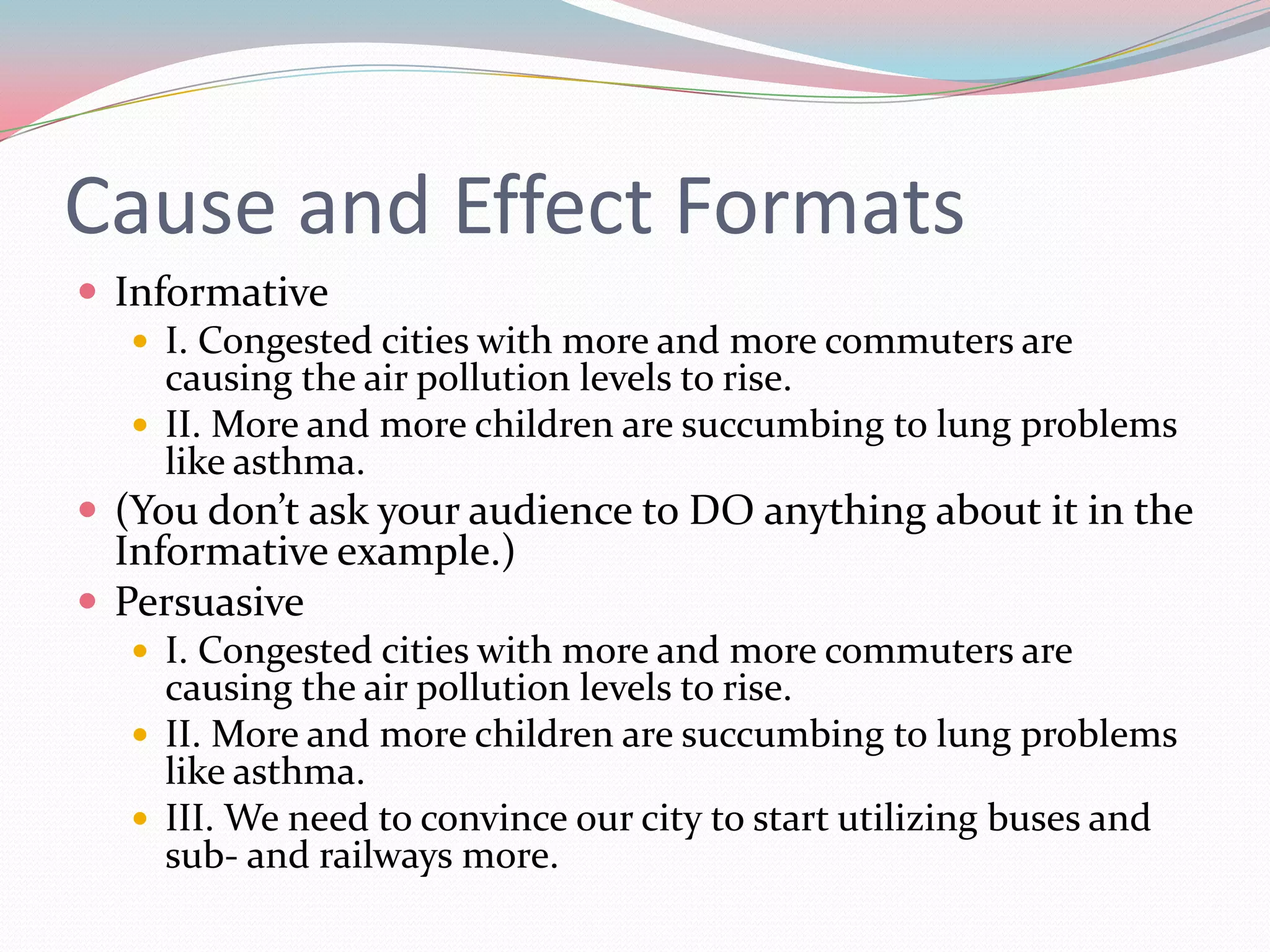
Cause and Effect Formats
 Informative
    I. Congested cities with more and more commuters are
     causing the air pollution levels to rise.
    II. More and more children are succumbing to lung problems
     like asthma.
 (You don’t ask your audience to DO anything about it in the
  Informative example.)
 Persuasive
    I. Congested cities with more and more commuters are
     causing the air pollution levels to rise.
    II. More and more children are succumbing to lung problems
     like asthma.
    III. We need to convince our city to start utilizing buses and
     sub- and railways more.
Organizing Main Points
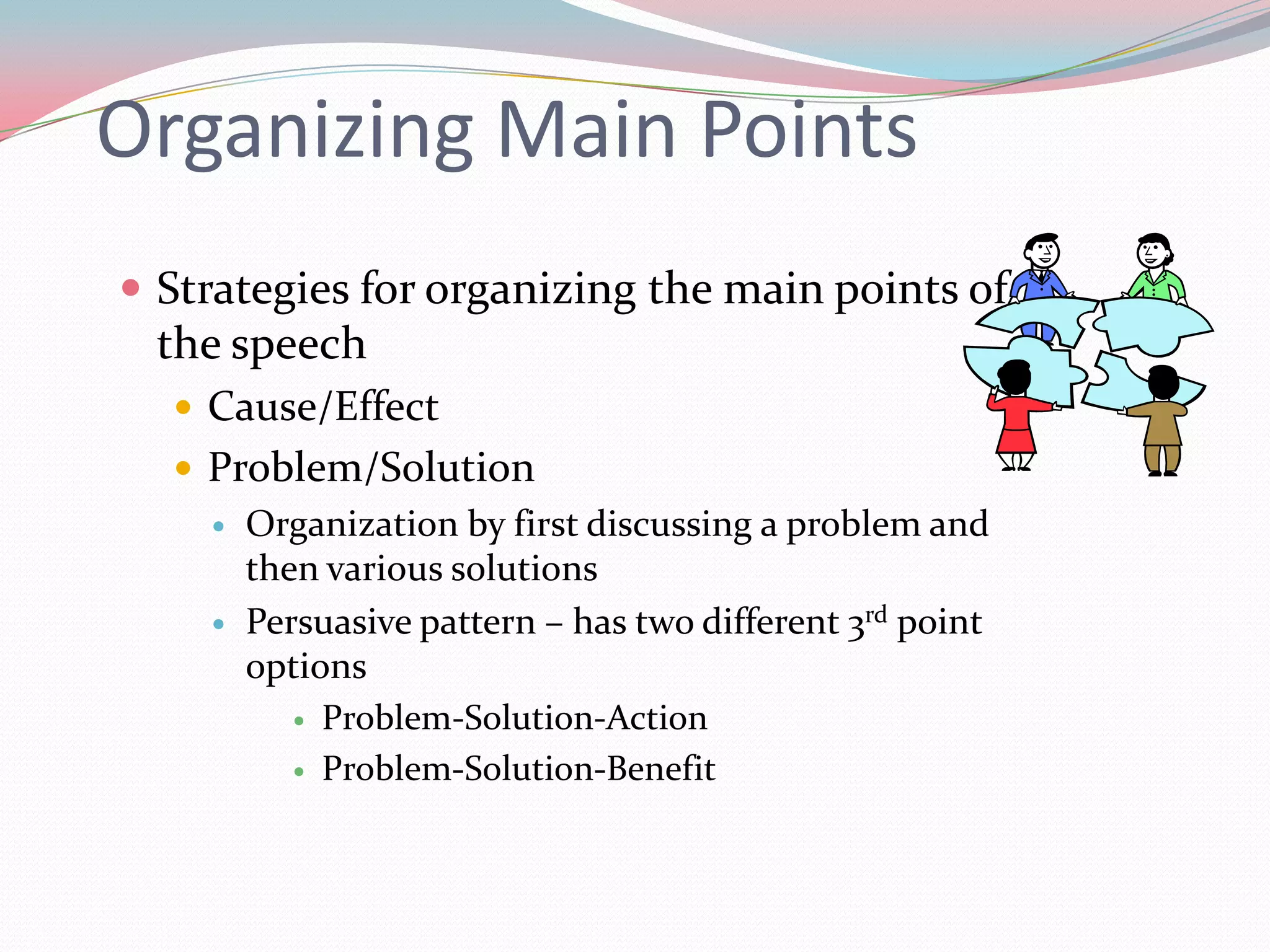
 Strategies for organizing the main points of
 the speech
   Cause/Effect
   Problem/Solution
       Organization by first discussing a problem and
        then various solutions
       Persuasive pattern – has two different 3rd point
        options
            Problem-Solution-Action

            Problem-Solution-Benefit
Problem Solution Formats
 Problem-Solution-Action
    I. Poisonous chemicals are in our foods every day!
    II. Organic foods are the solution to this problem.
    III. Everyone in this classroom should make an effort to
     buy organic foods.
 Problem-Solution-Benefit
    I. Poisonous chemicals are in our foods every day!
    II. Organic foods are the solution to this problem.
    III. Health problems related to ingestion of toxins will
     slowly disappear, saving our bodies and reducing our
     healthcare expenses.
Organizing Main Points
 Strategies for organizing the main points of
 the speech
   Cause/Effect
   Problem/Solution
   Claim
       Making assertions or points about a controversial
        topic
Claim Pattern
 Abolish the Death Penalty
    I. It’s cruel and unusual
    II. It’s not a deterrent
    III. It’s too expensive
Organizing Main Points
 Strategies for organizing the main points of
 the speech
   Cause/Effect
   Problem/Solution
   Claim
   Refutation
       Identifying objections to your topic and refuting
        them
Organizing Main Points
 Strategies for organizing the main points of
 the speech
   Cause/Effect
   Problem/Solution
   Claim
   Refutation
   Motivated Sequence
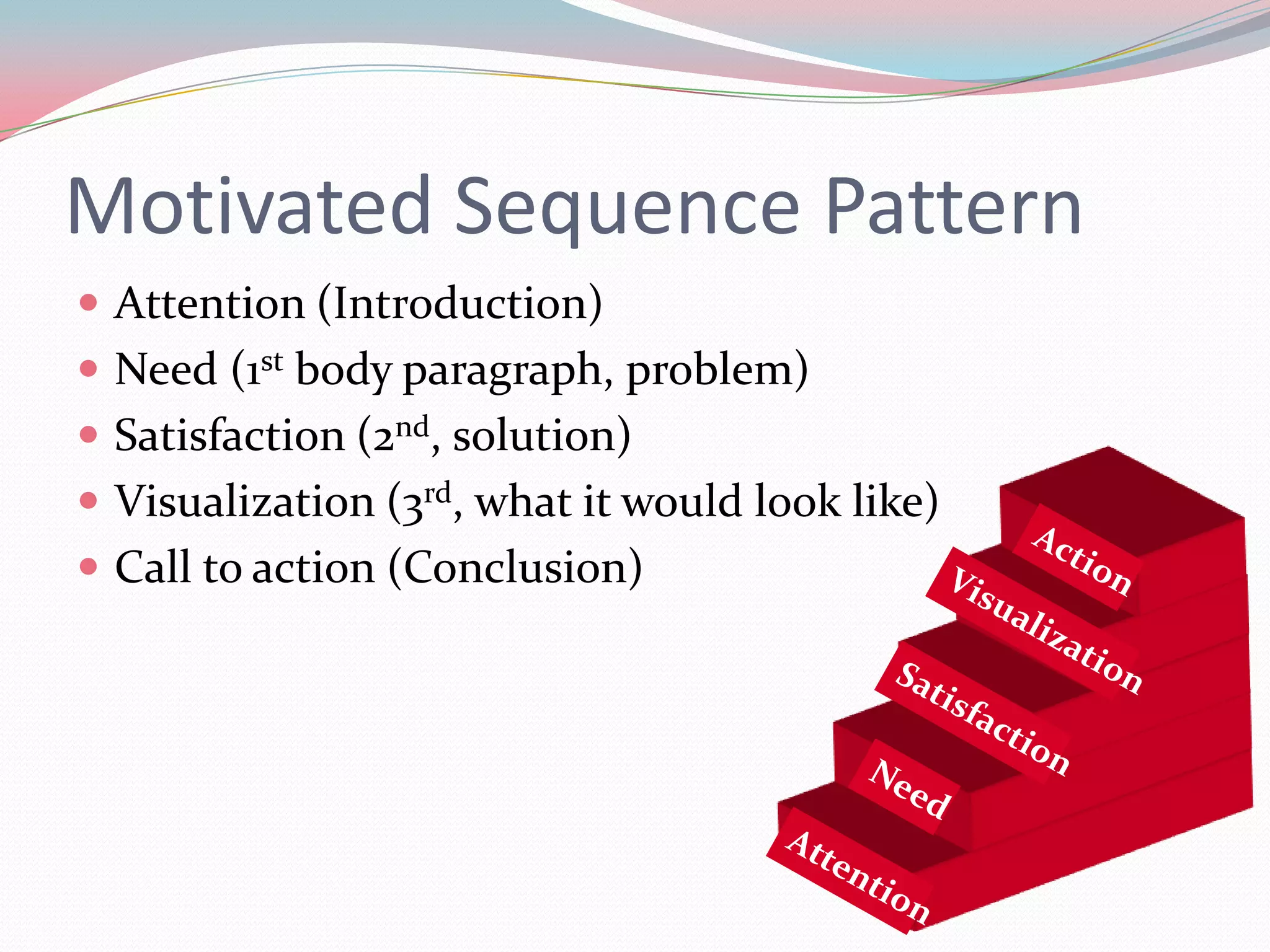
Motivated Sequence Pattern
 Attention (Introduction)
 Need (1st body paragraph, problem)
 Satisfaction (2nd, solution)
 Visualization (3rd, what it would look like)
 Call to action (Conclusion)
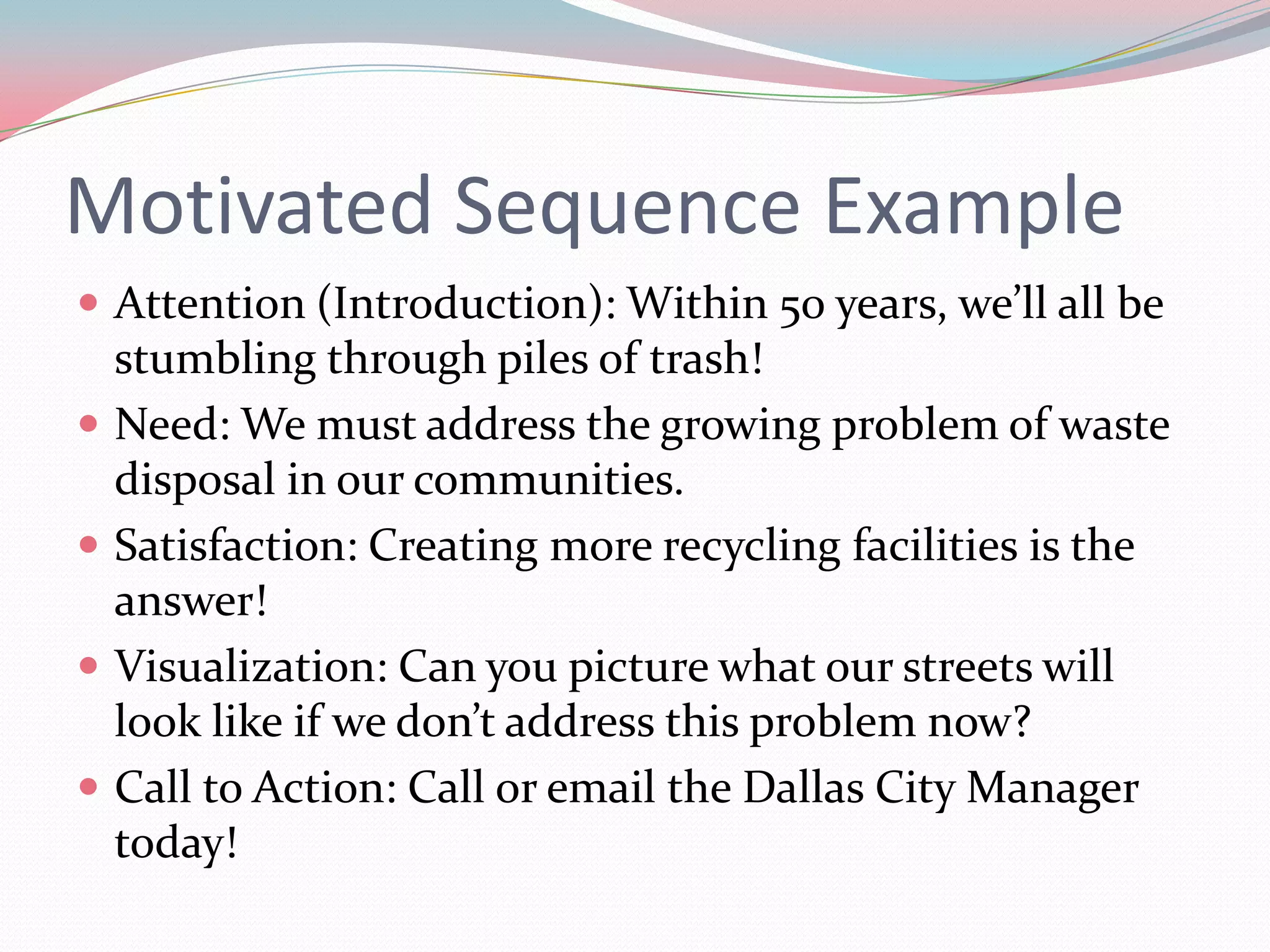
Motivated Sequence Example
 Attention (Introduction): Within 50 years, we’ll all be
    stumbling through piles of trash!
   Need: We must address the growing problem of waste
    disposal in our communities.
   Satisfaction: Creating more recycling facilities is the
    answer!
   Visualization: Can you picture what our streets will
    look like if we don’t address this problem now?
   Call to Action: Call or email the Dallas City Manager
    today!

Organizational patterns for speeches

  • 2.
    Organizing the MainPoints  You MUST organize your main points  The biggest difference between an Informative speech and a Persuasive speech is the ORGANIZATION of the points.  Don’t just let your points “happen”…plan them!
  • 3.
    Organizing Main Points Strategies for organizing the main points of the speech  Informative Patterns  Time  Chronological organization  Example: Speech Topic: Airline Food I. Early airline food: a gourmet treat II. The middle period: institutional food at thirty thousand feet III. Today’s airline food: the passenger starves
  • 4.
    Organizing Main Points Strategies for organizing the main points of the speech  Time  Topic  Organization according to speaker’s discretion, types or categories  Example: Speech Topic: College Students I. Freshmen II. Sophomores III. Juniors IV. Seniors
  • 5.
    Organizing Main Points Strategies for organizing the main points of the speech  Time  Topic  Space/Geographical  Organization by area  Example: Speech Topic: Great Lakes I. Superior II. Michigan III. Huron IV. Erie V. Ontario
  • 6.
    Organizing Main Points Strategies for organizing the main points of a persuasive speech  Cause and Effect  Organization by discussing a situation and its causes or a situation and its effects.  Persuasive speeches have a third point: Cause-Effect-Action or Cause-Effect-Solution
  • 7.
    Organizing Main Points Strategies for organizing the main points of the speech  Time  Topic  Space/Geographical  Cause and Effect  Organization by discussing a situation and its causes or a situation and its effects.  Informative OR Persuasive*  *Persuasive speeches have a third point: Cause-Effect-Action or Cause-Effect-Solution
  • 8.
    Cause and EffectFormats  Informative  I. Congested cities with more and more commuters are causing the air pollution levels to rise.  II. More and more children are succumbing to lung problems like asthma.  (You don’t ask your audience to DO anything about it in the Informative example.)  Persuasive  I. Congested cities with more and more commuters are causing the air pollution levels to rise.  II. More and more children are succumbing to lung problems like asthma.  III. We need to convince our city to start utilizing buses and sub- and railways more.
  • 9.
    Organizing Main Points Strategies for organizing the main points of the speech  Cause/Effect  Problem/Solution  Organization by first discussing a problem and then various solutions  Persuasive pattern – has two different 3rd point options  Problem-Solution-Action  Problem-Solution-Benefit
  • 10.
    Problem Solution Formats Problem-Solution-Action  I. Poisonous chemicals are in our foods every day!  II. Organic foods are the solution to this problem.  III. Everyone in this classroom should make an effort to buy organic foods.  Problem-Solution-Benefit  I. Poisonous chemicals are in our foods every day!  II. Organic foods are the solution to this problem.  III. Health problems related to ingestion of toxins will slowly disappear, saving our bodies and reducing our healthcare expenses.
  • 11.
    Organizing Main Points Strategies for organizing the main points of the speech  Cause/Effect  Problem/Solution  Claim  Making assertions or points about a controversial topic
  • 12.
    Claim Pattern  Abolishthe Death Penalty  I. It’s cruel and unusual  II. It’s not a deterrent  III. It’s too expensive
  • 13.
    Organizing Main Points Strategies for organizing the main points of the speech  Cause/Effect  Problem/Solution  Claim  Refutation  Identifying objections to your topic and refuting them
  • 14.
    Organizing Main Points Strategies for organizing the main points of the speech  Cause/Effect  Problem/Solution  Claim  Refutation  Motivated Sequence
  • 15.
    Motivated Sequence Pattern Attention (Introduction)  Need (1st body paragraph, problem)  Satisfaction (2nd, solution)  Visualization (3rd, what it would look like)  Call to action (Conclusion)
  • 16.
    Motivated Sequence Example Attention (Introduction): Within 50 years, we’ll all be stumbling through piles of trash!  Need: We must address the growing problem of waste disposal in our communities.  Satisfaction: Creating more recycling facilities is the answer!  Visualization: Can you picture what our streets will look like if we don’t address this problem now?  Call to Action: Call or email the Dallas City Manager today!