Online Research and Citing
Sources for Speeches
Internet Research
   Internet research is an easy
    way to obtain information
    about your topic.
   However, not everything
    online is college-level
    quality
   Evaluating the quality of a
    website involves looking at:
        Credibility
        Objectivity
        Currency
Criteria for Internet Research
   Credibility
       Can you establish who wrote the article? Do they have
        the necessary credentials?
   Objectivity
       Is the author presenting an objective point of view or a
        biased opinion?
   Currency
       Is this information current? For some topics like
        technology, the environment, and medical advances,
        you should use only the most current information.
Determining Website Credibility
     We’ll look at six websites
     Try to determine if they meet the
      criteria for internet research or not.
     What principle of internet research
      might they violate?

     Note: these websites may contain
      copyrighted material and are used only
      for educational purposes
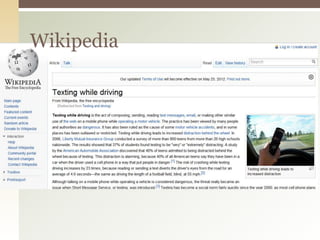
Wikipedia
Verdict: Not Credible
   Why not?
     Wikipedia  is a great source of general
     information for personal use. However, for
     college level research, you should use primary
     resources where you can check the validity and
     credibility of the information directly.
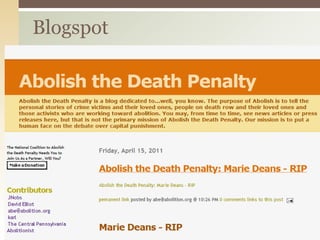
Blogspot
Verdict: Not Objective
   Why not?
     Blogs can be created by anyone who wants one.
      Just because someone writes something doesn’t
      mean they are qualified to do so or that they are
      presenting a balanced view.
     Most people use blogs to share their personal
      views.
     Most blogs are not research based or peer
      reviewed.
About.com
Verdict: Not current
   Why not?
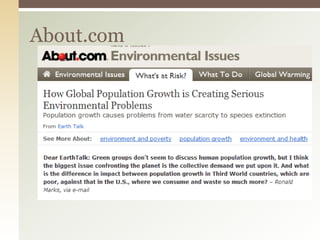
     There   is NO DATE on this website, so it’s
      impossible to tell how current the information is.
      When it comes to a scientific topic, it’s best to
      find the most current information possible, as
      the information is constantly evolving.
     It’s a good rule of thumb that if you can’t find an
      author or date, don’t use the website.
Journal Article
Verdict: Credible
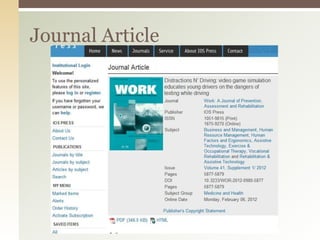
   Journal Articles are usually upfront about
    who wrote them and the credentials of that
    person.
   Most journals note up front as well whether
    or not they are peer-reviewed and scholarly.
   If you can find all the information about the
    author and date, there’s a good chance it’s a
    credible source of information.
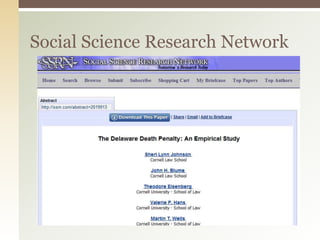
Social Science Research Network
Verdict: Objective
   Empirical studies tend to be objective and
    contain vast amounts of information
   Anything contained on a Research Network as
    well will probably be peer-reviewed and
    deemed scholarly as well.
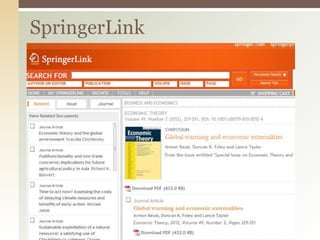
SpringerLink
Verdict: Current
   The date is clearly stated on this document.
    As I created this PowerPoint activity during
    2012, one can safely assume a 2012 document
    is a current source of information for Global
    Warming.
   Other information on this website would also
    indicate that this is a scholarly source of
    information.
Works Cited
   A list of sources used in a presentation
   Use a uniform style
       APA
       MLA

   Designed to enable someone else to
    locate the supporting material you
    used
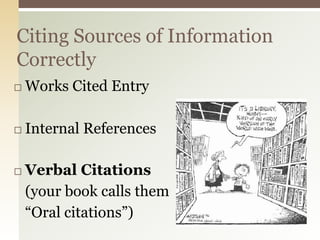
Citing Sources of Information
Correctly
   Works Cited Entry

   Internal References

   Verbal Citations
    (your book calls them
    “Oral citations”)
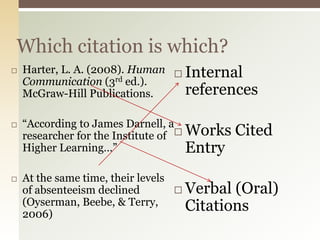
Which citation is which?
   Harter, L. A. (2008). Human  Internal
    Communication (3rd ed.).
    McGraw-Hill Publications.     references

    “According to James Darnell, a
    researcher for the Institute of  Works   Cited



    Higher Learning…”                 Entry
   At the same time, their levels
    of absenteeism declined         Verbal (Oral)
    (Oyserman, Beebe, & Terry,       Citations
    2006)
Help with MLA
   Use these helpful websites to find out more
    about citing sources.
   http://owl.english.purdue.edu/owl/search.php
   http://owl.english.purdue.edu/owl/resource/74
    7/2/
   http://www.easybib.com/
   For Verbal Citations, read this:
   http://libguides.greenriver.edu/content.php?pid
    =53310&sid=2604145

Online research and citing sources for speeches

  • 1.
    Online Research andCiting Sources for Speeches
  • 2.
    Internet Research  Internet research is an easy way to obtain information about your topic.  However, not everything online is college-level quality  Evaluating the quality of a website involves looking at:  Credibility  Objectivity  Currency
  • 3.
    Criteria for InternetResearch  Credibility  Can you establish who wrote the article? Do they have the necessary credentials?  Objectivity  Is the author presenting an objective point of view or a biased opinion?  Currency  Is this information current? For some topics like technology, the environment, and medical advances, you should use only the most current information.
  • 4.
    Determining Website Credibility  We’ll look at six websites  Try to determine if they meet the criteria for internet research or not.  What principle of internet research might they violate?  Note: these websites may contain copyrighted material and are used only for educational purposes
  • 5.
  • 6.
    Verdict: Not Credible  Why not?  Wikipedia is a great source of general information for personal use. However, for college level research, you should use primary resources where you can check the validity and credibility of the information directly.
  • 7.
  • 8.
    Verdict: Not Objective  Why not?  Blogs can be created by anyone who wants one. Just because someone writes something doesn’t mean they are qualified to do so or that they are presenting a balanced view.  Most people use blogs to share their personal views.  Most blogs are not research based or peer reviewed.
  • 9.
  • 10.
    Verdict: Not current  Why not?  There is NO DATE on this website, so it’s impossible to tell how current the information is. When it comes to a scientific topic, it’s best to find the most current information possible, as the information is constantly evolving.  It’s a good rule of thumb that if you can’t find an author or date, don’t use the website.
  • 11.
  • 12.
    Verdict: Credible  Journal Articles are usually upfront about who wrote them and the credentials of that person.  Most journals note up front as well whether or not they are peer-reviewed and scholarly.  If you can find all the information about the author and date, there’s a good chance it’s a credible source of information.
  • 13.
  • 14.
    Verdict: Objective  Empirical studies tend to be objective and contain vast amounts of information  Anything contained on a Research Network as well will probably be peer-reviewed and deemed scholarly as well.
  • 15.
  • 16.
    Verdict: Current  The date is clearly stated on this document. As I created this PowerPoint activity during 2012, one can safely assume a 2012 document is a current source of information for Global Warming.  Other information on this website would also indicate that this is a scholarly source of information.
  • 17.
    Works Cited  A list of sources used in a presentation  Use a uniform style  APA  MLA  Designed to enable someone else to locate the supporting material you used
  • 18.
    Citing Sources ofInformation Correctly  Works Cited Entry  Internal References  Verbal Citations (your book calls them “Oral citations”)
  • 19.
    Which citation iswhich?  Harter, L. A. (2008). Human  Internal Communication (3rd ed.). McGraw-Hill Publications. references “According to James Darnell, a researcher for the Institute of  Works Cited  Higher Learning…” Entry  At the same time, their levels of absenteeism declined  Verbal (Oral) (Oyserman, Beebe, & Terry, Citations 2006)
  • 20.
    Help with MLA  Use these helpful websites to find out more about citing sources.  http://owl.english.purdue.edu/owl/search.php  http://owl.english.purdue.edu/owl/resource/74 7/2/  http://www.easybib.com/  For Verbal Citations, read this:  http://libguides.greenriver.edu/content.php?pid =53310&sid=2604145