Download as PDF, PPTX




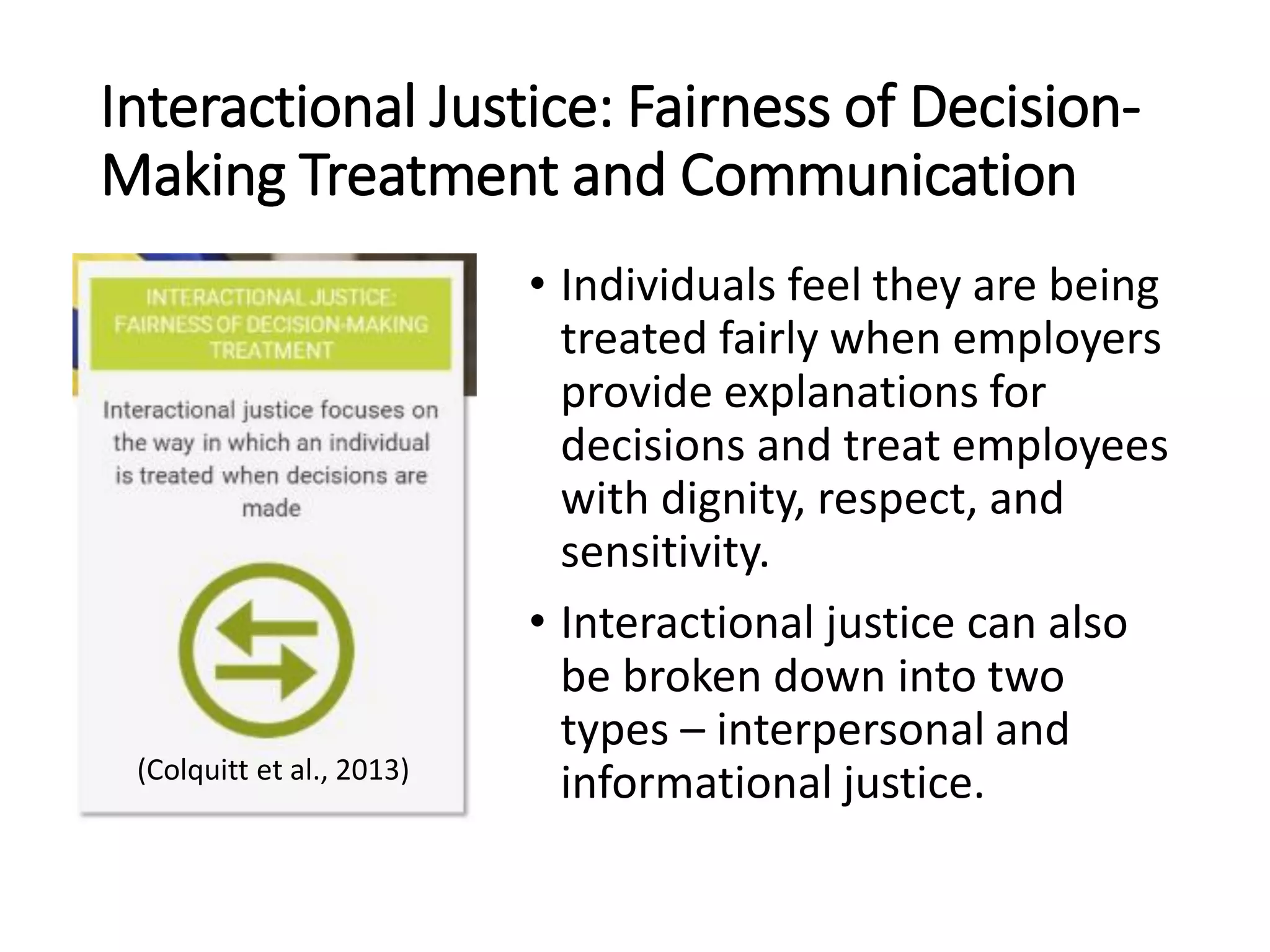


Organizational justice, first defined by Greenberg in 1987, refers to employees' perceptions of fairness in workplace behaviors, decisions, and interactions, influencing their attitudes and behaviors. It encompasses three components: distributive justice (equity of outcomes), procedural justice (fairness of processes), and interactional justice (manner of interactions), and is crucial for improving job performance, satisfaction, and reducing negative behaviors. Ensuring organizational justice fosters trust, commitment, and positive workplace dynamics while mitigating counterproductive behaviors.


