Oral English Innovation and research: an introduction (2012) Inma Garín
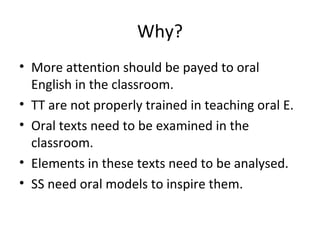
Why? More attention should be payed to oral English in the classroom. TT are not properly trained in teaching oral E. Oral texts need to be examined in the classroom. Elements in these texts need to be analysed. SS need oral models to inspire them.
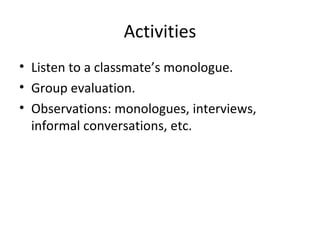
Activities Listen to a classmate’s monologue. Group evaluation. Observations: monologues, interviews, informal conversations, etc.
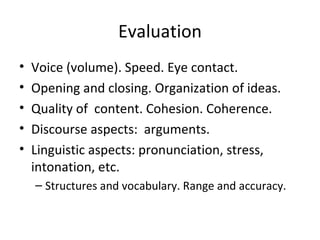
Evaluation Voice (volume). Speed. Eye contact. Opening and closing. Organization of ideas. Quality of  content. Cohesion. Coherence. Discourse aspects:  arguments.  Linguistic aspects: pronunciation, stress, intonation, etc. Structures and vocabulary. Range and accuracy.
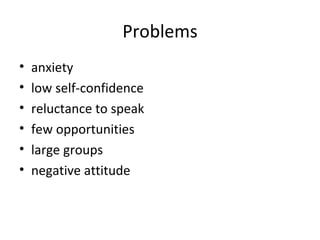
Problems anxiety low self-confidence reluctance to speak few opportunities large groups negative attitude
Reduce the Level of Task Difficulty Give Students More Time to do Tasks Allow Students to Collaboratively Solve Communicative Tasks Bring the Tasks Within Students’ Experience
Techniques (1) Bring the Tasks Within Students’ Experience : SS are encouraged to use  background knowledge and experience in doing the tasks. Key oral skills and strategies should be pre-taught in preparing students for communicative tasks. Also, it is advisable that teachers grade the difficulty level of oral tasks to suit their students’ communicative ability.  
Techniques (2) Provide Students with Task Guidance Attend to Individual Students’ Needs and Ability:  task demands can be adjusted according to individual levels of oral competence. Promote Positive Attitudes among Students Change Students’ Negative Beliefs and Attitudes Towards Mistakes
Techniques (3) Boost Students’ Self-confidence  with  easy tasks with clear and simple goals are used in the first place. General goals should be broken down into smaller, short-term goals so that even when students do not achieve the final goals they still feel a sense of achievement for completing some of the sub-goals. Also, students should be rewarded once they achieve one or more goals.
Techniques (4)  Lower Students’ Anxiety in the Classroom: find out what causes anxiety. Build a Supportive Learning Environment. Make the Classroom Environment a Non-threatening Place. Tolerate L1 Use When Appropriate. Be Sensitive When Assigning Students into Groups. Encourage Peer Support in the Classroom.
Techniques (5) Introduce Opportunities for Students to Speak English Outside the Class  English clubs inside and outside the school should be introduced to students.  SS report on their participation in the clubs or they can share their experience with their classmates. They may also be asked to carry out and record interviews with foreigners who are visiting or living around.
Causes Causes of students’ reluctance to speak are varied.... Discuss in groups. Share ideas. Share solutions.
References Encouraging Reluctant ESL/EFL Learners to Speak in the Classroom ,  Nguyen Minh Hue, http://iteslj.org/Techniques/Hue-ReluctantSpeakers.html Didáctica de lo oral, Maria Dolores Abascal (1997).

Oral english

  • 1.
    Oral English Innovationand research: an introduction (2012) Inma Garín
  • 2.
    Why? More attentionshould be payed to oral English in the classroom. TT are not properly trained in teaching oral E. Oral texts need to be examined in the classroom. Elements in these texts need to be analysed. SS need oral models to inspire them.
  • 3.
    Activities Listen toa classmate’s monologue. Group evaluation. Observations: monologues, interviews, informal conversations, etc.
  • 4.
    Evaluation Voice (volume).Speed. Eye contact. Opening and closing. Organization of ideas. Quality of content. Cohesion. Coherence. Discourse aspects: arguments. Linguistic aspects: pronunciation, stress, intonation, etc. Structures and vocabulary. Range and accuracy.
  • 5.
    Problems anxiety lowself-confidence reluctance to speak few opportunities large groups negative attitude
  • 6.
    Reduce the Levelof Task Difficulty Give Students More Time to do Tasks Allow Students to Collaboratively Solve Communicative Tasks Bring the Tasks Within Students’ Experience
  • 7.
    Techniques (1) Bringthe Tasks Within Students’ Experience : SS are encouraged to use background knowledge and experience in doing the tasks. Key oral skills and strategies should be pre-taught in preparing students for communicative tasks. Also, it is advisable that teachers grade the difficulty level of oral tasks to suit their students’ communicative ability.  
  • 8.
    Techniques (2) ProvideStudents with Task Guidance Attend to Individual Students’ Needs and Ability: task demands can be adjusted according to individual levels of oral competence. Promote Positive Attitudes among Students Change Students’ Negative Beliefs and Attitudes Towards Mistakes
  • 9.
    Techniques (3) BoostStudents’ Self-confidence with easy tasks with clear and simple goals are used in the first place. General goals should be broken down into smaller, short-term goals so that even when students do not achieve the final goals they still feel a sense of achievement for completing some of the sub-goals. Also, students should be rewarded once they achieve one or more goals.
  • 10.
    Techniques (4) Lower Students’ Anxiety in the Classroom: find out what causes anxiety. Build a Supportive Learning Environment. Make the Classroom Environment a Non-threatening Place. Tolerate L1 Use When Appropriate. Be Sensitive When Assigning Students into Groups. Encourage Peer Support in the Classroom.
  • 11.
    Techniques (5) IntroduceOpportunities for Students to Speak English Outside the Class English clubs inside and outside the school should be introduced to students. SS report on their participation in the clubs or they can share their experience with their classmates. They may also be asked to carry out and record interviews with foreigners who are visiting or living around.
  • 12.
    Causes Causes ofstudents’ reluctance to speak are varied.... Discuss in groups. Share ideas. Share solutions.
  • 13.
    References Encouraging ReluctantESL/EFL Learners to Speak in the Classroom , Nguyen Minh Hue, http://iteslj.org/Techniques/Hue-ReluctantSpeakers.html Didáctica de lo oral, Maria Dolores Abascal (1997).