Mistakes and feedback


        Jeremy Harmer, Chapter 7 (2001)
 Práctica Educativa III, Residencia Docente Prof.
             Estela N. Braun(2010)
Types of Mistakes
 Julian  Edge (1993)divides mistakes into
    3 broad categories:
   SLIPS : students can correct
    themselves.
   ERRORS: students cannot correct
    themselves.
   ATTEMPTS: ambitious language use, by
    using structures they have not learnt yet.
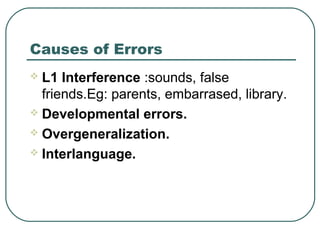
Causes of Errors
 L1 Interference :sounds, false
  friends.Eg: parents, embarrased, library.
 Developmental errors.

 Overgeneralization.

 Interlanguage.
Assessing Students’
performance
 A. Ignore mistakes/slips
 B. Encourage risk taking.

 C.Praise them.

 D.Avoid over-complimenting them .

 E. Foster self-assessment.

 F.Show genuine interest in their work.
Other information valid as
assessment:
   Comments.
   Marks and grades.
   Reports.
   Self-assessment through checklists .
   ROA (record of achievement)
Feedback during Oral Work
 Difference
          between ACCURACY (non-
  communicative activities)
 FLUENCY (communicative activities)
When should we provide
teacher intervention?
   Lynch (1997) Use “gentle correction”…”the
    best answer to the question of when to
    intervene in learner talk is:as late as possible”.
   Processing language for communication is
    the best way of processing language for
    acquisition.
   When teachers intervene to correct or to
    supply alternative modes of expression to help
    students, they remove the need to negotiate
    meaning.
Rapport and feedback
 Correction  builds on the rapport
  between teacher and students.
 A good teacher “should be able to
  correct people without offending them”
  (Harmer, 1998)
Feedback during Accuracy Work
 Two   distinct stages:
 I. Show a student a mistake has been
  made.
 II. Help students do something about it.
Showing Incorrectness
 1. Repeating: Again? Use of intonation
  and expression by the teacher.
 2. Echoing: Flight 309 GO to Paris?

 3. Satement and question: That’s not
  quite right. Do people think it’s all right?
 4.Expression: facial, gesture, without
  being cruel or mocking
And more…
 5.Hinting: Say the word: tense, word,
  plural. Shared metalanguage.
 6.Reformulation: If I had heard…
GETTING IT RIGHT:

 Ifstudents are unable to correct
  themselves, focus on the correct version
  in detail.
 Foster peer correction in a genuinely
  cooperative atmosphere.
 Techniques must not undermine
  students’self-esteem.
Feedback during fluency work:
   We need to respond to content and not just
    language.
   Tolerance of erros during fluency sessions
    should be much greater than during controlled
    practice sessions.
   Gentle correction is necessary if
    communication breaks down or if students
    need prompting because they do not know
    what to say.
Techniques:
A)Reformulate what they say:
Student: I am not agree with you.
Teacher: I don’t agree with you..because..
B) Try not to interrupt the flow of the activity,
  or we may bring it to a standstill.
C) Recording mistakes: Use charts to
  categorize learners’mistakes:
  grammar and vocabulary, discourse
  management, pronunciation,
  appropriacy,interactive communication.
Feedback on written work:
 Workbook   exercises.
 Feedback on creative writing:
  demonstrate interest in the content of
  students’work.
Written Feedback Techniques
   Responding:
   We tell them how successful they have been,
    and which areas they have improved/need to
    improve.Constructive feedback:learning from
    errors.
   Coding:
   Teachers may use a code with symbols on the
    margins. We allow students to focus on
    particular aspects of language:spelling, verb
    tenses, paragraph construction, cohesion.
Finishing the feedback process
   Written feedback is designed as a tool to help
    learners improve their language use.
   Importance of rewriting: to see how they
    respond to our comments.
   Feedback is part of the learning process.
   It is over after students have made changes
    ,consulted grammar books or dictionaries as a
    way of resolving some of the mistakes we
    have signalled.
   (*)See TDI Speaking materials.

Mistakes and Feedback

  • 1.
    Mistakes and feedback Jeremy Harmer, Chapter 7 (2001) Práctica Educativa III, Residencia Docente Prof. Estela N. Braun(2010)
  • 2.
    Types of Mistakes Julian Edge (1993)divides mistakes into 3 broad categories:  SLIPS : students can correct themselves.  ERRORS: students cannot correct themselves.  ATTEMPTS: ambitious language use, by using structures they have not learnt yet.
  • 3.
    Causes of Errors L1 Interference :sounds, false friends.Eg: parents, embarrased, library.  Developmental errors.  Overgeneralization.  Interlanguage.
  • 4.
    Assessing Students’ performance  A.Ignore mistakes/slips  B. Encourage risk taking.  C.Praise them.  D.Avoid over-complimenting them .  E. Foster self-assessment.  F.Show genuine interest in their work.
  • 5.
    Other information validas assessment:  Comments.  Marks and grades.  Reports.  Self-assessment through checklists .  ROA (record of achievement)
  • 6.
    Feedback during OralWork  Difference between ACCURACY (non- communicative activities)  FLUENCY (communicative activities)
  • 7.
    When should weprovide teacher intervention?  Lynch (1997) Use “gentle correction”…”the best answer to the question of when to intervene in learner talk is:as late as possible”.  Processing language for communication is the best way of processing language for acquisition.  When teachers intervene to correct or to supply alternative modes of expression to help students, they remove the need to negotiate meaning.
  • 8.
    Rapport and feedback Correction builds on the rapport between teacher and students.  A good teacher “should be able to correct people without offending them” (Harmer, 1998)
  • 9.
    Feedback during AccuracyWork  Two distinct stages:  I. Show a student a mistake has been made.  II. Help students do something about it.
  • 10.
    Showing Incorrectness  1.Repeating: Again? Use of intonation and expression by the teacher.  2. Echoing: Flight 309 GO to Paris?  3. Satement and question: That’s not quite right. Do people think it’s all right?  4.Expression: facial, gesture, without being cruel or mocking
  • 11.
    And more…  5.Hinting:Say the word: tense, word, plural. Shared metalanguage.  6.Reformulation: If I had heard…
  • 12.
    GETTING IT RIGHT: Ifstudents are unable to correct themselves, focus on the correct version in detail.  Foster peer correction in a genuinely cooperative atmosphere.  Techniques must not undermine students’self-esteem.
  • 13.
    Feedback during fluencywork:  We need to respond to content and not just language.  Tolerance of erros during fluency sessions should be much greater than during controlled practice sessions.  Gentle correction is necessary if communication breaks down or if students need prompting because they do not know what to say.
  • 14.
    Techniques: A)Reformulate what theysay: Student: I am not agree with you. Teacher: I don’t agree with you..because.. B) Try not to interrupt the flow of the activity, or we may bring it to a standstill. C) Recording mistakes: Use charts to categorize learners’mistakes: grammar and vocabulary, discourse management, pronunciation, appropriacy,interactive communication.
  • 15.
    Feedback on writtenwork:  Workbook exercises.  Feedback on creative writing: demonstrate interest in the content of students’work.
  • 16.
    Written Feedback Techniques  Responding:  We tell them how successful they have been, and which areas they have improved/need to improve.Constructive feedback:learning from errors.  Coding:  Teachers may use a code with symbols on the margins. We allow students to focus on particular aspects of language:spelling, verb tenses, paragraph construction, cohesion.
  • 17.
    Finishing the feedbackprocess  Written feedback is designed as a tool to help learners improve their language use.  Importance of rewriting: to see how they respond to our comments.  Feedback is part of the learning process.  It is over after students have made changes ,consulted grammar books or dictionaries as a way of resolving some of the mistakes we have signalled.  (*)See TDI Speaking materials.